Connecting NASA to the classroom: UMBC physicist Zhibo Zhang to lead Goddard Planetary Heliophysics Institute
Zhibo Zhang, professor of physics, has been named director of the Goddard Planetary Heliophysics Institute (GPHI), UMBC’s arm of the Partnership for Heliophysics and Space Environment Research (PHaSER). PHaSER, a multi-institution consortium led by Catholic University of America, contributes to NASA’s Heliophysics Science Division at Goddard Space Flight Center (GSFC) through research on the Sun, its processes, and space weather, which can affect planet Earth and human technologies.
NASA allocated $10 million to UMBC in 2021 under its $64.1 million PHaSER award, underscoring the university’s contributions to heliophysics research and building on more than thirty years of successful collaboration between UMBC and GSFC, located in Greenbelt, Maryland.
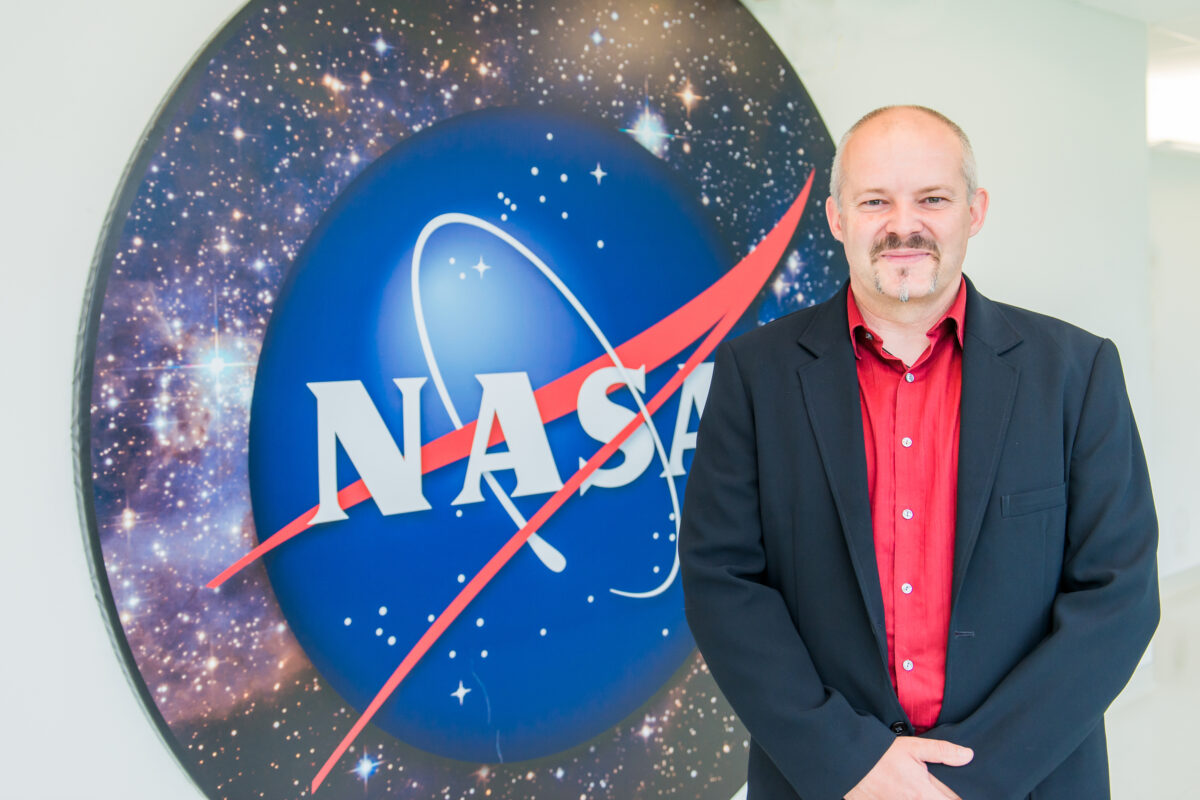 Jan Merka led GPHI from from its inception in 2011 and will hand the reins to Zhibo Zhang this month. (Marlayna Demond ’11/UMBC)
“My first priority is to support GPHI faculty and help enable the outstanding science and engineering they carry out at NASA Goddard Space Flight Center,” Zhang says. “At the same time, I hope GPHI can serve as a stronger bridge between NASA and UMBC by connecting GPHI faculty with UMBC research resources, collaboration and funding opportunities, and with students and faculty who can expand our collective capacity and open doors to bigger, cross-cutting ideas.”
Zhang follows Jan Merka, who has served as the inaugural GPHI director since 2011. As director, Zhang will continue in his faculty role at UMBC, advancing his team’s research on atmospheric dust’s influence on climate and remaining deeply committed to teaching and mentoring. His guidance of undergraduate and graduate students has helped multiple students secure the prestigious NASA Future Investigators in NASA Earth and Space Science and Technology (FINESST) Fellowship and other awards, including the 2025 Elsevier/JQSRT Richard M. Goody Award, fostering the next generation of scientists.
“We are very proud of the fact that UMBC is currently ranked as the #11 institution in the nation in NASA expenditures,” say Karl V. Steiner, vice president for research and creative achievement. “Zhibo Zhang is an outstanding colleague with a broad set of relevant expertise and experiences who will provide important leadership to GPHI and to our partnership with Catholic University under PHaSER. I know that he is the right leader to strengthen our relationship with NASA, building on over three decades of successful cooperative partnership between UMBC and NASA Goddard.”
 Zhibo Zhang (second from right) thoughtfully mentors undergraduate and graduate students, including Qianqian Song (right), Ph.D. ’22, who received the FINESST fellowship, and Jianyu Zheng (far left, rear), Ph.D. ’23, who received the 2025 Elsevier/JQSRT Goody Award. (Marlayna Demond ’11/UMBC)
]]>
Zhibo Zhang, professor of physics, has been named director of the Goddard Planetary Heliophysics Institute (GPHI), UMBC’s arm of the Partnership for Heliophysics and Space Environment Research...
https://umbc.edu/stories/zhang-to-lead-goddard-planetary-heliophysics-institute/
https://my3.my.umbc.edu/api/v0/pixel/news/157136/guest@my.umbc.edu/7aba311f3831e3c2c778aff9a9535436/api/pixel
cnms
gphi
nasa
news
phaser
physics
research
science-and-tech
story
UMBC News & Magazine
https://my3.my.umbc.edu/groups/umbc-news-magazine
https://assets1-my.umbc.edu/system/shared/avatars/groups/000/001/943/24435aa6207c452e7bc15cc74b42c7bb/xsmall.png?1748556657
https://assets1-my.umbc.edu/system/shared/avatars/groups/000/001/943/24435aa6207c452e7bc15cc74b42c7bb/original.png?1748556657
https://assets2-my.umbc.edu/system/shared/avatars/groups/000/001/943/24435aa6207c452e7bc15cc74b42c7bb/xxlarge.png?1748556657
https://assets2-my.umbc.edu/system/shared/avatars/groups/000/001/943/24435aa6207c452e7bc15cc74b42c7bb/xlarge.png?1748556657
https://assets3-my.umbc.edu/system/shared/avatars/groups/000/001/943/24435aa6207c452e7bc15cc74b42c7bb/large.png?1748556657
https://assets1-my.umbc.edu/system/shared/avatars/groups/000/001/943/24435aa6207c452e7bc15cc74b42c7bb/medium.png?1748556657
https://assets2-my.umbc.edu/system/shared/avatars/groups/000/001/943/24435aa6207c452e7bc15cc74b42c7bb/small.png?1748556657
https://assets1-my.umbc.edu/system/shared/avatars/groups/000/001/943/24435aa6207c452e7bc15cc74b42c7bb/xsmall.png?1748556657
https://assets2-my.umbc.edu/system/shared/avatars/groups/000/001/943/24435aa6207c452e7bc15cc74b42c7bb/xxsmall.png?1748556657
UMBC News & Magazine
1
0
false
Wed, 04 Mar 2026 09:28:26 -0500
Wed, 04 Mar 2026 09:28:26 -0500
5 ways UMBC partnered with NASA in 2024
Zhibo Zhang (second from right) thoughtfully mentors undergraduate and graduate students, including Qianqian Song (right), Ph.D. ’22, who received the FINESST fellowship, and Jianyu Zheng (far left, rear), Ph.D. ’23, who received the 2025 Elsevier/JQSRT Goody Award. (Marlayna Demond ’11/UMBC)
]]>
Zhibo Zhang, professor of physics, has been named director of the Goddard Planetary Heliophysics Institute (GPHI), UMBC’s arm of the Partnership for Heliophysics and Space Environment Research...
https://umbc.edu/stories/zhang-to-lead-goddard-planetary-heliophysics-institute/
https://my3.my.umbc.edu/api/v0/pixel/news/157136/guest@my.umbc.edu/7aba311f3831e3c2c778aff9a9535436/api/pixel
cnms
gphi
nasa
news
phaser
physics
research
science-and-tech
story
UMBC News & Magazine
https://my3.my.umbc.edu/groups/umbc-news-magazine
https://assets1-my.umbc.edu/system/shared/avatars/groups/000/001/943/24435aa6207c452e7bc15cc74b42c7bb/xsmall.png?1748556657
https://assets1-my.umbc.edu/system/shared/avatars/groups/000/001/943/24435aa6207c452e7bc15cc74b42c7bb/original.png?1748556657
https://assets2-my.umbc.edu/system/shared/avatars/groups/000/001/943/24435aa6207c452e7bc15cc74b42c7bb/xxlarge.png?1748556657
https://assets2-my.umbc.edu/system/shared/avatars/groups/000/001/943/24435aa6207c452e7bc15cc74b42c7bb/xlarge.png?1748556657
https://assets3-my.umbc.edu/system/shared/avatars/groups/000/001/943/24435aa6207c452e7bc15cc74b42c7bb/large.png?1748556657
https://assets1-my.umbc.edu/system/shared/avatars/groups/000/001/943/24435aa6207c452e7bc15cc74b42c7bb/medium.png?1748556657
https://assets2-my.umbc.edu/system/shared/avatars/groups/000/001/943/24435aa6207c452e7bc15cc74b42c7bb/small.png?1748556657
https://assets1-my.umbc.edu/system/shared/avatars/groups/000/001/943/24435aa6207c452e7bc15cc74b42c7bb/xsmall.png?1748556657
https://assets2-my.umbc.edu/system/shared/avatars/groups/000/001/943/24435aa6207c452e7bc15cc74b42c7bb/xxsmall.png?1748556657
UMBC News & Magazine
1
0
false
Wed, 04 Mar 2026 09:28:26 -0500
Wed, 04 Mar 2026 09:28:26 -0500
5 ways UMBC partnered with NASA in 2024
UMBC is approaching 30 years of collaboration with the National Aeronautics and Space Administration (NASA), a partnership that largely culminates under the university’s three major cooperative agreements with the agency. According to the NSF’s latest Higher Education Research and Development (HERD) survey, UMBC is among the nation’s top 10 universities receiving federal funding from NASA. In 2024, UMBC scientists, researchers, interns, and engineers have reached new levels of achievement in connection to this partnership—some even going as far as to the surface of the Moon…in a few years.
Take a look back at five ways UMBC collaborated with NASA in 2024:
UMBC goes to the Moon
Planetary scientist Mehdi Benna of UMBC’s Center for Space Sciences Technology is leading the team designing one of the lunar instruments chosen for implementation and deployment in NASA’s forthcoming Artemis III mission, humanity’s first return to the lunar surface in more than 50 years. The Lunar Environment Monitoring Station (LEMS) was selected as one of the first three candidate payloads to be a part of Artemis III, NASA’s mission that will send astronauts to explore the region near the lunar South Pole. Artemis III, currently planned to launch in 2026, will be the first time humans will return to the Moon’s surface since the historic Apollo program in 1969 – 1972.
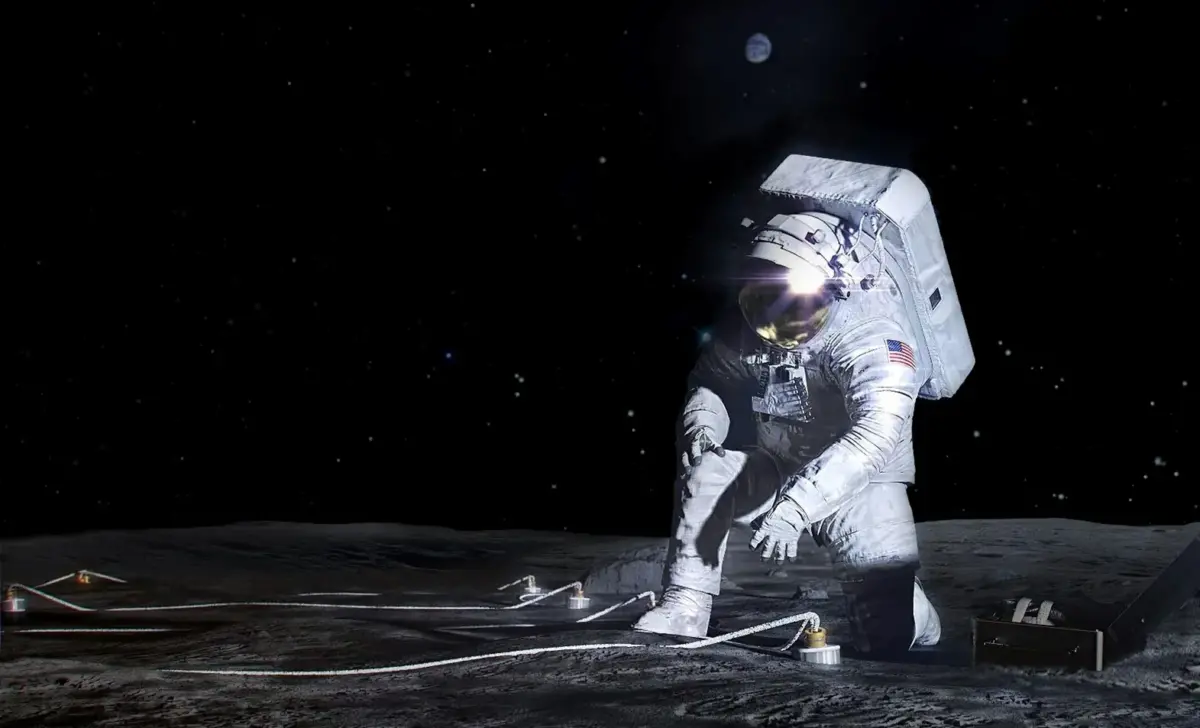 Artist’s concept of an Artemis astronaut deploying an instrument on the lunar surface.
(Photo courtesy of NASA)
HARP2 launches into space
The UMBC-designed Hyper-Angular Rainbow Polarimeter (HARP2) wide-angle imaging polarimeter instrument is part of NASA’s Plankton, Aerosol, Cloud, ocean Ecosystem (PACE) spacecraft mission, which launched into space in February. The PACE satellite provides insight into ocean health, air quality, and the effects of a changing climate. PACE’s mission data, which includes data captured by the HARP2 instrument, is now available for public access. The HARP2 team, which includes a host of students and alumni, is led by Vanderlei Martins, professor of physics, who is also the director of the NASA-affiliated Earth and Space Institute, based out of UMBC’s Physics Building.
AXIS X-ray telescope selected for final round
Nearly a year ago, a group of engineers and scientists including UMBC physicists became one of 10 teams to successfully submit a proposal to NASA to develop the Advanced X-ray Imaging Satellite (AXIS). In October 2024, the AXIS team was selected as one of the final two instrument designs selected for further development. The team will receive $5 million to flesh out their plans as part of what NASA calls a “Phase A study.” Adi Foord, assistant professor of physics, and Eileen Meyer, associate professor of physics, serve on the AXIS leadership team, and during the proposal development phase, Foord co-led the sub-team focused on supermassive black hole evolution.
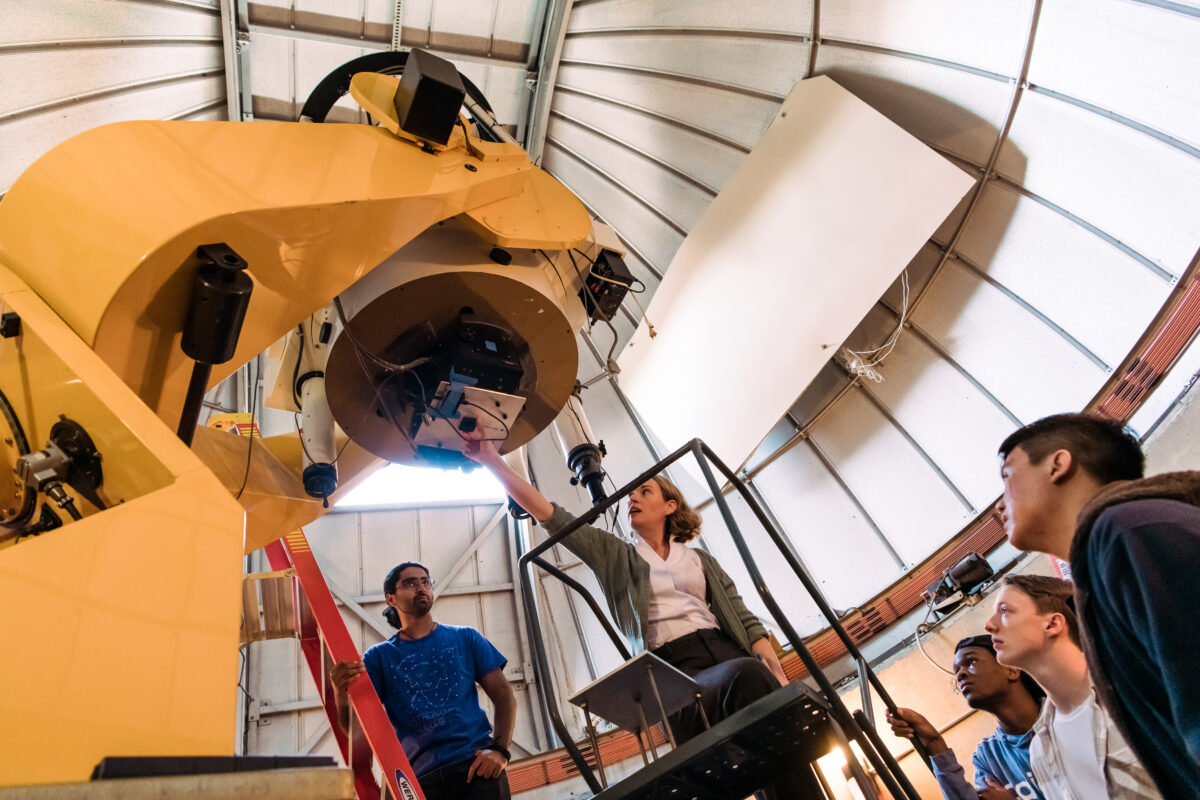 Eileen Meyer (center, reaching up) works on UMBC’s telescope with students. (Marlayna Demond ’11/UMBC)
NASA comes to campus
The university collaborated with the Goddard Space Flight Center to host the “NASA-UMBC Interaction Days,” an interactive, three-day series that took a closer look into the agency’s current research activity across a range of fields, with insight into how UMBC faculty, staff, and students can continue to work with Goddard scientists and engineers. The event series attracted more than 250 registrants.
UMBC-NASA earth science center awarded $47 million extension
The UMBC-led Goddard Earth Science Technology and Research (GESTAR) II center was awarded a two-year, $47 million extension this year to continue its cooperative agreement with the NASA Goddard Space Flight Center (GSFC). Since launching in 2021, GESTAR II has employed more than 150 scientists who are distributed across nearly all of GSFC’s earth science division laboratories. Over the years, GESTAR II researchers have been a part of teams that have developed an instrument that monitors water quality in the Chesapeake Bay, studied the environmental impacts of megafire smoke plumes, generated the first global map of cargo ship pollution, and much more.
More on UMBC’s partnership with NASA
]]>
UMBC is approaching 30 years of collaboration with the National Aeronautics and Space Administration (NASA), a partnership that largely culminates under the university’s three major cooperative...
https://umbc.edu/stories/umbc-nasa-partnership-2024/
https://my3.my.umbc.edu/api/v0/pixel/news/146266/guest@my.umbc.edu/c9b14e4a81a0cad626bb8a2df7cb33d8/api/pixel
csst
esi
gestar2
gphi
nasa
nasa-goddard-space-flight-center
news
research
science-and-tech
story
UMBC News & Magazine
https://my3.my.umbc.edu/groups/umbc-news-magazine
https://assets1-my.umbc.edu/system/shared/avatars/groups/000/001/943/24435aa6207c452e7bc15cc74b42c7bb/xsmall.png?1748556657
https://assets1-my.umbc.edu/system/shared/avatars/groups/000/001/943/24435aa6207c452e7bc15cc74b42c7bb/original.png?1748556657
https://assets2-my.umbc.edu/system/shared/avatars/groups/000/001/943/24435aa6207c452e7bc15cc74b42c7bb/xxlarge.png?1748556657
https://assets2-my.umbc.edu/system/shared/avatars/groups/000/001/943/24435aa6207c452e7bc15cc74b42c7bb/xlarge.png?1748556657
https://assets3-my.umbc.edu/system/shared/avatars/groups/000/001/943/24435aa6207c452e7bc15cc74b42c7bb/large.png?1748556657
https://assets1-my.umbc.edu/system/shared/avatars/groups/000/001/943/24435aa6207c452e7bc15cc74b42c7bb/medium.png?1748556657
https://assets2-my.umbc.edu/system/shared/avatars/groups/000/001/943/24435aa6207c452e7bc15cc74b42c7bb/small.png?1748556657
https://assets1-my.umbc.edu/system/shared/avatars/groups/000/001/943/24435aa6207c452e7bc15cc74b42c7bb/xsmall.png?1748556657
https://assets2-my.umbc.edu/system/shared/avatars/groups/000/001/943/24435aa6207c452e7bc15cc74b42c7bb/xxsmall.png?1748556657
UMBC News & Magazine
0
0
false
Fri, 13 Dec 2024 12:58:18 -0500
Fri, 13 Dec 2024 12:58:18 -0500
UMBC hosts “NASA Days” event series with Goddard Space Flight Center
UMBC is collaborating with the NASA Goddard Space Flight Center (GSFC) to host an interactive, three-day event series that takes a closer look into the center’s current research activity, with insight into how faculty and students can engage with Goddard scientists and engineers.
NASA-UMBC Interaction Days launched on September 9 and continues on September 16 and September 30, highlighting a range of topics on the diverse research and technological advancements in space exploration from leading scientists and engineers at GSFC. The series also provides an overview of the extensive research activity happening in collaboration between UMBC and NASA, a partnership that began nearly 30 years ago.
Astrophysicist Sibasish Laha, an associate research scientist with UMBC’s Center for Space Sciences and Technology who works out of GSFC, organized the series in response to an influx of students inquiring about the work that happens at NASA and ways to get involved.
“I started this interaction day series to help UMBC students better understand what NASA scientists and engineers do on a day-to-day basis,” says Laha. Students get a behind-the-scenes look into the research happening at GSFC, across an array of disciplinary fields such as earth science, data science and AI, astrobiology, and more.
Student opportunities at NASA
Day one of the event series included lectures focused on earth science, exoplanets, and laboratory astrophysics with featured speakers Maurice Leutenegger of GSFC’s x-ray astrophysics laboratory; Wayne Yu, an senior engineer in astrobiology; and planetary scientist Ravi Kopparap. A packed room of more than 90 attendees learned about the inquiring minds behind the GSFC’s research activity.
Day two of the event series (happening on September 16) will feature discussions on data science and AI, x-ray astrophysics, and astrobiology. The event will conclude on September 30 with lectures on the habitable worlds observatory, payload systems and engineering, and NASA’s long term goals with featured speaker Robert Petre, director of GSFC’s astrophysics science division.
Some Retrievers at the event were there out of general curiosity and some were looking for jobs and internship experiences. Brad Cenko, research scientist at GSFC, shared about the wide array of experiential learning opportunities happening at NASA’s research centers across the country.
“NASA has one of the largest internship programs in the state of Maryland, and students can apply to internships year-round,” said Cenko. This summer, UMBC students secured internship placements with NASA, which included senior Leah Narat, business technology administration, who worked at GSFC as a business intelligence intern.
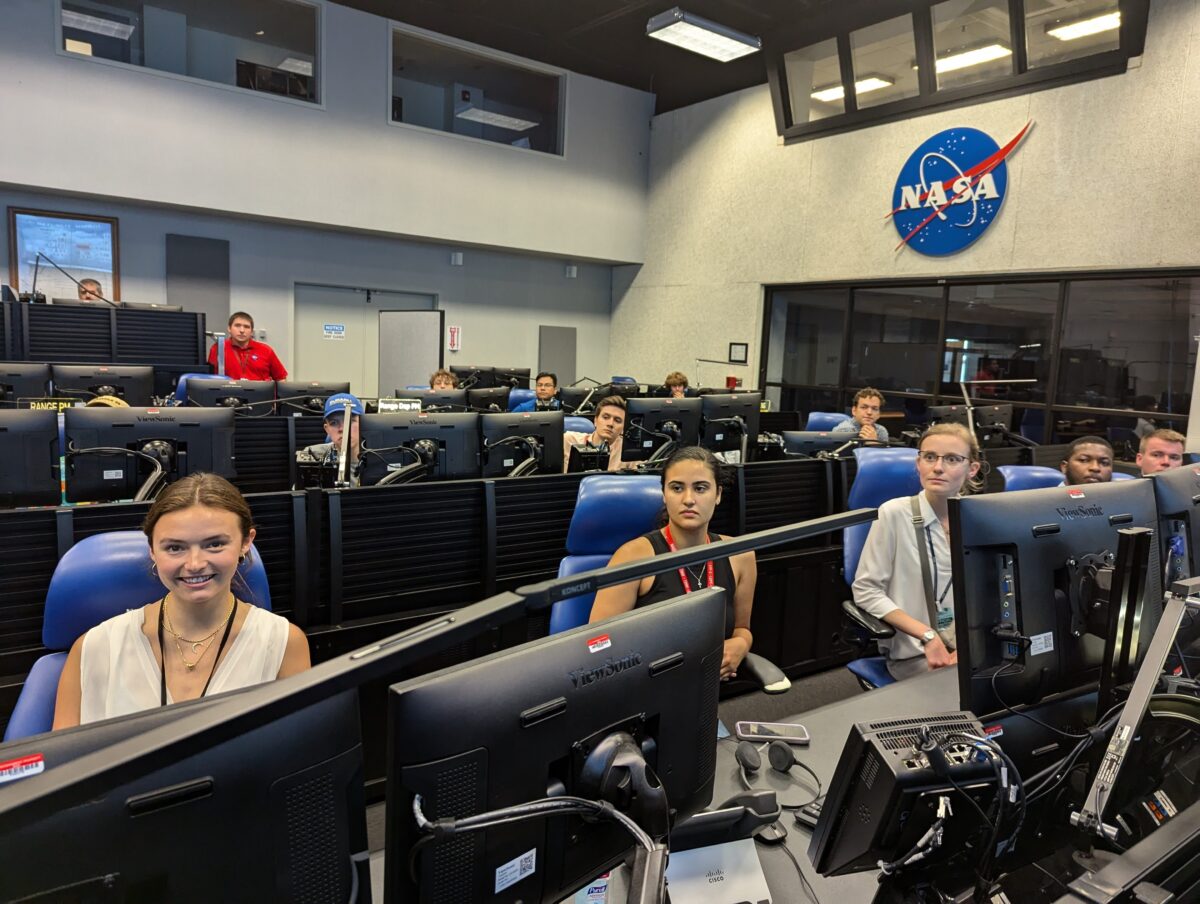 Interns from the Flight Projects Directorate at NASA Goddard, including Leah Narat, center, tour the Wallops Flight Facility in Virginia. (Image courtesy of Narat)
Narat created and updated databases to track awards given to NASA employees. The agency will use the information to maximize employees’ recognition and success and guide them toward career paths that best take advantage of their strengths.
“Honestly, being at NASA was something that I never thought I would achieve, but I put my application out there, and here I am,” says Narat, who worked as a business intelligence intern at the NASA Goddard Space Flight Center in Greenbelt, Maryland, this past summer. “It’s been wonderful.”
A 30-year partnership
While a large majority of students made up the attendee list for day one, the event also brought in many faculty and staff interested in collaborating with the agency. “Faculty are an integral part in these collaborative efforts and our goal is to connect them directly with NASA’s scientists and engineers,” said event organizer Laha.
 Makenzie Lystrup, director of NASA’s Goddard Space Flight Center, and UMBC President Valerie Sheares Ashby during Lystrup’s visit to UMBC in February 2024. (Marlayna Demond ’11/UMBC)
Currently, more than 250 UMBC scientists and research faculty members are partnering with NASA civil servants and are employed under three major cooperative agreements, of which includes the Goddard Earth Sciences Technology and Research II center (GESTAR II); the Center for Space Sciences and Technology (CSST); and the Goddard Planetary Heliophysics Institute (GPHI). The university also is home to the NASA-affiliated Earth and Space Institute based out of UMBC’s Physics Building.
Additionally, nearly 30 of the university’s scientists and research faculty are working on active NASA space missions. That includes the UMBC-developed Lunar Environment Monitoring Station, which was selected as one of the first three instruments to be a part of Artemis III, NASA’s mission that will send astronauts back to the lunar surface after more than 50 years, and UMBC’s Hyper-Angular Rainbow Polarimeter wide-angle imaging polarimeter instrument on board NASA’s Plankton, Aerosol, Cloud, ocean Ecosystem spacecraft mission.
“NASA is providing half of UMBC’s federal contract funding—on a national scale, this is really unusual,” says Don Engel, director of the CSST and assistant professor of computer science and electrical engineering. “Our NASA partnerships are so cross-disciplinary. All three of UMBC’s colleges are represented with these centers, and that’s extremely significant.”
Register for the remaining NASA-UMBC Interaction Days events here.
]]>
UMBC is collaborating with the NASA Goddard Space Flight Center (GSFC) to host an interactive, three-day event series that takes a closer look into the center’s current research activity, with...
https://umbc.edu/stories/nasa-days-event-series/
https://my3.my.umbc.edu/api/v0/pixel/news/143892/guest@my.umbc.edu/e03c952bb42087e2a28c0c06cd19474e/api/pixel
community
csst
esi
gestar
gestar2
gphi
nasa
nasa-goddard-space-flight-center
news
science-and-tech
story
UMBC News & Magazine
https://my3.my.umbc.edu/groups/umbc-news-magazine
https://assets1-my.umbc.edu/system/shared/avatars/groups/000/001/943/24435aa6207c452e7bc15cc74b42c7bb/xsmall.png?1748556657
https://assets1-my.umbc.edu/system/shared/avatars/groups/000/001/943/24435aa6207c452e7bc15cc74b42c7bb/original.png?1748556657
https://assets2-my.umbc.edu/system/shared/avatars/groups/000/001/943/24435aa6207c452e7bc15cc74b42c7bb/xxlarge.png?1748556657
https://assets2-my.umbc.edu/system/shared/avatars/groups/000/001/943/24435aa6207c452e7bc15cc74b42c7bb/xlarge.png?1748556657
https://assets3-my.umbc.edu/system/shared/avatars/groups/000/001/943/24435aa6207c452e7bc15cc74b42c7bb/large.png?1748556657
https://assets1-my.umbc.edu/system/shared/avatars/groups/000/001/943/24435aa6207c452e7bc15cc74b42c7bb/medium.png?1748556657
https://assets2-my.umbc.edu/system/shared/avatars/groups/000/001/943/24435aa6207c452e7bc15cc74b42c7bb/small.png?1748556657
https://assets1-my.umbc.edu/system/shared/avatars/groups/000/001/943/24435aa6207c452e7bc15cc74b42c7bb/xsmall.png?1748556657
https://assets2-my.umbc.edu/system/shared/avatars/groups/000/001/943/24435aa6207c452e7bc15cc74b42c7bb/xxsmall.png?1748556657
UMBC News & Magazine
0
0
false
Fri, 13 Sep 2024 16:04:17 -0400
Fri, 13 Sep 2024 16:04:17 -0400
El Niño is back – that’s good news or bad news, depending on where you live
Written by Bob Leamon, research scientist, Partnership for Heliophysics and Space Environment Research (PHaSER), UMBC
El Niño is officially here, and while it’s still weak right now, federal forecasters expect this global disrupter of worldwide weather patterns to gradually strengthen.
That may sound ominous, but El Niño – Spanish for “the little boy” – is not malevolent, or even automatically bad.
Here’s what forecasters expect, and what it means for the U.S.
What is El Niño?
El Niño is a climate pattern that starts with warm water building up in the tropical Pacific west of South America. This happens every three to seven years or so. It might last a few months or a couple of years.
Normally, the trade winds push warm water away from the coast there, allowing cooler water to surface. But when the trade winds weaken, water near the equator can heat up, and that can have all kinds of effects through what are known as teleconnections. The ocean is so vast – covering approximately one-third of the planet, or about 15 times the size of the U.S. – that those sloshings of warm water have knock-on effects around the globe.
The National Oceanic and Atmospheric Administration explains teleconnections and the impact of El Niño.
That warming at the equator during El Niño leads to the warming of the stratosphere, starting about 6.2 miles (10 kilometers) above the surface. Scientists are still studying how exactly this teleconnection occurs.
At the same time, the lower tropical stratosphere cools.
That combination can shift the upper-level winds known as the jet stream, which blow from west to east. Altering the jet stream can affect all kinds of weather variables, from temperatures to storms and winds that can tear hurricanes apart.
Basically, what happens in the Pacific doesn’t stay in the Pacific.
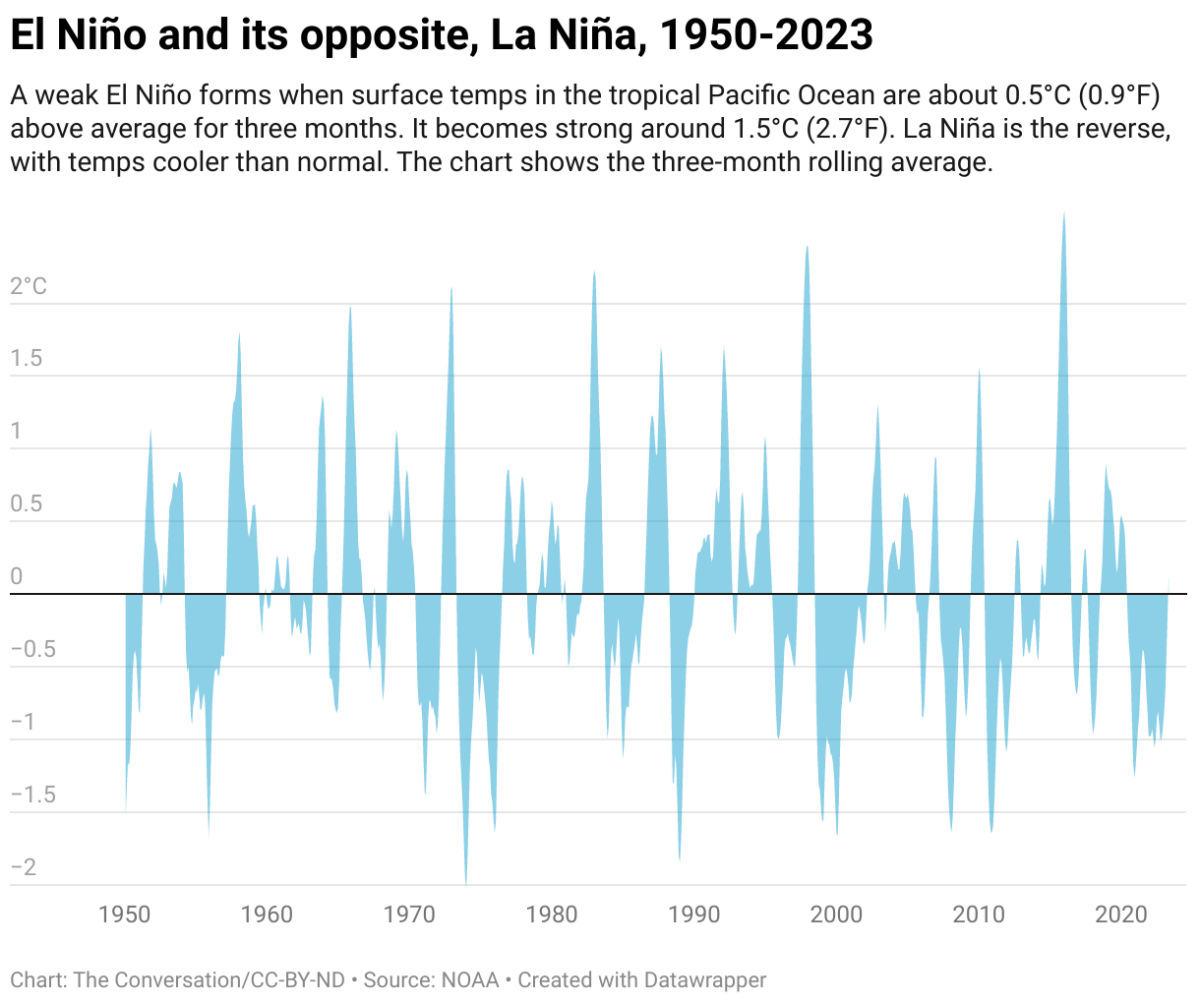
So, what does all that mean for you and me?
With apologies to Charles Dickens, El Niño tends to create a tale of two regions: the best of times for some, and the worst of times for others.
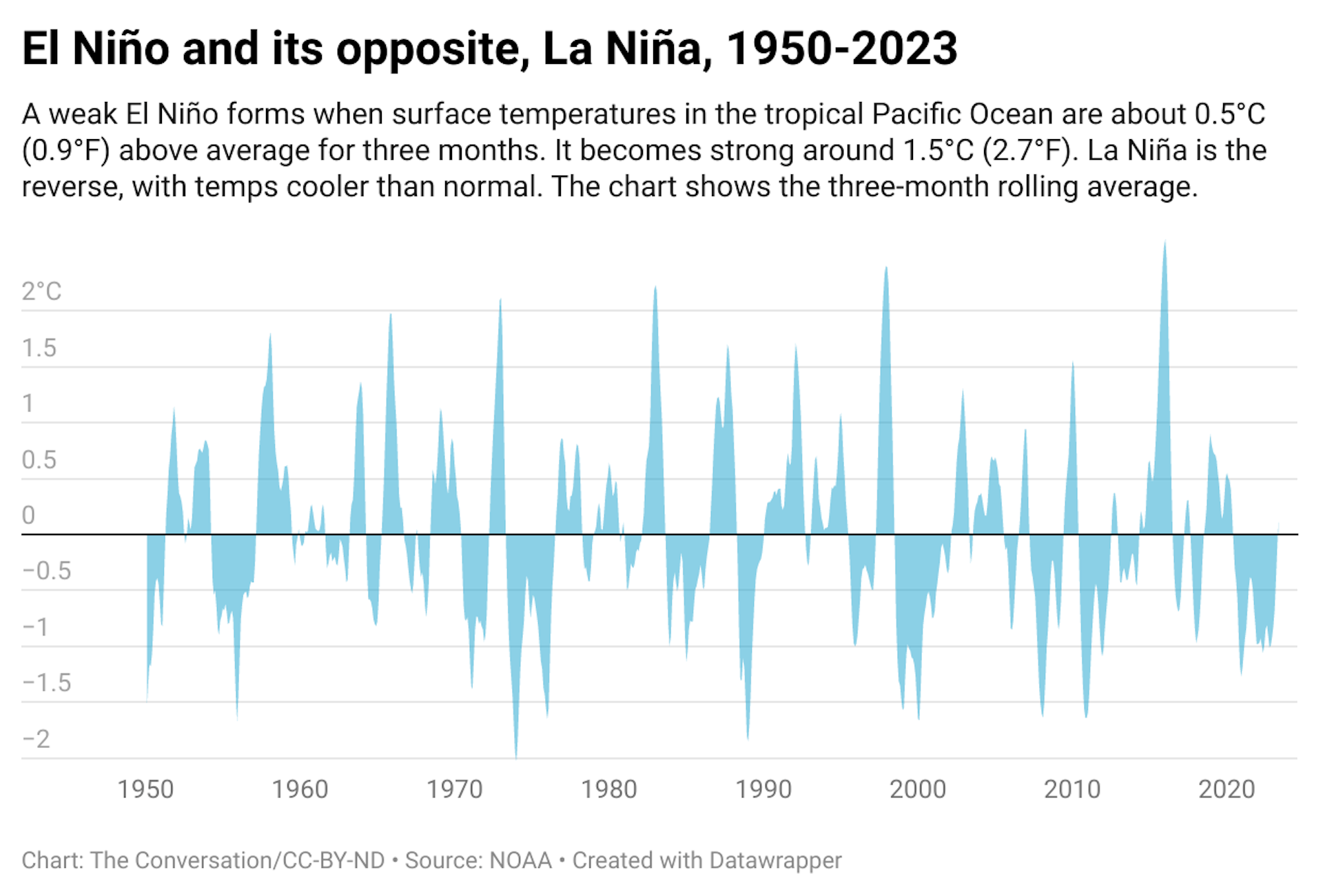
On average, El Niño years are warmer globally than La Niña years – El Niño’s opposite. Globally, a strong El Niño can boost temperatures by about 0.7 degrees Fahrenheit (0.4 Celsius). But in North America, there is a lot of local variation.
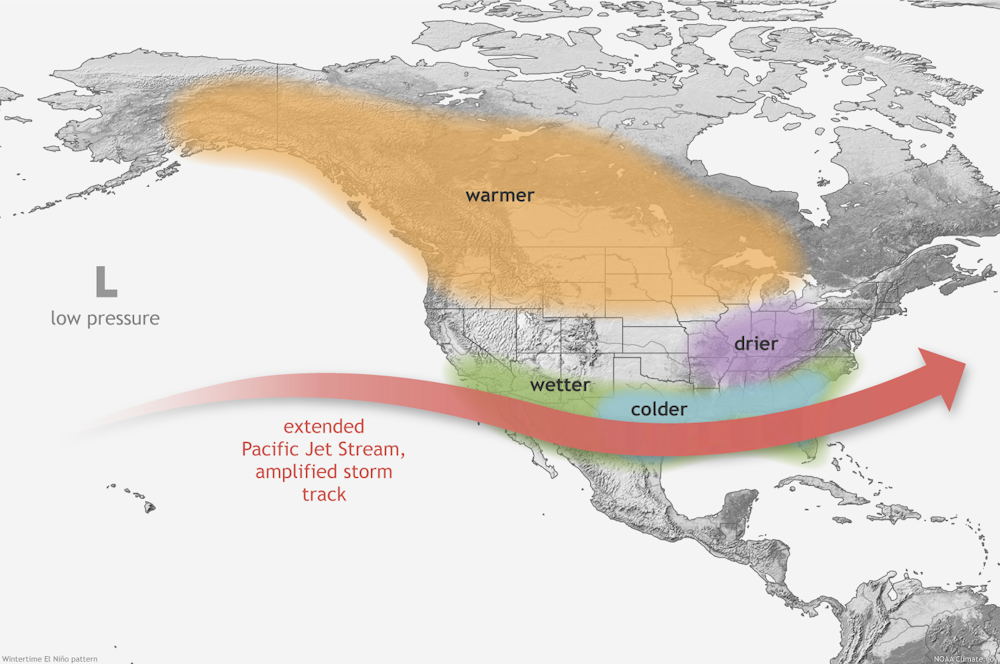
El Niño years tend to be warmer across the northern part of the U.S. and in Canada, and the Pacific Northwest and Ohio Valley are often drier than usual in the winter and fall. The Southwest, on the other hand, tends to be cooler and wetter than average.
El Niño typically shifts the jet stream farther south, so it blows pretty much due west to east over the southern U.S. That shift tends to block moisture from the Gulf of Mexico, reducing the fuel for thunderstorms in the Southeast. La Niña, conversely, is associated with a more wavy and northward-shifted jet stream, which can enhance severe weather activity in the South and Southeast.
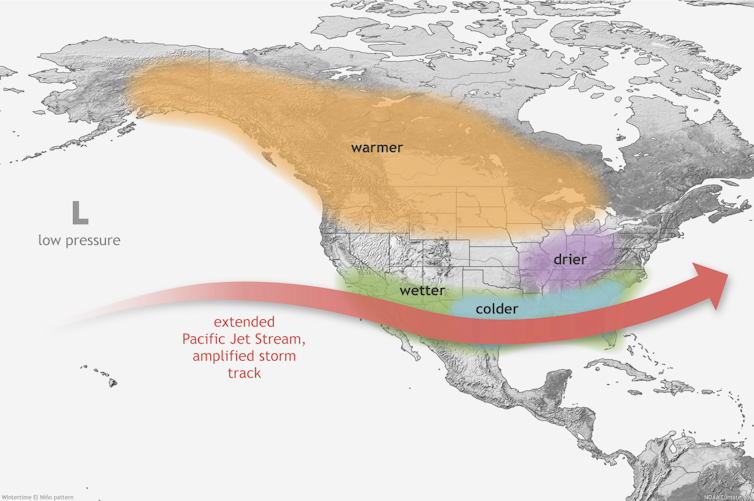 El Niño’s typical effects in winter. (Image courtesy of NOAA)
El Niño also affects hurricanes, but in different ways in the Atlantic and Pacific.
Over the Atlantic, El Niño tends to increase wind shear – the change in wind speed with height in the atmosphere – which can tear apart hurricanes. But El Niño has the opposite effect in the eastern Pacific, where it can mean more storms. The ocean heat can also raise the risk of marine heat waves that can devastate corals and ecosystems fish rely on.
In the middle of the U.S., El Niño is generally associated with warmer and drier conditions that can mildly increase the chances of a bountiful corn crop.
In contrast, El Niño can wreak havoc on crops in Southern Africa and Australia and increase Australia’s fire risk with dangerously dry conditions. Brazil and northern South America also tend to be drier, while parts of Argentina and Chile tend to be wetter.
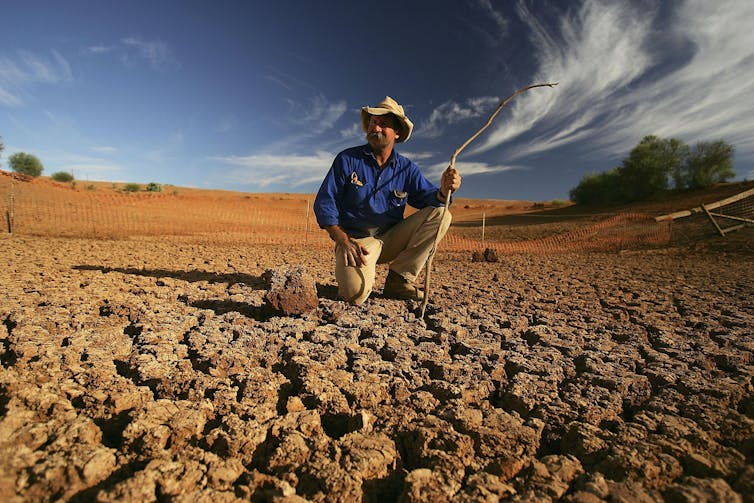 Australia endured its worst drought in decades in 2005 with the combined effect of increasing temperatures and an El Niño. (Image by Ian Waldie/Getty Images)
Of course, just because this is normally what happens doesn’t mean it happens every time. Witness California’s record rainfalls from multiple atmospheric rivers at the end of the last La Niña, which normally would mean dry conditions.
Every weather event is somewhat different, so the influence of El Niño is a matter of probability, not certainty. How El Niño and La Niña will be influenced over time by climate change isn’t yet clear.
The forecasts don’t all agree
Is 2023 going to be a record-breaking year? That’s the multibillion-dollar question.
The National Weather Service declares the onset of El Niño when water temperatures are at least 0.9 F (0.5 C) above normal for a three-month period in what’s known as the Niño3.4 region. That’s a large imaginary rectangle south of Hawaii along the equator.
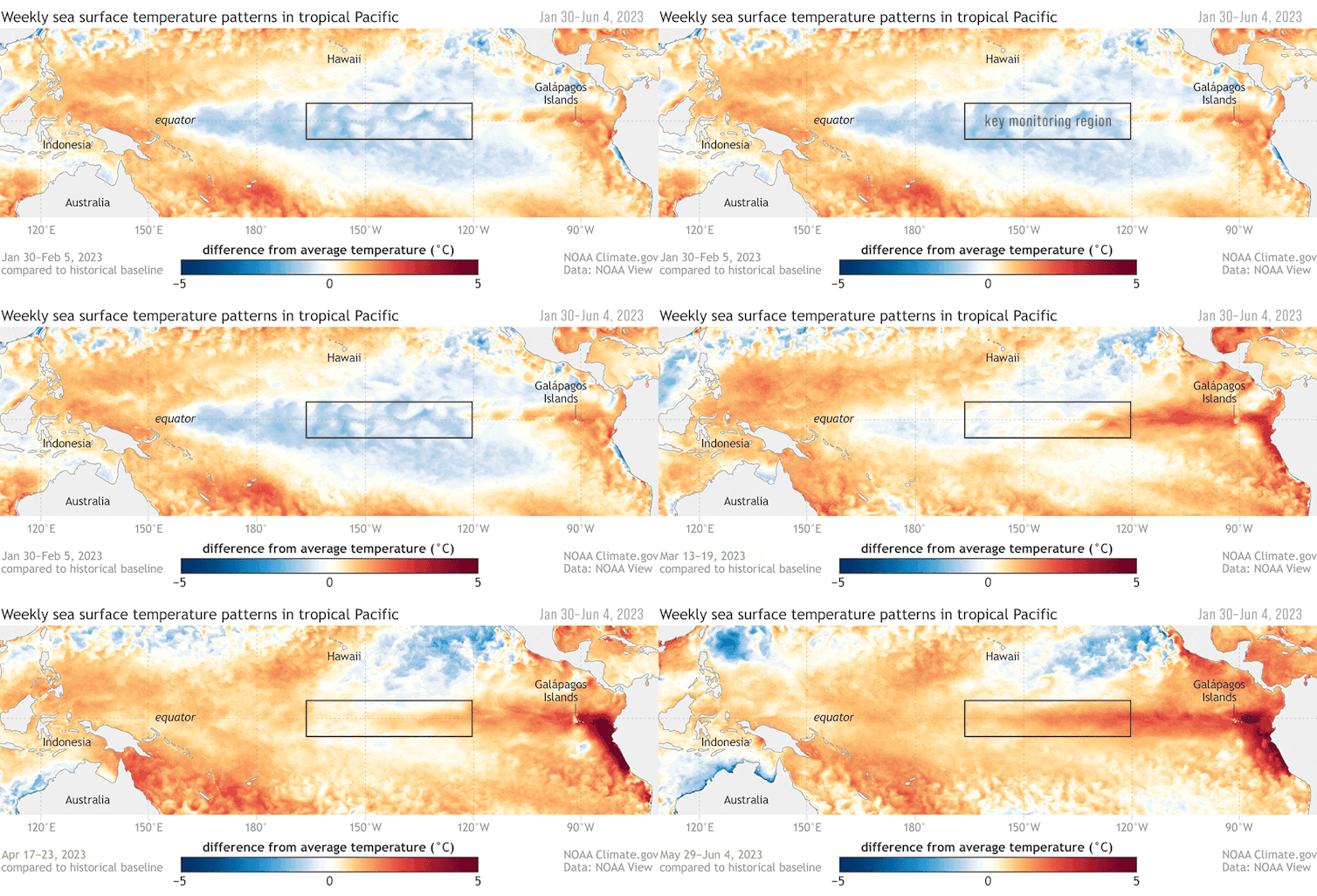 Watching El Niño develop in the tropical Pacific, January to June 2023. The box shows the Niño3.4 region. (Animation by NOAA at Climate.gov)
For a strong El Niño, the Niño3.4 region needs to warm by 2.7 F (1.5 C) for three months. It’s not clear as of right now whether this El Niño will meet that threshold this year.
The National Oceanic and Atmospheric Administration’s first El Niño advisory of the year, released on June 8, sees an 84% chance of El Niño being greater than moderate by winter and a 56% chance that it will be strong.
Those forecasts can change, though, and different forecasting methods offer different forecasts of the magnitude.
“Dynamical” models, similar to the models used for typical weather forecasts, have projected a very strong El Niño, whereas “static” or statistical models are far less optimistic. Personally, I’m a statistical modeler, and my own model doesn’t suggest a strong El Niño in 2023. Rather, my model – like other static models – predicts that 2023 will fizzle out, and after a couple of quiet, or neutral, years, we will see a strong El Niño in 2026. I did get the recent unusual “triple dip” La Niña right, but I’m willing to be proved wrong by observations, as any good scientist should be.
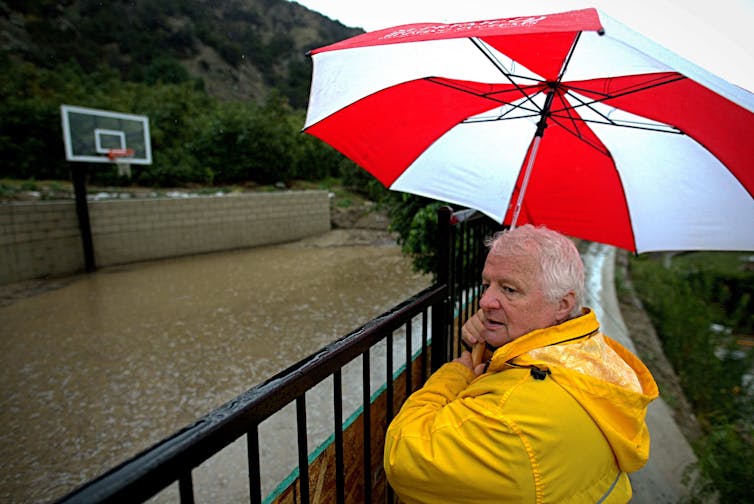 El Niño often means winter rain for California. While it’s needed, it’s sometimes too much. (Image by Watchara Phomicinda/MediaNews Group/The Press-Enterprise via Getty Images)
But no computer model of any flavor has had experience with the globally super-high ocean temperatures that are occurring right now. The Atlantic is unusually warm, and that could offset some of the usual forces that come with El Niño.
This article is republished from The Conversation under a Creative Commons license. Read the original article and see more than 250 UMBC articles available in The Conversation.
]]>
Written by Bob Leamon, research scientist, Partnership for Heliophysics and Space Environment Research (PHaSER), UMBC El Niño is officially here, and while it’s still weak right now, federal...
https://umbc.edu/stories/el-nino-is-back/
https://my3.my.umbc.edu/api/v0/pixel/news/133940/guest@my.umbc.edu/5a2d8eb7c85b0bce4b643fd56438209c/api/pixel
discovery
gphi
magazine
phaser
UMBC News & Magazine
https://my3.my.umbc.edu/groups/umbc-news-magazine
https://assets1-my.umbc.edu/system/shared/avatars/groups/000/001/943/24435aa6207c452e7bc15cc74b42c7bb/xsmall.png?1748556657
https://assets1-my.umbc.edu/system/shared/avatars/groups/000/001/943/24435aa6207c452e7bc15cc74b42c7bb/original.png?1748556657
https://assets2-my.umbc.edu/system/shared/avatars/groups/000/001/943/24435aa6207c452e7bc15cc74b42c7bb/xxlarge.png?1748556657
https://assets2-my.umbc.edu/system/shared/avatars/groups/000/001/943/24435aa6207c452e7bc15cc74b42c7bb/xlarge.png?1748556657
https://assets3-my.umbc.edu/system/shared/avatars/groups/000/001/943/24435aa6207c452e7bc15cc74b42c7bb/large.png?1748556657
https://assets1-my.umbc.edu/system/shared/avatars/groups/000/001/943/24435aa6207c452e7bc15cc74b42c7bb/medium.png?1748556657
https://assets2-my.umbc.edu/system/shared/avatars/groups/000/001/943/24435aa6207c452e7bc15cc74b42c7bb/small.png?1748556657
https://assets1-my.umbc.edu/system/shared/avatars/groups/000/001/943/24435aa6207c452e7bc15cc74b42c7bb/xsmall.png?1748556657
https://assets2-my.umbc.edu/system/shared/avatars/groups/000/001/943/24435aa6207c452e7bc15cc74b42c7bb/xxsmall.png?1748556657
UMBC News & Magazine
0
0
false
Fri, 09 Jun 2023 10:37:16 -0400
UMBC to receive $10 million from NASA to support sun and space environment research
UMBC is part of a new consortium that has received $64.1 million from NASA to establish the Partnership for Heliophysics and Space Environment Research (PHaSER) and fund it for the next five years. UMBC will receive $10 million from the award to move forward the next phase of heliophysics research at the university.
Heliophysics researchers study the Sun and how it affects and interacts with the solar system, including its role in space weather. The Catholic University of America leads the PHaSER consortium, which also includes University of Maryland, College Park (UMD); George Mason University; Howard University; and the Universities Space Research Association.
The UMBC arm of PHaSER will replace the Goddard Planetary and Heliophysics Institute (GPHI), a cooperative agreement between NASA, UMD, and UMBC that UMBC has led for the last 10 years. Both GPHI and PHaSER support missions run by the NASA Goddard Space Flight Center’s Heliophysics Science Division (HSD). Recent GPHI research has included identification of a phenomenon known as the Terminator, which helps describe sun cycles and could improve decade-scale weather forecasts.
“The primary purpose of PHaSER is to collaboratively support the HSD in studying plasma processes in our solar system and developing new missions and instruments,” says Jan Merka. He served as GPHI director and will now direct the UMBC arm of PHaSER. “UMBC has a long tradition of working with NASA and HSD,” Merka adds, noting that in the last year alone GPHI funded 30 full-time researchers, 15 of them at UMBC.

GPHI director, and now PHaSER director at UMBC, Jan Merka. Photo by Marlayna Demond ’11 for UMBC.
All hands on deck
“The mission of the heliophysics division is to study the transport of energy, in the form of particles and radiation from the sun through interplanetary space and its effects on Earth’s atmosphere and ionosphere,” saysBob Robinson, the director of PHaSER and research professor of physicsat Catholic University. PHaSER will support that mission through a multi-pronged approach targeting a range of initiatives.
For example, PHaSER’s goals include nurturing early-career and underrepresented researchers. Specific programs designed to do that will be a hallmark of the new center, including student internships and funding for postdocs. PHaSER support will also help sustain and strengthen partnerships across institutions and with NASA researchers. It will fund visiting scientists and sabbaticals for established faculty, and offer conference hosting and organization.
“PHaSER represents a network as much as a partnership, and we will leverage the many linkages the member institutions have to help move HSD scientific and technical projects forward,” the group said in its proposal.
“Cooperative agreements like GPHI and PHaSER enable closer connections between NASA and universities, which simplifies sharing ideas and performing joint research and technology development,” Merka adds. He emphasizes, “Another significant benefit is connecting students with research opportunities and mentors in heliophysics.”
The new partnership will enable institutions to hire more researchers in specialty heliophysics fields. Plus, in addition to supporting researchers, the PhaSER proposal calls for staff at NASA and the partner institutions to be directly engaged in planning, technology development, and implementation for PHaSER projects.
By supporting heliophysics researchers, students, and staff, PHaSER will empower people at all career levels and from all backgrounds to contribute new knowledge about the Sun and how it affects processes in the solar system.

This image shows some of the ways that space weather can affect technologies such as airplanes, GPS systems, and the power grid. Credit: NASA
Tradition of partnership
The strength of UMBC’s relationship with NASA goes beyond GPHI and PHaSER. The Joint Center for Earth Systems Technology (JCET), a similar partnership housed at UMBC, recently celebrated its 25th anniversary. And a third partnership, the Center for Space Science and Technology (CSST), recently received a funding renewal and enhancement.
JCET scientists, engineers, and statisticians conduct research on Earth and its atmosphere, while CSST supports researchers who study distant celestial bodies and phenomena. Both centers are housed at UMBC, which is one of the top 100 public universities in the U.S. for NASA funding.
“We are very proud of this new multi-institutional partnership with NASA Goddard,” says Karl Steiner, vice president for research at UMBC. “The new PHaSER program will not only continue to enhance our heliophysics research capability, but also provide unique opportunities for UMBC faculty and students to work in this important field.”
Banner image: A terminator event, a phenomenon discovered by GPHI researcher Robert Leamon, on the Sun in 2011. The three different colors (added by researchers) represent three temperatures. Photo courtesy of NASA Solar Dynamics Observatory.
]]>
UMBC is part of a new consortium that has received $64.1 million from NASA to establish the Partnership for Heliophysics and Space Environment Research (PHaSER) and fund it for the next five...
https://umbc.edu/stories/umbc-to-receive-10-million-from-nasa-to-support-sun-and-space-environment-research/
https://my3.my.umbc.edu/api/v0/pixel/news/119558/guest@my.umbc.edu/4ca3131c9a13df3f200fae59cf0b1e1c/api/pixel
gphi
majoraward
research
science-and-technology
UMBC News & Magazine
https://my3.my.umbc.edu/groups/umbc-news-magazine
https://assets1-my.umbc.edu/system/shared/avatars/groups/000/001/943/24435aa6207c452e7bc15cc74b42c7bb/xsmall.png?1748556657
https://assets1-my.umbc.edu/system/shared/avatars/groups/000/001/943/24435aa6207c452e7bc15cc74b42c7bb/original.png?1748556657
https://assets2-my.umbc.edu/system/shared/avatars/groups/000/001/943/24435aa6207c452e7bc15cc74b42c7bb/xxlarge.png?1748556657
https://assets2-my.umbc.edu/system/shared/avatars/groups/000/001/943/24435aa6207c452e7bc15cc74b42c7bb/xlarge.png?1748556657
https://assets3-my.umbc.edu/system/shared/avatars/groups/000/001/943/24435aa6207c452e7bc15cc74b42c7bb/large.png?1748556657
https://assets1-my.umbc.edu/system/shared/avatars/groups/000/001/943/24435aa6207c452e7bc15cc74b42c7bb/medium.png?1748556657
https://assets2-my.umbc.edu/system/shared/avatars/groups/000/001/943/24435aa6207c452e7bc15cc74b42c7bb/small.png?1748556657
https://assets1-my.umbc.edu/system/shared/avatars/groups/000/001/943/24435aa6207c452e7bc15cc74b42c7bb/xsmall.png?1748556657
https://assets2-my.umbc.edu/system/shared/avatars/groups/000/001/943/24435aa6207c452e7bc15cc74b42c7bb/xxsmall.png?1748556657
UMBC News & Magazine
0
0
false
Tue, 14 Sep 2021 15:41:03 -0400
Meet “The Terminator”: UMBC-led research connects solar cycle with climate predictions in a new way
The solar cycle involves periodic changes in activity on the Sun’s surface, and a new way of thinking about it reveals connections between solar activity and weather patterns on Earth. New research in Earth & Space Scienceled by Robert Leamon, research scientist at the Goddard Planetary Heliophysics Institute, a UMBC partnership with NASA, describes the discovery of a solar cycle phenomenon the authors have dubbed “the terminator.”
The researchers found that a La Niña weather pattern in the Pacific Ocean quickly follows a terminator event. La Niña and El Niño patterns affect everything from the likelihood of severe hurricanes to the success of the growing season. This means the ability to predict these patterns on the scale of about a decade could help communities and governments prepare for natural disasters, shifting crop supply and prices, and more. Organizations like NOAA currently offer weather pattern predictions about one year out, but access to decade-scale forecasts would be a huge advance.

Robert Leamon. Photo courtesy Robert Leamon.
The terminator
Leamon and co-authors Scott McIntosh and Daniel Marsh, both at the National Center for Atmospheric Research, define the terminator as the precise point where any remnants of activity from the previous cycle disappear from the sun’s surface. After “termination,” there is a dramatic increase in solar activity in the new cycle. Activity associated with two consecutive cycles usually overlaps for a few years, but the two cycles’ sunspots are distinguishable from each other based on their magnetic polarity (north vs. south). The polarity of the Sun reverses direction each cycle.
Previously, scientists defined the transition from one solar cycle to the next as the “solar minimum,” where overall solar activity is at its lowest point. However, this definition is imprecise. The terminator gives researchers a new way to think about the end of the solar cycle, and a more precise way to predict the timing of ensuing weather patterns.
Based on continuously collected cosmic ray data from an observatory in Finland, the new study demonstrates that a terminator event has consistently occurred about one year after the traditional “solar minimum” during each solar cycle for the last 60 years. In fact, data in the paper, which has been in the works since 2017, accurately predicted the next La Niña in 2020.
The name for the phenomenon was an easy choice, according to Leamon. “We’ve been calling this the terminator for a few years, because it indicates the death of a solar cycle,” he says. “And, because it’s predictable, it will, as always, ‘be back.’”
A “cycling” solution
Not all solar cycles are exactly the same length. They can range from about nine to 14 years, averaging around 11 years. So, Leamon used a creative, athletics-inspired technique to compare the timing of the sequence of events in each cycle. When reviewing his stats from a 100-mile bike ride in 2017, he noticed that each 25-mile lap got a little slower, but there were always the same speed-ups and slow-downs around certain features on the course, like hills. So, if he plotted the laps by distance, rather than time, all the hills lined up. Why not do the same for the solar cycle?
 Using a GPS watch to track a 100-mile bike race inspired the technique Robert Leamon employed in his new research. Here he competes in an Ironman triathlon. Photo courtesy Robert Leamon.
While the solar cycle doesn’t technically have a “distance” measurement, it’s possible to divide the length of each sun cycle into 100 equal parts, then plot the cycles on top of each other to compare their features.
“It’s one of those things… You just have a moment of inspiration and think, why don’t I try that?” Leamon says. “That’s how this study came to be. Rather than plotting the cycles by time, do it as distance.” And when you do that, he says, “all sorts of things start to line up.”
Hidden signals
This technique revealed that the transition away from the solar minimum is quite abrupt, rather than the smooth curves depicted in many explanatory charts of the solar cycle. “It’s not a smooth transition. There’s actually a sharp jump in solar activity and a sharp drop in cosmic rays right when solar activity picks up,” Leamon explains.
The relative abundance of cosmic rays entering Earth’s atmosphere is one of the ways that scientists can measure solar activity. When solar activity is limited, the magnetic fields associated with Earth and the Sun are simple and largely aligned. That creates an uninterrupted path for more cosmic rays to reach Earth. However, with high solar activity, the magnetic fields are complex. “Swiss cheese is perhaps a good analogy,” Leamon says. “There’s more stuff to scatter incoming particles off of. So at solar maximum, there’s a smaller number of cosmic rays hitting the Earth.”
Other researchers may have considered the irregular increase and decrease of solar activity as just noise in the data, but mapping the cycles by “distance” allowed Leamon to see that it was a consistent phenomenon. “One man’s noise is another man’s signal,” he says with a smile. “So don’t over-smooth things,” he says, or you’ll risk missing essential information.
Diagrams of the general weather trends during La Niña and El Niño events. Courtesy of the Australian Bureau of Meteorology. (Scroll left and right to see the full image for each weather pattern.)
Think outside the sky
Leamon acknowledges a concern that some people will try to use his study as evidence that climate change is caused by the Sun, not humans. That argument has long been made by deniers of human-caused climate change. But Leamon is clear that it misinterprets his findings.
When we talk about global warming, he says, “we’re only talking about the troposphere—the bottom few miles of the atmosphere where we live. But one of the consequences of a warming troposphere is a colder stratosphere,” which extends about 32 miles above Earth’s surface. By keeping more heat closer to the surface, that heat doesn’t escape and warm the stratosphere—and a colder stratosphere intensifies the solar cycle changes by increasing electrical conductivity in the upper atmosphere.
In fact, “since the 1950s there’s been a noticeable cooling of the stratosphere to go along with the warming of the troposphere,” Leamon says. That correlates with the beginning of seismic shifts in the U.S. standard of living, energy use, and other factors that have contributed to human-caused climate change. So, it’s fair to say that the Sun is a factor in the climate, but its role has intensified because of human activity, Leamon explains.
Science for the people
Leamon has additional research under review that offers further details about events during the solar cycle. His upcoming work also takes advantage of the new way of looking at the data inspired by his bike ride. Combined with the current results, the goal is to generate knowledge that both satisfies our innate curiosity about the workings of the solar system and helps people and communities navigate a changing world.
“If further research can establish that changes on the Sun are truly causing variability in the oceans, then we may be able to improve our ability to predict El Niño and La Niña events,” Leamon says.“That could help us understand how the Earth system varies on the scale of a season to a decade, and how predictable those variations are—giving us a firmer grasp on the complex bridge between weather and climate.”
Banner image: An image of a terminator event on the Sun in 2011. The three different colors (added by researchers) represent three temperatures. Photo courtesy of NASA Solar Dynamics Observatory.
]]>
The solar cycle involves periodic changes in activity on the Sun’s surface, and a new way of thinking about it reveals connections between solar activity and weather patterns on Earth. New...
https://umbc.edu/stories/meet-the-terminator-umbc-led-research-connects-solar-cycle-with-climate-predictions-in-a-new-way/
https://my3.my.umbc.edu/api/v0/pixel/news/119661/guest@my.umbc.edu/5a065cfefd2c5073e7de40a2580e669c/api/pixel
gphi
research
science-and-technology
UMBC News & Magazine
https://my3.my.umbc.edu/groups/umbc-news-magazine
https://assets1-my.umbc.edu/system/shared/avatars/groups/000/001/943/24435aa6207c452e7bc15cc74b42c7bb/xsmall.png?1748556657
https://assets1-my.umbc.edu/system/shared/avatars/groups/000/001/943/24435aa6207c452e7bc15cc74b42c7bb/original.png?1748556657
https://assets2-my.umbc.edu/system/shared/avatars/groups/000/001/943/24435aa6207c452e7bc15cc74b42c7bb/xxlarge.png?1748556657
https://assets2-my.umbc.edu/system/shared/avatars/groups/000/001/943/24435aa6207c452e7bc15cc74b42c7bb/xlarge.png?1748556657
https://assets3-my.umbc.edu/system/shared/avatars/groups/000/001/943/24435aa6207c452e7bc15cc74b42c7bb/large.png?1748556657
https://assets1-my.umbc.edu/system/shared/avatars/groups/000/001/943/24435aa6207c452e7bc15cc74b42c7bb/medium.png?1748556657
https://assets2-my.umbc.edu/system/shared/avatars/groups/000/001/943/24435aa6207c452e7bc15cc74b42c7bb/small.png?1748556657
https://assets1-my.umbc.edu/system/shared/avatars/groups/000/001/943/24435aa6207c452e7bc15cc74b42c7bb/xsmall.png?1748556657
https://assets2-my.umbc.edu/system/shared/avatars/groups/000/001/943/24435aa6207c452e7bc15cc74b42c7bb/xxsmall.png?1748556657
UMBC News & Magazine
0
0
false
Mon, 05 Apr 2021 22:07:03 -0400
UMBC dedicates new Earth and Space Institute, building on decades of NASA collaboration
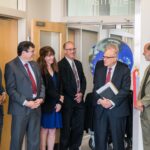
On the third floor of the UMBC Physics Building, a glass sign with crisp white lettering announces UMBC’s newest research center: the Earth and Space Institute (ESI).
The institute includes a prototyping lab, operations center, and offices, but it is also much more than a collection of rooms, explains Karl Steiner, UMBC’s vice president for research. The ESI is a physical home for the interdisciplinary earth and space science UMBC researchers do with support from NASA, NOAA, and other federal agencies as well as collaborators around the world. It’s a hub where scientists, engineers, and students will take UMBC’s earth and space research to the next level.
The ESI, administered by UMBC’s College of Natural and Mathematical Sciences (CNMS), joins a set of other distinguished UMBC research centers, including the Center for Space Science and Technology (CSST), Goddard Planetary and Heliophysics Institute (GPHI), and Joint Center for Earth Systems Technology (JCET), all of which are collaborations with the NASA Goddard Spaceflight Center in Greenbelt, Maryland.
 ESI director Vanderlei Martins (right), discusses research projects with Chris Scolese, director of NASA Goddard, in the prototyping room.
CNMS Dean Bill LaCourse believes NASA has served as “a role model and inspirational force,” that has led people to reach for the stars for generations, and he is excited to expand UMBC’s collaborative work with NASA. “The Earth and Space Institute is our opportunity to reach for new heights,” he shares. “To take that chance in the name of science, commitment, passion, and basic human curiosity.”
At a ribbon cutting for the new space, leaders from the three other centers, as well as the director of NASA Goddard, gathered to discuss current projects and ideas for future collaborations. They emphasized the strong and ongoing relationship between UMBC and NASA, which is only expected to deepen with the dedication of the new institute.
“It’s great to be here. The partnership with UMBC is just fantastic,” said NASA Goddard director Christopher Scolese. “All this happens because of the strength of your work, and we should say thank you to all of you,” added UMBC President Freeman Hrabowski, speaking to the scientists in the room. “It takes researchers to produce researchers.”
 Guests learn about the ESI operation center.
Vanderlei Martins, professor of physics and director of the new institute, describes the ESI as a place “to develop new technologies and new science in earth and space fields.” Martins is currently working on HARP, a CubeSat mission intended to launch within the next year. But he and other UMBC scientists have their eyes on an ever bigger goal: a full-blown NASA mission with their equipment on it. The ESI will make planning and successfully proposing such a mission a real possibility.
Another important aspect of the institute is its role as a platform to boost collaboration across disciplines. “We want to collaborate even more with Goddard on the engineering side, on the science side, on the education side,” says Martins, noting that this could mean pulling in faculty and students at all levels and from a broad range of focus areas.
 Lorraine Remer, JCET, discusses JCET’s current projects and areas for growth.
Jane Turner, director of CSST, shares that “one of our important roles is to connect our graduate and undergraduate students to mentors and project opportunities at Goddard”—a goal the new ESI shares. Lorraine Remer, a JCET research professor, adds that recruiting UMBC students to careers at NASA or other federal agencies via experiences with UMBC collaborative centers could also play a role in diversifying the federal workforce, because of UMBC’s strong track record for supporting the success of students from all backgrounds in STEM fields.
Alan Yeakley, chair of geography and environmental systems, also envisions opportunities for the ESI to utilize the social sciences in its work. “I see geography and environmental science as the connective tissue between the natural sciences and the social sciences,” he shares. Data collected by NOAA satellites, for example, can contribute to public health research on air quality, urbanization, and the effects of climate change.
 UMBC and NASA Goddard representatives cut a ribbon to dedicate the ESI.
The ESI is intended to bring the UMBC community together in new ways, just as it came together to support the institute’s creation. “It takes a community—a wide spectrum of people giving support from all kinds of directions—to bring something like this together,” LaCourse says. From the crews that renovated the space to university administrators at the highest level, “There has been cross-campus support… This is a university facility that was a feat to get off the ground, and now it’s here.”
“The Earth and Space Institute leverages our resources and expands our potential,” LaCourse says. Inspired by NASA, “it allows UMBC to dream bigger and reach higher.”
Banner image: Dean LaCourse addresses guests just before they cut a ribbon at the entrance of the new Earth and Space Institute to dedicate the space. From left to right: Felicia Jones Selden ’81, biological sciences, director of applied engineering and technology at NASA Goddard; UMBC President Freeman Hrabowski; Chris Scolese, director of NASA Goddard; Colleen Hartman, director of sciences and exploration at NASA Goddard; Michael Hayden, UMBC professor and chair of physics; Bill LaCourse, dean of UMBC College of Natural and Mathematical Sciences; UMBC Provost Philip Rous (behind Dean LaCourse); Vanderlei Martins, ESI director and UMBC professor of physics; Karl Steiner, UMBC vice president for research.
All photos by Marlayna Demond ’11 for UMBC.
]]>
On the third floor of the UMBC Physics Building, a glass sign with crisp white lettering announces UMBC’s newest research center: the Earth and Space Institute (ESI). The institute includes a...
https://umbc.edu/stories/umbc-dedicates-new-earth-and-space-institute-building-on-decades-of-nasa-collaboration/
https://my3.my.umbc.edu/api/v0/pixel/news/120672/guest@my.umbc.edu/851bf3cf4f824f77b10d179a72900f86/api/pixel
cnms
csst
esi
ges
gphi
interdisciplinary
jcet
physics
research
science-and-technology
UMBC News & Magazine
https://my3.my.umbc.edu/groups/umbc-news-magazine
https://assets1-my.umbc.edu/system/shared/avatars/groups/000/001/943/24435aa6207c452e7bc15cc74b42c7bb/xsmall.png?1748556657
https://assets1-my.umbc.edu/system/shared/avatars/groups/000/001/943/24435aa6207c452e7bc15cc74b42c7bb/original.png?1748556657
https://assets2-my.umbc.edu/system/shared/avatars/groups/000/001/943/24435aa6207c452e7bc15cc74b42c7bb/xxlarge.png?1748556657
https://assets2-my.umbc.edu/system/shared/avatars/groups/000/001/943/24435aa6207c452e7bc15cc74b42c7bb/xlarge.png?1748556657
https://assets3-my.umbc.edu/system/shared/avatars/groups/000/001/943/24435aa6207c452e7bc15cc74b42c7bb/large.png?1748556657
https://assets1-my.umbc.edu/system/shared/avatars/groups/000/001/943/24435aa6207c452e7bc15cc74b42c7bb/medium.png?1748556657
https://assets2-my.umbc.edu/system/shared/avatars/groups/000/001/943/24435aa6207c452e7bc15cc74b42c7bb/small.png?1748556657
https://assets1-my.umbc.edu/system/shared/avatars/groups/000/001/943/24435aa6207c452e7bc15cc74b42c7bb/xsmall.png?1748556657
https://assets2-my.umbc.edu/system/shared/avatars/groups/000/001/943/24435aa6207c452e7bc15cc74b42c7bb/xxsmall.png?1748556657
UMBC News & Magazine
0
0
false
Tue, 19 Sep 2017 21:43:19 -0400
CRESST II space science consortium to receive $87.5 million from NASA Goddard
The Center for Research and Exploration in Space Science and Technology (CRESST II) is prepared to embark on a new era of innovative research and teaching with the commitment of $87.5 million from the National Aeronautics and Space Administration (NASA) Goddard Space Flight Center.
UMBC and the University of Maryland, College Park are the leading partners in a consortium formed to compete for this program. New consortium partners under this renewal agreement include Howard University, Catholic University of America, and the Southeastern Universities Research Association (SURA).
CRESST was first launched in 2006 under a ten-year cooperative agreement. The CRESST II agreement is valued at $87.5 million over the next five years, and provides for a renewal option for another five years.
“We are very proud of our long-term relationship with NASA Goddard,” states Karl V. Steiner, UMBC vice president for research. “The CRESST II program builds on the complementary scientific strengths at both UMBC and at College Park, and highlights the value that strong USM partnerships bring to the federal labs in Maryland and their national and global scientific missions. We are especially excited to grow our partnerships with Howard University, Catholic University and SURA. ”
The funding will primarily be used to support CRESST scientists who will work on specific, short-term projects at NASA’s Goddard Space Flight Center in Greenbelt, MD. The collaboration “opens up a broad range of projects in hardware, theory, and observation,” says T. Jane Turner, professor of physics and director of the Center for Space Science and Technology (CSST), the UMBC arm of CRESST.
CSST represents one of three major Cooperative Agreements between NASA Goddard and UMBC. The other two are the Joint Center for Earth Systems Technology (JCET) and the Goddard Planetary Heliophysics Institute (GPHI).
This partnership provides significant opportunities for university scientists to make major contributions to space science through cutting-edge research in areas like high energy astrophysics, gravitational waves, exoplanet exploration, and the study of planets within our own solar system. Additionally, says Turner, “We offer these scientists an enhanced career path,” by seamlessly connecting them with classroom experiences that relate to their work in the lab.
Turner explains that CSST scientists get “the best of both worlds—the research, networking, and facilities at Goddard and the opportunity to get teaching experience and work with graduate and undergraduate researchers here. There’s a symbiosis.” In turn, the program creates opportunities for UMBC students to learn from expert space scientists in the classroom and the lab, and to contribute to innovative and impactful research.
“This grant—and the important partnership it represents—will enable us to continue research that advances science and benefits our state and beyond,” says President Freeman Hrabowski. “Moreover, it will create opportunities for students to prepare for careers by working alongside world-class experts.”
NASA also benefits from the educational aspect of the work, as many students go on to postdoctoral and research scientist positions with the agency. “Goddard loves new talent,” says Turner. “They want to have young people involved, and there’s a lot of work that’s really suitable for providing research experience to the students.”
“NASA has played a key role in making the Baltimore region a national leader in scientific research,” says Congressman Elijah Cummings. “This grant will help UMD and UMBC to continue providing students from diverse backgrounds with opportunities to learn and grow so they can launch successful careers in STEM fields.”
Turner is particularly excited to collaborate with the new partners through this new, expanded stage of the consortium’s work. She’s looking forward to “bringing together other local astrophysics students and networking them in,” which aligns with UMBC’s mission to diversify the scientific community. Turner is also working with UMBC’s Meyerhoff Scholars Program to help undergraduates obtain summer internships with NASA through CRESST II.
The renewal is here just in time to create an all-around win. “Several exciting projects are now ramping up at Goddard,” says Turner, “and our scientists and students will move that work forward.”
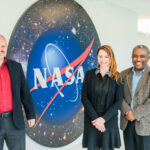
Image: Jan Merka, GPHI director; T. Jane Turner, CSST director; and Belay Demoz, JCET director (l to r). Photo by Marlayna Demond ’11 for UMBC.
The CRESST II renewal has also been featured in The Baltimore Sun, The Daily Record, Baltimore Business Journal, and Washington Business Journal.
]]>
The Center for Research and Exploration in Space Science and Technology (CRESST II) is prepared to embark on a new era of innovative research and teaching with the commitment of $87.5 million from...
https://umbc.edu/stories/cresst-ii-space-science-consortium-to-receive-87-5-million-from-nasa-goddard/
https://my3.my.umbc.edu/api/v0/pixel/news/120852/guest@my.umbc.edu/eeef2ce149f154786f4bc618a6fa3783/api/pixel
cnms
csst
gphi
jcet
majoraward
physics
research
science-and-technology
UMBC News & Magazine
https://my3.my.umbc.edu/groups/umbc-news-magazine
https://assets1-my.umbc.edu/system/shared/avatars/groups/000/001/943/24435aa6207c452e7bc15cc74b42c7bb/xsmall.png?1748556657
https://assets1-my.umbc.edu/system/shared/avatars/groups/000/001/943/24435aa6207c452e7bc15cc74b42c7bb/original.png?1748556657
https://assets2-my.umbc.edu/system/shared/avatars/groups/000/001/943/24435aa6207c452e7bc15cc74b42c7bb/xxlarge.png?1748556657
https://assets2-my.umbc.edu/system/shared/avatars/groups/000/001/943/24435aa6207c452e7bc15cc74b42c7bb/xlarge.png?1748556657
https://assets3-my.umbc.edu/system/shared/avatars/groups/000/001/943/24435aa6207c452e7bc15cc74b42c7bb/large.png?1748556657
https://assets1-my.umbc.edu/system/shared/avatars/groups/000/001/943/24435aa6207c452e7bc15cc74b42c7bb/medium.png?1748556657
https://assets2-my.umbc.edu/system/shared/avatars/groups/000/001/943/24435aa6207c452e7bc15cc74b42c7bb/small.png?1748556657
https://assets1-my.umbc.edu/system/shared/avatars/groups/000/001/943/24435aa6207c452e7bc15cc74b42c7bb/xsmall.png?1748556657
https://assets2-my.umbc.edu/system/shared/avatars/groups/000/001/943/24435aa6207c452e7bc15cc74b42c7bb/xxsmall.png?1748556657
UMBC News & Magazine
0
0
false
Thu, 30 Mar 2017 16:59:12 -0400
UMBC’s Top 12 Highlights of 2016

UMBC celebrated a banner year in 2016. In thousands of ways, big and small, this golden anniversary has been full of moments to remember for the university community.
Here are twelve top highlights:
Retrievers in Rio — When an ESPN reporter asked Cleopatra Borel ‘02, interdisciplinary studies, what qualifying for the shot put finals at the 2016 Olympic Games meant to her, she responded simply, “Everything.” Borel represented Trinidad and Tobago at her fourth Olympic Games and finished seventh on the global stage. Mohamed Hussein ‘14, mechanical engineering, a current master’s student in engineering management, represented Egypt in the 200 meter individual medley, competing head to head with Ryan Lochte.
 Emily Escobedo at 2016 NCAA finals / Tim Binning, The Swim Pictures
Earlier in the year, UMBC swimming and diving standout Emily Escobedo ’17, psychology, finished in the top 10 in the 200m breaststroke at the U.S. Swimming Olympic Trials after winning bronze in the 200 meter breaststroke at the NCAA finals and becoming the first Retriever to earn All-American status in the pool.
Researchers of Distinction — Michael Summers, Robert E. Meyerhoff Chair for Excellence in Research and Mentoring and University Distinguished Professor of chemistry and biochemistry, became the first UMBC faculty member to be inducted into the National Academy of Sciences, one of the highest honors a scientist can receive. Summers was recognized both for his groundbreaking work on the HIV-1 retrovirus and his longstanding commitment to training the next generation of leading scientists, from high school through postdoctoral levels.
 Michael Summers with his students
Kate Brown, professor of history, was named a 2016 Carnegie Fellow for research on the long-term health consequences of nuclear disaster. “I’m hopeful that this fellowship will help bring greater visibility and support to the high-level scholarship that exists in the humanities and social sciences,” said Brown.
 Historian Kate Brown
Goldwater Scholars — Andreas Seas ‘17, Naomi Mburu ‘18, and Daniel Ocasio ‘17, all chemical engineering majors, received the highly selective and prestigious Barry Goldwater Scholarship. Ocasio shared, “As a first generation college student, I feel extremely fortunate to be pursuing higher education, let alone a career in scientific research. To me, earning the Goldwater Scholarship is recognition of all those who made it possible for me to further my academic development.”
 UMBC’s 2016 Goldwater Scholars (l-r): Andreas Seas, Naomi Mburu, and Daniel Ocasio
Leader in Education — UMBC partnered with Baltimore City Public Schools and the Northrop Grumman Foundation on a $1.6 million initiative to support Baltimore students, teachers, and communities. Meanwhile, Shalonda Holt ‘07, biological sciences, was named 2016 Washington Post Teacher of the Year and Howard County Teacher of the Year, and Corey Carter ’08, biological sciences, ’10 M.A.T., was named 2016 Baltimore County Teacher of the Year.
 Alumna Shalonda Holt / Nicholas Griner, Howard County Public School System
CAREER Awards — Matt Pelton, assistant professor of physics, and Helena Mentis, assistant professor of information systems, both received the prominent National Science Foundation CAREER Award. Pelton explores how nanoparticles act in liquids to understand how mechanical energy flows at the nanometer scale. Mentis focuses on surgical telemedicine, exploring how surgeons can use gesture-based tools to share expert knowledge in the operating room.
 Helena Mentis demonstrates gestural tools.
NASA Collaborations — NASA renewed its support for the Goddard Planetary Heliophysics Institute—a joint venture of UMBC; the University of Maryland, College Park; and American University—for up to $20 million over the next five years. This follows the 2015 renewal of UMBC’s Joint Center for Earth Systems Technology (JCET) partnership with the NASA Goddard Space Flight Center, for up to $46 million over five years.
GPHI Director Jan Merka
Virtual Reality Lab — UMBC’s PI2 Immersive Hybrid Reality Lab opened, giving students and faculty the ability to interact with data in a more visual way, and reducing the distance between researchers and the information they work with, whether they are studying wind farms or blood flow in the human body.
 Guest explores PI2 during ribbon cutting ceremony.
Tech Boom — UMBC faculty won four new Maryland Innovation Initiative (MII) awards to develop their ideas into commercial applications. This brings the university’s total MII awards to $2.4 million, one of the highest levels in the state.
 Eric Smallwood, assistant professor of visual arts, and Linda Dusman, professor of music, received an MII award for the Octava app.
Faculty Diversity — A two-part Marketplace radio series highlighted UMBC’s initiatives to train, hire, support, and retain a diverse faculty, shining a spotlight on UMBC postdoctoral fellow Keisha Allen, education, and her experience transitioning from graduate student to faculty member, supported by faculty mentors.
 Recipients of UMBC Fellowships for Faculty Diversity (l-r): Keisha Allen, Nkiru Nnawulezi, and Mejdulene Shomali
Record Alumni Support — A record number of alumni donated to UMBC in this calendar year. Retriever alumni contributed more than 500 gifts to student scholarships and over 1,300 gifts to the University’s Greatest Need Fund alone.
Golden Anniversary — Thousands of Retrievers came together as a community—alumni, faculty, staff, and students from all five decades of UMBC history—to celebrate the remarkable story of UMBC at a 50th anniversary weekend festival.
 UMBC’s 50th anniversary fireworks display / Dan Bailey
High Honors — U.S. News again honored UMBC as a national leader in innovation and teaching and a top global university. Times Higher Education named UMBC one of the world’s best universities for teaching, research, knowledge transfer, and international outlook, and one of the top young universities worldwide for the fifth consecutive year. In its annual Best Colleges guide, Princeton Review wrote:
Arguably the “best public college in Maryland,” UMBC is an “extremely diverse school” that manages to maintain a “small community feel.” And from the moment you set foot on campus it’s evident that the university is focused on “providing exceptional education and research opportunities for students.”
To hear the latest UMBC news as it happens in 2017, follow UMBC on Facebook, Twitter, Instagram, Snapchat (@UMBClife), and UMBC News, and sign up to receive the UMBC News “Top Stories of the Week” email.
Images: All photos are by Marlayna Demond ’11 for UMBC unless otherwise noted.
]]>
UMBC celebrated a banner year in 2016. In thousands of ways, big and small, this golden anniversary has been full of moments to remember for the university community. Here are twelve top...
https://umbc.edu/stories/umbcs-top-12-highlights-of-2016/
https://my3.my.umbc.edu/api/v0/pixel/news/120908/guest@my.umbc.edu/d573cb199ff4c906616e728ad833b218/api/pixel
alumni
athletics
cahss
cbee
chembiochem
cnms
coeit
community
education
gphi
history
is
jcet
majoraward
music
physics
rankings
research
umbc50
undergradresearch
visualarts
UMBC News & Magazine
https://my3.my.umbc.edu/groups/umbc-news-magazine
https://assets1-my.umbc.edu/system/shared/avatars/groups/000/001/943/24435aa6207c452e7bc15cc74b42c7bb/xsmall.png?1748556657
https://assets1-my.umbc.edu/system/shared/avatars/groups/000/001/943/24435aa6207c452e7bc15cc74b42c7bb/original.png?1748556657
https://assets2-my.umbc.edu/system/shared/avatars/groups/000/001/943/24435aa6207c452e7bc15cc74b42c7bb/xxlarge.png?1748556657
https://assets2-my.umbc.edu/system/shared/avatars/groups/000/001/943/24435aa6207c452e7bc15cc74b42c7bb/xlarge.png?1748556657
https://assets3-my.umbc.edu/system/shared/avatars/groups/000/001/943/24435aa6207c452e7bc15cc74b42c7bb/large.png?1748556657
https://assets1-my.umbc.edu/system/shared/avatars/groups/000/001/943/24435aa6207c452e7bc15cc74b42c7bb/medium.png?1748556657
https://assets2-my.umbc.edu/system/shared/avatars/groups/000/001/943/24435aa6207c452e7bc15cc74b42c7bb/small.png?1748556657
https://assets1-my.umbc.edu/system/shared/avatars/groups/000/001/943/24435aa6207c452e7bc15cc74b42c7bb/xsmall.png?1748556657
https://assets2-my.umbc.edu/system/shared/avatars/groups/000/001/943/24435aa6207c452e7bc15cc74b42c7bb/xxsmall.png?1748556657
UMBC News & Magazine
0
0
false
Wed, 04 Jan 2017 18:30:35 -0500
UMBC faculty win four new Maryland Innovation Initiative grants, bringing total MII awards to $2.4M

Tech transfer is growing rapidly at UMBC, fueled in part by the university’s notable success in securing Maryland Innovation Initiative (MII) grants designed to promote the commercialization of research.
“UMBC’s success in the MII program has been consistently growing over the course of the 3.5 years since the program started,” says Jennifer Hammaker, MII director at Maryland Technology Development Corporation (TEDCO). In that time, UMBC researchers have received $2.38 million to develop their ideas into commercial applications, with an impressive success rate of 50 percent (50 applications yielding 25 awards).
The MII program is a powerful collaboration between the state of Maryland and five Maryland institutions: Johns Hopkins University; University of Maryland, Baltimore; University of Maryland, College Park; Morgan State University and UMBC. UMBC has one of the highest success rates for MII awards among these institutions. The most recent round of grants for UMBC includes projects in four distinct areas: interactive arts performances, biomedical technology, space weather forecasting, and biofuel production.
The Awards
Linda Dusman, professor of music, and Eric Smallwood, assistant professor of visual arts, will use their phase III award to scale up a prototype of their mobile app, Octava, to make it available to a larger slice of the public. Octava provides real-time program notes during performances such as classical music, dance, and theatre, offering audiences details about the artists and other information that can enrich their experience of the performance and, as Dusman put it, “do real-time education.”
Previous MII grants helped Dusman and Smallwood generate the prototype and conduct a market research study. The phase III grant will enable the team to respond to feedback from phase II, including connecting the app to social media.
Chris Geddes, professor of chemistry and biochemistry and director of the Institute of Fluorescence, won a phase III award in this round for Lyse-it, a company that produces a low-cost portable device that breaks open cells and chops up their DNA to prescribed fragment sizes, a step required in many sample-preparation procedures in the biomedical research and health care industries. The phase III funding will facilitate production of a large inventory of the Lyse-it product and support development of a rapid marketing strategy.
Neel Savani, a researcher at UMBC’s Goddard Planetary Heliophysics Institute (GPHI), is developing a system that can forecast solar storms up to 24 hours in advance, a huge improvement over the current ability to give a one-hour warning. His team’s phase I MII grant will allow them to “get a handle and statistical understanding of how good of an improvement this forecast will be,” Savani explains, “If I can validate how much the improvement will be, then I can convert that into a sales pitch.”
“It’s great to see the state of MD take the lead in supporting space technology,” Savani adds, “I’m seeing venture capitalists looking to invest in the space industry.”
Jeffrey Gardner, assistant professor of biological sciences, received a phase I award for a technology that will support the biofuels industry. His group “will develop a set of small porous filters that enables real-time measurement of microbial growth during biofuel production,” he explains. Bacterial cells used for biofuel production break down large molecules to obtain nutrients, and then use those nutrients to either grow more cells or produce biofuel. By measuring how many cells are growing in real time, researchers can tell if the bacterial cells are “spending more energy than they should making more cells instead of making biofuel.”
Learning Curve
The MII grant process can be a huge learning opportunity for research faculty, many of whom have never tackled a business venture. David Fink, a “site miner” at UMBC, seeks out faculty research that could lead to successful commercial products and supports faculty through the process from start to finish. Don Engel, assistant vice president for research, also encourages faculty to pursue commercialization when he thinks their work is a good fit.
Smallwood shares, “Dave [Fink] has been indispensable, helping us understand the program and shape our ideas.” As UMBC’s first MII team in the arts, and only the second team of artists to receive an MII grant, he says, “We were coming from a different field than most of the applicants, so we had to reorient our brains to how we navigate this new world.”
For Dusman, a business venture “is like an octopus.” She often finds herself asking, “What do you mean there’s one more leg?”
UMBC resources also aided Savani as he grew his business skills. “As somebody who comes from a very research-centric background, I don’t necessarily know the correct lingo for commercialization,” he admits, “That was a tricky component for me to learn, with a steep learning curve.” He thanks Fink and Engel, as well as Paola Buitron and Wendy Martin in UMBC’s Office of Technology Development and Margo Young at GPHI, for his success with the MII program. “They were an absolute tremendous help. They were very patient and supportive.”
“This program is asking questions of faculty that most of them have never been asked,” says Hammaker. “It’s forcing them to think differently.”
She credits UMBC’s success receiving a particularly large number of grants to a combination of support from high-level administrators as well as site miners like Fink. She cites Dusman and Smallwood as an example of what that kind of support makes possible. “They’re closing sales all over the country,” Hammaker says, “That doesn’t happen without a support system.”
Some companies formed by UMBC faculty, as well as alumni and university partners, choose to create a home base at bwtech@UMBC, adjacent to campus. Ellen Hemmerly, executive director of bwtech@UMBC, explains that the research and technology park “provides a range of incubator services to help the companies grow and be successful.”
Geddes, one of the phase III grant recipients, is a veteran entrepreneur attuned to the business landscape. “We are seeing an increased amount of funding available to faculty to explore their ideas and inventions with regard to commercialization,” he says, “With more funding and opportunities materializing, we should expect to see many more companies being spun out from UMBC in the coming years.”
That fits with the culture of UMBC, says Karl V. Steiner, vice president for research. “When we talk about research at UMBC, we frequently use the phrase ‘Innovation that Matters’ to reflect the fact that many of our faculty and students are working on our current, most pressing issues,” he shares. “Our success with the TEDCO MII program is rooted deeply in this research culture of making a difference.”
Hammaker sees UMBC as an exemplar in this regard: “Exactly what’s happening at UMBC is what we’re looking for. UMBC is doing a great job of working with the faculty and getting them prepared to come through the program.” She says, “UMBC has a lot to be excited about.”
Image: Colleagues gather to sign UMBC technology patents into the new Lyse-it company. From left to right: Paola Buitron, Mildred Homa, Wendy Martin, Chris Geddes, Russell Hill, Dean Drake, Rosemary Jagus, David Fink. Photo by Mary Larkin.
]]>
Tech transfer is growing rapidly at UMBC, fueled in part by the university’s notable success in securing Maryland Innovation Initiative (MII) grants designed to promote the commercialization of...
https://umbc.edu/stories/umbc-faculty-win-major-new-maryland-innovation-initiative-grants-bringing-total-mii-awards-to-2-4m/
https://my3.my.umbc.edu/api/v0/pixel/news/120991/guest@my.umbc.edu/537c2323a6be58e7621cf7064fcf611b/api/pixel
arts-and-culture
biology
bwtech
cahss
chembiochem
cnms
gphi
music
research
science-and-technology
visualarts
UMBC News & Magazine
https://my3.my.umbc.edu/groups/umbc-news-magazine
https://assets1-my.umbc.edu/system/shared/avatars/groups/000/001/943/24435aa6207c452e7bc15cc74b42c7bb/xsmall.png?1748556657
https://assets1-my.umbc.edu/system/shared/avatars/groups/000/001/943/24435aa6207c452e7bc15cc74b42c7bb/original.png?1748556657
https://assets2-my.umbc.edu/system/shared/avatars/groups/000/001/943/24435aa6207c452e7bc15cc74b42c7bb/xxlarge.png?1748556657
https://assets2-my.umbc.edu/system/shared/avatars/groups/000/001/943/24435aa6207c452e7bc15cc74b42c7bb/xlarge.png?1748556657
https://assets3-my.umbc.edu/system/shared/avatars/groups/000/001/943/24435aa6207c452e7bc15cc74b42c7bb/large.png?1748556657
https://assets1-my.umbc.edu/system/shared/avatars/groups/000/001/943/24435aa6207c452e7bc15cc74b42c7bb/medium.png?1748556657
https://assets2-my.umbc.edu/system/shared/avatars/groups/000/001/943/24435aa6207c452e7bc15cc74b42c7bb/small.png?1748556657
https://assets1-my.umbc.edu/system/shared/avatars/groups/000/001/943/24435aa6207c452e7bc15cc74b42c7bb/xsmall.png?1748556657
https://assets2-my.umbc.edu/system/shared/avatars/groups/000/001/943/24435aa6207c452e7bc15cc74b42c7bb/xxsmall.png?1748556657
UMBC News & Magazine
0
0
false
Fri, 30 Sep 2016 19:20:25 -0400