Third annual UMBC-UMB Partnership Symposium reveals impact of collaborative research

Researchers and campus leaders from UMBC and the University of Maryland, Baltimore (UMB) convened at bwtech@UMBC South on April 12 to celebrate ongoing research partnerships and announce a new round of Research and Innovation Seed Grants. The awards provide one or two years of funding for interdisciplinary projects with collaborators from both institutions, and are available to faculty in every college at UMBC and every school at UMB.
UMB President Jay Perman, who is also a physician, thanked the researchers for tackling challenging issues that transcend the boundaries between fields. “Your collaborative work empowers people like me to help improve the human condition,” he shared. “You need to know that your work is critically important.”
Wendy Perrow, CEO of AsclepiX Therapeutics, also emphasized the connection between research and clinical work in her keynote address. She encouraged attendees to “bring your technology to the market to help patients,” while acknowledging the many challenges along the way. Perrow’s wealth of experience includes launching a now-mainstream high-blood pressure drug and the first-ever chicken pox vaccine. Most recently, she played a key role in a breakthrough celiac disease drug entering stage three clinical trials.
Following Perrow, five teams who received funding last year presented updates on their progress. Xudong Ge, assistant director of the UMBC Center for Advanced Sensor Technology, and Richard Pierson, professor of surgery at UMB, presented the improvements they’ve made to a non-invasive respiration sensor for adults, children, and even babies. The device would be a boon for intensive care units. Its accuracy parallels that of traditional methods, without the potential to cause burns, a pitfall of current respiration monitoring technologies.
 Xudong Ge, assistant director of UMBC’s CAST, explains his work on a non-invasive respiration sensor.
Tonya Santaus, Ph.D. student in Chris Geddes’ lab at UMBC, shared the development of a rapid, low-cost test for cholera. The lab is applying the same technology to tests for sexually-transmitted infections. “The goal is to get this to rural Africa and rural Haiti,” shared UMB collaborator Colin Stine, professor of epidemiology and public health. Geddes, professor of chemistry, added that while he and Stine have known each other for 15 years, it is “because of this grant [that] we’ve actually been able to work together.”
Elsa Garcin, UMBC associate professor of chemistry and biochemistry, presented her work with Patrick Wintrode, UMB associate professor of pharmaceutical sciences. Their research seeks to better understand how a molecule naturally found in cells, called GAPDH, is able to either activate or shut down another molecule known to contribute to autoimmune conditions and cancer. Eventually, that knowledge could be used to harness GAPDH to treat those conditions.
Soobum Lee, UMBC assistant professor of mechanical engineering, and Mary Melo, UMB clinical assistant professor of dentistry, explained how they intend to use the movement of people’s own jaws to provide the energy for deep brain stimulation, a proven treatment for some neurodegenerative diseases. The proposed new method would avoid the need for repeated surgeries to replace the battery.
Christine Mair, UMBC assistant professor of sociology, and Amanda Lehning, UMB assistant professor of social work, examine the relationship between neighborhood environments and cardiovascular health in Baltimore City to identify social determinants of health inequality such as violent crime and low social cohesion.
 Keynote speaker Wendy Perrow discusses her successful career.
Don Engel, UMBC assistant vice president for research, and Terry Rogers, assistant dean of research affairs at the UMB School of Medicine, announced this year’s cohort of awardees. “We’re delighted to see this program reaching across many areas of both universities,” shared Engel. The new projects include research on oyster herpes, opioid addiction, and non-invasive neonatal glucose monitoring.
Closing the program, UMBC President Freeman Hrabowski reiterated the value and strength of the UMBC-UMB relationship. The $1.5 million invested so far in UMBC-UMB partnership grants has led to $15 million of external grant funding, a return on investment that indicates the effectiveness of the program. In a challenging federal funding climate, it is more important than ever to creatively collaborate to demonstrate the importance of scientific research and generate new funding sources, Hrabowski explained.
“We want to be strong in our commitment to investing in and supporting” collaborative work, said Hrabowski, of uniting inquisitive minds across the institutions. “Our very future, not just in Maryland, not just in America, but of humankind, in large part depends on [this] kind of work.”
Banner image: 2017 UMBC-UMB Partnership Grant recipients with the university presidents. From left to right: Jay Perman, President of UMB; Rose Viscardi, UMB School of Medicine; Leah Tolosa, UMBC Center for Advanced Sensor Technologies; Shaya Fadia, UMB School of Pharmacy; Michael Abrams, UMBC Hilltop Institute; Colleen Burge, UMBC Department of Marine Biotechnology; Matthew Frieman, UMB School of Medicine; Freeman Hrabowski, President of UMBC. All photos by Marlayna Demond ’11 for UMBC.
]]>
Researchers and campus leaders from UMBC and the University of Maryland, Baltimore (UMB) convened at bwtech@UMBC South on April 12 to celebrate ongoing research partnerships and announce a new...
https://umbc.edu/stories/third-annual-umbc-umb-partnership-symposium-reveals-impact-of-collaborative-research/
https://my3.my.umbc.edu/api/v0/pixel/news/120816/guest@my.umbc.edu/e08f908e93e9d2a7c3cd9d50e3ed3c5b/api/pixel
cahss
cast
chembiochem
cnms
coeit
community
imet
iof
marinebiotech
meche
research
saph
science-and-technology
UMBC News & Magazine
https://my3.my.umbc.edu/groups/umbc-news-magazine
https://assets1-my.umbc.edu/system/shared/avatars/groups/000/001/943/24435aa6207c452e7bc15cc74b42c7bb/xsmall.png?1748556657
https://assets1-my.umbc.edu/system/shared/avatars/groups/000/001/943/24435aa6207c452e7bc15cc74b42c7bb/original.png?1748556657
https://assets2-my.umbc.edu/system/shared/avatars/groups/000/001/943/24435aa6207c452e7bc15cc74b42c7bb/xxlarge.png?1748556657
https://assets2-my.umbc.edu/system/shared/avatars/groups/000/001/943/24435aa6207c452e7bc15cc74b42c7bb/xlarge.png?1748556657
https://assets3-my.umbc.edu/system/shared/avatars/groups/000/001/943/24435aa6207c452e7bc15cc74b42c7bb/large.png?1748556657
https://assets1-my.umbc.edu/system/shared/avatars/groups/000/001/943/24435aa6207c452e7bc15cc74b42c7bb/medium.png?1748556657
https://assets2-my.umbc.edu/system/shared/avatars/groups/000/001/943/24435aa6207c452e7bc15cc74b42c7bb/small.png?1748556657
https://assets1-my.umbc.edu/system/shared/avatars/groups/000/001/943/24435aa6207c452e7bc15cc74b42c7bb/xsmall.png?1748556657
https://assets2-my.umbc.edu/system/shared/avatars/groups/000/001/943/24435aa6207c452e7bc15cc74b42c7bb/xxsmall.png?1748556657
UMBC News & Magazine
0
0
false
Mon, 01 May 2017 21:11:04 -0400
UMB-UMBC Partnership Symposium celebrates research collaborations with impact
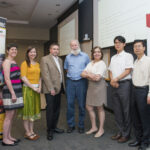
UMBC and the University of Maryland, Baltimore (UMB) celebrated new and recent recipients of UMB-UMBC Research and Innovation Partnership Grants at a symposium held last month on UMB’s downtown Baltimore campus.
This annual event seeks to actively support the growth of meaningful and sustainable research collaborations between the two universities. The June 2016 symposium highlighted the milestones of past partnership grant recipients and celebrated a new round of awardees: five teams of two, with faculty from all three colleges at UMBC as well as UMB’s School of Medicine, School of Pharmacy, School of Dentistry, and School of Social Work.
In recognition of the power of collaborative research, Karl V. Steiner, vice president for research at UMBC, shared, “This is another brick in the pavement as we’re building a road between our two campuses.”
Aaron White, senior scientific advisor to the director at the National Institutes of Health-National Institute on Alcohol Abuse and Alcoholism (NIH-NIAAA), delivered a keynote focused on the diagnosis, prevention, and treatment of alcohol addiction. In addition to having a major negative impact on so many lives, White noted, alcohol addiction costs the U.S. nearly $250 billion dollars each year.
Following White’s remarks, the 2014-15 Research and Innovation Partnership Seed Grant teams each presented updates on their work, including goals for the upcoming year.

Toni Antalis, professor of physiology at the UMB School of Medicine; Rajabrata Sarkar, professor of surgery at UMB School of Medicine; and Zeev Rosenzweig, professor of chemistry and biochemistry at UMBC collaborated to develop a targeted therapy that increases blood flow to the limbs of patients with artery blockages resulting from diabetes, stroke, or other causes. With the prevalence of diabetes rising dramatically in this country, it’s critical to find ways to prevent the need for last-resort treatments like amputation.
When an artery experiences blockage, the nearby arteries expand to compensate, a process called “arteriogenesis.” When a specific protein called “p53” is deleted, the arteriogenesis response is stronger. However, p53 is also a critical tumor suppressor, so deleting it throughout the entire body or for an extended period of time is dangerous. The team is developing a new technique using nanoparticles to carry a drug that blocks p53 to carefully targeted immune cells, which pick up the particles and deliver the drug where it is needed. The team has shown that the new therapy effectively reduces p53 activity and increases arteriogenesis, which is maintained after treatment stops after 14 days.
Aryya Gangopadhyay, professor and chair of the department of information systems; Nirmalya Roy, assistant professor of information systems; and Elizabeth Galik, associate professor in UMB’s School of Nursing; have developed and implemented a smart health technology for people with Alzheimer’s or symptoms of the disease. The technology monitors the cognitive impairment of older adults to help them maintain independence. They worked with a senior community center to fit some residents with wearable sensors to assess cognitive function by monitoring everyday activities like making a sandwich, sweeping the floor, washing hands, and folding clothes.
Radi Masri, associate professor of endodontics, prosthodontics and operative dentistry at the UMB School of Dentistry; David Seminowicz, assistant professor of neural and pain sciences at the UMB School of Dentistry; and Raimi Quiton, assistant professor of psychology at UMBC, are working together to elucidate pain processing in migraines, the third most common cause of pain in the U.S. They hope to discover neural pathways that could be new targets for treatment, because current treatments are ineffective for a large percentage of migraine sufferers.
The team showed that a brain area known as the superior colliculus could be involved in processing migraine pain. The superior colliculus is known to integrate many types of sensory information, which might help explain symptoms such as sensitivity to light, sound, and touch. They also found that individuals who experience migraines have chronically high levels of a protein that is known to transmit pain signals. One next step for their research is to see how mice respond to pain stimuli if the neural signal is prevented from passing through the superior colliculus.
The final presentation examined how drugs are evaluated to develop a more effective way to test the effects of drugs on different cells simultaneously. To assess their new testing method, Ronghui Ma, associate professor of mechanical engineering; Liang Zhu, professor of mechanical engineering, and Hongbing Wong, professor in UMB’s School of Pharmacy, developed a specialized 3D-printed plate with multiple chambers.

The 2016-17 grant winners span several several departments and centers at UMBC and schools at UMB. On the “challenge track,” Xudong Ge, UMBC Center for Advanced Sensor Technology (CAST), and Richard Pierson, UMB School of Medicine, will pursue development of a non-invasive respiratory status monitor. Chris Geddes, UMBC chemistry and biochemistry and Institute of Fluorescence, and Colin Stine, UMB School of Medicine, will work on the ultra-rapid and sensitive detection of cholera.
“Seed track” winners include Elsa Garcin, UMBC chemistry and biochemistry, with Patrick Wintrode, UMB School of Pharmacy; Soobum Lee, UMBC mechanical engineering, with Mary Melo, UMB School of Dentistry; and Christine Mair, UMBC sociology and anthropology, with Amanda Lehning, UMB School of Social Work.
UMBC President Freeman Hrabowski and UMB Chief Academic and Research Officer Bruce Jarrell offered closing remarks focused on their shared commitment to building a close relationship between the two universities for years to come. UMB and UMBC have complementary strengths, Pres. Hrabowski explained. Programs like the UMB-UMBC Partnership Grants, he said, help both universities fulfill their potential as national leaders in innovative research and teaching.
Header image: 2016-17 UMB-UMBC Partnership Grant winners, from left to right: Amanda Lehning, Christine Mair, Chris Geddes, Colin Stine, Mary Melo, Soobum Lee, Xudong Ge. Top image: Andrew White gives his keynote address. Bottom image: Karl Steiner (left) and Bruce Jarrell introduce the program. All photos by Marlayna Demond ’11 for UMBC.
]]>
UMBC and the University of Maryland, Baltimore (UMB) celebrated new and recent recipients of UMB-UMBC Research and Innovation Partnership Grants at a symposium held last month on UMB’s downtown...
https://umbc.edu/stories/umb-umbc-partnership-symposium-celebrates-successful-research-collaborations-across-campuses/
https://my3.my.umbc.edu/api/v0/pixel/news/121091/guest@my.umbc.edu/1516dd223cc052b9a60ae6822e6ef6a7/api/pixel
cahss
cast
chembiochem
cnms
coeit
iof
is
meche
psychology
research
saph
science-and-technology
UMBC News & Magazine
https://my3.my.umbc.edu/groups/umbc-news-magazine
https://assets1-my.umbc.edu/system/shared/avatars/groups/000/001/943/24435aa6207c452e7bc15cc74b42c7bb/xsmall.png?1748556657
https://assets1-my.umbc.edu/system/shared/avatars/groups/000/001/943/24435aa6207c452e7bc15cc74b42c7bb/original.png?1748556657
https://assets2-my.umbc.edu/system/shared/avatars/groups/000/001/943/24435aa6207c452e7bc15cc74b42c7bb/xxlarge.png?1748556657
https://assets2-my.umbc.edu/system/shared/avatars/groups/000/001/943/24435aa6207c452e7bc15cc74b42c7bb/xlarge.png?1748556657
https://assets3-my.umbc.edu/system/shared/avatars/groups/000/001/943/24435aa6207c452e7bc15cc74b42c7bb/large.png?1748556657
https://assets1-my.umbc.edu/system/shared/avatars/groups/000/001/943/24435aa6207c452e7bc15cc74b42c7bb/medium.png?1748556657
https://assets2-my.umbc.edu/system/shared/avatars/groups/000/001/943/24435aa6207c452e7bc15cc74b42c7bb/small.png?1748556657
https://assets1-my.umbc.edu/system/shared/avatars/groups/000/001/943/24435aa6207c452e7bc15cc74b42c7bb/xsmall.png?1748556657
https://assets2-my.umbc.edu/system/shared/avatars/groups/000/001/943/24435aa6207c452e7bc15cc74b42c7bb/xxsmall.png?1748556657
UMBC News & Magazine
0
0
false
Fri, 08 Jul 2016 16:22:21 -0400
Rapid, affordable STI test designed by UMBC chemistry professor reaches clinical trial stage
Current common tests for sexually-transmitted infections (STI) require sending samples off to a lab to be grown and analyzed, which means that patients must wait a few days to receive the results and that the tests can be more expensive than anticipated. Chris Geddes, professor of chemistry and biochemistry and director of UMBC’s Institute of Fluorescence, has developed a new STI test that costs around $1 and allows health care providers to diagnose gonorrhea and chlamydia within eight minutes and at the point-of-care.
Funded by the National Institutes of Health, this rapid, affordable test will help patients receive treatment more quickly and decrease the spread of infections as patients wait to receive their diagnoses. On a large scale,“The Daily Record explains, “Faster results can lead to both lower health care costs and a healthier overall population.”
This test fills a major public health need. “The significance of this, I don’t think can be overstated,” Geddes told The Daily Record. “There are no tests that are low-cost and very rapid.”
The STI test is being evaluated in an 1,800-sample clinical trial, with patients in Baltimore and Cincinnati. It not only detects whether the patient has gonorrhea or chlamydia but also can determine the specific strain of the STI. “This allows doctors to treat each case correctly and not risk building the resistance of the strains by exposing them to ineffective medications,” Geddes explains.
Read the full article, “UMBC prof pursues faster, cheaper STI test,” in The Daily Record. Read more about the test “UMBC researcher works on faster STD test seen as key to prevention,” in The Baltimore Sun.
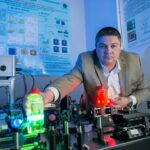
Image: Chris Geddes in his lab. Photo by Marlayna Demond ‘11 for UMBC.
]]>
Current common tests for sexually-transmitted infections (STI) require sending samples off to a lab to be grown and analyzed, which means that patients must wait a few days to receive the results...
https://umbc.edu/stories/rapid-affordable-sti-test-designed-by-umbc-chemistry-professor-reaches-clinical-trial-stage/
https://my3.my.umbc.edu/api/v0/pixel/news/121401/guest@my.umbc.edu/c6529adb53a05d6f2f535fcf43ce7f51/api/pixel
chembiochem
cnms
iof
science-and-technology
UMBC News & Magazine
https://my3.my.umbc.edu/groups/umbc-news-magazine
https://assets1-my.umbc.edu/system/shared/avatars/groups/000/001/943/24435aa6207c452e7bc15cc74b42c7bb/xsmall.png?1748556657
https://assets1-my.umbc.edu/system/shared/avatars/groups/000/001/943/24435aa6207c452e7bc15cc74b42c7bb/original.png?1748556657
https://assets2-my.umbc.edu/system/shared/avatars/groups/000/001/943/24435aa6207c452e7bc15cc74b42c7bb/xxlarge.png?1748556657
https://assets2-my.umbc.edu/system/shared/avatars/groups/000/001/943/24435aa6207c452e7bc15cc74b42c7bb/xlarge.png?1748556657
https://assets3-my.umbc.edu/system/shared/avatars/groups/000/001/943/24435aa6207c452e7bc15cc74b42c7bb/large.png?1748556657
https://assets1-my.umbc.edu/system/shared/avatars/groups/000/001/943/24435aa6207c452e7bc15cc74b42c7bb/medium.png?1748556657
https://assets2-my.umbc.edu/system/shared/avatars/groups/000/001/943/24435aa6207c452e7bc15cc74b42c7bb/small.png?1748556657
https://assets1-my.umbc.edu/system/shared/avatars/groups/000/001/943/24435aa6207c452e7bc15cc74b42c7bb/xsmall.png?1748556657
https://assets2-my.umbc.edu/system/shared/avatars/groups/000/001/943/24435aa6207c452e7bc15cc74b42c7bb/xxsmall.png?1748556657
UMBC News & Magazine
0
0
false
Mon, 04 Jan 2016 19:00:52 -0500
Inaugural Inventors’ Luncheon honors UMBC faculty innovators across disciplines
UMBC’s inaugural Innovators Luncheon, held November 30, 2015, celebrated faculty innovators from across the university who are forging new paths in their fields. Sponsored by the Office of the Vice President for Research, Office of Technology Development (OTD), Office of Institutional Advancement (OIA), and bwtech@UMBC, the event acknowledged accomplishments of UMBC Technology Catalyst Fund (TCF) and Maryland Innovation Initiative (MII) awardees.
In addition to recognizing the TCF and MII awardees, five UMBC faculty were presented with awards for outstanding initiatives in disclosing their inventions. Christopher Geddes, professor of chemistry and biochemistry and director of the Institute of Fluorescence (IOF); Fow-Sen Choa, professor of computer science and electrical engineering (CSEE); Leah Croucher, research professor in chemical, biochemical and environmental engineering (CBEE) and assistant director of the Center for Advanced Sensor Technology (CAST); and Dan Kostov, research professor in CBEE, adjunct professor in CSEE and assistant director in CAST, were recognized for having submitted over 25 invention disclosures each. Govind Rao, professor in CBEE and director of CAST, was presented with an award for over 50 invention disclosures. In addition, Ryan Robucci ’02, computer engineering, and Nilanjan Banerjee, both assistant professors in CSEE, were recognized as up-and-coming inventors at UMBC for not only advancing technology in their respective academic fields but also pursuing commercial applications of those advancements.

Vice President for Research Karl Steiner opened the event by drawing inspiration from John Lennon’s “Imagine.” He highlighted how the entrepreneurial spirit of UMBC’s inventors enables them to develop novel, creative solutions to pressing issues in Maryland, nationally, and globally. Greg Simmons, M.P.P ’04, public policy, vice president for institutional advancement, shared Steiner’s sentiment, and emphasized the importance of supporting faculty in their work to solve society’s biggest challenges.
University System of Maryland (USM) Chancellor Bob Caret and R. Michael Gill, secretary of commerce for the State of Maryland, also shared brief comments. Chancellor Caret compared UMBC innovators with inventors in Silicon Valley—their innovative spirit, fresh ideas, fast work pace, and confidence they can have a major positive impact. With that vision in mind, he argued that the State of Maryland must develop “an ecosystem where we can all come together to create that level of success.” Gill challenged the inventors to wake up each morning with the determination to figure out “how to move this forward,” moving past the setbacks and challenges that each will undoubtedly encounter along the way.
For UMBC President Freeman Hrabowski, the drive to engage talented faculty from diverse backgrounds in developing solutions to the problems our world faces is essential. President Hrabowski shared how inspired he feels by “what we do on UMBC’s campus to impact people’s lives.”
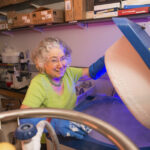
Image: UMBC TCF and MII awardee Suzanne Ostrand-Rosenberg; Seven UMBC faculty were presented with awards during the Innovators Luncheon. Photos by Marlayna Demond ’11.
]]>
UMBC’s inaugural Innovators Luncheon, held November 30, 2015, celebrated faculty innovators from across the university who are forging new paths in their fields. Sponsored by the Office of the...
https://umbc.edu/stories/inaugural-inventors-luncheon-honors-umbc-faculty-innovators-across-disciplines/
https://my3.my.umbc.edu/api/v0/pixel/news/121441/guest@my.umbc.edu/dfe17f5672c009f292562955ca4632b7/api/pixel
cahss
cast
cbee
chembiochem
cnms
coeit
csee
hrabowski
iof
research
science-and-technology
UMBC News & Magazine
https://my3.my.umbc.edu/groups/umbc-news-magazine
https://assets1-my.umbc.edu/system/shared/avatars/groups/000/001/943/24435aa6207c452e7bc15cc74b42c7bb/xsmall.png?1748556657
https://assets1-my.umbc.edu/system/shared/avatars/groups/000/001/943/24435aa6207c452e7bc15cc74b42c7bb/original.png?1748556657
https://assets2-my.umbc.edu/system/shared/avatars/groups/000/001/943/24435aa6207c452e7bc15cc74b42c7bb/xxlarge.png?1748556657
https://assets2-my.umbc.edu/system/shared/avatars/groups/000/001/943/24435aa6207c452e7bc15cc74b42c7bb/xlarge.png?1748556657
https://assets3-my.umbc.edu/system/shared/avatars/groups/000/001/943/24435aa6207c452e7bc15cc74b42c7bb/large.png?1748556657
https://assets1-my.umbc.edu/system/shared/avatars/groups/000/001/943/24435aa6207c452e7bc15cc74b42c7bb/medium.png?1748556657
https://assets2-my.umbc.edu/system/shared/avatars/groups/000/001/943/24435aa6207c452e7bc15cc74b42c7bb/small.png?1748556657
https://assets1-my.umbc.edu/system/shared/avatars/groups/000/001/943/24435aa6207c452e7bc15cc74b42c7bb/xsmall.png?1748556657
https://assets2-my.umbc.edu/system/shared/avatars/groups/000/001/943/24435aa6207c452e7bc15cc74b42c7bb/xxsmall.png?1748556657
UMBC News & Magazine
0
0
false
Fri, 04 Dec 2015 19:39:20 -0500
 Xudong Ge, assistant director of UMBC’s CAST, explains his work on a non-invasive respiration sensor.
 Keynote speaker Wendy Perrow discusses her successful career.
