Calling our better angels: Computing for Social Good Award launched by alumnus Akshay Java at Google honors work prioritizing people’s well-being
 Akshay Java (Photo courtesy of Java)
Akshay Java, M.S. ’03, Ph.D. ’08, computer science, is a seasoned technology leader whose career spans key roles across the tech industry, including research at Microsoft, co-founding a successful start-up, and leading critical user protection efforts at Google. In his roles at Google across Egregious Harms Protections and Responsibility AI Engineering, he works daily on the front lines of digital safety, addressing both the serious risks and the transformative potential of modern computing technology.
“Technology by itself is not necessarily good or bad, what matters is how we choose to use it,” Java says. “But AI is moving so quickly now—community and technical leaders need to be engaged, making sure the good use cases can be advanced rapidly while preventing the bad from happening.”
It was in this spirit that Java made a generous donation to UMBC to launch the Computing for Social Good Award, to be given annually to one or more students in the College of Engineering and Information Technology (COEIT) who have conducted substantial research with the goal of harnessing technology to make positive social change. The awards are funded by an endowment, which is open to contributions from the community. In May of this year, two students—Rishav Gupta, a Ph.D. student in computer science, and ASM Mobarak Hossain, M.S. ’26, information systems—received the inaugural awards for their work in affordable health monitoring and wheelchair accessibility, respectively.
“We are tremendously grateful to Akshay Java for establishing the Computing for Social Good Award in COEIT,” says Dean Jeanne van Briesen. “His commitment to supporting research that combines technical excellence with meaningful societal impact reflects values that are central to our college. This award celebrates the creativity and dedication of our student researchers and reinforces our belief that engineering and computing can be powerful forces for positive change.”
Monitoring cardiovascular health and improving wheelchair accessibility
Both recipients of the 2026 awards talked about how meaningful it was to them to apply their technical expertise to work that aims to improve people’s lives.
Gupta is working in the lab of his advisor Dong Li on tools to make blood pressure monitoring affordable and accessible using only a commodity smartphone. Hossain worked on a project with advisor Md Osman Gani to develop MyPath, a Google Maps–style app that uses AI, remote sensing measurements, and crowd-sourced data to guide wheelchair users to accessible routes.
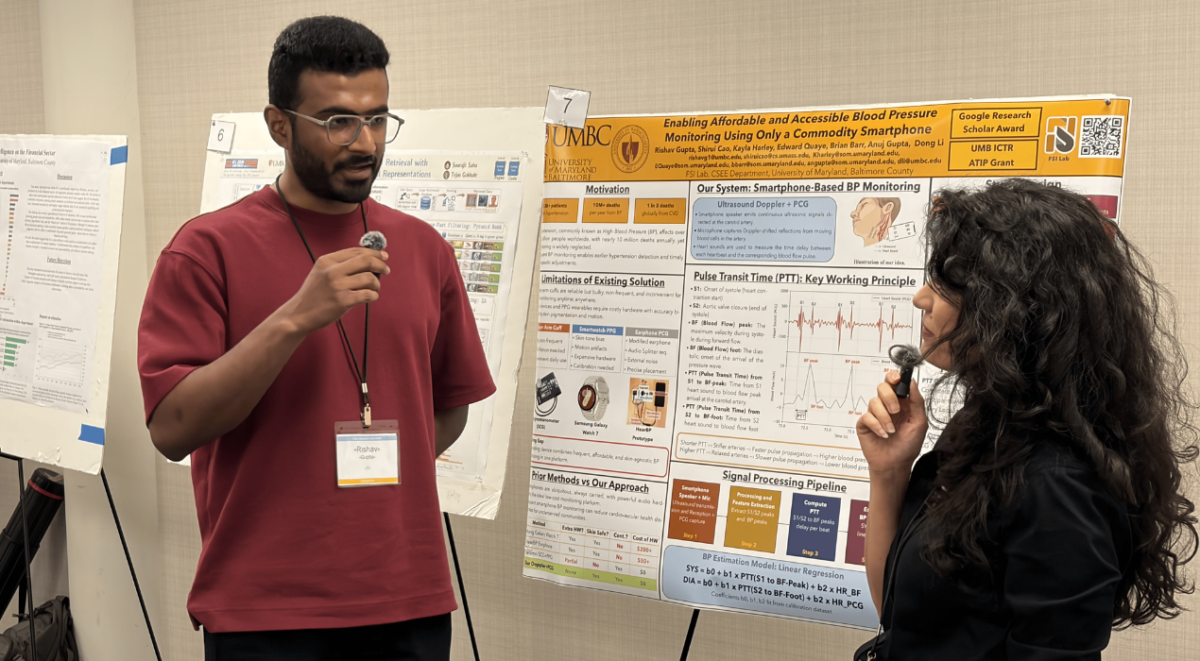 Ph.D. student Rishav Gupta presents at UMBC COEIT Research Day 2026 in front of his poster, “Enabling Affordable and Accessible Blood Pressure Monitoring Using Only a Commodity Smartphone.” (Photo courtesy of Gupta)
“Receiving the COEIT Computing for Social Good Award felt meaningful in a way I didn’t expect,” Gupta says. “I came to UMBC from a career in industry because I wanted my work to matter beyond a product. Being recognized for the research’s social impact felt like confirmation that I’d chosen the right path.”
“Developing MyPath required countless hours of hard work, continuous refinement, and a deep commitment to addressing a meaningful community need,” Hossain says. “Seeing that work recognized by COEIT was incredibly exciting and humbling—it gave me a strong sense of pride in what we’ve built and renewed enthusiasm for creating tools that deliver genuine social value.”
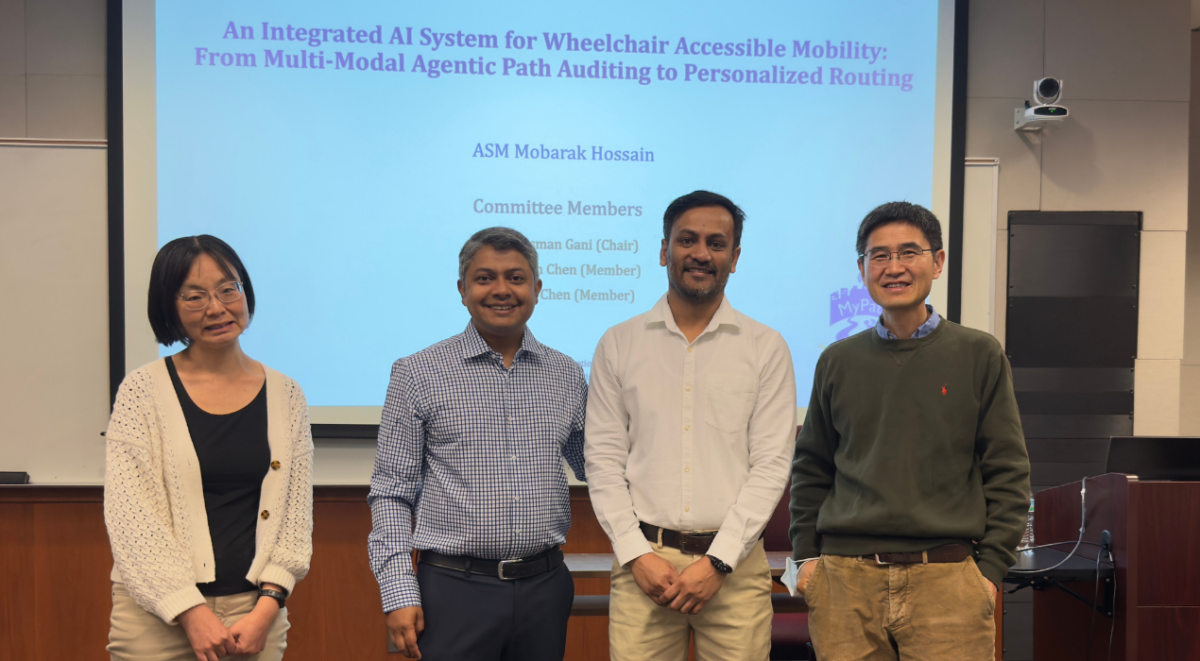 Hossain after his master’s thesis defense at UMBC. From left to right: Karen Chen, Md Osman Gani, Hossain, and Zhiuyan Chen. (Photo courtesy of Hossain)
Seeing the students and the work they are doing has been the most meaningful part of the award process, Java says. “I’m so proud of the students for what they’ve achieved. And I hope this award inspires more students to apply their skills in this space of social good.”
]]>
Akshay Java (Photo courtesy of Java) Akshay Java, M.S. ’03, Ph.D. ’08, computer science, is a seasoned technology leader whose career spans key roles across the tech industry, including...
https://umbc.edu/stories/computing-for-social-good-award/
https://my3.my.umbc.edu/api/v0/pixel/news/162247/guest@my.umbc.edu/b8c62600208724700159c05fd6f43321/api/pixel
alumni
coeit
csee
graduate-research
impact
is
research
science-and-tech
stories
story
UMBC News & Magazine
https://my3.my.umbc.edu/groups/umbc-news-magazine
https://assets1-my.umbc.edu/system/shared/avatars/groups/000/001/943/24435aa6207c452e7bc15cc74b42c7bb/xsmall.png?1748556657
https://assets1-my.umbc.edu/system/shared/avatars/groups/000/001/943/24435aa6207c452e7bc15cc74b42c7bb/original.png?1748556657
https://assets2-my.umbc.edu/system/shared/avatars/groups/000/001/943/24435aa6207c452e7bc15cc74b42c7bb/xxlarge.png?1748556657
https://assets2-my.umbc.edu/system/shared/avatars/groups/000/001/943/24435aa6207c452e7bc15cc74b42c7bb/xlarge.png?1748556657
https://assets3-my.umbc.edu/system/shared/avatars/groups/000/001/943/24435aa6207c452e7bc15cc74b42c7bb/large.png?1748556657
https://assets1-my.umbc.edu/system/shared/avatars/groups/000/001/943/24435aa6207c452e7bc15cc74b42c7bb/medium.png?1748556657
https://assets2-my.umbc.edu/system/shared/avatars/groups/000/001/943/24435aa6207c452e7bc15cc74b42c7bb/small.png?1748556657
https://assets1-my.umbc.edu/system/shared/avatars/groups/000/001/943/24435aa6207c452e7bc15cc74b42c7bb/xsmall.png?1748556657
https://assets2-my.umbc.edu/system/shared/avatars/groups/000/001/943/24435aa6207c452e7bc15cc74b42c7bb/xxsmall.png?1748556657
UMBC News & Magazine
0
0
false
Tue, 01 Sep 2026 11:32:45 -0400
Meet a Retriever—ASM Mobarak Hossain, M.S. ’26, COEIT Computing for Social Good Award recipient
Meet ASM Mobarak Hossain (Sajib). He recently graduated from UMBC with an M.S. in information systems and joined IBM as a Senior Developer and AI Specialist. Sajib has spent more than a decade working in technology. What excites him most is using what he knows to build solutions that make a difference in people’s lives. At UMBC, he put that passion to work helping to develop MyPath, a Google Maps–style app that uses AI, remote sensing measurements, and crowd-sourced data to guide wheelchair users to accessible routes.
This May, the work was recognized when Sajib was selected as one of two recipients for the inaugural COEIT Computing for Social Good Award, made possible by a generous donation from alumnus Akshay Java, M.S. ’03, Ph.D. ’08, computer science. Awardees were selected in a competitive review process by COEIT faculty reviewers and departmental leadership. Sajib was selected for his project “A Multi-Modal Agentic Framework for Auditing Wheelchair Accessibility.” Take it away, Sajib!
Q: What brought you to UMBC?
A: After spending many years working in software engineering and technology leadership, I wanted to keep growing and challenge myself in a new way. I came to UMBC to deepen my knowledge, explore AI and research, and connect my industry experience with problems that could have a meaningful impact on people’s lives.
Q: What did you enjoy most about UMBC?
A: What I enjoyed most about UMBC was being able to connect what I learned in class with real problems. My research gave me the chance to use AI and software engineering to work on wheelchair accessibility, which made the experience much more meaningful to me than simply learning technology.
Q: Who in the UMBC community inspired you or supported you?
A: I found support at UMBC through the people who were willing to listen to my ideas and help me develop them. My advisor, Md Osman Gani, has been one of the most supportive people during my time at UMBC. He encouraged me to think beyond the technical side of a problem and focus on how our research could actually help people. That support helped turn my interest in accessibility into research that became a very meaningful part of my UMBC experience.
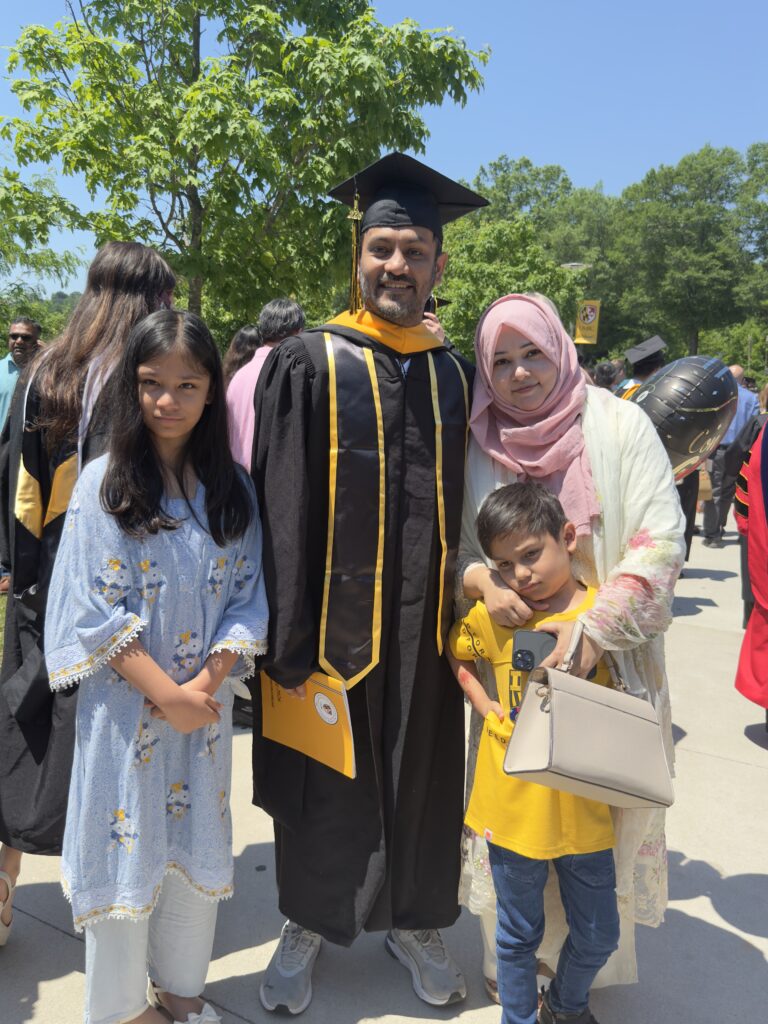 Following commencement, Hossain (middle) posed for a picture outside the Chesapeake Employers Insurance Arena with his daughter, Ayra (left), wife, Humayira (right), and son, Ayaz (bottom right). (Photo courtesy of Hossain)
Q: What’s the one thing you’d want someone who hasn’t joined the UMBC community to know about the support you find here?
A: I would tell them that at UMBC you don’t have to figure everything out by yourself. I found professors and researchers who were willing to listen to my ideas, guide me, and give me room to explore. That support helped me turn an idea into research with a real purpose.
Even after graduation, I feel connected to the people, mentors, and experiences that were part of my journey at UMBC. I’m proud to be part of a community that encourages learning, collaboration, and meaningful work.
ASM Mobarak Hossain, M.S. '26
information systems
Q: Can you tell us about your current job and how UMBC helped prepare you for your career?
A: I’m currently working at IBM as a Senior Developer and AI Specialist. What I enjoy most is the opportunity to work on challenging technology problems and continue learning. I especially enjoy using my software engineering background together with AI to build solutions that can solve real-world problems.
UMBC helped me look at technology from a different perspective. I already had many years of industry experience, but my time at UMBC gave me the opportunity to become more involved in research, explore AI more deeply, and think about how technology can be used to address real human needs. That experience has been valuable as I move into the next stage of my career.
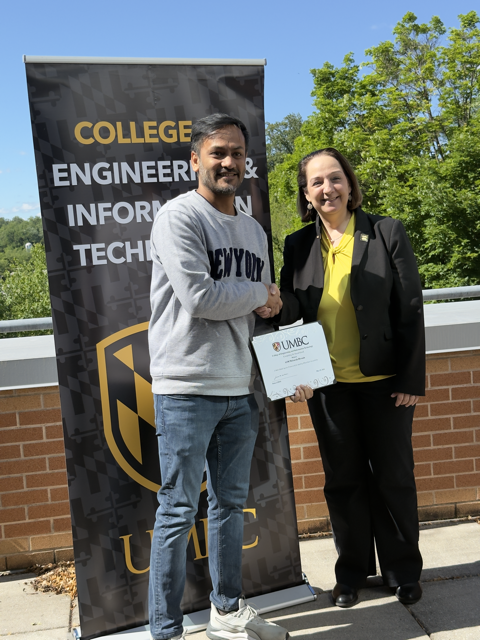 Hossain (left) pictured with Jeanne van Briesen, dean of the College of Engineering and Information Technology, after receiving the COEIT Computing for Social Good Award. (Photo courtesy of Vandana Janeja)
Q: How does the COEIT Computing for Social Good Award make an impact on your education?
A: Receiving the COEIT Computing for Social Good Award directly bridges the gap between academic theory and real-world impact. It provides vital encouragement and support to continue leveraging computer science for positive social change, specifically through the MyPath project. Beyond the immediate recognition, it inspires me to stay focused on human-centered software design, seek out complex social challenges in my future coursework, and pursue career opportunities centered on technology for good.
Q: How did it feel to win the award?
A: Winning the COEIT Computing for Social Good Award was an immense honor and deeply validating. Developing MyPath required countless hours of hard work, continuous refinement, and a deep commitment to addressing a meaningful community need. Seeing that work recognized by COEIT was incredibly exciting and humbling—it gave me a strong sense of pride in what we’ve built and renewed enthusiasm for creating tools that deliver genuine social value.
* * * * *
UMBC’s greatest strength is its people. When people meet Retrievers and hear about the passion they bring, the relationships they create, the ways they support each other, and the commitment they have to inclusive excellence, they truly get a sense of our community. That’s what “Meet a Retriever” is all about.
Learn more about how UMBC can help you achieve your goals.
]]>
Meet ASM Mobarak Hossain (Sajib). He recently graduated from UMBC with an M.S. in information systems and joined IBM as a Senior Developer and AI Specialist. Sajib has spent more than a decade...
https://umbc.edu/stories/hossain-coeit-computing-for-social-good/
https://my3.my.umbc.edu/api/v0/pixel/news/161833/guest@my.umbc.edu/e98d34c33e8561e78fab88181404606c/api/pixel
coeit
impact
is
meet-a-retriever
perspectives
science-and-tech
stories
story
UMBC News & Magazine
https://my3.my.umbc.edu/groups/umbc-news-magazine
https://assets1-my.umbc.edu/system/shared/avatars/groups/000/001/943/24435aa6207c452e7bc15cc74b42c7bb/xsmall.png?1748556657
https://assets1-my.umbc.edu/system/shared/avatars/groups/000/001/943/24435aa6207c452e7bc15cc74b42c7bb/original.png?1748556657
https://assets2-my.umbc.edu/system/shared/avatars/groups/000/001/943/24435aa6207c452e7bc15cc74b42c7bb/xxlarge.png?1748556657
https://assets2-my.umbc.edu/system/shared/avatars/groups/000/001/943/24435aa6207c452e7bc15cc74b42c7bb/xlarge.png?1748556657
https://assets3-my.umbc.edu/system/shared/avatars/groups/000/001/943/24435aa6207c452e7bc15cc74b42c7bb/large.png?1748556657
https://assets1-my.umbc.edu/system/shared/avatars/groups/000/001/943/24435aa6207c452e7bc15cc74b42c7bb/medium.png?1748556657
https://assets2-my.umbc.edu/system/shared/avatars/groups/000/001/943/24435aa6207c452e7bc15cc74b42c7bb/small.png?1748556657
https://assets1-my.umbc.edu/system/shared/avatars/groups/000/001/943/24435aa6207c452e7bc15cc74b42c7bb/xsmall.png?1748556657
https://assets2-my.umbc.edu/system/shared/avatars/groups/000/001/943/24435aa6207c452e7bc15cc74b42c7bb/xxsmall.png?1748556657
UMBC News & Magazine
1
0
false
Fri, 14 Aug 2026 16:18:43 -0400
Meet a Retriever—Michael Cook ’20, senior business intelligence analyst and author
Meet Michael Cook ’20. While at UMBC, Michael majored in information systems with a minor in statistics. Outside of the classroom, he was a member of UMBC’s improv troupe, Dog-Collar Comedy, eventually serving as the group’s president. Today, Michael is a senior business intelligence analyst for Johns Hopkins University. But recently, Michael put his improv skills to good use once again when he turned a Dungeons & Dragons mistake into the idea behind his first book, He Who Speaks Out Of Turn, which the author published in May 2026. Take it away, Michael!
Q: What initially brought you to UMBC?
A: The big drivers for me were cost, convenience, and reputation. Of all the schools I applied to, UMBC gave me the best scholarship (in the sense that I had the least amount of tuition left over to pay myself), so it was the most affordable. In terms of convenience, UMBC was actually a shorter drive from my house than my high school was. This meant I could keep my part-time job and visit home whenever I wanted, which was most weekends, if nothing else than for the free laundry. Finally, I knew UMBC had a great reputation. I knew people, such as my own older brother, who had graduated from the school and gone on to successful jobs right out of college.
UMBC is full of opportunities. Take them and try something new!
Michael Cook ’20
information systems
Q: Who in the UMBC community has inspired you or supported you?
A: While at UMBC, I worked in the Admissions Office as a tour guide (now called Grit Guides). One of the most valuable lessons I learned there was to communicate through stories rather than facts. Prospective students typically don’t care about statistics; they’re more interested in hearing things like, “In my second semester, I met my best friend at Salsarita’s.”
So, without realizing it, the Admissions Office trained me to think narratively and to look for the story in everyday events and present it in a way that would engage an audience. While I was never inspired to author a fantasy story specifically, my time in that position helped storytelling become second nature. That mindset probably helped me turn my D&D accident into a story in the first place. Which reminds me, I should shout out the Dungeon Master (DM) for that session: Thanks, Skip!
Q: Tell us about what you love about your academic program or an organization you were involved in at UMBC.
A: Other than the Admissions Office, I was also involved in UMBC’s improv team, Dog-Collar Comedy. We practiced once or twice a week and put on a show each semester, but it never felt like work. It felt like I was just hanging out with friends, which is really what it became over the years. One of the things I love most about the group is how we’ve maintained a strong community, even after graduation. We still keep in touch and get together as we can. In fact, many improv alumni were among the first people to order copies of my book!
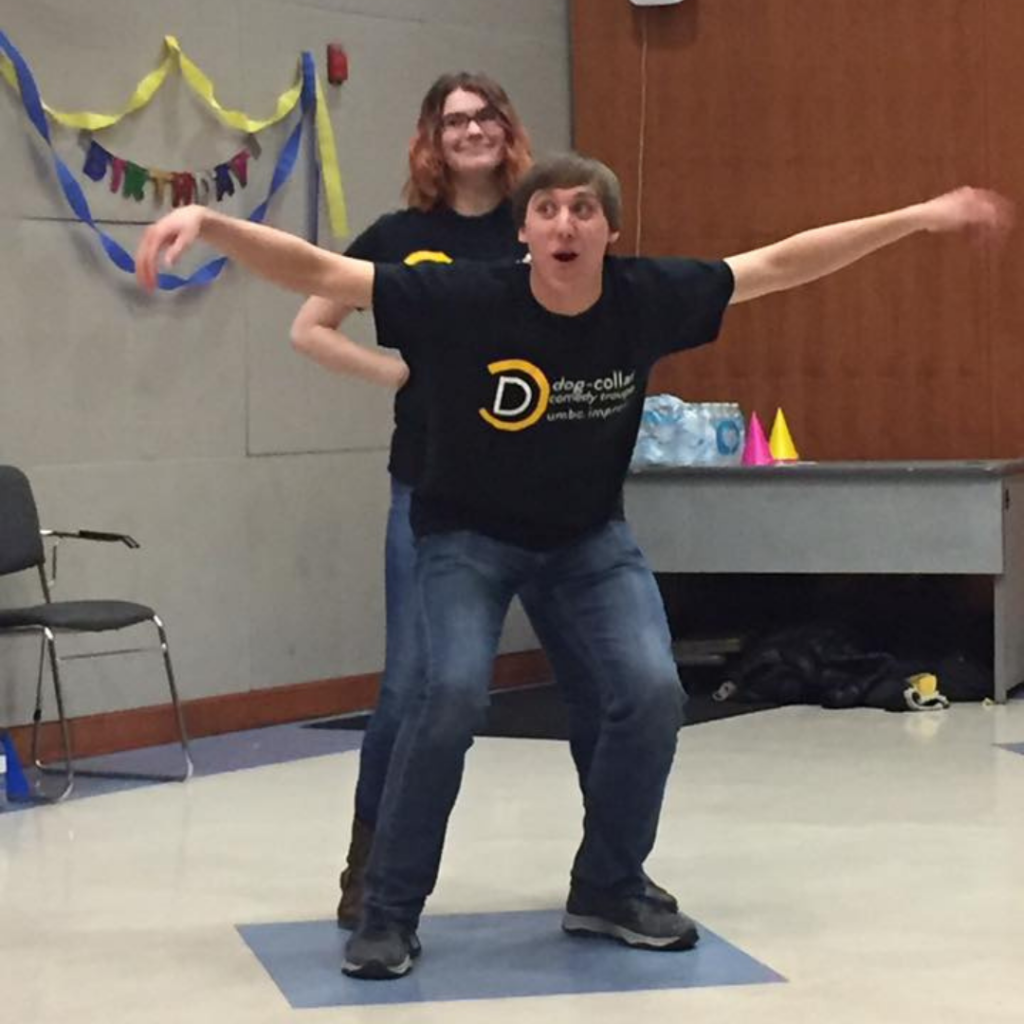
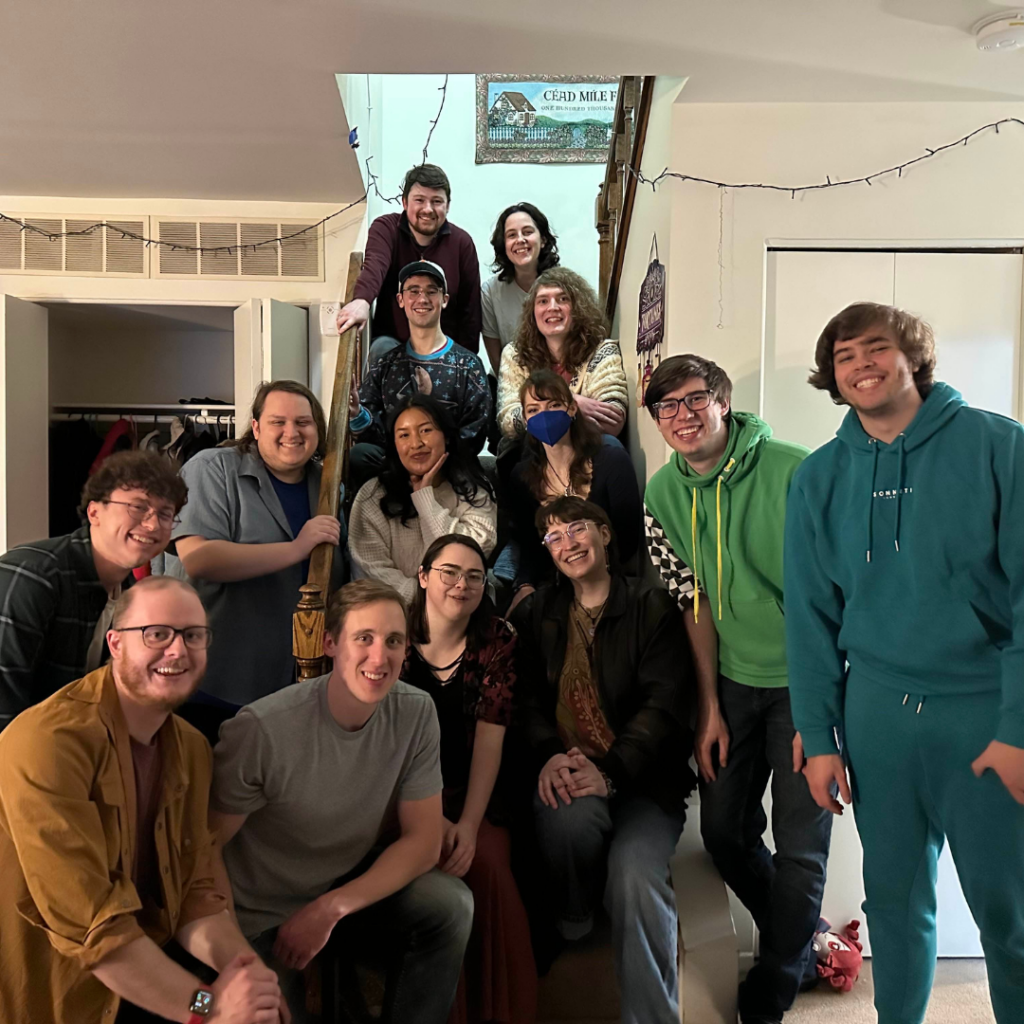
Pictured above: Cook during an improv show when he was a student (left). Cook at a recent Dog-Collar Comedy alumni Christmas party (right).
Q: How did UMBC help prepare you for your next steps after graduation?
A: My coursework directly prepared me for the kind of technical work I do for Johns Hopkins now. The information systems program places a strong emphasis on SQL, which I use daily in my work. Even subjects that don’t directly apply to my current role, such as networking, gave me a broader understanding of how technology systems fit together. Just as important were the professional skills or “soft skills.” UMBC taught me how to manage my time, communicate effectively, and take ownership of my work. In my current position, I’m expected to work independently, balance multiple projects, and speak directly with customers. Because of the habits and skills I honed at UMBC, the transition from student to professional felt natural from the start.
Q: Can you tell us about your journey as an author?
A: He Who Speaks Out Of Turn began with a mistake. During Covid, I had participated in a D&D campaign virtually, where I accidentally created a typical medieval-era wizard character for a futuristic campaign. That sparked the idea of a time-traveling wizard who accidentally strands himself far in the future. Of course, the story morphed to be much more than that, but that is where it began.
In the intervening five years, I worked on the story with no intention to publish; I wrote 500 words here and there as I got spare time. I’ve always enjoyed stories, and when I was younger, I wanted to be an author, so it was a natural hobby for me. I moved multiple times and got married, and the story followed me through these different phases of life and grew as I did. One day last summer (2025), I typed the final word and finished the story. It was one of those moments where I paused and felt like, “Well, now what?” I had an entire story written, so I decided to look into publishing it. I worked with an editor to clean up the story and some friends to design the cover and map. By this spring, five years of writing, revising, and collaboration had transformed that hobby into a published novel.
People have asked me if the characters are based on people I know. The truth is, the core characters are just different aspects of my own personality; some of them are the best of me, some the worst, some who I aspire to be, and some who I never want to be. While I’ve never traveled through time or slain a dragon, I’ve felt the same loss they have, given into the same impulses, and made the same mistakes. I learned a lot about myself while I wrote this story, and I had a lot of fun with it. I hope people enjoy reading it as well.
Pictured right: Author Michael Cook holding a copy of his debut novel, He Who Speaks Out of Turn.

* * * * *
UMBC’s greatest strength is its people. When people meet Retrievers and hear about the passion they bring, the relationships they create, the ways they support each other, and the commitment they have to inclusive excellence, they truly get a sense of our community. That’s what “Meet a Retriever” is all about.
Learn more about how UMBC can help you achieve your goals.
]]>
Meet Michael Cook ’20. While at UMBC, Michael majored in information systems with a minor in statistics. Outside of the classroom, he was a member of UMBC’s improv troupe, Dog-Collar Comedy,...
https://umbc.edu/stories/author-michael-cook/
https://my3.my.umbc.edu/api/v0/pixel/news/160716/guest@my.umbc.edu/22f9f039d1b347f9b032124a745dcd5a/api/pixel
alumni
coeit
is
meet-a-retriever
retriever-authors
story
UMBC News & Magazine
https://my3.my.umbc.edu/groups/umbc-news-magazine
https://assets1-my.umbc.edu/system/shared/avatars/groups/000/001/943/24435aa6207c452e7bc15cc74b42c7bb/xsmall.png?1748556657
https://assets1-my.umbc.edu/system/shared/avatars/groups/000/001/943/24435aa6207c452e7bc15cc74b42c7bb/original.png?1748556657
https://assets2-my.umbc.edu/system/shared/avatars/groups/000/001/943/24435aa6207c452e7bc15cc74b42c7bb/xxlarge.png?1748556657
https://assets2-my.umbc.edu/system/shared/avatars/groups/000/001/943/24435aa6207c452e7bc15cc74b42c7bb/xlarge.png?1748556657
https://assets3-my.umbc.edu/system/shared/avatars/groups/000/001/943/24435aa6207c452e7bc15cc74b42c7bb/large.png?1748556657
https://assets1-my.umbc.edu/system/shared/avatars/groups/000/001/943/24435aa6207c452e7bc15cc74b42c7bb/medium.png?1748556657
https://assets2-my.umbc.edu/system/shared/avatars/groups/000/001/943/24435aa6207c452e7bc15cc74b42c7bb/small.png?1748556657
https://assets1-my.umbc.edu/system/shared/avatars/groups/000/001/943/24435aa6207c452e7bc15cc74b42c7bb/xsmall.png?1748556657
https://assets2-my.umbc.edu/system/shared/avatars/groups/000/001/943/24435aa6207c452e7bc15cc74b42c7bb/xxsmall.png?1748556657
UMBC News & Magazine
0
0
false
Tue, 16 Jun 2026 12:09:03 -0400
Tue, 16 Jun 2026 12:09:03 -0400
Inaugural “MyRCA” interdisciplinary faculty cohort empowers researchers to bring their work to life
UMBC’s new Make Your Research Come Alive (MyRCA) program is helping faculty translate their scholarship into compelling stories that resonate across disciplines, sectors, and audiences. Launched in November 2025, the program wrapped up its inaugural cohort with a May showcase.
“We created the MyRCA program to help faculty strengthen their research communication skills and effectively convey the significance and real-world impact of their work beyond traditional academic audiences and funding pathways,” says Christine Mallinson, assistant vice president for research and scholarly impact. “It also encourages faculty to think strategically and creatively about visibility, partnerships, collaboration, and long-term impact,” she adds.
Led by the Division of Research and Creative Achievement in partnership with the Office of Institutional Advancement, MyRCA brought together 14 faculty members for twice-monthly workshops and working group sessions, a January mini-retreat, and the culminating showcase. The program focused on identifying and articulating research impact, translating specialized scholarship for broad audiences, developing compelling narratives and pitches, understanding funding landscapes, exploring pathways for engagement with corporate, community, and philanthropic partners, and strengthening interdisciplinary collaboration.
“The value of this program is in connecting with each other,” cohort member Foad Hamidi, associate professor of information systems, shared at the showcase. “Strong research communication and collaboration can help our research come alive,” adds Dong Li, another cohort member and assistant professor of computer science and electrical engineering. Li added, “We are not just researchers, we are telling our story to our audience.”
The value of connection
The program intentionally grouped faculty into smaller interdisciplinary teams organized around broad themes such as health, youth, and the environment. These connections quickly sparked new ideas and collaborations.
For instance, Lauren Clay, professor and chair of emergency and disaster health systems, connected with Li, after learning about his work on wearable health-monitoring devices. Clay wondered how Li’s technology could support a colleague’s research on paramedic response during extreme heat events, including monitoring heat stroke risks for marathon runners.
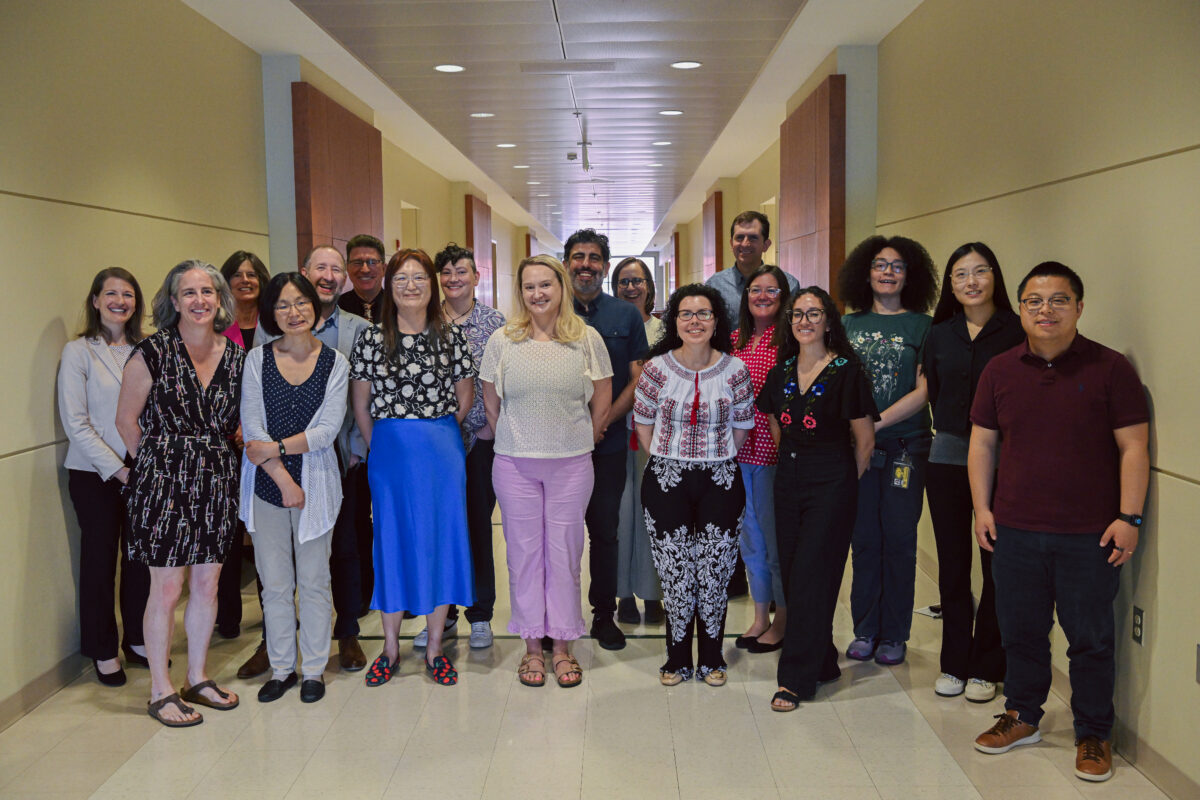 The inaugural MyRCA cohort and program organizers, left to right: Christine Mallinson, Ellen Kohl, Donna Ruginski, Karen Chen, Brian Kaufman, Karl Steiner, Shuling Yang, Sophie Comer-Warner, Amy Tondreau, Foad Hamidi, Linda Kidder Yarlott, Marie Christine-Daniel, Don Engel, Lauren Clay, Gabriella Weiss, Rebecca Williams, Yiwen Hu, Dong Li. Not pictured: Charissa Cheah.
A group including Gabriella Weiss, postdoctoral researcher with the Center for Spaces Sciences and Technology; Marie-Christine Daniel, associate professor of chemistry and biochemistry; and Sophie Comer-Warner, assistant professor of geography and environmental systems, examined remediation strategies for microplastics, heavy metals, and volatile organic compounds with a focus on wetlands. Their collaboration pointed to promising local funding opportunities with Maryland Sea Grant and Chesapeake Bay organizations.
Ellen Kohl, assistant professor of geography and environmental systems, strengthened a new science communication course with the skills she gained, and Shuling Yang, assistant professor of education, advanced her research using generative AI and Chinese pop music for biliteracy development. Brian Kaufman, professor of music, built on the UMBC Create Music Festival, which brings collaborative problem-solving into a typically performance-based discipline.
By the showcase, participants had developed polished pitches, public-facing materials, and broader impact narratives ready for funding proposals, donor outreach, and the media. Each received $500 in research support, along with new cross-campus and external connections.
MyRCA stretches faculty beyond their comfort zones
Mallinson has been excited to see the 14 faculty “stretch beyond their usual disciplinary comfort zones and immediately begin putting the skills and approaches they were learning into practice—developing cross-disciplinary proposals, crafting pitches, appearing in videos and podcasts, participating in panels, and bringing what they learned in the program back to their graduate students and colleagues.”
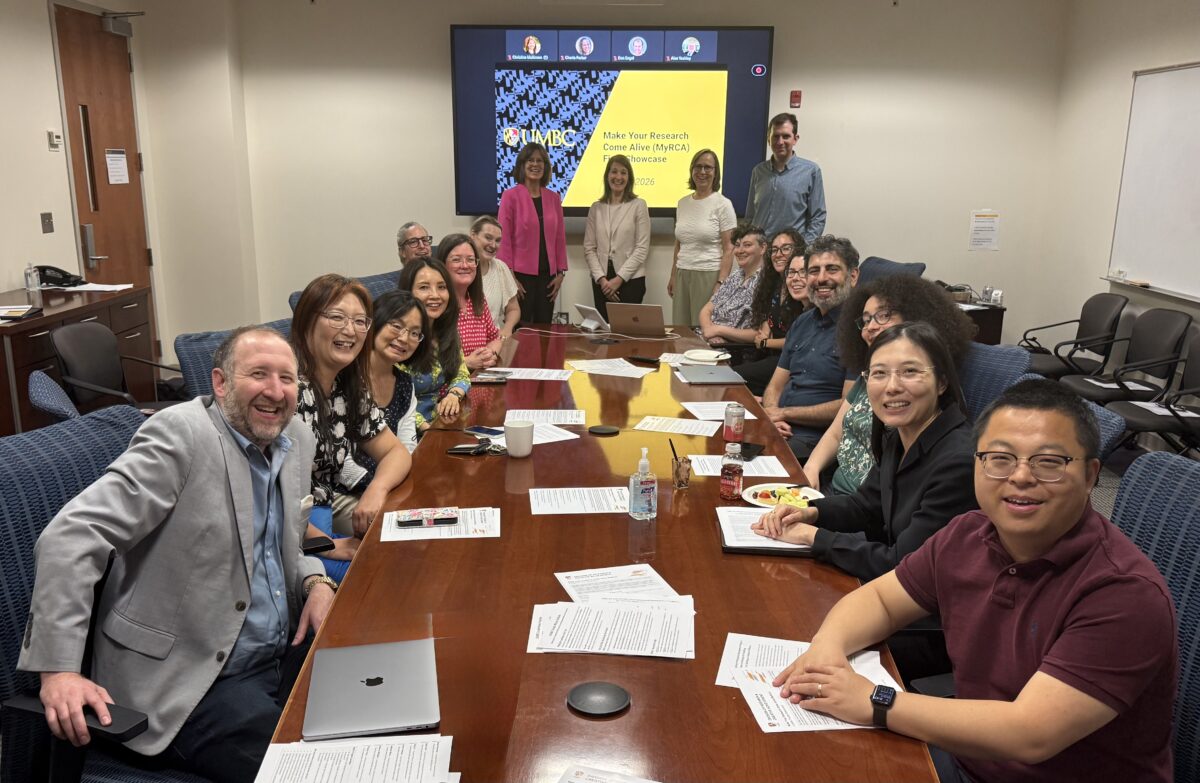 The inaugural MyRCA cohort shared progress and celebrated their accomplishments at a showcase event in May. (Photo by Karl Steiner)
Linda Kidder Yarlott, associate director for corporate research partnerships, highlighted the value of the partnership between the Division of Research and Creative Achievement and the Office of Institutional Advancement. “While federal funding agencies are looking for highly technical, methodology-driven proposals, it’s visionary, outcome-oriented narratives that clearly articulate the human impact and real-world return on investment that entice corporate and philanthropic partners,” Yarlott says.
Yarlott and Jocelyn Kehl, major gift officer for the College of Natural and Mathematical Sciences, worked with the cohort on practical skills—from strategic networking and optimizing LinkedIn profiles to crafting stories that resonate with donors and foundations. “Mentoring this cohort has been an incredibly rewarding experience, culminating in a spectacular program showcase where faculty teams powerfully demonstrated new communication skills that will help unlock new philanthropic pathways,” Yarlott shares.
For more information and to learn about the full 2025 – 2026 cohort, visit research.umbc.edu/myrca.
]]>
UMBC’s new Make Your Research Come Alive (MyRCA) program is helping faculty translate their scholarship into compelling stories that resonate across disciplines, sectors, and audiences. Launched...
https://umbc.edu/stories/myrca-empowers-interdisciplinary-researchers/
https://my3.my.umbc.edu/api/v0/pixel/news/160483/guest@my.umbc.edu/52d7d3b40ae47b848cd3806898a3a63d/api/pixel
cahss
chemistry-and-biochemistry
cnms
coeit
csee
edhs
education
ges
is
music
news
policy-and-society
rca
science-and-tech
story
UMBC News & Magazine
https://my3.my.umbc.edu/groups/umbc-news-magazine
https://assets1-my.umbc.edu/system/shared/avatars/groups/000/001/943/24435aa6207c452e7bc15cc74b42c7bb/xsmall.png?1748556657
https://assets1-my.umbc.edu/system/shared/avatars/groups/000/001/943/24435aa6207c452e7bc15cc74b42c7bb/original.png?1748556657
https://assets2-my.umbc.edu/system/shared/avatars/groups/000/001/943/24435aa6207c452e7bc15cc74b42c7bb/xxlarge.png?1748556657
https://assets2-my.umbc.edu/system/shared/avatars/groups/000/001/943/24435aa6207c452e7bc15cc74b42c7bb/xlarge.png?1748556657
https://assets3-my.umbc.edu/system/shared/avatars/groups/000/001/943/24435aa6207c452e7bc15cc74b42c7bb/large.png?1748556657
https://assets1-my.umbc.edu/system/shared/avatars/groups/000/001/943/24435aa6207c452e7bc15cc74b42c7bb/medium.png?1748556657
https://assets2-my.umbc.edu/system/shared/avatars/groups/000/001/943/24435aa6207c452e7bc15cc74b42c7bb/small.png?1748556657
https://assets1-my.umbc.edu/system/shared/avatars/groups/000/001/943/24435aa6207c452e7bc15cc74b42c7bb/xsmall.png?1748556657
https://assets2-my.umbc.edu/system/shared/avatars/groups/000/001/943/24435aa6207c452e7bc15cc74b42c7bb/xxsmall.png?1748556657
UMBC News & Magazine
1
0
false
Mon, 01 Jun 2026 15:17:46 -0400
Mon, 01 Jun 2026 15:17:46 -0400
Simone Kruse ’26, business technology administration, drawn to UMBC by her career goals and the welcoming community
Simone Kruse had a circuitous route to UMBC. She studied fashion design in her native country, Germany, and later, came to the U.S. as an au pair and began studying at Howard Community College. The community at UMBC and her ideal degree program—business technology administration with a minor in entrepreneurship and innovation and an honors college certificate—prompted her to transfer.
“Simone has exhibited an amazing drive for success and community,” says Kendyl Walker, assistant director of recruitment and assessment in the Honors College, who got to know Kruse through the Honors College community. At UMBC, Kruse found the resources and people to meet her goals.
Q: How did you decide to come to UMBC?
A: I first learned about UMBC just by driving by. I loved that it was a large campus but still small compared to the University of Maryland, College Park. Then just walking around on campus—even before I was a student, I saw there were so many people outside enjoying the weather, or talking and studying together in The Commons. I could see that there was such a great, diverse community and I definitely wanted to be part of that. So when I learned that UMBC had a program that fit what I was studying, which is business technology administration, it was a very easy decision for me to apply and to accept my offer to go to UMBC.
Q: What have been some of the best parts of your experience here?
A: The best parts are definitely the connections. People truly want to help you. What I heard from friends at other colleges is that they go to their lectures and then that’s it. But at UMBC, you can truly make a connection and learn from the professors, not just in the classroom but also outside of the classroom.
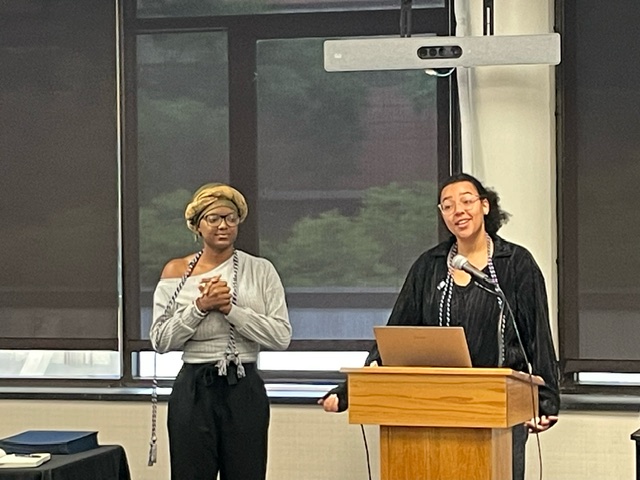 Kruse (right) speaks during this spring’s Tri-Alpha induction ceremony. Kruse is the vice president of the UMBC chapter of this honor society for first-generation college students. Cenia Sims (left) is the president. (Photo courtesy of Kruse)
Q: Are there particular instructors who you have made a special connection with?
A: Prof. B (engineering and computing education assistant teaching professor Mark Berczynski, M.S. ’17, information systems) is definitely one of them. Also, Kendyl Walker and Dr. Julie Oakes (assistant director of curriculum and retention in the Honor College). All three were just great instructors. They always wanted to support their students and make sure they felt comfortable in their classrooms. It’s not just that they were teaching us their subject, they wanted us to experience their subjects while allowing us to share our thoughts and experiences in a safe setting as well.
Q: Is there anything that surprised you at UMBC?
A: I was surprised by some of the amazing classes offered through the Honors College. They would never have fit into my major in any obvious way, but I loved them because they kept my mind open to other subjects. I took a class on how disasters have shaped societies, and another about Hello Kitty and kawaii culture. I just love talking about that class because there’s so much history and so much pop culture behind a little kitty character.
Q: What are your plans for after graduation?
A: I’m hoping to work for Turner Construction, as a field engineer in the DMV area. Once my visa is approved, it would be part of an optional practical training (OPT) program. As a field engineer, I would work on the job sites, coordinating subcontractors and ensuring that construction follows the design while staying on schedule and within budget.
This role aligns well with my business technology degree, especially because I completed a project management course where we worked on a project with a construction company. That experience solidified my decision to pursue a career in the construction industry. I’m especially fascinated by how different teams can come together to build something from the ground up.
Q: What are you hoping to get out of this opportunity?
A: I think it’s learning a new skill. I’m a very hands-on person. I really like being in the field, understanding what the managers are talking about, and then seeing something new come to life. Because of my project management class with Prof. Kahl (information systems assistant teaching professor Margaret Kahl), I’ve become really excited about focusing more on construction and gaining hands-on experience. I’m especially interested in applying and deepening what we learned through our semester project in a real-world setting.
Q: What do you think will be some of your strongest memories from UMBC?
 Kruse tackles a rope course during a Commuter Connections event in 2024. (Photo courtesy of Kruse)
A: My strongest memory is just the community. UMBC is so big on community—you can see it everywhere. I have friends from so many different kinds of classes, when we see each other we always say “hi,” and check in with each other.
I took a Java class in my first semester and I was terrified of that class because I’d never done any programming before. I’m an introvert, so I usually hesitate to talk to other people, but I knew I might need some help. So I asked a classmate if I could sit next to him because he looked like he knew what he was doing. To this day, we still talk almost every week and I still call him sometimes when I need help.
Everyone here is very friendly. People are interested in each other and always very supportive. College life is not just about preparing for a career, it’s also for you to learn something about yourself. UMBC really helps with that, and you can always get as much help as you need.
]]>
Simone Kruse had a circuitous route to UMBC. She studied fashion design in her native country, Germany, and later, came to the U.S. as an au pair and began studying at Howard Community College....
https://umbc.edu/stories/simone-kruse-2026/
https://my3.my.umbc.edu/api/v0/pixel/news/160180/guest@my.umbc.edu/081f05fe8c8bb47bf74eb8d103c99609/api/pixel
class-of-2026
coeit
is
news
science-and-tech
story
UMBC News & Magazine
https://my3.my.umbc.edu/groups/umbc-news-magazine
https://assets1-my.umbc.edu/system/shared/avatars/groups/000/001/943/24435aa6207c452e7bc15cc74b42c7bb/xsmall.png?1748556657
https://assets1-my.umbc.edu/system/shared/avatars/groups/000/001/943/24435aa6207c452e7bc15cc74b42c7bb/original.png?1748556657
https://assets2-my.umbc.edu/system/shared/avatars/groups/000/001/943/24435aa6207c452e7bc15cc74b42c7bb/xxlarge.png?1748556657
https://assets2-my.umbc.edu/system/shared/avatars/groups/000/001/943/24435aa6207c452e7bc15cc74b42c7bb/xlarge.png?1748556657
https://assets3-my.umbc.edu/system/shared/avatars/groups/000/001/943/24435aa6207c452e7bc15cc74b42c7bb/large.png?1748556657
https://assets1-my.umbc.edu/system/shared/avatars/groups/000/001/943/24435aa6207c452e7bc15cc74b42c7bb/medium.png?1748556657
https://assets2-my.umbc.edu/system/shared/avatars/groups/000/001/943/24435aa6207c452e7bc15cc74b42c7bb/small.png?1748556657
https://assets1-my.umbc.edu/system/shared/avatars/groups/000/001/943/24435aa6207c452e7bc15cc74b42c7bb/xsmall.png?1748556657
https://assets2-my.umbc.edu/system/shared/avatars/groups/000/001/943/24435aa6207c452e7bc15cc74b42c7bb/xxsmall.png?1748556657
UMBC News & Magazine
0
0
false
Mon, 18 May 2026 16:07:20 -0400
Mon, 18 May 2026 16:07:20 -0400
Meet a Retriever—Manpreet Suri ’14, M.S. ’15 is an entrepreneur and digital tool builder
Meet Manpreet Suri ’14, M.S. ’15, information systems, an entrepreneur, digital solutions problem solver, McNair Scholar, and a member of the Alumni Association Board of Directors. Suri found a community of support during his time at UMBC, and he credits his professors and UMBC Assistant Vice Provost and Assistant Dean Laila Shishineh for challenging him to meet his full potential. In his work, he finds fulfillment in building tools that make someone’s day easier and more efficient.
Q: What brought you to UMBC?
A: I wanted to be in a place where I wouldn’t get lost in the crowd—a place where I could learn, be challenged, and be supported. UMBC offered all of that, plus a community that genuinely cared about who I was becoming.
Q: What would you want another Retriever to know about you?
A: I recently joined Asurion as a group product manager on the Enterprise Client Experience team. At Asurion, I lead product strategy for tools that support the end-to-end experience of Fortune 500 partners and their customers, from digital onboarding to service delivery. I am a two-time master’s graduate, having earned my first degree at UMBC and my second at the University of Florida’s Warrington College of Business while working full time. My journey blends entrepreneurship, real estate, and digital innovation, always with a focus on solving real-world problems through community-driven solutions.
Q: What’s the one thing you’d want someone who hasn’t joined the UMBC community to know about the support you find here?
A: You’re never alone here. Whether it’s faculty, peers, or alumni—someone always shows up for you, challenges you to grow, and reminds you that your ideas and voice matter.
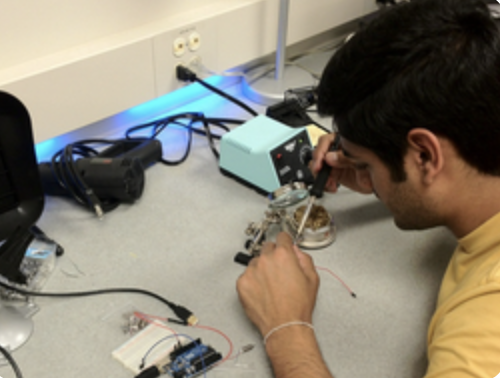
Left: Suri during his McNair Summer Research Fellowship designing a hardware-software prototype: a wearable Braille-based device for the visually impaired.
Q: Tell us about someone in the UMBC community who has inspired you or supported you, and how they did it.
A: Dr. Laila Shishineh encouraged me to merge my technical background with my passion for supporting others. Her mentorship helped me take risks, try new experiences, and believe that innovation can start in the classroom.
Dr. Shishineh was my Summer Bridge mentor and had an enormous influence on both my personal and professional trajectory. She encouraged me to take on extra credits early, accelerating my progress and building my confidence, and pushed me to get involved beyond the classroom—to form meaningful connections, volunteer, and embrace opportunities I otherwise might have overlooked.
With that encouragement, I joined the Refugee Youth Project through the Shriver Center, which eventually helped me connect with recruiters at General Electric. She supported my interest in becoming a resident assistant in the Discovery Scholars Living-Learning Community, and she constantly encouraged me to step into leadership roles, attend retreats like STRiVE, and explore other parts of campus life, including student government and community service.
 Suri at the McNair Scholars induction ceremony in 2012.
Her mentorship came at a time when I was navigating unfamiliar territory as a first-generation student. My parents didn’t go to college, so having someone who believed in me, challenged me, and celebrated my wins made an enormous difference. She even supported me in applying to the McNair Scholars Program and helped me think about potential future paths in tech.
In so many ways, Laila was the single most influential person in my college journey—a steady source of humor, enthusiasm, and encouragement. I truly wouldn’t be where I am today without her.
Q: Tell us about what you loved about your academic program at UMBC.
A: The information systems program provided a powerful blend of technical skills and practical application. What I appreciated most was how interdisciplinary it felt—it taught me to think not just about technology itself, but about the people, systems, and structures that surround it. That balance shaped the way I approach product management and innovation today.
My professors saw potential I didn’t see in myself. They helped me land my first internships, encouraged me to explore entrepreneurship, and taught me that curiosity and kindness are just as important as credentials.
Manpreet Suri '14, M.S. '15
Q: How did UMBC foster your interest in entrepreneurship?
A: My interest in entrepreneurship definitely sparked while at UMBC. While in Dr. Shaun Kane’s Prototyping and Design Lab I worked on a wearable Braille-based device for users with visual impairments. That was my first real experience with human-centered technology design. That project ultimately became the foundation of my McNair Scholars research and showed me how innovation and empathy can come together to solve real-world problems. It planted the seed for the entrepreneurial mindset I carry with me today.
Q: Since joining the UMBC community, in what ways have you felt supported and experienced personal growth?
A: My professors saw potential I didn’t see in myself. They helped me land my first internships, encouraged me to explore entrepreneurship, and taught me that curiosity and kindness are just as important as credentials.
Dr. Kimberly R. Moffitt remains one of the most memorable and impactful professors I’ve had in any academic setting. Her classes pushed me to consider identity, community, and social systems in ways I never had before. She introduced me to a world of nonfiction that I didn’t realize I’d been missing, and the discussions in her classroom helped balance the technical focus of my information systems coursework.
Her teaching style—thoughtful, engaging, and deeply human—broadened my perspective and made my overall academic experience richer and more holistic. I’m still grateful for the lasting impact her classes had on how I view people and the world.
Q: What’s your favorite thing about being a part of Retriever Nation?
A: Retriever Nation is about hustle, heart, and humility. I love how UMBC fosters change makers who don’t just talk about impact, they do the work and bring others with them.
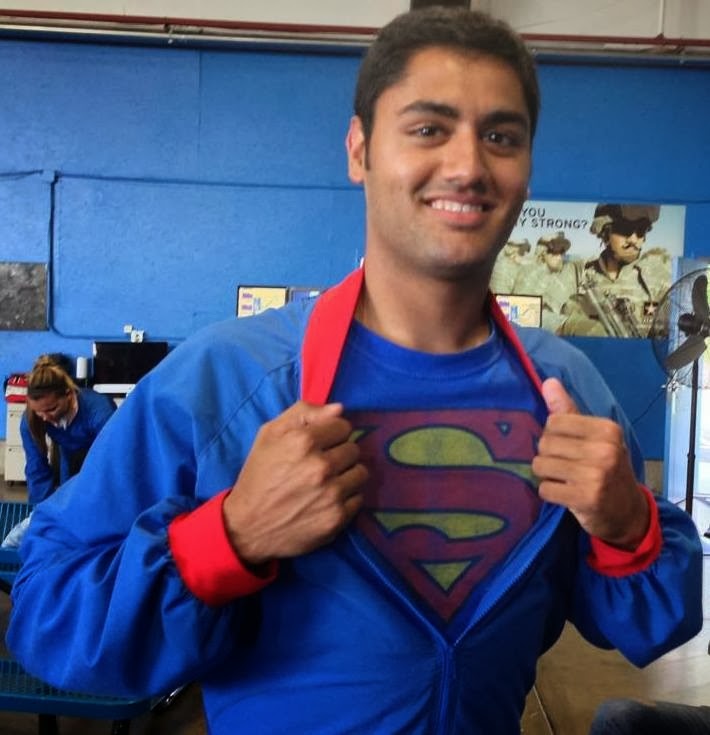
Right: Suri as an undergraduate student at a skydiving experience during his summer internship with GE Aviation.
Q: What drives you to support UMBC?
A: UMBC changed the trajectory of my life. Giving back is my way of paying it forward—especially to programs that support first-generation students and innovators who just need a chance to be seen and supported. I’ll always be proud to support and be part of a community that shows up for people the way UMBC showed up for me.
UMBC’s greatest strength is its people. When people meet Retrievers and hear about the passion they bring, the relationships they create, the ways they support each other, and the commitment they have to inclusive excellence, they truly get a sense of our community. That’s what “Meet a Retriever” is all about.
Learn more about how UMBC can help you achieve your goals.
]]>
Meet Manpreet Suri ’14, M.S. ’15, information systems, an entrepreneur, digital solutions problem solver, McNair Scholar, and a member of the Alumni Association Board of Directors. Suri found a...
https://umbc.edu/stories/meet-a-retriever-manpreet-suri-entrepreneur/
https://my3.my.umbc.edu/api/v0/pixel/news/156274/guest@my.umbc.edu/d5724b4c4bb823c631d2b22c6681ee2e/api/pixel
alumni
coeit
is
magazine
mcnair
meet-a-retriever
perspectives
story
trio
UMBC News & Magazine
https://my3.my.umbc.edu/groups/umbc-news-magazine
https://assets1-my.umbc.edu/system/shared/avatars/groups/000/001/943/24435aa6207c452e7bc15cc74b42c7bb/xsmall.png?1748556657
https://assets1-my.umbc.edu/system/shared/avatars/groups/000/001/943/24435aa6207c452e7bc15cc74b42c7bb/original.png?1748556657
https://assets2-my.umbc.edu/system/shared/avatars/groups/000/001/943/24435aa6207c452e7bc15cc74b42c7bb/xxlarge.png?1748556657
https://assets2-my.umbc.edu/system/shared/avatars/groups/000/001/943/24435aa6207c452e7bc15cc74b42c7bb/xlarge.png?1748556657
https://assets3-my.umbc.edu/system/shared/avatars/groups/000/001/943/24435aa6207c452e7bc15cc74b42c7bb/large.png?1748556657
https://assets1-my.umbc.edu/system/shared/avatars/groups/000/001/943/24435aa6207c452e7bc15cc74b42c7bb/medium.png?1748556657
https://assets2-my.umbc.edu/system/shared/avatars/groups/000/001/943/24435aa6207c452e7bc15cc74b42c7bb/small.png?1748556657
https://assets1-my.umbc.edu/system/shared/avatars/groups/000/001/943/24435aa6207c452e7bc15cc74b42c7bb/xsmall.png?1748556657
https://assets2-my.umbc.edu/system/shared/avatars/groups/000/001/943/24435aa6207c452e7bc15cc74b42c7bb/xxsmall.png?1748556657
UMBC News & Magazine
0
0
false
Thu, 05 Feb 2026 14:52:43 -0500
Thu, 05 Feb 2026 14:52:43 -0500
Students in the Center for Women in Technology succeed by lifting each other up—and are spreading the model around the world
 Brazilian and UMBC students in front of a cultural center in Recife that they toured. (Photo courtesy of Seaman)
Last summer, Kaila Hoskins, a junior computer science major, Celine Anong, a senior information systems major, and Madeline Rippin and Hallel Dereb, both senior computer science majors, took a one-week trip to Recife, Brazil. Like many college students on an international adventure, they toured the city, visited the beaches, sampled the cuisine, and connected with locals. But the trip was more purposeful than a standard vacation. The quartet had come to Brazil to spread UMBC-style support structures for women in technology to four Brazilian universities.
Carolyn Seaman, the director of the Center for Women in Technology (CWIT) at UMBC, organized the trip as part of a Fulbright Brazil Specialist grant-funded project. She collaborated with colleagues in Brazil to establish a set of programs and activities, modeled on CWIT, to support undergraduate female computing students at the Universidade Federal de Pernambuco, a federal research-intensive university; the Universidade de Pernambuco, a state university; Universidade Católica de Pernambuco, a community university that reinvests all profits back into its educational activities; and CESAR School, a private school for continuing education in computing.
Hoskins, Anong, Rippin, and Dereb were able to join the project through separate funding from UMBC’s information systems and computer science and electrical engineering departments and the Center for Global Engagement. They helped analyze survey data about the experiences of women in tech in Brazilian universities and helped launch the peer mentoring program.
“The program was met with tons of enthusiasm from students, faculty, administrators, and local tech companies,” says Seaman. “The icing on the cake was that I was able to host four of my CWIT students.”
“There were so many ‘best parts’ of the trip,” says Anong. “We built connections, collaborated on meaningful work, immersed ourselves in Brazilian culture, and bonded with peers and mentors.”
Support breeds success
CWIT was founded at UMBC in the summer of 1998 by Joan Korenman, a professor of English and director of the Women’s Studies Program. It started with a speaker series on women in technology, and in subsequent years expanded to include outreach and training events, scholars programs, and much more.
It currently focuses on building a welcoming environment for women in tech by recruiting undergraduate women studying computing and engineering and their allies, and providing them with leadership opportunities, professional development, mentoring, networking, and a supportive community that they can turn to throughout their years in school and stay connected with once they enter the tech industry.
Since its inception, CWIT has served more than 500 students, about 75 percent of them women. Over the last 25 years, more than 95 percent of the undergraduate women in computing and engineering officially affiliated with the program have stayed in tech fields. These former students form a large and supportive network of tech leaders in the Maryland region and beyond.
Rippin says her own experience with the CWIT peer mentoring program—first as a mentee and then for two years as a mentor—motivated her to apply for the opportunity to spread the model in Brazil.
“I had such fond memories from building deep connections with like-minded women in tech fields,” Rippin says. “It’s been a really rewarding experience.”
 UMBC students Madeline Rippin, Kaila Hoskins, Celine Anong, and Hallel Dereb and CWIT director Carolyn Seaman join a planning meeting with some of the Brazilian student leaders of the Supporting Women In Technology Across Borders group. (Photo courtesy of Seaman)
Similar challenges and a shared sense of purpose
The CWIT students felt a similar bond with the Brazilian students they met on the trip. While the tech landscape of the two countries differs in some key respects, both countries face persistent underrepresentation of women in the field.
“I think a lot of the struggles that the women in tech in Brazil face are very similar to ours,” says Hoskins. “Things like how isolating the computer science community can feel.”
“Meeting the six Brazilian students we kept in contact with throughout our stay in Recife and sharing experiences about our journeys as women in computing was lovely,” Anong says. “Despite our evident cultural and language differences, we had so many similarities in terms of passion, struggles, and aspirations.”
Hoskins recalls how the students took a boat ride along the rivers that flow through Recife.
 UMBC students and their Brazilian hosts enjoy a relaxing boat ride on the Capibaribe River in Recife. (Photo courtesy of Seaman)
Every time the boat passed under a bridge, they’d follow local tradition and clap and make a wish. It was fun, and also an opportunity to connect, Hoskins says. “It was quiet and it was a chance for us to talk and really get to know each other.”
The UMBC students left with renewed commitment to supporting other women in tech all around the world. They have kept in contact with their Brazilian counterparts and have even debuted an acronym—Supporting Women In Technology Across Borders, or SWITAB—to label their collective efforts. By the end of 2025, the mentoring programs they helped launch had more than 130 participants across five universities in Recife.
“I definitely learned so much from the experience that I’ll continue to carry forward,” Rippin says. “This just solidified how widespread the issue of underrepresentation in technical fields is, and has only strengthened my passion to continue working towards the cause.”
Dereb echoed the sentiment: “One of the best parts of the trip was meeting motivated women who wanted to uplift each other. This experience solidified the importance of community for me, and I’ll carry that forward by being more intentional about creating and contributing to spaces where people feel supported.”
]]>
Brazilian and UMBC students in front of a cultural center in Recife that they toured. (Photo courtesy of Seaman) Last summer, Kaila Hoskins, a junior computer science major, Celine Anong, a...
https://umbc.edu/stories/cwit-supporting-women-in-tech-brazil/
https://my3.my.umbc.edu/api/v0/pixel/news/155432/guest@my.umbc.edu/9a0b72952a957fe72db1245ed52cd1aa/api/pixel
coeit
csee
cwit
is
news
science-and-tech
story
UMBC News & Magazine
https://my3.my.umbc.edu/groups/umbc-news-magazine
https://assets1-my.umbc.edu/system/shared/avatars/groups/000/001/943/24435aa6207c452e7bc15cc74b42c7bb/xsmall.png?1748556657
https://assets1-my.umbc.edu/system/shared/avatars/groups/000/001/943/24435aa6207c452e7bc15cc74b42c7bb/original.png?1748556657
https://assets2-my.umbc.edu/system/shared/avatars/groups/000/001/943/24435aa6207c452e7bc15cc74b42c7bb/xxlarge.png?1748556657
https://assets2-my.umbc.edu/system/shared/avatars/groups/000/001/943/24435aa6207c452e7bc15cc74b42c7bb/xlarge.png?1748556657
https://assets3-my.umbc.edu/system/shared/avatars/groups/000/001/943/24435aa6207c452e7bc15cc74b42c7bb/large.png?1748556657
https://assets1-my.umbc.edu/system/shared/avatars/groups/000/001/943/24435aa6207c452e7bc15cc74b42c7bb/medium.png?1748556657
https://assets2-my.umbc.edu/system/shared/avatars/groups/000/001/943/24435aa6207c452e7bc15cc74b42c7bb/small.png?1748556657
https://assets1-my.umbc.edu/system/shared/avatars/groups/000/001/943/24435aa6207c452e7bc15cc74b42c7bb/xsmall.png?1748556657
https://assets2-my.umbc.edu/system/shared/avatars/groups/000/001/943/24435aa6207c452e7bc15cc74b42c7bb/xxsmall.png?1748556657
UMBC News & Magazine
0
0
false
Fri, 19 Dec 2025 16:59:47 -0500
Fri, 19 Dec 2025 16:59:47 -0500
UMBC hosts 2025 IEEE Baltimore Technical Colloquium
On November 15, more than 120 engineering and computer science professionals and students convened on the UMBC campus for the 2025 IEEE Baltimore Technical Colloquium, co-sponsored this year by the Department of Information Systems. It was the second IEEE Baltimore Technical Colloquium, and saw approximately 20 percent growth in attendance compared to the inaugural event.
The colloquium focused on innovation and leadership in cutting edge areas such as artificial intelligence, data analytics, quantum computing, computational medicine, trustworthy computing, and more. The event, held in the Interdisciplinary Life Sciences Building, was a chance for academic experts, industry leaders, and students from around Baltimore to share their research, network, and find new inspiration.
Chinonso Ezeobi, M.S. ’22, electrical engineering, and a current Ph.D. student, served as conference vice chair. “Curating programs for our IEEE professional community has been incredibly rewarding,” he said. “Serving as chair has provided invaluable opportunities to expand my network and develop my leadership capabilities.”
The event attracted major area universities, companies, and organizations including the Army Research Lab, Northrop Grumman, JP Morgan Chase, and the National Institute of Standards and Technology. Ezeobi delivered opening remarks and, along with several other UMBC students and faculty, presented research. Student and alumni volunteers helped keep the program running smoothly.
Jeanne van Briesen, dean of the College of Engineering and Information Technology, delivered keynote remarks on how engineers and scientists can tackle complex, modern problems, such as reverse engineering the human brain and preventing nuclear terror. In these so-called “wicked problems,” engineered, natural, and data systems interact with human and social systems, creating situations where there is no clear, single solution and oftentimes attempts to fix the original issue create new problems.
Van Briesen described how “convergence research,” which integrates knowledge, methods, and expertise from different disciplines to form novel frameworks that catalyze new discoveries and innovations, can help humanity tackle its most intractable problems. She gave examples of convergence research at UMBC addressing challenges such as improving mental health, increasing the safety of first responders and soldiers, and making medicine cheaply and on-demand.
“A wicked problem is sometimes described as a problem that cannot be fixed—but never tell an engineer something can’t be done,” she said.
]]>
On November 15, more than 120 engineering and computer science professionals and students convened on the UMBC campus for the 2025 IEEE Baltimore Technical Colloquium, co-sponsored this year by...
https://umbc.edu/quick-posts/2025-ieee-baltimore-technical-colloquium/
https://my3.my.umbc.edu/api/v0/pixel/news/154862/guest@my.umbc.edu/aaa6d8f4394db9354ee2ea64a43adcb6/api/pixel
coeit
csee
is
quick-post
science-and-tech
UMBC News & Magazine
https://my3.my.umbc.edu/groups/umbc-news-magazine
https://assets1-my.umbc.edu/system/shared/avatars/groups/000/001/943/24435aa6207c452e7bc15cc74b42c7bb/xsmall.png?1748556657
https://assets1-my.umbc.edu/system/shared/avatars/groups/000/001/943/24435aa6207c452e7bc15cc74b42c7bb/original.png?1748556657
https://assets2-my.umbc.edu/system/shared/avatars/groups/000/001/943/24435aa6207c452e7bc15cc74b42c7bb/xxlarge.png?1748556657
https://assets2-my.umbc.edu/system/shared/avatars/groups/000/001/943/24435aa6207c452e7bc15cc74b42c7bb/xlarge.png?1748556657
https://assets3-my.umbc.edu/system/shared/avatars/groups/000/001/943/24435aa6207c452e7bc15cc74b42c7bb/large.png?1748556657
https://assets1-my.umbc.edu/system/shared/avatars/groups/000/001/943/24435aa6207c452e7bc15cc74b42c7bb/medium.png?1748556657
https://assets2-my.umbc.edu/system/shared/avatars/groups/000/001/943/24435aa6207c452e7bc15cc74b42c7bb/small.png?1748556657
https://assets1-my.umbc.edu/system/shared/avatars/groups/000/001/943/24435aa6207c452e7bc15cc74b42c7bb/xsmall.png?1748556657
https://assets2-my.umbc.edu/system/shared/avatars/groups/000/001/943/24435aa6207c452e7bc15cc74b42c7bb/xxsmall.png?1748556657
UMBC News & Magazine
0
0
false
Tue, 25 Nov 2025 14:27:06 -0500
Tue, 25 Nov 2025 14:27:06 -0500
Retrievers gone global: 5 ways UMBC fosters international engagement
As International Education Week 2025 comes to a close, we’ve rounded up a few of the many ways Retrievers engage globally through their work and studies. Even though it has been a particularly trying time for international students, “…more UMBC students studied abroad in Academic Year 2024 – 25 than ever before. Our students are discovering new perspectives, building global connections, and transforming their futures through these life-changing experiences,” says Katie Heird, director of education abroad and global learning at UMBC. Here are a few ways international students and Retrievers who have gone abroad play a role in the lifeblood of UMBC.
1. Who is Fulbright material?
UMBC’s six 2025 – 2026 Fulbright U.S. Student Program recipients share their not-so-secret recipe for success. Deciding to apply for a Fulbright is just the first step, and with the support of UMBC’s Center for Global Engagement, which hosts Fulbright information sessions in the spring for undergraduate, graduate, and recent alumni. Retrievers can apply to earn a master’s, conduct research, or be an English Teaching Assistant in more than 160 countries. With the UMBC 2025 – 2026 Fulbrights already settled in Taiwan, Norway, and Indonesia, Belgium, Israel, and Germany, these alumni are eager to share tips to inspire and prepare the next generations of Fulbright Retrievers.
 UMBC’s 2025 – 2026 U.S. Fulbright Program class. (Brad Ziegler/UMBC)
Additionally, this year, four UMBC faculty and staff members received highly competitive Fulbright U.S. Scholar awards to teach, conduct research, and foster cross-cultural connections globally. The recipients span all three UMBC colleges and comprise three faculty members and one staff member. The UMBC awardees are connecting with international partners in areas of shared interest. Augusto Casas, an associate teaching professor of information systems, is working in Colombia; Cynthia Wagner, a teaching professor of biological sciences, went to Kyrgyzstan; Irene Chan, a professor of visual arts, is in Romania; and Tom Penniston, M.A. ’09, TESOL, Ph.D. ’14, language, literacy, and culture, the coordinator of learning analytics in the Division of Information Technology, is working in Croatia.
2. Building intentional international connections
A six-person UMBC team built international connections at the “PIWOT – World of Technology” conference, held in early 2025 in Mumbai, India. The science and technology conference is organized by the alumni association for graduates of the prestigious Indian Institutes of Technology (IITs), and attracts many of the leaders in science and technology in India and around the world. The CEO of Alphabet, Inc. (Google’s parent company), the co-founder of Sun Microsystems, and the CEO of IBM are all graduates of IITs.
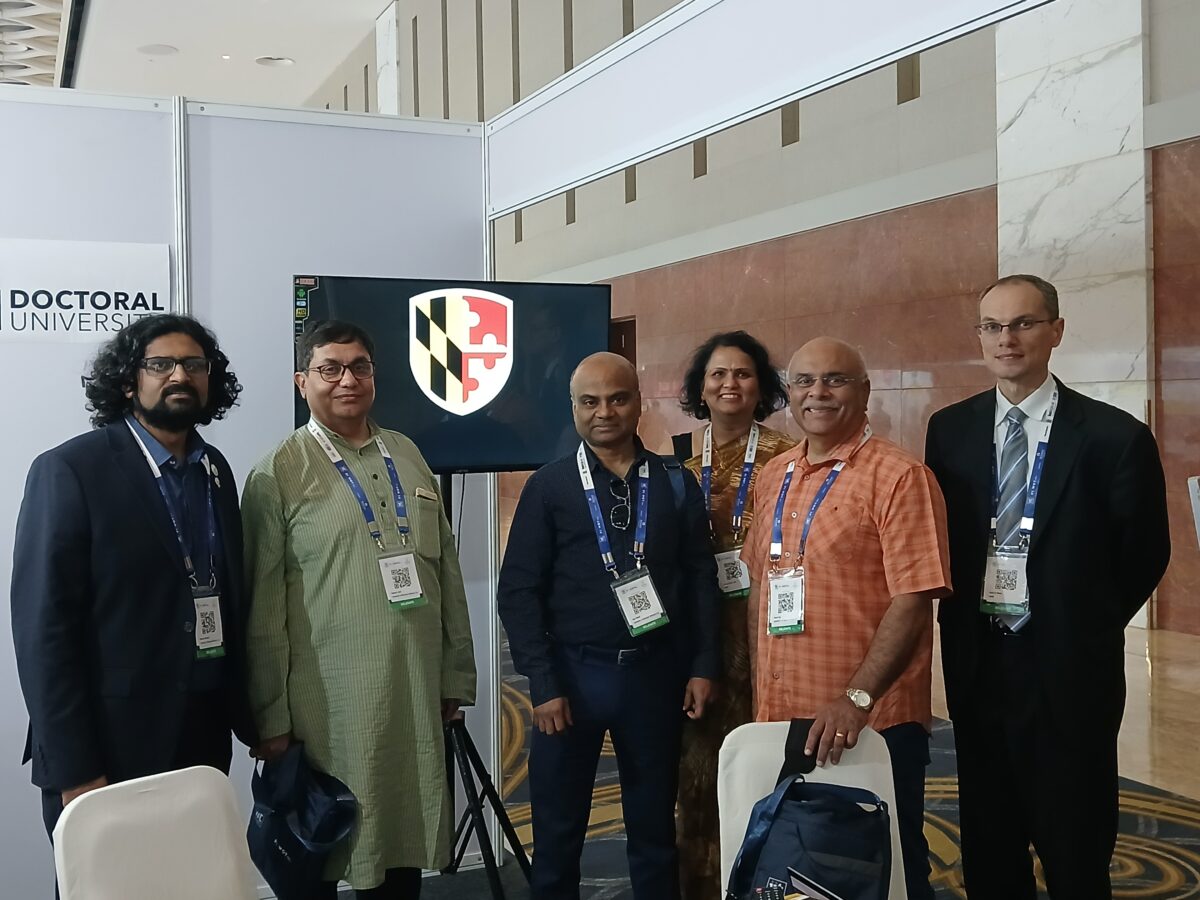 UMBC PIWOT attendees (l-r): Ramana Vinjamuri, associate professor of computer science and electrical engineering and director of the NSF IUCRC BRAIN Center; Joshi; Upal Ghosh, professor of chemical, biochemical, and environmental engineering; Karuna Pande Joshi, professor of information systems and director of the NSF IUCRC Center for Accelerated Real Time Analytics; Govind Rao, director of the Center for Advanced Sensor Technology and professor of chemical, biochemical and environmental engineering; and David Di Maria, associate vice provost for international education at UMBC. (Photo courtesy of Karuna Pande Joshi)
This year’s PIWOT conference focused on the impact of technology across multiple dimensions of life, from the professional to the personal. UMBC’s Anupam Joshi, acting dean of the College of Engineering and Information Technology, took part as a speaker on a panel about the impact of technology on education, and the UMBC booth also displayed the low-cost infant incubator developed by Professor Govind Rao.
3. International research collaboration challenges assumptions
Thanks to funding from the German Academic Exchange Service, Lorenz Kopp and Björn Michelmann, mechanical engineering students from Germany’s Regensburg University of Applied Sciences, came to UMBC to conduct research with UMBC’s mechanical engineering professor, Paris von Lockette. The project was part of a bigger assumption-questioning enterprise—in particular, probing the behavior of materials called soft magnets. Kopp’s and Michelmann’s advisor at Regensburg University of Applied Sciences knew von Lockette through the American Society of Mechanical Engineers, and together they arranged the details of the two-month visit with the help of the Office of International Students and Scholars at UMBC.
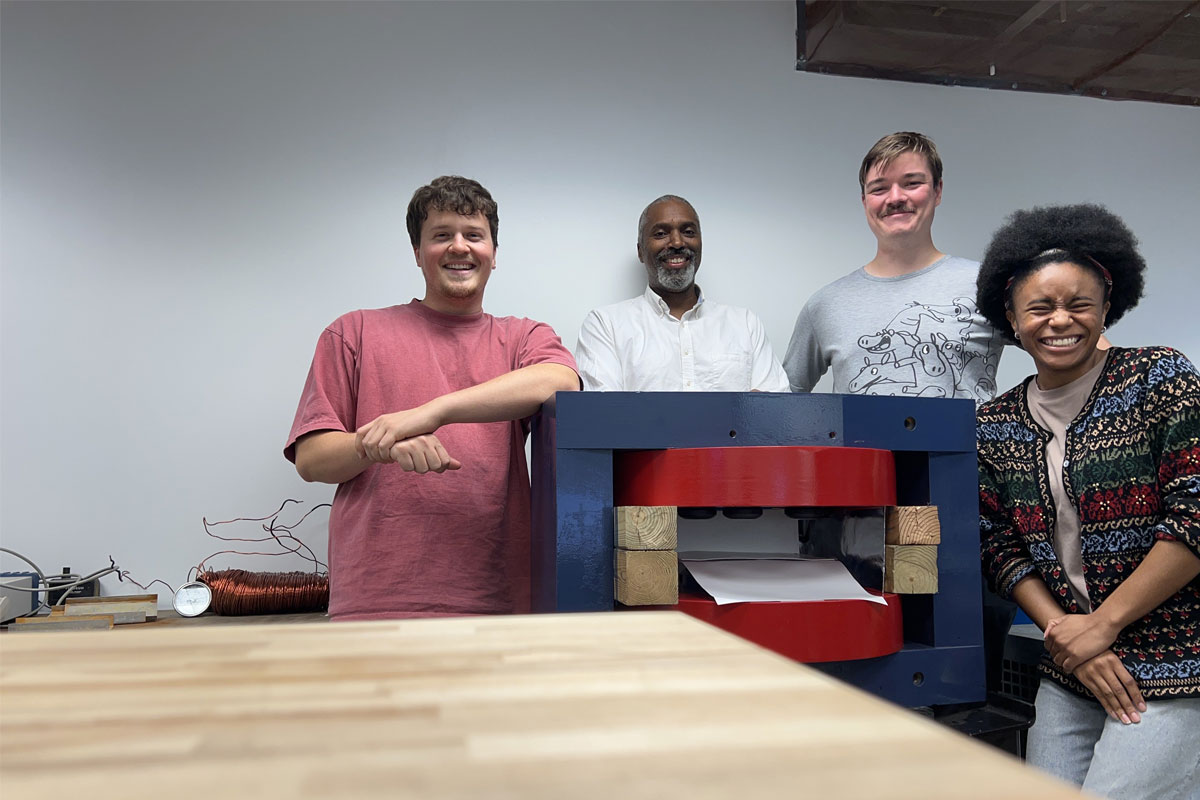 (l-r): Lorenz Kopp, Björn Michelmann, von Lockette, and Tamia Bowers ’23, mechanical engineering, with the electromagnet they set up in the lab. (Brad Ziegler/UMBC)
While Kopp and Michelmann spent plenty of time in the lab during their visit, they also had chances to explore the areas surrounding UMBC on weekends. They visited the National Aquarium in Baltimore, took in a Baltimore Ravens football game, and drove to Shenandoah National Park in Virginia. They also enjoyed campus life, attending Homecoming weekend, and regularly visiting the Retriever Activity Center to work out.
4. Exploring politics in a global context, virtually
Professor Filomeno’s 2024 Collaborative Online International Learning (COIL) Brazil project on climate change equips students with the technical and interpersonal skills to thrive in professional online international and intercultural environments. COIL makes international scholarship and intercultural learning accessible by removing barriers of cost and travel while preparing students with essential skills for future in-person exchanges. COIL Brazil was part of Filomeno’s Global Citizenship class in collaboration with former colleague Clarissa Dri, a professor of international relations at his alma mater, the Federal University of Santa Catarina, in southern Brazil.
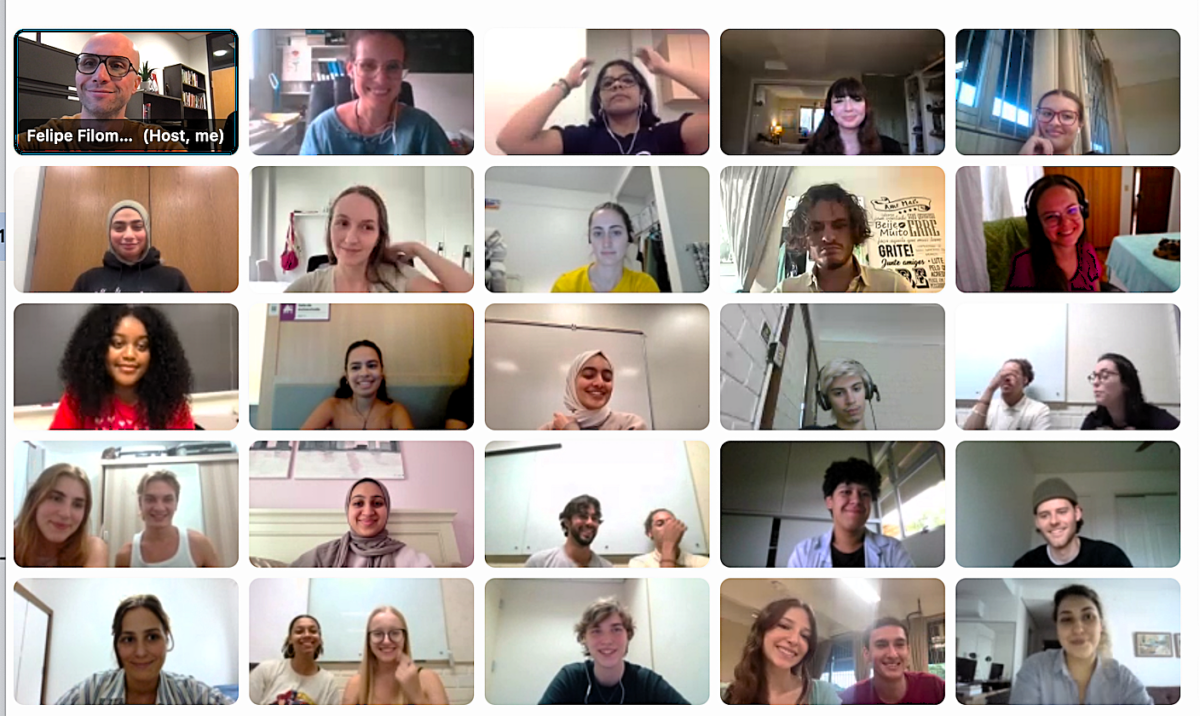 COIL Brazil met online so that students from UMBC and the Federal University of Santa Catarina in southern Brazil could participate. (Image courtesy of Felipe Filomeno.)
The ongoing Virtual Tandem Conversation project was created by Susanne Sutton, a teaching professor of German, and Talke Macfarland, a visiting lecturer of German in UMBC’s Department of Modern Languages, Linguistics, and Intercultural Communication. They established the program during COVID-19 to help UMBC students learning German and German students learning English socialize while continuing to improve their language skills.
The actual tandem meetings are entirely student-driven and take place outside of the classroom—each tandem pair arranges virtual meetings according to their schedule. Tandem participants have gone beyond the virtual classroom, such as UMBC Golden ID Program student Rebecca Smith, who, while on a recent trip to France, hopped over to Germany to visit Gertrud Krause-Traudes, her partner in UMBC’s Virtual Tandem Conversation project. After three semesters of virtual conversations in German and English, Smith was happy to meet Krause-Traudes in person.
5. Science that bridges two worlds
In 2020, as the COVID-19 pandemic disrupted lives worldwide, Greema Regmi began her Ph.D. in UMBC’s atmospheric physics program. Studying remotely from her home in Nepal, she navigated a grueling schedule due to the time difference. Now in her fifth year, Regmi’s perseverance has earned her NASA’s prestigious Future Investigators in NASA Earth and Space Science and Technology (FINESST) fellowship, which will provide up to $50,000 annually for up to three years to fuel her research on atmospheric dust.
 Greema Regmi discussed her research at a recent poster session at UMBC. (Brad Ziegler/UMBC)
Regmi has been able to accomplish so much in part because of the supportive community she found at UMBC, after finally arriving on campus in fall 2021. Regmi’s journey bridges her unique perspectives as a student in Nepal and the U.S. At UMBC, she’s embraced broader opportunities. “I think here you can push the limit. I don’t even know what the limit is in the U.S. Here you can dream more and be more experimental,” she observes.
Grounded in the UMBC physics department’s community of support, Regmi’s confidence has only grown since her arrival in Maryland. “There’s always a place for my opinion, which is very nice. Because of that, and all of the experiences I’ve had, now I have the confidence to start my own project,” she explains. “And that’s why I think now I’m confident to go back home, lead something there, and be helpful in some small way.”
Learn more about UMBC’s international opportunities.
]]>
As International Education Week 2025 comes to a close, we’ve rounded up a few of the many ways Retrievers engage globally through their work and studies. Even though it has been a particularly...
https://umbc.edu/stories/gone-global-umbc-international-engagement/
https://my3.my.umbc.edu/api/v0/pixel/news/154859/guest@my.umbc.edu/4a42a8215afbcd5c0ace5e35458352e2/api/pixel
cahss
cge
cnms
coeit
community
fulbright
international
is
llc
meche
mlli
news
physics
politicalscience
research
story
visualarts
UMBC News & Magazine
https://my3.my.umbc.edu/groups/umbc-news-magazine
https://assets1-my.umbc.edu/system/shared/avatars/groups/000/001/943/24435aa6207c452e7bc15cc74b42c7bb/xsmall.png?1748556657
https://assets1-my.umbc.edu/system/shared/avatars/groups/000/001/943/24435aa6207c452e7bc15cc74b42c7bb/original.png?1748556657
https://assets2-my.umbc.edu/system/shared/avatars/groups/000/001/943/24435aa6207c452e7bc15cc74b42c7bb/xxlarge.png?1748556657
https://assets2-my.umbc.edu/system/shared/avatars/groups/000/001/943/24435aa6207c452e7bc15cc74b42c7bb/xlarge.png?1748556657
https://assets3-my.umbc.edu/system/shared/avatars/groups/000/001/943/24435aa6207c452e7bc15cc74b42c7bb/large.png?1748556657
https://assets1-my.umbc.edu/system/shared/avatars/groups/000/001/943/24435aa6207c452e7bc15cc74b42c7bb/medium.png?1748556657
https://assets2-my.umbc.edu/system/shared/avatars/groups/000/001/943/24435aa6207c452e7bc15cc74b42c7bb/small.png?1748556657
https://assets1-my.umbc.edu/system/shared/avatars/groups/000/001/943/24435aa6207c452e7bc15cc74b42c7bb/xsmall.png?1748556657
https://assets2-my.umbc.edu/system/shared/avatars/groups/000/001/943/24435aa6207c452e7bc15cc74b42c7bb/xxsmall.png?1748556657
UMBC News & Magazine
7
0
false
Tue, 25 Nov 2025 13:03:08 -0500
Tue, 25 Nov 2025 13:03:08 -0500
Celebrating the history, evolution, and impact of K-pop culture as represented in ‘KPop Demon Hunters’
Abbie Fakoya is at the front of the room, smiling and encouraging over 40 UMBC faculty, staff, and students to follow her dance steps. Many of the attentive dancers were either new to the intricate K-pop choreography, learning this sequence, or, like millions of fans around the world, ready to show off their synchronized dance moves to “Golden,” the 2026 Grammy-nominated Song of the Year, from Netflix’s KPop Demon Hunters film.
The global success of the film drew fans to the KPop Demon Hunters: A Conversation on Media, Culture, & Globalization event organized by the Asian Studies Program in collaboration with several CAHSS departments at the Skylight Lounge this fall. Fakoya, a biochemistry senior and the event coordinator for UMBC’s K-pop Dance Club, was not surprised to see the long line of people waiting to participate in an evening of Korean culture, dance, and food that celebrated Korea’s vast snack culture thanks to the D.C. Korean Foundation and a delicious Korean-fusion catered dinner by Baltimore’s own Dooby’s restaurant

 Participants line up for a Korean-fusion dinner and Korean snacks and drinks.
“Seeing the movie accurately portray the food and cultural practices I grew up with in a positive way—like the noodles, the Korean spa the characters enjoyed, and Korean shamanistic practices—reminds me of my own childhood experiences, and doing those same things now when visiting family in Korea. It is really inspiring,” said Angelina Jenkins, assistant director of UMBC’s Mosaic Center for Cultural Diversity, a member of the expert panel.
Growing up with K-pop
Fakoya became interested in K-pop in elementary school, at a time when she felt that liking K-pop—especially if you weren’t Korean—was not as well received. Friend and club historian Esha Shah, an information systems junior, agrees. “This year has been very exciting. We’ve had a lot of interest in the club because of the movie,” said Sha. “I remember when I was in elementary and middle school, kids would give me side-eyes for liking K-pop and singing in Korean and ask me why I wanted to be Korean.”
The two met in 2022 at the RAC for a packed K-pop dance workshop, featuring the then-top K-pop song “Dope,” by BTS. It was the first in-person dance workshop after COVID-19 restrictions were lifted. “UMBC’s K-pop dance club moved its dance workshops online during the COVID-19 lockdown because K-pop artists were still posting songs and dance videos,” said Sha. “When students came back in person, there were so many people who wanted to participate that the club had to keep rotating participants in and out of the workshop.”
For Jenkins, a life-long K-pop fan, being among Retrievers who champion, appreciate, and embrace Korean culture was also a welcome change from her experience growing up in Pennsylvania, where she was one of the very few students of color in her high school. “I’m super excited to be here as I am what I consider to be a one-and-a-half first-generation American, Korean American, who not only does their work through the Mosaic Center,” said Jenkins.
“I am also a third-year Ph.D. student at the University of Maryland, College Park, looking at culture studies, Asian American identity development, and how films like KPop Demon Hunters allow young Asian American students to really understand what this means to bridge the gap between American culture, Korean culture, and this idea of globalization.”
 (l-r): Mea Lee and Angelina Jenkins discuss Korean culture as represented in the film KPOP Demon Hunters.
Alongside Angelina Jenkins, Mea Lee, a doctoral student in the Language, Literacy, and Culture Program at UMBC and a librarian at Anne Arundel Community College, highlighted the film’s cultural integrity. Lee emphasized how breaking Asian stereotypes and incorporating authentic cultural references can empower not only Korean communities but all minority groups in America.
She explained how Korean folk narratives and art were skillfully woven into the storyline, enriching the film’s depth and relevance. One example is the blue-striped mystical tiger, Derpy, and the magpie, Sussy, with three eyes on each side of its head, who are paired together to act as messengers and protectors. These elements not only honored tradition but also created a bridge between folklore and modern fantasy, allowing the narrative to resonate with diverse audiences.
 Lee discusses the meaning of a Korean mystical tiger and magpie in Korean folklore.
K-pop’s influence beyond the screen
The panel, moderated by Fan Yang, professor of media and communication studies, director of the Asian Studies Program, and the faculty leader of UMBC’s Global Asias Initiative, discussed the spiritual, gender, linguistic, and artistic Korean cultural references throughout the movie, along with the Westernization of K-pop.
“The experience of being a human and a demon—struggling with duality— is very relatable. I’m an American,” said Lee, “but I also want to live within my Korean culture. It’s a balance between how much I really want to be an outcast in either culture, versus how much I’m going to accept. It’s a constant struggle.” Lee continues, “It’s a similar duality that Rumi, the main character, faces as a half-demon and half-human. Life isn’t always so clear. We spend most of our lives in the grey area. It’s a balance. At least I don’t have to fight four dancing demons.”
Fakoya and Sha have also witnessed the Westernization of K-pop, with a shift from Korean lyrics to mostly English lyrics—like in KPop Demon Hunters. First, they didn’t expect to like the movie because it was marketed for children, and most of it was in English. “I don’t speak Korean, but I like to memorize the Korean lyrics and the dances,” said Sha.
 Abbie Fakoya leads the audience in a K-pop dance sequence at the KPop Demon Hunters: A Conversation on Media, Culture, & Globalization event.
They were won over by the movie’s attention to detail of the K-pop culture they’ve been a part of since childhood. Now, they’ve found themselves as ambassadors encouraging students who “don’t want to like it because everyone likes it now,” to explore the genre beyond what’s popular. “There are different sounds and niche groups just like in any type of music,” said Sha.
In preparation to lead the “Golden” dance workshop, Fakoya memorized the Korean and English lyrics and choreography. “K-pop is so cool. It’s just a habit. I love it,” she said, after masterfully and patiently showing everyone how to be a K-pop demon superstar.
Learn more about UMBC’s K-Pop Dance Club’s next showcase.
]]>
Abbie Fakoya is at the front of the room, smiling and encouraging over 40 UMBC faculty, staff, and students to follow her dance steps. Many of the attentive dancers were either new to the...
https://umbc.edu/stories/celebrating-k-pop-culture-in-kpop-demon-hunters/
https://my3.my.umbc.edu/api/v0/pixel/news/154739/guest@my.umbc.edu/cd7f498a1fbee02793558176307efae5/api/pixel
arts-and-culture
asianstudies
biochemistry
cahss
community
international
is
llc
mcs
mlli
news
story
the-mosaic
UMBC News & Magazine
https://my3.my.umbc.edu/groups/umbc-news-magazine
https://assets1-my.umbc.edu/system/shared/avatars/groups/000/001/943/24435aa6207c452e7bc15cc74b42c7bb/xsmall.png?1748556657
https://assets1-my.umbc.edu/system/shared/avatars/groups/000/001/943/24435aa6207c452e7bc15cc74b42c7bb/original.png?1748556657
https://assets2-my.umbc.edu/system/shared/avatars/groups/000/001/943/24435aa6207c452e7bc15cc74b42c7bb/xxlarge.png?1748556657
https://assets2-my.umbc.edu/system/shared/avatars/groups/000/001/943/24435aa6207c452e7bc15cc74b42c7bb/xlarge.png?1748556657
https://assets3-my.umbc.edu/system/shared/avatars/groups/000/001/943/24435aa6207c452e7bc15cc74b42c7bb/large.png?1748556657
https://assets1-my.umbc.edu/system/shared/avatars/groups/000/001/943/24435aa6207c452e7bc15cc74b42c7bb/medium.png?1748556657
https://assets2-my.umbc.edu/system/shared/avatars/groups/000/001/943/24435aa6207c452e7bc15cc74b42c7bb/small.png?1748556657
https://assets1-my.umbc.edu/system/shared/avatars/groups/000/001/943/24435aa6207c452e7bc15cc74b42c7bb/xsmall.png?1748556657
https://assets2-my.umbc.edu/system/shared/avatars/groups/000/001/943/24435aa6207c452e7bc15cc74b42c7bb/xxsmall.png?1748556657
UMBC News & Magazine
1
0
false
Thu, 20 Nov 2025 09:42:26 -0500
Thu, 20 Nov 2025 09:42:26 -0500