Show Your Retriever Pride: Volunteer at our Admissions Reception
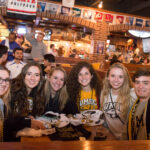
Show off your R etriever Fever and volunteer! Alumni are invited to share their experiences at UMBC with prospective students and their families. Help future students establish themselves as a fellow dawg! Dates and locations vary, so find the one that is perfect for you:
Rockville/Strathmore Reception
Tuesday, March 24, 7 – 9 p.m.
Strathmore Music Center
Rockville, MD
Reception for Academically Talented African American Students
Thursday, April 2, 7 – 9 p.m.
UMBC
Reception for Academically Talented Hispanic & Latino Students
Tuesday, April 7, 7 – 9 p.m.
UMBC
New Jersey Reception
Tuesday, April 21, 7 – 9 p.m.
Olde Mill Inn & Grain House Restaurant
Basking Ridge, NJ
New York Reception
Wednesday, April 22, 7 – 9 p.m.
The Carltun, Eisenhower Park
East Meadow, NY
Pennsylvania Reception
Thursday, April 23, 7 – 9 p.m.
The Mercer Museum
Doylestown, PA
Click here to volunteer!
]]>
Show off your Retriever Fever and volunteer! Alumni are invited to share their experiences at UMBC with prospective students and their families. Help future students establish themselves as a...
https://umbc.edu/stories/show-your-retriever-pride-volunteer-at-our-admissions-reception/
https://my3.my.umbc.edu/api/v0/pixel/news/121949/guest@my.umbc.edu/6a849c51a8b017a8abcc0428496fb0b2/api/pixel
admissions-receptions
alumni
maryland
new-jersey
new-york
pennsylvania
prospective-students
umbc
UMBC News & Magazine
https://my3.my.umbc.edu/groups/umbc-news-magazine
https://assets1-my.umbc.edu/system/shared/avatars/groups/000/001/943/24435aa6207c452e7bc15cc74b42c7bb/xsmall.png?1748556657
https://assets1-my.umbc.edu/system/shared/avatars/groups/000/001/943/24435aa6207c452e7bc15cc74b42c7bb/original.png?1748556657
https://assets2-my.umbc.edu/system/shared/avatars/groups/000/001/943/24435aa6207c452e7bc15cc74b42c7bb/xxlarge.png?1748556657
https://assets2-my.umbc.edu/system/shared/avatars/groups/000/001/943/24435aa6207c452e7bc15cc74b42c7bb/xlarge.png?1748556657
https://assets3-my.umbc.edu/system/shared/avatars/groups/000/001/943/24435aa6207c452e7bc15cc74b42c7bb/large.png?1748556657
https://assets1-my.umbc.edu/system/shared/avatars/groups/000/001/943/24435aa6207c452e7bc15cc74b42c7bb/medium.png?1748556657
https://assets2-my.umbc.edu/system/shared/avatars/groups/000/001/943/24435aa6207c452e7bc15cc74b42c7bb/small.png?1748556657
https://assets1-my.umbc.edu/system/shared/avatars/groups/000/001/943/24435aa6207c452e7bc15cc74b42c7bb/xsmall.png?1748556657
https://assets2-my.umbc.edu/system/shared/avatars/groups/000/001/943/24435aa6207c452e7bc15cc74b42c7bb/xxsmall.png?1748556657
UMBC News & Magazine
0
0
false
Fri, 20 Mar 2015 13:22:42 -0400
Windfall Prophets

UMBC is at the center of Maryland’s growing efforts to harness the energy of the wind.
 Ocean City is the Maryland destination most associated with the summer. But some- day the resort may also be known for a nearby wind farm that could help the state put a dent in its greenhouse gas emissions and the rising costs of generating power.
Both this summer and last summer, UMBC scientists, using a remote sensing technology called LIDAR (Light Detection and Ranging), have been helping the state of Maryland in wind resource assessment efforts to develop the state’s wind energy farms in the Atlantic Ocean near Ocean City.
The project is part of a plan envisioned by Maryland’s legislature in a new law – the Maryland Offshore Wind Energy Act – passed in the 2013 legislative session and signed by Governor Martin O’Malley. The legislation calls for the establishment of a facility at least 10 nautical miles off the state’s coastline that would eventually produce as much as 500 megawatts of power for the state.
Researchers at UMBC were called in to enhance understanding of the role mid-Atlantic weather patterns have on seasonal and temporal wind resource variability off the coast of Maryland, which will ultimately lead to better estimation and optimal development strategies for offshore wind energy production. The first stage of development for Maryland’s wind energy area will be a 200-megawatt wind farm, with potential construction of at least 40 wind turbines initially, with the potential for more than 300 once fully developed.
Knowing the wind variability over a large wind farm is just the latest use for the scanning Doppler Wind LIDAR at UMBC, a technology like radar but one that uses laser light instead of sound waves. LIDAR can make exquisite 3-D images by bouncing off things as small as air particles.
LIDAR is a technology that has become very popular with scientists doing precise long-distance imaging. One team at The College of William & Mary, for instance, has used LIDAR to make a model of where ground water would go if another huge hurricane hit Manhattan; researchers at Carnegie Mellon University used it to plot illegal gold mines in Peru. UMBC scientists have had years of experience with LIDAR in the atmosphere. UMBC’s Atmospheric LIDAR Group measures air quality across the U.S. and runs a much-followed environmental website called the U.S. Air Quality Weblog, aka the “Smog Blog.”
The UMBC team used Doppler Wind LIDAR last summer to see how much wind is available off of Ocean City for the wind farm.

Powering Up
Wind energy is booming all over the United States. But it has yet to come to full strength in Maryland.
Although it remains behind Europe in wind energy (which accounts for 13 percent of that continent’s energy) the United States now gets almost 4 percent of its electricity from wind turbines – enough to power 15 million homes.
The U.S. Department of Energy projects that this figure will rise to 20 percent by the year 2030. States in the Midwest, which have the advantage of wind constantly raking the prairie, already generate substantial amounts of electricity from turbines. Two states, South Dakota and Iowa, generate more than 25 percent of their electricity from the wind. Six states get more than 15 percent; nine get better than 10 percent.
Another key to the rise of wind energy is that the price of wind-generated electricity has fallen 43 percent in the last four years, according to the AWEA U.S. Wind Industry Annual Market Report Year Ending 2013. More than 61,000 turbines have already been built – a boom spurred by the federal Production Tax Credit Act, which gives 2.3 cents of tax relief per kilowatt hour for the first 10 years of a turbine’s life.
Maryland ranks only 32nd in the nation in wind-generated electricity. At present, Maryland gets only 0.9 percent of its electricity from the wind, some 120 megawatts, or enough to power 29,000 homes. The state has 51 turbines in four working projects. The Maryland Renewable Portfolio Standard requires the state get 20 percent of its energy from renewable resources like wind by 2022.
Energy efficiency is only one of the tangible benefits that ramping up the state’s wind-power infrastructure will bring. The Department of Energy estimates that a large facility (200 megawatts) would reduce emissions of carbon dioxide, a greenhouse gas, by more than 378,000 tons per year. Such a plant would be “green” in other ways, creating almost 850 manufacturing and construction jobs over five years and 160 permanent jobs to keep it running, Maryland’s Department of Business & Economic Development projects that would generate $1.3 billion over five years, including $5.6 million in taxes.
Andrew Gohn, senior clean energy program manager at the Maryland Energy Administration (MEA), says when he took his job five years ago Maryland produced no wind energy. It wasn’t clear, he says, that Maryland had the winds that would make wind energy viable.
“Our understanding of the wind evolved,” Gohn says.
Part of that understanding is the role that offshore winds will play for coastal states like Maryland. Offshore wind energy is common in Europe. Europe now gets 8 percent of its electricity from offshore wind farms, with countries like Denmark, Britain and the Netherlands leading the way. By 2020, according to the European Wind Energy Association, a quarter of European power will be generated by offshore turbines. There are no offshore facilities yet in the United States, although 18 are planned, including the Maryland project.
UMBC and its LIDAR lab are key players in charting a course for offshore wind power. Ruben Delgado, a native of Puerto Rico and an assistant research scientist at UMBC’s Joint Center for Earth Systems Technology (JCET), headed the university’s field team. Delgado has used LIDAR technology to measure particles in the upper atmosphere in other experiments, so he had considerable experience using laser remote sensing. His team now had the task of discovering whether there was enough wind offshore to make a Maryland wind farm economically viable.
“We are using lasers to measure the speed of aerosol particles and dust particles [in the air], and from there we can infer the wind velocity, speed and direction, and derive atmospheric parameters such as turbulence and wind shear,” says Delgado.

Navigating the Questions
Delgado and a team of UMBC undergraduate students were embedded with employees of the St. Petersburg, Fla., firm Coastal Planning & Engineering Inc. on a chartered boat (the Scarlett Isabella) off the Maryland coast last summer. The ship sailed a grid pattern – similar to what ships do in rescue searches – to conduct the research, which took place near the coast of Ocean City. The team explored 94-square nautical miles, ranging from 10 nautical miles from Ocean City to as far away as 30.
The voyages lasted over a two-month period, with researchers out on the water in two-week shifts. The time spent on the boat was by no means exciting, but the data the scientists and other researchers gathered was important. Besides the UMBC LIDAR, the ship carried seismic and magnetic detection gear to survey the seabed, which researchers were measuring to see whether it would support wind turbine construction.
Alexandra St. Pé ’13, M.S. geography and environmental systems, is a current Ph.D. student in the department involved with the project. She adds that the researchers didn’t just mind and monitor the computers for the research. They also had to keep an eye out with binoculars for marine wildlife like whales, dolphins, and turtles. Under federal law, the ship – or any vessel – is forbidden from going within 500 meters (around 1,500 feet) from certain protected species. The presence of dolphins also required researchers to turn down the sonar used for exploring to protect the mammals. Lookouts also watched for seabirds and bats.
At one time or another, the researchers spotted all the above along with some sharks and tuna. They had to cease operations six times during the summer because of the presence of marine animals.
Delgado and his team did glean a lot of useful information from their research last summer. “Yes, there is enough wind. There was more than was anticipated,” Delgado says. “The models do a decent job of representing how much wind is out there, but it is not the same as measuring it [with LIDAR]. Measuring the winds offshore last summer and the measurement we are doing now allows us to actually measure the variation of that wind and see how that translates into power.”
For energy purposes wind must be measured the first 250 meters above the surface, where Delgado aimed the LIDAR.
One of the surprises, observes St. Pé, was the strong summertime wind resource offshore. The researchers expected to find, for instance, less wind offshore during the summer due to quiescent, hot weather patterns typical for the region. Low wind speeds during the summer would be a concern due to peak electricity demand from air conditioners running in the Maryland heat.
But that is not what the scientists found. “We see [data] that shows there is more wind than expected in the summer,” says Delgado. “Which is a good thing. The forecasting models indicate that for wind energy to be profitable the average annual wind speed should be approximately 7 meters per second. The summer weather patterns is known to be one of greater energy consumption and low wind speeds. Our measurements indicated that wind speeds greater than 7 meters per second are frequent and can be as high as 14.”
It was important to get the wind speed right because the power that can be harnessed by wind turbines is a function of the cube of the average wind speed. Wind turbines collect 20 to 40 percent of the energy in the wind. Changes in wind velocity help make them more efficient, meaning if the wind doubles in speed, the energy output goes up eight times.
Answering Doubts
Wind power seems to be a perfect solution to help boost clean energy in Maryland. But there are uncertainties. Conservationists worry about the impact wind farms would have on the marine life that the researchers so closely monitored.
Others complain that turbines are an eyesore and make too much noise. The planned offshore facility would be over the horizon – out of sight and out of hearing. But there has been legislative pushback on the proximity of some land-based wind projects to the Patuxent River Naval Air Base in southern Maryland. Skeptics about that project, including U.S. Representative and House Minority Whip Steny Hoyer (Md., 5th District), think the turbines would interfere with radar testing at Patuxent and force the base to close. Such concerns don’t affect the offshore Ocean City project, but they do demonstrate the complexity involved with winning public support of what might seem a simple technology.
But for a long time it was economics, not aesthetics or wildlife concerns, that helped block wind power as a viable option. Coal and gas remained cheaper.
Not anymore. In some places, wind energy now costs about the same as natural gas, thanks to innovations like new kinds of turbines and blades. In Australia, it’s cheaper than both coal and natural gas, and it’s competitive to coal in India.
Since the 1990s, the size of rotors has increased by 90 percent and the hubs of the rotors are now 45 percent higher, some as high as 100 meters (330 feet). They generate 17 times more power than those used 20 years ago. In some areas of the United States – west Texas, for instance – the price of wind energy is down to less than two cents a kilowatt hour. In some places, according to Gohn of the MEA, which is in charge of the project, wind energy has reached “grid parity.” In the mid-Atlantic states it is around 6-1/2 to 8-1/2 cents, close to being competitive.
Wind farms, unlike coal or natural gas-generating facilities, are capital-intensive—the greatest cost is in constructing the wind farm, something like 75 percent of the total cost. Since it does not depend on a commodity to run it – coal or gas – and gets its power for free, a wind farm is cheap to operate. The “fuel” to run it also is stable, which energy companies like.
St. Pé, who is assisting Delgado, says there is room for two leases – perhaps for two different developers – in the offshore area that UMBC researchers canvassed. Those farms could eventually produce 400 to 800 megawatts apiece, creating a total of 800 to 1,600 megawatts.
Two hundred megawatts would power a third to a half of the needs of the Eastern Shore. And local power companies are legally obliged to buy the output. The developers would run the farm and sell their energy to power companies, which are obliged to buy it and balance it with the energy produced by the fossil-fuel generators in the grid, which has limited capacity.
Delgado says that UMBC will be back at Ocean City again this year. This time they’ll be deploying a scanning Doppler Wind LIDAR instrument at Ocean City. He says that the data they obtain will provide even more evidence to help build Maryland’s wind power future.
“Wind is starting to boom in Maryland,” Delgado says. “The effect the high wind speed has off the coast of Maryland makes it a viable source of energy. It has enormous potential offshore.”
— Joel N. Shurkin
Illustrations by Joanna Barnum
]]>
UMBC is at the center of Maryland’s growing efforts to harness the energy of the wind. Ocean City is the Maryland destination most associated with the summer. But some- day the resort may also...
https://umbc.edu/stories/windfall-prophets-2/
https://my3.my.umbc.edu/api/v0/pixel/news/122305/guest@my.umbc.edu/c44cc9d72eb8c5395a3d0f08bc3f111d/api/pixel
alexandra-st-p
alumni
conservation
delgado
department-of-energy
environmental-systems
european-wind-energy-association
joint-center-for-earth-systems-technology
lidar
maryland
maryland-energy-administration
maryland-offshore-wind-energy-act
sustainability
umbc
university-of-maryland-baltimore-county
wind-energy
wind-farms
UMBC News & Magazine
https://my3.my.umbc.edu/groups/umbc-news-magazine
https://assets1-my.umbc.edu/system/shared/avatars/groups/000/001/943/24435aa6207c452e7bc15cc74b42c7bb/xsmall.png?1748556657
https://assets1-my.umbc.edu/system/shared/avatars/groups/000/001/943/24435aa6207c452e7bc15cc74b42c7bb/original.png?1748556657
https://assets2-my.umbc.edu/system/shared/avatars/groups/000/001/943/24435aa6207c452e7bc15cc74b42c7bb/xxlarge.png?1748556657
https://assets2-my.umbc.edu/system/shared/avatars/groups/000/001/943/24435aa6207c452e7bc15cc74b42c7bb/xlarge.png?1748556657
https://assets3-my.umbc.edu/system/shared/avatars/groups/000/001/943/24435aa6207c452e7bc15cc74b42c7bb/large.png?1748556657
https://assets1-my.umbc.edu/system/shared/avatars/groups/000/001/943/24435aa6207c452e7bc15cc74b42c7bb/medium.png?1748556657
https://assets2-my.umbc.edu/system/shared/avatars/groups/000/001/943/24435aa6207c452e7bc15cc74b42c7bb/small.png?1748556657
https://assets1-my.umbc.edu/system/shared/avatars/groups/000/001/943/24435aa6207c452e7bc15cc74b42c7bb/xsmall.png?1748556657
https://assets2-my.umbc.edu/system/shared/avatars/groups/000/001/943/24435aa6207c452e7bc15cc74b42c7bb/xxsmall.png?1748556657
UMBC News & Magazine
0
0
false
Mon, 29 Sep 2014 13:00:47 -0400
Stories of a Big City Farm Girl edition 3
Editor’s Note: This is the third in a series of three posts from Lexi, our summer intern here in the Alumni Communications office, about her experiences as a new-to-Baltimore student.
Even though everyone on the East Coast eats relatively the same things – meat, seafood, corn, potatoes – there are two foods that are incredibly underestimated by those not from the Delmarva and Pennsylvania area: Old Bay and scrapple.
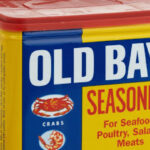
 photo via Huffington Post
I grew up with Old Bay as a seasoning for anything and everything crab. Crab bisque, steamed crabs, crab cakes, even on some sushi that had crab in it. You could say I liked it. I didn’t have an obsession with it, but I thought it tasted good on crab dishes. Then I came to Maryland, land of crabs and Old Bay. I soon found Old Bay on my potato chips, in my burgers, and on my french fries. I didn’t complain; I thought, Maybe this was just a Baltimore thing. They gotta live up to the “Crab Capital of the World” standard. Sure, it’s good, but I didn’t see the need to put Old Bay on every meal I ate. Until one day, not too long ago, I was feeling creative, and put Old Bay in my mac ‘n cheese.
Holy crab, I have never been more pleased with my cooking. It was salty, yet refreshing. Spicy, yet savory. The cheese and Old Bay mixed perfectly. I’ve been missing THIS? I thought to myself. I finally understood. It was amazing, and after that fateful dinner, I never looked back. I keep a small shaker of Old Bay in my purse now for special occasions. Don’t judge me, I’m sure some of you do it, too.
But there was a small curve ball to some of my more foreign friends: scrapple.
One of my roommates is from Massachusetts. They have similar seafood, meat, and vegetables to us here in the mid-atlantic, but she had never heard of scrapple. I take it some of those reading this won’t know what it is, either. Well I’m not going to tell you, and I would suggest you don’t ask. Scrapple is meat, and that’s all you need to know.
 photo via iwillaremedy.com
For Easter during my sophomore year, my roommate came home with me to Delaware soshe didn’t have to stay at school for the holiday. My mom is an excellent cook, which no one who has eaten anything she’s ever made can deny. So when she put down a plate of scrapple in front of us for breakfast, in all its square, brown, squishy, burnt-looking glory, my Bostonian roommate was very skeptical. She poked it, picked one up, and put it on her plate. I did the same, but took three slices. I love scrapple. She asked what it was after dissecting it. I just smirked. I tried to tell her gently that it tastes really good, but if you know what’s in it, you won’t want it.
I think she had decided she didn’t like scrapple before she even tried. The instant it touched her tongue, her face turned green and she spit it back out onto her plate. I’ll admit, depending on how it’s cooked, scrapple can have a pretty weird texture to it. But put a little dab of syrup or a dollop of ketchup on it, and that’s one of the best breakfast sides you can make. Heck, even a scrapple sandwich is good (a specialty of the Delaware State Fair).
When we got back to school, I was still a little shocked my roommate had never heard of scrapple before. So, I asked around. Turns out, scrapple is very much a Delaware and Pennsylvania thing, and isn’t common in Maryland. A lot of people are missing out on this loosely-dubbed delicacy.
In one short year, my food world had been nearly turned upside-down. Old Bay goes with anything, not just crab-related foods. Scrapple is either considered gross and disgusting or simply isn’t offered. In a few short months, my culinary mind had been fried. I bet if someone put Old Bay on scrapple, more people in Maryland would eat it.
-Lexi Coon
]]>
Editor’s Note: This is the third in a series of three posts from Lexi, our summer intern here in the Alumni Communications office, about her experiences as a new-to-Baltimore student. Even...
https://umbc.edu/stories/stories-of-a-big-city-farm-girl-edition-3/
https://my3.my.umbc.edu/api/v0/pixel/news/122338/guest@my.umbc.edu/8970b34bcb78bc66f2ca83a7278ad8d0/api/pixel
alumni
baltimore
delaware-state-fair
delmarva
east-coast
maryland
old-bay
pennsylvania
scrapple
umbc
UMBC News & Magazine
https://my3.my.umbc.edu/groups/umbc-news-magazine
https://assets1-my.umbc.edu/system/shared/avatars/groups/000/001/943/24435aa6207c452e7bc15cc74b42c7bb/xsmall.png?1748556657
https://assets1-my.umbc.edu/system/shared/avatars/groups/000/001/943/24435aa6207c452e7bc15cc74b42c7bb/original.png?1748556657
https://assets2-my.umbc.edu/system/shared/avatars/groups/000/001/943/24435aa6207c452e7bc15cc74b42c7bb/xxlarge.png?1748556657
https://assets2-my.umbc.edu/system/shared/avatars/groups/000/001/943/24435aa6207c452e7bc15cc74b42c7bb/xlarge.png?1748556657
https://assets3-my.umbc.edu/system/shared/avatars/groups/000/001/943/24435aa6207c452e7bc15cc74b42c7bb/large.png?1748556657
https://assets1-my.umbc.edu/system/shared/avatars/groups/000/001/943/24435aa6207c452e7bc15cc74b42c7bb/medium.png?1748556657
https://assets2-my.umbc.edu/system/shared/avatars/groups/000/001/943/24435aa6207c452e7bc15cc74b42c7bb/small.png?1748556657
https://assets1-my.umbc.edu/system/shared/avatars/groups/000/001/943/24435aa6207c452e7bc15cc74b42c7bb/xsmall.png?1748556657
https://assets2-my.umbc.edu/system/shared/avatars/groups/000/001/943/24435aa6207c452e7bc15cc74b42c7bb/xxsmall.png?1748556657
UMBC News & Magazine
0
0
false
Mon, 15 Sep 2014 14:13:16 -0400
Stories of a Big City Farm Girl, Vol. 2
Editor’s Note: This is the second in a series of three posts from Lexi, our summer intern here in the Alumni Communications office, about her experiences as a new-to-Baltimore student.
In my last post, I described how different the driving conditions in Baltimore are from rural Delaware. Multiple lane highways, aggressive drivers, lots of honking, and mis-informed GPSes always created interesting adventures.
But did you know that in Delaware, a lot of high schools don’t require you to learn how to parallel park during driver’s ed? Well, Milford High School didn’t at least. We just had to be able to park between the lines, navigate the bumps of the backroads, and not panic when passing the chicken trucks or tractors on the highway. The horrors of parallel parking didn’t hit me until college, as I had never driven in any type of city conditions, let alone tried to park sideways in between two cars that were worth more than my entire college education.
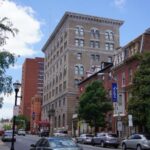
 photo via TripAdvisor
My first “lesson” came when I had to go to a museum for an art class. There was a definite trend with my art class excursions causing me more trouble than they were worth. I had to go to the Walters Art Museum in Mount Vernon. I knew I’d only be there for about an hour, and there was no way I was going to pay for the parking garages in Baltimore, so street parking was my only option. After circling the area and managing to go down every one-way street there was in
Mount Vernon, I found a spot. It was a
parallel spot, and on the left side. I was ready.
I stopped my car, put on my blinker, and then panicked. I had never parallel parked before, let alone parked on the left side of the street. Thank goodness there wasn’t any traffic. I gently tapped my accelerator to back up, but I had turned the wheel too far. I had turned my car in a little arch in the middle of the street. I pulled up next to the compact car in front of me, and tried again. This time, I managed to get almost all the way into the spot, but didn’t turn the wheel enough, and again sat almost in the middle of the street. Third time’s the charm, right? Mirror to mirror, I backed my car into the spot, one inch at a time. But this time, I had it. I could feel it. My car glided into the spot with no problems, I straightened it out, put it in park, and screamed.
I had never been more proud of myself in my life (OK, that’s a slight exaggeration, but I was very happy). I began congratulating myself, turned up the radio, sang along a little bit to Train’s “Hey Soul Sister,” and then realized my windows were down and people were staring. Blushing and laughing, I calmly got out of the car and went to pay for my spot. I was still so excited and embarrassed that I couldn’t get money out of my wallet. But, I thought, you just parallel parked all by yourself.
When I got back to my dorm, I told one of my friends, who then laughed at me, and made me go back outside and learn how to parallel park. While he sat next to me, his roommate sat in the back, and they both took turns shouting directions at me as I tried to recreate my parking skills in the back road next to Potomac Hall. Cars drove by, we all kept yelling, people stared, and we all got frustrated. But, in the end, I had learned how to parallel park. By the time we were finished, I couldn’t help but think, When I go home for the summer, I’m going to forget how to do all of this.
-Lexi Coon
]]>
Editor’s Note: This is the second in a series of three posts from Lexi, our summer intern here in the Alumni Communications office, about her experiences as a new-to-Baltimore student. In my...
https://umbc.edu/stories/stories-of-a-big-city-farm-girl-vol-2/
https://my3.my.umbc.edu/api/v0/pixel/news/122355/guest@my.umbc.edu/e7a3eca213a3d51c2745c2c7175504a0/api/pixel
alumni
baltimore
delaware
maryland
mount-vernon
parallel-parking
potomac-hall
train
umbc
walters-art-museum
UMBC News & Magazine
https://my3.my.umbc.edu/groups/umbc-news-magazine
https://assets1-my.umbc.edu/system/shared/avatars/groups/000/001/943/24435aa6207c452e7bc15cc74b42c7bb/xsmall.png?1748556657
https://assets1-my.umbc.edu/system/shared/avatars/groups/000/001/943/24435aa6207c452e7bc15cc74b42c7bb/original.png?1748556657
https://assets2-my.umbc.edu/system/shared/avatars/groups/000/001/943/24435aa6207c452e7bc15cc74b42c7bb/xxlarge.png?1748556657
https://assets2-my.umbc.edu/system/shared/avatars/groups/000/001/943/24435aa6207c452e7bc15cc74b42c7bb/xlarge.png?1748556657
https://assets3-my.umbc.edu/system/shared/avatars/groups/000/001/943/24435aa6207c452e7bc15cc74b42c7bb/large.png?1748556657
https://assets1-my.umbc.edu/system/shared/avatars/groups/000/001/943/24435aa6207c452e7bc15cc74b42c7bb/medium.png?1748556657
https://assets2-my.umbc.edu/system/shared/avatars/groups/000/001/943/24435aa6207c452e7bc15cc74b42c7bb/small.png?1748556657
https://assets1-my.umbc.edu/system/shared/avatars/groups/000/001/943/24435aa6207c452e7bc15cc74b42c7bb/xsmall.png?1748556657
https://assets2-my.umbc.edu/system/shared/avatars/groups/000/001/943/24435aa6207c452e7bc15cc74b42c7bb/xxsmall.png?1748556657
UMBC News & Magazine
0
0
false
Mon, 08 Sep 2014 16:11:42 -0400
Hearts and Minds: Amy Young-Buckler and John Buckler

It’s not clear which came first for John Buckler ‘93 ancient studies: interest in Amy Young ’92, history, or a disinterest in biology indicated by his chronic class absences.
What’s certain is that in 1991, John spent more time sitting by the pond outside of the Albin O. Kuhn Library getting to know Amy than learning about cells and molecules.
 With its fountain and the surrounding trees flowering in springtime, the pond is admittedly conducive to romance. “In April, we’d hang out and talk there,” recalls John. “I began to get interested in her, and I spent a lot of time figuring out how to ask her on a date.”
Amy figured out John was interested when, as she sat huddled in a cubicle of the library working on her senior thesis, John would “casually” stop by – sometimes at 3 a.m.
The now-married couple’s first date finally happened during spring finals week. Fittingly, it took place on campus. “I had been awake for almost two days typing my senior thesis. John asked me if I wanted to meet after I was done that day,” Amy recalls. “By the time we met, I was so exhausted. I don’t know what I agreed to.”
What Amy agreed to was a rendezvous at the Student Union. Over a bucket of Rolling Rocks and mozzarella sticks, the two UMBC students’ feelings for each other began to gel. Twenty-three years later, the couple remains together, through exciting educational and career moves, a 1996 wedding, and the birth of their son, who is now four years old.
In 1995, the couple began graduate school at the University of Maryland, College Park, where Amy eventually received her master’s degree in library science and John earned a master’s degree in anthropology.
Today, John works for the U.S. Department of Agriculture as a geographic information systems developer for the Economic Research Service, where he spends much of his time performing computerized mapping of the agency’s databases and applications. Amy is the library media specialist for the Meade Heights Elementary School in Anne Arundel County. The couple lives with their son in Columbia, Maryland.
While Amy and John have come a long way from their days at UMBC, they have vivid memories of sitting along the stone wall bordering the pond 20 years ago and contemplating their future.
“At UMBC, I figured out what I wanted to do with my life, I met Amy. It gave me the tools to move forward,” John says.
Amy agrees: “For me, it was just one of those times and places where everything kind of happened. All the pieces just fell into place.”
]]>
It’s not clear which came first for John Buckler ‘93 ancient studies: interest in Amy Young ’92, history, or a disinterest in biology indicated by his chronic class absences. What’s certain is...
https://umbc.edu/stories/hearts-and-minds-amy-young-buckler-and-john-buckler/
https://my3.my.umbc.edu/api/v0/pixel/news/122615/guest@my.umbc.edu/f37b0cfdbfad658ed864df25fc3161ea/api/pixel
albin-o-kuhn-library
alumni
amy-young
anne-arundel-county
baltimore-county
college-park
columbia
economic-research-service
john-buckler
maryland
meade-heights-elementary-school
student-union
u-s-department-of-agriculture
umbc
university-of-maryland
UMBC News & Magazine
https://my3.my.umbc.edu/groups/umbc-news-magazine
https://assets1-my.umbc.edu/system/shared/avatars/groups/000/001/943/24435aa6207c452e7bc15cc74b42c7bb/xsmall.png?1748556657
https://assets1-my.umbc.edu/system/shared/avatars/groups/000/001/943/24435aa6207c452e7bc15cc74b42c7bb/original.png?1748556657
https://assets2-my.umbc.edu/system/shared/avatars/groups/000/001/943/24435aa6207c452e7bc15cc74b42c7bb/xxlarge.png?1748556657
https://assets2-my.umbc.edu/system/shared/avatars/groups/000/001/943/24435aa6207c452e7bc15cc74b42c7bb/xlarge.png?1748556657
https://assets3-my.umbc.edu/system/shared/avatars/groups/000/001/943/24435aa6207c452e7bc15cc74b42c7bb/large.png?1748556657
https://assets1-my.umbc.edu/system/shared/avatars/groups/000/001/943/24435aa6207c452e7bc15cc74b42c7bb/medium.png?1748556657
https://assets2-my.umbc.edu/system/shared/avatars/groups/000/001/943/24435aa6207c452e7bc15cc74b42c7bb/small.png?1748556657
https://assets1-my.umbc.edu/system/shared/avatars/groups/000/001/943/24435aa6207c452e7bc15cc74b42c7bb/xsmall.png?1748556657
https://assets2-my.umbc.edu/system/shared/avatars/groups/000/001/943/24435aa6207c452e7bc15cc74b42c7bb/xxsmall.png?1748556657
UMBC News & Magazine
0
0
false
Thu, 08 May 2014 15:17:49 -0400
Moving in Place: Jill Sisson Quinn ’97, English

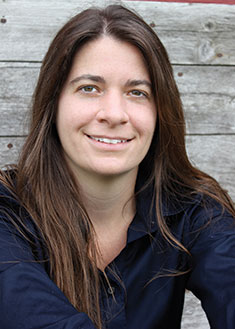 The habitat in central Maryland where Jill Sisson Quinn ’97, English grew up isn’t very different from the habitat in central Wisconsin where she lives now. The birds, insects, and trees are similar; you can use the same field guides, she says. Yet when she moved to the Midwest in 2005, she had traded a place full of rivers for one full of lakes, and “it was a huge problem for me,” she says. “I would wake up in the middle of the night and I would feel like I was moving to another planet.”
Is this homesickness, or an acute sensitivity to one’s environment? Quinn’s work suggests that the two things tangle like roots from different plants, complicating where personal experience starts and human nature begins. The essays in her 2010 collection, Deranged: Finding a Sense of Place in the Landscape and in the Lifespan, are remarkable literary hybrids designed to explore these complications. In one piece, she weaves a discussion of Lucy, the 3.2-million-year-old skeleton of a human ancestor, alongside a remembrance of Fatso, a tree near her childhood home. In another, a breakup is a launchpad for thinking about shrinking forests, and how life at their edges is different than their interiors.
The shifting definition of place is a constant in Deranged, and she refers often to her childhood home – more precisely, the branches of the Patapsco River not far from it. As she writes in the book’s introduction, “I like to believe that there is some un-faulty guide steering me home, and hope that if I am not there now, I soon will be.”
Quinn has been publishing these lyric essays since 2001, but their sensibility is predated by the interest in science and literature she cultivated as a student. When she arrived at UMBC, she was committed to writing poetry, inspired in part by what she had learned about astronomy.
“I remember reading the textbook religiously,” she says. “I remember it talking about stars and the birth and death of stars, and how stars aren’t really alive but that we owe our existence to stars, because the atoms that make up our bodies were formed in the centers of stars. I never read a textbook that personified things and gave this eminence to them. That really moved me.”
She wrote her honors thesis on the work of Heather McHugh, a poet who draws heavily on nature. “She’s always been an environmental writer,” says James C. McKusick, her thesis advisor, who is now dean of the Davidson Honors College at the University of Montana. “Both in her prose and her poetry, she reflects deeply on people’s relationships with place, or with humankind’s relationship with the natural world. She reflects on that in a way that a poet should, with a lot of concrete imagery – a lot of deeply thought and felt images.”
Quinn’s writing process involves a lot of walking – 6.7 miles every day with her dog, to be exact – and a lot of thinking about connections: “I discover something in nature that’s weird, like a wasp, or these beautiful rocks, and I’ve got this question in my head. I know I’m going to connect them, and then I research the nature, and the connection grows out of that.”
Last year Quinn received a $30,000 Rona Jaffe Foundation Writers’ Award, given annually to emerging women writers. The prize has allowed her to take a half-time sabbatical from her job as a high-school English teacher. She’s currently at work on her second book, titled The Doctrine of Signatures, which leverages her close study of nature to address larger spiritual questions. This is perhaps an unlikely pursuit for a nature writer, who’s generally expected to be a John McPhee-like rover. But in Quinn’s particular line of work, depth trumps breadth.
“I’m not a traveler,” she says. “I don’t think I’ll ever exhaust Wisconsin or Maryland.”
– Mark Athitakis
]]>
The habitat in central Maryland where Jill Sisson Quinn ’97, English grew up isn’t very different from the habitat in central Wisconsin where she lives now. The birds, insects, and trees are...
https://umbc.edu/stories/moving-in-place-jill-sisson-quinn-97-english/
https://my3.my.umbc.edu/api/v0/pixel/news/122725/guest@my.umbc.edu/d16028d435397d54f21490d52b936c8c/api/pixel
alumni
author
english
essayist
jill-sisson-quinn
maryland
midwest
rona-jaffe-foundation-writers-award
stories
umbc
umbc-magazine
university-of-maryland-baltimore-county
writer
UMBC News & Magazine
https://my3.my.umbc.edu/groups/umbc-news-magazine
https://assets1-my.umbc.edu/system/shared/avatars/groups/000/001/943/24435aa6207c452e7bc15cc74b42c7bb/xsmall.png?1748556657
https://assets1-my.umbc.edu/system/shared/avatars/groups/000/001/943/24435aa6207c452e7bc15cc74b42c7bb/original.png?1748556657
https://assets2-my.umbc.edu/system/shared/avatars/groups/000/001/943/24435aa6207c452e7bc15cc74b42c7bb/xxlarge.png?1748556657
https://assets2-my.umbc.edu/system/shared/avatars/groups/000/001/943/24435aa6207c452e7bc15cc74b42c7bb/xlarge.png?1748556657
https://assets3-my.umbc.edu/system/shared/avatars/groups/000/001/943/24435aa6207c452e7bc15cc74b42c7bb/large.png?1748556657
https://assets1-my.umbc.edu/system/shared/avatars/groups/000/001/943/24435aa6207c452e7bc15cc74b42c7bb/medium.png?1748556657
https://assets2-my.umbc.edu/system/shared/avatars/groups/000/001/943/24435aa6207c452e7bc15cc74b42c7bb/small.png?1748556657
https://assets1-my.umbc.edu/system/shared/avatars/groups/000/001/943/24435aa6207c452e7bc15cc74b42c7bb/xsmall.png?1748556657
https://assets2-my.umbc.edu/system/shared/avatars/groups/000/001/943/24435aa6207c452e7bc15cc74b42c7bb/xxsmall.png?1748556657
UMBC News & Magazine
0
0
false
Wed, 26 Mar 2014 15:04:42 -0400
James P. Clements ’85, M.S. ’91, Ph.D. ’93 Named President of Clemson University

 James P. Clements, ’85 computer science and ’91 M.S. and ’93 Ph.D., operations analysis, was recently selected to be Clemson University’s 15th president. Clements currently serves as president of West Virginia University.
Clements was selected by the Clemson Board of Trustees to succeed James F. Barker, who announced plans to retire in April after serving 14 years as president.
Prior to serving as president of Western Virginia University, Clements held positions as provost and vice president for academic affairs at Towson University.
Of his new position, Clements says:
“We are so excited to be joining the Clemson family. Clemson is one of the greatest public, land-grant research universities in the country. It is highly respected for being a student-centered campus that provides a top-notch, high-quality education while producing world-class research and vital services to the community.”
Read the full announcement from West Virginia University.
Read more about James P. Clements on the UMBC Alumni blog:
Find us on Facebook. // Follow us on Twitter.
]]>
James P. Clements, ’85 computer science and ’91 M.S. and ’93 Ph.D., operations analysis, was recently selected to be Clemson University’s 15th president. Clements currently serves as president of...
https://umbc.edu/stories/james-p-clements-85-m-s-91-ph-d-93-named-president-of-clemson-university/
https://my3.my.umbc.edu/api/v0/pixel/news/122951/guest@my.umbc.edu/f404d03a0d8c839d6b339f85fc31ba1d/api/pixel
alumni
clements
clemson-university
james-frazier-barker
james-p-clements
maryland
towson-university
umbc
university-of-maryland-baltimore-county
west-virginia-university
UMBC News & Magazine
https://my3.my.umbc.edu/groups/umbc-news-magazine
https://assets1-my.umbc.edu/system/shared/avatars/groups/000/001/943/24435aa6207c452e7bc15cc74b42c7bb/xsmall.png?1748556657
https://assets1-my.umbc.edu/system/shared/avatars/groups/000/001/943/24435aa6207c452e7bc15cc74b42c7bb/original.png?1748556657
https://assets2-my.umbc.edu/system/shared/avatars/groups/000/001/943/24435aa6207c452e7bc15cc74b42c7bb/xxlarge.png?1748556657
https://assets2-my.umbc.edu/system/shared/avatars/groups/000/001/943/24435aa6207c452e7bc15cc74b42c7bb/xlarge.png?1748556657
https://assets3-my.umbc.edu/system/shared/avatars/groups/000/001/943/24435aa6207c452e7bc15cc74b42c7bb/large.png?1748556657
https://assets1-my.umbc.edu/system/shared/avatars/groups/000/001/943/24435aa6207c452e7bc15cc74b42c7bb/medium.png?1748556657
https://assets2-my.umbc.edu/system/shared/avatars/groups/000/001/943/24435aa6207c452e7bc15cc74b42c7bb/small.png?1748556657
https://assets1-my.umbc.edu/system/shared/avatars/groups/000/001/943/24435aa6207c452e7bc15cc74b42c7bb/xsmall.png?1748556657
https://assets2-my.umbc.edu/system/shared/avatars/groups/000/001/943/24435aa6207c452e7bc15cc74b42c7bb/xxsmall.png?1748556657
UMBC News & Magazine
0
0
false
Wed, 20 Nov 2013 14:34:35 -0500
Career Q&A: Jennifer Mercer ’12, INDS, Intern with Free State Legal Project

Every so often, we’ll chat with an alum about what they do and how they got there. Today we’re talking with student attorney Jennifer Mercer ’12, interdisciplinary studies, about how her time at UMBC helped prepare her for her work with the FreeState Legal Project and how both experiences are shaping her future career.
 Name: Jennifer Mercer
Job Title: Student Attorney
Employer: FreeState Legal Project
Q: Tell us a little about how you wound up at UMBC. What’s your background?
A: I am originally from Lutherville, Maryland. When I was in high school, I got a postcard in the mail for the Just for Juniors visit day. To be honest, I didn’t want to go because I thought I wanted to go to college out of state. My mother made me go, however. Once I went, I had a very positive experience. It’s hard to describe, but I felt a certain energy in the air on campus. The students seemed to be excited to be there. The professors I spoke to seemed to be genuinely interested in me. Needless to say, I am sure I was not the first prospective student to be powerfully impressed upon by Dr. Hrabowski’s words. And to think that if I’d had my way, I would have blown it off! I learned a lesson no teenager particularly relishes: my Mom was right.
I liked UMBC so much, I just couldn’t wait until I graduated high school to enroll. I spent my senior year of high school taking classes part time, then taking six credits per semester at UMBC as part of the concurrent enrollment/Young Scholars Program. I got a head start on college, and knew I was where I needed to be.
Q: You’re in the middle of an internship right now, so a few questions: What have learned so far? What are you most excited about working on this summer? How do you feel this internship will help you in your career?
A: Interning for FreeState Legal Project has been a wonderful experience so far. My clients are low-income members of the LGBT community. I help them get access to critical legal services which they need but cannot afford. Since FreeState is very small, no two days are the same, as there is so much to be done! We are a fairly new organization, but we have grown tremendously in the past few years. This is due in no small part to founder and Executive Director Aaron Merki ’05, political science, who is also a UMBC graduate (and UMBC’s Rising Star Alumnus of the Year in 2010).
I have learned a great deal already about the substantive law issues affecting low-income LGBT clients, such as family law issues, legal name and gender changes, discrimination cases, immigration, and more. Due to the rapid and relatively recent advance of society’s acceptance of LGBT people, there is a striking lack of legal precedent in these areas. Therefore, a large part of my job is researching issues and constructing the best possible work product out of limited information. I do this with my clients in mind, as important parts of their lives depend on it. After my work is reviewed by my supervisors, it gets sent to clients or to the court. I’m proud to do work that makes a direct impact.
It is hard to pick a thing that I am most excited about, but the first thing that came to mind was my work on juvenile justice. FreeState sponsors a LGBT Youth Roundtable which consists of leaders from many agencies which impact the lives of LGBT youth. I work on the Juvenile Justice Subcommittee along with several juvenile public defenders and prosecutors. Right now, I am surveying existing research on the state of incarcerated LGBT youth in order to develop strategies for further research. We are looking at best practices for caring for these youth, and will draft a model policy to show to policymakers. The assignment is perfect for me, considering my senior capstone project (and URCAD presentation) was about incarcerated adolescent girls more generally. I have the opportunity to build on my existing knowledge, which is wonderful.
I think the most vital skills I am learning come from the actual interactions I have with my clients. Learning how to talk to clients, who are often distressed at their situation, and to meet their problems with legal solutions, is critical. That being said, I think it is equally important to be able to take out the legalese when speaking to clients. I do my best to make sure they understand what is going on with their cases, and answer their questions as needed. My internship is teaching me how to be a compassionate, client-focused attorney. That is something I will use for my whole career, as are the connections I have made with others in the legal community who are similarly minded.
Q: Tell us about your career plans for the future. What would you like to do after law school? Were there any lessons you learned, in particular, at UMBC that have stuck with you?
A: I came into law school with the experience I had as an undergraduate intern at the Office of the State’s Attorney for Baltimore City, Juvenile Division (thanks Shriver Center!). Between that internship and my coursework at UMBC, I knew I wanted to become a public interest attorney. While it is absolutely true that public interest attorneys do not make as much money as their colleagues in the firm world, I know that this path is for me. My experience at UMBC helped to give me that confidence.
I plan to spend my entire career doing public interest work on behalf of people who would otherwise not have access to the justice system. I hope that when I retire someday, I can look back at my career and know that it has changed lives. I am aware that these might be seen as lofty goals by some, but my time at UMBC taught me that I can achieve more than I may believe. If you would have told me when I was in high school that my college career would have gone so well, that I would apply to and be accepted to five different law schools, that I would choose a top tier law school and secure an internship I love helping clients who need it, I would not have believed you. And yet here I am!
Q: Is there a particular class or professor who really inspired you?
A: It would be impossible to fully describe my UMBC experience without acknowledging the Interdisciplinary Studies department. The great thing about INDS is that truly does not limit students, but encourages them to pursue their intellectual interests at the highest level. My departmental adviser was INDS Assistant Director Steven McAlpine, who nurtured my curiosity and allowed it to grow and blossom. Former INDS (now POLI) faculty member Dr. Lisa Vetter also helped me along, giving me advice when I needed it. The course that stuck with me the most was Civil Rights, taught by Dr. George LaNoue. The lessons I learned in that course have proven practical in this line of work. Additionally, that course introduced me to the power of law to uplift the downtrodden.
Q: What advice would you give to students considering UMBC?
A: My advice to prospective UMBC students is to keep an open mind, and not to limit yourself based on what you think you want. Once you’re here, get to know the faculty. I still work with some of the adjunct professors I had at UMBC, including Profs. Carrie Evans and Terry Hickey. Just the other day, I had dinner with someone I originally met because she was a guest speaker in Prof. Hickey’s Problem Solving in the Urban Black Community class. We talked about the work I have been doing, and she gave me some advice. I still see Prof. McAlpine at his monthly drum circle performances. The relationships you build with faculty can be very enriching, so stop by during office hours and get to know them.
Q: What is your favorite UMBC memory?
A: I have a lot of great memories of UMBC, but many of my favorite memories are related to my experience as a member of the UMBC Down and Dirty Dawg Band. I played clarinet for all four years. The time I spent playing at basketball games, traveling during the conference tournaments, and just spending time with my pep band friends was time very well spent. I have an incurable case of Retriever Fever!
]]>
Every so often, we’ll chat with an alum about what they do and how they got there. Today we’re talking with student attorney Jennifer Mercer ’12, interdisciplinary studies, about how her time at...
https://umbc.edu/stories/career-qa-jennifer-mercer-12-inds-intern-with-free-state-legal-project/
https://my3.my.umbc.edu/api/v0/pixel/news/123174/guest@my.umbc.edu/c465641927ee2610109809ced7a87ca3/api/pixel
alumni
baltimore
education
lgbt
maryland
umbc
university-of-maryland
university-of-maryland-baltimore-county
UMBC News & Magazine
https://my3.my.umbc.edu/groups/umbc-news-magazine
https://assets1-my.umbc.edu/system/shared/avatars/groups/000/001/943/24435aa6207c452e7bc15cc74b42c7bb/xsmall.png?1748556657
https://assets1-my.umbc.edu/system/shared/avatars/groups/000/001/943/24435aa6207c452e7bc15cc74b42c7bb/original.png?1748556657
https://assets2-my.umbc.edu/system/shared/avatars/groups/000/001/943/24435aa6207c452e7bc15cc74b42c7bb/xxlarge.png?1748556657
https://assets2-my.umbc.edu/system/shared/avatars/groups/000/001/943/24435aa6207c452e7bc15cc74b42c7bb/xlarge.png?1748556657
https://assets3-my.umbc.edu/system/shared/avatars/groups/000/001/943/24435aa6207c452e7bc15cc74b42c7bb/large.png?1748556657
https://assets1-my.umbc.edu/system/shared/avatars/groups/000/001/943/24435aa6207c452e7bc15cc74b42c7bb/medium.png?1748556657
https://assets2-my.umbc.edu/system/shared/avatars/groups/000/001/943/24435aa6207c452e7bc15cc74b42c7bb/small.png?1748556657
https://assets1-my.umbc.edu/system/shared/avatars/groups/000/001/943/24435aa6207c452e7bc15cc74b42c7bb/xsmall.png?1748556657
https://assets2-my.umbc.edu/system/shared/avatars/groups/000/001/943/24435aa6207c452e7bc15cc74b42c7bb/xxsmall.png?1748556657
UMBC News & Magazine
0
0
false
Mon, 22 Jul 2013 15:06:32 -0400
Career Q&A: Executive Director Brigitte Pribnow Moore ’05, theatre

Every so often, we’ll chat with an alum about what they do and how they got there. Today, we’re talking with executive director of Young Playwrights’ Theater, Brigitte Pribnow Moore ’05, theatre, about what it’s like to combine multiple interests and skills into one awesome career.
 Name: Brigitte Pribnow Moore
Job Title: Executive Director
Employer: Young Playwrights’ Theater
Scholarships Received at UMBC: UMBC University Fellow 2001-2005
Q: Tell us a little about how you wound up at UMBC. What’s your background?
I came to UMBC from a small town in Connecticut. I knew I wanted to study theatre, and I heard that UMBC’s BFA in Acting program was a “hidden gem.” I came out for an audition and I fell in love. The year I started at UMBC, the theatre department was a small program with a brilliant faculty providing rigorous artistic training, and producing innovative, high-quality performances with fairly limited resources. It has been such a joy watching UMBC’s theatre program grow in resources and recognition over the past decade, and the new Performing Arts and Humanities Building is a beautiful addition to the campus. I am so excited to see what future theatre students create and share in that space.
Q: You’ve been able to combine multiple loves/skills into a career. How did you figure out that you wanted to do all those things, and do you have any advice for other folks who find themselves with multiple, diverse career interests?
I left UMBC with an incredible artistic education, but I also had the opportunity to explore a wealth of liberal arts courses outside my department. I spent my time at UMBC completing my theatre degree, but I also took classes that ranged from political science, to film history, to statistics, to non-western civilizations. I participated in volunteer and part-time work outside UMBC that complemented my interests, serving on political campaigns and writing and editing a weekly newsletter for a statewide advocacy organization. When I graduated, I did not have a solid career plan, but I had a rich and varied academic foundation, a network of community contacts in Baltimore and DC, and a strong sense of the impact I wanted to have on the world. I didn’t leave UMBC with a career goal. I left with a mission. And that mission carried me through almost a decade of diverse jobs that included working on union organizing campaigns, serving as the legislative director for two Maryland state delegates, and, ultimately, running Young Playwrights’ Theater.
My advice for other folks with a variety of interests: don’t put yourself in a box. Dive deep and excel in your major, but dare to take classes outside your discipline, and to engage boldly with the rich and diverse off-campus community that surrounds UMBC. Also, wait on grad school until you have worked for a few years and know exactly what, if anything, you need to learn to succeed in your career. If you’re like me, you may not be where you expected, and your evolving interests and needs may surprise you.
Q: Tell us about your career. Were there any lessons you learned, in particular, at UMBC that you carried with you into your work?
I currently serve as the Executive Director of Young Playwrights’ Theater, a DC-based nonprofit that uses the arts to inspire young people to realize the power of their own voices and stories. I feel incredibly lucky to have found myself in a career that allows me to make a living doing something I love, and my time at UMBC was instrumental in helping me to discover and pursue and my dreams. The study of theatre is, at its heart, the study of what it means to be human – to relate and connect with others and to ponder and pursue one’s place in the world. My classes taught me a great deal about the art of theatre, but they also taught me the art of empathy, critical and analytical thinking, and persuasive communication. I left UMBC with an intellectual and interpersonal toolkit that helped me in every professional task I took on – from writing an impactful speech for a political candidate, to inspiring a donor to support a cause, to effectively leveraging the talents of a professional team.
Q: Is there a particular class or professor who really inspired you?
All of them? Seriously, the UMBC theatre department employs such brilliant, talented, and caring instructors. I felt privileged to know and learn from each of them. I did have a particularly inspiring experience in a directing class I took with Christopher Owens. I learned so much about the power of good stories, and I discovered that I was happiest and most comfortable in artistic and professional roles that allowed me to direct people and resources toward a big picture vision. That class was transformational for me.
Q: What advice would you give to students considering UMBC?
Pull your application materials together and send them along. UMBC is special place with a wealth of opportunities to learn and explore with gifted, caring professors and a diverse, talented community of students. You won’t regret your decision.
]]>
Every so often, we’ll chat with an alum about what they do and how they got there. Today, we’re talking with executive director of Young Playwrights’ Theater, Brigitte Pribnow Moore ’05, theatre,...
https://umbc.edu/stories/executive-director-brigitte-pribnow-moore/
https://my3.my.umbc.edu/api/v0/pixel/news/123189/guest@my.umbc.edu/9e0c0d235f91b3d9a43dd430a4d19846/api/pixel
alumni
baltimore
career-q-and-a
christopher-owens
maryland
performing-arts
theatre
umbc
university-of-maryland-baltimore-county
UMBC News & Magazine
https://my3.my.umbc.edu/groups/umbc-news-magazine
https://assets1-my.umbc.edu/system/shared/avatars/groups/000/001/943/24435aa6207c452e7bc15cc74b42c7bb/xsmall.png?1748556657
https://assets1-my.umbc.edu/system/shared/avatars/groups/000/001/943/24435aa6207c452e7bc15cc74b42c7bb/original.png?1748556657
https://assets2-my.umbc.edu/system/shared/avatars/groups/000/001/943/24435aa6207c452e7bc15cc74b42c7bb/xxlarge.png?1748556657
https://assets2-my.umbc.edu/system/shared/avatars/groups/000/001/943/24435aa6207c452e7bc15cc74b42c7bb/xlarge.png?1748556657
https://assets3-my.umbc.edu/system/shared/avatars/groups/000/001/943/24435aa6207c452e7bc15cc74b42c7bb/large.png?1748556657
https://assets1-my.umbc.edu/system/shared/avatars/groups/000/001/943/24435aa6207c452e7bc15cc74b42c7bb/medium.png?1748556657
https://assets2-my.umbc.edu/system/shared/avatars/groups/000/001/943/24435aa6207c452e7bc15cc74b42c7bb/small.png?1748556657
https://assets1-my.umbc.edu/system/shared/avatars/groups/000/001/943/24435aa6207c452e7bc15cc74b42c7bb/xsmall.png?1748556657
https://assets2-my.umbc.edu/system/shared/avatars/groups/000/001/943/24435aa6207c452e7bc15cc74b42c7bb/xxsmall.png?1748556657
UMBC News & Magazine
0
0
false
Mon, 15 Jul 2013 14:30:31 -0400
Grigoryan ’02, CompSci/BioChem, Teaching at Dartmouth

 A Computational Biologist and Dartmouth professor, Alumnus Gevorg Grigoryan says his undergraduate research at UMBC was crucial to his success.
Kids typically see college as a chance to get away from their parents. That wasn’t the case with alumnus Gevorg Grigoryan ’02, Computer Science and Biochemistry, who did research with his dad in UMBC’s Computational Photonics Lab as an undergraduate. In 2000, the pair co-authored a paper proposing a new visualization technique for wave transmissions that uses color to represent amplitude and phase information.
Now an assistant professor of Computer Science and an adjunct assistant professor of Biology at Dartmouth College, Grigoryan stresses the importance of doing research early on. As an undergraduate, he worked in not one, but three, different research labs at UMBC: the Computational Photonics Lab, the VANGOGH Lab, and Dr. Daniel Fabris’ Mass Spectrometry lab.
“It was very easy for an undergrad to get involved in research [at UMBC],” says Grigoryan. “It’s not like that everywhere.”
Working in labs gave Grigoryan essential experience that shaped his career path. When it was time to pick a major, he knew that he wanted to do research like his dad, Vladimir Grigoryan, a Physicist who was working as a Research Scientist at UMBC at the time.
Grigoryan switched from Physics to an ambitious double major in Computer Science and Biochemistry when a professor told him about the emerging, interdisciplinary field of Computational Biology. Combining the principles of biology with computing techniques, the new field dealt with simulating and studying biological systems on the computer.
After graduating from UMBC in 2002, Grigoryan went to MIT for his Ph.D. in Computational Biology under Dr. Amy E. Keating. Later he completed his Post Doc at the University of Pennsylvania Medical School under William DeGrado. His research has focused on examining proteins in order to 1) understand their structure, and to 2) use that understanding to design new proteins that can do things like cure disease.
The analysis and design of proteins is what’s being done in Grigoryan’s research lab at Dartmouth. Specifically, Grigoryan and his students are looking at how protein structure dictates protein-protein recognition and the structural mechanisms of information transformation by allostery. In an interesting twist, Grigoryan now has undergraduate research assistants of his own.
As for collaborations with his dad, Grigoryan says that these days, formal collaborations are hard because of distance; Grigoryan works on molding minds in New Hampshire while his dad works at Ciena Corporation in Maryland. Nevertheless, that doesn’t stop them from having heated scientific discussions over the phone, he says.
This story first appeared on UMBC’s Computer Science and Electrical Engineering department website.
]]>
A Computational Biologist and Dartmouth professor, Alumnus Gevorg Grigoryan says his undergraduate research at UMBC was crucial to his success. Kids typically see college as a chance to get...
https://umbc.edu/stories/grigoryan-02-compscibiochem-teaching-at-dartmouth/
https://my3.my.umbc.edu/api/v0/pixel/news/123678/guest@my.umbc.edu/e8b5a257c0ddd146782537fe96b197bb/api/pixel
alumni
biochemistry
computational-biology
computer-science
dartmouth-college
gevorg-grigoryan
maryland
new-hampshire
umbc
william-degrado
UMBC News & Magazine
https://my3.my.umbc.edu/groups/umbc-news-magazine
https://assets1-my.umbc.edu/system/shared/avatars/groups/000/001/943/24435aa6207c452e7bc15cc74b42c7bb/xsmall.png?1748556657
https://assets1-my.umbc.edu/system/shared/avatars/groups/000/001/943/24435aa6207c452e7bc15cc74b42c7bb/original.png?1748556657
https://assets2-my.umbc.edu/system/shared/avatars/groups/000/001/943/24435aa6207c452e7bc15cc74b42c7bb/xxlarge.png?1748556657
https://assets2-my.umbc.edu/system/shared/avatars/groups/000/001/943/24435aa6207c452e7bc15cc74b42c7bb/xlarge.png?1748556657
https://assets3-my.umbc.edu/system/shared/avatars/groups/000/001/943/24435aa6207c452e7bc15cc74b42c7bb/large.png?1748556657
https://assets1-my.umbc.edu/system/shared/avatars/groups/000/001/943/24435aa6207c452e7bc15cc74b42c7bb/medium.png?1748556657
https://assets2-my.umbc.edu/system/shared/avatars/groups/000/001/943/24435aa6207c452e7bc15cc74b42c7bb/small.png?1748556657
https://assets1-my.umbc.edu/system/shared/avatars/groups/000/001/943/24435aa6207c452e7bc15cc74b42c7bb/xsmall.png?1748556657
https://assets2-my.umbc.edu/system/shared/avatars/groups/000/001/943/24435aa6207c452e7bc15cc74b42c7bb/xxsmall.png?1748556657
UMBC News & Magazine
0
0
false
Mon, 05 Nov 2012 13:12:03 -0500


