Maia Turman Cooke ’26—English and political science double major, McNair Scholar, and Choice Program workforce and education advocate
With support from faculty, staff, and her peers, Maia Turman Cooke ’26, English and political science, not only thrived in her double major but also challenged herself by joining the McNair Scholars Program and working as a workforce and education advocate for the Shriver Center’s Choice Program. An Honors College student, she was awarded a 2025–2026 undergraduate research award to conduct a qualitative study on British Columbia’s 2023 drug decriminalization policy, and her paper “Resilient Hearts: Theoretical Portrayals: Lauryn Hill’s Self Love and Resistance Against Intimate Consequences,” was recently published in the UMBC Review. This fall, she begins work on a Ph.D. in English at the University of Maryland, College Park.
Q: What attracted you to UMBC?
A: During my senior year of high school, I moved from Brooklyn, New York, to southern Maryland, where my mom’s side of the family lives. At first, I thought I wanted to return to New York for school, but, after thinking things through, I realized I wanted to stay near my mom and her family. When I visited UMBC, I had never seen a school so diverse. And there was a section on the UMBC website that said, “15 minutes from Baltimore, one hour from D.C., and 3 hours from New York.” And as soon as I saw that, I was sold. I thought it was the best thing to do, and I’m glad I did it.
Q: What excites you about your two majors, and why did you choose them?
A: My mom wanted me to be a lawyer because of how much I argued with her! All my undergraduate applications were in political science. But literature was always such a huge part of me. I also realized how much I enjoyed writing the college application essays, and I realized I wanted to do English. Then, at orientation, I met a senior with an English and political science major. That was the first time I’d ever heard of double majoring. I thought, I’m going to do that. The intersecting qualities that English and political science have helped me understand my communities, learn how to better communicate, and how to represent and advocate for communities.
Q: What surprised you the most about your student experience at UMBC?
A: I guess what surprised me the most was what the McNair Scholars Program could do for my life. At the beginning of the application process, it seemed like a lot, and I wanted to quit—I didn’t want to join. The director of the McNair Scholars program, Dr. Michael Hunt, called me and said, “Just see it through, see it out. If you don’t like it when you get more involved, then you can leave.”
There were a lot of expectations, like pursuing graduate school. I knew I’d want to go to grad school, but I knew nothing about what it actually held. And I didn’t know a single thing about research when I started my first research project. I was so overwhelmed because I thought I had to solve every world problem. But my peers convinced me to stay. Soon, that work became a normal part of my schedule. I had no idea what research was, and now it’s something I’m super passionate about. Everyone has been so amazing.
 Maia Turman Cooke (far left on lower low) with student colleagues. (Image courtesy of Turman Cooke.)
Q: Can you share more about your enthusiasm for the McNair Scholars Program?
A: I never knew what a strong and supportive academic community could look like, and they go above and beyond for every single person. Being able to prove myself, as well as supporting other people, has been a really great experience. The McNair Scholars Program also helped me financially, so that I could attend events I never could have afforded on my own. The McNair Scholars Program is not just within UMBC—it’s a nationwide program. There was a time when I was in a program through Penn State, and I met a peer who was also a McNair Scholar. It excites me to know that there’s a huge network I can keep meeting as I go along the way with my career.
Q: How have your experiences with the Shriver Center impacted your time at UMBC?
A: As a freshman, I applied to the Shriver Living Learning Community and then became connected to The Choice Program, which completely transformed my life. I started as a student coordinator for the College Night events, which is when students from Baltimore City visit the campus for different activities. I then decided to join the Choice Program as a job coach—a workforce and education advocate. I’ve been working with around 5 to 10 Baltimore youth, helping them with their professional, academic, and even personal goals. I’ve always wanted to serve my community, and it was such a great introduction to Baltimore, learning systems, skills, and understanding how to best support my community. I’ve grown a lot from the lessons they’ve taught me as well.
Q: And were there any faculty who especially supported you during your time at UMBC?
A: Oh my gosh, yes. Yes, so many—I can’t even count. First, Dr. Hunt, the director of the McNair Scholars Program. If not for him, I probably would have dropped out so long ago. Ting Huang, the McNair program coordinator, as well—she’s like Dr. Hunt’s right arm. Dr. Earl Brooks, an associate professor of English, who is my research mentor, introduced me to the whole world of rhetorical studies. Crazy enough, I’ve never taken one of his classes, but he just took time out of his personal and academic life to mentor me and introduced me to so many programs and conferences. Dr. Keegan Finberg, an assistant professor of English, introduced me to English research papers, helping with the structure of my papers—I really like playing with words and articulating myself in creative ways that push the boundaries of academia.
 Maia Turman Cooke with Dr. Earl Brooks at URCAD 2025. (Image courtesy of Turman Cooke.)
Q: What do you feel most proud of from your time at UMBC?
A: My paper on Lauryn Hill, who is a singer, songwriter, and producer, is something I hold dear to my heart—it was just published in the UMBC Review. I was super happy. It was actually in Dr. Finberg’s English class that I learned that you can close read music, movies, anything outside of a formal paper, novel, or book structure. I chose a single Lauren Hill song for her class, but when it came to my McNair research, I decided to look at her whole album, The Miseducation of Lauren Hill. Having that opportunity to take something so personal to me and apply my close reading skills in a professional setting was something I never thought was possible.
Q: How did you manage to keep a work-life balance?
A: One day at a time, honestly. There were days when I knew I had to focus on one area of my life. And my planner—I wouldn’t be moving or running without my handwritten planner. There were some days when I knew I couldn’t work on a paper because I was so tired of reading my own work—my mind was about to explode. So, I think listening to myself every day, prioritizing myself, and my mental health.
Q: What are your post-graduation plans?
A: I’m starting an English Ph.D. program at the University of Maryland, College Park. I’m super excited about that. Long term, I don’t know, but the work I did with the Choice Program has changed my life entirely. I’d like to find a community service organization that advocates for a grassroots cause. Given that UMD is close to Washington, D.C., I hope to move in more political spaces.
 Maia Turman Cooke ’26 presents at URCAD in 2025. (Image courtesy of Turman Cooke.)
Q: What advice would you give to new students?
A: Push yourself to be extroverted, if you can, not limiting yourself to one space. Go to as many meetings as you can, and talk to people. Push yourself a little bit, and you’ll meet so many people, discover important resources, and learn more about yourself and your connections. You will be introduced to a whole other world if you just meet someone or go somewhere!
Read more Class of 2026 stories
]]>
With support from faculty, staff, and her peers, Maia Turman Cooke ’26, English and political science, not only thrived in her double major but also challenged herself by joining the McNair...
https://umbc.edu/stories/maia-turman-cooke-26-english-and-political-science-double-major-mcnair-scholar-and-choice-program-workforce-and-education-advocate/
https://my3.my.umbc.edu/api/v0/pixel/news/160150/guest@my.umbc.edu/39b72d4c8319636f00eb10eecb2c639e/api/pixel
cahss
choice-program
class-of-2026
english
honorscollege
mcnair
news
political-science
story
UMBC News & Magazine
https://my3.my.umbc.edu/groups/umbc-news-magazine
https://assets1-my.umbc.edu/system/shared/avatars/groups/000/001/943/24435aa6207c452e7bc15cc74b42c7bb/xsmall.png?1748556657
https://assets1-my.umbc.edu/system/shared/avatars/groups/000/001/943/24435aa6207c452e7bc15cc74b42c7bb/original.png?1748556657
https://assets2-my.umbc.edu/system/shared/avatars/groups/000/001/943/24435aa6207c452e7bc15cc74b42c7bb/xxlarge.png?1748556657
https://assets2-my.umbc.edu/system/shared/avatars/groups/000/001/943/24435aa6207c452e7bc15cc74b42c7bb/xlarge.png?1748556657
https://assets3-my.umbc.edu/system/shared/avatars/groups/000/001/943/24435aa6207c452e7bc15cc74b42c7bb/large.png?1748556657
https://assets1-my.umbc.edu/system/shared/avatars/groups/000/001/943/24435aa6207c452e7bc15cc74b42c7bb/medium.png?1748556657
https://assets2-my.umbc.edu/system/shared/avatars/groups/000/001/943/24435aa6207c452e7bc15cc74b42c7bb/small.png?1748556657
https://assets1-my.umbc.edu/system/shared/avatars/groups/000/001/943/24435aa6207c452e7bc15cc74b42c7bb/xsmall.png?1748556657
https://assets2-my.umbc.edu/system/shared/avatars/groups/000/001/943/24435aa6207c452e7bc15cc74b42c7bb/xxsmall.png?1748556657
UMBC News & Magazine
2
0
false
Sun, 17 May 2026 21:53:41 -0400
Sun, 17 May 2026 21:53:41 -0400
Meet a Retriever—Manpreet Suri ’14, M.S. ’15 is an entrepreneur and digital tool builder
Meet Manpreet Suri ’14, M.S. ’15, information systems, an entrepreneur, digital solutions problem solver, McNair Scholar, and a member of the Alumni Association Board of Directors. Suri found a community of support during his time at UMBC, and he credits his professors and UMBC Assistant Vice Provost and Assistant Dean Laila Shishineh for challenging him to meet his full potential. In his work, he finds fulfillment in building tools that make someone’s day easier and more efficient.
Q: What brought you to UMBC?
A: I wanted to be in a place where I wouldn’t get lost in the crowd—a place where I could learn, be challenged, and be supported. UMBC offered all of that, plus a community that genuinely cared about who I was becoming.
Q: What would you want another Retriever to know about you?
A: I recently joined Asurion as a group product manager on the Enterprise Client Experience team. At Asurion, I lead product strategy for tools that support the end-to-end experience of Fortune 500 partners and their customers, from digital onboarding to service delivery. I am a two-time master’s graduate, having earned my first degree at UMBC and my second at the University of Florida’s Warrington College of Business while working full time. My journey blends entrepreneurship, real estate, and digital innovation, always with a focus on solving real-world problems through community-driven solutions.
Q: What’s the one thing you’d want someone who hasn’t joined the UMBC community to know about the support you find here?
A: You’re never alone here. Whether it’s faculty, peers, or alumni—someone always shows up for you, challenges you to grow, and reminds you that your ideas and voice matter.
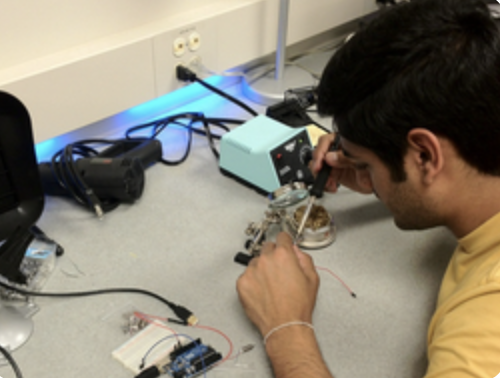
Left: Suri during his McNair Summer Research Fellowship designing a hardware-software prototype: a wearable Braille-based device for the visually impaired.
Q: Tell us about someone in the UMBC community who has inspired you or supported you, and how they did it.
A: Dr. Laila Shishineh encouraged me to merge my technical background with my passion for supporting others. Her mentorship helped me take risks, try new experiences, and believe that innovation can start in the classroom.
Dr. Shishineh was my Summer Bridge mentor and had an enormous influence on both my personal and professional trajectory. She encouraged me to take on extra credits early, accelerating my progress and building my confidence, and pushed me to get involved beyond the classroom—to form meaningful connections, volunteer, and embrace opportunities I otherwise might have overlooked.
With that encouragement, I joined the Refugee Youth Project through the Shriver Center, which eventually helped me connect with recruiters at General Electric. She supported my interest in becoming a resident assistant in the Discovery Scholars Living-Learning Community, and she constantly encouraged me to step into leadership roles, attend retreats like STRiVE, and explore other parts of campus life, including student government and community service.
 Suri at the McNair Scholars induction ceremony in 2012.
Her mentorship came at a time when I was navigating unfamiliar territory as a first-generation student. My parents didn’t go to college, so having someone who believed in me, challenged me, and celebrated my wins made an enormous difference. She even supported me in applying to the McNair Scholars Program and helped me think about potential future paths in tech.
In so many ways, Laila was the single most influential person in my college journey—a steady source of humor, enthusiasm, and encouragement. I truly wouldn’t be where I am today without her.
Q: Tell us about what you loved about your academic program at UMBC.
A: The information systems program provided a powerful blend of technical skills and practical application. What I appreciated most was how interdisciplinary it felt—it taught me to think not just about technology itself, but about the people, systems, and structures that surround it. That balance shaped the way I approach product management and innovation today.
My professors saw potential I didn’t see in myself. They helped me land my first internships, encouraged me to explore entrepreneurship, and taught me that curiosity and kindness are just as important as credentials.
Manpreet Suri '14, M.S. '15
Q: How did UMBC foster your interest in entrepreneurship?
A: My interest in entrepreneurship definitely sparked while at UMBC. While in Dr. Shaun Kane’s Prototyping and Design Lab I worked on a wearable Braille-based device for users with visual impairments. That was my first real experience with human-centered technology design. That project ultimately became the foundation of my McNair Scholars research and showed me how innovation and empathy can come together to solve real-world problems. It planted the seed for the entrepreneurial mindset I carry with me today.
Q: Since joining the UMBC community, in what ways have you felt supported and experienced personal growth?
A: My professors saw potential I didn’t see in myself. They helped me land my first internships, encouraged me to explore entrepreneurship, and taught me that curiosity and kindness are just as important as credentials.
Dr. Kimberly R. Moffitt remains one of the most memorable and impactful professors I’ve had in any academic setting. Her classes pushed me to consider identity, community, and social systems in ways I never had before. She introduced me to a world of nonfiction that I didn’t realize I’d been missing, and the discussions in her classroom helped balance the technical focus of my information systems coursework.
Her teaching style—thoughtful, engaging, and deeply human—broadened my perspective and made my overall academic experience richer and more holistic. I’m still grateful for the lasting impact her classes had on how I view people and the world.
Q: What’s your favorite thing about being a part of Retriever Nation?
A: Retriever Nation is about hustle, heart, and humility. I love how UMBC fosters change makers who don’t just talk about impact, they do the work and bring others with them.
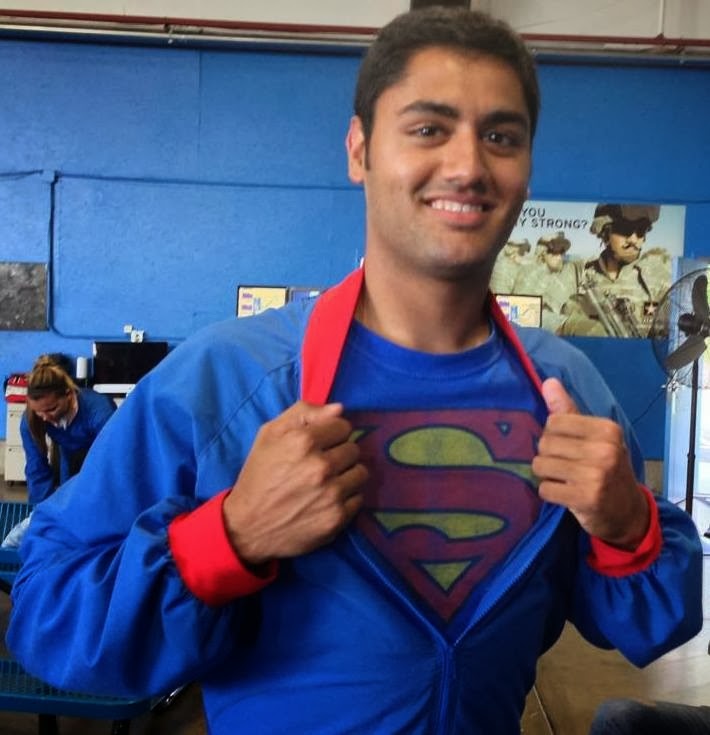
Right: Suri as an undergraduate student at a skydiving experience during his summer internship with GE Aviation.
Q: What drives you to support UMBC?
A: UMBC changed the trajectory of my life. Giving back is my way of paying it forward—especially to programs that support first-generation students and innovators who just need a chance to be seen and supported. I’ll always be proud to support and be part of a community that shows up for people the way UMBC showed up for me.
UMBC’s greatest strength is its people. When people meet Retrievers and hear about the passion they bring, the relationships they create, the ways they support each other, and the commitment they have to inclusive excellence, they truly get a sense of our community. That’s what “Meet a Retriever” is all about.
Learn more about how UMBC can help you achieve your goals.
]]>
Meet Manpreet Suri ’14, M.S. ’15, information systems, an entrepreneur, digital solutions problem solver, McNair Scholar, and a member of the Alumni Association Board of Directors. Suri found a...
https://umbc.edu/stories/meet-a-retriever-manpreet-suri-entrepreneur/
https://my3.my.umbc.edu/api/v0/pixel/news/156274/guest@my.umbc.edu/d5724b4c4bb823c631d2b22c6681ee2e/api/pixel
alumni
coeit
is
magazine
mcnair
meet-a-retriever
perspectives
story
trio
UMBC News & Magazine
https://my3.my.umbc.edu/groups/umbc-news-magazine
https://assets1-my.umbc.edu/system/shared/avatars/groups/000/001/943/24435aa6207c452e7bc15cc74b42c7bb/xsmall.png?1748556657
https://assets1-my.umbc.edu/system/shared/avatars/groups/000/001/943/24435aa6207c452e7bc15cc74b42c7bb/original.png?1748556657
https://assets2-my.umbc.edu/system/shared/avatars/groups/000/001/943/24435aa6207c452e7bc15cc74b42c7bb/xxlarge.png?1748556657
https://assets2-my.umbc.edu/system/shared/avatars/groups/000/001/943/24435aa6207c452e7bc15cc74b42c7bb/xlarge.png?1748556657
https://assets3-my.umbc.edu/system/shared/avatars/groups/000/001/943/24435aa6207c452e7bc15cc74b42c7bb/large.png?1748556657
https://assets1-my.umbc.edu/system/shared/avatars/groups/000/001/943/24435aa6207c452e7bc15cc74b42c7bb/medium.png?1748556657
https://assets2-my.umbc.edu/system/shared/avatars/groups/000/001/943/24435aa6207c452e7bc15cc74b42c7bb/small.png?1748556657
https://assets1-my.umbc.edu/system/shared/avatars/groups/000/001/943/24435aa6207c452e7bc15cc74b42c7bb/xsmall.png?1748556657
https://assets2-my.umbc.edu/system/shared/avatars/groups/000/001/943/24435aa6207c452e7bc15cc74b42c7bb/xxsmall.png?1748556657
UMBC News & Magazine
0
0
false
Thu, 05 Feb 2026 14:52:43 -0500
Thu, 05 Feb 2026 14:52:43 -0500
Meet a Retriever—Ting Huang ’21, McNair Scholars coordinator extraordinaire

Meet Ting Huang ’21, psychology, program coordinator for the McNair Scholars Program in the Office of Academic Opportunity Programs where she was previously a scholar. Ting is now in a position where she gets to support the UMBC community the same way, she says, it supported her. Let’s see what she has to share!
Q: What’s one essential thing you’d want another Retriever to know about you?
A: I’m a UMBC McNair alum and my undergraduate field of study was psychology. I’m currently the interim program coordinator for UMBC McNair, and it has been a very meaningful, full circle moment for me to come back and serve students in the same boat as myself just two years ago.
Q: What’s the one thing you’d want someone to know about the support you find at UMBC?
A: Don’t hesitate to reach out. It can be daunting to try to find community, particularly on a campus where you may not know which communities are safe or supportive of you. But UMBC has many wonderful scholarly programs and clubs that celebrate different parts of each person’s identities. Community is just a step away from you.
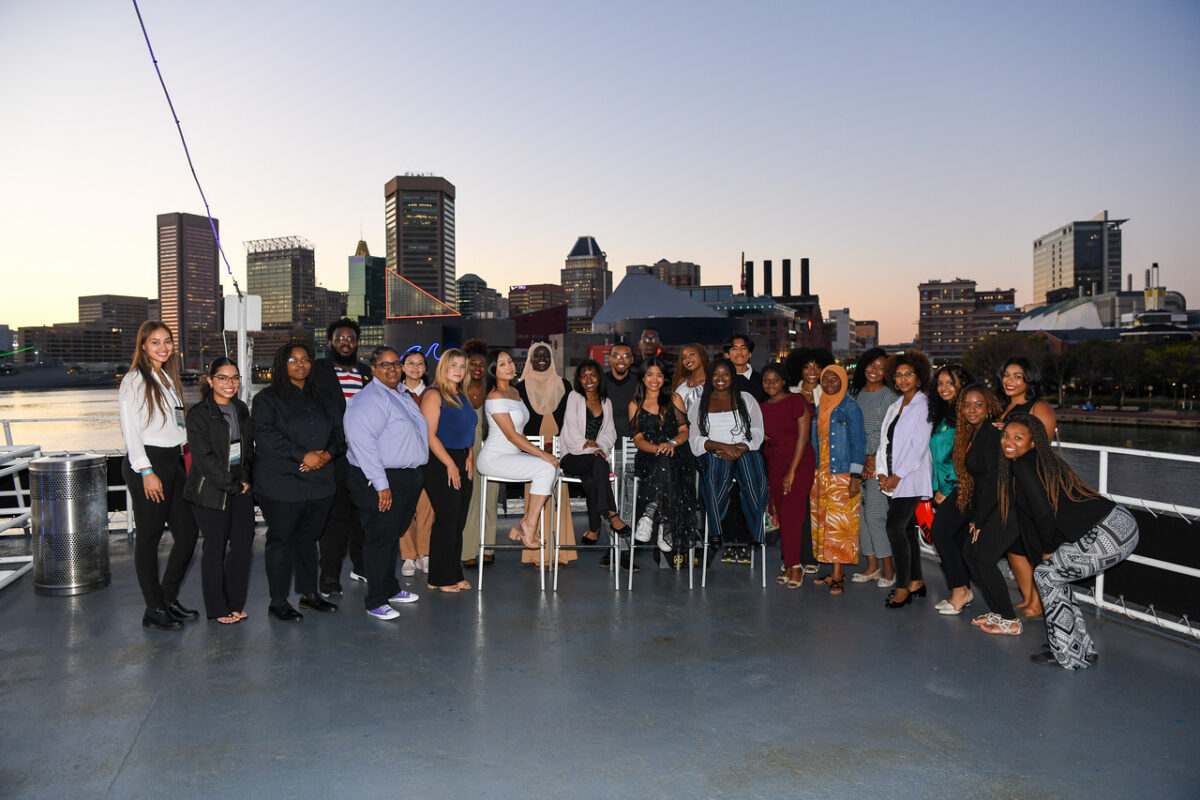 The 2023 UMBC McNair Research Conference group photo at Inner Harbor City Cruise in September 2023. Included in the photo are all current McNair Scholars, two members of our UMBC LSAMP family, and administrative staff for McNair and the Office of Academic Opportunity Programs. Photo courtesy of Huang.
Q: Tell us about someone in the community who has inspired you or supported you, and how they did it.
A: So many people in the UMBC community have inspired and supported me, but especially my mentors at UMBC-Shady Grove and my McNair family. Each person I’ve encountered has dedicated their time to academic excellence and uplifting the voices of those who are traditionally unheard (first-gen, low-income, underrepresented individuals). Their advocacy and passion inspires me to pursue intersectional research and do my best to support my scholars. I love the sense of community that we’ve cultivated in McNair. Although I was away for two years, I was quickly welcomed back into the family when I took on my new role. Even though I am the program coordinator, I feel that my students inspire me to strive for excellence through the amazing things they do.
“It has been a very meaningful, full circle moment for me to come back and serve students in the same boat as myself just two years ago.”
Ting Huang ’21
Q: What brought you to UMBC in the first place?
A: I came to UMBC because of the strong sense of community I had experienced second-hand before beginning my undergraduate career here. I had heard from my cousin (UMBC alum Rose Li ’16, M.P.S. ’21) and visiting faculty about the freedom that UMBC students have in exploring their passions and undergraduate research, and decided that an undergraduate career here would be most beneficial for me. As a staff member, the McNair connections I made pulled me back to UMBC after earning my master’s. I was excited to come back to a community that supported me even though I was at another institution.
Q: What part of your job do you enjoy the most and why?
A: Talking to scholars! It’s truly inspiring to listen to my scholars’ aspirations as they will be the future leaders of the world. It’s exciting to hear about the changes that the students want to make so that those from similar backgrounds to ours can receive ample support before entering higher ed.
* * * * *
UMBC’s greatest strength is its people. When people meet Retrievers and hear about the passion they bring, the relationships they create, the ways they support each other, and the commitment they have to inclusive excellence, they truly get a sense of our community. That’s what “Meet a Retriever” is all about.
Learn more about how UMBC can help you achieve your goals.
]]>
Meet Ting Huang ’21, psychology, program coordinator for the McNair Scholars Program in the Office of Academic Opportunity Programs where she was previously a scholar. Ting is now in a position...
https://umbc.edu/stories/meet-a-retriever-ting-huang-mcnair-coordinator/
https://my3.my.umbc.edu/api/v0/pixel/news/135925/guest@my.umbc.edu/5bf00bfc9c36b43752f790abe978c48c/api/pixel
alumni
magazine
mcnair
meet-a-retriever
psychology
universities-at-shady-grove
UMBC News & Magazine
https://my3.my.umbc.edu/groups/umbc-news-magazine
https://assets1-my.umbc.edu/system/shared/avatars/groups/000/001/943/24435aa6207c452e7bc15cc74b42c7bb/xsmall.png?1748556657
https://assets1-my.umbc.edu/system/shared/avatars/groups/000/001/943/24435aa6207c452e7bc15cc74b42c7bb/original.png?1748556657
https://assets2-my.umbc.edu/system/shared/avatars/groups/000/001/943/24435aa6207c452e7bc15cc74b42c7bb/xxlarge.png?1748556657
https://assets2-my.umbc.edu/system/shared/avatars/groups/000/001/943/24435aa6207c452e7bc15cc74b42c7bb/xlarge.png?1748556657
https://assets3-my.umbc.edu/system/shared/avatars/groups/000/001/943/24435aa6207c452e7bc15cc74b42c7bb/large.png?1748556657
https://assets1-my.umbc.edu/system/shared/avatars/groups/000/001/943/24435aa6207c452e7bc15cc74b42c7bb/medium.png?1748556657
https://assets2-my.umbc.edu/system/shared/avatars/groups/000/001/943/24435aa6207c452e7bc15cc74b42c7bb/small.png?1748556657
https://assets1-my.umbc.edu/system/shared/avatars/groups/000/001/943/24435aa6207c452e7bc15cc74b42c7bb/xsmall.png?1748556657
https://assets2-my.umbc.edu/system/shared/avatars/groups/000/001/943/24435aa6207c452e7bc15cc74b42c7bb/xxsmall.png?1748556657
UMBC News & Magazine
0
0
false
Fri, 29 Sep 2023 14:45:13 -0400
Fri, 29 Sep 2023 14:45:13 -0400
By Saving One Life, You Have Saved All Humankind

Arrested for his role in a failed terrorist plot as a teenager, Mohammed Khalid found freedom from his radicalization after prison officials showed him kindness and empathy. Freed in 2017 and now a senior at UMBC, Khalid has surrounded himself with mentors as he researches how to help others see through the lure of extremism.
As an incoming transfer student to UMBC, Mohammed Khalid needed to be excused from some of the mandatory McNair Scholars Program orientation sessions to give a presentation at TEDxJHU. The title of his talk? Reconciling Humanity: Struggles of a Former Teenage Terrorist.
As McNair program director Michael Hunt listened to the information systems major tell his story over the phone, he could hear Khalid gaining more confidence as he went through the details. At the end, Hunt asked if Khalid would like to practice giving his presentation to his fellow McNair scholars before the real thing.
This is not how Khalid normally introduces himself at first meetings, but he doesn’t shy away from it either. “What I told him,” says Hunt, ’06, M13, mathematics, “is that you’re part of us now. You’re one of us. So just know that your story is now our story. Right? I really wanted him to understand that.”
 At the 2019 McNair orientation, Michael Hunt, right, talks to Khalid before he leaves for the TedxJHU event.
Before Khalid immigrated to America at age 13, his perspective of the West was shaped through literary fantasy like the Harry Potter books and The Chronicles of Narnia. Once arrived in a land less magical than he hoped, Khalid would come to be enmeshed in his own struggle of good versus evil, envisioning the world in a false dichotomy of strict black and white, pitting his perceived brothers and sisters versus the world.
Born in the United Arab Emirates and raised in Pakistan, Khalid and his family joined his father in 2007 in Howard County, Maryland. Certain memories stand out from that first day, he says. An overly brusque immigration officer at the airport in New York, his father in the car emphasizing that this is their new home—they will go to school, work, live, and die here one day, he said—and the loneliness of arriving at their townhouse late at night.
One thing that excited Khalid was starting school in his new country. He already knew English well after being brought up in a British education system and was excited to find a group of friends. But when he introduced himself in class, his new classmates snickered, he remembers.
“Mohammed is a terrorist’s name,” they told him.
Sharing his journey
Khalid ’21, information systems—a Cyber Scholar, an Honors College student, and a UMBC McNair Scholar—has shared these painful memories very publicly—in a Vice news segment, in panels around the country, and recently in a national magazine. He presents them not as an excuse for what followed in his teenage years, but as an open way of grappling with the decisions he made, with the goal that he might possibly help someone else avoid the descent into extremist circles.
Mohammed Khalid was the youngest person to be convicted of terrorism in the United States. He was arrested at 17 in July 2011 and released from criminal custody in December 2015, although he was immediately detained by the U.S. Immigration and Customs Enforcement until May 2017. He won his U.S. citizenship in 2018. After his deradicalization in prison, Khalid has dedicated his life to helping other young people not fall under the sway of extremists like he did.
Hunt explains that the McNair program does more than prepare students for graduate education in all disciplines through research, mentoring, and other scholarly activities—it also focuses heavily on community building with an emphasis on providing a space where students can cultivate productive interactions, and speak honestly and critically from their own experience with the goal of mutual learning.
Khalid took Hunt up on the offer to practice his talk in front of the McNair peers he had only just met. “There was a real emotional connection,” remembers Hunt, “and an understanding of his vulnerability. I know that for the community, it really shaped their understanding of the dynamics of the group. So it wasn’t just about him. It was about how this allows you to connect with a group of people who are going to be sharing your journey.”
Who are your brothers and sisters?
Connecting with people in real life was not going well for Khalid in high school. The terrorist comments didn’t abate, and neither did digs at his religion and origins. These insults were completely out of context for Khalid, so he turned to a common source for answers—Google. He then found a home on YouTube where he met people he considered friends—his true brothers and sisters in the faith, he thought at the time—watching and translating into English videos explaining his religion. Soon, the website algorithm changed the videos promoted to Khalid; he was watching suicide bombings and communicating with people tied to Al-Qaeda and other terrorist organizations. He was embraced by people online who called him a brother and welcomed him into their extremist community.
“Calling someone your brother and sister in Islam is the biggest modicum of respect that you can give them,” explains Khalid. “I think that it’s an innate human need to be heard and to be listened to. And these people online who I was calling my brothers and sisters, I would talk to them online and then come to find out they were actually listening to me and they would reflect my feedback. That’s something, I think, very necessary to camaraderie.”
 Khalid spoke at an event in 2019 called the Pathways In and Out of Islamism: A Conversation with Two Former Extremists.
On his way to discovering more about his religion, Khalid mistook extremism for fervor, recognizing now that “extremists had actually hijacked the philosophy and the ideology of Islam, which I call Islamism; the political side of it obviously, not the religious side, which is different.”
In parsing how his thinking worked at the time, Khalid says he thought along these lines: “Well, my classmates are calling me a terrorist because of what’s happening in other countries and at the same time they [Americans] are hurting ‘my people.’ So who does my allegiance lie with? Is it with people who are part of my faith or with people whom I’ve just encountered in this new country who are actually demonstrating this antagonism against me?”
Khalid says he was spending 40 hours a week on YouTube chats with like-minded individuals, all the while pulling away from his real family. His involvement eventually broadened beyond the virtual, and in 2011, he was arrested in connection with an international (unsuccessful) plot to murder a Swedish cartoonist. He attempted to recruit people and solicit funds for an American woman known as “Jihad Jane” who was organizing the hit.
In his TEDx talk, Khalid goes into detail about his arrest and how surreal the situation seemed in the moment. An FBI officer had to remind the then-17-year-old to say goodbye to his parents. After his arrest, Khalid was diagnosed with Asperger’s Syndrome, a type of autism, which has helped explain to him those feelings of detachment during the harrowing moments of his arrest and also when thinking back on how hard it was to make friends in school.
“What I told him is that you’re part of us now. You’re one of us. So just know that your story is now our story. Right? I really wanted him to understand that.”
Michael Hunt, UMBC McNair program director
It was in prison, of all places, that Khalid says he began to see the shared humanity with fellow prisoners and guards alike. “All that the prisoners and prison officials wanted to do was understand, and all I ever wanted in my life was to be understood,” says Khalid. The correctional officers took time to share their own experiences with Khalid, which over time broke down the barriers Khalid had erected. One officer in a juvenile facility even challenged him, “Have you actually read the Qur’an from front to back?” When Khalid said no, he was given a copy.
“And I read it at that point,” Khalid says. “That’s when the ideological farce that I was believing in came breaking down. I think one of the verses that really resonated with me was how saving one life means that you’re saving humanity, and how killing one life, it’s like you’re killing all of humanity. I think that’s just one of the many beautiful principles in the Qur’an, that it is completely divorced from extremism.”
Finding ethical ways of detecting online radicalization
At UMBC, Khalid has jumped head first into his information systems major with a focus on cybersecurity. His drive to help other young people not fall sway to extremism online is apparent, says Vandana Janeja, professor and chair of Information Systems. “Mohammed has tapped into all the right resources for him to advance,” says Janeja. “He’s a real good example for other students—he showcases the best of what we have to offer at UMBC.”
Khalid transferred to UMBC in winter 2019. He quickly reached out to Janeja and Anupam Joshi, professor and chair of Computer Science and Electrical Engineering and the director of the UMBC Center for Cybersecurity, for help with formulating methodology for his research project assessing indicators of online radicalization.
 Khalid shares his poster “Mass Media’s Ideology of Middle Eastern Terror and the Impossibility of the Individual” at the 2019 Annual Biomedical Research Conference for Minority Students.
“Frankly, if I’m being very honest,” says Joshi, “if someone from any background other than Mohammed’s had approached me and said, ‘I want to do this work,’ I would have probably not agreed to do it. In some areas, you can’t bring a certain amount of necessary empathy to your research unless you’ve been in that situation.”
And what Khalid was interested in researching—how to detect signs of Islamist radicalization from online discourse—is extremely complex, adds Joshi. “It sounds deceptively simple, but it’s very hard to do that. Because you’re trying to judge the mental state of a person based purely on what they’re saying in public-facing platforms.”
Both Joshi and Janeja pushed Khalid to study the ethics of data analysis. “In speaking to him about his research, I encouraged him to look at various perspectives to data analytics,” shares Janeja. “In our department, we frequently have conversations around ethics with students. ‘Keep in mind, as you are making choices in your algorithm, that you’re using this threshold to cut off these participants from analysis or using this threshold which impacts people in a certain way.’” Joshi adds that researchers’ biases can also easily enter their algorithms without careful consideration.
“What I told Mohammed,” says Joshi, “was that for his project, I am happy if he just ends up getting exposed to these ideas and how the technology can be applied to detect radicalization. He’ll have the rest of his graduate career or research career if he wants to continue to improve things, because this is a particularly hard problem.”
Holistic mentorship
Khalid is in the distinct position of knowing personally how people can influence you to pursue good or evil. He has become more discerning about the type of mentors he allows into his life, but more than ever understands the need for trust and vulnerability and has surrounded himself with teachers who can address all facets of his mental, physical, spiritual, financial, and academic life.
When Khalid was released from prison in 2017 after his five-year sentence, he quickly sought to make up for lost time. Prior to being arrested, he had received early acceptance to Johns Hopkins University, but now he had to start his educational journey from scratch. “Rejection is the word I associate the most with that period,” Khalid says candidly. He eventually found his footing at the Community College of Baltimore County (CCBC).
 Khalid participates in activities at the February 2019 McNair Scholars Program group interview with other UMBC students.
“Mohammed is the type of student that takes every opportunity that comes before him—every opportunity to grow, to learn, and to serve,” says Natasha Cole-Leonard, associate professor of English and director of the honors program at CCBC, who got to know Khalid when he was a leader in the honors program and on the student honors council.
At some time early in their relationship, Cole-Leonard says Khalid asked for a one-on-one meeting. “In reflection, I appreciated the fact that he trusted me to hear his story before it was a situation where he felt compelled to or because it was breaking news. It was just out of his own desire to be honest about his background.”
Khalid has continued to open up to advisors and mentors at UMBC, and through the McNair program has been mentoring other students as well. It’s a role he’s taken to heart. “One of the things that I really emphasize is empathy. We can all sympathize with anyone, but empathizing is where it becomes difficult because you’re really putting yourself in the other person’s shoes and looking through their eyes, which is super hard,” says Khalid. “It’s exciting and interesting to coach others, providing them with words of affirmation and giving them encouragement and support. I’m letting them know that I’m there for them, no matter what happens.”
McNair program director Hunt is developing his dissertation for the language, literacy, and culture Ph.D. program at UMBC on holistic critical mentoring, which he also practices with his McNair scholars. Some of the tenets Hunt mentions are reciprocity between mentee and mentor, while both parties are asked to collectively bring their culture and lived experiences to the relationship.
 Khalid with fellow McNair cohort member, Dildora Salimjonova ’20 (standing, left), at the 27th Annual UMBC McNair Scholars Conference on September 20, 2019.
“We provide a space where affirmation comes first,” says Hunt. “Before any of the work, before we get to the deadlines, before we get to anything we’re dealing first with their humanity. In our McNair community, we have been intentional about scholars, staff, and mentors being able to show up as fully themselves.”
“Having someone who always believes in you is super important. And that’s something I’ve actually personally experienced at UMBC,” says Khalid. “All these people who I count as my mentors, Dr. Joshi, Dr. Janeja, Cindy Greenwood of the Cyber Scholars program, and Mr. Hunt…all these people actually believed in me when the whole world said I couldn’t do this, and here we are and I’m still a mentee.”
The power of being heard
Khalid’s cautionary tale against the temptations of extremism seems especially necessary in American culture currently. As the country wrestles with conspiracy theories that have torn at the fabric of the nation, what can we learn from the mistakes of teenager Khalid? “People tend to find ideology that already fits in with their perfect narrative…whatever reinforces what they want to believe in, no matter the regard for the facts out there,” says Khalid.
As hard as it might be, Khalid says, we need to work on pinpointing our commonalities.
 Khalid poses with Jonathan Velez, an instructor at University of Pittsburgh who guided Khalid in incorporating machine learning approaches in his research in 2019.
“Emphasize the humanity of the other person and things will get better. I know that sounds like just a perfect world, but I’ve found that people who feel heard—if you listen to their story—that’s a way to start the conversation of what’s bothering them.” He returns to his own period of deradicalization.
“I started to change after I was able to look at these correctional officers in a new light. This led me to come out of that us-versus-them mindset and believe, ‘Well, these people, their humanity is no different than mine,’” he says. “And that was the first crack in the ice, that kind of led to the shattering of the philosophy and the ideology that I was believing in.”
Khalid acknowledges that everyone loves “a classical prison story of redemption,” but knows that he will continue to face questions about the sincerity of his deradicalization. “To that,” he adds, “only time will tell, and time has been telling so far.”
*****
STEM professionals need to prioritize the social impact of their work. Read more about interdisciplinary teams at UMBC researching methods to support these efforts.
Header image: Mohammed Khalid ’21 on campus in spring 2021, by Marlayna Demond ’11. All other images provided by Khalid.
]]>
Arrested for his role in a failed terrorist plot as a teenager, Mohammed Khalid found freedom from his radicalization after prison officials showed him kindness and empathy. Freed in 2017 and now...
https://umbc.edu/stories/by-saving-one-life-you-have-saved-all-humankind/
https://my3.my.umbc.edu/api/v0/pixel/news/119595/guest@my.umbc.edu/cc860579a9436cc783432a90063b9cd9/api/pixel
campus-life
coeit
communityimpact
cybersecurity
information-systems
mcnair
transfer
UMBC News & Magazine
https://my3.my.umbc.edu/groups/umbc-news-magazine
https://assets1-my.umbc.edu/system/shared/avatars/groups/000/001/943/24435aa6207c452e7bc15cc74b42c7bb/xsmall.png?1748556657
https://assets1-my.umbc.edu/system/shared/avatars/groups/000/001/943/24435aa6207c452e7bc15cc74b42c7bb/original.png?1748556657
https://assets2-my.umbc.edu/system/shared/avatars/groups/000/001/943/24435aa6207c452e7bc15cc74b42c7bb/xxlarge.png?1748556657
https://assets2-my.umbc.edu/system/shared/avatars/groups/000/001/943/24435aa6207c452e7bc15cc74b42c7bb/xlarge.png?1748556657
https://assets3-my.umbc.edu/system/shared/avatars/groups/000/001/943/24435aa6207c452e7bc15cc74b42c7bb/large.png?1748556657
https://assets1-my.umbc.edu/system/shared/avatars/groups/000/001/943/24435aa6207c452e7bc15cc74b42c7bb/medium.png?1748556657
https://assets2-my.umbc.edu/system/shared/avatars/groups/000/001/943/24435aa6207c452e7bc15cc74b42c7bb/small.png?1748556657
https://assets1-my.umbc.edu/system/shared/avatars/groups/000/001/943/24435aa6207c452e7bc15cc74b42c7bb/xsmall.png?1748556657
https://assets2-my.umbc.edu/system/shared/avatars/groups/000/001/943/24435aa6207c452e7bc15cc74b42c7bb/xxsmall.png?1748556657
UMBC News & Magazine
0
0
false
Fri, 11 Jun 2021 12:53:04 -0400
First In Class

It’s no secret why first generation college students thrive at UMBC. Our network of first generation staff and faculty make it the center of their work as educators and researchers.
Sometimes, an “aha moment” appears as a bright light bulb. More often than not, though, the spark that fueled it is what really matters.
For Juwon Ajayi, that moment first happened in Nigeria. As a kid, he accidentally stuck his finger in an electrical socket. He laughs about it now, but that somewhat painful experience got his brain ticking. How was the power traveling? Why did it hurt so much?
Like many kids, Ajayi found pleasure and intellectual stimulation in Legos and dreamed of someday building his own car. When his family moved to America, he had an inkling of what he might do with his academic leanings—but college felt a bit like uncharted territory.
“It was hard. There was a big learning curve,” says Ajayi, a senior computer engineering student who started off with three years at Anne Arundel Community College while other members of his family were taking similar paths. “Everything was new. Considering my major, there was really nobody that could help me when I didn’t understand…so I basically had to try to understand it myself.”
Thankfully, when Ajayi transferred to UMBC he found a home first with the Louis Stokes Alliance for Minority Participation (LSAMP) program and then with the McNair Scholars community, a nationwide program focused on helping first generation students be successful in college and graduate school. Today, he’s on his way to earning a degree, and also making a difference by helping new McNairs find their way. But for many students, the hardest part is getting in the door in the first place.
“As far as the application process, I was pretty much on my own. I really just kind of winged it, which was not the best, looking back,” says Kaitlynn Lilly, a junior majoring in physics and mathematics. Lilly wound up landing on her feet despite the challenge of writing the dreaded personal essay for her college application. “That was the biggest curveball for me. It was scary—so much depends on how you come off on a piece of paper, right?”
 Student Julia del Carmen Aviles-Zavala (center) and her family. Photo by Marlayna Demond ’11 for UMBC Magazine.
As the first in her family to graduate from high school, Julia del Carmen Aviles-Zavala, a junior psychology major at UMBC at The Universities at Shady Grove, also found the process extremely intimidating at first.
“I was constantly feeling unsure of what class to take, and anxious as to if my classes would transfer to my major once I got to UMBC,” she says. “Honestly I was just not sure how ‘college’ worked, and I did not have a concrete idea of an outline for my next four years.”
UMBC is known for being a champion of students from all backgrounds, so it’s no surprise to find that first generation college students make up approximately 25 percent of the current student body—or that UMBC would be a huge draw for faculty and staff who come from very similar backgrounds. Fueled by their own experiences, they created the First Generation Network, resulting in programming—covering everything from social skills to financial aid to planning for grad school—and research, and a community truly dedicated to the success of first generation students.
IT’S PERSONAL
Amanda Knapp is proud of where she comes from.
As a country girl from rural West Virginia and the daughter of two parents who hadn’t finished high school (her mother later completed a BS in Nursing in 2018), Knapp took joy from the friends and ideas she found in academia. Knowing she’d need to pay her own way to college, but eager to get away, she worked multiple jobs through high school and college—including one as the bumblebee mascot for an Old Country Buffet and another loading tractor trailers with mail and heavy packages until the wee hours of night.
It was tough work, but it gave Knapp the freedom to make important connections at SUNY Buffalo, like managing a 3,000-member ski club and joining the women’s rugby team. There, not only did she find friends and professors who helped guide her, but a pathway to her current work as associate vice provost and assistant dean for Undergraduate Academic Affairs at UMBC.
“Working in this field is a way for me to give back to a profession that literally changed the course of my life,” says Knapp, whose position gives her direct ways of helping students via student success efforts, the Academic Success Center, and the year-old First Generation Network.
“To be able to help someone remove those barriers so they don’t have to face them—or just know that they have someone who cares about them—is what makes our campus so special. There are so many of us on this campus.”
 First generation faculty and staff helped celebrate their students at the 2018 First Generation Student Day. Photo courtesy of Amanda Knapp.
Faculty and staff who are first generation college graduates themselves often can see the issues their students are facing before the students themselves. That means a big part of the work is giving students tools they didn’t even know they yet need, says Michael Hunt ’06, M13, mathematics, director of the UMBC McNair Scholars Program and a current doctoral student in the Language, Literacy & Culture program at UMBC.
Hunt describes a common scenario: A student applies for summer research opportunities all over the country, and is accepted by a second choice location. The student wants to know if they have other options, but the first place is giving them a deadline to respond. The student stresses, not knowing what to do.
“So, what do I do? I say, ‘Well, did you email them? Did you pick up the phone and call them?’ And the student says, ‘We can do that? I’m allowed to do that?’” says Hunt, a graduate of both the McNair and Meyerhoff Scholars Programs. “So you get them to sort of recognize what they are able to do and help them take that to the next level. And that’s what it is for us. It’s okay; I’m going to show you how to play the game.”
Hunt has always been an outgoing person and educator, warm and affirming. In the age of social distancing, he and the McNair team have upped their game in new ways, offering fun and informal ways of socializing, including web-based “hype sessions,” student group chats to provide both academic and social structure.
As a fellow first generation college student, Bill LaCourse, dean of the College of Natural and Mathematical Sciences, loves to see and hear about these projects working for students. Growing up in Connecticut, as the first in his extended family to attend college, LaCourse worked as a bike mechanic, a hospital laundry washer, a cook, and a stock clerk in order to save up for college.
Along the way to his eventual doctorate in chemistry, LaCourse learned how personal relationships and mentorship can really make the difference for students trying to figure out their options.
“We are all mentors for each other,” he says. “We are all role models to somebody whether we are a good role model or a bad role model. That’s something that’s important to have because as I went forward, I had my good ones, but I had my bad ones as well.”
Looking back on his own experiences, LaCourse sees value in what he learned. Today he works to create inclusive environments for underserved students in his college and beyond.
“The whole mission for me is to have people not make the same stupid mistakes I did,” he admits. “They don’t have to waste their time and learn everything the hard way. I’ve done that. I’ve come through the brush and the copses to get where I needed to go. They can have it better because of what I went through.”
LOOKING DEEPLY AT CAUSES, SOLUTIONS
If personal relationships are one side of the student success coin at UMBC, the other is research.
In her work with Knapp in the Academic Success Center (ASC), Delana Gregg, M.S. ’04, instructional development systems, Ph.D. ’19, language, literacy, and culture, hears about student experiences directly. As director of assessment and analysis and a first generation student herself, Gregg’s position also lets her combine her interests and daily work into her research.
Driven by UMBC student data and surveys, Gregg’s recent doctoral dissertation focuses specifically on the experiences of first year and transfer students who are the first in their families to attend college. The goal? To determine which experiences on campus—such as service learning and internships—make the most difference, and why.
“After they had these community-based experiences, what students said was they felt socially connected, they felt like they learned how to work on a team….And they felt academically connected,” says Gregg, feeling like they were using what they learned. “And this gave them a sense of belonging. They understood what their purpose was. It wasn’t just like ‘I’m going to college because I’m supposed to.’ It’s ‘Oh, I see myself in a career that I could do with this degree.’”
As the youngest of 11 children in a low-income family, and a McNair alumna herself, McNair program coordinator Antoinette Newsome works one-on-one with students as they navigate their classes and relationships with professors, as well as plan for a future in graduate school. Because of her background, Newsome feels a deep pull to study the ways this work impacts first generation college students, and the responsibility of institutions in the retention of these students.
“It is imperative for first-generation college students to find faculty and staff who come from similar circumstances because oftentimes we feel alone in navigating this huge higher education system,” says Newsome, who is working toward a Ph.D. in Student Affairs at University of Maryland, College Park.
“Knowing that your professors and/or staff members will understand what it means when you have to miss class due to taking care of a family member or maybe have to be late since you live off campus and work multiple jobs is important,” says Newsome. “Life happens to our students and knowing that faculty understand the reality and can provide some support through it is very comforting for these students.”
 The McNair Scholars community is continuing to connect virtually during the pandemic. Photo courtesy of Michael Hunt.
At this fall’s Hill-Robinson McNair Lecture, Jasmine Lee, director of Inclusive Excellence & Initiatives for Identity, Inclusion, & Belonging in the Division of Student Affairs at UMBC, reiterated the need for mentors of color for students of color, especially within the first generation community. As a product of the Eastern Michigan University McNair Scholars program, Lee’s doctoral research uses a storytelling-based approach to identify common factors for academic resilience among certain groups of underserved students—Black, first generation, and low income—at predominantly white institutions.
“Separately, any of these challenges or barriers can feel overwhelming. They can lead to hopelessness and can lead to academic disengagement. Take them together, and it is absolutely no surprise that the fourth, fifth, and sixth year graduation rate of these populations continues to fall well below the national average,” says Lee.
However, she found, when educators take an anti deficit approach to their work, seeing the value in cultural wealth and personal stories, they can begin to face a number of common barriers to success: business continuity challenges, lack of nurturing supportive resources, and lack of representation. For Lee, the research plays into her everyday work at UMBC.
“Students need affirmation, support, and advocacy,” she says. “Affirmation shows up in our micro-affirmations. Seeing them, the sense of mattering, that they belong, that when I see you across the hallway, I smile. That I remember things about you because you matter to me.”
All of these findings help our students, these researchers say. That’s a goal and an imperative, says LaCourse.
“We need to scour the data to look for the people who have excelled without anybody’s help and give them some reward for that,” he says. “And then in the meantime, we can focus our attention on those who need it—and my thing is that everyone has potential. We let them through the door at UMBC, however we do that, we are morally and ethically committed to give them the best education possible. That’s our job.”
NETWORKS OF SUPPORT
Finding the right people in college is so important, just as much for guidance and lifting one’s spirits as for having a community to cheer you on when you’ve succeeded. That’s why UMBC offers a variety of groups for new first generation students, no matter what their background or where they hope to go.
In addition to the McNair Scholars, for 30 years, UMBC—now within the scope of the Office of Academic Opportunity Programs—has run several federally-funded programs offering services and mentorship to underrepresented minority students, as well as low income and first generation students. Educational Talent Search covers grades six through twelve, and Upward Bound focuses on high schoolers.
Corris Davis ’98, biological sciences, M.P.P. ’19, M6, who oversees the office, intentionally hires first generation students as staff because it helps the pipeline of support overall.
“My office sits in a really unique place,” says Davis, who is also pursuing a doctorate in public policy at UMBC. “We’re able to see what goes wrong in K-12, and we’re able to try to correct those things in some of our participants before they get to higher ed.”
 Julia del Carmen Aviles-Zavala connects virtually with Chelsea Moyer and Iris Schauerman, two Shady Grove campus staff who have helped her along the way. Photo by Marlayna Demond ’11 for UMBC Magazine.
Similarly, via the Achieving Collegiate Excellence and Success, or ACES Montgomery, program, senior del Carmen Aviles-Zavala received assistance en route from high school, and through her two years each at Montgomery College and UMBC at Shady Grove, respectively. Through the program, she also made friends with other first generation students, she explains.
“Any question I had about FAFSA, registering for classes, or keeping track of my credits, ACES was always there to guide me,” she says. “Although their profession is to help students, I always felt such genuine interest in my academic wellbeing. I truly have felt that my coaches want me to succeed, and I have been able to do just that because of them.”
Knowing that there are plenty of first generation college students beyond the ones directly affiliated with McNair and the other programs, Davis and others on campus started a First Generation Network to open up mentorship opportunities and connect faculty, staff, and students on campus. Even during the pandemic, the group has offered monthly virtual brown bag sessions, and a virtual First Gen Day celebration.
“We’re starting out small, but we’re always thinking, ‘What can we do to serve more?’” says Davis. “We’re growing into something we hope will be more structured. The goal is to just help build this community…when students can find people who are willing to go out of their way to make sure they’re successful, that’s a wonderful thing.”
SIGHTS SET ON SUCCESS
Once computer engineering student Juwon Ajayi got himself on track with the McNair program, his focus went from his own needs to those of others. As the lead McNair Student Ambassador, he checks on fellow scholars at least once a week. He’s even created detailed spreadsheets to help his friends track their grades and applications to graduate school—something he had to figure out on his own.
“When I was at my community college, that’s when I started developing an idea of trying to help other students mainly because if I am struggling at it, there’s a 100 percent chance they are probably struggling at it, too,” he says. “We’re kind of like a community helping together. So as an ambassador, if it’s something that I can help with, I will help with it.”
Senior psychology major Ting Huang has found assistance from the Shady Grove community as well as the McNair program, even from afar.
“At Shady Grove, many of the faculty and staff helped promote a diverse environment that made me feel comfortable reaching out for help. I think that that was the most important support I have gotten as a first-gen student because I remember being very afraid to reach out when I was in Montgomery College and I felt so afraid applying for transfer to UMBC,” she says. “But now, with the help of McNair, my mentors, and other campus resources, I’ve built confidence and I’m applying to graduate school in December.
 Amanda Knapp (left) awards first generation paraphernalia to some brand-new grads. Photo courtesy of Knapp.
While classes were happening in person physics major Kaitlynn Lilly found a special way of passing along the help she’s received – by tutoring students at Arbutus Middle School. The four hours a week she spends working on math with sixth graders is good practice; someday, she hopes to be a professor.
“I really like having an impact on somebody. And so I think it’s really – I think it’s a fun challenge to be able to take what you know and explain it in a way that somebody else will be able to understand. And just seeing the change in students as you work with them for a long time is really, really important to me,” she says. “And … means more than any accomplishment that I could have for myself, just seeing somebody else be able to go through those same things.”
Making it into college is one thing for first gens; finishing is quite another. So, when commencement day comes, UMBC’s first generation community likes to make a big deal of it. In December 2019, the last in-person commencement before the pandemic forced the ceremony to go virtual, Knapp posed with a group of graduating seniors wearing special green and white cords and “I am First Gen” pins.
Knapp gets a bit verklempt just thinking about it. Maybe that’s because she can see herself—and the journey—in those students.
“It’s just such a special moment for everyone,” says Knapp. “They’re so excited, like ‘Wow, you’re honoring me.’ And then we get to tell them how proud we are of them.”
Learn more about the First Generation Network here.
]]>
It’s no secret why first generation college students thrive at UMBC. Our network of first generation staff and faculty make it the center of their work as educators and researchers....
https://umbc.edu/stories/first-in-class/
https://my3.my.umbc.edu/api/v0/pixel/news/119755/guest@my.umbc.edu/e26da15d91b4b5af261cae56cbc30dfb/api/pixel
impact
mcnair
professorsnottomiss
UMBC News & Magazine
https://my3.my.umbc.edu/groups/umbc-news-magazine
https://assets1-my.umbc.edu/system/shared/avatars/groups/000/001/943/24435aa6207c452e7bc15cc74b42c7bb/xsmall.png?1748556657
https://assets1-my.umbc.edu/system/shared/avatars/groups/000/001/943/24435aa6207c452e7bc15cc74b42c7bb/original.png?1748556657
https://assets2-my.umbc.edu/system/shared/avatars/groups/000/001/943/24435aa6207c452e7bc15cc74b42c7bb/xxlarge.png?1748556657
https://assets2-my.umbc.edu/system/shared/avatars/groups/000/001/943/24435aa6207c452e7bc15cc74b42c7bb/xlarge.png?1748556657
https://assets3-my.umbc.edu/system/shared/avatars/groups/000/001/943/24435aa6207c452e7bc15cc74b42c7bb/large.png?1748556657
https://assets1-my.umbc.edu/system/shared/avatars/groups/000/001/943/24435aa6207c452e7bc15cc74b42c7bb/medium.png?1748556657
https://assets2-my.umbc.edu/system/shared/avatars/groups/000/001/943/24435aa6207c452e7bc15cc74b42c7bb/small.png?1748556657
https://assets1-my.umbc.edu/system/shared/avatars/groups/000/001/943/24435aa6207c452e7bc15cc74b42c7bb/xsmall.png?1748556657
https://assets2-my.umbc.edu/system/shared/avatars/groups/000/001/943/24435aa6207c452e7bc15cc74b42c7bb/xxsmall.png?1748556657
UMBC News & Magazine
0
0
false
Mon, 09 Nov 2020 17:44:59 -0500
Building Community, Block By Block
Pets, playlists, and pausing for reflection—these are a few elements that go into intentionally creating online communities and classrooms.
Fist-pumping, finger snaps, and words of encouragement abound during a recent web-based McNair Scholars’ research update meeting. The “hype session,” as one student puts it, is business as usual for this group of returning scholars, even as the rest of their routines have changed so drastically. Despite the transition to the online format, these student researchers still took time to pause—sharing emotions in a restorative circle—before delving into work updates.
In the age of social distancing, programs like the McNair Scholars and other cohort model organizations on campus are finding creative ways to encourage community building, relying on equal parts vulnerability and light-hearted fun as the foundational building blocks. And this fall, instructors are leaning in to trauma-informed teaching as well as available technology to create an intentionally connected classroom in lieu of on-campus relationships.
“More engaged, happier students have a more successful college experience,” says Kate Drabinski, principal lecturer in Gender, Women’s, and Sexuality Studies. “And we’re all really committed to doing that.”
A “Deliberate and Holistic” Approach
Successful online teaching requires instructors to combine tech savvy with DIY creativity in conveying their course materials.
For biology professor Sarah Leupen, that meant using her small house critters to make a point in her spring “Physiology of Dinosaurs” course. In what is probably the only time a professor used a hamster to discuss dinosaurs, Leupen says she was struck by her pets’ coat colors and how they were perfect examples of two of the color pigments that would make up the extinct animal coat colors as well.
After pausing to appreciate just how cute hamster brothers Fafner and Mr. Paws were, Leupen’s students were amazed that despite the many millennia and the drastic size separating dinos from hamsters, these similarities could emerge.
 Sarah Leupen on campus in 2016. Photo by Marlayna Demond ’11.
“They’re cute, but were also relevant,” says Leupen. The upside of teaching from home, she continues, is that students get to see a glimpse into her everyday life. Despite the many frustrations of being distant from classmates and learning from home—as well as the ongoing health concerns related to COVID-19—a common refrain from students and instructors alike is that possibly the pandemic has allowed us to be more human to each other.
Embracing this vulnerability may be the key to a successful period of online learning, and also pave the way for connections to be established when students and staff inevitably return to campus in the future. Maybe this looks like a professor opening her house to a student with nowhere else to live (as Leupen did for several weeks) or students opening up about their anxiety and health concerns with instructors.
With additional training and preparation, fall courses will be tailored to students’ online experience. The Department of Instructional Technology (DoIT) is helping professors develop their classes in ways that still aim to foster connection and academic excellence. On-campus organizations that typically spend the summer building community within their new cohorts are also turning to technology to create a connected experience. UMBC’s goal with these efforts is to offer a “deliberate and holistic” education, according to DoIT, although maybe not every professor will be using hamsters to achieve that end.
Not Your Average Zoom Meeting
Scholars programs like the Honors College rely on cohort community building as part of their models. In order to build that connection, usually students bond over orientation, ice breakers, shared meals, and living spaces. While distant because of COVID-19, programs are going the extra mile online to make sure students still have opportunities to build relationships with staff and fellow students.
Julie Oakes, assistant director of curriculum and retention in the Honors College and adjunct associate history professor, says that the “magnitude of events” they’ve planned over the summer for incoming students is higher than ever. Trivia nights, movie parties on Netflix, pet show-and-tells, and other engagements allow students to have fun with each other, Oakes emphasizes. Relationships that would happen organically in person now need to be fostered through online platforms.
Hosting classes and events online “forces us to see students more holistically—not just as learners but as family members, breadwinners, caretakers, and more.”
-Michael Stone, Honors College
Honors College Director Simon Stacey is used to telling students that they’re “an alum from day one.” But based on all the summer programming welcoming incoming students distantly, he says he’s recently changed the axiom to “alum from before day one.”
At an online lunch in June, first-year students chatted with current Honors College members as well as staff, showing off their fuzzy and slippery pet companions at home. While cats dominated the screen (Loki, Checkers, Hattie, Harlow, Octavia), Molly the beagle and Pug the pug along with many unnamed fish in a 30-gallon tank joined the video call.
 Screen grab from the Honors College’s recent pet show-and-tell lunch.
Incoming Honors College student and Sondheim Scholar Polina Kassir ’24 says that “online meetings serve as a reminder that one day, people will be together again.” Kassir joined in the pet show-and-tell lunch despite not having a pet—she showed off her 5-year-old sister instead. As a first-year student, Kassir still has questions about what classes would be best for her major (she’s interested in biology and English) and how difficult the transition from high school to college level work will be, but she adds, “I haven’t felt ‘forgotten’ by UMBC because of the many online meetings where I have been spoken to by name.”
This intimate setting allows almost more human connections than some on-campus events, says Oakes. Michael Stone, assistant director of recruitment and assessment for the Honors College, adds that hosting classes and events online “forces us to see students more holistically—not just as learners but as family members, breadwinners, caretakers, and more.”
Nothing replaces in-person interactions, says Oakes, who misses the close-knit Honors College office as well as her students, but “we’re doing the best we can to create human connections and sustain that fun spirit.”
Humanizing the Online Experience
For Diane Stonestreet ’22, mechanical engineering, volunteering for the McNair Scholar Program’s online orientation in April as a peer mentor felt like the right move, knowing first-hand the benefits of the McNair support system. It’s a place “I can feel heard and understood,” says Stonestreet, “where all scholars are supporting each other’s work towards the same goal. My McNair family is the backbone in all of my other endeavors.”
 Scholars gather together at the 2019 McNair Family Weekend. Photo courtesy of Stonestreet, third from right, first row.
The goal of the UMBC McNair Scholars Program is to increase the attainment of research-based doctoral degrees by students from underrepresented segments of society, says Michael Hunt ’06, M13, mathematics, program director and doctoral student in Language, Literacy, and Culture. The pandemic’s disruption to business as normal, says Hunt, allowed him to “reevaluate engagement and re-think about how best to reach students. We had to think about connectedness intentionally.”
What this looked like for the online orientation was a full three days of important workshops, interspersed with dance parties, sharing pictures of food, and introducing pets (including one student’s chickens). “It let us humanize the experience,” says Hunt. “It was not just about the work.”
“There’s no way we can adequately do this work and not look at the emotions and feelings that our students are dealing with,” emphasizes Hunt. “This includes not just academically but life—family, spiritual, mental, and financial well-being….They must know that they are not alone and have a community to help them not only think through some things but also to vent to and to just be themselves.”
We had to think about connectedness intentionally.
-Michael Hunt, McNair Scholars program director
Stonestreet, who served as a peer leader during the event, says that all the community building activities had one goal. “It was crucial,” she says, that “leaders and staff were able to be vulnerable with their responses to set the tone for the scholars and promote deep conversation. It is difficult to foster trust, understanding, and a generally familial bond in an online format,” Stonestreet says, “so we tried to create deep and thoughtful experiences where the scholars could relate to each other past the surface level.”
In Stonestreet’s words, “less serious, but equally valuable bonding activities” included creating a shared playlist of favorite songs, hanging out on a joint messaging app, playing online party games on Jackbox, and chatting in smaller groups.
 A collage of incoming McNair Scholars. Image courtesy of Corris Davis, director, Academic Opportunity Programs
.
“We are just waiting for the day we can come together as a community again,” says Stonestreet. In the meantime, “I believe this cohort is going to continue to bond by navigating McNair Program requirements together, learning from one another’s experiences, and helping to support each other in their journey to graduate school.”
Pivoting Because of the Pandemic
That work of building community extends to classrooms as well. For Gender, Women’s, and Sexuality Studies instructor Drabinski, this means utilizing the technology available to reproduce as close as possible the camaraderie of her discussion-based classes. Drabinski, who’s taught hybrid courses before, says she and other UMBC faculty used the summer to prepare for fully online fall courses. This includes a week or more of training from DoIT with their PIVOT program.
 Kate Drabinski leads a Baltimore Walking Tour in 2017. Photo by Marlayna Demond ’11.
Planning Instructional Variety for Online Teaching (PIVOT) aims to give instructors a fluency with online tools to “to take a more deliberate and holistic approach to preparing their courses” for remote instruction, says Sherri Braxton and Mariann Hawken of DoIT’s Instructional Technology team. Faculty facing hurdles engaging their students, conducting lab-based courses, or knowing how to evaluate assignments say that PIVOT has helped their transition to the digital classroom feel purposeful instead of reactionary, like in the spring.
This deliberate approach to online teaching is not new to DoIT. For the past 12 years through their Alternative Delivery Program they’ve guided summer and winter programs to redesign delivery into an online or hybrid format. Drabinski has worked alongside DoIT for the past two years as one of their Blackboard Ambassadors—coordinating trainings and outreach for other faculty members to best utilize the education software.
Common feedback Drabinski hears is that it’s impossible to teach discussion-based classes online. “And that’s absolutely not true,” says Drabinski. “It’s just about learning what tools work, and also teaching students how to best learn online.” In fact, she adds, sometimes the online format works even better for her students, who might not feel comfortable raising their hand in class or just need a little more time to formulate a response.
If I’m being real, I can’t wait to be back in a classroom with students, live, in-person. It’s my favorite thing to do. But this is a global pandemic, so how do we use the tools we have and the innovation UMBC is known for to make the best learning experience possible for our students?
-Kate Drabinski, Women’s, Gender, and Sexuality Studies
Drabinski goes on to list other available resources. Blackboard Collaborate allows synchronous small groups to interact. The VoiceThread platform, which hosted URCAD this year, makes asynchronous interactions as seamless as possible. “It’s not the same as an in-person live discussion,” says Drabinski, “but that means that other kinds of discussion are made possible by the technology.”
In the meantime, Drabinski muses whether online interactions mediated by a machine will somehow allow her to be more human to her students, by giving them a window into her personal world. “It’s weird to think about, but maybe true,” says Drabinski, as one of her cats lounges beside her and her wife prepares lunch in the background of the video call.
Echoing the sentiment of so many, Drabinski adds, “If I’m being real, I can’t wait to be back in a classroom with students, live, in-person. It’s my favorite thing to do. But this is a global pandemic, so how do we use the tools we have and the innovation UMBC is known for to make the best learning experience possible for our students?”
Finding a Community that Cares
Students are also eager to get into the classroom, some for the first time. Dawg Days: Jumpstart is an extended orientation for first-year and transfer students that allows them to take one or two general education classes with their incoming peers. More students than ever signed up to participate this year—135 compared to last year’s 68—says program director Laila Shishineh. The online format removes the barrier of having to come to campus, even if that’s what many of the students are eagerly anticipating.
After meeting new people, respondents to a survey sent out to Dawg Days students said living on campus or taking classes in-person is what they’re looking forward to most. The Retrievers Return Roadmap, released by UMBC’s fall planning committee, emphasizes that the University will move forward with guidelines of decreased capacity, fewer students in dorms and only 10 percent of classes being held in-person. But classes with in-person priority include First Year Seminars to help facilitate community building among new students and let them get to know a few faculty, masked-face-to-masked-face.
-
 Incoming members of UMBC’s class of 2024.
-
 Incoming members of UMBC’s class of 2024.
-
 Incoming members of UMBC’s class of 2024.
-
 Incoming members of UMBC’s class of 2024.
Until then, the Dawg Days summer bridge program will serve as their introduction to campus. “Interestingly enough,” says Shishineh, this year’s online experience will not be that different from the in-person experience. “We offer all of the same opportunities in both formats: weekly skill-building opportunities, office hours, and a chance to connect with other students, plus time with our team. I’m so glad that while it looks different, the core elements are the same.”
“If nothing else, I hope the students will feel a sense of connection and belonging to UMBC after participating in the program,” she concludes.
“What people want is to feel like they’re in a community,” echoes Leupen, the biology professor with hamsters. “We want to help them find—in classes or other aspects of UMBC—connections. We want them not to feel like they’re just alone in their bedroom with their laptop. Students want to know that people care about them, that UMBC still cares about them, and we do.”
* * * * *
Are you one of our newest Retrievers? Introduce yourself!
We’re so exciting that you’re joining our community, and we’re counting down the days until we welcome you to UMBC! In the meantime, we’d like to learn more about you.
Make sure you’re signed into myUMBC, then go to our submission page to upload a video (up to 15 seconds) or a photo letting us know who you are, where you’re from, and what you’re looking forward to as a UMBC student.
When you share your story, you’ll have a chance to be featured on UMBC’s Instagram (@UMBClife), so get creative.
Questions? Contact social@umbc.edu.
Header image by Marlayna Demond ’11.
]]>
Pets, playlists, and pausing for reflection—these are a few elements that go into intentionally creating online communities and classrooms. Fist-pumping, finger snaps, and words of...
https://umbc.edu/stories/building-a-community-block-by-block/
https://my3.my.umbc.edu/api/v0/pixel/news/119848/guest@my.umbc.edu/c55514b7b44b475b45bf71c08b335435/api/pixel
campus-life
honors-college
mcnair
resilience
umbctogether
UMBC News & Magazine
https://my3.my.umbc.edu/groups/umbc-news-magazine
https://assets1-my.umbc.edu/system/shared/avatars/groups/000/001/943/24435aa6207c452e7bc15cc74b42c7bb/xsmall.png?1748556657
https://assets1-my.umbc.edu/system/shared/avatars/groups/000/001/943/24435aa6207c452e7bc15cc74b42c7bb/original.png?1748556657
https://assets2-my.umbc.edu/system/shared/avatars/groups/000/001/943/24435aa6207c452e7bc15cc74b42c7bb/xxlarge.png?1748556657
https://assets2-my.umbc.edu/system/shared/avatars/groups/000/001/943/24435aa6207c452e7bc15cc74b42c7bb/xlarge.png?1748556657
https://assets3-my.umbc.edu/system/shared/avatars/groups/000/001/943/24435aa6207c452e7bc15cc74b42c7bb/large.png?1748556657
https://assets1-my.umbc.edu/system/shared/avatars/groups/000/001/943/24435aa6207c452e7bc15cc74b42c7bb/medium.png?1748556657
https://assets2-my.umbc.edu/system/shared/avatars/groups/000/001/943/24435aa6207c452e7bc15cc74b42c7bb/small.png?1748556657
https://assets1-my.umbc.edu/system/shared/avatars/groups/000/001/943/24435aa6207c452e7bc15cc74b42c7bb/xsmall.png?1748556657
https://assets2-my.umbc.edu/system/shared/avatars/groups/000/001/943/24435aa6207c452e7bc15cc74b42c7bb/xxsmall.png?1748556657
UMBC News & Magazine
0
0
false
Mon, 06 Jul 2020 18:21:02 -0400


