Depth of Field showcases UMBC’s spectacular photo collections
UMBC’s photography collection includes more than two million works, including rare and historic prints showcasing a range of formats, processes, genres, and technologies. Among these are the approximately one hundred images chosen for Depth of Field, an exhibit showcasing work acquired over the past decade.
Featured artists in the exhibition at the Albin O. Kuhn Library Gallery through December 19 include Albert Arthur Allen, Laurie Brown, Kristin Capp, Clarence Carvell BFA ’93, Chim (David Seymour), William Eggleston, Donna Ferrato, Robert Fichter, Todd Forsgren, Peggy Fox, Sally Gall, Ralph Gibson, Penny Harris, Sam Holden, Irina Ionesco, Walter Iooss, Lotte Jacobi, N. Jay Jaffee, Brian Jones, Nate Larson, David S. Lavine, Alen MacWeeney, Mary Ellen Mark, Fred McDarrah, Dorothy Norman, David Seltzer, Steve Szabo, Barbara Traub, Peter Turnley, and Robert VonSternberg. Additionally, the exhibition features daguerreotypes, painted photographs, and post-mortem photographs. Depth of Field is curated by Emily Hauver, curator of exhibitions for the Albin O. Kuhn Library Gallery.
 Robert Fichter, Dürer with Red Flowers, from the series Florida Photogenesia, 1984, silver-dye bleach print. Collection 132, © Robert Fichter, used with permission
“The photography collections are really a treasure trove,” says Beth Saunders, the new curator and head of special collections and the gallery at the Albin O. Kuhn Library & Gallery. “I can’t think of another university collection with the depth and breadth of UMBC’s; it is truly remarkable.” Saunders, previously assistant curator in the Department of Photographs at the Metropolitan Museum of Art, oversees the management, preservation, and exhibition of UMBC’s photography, rare book, and archival collections.
An Enviable Collection
The Photography Collections at UMBC were established in the early 1970s, propelled by the purchase of over 5,000 photographs by pioneering social documentary photographer Lewis Hine. Today the collections contain more than two million photographs by Ansel Adams, Diane Arbus, Berenice Abbott, A. Aubrey Bodine, Bill Brandt, Eileen Cowin, Barbara Crane, Judy Dater, William Eggleston, Robert Frank, Roland Freeman, Lotte Jacobi, Alfred Cheney Johnston, Stephen Marc, David Plowden, Albert Renger-Patzsch, Walter Rosenblum, Jaromir Stephany (professor of visual arts, deceased), Steve Szabo, James Van Der Zee, Edward Weston, Minor White, members of the Photo-Secession, and hundreds of other artists.
 Steve Szabo, Interior, Christ M. E. Church, 1976, from the series Eastern Shore, platinum print. Collection 254 © Steve Szabo, used with permission
“I’m really looking forward to working with and promoting UMBC’s Special Collections, and hope to increase engagement among students as well as the local Baltimore and wider scholarly communities,” says Saunders.
Depth of Field will continue on display through December 19. The Library Gallery is open Monday through Friday from 10 a.m. to 4:30 p.m., with extended hours on Thursday until 8 p.m., and Saturday and Sunday from noon to 5 p.m. Admission is free. Additional information about the exhibition can be found here.
 Lotte Jacobi, Marlene Dietrich, 1929, Platinum print, Accession no. P2013-31-014, gift of Louis Klaitman
 Todd Forsgren, Adelaide’s Warbler (Setophaga adelaidae), 2009, from the series Ornithological Photographs, Inkjet print, Accession no. P2016-07-001, gift of the artist
![Sam Holden, [Iggy Pop], 2001, chromogenic color print, gelatin silver negatives, cross processed. Collection 255, © Sam Holden Archive, UMBC; Mina and Todd Holden, and Donna Sherman, used with permission](/wp-content/uploads/2018/11/iggy.jpg) Sam Holden, [Iggy Pop], 2001, chromogenic color print, gelatin silver negatives, cross processed. Collection 255, © Sam Holden Archive, UMBC; Mina and Todd Holden, and Donna Sherman, used with permission
Sam Holden, [Iggy Pop], 2001, chromogenic color print, gelatin silver negatives, cross processed. Collection 255, © Sam Holden Archive, UMBC; Mina and Todd Holden, and Donna Sherman, used with permission
 Studio of R. Yamamoto, Yokohama, Japan, U.S. Sailor Earnest Estens, of the U.S.S. South Dakota, early 20th Century Cabinet card, Accession no. P2016-01-014
* * * * *
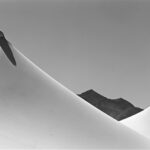
Header Image: Barbara Traub, Twin Peaks, 1994, gelatin silver print. Accession no. 2013-02-022, © Barbara Traub, used with permission
* * * * *
Related Stories
UMBC welcomes Beth Saunders as the new curator and head of Special Collections
Library Gallery displays recent acquisitions in “Depth of Field” exhibition
]]>
UMBC’s photography collection includes more than two million works, including rare and historic prints showcasing a range of formats, processes, genres, and technologies. Among these are the...
https://umbc.edu/stories/depth-of-field-showcases-umbcs-spectacular-photo-collections/
https://my3.my.umbc.edu/api/v0/pixel/news/120264/guest@my.umbc.edu/cbee16dedc52751e6aeaeceae4aa65bb/api/pixel
aok-library-gallery
discovery
photography
UMBC News & Magazine
https://my3.my.umbc.edu/groups/umbc-news-magazine
https://assets1-my.umbc.edu/system/shared/avatars/groups/000/001/943/24435aa6207c452e7bc15cc74b42c7bb/xsmall.png?1748556657
https://assets1-my.umbc.edu/system/shared/avatars/groups/000/001/943/24435aa6207c452e7bc15cc74b42c7bb/original.png?1748556657
https://assets2-my.umbc.edu/system/shared/avatars/groups/000/001/943/24435aa6207c452e7bc15cc74b42c7bb/xxlarge.png?1748556657
https://assets2-my.umbc.edu/system/shared/avatars/groups/000/001/943/24435aa6207c452e7bc15cc74b42c7bb/xlarge.png?1748556657
https://assets3-my.umbc.edu/system/shared/avatars/groups/000/001/943/24435aa6207c452e7bc15cc74b42c7bb/large.png?1748556657
https://assets1-my.umbc.edu/system/shared/avatars/groups/000/001/943/24435aa6207c452e7bc15cc74b42c7bb/medium.png?1748556657
https://assets2-my.umbc.edu/system/shared/avatars/groups/000/001/943/24435aa6207c452e7bc15cc74b42c7bb/small.png?1748556657
https://assets1-my.umbc.edu/system/shared/avatars/groups/000/001/943/24435aa6207c452e7bc15cc74b42c7bb/xsmall.png?1748556657
https://assets2-my.umbc.edu/system/shared/avatars/groups/000/001/943/24435aa6207c452e7bc15cc74b42c7bb/xxsmall.png?1748556657
UMBC News & Magazine
0
0
false
Fri, 30 Nov 2018 17:20:02 -0500
Remembering Joseph Kohl ’87 and his Baltimore time capsule
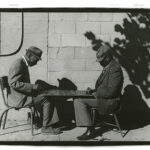
 “Untitled” (PP284 Box 2, Photo 2) Undated / Photo by Joseph Kohl / Courtesy of the Maryland Historical Society. Header image: “Untitled” (PP284 Box 4, Folder 25) Undated / Photo by Joseph Kohl / Courtesy of the Maryland Historical Society.
Maryland Historical Society’s current exhibition Unscripted Moments: The Life and Photography of Joseph Kohl celebrates “one of Baltimore’s most distinctive and forward-looking photographers,” according to Joe Tropea ’06, history, ’08 M.A. history, Curator of Films & Photographs and Digital Projects Coordinator at MDHS.
The exhibition, on display at MDHS in Baltimore through April 29, features a small sample of the vast body of work Joseph Kohl ’87, visual & performing arts photography, left behind when he tragically died in 2002 at the age of 44 from leukemia. A prolific news and fine arts photographer, Kohl covered Baltimore for a diverse collection of publications in the 1980s and ‘90s – City Paper, Afro-American, Village Voice, Easy Rider, Catholic Review, and Mid-Atlantic Gay Life – capturing spontaneous moments, whether or not he was on assignment. Outside of his journalism beat, he documented Baltimore’s alternative culture including “the city’s erotic sub communities, small venue-rock concerts, and queer nightlife” as the Maryland Historical Society notes in a statement accompanying the exhibition.
Many pictures in the exhibition, mostly in black and white, embody the gritty, quirky, working-class nature of Baltimore, as well as the politics and local celebrities of the age – from former mayor Kurt Schmoke to filmmaker John Waters. Though some seem surprisingly provocative material for a Maryland Historical Society show, they are an important record, says Tropea, calling them “a time capsule from the end of the last century.”
A short documentary film by Tropea (preview below) in also included in the exhibit, weaving an engaging narrative about Kohl and his work through interviews with friends, family, and associates, and additional photographs of Kohl’s not included in the exhibition.
[vimeo 238949279 w=640 h=360]
The MDHS holds approximately 55,000 of Kohl’s negatives and prints, which were acquired in 2003 after a posthumous retrospective exhibition at School 33 Art Center organized by Linda Clark and her late husband, professional photographer Carl Clark. In 2015, MDHS began an enormous undertaking to clean, inventory, rehouse, and conserve the entire collection led. Volunteers from UMBC, Towson and Johns Hopkins were instrumental to efforts to sort and organize the collection and to create the finders guide, said Tropea.
Andrew Holter ’12, English, history, ’17 M.A. history, was one of the volunteers involved in those preservation efforts. In a moving piece about Kohl and his work for the Baltimore Beat, he wrote:
In a place as segregated and traumatized by its own self as Baltimore in 2017, Kohl’s photos leave behind a vision of what it can be to live in a city—even what it might look like in the earliest stages of building what Dr. King called “the beloved community.” Everyone counts in Kohl’s Baltimore. His approach to the city followed the logic of what bell hooks meant when she wrote: “Making the choice to look at images or read about people different from oneself, irrespective of whether those images are positive or negative, opens up the possibility that positive curiosity will be awakened and lead to positive contact.”
 Kurt Schmoke, “Untitled” (PP284 Box 3, Folder 2) Undated / Photo by Joseph Kohl / Courtesy of the Maryland Historical Society.
Most of the images are undated and little known about those depicted in the images. This is also the case for most of the images on view in the exhibition, though a few of the photographed have been identified by visitors to the museum.
Though Kohl did not graduate until 1987, he was a fixture of UMBC’s photo department from the early 80s while already active as a photojournalist. Tom Beck, Chief Curator, Retired, Affiliate Associate Professor of Art, remembers having him as a student. “He was a very serious, aspiring photojournalist who was committed with his whole being to a future career in the field…When in class, his camera bag was always close at hand for that moment’s notice when he would be called upon to shoot a subject.” Both Beck and visual arts department program specialist Chris Peregoy ’81, visual and performing arts, M.F.A. ’99, IMDA,also recall that Joe photographed for The Retriever in the early ‘80s. “I knew Joe Kohl fairly well…(he) was a great alum and the photo community lost a talented photographer with his passing in 2002,” said Peregoy.
 “Untitled” (PP284 Box 3, folder 6) Undated / Photo by Joseph Kohl / Courtesy of the Maryland Historical Society.
* * * * *
Unscripted Moments: The Life and Photography of Joseph Kohl will be on display at the Maryland Historical Society at 201 West Monument Street, Baltimore, through April 29. The entire Joseph Kohl Photograph Collection, PP284, will remain at the MDHS in perpetuity.
 Linda Day Clark, “Untitled” (PP284 Box 4, folder 22) Undated / Photo by Joseph Kohl / Courtesy of the Maryland Historical Society.
 “Untitled” (PP284 Box 8, Folder 1, c.1993.) / Photo by Joseph Kohl / Courtesy of the Maryland Historical Society.
 “Untitled” (PP284 Box 5, Folder 4, c.1980.) / Photo by Joseph Kohl / Courtesy of the Maryland Historical Society.
 Ellen Sauerbrey, “Untitled” (PP284 Box 2, Folder 5) Undated / Photo by Joseph Kohl / Courtesy of the Maryland Historical Society.
 Pride Parade in Baltimore, “Untitled” (PP284 Box 33, Group 17, c.2000.) Photo by Joseph Kohl / Courtesy of the Maryland Historical Society.
 March on Washington for Lesbian, Gay, and Bi Equal Rights and Liberation, “Untitled” (PP284 Box 9, Folder 7, April 1993.) Photo by Joseph Kohl / Courtesy of the Maryland Historical Society.
]]>
“Untitled” (PP284 Box 2, Photo 2) Undated / Photo by Joseph Kohl / Courtesy of the Maryland Historical Society. Header image: “Untitled” (PP284 Box 4, Folder 25) Undated / Photo by Joseph Kohl /...
https://umbc.edu/stories/remembering-joseph-kohl-87-and-his-baltimore-time-capsule/
https://my3.my.umbc.edu/api/v0/pixel/news/120512/guest@my.umbc.edu/1711c4353937811f9ad1a3d022247ccf/api/pixel
alumni
joseph-kohl
maryland-historical-society
photography
umbc
UMBC News & Magazine
https://my3.my.umbc.edu/groups/umbc-news-magazine
https://assets1-my.umbc.edu/system/shared/avatars/groups/000/001/943/24435aa6207c452e7bc15cc74b42c7bb/xsmall.png?1748556657
https://assets1-my.umbc.edu/system/shared/avatars/groups/000/001/943/24435aa6207c452e7bc15cc74b42c7bb/original.png?1748556657
https://assets2-my.umbc.edu/system/shared/avatars/groups/000/001/943/24435aa6207c452e7bc15cc74b42c7bb/xxlarge.png?1748556657
https://assets2-my.umbc.edu/system/shared/avatars/groups/000/001/943/24435aa6207c452e7bc15cc74b42c7bb/xlarge.png?1748556657
https://assets3-my.umbc.edu/system/shared/avatars/groups/000/001/943/24435aa6207c452e7bc15cc74b42c7bb/large.png?1748556657
https://assets1-my.umbc.edu/system/shared/avatars/groups/000/001/943/24435aa6207c452e7bc15cc74b42c7bb/medium.png?1748556657
https://assets2-my.umbc.edu/system/shared/avatars/groups/000/001/943/24435aa6207c452e7bc15cc74b42c7bb/small.png?1748556657
https://assets1-my.umbc.edu/system/shared/avatars/groups/000/001/943/24435aa6207c452e7bc15cc74b42c7bb/xsmall.png?1748556657
https://assets2-my.umbc.edu/system/shared/avatars/groups/000/001/943/24435aa6207c452e7bc15cc74b42c7bb/xxsmall.png?1748556657
UMBC News & Magazine
0
0
false
Fri, 23 Mar 2018 01:11:34 -0400
Solitary Refinement
March on Washington for Lesbian, Gay, and Bi Equal Rights and Liberation, “Untitled” (PP284 Box 9, Folder 7, April 1993.) Photo by Joseph Kohl / Courtesy of the Maryland Historical Society.
]]>
“Untitled” (PP284 Box 2, Photo 2) Undated / Photo by Joseph Kohl / Courtesy of the Maryland Historical Society. Header image: “Untitled” (PP284 Box 4, Folder 25) Undated / Photo by Joseph Kohl /...
https://umbc.edu/stories/remembering-joseph-kohl-87-and-his-baltimore-time-capsule/
https://my3.my.umbc.edu/api/v0/pixel/news/120512/guest@my.umbc.edu/1711c4353937811f9ad1a3d022247ccf/api/pixel
alumni
joseph-kohl
maryland-historical-society
photography
umbc
UMBC News & Magazine
https://my3.my.umbc.edu/groups/umbc-news-magazine
https://assets1-my.umbc.edu/system/shared/avatars/groups/000/001/943/24435aa6207c452e7bc15cc74b42c7bb/xsmall.png?1748556657
https://assets1-my.umbc.edu/system/shared/avatars/groups/000/001/943/24435aa6207c452e7bc15cc74b42c7bb/original.png?1748556657
https://assets2-my.umbc.edu/system/shared/avatars/groups/000/001/943/24435aa6207c452e7bc15cc74b42c7bb/xxlarge.png?1748556657
https://assets2-my.umbc.edu/system/shared/avatars/groups/000/001/943/24435aa6207c452e7bc15cc74b42c7bb/xlarge.png?1748556657
https://assets3-my.umbc.edu/system/shared/avatars/groups/000/001/943/24435aa6207c452e7bc15cc74b42c7bb/large.png?1748556657
https://assets1-my.umbc.edu/system/shared/avatars/groups/000/001/943/24435aa6207c452e7bc15cc74b42c7bb/medium.png?1748556657
https://assets2-my.umbc.edu/system/shared/avatars/groups/000/001/943/24435aa6207c452e7bc15cc74b42c7bb/small.png?1748556657
https://assets1-my.umbc.edu/system/shared/avatars/groups/000/001/943/24435aa6207c452e7bc15cc74b42c7bb/xsmall.png?1748556657
https://assets2-my.umbc.edu/system/shared/avatars/groups/000/001/943/24435aa6207c452e7bc15cc74b42c7bb/xxsmall.png?1748556657
UMBC News & Magazine
0
0
false
Fri, 23 Mar 2018 01:11:34 -0400
Solitary Refinement
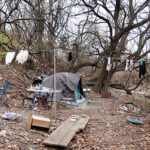
UMBC alumnus Ben Marcin ’80 traveled the world with his camera. But he has found acclaim investigating the often bitter poetry, beauty and truth in local landscapes.
 The photographs of Ben Marcin ’80, economics, are gaining a much wider audience of late. His work has been shown at venues including the Delaware Art Museum, The Center for Fine Art Photography in Ft. Collins, Colo., and at the C. Grimaldis Gallery in Baltimore – where he is currently represented and recently had a solo show this past winter. His photos are also in a number of group shows this summer, including at the Houston Center for Photography (“Photolucida Presents: How One Thing Leads To Another”); Towson University’s Center for the Arts Gallery (“Artscape 2014: Home: Human = Cage: Cockatoo” from July 10 to August 9) and the Griffin Museum of Photography, Boston (“Peter Urban Legacy 20th Annual Juried Exhibition” from July 10 to August 31).
Marcin’s work is also starting to be seized upon by those working in urban planning and writing about the larger forces at work in American culture. Marcin’s photographs have been featured in online galleries at The Paris Review, The Huffington Post, on Slate and in Wired, and twice in recent months on The Atlantic’s “City Lab” website.
The appeal of Marcin’s work to the larger audiences of policymakers and pundits is clear. His photographs engage with great issues of our time – urban blight and gentrification, homelessness, the vast expanses of rural America seemingly disconnected from our wired world – and yet they never slide into didacticism or agit-prop. The power of his art resides in the stark and unflinching eye of the photographer – and the images he captures with his lens.
UMBC Magazine asked Marcin to talk about his own artistic journey and introduce our readers to some of the series of images that are gripping the public imagination.
This is how I got started.

When I graduated from UMBC in 1980, I was 21 years old, absolutely clueless about what I wanted to do and six years away from buying my first camera. After several months of driving delivery trucks and working out of corporate mailrooms, I landed a job at the Social Security Administration (SSA) headquarters a few exits up the beltway from UMBC. I have worked at SSA to this day, the last 28 years in their enormous IT department helping build large computer programs and systems.
At age 27, I bought a small camera to help feed a creative urge that had been stirring for years, ever since my father started bringing home a series of modern art monographs from his job at the Library of Congress. I slowly taught myself how to use the camera from the ground up. In time, I learned how to take a good picture.
Eventually, I decided that it wouldn’t be a bad idea to start showing some of my photographs. In 1990, I approached the Knight Gomez Gallery in Baltimore. I nervously introduced myself to a very sophisticated young lady who turned out to be the gallery’s curator. Her name was Lynn O’Sullivan and I showed her a page of Kodachrome slides. She didn’t appear overly impressed with this first effort but she didn’t throw me out the door, either. Over time, she helped me with the process of putting together a small portfolio of prints and taught me how to best present them. Eventually she invited me to take part in a three-person photography exhibit at the gallery. That was in 1992 and it was the first of three shows I ended up having there. In 1997, I married Lynn and we have been together ever since.
Throughout my 30s and 40s, I travelled around the world taking photographs. I went through Central and South America, India, Turkey, most of Europe. Shooting locally had become passé for me; I thought I had “seen” everything of interest around Baltimore. It got to the point that between trips my camera would sit on a shelf, largely untouched, until it was time to head off on the next international adventure.
An interesting thing happened as I got older. I started to notice that there were a number of very intriguing things to photograph closer to home. I became more involved in the idea behind a series of photographs rather than the photographs as the endpoint. I shed some of the bright colors and exotic tones of my earlier work. A sort of coming home began to take place as I took a more thoughtful look at my immediate surroundings. In this light, I started several photo essays about some of the more interesting places where people live in and around Baltimore. The following describes some of these projects in more detail.
Last House Standing
One of the architectural quirks of certain cities on the eastern seaboard of the United States is the solo row house. Standing alone, in some of the worst neighborhoods, these 19th century structures were once attached to similar row houses that made up entire city blocks. Time and major demographic changes have resulted in the decay and  demolition of many such blocks of row houses. Occasionally, one house is spared – literally cut off from its neighbors and left to the elements with whatever time it has left.
My interest in these solitary buildings is not only in their ghostly beauty but in their odd, almost defiant, placement in the urban landscape. Often three stories high, they were clearly not designed to stand alone like this. Many details that might not be noticed in a homogenous row of 20 attached row houses become apparent when everything else has been torn down. And then there’s the lingering question of why a single row house was allowed to remain upright. Still retaining traces of its former glory, the last house standing is often still occupied.
A House Apart
While working on “Last House Standing,” I was also documenting the many abandoned homesteads in the rural areas around Baltimore that are now becoming planned communities, mega-malls, industrial parks and other forms of urban sprawl. Unlike the row houses, which were originally lived in by many people at one time, the abandoned houses are much more isolated and have the appearance of having been built on the frontier.
The Camps
 In 2011, I photographed the homeless camps in and around Baltimore. I do a lot of hiking in the area. As development has encroached upon whatever woods are left in the suburbs and industrial parks of Baltimore, I found myself practically stepping into a number of homeless camps that were carefully hidden among strips of trees or bushes running along highways or behind shopping centers. I became fascinated not only at the effort that went into remaining hidden in plain sight but also at the creativity involved. No two camps were ever alike. They ran the gamut from being completely exposed under bridges or fallen trees to semi-massive structures carefully constructed out of milk crates or wooden doors.
More than one resident told me that living in a tent was a personal choice – yet it seemed to me that there was often no other choice. Even more than the abandoned houses that I’ve documented, the homeless camps directly allude to the life trajectories of their owners. Not one of the camps remains today.
]]>
UMBC alumnus Ben Marcin ’80 traveled the world with his camera. But he has found acclaim investigating the often bitter poetry, beauty and truth in local landscapes. The photographs of Ben...
https://umbc.edu/stories/solitary-refinement-2/
https://my3.my.umbc.edu/api/v0/pixel/news/122458/guest@my.umbc.edu/b628cfee12d3e812bbc1bc3214303c03/api/pixel
abandoned
alumni
architecture
baltimore
economics
gentrification
marcin
photography
ubran-planning
umbc
university-of-maryland-baltimore-county
urban-blight
UMBC News & Magazine
https://my3.my.umbc.edu/groups/umbc-news-magazine
https://assets1-my.umbc.edu/system/shared/avatars/groups/000/001/943/24435aa6207c452e7bc15cc74b42c7bb/xsmall.png?1748556657
https://assets1-my.umbc.edu/system/shared/avatars/groups/000/001/943/24435aa6207c452e7bc15cc74b42c7bb/original.png?1748556657
https://assets2-my.umbc.edu/system/shared/avatars/groups/000/001/943/24435aa6207c452e7bc15cc74b42c7bb/xxlarge.png?1748556657
https://assets2-my.umbc.edu/system/shared/avatars/groups/000/001/943/24435aa6207c452e7bc15cc74b42c7bb/xlarge.png?1748556657
https://assets3-my.umbc.edu/system/shared/avatars/groups/000/001/943/24435aa6207c452e7bc15cc74b42c7bb/large.png?1748556657
https://assets1-my.umbc.edu/system/shared/avatars/groups/000/001/943/24435aa6207c452e7bc15cc74b42c7bb/medium.png?1748556657
https://assets2-my.umbc.edu/system/shared/avatars/groups/000/001/943/24435aa6207c452e7bc15cc74b42c7bb/small.png?1748556657
https://assets1-my.umbc.edu/system/shared/avatars/groups/000/001/943/24435aa6207c452e7bc15cc74b42c7bb/xsmall.png?1748556657
https://assets2-my.umbc.edu/system/shared/avatars/groups/000/001/943/24435aa6207c452e7bc15cc74b42c7bb/xxsmall.png?1748556657
UMBC News & Magazine
0
0
false
Tue, 15 Jul 2014 15:00:33 -0400
Career Q&A: Marlayna Demond ’11, Visual Arts, Photographer

Every so often, we’ll chat with an alum about what they do and how they got there. Today we’re talking with photographer Marlayna Demond ’11, Visual Arts, about what it’s like to run her own photography business and work for UMBC at the same time.
Name: Marlayna Demond
Job Title: Photographer
Employer: self and UMBC
Scholarships Received at UMBC: Linehan Scholar
 Q: Tell us a little bit about how you wound up at UMBC.
I knew I wanted to go somewhere that had a strong art program, but I also knew I didn’t want to go to an art school – I didn’t want to give up the chance to take classes in other departments. I looked at several universities in Maryland, Delaware and Pennsylvania but felt the strongest pull to UMBC, in part because I was awarded the Linehan Scholarship. But I also felt like the size and atmosphere of this university fit me better than any others. I remember the team [of people] helping out with campus tours being really excited, so that helped my decision, too.
As far as my background, my mom is an art and photography teacher at a high school where I grew up, so photography was a part of my life since I was a kid following her around in the darkroom.
Q: What’s it like to run your own photography business?
Running your own business – especially at the beginning – is really hard. But once things get going the best part of the business is word of mouth because it means my clients are happy. The number one way I get new clients is by previous clients sharing their experience with their friends and when I get new clients through recommendations that makes me super happy! My least favorite part is marketing myself, especially in a new [to me] area. I moved from Harford County to Howard County so building up local clients is tough, but it’s finally starting to happen after about a year.
I think UMBC prepared me [to run my own business] with a great network of people and with classes that taught me to think creatively.
Q: You’re also the staff photographer here at UMBC. What’s it like to be back on campus, working at the place you went to school?
I really enjoy working here. I feel comfortable on campus because it’s familiar and I like that I run into some of my professors and friends that are still here. It’s neat to see the campus grow and change – and to stay involved in a way that I might not have otherwise.
 Q: Is there a particular class or professor who really inspired you?
All of my photography professors are very approachable. Calla Thompson’s digital darkroom got me interested in digital manipulation and inspired my senior project series. Being involved with the Honors College and Linehan Scholars program also exposed me to a lot of ideas and different art, which are good places to find inspiration!
Q: What advice would you give to students considering UMBC?
Come here! That’s honestly my first thought. It’s a great school – the perfect size for not getting lost in the crowd. Professors are willing to help you and get to know you, but you also have to make an effort and give them a reason to remember you. Take full advantage of your college experience – it’s a great place to make connections and learn from all kinds of people.
Q: What is your favorite part of UMBC?
My proudest memory was completing my senior project and hanging my series in the CADVC gallery as part of the senior show. I spent a lot of time putting it together so it was a great experience to show my work to friends and family. I also have great memories of playing ultimate frisbee. I joined the ultimate frisbee team my senior year and only wish I’d done so sooner because I met a lot of awesome people that I’m still friends with. Everyone says to get involved at school, and I agree – get involved as soon as possible! My other piece of advice is to have fun. There’s no other environment like a university – maybe that’s why I’m still at UMBC!
Check out more of Marlayna’s work on her website.
]]>
Every so often, we’ll chat with an alum about what they do and how they got there. Today we’re talking with photographer Marlayna Demond ’11, Visual Arts, about what it’s like to run her own...
https://umbc.edu/stories/career-qa-marlayna-demond-11-visual-arts-photographer/
https://my3.my.umbc.edu/api/v0/pixel/news/123043/guest@my.umbc.edu/295cc9310b1d209a54bfef5caec1cf4c/api/pixel
alumni
alumni-association
linehan-scholar
marlayna-demond
photography
umbc
umbc-alumni
university-of-maryland-baltimore-county
visual-arts
UMBC News & Magazine
https://my3.my.umbc.edu/groups/umbc-news-magazine
https://assets1-my.umbc.edu/system/shared/avatars/groups/000/001/943/24435aa6207c452e7bc15cc74b42c7bb/xsmall.png?1748556657
https://assets1-my.umbc.edu/system/shared/avatars/groups/000/001/943/24435aa6207c452e7bc15cc74b42c7bb/original.png?1748556657
https://assets2-my.umbc.edu/system/shared/avatars/groups/000/001/943/24435aa6207c452e7bc15cc74b42c7bb/xxlarge.png?1748556657
https://assets2-my.umbc.edu/system/shared/avatars/groups/000/001/943/24435aa6207c452e7bc15cc74b42c7bb/xlarge.png?1748556657
https://assets3-my.umbc.edu/system/shared/avatars/groups/000/001/943/24435aa6207c452e7bc15cc74b42c7bb/large.png?1748556657
https://assets1-my.umbc.edu/system/shared/avatars/groups/000/001/943/24435aa6207c452e7bc15cc74b42c7bb/medium.png?1748556657
https://assets2-my.umbc.edu/system/shared/avatars/groups/000/001/943/24435aa6207c452e7bc15cc74b42c7bb/small.png?1748556657
https://assets1-my.umbc.edu/system/shared/avatars/groups/000/001/943/24435aa6207c452e7bc15cc74b42c7bb/xsmall.png?1748556657
https://assets2-my.umbc.edu/system/shared/avatars/groups/000/001/943/24435aa6207c452e7bc15cc74b42c7bb/xxsmall.png?1748556657
UMBC News & Magazine
0
0
false
Wed, 02 Oct 2013 19:26:10 -0400


