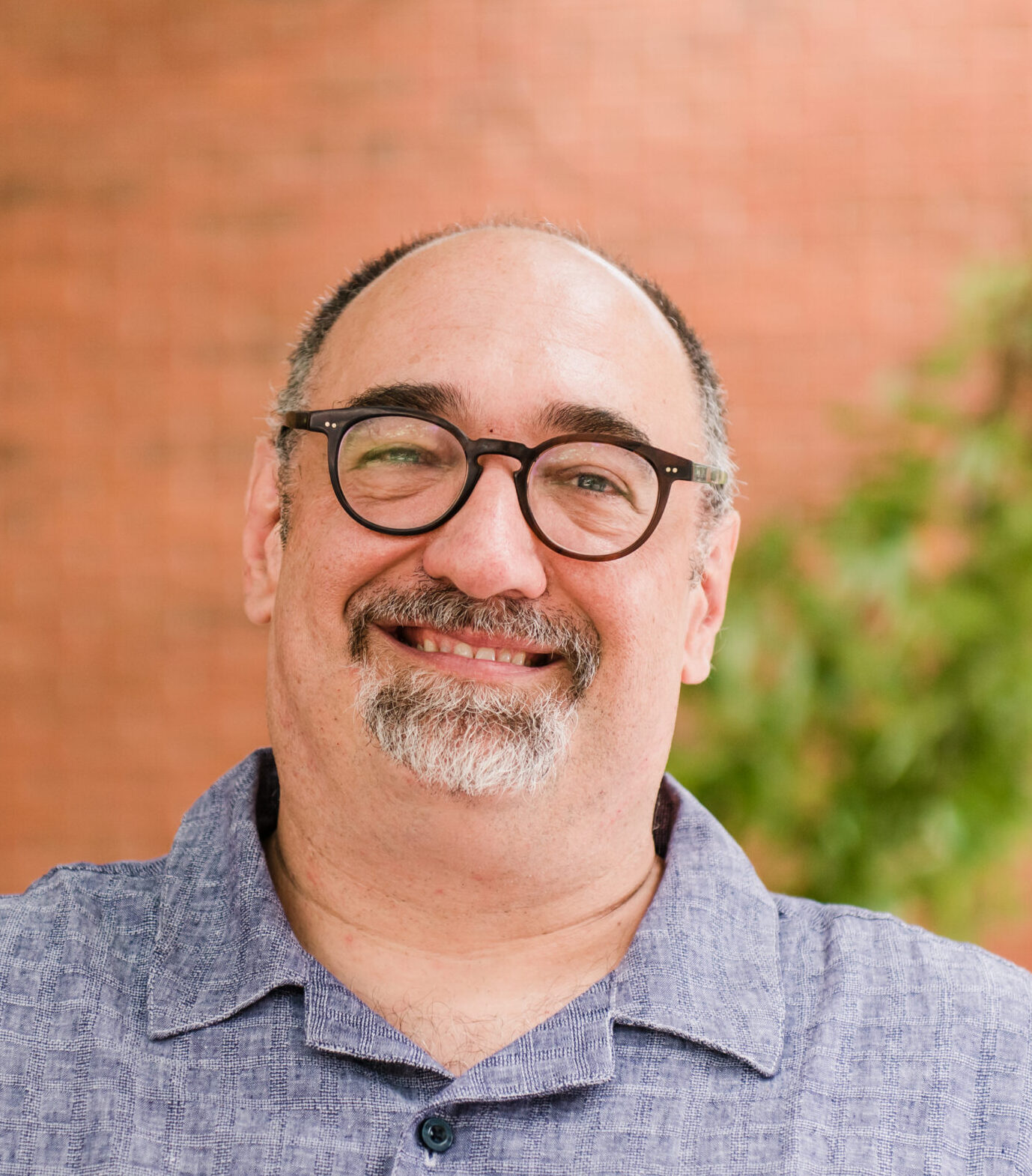
Calling our better angels: Computing for Social Good Award launched by alumnus Akshay Java at Google honors work prioritizing people’s well-being
 Akshay Java (Photo courtesy of Java)
Akshay Java, M.S. ’03, Ph.D. ’08, computer science, is a seasoned technology leader whose career spans key roles across the tech industry, including research at Microsoft, co-founding a successful start-up, and leading critical user protection efforts at Google. In his roles at Google across Egregious Harms Protections and Responsibility AI Engineering, he works daily on the front lines of digital safety, addressing both the serious risks and the transformative potential of modern computing technology.
“Technology by itself is not necessarily good or bad, what matters is how we choose to use it,” Java says. “But AI is moving so quickly now—community and technical leaders need to be engaged, making sure the good use cases can be advanced rapidly while preventing the bad from happening.”
It was in this spirit that Java made a generous donation to UMBC to launch the Computing for Social Good Award, to be given annually to one or more students in the College of Engineering and Information Technology (COEIT) who have conducted substantial research with the goal of harnessing technology to make positive social change. The awards are funded by an endowment, which is open to contributions from the community. In May of this year, two students—Rishav Gupta, a Ph.D. student in computer science, and ASM Mobarak Hossain, M.S. ’26, information systems—received the inaugural awards for their work in affordable health monitoring and wheelchair accessibility, respectively.
“We are tremendously grateful to Akshay Java for establishing the Computing for Social Good Award in COEIT,” says Dean Jeanne van Briesen. “His commitment to supporting research that combines technical excellence with meaningful societal impact reflects values that are central to our college. This award celebrates the creativity and dedication of our student researchers and reinforces our belief that engineering and computing can be powerful forces for positive change.”
Monitoring cardiovascular health and improving wheelchair accessibility
Both recipients of the 2026 awards talked about how meaningful it was to them to apply their technical expertise to work that aims to improve people’s lives.
Gupta is working in the lab of his advisor Dong Li on tools to make blood pressure monitoring affordable and accessible using only a commodity smartphone. Hossain worked on a project with advisor Md Osman Gani to develop MyPath, a Google Maps–style app that uses AI, remote sensing measurements, and crowd-sourced data to guide wheelchair users to accessible routes.
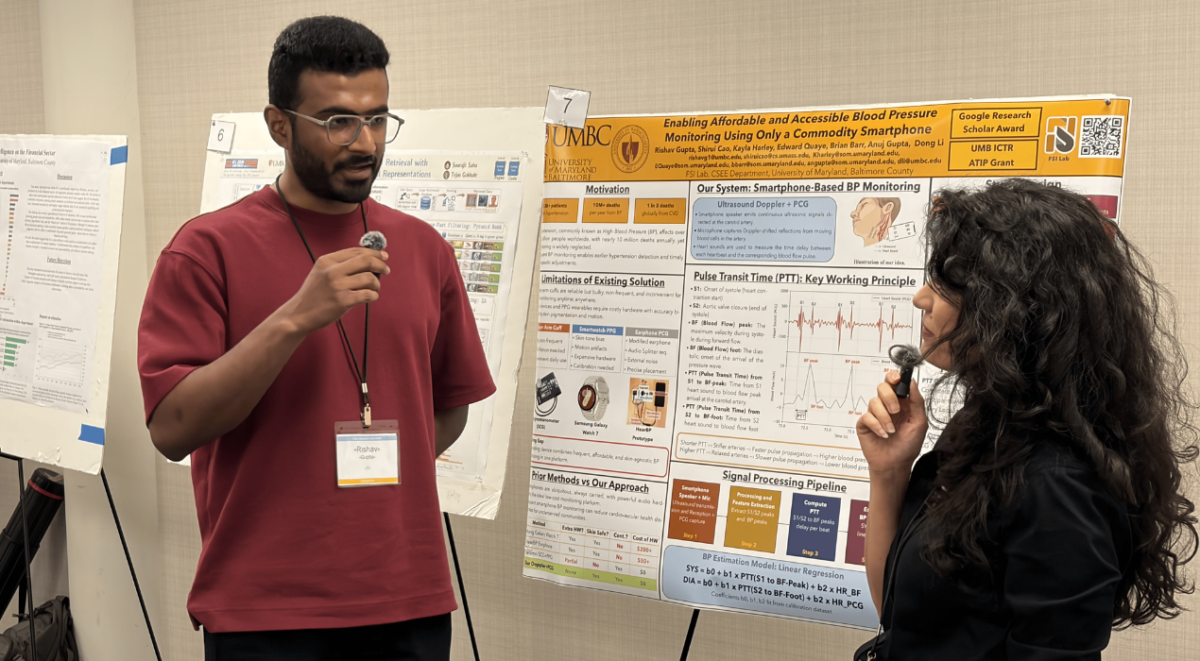 Ph.D. student Rishav Gupta presents at UMBC COEIT Research Day 2026 in front of his poster, “Enabling Affordable and Accessible Blood Pressure Monitoring Using Only a Commodity Smartphone.” (Photo courtesy of Gupta)
“Receiving the COEIT Computing for Social Good Award felt meaningful in a way I didn’t expect,” Gupta says. “I came to UMBC from a career in industry because I wanted my work to matter beyond a product. Being recognized for the research’s social impact felt like confirmation that I’d chosen the right path.”
“Developing MyPath required countless hours of hard work, continuous refinement, and a deep commitment to addressing a meaningful community need,” Hossain says. “Seeing that work recognized by COEIT was incredibly exciting and humbling—it gave me a strong sense of pride in what we’ve built and renewed enthusiasm for creating tools that deliver genuine social value.”
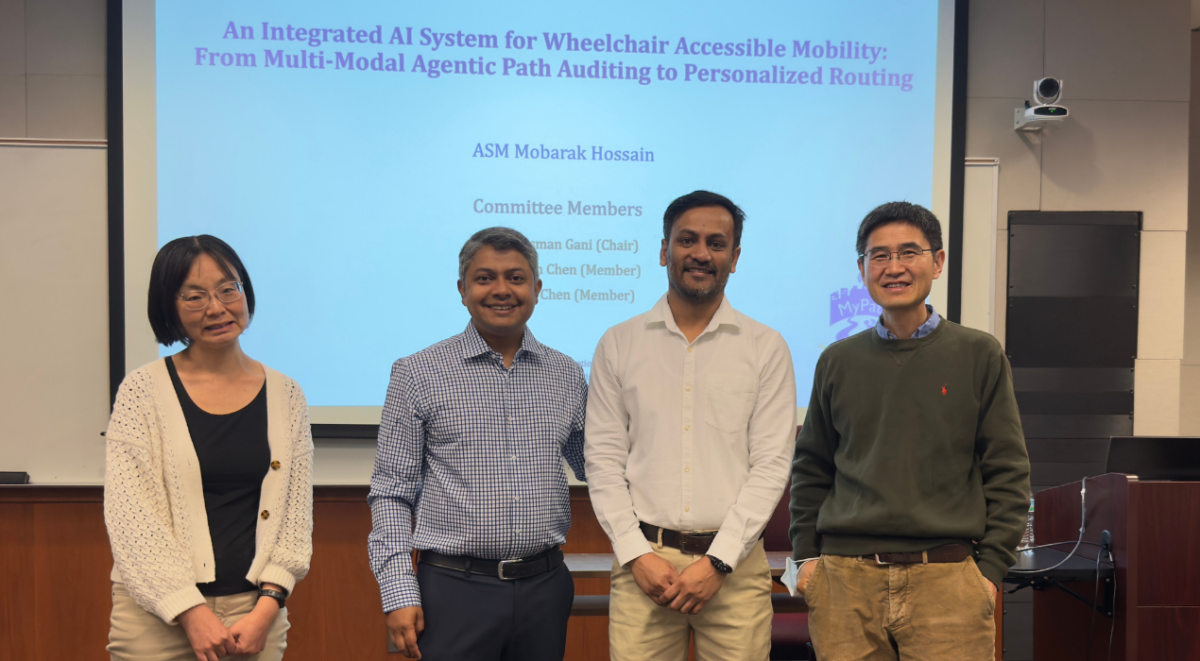 Hossain after his master’s thesis defense at UMBC. From left to right: Karen Chen, Md Osman Gani, Hossain, and Zhiuyan Chen. (Photo courtesy of Hossain)
Seeing the students and the work they are doing has been the most meaningful part of the award process, Java says. “I’m so proud of the students for what they’ve achieved. And I hope this award inspires more students to apply their skills in this space of social good.”
]]>
Akshay Java (Photo courtesy of Java) Akshay Java, M.S. ’03, Ph.D. ’08, computer science, is a seasoned technology leader whose career spans key roles across the tech industry, including...
https://umbc.edu/stories/computing-for-social-good-award/
https://my3.my.umbc.edu/api/v0/pixel/news/162247/guest@my.umbc.edu/b8c62600208724700159c05fd6f43321/api/pixel
alumni
coeit
csee
graduate-research
impact
is
research
science-and-tech
stories
story
UMBC News & Magazine
https://my3.my.umbc.edu/groups/umbc-news-magazine
https://assets1-my.umbc.edu/system/shared/avatars/groups/000/001/943/24435aa6207c452e7bc15cc74b42c7bb/xsmall.png?1748556657
https://assets1-my.umbc.edu/system/shared/avatars/groups/000/001/943/24435aa6207c452e7bc15cc74b42c7bb/original.png?1748556657
https://assets2-my.umbc.edu/system/shared/avatars/groups/000/001/943/24435aa6207c452e7bc15cc74b42c7bb/xxlarge.png?1748556657
https://assets2-my.umbc.edu/system/shared/avatars/groups/000/001/943/24435aa6207c452e7bc15cc74b42c7bb/xlarge.png?1748556657
https://assets3-my.umbc.edu/system/shared/avatars/groups/000/001/943/24435aa6207c452e7bc15cc74b42c7bb/large.png?1748556657
https://assets1-my.umbc.edu/system/shared/avatars/groups/000/001/943/24435aa6207c452e7bc15cc74b42c7bb/medium.png?1748556657
https://assets2-my.umbc.edu/system/shared/avatars/groups/000/001/943/24435aa6207c452e7bc15cc74b42c7bb/small.png?1748556657
https://assets1-my.umbc.edu/system/shared/avatars/groups/000/001/943/24435aa6207c452e7bc15cc74b42c7bb/xsmall.png?1748556657
https://assets2-my.umbc.edu/system/shared/avatars/groups/000/001/943/24435aa6207c452e7bc15cc74b42c7bb/xxsmall.png?1748556657
UMBC News & Magazine
0
0
false
Tue, 01 Sep 2026 11:32:45 -0400
Hands-on science, lasting confidence: Student researchers impress at Summer Undergraduate Research Fest
Izabella Maria Marzano, a senior biological sciences major who transferred to UMBC from Anne Arundel Community College, was one of more than 120 undergraduate and high school student presenters who packed the University Center Ballroom on August 5 for UMBC’s 29th annual Summer Undergraduate Research Fest (SURF). Marzano was presenting work she completed with Diana Elizondo, assistant professor of biological sciences, on certain enzymes involved in metabolic dysfunction resulting from a poor diet. The experience had been transformative.
“In the short time I’ve been here, Dr. Elizondo has shown more faith in what I can achieve and given me more confidence than anyone else ever has, and I’m incredibly grateful,” Marzano says. She was one of four undergraduates from Elizondo’s research group who presented their summer work at SURF, which included two poster sessions and six short oral presentations.
Marzano joined the lab after taking Elizondo’s cell biology course, drawn to the group by the far-reaching impact of diabetes research, Elizondo’s approachability, and her desire to gain research experience to support her goal of becoming an orthodontist. In addition to Elizondo, Marzano says graduate students Marveline Akinola and Benjamin Cole have supported her growth.
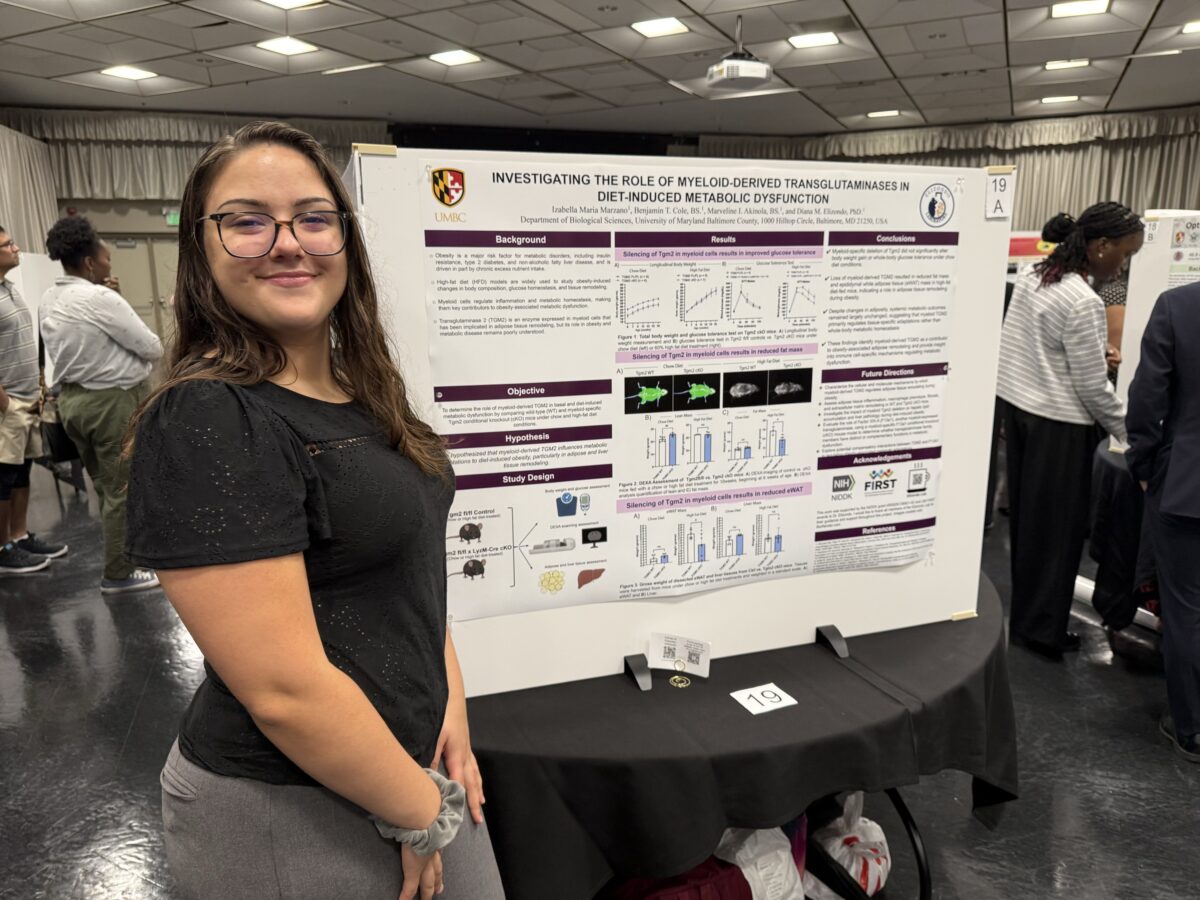
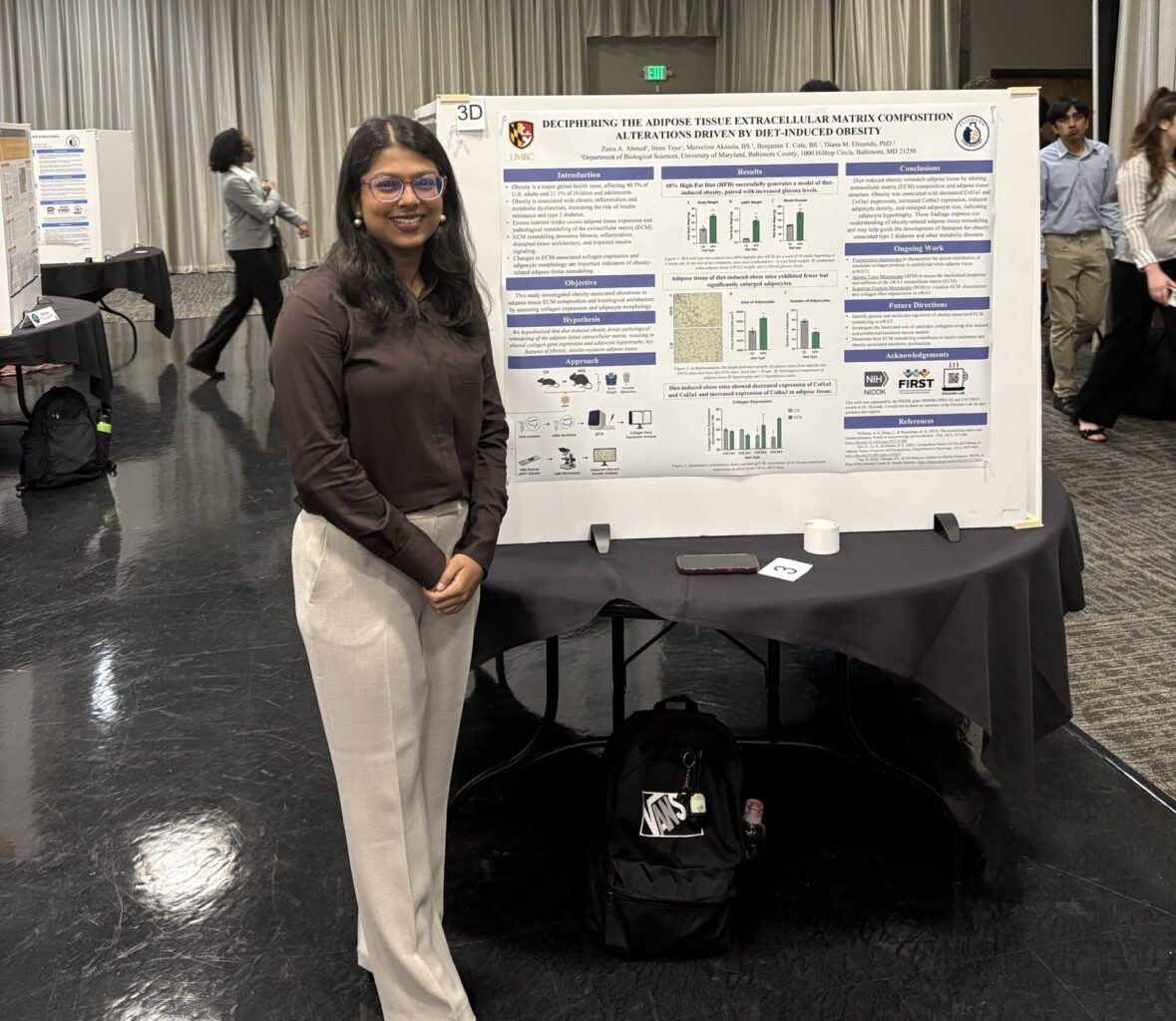 Izabella Marzano (left) and Zaira Ahmed (right) have steadily gained skills and confidence as scientists with the support of their research mentor, Diana Elizondo. Presenting at SURF was an important chance to share their work publicly. (Photos by Diana Elizondo)
Supported independence
Across the room, junior biochemistry and molecular biology major Zaira Ahmed, who began at UMBC this spring after transferring from Prince George’s Community College (PGCC), presented findings on how diet-induced obesity alters the composition of fat tissue’s extracellular matrix—a complex network of proteins, sugars, and other molecules surrounding cells. Ahmed first conducted research at PGCC, and she sought out Elizondo’s lab after taking the same cell biology course as Marzano, motivated in part by family members living with diabetes.
“Dr. Elizondo has been an amazing mentor. She explains everything so clearly and has been hands-on in teaching me different laboratory techniques,” Ahmed says. “But then once she sees I’ve got it, she lets me move forward independently.”
Irene Teye, a junior biological sciences major who started in Elizondo’s lab in January 2025, focused on the three-dimensional structural changes that obesity drives in the extracellular matrix. She worked with Tagide deCarvalho, manager of the Keith R. Porter Imaging Facility at UMBC, to generate and digitally analyze microscopy images of the matrix.
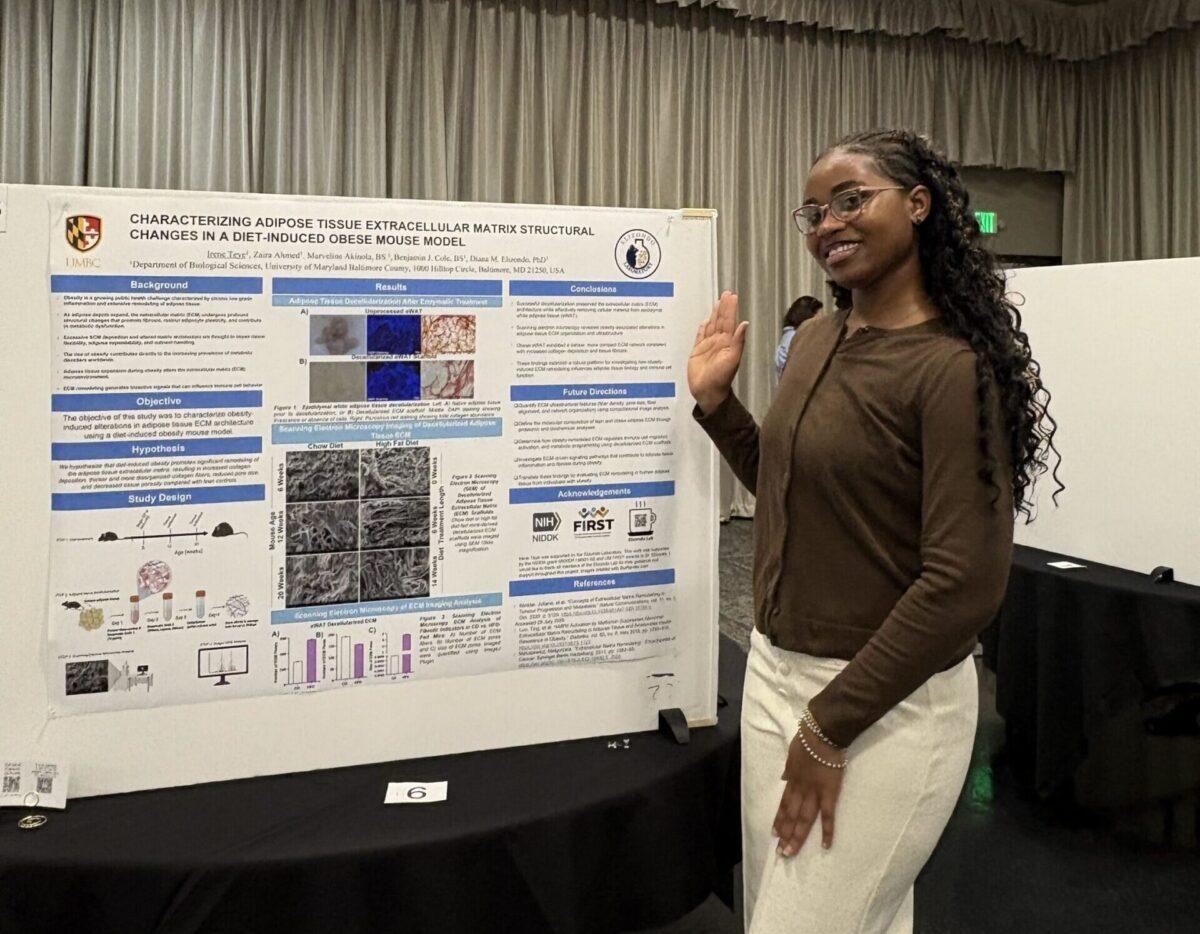
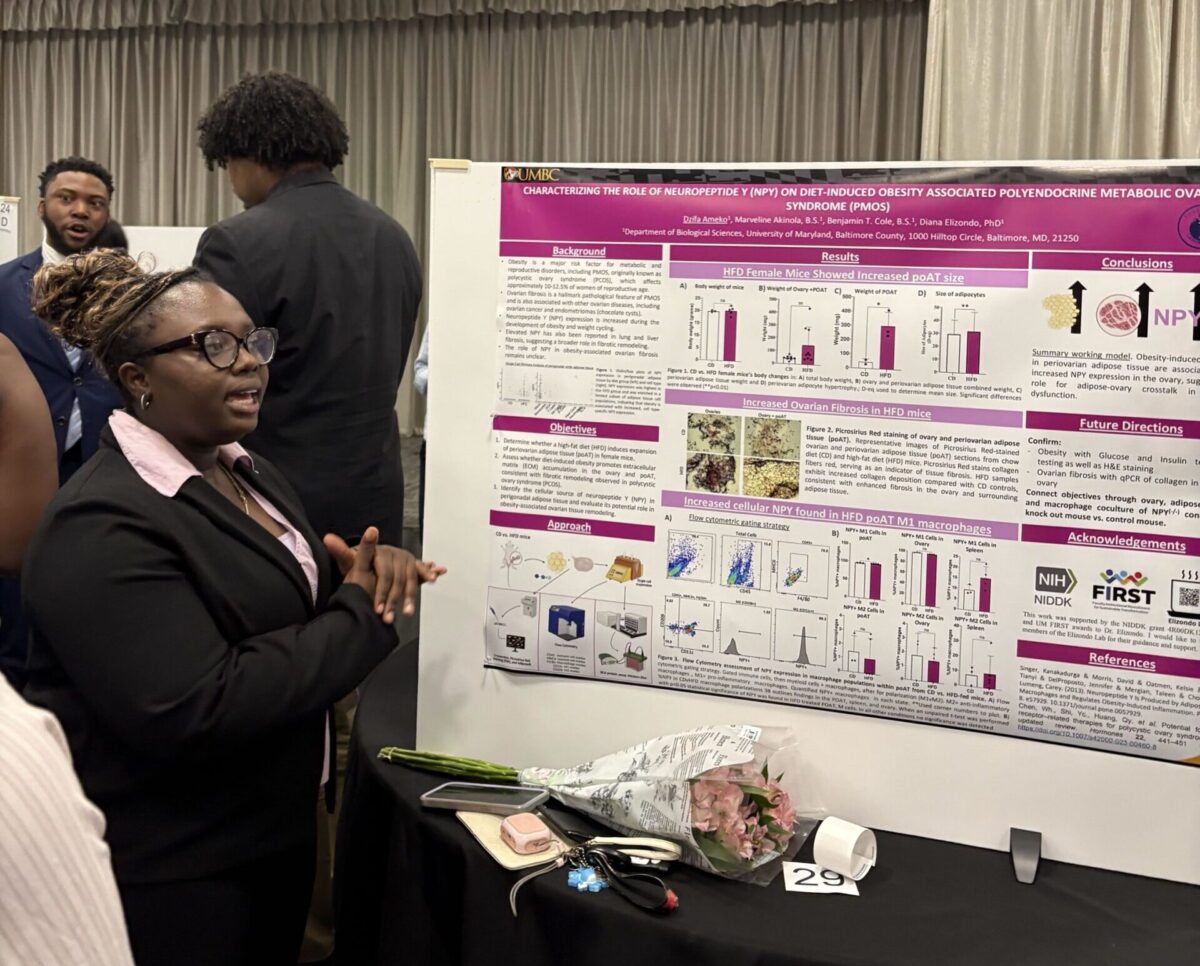 Irene Teye (left) loves working in Diana Elizondo’s research group, for both the sense of accomplishment she experiences doing the science and the closeness of the relationships she’s formed. Dzifa Ameko (right) is passionate about her research with Elizondo for its potential impact on women worldwide. (Photos by Diana Elizondo)
“It took three weeks to analyze the microscopy data to get just two images for my research poster, but it felt like such an accomplishment when I finished,” Teye says. She’s found a home in the Elizondo group, sharing that given how close the members are, “You’d think we’re all related.”
Dzifa Ameko, a junior biological sciences major, began with Elizondo in March 2025 after another faculty member recommended the lab based on Ameko’s interests. Long intrigued by endocrinology and gynecology, she investigated the role of neuropeptide Y, a small signaling molecule released by neurons, in an understudied hormonal and metabolic disorder that affects up to 170 million women worldwide.
“Dr. Elizondo’s door is always open,” Ameko said. “I can also always send her a Slack message and she is so responsive, whether it’s about research or a personal challenge.”
Students at the heart of research
Elizondo, who joined the UMBC faculty in January 2025, sees supporting student researchers as the heart of her work. “One of the most rewarding parts of starting my lab has been watching these students grow in confidence and independence,” she said. “Many of them joined with little or no prior research experience, and it has been incredibly exciting to see them develop into scientists who can think critically, troubleshoot experiments, and communicate their work so effectively. I strongly believe that the best way to learn science is by doing science. My goal is to create an environment where students are genuine contributors to the research, not just assistants.”
 Ben Bazarsuren, a senior mechanical engineering major, was one of six students who gave five-minute “lightning talks” to kick off SURF 2026. (Melissa Penley Cormier, M.F.A. ’17/UMBC)
SURF gave those contributions a public stage. Outgoing dean of the College of Natural and Mathematical Sciences, William R. LaCourse, welcomed participants to the event, highlighting the mix of student researchers from UMBC, regional community colleges, and other institutions. “SURF is one of the highlights of summer each year, because it celebrates the curiosity, perseverance, and excellence of our students and the faculty who guide them,” he said.
For transfer students like Marzano and Ahmed, and for first-time researchers across the university, the combination of hands-on projects, responsive mentoring, and a forum like SURF turns their motivation and potential into tangible results.
“You are ending this summer more knowledgeable, more experienced, more skilled, and a better scientist. Remember that the full benefits of your research may never be known to you. Science is not for those who seek glory—it’s not for me today, it’s for others tomorrow,” LaCourse reflected in his opening remarks. “Your spirit is an inspiration to us all. We hope that UMBC will always be a part of you.”
]]>
Izabella Maria Marzano, a senior biological sciences major who transferred to UMBC from Anne Arundel Community College, was one of more than 120 undergraduate and high school student presenters...
https://umbc.edu/stories/summer-undergraduate-research-fest-2026/
https://my3.my.umbc.edu/api/v0/pixel/news/161750/guest@my.umbc.edu/c89f30e2171cc66e40795d964d59e02f/api/pixel
biology
cnms
coeit
meche
research
science-and-tech
stories
story
transfer-students
undergraduate-research
UMBC News & Magazine
https://my3.my.umbc.edu/groups/umbc-news-magazine
https://assets1-my.umbc.edu/system/shared/avatars/groups/000/001/943/24435aa6207c452e7bc15cc74b42c7bb/xsmall.png?1748556657
https://assets1-my.umbc.edu/system/shared/avatars/groups/000/001/943/24435aa6207c452e7bc15cc74b42c7bb/original.png?1748556657
https://assets2-my.umbc.edu/system/shared/avatars/groups/000/001/943/24435aa6207c452e7bc15cc74b42c7bb/xxlarge.png?1748556657
https://assets2-my.umbc.edu/system/shared/avatars/groups/000/001/943/24435aa6207c452e7bc15cc74b42c7bb/xlarge.png?1748556657
https://assets3-my.umbc.edu/system/shared/avatars/groups/000/001/943/24435aa6207c452e7bc15cc74b42c7bb/large.png?1748556657
https://assets1-my.umbc.edu/system/shared/avatars/groups/000/001/943/24435aa6207c452e7bc15cc74b42c7bb/medium.png?1748556657
https://assets2-my.umbc.edu/system/shared/avatars/groups/000/001/943/24435aa6207c452e7bc15cc74b42c7bb/small.png?1748556657
https://assets1-my.umbc.edu/system/shared/avatars/groups/000/001/943/24435aa6207c452e7bc15cc74b42c7bb/xsmall.png?1748556657
https://assets2-my.umbc.edu/system/shared/avatars/groups/000/001/943/24435aa6207c452e7bc15cc74b42c7bb/xxsmall.png?1748556657
UMBC News & Magazine
0
0
false
Wed, 19 Aug 2026 11:48:37 -0400
Wed, 19 Aug 2026 11:48:37 -0400
Could a smartphone take the place of expensive medical equipment? Dong Li investigates how to make affordable health monitoring accessible
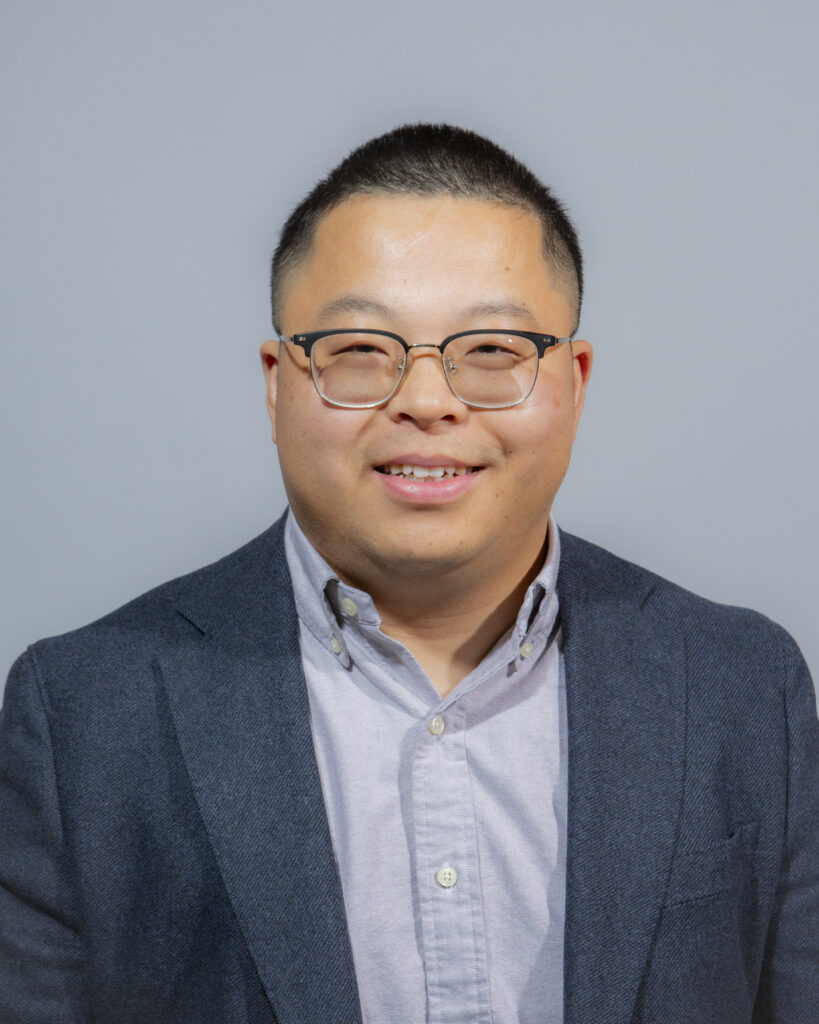 Dong Li (Photo courtesy of Li)
A common saying is “Health is wealth.” Its meaning—that good health gives people the vitality to succeed in life—is found in stories and phrases across cultures and times. Dong Li, an assistant professor in the Department of Computer Science and Electrical Engineering, has long nurtured an interest in helping people stay in good health, from his early childhood interest in becoming a doctor to his current research focusing on developing cost-effective and widely accessible health monitoring technologies.
As the founder and director of the Future Sensing and Interaction Lab, Li studies how affordable devices, such as smartphones and watches, can monitor general health indicators, vital signs, and physical activities. Li also explores how to build innovative computer-human interfaces to deliver an intuitive user experience. His goal is to use the advanced sensing technologies on many smart devices to help people improve their well-being.
“I am a tech believer,” Li says. “Technology has enormous potential to make change, and that’s why I have devoted my efforts and my time to try to develop applications of technology that benefit society.”
Li shares here about his work, its challenges, and his hopes for a world where healthcare is both affordable and accessible.
Q: What are your main areas of research?
A: My main area of research is what we usually call mobile health, or mHealth. The goal is to make health intelligence more accessible by using everyday devices that people already have, such as smartphones, earphones, smartwatches, and even smart rings.
For example, in several projects in my lab, we’re exploring ways to measure things like blood pressure and skin stiffness using a smartphone. One way to think about it is this: as human beings, we have eyes, ears, and a nose that help us sense the world around us. So what if we could use our smartphones as an additional sensing tool—not just to understand our environment, but to sense what’s happening inside our own bodies, such as blood pressure, heart rate, respiration rate, and other physiological signals?
The second part of my research focuses on AI. We’re interested in building AI models that can use data collected from these everyday devices to detect signs of disease at an early stage. Large language models like ChatGPT, for example, are trained on huge amounts of language data. In a similar way, we can train health-related AI models on large amounts of physiological data collected from devices people use in their daily lives. The question is whether the model can learn subtle patterns in that data that may indicate the early stages of disease.
The third part of my research is about security and privacy. If we’re collecting sensitive health information, we need to make sure both the AI model and the overall system are secure, and that people’s private information is protected.
Ph.D. student Rishav Gupta is working with Li. Here he presents the research at UMBC COEIT Research Day 2026. (Photo courtesy of Gupta)
Q: What motivated you to get involved in these areas of research?
To be honest, when I was in primary school, my dream was to become a doctor. But somehow, I ended up choosing computer science as my major.
After I completed my Ph.D. at the University of Massachusetts Amherst and joined UMBC as a faculty member, I learned about opportunities for internal research funding and collaboration between UMBC and the University of Maryland, Baltimore, which has long-established professional schools in areas such as medicine, dentistry, pharmacy, and nursing.
When I heard about those opportunities, I immediately thought, “Okay, this is my chance to reconnect with that childhood dream.” I realized I could combine my background in computer science with healthcare and work on interdisciplinary research that could have a real impact on people’s health.
So in a way, I didn’t become a doctor, but I found another path that allows me to contribute to medicine through technology. That’s really what motivated me to move into this area of research.
Q: How do you hope the research will impact ordinary people’s lives down the road?
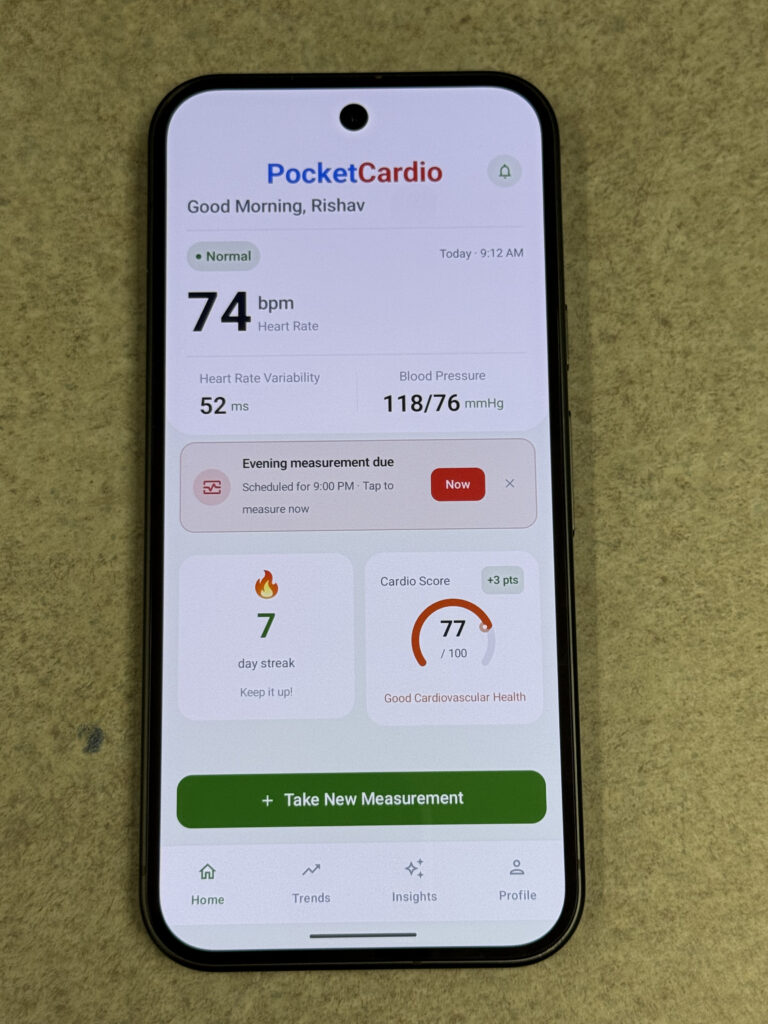 Li and Gupta have created an intuitive interface for the blood pressure monitoring PocketCardio app. (Photo by Ramya Bommakanti)
Our long-term vision is to make health monitoring more accessible and affordable for everyone. Right now, if we want to monitor certain aspects of our health, we often have to go to a doctor for regular examinations or use specialized medical equipment, which can be expensive and may not be easily available to everyone.
What we hope to do is bring some of that monitoring capability into the everyday devices people already use, such as smartphones, earphones, smartwatches, or even smart glasses. Instead of relying only on specialized equipment, people could potentially use these familiar devices to better understand and monitor their health in their daily lives.
If our research is successful, we hope it can give people a simple and convenient way to keep track of their health, identify potential problems earlier, and make more informed decisions about when to seek medical care. Ultimately, the goal is to use technology to help people live healthier lives.
Q: What are the biggest challenges that the research will need to overcome to reach these goals?
The most challenging part is not technical. What I realized when I talked to the clinical doctors from UMB School of Medicine is that the challenge is how to make people aware of this development. The challenge is assuring people of data security. People ask questions like, “What about privacy? How can you make sure you don’t leak our private information?” I think that’s the biggest challenge we will have if we want to make this a product that everybody can benefit from: How can we communicate about the technology so that people can understand it and are willing to use our product in the future?
Q: Do you have any recent results that you are especially excited about?
Yes. We are doing the clinical trials for our blood pressure monitoring project. We have collected data, I believe, from 30 healthy subjects right now, and we are in the process of collecting data from hypertensive patients at the hospital. The data we have right now shows very promising results, and I’m very excited to see if our prototype can work for those hypertensive patients. If it does, I think our next step is that we could do a wider deployment to verify our system. I attended the Maryland NEW VENTURE program [an intensive 12-week accelerator run by bwtech@UMBC that helps early-stage technology founders]. I shared this story with a lot of our investors, and they are super excited about this product. Maybe sometime next year, we will establish a startup company to make it a real product to benefit ordinary people.
 Li (center), Gupta (left) and other members of the PocketCardio team won first place at the Maryland NEW VENTURE pitch competition. (Photo courtesy of Li)
Written by: Ramya Bommakanti, a senior information systems major and communications intern in the COEIT Dean’s office.
]]>
Dong Li (Photo courtesy of Li) A common saying is “Health is wealth.” Its meaning—that good health gives people the vitality to succeed in life—is found in stories and phrases across cultures...
https://umbc.edu/stories/dong-li-affordable-health-monitoring-tech/
https://my3.my.umbc.edu/api/v0/pixel/news/161725/guest@my.umbc.edu/44dfd24726bc854308ec14cb9e1e8f70/api/pixel
bwtech
coeit
csee
graduate-research
impact
research
science-and-tech
stories
story
UMBC News & Magazine
https://my3.my.umbc.edu/groups/umbc-news-magazine
https://assets1-my.umbc.edu/system/shared/avatars/groups/000/001/943/24435aa6207c452e7bc15cc74b42c7bb/xsmall.png?1748556657
https://assets1-my.umbc.edu/system/shared/avatars/groups/000/001/943/24435aa6207c452e7bc15cc74b42c7bb/original.png?1748556657
https://assets2-my.umbc.edu/system/shared/avatars/groups/000/001/943/24435aa6207c452e7bc15cc74b42c7bb/xxlarge.png?1748556657
https://assets2-my.umbc.edu/system/shared/avatars/groups/000/001/943/24435aa6207c452e7bc15cc74b42c7bb/xlarge.png?1748556657
https://assets3-my.umbc.edu/system/shared/avatars/groups/000/001/943/24435aa6207c452e7bc15cc74b42c7bb/large.png?1748556657
https://assets1-my.umbc.edu/system/shared/avatars/groups/000/001/943/24435aa6207c452e7bc15cc74b42c7bb/medium.png?1748556657
https://assets2-my.umbc.edu/system/shared/avatars/groups/000/001/943/24435aa6207c452e7bc15cc74b42c7bb/small.png?1748556657
https://assets1-my.umbc.edu/system/shared/avatars/groups/000/001/943/24435aa6207c452e7bc15cc74b42c7bb/xsmall.png?1748556657
https://assets2-my.umbc.edu/system/shared/avatars/groups/000/001/943/24435aa6207c452e7bc15cc74b42c7bb/xxsmall.png?1748556657
UMBC News & Magazine
4
0
false
Tue, 18 Aug 2026 16:25:10 -0400
Tue, 18 Aug 2026 16:25:10 -0400
There’s nothing secret about David Mountain’s love of learning
David Mountain, Ph.D. ’17, computer engineering, can’t tell you much about his job. It still sounds exciting. As a researcher at the National Security Agency (NSA)—sometimes jokingly called the “No Such Agency” because of its top secret signal intelligence and cybersecurity work—Mountain worked to develop groundbreaking computing technology over a career spanning more than four decades.
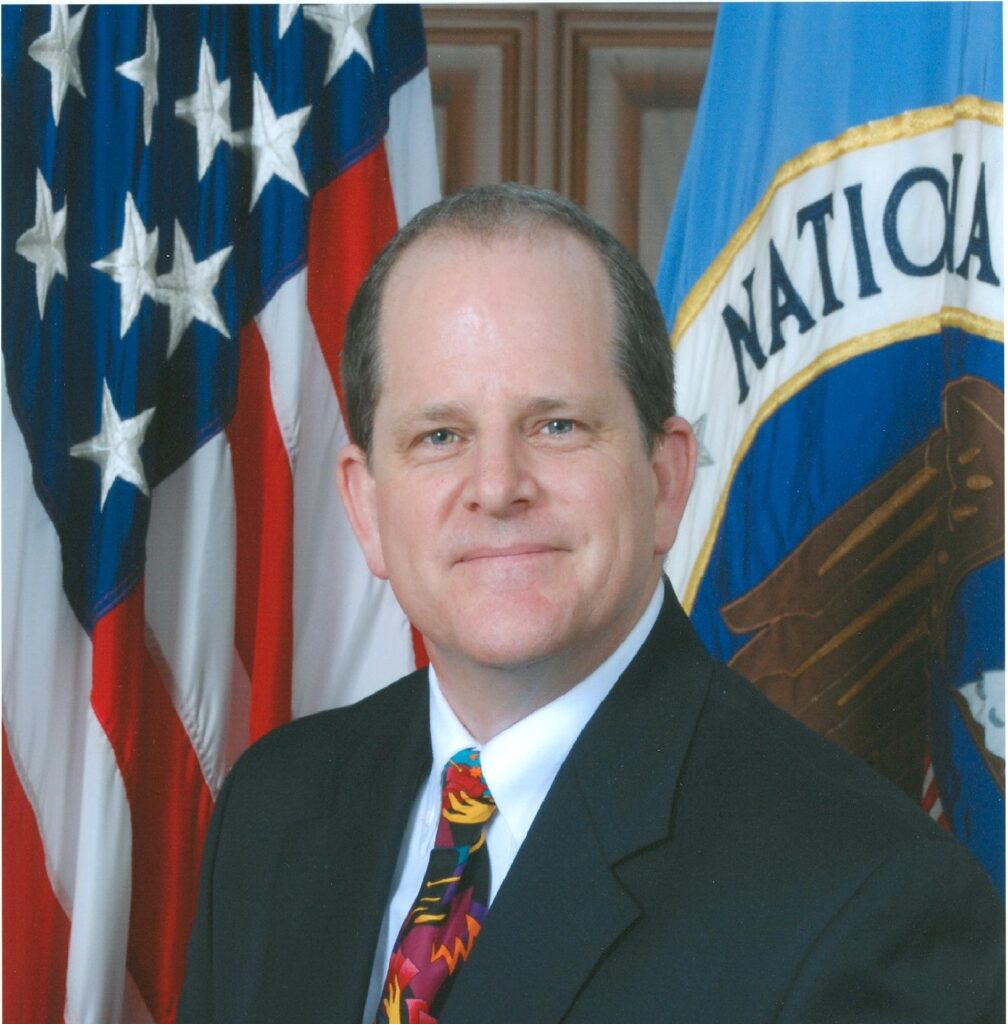 David Mountain worked his entire career for the U.S. National Security Agency. (Photo courtesy of Mountain)
“The most fun projects started with an operational organization [within NSA] asking us, ‘Can you do this [perhaps wild-sounding] thing?’ and ended with them telling us they fielded the devices we built and they are working great,” he says.
Pop culture often portrays the NSA as a shadowy spy agency. From Mountain’s perspective, his job was not the thrilling escapades of James Bond, but had a certain resemblance to the high-tech wizardry of Q, who supplies Bond with his cool gadgets. Mountain’s colleagues were curious people who loved tackling hard science, math, and engineering problems. Add to that the mission of protecting U.S. national security and it equaled a fulfilling work environment.
Looking back, Mountain splits his career into two approximately 15-year blocks, the first spent “doing really hardcore technical stuff,” from which he earned numerous patents, and the second half coordinating the work of technical teams and mentoring the next generation of researchers. Along the way, he also spent multiple years taking advantage of NSA internship and development programs.
Sometimes Mountain’s work did see public light, such as his research into building flexible electronics, with applications in “smart” clothing, autonomous vehicles, solar panels, and more. The research was shared with industry through the NSA’s Technology Transfer Program.
Now (mostly) retired, Mountain says the best part of his job was the opportunity to constantly explore new topics and take on new challenges.
“The government was really good about education and developing people, and I took full advantage of that,” Mountain says. “I got paid to learn new things, and that was great.”
Imagining a new type of computer hardware
It was the love of learning that brought Mountain late in his career to UMBC as a Ph.D. student. He had already made use of NSA programs to earn his master’s degree in electrical engineering from the University of Maryland, College Park, and to take research sabbaticals. After enrolling as a UMBC student in 2014, Mountain worked with his advisor Anupam Joshi, a computer science and electrical engineering professor and now the university’s chief A.I. officer, on a Ph.D. dissertation exploring a concept called neuromorphic computing.
In neuromorphic computing, researchers take inspiration from the human brain to reimagine traditional computing hardware. While traditional computers perform data processing and memory operations in physically separate units, neuromorphic systems merge the functions at artificial “synapses.” Neuromorphic systems also generally trigger calculations when they receive an input signal, rather than performing operations at regular, clock-based intervals. These changes improve computers’ energy efficiency and adaptability when applied to most AI tasks today, such as image and speech recognition.
For his Ph.D., Mountain analyzed a new type of electrical circuit building block, called a memristor, that shows promise in neuromorphic computing. Mountain explored how arrays of memristors divided into small chunks, or “tiles,” could be flexibly combined to handle a variety of tasks, including recognizing hand-written digits and detecting malware. The conclusion, Mountain says, was that with additional hardware improvements it should be possible to build a general purpose neuromorphic computer—similar to our general purpose personal computers of today—that could handle a wide variety of tasks with both high performance and energy efficiency.
Mountain was drawn to UMBC for his Ph.D. in part because of its close proximity to where he worked in the Advanced Computing Systems group of the NSA’s Laboratory for Physical Sciences, located at the bwtech@UMBC Research and Technology Park. The Laboratory for Physical Sciences is a partnership that the government runs with industry and university partners to advance research in communication, sensing, and computer technologies. Prior to beginning his Ph.D. work, Mountain had developed many positive relationships with UMBC faculty and students, including collaborating with Matthias Gobbert, a professor of mathematics and statistics at UMBC, on several high-performance computing research projects for undergraduate students, funded by the National Science Foundation.
During his Ph.D. research, Mountain took numerous UMBC graduate courses, and credits computer science and electrical engineering professor Fow-Sen Choa and associate professor Ryan Robucci with providing valuable guidance and support that shaped his research.
“I was a non-traditional student and everyone supported me in that,” Mountain says.
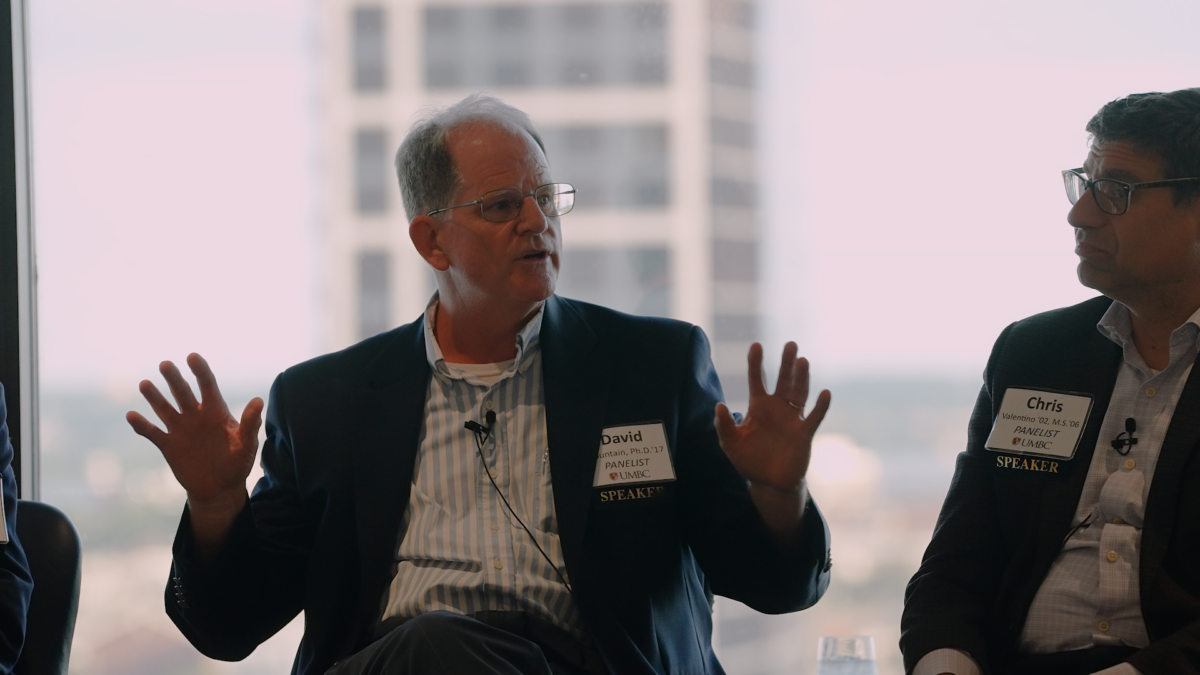 David Mountain (left) speaks at the Hilltop Society’s event “Artificial Intelligence: Making Our Lives Healthier, Safer, and More Efficient,” held at the The Center Club in Baltimore. (Elijah Davis, M.F.A. ’21/UMBC)
“David is super smart and well respected,” Joshi says. Joshi’s own Ph.D. thesis explored how computers might learn like biological brains, specifically examining how a type of machine learning approach called neural networks could be organized in a similar way to the early stages of human’s visual processing system. “With David, the research came full circle,” Joshi says. “I looked at how biology could be emulated in software. David was looking at how to create the hardware.”
Staying connected and giving back
Mountain lives in the southwest Baltimore neighborhood of Ten Hills, a 10-minute drive from the UMBC campus. Since graduating with his Ph.D., he has served on the advisory board for the Department of Computer Science and Electrical Engineering, networked with students at various career-focused events, and developed and taught a graduate level quantum computing course, designed to help build the quantum workforce by providing computer scientists and engineers with an accessible introduction to core quantum computing concepts.
On May 28, Mountain served as an expert panelist at an event organized by the Hilltop Society exploring how AI can create a healthier, safer, and more efficient future. He was joined by Jennifer Sleeman, Ph.D. ’17, computer science, a senior AI research scientist at The Johns Hopkins Applied Physics Laboratory, and Chris Valentino ’02, M.S. ’06, information systems, the vice president of cyber and information solutions at Northrop Grumman.
Enjoying semi-retirement with his wife, Diane, with whom he raised four children, Mountain now regularly travels, visits the theatre and museums, and takes the occasional consulting gig. “My wife and I joke that we have become wise asses on the hill,” he says. He’s happy to dispense opinions on the future of computing and AI, the prospects of data centers in space, and more. Just don’t ask him too much about what he did for a living.
]]>
David Mountain, Ph.D. ’17, computer engineering, can’t tell you much about his job. It still sounds exciting. As a researcher at the National Security Agency (NSA)—sometimes jokingly called the...
https://umbc.edu/stories/david-mountain-csee-alumnus/
https://my3.my.umbc.edu/api/v0/pixel/news/161588/guest@my.umbc.edu/46242d59b32067999c02c4b82aa7b423/api/pixel
alumni
bwtech
coeit
csee
graduate-research
research
science-and-tech
stories
story
UMBC News & Magazine
https://my3.my.umbc.edu/groups/umbc-news-magazine
https://assets1-my.umbc.edu/system/shared/avatars/groups/000/001/943/24435aa6207c452e7bc15cc74b42c7bb/xsmall.png?1748556657
https://assets1-my.umbc.edu/system/shared/avatars/groups/000/001/943/24435aa6207c452e7bc15cc74b42c7bb/original.png?1748556657
https://assets2-my.umbc.edu/system/shared/avatars/groups/000/001/943/24435aa6207c452e7bc15cc74b42c7bb/xxlarge.png?1748556657
https://assets2-my.umbc.edu/system/shared/avatars/groups/000/001/943/24435aa6207c452e7bc15cc74b42c7bb/xlarge.png?1748556657
https://assets3-my.umbc.edu/system/shared/avatars/groups/000/001/943/24435aa6207c452e7bc15cc74b42c7bb/large.png?1748556657
https://assets1-my.umbc.edu/system/shared/avatars/groups/000/001/943/24435aa6207c452e7bc15cc74b42c7bb/medium.png?1748556657
https://assets2-my.umbc.edu/system/shared/avatars/groups/000/001/943/24435aa6207c452e7bc15cc74b42c7bb/small.png?1748556657
https://assets1-my.umbc.edu/system/shared/avatars/groups/000/001/943/24435aa6207c452e7bc15cc74b42c7bb/xsmall.png?1748556657
https://assets2-my.umbc.edu/system/shared/avatars/groups/000/001/943/24435aa6207c452e7bc15cc74b42c7bb/xxsmall.png?1748556657
UMBC News & Magazine
0
0
false
Thu, 13 Aug 2026 09:30:44 -0400
Thu, 13 Aug 2026 09:30:44 -0400
From single cells to the systems shaping science: Mayank Chugh pursues dual passions at UMBC
What does it take for a single cell to become a functioning organism—and what does it take for a scientist to thrive amid the systems that govern the research enterprise? Mayank Chugh is exploring both questions at once. As an assistant teaching professor in biological sciences and director of UMBC’s Applied Molecular Biology (AMB) accelerated master’s program, he is entering his second year in a role that blends hands-on teaching, program leadership, and research that extends beyond the lab.
In developmental biology, Chugh investigates how organs take shape, focusing on the inner ear in zebrafish and the role physical forces play in its development. Through his ReForm Lab, launched during his postdoc at Harvard Medical School, he turns the same careful eye toward the institutional policies and hidden costs that influence who gets to do science. A new paper published in Nature Biotechnology led by Chugh examines the real-world burdens international postdocs face to maintain their visas and continue their work.
In the conversation below, Chugh talks about the unusual mix of responsibilities that defines his position, the students and skills at the heart of the AMB program, what drew him to science policy, the collaborations and community he has found at UMBC, and how others might begin expanding their own work beyond traditional research.
Q: What are the components of your role at UMBC, and how is it unique?
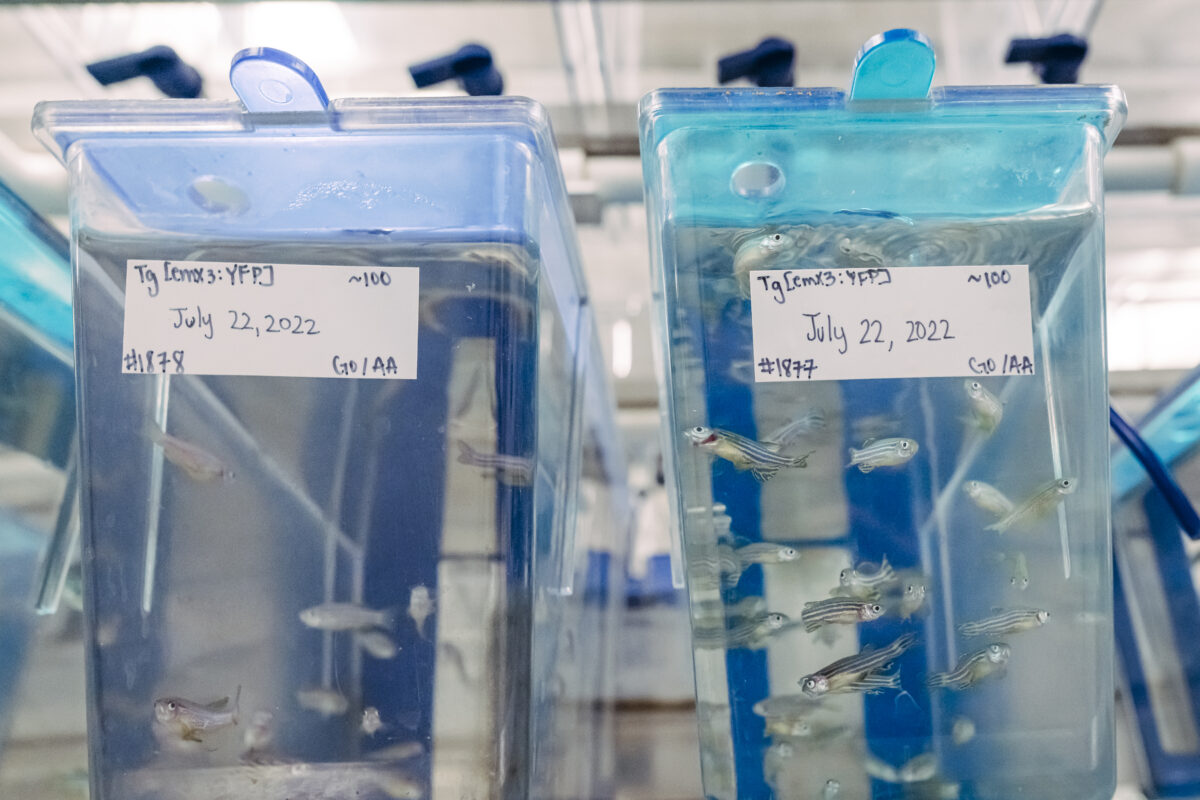 Mayank Chugh studies developmental biology using zebrafish like these as a model organism. (Marlayna Demond ’11/UMBC)
A: My primary role is director of the Applied Molecular Biology program, our department’s accelerated one-year master’s. I lead everything from recruitment through teaching and collaborations with other faculty, taking the students from when they apply all the way to graduation. It’s primarily a teaching position, but it’s unusual because I also have access to the teaching lab for my own developmental biology research. So in addition to teaching, I can recruit students to pursue research with me. Right now I have two high school students, one undergraduate, and one recent graduate working in the lab with me. We’re studying how the inner ear forms in zebrafish and how mechanical forces shape organ development and influence cell decisions. I collaborate with UMBC developmental biologist Rachel Brewster on the fish work. We share microscopy resources and she’s generously offered me space in the fish facility.
Q: Can you explain the purpose of the AMB program and who could benefit from it?
A: I believe the program is underrated. It’s an intensive one-year master’s that combines coursework with rigorous research and builds skills that can transfer anywhere. The students practice communication through weekly presentations, develop their writing skills through reports, and improve their time and project management out of necessity as they design and run experiments—all skills useful within and beyond science.
The program is great for undergrads with strong grades who lack substantial lab experience to gain a sense of what graduate-level science is like, so they can decide from an informed place whether a Ph.D. is right for them. A part-time option also serves working professionals who want to advance their skills. UMBC undergraduates can transfer up to 12 credits from their bachelor’s program if they plan ahead, which saves them time and money. AMB graduates head onto a range of next steps including jobs in industry, medical school, academic positions, and more.
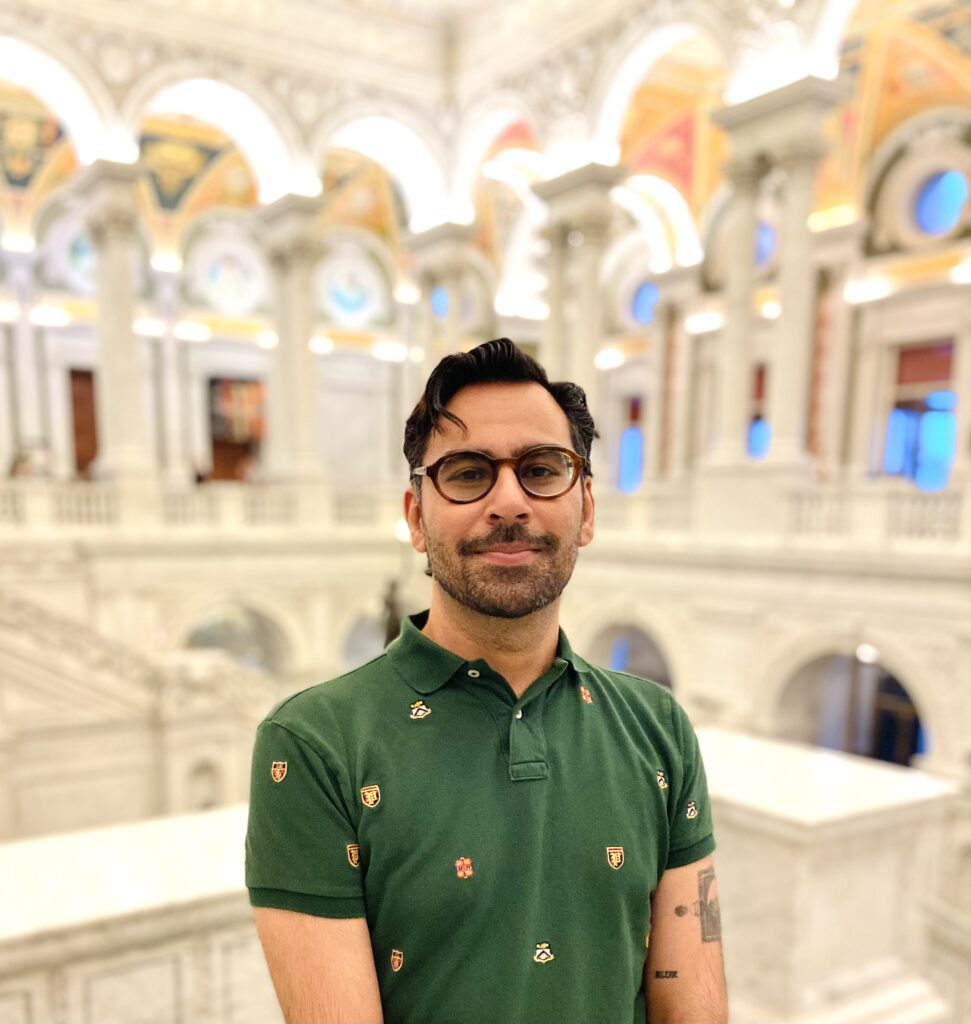 Mayank Chugh directs UMBC’s Applied Molecular Biology program and also conducts research in developmental biology and science policy. (Courtesy of Chugh)
Q: Why did you branch into science policy alongside developmental biology? What do you find most meaningful about that work?
A: I love basic research, but I’ve always cared about how science integrates into society. During my postdoc at Harvard I realized I did not want a traditional tenure-track path. I launched the ReForm Lab to examine the institutional structures and policies that govern who gets to do science, how we do it, and how it is evaluated. It’s highly interdisciplinary—today I collaborate with social scientists and others I never expected to work with.
My first ReForm Lab paper looked at postdoctoral compensation in the Boston area and showed how NIH salary guidelines ignore cost-of-living disparities across the country. Within two months of it being published, several institutions changed their policies. I got so many emails saying “thank you.” That tangible impact felt different from anything I’d experienced in basic research.
My new paper expands on that work. We surveyed hundreds of postdocs and quantified the often-invisible time, money, and psychological costs international scholars face, like having to travel back to their home country to renew their visas. We frame it as an administrative burden with real consequences for well-being and opportunity. The paper focuses solely on the data, but my personal opinion is that institutions could simply start with greater sensitivity toward scholars facing these challenges and offer practical support, like greater flexibility.
I’m also formally affiliated with the Human Context of Science and Technology program at UMBC. I love being part of that program; it gives me the chance to teach topics like the future of science and talk about race and gender in STEM. I recently organized a movie screening and discussion about Henrietta Lacks, whose local story is ongoing. Johns Hopkins is now constructing a Henrietta Lacks building in collaboration with her family.
Q: What do you appreciate about the UMBC community?
A: UMBC hits a Goldilocks size—neither too small nor too large. People are approachable and kind, and the department has been welcoming from day one. I’ve already begun collaborations and feel supported in doing interdisciplinary work. And the students are exceptional. Even those who arrive with limited lab experience repeatedly surprise me with how quickly they grow. The small size of the AMB program gives me the chance to connect with each student on a deeper level and continue to mentor them after they graduate, if they choose. I’ve helped students with their CVs, run mock interviews, and helped them make connections for opportunities. I’d say that has been one of the most rewarding parts of the role.
Q: What advice would you give others interested in expanding into science-policy work?
A: Use existing professional appointments as platforms. Join groups like the Scholars Strategy Network that connect scholars with policymakers and community builders. And for anyone at UMBC, feel free to just email me—maybe we could get a science and policy interest group started. The expertise is already here to engage in that way and benefit society with our work; we should put it to good use.
]]>
What does it take for a single cell to become a functioning organism—and what does it take for a scientist to thrive amid the systems that govern the research enterprise? Mayank Chugh is exploring...
https://umbc.edu/stories/mayank-chugh-qa/
https://my3.my.umbc.edu/api/v0/pixel/news/161545/guest@my.umbc.edu/5beb24b8f9f95b5a70f4944762bccb77/api/pixel
biology
cnms
community
research
science-and-tech
stories
story
UMBC News & Magazine
https://my3.my.umbc.edu/groups/umbc-news-magazine
https://assets1-my.umbc.edu/system/shared/avatars/groups/000/001/943/24435aa6207c452e7bc15cc74b42c7bb/xsmall.png?1748556657
https://assets1-my.umbc.edu/system/shared/avatars/groups/000/001/943/24435aa6207c452e7bc15cc74b42c7bb/original.png?1748556657
https://assets2-my.umbc.edu/system/shared/avatars/groups/000/001/943/24435aa6207c452e7bc15cc74b42c7bb/xxlarge.png?1748556657
https://assets2-my.umbc.edu/system/shared/avatars/groups/000/001/943/24435aa6207c452e7bc15cc74b42c7bb/xlarge.png?1748556657
https://assets3-my.umbc.edu/system/shared/avatars/groups/000/001/943/24435aa6207c452e7bc15cc74b42c7bb/large.png?1748556657
https://assets1-my.umbc.edu/system/shared/avatars/groups/000/001/943/24435aa6207c452e7bc15cc74b42c7bb/medium.png?1748556657
https://assets2-my.umbc.edu/system/shared/avatars/groups/000/001/943/24435aa6207c452e7bc15cc74b42c7bb/small.png?1748556657
https://assets1-my.umbc.edu/system/shared/avatars/groups/000/001/943/24435aa6207c452e7bc15cc74b42c7bb/xsmall.png?1748556657
https://assets2-my.umbc.edu/system/shared/avatars/groups/000/001/943/24435aa6207c452e7bc15cc74b42c7bb/xxsmall.png?1748556657
UMBC News & Magazine
0
0
false
Tue, 11 Aug 2026 11:57:43 -0400
Tue, 11 Aug 2026 11:57:43 -0400
Nothing but beauty: Noor Zaidi leads an international interfaith team digitizing the history of one of the few shrines to a woman in Islam
The Sayyida Zainab shrine, near Damascus, Syria, is capped by a gold leaf dome atop a building wrapped in interlocking glazed tiles. The aquamarine, gold, amethyst, and brown tiles create geographic tapestries of swirls and intricate flower patterns. It’s a beautiful place of splendor inside and out, where thousands of Shi‘i Muslim pilgrims and visitors worldwide gather, pray, and honor the resting place of Zainab bint ‘Ali, Prophet Muhammad’s granddaughter. The shrine’s roofline is decorated with cobalt blue tiles that repeat the phrase, “Peace be upon you, oh mother of sorrows and hardships” in white Arabic calligraphy—a testament to the trials Zainab endured throughout her life.
When Noor Zaidi, assistant professor of history, visited the shrine on pilgrimage with her family more than 20 years ago, she was mesmerized. The shrine then inspired her graduate research, and now Zaidi is a scholar of the Middle East and South Asia specializing in the history of gender and sectarianism.
Her new book, Traces of Zainab: Ritual, Memory, and Place in Shi’a Islam, is a study of the woman who became a symbol of resistance for Shi‘i Muslims worldwide. Now Zaidi is leading an international interfaith team to preserve, restore, and digitize the shrine’s archives. With the support of Father Columba Stewart of the Hill Museum & Manuscript Library (HMML) in Minnesota, the Holy Spirit University of Kaslik in Lebanon, and the Mourtada family from Damascus, who have been the custodians of the shrine for over 800 years, the world will learn about one of the very few shrines to a woman in Islam and the community that has preserved it with love.
“We are delighted to return to Syria in support of this historic project,” says Stewart, executive director and CEO of HMML, at Saint John’s University—one of the world’s leading organizations funding the preservation and digitization of endangered archives to create open access collections. “Partnering with this historic shrine lies at the very heart of HMML’s mission to preserve and share the world’s handwritten past to inspire a deeper understanding of our present and future.”
Zaidi notes that this is not just about preserving. It’s about teaching students what it takes to be historians, stewards of a past with many missing parts, and to be aware that their work cannot happen in isolation. “There is a story to tell in the construction of this work that also tells us about the discipline of history, at this moment in time,” says Zaidi. “It’s a story of how to teach students to be conscientious scholars: to not just look at newspapers and documents but take into account what’s not being told, what history is being erased, and ask whose voices are not being heard.”
Q: Who is Zainab bint ‘Ali?
A: Zainab bint ‘Ali has meant many things to many people: woman, emblem, whisper in the past, shout in the street. Her presence, body, and words have been central to the construction of a distinct Shi‘i Islamic identity, yet large parts of her life were absent from view.
At six, she witnessed her grandfather Muhammad’s death, the singular political and religious leader of the Muslim community. Her father, ‘Ali, became the fourth successor to the Prophet Muhammad in 656 AD. His followers considered him the first Imam, God’s spiritual representative on earth. Before he was killed five years later, he passed on the leadership to his sons.
In Karbala, present-day Iraq, in 680 AD, Husayn ibn ‘Ali, Zainab’s brother, refused allegiance to Caliph Yazīd ibn Mu‘awiyah, viewing his rule as illegitimate. A battle ensued, and Husayn’s 72 male companions were killed along with his eight sons, nephews, and cousins. Husayn was beheaded. Zainab and the other women witnessed the massacre. After she was taken into captivity and paraded unveiled to Damascus, it is said that she delivered sermons recounting the events at Karbala. Zainab became a symbol of resistance—the few against the many.
For Shi‘i Muslims, the battle at Karbala became central to constructing their distinct identity, collective memory, theological frameworks, devotional practice, and traditions of mourning.
Q: In what ways have local and international communities contributed to keeping the shrine alive?
A: The shrine is a transnational space with people, materials, and ideas moving in and out of it. In the 19th and 20th centuries, many Shi‘i shrines in Iran and Iraq began to take on a similar appearance, usually attributed to Iranian patronage. A lot of money was invested in maintaining these shrines. The mausoleum is surrounded by silver and gold grilles with Zainab’s grave beneath. They were replaced over the centuries through donations. One came from Pakistan in the 1950s, while others came from Iraq and Iran. The gold leaf, some of the tile colors, and the carpets have all come from different countries. However, the Mourtada family was very deliberate in the renovations, using local craftsmen and an Arab Damascene style of tilework to keep the local cultural heritage embedded in the shrine.


Top row: Inside Sayyida Zainab shrine. (Images courtesy of Zaidi) Bottom row: Local craftsmen renovating the shrine. Constructing the golden dome. (Images courtesy of Makam Sayyida Zainab)
Long before the politics of the present, the shrine was part of the shared sacred geography of Damascus. Its history is entwined with the devotion of countless people who have passed through it over centuries. Syrians of many different backgrounds—including Muslims, Christians, and Jews—have visited the shrine over the centuries. Queen Soraya Esfandiary-Bakhtiary of Iran gave funding to build an electrical system, and Sunni Muslim Muhammad Ali, the American professional boxer and activist, also visited the shrine and paid tribute. Their visits helped raise awareness and respect and brought support from outside the Shi’i community.


(l) Former Prime Minister of Pakistan, Benazir Bhutto, at the Sayyida Zainab shrine. (r) Boxer Muhammad Ali at the Shrine of Sayyida Zainab (Images courtesy Makam Sayyida Zainab)
While the shrine’s story can be told through violence, conflict, and upheaval, we chose to tell the story that often gets buried. When Zainab was asked what she thought of her dead brother, she said, “I see nothing but beauty.” We see nothing but beauty. This is the story the project chooses to tell.
Q: How did you gain access to the shrine’s archives?
A: When I first visited for research in 2012, there was almost nobody there. The shrine was under constant threat, and the atmosphere was one of uncertainty. During that visit, I met Hani Mohsen Mourtada, the head custodian, former Syrian Minister of Higher Education, and former president of the University of Damascus. I think he was genuinely surprised that someone was willing to come under those conditions. He gave me access to photographs, legal documents, and virtually everything the shrine held in its archives. We built a close relationship. I interviewed him several times as the project developed. I returned to Syria in 2019 and again in 2021, but he was in Beirut. Sadly, he passed away during the COVID-19 pandemic, and I never had the chance to see him again.
As I neared completion of my manuscript, I needed to revisit the archival materials and get legal permission to use them. After Hani Mohsen’s death, custodianship passed to his son, Sayed Mazen Al-Mourtada. I connected with him, and Mazen agreed to give me access. He explained that he had moved the oldest records to Beirut because he feared they might not survive the war. Although there was widespread looting and destruction when he moved the records, Mazen recovered much of what I needed. There are many major Shi‘i shrines around the world, but not all of them make their archives available in this way or welcome the same level of transparency. That made this project especially meaningful because Mozen was willing to do exactly that.


Manuscripts from the Sayyida Zainab shrine. (Images courtesy of Makam Sayyida Zainab)
For historians, the history we write is so often incomplete and shaped by these absences and losses. Rather than presenting itself as complete, the digital archive will clearly identify documents destroyed through conflict and explain how historical archives are often incomplete collections of surviving materials. Understanding this is crucial for students as they embark on research.
Q: How does your personal journey help students understand the academic and personal skills required to be a historian?
A: History as a discipline is changing. We’re reading documents, translating them, and making meaning from them. Our research process is part of that history. While I was writing the book, my colleagues at UMBC told me that I should be in the story. I wasn’t used to that. The book is divided into three parts: Zainab’s shrine, the Bibi Pak Daman shrine in Lahore, Pakistan; and the al-Rashād prison for women in Iraq. In each section, I invite the reader to take a journey with me. I was so much a part of the process that while I was writing the book, I became part of the story. I learned that if I’m interviewing these women, they are not speaking to a wall—they were speaking to me.
Being a historian is a labor of love. You don’t do things this long unless you care and find them interesting. I have been studying the Shrine of Sayyida Zainab for about 15 years. For much of that time, Syria was caught in civil war and proxy war. The shrine was regularly targeted by jihadist groups such as ISIS and al-Qaeda, and for more than a decade it was extraordinarily difficult to travel in and out of the country, and then the pandemic happened. Many times, I was told to reframe the book or to change the topic. I didn’t give up.
This archive is my way of contributing something meaningful to the people and place that shaped my research. Although I continue to worry about the shrine’s future, preserving these materials offers hope that, should anything happen to it, its history will not disappear. In that sense, preserving the shrine and its documents is about preserving a piece of our common humanity.
Learn more about UMBC’s history department.
]]>
The Sayyida Zainab shrine, near Damascus, Syria, is capped by a gold leaf dome atop a building wrapped in interlocking glazed tiles. The aquamarine, gold, amethyst, and brown tiles create...
https://umbc.edu/stories/noor-zaidi-leads-team-digitizing-history-of-sayyida-zainab-shrine/
https://my3.my.umbc.edu/api/v0/pixel/news/161375/guest@my.umbc.edu/b26c99277cb65970c0caa20dd3e07b2e/api/pixel
cahss
history
international
policy-and-society
research
stories
story
UMBC News & Magazine
https://my3.my.umbc.edu/groups/umbc-news-magazine
https://assets1-my.umbc.edu/system/shared/avatars/groups/000/001/943/24435aa6207c452e7bc15cc74b42c7bb/xsmall.png?1748556657
https://assets1-my.umbc.edu/system/shared/avatars/groups/000/001/943/24435aa6207c452e7bc15cc74b42c7bb/original.png?1748556657
https://assets2-my.umbc.edu/system/shared/avatars/groups/000/001/943/24435aa6207c452e7bc15cc74b42c7bb/xxlarge.png?1748556657
https://assets2-my.umbc.edu/system/shared/avatars/groups/000/001/943/24435aa6207c452e7bc15cc74b42c7bb/xlarge.png?1748556657
https://assets3-my.umbc.edu/system/shared/avatars/groups/000/001/943/24435aa6207c452e7bc15cc74b42c7bb/large.png?1748556657
https://assets1-my.umbc.edu/system/shared/avatars/groups/000/001/943/24435aa6207c452e7bc15cc74b42c7bb/medium.png?1748556657
https://assets2-my.umbc.edu/system/shared/avatars/groups/000/001/943/24435aa6207c452e7bc15cc74b42c7bb/small.png?1748556657
https://assets1-my.umbc.edu/system/shared/avatars/groups/000/001/943/24435aa6207c452e7bc15cc74b42c7bb/xsmall.png?1748556657
https://assets2-my.umbc.edu/system/shared/avatars/groups/000/001/943/24435aa6207c452e7bc15cc74b42c7bb/xxsmall.png?1748556657
UMBC News & Magazine
1
0
false
Wed, 29 Jul 2026 09:43:09 -0400
Wed, 29 Jul 2026 09:43:09 -0400
UMBC researcher awarded high-risk, high-reward NIAID grant to improve HIV prevention drugs
HIV continues to pose a major global health challenge, with about 1.3 million new infections reported annually worldwide in recent years. One of the most important HIV prevention strategies is pre-exposure prophylaxis, or PrEP. Healthy individuals at risk of HIV take a daily pill containing two antiretroviral drugs—tenofovir (TFV) and emtricitabine (FTC)—to block the virus before it can take hold.
These drugs only become protective after they are modified inside cells, specifically by adding a phosphate group in a step called “phosphorylation.” This activation turns them into their working forms. However, people’s responses to the drugs vary widely, sometimes leading to reduced protection.
Herana Kamal Seneviratne, assistant professor of chemistry and biochemistry, has received a two-year grant from the National Institute of Allergy and Infectious Diseases (NIAID) to explore how two key HIV prevention drugs work inside the body—specifically in colon tissue, where HIV transmission risk is especially high. The project seeks to explain why these drugs protect some people better than others and could help make prevention tools more reliable.
“One of the reasons for PrEP failure is the huge variability observed among individuals,” Seneviratne explains. This variability is concerning, because someone might partake in riskier behavior based on a belief that they are safer than they actually are.
Seneviratne’s work focuses on the colon, because unprotected anal sex carries an 18-fold higher risk of HIV transmission than vaginal sex. Oral PrEP spreads through the bloodstream, but the amount of active drug that reaches colon tissue is not well studied, and could be one of the reasons for variable drug responses. Understanding what happens in these tissues is therefore crucial for improving PrEP, Seneviratne says, particularly for men who have sex with men.
Mapping cellular machinery
Previous work, including from Seneviratne’s group, has shown that certain enzymes are involved in activating and deactivating PrEP drugs in the blood by adding and removing phosphate groups. Certain kinases add a phosphate group, and certain nucleotidases remove it. However, the activity of these enzymes in colon tissue is unknown.
“What matters is the drug metabolite concentrations in specific sites like in colon. That’s the point that we’re trying to make,” Seneviratne says.
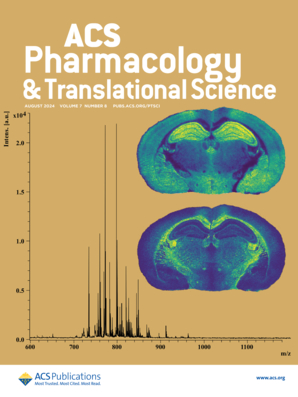 Pharmacology & Translational Science featured a study by Seneviratne’s group about the effect of HIV drugs on the brain on its cover in 2024.
To address that knowledge gap, Seneviratne’s team will grow human colon cells in the lab and use genetic tools to modify the expression of these kinases and nucleotidases one at a time. Then they will measure how those changes affect the drugs’ phosphorylation status. The project will take an innovative approach using mass spectrometry imaging, a technique that lets researchers see where molecules are located and active inside tissues.
“Our group is trying to contribute to overall improved HIV prevention,” Seneviratnes says. To that end, “understanding the metabolism of these two drugs in colon tissue is important.”
In conjunction with the lab’s work with human cells, Seneviratne’s team will examine mouse colon tissue to map these enzymes’ presence and activity across different cell types and tissue regions. The project will combine traditional techniques—specifically enzyme histochemistry and mass spectrometry—in novel ways. The dual approach will allow the team to observe enzymatic activity directly in its natural tissue environment rather than in a test tube, Seneviratne explains.
The NIAID grant type supporting the work, an R21, supports innovative high-risk, high-reward ideas that push scientific boundaries. Work is already underway on this approximately $440,000, two-year award. Graduate students Korin Murray and Nimalee Jayasekera and research fellow Christian Oh will take leading roles. Jayasekera will focus on the cell and molecular biology aspects, Murray will work on advanced imaging and tissue analysis, and Oh will support both students. There will be opportunities for undergraduates as well. Overall, the project expands the group’s focus on the negative side effects of drugs that treat HIV (including a study led by chemistry Ph.D. student Nav Raj Phulara on the brain) into the effectiveness of HIV prevention drugs.
From the bench to better PrEP
By revealing how these enzymes control drug activation and deactivation in specific parts of the colon, the project aims to provide knowledge that could lead to better dosing strategies, improved formulations, or other ways to make PrEP more effective. “The data that we generate from this work, we can leverage to optimize the therapeutic efficacy of the HIV PrEP drugs,” Seneviratne said. “These two drugs set the foundation for HIV prevention.”
Seneviratne’s interest in this area grew from his postdoctoral training at Johns Hopkins University, where he worked closely with clinicians to identify pressing real-world problems, leading him to ask, “How can I use my bioanalytical chemistry expertise to address those questions?” His chemistry expertise, combined with early publications on these enzymes, provided the foundation for the proposal.
This kind of fundamental research strengthens public health tools like PrEP, helping more people stay protected against HIV. The findings could eventually support more personalized or reliable prevention approaches across diverse populations.
]]>
HIV continues to pose a major global health challenge, with about 1.3 million new infections reported annually worldwide in recent years. One of the most important HIV prevention strategies is...
https://umbc.edu/stories/niaid-funds-hiv-prevention-research/
https://my3.my.umbc.edu/api/v0/pixel/news/161305/guest@my.umbc.edu/a458e8c69e80e02885e0668ab640a882/api/pixel
chemistry-and-biochemistry
cnms
research
science-and-tech
stories
story
UMBC News & Magazine
https://my3.my.umbc.edu/groups/umbc-news-magazine
https://assets1-my.umbc.edu/system/shared/avatars/groups/000/001/943/24435aa6207c452e7bc15cc74b42c7bb/xsmall.png?1748556657
https://assets1-my.umbc.edu/system/shared/avatars/groups/000/001/943/24435aa6207c452e7bc15cc74b42c7bb/original.png?1748556657
https://assets2-my.umbc.edu/system/shared/avatars/groups/000/001/943/24435aa6207c452e7bc15cc74b42c7bb/xxlarge.png?1748556657
https://assets2-my.umbc.edu/system/shared/avatars/groups/000/001/943/24435aa6207c452e7bc15cc74b42c7bb/xlarge.png?1748556657
https://assets3-my.umbc.edu/system/shared/avatars/groups/000/001/943/24435aa6207c452e7bc15cc74b42c7bb/large.png?1748556657
https://assets1-my.umbc.edu/system/shared/avatars/groups/000/001/943/24435aa6207c452e7bc15cc74b42c7bb/medium.png?1748556657
https://assets2-my.umbc.edu/system/shared/avatars/groups/000/001/943/24435aa6207c452e7bc15cc74b42c7bb/small.png?1748556657
https://assets1-my.umbc.edu/system/shared/avatars/groups/000/001/943/24435aa6207c452e7bc15cc74b42c7bb/xsmall.png?1748556657
https://assets2-my.umbc.edu/system/shared/avatars/groups/000/001/943/24435aa6207c452e7bc15cc74b42c7bb/xxsmall.png?1748556657
UMBC News & Magazine
0
0
false
Mon, 27 Jul 2026 11:14:31 -0400
Mon, 27 Jul 2026 11:14:31 -0400
UMBC supports promising internal research and creative endeavors with 2026 – 27 START, SURFF awards
UMBC’s Division of Research and Creative Achievement recently announced the recipients of the 2027 Strategic Awards for Research Transitions (START) and the 2026 Summer Research Faculty Fellowship (SURFF) awards, two of the university’s primary, internal funding opportunities that support faculty-led research and creative work.
The latest awards cover diverse projects, including exploring the genetic origins of a neurologic disorder in Siberian huskies, securing smartphones against voice scams, building novel animated sculpture, and exploring the legacy of Argentine-born American cellist Ennio Bolognini.
In total for fiscal year 2027, 12 faculty members and researchers across UMBC’s three colleges and the university’s research centers were awarded up to $25,000 in START funding to advance their research and creative projects. The awards help recipients build research momentum early in their careers and hone their research pitches to pursue external funding. They can also help faculty pivot to new fields of inquiry later in their careers.
For summer 2026, 21 faculty members received a SURFF award, which supports non-tenured, tenure-track faculty members in pursuing research and creative achievement projects during the summer. Recipients are awarded $8,000 in funding.
“Each year when we review applications, we find we have so many faculty who are being very creative and really pushing the edge of what’s known in their various disciplines,” says Don Engel, associate vice president for strategic research initiatives at UMBC, who coordinates the faculty committee that reviews prospective awards. “The proposals really illustrate the breadth of achievement that goes on across the university.”
]]>
UMBC’s Division of Research and Creative Achievement recently announced the recipients of the 2027 Strategic Awards for Research Transitions (START) and the 2026 Summer Research Faculty Fellowship...
https://umbc.edu/stories/umbc-2026-27-start-surff-awards/
https://my3.my.umbc.edu/api/v0/pixel/news/160970/guest@my.umbc.edu/3135e22beb3f1d1bead291c5198c4080/api/pixel
cahss
cnms
coeit
discovery
research
stories
story
UMBC News & Magazine
https://my3.my.umbc.edu/groups/umbc-news-magazine
https://assets1-my.umbc.edu/system/shared/avatars/groups/000/001/943/24435aa6207c452e7bc15cc74b42c7bb/xsmall.png?1748556657
https://assets1-my.umbc.edu/system/shared/avatars/groups/000/001/943/24435aa6207c452e7bc15cc74b42c7bb/original.png?1748556657
https://assets2-my.umbc.edu/system/shared/avatars/groups/000/001/943/24435aa6207c452e7bc15cc74b42c7bb/xxlarge.png?1748556657
https://assets2-my.umbc.edu/system/shared/avatars/groups/000/001/943/24435aa6207c452e7bc15cc74b42c7bb/xlarge.png?1748556657
https://assets3-my.umbc.edu/system/shared/avatars/groups/000/001/943/24435aa6207c452e7bc15cc74b42c7bb/large.png?1748556657
https://assets1-my.umbc.edu/system/shared/avatars/groups/000/001/943/24435aa6207c452e7bc15cc74b42c7bb/medium.png?1748556657
https://assets2-my.umbc.edu/system/shared/avatars/groups/000/001/943/24435aa6207c452e7bc15cc74b42c7bb/small.png?1748556657
https://assets1-my.umbc.edu/system/shared/avatars/groups/000/001/943/24435aa6207c452e7bc15cc74b42c7bb/xsmall.png?1748556657
https://assets2-my.umbc.edu/system/shared/avatars/groups/000/001/943/24435aa6207c452e7bc15cc74b42c7bb/xxsmall.png?1748556657
UMBC News & Magazine
0
0
false
Mon, 06 Jul 2026 15:17:16 -0400
Who gets to tell the story? The tricky back story of how radio shows can promote empathy but also build up cultural divides
In his new book, Empathy Machines: This American Life, Podcasting, and the Public Radio Structure of Feeling, Jason Loviglio, professor of media and communications, critiques and analyzes the making of and the impact of one of his favorite shows on National Public Radio (NPR), “This American Life”—a radio show turned podcast that received the 2021 Pulitzer Prize in Audio Reporting. “This American Life,” created and hosted by Baltimore-native Ira Glass, became a listener favorite for its magical way of weaving stories about everyday people into larger human issues, sounding more like a sympathetic, curious neighbor instead of a serious professor. The irony is not lost on Loviglio, who thanked his students in the book for reminding him that accessibility ensures that the public, his students, and their families, not only academic editors, understand the research. He wants this young audience to learn about radio and be inspired to research their own media and communications passions.
“The people I have had the honor of calling my students over the years have done more than anyone else to help me learn how to communicate ideas about communication and media clearly and simply,” writes Loviglio in his acknowledgements. “The MCS undergraduates are among the least pretentious and least entitled people I’ve ever had the pleasure of working with. Too numerous to name here, I give a collective thanks to you for the lessons of clarity you’ve taught me and for the laughs.”
Long before Loviglio became an author and the co-editor of Radio Journal: International Studies in Broadcast and Audio Media and of The Routledge Companion to Radio and Podcasting Studies, he was a young kid in love with “weird radio shows,” notes Loviglio. “I remember listening at night to my red transistor radio when I was little, maybe 9 or so. I put it under my pillow so my parents wouldn’t hear it,” says Loviglio. “I mostly listened to weird nationally-syndicated late night public radio shows, like Dr. Demento and local sports talk shows.”
While he doesn’t expect students to fall in love with radio as he did, in his History of Media class, he wants students to understand the power and importance of radio long before stories were mobilized in the palms of our hands 24/7 worldwide. Loviglio encourages students to look beyond Google and instead find people whose lives were shaped by radio.
He wants students to explore what radio meant in everyday life and how it conveyed and reflected emotions such as fear, danger, excitement, and joy—functioning as empathy machines that inspired deeper forms of storytelling and laid the groundwork for public radio and podcasts.
Q: What are empathy machines?
A: I think it’s safe to say that public radio has been explicitly understood as an empathy machine at least since the radio show “This American Life’s” debut in 1996. If we allow for synonyms of empathy, then radio has been understood this way for a lot longer. There’s a longer history regarding various media of communication as uniquely efficient machines for producing empathy. Most famously, of course, is the novel. And before that, oral storytelling. The idea of radio as an empathy machine stems from a specific history referred to as the technological sublime.
The notion that we can invent and communicate our way into equality is central to the way we understand Western history since at least the printing press. The book, particularly the novel, has been hailed for its powers to impart democracy and empathy. This history is opposed by an equally compelling one in which the machine represents the antithesis of democratic values of participation and empathy. A dominant theme in media history is the role of technology as an extension of human values, such that we no longer hear the metaphors in our arguments.
Q: Did you always know you were going to write about “This American Life” instead of general radio?
A: It wasn’t until a couple of years ago that I realized the best way to tell the story of public radio and podcasting was through NPR’s “This American Life.” It was first produced in 1996 by WBEZ, Chicago Public Radio, and then picked up nationally by Public Radio International. It became a massive show.
“This American Life” is also one of the first shows to start offering a podcast version, in case you missed an episode. Around 2014, “This American Life” started to shift, where more people were listening to it as a podcast. I wrote to Ira Glass last year, and he still calls it a radio show. That’s still his default understanding of it, even now.
Q: Did you have fun writing this?
A: Yes and no. I had fun thinking about it and fun listening to the shows. This is such a great way to tell stories. But it was hard to write because the shows kept changing. My thoughts kept changing. I began writing the book during President Obama’s administration, when I was thinking positively about American history. Then, Trump won.
I didn’t think that because President Obama was elected, it meant that everything was great and we had cured racism. I thought a particular version of liberalism had won. Definitely very capitalistic, definitely very interested in style, maybe more than substance, but there was a story everyone was telling about the country that was designed to make people feel very comfortable. Not only liberals, but also very privileged people, and not particularly political.
Trump winning the 2016 presidential election was a reminder that there is another story. I knew the other far-right story, but I thought that more people were happy for the positive symbolic victory that President Obama represented in terms of being biracial and being born to an immigrant father. This educated, cosmopolitan elite could also speak across different cultural registers. I thought that’s what I was writing about. Then the Trump administration began, and I felt I had to write about this darker story. That meant I had to think differently about the long, slow death of liberalism. There was something rotten in the creeping neoliberalism of the era that put some of us to sleep, left others out in the cold, and mobilized a politics of racial grievance on the right.
Q: What was the critique?
A: I’m not speaking for everyone, but people like me: privileged, educated, and progressive but kind of complacent. What did we do for the eight years of the Obama administration and the previous two or three decades of creeping neoliberalism? What were we listening to? Public radio. That’s what we were listening to. That’s the soundtrack of the frog and the pot. The pot slowly heats up, the frog is comfortable, and doesn’t realize it’s slowly boiling. I love public radio. I love “This American Life.” I love podcasting, but I also wanted to look critically at the story we were telling about empathy, who is telling the story, and who is the story about?
Important exceptions long persisted at the margins of the public radio industry. “Latino USA” is the longest-running public radio Latino news and cultural program in the United States. It is unique in that it has people of color behind the microphone. It is designed by the people that it speaks to, but most of public radio is not that way. In contrast, “This American Life,” in a way, is the epitome of white liberalism. It’s really beautiful storytelling, but in the service of this kind of sound effect of liberalism and empathy, instead of something a little bit more gritty and radically engaged that maybe we should have been trying to tune into.
I use “This American Life,” as a bridge, because of the way that it really epitomizes…radio, as a place for sonic innovation, experimentation, the primacy of the local, the intimacy of the familiar, weakly voice…
Then what happens is it becomes a national phenomenon…turning into inside the beltway, political relevance, and increasing market share…driven by an increasingly robust audience research, which discovers…that the folks who listen to public radio are disproportionately…highly educated, higher earners, and that in order to sustain a system that relies on donations…the programming has to not only appeal to them, but the variation between programs has to be minimal…which is borrowed from commercial radio.
Q: Did the mindset about who gets to tell the radio story shift during or after the social justice protests of the summer of 2020?
A: Yes. That is when it all falls apart. The whole public radio storytelling format starts to collapse in the late 2010s because most of these shows are run by white producers and white on-air talent who are telling stories about others. All the contradictions just start to crash into each other, and a lot of the shows go off the air. There are all these awkward moments of reckoning. Shows changed. One week, the radio show “Invisibilia,” an NPR podcast about the unseen forces that shape human behavior, like ideas and beliefs, was being produced by all-white women from NPR, The New Yorker, and Slate magazine. Then, in part due to the collapse of the specific logic of empathy that animated the show, there is a switchover to new hosts—two women of color, who cheerfully embraced a more politically engaged set of feelings, like confrontation and discomfort. The show was canceled in 2023, suggesting that the format could not bear certain kinds of changes to its structure of feeling.
The same thing happened with “Reply All,” a popular podcast about the internet and digital culture, created and hosted by Alex Goldman and PJ Vogt, two white men from New York City. They had a massive implosion. Goldman and Vogt were called out for perpetuating plantation culture in the workplace, where leadership and decision-making are dominated by white executives or managers, right in the middle of doing an exposé on Bon Appétit, a high-end food culture magazine, for doing precisely the same thing. “Reply All” was calling out a white-run magazine, and the people who were doing a lot of the grunt work but not getting paid were people of color and young people, who spoke up about the hypocrisy. That show collapsed in a couple of weeks.
It’s really a radical moment because radio shows and podcasts don’t get to tell the same stories without ever changing who gets to tell the stories. You don’t get to pretend you care, but not change. And so things really start to feel the strain by 2020.
Q: Are shows today more liberal or conservative as a result of the shift in 2020?
A: There are many shows today that center on conflict and unhappiness with the status quo—that Trumpism has gone too far. I try to write about how we are in a whiplash between this rhetoric of empathy and the rhetoric of Trumpism, this hostility to the idea of caring for others. I don’t know how many people took the political implications of empathy seriously, but rhetorically, it shaped a good deal of the public radio structure of feeling.
Q: Why did you thank your students in the book?
A: Students are reading less and less, and academics like me want to write clearly, and we usually don’t because we’re not thinking about 17-year-olds. We’re not thinking about the parents of 17-year-olds who might encounter our research in a faculty magazine or a newspaper. We’re thinking about the people who review academic journals or books.
One reason I thanked the students is that in the MCS methods class, students read articles written by MCS faculty. If they’re learning about history, they’re reading something I wrote or something Liz Patton, chair and associate professor of MCS, who writes about media history, identity, and space, wrote. If they’re reading about globalization and representation, they’ll read research byTracy Tinga, associate professor of MCS, who focuses on critical conversations about media, power, development, and digital cultures in African contexts, or research by Fan Yang, professor of MCS, who writes about the intersection of cultural studies, transnational media studies, globalization, postcolonialism/postsocialism, urban communication, and contemporary China. And now, they are reading work on social media and mental health, thanks to our newest colleague, Holly Avella. They’re also reading or viewing the work of Chung-Wei Huang, teaching assistant professor, Kristen Anchor, teaching associate professor, and Donald Snyder, teaching professor of MCS.
Students love reading faculty research, so I want to make sure what I’m writing is accessible to students. It’s a conversation starter when students connect personally with the research.
Q: Do students in your classes listen to the radio?
A: Some do. I think they do so a bit more after they’ve had a class with me. I want to make sure all my classes have opportunities for different kinds of creativity and engagement. In my History of Media class, I have students think about radio and pay attention to what is on the radio by having them interview a grandparent or someone older in their lives about their experiences with the radio. Students create small stories by conducting interviews and editing them into short radio diaries in a style similar to “This American Life.”
A lot of our students are immigrants or international students, and even more are children or grandchildren of immigrants. Radio remains especially important in much of the world, particularly in the Global South and in regions shaped by uneven development. This assignment helps students learn about their grandparents, and for some, it becomes the most meaningful conversation they have ever had with them. I’ve had students come back and tell me, “My grandfather died, and I have this recording of us talking for your assignment. It’s the only thing I have of him.” That’s why I really value this assignment.
Q: Is listening to the radio really a thing of the past?
A: Video games and gaming culture are increasingly central to sound studies because so much of these experiences are built around audio design. Many major games are intentionally structured to sound like radio, as in Grand Theft Auto, which features more than a dozen in-game radio stations with full playlists. In this sense, radio continues to shape not only podcasting but also video games, providing a template for how soundscapes are constructed for audiences. Even though radio may seem obsolete or old-fashioned, it remains one of the dominant frameworks through which people understand and design contemporary sound culture.
Register to attend an interview with Loviglio on July 21, 2026, at the Ivy Bookshop in Baltimore City, hosted by Aaron Henkin, award-winning public radio producer and podcaster. Read more UMBC Humanities Books stories.
]]>
In his new book, Empathy Machines: This American Life, Podcasting, and the Public Radio Structure of Feeling, Jason Loviglio, professor of media and communications, critiques and analyzes the...
https://umbc.edu/stories/public-radio-empathy-machines-loviglio/
Video Preview
https://assets2-my.umbc.edu/system/shared/attachments/41a91990044828ab3c4c273da239dd60/6a990536/news/000/160/880/1421f658b20874eb200e6eeaca8d6d88/2ofgfOORQ1E.jpg?1782827406
https://my3.my.umbc.edu/api/v0/pixel/news/160880/guest@my.umbc.edu/04fc9b50e74032c6482b5f555a9ed286/api/pixel
arts-and-culture
cahss
humanitiesbooks
perspectives
research
retriever-authors
stories
story
UMBC News & Magazine
https://my3.my.umbc.edu/groups/umbc-news-magazine
https://assets1-my.umbc.edu/system/shared/avatars/groups/000/001/943/24435aa6207c452e7bc15cc74b42c7bb/xsmall.png?1748556657
https://assets1-my.umbc.edu/system/shared/avatars/groups/000/001/943/24435aa6207c452e7bc15cc74b42c7bb/original.png?1748556657
https://assets2-my.umbc.edu/system/shared/avatars/groups/000/001/943/24435aa6207c452e7bc15cc74b42c7bb/xxlarge.png?1748556657
https://assets2-my.umbc.edu/system/shared/avatars/groups/000/001/943/24435aa6207c452e7bc15cc74b42c7bb/xlarge.png?1748556657
https://assets3-my.umbc.edu/system/shared/avatars/groups/000/001/943/24435aa6207c452e7bc15cc74b42c7bb/large.png?1748556657
https://assets1-my.umbc.edu/system/shared/avatars/groups/000/001/943/24435aa6207c452e7bc15cc74b42c7bb/medium.png?1748556657
https://assets2-my.umbc.edu/system/shared/avatars/groups/000/001/943/24435aa6207c452e7bc15cc74b42c7bb/small.png?1748556657
https://assets1-my.umbc.edu/system/shared/avatars/groups/000/001/943/24435aa6207c452e7bc15cc74b42c7bb/xsmall.png?1748556657
https://assets2-my.umbc.edu/system/shared/avatars/groups/000/001/943/24435aa6207c452e7bc15cc74b42c7bb/xxsmall.png?1748556657
UMBC News & Magazine
4
0
false
Tue, 30 Jun 2026 09:33:36 -0400
Tue, 30 Jun 2026 09:33:36 -0400
A global perspective on aging: Alfred Boakye’s gerontology journey from Ghana to Japan and the U.S.
Alfred Boakye first began thinking deeply about the care and well-being of elders and their families while caring for his centenarian grandmother, Margaret Nyarko, in his home city of Tema, on the Atlantic coast of South East Ghana. She was in charge of her essential self-care routine—bathing, dressing, eating, toileting, transferring from sitting to standing, and continence—and more complex daily tasks necessary for independent living: medication management, meal preparation, transportation, and shopping. But even with her mobility, his grandmother lacked a social network.
Acting as both a devoted grandchild and a caretaker, Boakye experienced firsthand the complexities of aging. He learned to respect his grandmother’s independence while finding ways to support her where she needed help. Boakye, now a UMBC gerontology Ph.D. student in the social, cultural, and behavioral track, notes that his grandmother’s children didn’t live with her, and her grandchildren didn’t understand her aging process. As her friends and siblings passed away, her social circle shrank. “I asked her what motivated her to stay at church for hours, and she says the church supports her, brings her communion, visits her, and brings her Christmas gifts.”
After earning a bachelor’s degree in English and a master’s degree in human resources at the University of Ghana, Boakye wanted to broaden his understanding of aging and caregiving. In 2021, he moved to the United States to pursue a master’s degree in gerontology at Georgia State University (GSU), where he met his mentor and master’s thesis chair, Jennifer Craft Morgan, professor and director of the GSU Gerontology Institute.
 Boakye at his GSU master’s graduation. (l-r): Antonius Skipper, assistant professor of gerontology at GSU and Boakye’s master’s thesis committee member; Reverend Kwaku Owusu-Boachie, Boakye’s uncle; Boakye; and Craft Morgan. (Image courtesy of Boakye)
In 2023, the year his grandmother passed away and the year he completed his master’s at GSU, Boakye published his first aging-related article, “Does the Church Care? Assessment of Social Support Strategies on the Health and Wellbeing of Older Adults within the Tema Metropolitan Assembly-Ghana” in the African Journal of Ageing Studies.
Craft Morgan fostered Boakye’s interest in gerontology and encouraged him to continue his work at the doctoral level, leading him to UMBC’s gerontology doctoral program, which is an interdisciplinary program in collaboration with the University of Baltimore. “Professor Craft Morgan has held my hand from the day I started my master’s program and continues to do so today,” says Boakye. “I always feel privileged that I have her in my corner.”
Stigma of male caregivers
Boakye’s studies are also informed by his experience being the primary caregiver to his father. Before moving to the U.S., Boakye did the grocery shopping, cooking, and laundry for Stephen, his 76‑year‑old father. He became aware of the multiple obligations children have when caretaking for themselves, their families, and their parents, as well as the isolation that can happen, especially if you are a male caregiver.
At the time, Boakye saw himself as being a “helpful child,” a term associated with a Ghanaian proverb that states, “If they take care of you to grow your teeth, you take care of them to lose theirs.” The proverb is more than words—it is a way of life in Ghana, which reinforced Boakye’s caregiving role and emphasized what it takes to be a helpful child—one built on responsibility and reciprocity. But it’s easier said than done. “I had to juggle my ‘identity’ as a male caregiver in a historically patriarchal society with my caring masculinity,” says Boakye. “Caregiving is predominantly perceived as ‘women’s work’ in Ghana, and men who take on these roles are often stigmatized and labeled ‘Kojo besia,’ which translates to ‘man woman’. To avoid such labeling, I was hesitant to ask for help, despite the toll caregiving took on my physical and psychological well‑being.”
 Boakye presents his research on male caregiving to GSA leadership during their visit to UMBC in spring 2026. (Bradley Ziegler/UMBC)
Boakye presented his research and personal experience to the leadership of the Gerontological Society of America (GSA) during their visit to UMBC this spring. Thanks to the UMB Provost’s Global Scholar Program, Boakye will be traveling to Ghana this summer to engage with male caregivers—to listen to their caregiving experiences, explore what these experiences mean to them, and co‑create resources to support them. He will use this research to finish his master’s thesis in applied sociology—Boakye’s third master’s degree.
Meeting Japan’s centenarians
In 2024, Boakye joined the Global Healthy Aging in Japan study abroad program, organized by Taka Yamashita, professor of sociology, anthropology, and public health and co-director of the gerontology doctoral program. The two-week program leads students through research, community centers, and historic sites in Kanagawa Prefecture, near Tokyo. Japan is known for its cutting-edge research and policy that supports the active lives of the world’s largest aging population and the highest number of centenarians. The students visited multigenerational living communities and centers that merge theoretical research with real-world practice and outcomes.
 Boakye (second row, fifth from the left) at a senior center in Kanagawa Prefecture, Japan. (Image courtesy of TakaYamishita, professor of gerontology and sociology, second row, first on the right)
Boakye was not expecting that at a time when he was missing his grandmother the most, Kanagawa would make him feel like he was home in Tema. It wasn’t only that both Japan and Ghana operate on a similar collective familial care system focused on intergenerational living and inclusion, notes Boakye. It’s also the physical environment. “The buildings are close together, and people put chairs in front of their homes to talk,” says Boakye. “Older adults greet passersby, and people stop to have a conversation with them. They will tell you they are out for a little sun.”
A highlight of the trip for all the students was meeting a supercentenarian. The 110-year-old woman welcomed them and kissed each of them on the cheek. “All the students say that they were blessed to have this welcome and that she could still talk to us,” says Boakye. “It was really emotional for me. I just kept thinking of my grandmother.”
Boakye was also impressed by the Kanagawa ME-BYO approach to aging, which encourages monitoring vital signs using biomedical technologies. ME-BYO focuses on preventing and minimizing illness progression through programs that promote healthy behaviors such as a balanced diet, exercise, and social activities. “My experience in Japan has been one of the best things that has happened in my personal and academic life and in my career,” says Boakye, who wants to find a way to incorporate ME-BYO into his current and future caregiving research and practice. “This trip has equipped me with the cultural competence, literacy, sensitivity, communication, problem-solving, and critical thinking skills needed to have a real-world impact in the field of gerontology.”
Looking Ahead
With five years of longevity research, Boakye now understands that his grandmother’s experience is common for many older adults in Ghana. He discovered in the 2021 Population and Housing Census of Ghana that adults 65 years of age and older make up 4.3 percent of Ghana’s population. However, he explains, the need for person-centred and geriatric care services has not kept up with the demand.
“I feel like I am now clearly connecting the dots between my experiences in Ghana, what I saw in Japan, and what I have learned in class. I am passionate about encouraging more men to engage and support the people they love, but also seek help when they need it,” says Boakye. He plans to finish his doctoral program in fall 2027.
“It has been a pleasure to watch Alfred’s research grow during his time at UMBC,” says Nancy Kusmaul, professor at UMBC’s School of Social Work, his dissertation chair, who Boakye works with as a research assistant. “He is committed to raising the voices of paid and unpaid caregivers who provide vital services to older adults and people with disabilities in the US and abroad. I am confident that he will continue to make significant contributions to the field.”
He knows there is a long road ahead, but he is confident that he is on the right path. “I want to build culturally relevant and gender‑sensitive resources that support male caregivers, not only to improve their health and well‑being but also to amplify their voices when it matters most.” His grandmother, Margaret, continues to inspire Boakye’s work on how caregiving shapes the experiences of both the carer and the care recipient.
Learn more about UMBC’s gerontology doctoral program.
]]>
Alfred Boakye first began thinking deeply about the care and well-being of elders and their families while caring for his centenarian grandmother, Margaret Nyarko, in his home city of Tema, on the...
https://umbc.edu/stories/a-global-perspective-on-aging-alfred-boakyes-gerontology-journey/
https://my3.my.umbc.edu/api/v0/pixel/news/160830/guest@my.umbc.edu/92ff94cfedaf1cafa34c3bbd1e692406/api/pixel
cahss
gerontology
international
policy-and-society
research
saph
socialwork
stories
story
UMBC News & Magazine
https://my3.my.umbc.edu/groups/umbc-news-magazine
https://assets1-my.umbc.edu/system/shared/avatars/groups/000/001/943/24435aa6207c452e7bc15cc74b42c7bb/xsmall.png?1748556657
https://assets1-my.umbc.edu/system/shared/avatars/groups/000/001/943/24435aa6207c452e7bc15cc74b42c7bb/original.png?1748556657
https://assets2-my.umbc.edu/system/shared/avatars/groups/000/001/943/24435aa6207c452e7bc15cc74b42c7bb/xxlarge.png?1748556657
https://assets2-my.umbc.edu/system/shared/avatars/groups/000/001/943/24435aa6207c452e7bc15cc74b42c7bb/xlarge.png?1748556657
https://assets3-my.umbc.edu/system/shared/avatars/groups/000/001/943/24435aa6207c452e7bc15cc74b42c7bb/large.png?1748556657
https://assets1-my.umbc.edu/system/shared/avatars/groups/000/001/943/24435aa6207c452e7bc15cc74b42c7bb/medium.png?1748556657
https://assets2-my.umbc.edu/system/shared/avatars/groups/000/001/943/24435aa6207c452e7bc15cc74b42c7bb/small.png?1748556657
https://assets1-my.umbc.edu/system/shared/avatars/groups/000/001/943/24435aa6207c452e7bc15cc74b42c7bb/xsmall.png?1748556657
https://assets2-my.umbc.edu/system/shared/avatars/groups/000/001/943/24435aa6207c452e7bc15cc74b42c7bb/xxsmall.png?1748556657
UMBC News & Magazine
1
0
false
Wed, 24 Jun 2026 12:31:18 -0400