UMBC receives $1.3 million grant from the Alfred P. Sloan Foundation to diversify economics Ph.D.s

The UMBC economics department has received a $1.3 million grant from the Alfred P. Sloan Foundation to increase the number of students from underrepresented racial and ethnic groups who complete highly competitive doctoral programs in economics. This five-year program will support students through scholarships, mentoring, research experiences, and, finally, entry into post-graduation programs specializing in doctoral preparation.
“This grant will help increase the diversity of the profession. The students in the program will go on to become academic economists who will, in turn, inspire future generations of underrepresented ethnic and racial minorities,” explains David Mitch, director of the new program and economics department chair, who said he was thrilled by the news.
Through this grant, UMBC will become a partner in a larger effort by the Sloan Foundation to provide resources to diversify the field of economics by creating interventions from the undergraduate level through the post-baccalaureate level. The UMBC program prepares students to apply for and participate in a two-year post-graduation paid fellowship in Sloan-supported programs at New York University, Harvard University, or other highly selective institutions. UMBC will become an integral part of establishing a national pipeline for underrepresented students to understand, get excited about, and pursue careers in economics.
Top tier economics graduate programs require rigorous academic preparation often well beyond the traditional economics major, including coursework in high-level math courses. This coursework, which students are often unaware of until their junior year, is a major barrier to many students, including those from underrepresented groups. UMBC’s program will help students overcome this and other challenges by focusing on recruitment efforts, educating students about opportunities in economics, intensive personalized mentoring, and placement in high-quality and prestigious research experiences at academic and other partner institutions. The most involved students will also have the chance to receive scholarships during their senior year and help to apply and pay for post-baccalaureate programs. This program helps UMBC provide financial support but also the infrastructure needed for underrepresented minority students to succeed in managing the social and academic demands of a rigorous Ph.D. program.
Across the nation, a host of academic fields including economics lack ethnic and racial diversity. Surveys by the American Economic Association indicate that fewer than ten percent of newly minted Ph.D.s in economics or related areas are earned by underrepresented minorities. For 2015, the American Economics Association reported that only two percent of new Ph.D.s that year were awarded to African American students and six percent to Hispanic/Latino students. If the percentage of African Americans completing Ph.D. degrees in economics were to increase by just one percentage point, the number of African Americans entering the job market would more than double.
UMBC, with its national reputation for inclusive excellence and the academic success of diverse students, is the ideal university to join the larger Sloan initiative. UMBC’s economics department has already begun creating a more supportive institutional culture by providing undergraduates with rigorous coursework and high-level internship and research opportunities. They also work closely with the math department to evaluate how to design or adapt courses to make the process easier for students to navigate. The department also has a history of success helping underrepresented students gain admittance to post-baccalaureate and doctoral programs in economics at NYU, Duke University, MIT, Harvard, and the University of Chicago, some of whom have already indicated an interest in being a resource or mentor for new students in the Sloan-supported program.
 Brandon Enriquez ’17, economics and mathematics. Photo by Marlayna Demond ’11 for UMBC.
Brandon Enriquez ’17, economics and mathematics, is among them. A current student in the Ph.D. program at MIT, he didn’t know anyone with a Ph.D. before coming to UMBC. He agrees, “UMBC is an ideal place to cultivate new diverse scholars in economics because of its strength in math.”
He acknowledges that there weren’t other students of color going on to competitive economics Ph.D. programs and he found it extremely valuable to work with Isaiah Andrews, a professor of color in the economics department at MIT. “It helps to have a role model who is a person of color in economics that knows what kinds of challenges there can be and how to adjust,” explains Enriquez. “UMBC is very strong in the STEM fields and has a proven record with Dr. Hrabowski and the Meyerhoff Program of cultivating minority Ph.D.s.”
 M’Balou Camara ’15, political science. Photo courtesy of Camara.
M’Balou Camara ’15, political science, is currently a student at Duke’s Sanford School of Public Policy Ph.D. program, with a concentration in economics. For Camara, the Ph.D. Excellence Initiative (PHDEI) at NYU was a bridge between where she was and where she wanted to be. “I wanted to get more hands-on research experience and hone my mathematical skills,” she said. Working with NYU professor Peter Blair Henry “made me a more competitive candidate and able to manage the rigor and course load of my first year of graduate school.”
Camara is clear, though, that success is not only skills dependent. Having the support of mentors of color at UMBC, NYU, and Duke has been crucial to her success. “It is really important to me to have people of color that I can look up to, come to, and connect with me on that level. It can be hard to understand what you are capable of doing if you don’t see a lot of people in this higher level of academia that look like you being successful,” she said,
Camara hopes mentor future women of color economists in a way similar to the mentorship she received from Jacqueline Hrabrowski as a Jacqueline C. Hrabowski Endowment recipient. She says, “I can inspire people like me to go through with a dream in academia.”
Banner image: UMBC Winter Commencement 2016. Photo by Marlayna Demond ‘11 for UMBC.
]]>
The UMBC economics department has received a $1.3 million grant from the Alfred P. Sloan Foundation to increase the number of students from underrepresented racial and ethnic groups who complete...
https://umbc.edu/stories/umbc-receives-1-3-million-grant-from-the-alfred-p-sloan-foundation-to-diversify-economics-ph-d-s/
https://my3.my.umbc.edu/api/v0/pixel/news/120594/guest@my.umbc.edu/7f54adea00cdeb926bd8f5f0a1c0bb42/api/pixel
cahss
cfr
diversityandinclusion
economics
policy-and-society
roi
UMBC News & Magazine
https://my3.my.umbc.edu/groups/umbc-news-magazine
https://assets1-my.umbc.edu/system/shared/avatars/groups/000/001/943/24435aa6207c452e7bc15cc74b42c7bb/xsmall.png?1748556657
https://assets1-my.umbc.edu/system/shared/avatars/groups/000/001/943/24435aa6207c452e7bc15cc74b42c7bb/original.png?1748556657
https://assets2-my.umbc.edu/system/shared/avatars/groups/000/001/943/24435aa6207c452e7bc15cc74b42c7bb/xxlarge.png?1748556657
https://assets2-my.umbc.edu/system/shared/avatars/groups/000/001/943/24435aa6207c452e7bc15cc74b42c7bb/xlarge.png?1748556657
https://assets3-my.umbc.edu/system/shared/avatars/groups/000/001/943/24435aa6207c452e7bc15cc74b42c7bb/large.png?1748556657
https://assets1-my.umbc.edu/system/shared/avatars/groups/000/001/943/24435aa6207c452e7bc15cc74b42c7bb/medium.png?1748556657
https://assets2-my.umbc.edu/system/shared/avatars/groups/000/001/943/24435aa6207c452e7bc15cc74b42c7bb/small.png?1748556657
https://assets1-my.umbc.edu/system/shared/avatars/groups/000/001/943/24435aa6207c452e7bc15cc74b42c7bb/xsmall.png?1748556657
https://assets2-my.umbc.edu/system/shared/avatars/groups/000/001/943/24435aa6207c452e7bc15cc74b42c7bb/xxsmall.png?1748556657
UMBC News & Magazine
0
0
false
Mon, 27 Nov 2017 14:04:25 -0500
UMBC’s Michelle R. Scott receives the 2017 Letitia Woods Brown Article Prize

Michelle R. Scott, associate professor of history and Director of the Historical Studies Graduate Program, has received the 2017 Letitia Woods Brown Article Prize from the Association of Black Women Historians for her article, “These Ladies Do Business with a Capital B: The Griffin Sisters As Black Businesswomen in Early Vaudeville,” published in the Journal of African American History.
 Cover courtesy of The Journal of African American History.
“Michelle Scott has done extensive research and beautifully written a compelling article to tell a story of black women in business which has been ignored,” says Sharon Harley, associate professor of African American Studies at the University of Maryland, College Park and the chair of the Letitia Woods Brown Article Prize. “She has also taken it further by showing how the Griffin Sisters used vaudeville to fight for racial equality, which is an area not often associated with the movement.”
Scott had to sift through census information, obituaries, newspapers, and entertainment materials in independent archives across the country and the Library of Congress to weave and verify the Griffin sister journey. “I found the Griffin sisters in a footnote in a journal article while working on my current book about the Theatre Owner’s Booking Association circuit from the 1920s to 1931,” remembers Scott.
Emma and Mabel Griffin were famous for their acts as singers, comedians, and dancers between 1900 and 1918 in Washington, D.C., San Francisco, and Chicago. The sister act gained prominence as independent artists and businesswomen by becoming theatre owners, vaudeville circuit owners, and agents of their own entertainment contracts. They used their showmanship and business skills to fight for racial equality as labor organizers for the rights of black vaudeville artists. The Griffin Sisters created a template for future generations of black show business artists to gain control over their wages and art at a time when black women managers were unheard of.
“Emma and Mabel Griffin used the legal system, their celebrity, the fact that they were respected and beloved by black communities, and black newspapers to agitate for change in management, production, and racial equality,” said Scott. The article gained the attention of prominent historians of African American history on the board of the Letitia Woods Brown Prize who felt the article was worthy of acknowledgment.
 Michelle R. Scott holding the Journal of African American History and the Letitia Woods Brown Prize plaque.
Letitia Woods Brown was an African American researcher and historian who was the first black woman to earn a Ph.D. from Harvard University in history and was the primary consultant for the Schlesinger Library’s Black Woman Oral History project. She personally donated the money for the book, anthology, and article awards.
The accolade is personally significant for Scott who studies twentieth-century U.S. history, African American history, women’s history, black musical culture, and civil rights. “The Griffin sisters article was an opportunity for me to reveal the often forgotten women who did civil rights work. What does it mean when you study an event like WWII and you leave gender out, or even the construction of the 1960s Civil Rights Act and add the word ‘sex’ to it? The narrative changes and the full story must be told.”
Banner image: Michelle Scott, associate professor of history and Director of the Historical Studies Graduate Program. Photo by Marlayna Demond ‘11 for UMBC.
]]>
Michelle R. Scott, associate professor of history and Director of the Historical Studies Graduate Program, has received the 2017 Letitia Woods Brown Article Prize from the Association of Black...
https://umbc.edu/stories/umbcs-michelle-r-scott-receives-the-2017-letitia-woods-brown-article-prize/
https://my3.my.umbc.edu/api/v0/pixel/news/120600/guest@my.umbc.edu/6d7ae27e8454d8c5be5017d791360306/api/pixel
arts-and-culture
cahss
community
diversityandinclusion
history
policy-and-society
roi
UMBC News & Magazine
https://my3.my.umbc.edu/groups/umbc-news-magazine
https://assets1-my.umbc.edu/system/shared/avatars/groups/000/001/943/24435aa6207c452e7bc15cc74b42c7bb/xsmall.png?1748556657
https://assets1-my.umbc.edu/system/shared/avatars/groups/000/001/943/24435aa6207c452e7bc15cc74b42c7bb/original.png?1748556657
https://assets2-my.umbc.edu/system/shared/avatars/groups/000/001/943/24435aa6207c452e7bc15cc74b42c7bb/xxlarge.png?1748556657
https://assets2-my.umbc.edu/system/shared/avatars/groups/000/001/943/24435aa6207c452e7bc15cc74b42c7bb/xlarge.png?1748556657
https://assets3-my.umbc.edu/system/shared/avatars/groups/000/001/943/24435aa6207c452e7bc15cc74b42c7bb/large.png?1748556657
https://assets1-my.umbc.edu/system/shared/avatars/groups/000/001/943/24435aa6207c452e7bc15cc74b42c7bb/medium.png?1748556657
https://assets2-my.umbc.edu/system/shared/avatars/groups/000/001/943/24435aa6207c452e7bc15cc74b42c7bb/small.png?1748556657
https://assets1-my.umbc.edu/system/shared/avatars/groups/000/001/943/24435aa6207c452e7bc15cc74b42c7bb/xsmall.png?1748556657
https://assets2-my.umbc.edu/system/shared/avatars/groups/000/001/943/24435aa6207c452e7bc15cc74b42c7bb/xxsmall.png?1748556657
UMBC News & Magazine
0
0
false
Fri, 17 Nov 2017 19:41:17 -0500
UMBC receives $6 million gift from the George and Betsy Sherman Family Foundation for two urban education initiatives

UMBC has received a $6 million gift from the George and Betsy Sherman Family Foundation to establish a new Center for Early Learning in Urban Communities and expand the work of the Sherman STEM Teacher Scholars Program.
Mavis Sanders, professor of education and affiliate professor for the language, literacy, and culture doctoral program, has been appointed the inaugural director for the new center. Its goal is to improve STEM, literacy, and mathematics practices and outcomes in early childhood education, with an initial focus in the South Baltimore/Greater Baybrook Alliance area. Sanders, who joined the UMBC community in 2011, has partnered with schools in Baltimore City since 1995.
 Mavis Sanders.
“This targeted approach is going to have implications for systemic change. We are looking at what works for the diverse populations that live in Baltimore City. We believe that the schools, families, and communities are the ‘experts’ on their needs and collaborative planning is key,” says Sanders. “We have an opportunity to contribute to the information and the understanding of what different populations face in the city, what is distinctive about them, and also what is common, and through that understanding address critical needs.”
The center will use this targeted approach beginning in two Baltimore schools – Maree G. Farring Elementary/Middle and Lakeland Elementary/Middle, – both of which have diverse populations including African American, Latinx, and white students. These schools also have dynamic principals with a deep understanding of how change occurs, as well as how to understand data, lead collaboratively, and enact community and family engagement. The center will promote research-based interventions needed to make the most impact for each of these populations.
The multidisciplinary center will also support UMBC’s established and new school partnerships by identifying and working with academic leaders in Baltimore City. Sanders will collaborate closely with the Provost’s Office and university-wide faculty-led research partnerships.
Sanders’ strong ties to Baltimore City schools come from years of sharing research and identifying best practices, as well as teaching undergraduate and graduate students, some of whom are now teachers, principals, and education leaders in the city. It is a bond that has been fostered through engagement with schools and listening to the experiences of students, parents, principals, and teachers.
“I am committed to K-12 education. If we don’t serve children and we can’t get education right then we get more of the same. I think things can change for individuals, and if we can change things for individuals then that is where the hope lies,” reflects Sanders.
These systemic changes are also being addressed through the Sherman Family Foundation gift with the expansion of The Sherman STEM Teacher Scholars program. The scholars program has produced almost 100 graduates prepared to teach in high need and urban schools. Early childhood, elementary and secondary candidates participate in cohorts that provide academic, social, and financial resources to help students be ready to become highly qualified STEM teachers and serve all children.
 George and Betsy Sherman (first from left) in front of Josh Michael. President Freeman Hrabowski and Jacqueline Hrabowski (first from right) next to Rehana Shafi (yellow) at the Sherman STEM Scholars Program 10 year anniversary held on April 1, 2017.
“We know there are two main things that help determine where a teacher becomes a teacher. One is where they are from and the other is where they complete their student teaching internship,” explains Josh Michael ’10, political science and education, assistant director of the program. “We are working with the education department to increase internship placements and also have more applied learning experiences before teaching in Baltimore.”
This current gift provides, over the course of five years, more financial support for students and an additional staff member to help with recruitment of candidates from groups that are underrepresented in teaching. The program is building a pipeline for educators, both natives of Baltimore and others, who have developed the mindset and skill to be highly effective teachers. The goal is to graduate 25 teachers annually, many of whom will teach in Baltimore.
 Caitlyn Fleming ’12, animal science, and M.A. ’15, education. Sherman Scholar and intern in the 2015 Lakeland Freedom Schools during the morning community meeting.
“All the work that we do is to help our scholars see themselves as agents of change. We don’t want students to just go teach somewhere. We want them to go somewhere and make a real impact not just in the classroom, but in the school and in the community” emphasizes Rehana Shafi, director of the program.
Being an agent of change also means having scholars from city schools working with scholars who aren’t from city schools to understand from each other what change could look like so they can return to the schools to work in partnership to make those changes. “It isn’t only about having more money to go to school,” says Shafi, “we are talking about significant social justice and systemic changes.”
Banner image: UMBC intern at the 2015 Lakeland Freedom Schools. All photos by Marlayna Demond ’11 for UMBC.
]]>
UMBC has received a $6 million gift from the George and Betsy Sherman Family Foundation to establish a new Center for Early Learning in Urban Communities and expand the work of the Sherman STEM...
https://umbc.edu/stories/umbc-receives-major-gift-from-the-george-and-betsy-sherman-family-foundation-for-two-urban-education-initiatives/
https://my3.my.umbc.edu/api/v0/pixel/news/120609/guest@my.umbc.edu/e5f78241fc58f30531222df9fec0c167/api/pixel
alumni
cahss
cfr
community
diversityandinclusion
education
innovation
majoraward
policy-and-society
roi
shermanscholars
UMBC News & Magazine
https://my3.my.umbc.edu/groups/umbc-news-magazine
https://assets1-my.umbc.edu/system/shared/avatars/groups/000/001/943/24435aa6207c452e7bc15cc74b42c7bb/xsmall.png?1748556657
https://assets1-my.umbc.edu/system/shared/avatars/groups/000/001/943/24435aa6207c452e7bc15cc74b42c7bb/original.png?1748556657
https://assets2-my.umbc.edu/system/shared/avatars/groups/000/001/943/24435aa6207c452e7bc15cc74b42c7bb/xxlarge.png?1748556657
https://assets2-my.umbc.edu/system/shared/avatars/groups/000/001/943/24435aa6207c452e7bc15cc74b42c7bb/xlarge.png?1748556657
https://assets3-my.umbc.edu/system/shared/avatars/groups/000/001/943/24435aa6207c452e7bc15cc74b42c7bb/large.png?1748556657
https://assets1-my.umbc.edu/system/shared/avatars/groups/000/001/943/24435aa6207c452e7bc15cc74b42c7bb/medium.png?1748556657
https://assets2-my.umbc.edu/system/shared/avatars/groups/000/001/943/24435aa6207c452e7bc15cc74b42c7bb/small.png?1748556657
https://assets1-my.umbc.edu/system/shared/avatars/groups/000/001/943/24435aa6207c452e7bc15cc74b42c7bb/xsmall.png?1748556657
https://assets2-my.umbc.edu/system/shared/avatars/groups/000/001/943/24435aa6207c452e7bc15cc74b42c7bb/xxsmall.png?1748556657
UMBC News & Magazine
0
0
false
Thu, 02 Nov 2017 09:54:41 -0400
George Derek Musgrove launches book at the National Museum of African American History and Culture

George Derek Musgrove ’97, associate professor of history, launched his new book Chocolate City: A History of Race and Democracy in the Nation’s Capital, University of North Carolina Press, with co-author Chris Myers Asch at the National Museum of African American History and Culture on November 2.
 Top of page: George Derek Musgrove, Chris Myers Asch with moderator at the Oprah Winfrey Theatre in the National African American History and Culture Museum.
While teaching the history of the District of Columbia at the University of the District Columbia (UDC), Musgrove and Asch discovered the need for an accessible and comprehensive text that tells the full history of our nation’s capital.
After six years of research and writing they have produced a sweeping history of race and democracy in D.C. They argue that because of the consistent presence of a large black population, race, above and beyond other factors, has proven to be the most significant explanation for social, economic, and political divisions in the District — and as a bellwether for the country, D.C. shows how race has been the central fault line in American democracy.
“D.C. is a beacon for black America. In the 1830s it was a magnet for free blacks,” explains Musgrove, who has taught at UMBC since 2012. “During the Civil War it was a place to which slaves could escape from Maryland and Virginia and tens of thousands poured into the city. In the late 19th century it had the largest black population of any city in the country, and in 1957 it became the first majority black city in the United States.”
Like its namesake, the 1975 Parliament Funkadelic album Chocolate City, the book centers on the everyday people who make up the D.C. beyond Capitol Hill. It is a narrative focused on a city that is also a national stage.
 Cover image courtesy of George Derek Musgrove.
For Musgrove, D.C. history includes the successful strivers but also the working people. It is the story of its more famous citizens like Mary Church Terrell and Walter Fauntroy, but also of welfare moms who create housing cooperatives, the struggles and triumphs of Irish immigrants in the mid-19th century, and the black elites of the Jazz Age.
In the process of weaving a national and local story, Musgrove and Asch realized two things: first, that D.C. history tells a unique story about American democracy by having the distinction of being the only city that is run by Congress and, second, how race influences this mode of governance.
The city provides us “a window into our democracy and how it is perverted by issues of race. These issues play out in the streets of the city,” explains Musgrove. “Keep it in mind that we are defining race not as black and white, but as Latinos, Ethiopians, as whites, and Native Americans. The latter group was central to understanding race and government for the first hundred years after contact.”
Musgrove and Asch draw on this vast documented history of the city and present the stories for a mass audience in one place with the hope that it will allow professors to engage new students of D.C. history, provide context for activists fighting gentrification, and help members of the neighborhoods continue to actively discuss their city’s history.
“Our hope is that people of goodwill will look at the lessons of D.C. history and use them to guide some of their activism,” says Musgrove.“We think it is a good guide for future action for making a better city, for making something really democratic of the alleged capital of the free world.”
Q&A: Read UMBC Magazine’s interview with Derek Musgrove ’97
For more information…
Chocolate City Facebook page:
Facebook.com/chocolatecitybook
Places to Purchase:
UNC Press
Amazon
Banner image: George Derek Musgrove, Chris Myers Asch with moderator at the Oprah Winfrey Theatre in the National African American History and Culture Museum. Photo by Marlayna Demond ’11 for UMBC.
]]>
George Derek Musgrove ’97, associate professor of history, launched his new book Chocolate City: A History of Race and Democracy in the Nation’s Capital, University of North Carolina Press, with...
https://umbc.edu/stories/george-derek-musgrove-launches-book-at-the-national-museum-of-african-american-history-and-culture/
https://my3.my.umbc.edu/api/v0/pixel/news/120611/guest@my.umbc.edu/605ca43af11082a98f23341d7a94fc6c/api/pixel
alumni
cahss
community
diversityandinclusion
history
innovation
policy-and-society
roi
UMBC News & Magazine
https://my3.my.umbc.edu/groups/umbc-news-magazine
https://assets1-my.umbc.edu/system/shared/avatars/groups/000/001/943/24435aa6207c452e7bc15cc74b42c7bb/xsmall.png?1748556657
https://assets1-my.umbc.edu/system/shared/avatars/groups/000/001/943/24435aa6207c452e7bc15cc74b42c7bb/original.png?1748556657
https://assets2-my.umbc.edu/system/shared/avatars/groups/000/001/943/24435aa6207c452e7bc15cc74b42c7bb/xxlarge.png?1748556657
https://assets2-my.umbc.edu/system/shared/avatars/groups/000/001/943/24435aa6207c452e7bc15cc74b42c7bb/xlarge.png?1748556657
https://assets3-my.umbc.edu/system/shared/avatars/groups/000/001/943/24435aa6207c452e7bc15cc74b42c7bb/large.png?1748556657
https://assets1-my.umbc.edu/system/shared/avatars/groups/000/001/943/24435aa6207c452e7bc15cc74b42c7bb/medium.png?1748556657
https://assets2-my.umbc.edu/system/shared/avatars/groups/000/001/943/24435aa6207c452e7bc15cc74b42c7bb/small.png?1748556657
https://assets1-my.umbc.edu/system/shared/avatars/groups/000/001/943/24435aa6207c452e7bc15cc74b42c7bb/xsmall.png?1748556657
https://assets2-my.umbc.edu/system/shared/avatars/groups/000/001/943/24435aa6207c452e7bc15cc74b42c7bb/xxsmall.png?1748556657
UMBC News & Magazine
0
0
false
Wed, 01 Nov 2017 20:33:02 -0400
Charissa Cheah receives Fulbright award to research identity development of Muslim Tunisian immigrant adolescents in Sicily
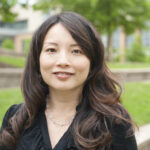
Charissa Cheah, professor of psychology, has received a Fulbright to collaborate with psychologists at the University of Palermo in Sicily to explore Muslim Tunisian immigrant adolescent identity development, civic engagement, positive youth development, and risk behavior engagement. The award is one of only six Fulbright awards open to all academic disciplines and specializations in the humanities, sciences, social sciences and the arts to conduct research in Italy.
“My Fulbright will focus on religious Muslim Tunisian adolescents in Sicily. The island has a long tradition of immigration and cultural exchanges with North African countries which has resulted in higher levels of tolerance and multicultural ideology,” explains Cheah, who hopes the work will challenge people to think critically about behavior within a cultural context. “The work in Sicily will help provide greater insights and context for improving the work I do to understand Muslim American youth development and adjustment in D.C., Virginia, and Maryland.”
Cheah’s cross-cultural focus is partially informed by her experience as a native Malaysian of Chinese ethnicity. “Malaysia is a multicultural society with a Muslim majority. At age 14 my family moved to Toronto and then I moved to the U.S. for graduate school. I found myself in many different contexts with various identities being salient on a daily basis.”
Learning to live among many different cultures throughout her youth and into her teen years gave Cheah first-hand knowledge of the cultural and social changes families make to create better living situations for themselves.
She carried this experience to graduate school where she had the opportunity for the first time to work with cross-cultural research in the Laboratory for the Study of Child and Family Relationships and the Center for Children, Relationships and Culture with director Kenneth Rubin, professor in Human Development & Quantitative Methodology at the University of Maryland, College Park.
“My dissertation was my first venture into doing a cross-cultural comparison where I tried to understand parenting beliefs and practices of European American families compared to mainland Chinese families. I wanted to understand the way the different families thought about developing their children’s social skills and how they interpreted negative and positive behaviors within particular cultural contexts.”
This pivotal point in her work led her to accept her first faculty position at the University of Saskatchewan, Canada, where she helped to develop a program on culture and human development. Here she was able to work with Cree adolescents and study their identity development within a First Nation and the larger Canadian culture.
She was able to see how some of the issues that teenagers everywhere struggle with in terms of their own identity, their place within their peer group, and how they see themselves in relation to their family’s traditions and beliefs can present challenges when they must also learn to understand their identity within a different larger religious, ethnic, and/or racial community. Since her move to UMBC in 2004, Cheah has expanded her work to include Chinese and Korean immigrant families in Maryland, as well as families in Korea, Turkey, Italy, Malaysia and Zimbabwe.
“In my research on immigrant and minority families, I am particularly interested in what beliefs and behaviors are maintained from the heritage culture, what is changed, adapted, or given up and what new combinations of beliefs, behaviors, and practices come about in this new cultural context.”
When her graduate student Madiha Tahseen ’09, M.A., psychology, and Ph.D. ’15, psychology and applied developmental psychology, a former doctoral student and Muslim, Pakistani American, wanted to research Muslim American adolescents for her dissertation, Cheah felt it was a natural fit.
“I first delved into the field of psychology as a undergrad because I saw a lot of Muslim youth around me suffering from mental illnesses but that were not being addressed both within and outside of the Muslim community, ” recalls Tahseen. “Clinicians were just not truly understanding what Muslim youth endure or how to treat their mental illness in a way that was supported within the cultural contexts of their lives.”
For Tahseen and Cheah, this was an opportunity to help provide context to what is often a very charged social political conversation about immigrant Muslim youth in the United States. Now she will expand the work to Muslim adolescents and their families in different contexts internationally, to further explore the roles of social, cultural, and political forces.
Cheah hopes the research will help to contribute to a body of work that helps move psychological theory beyond the traditional Western European-based data samples, and into a more culturally inclusive and relevant model.
“My colleagues and I who are cultural developmental scientists are trying to expand, diversify, and challenge people to think critically about culture and behavior. Our goal is to evolve the theory so that the standard won’t be based on just one cultural group. We hope to open doors and avenues for further investigation and self understanding. In the process, we aim to also diversify the body of researchers doing this work and more accurately represent the world in which we live.”
The Fulbright program is designed to foster relationships between the scholars in the United States and of other countries who are needed to solve global challenges.
Banner image: Charissa Cheah, psychology by Marlayna Demond ’11 for UMBC.
]]>
Charissa Cheah, professor of psychology, has received a Fulbright to collaborate with psychologists at the University of Palermo in Sicily to explore Muslim Tunisian immigrant adolescent identity...
https://umbc.edu/stories/charissa-cheah-receives-fulbright-award-to-research-identity-development-of-muslim-tunisian-immigrant-adolescents-in-sicily/
https://my3.my.umbc.edu/api/v0/pixel/news/120613/guest@my.umbc.edu/8ce18864d4d1bcce880ae2577be58068/api/pixel
alumni
cahss
community
diversityandinclusion
international
majoraward
policy-and-society
research
roi
UMBC News & Magazine
https://my3.my.umbc.edu/groups/umbc-news-magazine
https://assets1-my.umbc.edu/system/shared/avatars/groups/000/001/943/24435aa6207c452e7bc15cc74b42c7bb/xsmall.png?1748556657
https://assets1-my.umbc.edu/system/shared/avatars/groups/000/001/943/24435aa6207c452e7bc15cc74b42c7bb/original.png?1748556657
https://assets2-my.umbc.edu/system/shared/avatars/groups/000/001/943/24435aa6207c452e7bc15cc74b42c7bb/xxlarge.png?1748556657
https://assets2-my.umbc.edu/system/shared/avatars/groups/000/001/943/24435aa6207c452e7bc15cc74b42c7bb/xlarge.png?1748556657
https://assets3-my.umbc.edu/system/shared/avatars/groups/000/001/943/24435aa6207c452e7bc15cc74b42c7bb/large.png?1748556657
https://assets1-my.umbc.edu/system/shared/avatars/groups/000/001/943/24435aa6207c452e7bc15cc74b42c7bb/medium.png?1748556657
https://assets2-my.umbc.edu/system/shared/avatars/groups/000/001/943/24435aa6207c452e7bc15cc74b42c7bb/small.png?1748556657
https://assets1-my.umbc.edu/system/shared/avatars/groups/000/001/943/24435aa6207c452e7bc15cc74b42c7bb/xsmall.png?1748556657
https://assets2-my.umbc.edu/system/shared/avatars/groups/000/001/943/24435aa6207c452e7bc15cc74b42c7bb/xxsmall.png?1748556657
UMBC News & Magazine
0
0
false
Tue, 31 Oct 2017 19:33:50 -0400
Center for World University Rankings names UMBC as one of the world’s top universities

The Center for World University Rankings (CWUR) named UMBC as one of the top universities in the world according to their 2017 report released last week. UMBC lands in the top 1.9% of higher education institutions worldwide and joins only four other institutions in Maryland on the list. More than 27,000 organizations were evaluated, making the CWUR the largest ranking of global universities.
CWUR takes eight indicators into account when compiling their rankings, including quality of education (alumni who have won major international awards); alumni employment (as CEOs in companies worldwide); quality of faculty (faculty who have won major international awards); research publications, influence and citations; broad impact; and international patent filings.
UMBC is one of only five institutions in the state of Maryland to make an appearance on the list, along with University of Maryland, College Park; University of Maryland, Baltimore; Johns Hopkins University; and Uniformed Services University of the Health Sciences. In addition to the global recognition UMBC has attained, the Wall Street Journal/Times Higher Education list of nationally ranked institutions recently named UMBC as one of the top universities in the United States.
Photo: UMBC student works outside in 2017.
Photo by Marlayna Demond ’11 for UMBC.
]]>
The Center for World University Rankings (CWUR) named UMBC as one of the top universities in the world according to their 2017 report released last week. UMBC lands in the top 1.9% of higher...
https://umbc.edu/stories/center-for-world-university-rankings-names-umbc-as-one-of-the-worlds-top-universities/
https://my3.my.umbc.edu/api/v0/pixel/news/120616/guest@my.umbc.edu/087971662820019eacd34eddbbf9c3a1/api/pixel
community
international
rankings
roi
UMBC News & Magazine
https://my3.my.umbc.edu/groups/umbc-news-magazine
https://assets1-my.umbc.edu/system/shared/avatars/groups/000/001/943/24435aa6207c452e7bc15cc74b42c7bb/xsmall.png?1748556657
https://assets1-my.umbc.edu/system/shared/avatars/groups/000/001/943/24435aa6207c452e7bc15cc74b42c7bb/original.png?1748556657
https://assets2-my.umbc.edu/system/shared/avatars/groups/000/001/943/24435aa6207c452e7bc15cc74b42c7bb/xxlarge.png?1748556657
https://assets2-my.umbc.edu/system/shared/avatars/groups/000/001/943/24435aa6207c452e7bc15cc74b42c7bb/xlarge.png?1748556657
https://assets3-my.umbc.edu/system/shared/avatars/groups/000/001/943/24435aa6207c452e7bc15cc74b42c7bb/large.png?1748556657
https://assets1-my.umbc.edu/system/shared/avatars/groups/000/001/943/24435aa6207c452e7bc15cc74b42c7bb/medium.png?1748556657
https://assets2-my.umbc.edu/system/shared/avatars/groups/000/001/943/24435aa6207c452e7bc15cc74b42c7bb/small.png?1748556657
https://assets1-my.umbc.edu/system/shared/avatars/groups/000/001/943/24435aa6207c452e7bc15cc74b42c7bb/xsmall.png?1748556657
https://assets2-my.umbc.edu/system/shared/avatars/groups/000/001/943/24435aa6207c452e7bc15cc74b42c7bb/xxsmall.png?1748556657
UMBC News & Magazine
0
0
false
Tue, 24 Oct 2017 19:09:59 -0400
UMBC faculty offer context and analysis on major policy issues, from self-government in D.C. to healthcare
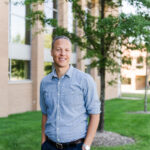
As fall semester has kicked into high gear, UMBC professors have connected not just with students in the classroom, but also with the broader public through research-based reflections on current events in popular media. Recently, humanities and social sciences faculty Derek Musgrove ’97, Christy Ford Chapin, and John Rennie Short have weighed in on topics from Washington D.C.’s long struggle over self-government, to the feasibility of Bernie Sanders’ “Medicare for all” proposal, to decisions over where to host the Olympic Games.
Musgrove, associate professor of history, recently published an opinion piece in The Washington Post with Colby College’s Chris Myers Asch, his co-author of the forthcoming book Chocolate City: A History of Race and Democracy in the Nation’s Capital. Their article delves into the tug-of-war over power in Washington, D.C., as a municipality, and how that has changed over time. Specifically, the authors examine recent hostility of congressional Republicans towards the District of Columbia’s attempts at autonomous self-governance, in contrast to the GOP’s general preference to “champion taking power from the federal government and [give] it to states and localities.”
“[T]his hostility is actually a relatively new phenomenon,” Musgrove and Asch write. “Just one generation ago, Republicans were some of the most eloquent proponents of District self-determination.”
The authors recall how Richard Nixon signed a bill that gave the city a nonvoting member of Congress in 1971 and, two years later, a bill that provided the district with limited self-government. Rather than indicate the start of a trend, however, Musgrove and Asch write, “fearing the growth of black, liberal political power, and the legislative reforms that District representatives would undoubtedly support, grass-roots conservatives engineered an abrupt about face in the party’s position. They successfully campaigned to scuttle the city’s quest for a vote in Congress and have since demanded opposition to any expansion of local self- government.”
 Christy Ford Chapin. Photo by Tim Ford for UMBC.
Christy Ford Chapin, associate professor of history and author of Ensuring America’s Health: The Public Creation of the Corporate Health Care System, similarly dove into the archives to provide context for Washington Post readers on a current policy debate. Following Bernie Sanders’s announcement of a “Medicare for all” plan, Chapin examined some of the core aspects of the approach and explained why she believes it fails to learn take advantage of lessons learned from previous health care policymaking efforts.
Medicare and ACA, Chapin explains, extended rather than replaced benefits for the elderly, those with preexisting conditions, and workers who could not afford health care. In contrast, she notes, “rather than mending the ACA or modifying the system in a way that is culturally familiar to voters, the senator’s proposal asks citizens to abandon their current coverage for a central planning experiment.” Such an experiment, controlled by government, she suggests, would be challenging for voters who may be feeling short on trust in elected officials.
 John Rennie Short. Photo by Marlayna Demond ’11 for UMBC.
Public policy professor John Rennie Short’s recent commentary in The Conversation, now read 25,000 times across sites like Business Insider and Salon, reflects on the Paris and Los Angeles bids for the summer Olympic Games, which he views generally as posing more challenges than benefits for host cities. What does he see as they major drawbacks? “The IOC retains control over the games, pockets the revenues from broadcasting rights and corporate sponsorship but is neither responsible for hosting and paying for the games nor at risk if any losses occur,” Short writes.Ultimately, Short argues, “Hosting the Olympics is a distraction from achieving a fairer, more just and efficient city.” He also delves further into who does benefit financially from hosting the Olympic games, reactions to bids in host cities, and possible solutions to the challenge hosting the games in an equitable, sustainable way, such as a single permanent host site or a small set of rotating host sites.
The future of D.C. governance, BernieCare, and the Olympic Games remain to be seen, but for greater context on the historical debates surrounding each, see the full articles: “Washingtonians want a voice in Congress. Republicans say no. But it wasn’t always that way” and “Medicare for all sounds great, but BernieCare is a political flop” in The Washington Post and “Paris and Los Angeles bids to host Olympics expose deeper crisis at Olympic Games,” on The Conversation.
Banner image: Derek Musgrove, history. Photo by Marlayna Demond ’11 for UMBC.
]]>
As fall semester has kicked into high gear, UMBC professors have connected not just with students in the classroom, but also with the broader public through research-based reflections on current...
https://umbc.edu/stories/umbc-faculty-offer-context-and-analysis-on-major-policy-issues-from-self-government-in-d-c-to-healthcare/
https://my3.my.umbc.edu/api/v0/pixel/news/120624/guest@my.umbc.edu/7d928f5e9c47a75c63457620a1c9e213/api/pixel
cahss
diversityandinclusion
history
policy-and-society
publicpolicy
roi
UMBC News & Magazine
https://my3.my.umbc.edu/groups/umbc-news-magazine
https://assets1-my.umbc.edu/system/shared/avatars/groups/000/001/943/24435aa6207c452e7bc15cc74b42c7bb/xsmall.png?1748556657
https://assets1-my.umbc.edu/system/shared/avatars/groups/000/001/943/24435aa6207c452e7bc15cc74b42c7bb/original.png?1748556657
https://assets2-my.umbc.edu/system/shared/avatars/groups/000/001/943/24435aa6207c452e7bc15cc74b42c7bb/xxlarge.png?1748556657
https://assets2-my.umbc.edu/system/shared/avatars/groups/000/001/943/24435aa6207c452e7bc15cc74b42c7bb/xlarge.png?1748556657
https://assets3-my.umbc.edu/system/shared/avatars/groups/000/001/943/24435aa6207c452e7bc15cc74b42c7bb/large.png?1748556657
https://assets1-my.umbc.edu/system/shared/avatars/groups/000/001/943/24435aa6207c452e7bc15cc74b42c7bb/medium.png?1748556657
https://assets2-my.umbc.edu/system/shared/avatars/groups/000/001/943/24435aa6207c452e7bc15cc74b42c7bb/small.png?1748556657
https://assets1-my.umbc.edu/system/shared/avatars/groups/000/001/943/24435aa6207c452e7bc15cc74b42c7bb/xsmall.png?1748556657
https://assets2-my.umbc.edu/system/shared/avatars/groups/000/001/943/24435aa6207c452e7bc15cc74b42c7bb/xxsmall.png?1748556657
UMBC News & Magazine
0
0
false
Mon, 09 Oct 2017 16:41:37 -0400
Times Higher Ed and Wall Street Journal recognize UMBC as a top global and U.S. university

Times Higher Education (THE) has again recognized UMBC as one of the world’s top universities in its closely watched 2018 rankings, announced late Tuesday evening. This marks the sixth consecutive year UMBC has appeared on the prestigious international list.
THE describes its World University Rankings as the only university performance measure to assess research-intensive universities on a global scale “across all of their core missions: teaching, research, knowledge transfer and international outlook.”
The 2018 ranking includes 1,000 universities from 77 countries, representing the top five percent of higher education institutions worldwide (see methodology). The list’s top ranks are dominated by the United Kingdom, United States, and Switzerland, with several universities from Germany, the Netherlands, and China also ranked very highly. Of the 157 U.S. universities included in THE World University Rankings this year, three are in Maryland: UMBC, the University of Maryland, College Park, and Johns Hopkins University.
UMBC’s profile in THE lauds the university’s commitment to innovation and impact by noting, “UMBC has always stressed innovation and interdisciplinarity. It has never been afraid to pioneer new models of teaching and research, and new ways of contributing to the regional economy.”
This recognition mirrors UMBC’s recent ranking as the #7 Most Innovative university in the nation by U.S. News & World Report, which also named UMBC one of the country’s top universities for Strong Commitment to Undergraduate Education, alongside Princeton, Brown, and Yale.
Times Higher Education further recognized UMBC’s innovative approach to supporting student success by featuring the university in a special THE summit held in Washington D.C., in conjunction with the release of the new global rankings. The inaugural U.S. Student Success Forum brought together influential higher education voices from around the world, including UMBC President Freeman Hrabowski and leaders from UC Berkeley, McMaster University, Columbia, Hong Kong Polytechnic University, and Microsoft.
In addition to producing annual global university rankings, Times Higher Education now also partners with The Wall Street Journal to produce national college rankings for the United States, across the categories of resources, engagement, outcomes, and environment, and based on a survey of more than 200,000 current university students. The WSJ/THE list for 2018 features UMBC as one of the top universities in the U.S., particularly recognizing UMBC’s diverse and inclusive educational community.
Both the U.S. and international lists continue to be valuable resources for prospective students and their families, in the U.S. and abroad, as they explore higher education possibilities.
Photo: UMBC students walk across campus in fall 2017. Photo by Marlayna Demond ’11 for UMBC.
]]>
Times Higher Education (THE) has again recognized UMBC as one of the world’s top universities in its closely watched 2018 rankings, announced late Tuesday evening. This marks the sixth consecutive...
https://umbc.edu/stories/times-higher-ed-and-wall-street-journal-recognize-umbc-as-a-top-global-and-u-s-university/
https://my3.my.umbc.edu/api/v0/pixel/news/120659/guest@my.umbc.edu/70d917b327624c888b4aad55b78ce942/api/pixel
community
international
rankings
roi
UMBC News & Magazine
https://my3.my.umbc.edu/groups/umbc-news-magazine
https://assets1-my.umbc.edu/system/shared/avatars/groups/000/001/943/24435aa6207c452e7bc15cc74b42c7bb/xsmall.png?1748556657
https://assets1-my.umbc.edu/system/shared/avatars/groups/000/001/943/24435aa6207c452e7bc15cc74b42c7bb/original.png?1748556657
https://assets2-my.umbc.edu/system/shared/avatars/groups/000/001/943/24435aa6207c452e7bc15cc74b42c7bb/xxlarge.png?1748556657
https://assets2-my.umbc.edu/system/shared/avatars/groups/000/001/943/24435aa6207c452e7bc15cc74b42c7bb/xlarge.png?1748556657
https://assets3-my.umbc.edu/system/shared/avatars/groups/000/001/943/24435aa6207c452e7bc15cc74b42c7bb/large.png?1748556657
https://assets1-my.umbc.edu/system/shared/avatars/groups/000/001/943/24435aa6207c452e7bc15cc74b42c7bb/medium.png?1748556657
https://assets2-my.umbc.edu/system/shared/avatars/groups/000/001/943/24435aa6207c452e7bc15cc74b42c7bb/small.png?1748556657
https://assets1-my.umbc.edu/system/shared/avatars/groups/000/001/943/24435aa6207c452e7bc15cc74b42c7bb/xsmall.png?1748556657
https://assets2-my.umbc.edu/system/shared/avatars/groups/000/001/943/24435aa6207c452e7bc15cc74b42c7bb/xxsmall.png?1748556657
UMBC News & Magazine
0
0
false
Wed, 27 Sep 2017 16:51:39 -0400
UMBC’s Chris Curran receives major NIJ grant for research on law enforcement in K–12 schools

UMBC’s F. Chris Curran, assistant professor of public policy, has received a two-year $620,000 National Institute of Justice (NIJ) Comprehensive School Safety Initiative (CSSI) grant to lead a new research study on the role of law enforcement officers in public schools.
“Law enforcement have become an increasingly common presence in school settings, particularly after high profile events like the tragedy at Sandy Hook,” notes Curran. “Our work seeks to understand the role of these officers in promoting safety, managing student behavior, and facilitating relationships with students.”
The CSSI grant program specifically funds innovative research to help understand the root causes of school violence, develop strategies for increasing school safety, and implement research based pilot programs, policies, and practices. Curran, primary investigator for this new study, shares, “The support of the National Institute of Justice allows for an unprecedented look at the role and impact of SROs in previously understudied settings”—in this case, in two Southern U.S. suburban school districts.
This work began about two years ago when Curran co-founded the Collaborative on Adolescent Violence and Victimization (CAVV) with researchers from UMBC, University of Pittsburgh, University of Louisville, and Vanderbilt University who were interested in looking further at this issue. “We collectively started a conversation with a couple of school districts to examine issues around school safety, discipline, and how SROs intersect with that.” Curran’s primary collaborators for the current study include co-principal investigator Benjamin W. Fisher of the University of Louisville and project coordinator Samantha Viano of Vanderbilt University.
In addition to the NIJ grant, Curran has also received a one-year $20,000 grant through the American Educational Research Association (AERA) with support from the National Science Foundation (NSF) to fund research in another area of education policy: science achievement in kindergarten through second grade. This new grant will enable Curran to expand his previous research on inequalities in science education that appear at a very early age utilizing nationally representative data. Curran’s previous groundbreaking work in that area appeared in publications from The Atlantic to Education Week.
“Part of what informs my work is a moral imperative,” says Curran. His sense of urgency to better understand the impacts of educational environment, resources, and pedagogy is informed by his past encounters with inequalities in the U.S. education system as a former middle school science teacher. After experiencing the challenges of teaching with outdated textbooks and providing students hands-on laboratory experiences when access to materials and equipment were limited, he decided to begin working at a policy level to more effectively meet students’ needs.
“Right now there are students being short-changed by the education system. They are not sitting in a classroom with a high enough quality teacher. They are not being provided the resources they deserve,” Curran reflects. “Too often these disparities run along racial lines, socioeconomic lines, or gender lines, and that is a problem.”
As a researcher, educator, and someone training the next generation of education policy analysts, Curran says, “I would like to think my work does something to address those problems. Policy won’t change overnight, but these issues we’re addressing are truly urgent.”
]]>
UMBC’s F. Chris Curran, assistant professor of public policy, has received a two-year $620,000 National Institute of Justice (NIJ) Comprehensive School Safety Initiative (CSSI) grant to lead a new...
https://umbc.edu/stories/umbcs-chris-curran-receives-major-nij-grant-for-research-on-law-enforcement-in-k-12-schools/
https://my3.my.umbc.edu/api/v0/pixel/news/120661/guest@my.umbc.edu/58f54800172b1e2e8f342e9557637064/api/pixel
cahss
diversityandinclusion
innovation
policy-and-society
publicpolicy
roi
UMBC News & Magazine
https://my3.my.umbc.edu/groups/umbc-news-magazine
https://assets1-my.umbc.edu/system/shared/avatars/groups/000/001/943/24435aa6207c452e7bc15cc74b42c7bb/xsmall.png?1748556657
https://assets1-my.umbc.edu/system/shared/avatars/groups/000/001/943/24435aa6207c452e7bc15cc74b42c7bb/original.png?1748556657
https://assets2-my.umbc.edu/system/shared/avatars/groups/000/001/943/24435aa6207c452e7bc15cc74b42c7bb/xxlarge.png?1748556657
https://assets2-my.umbc.edu/system/shared/avatars/groups/000/001/943/24435aa6207c452e7bc15cc74b42c7bb/xlarge.png?1748556657
https://assets3-my.umbc.edu/system/shared/avatars/groups/000/001/943/24435aa6207c452e7bc15cc74b42c7bb/large.png?1748556657
https://assets1-my.umbc.edu/system/shared/avatars/groups/000/001/943/24435aa6207c452e7bc15cc74b42c7bb/medium.png?1748556657
https://assets2-my.umbc.edu/system/shared/avatars/groups/000/001/943/24435aa6207c452e7bc15cc74b42c7bb/small.png?1748556657
https://assets1-my.umbc.edu/system/shared/avatars/groups/000/001/943/24435aa6207c452e7bc15cc74b42c7bb/xsmall.png?1748556657
https://assets2-my.umbc.edu/system/shared/avatars/groups/000/001/943/24435aa6207c452e7bc15cc74b42c7bb/xxsmall.png?1748556657
UMBC News & Magazine
0
0
false
Wed, 27 Sep 2017 14:29:09 -0400
Christy Ford Chapin begins Library of Congress fellowship, continuing history faculty’s trend of research achievement

When Christy Ford Chapin, associate professor of history, began teaching at UMBC in 2012, she started by connecting curious students with the history of the American health care system. Her first book, Ensuring America’s Health, was an in-depth history of the country’s health care and health insurance system. This fall, as the recipient of a prestigious Kluge Fellowship, Chapin is immersed in the banking and finance collections at the U.S. Library of Congress, rather than in conversation with her students. While the archives are not quite as action-packed as the classroom, her enthusiasm for digging into the nitty gritty of U.S. history remains contagious.
Chapin loves how historians seek answers buried in documents, archives, museums, libraries, basements, attics and forgotten filing cabinets. “We have to be like private investigators. I have to beg, borrow, and plead to get documents,” says Chapin. “I was really intimidated by the research aspect early on in my graduate career, but then I fell in love with the hunt for primary sources and the process of putting together pieces of the evidence puzzle.”
Through her current Kluge Fellowship, as well as an inaugural fellowship last spring at the Ed Snider Center for the History of Capitalism at the University of Maryland, Chapin examines how the United States shifted from an industrial manufacturing economy to a financial economy for a new book on post-WWII finance. She’s energized by seeing several of her history colleagues pursue other high impact research areas through fellowships around the globe in what has been a particularly exciting year of achievement for the department’s faculty.
While in Beijing researching her first book in 2011, Meredith Oyen, associate professor, came across documents that discussed cooperation between the People’s Republic of China and the UN-affiliated International Refugee Organization well into the 1950s, when the PRC was not recognized by the UN. They dealt in part with the resettlement of Jewish and European refugees in China after WWII.
The documents reflected a great mystery. I asked myself, ‘Why did this organization stay in China all these years?’ I had to search other archives to start to figure it out.” Oyen was determined to learn more and followed the paperwork trail to Shanghai, Taipei, London, and Washington D.C. where she held a U.S. Holocaust Memorial Museum Fellowship in 2016-17 that helped her find even more clues.
 Meredith Oyen. Photo by Marlayna Demond ’11 for UMBC.
At the same time, Marjoleine Kars, associate professor and chair, and Kate Brown, professor, pursued Braudel Senior Fellowships at the European University Institute in Florence, Italy. There, Kars worked on her book about one of the largest rebellions of enslaved people in Atlantic history, which occurred in 1763 in the South American Dutch colony of Berbice. Brown continued to expand her research on the lasting health and environmental impacts of the Chernobyl nuclear disaster in new directions.
 Kate Brown. Photo courtesy of Annette Hornischer.
Brown also received a highly prestigious Andrew Carnegie Fellowship to study the health effect of Chernobyl and a Berlin Prize from the American Academy in Berlin.
 Rebecca Boehling. Photo courtesy of Annette Hornischer.
Prior to Brown receiving the Berlin Prize, Professor Rebecca Boehling received the prestigious award in fall 2016 for her work on denazification in post-WWII Germany, comparing the approaches of the United States, Great Britain, and France.
Kars shares how these types of intensive research and international exchange opportunities have far-reaching benefits for the individual faculty members who experience them. “Faculty come back from research leave with new ideas about teaching, research projects, new directions for their own work, and they bring that energy into the classroom,” she says. “Our students benefit from reenergized faculty who are on the cutting edge of their profession and are able to connect them with research monies, fellowships, and graduate school mentors.”
 Marjoleine Kars. Photo by Marlayna Demond ’11 for UMBC.
In order to reach this level of success, Kars notes, history faculty have also depended on support from each other—in terms of sharing feedback, resources, and responsibilities—and from the broader university. She particularly credits a multi-tiered support system of seed funding—in the form of summer fellowships and research money from the College of Arts, Humanities, and Social Sciences, The Maryland Institute for Policy Analysis and Research, and The Dresher Center for the Humanities—as well as the help of Rachel Brubaker, associate director of The Dresher Center, with writing and submitting grant applications.
“This kind of support has been invaluable to our faculty as they work to hone their research and explore new opportunities for growth,” says Kars. “When I think about what has made the difference in our successfully competing for such major national and international fellowships, one core aspect of UMBC comes to mind: our collaborative community of scholars. This is what makes it possible for us to explore unique research opportunities around the world, and what draws us back to UMBC each time, to share what we’ve learned.”
Banner image: Christy Ford Chapin presents at Hilltop First Talk. Photo Marlayna Demond ’11 for UMBC.
]]>
When Christy Ford Chapin, associate professor of history, began teaching at UMBC in 2012, she started by connecting curious students with the history of the American health care system. Her first...
https://umbc.edu/stories/christy-ford-chapin-begins-library-of-congress-fellowship-continuing-history-facultys-trend-of-research-achievement/
https://my3.my.umbc.edu/api/v0/pixel/news/120663/guest@my.umbc.edu/b41bd03413c231f42c0108b7c0e57355/api/pixel
cahss
dreshercenter
history
innovation
majoraward
mipar
policy-and-society
roi
UMBC News & Magazine
https://my3.my.umbc.edu/groups/umbc-news-magazine
https://assets1-my.umbc.edu/system/shared/avatars/groups/000/001/943/24435aa6207c452e7bc15cc74b42c7bb/xsmall.png?1748556657
https://assets1-my.umbc.edu/system/shared/avatars/groups/000/001/943/24435aa6207c452e7bc15cc74b42c7bb/original.png?1748556657
https://assets2-my.umbc.edu/system/shared/avatars/groups/000/001/943/24435aa6207c452e7bc15cc74b42c7bb/xxlarge.png?1748556657
https://assets2-my.umbc.edu/system/shared/avatars/groups/000/001/943/24435aa6207c452e7bc15cc74b42c7bb/xlarge.png?1748556657
https://assets3-my.umbc.edu/system/shared/avatars/groups/000/001/943/24435aa6207c452e7bc15cc74b42c7bb/large.png?1748556657
https://assets1-my.umbc.edu/system/shared/avatars/groups/000/001/943/24435aa6207c452e7bc15cc74b42c7bb/medium.png?1748556657
https://assets2-my.umbc.edu/system/shared/avatars/groups/000/001/943/24435aa6207c452e7bc15cc74b42c7bb/small.png?1748556657
https://assets1-my.umbc.edu/system/shared/avatars/groups/000/001/943/24435aa6207c452e7bc15cc74b42c7bb/xsmall.png?1748556657
https://assets2-my.umbc.edu/system/shared/avatars/groups/000/001/943/24435aa6207c452e7bc15cc74b42c7bb/xxsmall.png?1748556657
UMBC News & Magazine
0
0
false
Mon, 25 Sep 2017 14:23:02 -0400
 Brandon Enriquez ’17, economics and mathematics. Photo by Marlayna Demond ’11 for UMBC.
 M’Balou Camara ’15, political science. Photo courtesy of Camara.

