Meet a Retriever–Keisha Hale, M.A. ’20, Hurricane Katrina survivor, educator, researcher, and author
Meet Keisha Hale, M.A.’20, applied sociology. Keisha is an educator, researcher, and author. In 2025, she published We Weather the Storm: A Poetry Memoir of Survival and Healing, inspired by her experiences surviving Hurricane Katrina and navigating foster care. Her work centers on resilience, education, and giving voice to stories that are often overlooked. Whether she’s teaching fourth grade math, analyzing data, or writing poetry, Keisha is passionate about using storytelling and research to create understanding, inspire change, and help others feel seen. Take it away, Keisha!
Q: What initially brought you to UMBC?
A: I came to UMBC because I wanted to better understand the social systems that shape people’s lives and to gain the skills to create meaningful change. After experiencing Hurricane Katrina, navigating foster care, and witnessing firsthand how policies and institutions can impact individuals and families, I knew I wanted to study society in a way that combined research with real world application. UMBC’s applied sociology program stood out because it emphasized using data, research, and critical thinking to address complex social issues.
I wanted more than a degree. I wanted an education that would prepare me to serve my community, inform policy, and make a lasting impact.
Keisha Hale, M.A. ’20
Q: Can you tell us what you loved most about the applied sociology program?
A: What I loved most about UMBC’s applied sociology program was its emphasis on using research to solve real world problems. The program challenged me to think critically, analyze data, and understand the social systems that shape people’s lives. It encouraged me to move beyond theory and consider how research can inform policy, improve communities, and create meaningful change.
Q: Can you talk about your experience as a first generation student?
A: As a first generation graduate student, there were moments when I questioned whether I truly belonged. Like many students, I experienced imposter syndrome and wondered if I was capable enough to succeed. What I learned at UMBC is that belonging is not determined by where you come from, but by your willingness to learn, grow, and persevere.
I would encourage other first generation students to not let self doubt convince them they are less deserving of the opportunities they’ve earned. Ask questions, seek out mentors, build relationships, and take advantage of the support systems UMBC has to offer. There are people here who genuinely want to see you succeed.
Looking back, I realize that believing in myself was just as important as earning good grades. UMBC gave me the confidence to trust my abilities, find my voice, and pursue opportunities that have shaped my career as a researcher, educator, and author. I hope other students give themselves permission to do the same.
Q: Were you a part of any clubs or organizations at UMBC?
A: During my time at UMBC, I was an active member of Alpha Kappa Delta, the International Sociology Honor Society, and the Sociology Graduate Student Association. Both organizations gave me opportunities to connect with classmates who shared my passion for research, social justice, and community engagement.
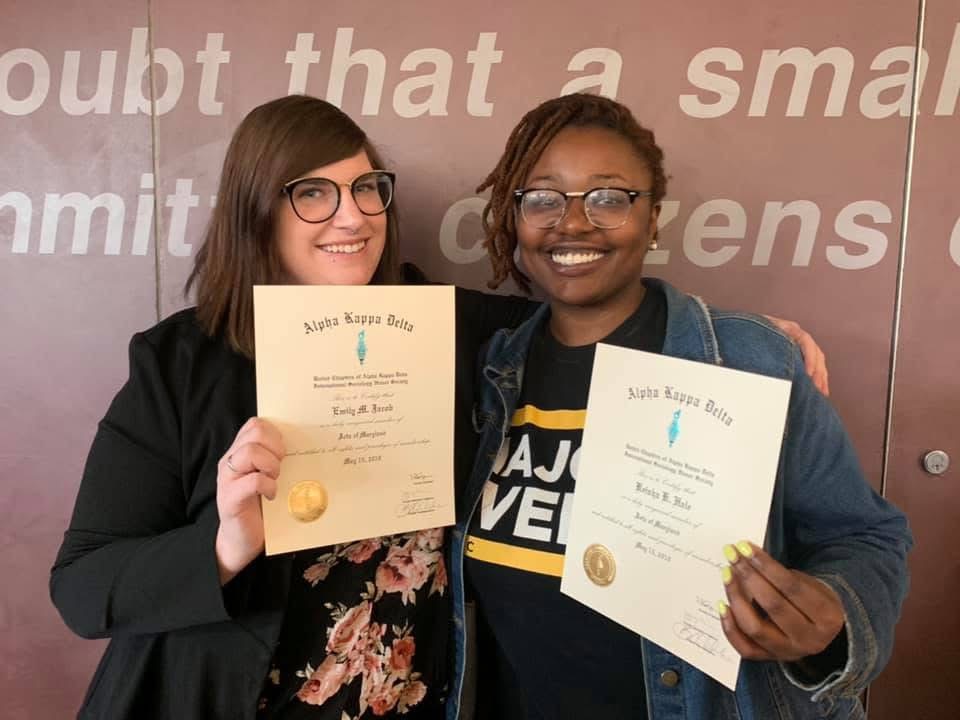 Hale (right) during Alpha Kappa Delta induction. (Photo courtesy Hale)
 Hale (left) at the Sociology Graduate Student Organization table during UMBC Career Month. (Photo courtesy Hale)
What I appreciated most was the opportunity to learn from one another beyond the classroom. Through these organizations, I built friendships, expanded my professional network, and engaged in meaningful conversations about research, policy, and the role sociology plays in addressing real world challenges. Those experiences strengthened my sense of belonging at UMBC and reinforced my commitment to using research and education to make a positive impact in my community.
Q: Where did you find support while at UMBC?
A: One of the things I valued most about my time at UMBC was the sense of community I found there. While there was not just one person who inspired me, the relationships I built as a graduate assistant had a lasting impact. Working alongside fellow graduate students, faculty, and staff allowed me to develop meaningful connections with people who became mentors, collaborators, and an important part of my support system.
One of those relationships was with my fellow graduate student, Samantha Fries ’18, M.A. ’25. We supported one another throughout our time at UMBC, encouraging each other academically and personally. That friendship has continued long after graduation, and I was honored to stand beside her as a member of her wedding party.
Some of the most meaningful parts of the UMBC experience are the lifelong relationships you build along the way.
Keisha Hale, M.A. ’20
Building a trusted, supportive community, whether through biological family or the family we create through friends, mentors, and colleagues, has always been essential to my success. UMBC reinforced that belief by surrounding me with people who invested in my growth both personally and professionally. Their encouragement gave me the confidence to pursue my goals, and those relationships continue to influence the way I approach my work as an educator, researcher, and author.
Q: Since you’ve been a part of the UMBC community, how have you found support for your dreams?
A: UMBC helped turn my aspirations into opportunities by surrounding me with people who believed in my potential and invested in my growth. As a graduate assistant, I gained hands-on experience while building meaningful relationships with faculty, staff, and fellow graduate students who encouraged me to challenge myself and pursue new opportunities.
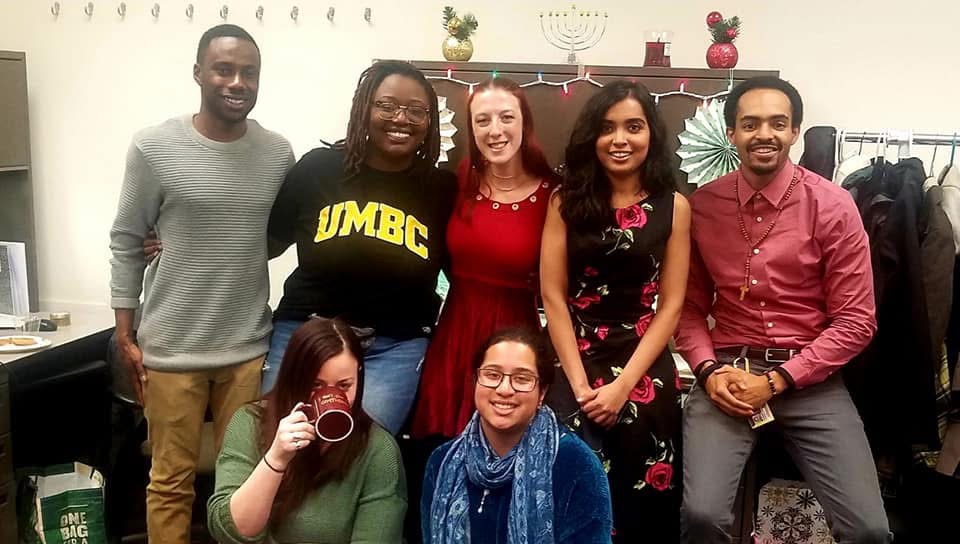 Hale (back row, second from left) and other applied sociology graduate students at a holiday party. (Photo courtesy Hale)
The knowledge and practical experience I gained through the applied sociology program prepared me for a career in research, beginning with my role at Westat, where I supported large scale federally funded studies. Just as importantly, the confidence and encouragement I received at UMBC inspired me to continue growing beyond research. Today, I am an educator, researcher, and author, and I carry the lessons, mentorship, and sense of community I found at UMBC into everything I do.
What has made the biggest difference is knowing that UMBC did not just prepare me academically. It gave me a network of people who continue to encourage, support, and celebrate one another long after graduation. That lasting community is one of the greatest gifts UMBC has given me.
Q: What is a piece of advice you would give a current UMBC student?
A: You never have to navigate your journey alone. UMBC is a place where people genuinely invest in one another’s success. Whether it is faculty who challenge and encourage you, classmates who become lifelong friends, or mentors who help you see your potential, there is a strong sense that everyone wants to see you succeed.
* * * * *
UMBC’s greatest strength is its people. When people meet Retrievers and hear about the passion they bring, the relationships they create, the ways they support each other, and the commitment they have to inclusive excellence, they truly get a sense of our community. That’s what “Meet a Retriever” is all about.
Learn more about how UMBC can help you achieve your goals.
]]>
Meet Keisha Hale, M.A.’20, applied sociology. Keisha is an educator, researcher, and author. In 2025, she published We Weather the Storm: A Poetry Memoir of Survival and Healing, inspired by her...
https://umbc.edu/stories/keisha-hale-author/
https://my3.my.umbc.edu/api/v0/pixel/news/161111/guest@my.umbc.edu/4edb0efc96ff6bca5429c2eba205c3f1/api/pixel
alumni
applied-sociology
arts-and-culture
cahss
graduate-school
retriever-authors
social-work
stories
story
UMBC News & Magazine
https://my3.my.umbc.edu/groups/umbc-news-magazine
https://assets1-my.umbc.edu/system/shared/avatars/groups/000/001/943/24435aa6207c452e7bc15cc74b42c7bb/xsmall.png?1748556657
https://assets1-my.umbc.edu/system/shared/avatars/groups/000/001/943/24435aa6207c452e7bc15cc74b42c7bb/original.png?1748556657
https://assets2-my.umbc.edu/system/shared/avatars/groups/000/001/943/24435aa6207c452e7bc15cc74b42c7bb/xxlarge.png?1748556657
https://assets2-my.umbc.edu/system/shared/avatars/groups/000/001/943/24435aa6207c452e7bc15cc74b42c7bb/xlarge.png?1748556657
https://assets3-my.umbc.edu/system/shared/avatars/groups/000/001/943/24435aa6207c452e7bc15cc74b42c7bb/large.png?1748556657
https://assets1-my.umbc.edu/system/shared/avatars/groups/000/001/943/24435aa6207c452e7bc15cc74b42c7bb/medium.png?1748556657
https://assets2-my.umbc.edu/system/shared/avatars/groups/000/001/943/24435aa6207c452e7bc15cc74b42c7bb/small.png?1748556657
https://assets1-my.umbc.edu/system/shared/avatars/groups/000/001/943/24435aa6207c452e7bc15cc74b42c7bb/xsmall.png?1748556657
https://assets2-my.umbc.edu/system/shared/avatars/groups/000/001/943/24435aa6207c452e7bc15cc74b42c7bb/xxsmall.png?1748556657
UMBC News & Magazine
0
0
false
Wed, 15 Jul 2026 09:27:49 -0400
Wed, 15 Jul 2026 09:27:49 -0400
Meet a Retriever—Beryl Fuamazeh ’26 is on her way to medical school with an eye on aging care
Beryl Fuamazeh ’26, biology, and a minor in health, wellness, and aging, is on her way to Howard University College of Medicine. After connecting with Nancy Kusmaul, professor of social work, Beryl found her research interests piqued by learning more about healthcare and aging care. While at UMBC, Beryl worked as a nursing assistant at a retirement community and volunteered for an organization that supports people with disabilities and older adults. After presenting her research at UMBC’s Undergraduate Research and Creative Achievement Day, she received the Erickson School of Aging Studies Award for Excellence in Undergraduate Research.
Beryl transferred to UMBC from the Community College of Baltimore County through the Degrees to Succeed program, and says that the support and funding she’s received from UMBC has made her education affordable and given her time to focus on her passion: healthcare and aging. Outside of school and work, she loves watching Korean dramas.
Q: Tell us about someone in the UMBC community who has inspired you.
A: Dr. Nancy Kusmaul is my research mentor, and she has been instrumental in my undergraduate research journey. The work she does to support the aging community has deeply inspired me. I have also been greatly influenced by Professor Mary Carter, an English professor here, who taught me how to better express myself through writing—a skill that was invaluable during my medical school application process. The support and guidance both faculty members have given me have truly shaped my experience at UMBC.
Q: Tell us about what you love about your academic program.
A: I’ve really enjoyed being part of the Erickson School of Aging Studies through my minor in health, wellness, and aging. Many of the classes I’ve taken have been meaningful because I can directly apply what I learn to my work as a nursing assistant in a retirement community. My biology major has also given me a strong foundation as I prepare to matriculate into medical school.
Q: What’s one thing you’d want someone to know about the support you find here?
A: Because it’s a smaller university, I’ve been able to build meaningful one-on-one relationships with professors, which has been incredibly valuable. I’ve also loved being surrounded by students who are passionate, driven, and genuinely supportive of one another, especially within the sciences. UMBC is a very supportive community.
Q: What brought you to UMBC in the first place?
A: I wanted to further my education while building meaningful relationships along the way. As someone pursuing the pre-med path, I knew it was important to be surrounded by supportive, like-minded people, and UMBC provided that for me, especially as a transfer student from the Community College of Baltimore County.
I was also drawn to the smaller campus environment, which made it easier to adapt and connect with professors and peers. Through my community college’s Degrees to Succeed partnership program, I was introduced to UMBC and the opportunities it offered, including research experiences, mentorship, and a strong academic community.
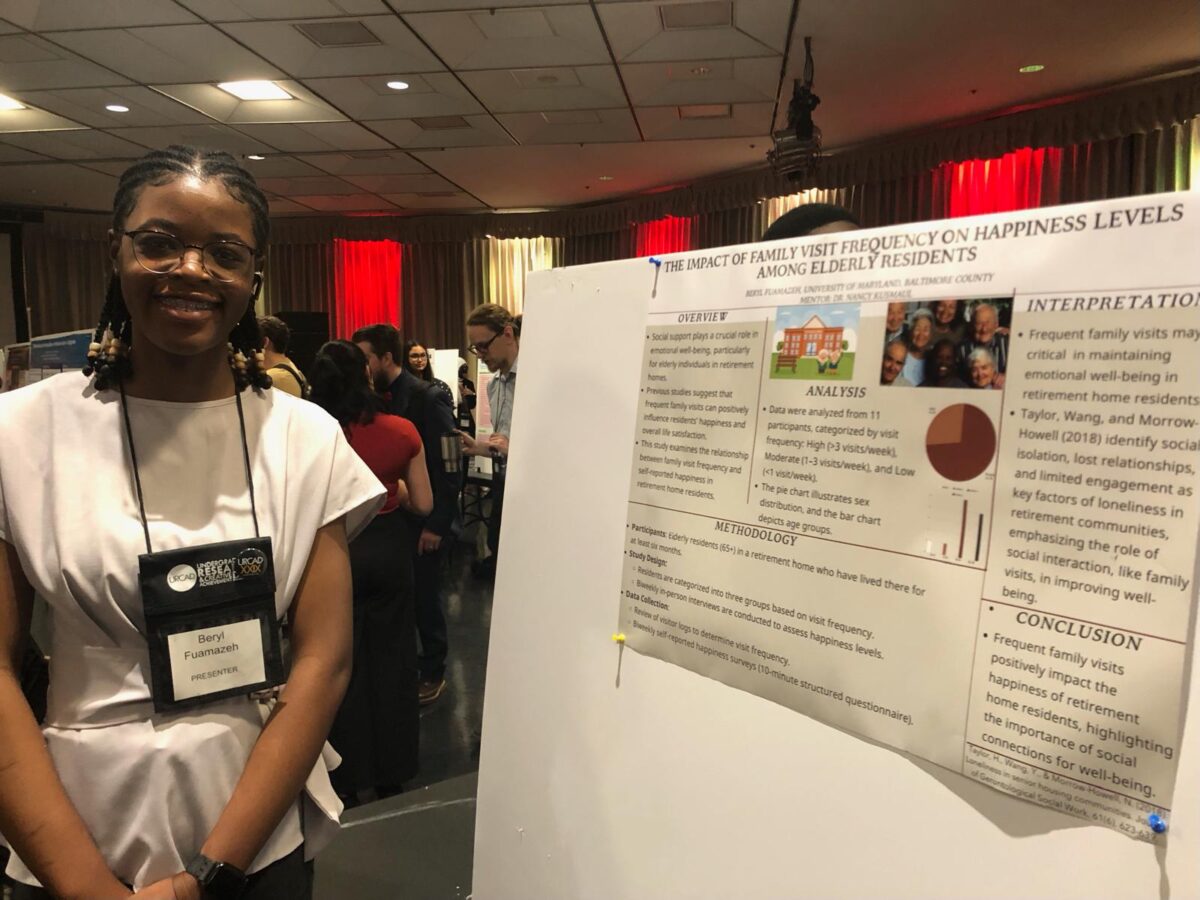
Right: Fuamazeh next to her poster at URCAD 2025.
Q: Tell us about the people who are helping you grow at UMBC.
A: Dr. Nancy Kusmaul has been incredibly instrumental in helping me grow at UMBC. She helped me kickstart my undergraduate research journey, which initially felt very daunting. All it took was reaching out to her by email, and she was immediately supportive and responsive. She took time out of her busy schedule to help me develop an individualized research study focused on aging, a topic that has become deeply meaningful to me and the communities it impacts.
Q: How have you connected with the community?
A: I have been involved in community programs, like volunteering with the Trusted Ride Program at Ascension Saint Agnes Hospital, which supports older adults and individuals with disabilities by helping them get to medical appointments safely. Experiences like this have allowed me to stay connected to the community while pursuing my interests in healthcare and aging.
Q: What would you tell others who are in your shoes about UMBC?
A: I transferred to UMBC from the Community College of Baltimore County, and through scholarships and financial support, including merit-based awards, UMBC helped ease the financial burden of pursuing higher education, which allowed me to focus more on my academics and future goals. I also felt well supported as a transfer student through the Degrees to Succeed program, even before officially transferring to UMBC. The transition felt smooth, and I always felt like there were people willing to help guide me along the way.
UMBC’s greatest strength is its people. When people meet Retrievers and hear about the passion they bring, the relationships they create, the ways they support each other, and the commitment they have to inclusive excellence, they truly get a sense of our community. That’s what “Meet a Retriever” is all about.
Learn more about how UMBC can help you achieve your goals.
]]>
Beryl Fuamazeh ’26, biology, and a minor in health, wellness, and aging, is on her way to Howard University College of Medicine. After connecting with Nancy Kusmaul, professor of social work,...
https://umbc.edu/stories/meet-a-retriever-beryl-fuamazeh-aging-care/
https://my3.my.umbc.edu/api/v0/pixel/news/160752/guest@my.umbc.edu/8b4bf215522e0179499e5c60c5bc173d/api/pixel
aging-studies
alumni
cnms
erickson-school
meet-a-retriever
perspectives
social-work
story
urcad
UMBC News & Magazine
https://my3.my.umbc.edu/groups/umbc-news-magazine
https://assets1-my.umbc.edu/system/shared/avatars/groups/000/001/943/24435aa6207c452e7bc15cc74b42c7bb/xsmall.png?1748556657
https://assets1-my.umbc.edu/system/shared/avatars/groups/000/001/943/24435aa6207c452e7bc15cc74b42c7bb/original.png?1748556657
https://assets2-my.umbc.edu/system/shared/avatars/groups/000/001/943/24435aa6207c452e7bc15cc74b42c7bb/xxlarge.png?1748556657
https://assets2-my.umbc.edu/system/shared/avatars/groups/000/001/943/24435aa6207c452e7bc15cc74b42c7bb/xlarge.png?1748556657
https://assets3-my.umbc.edu/system/shared/avatars/groups/000/001/943/24435aa6207c452e7bc15cc74b42c7bb/large.png?1748556657
https://assets1-my.umbc.edu/system/shared/avatars/groups/000/001/943/24435aa6207c452e7bc15cc74b42c7bb/medium.png?1748556657
https://assets2-my.umbc.edu/system/shared/avatars/groups/000/001/943/24435aa6207c452e7bc15cc74b42c7bb/small.png?1748556657
https://assets1-my.umbc.edu/system/shared/avatars/groups/000/001/943/24435aa6207c452e7bc15cc74b42c7bb/xsmall.png?1748556657
https://assets2-my.umbc.edu/system/shared/avatars/groups/000/001/943/24435aa6207c452e7bc15cc74b42c7bb/xxsmall.png?1748556657
UMBC News & Magazine
1
0
false
Wed, 17 Jun 2026 15:25:50 -0400
Wed, 17 Jun 2026 15:25:50 -0400
Maleeha Ahmed ’26 returned to school with purpose and found her calling in social work
Caring for others has always been central to who Maleeha Ahmed is. As the oldest of five children, she naturally stepped into caregiving roles early in life, supporting both family members and older adults in her community. Over time, she began to recognize that the work she had been doing informally for many years reflected the values and responsibilities of professional social work.
Balancing caregiving responsibilities and helping manage an accounting business with her husband of 26 years made returning to college challenging, and for many years her education was interrupted by family obligations. However, during the COVID-19 pandemic, Ahmed realized how important it was to complete her degree and build long-term stability for herself. With renewed determination, she returned to school at the Community College of Baltimore County (CCBC), where supportive faculty encouraged her to continue her academic journey.
Ahmed was introduced to social work during UMBC orientation by Kenneth Barron, assistant vice provost for academic advising and student success, who helped her see how the profession aligned with both her experience and her career goals. With his guidance, she chose to pursue social work alongside psychology and ultimately completed both majors after transferring to UMBC.
At UMBC, Ahmed found a welcoming community, especially among other adult learners balancing education with family responsibilities, especially within the social work program. Ahmed will continue her education at Salisbury University this fall in the Master of Social Work program, where she plans to focus on work with older adults and end-of-life care and counseling.
Q: How did you come to be at UMBC?
A: UMBC was always my first choice because it is close to home, which was important since I am a caregiver for my mother and needed to be available if she required support. I had started college several times over the years but had to pause because of caregiving responsibilities and family obligations. During the COVID-19 pandemic, I realized how important it was for me to complete my education and build long-term stability for myself. That experience strengthened my motivation, and when I returned to school, I approached my studies with greater focus and determination. I completed my associate degree at CCBC and then transferred to UMBC to pursue a double major in psychology and social work.
Q: What was different this time?
A: This time I returned to school with a clear purpose and stronger self-confidence. Earlier in my life, caregiving responsibilities, especially caring for my father, made it difficult to continue my education. I also faced challenges as an ESL student returning to college after many years away. However, I eventually recognized that I had already developed strong problem-solving and leadership skills through running a business and supporting my family. That realization helped me believe in my academic ability and stay committed to completing my degree.
Q: How did your professors show their support?
A: At CCBC and UMBC, I was very fortunate to have professors who were supportive and encouraging throughout my academic journey. Their guidance helped me build confidence and stay motivated. I actually began by taking just one class at CCBC in 2022, but the encouragement I received from my professors made me feel capable and excited about learning again. That support played an important role in helping me stay committed and continue my education full time.
 Ahmed is presented with the Tina D’Angelo Memorial Scholarship by Nancy Kusmaul, social work. (Photo courtesy of Ahmed)
Q: What has your community been like here at UMBC?
A: I found the campus community to be welcoming and supportive across different age groups and backgrounds. As an adult learner, it was especially meaningful to connect with other returning students who understood the challenges of balancing school with family responsibilities. We encouraged each other and became an important source of support throughout my time at UMBC.
Q: Why did you choose social work?
A: I have always felt drawn to helping others, but earlier in my life I did not realize that social work was a professional field I could pursue. Through my involvement with my mosque, I supported several refugee families and saw firsthand the importance of family support and counseling services. That experience motivated me to return to school and begin working toward a degree in psychology at CCBC because I was interested in becoming a family therapist.
During orientation, I met Dr. Kenneth Barron, who introduced me to social work as a profession and explained that it would allow me to reach my goal of becoming a therapist more quickly. As an adult learner, time was an important consideration, and his guidance helped me see how social work aligned with both my experience and my career goals. With his encouragement, I added social work as a second major. His mentorship played an important role in my academic journey.
Tell me about your social work field work placement.
I am completing my field placement at Vantage Point, a continuing care retirement community in Columbia. It has been a very meaningful experience, and I have been fortunate to work with two supportive supervisors, one in a clinical role and one in a community-based social work role. This has allowed me to gain exposure to different aspects of practice across the continuum of care for older adults. Through this placement, I have been developing skills in assessment, collaboration with interdisciplinary teams, and supporting residents and families during transitions.
Q: What do you see your career being like when you get your MSW?
A: After completing my MSW, I hope to continue working with older adults, particularly in hospice or end-of-life care. My field placement at Vantage Point has strengthened my interest in aging services and has helped me better understand the importance of providing emotional support to residents and families during times of transition and serious illness. Through this experience, I have seen how meaningful it is for individuals to feel supported, respected, and not alone during vulnerable stages of life.
My interest in hospice work is also shaped by personal experience. I once cared for a refugee woman with cancer in my home when her family was unable to provide support, and I stayed with her until she passed away. I have also been present with three people in my life at the time of their death. Those experiences helped me become more comfortable with end-of-life care and showed me how important it is for someone to be present and provide dignity and companionship during that time.
Q: What benefit do you get from the close contact with people you’re caring for?
A: Working closely with people has always felt meaningful to me because I value helping others feel supported, respected, and understood, regardless of their background or life circumstances. Social work feels like a natural fit for who I am because it allows me to combine compassion with practical support and advocacy. It gives me a strong sense of purpose to know that I am contributing in a way that makes a real difference in people’s lives.
Q: How are you preparing yourself to prioritize self-care in order to undertake a career like this?
A: Earlier in my life, I often focused on caring for others without paying enough attention to my own well-being. Over the past two years at UMBC, I have learned how important it is to recognize my limits and take time to recharge so I can remain effective in supporting others. I now make space for activities such as walking, prayer, and quiet reflection, which help me manage stress and prevent burnout.
Q: How do you hope to look back on your working years?
A: I would like to continue working for as long as I am able because helping others gives me a strong sense of purpose. Most importantly, I hope I will have encouraged people to be resilient, believe in themselves, and continue moving forward even during difficult times.
Q: What would you tell people who think it’s too late to go back and finish their education?
A: It is never too late to return to school. During my time at UMBC, I met many adult learners who were balancing family responsibilities and other life commitments while attending school full time, and their dedication was a constant source of encouragement for me. I also experienced how powerful mutual support can be. For example, a close friend and study partner I met at CCBC had been taking classes only occasionally, but seeing my commitment encouraged her to continue her education. She is now preparing to pursue her nursing degree. Experiences like this have shown me that people can inspire each other at any stage of life, and that with determination and support, it is always possible to move forward.
]]>
Caring for others has always been central to who Maleeha Ahmed is. As the oldest of five children, she naturally stepped into caregiving roles early in life, supporting both family members and...
https://umbc.edu/stories/maleeha-ahmed-26-found-her-calling-in-social-work/
https://my3.my.umbc.edu/api/v0/pixel/news/159708/guest@my.umbc.edu/714453e85ea5fea6daf79d27871c72b0/api/pixel
class-of-2026
news
policy-and-society
social-work
story
transfer
UMBC News & Magazine
https://my3.my.umbc.edu/groups/umbc-news-magazine
https://assets1-my.umbc.edu/system/shared/avatars/groups/000/001/943/24435aa6207c452e7bc15cc74b42c7bb/xsmall.png?1748556657
https://assets1-my.umbc.edu/system/shared/avatars/groups/000/001/943/24435aa6207c452e7bc15cc74b42c7bb/original.png?1748556657
https://assets2-my.umbc.edu/system/shared/avatars/groups/000/001/943/24435aa6207c452e7bc15cc74b42c7bb/xxlarge.png?1748556657
https://assets2-my.umbc.edu/system/shared/avatars/groups/000/001/943/24435aa6207c452e7bc15cc74b42c7bb/xlarge.png?1748556657
https://assets3-my.umbc.edu/system/shared/avatars/groups/000/001/943/24435aa6207c452e7bc15cc74b42c7bb/large.png?1748556657
https://assets1-my.umbc.edu/system/shared/avatars/groups/000/001/943/24435aa6207c452e7bc15cc74b42c7bb/medium.png?1748556657
https://assets2-my.umbc.edu/system/shared/avatars/groups/000/001/943/24435aa6207c452e7bc15cc74b42c7bb/small.png?1748556657
https://assets1-my.umbc.edu/system/shared/avatars/groups/000/001/943/24435aa6207c452e7bc15cc74b42c7bb/xsmall.png?1748556657
https://assets2-my.umbc.edu/system/shared/avatars/groups/000/001/943/24435aa6207c452e7bc15cc74b42c7bb/xxsmall.png?1748556657
UMBC News & Magazine
0
0
false
Wed, 29 Apr 2026 13:20:58 -0400
Weissmann ’06, appointed secretary of Maryland Department of Budget and Management
Maryland Governor Wes Moore has appointed Yaakov “Jake” Weissmann ’06, social work and psychology, as acting secretary of the Maryland Department of Budget and Management (DBM). Weissmann, UMBC’s vice president of government relations and community affairs since December 2023, joins an impressive group of UMBC alums serving in state and federal leadership roles.
In a statement on the governor’s website, Moore called Weissmann “an experienced public servant and one of the most effective policy minds in our state. His deep understanding of the Maryland budget, developed over years in both the legislative branch and in local government, makes him uniquely qualified to lead DBM.”
Weissmann, a proud UMBC alumnus, called the move “exciting, but bittersweet.” Coming into his role at UMBC from an already full career of public service, he helped spread the word of UMBC’s impact among legislators and across the state, and nurtured relationships with the communities surrounding UMBC. He was among President Valerie Sheares Ashby’s first executive hires.

“It has been an enormous gift to work with Jake and to benefit from his counsel as we have built and strengthened relationships with elected officials and government agencies at the local, state, and federal levels,” Sheares Ashby said in a message to campus. “He has positioned us not only to be well-known among our public officials, but also to be well-supported; he believes deeply in UMBC’s distinctive value and conveys that value to others in ways that resonate meaningfully and build lasting connections.”
Weissmann called Sheares Ashby “a singular leader” who believes deeply in the people and mission of UMBC.
“UMBC really is a special place,” he said. “And part of what makes this position work so well is that President Sheares Ashby has a true understanding that our communities matter…and of the importance of making sure UMBC’s goals align with the goals of the state.”
After graduating from UMBC, Weissmann went on to earn his master’s in social work from the University of Maryland, Baltimore, as well as his juris doctor from the University of Baltimore. He served for two years as the assistant chief administrative officer in Montgomery County, where he helped steer the county’s economic development strategy and was responsible for several county departments. Prior to that, he spent 14 years with the Maryland General Assembly, including two years working in the House of Delegates, and 12 years with the Office of the Senate President. During his time in the Senate, Weissmann served in many roles, including as chief of staff for Senate President Bill Ferguson and former Senate President Thomas V. Mike Miller, Jr. He has also served on the state Board of Elections for the last two years.
Weissmann joins an impressive list of UMBC alumni who occupy prime positions in state and federal government, including Adrienne Jones ’76, psychology, the first Black woman to serve as speaker of the Maryland House of Delegates, Congressman Johnny Olszewski, Ph.D. ’17, public policy, and many others.
Looking ahead to the new role, Weissmann said he was excited about the “incredible opportunity to serve,” and shared a quote from the late United States Representative Elijah Cummings to capture their shared philosophy on the work: “Public service is the rent we pay for our space on this earth.”
]]>
Maryland Governor Wes Moore has appointed Yaakov “Jake” Weissmann ’06, social work and psychology, as acting secretary of the Maryland Department of Budget and Management (DBM). Weissmann, UMBC’s...
https://umbc.edu/stories/weissmann-appointed-maryland-secretary-dbm/
https://my3.my.umbc.edu/api/v0/pixel/news/153753/guest@my.umbc.edu/98796efbe2d1acc4121523861334e685/api/pixel
cahss
news
policy-and-society
psychology
social-work
story
UMBC News & Magazine
https://my3.my.umbc.edu/groups/umbc-news-magazine
https://assets1-my.umbc.edu/system/shared/avatars/groups/000/001/943/24435aa6207c452e7bc15cc74b42c7bb/xsmall.png?1748556657
https://assets1-my.umbc.edu/system/shared/avatars/groups/000/001/943/24435aa6207c452e7bc15cc74b42c7bb/original.png?1748556657
https://assets2-my.umbc.edu/system/shared/avatars/groups/000/001/943/24435aa6207c452e7bc15cc74b42c7bb/xxlarge.png?1748556657
https://assets2-my.umbc.edu/system/shared/avatars/groups/000/001/943/24435aa6207c452e7bc15cc74b42c7bb/xlarge.png?1748556657
https://assets3-my.umbc.edu/system/shared/avatars/groups/000/001/943/24435aa6207c452e7bc15cc74b42c7bb/large.png?1748556657
https://assets1-my.umbc.edu/system/shared/avatars/groups/000/001/943/24435aa6207c452e7bc15cc74b42c7bb/medium.png?1748556657
https://assets2-my.umbc.edu/system/shared/avatars/groups/000/001/943/24435aa6207c452e7bc15cc74b42c7bb/small.png?1748556657
https://assets1-my.umbc.edu/system/shared/avatars/groups/000/001/943/24435aa6207c452e7bc15cc74b42c7bb/xsmall.png?1748556657
https://assets2-my.umbc.edu/system/shared/avatars/groups/000/001/943/24435aa6207c452e7bc15cc74b42c7bb/xxsmall.png?1748556657
UMBC News & Magazine
1
0
false
Tue, 21 Oct 2025 10:39:11 -0400
Tue, 21 Oct 2025 10:39:11 -0400
Anna Ortiz ’25, social work—UMBC-Shady Grove student leads by example for herself, her kids, and her community
Anna Ortiz ’25, social work, has shown true resilience during her college journey, and she’s not done yet. Anna’s path to earn a bachelor’s degree from UMBC-Shady Grove has been longer than many, but she’s continuously been driven forward by the desire to set an example for her children. Her professors describe her as insightful, passionate, and as someone who will make “good trouble” in the tradition of social work. She credits her mentors for seeing something greater in her, encouraging her to keep going, and for being a listening ear when she has needed one most.
Q: What was your path to UMBC-Shady Grove?
A: I began my journey in 2013 at Montgomery College, and I am super proud to be able to say that I am finally done with my bachelor’s of social work. When I first found out I was pregnant with my daughter in 2012, I didn’t know what I was going to do. I was having a kid with no stable career. I decided I couldn’t repeat that cycle and chose to go back to school once I had her.
I didn’t know specifically what I wanted to do but I knew I had a passion for helping people. I did private duty certified nursing assistant work before, and by that time I was doing billing. So I knew I liked the healthcare dynamic and that type of workplace. So I went to Montgomery College hoping that they would point me in the right direction.
 Ortiz stops for a selfie at the UMBC-Shady Grove offices.
Since I was working and taking care of my kid, I was there longer than most people. I was there for three or four years since I was taking a class here and there. I did my associates in general studies. My advisor said that would allow me to go into whatever I wanted to do. After that I transferred to UMBC-Shady Grove. It was a bigger campus but quite similar when it came down to the class sizes and the environment.
Q: From that point, how did you decide to pursue social work?
A: After that I was still working at a clinical forensics office under a doctor named Dr. Ronald Weiner, who was really well known. He started mentoring me and giving me insight into what he does, and I grew more of an interest in the work. He told me, “You know you could do this. You could become a clinical social worker and be my protégé. I see that you have the mind to think outside the box, and you pick up things immediately.”
He told me that I should go back to school and become a social worker. At the time, I was just doing billing and coding, and I was okay with it. But he pushed me to keep going and try to do something better. Hearing what he saw in me inspired me.
That experience made me remember a time in fourth grade when my counselor took me under her wing. She would take me to schools where she worked with kids with disabilities, and I really liked helping her. So I thought maybe Dr. Weiner is right. I went back to school and now here I am with my BSW, and I plan to continue my education to earn a master’s in social work and become a clinical social worker.
Q: What are your plans after graduation?
A: After grad school my end goal is to open my own practice one day and to mentor and inspire others the way that Dr. Weiner did for me.
I have young kids and recently became a single mom. I had to make the hard decision to defer grad school for a year or two because I don’t want to go into grad school not being able to get what I need out of it. So I will continue working and test the waters to see what I specifically want to study in grad school.
Right now, I’m working as a registered behavioral technician, analyzing the behaviors of autistic kids. I like it so far, but I’m planning to continue exploring my options.
Q: How do you plan to use the skills you’ve learned in UMBC-Shady Grove’s social work program in your life and future career?
A: All of the fundamentals I learned from the program have really helped me in my life. I think I’ve grown a lot in this year alone with everything I’ve learned, especially about family structures. That part really intrigued me because it hit my heart and soul. Learning that the way that me and my sisters were raised was dysfunctional allowed me to apply those lessons to raising my kids in a different way. I’ve learned better mechanisms and techniques to cope with uncertainty, handle the curveballs life throws at you, and not be reactionary or go into crisis mode.
 UMBC-Shady Grove Campus. (Maximilian Franz Photography)
I also apply a lot of those things in my field, in my work, especially now working with autistic kids. I implement a lot of what I’ve learned from fundamental theories and treatments like cognitive behavioral therapy and dialectical behavioral therapy. Thank goodness I learned these things in the program because they have made my transition from being a student into the workforce much easier.
Q: What advice do you have for other students who may be facing challenges when it comes to earning their bachelor’s degree?
A: Don’t sit there and look at all of the negatives. Life is going to be life—it comes in waves—so you just have to keep looking forward. Don’t procrastinate because if you don’t take your life seriously, then nobody’s going to take you seriously.
But it’s definitely a challenge. I believe that nothing in this world is easy. It’s going to be challenging, and that’s just how you grow. So for sure, go and pursue your degree.
When I talk to my young kids, I always tell them: Do something that you want to do, that you’re going to be happy doing, that you’re going to wake up wanting to do—because that’s your life. And then you’re doing a benefit to the community and yourself.
Q: Was there anything that surprised you about the UMBC-Shady Grove community or your time as a student here?
A: What was really inspiring was how helpful my advisor was. Dr. Katie Morris [Ph.D. ’21, language, literacy, and culture] was behind me all the time. I loved her for that because I needed that. The social work faculty was there for me, listening to my problems this whole year, especially my field coordinator, Natalie Sanchez. Wow, I love Natalie. She’s been a great liaison on my behalf, holding me accountable and keeping me on my toes.
 Ortiz takes a break at Shady Grove for a selfie.
The two professors I will remember for sure are Dr. M. Nicole Belfiore and Professor Jeanette Hoover, the best teachers ever. They were very understanding, even though at first I wasn’t sure if they were going to be nice enough. Come to find out, they’re the nicest people I’ve ever dealt with. Professor Hoover has been very understanding, very accommodating to me with everything I’ve gone through in this past year alone, especially with the two losses of my brother and my mom. It was a lot. When you go to school, you think, ‘Oh, these people don’t care about me.’ No, they do. And they definitely will keep you going. And that right there, that was actually really beautiful to see that I had support in that way.
Q: What was your best experience as an undergrad at UMBC-Shady Grove?
A: My best experience was my field placement with La Clínica del Pueblo – Mi Refugio because I gained the experience of working at a school-based mental health clinic. It was a great opportunity to guide the kids into their senior year of high school, help them with school navigation, and of course to be a listening ear to them during these hard times.
Q: Is there anything else you would like to share with the community about your story?
A: Finances can make things really difficult, and it would have been easy to give up and not to graduate. But I kept going. One of my biggest inspirations was my kids. I realized that I can’t hold them accountable for going to school and becoming somebody later if they know that I didn’t do it. So I had to lead by example, and that’s always been my head-on-goal—to show them that it can be done.
By Evie Hoff ’18, senior marketing coordinator, Division of Professional Studies
Read more Commencement 2025 stories.
]]>
Anna Ortiz ’25, social work, has shown true resilience during her college journey, and she’s not done yet. Anna’s path to earn a bachelor’s degree from UMBC-Shady Grove has been longer than many,...
https://umbc.edu/stories/anna-ortiz-25-social-work-usg-leads-by-example/
https://my3.my.umbc.edu/api/v0/pixel/news/150617/guest@my.umbc.edu/005deb65d0e1638c7a2d12ce9d602a63/api/pixel
class-of-2025
news
shady-grove
social-work
story
usg
UMBC News & Magazine
https://my3.my.umbc.edu/groups/umbc-news-magazine
https://assets1-my.umbc.edu/system/shared/avatars/groups/000/001/943/24435aa6207c452e7bc15cc74b42c7bb/xsmall.png?1748556657
https://assets1-my.umbc.edu/system/shared/avatars/groups/000/001/943/24435aa6207c452e7bc15cc74b42c7bb/original.png?1748556657
https://assets2-my.umbc.edu/system/shared/avatars/groups/000/001/943/24435aa6207c452e7bc15cc74b42c7bb/xxlarge.png?1748556657
https://assets2-my.umbc.edu/system/shared/avatars/groups/000/001/943/24435aa6207c452e7bc15cc74b42c7bb/xlarge.png?1748556657
https://assets3-my.umbc.edu/system/shared/avatars/groups/000/001/943/24435aa6207c452e7bc15cc74b42c7bb/large.png?1748556657
https://assets1-my.umbc.edu/system/shared/avatars/groups/000/001/943/24435aa6207c452e7bc15cc74b42c7bb/medium.png?1748556657
https://assets2-my.umbc.edu/system/shared/avatars/groups/000/001/943/24435aa6207c452e7bc15cc74b42c7bb/small.png?1748556657
https://assets1-my.umbc.edu/system/shared/avatars/groups/000/001/943/24435aa6207c452e7bc15cc74b42c7bb/xsmall.png?1748556657
https://assets2-my.umbc.edu/system/shared/avatars/groups/000/001/943/24435aa6207c452e7bc15cc74b42c7bb/xxsmall.png?1748556657
UMBC News & Magazine
1
0
false
Wed, 11 Jun 2025 10:15:54 -0400
Wed, 11 Jun 2025 10:15:54 -0400
Awarding 100,000 dreams and counting—UMBC’s Class of 2025
Before Joy Gabrielle Ware walked off the Commencement stage, she stopped mid-stage to face her peers and shouted, “UM!” prompting a booming “BC!” response from the undergraduates and their families who packed the arena last week at UMBC’s 84th Undergraduate Commencement Ceremony. Ware, an individualized study major, was awarded the historic 100,000th degree since UMBC’s first Commencement class in 1970, which had 241 students—a stark contrast to the 1,528 undergraduate and over 700 graduate degrees awarded to the Class of 2025.
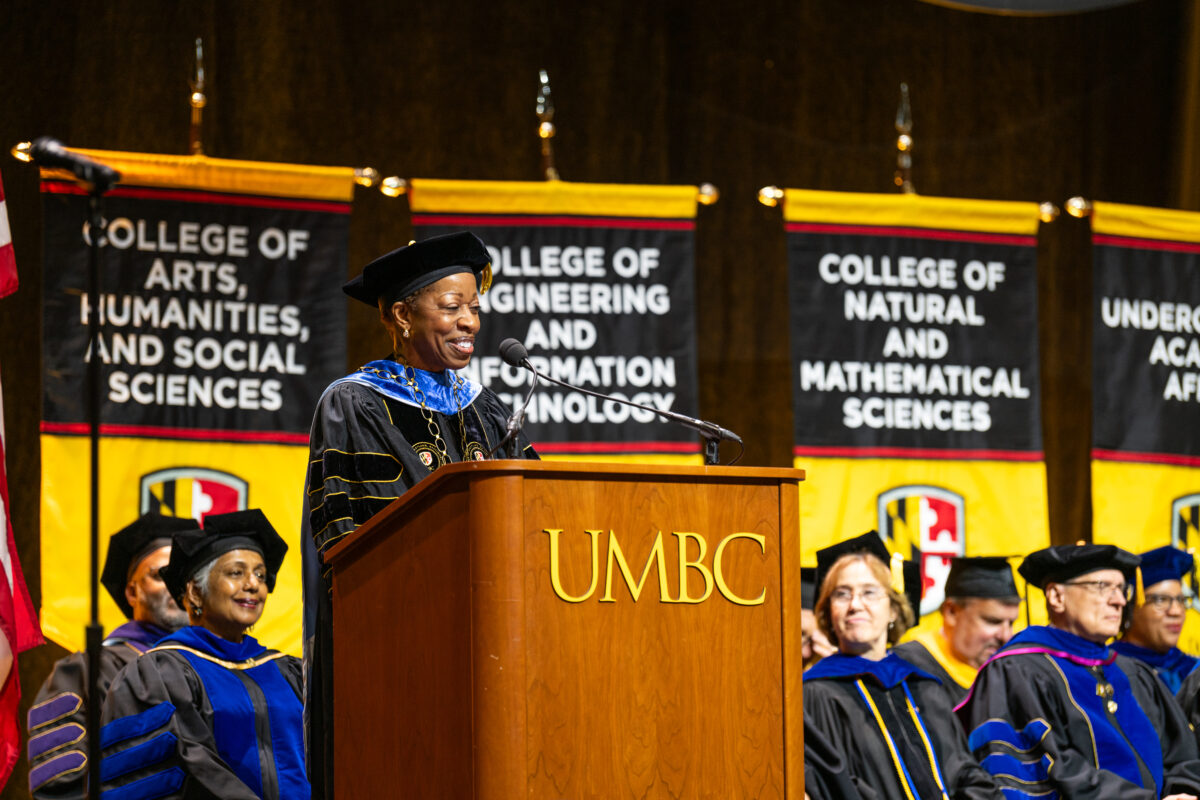
 (l) President Valerie Sheares Ashby addressing UMBC’s Class of 2025. (Brad Ziegler/UMBC) (r) Diane Tichnell ’70 (third from left) celebrates the publication of This Belongs To Us with fellow book editors Mimi Dietrich, Bob Dietrich, and Dale Gough. (Marlayna Demond ’11/UMBC).
To celebrate this historic moment, President Valerie Sheares Ashby paid tribute to the alumni known as the Founding Four, who represented graduates of the first four undergraduate classes from 1970 to 1973.
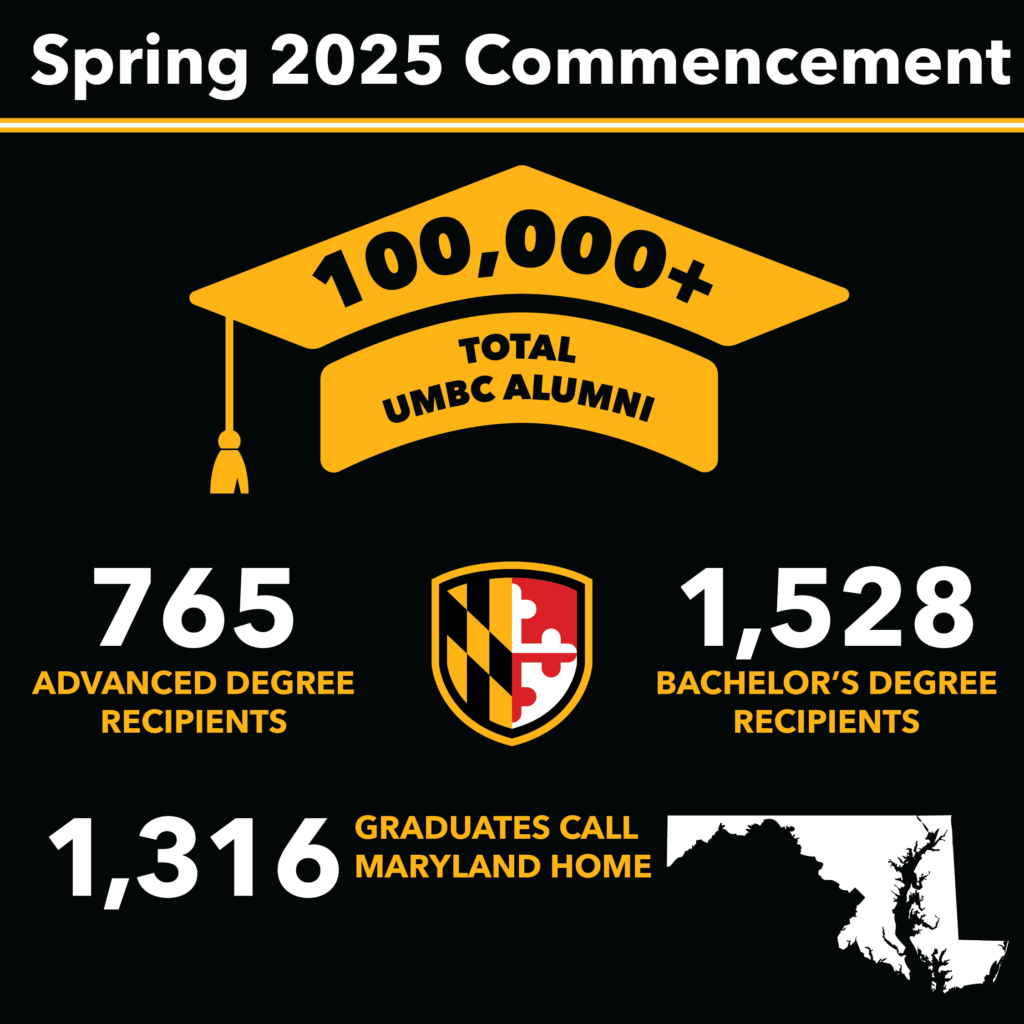
“What a profound impact UMBC has had on the state of Maryland and the world,” said Sheares Ashby. “Each one of our alumni has made a difference in some way, many of them as leaders and pathbreakers—in the public and private sectors, in the arts, in education, in research, in public service, and in their communities.”
Gratitude
The Class of 2025 celebrated and cheered for each other. However, thunderous applause rippled across UMBC’s Chesapeake Employers Insurance Arena every time a speaker asked the students to thank those who made their dreams come true. The stands were filled with roommates, classmates, mentors, and families who kept pointing the way when graduation seemed out of reach.
“You took risks when you chose to pursue this graduate degree. You stumbled and struggled and faced down your fears and insecurities,” said Graduate Student Association President Jessica Burstrem, Ph.D. ’25, language, literacy, and culture, in her address to her peers at the Graduate School Commencement ceremony.

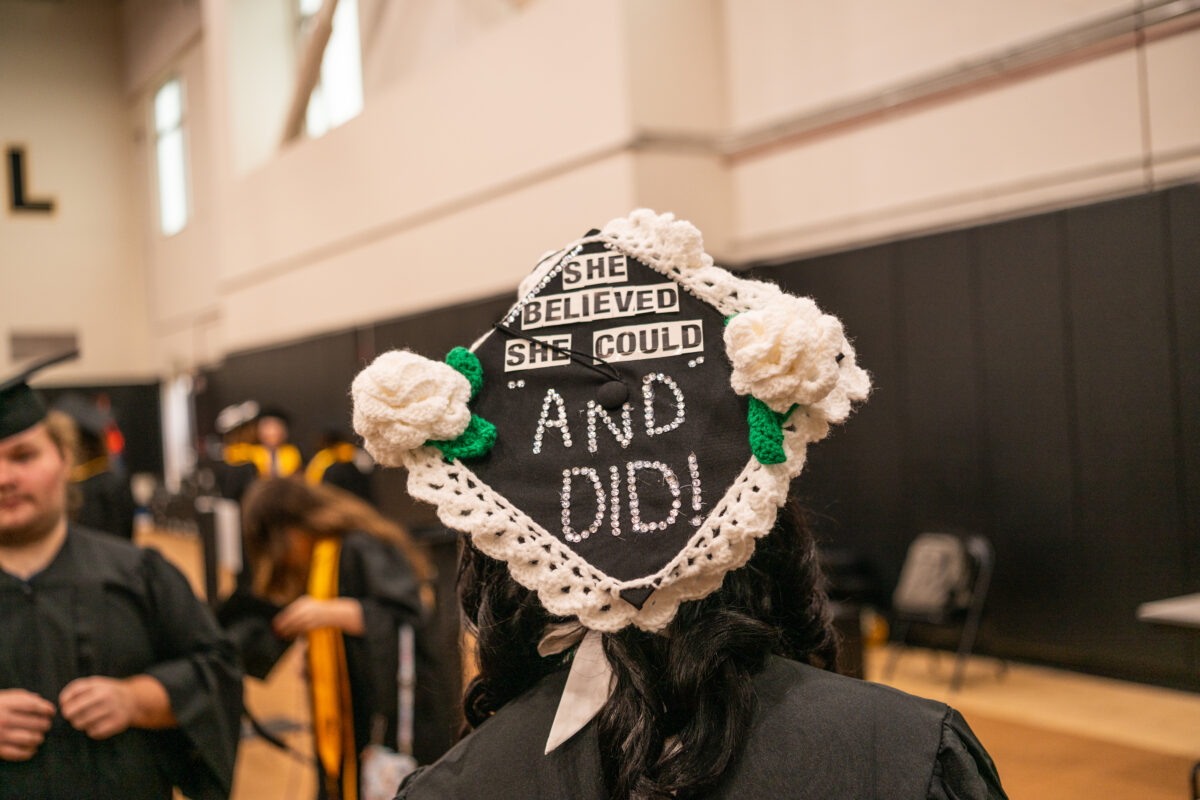 (l) Jessica Burstrem addressing the Graduate School Class of 2025. (Brad Ziegler/UMBC)
“That bravery is why you celebrate today. Those are the kinds of people the world always needs—people who do the right thing even if they are afraid. People of integrity and bravery. People who stand together,” said Burstrem.
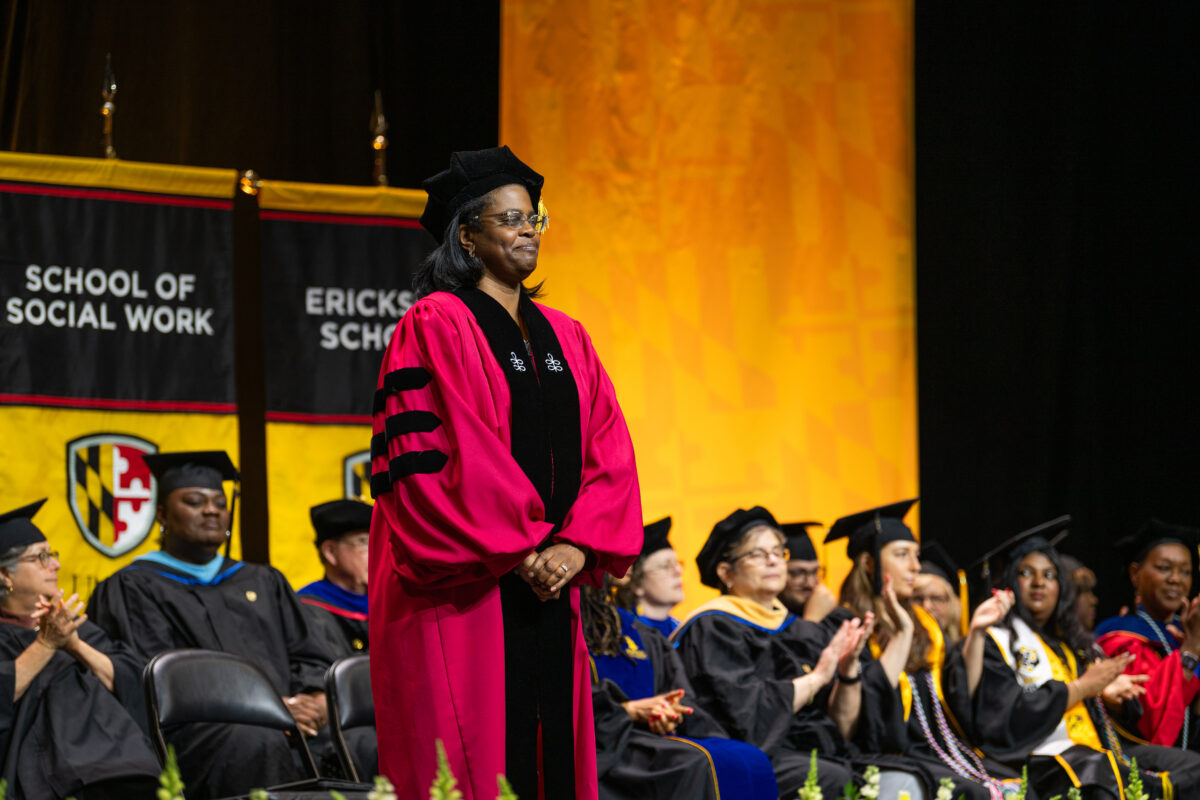
 (l) Sonja Brookins Santelises, chief executive officer of Baltimore City Public Schools, Thursday morning’s undergraduate commencement speaker and honorary degree recipient. (r) Anwesha Day, Ph.D. ’04, biochemistry and molecular biology, executive director in the Discovery Oncology Department of Genentech, spoke to Thursday afternoon’s graduates. (Brad Ziegler/UMBC)
The path of service
College wasn’t Tina Garcia’s first path, even after becoming the first in her family to graduate from high school. She served nearly a decade in the United States Air Force, rising to the rank of staff sergeant, before continuing her service within the government. After serving her country, Garcia chose to honor her family once again—this time by becoming the first to earn a college degree. She drew on her experience as a veteran and her majors in social work and psychology to co-found and serve as vice president of UMBC’s Student Service Members, Veterans, and Families organization.

 (l) Valedictorian Tina Garcia shares her journey to UMBC. (r) UMBC’s Color Guard opening the 2025 commencement ceremonies. (Brad Ziegler/UMBC)
“UMBC is where I found my community, and with it, a renewed sense of purpose to continue serving Veterans. I’m so grateful to everyone who continues this work, who shows up for veterans every day, and who refuses to let that momentum fade,” said Garcia, as one of two undergraduate valedictorians. “When we find belonging, we thrive. When we thrive, we create space for others to do the same. May you always find places where you belong and never let anyone convince you that you don’t.”
UMBC welcomes all
For international students, the meaning of community transcended physical boundaries, cultures, and languages, with graduate students representing 27 nations across five continents and Central America, and undergraduates representing 35 countries across six continents and the Caribbean, including Jamaican native, Akellia Bernard, a music performance major with a concentration in voice. Bernard, a member of UMBC’s Choir and Camerata, performed the national anthem for the three commencement ceremonies. This summer, Bernard plans to join the Choir and Camerata in Paris and Prague, where they have been invited to perform with the Czech National Symphony Orchestra.
 Akellia Bernardsings the Star-Spangled Banner at her undergraduate commencement ceremony. (Brad Ziegler/UMBC)
Praise Lasekan, a biological science major, whose family watched his valedictorian speech virtually back home in Ondo, Nigeria, was adamant about how the Retriever community became the vessel for his growth, acceptance, and joy.
 UMBC faculty and alumni give Praise Lasekan a standing ovation for his inspiring words. (Brad Ziegler/UMBC)
“The person you see standing in front of you today was once called a failure. People made fun of me. There were times I almost quit. But mentors, community, and the grace of God reminded me: Dreams don’t die, they just need to be stirred again,” said Lasekan. This fall, he will begin his Ph.D. at Brown University in the Department of Molecular Biology, Cell Biology, and Biochemistry. “UMBC showed me that community isn’t just who you’re around, it’s who holds you up when life feels heavy.” His journey resonated with the celebratory crowd and earned a standing ovation from the full house.
 And with the turn of the tassel, these students are officially UMBC Alumni. (Brad Ziegler/UMBC)
As Retrievers crossed their tassels from right to left, President Sheares Ashby reminded them that while the pursuit of their dreams might have had similar zig zags, they, “will be the ones who will listen to all the voices, fight for the needs of others, not just yourself, unite, not divide, bring calm to chaos, open doors, and see new ways forward.”
Listen to Akellia Bernard sing the Star-Spangled Banner, Governor Wes Moore’s message to the Class of 2025, and watch all three ceremonies at commencement.umbc.edu.
]]>
Before Joy Gabrielle Ware walked off the Commencement stage, she stopped mid-stage to face her peers and shouted, “UM!” prompting a booming “BC!” response from the undergraduates and their...
https://umbc.edu/stories/umbcs-class-of-2025/
https://my3.my.umbc.edu/api/v0/pixel/news/150428/guest@my.umbc.edu/976827328c289a34967296b2f158b9ce/api/pixel
biological-sciences
cahss
class-of-2025
cnms
coeit
community
feature
inds
music
news
psych
social-work
story
UMBC News & Magazine
https://my3.my.umbc.edu/groups/umbc-news-magazine
https://assets1-my.umbc.edu/system/shared/avatars/groups/000/001/943/24435aa6207c452e7bc15cc74b42c7bb/xsmall.png?1748556657
https://assets1-my.umbc.edu/system/shared/avatars/groups/000/001/943/24435aa6207c452e7bc15cc74b42c7bb/original.png?1748556657
https://assets2-my.umbc.edu/system/shared/avatars/groups/000/001/943/24435aa6207c452e7bc15cc74b42c7bb/xxlarge.png?1748556657
https://assets2-my.umbc.edu/system/shared/avatars/groups/000/001/943/24435aa6207c452e7bc15cc74b42c7bb/xlarge.png?1748556657
https://assets3-my.umbc.edu/system/shared/avatars/groups/000/001/943/24435aa6207c452e7bc15cc74b42c7bb/large.png?1748556657
https://assets1-my.umbc.edu/system/shared/avatars/groups/000/001/943/24435aa6207c452e7bc15cc74b42c7bb/medium.png?1748556657
https://assets2-my.umbc.edu/system/shared/avatars/groups/000/001/943/24435aa6207c452e7bc15cc74b42c7bb/small.png?1748556657
https://assets1-my.umbc.edu/system/shared/avatars/groups/000/001/943/24435aa6207c452e7bc15cc74b42c7bb/xsmall.png?1748556657
https://assets2-my.umbc.edu/system/shared/avatars/groups/000/001/943/24435aa6207c452e7bc15cc74b42c7bb/xxsmall.png?1748556657
UMBC News & Magazine
0
0
false
Tue, 27 May 2025 20:14:29 -0400
Tue, 27 May 2025 20:14:29 -0400
Dionne Cole ’25: Family, faith, and friends help this Retriever find her academic path
Dionne Cole, a native of Montgomery County, came to UMBC expecting to pursue a career in biology. But after a few semesters, she found her true calling lay in the intersection of social work, public health, and social justice. Guided by her faith as well as the support of her family and the community she built at UMBC, Dionne took on a dual degree, combining her newfound passion for social work with biology. She did her social work field placement at Retriever Essentials—a partnership advancing food access at UMBC—this year and became an advocate for students experiencing food insecurity, impressing everyone with her hard work and determination to make a difference. She plans to take time next year to work, before returning to school to get her master’s in public health.
Q: What made you decide to come to UMBC?
A: During the college application process, I was actually looking to go overseas because I love traveling and also because my family is from London. But I ended up coming to UMBC because I received a good award package, and I saw how they really valued community. That was a value that I cultivated in high school that I wanted to continue fostering in college. And then, because I was interested in being a bio major, seeing how research-oriented UMBC seemed, was also appealing as well. I think I made the right choice.
Q: Did you find the community you were looking for?
A: Yeah, in a big way. My faith is a big aspect of my life, so a lot of that community that I was looking for came through a group I joined called Bethel Campus Fellowship. Just being able to be around people who are like-minded and can also support and encourage you while you are a college student—that’s a lot. I also found community in the Social Work Student Association and the Public Health Council of Majors where I was able to connect with people who had similar interests. That was empowering because I wanted to go into a field that really valued public service and valued people. Being a member in those two clubs really reinforced that for me. And my internship at Retriever Essentials, which I am just wrapping up now, has been within itself a community of people who really care about other people and want to serve.
Q: How did you choose to be a dual degree student?
A: I came in as a bio major and early on, I started realizing that I was being prepared to either go into STEM research or medicine. Those are great fields, but that’s not really what I want to do. I talked with my cousin about the healthcare field, and she explained to me the value of social work. And then I talked to a social worker at my mom’s workplace and started doing my own research, and I was like, “okay, this is a field that has what I’m looking for.”
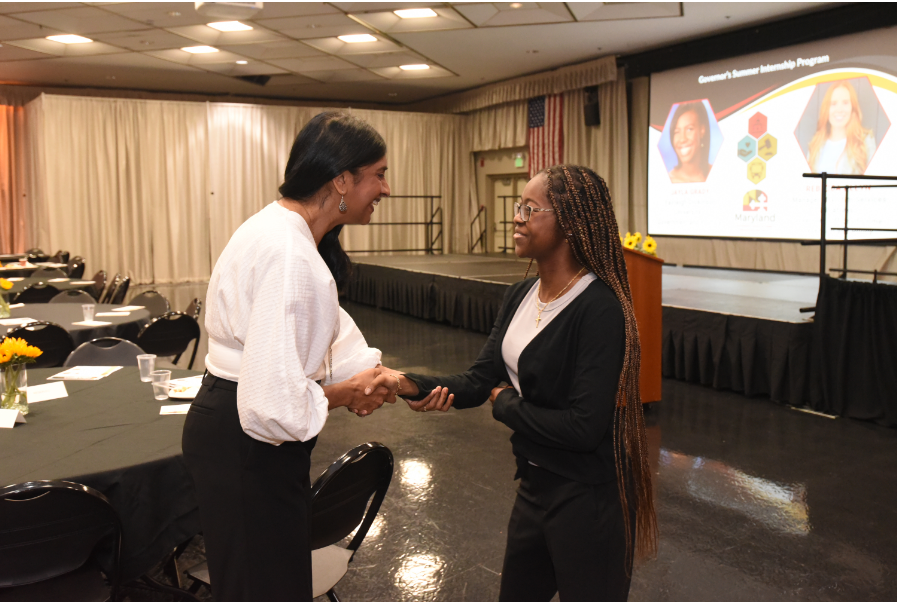 Cole shakes hands with Aruna Miller, Lt. Governor of Maryland. (Photo courtesy of Cole)
I didn’t switch right away. I took two intro to social work classes just to see if I would like it. I fell in love with the core values, particularly social justice. I am social justice-oriented, so once I learned more about social work, I thought: This is it for me—I’m going to add social work to my degree plan and start pursuing opportunities that are more in line with that. But I still kept the bio background because I love biology.
Q: How did you end up at Retriever Essentials and what was that like for you? What did you learn?
A: I started at Retriever Essentials as a community liaison with Maryland Food Bank, largely doing SNAP [Supplemental Nutrition Assistance Program] outreach on campus. When it came time to choose my field placement for the social work curriculum, I chose Retriever Essentials. I learned how prevalent food insecurity is on college campuses and how much of a public health issue it is. I found out food insecurity is more prevalent on college campuses than it is among the general population because of the cost of higher ed and all of these other compounding factors.
I think that was probably the biggest thing that I learned. I didn’t know it was a public health issue when I originally came in. Through managing their Save-a-Swipe program, I met with students who were experiencing food insecurity and I assessed their situation. And that was a very interesting experience, just sitting with students and hearing them talk about all the ways in which food insecurity affects them. A lot of the students I met with were international graduate students and their stories impacted me a lot because they traveled all this way—they’re coming here to advance their education—and yet their basic needs aren’t being met. And that was just really hard to hear. But the one thing I will say about social work is that it teaches you how to take the things that you see that are very frustrating to you or heartbreaking to you, and use them as fuel to try and advocate and make things better.
Q: Did you find places at UMBC to make your voice heard?
A: Yes. I have a friend [Emmanuella Osei ’26, public health] who was also interested in food insecurity, and she had her own research project just surveying the prevalence of it on this campus. Mine was evaluating Retriever Essentials and how it’s doing at helping students overcome food insecurity. We decided to merge our projects and, with the help of my field instructor—Sue Poandl, who is also her McNair Scholar mentor—we actually got a meeting that is next week with Dr. Renique Kersh, the vice president of Student Affairs to talk about that research.
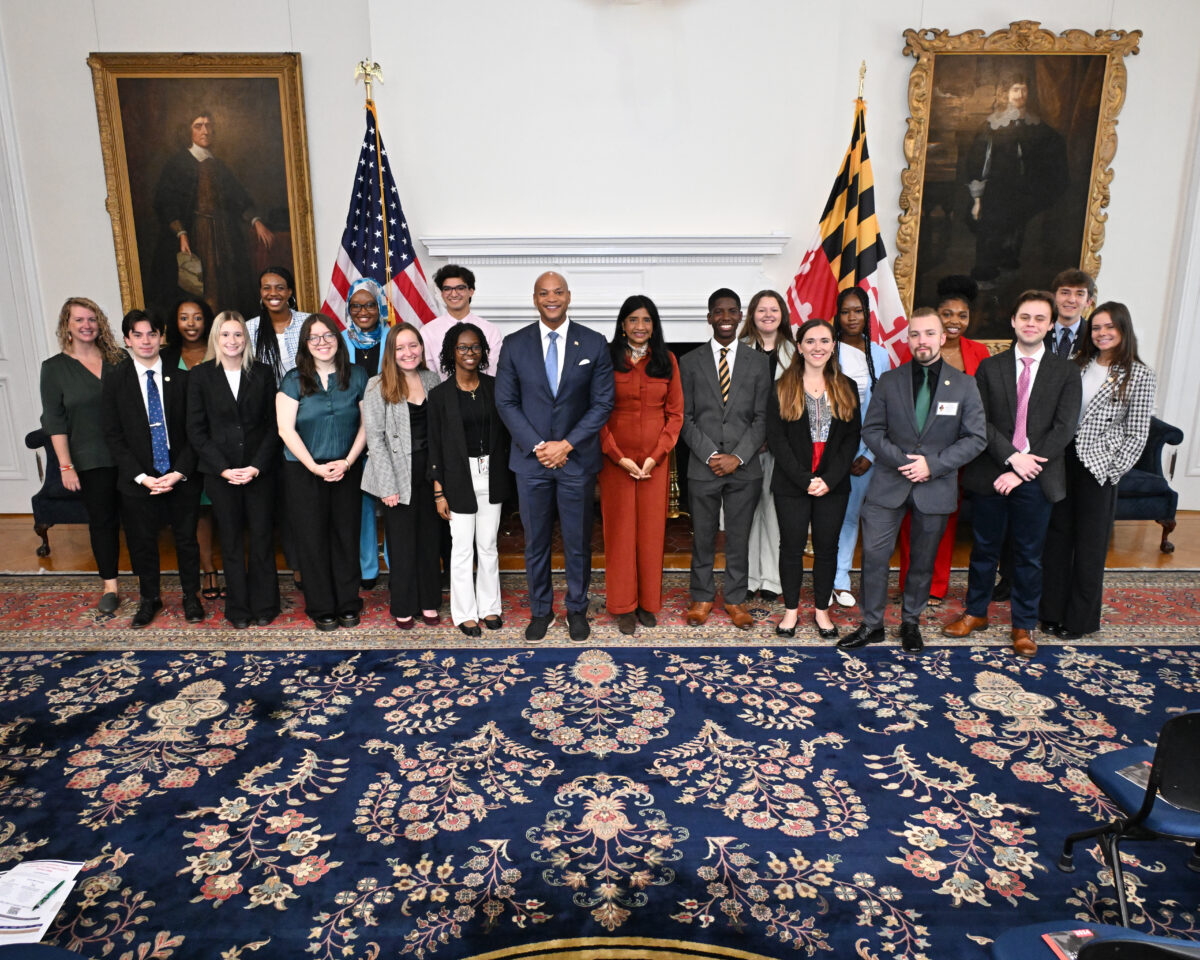 Cole with Governor Wes Moore (just left of him in the white pants and black jacket) during the closing ceremony of the Governor’s Summer Internship Program (GSIP). (Photo courtesy of Cole)
UMBC listens because when we went to my field instructor and the leaders of Retriever Support Services and Retriever Essentials about what we wanted to do, they were very much supportive and said: How can we help you get this in a place or in front of a person who can actually do something about it?
Q: Social work can be very emotionally demanding. What have you learned about self-care while you’ve prepared yourself for a career in social work and public health?
A: My field instructor says to lean on your people. I had a lot of days where, after meeting with a bunch of students, I would feel the weight of their stories and it would be very hard for me to process and think. And that goes back to having community, particularly in my faith,and being able to go to my friends who are not social work majors. They can only understand what I’m going through to a certain degree, but just being with them makes me feel lighter—even if I’m not necessarily talking about what’s bothering me. And verbally processing with them, just being able to be in their presence and have their prayers and stuff like that—it was really helpful.
Q: What impact do you think you contributed to UMBC that will be here after you are gone?
A: I would hope that it’s community—the same value that I came in wanting to foster. I hope it’s the same value that I leave behind: valuing community in every way. Because you don’t get to the finish line without your community. And community can come in so many different forms. What I get out of my fellowship community is not necessarily the same that I got out of my Retriever Essentials community. But they both helped me, and they both did their part in getting me to the finish line, and also taught me so many things that have helped me grow as a person.
 Cole during a Maryland Public Service Scholars Program interview. (Marlayna Demond ’11/UMBC)
I really hope that people see from me the value of the community that is around them academically. There are so many professors and staff and faculty who took jobs at a university because they wanted to help and empower students to fulfill their dreams: lean on that. Some professors might seem scary, but lean on them because most of them just want to help. Same thing with student orgs. The people who run them don’t only enjoy the interest that the club is for, but genuinely believe in the gathering of people. And yeah, I hope that I’ve added to the value of community that this university already had.
]]>
Dionne Cole, a native of Montgomery County, came to UMBC expecting to pursue a career in biology. But after a few semesters, she found her true calling lay in the intersection of social work,...
https://umbc.edu/stories/dionne-cole-25-family-faith-and-friends-help/
https://my3.my.umbc.edu/api/v0/pixel/news/150360/guest@my.umbc.edu/0087012574aaedacc70ff39ba4b380e5/api/pixel
biology
class-of-2025
cnms
news
science-and-tech
social-work
story
UMBC News & Magazine
https://my3.my.umbc.edu/groups/umbc-news-magazine
https://assets1-my.umbc.edu/system/shared/avatars/groups/000/001/943/24435aa6207c452e7bc15cc74b42c7bb/xsmall.png?1748556657
https://assets1-my.umbc.edu/system/shared/avatars/groups/000/001/943/24435aa6207c452e7bc15cc74b42c7bb/original.png?1748556657
https://assets2-my.umbc.edu/system/shared/avatars/groups/000/001/943/24435aa6207c452e7bc15cc74b42c7bb/xxlarge.png?1748556657
https://assets2-my.umbc.edu/system/shared/avatars/groups/000/001/943/24435aa6207c452e7bc15cc74b42c7bb/xlarge.png?1748556657
https://assets3-my.umbc.edu/system/shared/avatars/groups/000/001/943/24435aa6207c452e7bc15cc74b42c7bb/large.png?1748556657
https://assets1-my.umbc.edu/system/shared/avatars/groups/000/001/943/24435aa6207c452e7bc15cc74b42c7bb/medium.png?1748556657
https://assets2-my.umbc.edu/system/shared/avatars/groups/000/001/943/24435aa6207c452e7bc15cc74b42c7bb/small.png?1748556657
https://assets1-my.umbc.edu/system/shared/avatars/groups/000/001/943/24435aa6207c452e7bc15cc74b42c7bb/xsmall.png?1748556657
https://assets2-my.umbc.edu/system/shared/avatars/groups/000/001/943/24435aa6207c452e7bc15cc74b42c7bb/xxsmall.png?1748556657
UMBC News & Magazine
1
0
false
Thu, 22 May 2025 11:38:20 -0400
Thu, 22 May 2025 11:38:20 -0400
Public law for public good
On a fall Saturday morning, Mohammad Arshad, an information systems senior, greeted clients arriving at the Erickson School of Aging Studies looking for a fresh start with the help of UMBC’s first Expungement Clinic. After completing the intake forms, Arshad passed the files to pro-bono lawyers and staff from Maryland Legal Aid and pro-bono lawyers from the Baltimore County Bar Association. They carefully reviewed each client’s criminal records to determine eligibility for clearing or sealing certain charges or offenses that can create barriers to jobs, housing, and education
When Jessica Cook, associate director of the Sondheim Public Affairs Scholar Program, noticed that Loyola University has this program, she connected with Molly Timko, UMBC’s pre-law academic advisor, and discussed bringing the program to UMBC. They established the clinic with funding from UMBC’s Center for Democracy and Civic Life. As soon as a call was made for 20 student volunteers, the response was overwhelming.
 Expungement clinic volunteers (l-r): Damilola Khadijat Yusuf, a philosophy sophomore; Oyinlola Oluka, a political science and philosophy senior; Desta’nae Nicole Wilson ’24, psychology; Jessica Cook, associate director of the Sondheim Public Affairs Scholar Program. (center); Jean Kim, a global studies junior; Thara Pillai, a political science sophomore; Samantha Kennedy ’25, a social work senior; Cooper; Garret Miller, a financial economics sophomore; and Arshad. (Image courtesy of Timko)
Sometimes it’s hard to get internships as an undergraduate student, notes Timko. “The exposure to public interest law—doing law for the greater good—and to network with lawyers in various fields broadens students’ understanding of what being a lawyer can look like beyond arguing in a courtroom,” says Timko, a licensed attorney in Maryland, Washington, D.C., and New York. In her role at UMBC, Timko provides career pathway counseling and law school application support for UMBC students of all majors, as well as alumni.
“It was the first time I saw a law-related volunteer opportunity on campus,” said Arshad. He serves as the senate president of the Maryland Student Legislation (MSL), a model Maryland General Assembly. Currently, there are 15 college delegations, governed by the Council of States, a group of six college students elected by MSL members. Arshad serves as the lieutenant governor.
 Mohammad Arshad (l) with Maryland State Delegate, Christopher Michael Griffith. (Image courtesy of Arshad)
This experiential learning experience teaches students how to draft original legislation and debate bills, navigate parliamentary procedures, and understand the legislative process. At the end of the year, all of the legislation adopted by the students is shared with members of the Maryland General Assembly for their review. “As someone interested in the legal field, I saw the Expungement Clinic as a meaningful way to deepen my understanding of the legal process.”
 Oyinlola Oluka assists with a client intake at the Expungement Clinic. (Image courtesy of Timko)
The expungement clinic was streamlined to assist as many clients as possible. No appointment was needed. Lawyers arrived equipped with laptops and printers, prepared to complete and file paperwork. Angus Derbyshire, director for Pro Bono at Maryland Legal Aid, who spearheads expungement clinics across Maryland, reported that 14 clients were served at the UMBC Expungement Clinic, and 10 of them had cases that were deemed potentially eligible for expungement. “This resulted in the preparation of 24 expungement petitions, which is a meaningful outcome for both the clients and the community,” said Derbyshire.
As a first-generation college student, Arshad had never seen the legal process in action firsthand, let alone been part of it. What surprised him most was the collaboration and community focus. “I had always assumed legal work was mostly done behind the scenes, but this clinic showed me how much personal interaction and empathy are involved,” said Arshad, who plans to practice intellectual property law defending the rights of inventors, entrepreneurs, and developers. “It also gave me a better understanding of expungement and how access to legal resources can significantly improve someone’s future opportunities.”
All majors to the legal field
Despite the overwhelming response from volunteers for the expungement clinic, Timko has noticed that many students still assume a political science major is required to pursue a career in law. Like Arshad, Timko is a first-generation law student with a major outside of political science. She majored in anthropology and art history, with a minor in Italian, but wasn’t sure if she wanted to pursue a Ph.D. in either field. “During my master’s program in higher education and student affairs administration, I studied abroad in South Africa and took a course on social reform in post-apartheid South Africa. It sparked my interest in education and advocacy law,” says Timko.
One of Timko’s bigger goals is to help students discover their spark. “It’s important for students to know you can major in anything. There are so many ways to be a lawyer. There’s the stereotypical trial lawyer, but there are also lawyers focused on research and writing that never set foot in a courtroom,” says Timko who is also the advisor for UMBC’s Pre-Law Society that helps student prepare for the Law School Admissions Test (LSAT) and network with area schools. “You don’t have to be super extroverted or argumentative to be a really good lawyer.” There is also no expiration date on when you can decide to pursue a legal career.

 Timko (right with gold jacket) and UMBC’s Pre-Law Society students visit nearby law schools. (Images courtesy of Timko)
This is why she was excited when Shannon Ziegler ’14, fine arts, and Alexander Langsam ’22, biology, reached out to her for guidance on applying to law school. Both had initially worked in their respective fields, which unexpectedly led them in new directions—Ziegler in the financial technology industry and Langsam in civil service, which then spurred in them an interest in law.
After completing the pre-med track at UMBC, Langsam dove into studying for the Medical College Admission Test and worked as a medical assistant. When he saw firsthand the challenges faced by providers and patients, he pivoted and decided to pursue a master’s in public health policy instead, while continuing to work in civil service. There, he spent time learning about the work of the general counsel, which confirmed for him the impact lawyers can have at the federal level.
“I had never considered law school before, so when I began to think of it as a possible career, I looked up UMBC pre-law advising and emailed Molly out of the blue. She guided me through the law school application process,” said Langsam. “If you can, expand your career options beyond your degree because there are so many things you can do in this world that may not be obvious in undergrad.” He will complete his masters in May and continue to the University of Baltimore Law School in the fall.
Ziegler is about to finish her first year of law school at the University of Maryland Francis King Carey School of Law. In the decade before law school, she balanced being a business manager for Baltimore’s Center Stage by day and acting by night. She then checked off living in Chicago from her bucket list, where she worked at Venmo, launching a career at the crossroads of financial regulation and technology, the topic of her law school admissions essay.
Timko is on the Law School Admission Council directory as an undergraduate pre-law school advisor and receives an alert when an alum takes the LSAT. As soon as she was sent Ziegler’s results, she touched base with her. “It had been so long since I left UMBC that I didn’t think of reaching out. Molly gave me great advice on how to focus my application better and what to prioritize in my search,” said Ziegler. “She helped me slow down to think about what my goals are. I found that reframing really helpful.”
Making the LSAT accessible
 Megumi Fukuzawa. (Image courtesy of Fukuzawa)
At the core of the pre-law advising programming is a mission to create a supportive community where UMBC’s law school hopefuls can develop the skills, strategies, and confidence to navigate the various steps between studying for the LSAT and the first year of law school. This spring, Megumi Fukuzawa ’23, political science, who is currently studying for the LSAT, understands the need for support. Like many undergraduate students, Fukuzawa’s schedule was jam-packed. Whenever she carved out time to study for the LSAT, she felt lost and discouraged. “I needed help understanding the materials and advice about how to study effectively,” said Fukuzawa, a research assistant at the Howard County Historical Society’s Archives and Historical Center. “The only flyer I saw on campus was during my junior year, advertising a $1,000 introductory LSAT course. At that point, the LSAT felt like a massive wall I couldn’t break through.”
Thanks to a professional development grant from the American Studies Department, she was able to access study materials during her senior year. This spring, Fukuzawa asked Timko if she could lead an LSAT preparation information session.“By hosting this LSAT prep information session, providing free tutoring, and forming an online study community for UMBC LSAT students, I hope to make LSAT prep, and by extension, a legal education, more accessible to UMBC students and alumni,” said Fukuzawa. Arshad is also championing the need to help fund LSAT preparation materials, for Fukuwaza, himself, and other pre-law students who can’t afford expensive study aids. Arshad is collaborating with peers and community members on a long-term solution to establish a UMBC partnership with an LSAT coaching provider to offset LSAT preparation costs.
Advocacy and fairness are Arshad’s core values. They have defined his student work as well as his career plans to practice intellectual property law. “My background in systems and data gives me a unique perspective on how legal services, like the Expungement Clinic, can be streamlined and made more accessible through innovation,” said Arshad. “Volunteering at the expungement clinic made me think about how I can apply my tech skills to create more efficient and equitable legal solutions.”
Learn more about UMBC’s Expungement Clinic and pre-law advising.
]]>
On a fall Saturday morning, Mohammad Arshad, an information systems senior, greeted clients arriving at the Erickson School of Aging Studies looking for a fresh start with the help of UMBC’s first...
https://umbc.edu/stories/public-law-for-public-good/
https://my3.my.umbc.edu/api/v0/pixel/news/150161/guest@my.umbc.edu/62c19cce5439e59fc3b514d5ea6a7daf/api/pixel
baltimore-city
cahss
class-of-2025
cnms
coeit
economics
erickson-school
fine-arts
global-studies
impact
magazine
mcs
philosophy
political-science
psychology
social-work
sondheim-public-affairs-scholars-program
story
UMBC News & Magazine
https://my3.my.umbc.edu/groups/umbc-news-magazine
https://assets1-my.umbc.edu/system/shared/avatars/groups/000/001/943/24435aa6207c452e7bc15cc74b42c7bb/xsmall.png?1748556657
https://assets1-my.umbc.edu/system/shared/avatars/groups/000/001/943/24435aa6207c452e7bc15cc74b42c7bb/original.png?1748556657
https://assets2-my.umbc.edu/system/shared/avatars/groups/000/001/943/24435aa6207c452e7bc15cc74b42c7bb/xxlarge.png?1748556657
https://assets2-my.umbc.edu/system/shared/avatars/groups/000/001/943/24435aa6207c452e7bc15cc74b42c7bb/xlarge.png?1748556657
https://assets3-my.umbc.edu/system/shared/avatars/groups/000/001/943/24435aa6207c452e7bc15cc74b42c7bb/large.png?1748556657
https://assets1-my.umbc.edu/system/shared/avatars/groups/000/001/943/24435aa6207c452e7bc15cc74b42c7bb/medium.png?1748556657
https://assets2-my.umbc.edu/system/shared/avatars/groups/000/001/943/24435aa6207c452e7bc15cc74b42c7bb/small.png?1748556657
https://assets1-my.umbc.edu/system/shared/avatars/groups/000/001/943/24435aa6207c452e7bc15cc74b42c7bb/xsmall.png?1748556657
https://assets2-my.umbc.edu/system/shared/avatars/groups/000/001/943/24435aa6207c452e7bc15cc74b42c7bb/xxsmall.png?1748556657
UMBC News & Magazine
4
0
false
Wed, 14 May 2025 14:48:23 -0400
Wed, 14 May 2025 14:48:23 -0400
Ada Glaser ’25—An emerging social worker with a passion for youth development
Ada Glaser ’25, social work and individualized study (INDS), is following in her mother’s footsteps with career pursuits in social work. Growing up, Glaser’s family supported children who were placed into foster care, an experience that informed her passion for helping children and families who’re navigating challenging circumstances. Upon completing her undergraduate studies a year early, the Sondheim Public Affairs Scholar is excited to continue her social work education with a goal of one day supporting young children in their development.
Q: What led you to UMBC, and what motivated your decision to major in social work?
A: As a Baltimore County native, I wanted to stay close to my family. When I went through the college selection process, I didn’t know much about UMBC, but as I looked more into the school, I came across the Sondheim Public Affairs Scholars program, which seemed awesome. I applied and ended up getting into the program. As the oldest of six, the program’s financial support made it really realistic for me to go to college. It was great to see all of the different angles for approaching the general idea of public service as a Sondheim scholar.
My mom is a social worker and has her own private practice. When I was in high school, my family started supporting children in foster care. Getting to see all the work that social workers were doing with foster families opened my eyes to the profession. I started doing research on my own and thought social work seemed like a great field for me. My time in the Baccalaureate Social Work program reaffirmed that decision for me because I loved the classes, the professors, and my peers. I know it’s the right field for me.
Q: As an INDS student, what went into designing your major?
A: I always knew I wanted to work with kids. It’s something I’ve loved for a really long time. As a social work major, you need a second area of concentration. I originally came to UMBC wanting to study psychology, and I realized after my first year that there was so much else that I wanted to learn and do beyond the scope of psychology. I reached out to INDS advisor Holly Cudzilo and she explained the process of creating your own major. Cudzilo was instrumental in helping me develop my INDS concentration and making sure I stayed on track. The program allows you to put together the areas of concentration you want to do, define what the overall focus of the course is, and how to put the threads together that connect everything. That process helped me refine what I care about and what I’m passionate about.
Q: Who has helped you along your academic journey?
A: I met Jayshree Jani, associate professor of social work, during my first year when she was my advisor. During our first advising appointment, she was aware of my plan of wanting to graduate early and wrote out the three-year plan that I’ve followed. She’s shown me how much she cares and how much she wants me to succeed. She’s given me good advice about how to make my senior capstone project come to life and gave me good ideas to try. She encouraged me to feel confident to do difficult things.
 Glaser presenting the findings from her senior capstone project, titled “Goals and Motivations of Baltimore Early Intervention Providers,” at UMBC’s 2025 Undergraduate Research and Creative Achievement Day (URCAD) event. (Photo by Adriana Fraser)
Q: What experiential learning opportunities have you been a part of?
A: My senior year social work field placement was at the Furman Templeton Preparatory Academy elementary school in West Baltimore as a social work intern. I worked with the kids on things like emotional awareness and regulation and goal setting. Some of the students are experiencing a lot of interpersonal conflicts, so I helped them think about how they can address those conflicts. I’ve done lessons in the classroom, such as working with kindergarteners on how to be a good friend. I also worked with my supervisor on school-wide initiatives such as managing testing anxiety for fifth graders and attendance initiatives. It’s been a very intense and emotional experience, but also a great learning experience.
Q: What are some of the things you’ve learned from your experience as a social work intern?
A: I learned just how much there is that I don’t know and sometimes you don’t always know how you’re going to react to something until you’re in the moment. In some of the more intense situations, I thought I would be okay handling them and then I realized those moments affected me a lot more than I thought it would. That’s one of the benefits of why social work has this practicum element to it because you have to practice these skills and get used to being in intense situations. I’ve built up my resilience and learned about my own style as a social worker.
Q: How do you find time to take care of yourself and reset after those intense moments?
A: I’m big on journaling—I’ve been that way since middle school. It’s such a good way to dump all of my feelings and sort through them. I feel lucky to have good friends in my circle so when I’m going through something I talk it through with them and my sister as well. In the last year and a half, because of UMBC, I’ve gotten more into yoga. I took a lot of the free yoga classes at the Retrievers Activities Center, and now I do it at least three times a week. With that physical motion, I can get out of my head a little bit.
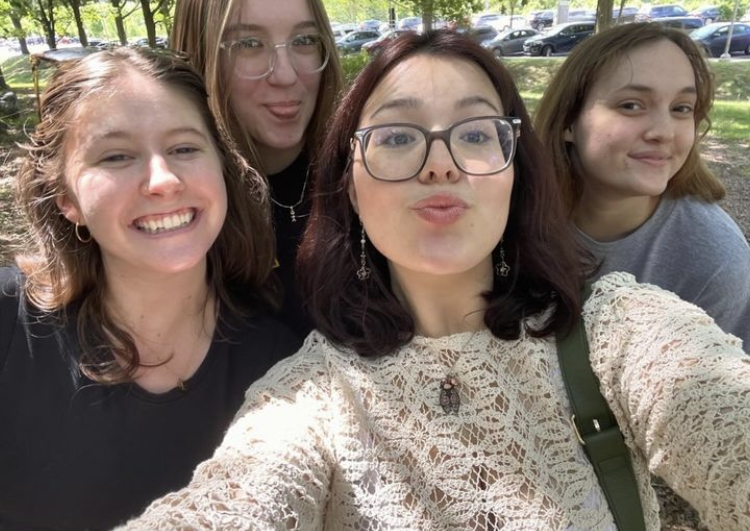 Glaser (left) with fellow UMBC classmates and friends in Summer 2024.
Q: What other activities did you participate in outside of your studies?
A: The Social Work Student Association (SWSA) has been such a big part of my time at UMBC. I was worried about being in a human services field at a more STEM-focused school, but I have found so much support, inspiring people, and encouragement through that group. Getting to be on the SWSA’s executive board and seeing this community develop has been so special. I’m also a part of UMBC’s Symphony Orchestra, which I’ve been involved in since my sophomore year. I play the upright bass. I started playing the bass in the fifth grade and continued through middle and high school. I love playing, growing my skills, and being able to connect with other people outside of my major. I love the end of the semester concerts that we do.
 Glaser (in gray, second to last on the right) with fellow members of the Social Work Student Association during a volunteering event with UMBC’s Retriever Essentials program in Spring 2025.
Q: What are some memorable highlights from your time at UMBC?
A: The people that I’ve met and the friends I’ve made have been highlights for me. Studying abroad in Cape Town, South Africa, in 2023 was also monumental. It was something I didn’t initially think I would have been able to do, but thanks to the Sondheim program, I got to experience community-engaged learning in South Africa as well as learning about the history of the country, the Apartheid movement, and a lot of the political movements that are happening now and how South Africa is dealing with that history. My college experience would have been so different had I not been at UMBC. I credit the university for a lot, and I’m glad that I went here.

 (left) Glaser in Cape Town, South Africa. (right) Glaser (left, second row) and fellow Sondheim Public Affairs scholars during the program’s study abroad trip to Cape Town in 2023.
Q: What are your aspirations for the future?
A: After graduation, my plan is to pursue a master’s degree in social work that focuses on working with children and families. I’m hoping to be placed in a Head Start program for my master’s because I learned during my internship that I love working with kids within the preschool age range. I also learned that I have a passion for working with kids with disabilities and I’m interested in exploring more of that.
Read more Commencement 2025 stories.
]]>
Ada Glaser ’25, social work and individualized study (INDS), is following in her mother’s footsteps with career pursuits in social work. Growing up, Glaser’s family supported children who were...
https://umbc.edu/stories/class-of-2025-ada-glaser/
https://my3.my.umbc.edu/api/v0/pixel/news/149588/guest@my.umbc.edu/1b0c4c5fba86e4f05896594d572f8caf/api/pixel
cahss
class-of-2025
inds
news
social-work
story
UMBC News & Magazine
https://my3.my.umbc.edu/groups/umbc-news-magazine
https://assets1-my.umbc.edu/system/shared/avatars/groups/000/001/943/24435aa6207c452e7bc15cc74b42c7bb/xsmall.png?1748556657
https://assets1-my.umbc.edu/system/shared/avatars/groups/000/001/943/24435aa6207c452e7bc15cc74b42c7bb/original.png?1748556657
https://assets2-my.umbc.edu/system/shared/avatars/groups/000/001/943/24435aa6207c452e7bc15cc74b42c7bb/xxlarge.png?1748556657
https://assets2-my.umbc.edu/system/shared/avatars/groups/000/001/943/24435aa6207c452e7bc15cc74b42c7bb/xlarge.png?1748556657
https://assets3-my.umbc.edu/system/shared/avatars/groups/000/001/943/24435aa6207c452e7bc15cc74b42c7bb/large.png?1748556657
https://assets1-my.umbc.edu/system/shared/avatars/groups/000/001/943/24435aa6207c452e7bc15cc74b42c7bb/medium.png?1748556657
https://assets2-my.umbc.edu/system/shared/avatars/groups/000/001/943/24435aa6207c452e7bc15cc74b42c7bb/small.png?1748556657
https://assets1-my.umbc.edu/system/shared/avatars/groups/000/001/943/24435aa6207c452e7bc15cc74b42c7bb/xsmall.png?1748556657
https://assets2-my.umbc.edu/system/shared/avatars/groups/000/001/943/24435aa6207c452e7bc15cc74b42c7bb/xxsmall.png?1748556657
UMBC News & Magazine
27
0
false
Tue, 29 Apr 2025 11:40:00 -0400
Tue, 29 Apr 2025 11:40:00 -0400
Sandra Barrueco, psychology, and colleagues receive nearly $1M to train graduate students in culturally competent behavioral health services for underserved Maryland youth
UMBC’s commitment to integrating training with research and community engagement drew Sandra Barrueco, professor of psychology,tojoin the psychology department last summer. Barrueco hit the ground running with a two-year grant of over $990,000 from the Health Resources and Services Administration (HRSA) to establish ADVANCE Maryland or, in Spanish, AVANCE Maryland. The grant provides a stipend to train 14 clinical psychology doctoral candidates and 10 social work master’s students and their faculty supervisors in delivering integrated, culturally and linguistically competent behavioral health services to children, youth, and young adults in underserved and rural English- and Spanish-speaking communities in Maryland.
“I love that UMBC is a community-engaged, R1, and minority-serving institution,” says Barrueco, who founded the BIENESTAR/Wellbeing Lab at UMBC for undergraduate and graduate researchers. BIENESTAR, the Spanish word for well-being, is an acronym for the lab’s myriad but interconnected research areas.
Preparing students for complex roles
Graduate students en route to becoming licensed psychologists require hands-on training to develop expertise in promoting well-being and prevention through diagnosing, treating, and managing psychological disorders in diverse settings. Barrueco, along with other UMBC psychology faculty, dedicates time to guiding students in the clinical track of the Ph.D. human services psychology program through the complexities of their roles, ensuring they are well-prepared for the challenges they will face in their careers.
“The psychology department is exactly all I embody—community, clinical, and developmental psychology—since I work extensively with children and families. So, it is a great fit in that way,” says Barrueco, who came to UMBC after nearly 20 years at Catholic University in Washington, D.C., where she was associate dean for graduate programs and research in the School of Arts and Sciences, a full professor, director of clinical psychology, and co-founder of Catholic University’s Institute for Latin American and Iberian Studies.
“Living in Maryland, I can see the needs of our local communities,” says Barrueco, “and the big-picture perspective of what UMBC has the capacity to do at a state level.” It’s a goal that requires partners. The grant’s foundation is an interdisciplinary partnership with over 20 institutions and organizations, including partnerships with Melissa Smith, associate professor of social work at the University of Maryland School of Social Work, with experiential sites, and with community and government organizations serving children, youth, and young adults in Maryland’s underserved and rural communities.
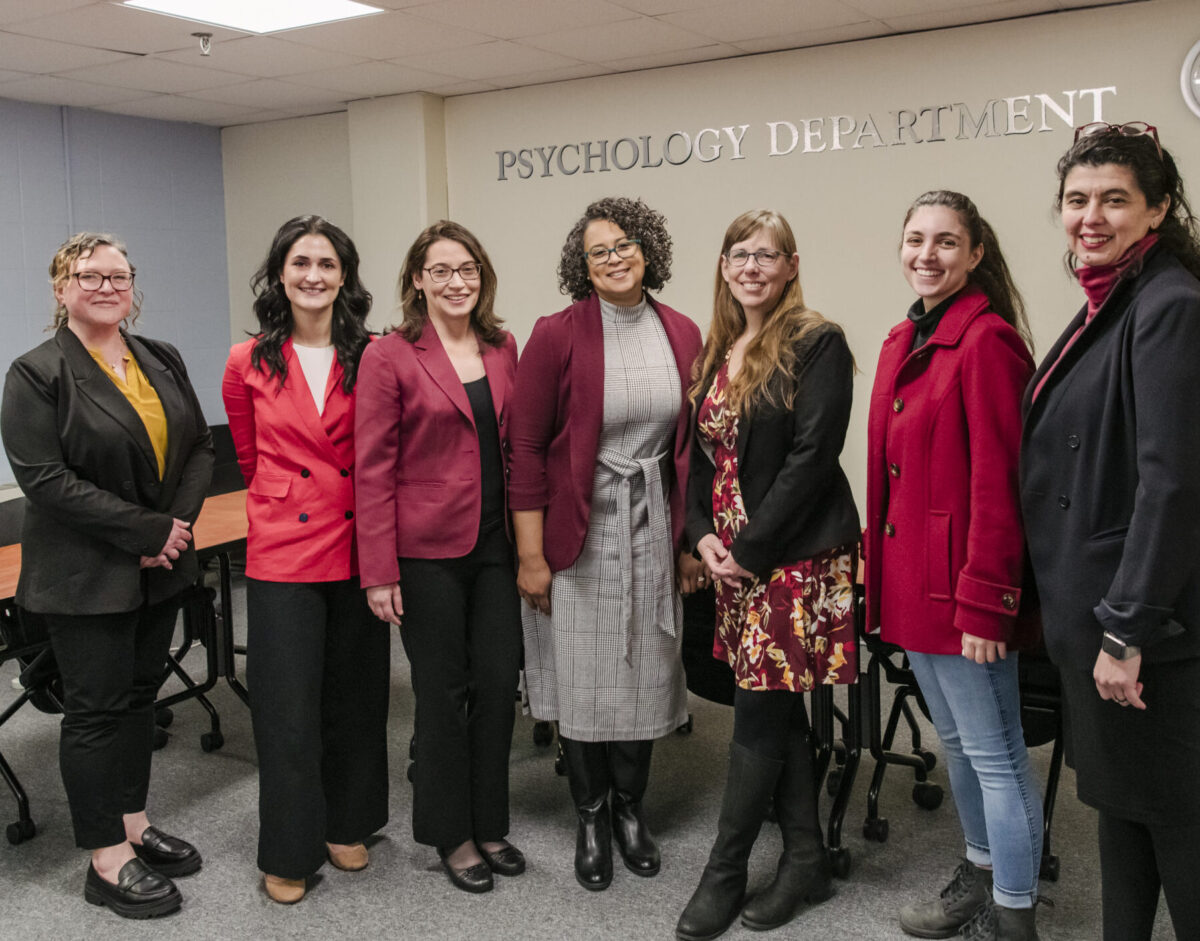 (l-r): Emily Lipsitz-Wardrick, a master of social work student at the University of Maryland School of Social Work, Pamela Rakhshan Rouhakhtar, Sandra Barrueco, Melissa Smith, Rebecca Schacht, Samantha Berg, and Doha Chibani ’08, psychology, M.P.P. ’22, public policy, UMBC psychology doctoral student, the department’s clinical coordinator, and director of clinical services at the STRIVE for Wellness Clinic. (Marlayna Demond ’11/UMBC)
“There’s often a lot of underfunding of doctoral and master’s students to pursue mental health training and to work in the field,” explains Barrueco. ADVANCE/AVANCE Maryland is changing that. Half of the grant purposefully funds graduate students and there is additional support to enhance the training of faculty and current service providers to prepare the next wave of psychology professionals to meet the needs of all communities affected by the national mental health crisis.
Barrueco notes that the students are in placements across the region with clients from various backgrounds. Through the grant, students learn how to provide services for culturally and linguistically diverse youth.
“One of the skills they are learning is how to work with interpreters. There are hundreds of languages in the immediate area, so it is a broader focus,” says Barrueco, who has expertise in Spanish. Since most bilingual speakers in the region are Spanish-speaking, students can get a strong sense of that community and learn from Barrueco’s expertise.
One-to-one solution
Samantha Berg, a fourth-year clinical psychology doctoral student in the human services psychology program at UMBC, is a research assistant at the Strive for Wellness Clinic, which provides evidence-based care to youth ages 14 – 25 through individual and family therapy, medication management, teletherapy, outreach and education, and consultation and assessment. The wellness clinic is run through a partnership between UMBC, the Maryland Early Intervention Program, the University of Maryland School of Medicine, the Maryland Coalition of Families, and On Our Own Maryland.
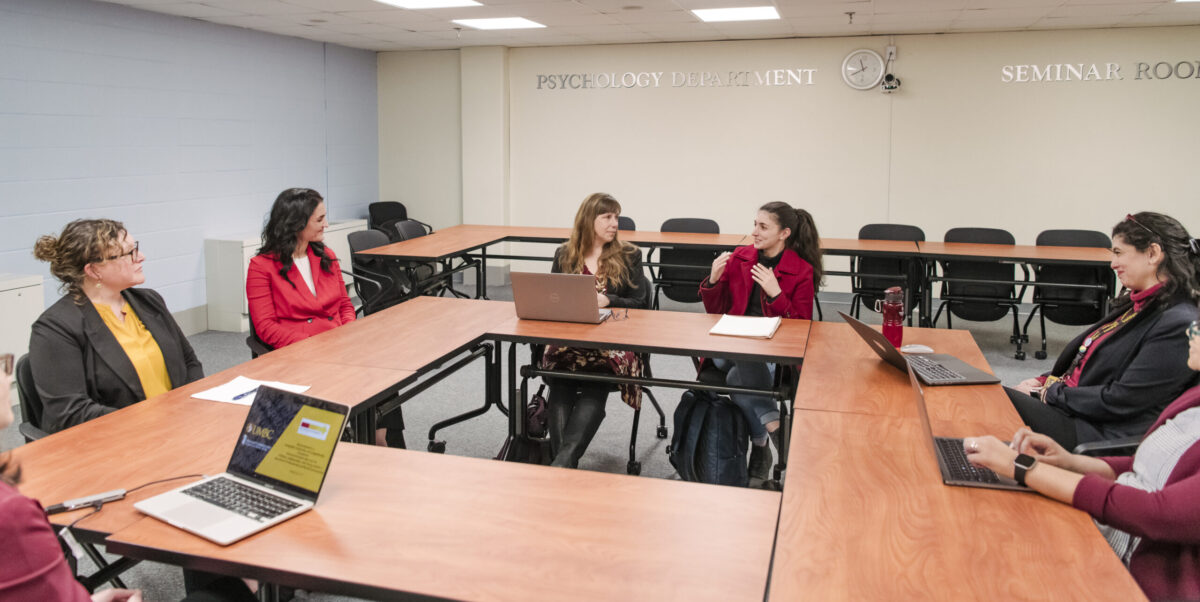 Samantha Berg (center in red coat) sits next to her advisor, Rebecca Schacht, sharing insights from her ADVANCE/AVANCE fellowship. (Marlayna Demond ’11/UMBC)
Berg’s passion for understanding psychopathology across a broad spectrum began almost a decade ago. It flourished when she entered UMBC’s doctoral program and met her advisor, Rebecca Schacht, an assistant professor of psychology, and co-director of the grant. Schacht’s research explores comorbid post-traumatic stress syndrome and substance use disorders. She is the director of the UMBC Psychology Training Clinic, where she supervises doctoral research students like Berg as they deliver low-cost, evidence-based individual psychotherapy related to anxiety, depression, relationship and family issues, and other types of mental health challenges. Schacht continues to be Berg’s advisor and provides clinical supervision.
Berg’s work at the wellness clinic aligned with the goals of the ADVANCE/AVANCE Maryland grant. She was one of the grant’s first doctoral fellows. “I was excited to learn new avenues for interacting with clients, such as how to work with an interpreter to do a bilingual mental health assessment. I want to be able to assess and treat as many people as possible, to serve as many populations as possible,” explains Berg. “I think it is part of my responsibility to gain new knowledge and understanding of how to engage with clients with whom I have different language proficiency. This is a one-to-one solution for this situation.”
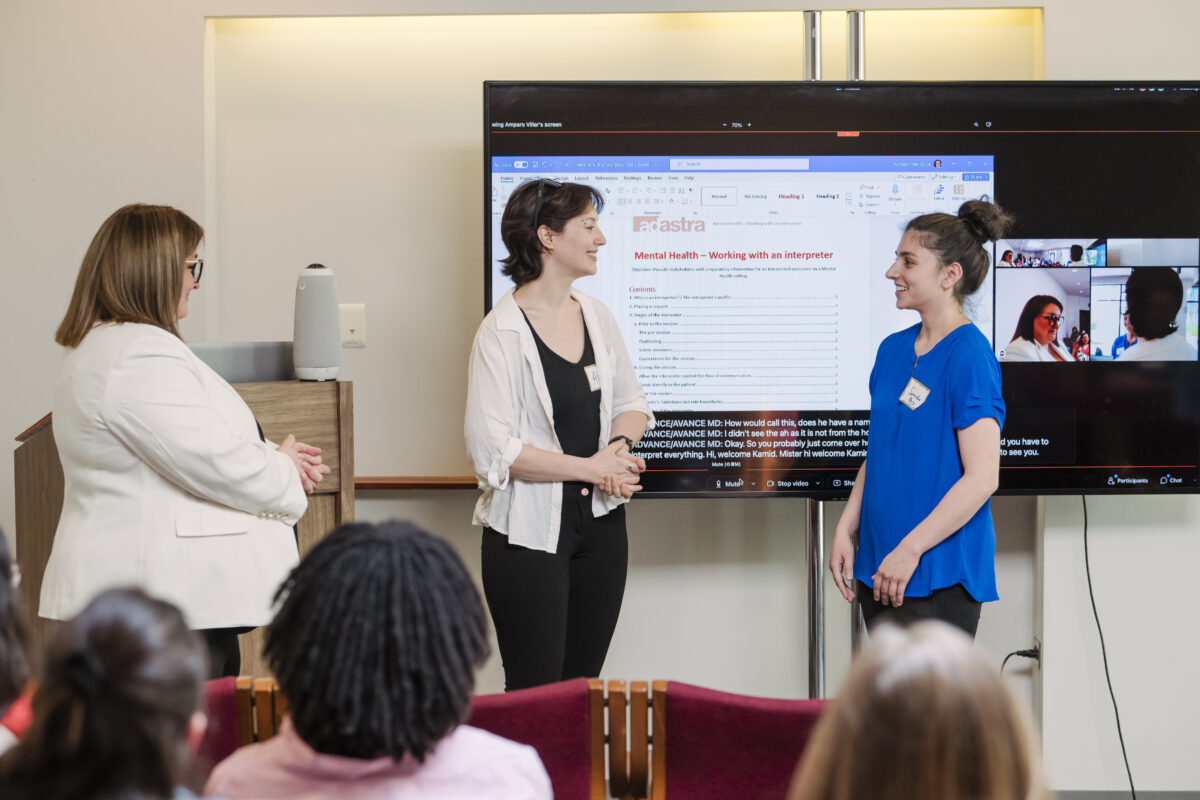 Amparo Villar Garcia (left), director of learning and development at Ad Astra language services, guides
Samantha Berg (in blue) and an attendee through a role-play to train how to work with an interpreter. (Marlayna Demond ’11/UMBC)
She is excited to be part of a significant shift in clinical psychology as it moves from a medical model to a community-based intervention model. “Part of the intervention movement includes assessments,” says Berg. “I have a personal passion for wanting to be part of the change, part of the development of treatment.”
Developing a workforce
“It’s a huge pitfall of clinical work that there isn’t enough training on how to engage and serve people who don’t speak English,” says Danielle Farrell, another research fellow on the ADVANCE/AVANCE Maryland grant. As she looks forward to her fourth year as a clinical psychology doctoral student, Farrell appreciates having access to experiential opportunities.
Farrell studies intimate partner violence. Like Berg, Farrell was already engaged with the community ADVANCE/AVANCE Maryland will be focusing on as a research assistant at the Strive for Wellness Clinic. Farrell assessed and connected adolescents and young adults with early intervention referrals for a range of mental health concerns, primarily psychosis, under the supervision of Pamela Rakhshan Rouhakhtar, an assistant professor of psychology in the human services doctoral program, another co-director of the grant, and director of the Equity in Psychosis-Spectrum Services (EQUIPS) lab at UMBC. Faculty, graduate, and predoctoral students conduct research around psychosis-spectrum experiences, with an emphasis on psychosocial factors and access to care.
The grant’s workshops, professional development meetings, and job fairs are helping Farrell maximize the skills she’s developed for a successful career after graduation.
Big picture changes
ADVANCE/AVANCE Maryland is the culmination of decades of Barrueco’s unique research, which has been instrumental in addressing developmental and mental health difficulties among language minority, immigrant, and migrant children. Her work has led to methodological improvements in the assessment and early identification of bilingual children, expansion of the theoretical and research bases related to developmental and clinical processes, and the creation and examination of multisystemic preventive interventions fostering linguistic and socioemotional functioning. This research has advanced the field of psychology and informed policy.
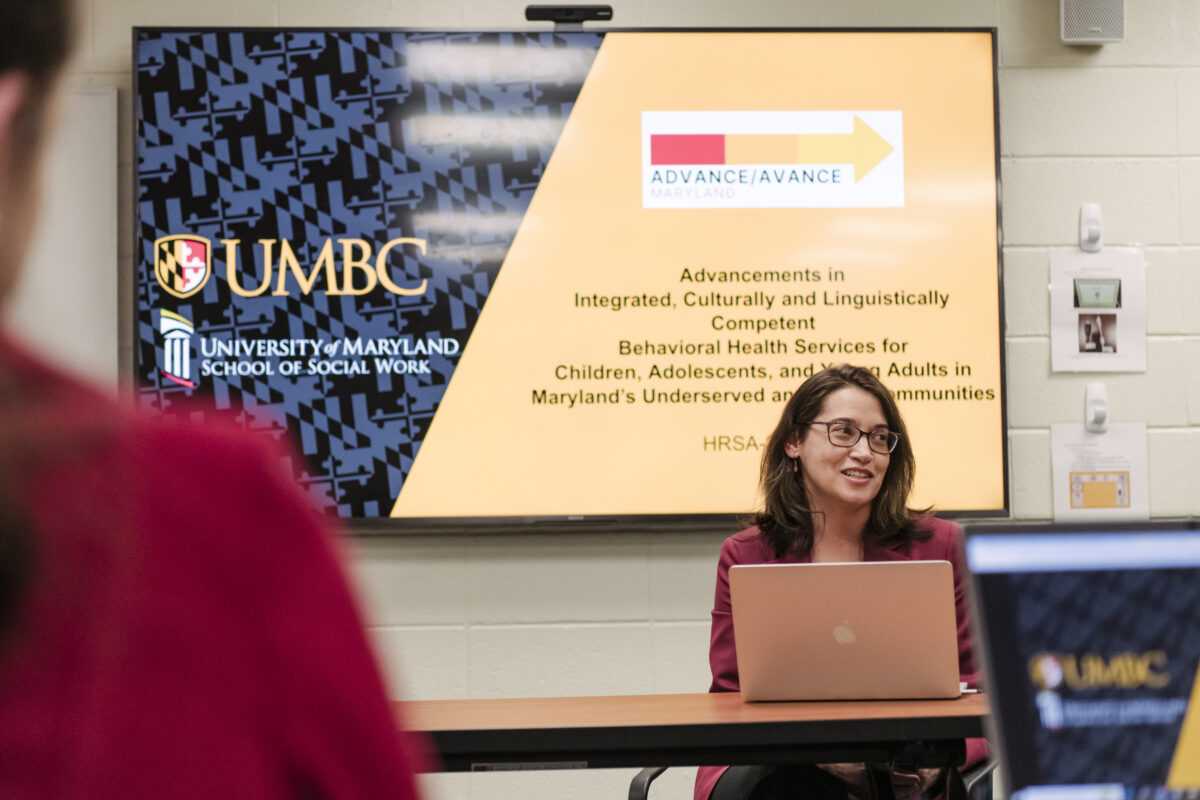 Barrueco updates the grant team. (Marlayna Demond ’11/UMBC)
Barrueco, now the director of UMBC’s clinical psychology Ph.D. program, is wholeheartedly invested in the future of UMBC’s work. “When I came to UMBC, our goal was: Let’s get some big-picture changes on the table,” she shares. “Funding psychology graduate students more quickly moves the needle on youth mental health in the nation.”
Learn more about UMBC’s psychology programs.
]]>
UMBC’s commitment to integrating training with research and community engagement drew Sandra Barrueco, professor of psychology,tojoin the psychology department last summer. Barrueco hit the ground...
https://umbc.edu/stories/barrueco-receives-990k-to-train-graduate-psychology-students-in-behavioral-health-md/
https://my3.my.umbc.edu/api/v0/pixel/news/142782/guest@my.umbc.edu/a78b741a33aff16d2b7a791125c3436b/api/pixel
cahss
cahss-research
news
policy-and-society
psychology
rca-1
research
social-work
story
UMBC News & Magazine
https://my3.my.umbc.edu/groups/umbc-news-magazine
https://assets1-my.umbc.edu/system/shared/avatars/groups/000/001/943/24435aa6207c452e7bc15cc74b42c7bb/xsmall.png?1748556657
https://assets1-my.umbc.edu/system/shared/avatars/groups/000/001/943/24435aa6207c452e7bc15cc74b42c7bb/original.png?1748556657
https://assets2-my.umbc.edu/system/shared/avatars/groups/000/001/943/24435aa6207c452e7bc15cc74b42c7bb/xxlarge.png?1748556657
https://assets2-my.umbc.edu/system/shared/avatars/groups/000/001/943/24435aa6207c452e7bc15cc74b42c7bb/xlarge.png?1748556657
https://assets3-my.umbc.edu/system/shared/avatars/groups/000/001/943/24435aa6207c452e7bc15cc74b42c7bb/large.png?1748556657
https://assets1-my.umbc.edu/system/shared/avatars/groups/000/001/943/24435aa6207c452e7bc15cc74b42c7bb/medium.png?1748556657
https://assets2-my.umbc.edu/system/shared/avatars/groups/000/001/943/24435aa6207c452e7bc15cc74b42c7bb/small.png?1748556657
https://assets1-my.umbc.edu/system/shared/avatars/groups/000/001/943/24435aa6207c452e7bc15cc74b42c7bb/xsmall.png?1748556657
https://assets2-my.umbc.edu/system/shared/avatars/groups/000/001/943/24435aa6207c452e7bc15cc74b42c7bb/xxsmall.png?1748556657
UMBC News & Magazine
0
0
false
Thu, 11 Jul 2024 18:45:07 -0400
Thu, 11 Jul 2024 18:45:07 -0400

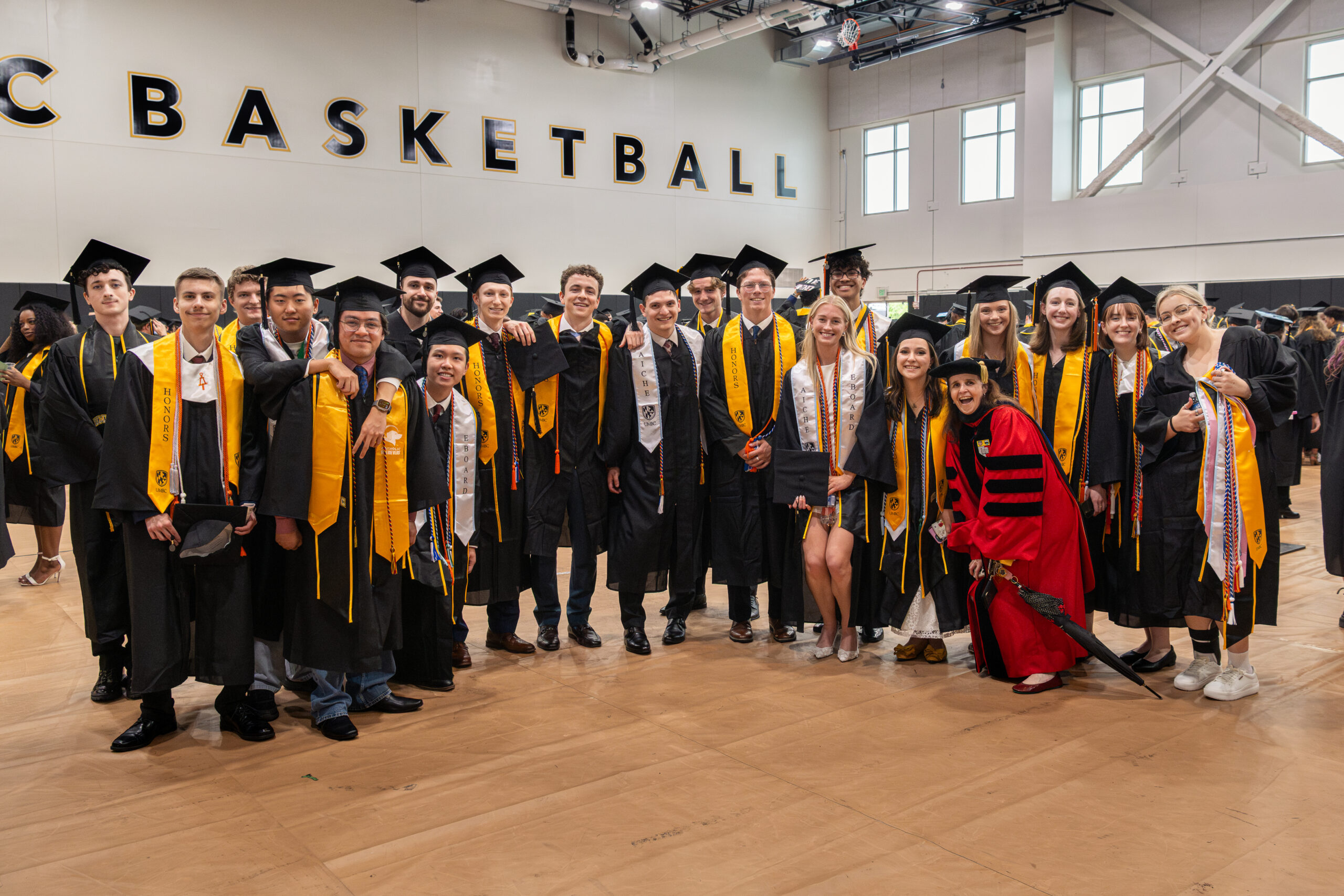


 Celebrating graduation day! (Brad Ziegler/UMBC)