Sweat equity—UMBC’s arts, humanities, and social science interns use campus connections and resources to find ideal summer placements
Used to working in beautiful sunny weather, Giovanna Orfali, a visual arts senior from São Paulo, Brazil, spent this summer behind the camera as a digital content intern at the Maryland Center for History and Culture (MCHC). A seasoned filmmaker and photographer, this internship was an opportunity to expand her professional network and bring a fresh perspective to Maryland history by creating short-form social media content to share the center’s unique exhibits and events with audiences across the state.
Orfali is a recipient of the #YouAreWelcomeHere scholarship that offers tuition support for international students. She came to UMBC with experience as a television video editor and videographer and has used her skillset working on a wide range of projects. She produced and edited “Arthropod Biodiversity and Applications,” a full-length instructional video course for the Department of Biological Sciences, and works part-time as a photographer for UMBC athletics events. When Orfali is not at the MCHC, she produces digital media for UMBC’s event and conference services, her second summer internship site.


 Giovanna Orfali editing videos and photos of MCHC’s research library and documenting a Tom Miller exhibit. (Brad Ziegler/UMBC)
“When I began taking classes back home, no one was interested in editing audio, so I volunteered. I learned to say yes to all opportunities. At the TV station, I filmed interviews, exercise classes, and tourism commercials,” says Orfali. “I did the same when I came to UMBC. Being open to learning all aspects of audiovisual production has made me more confident and helped me make a lot of connections in and outside of the classroom.” Orfali’s short film “A Shared Story of Distance” was chosen to represent UMBC at the 2023 Maryland Film Festival Day: Student Shorts Showcase.
Hundreds of Retrievers like Orfali maximize their summer by putting their hard-earned skills to work in collaboration with campus and community partners. The 2025 arts, humanities, and social sciences summer interns are getting it done, one sunny day at a time.
Designing a career
No matter where a Retriever is in the world, they can search the online student job platform Handshake for thousands of summer internships, including on-campus opportunities. This was crucial for Humanities Scholar Kendal Howell, who stepped off the plane after studying business management abroad in France this past spring and into the office as an intern at UMBC’s Division of Student Affairs for their new academic partnerships and high-impact experiences (APHIE) unit. James DeVita, assistant vice president for APHIE, says his group needed materials and resources to help stakeholders understand the value of developing and engaging in high-impact experiences. So he turned to the experts in student experiences—the students themselves.
 Kendal Howell working at the academic partnerships and high-impact experiences (APHIE) unit. (Brad Ziegler/UMBC)
“We wanted to add to the number of on-campus internships. It was wonderful to have created a new professional experience for over 25 students, whose research will directly benefit their peers in a multitude of ways,” says DeVita. “By the end of the internship, the interns had collectively reviewed over 30 publications and drafted six resources in addition to completing the mapping research and related presentation.”
“The student-led research team studied high-impact practices for scholars programs, including UMBC’s, and synthesized academic research of these practices on student success in higher education,” says Howell, an Africana studies and sociology senior, with a minor in entrepreneurship. She focused on entrepreneurship, education abroad, work-based learning, and student leadership opportunities. “The information we gathered will help inform campus leaders in improving UMBC’s scholar programs. This was my first internship, and I loved it!”
 (l-r): Kendal Howell updates internship supervisor, James DeVita, on her latest project. (Brad Ziegler/UMBC)
Second-year gerontology doctoral student Claire McDonald also had the opportunity to conduct new research. Trained in quantitative research in psychology, McDonald gained qualitative methodology skills in her spring sociology class as part of her training to conduct research about aging in the LGBTQ+ community, a growing area of research. She is utilizing the mixed-methods LGBTQ+ Social Networks, Aging, and Policy Study, one of the few datasets on this topic, and hopes to add to her dissertation qualitative data from interviews with older LGBTQ+ adults in Baltimore for a mixed-methods project. Impressed with McDonald’s rigor, her professor recommended her to Rowena Winkler, the new assistant director for graduate student career development at the UMBC Career Center, who was seeking graduate students to conduct a 10-week qualitative research project.

 (l-r): Claire McDonald discusses her research with her internship supervisor, Rowena Winkler. McDonald practices interviewing a graduate student about their experience. (Brad Ziegler/UMBC)
“I recruited over 100 students, conducted 11 individual interviews, and three focus groups to learn how and why graduate students use the Career Center and why they don’t,” says McDonald. Winkler appreciated the partnership. They co-facilitated two of the focus groups together. “I watched Claire build rapport with the students. She was very open-ended and asked great prompts and follow-ups,” says Winkler. “I’m happy she had the opportunity to hone in on some of these skills that she learned in her class.”
From intern to staff
Professional growth and community building throughout the summer help students maintain ongoing growth at every stage of their learning process, leading to new jobs in other organizations, extending their internship to another semester, or a promotion from an intern to a staff member.
Like Howell, Handshake helped Orfali find both her summer internship at the MCHC as well as a spring internship in media production and audiovisual at the CATO Institute, a think tank in Washington, D.C. She impressed the MCHC team so much that they have extended her internship through the fall. “I learned a lot about working at a nonprofit that values the importance of history and culture, as well as collaborating with the external affairs team to create content for marketing purposes,” shared Orfali on LinkedIn. “This experience made me very interested in producing informative and educational videos and documentaries.”
As students advance in their academic careers, they can access paid, hands-on learning opportunities by serving as graduate assistants. Over the last eight years, Caleb Ruck, a language, literacy, and culture doctoral student and two-time alum, has climbed UMBC’s student worker ladder, including as a graphic designer and social media manager for UMBC’s Initiatives for Identity, Inclusion, and Belonging. He served as a special projects intern for the Center for Democracy and Civic Life and moved to the front of the classroom as a graduate teaching assistant for the modern languages, linguistics, and intercultural communication department.
Ruck is now the first year-long graduate assistant for the Center for Social Justice Dialogue where he is helping develop and establish programming and procedures, such as co-facilitating a first-year seminar on the intricacies of dialogue around social identity, race, power, privilege, and oppression, and co-facilitating Building Bridges Across Difference: A Dialogue for Every Day for staff and faculty.
 Caleb Ruck (center) speaks with Jasmine Lee and Ciara Christian, M.A. ’18, sociology, Ph.D. ’22, language literacy, and culture, who both co-direct the Center for Social Justice Dialogue. (Brad Ziegler/UMBC)
This summer, Ruck focused on professional development by attending the National Intergroup Dialogue Institute, hosted by the University of Michigan’s program on intergroup relations, and preparing to welcome the first group of interns he helped interview.
 Caleb Ruck shares his doctoral research with members of the Center for Social Justice Dialogue. (Brad Ziegler/UMBC)
“The skills I’ve acquired in this job make me feel more competent and prepared to co-facilitate dialogue, especially in student, staff, and faculty-facing contexts,” says Ruck ’22, modern languages, linguistics, and intercultural communication, and M.A. ’24, intercultural communication. “I want to be a faculty member, teach, and conduct research on social identity topics. Being able to navigate dialogue across differences is key.”
The UMBC Career Guide has templates and resources for students to help with internet and job search at every stage of their internship and job search. Listen to more tips on UMBC’s Careers Unleashed podcast.
]]>
Used to working in beautiful sunny weather, Giovanna Orfali, a visual arts senior from São Paulo, Brazil, spent this summer behind the camera as a digital content intern at the Maryland Center for...
https://umbc.edu/stories/arts-humanities-social-science-interns/
https://my3.my.umbc.edu/api/v0/pixel/news/151641/guest@my.umbc.edu/2948f8cc3d15624a344110be1c818563/api/pixel
africanastudies
arts-and-culture
cahss
careercenter
centerfordemocracyandciviclife
community
graduateschool
humanitiesscholars
international
internships
llc
mlli
news
psychology
research
sociology
story
studentaffairs
visualarts
UMBC News & Magazine
https://my3.my.umbc.edu/groups/umbc-news-magazine
https://assets1-my.umbc.edu/system/shared/avatars/groups/000/001/943/24435aa6207c452e7bc15cc74b42c7bb/xsmall.png?1748556657
https://assets1-my.umbc.edu/system/shared/avatars/groups/000/001/943/24435aa6207c452e7bc15cc74b42c7bb/original.png?1748556657
https://assets2-my.umbc.edu/system/shared/avatars/groups/000/001/943/24435aa6207c452e7bc15cc74b42c7bb/xxlarge.png?1748556657
https://assets2-my.umbc.edu/system/shared/avatars/groups/000/001/943/24435aa6207c452e7bc15cc74b42c7bb/xlarge.png?1748556657
https://assets3-my.umbc.edu/system/shared/avatars/groups/000/001/943/24435aa6207c452e7bc15cc74b42c7bb/large.png?1748556657
https://assets1-my.umbc.edu/system/shared/avatars/groups/000/001/943/24435aa6207c452e7bc15cc74b42c7bb/medium.png?1748556657
https://assets2-my.umbc.edu/system/shared/avatars/groups/000/001/943/24435aa6207c452e7bc15cc74b42c7bb/small.png?1748556657
https://assets1-my.umbc.edu/system/shared/avatars/groups/000/001/943/24435aa6207c452e7bc15cc74b42c7bb/xsmall.png?1748556657
https://assets2-my.umbc.edu/system/shared/avatars/groups/000/001/943/24435aa6207c452e7bc15cc74b42c7bb/xxsmall.png?1748556657
UMBC News & Magazine
0
0
false
Thu, 21 Aug 2025 11:00:43 -0400
Thu, 21 Aug 2025 11:00:43 -0400
Meet a Retriever—Dann Malihom ’10, M.A. ’16, UMBC staff member, sociology faculty, and Alumni Association board member
Meet Dann Malihom ’10, M.A. ’16. Dann has spent most of his adult life at UMBC. He is a double alum (with plans to be a triple alum one day), earning both his degrees in sociology. He is a UMBC staff member, serving as the event specialist in the Office of Institutional Advancement. He is an adjunct faculty member in the sociology, anthropology, and public health department. And Dann also serves as the vice president of engagement on the UMBC Alumni Association Board of Directors. Talk about a lifelong Retriever! Take it away, Dann!
Q: What is your WHY? What brought you to UMBC?
A: UMBC was appealing to me because of its authenticity. It felt different from “traditional” colleges, not because it was trying and failing or trying to be intentionally counter-culture. It just was. I immediately felt welcomed and embraced for who I was, academically and personally. In an age when everything feels marketed or insincere, UMBC tells you up front that we are not just aiming for excellence, but inclusive excellence.
UMBC has always been an institution that embraces inclusive excellence. It wants you to be unapologetically yourself and will ensure you have the support to do so. It is definitely a place that doesn’t just talk the talk, but walks the walk.
Dann Malihom ’10, M.A. ’16
Q: Who is someone in the UMBC community who has inspired you or supported you?
A: Christine Mair of the Department of Sociology, Anthropology, and Public Health. She was my mentor during my thesis for my master’s in applied sociology. She was the reason I was able to get a position as an adjunct with UMBC in 2017, and was a fantastic support as I learned the ropes of being a professor. She showed immediate faith in me and has always been a valuable resource for me to turn to whenever I need a suggestion, direction, or even just confirmation that I was making the right choices with my teaching pedagogy.
Q: What do you love about sociology?
A: I love teaching in the sociology, anthropology, and public health department. By definition, all of us are connected to sociology due to the fact that we live, learn, and interact with society. The little “ah ha!” moments when students begin to make connections to things that have influenced them never get old. While the course material can sometimes get heavy as we talk about topics like racism, gender inequality, and social stratification, the students always show deep reflection and recognition of these social issues. Even more promising, they take these recognitions of the problems as their first steps toward correcting them.
 After participating in the Family Fun Run at Homecoming 2024 with his kids, Malihom took a photo with a former colleague, Robert Bernhard, and two former student employees.
Q: Tell us about your current job. What do you like most about it?
A: I have worked at UMBC full-time since 2012. I started out as a facilities coordinator in Campus Life Operations before transitioning into my current role as the event specialist in the Office of Institutional Advancement in 2024. I enjoy getting to support milestone events that bring the students, faculty, staff, and UMBC community together in a shared place of belonging. Commencement is a whirlwind of an event that means so much to so many people, such as first-generation students, international students, and non-traditional students. Being able to be a part of that as these individuals walk across stage is so rewarding.
Q: What would you tell someone who is considering a career at UMBC?
A: UMBC is a special place. This is reflected in the number of alumni who are now staff members. It may not be for everyone, but for many, it is truly a place they love and are welcomed fully.
Q: Where have you found support in the UMBC community?
A: The shared governance aspect of UMBC is a wonderful thing. UMBC truly strives to include all voices and perspectives in decisions, and it shows. Whether it’s through groups like the Exempt Staff Senate or just the accessibility of administration, it is easy to share your opinion and, perhaps more importantly, feel like you’ve actually been heard.
Q: How have you stayed connected with the UMBC alumni community?
A: I have been a member of the Alumni Association Board of Directors since 2019. I initially joined at the recommendation of the current president, Nate Dissmeyer ’07, and became a part of the Strategic Initiatives committee. Last year, I was able to become the chair of that committee, and starting this year, I am the vice president of engagement for the board. My positions have afforded me the opportunity to meet and connect with alumni not just from my cohort, but as far back as the Founding Four (alumni from UMBC’s first four graduating classes).
Q: What drives you to support UMBC?
A: My teaching philosophy that I inherited from my high school philosophy teacher is “You can count the number of seeds in an apple, but you can’t count the number of apples in a seed.” Every year, I give to the Department of Sociology, Anthropology, and Public Health, the Women’s, Gender, & Equity Center, and the Alumni Endowment Scholarship Fund. Some of the recipients have been students I’ve taught directly. Regardless of whether I know them or not, I know UMBC is developing engaged, empathetic, global citizens, and many of them will go on to change the world.
Pictured right: Malihom and his son Miles, who are both obsessed with space, got to check out the telescope at the UMBC Observatory as part of the Homecoming celebration.

* * * * *
UMBC’s greatest strength is its people. When people meet Retrievers and hear about the passion they bring, the relationships they create, the ways they support each other, and the commitment they have to inclusive excellence, they truly get a sense of our community. That’s what “Meet a Retriever” is all about.
Learn more about how UMBC can help you achieve your goals.
]]>
Meet Dann Malihom ’10, M.A. ’16. Dann has spent most of his adult life at UMBC. He is a double alum (with plans to be a triple alum one day), earning both his degrees in sociology. He is a UMBC...
https://umbc.edu/stories/meet-dann-malihom-sociology-faculty-board-member/
https://my3.my.umbc.edu/api/v0/pixel/news/151248/guest@my.umbc.edu/d49adbc0a8dbd4b0a24d8164cffbdd87/api/pixel
alumni
alumni-association
alumni-endowed-scholarship
impact
magazine
meet-a-retriever
sociology
story
UMBC News & Magazine
https://my3.my.umbc.edu/groups/umbc-news-magazine
https://assets1-my.umbc.edu/system/shared/avatars/groups/000/001/943/24435aa6207c452e7bc15cc74b42c7bb/xsmall.png?1748556657
https://assets1-my.umbc.edu/system/shared/avatars/groups/000/001/943/24435aa6207c452e7bc15cc74b42c7bb/original.png?1748556657
https://assets2-my.umbc.edu/system/shared/avatars/groups/000/001/943/24435aa6207c452e7bc15cc74b42c7bb/xxlarge.png?1748556657
https://assets2-my.umbc.edu/system/shared/avatars/groups/000/001/943/24435aa6207c452e7bc15cc74b42c7bb/xlarge.png?1748556657
https://assets3-my.umbc.edu/system/shared/avatars/groups/000/001/943/24435aa6207c452e7bc15cc74b42c7bb/large.png?1748556657
https://assets1-my.umbc.edu/system/shared/avatars/groups/000/001/943/24435aa6207c452e7bc15cc74b42c7bb/medium.png?1748556657
https://assets2-my.umbc.edu/system/shared/avatars/groups/000/001/943/24435aa6207c452e7bc15cc74b42c7bb/small.png?1748556657
https://assets1-my.umbc.edu/system/shared/avatars/groups/000/001/943/24435aa6207c452e7bc15cc74b42c7bb/xsmall.png?1748556657
https://assets2-my.umbc.edu/system/shared/avatars/groups/000/001/943/24435aa6207c452e7bc15cc74b42c7bb/xxsmall.png?1748556657
UMBC News & Magazine
1
0
false
Fri, 01 Aug 2025 09:23:02 -0400
Fri, 01 Aug 2025 09:23:02 -0400
Meet a Retriever—Emmanuella Osei, public health and sociology junior and fearless leader
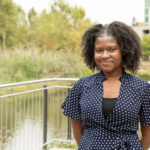
Meet Emmanuella Osei, a junior studying public health and sociology and the president of UMBC’s Public Health Council of Majors. She is passionate about health equity, public service, and mentorship. As a Retriever, Emmanuella is a fearless leader, actively involved in multiple scholar programs, and volunteer initiatives across the globe—from Maryland to South Africa to Costa Rica. Her commitment to high-impact research has led her to tackle critical issues like food insecurity among students at UMBC and access to long-term COVID-19 care. She is a proud recipient of the prestigious Jack Kent Cooke Scholarship. Her dedication to making a difference continues to take her where she is most needed. Take it away, Emmanuella!
Q: Briefly introduce yourself. What’s one essential thing you’d want another Retriever to know about you?
A: I am pursuing a dual degree in public health and sociology and a certificate in the social dimensions of health. Throughout my time at UMBC, I have engaged in many experiential learning opportunities. In the summer following my freshman year, I interned at Columbia Community Care, a non-profit in Howard County that offers hunger relief, youth development, and wellness programs. In summer of 2024, I participated in the Summer Research Opportunity Program at the University of Michigan, where I researched access to long COVID care in the HELPER lab at the School of Public Health. Most recently, I participated in the AIFS study abroad program in Costa Rica where I learned about Costa Rica’s health care and tropical systems.
Q: Tell us about your primary WHY, and how it led you to UMBC.
A: I came to UMBC because of the vibrant and supportive community I felt when I first toured the campus. I knew that as an immigrant and first-generation student from Ghana [in West Africa], UMBC would be a great place to be. Because UMBC is a minority-serving institution and home to students from diverse backgrounds and identities, I felt it would offer the perfect environment for me to also grow academically while providing countless opportunities. So far, UMBC has definitely lived up to my expectations, and I truly believe that everyone can find their place here.
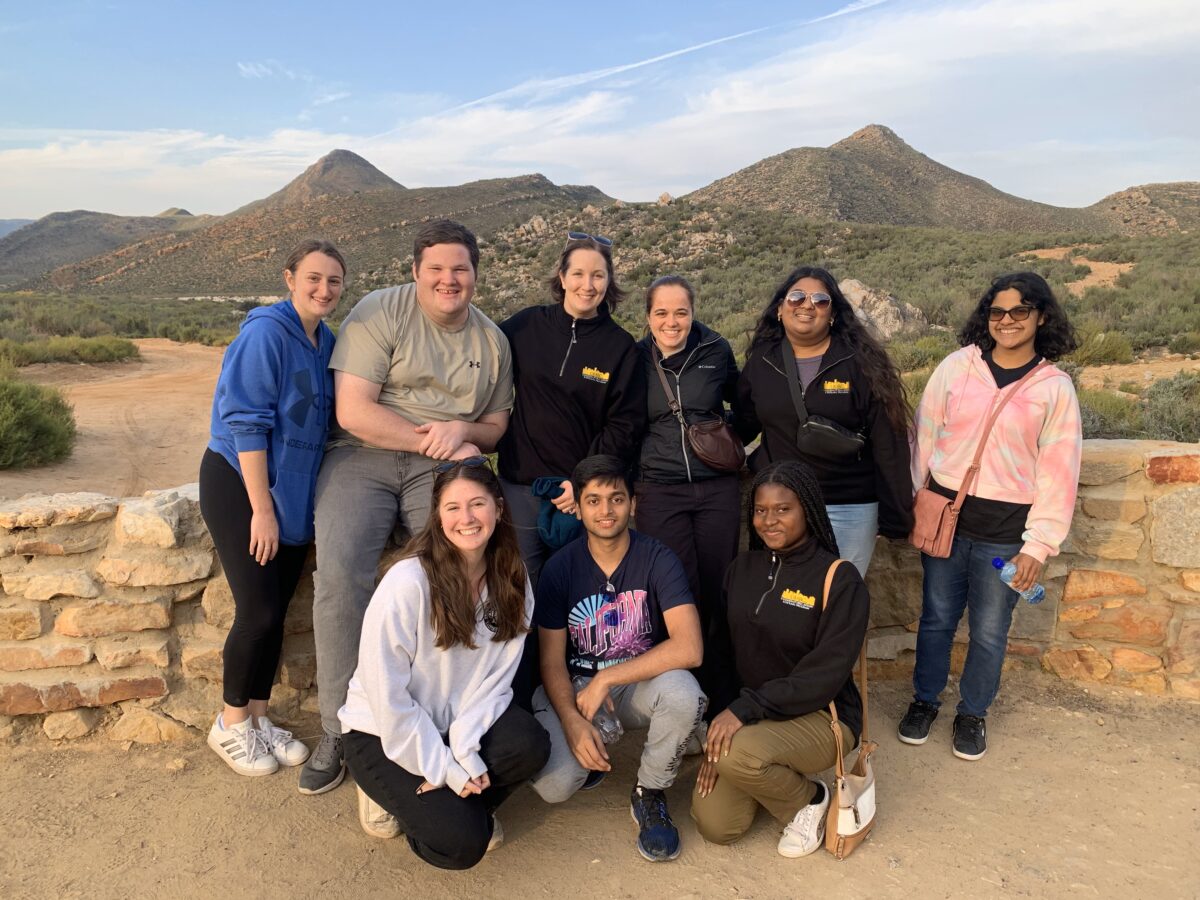 Osei (first on the right kneeling) and other Sondheim Public Affairs Scholars in South Africa. (Image courtesy of Osei)
Q: Tell us about the people who are helping you grow at UMBC, and why their HOW made such a difference to you.
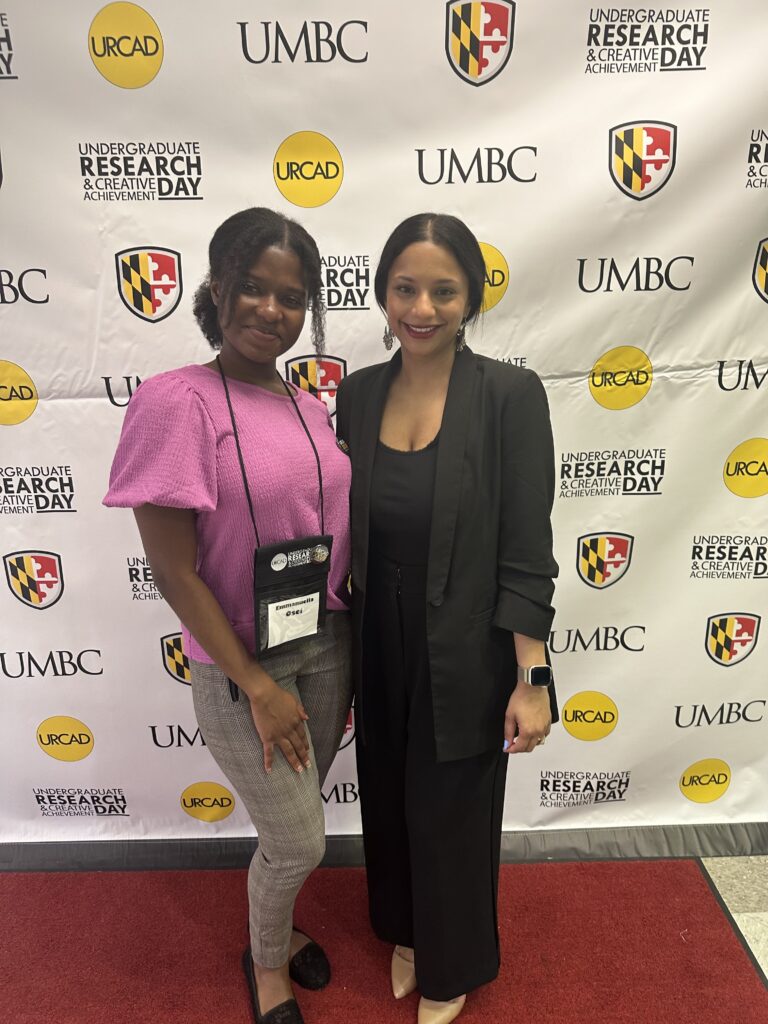 Osei and Nayak at URCAD 2024. (Image courtesy of Osei)
A: My research mentor, Dr. Sameera Nayak, has been extremely supportive of my independent research. She became my mentor during my sophomore year as part of the McNair Scholars Program. Now, as an Undergraduate Research Award Scholar studying food insecurity among students at UMBC, Dr. Nayak continues to guide me and provides feedback on each stage of the research process. After collecting and analyzing over 500 responses, I am now working on disseminating my findings beginning at UMBC’s spring Undergraduate Research and Creative Achievement Day (URCAD).
Q: Are you currently part of a scholars program or Living Learning Community at UMBC?
A: In addition to being a McNair Scholar, I am a member of UMBC’s Honors College and the Sondheim Public Affairs Scholars Program, a four-year scholarship program focused on community engagement and policy. As a Sondheim Scholar, I participated in a faculty-led study abroad summer course in Cape Town, South Africa, to learn about global community engagement and social change. In my first two years at UMBC, I was also a member of the Shriver Living Learning Community (LLC) for students passionate about service, leadership, and advocacy. I served as a peer mentor in my sophomore year, supporting first-year students as they transitioned to college.
Because UMBC is a minority-serving institution and home to students from diverse backgrounds and identities, I felt it would offer the perfect environment for me to also grow academically while providing countless opportunities. So far, UMBC has definitely lived up to my expectations, and I truly believe that everyone can find their place here.
Emmanuella Osei ’26
public health and sociology
Q: What clubs, teams, or organizations are you a part of? What do you love about them?
A: I am the president of UMBC’s Public Health Council of Majors. I love planning professional development and social events to bring public health students together. In the past year, we have hosted events such as graduate school information sessions, internship panels, resume workshops in collaboration with the Career Center, and LinkedIn headshots, among others.
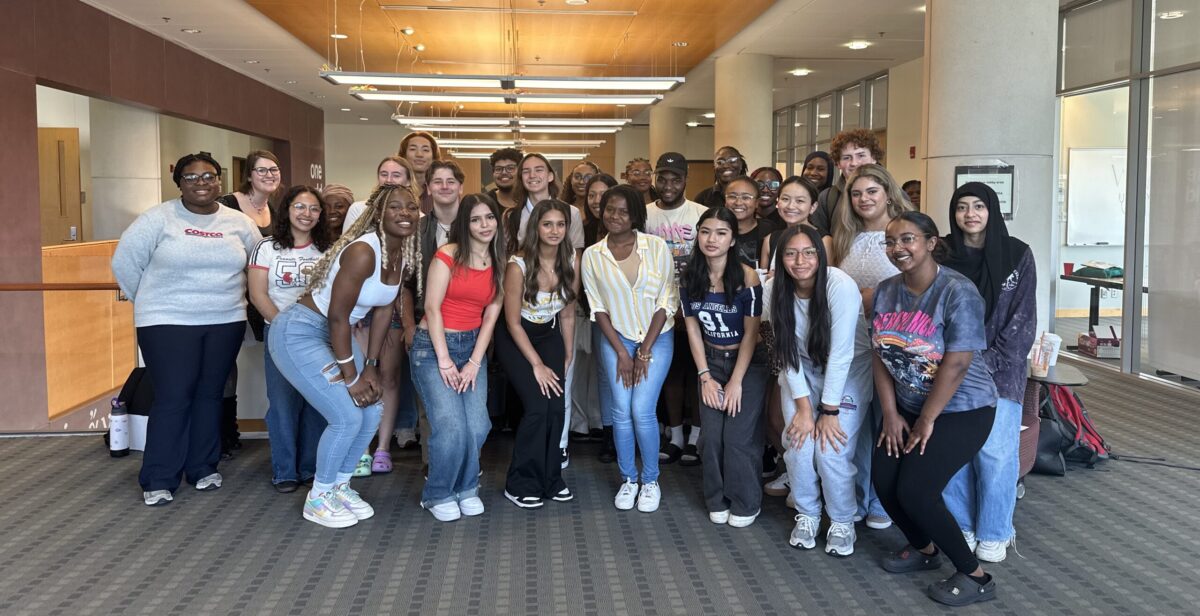 Osei (center striped shirt) with members of UMBC’s Public Health Council of Majors. (Image courtesy of Osei)
Q: How are you making a difference for other Retrievers?
A: Since my sophomore year, I have worked as an Academic Peer Advocate through UMBC’s Academic Success Center. In this role, I support other undergraduate students by connecting them to the great resources UMBC offers. Through the Shriver Center, I volunteered at the Great Kids Farm, a Baltimore City Public Schools farm-to-school program. Currently, I serve as a student ambassador for the Commodore Collegiates Program, a partnership between UMBC and Commodore John Rodgers Elementary/Middle School. I give students an exciting tour of UMBC, lead fun STEM activities, share my college experience, and engage them in discussions about college.
* * * * *
UMBC’s greatest strength is its people. When people meet Retrievers and hear about the passion they bring, the relationships they create, the ways they support each other, and the commitment they have to inclusive excellence, they truly get a sense of our community. That’s what “Meet a Retriever” is all about.
Learn more about Scholars Programs at UMBC.
]]>
Meet Emmanuella Osei, a junior studying public health and sociology and the president of UMBC’s Public Health Council of Majors. She is passionate about health equity, public service, and...
https://umbc.edu/stories/meet-a-retriever-emmanuella-osei-public-health-sociology/
https://my3.my.umbc.edu/api/v0/pixel/news/147034/guest@my.umbc.edu/b973803db9e2edd05cf9c5ed6d9d72d4/api/pixel
cahss
community
creative-achievement-day-urcad
impact
magazine
mcnair-scholars
meet-a-retriever
public-health
saph
sociology
sondheim-public-affairs-scholars-program
story
UMBC News & Magazine
https://my3.my.umbc.edu/groups/umbc-news-magazine
https://assets1-my.umbc.edu/system/shared/avatars/groups/000/001/943/24435aa6207c452e7bc15cc74b42c7bb/xsmall.png?1748556657
https://assets1-my.umbc.edu/system/shared/avatars/groups/000/001/943/24435aa6207c452e7bc15cc74b42c7bb/original.png?1748556657
https://assets2-my.umbc.edu/system/shared/avatars/groups/000/001/943/24435aa6207c452e7bc15cc74b42c7bb/xxlarge.png?1748556657
https://assets2-my.umbc.edu/system/shared/avatars/groups/000/001/943/24435aa6207c452e7bc15cc74b42c7bb/xlarge.png?1748556657
https://assets3-my.umbc.edu/system/shared/avatars/groups/000/001/943/24435aa6207c452e7bc15cc74b42c7bb/large.png?1748556657
https://assets1-my.umbc.edu/system/shared/avatars/groups/000/001/943/24435aa6207c452e7bc15cc74b42c7bb/medium.png?1748556657
https://assets2-my.umbc.edu/system/shared/avatars/groups/000/001/943/24435aa6207c452e7bc15cc74b42c7bb/small.png?1748556657
https://assets1-my.umbc.edu/system/shared/avatars/groups/000/001/943/24435aa6207c452e7bc15cc74b42c7bb/xsmall.png?1748556657
https://assets2-my.umbc.edu/system/shared/avatars/groups/000/001/943/24435aa6207c452e7bc15cc74b42c7bb/xxsmall.png?1748556657
UMBC News & Magazine
6
0
false
Mon, 03 Feb 2025 16:57:41 -0500
Nancy Kusmaul, social work, receives “Outstanding Individual in Academia” award from the Congressional Research Institute for Social Work and Policy
Nancy Kusmaul, associate professor of social work, a scholar and advocate for the rights of older adults and professional caregivers, received the “Outstanding Individual in Academia” award from the Congressional Research Institute for Social Work and Policy in March 2024 at a ceremony on Capitol Hill. Kusmaul’s work is informed by her 10 years of experience as a social worker and over a decade of novel scholarship.
As co-chair of the Committee on Aging for the Maryland Chapter of the National Association of Social Workers, Kusmaul helps advance programming for seniors, professional development for social workers in the aging field, and inform policy and legislation. In 2019, Kusmaul served as a Health and Aging Policy Fellow at the office of U.S. Senator Ron Wyden and the Centers for Medicare and Medicaid Services learning about how Congress and the executive branch create policies that affect care for frail older adults.
Social work advocacy and policy
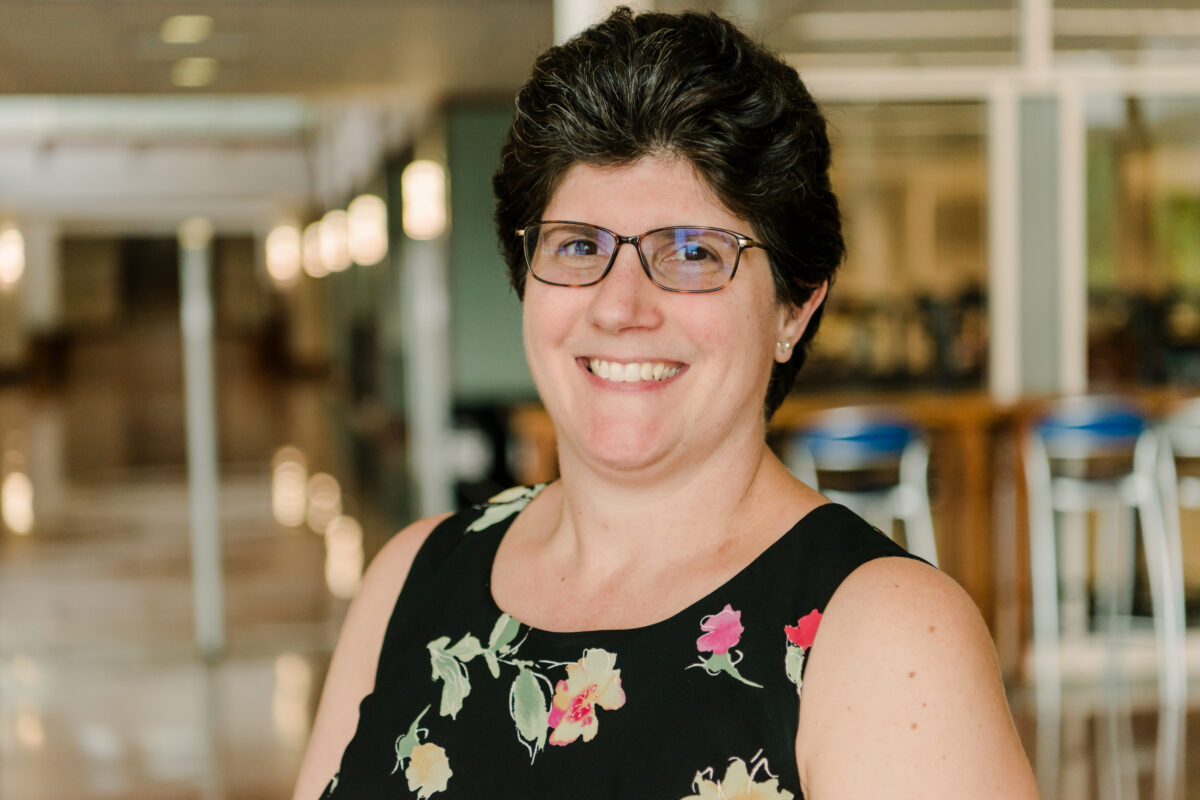 Nancy Kusmaul (Marlayna Demond ’11/UMBC)
“During my time as a nursing home and hospital social worker, I witnessed the day-to-day impact of policy on practice, when families had to choose between the best of less-than-desirable options. As a scholar, I answer questions and promote policies to improve those options,” says Kusmaul. Her research and advocacy focus on improving nursing home care and organizational culture as well as the understanding of trauma experiences on direct care workers, care recipients, and their families.
“Advocacy is a central tenet of social work, and this award recognizes my time, collaboration, and leadership in this area on behalf of older adults and their families,” says Kusmaul who recently published “Let’s cut out the ageism and the notion of getting ‘too old’” in the Baltimore Sun.
Kusmaul’s first textbook, Aging and Social Policy in the United States, is one of the first textbooks designed to provide students with an in-depth understanding of the conditions and policies at the local, state, and federal level that affect the rights and interests of senior citizens.
Measuring nursing home care
Her work continues in the classroom and the “lab” as a co-investigator in a new interdisciplinary research project with principal investigator Roberto Millar, M.A ’19, sociology, Ph.D. ’20, gerontology, a policy analyst advanced at The Hilltop Institute at UMBC, and co-investigator, Ian Stockwell, associate professor of information systems. For the first time, the researchers will also combine data from the Centers for Medicare and Medicaid Services’ Care Compare database and results of the Maryland Family Satisfaction Survey. The survey assesses the experiences of family members with loved ones in Maryland nursing homes and, Kusmaul’s research, offers a unique approach to measuring quality of care.
“There are no national measures of nursing home quality that consider the experiences of family members,” she explains. “When we think about what quality is and the outcomes we’re measuring, we have to think about the different perspectives of what is good nursing home care.”
Halaevalu Fonongava’inga Ofahengaue Vakalahi, president and chief executive officer of the Council on Social Work Education, who attended the March event in D.C., said, “This award is absolutely well-deserved because Nancy is a champion of all things aging and gerontology. There could not be anyone more fitting for this award!”
Learn more about UMBC’s School of Social Work.
]]>
Nancy Kusmaul, associate professor of social work, a scholar and advocate for the rights of older adults and professional caregivers, received the “Outstanding Individual in Academia” award from...
https://umbc.edu/stories/kusmaul-social-work-congressional-research-award/
https://my3.my.umbc.edu/api/v0/pixel/news/141398/guest@my.umbc.edu/27f31419720f686c3c52fd6f3cdb5366/api/pixel
cahss
coeit
gerontology
information-systems
news
policy-and-society
research
social-work
sociology
story
UMBC News & Magazine
https://my3.my.umbc.edu/groups/umbc-news-magazine
https://assets1-my.umbc.edu/system/shared/avatars/groups/000/001/943/24435aa6207c452e7bc15cc74b42c7bb/xsmall.png?1748556657
https://assets1-my.umbc.edu/system/shared/avatars/groups/000/001/943/24435aa6207c452e7bc15cc74b42c7bb/original.png?1748556657
https://assets2-my.umbc.edu/system/shared/avatars/groups/000/001/943/24435aa6207c452e7bc15cc74b42c7bb/xxlarge.png?1748556657
https://assets2-my.umbc.edu/system/shared/avatars/groups/000/001/943/24435aa6207c452e7bc15cc74b42c7bb/xlarge.png?1748556657
https://assets3-my.umbc.edu/system/shared/avatars/groups/000/001/943/24435aa6207c452e7bc15cc74b42c7bb/large.png?1748556657
https://assets1-my.umbc.edu/system/shared/avatars/groups/000/001/943/24435aa6207c452e7bc15cc74b42c7bb/medium.png?1748556657
https://assets2-my.umbc.edu/system/shared/avatars/groups/000/001/943/24435aa6207c452e7bc15cc74b42c7bb/small.png?1748556657
https://assets1-my.umbc.edu/system/shared/avatars/groups/000/001/943/24435aa6207c452e7bc15cc74b42c7bb/xsmall.png?1748556657
https://assets2-my.umbc.edu/system/shared/avatars/groups/000/001/943/24435aa6207c452e7bc15cc74b42c7bb/xxsmall.png?1748556657
UMBC News & Magazine
1
0
false
Fri, 26 Apr 2024 14:16:05 -0400
Fri, 26 Apr 2024 14:16:05 -0400
Black mothers trapped in unsafe neighborhoods signal the stressful health toll of gun violence in the U.S.
Written by Loren Henderson, associate professor of public policy, UMBC and Ruby Mendenhall, associate professor in sociology, African American studies, urban and regional planning, and social work, University of Illinois at Urbana-Champaign.
Black mothers are the canaries in the coal mine when it comes to the mental and physical harms of stress from living with gun violence in America.
In the U.S., Black people are likelier than white people to reside in impoverished, racially segregated communities with high levels of gun violence. Research has suggested that living in violent and unsafe environments can result in continuous traumatic stress, a constant form of PTSD. Researchers have also linked experiences of violence and poverty to an increased risk of chronic disease such as cancer and cardiovascular, respiratory and neurodegenerative diseases.
We are Black women and public policy and sociology professors who study health inequities and sustainable policy solutions. Our research has found that Black mothers who feel trapped in neighborhoods they perceived as unsafe because of high levels of community violence are more likely to report elevated PTSD and depression symptoms, as well as elevated stress hormone levels.
The trauma of gun violence and systemic racism isn’t simply a Black mother’s story – it’s an American story.
Health effects of feeling trapped
Our research team sought to understand how stress from structural violence affects the body, specifically the immune system. We talked to 68 low-income single Black mothers living on the South Side of Chicago about how they deal with gun violence in their communities and how it affects their health.
We asked these Black mothers to complete surveys that measured depression and PTSD symptoms. We also asked them to provide blood samples to examine the effects of stress at the cellular level, measuring the activity of genes that code for the receptors for the stress hormone cortisol. Looking at cortisol receptors offers a more cumulative measure of cortisol levels over time.
We found that about 65% of the mothers wanted to move out of their neighborhoods but could not afford to do so. These mothers felt trapped in areas with high levels of gun violence that fostered a sense of not feeling safe for adults and children. One mother in our study, whom we will call Ellan, described her neighborhood as dangerous and wanted to leave as soon as she could. “I’m very terrified of my kids going out to the park, playing in front of the house,” she said. “And I’m afraid that a car might come past shootin’ and one of my kids get hurt.”
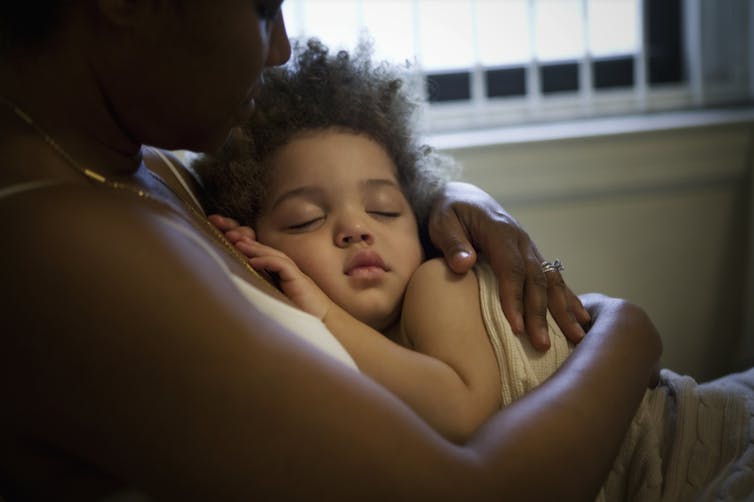 Jose Luis Pelaez/The Image Bank via Getty Images
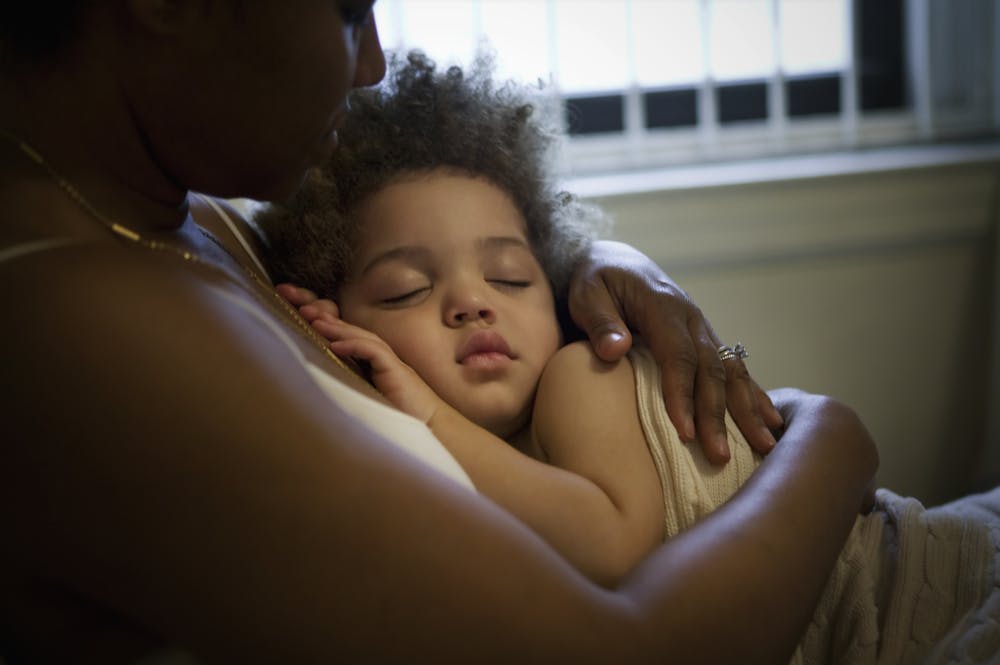
Another mother in our study, whom we will call Skylar, felt she couldn’t escape to a safer community. “I don’t really want to raise my kids there, but I don’t have a choice. You know, cause it’s what I can afford. But it’s real violent.”
Mothers who felt trapped reported more symptoms of PTSD, like disturbing memories and dreams and reliving stressful experiences, than mothers who did not feel trapped. They also reported more depressive symptoms, such as feeling down and hopeless, taking little pleasure in doing things and having trouble sleeping.
Mothers unable to afford the move to safer neighborhoods had lower levels of glucocorticoid receptors. Having fewer glucocorticoid receptors helped protect their bodies from being overwhelmed by high cortisol levels caused by stress. Nevertheless, high cortisol levels from chronic stress are linked to a number of negative mental and physical health outcomes.
Environment determines health
Where someone lives, learns, works, plays and worships can determine their health and has the power to make them sick and cause premature death.
Researchers have estimated that around 83,570 Black people die prematurely each year in the U.S. because of health disparities, using 2002 data. Some scholars have previously described this as equivalent to a plane full of Black passengers falling out the sky every day every year.
It is important to note that it is not the racial makeup of where a person lives that shapes the significant disparities they face, but exposure to violence, poverty and lack of resources as a result of structural racism. Redlining, environmental contamination, food deserts and gun violence are a part of the racial capitalism, or exploitation of marginalized communities, that affect the health of Black women. https://www.youtube.com/embed/9WIv2oO2Vxs?wmode=transparent&start=0 Black people face systemic economic and health disparities in the U.S.
What we are learning about the constant threats to the safety of Black mothers and their families also applies to the general American public.
The rate of mass shootings is increasing. Firearm fatalities are a leading cause of death among children ages 1 to 19 in the U.S. Gun violence has harmed people while they are watching a parade, shopping at a store, worshipping, attending school and other ordinary events.
Increasing access to wellness
Understanding the complexity of the exposome – the word researchers use for environmental factors like gun violence that affect an individual’s health and well-being – can help extend the years of healthy life of groups who typically experience premature death. Building this knowledge requires input from people of color and others who have traditionally been pushed to the margins of society.
We are currently creating a “wellness store” that places wellness tools and health knowledge at the fingertips of individuals, especially for those experiencing interlocking traumas such as racism, sexism, classism, incarceration, racial segregation and rural geographic isolation. These tools, co-created with community health workers and citizen scientists, range from phone apps to public policy designed to get stress “out from under the skin.” Our goal is to work with clinics, hospitals and community organizations to provide accessible tools to prevent illness.
Black communities are filled with resilient and vulnerable individuals who deserve urgent policy solutions that lead to societal change. We believe that more investment in disease prevention and health equity can help the U.S. use the knowledge, technology and finances that it already has to help people access its most precious resource: a healthy life and the ability to pursue wellness.
This article is republished from The Conversation under a Creative Commons license. Read the original article and see more than 250 UMBC articles available in The Conversation.
]]>
Written by Loren Henderson, associate professor of public policy, UMBC and Ruby Mendenhall, associate professor in sociology, African American studies, urban and regional planning, and social...
https://umbc.edu/stories/black-mothers-trapped-in-unsafe-neighborhoods-signal-the-stressful-health-toll-of-gun-violence-in-the-u-s/
https://my3.my.umbc.edu/api/v0/pixel/news/133212/guest@my.umbc.edu/5739486398c45b83597ce09c52958cbb/api/pixel
cahss
cahssresearch
discovery
magazine
public-policy
research
sociology
the-conversation
UMBC News & Magazine
https://my3.my.umbc.edu/groups/umbc-news-magazine
https://assets1-my.umbc.edu/system/shared/avatars/groups/000/001/943/24435aa6207c452e7bc15cc74b42c7bb/xsmall.png?1748556657
https://assets1-my.umbc.edu/system/shared/avatars/groups/000/001/943/24435aa6207c452e7bc15cc74b42c7bb/original.png?1748556657
https://assets2-my.umbc.edu/system/shared/avatars/groups/000/001/943/24435aa6207c452e7bc15cc74b42c7bb/xxlarge.png?1748556657
https://assets2-my.umbc.edu/system/shared/avatars/groups/000/001/943/24435aa6207c452e7bc15cc74b42c7bb/xlarge.png?1748556657
https://assets3-my.umbc.edu/system/shared/avatars/groups/000/001/943/24435aa6207c452e7bc15cc74b42c7bb/large.png?1748556657
https://assets1-my.umbc.edu/system/shared/avatars/groups/000/001/943/24435aa6207c452e7bc15cc74b42c7bb/medium.png?1748556657
https://assets2-my.umbc.edu/system/shared/avatars/groups/000/001/943/24435aa6207c452e7bc15cc74b42c7bb/small.png?1748556657
https://assets1-my.umbc.edu/system/shared/avatars/groups/000/001/943/24435aa6207c452e7bc15cc74b42c7bb/xsmall.png?1748556657
https://assets2-my.umbc.edu/system/shared/avatars/groups/000/001/943/24435aa6207c452e7bc15cc74b42c7bb/xxsmall.png?1748556657
UMBC News & Magazine
5
0
false
Wed, 03 May 2023 16:18:32 -0400
Meet a Retriever—Adeola Ojomo, sociology major and academic peer advocate
Meet Adeola Ojomo, a sophomore sociology major who started working on campus helping other students as an academic peer advocate (APA) after being inspired by another APA who helped her with some excellent advice. Take it away, Adeola!
Q: Tell us about yourself. What’s one essential thing you’d want another Retriever to know about you?
A: My name is Adeola Ojomo and I work at the Academic Success Center as an academic peer advocate. Some activities I enjoy outside of school include Tai Chi and gardening. I’m also a music lover! I can vibe with music from any decade and genre.
Q: What’s the one thing you’d want someone who hasn’t joined the UMBC community to know about the support you find here?
A: The support is plentiful and there are people with different experiences who are relatable. UMBC is a loving community that enables students to strive for alignment with their goals and fulfillment.
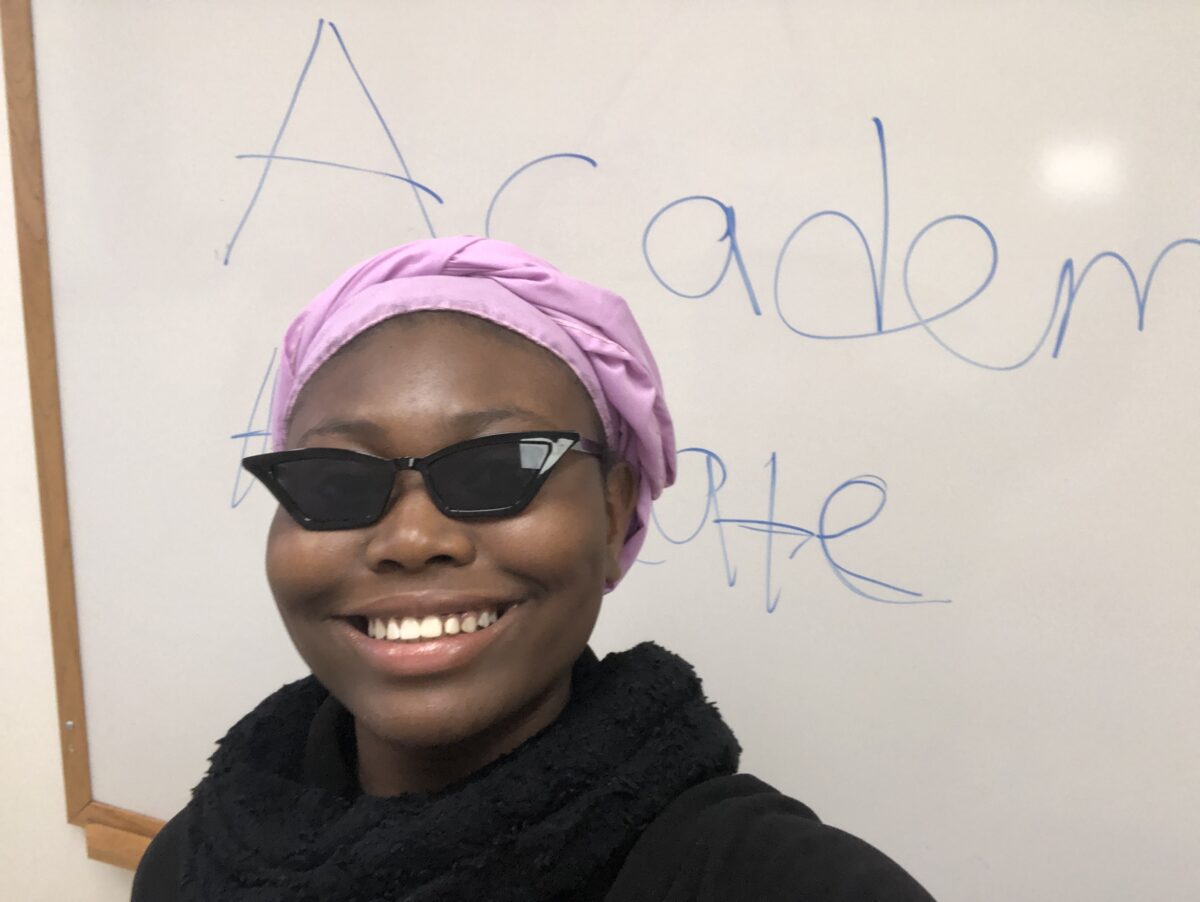 Her future’s so bright, she has to wear shades. Photo courtesy of Adeola Ojomo.
Q: Tell us about what you love about your academic program or an organization you’re involved in.
A: As an academic peer advocate (APA), I help students navigate campus resources. That involves me assisting students with study skills, time management, motivation, etc. It was a former APA (Rachael Joslow) who piqued my interest in becoming an APA when I spoke with her in the fall of 2021. When I planned to take two winter classes my first year, she recommended I only take one class at that time to avoid burnout and enjoy the learning process. I finished with a 4.0 winter GPA, and I’m so grateful for her advice because I realized that I could take my time with courses.
I became an APA in fall 2022 and the experience has been amazing so far. Being an APA at the Academic Success Center gives me the confidence and reassurance that UMBC truly cares about academic and career success. The program values the overall well-being of others and has a welcoming atmosphere.
Being an APA at the Academic Success Center gives me the confidence and reassurance that UMBC truly cares about academic and career success. The program values the overall well-being of others and has a welcoming atmosphere.
Adeola Ojomo
Sociology major and Academic Peer Advocate
Q: What clubs, teams, or organizations are you a part of? What do you love about them?
A: I’m involved in meditation at UMBC and the Sociology Society as a general body member. I love the fact the organizations I’m in reflect my personality and bring me out of my comfort zone when it comes to conversing with other people.
Q: How has receiving a scholarship allowed you to embrace your time at UMBC?
A: I’m extremely grateful for the chance to have a scholarship because I can focus on academics and socializing. I would tell people to enjoy the journey and cherish every moment because these years go by fast, and it’s always beneficial to have friends who are willing to experience the highs and lows of college. Balance is attainable.
* * * * *
UMBC’s greatest strength is its people. When people meet Retrievers and hear about the passion they bring, the relationships they create, the ways they support each other, and the commitment they have to inclusive excellence, they truly get a sense of our community. That’s what “Meet a Retriever” is all about.
Learn more about how UMBC can help you achieve your goals. Donate to the scholarship or program of your choice.
]]>
Meet Adeola Ojomo, a sophomore sociology major who started working on campus helping other students as an academic peer advocate (APA) after being inspired by another APA who helped her with some...
https://umbc.edu/stories/meet-adeola-ojomo-academic-peer-advocate/
https://my3.my.umbc.edu/api/v0/pixel/news/131652/guest@my.umbc.edu/fac8bdd31163a2165d49186fcc0744fb/api/pixel
cahss
magazine
meet-a-retriever
perspectives
sociology
UMBC News & Magazine
https://my3.my.umbc.edu/groups/umbc-news-magazine
https://assets1-my.umbc.edu/system/shared/avatars/groups/000/001/943/24435aa6207c452e7bc15cc74b42c7bb/xsmall.png?1748556657
https://assets1-my.umbc.edu/system/shared/avatars/groups/000/001/943/24435aa6207c452e7bc15cc74b42c7bb/original.png?1748556657
https://assets2-my.umbc.edu/system/shared/avatars/groups/000/001/943/24435aa6207c452e7bc15cc74b42c7bb/xxlarge.png?1748556657
https://assets2-my.umbc.edu/system/shared/avatars/groups/000/001/943/24435aa6207c452e7bc15cc74b42c7bb/xlarge.png?1748556657
https://assets3-my.umbc.edu/system/shared/avatars/groups/000/001/943/24435aa6207c452e7bc15cc74b42c7bb/large.png?1748556657
https://assets1-my.umbc.edu/system/shared/avatars/groups/000/001/943/24435aa6207c452e7bc15cc74b42c7bb/medium.png?1748556657
https://assets2-my.umbc.edu/system/shared/avatars/groups/000/001/943/24435aa6207c452e7bc15cc74b42c7bb/small.png?1748556657
https://assets1-my.umbc.edu/system/shared/avatars/groups/000/001/943/24435aa6207c452e7bc15cc74b42c7bb/xsmall.png?1748556657
https://assets2-my.umbc.edu/system/shared/avatars/groups/000/001/943/24435aa6207c452e7bc15cc74b42c7bb/xxsmall.png?1748556657
UMBC News & Magazine
2
0
false
Mon, 13 Mar 2023 11:08:37 -0400
Mon, 13 Mar 2023 11:08:37 -0400
The Martinican bèlè dance – a celebration of land, spirit and liberation
Camee Maddox-Wingfield, Assistant Professor of Sociology, Anthropology, and Public Health, UMBC
On May 22 each year, when the eastern Caribbean island of Martinique observes Emancipation Day, drums beat from sunrise until the break of dawn the next day.
Participants at open-air, starlit gatherings dance, sing, play drums and feast for ancestors who fought to break the chains of bondage. The uprising that eventually led to the abolition of slavery on the island in 1848 was sparked by the arrest of Romain, an enslaved man who refused to comply with his master’s ban on beating drums.
Today, drums are still a symbol of rebellion and freedom. The traditional dances that span the island each May 22, at performances called “swaré bèlè,” are filled with an electrifying aura of reverence and honor.
But the bèlè is not only a genre of ancestral Afro-Caribbean drum-dance practices. Rather, it is “an mannyè viv:” a lifestyle and worldview through which many people find healing and empowerment for themselves and their communities.
My first encounter with bèlè occurred when I was a graduate student in anthropology, conducting fieldwork in Martinique. As a former dancer, I was drawn to how bèlè drummers, dancers and singers experience spiritual and cultural freedom. Performers tell me their participation feels transformative, sacred and otherworldly.
Bèlè linò
Martinique is an overseas region of France in the Lesser Antilles islands. Most of the 400,000 people living there are descended from Africans brought to the islands by the slave trade, whose traditions have left a deep imprint on Martinican culture.
Centuries of history have given bèlè a complex set of symbols, only understood by those deeply immersed in the practice.
Swaré bèlè gatherings typically begin with a few matches of “ladja/danmyé,” a martial art tradition between two combatants in the center of a circle, which warms up the energy of the space as guests are arriving.
The remainder of the event involves an improvised rotation of performers playing and dancing sets from the “Bèlè Linò” repertoire. These square dances use the quadrille configuration, with four pairs of female and male dancers. After the opening sequences, each pair takes turns dancing in a playful exchange in the center of the circle, then dances toward the drummers to salute them.
Bèlè traditions use the “tanbou,” a goat-skinned conical drum. There is also the “tibwa”: two wooden sticks beaten on the side of the drum with a steady tempo.
The ensemble of dancers, drummers and singers is normally encircled by a crowd of spectators who clap their hands, sway their bodies and join in the song’s refrain.
All dancers master the base repertoire. Yet the order and style of interactions between partners is improvised – making it remarkable that the drummers can match their rhythm to the dancers’ intricate footwork.
In the playful, flirtatious and at times competitive game of certain bèlè styles, the woman is the object of her male partner’s pursuit, and she ultimately decides if she will welcome his affections. This aspect of bèlè performance, whereby women are admired and praised for their sensual dance prowess, brings female performers a sense of affirmation.
Repressed, then embraced
Martinique has been under French control since 1635. Even during the post-colonial era, many Black Martinican folk traditions faced repression, as leaders imposed mainland French culture on the population. For example, bèlè practices were often denigrated as “bagay vyé nèg,” “bagay djab” and “bagay ki ja pasé”: primitive, indecent and outdated, in the Martinican Creole language. To many in the church, traditional drumming and dance symbolized heathenism. In a country where the vast majority of people belong to the church, it was difficult for devout Catholics to support bèlè.
Many practitioners see bèlè as a dance of the earth that reinforces human connections with the land, divine spirits and ideals of freedom. Touted as a fertility ritual for both humans and the land, the dance reflects sensuality between partners. Other symbolism suggests sacred connections with the soil, vegetation and water on which Martinicans’ enslaved ancestors labored and survived. Many dance movements represent agricultural labor.
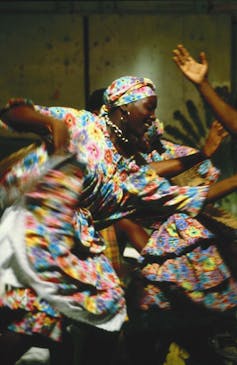 The history of folk dances in Martinique stretches back centuries. Sylvain Grandadam/Gamma-Rapho via Getty Images
During the 1980s, student activists and youth groups led initiatives to revive traditions that had nearly dissolved as a result of French pressure to assimilate. Today an ever-growing community has embraced bèlè as they challenge the legacy of colonialism and racism in Martinique.
Bèlè performance is increasingly visible in the Catholic Church. “Bèlè légliz” or “Church bèlè” fuses the liturgy with references to Martinicans’ African and diasporic heritage.
Some bèlè activists weave in symbols of ancestor reverence and land stewardship, which are also found in Caribbean religious traditions such as Haitian Vodou, Cuban Santería, Brazilian Candomblé and Quimbois, Martinique’s tradition of folk healing.
An increasing number of practitioners assert that bèlè is a “secular spirituality,” viewing it as a form of social healing from subjugation. Many of the people I have interviewed speak about bèlè as an “otherworldly” experience with unique energy that helps them cope with their society’s shadows of colonialism and slavery, and the post-colonial transition.
Solidarity and hope
The bèlè drum and its associated dances have become the rallying cry around which many bèlè cultural activists organize daily life, such as by teaching classes and participating in mutual aid projects.
Swaré bèlè gatherings are often associated with community, and have become key opportunities for attendees to express cultural pride, political solidarity and hopes for change. These events often pay homage to historical figures who made contributions to struggles for Black liberation, such as poet and politician Aimé Césaire and philosopher Frantz Fanon.
Over the last 13 years, my research has probed how traditional dance expresses resistance, emotions, spirituality and even feelings of transcendence. I have also explored how bèlè complicates black-and-white ideas about what is “sacred” versus what is “secular.”
Bèlè dances on the line between the two, reflecting the complex legacy of colonialism that continues to shape life in the Caribbean.
* * * * *
Camee Maddox-Wingfield, Assistant Professor of Sociology, Anthropology, and Public Health, University of Maryland, Baltimore County
This article is republished from The Conversation under a Creative Commons license. Read the original article.
]]>
Camee Maddox-Wingfield, Assistant Professor of Sociology, Anthropology, and Public Health, UMBC On May 22 each year, when the eastern Caribbean island of Martinique observes Emancipation Day,...
https://umbc.edu/stories/the-martinican-bele-dance-a-celebration-of-land-spirit-and-liberation/
https://my3.my.umbc.edu/api/v0/pixel/news/125490/guest@my.umbc.edu/004680779e235c56d4ab4929b3f6904b/api/pixel
anthropology
discovery
magazine
public-health
sociology
the-conversation
UMBC News & Magazine
https://my3.my.umbc.edu/groups/umbc-news-magazine
https://assets1-my.umbc.edu/system/shared/avatars/groups/000/001/943/24435aa6207c452e7bc15cc74b42c7bb/xsmall.png?1748556657
https://assets1-my.umbc.edu/system/shared/avatars/groups/000/001/943/24435aa6207c452e7bc15cc74b42c7bb/original.png?1748556657
https://assets2-my.umbc.edu/system/shared/avatars/groups/000/001/943/24435aa6207c452e7bc15cc74b42c7bb/xxlarge.png?1748556657
https://assets2-my.umbc.edu/system/shared/avatars/groups/000/001/943/24435aa6207c452e7bc15cc74b42c7bb/xlarge.png?1748556657
https://assets3-my.umbc.edu/system/shared/avatars/groups/000/001/943/24435aa6207c452e7bc15cc74b42c7bb/large.png?1748556657
https://assets1-my.umbc.edu/system/shared/avatars/groups/000/001/943/24435aa6207c452e7bc15cc74b42c7bb/medium.png?1748556657
https://assets2-my.umbc.edu/system/shared/avatars/groups/000/001/943/24435aa6207c452e7bc15cc74b42c7bb/small.png?1748556657
https://assets1-my.umbc.edu/system/shared/avatars/groups/000/001/943/24435aa6207c452e7bc15cc74b42c7bb/xsmall.png?1748556657
https://assets2-my.umbc.edu/system/shared/avatars/groups/000/001/943/24435aa6207c452e7bc15cc74b42c7bb/xxsmall.png?1748556657
UMBC News & Magazine
1
0
false
Fri, 20 May 2022 09:40:46 -0400
Fri, 20 May 2022 09:40:46 -0400
I’m a Black sociologist, and a mom – by listening to other Black mothers, I’ve learned about their pandemic struggles and strengths
By Loren Henderson, associate professor, Sociology, UMBC
I spent the 2020 spring break week setting up to teach my college courses online while helping to care for my 14-month-old grandchild, whose daycare had closed. At the same time, I couldn’t help thinking, being the sociologist I am, of the devastating consequences of COVID-19 I saw for women like me, Black mothers, whom I have studied for over a decade.
Social science research can influence policy. Sharing Black mothers’ stories in their own voices may ultimately lead to more compassionate policies. My work is part of a small body of descriptive research, mostly by researchers of color, countering negativity and victim-blaming in earlier studies of Black families.
My research partner, sociologist BarBara Scott, lives in Chicago, where I grew up. In our studies of Black mothers there, we’ve explored parenting in violent communities and living with inadequate health care. In 2019, before COVID-19 hit, we were preparing to study parenting practices.
But when lab conditions change, scientists need to reorganize their work. I am a social scientist and society is my lab, where the pandemic dramatically altered the conditions of my research.
We adjusted, preparing to interview remotely instead of in person. We added new questions to investigate, like: How were Black mothers coping with pandemic conditions? How did the murder of George Floyd and the resulting protests affect them? Our research would now include the pandemic and the country’s racial upheaval, highly unusual factors complicating Black mothers’ already challenging lives.
Researching with rapport
The first challenge was finding participants. We put up fliers in and around schools, churches, the YWCA and other places Black moms go when not at work. Even in the best of times, though, they face practical barriers to joining a research project. Child care responsibilities might be theirs alone. Taking time off from work means their paychecks take a hit not nearly covered by the $25 gift cards we offered.
But they called. Some just wanted to sign up after looking me up on their phones. Others, who may have known that the federal government oversees studies involving people, asked why I was studying them and what I would do with their information. I knew that if any of the women thought talking with me might bring embarrassment or other trouble, they might be less forthcoming or decide not to participate. My findings would be much less credible.
I assured the moms that I would keep their responses confidential and that they had a right to leave the study whenever they wanted to.
None of them did. We signed up enough moms for two focus groups of five to seven participants each. I ran group meetings and conducted 12 one-on-one interviews via video conferencing.
To start our 60- to 90-minute sessions, I introduced myself and got the mothers talking with an ice breaker question like, “What is the farthest place from your current neighborhood that you’ve been?”
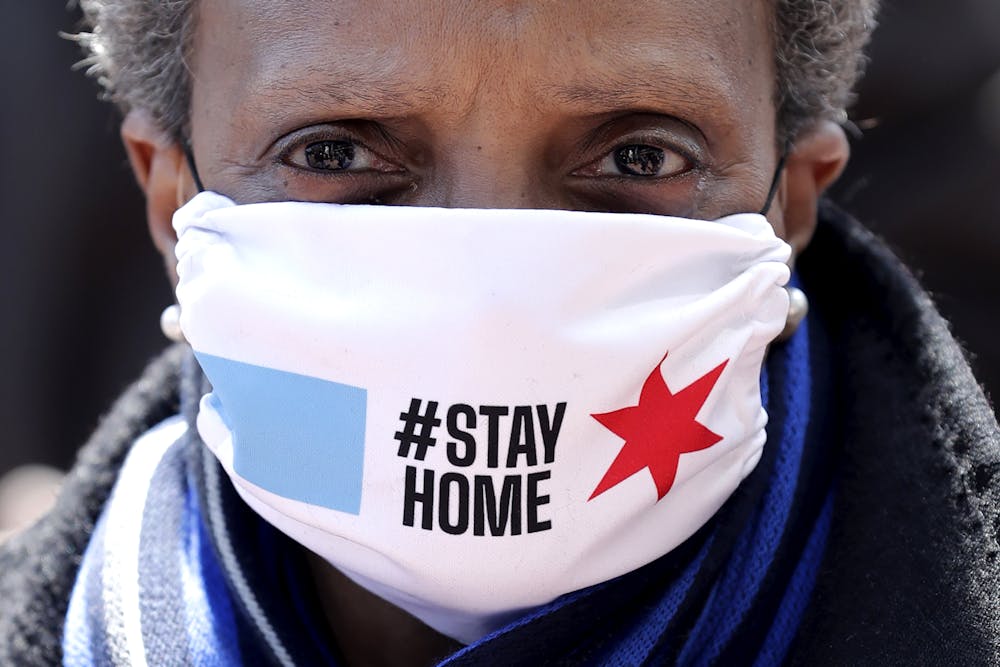
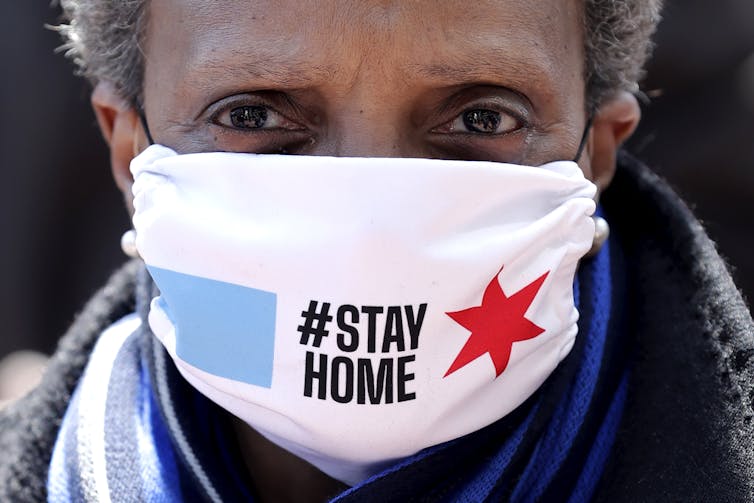 Many Black mothers were front-line workers who couldn’t heed the message on Chicago Mayor Lori Lightfoot’s mask in the early days of the pandemic. AP Photo/Nam Y. Huh
I also tell them that I have a Black mom, and that I am one. And then, because my skin tone is fair, I mention that I have an Italian father. I didn’t want to be mistaken for white; the moms might feel less comfortable discussing certain topics with me. But after realizing that I’m Black too, a few of them said things like, “I knew there was something about you!”
I share my belief in centering – and that’s the word I use – Black mothers’ lived experiences and exploring their parenting from a strength perspective. That’s when I got a lot of smiling and nodding.
No time for racism
Black mothers don’t need a pandemic to face impossible choices. But it took a pandemic for others to see that. As nearly everyone else stayed home to stop the spread of COVID-19, it became obvious that Black women were more likely than any one else to be essential workers in front-line jobs. And despite risking COVID-19 infection to keep their jobs, Black workers were more likely to lose them anyway during the pandemic.
I asked the mothers about the pandemic’s effect on their lives. They talked about the trickiness of trying to isolate or distance in small or crowded homes. They hated being unable to get masks and hand sanitizer when stores closed during the George Floyd protests, which none of them attended.
I asked why they didn’t go, given their stated frustrations with racism affecting their lives. Some didn’t want to risk getting sick. But most of these Black mothers told me they don’t dwell on racism, saying things like, “Yeah, racism is bad, but I got things to do.”
And so they did those things. While at work, they sent their kids text reminders to go to remote school if it was available, or if it was not, to study. The moms came home from long shifts and helped with homework, worrying about their kids falling behind academically. The mothers worried about getting COVID-19 and losing custody of kids if they became too sick to parent well.
Keeping the conversation flowing
The qualitative research I do is about words and meanings, not just numbers and statistics. It allows me to explore the lives of Black moms in depth.
In my interviews, I don’t ask closed-ended questions – the kind where the answer is simply yes or no, true or false, or limited to a set of multiple-choice answers. For example, if a participant can only respond to the question, “How safe is your community?” with the options “very safe,” “somewhat safe,” or “not safe,” that’s a closed-ended question.
In qualitative research, however, questions are often open-ended. Participants decide what a question means to them, then answer in any way they choose. I’ve been asking the Black mothers questions like: “How do you feel about Chicago as a place to live and raise your children? How do you feel about working and raising your children during the COVID-19 pandemic?”
Reading the transcribed interviews later, I look for general thoughts, or themes, in the mothers’ collective responses. For example, when I asked about violence, the overall sentiment was that it was around, but avoidable. One participant told me, “You have to know where [to go] and where not to go, when to go and when not to go.” And she called Chicago “a great place,” with “great opportunities” for anyone who wanted to be there.
This response was common: The moms know that Chicago can be violent, but many focus on the positive aspects of the city. My theory is that this is their conscious or unconscious way of explaining why they stay in a violent community. That question has come often enough – usually from those with far more options – to hang over the heads of these Black moms, even if no one asks them directly.
A related sentiment the moms had was that moving away is pointless since violence “is everywhere.” They may simply want to stay close to the generations of family and community ties they have. But it’s also true that moving isn’t affordable for many of these mothers.
Identifying these themes helps me present a picture of Black mothers’ lives as a corrective to the earlier research. Documenting their experiences as the center of my research gives them a voice and validates their lives as worthy of exploration.
******
Header image: When schools shut down to prevent the spread of COVID-19, moms took on the burden of supporting students at home. AP Photo/Shafkat Anowar
Loren Henderson, Associate Professor of Sociology, University of Maryland, Baltimore County
This article is republished from The Conversation under a Creative Commons license. Read the original article.
]]>
By Loren Henderson, associate professor, Sociology, UMBC I spent the 2020 spring break week setting up to teach my college courses online while helping to care for my 14-month-old grandchild,...
https://umbc.edu/stories/im-a-black-sociologist-and-a-mom-by-listening-to-other-black-mothers-ive-learned-about-their-pandemic-struggles-and-strengths/
https://my3.my.umbc.edu/api/v0/pixel/news/119436/guest@my.umbc.edu/c7c85e15e203808a64f4d1b94dcc5c0b/api/pixel
covid-19
discovery
magazine
sociology
the-conversation
webfeature
UMBC News & Magazine
https://my3.my.umbc.edu/groups/umbc-news-magazine
https://assets1-my.umbc.edu/system/shared/avatars/groups/000/001/943/24435aa6207c452e7bc15cc74b42c7bb/xsmall.png?1748556657
https://assets1-my.umbc.edu/system/shared/avatars/groups/000/001/943/24435aa6207c452e7bc15cc74b42c7bb/original.png?1748556657
https://assets2-my.umbc.edu/system/shared/avatars/groups/000/001/943/24435aa6207c452e7bc15cc74b42c7bb/xxlarge.png?1748556657
https://assets2-my.umbc.edu/system/shared/avatars/groups/000/001/943/24435aa6207c452e7bc15cc74b42c7bb/xlarge.png?1748556657
https://assets3-my.umbc.edu/system/shared/avatars/groups/000/001/943/24435aa6207c452e7bc15cc74b42c7bb/large.png?1748556657
https://assets1-my.umbc.edu/system/shared/avatars/groups/000/001/943/24435aa6207c452e7bc15cc74b42c7bb/medium.png?1748556657
https://assets2-my.umbc.edu/system/shared/avatars/groups/000/001/943/24435aa6207c452e7bc15cc74b42c7bb/small.png?1748556657
https://assets1-my.umbc.edu/system/shared/avatars/groups/000/001/943/24435aa6207c452e7bc15cc74b42c7bb/xsmall.png?1748556657
https://assets2-my.umbc.edu/system/shared/avatars/groups/000/001/943/24435aa6207c452e7bc15cc74b42c7bb/xxsmall.png?1748556657
UMBC News & Magazine
0
0
false
Fri, 29 Apr 2022 16:59:01 -0400
Fri, 29 Apr 2022 16:59:01 -0400
Battles Over Book Bans Reflect Conflicts from the 1980s
By Fred L. Pincus, Emeritus Professor of Sociology, UMBC
A conservative leader found fault with how “respect for our nation’s heritage” had been mostly stripped from the textbooks of public schools.
“From kindergarten right through the total school system, it almost seems as if classroom textbooks are designed to negate what philosophies previously had been taught,” the conservative leader lamented. “[M]any textbooks are actually perverting the minds of literally millions of students.”
A teachers organization shot back, saying the underlying motive for some attacks against books has “unquestionably been racial.”
This might sound like a back-and-forth from recent debates over removing books from school classrooms and libraries. Often, critical race theory – an academic framework for understanding racism – has been at the center of these debates. But in reality, both quotes are more than 40 years old.
Religious influence on politics
The first quote came from a 1981 book by the Rev. Jerry Falwell titled “Listen, America!” Falwell, founder of the Moral Majority, was one of the leaders of the book-banning efforts of the 1980s. It was during this period – with Ronald Reagan in the White House – that Christian fundamentalists became a growing influence in conservative American politics.
The second quote comes from a 1981 publication of the National Council of Teachers of English, “The Students’ Right to Read.” The council was one of the major groups opposing Falwell and other conservatives.
 AOK Library stacks, photo by Marlayna Demond ’11.
The attacks on books in the 1980s bear similarities to the current attacks. Both object to the critical teaching about race and racism, historical as well as contemporary. Both accuse schools of tearing down America and weakening patriotism. Both object to teaching about gender roles, sexual orientation and alternative models of the family. Conservative institutions like the Heritage Foundation have been involved in both periods.
There are also important differences between the two periods. The 1980s bogeyman was secular humanism, because it argued that human beings can define their own morality without the use of religion. Falwell and others claimed that public schools were anti-Christian because they taught students that they didn’t have to use the Bible as a standard for right and wrong. Chaos would result, the Christian fundamentalists asserted, if everyone had to determine their own morality.
In a way reminiscent of the so-called Scopes Monkey Trial in 1925, conservatives objected to the teaching of evolution as a fact, rather than a theory. Instead, they wanted biology textbooks to give equal space to the so-called scientific theory of creationism, which holds that God created the universe.
A new bogeyman
In 2022, of course, the bogeyman is critical race theory. Emerging from critical legal theory taught in law schools, critical race theory argues that white supremacy has been embedded in American legal and educational institutions since the time of slavery.
Right-wing critics have made a number of erroneous allegations about critical race theory: that it is taught in public schools; that it is Marxist; that it is intended to make whites feel guilty; and more. The Heritage Foundation has published “How to Identify Critical Race Theory” as a guide to help parents evaluate books and curricula by looking for words like “systemic racism,” “white privilege” and “social construction or race.”
In fact, these concepts predated critical race theory, which came on the scene in the late 1970s and 1980s. Activist Stokely Carmichael – also known as Kwame Ture – and political scientist Charles V. Hamilton discussed institutional racism in “Black Power: The Politics of Liberation in America” in 1967. “Institutional racism” and “structural racism” are very similar to “systemic racism.”
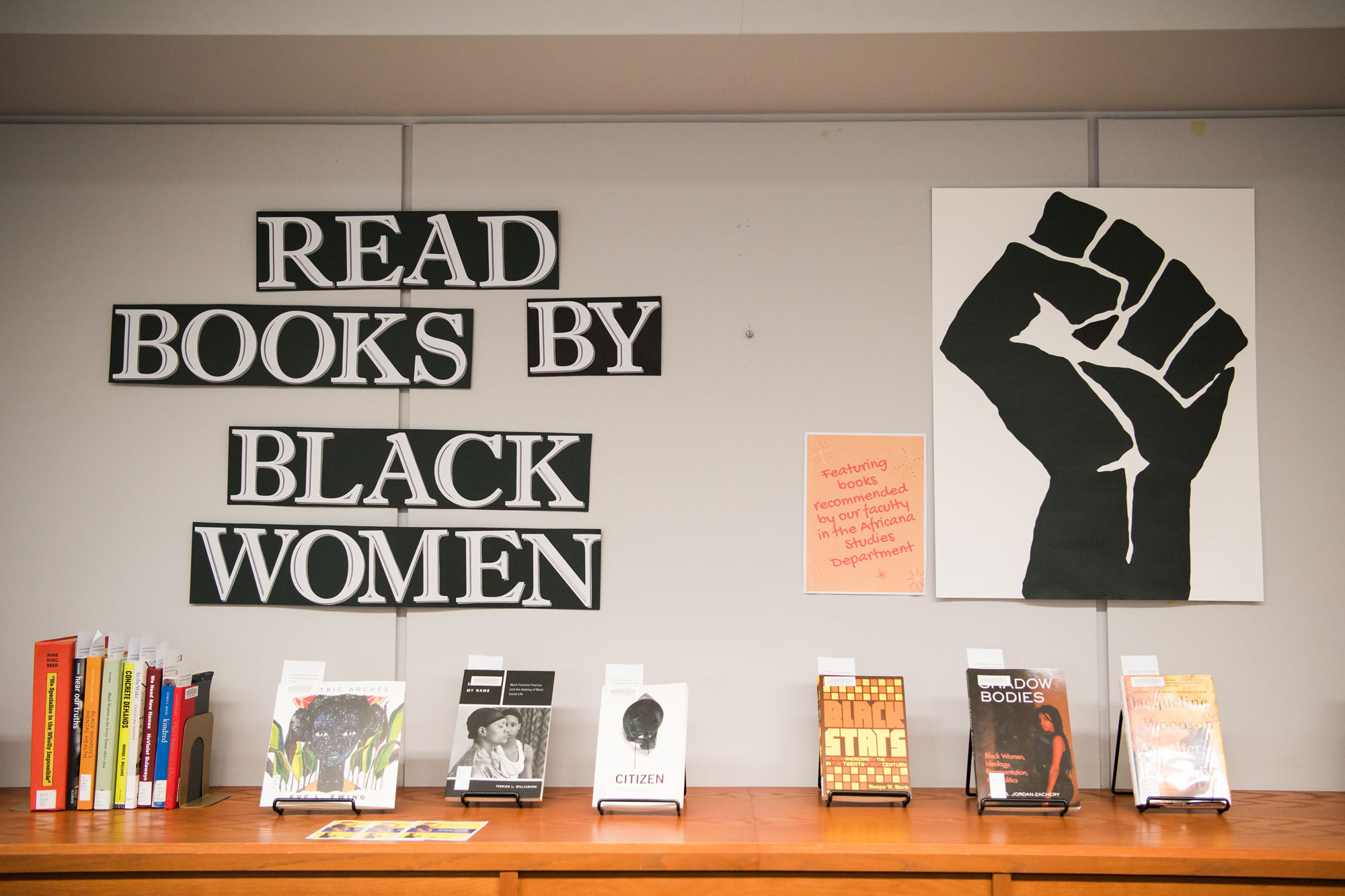
 AOK Library book display with a sign that says “Read books by Black Women.” Photo by Marlayna Demond ’11.
“White privilege” was discussed by W.E.B. Du Bois in the early 20th century and by civil rights activists in the 1950s and 1960s. Another term associated with critical race theory, “the social construction of race,” was used by anthropologists like Franz Boas back in the 1950s.
New interpretations
Critical race theorists took these and other concepts, reinterpreted them and applied them to the American legal system. Scholars in education have done the same in trying to understand education as an institution. After 40-plus years of teaching and writing about race and diversity, I know that it is impossible to accurately discuss American racial conflict without using these concepts. But that’s what many lawmakers would have American educators do.
According to a Pen America report, a nonprofit that advocates for freedom of expression in literature, 156 “educational gag order” bills in 39 states have been introduced since January 2021. Twelve have become law in 10 states, and 113 are pending in 35 states. As of March 2022, at least seven states specifically ban the teaching of critical race theory. “Cumulatively,” says the Pen report, “they represent a national assault on our education system, censoring both what teachers can say and what students may learn.”
Of course, some white students – and other students, too, for that matter – will feel uncomfortable upon learning not only about the history of American racism but also its present manifestations. Reality is sometimes uncomfortable.
That’s where good teaching comes in. Good teaching means taking the students’ age into account. It also means being supportive of students who may feel uncomfortable or guilty about certain events in American history.
I always tell students: “You are not responsible for what happened in the past. You are responsible to decide what you plan to do in the present and the future.”
*****
Fred L. Pincus, Emeritus Professor of Sociology, University of Maryland, Baltimore County
Header Image: At least seven states have banned the teaching of critical race theory. Smith Collection/Gado/Getty Images
]]>
By Fred L. Pincus, Emeritus Professor of Sociology, UMBC A conservative leader found fault with how “respect for our nation’s heritage” had been mostly stripped from the textbooks of public...
https://umbc.edu/stories/battles-over-book-bans-reflect-conflicts-from-the-1980s/
https://my3.my.umbc.edu/api/v0/pixel/news/119468/guest@my.umbc.edu/562788f64587502a8e2e63d314823f8c/api/pixel
discovery
education
magazine
sociology
the-conversation
UMBC News & Magazine
https://my3.my.umbc.edu/groups/umbc-news-magazine
https://assets1-my.umbc.edu/system/shared/avatars/groups/000/001/943/24435aa6207c452e7bc15cc74b42c7bb/xsmall.png?1748556657
https://assets1-my.umbc.edu/system/shared/avatars/groups/000/001/943/24435aa6207c452e7bc15cc74b42c7bb/original.png?1748556657
https://assets2-my.umbc.edu/system/shared/avatars/groups/000/001/943/24435aa6207c452e7bc15cc74b42c7bb/xxlarge.png?1748556657
https://assets2-my.umbc.edu/system/shared/avatars/groups/000/001/943/24435aa6207c452e7bc15cc74b42c7bb/xlarge.png?1748556657
https://assets3-my.umbc.edu/system/shared/avatars/groups/000/001/943/24435aa6207c452e7bc15cc74b42c7bb/large.png?1748556657
https://assets1-my.umbc.edu/system/shared/avatars/groups/000/001/943/24435aa6207c452e7bc15cc74b42c7bb/medium.png?1748556657
https://assets2-my.umbc.edu/system/shared/avatars/groups/000/001/943/24435aa6207c452e7bc15cc74b42c7bb/small.png?1748556657
https://assets1-my.umbc.edu/system/shared/avatars/groups/000/001/943/24435aa6207c452e7bc15cc74b42c7bb/xsmall.png?1748556657
https://assets2-my.umbc.edu/system/shared/avatars/groups/000/001/943/24435aa6207c452e7bc15cc74b42c7bb/xxsmall.png?1748556657
UMBC News & Magazine
0
0
false
Mon, 07 Mar 2022 16:01:47 -0500
Mon, 07 Mar 2022 16:01:47 -0500
Her Science Is the World’s

 Corbett in the Interdisciplinary Life Sciences Building on campus in April 2021. Photo by Marlayna Demond ’11.
Everyone who’s ever met Kizzmekia Corbett ’08, M16, biological sciences and sociology, gets it.
Sue Florence, one of the few Black teachers in the Hillsborough, North Carolina, school district where Corbett went to elementary and middle school, got it. Rhonda Brooks, Corbett’s mother, remembers Florence saying, when Corbett was in third grade, “She’s got a gift. You’d better seek into it.”
Florence’s comments pushed Brooks to make sure expectations were high for Corbett in school, and to encourage—no, require—15-year-old “Kizzy” to find a scholarly internship rather than a position in retail when she wanted a summer job in high school.
So, at her mother’s behest, Corbett got involved in Project SEED, a program that offers research experiences to talented high school students from underrepresented groups in STEM. Her first program mentor was James Morken, who was on the chemistry faculty at University of North Carolina at Chapel Hill at the time.
He got it, too.
“When Kizzy started in my laboratory, she didn’t have much hands-on research experience, but she had loads of curiosity, a drive to learn what she didn’t know, and a very strong work ethic,” Morken says. “It was abundantly clear she would be successful in whatever she chose to do.”
Today, Corbett is an assistant professor of immunology and infectious diseases at the Harvard T.H. Chan School of Public Health, after leading the team behind the successful effort to create a vaccine for COVID-19 at the National Institutes of Health (NIH). Working with the pharmaceutical company Moderna, Corbett’s achievements on the global stage benefit all of us. Now, we get it, too.
“She can do anything”
As a Meyerhoff Scholar and NIH Scholar at UMBC, Corbett worked in Barney Graham’s lab at the Vaccine Research Center at the NIH. He’s also her boss today.
“Kizzmekia’s spirit was noticeable even from a young age,” Graham says. “New people who come into the lab have always quickly realized that she was a person who had bigger things in her future.”
Corbett met Jessica Kelley, a UMBC assistant professor of sociology at the time, when Corbett took her Introduction to Sociology course. “She was a standout in that large lecture class from the beginning,” Kelley recalls. Later, Corbett took Kelley’s course on applied community research, and conducted research with Kelley as part of a National Institute on Aging study on healthy aging in diverse neighborhoods.
 Photos kindly provided by Kizzmekia Corbett, unless otherwise noted.
The work with Kelley inspired Corbett’s double major and her approach to all of her future work. Corbett even became the only undergraduate enrolled in one of Kelley’s graduate-level courses. “She kept the graduate students on their toes,” Kelley says.
“When she’s got her mind set on something, it’s set,” Brooks says. “She can do anything.”
A leading role
Today, Corbett has proven them all right. As the scientific lead of the Vaccine Research Center’s coronavirus team at the NIH, she developed a new technology for the Moderna COVID-19 vaccine and others, and as a result, she has played a leading role in one of the most important measures to end the pandemic. She has also become the first Black woman in the world to create a vaccine.
Anthony Fauci, head of the National Institute of Allergy and Infectious Diseases (NIAID) and one of the most trusted voices about the pandemic around the world, described Corbett as “widely recognized in the immunology community as a rising star,” when he nominated her for TIME magazine’s TIME100 Next list. Based on her leadership of COVID-19 vaccine development at NIAID, he added, “Her work will have a substantial impact on ending the worst respiratory-disease pandemic in more than 100 years.”
People drive the research
Perhaps just as important as her scientific accomplishments, Corbett has burst onto the public stage as the face of a diverse and rising generation of talented scientists who will transform the world. She is a stellar science communicator, explaining the vaccine and the virus in highly accessible ways to media outlets, her family, two U.S. presidents, and more. She is an inspiration to children who may now imagine becoming scientists.
 Corbett visits a lab on campus in April 2021. Photo by Marlayna Demond ’11.
“Dr. Corbett’s voice has been particularly important this year,” Graham says, “and going forward, her ability to inspire and to educate and motivate young people to see science as something feasible and even to see science as something fun will be part of her legacy.”
And yet, amid her newfound celebrity status and her vast scientific acumen, somehow she has managed to remain unabashedly human.
“I am still Kizzy. I’m still the little girl you met when I was 17 and being recruited into the Meyerhoff program,” she told UMBC President Freeman Hrabowski during a conversation in February 2021, when they were both being recognized at the Kaiser Permanente and Reginald F. Lewis Museum 2nd Annual African American Health Care Awards.
“Actually, before a scientist, I’m a Christian, and I’m sassy, and I’m bright, and I’m fashionable…” she says, “and I’m Southern, and I’m empathetic, and I’m all of these things that make me into this person, that make me a better scientist. I think that is the most important part of the story—that people drive the research.”
The genuine thing
First there was Sue Florence. Then there was James Morken and others with the SEED Project. All through her childhood, there was her mother, Rhonda Brooks, cheering her on. Combine that support structure with Corbett’s own deep-seated determination to succeed, and by the time she was looking at colleges, Corbett had lots of options. But when she, her parents, and her grandmother visited UMBC, it felt like home. The first reason? The grain silo along UMBC Boulevard.
“It reminded me of being back at home in the country,” Brooks remembers. When they began touring campus, Brooks thought, “Oh man, this is really her,” but, “I needed her to see it was her. So I didn’t even say anything.” There was no need. By the end of Meyerhoff Selection Weekend in 2004, Kizzy was glowing.
Beyond the welcoming silo were all the welcoming faces. “Everybody was so friendly,” Brooks says. “You think when you go visit campuses that people have to be this way because they’re trying to get students to come, but as a person who’s been in the education field for so long, I can weed out who’s genuine and who isn’t.” And, Brooks says, despite the emphasis on Meyerhoff cohort numbers, of which Kizzy belonged to M16, “it just felt like she would be not just a number.”
Equaling the playing field
In the February conversation with Hrabowski, Corbett recalls her father telling her that she should “go where she would be loved.” UMBC became that place.
Asked to describe the value of the Meyerhoff Scholars Program, she said, “It is simply one word: resources. It is equaling the playing field for people who have generally been under-resourced, and those are communities of color and people from underrepresented minority groups. And the Meyerhoff Program does that.”
 Corbett with fellow Meyerhoff alumni at a 2017 on-campus event. Photo courtesy of Keith Harmon, director, Meyerhoff Scholars Program.
The Meyerhoff Scholars Program, founded in 1989, is considered the gold standard of programs designed to support students from underrepresented groups in STEM. Hundreds of alumni have gone on to standout careers, including U.S. Surgeon General, Baltimore City health commissioner, and professorships at the nation’s top-tier universities.
The Meyerhoff Scholars Program “is a place where every single person was special and would be loved. The goal is not to fail you out, but to lift you up,” Corbett says. And for underrepresented students in STEM, living in a world that too often still doesn’t expect people who look like them to excel as researchers, the Meyerhoff Program “provided a niche for us to just be, to be comfortable, and to just thrive.”
A mother’s touch
It wasn’t always easy, though. Brooks remembers when Kizzy received her first C. “Being on the phone with her just didn’t help,” Brooks remembers. “So I got in my car, and I drove all the way to Maryland. I was trying to tell her it was going to be alright, but it was just heartbreaking, because she never had that C. I told her, it’s gonna be tough—you might get more than one C.”
Even world-class, world-saving scientists sometimes get Cs and need their moms.
And even now, Brooks is ready to support Corbett as she navigates this new chapter in her life. “If she needs me now, if she’s feeling stressed,” Brooks says, “if she picks up the phone, I don’t care what time of night it is, I pick it up.”
On Corbett’s college bedside also sat a Bible—another lasting connection to her family and her faith, which Corbett brings up often in her interviews. Brooks gave each of her children a Bible as they left for college. “I say take this Bible with you. Even if you don’t look at it, keep it next to your bed. I don’t care if you don’t open it. But if you touch it, it will make you feel a whole lot better.”
Corbett and her mother, though apart during the pandemic, have stayed connected by attending online services from the same church in Texas. Their first travel plans post-pandemic? A trip to attend the service in person.
Lifting others up
Whether it’s her faith, an innate empathy, 35 years of experience as a Black woman in the U.S., or other factors, Corbett’s dedication to lifting people up goes far beyond her work in the laboratory. Her commitment to equity has demanded that she speak out to address vaccine hesitancy, especially in communities hit hardest by the virus, and champion the participation of minorities in science and research, both as scientists and as participants in clinical trials.
“She has always, even as a young student, brought an energy and curiosity and love of science that made our lab a better place,” Graham says. “She has also always been very devoted to making things better for people around her, particularly younger people coming behind her.”
Brooks says that Corbett has always had a selfless nature. One day she brought home a classmate who had no place to go after school and asked if she could stay with the family. Brooks was uncertain at first, “but we did it,” she says. “And we’ve been taking kids in ever since.”
Fighting for the public good
Corbett’s study of sociology at UMBC enhanced and sharpened her innate desires to help people and promote fairness into a commitment to consider social factors throughout her scientific career. For example, when the Moderna vaccine was in clinical trials, Corbett pushed hard to make sure that there were more people of color among the study population.
 Corbett at a Rally for Medical Research event in Washington, D.C.
“You have to start things equitably to finish them that way,” she told Hrabowski at the February event. “We slowed down the phase three clinical trial until we got to a point where we felt the numbers were respectable. We wanted 13 percent, to represent the proportion of Black people in the country,” she said, but they didn’t quite make it. Still, she says, “I have other vaccines heading into trials, so we will take care of it then.”
Kelley, her sociology instructor and research mentor at UMBC, reflects on how Corbett has developed over time. “Kizzmekia’s training in both biology and sociology has helped her become both a scientist working at the cutting-edge of vaccine development to provide a universal public good and a humanist who understands that historically and structurally not all groups have had access to these public goods,” she says.
Corbett has faced her own challenges throughout her career, some of which have predictably intensified since she became more of a public figure.
Kizzmekia, whose name is a combination of “Kizzy” from the character in Alex Haley’s Roots and “-mekia” from Brooks’s own imagination, has been teased since childhood and continues to be harassed about her name. When Kizzy showed her mother a particularly hurtful social media post, “I told her, tell them to call your mama,” Brooks recalls, “because your mama chose your name for a reason, because you’re a gift from God to me.”
As a child, even Kizzy’s strong interest in academic success was sometimes looked down upon by her peers, but “she just went beyond,” Brooks says.
 Corbett (center, front) with her NIAID research team, including Olubukola Abiona ’17, M25, biochemistry and molecular biology (center, back).
Corbett has also experienced sexism and racism as a scientist. Brooks says sometimes men have skipped over Corbett and instead approached her boss, but “that’s why I like her boss, [Barney Graham] so much, because he’s always been behind her back,” she says—pointing people right back to Corbett.
Finding your champions
Corbett has taken her mother’s message to heart. “You just have to believe in yourself and believe in your work,” she says. Important, too, is having your own champions. “I always had someone in the space who was looking out for me,” she said—people like Sue Florence, Freeman Hrabowski, and Barney Graham. “Find those people and seek them out. You want someone to be as invested in you, as you are in you.”
High expectations and support from all those people who “got it,” cheering for her and setting the bar high from elementary school onward, combined with Corbett’s inner determination—and a dash of spunk—have fueled her success. If you had met a childhood Kizzy, she would have said, “Hi, I’m Kizzmekia Corbett, and I’m going to be the first Black woman to win the Nobel Prize in Medicine.”
Verbalizing one’s goals is a risk, because people will know if you fail. But it’s also a critical step toward turning them into reality. Little Kizzy knew it as a kid. “It speaks to putting yourself where you want to be, and really speaking the words to the universe,” she told Hrabowski. Even if she hasn’t reached her childhood goal yet, she’s happy with what she’s been able to accomplish so far.
“I haven’t won a Nobel prize, and I don’t know if I will,” she says, “but I think helping to ‘save the world,’ so to speak, is good enough.”
For now.
Read more about other ways Retrievers are giving their time and efforts to help others access the vaccine.
*****
Header image of Corbett on campus in April 2021 by Marlayna Demond ’11.
]]>
Corbett in the Interdisciplinary Life Sciences Building on campus in April 2021. Photo by Marlayna Demond ’11. Everyone who’s ever met Kizzmekia Corbett ’08, M16, biological sciences and...
https://umbc.edu/stories/her-science-is-the-worlds/
https://my3.my.umbc.edu/api/v0/pixel/news/119599/guest@my.umbc.edu/7ce5d4efc33fbc01db43592b40e066b3/api/pixel
biological-sciences
communityimpact
covidresearch
discovery
feature
meyerhoffscholars
mhoff
sociology
spring-2021
UMBC News & Magazine
https://my3.my.umbc.edu/groups/umbc-news-magazine
https://assets1-my.umbc.edu/system/shared/avatars/groups/000/001/943/24435aa6207c452e7bc15cc74b42c7bb/xsmall.png?1748556657
https://assets1-my.umbc.edu/system/shared/avatars/groups/000/001/943/24435aa6207c452e7bc15cc74b42c7bb/original.png?1748556657
https://assets2-my.umbc.edu/system/shared/avatars/groups/000/001/943/24435aa6207c452e7bc15cc74b42c7bb/xxlarge.png?1748556657
https://assets2-my.umbc.edu/system/shared/avatars/groups/000/001/943/24435aa6207c452e7bc15cc74b42c7bb/xlarge.png?1748556657
https://assets3-my.umbc.edu/system/shared/avatars/groups/000/001/943/24435aa6207c452e7bc15cc74b42c7bb/large.png?1748556657
https://assets1-my.umbc.edu/system/shared/avatars/groups/000/001/943/24435aa6207c452e7bc15cc74b42c7bb/medium.png?1748556657
https://assets2-my.umbc.edu/system/shared/avatars/groups/000/001/943/24435aa6207c452e7bc15cc74b42c7bb/small.png?1748556657
https://assets1-my.umbc.edu/system/shared/avatars/groups/000/001/943/24435aa6207c452e7bc15cc74b42c7bb/xsmall.png?1748556657
https://assets2-my.umbc.edu/system/shared/avatars/groups/000/001/943/24435aa6207c452e7bc15cc74b42c7bb/xxsmall.png?1748556657
UMBC News & Magazine
0
0
false
Thu, 10 Jun 2021 14:54:22 -0400