To you—Letter from the editor
The other morning at breakfast, I told my son I could draw an infinite line on two sides of a single piece of paper. He, of course, scoffed. So, I found a scrap sheet, made a half twist of the paper, added a crucial piece of tape, and proceeded to blow his mind with his very first Möbius strip.
Now, am I equipped to explain why a Möbius strip works the way it works? I am not. But, did I open the door to a “whoa!” moment—and the possibility of him finding it out for himself? Absolutely.
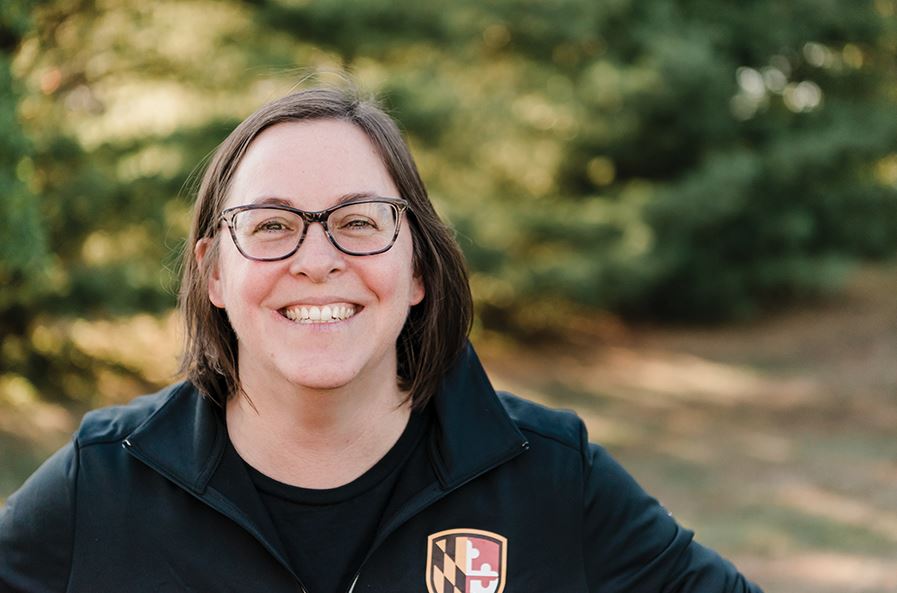 Assistant Vice President, Strategic Content, Jenny O’Grady. Photo by Marlayna Demond ’11.
Every day at UMBC, you’ll find plenty of “whoa” moments—occasions of curiosity and delight that challenge minds and broaden perspective—across the disciplines. And best of all, these moments can happen to anyone, anywhere, because we’re all about opening doors here.
One great example is quantum, a timely topic—and “the future of Maryland,” as our governor puts it. We have amazing alums harnessing this information to build secure communications and ultra-precise sensing, but they—like all of us—started out as curious students. They just needed to show up and have their minds blown!
An eye-opening moment at Artscape brought our cover-story subject Nema Robinson to UMBC in a roundabout way—now, she is poised to be the full-circle door-opener to a new generation of music students. And what could be more whoa-inducing than being able to build whatever you might dream up in a campus makerspace or to collectively flex your imagination with friends through long-term gaming communities?
I recently celebrated a pretty major milestone at UMBC—my 20-year work anniversary. And in that time, I have experienced a bunch of personal “whoa” moments, many of which I have had the honor of sharing right here. So many Retrievers have opened my eyes—and now, as my work at UMBC evolves, it’s my turn to open a door of my own.
I am happy to share that starting with this fall’s issue, managing editor Randianne Leyshon ’09 will be taking on the mantle of editor of UMBC Magazine. She is smart, kind, and curious, and I am so happy for her—and for all of you, who will benefit from her excellent editorial leadership going forward.
Thank you for sharing so much of yourselves with me over the years, dear Retrievers. I look forward to seeing you around campus!
]]>
The other morning at breakfast, I told my son I could draw an infinite line on two sides of a single piece of paper. He, of course, scoffed. So, I found a scrap sheet, made a half twist of the...
https://umbc.edu/stories/to-you-letter-from-the-editor-transition/
https://my3.my.umbc.edu/api/v0/pixel/news/150651/guest@my.umbc.edu/e533ebccc1ad59e86949b7ca771e6018/api/pixel
magazine
perspectives
spring-2025
story
to-you
UMBC News & Magazine
https://my3.my.umbc.edu/groups/umbc-news-magazine
https://assets1-my.umbc.edu/system/shared/avatars/groups/000/001/943/24435aa6207c452e7bc15cc74b42c7bb/xsmall.png?1748556657
https://assets1-my.umbc.edu/system/shared/avatars/groups/000/001/943/24435aa6207c452e7bc15cc74b42c7bb/original.png?1748556657
https://assets2-my.umbc.edu/system/shared/avatars/groups/000/001/943/24435aa6207c452e7bc15cc74b42c7bb/xxlarge.png?1748556657
https://assets2-my.umbc.edu/system/shared/avatars/groups/000/001/943/24435aa6207c452e7bc15cc74b42c7bb/xlarge.png?1748556657
https://assets3-my.umbc.edu/system/shared/avatars/groups/000/001/943/24435aa6207c452e7bc15cc74b42c7bb/large.png?1748556657
https://assets1-my.umbc.edu/system/shared/avatars/groups/000/001/943/24435aa6207c452e7bc15cc74b42c7bb/medium.png?1748556657
https://assets2-my.umbc.edu/system/shared/avatars/groups/000/001/943/24435aa6207c452e7bc15cc74b42c7bb/small.png?1748556657
https://assets1-my.umbc.edu/system/shared/avatars/groups/000/001/943/24435aa6207c452e7bc15cc74b42c7bb/xsmall.png?1748556657
https://assets2-my.umbc.edu/system/shared/avatars/groups/000/001/943/24435aa6207c452e7bc15cc74b42c7bb/xxsmall.png?1748556657
UMBC News & Magazine
12
0
false
Thu, 12 Jun 2025 16:15:47 -0400
Thu, 12 Jun 2025 16:15:47 -0400
Office Hours—Q&A with President Sheares Ashby and UMBC-Shady Grove student Jimmy Seavey
On a windy April day, President Valerie Sheares Ashby arrived at UMBC at the Universities at Shady Grove (USG) for her regular student office hours on the Rockville, Maryland, campus. Established in 2000, USG unites nine public universities in one convenient location, creating Retriever degree pathways for folks who might not otherwise be able to make it around the beltway for classes in Catonsville. James “Jimmy” Seavey, Jr. sits across from the president today. Seavey is a second-generation firefighter in the D.C. area in his first semester at UMBC-Shady Grove studying political science. Seavey, who comes from a long line of public servants, discusses the growing importance of public service and education with President Sheares Ashby.
James Seavey: So, like I said, my name’s Jimmy.
President Valerie Sheares Ashby: By the way, Jimmy. My dad was James. My brother is James. My nephew is James. My son is James. And Jimmy is what my oldest brother goes by. So, the name means something to me.
Seavey: That hits right at home because I’m a junior, my father and I were named after my great uncle. James goes back seven generations in my family.
Sheares Ashby: I love it, and I will take it one step further. My mother’s maiden name was James. So she was Shirley James and my dad was James Sheares. So it just goes on and on. Tell me about yourself.
Seavey: I’m an adult full-time student, and I work as a lieutenant for a fire department in the D.C. Metropolitan area. Outside of that, I have volunteered locally for over twenty years. I have found sincere passion in advocacy work, primarily on occupational cancer death benefits and basically expanding rightful benefits for public safety officials overall.
I came to UMBC from Montgomery College. I’m on a little more of a slow roll than a conventional student because of my full-time job. In public safety and sometimes in academia too, I feel the weight of assumptions about who we are and why we do things. Do you feel that as president?
Sheares Ashby: I really consider this role to be two things—which may seem like opposites but are not really. One: It is a privilege, because for me, leadership is service. What you do, that service—it is a privilege to serve a community. The second thing, I keep telling people, “I just have a job, like you do.” Those things are both true. It is a privilege to lead, and it’s just a job.

Seavey: I can certainly understand the weight of that privilege. Outside of my profession, there’s not many times that people will open their door and blindly tell you, “Please come in and help me.” When an Amazon package comes to your house, they leave it outside. When you order delivery, it gets left outside. But if there’s a problem in your home—electrical fire or medical issue with a family member or yourself—immediately you’re encouraging someone like me to come inside. There’s a large amount of responsibility not readily visible.
Sheares Ashby: They are trusting you. They are trusting that you are going to be what the role says. You’re going to be respectful, caring, a person of integrity, somebody with some professional expertise.
Seavey: My father always felt like he had something to prove, because he went into public safety rather than alternatively higher paying careers. But as a junior to his senior going into work in the same vocation, I definitely knew that I needed to work harder and make sure that my name separates in a good way. But losing my dad, unfortunately, six years ago was a key change in my life to say, “You know what? The money in my current career provides for me, but it isn’t everything which I find currency in.” And that’s when I started looking into what else brings joy to my life and found advocacy, which led me back to education.
Can I ask, what does public service mean to you as the university president?
Sheares Ashby: It literally means that we serve the people. It means when I wake up every day, I have to be asking: How are we serving the people of Maryland? And here is the key, not the people who are my students, but the whole state of Maryland. Because the people of Maryland actually pay for the university—we get state dollars. We are serving the people of our state and the nation, whether they ever come to UMBC or not. The research we do should make the lives of people in the state better. The students we send out into your communities, who are going to be the lieutenant of the fire department, those students should go in there and be extraordinary for that community. I literally work for everybody in Maryland. And by the way, everybody in Maryland thinks I work for them too. And that feels good to me, because you actually feel like it is the people’s university.
I particularly love that UMBC has a home here in Shady Grove. We are in a place where students do not have to pay room and board, because we are embedded in the community. That is cutting the cost of education in half already. Think about people who have full lives, full families, full jobs—it is hard to make education happen on top of that. And then I think about the composition of the student body here—it is a reflection of the composition of this community and the surrounding counties.
The other piece is that because of proximity to D.C., a lot of students are attracted to this location. So many Marylanders have lost their jobs in the federal government—these changes have definitely had the greatest impact on the state of Maryland. One of the things I am proud of that UMBC is doing is we have launched something called Paws and Pivot through the Division of Professional Studies and our Career Center, providing resources for all these folks, particularly our alums, who are needing to actually pause and pivot. Some of these people have not interviewed in decades, so we are thinking about resume assistance, job opportunities, and certificate programs. I am really proud that we were able to be responsive to that. There is so much that a university does beyond just the four-year degree.
Seavey: Arguably, I would not be a student at all, much less potentially re-endeavoring to complete another degree if I had to pick a university with a traditional location outside of my community. I really wanted to continue studying political science. But I kept asking myself, “Well, am I going to be able to do that at rush hour? Am I going to be able to do that on my days off? What sacrifice will my family need to endure? Is the faculty going to be understanding of an adult student?” So having the flexible schedule we have here, and plainly, the school being exactly where it is, afforded me that opportunity.
As a Marylander, and as a public servant myself, it was about it being realistic and available. So the availability here made it realistic. Imagine the people that have the fire inside them right now that want to do it. Then they say, “But I can’t get there.”
Sheares Ashby: That is the work that we have to continue to do—to take away the financial barriers, the geographic barriers, whatever it may be—to take that barrier down.
]]>
On a windy April day, President Valerie Sheares Ashby arrived at UMBC at the Universities at Shady Grove (USG) for her regular student office hours on the Rockville, Maryland, campus. Established...
https://umbc.edu/stories/office-hours-shady-grove-public-service/
https://my3.my.umbc.edu/api/v0/pixel/news/150644/guest@my.umbc.edu/e0ce8de138ebc6553dd761b7c04293ce/api/pixel
alumni
campus-life
magazine
office-hours
political-science
president
shady-grove
spring-2025
story
usg
UMBC News & Magazine
https://my3.my.umbc.edu/groups/umbc-news-magazine
https://assets1-my.umbc.edu/system/shared/avatars/groups/000/001/943/24435aa6207c452e7bc15cc74b42c7bb/xsmall.png?1748556657
https://assets1-my.umbc.edu/system/shared/avatars/groups/000/001/943/24435aa6207c452e7bc15cc74b42c7bb/original.png?1748556657
https://assets2-my.umbc.edu/system/shared/avatars/groups/000/001/943/24435aa6207c452e7bc15cc74b42c7bb/xxlarge.png?1748556657
https://assets2-my.umbc.edu/system/shared/avatars/groups/000/001/943/24435aa6207c452e7bc15cc74b42c7bb/xlarge.png?1748556657
https://assets3-my.umbc.edu/system/shared/avatars/groups/000/001/943/24435aa6207c452e7bc15cc74b42c7bb/large.png?1748556657
https://assets1-my.umbc.edu/system/shared/avatars/groups/000/001/943/24435aa6207c452e7bc15cc74b42c7bb/medium.png?1748556657
https://assets2-my.umbc.edu/system/shared/avatars/groups/000/001/943/24435aa6207c452e7bc15cc74b42c7bb/small.png?1748556657
https://assets1-my.umbc.edu/system/shared/avatars/groups/000/001/943/24435aa6207c452e7bc15cc74b42c7bb/xsmall.png?1748556657
https://assets2-my.umbc.edu/system/shared/avatars/groups/000/001/943/24435aa6207c452e7bc15cc74b42c7bb/xxsmall.png?1748556657
UMBC News & Magazine
2
0
false
Thu, 12 Jun 2025 12:48:51 -0400
Thu, 12 Jun 2025 12:48:51 -0400
WMBC is back on the air
“You’re listening to WMBC, UMBC’s freeform student radio station. And you’re in the 2000s right now, thanks to the radio time machine.”
Four years ago, hearing those words would have been impossible. UMBC’s radio station, WMBC—now a bustling hive of musical joy, live concerts, and record painting parties—had been silent after a lack of student staffing and resource issues, leading the student group to hang up their headphones.
But recently, music is on the airwaves again as students and staff work around the clock to breathe new life into the station. After combining operations with The Retriever, UMBC’s long-running student newspaper, and Bartleby, UMBC’s Creative Arts Journal since 1972, WMBC found a new home in the University Center, and a fresh start as part of the newly chartered Student Media Center.
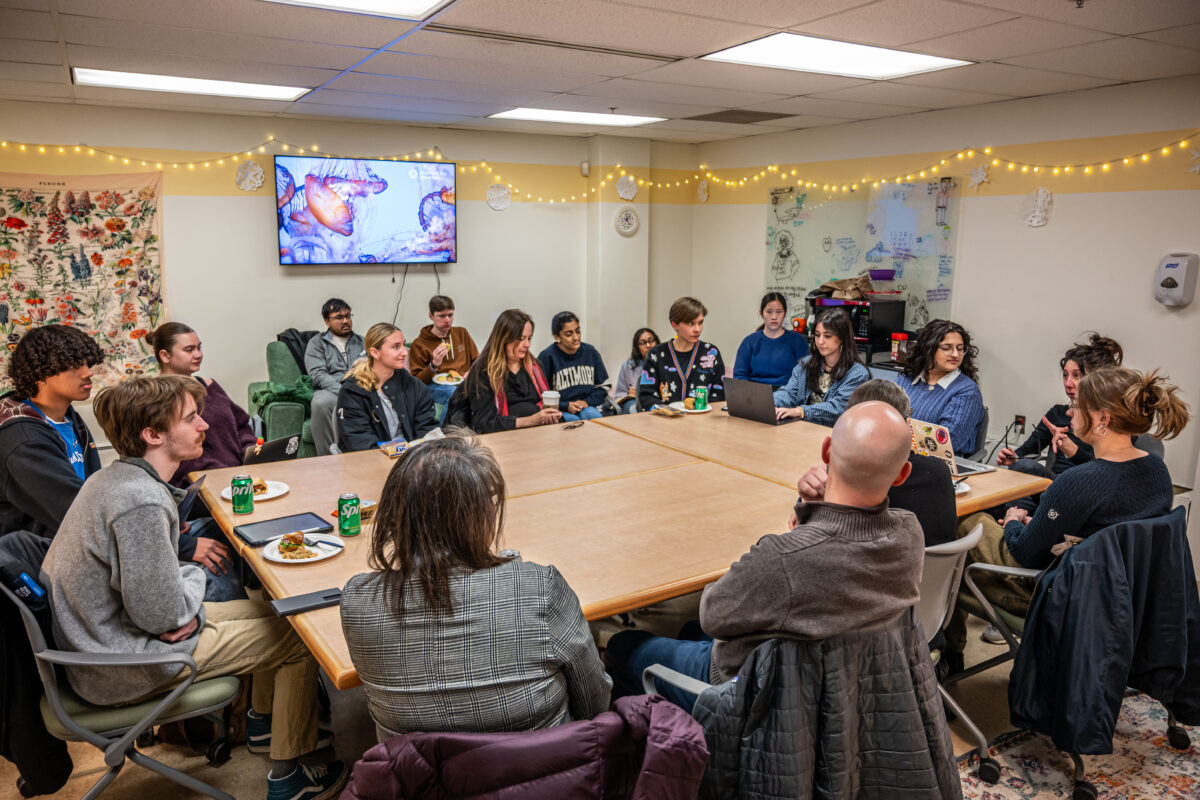 An editorial roundtable event of Student Media Center participants. Photo by The Retriever staff photographer Joshua Able-Carter, sophomore visual arts major.
Legacy media outlets
Retrievers have been media-conscious from the university’s inception. Within the first month of classes at UMBC, a newsroom was established, and the first issue of the student newspaper was published on September 19, 1966. Ever since then, the tradition of reporting student and campus life continued to expand and evolve.
By 1979, the student-run radio station, WMBC, was founded. Originally called the WUMD Radio Club, the station began broadcasting over carrier current circuits, enabling students to tune in from their dorms and at a couple of dining areas on campus.
In recent years, these media outlets, which depend on the ever-changing student body, took a hit. But students weren’t willing to give up their media platforms so easily.
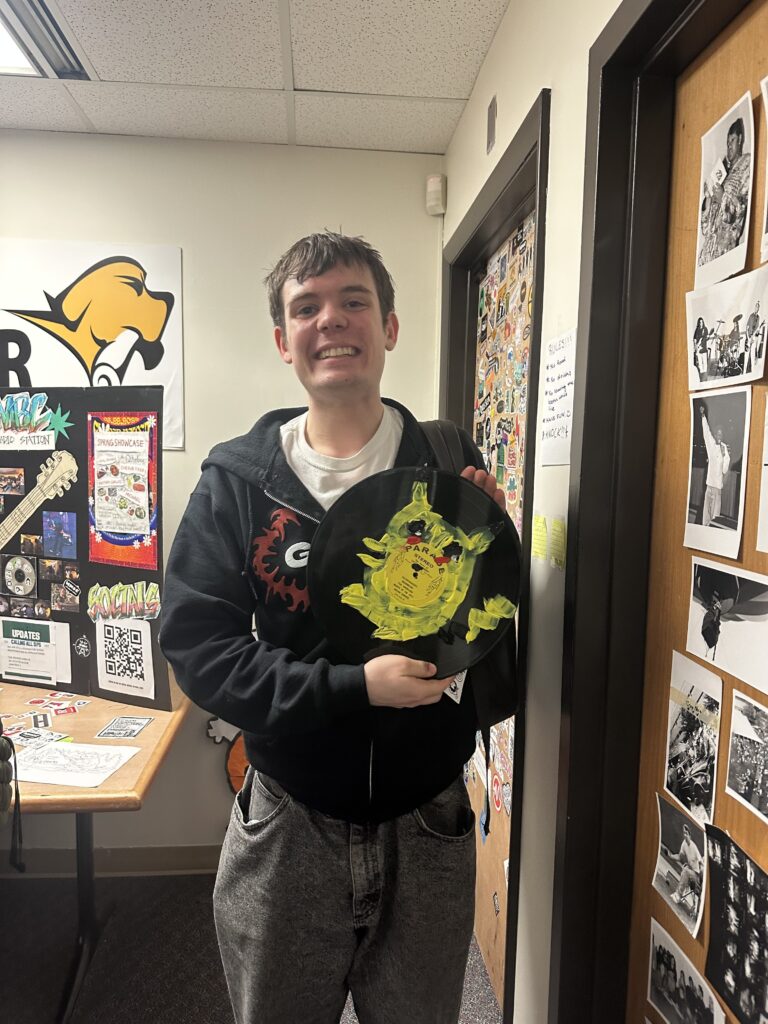 The station held a
record-painting party to draw in students to the UC
214 space. Photo by Miani Kozlowski, sophomore
computer engineering major.
The station held a
record-painting party to draw in students to the UC
214 space. Photo by Miani Kozlowski, sophomore
computer engineering major.
In 2022, WMBC had been inactive for roughly four years. Before COVID even, the student group was having trouble staffing the station, but the org really lost its footing—and its physical space—during the pandemic. Sean Stultz ’24, computer science, WMBC’s station manager his senior year and their chief engineer prior to that, was storing the station’s equipment in his Hillside apartment in Breton, until the station found a permanent place for it.
Around the same time, The Retriever, the student-run newspaper, ran into similar complications. They were working without a dedicated advisor, and the weight of managing everything from organizing meetings to pitching and writing stories, publishing and distributing both in print and online, marketing/running social media accounts, and much more became too much for students to handle alone.
That changed at the end of 2023, when Ann Tropea, the assistant director of the Center for Democracy and Civic Life, was hired as the newspaper’s media advisor. The Retriever members say she has helped immensely with finding advertisers, organizing documents, and advocating for them as a student organization.
“I began working with students from The Retriever and WMBC to create a shared structure that went beyond the two groups simply sharing space in our suite of offices in the UC,” says Tropea, who has a background in law and communications.
The student-run creative arts journal Bartleby joined the other media groups in 2024, and after a year of planning, SGA recently approved a new charter organization—the Student Media Center. The group’s stated mission is to “create a more engaged, informed, and civically empowered student body, and assert First Amendment freedoms at UMBC through the active production of student-run media.”
The Student Events Board (seb) is the only other charter organization at UMBC, so this is historic, says Tropea. And the new structure ensures the longevity and continuous operations of not just WMBC, but The Retriever and Bartleby as well, Tropea adds, who during this planning period was directing her efforts into assisting with WMBC’s revitalization.
Creating a shared mission
Michelle Ibino, a biological sciences junior, who is the events manager for WMBC, says, “Sharing a space and a mission has been positive as it allows for students to cross over into each club. Members of the station have found and gone on to write/work for The Retriever and vice-versa.”
The Retriever has been able to seamlessly work with WMBC to produce stories that provide coverage about the station’s events, and it’s also common to see members of The Retriever enjoying WMBC’s events, which turns the newsroom into a Tiny Desk Concert vibe. “The WMBC/Retriever space is small, but turns out to be a really cool music venue if you just rearrange a few chairs and tables!” says Tim Rogers, The Retriever’s music columnist.
“We might be known as a commuter school, but that doesn’t mean we can’t have a rich student culture just like any other university. The efforts of The Retriever and WMBC bring life to campus,” says Rogers, a sophomore.
When it comes to on-campus events, WMBC hosts concerts, album listening parties, zine creations, record painting, and other activities. WMBC puts together bills that showcase student artists, as well as local bands from the surrounding Baltimore area.
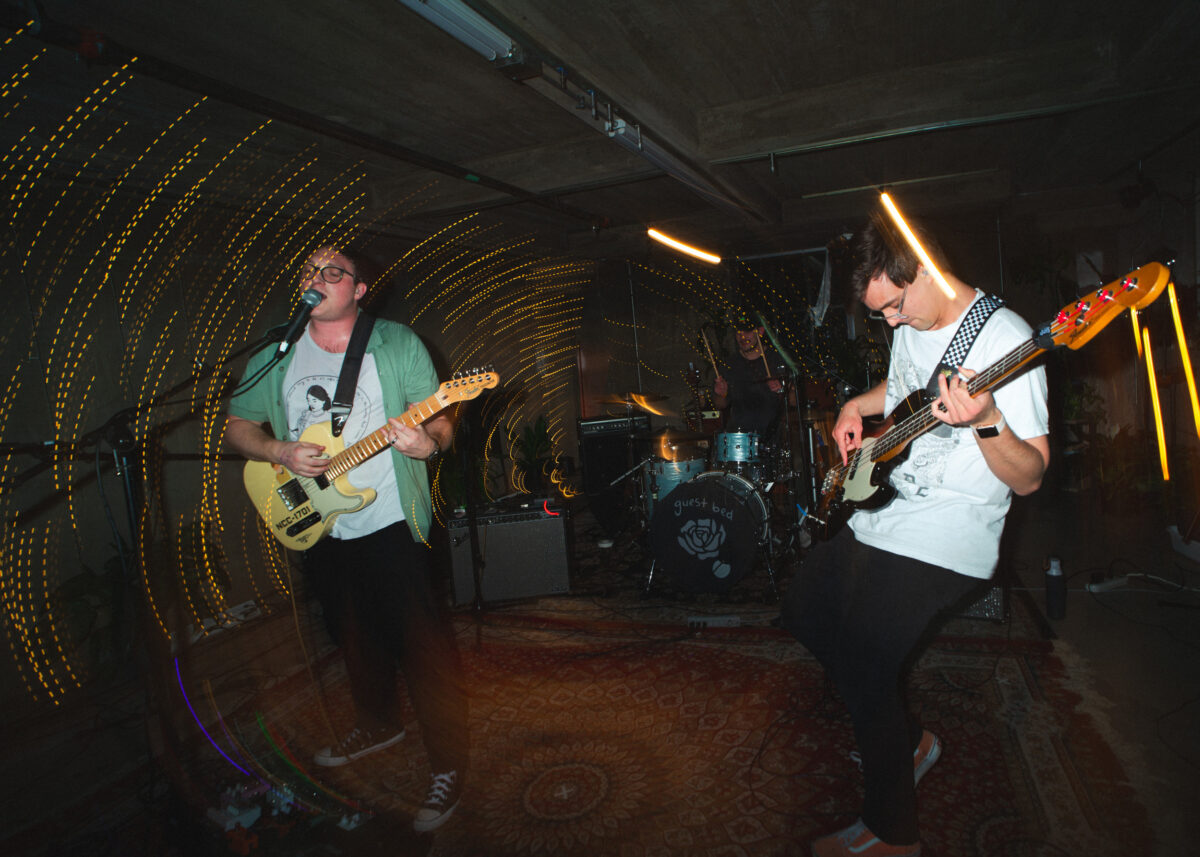 Baltimore band Guest Bed performs at WMBC’s Zine Release Party. Photo by Erin Bennett ’25.
While the newsroom can accommodate only a few dozen people, WMBC is able to organize large-scale events in different places around campus. “WMBC has put together a bunch of really cool music events, some in collaboration with Retriever Music Society (RMS) and others run entirely by the club,” says Rogers. The station’s previous spring music festival was a collaboration with RMS, taking place in the UC Ballroom.
When planning events, Ibino knows how crucial it is that the students have both on-campus and off-campus options. “The off-campus concerts we run are especially important because they allow UMBC students to connect with the large local Baltimore/DMV music scene. As a school in the Baltimore area, I think it is especially important for us to encourage students to explore, interact, and support the Baltimore community, and these concerts are a great way for students to start building connections to do that. Further, our events help like-minded students find each other,” she says.
In addition to events, the integration of the groups has positively impacted campus-wide projects. This has helped both groups to become better advocates for the student community. “Advocating for different groups is an important job that both organizations share as part of the Student Media Center,” says Ibino. “Collaboration is what helps us better represent the diverse voices and interests of the UMBC community.”
Musical connections
Although he’s graduated—and no longer housing the station’s equipment—Stultz has stayed connected with WMBC and appreciates watching it thrive. “The overall campus is thankful for a lot of the stuff that we do,” says Stultz. “We’re equally thankful back to the people on campus who support us and everything because we wouldn’t be able to do any of this without them.”
In addition to being the events manager for WMBC, Ibino is one of the many DJs who broadcast a show through the station. Currently, there are about 40 different shows, and the station is on air weekly from Monday through Friday. With her show “Reverie,” Ibino connects with other students and educates anyone interested in the goth subculture.
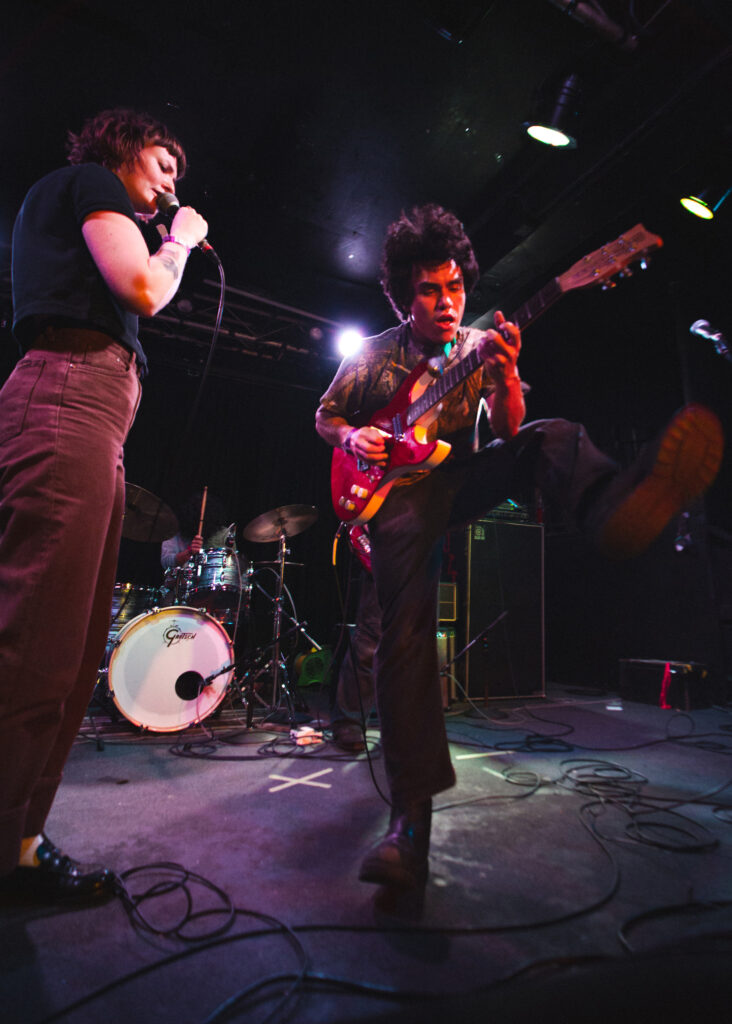
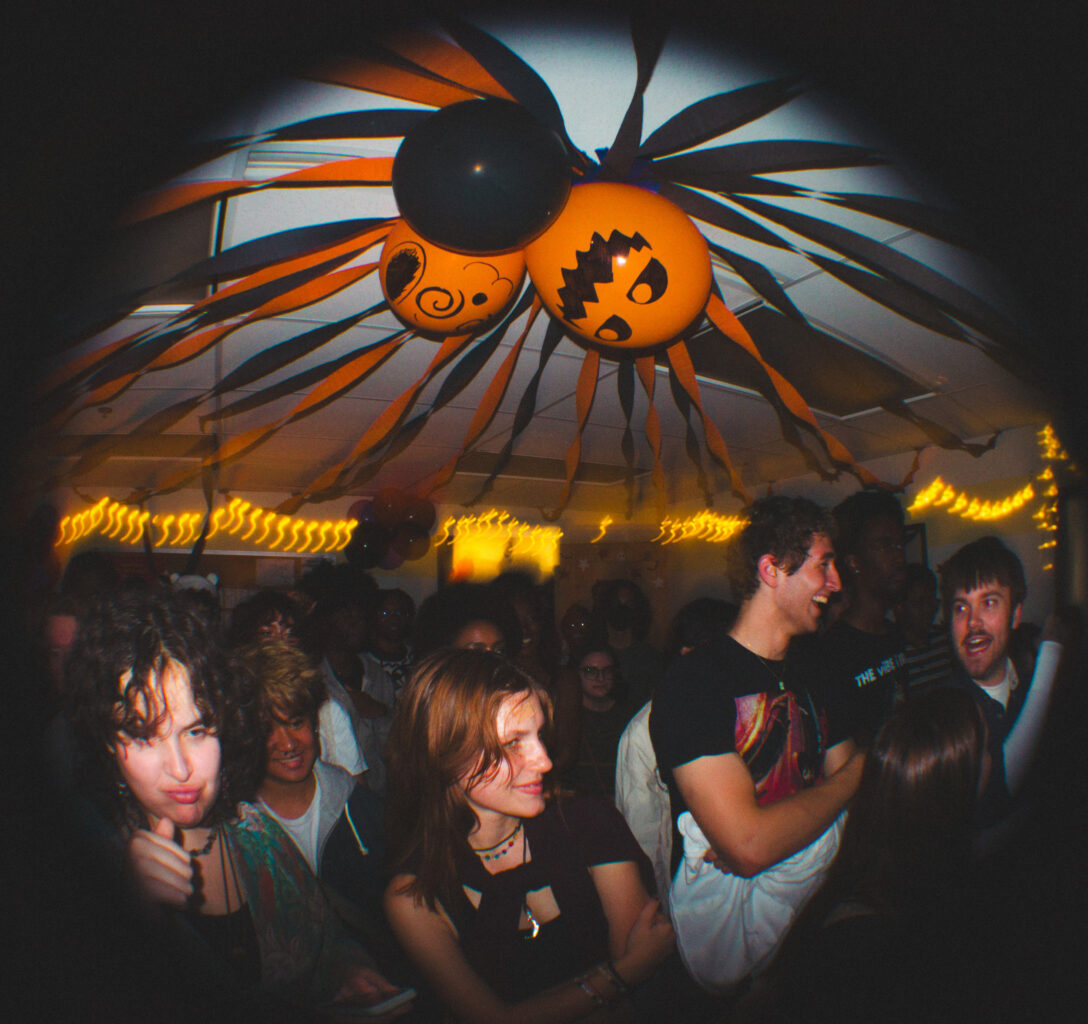
Left: NYC-based band Lyoko at The Ottobar in Baltimore at a WMBC-off campus event. Right: Audience members watch Omanti perform at WMBC’s Great Pumpkin concert in the Student Media Center. Photos by Erin Bennett ’25.
This platform has been valuable to her and has made her feel more grounded within the community. “One of the core principles of the goth community is to be involved and contribute to the subculture,” says Ibino. “Getting to do that through my show has made me feel more connected within the scene. Creating a space where people feel welcome to explore and embrace goth culture has helped me grow more confident in my identity and strengthened my connection to the broader alternative community.”
Another DJ, Daniela Salguero, a junior psychology major, has also used her show as a way to explore her cultural identity. Her show, “Luna Roja Radio,” focuses on alternative Latin American music, and she provides commentary as to what certain songs represent in a wider political context. She explains, “Every week, I pick a theme to hone in on, and I think it’s a really great way for me to just get my feelings out there and to connect more with myself.”
The media organizations have enriched campus life by helping students to get more involved with the Baltimore community. They have also served as an inclusive space for everyone.
The door to the Student Media Center is almost always open. With the station broadcast aired on the office speakers, students are there, working and socializing under the band posters and stories that dot the walls—they’re making and sharing media but they’re also continuing a legacy for the next generation of Retriever writers, editors, and DJs.
]]>
“You’re listening to WMBC, UMBC’s freeform student radio station. And you’re in the 2000s right now, thanks to the radio time machine.” Four years ago, hearing those words would have been...
https://umbc.edu/stories/wmbc-radio-station-back-on-the-air/
https://my3.my.umbc.edu/api/v0/pixel/news/150641/guest@my.umbc.edu/c03d0313743051ed0aaab9bad17e2830/api/pixel
at-play
campus-life
center-for-democracy-and-civic-life
magazine
spring-2025
story
student-life
the-retriever
wmbc
UMBC News & Magazine
https://my3.my.umbc.edu/groups/umbc-news-magazine
https://assets1-my.umbc.edu/system/shared/avatars/groups/000/001/943/24435aa6207c452e7bc15cc74b42c7bb/xsmall.png?1748556657
https://assets1-my.umbc.edu/system/shared/avatars/groups/000/001/943/24435aa6207c452e7bc15cc74b42c7bb/original.png?1748556657
https://assets2-my.umbc.edu/system/shared/avatars/groups/000/001/943/24435aa6207c452e7bc15cc74b42c7bb/xxlarge.png?1748556657
https://assets2-my.umbc.edu/system/shared/avatars/groups/000/001/943/24435aa6207c452e7bc15cc74b42c7bb/xlarge.png?1748556657
https://assets3-my.umbc.edu/system/shared/avatars/groups/000/001/943/24435aa6207c452e7bc15cc74b42c7bb/large.png?1748556657
https://assets1-my.umbc.edu/system/shared/avatars/groups/000/001/943/24435aa6207c452e7bc15cc74b42c7bb/medium.png?1748556657
https://assets2-my.umbc.edu/system/shared/avatars/groups/000/001/943/24435aa6207c452e7bc15cc74b42c7bb/small.png?1748556657
https://assets1-my.umbc.edu/system/shared/avatars/groups/000/001/943/24435aa6207c452e7bc15cc74b42c7bb/xsmall.png?1748556657
https://assets2-my.umbc.edu/system/shared/avatars/groups/000/001/943/24435aa6207c452e7bc15cc74b42c7bb/xxsmall.png?1748556657
UMBC News & Magazine
24
0
false
Thu, 12 Jun 2025 11:53:57 -0400
Thu, 12 Jun 2025 11:53:57 -0400
Detangling Quantum
In the quantum kingdom, particles flirt with the impossible, defying the tidy laws of Newton’s world. Today’s booming quantum industry, built on understanding this realm, hums with the energy of vibrating atoms. UMBC alumni are riding the quantum wave as they harness the field’s mysteries to unlock a revolution too strange to imagine—and too big to ignore.
Cory Nunn, Ph.D. ’23, physics, conducted astronomy research as an undergraduate, studying enormous objects scattered across the galaxy. But in the end, he fell in love with the physics of a much tinier universe, where you can never quite be sure where the electrons are, and the simple act of observing a system can shift its properties.
That kingdom is quantum, a field that, as it matures, is likely to lead to a revolution in communications, cybersecurity, scientific observations, and more. In Maryland today, political and business leaders are committed to investing in these new technologies and building a hub for quantum research.
Quantum theory emerged in the early 20th century when scientists like Albert Einstein and Erwin Schrödinger cracked open a subatomic universe where particles could sometimes behave like waves—common knowledge today, but revolutionary at the time. Their research left Sir Isaac Newton’s straightforward rules behind, replacing them with probabilities and uncertainty.

Cory Nunn, Ph.D. ’23, adjusts an experimental setup at the National Institute of Standards and Technology (NIST). He says his advisor, Todd Pittman, prepared him well. “There’ a lot of ambition in Todd’s group; I feel like we were encouraged organically to push ourselves, because we were convinced what we were doing was really cool and worth exploring,” Nunn says. (Photo courtesy of NIST)
By the 1950s, what we would now call “quantum 1.0” hit its stride, turning theory into world-changing tech. Transistors—tiny devices found in everything from PCs to cars to smartphones—are the most ubiquitous example; they power all computer chips. Driven by what are called “quantum effects,” or the perks of quantum over classical systems, transistors shrunk room-sized computers into pocket calculators and sparked the digital age. Then came lasers, which used the quantum effects of excited atoms to beam data across continents, and atomic clocks, which keep time with extreme accuracy based on the vibrations of single atoms. These breakthroughs rewired society, powering the gadgets and networks of today.
Quantum research has come a long way since quantum 1.0, which lasted through the 1970s, says Tom Smith, Ph.D. ’21, physics. “Now we’re in quantum 2.0,” Smith says. “There’s another wave of interesting quantum effects that we can take advantage of, like quantum superposition,” when a particle can temporarily be in two states at the same time, until the particle’s state is measured.
Huge improvements in laser technology and optical components have advanced the field and “opened the door for other quantum phenomena to be implemented experimentally. It’s been a gradual development—baby steps over the years,” Smith says.

While quantum 1.0 generated foundational technologies, quantum 2.0 is about harnessing quantum phenomena to build next-level systems. Multiple companies and researchers have made strides in building “qubits,” or “quantum bits,” that can be coaxed to exist long enough to perform useful computations. The first qubits only lasted a few microseconds, but today’s qubits can exist for milliseconds—1,000 times longer—making it possible to scale up quantum computers.
A key quantum effect called “entanglement” has also shifted from being a quirky laboratory phenomenon in quantum 1.0 to a workhorse in newer quantum systems. Researchers who showed that entanglement is real and exploitable received the 2022 Nobel Prize in physics. Their work paved the way for huge advances in quantum communication across long distances and quantum-based encryption methods.
“As our control of very small, isolated systems gets better and better over time, what we’re realizing is that there are new capabilities that come with working with single atom systems or single ions,” Nunn says. “And they have new properties—quantum properties—that let us leverage different kinds of processing power than what we had with classical computers.”
Today, Nunn is a postdoctoral fellow in the Quantum Optics Group within the Quantum Measurement Division at the National Institute of Standards and Technology (NIST). His research on quantum networking seeks to harness the power of quantum entanglement at a distance.
“It’s really hard to send these fragile quantum bits of information over a long link. So the solution most of us are pursuing is a quantum repeater, which is basically just a node in the middle that breaks up this longer link into two smaller links that are easier to manage,” Nunn says—or, if the link is long enough, many smaller links. He refers to one end of the link as “Alice” and the other as “Bob,” to talk about how information travels from point A to B.
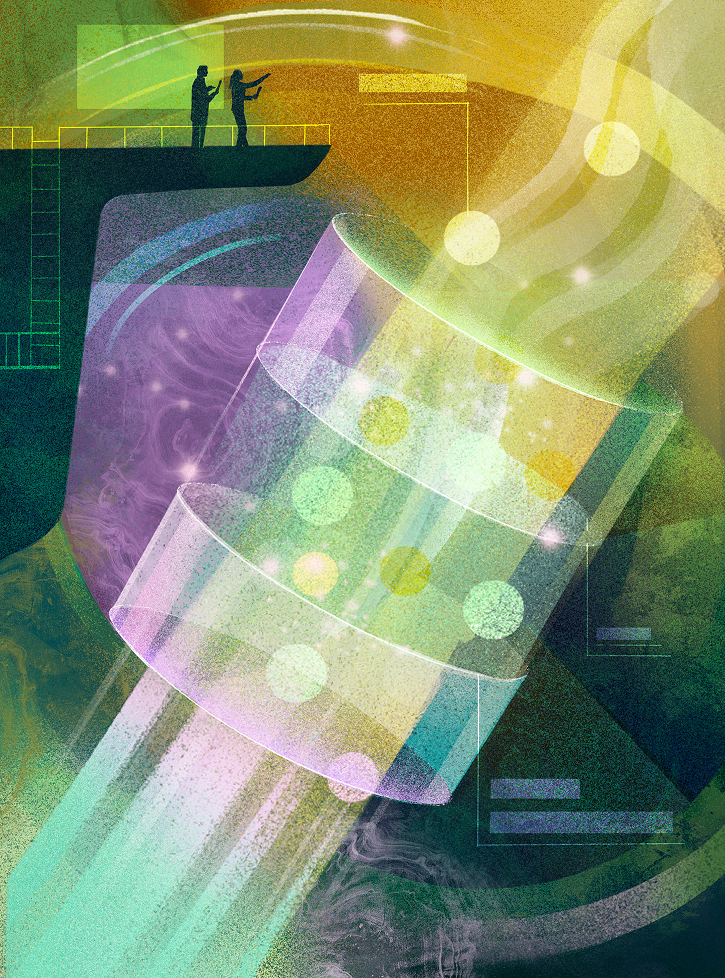
“So that repeater in the middle is going to have to take a signal from Alice and a signal from Bob, and if they don’t meet at exactly the same time, so the repeater can perform an operation and link the two together, then one or both of the signals is going to have to be stored in a quantum memory.”
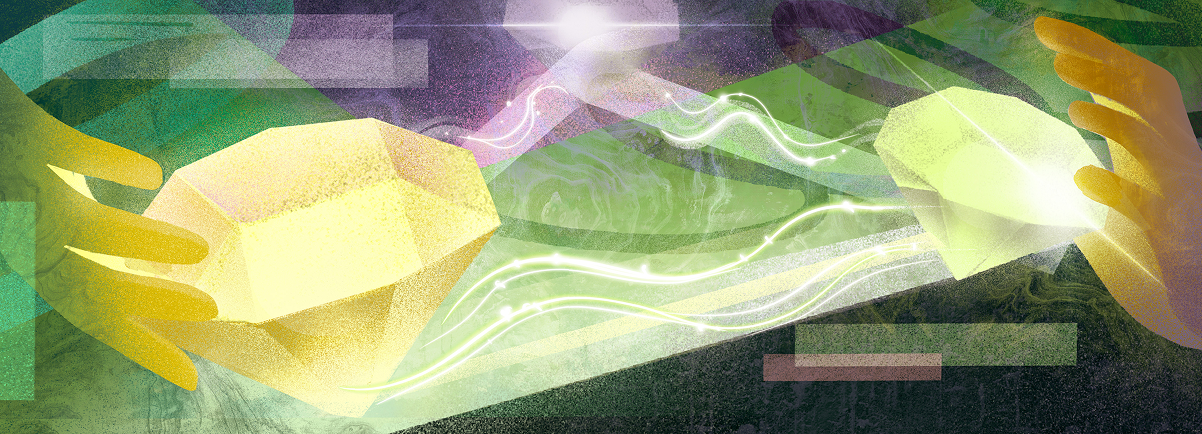
That “operation” at the node (which Nunn calls “Charlie”) entangles the photons coming from Alice and Bob, which Nunn says is the “most interesting weird property that quantum particles can have.” In entanglement, the signals become “inherently linked, so that these quantum systems are correlated in a way that’s just stronger than classical physics could explain.”
After the operation at Charlie, Nunn says, “Alice and Bob’s systems, which are at separate labs, that never directly interacted with each other, now share entanglement.”
Nunn’s team at NIST is working to develop a range of technologies to make this long-distance entanglement possible, including sources of entangled photons, quantum memories, and methods of stabilizing links. Nunn is focused on developing specialized sources of single photons that can send synchronized quantum signals across the network.
Quantum systems don’t have to use photons, but they are “the best carriers of quantum information,” according to Nunn. “They can travel at the speed of light, don’t have to be cooled to an extremely low temperature to work (like some other quantum systems), and they can make it out of your lab and travel over fiber, or from satellite to satellite through space and the atmosphere. So these are inherently mobile ‘flying qubits’ that can actually take quantum information and fly from one place to another.”

 Tom Smith, left, and Binod Joshi, Ph.D. ’25, physics, at work in Yauhua Shih’s lab at UMBC. Photo by Melissa Penley Cormier, M.F.A. ’17.
In the current wave of quantum 2.0, new materials and fabrication techniques have enhanced researchers’ ability to produce tiny, precise quantum systems, opening the doors for creating quantum networks. Finally, software is starting to catch up to mathematical theories proposed decades ago—but there’s still much work to do.
Although fully capable quantum computers are still years away, researchers, businesses, and governments are already preparing for how they might disrupt current practices. For example, powerful new tools like Shor’s algorithm would leave most modern encryption methods vulnerable to attack. In addition to quantum measurement science, NIST is playing a leading role in standardizing new cryptography techniques, called post-quantum cryptography, that better prepare us for a world with advanced quantum computers.
Quantum 2.0 is about control—taking the weirdness of quantum mechanics and engineering it into tools that outperform classical limits. Unlike quantum 1.0, it’s less about discovering quantum rules and more about exploiting them for computing, secure communications, and ultra-precise sensing. The field is growing rapidly, and governments and tech giants alike are spending billions on developing the next big breakthroughs.
Smith, who is a physicist at the Naval Air Warfare Center, Aircraft Division (NAWCAD), believes quantum sensing is one of the most exciting areas in quantum. It refers to the use of quantum systems, such as atoms or photons, to measure physical parameters with unprecedented precision and sensitivity. While quantum computing deservedly gets a lot of airtime, “I believe quantum sensing is equally far along in its R&D but doesn’t get as much attention, because it’s not the darling of private industry currently,” Smith says.
For example, he says, the Laser Interferometer Gravitational-Wave Observatory (LIGO) is designed to detect gravitational waves, which Einstein’s general theory of relativity predicts. The LIGO team updated the observatory’s systems to take advantage of quantum effects, specifically squeezed light. Squeezed light helps make the timing or detection rate of photons more predictable, like steadying the flow of raindrops into a cup to produce consistent readings from measurement to measurement, Smith says. After LIGO made the switch, it started detecting a lot more gravitational waves.
Other companies have built quantum sensors that detect exceedingly minute shifts in gravity or magnetic fields, which can be used for anything from detecting underground tunnels to measuring brain activity to improving GPS systems. These advances come from better control of quantum states and miniaturization, which has moved tech from lab benches to the field.
“At the Navy, we’re going to keep an eye on, and in some cases have a hand in, making improvements to various types of sensing. We’re getting to the point now that maybe we can actually make a product out of this and utilize it in the field,” Smith says.
While systems like LIGO are already active, there are only a few instances of the technology around the world. For a technology to truly be “in the field” from Smith’s perspective, it must be produced at scale and put to work on, for example, a large number of aircraft carriers or military planes.
“I would like to think that certain quantum sensors could be used in the field within the next decade,” Smith says.

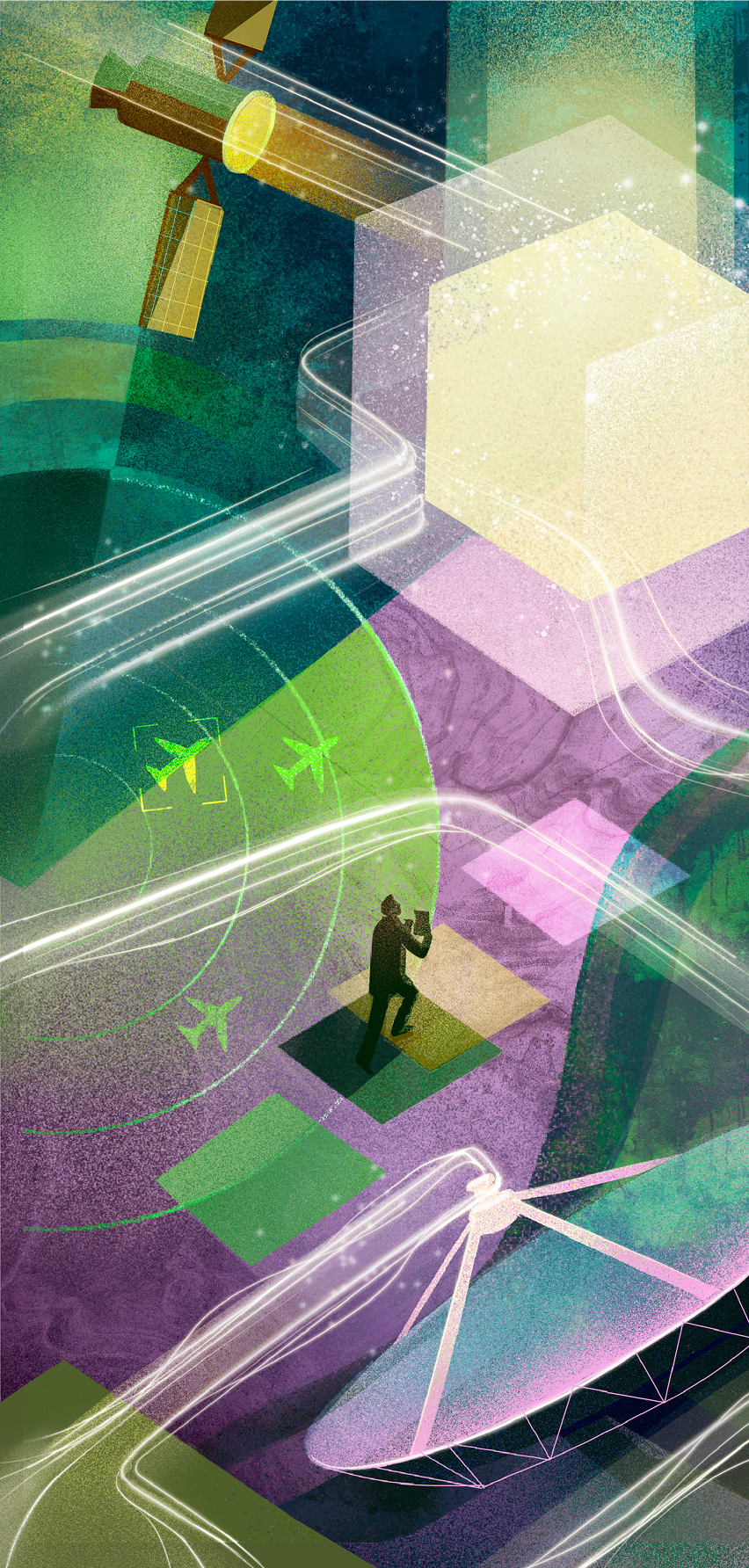
Nunn was a junior at the University of Delaware when LIGO upgraded. During his astronomy research, he attended conferences for quantum optics, because the first quantum optics experiments were designed to observe starlight. “All the signals that LIGO uses rely on the same type of physics that I’m studying now,” he says.
Today at NIST, his work builds directly on his Ph.D. research with Todd Pittman, Ph.D. ’96, professor of physics and director of UMBC’s Quantum Science Institute.
“There was a lot going on in Todd’s lab that I was able to directly transfer to my research at NIST,” Nunn says. “Now I am directly applying the same skills, the same systems, that I was used to working with as a member of the quantum information group at UMBC.”
Some of Nunn’s current quantum networking projects involve work with the Washington Metropolitan Quantum Network, or DC-QNet. Quantum networking involves connecting quantum devices to increase their capabilities, just as classical devices are connected today to create systems like the world wide web. The DC-QNet “is a bonafide networking application,” that relies on the research he did with Pittman, Nunn says.
The DC-QNet links four federal agencies plus the University of Maryland via fiber optic cables that travel belowground and high in the air.
“As a photon travels along the link, it might get lost along the way, because it’s just one itty bitty photon against the whole world, traveling across kilometers of fiber,” Nunn says. The fiber “is basically a kilometer of glass that it has to see through.”
Today, researchers are still investigating what’s possible and building prototype quantum networks. Once full-fledged quantum computers exist, we’ll connect them and enhance their capabilities with networking, Nunn explains. Eventually, he hopes, “we’ll have the next, futuristic, Star-Trek-level internet that relies on quantum physics.”

One big goal of quantum 2.0 is to minimize the amount of light required to send a usable signal—even down to single photons, Smith says. In the context of quantum communication, “You send this train of individual photons with independent polarizations, and if you can control those polarizations—the direction the lightwaves are vibrating—you can transmit information that way,” he explains.
Both Nunn and Smith emphasized that information sent via quantum versus classical communication signals is more secure. When information travels via a classical laser pulse from Alice to Bob, an eavesdropper, typically referred to as Eve, could take away or analyze some of the light, and the recipient would still receive a pulse, not realizing their signal had been tapped.
“But at the single photon level, if an eavesdropper takes away one photon, or even obtains information about the photon, the intended receiver registers an error, so it’s easier to detect eavesdroppers,” Smith explains. That’s a huge advantage for sending confidential information—whether it’s an everyday banking transaction or a matter of global diplomacy.

Today, Smith still does work in the lab at the NAWCAD, but spends much of his time keeping tabs on what’s happening in quantum technology across academia, industry, and government, so he can recommend research NAWCAD ought to support elsewhere or pursue in-house.
“We have a lot of support right now from our chain of command to do the research that we think is best, that we think will be the most impactful, which is always a great place to be in, to have that type of freedom,” Smith says.
Smith has also continued to collaborate with his Ph.D. advisor, UMBC physics professor Yanhua Shih. Shih is a first-generation quantum optics researcher, having done pioneering work in interferometry, one of the technologies LIGO relies on. His current work on quantum sensing is complementary to active NAWCAD research.
“By collaborating directly with academia, it feels like we’re having a bit more of an impact,” Smith says. In fact, the UMBC physics department partnered with NAWCAD through a program that supports NAWCAD staff to complete their doctoral degrees. A new Ph.D. candidate is joining UMBC through the program in fall 2025.
Nunn, too, is thriving. He loves what he does at NIST and would like to stay on after his fellowship concludes.
“There’s just a lot of good research that goes on at NIST, and the people I’m working with are amazing sources of information. I’ve grown a lot as a postdoc here,” Nunn says. “It’s really inspiring to work with hard-working and clever people on new solutions for quantum networking.”
Pittman isn’t surprised by Nunn’s success.
“Cory had a knack for experimental work and really took advantage of every opportunity to become a top-notch independent researcher at UMBC,” Pittman says. “By the end of his time in my lab, working with Cory was more like collaborating with a senior colleague than mentoring a student. In his final year, our one-on-one meetings usually started with me asking, ‘OK, Cory—what are you going to teach me today?’”
“Todd was supportive and eager to give guidance early on, and then also eager to step back when he felt I was able to tackle a problem on my own,” Nunn says. “Getting to a point where he could tell me, ‘Oh, I’m learning something from you,’ was really encouraging, and the fact that he was so open to that really helped me to grow.”
Smith connected with Shih via a research rotation, and “it was a perfect match,” he says. “I learned a lot from him, but he was also hands-off in a way that allowed me to learn on my own.”
All new graduate students in the UMBC physics department share office space, an arrangement that Nunn and Smith praised for the way it organically built community among the students.
“We had a great camaraderie. That was a key aspect that allowed me to achieve as much as I did in grad school,” Smith says. But at bedrock, the thing that excites them both is the science itself and the autonomy to pursue it.

Nunn has always been intrigued by questions like, “How does light really work?”—even discussing them at high school sleepovers. It wasn’t until he arrived at UMBC that he learned that “this is an active field of research, where we’re trying to understand what quantum mechanics tells us about the way nature really works.”
Part of the excitement, he says about working in Pittman’s lab, was research into quantum memories and quantum sources that have exciting, real-world applications. “But at the core, our excitement is really investigating the way the world works on different scales that we’re not used to thinking about in our day-to-day life.”
And even as Nunn learns more and more, the mysteries of how the quantum scale operates feel limitless. He takes the attitude of a true scientist, recognizing that while “I understand more, I also understand that there’s more than ever that I don’t understand.”


The original “UMBC” ghost image from 1995 is taped inside Pittman’s journal from the time. Photo courtesy of Pittman.
In 1995, a UMBC research team led by Yanhua Shih, professor of physics, pioneered a quantum technology called “ghost imaging,” which leverages quantum entanglement to reconstruct an image of an object without actually shining any light on it. The 30th anniversary of this quantum feat was marked in a Nature Communications Physics article this spring. The UMBC team originally demonstrated the technology by rendering the letters “UMBC” in a first-of-its-kind experiment. Since then, ghost imaging has enabled revolutionary applications in secure communication, medical imaging, and remote sensing.
Todd Pittman recalls the excitement of the original breakthrough, telling Nature: “Seeing the ‘UMBC’ image emerge from the data for the first time was super exciting and very rewarding; I remember it like it was yesterday!”
Thirty years ago, UMBC was already making a name for itself in the quantum research space, including early work by Shih. His experiments showed that photons can instantly affect each other regardless of distance, laying the groundwork for the 2022 Nobel Prize in Physics, awarded for proving quantum entanglement. That research and other early advances like ghost imaging have led to more recent contributions in quantum optics, computing, and thermodynamics that are shaping the quantum research landscape.
By now, Shih has trained a second, and now a third, generation of quantum researchers, including people like Pittman, Cory Nunn, and Tom Smith, who will lead UMBC quantum research into its next era.
UMBC senior track and field student-athlete Anjayooluwa “Jayo” Adegboyo, biochemistry and molecular biology, was named the 2025 Arthur Ashe Jr. Male Sports Scholar of the Year by Diverse: Issues in Higher Education magazine. The publication sponsors the Arthur Ashe Jr. Sports Scholar Awards to honor students of color who have excelled in the classroom and on the athletic field and demonstrate a commitment to community service and student leadership. Adegboyo was chosen from among 700 nominated student-athletes in the country for best exemplifying the standards of scholarship, athleticism, and humanitarianism.
Adegboyo is a sprinter in track and field. He is a member of the bronze-winning 4x400m team that set a new school record during the 2023-2024 season. He also posted the second fastest time in school history in the 400 meters at the America East Conference Championships.
 Adegboyo, center, runs at a track meet at the Naval Academy this spring. Photo courtesy of UMBC Athletics.
Off track, he volunteers at the University of Maryland Medical Center’s Trauma Resuscitation Unit and the Howard County Food Bank. He also serves as a mentor to younger peers in the chemistry, biology, and physics departments and conducts research to investigate how metabolic nutrients arrange inside cells to discover markers for cancer cells versus normal cells.
“Since his arrival to UMBC, Jayo has brought his dynamic approach to his athletic and academic experiences,” said UMBC head track and field coach David Bobb ’02. “Jayo’s fun-loving personality disguises his relentless pursuit of excellence, and that combination makes him an obvious asset.”
]]>
UMBC senior track and field student-athlete Anjayooluwa “Jayo” Adegboyo, biochemistry and molecular biology, was named the 2025 Arthur Ashe Jr. Male Sports Scholar of the Year by Diverse: Issues...
https://umbc.edu/quick-posts/on-track-to-lead-arthur-ashe-award/
https://my3.my.umbc.edu/api/v0/pixel/news/150567/guest@my.umbc.edu/67d09256e1cdce0b22f65927d1d44e47/api/pixel
athletics
biochemistry-and-molecular-biology
class-of-2025
cnms
community
news
quick-post
spring-2025
UMBC News & Magazine
https://my3.my.umbc.edu/groups/umbc-news-magazine
https://assets1-my.umbc.edu/system/shared/avatars/groups/000/001/943/24435aa6207c452e7bc15cc74b42c7bb/xsmall.png?1748556657
https://assets1-my.umbc.edu/system/shared/avatars/groups/000/001/943/24435aa6207c452e7bc15cc74b42c7bb/original.png?1748556657
https://assets2-my.umbc.edu/system/shared/avatars/groups/000/001/943/24435aa6207c452e7bc15cc74b42c7bb/xxlarge.png?1748556657
https://assets2-my.umbc.edu/system/shared/avatars/groups/000/001/943/24435aa6207c452e7bc15cc74b42c7bb/xlarge.png?1748556657
https://assets3-my.umbc.edu/system/shared/avatars/groups/000/001/943/24435aa6207c452e7bc15cc74b42c7bb/large.png?1748556657
https://assets1-my.umbc.edu/system/shared/avatars/groups/000/001/943/24435aa6207c452e7bc15cc74b42c7bb/medium.png?1748556657
https://assets2-my.umbc.edu/system/shared/avatars/groups/000/001/943/24435aa6207c452e7bc15cc74b42c7bb/small.png?1748556657
https://assets1-my.umbc.edu/system/shared/avatars/groups/000/001/943/24435aa6207c452e7bc15cc74b42c7bb/xsmall.png?1748556657
https://assets2-my.umbc.edu/system/shared/avatars/groups/000/001/943/24435aa6207c452e7bc15cc74b42c7bb/xxsmall.png?1748556657
UMBC News & Magazine
3
0
false
Fri, 06 Jun 2025 09:23:21 -0400
Fri, 06 Jun 2025 09:23:21 -0400
My life between the yellow borders
At UMBC, students get a versatile education that Retrievers can draw on to succeed no matter where their career lands them. But sometimes, you hit the home run and end up with your dream job. For Kennedy Lamb ’20, English—who also played softball for UMBC—that meant a role in the storied legacy of National Geographic. But dream jobs don’t land because of random luck or chance. Lamb knew early on that she wanted to lean on her love of science in her English degree and topped off her UMBC education with a graduate degree from Johns Hopkins University’s program in science writing. Ultimately, when she applied for the gig at Nat Geo, she’d loaded her bases and was ready to knock it out of the park.
Seven years ago, I sat in my academic advisor’s office in the Performing Art and Humanities Building mulling over which classes to take next semester. The meeting, like all meetings with English professor Christopher Corbett, mostly consisted of discussing select passages from Phillip Lopate’s Art of the Personal Essay, the Baltimore Orioles’ record, and Babe Ruth. I always looked forward to them.
“What do you want to do after college?” he asked, chuckling good-naturedly. I smiled politely and fiddled with my earrings. At 19, the prospect of securing a full-time job was daunting. I knew I loved to write. I knew I loved science. I did not know how to combine the two. “I’m not sure,” I said. “Write, I guess.”
Corbett took a sip out of his coffee mug and sat back in his chair. “Well, I can tell you where others have gone on after college, if that would help.” I nodded. In his Maine drawl, he rattled off a few media outlets, some of which I was familiar with. Nothing piqued my interest.
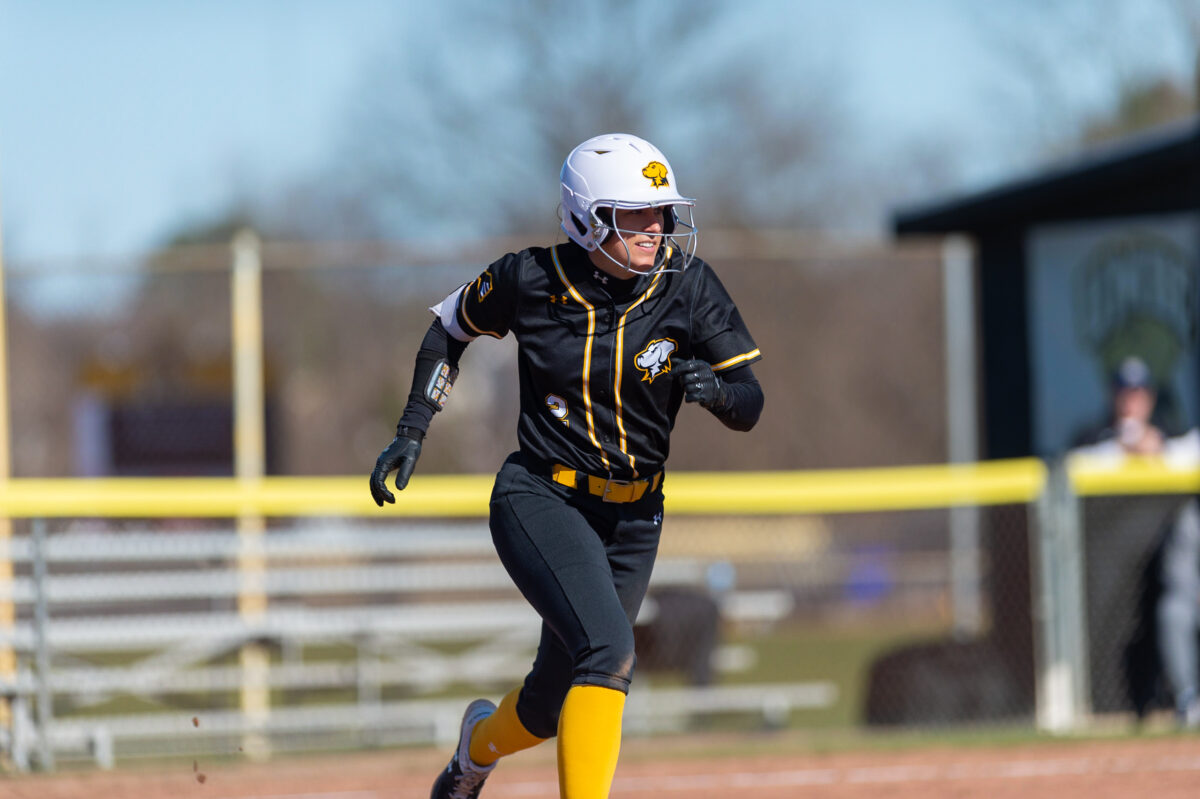 Lamb runs to first base her last collegiate game before the COVID-19 pandemic canceled the 2020 season. Photo by Ian Feldmann ’21.
“And one alumna went to write for National Geographic,” he said, almost as an afterthought. I looked up at him. “Really?” I replied.
Corbett hadn’t heard me and continued recounting the various places alumni from the English Department went on to work. But my mind was stuck: National Geographic. Now that would be something special. I pictured the iconic yellow borders in my head and pondered the pathway from college sophomore to Nat Geo writer.
At the end of the meeting, I had signed up for a handful of writing seminars, an introductory biology class, and Deborah Rudacille’s science writing class. As semesters turned into years and my time at UMBC came to a close in 2020, the dreams of National Geographic lingered in the back of my mind. What if? I would wonder. And how?
Fast forward to 2025, and that dream has become a reality. I am a communications specialist at the National Geographic Society, the centuries-old nonprofit dedicated to illuminating and protecting the wonders of our world. As a public relations professional, I’m tasked with translating stories of scientific discovery into well-packaged pitches to writers around the world.


Left: Lamb poses with a copy of The Wall Street Journal featuring the “mega coral.” Photo courtesy of Lamb. Right: A diver measures the world’s largest coral in the Solomon Islands. October 2024. Photograph by Manu San Félix, National Geographic Pristine Seas.
No two days are alike. Some days are spent decoding technical science papers about extinct human ancestors or writing a press release about cutting-edge conservation tactics that aim to save a slimy snail. Other days are spent digging through National Geographic’s colossal photo archive to find just the right picture for a reporter or presenting to leaders from Pacific Island countries about how to communicate the benefits of marine protected areas.
Perhaps my proudest moment came when a team of scientists and filmmakers from National Geographic Pristine Seas uncovered the world’s largest piece of coral (dubbed the “mega coral”) while on expedition in the Solomon Islands. After being briefed on the discovery by the expedition team and Solomon Islands scientists, our communications crew began a two-week sprint to craft a press release and press kit, organize a press conference, and pitch the story to reporters across the globe.
And that work paid off: The story went viral. In three weeks, the story was picked up by over 3,000 outlets in 50 countries. The mega coral graced the front page of The Wall Street Journal, was featured on Germany’s largest television show Tagesschau and even became the butt of a joke on The Late Show with Stephen Colbert. (All press is good press, right?)
In moments like this, I’m reminded of the privilege of working for such an iconic brand. It’s easy to trudge to the next assignment and never truly celebrate the amount of work that went into making a piece of coral in the Pacific Ocean a viral sensation. But after the story had run its course, I reflected on what got me to this moment.
What I realized is that there is no secret to landing a dream job. It is hard work with a healthy serving of serendipity. I took nearly every internship offered to me (including one at UMBC Magazine!) and tried to view even the most mundane task as a chance to learn something new. When it came time to apply to the National Geographic Society, I trusted my skills.
All writers know there is no such thing as perfection. Instead, I try to strive for the asymptote of perfection. It is demanding and, at times, downright exhausting. But because I know the impact of conservancy in action—from coral reefs to slimy snails—I wouldn’t have it any other way.
— Kennedy Lamb ’20
]]>
At UMBC, students get a versatile education that Retrievers can draw on to succeed no matter where their career lands them. But sometimes, you hit the home run and end up with your dream job. For...
https://umbc.edu/stories/my-life-in-the-yellow-borders-national-geographic/
https://my3.my.umbc.edu/api/v0/pixel/news/150518/guest@my.umbc.edu/03ecfb76eae4b5f3bbaa8df5841ce8be/api/pixel
alumni
alumni-essay
cahss
english
magazine
softball
spring-2025
story
UMBC News & Magazine
https://my3.my.umbc.edu/groups/umbc-news-magazine
https://assets1-my.umbc.edu/system/shared/avatars/groups/000/001/943/24435aa6207c452e7bc15cc74b42c7bb/xsmall.png?1748556657
https://assets1-my.umbc.edu/system/shared/avatars/groups/000/001/943/24435aa6207c452e7bc15cc74b42c7bb/original.png?1748556657
https://assets2-my.umbc.edu/system/shared/avatars/groups/000/001/943/24435aa6207c452e7bc15cc74b42c7bb/xxlarge.png?1748556657
https://assets2-my.umbc.edu/system/shared/avatars/groups/000/001/943/24435aa6207c452e7bc15cc74b42c7bb/xlarge.png?1748556657
https://assets3-my.umbc.edu/system/shared/avatars/groups/000/001/943/24435aa6207c452e7bc15cc74b42c7bb/large.png?1748556657
https://assets1-my.umbc.edu/system/shared/avatars/groups/000/001/943/24435aa6207c452e7bc15cc74b42c7bb/medium.png?1748556657
https://assets2-my.umbc.edu/system/shared/avatars/groups/000/001/943/24435aa6207c452e7bc15cc74b42c7bb/small.png?1748556657
https://assets1-my.umbc.edu/system/shared/avatars/groups/000/001/943/24435aa6207c452e7bc15cc74b42c7bb/xsmall.png?1748556657
https://assets2-my.umbc.edu/system/shared/avatars/groups/000/001/943/24435aa6207c452e7bc15cc74b42c7bb/xxsmall.png?1748556657
UMBC News & Magazine
5
0
false
Mon, 02 Jun 2025 16:22:47 -0400
Mon, 02 Jun 2025 16:22:47 -0400
How to create a new world
In her day job as a vice president at the advanced technology company Booz Allen Hamilton, Catherine Ordun, Ph.D. ’23, information systems, leads teams of engineers working on far-out AI tech. In the evenings, she crafts a different type of futuristic world, putting the finishing touches on a sci-fi trilogy featuring two alien brothers at odds with each other over a plan to invade Earth, which she hopes to publish in early 2026.
Ordun started writing the books in 2022, as a break from her intense computer science Ph.D. research work, which she completed in 2023 under the direction of UMBC assistant professor Sanjay Purushotham. Although fiction writing and coding seem to call for different skill sets, the two pursuits share some defining features, from the mental challenge of connecting ideas to the satisfaction that comes from completing a herculean task. In both, Ordun embraces the thrill of creating—whether an imaginary world where characters grapple with technologically infused questions of identity and purpose, to the seemingly sci-fi, yet very real, AI tools that will shape our own tomorrows.
Tools of the trade
- A thirst for knowledge
- A pen and paper (when you need old fashioned tools)
- Computer (when you need digital assistance)
- Vision and discipline
- Lots of coffee
Step 1: Hit the books
Ordun voraciously consumes knowledge and ideas. Although she earned her bachelor’s degree in biology, not computer science, she became deeply interested in machine learning around 2015, while working as a data scientist for Booz Allen Hamilton. “I became fascinated by the idea, just like really, really obsessed,” she says. “And for five years, I taught myself.”
Ordun’s favorite book from this time was Deep Learning, by Google AI researcher François Chollet. “It is like dogeared to the max. I went through every page and I typed out every line. I learned so much, from natural language processing to computer vision.”
When Ordun decided she needed a brief break from technical research, she kept right on reading—though she turned to sci-fi books, from the cyberpunk novels of William Gibson to the technically elaborate works of Neal Stephenson. “At the time, I was also very interested in simulation theory, this kind of Matrix-like idea that we could be living in a computer simulation.
And I thought, ‘You know what, I’m going to write my own sci-fi book, so I can explore this idea.’”
Step 2: Get your hands dirty
 Ordun works in her home office. (Image courtesy of Ordun)
Once you have some background knowledge, it’s time to dive in. Ordun wrote the first draft of her novel (which she eventually split into three parts and named the Morfyk Trilogy) in under three months. “It was a horrible, horrible first draft. And it was huge, like 600 pages long,” she says. She revised it multiple times herself, and then hired a professional editor.
Ordun says working on the books has become a nightly ritual. “Every night, even if I’m dead tired, I tell myself to just put five words down, it’s better than zero.”
In her AI-work, Ordun tackles problems on a similarly compressed timeline. “One team I lead is called AI rapid prototyping, and we basically crank out prototypes for exquisitely hard AI problems in about four weeks.”
Ordun isn’t committed to any one way of transforming ideas from her brain into a tangible object. Sometimes she reaches for pen and paper, other times she is coding and typing on a digital screen. What unites the efforts is the desire to build, be it novel AI-tools for a client or a different universe she can escape to when the work day is over.
Step 3: Tackle the hard problems
Book authors and scientific researchers share the challenge of birthing something entirely new. When searching for the fertile ground that could yield unique knowledge, tools, or stories, it helps to lean into profound, hard problems.
Ordun says the most rewarding part of her Ph.D. work was tackling a long-standing challenge in computer science—how to match up differently sized images of the same object, and finding a new way for computers to train themselves to do it.
She says her book writing also took a more fulfilling turn when she started to reflect on her own traumas and anxieties and the big themes of purpose and identity. She explored morality, the nature of reality, and her characters’ fluctuating sense of themselves. “I found I was pouring a lot of my own self into this book, so it became much more than “What if we live in a simulation?”
 Ordun discusses machine learning with her Ph.D. advisor Sanjay Purushotham (seated center) and other members of his research group at UMBC. (Marlayna Demond ’11/UMBC)
Step 4: Assemble your team
The work of creating new worlds is monumental, so it helps to have a solid cast of characters supporting you. Ordun praises the engineers she leads at Booz Allen, who she says are tackling some of the toughest technology challenges out there and pioneering innovative solutions.
In the writing sphere, she credits editors and volunteer readers for helping her hone her “horrible first draft” into polished prose.
More recently, Ordun has turned to teaching, in a sense educating future collaborators. She joined UMBC as an adjunct assistant professor in summer of 2024, and she regularly engages with aspiring young computer scientists on TikTok, answering questions and commiserating about coding problems.
“I learn by imagining having to teach a concept to someone else,” says Ordun. “So now I’m actually teaching and it’s something I really enjoy doing.”
Step 5: Celebrate your successes
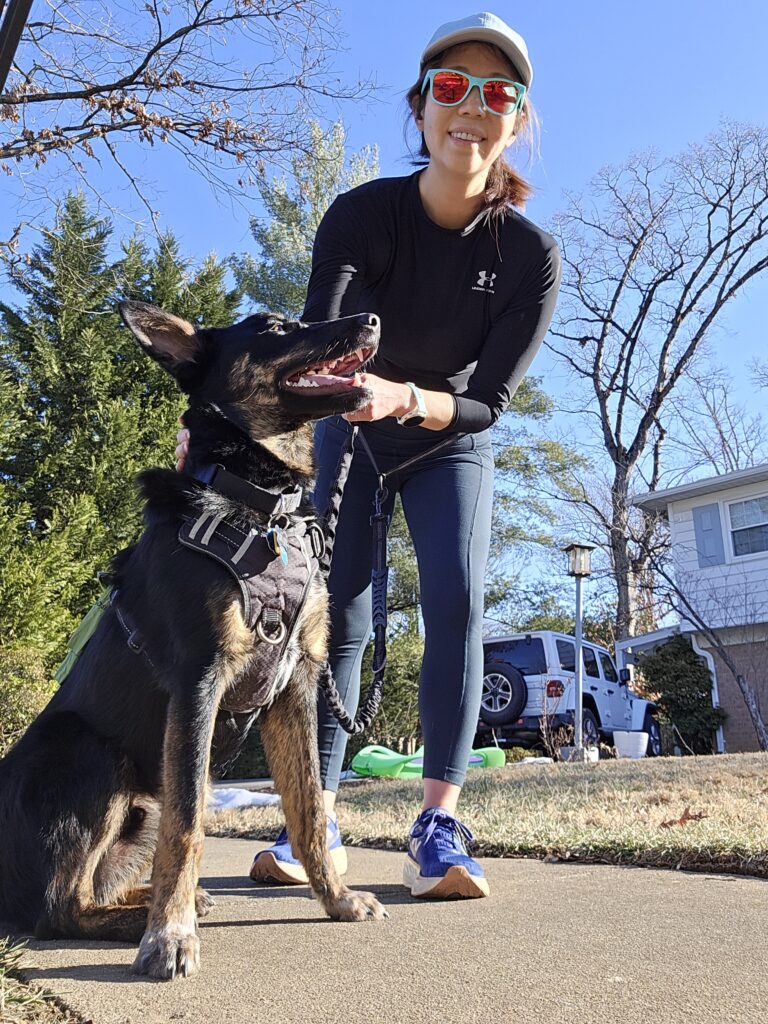 Ordun with the family dog. (Image courtesy of Ordun)
Ordun isn’t shy about admitting setbacks. She talks about her strings of rejected papers, the coffee-fueled problem solving sessions that turned into pure error finding missions, and the red ink-filled drafts that her book editors send her. Sometimes to release stress, she needed to lace up her shoes, grab the dog, and just go for a run.
Obstacles are a natural part of any pursuit where you push into the unknown. And so, when you do have success, it’s important to take a moment and take it in. “The moment I finished my book, I was out on my deck, it was 10 p.m. at night. I don’t want to sound melodramatic, but I almost cried,” Ordun says. “I felt I had created something totally new, a new universe. It was a similar feeling of pride to passing my Ph.D. dissertation defense.”
]]>
In her day job as a vice president at the advanced technology company Booz Allen Hamilton, Catherine Ordun, Ph.D. ’23, information systems, leads teams of engineers working on far-out AI tech. In...
https://umbc.edu/stories/how-to-create-a-new-world/
https://my3.my.umbc.edu/api/v0/pixel/news/150482/guest@my.umbc.edu/0734b91fdb7b16da5b6034ebf12926df/api/pixel
alumni
coeit
how-to
is
magazine
spring-2025
story
UMBC News & Magazine
https://my3.my.umbc.edu/groups/umbc-news-magazine
https://assets1-my.umbc.edu/system/shared/avatars/groups/000/001/943/24435aa6207c452e7bc15cc74b42c7bb/xsmall.png?1748556657
https://assets1-my.umbc.edu/system/shared/avatars/groups/000/001/943/24435aa6207c452e7bc15cc74b42c7bb/original.png?1748556657
https://assets2-my.umbc.edu/system/shared/avatars/groups/000/001/943/24435aa6207c452e7bc15cc74b42c7bb/xxlarge.png?1748556657
https://assets2-my.umbc.edu/system/shared/avatars/groups/000/001/943/24435aa6207c452e7bc15cc74b42c7bb/xlarge.png?1748556657
https://assets3-my.umbc.edu/system/shared/avatars/groups/000/001/943/24435aa6207c452e7bc15cc74b42c7bb/large.png?1748556657
https://assets1-my.umbc.edu/system/shared/avatars/groups/000/001/943/24435aa6207c452e7bc15cc74b42c7bb/medium.png?1748556657
https://assets2-my.umbc.edu/system/shared/avatars/groups/000/001/943/24435aa6207c452e7bc15cc74b42c7bb/small.png?1748556657
https://assets1-my.umbc.edu/system/shared/avatars/groups/000/001/943/24435aa6207c452e7bc15cc74b42c7bb/xsmall.png?1748556657
https://assets2-my.umbc.edu/system/shared/avatars/groups/000/001/943/24435aa6207c452e7bc15cc74b42c7bb/xxsmall.png?1748556657
UMBC News & Magazine
2
0
false
Fri, 30 May 2025 15:01:36 -0400
Fri, 30 May 2025 15:01:36 -0400
Then & Now—Home Sweet Home
 The Retriever Weekly announces the new dorms opening in 1970. (UMBC Special Collections)
“Hey UMBC, and welcome to my crib!” That’s probably not verbatim what students said when UMBC’s first dormitories opened for students to call home, but there’s always a possibility. Starting from humble beginnings, UMBC opened its residential doors to the first cohort of 118 on-campus Retrievers on March 15, 1970. More dorms would follow, and apartments, and living learning communities, and here we are in 2025 with an on-campus population of approximately 4,000 Retrievers.
While some may take today’s dorm amenities for granted, a November 1969 edition of The Retrieverreports about the forthcoming dorms promising, “The new dormitories boast of many features not currently found in other residence halls. On-campus residents will enjoy wall-to-wall carpeting, numerous lounges and study facilities, and kitchenette facilities for snacks. Each room will have a telephone and individual climate control (air conditioning included).”
The phone and air conditioning were probably great perks, but what really made a lasting impression on the first residents were the intangibles. Tom Stewart ’74, psychology, remembers how much it bonded him and his friends to the campus.
“It was a bit of a ‘suitcase school’ back then, so when the commuters went home on weekends, we had the whole place to ourselves,” he said. “I was living on the other side of Baltimore and I knew I wasn’t going to get any kind of college experience if I continued commuting.”
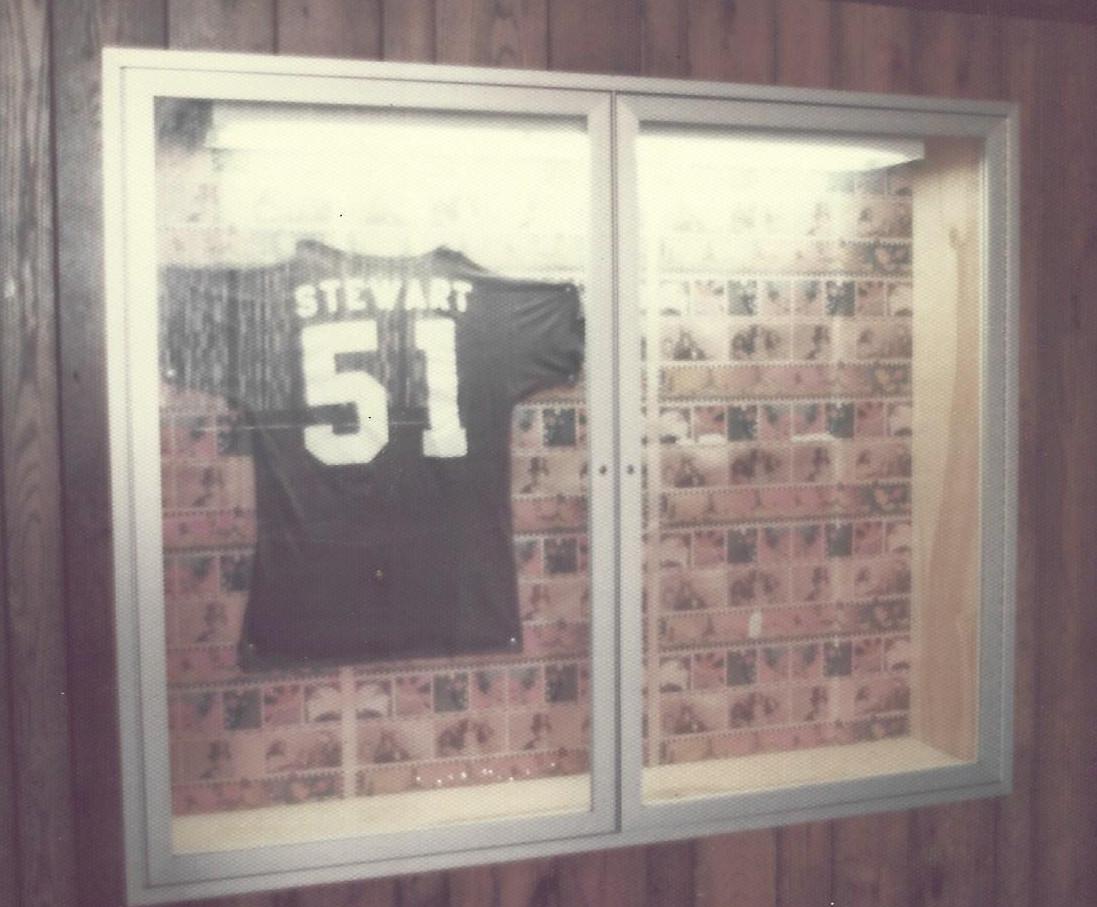 Residing in a place of distinction, Stewart’s intramural football jersey hung proudly in the Dorm One lobby. Stewart, a close friend of photographer Nicaise, was the founding member of the Dorm Chargers team.
Making a home of their own
Much like the UMBC we know today, there was always an emphasis on making sure that students who lived on campus and those who commuted still had plenty of opportunities to interact through mixers, concerts, and movie nights, many of these being entertainment options still offered through Campus Life in 2025.
In addition to improving his social life, having a dedicated spot on campus to buckle down and do his work inspired Stewart to grow academically.
“When I started, I was just a slightly above average student, but things really kicked in for me at UMBC,” he said. “For some reason, this really seemed like the environment to take this whole academic thing seriously.”
 Cathy Amaya ’26, business technology administration and media and communication studies, (seated on beanbag) loves living in the dorm with her built-in friends. “It always guarantees that you have someone to explore with and go on a few side quests.” (Marlayna Demond ’11/UMBC)
During Homecoming 2024, a group of alumni from the 1970s, including Stewart, got together for a reunion tour of campus and had the opportunity to revisit some of their old haunts, including the dorms and the memories all came flooding back. Stewart and his wife Wendy ’77, sociology, agree that the friends they made at UMBC “are our lifelong friends.” And that’s something we can all agree on, no matter your graduation year.
All photos courtesy of Leo J. “Nick” Nicaise ’75, INDS, unless otherwise noted.
]]>
The Retriever Weekly announces the new dorms opening in 1970. (UMBC Special Collections) “Hey UMBC, and welcome to my crib!” That’s probably not verbatim what students said when UMBC’s first...
https://umbc.edu/stories/then-now-home-sweet-home/
https://my3.my.umbc.edu/api/v0/pixel/news/150472/guest@my.umbc.edu/03620c8815097fb98aa37fdd397f9737/api/pixel
alumni
campus-history
campus-life
inds
magazine
spring-2025
story
then-and-now
UMBC News & Magazine
https://my3.my.umbc.edu/groups/umbc-news-magazine
https://assets1-my.umbc.edu/system/shared/avatars/groups/000/001/943/24435aa6207c452e7bc15cc74b42c7bb/xsmall.png?1748556657
https://assets1-my.umbc.edu/system/shared/avatars/groups/000/001/943/24435aa6207c452e7bc15cc74b42c7bb/original.png?1748556657
https://assets2-my.umbc.edu/system/shared/avatars/groups/000/001/943/24435aa6207c452e7bc15cc74b42c7bb/xxlarge.png?1748556657
https://assets2-my.umbc.edu/system/shared/avatars/groups/000/001/943/24435aa6207c452e7bc15cc74b42c7bb/xlarge.png?1748556657
https://assets3-my.umbc.edu/system/shared/avatars/groups/000/001/943/24435aa6207c452e7bc15cc74b42c7bb/large.png?1748556657
https://assets1-my.umbc.edu/system/shared/avatars/groups/000/001/943/24435aa6207c452e7bc15cc74b42c7bb/medium.png?1748556657
https://assets2-my.umbc.edu/system/shared/avatars/groups/000/001/943/24435aa6207c452e7bc15cc74b42c7bb/small.png?1748556657
https://assets1-my.umbc.edu/system/shared/avatars/groups/000/001/943/24435aa6207c452e7bc15cc74b42c7bb/xsmall.png?1748556657
https://assets2-my.umbc.edu/system/shared/avatars/groups/000/001/943/24435aa6207c452e7bc15cc74b42c7bb/xxsmall.png?1748556657
UMBC News & Magazine
2
0
false
Fri, 30 May 2025 09:57:52 -0400
Fri, 30 May 2025 09:57:52 -0400
A class reunion half a world away
With such a large population of Marylanders at UMBC, it’s not that unusual to run into someone you went to high school with. But when that someone is from your high school in Canberra, Australia, that’s a little more unexpected.
It was the love of the game that unexpectedly brought senior Annie Grove, biology,and junior Erin Behel, mechanical engineering,back together a few years after and a few thousand miles from where they first became friends. Behel is a softball player and daughter of a U.S. Marine, so moving was a regular family pastime. When she found herself in Australia (her mother’s home country) in grade seven, she met Grove, a soccer player, in high school. Once Behel’s father’s contract ended in 2018, she returned to Maryland. Unbeknownst to one another, they were both looking for athletic opportunities in the United States.
“I posted my announcement on social media saying I committed to UMBC, and I started getting all these messages from friends in Canberra saying ‘We’re pretty sure that’s where Grove is going!’” recalls Behel. “It was just insanity that out of all the colleges in the U.S., we’d both end up here.”
The friends can’t remember their first on-campus meeting (probably either the first student-athlete meeting or a visit to Behel’s dorm where Grove recalls “seeing all her pretty plants!”). But it’s certain they’ve enjoyed each other’s support since reconnecting and cheering from the stands at one another’s games.
There’s no “I” in team
Grove and Behel are just two of the many international student-athletes who have made UMBC their home away from home and support is at the forefront of those decisions.
Bruna De Padua, media and communications studies, originally traveled from Brazil to a small university in rural Missouri to pursue swimming. After a few months, she knew the fit wasn’t right and joined the NCAA transfer portal. Enter UMBC.
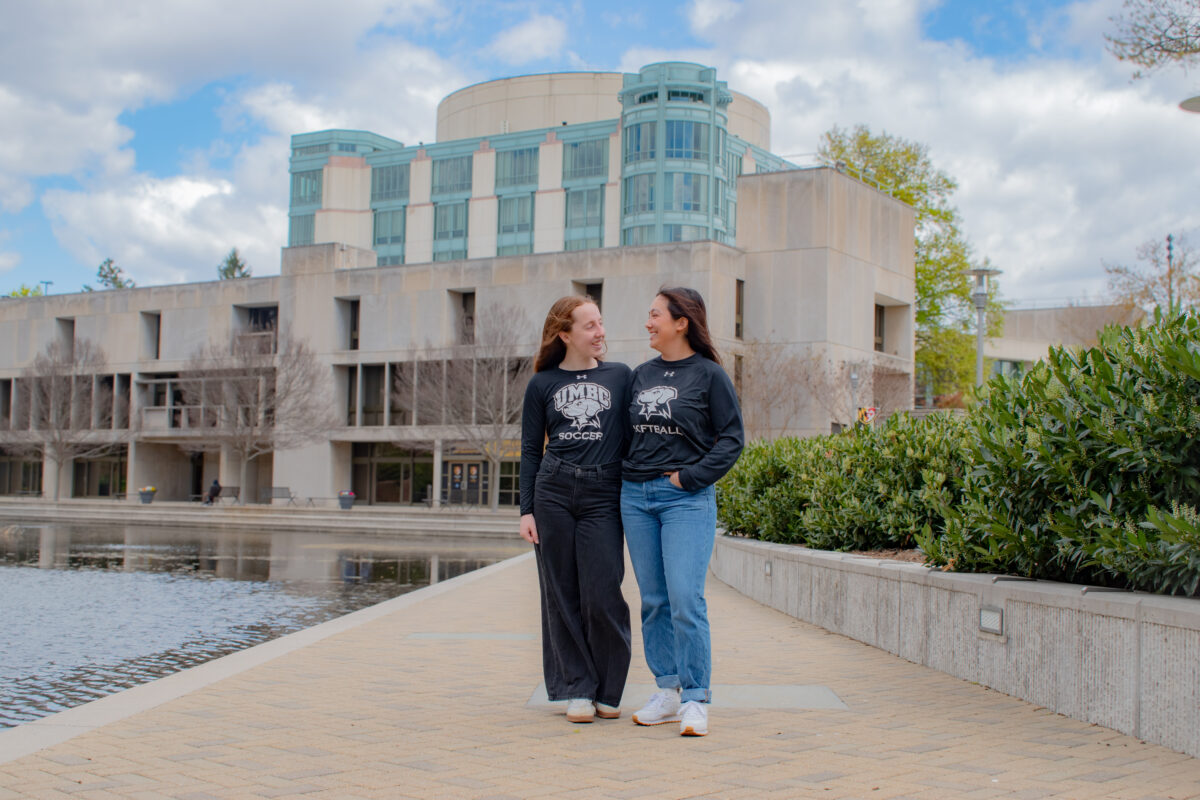 Grove, left, and Behel, right, are still on the same wavelength after all this time, unintentionally twinning in front of the library. (Mashaal Awan ’25/UMBC)
“As soon as I committed to UMBC, the process was so different from my other university,” De Padua says. For example, she appreciated how head swim coach Matt Donovan made sure she knew who to contact around campus for questions and help. Behel and Grove echo these sentiments, especially as it pertains to being able to focus on academics.
“I’ve heard from former teammates at other schools that they feel like they’re being punished if they choose to go to class and I’ve never, ever felt that,” says Behel.
Grove agreed, sharing, “Our coaches have always said that we need to go to class. And there’s so much emphasis on communication.”
Follow the leader
While they all agree the coaching staff has been invaluable in making their time at UMBC successful, they’re also grateful for fellow Retrievers who have helped throughout their journey.
De Padua is navigating her junior year now and knew she needed an internship to fulfill her academic requirements. After doing commercial modeling at an agency a fellow swim team alum Rola Hussein ’24 from Egypt worked for, De Padua was able to parlay that into her own spring/summer internship opportunity for the agency, doing social media and marketing.
 De Padua, right, congratulates teammate Makaela Hill. (Ian Feldmann ’21/UMBC Athletics)
She’s not the only one who was helped academically by her peers. Behel recalls a mechanical engineering softball player several years ahead of her who “paved the way for us to be able to show our coach and ourselves it’s possible to do both.”
In turn, Behel, De Padua, and Grove all seek to offer others support. “I’ve had so many conversations with people about how to get a bank account, how to get a phone number…really adult tasks that I had to figure out early on and now I’m passing it along,” says Grove.
They see UMBC as their home away from home and would encourage any international student-athlete to consider joining them. When asked what advice she would give to any new Retrievers from across the world, Grove simply summed up her experience by suggesting, “Just say yes to things and see what happens.”
]]>
With such a large population of Marylanders at UMBC, it’s not that unusual to run into someone you went to high school with. But when that someone is from your high school in Canberra, Australia,...
https://umbc.edu/stories/a-class-reunion-half-a-world-away/
https://my3.my.umbc.edu/api/v0/pixel/news/150330/guest@my.umbc.edu/10dcc2960210a68b1ecb561c2c57c95d/api/pixel
at-play
athletics
biology
campus-life
cnms
coeit
international
magazine
meche
spring-2025
story
UMBC News & Magazine
https://my3.my.umbc.edu/groups/umbc-news-magazine
https://assets1-my.umbc.edu/system/shared/avatars/groups/000/001/943/24435aa6207c452e7bc15cc74b42c7bb/xsmall.png?1748556657
https://assets1-my.umbc.edu/system/shared/avatars/groups/000/001/943/24435aa6207c452e7bc15cc74b42c7bb/original.png?1748556657
https://assets2-my.umbc.edu/system/shared/avatars/groups/000/001/943/24435aa6207c452e7bc15cc74b42c7bb/xxlarge.png?1748556657
https://assets2-my.umbc.edu/system/shared/avatars/groups/000/001/943/24435aa6207c452e7bc15cc74b42c7bb/xlarge.png?1748556657
https://assets3-my.umbc.edu/system/shared/avatars/groups/000/001/943/24435aa6207c452e7bc15cc74b42c7bb/large.png?1748556657
https://assets1-my.umbc.edu/system/shared/avatars/groups/000/001/943/24435aa6207c452e7bc15cc74b42c7bb/medium.png?1748556657
https://assets2-my.umbc.edu/system/shared/avatars/groups/000/001/943/24435aa6207c452e7bc15cc74b42c7bb/small.png?1748556657
https://assets1-my.umbc.edu/system/shared/avatars/groups/000/001/943/24435aa6207c452e7bc15cc74b42c7bb/xsmall.png?1748556657
https://assets2-my.umbc.edu/system/shared/avatars/groups/000/001/943/24435aa6207c452e7bc15cc74b42c7bb/xxsmall.png?1748556657
UMBC News & Magazine
2
0
false
Wed, 21 May 2025 11:34:52 -0400
Wed, 21 May 2025 11:34:52 -0400
The fellowship of the ring
Like most dads, Chris Burk immediately told his 10-year-old daughter that the object she was trying to fish out of Pig Pen Pond was probably trash. Emily was not to be deterred, and Burk said he “had egg on his face” when lo and behold, the piece of trash was actually a ring. A West Point class ring from 101 years ago. And wait, was that a name inscribed?
 Santiago G. Guevara’s 1923 West Point class ring. (Photo courtesy of Nick Guevara)
The Burks live a few miles from UMBC and occasionally use it as a place to take a family stroll. When they visited last summer, Burk noticed the water level was a little lower than usual in the body of water formally known as CERA Pond, which sits between the bwtech@UMBC Research and Technology Park and the loop across from Admin Garage. That’s when Emily got a stick to try to snag a shiny tab settled at the bottom of the shallow embankment.
The name on the ring—Santiago G. Guevara—led Burk, who is a land surveyor and well acquainted with historical research, on an internet crusade to 1) reunite the ring with the owner’s descendants and 2) figure out how in tarnation the ring got there in the first place. So far he’s only been able to check off the first item.
Enter Nick Guevara, a U.S. Navy veteran, dedicated family historian, avid blogger, and most importantly, Santiago Guevara’s grandson. Nick also has no clue how the family heirloom ended up in UMBC’s pond. (Although he does have a nephew, Quintin Simmons, who graduated in 2020 with a degree in geography and environmental systems. Simmons, who coincidentally has swum in Pig Pen Pond, didn’t know his great granddad went to West Point, much less had a class ring from 1923. In another twist of coincidence, Simmons works at a company housed in bwtech and can see the pond from his office.)
“I’m so flabbergasted that these things can still happen,” says Nick. “It makes the world feel small in a good way. We need more stories to bring people together.”
Do you have any clues about how Santiago Guevara’s West Point ring ended up in CERA Pond? What’s the best thing you’ve found on campus? Email us at magazine@umbc.edu.
]]>
Like most dads, Chris Burk immediately told his 10-year-old daughter that the object she was trying to fish out of Pig Pen Pond was probably trash. Emily was not to be deterred, and Burk said he...
https://umbc.edu/stories/the-fellowship-of-the-ring/
https://my3.my.umbc.edu/api/v0/pixel/news/150291/guest@my.umbc.edu/07de76cba3732198d0b7478ff2723fd4/api/pixel
campus-life
cera
ges
magazine
spring-2025
story
wild-card
UMBC News & Magazine
https://my3.my.umbc.edu/groups/umbc-news-magazine
https://assets1-my.umbc.edu/system/shared/avatars/groups/000/001/943/24435aa6207c452e7bc15cc74b42c7bb/xsmall.png?1748556657
https://assets1-my.umbc.edu/system/shared/avatars/groups/000/001/943/24435aa6207c452e7bc15cc74b42c7bb/original.png?1748556657
https://assets2-my.umbc.edu/system/shared/avatars/groups/000/001/943/24435aa6207c452e7bc15cc74b42c7bb/xxlarge.png?1748556657
https://assets2-my.umbc.edu/system/shared/avatars/groups/000/001/943/24435aa6207c452e7bc15cc74b42c7bb/xlarge.png?1748556657
https://assets3-my.umbc.edu/system/shared/avatars/groups/000/001/943/24435aa6207c452e7bc15cc74b42c7bb/large.png?1748556657
https://assets1-my.umbc.edu/system/shared/avatars/groups/000/001/943/24435aa6207c452e7bc15cc74b42c7bb/medium.png?1748556657
https://assets2-my.umbc.edu/system/shared/avatars/groups/000/001/943/24435aa6207c452e7bc15cc74b42c7bb/small.png?1748556657
https://assets1-my.umbc.edu/system/shared/avatars/groups/000/001/943/24435aa6207c452e7bc15cc74b42c7bb/xsmall.png?1748556657
https://assets2-my.umbc.edu/system/shared/avatars/groups/000/001/943/24435aa6207c452e7bc15cc74b42c7bb/xxsmall.png?1748556657
UMBC News & Magazine
7
0
false
Mon, 19 May 2025 15:21:54 -0400
Mon, 19 May 2025 15:21:54 -0400