Studying abroad is poised to make a post-pandemic comeback – here are 5 questions students who plan to study overseas should ask

Written by David L. Di Maria, associate vice provost for international education, UMBC
Before the pandemic struck in 2020, the number of U.S. students studying abroad had been pretty much rising steadily each year.
Whereas more than 154,000 students from the U.S. participated in study abroad programs during the 2000-2001 academic year, that number more than doubled – to over 347,000 – during the 2018-2019 academic year. That’s according to the Institute of International Education.
The global spread of COVID-19, however, brought the steady growth in study abroad to a screeching halt in early 2020. Students were evacuated from host countries and study abroad programs got canceled. Lockdowns and travel restrictions led the number of U.S. students studying abroad during the 2020-2021 academic year to plummet by 91% to just 14,549.
While official study abroad numbers for 2021-2022 are not yet published, there is reason to expect a rebound. A national survey conducted in April 2022 revealed that roughly 90% of colleges and universities were planning to offer some form of study abroad by the summer of that year.
As a university administrator who specializes in international education, I believe the number of students studying abroad will continue to rise. I see that as a positive development given the research that shows studying abroad supports academic success, promotes career readiness and prepares students to interact with people from other cultures. Moreover, increasing the number of U.S. students studying abroad supports U.S. foreign policy goals that rely on people-to-people exchanges and public diplomacy.
However, as studying abroad makes its comeback, much has changed with how study abroad programs operate. Below are five questions to ask when planning to study abroad in a post-pandemic world.
1. What is the Plan B in case my program gets disrupted?
In 2020, as students were recalled to the U.S. by their home institutions, a key concern was how students could remain on track for their degrees without losing both time and money due to the cancellations – which stemmed from reasons beyond their own control.
An important question for students to ask is how study abroad programs would ensure that they can continue their studies in case of a disruption, whether it’s caused by rare events, such as a pandemic or international conflict, but also more routine matters, such as a national strike.
2. Do I need extra insurance?
Students should not assume that their regular U.S. health insurance will provide the level of coverage needed while abroad. In fact, the cost of a medical evacuation can run as high as US$250,000.
Most study abroad programs offer, and many require, participants to enroll in an affordable international travel insurance policy. In addition to paying for medical expenses, benefits may include coverage for costs associated with trip cancellation, required periods of quarantine, and emergency evacuations. Additionally, the policy may provide non-insurance travel assistance services, such as helping to replace lost or stolen documents. Students should ask about the availability of these policies and know what is covered.
3. What are the host country restrictions?
At the height of the pandemic, countries’ COVID-19 policies ranged from status quo to complete lockdown. In some instances, travelers could be fined or jailed for failing to follow local restrictions. The U.S. Department of State created a web page with information on the COVID-19 restrictions of each country. While most countries have dialed back restrictions, it is still very important to review this information because these policies can affect a student’s ability to travel and participate in certain activities once they are abroad.
4. What are the latest travel risks?
While the Centers for Disease Control and Prevention provides data on traveling in the era of COVID-19, including risk ratings and vaccination recommendations by country, it is also important to understand how the pandemic may have influenced other risks, such as by contributing to political tensions and applying pressure to already fragile health care systems.
Students should review the country-specific information published by the State Department, as well as register for real-time updates from the local U.S. embassy. Additionally, students should inquire about other resources, such as in-country staff available to assist with emergencies, who may be available to support program participants once they are abroad.
5. What scholarships can help cover the cost?
Because study abroad programs were mostly paused for the past few years, the scholarship funds that colleges have dedicated to these programs may have been left largely untouched. Fund balances could be higher now and there may be a possibility to obtain a larger award than in years past. Students should inquire with their college’s study abroad and financial aid offices about scholarship opportunities. Such funding can vary greatly by program duration, location and other factors, so students should be flexible with their plans to receive the maximum award.
Whether or not their college offers generous scholarships for study abroad, students should also consider applying for external funding. The Fund for Education Abroad, an organization committed to increasing the number of underrepresented students studying abroad, maintains a listing of more than 20 dedicated scholarships. Additionally, the State Department compiles information on applying for study abroad programs and scholarships supported by the U.S. government. Some of these programs and scholarships are designed to lead to a federal job. The department also keeps a list of various scholarships from foreign governments.
This article is republished from The Conversation under a Creative Commons license. Read the original article and see more than 250 UMBC articles available in The Conversation.
]]>
Written by David L. Di Maria, associate vice provost for international education, UMBC Before the pandemic struck in 2020, the number of U.S. students studying abroad had been pretty much...
https://umbc.edu/stories/studying-abroad-to-make-a-post-pandemic-comeback/
https://my3.my.umbc.edu/api/v0/pixel/news/130868/guest@my.umbc.edu/66dfd23c678b261973b7ef413b2efb8c/api/pixel
cge
discovery
international-education-services
magazine
the-conversation
theconversation
UMBC News & Magazine
https://my3.my.umbc.edu/groups/umbc-news-magazine
https://assets1-my.umbc.edu/system/shared/avatars/groups/000/001/943/24435aa6207c452e7bc15cc74b42c7bb/xsmall.png?1748556657
https://assets1-my.umbc.edu/system/shared/avatars/groups/000/001/943/24435aa6207c452e7bc15cc74b42c7bb/original.png?1748556657
https://assets2-my.umbc.edu/system/shared/avatars/groups/000/001/943/24435aa6207c452e7bc15cc74b42c7bb/xxlarge.png?1748556657
https://assets2-my.umbc.edu/system/shared/avatars/groups/000/001/943/24435aa6207c452e7bc15cc74b42c7bb/xlarge.png?1748556657
https://assets3-my.umbc.edu/system/shared/avatars/groups/000/001/943/24435aa6207c452e7bc15cc74b42c7bb/large.png?1748556657
https://assets1-my.umbc.edu/system/shared/avatars/groups/000/001/943/24435aa6207c452e7bc15cc74b42c7bb/medium.png?1748556657
https://assets2-my.umbc.edu/system/shared/avatars/groups/000/001/943/24435aa6207c452e7bc15cc74b42c7bb/small.png?1748556657
https://assets1-my.umbc.edu/system/shared/avatars/groups/000/001/943/24435aa6207c452e7bc15cc74b42c7bb/xsmall.png?1748556657
https://assets2-my.umbc.edu/system/shared/avatars/groups/000/001/943/24435aa6207c452e7bc15cc74b42c7bb/xxsmall.png?1748556657
UMBC News & Magazine
0
0
false
Mon, 13 Feb 2023 09:49:32 -0500
Mon, 13 Feb 2023 09:49:32 -0500
Mini creatures with mighty voices know their audience and focus on a single frequency
Written by Bernard Lohr, associate professor of biological sciences, UMBC
In the cloud forests of South America, amid the constant cacophony of bird and insect noise, a deafening blare pierces through the background from time to time. Belonging to the loudest known bird, the white bellbird, Procnias albus, this sound would be painful to humans listening nearby and capable of causing immediate hearing damage from about a yard away.
Listen to the world’s loudest bird call.
Made exclusively by males serenading females, these vocalizations can reach peak levels of more than 120 decibels on the sound pressure level scale (dB SPL), which is equivalent to a jet aircraft taking off from 100 yards away. The female bellbird listens some distance from the male, presumably trading off being close enough to assess his quality as a mate without damaging her ears.
I study the hearing ability of animals and the sounds they make to communicate. A great number of calls exist throughout the animal kingdom – and many are used to attract mates or defend territories. Evolution has favored those able to make sounds efficiently. The louder and more focused the energy in the call and the closer in pitch it is to the intended listener’s optimal hearing range, the farther away a potential mate or rival will hear it.
Many large mammals, such as singing whales, roaring lions and rumbling elephants, produce loud low-pitched sounds that travel especially well through most habitats. Because of their petite physical size, small animals are not capable of making these far-reaching low-frequency sounds.
Ultrasonic calls
Human ears are most sensitive to the highest notes on a piano – about 4 kHz – a unit of measurement that is the physical metric for pitch. Anything above 20 kHz is considered ultrasonic – undetectable to human ears. But such sounds are not undetectable to all ears.
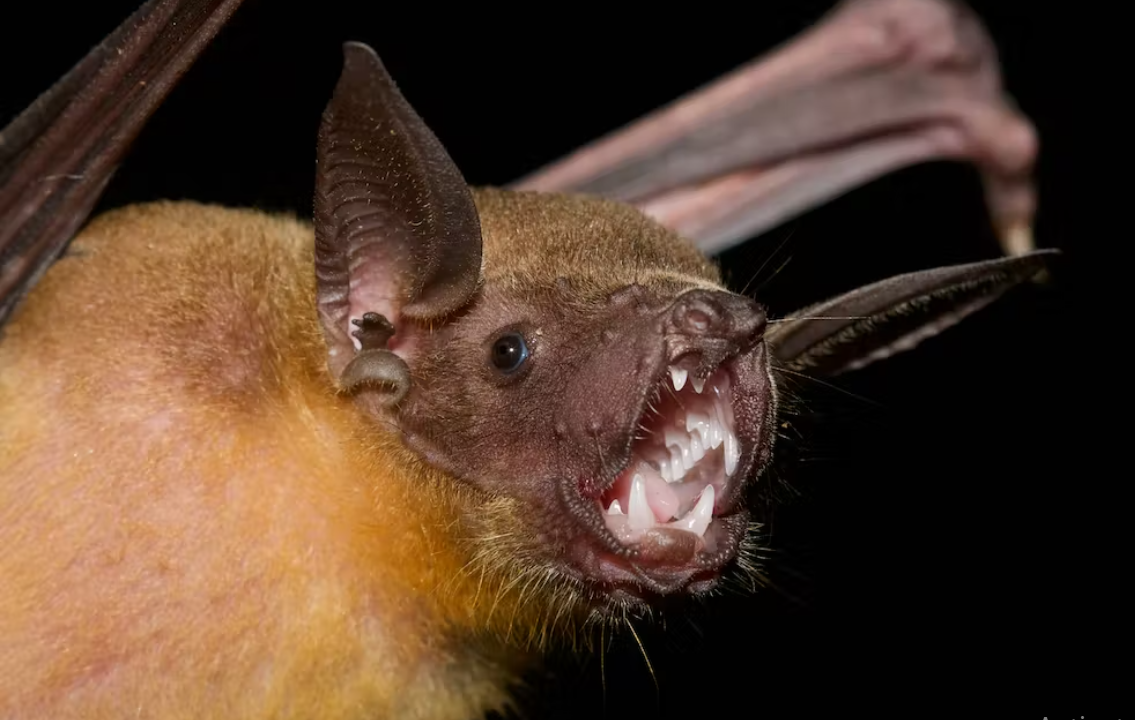 The greater bulldog bat’s ear is engineered for ultrasonic hearing. (Thomas Cuypers/flickr, CC BY-NC-ND)
For example, the greater bulldog bat, Noctilio leporinus, can produce ultrasonic echolocation calls between 30 and 60 kHz when hunting prey and maneuvering during flight. These calls can also get incredibly loud – above 140 dB SPL.
Many other small mammals, including other bats, and even some primates such as tiny tarsiers, produce loud ultrasonic sounds humans can’t perceive. In part, these sounds can reach such volumes because their acoustic power is concentrated in a pure tone or single frequency.
Creating speakers
Insects are some of the smallest animals to produce loud sounds, chief among them the cicadas and the orthopterans, which include katydids, grasshoppers and crickets.
In North America, the robust conehead, Neoconocephalus robustus, a type of katydid, regularly surpasses 105 dB SPL. These calls are produced to attract mates and, like many such calls, are competing against a clamor of comparable sounds from similar species.
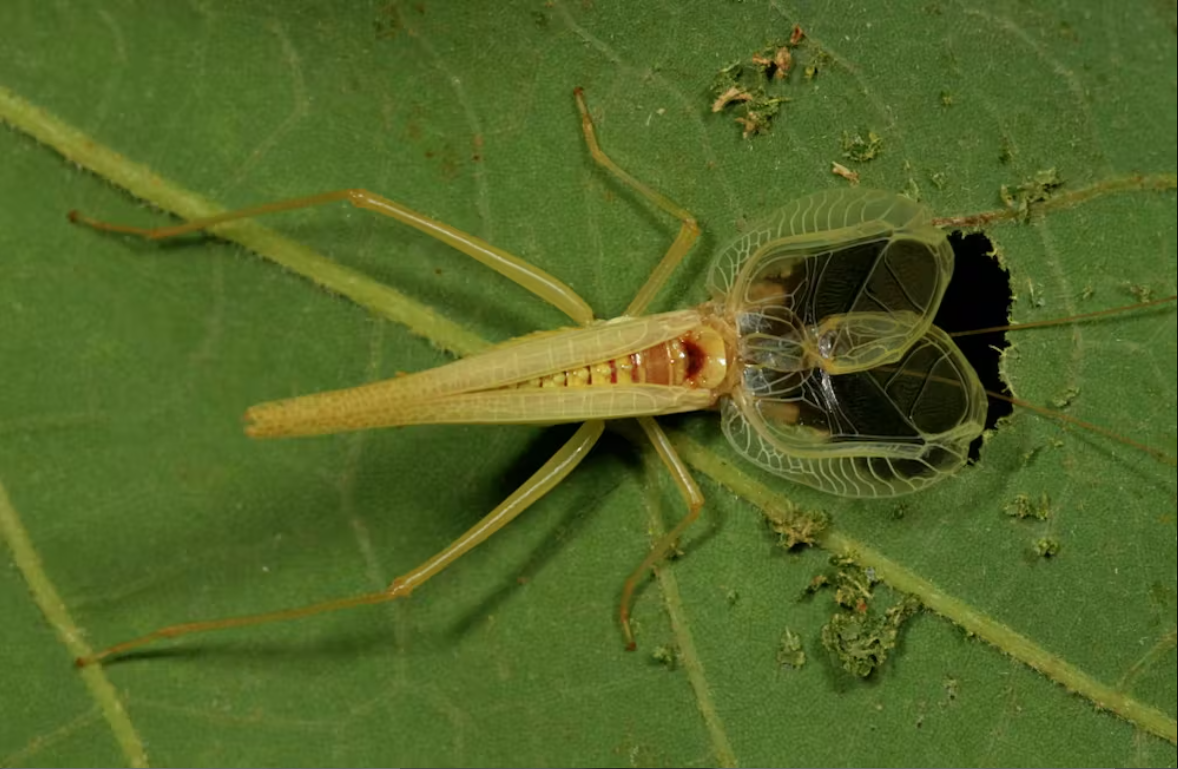 A two-spotted tree cricket, Neoxabea bipunctata, chews a hole just the right size for its fore wings. It then ‘sings’ by poking the wings through the hole and rubbing them together. (Patrick Coin/flickr, CC BY-NC-SA)
Some insects go one step further, amplifying their sounds by building the functional equivalent of audio speakers. Some tree crickets chew holes in leaves, place their vibrating wings in the opening and use the surrounding leaf as a baffle to prevent the loss of sound energy around the edges of their wings.
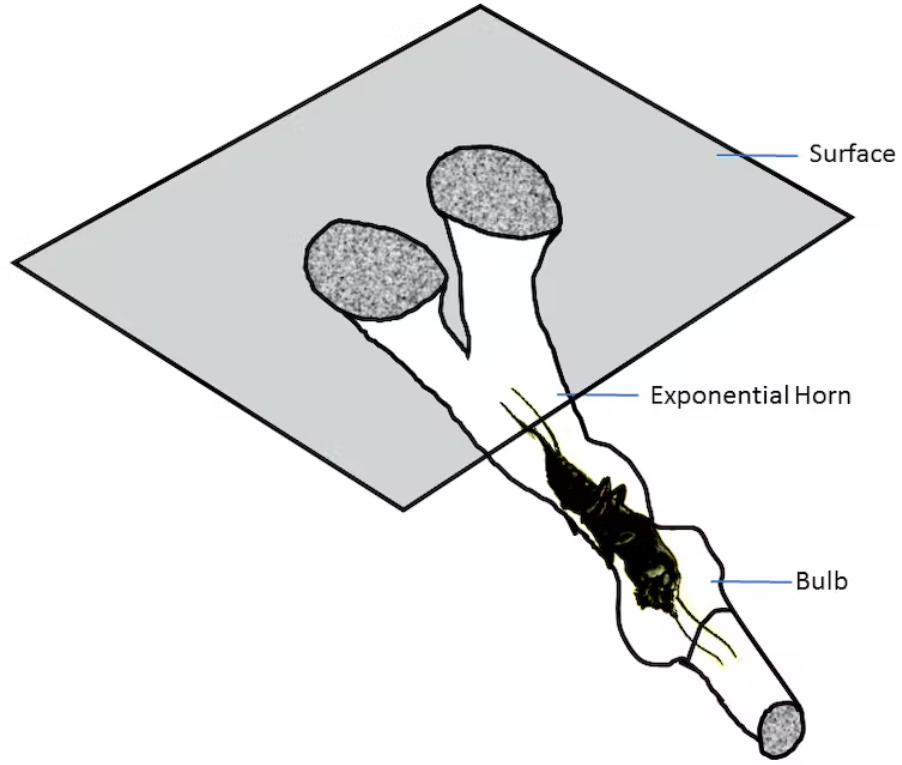 The male mole cricket sings from his specially designed burrow, which amplifies sound like a horn. (Ian Alexander, new drawing based on Bennet-Clark, 1970 with public domain insect from Lydekker 1879, CC BY-SA)
Mole crickets, Gryllotalpa vineae, go even further by constructing a burrow that acts like a wind instrument, creating a cavity of vibrating air that amplifies the sound energy they produce. These crickets’ songs can travel almost half a mile (0.8 kilometer).
Irksome invaders
The official mascot of Puerto Rico is a 1-to-2-inch (2-5-centimeter) frog called the coquí, Eleutherodactylus coqui, whose call is a combination of two pure tones – “ko” and “kee,” from which it gets its name. At 114-120 dB SPL, the frog’s calls are so loud they actually must protect their own hearing when vocalizing, by increasing the air pressure inside their middle ear.
Unfortunately, in the past few decades humans have accidentally introduced the coquí to a number of areas outside their native range, in particular the Hawaiian islands, where they have no natural predators and have become invasive pests. Since coquí calls are within an octave of humans’ best hearing – and they’re nocturnal – many Hawaiians suffer sleep disruptions because of the tiny frogs.
So even if you’re small, it’s not impossible to make yourself heard. You just have to blast all your acoustic energy in a single frequency, and hit the sweet spot of your audience’s hearing.
This article is republished from The Conversation under a Creative Commons license. Read the original article and see more than 250 UMBC articles available in The Conversation.
]]>
Written by Bernard Lohr, associate professor of biological sciences, UMBC In the cloud forests of South America, amid the constant cacophony of bird and insect noise, a deafening blare...
https://umbc.edu/stories/mini-creatures-with-mighty-voices/
https://my3.my.umbc.edu/api/v0/pixel/news/130522/guest@my.umbc.edu/0f7dca78ddc416a99930d7a81b7788b5/api/pixel
biological-sciences
cnms
discovery
magazine
the-conversation
theconversation
UMBC News & Magazine
https://my3.my.umbc.edu/groups/umbc-news-magazine
https://assets1-my.umbc.edu/system/shared/avatars/groups/000/001/943/24435aa6207c452e7bc15cc74b42c7bb/xsmall.png?1748556657
https://assets1-my.umbc.edu/system/shared/avatars/groups/000/001/943/24435aa6207c452e7bc15cc74b42c7bb/original.png?1748556657
https://assets2-my.umbc.edu/system/shared/avatars/groups/000/001/943/24435aa6207c452e7bc15cc74b42c7bb/xxlarge.png?1748556657
https://assets2-my.umbc.edu/system/shared/avatars/groups/000/001/943/24435aa6207c452e7bc15cc74b42c7bb/xlarge.png?1748556657
https://assets3-my.umbc.edu/system/shared/avatars/groups/000/001/943/24435aa6207c452e7bc15cc74b42c7bb/large.png?1748556657
https://assets1-my.umbc.edu/system/shared/avatars/groups/000/001/943/24435aa6207c452e7bc15cc74b42c7bb/medium.png?1748556657
https://assets2-my.umbc.edu/system/shared/avatars/groups/000/001/943/24435aa6207c452e7bc15cc74b42c7bb/small.png?1748556657
https://assets1-my.umbc.edu/system/shared/avatars/groups/000/001/943/24435aa6207c452e7bc15cc74b42c7bb/xsmall.png?1748556657
https://assets2-my.umbc.edu/system/shared/avatars/groups/000/001/943/24435aa6207c452e7bc15cc74b42c7bb/xxsmall.png?1748556657
UMBC News & Magazine
0
0
false
Tue, 31 Jan 2023 17:29:46 -0500
Tue, 31 Jan 2023 17:29:46 -0500
Organ-on-a-chip models allow researchers to conduct studies closer to real-life conditions – and possibly grease the drug development pipeline

Chengpeng Chen, Assistant Professor of Chemistry and Biochemistry, UMBC
Bringing a new drug to market costs billions of dollars and can take over a decade. These high monetary and time investments are both strong contributors to today’s skyrocketing health care costs and significant obstacles to delivering new therapies to patients. One big reason behind these barriers is the lab models researchers use to develop drugs in the first place.
Preclinical trials, or studies that test a drug’s efficacy and toxicity before it enters clinical trials in people, are mainly conducted on cell cultures and animals. Both are limited by their poor ability to mimic the conditions of the human body. Cell cultures in a petri dish are unable to replicate every aspect of tissue function, such as how cells interact in the body or the dynamics of living organs. And animals are not humans – even small genetic differences between species can be amplified to major physiological differences.
Fewer than 8% of successful animal studies for cancer therapies make it to human clinical trials. Because animal models often fail to predict drug effects in human clinical trials, these late-stage failures can significantly drive up both costs and patient health risks.
To address this translation problem, researchers have been developing a promising model that can more closely mimic the human body – organ-on-a-chip.
As an analytical chemist, I have been working to develop organ and tissue models that avoid the simplicity of common cell cultures and the discrepancies of animal models. I believe that, with further development, organs-on-chips can help researchers study diseases and test drugs in conditions that are closer to real life.
Organs-on-chips offer an alternative model for early-phase biomedical research.
What are organs-on-chips?
In the late 1990s, researchers figured out a way to layer elastic polymers to control and examine fluids at a microscopic level. This launched the field of microfluidics, which for the biomedical sciences involves the use of devices that can mimic the dynamic flow of fluids in the body, such as blood.
Advances in microfluidics have provided researchers a platform to culture cells that function more closely to how they would in the human body, specifically with organs-on-chips. The “chip” refers to the microfluidic device that encases the cells. They’re commonly made using the same technology as computer chips.
Not only do organs-on-chips mimic blood flow in the body, these platforms have microchambers that allow researchers to integrate multiple types of cells to mimic the diverse range of cell types normally present in an organ. The fluid flow connects these multiple cell types, allowing researchers to study how they interact with each other.
Microfluidics can be used for many applications in biological research.
This technology can overcome the limitations of both static cell cultures and animal studies in several ways. First, the presence of fluid flowing in the model allows it to mimic both what a cell experiences in the body, such as how it receives nutrients and removes wastes, and how a drug will move in the blood and interact with multiple types of cells. The ability to control fluid flow also enables researchers to fine-tune the optimal dosing for a particular drug.
The lung-on-a-chip model, for instance, is able to integrate both the mechanical and physical qualities of a living human lung. It’s able to mimic the dilation and contraction, or inhalation and exhalation, of the lung and simulate the interface between the lung and air. The ability to replicate these qualities allows researchers to better study lung impairment across different factors.
Bringing organs-on-chips to scale
While organ-on-a-chip pushes the boundaries of early-stage pharmaceutical research, the technology has not been widely integrated into drug development pipelines. I believe that a core obstacle for wide adoption of such chips is its high complexity and low practicality.
Current organ-on-a-chip models are difficult for the average scientist to use. Also, because most models are single-use and allow only one input, which limits what researchers can study at a given time, they are both expensive and time- and labor-intensive to implement. The high investments required to use these models might dampen enthusiasm to adopt them. After all, researchers often use the least complex models available for preclinical studies to reduce time and cost.
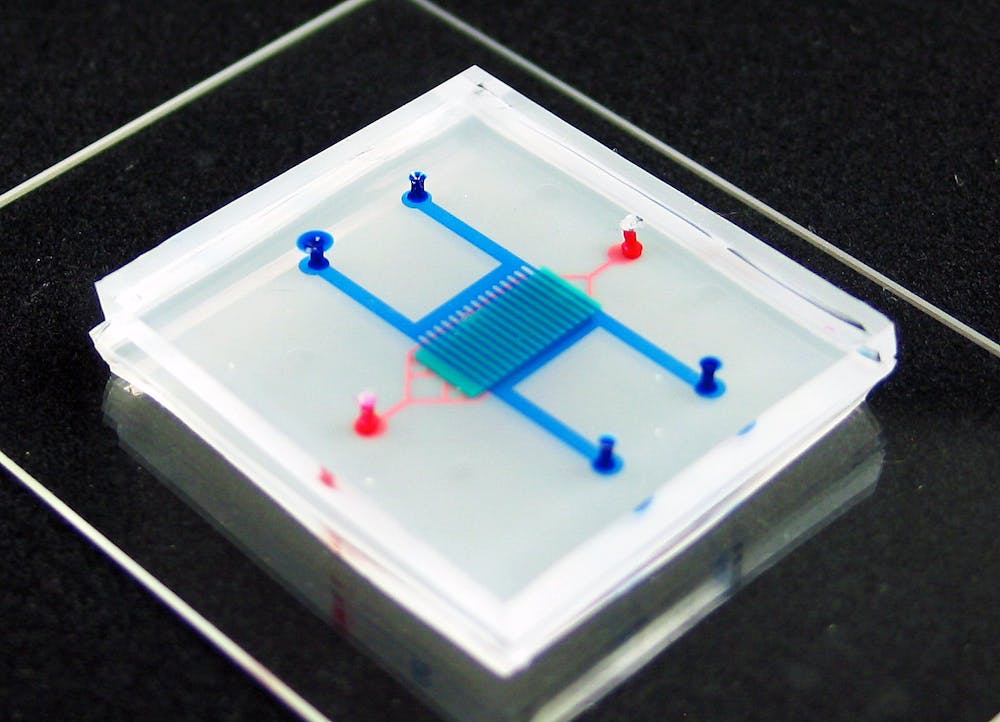
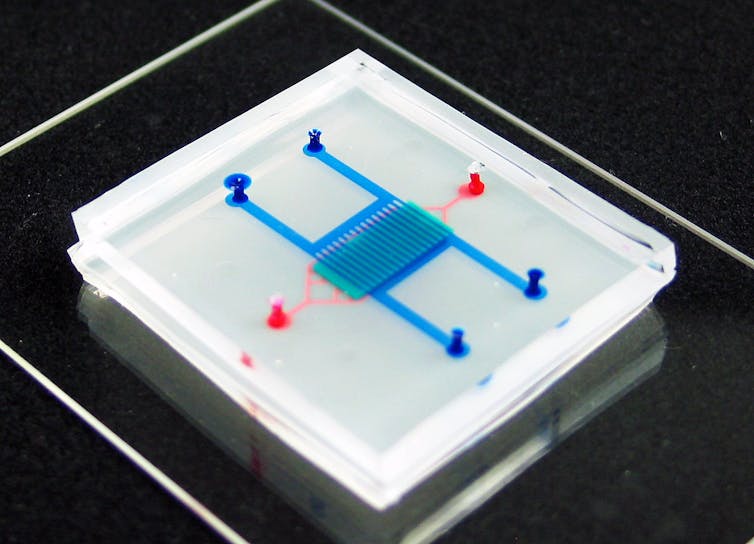 This chip mimics the blood-brain barrier. The blue dye marks where brain cells would go, and the red dye marks the route of blood flow. (Vanderbilt University/Flickr)
Lowering the technical bar to make and use organs-on-chips is critical to allowing the entire research community to take full advantage of their benefits. But this does not necessarily require simplifying the models. My lab, for example, has designed various “plug-and-play” tissue chips that are standardized and modular, allowing researchers to readily assemble premade parts to run their experiments.
The advent of 3D printing has also significantly facilitated the development of organ-on-a-chip, allowing researchers to directly manufacture entire tissue and organ models on chips. 3D printing is ideal for fast prototyping and design-sharing between users and also makes it easy for mass production of standardized materials.
I believe that organs-on-chips hold the potential to enable breakthroughs in drug discovery and allow researchers to better understand how organs function in health and disease. Increasing this technology’s accessibility could help take the model out of development in the lab and let it make its mark on the biomedical industry.
Chengpeng Chen, Assistant Professor of Chemistry and Biochemistry, University of Maryland, Baltimore County
This article is republished from The Conversation under a Creative Commons license. Read the original article.
]]>
Chengpeng Chen, Assistant Professor of Chemistry and Biochemistry, UMBC Bringing a new drug to market costs billions of dollars and can take over a decade. These high monetary and time...
https://umbc.edu/stories/organ-on-a-chip-speeds-drug-development/
https://my3.my.umbc.edu/api/v0/pixel/news/130133/guest@my.umbc.edu/18eb1b7f6349ba863ffc966b1063f288/api/pixel
chembiochem
cnms
discovery
magazine
the-conversation
theconversation
UMBC News & Magazine
https://my3.my.umbc.edu/groups/umbc-news-magazine
https://assets1-my.umbc.edu/system/shared/avatars/groups/000/001/943/24435aa6207c452e7bc15cc74b42c7bb/xsmall.png?1748556657
https://assets1-my.umbc.edu/system/shared/avatars/groups/000/001/943/24435aa6207c452e7bc15cc74b42c7bb/original.png?1748556657
https://assets2-my.umbc.edu/system/shared/avatars/groups/000/001/943/24435aa6207c452e7bc15cc74b42c7bb/xxlarge.png?1748556657
https://assets2-my.umbc.edu/system/shared/avatars/groups/000/001/943/24435aa6207c452e7bc15cc74b42c7bb/xlarge.png?1748556657
https://assets3-my.umbc.edu/system/shared/avatars/groups/000/001/943/24435aa6207c452e7bc15cc74b42c7bb/large.png?1748556657
https://assets1-my.umbc.edu/system/shared/avatars/groups/000/001/943/24435aa6207c452e7bc15cc74b42c7bb/medium.png?1748556657
https://assets2-my.umbc.edu/system/shared/avatars/groups/000/001/943/24435aa6207c452e7bc15cc74b42c7bb/small.png?1748556657
https://assets1-my.umbc.edu/system/shared/avatars/groups/000/001/943/24435aa6207c452e7bc15cc74b42c7bb/xsmall.png?1748556657
https://assets2-my.umbc.edu/system/shared/avatars/groups/000/001/943/24435aa6207c452e7bc15cc74b42c7bb/xxsmall.png?1748556657
UMBC News & Magazine
0
0
false
Tue, 10 Jan 2023 11:35:26 -0500
Tue, 10 Jan 2023 11:35:26 -0500
Viruses may be ‘watching’ you – some microbes lie in wait until their hosts unknowingly give them the signal to start multiplying and kill them

Ivan Erill, Professor of Biological Sciences, UMBC
After more than two years of the COVID-19 pandemic, you might picture a virus as a nasty spiked ball – a mindless killer that gets into a cell and hijacks its machinery to create a gazillion copies of itself before bursting out. For many viruses, including the coronavirus that causes COVID-19, the “mindless killer” epithet is essentially true.
But there’s more to virus biology than meets the eye.
Take HIV, the virus that causes AIDS. HIV is a retrovirus that does not go directly on a killing spree when it enters a cell. Instead, it integrates itself into your chromosomes and chills, waiting for the right moment to command the cell to make copies of it and burst out to infect other immune cells and eventually cause AIDS.
Exactly what moment HIV is waiting for is still an area of active study. But research on other viruses has long hinted that these pathogens can be quite “thoughtful” about killing. Of course, viruses cannot think the way you and I do. But, as it turns out, evolution has endowed them with some pretty elaborate decision-making mechanisms. Some viruses, for instance, will choose to leave the cell they have been residing in if they detect DNA damage. Not even viruses, it appears, like to stay in a sinking ship.
My laboratory has been studying the molecular biology of bacteriophages, or phages for short, the viruses that infect bacteria, for over two decades. Recently, my colleagues and I have shown that phages can listen for key cellular signals to help them in their decision-making. Even worse, they can use the cell’s own “ears” to do the listening for them.
Escaping DNA damage
If the enemy of your enemy is your friend, phages are certainly your friends. Phages control bacterial populations in nature, and clinicians are increasingly using them to treat bacterial infections that do not respond to antibiotics.
The best studied phage, lambda, works a bit like HIV. Upon entering the bacterial cell, lambda decides whether to replicate and kill the cell outright, like most viruses do, or to integrate itself into the cell’s chromosome, as HIV does. If the latter, lambda harmlessly replicates with its host each time the bacteria divides. This video shows a lambda phage infecting E. coli.
This video shows a lambda phage infecting E. coli.
But, like HIV, lambda is not just sitting idle. It uses a special protein called CI like a stethoscope to listen for signs of DNA damage within the bacterial cell. If the bacterium’s DNA gets compromised, that’s bad news for the lambda phage nested within it. Damaged DNA leads straight to evolution’s landfill because it’s useless for the phage that needs it to reproduce. So lambda turns on its replication genes, makes copies of itself and bursts out of the cell to look for more undamaged cells to infect.
Tapping the cell’s communication system
Some phages, instead of gathering intel with their own proteins, tap the infected cell’s very own DNA damage sensor: LexA.
Proteins like CI and LexA are transcription factors that turn genes on and off by binding to specific genetic patterns within the DNA instruction book that is the chromosome. Some phages like Coliphage 186 have figured out that they don’t need their own viral CI protein if they have a short DNA sequence in their chromosomes that bacterial LexA can bind to. Upon detecting DNA damage, LexA will activate the phage’s replicate-and-kill genes, essentially double-crossing the cell into committing suicide while allowing the phage to escape.
Scientists first reported CI’s role in phage decision-making in the 1980s and Coliphage 186’s counterintelligence trick in the late 1990s. Since then, there have been a few other reports of phages tapping bacterial communication systems. One example is phage phi29, which exploits its host’s transcription factor to detect when the bacterium is getting ready to generate a spore, or a kind of bacterial egg capable of surviving extreme environments. Phi29 instructs the cell to package its DNA into the spore, killing the budding bacteria once the spore germinates.
Transcription factors turn genes on and off.
In our recently published research, my colleagues and I show that several groups of phages have independently evolved the ability to tap into yet another bacterial communication system: the CtrA protein. CtrA integrates multiple internal and external signals to set in motion different developmental processes in bacteria. Key among these is the production of bacterial appendages called flagella and pili. Turns out, these phages attach themselves to the pili and flagella of bacteria in order to infect them.
Our leading hypothesis is that phages use CtrA to guesstimate when there will be enough bacteria nearby sporting pili and flagella that they can readily infect. A pretty smart trick for a “mindless killer.”
These are not the only phages that make elaborate decisions – all without the benefit of even having a brain. Some phages that infect Bacillus bacteria produce a small molecule each time they infect a cell. The phages can sense this molecule and use it to count the number of phage infections taking place around them. Like alien invaders, this count helps decide when they should switch on their replicate-and-kill genes, killing only when hosts are relatively abundant. This way, the phages make sure that they never run out of hosts to infect and guarantee their own long-term survival.
Countering viral counterintelligence
You may be wondering why you should care about the counterintelligence ops run by bacterial viruses. While bacteria are very different from people, the viruses that infect them are not that different from the viruses that infect humans. Pretty much every single trick played by phages has later been shown to be used by human viruses. If a phage can tap bacterial communication lines, why wouldn’t a human virus tap yours?
So far, researchers don’t know what human viruses could be listening for if they hijack these lines, but plenty of options come to mind. I believe that, like phages, human viruses could potentially be able to count their numbers to strategize, detect cell growth and tissue formation and even monitor immune responses. For now, these possibilities are only speculation, but scientific investigation is underway.
Having viruses listening to your cells’ private conversations is not the rosiest of pictures, but it’s not without a silver lining. As intelligence agencies all around the world know well, counterintelligence works only when it’s covert. Once detected, the system can very easily be exploited to feed misinformation to your enemy. Similarly, I believe that future antiviral therapies may be able to combine conventional artillery, like antivirals that prevent viral replication, with information warfare trickery, such as making the virus believe the cell it is in belongs to a different tissue.
But, hush, don’t tell anybody. Viruses could be listening!
* * * * * *
Ivan Erill, Professor of Biological Sciences, University of Maryland, Baltimore County
This article is republished from The Conversation under a Creative Commons license. Read the original article.
]]>
Ivan Erill, Professor of Biological Sciences, UMBC After more than two years of the COVID-19 pandemic, you might picture a virus as a nasty spiked ball – a mindless killer that gets into a...
https://umbc.edu/stories/viruses-may-be-watching-you/
https://my3.my.umbc.edu/api/v0/pixel/news/127624/guest@my.umbc.edu/1bdd00be3880ea59512906f814386552/api/pixel
biology
cnms
discovery
magazine
research
theconversation
UMBC News & Magazine
https://my3.my.umbc.edu/groups/umbc-news-magazine
https://assets1-my.umbc.edu/system/shared/avatars/groups/000/001/943/24435aa6207c452e7bc15cc74b42c7bb/xsmall.png?1748556657
https://assets1-my.umbc.edu/system/shared/avatars/groups/000/001/943/24435aa6207c452e7bc15cc74b42c7bb/original.png?1748556657
https://assets2-my.umbc.edu/system/shared/avatars/groups/000/001/943/24435aa6207c452e7bc15cc74b42c7bb/xxlarge.png?1748556657
https://assets2-my.umbc.edu/system/shared/avatars/groups/000/001/943/24435aa6207c452e7bc15cc74b42c7bb/xlarge.png?1748556657
https://assets3-my.umbc.edu/system/shared/avatars/groups/000/001/943/24435aa6207c452e7bc15cc74b42c7bb/large.png?1748556657
https://assets1-my.umbc.edu/system/shared/avatars/groups/000/001/943/24435aa6207c452e7bc15cc74b42c7bb/medium.png?1748556657
https://assets2-my.umbc.edu/system/shared/avatars/groups/000/001/943/24435aa6207c452e7bc15cc74b42c7bb/small.png?1748556657
https://assets1-my.umbc.edu/system/shared/avatars/groups/000/001/943/24435aa6207c452e7bc15cc74b42c7bb/xsmall.png?1748556657
https://assets2-my.umbc.edu/system/shared/avatars/groups/000/001/943/24435aa6207c452e7bc15cc74b42c7bb/xxsmall.png?1748556657
UMBC News & Magazine
0
0
false
Thu, 15 Sep 2022 11:49:19 -0400
Thu, 15 Sep 2022 11:49:19 -0400
Why Does Some Rain Fall Harder Than Other Rain?

By Jeffrey B. Halverson, professor, Geography & Environmental Systems, Associate Dean of the Graduate School, UMBC

Curious Kids is a series for children of all ages. If you have a question you’d like an expert to answer, send it to curiouskidsus@theconversation.com.
Why does some rain fall harder than other rain? – Naomi B., age 9, San Fancisco, California
There are some days when the rain falls peacefully and gently, nourishing the Earth. But on some other days the rain comes down in a torrential downpour that meteorologists like me call a cloudburst. Standing outside in one of these intense rainstorms can feel like being smothered in a heavy, wet towel. These storms can flood the lands below them and lead to great destruction.
So what causes this difference?
All rain comes from a combination of two things: moisture in the air – usually in the form of clouds – and currents of air moving upwards. As moist air rises up through a cloud, the air cools and the water in it turns into tiny raindrops.
This is the same thing that happens when you can see your breath on a cold evening. The temperature change from warm to cool causes water droplets to form in your breath.
In a cloud, these tiny raindrops are very light and float as the rising air pushes them up. But the higher they go, the larger and heavier they get. Eventually, they get so heavy that they fall to the Earth as rain.
 All-day drizzles come from steady storms that don’t have much upward wind flow. AP Photo/Matt Rourke
Cold air storms are steady and slow
Cold air can hold much less moisture than warm air, so wintertime clouds don’t have much water in them; they are thin and layered rather than puffy and tall and full of water.
Since cold air likes to sink to the ground, it’s difficult to get that air to rise quickly, so these wintertime clouds have only gentle upward air currents. As these slow currents sweep up through the thin clouds that don’t have much moisture, small raindrops form. Gravity easily pulls them down against the air current before they get too big. When clouds are thin and the air is moving slowly, you get nice calm rain.
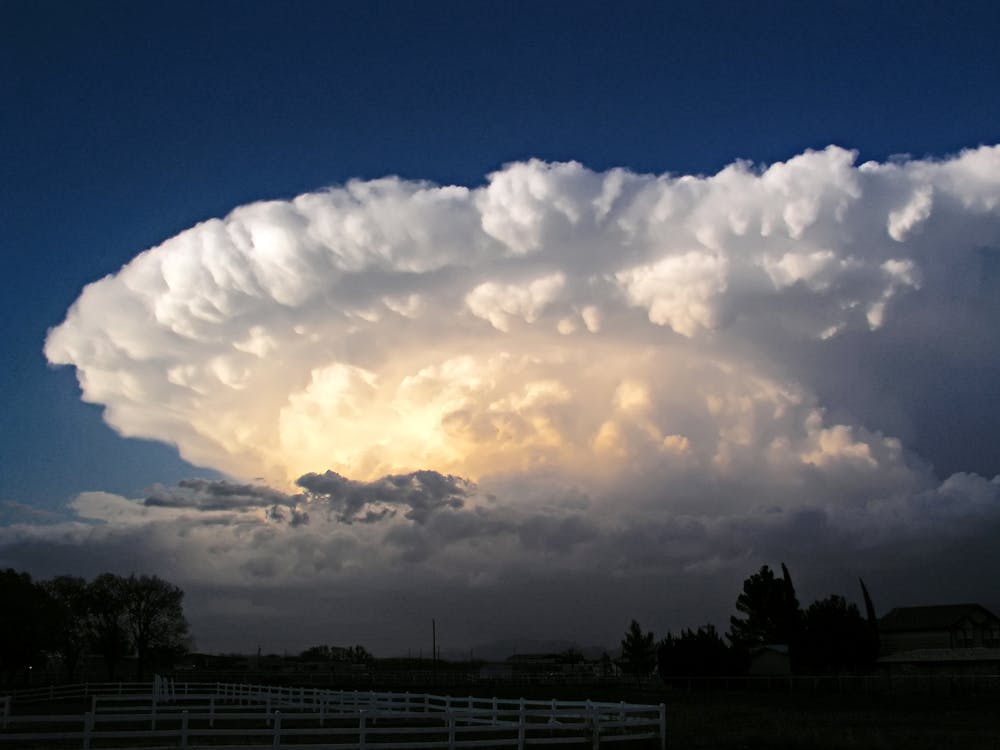
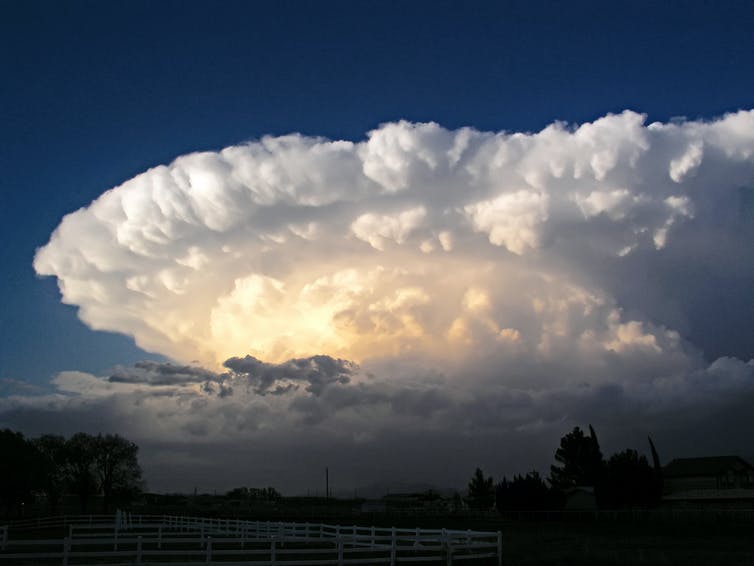 Massive thunderstorms called supercells can form when the right weather ingredients come together. Greg Lundeen/NOAA
Thunderstorms and big winter storms are quick and intense
Hard rainstorms happen when there is a lot of moisture in the air and the air moves upwards very fast. Summer thunderstorms are the perfect example.
The warm, moist air rises very quickly – like a hot air balloon – and can be moving as fast as 30 to 40 miles per hour. The air also holds much more moisture than winter clouds – up to five times as much.
All of this creates very tall, thick clouds that are full of moisture. Water droplets form quickly as the air moves up through the clouds. But since the wind is blowing upwards so fast, the droplets can get huge before gravity drags them down to Earth. When the weight of all the water droplets gets to be too much for the wind, the wind current collapses, and all the raindrops in the cloud come crashing down at once. These are summer thunderstorms.
Thunderstorms can drop one, two or even three inches of rain in less than an hour. These sudden torrential downpours, called cloudbursts, can lead to flash flooding that can overflow streams and roads and trap people wherever they are.
Thankfully, because thunderstorms are so violent and relatively small, they don’t last very long. Once the rain falls from the clouds and squashes the upward air currents, the clouds disappear and you often see a nice blue sky.
Of course, winter can deliver some strong storms too – especially over the warmer ocean water. When strong winter storms drop lots of heavy rain, the same principles are at work: lots of moisture in the air, fast upwards wind currents and tall clouds.
No two rainstorms are ever the same. Sometimes clouds can rain so hard it feels like you are standing in the shower. Other times they bring only a nice peaceful drizzle. Now, whether you are soaked or singing in the rain, you’ll know why.
Hello, curious kids! Do you have a question you’d like an expert to answer? Ask an adult to send your question to curiouskidsus@theconversation.com.
Please tell us your name, age and the city where you live. We won’t be able to answer every question, but we will do our best.
Jeffrey B. Halverson, Professor of Geography & Environmental Systems, Associate Dean of the Graduate School, University of Maryland, Baltimore County
This article is republished from The Conversation under a Creative Commons license. Read the original article.
Header image: David Pinzer Photography/Moment via Getty Images
[The Conversation’s science, health and technology editors pick their favorite stories. Weekly on Wednesdays.]
]]>
By Jeffrey B. Halverson, professor, Geography & Environmental Systems, Associate Dean of the Graduate School, UMBC Curious Kids is a series for children of all ages. If you have a...
https://umbc.edu/stories/why-does-some-rain-fall-harder-than-other-rain/
https://my3.my.umbc.edu/api/v0/pixel/news/119816/guest@my.umbc.edu/681711836e1b23f84c7f4a585882389c/api/pixel
discovery
geography-and-environmental-systems
theconversation
UMBC News & Magazine
https://my3.my.umbc.edu/groups/umbc-news-magazine
https://assets1-my.umbc.edu/system/shared/avatars/groups/000/001/943/24435aa6207c452e7bc15cc74b42c7bb/xsmall.png?1748556657
https://assets1-my.umbc.edu/system/shared/avatars/groups/000/001/943/24435aa6207c452e7bc15cc74b42c7bb/original.png?1748556657
https://assets2-my.umbc.edu/system/shared/avatars/groups/000/001/943/24435aa6207c452e7bc15cc74b42c7bb/xxlarge.png?1748556657
https://assets2-my.umbc.edu/system/shared/avatars/groups/000/001/943/24435aa6207c452e7bc15cc74b42c7bb/xlarge.png?1748556657
https://assets3-my.umbc.edu/system/shared/avatars/groups/000/001/943/24435aa6207c452e7bc15cc74b42c7bb/large.png?1748556657
https://assets1-my.umbc.edu/system/shared/avatars/groups/000/001/943/24435aa6207c452e7bc15cc74b42c7bb/medium.png?1748556657
https://assets2-my.umbc.edu/system/shared/avatars/groups/000/001/943/24435aa6207c452e7bc15cc74b42c7bb/small.png?1748556657
https://assets1-my.umbc.edu/system/shared/avatars/groups/000/001/943/24435aa6207c452e7bc15cc74b42c7bb/xsmall.png?1748556657
https://assets2-my.umbc.edu/system/shared/avatars/groups/000/001/943/24435aa6207c452e7bc15cc74b42c7bb/xxsmall.png?1748556657
UMBC News & Magazine
0
0
false
Thu, 13 Aug 2020 12:49:39 -0400
Sending International Students Home Would Sap US Influence and Hurt the Economy

By David L. Di Maria, Associate Vice Provost for International Education, UMBC
U.S. Immigration and Customs Enforcement, or ICE, made a decision on July 6 regarding international students in the U.S. that will affect far more than just the roughly 870,000 international students themselves.
Based on what I know about the power and influence of higher education in the U.S., this decision could increase the tuition American students pay, cost thousands of jobs throughout the nation and erode America’s stature in the world.
Under this new rule, international students may stay in the country only if they attend a college or university offering in-person classes this fall. Otherwise, they won’t be able to get visas, enter the country or stay here if they plan to attend one of the many schools that are teaching students entirely online.
In effect, thousands of students from other countries who attend schools that do not plan any in-person instruction this fall may have to immediately transfer to another school or leave the country. Otherwise, they could face deportation.
Against the backdrop of what top U.S. public health officials describe as an out-of-control virus, this new immigration rule puts U.S. colleges in a jam. Schools must choose between bringing students together on campus to comply with the immigration restrictions, or adhere to public health precautions related to physical distancing.
It may be hard to do both if the online option is off the table when it comes to international students. Which means U.S. colleges and universities could take a significant financial hit in the form of lost tuition revenue beyond what they were anticipating as a result of COVID-19.
Colleges must scramble
As of July 6, more than 1,000 colleges and universities have already released plans for fall instruction. Of those, 60% plan currently plan to offer in-person classes, 24% plan to offer hybrid and 9% plan to offer courses online. The remaining colleges are still undecided.
[Deep knowledge, daily. Sign up for The Conversation’s newsletter.]
Now, some institutions will have to scramble to develop alternatives that can enable international students to remain enrolled without breaking the new rule. Schools must report how they plan to proceed by Aug. 1, based on the ICE announcement.
Far-reaching impact
The impact of this rule is not just limited to the hundreds of thousands of international students enrolled at U.S. colleges, who represent 4.39% of the 20 million people who currently attend U.S. colleges and universities. It also affects their institutions, their faculty and the local communities as well.
Consider that colleges and universities, which are the largest employers in 1 in 5 states, are already reeling from heavy financial losses associated with the pandemic.
While many schools have had to slash budgets due to refunds issued to students in the spring of 2020, disruptions to research, canceled athletic events and cuts to state funding, others are still waiting to see whether or not they will meet their enrollment targets for fall.
Still, more than 200 colleges and universities have already announced layoffs, furloughs or contract nonrenewals.
At a time when the U.S. is trying to overcome record unemployment and manage its biggest public health crisis in a century, international students seem to be caught in the middle of a partisan divide on reopening the country.
The new guidelines could place many colleges and universities in an impossible position: Increase the number of in-person classes and risk that COVID-19 will spread further.
What they bring to the table
Given how much international students contribute to the economy, you might assume ICE would find a way to keep them in the U.S.
The students affected by the new rule are the same people who help support about 460,000 American jobs.
The higher tuition and fees they pay helps keep tuition lower for American students. But their contributions transcend economics.
Their academic talents help advance scientific discoveries, which are more critical than ever given the nation’s ongoing battle against COVID-19. The fallout will be severe should these students choose to study in other countries instead. Australia and New Zealand, for example, have recently made their policies more welcoming.
Giving ground to other nations
Booting international students would surely reduce America’s influence in the world as well.
According to the State Department, the alumni of educational and cultural exchange programs include more than 75 Nobel Laureates and nearly 450 current and former heads of state and government. Having established personal ties, international students often return home as unofficial ambassadors for the U.S.
International alumni are more likely to look to the U.S. for ideas and trade agreements and to otherwise exert influence abroad that benefits U.S. interests.
While the share of international students studying in the U.S. has steadily declined – from 28% of the world’s 2.1 million international students in 2001 to 21% of the world’s 5.3 million international students in 2019 – other countries have made significant gains in attracting global talent due to national strategies.
Most notably, China now hosts nearly 1 in 10 students who study abroad globally, including more students from Africa than the U.K. and U.S. combined. One reason for China’s rise as a study destination is its leaders’ realization that it is lagging behind the U.S. in terms of soft power with only a few world leaders having graduated from Chinese institutions.
In my view, ICE’s new guidance is only the latest step in a steady retreat from global engagement that clears the path for other nations to attract more of the students that might otherwise study in the United States.
*****
David L. Di Maria, Associate Vice Provost for International Education, University of Maryland, Baltimore County
This article is republished from The Conversation under a Creative Commons license. Read the original article.
Header image: Boston Globe/Getty Images
]]>
By David L. Di Maria, Associate Vice Provost for International Education, UMBC U.S. Immigration and Customs Enforcement, or ICE, made a decision on July 6 regarding international students in...
https://umbc.edu/stories/sending-international-students-home-would-sap-us-influence-and-hurt-the-economy/
https://my3.my.umbc.edu/api/v0/pixel/news/119847/guest@my.umbc.edu/8105ee43ee0f9bde6e3ab158a8bcf376/api/pixel
ies
international
perspectives
theconversation
UMBC News & Magazine
https://my3.my.umbc.edu/groups/umbc-news-magazine
https://assets1-my.umbc.edu/system/shared/avatars/groups/000/001/943/24435aa6207c452e7bc15cc74b42c7bb/xsmall.png?1748556657
https://assets1-my.umbc.edu/system/shared/avatars/groups/000/001/943/24435aa6207c452e7bc15cc74b42c7bb/original.png?1748556657
https://assets2-my.umbc.edu/system/shared/avatars/groups/000/001/943/24435aa6207c452e7bc15cc74b42c7bb/xxlarge.png?1748556657
https://assets2-my.umbc.edu/system/shared/avatars/groups/000/001/943/24435aa6207c452e7bc15cc74b42c7bb/xlarge.png?1748556657
https://assets3-my.umbc.edu/system/shared/avatars/groups/000/001/943/24435aa6207c452e7bc15cc74b42c7bb/large.png?1748556657
https://assets1-my.umbc.edu/system/shared/avatars/groups/000/001/943/24435aa6207c452e7bc15cc74b42c7bb/medium.png?1748556657
https://assets2-my.umbc.edu/system/shared/avatars/groups/000/001/943/24435aa6207c452e7bc15cc74b42c7bb/small.png?1748556657
https://assets1-my.umbc.edu/system/shared/avatars/groups/000/001/943/24435aa6207c452e7bc15cc74b42c7bb/xsmall.png?1748556657
https://assets2-my.umbc.edu/system/shared/avatars/groups/000/001/943/24435aa6207c452e7bc15cc74b42c7bb/xxsmall.png?1748556657
UMBC News & Magazine
0
0
false
Wed, 08 Jul 2020 14:16:21 -0400
After Supreme Court Decision, Gerrymandering Fix Is up to Voters

By John Rennie Short, professor, public policy, UMBC
In a 5-4 decision the Supreme Court has ruled that partisan gerrymandering is not unconstitutional.
The majority ruled that gerrymandering is outside the scope and power of the federal courts to adjudicate. The issue is a political one, according to the court, not a legal one.
“Excessive partisanship in districting leads to results that reasonably seem unjust,” wrote Chief Justice John Roberts in the majority decision. “But the fact that such gerrymandering is incompatible with democratic principles does not mean that the solution lies with the federal judiciary.”
So for now, partisan gerrymandering, in which politicians get to choose their voters rather than voters choose their representatives, will remain a fact of American political life.
What is the background to this decision? And what does the decision mean for democracy in the U.S.?
Cracking and packing
State legislatures have the constitutional responsibility to draw up the boundaries of congressional seats after the results of the census, which is conducted every 10 years.
In many states, if one party is in the majority at that time, they can use their power to manipulate the boundaries to their advantage. That’s called partisan gerrymandering, and it involves what’s referred to as “cracking and packing.”
Cracking spreads opposition voters thinly across many districts to dilute their power. Packing concentrates opposition voters in fewer districts to reduce the number of seats they can win.
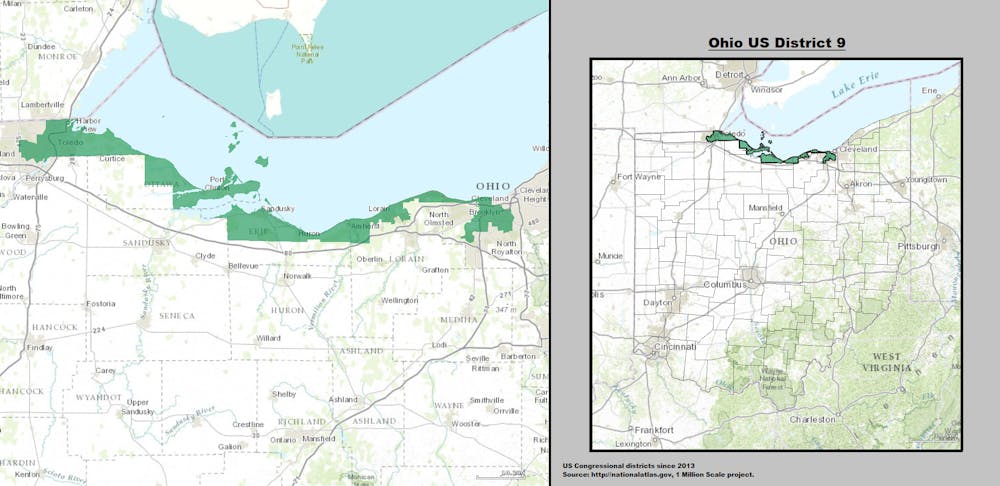
Just one example: In 2012, Republicans in Ohio drew up congressional boundaries that packed most Democratic voters into just four of the 16 congressional districts. The 9th District was referred to as the “snake on the lake” as it slithered along the edge of Lake Erie from Cleveland to Toledo to pack in as many Democratic voters as possible.
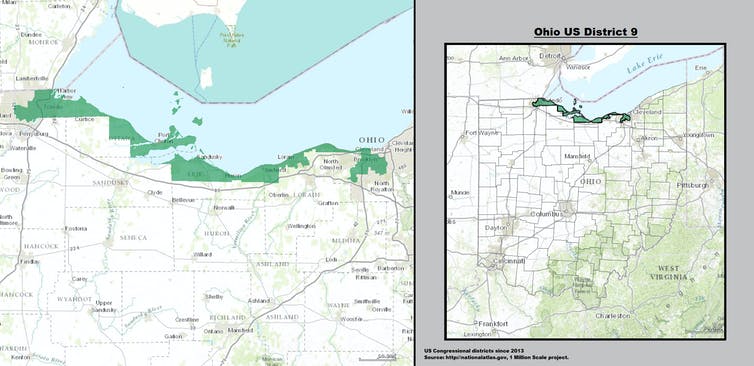 The gerrymandered 9th Ohio U.S. Congressional District, known as ‘the snake on the lake.’
US Department of the Interior via Wikipedia
It worked. In the 2018 election, Ohio Republicans won just 52% of the votes but picked up 11 of 16 of the congressional seats.
I have researched the U.S. voting system, analyzed Supreme Court rulings and shown why gerrymandering is now more prevalent since the 1990s. Sophisticated computer programs and ever more detailed information on voters’ location and preferences now allow politicians to crack and pack with surgical precision.
In 2004, the Supreme Court effectively sanctioned gerrymandering. In Vieth v. Jubelirer, the court ruled 5-4 not to intervene in a case brought by Democrats in Pennsylvania over a redistricting plan they claimed was unconstitutionally gerrymandered.
After the ruling, partisan gerrymandering increased, especially in the redistricting round after the 2010 census.
In 2017, and again in 2018, the Supreme Court passed up opportunities to decide upon the constitutional legality of gerrymandering by effectively punting on the cases.
In other cases, the court actively intervened.
Republican-controlled Shelby County, Alabama filed a case against the constitutionality of the 1965 Voting Rights Act. The act had protected minority voters’ rights in the South from being diluted by gerrymandering and other methods. In the 2013 case Shelby v. Holder, the court overturned key elements of the act, in a 5-4 ruling. The ruling encouraged partisan gerrymandering in the states – Alabama, Georgia, Louisiana, Mississippi, South Carolina and Virginia – previously under federal scrutiny for their legacy of discriminatory voting practices.
Mounting legal challenges
There have been other legal challenges to partisan gerrymandering.
In Virginia a Republican map drawn up in 2011 that packed many African American voters into just 11 of the state’s 100 House of Delegates districts was challenged. A federal judge saw racial gerrymandering at work and ordered a new map. A Republican challenge to that ruling came before the Supreme Court. The Republican challenge was dismissed on June 17, 2019.
The court’s decision in the Virginia case was not about whether the gerrymandering was unconstitutional. Instead, a 5-4 majority of the court ruled that the Virginia Republicans had no legal standing to mount the appeal when the state senate and the state attorney general had decided against appealing. The new map stood.
In Ohio, a three-judge federal panel ruled that the Republicans attempted to cement a Republican majority of congressional seats when they drew up new districts. The state legislature was ordered by the court to draw a new map for the 2020 election.
And in Michigan a panel of federal judges ruled that many of the state’s legislature districts were unconstitutional, drawn up to ensure a partisan advantage. No more snake on the lake.
The Supreme Court set aside these last two lower court rulings on May 24, 2019 in preparation for this recent decision. The two cases are now sent back to lower courts for dismissal. The snake on the lake lives on for another election cycle.
Maryland and North Carolina
Gerrymandering is especially rampant in Maryland and North Carolina. In both states powerful politicians admitted that their plan was to solidify their party’s control.
Republicans in North Carolina drew a map in 2016 to ensure control of 10 of the state’s 13 congressional districts. Democratic voters were overwhelmingly packed into three districts with the remainder cracked across the remaining 10.
Democrats in Maryland drew a map with gyrating boundaries in order to cement their 7-1 advantage in congressional seats.
When lower federal courts struck down these gerrymandered congressional district maps, politicians in both states appealed to the Supreme Court.
Arguments were heard on these cases in March 2019.
From the questioning, it appeared that the liberal justices – Breyer, Ginsburg, Kagan and Sotomayor – would rule against gerrymandering and the more conservative justices – Roberts, Alito, Thomas and Gorsuch and Kavanaugh – were against the court getting involved.
The votes predictably split along the ideological divide.
In the majority opinion, combining the Maryland and North Carolina cases into one decision, the court’s conservative majority noted that existing measures of gerrymandering do not provide precise and judicially discernible standards. The opinion was authored by Chief Justice Roberts, who has long held the opinion that it is impossible to measure, let alone overcome, partisan gerrymandering.
Responding for the liberal minority, Justice Kagan read her dissent in open court – a sign of her intense disagreement with what she saw as the court’s unwillingness to uphold fair and free elections. She wrote that the decision “debased and dishonored our democracy.”
Now what?
Partisan gerrymandering will continue. But so will resistance against it, I believe.
There is a way for states to avoid gerrymandering. Newly formed, nonpartisan redistricting commissions, working outside the influence of the legislature to draw legislative district lines, already exist in Alaska, Arizona, California, Colorado, Idaho, Michigan, Montana and Washington.
These commissions resulted from citizen initiatives to reform the process. But most states east of the Mississippi, for instance, do not have a ballot initiative process that would allow voters to initiate reform.
Gerrymandering has a pernicious impact on the electoral system and on the wider democratic process. It encourages long-term incumbency and a consequent polarization of political discourse.
But now the Supreme Court has made it clear that the solution does not lie with federal judges.
It is up to the voters.
*****
John Rennie Short, professor, School of Public Policy, University of Maryland, Baltimore County
Header image by Claire Anderson on Unsplash.
This article is republished from The Conversation under a Creative Commons license. Read the original article.
]]>
By John Rennie Short, professor, public policy, UMBC In a 5-4 decision the Supreme Court has ruled that partisan gerrymandering is not unconstitutional. The majority ruled that gerrymandering...
https://umbc.edu/stories/after-supreme-court-decision-gerrymandering-fix-is-up-to-voters/
https://my3.my.umbc.edu/api/v0/pixel/news/120090/guest@my.umbc.edu/9885e2e5ac791c9b06ad789cf270a3b0/api/pixel
discovery
gerrymandering
publicpolicy
supreme-court
theconversation
UMBC News & Magazine
https://my3.my.umbc.edu/groups/umbc-news-magazine
https://assets1-my.umbc.edu/system/shared/avatars/groups/000/001/943/24435aa6207c452e7bc15cc74b42c7bb/xsmall.png?1748556657
https://assets1-my.umbc.edu/system/shared/avatars/groups/000/001/943/24435aa6207c452e7bc15cc74b42c7bb/original.png?1748556657
https://assets2-my.umbc.edu/system/shared/avatars/groups/000/001/943/24435aa6207c452e7bc15cc74b42c7bb/xxlarge.png?1748556657
https://assets2-my.umbc.edu/system/shared/avatars/groups/000/001/943/24435aa6207c452e7bc15cc74b42c7bb/xlarge.png?1748556657
https://assets3-my.umbc.edu/system/shared/avatars/groups/000/001/943/24435aa6207c452e7bc15cc74b42c7bb/large.png?1748556657
https://assets1-my.umbc.edu/system/shared/avatars/groups/000/001/943/24435aa6207c452e7bc15cc74b42c7bb/medium.png?1748556657
https://assets2-my.umbc.edu/system/shared/avatars/groups/000/001/943/24435aa6207c452e7bc15cc74b42c7bb/small.png?1748556657
https://assets1-my.umbc.edu/system/shared/avatars/groups/000/001/943/24435aa6207c452e7bc15cc74b42c7bb/xsmall.png?1748556657
https://assets2-my.umbc.edu/system/shared/avatars/groups/000/001/943/24435aa6207c452e7bc15cc74b42c7bb/xxsmall.png?1748556657
UMBC News & Magazine
0
0
false
Fri, 28 Jun 2019 12:57:59 -0400