I’m a Black sociologist, and a mom – by listening to other Black mothers, I’ve learned about their pandemic struggles and strengths
By Loren Henderson, associate professor, Sociology, UMBC
I spent the 2020 spring break week setting up to teach my college courses online while helping to care for my 14-month-old grandchild, whose daycare had closed. At the same time, I couldn’t help thinking, being the sociologist I am, of the devastating consequences of COVID-19 I saw for women like me, Black mothers, whom I have studied for over a decade.
Social science research can influence policy. Sharing Black mothers’ stories in their own voices may ultimately lead to more compassionate policies. My work is part of a small body of descriptive research, mostly by researchers of color, countering negativity and victim-blaming in earlier studies of Black families.
My research partner, sociologist BarBara Scott, lives in Chicago, where I grew up. In our studies of Black mothers there, we’ve explored parenting in violent communities and living with inadequate health care. In 2019, before COVID-19 hit, we were preparing to study parenting practices.
But when lab conditions change, scientists need to reorganize their work. I am a social scientist and society is my lab, where the pandemic dramatically altered the conditions of my research.
We adjusted, preparing to interview remotely instead of in person. We added new questions to investigate, like: How were Black mothers coping with pandemic conditions? How did the murder of George Floyd and the resulting protests affect them? Our research would now include the pandemic and the country’s racial upheaval, highly unusual factors complicating Black mothers’ already challenging lives.
Researching with rapport
The first challenge was finding participants. We put up fliers in and around schools, churches, the YWCA and other places Black moms go when not at work. Even in the best of times, though, they face practical barriers to joining a research project. Child care responsibilities might be theirs alone. Taking time off from work means their paychecks take a hit not nearly covered by the $25 gift cards we offered.
But they called. Some just wanted to sign up after looking me up on their phones. Others, who may have known that the federal government oversees studies involving people, asked why I was studying them and what I would do with their information. I knew that if any of the women thought talking with me might bring embarrassment or other trouble, they might be less forthcoming or decide not to participate. My findings would be much less credible.
I assured the moms that I would keep their responses confidential and that they had a right to leave the study whenever they wanted to.
None of them did. We signed up enough moms for two focus groups of five to seven participants each. I ran group meetings and conducted 12 one-on-one interviews via video conferencing.
To start our 60- to 90-minute sessions, I introduced myself and got the mothers talking with an ice breaker question like, “What is the farthest place from your current neighborhood that you’ve been?”
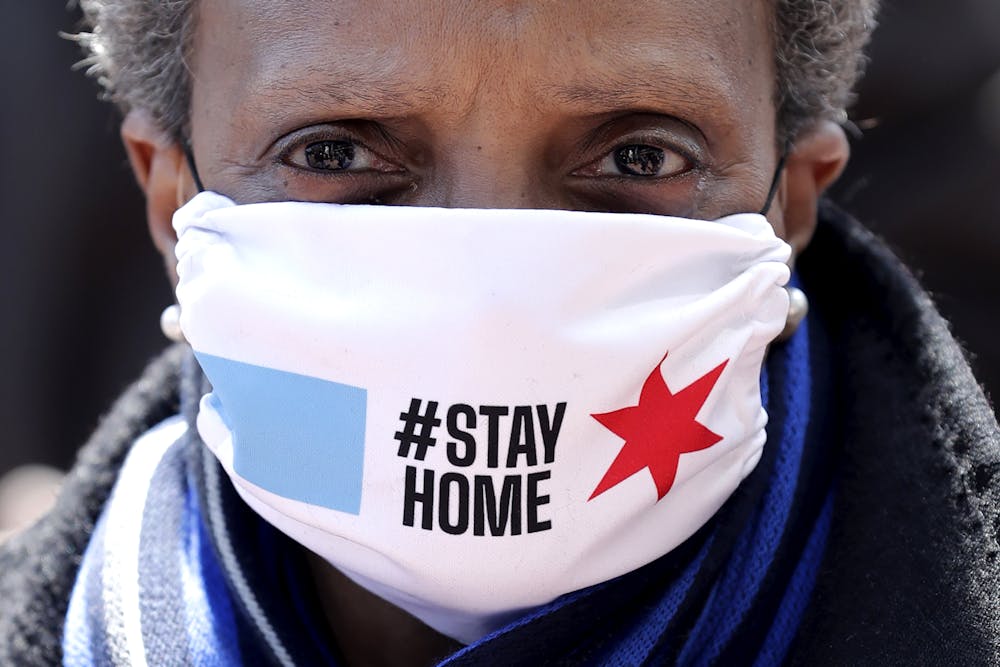
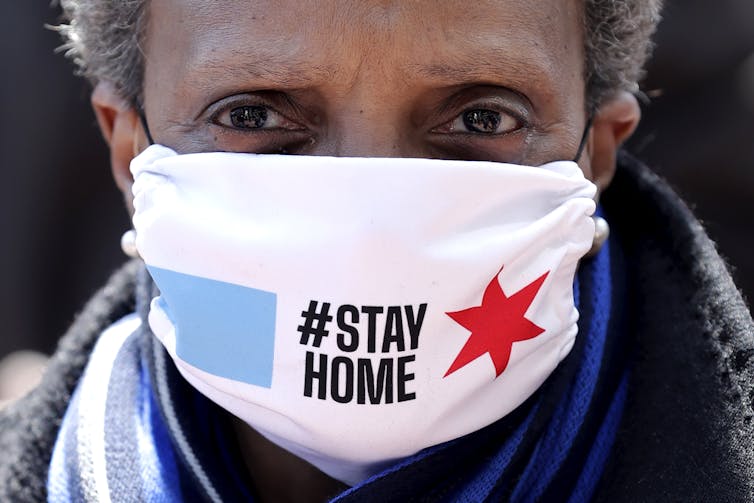 Many Black mothers were front-line workers who couldn’t heed the message on Chicago Mayor Lori Lightfoot’s mask in the early days of the pandemic. AP Photo/Nam Y. Huh
I also tell them that I have a Black mom, and that I am one. And then, because my skin tone is fair, I mention that I have an Italian father. I didn’t want to be mistaken for white; the moms might feel less comfortable discussing certain topics with me. But after realizing that I’m Black too, a few of them said things like, “I knew there was something about you!”
I share my belief in centering – and that’s the word I use – Black mothers’ lived experiences and exploring their parenting from a strength perspective. That’s when I got a lot of smiling and nodding.
No time for racism
Black mothers don’t need a pandemic to face impossible choices. But it took a pandemic for others to see that. As nearly everyone else stayed home to stop the spread of COVID-19, it became obvious that Black women were more likely than any one else to be essential workers in front-line jobs. And despite risking COVID-19 infection to keep their jobs, Black workers were more likely to lose them anyway during the pandemic.
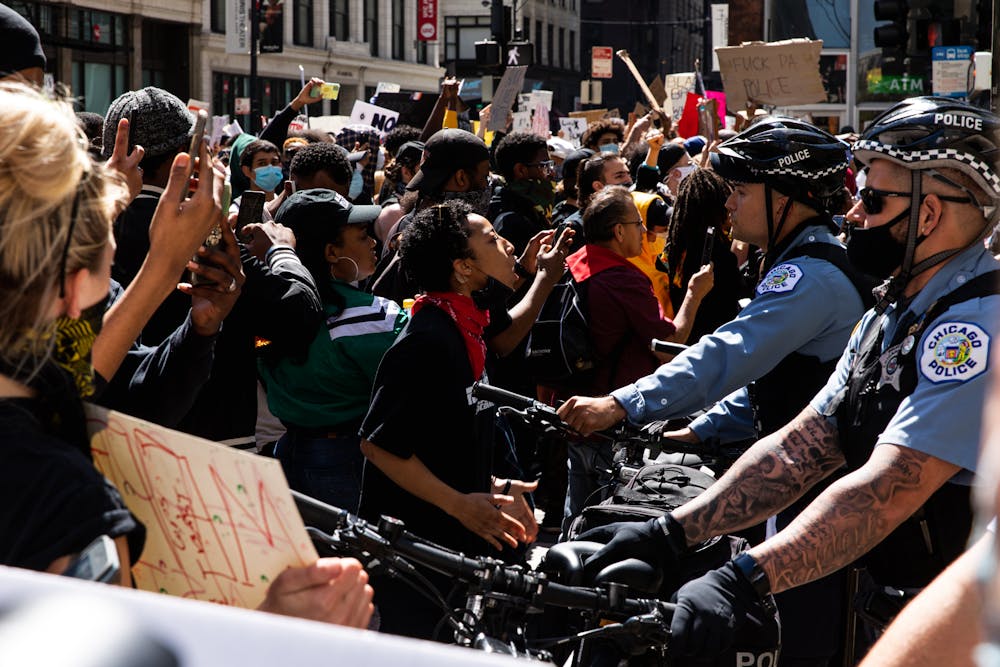
I asked the mothers about the pandemic’s effect on their lives. They talked about the trickiness of trying to isolate or distance in small or crowded homes. They hated being unable to get masks and hand sanitizer when stores closed during the George Floyd protests, which none of them attended.
I asked why they didn’t go, given their stated frustrations with racism affecting their lives. Some didn’t want to risk getting sick. But most of these Black mothers told me they don’t dwell on racism, saying things like, “Yeah, racism is bad, but I got things to do.”
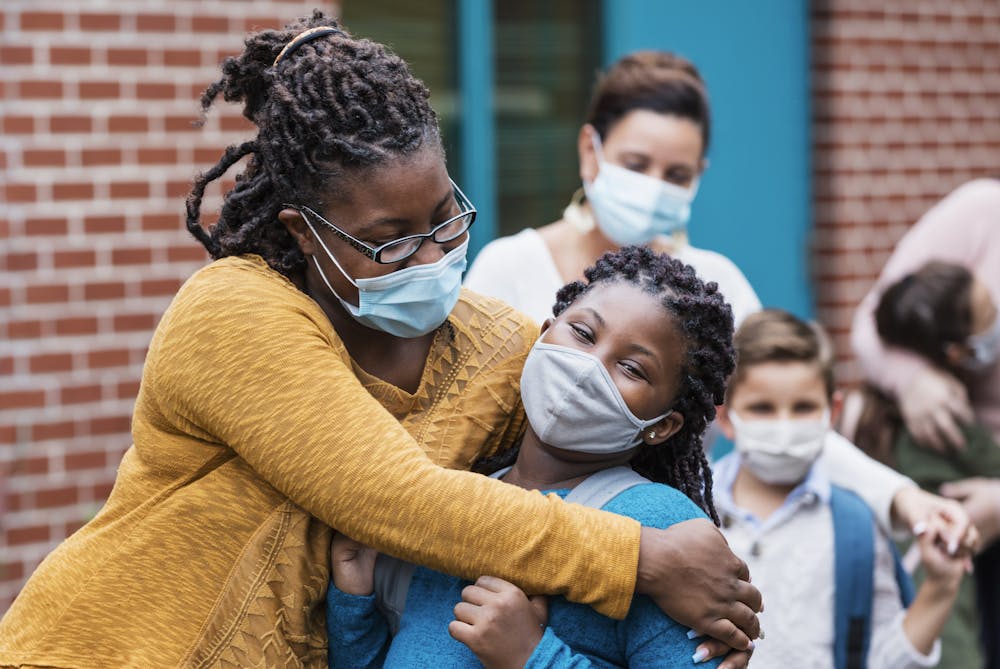
And so they did those things. While at work, they sent their kids text reminders to go to remote school if it was available, or if it was not, to study. The moms came home from long shifts and helped with homework, worrying about their kids falling behind academically. The mothers worried about getting COVID-19 and losing custody of kids if they became too sick to parent well.
Keeping the conversation flowing
The qualitative research I do is about words and meanings, not just numbers and statistics. It allows me to explore the lives of Black moms in depth.
In my interviews, I don’t ask closed-ended questions – the kind where the answer is simply yes or no, true or false, or limited to a set of multiple-choice answers. For example, if a participant can only respond to the question, “How safe is your community?” with the options “very safe,” “somewhat safe,” or “not safe,” that’s a closed-ended question.
In qualitative research, however, questions are often open-ended. Participants decide what a question means to them, then answer in any way they choose. I’ve been asking the Black mothers questions like: “How do you feel about Chicago as a place to live and raise your children? How do you feel about working and raising your children during the COVID-19 pandemic?”
Reading the transcribed interviews later, I look for general thoughts, or themes, in the mothers’ collective responses. For example, when I asked about violence, the overall sentiment was that it was around, but avoidable. One participant told me, “You have to know where [to go] and where not to go, when to go and when not to go.” And she called Chicago “a great place,” with “great opportunities” for anyone who wanted to be there.
This response was common: The moms know that Chicago can be violent, but many focus on the positive aspects of the city. My theory is that this is their conscious or unconscious way of explaining why they stay in a violent community. That question has come often enough – usually from those with far more options – to hang over the heads of these Black moms, even if no one asks them directly.
A related sentiment the moms had was that moving away is pointless since violence “is everywhere.” They may simply want to stay close to the generations of family and community ties they have. But it’s also true that moving isn’t affordable for many of these mothers.
Identifying these themes helps me present a picture of Black mothers’ lives as a corrective to the earlier research. Documenting their experiences as the center of my research gives them a voice and validates their lives as worthy of exploration.
******
Header image: When schools shut down to prevent the spread of COVID-19, moms took on the burden of supporting students at home. AP Photo/Shafkat Anowar
Loren Henderson, Associate Professor of Sociology, University of Maryland, Baltimore County
This article is republished from The Conversation under a Creative Commons license. Read the original article.
]]>
By Loren Henderson, associate professor, Sociology, UMBC I spent the 2020 spring break week setting up to teach my college courses online while helping to care for my 14-month-old grandchild,...
https://umbc.edu/stories/im-a-black-sociologist-and-a-mom-by-listening-to-other-black-mothers-ive-learned-about-their-pandemic-struggles-and-strengths/
https://my3.my.umbc.edu/api/v0/pixel/news/119436/guest@my.umbc.edu/c7c85e15e203808a64f4d1b94dcc5c0b/api/pixel
covid-19
discovery
magazine
sociology
the-conversation
webfeature
UMBC News & Magazine
https://my3.my.umbc.edu/groups/umbc-news-magazine
https://assets1-my.umbc.edu/system/shared/avatars/groups/000/001/943/24435aa6207c452e7bc15cc74b42c7bb/xsmall.png?1748556657
https://assets1-my.umbc.edu/system/shared/avatars/groups/000/001/943/24435aa6207c452e7bc15cc74b42c7bb/original.png?1748556657
https://assets2-my.umbc.edu/system/shared/avatars/groups/000/001/943/24435aa6207c452e7bc15cc74b42c7bb/xxlarge.png?1748556657
https://assets2-my.umbc.edu/system/shared/avatars/groups/000/001/943/24435aa6207c452e7bc15cc74b42c7bb/xlarge.png?1748556657
https://assets3-my.umbc.edu/system/shared/avatars/groups/000/001/943/24435aa6207c452e7bc15cc74b42c7bb/large.png?1748556657
https://assets1-my.umbc.edu/system/shared/avatars/groups/000/001/943/24435aa6207c452e7bc15cc74b42c7bb/medium.png?1748556657
https://assets2-my.umbc.edu/system/shared/avatars/groups/000/001/943/24435aa6207c452e7bc15cc74b42c7bb/small.png?1748556657
https://assets1-my.umbc.edu/system/shared/avatars/groups/000/001/943/24435aa6207c452e7bc15cc74b42c7bb/xsmall.png?1748556657
https://assets2-my.umbc.edu/system/shared/avatars/groups/000/001/943/24435aa6207c452e7bc15cc74b42c7bb/xxsmall.png?1748556657
UMBC News & Magazine
0
0
false
Fri, 29 Apr 2022 16:59:01 -0400
Fri, 29 Apr 2022 16:59:01 -0400
Diaper Need Emerges as Health Indicator During Pandemic
By Lauren A. Clay, associate professor, Emergency Health Services, UMBC and Emily Belarmino, University of Vermont
The Research Brief is a short take about interesting academic work.
The big idea
During the first year of the COVID-19 pandemic, more than a third of Massachusetts households with a child under 5 didn’t have enough diapers to change their child as often as needed, according to our survey. A baby without enough diapers might have more doctor visits for diaper rash and urinary tract infections. But we also found a link between diaper need and other concerns, like depression and chronic illness, that are less obvious and seemingly unrelated.
Our data for this study came from an online survey of Massachusetts residents led by The Greater Boston Food Bank from October 2020 and to January 2021. To compile, analyze and interpret the data, we had help from former food bank volunteer and Harvard biostatistics student Nick Birk, along with the food bank’s epidemiologist, Rachel Zack.
We looked at more than 3,000 responses from participants in the food bank’s survey. Of those, we selected the 353 respondents who reported having a child age 4 or under using diapers. We then asked them specifically, “If you have children in diapers, do you ever feel that you do not have enough diapers to change them as often as you would like?”
We found that 36% of families with young children went without enough diapers during the pandemic.
But diaper need is about more than bare baby bottoms. We found that in households with the greatest diaper need there is also a greater likelihood of other significant concerns. For example, we found that people who reported diaper need were also more likely to report symptoms of depression or living in a home where someone had a chronic illness.
Previous research has highlighted the stress of needing but being unable to get diapers for a baby. The link between diaper need and chronic illness adds substantial evidence that households dealing with health issues are more likely to struggle with other hardships like food insecurity and unmet medical needs.
Among those at greater risk of not having enough diapers are parents or caregivers under 26 years of age, Latino parents or caregivers and people with less than a high school education. This might be related to the relatively limited resources these parents and caregivers have to draw upon to meet their daily needs.
Why it matters
Diapers are an essential child care need and a significant expense for families with young children. The National Diaper Bank Network defines “diaper need” as “lacking a sufficient supply of diapers to keep an infant or child clean, dry and healthy.” The group estimates that the average cost of a month’s supply of diapers is US$80-$100. Public aid programs for families with low incomes generally do not provide diapers.
We had previously identified links between diaper need and food-related hardship. Our newer study sheds light on the situation during the COVID-19 pandemic and brings more income-related findings, such as the fact that diaper need is more common in households where someone lost a job. We also found more need for diapers in households with a 2019 income of less than $50,000 than in those with higher incomes. Speaking of income, our findings show that pandemic diaper need persisted despite most U.S. households’ receiving federal economic stimulus payments and diaper banks’ expanding distribution. Without these factors, there might have been more families in the state without enough diapers.
What still isn’t known
We used mathematical weighting to get data representing the Massachusetts population. But we haven’t yet looked into diaper need in other states or nationally.
It’s also not yet clear what the most effective solutions are for families lacking enough diapers for their babies. We have not measured the effectiveness of diaper banks or other diaper distribution models. Legislation proposed in Massachusetts would create a diaper distribution program or give qualifying families $30 to purchase diapers each month.
Congress also has considered creating federal funding for diaper distribution programs, in 2019 and again in 2021. And in February, lawmakers proposed allowing families to cover the cost of diapers with health savings or flexible spending accounts. If these programs become reality, studying their impact and effectiveness could prove useful.
Previous research already has found, however, that providing diapers to families needing them has benefits beyond the obvious. In a 2017 study of families with low incomes, life in their households improved when they received diapers from a local diaper bank. Parents reported more positive moods, along with improved health and happiness of their children. Diaper distribution increased family members’ attendance at school, work and child care centers. And families were also able to divert household finances toward other basic needs, including utilities and medical care.
*****
Emily Belarmino, Assistant Professor of Public Health Nutrition, University of Vermont and Lauren A. Clay, Associate Professor of Emergency Health Services, University of Maryland, Baltimore County
Header image: Thirty-six percent of surveyed families with young children said they did not have enough diapers during the pandemic. Tony Arruzza/Corbis Documentary via Getty Images
This article is republished from The Conversation under a Creative Commons license. Read the original article.
]]>
By Lauren A. Clay, associate professor, Emergency Health Services, UMBC and Emily Belarmino, University of Vermont The Research Brief is a short take about interesting academic work. The...
https://umbc.edu/stories/diaper-need-emerges-as-health-indicator-during-pandemic/
https://my3.my.umbc.edu/api/v0/pixel/news/119438/guest@my.umbc.edu/4648ec6af089822fb818f11d83cb77e1/api/pixel
covid-19
discovery
emergency-health-services
magazine
the-conversation
webfeature
UMBC News & Magazine
https://my3.my.umbc.edu/groups/umbc-news-magazine
https://assets1-my.umbc.edu/system/shared/avatars/groups/000/001/943/24435aa6207c452e7bc15cc74b42c7bb/xsmall.png?1748556657
https://assets1-my.umbc.edu/system/shared/avatars/groups/000/001/943/24435aa6207c452e7bc15cc74b42c7bb/original.png?1748556657
https://assets2-my.umbc.edu/system/shared/avatars/groups/000/001/943/24435aa6207c452e7bc15cc74b42c7bb/xxlarge.png?1748556657
https://assets2-my.umbc.edu/system/shared/avatars/groups/000/001/943/24435aa6207c452e7bc15cc74b42c7bb/xlarge.png?1748556657
https://assets3-my.umbc.edu/system/shared/avatars/groups/000/001/943/24435aa6207c452e7bc15cc74b42c7bb/large.png?1748556657
https://assets1-my.umbc.edu/system/shared/avatars/groups/000/001/943/24435aa6207c452e7bc15cc74b42c7bb/medium.png?1748556657
https://assets2-my.umbc.edu/system/shared/avatars/groups/000/001/943/24435aa6207c452e7bc15cc74b42c7bb/small.png?1748556657
https://assets1-my.umbc.edu/system/shared/avatars/groups/000/001/943/24435aa6207c452e7bc15cc74b42c7bb/xsmall.png?1748556657
https://assets2-my.umbc.edu/system/shared/avatars/groups/000/001/943/24435aa6207c452e7bc15cc74b42c7bb/xxsmall.png?1748556657
UMBC News & Magazine
0
0
false
Thu, 28 Apr 2022 14:44:38 -0400
Thu, 28 Apr 2022 14:44:38 -0400
Incoming President Surprises an Excited Campus
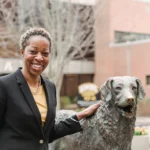
Earlier in the month, on the day when news rolled out about the appointment of UMBC’s next president, the woman who will take over for retiring president Freeman Hrabowski hopped a plane and made a surprise visit to Baltimore. Valerie Sheares Ashby, current dean of Duke University’s Trinity School of Arts & Sciences, may not officially start her role until August 1, but she’s already making a splash on campus.
“I showed up today, on the day of the announcement, because there was no way I was not going to show up in Freeman Hrabowski’s office to honor him,” Sheares Ashby told a group of campus leaders the morning of April 4th.
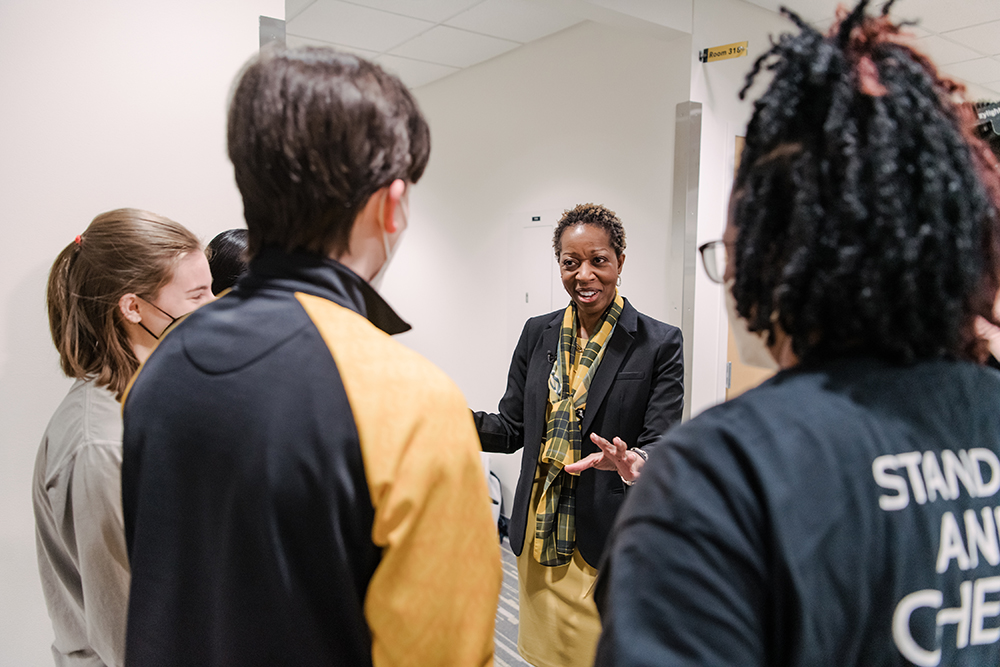
Sheares Ashby spent the rest of her two-day visit exploring campus and meeting students, faculty, staff, and civic leaders—much of the time with Hrabowski as her guide. With each new person she met, she shared her growing excitement about joining the UMBC community.
“It is a real honor,” she said. “The biggest compliment I have received today is, ‘Oh, this is perfect for you.’”
Here are some highlights from announcement week:
"I've been the first and only many times woman, the first person of color, the first woman person of color. I am accustomed to only and first, so it's the nature of the world is in which I live in," Valerie Sheares Ashby said. https://t.co/tNAzkLcXI2
— UMBC (@UMBC) April 6, 2022
“When I get nervous about following Freeman, I think, you know, they are already doing the work,” Valerie Sheares Ashby said. “It is well established what their principles and values are. And those are mine.” https://t.co/0UIG3pPR2o
— UMBC (@UMBC) April 4, 2022
Glad to see Dr. Ashby, UMBC's next president, is enjoying what will be her new view at #UMBC starting August 1! And you know it wouldn't be a visit with President Hrabowski without a quick selfie. pic.twitter.com/qLJutagdlR
— UMBC (@UMBC) April 5, 2022
Congratulations to Dr. Valerie Sheares Ashby and @UMBC. I am confident that Dr. Ashby will continue to uphold the university’s commitment to academic excellence and innovation and am excited about how she will lead the university forward. https://t.co/OEdCPqjjAF
— Speaker Adrienne A. Jones (@SpeakerAJones) April 4, 2022
Learn more about our incoming president and planned celebration events for President Hrabowski at president.umbc.edu.
Header image and portrait of Valerie Sheares Ashby with True Grit by Marlayna Demond ’11.
]]>
Earlier in the month, on the day when news rolled out about the appointment of UMBC’s next president, the woman who will take over for retiring president Freeman Hrabowski hopped a plane and made...
https://umbc.edu/stories/incoming-president-surprises-an-excited-campus/
https://my3.my.umbc.edu/api/v0/pixel/news/119443/guest@my.umbc.edu/5fbd4759009f60a92283bcc1b1a2860c/api/pixel
campus-life
umbc-history
webfeature
UMBC News & Magazine
https://my3.my.umbc.edu/groups/umbc-news-magazine
https://assets1-my.umbc.edu/system/shared/avatars/groups/000/001/943/24435aa6207c452e7bc15cc74b42c7bb/xsmall.png?1748556657
https://assets1-my.umbc.edu/system/shared/avatars/groups/000/001/943/24435aa6207c452e7bc15cc74b42c7bb/original.png?1748556657
https://assets2-my.umbc.edu/system/shared/avatars/groups/000/001/943/24435aa6207c452e7bc15cc74b42c7bb/xxlarge.png?1748556657
https://assets2-my.umbc.edu/system/shared/avatars/groups/000/001/943/24435aa6207c452e7bc15cc74b42c7bb/xlarge.png?1748556657
https://assets3-my.umbc.edu/system/shared/avatars/groups/000/001/943/24435aa6207c452e7bc15cc74b42c7bb/large.png?1748556657
https://assets1-my.umbc.edu/system/shared/avatars/groups/000/001/943/24435aa6207c452e7bc15cc74b42c7bb/medium.png?1748556657
https://assets2-my.umbc.edu/system/shared/avatars/groups/000/001/943/24435aa6207c452e7bc15cc74b42c7bb/small.png?1748556657
https://assets1-my.umbc.edu/system/shared/avatars/groups/000/001/943/24435aa6207c452e7bc15cc74b42c7bb/xsmall.png?1748556657
https://assets2-my.umbc.edu/system/shared/avatars/groups/000/001/943/24435aa6207c452e7bc15cc74b42c7bb/xxsmall.png?1748556657
UMBC News & Magazine
0
0
false
Wed, 20 Apr 2022 20:42:48 -0400
Wed, 20 Apr 2022 20:42:48 -0400
UMBC Responds to Putin’s War in Ukraine

On February 24, just one day after a Russian holiday celebrating the “defenders of the Fatherland,” Russian President Vladimir Putin ordered his military forces to invade Ukraine. The ensuing assault catalyzed a mass of destruction and action.
In the classroom of Kyiv-born Vira Zhdanovych, an instructor of Russian at UMBC, students are using their language skills to take in information from different perspectives. Zhdanovych notes that both her students and colleagues from the Department of Modern Languages, Linguistics, and Intercultural Communication (MLLI) reached out to her during the first days of the invasion and have been extremely supportive since.
“Like everyone, I have been very upset and confused by Putin’s invasion of Ukraine,” says Zhdanovych. “This was especially difficult for me because I am from Kyiv and have relatives who were forced to evacuate. Fortunately, my immediate family—my sister, niece and nephew—have made it out, though my brother-in-law remained behind to defend Kyiv. I also have many friends who are still in Kyiv and in surrounding areas and I worry about them each day.”
Additional faces and voices of those impacted have since risen to the surface through several virtual UMBC town halls that highlight Ukrainian American voices as well as faculty experts on the region.
UMBC professors and students share their expertise
In the early weeks following the initial invasion, UMBC’s Center for Social Sciences Scholarship, History Department, and the Political Science Department hosted a virtual discussion about the history leading up to the current crisis, as well as the political and economic impacts that it is having today on surrounding countries and globally. Present at the panel were Devin Hagerty and Brian Grodsky, professors of political science and affiliate faculty in Asian studies, and Mirjam Voerkelius, assistant professor of history. Joining them were three undergraduate students who shared their personal experiences and reactions to the current climate in Ukraine.
 Hagerty (standing) teaching a global studies course. All photos by Marlayna Demond ’11, unless otherwise noted.
Maria Kutishcheva ’24, political science and MLLI, shared that the conflict has had a devastating effect on her family. With relatives in both Ukraine and Russia, Kutishcheva talked about two sides of the crisis from a personal standpoint, mentioning the divisions that have been deepened by Russian propaganda. She ended her story on a compelling note: inaccurate portrayals of the war cannot keep up with reality, but Ukraine still needs our continued attention and support.
Although it can be difficult to absorb everything that has happened leading up to the crisis, the Retriever community is fortunate to have students and faculty who can provide insight on the subject. Many people, especially those with personal ties to the situation, have been deeply affected and wish to stay informed through their communities—a desire that was again met by UMBC’s second virtual discussion about Asia’s influence on the Russia-Ukraine War in mid-March.
Brian Carlson, head of the Global Security Team of the Think Tank at the Center for Security Studies, returning panelists Brian Grodsky and Devin Hagerty, and Meredith Oyen, associate professor of history and director of UMBC’s Asian studies program, led the discussion and helped answer attendees’ questions about global relations across Asia and Europe. Carlson opened up the discussion by describing Russia’s ties to China.
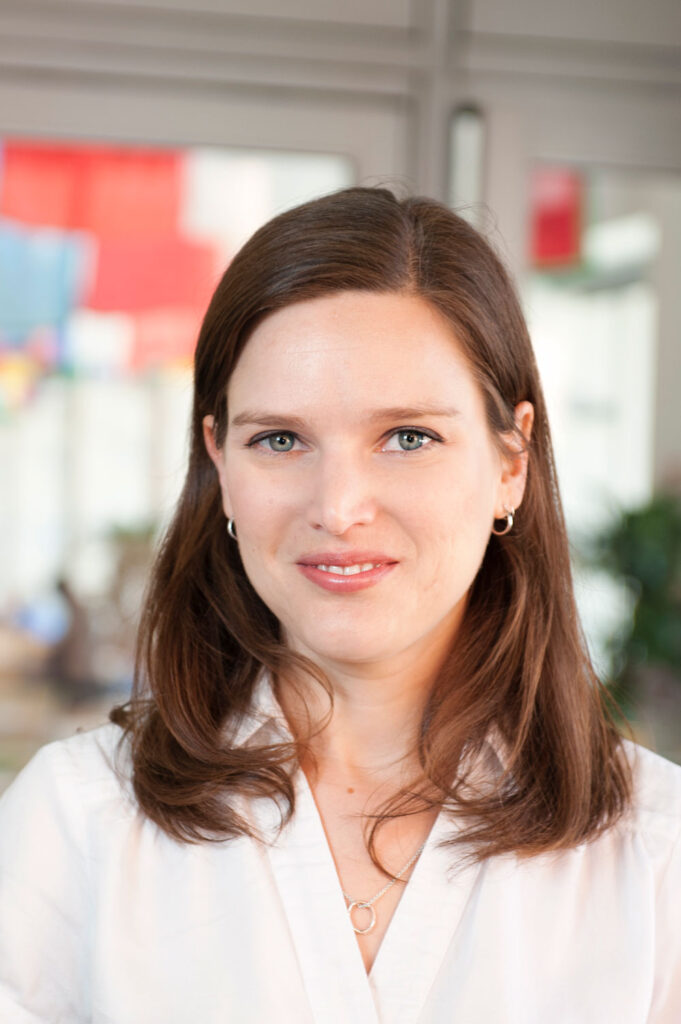 Meredith Oyen
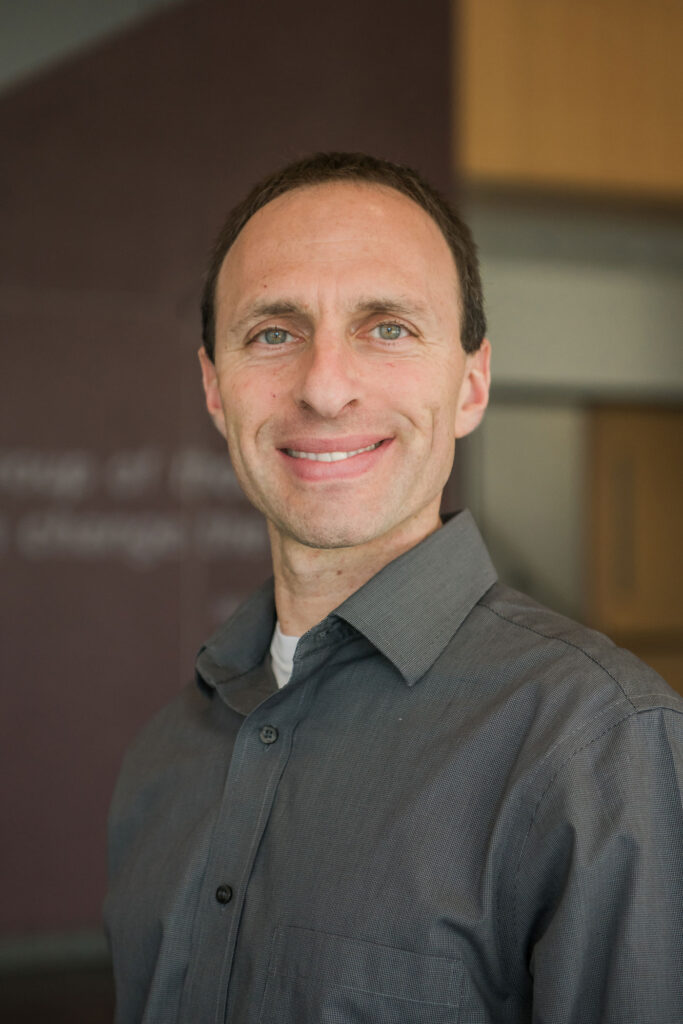 Brian Grodsky
“China has played an important, enabling role in Russia’s actions in Ukraine. China and Russia have built a close partnership based on a common desire to oppose the United States in aspects of the existing international order,” says Carlson. “In early February, just weeks before the invasion…they issued a joint declaration in which they said their partnership had no limits and there were no forbidden areas of cooperation.”
Although, he adds, “China has probably been surprised by the ineptitude of the invasion and by the fierceness of the Ukrainian resistance.”
Grodsky, the chair of the political science department, was next to share his expertise about Central Asia’s response, or lack thereof, to the Russian invasion of Ukraine. “Not surprisingly,” Grodsky notes, “Central Asia has been neutral in its reaction to the invasion. Russia expected a lot more support than it got, but this really reflects a long-standing foreign policy to balance stronger powers in the region.”
Grodsky, expanding on an earlier article he wrote about economic sanctions on Russia, added that economic links were becoming more difficult for Central Asian countries to maintain with Russia. These sanctions, he stated, would likely lead to political instability in the region.
Ongoing conversations provide support
Broad conversations about geographic implications of the Russian military aggression combined with personal stories of Ukrainian displacement and resistance are ongoing and they won’t end soon. Students, staff, and faculty, including Zhdanovych and those present at the panels, are speaking from personal and informational standpoints to put a face to the people who are struggling and fighting in Ukraine. But Zhdanovych points out that we also shouldn’t forget about those in Russia.
“I think that it is important to emphasize that not all Russians—particularly those in the U.S.—support this invasion. I know many, many Russians in the greater community and do not know of one who supports this invasion. I think of this as Putin’s invasion of Ukraine, rather than Russia’s invasion,” Zhdanovych says.
With this mindset moving forward, we can strive to build networks of support and to grow together as multiple communities all impacted by this crisis. Though the future ahead remains uncertain, there is strength in the voices and actions that stretch across and beyond UMBC.
UMBC supports Ukrainians: If you’re interested in supporting Ukrainian students, scholars, and artists at risk, UMBC’s Center for Global Engagement recommends giving to an established organization, like IIE.” In April, President Biden announced a new initiative to support Ukrainians. Welcome.us, an organization of which UMBC is a member, has created a new website that contains information about this initiative as well as various ways to help Ukrainians.
******
Header image: Photo on Pexel by Mathias P.R. Reding
]]>
On February 24, just one day after a Russian holiday celebrating the “defenders of the Fatherland,” Russian President Vladimir Putin ordered his military forces to invade Ukraine. The ensuing...
https://umbc.edu/stories/umbc-responds-to-putins-war-in-ukraine/
https://my3.my.umbc.edu/api/v0/pixel/news/119450/guest@my.umbc.edu/0e2495bac50e528fa14b7900a1369c39/api/pixel
asian-studies
campus-life
cge
cs3
history
magazine
mlli
political-science
russian
ukraine
webfeature
UMBC News & Magazine
https://my3.my.umbc.edu/groups/umbc-news-magazine
https://assets1-my.umbc.edu/system/shared/avatars/groups/000/001/943/24435aa6207c452e7bc15cc74b42c7bb/xsmall.png?1748556657
https://assets1-my.umbc.edu/system/shared/avatars/groups/000/001/943/24435aa6207c452e7bc15cc74b42c7bb/original.png?1748556657
https://assets2-my.umbc.edu/system/shared/avatars/groups/000/001/943/24435aa6207c452e7bc15cc74b42c7bb/xxlarge.png?1748556657
https://assets2-my.umbc.edu/system/shared/avatars/groups/000/001/943/24435aa6207c452e7bc15cc74b42c7bb/xlarge.png?1748556657
https://assets3-my.umbc.edu/system/shared/avatars/groups/000/001/943/24435aa6207c452e7bc15cc74b42c7bb/large.png?1748556657
https://assets1-my.umbc.edu/system/shared/avatars/groups/000/001/943/24435aa6207c452e7bc15cc74b42c7bb/medium.png?1748556657
https://assets2-my.umbc.edu/system/shared/avatars/groups/000/001/943/24435aa6207c452e7bc15cc74b42c7bb/small.png?1748556657
https://assets1-my.umbc.edu/system/shared/avatars/groups/000/001/943/24435aa6207c452e7bc15cc74b42c7bb/xsmall.png?1748556657
https://assets2-my.umbc.edu/system/shared/avatars/groups/000/001/943/24435aa6207c452e7bc15cc74b42c7bb/xxsmall.png?1748556657
UMBC News & Magazine
0
0
false
Tue, 12 Apr 2022 20:12:39 -0400
Tue, 12 Apr 2022 20:12:39 -0400
5 Tips to Help Preschoolers with Special Needs During the Pandemic

By Michele L. Stites, associate professor, Early Childhood Education, UMBC, and Susan Sonnenschein, professor, Applied Developmental Psychology, UMBC
Four months in reading. Five months in math. That’s how far children are behind where they should be for their grade level, according to a 2021 report that says the COVID-19 pandemic – and the transition to virtual learning – are to blame.
For young children in particular, parents report that opportunities for both academic and social emotional growth were lacking during the pandemic. But what is the effect of the pandemic on young children with disabilities, many of whom did not receive their federally mandated special education services as many schools shifted online?
As researchers who specialize in issues of education for young children with disabilities, we found that parents of such children are worried about the impact of virtual learning because of the lack of special education services, their own child’s inability to participate in virtual instruction, and the lack of opportunities for social emotional growth and development.
While we know that parents are very busy, based on our research, here are five things parents and caregivers of young children with disabilities can do to help bridge the gap caused by the pandemic and distance learning.
1. Communicate frequently with your child’s therapists and educators
In the years before COVID-19 it was common for teachers and therapists – such as speech pathologists, occupational therapists and the like – to initiate communication with families. But as the pandemic persists, educators face overwhelming staff shortages, constant COVID-19 outbreaks and children who have not been in traditional school settings for months on end in some cases.
Since school faculty and staff are overwhelmed, parents may need to take the lead when it comes to communication. Emailing teachers and therapists about your child’s progress is a good place to start. Meetings can be set up from there if needed.
2. Create opportunities to socialize with other children
Parents and psychologists have reported that missing out on opportunities for socialization is one of the biggest side effects of the pandemic. Consider reaching out to parents of your child’s classmates to set up small social gatherings where children can practice age-appropriate socialization skills, such as sharing and taking turns. Being COVID-19 responsible is important, so be sure to follow local safety guidelines.
You can also work with different advocacy groups like the Special Olympics to see what types of programs are available in your area.
3. Work on goals in the child’s individualized education program
A child’s individualized education program should outline the child’s strengths and weaknesses. The IEP should also include goals to support learning in all areas, such as language skills, social skills and the like.
Asking teachers and therapists about how those goals are being addressed at school can give parents ideas about how to naturally incorporate them into a child’s daily routine. For example, if a child is working on counting items one at a time, parents can count oranges at the grocery store or Goldfish crackers on a lunch plate.
4. Take a play-based approach to learning
Embedding learning into play allows parents to teach their child without the formality – and, let’s face it, dullness – of tools like flashcards and worksheets.
Reading and asking questions, playing games like Go Fish where children can identify colors and numbers, spraying a small amount of shaving cream on a flat surface and writing letters in it, and even counting snowballs can be used as learning opportunities.
5. Engage children in conversation
Providing young children opportunities to hear and practice language is critical for their learning. Taking time to talk with a young child is particularly important when the child has a disability. It is also important to give the child the needed time to answer questions. Parents can demonstrate responses for the child to repeat as necessary.
Incorporating some of these ideas into a daily routine can go a long way in bridging the gaps left in the wake of COVID-19 and virtual learning.
*****
Michele L. Stites, Associate Professor of Early Childhood Education, University of Maryland, Baltimore County
Susan Sonnenschein, Professor of Applied Developmental Psychology, University of Maryland, Baltimore County
Header image: Parents say there has been a lack of academic and social learning opportunities for children during the pandemic. SDI Productions/E+ via Getty Images
This article is republished from The Conversation under a Creative Commons license. Read the original article here.
]]>
By Michele L. Stites, associate professor, Early Childhood Education, UMBC, and Susan Sonnenschein, professor, Applied Developmental Psychology, UMBC Four months in reading. Five months in...
https://umbc.edu/stories/5-tips-to-help-preschoolers-with-special-needs-during-the-pandemic/
https://my3.my.umbc.edu/api/v0/pixel/news/119482/guest@my.umbc.edu/17f0c669788bdae69dd73659b6367499/api/pixel
discovery
early-childhood-education
magazine
psychology
the-conversation
webfeature
UMBC News & Magazine
https://my3.my.umbc.edu/groups/umbc-news-magazine
https://assets1-my.umbc.edu/system/shared/avatars/groups/000/001/943/24435aa6207c452e7bc15cc74b42c7bb/xsmall.png?1748556657
https://assets1-my.umbc.edu/system/shared/avatars/groups/000/001/943/24435aa6207c452e7bc15cc74b42c7bb/original.png?1748556657
https://assets2-my.umbc.edu/system/shared/avatars/groups/000/001/943/24435aa6207c452e7bc15cc74b42c7bb/xxlarge.png?1748556657
https://assets2-my.umbc.edu/system/shared/avatars/groups/000/001/943/24435aa6207c452e7bc15cc74b42c7bb/xlarge.png?1748556657
https://assets3-my.umbc.edu/system/shared/avatars/groups/000/001/943/24435aa6207c452e7bc15cc74b42c7bb/large.png?1748556657
https://assets1-my.umbc.edu/system/shared/avatars/groups/000/001/943/24435aa6207c452e7bc15cc74b42c7bb/medium.png?1748556657
https://assets2-my.umbc.edu/system/shared/avatars/groups/000/001/943/24435aa6207c452e7bc15cc74b42c7bb/small.png?1748556657
https://assets1-my.umbc.edu/system/shared/avatars/groups/000/001/943/24435aa6207c452e7bc15cc74b42c7bb/xsmall.png?1748556657
https://assets2-my.umbc.edu/system/shared/avatars/groups/000/001/943/24435aa6207c452e7bc15cc74b42c7bb/xxsmall.png?1748556657
UMBC News & Magazine
0
0
false
Fri, 28 Jan 2022 19:04:51 -0500
UMBC Softball: Full Steam Toward the ‘Three-peat’

As two-time reigning America East champions, the UMBC women’s softball team is eagerly awaiting the spring season. Following a promising preseason, teammates and coaches are confident and feel prepared to fight for their third America East Conference championship in a row.
Senior catcher and utility—a player who is capable of playing multiple positions—Karly Keating ’22, media and communication studies, remembers what it felt like to capture the conference championship in 2019, the program’s first since they joined America East in 2003. The Retrievers were expected to place last in the tournament. Instead, they upset number three Stony Brook in a thrilling championship match.
“UMBC was known for just not being good at softball. We were always ranked last in our conference every single year, like not even close to even be considered,” Keating said. So when they won the conference tournament, went to the NCAA Tournament selection room and saw they were facing Oklahoma—one of the best softball schools in the NCAA—in the first round, it was a total shock. “When you were a little girl, you knew that’s where the number one school is and you wanna go there, and now the fact that I was playing there was really awesome.”
The making of the team
Even though the team was ultimately defeated by Oklahoma, senior infielder Chloe Obispo ’22, media and communication studies, can’t stop thinking about their surreal win against Stony Brook. Since there was no pressure to win, they just played their game throughout the season and hoped to prove everyone wrong.
 The team celebrating their 2019 win together with Coach Kuhlmeyer. Photo from
 The Oklahoman
.
“We ended up playing in the conference tournament, and we just kept it day by day, every single game,” Obispo said. “We realized, ‘maybe we actually have a chance this season.’ We were supposed to be last, but it didn’t seem like we could be last at that point. [The win] was a surprise to everyone, including ourselves.”
Both players added that their recruiting class, the class of 2018, included players that filled some gaps in previous rosters. “My freshman year, we were close, but we were really just a bunch of good girls coming together,” said Keating. “And then as we went on, we just got a lot more gelled together and I think we just stayed really strong-minded throughout the whole season.”
Winning under pressure
The team’s new-found confidence fueled a great start to their 2020 season, and they racked up five wins until the season was canceled by COVID. Nonetheless, the team brushed it off, worked hard over the seven months of quarantine, returned for the 2021 season, and defended their title from 2019.
“We had to keep our heads high because we won the first time. I felt like a lot more people were coming for us since we basically shut out every team in the tournament last time. When we were working out, we kept in mind that we had to keep our crown, keep our ring,” Obispo said. “It was a lot of pressure, but it was definitely something that we could all handle together.”
Keating said that their second championship win felt just as shocking as the first, but the team had something more to prove. “We had to do it for ourselves, and to prove to us that we are what we preach.”
Ohana Means Family
The team culture revolves around the word “Ohana,” the Hawaiian word for family, said Obispo. This feeling of sisterhood and “no girl left behind” is what drew Obispo to the program, and what the team wanted to showcase in the 2021 regional game. They wanted to show their guts, their trust in each other, and feel like they accomplished something as a family rather than a team.
 The softball team with President Freeman Hrabowski at their last regional tournament in Tucson, Arizona. Photo from UMBC Softball’s Twitter.
“Our Ohana is what our culture and program is all about,” said head softball coach Chris Kuhlmeyer. “We cannot accomplish anything without each other. Choosing love, respect, unselfishness and forgiveness over pride, unforgiveness, and selfishness will lead you to places you never knew you could accomplish together. At the end of the day, when we say Ohana, we are choosing family over self and everyone else.”
To prepare for the Spring 2022 season, the team is working tirelessly to be prepared to defend their title. During the fall semester, they condition once a week on top of daily practices on the field and three weight room sessions per week.
The players are also focusing on accountability: making sure each teammate is using their time wisely, even if that means spending their day off at the cages to improve their hitting, or getting on the mound for a few hours to perfect their pitching.
Off the field, they also are strengthening their “Ohana” with team bonding exercises.
“My coach does this thing where he puts us in groups and we have to go out and do something, and he puts us in groups with different people,” said Obispo. “I think that’s something the team really needed because you play with a bunch of girls and it can get a little hectic sometimes, so sometimes we have to learn how to get along and know more about each other.”
Obispo feels that these exercises help the team bond and will “help overall chemistry, like there are days where we win really big games, it will feel a lot better internally, like we won this as a team.”
They also are working to find each girl’s “why.” Each player’s “why” is different, but once they find their own individual reason, it makes the team as a whole stronger because each player will play to their best ability, making each win more meaningful. Keating says that intrinsic motivation is what drives her to play well. She understands that this is her last chance to play softball at a high, competitive level, so she wants to make the most of it and leave it all on the field.
“After college, I can play in a beer league. People will have fun and it will be a good time, but you don’t care as much,” she said. “I’ll never get the chance to play with girls that genuinely love the sport again.”
 The team after they won their 2021 conference title. Photo by Ian Feldmann/UMBC Athletics.
For Obispo, the people around her are what motivates her to make the most of her opportunities. “I’ve worked so hard for my whole childhood to get to moments like this,” she said. “I really enjoy showing up to practice for the people around me and for the people at home, like my family.”
Looking toward the 2022 Season
The team is eager to defend their crown. Unlike previous seasons, they are no longer underdogs, but the team to beat.
“I’m very confident in this group that at the end, we will be right there with a shot at it,” Kuhlmeyer said of winning the conference championship. “This team is built different than previous years, but with the pieces we have added and the veteran experience we have returning, that gives me the confidence we will be there again at the end. My belief in this group of women is endless.”
“I’m so excited for the season. Not only because it’s my last season, but I think we really have the potential to win,” said Obispo. With a talented freshman class, the team can adapt to any situation. Each player works just as hard as the next to play their part and step up to fill in any gaps needed. That shows the team’s versatility, confidence in themselves, and their willingness to take chances in a pinch.
“I think we have a lot of guts and I think we all care a lot, I mean not just for our egos because we won back to back, but because we want to win, we want to play in the conference tournament, we want to go play that regional game,” Keating concluded. “We are very confident and we know our goals.”
— By Jordan Lomax ’22, media and communication studies
*****
Header image: UMBC Retrievers congratulate each other at the 2021 America East Championships. Photo by Marlayna Demond ’11.
]]>
As two-time reigning America East champions, the UMBC women’s softball team is eagerly awaiting the spring season. Following a promising preseason, teammates and coaches are confident and feel...
https://umbc.edu/stories/umbc-softball-full-steam-towards-the-three-peat/
https://my3.my.umbc.edu/api/v0/pixel/news/119488/guest@my.umbc.edu/0e97acff3861c24afd0c3409a542f154/api/pixel
athletics
campus-life
media-and-communication-studies
softball
webfeature
UMBC News & Magazine
https://my3.my.umbc.edu/groups/umbc-news-magazine
https://assets1-my.umbc.edu/system/shared/avatars/groups/000/001/943/24435aa6207c452e7bc15cc74b42c7bb/xsmall.png?1748556657
https://assets1-my.umbc.edu/system/shared/avatars/groups/000/001/943/24435aa6207c452e7bc15cc74b42c7bb/original.png?1748556657
https://assets2-my.umbc.edu/system/shared/avatars/groups/000/001/943/24435aa6207c452e7bc15cc74b42c7bb/xxlarge.png?1748556657
https://assets2-my.umbc.edu/system/shared/avatars/groups/000/001/943/24435aa6207c452e7bc15cc74b42c7bb/xlarge.png?1748556657
https://assets3-my.umbc.edu/system/shared/avatars/groups/000/001/943/24435aa6207c452e7bc15cc74b42c7bb/large.png?1748556657
https://assets1-my.umbc.edu/system/shared/avatars/groups/000/001/943/24435aa6207c452e7bc15cc74b42c7bb/medium.png?1748556657
https://assets2-my.umbc.edu/system/shared/avatars/groups/000/001/943/24435aa6207c452e7bc15cc74b42c7bb/small.png?1748556657
https://assets1-my.umbc.edu/system/shared/avatars/groups/000/001/943/24435aa6207c452e7bc15cc74b42c7bb/xsmall.png?1748556657
https://assets2-my.umbc.edu/system/shared/avatars/groups/000/001/943/24435aa6207c452e7bc15cc74b42c7bb/xxsmall.png?1748556657
UMBC News & Magazine
0
0
false
Tue, 18 Jan 2022 20:39:42 -0500
Jules Rosskam’s Desire Lines awarded a 2021 Creative Capital prize

Filmmaker Jules Rosskam, assistant professor in the Department of Visual Arts at UMBC, was awarded a prestigious Creative Capital Award in 2021 to support production of his new feature film, Desire Lines.
One of the most sought-after prizes in the art world, each year Creative Capital distributes awards to artists to fuel significant projects. Creative Capital recipients are a who’s-who of the art world, including artists like Wu Tsang, Cassils, Barbara Hammer, and Meredith Monk receiving up to $50,000 to fund new works. In 2021, 42 artists and 35 projects spanning all disciplines were awarded Creative Capital awards.
Building on Rosskam’s body of work devoted to examining liminal spaces—the margins inhabited by trans people and artists blurring boundaries in genre and method—Desire Lines explores the ways that trans men emerge into gay sexual attractions during transition, and the ways that these narratives have historically been suppressed.
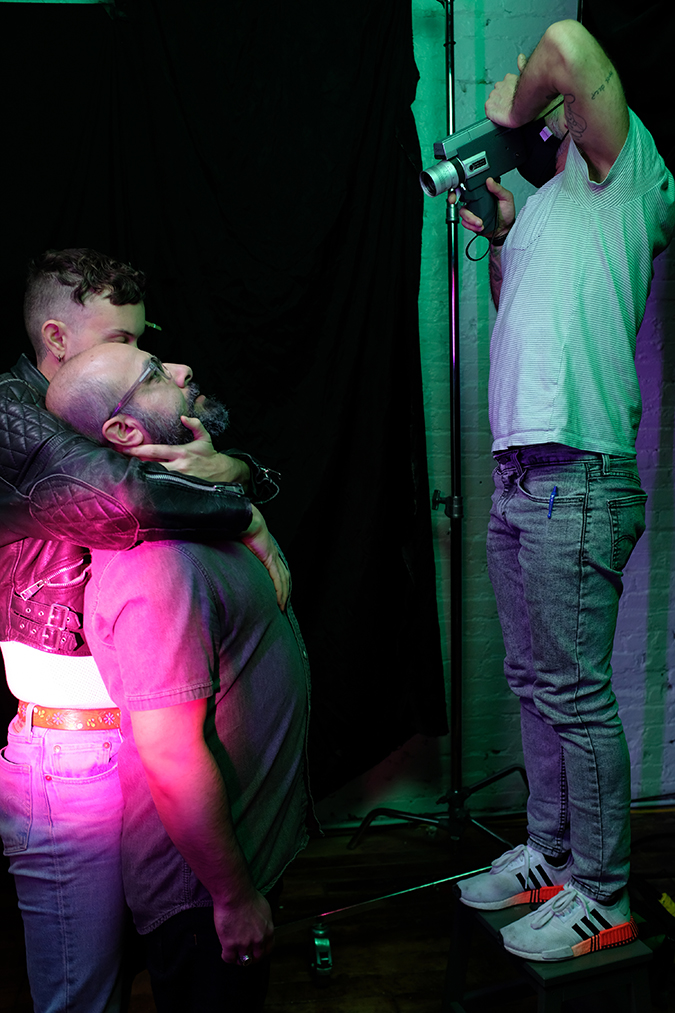 Behind the scenes, filming Desire Lines, Jules Rosskam (top right), Aden Hakimi, and Cyd Nova; photographer Emilia Aghamirzai.
Examining the Margins
“Trans people, people of color, queer people, we are so often written out of history, and [struggle] through those silences, and institutions not feeling like our lives are worth documenting,” Rosskam says.
According to the 2015 U.S. Transgender Survey, 23 percent of trans people identify as exclusively gay/lesbian, with 48 percent identifying as queer or bisexual. Only 23 percent of trans people define themselves as heterosexual—meaning that trans men attracted to other men is a common experience, even though the histories of this phenomenon have been hidden.
“The impetus is that for the last 20 years I’ve been watching the trans community, and seeing when folks come out as trans men and develop an attraction for other men. It’s felt like no one was having, like, a meaningful dialogue about it, and I, honestly, for the last 10 years have been waiting for someone else to make the film about this,” says Rosskam. “Finally, I said, okay, I’ve been thinking about this for 20 years, I think I have to make a film about it.”
Desire Lines centers its narrative on a gay-identified trans man seeking information on these hidden histories and begins the search by delving into researching archives.
“I think many trans and queer people can relate to searching for evidence of their own existence,” says Rosskam. “We go with him into this archive, and engage a lot of different material about trans masculinity and queer culture and bathhouses—and find people like Lou Sullivan, who, to the best of our knowledge, was the first gay-identified trans man in North America.”
Indeed, Lou Sullivan looms as a significant historical transgender figure. Sullivan, who died in 1991 from AIDS-related complications, left behind 30 years of diaries detailing his transitional journey, and these diaries were published to great fanfare in 2019. A pair of recent short films have helped elevate greater awareness of Sullivan’s life.
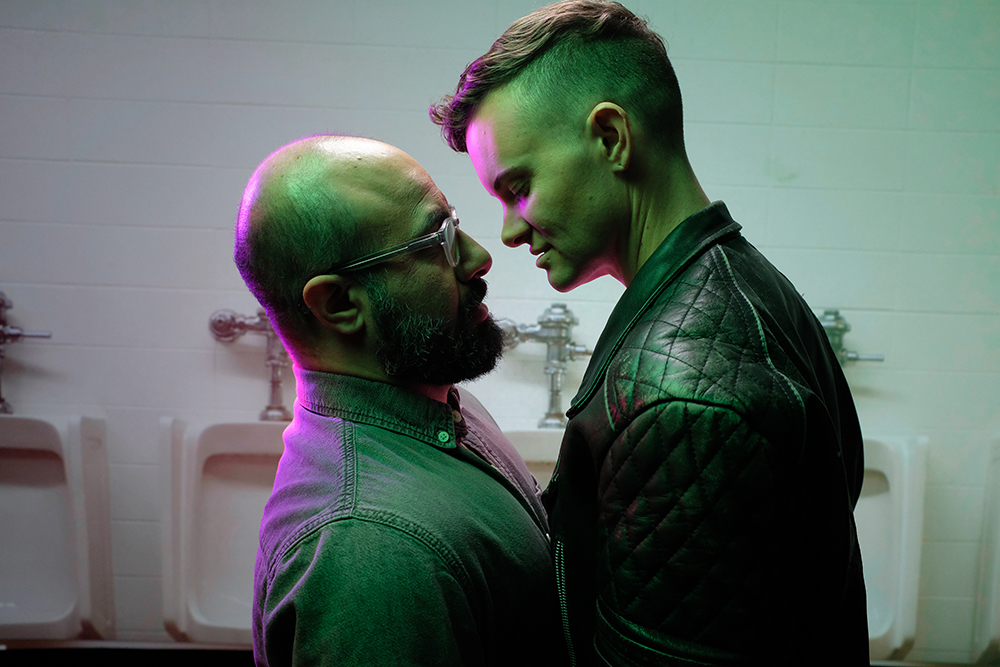 Aden Hakimi (as Ahmad) and Cyd Nova (as Stranger) in Desire Lines, photographer Emilia Aghamirzai
Hybrid storytelling
While Rosskam brings Sullivan into the picture, Desire Lines resists the urge to become a traditional documentary.
“I typically describe my work as experimental nonfiction. I am almost always working in a hybrid space between fiction and nonfiction, because that to me feels very trans, and I think it’s important in the work to unsettle that line. People think the line between fiction and reality is so clear—when in fact, it’s not,” Rosskam says, indicating that speculative fiction methods play into the film’s narrative.
“In the process of our character researching his own existence, he writes himself into history. Throughout the film, he actually creates evidence of his own existence by simply engaging with the past. And so it begs this question about the ways I think trans people experience time in a nonlinear fashion, where the past is always influencing the present. We have to be able to imagine ourselves into existence in order to exist. It’s about the power of fantasy and desire to make real,” says Rosskam. “The space that the film exists in is both a kind of hybrid space of an archive, and a bath house.”
While bath houses may seem like a distant memory for some, they remain a significant site of community building for many gay-identified people, including trans men.
“In those early conversations I was having with people, I was rather surprised to find out how many of them talked about going to gay bath houses, and how big of a role going to the bath house had played, like coming to accept their bodies as trans men. It’s a place where many men go to have sex with other men, trans or cis, but it’s also a community space where people would connect.”
The bath house also looms as a sort of archive in Rosskam’s perspective, providing communication of intergenerational experience.
“As queer and trans people, our histories are generally passed from person to person, and there’s a lot of emphasis on intergenerational relationships, and so younger people really are learning how to be themselves through close contact with people who are older than them. As a trans masculine person. I know a lot of young trans people, but I personally know [only] two transmasculine people who are over the age of 60. I don’t feel like I ever got that mentorship from older trans people.”
Desire Lines is currently in production, with documentary footage being shot in Chicago this winter and an expected release date of early 2024.
******
Header Image: Omi Ford (as Keiran) in Desire Lines, photographer Emilia Aghamirzai.
]]>
Filmmaker Jules Rosskam, assistant professor in the Department of Visual Arts at UMBC, was awarded a prestigious Creative Capital Award in 2021 to support production of his new feature film,...
https://umbc.edu/stories/jules-rosskams-desire-lines-awarded-a-2021-creative-capital-prize-3/
https://my3.my.umbc.edu/api/v0/pixel/news/119491/guest@my.umbc.edu/50f05364899438e2d0004154671c7532/api/pixel
cahss
discovery
visual-arts
webfeature
UMBC News & Magazine
https://my3.my.umbc.edu/groups/umbc-news-magazine
https://assets1-my.umbc.edu/system/shared/avatars/groups/000/001/943/24435aa6207c452e7bc15cc74b42c7bb/xsmall.png?1748556657
https://assets1-my.umbc.edu/system/shared/avatars/groups/000/001/943/24435aa6207c452e7bc15cc74b42c7bb/original.png?1748556657
https://assets2-my.umbc.edu/system/shared/avatars/groups/000/001/943/24435aa6207c452e7bc15cc74b42c7bb/xxlarge.png?1748556657
https://assets2-my.umbc.edu/system/shared/avatars/groups/000/001/943/24435aa6207c452e7bc15cc74b42c7bb/xlarge.png?1748556657
https://assets3-my.umbc.edu/system/shared/avatars/groups/000/001/943/24435aa6207c452e7bc15cc74b42c7bb/large.png?1748556657
https://assets1-my.umbc.edu/system/shared/avatars/groups/000/001/943/24435aa6207c452e7bc15cc74b42c7bb/medium.png?1748556657
https://assets2-my.umbc.edu/system/shared/avatars/groups/000/001/943/24435aa6207c452e7bc15cc74b42c7bb/small.png?1748556657
https://assets1-my.umbc.edu/system/shared/avatars/groups/000/001/943/24435aa6207c452e7bc15cc74b42c7bb/xsmall.png?1748556657
https://assets2-my.umbc.edu/system/shared/avatars/groups/000/001/943/24435aa6207c452e7bc15cc74b42c7bb/xxsmall.png?1748556657
UMBC News & Magazine
0
0
false
Mon, 10 Jan 2022 17:15:38 -0500
 Parenting didn’t stop when the pandemic started. kali9/E+ via Getty Images
 Many Black mothers were front-line workers who couldn’t heed the message on Chicago Mayor Lori Lightfoot’s mask in the early days of the pandemic. AP Photo/Nam Y. Huh
 None of the Black moms in the study went to the protests George Floyd’s death spurred in 2020. Natasha Moustache/Getty Images News via Getty Images
 Homes without enough diapers were also more likely to have depression and chronic illness among family members.