The Original Firesoul: Mary Wyatt ’74, American Studies

 When Mary Wyatt ’74, American studies, was a little girl, she loved to retreat to a secret space in her backyard. There, in a patch of grass surrounded by a grove of apple trees, she spent lazy summer days lying on her back and gazing up at the passing clouds. Flash forward to the present day, where the concept behind Wyatt’s favorite childhood ritual – connecting to nature in a ‘sacred’ space – plays a central role in the organization for which she serves as executive director.
While the parallels between Wyatt’s favorite childhood indulgence and her current job may be pure coincidence, she insists that the ties between her education at UMBC and her professional life are not. As an American studies major, Wyatt indulged in an array of interests – literature, history, music, sociology, art, pop culture – all related to the experience of being an American.
“It infected me with a desire to do something with my life that would really make a difference – in a place where I could actually make a ripple, here in America,” she says.
Although it would be almost two decades and a number of jobs (including positions in property management in Annapolis and in finance with the Rouse Company), Wyatt never lost sight of her aspiration.
In 1992, after a hiatus from the workplace to take care of her children, Wyatt decided she was ready to return to the workforce full-time. A quirky job advertisement in a local newspaper caught her eye. It began: “Renaissance man seeking assistant with good communication skills…”
Wyatt found herself employed by Tom and Kitty Stoner, husband and wife entrepreneurs interested in launching a private foundation whose focus, when Wyatt met them, wasn’t entirely clear. “They knew they wanted to do something that had to do with the environment, and the healing power of nature,” she says.
For the next few years, Wyatt and her new employers researched established foundations whose goals and objectives they respected. Then, they went on a weekend-long retreat in Vermont. In a whirlwind brainstorming session, the three of them drafted a mission statement, a vision statement, and a business plan for what would become the TKF Foundation.
The TKF Foundation, a private grant-making foundation, formed in 1996 on the premise of inspiring and creating “open spaces, sacred places” – open, that is, to people from every culture, religion, and economic background, explains Wyatt.
Since its launch, the TKF Foundation has funded over 100 “open spaces, sacred places” projects and supported scores of neighborhood-level greening projects in Baltimore, Anne Arundel County, and Washington, D.C. Of the many proposals it receives annually, the foundation chooses organizations that best share its vision: the creation of ‘sacred spaces’ for the purpose of facilitating an increased sense of community and deepening human connections.
At the helm of each of these projects is someone the TKF Foundation considers a “firesoul,” a person whose passion and vision serve as the driving forces behind the creation of a public green space where users might find respite, even an antidote, to an otherwise stressful and sometimes isolating world. “We look for kindred spirits,” Wyatt says.
Though Wyatt resists naming a favorite sacred space, she believes some of the foundation’s projects have made a considerable impact on their target communities.
One is a garden recently created at the Maryland Correctional Institute at Jessup. “To see these guys in prison grow something from seed, it’s amazing,” Wyatt says.
Another TKF-funded project Wyatt finds particularly inspirational is a garden in the unassuming fenced backyard of a rowhouse on Baltimore City’s Belvedere Avenue, which houses the nonprofit Advocates for Survivors of Torture and Trauma. “They get here [to Baltimore], find a room somewhere, and are afraid to come out. This helps them reinvent their lives,” says Wyatt, noting that the garden not only has brought some clients out of hiding, but also has encouraged them to grow vegetables they once ate in their native lands.
Having established over 100 thriving sacred spaces regionally for diverse clients – hospitals, schools, jails and beyond – the TKF Foundation is now embarking on its next and perhaps final phase.
In addition to continuing to support existing regional partners through 2015, the foundation plans to fund up to five new sacred spaces nationwide. Each of these projects would serve as a demonstration and research site to study the impact of nature on the human spirit.
“The research will prove what we [at TKF] believe – that nature is sacred,” Wyatt says.
— Elizabeth Heubeck ’91
]]>
When Mary Wyatt ’74, American studies, was a little girl, she loved to retreat to a secret space in her backyard. There, in a patch of grass surrounded by a grove of apple trees, she spent lazy...
https://umbc.edu/stories/the-original-firesoul-mary-wyatt-74-american-studies/
https://my3.my.umbc.edu/api/v0/pixel/news/124644/guest@my.umbc.edu/12ab3d181a2edabe5e87b11cdf2b69f7/api/pixel
alumni
mary-wyatt
umbc
umbc-magazine
winter-2011
UMBC News & Magazine
https://my3.my.umbc.edu/groups/umbc-news-magazine
https://assets1-my.umbc.edu/system/shared/avatars/groups/000/001/943/24435aa6207c452e7bc15cc74b42c7bb/xsmall.png?1748556657
https://assets1-my.umbc.edu/system/shared/avatars/groups/000/001/943/24435aa6207c452e7bc15cc74b42c7bb/original.png?1748556657
https://assets2-my.umbc.edu/system/shared/avatars/groups/000/001/943/24435aa6207c452e7bc15cc74b42c7bb/xxlarge.png?1748556657
https://assets2-my.umbc.edu/system/shared/avatars/groups/000/001/943/24435aa6207c452e7bc15cc74b42c7bb/xlarge.png?1748556657
https://assets3-my.umbc.edu/system/shared/avatars/groups/000/001/943/24435aa6207c452e7bc15cc74b42c7bb/large.png?1748556657
https://assets1-my.umbc.edu/system/shared/avatars/groups/000/001/943/24435aa6207c452e7bc15cc74b42c7bb/medium.png?1748556657
https://assets2-my.umbc.edu/system/shared/avatars/groups/000/001/943/24435aa6207c452e7bc15cc74b42c7bb/small.png?1748556657
https://assets1-my.umbc.edu/system/shared/avatars/groups/000/001/943/24435aa6207c452e7bc15cc74b42c7bb/xsmall.png?1748556657
https://assets2-my.umbc.edu/system/shared/avatars/groups/000/001/943/24435aa6207c452e7bc15cc74b42c7bb/xxsmall.png?1748556657
UMBC News & Magazine
0
0
false
Thu, 24 Feb 2011 16:02:58 -0500
Choosing Public Service: Kaliope Parthemos ’93, Psychology

 Back in 2001, Kaliope Parthemos ’93, psychology, got some career advice that has resonated with her over a decade of public service.
Parthemos was clerking for Baltimore Judge John C. Themelis at the time, and she recalls that he turned to her one day and said: “You belong in the courtroom and you belong as an advocate. Don’t be one of those people who talks about how things should be done, but has never actually worked it and lived it. You know the people. You understand the people. Go fight for the people.”
As Baltimore City Deputy Mayor of Economic and Neighborhood Development, Parthemos is now engaged in that advocacy every day. She oversees 17 city agencies, addressing issues from transportation to tourism to the arts – a great fit given her keen appreciation of Baltimore’s cultural institutions and its underground art and music scene. Some of her current projects – including a “Vacants to Value” housing initiative and a push for “healthy food zones” to transform some of Baltimore’s food deserts – have tackled deep-rooted challenges to Baltimore’s public health and safety.
Parthemos sees her own career trajectory as very individual – based on opportunity as much as her longstanding interest in social issues and her passion to serve the needs of Baltimore’s children. After graduating from UMBC and working as a social service caseworker in Baltimore, she took a law degree at the University of Maryland School of Law.
Having grown up in the Baltimore City public school system, she saw her subsequent job as a public defender focusing on juvenile law as a way to effectively serve Baltimore’s youth. When Parthemos left the public defender’s office in 2006, she intended to start her own practice, but public service beckoned again when Stephanie Rawlings-Blake – a friend and colleague who served on Baltimore’s City Council and eventually became mayor in 2010 – recruited her to work in the city’s administration. Reflecting on her time at UMBC, Parthemos says that her experiences with Choice – a UMBC/Shriver Center program that offers youth in Maryland’s juvenile justice system a wide array of resources, counseling, employment skills development, educational support, and after-school and weekend activities – gave her an opportunity to witness first-hand the struggles that many of Baltimore’s children face when unfairly dealt a tough deck in life.
Parthemos’ work with Choice and the Department of Social Services has informed her approach to serving the needs of Baltimore’s children and other residents while also managing the city’s unprecedented budget problems.
“When we came into office we had a $120 million budget deficit,” notes Parthemos. One of her first tasks was negotiating with area non-profit organizations, hospitals, colleges and universities on a controversial “bed tax” to help plug the budget gap. She attributes the success of that effort, which the Daily Record reported will net the city $20.4 million over six years, to balancing the needs of these groups and their value to the city with the need for new revenue.
Parthemos is now enmeshed in another difficult budgetary challenge: assessing how to spend the city’s limited recreation funds to best serve city children. “They don’t deserve a building that’s basically glued together and only has one person at the door that’s basically just allowing kids to come in, with no actual structured activities in place for them,” she says. “What we’re hoping to do is have a smaller number of recreation centers… but ensuring that the kids have a safe environment with structured activities.”
Parthemos says that her training as a lawyer and the educational experiences that enabled her to make friends from different socioeconomic and cultural backgrounds has been a key to meeting the challenges she faces in city government. She laments that some Baltimore residents do not have such opportunities to meet people outside of their own circles: “It strikes me really profoundly… how limiting that is to one’s ability to grow and one’s ability to see something through someone else’s eyes.” Being an effective public servant, she says, means “understanding the city of Baltimore, understanding the people, understanding the struggles that people have on a daily basis.” It also means combining awareness of those challenges with knowledge about how government agencies “interact with one another in order to create the services and systems that Baltimore City residents require and should have.”
— Dinah Winnick
]]>
Back in 2001, Kaliope Parthemos ’93, psychology, got some career advice that has resonated with her over a decade of public service. Parthemos was clerking for Baltimore Judge John C. Themelis...
https://umbc.edu/stories/choosing-public-service-kaliope-parthemos-93-psychology/
https://my3.my.umbc.edu/api/v0/pixel/news/124645/guest@my.umbc.edu/59f81f7f2c969cb81e0498613a1e59a6/api/pixel
alumni
kaliope-parthemos
umbc
umbc-magazine
winter-2011
UMBC News & Magazine
https://my3.my.umbc.edu/groups/umbc-news-magazine
https://assets1-my.umbc.edu/system/shared/avatars/groups/000/001/943/24435aa6207c452e7bc15cc74b42c7bb/xsmall.png?1748556657
https://assets1-my.umbc.edu/system/shared/avatars/groups/000/001/943/24435aa6207c452e7bc15cc74b42c7bb/original.png?1748556657
https://assets2-my.umbc.edu/system/shared/avatars/groups/000/001/943/24435aa6207c452e7bc15cc74b42c7bb/xxlarge.png?1748556657
https://assets2-my.umbc.edu/system/shared/avatars/groups/000/001/943/24435aa6207c452e7bc15cc74b42c7bb/xlarge.png?1748556657
https://assets3-my.umbc.edu/system/shared/avatars/groups/000/001/943/24435aa6207c452e7bc15cc74b42c7bb/large.png?1748556657
https://assets1-my.umbc.edu/system/shared/avatars/groups/000/001/943/24435aa6207c452e7bc15cc74b42c7bb/medium.png?1748556657
https://assets2-my.umbc.edu/system/shared/avatars/groups/000/001/943/24435aa6207c452e7bc15cc74b42c7bb/small.png?1748556657
https://assets1-my.umbc.edu/system/shared/avatars/groups/000/001/943/24435aa6207c452e7bc15cc74b42c7bb/xsmall.png?1748556657
https://assets2-my.umbc.edu/system/shared/avatars/groups/000/001/943/24435aa6207c452e7bc15cc74b42c7bb/xxsmall.png?1748556657
UMBC News & Magazine
0
0
false
Thu, 24 Feb 2011 16:01:00 -0500
Building Relationships: Diane Bell-McKoy ’73, Sociology
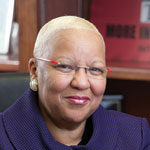
 In an office on Chase Street in Baltimore, a fiery one-woman pep rally for a young African-American professional is under way.
Diane Bell-McKoy ’73, sociology, is holding forth on the necessity of building as many business alliances as this young woman can, regardless of whether or not she knows precisely where her career is headed. Bell-McKoy is emphatic for a reason. She is determined to see young African-American professionals succeed in the workplace. And she knows first-hand that the strategy she espouses works.
Bell-McKoy credits her long-term career success with her own ability to choose mentors carefully and to build business relationships. Judging by her resume – which includes a stint as a senior fellow at the Annie E. Casey Foundation, a 10-year tenure as president and CEO of Empower Baltimore Management Corporation, and her current position as president and CEO of Associated Black Charities (ABC) – it’s fair to say the tactic has proven effective.
“I would not be where I am today without a host of mentors. I learned early on to go after them,” says Bell-McKoy, who counts former Baltimore Mayor Kurt Schmoke; acclaimed developer James Rouse; and Joseph Haskins, Jr., President and Chief Executive Officer of Harbor Bank of Maryland as some of the many professionals who have guided her career.
Bell-McKoy has always had a knack for making alliances with like-minded thinkers. She found plenty of them at UMBC. Bell-McKoy notes that many of these peers in her time at UMBC later went on to make up the ‘Who’s Who’ of local African American professionals, including David W. Young ’74, sociology, associate judge for Baltimore City Circuit Court and James Wiggins ’75, political science, a lawyer in private practice.
“They [the university’s administration] referred to us as the UMBC Mafia,” Bell-McKoy recalls with a wry smile, explaining that she and her college friends were not averse to challenging the administration when they wanted to effect change on campus. “My friends from UMBC were a great source of support, and provided lots of conversation about issues,” she says.
Conversations in the classroom fed those in the dormitory and beyond. “UMBC helped me develop critical thinking skills,” says Bell-McKoy, adding that UMBC was the first place she attended where learning to problem solve came from critical thinking and deconstruction of issues.
It is on these premises that Bell-McKoy has advanced her career. Most recently, that growth has taken shape at ABC, a 25-year-old public foundation in Baltimore that seeks to close the gap in economic and health disparities among Maryland’s African-American communities, thereby boosting the entire state’s vitality.
Bell-McKoy admits she eyed the job of president and CEO of ABC for quite some time, but doesn’t regret waiting to take the top spot there. “I have developed a huge set of relationships in this region,” she says. “I needed those relationships to move this organization forward.”
Since taking the reins at ABC four years ago, Bell-McKoy has used her vision and connections to shift the foundation away from its origins as a direct service provider. “It’s much more effective to be a broker, a grant maker, a public policy advocate,” she says.
Bell-McKoy also narrowed the foundation’s focus, shaving it down from a broad swath of issues concerning African-American communities. “Our two core focuses now are health and wealth disparities. We need to close those gaps to have a vibrant state,” Bell-McKoy says.
One of ABC’s primary wealth-building initiatives, dubbed More in the Middle, seeks to retain, grow, and attract middle-income African-American residents throughout Maryland. ABC is concentrating on five core investment areas: higher education, workforce development, homeownership and foreclosure prevention, business and economic development, and asset building.
Of these investment areas, ABC is honing in on workforce development at present. ABC is choosing up to ten area African-American-owned businesses it sees as potentially prolific job engines as pilot companies, which it will then pair with larger more established organizations which will act as mentors. It’s a chance for Bell-McKoy to adapt her personal reliance on relationship-building and mentoring to a larger stage.
One might think that after 35 years of forging business relationships of her own, Bell-McKoy would be ready to think about retirement. So what keeps her in the fray? Bell-McKoy responds candidly: “I have to make sure I develop a pipeline.”
— Elizabeth Heubeck ’91
]]>
In an office on Chase Street in Baltimore, a fiery one-woman pep rally for a young African-American professional is under way. Diane Bell-McKoy ’73, sociology, is holding forth on the necessity...
https://umbc.edu/stories/building-relationships-diane-bell-mckoy-73-sociology/
https://my3.my.umbc.edu/api/v0/pixel/news/124646/guest@my.umbc.edu/0e94dad763b7effcb20cc5cc78e71adc/api/pixel
alumni
umbc
umbc-magazine
winter-2011
UMBC News & Magazine
https://my3.my.umbc.edu/groups/umbc-news-magazine
https://assets1-my.umbc.edu/system/shared/avatars/groups/000/001/943/24435aa6207c452e7bc15cc74b42c7bb/xsmall.png?1748556657
https://assets1-my.umbc.edu/system/shared/avatars/groups/000/001/943/24435aa6207c452e7bc15cc74b42c7bb/original.png?1748556657
https://assets2-my.umbc.edu/system/shared/avatars/groups/000/001/943/24435aa6207c452e7bc15cc74b42c7bb/xxlarge.png?1748556657
https://assets2-my.umbc.edu/system/shared/avatars/groups/000/001/943/24435aa6207c452e7bc15cc74b42c7bb/xlarge.png?1748556657
https://assets3-my.umbc.edu/system/shared/avatars/groups/000/001/943/24435aa6207c452e7bc15cc74b42c7bb/large.png?1748556657
https://assets1-my.umbc.edu/system/shared/avatars/groups/000/001/943/24435aa6207c452e7bc15cc74b42c7bb/medium.png?1748556657
https://assets2-my.umbc.edu/system/shared/avatars/groups/000/001/943/24435aa6207c452e7bc15cc74b42c7bb/small.png?1748556657
https://assets1-my.umbc.edu/system/shared/avatars/groups/000/001/943/24435aa6207c452e7bc15cc74b42c7bb/xsmall.png?1748556657
https://assets2-my.umbc.edu/system/shared/avatars/groups/000/001/943/24435aa6207c452e7bc15cc74b42c7bb/xxsmall.png?1748556657
UMBC News & Magazine
0
0
false
Thu, 24 Feb 2011 15:53:57 -0500
Man (of the) Walking Dead: Arnold Blumberg ’93, English

 Zombies have been multiplying rapidly in our popular consciousness in recent years. Whether it’s the high drama of AMC’s new television hit The Walking Dead or the high comedy of Seth Grahame-Smith’s Jane Austen parody Pride and Prejudice and Zombies, the dead aren’t just walking, but marching on popular culture. Arnold T. Blumberg ’93, English, thinks a lot about zombies and pop culture. He’s written a book – Zombiemania – about the phenomenon and even teaches a course on zombies in media at the University of Baltimore. (He’s also written widely and taught on other topics in popular culture, including Doctor Who and comic books.) So why are zombies worth a scholar’s attention? Professor Blumberg clues us in:
When you say the word “zombie,” you get predictably strong reactions. We’re more fascinated with all those shambling (or running), undead (or alive), flesh- (or brain-) eating hordes of zombies (or “walkers”… you get the idea) than ever before. They’ve arguably even passed their vampire cousins in the zeitgeist. But why am I teaching a course about them?
For me it began with a VHS box cover in a shadowy corner of the local video rental store in the early ’80s. Anyone of a certain age who was steeped in genre entertainment – especially horror – will remember the skull-faced monstrosity on the box, worms wriggling in one eye socket, and below that nightmarish visage and a chilling tagline (“We are going to eat you!”) one word in bright red letters:
Zombie.
I never actually saw the film back then. Only the cover. But it was enough to convince me that one day I just had to watch that movie. Until then, I contented myself with Night of the Living Dead, Re-Animator and countless other zombie romps that were just one part of my lifetime diet of comics, science fiction and horror entertainment. As the years passed, that box cover image became a standard, worn proudly by the horror fan community on countless black t-shirts. Ol’ Worm-Eye was everywhere. But why?
Step two came in my freshman year at UMBC, when I met fellow pop culture enthusiast Andy Hershberger ’99, American studies. Years later, we wrote an exhaustive guide to zombie cinema, Zombiemania. While working on that book, I realized just how varied and complex the genre truly was. When the opportunity arose to help the University of Baltimore launch its new pop culture minor with a course that could take my interest in zombies to the next level, I jumped – not shambled or shuffled – at the chance.
So why are we fascinated with zombies? On one level, what we’re really asking is why we are so fascinated with death. Zombies are the embodiment of life’s ultimate mystery, the terrifying and inexorable certainty of an end to our existence arriving prematurely to torment and claim us.
But there’s more to it than that. “Zombie” has become an umbrella term that grew out of western culture’s first exposure to the Voudoun traditions of the West Indies and now encompasses a wide range of similar fantasy creatures, living and dead and everything in between. They are one of the most direct and potent reflections of where we are at any given time as a people, as a culture – what we think, feel and fear. They’re our family, our friends, even ourselves.
Today, the zombie tends to embody our fears of terrorism, of the collapse of society following insidious attack from without and within, and the idea of widespread viral infection or contagion. However, the zombie is a constantly evolving symbol that has shown us how we feel about other religious traditions, how we respond to military conflict, and how we address our own natural drive to survive when faced with insurmountable obstacles. As anyone watching the new TV series The Walking Dead can understand, zombies often form the backdrop for an exploration of morality, ethics, racial and gender issues, and other fundamental aspects of our “civilized” society.
And what’s the value of a college course in zombies? In one important respect, zombies are not the point. As educators, it is not just our duty to prepare young people to pursue a trade and build a career. We need to give them the tools they require not just to build computers or cars or homes, but to interpret the torrent of media that bombards them from every direction on a daily basis. Students should become intelligent, informed consumers of that media, rather than allow its often-manipulative messages to shape their identities. If we fail, we will raise generations of passive workers with no ability to think for themselves. And if the process of learning to sift through and analyze those media messages means having some fun as well, where’s the harm in that?
There are people that think I “love” zombies. I don’t really… well, not in that way. I do love Doctor Who, however; ask me about that sometime. And Zombie? I finally saw the movie when I co-wrote Zombiemania, and it’s not the masterpiece some think it is. But it does have a zombie fighting a shark to a draw, and that’s something no other cultural or academic experience can hope to equal.
Want to know more about Arnold T. Blumberg’s work? Check out his website: www.atbpublishing.com.
]]>
Zombies have been multiplying rapidly in our popular consciousness in recent years. Whether it’s the high drama of AMC’s new television hit The Walking Dead or the high comedy of Seth...
https://umbc.edu/stories/man-of-the-walking-dead-arnold-blumberg-93-english/
https://my3.my.umbc.edu/api/v0/pixel/news/124647/guest@my.umbc.edu/d695f119c63a83aa26ee96b88708959e/api/pixel
alumni
arnold-blumberg
umbc
umbc-magazine
winter-2011
UMBC News & Magazine
https://my3.my.umbc.edu/groups/umbc-news-magazine
https://assets1-my.umbc.edu/system/shared/avatars/groups/000/001/943/24435aa6207c452e7bc15cc74b42c7bb/xsmall.png?1748556657
https://assets1-my.umbc.edu/system/shared/avatars/groups/000/001/943/24435aa6207c452e7bc15cc74b42c7bb/original.png?1748556657
https://assets2-my.umbc.edu/system/shared/avatars/groups/000/001/943/24435aa6207c452e7bc15cc74b42c7bb/xxlarge.png?1748556657
https://assets2-my.umbc.edu/system/shared/avatars/groups/000/001/943/24435aa6207c452e7bc15cc74b42c7bb/xlarge.png?1748556657
https://assets3-my.umbc.edu/system/shared/avatars/groups/000/001/943/24435aa6207c452e7bc15cc74b42c7bb/large.png?1748556657
https://assets1-my.umbc.edu/system/shared/avatars/groups/000/001/943/24435aa6207c452e7bc15cc74b42c7bb/medium.png?1748556657
https://assets2-my.umbc.edu/system/shared/avatars/groups/000/001/943/24435aa6207c452e7bc15cc74b42c7bb/small.png?1748556657
https://assets1-my.umbc.edu/system/shared/avatars/groups/000/001/943/24435aa6207c452e7bc15cc74b42c7bb/xsmall.png?1748556657
https://assets2-my.umbc.edu/system/shared/avatars/groups/000/001/943/24435aa6207c452e7bc15cc74b42c7bb/xxsmall.png?1748556657
UMBC News & Magazine
0
0
false
Thu, 24 Feb 2011 15:51:27 -0500
Fishing Without a Net
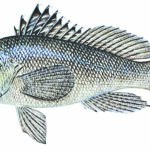
 In UMBC’s Department of Marine Biotechnology, Yonathan Zohar and his colleagues are creating sustainable fish farms that may revolutionize our notions of fishing and seafood.
– By Anthony Lane
A well-known proverb appears on a wall near the entrance to the Columbus Center on Baltimore’s Inner Harbor: Give a man a fish, he eats for a day. Teach a man to fish and he eats for a lifetime.
A worthy sentiment, yes. But what happens if we use up the bounty of the world’s oceans and seas? Talk for a few minutes with aquaculture pioneer Yonathan Zohar and you might be moved to coin a new proverb:
Teach too many people to fish, and there might one day be nothing left to catch.
Zohar is chair of UMBC’s new Department of Marine Biotechnology. At the Columbus Center, he and his colleagues develop new techniques and technologies to protect the world’s oceans and seas and preserve the life inside them.
Pollution, climate change and gushing oil wells are all threats to aquatic systems. But even the act of fishing itself has advanced to a point of deadly efficiency: high-tech fishing fleets use spotters in airplanes and other techniques to maximize their catch and meet a growing global demand for seafood.
“If we don’t do anything about it,” Zohar observes, “the oceans could be out of 90 percent-plus of the major fishery stocks by the year 2050.” Many fisheries are already in serious trouble in 2011, he adds: “Cod used to be one of the most abundant fish out there. Now the cod fishery is almost gone. The giant bluefin tuna has been fished almost beyond repair.”
One answer to overfishing of natural waters is fish farms. But much of the news there is also troubling. Marine fish such as salmon and sea bass are typically raised in offshore floating net pens, where they cause pollution, absorb toxins, and exchange diseases with their wild cousins. Selectively bred farmed fish sometimes escape from their pens, displacing the natives or getting cozy with them.
So where will seafood come from in the future?
Zohar and his colleagues think they have an answer: a sustainable aquaculture system that they have developed in the Columbus Center’s basement. It uses a system of filters and pumps to clean and recirculate artificial seawater, providing ideal conditions for marine fish to grow and breed in safety. The fish can’t escape, and the design eliminates the risk of transmitting diseases or polluting coastal waters. Even the fish wastes are put to productive use: they are converted to methane, which can be used to help power the whole aquaculture system.
Humans have domesticated an array of animals and plants over the course of centuries to meet most of our food needs, Zohar observes. That still hasn’t happened with seafood.
“You don’t go to the wild to catch poultry or bovines,” he says. “Seafood is the only hunt-and-gather crop.”
Zohar believes that the aquaculture system at the Columbus Center – which could be used in landlocked Iowa just as easily as it can be used near the Inner Harbor – could be a green, clean and efficient way to raise fish anywhere.
A Tricky Business
 Zohar grew up in Jerusalem, and he developed an early fascination with oceans and marine life studying magazines such as National Geographic. Though he was close to the Mediterranean Sea all his life, it was not until he was teenager that he first visited the water during a school trip to the beach. “I loved it from first sight,” he says.
This passion for the sea eventually brought Zohar to Baltimore. In 1990, he joined the Center of Marine Biotechnology at the University System of Maryland to conduct aquaculture research. He later became the director of that center, remaining in that position until July 2010, when the center became the Institute of Marine and Environmental Technology (IMET), a partnership between UMBC, the University of Maryland Center for Environmental Science and the University of Maryland, Baltimore. Zohar continued on as IMET’s interim director, and he is chair of the new Department of Marine Biotechnology at UMBC.
Aquaculture was in its early stages when Zohar studied biology as an undergraduate at the Hebrew University of Jerusalem. Completing his master’s degree in oceanography in the mid-1970s, the young researcher started working at a national lab in Israel dedicated to developing techniques for raising marine fish such as European sea bass and sea bream. But progress in aquaculture in that era was stalled by a roadblock: The fish would not reproduce in captivity.
“We had to go collect juvenile fish in the wild,” Zohar recalls. “It was very clear this was not practical or reliable.”
Zohar eventually became an expert in reproduction, completing his Ph.D. in comparative endocrinology at the University of Pierre and Marie Curie in Paris in 1982. Reproduction is a tricky business with marine fish. In the wild, they will migrate hundreds or even thousands of miles to reach the spawning grounds where their offspring are most likely to survive. During these migrations, changes in temperature, water depth, salinity and other environmental factors essentially serve as an elemental sort of foreplay. The fish spawn only when these conditions are just right.
One way around the reproduction roadblock would be to mimic these environmental conditions in captivity. This approach wasn’t working, so Zohar decided to try something different, examining instead how the fishes’ hormonal systems respond to the environmental changes that lead to reproduction.
In an effort to understand why fish held in confinement fail to reproduce, Zohar’s research team collected spawning fish from the wild to compare them with their captive, reproductively challenged cousins. It became clear that a surge of a particular hormone resulted in spawning. His group traced the failure of captive fish to release this hormone to a malfunction in a related hormone system in the brain that produces what are known as gonadotropin-releasing hormones (GnRHs). They eventually found completely new forms of GnRH, a breakthrough that spurred reproductive research in animals and humans.
Zohar and his colleagues learned to synthesize a specific type of GnRH, and they discovered that injecting it into captive fish would trigger the reproductive response. Or the start of it, at least. After the injection, it turned out that enzymes in the fish would naturally break the hormone apart. So Zohar’s team spent a period of years developing a novel form of the hormone resistant to that process. They also engineered a “sustained delivery system” so that the hormone could be released at just the right pace to induce spawning.
That approach effectively cleared a path for the field of aquaculture to develop. In the recent New York Times bestseller Four Fish, Paul Greenberg details Zohar’s aquaculture research, characterizing his impact in bold terms. “Over the years he has gained a reputation as one of the world’s best at cracking the reproductive codes of the marine world.”
A Sustainable System
Challenges in marine aquaculture are not limited to reproduction. For a system to be sustainable, it must be engineered to reproduce in miniature the microbial processes that support life in the oceans.
The system Zohar and his colleagues have developed over the last 15 years now sprawls across 18,000 square feet in the Columbus Center’s basement. Zohar beams proudly as he leads tours through the facility, explaining how it defines a new level of sophistication in aquaculture systems.
“Ours is the first system in the world to be fully and completely self-contained,” Zohar says.
The Columbus Center is only two blocks from the National Aquarium in downtown Baltimore, and its aquaculture facility feels in many ways like an industrial version of its tourist-oriented neighbor. Massive round tanks brim with European sea bass, sea bream, cobia and other fish species. The fish circle intently, abruptly striking with open mouths when Zohar throws in a handful of food pellets.
Next to each tank, water churns through towering filtration units filled with what appear to be wagon-wheel pasta pieces. A labyrinth of pipes and tubes connects with a web of filters and sensors to keep the water within healthy limits for the fish.
The “seawater” in the tanks is actually manufactured; the system starts with dechlorinated tap water, which is mixed with salt and other trace elements to simulate what is found in the oceans. In this water, the fish go about their daily business, leaving behind wasted food and producing ammonia and feces that would soon turn the water into inhospitable sludge.
A network of filtration systems keeps the water in pristine condition. The first separates out the food and feces, producing a viscous, salty sludge. In freshwater systems, the sludge can be used as fertilizer. This can cause pollution, however, and it’s not an option given the leftover salt in marine systems.
Enter Kevin Sowers, a professor in the Department of Marine Biotechnology who is an expert on methane-producing bacteria. Over the years, he has helped find a blend of organisms that can effectively devour the sludge created in the Columbus Center aquaculture system and convert it into methane.
 “It’s very critical that all these organisms stay in balance,” Sowers observes. And when they do, 90 percent of the waste can be converted to methane.
The aquaculture system developed by Zohar and the marine biotechnology team has already been licensed to a private company for commercial production. When that system is up and running, Sowers says, it should be able to meet at least five to 10 percent of its electricity needs by burning this methane.
The other major waste product created by the system is ammonia. It’s relatively simple to convert ammonia into less toxic nitrogen compounds: Those filters filled with wagon-wheel-shaped pieces are designed specifically for this purpose. The plastic pieces are coated with a film of bacteria that thrive on ammonia, converting it into the nitrogen compounds nitrite and nitrate.
That’s only part of the process, however. The nitrogen compounds build up in the system over time. The nitrate, in particular, renders the water toxic. To get rid of it, aquarium owners and the operators of other land-based aquaculture systems are accustomed to frequently changing their water, but doing that in a commercial marine aquaculture system would be both costly and unsustainable.
Marine biotechnology faculty members Hal Schreier and Keiko Saito, along with other colleagues at the Columbus Center, developed a parallel filtration system that keeps the nitrate in check.
This system amounts to something of a high-wire act. Sulfate is a compound that occurs naturally in aquaculture systems, but aquaculture engineers have shied away from trying to use it productively due to an undesirable side reaction that produces toxic hydrogen sulfide, which could turn the water into an acidic broth.
The Columbus Center aquaculture system harnesses that reaction. Hydrogen sulfide is produced in one step by the bacteria residing in one waste chamber, and the compound is then channeled to another chamber where it is available to a special crop of finicky bacteria. Some of these bacteria consume a cocktail of hydrogen sulfide and nitrate, and churn out sulfate, hydrogen and harmless nitrogen gas in the process.
“We used the process that everyone wanted to avoid,” Schreier explains, “and we turned it to our advantage.”
Fishing for the Future
So where does the aquaculture system developed by Zohar and his colleagues go from here?
Adapting it to a commercial scale is one challenge. It could happen soon: A start-up company called Maryland Sustainable Mariculture has licensed the technology and is now looking for warehouse space that can accommodate an expanded operation. Zohar and his team will help with that effort.
Schreier says there are still parts of the innovative set-up that could be fine-tuned. Though the present aquaculture system minimizes pollution, it still produces a minimal amount of phosphate. The compound shows up as white flakes that must be collected and removed.
Schreier imagines that researchers will one day find a chemical or biological pathway to eliminate this waste product.
Marine biotechnology members are also continuing research on other fronts, including the use of bacteria to break down contaminants in the ocean, the development of algae that can be used in the production of biofuels and the exploration of the seas as a source of new pharmaceuticals.
Zohar envisions a future where aquaculture and marine biotechnology both contribute to the health of the world’s oceans.
“We have too many fishermen,” Zohar says, “and too many fishing boats.”
For now, anyway. Zohar predicts a more sustainable future: “Fishermen, I think, can readily become aquaculturists.”
]]>
In UMBC’s Department of Marine Biotechnology, Yonathan Zohar and his colleagues are creating sustainable fish farms that may revolutionize our notions of fishing and seafood. – By Anthony Lane...
https://umbc.edu/stories/fishing-without-a-net/
https://my3.my.umbc.edu/api/v0/pixel/news/124648/guest@my.umbc.edu/d1eeb3c9fc2e39ad852d2ea25660ab1e/api/pixel
alumni
umbc
umbc-magazine
winter-2011
yonathan-zohar
UMBC News & Magazine
https://my3.my.umbc.edu/groups/umbc-news-magazine
https://assets1-my.umbc.edu/system/shared/avatars/groups/000/001/943/24435aa6207c452e7bc15cc74b42c7bb/xsmall.png?1748556657
https://assets1-my.umbc.edu/system/shared/avatars/groups/000/001/943/24435aa6207c452e7bc15cc74b42c7bb/original.png?1748556657
https://assets2-my.umbc.edu/system/shared/avatars/groups/000/001/943/24435aa6207c452e7bc15cc74b42c7bb/xxlarge.png?1748556657
https://assets2-my.umbc.edu/system/shared/avatars/groups/000/001/943/24435aa6207c452e7bc15cc74b42c7bb/xlarge.png?1748556657
https://assets3-my.umbc.edu/system/shared/avatars/groups/000/001/943/24435aa6207c452e7bc15cc74b42c7bb/large.png?1748556657
https://assets1-my.umbc.edu/system/shared/avatars/groups/000/001/943/24435aa6207c452e7bc15cc74b42c7bb/medium.png?1748556657
https://assets2-my.umbc.edu/system/shared/avatars/groups/000/001/943/24435aa6207c452e7bc15cc74b42c7bb/small.png?1748556657
https://assets1-my.umbc.edu/system/shared/avatars/groups/000/001/943/24435aa6207c452e7bc15cc74b42c7bb/xsmall.png?1748556657
https://assets2-my.umbc.edu/system/shared/avatars/groups/000/001/943/24435aa6207c452e7bc15cc74b42c7bb/xxsmall.png?1748556657
UMBC News & Magazine
0
0
false
Thu, 24 Feb 2011 15:45:40 -0500
Marching Into the Future

UMBC associate professor of history Anne Sarah Rubin is at the forefront of using digital approaches to research history and other areas in the humanities.
– By Scott McLemee
The very thought of a website devoted to Sherman’s March may inspire mild dread. After all, the path of destruction that General William Tecumseh Sherman and the Union Army blazed across Georgia during the final weeks of 1864 was one of the most violent episodes in American history.
But by some unwritten law of the Internet, historical trauma nearly always returns as digital kitsch. One braces for a cross between a Wikipedia entry and a bunch of Gone with the Wind mash-ups on YouTube, a screen that fills with animated flames and speakers emitting the sound of a melancholy harmonica.
But it doesn’t have to be that way. And a collaboration between two UMBC faculty members is exploring the potential of a movement known as the “digital humanities” – wherein digital tools are used to explore history and other subjects in all their depth and complexity.
Since 2008, Anne Sarah Rubin, an associate professor of history, and Kelley Bell ’05, M.F.A. imaging and digital arts, an assistant professor of graphic design, have been putting together Sherman’s March and America: Mapping Memory [www.shermansmarch.org]. The multimedia site launched in July 2010, funded with a grant from the American Council of Learned Societies and support of UMBC’s Imaging Research Center.
Rubin says that the version now online is a work in progress representing about twenty percent of what the creators have in mind. They hope this “proof of concept” (as the bureaucratic lingo calls it) will help them to secure the support of the National Endowment for the Humanities when they apply for funding this fall.
The site design is simple and elegant. But closer examination also reveals a sophisticated engagement with issues in historiography (that is, the questions historians ask themselves about the methodology of reconstructing the past).
Visitors to the site are greeted by a map showing the area covered by Sherman’s men as they made their way between Atlanta and Savannah in November and December of 1864. The troops followed two different courses between those points, scorching the earth as they went. At the bottom of the screen is a timeline. Slide the cursor on it and you can trace the progress of each wing of the Union Army. Click on one of the highlighted towns along the way, and there pops up a short video based on events in that area during the campaign.
But the three-minute clips don’t just recite information on the military campaign, as viewed with the benefit of nearly 150 years of hindsight. The stories they tell reflect the variety of groups affected by the march. Yankee soldiers, Confederate citizens, and newly freed slaves, for example, each experienced things from distinct perspectives. And those final weeks of 1864 threw a long shadow, inspiring later generations to create books, films, and tourist attractions. How events were woven into the public memory becomes part of the story. The site looks at General Sherman, of course – but also at Margaret Mitchell, who wrote Gone With the Wind.

“I like big questions, big issues, ‘going wide’ in looking at history,” says Rubin. “What appealed to me about Sherman’s March as a subject was the possibility of using the map as a way to frame the ‘multipositionality’ of events – how they looked from a variety of perspectives. As a digital history project, this isn’t just a collection of facts about the past. It’s also about narrative, storytelling, and memory.”
Rick Shenkman, founder and editor of the digital History News Network notes that the site’s design “reflects the sensibility of historians who have, in effect, reinvented history in the modern era.” Where historians once tried to create “a grand narrative into which Americans could stuff all of their disparate stories, pulling and tugging on the edges so that none of the pages stuck out in an unseemly manner,” the contemporary approach is to confront the variety of vantage points head-on.
“Rather than shy away from conflicting interpretations of the past, as many museums do,” Shenkman says, “the modern approach is to embrace them.” And this Sherman’s March and America does – using digital tools to map both the events and the nature of historical memory itself.
Collaboration and “Creative Foraging”
“This is definitely one of those post-tenure projects,” Anne Rubin says. Maybe so – but putting together the project was no lark. Rubin, who received her Ph.D. in American history from the University of Virginia in 1999, belongs to the first generation of scholars in the humanities to feel perfectly at home using new media.
She has done her share of work in the more traditional forms of academic publication – conference papers, journal articles, and encyclopedia entries, for example. She turned her dissertation into a book, A Shattered Nation: The Rise and Fall of the Confederacy, 1861-1868, published by the University of North Carolina Press in 2005. That same year, she received tenure from UMBC. The book went on to win an award from the Organization of American Historians.
But Rubin was already exploring the potential of digital history well before she got her Ph.D. As a graduate student at the University of Virginia, she began working in 1993 as the project manager for Valley of the Shadow – a pioneering effort to put history online, started at a time when the World Wide Web itself was brand new.
Initiated and overseen by the historian Edward L. Ayers (now president of the University of Richmond), Valley of the Shadow involved creating a digital archive of all available Civil War-era documents from Augusta County, Virginia, and Franklin County, Pennsylvania. This enormous project won two awards from the American Historical Association. Valley helped consolidate digital history as an important part of the profession. But it also left Rubin wondering about the further potential of the new tools.
“I liked the idea of continuing to look at both the Union and the Confederacy as we’d done with Valley,” she says. “I didn’t want to build an archive, though, because I’d already done that.”
The challenge was to go beyond using the Internet as a delivery system for information that might be presented just as well in a book or a film. Were there arguments or issues that digital tools might be uniquely suited to explore?
As it happened, the seed of an idea was already planted – by way of Ross McElwee’s quirky documentary Sherman’s March: A Meditation on the Possibility of Romantic Love in the South During an Era of Nuclear Weapons Proliferation (1986). Setting out to make a film about how the March was remembered and commemorated in the contemporary South, McElwee found history and his own life becoming knotted up in poignant and amusing ways.
“It made me think about the way that Sherman’s March could serve as a powerful metaphor,” Rubin recalls, “and made me start probing the way that Americans thought about the March and used it as a symbol.”
As with any scholarly project, this one involved long stretches of solitary reading and thinking – but it also required collaboration, and plenty of it. In 2007, Rubin took her idea to Dan Bailey, the director of UMBC’s Imaging Research Center, who helped put together a grant proposal submitted to the American Council of Learned Societies. This yielded the funding necessary for Rubin to devote 2008 to the project, as well as $25,000 for technical support. The IRC later contributed $12,000 to help flesh out the work-in-progress.
“Once she got the grant,” Bailey says, “I matched Anne with Kelley Bell, and IRC supported their collaboration by assigning undergraduate interns to work on the project. Anne was open to ideas that IRC had about how to connect to a broad audience – that’s part of our mission, supporting interdisciplinary work on campus, but also getting it out to the public.”
“We were a fortuitous pairing,” says Kelley Bell, whose artistic skills translated Rubin’s historical ideas into striking imagery. As a freelance designer, Bell had been involved in film and television productions in Baltimore earlier in the decade – including a stint working on The Wire, which future generations will study to understand what America was like at the turn of the millennium. (Bell created diplomas that hang on the walls of various characters in the HBO series.)
It was while getting her own graduate degree from UMBC that Bell began studying digital animation. The Sherman’s March project allowed her not just to put that skill to work but to explore and experiment.
“This hasn’t been the usual experience between designer and client,” she says. “It’s more collaborative, a dialogue. We do a lot of ‘creative foraging,’ with a great deal of historical research on my end to find images, maps, and typefaces that fit the material.”
At the heart of everything is the historian’s in-depth understanding of the material – which must be converted into a series of resonant but extremely succinct video segments.
“The narration for three minutes of video,” says Rubin, “works out to 500 to 550 words of text. We use visual imagery to carry much of the narrative. But as a writer, I’m used to being able to explore tangents, while this is a discipline of constantly revising, constantly tightening my focus.”
Avoiding the ‘Ken Burns Approach’
A volume she is writing in connection with Sherman’s March and America will give Rubin a way to chart out some of those tangential lines of thought. The University of North Carolina Press is interested in the book, which Rubin says she hopes will be in print before the sesquicentennial of the March in 2014.
By that time, the digital project should have 100 narrative-rich video “points” on its map. The five short films now available on the beta version of the site give a taste of how Rubin and Bell have blended their expertise.
The clip for Milledgeville is a good example of what Bell calls “avoiding the Ken Burns approach.” The animation uses toy soldiers to portray how Sherman’s men took over the state capitol building and held a mock legislative session to repeal secession.
“Some people have been taken aback,” says Bell, “because the incident was so violent. They really went on a rampage. But this was our way of using imagery for its symbolic value. The Union soldiers saw what they were doing as a lark, as play, even though they really destroyed the town.”
The segment for Ebenezer Creek recounts one of the most bitterly ironic moments of the whole war. Sherman’s men threw up a temporary bridge over the creek, but refused to let dozens of newly liberated African-Americans get across before tearing it down. They were left to face the rage of Confederate troops. Many drowned while trying to escape.
“We went to Georgia and shot on location,” says Bell. “It was an incredible experience.” The video opens with a portrait of Sherman as a narrator recounts the agonizing events. Footage of the creek slowly rises from the bottom of the screen to wipe out the General’s image – as if to show that this act of treachery might be the real legacy of his campaign.
The site is impressive for both its design and its sensibility, in the opinion of another historian working with digital tools. In the early 2000s, William J. Turkel, an associate professor of history at the University of Western Ontario “struggled with the problem of representing place, voyaging, differing viewpoints, historical evidence, and commemoration” while working on a monograph about the history of British Columbia.
“If I were to do that project now,” he says, “I would try to build something like the Sherman’s March site…. By manipulating the maps or the timeline, the user is able to juxtapose different ways of knowing about the past. We say ‘Sherman’s March’ as if there was such a thing that can be readily singled out and talked about – this site complicates that idea, while helping us gain a more nuanced understanding of the way an ‘event’ is retrospectively created.”
From one point of view (to be “multipositional” about it) Sherman’s March and America looks like part of the cutting edge – a fusion of new media and new ideas, leaving what we might call “the History Channel aesthetic” far behind. But from another perspective, it’s the new normal. Digital historiography is just part of the way we know about the past, now.
Professors Rubin and Bell talk with great enthusiasm about the possibility of spinning off a team-taught workshop course that will give UMBC students a chance to experience the sort of collaboration they’ve been practicing.
In any case, it’s a taste of things to come for Rubin. “I can anticipate that this is going to be a regular part of my work as a historian,” she says. “From now on, everything I do will have a digital component.”
Images courtesy of Kelley Bell
]]>
UMBC associate professor of history Anne Sarah Rubin is at the forefront of using digital approaches to research history and other areas in the humanities. – By Scott McLemee The very thought...
https://umbc.edu/stories/marching-into-the-future-2/
https://my3.my.umbc.edu/api/v0/pixel/news/124649/guest@my.umbc.edu/919844684433c7a3b35c2643b91cc8bd/api/pixel
alumni
history
shermans-march
umbc
umbc-magazine
winter-2011
UMBC News & Magazine
https://my3.my.umbc.edu/groups/umbc-news-magazine
https://assets1-my.umbc.edu/system/shared/avatars/groups/000/001/943/24435aa6207c452e7bc15cc74b42c7bb/xsmall.png?1748556657
https://assets1-my.umbc.edu/system/shared/avatars/groups/000/001/943/24435aa6207c452e7bc15cc74b42c7bb/original.png?1748556657
https://assets2-my.umbc.edu/system/shared/avatars/groups/000/001/943/24435aa6207c452e7bc15cc74b42c7bb/xxlarge.png?1748556657
https://assets2-my.umbc.edu/system/shared/avatars/groups/000/001/943/24435aa6207c452e7bc15cc74b42c7bb/xlarge.png?1748556657
https://assets3-my.umbc.edu/system/shared/avatars/groups/000/001/943/24435aa6207c452e7bc15cc74b42c7bb/large.png?1748556657
https://assets1-my.umbc.edu/system/shared/avatars/groups/000/001/943/24435aa6207c452e7bc15cc74b42c7bb/medium.png?1748556657
https://assets2-my.umbc.edu/system/shared/avatars/groups/000/001/943/24435aa6207c452e7bc15cc74b42c7bb/small.png?1748556657
https://assets1-my.umbc.edu/system/shared/avatars/groups/000/001/943/24435aa6207c452e7bc15cc74b42c7bb/xsmall.png?1748556657
https://assets2-my.umbc.edu/system/shared/avatars/groups/000/001/943/24435aa6207c452e7bc15cc74b42c7bb/xxsmall.png?1748556657
UMBC News & Magazine
0
0
false
Thu, 24 Feb 2011 15:43:31 -0500
Extend & Elevate: Dance at UMBC
Like any campus, UMBC is a blur of movement when school is in session. But when that motion is concentrated, studied, refined or performed – it can become truly special. UMBC’s Dance Department is the core of that activity, blending the grit of classes and rehearsal with the grace of performance. But the celebration of dance is not confined to classrooms or concert halls. At UMBC dance is contagious, filling up The Commons, the RAC and even Beuys Sculpture Park with the beauty of bodies in motion.
REBECCA M. JUNG ’87
In a master class for UMBC students, Rebecca M. Jung ’87, dance, wants dancers to think in shapes. “I see line and design,” she says, helping students assemble geometries of movement. “I call this sculpture garden. Let’s sculpt!”
Jung brings insights from her work with the innovative Pilobolus Dance Company to the class – and an insistence on persistent effort. “Try again,” she says after one droopy run-through. “I haven’t seen 100 percent with you guys yet!”
But as the students finally put the shapes in motion with grins and grimaces, Jung also smiles and exclaims: “The sculptures start to move. They become kinetic!”
— Richard Byrne ’86
Photo by Chris Hartlove

MODERN DANCE
A group of modern dance students are still stifling Monday morning yawns as Carol Hess, professor of dance, leads them through a series of flowing rolls, reaches, swoops and spins that grow in intensity and complexity.
“Let’s clarify,” Hess says suddenly. And under her gaze and instruction, the students wrestle their bodies into shapes and movements that tell stories. Motions that were simple and tentative at the beginning of class now blossom into creative expressions. In repetition, the students grow in grace and confidence and speed.
Hess nods with approval, urging her students on as they move: “Travel, travel, travel!”
— Richard Byrne ’86
Photo by Chris Hartlove
BALLET
At UMBC, ballet class is not the stuff of Degas, all pink tutus and tightly-wound buns. The students wear rainbow knee socks. One has the outline of a swallow behind her elbow. There’s a small square of injury tape on the wall that reads: “I  UMBC Dance.”
But the movement here is all ballet: a wonder of balance, of shape, of discipline. A pianist plays Mozart as lines of students spin into pirouettes. The air between the mat and the landing of a perfect grand jeté feels timeless somehow. And the swallow appears to fly.
— Jenny O’Grady
Photo by Chris Hartlove

SENIOR DANCE CONCERT
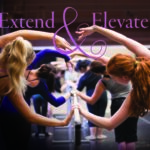
The thrills and grace of circus acrobats was the center of Mystique – a piece choreographed by Meghan Alokonis ’11 at the Senior Dance Concert. Inspired by Cirque du Soleil and entwined with classical ballet, six dancers spun in a flying swirl of colors – neon greens and purples and pinks. Their leaps and poses, splits and arabesques, were accompanied by the dizzying and enchanting music of the carnival.
— Derek Roper ’11
Photo by Enoch Chan
FALL DANCE SHOWCASE
The UMBC Fall Dance Showcase is held in simple space, a dream-like emptiness that invites the audience to join in the act of creation, and imagine themselves in more deft and graceful limbs. Colored lights fade and revive as dancers run, jump and slide in their glow. We fill in blank spaces, tell our own silent stories. Too soon, the lights go black and we re-enter the waking world. The dancers, now all grins and heaving chests, take their bows as we applaud.
— Meredith Purvis
Photo by Enoch Chan
DANCE-A-THON
The heavy bass beat of a Dance-a-Thon for charity leaks out even before you arrive at the University Center. And you need that beat; the idea is to dance all night, from 9 p.m. to 9 a.m.
No one here is conserving energy yet. At one moment, breakdancers drop to the floor in an eye-blurring display of movement, feet flying. Then a group of six or seven dancers, moving in unison, forms a diagonal line that dominates the dance floor before it is submerged by the crowd and the music and cheers.
— Emma Marston ’11
Photo by Erin Ouslander ’03

THIRTY OAKS
In Thirty Oaks, a piece performed in the Beuys Sculpture Park, the dancer’s stage opens up around her. Autumn moss caresses her heel. A gray oak trunk is a maypole to arched back and wind-strewn hair. A rock is a fulcrum for her moving body. The soil works itself into the seams of her evolving costume, her fingers plunge root-like into mulch.
A tree branch snaps against her, a natural staccato. She smiles, and a ray of sunshine peeks through the leaves like a spotlight. Dance can happen anywhere.
— Jenny O’Grady
Photo by Erin Ouslander ’03
DANCE TEAM
At Homecoming this year, UMBC’s Dance Team had to tweak its choreography mid-routine to squeeze all 22 dancers onto the The Commons’ Main Street. But the team’s dancers – who often take Retriever Fever out of the RAC to pep rallies, fundraisers and campus events – are old hands at tight fits. “We performed inside the bookstore once,” says co-captain Meghan Alokonis ’11. “We were trying not to knock down the mugs!”
— Chelsea Haddaway
Photo by Michelle Jordan ’93

MAJOR DEFINITION
Hip hop is all about flow. Intensity. From the emcee to the beats to the movement that the music inevitably creates. And when the rhythm kicks in, campus dance troupe Major Definition brings flow and intensity anywhere they throw down – in the RAC, in The Commons (where they perform and teach classes) and in contests like the East Coast Dance Competition, which the group won in 2009.
— Richard Byrne ’86
Photo by Melissa Van der Kaay
]]>
Like any campus, UMBC is a blur of movement when school is in session. But when that motion is concentrated, studied, refined or performed – it can become truly special. UMBC’s Dance Department is...
https://umbc.edu/stories/extend-elevate-dance-at-umbc/
https://my3.my.umbc.edu/api/v0/pixel/news/124650/guest@my.umbc.edu/ab32137d54cfd677c1f37440fcca3cd1/api/pixel
alumni
dance
umbc-magazine
winter-2011
UMBC News & Magazine
https://my3.my.umbc.edu/groups/umbc-news-magazine
https://assets1-my.umbc.edu/system/shared/avatars/groups/000/001/943/24435aa6207c452e7bc15cc74b42c7bb/xsmall.png?1748556657
https://assets1-my.umbc.edu/system/shared/avatars/groups/000/001/943/24435aa6207c452e7bc15cc74b42c7bb/original.png?1748556657
https://assets2-my.umbc.edu/system/shared/avatars/groups/000/001/943/24435aa6207c452e7bc15cc74b42c7bb/xxlarge.png?1748556657
https://assets2-my.umbc.edu/system/shared/avatars/groups/000/001/943/24435aa6207c452e7bc15cc74b42c7bb/xlarge.png?1748556657
https://assets3-my.umbc.edu/system/shared/avatars/groups/000/001/943/24435aa6207c452e7bc15cc74b42c7bb/large.png?1748556657
https://assets1-my.umbc.edu/system/shared/avatars/groups/000/001/943/24435aa6207c452e7bc15cc74b42c7bb/medium.png?1748556657
https://assets2-my.umbc.edu/system/shared/avatars/groups/000/001/943/24435aa6207c452e7bc15cc74b42c7bb/small.png?1748556657
https://assets1-my.umbc.edu/system/shared/avatars/groups/000/001/943/24435aa6207c452e7bc15cc74b42c7bb/xsmall.png?1748556657
https://assets2-my.umbc.edu/system/shared/avatars/groups/000/001/943/24435aa6207c452e7bc15cc74b42c7bb/xxsmall.png?1748556657
UMBC News & Magazine
0
0
false
Thu, 24 Feb 2011 15:41:25 -0500
Up on the Roof – Winter 2011
UMBC President Freeman A. Hrabowski, III takes your questions.
Q. Innovation is something that you talk about in many venues across the country, and you’ve been acknowledged as an innovator in higher education. How do you view the overall importance of innovation in the university and the nation as a whole? How does UMBC instill a desire to innovate in students, faculty and staff?
— Richard Byrne ’86, English
Editor, UMBC Magazine
A. I talk a lot about Daniel Pink’s book A Whole New Mind and the need to have a balanced approach to solving problems. His new book is titled Drive and it’s a book about how true motivation – the motivation that creates sustained change – occurs not simply because of extrinsic rewards, but because people really believe that it is important to do something.
What’s interesting about UMBC is that people here are investing in creative initiatives not because people told them to do something different, but because they really believe – and they know – that they are empowered to think broadly and differently about the possibilities for the campus.
How does that fit in with innovation? Well it seems to me that to create a climate of innovation, leaders need to say to the community that thinking matters. And they also need to worry less about failure and focus more on a vision of who we want to be. And to do that people need to feel comfortable coming up with ideas that sometimes seem to be kooky. Things that we haven’t really tried before. Whether it’s talking about how we market ourselves, or how we teach and learn, or how we use innovation in research, the fact is that UMBC encourages people to think broadly and differently and creatively.
I would agree with Pink that the secret to high achievement is that people really want to direct their own lives. They want to be able to learn and create new things. And they want to feel empowered to make decisions about the future of the institution and the work that they do here.
That’s what we’re working to do at UMBC. Get away from telling people what to do, and at all levels – students, faculty, staff and alumni – ask everyone to help us think differently about the institution.
I know that I am using students and colleagues to inspire me to think differently. I am constantly listening to their ideas about changes we need to make at the university. The inspiration comes from all around me.
Q. Taking into account UMBC’s overwhelming growth during your tenure, the distinguished honors you have received, and UMBC’s #1 rating as an up and coming university two years in a row, what are your long and short-term goals – both for the university and for yourself?
— Katie Locke ’06, psychology
A. I think the goal is just to continue building quality here at UMBC. Building on the success that we’ve had. Getting the word out about just how excited we are about the work that we do here. The more that people come to our campus and talk to our students and faculty and staff, the more impressed they are.
I just celebrated my 40th wedding anniversary. So I’m a strong believer in stability and building on that stability. My marriage is better than ever and what I see at UMBC is more impressive than ever.
People are always asking: “What else do we need to do?” I say: Keep doing what we’re doing. Focus on the work and the excitement and substance of this work. Emphasize the use of technology and collaboration across disciplines. Find new ways to bring the campus to people.
There’s something very exciting about not knowing how far we can go. We’re constantly evolving.
Have a question for Dr. Hrabowski? Please visit retrievernet.umbc.edu/askthepresident
]]>
UMBC President Freeman A. Hrabowski, III takes your questions. Q. Innovation is something that you talk about in many venues across the country, and you’ve been acknowledged as an innovator in...
https://umbc.edu/stories/up-on-the-roof-winter-2011/
https://my3.my.umbc.edu/api/v0/pixel/news/124673/guest@my.umbc.edu/213fac1405b29c9d1aa16a3dce4dc103/api/pixel
stories
winter-2011
UMBC News & Magazine
https://my3.my.umbc.edu/groups/umbc-news-magazine
https://assets1-my.umbc.edu/system/shared/avatars/groups/000/001/943/24435aa6207c452e7bc15cc74b42c7bb/xsmall.png?1748556657
https://assets1-my.umbc.edu/system/shared/avatars/groups/000/001/943/24435aa6207c452e7bc15cc74b42c7bb/original.png?1748556657
https://assets2-my.umbc.edu/system/shared/avatars/groups/000/001/943/24435aa6207c452e7bc15cc74b42c7bb/xxlarge.png?1748556657
https://assets2-my.umbc.edu/system/shared/avatars/groups/000/001/943/24435aa6207c452e7bc15cc74b42c7bb/xlarge.png?1748556657
https://assets3-my.umbc.edu/system/shared/avatars/groups/000/001/943/24435aa6207c452e7bc15cc74b42c7bb/large.png?1748556657
https://assets1-my.umbc.edu/system/shared/avatars/groups/000/001/943/24435aa6207c452e7bc15cc74b42c7bb/medium.png?1748556657
https://assets2-my.umbc.edu/system/shared/avatars/groups/000/001/943/24435aa6207c452e7bc15cc74b42c7bb/small.png?1748556657
https://assets1-my.umbc.edu/system/shared/avatars/groups/000/001/943/24435aa6207c452e7bc15cc74b42c7bb/xsmall.png?1748556657
https://assets2-my.umbc.edu/system/shared/avatars/groups/000/001/943/24435aa6207c452e7bc15cc74b42c7bb/xxsmall.png?1748556657
UMBC News & Magazine
0
0
false
Thu, 20 Jan 2011 20:25:43 -0500
To You – Winter 2011
A modern university such as UMBC thrives on excellence in teaching and innovation in research.
We all know good teaching when it touches our lives and the lives of those close to us. But research poses difficulties in definition and assessment. The work done in UMBC’s laboratories and libraries often takes years to touch the lives of everyday citizens. How do we approach it?
As the UMBC Magazine team applied the finishing touches to this issue, I noticed that all three of our main features in the Winter 2011 edition touch on the role of research in the university.
Our story by Anthony Lane on Yonathan Zohar and his research on fish farming at the Columbus Center in downtown Baltimore is the sort of effort that most readily comes to mind when we think of academic work’s intersection with the larger world. Zohar and his colleagues in UMBC’s Department of Marine Biotechnology are confronting the global problem of depleted oceans with a combination of biological research and the development of new technologies that reproduce breeding environments. It’s research that may reshape our future.
Research can also bring the past much closer to our present. Scott McLemee’s article on associate professor of history Anne Rubin not only lays out the scholarly excellence of her research on the Civil War, but also her position as one of the pioneers in what’s now known as the “digital humanities.” Rubin’s work uses many of the possibilities of the Internet – including videos and interactive maps – to not only make her research on America’s greatest calamity more vivid, but also bring it to a new generation of scholars and students.
Our cover story for this issue examines dance at UMBC, and some might wonder just how dance is research. But at UMBC, there’s already an event each year that explicitly links academic research to creative endeavors such as choreography and performance. Known as the Undergraduate Research and Creative Achievement Day (or URCAD), it celebrates undergraduate research (the best of which is published in the annual UMBC Review) and the work of students who pursue the arts with rigor and talent.
This year’s URCAD is Wednesday, April 27, 2011. UMBC’s president Freeman A. Hrabowski, III says that it “is one of the best academic events of the UMBC year because it reflects the strength of our academic program, including the strong relationships between faculty and students, the rigor of research here, and the broad enthusiasm for, and talent in, the creative arts on our campus.” Check out the schedule of events at www.umbc.edu/undergrad_ed/research/URCAD/index.html.
— Richard Byrne ’86
]]>
A modern university such as UMBC thrives on excellence in teaching and innovation in research. We all know good teaching when it touches our lives and the lives of those close to us. But...
https://umbc.edu/stories/to-you-winter-2011/
https://my3.my.umbc.edu/api/v0/pixel/news/124674/guest@my.umbc.edu/b45235879eba6277545af6306e5e258f/api/pixel
stories
winter-2011
UMBC News & Magazine
https://my3.my.umbc.edu/groups/umbc-news-magazine
https://assets1-my.umbc.edu/system/shared/avatars/groups/000/001/943/24435aa6207c452e7bc15cc74b42c7bb/xsmall.png?1748556657
https://assets1-my.umbc.edu/system/shared/avatars/groups/000/001/943/24435aa6207c452e7bc15cc74b42c7bb/original.png?1748556657
https://assets2-my.umbc.edu/system/shared/avatars/groups/000/001/943/24435aa6207c452e7bc15cc74b42c7bb/xxlarge.png?1748556657
https://assets2-my.umbc.edu/system/shared/avatars/groups/000/001/943/24435aa6207c452e7bc15cc74b42c7bb/xlarge.png?1748556657
https://assets3-my.umbc.edu/system/shared/avatars/groups/000/001/943/24435aa6207c452e7bc15cc74b42c7bb/large.png?1748556657
https://assets1-my.umbc.edu/system/shared/avatars/groups/000/001/943/24435aa6207c452e7bc15cc74b42c7bb/medium.png?1748556657
https://assets2-my.umbc.edu/system/shared/avatars/groups/000/001/943/24435aa6207c452e7bc15cc74b42c7bb/small.png?1748556657
https://assets1-my.umbc.edu/system/shared/avatars/groups/000/001/943/24435aa6207c452e7bc15cc74b42c7bb/xsmall.png?1748556657
https://assets2-my.umbc.edu/system/shared/avatars/groups/000/001/943/24435aa6207c452e7bc15cc74b42c7bb/xxsmall.png?1748556657
UMBC News & Magazine
0
0
false
Thu, 20 Jan 2011 20:24:37 -0500
The News – Winter 2011
SUPER CAMPAIGN
The high achievement and affordability of UMBC makes the university an attractive option for high school students. But a university built on innovation is always looking to do the job better.
Enter a creative team led by UMBC associate director of marketing Erika Ferrin, Creative Services designer Erin Ouslander ’03 and marketing director Ed Neenan. Together, they created a new advertising campaign depicting high-flying UMBC students in the humanities and social sciences as superheroes using both their brainpower and their desire to enact positive changes in their own lives and the lives of others. The campaign used images and lettering familiar to fans of graphic novels to tell the stories of students including Naomi Jackson ’11, Curtis Schickner ’12, Stefanie Mavronis ’12 and Kimberly Browning ’13 (pictured, left to right, above).
Market research led Ferrin to narratives such as the Twilight and Harry Potter books and films where “smart was considered cool” and in which “normal kids use extraordinary powers to change the world.” The campaign appeals “to an upcoming generation of students coming to UMBC ready to change the world. We want them to know: We’re ready for you.”
The campaign is already helping to attract those super students to UMBC. And it’s also been recognized for its excellence by the university’s peers. The Superheroes campaign won the 2011 gold medal from the Council for the Advancement and Support of Education’s Second District – which covers the Mid-Atlantic region of the United States.
— Richard Byrne ’86
R. SARGENT SHRIVER, 1915-2011
As UMBC Magazine was in its final stages of editing this issue, we received the sad news that R. Sargent Shriver had passed away.
Shriver’s career as an inspiring and innovative leader was a vibrant model of selfless public service. Many who do not follow politics know of his role – in collaboration with his late wife, Eunice Kennedy Shriver – in founding the Special Olympics. The list of his accomplishments as a politician and a diplomat is daunting and included key elements of the “War on Poverty”: the Peace Corps, Head Start, Job Corps, VISTA and Legal Services for the Poor. Shriver was also a vice-presidential candidate in 1972.
Shriver had a special connection with UMBC. UMBC’s Shriver Center, founded in 1993, is named after him and the late Mrs. Shriver. He helped craft the Center’s original mission statement and put together its first national advisory board. The Shriver Peaceworker Program and the Shriver Living Learning Community in Erickson Hall also loom large in Shriver’s campus legacy. In a joint statement, UMBC President Freeman A. Hrabowski, III, and Shriver Center founder John Martello stated it simply on behalf of the UMBC community: “The Shrivers were our supporters and our friends.”
In his 2004 biography, Sarge, Scott Stossel observed a key similarity between Shriver and John F. Kennedy, the president with whom he achieved so much of note: “[T]he two men shared a great gift: the ability to expand the horizons of the possible, to change our sense of what we can accomplish as individuals and as a nation.”
— Richard Byrne ’86
BREAKING GROUND
The bright sunshine on Friday, September 17 perfectly reflected the mood on campus on a landmark day in UMBC’s history.
On that afternoon, elected officials, leaders of the University System of Maryland and key university philanthropists joined with a broad cross-section of the campus community to break ground on a much-anticipated $170 million Performing Arts and Humanities Building.
The ceremony demonstrated the strength of the bridges that the university has built with local and state government, which helped secure funding for the project. “I’ve never been as happy to see a giant hole in the ground, giant mounds of dirt, and big noisy machines as I have been this summer,” quipped John Jeffries, dean of the College of Arts, Humanities and Social Sciences.
But much of the ceremony was devoted to strong affirmations of the importance of arts and humanities on UMBC’s campus and in society at large.
University System of Maryland Chancellor William Kirwan observed that “we have an obligation to make sure our graduates have both the skill they need to compete in the workplace and the cultural and intellectual underpinning necessary for an enlightened and progressive society. This is an obligation UMBC has clearly embraced.”
The building will be constructed in two phases. The first phase – which will open in Fall 2012 – will include the departments of English and theatre, new offices for the James T. and Virginia M. Dresher Center for the Humanities, the Humanities Scholars Program and the Linehan Artist Scholars Program and two theaters: a 275-seat main theater and a 100-seat black box theater.
The second phase, which will break ground in the future, will include new dance and concert halls, and a new home for the departments of music, dance, philosophy and ancient studies. The building will be the second LEED Silver-certified building on campus, joining a new addition to the Patapsco Residence Hall.
“We’re celebrating the beginning of a new chapter for the University of Maryland, Baltimore County,” said Maryland Governor Martin O’Malley. “The new Performing Arts and Humanities Building is a true investment in the talents, skills, creativity, ingenuity and education of our people. Its ‘green’ design will help develop a more sustainable environment, and in these tough economic times, its construction will provide much-needed jobs for our hardworking families. Together, we can continue to nurture our students’ talents and gifts while providing them with the tools they need to build a better future.”
In concluding the ceremony, UMBC’s president Freeman A. Hrabowski, III observed that “the arts and humanities really are the soul of our society and the soul of this campus. We teach people how to live… and the values they need in a society – when it’s going well and when it’s not going well. The reason [our elected officials] can say let’s support this is that they understand that in the worst of times, we need to remember what it means to be human.”
— Richard Byrne ’86
]]>
SUPER CAMPAIGN The high achievement and affordability of UMBC makes the university an attractive option for high school students. But a university built on innovation is always looking to do the...
https://umbc.edu/stories/the-news-winter-2011/
https://my3.my.umbc.edu/api/v0/pixel/news/124675/guest@my.umbc.edu/b438b0c3c7fa77020b7b4cbb26e28616/api/pixel
stories
winter-2011
UMBC News & Magazine
https://my3.my.umbc.edu/groups/umbc-news-magazine
https://assets1-my.umbc.edu/system/shared/avatars/groups/000/001/943/24435aa6207c452e7bc15cc74b42c7bb/xsmall.png?1748556657
https://assets1-my.umbc.edu/system/shared/avatars/groups/000/001/943/24435aa6207c452e7bc15cc74b42c7bb/original.png?1748556657
https://assets2-my.umbc.edu/system/shared/avatars/groups/000/001/943/24435aa6207c452e7bc15cc74b42c7bb/xxlarge.png?1748556657
https://assets2-my.umbc.edu/system/shared/avatars/groups/000/001/943/24435aa6207c452e7bc15cc74b42c7bb/xlarge.png?1748556657
https://assets3-my.umbc.edu/system/shared/avatars/groups/000/001/943/24435aa6207c452e7bc15cc74b42c7bb/large.png?1748556657
https://assets1-my.umbc.edu/system/shared/avatars/groups/000/001/943/24435aa6207c452e7bc15cc74b42c7bb/medium.png?1748556657
https://assets2-my.umbc.edu/system/shared/avatars/groups/000/001/943/24435aa6207c452e7bc15cc74b42c7bb/small.png?1748556657
https://assets1-my.umbc.edu/system/shared/avatars/groups/000/001/943/24435aa6207c452e7bc15cc74b42c7bb/xsmall.png?1748556657
https://assets2-my.umbc.edu/system/shared/avatars/groups/000/001/943/24435aa6207c452e7bc15cc74b42c7bb/xxsmall.png?1748556657
UMBC News & Magazine
0
0
false
Thu, 20 Jan 2011 20:20:53 -0500