talk: Free-Space-Optical Mobile Ad-Hoc Networks

FSO-MANETs: Free-Space-Optical Mobile Ad-Hoc Networks
Dr. Murat Yuksel
Computer Science and Engineering
University of Nevada, Reno
1:00pm Monday 27 February 2012, ITE 325b, UMBC
The recent proliferation of wireless technologies and choices available to user applications has triggered a tremendous wireless demand, and wireless nodes are expected to dominate the Internet soon. Reports show that usage of mobile Web and WiFi by smartphones is increasing sharply, with more than 80% of their data consumption landing on WiFi points, and this statistic does not even include a major smartphone brand, the iPhone. Accommodating this exploding wireless demand with cellular capacity does not seem possible in the long run. As the radio spectrum (RF) spectrum is getting scarcer and saturated by recent innovations in attaining high spectral efficiency gains such as hierarchical cooperative MIMO, we urgently need innovations that will enable leveraging of new wireless spectrums and substrates in order to respond to the exploding mobile wireless traffic demand. Further, the capacity gap between RF wireless and optical fiber backbone speeds will remain huge because of the limited availability of RF spectrum. Enabling optical spectrum in wireless communications is the needed revolution for ultra-high-speed mobile ad-hoc networks (MANETs) of the future.
In this talk, I will present our work on exploring the potential for free-space-optics (FSO), a.k.a. optical wireless, in the context of very-high-speed mobile ad-hoc and opportunistic networking. We introduce basic building blocks for MANETs using FSO and present initial prototypes for multi-hop FSO building blocks and protocols operating under mobility. 3-D spherical structures covered with inexpensive FSO transceivers (e.g., LED/VCSEL and photo-detector pair) solve issues relevant to mobility and line-of-sight (LOS) management via availability of several transceivers per node. Such structures facilitate electronic LOS tracking (i.e., “electronic steering”) methods instead of traditional mechanical steering techniques used in FSO communications. By abstracting FSO directionality and LOS characteristics, our work also explores issues relating to routing and localization, and develops layer 3 protocols. FSO has been used at high-altitude communications, and this research enables FSO communications at lower-altitudes and in ad-hoc settings with redundancy of cheap optoelectronic components. This research also contributes to the new application of using solid-state lighting technology due to potential integration of illumination and communication functions in the same devices. Please refer to our project website for further information.
Murat Yuksel is an Assistant Professor at the CSE Department of The University of Nevada – Reno (UNR), Reno, NV. He was with the ECSE Department of Rensselaer Polytechnic Institute (RPI), Troy, NY as a Postdoctoral Research Associate and a member of Adjunct Faculty until 2006. He received a B.S. degree from the Computer Engineering Department of Ege University, Izmir, Turkey in 1996. He received M.S. and Ph.D. degrees from Computer Science Department of RPI in 1999 and 2002 respectively. His research interests are in the area of computer communication networks with a focus on protocol design, network economics, wireless routing, free-space-optical mobile ad-hoc networks (FSO-MANETs), and peer-to-peer. He is a senior member of IEEE, life member of ACM, and a member of Sigma Xi and ASEE.
Host: Anupam Joshi
]]>
FSO-MANETs: Free-Space-Optical Mobile Ad-Hoc Networks Dr. Murat Yuksel Computer Science and Engineering University of Nevada, Reno 1:00pm Monday 27 February 2012, ITE 325b, UMBC The...
http://www.csee.umbc.edu/2012/02/talk-free-space-optical-mobile-ad-hoc-networks/
https://my3.my.umbc.edu/api/v0/pixel/news/12381/guest@my.umbc.edu/8b1317fa6239e3715aff1bdd401dacf0/api/pixel
news
research
talks
Computer Science and Electrical Engineering
https://my3.my.umbc.edu/groups/csee
https://assets3-my.umbc.edu/system/shared/avatars/groups/000/000/099/d117dca133c64bf78a4b7696dd007189/xsmall.png?1314043393
https://assets1-my.umbc.edu/system/shared/avatars/groups/000/000/099/d117dca133c64bf78a4b7696dd007189/original.png?1314043393
https://assets1-my.umbc.edu/system/shared/avatars/groups/000/000/099/d117dca133c64bf78a4b7696dd007189/xxlarge.png?1314043393
https://assets4-my.umbc.edu/system/shared/avatars/groups/000/000/099/d117dca133c64bf78a4b7696dd007189/xlarge.png?1314043393
https://assets3-my.umbc.edu/system/shared/avatars/groups/000/000/099/d117dca133c64bf78a4b7696dd007189/large.png?1314043393
https://assets1-my.umbc.edu/system/shared/avatars/groups/000/000/099/d117dca133c64bf78a4b7696dd007189/medium.png?1314043393
https://assets2-my.umbc.edu/system/shared/avatars/groups/000/000/099/d117dca133c64bf78a4b7696dd007189/small.png?1314043393
https://assets3-my.umbc.edu/system/shared/avatars/groups/000/000/099/d117dca133c64bf78a4b7696dd007189/xsmall.png?1314043393
https://assets3-my.umbc.edu/system/shared/avatars/groups/000/000/099/d117dca133c64bf78a4b7696dd007189/xxsmall.png?1314043393
Computer Science and Electrical Engineering
2
0
true
Thu, 23 Feb 2012 08:33:24 -0500
Stripe capture the flag wargame
Stripe, a San Francisco startup with an online-payment system, is hosting a simple online cybersecurity capture the flag (CTF) challenge. See their blog post for the details.
“The hardest part of writing secure code is learning to think like an attacker. For example, every programmer is told to watch out for SQL injections, but it’s hard to appreciate just how exploitable they are until you’ve written a SQL injection of your own.
We built Stripe Capture the Flag, a security wargame inspired by SmashTheStack’s IO, to help the community (as well our team!) practice identifying and exploiting common security problems.
After completing our CTF, you should have a greatly improved understanding of how attackers will try to break your code (and hopefully will have fun in the process!).”
If you can crack their system, they’ll send you a t-shirt. Since security is important to their business, maybe they will also talk to you about a job.
]]>
Stripe, a San Francisco startup with an online-payment system, is hosting a simple online cybersecurity capture the flag (CTF) challenge. See their blog post for the details. “The hardest...
http://www.csee.umbc.edu/2012/02/stripe-capture-the-flag-wargame/
https://my3.my.umbc.edu/api/v0/pixel/news/12378/guest@my.umbc.edu/9d10504999a3e7b3ca8734bd9271ca3d/api/pixel
cybersecurity
fyi
undergraduate
Computer Science and Electrical Engineering
https://my3.my.umbc.edu/groups/csee
https://assets3-my.umbc.edu/system/shared/avatars/groups/000/000/099/d117dca133c64bf78a4b7696dd007189/xsmall.png?1314043393
https://assets1-my.umbc.edu/system/shared/avatars/groups/000/000/099/d117dca133c64bf78a4b7696dd007189/original.png?1314043393
https://assets1-my.umbc.edu/system/shared/avatars/groups/000/000/099/d117dca133c64bf78a4b7696dd007189/xxlarge.png?1314043393
https://assets4-my.umbc.edu/system/shared/avatars/groups/000/000/099/d117dca133c64bf78a4b7696dd007189/xlarge.png?1314043393
https://assets3-my.umbc.edu/system/shared/avatars/groups/000/000/099/d117dca133c64bf78a4b7696dd007189/large.png?1314043393
https://assets1-my.umbc.edu/system/shared/avatars/groups/000/000/099/d117dca133c64bf78a4b7696dd007189/medium.png?1314043393
https://assets2-my.umbc.edu/system/shared/avatars/groups/000/000/099/d117dca133c64bf78a4b7696dd007189/small.png?1314043393
https://assets3-my.umbc.edu/system/shared/avatars/groups/000/000/099/d117dca133c64bf78a4b7696dd007189/xsmall.png?1314043393
https://assets3-my.umbc.edu/system/shared/avatars/groups/000/000/099/d117dca133c64bf78a4b7696dd007189/xxsmall.png?1314043393
Computer Science and Electrical Engineering
2
0
true
Thu, 23 Feb 2012 01:03:00 -0500
talk and demo: Brain-Computer Interface Technologies
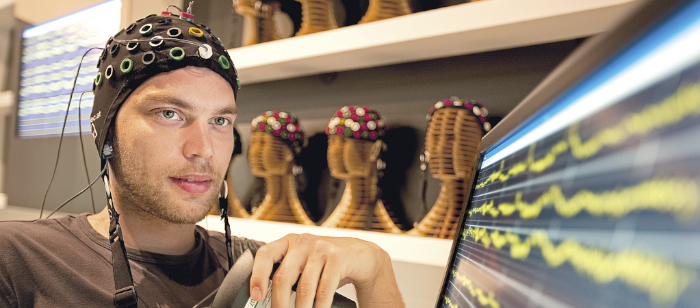
Engineering Week IEEE Student Branch Seminar
in conjunction with CSEE Graduate Seminar
Brain-Computer Interface Technologies
in the Coming Decades (with Demonstration)
Dr. Kaleb McDowell
Translational Neuroscience Branch Chief
Army Research Laboratory
11:30-12:30 Friday, 24 February 2012, ITE 227, UMBC
As the proliferation of technology dramatically infiltrates all aspects of modern life, in many ways the world is becoming so dynamic and complex that technological capabilities are overwhelming human capabilities to optimally interact with and leverage those technologies. Fortunately, these technological advancements have also driven an explosion of neuroscience research over the past several decades, presenting engineers with a remarkable opportunity to design and develop flexible and adaptive brain-based neurotechnologies that integrate with and capitalize on human capabilities and limitations to improve human-system interactions. Major forerunners of this conception are brain-computer interfaces (BCIs), which to this point have been largely focused on improving the quality of life for particular clinical populations and include, for example, applications for advanced communications with paralyzed or "locked-in" patients as well as the direct control of prostheses and wheelchairs. Near-term applications are envisioned that are primarily task-oriented and are targeted to avoid the most difficult obstacles to development. In the farther term, a holistic approach to BCIs will enable a broad range of task-oriented and opportunistic applications by leveraging pervasive technologies and advanced analytical approaches to sense and merge critical brain, behavioral, task, and environmental information. Communications and other applications that are envisioned to be broadly impacted by BCIs are highlighted; however, these represent just a small sample of the potential of these technologies.
Kaleb McDowell (M'08-SM'11) was born in Frederick, MD, USA on July 10, 1970. He has a B.S in operations research and industrial engineering from Cornell University, Ithaca, NY, USA in 1992, an M.S. in kinesiology from the University of Maryland, College Park, MD, USA in 2000, and a Ph.D. in neuroscience and cognitive science from the University of Maryland, College Park, MD, USA in 2003.
He is currently the Chief of the Translational Neuroscience Branch and Chair of the Neuroscience Strategic Research Area at the U.S. Army Research Laboratory (ARL) in Aberdeen Proving Ground, MD, USA. Since joining ARL as a Research Psychologist in 2003, he has contributed to over 30 reviewed publications, and has led several major research and development programs focused on neuroscience, indirect vision systems and vehicle mobility. His current research interest focuses on translating basic neuroscience into applications for use by healthy populations in everyday, real-world environments.
Dr. McDowell received Department of Army Research and Development Achievement awards for technical excellence in 2007 and 2009 and the ARL Award for Leadership in 2011.
Host: IEEE UG and Grad Student Branches (cookies drinks available 11:15am)
]]>
Engineering Week IEEE Student Branch Seminar in conjunction with CSEE Graduate Seminar Brain-Computer Interface Technologies in the Coming Decades (with Demonstration) Dr. Kaleb McDowell...
http://www.csee.umbc.edu/2012/02/talk-and-demo-brain-computer-interface-technologies/
https://my3.my.umbc.edu/api/v0/pixel/news/12300/guest@my.umbc.edu/c9940943378e08667cac9d910c227f5d/api/pixel
computer-engineering
electrical-engineering
news
research
talks
Computer Science and Electrical Engineering
https://my3.my.umbc.edu/groups/csee
https://assets3-my.umbc.edu/system/shared/avatars/groups/000/000/099/d117dca133c64bf78a4b7696dd007189/xsmall.png?1314043393
https://assets1-my.umbc.edu/system/shared/avatars/groups/000/000/099/d117dca133c64bf78a4b7696dd007189/original.png?1314043393
https://assets1-my.umbc.edu/system/shared/avatars/groups/000/000/099/d117dca133c64bf78a4b7696dd007189/xxlarge.png?1314043393
https://assets4-my.umbc.edu/system/shared/avatars/groups/000/000/099/d117dca133c64bf78a4b7696dd007189/xlarge.png?1314043393
https://assets3-my.umbc.edu/system/shared/avatars/groups/000/000/099/d117dca133c64bf78a4b7696dd007189/large.png?1314043393
https://assets1-my.umbc.edu/system/shared/avatars/groups/000/000/099/d117dca133c64bf78a4b7696dd007189/medium.png?1314043393
https://assets2-my.umbc.edu/system/shared/avatars/groups/000/000/099/d117dca133c64bf78a4b7696dd007189/small.png?1314043393
https://assets3-my.umbc.edu/system/shared/avatars/groups/000/000/099/d117dca133c64bf78a4b7696dd007189/xsmall.png?1314043393
https://assets3-my.umbc.edu/system/shared/avatars/groups/000/000/099/d117dca133c64bf78a4b7696dd007189/xxsmall.png?1314043393
Computer Science and Electrical Engineering
1
0
true
Tue, 21 Feb 2012 00:23:42 -0500
talk: Exploring the Web, Beyond Document Search
Exploring the Web, Beyond Document Search
Professor Yi Chen
Computer Science, Arizona State University
1:00pm Friday 24 February 2012, ITE 325b, UMBC
Today we rely on Web Search Engines, like Google or Bing, to find relevant documents among trillions or quadrillions of documents on the Web. The Web also contains a vast amount of structured data in a variety of domains, such as travel, products, bibliographies, finance, and social networks. Current Web search engines and web database query interfaces are insufficient to satisfy the diverse search needs of web users. The information discovery processes are further complicated by the prevalence of uncertain data. At the same time, it is infeasible to request a web user to design clean databases and write precise SQL queries. In this talk, I will discuss the challenges, opportunities, and then some of the solutions that we have developed for empowering web users for effective information search on structured data. Furthermore, I will discuss how to enable successful social search so that complex computation tasks can be accomplished by leveraging social computing.
Yi Chen is an Associate Professor in Computer Science and an affiliate faculty in Biomedical Informatics at Arizona State University (ASU). She received her Ph.D. from the University of Pennsylvania and her B.S. from Central South University in 2005 and 1999, respectively. Her research interests include keyword search on structured data, learning uncertain data, workflow management and social computing, with applications in Web, social computing and healthcare. She is a general chair for SIGMOD'2012, a PC chair for KEYS’2009 and DBRank’2012. Yi Chen is a recipient of Outstanding Researcher Award in ASU CSE (2011), a Google Research Award (2011), IBM Faculty Award (2010) and an NSF CAREER Award (2009).
Host: Anupam Joshi
]]>
Exploring the Web, Beyond Document Search Professor Yi Chen Computer Science, Arizona State University 1:00pm Friday 24 February 2012, ITE 325b, UMBC Today we rely on Web Search...
http://www.csee.umbc.edu/2012/02/talk-exploring-the-web-beyond-document-search/
https://my3.my.umbc.edu/api/v0/pixel/news/12292/guest@my.umbc.edu/173b9a274bd3c99dd40649b78d3ec60b/api/pixel
information-retrieval
news
research
search
talks
web
Computer Science and Electrical Engineering
https://my3.my.umbc.edu/groups/csee
https://assets3-my.umbc.edu/system/shared/avatars/groups/000/000/099/d117dca133c64bf78a4b7696dd007189/xsmall.png?1314043393
https://assets1-my.umbc.edu/system/shared/avatars/groups/000/000/099/d117dca133c64bf78a4b7696dd007189/original.png?1314043393
https://assets1-my.umbc.edu/system/shared/avatars/groups/000/000/099/d117dca133c64bf78a4b7696dd007189/xxlarge.png?1314043393
https://assets4-my.umbc.edu/system/shared/avatars/groups/000/000/099/d117dca133c64bf78a4b7696dd007189/xlarge.png?1314043393
https://assets3-my.umbc.edu/system/shared/avatars/groups/000/000/099/d117dca133c64bf78a4b7696dd007189/large.png?1314043393
https://assets1-my.umbc.edu/system/shared/avatars/groups/000/000/099/d117dca133c64bf78a4b7696dd007189/medium.png?1314043393
https://assets2-my.umbc.edu/system/shared/avatars/groups/000/000/099/d117dca133c64bf78a4b7696dd007189/small.png?1314043393
https://assets3-my.umbc.edu/system/shared/avatars/groups/000/000/099/d117dca133c64bf78a4b7696dd007189/xsmall.png?1314043393
https://assets3-my.umbc.edu/system/shared/avatars/groups/000/000/099/d117dca133c64bf78a4b7696dd007189/xxsmall.png?1314043393
Computer Science and Electrical Engineering
1
0
true
Mon, 20 Feb 2012 15:13:36 -0500
Amazon tech talk and information session, 7pm Thur...
Full Title: Amazon tech talk and information session, 7pm Thur 2/23, Skylight Room
Amazon, one of the most innovative and fastest growing technology companies, will hold a technical talk and information session at 7:00pm this Thursday (2/23) for UMBC students interested in full-time positions or internships. The meeting will be in the Skylight Room of the Commons.
UMBC Alumna Akshaya Iyengar (MS CS '11) joined Amazon last year and will talk about what it's like to work at there as a software development engineer. Amazon recruiter Makenzie LaCount will talk about employment at Amazon and accept resumes from students interested in a full time position or internship.
Pre-registration is not required, but come early to enjoy the food and get an Amazon t-shirt.
]]>
Full Title: Amazon tech talk and information session, 7pm Thur 2/23, Skylight Room Amazon, one of the most innovative and fastest growing technology companies, will hold a technical talk...
http://www.csee.umbc.edu/2012/02/amazon-tech-talk-and-information-session-7pm-thur-223-skylight-room/
https://my3.my.umbc.edu/api/v0/pixel/news/12238/guest@my.umbc.edu/abcb1d43dffb469b5586ee80125a0f4e/api/pixel
graduate
jobs
news
undergraduate
Computer Science and Electrical Engineering
https://my3.my.umbc.edu/groups/csee
https://assets3-my.umbc.edu/system/shared/avatars/groups/000/000/099/d117dca133c64bf78a4b7696dd007189/xsmall.png?1314043393
https://assets1-my.umbc.edu/system/shared/avatars/groups/000/000/099/d117dca133c64bf78a4b7696dd007189/original.png?1314043393
https://assets1-my.umbc.edu/system/shared/avatars/groups/000/000/099/d117dca133c64bf78a4b7696dd007189/xxlarge.png?1314043393
https://assets4-my.umbc.edu/system/shared/avatars/groups/000/000/099/d117dca133c64bf78a4b7696dd007189/xlarge.png?1314043393
https://assets3-my.umbc.edu/system/shared/avatars/groups/000/000/099/d117dca133c64bf78a4b7696dd007189/large.png?1314043393
https://assets1-my.umbc.edu/system/shared/avatars/groups/000/000/099/d117dca133c64bf78a4b7696dd007189/medium.png?1314043393
https://assets2-my.umbc.edu/system/shared/avatars/groups/000/000/099/d117dca133c64bf78a4b7696dd007189/small.png?1314043393
https://assets3-my.umbc.edu/system/shared/avatars/groups/000/000/099/d117dca133c64bf78a4b7696dd007189/xsmall.png?1314043393
https://assets3-my.umbc.edu/system/shared/avatars/groups/000/000/099/d117dca133c64bf78a4b7696dd007189/xxsmall.png?1314043393
Computer Science and Electrical Engineering
1
0
true
Sat, 18 Feb 2012 09:31:03 -0500
A Letter from CSEE Department Chair, Dr. Gary Carter
![]() As we are entering the second semester of the 2011-2012 academic year, we are preparing for changes and new opportunities. Associate Professor Brooke Stephens has retired and we are preparing to interview candidates for two open tenure track positions in Computer Science. CSEE has just received permission to search for a Professor of Practice in Computer Science. In addition to assisting our CS instruction, the Professor of Practice will be affiliated with our Cyber Security Program which is rapidly growing.
As we are entering the second semester of the 2011-2012 academic year, we are preparing for changes and new opportunities. Associate Professor Brooke Stephens has retired and we are preparing to interview candidates for two open tenure track positions in Computer Science. CSEE has just received permission to search for a Professor of Practice in Computer Science. In addition to assisting our CS instruction, the Professor of Practice will be affiliated with our Cyber Security Program which is rapidly growing.
In the Kudos department: Professor Tim Finin was named UMBC Presidential Research Professor for 2012; Professor Anupam Joshi was recently appointed as the Oros Family Professor of Technology, a five year endowed professorship; UMBC’s 2012 Alumnus of the Year for Engineering and Information Technology is Ralph Semmel (’92 Ph.D., Computer Science).He is currently the Director of The Johns Hopkins University Applied Physics Laboratory; the Association for Computing Machinery (ACM) has recognized CSEE Professor Marie desJardins as a Distinguished Member for her contributions to the field of computing; Professor Yelena Yesha was awarded the 2011 IBM Center for Advanced Studies (CAS) Faculty Fellow of the Year; the IEEE Signal Processing Society has named Professor Tulay Adali a Distinguished Lecturer.
CSEE was visited during Fall 2011 by ABET as part of the accreditation process for the Computer Science and Computer Engineering programs. Richard Chang, Tim Oates, Chuck LaBerge, and Mohammed Younis guided us through this process.
Have a great Spring Semester. Keep up to date by visiting www.csee.umbc.edu
-Gary
]]>
As we are entering the second semester of the 2011-2012 academic year, we are preparing for changes and new opportunities. Associate Professor Brooke Stephens has retired and we are preparing to...
http://www.csee.umbc.edu/2012/02/a-letter-from-csee-department-chair-dr-gary-carter/
https://my3.my.umbc.edu/api/v0/pixel/news/12190/guest@my.umbc.edu/752e24036220bb89635f1e2fad2f81ee/api/pixel
chairs-notes
news
other
Computer Science and Electrical Engineering
https://my3.my.umbc.edu/groups/csee
https://assets3-my.umbc.edu/system/shared/avatars/groups/000/000/099/d117dca133c64bf78a4b7696dd007189/xsmall.png?1314043393
https://assets1-my.umbc.edu/system/shared/avatars/groups/000/000/099/d117dca133c64bf78a4b7696dd007189/original.png?1314043393
https://assets1-my.umbc.edu/system/shared/avatars/groups/000/000/099/d117dca133c64bf78a4b7696dd007189/xxlarge.png?1314043393
https://assets4-my.umbc.edu/system/shared/avatars/groups/000/000/099/d117dca133c64bf78a4b7696dd007189/xlarge.png?1314043393
https://assets3-my.umbc.edu/system/shared/avatars/groups/000/000/099/d117dca133c64bf78a4b7696dd007189/large.png?1314043393
https://assets1-my.umbc.edu/system/shared/avatars/groups/000/000/099/d117dca133c64bf78a4b7696dd007189/medium.png?1314043393
https://assets2-my.umbc.edu/system/shared/avatars/groups/000/000/099/d117dca133c64bf78a4b7696dd007189/small.png?1314043393
https://assets3-my.umbc.edu/system/shared/avatars/groups/000/000/099/d117dca133c64bf78a4b7696dd007189/xsmall.png?1314043393
https://assets3-my.umbc.edu/system/shared/avatars/groups/000/000/099/d117dca133c64bf78a4b7696dd007189/xxsmall.png?1314043393
Computer Science and Electrical Engineering
6
1
true
Thu, 16 Feb 2012 13:19:25 -0500
Thu, 16 Feb 2012 13:19:25 -0500
talk: Physical Layer Wireless Network Modeling and...
Full Title: talk: Physical Layer Wireless Network Modeling and SimulationEE Graduate Seminar
Physical Layer Wireless Network Modeling and Simulation
and my Technical Publishing Experience
Jon R. Ward
EE PhD Student, UMBC and
the Johns Hopkins University/Applied Physics Laboratory
11:30 – 12:45, Friday, 17 February 2012, ITE 237
Jon Ward, and coauthors Jack Burbank and Bill Kasch, recently wrote a book for IEEE Press/Wiley entitled "An Introduction to Network Modeling and Simulation for the Practicing Engineer." In this talk, Jon will provide a biographical summary of his UMBC research, the path that led to the book, and the technical publishing process. The talk will then transition to a technical discussion that highlights physical layer wireless network modeling and simulation from Chapter 3 of the book.
Jon R. Ward, PE graduated from NCSU in 2005 with an MSEE. He currently works at The Johns Hopkins Applied Physics Laboratory (JHU/APL) on projects focusing on wireless network design and interference testing of standards-based wireless technologies such as IEEE 802.11, IEEE 802.15.4, and IEEE 802.16. He has experience in wireless network modeling and simulation (M&S) and in test and evaluation (T&E) of commercial wireless equipment. He is currently a student at the University of Maryland, Baltimore County (UMBC), pursuing a Ph.D. degree in electrical engineering.
Host: Prof. Joel M. Morris
]]>
Full Title: talk: Physical Layer Wireless Network Modeling and Simulation EE Graduate Seminar Physical Layer Wireless Network Modeling and Simulation and my Technical Publishing Experience...
http://www.csee.umbc.edu/2012/02/talk-physical-layer-wireless-network-modeling-and-simulation/
https://my3.my.umbc.edu/api/v0/pixel/news/12169/guest@my.umbc.edu/4782d9be4c43cb9f39374b671c1e30a2/api/pixel
computer-engineering
electrical-engineering
graduate
news
research
talks
Computer Science and Electrical Engineering
https://my3.my.umbc.edu/groups/csee
https://assets3-my.umbc.edu/system/shared/avatars/groups/000/000/099/d117dca133c64bf78a4b7696dd007189/xsmall.png?1314043393
https://assets1-my.umbc.edu/system/shared/avatars/groups/000/000/099/d117dca133c64bf78a4b7696dd007189/original.png?1314043393
https://assets1-my.umbc.edu/system/shared/avatars/groups/000/000/099/d117dca133c64bf78a4b7696dd007189/xxlarge.png?1314043393
https://assets4-my.umbc.edu/system/shared/avatars/groups/000/000/099/d117dca133c64bf78a4b7696dd007189/xlarge.png?1314043393
https://assets3-my.umbc.edu/system/shared/avatars/groups/000/000/099/d117dca133c64bf78a4b7696dd007189/large.png?1314043393
https://assets1-my.umbc.edu/system/shared/avatars/groups/000/000/099/d117dca133c64bf78a4b7696dd007189/medium.png?1314043393
https://assets2-my.umbc.edu/system/shared/avatars/groups/000/000/099/d117dca133c64bf78a4b7696dd007189/small.png?1314043393
https://assets3-my.umbc.edu/system/shared/avatars/groups/000/000/099/d117dca133c64bf78a4b7696dd007189/xsmall.png?1314043393
https://assets3-my.umbc.edu/system/shared/avatars/groups/000/000/099/d117dca133c64bf78a4b7696dd007189/xxsmall.png?1314043393
Computer Science and Electrical Engineering
2
1
true
Wed, 15 Feb 2012 20:07:08 -0500
talk: Programming Model for Data Intensive Parallel...
Full Title: talk: Programming Model for Data Intensive Parallel Applications
A Scalable, Fault Tolerant Programming Model for
Developing Data Intensive Parallel Applications
Tyler A. Simon
Faculty Research Scientist
UMBC Center for Hybrid Multicore Productivity Research
1:00pm Friday 17 February 2012, ITE 325b
Future exascale computing systems will have to execute a single program on the order of 10^8-10^9 individual, low powered processing elements. These processors need to be fed data efficiently and reliably through the duration of a parallel computation. The current methods for explicit message passing between processors provide little in terms of fault tolerance support and the overheads of system level and application checkpoint/restart incur unreasonable overheads for exascale class computing systems.
We propose the development of novel autonomic execution model and an Adaptive Runtime Resource for Intensive Applications (RRIA), which improves application reliability, scalability and performance while freeing the programmer from explicit message passing. Experiments were conducted to evaluate ARRIA's capabilities on data intensive applications, those where the majority of execution time is spent reading and writing either to local or remote memory locations. In our approach, we focus on managing data movement both on a compute node and across a cluster of nodes for the application during runtime. We use a hybrid "threaded data parallel" model in which message passing is hidden entirely from the programmer and parallel tasks are bundled and farmed to a dynamic resource pool for execution.
Tyler Simon is a Faculty Research Assistant and PhD student working for the Center for Hybrid Multicore Productivity Research in the Computer Science and Electrical Engineering Department at the University of Maryland Baltimore County. He is also a computational scientist at the NASA Center for Climate Simulation at Goddard Space Flight Center. Tyler is interested in the theoretical and practical aspects of concurrency and parallel computation in general. His research is focused on what can be done with the effective application of distributed, parallel algorithms in high performance computing environments, particularly in parallel numerical methods and data movement.
Host: Yelena Yesha
]]>
Full Title: talk: Programming Model for Data Intensive Parallel Applications A Scalable, Fault Tolerant Programming Model for Developing Data Intensive Parallel Applications Tyler A. Simon...
http://www.csee.umbc.edu/2012/02/talk-programming-model-for-data-intensive-parallel-applications/
https://my3.my.umbc.edu/api/v0/pixel/news/12100/guest@my.umbc.edu/c4cfcb9581dc6294ad7c5b261c643380/api/pixel
big-data
news
parallel
programming-languages
research
talks
Computer Science and Electrical Engineering
https://my3.my.umbc.edu/groups/csee
https://assets3-my.umbc.edu/system/shared/avatars/groups/000/000/099/d117dca133c64bf78a4b7696dd007189/xsmall.png?1314043393
https://assets1-my.umbc.edu/system/shared/avatars/groups/000/000/099/d117dca133c64bf78a4b7696dd007189/original.png?1314043393
https://assets1-my.umbc.edu/system/shared/avatars/groups/000/000/099/d117dca133c64bf78a4b7696dd007189/xxlarge.png?1314043393
https://assets4-my.umbc.edu/system/shared/avatars/groups/000/000/099/d117dca133c64bf78a4b7696dd007189/xlarge.png?1314043393
https://assets3-my.umbc.edu/system/shared/avatars/groups/000/000/099/d117dca133c64bf78a4b7696dd007189/large.png?1314043393
https://assets1-my.umbc.edu/system/shared/avatars/groups/000/000/099/d117dca133c64bf78a4b7696dd007189/medium.png?1314043393
https://assets2-my.umbc.edu/system/shared/avatars/groups/000/000/099/d117dca133c64bf78a4b7696dd007189/small.png?1314043393
https://assets3-my.umbc.edu/system/shared/avatars/groups/000/000/099/d117dca133c64bf78a4b7696dd007189/xsmall.png?1314043393
https://assets3-my.umbc.edu/system/shared/avatars/groups/000/000/099/d117dca133c64bf78a4b7696dd007189/xxsmall.png?1314043393
Computer Science and Electrical Engineering
1
0
true
Tue, 14 Feb 2012 10:11:41 -0500
Google Map Maker University Mapping Contest
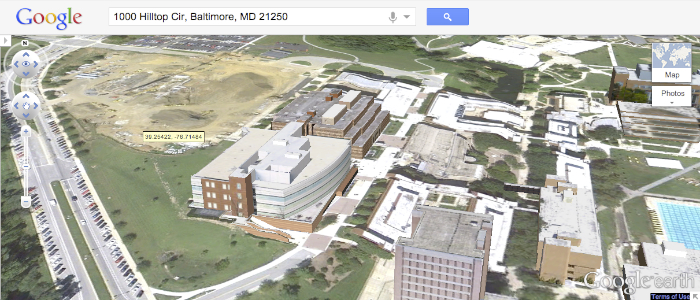
Google is holding a contest to encourage students in the US and Canada to use Google Map Maker to improve the maps of their campus areas. You can add 2.5D and 3D models of building and interior floor plans. Registration started on Monday February 13 and the contest runs through March 9.
"Be a part of a university mapping contest open for US and Canadian students who currently study at a university in these two countries! From February 13, 2012 to March 9, 2012, improving the maps of your campus can give you a chance to be a local hero and the highest scoring entries will win prizes like Samsung Galaxy tablets, Samsung Android phones, Google Map Maker messenger bags, and more!
Submit your entry for a chance to win and help your university at the same time! Join together with up to three other student mappers to add high quality edits like university buildings, walking paths, public spaces, or restaurant hangouts near your campus using Google Map Maker, and your efforts could win a grand prize package worth more than $5,000 USD for your team."
Google maps and Google Earth now support Web GL, "a software library that extends the capability of the JavaScript programming language to allow it to generate interactive 3D graphics within any compatible web browser." The new interface requires Chrome 14 or Firefox 8 (beta), Windows Vista/7 or Mac OS 10.6+ or Linux and a graphics card that supports WebGL.
See the contest site for the full details.
]]>
Google is holding a contest to encourage students in the US and Canada to use Google Map Maker to improve the maps of their campus areas. You can add 2.5D and 3D models of building and interior...
http://www.csee.umbc.edu/2012/02/google-map-maker-university-mapping-contest/
https://my3.my.umbc.edu/api/v0/pixel/news/12094/guest@my.umbc.edu/fbca3c3e87ce8af8f2f99ae14fa268ea/api/pixel
news
undergraduate
Computer Science and Electrical Engineering
https://my3.my.umbc.edu/groups/csee
https://assets3-my.umbc.edu/system/shared/avatars/groups/000/000/099/d117dca133c64bf78a4b7696dd007189/xsmall.png?1314043393
https://assets1-my.umbc.edu/system/shared/avatars/groups/000/000/099/d117dca133c64bf78a4b7696dd007189/original.png?1314043393
https://assets1-my.umbc.edu/system/shared/avatars/groups/000/000/099/d117dca133c64bf78a4b7696dd007189/xxlarge.png?1314043393
https://assets4-my.umbc.edu/system/shared/avatars/groups/000/000/099/d117dca133c64bf78a4b7696dd007189/xlarge.png?1314043393
https://assets3-my.umbc.edu/system/shared/avatars/groups/000/000/099/d117dca133c64bf78a4b7696dd007189/large.png?1314043393
https://assets1-my.umbc.edu/system/shared/avatars/groups/000/000/099/d117dca133c64bf78a4b7696dd007189/medium.png?1314043393
https://assets2-my.umbc.edu/system/shared/avatars/groups/000/000/099/d117dca133c64bf78a4b7696dd007189/small.png?1314043393
https://assets3-my.umbc.edu/system/shared/avatars/groups/000/000/099/d117dca133c64bf78a4b7696dd007189/xsmall.png?1314043393
https://assets3-my.umbc.edu/system/shared/avatars/groups/000/000/099/d117dca133c64bf78a4b7696dd007189/xxsmall.png?1314043393
Computer Science and Electrical Engineering
3
1
true
Tue, 14 Feb 2012 01:29:14 -0500
talk: Self-Powered In-Vitro Biosensing Microsystem
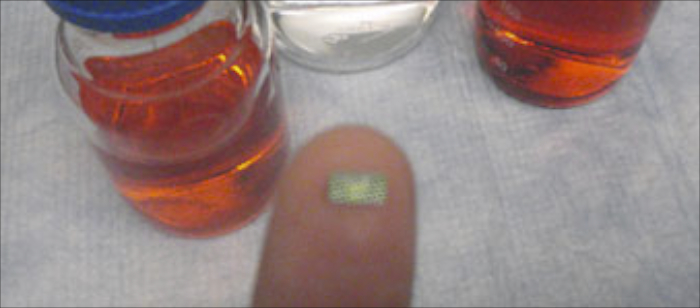
A Self-Powered In-Vitro Biosensing Microsystem
Dr. Gymama Slaughter
Computer Science and Electrical Engineering
University of Maryland, Baltimore County
11:30am-12:45pm Friday, 10 February 2012, ITE 237
Recent studies on biofuel cells have shown that energy can be harvested from biological compounds. Because of the recent biofuel cell discoveries, it possible to use inertial power scavenging design by converting interstitial glucose into energy through the coupling of enzymes and three-dimensional nanowire arrays. This talk will discuss our own contribution to identifying a pathway to embed sensing by eliminating the need for a potentiostat circuit and an external power source.
The self-powered biosensing microsystem consist of massively dense 3D nanowire cell structures fused with an energy harvesting circuit that maximizes power and energy densities while maintaining short ion transport distances, thus leading to dramatic improvement in both speed and energy efficiency of biofuel cells. Not only is such a paradigm extremely fast because of absence of a potentiostat circuit, but it is also extremely energy-efficient since the device operates at low voltage and current levels. As a result, the biosensing microsystem generates a drive signal in real-time and periodically powers an electrical device by generating and accumulating electrical power as a result of the catalysis of glucose.
Gymama Slaughter received her B.S. in Chemistry in 2001, M.S. in Chemical Engineering in 2003, and a Ph.D. in Computer Engineering from the Virginia Commonwealth University in 2005. She then joined Virginia State University as an Assistant Professor in Computer Engineering and Director of the Center for Biosystems and Engineering University. Finally, she joined the UMBC as Assistant Professor in Computer Engineering in August 2010.
Dr. Slaughter is currently the Director of the Bioelectronics Laboratory Group and oversees research and research outreach programs in the BEL Group. She develops and applies sensor-processor platforms, focusing on innovative contributions to identifying a pathway to embed sensing and processing functions in the same device to eliminate bottlenecks arising from communication between the sensor, transducer, and processor, thus, resulting in ultra-fast and ultra-low power devices.
Her research has been supported by the NSF for her diabetes research that focuses on the design and development of glucose biosensor, especially in relationship to monitoring blood glucose in diabetics. Her research interests include biosensors, microsensors, microfabrication technology, and BioMEMS and design.
Host: Prof. Joel M. Morris
]]>
A Self-Powered In-Vitro Biosensing Microsystem Dr. Gymama Slaughter Computer Science and Electrical Engineering University of Maryland, Baltimore County 11:30am-12:45pm Friday, 10 February...
http://www.csee.umbc.edu/2012/02/talk-self-powered-in-vitro-biosensing-microsystem/
https://my3.my.umbc.edu/api/v0/pixel/news/11975/guest@my.umbc.edu/ec1f4a18449e26d1d6a1986f92048140/api/pixel
computer-engineering
graduate
news
research
talks
Computer Science and Electrical Engineering
https://my3.my.umbc.edu/groups/csee
https://assets3-my.umbc.edu/system/shared/avatars/groups/000/000/099/d117dca133c64bf78a4b7696dd007189/xsmall.png?1314043393
https://assets1-my.umbc.edu/system/shared/avatars/groups/000/000/099/d117dca133c64bf78a4b7696dd007189/original.png?1314043393
https://assets1-my.umbc.edu/system/shared/avatars/groups/000/000/099/d117dca133c64bf78a4b7696dd007189/xxlarge.png?1314043393
https://assets4-my.umbc.edu/system/shared/avatars/groups/000/000/099/d117dca133c64bf78a4b7696dd007189/xlarge.png?1314043393
https://assets3-my.umbc.edu/system/shared/avatars/groups/000/000/099/d117dca133c64bf78a4b7696dd007189/large.png?1314043393
https://assets1-my.umbc.edu/system/shared/avatars/groups/000/000/099/d117dca133c64bf78a4b7696dd007189/medium.png?1314043393
https://assets2-my.umbc.edu/system/shared/avatars/groups/000/000/099/d117dca133c64bf78a4b7696dd007189/small.png?1314043393
https://assets3-my.umbc.edu/system/shared/avatars/groups/000/000/099/d117dca133c64bf78a4b7696dd007189/xsmall.png?1314043393
https://assets3-my.umbc.edu/system/shared/avatars/groups/000/000/099/d117dca133c64bf78a4b7696dd007189/xxsmall.png?1314043393
Computer Science and Electrical Engineering
1
0
true
Wed, 08 Feb 2012 20:52:15 -0500