2018 Mid-Atlantic Student Colloquium on Speech, Language and Learning
2018 Mid-Atlantic Student Colloquium on Speech, Language and Learning
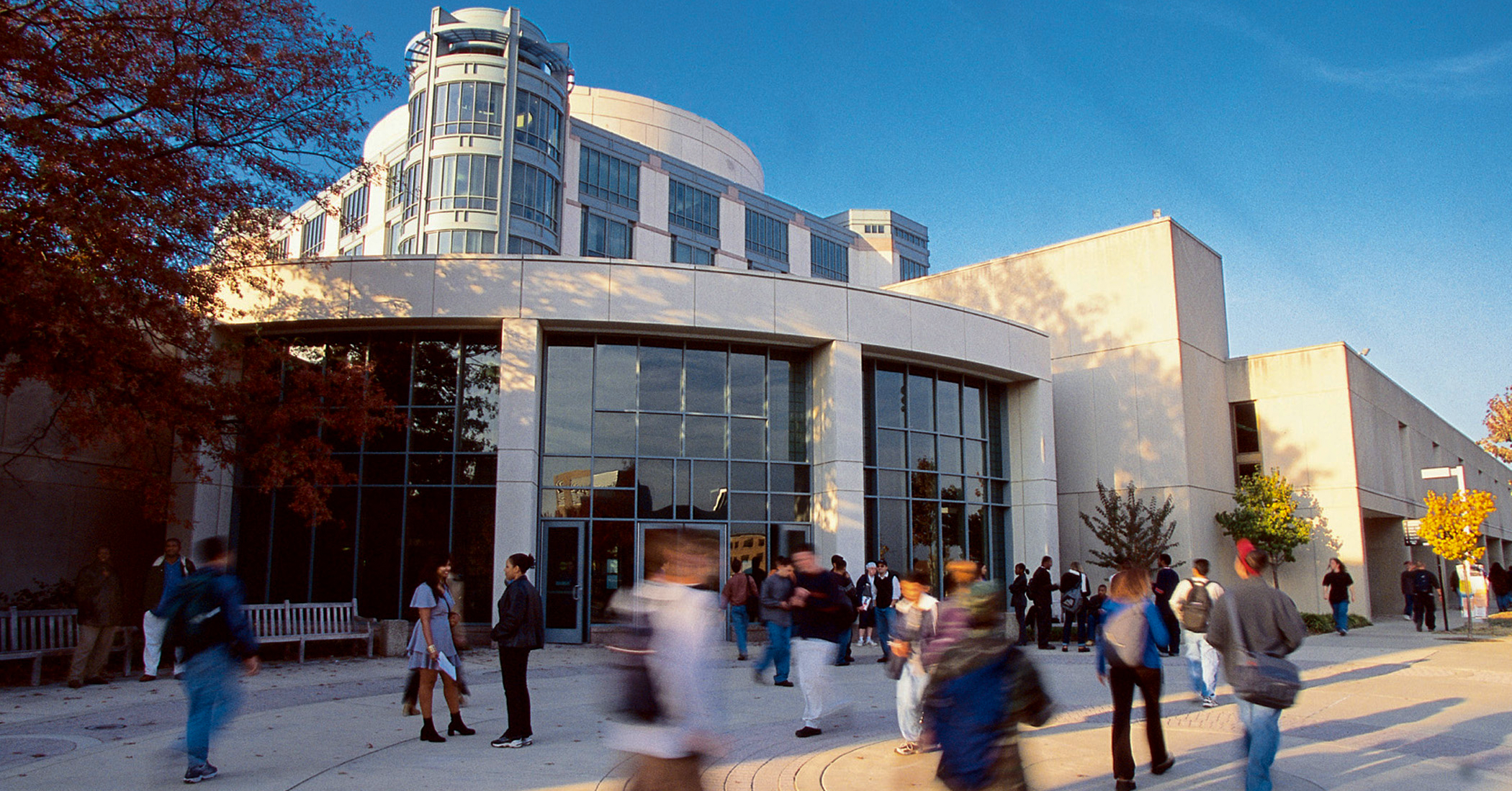
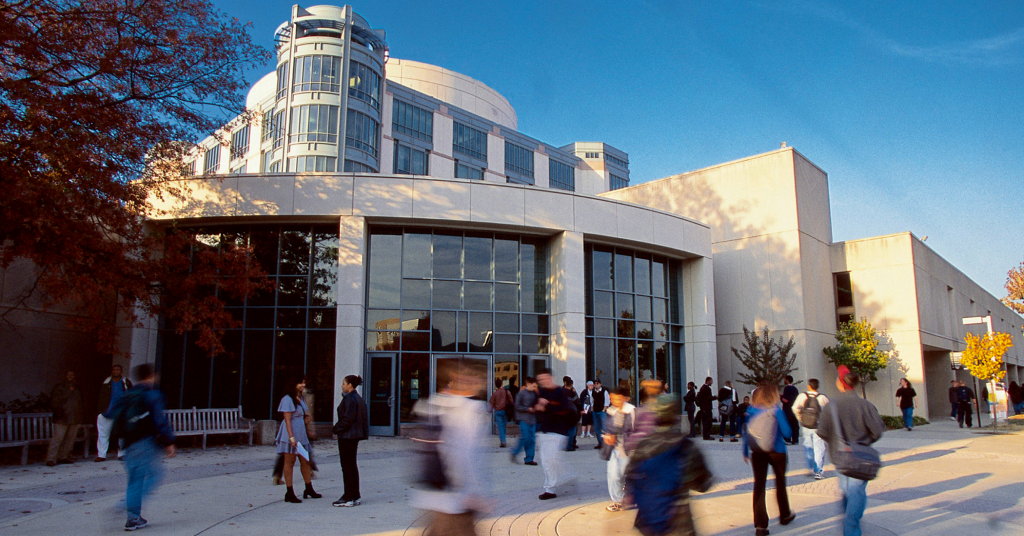
The 2018 Mid-Atlantic Student Colloquium on Speech, Language and Learning (MASC-SLL) is a student-run, one-day event on speech, language & machine learning research to be held at the University of Maryland, Baltimore County (UMBC) from 10:00am to 6:00pm on Saturday May 12. There is no registration charge and lunch and refreshments will be provided. Students, postdocs, faculty and researchers from universities & industry are invited to participate and network with other researchers working in related fields.
Students and postdocs are encouraged to submit abstracts describing ongoing, planned, or completed research projects, including previously published results and negative results. Research in any field applying computational methods to any aspect of human language, including speech and learning, from all areas of computer science, linguistics, engineering, neuroscience, information science, and related fields is welcome. Submissions and presentations must be made by students or postdocs. Accepted submissions will be presented as either posters or talks.
Important Dates are:
-
Submission deadline (abstracts):
April 16 April 20
- Decisions announced:
April 21 April 25
-
Registration opens: April 10
- Registration closes: May 6
- Colloquium: May 12
The post 2018 Mid-Atlantic Student Colloquium on Speech, Language and Learning appeared first on Department of Computer Science and Electrical Engineering.
]]>
2018 Mid-Atlantic Student Colloquium on Speech, Language and Learning The 2018 Mid-Atlantic Student Colloquium on Speech, Language and Learning (MASC-SLL) is a student-run, one-day event on...
https://www.csee.umbc.edu/2018/04/2018-mid-atlantic-student-colloquium-speech-language-machine-learning-masc-sll/
https://my3.my.umbc.edu/api/v0/pixel/news/75563/guest@my.umbc.edu/9328459e6c0c032485024bc40fcd0ee0/api/pixel
ai
computer-engineering
computer-science
csee
data-science
events
machine-learning
news
research
students
Computer Science and Electrical Engineering
https://my3.my.umbc.edu/groups/csee
https://assets3-my.umbc.edu/system/shared/avatars/groups/000/000/099/d117dca133c64bf78a4b7696dd007189/xsmall.png?1314043393
https://assets1-my.umbc.edu/system/shared/avatars/groups/000/000/099/d117dca133c64bf78a4b7696dd007189/original.png?1314043393
https://assets1-my.umbc.edu/system/shared/avatars/groups/000/000/099/d117dca133c64bf78a4b7696dd007189/xxlarge.png?1314043393
https://assets4-my.umbc.edu/system/shared/avatars/groups/000/000/099/d117dca133c64bf78a4b7696dd007189/xlarge.png?1314043393
https://assets3-my.umbc.edu/system/shared/avatars/groups/000/000/099/d117dca133c64bf78a4b7696dd007189/large.png?1314043393
https://assets1-my.umbc.edu/system/shared/avatars/groups/000/000/099/d117dca133c64bf78a4b7696dd007189/medium.png?1314043393
https://assets2-my.umbc.edu/system/shared/avatars/groups/000/000/099/d117dca133c64bf78a4b7696dd007189/small.png?1314043393
https://assets3-my.umbc.edu/system/shared/avatars/groups/000/000/099/d117dca133c64bf78a4b7696dd007189/xsmall.png?1314043393
https://assets3-my.umbc.edu/system/shared/avatars/groups/000/000/099/d117dca133c64bf78a4b7696dd007189/xxsmall.png?1314043393
Computer Science and Electrical Engineering
2
0
true
Tue, 10 Apr 2018 21:01:21 -0400
Mon, 30 Apr 2018 23:01:21 -0400

ACM Faculty Talk
Mixed Membership Word Embeddings for Computational Social Science
Dr. James Foulds, Information Systems, UMBC
12:00-1:00pm Thursday, 5 April 2018, ITE459, UMBC
Word embeddings improve the performance of natural language processing (NLP) systems by revealing the hidden structural relationships between words. Despite their success in many applications, word embeddings have seen very little use in computational social science NLP tasks, presumably due to their reliance on big data, and to a lack of interpretability. I propose a probabilistic model-based word embedding method which can recover interpretable embeddings, without big data. The key insight is to leverage mixed membership modeling, in which global representations are shared, but individual entities (i.e., dictionary words) are free to use these representations to uniquely differing degrees. I show how to train the model using a combination of state-of-the-art training techniques for word embeddings and topic models. The experimental results show an improvement in predictive language modeling of up to 63% in MRR over the skip-gram, and demonstrate that the representations are beneficial for supervised learning. I illustrate the interpretability of the models with computational social science case studies on State of the Union addresses and NIPS articles.
James (a.k.a. Jimmy) Foulds is an assistant professor in the Department of Information Systems at UMBC. His research interests are in both applied and foundational machine learning, focusing on probabilistic latent variable models and the inference algorithms to learn them from data. His work aims to promote the practice of latent variable modeling for multidisciplinary research in areas including computational social science and the digital humanities. He earned his Ph.D. in computer science at the University of California, Irvine, and was a postdoctoral scholar at the University of California, Santa Cruz, followed by the University of California, San Diego. His master’s and bachelor’s degrees were earned with first class honours at the University of Waikato, New Zealand, where he also contributed to the Weka data mining system.
The post 🗣 talk: Mixed Membership Word Embeddings for Computational Social Science, 12pm Thr 4/5 appeared first on Department of Computer Science and Electrical Engineering.
]]>
ACM Faculty Talk Mixed Membership Word Embeddings for Computational Social Science Dr. James Foulds, Information Systems, UMBC 12:00-1:00pm Thursday, 5 April 2018, ITE459, UMBC...
https://www.csee.umbc.edu/2018/04/umbc-talk-nlp-mixed-membership-word-embeddings-computational-social-science/
https://my3.my.umbc.edu/api/v0/pixel/news/75380/guest@my.umbc.edu/0984cd1d264125fc6c8badca6995e115/api/pixel
ai
news
talks
Computer Science and Electrical Engineering
https://my3.my.umbc.edu/groups/csee
https://assets3-my.umbc.edu/system/shared/avatars/groups/000/000/099/d117dca133c64bf78a4b7696dd007189/xsmall.png?1314043393
https://assets1-my.umbc.edu/system/shared/avatars/groups/000/000/099/d117dca133c64bf78a4b7696dd007189/original.png?1314043393
https://assets1-my.umbc.edu/system/shared/avatars/groups/000/000/099/d117dca133c64bf78a4b7696dd007189/xxlarge.png?1314043393
https://assets4-my.umbc.edu/system/shared/avatars/groups/000/000/099/d117dca133c64bf78a4b7696dd007189/xlarge.png?1314043393
https://assets3-my.umbc.edu/system/shared/avatars/groups/000/000/099/d117dca133c64bf78a4b7696dd007189/large.png?1314043393
https://assets1-my.umbc.edu/system/shared/avatars/groups/000/000/099/d117dca133c64bf78a4b7696dd007189/medium.png?1314043393
https://assets2-my.umbc.edu/system/shared/avatars/groups/000/000/099/d117dca133c64bf78a4b7696dd007189/small.png?1314043393
https://assets3-my.umbc.edu/system/shared/avatars/groups/000/000/099/d117dca133c64bf78a4b7696dd007189/xsmall.png?1314043393
https://assets3-my.umbc.edu/system/shared/avatars/groups/000/000/099/d117dca133c64bf78a4b7696dd007189/xxsmall.png?1314043393
Computer Science and Electrical Engineering
3
0
true
Wed, 04 Apr 2018 21:48:31 -0400
Wed, 04 Apr 2018 21:48:31 -0400
Computer Vision for Autonomous Underwater Vehicles
Computer Vision for Autonomous Underwater Vehicles
Dr. David Chapman, Oceaneering International
11:00-12:00 Monday March 12, 2018, ITE 325, UMBC
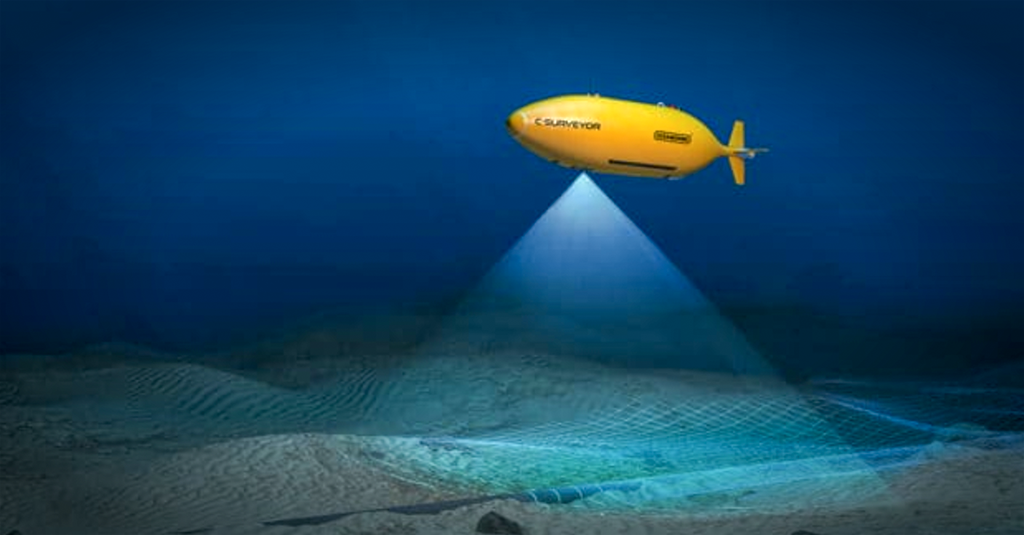
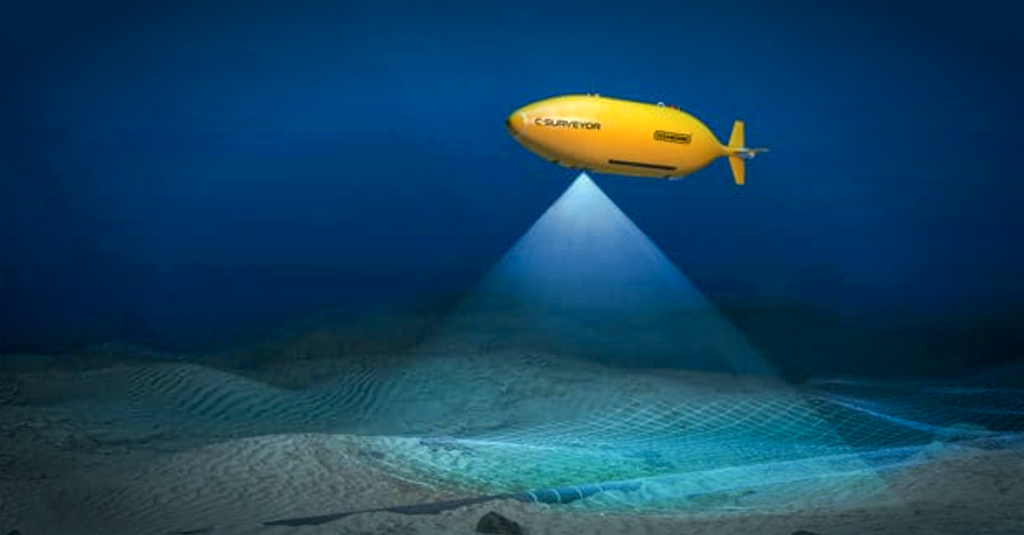
Autonomous Underwater Vehicles (AUVs) are unmanned and unteathered submarine vehicles with a variety of applications from bathymetry survey to naval warfare. Attenuation and scattering of light and electromagnetic radiation through water severely restricts wireless communications as well as distorts and attenuates camera imagery. Bandwidth limitations prevent AUVs from being remotely piloted, thus full autonomy is required for operation. Computer vision extends the ability for AUVs to perform advanced behaviors, but must address the unique challenges of underwater photography, underwater lidar, and multibeam sonar sensors. We will discuss recent research and development efforts related to computer vision of AUVs as their applications, including oilfield pipeline survey and inspection, obstacle avoidance and autonomous docking. We will also briefly discuss efforts toward amphibious vehicles, AGVs for factory automation, as well as ongoing research in acoustic signal processing.
Dr. David Chapman is a Senior Software Engineer with Oceaneering International inc., which is the largest producer of subsea Remotely Operated Vehicles (ROVs) and largest operator of Autonomous Underwater Vehicles (AUVs). Dr. Chapman completed his Ph.D. from University of Maryland Baltimore County (UMBC) in 2012 studying remote sensing, image processing, and parallel computing. He also completed a post doctoral fellowship at Columbia University’s Lamont Doherty Earth Observatory studying data analytics for El Nino prediction. At Oceaneering, Dr. Chapman has been a key contributor to computer vision algorithms research for new product development including the Pipeline Inspection AUV (PI-AUV), winner of Oceaneering’s 2017 innovative product award. He is also a contributor to both the proposal and development efforts of a vision-based AUV auto-docking system. Dr. Chapman has studied and applied a variety of computer vision algorithms including the fast Radon transform, wavelet-based feature classification, numerical optimization, and neural networks in order to extend the capabilities of AUVs and related autonomous vehicles.
The post 🗣️talk: Computer Vision for Autonomous Underwater Vehicles, 11am Mon 3/12 appeared first on Department of Computer Science and Electrical Engineering.
]]>
Computer Vision for Autonomous Underwater Vehicles Dr. David Chapman, Oceaneering International 11:00-12:00 Monday March 12, 2018, ITE 325, UMBC Autonomous Underwater Vehicles (AUVs) are...
https://www.csee.umbc.edu/2018/03/talk-computer-vision-autonomous-underwater-vehicles-umbc-auvs-ai/
https://my3.my.umbc.edu/api/v0/pixel/news/74694/guest@my.umbc.edu/78b32bb87db92ae0b83dcd303cb60932/api/pixel
ai
alumni
computer-engineering
computer-science
news
talks
Computer Science and Electrical Engineering
https://my3.my.umbc.edu/groups/csee
https://assets3-my.umbc.edu/system/shared/avatars/groups/000/000/099/d117dca133c64bf78a4b7696dd007189/xsmall.png?1314043393
https://assets1-my.umbc.edu/system/shared/avatars/groups/000/000/099/d117dca133c64bf78a4b7696dd007189/original.png?1314043393
https://assets1-my.umbc.edu/system/shared/avatars/groups/000/000/099/d117dca133c64bf78a4b7696dd007189/xxlarge.png?1314043393
https://assets4-my.umbc.edu/system/shared/avatars/groups/000/000/099/d117dca133c64bf78a4b7696dd007189/xlarge.png?1314043393
https://assets3-my.umbc.edu/system/shared/avatars/groups/000/000/099/d117dca133c64bf78a4b7696dd007189/large.png?1314043393
https://assets1-my.umbc.edu/system/shared/avatars/groups/000/000/099/d117dca133c64bf78a4b7696dd007189/medium.png?1314043393
https://assets2-my.umbc.edu/system/shared/avatars/groups/000/000/099/d117dca133c64bf78a4b7696dd007189/small.png?1314043393
https://assets3-my.umbc.edu/system/shared/avatars/groups/000/000/099/d117dca133c64bf78a4b7696dd007189/xsmall.png?1314043393
https://assets3-my.umbc.edu/system/shared/avatars/groups/000/000/099/d117dca133c64bf78a4b7696dd007189/xxsmall.png?1314043393
Computer Science and Electrical Engineering
2
0
true
Sat, 10 Mar 2018 10:52:15 -0500
Sat, 10 Mar 2018 10:52:15 -0500
talk: desJardins on Planning and Learning in Complex Stochastic Domains, 1pm fri 3/8

Planning and Learning in Complex Stochastic Domains: AMDPs, Option Discovery, Learning Transfer, Language Learning, and More
Dr. Marie desJardins, University of Maryland, Baltimore County
1-2pm Friday, March 9th, 2018, ITE 456, UMBC
Robots acting in human-scale environments must plan under uncertainty in large state–action spaces and face constantly changing reward functions as requirements and goals change. We introduce a new hierarchical planning framework called Abstract Markov Decision Processes (AMDPs) that can plan in a fraction of the time needed for complex decision making in ordinary MDPs. AMDPs provide abstract states, actions, and transition dynamics in multiple layers above a base-level “flat” MDP. AMDPs decompose problems into a series of subtasks with both local reward and local transition functions used to create policies for subtasks. The resulting hierarchical planning method is independently optimal at each level of abstraction, and is recursively optimal when the local reward and transition functions are correct.
I will present empirical results in several domains showing significantly improved planning speed, while maintaining solution quality. I will also discuss related work within the same project on automated option discovery, abstraction construction, language learning, and initial steps towards automated methods for learning AMDPs from base MDPs, from teacher demonstrations, and from direct observations in the domain.
This work is collaborative research with Dr. Michael Littman and Dr. Stefanie Tellex of Brown University. Dr. James MacGlashan of SIFT and Dr. Smaranda Muresan of Columbia University collaborated on earlier stages of the project. The following UMBC students have also contributed to the project: Khalil Anderson, Tadewos Bellete, Michael Bishoff, Rose Carignan, Nick Haltemeyer, Nathaniel Lam, Matthew Landen, Keith McNamara, Stephanie Milani, Shane Parr (UMass), Shawn Squire, Tenji Tembo, Nicholay Topin, Puja Trivedi, and John Winder.
Dr. Marie desJardins is a Professor of Computer Science and the Associate Dean for Academic Affairs in the College of Engineering and Information Technology at the University of Maryland, Baltimore County. Prior to joining the faculty at UMBC in 2001, she was a Senior Computer Scientist in the AI Center at SRI International. Her research is in artificial intelligence, focusing on the areas of machine learning, multi-agent systems, planning, interactive AI techniques, information management, reasoning with uncertainty, and decision theory. She is active in the computer science education community, founded the Maryland Center for Computing Education, and leads the CS Matters in Maryland project to develop curriculum and train high school teachers to teach AP CS Principles.
Dr. desJardins has published over 125 scientific papers in journals, conferences, and workshops. She will be the IJCAI-20 Conference Chair, and has been an Associate Editor of the Journal of Artificial Intelligence Research and the Journal of Autonomous Agents and Multi-Agent Systems, a member of the editorial board of AI Magazine, and Program Co-chair for AAAI-13. She has previously served as AAAI Liaison to the Board of Directors of the Computing Research Association, Vice-Chair of ACM’s SIGART, and AAAI Councillor. She is a AAAI Fellow, an ACM Distinguished Member, a Member-at-Large for Section T (Information, Computing, and Communication) of the American Association for the Advancement of Science, the 2014-17 UMBC Presidential Teaching Professor, a member and former chair of UMBC’s Honors College Advisory Board, former chair of UMBC’s Faculty Affairs Committee, and a member of the advisory board of UMBC’s Center for Women in Technology.
The post talk: desJardins on Planning and Learning in Complex Stochastic Domains, 1pm fri 3/8 appeared first on Department of Computer Science and Electrical Engineering.
]]>
UMBC ACM Student Chapter Planning and Learning in Complex Stochastic Domains: AMDPs, Option Discovery, Learning Transfer, Language Learning, and More Dr. Marie desJardins, University of...
https://www.csee.umbc.edu/2018/03/talk-desjardins-planning-learning-complex-stochastic-domains-amdp-option-discovery-learning-transfer-language-learning-umbc/
https://my3.my.umbc.edu/api/v0/pixel/news/74622/guest@my.umbc.edu/1bfe31916d1caa27a16e7ad620b4f7ee/api/pixel
ai
computer-science
events
faculty-and-staff
news
research
talks
Computer Science and Electrical Engineering
https://my3.my.umbc.edu/groups/csee
https://assets3-my.umbc.edu/system/shared/avatars/groups/000/000/099/d117dca133c64bf78a4b7696dd007189/xsmall.png?1314043393
https://assets1-my.umbc.edu/system/shared/avatars/groups/000/000/099/d117dca133c64bf78a4b7696dd007189/original.png?1314043393
https://assets1-my.umbc.edu/system/shared/avatars/groups/000/000/099/d117dca133c64bf78a4b7696dd007189/xxlarge.png?1314043393
https://assets4-my.umbc.edu/system/shared/avatars/groups/000/000/099/d117dca133c64bf78a4b7696dd007189/xlarge.png?1314043393
https://assets3-my.umbc.edu/system/shared/avatars/groups/000/000/099/d117dca133c64bf78a4b7696dd007189/large.png?1314043393
https://assets1-my.umbc.edu/system/shared/avatars/groups/000/000/099/d117dca133c64bf78a4b7696dd007189/medium.png?1314043393
https://assets2-my.umbc.edu/system/shared/avatars/groups/000/000/099/d117dca133c64bf78a4b7696dd007189/small.png?1314043393
https://assets3-my.umbc.edu/system/shared/avatars/groups/000/000/099/d117dca133c64bf78a4b7696dd007189/xsmall.png?1314043393
https://assets3-my.umbc.edu/system/shared/avatars/groups/000/000/099/d117dca133c64bf78a4b7696dd007189/xxsmall.png?1314043393
Computer Science and Electrical Engineering
3
0
true
Thu, 08 Mar 2018 09:25:12 -0500
Prof. Marie desJardins, new AAAI fellow, advocates for CS education in K–12 schools
Prof. Marie desJardins, new AAAI fellow, advocates for CS education in K–12 schools
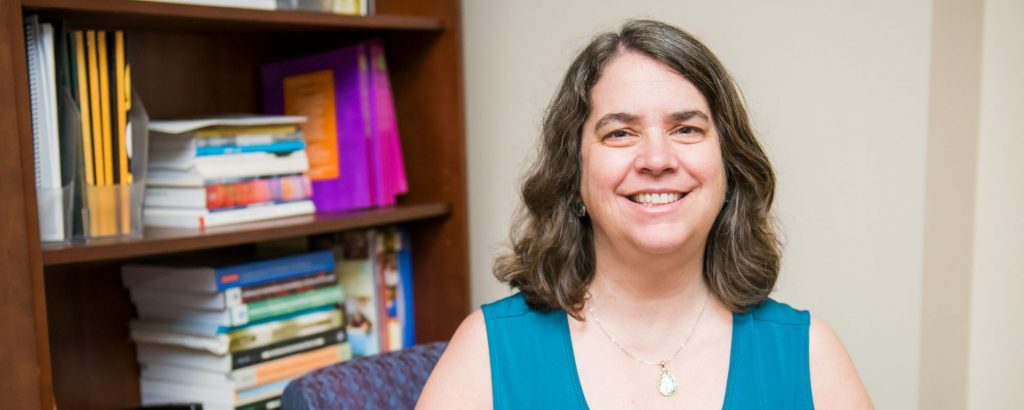
Marie desJardins, associate dean of the College of Engineering and Information Technology and professor of computer science, recently wrote a piece for The Baltimore Sun about the importance of computer science education in K–12 schools. She is a leader in the artificial intelligence field and has been nationally recognized for her commitment to mentoring, work increasing diversity in computing, and success expanding computer science education in K–12 schools.
In the op-ed, desJardins writes about why it is important to expose K–12 students to computer science, for both their benefit (in terms of expanded career options) and the benefit of fields that rely on STEM talent. “The need for computer science and computational thinking skills is becoming pervasive not just in the world of software engineers, but in fields as varied as science, design, marketing, and public policy,” she writes.
desJardins describes in the Sun her work with “CS Matters in Maryland,” an initiative that seeks to ensure all students across the state have access to computer science education as part of their regular curriculum. “Our ‘CS Matters in Maryland’ project has trained high school teachers in all of the state’s school systems, emphasizing equity and inclusion for all student demographics and all school systems,” she says.
While this particular project focuses on the state of Maryland, desJardins has been honored across the U.S. for her work in the field. In the past month alone, she has received the Distinguished Alumni Award in Computer Science from UC Berkeley, her alma mater and was formally recognized as a fellow of the Association for the Advancement of Artificial Intelligence.
“I was absolutely overwhelmed when I learned that I had been named one of UC Berkeley’s two Outstanding Alumni in Computer Science for 2018, joining a group of computer scientists for which I have immense respect and admiration,” desJardins said. “It is hard to put into words how much it meant to me to have received this award in the same week that I was inducted as a Fellow of the Association for the Advancement of Artificial Intelligence, a recognition that only a handful of AI scientists receive each year. It is especially meaningful to me that the citations on both awards refer equally to my research and to my mentoring, teaching, and diversity efforts.”
A recent interview with Iridescent brings together desJardin’s research on “intelligent learning” — how robots can learn to solve complicated tasks in complex settings — with her work with students from diverse backgrounds, across all majors. In describing UMBC’s Grand Challenge Scholars Program, she highlights how technology matters, but can’t stand alone — how combining the perspectives of people from all backgrounds and all fields is essential to solving the world’s problems.
“Getting these students together from really different perspectives and having them talk about some of these hard problems is initially really exciting and also very hard,” she explains. “Then, it gets easier. The initial barrier is often just one of language and perspective.”
desJardins continues to work to bridge those divides through her teaching, advocacy, and research, and is now recognized by both Forbes and TechRepublic as a top artificial intelligence expert to follow online.
Read the entire piece in The Baltimore Sun, “All Kids Should Have a Computer Science Education.“
Adapted from an article in UMBC News by Megan Hanks.
The post Prof. Marie desJardins, new AAAI fellow, advocates for CS education in K–12 schools appeared first on Department of Computer Science and Electrical Engineering.
]]>
Prof. Marie desJardins, new AAAI fellow, advocates for CS education in K–12 schools Marie desJardins, associate dean of the College of Engineering and Information Technology and professor of...
https://www.csee.umbc.edu/2018/03/prof-marie-desjardins-new-aaai-fellow-advocates-for-cs-computer-science-education-in-k-12-schools/
https://my3.my.umbc.edu/api/v0/pixel/news/74440/guest@my.umbc.edu/8e0a880790a3cd1f30c588dcc6b35712/api/pixel
ai
computer-science
education
faculty-and-staff
news
Computer Science and Electrical Engineering
https://my3.my.umbc.edu/groups/csee
https://assets3-my.umbc.edu/system/shared/avatars/groups/000/000/099/d117dca133c64bf78a4b7696dd007189/xsmall.png?1314043393
https://assets1-my.umbc.edu/system/shared/avatars/groups/000/000/099/d117dca133c64bf78a4b7696dd007189/original.png?1314043393
https://assets1-my.umbc.edu/system/shared/avatars/groups/000/000/099/d117dca133c64bf78a4b7696dd007189/xxlarge.png?1314043393
https://assets4-my.umbc.edu/system/shared/avatars/groups/000/000/099/d117dca133c64bf78a4b7696dd007189/xlarge.png?1314043393
https://assets3-my.umbc.edu/system/shared/avatars/groups/000/000/099/d117dca133c64bf78a4b7696dd007189/large.png?1314043393
https://assets1-my.umbc.edu/system/shared/avatars/groups/000/000/099/d117dca133c64bf78a4b7696dd007189/medium.png?1314043393
https://assets2-my.umbc.edu/system/shared/avatars/groups/000/000/099/d117dca133c64bf78a4b7696dd007189/small.png?1314043393
https://assets3-my.umbc.edu/system/shared/avatars/groups/000/000/099/d117dca133c64bf78a4b7696dd007189/xsmall.png?1314043393
https://assets3-my.umbc.edu/system/shared/avatars/groups/000/000/099/d117dca133c64bf78a4b7696dd007189/xxsmall.png?1314043393
Computer Science and Electrical Engineering
4
1
true
Thu, 01 Mar 2018 16:04:33 -0500
talk: Semi-supervised Learning for Visual Recognition, 1pm Fri 2/23, ITE325, UMBC
ACM Faculty Talk Series
Semi-supervised Learning for Visual Recognition
Dr. Hamed Pirsiavash, Assistant Professor, CSEE
1:00-2:00pm Friday, February 23, 2018, ITE 325, UMBC
We are interested in learning representations (features) that are discriminative for semantic image understanding tasks such as object classification, detection, and segmentation in images. A common approach to obtain such features is to use supervised learning. However, this requires manual annotation of images, which is costly, time-consuming, and prone to errors. In contrast, unsupervised or self-supervised feature learning methods exploiting unlabeled data can be much more scalable and flexible. I will present some of our efforts in this direction.
Hamed Pirsiavash is an assistant professor at the University of Maryland, Baltimore County (UMBC). Prior to joining UMBC in 2015 he was a postdoctoral research associate at MIT and he obtained his PhD at the University of California Irvine. He does research in the intersection of computer vision and machine learning.
This talk is sponsored by the UMBC Student Chapter of the ACM. Contact *protected email* with any questions regarding this event.
The post talk: Semi-supervised Learning for Visual Recognition, 1pm Fri 2/23, ITE325, UMBC appeared first on Department of Computer Science and Electrical Engineering.
]]>
ACM Faculty Talk Series Semi-supervised Learning for Visual Recognition Dr. Hamed Pirsiavash, Assistant Professor, CSEE 1:00-2:00pm Friday, February 23, 2018, ITE 325, UMBC We are...
https://www.csee.umbc.edu/2018/02/umbc-semi-supervised-learning-visual-recognition-hamed-pirsiavash/
https://my3.my.umbc.edu/api/v0/pixel/news/74167/guest@my.umbc.edu/01223797f860b195756aa7d0f5949e60/api/pixel
ai
computer-science
data-science
events
faculty-and-staff
machine-learning
news
research
talks
Computer Science and Electrical Engineering
https://my3.my.umbc.edu/groups/csee
https://assets3-my.umbc.edu/system/shared/avatars/groups/000/000/099/d117dca133c64bf78a4b7696dd007189/xsmall.png?1314043393
https://assets1-my.umbc.edu/system/shared/avatars/groups/000/000/099/d117dca133c64bf78a4b7696dd007189/original.png?1314043393
https://assets1-my.umbc.edu/system/shared/avatars/groups/000/000/099/d117dca133c64bf78a4b7696dd007189/xxlarge.png?1314043393
https://assets4-my.umbc.edu/system/shared/avatars/groups/000/000/099/d117dca133c64bf78a4b7696dd007189/xlarge.png?1314043393
https://assets3-my.umbc.edu/system/shared/avatars/groups/000/000/099/d117dca133c64bf78a4b7696dd007189/large.png?1314043393
https://assets1-my.umbc.edu/system/shared/avatars/groups/000/000/099/d117dca133c64bf78a4b7696dd007189/medium.png?1314043393
https://assets2-my.umbc.edu/system/shared/avatars/groups/000/000/099/d117dca133c64bf78a4b7696dd007189/small.png?1314043393
https://assets3-my.umbc.edu/system/shared/avatars/groups/000/000/099/d117dca133c64bf78a4b7696dd007189/xsmall.png?1314043393
https://assets3-my.umbc.edu/system/shared/avatars/groups/000/000/099/d117dca133c64bf78a4b7696dd007189/xxsmall.png?1314043393
Computer Science and Electrical Engineering
3
0
true
Wed, 21 Feb 2018 12:44:09 -0500
talk: Nonnegative Binary Matrix Factorization on a D-Wave Quantum Annealer, 1:30 2/15
CHMPR Distinguished Lecture Series
Nonnegative Binary Matrix Factorization
with a D-Wave Quantum Annealer
Dr. Daniel O’Malley
Los Alamos National Laboratory
1:30 15 February 2018, ITE325, UMBC
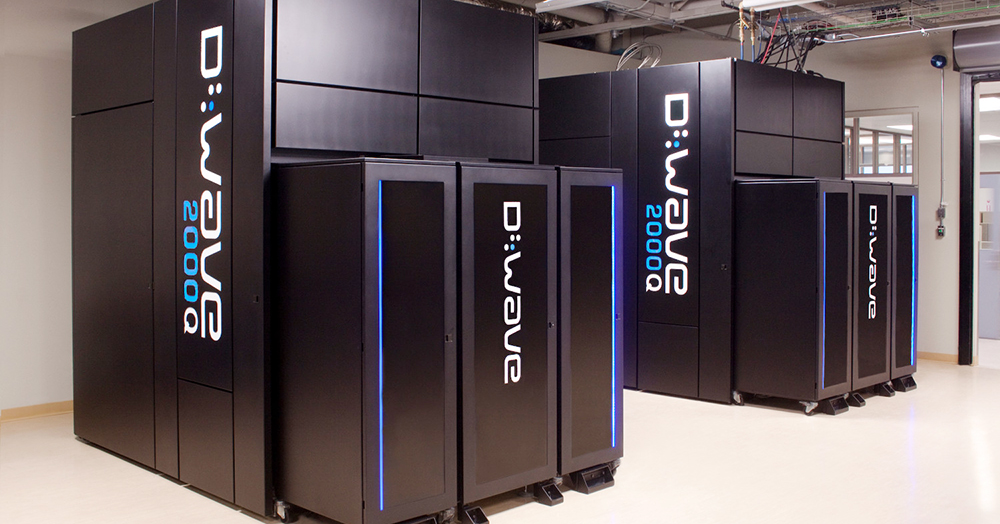
D-Wave quantum annealers represent a novel computational architecture and have attracted significant interest. Much of this interest has focused on the quantum behavior of D-Wave machines, and there have been few practical algorithms that use the D-Wave. Machine learning has been identified as an area where quantum annealing may be useful. Here, we show that the D-Wave 2X can be effectively used as part of an unsupervised machine learning method. This method takes a matrix as input and produces two low-rank matrices as output — one containing latent features in the data and another matrix describing how the features can be combined to approximately reproduce the input matrix. Despite the limited number of bits in the D-Wave hardware, this method is capable of handling a large input matrix. The D-Wave only limits the rank of the two output matrices. We apply this method to learn the features from a set of facial images and compare the performance of the D-Wave to two classical tools. This method is able to learn facial features and accurately reproduce the set of facial images. The performance of the D-Wave is mixed. It outperforms the two classical codes in a benchmark when only a short amount of computational time is allowed (200-20,000 microseconds), but these results suggest heuristics that would likely outperform the D-Wave in this benchmark.
Daniel O’Malley is a scientist in the Computational Earth Science group at Los Alamos National Laboratory (LANL). Prior to that, he held postdoctoral positions at LANL and in the Department of Earth, Atmospheric and Planetary Sciences at Purdue University. He studied at Purdue University, receiving a B.S. degree in computer science and mathematics (2004), an M.S. in mathematics (2006) and a Ph.D. in applied mathematics (2011). His research interests include computational science (with an emphasis on subsurface flow and transport), quantum computing, uncertainty quantification, and machine learning. He has won numerous awards including a Director’s Postdoctoral Fellowship from LANL (2014), the InterPore-Fraunhofer Award for Young Researchers from the International Society for Porous Media (2012), a Charles C. Chappelle Fellowship from Purdue University (2004), and the Meyer E. Jerison Memorial Award in Analysis from the Department of Mathematics at Purdue University (2004).
The post talk: Nonnegative Binary Matrix Factorization on a D-Wave Quantum Annealer, 1:30 2/15 appeared first on Department of Computer Science and Electrical Engineering.
]]>
CHMPR Distinguished Lecture Series Nonnegative Binary Matrix Factorization with a D-Wave Quantum Annealer Dr. Daniel O’Malley Los Alamos National Laboratory 1:30 15 February 2018,...
https://www.csee.umbc.edu/2018/02/nonnegative-binary-matrix-factorization-d-wave-quantum-annealer-umbc/
https://my3.my.umbc.edu/api/v0/pixel/news/73852/guest@my.umbc.edu/c41f6eebdb50d1d4840cfdf3cbefb6e0/api/pixel
ai
computer-engineering
computer-science
data-science
machine-learning
news
talks
Computer Science and Electrical Engineering
https://my3.my.umbc.edu/groups/csee
https://assets3-my.umbc.edu/system/shared/avatars/groups/000/000/099/d117dca133c64bf78a4b7696dd007189/xsmall.png?1314043393
https://assets1-my.umbc.edu/system/shared/avatars/groups/000/000/099/d117dca133c64bf78a4b7696dd007189/original.png?1314043393
https://assets1-my.umbc.edu/system/shared/avatars/groups/000/000/099/d117dca133c64bf78a4b7696dd007189/xxlarge.png?1314043393
https://assets4-my.umbc.edu/system/shared/avatars/groups/000/000/099/d117dca133c64bf78a4b7696dd007189/xlarge.png?1314043393
https://assets3-my.umbc.edu/system/shared/avatars/groups/000/000/099/d117dca133c64bf78a4b7696dd007189/large.png?1314043393
https://assets1-my.umbc.edu/system/shared/avatars/groups/000/000/099/d117dca133c64bf78a4b7696dd007189/medium.png?1314043393
https://assets2-my.umbc.edu/system/shared/avatars/groups/000/000/099/d117dca133c64bf78a4b7696dd007189/small.png?1314043393
https://assets3-my.umbc.edu/system/shared/avatars/groups/000/000/099/d117dca133c64bf78a4b7696dd007189/xsmall.png?1314043393
https://assets3-my.umbc.edu/system/shared/avatars/groups/000/000/099/d117dca133c64bf78a4b7696dd007189/xxsmall.png?1314043393
Computer Science and Electrical Engineering
1
1
true
Mon, 12 Feb 2018 09:16:41 -0500
Mon, 12 Feb 2018 09:16:41 -0500
Free Screenings of the AlphaGo movie at UMBC, 7-9pm Tue 2/13 and 2-4pm Fri 2/16
Free Screenings of the AlphaGo movie at UMBC
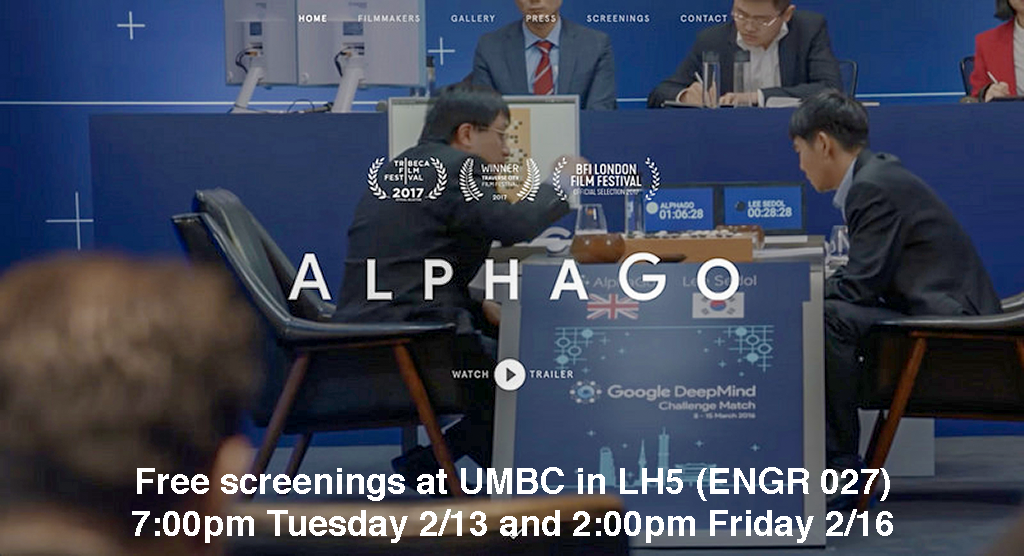
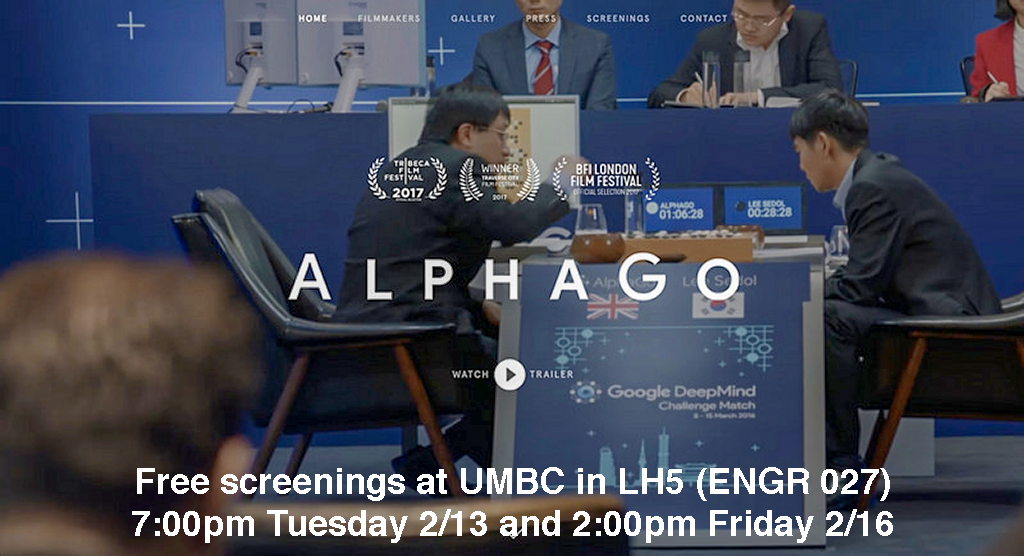
UMBC will hold two free, public screenings of the award-winning documentary film AlphaGo, one 7:00-9:00pm Tuesday evening, February 13 and another 2:00-4:00pm Friday, February 16. Both will be held in lecture hall 5 (EMGR 027) in the UMBC Engineering Building (maps: campus, google). Each screening will be followed by comments and discussion by several faculty members.
AlphaGo is the first computer program to defeat a Go world champion, and arguably the strongest Go player in history. It was developed by DeepMind, a London-based company that specializes in AI and machine learning that was acquired by Google in 2014.
“On March 9, 2016, the worlds of Go and artificial intelligence collided in South Korea for an extraordinary best-of-five-game competition, coined The DeepMind Challenge Match. Hundreds of millions of people around the world watched as a legendary Go master took on an unproven AI challenger for the first time in history…Directed by Greg Kohs with an original score by Academy Award nominee, Hauschka, AlphaGo chronicles a journey from the halls of Oxford, through the backstreets of Bordeaux, past the coding terminals of Google DeepMind in London, and ultimately, to the seven-day tournament in Seoul. As the drama unfolds, more questions emerge: What can artificial intelligence reveal about a 3000-year-old game? What can it teach us about humanity?”
Go has been considered to be one of the most challenging games for AI systems to master because of its enormous search space and the difficulty of evaluating board positions and moves. AlphaGo’s success is especially significant in that it is an example of the powerful new deep learning approaches based on neural networks.
Please join us at one of the screenings this exciting film and take part in the discussions that follow.
The post Free Screenings of the AlphaGo movie at UMBC, 7-9pm Tue 2/13 and 2-4pm Fri 2/16 appeared first on Department of Computer Science and Electrical Engineering.
]]>
Free Screenings of the AlphaGo movie at UMBC UMBC will hold two free, public screenings of the award-winning documentary film AlphaGo, one 7:00-9:00pm Tuesday evening, February 13 and another...
https://www.csee.umbc.edu/2018/02/alphago-file-screening-umbc-deep-learning-go-free-public/
https://my3.my.umbc.edu/api/v0/pixel/news/73680/guest@my.umbc.edu/feaffb712a8ec0e6c05480485edc67c9/api/pixel
ai
events
news
Computer Science and Electrical Engineering
https://my3.my.umbc.edu/groups/csee
https://assets3-my.umbc.edu/system/shared/avatars/groups/000/000/099/d117dca133c64bf78a4b7696dd007189/xsmall.png?1314043393
https://assets1-my.umbc.edu/system/shared/avatars/groups/000/000/099/d117dca133c64bf78a4b7696dd007189/original.png?1314043393
https://assets1-my.umbc.edu/system/shared/avatars/groups/000/000/099/d117dca133c64bf78a4b7696dd007189/xxlarge.png?1314043393
https://assets4-my.umbc.edu/system/shared/avatars/groups/000/000/099/d117dca133c64bf78a4b7696dd007189/xlarge.png?1314043393
https://assets3-my.umbc.edu/system/shared/avatars/groups/000/000/099/d117dca133c64bf78a4b7696dd007189/large.png?1314043393
https://assets1-my.umbc.edu/system/shared/avatars/groups/000/000/099/d117dca133c64bf78a4b7696dd007189/medium.png?1314043393
https://assets2-my.umbc.edu/system/shared/avatars/groups/000/000/099/d117dca133c64bf78a4b7696dd007189/small.png?1314043393
https://assets3-my.umbc.edu/system/shared/avatars/groups/000/000/099/d117dca133c64bf78a4b7696dd007189/xsmall.png?1314043393
https://assets3-my.umbc.edu/system/shared/avatars/groups/000/000/099/d117dca133c64bf78a4b7696dd007189/xxsmall.png?1314043393
Computer Science and Electrical Engineering
2
0
true
Mon, 05 Feb 2018 13:42:06 -0500
CSEE Professor Marie desJardins interviewed for Voices in AI podcast
Voices in AI – Episode 20: A Conversation with Marie desJardins
Byron Reese interviewed UMBC CSEE Professor Marie desJardins as part of his Voices in AI podcast series on Gigaom. In the episode, they talk about the Turing test, Watson, autonomous vehicles, and language processing. Visit the Voices in AI site to listen to the podcast and read the interview transcript.
Here’s the start of the wide-ranging, hour long interview.
Byron Reese: This is Voices in AI, brought to you by Gigaom. I’m Byron Reese. Today I’m excited that our guest is Marie des Jardins. She is an Associate Dean for Engineering and Information Technology as well as a professor of Computer Science at the University of Maryland, Baltimore County. She got her undergrad degree from Harvard, and a Ph.D. in computer science from Berkeley, and she’s been involved in the National Conference of the Association for the Advancement of Artificial Intelligence for over 12 years. Welcome to the show, Marie.
Marie des Jardins: Hi, it’s nice to be here.
I often open the show with “What is artificial intelligence?” because, interestingly, there’s no consensus definition of it, and I get a different kind of view of it from everybody. So I’ll start with that. What is artificial intelligence?
Sure. I’ve always thought about artificial intelligence as just a very broad term referring to trying to get computers to do things that we would consider intelligent if people did them. What’s interesting about that definition is it’s a moving target, because we change our opinions over time about what’s intelligent. As computers get better at doing things, they no longer seem that intelligent to us.
We use the word “intelligent,” too, and I’m not going to dwell on definitions, but what do you think intelligence is at its core?
So, it’s definitely hard to pin down, but I think of it as activities that human beings carry out, that we don’t know of lower order animals doing, other than some of the higher primates who can do things that seem intelligent to us. So intelligence involves intentionality, which means setting goals and making active plans to carry them out, and it involves learning over time and being able to react to situations differently based on experiences and knowledge that we’ve gained over time. The third part, I would argue, is that intelligence includes communication, so the ability to communicate with other beings, other intelligent agents, about your activities and goals.
Well, that’s really useful and specific. Let’s look at some of those things in detail a little bit. You mentioned intentionality. Do you think that intentionality is driven by consciousness? I mean, can you have intentionality without consciousness? Is consciousness therefore a requisite for intelligence?
I think that’s a really interesting question. I would decline to answer it mainly because I don’t think we ever can really know what consciousness is. We all have a sense of being conscious inside our own brains—at least I believe that. But of course, I’m only able to say anything meaningful about my own sense of consciousness. We just don’t have any way to measure consciousness or even really define what it is. So, there does seem to be this idea of self-awareness that we see in various kinds of animals—including humans—and that seems to be a precursor to what we call consciousness. But I think it’s awfully hard to define that term, and so I would be hesitant to put that as a prerequisite on intentionality.
…
The post CSEE Professor Marie desJardins interviewed for Voices in AI podcast appeared first on Department of Computer Science and Electrical Engineering.
]]>
Voices in AI – Episode 20: A Conversation with Marie desJardins Byron Reese interviewed UMBC CSEE Professor Marie desJardins as part of his Voices in AI podcast series on Gigaom. In the episode,...
https://www.csee.umbc.edu/2017/11/csee-professor-marie-desjardins-interviewed-voices-ai-podcast/
https://my3.my.umbc.edu/api/v0/pixel/news/72224/guest@my.umbc.edu/06abdcfb51e0fdf9ce1e845e9fa21591/api/pixel
ai
faculty-and-staff
news
Computer Science and Electrical Engineering
https://my3.my.umbc.edu/groups/csee
https://assets3-my.umbc.edu/system/shared/avatars/groups/000/000/099/d117dca133c64bf78a4b7696dd007189/xsmall.png?1314043393
https://assets1-my.umbc.edu/system/shared/avatars/groups/000/000/099/d117dca133c64bf78a4b7696dd007189/original.png?1314043393
https://assets1-my.umbc.edu/system/shared/avatars/groups/000/000/099/d117dca133c64bf78a4b7696dd007189/xxlarge.png?1314043393
https://assets4-my.umbc.edu/system/shared/avatars/groups/000/000/099/d117dca133c64bf78a4b7696dd007189/xlarge.png?1314043393
https://assets3-my.umbc.edu/system/shared/avatars/groups/000/000/099/d117dca133c64bf78a4b7696dd007189/large.png?1314043393
https://assets1-my.umbc.edu/system/shared/avatars/groups/000/000/099/d117dca133c64bf78a4b7696dd007189/medium.png?1314043393
https://assets2-my.umbc.edu/system/shared/avatars/groups/000/000/099/d117dca133c64bf78a4b7696dd007189/small.png?1314043393
https://assets3-my.umbc.edu/system/shared/avatars/groups/000/000/099/d117dca133c64bf78a4b7696dd007189/xsmall.png?1314043393
https://assets3-my.umbc.edu/system/shared/avatars/groups/000/000/099/d117dca133c64bf78a4b7696dd007189/xxsmall.png?1314043393
Computer Science and Electrical Engineering
3
0
true
Mon, 20 Nov 2017 22:05:59 -0500
UMBC researchers develop AI system to design clothing for your personal fashion style
AI system designs clothing for your personal fashion style
Everyone knows that more and more data is being collected about our everyday activities, like where we go online and in the physical world. Much of that data is being used for personalization. Recent UMBC CSEE Masters student Prutha Date explored a novel kind of personalization – creating clothing that matches your personal style.
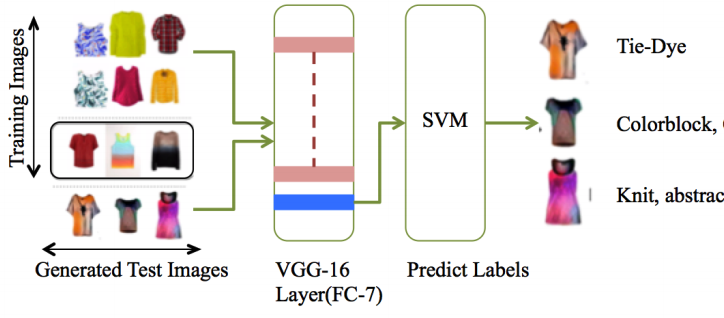
Date developed a system that takes as input pictures of clothing in your closet, extracts a digitial representation of your style preferences, and then applies that style to new articles of clothing, like a picture pair of pants or a dress you find online. This work meshes well with recent efforts by Amazon to manufacture clothing on demand. Imagine being able to click on an article of clothing available online, personalize it to your style, and then have it made and shipped right to your door!
This innovative research was cited in a recent article in MIT Technology Review, Amazon Has Developed an AI Fashion Designer.
Tim Oates, a professor at the University of Maryland in Baltimore County, presented details of a system for transferring a particular style from one garment to another. He suggests that this approach might be used to conjure up new items of clothing from scratch. “You could train [an algorithm] on your closet, and then you could say here’s a jacket or a pair of pants, and I’d like to adapt it to my style,” Oates says.
Fashion designers probably shouldn’t fret just yet, though. Oates and other point out that it may be a long time before a machine can invent a fashion trend. “People innovate in areas like music, fashion, and cinema,” he says. “What we haven’t seen is a genuinely new music or fashion style that was generated by a computer and really resonated with people.”
You can read more about the work in a recent paper by Prutha Date, Ashwinkumar Ganesan and Tim Oates, Fashioning with Networks: Neural Style Transfer to Design Clothes. The paper describes how convolutional neural networks were used to personalize and generate new custom clothes based on a person’s preference and by learning their fashion choices from a limited set of clothes from their closet.
The post UMBC researchers develop AI system to design clothing for your personal fashion style appeared first on Department of Computer Science and Electrical Engineering.
]]>
AI system designs clothing for your personal fashion style Everyone knows that more and more data is being collected about our everyday activities, like where we go online and in the...
https://www.csee.umbc.edu/2017/08/umbc-researchers-develop-ai-system-design-clothing-personal-fashion-style/
https://my3.my.umbc.edu/api/v0/pixel/news/69768/guest@my.umbc.edu/98f3723f099c49ec5d7d36c2c2924425/api/pixel
ai
computer-science
data-science
faculty-and-staff
graduate
news
students
Computer Science and Electrical Engineering
https://my3.my.umbc.edu/groups/csee
https://assets3-my.umbc.edu/system/shared/avatars/groups/000/000/099/d117dca133c64bf78a4b7696dd007189/xsmall.png?1314043393
https://assets1-my.umbc.edu/system/shared/avatars/groups/000/000/099/d117dca133c64bf78a4b7696dd007189/original.png?1314043393
https://assets1-my.umbc.edu/system/shared/avatars/groups/000/000/099/d117dca133c64bf78a4b7696dd007189/xxlarge.png?1314043393
https://assets4-my.umbc.edu/system/shared/avatars/groups/000/000/099/d117dca133c64bf78a4b7696dd007189/xlarge.png?1314043393
https://assets3-my.umbc.edu/system/shared/avatars/groups/000/000/099/d117dca133c64bf78a4b7696dd007189/large.png?1314043393
https://assets1-my.umbc.edu/system/shared/avatars/groups/000/000/099/d117dca133c64bf78a4b7696dd007189/medium.png?1314043393
https://assets2-my.umbc.edu/system/shared/avatars/groups/000/000/099/d117dca133c64bf78a4b7696dd007189/small.png?1314043393
https://assets3-my.umbc.edu/system/shared/avatars/groups/000/000/099/d117dca133c64bf78a4b7696dd007189/xsmall.png?1314043393
https://assets3-my.umbc.edu/system/shared/avatars/groups/000/000/099/d117dca133c64bf78a4b7696dd007189/xxsmall.png?1314043393
Computer Science and Electrical Engineering
9
0
true
Wed, 30 Aug 2017 13:39:30 -0400