Prof. Marie desJardins: one of ten AI researchers to follow on Twitter

TechRepublic identified CSEE professor Marie desJardins as one of “10 artificial intelligence researchers to follow on Twitter”. Check out her feed at @mariedj17.
“Want to know what’s happening at the epicenter of artificial intelligence? Follow these 10 AI researchers who make the most of their 140 characters on Twitter.”
]]>
TechRepublic identified CSEE professor Marie desJardins as one of “10 artificial intelligence researchers to follow on Twitter”. Check out her feed at @mariedj17. “Want to know what’s happening...
http://www.csee.umbc.edu/2016/02/prof-marie-desjardins-one-of-ten-ai-researchers-to-follow-on-twitter/
https://my3.my.umbc.edu/api/v0/pixel/news/58123/guest@my.umbc.edu/5e612b4dd5045311a81a8ca4b2ae15a8/api/pixel
ai
computer-science
faculty-and-staff
news
Computer Science and Electrical Engineering
https://my3.my.umbc.edu/groups/csee
https://assets3-my.umbc.edu/system/shared/avatars/groups/000/000/099/d117dca133c64bf78a4b7696dd007189/xsmall.png?1314043393
https://assets1-my.umbc.edu/system/shared/avatars/groups/000/000/099/d117dca133c64bf78a4b7696dd007189/original.png?1314043393
https://assets1-my.umbc.edu/system/shared/avatars/groups/000/000/099/d117dca133c64bf78a4b7696dd007189/xxlarge.png?1314043393
https://assets4-my.umbc.edu/system/shared/avatars/groups/000/000/099/d117dca133c64bf78a4b7696dd007189/xlarge.png?1314043393
https://assets3-my.umbc.edu/system/shared/avatars/groups/000/000/099/d117dca133c64bf78a4b7696dd007189/large.png?1314043393
https://assets1-my.umbc.edu/system/shared/avatars/groups/000/000/099/d117dca133c64bf78a4b7696dd007189/medium.png?1314043393
https://assets2-my.umbc.edu/system/shared/avatars/groups/000/000/099/d117dca133c64bf78a4b7696dd007189/small.png?1314043393
https://assets3-my.umbc.edu/system/shared/avatars/groups/000/000/099/d117dca133c64bf78a4b7696dd007189/xsmall.png?1314043393
https://assets3-my.umbc.edu/system/shared/avatars/groups/000/000/099/d117dca133c64bf78a4b7696dd007189/xxsmall.png?1314043393
Computer Science and Electrical Engineering
0
0
true
Wed, 24 Feb 2016 18:24:08 -0500
talk: Grounded Language Acquisition: A Physical Agent Approach, Fri 10/9
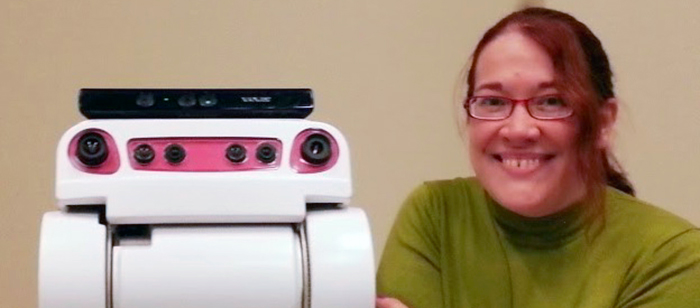
The UMBC CSEE Seminar Series Presents
Grounded Language Acquisition: A Physical Agent Approach
12:00-1:00pm Friday, 9 Oct. 2015, ITE 325b
A critical component of understanding human language is the ability to map words and ideas in that language to aspects of the external world. This mapping, called the symbol grounding problem, has been studied since the early days of artificial intelligence; however, advances in language processing, sensory, and motor systems have only recently made it possible to directly interact with tangibly grounded concepts. In this talk, I describe how we combine robotics and natural language processing to acquire and use physically grounded language specifically, how robots can learn to follow instructions, understand descriptions of objects, and build models of language and the physical world from interactions with users. I will describe our work on building a learning system that can ground English commands and descriptions from examples, making it possible for robots to learn from untrained end-users in an intuitive, natural way, and describe applications of our work in following directions and learning about objects. Finally, I will discuss how robots with these learning capabilities address a number of near-term challenges.
Cynthia Matuszek is an Assistant Professor at the University of Maryland, Baltimore County’s Computer Science and Electrical Engineering department. She completed her Ph.D. at the University of Washington in 2014, where she was a member of both the Robotics and State Estimation lab and the Language, Interaction, and Learning group. She is published in the areas of artificial intelligence, robotics, ubiquitous computing, and human-robot interaction. Her research interests include human-robot interaction, natural language processing, and machine learning.
Hosts: Professors Fow-Sen Choa (Sorry, you need javascript to view this email address. ) and Alan T. Sherman (Sorry, you need javascript to view this email address. )
· directions and more information ·
]]>
The UMBC CSEE Seminar Series Presents Grounded Language Acquisition: A Physical Agent Approach Dr. Cynthia Matuszek Interactive Robotics and Language Lab Computer Science and Electrical...
http://www.csee.umbc.edu/2015/10/talk-grounded-language-acquisition-a-physical-agent-approach-fri-109/
https://my3.my.umbc.edu/api/v0/pixel/news/54796/guest@my.umbc.edu/d8183ff12798fcdf58a70e0fb0bf8d7a/api/pixel
ai
computer-science
news
research
robotics
talks
Computer Science and Electrical Engineering
https://my3.my.umbc.edu/groups/csee
https://assets3-my.umbc.edu/system/shared/avatars/groups/000/000/099/d117dca133c64bf78a4b7696dd007189/xsmall.png?1314043393
https://assets1-my.umbc.edu/system/shared/avatars/groups/000/000/099/d117dca133c64bf78a4b7696dd007189/original.png?1314043393
https://assets1-my.umbc.edu/system/shared/avatars/groups/000/000/099/d117dca133c64bf78a4b7696dd007189/xxlarge.png?1314043393
https://assets4-my.umbc.edu/system/shared/avatars/groups/000/000/099/d117dca133c64bf78a4b7696dd007189/xlarge.png?1314043393
https://assets3-my.umbc.edu/system/shared/avatars/groups/000/000/099/d117dca133c64bf78a4b7696dd007189/large.png?1314043393
https://assets1-my.umbc.edu/system/shared/avatars/groups/000/000/099/d117dca133c64bf78a4b7696dd007189/medium.png?1314043393
https://assets2-my.umbc.edu/system/shared/avatars/groups/000/000/099/d117dca133c64bf78a4b7696dd007189/small.png?1314043393
https://assets3-my.umbc.edu/system/shared/avatars/groups/000/000/099/d117dca133c64bf78a4b7696dd007189/xsmall.png?1314043393
https://assets3-my.umbc.edu/system/shared/avatars/groups/000/000/099/d117dca133c64bf78a4b7696dd007189/xxsmall.png?1314043393
Computer Science and Electrical Engineering
0
0
true
Tue, 06 Oct 2015 10:53:04 -0400
Tue, 06 Oct 2015 10:53:04 -0400
CSEE alumna Claudia Pearce asks what lies “Beyond Watson”
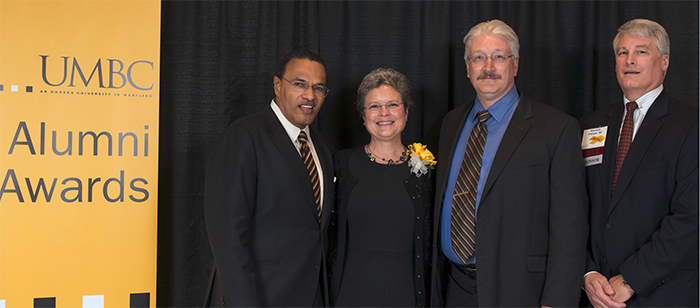
CSEE Alumna Dr. Claudia Pearce ('89 M.S., '94 Ph.D., Computer Science) has an article Beyond Watson in the Spring issue of UMBC Magazine. Dr. Pearce is a Senior Computer Science Authority at the National Security Agency and recipient of UMBC's 2014 Alumna of the Year Award in Engineering and Information Technology.
The article describes the technologies behind IBM's Watson Deep Question Answering system and it's significance for the development of future intelligent systems.
"Part of the answer may be found in a series of Beyond Watson workshops and other activities involving university, government, and industry partners, including one held at UMBC in February.
We’re looking at things like natural language, which is at the core of the ultimate computer human interface. Think back to Star Trek, when Spock would say something like: "Computer, what is the probability the Klingons will attack the Enterprise in this sector of the galaxy?" The computer would often engage in a back and forth interaction with Spock, asking for more information or clarification before offering one or more scenarios (and probabilities supporting those scenarios) to aid the crew of the Enterprise in their next move. When we can ask a computer a question and then engage in a dialogue with it in this way, we can freely use computers to their best advantage. This sort of exchange allows us to hone in on an answer (or answers) to our question, supported by knowing both how the information was derived and what level of confidence to place in it.
Envisioning such a model opens up new vistas. We may not be limited to retrieving existing answers from Wikipedia-like text, but use all available data to elicit answers to non-obvious questions, or to queries that have never been asked. We might also dispense with arcane interfaces that are poorly matched to both the task at hand and the needs of users and consumers."
]]>
CSEE Alumna Dr. Claudia Pearce ('89 M.S., '94 Ph.D., Computer Science) has an article Beyond Watson in the Spring issue of UMBC Magazine. Dr. Pearce is a Senior Computer Science Authority at the...
http://www.csee.umbc.edu/2015/04/csee-alumna-claudia-pearce-asks-what-lies-beyond-watson/
https://my3.my.umbc.edu/api/v0/pixel/news/51529/guest@my.umbc.edu/3cbc409811bf2f53f6b234ef03d5af9d/api/pixel
ai
alumni
news
research
Computer Science and Electrical Engineering
https://my3.my.umbc.edu/groups/csee
https://assets3-my.umbc.edu/system/shared/avatars/groups/000/000/099/d117dca133c64bf78a4b7696dd007189/xsmall.png?1314043393
https://assets1-my.umbc.edu/system/shared/avatars/groups/000/000/099/d117dca133c64bf78a4b7696dd007189/original.png?1314043393
https://assets1-my.umbc.edu/system/shared/avatars/groups/000/000/099/d117dca133c64bf78a4b7696dd007189/xxlarge.png?1314043393
https://assets4-my.umbc.edu/system/shared/avatars/groups/000/000/099/d117dca133c64bf78a4b7696dd007189/xlarge.png?1314043393
https://assets3-my.umbc.edu/system/shared/avatars/groups/000/000/099/d117dca133c64bf78a4b7696dd007189/large.png?1314043393
https://assets1-my.umbc.edu/system/shared/avatars/groups/000/000/099/d117dca133c64bf78a4b7696dd007189/medium.png?1314043393
https://assets2-my.umbc.edu/system/shared/avatars/groups/000/000/099/d117dca133c64bf78a4b7696dd007189/small.png?1314043393
https://assets3-my.umbc.edu/system/shared/avatars/groups/000/000/099/d117dca133c64bf78a4b7696dd007189/xsmall.png?1314043393
https://assets3-my.umbc.edu/system/shared/avatars/groups/000/000/099/d117dca133c64bf78a4b7696dd007189/xxsmall.png?1314043393
Computer Science and Electrical Engineering
2
0
true
Fri, 24 Apr 2015 11:45:34 -0400
Prof. Oates: Stop Fearing Artificial Intelligence
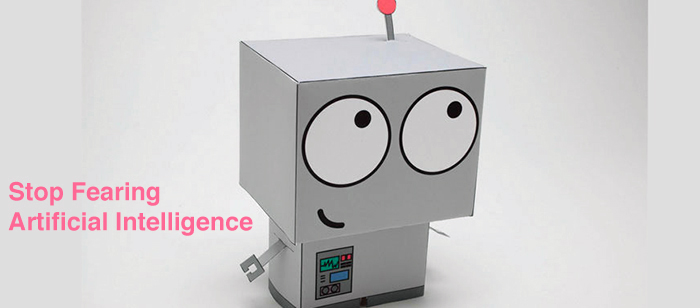
UMBC's Professor Tim Oates has a column on the online TechCrunch site describing why we should Stop Fearing Artificial Intelligence. Professor Oates has 20 years of experience working with a wide range of AI technologies, including machine learning, robotics and natural language processing. In the piece, Dr. Oates explains that
"As yet another tech pioneer with no connection to artificial intelligence steps out to voice his fears about AI being catastrophic for the human race, I feel the need respond. … Conflating facts of technology's rapid progress with a Hollywood understanding of intelligent machines is provocative (honestly, it's a favorite in my most-loved science fiction books and movies), but this technology doesn't live in a Hollywood movie, it isn't HAL or Skynet, and it deserves a grounded, rational look.
and discusses some of the limitations of current intelligent systems like IBM's Watson. Like most AI researchers, he's a believer in Strong AI — the idea that there is no theoretical reason why a machine can not exhibit behavior as skillful and flexible as humans — but doubts the such machines will be neccessarily dangerous.
"But let's suppose, for a second, that an AI does learn to think intelligently outside its programming and that it’s become discontent. Would this superhuman intelligence inherently go nuclear, or would it likely just slack off a little at work or, in extreme cases, compose rap music in Latin? In a world filled with a nearly infinite number of things a thinking entity can do to placate itself, it's unlikely "destruction of humanity" will top any AI's list."
Stop Fearing Artificial Intelligence is a well written and thought provoking article.
]]>
UMBC's Professor Tim Oates has a column on the online TechCrunch site describing why we should Stop Fearing Artificial Intelligence. Professor Oates has 20 years of experience working with a...
http://www.csee.umbc.edu/2015/04/prof-oates-stop-fearing-artificial-intelligence/
https://my3.my.umbc.edu/api/v0/pixel/news/51086/guest@my.umbc.edu/ca724e13ec97b75e0ddda234ccbe692b/api/pixel
ai
faculty-and-staff
news
Computer Science and Electrical Engineering
https://my3.my.umbc.edu/groups/csee
https://assets3-my.umbc.edu/system/shared/avatars/groups/000/000/099/d117dca133c64bf78a4b7696dd007189/xsmall.png?1314043393
https://assets1-my.umbc.edu/system/shared/avatars/groups/000/000/099/d117dca133c64bf78a4b7696dd007189/original.png?1314043393
https://assets1-my.umbc.edu/system/shared/avatars/groups/000/000/099/d117dca133c64bf78a4b7696dd007189/xxlarge.png?1314043393
https://assets4-my.umbc.edu/system/shared/avatars/groups/000/000/099/d117dca133c64bf78a4b7696dd007189/xlarge.png?1314043393
https://assets3-my.umbc.edu/system/shared/avatars/groups/000/000/099/d117dca133c64bf78a4b7696dd007189/large.png?1314043393
https://assets1-my.umbc.edu/system/shared/avatars/groups/000/000/099/d117dca133c64bf78a4b7696dd007189/medium.png?1314043393
https://assets2-my.umbc.edu/system/shared/avatars/groups/000/000/099/d117dca133c64bf78a4b7696dd007189/small.png?1314043393
https://assets3-my.umbc.edu/system/shared/avatars/groups/000/000/099/d117dca133c64bf78a4b7696dd007189/xsmall.png?1314043393
https://assets3-my.umbc.edu/system/shared/avatars/groups/000/000/099/d117dca133c64bf78a4b7696dd007189/xxsmall.png?1314043393
Computer Science and Electrical Engineering
3
1
true
Thu, 09 Apr 2015 14:23:17 -0400
Nirenburg: Cognitive Architecture for Simulating...
Full Title: Nirenburg: Cognitive Architecture for Simulating Bodies and Minds, 2/18Computer Science and Electrical Engineering
University of Maryland, Baltimore County
A Cognitive Architecture for
Simulating Bodies and Minds
1:00-2:15pm Friday, 18 February 2011, ITE 227, UMBC
This talk is an overview of a cognitive architecture that supports the creation and deployment of intelligent agents capable of simulating human-like abilities. The agents, have a simulated mind and may also be supplied with a simulated body. These agents are intended to operate as members of multi-agent teams featuring both artificial and human agents. The agent architecture and its underlying knowledge resources and processors are being developed in a sufficiently generic way to support a variety of applications. In this talk we briefly describe the architecture and two proof-of-concept application systems we have developed within it: the Maryland Virtual Patient (MVP) system for training medical personnel and the CLinician’s ADvisor (CLAD).We organize the discussion around four specific aspects of agent capabilities implemented in MVP and CLAD: physiological simulation, knowledge management and learning, decision-making and language processing.
This is joint work with Marjorie McShane and Stephen Beale, with contributions from Jesse English, Ben Johnson, Bryan Wilkinson and Roberta Catizone.
Sergei Nirenburg is Professor in the Department of Computer Science and Electrical Engineering of UMBC and Director of its
Institute for Language and Information Technologies (ILIT). He received his Ph.D. in Linguistics from the Hebrew University of Jerusalem, Israel. Dr. Nirenburg has written or edited seven books and has published over 180 refereed articles in various areas of computational linguistics and artificial intelligence. His research interests cover a variety of topics in AI, cognitive modeling and natural language processing (machine translation, computational semantics, computational lexicography, natural language analysis and generation, knowledge acquisition and intelligent interfaces). In 1987-96 he served as Editor-in-Chief of Machine Translation. He is a member of the International Committee on Computational Linguistics (ICCL). He has founded and has been Steering Committee Chair (1985-2007) of a series of 11 scientific conferences on theoretical and methodological issues in machine translation.
]]>
Full Title: Nirenburg: Cognitive Architecture for Simulating Bodies and Minds, 2/18 Computer Science and Electrical Engineering University of Maryland, Baltimore County A Cognitive...
http://www.cs.umbc.edu/2011/02/a-cognitive-architecture-for-simulating-bodies-and-minds/
https://my3.my.umbc.edu/api/v0/pixel/news/4851/guest@my.umbc.edu/e59fd6b866dbf0047ceb6f7a2e18b63d/api/pixel
ai
events
expert-systems
knowledgebase
news
nlp
talk
Computer Science and Electrical Engineering
https://my3.my.umbc.edu/groups/csee
https://assets3-my.umbc.edu/system/shared/avatars/groups/000/000/099/d117dca133c64bf78a4b7696dd007189/xsmall.png?1314043393
https://assets1-my.umbc.edu/system/shared/avatars/groups/000/000/099/d117dca133c64bf78a4b7696dd007189/original.png?1314043393
https://assets1-my.umbc.edu/system/shared/avatars/groups/000/000/099/d117dca133c64bf78a4b7696dd007189/xxlarge.png?1314043393
https://assets4-my.umbc.edu/system/shared/avatars/groups/000/000/099/d117dca133c64bf78a4b7696dd007189/xlarge.png?1314043393
https://assets3-my.umbc.edu/system/shared/avatars/groups/000/000/099/d117dca133c64bf78a4b7696dd007189/large.png?1314043393
https://assets1-my.umbc.edu/system/shared/avatars/groups/000/000/099/d117dca133c64bf78a4b7696dd007189/medium.png?1314043393
https://assets2-my.umbc.edu/system/shared/avatars/groups/000/000/099/d117dca133c64bf78a4b7696dd007189/small.png?1314043393
https://assets3-my.umbc.edu/system/shared/avatars/groups/000/000/099/d117dca133c64bf78a4b7696dd007189/xsmall.png?1314043393
https://assets3-my.umbc.edu/system/shared/avatars/groups/000/000/099/d117dca133c64bf78a4b7696dd007189/xxsmall.png?1314043393
Computer Science and Electrical Engineering
2
0
false
Sun, 06 Feb 2011 13:43:55 -0500
Sat, 05 Feb 2011 13:43:55 -0500