talk: Ҫağatay Demiralp on Computational Brain Connectivity Using Diffusion MRI
CSEE Colloquium
Computational Brain Connectivity Using Diffusion MRI
Ҫağatay Demiralp
Brown University
1:30pm Tuesday, 18 September 2012, ITE 325B
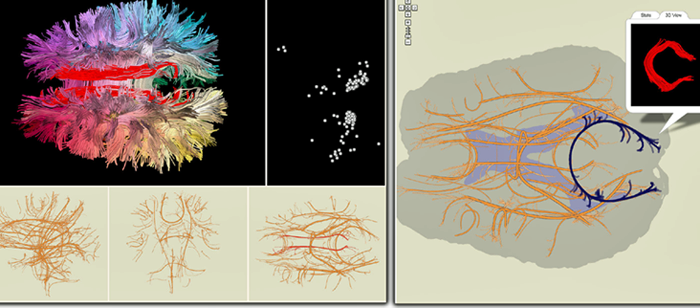
In my talk, I’ll present examples from modeling, visualization, and analysis of diffusion-derived structural brain connectivity. I’ll first introduce two interactive visual analysis tools that use novel planar representations of the brain. I’ll show that two-dimensional map representations that are viewed, interacted with, and enriched like online geographical maps result in faster and more accurate exploration of brain connectivity.
Second, I’ll introduce neural tract-based probability density functions, including joint densities of tract arc length and scalar diffusivity measures, as biomarkers. I’ll demonstrate their simple and effective use in detecting individual and group differences. I’ll also describe a new coherence measure for neural tract clusters based on geometric slicing. I’ll show that a refinement of neural tract clustering based on this measure leads to a significant improvement in clustering results that is not possible directly using standard methods.
Third, I’ll describe a new coloring method for three-dimensional line fields based on Boy's real projective plane immersion. This coloring method is smooth and one-to-one, except on a set of measure zero. I’ll demonstrate its use in visualization of neural tracts and cross-sectional diffusion MRI brain images.
Çağatay Demiralp is a PhD candidate in computer science at Brown University. His research interests are in characterizing patterned structures in data both qualitatively and quantitatively using topological, geometric as well as statistical approaches. While computational brain connectivity using diffusion MRI has been the focus of his thesis research, he has published on a diverse set of topics ranging from surface deformation to semantic segmentation. He received Brown University’s Brain Sciences Research award, IEEE Vis Best Poster award, and ASSH Best Layout and Best Scientific Presentation awards.
]]>
CSEE Colloquium Computational Brain Connectivity Using Diffusion MRI Ҫağatay Demiralp Brown University 1:30pm Tuesday, 18 September 2012, ITE 325B In my talk, I’ll present...
http://www.csee.umbc.edu/2012/09/talk-%d2%abagatay-demiralp-on-computational-brain-connectivity-using-diffusion-mri/
https://my3.my.umbc.edu/api/v0/pixel/news/16743/guest@my.umbc.edu/82dfb05a6ffea7b11a123e692da3cb9e/api/pixel
news
research
talks
Computer Science and Electrical Engineering
https://my3.my.umbc.edu/groups/csee
https://assets3-my.umbc.edu/system/shared/avatars/groups/000/000/099/d117dca133c64bf78a4b7696dd007189/xsmall.png?1314043393
https://assets1-my.umbc.edu/system/shared/avatars/groups/000/000/099/d117dca133c64bf78a4b7696dd007189/original.png?1314043393
https://assets1-my.umbc.edu/system/shared/avatars/groups/000/000/099/d117dca133c64bf78a4b7696dd007189/xxlarge.png?1314043393
https://assets4-my.umbc.edu/system/shared/avatars/groups/000/000/099/d117dca133c64bf78a4b7696dd007189/xlarge.png?1314043393
https://assets3-my.umbc.edu/system/shared/avatars/groups/000/000/099/d117dca133c64bf78a4b7696dd007189/large.png?1314043393
https://assets1-my.umbc.edu/system/shared/avatars/groups/000/000/099/d117dca133c64bf78a4b7696dd007189/medium.png?1314043393
https://assets2-my.umbc.edu/system/shared/avatars/groups/000/000/099/d117dca133c64bf78a4b7696dd007189/small.png?1314043393
https://assets3-my.umbc.edu/system/shared/avatars/groups/000/000/099/d117dca133c64bf78a4b7696dd007189/xsmall.png?1314043393
https://assets3-my.umbc.edu/system/shared/avatars/groups/000/000/099/d117dca133c64bf78a4b7696dd007189/xxsmall.png?1314043393
Computer Science and Electrical Engineering
4
0
true
Tue, 11 Sep 2012 22:38:50 -0400
talk: Oleg Aulov on Human Sensor Networks, 1pm Fri 9/14, UMBC
UMBC CSEE Colloquium
Human Sensor Networks for Improved Modeling
of Natural and Human-Caused Disasters
Oleg Aulov, Computer Science Ph.D. Student, UMBC
1:00pm Friday, 14 September 2012, ITE 227, UMBC
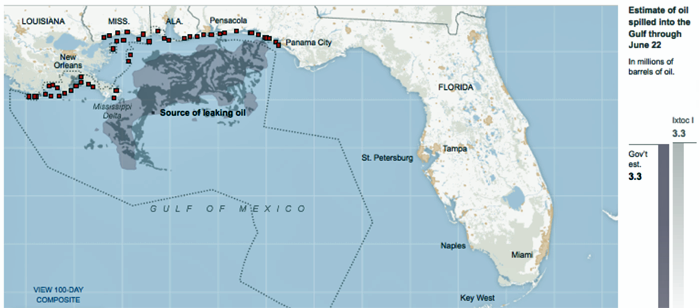
This talk will discuss the importance of different roles that social media can play in management, monitoring, modeling and mitigation of natural and human-caused disasters. We will present a novel approach that views social media data as a human sensor network. These data can serve as a low-cost augmentation to an observing system, which can be incorporated into geophysical models together with other scientific data such as satellite observations and sensor measurements. As a use case scenario, we analyze the Deepwater Horizon oil spill disaster. We gather the social media data that mention sightings of oil from Flickr, geolocate them, and use them as boundary forcings in the General NOAA Oil Modeling Environment (GNOME) software for oil spill predictions. We show how social media data can be incorporated into the GNOME model to obtain improved estimates of the model parameters such as rates of oil spill, couplings between surface winds and ocean currents, diffusion coefficient, and other model parameters. Other social media mining and citizen science projects performed by groups outside of UMBC, on air quality, earthquakes and the Fukushima disaster will also be summarized as related work.
Oleg Aulov received B.S. degree in mathematics from the University of Central Missouri, Warrensburg, MO, in 2004 and M.S. degree in Computer Science with a concentration in Computer Security and Information Assurance from George Washington University, Washington, DC, in 2006. He is currently working toward a Ph.D. degree in the Department of Computer Science and Electrical Engineering at University of Maryland, Baltimore County, Baltimore, MD. His topics of interest include social media mining, citizen science, machine learning, trust establishment and management, information assurance, and social engineering.
For more information and directions see http://bit.ly/UMBCtalks
]]>
UMBC CSEE Colloquium Human Sensor Networks for Improved Modeling of Natural and Human-Caused Disasters Oleg Aulov, Computer Science Ph.D. Student, UMBC 1:00pm Friday, 14 September 2012,...
http://www.csee.umbc.edu/2012/09/talk-oleg-aulov-on-human-sensor-networks-1pm-fri-914-umbc/
https://my3.my.umbc.edu/api/v0/pixel/news/16660/guest@my.umbc.edu/899045323753930b8cb409a9dfc89075/api/pixel
graduate
news
research
talks
Computer Science and Electrical Engineering
https://my3.my.umbc.edu/groups/csee
https://assets3-my.umbc.edu/system/shared/avatars/groups/000/000/099/d117dca133c64bf78a4b7696dd007189/xsmall.png?1314043393
https://assets1-my.umbc.edu/system/shared/avatars/groups/000/000/099/d117dca133c64bf78a4b7696dd007189/original.png?1314043393
https://assets1-my.umbc.edu/system/shared/avatars/groups/000/000/099/d117dca133c64bf78a4b7696dd007189/xxlarge.png?1314043393
https://assets4-my.umbc.edu/system/shared/avatars/groups/000/000/099/d117dca133c64bf78a4b7696dd007189/xlarge.png?1314043393
https://assets3-my.umbc.edu/system/shared/avatars/groups/000/000/099/d117dca133c64bf78a4b7696dd007189/large.png?1314043393
https://assets1-my.umbc.edu/system/shared/avatars/groups/000/000/099/d117dca133c64bf78a4b7696dd007189/medium.png?1314043393
https://assets2-my.umbc.edu/system/shared/avatars/groups/000/000/099/d117dca133c64bf78a4b7696dd007189/small.png?1314043393
https://assets3-my.umbc.edu/system/shared/avatars/groups/000/000/099/d117dca133c64bf78a4b7696dd007189/xsmall.png?1314043393
https://assets3-my.umbc.edu/system/shared/avatars/groups/000/000/099/d117dca133c64bf78a4b7696dd007189/xxsmall.png?1314043393
Computer Science and Electrical Engineering
3
0
true
Mon, 10 Sep 2012 23:04:09 -0400
talk: Mountain on the DoD Advanced Computing Systems Research Program
COLLOQUIUM
Computer Science and Electrical Engineering
University of Maryland, Baltimore County
The Advanced Computing Systems Research Program
David J. Mountain
Technical Director, Center for Exceptional Computing
1:00pm Friday, 7 September 2012, ITE 227, UMBC
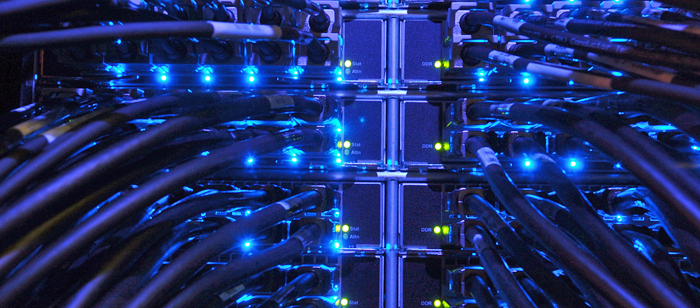
The Advanced Computing Systems (ACS) Research Program recently relocated from Adelphi, Maryland, to the Research Park complex next to UMBC. What type of computing research does ACS focus on? How is it organized? What opportunities for collaboration exist for UMBC? This talk will provide answers to these questions, explain how ACS tackles its research challenges, and provide a sneak preview of upcoming ACS presentations on specific research projects.
David J. Mountain is the Technical Director at the Center for Exceptional Computing (CEC), a Department of Defense research laboratory in the UMBC Research Park. The mission of the CEC is to collaborate with industry, academia, and the government to drive innovative research that will impact advanced computing systems at the multi-petaflop scale and beyond. His responsibilities include directing research activities in technical thrusts including power efficiency, chip IO, system level interconnects, file system IO, productivity, and resilience.
Mr. Mountain’s personal research projects have included radiation effects studies, hot carrier reliability characterization, and chip-on-flex process development utilizing ultra-thin circuits. He has been actively involved with 3D electronics research for nearly two decades. Mr. Mountain is the author of seven papers, has been awarded eight patents, and is a Senior Member of the IEEE.
Host: Yaacov Yesha, Sorry, you need javascript to view this email address.
Directions and more information on recent and upcoming talks.
]]>
COLLOQUIUM Computer Science and Electrical Engineering University of Maryland, Baltimore County The Advanced Computing Systems Research Program David J. Mountain Technical Director,...
http://www.csee.umbc.edu/2012/09/talk-mountain-on-the-dod-advanced-computing-systems-research-program/
https://my3.my.umbc.edu/api/v0/pixel/news/16533/guest@my.umbc.edu/23b9106d99adf4e55a2588bd0054d5ab/api/pixel
news
research
talks
Computer Science and Electrical Engineering
https://my3.my.umbc.edu/groups/csee
https://assets3-my.umbc.edu/system/shared/avatars/groups/000/000/099/d117dca133c64bf78a4b7696dd007189/xsmall.png?1314043393
https://assets1-my.umbc.edu/system/shared/avatars/groups/000/000/099/d117dca133c64bf78a4b7696dd007189/original.png?1314043393
https://assets1-my.umbc.edu/system/shared/avatars/groups/000/000/099/d117dca133c64bf78a4b7696dd007189/xxlarge.png?1314043393
https://assets4-my.umbc.edu/system/shared/avatars/groups/000/000/099/d117dca133c64bf78a4b7696dd007189/xlarge.png?1314043393
https://assets3-my.umbc.edu/system/shared/avatars/groups/000/000/099/d117dca133c64bf78a4b7696dd007189/large.png?1314043393
https://assets1-my.umbc.edu/system/shared/avatars/groups/000/000/099/d117dca133c64bf78a4b7696dd007189/medium.png?1314043393
https://assets2-my.umbc.edu/system/shared/avatars/groups/000/000/099/d117dca133c64bf78a4b7696dd007189/small.png?1314043393
https://assets3-my.umbc.edu/system/shared/avatars/groups/000/000/099/d117dca133c64bf78a4b7696dd007189/xsmall.png?1314043393
https://assets3-my.umbc.edu/system/shared/avatars/groups/000/000/099/d117dca133c64bf78a4b7696dd007189/xxsmall.png?1314043393
Computer Science and Electrical Engineering
2
0
true
Fri, 07 Sep 2012 10:41:58 -0400
Fri, 07 Sep 2012 10:41:58 -0400
Joshi and Finin receive NSF award to study information extraction
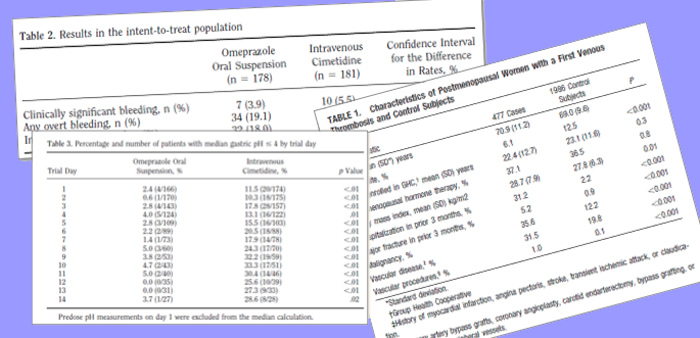
Anupam Joshi and Tim Finin have received a $200,000 research award from the NSF Division of Information and Intelligent Systems for a two-year project focused on extracting information from tables. The project, T2K: From Tables to Knowledge, will explore the feasibility of automatically extracting new knowledge directly from data found in spreadsheets, database relations, and document tables and representing it as highly interoperable linked open data (LOD) in the Semantic Web language RDF. The extraction is guided by probabilistic graphical models that use statistical information mined from current LOD knowledge resources. To demonstrate the potential payoff of the research, the system is used to extract knowledge from tables collected from medical journals and tables from web sites like data.gov.
While the W3C semantic web languages RDF and OWL are used to represent the knowledge, the results are applicable to other semantic data frameworks such as Microdata (Search Consortium), Freebase (Google), Probase (Microsoft) and the Open Graph (Facebook). The open sourced prototype software allows other researchers to experiment with automatically producing semantically enriched data from tables for their domains.
If successful, such software extraction systems are expected to become part of a new online knowledge ecology — both consuming existing LOD knowledge to understand the intended meaning implicit in a table and producing new facts and knowledge that will become part of Web. This represents a dramatic increase in the breadth and depth of public semantic data that can make “big data'' analytics more effective.
]]>
Anupam Joshi and Tim Finin have received a $200,000 research award from the NSF Division of Information and Intelligent Systems for a two-year project focused on extracting information from...
http://www.csee.umbc.edu/2012/08/joshi-and-finin-receive-nsf-award-to-study-information-extraction/
https://my3.my.umbc.edu/api/v0/pixel/news/16219/guest@my.umbc.edu/b79013303c4b120a9288d8580e3df267/api/pixel
news
research
research-awards
Computer Science and Electrical Engineering
https://my3.my.umbc.edu/groups/csee
https://assets3-my.umbc.edu/system/shared/avatars/groups/000/000/099/d117dca133c64bf78a4b7696dd007189/xsmall.png?1314043393
https://assets1-my.umbc.edu/system/shared/avatars/groups/000/000/099/d117dca133c64bf78a4b7696dd007189/original.png?1314043393
https://assets1-my.umbc.edu/system/shared/avatars/groups/000/000/099/d117dca133c64bf78a4b7696dd007189/xxlarge.png?1314043393
https://assets4-my.umbc.edu/system/shared/avatars/groups/000/000/099/d117dca133c64bf78a4b7696dd007189/xlarge.png?1314043393
https://assets3-my.umbc.edu/system/shared/avatars/groups/000/000/099/d117dca133c64bf78a4b7696dd007189/large.png?1314043393
https://assets1-my.umbc.edu/system/shared/avatars/groups/000/000/099/d117dca133c64bf78a4b7696dd007189/medium.png?1314043393
https://assets2-my.umbc.edu/system/shared/avatars/groups/000/000/099/d117dca133c64bf78a4b7696dd007189/small.png?1314043393
https://assets3-my.umbc.edu/system/shared/avatars/groups/000/000/099/d117dca133c64bf78a4b7696dd007189/xsmall.png?1314043393
https://assets3-my.umbc.edu/system/shared/avatars/groups/000/000/099/d117dca133c64bf78a4b7696dd007189/xxsmall.png?1314043393
Computer Science and Electrical Engineering
5
0
true
Tue, 28 Aug 2012 08:26:25 -0400
Tue, 28 Aug 2012 08:26:25 -0400
Ashwinkumar Ganesan MS defense: Calculating Representativeness of Geographic Sites Across the World
MS Thesis Defense
Calculating Representativeness of
Geographic Sites Across the World
Ashwinkumar Ganesan
11:00am Friday, 31 August 2012, ITE 325b, UMBC
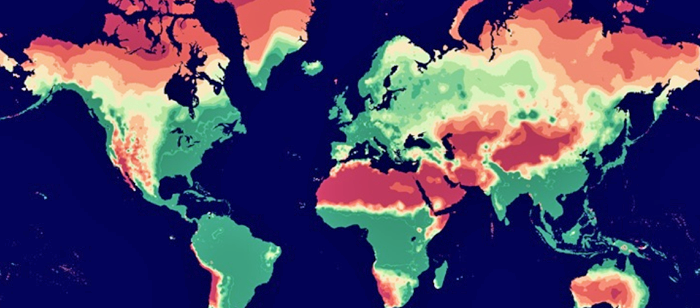
GLOBE is a global correlation engine, a project to study the effects of human activity on land change based on a set of parameters that include temperature, forest cover, human population, atmospheric parameters, and many other variables. The aim of this research is to understand how a land change study or set of studies of specific geographic areas generalizes to other areas of the world. The generic form of the question is – given a set of data points with a set of variables, how can we determine how much a selected subset of points represents the rest of the distribution. The research aims to answer a set of questions which include the definition of representativeness of a geographical site and how the representativeness can be computed. Land change researchers will dynamically select a subset of variables which they would like to study. Hence the method developed not only computes representativeness, but must do so in an efficient manner. For this purpose, we apply dimension reduction techniques to reduce the size of computation and analyze the effectiveness of using these techniques to calculate representativeness.
Committee: Drs. Tim Oates (chair), Tim Finin and Dr. Matt Schmill
]]>
MS Thesis Defense Calculating Representativeness of Geographic Sites Across the World Ashwinkumar Ganesan 11:00am Friday, 31 August 2012, ITE 325b, UMBC GLOBE is a global correlation...
http://www.csee.umbc.edu/2012/08/ashwinkumar-ganesan-ms-defense-calculating-representativeness-of-geographic-sites-across-the-world/
https://my3.my.umbc.edu/api/v0/pixel/news/16214/guest@my.umbc.edu/2b816ac2f6f610046bc0d8ce627fa2b8/api/pixel
graduate
news
research
talks
Computer Science and Electrical Engineering
https://my3.my.umbc.edu/groups/csee
https://assets3-my.umbc.edu/system/shared/avatars/groups/000/000/099/d117dca133c64bf78a4b7696dd007189/xsmall.png?1314043393
https://assets1-my.umbc.edu/system/shared/avatars/groups/000/000/099/d117dca133c64bf78a4b7696dd007189/original.png?1314043393
https://assets1-my.umbc.edu/system/shared/avatars/groups/000/000/099/d117dca133c64bf78a4b7696dd007189/xxlarge.png?1314043393
https://assets4-my.umbc.edu/system/shared/avatars/groups/000/000/099/d117dca133c64bf78a4b7696dd007189/xlarge.png?1314043393
https://assets3-my.umbc.edu/system/shared/avatars/groups/000/000/099/d117dca133c64bf78a4b7696dd007189/large.png?1314043393
https://assets1-my.umbc.edu/system/shared/avatars/groups/000/000/099/d117dca133c64bf78a4b7696dd007189/medium.png?1314043393
https://assets2-my.umbc.edu/system/shared/avatars/groups/000/000/099/d117dca133c64bf78a4b7696dd007189/small.png?1314043393
https://assets3-my.umbc.edu/system/shared/avatars/groups/000/000/099/d117dca133c64bf78a4b7696dd007189/xsmall.png?1314043393
https://assets3-my.umbc.edu/system/shared/avatars/groups/000/000/099/d117dca133c64bf78a4b7696dd007189/xxsmall.png?1314043393
Computer Science and Electrical Engineering
3
0
true
Mon, 27 Aug 2012 20:20:11 -0400
Nikhil Puranik MS defense: Classification of Column Data, 8/24
MS Thesis Defense
A Specialist Approach for Classification of Column Data
Nikhil Puranik
1:30pm Friday 24 August, 2012, 325b ITE, UMBC
Much information is encoded in spreadsheets, databases, and tables on the Web and in documents. Interpreting this content and making its meaning explicit in a representation language like RDF enables many applications. This thesis addresses the problem of identifying the semantic type of the information represented in a table column containing conventionally encoded data such as phone numbers or stock ticker symbols. We describe a ‘specialist’ approach for classification in which different specialists work together to come up with a ranked list for the given input column. We use three types of specialists: those based on regular expressions, dictionaries and classifiers. We discuss a serial and parallel framework for the specialists. We evaluate our system in two ways: by testing individual specialist for accuracy and by testing the performance of the overall system in terms of generation of ranked list. We also discuss the scalability of the system in terms of addition of new specialists and performance impact for systems with hundreds of specialists.
Committee: Drs. Tim Finin (chair), Anupam Joshi, Tim Oates and Yelena Yesha
]]>
MS Thesis Defense A Specialist Approach for Classification of Column Data Nikhil Puranik 1:30pm Friday 24 August, 2012, 325b ITE, UMBC Much information is encoded in spreadsheets,...
http://www.csee.umbc.edu/2012/08/nikhil-puranik-ms-defense-classification-of-column-data-824/
https://my3.my.umbc.edu/api/v0/pixel/news/16098/guest@my.umbc.edu/db26c8230adeeb6617d04739cf8178d9/api/pixel
computer-science
graduate
news
research
talks
Computer Science and Electrical Engineering
https://my3.my.umbc.edu/groups/csee
https://assets3-my.umbc.edu/system/shared/avatars/groups/000/000/099/d117dca133c64bf78a4b7696dd007189/xsmall.png?1314043393
https://assets1-my.umbc.edu/system/shared/avatars/groups/000/000/099/d117dca133c64bf78a4b7696dd007189/original.png?1314043393
https://assets1-my.umbc.edu/system/shared/avatars/groups/000/000/099/d117dca133c64bf78a4b7696dd007189/xxlarge.png?1314043393
https://assets4-my.umbc.edu/system/shared/avatars/groups/000/000/099/d117dca133c64bf78a4b7696dd007189/xlarge.png?1314043393
https://assets3-my.umbc.edu/system/shared/avatars/groups/000/000/099/d117dca133c64bf78a4b7696dd007189/large.png?1314043393
https://assets1-my.umbc.edu/system/shared/avatars/groups/000/000/099/d117dca133c64bf78a4b7696dd007189/medium.png?1314043393
https://assets2-my.umbc.edu/system/shared/avatars/groups/000/000/099/d117dca133c64bf78a4b7696dd007189/small.png?1314043393
https://assets3-my.umbc.edu/system/shared/avatars/groups/000/000/099/d117dca133c64bf78a4b7696dd007189/xsmall.png?1314043393
https://assets3-my.umbc.edu/system/shared/avatars/groups/000/000/099/d117dca133c64bf78a4b7696dd007189/xxsmall.png?1314043393
Computer Science and Electrical Engineering
3
0
true
Thu, 23 Aug 2012 00:03:23 -0400
PhD defense: Niyati Chhaya — Joint Inference for Extracting Soft Biometric Text Descriptors from Patient Triage Images
Ph.D. Dissertation Defense
Joint Inference for Extracting Soft Biometric
Text Descriptorsfrom Patient Triage Images
Niyati Chhaya
10:00am Friday, 24 August 2012, ITE 325b, UMBC
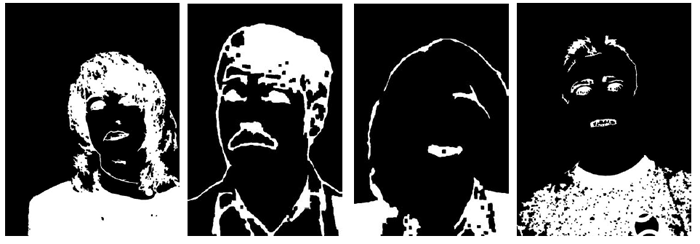
Disaster events can result in mass casualties and missing persons, giving rise to a need to provide information about victims to the public. This can be achieved by digitally documenting information available at emergency medical care centers in the form of pictures. The images and other identifying information, such as fingerprints, cannot be broadcast due to privacy concerns, leading to a need to extract appearance-related non-unique features from this data to facilitate locating missing persons. Using humans and machines to compare images is not feasible due to the scale of the situation and the nature (presence of blood and debris) of the images. Extracting a soft biometric text descriptor (text labels describing different soft biometric features) makes it possible to organize information about individuals from these images in a searchable format without revealing the person's identity. The main aim of this thesis is to extract soft biometric features from person images to label appearance-related information and make it available as a text descriptor.
We begin by presenting soft biometric feature detectors for patient images that include an ensemble-based face detection algorithm, template-based eye detection, and eyeglasses, hair color, and skin color detection. We also present a facial hair detector that uses a combination of face and hair information. The feature detection results indicate a need to combine and exploit feature relationships for better performance. We propose a novel probabilistic graphical model that consists of different feature detectors and exploits relationships between these features using a message-passing inference algorithm to build a coherent text descriptor. Further, to understand the utility and the nature of the text descriptors, we present a study based on human descriptions that aims at extracting order and structure information about the features.
We evaluate the performance of individual feature detectors for standard and triage images and establish the challenges posed by the latter. Further, our text analysis shows extreme variability in human descriptions. However, we succeed in extracting some insights about the order of a natural text description. Through our evaluations of the graphical model, we show that for different feature detectors, datasets, and graph sizes the graphical model helps improve the accuracy of the text output. We also show that the performance of the graphical model depends on the individual nodes (feature detectors) and that the model can be used to improve the performance of the individual feature detectors. This thesis illustrates the whole process from images to text descriptors while evaluating components as we proceed. This work presents an approach to extract text labels from images using computer vision, a probabilistic graphical model, and natural language processing techniques.
Committee: Drs. Dr. Tim Oates (Chair), Marie desJardins, Tim Finin, Glenn Pearson and Jesus Caban
]]>
Ph.D. Dissertation Defense Joint Inference for Extracting Soft Biometric Text Descriptorsfrom Patient Triage Images Niyati Chhaya 10:00am Friday, 24 August 2012, ITE 325b, UMBC Disaster...
http://www.csee.umbc.edu/2012/08/phd-defense-niyati-chhaya-joint-inference-for-extracting-soft-biometric-text-descriptors-from-patient-triage-images/
https://my3.my.umbc.edu/api/v0/pixel/news/16050/guest@my.umbc.edu/51eb1555febc13178b8b730376e1bf8b/api/pixel
graduate
news
research
Computer Science and Electrical Engineering
https://my3.my.umbc.edu/groups/csee
https://assets3-my.umbc.edu/system/shared/avatars/groups/000/000/099/d117dca133c64bf78a4b7696dd007189/xsmall.png?1314043393
https://assets1-my.umbc.edu/system/shared/avatars/groups/000/000/099/d117dca133c64bf78a4b7696dd007189/original.png?1314043393
https://assets1-my.umbc.edu/system/shared/avatars/groups/000/000/099/d117dca133c64bf78a4b7696dd007189/xxlarge.png?1314043393
https://assets4-my.umbc.edu/system/shared/avatars/groups/000/000/099/d117dca133c64bf78a4b7696dd007189/xlarge.png?1314043393
https://assets3-my.umbc.edu/system/shared/avatars/groups/000/000/099/d117dca133c64bf78a4b7696dd007189/large.png?1314043393
https://assets1-my.umbc.edu/system/shared/avatars/groups/000/000/099/d117dca133c64bf78a4b7696dd007189/medium.png?1314043393
https://assets2-my.umbc.edu/system/shared/avatars/groups/000/000/099/d117dca133c64bf78a4b7696dd007189/small.png?1314043393
https://assets3-my.umbc.edu/system/shared/avatars/groups/000/000/099/d117dca133c64bf78a4b7696dd007189/xsmall.png?1314043393
https://assets3-my.umbc.edu/system/shared/avatars/groups/000/000/099/d117dca133c64bf78a4b7696dd007189/xxsmall.png?1314043393
Computer Science and Electrical Engineering
10
0
true
Mon, 20 Aug 2012 08:50:59 -0400
Finin and Joshi receive NSF award to study linked data privacy

Tim Finin and Anupam Joshi have received a $400,000 research award from the NSF Secure and Trustworthy Cyberspace (SaTC) program for a three year project to investigate how to better manage security and privacy constraints while querying semantically annotated linked data sources. The project, Policy Compliant Integration of Linked Data, is a collaboration with researchers at M.I.T. and the University of Texas at Dallas.
The ubiquity of computing technology and the Internet have created an age of big data that has the potential to greatly enhance the efficiency of our societies and the well-being of all people. The trend comes with problems that threaten to prevent or undermine the benefits. An immediate concern is how to fuse, integrate and analyze data while respecting privacy, security and usage concerns. A second issue is allowing data to remain distributed, enabling its owners to maintain and control quality as well as to enforce security and privacy policies. A final underlying challenge is helping to produce sound and useful results by assuring that systems understand the meaning of the data being integrated and analyzing access and usage policies. For some domains, like health informatics and clinical research, solving these problems will have a significant impact on society.
This project explores an approach to solving these problems by developing a policy-compliant integration system for linked healthcare data. The system models data, schemas and policies using open Web standards such as Semantic Web languages, federates queries to independent Linked Data stores based on content, provides policy enforcement by modifying incompliant queries, and uses formal methods to guarantee correctness of key components.
This project provides new approaches to solving one of the most significant problems our society faces in the 21st century: benefiting from the integration of distributed linked data while respecting security, privacy, and usage requirements. The prototype tools and systems are incorporated into our educational activities and made available to others via appropriate open source licenses.
]]>
Tim Finin and Anupam Joshi have received a $400,000 research award from the NSF Secure and Trustworthy Cyberspace (SaTC) program for a three year project to investigate how to better manage...
http://www.csee.umbc.edu/2012/08/finin-and-joshi-receive-nsf-award-to-study-linked-data-privacy/
https://my3.my.umbc.edu/api/v0/pixel/news/16021/guest@my.umbc.edu/1ae37dffb393a933f44973f7dac4626d/api/pixel
news
research
Computer Science and Electrical Engineering
https://my3.my.umbc.edu/groups/csee
https://assets3-my.umbc.edu/system/shared/avatars/groups/000/000/099/d117dca133c64bf78a4b7696dd007189/xsmall.png?1314043393
https://assets1-my.umbc.edu/system/shared/avatars/groups/000/000/099/d117dca133c64bf78a4b7696dd007189/original.png?1314043393
https://assets1-my.umbc.edu/system/shared/avatars/groups/000/000/099/d117dca133c64bf78a4b7696dd007189/xxlarge.png?1314043393
https://assets4-my.umbc.edu/system/shared/avatars/groups/000/000/099/d117dca133c64bf78a4b7696dd007189/xlarge.png?1314043393
https://assets3-my.umbc.edu/system/shared/avatars/groups/000/000/099/d117dca133c64bf78a4b7696dd007189/large.png?1314043393
https://assets1-my.umbc.edu/system/shared/avatars/groups/000/000/099/d117dca133c64bf78a4b7696dd007189/medium.png?1314043393
https://assets2-my.umbc.edu/system/shared/avatars/groups/000/000/099/d117dca133c64bf78a4b7696dd007189/small.png?1314043393
https://assets3-my.umbc.edu/system/shared/avatars/groups/000/000/099/d117dca133c64bf78a4b7696dd007189/xsmall.png?1314043393
https://assets3-my.umbc.edu/system/shared/avatars/groups/000/000/099/d117dca133c64bf78a4b7696dd007189/xxsmall.png?1314043393
Computer Science and Electrical Engineering
13
4
true
Thu, 16 Aug 2012 10:39:28 -0400
PhD Defense: Yasaman Haghpanah
Ph.D. Dissertation Defense
A Trust and Reputation Mechanism Through
Behavioral Modeling of Reviewers
Yasaman Haghpanah
11:00am Tuesday 21 August 2012, ITE 325b, UMBC
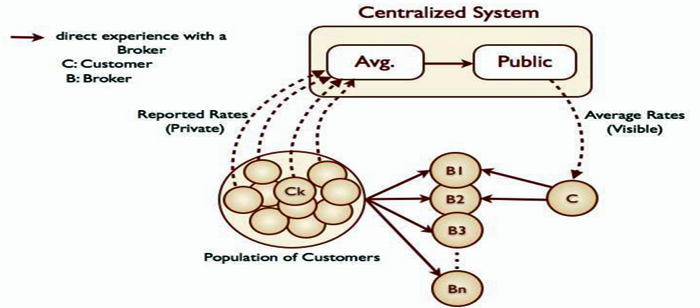
Trust and reputation have become important topics in various domains, such as online markets, supply chain management, auctions, social networks, and e-commerce applications. With the significant increase in transactions with people and organizations especially in online markets, people need to interact with strangers with whom they have little or no previous interactions. Reputation information as a form of world of mouth in auctions and supply chain management and as a form of provided reviews and ratings on online websites are two different sources for modeling trust and reputation in order to mitigate the risk of not knowing a stranger before actually start interacting with that stranger.
In providing reputation information, people can have different behavior, such as being biased based on incentives or they can have different preferences and viewpoints. In this dissertation, I introduce a novel trust and reputation mechanism that models and learns a reputation provider’s behavior based on probability theory. This learned behavior is then used to re-interpret the reputation information, thus making use of the entire reputation data effectively, even if they are biased or based on personal viewpoints and preferences.I show the importance of learning the behavior of reputation providers using different patterns of being biased or having different preferences and satisfaction thresholds in three different settings of game-theory, an online rating website, and an online marketplace. My results show that learning the behavior of reputation providers in all three above settings helps individuals to more effectively aggregate and adjust reputation information in order to make decisions, thereby increasing their satisfaction and overall payoffs in their interactions.
Committee: Drs. Marie desJardins (Chair), Tim Oates, Tim Finin, Wolfgang Ketter and David Aha
]]>
Ph.D. Dissertation Defense A Trust and Reputation Mechanism Through Behavioral Modeling of Reviewers Yasaman Haghpanah 11:00am Tuesday 21 August 2012, ITE 325b, UMBC Trust and reputation...
http://www.csee.umbc.edu/2012/08/phd-defense-yasaman-haghpanah/
https://my3.my.umbc.edu/api/v0/pixel/news/15986/guest@my.umbc.edu/eeb10eebcd8f9bad96b5d62e427ee4cd/api/pixel
computer-science
graduate
news
research
talks
Computer Science and Electrical Engineering
https://my3.my.umbc.edu/groups/csee
https://assets3-my.umbc.edu/system/shared/avatars/groups/000/000/099/d117dca133c64bf78a4b7696dd007189/xsmall.png?1314043393
https://assets1-my.umbc.edu/system/shared/avatars/groups/000/000/099/d117dca133c64bf78a4b7696dd007189/original.png?1314043393
https://assets1-my.umbc.edu/system/shared/avatars/groups/000/000/099/d117dca133c64bf78a4b7696dd007189/xxlarge.png?1314043393
https://assets4-my.umbc.edu/system/shared/avatars/groups/000/000/099/d117dca133c64bf78a4b7696dd007189/xlarge.png?1314043393
https://assets3-my.umbc.edu/system/shared/avatars/groups/000/000/099/d117dca133c64bf78a4b7696dd007189/large.png?1314043393
https://assets1-my.umbc.edu/system/shared/avatars/groups/000/000/099/d117dca133c64bf78a4b7696dd007189/medium.png?1314043393
https://assets2-my.umbc.edu/system/shared/avatars/groups/000/000/099/d117dca133c64bf78a4b7696dd007189/small.png?1314043393
https://assets3-my.umbc.edu/system/shared/avatars/groups/000/000/099/d117dca133c64bf78a4b7696dd007189/xsmall.png?1314043393
https://assets3-my.umbc.edu/system/shared/avatars/groups/000/000/099/d117dca133c64bf78a4b7696dd007189/xxsmall.png?1314043393
Computer Science and Electrical Engineering
6
0
true
Tue, 14 Aug 2012 20:48:06 -0400
PhD dissertation proposal: Albert Kir
PhD Dissertation Preliminary Examination
On Optimizing Contrast Quality and Acquisition Time of
SSFP-Sequence-Based techniques for Structural and Functional
MR Imaging via Extended Phase Graph (EPG) Analysis
Albert Kir
1:00pm Wednesday, 15 August 2012, ITE 325b
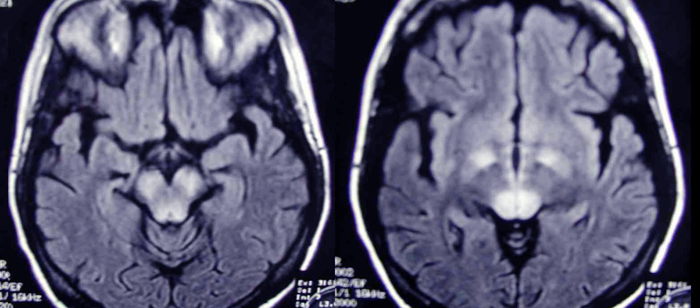
The extended phase graph (EPG) formalism provides an excellent description of the magnetization evolution (considering the magnetization as a vector quantity in space and its change through time) for steady-state free precession techniques (sequences). This dissertation demonstrates its accuracy by applying it to analyze/optimize structural and functional magnetic resonance imaging. An optimization framework for a structural imaging technique, Magnetization-Prepared RApid Gradient-Echo (MP-RAGE), based on the EPG algorithm is established for obtaining optimal images with respect to image signal strength, contrast, and acquisition time. In addition, a functional imaging technique, True Fast Imaging with Steady-state Precession (TruFISP) with improved quantitative sensitivity is developed using EPG analysis.
Committee: Drs. Joel M. Morris (chair and co-advisor), Alan McMillan (co-advisor), Rao Gullapalli (co-advosor), Janet Rutledge and Tulay Adali
]]>
PhD Dissertation Preliminary Examination On Optimizing Contrast Quality and Acquisition Time of SSFP-Sequence-Based techniques for Structural and Functional MR Imaging via Extended Phase...
http://www.csee.umbc.edu/2012/08/phd-dissertation-proposal-albert-kir/
https://my3.my.umbc.edu/api/v0/pixel/news/15979/guest@my.umbc.edu/c5ee20fe3b02b7c207cd812ebfe93e3a/api/pixel
electrical-engineering
graduate
news
research
talks
Computer Science and Electrical Engineering
https://my3.my.umbc.edu/groups/csee
https://assets3-my.umbc.edu/system/shared/avatars/groups/000/000/099/d117dca133c64bf78a4b7696dd007189/xsmall.png?1314043393
https://assets1-my.umbc.edu/system/shared/avatars/groups/000/000/099/d117dca133c64bf78a4b7696dd007189/original.png?1314043393
https://assets1-my.umbc.edu/system/shared/avatars/groups/000/000/099/d117dca133c64bf78a4b7696dd007189/xxlarge.png?1314043393
https://assets4-my.umbc.edu/system/shared/avatars/groups/000/000/099/d117dca133c64bf78a4b7696dd007189/xlarge.png?1314043393
https://assets3-my.umbc.edu/system/shared/avatars/groups/000/000/099/d117dca133c64bf78a4b7696dd007189/large.png?1314043393
https://assets1-my.umbc.edu/system/shared/avatars/groups/000/000/099/d117dca133c64bf78a4b7696dd007189/medium.png?1314043393
https://assets2-my.umbc.edu/system/shared/avatars/groups/000/000/099/d117dca133c64bf78a4b7696dd007189/small.png?1314043393
https://assets3-my.umbc.edu/system/shared/avatars/groups/000/000/099/d117dca133c64bf78a4b7696dd007189/xsmall.png?1314043393
https://assets3-my.umbc.edu/system/shared/avatars/groups/000/000/099/d117dca133c64bf78a4b7696dd007189/xxsmall.png?1314043393
Computer Science and Electrical Engineering
3
0
true
Tue, 14 Aug 2012 09:32:43 -0400