PhD proposal: Online Unsupervised Coreference Resolution
Computer Science PhD Dissertation Proposal
Online Unsupervised Coreference Resolution for
Semi-Structured, Heterogeneous Data
Jennifer Alexander Sleeman
1:00pm Tuesday, 22 May 2012, 325b ITE, UMBC
Coreference resolution, determining when an instance represents a real world entity, has been widely researched in multiple domains. Online coreference resolution that supports heterogeneous data is not as well researched though these aspects of coreference resolution are incredibly important. With the complexities of computing environments today, a more flexible coreference resolution algorithm is required to support data that is processed over time rather than all at once. We present an online unsupervised coreference resolution framework for heterogeneous semi-structured data. We describe a two phase clustering model that is both flexible and distributable. We also describe a multi-dimensional attribute model that will support robust schema mappings. As part of this framework we propose a way to perform instance consolidation that will improve recall measures by addressing data spareness. We also outline how our framework will support ’cold start' knowledge base population.
Committee: Professors Tim Finin (chair), Anupam Joshi, Charles Nicholas, Tim Oates, Yun Peng, and Dr. Rafael Alonso (SAIC)
]]>
Computer Science PhD Dissertation Proposal Online Unsupervised Coreference Resolution for Semi-Structured, Heterogeneous Data Jennifer Alexander Sleeman 1:00pm Tuesday, 22 May 2012, 325b...
http://www.csee.umbc.edu/2012/05/phd-proposal-online-unsupervised-coreference-resolution/
https://my3.my.umbc.edu/api/v0/pixel/news/15047/guest@my.umbc.edu/76aa159540832b454564364b65d4c64d/api/pixel
graduate
news
research
talks
Computer Science and Electrical Engineering
https://my3.my.umbc.edu/groups/csee
https://assets3-my.umbc.edu/system/shared/avatars/groups/000/000/099/d117dca133c64bf78a4b7696dd007189/xsmall.png?1314043393
https://assets1-my.umbc.edu/system/shared/avatars/groups/000/000/099/d117dca133c64bf78a4b7696dd007189/original.png?1314043393
https://assets1-my.umbc.edu/system/shared/avatars/groups/000/000/099/d117dca133c64bf78a4b7696dd007189/xxlarge.png?1314043393
https://assets4-my.umbc.edu/system/shared/avatars/groups/000/000/099/d117dca133c64bf78a4b7696dd007189/xlarge.png?1314043393
https://assets3-my.umbc.edu/system/shared/avatars/groups/000/000/099/d117dca133c64bf78a4b7696dd007189/large.png?1314043393
https://assets1-my.umbc.edu/system/shared/avatars/groups/000/000/099/d117dca133c64bf78a4b7696dd007189/medium.png?1314043393
https://assets2-my.umbc.edu/system/shared/avatars/groups/000/000/099/d117dca133c64bf78a4b7696dd007189/small.png?1314043393
https://assets3-my.umbc.edu/system/shared/avatars/groups/000/000/099/d117dca133c64bf78a4b7696dd007189/xsmall.png?1314043393
https://assets3-my.umbc.edu/system/shared/avatars/groups/000/000/099/d117dca133c64bf78a4b7696dd007189/xxsmall.png?1314043393
Computer Science and Electrical Engineering
1
0
true
Fri, 18 May 2012 23:01:09 -0400
CSEE Professor Hillol Kargupta to speak at international conferences this summer
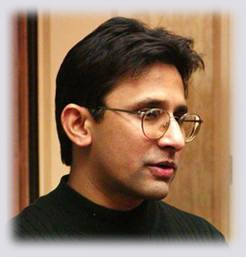 It will be a busy summer for Computer Science and Electrical Engineering professor Hillol Kargupta, who has been invited to speak at three international conferences on his research in data mining.
The first, from June 4-6, is the 3rd International Conference on Sensor Systems and Software to be held in Lisbon, Portugal. Dubbed S-CUBE 2012 for short, the conference aspires to be a venue to “address the research challenges facing system development and software support for wireless sensor network-based systems that have the potential to impact society in many ways,” says the website.
As the keynote speaker, Dr. Kargupta will discuss the possibilities of wirelessly harnessing data from vehicles. Features of the talk include an overview of the market, emerging product-types, core technical challenges, and a description of how advanced data analysis has helped create new and innovative, commercially successful products.The talk reflects the work he’s been doing at Agnik, a Columbia-based data analytics company for distributed, mobile, and embedded environments that Dr. Kargupta co-founded.
From August 1-3, Dr. Kargupta will speak at the 36th Annual Conference of the German Classification Society in Hildesheim, Germany. This year, Dr. Kargupta joins nine other confirmed speakers from around the world, who will speak on topics ranging from Data Analysis to Machine Learning to Knowledge Discovery. His talk will explore distributed data stream mining from sensor networks and discuss algorithms and data mining applications in embedded machine-to-machine wireless networks.
Dr. Kargupta closes his international tour with a stop at the Sixth International Workshop on Knowledge Discovery from Sensor Data (Sensor-KDD ’12) in Beijing, China. One of four invited speakers, Dr. Kargupta joins Dr. Ashok N. Srivastava of the NASA Ames Research Center, Dr. Ian Davidson, a professor of Computer Science at UC: Davis, and Dr. Dr. Ralf Birken, a professor of Civil and Environmental Engineering at Northeastern University.
]]>
It will be a busy summer for Computer Science and Electrical Engineering professor Hillol Kargupta, who has been invited to speak at three international conferences on his research in data mining....
http://www.csee.umbc.edu/2012/05/csee-professor-hillol-kargupta-to-speak-at-international-conferences-this-summer/
https://my3.my.umbc.edu/api/v0/pixel/news/15007/guest@my.umbc.edu/86b4050d6ecbf357be993102c072b50b/api/pixel
news
research
Computer Science and Electrical Engineering
https://my3.my.umbc.edu/groups/csee
https://assets3-my.umbc.edu/system/shared/avatars/groups/000/000/099/d117dca133c64bf78a4b7696dd007189/xsmall.png?1314043393
https://assets1-my.umbc.edu/system/shared/avatars/groups/000/000/099/d117dca133c64bf78a4b7696dd007189/original.png?1314043393
https://assets1-my.umbc.edu/system/shared/avatars/groups/000/000/099/d117dca133c64bf78a4b7696dd007189/xxlarge.png?1314043393
https://assets4-my.umbc.edu/system/shared/avatars/groups/000/000/099/d117dca133c64bf78a4b7696dd007189/xlarge.png?1314043393
https://assets3-my.umbc.edu/system/shared/avatars/groups/000/000/099/d117dca133c64bf78a4b7696dd007189/large.png?1314043393
https://assets1-my.umbc.edu/system/shared/avatars/groups/000/000/099/d117dca133c64bf78a4b7696dd007189/medium.png?1314043393
https://assets2-my.umbc.edu/system/shared/avatars/groups/000/000/099/d117dca133c64bf78a4b7696dd007189/small.png?1314043393
https://assets3-my.umbc.edu/system/shared/avatars/groups/000/000/099/d117dca133c64bf78a4b7696dd007189/xsmall.png?1314043393
https://assets3-my.umbc.edu/system/shared/avatars/groups/000/000/099/d117dca133c64bf78a4b7696dd007189/xxsmall.png?1314043393
Computer Science and Electrical Engineering
7
0
true
Tue, 15 May 2012 10:33:08 -0400
Tue, 15 May 2012 10:33:08 -0400
MS defense: Mobile Relays Based Federation of Multiple Wireless Sensor Network Segments with Reduced-Latency
Masters Thesis Defense
Mobile Relays Based Federation of Multiple Wireless
Sensor Network Segments with Reduced-Latency
Jerome Stanislaus
10:00am Tuesday, 15 May 2012, ITE 325b, UMBC
Wireless sensor networks are used to continuously monitor certain area of interest and send data to a base station for processing. In many applications, WSN serve in inhospitable environments where multiple nodes may simultaneously fail causing the network to be divided into disjoint segments. Restoring connectivity in this case would be necessary for the WSN to become fully functional again. A similar scenario is when multiple standalone WSNs may need to be federated to collectively handle an important event that requires data sharing among these networks. A viable approach for establishing connectivity among these network segments is by employing mobile data collectors (MDCs). Few MDCs can be used to create intermittent links among the segments by touring and carrying data. Obviously, the travel path of the MDCs will affect the date delivery latency. We present two algorithms for finding optimized travel routes for the MDCs so that the average and maximum delay for delivering the inter-segment traffic is minimized. The algorithms deal with two variants of the federation problem that differ in the available MDC count. The first algorithm handles the case when the number of available MDCs is more than the number of segments, while the second tackles the problemwhen the MDC count is significantly less. The performance of the algorithm is validated through simulation.
Committee: Dr. Mohamed Younis (chair), Dr. Charles Nicholas, Dr. Gymama Slaughter
]]>
Masters Thesis Defense Mobile Relays Based Federation of Multiple Wireless Sensor Network Segments with Reduced-Latency Jerome Stanislaus 10:00am Tuesday, 15 May 2012, ITE 325b, UMBC...
http://www.csee.umbc.edu/2012/05/mobile-relays-based-federation-wireless-sensor-network-segments-reduced-latency/
https://my3.my.umbc.edu/api/v0/pixel/news/14984/guest@my.umbc.edu/9892b68b91dae3605e0fff309f1bd26d/api/pixel
graduate
news
research
talks
Computer Science and Electrical Engineering
https://my3.my.umbc.edu/groups/csee
https://assets3-my.umbc.edu/system/shared/avatars/groups/000/000/099/d117dca133c64bf78a4b7696dd007189/xsmall.png?1314043393
https://assets1-my.umbc.edu/system/shared/avatars/groups/000/000/099/d117dca133c64bf78a4b7696dd007189/original.png?1314043393
https://assets1-my.umbc.edu/system/shared/avatars/groups/000/000/099/d117dca133c64bf78a4b7696dd007189/xxlarge.png?1314043393
https://assets4-my.umbc.edu/system/shared/avatars/groups/000/000/099/d117dca133c64bf78a4b7696dd007189/xlarge.png?1314043393
https://assets3-my.umbc.edu/system/shared/avatars/groups/000/000/099/d117dca133c64bf78a4b7696dd007189/large.png?1314043393
https://assets1-my.umbc.edu/system/shared/avatars/groups/000/000/099/d117dca133c64bf78a4b7696dd007189/medium.png?1314043393
https://assets2-my.umbc.edu/system/shared/avatars/groups/000/000/099/d117dca133c64bf78a4b7696dd007189/small.png?1314043393
https://assets3-my.umbc.edu/system/shared/avatars/groups/000/000/099/d117dca133c64bf78a4b7696dd007189/xsmall.png?1314043393
https://assets3-my.umbc.edu/system/shared/avatars/groups/000/000/099/d117dca133c64bf78a4b7696dd007189/xxsmall.png?1314043393
Computer Science and Electrical Engineering
2
0
true
Sat, 12 May 2012 02:03:02 -0400
CSEE Lecturer Susan Mitchell successfully defends Ph.D. dissertation
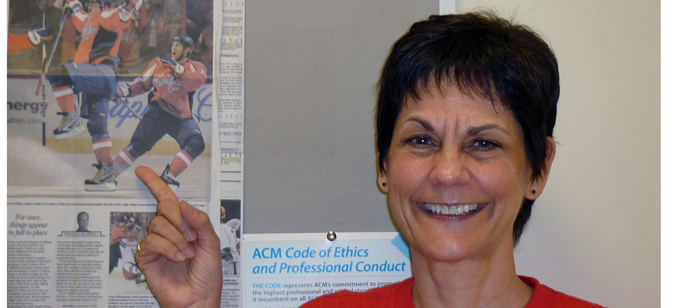
Congratulations to CSEE lecturer Susan Mitchell who, on April 6, 2012, successfully defended her Ph.D. dissertation entitled “Software Process Improvement through the Removal of Project-level Knowledge Flow Obstacles: The Perceptions of Software Engineers.”
Eight years ago, Dr. Mitchell began working toward her Ph.D. in Software Engineering through UMBC’s Information Systems Department. Working as a lecturer in the Computer Science and Electrical Engineering Department while pursuing her degree part-time, Dr. Mitchell’s triumph is an inspiration to all those working stiffs who someday dream of doing the same.
Dr. Mitchell's incentive to go back to school was closely tied to her work as a lecturer. “I teach CMSC 345, Software Design and Development, and I wanted to further my knowledge in the software engineering field,” she says. Designed around the completion of a software-design project, the course mimics a job in the software industry.
Her dissertation—“Software Process Improvement through the Removal of Project-level Knowledge Flow Obstacles: The Perceptions of Software Engineers”—is a case study of a software development team at a major U.S. Department of Defense contracting organization. “Through qualitative methods, such as interviews and focus groups, I was able to locate obstacles to the flow of knowledge within the team that, as perceived by the software engineers, if mitigated or removed, would increase individual efficiency and end-product quality.”
Dr. Mitchell describes software development as a "very human-centric, knowledge intensive endeavor.” “I believe that the major strides in software process improvement (i.e. efficiency and end-product improvements) will not come from process automation or standardization or from the introduction of new development tools, but from changes in the ways that software engineers and managers approach development,” she explains.
Though her title may have changed, Dr. Mitchell's plans are to remain at UMBC as a lecturer. She does hope, however, to continue her research in the area of software process improvement.
]]>
Congratulations to CSEE lecturer Susan Mitchell who, on April 6, 2012, successfully defended her Ph.D. dissertation entitled “Software Process Improvement through the Removal of Project-level...
http://www.csee.umbc.edu/2012/05/csee-lecturer-susan-mitchell-successfully-defends-ph-d-dissertation/
https://my3.my.umbc.edu/api/v0/pixel/news/14925/guest@my.umbc.edu/767063beaf568025148a612fbf18b470/api/pixel
faculty-and-staff
news
other
research
Computer Science and Electrical Engineering
https://my3.my.umbc.edu/groups/csee
https://assets3-my.umbc.edu/system/shared/avatars/groups/000/000/099/d117dca133c64bf78a4b7696dd007189/xsmall.png?1314043393
https://assets1-my.umbc.edu/system/shared/avatars/groups/000/000/099/d117dca133c64bf78a4b7696dd007189/original.png?1314043393
https://assets1-my.umbc.edu/system/shared/avatars/groups/000/000/099/d117dca133c64bf78a4b7696dd007189/xxlarge.png?1314043393
https://assets4-my.umbc.edu/system/shared/avatars/groups/000/000/099/d117dca133c64bf78a4b7696dd007189/xlarge.png?1314043393
https://assets3-my.umbc.edu/system/shared/avatars/groups/000/000/099/d117dca133c64bf78a4b7696dd007189/large.png?1314043393
https://assets1-my.umbc.edu/system/shared/avatars/groups/000/000/099/d117dca133c64bf78a4b7696dd007189/medium.png?1314043393
https://assets2-my.umbc.edu/system/shared/avatars/groups/000/000/099/d117dca133c64bf78a4b7696dd007189/small.png?1314043393
https://assets3-my.umbc.edu/system/shared/avatars/groups/000/000/099/d117dca133c64bf78a4b7696dd007189/xsmall.png?1314043393
https://assets3-my.umbc.edu/system/shared/avatars/groups/000/000/099/d117dca133c64bf78a4b7696dd007189/xxsmall.png?1314043393
Computer Science and Electrical Engineering
29
8
true
Tue, 08 May 2012 14:05:19 -0400
Tue, 08 May 2012 14:05:19 -0400
Mulwad, Van Tassel, and Ordonez win poster competition at CSEE Research Review

Congratulations to the three winners of the poster competition at the Computer Science and Electrical Engineering Department's annual Research Review, which took place in the UMBC Technology Center's business incubator and accelerator building last Friday. Winners were chosen by UMBC faculty who scored their top five choices with [-9, +9] range voting.
1st place (26 points):
Varish Mulwad (CS, Ph.D.) "A Probabilistic Model for Generating Linked Data from Tables"
Advisor: Tim Finin
Vast amount of information is encoded in tables found in documents, on the Web, and in spreadsheets or databases. Integrating or searching over this information benefits from understanding its intended meaning and making it explicit in a semantic representation language like RDF. Most current approaches to generating Semantic Web representations from tables requires human input to create schemas and often results in graphs that do not follow best practices for linked data. Evidence for a table's meaning can be found in its column headers, cell values, implicit relations between columns, caption and surrounding text but also requires general and domain-specific background knowledge. Approaches that work well for one domain, may not necessarily work well for others. We describe a domain independent framework for interpreting the intended meaning of tables and representing it as Linked Data. At the core of the framework are techniques grounded in graphical models and probabilistic reasoning to infer meaning associated with a table. Using background knowledge from resources in the Linked Open Data cloud, we jointly infer the semantics of column headers, table cell values (e.g., strings and numbers) and relations between columns and represent the inferred meaning as graph of RDF triples. A table's meaning is thus captured by mapping columns to classes in an appropriate ontology, linking cell values to literal constants, implied measurements, or entities in the linked data cloud (existing or new) and discovering or and identifying relations between columns.
2nd place (18 points):
Richard Van Tassel (CS, M.S.) "Visual Obstruction Resistance for Emotion Detection"
Advisor: Marie desJardins
There is an increasing interest in developing systems that can determine a user's emotion by analyzing a video feed of the user's face. However, it cannot always be assumed that the user's face will be completely unobstructed by facial hair or apparel. If the system is a recreational or consumer good, it could be considered too restrictive to require a perfect view of the face at all times. Obstructions can prevent the system from identifying all of the facial expression components, called action units, present in the input face. It is therefore important that such emotion detection systems are capable of coping with partially obstructed faces. I propose a technique for reducing the effect of face obstructions. The technique will learn association rules between sets of action units from a set of unobstructed faces. Then, for a given input obstructed face, the technique will infer what action units are likely to be obstructed based on the visible ones, and will use this hypothetical set of action units to infer the emotion. This technique is tested on real face data, with simulated face obstructions. It will provide a statistically significant improvement in emotion detection accuracy over the same process without the technique applied.
3rd place (16 points):
Patricia Ordonez (CS, Ph.D) (pictured) "Multivariate Time Series Analysis of Physiological and Clinical Data"
Advisor: Marie desJardins, Tim Oates
The complexity and volume of collected medical data is greater now than at any point in the history of medicine. Providers are expected to examine large volumes of data and identify correlations between parameters based on their own clinical experience to detect significant medical events. The information overload that providers face may hinder the diagnostic process. Existing visualizations to assist the provider in analyzing information consist mainly of tables or plots of values for a particular parameter over time. Multivariate Time Series Amalgams (MTSAs) provide an integrated, multivariate approach to represent clinical and physiological data. The hybrid representation automates the personalization of baselines and threshold values based on a patient’s medical history, while also incorporating traditional baselines and thresholds. MTSA visualizations capture the rate of change of provider-selected parameters and the relationships among them.
The second half of my research consists of developing automated techniques for discovering correlations among parameters over time to assist providers in making a diagnosis. The underlying premise of my research is that the complexity of a highly integrated system such as a human being is better captured by examining patterns as multivariate temporal abstractions as opposed to conjunctions of univariate ones — the more common approach for multivariate time series analysis and in medicine. The objective of such an approach is to assist in the identification of latent patterns within the data associated with specific medical conditions or significant medical events. Thus, in addition to the MTSA visualizations, I will present two novel multivariate time series representations, Stacked Bags-of-Patterns and Multivariate Bag-of-Patterns, which have been effective at classifying medical data. These representations are more compact than the raw multivariate time series and would facilitate the retrieval of patients from large medical databases based on physiological similarity and ideally on the presence of similar medically significant events or medical conditions. These techniques been compared to two other multivariate versions of univariate time series representations, Piecewise Dynamic Time Warping and Ensemble Voting using Bag-of-Patterns. Results demonstrate the potential of using these representations for multivariate time series analysis.
]]>
Congratulations to the three winners of the poster competition at the Computer Science and Electrical Engineering Department's annual Research Review, which took place in the UMBC Technology...
http://www.csee.umbc.edu/2012/05/mulwad-van-tassel-and-ordonez-win-poster-competition-at-csee-research-review/
https://my3.my.umbc.edu/api/v0/pixel/news/14896/guest@my.umbc.edu/e24e60fe3be602d12f8eed9401bf0f7d/api/pixel
graduate
news
research
Computer Science and Electrical Engineering
https://my3.my.umbc.edu/groups/csee
https://assets3-my.umbc.edu/system/shared/avatars/groups/000/000/099/d117dca133c64bf78a4b7696dd007189/xsmall.png?1314043393
https://assets1-my.umbc.edu/system/shared/avatars/groups/000/000/099/d117dca133c64bf78a4b7696dd007189/original.png?1314043393
https://assets1-my.umbc.edu/system/shared/avatars/groups/000/000/099/d117dca133c64bf78a4b7696dd007189/xxlarge.png?1314043393
https://assets4-my.umbc.edu/system/shared/avatars/groups/000/000/099/d117dca133c64bf78a4b7696dd007189/xlarge.png?1314043393
https://assets3-my.umbc.edu/system/shared/avatars/groups/000/000/099/d117dca133c64bf78a4b7696dd007189/large.png?1314043393
https://assets1-my.umbc.edu/system/shared/avatars/groups/000/000/099/d117dca133c64bf78a4b7696dd007189/medium.png?1314043393
https://assets2-my.umbc.edu/system/shared/avatars/groups/000/000/099/d117dca133c64bf78a4b7696dd007189/small.png?1314043393
https://assets3-my.umbc.edu/system/shared/avatars/groups/000/000/099/d117dca133c64bf78a4b7696dd007189/xsmall.png?1314043393
https://assets3-my.umbc.edu/system/shared/avatars/groups/000/000/099/d117dca133c64bf78a4b7696dd007189/xxsmall.png?1314043393
Computer Science and Electrical Engineering
6
1
true
Mon, 07 May 2012 09:01:52 -0400
MS defense: A Modular, Power-Intelligent Wireless Sensor Node Architecture
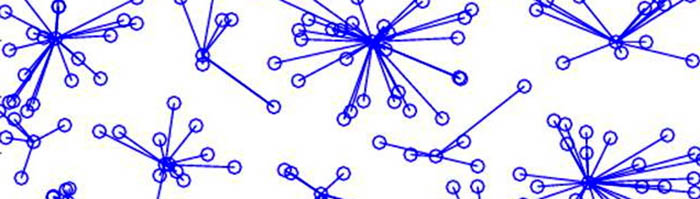
MS Thesis Defense
A Modular, Power-Intelligent Wireless Sensor Node Architecture
David Riley
10:30am Monday, 7 May 2012, ITE 346
The current state of the art in wireless sensor nodes, both in academia and the commercial world, is a fractured landscape of designs which mostly address individual problems. The most common commercial design derives directly from a mote developed at the University of California, Berkeley around 1999, and presents only moderate, incremental improvements over the original design. No designs yet present a comprehensive, intelligent design befitting a modern system.
By using dynamic power management, deep system configurability, autonomous peripheral modules, and multiple CPU architectures, this thesis presents a flexible and efficient node architecture. Modules in a system communicate between each other to coordinate their activities and power levels. Special attention is given to power sourcing and distribution. Individual peripheral boards supply their own drivers to the CPU using architecture-independent code. The platform may be configured to work with most networks, sensor types and power sources due to its improved connectivity and hierarchical design.
The resulting Configurable Sensor Node (CoSeN) architecture is competitive with existing designs on price, size and power while greatly exceeding most of them on performance, configurability and application potential. The CoSeN architecture is validated through a prototype implementation.
Committee: Professors Mohammed Younis, Tim Oates and Gymama Slaughter
]]>
MS Thesis Defense A Modular, Power-Intelligent Wireless Sensor Node Architecture David Riley 10:30am Monday, 7 May 2012, ITE 346 The current state of the art in wireless sensor nodes, both...
http://www.csee.umbc.edu/2012/05/ms-defense-a-modular-power-intelligent-wireless-sensor-node-architecture/
https://my3.my.umbc.edu/api/v0/pixel/news/14857/guest@my.umbc.edu/f427a3f41f050886a6f6e314bbe9cab4/api/pixel
graduate
news
research
talks
Computer Science and Electrical Engineering
https://my3.my.umbc.edu/groups/csee
https://assets3-my.umbc.edu/system/shared/avatars/groups/000/000/099/d117dca133c64bf78a4b7696dd007189/xsmall.png?1314043393
https://assets1-my.umbc.edu/system/shared/avatars/groups/000/000/099/d117dca133c64bf78a4b7696dd007189/original.png?1314043393
https://assets1-my.umbc.edu/system/shared/avatars/groups/000/000/099/d117dca133c64bf78a4b7696dd007189/xxlarge.png?1314043393
https://assets4-my.umbc.edu/system/shared/avatars/groups/000/000/099/d117dca133c64bf78a4b7696dd007189/xlarge.png?1314043393
https://assets3-my.umbc.edu/system/shared/avatars/groups/000/000/099/d117dca133c64bf78a4b7696dd007189/large.png?1314043393
https://assets1-my.umbc.edu/system/shared/avatars/groups/000/000/099/d117dca133c64bf78a4b7696dd007189/medium.png?1314043393
https://assets2-my.umbc.edu/system/shared/avatars/groups/000/000/099/d117dca133c64bf78a4b7696dd007189/small.png?1314043393
https://assets3-my.umbc.edu/system/shared/avatars/groups/000/000/099/d117dca133c64bf78a4b7696dd007189/xsmall.png?1314043393
https://assets3-my.umbc.edu/system/shared/avatars/groups/000/000/099/d117dca133c64bf78a4b7696dd007189/xxsmall.png?1314043393
Computer Science and Electrical Engineering
2
0
true
Fri, 04 May 2012 00:11:35 -0400
CSEE Research Review, Fri 5/4
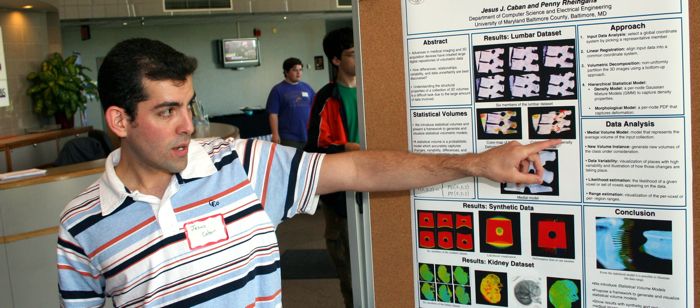
The CSEE Department will hold its annual CSEE Research Review day from 9:30am to 4:00pm on Friday, May 4, 2012. Faculty, research staff and students from the Computer Science, Computer Engineering and Electrical Engineering programs will present and discuss their latest research results via short oral presentations and a poster session.
The event is open to the public and is a good way for prospective collaborators and students to find out about the research our department is doing and meet and network with current faculty and students. See pictures from CRR-06, CRR-08, CRR-09, CRR-10 and CRR-11 to get an idea of what goes on at this event.
The 2012 CSEE Research Review (CRR-12) will take place in the large conference room of the UMBC Technology Center's business Incubator and Accelerator building on South Campus. There is ample free parking and refreshments and a free buffet lunch will be provided.
|
Schedule
|
| 9:30-10:40 |
Talks |
| 11:00-12:00 |
Poster Session |
| 12:00-1:00 |
Lunch (free) |
| 1:00-2:10 |
Talks |
| 2:30-3:40 |
Talks |
For more information, contact the CRR-11 General Chair, Professor Alan Sherman, Sorry, you need javascript to view this email address.
]]>
The CSEE Department will hold its annual CSEE Research Review day from 9:30am to 4:00pm on Friday, May 4, 2012. Faculty, research staff and students from the Computer Science, Computer Engineering...
http://www.csee.umbc.edu/2012/04/csee-research-review-fri-may-4/
https://my3.my.umbc.edu/api/v0/pixel/news/14740/guest@my.umbc.edu/0e5c3a18283e8e9a9b2cbc64f0bafd08/api/pixel
news
research
Computer Science and Electrical Engineering
https://my3.my.umbc.edu/groups/csee
https://assets3-my.umbc.edu/system/shared/avatars/groups/000/000/099/d117dca133c64bf78a4b7696dd007189/xsmall.png?1314043393
https://assets1-my.umbc.edu/system/shared/avatars/groups/000/000/099/d117dca133c64bf78a4b7696dd007189/original.png?1314043393
https://assets1-my.umbc.edu/system/shared/avatars/groups/000/000/099/d117dca133c64bf78a4b7696dd007189/xxlarge.png?1314043393
https://assets4-my.umbc.edu/system/shared/avatars/groups/000/000/099/d117dca133c64bf78a4b7696dd007189/xlarge.png?1314043393
https://assets3-my.umbc.edu/system/shared/avatars/groups/000/000/099/d117dca133c64bf78a4b7696dd007189/large.png?1314043393
https://assets1-my.umbc.edu/system/shared/avatars/groups/000/000/099/d117dca133c64bf78a4b7696dd007189/medium.png?1314043393
https://assets2-my.umbc.edu/system/shared/avatars/groups/000/000/099/d117dca133c64bf78a4b7696dd007189/small.png?1314043393
https://assets3-my.umbc.edu/system/shared/avatars/groups/000/000/099/d117dca133c64bf78a4b7696dd007189/xsmall.png?1314043393
https://assets3-my.umbc.edu/system/shared/avatars/groups/000/000/099/d117dca133c64bf78a4b7696dd007189/xxsmall.png?1314043393
Computer Science and Electrical Engineering
3
0
true
Mon, 30 Apr 2012 08:29:28 -0400
Mon, 30 Apr 2012 23:38:28 -0400
MS Defense: Chandler on Efficient Network on Chip for a Low-Power, Low-Area Homogeneous Many-Core DSP Platform
MS Thesis Defense
An Efficient Network on Chip (NoC) for a Low-Power,
Low-Area Homogeneous Many-Core DSP Platform
James Chandler
10:30am Monday, 30 April 30 2012, ITE 325b
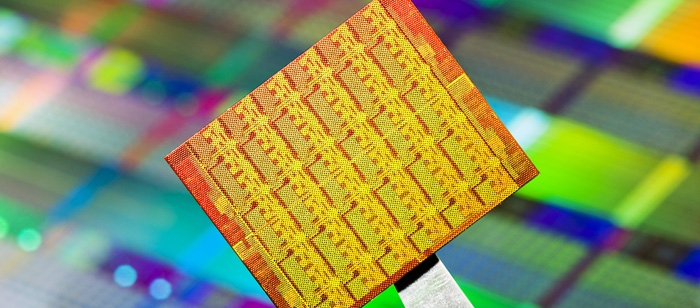
This thesis presents an NoC architecture that is optimized for a course-grained, deterministic many core DSP platform supporting up to 256 cores. The proposed network supports both local and long-distance communication in the event that large applications or multiple smaller applications are mapped onto the platform by means of a hierarchical cluster topology. The NoC is designed to optimize the area- and power-to-performance ratio through implementing the following key characteristics: low hop-count long distance communication, optimized flit buffer size, efficient virtual channel implementation, and a highly restricted virtual channel flow control.
The NoC architecture is implemented in 65 nm CMOS technology with a nominal supply voltage of 1V. Place and Route results show that the proposed architecture saves up to 33% in area and up to 87.6% in energy-per-flit in comparison to some currently-implemented NoCs. Through several traffic pattern tests on a network of 16 cores, the NoC attains a throughput of up to 21.7Gbps. A 256-point FFT mapped onto 16 cores executes in 4.3$us and dissipates 0.649W. This is an improvement of 187% and 508% in latency and power dissipation over a 256-point Xilinx FFT IP Core implemented on a Virtex 6 FPGA.
Committee: Professors Tinoosh Mohsenin (chair), Dr. Chintan Patel and Mohamed Younis
]]>
MS Thesis Defense An Efficient Network on Chip (NoC) for a Low-Power, Low-Area Homogeneous Many-Core DSP Platform James Chandler 10:30am Monday, 30 April 30 2012, ITE 325b This thesis...
http://www.csee.umbc.edu/2012/04/ms-defense-chandler-on-efficient-network-on-chip-for-a-low-power-low-area-homogeneous-many-core-dsp-platform/
https://my3.my.umbc.edu/api/v0/pixel/news/14716/guest@my.umbc.edu/e685c6c18d31e058edf670ec5663a5d3/api/pixel
computer-engineering
news
research
students
talks
Computer Science and Electrical Engineering
https://my3.my.umbc.edu/groups/csee
https://assets3-my.umbc.edu/system/shared/avatars/groups/000/000/099/d117dca133c64bf78a4b7696dd007189/xsmall.png?1314043393
https://assets1-my.umbc.edu/system/shared/avatars/groups/000/000/099/d117dca133c64bf78a4b7696dd007189/original.png?1314043393
https://assets1-my.umbc.edu/system/shared/avatars/groups/000/000/099/d117dca133c64bf78a4b7696dd007189/xxlarge.png?1314043393
https://assets4-my.umbc.edu/system/shared/avatars/groups/000/000/099/d117dca133c64bf78a4b7696dd007189/xlarge.png?1314043393
https://assets3-my.umbc.edu/system/shared/avatars/groups/000/000/099/d117dca133c64bf78a4b7696dd007189/large.png?1314043393
https://assets1-my.umbc.edu/system/shared/avatars/groups/000/000/099/d117dca133c64bf78a4b7696dd007189/medium.png?1314043393
https://assets2-my.umbc.edu/system/shared/avatars/groups/000/000/099/d117dca133c64bf78a4b7696dd007189/small.png?1314043393
https://assets3-my.umbc.edu/system/shared/avatars/groups/000/000/099/d117dca133c64bf78a4b7696dd007189/xsmall.png?1314043393
https://assets3-my.umbc.edu/system/shared/avatars/groups/000/000/099/d117dca133c64bf78a4b7696dd007189/xxsmall.png?1314043393
Computer Science and Electrical Engineering
3
0
true
Fri, 27 Apr 2012 13:32:31 -0400
MS defense: More on Situation Aware Intrusion Detection, 9am Fri 4/27
MS Thesis Defense
Situation Aware Intrusion Detection Model
Sumit More
9:00am Friday, 27 April 2012, ITE 346, UMBC
Today, information technology and cyber-services have become the foundation pillars of every business and manufacturing industry. The importance of cyber-services and their extensive use by every section of the society has paved the way for cyber-crimes like espionage, politically motivated attacks, credit card frauds, unauthorized infrastructure access, denial-of-service attacks, and stealing of valuable data. Intrusion Detection Systems (IDS) are applications which monitor cyber-systems to identify any malicious activities, generate an alert when such an activity is detected, and redress the problem if possible. Most of the intrusion detection/prevention systems available today are based on rule-based or signature based activity monitoring which detect threats and vulnerabilities by cross-referencing the threat or vulnerability signatures in their databases. These Intrusion Detection Systems (IDS) face limitations in detecting newly published attacks or variants of existing attacks. They are also point solutions that focus on a single system/component.
We argue that integrating information coming from multiple data channels can lead to a better threat detection model. Data source of web including blogs, chat-rooms, forums etc. can be a good source of information for upcoming attacks or attacks whose signatures have not yet been tracked for the intrusion detection systems to catch. Semantic integration of the data sources from web, information from IDS/IPS modules at the network and host level, and the expert knowledge can be used to create a ‘Situation Aware Intrusion Detection Model’ which can lead to better intrusion detection and prevention results. In this work, we present such a system which makes use of semantic web technologies to find relationships between the information gathered from the web, sensor data coming from IDS/IPS modules and network activity monitors, and reasons over this data and expert provided rules in-order to detect possibility of a cyber attack.
Thesis Committee: Professors Anupam Joshi (chair), Tim Finin and Yelena Yesha
]]>
MS Thesis Defense Situation Aware Intrusion Detection Model Sumit More 9:00am Friday, 27 April 2012, ITE 346, UMBC Today, information technology and cyber-services have become the...
http://www.csee.umbc.edu/2012/04/ms-defense-more-on-situation-aware-intrusion-detection-9am-fri-427/
https://my3.my.umbc.edu/api/v0/pixel/news/14691/guest@my.umbc.edu/9e2c7702b9843e0f817d9330d209d566/api/pixel
graduate
news
research
talks
Computer Science and Electrical Engineering
https://my3.my.umbc.edu/groups/csee
https://assets3-my.umbc.edu/system/shared/avatars/groups/000/000/099/d117dca133c64bf78a4b7696dd007189/xsmall.png?1314043393
https://assets1-my.umbc.edu/system/shared/avatars/groups/000/000/099/d117dca133c64bf78a4b7696dd007189/original.png?1314043393
https://assets1-my.umbc.edu/system/shared/avatars/groups/000/000/099/d117dca133c64bf78a4b7696dd007189/xxlarge.png?1314043393
https://assets4-my.umbc.edu/system/shared/avatars/groups/000/000/099/d117dca133c64bf78a4b7696dd007189/xlarge.png?1314043393
https://assets3-my.umbc.edu/system/shared/avatars/groups/000/000/099/d117dca133c64bf78a4b7696dd007189/large.png?1314043393
https://assets1-my.umbc.edu/system/shared/avatars/groups/000/000/099/d117dca133c64bf78a4b7696dd007189/medium.png?1314043393
https://assets2-my.umbc.edu/system/shared/avatars/groups/000/000/099/d117dca133c64bf78a4b7696dd007189/small.png?1314043393
https://assets3-my.umbc.edu/system/shared/avatars/groups/000/000/099/d117dca133c64bf78a4b7696dd007189/xsmall.png?1314043393
https://assets3-my.umbc.edu/system/shared/avatars/groups/000/000/099/d117dca133c64bf78a4b7696dd007189/xxsmall.png?1314043393
Computer Science and Electrical Engineering
2
0
true
Thu, 26 Apr 2012 18:18:50 -0400
talk: Todros on Canonical Correlation Analysis, 2pm Wed 5/2
On Measure Transformed Canonical Correlation Analysis
Dr. Koby Todros, University of Michigan
2:00pm Wednesday, 2 May 2012, ITE 325b
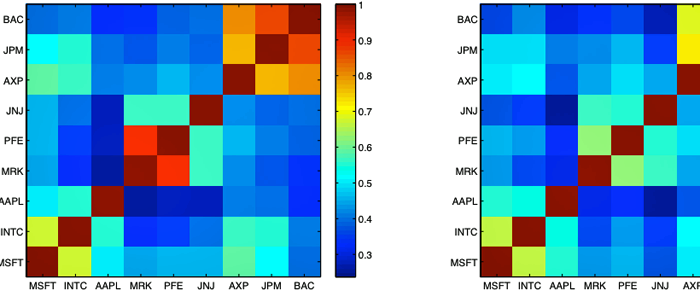
In this work linear canonical correlation analysis (LCCA) is generalized by applying a structured transform to the joint probability distribution of the considered pair of random vectors, i.e., a transformation of the joint probability measure defined on their joint observation space. This framework, called measure transformed canonical correlation analysis (MTCCA), applies LCCA to the data after transformation of the joint probability measure. We show that judicious choice of the transform leads to a modified canonical correlation analysis, which, in contrast to LCCA, is capable of detecting non-linear relationships between the considered pair of random vectors. Unlike kernel canonical correlation analysis, where the transformation is applied to the random vectors, in MTCCA the transformation is applied to their joint probability distribution. This results in performance advantages and reduced implementation complexity. The proposed approach is illustrated for graphical model selection in simulated data having non-linear dependencies, and for measuring long-term associations between companies traded in the NASDAQ and NYSE stock markets.
Koby Todros was born in Ashkelon, Israel, in 1974. He received his B.Sc., M.Sc., and Ph.D. degrees in electrical engineering at 2000, 2006, and 2011, respectively, from the Ben-Gurion University of the Negev. He is currently a post-doctoral fellow with the Department of Electrical Engineering and Computer Science, in the University of Michigan. His research interests include statistical signal processing and estimation theory with focus on association analysis, uniformly optimal estimation in the non-Bayesian theory, performance bounds for parameter estimation, blind source separation, and biomedical signal processing.
]]>
On Measure Transformed Canonical Correlation Analysis Dr. Koby Todros, University of Michigan 2:00pm Wednesday, 2 May 2012, ITE 325b In this work linear canonical correlation analysis (LCCA)...
http://www.csee.umbc.edu/2012/04/talk-todros-on-canonical-correlation-analysis-2pm-wed-52/
https://my3.my.umbc.edu/api/v0/pixel/news/14683/guest@my.umbc.edu/b816eb65a9fde4f69f08f899eba23a8b/api/pixel
graduate
news
research
talks
Computer Science and Electrical Engineering
https://my3.my.umbc.edu/groups/csee
https://assets3-my.umbc.edu/system/shared/avatars/groups/000/000/099/d117dca133c64bf78a4b7696dd007189/xsmall.png?1314043393
https://assets1-my.umbc.edu/system/shared/avatars/groups/000/000/099/d117dca133c64bf78a4b7696dd007189/original.png?1314043393
https://assets1-my.umbc.edu/system/shared/avatars/groups/000/000/099/d117dca133c64bf78a4b7696dd007189/xxlarge.png?1314043393
https://assets4-my.umbc.edu/system/shared/avatars/groups/000/000/099/d117dca133c64bf78a4b7696dd007189/xlarge.png?1314043393
https://assets3-my.umbc.edu/system/shared/avatars/groups/000/000/099/d117dca133c64bf78a4b7696dd007189/large.png?1314043393
https://assets1-my.umbc.edu/system/shared/avatars/groups/000/000/099/d117dca133c64bf78a4b7696dd007189/medium.png?1314043393
https://assets2-my.umbc.edu/system/shared/avatars/groups/000/000/099/d117dca133c64bf78a4b7696dd007189/small.png?1314043393
https://assets3-my.umbc.edu/system/shared/avatars/groups/000/000/099/d117dca133c64bf78a4b7696dd007189/xsmall.png?1314043393
https://assets3-my.umbc.edu/system/shared/avatars/groups/000/000/099/d117dca133c64bf78a4b7696dd007189/xxsmall.png?1314043393
Computer Science and Electrical Engineering
1
0
true
Thu, 26 Apr 2012 14:44:21 -0400