Researcher of the Week: Thomas Glantz
Undergraduate researchers explore their interests!
How did you find out that you could participate in an excavation for this summer?
I was on the search for an internship for the summer. I was having no luck finding something related to archaeology that was close enough for me to commute to each day. Because of this, I contacted the director of the program for which I interned last summer (The Lost Towns Project). She suggested that I look into programs sponsored by the National Science Foundation (NSF), as she had participated in one such project when she was an undergraduate. She forwarded me to their website, which lists programs by field. This is where I found the project I later became a part of.
What was involved in applying? Was it difficult? Did you have help from UMBC?
Applying was fairly simple and quite easy. The application consisted of filling out a brief form which contained questions pertaining to education background, writing a short letter of intent, sending the program a transcript, and also sending a few letters of recommendation. My professors at UMBC provided some of the letters of recommendation, along with a good deal of help in editing my letter of intent. Getting accepted to the project wasn’t quite as easy however. Only nine spots were available and over sixty applications were submitted.
What was the project you worked on? What did you do? How long were you there?
The project I worked on was called the New Philadelphia NSF REU. New Philadelphia was once a small town in western Illinois’ Pike County. The town was only a few miles from the still existing town of Barry. The town was founded by a freed African slave, Frank McWorter or Free Frank. The town began in roughly 1840, had a small time of prosperity before the rail road bypassed it, and later came to be used as agricultural farm land. I was involved in this project for ten weeks. The first five weeks focused on archaeological field work. During this time, I stayed near the site in the town of Barry. Each day I would travel to the site where excavations were in progress. The main excavation while I was there was the bisection of a cellar feature, or in other words, the excavation of one half of the cellar of a house. From this cellar, I and the rest of the field crew excavated thousands of artifacts. For the second five weeks, I stayed in the graduate dorms of the University of Illinois Springfield. While there, each day I processed the artifacts we had recovered. We began by washing them. Next we cataloged them. After cataloging, we labeled each artifact. Finally, for the last week of the project, we researched various aspects of the artifacts and their relation to the site.
What did you already know about how to do this when you started? What did they teach you on the job?
I already knew a good deal about the type of work I would be doing and the environment I would be doing it in. I experienced these things in my previous internship with the Lost Towns. While I had the basics of field and lab work covered, this experience reinforced the good habits I had already formed and helped to eliminate the bad ones. I already knew that archaeology is done slightly differently from site to site and from crew to crew, and this was apparent during this experience. For this experience I was taught a different system to keeping track of artifacts and their provenience and a different system of cataloging. I also did a bit of work with the geo-sciences as they apply to archaeology, along with a couple days of learning how to do faunal analysis. Both of these experiences were completely new to me.
Who did you work with?
I worked with a wide array of people in differing areas. I worked with many archaeologists, most of whom specialized in historic archaeology and one who specialized in faunal analysis. I also had three crew leaders who are currently in graduate school. Two are focusing on historic archaeology and one on the geo-sciences. I also worked with eight other undergraduates who were accepted to the program.
Was it expensive to go there?
The program was funded by the NSF, so instead of paying for this field school like most others, participants in this field school actually received a sizable stipend. In addition, lodging was completely paid for along with food for the first half of the project. The only thing I had to pay for myself was travel expenses, half of my food, and a bunch of cool souvenirs from the awesome places we visited while there.
What was the most interesting thing about your time on this project? The most difficult?
The most interesting aspect for me was being able to leave the comfort zone of being near people and places that were familiar to me and immersing myself in a totally new environment. It was also really beneficial to learn how others approached different topics and problems and to get a feel for how a job or grad school will likely be.
Will you stay in touch with the project and people now that your summer program is over?
I will stay in touch with many of the people I met there. I made some new friends and did quite a bit of networking, which I am learning is crucial in this field, as it is in most others. I will see many of the people I worked with again in January, as one of the big conferences is being held in Baltimore.
How will the work you did this summer relate to your classes at UMBC? To your career plans?
All of my archaeology classes have prepared me for field work, lab work, and academic writing; in other words, they prepared me for everything I did while taking part in this project. My classes and this experience continue to prepare me for the future, as I plan to have a career doing the same type of work, either in an academic setting or a corporate setting.
What would you say to other UMBC students about finding such research opportunities?
If you can find an NSF REU that relates to your field of study, by all means apply. It is hard to find research positions that pay you to be a part, not to mention how good National Science Foundation looks on a resume.
Did you present your results at an end-of-summer symposium?
At the end of the program I presented some research that I had done on a handful of the artifacts we recovered. I used makers marks and other distinctive features to determine both the date and location of manufacturing. With this information, those working on the project later will be able to date the different levels of the excavation units we dug, as well as make connections between the site and the rest of the country and world.
Read more about Thomas's summer research at the link below
]]>
How did you find out that you could participate in an excavation for this summer? I was on the search for an internship for the summer. I was having no luck finding something related to...
http://www.umbc.edu/undergrad_ed/research/ResearcherProfiles/thomasGlantzsProfile.htm
https://my3.my.umbc.edu/api/v0/pixel/news/12694/guest@my.umbc.edu/02eecd97d8ee2f954d5a36dd2575fdf7/api/pixel
Undergraduate Research
https://my3.my.umbc.edu/groups/undergradresearch
https://assets2-my.umbc.edu/system/shared/avatars/groups/000/000/006/875606ced2b629148af4caa1a4e8dd3c/xsmall.png?1600355057
https://assets3-my.umbc.edu/system/shared/avatars/groups/000/000/006/875606ced2b629148af4caa1a4e8dd3c/original.jpg?1600355057
https://assets4-my.umbc.edu/system/shared/avatars/groups/000/000/006/875606ced2b629148af4caa1a4e8dd3c/xxlarge.png?1600355057
https://assets1-my.umbc.edu/system/shared/avatars/groups/000/000/006/875606ced2b629148af4caa1a4e8dd3c/xlarge.png?1600355057
https://assets2-my.umbc.edu/system/shared/avatars/groups/000/000/006/875606ced2b629148af4caa1a4e8dd3c/large.png?1600355057
https://assets2-my.umbc.edu/system/shared/avatars/groups/000/000/006/875606ced2b629148af4caa1a4e8dd3c/medium.png?1600355057
https://assets4-my.umbc.edu/system/shared/avatars/groups/000/000/006/875606ced2b629148af4caa1a4e8dd3c/small.png?1600355057
https://assets2-my.umbc.edu/system/shared/avatars/groups/000/000/006/875606ced2b629148af4caa1a4e8dd3c/xsmall.png?1600355057
https://assets4-my.umbc.edu/system/shared/avatars/groups/000/000/006/875606ced2b629148af4caa1a4e8dd3c/xxsmall.png?1600355057
Undergraduate Research
https://assets3-my.umbc.edu/system/shared/thumbnails/news/000/012/694/4191992c18a06a78886b230886197d9b/xxlarge.jpg?1330963402
https://assets2-my.umbc.edu/system/shared/thumbnails/news/000/012/694/4191992c18a06a78886b230886197d9b/xlarge.jpg?1330963402
https://assets2-my.umbc.edu/system/shared/thumbnails/news/000/012/694/4191992c18a06a78886b230886197d9b/large.jpg?1330963402
https://assets1-my.umbc.edu/system/shared/thumbnails/news/000/012/694/4191992c18a06a78886b230886197d9b/medium.jpg?1330963402
https://assets4-my.umbc.edu/system/shared/thumbnails/news/000/012/694/4191992c18a06a78886b230886197d9b/small.jpg?1330963402
https://assets4-my.umbc.edu/system/shared/thumbnails/news/000/012/694/4191992c18a06a78886b230886197d9b/xsmall.jpg?1330963402
https://assets3-my.umbc.edu/system/shared/thumbnails/news/000/012/694/4191992c18a06a78886b230886197d9b/xxsmall.jpg?1330963402
12
0
true
Mon, 05 Mar 2012 11:11:02 -0500
Next Century Corporation Comes to the Classroom
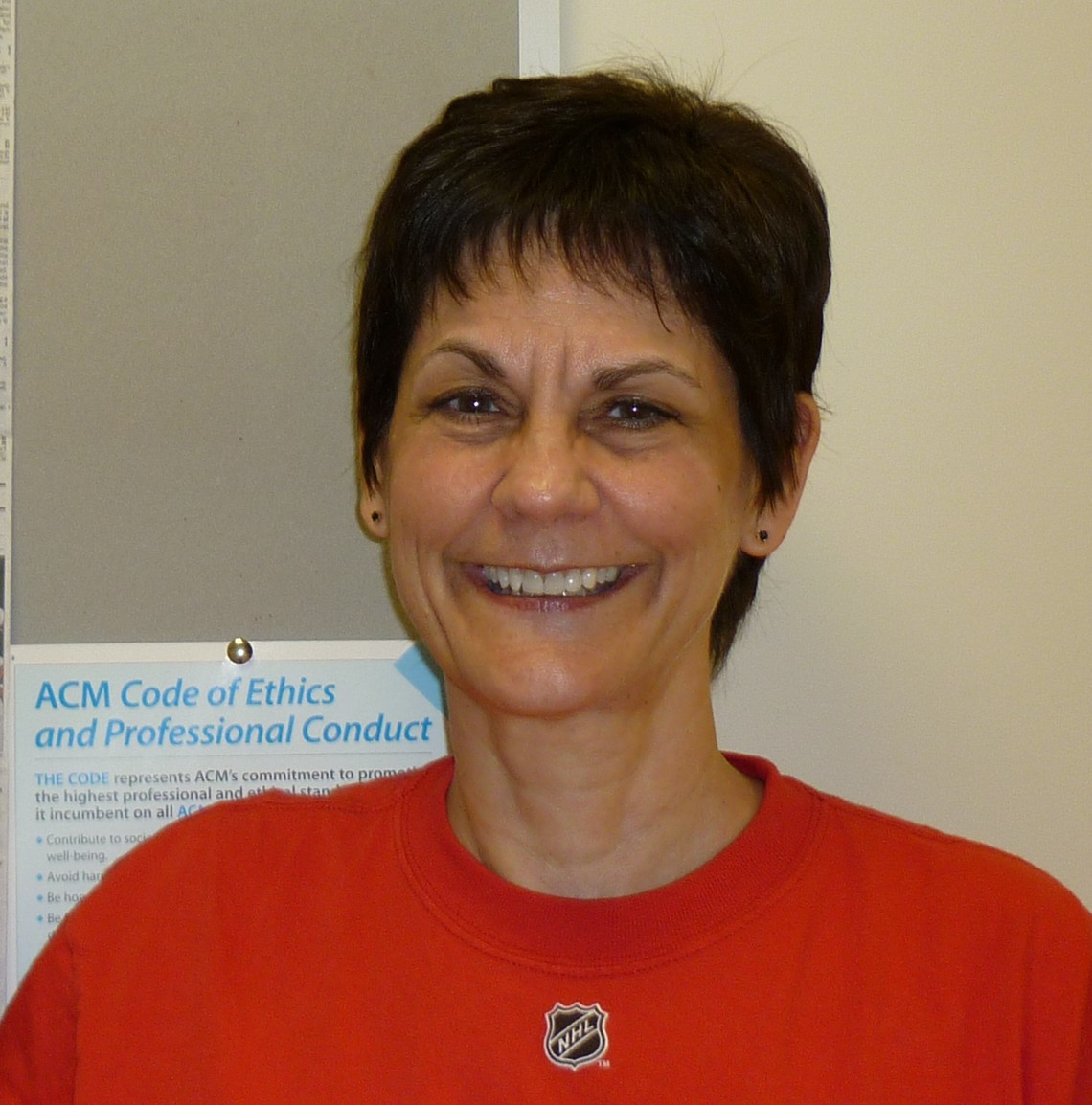 This semester, the students in Susan Mitchell’s Software Design and Development course were hand-picked. After applying and being interviewed, ten students were chosen based on their “go-getter” attitude.
Why the selectivity? Susan ’s CMSC 345 course this semester is a trial course that’s being taught in collaboration with Next Century Corporation, a Maryland-based technology company. Though Mitchell has been teaching CMSC 345 for ten years, this is a first.
Designed around the completion of one software-design project, the course provides students with a “customer” (normally a faculty member) who gives them specific guidelines for the “product” they need to complete. In years prior, students were given the task of developing a program that plans a student’s UMBC course career. Mitchell explains that the product for this semester will be especially real-world focused.
In fact, essentially everything about the course is meant to simulate working in the software industry. A writing intensive course, students are asked to write formal documents, and at the end of the semester, they must give a formal presentation.
Mitchell explains that the course isn’t so much about coding as it is about understanding the “software development lifecycle.” It’s the process that’s important, she explains, from conception to carry through. Understanding what the customer wants and then turning out a product that fits those guidelines is the goal.
Chris Stepnitz, a software engineer at Next Century, is the “customer” of this semester’s pilot course. Stepnitz, who graduated from UMBC in 2006 with a degree in Computer Science, took the very same course with Mitchell years ago. “We wrote an accounting system,” remembers Stepnitz, who admits she was considering changing majors before taking the course. She credits it with opening her eyes to the reality of a career in software development and the rewarding experience of programming with a team.
So, when Stepnitz heard that Next Century, who has been reaching out to the community through local colleges, was about to reach out to her alma matter, she jumped at the chance to participate. “I’m very excited,” says Stepnitz. “For the students, I really want to make sure that they both enjoy [the class] and get the taste of what it’s like to really be in the development world.”
The arrangement is meant to be mutually beneficial. Students in the course learn how to succeed in an industry setting, while Next Century builds bonds with universities that may provide them with future staff members (In fact, roughly 20% of their staff are UMBC alumni). If all goes well, Mitchell hopes to collaborate again and maybe even branch out to other local businesses.
]]>
This semester, the students in Susan Mitchell’s Software Design and Development course were hand-picked. After applying and being interviewed, ten students were chosen based on their “go-getter”...
http://www.csee.umbc.edu/2012/03/next-century-corporation-comes-to-the-classroom/
https://my3.my.umbc.edu/api/v0/pixel/news/12687/guest@my.umbc.edu/8a3a447a08a53e752251eb3c70124980/api/pixel
news
Computer Science and Electrical Engineering
https://my3.my.umbc.edu/groups/csee
https://assets3-my.umbc.edu/system/shared/avatars/groups/000/000/099/d117dca133c64bf78a4b7696dd007189/xsmall.png?1314043393
https://assets1-my.umbc.edu/system/shared/avatars/groups/000/000/099/d117dca133c64bf78a4b7696dd007189/original.png?1314043393
https://assets1-my.umbc.edu/system/shared/avatars/groups/000/000/099/d117dca133c64bf78a4b7696dd007189/xxlarge.png?1314043393
https://assets4-my.umbc.edu/system/shared/avatars/groups/000/000/099/d117dca133c64bf78a4b7696dd007189/xlarge.png?1314043393
https://assets3-my.umbc.edu/system/shared/avatars/groups/000/000/099/d117dca133c64bf78a4b7696dd007189/large.png?1314043393
https://assets1-my.umbc.edu/system/shared/avatars/groups/000/000/099/d117dca133c64bf78a4b7696dd007189/medium.png?1314043393
https://assets2-my.umbc.edu/system/shared/avatars/groups/000/000/099/d117dca133c64bf78a4b7696dd007189/small.png?1314043393
https://assets3-my.umbc.edu/system/shared/avatars/groups/000/000/099/d117dca133c64bf78a4b7696dd007189/xsmall.png?1314043393
https://assets3-my.umbc.edu/system/shared/avatars/groups/000/000/099/d117dca133c64bf78a4b7696dd007189/xxsmall.png?1314043393
Computer Science and Electrical Engineering
2
0
true
Mon, 05 Mar 2012 09:08:27 -0500
Graduate Student Internships at Jeanette Weinberg Foundation
Paid Positions for this Summer
The Harry and Jeanette Weinberg
Foundation is seeking approximately three full-time, paid, summer 2012
interns. Candidates should be enrolled in or completing a graduate level
program and have an overall GPA of at least a 3.0.
Intern (2)
Program/Grants Support
The internship will provide students with relevant and
constructive work experience in a philanthropic setting. Interns will be
given the opportunity to explore the field of philanthropy within a dynamic and
active setting. In doing so, the intern will be expected to analyze and
synthesize information and create reports for review and decision making at the
Foundation. The internship will expose the student to all five areas of
grantmaking, including our Maryland Small Grants program. The individual should
have excellent writing and verbal skills and a strong interest in best practice
research and program evaluation.
Interns must be able to commute
to our Owings Mills office where parking is available and provided. A
minimum of 37 hours per week is expected for summer interns. This
is a paid position with availability in to begin May or June. There will
be a possibility of extending the internship beyond the summer based on needs
and professional fit with the Foundation. Interested applicants should apply by
sending a cover letter and resume to gradinternship@hjweinberg.org to
be considered for an interview in April 2012. Please put “Internship
Opportunity” in the subject line of the email.
Intern (1)
Communications/Public
Relations/Marketing
The internship will provide students with
relevant, constructive work experience involving public and media relations,
marketing, web management and social media in a philanthropic setting.
The Foundation is seeking one intern whose academic concentration, ideally,
includes marketing, public relations, media or a related field who will assist
with Weinberg Foundation communications both externally and internally. The
candidate should have a strong interest in communications and public relations
as well as exceptional writing skills. Web management (WordPress) and social
media experience are highly desirable.
Interns must be able to commute
to our Owings Mills office where parking is available and provided. A
minimum of 37 hours per week is expected for summer interns. This
is a paid position with availability in to begin May or June. There will
be a possibility of extending the internship beyond the summer based on needs
and professional fit with the Foundation. Interested applicants should apply by
sending a cover letter and resume to gradinternship@hjweinberg.org to
be considered for an interview in April 2012. Please put “Internship
Opportunity” in the subject line of the email.
]]>
The Harry and Jeanette Weinberg Foundation is seeking approximately three full-time, paid, summer 2012 interns. Candidates should be enrolled in or completing a graduate level program and have an...
https://my3.my.umbc.edu/api/v0/pixel/news/12682/guest@my.umbc.edu/4d6e26810a94701d529da65452ae2039/api/pixel
intern
The Shriver Center
https://my3.my.umbc.edu/groups/shriver
https://assets2-my.umbc.edu/system/shared/avatars/groups/000/000/008/0bfad113286cf6b1bc6dedbdbfc7e5ef/xsmall.png?1441293069
https://assets1-my.umbc.edu/system/shared/avatars/groups/000/000/008/0bfad113286cf6b1bc6dedbdbfc7e5ef/original.jpg?1441293069
https://assets3-my.umbc.edu/system/shared/avatars/groups/000/000/008/0bfad113286cf6b1bc6dedbdbfc7e5ef/xxlarge.png?1441293069
https://assets2-my.umbc.edu/system/shared/avatars/groups/000/000/008/0bfad113286cf6b1bc6dedbdbfc7e5ef/xlarge.png?1441293069
https://assets1-my.umbc.edu/system/shared/avatars/groups/000/000/008/0bfad113286cf6b1bc6dedbdbfc7e5ef/large.png?1441293069
https://assets1-my.umbc.edu/system/shared/avatars/groups/000/000/008/0bfad113286cf6b1bc6dedbdbfc7e5ef/medium.png?1441293069
https://assets4-my.umbc.edu/system/shared/avatars/groups/000/000/008/0bfad113286cf6b1bc6dedbdbfc7e5ef/small.png?1441293069
https://assets2-my.umbc.edu/system/shared/avatars/groups/000/000/008/0bfad113286cf6b1bc6dedbdbfc7e5ef/xsmall.png?1441293069
https://assets3-my.umbc.edu/system/shared/avatars/groups/000/000/008/0bfad113286cf6b1bc6dedbdbfc7e5ef/xxsmall.png?1441293069
Shriver Center:Intern, Co-op, Research & Service-Learning
0
0
true
Mon, 05 Mar 2012 01:32:58 -0500
talk: Correlation Aware Optimizations for Analytic Databases

Correlation Aware Optimizations for Analytic Databases
Hideaki Kimura, Brown University
1:00pm Friday 9 March 2012, ITE 325b, UMBC
Recent years have seen that the analysis of large data-sets is crucially important in a wide range of business, governmental, and scientific applications. For example, research projects in astronomy need to analyze petabytes of image data taken from telescopes. Providing a fast and scalable analytical data management system for such users has become increasingly important.
The major bottlenecks for analytics on such big data are disk- and network-I/O. Because the data is too large to fit in RAM, each query causes substantial disk I/O. Traditional database systems provide indexes to speed up disk reads, but many analytic queries do not benefit from indexes because data is scattered over a large number of disk blocks and disk seeks are prohibitively expensive. Furthermore, such huge data sets need to be partitioned and distributed over hundreds or many thousands of nodes. When a query requires more than one data at once, such as a query involving a JOIN operation, the data management system must transmit a large amount of data over the network. For example, the Shuffle phase in Map-Reduce systems copies file blocks over the network and causes a significant bottleneck in many cases.
Our approach to tackling these challenges in big data analytics is to exploit correlations. I will describe our correlation-aware indexing, replication, and data placement which make big data analytics faster and more scalable.
Finally, if time allows, I will also introduce another on-going project to develop a scalable transactional processing system on modern hardware in collaboration with Hewlett-Packard Laboratories.
Hideaki Kimura is a doctoral candidate in the Computer Science Department at Brown University. His main research interests are in data management systems. His dissertation research with Prof. Stan Zdonik is on correlation-based optimizations for large analytic databases. He also worked on transaction processing systems exploiting modern hardware at HP Labs.
Host: Anupam Joshi
See http://csee.umbc.edu/talks for more information
]]>
Correlation Aware Optimizations for Analytic Databases Hideaki Kimura, Brown University 1:00pm Friday 9 March 2012, ITE 325b, UMBC Recent years have seen that the analysis of large data-sets...
http://www.csee.umbc.edu/2012/03/talk-correlation-aware-optimizations-for-analytic-databases/
https://my3.my.umbc.edu/api/v0/pixel/news/12684/guest@my.umbc.edu/3f37e3b9254a65912cdd35aadc17810f/api/pixel
analytics
big-data
map-reduce
news
research
talks
Computer Science and Electrical Engineering
https://my3.my.umbc.edu/groups/csee
https://assets3-my.umbc.edu/system/shared/avatars/groups/000/000/099/d117dca133c64bf78a4b7696dd007189/xsmall.png?1314043393
https://assets1-my.umbc.edu/system/shared/avatars/groups/000/000/099/d117dca133c64bf78a4b7696dd007189/original.png?1314043393
https://assets1-my.umbc.edu/system/shared/avatars/groups/000/000/099/d117dca133c64bf78a4b7696dd007189/xxlarge.png?1314043393
https://assets4-my.umbc.edu/system/shared/avatars/groups/000/000/099/d117dca133c64bf78a4b7696dd007189/xlarge.png?1314043393
https://assets3-my.umbc.edu/system/shared/avatars/groups/000/000/099/d117dca133c64bf78a4b7696dd007189/large.png?1314043393
https://assets1-my.umbc.edu/system/shared/avatars/groups/000/000/099/d117dca133c64bf78a4b7696dd007189/medium.png?1314043393
https://assets2-my.umbc.edu/system/shared/avatars/groups/000/000/099/d117dca133c64bf78a4b7696dd007189/small.png?1314043393
https://assets3-my.umbc.edu/system/shared/avatars/groups/000/000/099/d117dca133c64bf78a4b7696dd007189/xsmall.png?1314043393
https://assets3-my.umbc.edu/system/shared/avatars/groups/000/000/099/d117dca133c64bf78a4b7696dd007189/xxsmall.png?1314043393
Computer Science and Electrical Engineering
1
0
true
Sat, 03 Mar 2012 00:41:18 -0500
Wed, 07 Mar 2012 09:39:18 -0500
talk: Interactive visual computing for knowledge...
Full Title: talk: Interactive visual computing for knowledge discovery in science, engineering and training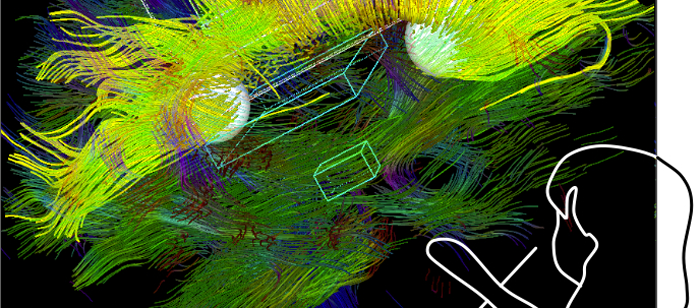
Interactive visual computing for knowledge discovery
in science, engineering and training
Dr. Jian Chen
University of Southern Mississippi
1:00pm Wednesday 7 March 2012, ITE 325b UMBC
Advances in simulations and lab experiments are producing huge datasets at unprecedented rates, and deriving meanings from these data will have far-reaching impacts on our lives in many areas of science, engineering, and medicine. Visualization and interactive computing provide great tools for exploiting these data in scientific discovery and engineering innovations. A limiting factor in the scientific use of visualization tools is the lack of guiding principles to identify and assess visualization methods that are helpful in scientific tasks. In this talk, I present research designed to advance knowledge discovery through the design and evaluation of interactive visualizations. Experiments on image illumination and density are described that successfully address this limitation in brain imaging for medical diagnoses. I also present the theoretical foundations that have led to the various choices in visualization design. In the second part of the talk, I argue that most existing tools designed for scientific discovery fail to address the dynamic nature of the discovery workflow. I present a new visualization tool, VisBubbles, that integrates programming, visualization, and interaction in one environment to create fluid workflows in which new hypotheses can be tested efficiently. VisBubbles augments interactive computing and analysis of time-varying motion data of bat flights by enabling dynamic displays, thus facilitating scientists' quest for new knowledge. I present the design methods we have followed in our long-term collaboration with biologists and engineering scientists on motion analysis. Finally, I present future work I envision in interactive visualization that will be critical in developing future visualization tools for science, engineering, and training.
Jian Chen is an assistant professor in the School of Computing at the University of Southern Mississippi. She is the founder and director of Interactive Visual Computing Lab. Her research is in the broad area of interaction and visualization, with current focuses on the emerging field of scientific visualization theory and workflow analysis. She has published numerous articles in top journals and international conferences. Her panel on combining human-centered computing and scientific visualization received honorable mention at the 2007 IEEE Visualization Conference. She was a postdoc at Brown University with Drs. David H. Laidlaw (CS) and Sharon Swartz (BioMed) from 2006 to 2009. She has a Ph.D. degree in Computer Science from Virginia Tech and Master’s degrees in both Computer Science and Mechanical Engineering. Her research has been funded by DHS and NSF.
Host: Penny Rheingans
See here for more information
]]>
Full Title: talk: Interactive visual computing for knowledge discovery in science, engineering and training Interactive visual computing for knowledge discovery in science, engineering and...
http://www.csee.umbc.edu/2012/03/talk-interactive-visual-computing-for-knowledge-discovery-in-science-engineering-and-training/
https://my3.my.umbc.edu/api/v0/pixel/news/12647/guest@my.umbc.edu/e3ecad344525f94e8064428efc9bcd65/api/pixel
news
research
talks
Computer Science and Electrical Engineering
https://my3.my.umbc.edu/groups/csee
https://assets3-my.umbc.edu/system/shared/avatars/groups/000/000/099/d117dca133c64bf78a4b7696dd007189/xsmall.png?1314043393
https://assets1-my.umbc.edu/system/shared/avatars/groups/000/000/099/d117dca133c64bf78a4b7696dd007189/original.png?1314043393
https://assets1-my.umbc.edu/system/shared/avatars/groups/000/000/099/d117dca133c64bf78a4b7696dd007189/xxlarge.png?1314043393
https://assets4-my.umbc.edu/system/shared/avatars/groups/000/000/099/d117dca133c64bf78a4b7696dd007189/xlarge.png?1314043393
https://assets3-my.umbc.edu/system/shared/avatars/groups/000/000/099/d117dca133c64bf78a4b7696dd007189/large.png?1314043393
https://assets1-my.umbc.edu/system/shared/avatars/groups/000/000/099/d117dca133c64bf78a4b7696dd007189/medium.png?1314043393
https://assets2-my.umbc.edu/system/shared/avatars/groups/000/000/099/d117dca133c64bf78a4b7696dd007189/small.png?1314043393
https://assets3-my.umbc.edu/system/shared/avatars/groups/000/000/099/d117dca133c64bf78a4b7696dd007189/xsmall.png?1314043393
https://assets3-my.umbc.edu/system/shared/avatars/groups/000/000/099/d117dca133c64bf78a4b7696dd007189/xxsmall.png?1314043393
Computer Science and Electrical Engineering
1
0
true
Fri, 02 Mar 2012 17:06:46 -0500
Fri, 02 Mar 2012 17:06:46 -0500
Paid Summer Research at Johns Hopkins University
The Division of Brain Injuries Outcomes (BIOS) will be offering paid internship positions for qualified undergraduate students for the summer of 2012, starting in May 2012 through August 2012. The job will involve working in the Reading Center (central lab responsible for the organization and analysis of CT [computed tomography], MR [magnetic resonance], and XA [cerebral angiography] neuroimaging studies for the CLEAR III and MISTIE-ICES clinical trials).
The CLEAR III and MSITIE-ICES clinical trials are NIH funded multi-center clinical trials to evaluate cutting-edge techniques for treating intracranial brain hemorrhage. Intraventricular hemorrhage (IVH) and Intracerebral hemorrhage (ICH) comprise a group of spontaneous stroke with the highest associated mortality, and poorest prognosis. The aim of the CLEAR III and MISTIE-ICES studies is to explore more aggressive treatment strategies, including the use of minimally invasive surgical techniques in conjunction with low dose thrombolytics (rt-PA) to accelerate ventricular and cerebral blood clot resolution to reduce mortality and improve functional outcomes in patients with spontaneous hemorrhagic stroke.
Eligible candidates will have completed at least one year of undergraduate/bachelor’s study with intent to pursue a career in medicine, bioengineering, public health, biologic science, nursing, or other related health care field. (Other studies may also be appropriate, and will be considered on an individual basis.)
Daily activities will include the organization of CT scans for analysis, tracking site queries for quality assurance, generating simple reports related image analysis, and preparation of presentations for weekly reporting of tasks. Students will investigate a research question and present their findings at the end of the internship. No experience necessary, but some background understanding of general human physiology is expected. High proficiency in Excel, Word, and PowerPoint are a must – experience working with MS Access, or other similar database management programs a plus. Must be highly motivated, and have excellent communication and organization skills.
Apply via UMBCworks, Position ID: 9249881
]]>
The Division of Brain Injuries Outcomes (BIOS) will be offering paid internship positions for qualified undergraduate students for the summer of 2012, starting in May 2012 through August 2012. ...
https://my3.my.umbc.edu/api/v0/pixel/news/12636/guest@my.umbc.edu/e8eba375333d5d3d796b5de8a7f1b3d2/api/pixel
The Shriver Center
https://my3.my.umbc.edu/groups/shriver
https://assets2-my.umbc.edu/system/shared/avatars/groups/000/000/008/0bfad113286cf6b1bc6dedbdbfc7e5ef/xsmall.png?1441293069
https://assets1-my.umbc.edu/system/shared/avatars/groups/000/000/008/0bfad113286cf6b1bc6dedbdbfc7e5ef/original.jpg?1441293069
https://assets3-my.umbc.edu/system/shared/avatars/groups/000/000/008/0bfad113286cf6b1bc6dedbdbfc7e5ef/xxlarge.png?1441293069
https://assets2-my.umbc.edu/system/shared/avatars/groups/000/000/008/0bfad113286cf6b1bc6dedbdbfc7e5ef/xlarge.png?1441293069
https://assets1-my.umbc.edu/system/shared/avatars/groups/000/000/008/0bfad113286cf6b1bc6dedbdbfc7e5ef/large.png?1441293069
https://assets1-my.umbc.edu/system/shared/avatars/groups/000/000/008/0bfad113286cf6b1bc6dedbdbfc7e5ef/medium.png?1441293069
https://assets4-my.umbc.edu/system/shared/avatars/groups/000/000/008/0bfad113286cf6b1bc6dedbdbfc7e5ef/small.png?1441293069
https://assets2-my.umbc.edu/system/shared/avatars/groups/000/000/008/0bfad113286cf6b1bc6dedbdbfc7e5ef/xsmall.png?1441293069
https://assets3-my.umbc.edu/system/shared/avatars/groups/000/000/008/0bfad113286cf6b1bc6dedbdbfc7e5ef/xxsmall.png?1441293069
Shriver Center:Intern, Co-op, Research & Service-Learning
6
0
true
Fri, 02 Mar 2012 15:30:16 -0500
Summer Engineering and Marketing Internships
Baltimore Aircoil has four summer internship positions available with our Engineering, Manufacturing, and Sales/Marketing departments.
POSITION HIGHLIGHTS
Assist product design group, including quality improvement & cost reduction projects
Participate in project/product teams as required
Assist with design modification for customer requirements
Interface with Engineering, Manufacturing, and Marketing groups
Occasional travel to plants or jobsites may be required
QUALIFICATIONS
- Two years (min) of engineering coursework (Mechanical Engineering preferred)
- Familiarity with electronic design tools (AutoCAD, MDT, Inventor) a plus
- Excellent communication skills
- Familiarity with LEAN, Six Sigma a plus
- Familiarity with technical writing, social media, sales/marketing materials desired
]]>
Baltimore Aircoil has four summer internship positions available with our Engineering, Manufacturing, and Sales/Marketing departments. POSITION HIGHLIGHTS Assist product design group, including...
https://my3.my.umbc.edu/api/v0/pixel/news/12623/guest@my.umbc.edu/25ec29e6ee588bddb76e866902c52b89/api/pixel
The Shriver Center
https://my3.my.umbc.edu/groups/shriver
https://assets2-my.umbc.edu/system/shared/avatars/groups/000/000/008/0bfad113286cf6b1bc6dedbdbfc7e5ef/xsmall.png?1441293069
https://assets1-my.umbc.edu/system/shared/avatars/groups/000/000/008/0bfad113286cf6b1bc6dedbdbfc7e5ef/original.jpg?1441293069
https://assets3-my.umbc.edu/system/shared/avatars/groups/000/000/008/0bfad113286cf6b1bc6dedbdbfc7e5ef/xxlarge.png?1441293069
https://assets2-my.umbc.edu/system/shared/avatars/groups/000/000/008/0bfad113286cf6b1bc6dedbdbfc7e5ef/xlarge.png?1441293069
https://assets1-my.umbc.edu/system/shared/avatars/groups/000/000/008/0bfad113286cf6b1bc6dedbdbfc7e5ef/large.png?1441293069
https://assets1-my.umbc.edu/system/shared/avatars/groups/000/000/008/0bfad113286cf6b1bc6dedbdbfc7e5ef/medium.png?1441293069
https://assets4-my.umbc.edu/system/shared/avatars/groups/000/000/008/0bfad113286cf6b1bc6dedbdbfc7e5ef/small.png?1441293069
https://assets2-my.umbc.edu/system/shared/avatars/groups/000/000/008/0bfad113286cf6b1bc6dedbdbfc7e5ef/xsmall.png?1441293069
https://assets3-my.umbc.edu/system/shared/avatars/groups/000/000/008/0bfad113286cf6b1bc6dedbdbfc7e5ef/xxsmall.png?1441293069
Shriver Center:Intern, Co-op, Research & Service-Learning
2
0
true
Fri, 02 Mar 2012 12:25:10 -0500
talk: Spectrum Wars: LightSquared vs. GPS, 11:30am Fri 2/2

EE Graduate Seminar
Spectrum Wars: LightSquared vs. GPS
Professor Chuck LaBerge
Professor of the Practice, CSEE Dept/UMBC
11:30am-12:45pm Friday, 2 March 2012, ITE 231
The radio-frequency spectrum is a limited resource. Within the US, commercial use of the spectrum is administered by the Federal Communications Commission (FCC), while government use of the spectrum is administered by the National Telecommunications and Information Administration. Currently, the regulatory community is locked in a battle about spectrum utilization in the vicinity of 1.5 GHz. This struggle pits millions of users of GPS technology for position and time information against technical innovators desiring to bring 4G wireless communications to millions of users in underserved populations. So who wins the spectrum wars?
The talk will outline the technologies involved, and provide a time-line of the regulatory actions to date. There are some innovative things going on here, and some simple analysis will show why there are points of contention. A final resolution cannot be provided at this time, because the issue is currently an open discussion in FCC. And, as might expected, there are financial and political ramifications as well.
This talk will provide an interesting insight into how the 'real world' works.
Dr. LaBerge is Professor of the Practice of Electrical and Computer Engineering in the CSEE at UMBC, where he teaches a wide variety of courses ranging from Introductory Circuits to Error Correcting Codes. From 1975-2008, he was employed by Bendix, which became AlliedSignal, which became Honeywell through a series of corporate mergers. He retired in July 2008 as the Senior Fellow for Communications, Navigation, and Surveillance in Honeywell's Aerospace Research and Technology Center.
Dr. LaBerge has worked on precision landing systems and a wide variety of aeronautical radios and applications. He's recognized as an expert in issues involving interference to aeronautical systems. His technical, writing, and editorial contributions have received numerous citations from regulatory bodies, and he was the winner of the Best Paper of Conference at the 2000 IEEE/AIAA Digital Avionics Systems Conference.
Dr. LaBerge is a Senior Member of IEEE, a member of Tau Beta Pi, and an inductee in the Order of the Engineer. He received his BES-EE and MSE-EE, degrees, both with Honors, from The Johns Hopkins University and the PhD. in Electrical Engineering from UMBC. His three kids are older than his students. He's been married to his patient wife for almost 38 years.
Host: Prof. Joel M. Morris
]]>
EE Graduate Seminar Spectrum Wars: LightSquared vs. GPS Professor Chuck LaBerge Professor of the Practice, CSEE Dept/UMBC 11:30am-12:45pm Friday, 2 March 2012, ITE 231 The...
http://www.csee.umbc.edu/2012/03/talk-spectrum-wars-lightsquared-vs-gps-1130am-fri-22/
https://my3.my.umbc.edu/api/v0/pixel/news/12614/guest@my.umbc.edu/23b86c89611c7b89c89066e29d349723/api/pixel
electrical-engineering
graduate
news
research
talks
Computer Science and Electrical Engineering
https://my3.my.umbc.edu/groups/csee
https://assets3-my.umbc.edu/system/shared/avatars/groups/000/000/099/d117dca133c64bf78a4b7696dd007189/xsmall.png?1314043393
https://assets1-my.umbc.edu/system/shared/avatars/groups/000/000/099/d117dca133c64bf78a4b7696dd007189/original.png?1314043393
https://assets1-my.umbc.edu/system/shared/avatars/groups/000/000/099/d117dca133c64bf78a4b7696dd007189/xxlarge.png?1314043393
https://assets4-my.umbc.edu/system/shared/avatars/groups/000/000/099/d117dca133c64bf78a4b7696dd007189/xlarge.png?1314043393
https://assets3-my.umbc.edu/system/shared/avatars/groups/000/000/099/d117dca133c64bf78a4b7696dd007189/large.png?1314043393
https://assets1-my.umbc.edu/system/shared/avatars/groups/000/000/099/d117dca133c64bf78a4b7696dd007189/medium.png?1314043393
https://assets2-my.umbc.edu/system/shared/avatars/groups/000/000/099/d117dca133c64bf78a4b7696dd007189/small.png?1314043393
https://assets3-my.umbc.edu/system/shared/avatars/groups/000/000/099/d117dca133c64bf78a4b7696dd007189/xsmall.png?1314043393
https://assets3-my.umbc.edu/system/shared/avatars/groups/000/000/099/d117dca133c64bf78a4b7696dd007189/xxsmall.png?1314043393
Computer Science and Electrical Engineering
1
0
true
Fri, 02 Mar 2012 09:37:54 -0500
Fri, 02 Mar 2012 00:37:54 -0500
One Town's War on Gay Teens
Rolling Stone just had an article that focused on gay youth
Click here to read an interesting article!
]]>
Click here to read an interesting article! http://www.rollingstone.com/politics/news/one-towns-war-on-gay-teens-20120202
http://www.rollingstone.com/politics/news/one-towns-war-on-gay-teens-20120202
https://my3.my.umbc.edu/api/v0/pixel/news/12610/guest@my.umbc.edu/29f06ddc201d14f0c9ef4bb7e823ea05/api/pixel
The Mosaic: Center for Cultural Diversity
https://my3.my.umbc.edu/groups/themosaic
https://assets3-my.umbc.edu/system/shared/avatars/groups/000/000/079/8da8369525d899e6fa49decd5a80b73f/xsmall.png?1755890395
https://assets2-my.umbc.edu/system/shared/avatars/groups/000/000/079/8da8369525d899e6fa49decd5a80b73f/original.png?1755890395
https://assets3-my.umbc.edu/system/shared/avatars/groups/000/000/079/8da8369525d899e6fa49decd5a80b73f/xxlarge.png?1755890395
https://assets2-my.umbc.edu/system/shared/avatars/groups/000/000/079/8da8369525d899e6fa49decd5a80b73f/xlarge.png?1755890395
https://assets3-my.umbc.edu/system/shared/avatars/groups/000/000/079/8da8369525d899e6fa49decd5a80b73f/large.png?1755890395
https://assets4-my.umbc.edu/system/shared/avatars/groups/000/000/079/8da8369525d899e6fa49decd5a80b73f/medium.png?1755890395
https://assets1-my.umbc.edu/system/shared/avatars/groups/000/000/079/8da8369525d899e6fa49decd5a80b73f/small.png?1755890395
https://assets3-my.umbc.edu/system/shared/avatars/groups/000/000/079/8da8369525d899e6fa49decd5a80b73f/xsmall.png?1755890395
https://assets1-my.umbc.edu/system/shared/avatars/groups/000/000/079/8da8369525d899e6fa49decd5a80b73f/xxsmall.png?1755890395
The Office of Student Life's Mosaic Center
0
0
true
Fri, 02 Mar 2012 09:28:58 -0500
talk: Using Static Analysis to Diagnose Misconfigured...
Full Title: talk: Using Static Analysis to Diagnose Misconfigured Open Source Systems Software
Using Static Analysis to Diagnose
Misconfigured Open Source Systems Software
Ariel Rabkin, UC Berkeley
1:00pm Monday 5 March 2012, ITE 325b UMBC
Ten years ago, few software developers worked on distributed systems. Today, developers often run code on clusters, relying on large open-source software stacks to manage resources. These systems are challenging to configure and debug. Fortunately, developments in program analysis have given us new tools for managing the complexity of modern software. This talk will show how static analysis can help users configure their systems. I present a technique that builds an explicit table mapping a program's possible error messages to the options that might cause them. As a result, users can get immediate feedback on how to resolve configuration errors.
Ari Rabkin is a PhD student in Computer Science at UC Berkeley working in the AMP lab. His current research interest is the software engineering and administration challenges of big-data systems. He is particularly interested in applying program analysis techniques to tasks like log analysis and configuration debugging. His broader interests focus on systems and security, including improving system usability by making systems easier to understand, the connections between computer science research and technology policy, developing program analysis techniques that work acceptably well on large, complex, messy software systems.
Host: Anupam Joshi
See http://csee.umbc.edu/talks for more information
]]>
Full Title: talk: Using Static Analysis to Diagnose Misconfigured Open Source Systems Software Using Static Analysis to Diagnose Misconfigured Open Source Systems Software Ariel Rabkin, UC...
http://www.csee.umbc.edu/2012/03/using-static-analysis-to-diagnose-misconfigured-open-source-systems-software/
https://my3.my.umbc.edu/api/v0/pixel/news/12648/guest@my.umbc.edu/3ca2f0619dd821f9284ebf751e5536b4/api/pixel
cybersecurity
news
research
talks
Computer Science and Electrical Engineering
https://my3.my.umbc.edu/groups/csee
https://assets3-my.umbc.edu/system/shared/avatars/groups/000/000/099/d117dca133c64bf78a4b7696dd007189/xsmall.png?1314043393
https://assets1-my.umbc.edu/system/shared/avatars/groups/000/000/099/d117dca133c64bf78a4b7696dd007189/original.png?1314043393
https://assets1-my.umbc.edu/system/shared/avatars/groups/000/000/099/d117dca133c64bf78a4b7696dd007189/xxlarge.png?1314043393
https://assets4-my.umbc.edu/system/shared/avatars/groups/000/000/099/d117dca133c64bf78a4b7696dd007189/xlarge.png?1314043393
https://assets3-my.umbc.edu/system/shared/avatars/groups/000/000/099/d117dca133c64bf78a4b7696dd007189/large.png?1314043393
https://assets1-my.umbc.edu/system/shared/avatars/groups/000/000/099/d117dca133c64bf78a4b7696dd007189/medium.png?1314043393
https://assets2-my.umbc.edu/system/shared/avatars/groups/000/000/099/d117dca133c64bf78a4b7696dd007189/small.png?1314043393
https://assets3-my.umbc.edu/system/shared/avatars/groups/000/000/099/d117dca133c64bf78a4b7696dd007189/xsmall.png?1314043393
https://assets3-my.umbc.edu/system/shared/avatars/groups/000/000/099/d117dca133c64bf78a4b7696dd007189/xxsmall.png?1314043393
Computer Science and Electrical Engineering
1
0
true
Fri, 02 Mar 2012 00:25:32 -0500
 This semester, the students in Susan Mitchell’s Software Design and Development course were hand-picked. After applying and being interviewed, ten students were chosen based on their “go-getter” attitude.