CSEE professor Marie desJardins continues reign as crossword champ
 Puzzle Perfect
What do crosswords and Computer Science have in common? For starters there’s CSEE professor Marie desJardins. When she’s not furthering the field of Artificial Intelligence, Dr. desJardins has a crossword puzzle in hand. It’s no accident that she’s the top ranking female crossword solver in the Mid-Atlantic.
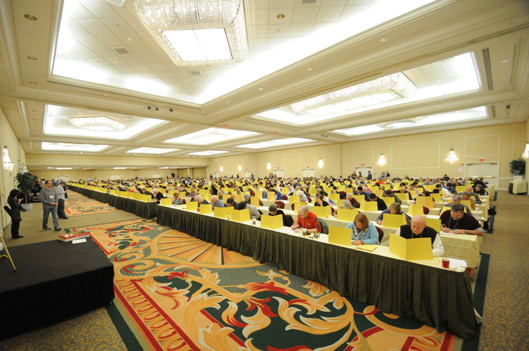
This March Dr. desJardins joined hundreds of puzzle pros at the 36th annual American Crossword Puzzle Tournament. Directed by New York Times crossword editor Will Shortz, it’s the nation’s oldest and largest competition of its kind. Hundreds of competitors spend two days solving seven puzzles. It’s a race against the clock to prove their mental mettle.
“It’s a very unforgiving sport,” she says. “It’s like gymnastics. One little foot slipping off the balance beam and you’re not going to be on that podium.”
You need both speed and accuracy to succeed. Dr. desJardins can breeze through smaller puzzles in fifteen minutes; forty-five for the larger, Sunday-New-York-Times-sized puzzles. Though speed isn’t as important as accuracy in these competitions. One mistake can hurt as much as seven minutes of stalling.
This year Dr. desJardins handed in seven perfect puzzles. That means getting every single word right—even those baffling clues pointing at pop-culture references or words all but erased from the English language. She placed 24th out of 570 solvers, finishing 5th in the “B” division.
Years ago Dr. desJardins discovered the tournament from the documentary Wordplay, which follows the personal and competitive lives of a band of crossword enthusiasts. One year she realized that the competition was during UMBC’s Spring Break. So she signed up and hit the road for Connecticut.
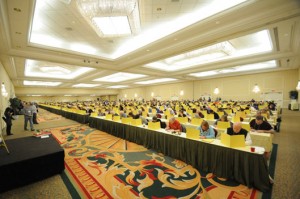 “I wasn’t at all expecting to do well,” she says. It was a pleasant surprise when she placed in the top quarter of competitors. The success got her hooked. Since then, she’s been engaged in a personal battle to beat her own time. She has competed five times, and each year, her speed increases.
Her secret to success? Practice is part of it. Dr.desJardins completes a lot of puzzles. She does them on Sunday morning with a cup of coffee. She does them to relax before bed. She’s adopted a policy of leaving no puzzle unfinished. Keeping a positive mindset is half the battle, she says.
Being a Computer Scientist may have something to do with it as well. Both require a knack for pattern recognition and problem solving. “It’s just the way my brain is wired,” she says.
Had Dr. desJardins solved a mere two minutes quicker this year, she would have qualified for the finals in her division. Being a finalist would mean solving an oversized puzzle on a whiteboard against two fellow division “B” finalists. It’s a daunting and high-pressure test made tougher by the gaze of six hundred spectators. It’s no surprise that this is Dr. desJardins’ goal when she competes again next year.
Photos: Top Right, courtesy UMBC Magazine Left, courtesty crosswordtournament.com
]]>
Puzzle Perfect What do crosswords and Computer Science have in common? For starters there’s CSEE professor Marie desJardins. When she’s not furthering the field of Artificial Intelligence, Dr....
http://www.csee.umbc.edu/2013/04/csee-professor-marie-desjardins-continues-reign-as-crossword-champ/
https://my3.my.umbc.edu/api/v0/pixel/news/27734/guest@my.umbc.edu/898bfda96f62d8c0eba67bec5371155b/api/pixel
faculty-and-staff
news
Computer Science and Electrical Engineering
https://my3.my.umbc.edu/groups/csee
https://assets3-my.umbc.edu/system/shared/avatars/groups/000/000/099/d117dca133c64bf78a4b7696dd007189/xsmall.png?1314043393
https://assets1-my.umbc.edu/system/shared/avatars/groups/000/000/099/d117dca133c64bf78a4b7696dd007189/original.png?1314043393
https://assets1-my.umbc.edu/system/shared/avatars/groups/000/000/099/d117dca133c64bf78a4b7696dd007189/xxlarge.png?1314043393
https://assets4-my.umbc.edu/system/shared/avatars/groups/000/000/099/d117dca133c64bf78a4b7696dd007189/xlarge.png?1314043393
https://assets3-my.umbc.edu/system/shared/avatars/groups/000/000/099/d117dca133c64bf78a4b7696dd007189/large.png?1314043393
https://assets1-my.umbc.edu/system/shared/avatars/groups/000/000/099/d117dca133c64bf78a4b7696dd007189/medium.png?1314043393
https://assets2-my.umbc.edu/system/shared/avatars/groups/000/000/099/d117dca133c64bf78a4b7696dd007189/small.png?1314043393
https://assets3-my.umbc.edu/system/shared/avatars/groups/000/000/099/d117dca133c64bf78a4b7696dd007189/xsmall.png?1314043393
https://assets3-my.umbc.edu/system/shared/avatars/groups/000/000/099/d117dca133c64bf78a4b7696dd007189/xxsmall.png?1314043393
Computer Science and Electrical Engineering
5
0
true
Mon, 15 Apr 2013 19:33:48 -0400
UMBC Digital Entertainment Conference, 10-5 Sat. 4/27
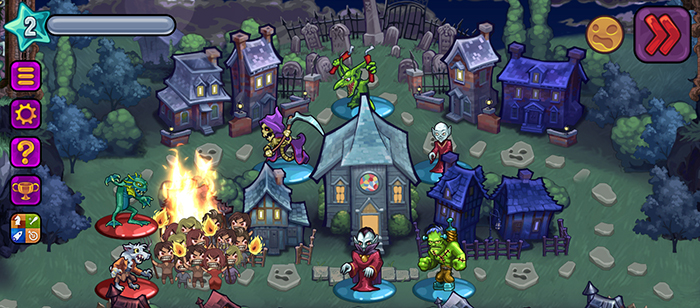
Every year, the UMBC Game Developers Club organizes a Digital Entertainment Conference (DEC) with a day of games industry veterans speaking on a variety of topics. This year's is on Saturday, April 27th, starting at 10am in the Engineering Building lecture hall on the UMBC campus.
The DEC is free, open to anyone, and features speakers from Firaxis Games, Zenimax, Pure Bang Games, Bioware Mythic, and Mindgrub. Whether you are a High School student, go to UMBC or another University, or are already working in a different industry, you are sure find interesting information about how the games industry works, how some current developers got started, and what they do. If you are a game developer, you are sure to find High School students, UMBC students and students from other Universities who are interested in jobs in the games industry.
Schedule:
]]>
Every year, the UMBC Game Developers Club organizes a Digital Entertainment Conference (DEC) with a day of games industry veterans speaking on a variety of topics. This year's is on Saturday,...
http://www.csee.umbc.edu/2013/04/dec/
https://my3.my.umbc.edu/api/v0/pixel/news/27733/guest@my.umbc.edu/4a42d2cac5f39aecd0fd44ec109b0189/api/pixel
events
game-track
news
Computer Science and Electrical Engineering
https://my3.my.umbc.edu/groups/csee
https://assets3-my.umbc.edu/system/shared/avatars/groups/000/000/099/d117dca133c64bf78a4b7696dd007189/xsmall.png?1314043393
https://assets1-my.umbc.edu/system/shared/avatars/groups/000/000/099/d117dca133c64bf78a4b7696dd007189/original.png?1314043393
https://assets1-my.umbc.edu/system/shared/avatars/groups/000/000/099/d117dca133c64bf78a4b7696dd007189/xxlarge.png?1314043393
https://assets4-my.umbc.edu/system/shared/avatars/groups/000/000/099/d117dca133c64bf78a4b7696dd007189/xlarge.png?1314043393
https://assets3-my.umbc.edu/system/shared/avatars/groups/000/000/099/d117dca133c64bf78a4b7696dd007189/large.png?1314043393
https://assets1-my.umbc.edu/system/shared/avatars/groups/000/000/099/d117dca133c64bf78a4b7696dd007189/medium.png?1314043393
https://assets2-my.umbc.edu/system/shared/avatars/groups/000/000/099/d117dca133c64bf78a4b7696dd007189/small.png?1314043393
https://assets3-my.umbc.edu/system/shared/avatars/groups/000/000/099/d117dca133c64bf78a4b7696dd007189/xsmall.png?1314043393
https://assets3-my.umbc.edu/system/shared/avatars/groups/000/000/099/d117dca133c64bf78a4b7696dd007189/xxsmall.png?1314043393
Computer Science and Electrical Engineering
1
0
true
Mon, 15 Apr 2013 16:48:46 -0400
Tue, 23 Apr 2013 08:48:46 -0400
Tip of the week: Time management skills
5 Stellar Time Management Tips
Story from: CollegeInfoGeek http://collegeinfogeek.com/5-time-management-tips/
So you’re in college now, and maybe you’ve found that even without
seven straight hours of class a day, it’s still hard to get things done.
Maybe you’ve got other commitments that keep you busy, or maybe you
just haven’t built effective habits and don’t have the motivation to start big tasks.
On the other hand, maybe you think you’re moving along just fine –
either way, you can benefit from these helpful time management tricks.
Some are just tips, some are entire time management methods, and some
are tools to help you out along the way.
1. Get it out of your head
The most essential part of good time management is to get your
engagements out of your head and into a system that you have easy access
to. Personally, there is no way I could keep everything I need to do
memorized and not miss things. You have a lot of different obligations
in college and it is important that you record everything you need to do
for each of them, and also to keep them well organized. Here’s a few
different ways you can do this.
A planner
Paper planners were and are still a great way to keep a calender and a
record of all you need to do. Planners keep everything in one spot, and
you can take a planner everywhere you go depending on its size.
However, this is College Info Geek – we like to use a little more modern approach.
Keep it online
There are countless web apps out there offering time management
systems. The trick is finding one that integrates everything that has to
do with time management; here’s the system I use that works extremely
well for me.
The base of my system is firmly rooted in Google Calendar.
I have a different colored calender for each different “part” of my
life – class, work, events on campus, other events, homework, etc.
This works really well for me because I can take one look at the
calendar and get an idea of where my time will be going for the week.
Google Calender is my calendar of choice because it integrates so well
with Gmail, so I can quickly add events as they come into my inbox.
For my to-do list I use Toodledo. Toodledo edges out competing to-do web apps like Remember The Milk and Tada Lists for a couple of reasons.
Firstly, everything is done from one screen; I don’t have to go to
multiple pages to set up multiple lists like I do in Tada Lists. I can
just add a task and tell Toodledo which folder to put it in and then
give it a priority. Secondly, I like Toodledo because it integrates with
the next program…
Pocket Informant
is my mobile time management command center. I have an iPod Touch, and
since I spend about 95% of my time under the cover of wifi, I’m
constantly connected to the internet.
Pocket Informant is hands down my favorite calendar/to-do app
available. While the full version is a little expensive, there is a free
version available for you to try out if you have an iPod or iPhone
(Pocket Informant is also available for Windows Mobile and Blackberry,
and is coming soon to Android).
Pocket Informant syncs with both Google Calendar and Toodledo to
create the perfect time management environment for when I’m away from
the computer. I can view everything offline when I have no internet
connection, and I can also create tasks and events. When my iPod gets a
connection, the program will sync with Google Calendar and Toodledo and
add any tasks or events I created to them.
Pocket Informant also has a powerful and easy-to-use interface that takes full advantage of the accelerometer. The
calender portion of the application offers List, Day, Week, and Month
views; the List, Day, and Month all look identical in portrait and
landscape mode.
However, week view offers two different modes of viewing. Portrait
mode gives each day of the week a box on the screen that displays a list
of that day’s events and tasks; touching a certain day will bring up a
hybrid week/list view as well.
In landscape mode you get a view very similar to Google Calendar;
there are seven columns for each day of the week and each event is shown
graphically in its time slot.
Pocket Informant also offers a lot of flexibility when it comes to tasks. The app offers three methods of task management: the Franklin Covey method, the Getting Things Done method, and the Toodledo method.
By default the Getting Things Done method will be selected; I find
that method to be overkill for me, plus I love being able to sync tasks
to my desktop, so I use the Toodledo method. I’m not familiar with the
Franklin Covey method, but it’s nice to have another option.
Hopefully my method has at least given you an idea as to how to start
building your own task and event management system. Let’s move on to
some other tips.
2. Minimize Distractions
If you’re like me, your computer is a huge distraction. There are
plenty of good ways to keep your computer from distracting you (turn it
off, set it on fire, give it away), but what if you have work to do on
your computer?
We are definitely part of a “multi-tasking” generation; that is, we
pride ourselves on being able to manage a lot of things at once. This is
especially true for out computers. I used to always keep Gmail,
Facebook, Twitter, my RSS feeds, Skype, and other things open right
alongside my homework.
Did it distract me? You bet.
You’d be kidding yourself if you thought it didn’t. Not only does
frequently stopping to check social networks and other things waste
time, but it also breaks your concentration.
I believe you actually waste more time trying to regain concentration
after switching back to your work than you do actually engaging in the
distraction! Plus, you retain less information if you are constantly
switching your focus.
So, say you’re studying for finals and you need to concentrate. how do you minimize distractions when working on the computer?
Firstly, close the unimportant tabs in your browser and applications
on your desktop. It won’t hurt you to be disconnected from social
networks for an hour or two while you learn something worthwhile or get
some homework done.
Some people advocate a “50/10″ rule (or variations of it), where you
work for 50 minutes and take 10 off. Personally, I like to just sit down
and crank out my work to completion before going back to leisurely
pursuits. Which method you choose will depend on your work style.
If you really have to, you can use an extension to force yourself not
to get distracted. Check out the StayFocused extension in my Chrome extension guide for an example.
Social network updates are not the only distractions you face when
doing computer work. There are other things that can pull your eyes away
from that dry math assignment; I like to personalize my desktop with
cool wallpapers and Rainmeter gadgets. These things can create clutter
that makes it hard to work.
However, you don’t need to do away with the nice desktop enhancements you have; just use an anti-distraction program like CinemaDrape.
CinemaDrape blacks out everything on your screen except what lands
inside an adjustable window. Simply adjust the window to display only
what you’re working on.
Computer distractions aren’t the only think vying for your attention;
you need to address the things in your work environment as well. Are
you studying in a room with a bunch of people? Personally, I can study
with my friends in the room and not have much of a problem as long as
I’ve got my closed headphones. For others, solitude may be needed. Gauge
this for yourself.
3. Start Your Day Early
I’m serious about this one. Starting your day early can be an excellent way to squeeze more time into your day.
I find that both myself and most of the people I know don’t do much
work during the late hours of the night. Yet almost all of them tend to
stay up really late, tailoring their schedules so they can sleep until 9
or 10 a.m. every day.
I’m guessing that many of you do the same, so just consider what I’m
saying here. How much do you think you could get done with a few extra
hours in the morning?
Oscar, the man behind the blog Freestyle Mind, set his wake-up time to 5 a.m. for 30 days – you can view his conclusions here. In my own life I’ve found that getting up early gives me much more time, especially if there are things I have to do in the morning.
I take a military physical training class three days a week at 6
a.m., and after that I work at 8:00 until class starts at either 11:00
or 12:30; as a result I’m done with class and work by 3:00 p.m.
at the latest, every day. I have from 3:00 until around 10:30 to do all
my homework, attend clubs, and hang out with friends. All I need to do
is make sure I go to bed at a decent time so I’m well-rested enough to
keep up the routine.
4. Wring Class Out For All It’s Worth
The average college student spends between 2-4 hours in class every
day, and many of them waste that time spacing off or only passively
listening. Those who do have to make up for the lost time after class by
studying extra-hard; why not learn all you can during the time you’ve
already allotted to do so?
My method of paying attention in class involves keeping my writing
hand going the entire time. During my first year of college I noticed
that I was much more alert in the classes I actively took notes in than
in the ones I just listened to. I also retained a lot more information.
You can squeeze even more value out of your classes by recording
them. I advise making sure your professor is O.K. with this first (they
likely will be), but recording your classes can give you another method
of review come study time.
The more ways we process information, the better we retain it – so
listening to a lecture over again before bed can be a great way to go
over the material you’re studying. Another great time to listen to past
lectures is during your workouts or when you go running.
5. Break Down Your Tasks
Ok, so sitting down to cross off “Write 8-page essay” from your task
list may not be very easy to do. The solution is to break down those
herculean tasks into smaller, more manageable ones.
The Getting Things Done method of task management suggests
that you break down tasks until each one can be performed in only a few
minutes; while this may be extreme, it is an important time management
skill to learn.
“Write intro paragraph” is a much easier task to get
done, and crossing it off your list will motivate you to continue onto
the next one. If you really want to get into this type of task
management, Cal Newport’s adaptation of Getting Things Done for college students may be for you.
]]>
Story from: CollegeInfoGeek http://collegeinfogeek.com/5-time-management-tips/ So you’re in college now, and maybe you’ve found that even without seven straight hours of class a day, it’s...
http://collegeinfogeek.com/5-time-management-tips/
https://my3.my.umbc.edu/api/v0/pixel/news/27727/guest@my.umbc.edu/a4273d351c150c91476b8dd36c3b234e/api/pixel
The Shriver Center
https://my3.my.umbc.edu/groups/shriver
https://assets2-my.umbc.edu/system/shared/avatars/groups/000/000/008/0bfad113286cf6b1bc6dedbdbfc7e5ef/xsmall.png?1441293069
https://assets1-my.umbc.edu/system/shared/avatars/groups/000/000/008/0bfad113286cf6b1bc6dedbdbfc7e5ef/original.jpg?1441293069
https://assets3-my.umbc.edu/system/shared/avatars/groups/000/000/008/0bfad113286cf6b1bc6dedbdbfc7e5ef/xxlarge.png?1441293069
https://assets2-my.umbc.edu/system/shared/avatars/groups/000/000/008/0bfad113286cf6b1bc6dedbdbfc7e5ef/xlarge.png?1441293069
https://assets1-my.umbc.edu/system/shared/avatars/groups/000/000/008/0bfad113286cf6b1bc6dedbdbfc7e5ef/large.png?1441293069
https://assets1-my.umbc.edu/system/shared/avatars/groups/000/000/008/0bfad113286cf6b1bc6dedbdbfc7e5ef/medium.png?1441293069
https://assets4-my.umbc.edu/system/shared/avatars/groups/000/000/008/0bfad113286cf6b1bc6dedbdbfc7e5ef/small.png?1441293069
https://assets2-my.umbc.edu/system/shared/avatars/groups/000/000/008/0bfad113286cf6b1bc6dedbdbfc7e5ef/xsmall.png?1441293069
https://assets3-my.umbc.edu/system/shared/avatars/groups/000/000/008/0bfad113286cf6b1bc6dedbdbfc7e5ef/xxsmall.png?1441293069
Shriver Center:Intern, Co-op, Research & Service-Learning
0
0
true
Mon, 15 Apr 2013 14:26:19 -0400
Intern of the Week: Fahad Zafar for CS
Learn about Fahad's experience at Google!
Name: Fahad Zafar
Internship, Co-op or Research Site: GOOGLE
Location of the Organization (City, State): Mountain View, California
Title of Your Position:Software Engineer
Major(s)/Minor(s):Computer Science
Expected Graduation Date (Month & Year): September 2014
1. Briefly describe your internship, co-op, research or service-learning
position/assignment, including your day-to-day tasks and
responsibilities.
This year, I had the privilege to work for Google, one of the biggest technology companies in the world. It was a great learning opportunity where I met many skilled, smart and creative people. I worked with the YouTube editor team on developing new video effects and integrating an external code source into their platform.
2. What have you enjoyed the most about your position or organization/company and what have you found most challenging?
I found the work environment at Google to be very motivating, open and creative. I dealt with intelligent and highly skilled people working on real world problems, which proved to be a very uplifting experience. I truly enjoyed working with in this unique company culture. Working with the massive company code-base was initially challenging, but thanks to my team members, it all fell into place sooner than expected.
3. What have you gained from your experience that you could not have gained from another summer activity?
Understanding the development life-cycle of software used by millions of people, watching all the pieces that solve complex problems come together and contributing to one of the most used websites in the world was truly an unforgettable experience. Not many tech companies work with data, services and problems on such a large scale as Google; being a part of this environment turned out be the learning experience of a lifetime.
4. How do you see your summer work as meaningful? Has it given you a chance to
work on issues or with communities that matter to you?
Yes. I enjoy working with video/image data. Working with YouTube made me understand how to deliver meaningful experiences to millions of people.
5. How has your summer experience shaped the way you think about your power to
impact the world? This might involve skills you’ve gained, information
you’ve learned, mentors you’ve connected with, or projects you’ve
completed.
Working at a company with such a large user base is indeed a remarkable learning experience. I learned a little bit of everything, ranging from the subtleties of presentation to solving large data problems. It has changed my perspective on practical software development. My mentor’s experiences were very enlightening as we discussed many different issues related to computer science. I have adopted many of the good practices that I was asked to follow during work for my personal projects. I have no doubt that my experience has instilled a great sense of accomplishment and confidence in me.
]]>
Name: Fahad Zafar Internship, Co-op or Research Site: GOOGLE Location of the Organization (City, State): Mountain View, California Title of Your Position:Software Engineer...
https://my3.my.umbc.edu/api/v0/pixel/news/27726/guest@my.umbc.edu/d91505a94f6c7d07ca27c0834e98bcd4/api/pixel
The Shriver Center
https://my3.my.umbc.edu/groups/shriver
https://assets2-my.umbc.edu/system/shared/avatars/groups/000/000/008/0bfad113286cf6b1bc6dedbdbfc7e5ef/xsmall.png?1441293069
https://assets1-my.umbc.edu/system/shared/avatars/groups/000/000/008/0bfad113286cf6b1bc6dedbdbfc7e5ef/original.jpg?1441293069
https://assets3-my.umbc.edu/system/shared/avatars/groups/000/000/008/0bfad113286cf6b1bc6dedbdbfc7e5ef/xxlarge.png?1441293069
https://assets2-my.umbc.edu/system/shared/avatars/groups/000/000/008/0bfad113286cf6b1bc6dedbdbfc7e5ef/xlarge.png?1441293069
https://assets1-my.umbc.edu/system/shared/avatars/groups/000/000/008/0bfad113286cf6b1bc6dedbdbfc7e5ef/large.png?1441293069
https://assets1-my.umbc.edu/system/shared/avatars/groups/000/000/008/0bfad113286cf6b1bc6dedbdbfc7e5ef/medium.png?1441293069
https://assets4-my.umbc.edu/system/shared/avatars/groups/000/000/008/0bfad113286cf6b1bc6dedbdbfc7e5ef/small.png?1441293069
https://assets2-my.umbc.edu/system/shared/avatars/groups/000/000/008/0bfad113286cf6b1bc6dedbdbfc7e5ef/xsmall.png?1441293069
https://assets3-my.umbc.edu/system/shared/avatars/groups/000/000/008/0bfad113286cf6b1bc6dedbdbfc7e5ef/xxsmall.png?1441293069
Shriver Center:Intern, Co-op, Research & Service-Learning
https://assets2-my.umbc.edu/system/shared/thumbnails/news/000/027/726/85ce4663aea037e030d72a4d88f83010/xxlarge.jpg?1366051023
https://assets3-my.umbc.edu/system/shared/thumbnails/news/000/027/726/85ce4663aea037e030d72a4d88f83010/xlarge.jpg?1366051023
https://assets2-my.umbc.edu/system/shared/thumbnails/news/000/027/726/85ce4663aea037e030d72a4d88f83010/large.jpg?1366051023
https://assets3-my.umbc.edu/system/shared/thumbnails/news/000/027/726/85ce4663aea037e030d72a4d88f83010/medium.jpg?1366051023
https://assets2-my.umbc.edu/system/shared/thumbnails/news/000/027/726/85ce4663aea037e030d72a4d88f83010/small.jpg?1366051023
https://assets4-my.umbc.edu/system/shared/thumbnails/news/000/027/726/85ce4663aea037e030d72a4d88f83010/xsmall.jpg?1366051023
https://assets2-my.umbc.edu/system/shared/thumbnails/news/000/027/726/85ce4663aea037e030d72a4d88f83010/xxsmall.jpg?1366051023
0
0
true
Mon, 15 Apr 2013 14:12:23 -0400
Mon, 15 Apr 2013 14:39:43 -0400
URCAD Presentation Sneak Peek: Aryana Arsham
Come to URCAD on Wednesday, April 24!
The purpose of Aryana's research was to study the radiative deceleration of relativistic jets of plasma found in very distant, thus high cosmological redshift z quasars. The deceleration is due to Inverse Compton scattering of CMB photons off the jet relativistic electrons. In this case, and if the jets decelerate substantially, no significant X-ray emission due to inverse Compton scattering of the CMB is anticipated from the large scale jet. We casted a system of two coupled autonomous, non - linear ordinary differential equations (ODEs). We produced an analytic solution, under the approximations: (i) the energy density of the plasma in the jet is dominated by the relativistic electrons and that the contribution of the protons can be neglected and (ii) the electron energy distribution is monoenergetic. We showed that the first assumption is justified for those large scale jets that exhibit a hard synchrotron spectrum extending to the optical energies. We found substantial deceleration taking place for values of z greater than approximately 4, corresponding to 11.5 billion years ago, about 2.2 billion years after the Big Bang. We are dropping the second assumption by adopting more realistic electron energy distributions, producing numerical solutions, and assessing its astrophysical implications.
Read more about URCAD presentations...
]]>
The purpose of Aryana's research was to study the radiative deceleration of relativistic jets of plasma found in very distant, thus high cosmological redshift z quasars. The deceleration is due to...
http://www.umbc.edu/undergrad_ed/research/URCAD/sneakPeek2013.html
https://my3.my.umbc.edu/api/v0/pixel/news/27713/guest@my.umbc.edu/c9df2f8b2980ba5e4f0e83372db420b1/api/pixel
Undergraduate Research
https://my3.my.umbc.edu/groups/undergradresearch
https://assets2-my.umbc.edu/system/shared/avatars/groups/000/000/006/875606ced2b629148af4caa1a4e8dd3c/xsmall.png?1600355057
https://assets3-my.umbc.edu/system/shared/avatars/groups/000/000/006/875606ced2b629148af4caa1a4e8dd3c/original.jpg?1600355057
https://assets4-my.umbc.edu/system/shared/avatars/groups/000/000/006/875606ced2b629148af4caa1a4e8dd3c/xxlarge.png?1600355057
https://assets1-my.umbc.edu/system/shared/avatars/groups/000/000/006/875606ced2b629148af4caa1a4e8dd3c/xlarge.png?1600355057
https://assets2-my.umbc.edu/system/shared/avatars/groups/000/000/006/875606ced2b629148af4caa1a4e8dd3c/large.png?1600355057
https://assets2-my.umbc.edu/system/shared/avatars/groups/000/000/006/875606ced2b629148af4caa1a4e8dd3c/medium.png?1600355057
https://assets4-my.umbc.edu/system/shared/avatars/groups/000/000/006/875606ced2b629148af4caa1a4e8dd3c/small.png?1600355057
https://assets2-my.umbc.edu/system/shared/avatars/groups/000/000/006/875606ced2b629148af4caa1a4e8dd3c/xsmall.png?1600355057
https://assets4-my.umbc.edu/system/shared/avatars/groups/000/000/006/875606ced2b629148af4caa1a4e8dd3c/xxsmall.png?1600355057
Undergraduate Research
https://assets4-my.umbc.edu/system/shared/thumbnails/news/000/027/713/379d0d579830498a6f745b67f172ca33/xxlarge.jpg?1366040713
https://assets2-my.umbc.edu/system/shared/thumbnails/news/000/027/713/379d0d579830498a6f745b67f172ca33/xlarge.jpg?1366040713
https://assets4-my.umbc.edu/system/shared/thumbnails/news/000/027/713/379d0d579830498a6f745b67f172ca33/large.jpg?1366040713
https://assets1-my.umbc.edu/system/shared/thumbnails/news/000/027/713/379d0d579830498a6f745b67f172ca33/medium.jpg?1366040713
https://assets2-my.umbc.edu/system/shared/thumbnails/news/000/027/713/379d0d579830498a6f745b67f172ca33/small.jpg?1366040713
https://assets1-my.umbc.edu/system/shared/thumbnails/news/000/027/713/379d0d579830498a6f745b67f172ca33/xsmall.jpg?1366040713
https://assets1-my.umbc.edu/system/shared/thumbnails/news/000/027/713/379d0d579830498a6f745b67f172ca33/xxsmall.jpg?1366040713
40
1
true
Mon, 15 Apr 2013 11:47:50 -0400
Mon, 15 Apr 2013 11:51:39 -0400
New Internship with Firaxis Games
Paid Software/Graphics/Engineering Internship in Sparks, MD
This individual will directly contribute to the toolchain and production pipeline for an upcoming Firaxis title, and work closely with the graphics and systems teams.
Interested candidates should submit a resume and a small C/C++ code sample.
Required Coursework: CMSC 341, 313, 331, 435, or equivalent , with strong GPA
Other majors will be considered depending on background.
Required skills: Comfortable in C/C++.
Strong programming skills.
Understands OO design and software engineering principles
Good communication and problem solving skills. Able to work independently.
Preferred Skills:
Familiar with MSVC, Perforce and CMake.
Exposure to SQL, C#, HLSL/GLSL, and flex/bison are pluses.
Familiarity with adobe photoshop or AutoDesk 3DSMax are large pluses.
Previous engineering experience (internship/co-op) is highly preferred.
Apply today through UMBCworks!
]]>
This individual will directly contribute to the toolchain and production pipeline for an upcoming Firaxis title, and work closely with the graphics and systems teams. Interested candidates...
http://www.firaxis.com/
https://my3.my.umbc.edu/api/v0/pixel/news/27699/guest@my.umbc.edu/dc1dca387209cb2e31e1bc82dffcb6f2/api/pixel
The Shriver Center
https://my3.my.umbc.edu/groups/shriver
https://assets2-my.umbc.edu/system/shared/avatars/groups/000/000/008/0bfad113286cf6b1bc6dedbdbfc7e5ef/xsmall.png?1441293069
https://assets1-my.umbc.edu/system/shared/avatars/groups/000/000/008/0bfad113286cf6b1bc6dedbdbfc7e5ef/original.jpg?1441293069
https://assets3-my.umbc.edu/system/shared/avatars/groups/000/000/008/0bfad113286cf6b1bc6dedbdbfc7e5ef/xxlarge.png?1441293069
https://assets2-my.umbc.edu/system/shared/avatars/groups/000/000/008/0bfad113286cf6b1bc6dedbdbfc7e5ef/xlarge.png?1441293069
https://assets1-my.umbc.edu/system/shared/avatars/groups/000/000/008/0bfad113286cf6b1bc6dedbdbfc7e5ef/large.png?1441293069
https://assets1-my.umbc.edu/system/shared/avatars/groups/000/000/008/0bfad113286cf6b1bc6dedbdbfc7e5ef/medium.png?1441293069
https://assets4-my.umbc.edu/system/shared/avatars/groups/000/000/008/0bfad113286cf6b1bc6dedbdbfc7e5ef/small.png?1441293069
https://assets2-my.umbc.edu/system/shared/avatars/groups/000/000/008/0bfad113286cf6b1bc6dedbdbfc7e5ef/xsmall.png?1441293069
https://assets3-my.umbc.edu/system/shared/avatars/groups/000/000/008/0bfad113286cf6b1bc6dedbdbfc7e5ef/xxsmall.png?1441293069
Shriver Center:Intern, Co-op, Research & Service-Learning
https://assets2-my.umbc.edu/system/shared/thumbnails/news/000/027/699/33a900397522c1d3f78ba2f8744a653b/xxlarge.jpg?1366034422
https://assets4-my.umbc.edu/system/shared/thumbnails/news/000/027/699/33a900397522c1d3f78ba2f8744a653b/xlarge.jpg?1366034422
https://assets1-my.umbc.edu/system/shared/thumbnails/news/000/027/699/33a900397522c1d3f78ba2f8744a653b/large.jpg?1366034422
https://assets3-my.umbc.edu/system/shared/thumbnails/news/000/027/699/33a900397522c1d3f78ba2f8744a653b/medium.jpg?1366034422
https://assets3-my.umbc.edu/system/shared/thumbnails/news/000/027/699/33a900397522c1d3f78ba2f8744a653b/small.jpg?1366034422
https://assets4-my.umbc.edu/system/shared/thumbnails/news/000/027/699/33a900397522c1d3f78ba2f8744a653b/xsmall.jpg?1366034422
https://assets1-my.umbc.edu/system/shared/thumbnails/news/000/027/699/33a900397522c1d3f78ba2f8744a653b/xxsmall.jpg?1366034422
0
0
true
Mon, 15 Apr 2013 10:01:22 -0400
Mon, 15 Apr 2013 10:01:46 -0400
Researcher of the Week: Caitlin Smith
Undergraduate researchers explore their interests!
What research experiences have you had?
I’m working on two big projects right now. I’m working with Dr. Michelle Stefano of the American Studies Department and Maryland Traditions on the documentary she and another professor are making for their class. I’ve been doing fieldwork with her in Dundalk, mostly observations and interviews. The other project is my own and has inspired my URCAD presentation. I’m focusing that research on the effect of the museum environment on interpretation. I’ve been doing a lot of observations at the Walters Art Museum before, during, and after the tours I give there and compiling papers from various disciplines including material culture, ancient studies, and museum design. It’s been a very private experience, mostly to fill my own curiosity until now.
How did you find the research opportunity?
I began the research last semester in order to write a term paper for ANCS: 350 Myth and Archaeology. I wanted to find a way to bring my interest in museum interpretation into the paper which was meant to be an exploration of a particular ancient object on display. From there, it just kind of exploded. I had a lot of support from my professors, Dr. Tim Phin and Dr. Michelle Stefano, who helped me figure out exactly where to go with my research and what sources would be best.
Who did you work with on this project?
I worked on this research on my own, for the most part, though I did have the support and assistance of many professors in the Ancient Studies Department and Dr. Stefano.
Was this your first independent research project?
I would not say it was my first but definitely my first large scale project.
Do you get course credit for this work? Paid? How much time do you put into it?
I received credit for this project as it was originally a term paper. I was not paid (unfortunately) but I did put a lot of time into it. We were working on these individual projects over the course of the entire semester. I did observations every Friday during my tours and read a ton of articles.
What academic background did you have before you started?
I declared my dual major in Anthropology and Ancient Studies before I even took my first university class. I’ve had a near spotless record during my college career though I have not always put myself out there to do individual research. I’ve had a job since I was 14 so most of my academic work was restricted to the classroom.
How did you learn what you needed to know to be successful in this project?
I did A LOT of reading. Most of my information came from academic papers and books and information from the museum itself. I also found a lot of inspiration in the classes I was taking that semester with the aforementioned professors. Dr. Stefano, especially, taught me a new way of thinking about the museum and museum interpretation in AMST 420: History and Theory of the Museum.
What was the hardest part about your research?
Finding a good breadth of sources was a bit difficult at times. I was tapping into a few different disciplines in order to construct and defend my thesis and it was hard sometimes to ensure that I had a good balance of sources. It was also a lot to process at once. I had a bunch of notes in a few different places - it was really hard to get organized before I knew exactly what I wanted to say.
What was the most unexpected thing?
This paper/research has stuck with me a lot more than most of the terms paper and projects I’ve done over the years. I just feel like it’s not quite done, in a way. There’s so much more to say and consider. In fact, I’ve decided to continue this research for my master’s thesis. It’s kind of strange how this one paper for this one class turned into a project which will play heavily into the next several years of my life.
Is this the first time you have applied to present at URCAD? How did you find out about applying to present your work? Are you excited?
It is my first time applying to URCAD. I’ve known about URCAD for years but I’ve never felt that any of my work was good enough to present. I probably wouldn’t have applied at all in Dr. Phin hadn’t suggested it. Now that I’ve been accepted, I am very excited to share my work. I think it will be a great experience for me personally and a wonderful way to share my passion with others.
How does this research experience relate to your work in other classes?
I consider this research to be the joint result of my time in ANCS 350 and AMST 420. My classes and experiences came together for me last semester in a really inspiring way which is a lot of the reason why I’ve been so interested and dedicated to this project.
What is your advice to other students about getting involved in research?
Find someone or something that truly and deeply inspires you. Maybe you’ll find that in an internship or a class or even in a particular professor. It’s important that you love what you’re researching so that when it gets stressful and difficult and you feel like nothing is getting done, you’ll want to keep going anyway. And remember to have confidence in yourself and your work.
What are your career goals?
I intend to pursue a career in cultural sustainability be it in the museum, a non-profit, or elsewhere. I want to find a position which would allow me to mediate between cultural institutions and the people to which they cater. There are a lot of voices and stories that are lost in the construction of heritage and history which I think needs to be addressed. I would love to do that as a career.
What are you doing next for research?
I intend to continue my work with Maryland Traditions which may encompass a variety of projects. As I mentioned before, I also intend to bring this research into my graduate career and hopefully build on it over the next few years. It will absolutely play into my masters thesis.
What else are you involved in on campus?
I am a Humanities Scholar and a member of the Honors College. I was inducted in Phi Beta Kappa Honor Society this past fall.
]]>
What research experiences have you had? I’m working on two big projects right now. I’m working with Dr. Michelle Stefano of the American Studies Department and Maryland Traditions on the...
http://www.umbc.edu/undergrad_ed/research/ResearcherProfiles/caitlinSmith.htm
https://my3.my.umbc.edu/api/v0/pixel/news/27691/guest@my.umbc.edu/6638448cc385efdbf7daef8f15a5b905/api/pixel
Undergraduate Research
https://my3.my.umbc.edu/groups/undergradresearch
https://assets2-my.umbc.edu/system/shared/avatars/groups/000/000/006/875606ced2b629148af4caa1a4e8dd3c/xsmall.png?1600355057
https://assets3-my.umbc.edu/system/shared/avatars/groups/000/000/006/875606ced2b629148af4caa1a4e8dd3c/original.jpg?1600355057
https://assets4-my.umbc.edu/system/shared/avatars/groups/000/000/006/875606ced2b629148af4caa1a4e8dd3c/xxlarge.png?1600355057
https://assets1-my.umbc.edu/system/shared/avatars/groups/000/000/006/875606ced2b629148af4caa1a4e8dd3c/xlarge.png?1600355057
https://assets2-my.umbc.edu/system/shared/avatars/groups/000/000/006/875606ced2b629148af4caa1a4e8dd3c/large.png?1600355057
https://assets2-my.umbc.edu/system/shared/avatars/groups/000/000/006/875606ced2b629148af4caa1a4e8dd3c/medium.png?1600355057
https://assets4-my.umbc.edu/system/shared/avatars/groups/000/000/006/875606ced2b629148af4caa1a4e8dd3c/small.png?1600355057
https://assets2-my.umbc.edu/system/shared/avatars/groups/000/000/006/875606ced2b629148af4caa1a4e8dd3c/xsmall.png?1600355057
https://assets4-my.umbc.edu/system/shared/avatars/groups/000/000/006/875606ced2b629148af4caa1a4e8dd3c/xxsmall.png?1600355057
Undergraduate Research
https://assets2-my.umbc.edu/system/shared/thumbnails/news/000/027/691/491991572cf97170a77cc98cc908684b/xxlarge.jpg?1366031610
https://assets2-my.umbc.edu/system/shared/thumbnails/news/000/027/691/491991572cf97170a77cc98cc908684b/xlarge.jpg?1366031610
https://assets2-my.umbc.edu/system/shared/thumbnails/news/000/027/691/491991572cf97170a77cc98cc908684b/large.jpg?1366031610
https://assets3-my.umbc.edu/system/shared/thumbnails/news/000/027/691/491991572cf97170a77cc98cc908684b/medium.jpg?1366031610
https://assets1-my.umbc.edu/system/shared/thumbnails/news/000/027/691/491991572cf97170a77cc98cc908684b/small.jpg?1366031610
https://assets3-my.umbc.edu/system/shared/thumbnails/news/000/027/691/491991572cf97170a77cc98cc908684b/xsmall.jpg?1366031610
https://assets1-my.umbc.edu/system/shared/thumbnails/news/000/027/691/491991572cf97170a77cc98cc908684b/xxsmall.jpg?1366031610
36
8
true
Mon, 15 Apr 2013 09:18:33 -0400
Serve as an Intern Helping Refugees and Asylees
Lutheran Social Services is Seeking Interns
Lutheran Social Services is Seeking Interns
Internship Position: Refugee
Recertification Program Intern (Volunteer)
Location: Baltimore, MD
Commitment: 20 hours/week
for 3 months (Minimum)
APPLY VIA UMBCworks or E-mail your resume and cover letter to: Deepti Scharf, Outreach and Support Specialist, at ScharfD@lssnca.org
LSS/NCA clients represent a wide
variety of work experiences and talents. Our amazing pool of international clients
includes professional artists, musicians, doctors, lawyers, UN consultants and
interpreters. Even during these difficult economic times, we have worked as a
team to assist refugees and asylees with employment and have secured a wide
variety of jobs ranging from TV news broadcasting to nursing assistance. This
internship is an excellent opportunity to work intimately with a diverse group
of people and to network with the greater Baltimore community.
Many refugees and asylees arrive in the U.S. with decades of
experience in fields such as accounting, IT, teaching, engineering, and
nursing. These individuals face significant challenges joining the
workforce in a professional position because employers in the United States do not
recognize their advanced degrees or licenses from their home countries. The
Refugee Recertification Program works with these clients to help them navigate
the complex credentialing and recertification process and to find a job in
their field.
Roles and Responsibilities
• Outreach to recruit new clients
• Advise clients throughout the re-credentialing
process on subjects such as resumes, the job search, self-presentation and
trainings
• Arrange and conduct workshops and
trainings for client benefit
• Develop and assist with presentations
on RRP to partners through print media, power points
• Recruit potential partners and
employers through social networking
• Work toward furthering career
development for RRP clients.
• Coordinate with LSS/NCA employment
workers to develop job leads and placements
• Assist in developing new training
materials
Required Qualifications
• Excellent written and oral
communication skills
• Interest and experience educating,
networking, and communicating
• Passionate about helping people and
working in a multi-cultural environment
• Able to think creatively, develop
strategies, and see them through to completion
• Detail-oriented and
• Able to work independently
• Willingness to be patient,
understanding and flexible
]]>
Lutheran Social Services is Seeking Interns Internship Position: Refugee Recertification Program Intern (Volunteer) Location: Baltimore, MD Commitment: 20 hours/week for 3 months...
https://my3.my.umbc.edu/api/v0/pixel/news/27681/guest@my.umbc.edu/1f1ae43972b370e9a9356d60dcd38bf1/api/pixel
The Shriver Center
https://my3.my.umbc.edu/groups/shriver
https://assets2-my.umbc.edu/system/shared/avatars/groups/000/000/008/0bfad113286cf6b1bc6dedbdbfc7e5ef/xsmall.png?1441293069
https://assets1-my.umbc.edu/system/shared/avatars/groups/000/000/008/0bfad113286cf6b1bc6dedbdbfc7e5ef/original.jpg?1441293069
https://assets3-my.umbc.edu/system/shared/avatars/groups/000/000/008/0bfad113286cf6b1bc6dedbdbfc7e5ef/xxlarge.png?1441293069
https://assets2-my.umbc.edu/system/shared/avatars/groups/000/000/008/0bfad113286cf6b1bc6dedbdbfc7e5ef/xlarge.png?1441293069
https://assets1-my.umbc.edu/system/shared/avatars/groups/000/000/008/0bfad113286cf6b1bc6dedbdbfc7e5ef/large.png?1441293069
https://assets1-my.umbc.edu/system/shared/avatars/groups/000/000/008/0bfad113286cf6b1bc6dedbdbfc7e5ef/medium.png?1441293069
https://assets4-my.umbc.edu/system/shared/avatars/groups/000/000/008/0bfad113286cf6b1bc6dedbdbfc7e5ef/small.png?1441293069
https://assets2-my.umbc.edu/system/shared/avatars/groups/000/000/008/0bfad113286cf6b1bc6dedbdbfc7e5ef/xsmall.png?1441293069
https://assets3-my.umbc.edu/system/shared/avatars/groups/000/000/008/0bfad113286cf6b1bc6dedbdbfc7e5ef/xxsmall.png?1441293069
Shriver Center:Intern, Co-op, Research & Service-Learning
https://assets3-my.umbc.edu/system/shared/thumbnails/news/000/027/681/569566550b041b9a5d6737f21171bcc7/xxlarge.jpg?1365995343
https://assets1-my.umbc.edu/system/shared/thumbnails/news/000/027/681/569566550b041b9a5d6737f21171bcc7/xlarge.jpg?1365995343
https://assets3-my.umbc.edu/system/shared/thumbnails/news/000/027/681/569566550b041b9a5d6737f21171bcc7/large.jpg?1365995343
https://assets2-my.umbc.edu/system/shared/thumbnails/news/000/027/681/569566550b041b9a5d6737f21171bcc7/medium.jpg?1365995343
https://assets3-my.umbc.edu/system/shared/thumbnails/news/000/027/681/569566550b041b9a5d6737f21171bcc7/small.jpg?1365995343
https://assets4-my.umbc.edu/system/shared/thumbnails/news/000/027/681/569566550b041b9a5d6737f21171bcc7/xsmall.jpg?1365995343
https://assets1-my.umbc.edu/system/shared/thumbnails/news/000/027/681/569566550b041b9a5d6737f21171bcc7/xxsmall.jpg?1365995343
2
2
true
Sun, 14 Apr 2013 23:07:55 -0400
Sun, 14 Apr 2013 23:09:44 -0400
ISCOM talk: Freeman Hrabowski on Technology, Diversity and Lifelong Learning

Information Systems Council of Majors Speaker Series
Technology, Diversity and Lifelong Learning
Dr. Freeman Hrabowski
President, University of Maryland, Baltimore County
3:00-4:30pm Friday, 26 April 2013, ITE102
As an ongoing service to UMBC our student group, the Information Systems Council of Majors (ISCOM), has developed a speaker series to bring industry professionals, academic luminaries, and prominent regional figures to discuss topics relating to technology, education, or topics of the speakers choosing.
This month our very special guest is Dr. Freeman Hrabowski. He will meet with members of ISCOM and UMBC students who are interested in hearing him speak about diversity, lifelong learning and of course technology. There will be interactive sessions prior to his remarks and our President Tabitha Haverkamp will provide closing remarks.
]]>
Information Systems Council of Majors Speaker Series Technology, Diversity and Lifelong Learning Dr. Freeman Hrabowski President, University of Maryland, Baltimore County 3:00-4:30pm...
http://www.csee.umbc.edu/2013/04/iscom-talk-freeman-hrabowski-on-technology-diversity-and-lifelong-learning/
https://my3.my.umbc.edu/api/v0/pixel/news/27680/guest@my.umbc.edu/8a92a2e3fe7b8055d80d46e300e59040/api/pixel
news
talks
Computer Science and Electrical Engineering
https://my3.my.umbc.edu/groups/csee
https://assets3-my.umbc.edu/system/shared/avatars/groups/000/000/099/d117dca133c64bf78a4b7696dd007189/xsmall.png?1314043393
https://assets1-my.umbc.edu/system/shared/avatars/groups/000/000/099/d117dca133c64bf78a4b7696dd007189/original.png?1314043393
https://assets1-my.umbc.edu/system/shared/avatars/groups/000/000/099/d117dca133c64bf78a4b7696dd007189/xxlarge.png?1314043393
https://assets4-my.umbc.edu/system/shared/avatars/groups/000/000/099/d117dca133c64bf78a4b7696dd007189/xlarge.png?1314043393
https://assets3-my.umbc.edu/system/shared/avatars/groups/000/000/099/d117dca133c64bf78a4b7696dd007189/large.png?1314043393
https://assets1-my.umbc.edu/system/shared/avatars/groups/000/000/099/d117dca133c64bf78a4b7696dd007189/medium.png?1314043393
https://assets2-my.umbc.edu/system/shared/avatars/groups/000/000/099/d117dca133c64bf78a4b7696dd007189/small.png?1314043393
https://assets3-my.umbc.edu/system/shared/avatars/groups/000/000/099/d117dca133c64bf78a4b7696dd007189/xsmall.png?1314043393
https://assets3-my.umbc.edu/system/shared/avatars/groups/000/000/099/d117dca133c64bf78a4b7696dd007189/xxsmall.png?1314043393
Computer Science and Electrical Engineering
12
0
true
Sun, 14 Apr 2013 20:36:06 -0400
PhD defense: Analysis of brain network connectivity using spatial information
PhD Dissertation Defense
Analysis of brain network connectivity
using spatial information
Sai Ma
1:00pm Thursday, 18 April 2013, ITE 325b
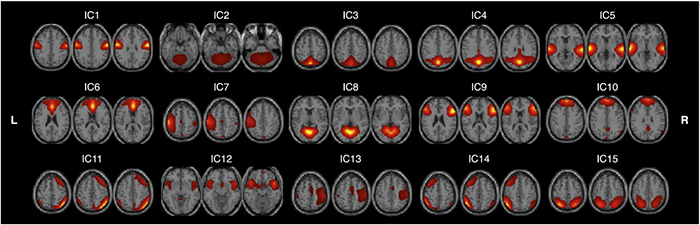
In current functional magnetic resonance imaging (fMRI) research, one of the most active areas involves exploring statistical dependencies among brain regions, known as functional connectivity analysis. Data-driven methods, especially independent component analysis (ICA), have been successfully applied to fMRI data to extract distributed brain networks and offer an opportunity to investigate functional connectivity on a network level, thus at a multivariate level. However, the independence assumption in ICA is neither necessarily nor typically satisfied in real applications and an extension is desirable. Furthermore, most current ICA-based studies focus on the use of temporal information and second-order statistics for functional connectivity analysis. Taking spatial information and higher-order statistics in fMRI data into account is expected to lead to better understanding of the overall brain network connectivity in healthy controls and also in patients with mental disorders, such as schizophrenia.
We develop a dependent component analysis (DCA) framework to generalize the ICA-based connectivity analysis methods by grouping components into maximally independent clusters. First, we define functional network connectivity as the statistical dependence among spatial components, instead of the typically used temporal correlation. Based on this definition, we use a hypothesis test to automatically generate functional connectivity structure for a large number of brain networks. After that, we separate dependent components within a given cluster using prior information, such as sparsity and experimental paradigm information, to achieve a better decomposition. We also combine this DCA-based clustering analysis with graph-theoretical analysis to discover significant group differences in topological properties of functional connectivity structure. To extend the methodologies currently available for functional connectivity, we propose an independent vector analysis (IVA) based scheme to extract and analyze dynamic functional connectivity.
The methods we develop offer advantages for effective and efficient examination of not only static, but also dynamic functional connectivity among different brain networks. We identify significant differences in functional connectivity structure between healthy controls and patients with schizophrenia, which may prove useful to serve as potential biomarkers for diagnosis. We also find task-induced modulations in functional connectivity when comparing different active states in the brain. Furthermore, we observe temporal variability in functional connectivity structure and physiologically meaningful group differences in dynamic connectivity among several brain networks. Our methods can provide insights to understanding of functional characteristics of the brain network organization in healthy individuals and patients with schizophrenia.
Committee: Dr. Adali (Chair), Dr. Morris, Dr. Rutledge, Dr. LaBerge, Dr. Phlypo, Dr. Calhoun, and Dr. Westlake
]]>
PhD Dissertation Defense Analysis of brain network connectivity using spatial information Sai Ma 1:00pm Thursday, 18 April 2013, ITE 325b In current functional magnetic resonance imaging...
http://www.csee.umbc.edu/2013/04/phd-defense-analysis-of-brain-network-connectivity-using-spatial-information/
https://my3.my.umbc.edu/api/v0/pixel/news/27673/guest@my.umbc.edu/dafdc0ff0eb8f9f9e78022b538029ee8/api/pixel
electrical-engineering
graduate
news
research
talks
Computer Science and Electrical Engineering
https://my3.my.umbc.edu/groups/csee
https://assets3-my.umbc.edu/system/shared/avatars/groups/000/000/099/d117dca133c64bf78a4b7696dd007189/xsmall.png?1314043393
https://assets1-my.umbc.edu/system/shared/avatars/groups/000/000/099/d117dca133c64bf78a4b7696dd007189/original.png?1314043393
https://assets1-my.umbc.edu/system/shared/avatars/groups/000/000/099/d117dca133c64bf78a4b7696dd007189/xxlarge.png?1314043393
https://assets4-my.umbc.edu/system/shared/avatars/groups/000/000/099/d117dca133c64bf78a4b7696dd007189/xlarge.png?1314043393
https://assets3-my.umbc.edu/system/shared/avatars/groups/000/000/099/d117dca133c64bf78a4b7696dd007189/large.png?1314043393
https://assets1-my.umbc.edu/system/shared/avatars/groups/000/000/099/d117dca133c64bf78a4b7696dd007189/medium.png?1314043393
https://assets2-my.umbc.edu/system/shared/avatars/groups/000/000/099/d117dca133c64bf78a4b7696dd007189/small.png?1314043393
https://assets3-my.umbc.edu/system/shared/avatars/groups/000/000/099/d117dca133c64bf78a4b7696dd007189/xsmall.png?1314043393
https://assets3-my.umbc.edu/system/shared/avatars/groups/000/000/099/d117dca133c64bf78a4b7696dd007189/xxsmall.png?1314043393
Computer Science and Electrical Engineering
0
0
true
Sun, 14 Apr 2013 08:35:42 -0400

 “I wasn’t at all expecting to do well,” she says. It was a pleasant surprise when she placed in the top quarter of competitors. The success got her hooked. Since then, she’s been engaged in a personal battle to beat her own time. She has competed five times, and each year, her speed increases.