<?xml version="1.0"?>
<News hasArchived="false" page="1" pageCount="11" pageSize="10" timestamp="Fri, 21 Aug 2026 23:57:58 -0400" url="https://my3.my.umbc.edu/groups/cwitaffiliates/posts.xml?tag=faculty">
<NewsItem contentIssues="false" id="161666" important="true" status="posted" url="https://my3.my.umbc.edu/groups/cwitaffiliates/posts/161666">
<Title>CWIT Welcome Back Social</Title>
<Tagline>Let's kick off the semester with CWIT!</Tagline>
<Body>
<![CDATA[
    <div class="html-content"><p>We hope everyone is enjoying their summer. With the Fall semester quickly approaching, we're looking forward to kicking things off with our scholars, affiliates, and fellow COEIT faculty/staff at <strong>CWIT's</strong><strong> Welcome Back Social!</strong> Join us to reconnect with colleagues, friends, meet new faces, and enjoy games, music, and some delicious<strong> pizza and ice cream!<img src="https://my3.my.umbc.edu/inline_images/news/161666/65045" alt="CWIT Welcome Back Social Flyer" style="max-width: 100%; height: auto;"></strong></p></div>
]]>
</Body>
<Summary>We hope everyone is enjoying their summer. With the Fall semester quickly approaching, we're looking forward to kicking things off with our scholars, affiliates, and fellow COEIT faculty/staff at...</Summary>
<AttachmentKind>Inline Image</AttachmentKind>
<AttachmentUrl>https://assets3-my.umbc.edu/system/shared/attachments/030a05b95675e09d2e3e717cdc639122/6a891e46/news/000/161/666/9a876248d78897fd982e32f78ce7e695/Welcome Social 2026 (3).png?1787159319</AttachmentUrl>
<Attachments>
<Attachment kind="Inline Image" url="https://my3.my.umbc.edu/groups/cwitaffiliates/posts/161666/attachments/65045"></Attachment>
<Attachment kind="Flyer" url="https://my3.my.umbc.edu/groups/cwitaffiliates/posts/161666/attachments/65046"></Attachment>
</Attachments>
<TrackingUrl>https://my3.my.umbc.edu/api/v0/pixel/news/161666/guest@my.umbc.edu/358316dd83c0995522bb92f096db8092/api/pixel</TrackingUrl>
<Tag>coeit</Tag>
<Tag>cwit</Tag>
<Tag>cwitaffiliates</Tag>
<Tag>cwitscholars</Tag>
<Tag>faculty</Tag>
<Tag>fall</Tag>
<Tag>food</Tag>
<Tag>semester</Tag>
<Tag>social</Tag>
<Tag>staff</Tag>
<Tag>welcome</Tag>
<Group token="cwitaffiliates">CWIT Affiliates</Group>
<GroupUrl>https://my3.my.umbc.edu/groups/cwitaffiliates</GroupUrl>
<AvatarUrl>https://assets4-my.umbc.edu/system/shared/avatars/groups/000/000/215/ed0dde28b964e06263b6aa35dc2ee277/xsmall.png?1724681280</AvatarUrl>
<AvatarUrl size="original">https://assets4-my.umbc.edu/system/shared/avatars/groups/000/000/215/ed0dde28b964e06263b6aa35dc2ee277/original.png?1724681280</AvatarUrl>
<AvatarUrl size="xxlarge">https://assets3-my.umbc.edu/system/shared/avatars/groups/000/000/215/ed0dde28b964e06263b6aa35dc2ee277/xxlarge.png?1724681280</AvatarUrl>
<AvatarUrl size="xlarge">https://assets1-my.umbc.edu/system/shared/avatars/groups/000/000/215/ed0dde28b964e06263b6aa35dc2ee277/xlarge.png?1724681280</AvatarUrl>
<AvatarUrl size="large">https://assets1-my.umbc.edu/system/shared/avatars/groups/000/000/215/ed0dde28b964e06263b6aa35dc2ee277/large.png?1724681280</AvatarUrl>
<AvatarUrl size="medium">https://assets2-my.umbc.edu/system/shared/avatars/groups/000/000/215/ed0dde28b964e06263b6aa35dc2ee277/medium.png?1724681280</AvatarUrl>
<AvatarUrl size="small">https://assets3-my.umbc.edu/system/shared/avatars/groups/000/000/215/ed0dde28b964e06263b6aa35dc2ee277/small.png?1724681280</AvatarUrl>
<AvatarUrl size="xsmall">https://assets4-my.umbc.edu/system/shared/avatars/groups/000/000/215/ed0dde28b964e06263b6aa35dc2ee277/xsmall.png?1724681280</AvatarUrl>
<AvatarUrl size="xxsmall">https://assets2-my.umbc.edu/system/shared/avatars/groups/000/000/215/ed0dde28b964e06263b6aa35dc2ee277/xxsmall.png?1724681280</AvatarUrl>
<Sponsor>CWIT Affiliates</Sponsor>
<ThumbnailUrl size="xxlarge">https://assets3-my.umbc.edu/system/shared/thumbnails/news/000/161/666/88058143f986fccbab0cc5c33d4434d3/xxlarge.jpg?1787159403</ThumbnailUrl>
<ThumbnailUrl size="xlarge">https://assets4-my.umbc.edu/system/shared/thumbnails/news/000/161/666/88058143f986fccbab0cc5c33d4434d3/xlarge.jpg?1787159403</ThumbnailUrl>
<ThumbnailUrl size="large">https://assets1-my.umbc.edu/system/shared/thumbnails/news/000/161/666/88058143f986fccbab0cc5c33d4434d3/large.jpg?1787159403</ThumbnailUrl>
<ThumbnailUrl size="medium">https://assets1-my.umbc.edu/system/shared/thumbnails/news/000/161/666/88058143f986fccbab0cc5c33d4434d3/medium.jpg?1787159403</ThumbnailUrl>
<ThumbnailUrl size="small">https://assets2-my.umbc.edu/system/shared/thumbnails/news/000/161/666/88058143f986fccbab0cc5c33d4434d3/small.jpg?1787159403</ThumbnailUrl>
<ThumbnailUrl size="xsmall">https://assets3-my.umbc.edu/system/shared/thumbnails/news/000/161/666/88058143f986fccbab0cc5c33d4434d3/xsmall.jpg?1787159403</ThumbnailUrl>
<ThumbnailUrl size="xxsmall">https://assets3-my.umbc.edu/system/shared/thumbnails/news/000/161/666/88058143f986fccbab0cc5c33d4434d3/xxsmall.jpg?1787159403</ThumbnailUrl>
<ThumbnailAltText>CWIT Welcome Back Social, 8/26/26, 12-1 pm in Engineering Atrium</ThumbnailAltText>
<PawCount>0</PawCount>
<CommentCount>0</CommentCount>
<CommentsAllowed>false</CommentsAllowed>
<PostedAt>Mon, 17 Aug 2026 09:46:52 -0400</PostedAt>
<EditAt>Wed, 19 Aug 2026 13:13:13 -0400</EditAt>
</NewsItem>

<NewsItem contentIssues="false" id="161386" important="false" status="posted" url="https://my3.my.umbc.edu/groups/cwitaffiliates/posts/161386">
<Title>Three New Publication by AMEE Research Group</Title>
<Tagline>Dr. Ozgur Capraz - AMEE Lab</Tagline>
<Body>
<![CDATA[
    <div class="html-content">
    <p>The AMEE Research Group, under <strong>Dr</strong>. <strong>Özgür Çapraz</strong>, Associate Professor, CBEE, has 2 new publications in the <em>Journal of Energy Storage </em>and<em> MRS Communications, </em>and a preprint article in <em>ChemRxiv</em>. </p>
    <h4>Published in <em>Journal of Energy Storage</em>
    </h4>
    <p><strong>Title: </strong><br><a href="https://www.sciencedirect.com/science/article/abs/pii/S2352152X26033931?via%3Dihub" rel="nofollow external" class="bo">Electro-chemical and interfacial effects of both gel polymer electrolyte and cathode binder in rechargeable zinc-manganese dioxide alkaline batteries</a></p>
    <p><strong>Authors: </strong></p>
    <p>Athira Anilkumar, Nachammai Nachiappan, Aswani Poosapati, Rohan Ambade, Aneisa Jangbahadur, Yucheng Lan, Joseph Washington, Priyanshu Banerjee, Rahuldeb Roy, Navid Etebari Alamdari, Deepa Madan</p>
    <p><strong>Abstract: </strong></p>
    <p>Flexible aqueous zinc‑manganese dioxide (Zn-MnO2) batteries offer a promising route toward safe, sustainable, and low-cost energy storage for wearable electronics, but their rechargeability is often limited by irreversible cathode structures, unstable electrode-electrolyte interfaces, and sluggish ionic transport. Here, we present a systematic co-optimization of gel polymer electrolytes and cathode binders to address these challenges. Polyvinyl alcohol (PVA), Poly acrylic acid (PAA) and Potassium Hydroxide (KOH) were used to synthesize three flexible gel polymer electrolytes, PVA-KOH, PVA -PAA, and PVA-PAA-KOH. The amorphous, microporous PVA-PAA electrolyte enabling efficient ion transport exhibited the highest ionic conductivity (155 mS/cm), with thickness of 0.23 mm, wide electrochemical stability window (~ 2 V), excellent swelling capacity, and mechanical robustness (tensile strength: 29.5 MPa). Parallel evaluation of cathode binder systems (Carboxyl methyl cellulose (CMC), PVA-PAA, Polyvinylidene fluoride (PVDF)) revealed that CMC promotes homogeneous dispersion of γ-MnO2, preserves the Mn3+/Mn4+ redox balance, and minimizes irreversible complex accumulation, resulting superior electrode cohesion, roughness, and ion-electron percolation pathways. Electrochemical testing confirmed that the optimized PVA-PAA electrolyte coupled with CMC binder, among tested, better supports reversible kinetics by creating suitable interface, delivering high specific capacity (257 mAh/g at C/4), &gt; 95% coulombic efficiency, and the lowest charge-transfer resistance with reduced polarization for limited cyclic testing. Our results highlight the critical role of electrolyte-binder interactions in governing electrochemical performance, paving the way for rational materials design strategies for sustainable, flexible, and high-rate Zn-MnO2 energy storage devices.</p>
    <p><a href="https://doi.org/10.1016/j.est.2026.123729" rel="nofollow external" class="bo">https://doi.org/10.1016/j.est.2026.123729</a></p>
    <h4>Published in <em>MRS Communications</em>
    </h4>
    <p><strong>Title: </strong><br><a href="https://link.springer.com/article/10.1557/s43579-026-01012-y" rel="nofollow external" class="bo">Utilization of particulate matter from marine engine as a carbonaceous anode for Na-ion batteries</a></p>
    <p><strong>Authors: </strong></p>
    <p>Mariella Anderson, Mesut Eryigit, Mehedi H. Himel, Stephen B. Cronin &amp; Ö. Özgür Çapraz</p>
    <p><strong>Abstract:</strong></p>
    <p>Maritime transport generates substantial amounts of carbon emissions and particulate matter (PM 2.5) particles waste, which is considered as abundant industrial waste. This study presents repurposing the PM as an anode for Li and Na-ion batteries. Structure and morphology properties of the PM particles were characterized with Raman spectroscopy, energy-dispersive X-ray spectroscopy (EDS), X-ray diffraction (XRD), and scanning electron microscopy, respectively. Cyclic voltammetry analysis at various rates indicated a pseudocapacitive charge storage mechanism in the annealed PM electrode, with diffusive contributions dominating at lower scan rates. This study provides insight for waste valorization by repurposing of PM particles from heavy fuel oil into electrochemical energy storage applications.</p>
    <p><a href="https://doi.org/10.1557/s43579-026-01012-y" rel="nofollow external" class="bo">https://doi.org/10.1557/s43579-026-01012-y</a></p>
    <h4>Preprint Published in <em>ChemRxiv</em>
    </h4>
    <p><strong>Title: </strong><br><a href="https://chemrxiv.org/doi/full/10.26434/chemrxiv.15005668/v1" rel="nofollow external" class="bo">Evidencing Fast and Reversible Proton Insertion of a Metastable Bilayered Tungsten Oxide</a></p>
    <p><strong>Authors: </strong></p>
    <p>Noah P. Holzapfel, Saeed Saeed, Alan Ferris, Ruocun Wang, Naresh C. Osti, Eugene Mamontov, Bret Marckx, Ö. Özgür Çapraz, and Veronica Augustyn</p>
    <p><strong>Abstract:</strong></p>
    <p>Materials that exhibit fast and reversible electrochemical modulation of properties such as electronic conductivity, optical absorption, and volume are of interest for electrochromic, neuromorphic, and actuator switching technologies. Here, we report on the rapid first-order phase transition during proton-insertion coupled electron transfer (PICET) in a metastable bilayered tungsten oxide hydrate (H2W2O7). We utilize quasi-elastic neutron scattering measurements to gain insights into the structural water content and dynamics. We employ operando electrochemical X-ray diffraction and optical microscopy to track changes in structure and color during PICET. X-ray diffraction results reveal that H2W2O7 has a rapid first-order structural transition characterized by the loss of octahedral tilting and the relaxation of geometric distortions within the inorganic layers. Operando stress measurements during electrochemical polarization reveal that the phase transition coincides with rapid mechanical deformation. Optical microscopy shows a reversible two-step color change concurrent with the structural transition, from transparent to blue to gold. These discrete optical regimes correspond to changes in electronic conductivity. Our results show that H2W2O7 is a promising material for electrochemical switching technologies.</p>
    <p><a href="https://doi.org/10.26434/chemrxiv.15005668/v1" rel="nofollow external" class="bo">https://doi.org/10.26434/chemrxiv.15005668/v1</a></p>
    </div>
]]>
</Body>
<Summary>The AMEE Research Group, under Dr. Özgür Çapraz, Associate Professor, CBEE, has 2 new publications in the Journal of Energy Storage and MRS Communications, and a preprint article in ChemRxiv. ...</Summary>
<TrackingUrl>https://my3.my.umbc.edu/api/v0/pixel/news/161386/guest@my.umbc.edu/e27b42d49759ce01f41e638b29e13345/api/pixel</TrackingUrl>
<Tag>capraz</Tag>
<Tag>faculty</Tag>
<Tag>publication</Tag>
<Tag>research</Tag>
<Tag>summer-2026</Tag>
<Group token="cbee">Chemical, Biochemical and Environmental Engineering</Group>
<GroupUrl>https://my3.my.umbc.edu/groups/cbee</GroupUrl>
<AvatarUrl>https://assets4-my.umbc.edu/system/shared/avatars/groups/000/000/771/b5e579e81b2e3624611890fa3ca2716a/xsmall.png?1746794587</AvatarUrl>
<AvatarUrl size="original">https://assets2-my.umbc.edu/system/shared/avatars/groups/000/000/771/b5e579e81b2e3624611890fa3ca2716a/original.png?1746794587</AvatarUrl>
<AvatarUrl size="xxlarge">https://assets1-my.umbc.edu/system/shared/avatars/groups/000/000/771/b5e579e81b2e3624611890fa3ca2716a/xxlarge.png?1746794587</AvatarUrl>
<AvatarUrl size="xlarge">https://assets2-my.umbc.edu/system/shared/avatars/groups/000/000/771/b5e579e81b2e3624611890fa3ca2716a/xlarge.png?1746794587</AvatarUrl>
<AvatarUrl size="large">https://assets2-my.umbc.edu/system/shared/avatars/groups/000/000/771/b5e579e81b2e3624611890fa3ca2716a/large.png?1746794587</AvatarUrl>
<AvatarUrl size="medium">https://assets4-my.umbc.edu/system/shared/avatars/groups/000/000/771/b5e579e81b2e3624611890fa3ca2716a/medium.png?1746794587</AvatarUrl>
<AvatarUrl size="small">https://assets1-my.umbc.edu/system/shared/avatars/groups/000/000/771/b5e579e81b2e3624611890fa3ca2716a/small.png?1746794587</AvatarUrl>
<AvatarUrl size="xsmall">https://assets4-my.umbc.edu/system/shared/avatars/groups/000/000/771/b5e579e81b2e3624611890fa3ca2716a/xsmall.png?1746794587</AvatarUrl>
<AvatarUrl size="xxsmall">https://assets1-my.umbc.edu/system/shared/avatars/groups/000/000/771/b5e579e81b2e3624611890fa3ca2716a/xxsmall.png?1746794587</AvatarUrl>
<Sponsor>Chemical, Biochemical and Environmental Engineering</Sponsor>
<ThumbnailUrl size="xxlarge">https://assets2-my.umbc.edu/system/shared/thumbnails/news/000/161/386/a58e97f305e4d23b2179abf5b078dc35/xxlarge.jpg?1785516531</ThumbnailUrl>
<ThumbnailUrl size="xlarge">https://assets2-my.umbc.edu/system/shared/thumbnails/news/000/161/386/a58e97f305e4d23b2179abf5b078dc35/xlarge.jpg?1785516531</ThumbnailUrl>
<ThumbnailUrl size="large">https://assets2-my.umbc.edu/system/shared/thumbnails/news/000/161/386/a58e97f305e4d23b2179abf5b078dc35/large.jpg?1785516531</ThumbnailUrl>
<ThumbnailUrl size="medium">https://assets1-my.umbc.edu/system/shared/thumbnails/news/000/161/386/a58e97f305e4d23b2179abf5b078dc35/medium.jpg?1785516531</ThumbnailUrl>
<ThumbnailUrl size="small">https://assets1-my.umbc.edu/system/shared/thumbnails/news/000/161/386/a58e97f305e4d23b2179abf5b078dc35/small.jpg?1785516531</ThumbnailUrl>
<ThumbnailUrl size="xsmall">https://assets2-my.umbc.edu/system/shared/thumbnails/news/000/161/386/a58e97f305e4d23b2179abf5b078dc35/xsmall.jpg?1785516531</ThumbnailUrl>
<ThumbnailUrl size="xxsmall">https://assets2-my.umbc.edu/system/shared/thumbnails/news/000/161/386/a58e97f305e4d23b2179abf5b078dc35/xxsmall.jpg?1785516531</ThumbnailUrl>
<ThumbnailAltText>New Publication - Dr. Caprz (AMEE Lab)</ThumbnailAltText>
<PawCount>1</PawCount>
<CommentCount>0</CommentCount>
<CommentsAllowed>true</CommentsAllowed>
<PostedAt>Fri, 31 Jul 2026 13:06:43 -0400</PostedAt>
</NewsItem>

<NewsItem contentIssues="false" id="161368" important="false" status="posted" url="https://my3.my.umbc.edu/groups/cwitaffiliates/posts/161368">
<Title>New Publication by CBEE Faculty</Title>
<Tagline>Dr. Corine Jackman Burden - JB Lab</Tagline>
<Body>
<![CDATA[
    <div class="html-content">
    <p>Exciting new research from <strong>Dr. Corine Jackman Burden</strong>, Assistant Professor, CBEE!</p>
    <p><strong>Title:</strong></p>
    <p>Quantitative analysis of bacterial cell-cell communication at the single-cell level using microdroplet arrays</p>
    <p><strong>Authors:</strong></p>
    <p>Corine Jackman Burden, Matthew Hou, Anne Liu, Lydia Eutsey, Rory Eutsey, Joel Greenhouse, Frederick Lann, Shelley L Anna, N Luisa Hiller</p>
    <p><strong>Abstract:</strong></p>
    <p>Cell-cell communication (CCC) contributes to bacterial survival and adaptability. Gram-positive bacteria employ secreted peptides to coordinate CCC. While the molecular pathways activated by these peptides are well studied, little is known about how individual cells contribute to initiating the signaling response. To address this question, we used microdroplet arrays to examine the major human pathogen Streptococcus pneumoniae and its TprA/PhrA regulator/peptide CCC system, which promotes colonization and virulence. We measured phrA promoter activity in wild-type (WT) cells and in a phrA deletion mutant, using populations seeded before signaling began. As signaling emerged, we observed heterogeneity in S. pneumoniae signaling within and across microdroplets. Addition of exogenous PhrA increased both the magnitude of signal and the percentage of signaling cells, yet it did not reduce the heterogeneity of signal. When examining whether PhrA peptide produced from WT cells was shared with ΔphrA cells, we found a preference for self-signaling over signaling to neighboring cells. Overall, we developed a platform to quantify cell-cell signaling at the single-cell level and determined that at early stages TprA/PhrA signaling is highly heterogeneous and primarily targets producing cells. We propose that this heterogeneity and its amplification through autoinduction may confer a fitness advantage to the population.</p>
    
    <p>The publication is available here:</p>
    <p><a href="https://pubmed.ncbi.nlm.nih.gov/42304065/" rel="nofollow external" class="bo">https://pubmed.ncbi.nlm.nih.gov/42304065/</a></p>
    </div>
]]>
</Body>
<Summary>Exciting new research from Dr. Corine Jackman Burden, Assistant Professor, CBEE!   Title:   Quantitative analysis of bacterial cell-cell communication at the single-cell level using microdroplet...</Summary>
<TrackingUrl>https://my3.my.umbc.edu/api/v0/pixel/news/161368/guest@my.umbc.edu/c7856d671418234216995ce0fdfecabf/api/pixel</TrackingUrl>
<Tag>faculty</Tag>
<Tag>fall-26</Tag>
<Tag>jackman-burden</Tag>
<Tag>publication</Tag>
<Tag>research</Tag>
<Group token="cbee">Chemical, Biochemical and Environmental Engineering</Group>
<GroupUrl>https://my3.my.umbc.edu/groups/cbee</GroupUrl>
<AvatarUrl>https://assets4-my.umbc.edu/system/shared/avatars/groups/000/000/771/b5e579e81b2e3624611890fa3ca2716a/xsmall.png?1746794587</AvatarUrl>
<AvatarUrl size="original">https://assets2-my.umbc.edu/system/shared/avatars/groups/000/000/771/b5e579e81b2e3624611890fa3ca2716a/original.png?1746794587</AvatarUrl>
<AvatarUrl size="xxlarge">https://assets1-my.umbc.edu/system/shared/avatars/groups/000/000/771/b5e579e81b2e3624611890fa3ca2716a/xxlarge.png?1746794587</AvatarUrl>
<AvatarUrl size="xlarge">https://assets2-my.umbc.edu/system/shared/avatars/groups/000/000/771/b5e579e81b2e3624611890fa3ca2716a/xlarge.png?1746794587</AvatarUrl>
<AvatarUrl size="large">https://assets2-my.umbc.edu/system/shared/avatars/groups/000/000/771/b5e579e81b2e3624611890fa3ca2716a/large.png?1746794587</AvatarUrl>
<AvatarUrl size="medium">https://assets4-my.umbc.edu/system/shared/avatars/groups/000/000/771/b5e579e81b2e3624611890fa3ca2716a/medium.png?1746794587</AvatarUrl>
<AvatarUrl size="small">https://assets1-my.umbc.edu/system/shared/avatars/groups/000/000/771/b5e579e81b2e3624611890fa3ca2716a/small.png?1746794587</AvatarUrl>
<AvatarUrl size="xsmall">https://assets4-my.umbc.edu/system/shared/avatars/groups/000/000/771/b5e579e81b2e3624611890fa3ca2716a/xsmall.png?1746794587</AvatarUrl>
<AvatarUrl size="xxsmall">https://assets1-my.umbc.edu/system/shared/avatars/groups/000/000/771/b5e579e81b2e3624611890fa3ca2716a/xxsmall.png?1746794587</AvatarUrl>
<Sponsor>Chemical, Biochemical and Environmental Engineering</Sponsor>
<ThumbnailUrl size="xxlarge">https://assets2-my.umbc.edu/system/shared/thumbnails/news/000/161/368/62b6aba3c979839c1b062f108aa81579/xxlarge.jpg?1785422770</ThumbnailUrl>
<ThumbnailUrl size="xlarge">https://assets3-my.umbc.edu/system/shared/thumbnails/news/000/161/368/62b6aba3c979839c1b062f108aa81579/xlarge.jpg?1785422770</ThumbnailUrl>
<ThumbnailUrl size="large">https://assets2-my.umbc.edu/system/shared/thumbnails/news/000/161/368/62b6aba3c979839c1b062f108aa81579/large.jpg?1785422770</ThumbnailUrl>
<ThumbnailUrl size="medium">https://assets1-my.umbc.edu/system/shared/thumbnails/news/000/161/368/62b6aba3c979839c1b062f108aa81579/medium.jpg?1785422770</ThumbnailUrl>
<ThumbnailUrl size="small">https://assets1-my.umbc.edu/system/shared/thumbnails/news/000/161/368/62b6aba3c979839c1b062f108aa81579/small.jpg?1785422770</ThumbnailUrl>
<ThumbnailUrl size="xsmall">https://assets1-my.umbc.edu/system/shared/thumbnails/news/000/161/368/62b6aba3c979839c1b062f108aa81579/xsmall.jpg?1785422770</ThumbnailUrl>
<ThumbnailUrl size="xxsmall">https://assets4-my.umbc.edu/system/shared/thumbnails/news/000/161/368/62b6aba3c979839c1b062f108aa81579/xxsmall.jpg?1785422770</ThumbnailUrl>
<ThumbnailAltText>New Publication - Dr. Jackman Burden (JBLab)</ThumbnailAltText>
<PawCount>0</PawCount>
<CommentCount>0</CommentCount>
<CommentsAllowed>false</CommentsAllowed>
<PostedAt>Thu, 30 Jul 2026 10:47:29 -0400</PostedAt>
</NewsItem>

<NewsItem contentIssues="false" id="160415" important="false" status="posted" url="https://my3.my.umbc.edu/groups/cwitaffiliates/posts/160415">
<Title>New Publication by CBEE Faculty</Title>
<Tagline>Dr. Ozgur Capraz - AMEE Lab</Tagline>
<Body>
<![CDATA[
    <div class="html-content">
    <p><strong>Dr. Özgür Çapraz</strong>, Associate Professor, CBEE, was invited to showcase his contributions to the field of electrochemistry in a new publication in the <em>Journal of Electrochemical Energy Conversion and Storage</em> titled "<strong>Emerging Investigators in Electrochemical Energy Conversion and Storage 2025</strong>."</p>
    <p>The article is available here:<br><a href="https://asmedigitalcollection.asme.org/electrochemical/article/23/2/020201/1232644/Emerging-Investigators-in-Electrochemical-Energy" rel="nofollow external" class="bo">Emerging Investigators in Electrochemical Energy Conversion and Storage 2025 - ASME</a></p>
    <p><a href="https://doi.org/10.1115/1.4071726" rel="nofollow external" class="bo">https://doi.org/10.1115/1.4071726</a></p>
    <p><strong>Editorial:</strong></p>
    <p>This special issue features the 2025 Emerging Investigators in Electrochemical Energy Conversion and Storage. Twenty-three emerging investigators were invited to this special issue to showcase up-and-coming scientists and engineers in the field of electrochemical energy conversion and storage. Emerging investigators are typically in the early stages of their independent careers (within about 12 years following graduation with a doctorate degree) and have demonstrated potential for high impact in the field. The purpose of this special issue is to highlight emerging scientists and engineers making outstanding contributions to the field of electrochemical energy conversion and storage. </p>
    </div>
]]>
</Body>
<Summary>Dr. Özgür Çapraz, Associate Professor, CBEE, was invited to showcase his contributions to the field of electrochemistry in a new publication in the Journal of Electrochemical Energy Conversion and...</Summary>
<TrackingUrl>https://my3.my.umbc.edu/api/v0/pixel/news/160415/guest@my.umbc.edu/ef0e9eaa912520f7b20fc987f358eb4a/api/pixel</TrackingUrl>
<Tag>capraz</Tag>
<Tag>faculty</Tag>
<Tag>publication</Tag>
<Tag>research</Tag>
<Tag>summer-2026</Tag>
<Group token="cbee">Chemical, Biochemical and Environmental Engineering</Group>
<GroupUrl>https://my3.my.umbc.edu/groups/cbee</GroupUrl>
<AvatarUrl>https://assets4-my.umbc.edu/system/shared/avatars/groups/000/000/771/b5e579e81b2e3624611890fa3ca2716a/xsmall.png?1746794587</AvatarUrl>
<AvatarUrl size="original">https://assets2-my.umbc.edu/system/shared/avatars/groups/000/000/771/b5e579e81b2e3624611890fa3ca2716a/original.png?1746794587</AvatarUrl>
<AvatarUrl size="xxlarge">https://assets1-my.umbc.edu/system/shared/avatars/groups/000/000/771/b5e579e81b2e3624611890fa3ca2716a/xxlarge.png?1746794587</AvatarUrl>
<AvatarUrl size="xlarge">https://assets2-my.umbc.edu/system/shared/avatars/groups/000/000/771/b5e579e81b2e3624611890fa3ca2716a/xlarge.png?1746794587</AvatarUrl>
<AvatarUrl size="large">https://assets2-my.umbc.edu/system/shared/avatars/groups/000/000/771/b5e579e81b2e3624611890fa3ca2716a/large.png?1746794587</AvatarUrl>
<AvatarUrl size="medium">https://assets4-my.umbc.edu/system/shared/avatars/groups/000/000/771/b5e579e81b2e3624611890fa3ca2716a/medium.png?1746794587</AvatarUrl>
<AvatarUrl size="small">https://assets1-my.umbc.edu/system/shared/avatars/groups/000/000/771/b5e579e81b2e3624611890fa3ca2716a/small.png?1746794587</AvatarUrl>
<AvatarUrl size="xsmall">https://assets4-my.umbc.edu/system/shared/avatars/groups/000/000/771/b5e579e81b2e3624611890fa3ca2716a/xsmall.png?1746794587</AvatarUrl>
<AvatarUrl size="xxsmall">https://assets1-my.umbc.edu/system/shared/avatars/groups/000/000/771/b5e579e81b2e3624611890fa3ca2716a/xxsmall.png?1746794587</AvatarUrl>
<Sponsor>Chemical, Biochemical and Environmental Engineering</Sponsor>
<ThumbnailUrl size="xxlarge">https://assets3-my.umbc.edu/system/shared/thumbnails/news/000/160/415/8760d9ee9eca0591cb55437c0f81b114/xxlarge.jpg?1780072480</ThumbnailUrl>
<ThumbnailUrl size="xlarge">https://assets2-my.umbc.edu/system/shared/thumbnails/news/000/160/415/8760d9ee9eca0591cb55437c0f81b114/xlarge.jpg?1780072480</ThumbnailUrl>
<ThumbnailUrl size="large">https://assets3-my.umbc.edu/system/shared/thumbnails/news/000/160/415/8760d9ee9eca0591cb55437c0f81b114/large.jpg?1780072480</ThumbnailUrl>
<ThumbnailUrl size="medium">https://assets1-my.umbc.edu/system/shared/thumbnails/news/000/160/415/8760d9ee9eca0591cb55437c0f81b114/medium.jpg?1780072480</ThumbnailUrl>
<ThumbnailUrl size="small">https://assets2-my.umbc.edu/system/shared/thumbnails/news/000/160/415/8760d9ee9eca0591cb55437c0f81b114/small.jpg?1780072480</ThumbnailUrl>
<ThumbnailUrl size="xsmall">https://assets2-my.umbc.edu/system/shared/thumbnails/news/000/160/415/8760d9ee9eca0591cb55437c0f81b114/xsmall.jpg?1780072480</ThumbnailUrl>
<ThumbnailUrl size="xxsmall">https://assets3-my.umbc.edu/system/shared/thumbnails/news/000/160/415/8760d9ee9eca0591cb55437c0f81b114/xxsmall.jpg?1780072480</ThumbnailUrl>
<ThumbnailAltText>New Publication - Dr. Caprz (AMEE Lab)</ThumbnailAltText>
<PawCount>0</PawCount>
<CommentCount>0</CommentCount>
<CommentsAllowed>true</CommentsAllowed>
<PostedAt>Fri, 29 May 2026 12:35:34 -0400</PostedAt>
</NewsItem>

<NewsItem contentIssues="false" id="157217" important="false" status="posted" url="https://my3.my.umbc.edu/groups/cwitaffiliates/posts/157217">
<Title>Upal Ghosh&#8217;s research on PCB contamination in fish highlighted by the Bay Journal</Title>
<Body>
<![CDATA[
    <div class="html-content">
    <p>Reposted from COEIT myUMBC: <a href="https://my3.my.umbc.edu/groups/coeit/posts/157100" rel="nofollow external" class="bo">Upal Ghosh’s recent research on PCB contamination in fish highlighted by the Bay Journal</a></p>
    <hr>
    <div><div>
    <p></p>
    <div>Polychlorinated biphenyls (PCBs), a group of likely carcinogenic chemicals, were banned in the U.S. in 1979. Yet because the chemicals were so widely used, and linger in the environment for so long, PCBs continue to be a major source of fish consumption advisories in Maryland and surrounding states. </div>
    <div><br></div>
    <div>A <a href="https://my3.my.umbc.edu/groups/coeit/posts/157100/7a1e4/11a93682a0419c1bdc26b542273091e1/web/link?link=https%3A%2F%2Fpubs.acs.org%2Fdoi%2F10.1021%2Facsestwater.5c01099" rel="nofollow external" class="bo">recent study</a> by Professor Upal Ghosh, in the Department of Chemical, Biochemical, and Environmental Engineering, demonstrates the "unfinished work" of ridding our waters of PCB pollutants, the researchers write. The study was highlighted in <a href="https://my3.my.umbc.edu/groups/coeit/posts/157100/7a1e4/f8164b1989a92add092954d234eddb03/web/link?link=https%3A%2F%2Fwww.bayjournal.com%2Fnews%2Fpollution%2Fovershadowed-by-forever-chemicals-pcbs-remain-a-toxic-threat-to-chesapeake-waters%2Farticle_bfe7854f-5891-4b2f-96c9-d77fd123108b.html" rel="nofollow external" class="bo">a story in the Bay Journal</a>.</div>
    <div>
    <br>The researchers, led by Ghosh and Research Assistant Professor Nathalie Lombard, analyzed PCB concentrations in fish that had been collected across 323 monitoring stations in Maryland over three decades. They identified five watersheds as highly impacted by PCBs, including the Upper Chesapeake Bay. Most impacted waterways have seen gradual, yet steady improvements over the years, with the exception of the Gunpowder-Patapsco near Baltimore, which showed no decrease in PCB pollution concentration levels in fish since 1996. </div>
    <div><br></div>
    <p></p>
    <div>Overall, the study showed that the ban on PCBs and pollution remediation efforts implemented across Maryland and surrounding states have helped waterways recover, the researchers say, but more efforts are still needed.</div>
    <div><br></div>
    <div><br></div>
    </div></div>
    <div></div>
    </div>
]]>
</Body>
<Summary>Reposted from COEIT myUMBC: Upal Ghosh’s recent research on PCB contamination in fish highlighted by the Bay Journal       Polychlorinated biphenyls (PCBs), a group of likely carcinogenic...</Summary>
<TrackingUrl>https://my3.my.umbc.edu/api/v0/pixel/news/157217/guest@my.umbc.edu/487e76fedccde3e79e30faeca48a8ac7/api/pixel</TrackingUrl>
<Tag>faculty</Tag>
<Tag>ghosh</Tag>
<Tag>news</Tag>
<Tag>research</Tag>
<Tag>spring-2026</Tag>
<Group token="cbee">Chemical, Biochemical and Environmental Engineering</Group>
<GroupUrl>https://my3.my.umbc.edu/groups/cbee</GroupUrl>
<AvatarUrl>https://assets4-my.umbc.edu/system/shared/avatars/groups/000/000/771/b5e579e81b2e3624611890fa3ca2716a/xsmall.png?1746794587</AvatarUrl>
<AvatarUrl size="original">https://assets2-my.umbc.edu/system/shared/avatars/groups/000/000/771/b5e579e81b2e3624611890fa3ca2716a/original.png?1746794587</AvatarUrl>
<AvatarUrl size="xxlarge">https://assets1-my.umbc.edu/system/shared/avatars/groups/000/000/771/b5e579e81b2e3624611890fa3ca2716a/xxlarge.png?1746794587</AvatarUrl>
<AvatarUrl size="xlarge">https://assets2-my.umbc.edu/system/shared/avatars/groups/000/000/771/b5e579e81b2e3624611890fa3ca2716a/xlarge.png?1746794587</AvatarUrl>
<AvatarUrl size="large">https://assets2-my.umbc.edu/system/shared/avatars/groups/000/000/771/b5e579e81b2e3624611890fa3ca2716a/large.png?1746794587</AvatarUrl>
<AvatarUrl size="medium">https://assets4-my.umbc.edu/system/shared/avatars/groups/000/000/771/b5e579e81b2e3624611890fa3ca2716a/medium.png?1746794587</AvatarUrl>
<AvatarUrl size="small">https://assets1-my.umbc.edu/system/shared/avatars/groups/000/000/771/b5e579e81b2e3624611890fa3ca2716a/small.png?1746794587</AvatarUrl>
<AvatarUrl size="xsmall">https://assets4-my.umbc.edu/system/shared/avatars/groups/000/000/771/b5e579e81b2e3624611890fa3ca2716a/xsmall.png?1746794587</AvatarUrl>
<AvatarUrl size="xxsmall">https://assets1-my.umbc.edu/system/shared/avatars/groups/000/000/771/b5e579e81b2e3624611890fa3ca2716a/xxsmall.png?1746794587</AvatarUrl>
<Sponsor>Chemical, Biochemical and Environmental Engineering</Sponsor>
<ThumbnailUrl size="xxlarge">https://assets3-my.umbc.edu/system/shared/thumbnails/news/000/157/217/e2b72c5c17e974c6e65bd8b56dc291f1/xxlarge.jpg?1772741830</ThumbnailUrl>
<ThumbnailUrl size="xlarge">https://assets2-my.umbc.edu/system/shared/thumbnails/news/000/157/217/e2b72c5c17e974c6e65bd8b56dc291f1/xlarge.jpg?1772741830</ThumbnailUrl>
<ThumbnailUrl size="large">https://assets3-my.umbc.edu/system/shared/thumbnails/news/000/157/217/e2b72c5c17e974c6e65bd8b56dc291f1/large.jpg?1772741830</ThumbnailUrl>
<ThumbnailUrl size="medium">https://assets2-my.umbc.edu/system/shared/thumbnails/news/000/157/217/e2b72c5c17e974c6e65bd8b56dc291f1/medium.jpg?1772741830</ThumbnailUrl>
<ThumbnailUrl size="small">https://assets2-my.umbc.edu/system/shared/thumbnails/news/000/157/217/e2b72c5c17e974c6e65bd8b56dc291f1/small.jpg?1772741830</ThumbnailUrl>
<ThumbnailUrl size="xsmall">https://assets3-my.umbc.edu/system/shared/thumbnails/news/000/157/217/e2b72c5c17e974c6e65bd8b56dc291f1/xsmall.jpg?1772741830</ThumbnailUrl>
<ThumbnailUrl size="xxsmall">https://assets4-my.umbc.edu/system/shared/thumbnails/news/000/157/217/e2b72c5c17e974c6e65bd8b56dc291f1/xxsmall.jpg?1772741830</ThumbnailUrl>
<ThumbnailAltText>Ghosh shows fish tissue samples processed by Jasmine Ives, undergraduate intern, to isolate PCBs for measurement.</ThumbnailAltText>
<PawCount>0</PawCount>
<CommentCount>0</CommentCount>
<CommentsAllowed>false</CommentsAllowed>
<PostedAt>Thu, 05 Mar 2026 15:18:11 -0500</PostedAt>
<EditAt>Thu, 05 Mar 2026 15:19:18 -0500</EditAt>
</NewsItem>

<NewsItem contentIssues="true" id="145134" important="false" status="posted" url="https://my3.my.umbc.edu/groups/cwitaffiliates/posts/145134">
<Title>CBEE Alum receives Early Career Award from AIChE Environmental Division</Title>
<Tagline>Marwa El-Sayed, Ph.D. '18</Tagline>
<Body>
<![CDATA[
    <div class="html-content">
    <div>
    <div><strong>Congratulations Marwa El-Sayed, Ph.D!</strong></div>
    <div><br></div>
    </div>
    <strong>Marwa El-Sayed, Ph.D. </strong>'18, Chemical Biochemical and Environmental Engineering received the Early Career Award from AIChE's Environmental Division at the 2024 AIChE annual meeting in San Diego, CA.<div><br></div>
    <div>Her acceptance presentation was titled "<a href="https://aiche.confex.com/aiche/2024/meetingapp.cgi/Session/54741" rel="nofollow external" class="bo">Advancing Environmental Justice and Sustainability in Monitoring Emerging Air Pollutants</a>" </div>
    <div>
    <div><br></div>
    <div>Marwa El-Sayed's earned her Ph.D. under the mentorship of <strong>Christopher Hennigan, Ph.D, </strong>Professor. Marwa completed a post-doctroal fellowship at Colorado State University and is now Assistant Professor at Embry-Riddle Aeronautical University. </div>
    <div><br></div>
    <div><br></div>
    <div><br></div>
    </div>
    </div>
]]>
</Body>
<Summary>Congratulations Marwa El-Sayed, Ph.D!     Marwa El-Sayed, Ph.D. '18, Chemical Biochemical and Environmental Engineering received the Early Career Award from AIChE's Environmental Division at the...</Summary>
<TrackingUrl>https://my3.my.umbc.edu/api/v0/pixel/news/145134/guest@my.umbc.edu/17f1d0773d8ead21bbc41bd2a3d0032b/api/pixel</TrackingUrl>
<Tag>alum</Tag>
<Tag>award</Tag>
<Tag>faculty</Tag>
<Tag>fall-2024</Tag>
<Tag>hennigan</Tag>
<Group token="cbee">Chemical, Biochemical and Environmental Engineering</Group>
<GroupUrl>https://my3.my.umbc.edu/groups/cbee</GroupUrl>
<AvatarUrl>https://assets4-my.umbc.edu/system/shared/avatars/groups/000/000/771/b5e579e81b2e3624611890fa3ca2716a/xsmall.png?1746794587</AvatarUrl>
<AvatarUrl size="original">https://assets2-my.umbc.edu/system/shared/avatars/groups/000/000/771/b5e579e81b2e3624611890fa3ca2716a/original.png?1746794587</AvatarUrl>
<AvatarUrl size="xxlarge">https://assets1-my.umbc.edu/system/shared/avatars/groups/000/000/771/b5e579e81b2e3624611890fa3ca2716a/xxlarge.png?1746794587</AvatarUrl>
<AvatarUrl size="xlarge">https://assets2-my.umbc.edu/system/shared/avatars/groups/000/000/771/b5e579e81b2e3624611890fa3ca2716a/xlarge.png?1746794587</AvatarUrl>
<AvatarUrl size="large">https://assets2-my.umbc.edu/system/shared/avatars/groups/000/000/771/b5e579e81b2e3624611890fa3ca2716a/large.png?1746794587</AvatarUrl>
<AvatarUrl size="medium">https://assets4-my.umbc.edu/system/shared/avatars/groups/000/000/771/b5e579e81b2e3624611890fa3ca2716a/medium.png?1746794587</AvatarUrl>
<AvatarUrl size="small">https://assets1-my.umbc.edu/system/shared/avatars/groups/000/000/771/b5e579e81b2e3624611890fa3ca2716a/small.png?1746794587</AvatarUrl>
<AvatarUrl size="xsmall">https://assets4-my.umbc.edu/system/shared/avatars/groups/000/000/771/b5e579e81b2e3624611890fa3ca2716a/xsmall.png?1746794587</AvatarUrl>
<AvatarUrl size="xxsmall">https://assets1-my.umbc.edu/system/shared/avatars/groups/000/000/771/b5e579e81b2e3624611890fa3ca2716a/xxsmall.png?1746794587</AvatarUrl>
<Sponsor>Chemical, Biochemical and Environmental Engineering</Sponsor>
<ThumbnailUrl size="xxlarge">https://assets2-my.umbc.edu/system/shared/thumbnails/news/000/145/134/907d21d2f595a64844a21f931c1e50d4/xxlarge.jpg?1730137914</ThumbnailUrl>
<ThumbnailUrl size="xlarge">https://assets1-my.umbc.edu/system/shared/thumbnails/news/000/145/134/907d21d2f595a64844a21f931c1e50d4/xlarge.jpg?1730137914</ThumbnailUrl>
<ThumbnailUrl size="large">https://assets2-my.umbc.edu/system/shared/thumbnails/news/000/145/134/907d21d2f595a64844a21f931c1e50d4/large.jpg?1730137914</ThumbnailUrl>
<ThumbnailUrl size="medium">https://assets4-my.umbc.edu/system/shared/thumbnails/news/000/145/134/907d21d2f595a64844a21f931c1e50d4/medium.jpg?1730137914</ThumbnailUrl>
<ThumbnailUrl size="small">https://assets3-my.umbc.edu/system/shared/thumbnails/news/000/145/134/907d21d2f595a64844a21f931c1e50d4/small.jpg?1730137914</ThumbnailUrl>
<ThumbnailUrl size="xsmall">https://assets1-my.umbc.edu/system/shared/thumbnails/news/000/145/134/907d21d2f595a64844a21f931c1e50d4/xsmall.jpg?1730137914</ThumbnailUrl>
<ThumbnailUrl size="xxsmall">https://assets3-my.umbc.edu/system/shared/thumbnails/news/000/145/134/907d21d2f595a64844a21f931c1e50d4/xxsmall.jpg?1730137914</ThumbnailUrl>
<PawCount>0</PawCount>
<CommentCount>0</CommentCount>
<CommentsAllowed>true</CommentsAllowed>
<PostedAt>Mon, 28 Oct 2024 13:53:55 -0400</PostedAt>
</NewsItem>

<NewsItem contentIssues="true" id="145032" important="false" status="posted" url="https://my3.my.umbc.edu/groups/cwitaffiliates/posts/145032">
<Title>CBEE seeks to fill a tenure-track Assistant Professor position</Title>
<Tagline>Now accepting applications</Tagline>
<Body>
<![CDATA[
    <div class="html-content">
    <h3>Tenure-Track, Assistant Professor Faculty Position in the Department of Chemical, Biochemical, and Environmental Engineering at UMBC</h3>
    <h4>Description</h4>
    <div>The Department of Chemical, Biochemical, and Environmental Engineering (CBEE) at the University of Maryland Baltimore County (UMBC) seeks to fill a tenure-track Assistant Professor position in the broad fields of biomedical or biomolecular engineering, including areas involving synthetic biology, systems biology, bioinformatics, biomanufacturing, metabolic engineering, biological materials, and computational aspects of biomedical and biomolecular engineering. We are especially interested in applicants who conduct interdisciplinary research which will complement the current expertise in our department and college.</div>
    <div><br></div>
    <div>
    <strong>Full position description &amp; applications requirements available at:</strong><a href="https://cbee.umbc.edu/facultysearch/" rel="nofollow external" class="bo"><strong> </strong>https://cbee.umbc.edu/facultysearch/</a>
    </div>
    <div><br></div>
    </div>
]]>
</Body>
<Summary>Tenure-Track, Assistant Professor Faculty Position in the Department of Chemical, Biochemical, and Environmental Engineering at UMBC  Description  The Department of Chemical, Biochemical, and...</Summary>
<TrackingUrl>https://my3.my.umbc.edu/api/v0/pixel/news/145032/guest@my.umbc.edu/cff37170c4dc7273c972222597188f28/api/pixel</TrackingUrl>
<Tag>faculty</Tag>
<Tag>fall-2024</Tag>
<Group token="cbee">Chemical, Biochemical and Environmental Engineering</Group>
<GroupUrl>https://my3.my.umbc.edu/groups/cbee</GroupUrl>
<AvatarUrl>https://assets4-my.umbc.edu/system/shared/avatars/groups/000/000/771/b5e579e81b2e3624611890fa3ca2716a/xsmall.png?1746794587</AvatarUrl>
<AvatarUrl size="original">https://assets2-my.umbc.edu/system/shared/avatars/groups/000/000/771/b5e579e81b2e3624611890fa3ca2716a/original.png?1746794587</AvatarUrl>
<AvatarUrl size="xxlarge">https://assets1-my.umbc.edu/system/shared/avatars/groups/000/000/771/b5e579e81b2e3624611890fa3ca2716a/xxlarge.png?1746794587</AvatarUrl>
<AvatarUrl size="xlarge">https://assets2-my.umbc.edu/system/shared/avatars/groups/000/000/771/b5e579e81b2e3624611890fa3ca2716a/xlarge.png?1746794587</AvatarUrl>
<AvatarUrl size="large">https://assets2-my.umbc.edu/system/shared/avatars/groups/000/000/771/b5e579e81b2e3624611890fa3ca2716a/large.png?1746794587</AvatarUrl>
<AvatarUrl size="medium">https://assets4-my.umbc.edu/system/shared/avatars/groups/000/000/771/b5e579e81b2e3624611890fa3ca2716a/medium.png?1746794587</AvatarUrl>
<AvatarUrl size="small">https://assets1-my.umbc.edu/system/shared/avatars/groups/000/000/771/b5e579e81b2e3624611890fa3ca2716a/small.png?1746794587</AvatarUrl>
<AvatarUrl size="xsmall">https://assets4-my.umbc.edu/system/shared/avatars/groups/000/000/771/b5e579e81b2e3624611890fa3ca2716a/xsmall.png?1746794587</AvatarUrl>
<AvatarUrl size="xxsmall">https://assets1-my.umbc.edu/system/shared/avatars/groups/000/000/771/b5e579e81b2e3624611890fa3ca2716a/xxsmall.png?1746794587</AvatarUrl>
<Sponsor>Chemical, Biochemical and Environmental Engineering</Sponsor>
<ThumbnailUrl size="xxlarge">https://assets2-my.umbc.edu/system/shared/thumbnails/news/000/145/032/c23a3395bd7be4abf7bebfa54d8653ea/xxlarge.jpg?1729774778</ThumbnailUrl>
<ThumbnailUrl size="xlarge">https://assets2-my.umbc.edu/system/shared/thumbnails/news/000/145/032/c23a3395bd7be4abf7bebfa54d8653ea/xlarge.jpg?1729774778</ThumbnailUrl>
<ThumbnailUrl size="large">https://assets4-my.umbc.edu/system/shared/thumbnails/news/000/145/032/c23a3395bd7be4abf7bebfa54d8653ea/large.jpg?1729774778</ThumbnailUrl>
<ThumbnailUrl size="medium">https://assets1-my.umbc.edu/system/shared/thumbnails/news/000/145/032/c23a3395bd7be4abf7bebfa54d8653ea/medium.jpg?1729774778</ThumbnailUrl>
<ThumbnailUrl size="small">https://assets1-my.umbc.edu/system/shared/thumbnails/news/000/145/032/c23a3395bd7be4abf7bebfa54d8653ea/small.jpg?1729774778</ThumbnailUrl>
<ThumbnailUrl size="xsmall">https://assets2-my.umbc.edu/system/shared/thumbnails/news/000/145/032/c23a3395bd7be4abf7bebfa54d8653ea/xsmall.jpg?1729774778</ThumbnailUrl>
<ThumbnailUrl size="xxsmall">https://assets4-my.umbc.edu/system/shared/thumbnails/news/000/145/032/c23a3395bd7be4abf7bebfa54d8653ea/xxsmall.jpg?1729774778</ThumbnailUrl>
<PawCount>0</PawCount>
<CommentCount>0</CommentCount>
<CommentsAllowed>true</CommentsAllowed>
<PostedAt>Thu, 24 Oct 2024 09:01:51 -0400</PostedAt>
<EditAt>Thu, 24 Oct 2024 09:02:17 -0400</EditAt>
</NewsItem>

<NewsItem contentIssues="true" id="144104" important="false" status="posted" url="https://my3.my.umbc.edu/groups/cwitaffiliates/posts/144104">
<Title>FROM NIEHS: Path to environmental engineering</Title>
<Tagline>NIEHS Director's converstaion with Dr. Ghosh</Tagline>
<Body>
<![CDATA[
    <div class="html-content">
    <div>
    <h3>Path to environmental engineering</h3>
    <p>By Rick Woychik | <a href="https://factor.niehs.nih.gov/2024/9/feature/4-feature-innovative-environmental-remediation" rel="nofollow external" class="bo">Environmental Factor</a> | September 2024</p>
    </div>
    <div>Rick Woychik: What inspired you to pursue a research career?</div>
    <div>
    <div>Upal Ghosh: If I go back and think about it, my early childhood played a big role. My father worked in a research institute in a coal mining town called Dhanbad in Bihar, India. He was the head of the Health Division at the Mining Research Institute.</div>
    <div>My father was a chemist by training, and he was researching the correlation between air pollution and cardiovascular disease in miners. I remember he had a jar with a preserved lung of a coal miner, and it was black from the coal dust. Seeing that black lung left a big imprint on me.</div>
    <div>I watched my father on local rooftops, conducting air sampling, and then going to hospitals to collect data on cardiovascular disease to correlate with mining activities. I’m sure that had an impact on how I viewed the relationship between environmental health and human health. That interest grew over time.</div>
    <div>I went on to study chemical engineering in Bombay. I’m an undergraduate chemical engineer by training, but I didn’t want to work in industry. I became more interested in the environment and nature, and I joined the nature club. My experiences led me to pursue environmental engineering.</div>
    <div>I completed my master’s and Ph.D. in environmental engineering at the State University of New York at Buffalo. Then I spent a few years at Stanford University with Dick Luthy, who was one of my greatest mentors, before being hired here at UMBC to start our environmental engineering program. We’ve made great strides over the past 22 years, and we have built a strong program here.</div>
    </div>
    <div>
    
    <p>(Rick Woychik, Ph.D., directs NIEHS and the National Toxicology Program.)</p>
    </div>
    <p>Read Original Post from Environmental FactorEnvironmental Factor<br>Your Online Source for NIEHS News: <a href="https://factor.niehs.nih.gov/2024/9/feature/4-feature-innovative-environmental-remediation" rel="nofollow external" class="bo">https://factor.niehs.nih.gov/2024/9/feature/4-feature-innovative-environmental-remediation</a></p>
    <div>
    <br>
    <div>Photo credit: Rick Woychik, Ph.D., directs NIEHS and the National Toxicology Program. (Image courtesy of NIEHS)</div>
    </div>
    </div>
]]>
</Body>
<Summary>Path to environmental engineering   By Rick Woychik | Environmental Factor | September 2024     Rick Woychik: What inspired you to pursue a research career?     Upal Ghosh: If I go back and think...</Summary>
<TrackingUrl>https://my3.my.umbc.edu/api/v0/pixel/news/144104/guest@my.umbc.edu/652367c23d279509987138e8e9b7d924/api/pixel</TrackingUrl>
<Tag>faculty</Tag>
<Tag>fall-2024</Tag>
<Tag>ghosh</Tag>
<Tag>news</Tag>
<Tag>research</Tag>
<Group token="cbee">Chemical, Biochemical and Environmental Engineering</Group>
<GroupUrl>https://my3.my.umbc.edu/groups/cbee</GroupUrl>
<AvatarUrl>https://assets4-my.umbc.edu/system/shared/avatars/groups/000/000/771/b5e579e81b2e3624611890fa3ca2716a/xsmall.png?1746794587</AvatarUrl>
<AvatarUrl size="original">https://assets2-my.umbc.edu/system/shared/avatars/groups/000/000/771/b5e579e81b2e3624611890fa3ca2716a/original.png?1746794587</AvatarUrl>
<AvatarUrl size="xxlarge">https://assets1-my.umbc.edu/system/shared/avatars/groups/000/000/771/b5e579e81b2e3624611890fa3ca2716a/xxlarge.png?1746794587</AvatarUrl>
<AvatarUrl size="xlarge">https://assets2-my.umbc.edu/system/shared/avatars/groups/000/000/771/b5e579e81b2e3624611890fa3ca2716a/xlarge.png?1746794587</AvatarUrl>
<AvatarUrl size="large">https://assets2-my.umbc.edu/system/shared/avatars/groups/000/000/771/b5e579e81b2e3624611890fa3ca2716a/large.png?1746794587</AvatarUrl>
<AvatarUrl size="medium">https://assets4-my.umbc.edu/system/shared/avatars/groups/000/000/771/b5e579e81b2e3624611890fa3ca2716a/medium.png?1746794587</AvatarUrl>
<AvatarUrl size="small">https://assets1-my.umbc.edu/system/shared/avatars/groups/000/000/771/b5e579e81b2e3624611890fa3ca2716a/small.png?1746794587</AvatarUrl>
<AvatarUrl size="xsmall">https://assets4-my.umbc.edu/system/shared/avatars/groups/000/000/771/b5e579e81b2e3624611890fa3ca2716a/xsmall.png?1746794587</AvatarUrl>
<AvatarUrl size="xxsmall">https://assets1-my.umbc.edu/system/shared/avatars/groups/000/000/771/b5e579e81b2e3624611890fa3ca2716a/xxsmall.png?1746794587</AvatarUrl>
<Sponsor>Chemical, Biochemical and Environmental Engineering</Sponsor>
<ThumbnailUrl size="xxlarge">https://assets1-my.umbc.edu/system/shared/thumbnails/news/000/144/104/55a9af419f6612eb59fcd2309144ec38/xxlarge.jpg?1726852384</ThumbnailUrl>
<ThumbnailUrl size="xlarge">https://assets3-my.umbc.edu/system/shared/thumbnails/news/000/144/104/55a9af419f6612eb59fcd2309144ec38/xlarge.jpg?1726852384</ThumbnailUrl>
<ThumbnailUrl size="large">https://assets3-my.umbc.edu/system/shared/thumbnails/news/000/144/104/55a9af419f6612eb59fcd2309144ec38/large.jpg?1726852384</ThumbnailUrl>
<ThumbnailUrl size="medium">https://assets4-my.umbc.edu/system/shared/thumbnails/news/000/144/104/55a9af419f6612eb59fcd2309144ec38/medium.jpg?1726852384</ThumbnailUrl>
<ThumbnailUrl size="small">https://assets1-my.umbc.edu/system/shared/thumbnails/news/000/144/104/55a9af419f6612eb59fcd2309144ec38/small.jpg?1726852384</ThumbnailUrl>
<ThumbnailUrl size="xsmall">https://assets2-my.umbc.edu/system/shared/thumbnails/news/000/144/104/55a9af419f6612eb59fcd2309144ec38/xsmall.jpg?1726852384</ThumbnailUrl>
<ThumbnailUrl size="xxsmall">https://assets1-my.umbc.edu/system/shared/thumbnails/news/000/144/104/55a9af419f6612eb59fcd2309144ec38/xxsmall.jpg?1726852384</ThumbnailUrl>
<PawCount>0</PawCount>
<CommentCount>0</CommentCount>
<CommentsAllowed>true</CommentsAllowed>
<PostedAt>Fri, 20 Sep 2024 13:14:27 -0400</PostedAt>
<EditAt>Fri, 20 Sep 2024 13:16:13 -0400</EditAt>
</NewsItem>

<NewsItem contentIssues="true" id="144102" important="false" status="posted" url="https://my3.my.umbc.edu/groups/cwitaffiliates/posts/144102">
<Title>FROM NIEHS: Chemical contamination reduced by grantee&#8217;s innovative technology</Title>
<Tagline>NIEHS Director's converstaion with Dr. Ghosh</Tagline>
<Body>
<![CDATA[
    <div class="html-content">
    <div>
    <h3>Chemical contamination reduced by grantee’s innovative technology</h3>
    <p><strong>I spoke with Upal Ghosh, Ph.D., about how effective environmental remediation requires rigorous exposure science, engineering.</strong></p>
    <div><br></div>
    <div>By Rick Woychik | <a href="https://factor.niehs.nih.gov/2024/9/feature/4-feature-innovative-environmental-remediation" rel="nofollow external" class="bo">Environmental Factor</a> | September 2024</div>
    </div>
    <div><br></div>
    <div>
    <div>
    <p>Environmental contamination is a pressing challenge in parts of the U.S. and in many places around the world, affecting ecosystems, wildlife, and human health. From legacy pollutants like PCBs (polychlorinated biphenyls) to emerging contaminants such as PFAS (per- and polyfluoroalkyl substances), the complexity and scale of exposures is often daunting. But within these challenges lies opportunity for innovation, where it is possible to harness scientific and engineering breakthroughs to clean up contamination and protect public health. Recently, I had the privilege of speaking with someone who has dedicated his career to doing just that.</p>
    <hr>
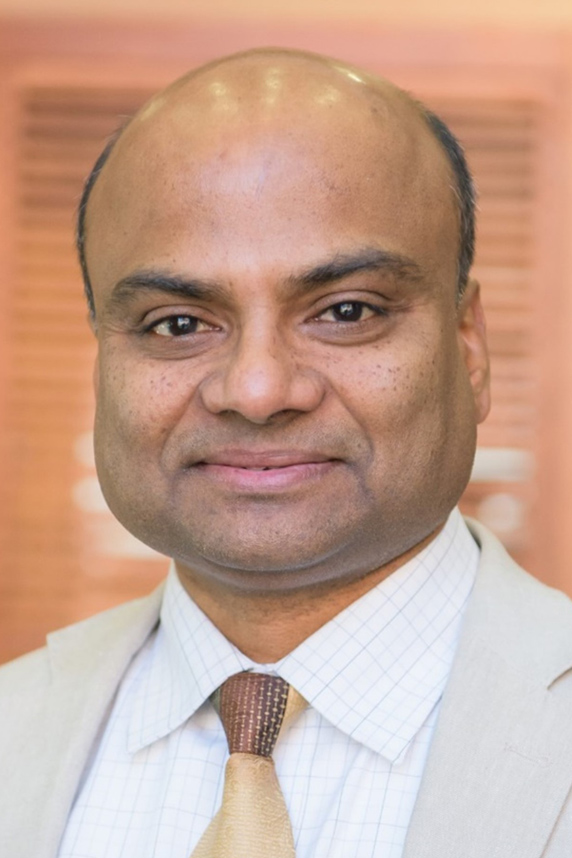
    <img src="https://factor.niehs.nih.gov/sites/niehs-factor/files/2024/08/feature/innovative-environmental-remediation-body1.jpg" alt="Upal Ghosh, Ph.D." style="max-width: 100%; height: auto;">
    “Anytime a new technology is created, there may be some risk,” noted Ghosh. “But being able to take a risk on something that theoretically could work creates a situation where technologies can flourish and move from the lab to the field. Throughout my career, I’ve been fortunate to find enabling environments that allow new ideas to be tested.” (Photo courtesy of Upal Ghosh)
    
    <hr>
    
    <p>NIEHS grant recipient <a href="https://cbee.umbc.edu/upal-ghosh/" rel="nofollow external" class="bo">Upal Ghosh, Ph.D.</a>, is a professor of environmental engineering at the University of Maryland, Baltimore County, who has developed practical, scalable solutions to some of the toughest contamination problems we face. Much of his work focuses on reducing the bioavailability of pollutants — preventing them from entering the food web and reaching humans — in bodies of water such as lakes and rivers. SediMite, a technology he helped to create and commercialize, offers a sustainable solution to environmental cleanup of PCBs.</p>
    <p>Beyond his efforts in the lab, Dr. Ghosh works closely with communities disproportionately affected by contamination. His projects in places like Washington, D.C., Baltimore, and Delaware have demonstrated the benefits of his remediation technology, helping to reduce fish consumption advisories, restore wetlands, and strengthen resiliency among residents.</p>
    <p>In our conversation, Dr. Ghosh shared insights into the scale of environmental contamination globally and the evolving landscape of remediation technologies. He discussed the importance of understanding how exposures in a water body can lead to exposures in humans, as that knowledge is crucial to developing effective cleanup approaches. Dr. Ghosh also described his early interest in science and what inspired him to pursue a research career.</p>
    <h2>Economy and environment</h2>
    <p><strong>Rick Woychik</strong>: Thank you, Dr. Ghosh, for taking the time to speak with me. Can you provide an overview of the scale of environmental contamination problems, both in the U.S. and globally?</p>
    <p><strong>Upal Ghosh</strong>: Sure. The way I think about it, the scale of environmental problems is related to the scale of the economy. A lot of the problems we discuss — from <a href="https://www.epa.gov/superfund/what-superfund" rel="nofollow external" class="bo">Superfund sites</a> such as Love Canal to current challenges around <a href="https://www.niehs.nih.gov/health/topics/agents/pfc" rel="nofollow external" class="bo">PFAS contamination</a> — are tied to how productive an economy is, and how production and usage practices have caused leakages.</p>
    <p>The U.S. was the largest manufacturing center for many products, and we’re seeing the footprint of that. Love Canal is a prime example. All of these Superfund sites are remnants of an era where laws weren’t in place to internalize costs and reduce externalities, and now we’re realizing that.</p>
    <hr>
    <img src="https://factor.niehs.nih.gov/sites/niehs-factor/files/2024/08/feature/innovative-environmental-remediation-body2.jpg" alt="Ghosh on boat" style="max-width: 100%; height: auto;">
    Ghosh is shown here collecting sediments from the Fort Eustis Superfund site in Virginia. “Working at PCB-contaminated sites like this makes you think, ‘How can we reduce human and ecological exposure without destroying vibrant wetland ecosystems?’” said Ghosh. (Image courtesy of Upal Ghosh)
    
    <hr>
    <p>I also travel internationally, and I see the same trends in developing countries. In India, they're ramping up production, and China has already reached high levels of industrial production. They’re starting to face challenges associated with manufacturing, transporting, and using large volumes of chemicals to provide their populations with a quality of life they expect and deserve.</p>
    <p>In pharmaceutical production, we’re seeing leakages of pharmaceuticals, and with large-volume chemicals like petroleum and pesticides, every functioning economy creates this footprint. So, in short, the scale of the problem has often been tied to the scale of the economy. But I believe that new technologies will help to create a better dynamic, allowing for both strong economic growth and strong environmental health.</p>
    <h2>To solve the problem, first define it</h2>
    <p><strong>RW</strong>: How do you go about developing remediation approaches?</p>
    <p><strong>UG</strong>: Environmental contamination poses an interesting challenge for scientists and engineers because the problem is often poorly defined. If I put PCB molecules in a beaker of clean water, as a scientist, I can describe the behavior accurately. But when I deal with a river, lake, or coastal bay, the matrix is much more complicated. For a variety of reasons, such as complex geochemistry, hydrodynamics, air-water exchange, and so forth, the attributes of contamination are not uniform. The behavior of compounds in that matrix becomes much more difficult to describe.</p>
    <p>For example, in the PCB cases I’ve worked on, we have to try to understand not just what’s happening in a complex body of water, but also a complex ecological system that ultimately leads to human exposure via the food web. So, defining the problem is the first part of effective technology development, and in fact I think that’s where many technology needs lie: accurately defining exposure. We can’t solve the problem unless we do so.</p>
    <hr>
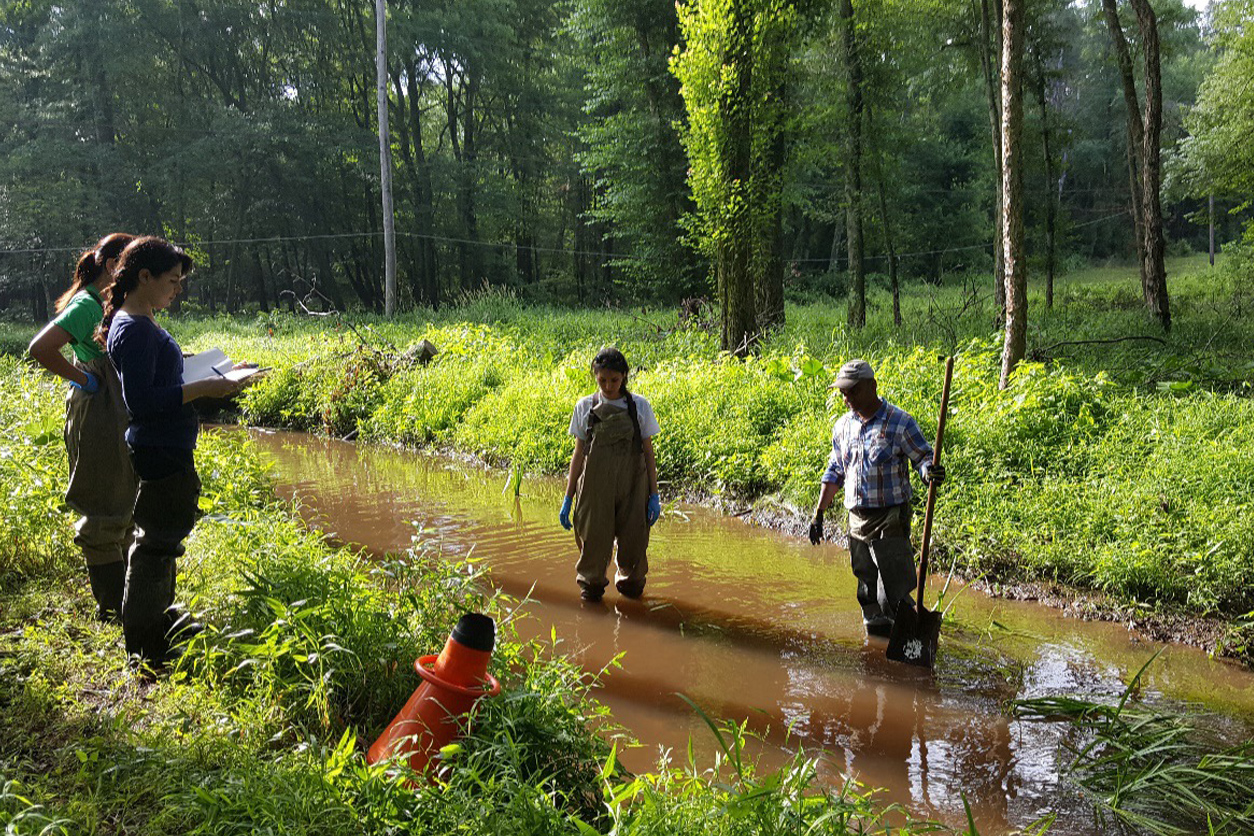
    <img src="https://factor.niehs.nih.gov/sites/niehs-factor/files/2024/08/feature/innovative-environmental-remediation-body3.jpg" alt="Ghosh and team standing in the river" style="max-width: 100%; height: auto;">
    Ghosh, right, is shown here installing passive samplers with students at a tributary of the Anacostia River in Washington, D.C., to help local decisionmakers better define the PCB and pesticide pollution problem and refine their remediation approach. (Photo courtesy of Upal Ghosh)
    
    <hr>
    <p>A lot of my work, and much of my colleagues’ work, falls under this category of accurately defining exposure, of understanding the bioavailability of pollutants in the soil or sediment environment. Once we understand the exposure — and the dominant exposure pathways — then I can bring in engineers, communities, and policymakers to create effective solutions.</p>
    <h2>Discovering black carbon’s key role</h2>
    <p><strong>RW</strong>: This is very interesting. If I’m understanding you correctly, the goal is to not just determine PCB levels in the soil of a riverbed, for example, but also to assess how much PCB in the soil of the riverbed will make it into the water and be ingested by fish, or absorbed through their gills, and eventually consumed by humans. Is that what you’re getting at?</p>
    <p><strong>UG</strong>: That’s exactly right. It’s not just about measuring contamination in sediments but understanding how it moves through the aquatic environment and enters the food web. Once we can accurately define the dominant exposure pathways, we can tailor our remediation efforts to address the most critical sources of exposure. To that end, we’ve adopted passive sampling techniques and environmental modeling methods to better assess the movement and exposures.</p>
    <p>Early in my research, when I was at Stanford working with my colleague and mentor Dr. Dick Luthy, we were studying the bioavailability of pollutants, looking specifically at PAHs [polycyclic aromatic hydrocarbons] and PCBs in sediments. The question we were asking was: Why is the bioavailability so different across sites? For example, when I took sediments from the Baltimore harbor versus sediments from the Milwaukee harbor, they didn’t behave the same.</p>
    <p>Just looking at the organic matter content, mineral content, and particle size wasn’t explaining the differences, which were sometimes more than an order of magnitude. In some sediments, pollutants like PAHs and PCBs were bound up much more strongly than we would predict. So, we started looking at that more carefully and discovered that in sediments where pollutants were strongly bound and less bioavailable, black carbon was present. Black carbon, the graphitic form of carbon, occurs naturally and can also come from things like forest fires, coal coke, and soot.</p>
    <p>We showed that these naturally present black carbon particles were binding PAHs and PCBs with affinities two orders of magnitude stronger than organic materials of plant origin. That was interesting because we could now explain the difference across our study sites. Some of our early papers focused on these natural differences in organic matter geochemistry, explaining the differences in bioavailability. Of course, we didn’t stop at just understanding the science — we wanted to use that knowledge to develop remediation technology.</p>
    <h2>Pellets pack a punch</h2>
    <p><strong>RW</strong>: And this is where the product you helped to develop, SediMite, comes into play. Can you explain the technology behind it?</p>
    <hr>
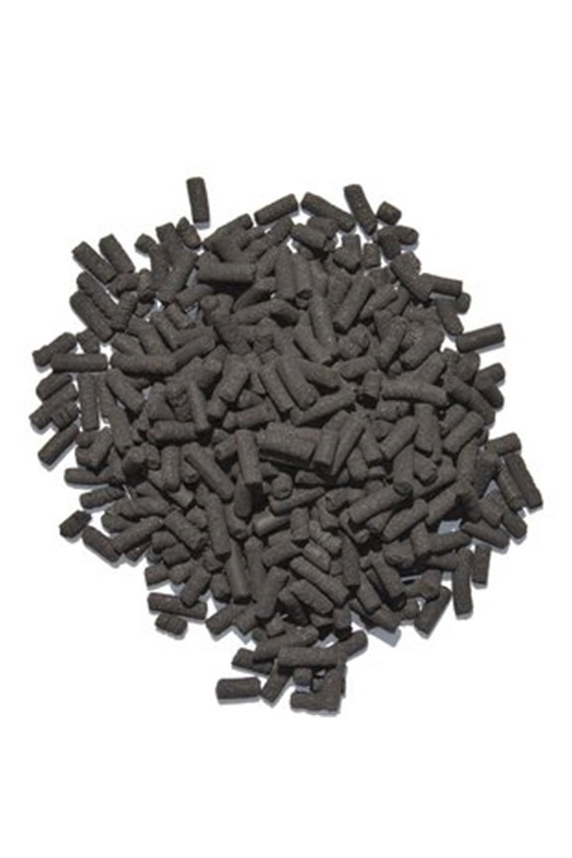
    <img src="https://factor.niehs.nih.gov/sites/niehs-factor/files/2024/08/feature/innovative-environmental-remediation-body4.jpg" alt="SediMite pellets" style="max-width: 100%; height: auto;">
    Ghosh patented SediMite in 2010 and created a university spin-off company to produce it at scale. (Photo courtesy of Sediment Solutions)
    
    <hr>
    <p><strong>UG</strong>: SediMite works by binding contaminants in sediments, reducing their availability to organisms in the food web. The product consists of activated carbon packaged into pellets, which makes it easy to handle and apply in the field. Once dispersed in sediments, the activated carbon binds to hydrophobic pollutants like PCBs, making them less bioavailable to aquatic organisms. It can apply to a whole range of hydrophobic chemicals — pesticides, dioxins, and even PFAS. It works for some metals, too. We have done some work with mercury, and it binds strongly.</p>
    <p>What sets this technology apart from traditional methods like dredging is that it minimizes environmental disruption. Dredging can release buried contaminants into the water, potentially exacerbating the problem. With SediMite, we’re able to stabilize contaminants in place, reducing the risk of exposure without disturbing the ecosystem. Additionally, this method is often more cost-effective than large-scale dredging and landfill disposal. SediMite can also be adjusted, so we can blend new formulations of absorbents in our pellets to target different pollutants.</p>
    <h2>Targeting contamination hotspots</h2>
    <p><strong>RW</strong>: It sounds like this technology has the potential to significantly improve remediation efforts. How scalable is it? Could it be applied to larger bodies of water, like Lake Michigan?</p>
    <p><strong>UG</strong>: Scaling is always a consideration, and while SediMite can be successfully applied to larger areas, it’s often most effective in targeted locations where contamination levels are highest. With targeted dispersal, we have been able to reduce PCB bioavailability by 80% or more. We’ve successfully applied this technology in places like Mirror Lake in Delaware, where it helped to reduce concentrations in fish to levels below consumption advisory guidelines.</p>
    <p>The broader notion of introducing activated carbon in a contaminated site, demonstrated successfully through our research, has now become mainstream technology. For example, the technique has been applied at multiple Superfund sites, such as the <a href="https://semspub.epa.gov/work/02/580386.pdf" rel="nofollow external" class="bo">Passaic River</a> in New Jersey.</p>
    <p>In a large body of water like Lake Michigan, the focus would likely be on contaminated hotspots near industrial sites rather than attempting to treat the entire lake. This targeted approach allows for more efficient use of resources while still achieving significant risk reduction.</p>
    <p>Recently, the U.S. Environmental Protection Agency used our product in Minnesota’s Scanlon Reservoir to clean up dioxins, and they covered about 15 acres. They used SediMite to reduce bioavailability in shoreline areas with wetlands without destroying the wetlands.</p>
    <h2>Using microbes to degrade contaminants</h2>
    <p><strong>RW</strong>: One intriguing aspect of your work involves microbial degradation of contaminants. Can you tell us more about that?</p>
    <p><strong>UG</strong>: Absolutely. Microbial degradation is the ultimate solution — finding ways to not only bind contaminants but also break them down over time. In the case of PCBs, there are naturally occurring microorganisms that can dechlorinate these compounds, making them less harmful. We’ve worked with my microbiologist colleague Dr. Kevin Sowers to isolate these organisms, grow them in the lab, and then reintroduce them into contaminated environments as microbial catalysts. This process enhances the natural degradation of contaminants, further reducing their impact over time.</p>
    <h2>For the benefit of communities</h2>
    <p><strong>RW</strong>: It’s inspiring to see remediation technologies applied in the real world. Could you share some examples of how your work has benefited communities disproportionately affected by environmental contamination?</p>
    <p><strong>UG</strong>: One project that stands out is the Middle Branch Resiliency Initiative in Southwest Baltimore, a community that faces multiple environmental challenges, including contaminated sediments and coastal flooding. By using SediMite to treat nearby sediments and creating elevated wetlands, we’re not only improving environmental conditions but also helping to protect the community from future flooding events. This project shows how environmental remediation can be integrated with broader resilience and restoration efforts, ultimately enhancing the quality of life for residents.</p>
    </div>
    <p>(Rick Woychik, Ph.D., directs NIEHS and the National Toxicology Program.)</p>
    <h5><br></h5>
    </div>Read Original Post from Environmental FactorEnvironmental Factor<br>Your Online Source for NIEHS News: <a href="https://factor.niehs.nih.gov/2024/9/feature/4-feature-innovative-environmental-remediation" rel="nofollow external" class="bo">https://factor.niehs.nih.gov/2024/9/feature/4-feature-innovative-environmental-remediation</a><div><br></div>
    <div>Photo credit: Rick Woychik, Ph.D., directs NIEHS and the National Toxicology Program. (Image courtesy of NIEHS)</div>
    </div>
]]>
</Body>
<Summary>Chemical contamination reduced by grantee’s innovative technology  I spoke with Upal Ghosh, Ph.D., about how effective environmental remediation requires rigorous exposure science, engineering....</Summary>
<TrackingUrl>https://my3.my.umbc.edu/api/v0/pixel/news/144102/guest@my.umbc.edu/2c601ff79b1021d3edd14fba422a7a16/api/pixel</TrackingUrl>
<Tag>faculty</Tag>
<Tag>fall-2024</Tag>
<Tag>ghosh</Tag>
<Tag>news</Tag>
<Tag>research</Tag>
<Group token="cbee">Chemical, Biochemical and Environmental Engineering</Group>
<GroupUrl>https://my3.my.umbc.edu/groups/cbee</GroupUrl>
<AvatarUrl>https://assets4-my.umbc.edu/system/shared/avatars/groups/000/000/771/b5e579e81b2e3624611890fa3ca2716a/xsmall.png?1746794587</AvatarUrl>
<AvatarUrl size="original">https://assets2-my.umbc.edu/system/shared/avatars/groups/000/000/771/b5e579e81b2e3624611890fa3ca2716a/original.png?1746794587</AvatarUrl>
<AvatarUrl size="xxlarge">https://assets1-my.umbc.edu/system/shared/avatars/groups/000/000/771/b5e579e81b2e3624611890fa3ca2716a/xxlarge.png?1746794587</AvatarUrl>
<AvatarUrl size="xlarge">https://assets2-my.umbc.edu/system/shared/avatars/groups/000/000/771/b5e579e81b2e3624611890fa3ca2716a/xlarge.png?1746794587</AvatarUrl>
<AvatarUrl size="large">https://assets2-my.umbc.edu/system/shared/avatars/groups/000/000/771/b5e579e81b2e3624611890fa3ca2716a/large.png?1746794587</AvatarUrl>
<AvatarUrl size="medium">https://assets4-my.umbc.edu/system/shared/avatars/groups/000/000/771/b5e579e81b2e3624611890fa3ca2716a/medium.png?1746794587</AvatarUrl>
<AvatarUrl size="small">https://assets1-my.umbc.edu/system/shared/avatars/groups/000/000/771/b5e579e81b2e3624611890fa3ca2716a/small.png?1746794587</AvatarUrl>
<AvatarUrl size="xsmall">https://assets4-my.umbc.edu/system/shared/avatars/groups/000/000/771/b5e579e81b2e3624611890fa3ca2716a/xsmall.png?1746794587</AvatarUrl>
<AvatarUrl size="xxsmall">https://assets1-my.umbc.edu/system/shared/avatars/groups/000/000/771/b5e579e81b2e3624611890fa3ca2716a/xxsmall.png?1746794587</AvatarUrl>
<Sponsor>Chemical, Biochemical and Environmental Engineering</Sponsor>
<ThumbnailUrl size="xxlarge">https://assets3-my.umbc.edu/system/shared/thumbnails/news/000/144/102/eacf9b2d0a66c0730b01eb78ad35fbe9/xxlarge.jpg?1726851683</ThumbnailUrl>
<ThumbnailUrl size="xlarge">https://assets2-my.umbc.edu/system/shared/thumbnails/news/000/144/102/eacf9b2d0a66c0730b01eb78ad35fbe9/xlarge.jpg?1726851683</ThumbnailUrl>
<ThumbnailUrl size="large">https://assets3-my.umbc.edu/system/shared/thumbnails/news/000/144/102/eacf9b2d0a66c0730b01eb78ad35fbe9/large.jpg?1726851683</ThumbnailUrl>
<ThumbnailUrl size="medium">https://assets2-my.umbc.edu/system/shared/thumbnails/news/000/144/102/eacf9b2d0a66c0730b01eb78ad35fbe9/medium.jpg?1726851683</ThumbnailUrl>
<ThumbnailUrl size="small">https://assets1-my.umbc.edu/system/shared/thumbnails/news/000/144/102/eacf9b2d0a66c0730b01eb78ad35fbe9/small.jpg?1726851683</ThumbnailUrl>
<ThumbnailUrl size="xsmall">https://assets2-my.umbc.edu/system/shared/thumbnails/news/000/144/102/eacf9b2d0a66c0730b01eb78ad35fbe9/xsmall.jpg?1726851683</ThumbnailUrl>
<ThumbnailUrl size="xxsmall">https://assets1-my.umbc.edu/system/shared/thumbnails/news/000/144/102/eacf9b2d0a66c0730b01eb78ad35fbe9/xxsmall.jpg?1726851683</ThumbnailUrl>
<PawCount>0</PawCount>
<CommentCount>0</CommentCount>
<CommentsAllowed>true</CommentsAllowed>
<PostedAt>Fri, 20 Sep 2024 13:07:06 -0400</PostedAt>
<EditAt>Fri, 20 Sep 2024 13:17:00 -0400</EditAt>
</NewsItem>

<NewsItem contentIssues="true" id="144072" important="false" status="posted" url="https://my3.my.umbc.edu/groups/cwitaffiliates/posts/144072">
<Title>Upal Ghosh appointed to D.C. mayor&#8217;s Leadership Council for a Cleaner Anacostia River</Title>
<Tagline>from UMBC News</Tagline>
<Body>
<![CDATA[
    <div class="html-content">
    <p><a href="https://umbc.edu/quick-posts/upal-ghosh-leadership-council-for-a-cleaner-anacostia-river/" rel="nofollow external" class="bo"> UMBC News</a> | Published: Sep 18, 2024 |By:<a href="https://umbc.edu/author/cmeyers2/" rel="nofollow external" class="bo"><strong>Catherine Meyers</strong></a></p>
    <p>On September 12, UMBC’s <strong><a href="https://cbee.umbc.edu/upal-ghosh/" rel="nofollow external" class="bo">Upal Ghosh</a></strong>, from the Department of Chemical, Biochemical, and Environmental Engineering, was sworn in as a member of the Washington, D.C., mayor’s Leadership Council for a Cleaner Anacostia River (LCCAR). The council consists of 25 high-level government officials, community leaders, and environmental experts who support the vision of a swimmable and fishable Anacostia River. The members meet quarterly to advise the D.C. government on ongoing restoration projects. </p>
    <p>The Anacostia River, which runs from Prince George’s County in Maryland into Washington, D.C., before joining the Potomac River and ultimately flowing into the Chesapeake Bay, has historically suffered from high levels of industrial pollution and contamination from sewage overflow. In recent years, government officials have been making concerted efforts to clean up the river. UMBC was invited to sit on the council, with Ghosh as the representative, based on the university’s key contributions to these clean-up efforts. </p>
    <img src="https://umbc.edu/wp-content/uploads/2024/09/LCCAR-swearing-in_Sept.-12.png" alt="Screen shots shows people on conference call on top and agenda for meeting below. Some people raise their hands for a swearing in." width="601" height="485" style="max-width: 100%; height: auto;">
    On Sept. 12, Upal Ghosh (top left) and other members of the LCCAR were sworn in during a virtual meeting of the council. (Image courtesy of Ghosh)
    
    <p><br>Since 2016, Ghosh and his UMBC colleagues and students have developed innovative methods of measuring contaminants in the river and created models to elucidate where the contaminants come from and how they travel through and accumulate in the water, sediment, and aquatic life, such as fish. <strong><a href="https://imet.usmd.edu/directory/nathalie-lombard" rel="nofollow external" class="bo">Nathalie Lombard</a></strong>, a research assistant professor at UMBC who has played a significant role in the projects, will serve as the alternate representative on the LLCAR when Ghosh cannot attend. </p>
    <p><br>In addition to his work on the Anacostia, Ghosh and his students have studied and contributed to the cleanup of the <a href="https://factor.niehs.nih.gov/2024/9/feature/4-feature-innovative-environmental-remediation" rel="nofollow external" class="bo">waterways throughout Maryland, Delaware, and across the country</a>. “Students learn a lot from being out in the field,” Ghosh says. “They learn how the science and engineering we do helps guide major decisions. Our ultimate goal is making a positive difference in the health of the river, lake, or bay. That gives me a lot of excitement, and it really motivates the students too.”</p>
    <p>Read original post via UMBC NEWS: <a href="https://umbc.edu/quick-posts/upal-ghosh-leadership-council-for-a-cleaner-anacostia-river/" rel="nofollow external" class="bo">Upal Ghosh Appointed To D.C. Mayor’s Leadership Council For A Cleaner Anacostia River - UMBC</a></p>
    </div>
]]>
</Body>
<Summary>UMBC News | Published: Sep 18, 2024 |By:Catherine Meyers   On September 12, UMBC’s Upal Ghosh, from the Department of Chemical, Biochemical, and Environmental Engineering, was sworn in as a member...</Summary>
<TrackingUrl>https://my3.my.umbc.edu/api/v0/pixel/news/144072/guest@my.umbc.edu/8f57de1fd5874947076a22abb7de8539/api/pixel</TrackingUrl>
<Tag>cbee</Tag>
<Tag>coeit</Tag>
<Tag>faculty</Tag>
<Tag>fall-2024</Tag>
<Tag>ghosh</Tag>
<Tag>news</Tag>
<Group token="cbee">Chemical, Biochemical and Environmental Engineering</Group>
<GroupUrl>https://my3.my.umbc.edu/groups/cbee</GroupUrl>
<AvatarUrl>https://assets4-my.umbc.edu/system/shared/avatars/groups/000/000/771/b5e579e81b2e3624611890fa3ca2716a/xsmall.png?1746794587</AvatarUrl>
<AvatarUrl size="original">https://assets2-my.umbc.edu/system/shared/avatars/groups/000/000/771/b5e579e81b2e3624611890fa3ca2716a/original.png?1746794587</AvatarUrl>
<AvatarUrl size="xxlarge">https://assets1-my.umbc.edu/system/shared/avatars/groups/000/000/771/b5e579e81b2e3624611890fa3ca2716a/xxlarge.png?1746794587</AvatarUrl>
<AvatarUrl size="xlarge">https://assets2-my.umbc.edu/system/shared/avatars/groups/000/000/771/b5e579e81b2e3624611890fa3ca2716a/xlarge.png?1746794587</AvatarUrl>
<AvatarUrl size="large">https://assets2-my.umbc.edu/system/shared/avatars/groups/000/000/771/b5e579e81b2e3624611890fa3ca2716a/large.png?1746794587</AvatarUrl>
<AvatarUrl size="medium">https://assets4-my.umbc.edu/system/shared/avatars/groups/000/000/771/b5e579e81b2e3624611890fa3ca2716a/medium.png?1746794587</AvatarUrl>
<AvatarUrl size="small">https://assets1-my.umbc.edu/system/shared/avatars/groups/000/000/771/b5e579e81b2e3624611890fa3ca2716a/small.png?1746794587</AvatarUrl>
<AvatarUrl size="xsmall">https://assets4-my.umbc.edu/system/shared/avatars/groups/000/000/771/b5e579e81b2e3624611890fa3ca2716a/xsmall.png?1746794587</AvatarUrl>
<AvatarUrl size="xxsmall">https://assets1-my.umbc.edu/system/shared/avatars/groups/000/000/771/b5e579e81b2e3624611890fa3ca2716a/xxsmall.png?1746794587</AvatarUrl>
<Sponsor>Chemical, Biochemical and Environmental Engineering</Sponsor>
<ThumbnailUrl size="xxlarge">https://assets2-my.umbc.edu/system/shared/thumbnails/news/000/144/072/6ae323c355a16250b66c41004a6f7c0e/xxlarge.jpg?1726777022</ThumbnailUrl>
<ThumbnailUrl size="xlarge">https://assets2-my.umbc.edu/system/shared/thumbnails/news/000/144/072/6ae323c355a16250b66c41004a6f7c0e/xlarge.jpg?1726777022</ThumbnailUrl>
<ThumbnailUrl size="large">https://assets1-my.umbc.edu/system/shared/thumbnails/news/000/144/072/6ae323c355a16250b66c41004a6f7c0e/large.jpg?1726777022</ThumbnailUrl>
<ThumbnailUrl size="medium">https://assets1-my.umbc.edu/system/shared/thumbnails/news/000/144/072/6ae323c355a16250b66c41004a6f7c0e/medium.jpg?1726777022</ThumbnailUrl>
<ThumbnailUrl size="small">https://assets1-my.umbc.edu/system/shared/thumbnails/news/000/144/072/6ae323c355a16250b66c41004a6f7c0e/small.jpg?1726777022</ThumbnailUrl>
<ThumbnailUrl size="xsmall">https://assets1-my.umbc.edu/system/shared/thumbnails/news/000/144/072/6ae323c355a16250b66c41004a6f7c0e/xsmall.jpg?1726777022</ThumbnailUrl>
<ThumbnailUrl size="xxsmall">https://assets2-my.umbc.edu/system/shared/thumbnails/news/000/144/072/6ae323c355a16250b66c41004a6f7c0e/xxsmall.jpg?1726777022</ThumbnailUrl>
<PawCount>0</PawCount>
<CommentCount>0</CommentCount>
<CommentsAllowed>true</CommentsAllowed>
<PostedAt>Thu, 19 Sep 2024 16:19:54 -0400</PostedAt>
<EditAt>Fri, 20 Sep 2024 10:14:46 -0400</EditAt>
</NewsItem>

</News>