talk: Bill Fisher (NCCOE) on IoT Security @ USG 10/30 6-8PM
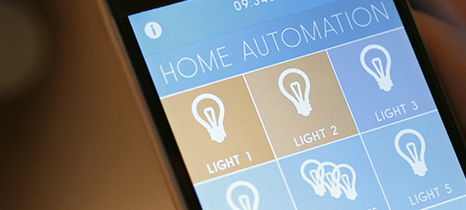
The UMBC Cybersecurity program at USG Speaker Series Presents
The Internet of Things (IoT)
With speaker
William (Bill) Fisher, NCCoE Security Engineer
Monday, October 30th 6:00-8:00 pm
The Internet of Things (IoT) is the inevitable result of years of Moore’s law – compact, cheap, chip platforms that can take ordinarily house hold items and make them data generating and collection devices that users can manage with their smart phone, web browser or their favorite automation platform. Physical proximity is no longer needed for things like cameras, door locks or thermostats. Instead users remotely access all of these “things” while on the go, even sharing some of their favorite things with friends and family, who need not own the thing, but simply be granted access through a web portal or mobile application. Like many technology trends before it, the IoT has brought great innovation but also great security challenges. These challenges go beyond standards and technology to economic and market forces that hinder security best practices, even for some of the most basic cyber hygiene. Join Bill Fisher of the National Cybersecurity Center of Excellence for a presentation on these challenges and basic mitigations organizations can put into place to help alleviate the risk that the IoT devices pose to consumers and the enterprise.
Speaker Bio:
Bill Fisher is a security engineer at the National Cybersecurity Center of Excellence (NCCoE). In this role, he is responsible for leading a team of engineers that work collaboratively with industry partners to address cybersecurity business challenges facing the nation. He leads the center’s Attribute Based Access Control (ABAC) project, Mobile Application Single Sign On (SSO) for the Public Safety and First Responder Sector, and is part of the ITL Cybersecurity for IoT program. Prior to his work at the NCCoE, Mr. Fisher was a program security advisor for the System High Corporation in support of the Network Security Deployment division at the Department of Homeland Security. He holds a bachelor’s degree in business administration from American University and a master’s degree in cybersecurity from Johns Hopkins University.
Host: Dr. Behnam Shariati (*protected email*) and UMBC Graduate Cybersecurity Association at USG
The post talk: Bill Fisher (NCCOE) on IoT Security @ USG 10/30 6-8PM appeared first on Department of Computer Science and Electrical Engineering.
]]>
The UMBC Cybersecurity program at USG Speaker Series Presents The Internet of Things (IoT) With speaker William (Bill) Fisher, NCCoE Security Engineer Building III – Room 4230...
https://www.csee.umbc.edu/2017/10/talk-bill-fisher-nccoe-iot-security-usg-1030-6-8pm/
https://my3.my.umbc.edu/api/v0/pixel/news/72617/guest@my.umbc.edu/85d6e62ef63ac2033b32c576bc185d28/api/pixel
computer-science
csee
cybersecurity
events
news
talks
UMBC Cybersecurity Institute Group
https://my3.my.umbc.edu/groups/cybersecurity
https://assets3-my.umbc.edu/system/shared/avatars/groups/000/000/485/196da6a7ec6f4c31eab2e474c17a9ab7/xsmall.png?1734891477
https://assets3-my.umbc.edu/system/shared/avatars/groups/000/000/485/196da6a7ec6f4c31eab2e474c17a9ab7/original.png?1734891477
https://assets4-my.umbc.edu/system/shared/avatars/groups/000/000/485/196da6a7ec6f4c31eab2e474c17a9ab7/xxlarge.png?1734891477
https://assets4-my.umbc.edu/system/shared/avatars/groups/000/000/485/196da6a7ec6f4c31eab2e474c17a9ab7/xlarge.png?1734891477
https://assets2-my.umbc.edu/system/shared/avatars/groups/000/000/485/196da6a7ec6f4c31eab2e474c17a9ab7/large.png?1734891477
https://assets3-my.umbc.edu/system/shared/avatars/groups/000/000/485/196da6a7ec6f4c31eab2e474c17a9ab7/medium.png?1734891477
https://assets3-my.umbc.edu/system/shared/avatars/groups/000/000/485/196da6a7ec6f4c31eab2e474c17a9ab7/small.png?1734891477
https://assets3-my.umbc.edu/system/shared/avatars/groups/000/000/485/196da6a7ec6f4c31eab2e474c17a9ab7/xsmall.png?1734891477
https://assets3-my.umbc.edu/system/shared/avatars/groups/000/000/485/196da6a7ec6f4c31eab2e474c17a9ab7/xxsmall.png?1734891477
UMBC Center for Cybersecurity
1
0
true
Mon, 16 Oct 2017 11:47:51 -0400
talk: Keith Mayes on Attacks on Smart Cards, RFIDs and Embedded System
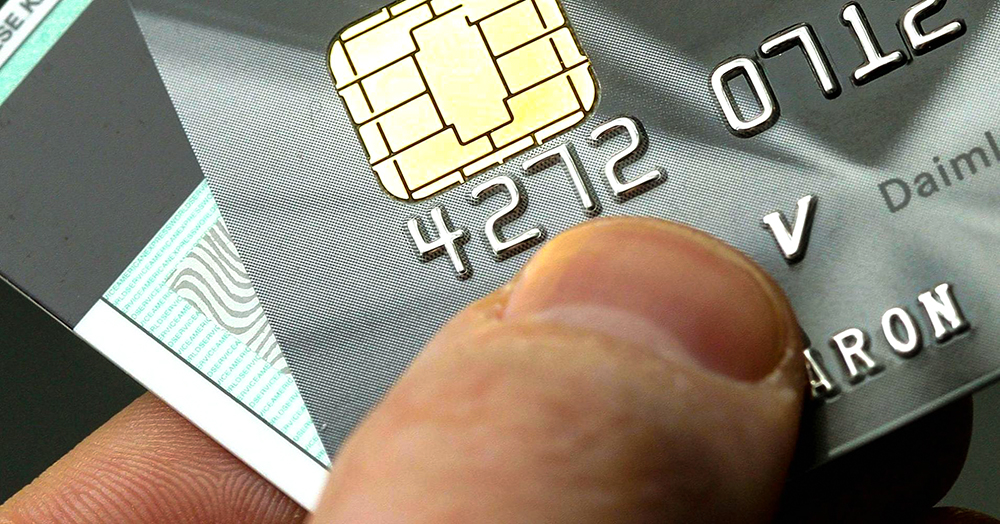
Attacks on Smart Cards, RFIDs and Embedded Systems
Prof. Keith Mayes
Royal Holloway University of London
10-11:00am Tuesday, 10 October 2017, ITE 325, UMBC
Smart Cards and RFIDs exist with a range of capabilities and are used in their billions throughout the world. The simpler devices have poor security, however, for many years, high-end smart cards have successfully been used in a range of systems such as banking, passports, mobile communication, satellite TV etc. Fundamental to their success is a specialist design to offer remarkable resistance to a wide range of attacks, including physical, side-channel and fault. This talk describes a range of known attacks and the countermeasures that are employed to defeat them.
Prof. Keith Mayes is the Head of the School of Mathematics and Information Security at Royal Holloway University of London. He received his BSc (Hons) in Electronic Engineering in 1983 from the University of Bath, and his PhD degree in Digital Image Processing in 1987. He is an active researcher/author with 100+ publications in numerous conferences, books and journals. His interests include the design of secure protocols, communications architectures and security tokens as well as associated attacks/countermeasures. He is a Fellow of the Institution of Engineering and Technology, a Founder Associate Member of the Institute of Information Security Professionals, a Member of the Licensing Executives Society and a member of the editorial board of the Journal of Theoretical and Applied Electronic Commerce Research (JTAER).
The post talk: Keith Mayes on Attacks on Smart Cards, RFIDs and Embedded System appeared first on Department of Computer Science and Electrical Engineering.
]]>
Attacks on Smart Cards, RFIDs and Embedded Systems Prof. Keith Mayes Royal Holloway University of London 10-11:00am Tuesday, 10 October 2017, ITE 325, UMBC Smart Cards and RFIDs exist...
https://www.csee.umbc.edu/2017/10/talk-keith-mayes-attacks-smart-cards-rfids-embedded-system-cybersecurity-rfid/
https://my3.my.umbc.edu/api/v0/pixel/news/72618/guest@my.umbc.edu/f693b6777313d350fc774fad7d734ed2/api/pixel
computer-engineering
computer-science
cybersecurity
events
news
talks
UMBC Cybersecurity Institute Group
https://my3.my.umbc.edu/groups/cybersecurity
https://assets3-my.umbc.edu/system/shared/avatars/groups/000/000/485/196da6a7ec6f4c31eab2e474c17a9ab7/xsmall.png?1734891477
https://assets3-my.umbc.edu/system/shared/avatars/groups/000/000/485/196da6a7ec6f4c31eab2e474c17a9ab7/original.png?1734891477
https://assets4-my.umbc.edu/system/shared/avatars/groups/000/000/485/196da6a7ec6f4c31eab2e474c17a9ab7/xxlarge.png?1734891477
https://assets4-my.umbc.edu/system/shared/avatars/groups/000/000/485/196da6a7ec6f4c31eab2e474c17a9ab7/xlarge.png?1734891477
https://assets2-my.umbc.edu/system/shared/avatars/groups/000/000/485/196da6a7ec6f4c31eab2e474c17a9ab7/large.png?1734891477
https://assets3-my.umbc.edu/system/shared/avatars/groups/000/000/485/196da6a7ec6f4c31eab2e474c17a9ab7/medium.png?1734891477
https://assets3-my.umbc.edu/system/shared/avatars/groups/000/000/485/196da6a7ec6f4c31eab2e474c17a9ab7/small.png?1734891477
https://assets3-my.umbc.edu/system/shared/avatars/groups/000/000/485/196da6a7ec6f4c31eab2e474c17a9ab7/xsmall.png?1734891477
https://assets3-my.umbc.edu/system/shared/avatars/groups/000/000/485/196da6a7ec6f4c31eab2e474c17a9ab7/xxsmall.png?1734891477
UMBC Center for Cybersecurity
1
0
true
Fri, 06 Oct 2017 21:46:20 -0400
talk: James R. Clapper, former US Director of Intelligence, 12-1pm Fri. Oct 6, 132 PAHB, UMBC
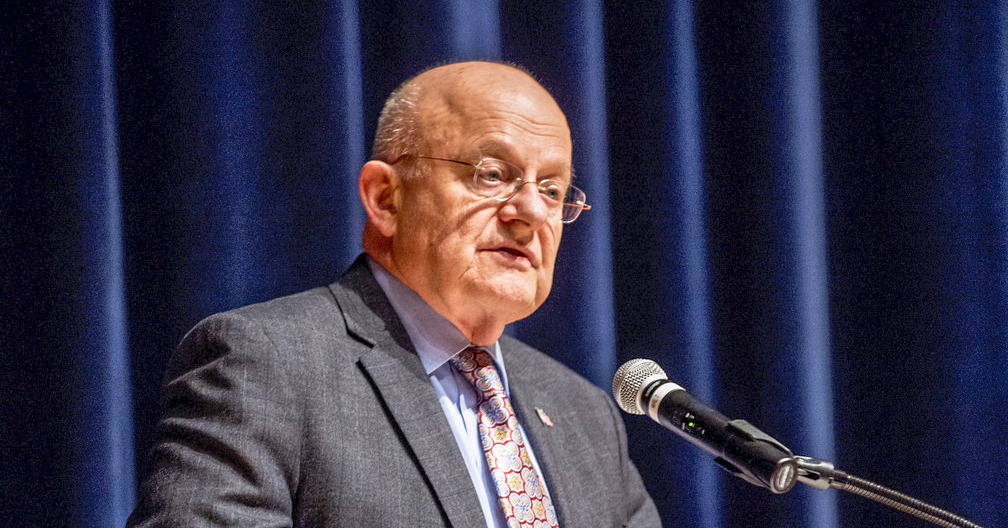
Lecture by James Clapper, former US Director of Intelligence, 12-1pm Fri. Oct. 6 at UMBC
James R. Clapper, former US Director of Intelligence, will give a public lecture on Friday, 6 October 2017 in the lecture hall (room 132) of the Performing Arts & Humanities Building at UMBC.
The Honorable James R. Clapper served as the fourth US Director of Intelligence from August 9, 2010 to January 20, 2017. In this position, Mr. Clapper led the United States Intelligence Community and served as the principal intelligence advisor to President Barack Obama.
Mr. Clapper retired in 1995 after a distinguished career in the U.S. Armed Forces. His career began in 1961 when he enlisted in the U.S. Marine Corps Reserve and culminated as a lieutenant general in the U.S. Air Force and Director of the Defense Intelligence Agency. His intelligence-related positions over his 32 years in uniform included Assistant Chief of Staff for Intelligence at Headquarters, US Air Force during Operations Desert Shield/Desert Storm, and Director of Intelligence for three combatant commands: US Forces, Korea; Pacific Command, and Strategic Air Command. He served two combat tours during the Southeast Asia conflict, and flew 73 combat support missions in EC-47’s over Laos and Cambodia.
Directly following his retirement, Mr. Clapper worked in industry for six years as an executive in three successive companies with the Intelligence Community as his business focus. He also served as a consultant and advisor to Congress and to the Departments of Defense and Energy, and as a member of a variety of government panels, boards, commissions, and advisory groups. He was a senior member of the Downing Assessment Task Force which investigated the Khobar Towers bombing in 1996, was vice chairman of a commission chaired by former Governor Jim Gilmore of Virginia on the subject of homeland security, and served on the NSA Advisory Board.
Mr. Clapper returned to the government two days after 9/11 as the first civilian director of the National Imagery and Mapping Agency (NIMA). He served in this capacity for almost five years, transforming it into the National Geospatial-Intelligence Agency (NGA) as it is today.
Prior to becoming the Director of National Intelligence, Mr. Clapper served for over the three years in two Administrations as the Under Secretary of Defense for Intelligence, where he served as the principal staff assistant and advisor to the Secretary and Deputy Secretary on intelligence, counterintelligence, and security matters for the Department. In this capacity, he was also dual-hatted as the Director of Defense Intelligence for the DNI.
Mr. Clapper earned a bachelor’s degree in government and politics from the University of Maryland, a master’s degree in political science from St. Mary’s University, San Antonio, Texas, and an honorary doctorate in strategic intelligence form the then Joint Military Intelligence College.
His awards include three National Intelligence Distinguished Service Medals, two Defense Distinguished Service Medals, the Air Force Distinguished Service Medal, the Coast Guard’s Distinguished Public Service Award, three Department of Defense Distinguished Civilian Service Awards, the Presidentially-conferred National Security Medal, and many other U.S. civilian and military, as well as foreign government awards and decorations.
He is married to the former Susan Terry, and they have two grown children and four grandchildren
The post talk: James R. Clapper, former US Director of Intelligence, 12-1pm Fri. Oct 6, 132 PAHB, UMBC appeared first on Department of Computer Science and Electrical Engineering.
]]>
Lecture by James Clapper, former US Director of Intelligence, 12-1pm Fri. Oct. 6 at UMBC James R. Clapper, former US Director of Intelligence, will give a public lecture on Friday, 6 October...
https://www.csee.umbc.edu/2017/09/talk-james-r-clapper-former-us-director-of-intelligence-12-1pm-fri-oct-6-132-pahb-umbc/
https://my3.my.umbc.edu/api/v0/pixel/news/72619/guest@my.umbc.edu/759a70beab597d0e4f29e7621a8b4281/api/pixel
cybersecurity
news
talks
UMBC Cybersecurity Institute Group
https://my3.my.umbc.edu/groups/cybersecurity
https://assets3-my.umbc.edu/system/shared/avatars/groups/000/000/485/196da6a7ec6f4c31eab2e474c17a9ab7/xsmall.png?1734891477
https://assets3-my.umbc.edu/system/shared/avatars/groups/000/000/485/196da6a7ec6f4c31eab2e474c17a9ab7/original.png?1734891477
https://assets4-my.umbc.edu/system/shared/avatars/groups/000/000/485/196da6a7ec6f4c31eab2e474c17a9ab7/xxlarge.png?1734891477
https://assets4-my.umbc.edu/system/shared/avatars/groups/000/000/485/196da6a7ec6f4c31eab2e474c17a9ab7/xlarge.png?1734891477
https://assets2-my.umbc.edu/system/shared/avatars/groups/000/000/485/196da6a7ec6f4c31eab2e474c17a9ab7/large.png?1734891477
https://assets3-my.umbc.edu/system/shared/avatars/groups/000/000/485/196da6a7ec6f4c31eab2e474c17a9ab7/medium.png?1734891477
https://assets3-my.umbc.edu/system/shared/avatars/groups/000/000/485/196da6a7ec6f4c31eab2e474c17a9ab7/small.png?1734891477
https://assets3-my.umbc.edu/system/shared/avatars/groups/000/000/485/196da6a7ec6f4c31eab2e474c17a9ab7/xsmall.png?1734891477
https://assets3-my.umbc.edu/system/shared/avatars/groups/000/000/485/196da6a7ec6f4c31eab2e474c17a9ab7/xxsmall.png?1734891477
UMBC Center for Cybersecurity
1
0
true
Wed, 27 Sep 2017 13:45:01 -0400