To My Immigrant Parents

The following post was written by Ojuswani Phogat, a third-year student at UMBC.
Positionality Statement: The letter below is a message from me to my immigrant parents. It is reflective of only their experiences and mine but is being shared with you all with an understanding that the immigrant experience can be a wild, scary, intense, fulfilling, and beautiful one. And that someone, somewhere, may relate to this story on more than just the surface.
To My Immigrant Parents
Dear Mumma and Papa,
It is rare for me to think of the lives you led before I was born. To think of you as children, young adults, or parents of a singular daughter, instead of two. I cannot fathom a world where I do not exist, despite the remnants of your past lives that hide in the crevices of our home. The ones you pull out of dusted boxes underneath your bed and from the back of cabinet corners to show to me from time to time. The pictures of you both wearing school uniforms, eyes shining, and faces plastered with bright smiles showing off two missing front teeth. The sindhoor1 your mother gave to you the day of your wedding, tucked away into a patterned cloth nestled inside of our household mandir. The ceramic chai cups, lovely little things, adorned with arrangements of blue flowers your cousins gave to you on your 24th birthday. I do not consider these mementos of your life’s most cherished moments until I do. Until I see them with my eyes, smell them in all their aged glory, feel the weathered edges of the containers that store them, and sip chai from them, and it dawns on me that there is a whole part of your story that I do not know the intricacies of. And yet it defines my very existence.
I can’t imagine the courage it would take to leave behind … a culture, a language, a home.
To say farewell (or at the very least see you in a while)…
To the very khets2 of green that sustained your childhood, where you gulped down sugar cane juice and stole neighborhood fruit off of tall, lusciously beautiful trees as your grandmother called for you to return home.
To the patches of dirt where you gathered with your friends to play cricket and kabaddi3, laughing and bonding for hours.
To leave behind everything you have ever known.
To leave behind a community enriched with thousand-year-old traditions rooted in a fundamental understanding of what it means to be Brown and thrive in a place with people who look just like you.
The experience of leaving home must be undefinable. It seems, in a word: scary. In a few words: completely, utterly terrifying. An experience that I am almost certain you would never allow of me. And yet, here I am, existing in a land completely new to the both of us. One we navigate with excitement and curiosity but mostly caution for a hesitancy of the unknown.
In reflecting on my time in this place, I think of the hill just a few feet behind our old house, my own khet2 of radiant grass and luscious trees on which you took my sister and I to fly kites at the age of 4. The same one that I glared at through my bedroom window with my eyes stinging with tears as I spent my freshman year of college cooped inside a house that was wholly consuming my sanity. I think of the gravel-covered playground in our community that we went to each year on the last day of summer, spending hours swinging and playing games. The same park I watched with a feeling of despair as I sat in our green minivan packed to the brim with clothes, appliances, and toys. As we drove away from friends, family, and the community you created for us towards our new house in New Jersey, where a second such community would never be built.
In leaving your home, you have rendered me without a concrete one. I exist in this place but have not found the ability to claim it as my own. It is not mine, despite my residing within it. How can one belong to a place when their physicality, spirituality, and culture remain under speculation, only being accepted in bits and pieces when it suits the visions of the white man?
It is here in this environment that I exist within two distinct worlds. I am an American, born and raised, but what marks my presence in this place is my othered identity. It is the Desi part of me, the one defining my brownness, that I am legible through. It is here where I exist in limbo between the cultural and social markers of my two communities. It is in this middle ground is where I am accepted by neither community.
You would think then that in reconnecting with your home, I would be accepted as one of the pack. I would be revered as one of the community, a missing piece of the puzzle that renders it complete. However, the gap between you and me and, by extension, me and them is one that cannot be closed by sheer will. It is not solely a gap of distance; it is one of the mind: of experience, of speech, of perspective by which physicality is completely transcended. Such a gap, while marked physically by the Atlantic Ocean, is one that I am ridiculed for despite the role I did not play in its creation. My removal from my location and also the location of my ancestors is what renders me without a base. It leaves me without a place I can cherish and savor with my whole being.
It is understandable that your instinct is to protect those who you have created. That in lieu of favoring our exploration of this place, you have prioritized the notion of safety. A notion you then fed to us: it is not you we don’t trust; it’s others. This phrase, a manifestation of the fear you have undertaken to live within your reality. The fear that you have for your own safety and mine. And while that itself does not excuse the excessive control you have chosen to operationalize within our relationship, there can be an acknowledgment of the fact that you are more like me than I have ever thought before. That you are human, and your instinct to protect kept me alive in a way you found my instinct to build community and thrive in a place I considered my home never could.
1: vermillion-colored cosmetic powder made out of saffron and red sandalwood. Is worn in a long stroke on the top of the forehead and into the hair part by married South Asian women
2: plot of land typically with crops (a field or farm)
3: South Asian sport
]]>
The following post was written by Ojuswani Phogat, a third-year student at UMBC. Positionality Statement: The letter below is a message from me to my immigrant parents. It is reflective of...
https://womenscenteratumbc.wordpress.com/2022/12/09/to-my-immigrant-parents/
https://my3.my.umbc.edu/api/v0/pixel/news/129707/guest@my.umbc.edu/6911a94ede76376f8bb5db56510514be/api/pixel
asian-and-pacific-islander-american-voices
bipoc-voices
diversity
diversity-and-inclusion-issues
intersectionality
social-justice
umbc
uncategorized
women
womens-center-staff
Women's, Gender, & Equity Center
https://my3.my.umbc.edu/groups/womenscenter
https://assets2-my.umbc.edu/system/shared/avatars/groups/000/000/125/78272a4842689b30dbf74672182b78f8/xsmall.png?1750974263
https://assets1-my.umbc.edu/system/shared/avatars/groups/000/000/125/78272a4842689b30dbf74672182b78f8/original.png?1750974263
https://assets1-my.umbc.edu/system/shared/avatars/groups/000/000/125/78272a4842689b30dbf74672182b78f8/xxlarge.png?1750974263
https://assets1-my.umbc.edu/system/shared/avatars/groups/000/000/125/78272a4842689b30dbf74672182b78f8/xlarge.png?1750974263
https://assets1-my.umbc.edu/system/shared/avatars/groups/000/000/125/78272a4842689b30dbf74672182b78f8/large.png?1750974263
https://assets2-my.umbc.edu/system/shared/avatars/groups/000/000/125/78272a4842689b30dbf74672182b78f8/medium.png?1750974263
https://assets1-my.umbc.edu/system/shared/avatars/groups/000/000/125/78272a4842689b30dbf74672182b78f8/small.png?1750974263
https://assets2-my.umbc.edu/system/shared/avatars/groups/000/000/125/78272a4842689b30dbf74672182b78f8/xsmall.png?1750974263
https://assets3-my.umbc.edu/system/shared/avatars/groups/000/000/125/78272a4842689b30dbf74672182b78f8/xxsmall.png?1750974263
Women's Center
6
0
false
Fri, 09 Dec 2022 13:50:31 -0500
Fri, 09 Dec 2022 13:50:31 -0500
Microaggressions: an attack on belonging and identity 

Image description: shows student, Jane, smiling in front of a UMBC building
Positionality Statement: This post is written by Jane DeHitta, an adult learner in her final year at UMBC, who works as a student staff and social work intern at the Women’s Center. I am a first generation Filipino-American student who seeks to be self-aware of the power dynamics that take place in the intersections of our identities and strives to be intentional in the ways I speak to and encounter others. In this post, I share my experience of microaggressions against race and discuss a connection between microaggressions of different forms and the impact that can have on the individual. My experience is my own and I use it as a point of reference and not to represent the innumerable diversity of people’s experience with microaggressions. I hope that what I share in this post gives validation to those who have had experiences similar to my own, and to give a moment for thought and self-reflection for those who find themselves as the microaggressor.
Image description: a cartoon gif of two hands holding up a dark blue sign with the words “Words have power” written across it. The word “power” has an animated line being crossed underneath it for emphasis.
“I wonder who is more Asian?” my white female friend said in passing. She and I had been discussing movies we recently watched, among them Crazy Rich Asians and Always Be My Maybe, movies that feature a predominantly Asian cast. My friend had lived for several years in China and even spoke Cantonese and Mandarin, she had the privilege of experiencing much of Chinese culture. I, on the other hand, grew up in Maryland my whole life and have never been back to my parents home country of the Philippines, nor was I taught how to speak their native languages of Tagalog or Cebuano beyond a few conversational words.
Taken aback by my friend’s question, I scoffed and went along with what I assumed was a joke by saying, “between you and me?”
She laughed, “yeah.”
I felt uncomfortable but uncertain why or how to express it so I half-heartedly laughed back and said in an exaggeratedly teasing tone, “don’t make me prove my asianness to you!” We continued our conversation for a few minutes more before parting ways, but that discomfort lingered as a knot in my stomach.
Prior to this recent encounter, I know that I have experienced microaggressions throughout my life, from friends saying, “oh, sometimes I forget your Asian!” to strangers asking me “Where were you born? (Maryland) No, but where are you really from?” But because of my introverted personality and the culture of passivity I grew up in, I learned to respond much like the way I responded to my friend. Ignoring it or laughing it off. I wouldn’t confront the perpetrator or call them out, because it was easier that way, I could deal with my discomfort later. And afterwards I would go through a dialogue in my head that looks something like this, “they didn’t mean it like that. I shouldn’t be offended! They were just kidding! I’m not actually hurt by what they said. It’s fine. It’s not a big deal. Even if I was hurt or bothered, I’ve already laughed and moved on, and so have they. They don’t always say/do things like that. Dwelling on it isn’t going to help. I don’t want to make them uncomfortable or feel bad.” I also struggle with invalidating my own experiences simply because “others have it worse”.
 Infographic shows a breakdown of the impacts of microaggressions; key words: Imposter Syndrome, Stereotype Threat, other bad feelings like poor self-confidence, depression, etc. Link for more information
Growing up in Maryland for the entirety of my 26 years of life, I have had conflicting feelings about my Filipino/Asian identity. My parents did their best to share their culture, through cooking, traditions, and stories; every summer we went to the local Filipino festivals, and were a part of various Filipino groups. I loved going to these places, tasting the food, seeing the traditional clothing, and watching the dances–one of the years, my sisters and I even participated in the procession for Filipino princesses. And there were moments at these events as we would walk through the stalls as a family, when vendors would greet us, striking up a conversation with my parents in Tagalog or Cebuano. While they talked, I would just stand there awkwardly, nodding and smiling, though I didn’t know what was being said. Then they would turn to me and ask me something, and my mom would translate to me so I could answer. The shopkeepers would give a look of disappointment, “Oh you don’t speak Tagalog…?” It was in those moments, I remember this feeling, almost like imposter syndrome, that I’ve blown my cover, that if someone tried to talk to me they would realize I’m not actually Filipino and I didn’t belong.
A microaggression is “a statement, action, or incident regarded as an instance of indirect, subtle, or unintentional discrimination against members of a marginalized group such as a racial or ethnic minority.” These can be subtle and are often considered harmless by the deliverer, but can have a huge impact on the individual.
 This infographic describes how to be an active bystander and address microaggressions. Key words: Observe, Think, Feel, Desire. Link for more information
Once my friend left me to ponder the authenticity of my racial and ethnic identities, I was able to take some time to reflect and navigate through my feelings. I asked myself, what about that question has continued to bother me? I was able to confide in my siblings, and as I processed through the experience with them I realized that the question I felt was lying underneath my friend’s words was this accusation of “are you really Asian if…?” …you haven’t been to the country of origin, if you don’t speak the language, if…
I felt this question cutting at the ties of my belonging and identity. And I broke down crying..
Fortunately, my siblings were quick to support and affirm my feelings of confusion and hurt, as well as, comforting me with a list of reasons of “you’re so Asian you…” (always tap the bags of rice at the grocery store; have a blue sash in Kung Fu; know how to pronounce adobo…etc) It’s funny, I laughed, and also I realized how ridiculous it was to even have a list of these qualifiers.
 Image description: an Asian woman making a “check mark” gesture with her finger saying “okay check!”
Being Asian or belonging to any racial or ethnic minority cannot be qualified and boiled down to a few checkboxes. It’s the different and unique combination of an individual’s upbringing, family history, ancestry, shared culture, passing on of traditions, and along with that, their experience of the intersectionality of their identities of race and ethnicity with gender, religion, sexual orientation, ability/disability, socio-economic status, etc.
The next day, I ran into this same friend and we made small talk. I was about to walk away when in my head I thought, “now is as good a time as any.” I asked if she had a moment to talk about our conversation from the other day and was able to express how what she said had made me uncomfortable. However, I was so concerned about her feelings that I kept downplaying my hurt and focused more on reassuring her “I know that wasn’t what you intended, or what you meant, and you’re not responsible for how I feel or react, but you are responsible for the things you say.” She apologized and shared that she was probably coming from a place of insecurity as well because she sometimes doesn’t feel connected with either her Asian connections and her White-American identity. This is not an uncommon experience, oftentimes when women of color are talking to a white woman to call them on, the conversation moves quickly from impact on the person of color to the guilt the white person feels for having made that impact. Their whiteness becomes centered. I listened and nodded and reassured her. And then I said we were fine and we ended the conversation.
The peace and resolution I felt after that encounter did not last. I found myself avoiding spaces I knew she would be in and feeling unsure of myself because I had already said we were fine, and I didn’t know how to communicate that I was, in fact, not.
I ended up texting my friend and setting a boundary, “Hi, I know we had our conversation but I realize I’m still uncomfortable and I need space. That might look like I’m giving you the silent treatment, but I’m just trying to process.”
She responded, “Thank you for letting me know. I have been thinking about our conversation too. If and when you would like to talk together again or process together I am open to that. I am very sorry for hurting you so deeply.”
After taking a few days, and talking it through with my siblings, I made a plan for having a follow-up to the follow-up conversation with this friend. My sister suggested I write down the things I wanted to be able to say and to think of the reason or goal behind having this conversation:
The point of this conversation is to:
- Express how our second conversation made me feel unheard because it became centered on you
- Be able to freely and authentically express how I feel without interruption or downplaying the impact of your words
Things I wanted to say:
- It’s important to have this conversation because my feelings are valid and important and matter
- I was hurt because it felt like you were asking me to prove my asianness and it hurt to think of the fact that my parents didn’t have the money to send me or my siblings back to the Philippines to visit or that there was an assumption that my parents didn’t care enough to teach me their language
- I think it would’ve been offensive even if you were Asian to say that, but it was more so because you are white and in that sentence you assumed my experience was similar to yours, when your lived experience is fundamentally different simply because you are white. Like when the rise in Asian hate crimes happened, you didn’t have to question how that would affect your behavior or safety.
To be clear, I share this not to villainize my friend. To her credit, she was able to have that conversation with me and give me the space I needed to process with her in that final dialogue without coming to her own defense and explaining where she was coming from. She listened to how her words had affected me, gave a sincere apology, and acknowledged that the excuse of “I wasn’t thinking” was lacking. To that end, I share this to make room for self-reflection for all of us, myself included, “have I said or done things that would be considered microaggressions to others? How have I used language that excludes others from feeling like they belong? Have I, at times, done more to defend myself than to listen to the impact of my actions or words?”
“So maybe another question to ask is, how can I let this person share their experience with me before I assume what their experience has been…?”
These questions are things I have been asking myself.
As The Women’s Center continues their year-long conversation on Disability Justice + Access, I want to pose these questions specifically towards disability, both visible and especially invisible disabilities
Microaggressions can take a number of forms against those with disabilities. As I was reading I was struck by how subtle these can be and how harmful they are to the individual. Becoming aware of them and naming them can help prevent us from making the same hurtful mistakes in how we interact with those in the disabled community.
My experience with having my own racial identity questioned closely resembles the invalidation that people with disabilities often face from those who question whether or not they are actually disabled or disabled enough.
For instance, in this article I read, for those with invisible disabilities who drove, parking in handicapped spots often engendered glares, questions, or negative comments. A woman with a hidden disability stated, “Sometimes I get out of the car and I’m like, ‘Oh, who’s around, like do I need to take out the wheelchair for show?” (Olkin, 2019)
These microaggressions, among other things, can be felt as an attack against belonging and identity. As a non-disabled person, I cannot speak to what these experiences are like, and I don’t want to sit here comparing microaggressions like some sort of oppression olympics; what I want to do is be thoughtful about the ways I encounter those with disabilities (and to be considerate with meeting people in general because you never know what someone might be struggling with). So maybe another question to ask is, how can I let this person share their experience with me before I assume what their experience has been…?
In the last two years, I have been working on finding my voice and learning how to express my needs and feelings. This instance that I’ve shared was the first time that I really addressed a microaggression directed at me. And as I shared, it was not a straight-forward or easy path. I questioned how I was feeling and whether it was worth speaking up. I had to have the conversation a couple of times and sought out support from those who know and love me to help me organize my thoughts.
Image description: An Asian woman saying with a determined expression, “We do speak up now. We do have a voice.”
As I’ve been educating myself more on social identities, I am learning how I can advocate for myself and on behalf of others.
I’m challenging myself to 1) be brave in holding these conversations when someone says something that makes me uncomfortable and 2) be humble and self-reflective if and when someone calls me out or calls me in for something I have said. Making an authentic apology without excuses can be healing for both persons involved.
I encourage you to join me. Together, we can be the change we want to see in the world (too cheesy with the Ghandi line? I think not!).
Image description: A scene from Always Be My Maybe, in which the Asian female lead, Ali Wong points to the camera and smiles affectionately.
Recommendations and Resources:
I quoted this article when talking about microaggressions against disabilities: The Experiences of Microaggressions against Women with Visible and Invisible Disabilities. Olkin, R., Hayward, H., Abbene, M. S., & VanHeel, G. (2019). Journal of Social Issues, 75(3), 757–785. https://doi.org/10.1111/josi.12342
How Microagressions are like Mosquito Bites
A Guide to Responding to Microaggressions
University of Washington made these infographicson microaggressions that can be helpful
Office of Equity and Inclusion also helps with civil rights issues including discrimination, harassment, hate and bias
]]>
Image description: shows student, Jane, smiling in front of a UMBC building Positionality Statement: This post is written by Jane DeHitta, an adult learner in her final year at UMBC, who works...
https://womenscenteratumbc.wordpress.com/2021/11/05/microaggressions-an-attack-on-belonging-and-identity-%ef%bf%bc/
https://my3.my.umbc.edu/api/v0/pixel/news/114827/guest@my.umbc.edu/1b448d80b8ed00d45ecd8cb32c1bdff8/api/pixel
activism
asian-and-pacific-islander-american-voices
critical-social-justice
diversity
diversity-and-inclusion-issues
feminism
filipinoamerican
intersectionality
issues
microaggressions
returning-women-students
selfreflection
social-justice
staff
student-life
umbc
umbc-women-who-rock
uncategorized
white-privilege
women
womens-center-staff
Women's, Gender, & Equity Center
https://my3.my.umbc.edu/groups/womenscenter
https://assets2-my.umbc.edu/system/shared/avatars/groups/000/000/125/78272a4842689b30dbf74672182b78f8/xsmall.png?1750974263
https://assets1-my.umbc.edu/system/shared/avatars/groups/000/000/125/78272a4842689b30dbf74672182b78f8/original.png?1750974263
https://assets1-my.umbc.edu/system/shared/avatars/groups/000/000/125/78272a4842689b30dbf74672182b78f8/xxlarge.png?1750974263
https://assets1-my.umbc.edu/system/shared/avatars/groups/000/000/125/78272a4842689b30dbf74672182b78f8/xlarge.png?1750974263
https://assets1-my.umbc.edu/system/shared/avatars/groups/000/000/125/78272a4842689b30dbf74672182b78f8/large.png?1750974263
https://assets2-my.umbc.edu/system/shared/avatars/groups/000/000/125/78272a4842689b30dbf74672182b78f8/medium.png?1750974263
https://assets1-my.umbc.edu/system/shared/avatars/groups/000/000/125/78272a4842689b30dbf74672182b78f8/small.png?1750974263
https://assets2-my.umbc.edu/system/shared/avatars/groups/000/000/125/78272a4842689b30dbf74672182b78f8/xsmall.png?1750974263
https://assets3-my.umbc.edu/system/shared/avatars/groups/000/000/125/78272a4842689b30dbf74672182b78f8/xxsmall.png?1750974263
Women's Center
3
0
false
Fri, 05 Nov 2021 15:13:19 -0400
Fri, 05 Nov 2021 15:13:19 -0400
Creating Online Accessible Spaces
 Content Note: This post is written by Sara Stewart, a sophomore and student staff member at the Women’s Center. I am a non-disabled student, who, in my reading, work with CSJ, and personal reflection, hopes to be a better ally to my disabled family members, friends, and community members. I wish to recognize where social and institutional practices reinforce ableism, and work to dismantle that. I hope what I share in this post is thought-provoking, and helps others find opportunities to work on ways to improve online accessibility.
October is in full swing, and the Women’s Center kicked off our 2021-2022 Critical Social Justice Initiative: Disability Justice and Access Matters with our first event, CSJ 101: Disability Justice at UMBC + Beyond. While participants discussed accessibility and the history and principles of the disability justice movement on and off-campus, there were also conversations on how the pandemic forced UMBC, other colleges, schools, and many workplaces to adapt to remote work and learning. Among other things, the flexible hours and ability to work and learn from home are options that disabled people have advocated for years. We must raise the question: What does it mean that it took a global emergency to push accessibility to the forefront of our minds?
With this foundational question, we need to consider the ways we can continue to practice and expand our values of accessibility and inclusivity online. In particular, as acts of oppression and anti-Black violence have been public and widely discussed in online spaces during the pandemic, much of our storytelling, learning, and growth from one another has become more prominent online, especially on social media sites like Instagram, Twitter, and TikTok. This demands that we work together to make social media spaces accessible for all.
Many disability activists and users have long been discussing disability justice on these platforms, sometimes at the risk of being shadow banned: unknowingly having their content hidden from followers and other users. A simple way to be good allies and challenge this online erasure is to reflect on the online learning we choose to engage in and our current accessibility practices, while recognizing where we can hear feedback, grow, and change. Disability justice must exist in all spaces where we are coming together to share knowledge, stories, and cultivate a sense of solidarity.
In my research to improve social media accessibility at the Women’s Center, I’ve focused on image descriptions, alt-text, video captioning, and transcriptions. One of the first pieces I read to get a sense of the issue was this article: ‘May be an image’: what it’s like browsing instagram while blind.’ However, I had trouble picturing and fully understanding the mechanics of a screen reader, so I decided to try it myself by switching on VoiceOver in my phone settings and browsing Instagram. It was nowhere near the same experience, since I’m not visually impaired, but it quickly became clear why not including alt text or image descriptions in a post would become a problem. The screen reader would offer a variety of descriptions of a post’s content, ranging from: “Photo” or “Image” without any more information, or it would guess, “May be an image of: an animal” when describing a Halloween post of a kitten sitting in a Jack-O’-Lantern. As the article discusses, the accuracy of the screen reader was a complete hit or miss without the help of image descriptions or alt text, and people who need this technology would miss out on a lot of content online.
Even though these features may be new to some people, especially to those who are non-disabled, we must do the work together to make the spaces we create online inclusive and accessible. To that end, I’ve put together an easy resource guide of some social media accessibility practices, however, this is not an exhaustive list. Compiled at the end of this blog post is a list of resources and advocates that assisted me in this research, and are also good places to consult for yourself!
Image Descriptions and Alt Text
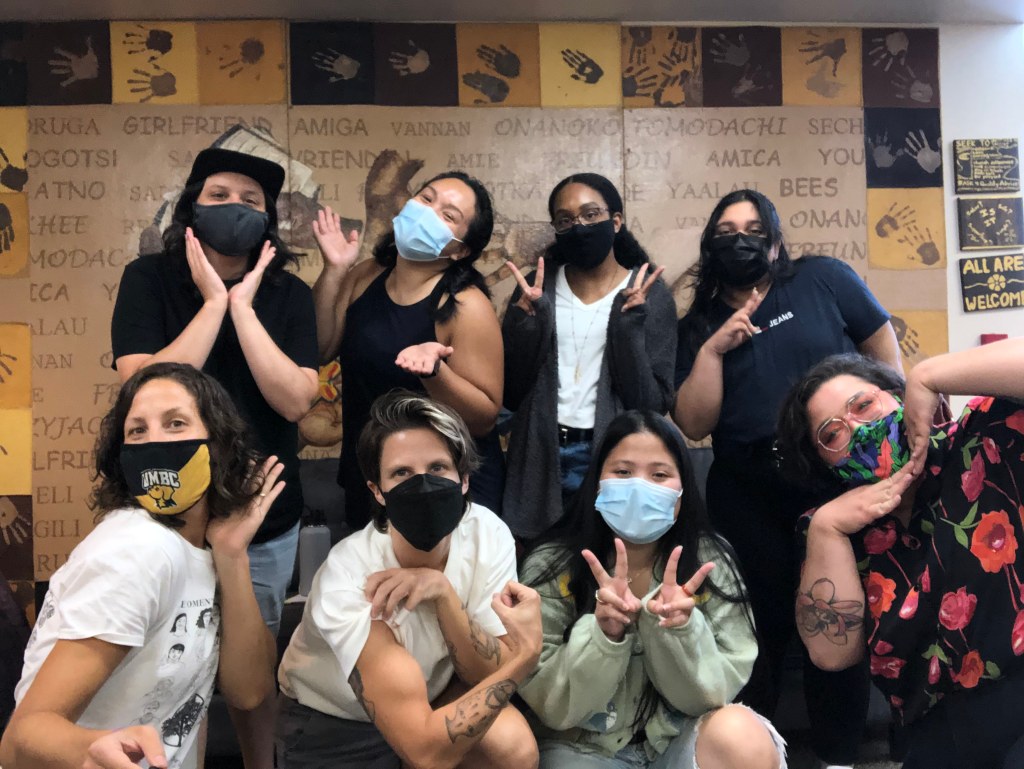 [Image Description: A group snapshot of this year’s 8 Women’s Center staff members. Four of us are standing in the background, while the other four sit in front. We’re all posing by throwing up peace signs, flexing, or doing jazz hands.]
Both image descriptions and alt text are used to describe an image or video being shared online, however, they can be displayed differently. These features are useful for a variety of reasons, for those with limited vision, language-learners, to transcribe difficult fonts, and so much more.
Usually, alt text is not visually displayed, as it primarily refers to the text added to the alt attribute within an image. In other words, alt text is embedded within an image for accessibility purposes and to be shown in the place of an image if it can’t load. Since screen readers can’t “read” an image, they read the alt text instead, passing on the information either through a Braille display or by reading it out in a synthetic voice. On platforms like Instagram and Twitter, alt text can be manually entered by selecting “advanced settings” and “+ALT” when sharing content online. When writing alt text, there are a few things you should keep in mind. There are usually character limits, so try to be short and concise! Consider the context, content, and function of the image and give a very brief description.
On the other hand, image descriptions can be lengthier and more detailed. They can be included in the main caption of a post or in a reply to the original content. When writing image descriptions, think about the reason for sharing an image and the information or message to be conveyed. If the image is a graphic, make sure to transcribe the text. If you’re sharing a picture of your funny dog, take some liberties in describing its goofy expression! You know your audience and their needs best, and the right tone to use when sharing information. Alex Chen, a product designer and writer in Chicago, recommends using a framework of object, action, and context in an attempt to stay concise while also communicating the full intent of the image. In this model, the object would be the main focus or subject of an image, the action would be what the object is doing or what is happening to it, while the context describes the surrounding environment and purpose. While these are only a few helpful pointers, image descriptions will naturally take a bit of practice and getting used to. Don’t be discouraged!
Video Captions and Video Transcriptions
So what about live video? Well, video captions divide speech transcripts using caption frames that are synchronized with the audio. These identify speakers and depict all speech and sound effects, including relevant sounds and inflections. Captions or sticker captions can be added on pre-recorded videos on some platforms such as Instagram and TikTok. Where live-streaming is possible, live captioning is typically available online with some paid services like 3playmedia. Otherwise, on Instagram specifically, auto-generated captions can be included when posting the saved video.
On the other hand, video transcriptions convert all spoken audio and information, including on-screen text and key visual information, into written textual descriptions. The main difference is that transcriptions are separate texts that aren’t synced to any audio, and can be either verbatim or clean read, the latter of which uses light edits to allow for readability.
Both captions and transcriptions are great to use when sharing video content online, and when used in conjunction with image descriptions in alt text, increase the accessibility of social media.
Other Good Practices
- When writing hashtags, use camel case: #CaptionLikeThis #notlikethis
- Place mentions and hashtags at the end of the post
- Use emojis sparingly, since each one is read out by screen readers
- Include trigger warnings and/or content warnings when sharing material that may include sensitive content for some people. Posting these warnings also empowers people to choose what they want to interact with online, or not
- It can be challenging to differentiate between low-contrast colors, so use an online high contrast color checker, such as this one by Coolors, to ensure your image is readable
- In text-based images, use one or two easy-to-read fonts, like Serif or Arial, with large text and ample spacing
Give Credit Where Credit Is Due!
When engaging with and sharing disability activists’ content online, give credit where it’s due! Follow, uplift, and take the time to reflect on what is being shared. When possible, support activists directly by financial means! Part of doing this learning is giving recognition to the people who have been taking the time to do the work of teaching disability justice. Giving credit and offering meaningful engagement are actions that can be so simple, and that go a long way in empowering others.
Just do it!
LINE friends’ Brown offers a thumbs up of encouragement.
While I’m just beginning to explore the ways I can make my online spaces more accessible, there’s still so much more for me to consider. People have advocated for baseline accessibility for a long time, so we must continue to address this and adapt to the needs of those around us. I invite readers to join me on this journey! What suggestions do you have to make social media more accessible? If these are new concepts for you, what’s one takeaway you’ll consider incorporating into your own practices? Feel free to share below in the comments or message on our social media!
We invite you to learn more about this year’s Critical Social Justice Initiative! Our next event, Crip Camp: Screening and Discussion will take place online on October 27th, from 3-6pm. If you would like to be involved in our upcoming events, subscribe to this WordPress and follow us on myUMBC.
Further Resources
]]>
Content Note: This post is written by Sara Stewart, a sophomore and student staff member at the Women’s Center. I am a non-disabled student, who, in my reading, work with CSJ, and personal...
https://womenscenteratumbc.wordpress.com/2021/10/22/creating-online-accessible-spaces/
https://my3.my.umbc.edu/api/v0/pixel/news/113552/guest@my.umbc.edu/b9a6b0984d2ac36e072e18575f903c3f/api/pixel
critical-social-justice
disability
disability-justice
disability-justice-and-neurodiversity
diversity-and-inclusion-issues
issues
social-justice
social-media
umbc
uncategorized
what-you-need-to-know
Women's, Gender, & Equity Center
https://my3.my.umbc.edu/groups/womenscenter
https://assets2-my.umbc.edu/system/shared/avatars/groups/000/000/125/78272a4842689b30dbf74672182b78f8/xsmall.png?1750974263
https://assets1-my.umbc.edu/system/shared/avatars/groups/000/000/125/78272a4842689b30dbf74672182b78f8/original.png?1750974263
https://assets1-my.umbc.edu/system/shared/avatars/groups/000/000/125/78272a4842689b30dbf74672182b78f8/xxlarge.png?1750974263
https://assets1-my.umbc.edu/system/shared/avatars/groups/000/000/125/78272a4842689b30dbf74672182b78f8/xlarge.png?1750974263
https://assets1-my.umbc.edu/system/shared/avatars/groups/000/000/125/78272a4842689b30dbf74672182b78f8/large.png?1750974263
https://assets2-my.umbc.edu/system/shared/avatars/groups/000/000/125/78272a4842689b30dbf74672182b78f8/medium.png?1750974263
https://assets1-my.umbc.edu/system/shared/avatars/groups/000/000/125/78272a4842689b30dbf74672182b78f8/small.png?1750974263
https://assets2-my.umbc.edu/system/shared/avatars/groups/000/000/125/78272a4842689b30dbf74672182b78f8/xsmall.png?1750974263
https://assets3-my.umbc.edu/system/shared/avatars/groups/000/000/125/78272a4842689b30dbf74672182b78f8/xxsmall.png?1750974263
Women's Center
3
0
false
Fri, 22 Oct 2021 15:31:35 -0400
Fri, 22 Oct 2021 15:31:35 -0400
CSJ 101 Round-Up: Disability Justice and Access Matters!
 A graphic for our first CSJ Disability Justice + Access Matters event, “CSJ 101: Disability Justice at UMBC + Beyond”
For more information on disability services at UMBC, including how to get accommodations and reporting issues of inaccessibility, please see our previous post outlining these resources.
This October, as we begin to recognize National Disability Awareness Month, we here in the Women’s Center are excited to relaunch Critical Social Justice with the theme of Disability Justice + Access Matters!
Our goal is for our conversations to build a vision of a world where all bodies are valued and essential, and where we acknowledge and affirm that other identities intersect, creating a unique lived experience. A society built on global capitalism, colonialism, and the multiple oppression of disabled people asserts everyday that people’s bodies are “expendable.” However, we work to challenge that idea and honor that everyone has inherent worth independent of their productivity or labor. As we attempt to “return to normal,” we have to reconsider who “normal” serves and take into account the lessons learned from how we have lived and survived through the pandemic. What can we do, and what should we do, to carry forward the practices of accessibility?
To kick off a year of Critical Social Justice events, we began with CSJ 101: Disability Justice at UMBC + Beyond. Leading this workshop was the Women’s Center’s own, Amelia Meman, who described for participants the current state of the disability rights movement and what disability justice means as a more radical concept.
Participants started by discussing a few definitions of disability justice and the ways it resonated with each individual. A few examples were intersectionality and the myth of a “neutral body”. The conversation then moved into highlighting some important founders of the disability justice movement, which included:
-
Patty Berne: co-founder and artistic director of Sins Invalid, a radical crip artist and activist group prioritizing queer people of color with disabilities
-
Mia Mingus: writer, educator, and trainer for transformative justice and disability justice
-
Stacey Park Milbern: a Bay Area-based organizer and disability justice thought leader
-
Leroy Moore Jr.: a Black artist, writer, poet, activist, feminist, founder of Krip Hop, and co-founder of Sins Invalid
These four figures (and several other queer and disabled activists) developed the idea of disability justice which prioritized the needs of disabled people located at the intersection of multiple identities, and thus, experience layered oppression. With this established, the discussion then illustrated a vision for disability justice (originally developed by Sins Invalid), where we recognize that:
- All bodies are considered unique and essential.
- All bodies have strengths and needs that must be met.
- Each and every person is powerful, not despite the complexities of our bodies, but because of them.
- All bodies are confined by ability, race, gender, sexuality, class, nation state, religion, and more, and we cannot separate them.
With the main founders and principles laid out, the group thought about how we do disability justice, starting with revisiting how we think about disability. The medical model of disability “others” people’s bodies by viewing them as something to be rehabilitated, fixed, or cured. Meanwhile, the social model was established to assert that disability is something born from people with impairments interacting with a society that doesn’t account for accessibility or justice in communication, interpersonal relationships, the political world, or in physical infrastructure. It is the social model which has provided the foundation for the disability justice movement, the idea that disability isn’t related to personal deficit, but that it is the result of an inaccessible society that “disables”.
Next, Amelia led the group through a few ways that allies and others with positional power can do the work to practice and leverage disability justice. This included accepting feedback and changing as necessary, learning about disability justice, considering how to use positional power to create intentional accessibility, making content and spaces accessible, and finally listening and centering disabled people’s experiences.
To wrap up CSJ 101, the group discussed their experiences with disability and access at UMBC and off-campus. Some of the experiences named by those in attendance were*:
- “I often experience the physical campus as inaccessible.”
- “Accessibility routes can be confusing and accommodations are limited for some.”
- “Ableist implicit biases inform us all. We are all unlearning ableism.”
- “I have had frustrating experiences of inconsistent communication and support.”
- “I feel like there is a general lack of understanding, compassion, and humility on the part of UMBC faculty, staff, and other students when it comes to disability access and equity, and in working with disabled students.”
- “The pandemic has made UMBC consider and vastly improve digital and remote accessibility. The hope is that these practices should not end with the effort to “return to normal,” especially since many disabled community members have required and asked for these services for a long time.”
- “We should question the nature of medicalization, and what is considered the “normal” expectation of how a person’s body should look and function in and out of the classroom.”
Just as CSJ 101 participants were left with these questions, we also urge readers and our community members to consider: “What does disability justice mean to you?” and “How will you incorporate disability justice into your life?” Even if it is through small practices such as changing vocabulary or practicing online accessibility, consider what you can do personally and in coordination with any positions of privilege to be in solidarity with the disabled community on and off-campus.
If you are interested, you can access a recording of the CSJ 101: Disability Justice at UMBC + Beyond. We also invite you to join us in our learning by attending our upcoming Critical Social Justice: Disability Justice and Access Matters events. Check out our myUMBC page and follow along by subscribing to this blog!
*Considering this was an event with a small subset of UMBC community members, these themes and personal experiences should be viewed as individual opinions. In other words, many others experiencing impairments may not share the same opinion that this campus feels inaccessible.
For those who are experiencing some level of inaccessibility or ableism, it is important to know that there are resources and offices at our UMBC with the express purpose of assisting to resolve these issues. For more information on student accommodations, please check out the Office of Student Disability Services. For more on UMBC faculty, staff, and visitor accommodations/access needs OR to make a report of an inaccessibility, please check out the Office of Accessibility and Disability Services. If you believe you are being treated unfairly because of your disability and/or impairments (or any other aspect of your social identities), please consider working with the Office of Equity and Inclusion to make a report (anonymous reporting options are also available).
]]>
A graphic for our first CSJ Disability Justice + Access Matters event, “CSJ 101: Disability Justice at UMBC + Beyond” For more information on disability services at UMBC, including how to get...
https://critsocjustice.wordpress.com/2021/10/08/csj-101-round-up-disability-justice-and-access-matters/
https://my3.my.umbc.edu/api/v0/pixel/news/118747/guest@my.umbc.edu/734225b8fa3656a377ffe8c0b91b5a72/api/pixel
critical-social-justice
csj-101
csj-disability-justice
csj-event
csj2021
reflections
social-justice
umbc
what-you-need-to-know
Women's, Gender, & Equity Center
https://my3.my.umbc.edu/groups/womenscenter
https://assets2-my.umbc.edu/system/shared/avatars/groups/000/000/125/78272a4842689b30dbf74672182b78f8/xsmall.png?1750974263
https://assets1-my.umbc.edu/system/shared/avatars/groups/000/000/125/78272a4842689b30dbf74672182b78f8/original.png?1750974263
https://assets1-my.umbc.edu/system/shared/avatars/groups/000/000/125/78272a4842689b30dbf74672182b78f8/xxlarge.png?1750974263
https://assets1-my.umbc.edu/system/shared/avatars/groups/000/000/125/78272a4842689b30dbf74672182b78f8/xlarge.png?1750974263
https://assets1-my.umbc.edu/system/shared/avatars/groups/000/000/125/78272a4842689b30dbf74672182b78f8/large.png?1750974263
https://assets2-my.umbc.edu/system/shared/avatars/groups/000/000/125/78272a4842689b30dbf74672182b78f8/medium.png?1750974263
https://assets1-my.umbc.edu/system/shared/avatars/groups/000/000/125/78272a4842689b30dbf74672182b78f8/small.png?1750974263
https://assets2-my.umbc.edu/system/shared/avatars/groups/000/000/125/78272a4842689b30dbf74672182b78f8/xsmall.png?1750974263
https://assets3-my.umbc.edu/system/shared/avatars/groups/000/000/125/78272a4842689b30dbf74672182b78f8/xxsmall.png?1750974263
Women's Center
0
0
false
Fri, 08 Oct 2021 14:04:46 -0400
Fri, 08 Oct 2021 14:04:46 -0400
Response to Events at U.S. Capitol
acknowledging and supporting you in equity and wellness
In light of the recent attack on our democracy and associated concerns of safety, University Health Services and the Counseling Center extend our support to those affected. University Health Services and the Counseling Center completely denounce the deplorable acts committed in the U.S. capitol on January 6, 2021. These violent, threatening, and racially and culturally intimidating acts are disturbing, and we must not normalize this horrifying behavior. It is not lost on us that the nature of the response to this insurrection compared to law enforcement response to peaceful protests in the past may be triggering for many. We acknowledge the impact on our community and recognize that direct or indirect exposure to such events can be troubling, concerning, or traumatizing and result in many emotional reactions, included but not limited to those of fear, astonishment, frustration, hopelessness, anger, distrust, and distraught.
Counseling Center Resources:
As always, if you are in distress, please know we are here to help. Students may contact the Counseling Center between 8 a.m. and 5 p.m., Monday – Friday at 410-455-2472. If you have mental health concerns outside of regular business hours and wish to speak with someone from our After-Hours Support Line, please call 410-455-3230. As such events can have a significant impact on our ability to self-regulate and feel safe and at peace, please utilize the self-care techniques and strategies that can be found on our Instagram and Facebook platforms at @umbccounseling.
Additional Resources:
UMBC Together Beyond Election 2020/Support and Care Resources
Managing stress related to political change
How To Cope With Trauma In A Time Of Civil Unrest
Coping After Disaster
]]>
In light of the recent attack on our democracy and associated concerns of safety, University Health Services and the Counseling Center extend our support to those affected. University Health...
https://counseling.umbc.edu/
https://my3.my.umbc.edu/api/v0/pixel/news/98368/guest@my.umbc.edu/9e04efcb28b3581cec0f5385168a76e5/api/pixel
counseling
outreach
postvention
social-justice
wellness
Counseling Center
https://my3.my.umbc.edu/groups/ucs
https://assets1-my.umbc.edu/system/shared/avatars/groups/000/000/124/efd2af1e8c77adeed83c6acbc9eb341d/xsmall.png?1585835257
https://assets3-my.umbc.edu/system/shared/avatars/groups/000/000/124/efd2af1e8c77adeed83c6acbc9eb341d/original.png?1585835257
https://assets2-my.umbc.edu/system/shared/avatars/groups/000/000/124/efd2af1e8c77adeed83c6acbc9eb341d/xxlarge.png?1585835257
https://assets4-my.umbc.edu/system/shared/avatars/groups/000/000/124/efd2af1e8c77adeed83c6acbc9eb341d/xlarge.png?1585835257
https://assets1-my.umbc.edu/system/shared/avatars/groups/000/000/124/efd2af1e8c77adeed83c6acbc9eb341d/large.png?1585835257
https://assets1-my.umbc.edu/system/shared/avatars/groups/000/000/124/efd2af1e8c77adeed83c6acbc9eb341d/medium.png?1585835257
https://assets3-my.umbc.edu/system/shared/avatars/groups/000/000/124/efd2af1e8c77adeed83c6acbc9eb341d/small.png?1585835257
https://assets1-my.umbc.edu/system/shared/avatars/groups/000/000/124/efd2af1e8c77adeed83c6acbc9eb341d/xsmall.png?1585835257
https://assets3-my.umbc.edu/system/shared/avatars/groups/000/000/124/efd2af1e8c77adeed83c6acbc9eb341d/xxsmall.png?1585835257
Counseling Center
https://assets2-my.umbc.edu/system/shared/thumbnails/news/000/098/368/20ab37bf2c9d88266407fa505cb53e5e/xxlarge.jpg?1610139852
https://assets3-my.umbc.edu/system/shared/thumbnails/news/000/098/368/20ab37bf2c9d88266407fa505cb53e5e/xlarge.jpg?1610139852
https://assets4-my.umbc.edu/system/shared/thumbnails/news/000/098/368/20ab37bf2c9d88266407fa505cb53e5e/large.jpg?1610139852
https://assets2-my.umbc.edu/system/shared/thumbnails/news/000/098/368/20ab37bf2c9d88266407fa505cb53e5e/medium.jpg?1610139852
https://assets3-my.umbc.edu/system/shared/thumbnails/news/000/098/368/20ab37bf2c9d88266407fa505cb53e5e/small.jpg?1610139852
https://assets2-my.umbc.edu/system/shared/thumbnails/news/000/098/368/20ab37bf2c9d88266407fa505cb53e5e/xsmall.jpg?1610139852
https://assets1-my.umbc.edu/system/shared/thumbnails/news/000/098/368/20ab37bf2c9d88266407fa505cb53e5e/xxsmall.jpg?1610139852
4
7
true
Fri, 08 Jan 2021 16:08:30 -0500
Learning to be anti-racist: Calling IN white people and non-Black people of color
This post is written by Amelia Meman, ’15, Assistant Director in the Women’s Center.
I am trying to write this as plainly as I can because there are so many other words that are crowding racial justice spaces and many of them are stemming from the folks who could benefit from saying less in order to listen more.
Foreword: It is valid to feel and process through your pain, but the pain felt by our Black friends, family members, and community is not the same as the pain of white folks and non-Black people of color (POC). Feelings of anger, sadness, betrayal, frustration, exhaustion—all of those things make sense because we are in a time of massive unrest (and a pandemic to boot).
More importantly, it should not be Black people’s jobs to take care of and see to your pain right now. It is also not Black folks’s jobs to hold space for you to learn, to educate you, and to explain themselves.
That’s why I’m writing this. Because the burden we are placing on Black folks in all a manner of places right now, needs to be lifted. It is crucial that we center Black voices and words and prioritize creating and maintaining safe spaces for Black-identified people to feel.
Ally is a verb.
- Being an “ally” is not a moniker that one earns through good intentions, donations, or rallies attended. You will never erase your white privilege, and just so, you will always have to work hard if you want to be an ally to the Black community.
- Being an ally is a process-oriented way of being. It means being conscious of privilege and committed to learning more about social justice. It means that allyship comes from your actions and not from endpoints. In other words, allies are made by doing—not by showing. It is a title you are always earning and always striving to do better at.
- Learn how to take feedback and correction. This work is messy and difficult. “Wokeness” does not come automatically (or ever, but that’s a different blogpost). If someone is calling you in or calling you out, especially if that person is Black-identified, listen and course-correct as needed. There’s no shame in changing your mind or letting people know you made a mistake. Feedback, the good critical kind, stems from a place of trust and care. Trust that you will do better. Care for you. Feedback takes work on both sides, and if someone is offering it to you, see it as a gift.
Check in with your people.
- If you are white-identified, check in with other white people to see where they’re at. Hold space for them to be messy and for them to be uncomfortable. Use your privilege to be tolerant of others who are at different stages of racial consciousness. Yeah, it might feel better to unfriend your middle school friend who “does not understand why you’re supporting riots,” but frankly, this is not about your own sense of comfort and curated content. This is the time to dig in your heels, put on the armor afforded by your privilege, and either defend Black folks or help that person understand why they should care about racial justice.
- If you are white-identified, check in with the POC in your lives, especially Black-identified people, and ask how you can support them. That might mean doing absolutely nothing. It might mean being okay with silence coming from the other end. It might mean donating money, giving rides, helping provide PPE for folks in marches, etc. Please offer your support and send your love, because people are hurting right now.
- If you are a non-Black POC, check in with Black-identified folks and help to create, maintain, and safeguard Black-centering spaces. Help to uplift Black voices. Ask how you can support, and, again, be okay with silence on the other end.
- As you reach out and check in, leave space for all of the ways of being. When a bad thing happens in someone’s life, we often default to problem solving and/or wanting to get someone to smile. I get it. It’s hard to watch and empathize with people who are pained. Right now, though, we do not need the reminder of silver linings, rainbows, or bright sides. Toxic positivity does not make us feel better—it does the opposite and perpetuates this idea that the only good way to be is happy. Here’s the thing: the only good way to be is how you are.
Educate yourself.
- It is not the duty of Black folks to explain themselves or this moment to you.
- Recognize that privilege and white supremacy are not just evidenced by the words we use. It is also about behavior, patterns of behavior, and the social value we give to some but not others. For example, if you are at a rally, pay attention to who grabs the microphone and what they have to say. Pay attention to the space white folks and non-Black folks take up whether through their speech or their behavior. Pay attention when a white woman’s tears are met with empathy or care, and when a Black woman’s raised voice and anger are met with eye rolls or pushback (for being “aggressive,” or “too much”). White people have access to so much more social value and acceptable behavior—pay attention to how that can dominate spaces.
- The resources to understand white privilege and the role you can play in anti-racist work are available in many different places. Below there are a list of resources that you can search through.
- Also! You do not need to know everything in order to do this work! Quality, not quantity! Frankly, the best thing you can learn to do is reorient your yourself so that you are open to feedback, open to learning more and/or changing your mind, and not having easy answers (see more on practicing cultural humility). Those paradigms do not come naturally to most people. We are acculturated to feel shame in not knowing and to hold fast to deeply entrenched beliefs, and so this work is difficult.
- There are many ways to support Black lives and do anti-racist work. It’s not always about being in the streets. It’s sometimes about taking the time to have hard conversations with friends and family who are not totally getting it yet. It might be in taking the time to read a book. It might be in journaling and reflecting on how power and privilege come to play in your life. Just like any movement or group effort, it takes as much work as it does rest and reflection.
Are your social media posts effective in creating change? Or are they performative?
- Social media messaging comes easily. It also means little to nothing beyond helping people see that you “care” about a cause. If you want to join in on hashtags and/or social media campaigns, that’s fine, but that should only be auxiliary to all of the work you can do to support Black lives. Those things include all of the recommendations in this blogpost and put more succinctly:
- Contacting government officials and those in elected office
-
Always. Be. Critically. Engaged. It can be tempting to retweet, repost, share messaging from others’ making powerful statements—BUT when you’re jumping into the trend, look at the “why” and the “who” of what is being posted.
-
Quick killjoy jab: corporations do not care about Black lives right now. They care about where you would like to put your money. Just like with human activists, look at what companies DO and NOT what they SAY.
- For a case study on this, see the origins of #BlackoutTuesday and how far it strayed from the initial campaign by Jamila Thomas and Brianna Agyemang, two black women working in the music industry.
-
Ask yourself why you are posting anything at all:
- What purpose is this message serving?
- Who is this message serving?
Solidarity is the way.
Quick preface: If you’re reading this blog, you have probably gotten to a place of understanding with the difference between “Black Lives Matter” and “All Lives Matter.” The idea of Black lives mattering does not negate others’ importance. Rather it shines a light on the discrepancy between how certain lives are valued more than others.
-
The only way through is together. This is not a feel-good statement—it is a hard truth. My survival is tied to yours and we can only do the radical work of anti-racism by understanding that solidarity is key. This means allying with causes and movements that do not necessarily center your own social identities.
-
Deepa Iyer writes about the difference between transactional and transformational solidarity practices. She uses the case study of attending a rally: in transactional solidarity, one would attend a Black Lives Matter rally in support and return home to post pictures from the rally on my social media profiles. In transformational solidarity practice, one brings friends to the rally, learns more about the historical roots of the cause you’re supporting, engages in deep and meaningful dialogue, and shows up to more rallies on and on.
-
Transformational solidarity practice stretches the activist and the movement in beneficial ways. The actions taken in this practice have the potential to create meaningful change.
I know that was a lot. If you’ve read to the end here, then you might be feeling many different things. Offended, confused, validated, relieved, upset, guilty–and that’s okay. This is the time and the space for sorting through the discomfort of anti-racist work.
Please know that I write this with as much love (albeit tough) as I can muster. I believe in you.
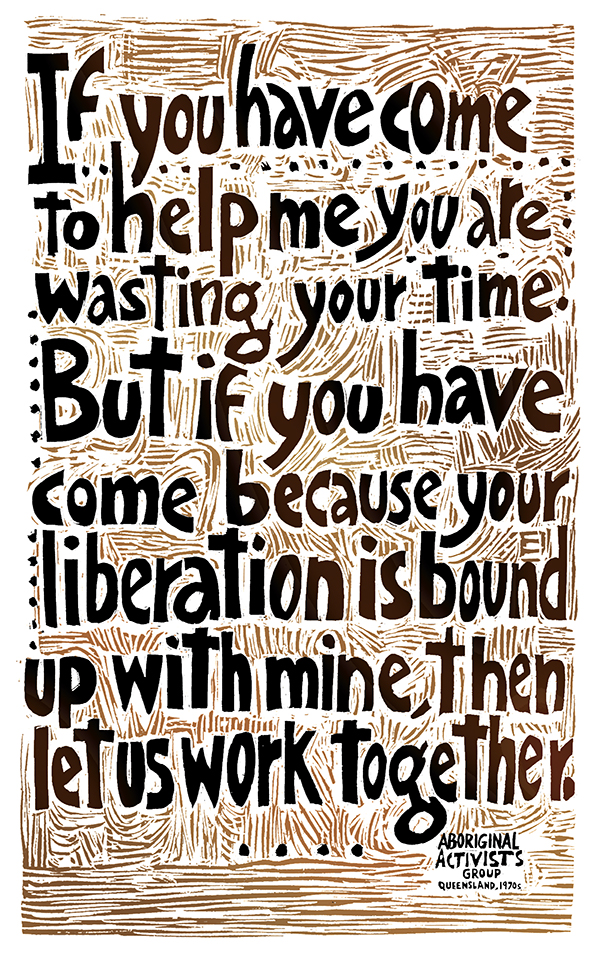
Quotation from Lilla Watson, Aboriginal Australian visual artist and activist.
Thank you to the Mosaic Center for curating many parts of the following Resources list in their recent posting on myUMBC. As UMBC’s leaders in helping our communities embrace and affirm diversity and inclusion, the Mosaic Center is more important than ever. The Women’s Center is, as ever, in close partnership and solidarity with the Mosaic, and we will always commit to that. Thank you, Mosaic Team, for all you do to make the UMBC community and our world a better place.
Resources*
* There are a lot of resources below. A lot. This work is not being timed. There is no deadline. This is a marathon, not a sprint. Many folks feel an urgency to read! All! The! Things! And yes, this work is urgent but also must be sustainable. Take breaks. Breathe. Set SMART goals when it comes to reading, learning, and digesting so as not to burn yourself out.
Books:
Readings:
Podcasts:
Collections:
Resources for white parents to raise anti-racist children:
- Books
- Podcasts
- Videos
- Follow
- The Conscious Kid: follow them on Instagram and consider signing up for their Patreon
UMBC Organizations:
More Organizations:
]]>
This post is written by Amelia Meman, ’15, Assistant Director in the Women’s Center. I am trying to write this as plainly as I can because there are so many other words that are crowding...
https://womenscenteratumbc.wordpress.com/2020/06/04/learning-how-to-be-anti-racist/
https://my3.my.umbc.edu/api/v0/pixel/news/93599/guest@my.umbc.edu/c44c63689dda49e96ceb9e586114246e/api/pixel
activism
activist
ally
allyship
anti-racist
antiracism
black-feminism
black-lives-matter
blm
diversity
higher-ed
inclusion
intersectionality
liberation
performative-activism
racial-justice
racism
resources
social-justice
solidarity
uncategorized
white-supremacy
whiteness
Women's, Gender, & Equity Center
https://my3.my.umbc.edu/groups/womenscenter
https://assets2-my.umbc.edu/system/shared/avatars/groups/000/000/125/78272a4842689b30dbf74672182b78f8/xsmall.png?1750974263
https://assets1-my.umbc.edu/system/shared/avatars/groups/000/000/125/78272a4842689b30dbf74672182b78f8/original.png?1750974263
https://assets1-my.umbc.edu/system/shared/avatars/groups/000/000/125/78272a4842689b30dbf74672182b78f8/xxlarge.png?1750974263
https://assets1-my.umbc.edu/system/shared/avatars/groups/000/000/125/78272a4842689b30dbf74672182b78f8/xlarge.png?1750974263
https://assets1-my.umbc.edu/system/shared/avatars/groups/000/000/125/78272a4842689b30dbf74672182b78f8/large.png?1750974263
https://assets2-my.umbc.edu/system/shared/avatars/groups/000/000/125/78272a4842689b30dbf74672182b78f8/medium.png?1750974263
https://assets1-my.umbc.edu/system/shared/avatars/groups/000/000/125/78272a4842689b30dbf74672182b78f8/small.png?1750974263
https://assets2-my.umbc.edu/system/shared/avatars/groups/000/000/125/78272a4842689b30dbf74672182b78f8/xsmall.png?1750974263
https://assets3-my.umbc.edu/system/shared/avatars/groups/000/000/125/78272a4842689b30dbf74672182b78f8/xxsmall.png?1750974263
Women's Center
https://assets3-my.umbc.edu/system/shared/thumbnails/news/000/093/599/700369a48f30f205d5b759c56410a804/xxlarge.jpg?1591284817
https://assets2-my.umbc.edu/system/shared/thumbnails/news/000/093/599/700369a48f30f205d5b759c56410a804/xlarge.jpg?1591284817
https://assets1-my.umbc.edu/system/shared/thumbnails/news/000/093/599/700369a48f30f205d5b759c56410a804/large.jpg?1591284817
https://assets2-my.umbc.edu/system/shared/thumbnails/news/000/093/599/700369a48f30f205d5b759c56410a804/medium.jpg?1591284817
https://assets2-my.umbc.edu/system/shared/thumbnails/news/000/093/599/700369a48f30f205d5b759c56410a804/small.jpg?1591284817
https://assets2-my.umbc.edu/system/shared/thumbnails/news/000/093/599/700369a48f30f205d5b759c56410a804/xsmall.jpg?1591284817
https://assets3-my.umbc.edu/system/shared/thumbnails/news/000/093/599/700369a48f30f205d5b759c56410a804/xxsmall.jpg?1591284817
42
0
false
Thu, 04 Jun 2020 10:06:25 -0400
Thu, 04 Jun 2020 10:06:25 -0400
Black lives matter. You matter. Endlessly and always.
The images and text below were originally shared on the Women’s Center social media pages. We’re re-sharing here to amplify the message and hold ourselves accountable to doing the work of our mission to advance gender equity and prioritize critical social justice and anti-racism.
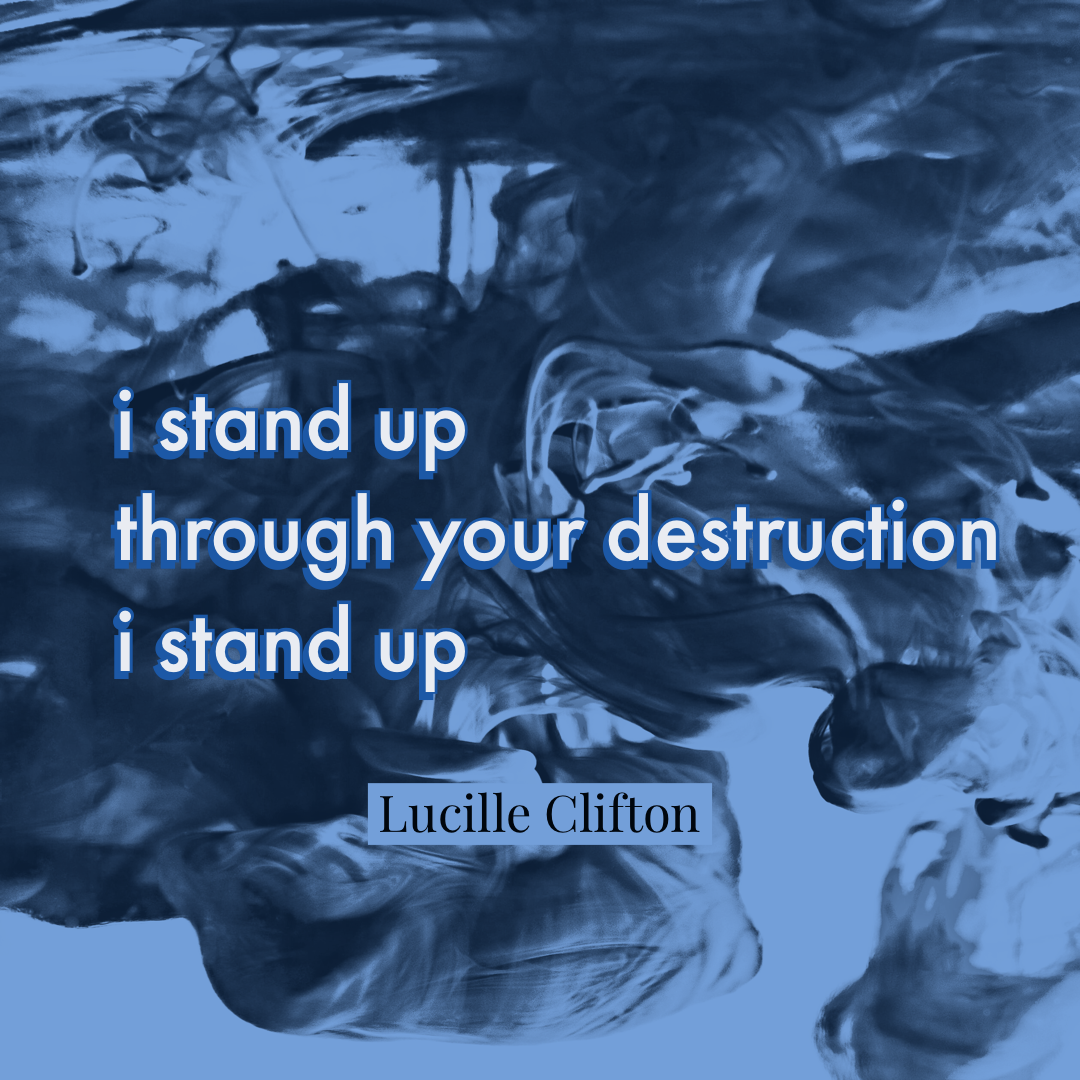
There are few things that offer peace in this time, so we turn to the words of other truth-tellers and light-bringers like poet and writer, Lucille Clifton. Her words continue to resonate through our society.
To our Black community: we lock arms in solidarity with you and we hold space for the many ways grief speaks through us. As allies and helpers and friends and family, we hope to continue defending your voices, uplifting them, and offering only belief, hope, and love.
Black lives matter. You matter. Endlessly and always.

To white and non-Black people of color: we bear witness to the visceral tangibility of white supremacy and systemic violence. It has always been here. It runs through everything—and the stark truths of oppression are made clear today. We will not turn away. We must turn towards the radical truth of our privileges and our complicity and our responsibility.
There is work yet to be done and we commit, as ever, to being in it with you.
#BLM #BlackLivesMatter #UMBCTogether

The Women’s Center is working to introduce care and healing spaces to our community and will be working with campus partners to provide additional space for healing and learning. Please follow our myUMBC page for details as they develop.
Throughout distance learning and the campus closure, the Women’s Center staff are still working remotely and are available for individualized support. If you or someone you know is seeking support to process this critical and traumatic moment in our personal and collective present, please email womenscenter@umbc.edu to set up a virtual meeting or phone call.
Images designed by Women’s Center Assistant Director, Amelia Meman.
]]>
The images and text below were originally shared on the Women’s Center social media pages. We’re re-sharing here to amplify the message and hold ourselves accountable to doing the work of our...
https://womenscenteratumbc.wordpress.com/2020/06/01/black-lives-matter-you-matter-endlessly-and-always/
https://my3.my.umbc.edu/api/v0/pixel/news/93519/guest@my.umbc.edu/16863a5d65ea20cd892c6886ab26fc90/api/pixel
black-lives-matter
blacklivesmatter
critical-social-justice
intersectionality
issues
race
social-justice
updates
Women's, Gender, & Equity Center
https://my3.my.umbc.edu/groups/womenscenter
https://assets2-my.umbc.edu/system/shared/avatars/groups/000/000/125/78272a4842689b30dbf74672182b78f8/xsmall.png?1750974263
https://assets1-my.umbc.edu/system/shared/avatars/groups/000/000/125/78272a4842689b30dbf74672182b78f8/original.png?1750974263
https://assets1-my.umbc.edu/system/shared/avatars/groups/000/000/125/78272a4842689b30dbf74672182b78f8/xxlarge.png?1750974263
https://assets1-my.umbc.edu/system/shared/avatars/groups/000/000/125/78272a4842689b30dbf74672182b78f8/xlarge.png?1750974263
https://assets1-my.umbc.edu/system/shared/avatars/groups/000/000/125/78272a4842689b30dbf74672182b78f8/large.png?1750974263
https://assets2-my.umbc.edu/system/shared/avatars/groups/000/000/125/78272a4842689b30dbf74672182b78f8/medium.png?1750974263
https://assets1-my.umbc.edu/system/shared/avatars/groups/000/000/125/78272a4842689b30dbf74672182b78f8/small.png?1750974263
https://assets2-my.umbc.edu/system/shared/avatars/groups/000/000/125/78272a4842689b30dbf74672182b78f8/xsmall.png?1750974263
https://assets3-my.umbc.edu/system/shared/avatars/groups/000/000/125/78272a4842689b30dbf74672182b78f8/xxsmall.png?1750974263
Women's Center
https://assets4-my.umbc.edu/system/shared/thumbnails/news/000/093/519/580ac0ba6b4286b3622c37f6c49e4884/xxlarge.jpg?1591033309
https://assets4-my.umbc.edu/system/shared/thumbnails/news/000/093/519/580ac0ba6b4286b3622c37f6c49e4884/xlarge.jpg?1591033309
https://assets1-my.umbc.edu/system/shared/thumbnails/news/000/093/519/580ac0ba6b4286b3622c37f6c49e4884/large.jpg?1591033309
https://assets1-my.umbc.edu/system/shared/thumbnails/news/000/093/519/580ac0ba6b4286b3622c37f6c49e4884/medium.jpg?1591033309
https://assets2-my.umbc.edu/system/shared/thumbnails/news/000/093/519/580ac0ba6b4286b3622c37f6c49e4884/small.jpg?1591033309
https://assets1-my.umbc.edu/system/shared/thumbnails/news/000/093/519/580ac0ba6b4286b3622c37f6c49e4884/xsmall.jpg?1591033309
https://assets1-my.umbc.edu/system/shared/thumbnails/news/000/093/519/580ac0ba6b4286b3622c37f6c49e4884/xxsmall.jpg?1591033309
41
0
false
Mon, 01 Jun 2020 12:45:18 -0400
Mon, 01 Jun 2020 12:45:18 -0400
B-I-N-G-O spells SCOUT…with the Women’s Center
Last semester we launched everybody’s fave, the Women’s Center Scouts! And it was really, really popular.
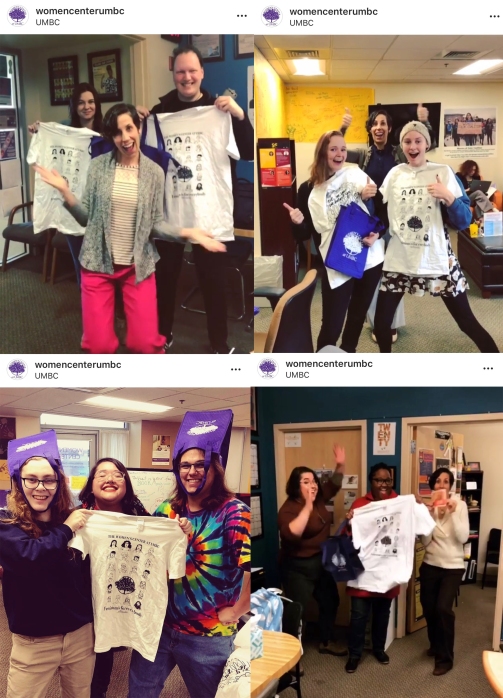
Like really popular and if you missed out you’re probably feeling a little sad right now. Well, don’t be because we’re rolling out the Women’s Center Scouts Spring Challenge!
BINGO!!!!

We still have the Women’s Center Scouts, but this semester it’ll be a little different. If you haven’t already, start by joining the Women’s Center myUMBC page and following at least one of our social media platforms (Facebook, Twitter, or Instagram). If you’re already a member and following one of our pages, great! You’re one step closer.
Now, instead of completing three different Women’s Center events throughout the semester, you’ll be racing to get a Connect 5 on our brand new bingo board (aka Punch the Patriarchy Card)!

- Attend any one Women’s Center event
- Bring a friend to the lounge and give them a tour
- Donate paper towels, tissues, or food to the Women’s Center
- Attend one program before Spring Break Attend one Women’s Center workshop
- Color a coloring page in the Women’s Center
- Bring a friend to a Women’s Center event or group
- Fill out the question of the week on the whiteboard
- Attend one Knowledge Exchange
- Make a ~new~ friend in the Women’s Center!
- Read a Women’s Center blog on womenscenteratumbc.wordpress.com and ask the author a question
- Introduce yourself to a Women’s Center student staff member and learn about their astrological sign
- Free Space (Because We Love You)
- Share a Women’s Center post or event on your social media and tag or mention us!
- Follow us on social media (Facebook | Twitter | Instagram) and comment on one of our posts!
- Attend a Women’s Center Pop Culture Pop-Up (look out for when they’re announced but they’ll always fall on Wednesdays at noon)
- Attend one discussion group (i.e. Between Women, Women of Color Coalition, Returning Women Students, or We Believe You. Not sure if the discussion group is for you? Check out our website to learn more about each group’s purpose and community).
- Attend one Sexual Assault Awareness Month (SAAM) event (calendar coming later this semester. All SAAM events will take place in April)
- Celebrate Galentine’s Day with the Women’s Center on 2/13/19
- Donate coffee or tea!
- Check out a book from the Women’s Center Library
- Bring back a book from the Women’s Center library
- Make a Take Back the Night rally sign
- Go to the Clothesline Project Display on 4/8/19 on Main Street
- Attend Trans Day of Visibility film screening on 3/27/19
A few rules! It is completely up to you to track your progress. The Punch the Patriarchy Cards are already printed and ready for you to claim in the Women’s Center. Each person’s card will stay with us at the Women’s Center front desk, but you’re welcome to take a picture to help map your moves and keep track of your progress. When you complete a square, it’s up to you to “punch” it with a pen or marker of your choice. Don’t forget to date the square when it is completed. And finally, we’ll trust you to keep a scouts honor and mark challenges you ~actually~ did complete.
Any UMBC community member who completes the challenge by May 1st gets a Women’s Center T-shirt! If you already have one, you’ll get a shout-out on our social media pages for being a stellar scout (or maybe, just maybe you might be able to get one of our awesome Take Back the Night t-shirts).

All UMBC students, faculty, and staff are welcome to participate!
IT’S BINGO TIME WOMEN’S CENTER STYLE!
For questions, stop by the Women’s Center or email us at womenscenter@umbc.edu.
]]>
Last semester we launched everybody’s fave, the Women’s Center Scouts! And it was really, really popular. Like really popular and if you missed out you’re probably feeling a little sad right...
https://womenscenteratumbc.wordpress.com/2019/02/04/b-i-n-g-o-spells-scout-with-the-womens-center/
https://my3.my.umbc.edu/api/v0/pixel/news/81820/guest@my.umbc.edu/76a1c7a9ccb1e1dd68a54805bccc1618/api/pixel
competition
current-events
events
feminism
programs
social-justice
womens-center-scouts
Women's, Gender, & Equity Center
https://my3.my.umbc.edu/groups/womenscenter
https://assets2-my.umbc.edu/system/shared/avatars/groups/000/000/125/78272a4842689b30dbf74672182b78f8/xsmall.png?1750974263
https://assets1-my.umbc.edu/system/shared/avatars/groups/000/000/125/78272a4842689b30dbf74672182b78f8/original.png?1750974263
https://assets1-my.umbc.edu/system/shared/avatars/groups/000/000/125/78272a4842689b30dbf74672182b78f8/xxlarge.png?1750974263
https://assets1-my.umbc.edu/system/shared/avatars/groups/000/000/125/78272a4842689b30dbf74672182b78f8/xlarge.png?1750974263
https://assets1-my.umbc.edu/system/shared/avatars/groups/000/000/125/78272a4842689b30dbf74672182b78f8/large.png?1750974263
https://assets2-my.umbc.edu/system/shared/avatars/groups/000/000/125/78272a4842689b30dbf74672182b78f8/medium.png?1750974263
https://assets1-my.umbc.edu/system/shared/avatars/groups/000/000/125/78272a4842689b30dbf74672182b78f8/small.png?1750974263
https://assets2-my.umbc.edu/system/shared/avatars/groups/000/000/125/78272a4842689b30dbf74672182b78f8/xsmall.png?1750974263
https://assets3-my.umbc.edu/system/shared/avatars/groups/000/000/125/78272a4842689b30dbf74672182b78f8/xxsmall.png?1750974263
Women's Center
7
0
false
Mon, 04 Feb 2019 08:30:08 -0500
Sitting with discomfort: a social justice imperative
Author’s note: The following reflection on discomfort stems from the alumni discussion the Women’s Center hosted as an introduction to Critical Social Justice keynote speaker Deanna Zandt. Throughout the day, Deanna, Yoo-jin, Susie, and I often discussed the need to contemplate feelings of discomfort that stem from uncertainty. Thank you for that inspiring and necessary conversation, friends. Let’s continue that momentum.
Over this semester, one of my mantras has been “sit with discomfort.” This has meant sitting without clear or particularly good answers for very desperate, hurt people turning to me for help and support. It’s meant holding space for tense and harmful conversations that I really don’t want to have with students. It has meant feeling inconsolably angry with a best friend. And it’s meant not having a dryer for two months. Nope, none of those things feel good, but being able to slow down and contemplate a state of anxiety has allowed me to reach new levels of knowledge, awareness, and perspective.
 Privilege and modern amenities (oft-begotten through privilege) enable us to reap the reward of instant gratification and it acculturates us to diminish all discomfort at its onset. Think about when you text your crush. You send something to this cutie asking them about their astrological sign or if they’ve seen that one Vine (RIP 6 seconds of perfection), and then you wait. You wait and you wait and you wait for their response. Sometimes you get that awful read receipt and no response or you get that blinking ellipsis and nothing. So you check your phone for any twitch or tiny breath of a ding obsessively for the next hour. That feeling? That right there is discomfort and we want that to be alleviated desperately, because–oh my god–what if she’s ALSO a pisces and we’re just going to cry a lot together in the future?
We want to alleviate discomfort at its onset and this whole feeling has been altogether alleviated by modern privileges like Amazon’s instant delivery service, Netflix’s extensive library, and the ability to get on the internet from any phone ever.
But–and hear me out–what if we didn’t always get what we wanted? What if your crush never texts back? Or what if they do text back, but in the moments where you feel discomfort you’re also being reflective about what’s going on for you?
Perhaps, in the case of your crush, you need to ask yourself why their reply is so important. Will it add value to yourself? Will it validate the feelings you have? Does it mean anything besides that fact that they were also born arbitrarily under the symbol of two fish?
Now I’m not saying all of this with the purpose of requesting that you deprive yourself of the simple pleasures of life like watching every single episode of We Bare Bears. Do that. If it makes you happy, do that. And totally feel the anxiety related to sending texts to your crush (you’re fine, a good person, you’re great, there are plenty of fish in the sea, yadda, yadda, yadda).
Rather, what I’m saying is that discomfort is a signal that I think we can pay more attention to because it designates a path for learning, catharsis, and/or growth. Not every moment of discomfort, but there are many discomforting moments, especially as we navigate a world that is not always made for us. Given that, discomfort is and can be a great teacher.
Discomfort as integral to social justice work
There are certain pieces of social justice work that just require sitting with discomfort and having the patience to slow down and not leap for the nearest possible resolution.
The root feeling of discomfort is fear. And fear is what drives prejudice. Ipso facto oppression thrives on fear-induced snap judgments. In order to unlearn the fear that we are programmed to associate with difference, we must recognize discomfort, identify the root of it, and address it. When we slow down fear and face it, yeah, it feels bad, but we are then able to start the process of changing our minds.
The following are some social justice practices and tenets that are, among many other things, predicated on uncomfortable situations.
Restorative practices
The focus of restorative practices (also “restorative justice”) is on repairing harm in a community-centered way. This looks like big circles that bring together perpetrators, victims, community advocates, and allies in a dialogue, where everyone is treated equitably. The process of doing so is, as you might imagine, riddled with discomfort materializing through very awkward and vulnerable conversations. Fundamentally, those deep and often hard questions allow us to reach for the context in the story that can help us come to empathy, generosity, and creating dynamic resolutions.
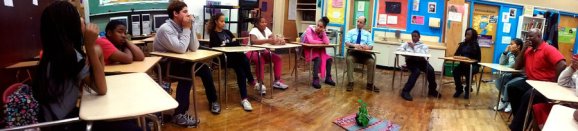
We might get into stories that involve shame or ignorance. We might be forcing a person who has done something bad to talk about that something bad to the victim. If that’s not terribly awkward, I don’t know what is; however, the cool thing about this bringing folks into an awkward feely circle is that this really works to create community-centered solutions. It works to repair harm in a way that also teaches skills to ensure that harm will not continue, and it’s a great alternative to punitive measures that often perpetuate a cycle of harm.
Cultural humility
Cultural humility is a paradigm that offers an alternative to its more popular (but less realistic) cousin, cultural competency. See, cultural competency is a means to an end founded on this idea that if we just put our minds to it and go to enough trainings, maybe we’ll understand what it is to experience racism, xenophobia, transphobia, heterosexism, anti-semitism, sexism, etc. Cultural humility, however, is predicated on process and the idea that people who are different from one another should ask more questions and be willing to admit their lack of knowledge or experience.
It’s kind of like rather than aiming to get an A in a class, you commit to lifelong learning in the subject, because you already know that there’s only so much 3 credits can train you for.
Just so, cultural humility asks us to get into situations feeling confident in the fact that we probably won’t feel confident, that we won’t always know how to move forward, and that that discomfort we’re feeling is okay. That discomfort is a key part of the process of cultural humility.
Self-care
We love to talk about self-care in the Women’s Center, but we’re also afraid that it’s become more of a buzzword and less of the radical act that Audre Lorde professes it to be. As much as we want folks, especially those who experience marginalization, to take care of themselves in the name of social justice and sustainability, we also want people to challenge themselves. It’s only through the difficult dialogues and challenging moments of life–which hit us all too often–that we are able to create paths of growth.
So maybe a conversation gets into a rough territory for you and you feel those problematic hackles starting to rise. Before you abandon ship for a very well-deserved bubble bath, maybe try to see it through? Maybe you’ll be able to see someone through a teachable moment or maybe you’ll totally fail. Either way, there’s an opportunity to learn there, and giving ourselves those moments is also a way to take care of ourselves.
Acknowledging and learning from privilege
Critical to any social justice praxis (or literally just being a good human being) is our understanding of our own privileges. Whether you’re new to this and just understanding the pervasive nature of sexism or this is old hat and you’ve been active in anti-racist work for years, this is a NEVER ENDING JOURNEY.
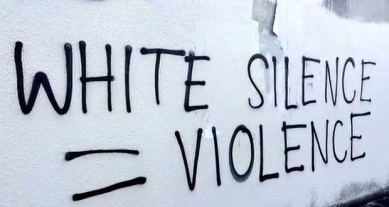
In order to be allies, we have to sit with the harm our privilege deals toward others. It is NEVER comfortable, and it should never be particularly cozy. We should always be asking those questions of: how much space am I taking up? Am I entitled to this? How will this action impact other people around me? Often the answers aren’t clear or flattering, but self-reflection and insight are critical to being a responsible and respectful ally.
Relationship-building and critical generosity
Relationship-building across difference is antithetical to oppression. Yeah, I said it. I’ll say it louder: RELATIONSHIP-BUILDING ACROSS DIFFERENCE IS ANTITHETICAL TO OPPRESSION. Did you say it louder?
And how do you think you grow closer to a person? CONFLICT THAT YOU SURVIVE.
Let’s go back. Remember way back at the beginning of this blogpost when I referred to being inconsolably angry with my best friend. The reason why I held onto that anger is because I knew that I needed to feel it before I could really clarify the problem that I was having with them. Once I was able to process, it made talking through this issue with my friend just a little bit easier (I definitely still cried, but hey, I’m a pisces).
I don’t condone ignoring your gut about the toxic people who definitely need to be yeet-ed up and out of your life. What I’m trying to get to is that I hope we can stick with the folks who make mistakes but who demonstrate that they’re willing to stick with us even when we respond with anger, sadness, disappointment.
Critical generosity is that step where we take a beat and open ourselves up to the realization that not everyone is as infallible as we want them to be. We withhold judgment about a person’s character and we continue to search for the humanity and the story that they’ve lived that has gotten them to the conclusion that they’ve gotten to. Some people might be beyond our time and energy, but there are many others who just need that room to fail or make an error and to be taken in with grace nonetheless.
And finally, discomfort is natural
Finally, nothing is black and white. We exist in the gray matter of the world. When we find conflict or tension or challenges, the reality is that there is no perfect answer in how to resolve that. There are complexities to each solution we try to make. We’re all trying really hard to get through and make those solutions work, but we don’t often get to anything resembling perfect. That’s why the discomfort is so important to listen to.
Discomfort is a part of slowing down and becoming more present. If we acknowledge it and pay attention to it, it means that we’re allowing energy to do what it does naturally which is conflict.
So next time someone inevitably does something that irks you, hurts your feelings, leaves you waiting on a text, and all you want is to crawl back in your shell and just drink hot cocoa and avoid avoid avoid, maybe just take a couple of breaths. Maybe they do indeed understand your “fr e sh a voca do” meme and they don’t think you’re weird. Or they do. Is that really awful?
Resolve to listen to yourself and honor the discomfort your feeling, and think about how maybe it is pointing you toward a new friend, journey, opportunity.
Further reading:
Fearology Pt. 1 with Mary Poffenroth from Alie Ward’s Ologies podcast
From Safe Spaces to Brave Spaces by Brian Arao and Kristi Clemens
Life hacks of the poor and aimless by Laurie Penny
Reflections on cultural humility by Amanda Waters and Lisa Asbill
Restorative Practices at UMBC
]]>
Author’s note: The following reflection on discomfort stems from the alumni discussion the Women’s Center hosted as an introduction to Critical Social Justice keynote speaker Deanna Zandt....
https://womenscenteratumbc.wordpress.com/2018/11/21/sitting-with-discomfort/
https://my3.my.umbc.edu/api/v0/pixel/news/80557/guest@my.umbc.edu/00d8c6f8b8e153b12f0774211f493e34/api/pixel
brave-space
critical-generosity
critical-social-justice
cultural-humility
praxis
privilege
radical
reflection
restorative-justice
restorative-practice
self-care
social-justice
Women's, Gender, & Equity Center
https://my3.my.umbc.edu/groups/womenscenter
https://assets2-my.umbc.edu/system/shared/avatars/groups/000/000/125/78272a4842689b30dbf74672182b78f8/xsmall.png?1750974263
https://assets1-my.umbc.edu/system/shared/avatars/groups/000/000/125/78272a4842689b30dbf74672182b78f8/original.png?1750974263
https://assets1-my.umbc.edu/system/shared/avatars/groups/000/000/125/78272a4842689b30dbf74672182b78f8/xxlarge.png?1750974263
https://assets1-my.umbc.edu/system/shared/avatars/groups/000/000/125/78272a4842689b30dbf74672182b78f8/xlarge.png?1750974263
https://assets1-my.umbc.edu/system/shared/avatars/groups/000/000/125/78272a4842689b30dbf74672182b78f8/large.png?1750974263
https://assets2-my.umbc.edu/system/shared/avatars/groups/000/000/125/78272a4842689b30dbf74672182b78f8/medium.png?1750974263
https://assets1-my.umbc.edu/system/shared/avatars/groups/000/000/125/78272a4842689b30dbf74672182b78f8/small.png?1750974263
https://assets2-my.umbc.edu/system/shared/avatars/groups/000/000/125/78272a4842689b30dbf74672182b78f8/xsmall.png?1750974263
https://assets3-my.umbc.edu/system/shared/avatars/groups/000/000/125/78272a4842689b30dbf74672182b78f8/xxsmall.png?1750974263
Women's Center
13
0
false
Wed, 21 Nov 2018 07:08:03 -0500
Wed, 21 Nov 2018 07:08:03 -0500
CSJ: Ignite 101 Round-Up!
Couldn’t attend CSJ: Ignite 101? No problem! We have all the information you need. This Round-Up was written by Women’s Center staff member Shrijana Khanal.
Critical Social Justice officially kicked off today with CSJ 101: Ignite! The presenters and leaders for this event were the Women’s Center’s very own Amelia Meman and Jess Myers. When the attendees walked in, they were welcomed with different tables which were each marked with a particular social justice issue–an affinity. The various issues included Immigration and Transnationality, Racial Justice, Economic Issues, LGBTQ Justice, Health Access and Equity, Government and Politics, Supporting Survivors of Sexual Violence, and Ecological Justice. Individuals were invited to sit at the table with the issue which most resonated with them, whether it was due to passion, curiosity, or personal ties. After everyone chose their affinity groups, Amelia began with a presentation. She began with the essential question of, “Why Critical Social Justice?” The main idea that Critical Social Justice embodies is the importance of increased inclusivity.

“Critical Social Justice grows inclusivity on UMBC’s campus by helping more people feel welcome and comfortable engaging in challenging conversations about equity and justice, across all racial and ethnic identities, genders, sexualities, political ideologies, academic fields, and life experiences.”
Every year, Critical Social Justice has a different theme, so why choose “ignite?” CSJ: Ignite is focused on building partnerships across UMBC and catering to everyone’s personal strengths in relation to social change and social justice movements. As Amelia shared, we are stronger together, and we are stronger when we work from a place of authenticity. CSJ: Ignite exemplifies how a single light cannot illuminate a whole city, but it can begin the movement that changes through the world. Amelia expanded this description by drawing a parallel to a scene in Lord of the Rings: Return of the King, where Pippin the Hobbit lights the beacon, symbolizing how UMBC is lighting the campaign of social justice activism through CSJ and invites each of us to reach out to others in the spirit of advancing social justice movements and change.

CSJ 101: Ignite was structured by first sharing examples of famous changemakers throughout history and then shifting the conversation to how we as individuals at UMBC can also become changemakers using their own strengths and interests. The examples of famous changemakers were:
- Sylvia River and Marsha P. Johnson, trans and gay liberation activists
- Kavita Krishnaswamy, a UMBC PhD candidate in computer science who increases accessibility of people with disability and seniors
- Ida B. Wells, an African-American leader, lecturer, and orator
- Audre Lorde, a black lesbian feminist writer
-
FORCE’s The Monument Quilt, an activist collective that uses art to bring attention to and change rape culture
- Drs. Kenneth and Mamie Clark, a married team who conducted psychological research on children and internalized racism and self-concept
- Maysoon Zayid, an American Muslim actress and comedian of Palestinian descent
These various examples convey how social justice can be approached through different mediums like comedy, research, art, or writing. No lens, no skill, no perspective is better than another. They are all various and necessary tools to produce social movement and change.
Afterward, individuals in each group discussed what brought them all together at that affinity table. People shared their personal identities, experiences, and motivations for being an ally. Next, everyone was asked about their visions for that cause twenty years from now. The responses for this question included a mixture of optimism and hope combined with realism and anger.

Then, we all came together as a whole and reported out what we discussed in our small groups. The next of set of questions included sharing your major and career goals along with how our individual knowledge, expertise, skills, and talents can be applied to being a social activist and changemaker. It was fascinating to hear the different majors people had and how each major could serve a purpose in social movements, whether their field of study was computer science, public health, or financial economics. In addition, people’s diverse set of skills and talents including cooking, art, and animation also applied to the concept that anyone can use their hobbies for social justice. Our roles in our communities are not limited by specific boundaries or duties: we had a great turnout of RA’s, each of whom wanted to explore resources to better serve their residential communities.
CSJ: Ignite is just the beginning! Each and every individual has the capacity and ability to become a trailblazer and light the beacon of hope, activism, and justice. For a list of other CSJ events happening this week, check out our calendar!
]]>
Couldn’t attend CSJ: Ignite 101? No problem! We have all the information you need. This Round-Up was written by Women’s Center staff member Shrijana Khanal. Critical Social Justice officially...
https://critsocjustice.wordpress.com/2018/10/22/csj-ignite-101-round-up/
https://my3.my.umbc.edu/api/v0/pixel/news/79701/guest@my.umbc.edu/88697c8fc616f3cdf29aabb15c515493/api/pixel
critical-social-justice
csj-101
csj-event
csj-ignite
reflections
social-justice
Women's, Gender, & Equity Center
https://my3.my.umbc.edu/groups/womenscenter
https://assets2-my.umbc.edu/system/shared/avatars/groups/000/000/125/78272a4842689b30dbf74672182b78f8/xsmall.png?1750974263
https://assets1-my.umbc.edu/system/shared/avatars/groups/000/000/125/78272a4842689b30dbf74672182b78f8/original.png?1750974263
https://assets1-my.umbc.edu/system/shared/avatars/groups/000/000/125/78272a4842689b30dbf74672182b78f8/xxlarge.png?1750974263
https://assets1-my.umbc.edu/system/shared/avatars/groups/000/000/125/78272a4842689b30dbf74672182b78f8/xlarge.png?1750974263
https://assets1-my.umbc.edu/system/shared/avatars/groups/000/000/125/78272a4842689b30dbf74672182b78f8/large.png?1750974263
https://assets2-my.umbc.edu/system/shared/avatars/groups/000/000/125/78272a4842689b30dbf74672182b78f8/medium.png?1750974263
https://assets1-my.umbc.edu/system/shared/avatars/groups/000/000/125/78272a4842689b30dbf74672182b78f8/small.png?1750974263
https://assets2-my.umbc.edu/system/shared/avatars/groups/000/000/125/78272a4842689b30dbf74672182b78f8/xsmall.png?1750974263
https://assets3-my.umbc.edu/system/shared/avatars/groups/000/000/125/78272a4842689b30dbf74672182b78f8/xxsmall.png?1750974263
Women's Center
4
0
false
Mon, 22 Oct 2018 16:14:17 -0400
Mon, 22 Oct 2018 16:14:17 -0400




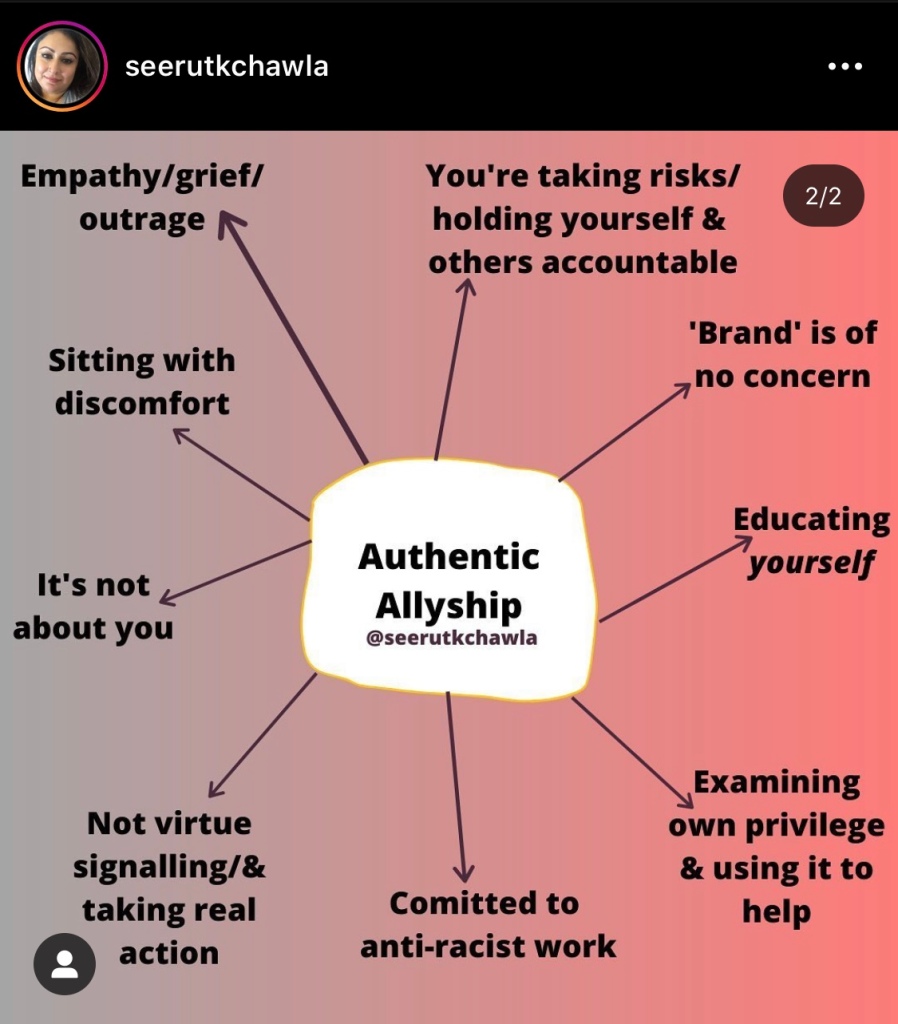 Graphic from the
 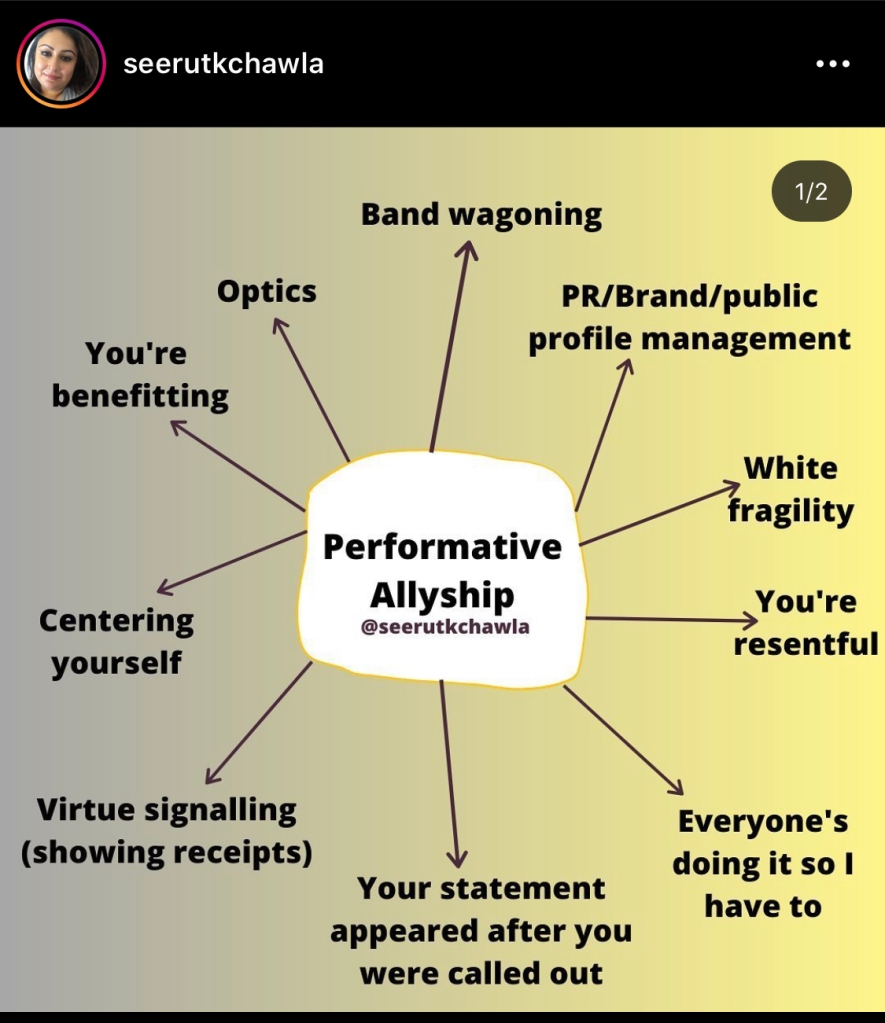 Graphic from the
  Graphic from the
 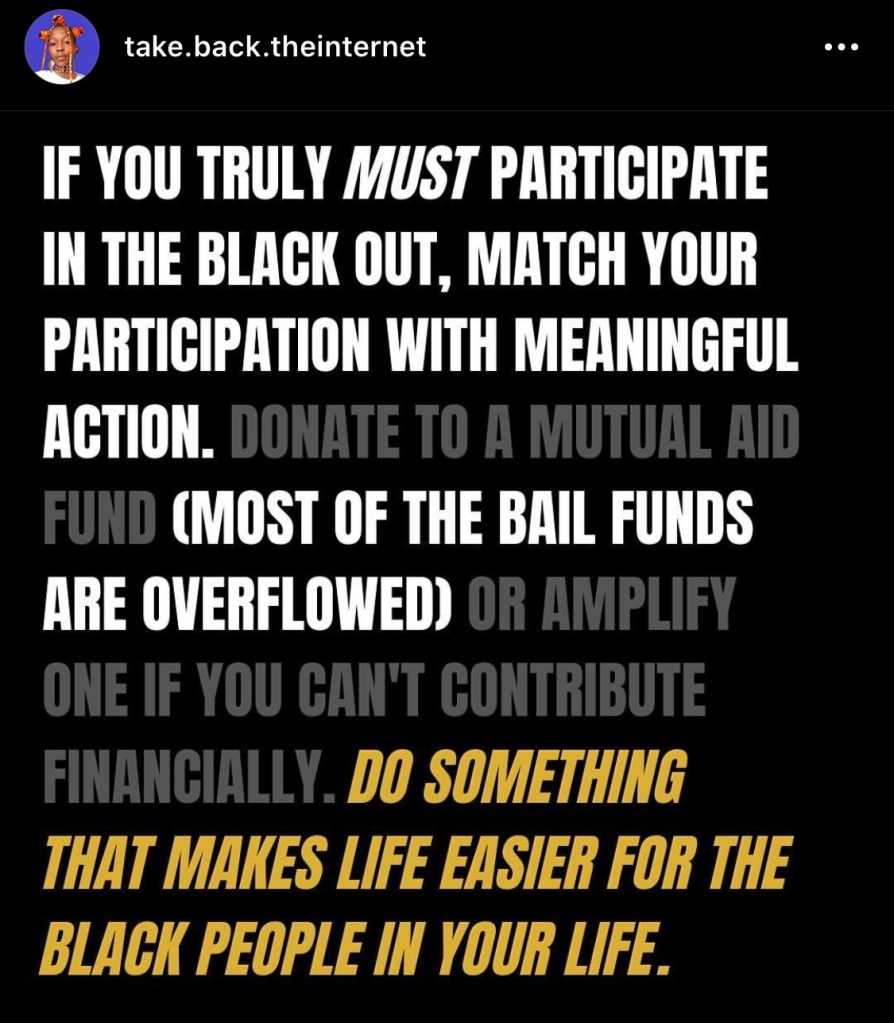 Graphic from the