Continuing On: Speaking Up
By: Margot Anthony | WGEC Student Staff Member | Social Work Student
This is going to be a continuation from my last blog post “Beginning Again.” Since creating that post I have worked to become more comfortable in my identity as a survivor of gender-based harm, specifically sexual assault.
Writing my first blog post in November and December was both emotional and cathartic. It was very emotional for me because it was a story that I had not told many people before, and definitely had not shared publicly. Writing the post was also cathartic. The feelings that I shared in the post and experience had been weighing on me heavily, and it was a relief to share it, especially being able to share it on my own terms.
After sharing my blog post I felt more calm and at peace than I had in a while. I felt like I had reclaimed something I didn’t even know I had lost. Everything that had happened to me, I had survived. And in making the post, I now realized that I had reclaimed my story.
It was after writing my blog post last semester that I decided I wanted to speak at Take Back the Night. While preparing what I was going to say during Take Back the Night I was practicing over and over.
Writing.
Re-writing.
Over and over again.
On the day of Take Back the Night, when I got up to the microphone, I was so nervous. I hadn’t realized how different it would be verbally telling my story as opposed to writing it out and sharing it. I felt like I was shaking and I wanted to floor to just swallow me whole.
I got through it. I felt like I blacked out the whole time and don’t remember most of what happened or really what I said, but I did it. What I do remember is feeling supported by those around me when I had finished speaking. Sharing my story was an amazing experience and very freeing for me.
What impacted me the most at Take Back the Night, were the people that shared after me. Not just the people who were planning to share their stories. The people who got up and shared when they were just planning to observe. Their bravery, strength, and willingness to be vulnerable inspired me.
I planned what I was going to say for months and still almost didn’t say anything. What I never considered in sharing my story, is that it would help other people share their stories as well.
What I want people to take away from this blog post and my previous post, is that there are people who will support and believe you wholeheartedly and you do not have to go through everything alone. You are stronger than you think and you have more support than you know.
I will finish off this post with the quote that I read out during Take Back the Night:
Everyone loves a survivor once [they’re] quiet. Once [they’re] soft, polite, healed. But bring up what actually happened? Talk about the abuse, the manipulation, the betrayal? Suddenly you’re too much. Bitter. Angry. Suddenly you’re the problem. The truth is – they don’t want survivors. They want silence with a pretty filter. They want your pain digestible. Not loud. Not real. So when I speak? I do it loudly. Clearly. Unapologetically. Because I wasn’t put back together just to keep everyone else comfortable. – Zenda-Lee Williams.
]]>
By: Margot Anthony | WGEC Student Staff Member | Social Work Student This is going to be a continuation from my last blog post “Beginning Again.” Since creating that post I have worked to...
https://womenscenteratumbc.wordpress.com/2026/06/10/continuing-on-speaking-up/
https://my3.my.umbc.edu/api/v0/pixel/news/160646/guest@my.umbc.edu/f07ae851f13d295baa4c4321b1444718/api/pixel
activism
sexual-assault
tbtn
umbc
uncategorized
women
womens-center-staff
Women's, Gender, & Equity Center
https://my3.my.umbc.edu/groups/womenscenter
https://assets2-my.umbc.edu/system/shared/avatars/groups/000/000/125/78272a4842689b30dbf74672182b78f8/xsmall.png?1750974263
https://assets1-my.umbc.edu/system/shared/avatars/groups/000/000/125/78272a4842689b30dbf74672182b78f8/original.png?1750974263
https://assets1-my.umbc.edu/system/shared/avatars/groups/000/000/125/78272a4842689b30dbf74672182b78f8/xxlarge.png?1750974263
https://assets1-my.umbc.edu/system/shared/avatars/groups/000/000/125/78272a4842689b30dbf74672182b78f8/xlarge.png?1750974263
https://assets1-my.umbc.edu/system/shared/avatars/groups/000/000/125/78272a4842689b30dbf74672182b78f8/large.png?1750974263
https://assets2-my.umbc.edu/system/shared/avatars/groups/000/000/125/78272a4842689b30dbf74672182b78f8/medium.png?1750974263
https://assets1-my.umbc.edu/system/shared/avatars/groups/000/000/125/78272a4842689b30dbf74672182b78f8/small.png?1750974263
https://assets2-my.umbc.edu/system/shared/avatars/groups/000/000/125/78272a4842689b30dbf74672182b78f8/xsmall.png?1750974263
https://assets3-my.umbc.edu/system/shared/avatars/groups/000/000/125/78272a4842689b30dbf74672182b78f8/xxsmall.png?1750974263
Women's Center
5
0
false
Wed, 10 Jun 2026 13:49:13 -0400
The Implementation of Title IX’s Effect on Survivors
By Claudia Gerry Social Work & Gender, Women’s and Sexuality Studies Major, Student Staff Member
Forward
This literature review was my final paper for Dr. Maria Celleri’s Methodologies in Gender, Women’s, and Sexuality Studies (GWST 300) course. I feel that this topic heavily applies to the work the Women’s, Gender, and Equity Center does. As a student staff member, I see how Title IX fails survivors, I see how it hurts survivors, and I see how it makes survivors’ lives just that much harder. I plan to continue this research and present it at URCAD 2027 in order to advocate for change not only on our UMBC campus but across the United States. So… here is a sneak peek!
Introduction
Sexual misconduct is a major problem everywhere, but specifically on college campuses. Sexual assault is defined as any form of unconsensual and unwanted sexual contact, which can include physical contact or sexual coercion (Holland & Cipriano, 2021). Sexual harassment within education is defined as behaviors sexual in nature that are “sufficiently severe, persistent, or pervasive to limit a student’s ability to participate in or benefit from the education program, or to create a hostile or abusive educational environment” (Holland & Howard Valdivia, 2026). Women and LGBTQ+ undergraduate students face the greatest risk of enduring sexual misconduct (Holland & Cipriano, 2021). Those who experience sexual assault often endure many mental health challenges and harms to their education (Holland & Cipriano, 2021), especially if they do not utilize support resources. The campus climate can foster barriers for survivors using these resources. Many survivors feel a minimization of sexual assault, fear of negative treatment, and have social-emotional concerns (Holland & Cipriano, 2021). Awareness of sexual violence is rooted in the second-wave feminist movement. But, this awareness mostly focused on the voices of white, well-educated women. There is a persistent struggle to understand the intersectionality of sexual assault (Jessup-Anger et al., 2018), even though this issue can affect every identity. This Literature review addresses how the implementation of Title IX policies affects survivors of sexual violence within higher education systems in the United States. To begin to understand this, we must know what Title IX is and how it has been implemented through time.
What is Title IX?
Title IX was passed in 1973 as part of the education amendments and is a civil rights law (Kaufman & Nelson, 2025). The main focus of this law is to prohibit sex-based discrimination in educational settings funded by the federal government (Kaufman & Nelson, 2025). Originally, the focus was set on inequality in admissions and educational opportunities, but the scope has widened since then (Kaufman & Nelson, 2025). Title IX has been used to increase access to women’s sports and require educational institutions to address sexual harassment and violence (Kaufman & Nelson, 2025). At the surface level, this law seems to help survivors of sexual assault, but in reality, it often harms the survivor more than it helps.
Every institution’s Title IX policies vary due to different levels of staffing, budget, and number of support and advocacy services. One uniform requirement across all institutions is the requirement of at least one Title IX coordinator, no matter the institution’s size (Kaufman & Nelson, 2025). The Title IX coordinator is located within the Title IX office, which at most universities is housed under the institution’s Equity and Civil Rights department.
The applications of Title IX have changed numerous times through new legislation, Office of Civil Rights (OCR) guidance, and presidential letters called Dear Colleague Letters (DCL). In 1980, Alexander v. Yale argued that sexual harassment in educational institutions constitutes sex-based discrimination under Title IX (Holland & Howard Valdivia, 2026) and is still the precedent today. The main acts passed that affect Title IX are: 1990 Clery Act, 1992 Campus Sexual Assault Victim’s Bill of Rights, 1994 Violence Against Women Act, and 2013 Campus SaVE Act. These acts mainly attempt to address funding for survivor services, requirements for prevention training, and public disclosure of crime rates.
What really affects Title IX implementation the most are DCLs. In 2011, the Obama-era DCL was released. The Obama DCL called attention to the issue of sexual violence on college campuses, reminded Higher Education Institutions (HEIs) of Title IX guidelines, and added additional recommendations. This letter classified sexual violence under the umbrella of sex discrimination under Title IX, lowered investigatory standards of proof, and made it legal to withhold funds from HEIs for not complying (Kaufman & Nelson, 2025). In 2017, the Donald Trump era DCL was released and focused heavily on concerns for the (rights of the) accused (Holland & Howard Valdivia, 2026). The Trump DCL withdrew the Obama DCL and announced new regulations. The main changes were changes in definitions of sexual violence, limited the scope of what HEIs are required to address, added more requirements for formal adjudication, and emphasized the rights of respondents over the well-being of survivors (Webermann et al., 2023). In 2024, the Title IX regulations were changed once again by Joe Biden’s administration. These regulations expanded the scope of conduct covered under the policy and for the most part were similar to 2020 but gave HEIs more discretion (Holland & Howard Valdivia, 2026). Today, we are under the 2025 DCL. This DCL edits the 2024 regulations to include that HEIs “must continue to comply with the 2020 Title IX regulations and operate under the presumption of (inaccurate) binary, biological sex” (Holland & Howard Valdivia, 2026). Overall, Title IX policies have been said to be a political football being passed around and changed with every administration. This makes Title IX regulations hard to understand for the average person. So, not everyone understands their rights and what is expected of their institutions.
Title IX in Action
A theoretical framework to understand the importance of survivors’ interactions with the Title IX Office is the theory of institutional betrayal. Both Webermann et al. (2023) and Holland and Cipriano (2021) use this framework to understand the effects of Title IX on survivors. Institutional betrayal shows the unique ways institutions can harm marginalized groups and “conceptualizes wrongdoings perpetrated by an institution when people are dependent upon the institution and can expect that it will protect its members from harm and will respond appropriately if harm is endured” (Holland & Cipriano, 2021). Students expect their institutions to take steps to restore their access to education, but when the institution fails to do so, there can be negative consequences that can include erosion of trust and belonging at the institution (Holland & Cipriano, 2021). Failures of the institution can be: failure to prevent abuse, normalizing of abusive contexts, difficult reporting procedures, inadequate responses to reports, cover-ups, misinformation, and punishing survivors (Webermann et al., 2023). Survivors who experience institutional betrayal report increased levels of psychological harm (Holland & Cipriano, 2021).Title IX overall affects survivors negatively.
First, Title IX cases are supposed to take up to 60 days to be resolved, but the average length of cases in Webermann’s study is 175.36 days (Webermann et al., 2023). Many institutions elect to have the minimum number of coordinators- one. Staffing levels in the Title IX office affect how long cases may take (Kaufman & Nelson, 2025), so many institutions’ Title IX offices are not staffed enough for every case to be resolved within the 60-day timeframe. Many survivors see major variability in the transparency of their case. Some survivors receive multiple updates and reassurances about their case, while others get little to none (Holland & Cipriano, 2021). According to Holland and Cipriano (2021), “Recent research has found that the majority of sexual assault reports to Title IX Offices do not result in formal investigations and, of those that are investigated, there is rarely a finding of ‘responsibility’”. Many survivors believe that the length of their case affected the outcomes. For example, witnesses may forget parts of their story over time or the respondent might leave the institution before disciplinary action is taken (Webermann et al., 2023).
Second, many survivors report negative treatment from the Title IX office. This negative treatment can include victim-blaming, name-calling, stalling of cases, and being told the institution can do nothing about the case. Holland and Cortina (2017a) found that of the three main support systems they examined (Title IX office, sexual assault center, and housing staff), the Title IX office was not utilized by survivors because of “negative emotions, consequences, contextual characteristics, minimization of behaviors, and alternative coping strategies”. According to Holland and Cipriano (2021), negative reactions to sexual assault disclosures can cause significant psychological harm for survivors.
Third, many survivors experience barriers in receiving support. Kaufman and Nelson (2025) found that “Too often, survivors of sexual assault do not know where to turn and do not receive the support they need despite the seemingly ‘robust’ federal legislation that seeks to address campus sexual violence”. Many survivors deliberately avoid the Title IX office due to fears of poor treatment (Holland & Cipriano, 2021). Within Webermann et al.’s (2023) study, many participants felt unclear about the Title IX reporting process and their options.
Survivors are expected to retell the worst moments of their lives numerous times, reliving it every. single. time. According to Webermann et al. (2023), the survivors in their study had to tell their stories to 2.88 different offices/individuals, not including formal grievance procedures or court procedures. If a survivor wants to make a report and seek justice, they are put in more harm. To help themselves, they have to harm themselves. “It was not just the outcome of their case that caused harm but also the process itself”(Webermann et al., 2023).
Future Steps
Due to all these reasons listed above, survivors are discouraged from standing up for themselves. Working at the Women’s, Gender, and Equity Center (WGEC) has shown me how Title IX actually operates in real life. In my personal experience, the system has failed survivors. Many survivors seek support from the WGEC, as we are a confidential space, and they do not want to bother with reporting to the UMBC Title IX office. The reasons I have heard are: knowing how the office treats other survivors, knowing how many times they will have to relive what they have gone through, concerns over social circumstances, minimization of what happened to them, and many more. With the perpetual changing of guidelines, many survivors do not understand what their institution can do for them anymore, making them give up and move on. At many institutions, there are requirements for mandatory reporting, where staff and faculty are required to report sexual misconduct disclosures to the Title IX office. Many staff and faculty are in the same boat of confusion about what the guidelines are, leading individual reporters to either report too much or too little. In my experience, professors are not trained on what is to be reported and what happens to the student after a report is filed. This leaves students cautious about talking about their experiences in fear of being non-consensually reported.
Many changes need to be made in order to ensure the success of survivors. First, there needs to be an implementation of an oversight committee to ensure the Title IX office acts swiftly, equitably and with accountability (Holland & Cipriano, 2021). This committee could also oversee trauma-informed training for Title IX Office staff and mandated reporters. “Using formal supports that are trauma-informed and survivor-centered can promote psychological well-being for survivors” (Holland & Cipriano, 2021). Second, there needs to be an effort to address the root cause of sexual violence instead of focusing on the aftereffects. “Although most universities comply with Title IX, many side-step confronting the root causes of normalized sexual violence and avoid teaching the realities of campus sexual violence, leaving students confused, isolated, and unsure of how to address the trauma that they or their friends experience”(Kaufman & Nelson, 2025). Third, to address institutional betrayal, we must flip it to institutional support. This can include “supportive responses from individuals within institutions to survivors, such as believing them, apologizing for their experiences, connecting them with resources, and providing autonomy in what happens after reporting”(Webermann et al., 2023). Lastly, frontline workers within the survivor support services need more say in the implementation of Title IX. “Oftentimes, frontline workers, such as victim advocates, are absent from the policy table, yet this article underscores the importance of their positionality and experiences for addressing vulnerabilities in the campus sexual violence intervention system”(Wies, 2015).
Conclusion
Ultimately, under the system we have set in place, Title IX is failing survivors of sexual violence in HEIs in the United States. Survivors are expected to advocate for themselves when their words have been ignored in the past. The Title IX office worries too much about getting sued by the respondent to bring justice for the survivor. Survivors experience major mental health and educational challenges even though Title IX is supposed to ensure equal access to education. If a survivor reports their institution for violation of Title IX policy, the report can take years to process, so Title IX offices are not held accountable. This is why we need to change the policy ONE last time. Modifying Title IX every few years only causes more confusion. We need to support survivors. Survivors need to feel supported, seen, and heard by their institutions.
References
Brubaker, S. J., Keegan, B., Guadalupe-Diaz, X. L., & Beasley, B. (2017). Measuring and reporting campus sexual assault: Privilege and exclusion in what we know and what we do. Sociology Compass, 11(12), e12543. https://doi.org/10.1111/soc4.12543
Holland, K. J., & Cipriano, A. E. (2021). Does a report = support? A qualitative analysis of college sexual assault survivors’ Title IX Office knowledge, perceptions, and experiences. Analyses of Social Issues and Public Policy, 21(1), 1054–1081. https://doi.org/10.1111/asap.12271
Holland, K. J., & Cortina, L. M. (2017a). “It Happens to Girls All the Time”: Examining Sexual Assault Survivors’ Reasons for Not Using Campus Supports. American Journal of Community Psychology, 59(1-2), 50–64. https://doi.org/10.1002/ajcp.12126
Holland, K. J., & Cortina, L. M. (2017b). The evolving landscape of Title IX: Predicting mandatory reporters’ responses to sexual assault disclosures. Law and Human Behavior, 41(5), 429–439. https://doi.org/10.1037/lhb0000253
Holland, K. J., & Howard Valdivia, R. L. (2026). Title IX and Sexual Violence in Higher Education: A Mapping Review and Assessment of Policy Implementation and Effectiveness. The Journal of Sex Research, 1–19. https://doi.org/10.1080/00224499.2026.2623649
Jessup-Anger, J., Lopez, E., & Koss, M. P. (2018). History of Sexual Violence in Higher Education. New Directions for Student Services, 2018(161), 9–19. https://doi.org/10.1002/ss.20249
Kaufman, S. B.-S., & Nelson, L. (2025). Interpreting title IX: A feminist legal geography of sexual assault prevention on U.S. college campuses. Political Geography, 116(5), 103252. https://doi.org/10.1016/j.polgeo.2024.103252
Webermann, A. R., Holland, K. J., & Murphy, C. M. (2023). Student Experiences Reporting Sexual and Gender-Based Misconduct to the Title IX Office at a Public State University. Violence against Women, 30(6-7), 107780122211502. https://doi.org/10.1177/10778012221150274
Wies, J. R. (2015). Title IX and the State of Campus Sexual Violence in the United States: Power, Policy, and Local Bodies. Human Organization, 74(3), 276–286. https://doi.org/10.17730/0018-7259-74.3.276
]]>
By Claudia Gerry Social Work & Gender, Women’s and Sexuality Studies Major, Student Staff Member Forward This literature review was my final paper for Dr. Maria Celleri’s...
https://womenscenteratumbc.wordpress.com/2026/05/30/the-implementation-of-title-ixs-effect-on-survivors/
https://my3.my.umbc.edu/api/v0/pixel/news/160449/guest@my.umbc.edu/3a509ba1a892eceaa8295d5a7f9c8a7c/api/pixel
activism
critical-social-justice
feminism
higher-education
politics
sexual-assault
social-justice
staff
survivors
survivors-of-sexual-violence
title-ix
umbc
womens-center-staff
writing
Women's, Gender, & Equity Center
https://my3.my.umbc.edu/groups/womenscenter
https://assets2-my.umbc.edu/system/shared/avatars/groups/000/000/125/78272a4842689b30dbf74672182b78f8/xsmall.png?1750974263
https://assets1-my.umbc.edu/system/shared/avatars/groups/000/000/125/78272a4842689b30dbf74672182b78f8/original.png?1750974263
https://assets1-my.umbc.edu/system/shared/avatars/groups/000/000/125/78272a4842689b30dbf74672182b78f8/xxlarge.png?1750974263
https://assets1-my.umbc.edu/system/shared/avatars/groups/000/000/125/78272a4842689b30dbf74672182b78f8/xlarge.png?1750974263
https://assets1-my.umbc.edu/system/shared/avatars/groups/000/000/125/78272a4842689b30dbf74672182b78f8/large.png?1750974263
https://assets2-my.umbc.edu/system/shared/avatars/groups/000/000/125/78272a4842689b30dbf74672182b78f8/medium.png?1750974263
https://assets1-my.umbc.edu/system/shared/avatars/groups/000/000/125/78272a4842689b30dbf74672182b78f8/small.png?1750974263
https://assets2-my.umbc.edu/system/shared/avatars/groups/000/000/125/78272a4842689b30dbf74672182b78f8/xsmall.png?1750974263
https://assets3-my.umbc.edu/system/shared/avatars/groups/000/000/125/78272a4842689b30dbf74672182b78f8/xxsmall.png?1750974263
Women's Center
2
0
false
Sat, 30 May 2026 21:37:55 -0400
It’s Not “Just About Chicken”
By: Bekkah West, Social Work Major & WGEC Intern, Psychology Minor
Growing up, I did not understand the gravity of how symbols of hate could tangibly impact a person; how they justify violence, hostility, stigma, and prejudice. You can attribute that to my ignorance, privilege, the developing brain, social conditioning, the predominantly white, rural, and conservative area I grew up in. Whatever the root may be, what is important is that I do now (and have for some time) grasp how crucial it is to not just spout promises of inclusivity and diversity, but to do your best to prove it in action through various means, like through curating a culturally responsive physical environment or following through on committing to advocating for those who are marginalized—or at the very least, not putting them in harm’s way. I fear we as an institution are failing the LGBTQIA2S+ population we serve and our value of inclusive excellence by allowing private corporations such as Chick-fil-A to establish ground here and profit off our student body who may have to compromise their morals and/or sense of safety for an edible meal. It is not “just about chicken” and it is quite literally that deep; or perhaps only as deep as people feel comfortable exploring themselves, their values, and living them fully.
To give a little background for those who may not know, along with over a dozen employment discrimination filings between 1988 and 2007, Chick-fil-A has a long and extensive history opposing gay marriage, publicly denying the validity of the LGBTQIA2S+ community, and donating millions to various organizations set on endangering this population by denying them their human rights and legal protections. Such organizations include the American Family Association (AFA), the Family Research Council (FRC), Exodus International, the Salvation Army, and the Marriage & Family Foundation. The company attempts to conceal their heterosexist views and intentions through the veil of conservative, Christian principles. CEO, Dan Cathy incited protests in 2012 nationwide for encouraging the “biblical definition of the family unit.” It was not until around seven to eight years later that the bad press and pressure would fold Cathy, at least in part, with him officially announcing his discontinuation of donations to organizations with “political agendas.”
In all reality, Dan Cathy just stopped publicly donating to hateful organizations and instead created a private arm of Chick-fil-A, “WinShape”, where he donates to others such as the National Christian Charitable Foundation, who actively opposes the Equality Act, which could amend the current laws to protect LGBTQIA2S+ individuals from discrimination based on how they identify or what their sexual orientation may be. This was only discovered after financial reports were released, and Chick-fil-A and its affiliates appear to continue to dodge any real answers to questioning on these deceitful means of abating public disapproval. Without this as public of an issue as it once was, people may not know that they are still giving their money to a company that has every intention of investing in the devaluing and oppression of the LGBTQIA2S+ community. This is where you, like I once did in my teens, may be thinking to yourself that your individual contribution could not possibly make a difference in the grand scheme of things. This is also where I was, and you very well could be, perpetrating harm unintentionally, in complacency. Just as we see, at times, in our country’s voting process, or in action and lack of consistent progress toward any other pertinent social issue that does not typically impact the majority and/or one directly.
This shortfall in collective action by our campus community can mean Chick-fil-A’s presence on campus leaves some LGBTQIA2S+ students feeling rejected, unsafe, and/or at the very least, uncomfortable. This company is a national symbol of violent discrimination, conversion therapy, trauma, abandonment, and anti-LGBTQIA2S+ rhetoric. Their existence says to LGBTQIA2S+ community members that you are never fully protected or accepted here, in this world, even with offices set up specifically for your population on the exact same campus. It says, a chicken sandwich holds more weight to this institution than the rights and sentiments of the LGBTQIA2S+ students, staff, faculty, and allies on this campus. How can one feel comfortable expressing their true selves fully, with safety and dignity, on a campus that would proudly set such an establishment up—one that vehemently denies their right to exist and love as they please? To overlook this would go against much of what UMBC’s mission and vision is.
This discussion cannot be had without the acknowledgement that 1) there is no entirely ethical consumption under capitalism and 2) there are people of low-SES who may not have a choice between eating what is available and choosing something more ethical. It is a privilege to be able to consume ethically nowadays. That said, there are ways of minimizing harm that we should all try our best to accomplish. There are many different on- and off- campus options outside of Chick-fil-A, and many potential opportunities to partner with new companies, local and otherwise, of equal or lesser cost to the institution. Redirecting funds to finding other non-discriminatory options and the university upholding its statements on inclusion and social justice is possible, shown through many other college campus experiences across the country, and even here in Maryland, such as at St. Mary’s College. We should hold our partners to the same standards we hold ourselves and our community.
There are many ways we can come together as a community to resolve this issue, and I encourage fellow students at UMBC to think about and engage in these ways, if possible. Organizing a campus forum, where students, staff, faculty, dining services, and other administrators can make their voices heard would be valuable. Petitions could be started to collect signatures for the partnership to be discontinued. The Student Government Association could potentially get involved, structuring this in a way that is sound and getting people together in a concentrated effort. Educating each other on the dishonest and harmful background of Chick-fil-A is crucial, as well, even if it can be uncomfortable—your cisgender and heterosexual peers will never know what it is like to have to worry about being and/or feeling victimized in this way.
I am making a call for action not just as an advocate to the LGBTQIA2S+ community or because it is the right thing to do, but as an identifying member myself. We should follow in former Washington D.C. mayor Vincent C. Gray’s footsteps, letting Chick-fil-A know it is not welcome in our city, dubbing it “hate chicken.” Do not get me wrong, I do not think poorly of the students and staff who work hard every day to serve students food at Chick-fil-A here on campus, as they may just need the income, location, and a schedule that works for them. There are larger powers at play here who are more responsible for creating an inclusive and socially just environment for said people to work within. What I believe was part of my responsibility was to bring attention to this issue, firstly, and now to observe how my community will move with me from here. Similar attitudes have been shared with me on campus in the last year and a half I have been here, and I am grateful to have a platform to bring light to such concerns.
]]>
By: Bekkah West, Social Work Major & WGEC Intern, Psychology Minor Growing up, I did not understand the gravity of how symbols of hate could tangibly impact a person; how they justify...
https://womenscenteratumbc.wordpress.com/2025/12/15/its-not-just-about-chicken/
https://my3.my.umbc.edu/api/v0/pixel/news/155330/guest@my.umbc.edu/8053fe57ee658a57e7d76d37549adab2/api/pixel
activism
community
critical-social-justice
diversity
diversity-and-inclusion-issues
inclusion
social-justice
staff
student-life
umbc
Women's, Gender, & Equity Center
https://my3.my.umbc.edu/groups/womenscenter
https://assets2-my.umbc.edu/system/shared/avatars/groups/000/000/125/78272a4842689b30dbf74672182b78f8/xsmall.png?1750974263
https://assets1-my.umbc.edu/system/shared/avatars/groups/000/000/125/78272a4842689b30dbf74672182b78f8/original.png?1750974263
https://assets1-my.umbc.edu/system/shared/avatars/groups/000/000/125/78272a4842689b30dbf74672182b78f8/xxlarge.png?1750974263
https://assets1-my.umbc.edu/system/shared/avatars/groups/000/000/125/78272a4842689b30dbf74672182b78f8/xlarge.png?1750974263
https://assets1-my.umbc.edu/system/shared/avatars/groups/000/000/125/78272a4842689b30dbf74672182b78f8/large.png?1750974263
https://assets2-my.umbc.edu/system/shared/avatars/groups/000/000/125/78272a4842689b30dbf74672182b78f8/medium.png?1750974263
https://assets1-my.umbc.edu/system/shared/avatars/groups/000/000/125/78272a4842689b30dbf74672182b78f8/small.png?1750974263
https://assets2-my.umbc.edu/system/shared/avatars/groups/000/000/125/78272a4842689b30dbf74672182b78f8/xsmall.png?1750974263
https://assets3-my.umbc.edu/system/shared/avatars/groups/000/000/125/78272a4842689b30dbf74672182b78f8/xxsmall.png?1750974263
Women's Center
16
0
false
Mon, 15 Dec 2025 16:14:37 -0500
Mon, 15 Dec 2025 16:14:37 -0500
The Science of Care: How Feminism Shaped the Way I See the Brain
By: Ashwathi Menon, Bioinformatics & Public Health Major
When I first entered the world of neuroscience lab work, science seemed to be all about being objective: clean lines, sharp corners, and no emotion involved whatsoever. It all seemed to point to the notion that too much emotion clouds one’s vision; you didn’t want emotion near your microscope. But as I stood at my lab bench operating my RT-PCRs on rat hypothalamus samples, it hit me just how much emotion was already infused into everything we did. It takes patience to accurately pipette one perfect microliter of liquid. It takes collaboration to run repeated tests. It takes the knowledge and obligation to know your own scientific pursuits may one day impact an individual’s life; the entire point being care is not the opposite of science but its pulse instead.
This is not something one can read in books or lectures. It is something my grandmother taught me: my Achamma. She suffered from a stroke just over a year ago, and since then, I have been assisting my family with her care. Watching her relearn to move her arm or to pronounce a few words sparked my own interest in the same paths inside her mind because these paths looked just like what we discussed and viewed in class, but instead of graphs or PowerPoint presentations, they were hers.
In science, we’re expected to measure everything: voltage, pH levels, and reaction time. But there is no measuring the act of holding someone’s hand while they forget your name, or the strength required to continue to come back to them anyway. This is the kind of labor women have always done. Unacknowledged labor, uncounted labor, but vital labor nonetheless. It is this kind of labor, the kind of labor devalued by society as care, that fuels scientific progress itself. This is one thing feminism helped me recognize.
As someone who works in scientific research, I have been struck by how often science attempts to polarize emotion and intellect. You’re legitimate if you’re logical, but weak if you’re empathetic. But beyond just hurting women in science, this kind of false dichotomy also hurts science itself. The questions we ask in scientific research come from who we are. When more women, and especially women of color, enter science, we bring questions that have never before been asked.
One thing feminist theory often addresses is “ethics of care,” because care is not something to be scorned but rather something to do with moral and intellectual power. This is what I think of every time I go to lab work. This is what I do every time I label a vial of cells or give a presentation or stand up to talk about my findings: practice care for my field and help to transform it from something that once made me feel small to something that contains care.
When I first embarked on my research internship at the Walter Reed Army Institute of Research, I noticed that I was among the youngest individuals in the lab setting. And yes, I recall wondering whether my voice would really carry any weight or whether anyone would take me seriously at all. But every time I decided to speak out or share my thoughts on whether to use this or that approach, I realized that confidence didn’t lie in being loud but in being anchored to my values instead. And this is something feminism showed me before science did.
It is to walk a high wire between precision and patience, between brains and intuition, and between being strong and being soft. But it seems to me now that these things are no longer on one side or the other of any kind of divide. The most excellent scientific minds happen to approach things whole-brained or whole-hearted, asking “who” questions. Who is helped? Who is hurt? Who is not being allowed to participate in this conversation?
At times, I wonder what my Achamma would have thought if she were to witness me now in my lab setting, my gloved hands steady and strong around my work involving data and fluorescence. But she would smile and remark matter-of-factly, “You’re still taking care of people.” And she would be right because science is nothing but another expression of “caring for others” or our “world” around us.
Perhaps care itself is not what serves as a distraction from science but is rather what makes science human. Perhaps future generations of women pursuing science can forget having to choose between being kind and being smart because we have always been both.
]]>
By: Ashwathi Menon, Bioinformatics & Public Health Major When I first entered the world of neuroscience lab work, science seemed to be all about being objective: clean lines, sharp...
https://womenscenteratumbc.wordpress.com/2025/12/11/the-science-of-care-how-feminism-shaped-the-way-i-see-the-brain/
https://my3.my.umbc.edu/api/v0/pixel/news/155248/guest@my.umbc.edu/b437b4d9e5a5f190b47ebaa15b52bfe7/api/pixel
activism
diversity
feminism
life
research
science
social-justice
staff
student-life
umbc
womens-center-staff
writing
Women's, Gender, & Equity Center
https://my3.my.umbc.edu/groups/womenscenter
https://assets2-my.umbc.edu/system/shared/avatars/groups/000/000/125/78272a4842689b30dbf74672182b78f8/xsmall.png?1750974263
https://assets1-my.umbc.edu/system/shared/avatars/groups/000/000/125/78272a4842689b30dbf74672182b78f8/original.png?1750974263
https://assets1-my.umbc.edu/system/shared/avatars/groups/000/000/125/78272a4842689b30dbf74672182b78f8/xxlarge.png?1750974263
https://assets1-my.umbc.edu/system/shared/avatars/groups/000/000/125/78272a4842689b30dbf74672182b78f8/xlarge.png?1750974263
https://assets1-my.umbc.edu/system/shared/avatars/groups/000/000/125/78272a4842689b30dbf74672182b78f8/large.png?1750974263
https://assets2-my.umbc.edu/system/shared/avatars/groups/000/000/125/78272a4842689b30dbf74672182b78f8/medium.png?1750974263
https://assets1-my.umbc.edu/system/shared/avatars/groups/000/000/125/78272a4842689b30dbf74672182b78f8/small.png?1750974263
https://assets2-my.umbc.edu/system/shared/avatars/groups/000/000/125/78272a4842689b30dbf74672182b78f8/xsmall.png?1750974263
https://assets3-my.umbc.edu/system/shared/avatars/groups/000/000/125/78272a4842689b30dbf74672182b78f8/xxsmall.png?1750974263
Women's Center
3
0
false
Thu, 11 Dec 2025 12:00:36 -0500
Thu, 11 Dec 2025 12:00:36 -0500
Home, Home Again
by Katlynn Seghetti!
Or, a gentle recap of an endlessly busy semester, and a philosophy of activism
One of the main struggles people have getting involved with activism is getting started, knowing where to go, what your strengths are, and how long you can keep going. Ironically, I’m having the same issue with this blog post. At the beginning of the semester, I had a grand plan of detailing a long list of things I’ve done, and providing places for readers to go to get involved. Coming up to the end, I’ve been struggling with the concept of being ‘done’.
What have I ‘done’? What ‘counts’ as success? Everyone around me is so affirming that Good Things Have Happened because of my work, which I know, logically, is true. There is still a part that feels like the work is incomplete, and the perfectionist in me doesn’t like incomplete endings.
But, that’s really what you have to do, make sure the project continues after you leave it. Activism that can continue is the goal, and inspiring others to take your place (and, of course, change it up in their unique way). What I hope I’ve done, if the title is any indication, is helping make UMBC feel more like a ‘home’ for neurodivergent folk. Home is a loaded word, in my mind, but the ‘home’ I want is one rooted in support and care; unconditional and enduring. A ‘home’ is something you feel comfortable leaving and coming back to, even if you don’t have a reason why.
A lot of firsts happened this semester: the UMBC Neurodiversity Club, Headspace’s creation, and other events centering neurodivergent people. I know, without a doubt, I’ve done well. But I could do more. Another year as an undergrad student, and I can iron out the details, make better what’s in place, another B.A, do a real GWST capstone project around autism.
Then I think, “and then what”? With activism, it seems like you will always find more work. It simply will just be there. What hits harder now, is that with RFK Jr. as head of HHS, and his apparent disdain for the lives of autistic people, the feeling of not doing ‘enough’ is heavy. Part of this is likely fear because of chronic illnesses, wanting to make sure I do good while my body is still (relatively) in decent shape. I know UMBC has so many students willing to cause some trouble, and they (you) will keep up the move to a more (neuro)diversity-affirming world. We are far from being a ‘home’ yet, but there’s attention on where we’re struggling, and more space has been intentionally carved out for us.
I thought it would be clever to leave this off on an unsatisfying conclusion, but I think instead, I’ll leave off with a few significant organizations that I found so helpful (and most are run but autistic individuals!)!
- Autistic Self Advocacy Network (ASAN)
- Embrace Autism (Link)
- UMBC SDS 101 Page (Link)
- Autistic People of Color Fund (APOC)
- Autistic Women & Nonbinary Network (AWN)
Please, get involved with the neurodivergent community in some way, especially if you aren’t. It will be odd, it will feel uncomfortable, but that is how you know you’re learning and unlearning and relearning. Take care of yourselves, and a reminder that activism can look like anything, loud and quiet, big and small!
]]>
by Katlynn Seghetti! Or, a gentle recap of an endlessly busy semester, and a philosophy of activism One of the main struggles people have getting involved with activism is getting...
https://womenscenteratumbc.wordpress.com/2025/05/19/home-home-again/
https://my3.my.umbc.edu/api/v0/pixel/news/150282/guest@my.umbc.edu/80bc66cada91d389516e335881035918/api/pixel
activism
autism
autistic
mental-health
neurodivergent
neurodivergent-students
neurodiversity
social-justice
umbc
uncategorized
Women's, Gender, & Equity Center
https://my3.my.umbc.edu/groups/womenscenter
https://assets2-my.umbc.edu/system/shared/avatars/groups/000/000/125/78272a4842689b30dbf74672182b78f8/xsmall.png?1750974263
https://assets1-my.umbc.edu/system/shared/avatars/groups/000/000/125/78272a4842689b30dbf74672182b78f8/original.png?1750974263
https://assets1-my.umbc.edu/system/shared/avatars/groups/000/000/125/78272a4842689b30dbf74672182b78f8/xxlarge.png?1750974263
https://assets1-my.umbc.edu/system/shared/avatars/groups/000/000/125/78272a4842689b30dbf74672182b78f8/xlarge.png?1750974263
https://assets1-my.umbc.edu/system/shared/avatars/groups/000/000/125/78272a4842689b30dbf74672182b78f8/large.png?1750974263
https://assets2-my.umbc.edu/system/shared/avatars/groups/000/000/125/78272a4842689b30dbf74672182b78f8/medium.png?1750974263
https://assets1-my.umbc.edu/system/shared/avatars/groups/000/000/125/78272a4842689b30dbf74672182b78f8/small.png?1750974263
https://assets2-my.umbc.edu/system/shared/avatars/groups/000/000/125/78272a4842689b30dbf74672182b78f8/xsmall.png?1750974263
https://assets3-my.umbc.edu/system/shared/avatars/groups/000/000/125/78272a4842689b30dbf74672182b78f8/xxsmall.png?1750974263
Women's Center
5
0
false
Mon, 19 May 2025 12:46:12 -0400
Mon, 19 May 2025 12:46:12 -0400
From Texas to Maryland and Back Again
“We shall not cease from exploration, and the end of all our exploring will be to arrive where we started and know the place for the first time.” – T.S. Eliot
It’s 2021, senior year of high school, and as the COVID-19 pandemic continues to surge we sit anxiously at our computers awaiting responses from the universities and colleges we’ve applied to. Few students dare to break from tradition, choosing instead to follow the well-trodden paths of their parents, grandparents, siblings, or cousins. In Texas—especially at this small Catholic school—tradition carries immense weight, shaping the choices of most graduates.
Because of this, it’s no surprise that when a peer decides to go to an out-of-state school, it’s met with shock and skepticism. “Are you sure you want to move so far away?” they ask, voices tinged with disbelief. “How could you leave your family? What are you even going to do out there? Isn’t it easier to just stay here?” These questions often carry an undertone of judgment, as if breaking away from the familiar is a betrayal of the community or an unnecessary risk.
I was no exception to these questions when I announced that I would be going to the University of Maryland, Baltimore County, (UMBC). Still, I knew deep down that Texas had given me all it could. Despite coming from a liberal family, we couldn’t escape the suffocating grip of conservatism that shaped so much of life in San Antonio. In my 18 years there, I was taught to love Jesus and my family, to believe that abortion was the ultimate sin, and that rape could never result in pregnancy. Texas seemed determined to isolate itself from the rest of the world, and I realized no one around me was going to show me what lay beyond its borders. If I wanted to see the world for what it truly was, I had to leave and discover it with my own eyes.
It wasn’t easy. I often found myself going to great lengths to reassure people that, despite the stereotypes, not everyone in Texas was a bigot. It was true that my life experiences had been limited, but more than anything, I wanted to learn and grow. Being away from my family was a constant challenge. While I formed wonderful friendships, my peers had the privilege of going home after a tough week or celebrating their birthdays with loved ones. My visits were restricted to Thanksgiving and Christmas breaks, and the ache of homesickness sometimes made me question my decision. Yet, I knew deep down that this was a path I had to follow—a necessary step to discover more about myself and the world, no matter how hard it was.
For the first time in my life, I wasn’t required to wear a school uniform, and people asked me about my pronouns and sexuality—things that had never been part of the conversation back home. Here, there was no assumption that I was straight or that I had to stick to she/her pronouns. It was liberating in a way I hadn’t imagined. Every weekend, I called home, brimming with excitement about what I was studying and experiencing. I’ll never forget how thrilled I was to discover new ideas and perspectives that challenged everything I thought I knew.
Reproductive health, in particular, was something I had no idea about when I arrived in Maryland. Growing up in Texas, I was steeped in a culture that avoided honest conversations about sex, contraception, and bodily autonomy. Misinformation shaped my understanding, from the stigmatization of abortion to outright falsehoods about pregnancy and assault. At UMBC, I encountered a starkly different reality—one where access to accurate information and open dialogue about reproductive health was not only encouraged but normalized.
Learning about comprehensive sex education, the science of reproduction, and the policies that impact reproductive rights empowered me to think critically and advocate for myself and others. It has been a transformative experience, allowing me to see how much I had been denied back home.
UMBC felt like an entirely different world, one that revealed just how sheltered my life in Texas had been. I was thrilled to finally learn the information I had missed out on growing up—knowledge that felt empowering and long overdue. More than anything, I wanted to return home and share what I had discovered, to challenge the misconceptions that had shaped so much of my upbringing. I realized how fortunate I was to have the opportunity to attend college out of state, knowing that not everyone has the privilege to explore life beyond the boundaries of their hometown.
Four years later, now in my senior year of college, I am planning for life after graduation—a future that once felt bright and full of promise but now seems clouded by the aftermath of the recent presidential election and its implications. Returning to a conservative state like Texas feels overwhelming, knowing I may encounter skepticism or resistance from those with deeply different views. As a woman, I’m acutely aware of the rights that have been stripped away, and the thought of going back fills me with fear. Yet, my love for my family and my desire to support girls like me—those who don’t have the option to leave—outweigh my hesitation. I want to make Texas a better place for them, a place where they can thrive despite the challenges.
When I share my decision to return to Texas, the reactions from friends and colleagues are often a mix of shock and fear. “Why would you go back there?” they ask, eyes wide, their voices filled with concern. I can’t blame them for their alarm—after all, I’ve spent years speaking openly about the challenges of growing up in a conservative state and the liberating experiences I’ve had here in Maryland. But despite their worry, my decision feels right. Texas shaped me, for better or worse, and I can’t turn my back on the place or the people who are still there, navigating the same struggles I once faced. Yes, moving back is daunting, but it’s also a chance to bring the knowledge I’ve gained and the perspective I’ve developed to a community that needs it. And while leaving the supportive and progressive environment I’ve built in Maryland is bittersweet, I know that going back is not a step backward. It’s a step toward creating change and making my home a place where others like me can see a future worth staying for.
I understand that meaningful change won’t happen overnight, but I truly believe that progress is possible.
]]>
“We shall not cease from exploration, and the end of all our exploring will be to arrive where we started and know the place for the first time.” – T.S. Eliot It’s 2021, senior year of high...
https://womenscenteratumbc.wordpress.com/2025/01/04/from-texas-to-maryland-and-back-again/
https://my3.my.umbc.edu/api/v0/pixel/news/146441/guest@my.umbc.edu/5ffea3d7b4359033105bd5acd3cdeede/api/pixel
activism
feminism
life
social-justice
texas
travel
umbc
uncategorized
Women's, Gender, & Equity Center
https://my3.my.umbc.edu/groups/womenscenter
https://assets2-my.umbc.edu/system/shared/avatars/groups/000/000/125/78272a4842689b30dbf74672182b78f8/xsmall.png?1750974263
https://assets1-my.umbc.edu/system/shared/avatars/groups/000/000/125/78272a4842689b30dbf74672182b78f8/original.png?1750974263
https://assets1-my.umbc.edu/system/shared/avatars/groups/000/000/125/78272a4842689b30dbf74672182b78f8/xxlarge.png?1750974263
https://assets1-my.umbc.edu/system/shared/avatars/groups/000/000/125/78272a4842689b30dbf74672182b78f8/xlarge.png?1750974263
https://assets1-my.umbc.edu/system/shared/avatars/groups/000/000/125/78272a4842689b30dbf74672182b78f8/large.png?1750974263
https://assets2-my.umbc.edu/system/shared/avatars/groups/000/000/125/78272a4842689b30dbf74672182b78f8/medium.png?1750974263
https://assets1-my.umbc.edu/system/shared/avatars/groups/000/000/125/78272a4842689b30dbf74672182b78f8/small.png?1750974263
https://assets2-my.umbc.edu/system/shared/avatars/groups/000/000/125/78272a4842689b30dbf74672182b78f8/xsmall.png?1750974263
https://assets3-my.umbc.edu/system/shared/avatars/groups/000/000/125/78272a4842689b30dbf74672182b78f8/xxsmall.png?1750974263
Women's Center
4
0
false
Sat, 04 Jan 2025 12:40:50 -0500
Am I an Activist?
What comes to mind when I think of an activist are images of figures like MLK Jr., Gandhi, Rosa Parks, and others who became symbols of resistance, fighting for civil rights, freedom, equality, or education. This association has made activism feel out of reach for me, something only the Malcolm Xs and Malala Yousafzais of the world can do. I never felt I had the ability or power to do things like organize a protest, start a hunger strike, or other major forms of activism, therefore I didn’t consider myself an “activist.” Yet, I always spread awareness on social justice issues that I’m passionate about, whether it’s posting on my social media channels, implementing themes into my photography, or academic writing.
While social media activism has become synonymous with “slacktivism,” spreading awareness within one’s circle of influence is the first step toward creating change. Problems that we face as individuals are often public issues, even if it feels like we are the only ones struggling. Therefore social media can be a key tool in organizing for change because the more we talk about issues important to us, the more can be done to address them. I often find myself asking “what can I do about it?”, waiting for some opportunity to present itself before I get involved as an “activist.” But I am reminded of President JFK’s famous quote “Ask not what your country can do for you, ask what you can do for your country.” This mentality requires us to self-reflect on what skills we bring to the table.
Activism can take shape in many forms. Rallying in the streets of DC, chaining myself to a tree, or engaging in sit-ins aren’t the be-all end-all of activism. I often shy away from activism because I think I don’t have the position or power to be an activist. However, anyone can be an activist if you utilize the skills and resources you do have. Social change relies on an ecosystem where each of us plays a different role. This framework developed by activist and writer Deepa Iyer, calls us to reflect on our roles in the social change ecosystem. Whether we’re the healers, experimenters, storytellers, disrupters, Iyer says everyone has a role to play in the “pursuit of equity, shared liberation, inclusion, and justice.”

Reflecting on my personal experience, I’ve been able to engage in activism through the opportunities I’ve found at UMBC. In March of 2024, I was a participant in the Alternative Spring Break (ASB) experience through the Center for Democracy and Civic Life. During this trip, I was part of the group called “Improving Life After Prison” which was looking into the incarceration system in Baltimore City. We met with various community leaders, organizations, city officials, and those with personal experience in the incarceration system to get a better understanding of the issues people face and the work being done to address them. Although the trip was just a few short days, it was very eye-opening for me, as it was not an issue I was familiar with prior. I was inspired to engage in this important work myself, and decided to apply for an ASB leadership position this year. For the past few months, my co-leader and I have been working to develop an ASB program for Spring 2025, around environmental justice and sustainability. Our hope is to give this year’s cohort as meaningful of an experience as it was for us, so that they may develop the skills and confidence to create change beyond ASB.
As part of my role at the Women’s Center, I’ve also been given the opportunity to engage in activism through the work we do. In many ways, we are working to bring about social change, such as changing the campus climate to that of a more inclusive environment. Through discussion-based programs, educational workshops, or the Take Back the Night Rally, the Women’s Center has empowered me to engage in activism in ways I didn’t think possible before.
Photos taken by me at the Take Back the Night rally 2024
Engaging in student activism has been a transformative journey for me, one that wouldn’t be possible without the many opportunities UMBC provides. It’s taught me that activism isn’t just protests and rallies, it’s a mindset and commitment to making a difference, no matter how small the act may seem. Whether it’s through organizing events, amplifying voices, or fostering meaningful conversations, as students we have the unique power to create ripples of impact. My journey is ongoing. But it has reaffirmed for me that anyone can be an activist, as long as they are driven to make the world a better place.
]]>
What comes to mind when I think of an activist are images of figures like MLK Jr., Gandhi, Rosa Parks, and others who became symbols of resistance, fighting for civil rights, freedom, equality, or...
https://womenscenteratumbc.wordpress.com/2024/12/20/am-i-an-activist/
https://my3.my.umbc.edu/api/v0/pixel/news/146396/guest@my.umbc.edu/d1d6cb46a6fbeac5bec0b8ded4272a57/api/pixel
activism
critical-social-justice
politics
social-justice
Women's, Gender, & Equity Center
https://my3.my.umbc.edu/groups/womenscenter
https://assets2-my.umbc.edu/system/shared/avatars/groups/000/000/125/78272a4842689b30dbf74672182b78f8/xsmall.png?1750974263
https://assets1-my.umbc.edu/system/shared/avatars/groups/000/000/125/78272a4842689b30dbf74672182b78f8/original.png?1750974263
https://assets1-my.umbc.edu/system/shared/avatars/groups/000/000/125/78272a4842689b30dbf74672182b78f8/xxlarge.png?1750974263
https://assets1-my.umbc.edu/system/shared/avatars/groups/000/000/125/78272a4842689b30dbf74672182b78f8/xlarge.png?1750974263
https://assets1-my.umbc.edu/system/shared/avatars/groups/000/000/125/78272a4842689b30dbf74672182b78f8/large.png?1750974263
https://assets2-my.umbc.edu/system/shared/avatars/groups/000/000/125/78272a4842689b30dbf74672182b78f8/medium.png?1750974263
https://assets1-my.umbc.edu/system/shared/avatars/groups/000/000/125/78272a4842689b30dbf74672182b78f8/small.png?1750974263
https://assets2-my.umbc.edu/system/shared/avatars/groups/000/000/125/78272a4842689b30dbf74672182b78f8/xsmall.png?1750974263
https://assets3-my.umbc.edu/system/shared/avatars/groups/000/000/125/78272a4842689b30dbf74672182b78f8/xxsmall.png?1750974263
Women's Center
1
0
false
Fri, 20 Dec 2024 16:30:43 -0500
Fri, 20 Dec 2024 16:30:43 -0500
Embracing Activism and All That Comes With It
Positionality Statement:
This blog post expresses my perception of activism as a queer woman of color. I implore readers to keep a sense of humanity and activity with them throughout daily life, not just when convenient or absolutely necessary.
Using Education for Liberation
When I first embarked on my undergraduate journey I was eager to learn, but unsure what knowledge I would value the most. I knew there was so much about the world that was kept hidden from me, and I was more than willing to find it. As a queer Black woman, I have always been intimately aware of the injustices that intersect with my identity, however, it was college (not the institution itself but my peers within it) that pushed my mental boundaries and expanded my worldview to understand and acknowledge the blatant human rights violations and social justice disasters occurring worldwide. As individuals with access to higher education, we have been given a wealth of knowledge, and with that, a mountain of responsibility. It is up to us to advocate for and protect individuals who aren’t able to do so for themselves. They say college students are rarely on the wrong side of history, and I truly believe that is because of our ability to fully embody the humanity that seems to be lost within the organizations that surround us. Moreover, our ability to access individuals and their stories from across the globe instantaneously only heightens the moral obligation to act.
The Radical and The Routine
Activism is intrinsic, it is something you feel and enact constantly, whether it is obvious or not. Throughout my academic journey, it became increasingly clear that to be silent is to be complicit, there is a responsibility that is only growing as time goes on. A moral obligation to not just know and sympathize, but to act. Awareness is the first step we are equipped with through education. However, there is always a need for not just an activist perspective, but an activist lifestyle, ingraining these values so deeply that they become second nature. There is a question that I had to answer for myself: what does it mean to live as an activist?
There is so much more to activism in addition to the marches, protests, and sit-ins. While those are increasingly valuable and celebrated forms of resistance, activism can be quiet but just as strong. In my experience, there is a necessity for both forms of activism. It is necessary to be aware, to be angry and horrified with everything you see, because what we are witnessing, what we have been witnessing for so long, is not normal, and shouldn’t be treated as such. But with all the global catastrophes occurring in the world right now, there is simply not enough time in the day to attend every protest and sit-in. With that, I want to implore my fellow students to find value in daily forms of activism. Activism is in who you associate with, what you buy, who you support, what you learn, and how you speak, the power within that is unprecedented. When you look at activism as living your values in any way possible, it is clear that it is the most accessible activity in the world, truly anyone can do it.
A Call to Action
What I want everyone reading to take with them, is that we can never be passive participants in conversations about the future, we need to be active and fight for it. Since the creation of the internet, we have been able to witness and access injustice from our fingertips. There is responsibility within that, it is crucial that we keep our sense of humanity close to our hearts, and continue to fight for what is just. Throughout my time as an undergraduate student, my understanding of this responsibility has only intensified and I’m sure the same can be said for all of my fellow students. It is understandable and healthy to acknowledge the burnout that comes with being an activist, but understanding that activism can be adapted based on what you are able to give, makes it so much more accessible.
You have to act as if it were possible to radically transform the world. And you have to do it all the time
– Angela Davis
]]>
Positionality Statement: This blog post expresses my perception of activism as a queer woman of color. I implore readers to keep a sense of humanity and activity with them throughout daily...
https://womenscenteratumbc.wordpress.com/2024/05/20/embracing-activism-and-all-that-comes-with-it/
https://my3.my.umbc.edu/api/v0/pixel/news/142090/guest@my.umbc.edu/0aedb31baa369a8ca22a4bad41ff25c6/api/pixel
activism
social-justice
uncategorized
womens-center-staff
Women's, Gender, & Equity Center
https://my3.my.umbc.edu/groups/womenscenter
https://assets2-my.umbc.edu/system/shared/avatars/groups/000/000/125/78272a4842689b30dbf74672182b78f8/xsmall.png?1750974263
https://assets1-my.umbc.edu/system/shared/avatars/groups/000/000/125/78272a4842689b30dbf74672182b78f8/original.png?1750974263
https://assets1-my.umbc.edu/system/shared/avatars/groups/000/000/125/78272a4842689b30dbf74672182b78f8/xxlarge.png?1750974263
https://assets1-my.umbc.edu/system/shared/avatars/groups/000/000/125/78272a4842689b30dbf74672182b78f8/xlarge.png?1750974263
https://assets1-my.umbc.edu/system/shared/avatars/groups/000/000/125/78272a4842689b30dbf74672182b78f8/large.png?1750974263
https://assets2-my.umbc.edu/system/shared/avatars/groups/000/000/125/78272a4842689b30dbf74672182b78f8/medium.png?1750974263
https://assets1-my.umbc.edu/system/shared/avatars/groups/000/000/125/78272a4842689b30dbf74672182b78f8/small.png?1750974263
https://assets2-my.umbc.edu/system/shared/avatars/groups/000/000/125/78272a4842689b30dbf74672182b78f8/xsmall.png?1750974263
https://assets3-my.umbc.edu/system/shared/avatars/groups/000/000/125/78272a4842689b30dbf74672182b78f8/xxsmall.png?1750974263
Women's Center
7
0
false
Mon, 20 May 2024 13:08:47 -0400
What You Need to Know About Take Back The Night & Craftivism
We're resharing our TBTN What You Need To Know Series!
Posted on March 29, 2019 by jdehitta1
Originally written and posted by SamBam226 on March 29, 2019
April is Sexual Assault Awareness Month, and the Women's Center is hosting its seventh Take Back The Night (TBTN) on Thursday, April 13th. Over the years, we've had a lot of questions about what Take Back the Night exactly is, why it looks the way it does, and how students can get involved. To help get those questions answered this year, we've doing a "What You Need to Know" series focused on TBTN so stay tuned for more posts over the next couple of weeks. This is the fifth post in the series and it focuses on the last part of Take Back the Night which is craftivism and community building.
Hearing and sharing survivors' stories of sexual violence can be empowering, challenging, and emotional. We know that people process their feelings in different ways, and so following survivor speak out and march, the event continues with Craftivism on Main Street. This portion of the program is intended to provide space for reflection, creative expression, and community building.
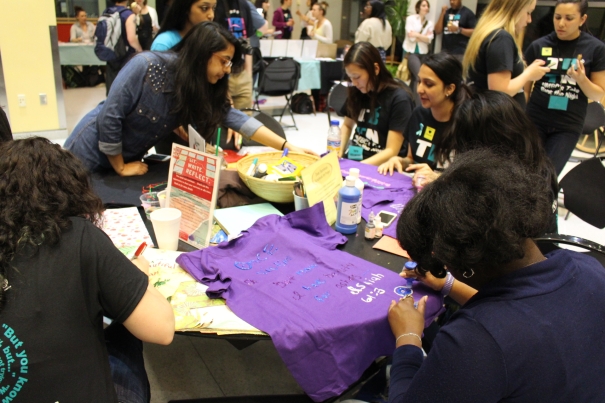
When the marchers return to Main Street, there will be tables set up with art supplies for anyone wishing to contribute to one of the community craft projects we'll have available: sachet bags to fill with scented dried flowers and herbs, the Clothesline Project, and the Dear Survivor scrapbook. We also encourage attendees to check out the resource tables to learn more about various campus and community organizations and services.
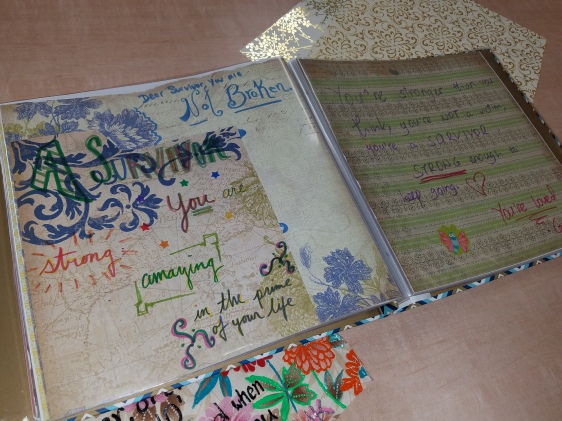
All are welcome to add a page to our Dear Survivor scrapbook, which features messages of hope, healing, and solidarity from survivors and allies who have attended TBTN in past years. The scrapbook can be found in the Women's Center lounge.
Materials for the Clothesline Project will be available for survivors who would like to give voice to their experience by decorating a shirt that will be displayed during Sexual Assault Awareness Month. Every April, these shirts are hung shoulder-to-shoulder on a clothesline on Main Street to give public testimony to the problems of sexual and gender-based violence. Please note that while allies are invited to participate in the Monument Quilt and Dear Survivor scrapbook, the Clothesline Project is intended for those who identify as survivors.
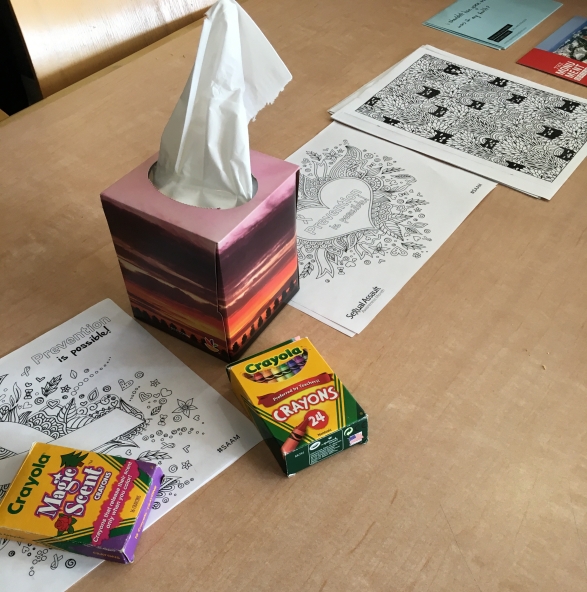
For those who prefer a quieter space for reflection, there will be a self-care station set up in the commuter lounge available during the survivor speak out and the rest of the evening. There will be tissues, stress balls, coloring supplies, and other resources for self-care. The station also provides a more private space where attendees can speak with one of the counselors on call, if needed.
For more information about UMBC's TBTN (check out Facebook, Instagram, and Twitter too by searching the hashtag #UMBCTBTN):
]]>
Posted on March 29, 2019 by jdehitta1 Originally written and posted by SamBam226 on March 29, 2019 April is Sexual Assault Awareness Month, and the Women's Center is hosting its...
https://my3.my.umbc.edu/api/v0/pixel/news/132515/guest@my.umbc.edu/12d0f6dc6d5a1207897d8d16084bcd77/api/pixel
activism
feminism
programs
saam
sexual-assault
sexual-assault-awareness-month
survivors
survivors-of-sexual-violence
tbtn
umbc
what-you-need-to-know-tbtn
Women's, Gender, & Equity Center
https://my3.my.umbc.edu/groups/womenscenter
https://assets2-my.umbc.edu/system/shared/avatars/groups/000/000/125/78272a4842689b30dbf74672182b78f8/xsmall.png?1750974263
https://assets1-my.umbc.edu/system/shared/avatars/groups/000/000/125/78272a4842689b30dbf74672182b78f8/original.png?1750974263
https://assets1-my.umbc.edu/system/shared/avatars/groups/000/000/125/78272a4842689b30dbf74672182b78f8/xxlarge.png?1750974263
https://assets1-my.umbc.edu/system/shared/avatars/groups/000/000/125/78272a4842689b30dbf74672182b78f8/xlarge.png?1750974263
https://assets1-my.umbc.edu/system/shared/avatars/groups/000/000/125/78272a4842689b30dbf74672182b78f8/large.png?1750974263
https://assets2-my.umbc.edu/system/shared/avatars/groups/000/000/125/78272a4842689b30dbf74672182b78f8/medium.png?1750974263
https://assets1-my.umbc.edu/system/shared/avatars/groups/000/000/125/78272a4842689b30dbf74672182b78f8/small.png?1750974263
https://assets2-my.umbc.edu/system/shared/avatars/groups/000/000/125/78272a4842689b30dbf74672182b78f8/xsmall.png?1750974263
https://assets3-my.umbc.edu/system/shared/avatars/groups/000/000/125/78272a4842689b30dbf74672182b78f8/xxsmall.png?1750974263
Women's Center
https://assets1-my.umbc.edu/system/shared/thumbnails/news/000/132/515/0b1bbe0844fc0104a1692173f8383563/xxlarge.jpg?1681225481
https://assets4-my.umbc.edu/system/shared/thumbnails/news/000/132/515/0b1bbe0844fc0104a1692173f8383563/xlarge.jpg?1681225481
https://assets2-my.umbc.edu/system/shared/thumbnails/news/000/132/515/0b1bbe0844fc0104a1692173f8383563/large.jpg?1681225481
https://assets1-my.umbc.edu/system/shared/thumbnails/news/000/132/515/0b1bbe0844fc0104a1692173f8383563/medium.jpg?1681225481
https://assets1-my.umbc.edu/system/shared/thumbnails/news/000/132/515/0b1bbe0844fc0104a1692173f8383563/small.jpg?1681225481
https://assets3-my.umbc.edu/system/shared/thumbnails/news/000/132/515/0b1bbe0844fc0104a1692173f8383563/xsmall.jpg?1681225481
https://assets4-my.umbc.edu/system/shared/thumbnails/news/000/132/515/0b1bbe0844fc0104a1692173f8383563/xxsmall.jpg?1681225481
0
0
false
Tue, 11 Apr 2023 11:10:45 -0400
What You Need To Need Know: TBTN & the Survivor Speak-Out
We're resharing our TBTN What You Need To Know series!
This post was orginially written and posted on April 22nd, 2019 by Sambam226.
April is Sexual Assault Awareness Month, and the Women’s Center is hosting its 7th consecutive Take Back the Night on Thursday, April 13th. Over the years, we’ve had a lot of questions about what Take Back the Night exactly is, why it looks the way it does, and how students can get involved. To help get those questions answered we started the “What You Need to Know” series focused on TBTN last year and are continuing on the tradition, so stay tuned for more posts over the next week. This is an updated post to last year’s information focusing on the survivor speak-out.
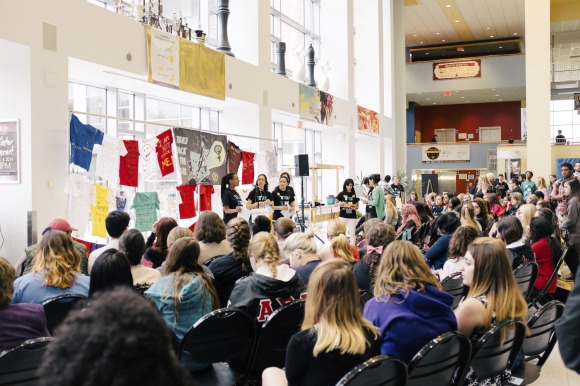
The survivor speak-out is the heart of Take Back the Night. This is the point in the night where survivors are encouraged to come up and share their story with the crowd before the march throughout campus. As a survivor, sharing your story at TBTN allows you to publicly acknowledge your experience with a crowd that believes you and supports you.
Kayla Smith, UMBC Class of 2017, started the speak out in previous years and cherished that moment as a time where she could share her experience with people who she knew wouldn’t judge her. She could look out into a crowd of people who wouldn’t tell her its her fault, ask what she was wearing, ask if she was drinking, or tell her that she was responsible for her assault. “Speaking out about my assault empowers me to talk about my experience with confidence.”
This year we want to focus on dispelling the myth of the “perfect victim” that often times dominates sexual violence discourse. There are a variety of stories and experiences that are shared during the speak- out. Some may share stories or healing while others are still angry, sad, or scared. Many stories may come from women-identified folks and/but male survivors are also invited to share their stories at the speak-out. All of our stories and experiences are valid. And, no matter where you are at in your experience as a survivor (i.e. your assault happened 10 years ago or just last week) or what your identities may be, you’re welcomed to share your story.
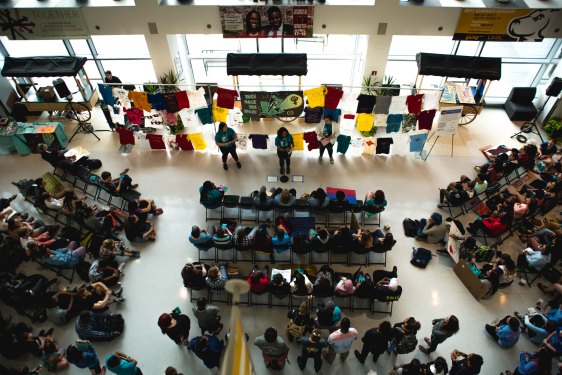
If you’re thinking about speaking at Take Back the Night, feel free to reach out to Women’s Center staff ahead of time if you feel like it would be helpful to talk to someone ahead of time about your story and how you may want to share it. Of course, we know many survivors may not plan on speaking at TBTN and then feel called to do so once the speak-out begins and that’s okay! If you feel uncomfortable sharing during the speak-out, that’s also 100% okay! There will be a chance to be recognized during the March at the Survivor Circle (which will be a new part of this year’s march – stay tuned for our updated What You Need to Know about the March post for more details!) or discuss your experience in a more intimate setting at We Believe You’s survivor discussion group post march.
It’s also totally okay if don’t feel ready to share your story at Take Back the Night – there’s many other ways you can share your story in less public ways throughout Sexual Assault Awareness Month (like making a t-shirt for the Clothesline Project or the other ways at TBTN we mentioned in the above paragraph) and Take Back the Night (counselors will be available throughout the event and there will be the self-care station). Survivors or anyone impacted by sexual violence can also always schedule a time to talk to Women’s Center staff – we’re quasi-confidential resources on campus and can link you to additional support and resources.
Here’s some helpful information about the speak-out we think is helpful for everyone to know whether they’re speaking or listening:
- Any one can be a survivor of sexual violence. Any survivor regardless of their gender identity or sexual orientation is welcomed to share their story at the speak-out. At the beginning of TBTN’s creation the speak out was only for women, but we welcome men and all others who may have differing gender identities to speak out. We wish for the speak out to be an inclusive space of healing and representation of different identities can help dispel the dangerous “perfect victim” narrative.
- The survivor speak-out is intended to center the voices and experience of survivors of sexual violence. The speak-out is for allies to listen and survivors to break their silence. Thank you in advanced for respecting this request. Allies are also encouraged to attend the Women’s Center workshop on Supporting Survivors of Sexual Violence on 4/11.
- Since TBTN functions as a public forum, normal reporting procedures look a bit different. If you choose to share your story, and want to go no further in the reporting process, we encourage you not to disclose any names or other specific identifying information, such as locations or familial relationships, as those details may prompt staff to follow up with you for reporting matters. Staff are available at the event for those who do want additional resources and want to report their experience through UMBC’s Title IX reporting process or police.
- We ask that you try to limit your story to about 3 minutes. We know it may be hard to do so but we want to make sure as many survivors as possible can speak during the allotted speak out time which is one hour long. If you’d like to continue sharing your story, you may want to go to the We Believe You discussion group after the Take Back the Night march.
- Speakers will have the option to identify their story as confidential by placing a sign marked “confidential” on the microphone. Speaking from the “confidential” microphone prohibits anyone from taking pictures, quotes, or recording of any kind.
-
Counselors-On-Call will be available throughout the evening. Any one needing additional support or simply needs to take a break are invited to visit the self-care station that will be set up in the Commuter Lounge.
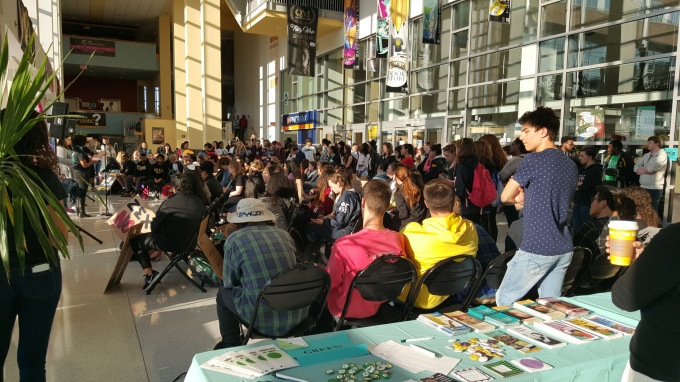
For more information about UMBC’s TBTN (check out Facebook, Instagram, and Twitter too by searching the hashtag #UMBCTBTN):
- Supporting Survivors of Sexual Violence Workshop information for students.
- Speak: Knowing a Survivor Without Knowing Their Story – a blog post on cultivating a survivor-responsive campus.
- The Women’s Center 2018 TBTN roundup
- The Retriever Weekly photo gallery of TBTN
- Stop by the Women’s Center on April 17th to make a rally sign for the march
]]>
This post was orginially written and posted on April 22nd, 2019 by Sambam226. April is Sexual Assault Awareness Month, and the Women’s Center is hosting its 7th consecutive Take Back the Night...
https://my3.my.umbc.edu/api/v0/pixel/news/132482/guest@my.umbc.edu/17cc769205baaa3cd885d379d85ef214/api/pixel
activism
feminism
programs
saam
sexual-assault
sexual-assault-awareness-month
survivors
survivors-of-sexual-violence
tbtn
umbc
what-you-need-to-know-tbtn
Women's, Gender, & Equity Center
https://my3.my.umbc.edu/groups/womenscenter
https://assets2-my.umbc.edu/system/shared/avatars/groups/000/000/125/78272a4842689b30dbf74672182b78f8/xsmall.png?1750974263
https://assets1-my.umbc.edu/system/shared/avatars/groups/000/000/125/78272a4842689b30dbf74672182b78f8/original.png?1750974263
https://assets1-my.umbc.edu/system/shared/avatars/groups/000/000/125/78272a4842689b30dbf74672182b78f8/xxlarge.png?1750974263
https://assets1-my.umbc.edu/system/shared/avatars/groups/000/000/125/78272a4842689b30dbf74672182b78f8/xlarge.png?1750974263
https://assets1-my.umbc.edu/system/shared/avatars/groups/000/000/125/78272a4842689b30dbf74672182b78f8/large.png?1750974263
https://assets2-my.umbc.edu/system/shared/avatars/groups/000/000/125/78272a4842689b30dbf74672182b78f8/medium.png?1750974263
https://assets1-my.umbc.edu/system/shared/avatars/groups/000/000/125/78272a4842689b30dbf74672182b78f8/small.png?1750974263
https://assets2-my.umbc.edu/system/shared/avatars/groups/000/000/125/78272a4842689b30dbf74672182b78f8/xsmall.png?1750974263
https://assets3-my.umbc.edu/system/shared/avatars/groups/000/000/125/78272a4842689b30dbf74672182b78f8/xxsmall.png?1750974263
Women's Center
https://assets1-my.umbc.edu/system/shared/thumbnails/news/000/132/482/420f3c51bce93da9132e86041fe2fdc2/xxlarge.jpg?1681142738
https://assets2-my.umbc.edu/system/shared/thumbnails/news/000/132/482/420f3c51bce93da9132e86041fe2fdc2/xlarge.jpg?1681142738
https://assets3-my.umbc.edu/system/shared/thumbnails/news/000/132/482/420f3c51bce93da9132e86041fe2fdc2/large.jpg?1681142738
https://assets1-my.umbc.edu/system/shared/thumbnails/news/000/132/482/420f3c51bce93da9132e86041fe2fdc2/medium.jpg?1681142738
https://assets1-my.umbc.edu/system/shared/thumbnails/news/000/132/482/420f3c51bce93da9132e86041fe2fdc2/small.jpg?1681142738
https://assets3-my.umbc.edu/system/shared/thumbnails/news/000/132/482/420f3c51bce93da9132e86041fe2fdc2/xsmall.jpg?1681142738
https://assets4-my.umbc.edu/system/shared/thumbnails/news/000/132/482/420f3c51bce93da9132e86041fe2fdc2/xxsmall.jpg?1681142738
0
0
true
Mon, 10 Apr 2023 12:06:07 -0400
Wed, 09 Aug 2023 13:36:03 -0400