Continuing On: Speaking Up
By: Margot Anthony | WGEC Student Staff Member | Social Work Student
This is going to be a continuation from my last blog post “Beginning Again.” Since creating that post I have worked to become more comfortable in my identity as a survivor of gender-based harm, specifically sexual assault.
Writing my first blog post in November and December was both emotional and cathartic. It was very emotional for me because it was a story that I had not told many people before, and definitely had not shared publicly. Writing the post was also cathartic. The feelings that I shared in the post and experience had been weighing on me heavily, and it was a relief to share it, especially being able to share it on my own terms.
After sharing my blog post I felt more calm and at peace than I had in a while. I felt like I had reclaimed something I didn’t even know I had lost. Everything that had happened to me, I had survived. And in making the post, I now realized that I had reclaimed my story.
It was after writing my blog post last semester that I decided I wanted to speak at Take Back the Night. While preparing what I was going to say during Take Back the Night I was practicing over and over.
Writing.
Re-writing.
Over and over again.
On the day of Take Back the Night, when I got up to the microphone, I was so nervous. I hadn’t realized how different it would be verbally telling my story as opposed to writing it out and sharing it. I felt like I was shaking and I wanted to floor to just swallow me whole.
I got through it. I felt like I blacked out the whole time and don’t remember most of what happened or really what I said, but I did it. What I do remember is feeling supported by those around me when I had finished speaking. Sharing my story was an amazing experience and very freeing for me.
What impacted me the most at Take Back the Night, were the people that shared after me. Not just the people who were planning to share their stories. The people who got up and shared when they were just planning to observe. Their bravery, strength, and willingness to be vulnerable inspired me.
I planned what I was going to say for months and still almost didn’t say anything. What I never considered in sharing my story, is that it would help other people share their stories as well.
What I want people to take away from this blog post and my previous post, is that there are people who will support and believe you wholeheartedly and you do not have to go through everything alone. You are stronger than you think and you have more support than you know.
I will finish off this post with the quote that I read out during Take Back the Night:
Everyone loves a survivor once [they’re] quiet. Once [they’re] soft, polite, healed. But bring up what actually happened? Talk about the abuse, the manipulation, the betrayal? Suddenly you’re too much. Bitter. Angry. Suddenly you’re the problem. The truth is – they don’t want survivors. They want silence with a pretty filter. They want your pain digestible. Not loud. Not real. So when I speak? I do it loudly. Clearly. Unapologetically. Because I wasn’t put back together just to keep everyone else comfortable. – Zenda-Lee Williams.
]]>
By: Margot Anthony | WGEC Student Staff Member | Social Work Student This is going to be a continuation from my last blog post “Beginning Again.” Since creating that post I have worked to...
https://womenscenteratumbc.wordpress.com/2026/06/10/continuing-on-speaking-up/
https://my3.my.umbc.edu/api/v0/pixel/news/160646/guest@my.umbc.edu/f07ae851f13d295baa4c4321b1444718/api/pixel
activism
sexual-assault
tbtn
umbc
uncategorized
women
womens-center-staff
Women's, Gender, & Equity Center
https://my3.my.umbc.edu/groups/womenscenter
https://assets2-my.umbc.edu/system/shared/avatars/groups/000/000/125/78272a4842689b30dbf74672182b78f8/xsmall.png?1750974263
https://assets1-my.umbc.edu/system/shared/avatars/groups/000/000/125/78272a4842689b30dbf74672182b78f8/original.png?1750974263
https://assets1-my.umbc.edu/system/shared/avatars/groups/000/000/125/78272a4842689b30dbf74672182b78f8/xxlarge.png?1750974263
https://assets1-my.umbc.edu/system/shared/avatars/groups/000/000/125/78272a4842689b30dbf74672182b78f8/xlarge.png?1750974263
https://assets1-my.umbc.edu/system/shared/avatars/groups/000/000/125/78272a4842689b30dbf74672182b78f8/large.png?1750974263
https://assets2-my.umbc.edu/system/shared/avatars/groups/000/000/125/78272a4842689b30dbf74672182b78f8/medium.png?1750974263
https://assets1-my.umbc.edu/system/shared/avatars/groups/000/000/125/78272a4842689b30dbf74672182b78f8/small.png?1750974263
https://assets2-my.umbc.edu/system/shared/avatars/groups/000/000/125/78272a4842689b30dbf74672182b78f8/xsmall.png?1750974263
https://assets3-my.umbc.edu/system/shared/avatars/groups/000/000/125/78272a4842689b30dbf74672182b78f8/xxsmall.png?1750974263
Women's Center
5
0
false
Wed, 10 Jun 2026 13:49:13 -0400
The Implementation of Title IX’s Effect on Survivors
By Claudia Gerry Social Work & Gender, Women’s and Sexuality Studies Major, Student Staff Member
Forward
This literature review was my final paper for Dr. Maria Celleri’s Methodologies in Gender, Women’s, and Sexuality Studies (GWST 300) course. I feel that this topic heavily applies to the work the Women’s, Gender, and Equity Center does. As a student staff member, I see how Title IX fails survivors, I see how it hurts survivors, and I see how it makes survivors’ lives just that much harder. I plan to continue this research and present it at URCAD 2027 in order to advocate for change not only on our UMBC campus but across the United States. So… here is a sneak peek!
Introduction
Sexual misconduct is a major problem everywhere, but specifically on college campuses. Sexual assault is defined as any form of unconsensual and unwanted sexual contact, which can include physical contact or sexual coercion (Holland & Cipriano, 2021). Sexual harassment within education is defined as behaviors sexual in nature that are “sufficiently severe, persistent, or pervasive to limit a student’s ability to participate in or benefit from the education program, or to create a hostile or abusive educational environment” (Holland & Howard Valdivia, 2026). Women and LGBTQ+ undergraduate students face the greatest risk of enduring sexual misconduct (Holland & Cipriano, 2021). Those who experience sexual assault often endure many mental health challenges and harms to their education (Holland & Cipriano, 2021), especially if they do not utilize support resources. The campus climate can foster barriers for survivors using these resources. Many survivors feel a minimization of sexual assault, fear of negative treatment, and have social-emotional concerns (Holland & Cipriano, 2021). Awareness of sexual violence is rooted in the second-wave feminist movement. But, this awareness mostly focused on the voices of white, well-educated women. There is a persistent struggle to understand the intersectionality of sexual assault (Jessup-Anger et al., 2018), even though this issue can affect every identity. This Literature review addresses how the implementation of Title IX policies affects survivors of sexual violence within higher education systems in the United States. To begin to understand this, we must know what Title IX is and how it has been implemented through time.
What is Title IX?
Title IX was passed in 1973 as part of the education amendments and is a civil rights law (Kaufman & Nelson, 2025). The main focus of this law is to prohibit sex-based discrimination in educational settings funded by the federal government (Kaufman & Nelson, 2025). Originally, the focus was set on inequality in admissions and educational opportunities, but the scope has widened since then (Kaufman & Nelson, 2025). Title IX has been used to increase access to women’s sports and require educational institutions to address sexual harassment and violence (Kaufman & Nelson, 2025). At the surface level, this law seems to help survivors of sexual assault, but in reality, it often harms the survivor more than it helps.
Every institution’s Title IX policies vary due to different levels of staffing, budget, and number of support and advocacy services. One uniform requirement across all institutions is the requirement of at least one Title IX coordinator, no matter the institution’s size (Kaufman & Nelson, 2025). The Title IX coordinator is located within the Title IX office, which at most universities is housed under the institution’s Equity and Civil Rights department.
The applications of Title IX have changed numerous times through new legislation, Office of Civil Rights (OCR) guidance, and presidential letters called Dear Colleague Letters (DCL). In 1980, Alexander v. Yale argued that sexual harassment in educational institutions constitutes sex-based discrimination under Title IX (Holland & Howard Valdivia, 2026) and is still the precedent today. The main acts passed that affect Title IX are: 1990 Clery Act, 1992 Campus Sexual Assault Victim’s Bill of Rights, 1994 Violence Against Women Act, and 2013 Campus SaVE Act. These acts mainly attempt to address funding for survivor services, requirements for prevention training, and public disclosure of crime rates.
What really affects Title IX implementation the most are DCLs. In 2011, the Obama-era DCL was released. The Obama DCL called attention to the issue of sexual violence on college campuses, reminded Higher Education Institutions (HEIs) of Title IX guidelines, and added additional recommendations. This letter classified sexual violence under the umbrella of sex discrimination under Title IX, lowered investigatory standards of proof, and made it legal to withhold funds from HEIs for not complying (Kaufman & Nelson, 2025). In 2017, the Donald Trump era DCL was released and focused heavily on concerns for the (rights of the) accused (Holland & Howard Valdivia, 2026). The Trump DCL withdrew the Obama DCL and announced new regulations. The main changes were changes in definitions of sexual violence, limited the scope of what HEIs are required to address, added more requirements for formal adjudication, and emphasized the rights of respondents over the well-being of survivors (Webermann et al., 2023). In 2024, the Title IX regulations were changed once again by Joe Biden’s administration. These regulations expanded the scope of conduct covered under the policy and for the most part were similar to 2020 but gave HEIs more discretion (Holland & Howard Valdivia, 2026). Today, we are under the 2025 DCL. This DCL edits the 2024 regulations to include that HEIs “must continue to comply with the 2020 Title IX regulations and operate under the presumption of (inaccurate) binary, biological sex” (Holland & Howard Valdivia, 2026). Overall, Title IX policies have been said to be a political football being passed around and changed with every administration. This makes Title IX regulations hard to understand for the average person. So, not everyone understands their rights and what is expected of their institutions.
Title IX in Action
A theoretical framework to understand the importance of survivors’ interactions with the Title IX Office is the theory of institutional betrayal. Both Webermann et al. (2023) and Holland and Cipriano (2021) use this framework to understand the effects of Title IX on survivors. Institutional betrayal shows the unique ways institutions can harm marginalized groups and “conceptualizes wrongdoings perpetrated by an institution when people are dependent upon the institution and can expect that it will protect its members from harm and will respond appropriately if harm is endured” (Holland & Cipriano, 2021). Students expect their institutions to take steps to restore their access to education, but when the institution fails to do so, there can be negative consequences that can include erosion of trust and belonging at the institution (Holland & Cipriano, 2021). Failures of the institution can be: failure to prevent abuse, normalizing of abusive contexts, difficult reporting procedures, inadequate responses to reports, cover-ups, misinformation, and punishing survivors (Webermann et al., 2023). Survivors who experience institutional betrayal report increased levels of psychological harm (Holland & Cipriano, 2021).Title IX overall affects survivors negatively.
First, Title IX cases are supposed to take up to 60 days to be resolved, but the average length of cases in Webermann’s study is 175.36 days (Webermann et al., 2023). Many institutions elect to have the minimum number of coordinators- one. Staffing levels in the Title IX office affect how long cases may take (Kaufman & Nelson, 2025), so many institutions’ Title IX offices are not staffed enough for every case to be resolved within the 60-day timeframe. Many survivors see major variability in the transparency of their case. Some survivors receive multiple updates and reassurances about their case, while others get little to none (Holland & Cipriano, 2021). According to Holland and Cipriano (2021), “Recent research has found that the majority of sexual assault reports to Title IX Offices do not result in formal investigations and, of those that are investigated, there is rarely a finding of ‘responsibility’”. Many survivors believe that the length of their case affected the outcomes. For example, witnesses may forget parts of their story over time or the respondent might leave the institution before disciplinary action is taken (Webermann et al., 2023).
Second, many survivors report negative treatment from the Title IX office. This negative treatment can include victim-blaming, name-calling, stalling of cases, and being told the institution can do nothing about the case. Holland and Cortina (2017a) found that of the three main support systems they examined (Title IX office, sexual assault center, and housing staff), the Title IX office was not utilized by survivors because of “negative emotions, consequences, contextual characteristics, minimization of behaviors, and alternative coping strategies”. According to Holland and Cipriano (2021), negative reactions to sexual assault disclosures can cause significant psychological harm for survivors.
Third, many survivors experience barriers in receiving support. Kaufman and Nelson (2025) found that “Too often, survivors of sexual assault do not know where to turn and do not receive the support they need despite the seemingly ‘robust’ federal legislation that seeks to address campus sexual violence”. Many survivors deliberately avoid the Title IX office due to fears of poor treatment (Holland & Cipriano, 2021). Within Webermann et al.’s (2023) study, many participants felt unclear about the Title IX reporting process and their options.
Survivors are expected to retell the worst moments of their lives numerous times, reliving it every. single. time. According to Webermann et al. (2023), the survivors in their study had to tell their stories to 2.88 different offices/individuals, not including formal grievance procedures or court procedures. If a survivor wants to make a report and seek justice, they are put in more harm. To help themselves, they have to harm themselves. “It was not just the outcome of their case that caused harm but also the process itself”(Webermann et al., 2023).
Future Steps
Due to all these reasons listed above, survivors are discouraged from standing up for themselves. Working at the Women’s, Gender, and Equity Center (WGEC) has shown me how Title IX actually operates in real life. In my personal experience, the system has failed survivors. Many survivors seek support from the WGEC, as we are a confidential space, and they do not want to bother with reporting to the UMBC Title IX office. The reasons I have heard are: knowing how the office treats other survivors, knowing how many times they will have to relive what they have gone through, concerns over social circumstances, minimization of what happened to them, and many more. With the perpetual changing of guidelines, many survivors do not understand what their institution can do for them anymore, making them give up and move on. At many institutions, there are requirements for mandatory reporting, where staff and faculty are required to report sexual misconduct disclosures to the Title IX office. Many staff and faculty are in the same boat of confusion about what the guidelines are, leading individual reporters to either report too much or too little. In my experience, professors are not trained on what is to be reported and what happens to the student after a report is filed. This leaves students cautious about talking about their experiences in fear of being non-consensually reported.
Many changes need to be made in order to ensure the success of survivors. First, there needs to be an implementation of an oversight committee to ensure the Title IX office acts swiftly, equitably and with accountability (Holland & Cipriano, 2021). This committee could also oversee trauma-informed training for Title IX Office staff and mandated reporters. “Using formal supports that are trauma-informed and survivor-centered can promote psychological well-being for survivors” (Holland & Cipriano, 2021). Second, there needs to be an effort to address the root cause of sexual violence instead of focusing on the aftereffects. “Although most universities comply with Title IX, many side-step confronting the root causes of normalized sexual violence and avoid teaching the realities of campus sexual violence, leaving students confused, isolated, and unsure of how to address the trauma that they or their friends experience”(Kaufman & Nelson, 2025). Third, to address institutional betrayal, we must flip it to institutional support. This can include “supportive responses from individuals within institutions to survivors, such as believing them, apologizing for their experiences, connecting them with resources, and providing autonomy in what happens after reporting”(Webermann et al., 2023). Lastly, frontline workers within the survivor support services need more say in the implementation of Title IX. “Oftentimes, frontline workers, such as victim advocates, are absent from the policy table, yet this article underscores the importance of their positionality and experiences for addressing vulnerabilities in the campus sexual violence intervention system”(Wies, 2015).
Conclusion
Ultimately, under the system we have set in place, Title IX is failing survivors of sexual violence in HEIs in the United States. Survivors are expected to advocate for themselves when their words have been ignored in the past. The Title IX office worries too much about getting sued by the respondent to bring justice for the survivor. Survivors experience major mental health and educational challenges even though Title IX is supposed to ensure equal access to education. If a survivor reports their institution for violation of Title IX policy, the report can take years to process, so Title IX offices are not held accountable. This is why we need to change the policy ONE last time. Modifying Title IX every few years only causes more confusion. We need to support survivors. Survivors need to feel supported, seen, and heard by their institutions.
References
Brubaker, S. J., Keegan, B., Guadalupe-Diaz, X. L., & Beasley, B. (2017). Measuring and reporting campus sexual assault: Privilege and exclusion in what we know and what we do. Sociology Compass, 11(12), e12543. https://doi.org/10.1111/soc4.12543
Holland, K. J., & Cipriano, A. E. (2021). Does a report = support? A qualitative analysis of college sexual assault survivors’ Title IX Office knowledge, perceptions, and experiences. Analyses of Social Issues and Public Policy, 21(1), 1054–1081. https://doi.org/10.1111/asap.12271
Holland, K. J., & Cortina, L. M. (2017a). “It Happens to Girls All the Time”: Examining Sexual Assault Survivors’ Reasons for Not Using Campus Supports. American Journal of Community Psychology, 59(1-2), 50–64. https://doi.org/10.1002/ajcp.12126
Holland, K. J., & Cortina, L. M. (2017b). The evolving landscape of Title IX: Predicting mandatory reporters’ responses to sexual assault disclosures. Law and Human Behavior, 41(5), 429–439. https://doi.org/10.1037/lhb0000253
Holland, K. J., & Howard Valdivia, R. L. (2026). Title IX and Sexual Violence in Higher Education: A Mapping Review and Assessment of Policy Implementation and Effectiveness. The Journal of Sex Research, 1–19. https://doi.org/10.1080/00224499.2026.2623649
Jessup-Anger, J., Lopez, E., & Koss, M. P. (2018). History of Sexual Violence in Higher Education. New Directions for Student Services, 2018(161), 9–19. https://doi.org/10.1002/ss.20249
Kaufman, S. B.-S., & Nelson, L. (2025). Interpreting title IX: A feminist legal geography of sexual assault prevention on U.S. college campuses. Political Geography, 116(5), 103252. https://doi.org/10.1016/j.polgeo.2024.103252
Webermann, A. R., Holland, K. J., & Murphy, C. M. (2023). Student Experiences Reporting Sexual and Gender-Based Misconduct to the Title IX Office at a Public State University. Violence against Women, 30(6-7), 107780122211502. https://doi.org/10.1177/10778012221150274
Wies, J. R. (2015). Title IX and the State of Campus Sexual Violence in the United States: Power, Policy, and Local Bodies. Human Organization, 74(3), 276–286. https://doi.org/10.17730/0018-7259-74.3.276
]]>
By Claudia Gerry Social Work & Gender, Women’s and Sexuality Studies Major, Student Staff Member Forward This literature review was my final paper for Dr. Maria Celleri’s...
https://womenscenteratumbc.wordpress.com/2026/05/30/the-implementation-of-title-ixs-effect-on-survivors/
https://my3.my.umbc.edu/api/v0/pixel/news/160449/guest@my.umbc.edu/3a509ba1a892eceaa8295d5a7f9c8a7c/api/pixel
activism
critical-social-justice
feminism
higher-education
politics
sexual-assault
social-justice
staff
survivors
survivors-of-sexual-violence
title-ix
umbc
womens-center-staff
writing
Women's, Gender, & Equity Center
https://my3.my.umbc.edu/groups/womenscenter
https://assets2-my.umbc.edu/system/shared/avatars/groups/000/000/125/78272a4842689b30dbf74672182b78f8/xsmall.png?1750974263
https://assets1-my.umbc.edu/system/shared/avatars/groups/000/000/125/78272a4842689b30dbf74672182b78f8/original.png?1750974263
https://assets1-my.umbc.edu/system/shared/avatars/groups/000/000/125/78272a4842689b30dbf74672182b78f8/xxlarge.png?1750974263
https://assets1-my.umbc.edu/system/shared/avatars/groups/000/000/125/78272a4842689b30dbf74672182b78f8/xlarge.png?1750974263
https://assets1-my.umbc.edu/system/shared/avatars/groups/000/000/125/78272a4842689b30dbf74672182b78f8/large.png?1750974263
https://assets2-my.umbc.edu/system/shared/avatars/groups/000/000/125/78272a4842689b30dbf74672182b78f8/medium.png?1750974263
https://assets1-my.umbc.edu/system/shared/avatars/groups/000/000/125/78272a4842689b30dbf74672182b78f8/small.png?1750974263
https://assets2-my.umbc.edu/system/shared/avatars/groups/000/000/125/78272a4842689b30dbf74672182b78f8/xsmall.png?1750974263
https://assets3-my.umbc.edu/system/shared/avatars/groups/000/000/125/78272a4842689b30dbf74672182b78f8/xxsmall.png?1750974263
Women's Center
2
0
false
Sat, 30 May 2026 21:37:55 -0400
Beginning Again
By: Margot Anthony, WGEC Student Staff Member and Social Work Student
Main theme: Letting yourself be vulnerable again in a relationship after gender-based harm.
Trauma from gender-based harm and healing from that trauma is a topic that is discussed a lot at the Women’s, Gender, and Equity Center (WGEC); we even have a weekly discussion group about it called “We Believe You.” It is through this group that I have been thinking about the healing process, and how in all of the books that I have read about healing from gender-based harm it is never discussed how to navigate beginning a new relationship and letting yourself be vulnerable again.
Since I had experienced my trauma, when I was 17 and 19, I had never been in a relationship after that. I am 23 years old now. The thought of letting myself become that vulnerable again was terrifying, and right now it still is. I had a decision to make, I could live in a world of fear and what if’s or I could take small steps into letting myself fully live my life again, on my own terms.
That’s what I decided to do. I began slowly. I was hanging out with some of my friends and we had the great idea to make an account for me on a dating app. Let’s just say there were some highs and many lows. It took me almost three years to even be comfortable with the idea of seeing if I wanted to go out on dates with people. It took me almost four years to actually go on a date with someone. It took 13 first dates going wrong in some way to find someone that seemed like they understood and respected boundaries.
After some self-care and some journaling I decided that it was time to try again, and that I would give this person a chance; and so far I am really glad that I did. The fear is still there, and will continue to be there for a long time, but he seems to understand that. He encourages me to assert my own boundaries and does not take silence as a yes. Will this last forever? I don’t know and right now that is okay for me. Through this I am learning that there are people who do understand that setting boundaries isn’t presenting a challenge or saying ask me again. There are people that will understand some of your boundaries and limits without you having to say anything and without you having to explain anything to them.
This was a difficult step for me to take because I was putting myself into a situation where I did not know what the outcome would be. I still don’t know what the outcome will be, and I’m beginning to realize that that is okay.
Healing and starting to trust people and be vulnerable again is not a linear process, there are ups and downs. I wish that I could say that there were concrete steps that I took to get to this point. I wish I could say that I’m not scared anymore, but that would be a complete lie. I’m still scared. That is something I don’t think will change. What I am learning is that fear does not have to control everything.
Making sure fear does not control your life and keep you from experiencing new things is easier said than done. Some steps that I take include:
- Sharing my location when I go on dates.
- Giving trusted people the name of the person that I am going on a date with and a picture.
- Meeting someone at a location for a date and not being picked up by them.
- Telling people what the plan for the date is, and informing them if anything changes.
- What time and where we are meeting.
- What time the date is likely to end.
- Places we may be going other than the place that we meet.
- Being clear about boundaries when needed.
- This is one of the hardest things to do. It’s scary. But it’s important. If you get invited to do something you don’t want to do or don’t feel comfortable doing, SAY NO. YOU DO NOT HAVE TO EXPLAIN YOURSELF! NO IS A COMPLETE SENTENCE!
- Trust your gut! – If you feel uncomfortable, leave. Even if it is something small.
Your journey is yours and yours alone. There is no specific timeline. Dating is hard and scary. One thing that I have learned is that while first dates are scary, the dates after can be even more nerve wracking. The important thing to remember is to make decisions that are good for you, and be willing to communicate your needs with people. The biggest thing that I have learned and that I will leave you all with is the fact that you do not have to be perfect to be in a relationship you just have to be trying.
]]>
By: Margot Anthony, WGEC Student Staff Member and Social Work Student Main theme: Letting yourself be vulnerable again in a relationship after gender-based harm. Trauma from...
https://womenscenteratumbc.wordpress.com/2025/12/11/beginning-again/
https://my3.my.umbc.edu/api/v0/pixel/news/155254/guest@my.umbc.edu/1a96bbc29bf3858ce6f9ec4fbeeb4a00/api/pixel
feminism
healing
relationships
sexual-assault
umbc
uncategorized
women
womens-center-staff
Women's, Gender, & Equity Center
https://my3.my.umbc.edu/groups/womenscenter
https://assets2-my.umbc.edu/system/shared/avatars/groups/000/000/125/78272a4842689b30dbf74672182b78f8/xsmall.png?1750974263
https://assets1-my.umbc.edu/system/shared/avatars/groups/000/000/125/78272a4842689b30dbf74672182b78f8/original.png?1750974263
https://assets1-my.umbc.edu/system/shared/avatars/groups/000/000/125/78272a4842689b30dbf74672182b78f8/xxlarge.png?1750974263
https://assets1-my.umbc.edu/system/shared/avatars/groups/000/000/125/78272a4842689b30dbf74672182b78f8/xlarge.png?1750974263
https://assets1-my.umbc.edu/system/shared/avatars/groups/000/000/125/78272a4842689b30dbf74672182b78f8/large.png?1750974263
https://assets2-my.umbc.edu/system/shared/avatars/groups/000/000/125/78272a4842689b30dbf74672182b78f8/medium.png?1750974263
https://assets1-my.umbc.edu/system/shared/avatars/groups/000/000/125/78272a4842689b30dbf74672182b78f8/small.png?1750974263
https://assets2-my.umbc.edu/system/shared/avatars/groups/000/000/125/78272a4842689b30dbf74672182b78f8/xsmall.png?1750974263
https://assets3-my.umbc.edu/system/shared/avatars/groups/000/000/125/78272a4842689b30dbf74672182b78f8/xxsmall.png?1750974263
Women's Center
7
0
false
Thu, 11 Dec 2025 13:47:27 -0500
Thu, 11 Dec 2025 13:47:27 -0500
Red Light Green Light: Culture of Teenage Sexuality
By Claudia Gerry, Social Work Major, Critical Sexuality Studies Minor
It was sixth grade, I was in health class, we were in the family life unit. All my classmates could not stop laughing. My teacher had enough of the shenanigans, she made us all stand up and scream, “PENIS” then, “VAGINA” then, “BOOBIES”. I did not understand why it was so funny. Growing up, my mom, a family practice doctor, would read me her medical textbooks to sleep. I was learning biological male anatomy to sleep. I learned how babies were made when I was 5, I simply asked my mom, and she told me, without innuendos, without slang terms, but with her medical textbook. I was always taught medically accurate sex education at home. This luxury is not given to everyone. In my middle school, there was no LGBTQIA+ representation built into our curriculum. Once again, I learned about it at home. I was raised to believe that sex is just a natural part of life, but I must also know how to have safe sex. Not everyone’s parents are as open as mine were, sex education is needed for the safety of everyone.
The Netherlands and America differ greatly in how they address teenage sexuality, which is very obvious when looking at statistics. American teens, in the industrialized world, have some of the highest rates of STDs. American teen girls are twice more likely to carry a pregnancy to term than they are to receive an abortion. This is most likely due to the stigma surrounding abortion in the US and the lack of factual education about it. Compared to American girls, Dutch girls are less likely to get pregnant and also more likely to have an abortion if pregnant. American teen girls are 4 times as likely to get pregnant, and twice as likely to have an abortion compared to their Dutch counterparts, even though their age of sexual initiation is similar. This is likely due to a lack of education on contraception methods in American schools and homes. Americans heavily stigmatize sexuality, especially for adolescents; they are less likely to educate their children about safe sex practices in the home. This is why sex education in schools is so important. Dutch youth birth rates are 8 times lower than American youth. Dutch abortion rates are two times lower than the American abortion rates. While the age of sexual initiation for Dutch teens got younger, their birth rate also steeply dropped between the 1970s-1996, it is one of the lowest in the world. Dutch Teens have much lower rates of pregnancy, birth, abortion, and HIV among youth than American teens.
The book “Not Under My Roof: Parents, Teens, and the Culture of Sex” by Amy T. Schalet is about the comparison of attitudes of adolescent sexuality in the United States and the Netherlands. I read this book for my CSST 332 Sex and Society class. Schalet is an Assistant Professor of Sociology at the University of Massachusetts, Amherst. Schalet’s findings are based on interviews and knowledge about each country’s government and laws. She interviews 130 Dutch and American parents and adolescents (mostly 10th graders) between early 1990 and 2000 who are all similar in education level, religion, class and race, and asks them a series of questions. The main question asked is, as a parent, “would you allow your adolescent child to have a sleepover with the opposite [gender**]?”, or as an adolescent, “would your parent allow you to have a sleepover with the opposite [gender**].?” We find that the answers vary depending on the country, but why? The book explores and explains teenage sexuality in the United States and the Netherlands, mostly in relation to family.
In the Netherlands, teenage sexuality is seen as normal. Dutch culture normalizes sexuality through three cultural frames: normal sexuality, relationship based sexuality, and self regulated sexuality. Normal sexuality refers to the fact that sexuality can be talked about in an open, unproblematic, and matter of fact manner. Relationship based sexuality refers to the idea that sexual desire and sexual acts grow out of a teen’s feelings for and relationship with another person. Finally, Self-regulated sexuality refers to the belief that readiness for sex is a moment when emotional and physical desires are united, and sensible preventative measures are taken. Sex is talked about in the home like any other topic. There is also an emphasis on safe sex coming from social institutions as well, so Dutch teens are getting the same message from multiple sources. Independent individualism is the dominant cultural norm in the Netherlands. Schalet uses the examples of alcohol, adulthood, and authority when explaining types of individualism. In the Netherlands, alcohol is socially embedded, which leads to teens developing internal control. To be an adult, they need to be able to financially and emotionally self regulate, and authority means to reach mutual agreements. Dutch parents use a form of control over their children called control through connection. Dutch parents tend to use mutual agreements instead of American overt displays of power, making many Dutch adolescents agree to the restrictions placed on them. But, sometimes Dutch teens still feel like their parents are being too restrictive, so they will do things in stiekem (secret). The Dutch societal system has much more room for error compared to America, they have second chances to finish high school, easy access to abortion and emergency contraception, less risk of drunk driving due to the fact that they bike everywhere, and there are fewer legal sanctions surrounding alcohol and drugs. This extra room for error allows Dutch parents to not have to worry as much as their American peers if their children veer off the normalized course of life.
In the United States, teenage sexuality is dramatized. There are 3 frames that support the dramatization of teenage sexuality in the United States, Hormone-based sexuality, the battle between the sexes, and parent-regulated adolescent sexuality. Hormone-based sexuality, also referred to as raging hormones, refers to the idea that hormones are an overpowering force that teens cannot control, leaving parents to think there is a disjunction between the onset of hormones and the cognitive/emotional development needed to control them. The battle between the sexes refers to the fact that sex at adolescence is conceptualized as a battle with winners and losers, and costs and benefits. Lastly, parent-regulated adolescent sexuality refers to the fact that parents think it is their job to monitor and control their teen’s raging hormones because they cannot control themselves, they regulate whatever is in their control, for example, the not under my roof sentiment. American parents avoid the topic of sexuality in the home, leaving it to the school to teach, but the sex education legislation fails its students. Every state has different standards for sex education, some states do not even require the information being taught to be medically accurate. Some parents want to avoid the topic of sexuality in their children’s lives so much that they opt out of the school sex education provided. Adversarial individualism is the dominant cultural norm in the United States. In this form of individualism, teens need external control in relation to alcohol, to be an adult they need to be financially and emotionally self-sufficient, and authority means to win the important battles and let go of the small things. American parents use a form of control over their children called connection through control. American adolescents try to maintain a good kid image for their parents, yet they break the stricter rules to create separation between themselves and their families.
Overall, through reading this book, I learned that the American view of teenage sexuality is not the norm for the rest of the world, specifically the Netherlands. I think the main ideas of the book are things all parents should know. We see that Dutch unintended pregnancy and STI rates are lower than their US counterparts, and that the Dutch tend to get married and stay married instead of getting multiple divorces like many Americans. I believe that parents should try their best to use the parenting style the Dutch use. Not only for a closer family dynamic, but for the safety and success of their children.
I always knew that I was raised differently than my peers, but just because I was educated in this way doesn’t mean that the culture I live in had no effect on me. I was raised to ask questions and be open about sexuality, but around the age of 12, I began to keep things secret from my family and close myself off. Even though I was raised similarly to Dutch youth, I still act similarly to my American peers. This shows how important culture is. My parents raised me to be open, but I closed myself off because that was what everyone else my age was doing and was what I would see on TV. I experienced sexual trauma when I was a tween and went through it alone because that’s what my culture made me think was normal. My sex education in school did not emphasize enthusiastic consent and did not give us resources for help. Sex education is now one of my passions. I think every person should know their bodies and understand consent completely. I believe that if we as a society can open up about the human experience of sexuality, people would feel safer talking about their stories, have better sexual experiences, and overall be happier.
**This book was really eye-opening, but my main critique is the use of gendered language and the disregard of nonbinary/gender-nonconforming individuals. I tried my best to use the most inclusive language possible, but that cannot make up for the lack of data given, most likely due to this work being published in 2011 and there not being much research done on that community.
Citation
Schalet, A. T. (2011). Not under my roof : parents, teens, and the culture of sex. University Of Chicago Press.
]]>
By Claudia Gerry, Social Work Major, Critical Sexuality Studies Minor It was sixth grade, I was in health class, we were in the family life unit. All my classmates could not stop laughing....
https://womenscenteratumbc.wordpress.com/2025/12/11/red-light-green-light-culture-of-teenage-sexuality/
https://my3.my.umbc.edu/api/v0/pixel/news/155249/guest@my.umbc.edu/32ba8f26c3a630a0b36a3c094f9d65c7/api/pixel
adolescence
good-reads
health
netherlands
relationships
sex
sex-education
sex-positivity
sexual-assault
sexual-health
sociology
staff
united-states
womens-center-staff
Women's, Gender, & Equity Center
https://my3.my.umbc.edu/groups/womenscenter
https://assets2-my.umbc.edu/system/shared/avatars/groups/000/000/125/78272a4842689b30dbf74672182b78f8/xsmall.png?1750974263
https://assets1-my.umbc.edu/system/shared/avatars/groups/000/000/125/78272a4842689b30dbf74672182b78f8/original.png?1750974263
https://assets1-my.umbc.edu/system/shared/avatars/groups/000/000/125/78272a4842689b30dbf74672182b78f8/xxlarge.png?1750974263
https://assets1-my.umbc.edu/system/shared/avatars/groups/000/000/125/78272a4842689b30dbf74672182b78f8/xlarge.png?1750974263
https://assets1-my.umbc.edu/system/shared/avatars/groups/000/000/125/78272a4842689b30dbf74672182b78f8/large.png?1750974263
https://assets2-my.umbc.edu/system/shared/avatars/groups/000/000/125/78272a4842689b30dbf74672182b78f8/medium.png?1750974263
https://assets1-my.umbc.edu/system/shared/avatars/groups/000/000/125/78272a4842689b30dbf74672182b78f8/small.png?1750974263
https://assets2-my.umbc.edu/system/shared/avatars/groups/000/000/125/78272a4842689b30dbf74672182b78f8/xsmall.png?1750974263
https://assets3-my.umbc.edu/system/shared/avatars/groups/000/000/125/78272a4842689b30dbf74672182b78f8/xxsmall.png?1750974263
Women's Center
4
0
false
Thu, 11 Dec 2025 12:00:35 -0500
Thu, 11 Dec 2025 12:00:35 -0500
What You Need to Know About Take Back The Night & Craftivism
We're resharing our TBTN What You Need To Know Series!
Posted on March 29, 2019 by jdehitta1
Originally written and posted by SamBam226 on March 29, 2019
April is Sexual Assault Awareness Month, and the Women's Center is hosting its seventh Take Back The Night (TBTN) on Thursday, April 13th. Over the years, we've had a lot of questions about what Take Back the Night exactly is, why it looks the way it does, and how students can get involved. To help get those questions answered this year, we've doing a "What You Need to Know" series focused on TBTN so stay tuned for more posts over the next couple of weeks. This is the fifth post in the series and it focuses on the last part of Take Back the Night which is craftivism and community building.
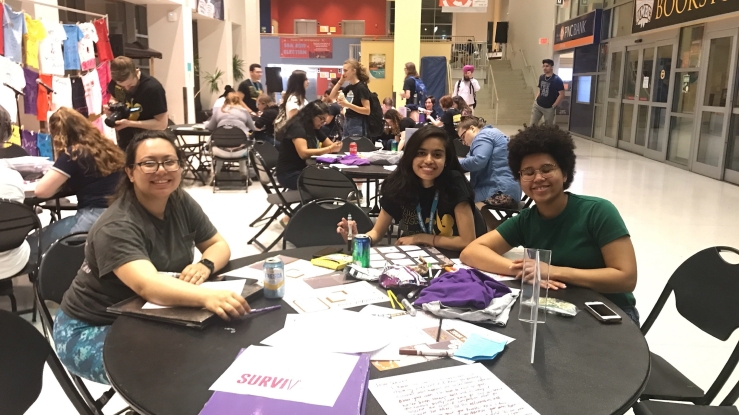
Hearing and sharing survivors' stories of sexual violence can be empowering, challenging, and emotional. We know that people process their feelings in different ways, and so following survivor speak out and march, the event continues with Craftivism on Main Street. This portion of the program is intended to provide space for reflection, creative expression, and community building.
When the marchers return to Main Street, there will be tables set up with art supplies for anyone wishing to contribute to one of the community craft projects we'll have available: sachet bags to fill with scented dried flowers and herbs, the Clothesline Project, and the Dear Survivor scrapbook. We also encourage attendees to check out the resource tables to learn more about various campus and community organizations and services.
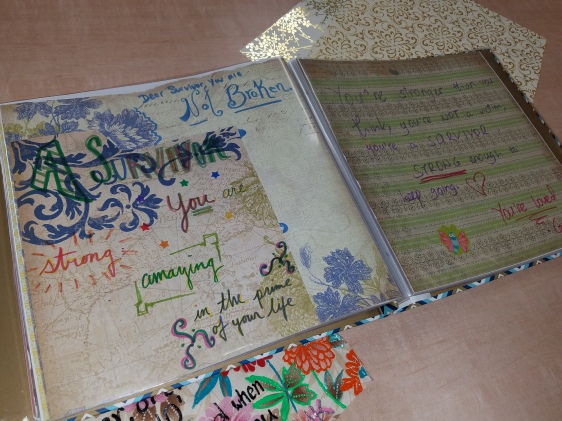
All are welcome to add a page to our Dear Survivor scrapbook, which features messages of hope, healing, and solidarity from survivors and allies who have attended TBTN in past years. The scrapbook can be found in the Women's Center lounge.
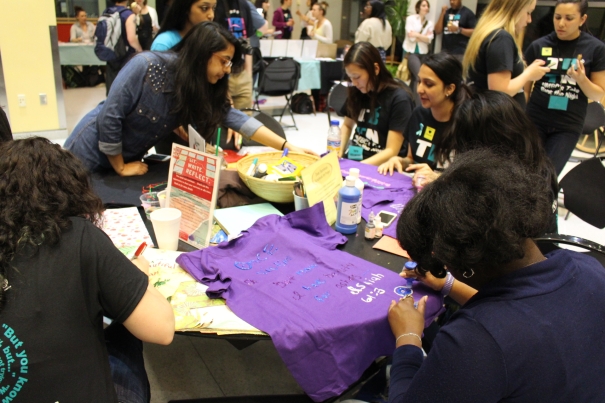
Materials for the Clothesline Project will be available for survivors who would like to give voice to their experience by decorating a shirt that will be displayed during Sexual Assault Awareness Month. Every April, these shirts are hung shoulder-to-shoulder on a clothesline on Main Street to give public testimony to the problems of sexual and gender-based violence. Please note that while allies are invited to participate in the Monument Quilt and Dear Survivor scrapbook, the Clothesline Project is intended for those who identify as survivors.
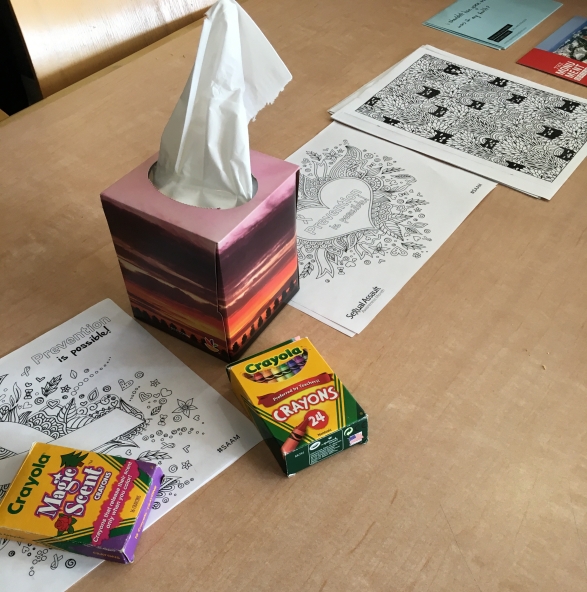
For those who prefer a quieter space for reflection, there will be a self-care station set up in the commuter lounge available during the survivor speak out and the rest of the evening. There will be tissues, stress balls, coloring supplies, and other resources for self-care. The station also provides a more private space where attendees can speak with one of the counselors on call, if needed.
For more information about UMBC's TBTN (check out Facebook, Instagram, and Twitter too by searching the hashtag #UMBCTBTN):
]]>
Posted on March 29, 2019 by jdehitta1 Originally written and posted by SamBam226 on March 29, 2019 April is Sexual Assault Awareness Month, and the Women's Center is hosting its...
https://my3.my.umbc.edu/api/v0/pixel/news/132515/guest@my.umbc.edu/12d0f6dc6d5a1207897d8d16084bcd77/api/pixel
activism
feminism
programs
saam
sexual-assault
sexual-assault-awareness-month
survivors
survivors-of-sexual-violence
tbtn
umbc
what-you-need-to-know-tbtn
Women's, Gender, & Equity Center
https://my3.my.umbc.edu/groups/womenscenter
https://assets2-my.umbc.edu/system/shared/avatars/groups/000/000/125/78272a4842689b30dbf74672182b78f8/xsmall.png?1750974263
https://assets1-my.umbc.edu/system/shared/avatars/groups/000/000/125/78272a4842689b30dbf74672182b78f8/original.png?1750974263
https://assets1-my.umbc.edu/system/shared/avatars/groups/000/000/125/78272a4842689b30dbf74672182b78f8/xxlarge.png?1750974263
https://assets1-my.umbc.edu/system/shared/avatars/groups/000/000/125/78272a4842689b30dbf74672182b78f8/xlarge.png?1750974263
https://assets1-my.umbc.edu/system/shared/avatars/groups/000/000/125/78272a4842689b30dbf74672182b78f8/large.png?1750974263
https://assets2-my.umbc.edu/system/shared/avatars/groups/000/000/125/78272a4842689b30dbf74672182b78f8/medium.png?1750974263
https://assets1-my.umbc.edu/system/shared/avatars/groups/000/000/125/78272a4842689b30dbf74672182b78f8/small.png?1750974263
https://assets2-my.umbc.edu/system/shared/avatars/groups/000/000/125/78272a4842689b30dbf74672182b78f8/xsmall.png?1750974263
https://assets3-my.umbc.edu/system/shared/avatars/groups/000/000/125/78272a4842689b30dbf74672182b78f8/xxsmall.png?1750974263
Women's Center
https://assets1-my.umbc.edu/system/shared/thumbnails/news/000/132/515/0b1bbe0844fc0104a1692173f8383563/xxlarge.jpg?1681225481
https://assets4-my.umbc.edu/system/shared/thumbnails/news/000/132/515/0b1bbe0844fc0104a1692173f8383563/xlarge.jpg?1681225481
https://assets2-my.umbc.edu/system/shared/thumbnails/news/000/132/515/0b1bbe0844fc0104a1692173f8383563/large.jpg?1681225481
https://assets1-my.umbc.edu/system/shared/thumbnails/news/000/132/515/0b1bbe0844fc0104a1692173f8383563/medium.jpg?1681225481
https://assets1-my.umbc.edu/system/shared/thumbnails/news/000/132/515/0b1bbe0844fc0104a1692173f8383563/small.jpg?1681225481
https://assets3-my.umbc.edu/system/shared/thumbnails/news/000/132/515/0b1bbe0844fc0104a1692173f8383563/xsmall.jpg?1681225481
https://assets4-my.umbc.edu/system/shared/thumbnails/news/000/132/515/0b1bbe0844fc0104a1692173f8383563/xxsmall.jpg?1681225481
0
0
false
Tue, 11 Apr 2023 11:10:45 -0400
What You Need To Need Know: TBTN & the Survivor Speak-Out
We're resharing our TBTN What You Need To Know series!
This post was orginially written and posted on April 22nd, 2019 by Sambam226.
April is Sexual Assault Awareness Month, and the Women’s Center is hosting its 7th consecutive Take Back the Night on Thursday, April 13th. Over the years, we’ve had a lot of questions about what Take Back the Night exactly is, why it looks the way it does, and how students can get involved. To help get those questions answered we started the “What You Need to Know” series focused on TBTN last year and are continuing on the tradition, so stay tuned for more posts over the next week. This is an updated post to last year’s information focusing on the survivor speak-out.
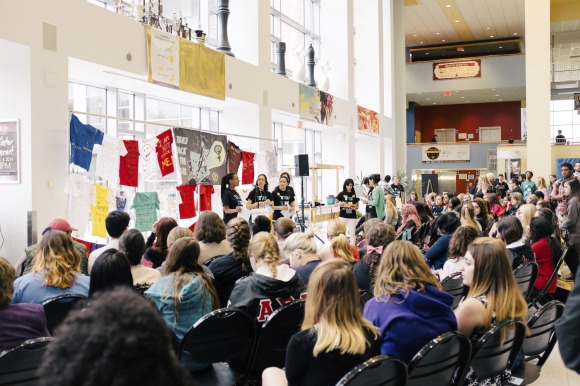
The survivor speak-out is the heart of Take Back the Night. This is the point in the night where survivors are encouraged to come up and share their story with the crowd before the march throughout campus. As a survivor, sharing your story at TBTN allows you to publicly acknowledge your experience with a crowd that believes you and supports you.
Kayla Smith, UMBC Class of 2017, started the speak out in previous years and cherished that moment as a time where she could share her experience with people who she knew wouldn’t judge her. She could look out into a crowd of people who wouldn’t tell her its her fault, ask what she was wearing, ask if she was drinking, or tell her that she was responsible for her assault. “Speaking out about my assault empowers me to talk about my experience with confidence.”
This year we want to focus on dispelling the myth of the “perfect victim” that often times dominates sexual violence discourse. There are a variety of stories and experiences that are shared during the speak- out. Some may share stories or healing while others are still angry, sad, or scared. Many stories may come from women-identified folks and/but male survivors are also invited to share their stories at the speak-out. All of our stories and experiences are valid. And, no matter where you are at in your experience as a survivor (i.e. your assault happened 10 years ago or just last week) or what your identities may be, you’re welcomed to share your story.
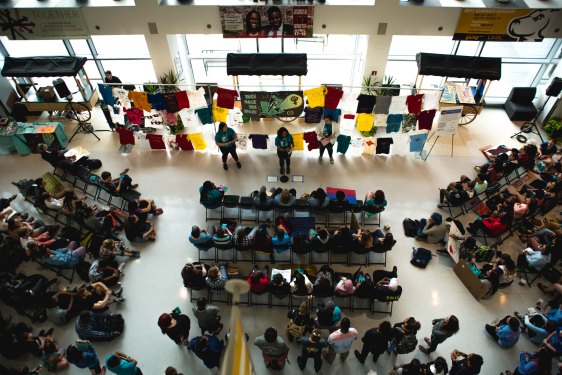
If you’re thinking about speaking at Take Back the Night, feel free to reach out to Women’s Center staff ahead of time if you feel like it would be helpful to talk to someone ahead of time about your story and how you may want to share it. Of course, we know many survivors may not plan on speaking at TBTN and then feel called to do so once the speak-out begins and that’s okay! If you feel uncomfortable sharing during the speak-out, that’s also 100% okay! There will be a chance to be recognized during the March at the Survivor Circle (which will be a new part of this year’s march – stay tuned for our updated What You Need to Know about the March post for more details!) or discuss your experience in a more intimate setting at We Believe You’s survivor discussion group post march.
It’s also totally okay if don’t feel ready to share your story at Take Back the Night – there’s many other ways you can share your story in less public ways throughout Sexual Assault Awareness Month (like making a t-shirt for the Clothesline Project or the other ways at TBTN we mentioned in the above paragraph) and Take Back the Night (counselors will be available throughout the event and there will be the self-care station). Survivors or anyone impacted by sexual violence can also always schedule a time to talk to Women’s Center staff – we’re quasi-confidential resources on campus and can link you to additional support and resources.
Here’s some helpful information about the speak-out we think is helpful for everyone to know whether they’re speaking or listening:
- Any one can be a survivor of sexual violence. Any survivor regardless of their gender identity or sexual orientation is welcomed to share their story at the speak-out. At the beginning of TBTN’s creation the speak out was only for women, but we welcome men and all others who may have differing gender identities to speak out. We wish for the speak out to be an inclusive space of healing and representation of different identities can help dispel the dangerous “perfect victim” narrative.
- The survivor speak-out is intended to center the voices and experience of survivors of sexual violence. The speak-out is for allies to listen and survivors to break their silence. Thank you in advanced for respecting this request. Allies are also encouraged to attend the Women’s Center workshop on Supporting Survivors of Sexual Violence on 4/11.
- Since TBTN functions as a public forum, normal reporting procedures look a bit different. If you choose to share your story, and want to go no further in the reporting process, we encourage you not to disclose any names or other specific identifying information, such as locations or familial relationships, as those details may prompt staff to follow up with you for reporting matters. Staff are available at the event for those who do want additional resources and want to report their experience through UMBC’s Title IX reporting process or police.
- We ask that you try to limit your story to about 3 minutes. We know it may be hard to do so but we want to make sure as many survivors as possible can speak during the allotted speak out time which is one hour long. If you’d like to continue sharing your story, you may want to go to the We Believe You discussion group after the Take Back the Night march.
- Speakers will have the option to identify their story as confidential by placing a sign marked “confidential” on the microphone. Speaking from the “confidential” microphone prohibits anyone from taking pictures, quotes, or recording of any kind.
-
Counselors-On-Call will be available throughout the evening. Any one needing additional support or simply needs to take a break are invited to visit the self-care station that will be set up in the Commuter Lounge.
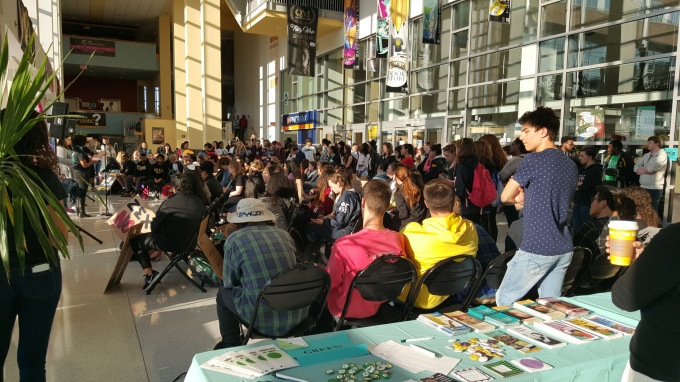
For more information about UMBC’s TBTN (check out Facebook, Instagram, and Twitter too by searching the hashtag #UMBCTBTN):
- Supporting Survivors of Sexual Violence Workshop information for students.
- Speak: Knowing a Survivor Without Knowing Their Story – a blog post on cultivating a survivor-responsive campus.
- The Women’s Center 2018 TBTN roundup
- The Retriever Weekly photo gallery of TBTN
- Stop by the Women’s Center on April 17th to make a rally sign for the march
]]>
This post was orginially written and posted on April 22nd, 2019 by Sambam226. April is Sexual Assault Awareness Month, and the Women’s Center is hosting its 7th consecutive Take Back the Night...
https://my3.my.umbc.edu/api/v0/pixel/news/132482/guest@my.umbc.edu/17cc769205baaa3cd885d379d85ef214/api/pixel
activism
feminism
programs
saam
sexual-assault
sexual-assault-awareness-month
survivors
survivors-of-sexual-violence
tbtn
umbc
what-you-need-to-know-tbtn
Women's, Gender, & Equity Center
https://my3.my.umbc.edu/groups/womenscenter
https://assets2-my.umbc.edu/system/shared/avatars/groups/000/000/125/78272a4842689b30dbf74672182b78f8/xsmall.png?1750974263
https://assets1-my.umbc.edu/system/shared/avatars/groups/000/000/125/78272a4842689b30dbf74672182b78f8/original.png?1750974263
https://assets1-my.umbc.edu/system/shared/avatars/groups/000/000/125/78272a4842689b30dbf74672182b78f8/xxlarge.png?1750974263
https://assets1-my.umbc.edu/system/shared/avatars/groups/000/000/125/78272a4842689b30dbf74672182b78f8/xlarge.png?1750974263
https://assets1-my.umbc.edu/system/shared/avatars/groups/000/000/125/78272a4842689b30dbf74672182b78f8/large.png?1750974263
https://assets2-my.umbc.edu/system/shared/avatars/groups/000/000/125/78272a4842689b30dbf74672182b78f8/medium.png?1750974263
https://assets1-my.umbc.edu/system/shared/avatars/groups/000/000/125/78272a4842689b30dbf74672182b78f8/small.png?1750974263
https://assets2-my.umbc.edu/system/shared/avatars/groups/000/000/125/78272a4842689b30dbf74672182b78f8/xsmall.png?1750974263
https://assets3-my.umbc.edu/system/shared/avatars/groups/000/000/125/78272a4842689b30dbf74672182b78f8/xxsmall.png?1750974263
Women's Center
https://assets1-my.umbc.edu/system/shared/thumbnails/news/000/132/482/420f3c51bce93da9132e86041fe2fdc2/xxlarge.jpg?1681142738
https://assets2-my.umbc.edu/system/shared/thumbnails/news/000/132/482/420f3c51bce93da9132e86041fe2fdc2/xlarge.jpg?1681142738
https://assets3-my.umbc.edu/system/shared/thumbnails/news/000/132/482/420f3c51bce93da9132e86041fe2fdc2/large.jpg?1681142738
https://assets1-my.umbc.edu/system/shared/thumbnails/news/000/132/482/420f3c51bce93da9132e86041fe2fdc2/medium.jpg?1681142738
https://assets1-my.umbc.edu/system/shared/thumbnails/news/000/132/482/420f3c51bce93da9132e86041fe2fdc2/small.jpg?1681142738
https://assets3-my.umbc.edu/system/shared/thumbnails/news/000/132/482/420f3c51bce93da9132e86041fe2fdc2/xsmall.jpg?1681142738
https://assets4-my.umbc.edu/system/shared/thumbnails/news/000/132/482/420f3c51bce93da9132e86041fe2fdc2/xxsmall.jpg?1681142738
0
0
true
Mon, 10 Apr 2023 12:06:07 -0400
Wed, 09 Aug 2023 13:36:03 -0400
Take Back the Night 2019 Round-Up
This blog was originally written and posted on April 22, 2019 by sambam226.
On April 18th 2019, the Women’s Center hosted the seventh annual Take Back the Night at UMBC. The night began with an introduction by the emcees Autumn, Calista and Women’s Center staff members, Samiksha and Morgan.
Photo credit: Samiksha Manjani
After the introduction was the survivor speak-out. The speak-out is the heart and soul of Take Back the Night. Survivors are encouraged to come up and share their story with the crowd before the march throughout campus. As a survivor, sharing your story at TBTN allows you to acknowledge your experience with others who believe and support you.
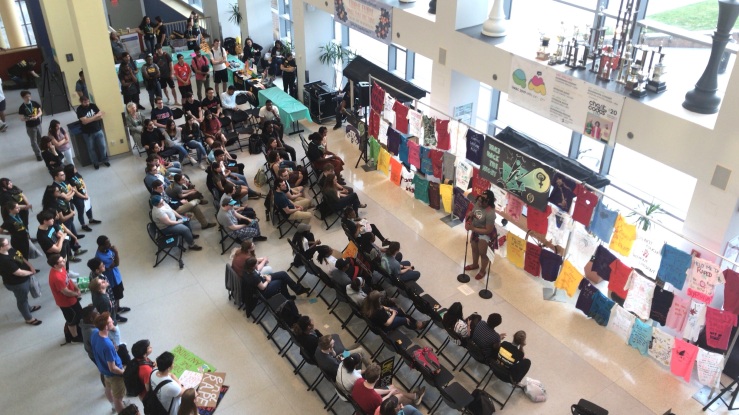
We then moved on to the march portion of the night, where we got loud and chanted in support of victims of sexual violence. We Believe You, an activist group dedicated to ending sexual violence, led the march, the survivor circle of care, and a private discussion in the Women’s Center following the march.
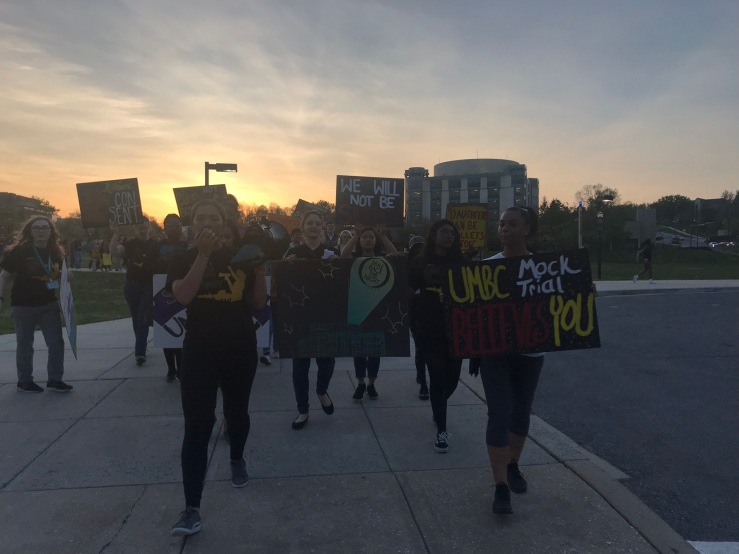

The survivor circle is a new addition to Take Back the Night. At the peak of the march, everyone formed a circle around True Grit. Survivors were invited to the middle of the circle, while supporters chanted the refrain, “We see you. We believe you. You matter.” After the survival circle, the march back to Main Street commenced.
After the march, community members got back together for some craftivism! This part of the night is intended to provide space for reflection, creative expression, and community-building between survivors and supporters alike.
Thank you so much to everyone for a powerful and moving evening. Thank you to every survivor for sharing their story, to every ally who supported the survivors, and a special thank you to all the volunteers and We Believe You members who made TBTN possible!
If you weren’t able to make it, here are some resources:
]]>
This blog was originally written and posted on April 22, 2019 by sambam226. On April 18th 2019, the Women’s Center hosted the seventh annual Take Back the Night at UMBC. The night began with an...
https://my3.my.umbc.edu/api/v0/pixel/news/132423/guest@my.umbc.edu/9a864415a707ff108422047e4de69816/api/pixel
activism
feminism
programs
saam
sexual-assault
sexual-assault-awareness-month
survivors
survivors-of-sexual-violence
take-back-the-night
tbtn
umbc
what-you-need-to-know-tbtn
Women's, Gender, & Equity Center
https://my3.my.umbc.edu/groups/womenscenter
https://assets2-my.umbc.edu/system/shared/avatars/groups/000/000/125/78272a4842689b30dbf74672182b78f8/xsmall.png?1750974263
https://assets1-my.umbc.edu/system/shared/avatars/groups/000/000/125/78272a4842689b30dbf74672182b78f8/original.png?1750974263
https://assets1-my.umbc.edu/system/shared/avatars/groups/000/000/125/78272a4842689b30dbf74672182b78f8/xxlarge.png?1750974263
https://assets1-my.umbc.edu/system/shared/avatars/groups/000/000/125/78272a4842689b30dbf74672182b78f8/xlarge.png?1750974263
https://assets1-my.umbc.edu/system/shared/avatars/groups/000/000/125/78272a4842689b30dbf74672182b78f8/large.png?1750974263
https://assets2-my.umbc.edu/system/shared/avatars/groups/000/000/125/78272a4842689b30dbf74672182b78f8/medium.png?1750974263
https://assets1-my.umbc.edu/system/shared/avatars/groups/000/000/125/78272a4842689b30dbf74672182b78f8/small.png?1750974263
https://assets2-my.umbc.edu/system/shared/avatars/groups/000/000/125/78272a4842689b30dbf74672182b78f8/xsmall.png?1750974263
https://assets3-my.umbc.edu/system/shared/avatars/groups/000/000/125/78272a4842689b30dbf74672182b78f8/xxsmall.png?1750974263
Women's Center
https://assets1-my.umbc.edu/system/shared/thumbnails/news/000/132/423/db9b1ced1636d2d8612c3f5e9b7cb939/xxlarge.jpg?1680883447
https://assets4-my.umbc.edu/system/shared/thumbnails/news/000/132/423/db9b1ced1636d2d8612c3f5e9b7cb939/xlarge.jpg?1680883447
https://assets3-my.umbc.edu/system/shared/thumbnails/news/000/132/423/db9b1ced1636d2d8612c3f5e9b7cb939/large.jpg?1680883447
https://assets2-my.umbc.edu/system/shared/thumbnails/news/000/132/423/db9b1ced1636d2d8612c3f5e9b7cb939/medium.jpg?1680883447
https://assets2-my.umbc.edu/system/shared/thumbnails/news/000/132/423/db9b1ced1636d2d8612c3f5e9b7cb939/small.jpg?1680883447
https://assets2-my.umbc.edu/system/shared/thumbnails/news/000/132/423/db9b1ced1636d2d8612c3f5e9b7cb939/xsmall.jpg?1680883447
https://assets3-my.umbc.edu/system/shared/thumbnails/news/000/132/423/db9b1ced1636d2d8612c3f5e9b7cb939/xxsmall.jpg?1680883447
0
0
true
Fri, 07 Apr 2023 12:12:08 -0400
What You Need To Need Know: TBTN & Why We March
Posted and Written on March 26, 2019 by sambam226
April is Sexual Assault Awareness Month, and the Women's Center is hosting its 7th Take Back the Night on Thursday, April 13th. Over the years, we've had a lot of questions about what Take Back the Night exactly is, why it looks the way it does, and how students can get involved. To help get those questions answered we started the 'What You Need to Know" series focused on TBTN from 2019 and are continuing on the tradition, so stay tuned for more posts over the next couple of weeks. This blog focuses on the evening's campus march against sexual violence.

1,2,3,4 WE WON'T TAKE IT ANYMORE
5,6,7,8 NO MORE VIOLENCE! NO MORE HATE!
As a survivor of sexual assault, the Take Back The Night march reminds me that I'm not alone.
Mariana De Matos Medeiros, '16, and former student staff member at the Women's Center, said "To me, having the opportunity to speak and march at TBTN last year reminded me that I am not alone and that I can stand in my power to speak about my experience. It took me 3 years to finally speak about my assault and one of the very first times was at TBTN last year. Seeing so many gathered to support allowed me to speak and speaking has allowed me to heal."
It can be easy to blame yourself, isolate yourself, and feel like you're the only person struggling with your healing; However, the march lets you connect with people who support you and believe you.
Sarah Lilly, a 2016 and 2017 Take Back The Night student leader says "Marching is us showing that solidarity is a verb, and it brings me great pride to feel so supported by my local UMBC community and to see the unconditional support for everyone else in our community."
In an open letter in her school's newspaper, survivor and student activist, Angie Epifano, recounted the aftermath of her sexual assault, namely her experience with institutional betrayal. She ended the letter with, "Silence has the rusty taste of shame." Due to rape culture, victim blaming, a lack of support for survivors, and more, it is understandable that many survivors do not disclose their experience and sexual assault is rarely spoke of in public.
Much like the Baltimore-based Monument Quilt is creating and demanding public space for survivors to heal, Take Back the Night demands for space in which we will not be shamed into silence. Activists like Angie, the Monument Quilt creators, and YOU during the march are creating a new culture where survivors are publicly supported, rather than publicly shamed.
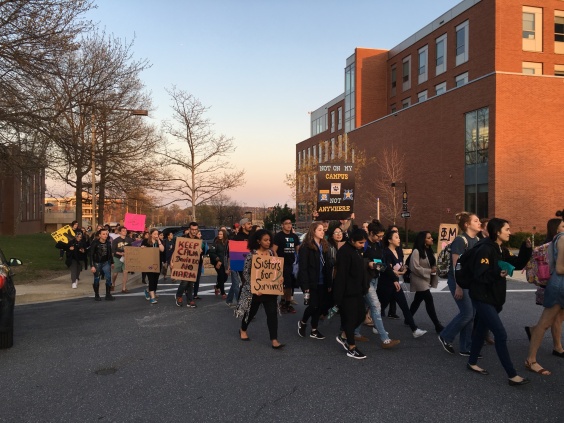
Here's some helpful information about the campus march against sexual violence to those attending Take Back the Night at UMBC:
- The survivor speak-out is intended to center the voices and experience of survivors (of all identities) of sexual violence. The speak-out is for allies to listen and survivors to break their silence but the march is for EVERYONE to GET LOUD!
- We encourage individuals and groups to make rally signs ahead of time. Signs are a great way to show your solidarity and support while also representing your student orgs, res hall communities, and frats/sororities.
-
We'll line everyone up in the march in waves. Survivors wanting to march up front with other survivors are invited to line up first along with other community members needed to take an accessible route march. Everyone else will then line up as survivors begin to march towards the south exit of The Commons.
- As we march, walk slowly and stay together. Try to avoid large gaps in the line.
- This year we're bringing back the Survivor Circle. As we make out way through the route we will stop midway through the march and hold our Survivor Circle.
- The Survivor Circle is a chance for survivors who may or may not have shared their story during the speak out to be recognized, come together, and be surrounded in support and healing by those attending the march. This is an opportunity for those who identify as survivors to come together without having to speak out or share their story if they do not wish to do so.
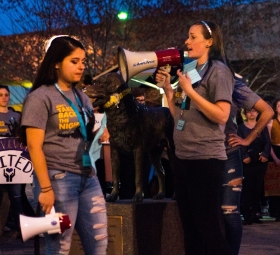
- The march will end back on Main Street where the space will be ready for the evening's resource fair and craftivism. As you're heading back into The Commons, come all the way into Main Street so everyone else behind you can get into the space as well.
- There will be one more chance to share your experience as a survivor post-march at a survivor discussion group led by the student organization We Believe You in the Women's Center. (This event will be private and for survivors only).
- Counselors-On-Call will be available throughout the evening. Any one needing additional support or simply needs to take a break are invited to visit the self-care station that will be set up in the Commuter Lounge.

For more information about UMBC's TBTN (check out Facebook, Instagram, and Twitter too by searching the hashtag #UMBCTBTN):
- Stop by the Women's Center the week leading up to TBTN to make a rally sign for the march on April 17th
- A blog post about UMBC's 2005 TBTN march written by alum, Dr. Grollman.
- Speak: Knowing a Survivor Without Knowing Their Story - a blog post on cultivating a survivor-responsive campus.
- Register for and attend an upcoming Supporting Survivors of Sexual Violence workshop. Click here for more details on the students workshop.
- The Women's Center 2018 TBTN roundup
Stay tuned for the next installment of what you need to know about TBTN 2019!
What You Need To Need Know: Take Back The Night & Its History
April is Sexual Assault Awareness Month, and the Women’s Center is hosting its 5th consecutive Take Back The Night (TBTN) on Thursday, April 13th. Over the years, we’ve had a lot of questions about what Take Back the Night exactly is, why it looks the way it does, and how students can get involved. To help get those questions answered this year, we’ve doing a “What You Need to Know” series focused on TBTN so stay tuned for more posts over the next couple of weeks. This first post in the series focuses on the history and purpose of TBTN.
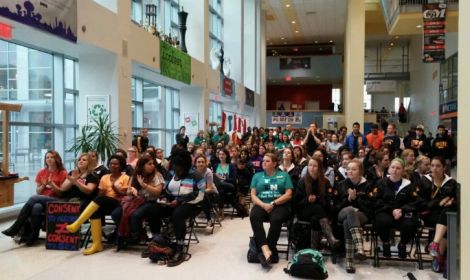
The crowd waiting for UMBC’s TBTN 2014 to begin.
In 1971 in New York a group of women and survivors hosted the first-ever rape speak-out that was organized by the group the New York Radical Feminists. A few years later, one of the first “Take Back the Night” marches was held in Philadelphia, Pennsylvania in October 1975.
Despite some advancements and more attention being paid to sexual violence, we still live in a society where over forty-five years later there is still a need to speak out against rape and sexual assault. There is still a need to say, “It happened to me.” “I believe you.” “You are not alone.” “It is not your fault.” And, so this is why we host Take Back the Night each year at UMBC and why it still happens worldwide.
UMBC (from what we can tell from the archives), held their first TBTN event in the early 2000s for just a few years. Campus stopped hosting it for several years so as to be in solidarity with other area colleges by participating in Baltimore City Hall’s Take Back the Night. But, by 2013, it made the most sense for us to bring back our own Take Back the Night. So the Women’s Center with support from UHS’s Health Education, Greek Week, and a BreakingGround grant did just that. Since then, this campus-wide rally and march against sexual violence has been a signature Women’s Center event every April.
Each year the Women’s Center hosts survivor speak-out followed by a campus march against sexual assault. When marchers return, UMBC’s TBTN spends the rest of the evening doing “craftivism” art healing projects and hosting a community resource fair. A smaller version of the Clothesline Project is also serves as a backdrop to the evening’s events.
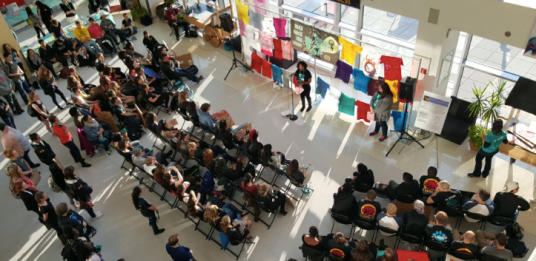
The survivor speak-out at UMBC’s TBTN 2016
Stay tuned for more posts explaining the significance of each portion of Take Back The Night!
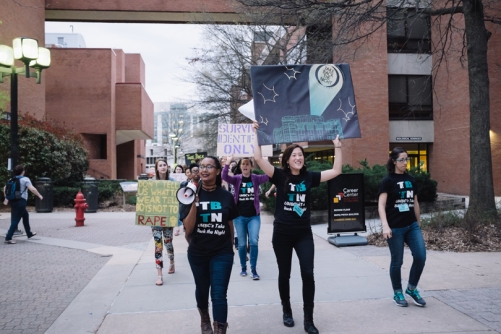
The march against sexual violence at UMBC’s TBTN 2015
For more information about UMBC’s TBTN (check out Facebook, Instagram, and Twitter too by searching the hashtag #UMBCTBTN):
- A BreakingGround post about how the 2013 TBTN came to be – Our Own ‘Take Back the Night’
- Read a blog post written by a UMBC alum related to TBTN 2005 at UMBC.
- The Women’s Center 2016 TBTN roundup
- The Retriever Weekly photo gallery of TBTN
- The Women’s Center visual recap of TBTN 2015
- Stop by the Women’s Center on April 11, 12, and 13th to make a rally sign for the march!
Stay tuned for the next installment of what you need to know about TBTN 2017!
]]>
What You Need To Need Know: Take Back The Night & Its History Posted on March 30, 2017 by kaylasm1 April is Sexual Assault Awareness Month, and the Women’s Center is hosting its 5th...
https://my3.my.umbc.edu/api/v0/pixel/news/132298/guest@my.umbc.edu/1708d21ca502612f28b4c3c519ac736d/api/pixel
activism
feminism
programs
saam
sexual-assault
sexual-assault-awareness-month
survivors
survivors-of-sexual-violence
tbtn
umbc
what-you-need-to-know-tbtn
Women's, Gender, & Equity Center
https://my3.my.umbc.edu/groups/womenscenter
https://assets2-my.umbc.edu/system/shared/avatars/groups/000/000/125/78272a4842689b30dbf74672182b78f8/xsmall.png?1750974263
https://assets1-my.umbc.edu/system/shared/avatars/groups/000/000/125/78272a4842689b30dbf74672182b78f8/original.png?1750974263
https://assets1-my.umbc.edu/system/shared/avatars/groups/000/000/125/78272a4842689b30dbf74672182b78f8/xxlarge.png?1750974263
https://assets1-my.umbc.edu/system/shared/avatars/groups/000/000/125/78272a4842689b30dbf74672182b78f8/xlarge.png?1750974263
https://assets1-my.umbc.edu/system/shared/avatars/groups/000/000/125/78272a4842689b30dbf74672182b78f8/large.png?1750974263
https://assets2-my.umbc.edu/system/shared/avatars/groups/000/000/125/78272a4842689b30dbf74672182b78f8/medium.png?1750974263
https://assets1-my.umbc.edu/system/shared/avatars/groups/000/000/125/78272a4842689b30dbf74672182b78f8/small.png?1750974263
https://assets2-my.umbc.edu/system/shared/avatars/groups/000/000/125/78272a4842689b30dbf74672182b78f8/xsmall.png?1750974263
https://assets3-my.umbc.edu/system/shared/avatars/groups/000/000/125/78272a4842689b30dbf74672182b78f8/xxsmall.png?1750974263
Women's Center
https://assets3-my.umbc.edu/system/shared/thumbnails/news/000/132/298/984b032abb4dc96f7e22ec6d76c90d49/xxlarge.jpg?1680711868
https://assets2-my.umbc.edu/system/shared/thumbnails/news/000/132/298/984b032abb4dc96f7e22ec6d76c90d49/xlarge.jpg?1680711868
https://assets1-my.umbc.edu/system/shared/thumbnails/news/000/132/298/984b032abb4dc96f7e22ec6d76c90d49/large.jpg?1680711868
https://assets2-my.umbc.edu/system/shared/thumbnails/news/000/132/298/984b032abb4dc96f7e22ec6d76c90d49/medium.jpg?1680711868
https://assets2-my.umbc.edu/system/shared/thumbnails/news/000/132/298/984b032abb4dc96f7e22ec6d76c90d49/small.jpg?1680711868
https://assets3-my.umbc.edu/system/shared/thumbnails/news/000/132/298/984b032abb4dc96f7e22ec6d76c90d49/xsmall.jpg?1680711868
https://assets2-my.umbc.edu/system/shared/thumbnails/news/000/132/298/984b032abb4dc96f7e22ec6d76c90d49/xxsmall.jpg?1680711868
0
0
true
Wed, 05 Apr 2023 12:25:39 -0400
Wed, 09 Aug 2023 13:39:50 -0400
Take Back the Night, Forever and Always
Amelia Meman (they/them and she/her), GWST ’15, is the interim director of the Women’s Center. They have worked in the Women’s Center as an intern, a student staff member, a volunteer, and now professional staff member. This is a loving retrospective on Take Back the Night (TBTN), written in the third spring semester where UMBC has not been able to hold such an event.
Author’s Note: I am proud to say that I have been to every single Take Back the Night since its revival on UMBC’s campus in 2013. This does not mean I am an expert on this event nor that my opinion of Take Back the Night is shared by the thousands who have taken part in this event throughout the past nine years. Because Take Back the Night is such a shared experience, I reached out to some alumni who have experienced TBTN as attendees, volunteers, and leaders. You will see their contributions throughout. Thank you, Yoo-Jin, Autumn, Calista, Hannah, and Sydney. 
As we share our spring semester with the pandemic once again, I know I and many of our community members are deeply disappointed to not be able to come together for Take Back the Night. Even more alarming, however, is that many folks don’t know what it is to miss Take Back the Night because they’ve never experienced it.
Our last in-person Take Back the Night was in 2019 and most recently (2021), Jess Myers alongside several student activists and campus partners, created the Take Back the Night Virtual Experience. Before that, the Women’s Center staff and community co-created a zine called “Survivors to the Front,” which invited survivors of gender-based violence to submit their creative works–whether visual art or written word.
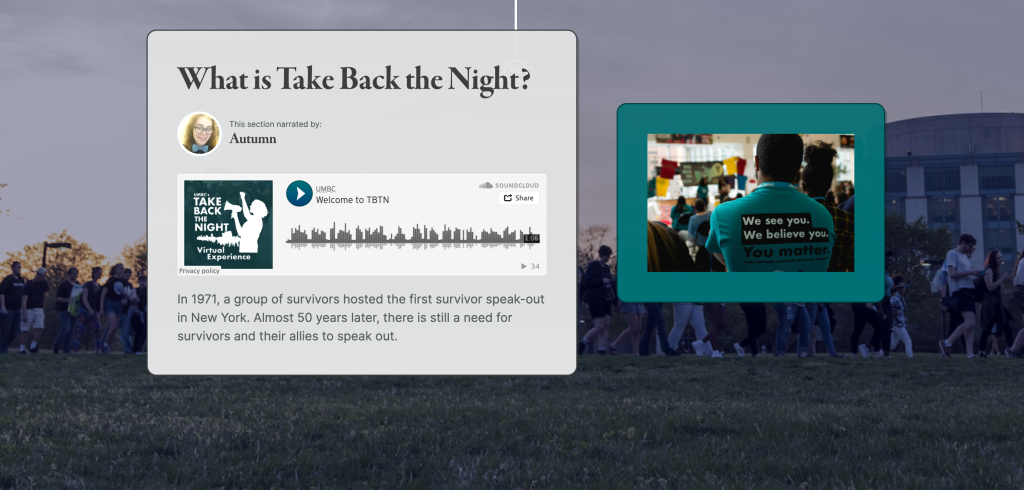

These online options have been balms in an otherwise quiet series of Sexual Assault Awareness Months (SAAM) for the Women’s Center. Normally, April is a huge month for the Women’s Center with [at minimum] weekly programming and often a full, month-long calendar of events, workshops, and educational opportunities offered through various departments on campus.
The major event of April (and for many, the entire school year) is Take Back the Night. In the last 3 years, however, we have not been able to host this event. And that’s why I’m writing this blogpost: because it’s been a long time and in addition to cultivating the hope that we can one day bring Take Back the Night back to its glory days as a large in-person, campus-wide event, I hope to preserve just a little bit of this institutional memory.
A Very Brief History of Take Back the Night at UMBC*
In 1971, a group of feminist advocates and survivors hosted the first-ever rape speak-out in New York. A few years later, one of the first “Take Back the Night” marches was held in Philadelphia, PA in October 1975.
UMBC (from what we can tell from the archives), held their first TBTN event in the early 2000s for just a few years. Campus stopped hosting it for several years so as to be in solidarity with other area colleges by participating in Baltimore City Hall’s Take Back the Night. But, by 2013, it made the most sense for us to bring back our own Take Back the Night. So the Women’s Center with support from UHS’s Health Education, Greek Week, and a BreakingGround grant did just that. Since Spring 2014, this campus-wide rally and march against sexual violence has been a signature Women’s Center event every April. Each year the Women’s Center hosts survivor speak-out followed by a campus march against sexual assault. When marchers return, UMBC’s TBTN spends the rest of the evening doing “craftivism” art healing projects and hosting a community resource fair. A smaller version of the Clothesline Project also serves as a backdrop to the evening’s events.
*Thank you to Kayla Smith, who wrote “What You Need To Need Know: Take Back The Night & Its History” in 2017; almost all of this information is from that resource.
How did Take Back the Night work at UMBC?
Take Back the Night starts on The Commons’ Main Street with the Survivor Speak Out. On the third Thursday of April, we take over this campus nexus with a mini-Clothesline Project display, microphones, speakers, a ton of folding chairs, resource tables, and hand-painted rally signs. The Speak-Out provides an open opportunity for survivors of power-based violence to tell their stories out loud, in front of an audience.
It was the first time I really identified as a survivor publicly and put myself in that vulnerable position. I remember the wave of emotions while we marched–anger, happiness, relief, anxiety–and how beautiful it was to just feel those things as they came.
Sydney (she/her)
This is a strategic location as it is one of the most heavily trafficked areas of campus. You might ask, “But aren’t the Survivor Speak-Out and the Clothesline Project a little disruptive for all the folks in The Commons?” The answer is yes, and that’s the point. Take Back the Night is placed in such a way that we can bring people together whether they’re attending the event on purpose or walking through and experiencing it randomly.


And that’s how many folks come to be involved in Take Back the Night–they stumble upon this big public event and get wrapped up in the stories they hear over the speakers. For Calista’s (she/her) first speak-out, she was a witness to the power of the event which caused a mixture of emotions: “My first experience felt very comforting seeing others being there for each other. It was also challenging to be in a space that reminded me so much of my trauma — but ultimately made me feel less alone.”
We have heard this reaction echoed in a number of other participants. Survivors are given the opportunity to stand up at a microphone and speak their truth; the result is raw, unfiltered vulnerability and power. Some survivors recall every last detail of their assault. Where it occurred, what they were wearing, who the perpetrator was… Others only talk about what happened in the aftermath. Regardless of what is shared, each person who comes up to the mic speaks their truth and the audience bears witness.
Autumn Cook (M29, ‘21) actually experienced her first TBTN from the front of the stage as one of our TBTN leaders. As a leader, they provide background information about TBTN and also start the Survivor Speak-Out by sharing their own story. Of their first experience, Autumn said:
Jesus. My first TBTN at UMBC was my first year on campus [in 2017]. Before then, I had never interacted with the Women’s Center – either because I didn’t super know what they did or that I was too scared too. But during the lead up to TBTN and aftermath, it felt like I found a family within the Women’s Center. I was one of the intro speakers for TBTN and getting up in front of the massive crowd was fun and illuminating. I was able to share my truth and afterwards I felt loved and seen by everyone in the crowd. The environment of support was like a big warm hug, enveloping and unending.
Autumn Cook (M29, ‘21)
-
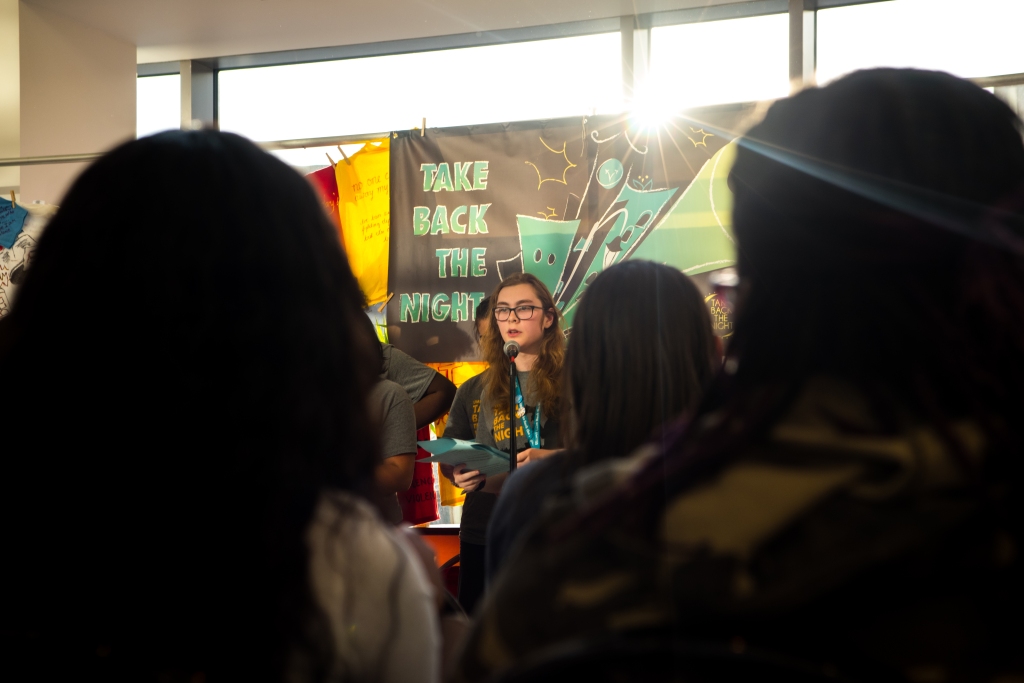 Autumn Cook leads TBTN 2018. Photo credit: Jaedon Huie
And still others experienced TBTN by working the event, like Sydney (she/her):
My first experience with TBTN, I was actually interning with The Monument Quilt. I was completely moved by the survivor speak out and the feeling of the community in the air. I remember watching survivor after survivor get up, being struck by their bravery and thinking “I couldn’t do that,” yet feeling heard and seen and accepted regardless. It was also the first true time I think I accepted my own assault and what that meant. I knew [TBTN] was something I needed to be involved in moving forward.
Sydney (she/her)
-
 The resource tables (covered in teal tablecloths) offer information about Take Back the Night and resources for survivors. Photo credit: Amelia Meman
Following the energy that builds in the Speak-Out, we mobilize all of the people who have gathered as witnesses and speakers to march across campus and demand visibility, justice, and healing for survivors.
We call on folks to move.
We hand out rally signs to anybody who wants to hold one.
We bring out the megaphones and we line up.
The march is divided with survivors at the front and UMBC community supporters bringing up the back. Marchers are given cards that have different rally chants written on them and line leaders are spread amongst the marchers. Once the march begins, leaders use their megaphones to start chants and direct people along the march route. The number is different at each TBTN, but the march group usually consists of approx. 250 campus community members.
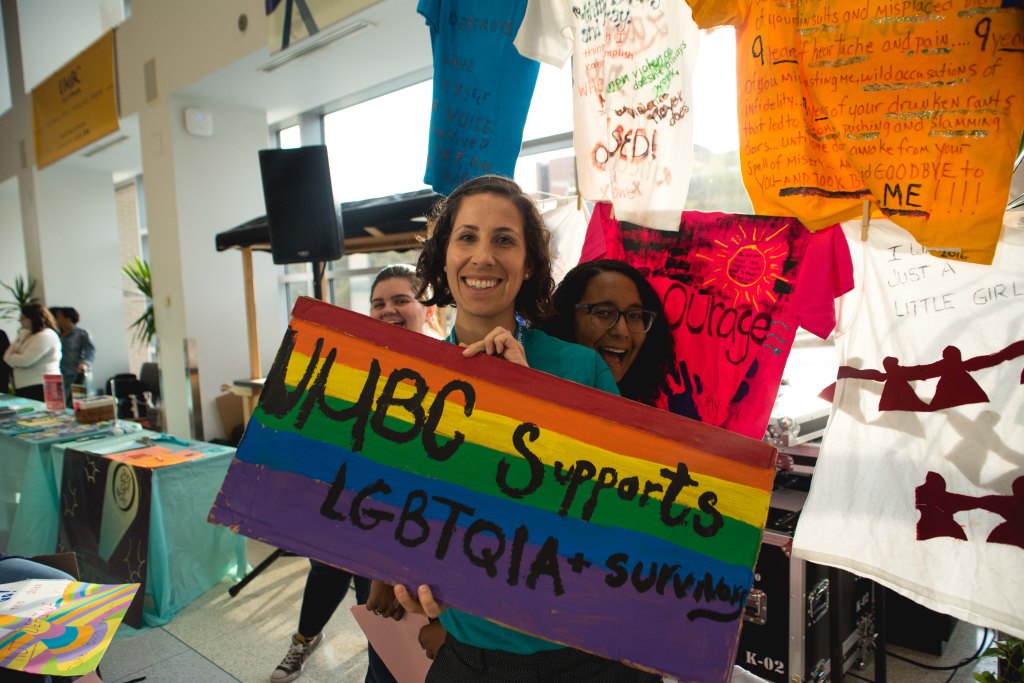
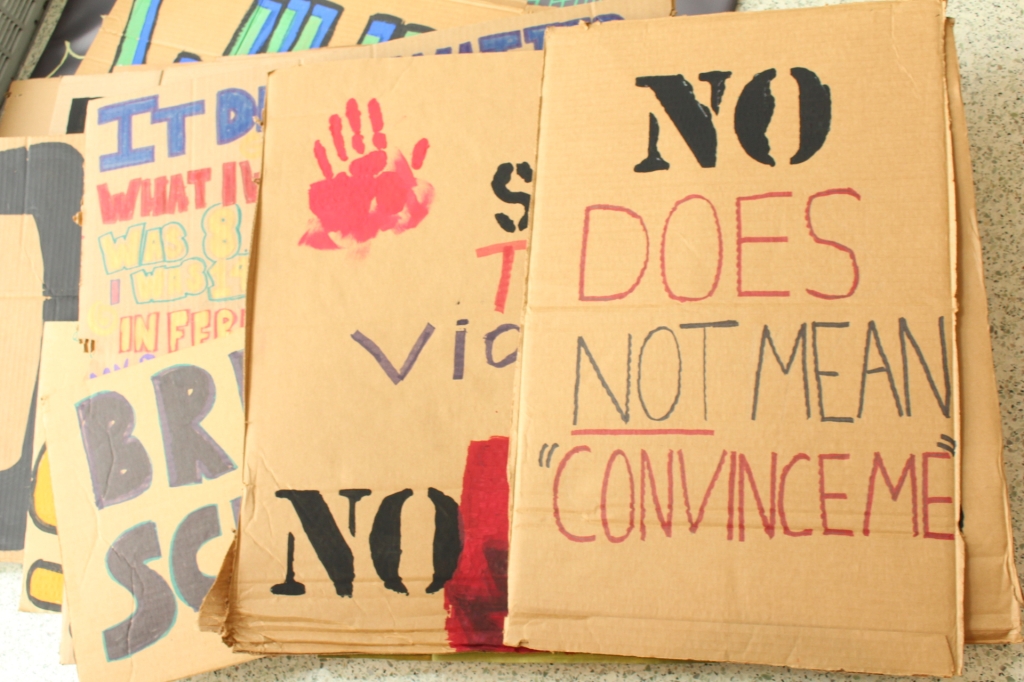
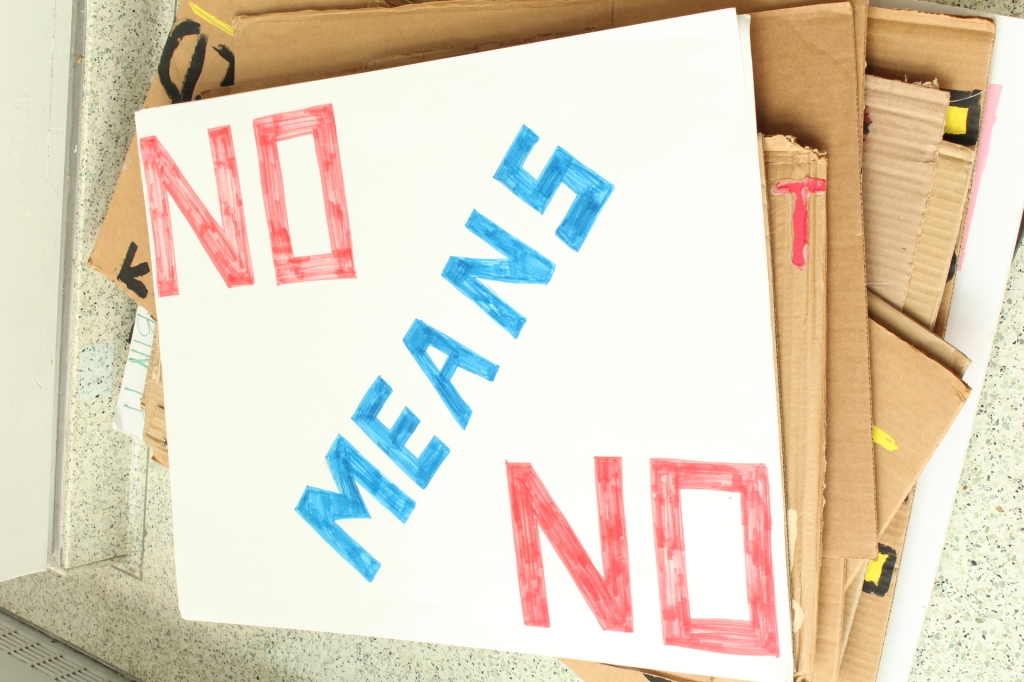


The march is loud and big. Its meant to grab people’s attention, just like the Survivor Speak-Out. Hannah Wilcove, GWST ‘19 remembered her “first encounter was seeing the march pass by me as I was walking back to my dorm freshman year and feeling a kinship with everyone participating that I couldn’t explain. Next year, I wanted to get more involved with the Women’s Center so I volunteered and participated for the first time.”
Many of the people I spoke to have experienced the march from the frontlines and share vivid memories of the emotions that are at play while walking through campus. For Sydney: “It was the first time I really identified as a survivor publicly and put myself in that vulnerable position. I remember the wave of emotions while we marched–anger, happiness, relief, anxiety–and how beautiful it was to just feel those things as they came.”

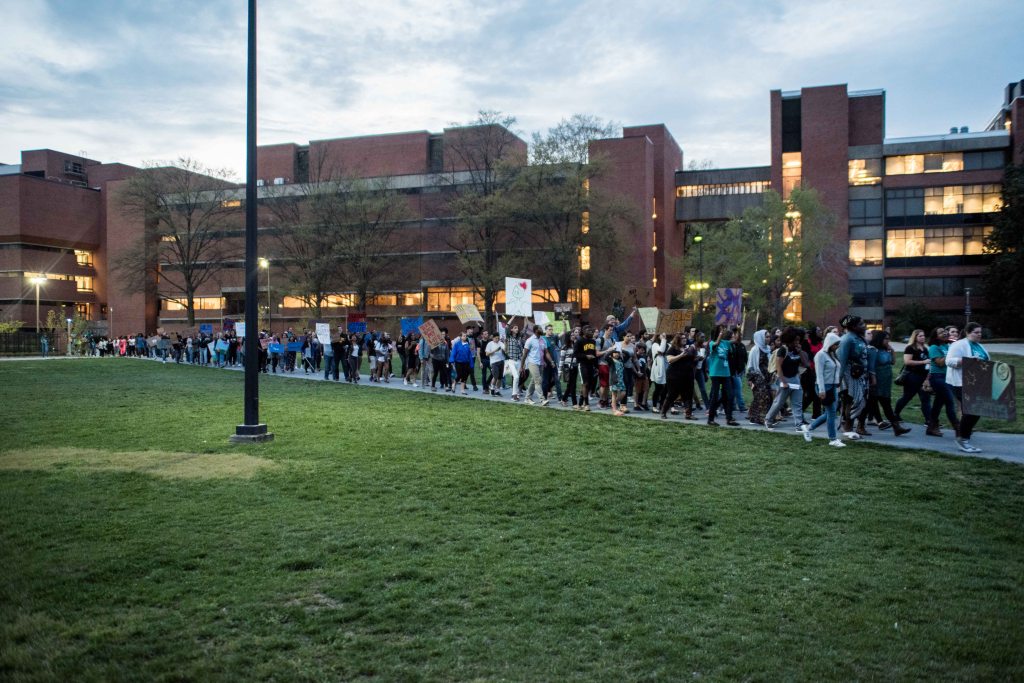

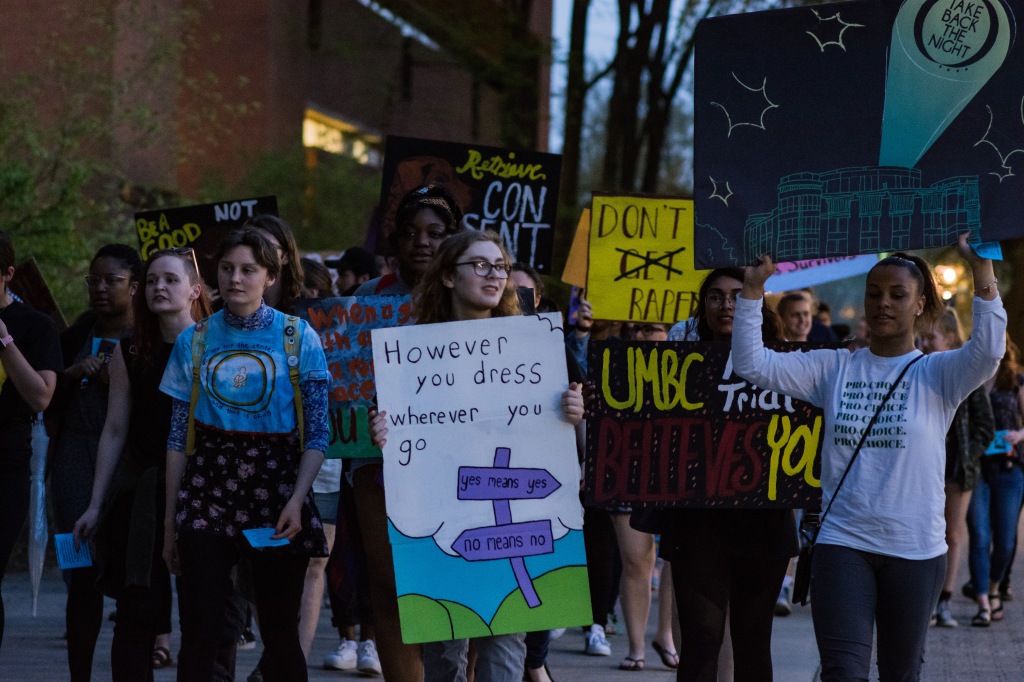
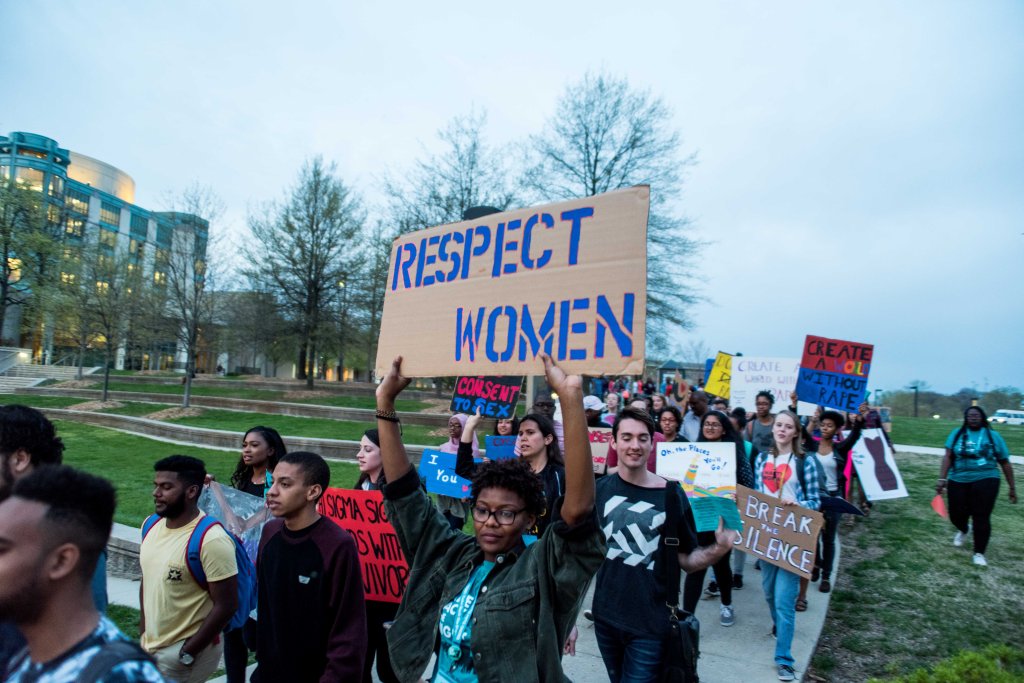
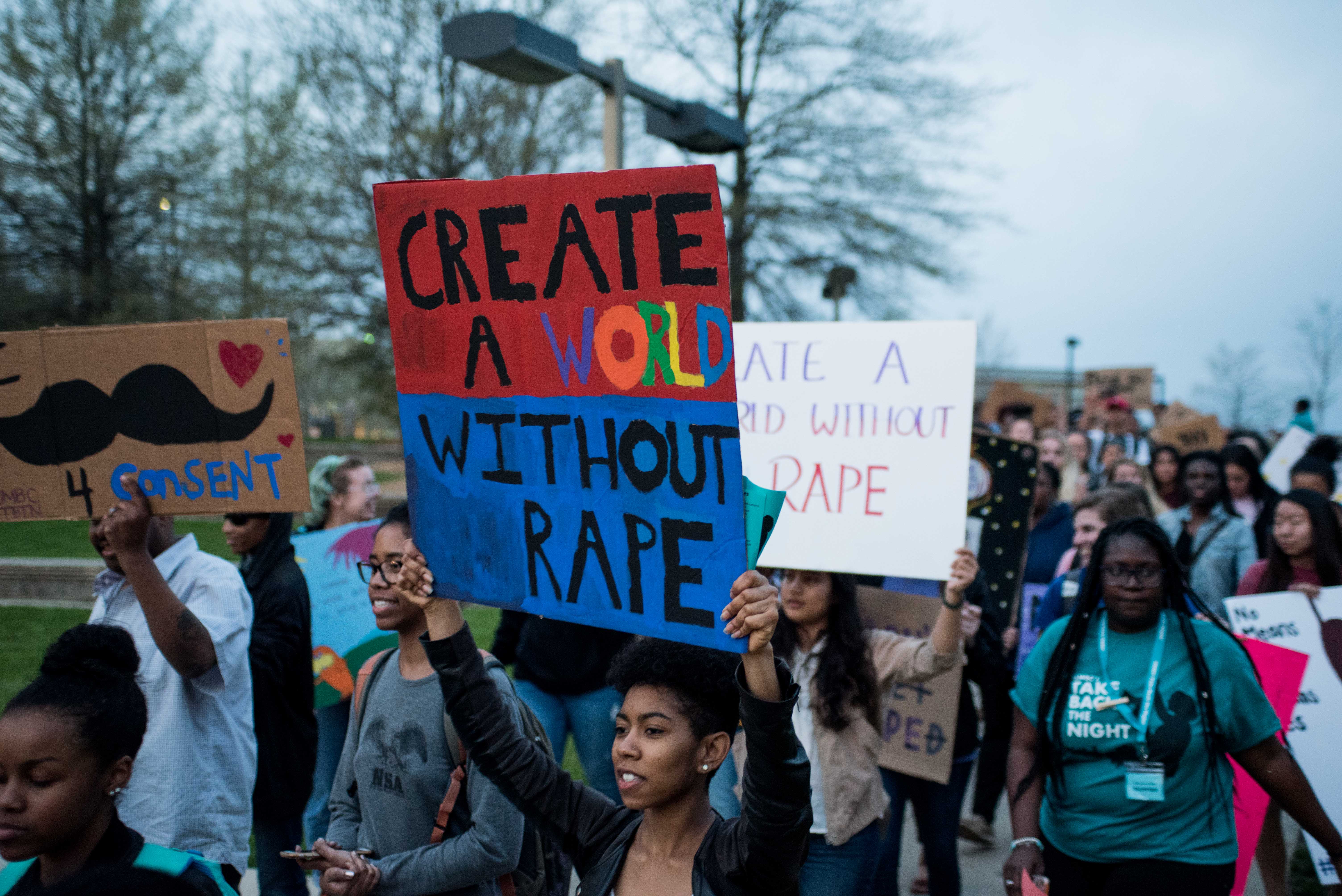
Yoo-Jin Kang, MLL & INDS ‘15 also remembers the rush as she maneuvered the march around campus: “Leading the march with dearest Kayla Smith. Walking alongside powerful survivors, shouting into a mic, and looking back to see a huge line following behind us. I still have chills thinking about it.”
The march goes all the way around campus starting at the southern entrance of The Commons, going east toward True Grits (and sometimes inside True Grits) and up around the Residence Halls before turning northwards and moving up the hill toward Library Pond. From the pond, the march hangs left to go all the way down Academic Row and stops at the statue of True Grit in front of the Administration Building and The RAC.
Recently, the march has added this stop around the True Grit statue so that marchers can circle up with survivors in the center and allies on the outside. The survivor circle rests with one another while the community continues to bear witness and offer respect.
Healing from trauma isn’t linear, but healing can happen and it does happen.


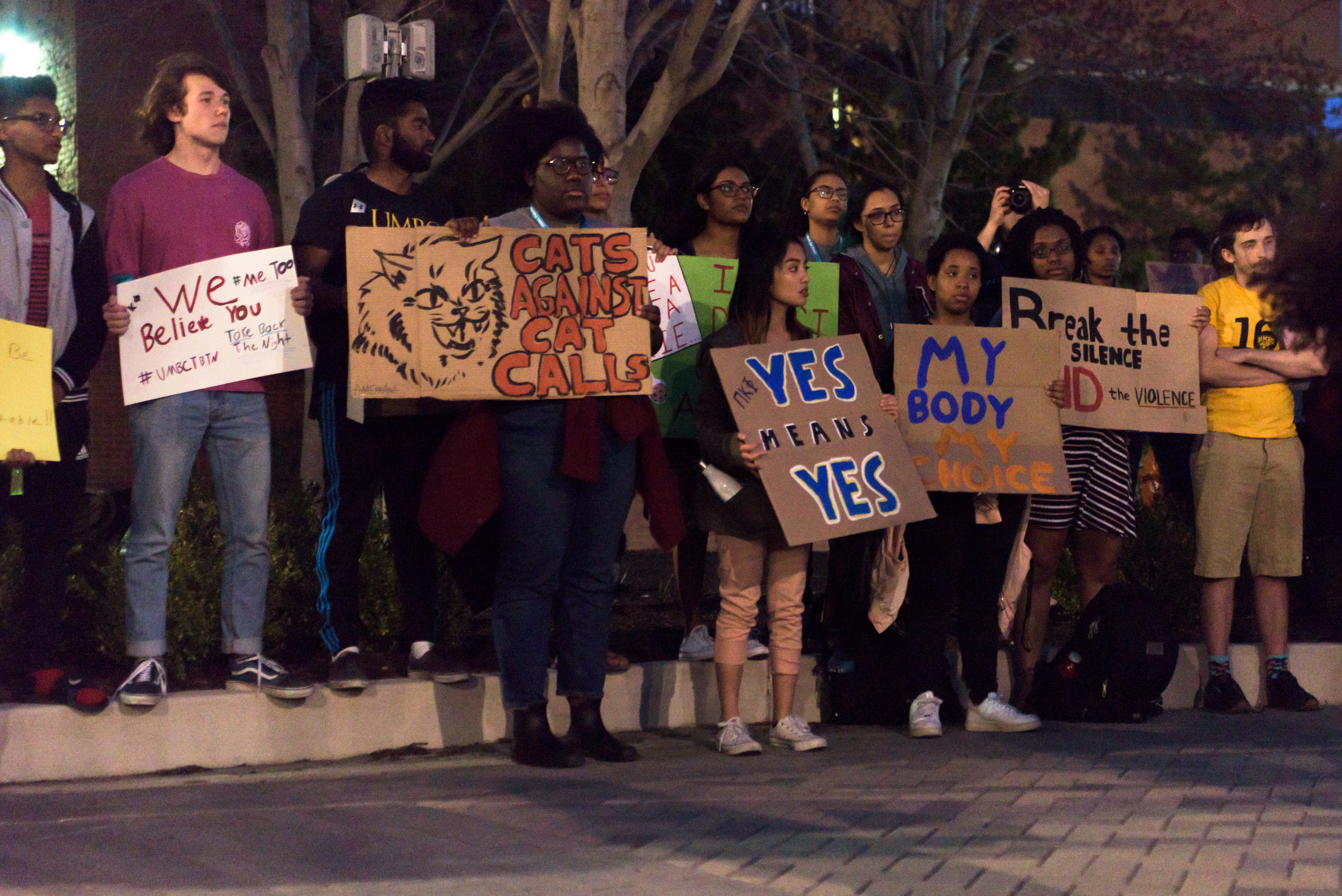
After regrouping in the circles, the march crosses the Quad diagonally and heads back to The Commons. Once inside, participants are met with a once again transformed Main Street. Where there were chairs and microphones for the Survivor Speak-Out there are now big circular tables with crafting materials available for folks to decompress through art, food and drinks to refresh themselves, and music blasting on the speakers so people can dance it out.
Every part of Take Back the Night is my favorite part, but this ending back at Main Street is really distinct. No matter the feelings that have erupted during the last few hours in the speak out and march we can all come back together to breathe. Breathe. Eat a cookie. Breathe. And laugh.
It might be as biologically simple as the flood of endorphins that comes after something painful or difficult… but it feels magical and powerful. We come back to where we had started… and the space is transformed but so are we. Healing from trauma isn’t linear, but healing can happen and it does happen.

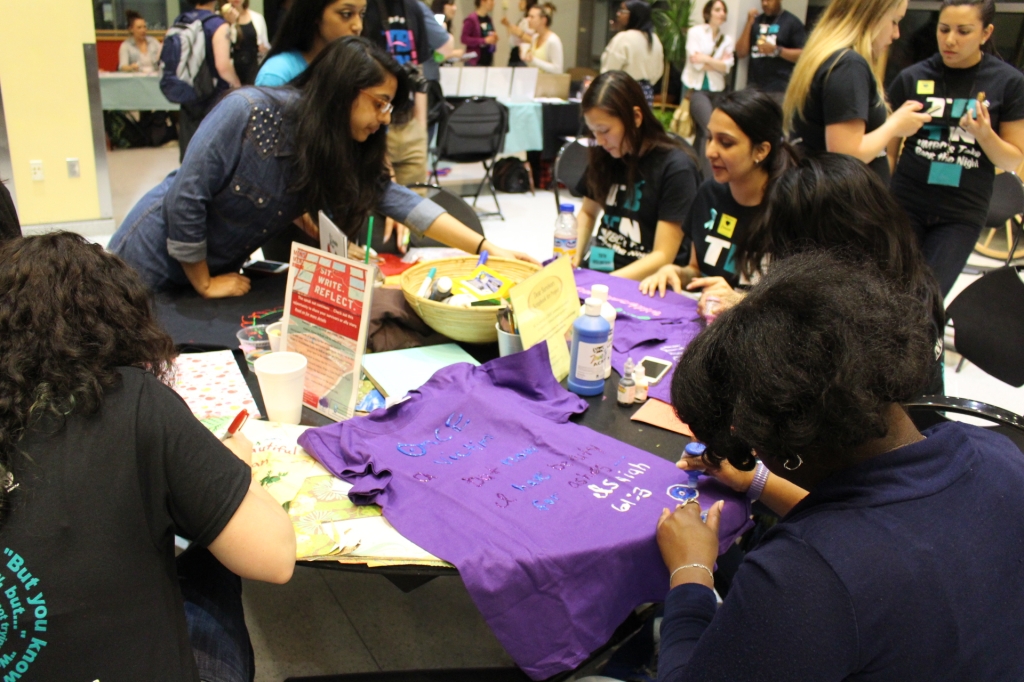
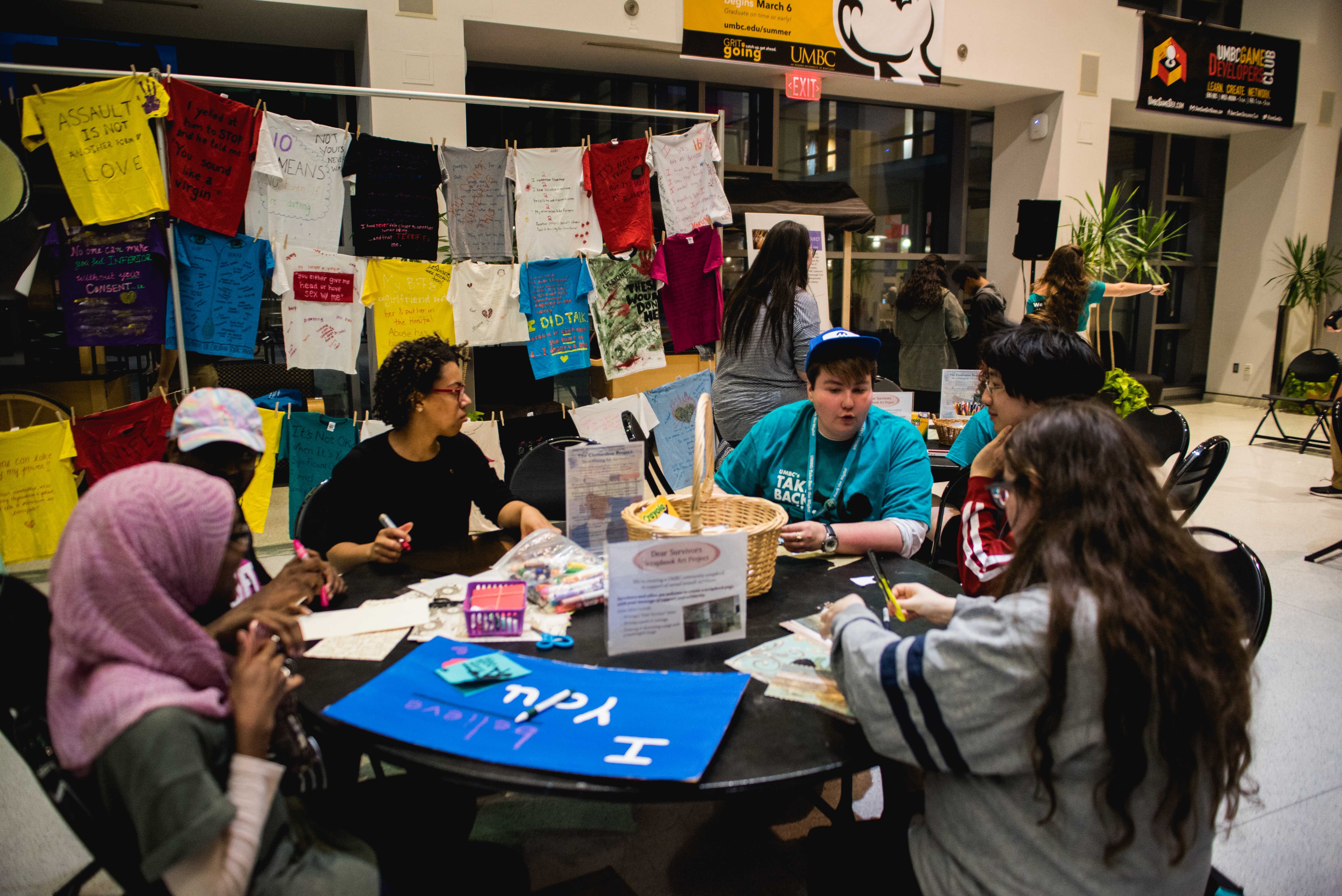
What did UMBC’s Take Back the Night feel like?
It’s different for every person and often different minute-by-minute within the event itself, but for many, TBTN is a time of “firsts.” For Yoo-Jin, “TBTN was one of the first times I saw survivor voices lifted up in a public and unapologetic way. It was the first time I shared about my survivor story in public (and cried lots doing it).” With one of the goals of Take Back the Night being to take up space and push things often shrouded by private shame out into the public space, it can act as a catalyst for many as they work to understand their own trauma and their identities as survivors.
Sydney said that TBTN played a major part in her own identity development and growth as a survivor as it “allowed me to come to terms with the fact that I was sexually assaulted and work through all the emotions that came with it. Over the years attending, I was able to come to terms not only with the event but how I wanted to handle it. I didn’t want to do [the] Survivor Speak-Out but I did want to be there to feel community and then to march and let my story out that way.”
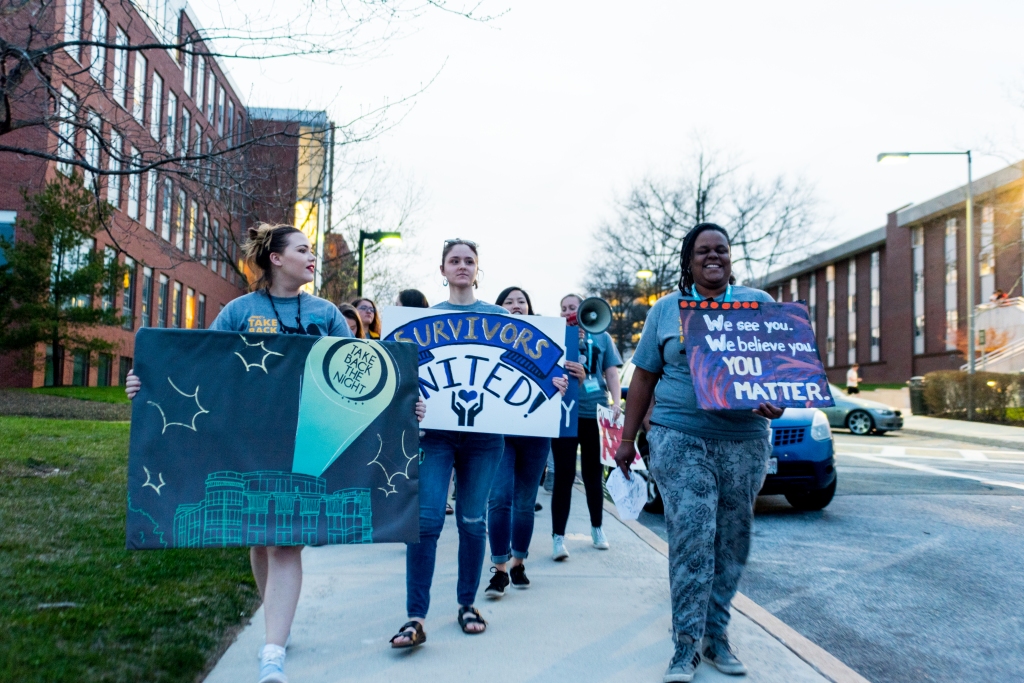

As identity-defining and cathartic as Take Back the Night is… it’s also really and honestly hard.
For as much time as I can take extolling high praise, I could also tell you about how deeply it has rocked myself and so many others that I know. Throughout the event, you are made to listen to stories of violence and abuse. As a witness to the Speak-Out, you play an important part in holding space and honoring others’ stories, but that does take energy and emotional endurance. A lot of people (especially those who shared their stories with me) have been able to reckon with Take Back the Night as something extremely positive, but it can also feel agonizing.
Autumn Cook remembered this duality:
Take Back the Night is a really difficult event to attend. It’s almost impossible to not squirm or react to some of the stories that people share, but that is part of the event. We are all living in each other’s horrendous truths and healing together. You’re supposed to be uncomfortable at TBTN. It means that you’re taking in what is happening and processing it. It’s horrible and liberating and healthy.
Autumn Cook (M29, ‘21)


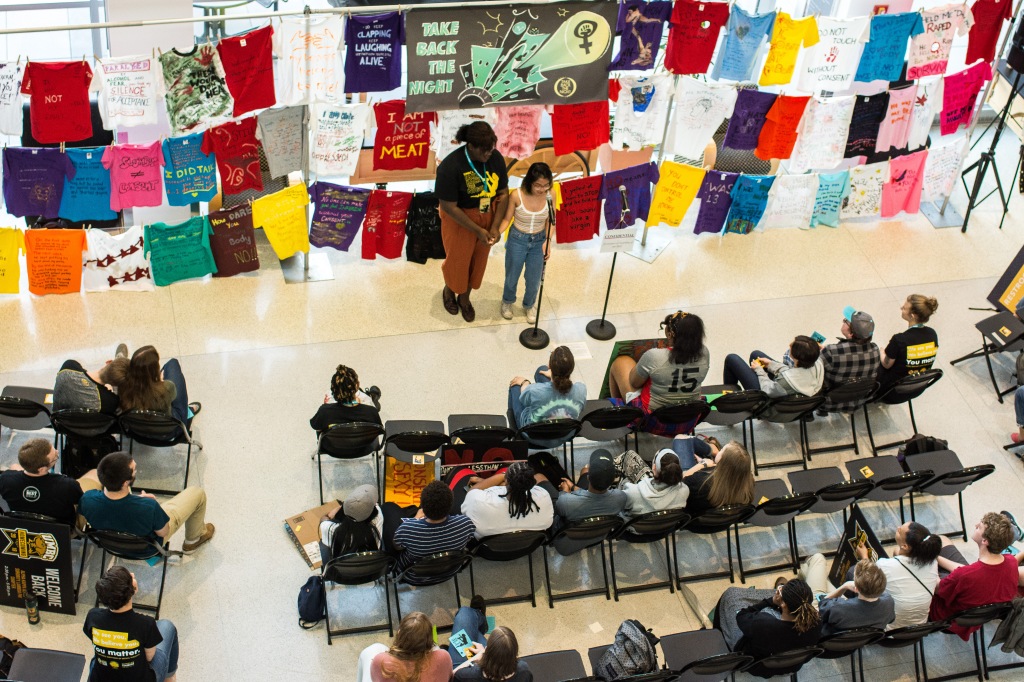
How has Take Back the Night changed over the years?
One of the most beautiful aspects about Take Back the Night is that it’s always growing with our campus. It grows from year to year. It grows with you. Where Calista started as a spectator, she eventually grew to tell her own story… and then to leading the speak out. Calista spoke of this growth as she recalled how she “struggled a lot with my assault and the process of regaining my voice — but TBTN empowered me.”
-
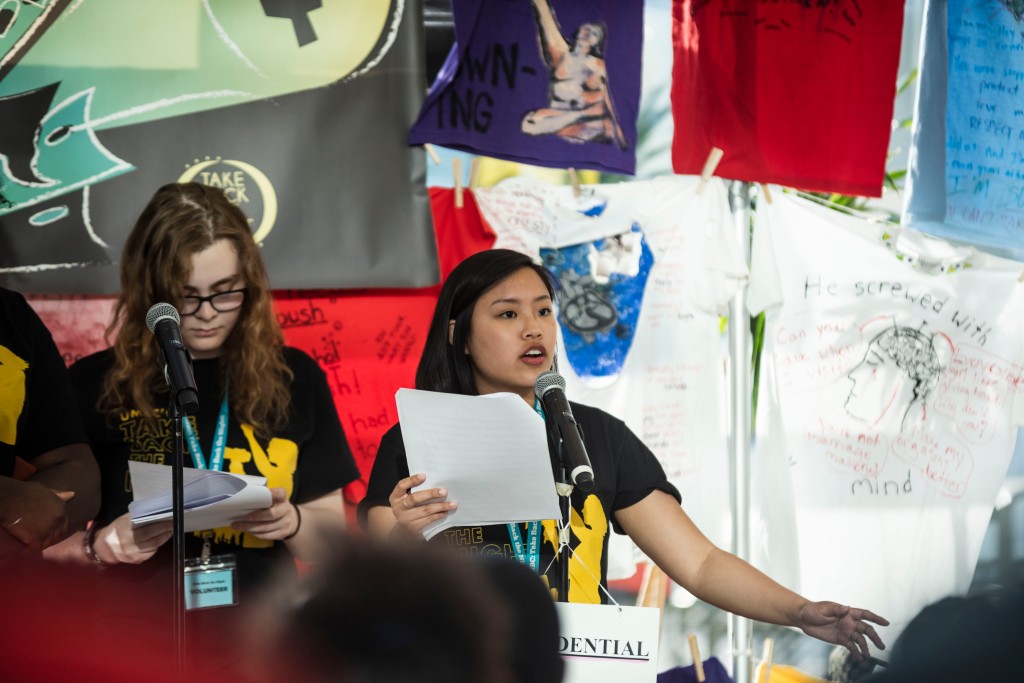 TBTN 2019 Photo credit: Winston Zhou
One person noted that they are still trying to find an outlet similar to Take Back the Night: “I have been looking for TBTN marches or something similar since graduating because I have wanted to share my experience. I don’t think I’d feel ready to do so if I hadn’t participated in it while at UMBC.”
If you look at some of the pictures in this blogpost, you might see the same people show up during different TBTN years. The shirts might look different or their hair might be a little longer. There are different shirts hung up in the Clothesline Project display. The weather during the march goes from sunny to cloudy.
The event has changed each year we’ve put it on to answer the needs and values of our campus community. For example, our march route was adapted to include an accessible route for those with mobility disabilities; previously, stairs were an obstacle for some as they participated in the march. Now we have an accessibility route that is not only available, but has a dedicated volunteer leading folks.
A Personal Reflection + A Conclusion
To be totally honest, I am writing this blogpost for partially selfish reasons… I desperately want to feel the power of Take Back the Night and I am sincerely regretful that I will not have been able to bring Take Back the Night back to UMBC’s campus by the time I start my own next chapter.


There are many reasons why I wanted to work in the Women’s Center and why I love my job now; a big one is Take Back the Night. Over the course of my time at UMBC, I have proudly been present for every single iteration of TBTN since it was revived by Jess and the team in 2013. However, as an undergraduate, I had not yet been able to identify as a survivor nor what I had experienced as abusive.
I worked in the Women’s Center from 2013 to 2015, I was a Gender, Women’s, + Sexuality Studies major, and I had been learning about sexual violence prevention and response work throughout that time but it had never occurred to me to consider my own story and my own experiences. It was only after graduating from UMBC, returning to the Women’s Center as a professional staff member, and a lot of therapy that I began to consider how I might be a survivor… how I am a survivor. My identity and my roles changed–changing my own relationship with TBTN. And TBTN changed again when I began working with student survivors and then again after the September 2018 lawsuit and subsequent Retriever Courage campus activism.
I mention all of this because we are all growing. We are all welcoming new aspects of ourselves–and similarly, Take Back the Night is bound to change. The power Take Back the Night has is in the change it creates for each person who interacts with it.
The power Take Back the Night has is in the change it creates for each person who interacts with it.
Right now, Take Back the Night looks different because it must, but that’s not a death sentence so much as it is an opportunity to welcome and cultivate change.
Perhaps, Take Back the Night will resume its live, in-person status in the Spring of 2023. I have hope that it will. And as much as I worry that it won’t look or feel like the Take Back the Night that I remember… the shared memory that people like Autumn, Sydney, Yoo-Jin, Hannah, Calista and I will continue to hold power and the institutional history of Take Back the Night will only grow. And that’s where the magic of TBTN is and always has been–with the people who are there to witness, the people who speak truth to power, and the people who demand space, time, energy for radical acts of healing.
More information about UMBC’s TBTN:
What You Need to Know About Take Back the Night Series
Take Back the Night at UMBC: Virtual Experience
Survivors to the Front: A Call to Witness Zine (2020)
]]>
Amelia Meman (they/them and she/her), GWST ’15, is the interim director of the Women’s Center. They have worked in the Women’s Center as an intern, a student staff member, a volunteer, and now...
https://womenscenteratumbc.wordpress.com/2022/04/29/take-back-the-night-forever-and-always/
https://my3.my.umbc.edu/api/v0/pixel/news/119056/guest@my.umbc.edu/98f05b1c4595605d0572e5c8c2b4fc12/api/pixel
activism
feminism
programs
saam
sexual-assault
sexual-assault-awareness-month
survivors
survivors-of-sexual-violence
take-back-the-night
tbtn
umbc
uncategorized
what-you-need-to-know-tbtn
Women's, Gender, & Equity Center
https://my3.my.umbc.edu/groups/womenscenter
https://assets2-my.umbc.edu/system/shared/avatars/groups/000/000/125/78272a4842689b30dbf74672182b78f8/xsmall.png?1750974263
https://assets1-my.umbc.edu/system/shared/avatars/groups/000/000/125/78272a4842689b30dbf74672182b78f8/original.png?1750974263
https://assets1-my.umbc.edu/system/shared/avatars/groups/000/000/125/78272a4842689b30dbf74672182b78f8/xxlarge.png?1750974263
https://assets1-my.umbc.edu/system/shared/avatars/groups/000/000/125/78272a4842689b30dbf74672182b78f8/xlarge.png?1750974263
https://assets1-my.umbc.edu/system/shared/avatars/groups/000/000/125/78272a4842689b30dbf74672182b78f8/large.png?1750974263
https://assets2-my.umbc.edu/system/shared/avatars/groups/000/000/125/78272a4842689b30dbf74672182b78f8/medium.png?1750974263
https://assets1-my.umbc.edu/system/shared/avatars/groups/000/000/125/78272a4842689b30dbf74672182b78f8/small.png?1750974263
https://assets2-my.umbc.edu/system/shared/avatars/groups/000/000/125/78272a4842689b30dbf74672182b78f8/xsmall.png?1750974263
https://assets3-my.umbc.edu/system/shared/avatars/groups/000/000/125/78272a4842689b30dbf74672182b78f8/xxsmall.png?1750974263
Women's Center
11
0
false
Fri, 29 Apr 2022 16:23:29 -0400
Fri, 29 Apr 2022 16:23:29 -0400