New NSF and TEDCO Grant
UMBC Professors Nilanjan Banerjee and Ryan Robucci have been awarded an NSF grant from the NSF-NIH Smart and Connected Health program. The total sum is $650,000 over 3 years. It is a collaboration between UMBC, Madonna Rehabilitation Hospital and UA.
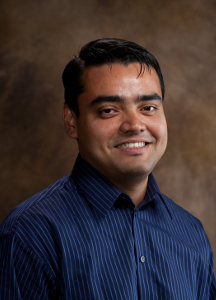
The collaborators include Dr. Susan Fager, a physical therapist from Madonna, and Dr. James Parkerson from UA, who is helping with the energy harvesting component of the project. The SCH program is very competitive, and last year the acceptance rate was close to 6%. The project deals with building wearable sensing systems for environmental control and therapy for paralysis patients, and cuts across electronics, sensor analytics, and usability.
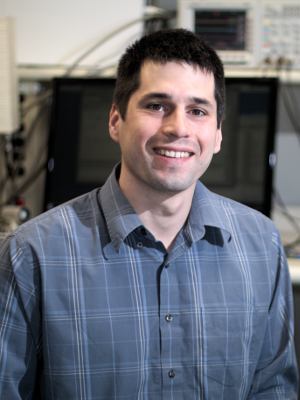
According to Banerjee, “What we mean by environmental control is controlling appliances, and so on and so forth, and therapies basically helping…[patients] to improve their motion over time. So, we are building the sensors, we are building the software on the sensors, and also…the ensuing systems around it.”
Banerjee goes on to describe the project as “a marriage between electronics, software and usability.”
Robucci adds that “We’re working on this project to take into account the patient, and integrate them in as part of the system, rather than forcing them to use the system in a particular way. We want to make sure that the technology and interfaces that we’re building are adaptable to each person and their needs.”
The project is described in greater detail in this abstract from the NSF website:
An estimated 1.5 million individuals in the United States are hospitalized each year because of strokes, brain injuries and spinal cord injuries. Severe impairment such as paralysis, paresis, weakness and limited range of motion are common sequels resulting from these injuries, requiring extensive rehabilitation. This project is developing invisible sensing systems embedded into bed sheets, pillows, wheelchair pads, and clothing, for environmental control and physical therapy for such paralysis patients. The system detects gestures regardless of evolving environmental and patient conditions and provides explicit real-time feedback to the user. Through the use of low-cost and ultra-low power capacitive sensing, the system reduces hospital visits and therapy costs.
The proposed system addresses the limitations of existing assistive care sensors through three novel technical contributions: (1) The use of a self-sustainable hierarchy of sensors; textile-based capacitive sensor arrays (CSA) and inertial sensors on the human body; to improve the accuracy of gesture recognition while consuming minimal energy. The inertial sensors train the capacitive sensor arrays for different body positions; (2) A self-learning algorithm that determines gestures automatically regardless of the position of the patient’s body and conditions using templates of gestures and patient conditions over time; and (3) Seamless integration of the patient in the feedback loop using amplification and animation to provide explicit real-time feedback to the user on how she/he is performing on his/her physical therapy, and how the system is interpreting his/her gestures. Additionally, the PIs are developing a cross-disciplinary undergraduate and graduate course that focuses on developing sensing systems while being cognizant of the actual needs in a rehabilitation hospital. The PIs are also using local university initiatives to engage minority and women researchers in the project.
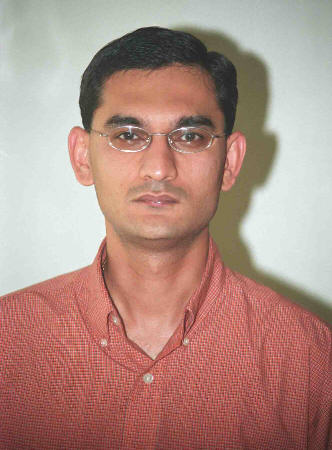
Banerjee notes that, “The project would not be possible without the efforts of very motivated and hard-working students in the Analog/Digital and MPSS labs: Rebecca Baldwin, Alexander Nelson, Stanislav Bobovych, and Gurashish Singh.”
In the next month or so, Microsoft Research will be developing a five minute video showcasing Robucci, Banerjee, and Dr. Sandy McCombe-Waller. Microsoft has expressed an interest in advertising the wearable sensing system, because the system utilizes the Lab of Things, Microsoft’s home automation tool. (This video is in addition to the live interview that Banerjee recently conducted with Microsoft Research.)
In related news, Robucci, Banerjee and fellow UMBC professor Chintan Patel have been given a TEDCO award of $150, 000 for the wearable sensing systems project. According to Banerjee, “The TEDCO grant deals with developing a prototype for environmental control for patients with paralysis. It will also help [us in] designing a product for the system. As part of the grant we will build the system, and evaluate it on real patients at University of Maryland, Baltimore.”
Related Links:
NSF Grant Award Details and Brief
Brief on TEDCO Grant
]]>
UMBC Professors Nilanjan Banerjee and Ryan Robucci have been awarded an NSF grant from the NSF-NIH Smart and Connected Health program. The total sum is $650,000 over 3 years. It is a collaboration...
http://www.csee.umbc.edu/2014/08/new-nsf-and-tedco-grant/
https://my3.my.umbc.edu/api/v0/pixel/news/45783/guest@my.umbc.edu/15ff98c2e4c251714398f11303660e49/api/pixel
news
Computer Science and Electrical Engineering
https://my3.my.umbc.edu/groups/csee
https://assets3-my.umbc.edu/system/shared/avatars/groups/000/000/099/d117dca133c64bf78a4b7696dd007189/xsmall.png?1314043393
https://assets1-my.umbc.edu/system/shared/avatars/groups/000/000/099/d117dca133c64bf78a4b7696dd007189/original.png?1314043393
https://assets1-my.umbc.edu/system/shared/avatars/groups/000/000/099/d117dca133c64bf78a4b7696dd007189/xxlarge.png?1314043393
https://assets4-my.umbc.edu/system/shared/avatars/groups/000/000/099/d117dca133c64bf78a4b7696dd007189/xlarge.png?1314043393
https://assets3-my.umbc.edu/system/shared/avatars/groups/000/000/099/d117dca133c64bf78a4b7696dd007189/large.png?1314043393
https://assets1-my.umbc.edu/system/shared/avatars/groups/000/000/099/d117dca133c64bf78a4b7696dd007189/medium.png?1314043393
https://assets2-my.umbc.edu/system/shared/avatars/groups/000/000/099/d117dca133c64bf78a4b7696dd007189/small.png?1314043393
https://assets3-my.umbc.edu/system/shared/avatars/groups/000/000/099/d117dca133c64bf78a4b7696dd007189/xsmall.png?1314043393
https://assets3-my.umbc.edu/system/shared/avatars/groups/000/000/099/d117dca133c64bf78a4b7696dd007189/xxsmall.png?1314043393
Computer Science and Electrical Engineering
9
0
true
Mon, 18 Aug 2014 13:33:22 -0400
PhD Defense, E. Birrane on Virtual Circuit Provisioning in Challenged Sensor Internetworks: with Application to the Solar System Internet, 10am Mon 8/11
Dissertation Defense
Virtual Circuit Provisioning in Challenged Sensor Internetworks:
with Application to the Solar System Internet
Ed Birrane
10:00am-12:00pm Monday, 11 August 2014, ITE325b
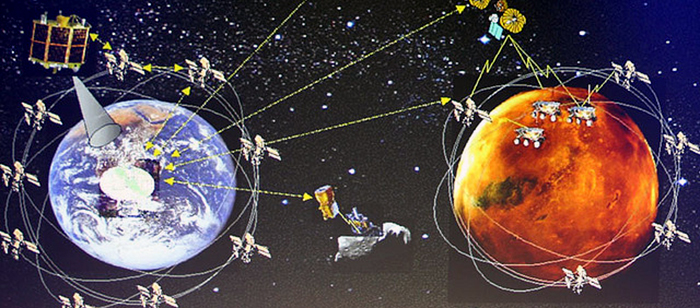
In this thesis, we present a challenged sensor internetwork (CSI) networking architecture which federates heterogeneous constituent networks behind an overlay routing mechanism abstracted from individual data link layers. The CSI is unique and required to implement expanding sensor networks.
Demand for sensing networks with increasing spatial footprints is evidenced by ongoing efforts to build geo-political border monitoring networks, intelligent highway initiatives, automated undersea surveillance, and NASA effort to construct a Solar System Internet. Existing network technologies fail to address multiple physical links, frequent disruptions, and significant signal propagation delays. The construction and maintenance of virtual circuits in an internetwork abstracted from differences in the physical, data-link, and transport layers of an internetwork represents a unique research contribution with immediate utility for a wide variety of sensing network concepts.
We describe the CSI architecture as the intersection of wireless, delay-tolerant, and heterogeneous networks and describe special characteristics of this architecture than enable useful assumptions to optimize messaging. We define an internetwork routing (INR) framework that decomposes the routing function into discrete logical steps and we provide algorithms for each of these steps. An inferred Contact Graph Routing (iCGR) algorithm populates logical graphs from local nodes. A Contact Graph Routing with Extension Blocks (CGR-EB) algorithm provides a hybrid source-path algorithm for synchronizing link state along network paths. A Predictive Capacity Consumption (PCC) algorithm exploits CGR-EB data to build a congestion model. Payload Aggregation and Fragmentation (PAF) and Traffic-Shaping Contacts (TSC) algorithms condition data and place limits on the amount of internetwork traffic carried over local networks.
From simulation, iCGR performs within ~15% of a perfect-knowledge system. CGR-EB has a speedup over standard approaches by 300% in stable topologies, by 3000% in unstable topologies, and by 11000% in unstable topologies with non-monotonic cost functions. PCC delivers 97% more data in congested networks over table-based approaches and 37% more data than the INR framework without the congestion model. PAF/TSC reduces message count by 43% while increasing goodput by 63%.
Together, these algorithms build and monitor virtual circuits in the CSI architecture. Portions of this work are in consideration for deployment in NASA networks.
Committee: Drs. Alan Sherman (Co-Chair, UMBC), Mohammed Younis (Co-Chair, UMBC), Dhananjay Phatak (UMBC), Vinton Cerf (Google), Keith Scott (MITRE), Hans Kruse (OU)
]]>
Dissertation Defense Virtual Circuit Provisioning in Challenged Sensor Internetworks: with Application to the Solar System Internet Ed Birrane 10:00am-12:00pm Monday, 11 August 2014,...
http://www.csee.umbc.edu/2014/08/phd-defense-e-birrane-on-virtual-circuit-provisioning-in-challenged-sensor-internetworks-with-application-to-the-solar-system-internet-10am-mon-811/
https://my3.my.umbc.edu/api/v0/pixel/news/45669/guest@my.umbc.edu/3b65a38cde5540392909f4fd7599c268/api/pixel
computer-science
defense
graduate
news
research
talks
Computer Science and Electrical Engineering
https://my3.my.umbc.edu/groups/csee
https://assets3-my.umbc.edu/system/shared/avatars/groups/000/000/099/d117dca133c64bf78a4b7696dd007189/xsmall.png?1314043393
https://assets1-my.umbc.edu/system/shared/avatars/groups/000/000/099/d117dca133c64bf78a4b7696dd007189/original.png?1314043393
https://assets1-my.umbc.edu/system/shared/avatars/groups/000/000/099/d117dca133c64bf78a4b7696dd007189/xxlarge.png?1314043393
https://assets4-my.umbc.edu/system/shared/avatars/groups/000/000/099/d117dca133c64bf78a4b7696dd007189/xlarge.png?1314043393
https://assets3-my.umbc.edu/system/shared/avatars/groups/000/000/099/d117dca133c64bf78a4b7696dd007189/large.png?1314043393
https://assets1-my.umbc.edu/system/shared/avatars/groups/000/000/099/d117dca133c64bf78a4b7696dd007189/medium.png?1314043393
https://assets2-my.umbc.edu/system/shared/avatars/groups/000/000/099/d117dca133c64bf78a4b7696dd007189/small.png?1314043393
https://assets3-my.umbc.edu/system/shared/avatars/groups/000/000/099/d117dca133c64bf78a4b7696dd007189/xsmall.png?1314043393
https://assets3-my.umbc.edu/system/shared/avatars/groups/000/000/099/d117dca133c64bf78a4b7696dd007189/xxsmall.png?1314043393
Computer Science and Electrical Engineering
3
0
true
Mon, 04 Aug 2014 14:50:20 -0400
PhD proposal: C. Grasso, Information Extraction from Clinical Notes, 11am Mon 8/4
PhD Dissertation Proposal
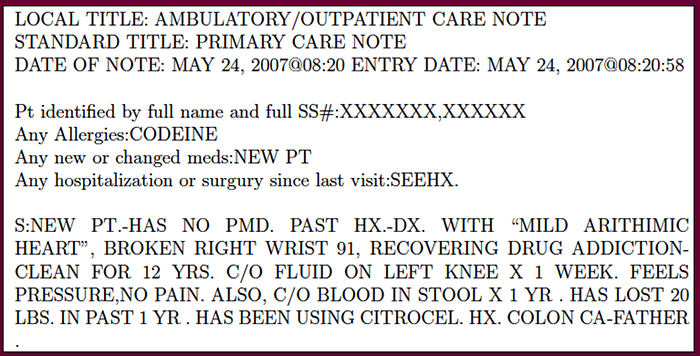
“S:PT.-HAS NO PMD.”
Information Extraction from Clinical Notes
Clare Grasso
11:00am Monday, 4 August 2014, ITE 325b
Clinical decision support (CDS) systems aid clinical decision making by matching an individual patient’s data to a computerized knowledge base in order to present clinicians with patient-specific recommendations. The need for methods to extract the clinical information in the free-text portions of the clinical record into a form that clinical decision support systems could access and utilize has been identified as one of the top five grand challenges in clinical decision support. This research focuses on investigating scalable machine learning and semantic techniques that do not rely on an underlying grammar to extract medical concepts in the text in order to apply them in CDS on commodity hardware and software systems. Additionally, by packaging the extracted data within a semantic representation, the facts can be combined with other semantically encoded facts and reasoned over. This allows other clinically relevant facts to be inferred which are not directly mentioned in the text and presented to the clinician for decision making.
Committee: Drs. Anupam Joshi (chair), Tim Finin, Aryya Gangopadhyay, Charles Nicholas, Claudia Pearce and Eliot Siegel
]]>
PhD Dissertation Proposal “S:PT.-HAS NO PMD.” Information Extraction from Clinical Notes Clare Grasso 11:00am Monday, 4 August 2014, ITE 325b Clinical decision support (CDS) systems aid...
http://www.csee.umbc.edu/2014/08/phd-proposal-c-grasso-information-extraction-from-clinical-notes-11am-mon-84/
https://my3.my.umbc.edu/api/v0/pixel/news/45649/guest@my.umbc.edu/a160fa57f1c87b830c8be46212e4e0b2/api/pixel
computer-science
graduate
news
research
talks
Computer Science and Electrical Engineering
https://my3.my.umbc.edu/groups/csee
https://assets3-my.umbc.edu/system/shared/avatars/groups/000/000/099/d117dca133c64bf78a4b7696dd007189/xsmall.png?1314043393
https://assets1-my.umbc.edu/system/shared/avatars/groups/000/000/099/d117dca133c64bf78a4b7696dd007189/original.png?1314043393
https://assets1-my.umbc.edu/system/shared/avatars/groups/000/000/099/d117dca133c64bf78a4b7696dd007189/xxlarge.png?1314043393
https://assets4-my.umbc.edu/system/shared/avatars/groups/000/000/099/d117dca133c64bf78a4b7696dd007189/xlarge.png?1314043393
https://assets3-my.umbc.edu/system/shared/avatars/groups/000/000/099/d117dca133c64bf78a4b7696dd007189/large.png?1314043393
https://assets1-my.umbc.edu/system/shared/avatars/groups/000/000/099/d117dca133c64bf78a4b7696dd007189/medium.png?1314043393
https://assets2-my.umbc.edu/system/shared/avatars/groups/000/000/099/d117dca133c64bf78a4b7696dd007189/small.png?1314043393
https://assets3-my.umbc.edu/system/shared/avatars/groups/000/000/099/d117dca133c64bf78a4b7696dd007189/xsmall.png?1314043393
https://assets3-my.umbc.edu/system/shared/avatars/groups/000/000/099/d117dca133c64bf78a4b7696dd007189/xxsmall.png?1314043393
Computer Science and Electrical Engineering
0
0
true
Fri, 01 Aug 2014 12:51:54 -0400
CyberNEXS comes to UMBC

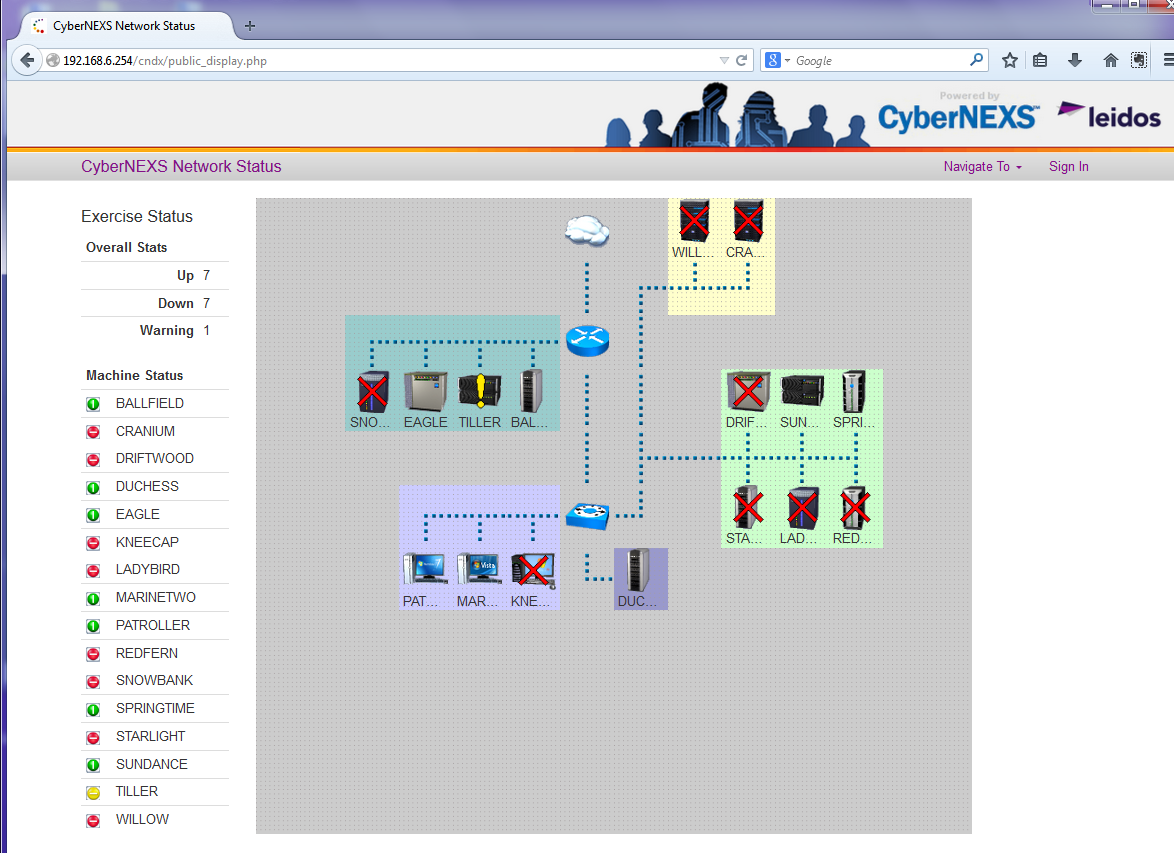
The UMBC Graduate Cybersecurity Program is pleased to announce that it will incorporate the CyberNEXS virtual training environment within its courses and activities during AY14-15. Assistant CYBR GPD Ben Shariati was instrumental in bringing this technical capability to the CYBR program, beginning with CYBER 620 at Shady Grove this fall.
Through CyberNEXS, students are able to connect into its cloud-based “cyber range” to conduct hands-on system administration, security, research, and systems analysis activities in a sandboxed private environment capable of presenting multiple server, desktop, and other devices in a variety of networked configurations. Student activities can be scored and/or monitored for overall success and effectiveness over time.
Since 2011, CyberNEXS has served as the competitive environment for the Maryland Cyber Challenge.
CyberNEXS is provided to UMBC by Leidos, a leading cybersecurity firm supporting US government activities.
]]>
The UMBC Graduate Cybersecurity Program is pleased to announce that it will incorporate the CyberNEXS virtual training environment within its courses and activities during AY14-15. Assistant CYBR...
http://www.csee.umbc.edu/2014/07/cybernexs-comes-to-umbc/
https://my3.my.umbc.edu/api/v0/pixel/news/45624/guest@my.umbc.edu/307ddfedf328e3a21ddd705b2f241e77/api/pixel
computer-science
csee
cybersecurity
news
Computer Science and Electrical Engineering
https://my3.my.umbc.edu/groups/csee
https://assets3-my.umbc.edu/system/shared/avatars/groups/000/000/099/d117dca133c64bf78a4b7696dd007189/xsmall.png?1314043393
https://assets1-my.umbc.edu/system/shared/avatars/groups/000/000/099/d117dca133c64bf78a4b7696dd007189/original.png?1314043393
https://assets1-my.umbc.edu/system/shared/avatars/groups/000/000/099/d117dca133c64bf78a4b7696dd007189/xxlarge.png?1314043393
https://assets4-my.umbc.edu/system/shared/avatars/groups/000/000/099/d117dca133c64bf78a4b7696dd007189/xlarge.png?1314043393
https://assets3-my.umbc.edu/system/shared/avatars/groups/000/000/099/d117dca133c64bf78a4b7696dd007189/large.png?1314043393
https://assets1-my.umbc.edu/system/shared/avatars/groups/000/000/099/d117dca133c64bf78a4b7696dd007189/medium.png?1314043393
https://assets2-my.umbc.edu/system/shared/avatars/groups/000/000/099/d117dca133c64bf78a4b7696dd007189/small.png?1314043393
https://assets3-my.umbc.edu/system/shared/avatars/groups/000/000/099/d117dca133c64bf78a4b7696dd007189/xsmall.png?1314043393
https://assets3-my.umbc.edu/system/shared/avatars/groups/000/000/099/d117dca133c64bf78a4b7696dd007189/xxsmall.png?1314043393
Computer Science and Electrical Engineering
1
0
true
Thu, 31 Jul 2014 11:44:29 -0400
MS defense: P. Pappachan, Remedy: A Semantic and Collaborative Approach to Community Health-Care, 10am Thr 7/31

MS Thesis Defense
Remedy: A Semantic and Collaborative
Approach to Community Health-Care
Primal Pappachan
10:00am Thursday, 31 July 2014, ITE 325b
Community Health Workers (CHWs) act as liaisons between health-care providers and patients in underserved or un-served areas. However, the lack of information sharing and training support impedes the effectiveness of CHWs and their ability to correctly diagnose patients. In this thesis, we propose and describe a system for mobile and wearable computing devices called Remedy which assists CHWs in decision making and facilitates collaboration among them. Remedy can infer possible diseases and treatments by representing the diseases, their symptoms, and patient context in OWL ontologies and by reasoning over this model. The use of semantic representation of data makes it easier to share knowledge such as disease, symptom, diagnosis guidelines, and demography related information, between various personnel involved in health-care (e.g., CHWs, patients, health-care providers). We describe the Remedy system with the help of a motivating community health-care scenario and present an Android prototype for smart phones and Google Glass.
Committee: Drs. Anupam Joshi (chair), Tim Finin, Michael Grasso, Aryya Gangopadhyay
]]>
MS Thesis Defense Remedy: A Semantic and Collaborative Approach to Community Health-Care Primal Pappachan 10:00am Thursday, 31 July 2014, ITE 325b Community Health Workers (CHWs) act as...
http://www.csee.umbc.edu/2014/07/ms-defense-p-pappachan-remedy-a-semantic-and-collaborative-approach-to-community-health-care-10am-thr-731/
https://my3.my.umbc.edu/api/v0/pixel/news/45605/guest@my.umbc.edu/def70ef9cb6f2fb59cc17ca63e5ea957/api/pixel
computer-engineering
defense
graduate
news
research
Computer Science and Electrical Engineering
https://my3.my.umbc.edu/groups/csee
https://assets3-my.umbc.edu/system/shared/avatars/groups/000/000/099/d117dca133c64bf78a4b7696dd007189/xsmall.png?1314043393
https://assets1-my.umbc.edu/system/shared/avatars/groups/000/000/099/d117dca133c64bf78a4b7696dd007189/original.png?1314043393
https://assets1-my.umbc.edu/system/shared/avatars/groups/000/000/099/d117dca133c64bf78a4b7696dd007189/xxlarge.png?1314043393
https://assets4-my.umbc.edu/system/shared/avatars/groups/000/000/099/d117dca133c64bf78a4b7696dd007189/xlarge.png?1314043393
https://assets3-my.umbc.edu/system/shared/avatars/groups/000/000/099/d117dca133c64bf78a4b7696dd007189/large.png?1314043393
https://assets1-my.umbc.edu/system/shared/avatars/groups/000/000/099/d117dca133c64bf78a4b7696dd007189/medium.png?1314043393
https://assets2-my.umbc.edu/system/shared/avatars/groups/000/000/099/d117dca133c64bf78a4b7696dd007189/small.png?1314043393
https://assets3-my.umbc.edu/system/shared/avatars/groups/000/000/099/d117dca133c64bf78a4b7696dd007189/xsmall.png?1314043393
https://assets3-my.umbc.edu/system/shared/avatars/groups/000/000/099/d117dca133c64bf78a4b7696dd007189/xxsmall.png?1314043393
Computer Science and Electrical Engineering
8
0
true
Wed, 30 Jul 2014 09:09:34 -0400
MS defense: M. Madeira, Analyzing Opinions in the Mom Community on Youtube, 2pm Wed 7/30
MS Thesis Defense
Analyzing Opinions in the Mom Community on Youtube
Morgan Madeira
2:00pm Wednesday, 30 June 2014, ITE 325b
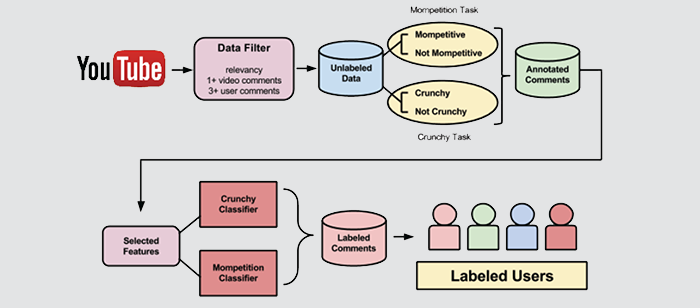
The “Mom Community” on YouTube consists of a large group of parents that share their parenting beliefs and experiences to connect and share information with others. Although there is a lot of positive support in this community, it is often a hotspot for debate of controversial parenting topics. Many of these topics have one side that represents the belief of “crunchy” moms. Crunchy is a term used to describe parents that intentionally choose natural parenting methods and eco-friendly products to raise their children. Debate over these practices has led to “mompetition” and the idea that there is a right way to parent. This research investigates these claims such as how different crunchy topics are discussed and how the community has changed over time. Video comments and user data are collected from YouTube and used to understand parenting practices and opinions in the mom community.
Committee: Drs. Anupam Joshi (chair), Tim Finin, Karuna Joshi
]]>
MS Thesis Defense Analyzing Opinions in the Mom Community on Youtube Morgan Madeira 2:00pm Wednesday, 30 June 2014, ITE 325b The “Mom Community” on YouTube consists of a large group of...
http://www.csee.umbc.edu/2014/07/ms-defense-m-madeira-analyzing-opinions-in-the-mom-community-on-youtube-2pm-wed-730/
https://my3.my.umbc.edu/api/v0/pixel/news/45598/guest@my.umbc.edu/95eb0209206f85139a4275ab7080d217/api/pixel
computer-science
defense
graduate
news
research
talks
Computer Science and Electrical Engineering
https://my3.my.umbc.edu/groups/csee
https://assets3-my.umbc.edu/system/shared/avatars/groups/000/000/099/d117dca133c64bf78a4b7696dd007189/xsmall.png?1314043393
https://assets1-my.umbc.edu/system/shared/avatars/groups/000/000/099/d117dca133c64bf78a4b7696dd007189/original.png?1314043393
https://assets1-my.umbc.edu/system/shared/avatars/groups/000/000/099/d117dca133c64bf78a4b7696dd007189/xxlarge.png?1314043393
https://assets4-my.umbc.edu/system/shared/avatars/groups/000/000/099/d117dca133c64bf78a4b7696dd007189/xlarge.png?1314043393
https://assets3-my.umbc.edu/system/shared/avatars/groups/000/000/099/d117dca133c64bf78a4b7696dd007189/large.png?1314043393
https://assets1-my.umbc.edu/system/shared/avatars/groups/000/000/099/d117dca133c64bf78a4b7696dd007189/medium.png?1314043393
https://assets2-my.umbc.edu/system/shared/avatars/groups/000/000/099/d117dca133c64bf78a4b7696dd007189/small.png?1314043393
https://assets3-my.umbc.edu/system/shared/avatars/groups/000/000/099/d117dca133c64bf78a4b7696dd007189/xsmall.png?1314043393
https://assets3-my.umbc.edu/system/shared/avatars/groups/000/000/099/d117dca133c64bf78a4b7696dd007189/xxsmall.png?1314043393
Computer Science and Electrical Engineering
8
3
true
Tue, 29 Jul 2014 08:07:33 -0400
MS defense: A. Hendre, Cloud Security Control Recommendation System, 8:30 Thr 7/31
MS Thesis Defense
Comparison of Cloud Security Standards and a
Cloud Security Control Recommendation System
Amit S. Hendre
8:30am Thursday, 31 July 2014, ITE346
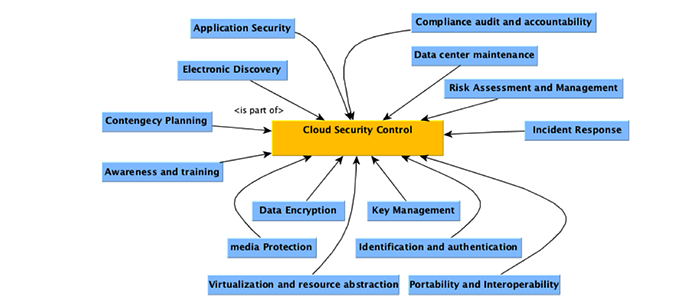
Cloud services are becoming an essential part of many organizations. Cloud providers have to adhere to security and privacy policies to ensure their users’ data remains confidential and secure. On one hand, cloud providers are implementing their own security and privacy controls. On the other hand, standards bodies like Cloud Security Alliance (CSA), International Organization for Standards (ISO), National Institute for Standards and Technology (NIST), etc. are developing broad standards for cloud security. In this thesis we provide a comprehensive analysis of the cloud security standards that are being developed and how they compare with the security controls of cloud providers. Our study is mainly focused on policies about mobility of resources, identity and access management, data protection, incident response and audit and assessment. This thesis will help consumer organizations with their compliance needs by evaluating the security controls and policies of cloud providers and assisting them in identifying their enterprise cloud security policies.
Committee: Drs. Karuna Joshi, Tim Finin and Yelena Yesha
]]>
MS Thesis Defense Comparison of Cloud Security Standards and a Cloud Security Control Recommendation System Amit S. Hendre 8:30am Thursday, 31 July 2014, ITE346 Cloud services are...
http://www.csee.umbc.edu/2014/07/17216/
https://my3.my.umbc.edu/api/v0/pixel/news/45597/guest@my.umbc.edu/4092591dd0a0aec76446b16ee4c8d7ed/api/pixel
computer-science
cybersecurity
defense
graduate
news
research
Computer Science and Electrical Engineering
https://my3.my.umbc.edu/groups/csee
https://assets3-my.umbc.edu/system/shared/avatars/groups/000/000/099/d117dca133c64bf78a4b7696dd007189/xsmall.png?1314043393
https://assets1-my.umbc.edu/system/shared/avatars/groups/000/000/099/d117dca133c64bf78a4b7696dd007189/original.png?1314043393
https://assets1-my.umbc.edu/system/shared/avatars/groups/000/000/099/d117dca133c64bf78a4b7696dd007189/xxlarge.png?1314043393
https://assets4-my.umbc.edu/system/shared/avatars/groups/000/000/099/d117dca133c64bf78a4b7696dd007189/xlarge.png?1314043393
https://assets3-my.umbc.edu/system/shared/avatars/groups/000/000/099/d117dca133c64bf78a4b7696dd007189/large.png?1314043393
https://assets1-my.umbc.edu/system/shared/avatars/groups/000/000/099/d117dca133c64bf78a4b7696dd007189/medium.png?1314043393
https://assets2-my.umbc.edu/system/shared/avatars/groups/000/000/099/d117dca133c64bf78a4b7696dd007189/small.png?1314043393
https://assets3-my.umbc.edu/system/shared/avatars/groups/000/000/099/d117dca133c64bf78a4b7696dd007189/xsmall.png?1314043393
https://assets3-my.umbc.edu/system/shared/avatars/groups/000/000/099/d117dca133c64bf78a4b7696dd007189/xxsmall.png?1314043393
Computer Science and Electrical Engineering
1
0
true
Mon, 28 Jul 2014 14:11:37 -0400
MS defense: S. Padalkar, Android Malware Detection and Classification, 10:30 Wed 7/30
MS Thesis Defense
Android Malware Detection and Classification
using Machine Learning Techniques
Satyajit Padalkar
10:30am Wednesday, 30 July 2014, ITE 325b
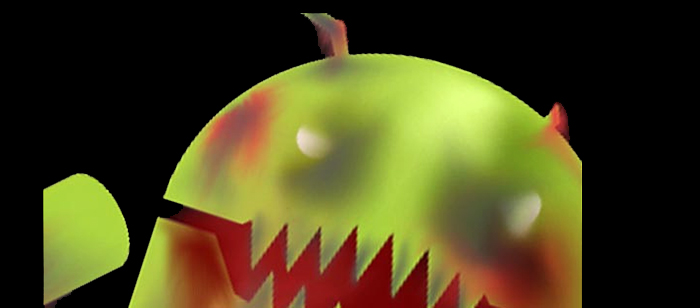
Android is popular mobile operating system and there exists multiple marketplaces for Android applications. Most of these market places allow applications to be signed using self-signed certificates. Due to this practice there exists little or very limited control over the kind of applications that are being distributed. Also advancement of Android root kits are increasingly making it easier to repackage existing Android application with malicious code. Conventional signature based techniques fail to detect such malware. So detection and classification of Android malware is a very difficult problem. We present a method to classify and detect such malware by performing a dynamic analysis of the system call sequences. Here we make use of machine learning techniques to build multiple models using distributions of syscalls as features. Using these models we predict whether given application is malicious or benign. Also we try to classify given application to specific known malware family. We also explore deep learning methods such as stacked denoising autoencoder algorithms (SdA) and its effectiveness. We experimentally evaluate our methods using a real dataset of 600 applications from 38 malware families and 25 popular benign applications from various areas. We find that a deep learning algorithm (SdA) is most accurate in detecting a malware with lowest false positives while AdaBoost performs better in classifying a malware family.
Committee: Drs. Anupam Joshi (chair), Tim Finin and Charles Nicholas
]]>
MS Thesis Defense Android Malware Detection and Classification using Machine Learning Techniques Satyajit Padalkar 10:30am Wednesday, 30 July 2014, ITE 325b Android is popular mobile...
http://www.csee.umbc.edu/2014/07/ms-defense-s-padalkar-android-malware-detection-and-classification-1030-wed-730/
https://my3.my.umbc.edu/api/v0/pixel/news/45584/guest@my.umbc.edu/27c664925e87b8e1a6182c0ed5e8f975/api/pixel
computer-science
cybersecurity
defense
news
research
Computer Science and Electrical Engineering
https://my3.my.umbc.edu/groups/csee
https://assets3-my.umbc.edu/system/shared/avatars/groups/000/000/099/d117dca133c64bf78a4b7696dd007189/xsmall.png?1314043393
https://assets1-my.umbc.edu/system/shared/avatars/groups/000/000/099/d117dca133c64bf78a4b7696dd007189/original.png?1314043393
https://assets1-my.umbc.edu/system/shared/avatars/groups/000/000/099/d117dca133c64bf78a4b7696dd007189/xxlarge.png?1314043393
https://assets4-my.umbc.edu/system/shared/avatars/groups/000/000/099/d117dca133c64bf78a4b7696dd007189/xlarge.png?1314043393
https://assets3-my.umbc.edu/system/shared/avatars/groups/000/000/099/d117dca133c64bf78a4b7696dd007189/large.png?1314043393
https://assets1-my.umbc.edu/system/shared/avatars/groups/000/000/099/d117dca133c64bf78a4b7696dd007189/medium.png?1314043393
https://assets2-my.umbc.edu/system/shared/avatars/groups/000/000/099/d117dca133c64bf78a4b7696dd007189/small.png?1314043393
https://assets3-my.umbc.edu/system/shared/avatars/groups/000/000/099/d117dca133c64bf78a4b7696dd007189/xsmall.png?1314043393
https://assets3-my.umbc.edu/system/shared/avatars/groups/000/000/099/d117dca133c64bf78a4b7696dd007189/xxsmall.png?1314043393
Computer Science and Electrical Engineering
3
0
true
Mon, 28 Jul 2014 00:46:16 -0400
Victoria Lentz ’15 Wins HP/SWISS Cybersecurity Scholarship

Earlier this year HP and the Scholarship for Women Studying Information Security (SWSIS) selected UMBC undergraduate Victoria Lentz (Computer Science, 2015) and ten other female cybersecurity students from across the U.S. to receive scholarships.
Lentz was in the first cohort of students to be accepted into the UMBC Cyber Scholars Program, which began in Fall 2013. The program prides itself on influencing minorities and women to become involved in the cyber security and computing industries.
With particular interests in malware and digital forensics, Lentz plans to work in the cybersecurity industry after finishing her undergraduate education to gain experience before returning to school for a Master’s degree.
More from Lentz appears in Technically Baltimore.
from a post by Achsah Joseph on UMBC Insights
]]>
Earlier this year HP and the Scholarship for Women Studying Information Security (SWSIS) selected UMBC undergraduate Victoria Lentz (Computer Science, 2015) and ten other female cybersecurity...
http://www.csee.umbc.edu/2014/07/victoria-lentz-15-cybersecurity-wins-hp-scholarship/
https://my3.my.umbc.edu/api/v0/pixel/news/45588/guest@my.umbc.edu/0132f828f1addb9e7c629825c16abd69/api/pixel
computer-science
csee
cybersecurity
news
Computer Science and Electrical Engineering
https://my3.my.umbc.edu/groups/csee
https://assets3-my.umbc.edu/system/shared/avatars/groups/000/000/099/d117dca133c64bf78a4b7696dd007189/xsmall.png?1314043393
https://assets1-my.umbc.edu/system/shared/avatars/groups/000/000/099/d117dca133c64bf78a4b7696dd007189/original.png?1314043393
https://assets1-my.umbc.edu/system/shared/avatars/groups/000/000/099/d117dca133c64bf78a4b7696dd007189/xxlarge.png?1314043393
https://assets4-my.umbc.edu/system/shared/avatars/groups/000/000/099/d117dca133c64bf78a4b7696dd007189/xlarge.png?1314043393
https://assets3-my.umbc.edu/system/shared/avatars/groups/000/000/099/d117dca133c64bf78a4b7696dd007189/large.png?1314043393
https://assets1-my.umbc.edu/system/shared/avatars/groups/000/000/099/d117dca133c64bf78a4b7696dd007189/medium.png?1314043393
https://assets2-my.umbc.edu/system/shared/avatars/groups/000/000/099/d117dca133c64bf78a4b7696dd007189/small.png?1314043393
https://assets3-my.umbc.edu/system/shared/avatars/groups/000/000/099/d117dca133c64bf78a4b7696dd007189/xsmall.png?1314043393
https://assets3-my.umbc.edu/system/shared/avatars/groups/000/000/099/d117dca133c64bf78a4b7696dd007189/xxsmall.png?1314043393
Computer Science and Electrical Engineering
17
0
true
Fri, 25 Jul 2014 17:40:27 -0400
JOB: eFX Data Scientist for State Street
Title:
eFX Data Scientist, AVP
Job Role:
Quantitative Analysis, Global Markets Sales & Trading, Boston
JOB DESCRIPTION
Purpose of Role:
To enhance the bank’s real-time Electronic FX market making trading system, improving quality and distinctiveness of price generation and risk management.
Major Responsibilities:
- Analyze proprietary order flow data to find patterns in client behavior, using results to improve client pricing and optimize risk management.
- Analyze large, high frequency time series data sets and develop short term price forecasting models.
- Using public and proprietary data, identify new opportunities to increase trading volume and generate new business.
- Justify models/algorithms through appropriate out-of-sample backtesting periods and cross-validation techniques. Evaluate performance in practice and provide further improvements as needed.
- Develop research all the way from prototype to production.
Specific Qualifications/ Experience:
- Masters and/or PhD in Data Analytics, Machine Learning, Statistics or related field
- Knowledge of big data lake structures, algorithms and techniques including classification, clustering, and regression.
- Experience implementing data analytics techniques within an academic research setting and/or real business problems.
Level of Education:
Skills – interpersonal, numerical, problem-solving, analytical, etc
- Object oriented programming skills: Java or C++.
- Proficiency in statistical packages such as Matlab, Python or R.
- Solid statistical foundations
- Familiar with Hadoop frameworks.
Disposition – motivation, team skills, ability to work under pressure, etc
- Pragmatic mindset – research should be targeted at solving business problems and improving profitability.
- Good communication skills are required to interact with management, traders, salespeople, developers and clients.
- Self-motivated and with ability to work with minimal supervision.
The complete job listing can be found here.
—
Interested individuals should send their resume directly to:
Toby J. Wade
State Street Global Markets
twade at statestreet dot com
+ 1 617 664-4150
]]>
Title: eFX Data Scientist, AVP Job Role: Quantitative Analysis, Global Markets Sales & Trading, Boston JOB DESCRIPTION Purpose of Role: To enhance the bank’s real-time Electronic...
http://www.csee.umbc.edu/2014/07/job-efx-data-scientist-for-state-street-global-markets/
https://my3.my.umbc.edu/api/v0/pixel/news/45569/guest@my.umbc.edu/95956338389dc1142da8f1b0c060e19c/api/pixel
jobs
Computer Science and Electrical Engineering
https://my3.my.umbc.edu/groups/csee
https://assets3-my.umbc.edu/system/shared/avatars/groups/000/000/099/d117dca133c64bf78a4b7696dd007189/xsmall.png?1314043393
https://assets1-my.umbc.edu/system/shared/avatars/groups/000/000/099/d117dca133c64bf78a4b7696dd007189/original.png?1314043393
https://assets1-my.umbc.edu/system/shared/avatars/groups/000/000/099/d117dca133c64bf78a4b7696dd007189/xxlarge.png?1314043393
https://assets4-my.umbc.edu/system/shared/avatars/groups/000/000/099/d117dca133c64bf78a4b7696dd007189/xlarge.png?1314043393
https://assets3-my.umbc.edu/system/shared/avatars/groups/000/000/099/d117dca133c64bf78a4b7696dd007189/large.png?1314043393
https://assets1-my.umbc.edu/system/shared/avatars/groups/000/000/099/d117dca133c64bf78a4b7696dd007189/medium.png?1314043393
https://assets2-my.umbc.edu/system/shared/avatars/groups/000/000/099/d117dca133c64bf78a4b7696dd007189/small.png?1314043393
https://assets3-my.umbc.edu/system/shared/avatars/groups/000/000/099/d117dca133c64bf78a4b7696dd007189/xsmall.png?1314043393
https://assets3-my.umbc.edu/system/shared/avatars/groups/000/000/099/d117dca133c64bf78a4b7696dd007189/xxsmall.png?1314043393
Computer Science and Electrical Engineering
0
0
true
Fri, 25 Jul 2014 09:46:15 -0400
Fri, 25 Jul 2014 09:46:15 -0400