Talk: Niloy Ganguly on Topical Search in Twitter, 1pm Tue 11/5, ITE 459
UMBC Information Systems Department
Topical Search in Twitter
Indian Institute of Technology Kharagpur
1:00pm Tuesday, 5 November 2013, ITE 459
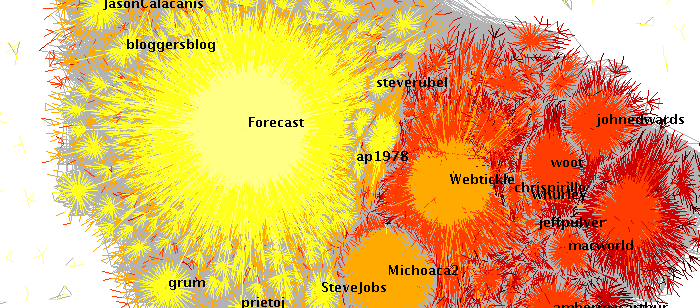
Twitter is now a popular platform for discovering real-time news on various topics. We are developing methodologies to improve topical search in Twitter, specifically search for topical experts and popular content on specific topics. Utilizing social annotations provided by the Twitter population through the Lists feature, we have developed the following:
- A novel who-is-who system for Twitter, which gives the topical attributes of a specified user. The list-based methodology gives accurate and comprehensive topical attributes for millions of popular Twitter users.
- A search system for topical experts in Twitter. Comparison of our system with the expert search service offered by Twitter shows that the List-based method provide better results for a large number of topical queries.
- A novel topical search system which, given a topic, identifies and clusters the content (tweets, hashtags) being discussed by the community of experts on that topic. Our methodology gives relevant and trustworthy content for a wide range of topics. To the best our knowledge, this is the first systematic attempt to utilize social annotations to provide topical search in Twitter.
Niloy Ganguly is an associate professor in the department of computer science and engineering, Indian Institute of Technology Kharagpur. He received his PhD from Bengal Engineering and Science University, Calcutta, India and his Bachelors in Computer Science and Engineering from IIT Kharagpur. He has been a post doctoral fellow in Technical University of Dresden, Germany. He focuses on investigating several different aspects on online-social networks. He has worked on designing recommendation system based on community structures on various web-social networks like Twitter and Delicious. He has also simultaneously worked on various theoretical issues related to dynamical large networks often termed as complex networks. Specifically he has looked into problems related to percolation, evolution of networks as well as flow of information over these networks. He has been collaborating with various national and international universities and research lab including Duke University, TU Dresden, Germany, MPI PKS and MPI SWS, Germany, Microsoft Lab, India etc. He currently publishes in various top ranking international journals and conferences including CCS, PODC, ICDM, ACL, WWW, INFOCOM, SIGIR, Euro Physics Letters, Physical Review E, ACM and IEEE Transactions, etc.
]]>
UMBC Information Systems Department Topical Search in Twitter Dr. Niloy Ganguly Indian Institute of Technology Kharagpur 1:00pm Tuesday, 5 November 2013, ITE 459 Twitter is now a popular...
http://www.csee.umbc.edu/2013/11/talk-niloy-ganguly-on-topical-search-in-twitter-10am-tue-115-ite-459/
https://my3.my.umbc.edu/api/v0/pixel/news/37889/guest@my.umbc.edu/0f5d683b4b9ecaffe0a224661861fb0e/api/pixel
news
research
talks
Computer Science and Electrical Engineering
https://my3.my.umbc.edu/groups/csee
https://assets3-my.umbc.edu/system/shared/avatars/groups/000/000/099/d117dca133c64bf78a4b7696dd007189/xsmall.png?1314043393
https://assets1-my.umbc.edu/system/shared/avatars/groups/000/000/099/d117dca133c64bf78a4b7696dd007189/original.png?1314043393
https://assets1-my.umbc.edu/system/shared/avatars/groups/000/000/099/d117dca133c64bf78a4b7696dd007189/xxlarge.png?1314043393
https://assets4-my.umbc.edu/system/shared/avatars/groups/000/000/099/d117dca133c64bf78a4b7696dd007189/xlarge.png?1314043393
https://assets3-my.umbc.edu/system/shared/avatars/groups/000/000/099/d117dca133c64bf78a4b7696dd007189/large.png?1314043393
https://assets1-my.umbc.edu/system/shared/avatars/groups/000/000/099/d117dca133c64bf78a4b7696dd007189/medium.png?1314043393
https://assets2-my.umbc.edu/system/shared/avatars/groups/000/000/099/d117dca133c64bf78a4b7696dd007189/small.png?1314043393
https://assets3-my.umbc.edu/system/shared/avatars/groups/000/000/099/d117dca133c64bf78a4b7696dd007189/xsmall.png?1314043393
https://assets3-my.umbc.edu/system/shared/avatars/groups/000/000/099/d117dca133c64bf78a4b7696dd007189/xxsmall.png?1314043393
Computer Science and Electrical Engineering
0
0
true
Sun, 03 Nov 2013 10:09:54 -0500
Sun, 03 Nov 2013 10:09:54 -0500
Professors Mohsenin and Slaughter receive NSF grants for medical applications
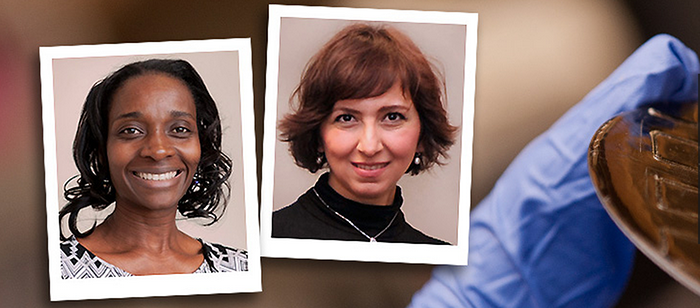
CSEE Professors Tinoosh Mohsenin and Gymama Slaughter each received recent grants from NSF to apply their computing engineering expertise to develop new medical technology. What follows is an excerpt from a recent article on their work written by Joel N.Shurkin.
The Body Electric: UMBC researchers forge links between tech and medicine
Monitoring significant developments in a patient’s health outside a hospital setting can be challenging, but two UMBC researchers – Tinoosh Mohsenin and Gymama Slaughter – have won separate grants from the National Science Foundation (NSF) to help meet those challenges.
Mohsenin received a $100,000 grant from the NSF to develop signal processing architecture to detect seizures. The award of $150,000 to Slaughter from the foundation was to pursue work on nanoelectric probe arrays.
Not only does the work done by these two UMBC professors have important implications for basic medical science, but it is also research that may also provide more insight into how we think and feel, or improve how people with disabilities navigate in the world.
]]>
CSEE Professors Tinoosh Mohsenin and Gymama Slaughter each received recent grants from NSF to apply their computing engineering expertise to develop new medical technology. What follows is an...
http://www.csee.umbc.edu/2013/11/professors-mohsenin-and-slaughter-receive-nsf-grants-for-medical-applications/
https://my3.my.umbc.edu/api/v0/pixel/news/37884/guest@my.umbc.edu/c8beaacd50e7bdafd2b70da0cba510fa/api/pixel
computer-engineering
news
research
research-awards
Computer Science and Electrical Engineering
https://my3.my.umbc.edu/groups/csee
https://assets3-my.umbc.edu/system/shared/avatars/groups/000/000/099/d117dca133c64bf78a4b7696dd007189/xsmall.png?1314043393
https://assets1-my.umbc.edu/system/shared/avatars/groups/000/000/099/d117dca133c64bf78a4b7696dd007189/original.png?1314043393
https://assets1-my.umbc.edu/system/shared/avatars/groups/000/000/099/d117dca133c64bf78a4b7696dd007189/xxlarge.png?1314043393
https://assets4-my.umbc.edu/system/shared/avatars/groups/000/000/099/d117dca133c64bf78a4b7696dd007189/xlarge.png?1314043393
https://assets3-my.umbc.edu/system/shared/avatars/groups/000/000/099/d117dca133c64bf78a4b7696dd007189/large.png?1314043393
https://assets1-my.umbc.edu/system/shared/avatars/groups/000/000/099/d117dca133c64bf78a4b7696dd007189/medium.png?1314043393
https://assets2-my.umbc.edu/system/shared/avatars/groups/000/000/099/d117dca133c64bf78a4b7696dd007189/small.png?1314043393
https://assets3-my.umbc.edu/system/shared/avatars/groups/000/000/099/d117dca133c64bf78a4b7696dd007189/xsmall.png?1314043393
https://assets3-my.umbc.edu/system/shared/avatars/groups/000/000/099/d117dca133c64bf78a4b7696dd007189/xxsmall.png?1314043393
Computer Science and Electrical Engineering
2
1
true
Sun, 03 Nov 2013 00:22:01 -0400
talk: The strange world of quantum computing, 2:30 Tue 11/5, ITE 325
Computer Science and Electrical Engineering
Quantum Computing Seminar
The Strange World of Quantum Computing
Samuel Lomonaco, CSEE, UMBC
2:30-3:00 Tuesday, 5 November 2013, ITE 325b
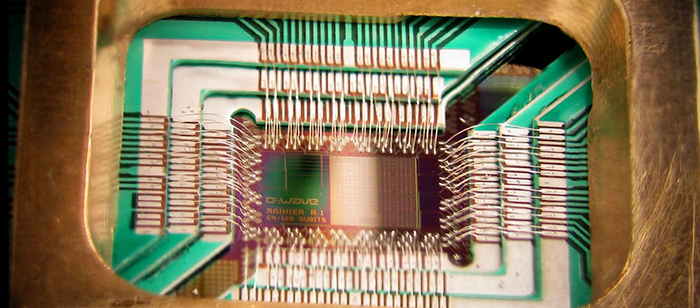
This talk will give an introductory overview of quantum computing in an intuitive and conceptual fashion. No prior knowledge of quantum mechanics will be assumed. This is the first of a series of talks based on the four invited lectures given at Oxford. PowerPoint slides can be found online here.
Samuel J. Lomonaco is a professor at the Department of Computer Science and Electrical Engineering of the University of Maryland Baltimore County. He is internationally known for his many contributions in mathematics and in computer science. His research interests span a wide range of subjects from knot theory, algebraic and differential topology to algebraic coding theory, quantum computation, and symbolic computation. In quantum cryptography, he has shown how quantum information theory can be used to gain a better understanding of eavesdropping with quantum entanglement. In quantum computation, he has shown how Lie groups can be used to solve problems arising in the study of quantum entanglement. In 2000 Professor Lomonoco organized the first American Mathematical Society short course on quantum computation.
Organizer: Prof. Samuel Lomonaco, Sorry, you need javascript to view this email address.
]]>
Computer Science and Electrical Engineering Quantum Computing Seminar The Strange World of Quantum Computing Samuel Lomonaco, CSEE, UMBC 2:30-3:00 Tuesday, 5 November 2013, ITE 325b This...
http://www.csee.umbc.edu/2013/11/talk-the-strangeworld-of-quantum-computing-230-tue-115-ite-325/
https://my3.my.umbc.edu/api/v0/pixel/news/37870/guest@my.umbc.edu/4b219e984ef45e700fbf3d781245ba59/api/pixel
computer-science
news
research
talks
Computer Science and Electrical Engineering
https://my3.my.umbc.edu/groups/csee
https://assets3-my.umbc.edu/system/shared/avatars/groups/000/000/099/d117dca133c64bf78a4b7696dd007189/xsmall.png?1314043393
https://assets1-my.umbc.edu/system/shared/avatars/groups/000/000/099/d117dca133c64bf78a4b7696dd007189/original.png?1314043393
https://assets1-my.umbc.edu/system/shared/avatars/groups/000/000/099/d117dca133c64bf78a4b7696dd007189/xxlarge.png?1314043393
https://assets4-my.umbc.edu/system/shared/avatars/groups/000/000/099/d117dca133c64bf78a4b7696dd007189/xlarge.png?1314043393
https://assets3-my.umbc.edu/system/shared/avatars/groups/000/000/099/d117dca133c64bf78a4b7696dd007189/large.png?1314043393
https://assets1-my.umbc.edu/system/shared/avatars/groups/000/000/099/d117dca133c64bf78a4b7696dd007189/medium.png?1314043393
https://assets2-my.umbc.edu/system/shared/avatars/groups/000/000/099/d117dca133c64bf78a4b7696dd007189/small.png?1314043393
https://assets3-my.umbc.edu/system/shared/avatars/groups/000/000/099/d117dca133c64bf78a4b7696dd007189/xsmall.png?1314043393
https://assets3-my.umbc.edu/system/shared/avatars/groups/000/000/099/d117dca133c64bf78a4b7696dd007189/xxsmall.png?1314043393
Computer Science and Electrical Engineering
2
0
true
Sat, 02 Nov 2013 12:31:05 -0400
Sat, 02 Nov 2013 12:31:05 -0400
Defense: Nguyen on Fast Modular Exponentiation Using Residue Domain Representation, Noon 11/5
M.S. Thesis Defense
Computer Science and Electrical Engineering
University of Maryland, Baltimore County
Fast Modular Exponentiation Using Residue Domain Representation:
A Hardware Reference Implementation and Analysis
Christopher D. Nguyen
12:00–2:00pm, Tuesday, 5 November 2013, ITE 228, UMBC
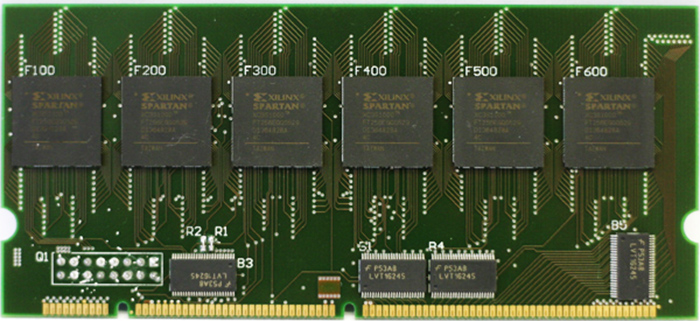
Using field-programmable gate arrays (FPGAs) we engineered and analyzed the first hardware implementation of Phatak’s reduced-precision residue number system (RP-RNS) to perform modular exponentiation.
Residue number systems (RNSs) provide an alternative representation to the binary system for performing integer arithmetic used in applications such as public-key cryptography and digital signal processing. They offer full parallel computation for addition, subtraction, and multiplication increasing performance from O(K) to O(lg K) for a K-bit number. However, base extension, division, and sign detection become harder operations.
RP-RNS is a new set of algorithms that uses approximation and a time-memory trade-off to address the hard operations. The partial reconstruction (PR) algorithm addresses base extension and the quotient-first scaling (QFS) algorithm addresses scaling. RP-RNS modular exponentiation uses the PR and QFS algorithms. RP-RNS improves performance of modular multiplication in an RNS with range [0, M-1] from the O((lg n)^2) delay of current systems (e.g. Cox-Rower) to a theoretical O(lg n) delay where n is the word-length of M.
Our implementation is based on Phatak’s description and recommended architecture diagrams. We found even low-end FPGAs can store over 30 channels of logic. Following the recommendation of parallel look-up table (LUT) access, we distributed the LUTs to be local to each channel. We found this recommendation applied to QFS exceeds the capacity of today’s high-capacity FPGAs (e.g. Xilinx Virtex-7) for modest 2,000-bit divisors. We propose several improvements to increase feasibility; one is to store the LUTs external to the FPGA, which would introduce a performance penalty per look-up.
Committee: Alan Sherman (chair), Dhananjay Phatak, Chintan Patel and
Ryan Robucci
]]>
M.S. Thesis Defense Computer Science and Electrical Engineering University of Maryland, Baltimore County Fast Modular Exponentiation Using Residue Domain Representation: A Hardware Reference...
http://www.csee.umbc.edu/2013/11/defense-nguyen-on-fast-modular-exponentiation-using-residue-domain-representation-noon-115/
https://my3.my.umbc.edu/api/v0/pixel/news/37866/guest@my.umbc.edu/f15d022d3a1e2611e3d7fc477bc44c81/api/pixel
computer-engineering
computer-science
defense
graduate
news
research
Computer Science and Electrical Engineering
https://my3.my.umbc.edu/groups/csee
https://assets3-my.umbc.edu/system/shared/avatars/groups/000/000/099/d117dca133c64bf78a4b7696dd007189/xsmall.png?1314043393
https://assets1-my.umbc.edu/system/shared/avatars/groups/000/000/099/d117dca133c64bf78a4b7696dd007189/original.png?1314043393
https://assets1-my.umbc.edu/system/shared/avatars/groups/000/000/099/d117dca133c64bf78a4b7696dd007189/xxlarge.png?1314043393
https://assets4-my.umbc.edu/system/shared/avatars/groups/000/000/099/d117dca133c64bf78a4b7696dd007189/xlarge.png?1314043393
https://assets3-my.umbc.edu/system/shared/avatars/groups/000/000/099/d117dca133c64bf78a4b7696dd007189/large.png?1314043393
https://assets1-my.umbc.edu/system/shared/avatars/groups/000/000/099/d117dca133c64bf78a4b7696dd007189/medium.png?1314043393
https://assets2-my.umbc.edu/system/shared/avatars/groups/000/000/099/d117dca133c64bf78a4b7696dd007189/small.png?1314043393
https://assets3-my.umbc.edu/system/shared/avatars/groups/000/000/099/d117dca133c64bf78a4b7696dd007189/xsmall.png?1314043393
https://assets3-my.umbc.edu/system/shared/avatars/groups/000/000/099/d117dca133c64bf78a4b7696dd007189/xxsmall.png?1314043393
Computer Science and Electrical Engineering
5
3
true
Sat, 02 Nov 2013 10:41:07 -0400
Google glass: Council of Computing Majors, Noon Mon. 11/4, MP 103

The Council of Computing Majors (CCM) will meet from Noon to 12:45pm on Monday, November 4 in MP 103. The CCM is a student organization representing undergraduate computer science and computer engineering majors and anyone else with an interest in computing. Everyone is welcome.
At next week’s meeting, three computer science graduate students, Prajit Das, Primal Pappachan and Roberto Yus, will demonstrate Google Glass and talk about how they are using it in their research.
Google glass is the latest cool gadget in town. Developed by Google, it is is a wearable computer with a head mounted display. We will talk about the technical capabilities of Google glass as well as about developing apps for it using the Mirror API and the Android Software Development Kit. We will also give a live demo with the device where we will show some apps we developed.
]]>
The Council of Computing Majors (CCM) will meet from Noon to 12:45pm on Monday, November 4 in MP 103. The CCM is a student organization representing undergraduate computer science and computer...
http://www.csee.umbc.edu/2013/11/google-glass-council-of-computing-majors-noon-mon-114-mp-103/
https://my3.my.umbc.edu/api/v0/pixel/news/37855/guest@my.umbc.edu/45a6704ad71ab8762ef589e94cc8eadb/api/pixel
ccm
news
students
undergraduate
Computer Science and Electrical Engineering
https://my3.my.umbc.edu/groups/csee
https://assets3-my.umbc.edu/system/shared/avatars/groups/000/000/099/d117dca133c64bf78a4b7696dd007189/xsmall.png?1314043393
https://assets1-my.umbc.edu/system/shared/avatars/groups/000/000/099/d117dca133c64bf78a4b7696dd007189/original.png?1314043393
https://assets1-my.umbc.edu/system/shared/avatars/groups/000/000/099/d117dca133c64bf78a4b7696dd007189/xxlarge.png?1314043393
https://assets4-my.umbc.edu/system/shared/avatars/groups/000/000/099/d117dca133c64bf78a4b7696dd007189/xlarge.png?1314043393
https://assets3-my.umbc.edu/system/shared/avatars/groups/000/000/099/d117dca133c64bf78a4b7696dd007189/large.png?1314043393
https://assets1-my.umbc.edu/system/shared/avatars/groups/000/000/099/d117dca133c64bf78a4b7696dd007189/medium.png?1314043393
https://assets2-my.umbc.edu/system/shared/avatars/groups/000/000/099/d117dca133c64bf78a4b7696dd007189/small.png?1314043393
https://assets3-my.umbc.edu/system/shared/avatars/groups/000/000/099/d117dca133c64bf78a4b7696dd007189/xsmall.png?1314043393
https://assets3-my.umbc.edu/system/shared/avatars/groups/000/000/099/d117dca133c64bf78a4b7696dd007189/xxsmall.png?1314043393
Computer Science and Electrical Engineering
3
0
true
Fri, 01 Nov 2013 22:28:15 -0400
talk: Manish Gupta on Deriving Insights from Data, 3pm Mon 11/4
Computer Science and Electrical Engineering
University of Maryland, Baltimore County
Deriving Insights from Data:
Peek at Research Challenges for some Industry Verticals
Dr. Manish Gupta
Vice President and Director
Xerox Research Center India
3:00pm Monday, 4 November, 2013, ITE 325b, UMBC
We are entering an era that will usher dramatic changes in several industries via exploitation of data. With the proliferation of data from sensors that are becoming ubiquitous and increasing digitization of data that used to be in non-electronic form, there are opportunities to completely transform the way the world is run. We present examples of such opportunities in the Financial, Healthcare, Education and Infrastructure domains. We also describe unique challenges like scale and heterogeneity in growth markets like India, which often require different approaches to solving these problems. Diving deeper into the healthcare industry, we present preliminary work that shows the applicability of remote sensing and data analytics not only to measure body vitals such as temperature and heart rate, but also to diagnose diseases such as breast cancer and atrial fibrillation (a form of cardiac arrhythmia) in the future. As more of the patients’ medical history gets captured in electronic health record systems, there is a further promise of applying real-time predictive analytics (based on accurate models for diagnosis and treatment of various diseases, utilizing the latest medical literature) to assist doctors in practicing personalized, evidence-based medicine. We describe outstanding challenges, including data privacy, machine learning over heterogeneous forms of data, and financial incentives design, which we believe must be addressed to enable transformational impact.
Dr. Manish Gupta is Vice President at Xerox Corporation and Director of Xerox Research Centre in India. Previously, Manish has served as Managing Director, Technology Division at Goldman Sachs in India, and has held various leadership positions with IBM, including that of Director, IBM Research – India and Chief Technologist, IBM India/South Asia. From 2001 to 2006, he served as a Senior Manager at the IBM T.J. Watson Research Center in Yorktown Heights, New York, where he led the team developing system software for the Blue Gene/L supercomputer. IBM was awarded a National Medal of Technology and Innovation for the invention of Blue Gene by US President Barack Obama in 2009. Manish earned a B.Tech. in Computer Science from IIT Delhi in 1987, an M.S. from the Ohio State University in 1988 and a Ph.D. from the University of Illinois at Urbana Champaign in 1992. He has co-authored over 75 papers, with more than 5,000 citations in Google Scholar (with an h-index of 41) in the areas of high-performance computing, compilers, and virtual machine optimizations, and has been granted more than 15 US patents. While at IBM, Manish received an Outstanding Innovation Award, two Outstanding Technical Achievement Awards and the Lou Gerstner Team Award for Client Excellence. Manish is an ACM Fellow.
]]>
Computer Science and Electrical Engineering University of Maryland, Baltimore County Deriving Insights from Data: Peek at Research Challenges for some Industry Verticals Dr. Manish Gupta...
http://www.csee.umbc.edu/2013/11/talk-manish-gupta-on-deriving-insights-from-data-3pm-mon-114/
https://my3.my.umbc.edu/api/v0/pixel/news/37852/guest@my.umbc.edu/54f42762030379084921790ecb2ec481/api/pixel
news
talks
Computer Science and Electrical Engineering
https://my3.my.umbc.edu/groups/csee
https://assets3-my.umbc.edu/system/shared/avatars/groups/000/000/099/d117dca133c64bf78a4b7696dd007189/xsmall.png?1314043393
https://assets1-my.umbc.edu/system/shared/avatars/groups/000/000/099/d117dca133c64bf78a4b7696dd007189/original.png?1314043393
https://assets1-my.umbc.edu/system/shared/avatars/groups/000/000/099/d117dca133c64bf78a4b7696dd007189/xxlarge.png?1314043393
https://assets4-my.umbc.edu/system/shared/avatars/groups/000/000/099/d117dca133c64bf78a4b7696dd007189/xlarge.png?1314043393
https://assets3-my.umbc.edu/system/shared/avatars/groups/000/000/099/d117dca133c64bf78a4b7696dd007189/large.png?1314043393
https://assets1-my.umbc.edu/system/shared/avatars/groups/000/000/099/d117dca133c64bf78a4b7696dd007189/medium.png?1314043393
https://assets2-my.umbc.edu/system/shared/avatars/groups/000/000/099/d117dca133c64bf78a4b7696dd007189/small.png?1314043393
https://assets3-my.umbc.edu/system/shared/avatars/groups/000/000/099/d117dca133c64bf78a4b7696dd007189/xsmall.png?1314043393
https://assets3-my.umbc.edu/system/shared/avatars/groups/000/000/099/d117dca133c64bf78a4b7696dd007189/xxsmall.png?1314043393
Computer Science and Electrical Engineering
0
0
true
Fri, 01 Nov 2013 17:18:04 -0400
Fri, 01 Nov 2013 17:18:04 -0400
HackUMBC hackathon: relax before finals and see what you can build in 24 hours
hackUMBC is a 24 hour hackathon for UMBC students held in the UMBC Skylight room from 7:00pm Friday December 6 to 7:00pm Saturday December 7. Breakfast, lunch, dinner and caffeine will be provided.
The event is open to all UMBC students of any skill level, from innovators to designers to hardcore coders. Join other hackers for 24 hours of teamwork and exploration as you compete to grow projects from scratch, all while expanding your connections to other students, industry leaders, and professors.
All kinds of computing systems are game: Web, desktop, server, mobile, wearable,enbedded, entertainment, game and hardware projects are all welcome. Projects will be judged based on creativity, technical difficulty, polish, and usefulness. More than $2500 in prizes will be awarded.
For more information and to register, see the hackUMBC site.
]]>
hackUMBC is a 24 hour hackathon for UMBC students held in the UMBC Skylight room from 7:00pm Friday December 6 to 7:00pm Saturday December 7. Breakfast, lunch, dinner and caffeine will be...
http://www.csee.umbc.edu/2013/11/hackumbc-hackathon-relax-before-finals-and-see-what-you-can-build-in-24-hours/
https://my3.my.umbc.edu/api/v0/pixel/news/37815/guest@my.umbc.edu/c66efdf16a5e9e936b6f09b267e3c216/api/pixel
computer-engineering
computer-science
cybersecurity
electrical-engineering
events
game-track
news
students
Computer Science and Electrical Engineering
https://my3.my.umbc.edu/groups/csee
https://assets3-my.umbc.edu/system/shared/avatars/groups/000/000/099/d117dca133c64bf78a4b7696dd007189/xsmall.png?1314043393
https://assets1-my.umbc.edu/system/shared/avatars/groups/000/000/099/d117dca133c64bf78a4b7696dd007189/original.png?1314043393
https://assets1-my.umbc.edu/system/shared/avatars/groups/000/000/099/d117dca133c64bf78a4b7696dd007189/xxlarge.png?1314043393
https://assets4-my.umbc.edu/system/shared/avatars/groups/000/000/099/d117dca133c64bf78a4b7696dd007189/xlarge.png?1314043393
https://assets3-my.umbc.edu/system/shared/avatars/groups/000/000/099/d117dca133c64bf78a4b7696dd007189/large.png?1314043393
https://assets1-my.umbc.edu/system/shared/avatars/groups/000/000/099/d117dca133c64bf78a4b7696dd007189/medium.png?1314043393
https://assets2-my.umbc.edu/system/shared/avatars/groups/000/000/099/d117dca133c64bf78a4b7696dd007189/small.png?1314043393
https://assets3-my.umbc.edu/system/shared/avatars/groups/000/000/099/d117dca133c64bf78a4b7696dd007189/xsmall.png?1314043393
https://assets3-my.umbc.edu/system/shared/avatars/groups/000/000/099/d117dca133c64bf78a4b7696dd007189/xxsmall.png?1314043393
Computer Science and Electrical Engineering
15
0
true
Fri, 01 Nov 2013 00:48:24 -0400
Tue, 26 Nov 2013 00:48:24 -0500
NOAA Scholarships
The National Oceanic and Atmospheric Administration (NOAA) is pleased to announce the availability of scholarships (includes internships) to college sophomore students majoring in STEM disciplines related to oceanic and atmospheric science, research, or technology, and supportive of the purposes of NOAA's programs and mission, e.g., biological, social and physical sciences; mathematics; engineering; and computer and information sciences.
NOAA is accepting applications from students who will have Official Junior status in Fall 2014.
Undergraduate Scholarships (for students who are currently sophomores):
· Educational Partnership Program Undergraduate Scholarship: http://www.epp.noaa.gov/ssp_undergrad_page.html
Application Deadline: January 31, 2014
· Ernest F. Hollings Undergraduate Scholarship Program: http://www.oesd.noaa.gov/scholarships/hollings.html
Application Deadline: January 31, 2014
Eligibility requirements are:
· US Citizenship
· 3.0 GPA
· Sophomore in college studying a NOAA science: atmospheric science, biology, cartography, chemistry, computer science, engineering, environmental science, geodesy, geography, marine science, mathematics, meteorology, oceanography, physical science, photogrammetry, physics, etc. at the time of application.
If you have any questions, please do not hesitate to contact us!
Victoria Dancy and Sandra Sarvis
NOAA Office of Education
studentscholarshipprograms@noaa.gov
]]>
The National Oceanic and Atmospheric Administration (NOAA) is pleased to announce the availability of scholarships (includes internships) to college sophomore students majoring in STEM disciplines...
https://my3.my.umbc.edu/api/v0/pixel/news/37807/guest@my.umbc.edu/6bf98e5e8c7e0965e2d2f8d32a54cc76/api/pixel
Computer Science and Electrical Engineering
https://my3.my.umbc.edu/groups/csee
https://assets3-my.umbc.edu/system/shared/avatars/groups/000/000/099/d117dca133c64bf78a4b7696dd007189/xsmall.png?1314043393
https://assets1-my.umbc.edu/system/shared/avatars/groups/000/000/099/d117dca133c64bf78a4b7696dd007189/original.png?1314043393
https://assets1-my.umbc.edu/system/shared/avatars/groups/000/000/099/d117dca133c64bf78a4b7696dd007189/xxlarge.png?1314043393
https://assets4-my.umbc.edu/system/shared/avatars/groups/000/000/099/d117dca133c64bf78a4b7696dd007189/xlarge.png?1314043393
https://assets3-my.umbc.edu/system/shared/avatars/groups/000/000/099/d117dca133c64bf78a4b7696dd007189/large.png?1314043393
https://assets1-my.umbc.edu/system/shared/avatars/groups/000/000/099/d117dca133c64bf78a4b7696dd007189/medium.png?1314043393
https://assets2-my.umbc.edu/system/shared/avatars/groups/000/000/099/d117dca133c64bf78a4b7696dd007189/small.png?1314043393
https://assets3-my.umbc.edu/system/shared/avatars/groups/000/000/099/d117dca133c64bf78a4b7696dd007189/xsmall.png?1314043393
https://assets3-my.umbc.edu/system/shared/avatars/groups/000/000/099/d117dca133c64bf78a4b7696dd007189/xxsmall.png?1314043393
Computer Science and Electrical Engineering
0
0
true
Thu, 31 Oct 2013 17:00:57 -0400
talk: Acoustic-Tactile Rendering of Visual Information for the Visually Impaired, 2:30 Mon 11/11, ITE325b
Computer Science and Electrical Engineering
University of Maryland, Baltimore County
Acoustic-Tactile Rendering of Visual
Information for the Visually Impaired
Thrasyvoulos N. Pappas
Electrical Engineering and Computer Science
Northwestern University
2:30pm Monday, 11 November 2013, ITE 325B, UMBC
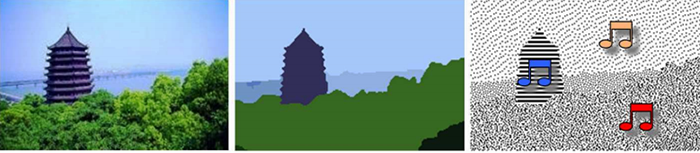
After a brief overview of research in the Department of Electrical Engineering and Computer Science at Northwestern University, we will focus on one particular research problem, the use of hearing and touch for conveying graphical and pictorial information to visually impaired (VI) people. This problem combines visual, acoustic, and tactile signal analysis with and understanding of human perception and interface design. The main idea is that the user actively explores a two-dimensional layout consisting of one or more objects with the finger on a touch screen. The objects are displayed via sounds and raised-dot tactile patterns. The finger acts as a pointing device and provides kinesthetic feedback. The touch screen is partitioned into regions, each representing an element of a visual scene or graphical display. A key element of our research is the use of spatial sound to facilitate active exploration of the layout. We use the head-related transfer function (HRTF) for rendering sound directionality and variations of sound intensity and tempo for rendering proximity. Our research has addressed object shape and size perception, as well as the of a 2-D layout of simple objects with identical size and shape. We have also considered the rendering of a simple scene layout consisting of objects in a linear arrangement, each with a distinct tapping sound, which we compare to a “virtual cane.” Subjective experiments with visually-blocked subjects demonstrate the effectiveness of the proposed approaches. Our research findings are also expected to have an impact in other applications where vision cannot be used, e.g., for GPS navigation while driving, fire-fighter operations in thick smoke, and military missions conducted under the cover of darkness.
Thrasos Pappas received the Ph.D. degree in electrical engineering and computer science from MIT in 1987. From 1987 until 1999, he was a Member of the Technical Staff at Bell Laboratories, Murray Hill, NJ. He joined the EECS Department at Northwestern in 1999. His research interests are in human perception and electronic media, and in particular, image and video quality and compression, image and video analysis, content-based retrieval, model-based halftoning, and tactile and multimodal interfaces. Prof. Pappas is a Fellow of the IEEE and SPIE. He has served as editor-in-chief of the IEEE Transactions on Image Processing (2010-12), elected member of the Board of Governors of the Signal Processing Society of IEEE (2004-07), chair of the IEEE Image and Multidimensional Signal Processing Technical Committee (2002-03), and technical program co-chair of ICIP-01 and ICIP-09. Since 1997 he has been co-chair of the SPIE/IS&T Conference on Human Vision and Electronic Imaging.
Host: Janet C. Rutledge, Ph.D.
]]>
Computer Science and Electrical Engineering University of Maryland, Baltimore County Acoustic-Tactile Rendering of Visual Information for the Visually Impaired Thrasyvoulos N. Pappas...
http://www.csee.umbc.edu/2013/10/talk-acoustic-tactile-rendering-of-visual-information-for-the-visually-impaired-230-mon-1111-ite325b/
https://my3.my.umbc.edu/api/v0/pixel/news/37735/guest@my.umbc.edu/0e80794efc5ff786b9e5ea7aee119a3e/api/pixel
computer-engineering
computer-science
electrical-engineering
news
research
talks
Computer Science and Electrical Engineering
https://my3.my.umbc.edu/groups/csee
https://assets3-my.umbc.edu/system/shared/avatars/groups/000/000/099/d117dca133c64bf78a4b7696dd007189/xsmall.png?1314043393
https://assets1-my.umbc.edu/system/shared/avatars/groups/000/000/099/d117dca133c64bf78a4b7696dd007189/original.png?1314043393
https://assets1-my.umbc.edu/system/shared/avatars/groups/000/000/099/d117dca133c64bf78a4b7696dd007189/xxlarge.png?1314043393
https://assets4-my.umbc.edu/system/shared/avatars/groups/000/000/099/d117dca133c64bf78a4b7696dd007189/xlarge.png?1314043393
https://assets3-my.umbc.edu/system/shared/avatars/groups/000/000/099/d117dca133c64bf78a4b7696dd007189/large.png?1314043393
https://assets1-my.umbc.edu/system/shared/avatars/groups/000/000/099/d117dca133c64bf78a4b7696dd007189/medium.png?1314043393
https://assets2-my.umbc.edu/system/shared/avatars/groups/000/000/099/d117dca133c64bf78a4b7696dd007189/small.png?1314043393
https://assets3-my.umbc.edu/system/shared/avatars/groups/000/000/099/d117dca133c64bf78a4b7696dd007189/xsmall.png?1314043393
https://assets3-my.umbc.edu/system/shared/avatars/groups/000/000/099/d117dca133c64bf78a4b7696dd007189/xxsmall.png?1314043393
Computer Science and Electrical Engineering
0
0
true
Wed, 30 Oct 2013 14:22:29 -0400
PhD defense: Visualizing Sequential Patterns in Large Datasets, 11/1
PhD Defense
Visualizing Sequential Patterns in Large
Datasets Using Levels of Abstraction
Dana Wortman
11am – 2pm, Friday, 1 November 2013, ITE 325b
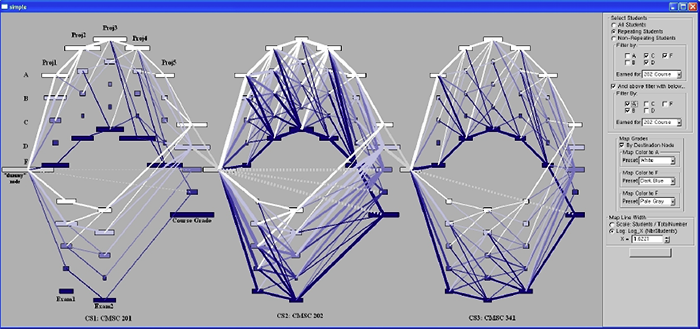
Student retention and success are important topics in all academic fields and institutions. Faculty seek to understand which topics, theories, or skills defeat students or require strengthening to promote success. Programs seek to understand how to better sequence courses to ensure students are prepared for requisite future courses. Institutions seek to understand how to intervene to promote retention and improve graduation rates. Unfortunately, most statistics gathered by Institutional Research efforts are limited to failure rates, enrollment rates, and graduation rates and do not often explore individual student performance. While these are often further analyzed by various student demographic attributes such as race and gender, these statistical methods alone are insufficient to understand student performance over time and sequential patterns of enrollment or success and failure. This research presents a method using multiple levels of abstraction to visualize performance patterns over time.
To visualize student enrollment and performance patterns, several issues must be addressed including sequential versus concurrent enrollment, spatial layout of course events, and performance over time. Another challenge addressed by this work is that of presenting sequences within the context of the entire program. To address these issues, multiple abstractions are combined in a multi-layered visualization that presents a high-level overview of students enrollment and performance patterns while retaining detailed information regarding individual student progress and performance as they advance through their courses.
The aggregated view represents the lowest level of abstraction, student enrollment and performance are aggregated into a graph structure, presenting patterns of movement throughout the program at the individual course level. The clustered view represents mined sequential patterns of enrollment and performance, illustrating common sequences. The directed view represents the highest level of abstraction and uses two visual elements, heat maps and a vector field, to illustrate overall performance in individual events and movement through the program. Results from multiple cohorts can then be superimposed on the same visualization to enable easy comparisons between patterns. Together, these abstractions provide a focus+context view of student performance, retaining outliers and emphasizing common patterns to illuminate dominant and unique patterns between cohorts of students.
This approach can help educators better understand student progress through the program, performance in individual courses, or student-selected course sequencing and this information can be used to address deficiencies in preparation, skills, or prerequisites. To demonstrate the appropriateness of this approach, performance and enrollment patterns are explored in the Computer Science program at the University of Maryland, Baltimore County. Specifically, this work examines the Gateway policy that requires students to earn a B or higher in the first two required programming courses before progressing with the hopes of validating the existing Gateway but also exploring other possible Gateway courses. Other issues explored within the Computer Science program include race, gender, math placement, and high school scores with the goal of attracting and retaining a more diverse group of students.
Committee: Penny Rheingans (chair), Marie desJardins, Marc Olano, Tim Finin and Diane Lee
]]>
PhD Defense Visualizing Sequential Patterns in Large Datasets Using Levels of Abstraction Dana Wortman 11am – 2pm, Friday, 1 November 2013, ITE 325b Student retention and success are...
http://www.csee.umbc.edu/2013/10/phd-defense-visualizing-sequential-patterns-in-large-datasets/
https://my3.my.umbc.edu/api/v0/pixel/news/37732/guest@my.umbc.edu/736ed95d3adb41143e55730d7a655f62/api/pixel
computer-engineering
defense
graduate
news
research
talks
Computer Science and Electrical Engineering
https://my3.my.umbc.edu/groups/csee
https://assets3-my.umbc.edu/system/shared/avatars/groups/000/000/099/d117dca133c64bf78a4b7696dd007189/xsmall.png?1314043393
https://assets1-my.umbc.edu/system/shared/avatars/groups/000/000/099/d117dca133c64bf78a4b7696dd007189/original.png?1314043393
https://assets1-my.umbc.edu/system/shared/avatars/groups/000/000/099/d117dca133c64bf78a4b7696dd007189/xxlarge.png?1314043393
https://assets4-my.umbc.edu/system/shared/avatars/groups/000/000/099/d117dca133c64bf78a4b7696dd007189/xlarge.png?1314043393
https://assets3-my.umbc.edu/system/shared/avatars/groups/000/000/099/d117dca133c64bf78a4b7696dd007189/large.png?1314043393
https://assets1-my.umbc.edu/system/shared/avatars/groups/000/000/099/d117dca133c64bf78a4b7696dd007189/medium.png?1314043393
https://assets2-my.umbc.edu/system/shared/avatars/groups/000/000/099/d117dca133c64bf78a4b7696dd007189/small.png?1314043393
https://assets3-my.umbc.edu/system/shared/avatars/groups/000/000/099/d117dca133c64bf78a4b7696dd007189/xsmall.png?1314043393
https://assets3-my.umbc.edu/system/shared/avatars/groups/000/000/099/d117dca133c64bf78a4b7696dd007189/xxsmall.png?1314043393
Computer Science and Electrical Engineering
0
0
true
Wed, 30 Oct 2013 13:14:11 -0400
Wed, 30 Oct 2013 13:14:11 -0400