<?xml version="1.0"?>
<News hasArchived="false" page="38" pageCount="221" pageSize="10" timestamp="Tue, 28 Apr 2026 17:24:06 -0400" url="https://my3.my.umbc.edu/groups/ieee/posts.xml?page=38">
<NewsItem contentIssues="true" id="99154" important="false" status="posted" url="https://my3.my.umbc.edu/groups/ieee/posts/99154">
<Title>talk: Modeling and Simulation for Reducing Risks Associated with Extreme Weather, 11-12 2/10</Title>
<Body>
<![CDATA[
    <div class="html-content"><div><a href="https://www.csee.umbc.edu/wp-content/uploads/2021/02/extreme_weather.png" rel="nofollow external" class="bo"><img width="1024" height="512" src="https://www.csee.umbc.edu/wp-content/uploads/2021/02/extreme_weather-1024x512.png" alt="" style="max-width: 100%; height: auto;"></a><hr><h3>CARTA Distinguished Lecture</h3><hr><h2><strong>Modeling and Simulation for</strong><br><strong> Reducing the Risks Associated with</strong><br><strong>Extreme Weather</strong></h2><h3><strong>Dr. Robert Atlas</strong></h3><h4><strong>Research Professor &amp; Global Coordinator for CARTA<br>Director Emeritus/ NOAA Atlantic Oceanographic and Meteorological <strong>Laboratory</strong> </strong></h4><p><strong> 11:00-12:00 ET Wednesday, 10 February 2021</strong></p><h4><strong><a href="https://www.google.com/url?q=https://umbc.webex.com/umbc/j.php?MTID%3Dm9dd04dea5d3bbf2ef5359b9f4bdf3beb&amp;sa=D&amp;source=calendar&amp;usd=2&amp;usg=AOvVaw0cZBUyDbuOg474XMkl5zfg" rel="nofollow external" class="bo">WebEX link</a></strong></h4><hr><p>The reduction of losses related to hurricanes and other extreme weather phenomena involves many complex aspects ranging from purely theoretical, observational, computational, and numerical, to operational and decisional. A correct warning can lead to proper evacuation and damage mitigation, and produce immense benefits. However, over-warning can lead to substantial unnecessary costs, a reduction of confidence in warnings, and a lack of appropriate response. In this chain of information, the role played by scientific research is crucial. </p><p>The National Oceanic and Atmospheric Administration (NOAA), in combination with the National Aeronautics and Space Administration (NASA), other agencies, and universities is contributing to these efforts through observational and theoretical research to better understand the processes associated with extreme weather. This includes model and data assimilation development, Observing System Experiments (OSE), and Observing System Simulation Experiments (OSSE) designed to ascertain the value of existing observing systems and the potential of new observing systems to improve weather prediction and theoretical understanding. This high-level talk, which was first given as the Keynote address at the 2019 Winter Simulation Conference, will describe innovative research for developing advanced next-generation global and regional models to improve weather prediction, and the application of OSSEs to optimize the observing system.</p><p><strong>Dr. Robert Atlas</strong> is the former Chief Meteorologist at NASA’s Goddard Laboratory for Atmospheres and is Director Emeritus of the National Oceanic and Atmospheric Administration’s (NOAA) Atlantic Oceanographic and Meteorological Laboratory in Miami, Fla. Some of the areas he focused his research on included the prediction, movement, and strengthening of hurricanes. He has worked with both satellite data and computer models as a means to study these hurricane behaviors.</p><p>Dr. Atlas received his Ph.D. in Meteorology and Oceanography in 1976 from New York University. Prior to receiving the doctorate, he was a weather forecaster in the U.S. Air Force where he maintained greater than 95 percent forecast accuracy. From 1976 to 1978, Dr. Atlas was a National Research Council Research Associate at NASA’s Goddard Institute for Space Studies, New York, an Assistant Professor of Atmospheric and Oceanic Science for SUNY, and Chief Consulting Meteorologist for the ABC television network.</p><p>In 1978, Dr. Atlas joined NASA as a research scientist. He served as head of the NASA Data Assimilation Office from 1998-2003, and as Chief meteorologist at NASA GSFC from 2003-2005. Dr. Atlas has performed research to assess and improve the impact of satellite data on numerical weather prediction since 1973. He was a key member of the team that first demonstrated the significant impact of quantitative satellite data on numerical weather prediction and is the world’s leading expert on Observing System Simulation Experiments, a technology that enables scientists to determine the quantitative value of new observing systems before funds are allocated for their development.</p><p>He served as a member of the Satellite Surface Stress Working Group, the NASA Scatterometer (NSCAT) Science Team, the ERS Science Team, the SeaWinds Satellite Team, the Working Group for Space-based Laser Winds, the Scientific Steering Group for GEWEX, the Council of the American Meteorological Society, and as Chairman of the U.S. World Ocean Circulation Experiment (WOCE) Advisory Group for model-based air-sea fluxes. He is currently a member of the Science Teams for two NASA space missions.</p><p>From 1974-1976, he developed a global upper-ocean model and studied oceanic response to atmospheric wind forcing as well as large-scale atmospheric response to sea surface temperature (SST) anomalies (unusual events). In more recent years, his research concentrated on the role of how the air and sea interact in the development of cyclones, the role of soil moisture and unusual SST events in the initiation, maintenance, and decay of prolonged heatwaves and drought, and most recently on the modeling and prediction of hurricane formation, movement, and intensification.</p><p>He is a recipient of the NASA Medal for Exceptional Scientific Achievement and the American Meteorological Society’s Banner I. Miller Award. In 2019, just prior to his retirement from NOAA, he was honored by the National Hurricane Center for Enduring Contributions to the nation’s hurricane forecast and warning program, and by the U.S. House of Representatives for his service to the nation.</p></div>
    <p>The post <a href="https://www.csee.umbc.edu/2021/02/talk-modeling-and-simulation-for-reducing-risks-associated-with-extreme-weather-11-12-2-10/" rel="nofollow external" class="bo">talk: Modeling and Simulation for Reducing Risks Associated with Extreme Weather, 11-12 2/10</a> appeared first on <a href="https://www.csee.umbc.edu" rel="nofollow external" class="bo">Department of Computer Science and Electrical Engineering</a>.</p></div>
]]>
</Body>
<Summary>CARTA Distinguished Lecture   Modeling and Simulation for  Reducing the Risks Associated with Extreme Weather  Dr. Robert Atlas  Research Professor &amp; Global Coordinator for CARTA Director...</Summary>
<Website>https://www.csee.umbc.edu/2021/02/talk-modeling-and-simulation-for-reducing-risks-associated-with-extreme-weather-11-12-2-10/</Website>
<TrackingUrl>https://my3.my.umbc.edu/api/v0/pixel/news/99154/guest@my.umbc.edu/093c933190ca02bee27177dcf450fcd2/api/pixel</TrackingUrl>
<Tag>csee</Tag>
<Tag>events</Tag>
<Tag>news</Tag>
<Tag>talks</Tag>
<Group token="csee">Computer Science and Electrical Engineering</Group>
<GroupUrl>https://my3.my.umbc.edu/groups/csee</GroupUrl>
<AvatarUrl>https://assets3-my.umbc.edu/system/shared/avatars/groups/000/000/099/d117dca133c64bf78a4b7696dd007189/xsmall.png?1314043393</AvatarUrl>
<AvatarUrl size="original">https://assets1-my.umbc.edu/system/shared/avatars/groups/000/000/099/d117dca133c64bf78a4b7696dd007189/original.png?1314043393</AvatarUrl>
<AvatarUrl size="xxlarge">https://assets1-my.umbc.edu/system/shared/avatars/groups/000/000/099/d117dca133c64bf78a4b7696dd007189/xxlarge.png?1314043393</AvatarUrl>
<AvatarUrl size="xlarge">https://assets4-my.umbc.edu/system/shared/avatars/groups/000/000/099/d117dca133c64bf78a4b7696dd007189/xlarge.png?1314043393</AvatarUrl>
<AvatarUrl size="large">https://assets3-my.umbc.edu/system/shared/avatars/groups/000/000/099/d117dca133c64bf78a4b7696dd007189/large.png?1314043393</AvatarUrl>
<AvatarUrl size="medium">https://assets1-my.umbc.edu/system/shared/avatars/groups/000/000/099/d117dca133c64bf78a4b7696dd007189/medium.png?1314043393</AvatarUrl>
<AvatarUrl size="small">https://assets2-my.umbc.edu/system/shared/avatars/groups/000/000/099/d117dca133c64bf78a4b7696dd007189/small.png?1314043393</AvatarUrl>
<AvatarUrl size="xsmall">https://assets3-my.umbc.edu/system/shared/avatars/groups/000/000/099/d117dca133c64bf78a4b7696dd007189/xsmall.png?1314043393</AvatarUrl>
<AvatarUrl size="xxsmall">https://assets3-my.umbc.edu/system/shared/avatars/groups/000/000/099/d117dca133c64bf78a4b7696dd007189/xxsmall.png?1314043393</AvatarUrl>
<Sponsor>Computer Science and Electrical Engineering</Sponsor>
<PawCount>0</PawCount>
<CommentCount>0</CommentCount>
<CommentsAllowed>false</CommentsAllowed>
<PostedAt>Tue, 09 Feb 2021 21:55:49 -0500</PostedAt>
</NewsItem>

<NewsItem contentIssues="true" id="99050" important="false" status="posted" url="https://my3.my.umbc.edu/groups/ieee/posts/99050">
<Title>talk: Dr. Richard Carback on Startup Lessons Learned, 12-1 Fri 2/12</Title>
<Body>
<![CDATA[
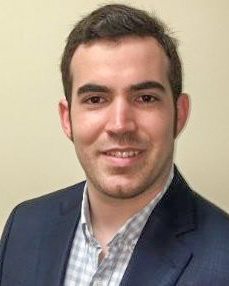
    <div class="html-content"><div><a href="https://www.csee.umbc.edu/wp-content/uploads/2021/02/startups.png" rel="nofollow external" class="bo"><img width="1024" height="512" src="https://www.csee.umbc.edu/wp-content/uploads/2021/02/startups-1024x512.png" alt="" style="max-width: 100%; height: auto;"></a><hr><h4>The UMBC Cyber Defense Lab presents</h4><h1><strong>Startup Lessons Learned</strong></h1><h3><strong>Richard Carback (Ph.D. UMBC CS 2010)</strong><br><strong>xx network</strong></h3><h4><strong>12:00–1:00pm ET, Friday,12 February 12 2021<br>WebEx:<a href="https://www.google.com/url?q=https://umbc.webex.com/meet/sherman&amp;sa=D&amp;source=calendar&amp;usd=2&amp;usg=AOvVaw25rwcPisd9EH3SQYAqxmvd" rel="nofollow external" class="bo"> https://umbc.webex.com/meet/sherman</a></strong></h4><hr><p>This talk will explore the technology and lessons learned by UMBC alumnus Richard Carback from his experience co-founding and closing the security startup Lexumo, which provided the only automated service that continuously monitors IoT software platforms for the latest public vulnerabilities. In addition to covering some of the hard problems and Lexumo’s technical approach for monitoring all the world’s open-source software to assist companies in managing their vulnerabilities, Dr. Carback will discuss the mistakes and complexities of getting funded, delivering a product, and finding customers.</p><p><a href="https://www.linkedin.com/in/richard-carback-8157678/" rel="nofollow external" class="bo">Dr. Richard Carback</a> is a UMBC Alumnus (CS Ph.D., 2010) who is an entrepreneur who currently runs a private consultancy for computer security, computer forensics, cryptography, and smart contracts. He is a privacy-preserving systems expert with a background in elections and anonymity networks. While the group leader for the embedded systems security group at Charles Stark Draper Laboratories, he spun out an IoT vulnerability startup called Lexumo that provided the only automated service that continuously monitored IoT software platforms for the latest public vulnerabilities. At UMBC, he worked with Alan Sherman on secure elections and was the primary researcher behind Takoma Park’s deployment of the Scantegrity voting system, the first usage of voter-verifiable end-to-end election technology in a municipal election. email: *protected email*</p><p>Host: Alan T. Sherman, *protected email*. Support for this event was provided in part by the NSF under SFS grant DGE-1753681. The UMBC Cyber Defense Lab meets biweekly Fridays 12-1 pm. All meetings are open to the public. Upcoming CDL Meetings:</p><ul><li>Feb 26, Vahid Heydari (Rowan University)</li><li>Mar 12, Chao Liu (UMBC), Efficient asynchronous BFT with adaptive security</li><li>Mar 26, Jeremy Clark (Concordia)</li><li>April 9, (UMBC), MeetingMayhem: A network adversarial thinking game</li><li>April 23, Peter Peterson (University of Minnesota Duluth), Adversarial thinking</li><li>May 7, Farid Javani (UMBC), Anonymization by oblivious transfer</li></ul></div>
    <p>The post <a href="https://www.csee.umbc.edu/2021/02/talk-dr-richard-carback-on-startup-lessons-learned-12-1-fri-2-12/" rel="nofollow external" class="bo">talk: Dr. Richard Carback on Startup Lessons Learned, 12-1 Fri 2/12</a> appeared first on <a href="https://www.csee.umbc.edu" rel="nofollow external" class="bo">Department of Computer Science and Electrical Engineering</a>.</p></div>
]]>
</Body>
<Summary>The UMBC Cyber Defense Lab presents  Startup Lessons Learned  Richard Carback (Ph.D. UMBC CS 2010) xx network  12:00–1:00pm ET, Friday,12 February 12 2021 WebEx:...</Summary>
<Website>https://www.csee.umbc.edu/2021/02/talk-dr-richard-carback-on-startup-lessons-learned-12-1-fri-2-12/</Website>
<TrackingUrl>https://my3.my.umbc.edu/api/v0/pixel/news/99050/guest@my.umbc.edu/f0ec1f0dfbf56a1fa30dc92b70e8e619/api/pixel</TrackingUrl>
<Tag>alumni</Tag>
<Tag>csee</Tag>
<Tag>cybersecurity</Tag>
<Tag>news</Tag>
<Group token="csee">Computer Science and Electrical Engineering</Group>
<GroupUrl>https://my3.my.umbc.edu/groups/csee</GroupUrl>
<AvatarUrl>https://assets3-my.umbc.edu/system/shared/avatars/groups/000/000/099/d117dca133c64bf78a4b7696dd007189/xsmall.png?1314043393</AvatarUrl>
<AvatarUrl size="original">https://assets1-my.umbc.edu/system/shared/avatars/groups/000/000/099/d117dca133c64bf78a4b7696dd007189/original.png?1314043393</AvatarUrl>
<AvatarUrl size="xxlarge">https://assets1-my.umbc.edu/system/shared/avatars/groups/000/000/099/d117dca133c64bf78a4b7696dd007189/xxlarge.png?1314043393</AvatarUrl>
<AvatarUrl size="xlarge">https://assets4-my.umbc.edu/system/shared/avatars/groups/000/000/099/d117dca133c64bf78a4b7696dd007189/xlarge.png?1314043393</AvatarUrl>
<AvatarUrl size="large">https://assets3-my.umbc.edu/system/shared/avatars/groups/000/000/099/d117dca133c64bf78a4b7696dd007189/large.png?1314043393</AvatarUrl>
<AvatarUrl size="medium">https://assets1-my.umbc.edu/system/shared/avatars/groups/000/000/099/d117dca133c64bf78a4b7696dd007189/medium.png?1314043393</AvatarUrl>
<AvatarUrl size="small">https://assets2-my.umbc.edu/system/shared/avatars/groups/000/000/099/d117dca133c64bf78a4b7696dd007189/small.png?1314043393</AvatarUrl>
<AvatarUrl size="xsmall">https://assets3-my.umbc.edu/system/shared/avatars/groups/000/000/099/d117dca133c64bf78a4b7696dd007189/xsmall.png?1314043393</AvatarUrl>
<AvatarUrl size="xxsmall">https://assets3-my.umbc.edu/system/shared/avatars/groups/000/000/099/d117dca133c64bf78a4b7696dd007189/xxsmall.png?1314043393</AvatarUrl>
<Sponsor>Computer Science and Electrical Engineering</Sponsor>
<PawCount>0</PawCount>
<CommentCount>0</CommentCount>
<CommentsAllowed>false</CommentsAllowed>
<PostedAt>Sun, 07 Feb 2021 21:30:34 -0500</PostedAt>
</NewsItem>

<NewsItem contentIssues="true" id="99051" important="false" status="posted" url="https://my3.my.umbc.edu/groups/ieee/posts/99051">
<Title>Two UMBC alumnae featured in Cybersecurity podcast</Title>
<Body>
<![CDATA[
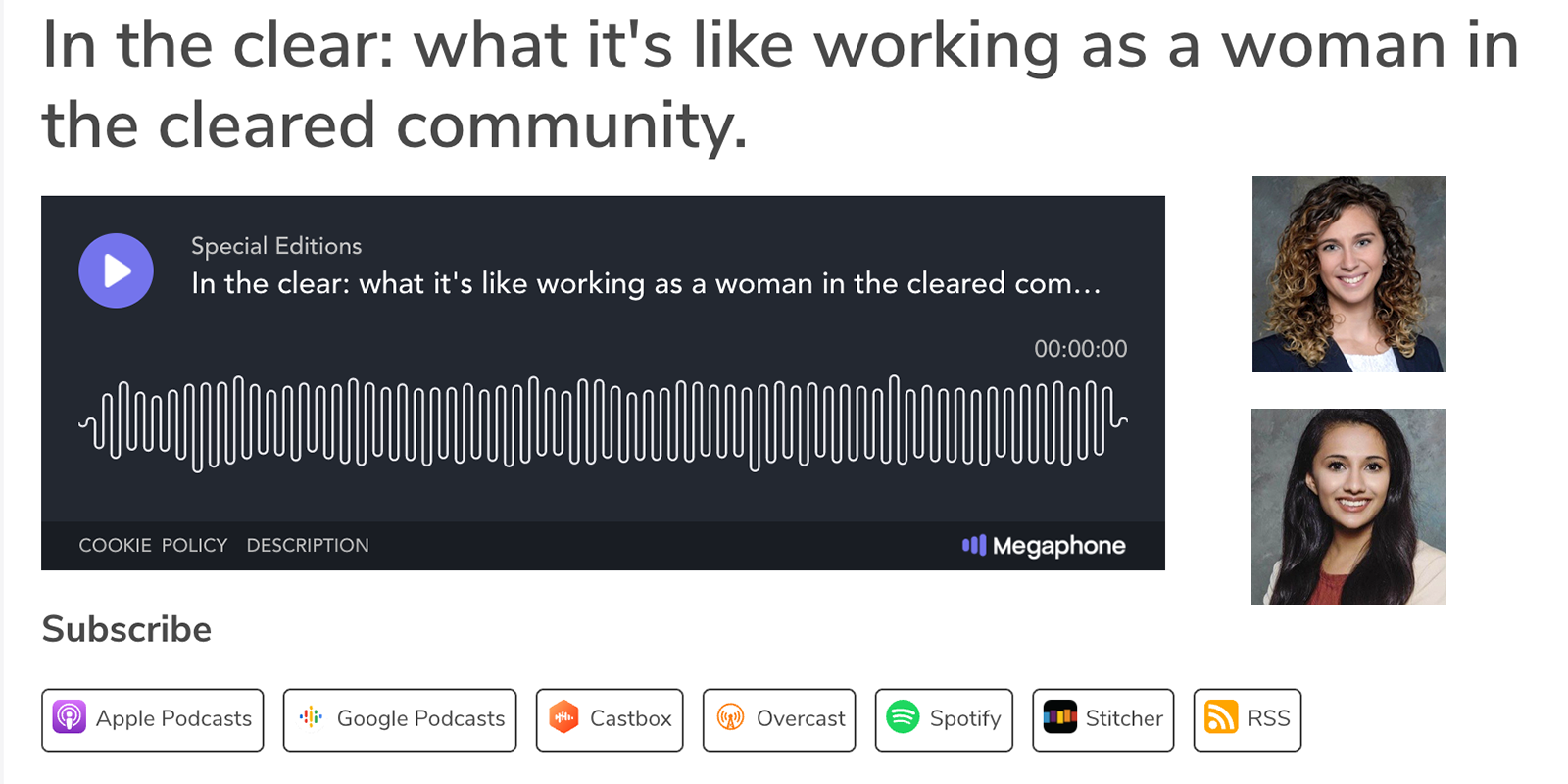
    <div class="html-content"><div><a href="https://www.csee.umbc.edu/wp-content/uploads/2021/02/podcast.png" rel="nofollow external" class="bo"><img width="1024" height="512" src="https://www.csee.umbc.edu/wp-content/uploads/2021/02/podcast-1024x512.png" alt="" style="max-width: 100%; height: auto;"></a><hr><h2>Two UMBC alumnae featured in The CyberWire podcast</h2><hr><p>The CyberWire produced a special podcast, <a href="https://thecyberwire.com/podcasts/special-edition/39/notes" rel="nofollow external" class="bo"><strong>In the clear: what it’s like working as a woman in the cleared community</strong>,</a> that features three women working on cybersecurity atNorthrop Grumman. Two are UMBC alumnae, software engineering manager <a href="https://www.linkedin.com/in/laurenmazzoli/" rel="nofollow external" class="bo">Lauren</a> and cyber software engineer <a href="https://www.linkedin.com/in/priyanka-ranade/" rel="nofollow external" class="bo">Priyanka</a>. </p><p>Lauren received a BS in Computer Science in 2015 and an M.S. in Computer Science in 2017.  As an undergraduate student, she worked part-time as an IT Security Analyst tracking, locating, and performing forensics on infected computers located on campus.  She joined Northrop Grumman in 2015 and continued her studies as a part-time graduate student, doing research on investigating different ways of characterizing cybersecurity exploit kits and the malware they produce.</p><p>Priyanka received a BS in Computer Science in 2018 and an MS in Computer Science in 2019. Her MS research was on multilingual text alignment for cybersecurity.  She has been a lecture in the UMBC Computer Science program and the UMD Advanced Cybersecurity Experience for Students (<a href="https://aces.umd.edu/" rel="nofollow external" class="bo">ACES</a>) program. She is currently working on a Computer Science Ph.D. at UMBC focused on how AI can help protect cybersecurity systems from data poisoning attacks.</p><hr><h4><strong>Listen to the 47 minute podcast <a href="https://thecyberwire.com/podcasts/special-edition/39/notes" rel="nofollow external" class="bo">here</a>.</strong></h4></div>
    <p>The post <a href="https://www.csee.umbc.edu/2021/02/two-umbc-alumnae-featured-in-cybersecurity-podcast/" rel="nofollow external" class="bo">Two UMBC alumnae featured in Cybersecurity podcast</a> appeared first on <a href="https://www.csee.umbc.edu" rel="nofollow external" class="bo">Department of Computer Science and Electrical Engineering</a>.</p></div>
]]>
</Body>
<Summary>Two UMBC alumnae featured in The CyberWire podcast   The CyberWire produced a special podcast, In the clear: what it’s like working as a woman in the cleared community, that features three women...</Summary>
<Website>https://www.csee.umbc.edu/2021/02/two-umbc-alumnae-featured-in-cybersecurity-podcast/</Website>
<TrackingUrl>https://my3.my.umbc.edu/api/v0/pixel/news/99051/guest@my.umbc.edu/881e71d8f739be5591e503dad6445b77/api/pixel</TrackingUrl>
<Tag>alumni</Tag>
<Tag>computer-science</Tag>
<Tag>cybersecurity</Tag>
<Tag>news</Tag>
<Group token="csee">Computer Science and Electrical Engineering</Group>
<GroupUrl>https://my3.my.umbc.edu/groups/csee</GroupUrl>
<AvatarUrl>https://assets3-my.umbc.edu/system/shared/avatars/groups/000/000/099/d117dca133c64bf78a4b7696dd007189/xsmall.png?1314043393</AvatarUrl>
<AvatarUrl size="original">https://assets1-my.umbc.edu/system/shared/avatars/groups/000/000/099/d117dca133c64bf78a4b7696dd007189/original.png?1314043393</AvatarUrl>
<AvatarUrl size="xxlarge">https://assets1-my.umbc.edu/system/shared/avatars/groups/000/000/099/d117dca133c64bf78a4b7696dd007189/xxlarge.png?1314043393</AvatarUrl>
<AvatarUrl size="xlarge">https://assets4-my.umbc.edu/system/shared/avatars/groups/000/000/099/d117dca133c64bf78a4b7696dd007189/xlarge.png?1314043393</AvatarUrl>
<AvatarUrl size="large">https://assets3-my.umbc.edu/system/shared/avatars/groups/000/000/099/d117dca133c64bf78a4b7696dd007189/large.png?1314043393</AvatarUrl>
<AvatarUrl size="medium">https://assets1-my.umbc.edu/system/shared/avatars/groups/000/000/099/d117dca133c64bf78a4b7696dd007189/medium.png?1314043393</AvatarUrl>
<AvatarUrl size="small">https://assets2-my.umbc.edu/system/shared/avatars/groups/000/000/099/d117dca133c64bf78a4b7696dd007189/small.png?1314043393</AvatarUrl>
<AvatarUrl size="xsmall">https://assets3-my.umbc.edu/system/shared/avatars/groups/000/000/099/d117dca133c64bf78a4b7696dd007189/xsmall.png?1314043393</AvatarUrl>
<AvatarUrl size="xxsmall">https://assets3-my.umbc.edu/system/shared/avatars/groups/000/000/099/d117dca133c64bf78a4b7696dd007189/xxsmall.png?1314043393</AvatarUrl>
<Sponsor>Computer Science and Electrical Engineering</Sponsor>
<PawCount>0</PawCount>
<CommentCount>0</CommentCount>
<CommentsAllowed>false</CommentsAllowed>
<PostedAt>Sun, 07 Feb 2021 20:19:43 -0500</PostedAt>
<EditAt>Sun, 07 Feb 2021 20:19:43 -0500</EditAt>
</NewsItem>

<NewsItem contentIssues="false" id="98924" important="false" status="posted" url="https://my3.my.umbc.edu/groups/ieee/posts/98924">
<Title>Events This Semester</Title>
<Body>
<![CDATA[
    <div class="html-content">Check out our events that we are having this semester!<div><br></div><div>~Your ISSA board</div></div>
]]>
</Body>
<Summary>Check out our events that we are having this semester!    ~Your ISSA board</Summary>
<AttachmentKind>Flyer</AttachmentKind>
<AttachmentUrl>https://assets1-my.umbc.edu/system/shared/attachments/776a9ec57c15f0a20fcbab42752c6457/69f12576/news/000/098/924/98b2a70939d90bf9722d84bc4f97bb47/ISSA events flyers.pdf?1612286543</AttachmentUrl>
<Attachments>
<Attachment kind="Flyer" url="https://my3.my.umbc.edu/groups/ieee/posts/98924/attachments/38597"></Attachment>
</Attachments>
<TrackingUrl>https://my3.my.umbc.edu/api/v0/pixel/news/98924/guest@my.umbc.edu/f7b5fd789c91fa625fbc52ff867c97ed/api/pixel</TrackingUrl>
<Group token="issa">Information Systems Security Association, UMBC Chapter</Group>
<GroupUrl>https://my3.my.umbc.edu/groups/issa</GroupUrl>
<AvatarUrl>https://assets4-my.umbc.edu/system/shared/avatars/groups/000/000/514/0bdfb1231eca53e69ca24c2de2eb6912/xsmall.png?1772925484</AvatarUrl>
<AvatarUrl size="original">https://assets4-my.umbc.edu/system/shared/avatars/groups/000/000/514/0bdfb1231eca53e69ca24c2de2eb6912/original.jpg?1772925484</AvatarUrl>
<AvatarUrl size="xxlarge">https://assets3-my.umbc.edu/system/shared/avatars/groups/000/000/514/0bdfb1231eca53e69ca24c2de2eb6912/xxlarge.png?1772925484</AvatarUrl>
<AvatarUrl size="xlarge">https://assets3-my.umbc.edu/system/shared/avatars/groups/000/000/514/0bdfb1231eca53e69ca24c2de2eb6912/xlarge.png?1772925484</AvatarUrl>
<AvatarUrl size="large">https://assets4-my.umbc.edu/system/shared/avatars/groups/000/000/514/0bdfb1231eca53e69ca24c2de2eb6912/large.png?1772925484</AvatarUrl>
<AvatarUrl size="medium">https://assets2-my.umbc.edu/system/shared/avatars/groups/000/000/514/0bdfb1231eca53e69ca24c2de2eb6912/medium.png?1772925484</AvatarUrl>
<AvatarUrl size="small">https://assets1-my.umbc.edu/system/shared/avatars/groups/000/000/514/0bdfb1231eca53e69ca24c2de2eb6912/small.png?1772925484</AvatarUrl>
<AvatarUrl size="xsmall">https://assets4-my.umbc.edu/system/shared/avatars/groups/000/000/514/0bdfb1231eca53e69ca24c2de2eb6912/xsmall.png?1772925484</AvatarUrl>
<AvatarUrl size="xxsmall">https://assets4-my.umbc.edu/system/shared/avatars/groups/000/000/514/0bdfb1231eca53e69ca24c2de2eb6912/xxsmall.png?1772925484</AvatarUrl>
<Sponsor>Information Systems Security Association, UMBC Chapter</Sponsor>
<PawCount>0</PawCount>
<CommentCount>0</CommentCount>
<CommentsAllowed>true</CommentsAllowed>
<PostedAt>Tue, 02 Feb 2021 12:22:23 -0500</PostedAt>
</NewsItem>

<NewsItem contentIssues="false" id="98842" important="false" status="posted" url="https://my3.my.umbc.edu/groups/ieee/posts/98842">
<Title>BEYA Career Fair &amp; Conference</Title>
<Body>
<![CDATA[
    <div class="html-content"><div>"<span>The BEYA STEM Community connects college students and STEM employers ranging from AMAZON to Johns Hopkin Applied Physics Lab and <a href="https://s4.goeshow.com/ccgroup/beyastem/2021/exhibitor_list.cfm" rel="nofollow external" class="bo">more </a>with three (3) days of learning, networking, celebrating excellence, and showcasing career opportunities. I</span><span>n response to the COVID-19 Pandemic, t</span><span>he 2021 BEYA STEM Conference will be virtual. </span><span>Please</span><span> share this opportunity with members of your organization via social media or any other platform you see fit. Every registration matters.</span></div><div><div><br></div><div>T<span>he BEYA Experience</span> will be held virtually<span> this<strong> <u>February 11-13th</u></strong>. The registration deadline is <u><strong>Feb 10th</strong></u>. Register at <a href="http://beya.org/" rel="nofollow external" class="bo">beya.org</a></span></div><div><span>For more information on the event schedule: <a href="https://s4.goeshow.com/ccgroup/beyastem/2021/full_schedule.cfm" rel="nofollow external" class="bo">link</a>"</span></div></div><div><span><br></span></div><div><span><br></span></div><div><br></div><div><br></div></div>
]]>
</Body>
<Summary>"The BEYA STEM Community connects college students and STEM employers ranging from AMAZON to Johns Hopkin Applied Physics Lab and more with three (3) days of learning, networking, celebrating...</Summary>
<Website>https://intouch.ccgmag.com/mpage/beya-home</Website>
<AttachmentKind>Flyer</AttachmentKind>
<AttachmentUrl>https://assets4-my.umbc.edu/system/shared/attachments/5d3dc8ebc5d9b07d4ba21ab40d5a9907/69f12576/news/000/098/842/0db6dda71f779825756426ec733c7cc0/2021BEYA.flier (2).pdf?1612034809</AttachmentUrl>
<Attachments>
<Attachment kind="Flyer" url="https://my3.my.umbc.edu/groups/ieee/posts/98842/attachments/38567"></Attachment>
</Attachments>
<TrackingUrl>https://my3.my.umbc.edu/api/v0/pixel/news/98842/guest@my.umbc.edu/0256d50b0802793af19173cf6f0e9116/api/pixel</TrackingUrl>
<Group token="issa">Information Systems Security Association, UMBC Chapter</Group>
<GroupUrl>https://my3.my.umbc.edu/groups/issa</GroupUrl>
<AvatarUrl>https://assets4-my.umbc.edu/system/shared/avatars/groups/000/000/514/0bdfb1231eca53e69ca24c2de2eb6912/xsmall.png?1772925484</AvatarUrl>
<AvatarUrl size="original">https://assets4-my.umbc.edu/system/shared/avatars/groups/000/000/514/0bdfb1231eca53e69ca24c2de2eb6912/original.jpg?1772925484</AvatarUrl>
<AvatarUrl size="xxlarge">https://assets3-my.umbc.edu/system/shared/avatars/groups/000/000/514/0bdfb1231eca53e69ca24c2de2eb6912/xxlarge.png?1772925484</AvatarUrl>
<AvatarUrl size="xlarge">https://assets3-my.umbc.edu/system/shared/avatars/groups/000/000/514/0bdfb1231eca53e69ca24c2de2eb6912/xlarge.png?1772925484</AvatarUrl>
<AvatarUrl size="large">https://assets4-my.umbc.edu/system/shared/avatars/groups/000/000/514/0bdfb1231eca53e69ca24c2de2eb6912/large.png?1772925484</AvatarUrl>
<AvatarUrl size="medium">https://assets2-my.umbc.edu/system/shared/avatars/groups/000/000/514/0bdfb1231eca53e69ca24c2de2eb6912/medium.png?1772925484</AvatarUrl>
<AvatarUrl size="small">https://assets1-my.umbc.edu/system/shared/avatars/groups/000/000/514/0bdfb1231eca53e69ca24c2de2eb6912/small.png?1772925484</AvatarUrl>
<AvatarUrl size="xsmall">https://assets4-my.umbc.edu/system/shared/avatars/groups/000/000/514/0bdfb1231eca53e69ca24c2de2eb6912/xsmall.png?1772925484</AvatarUrl>
<AvatarUrl size="xxsmall">https://assets4-my.umbc.edu/system/shared/avatars/groups/000/000/514/0bdfb1231eca53e69ca24c2de2eb6912/xxsmall.png?1772925484</AvatarUrl>
<Sponsor>Information Systems Security Association, UMBC Chapter</Sponsor>
<PawCount>0</PawCount>
<CommentCount>0</CommentCount>
<CommentsAllowed>true</CommentsAllowed>
<PostedAt>Sat, 30 Jan 2021 14:26:49 -0500</PostedAt>
</NewsItem>

<NewsItem contentIssues="true" id="98830" important="false" status="posted" url="https://my3.my.umbc.edu/groups/ieee/posts/98830">
<Title>talk: Theoryful Machine Learning in the Chemical Sciences, 1-2 Fri 2/5</Title>
<Body>
<![CDATA[
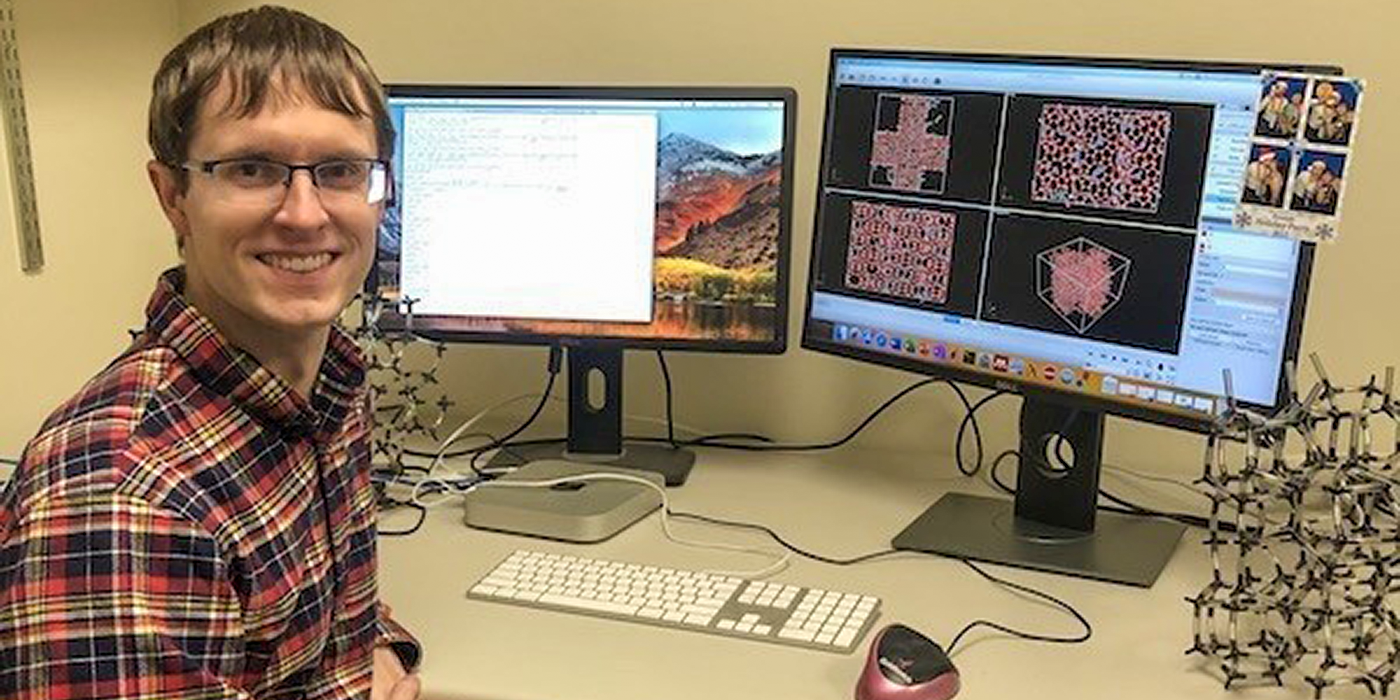
    <div class="html-content"><div><a href="https://www.csee.umbc.edu/wp-content/uploads/2021/01/tyler_josephson.png" rel="nofollow external" class="bo"><img width="1024" height="512" src="https://www.csee.umbc.edu/wp-content/uploads/2021/01/tyler_josephson-1024x512.png" alt="" style="max-width: 100%; height: auto;"></a><hr><h2><strong>Theoryful Machine Learning</strong><br><strong>in the Chemical Sciences</strong></h2><h2><strong>Prof. Tyler R. Josephson</strong></h2><h4><strong>ATOMS Lab: AI &amp; Theory-Oriented Molecular Science<br>Chemical, Biochemical &amp; Environmental Engineering, UMBC</strong></h4><h4><strong>1:00-2:00 pm, 5 February 2021</strong><br><strong>online via <a href="https://umbc.webex.com/umbc/j.php?MTID=m56681ab26d2b3485f16caa2ffa98b675" rel="nofollow external" class="bo">webex</a></strong></h4><p>Modern machine learning (ML) algorithms have achieved remarkable success in “theoryless” problems of image recognition and natural language processing. When these algorithms find applications in “theoryful” domains like physical sciences, they frequently benefit from the incorporation of domain knowledge into the ML architecture, whether enforcing constraints or symmetries or interpreting neural networks as physical systems.</p><p>The chemical sciences have many “theoryful” ML problems. In this talk, I will discuss three projects in which we leverage background theory when designing and adopting ML algorithms. In the first project, we use classical thermodynamics to derive a method to characterize mixture properties in molecular simulations and show that multiple linear regression (with no bias) is the formally correct and thermodynamically consistent model for fitting and predicting these properties. We recently developed an alternative proof from statistical thermodynamics that gives the same result, and we provide evidence that nonlinear methods provide no improvement in performance. In the second project, we perform high-throughput molecular simulations of adsorption (when molecules from a gas or liquid stick on the surface or in the pores of a material), which we analyze using neural networks. We derive a correspondence between theories of multicomponent adsorption and the self-attention mechanism in the transformer architecture and show how the theory-inspired architecture has improved generalization over the multilayer perceptron.</p><p>In the final project, I will share work on symbolic regression, in collaboration with the Mathematics of AI department at IBM. In symbolic regression, given a data set, a search through some “space of possible equations” identifies accurately-fitting and parsimonious equations that can be easily inspected by humans. We formulate the symbolic regression problem as a mixed-integer nonlinear programming (MINLP) problem and use MINLP solvers to systematically solve multiple functional forms at once, instead of via the traditional approaches that use genetic algorithms. Future approaches to integrate symbolic regression with chemical theory will be discussed.</p><hr><p><a href="https://cbee.umbc.edu/josephson/" rel="nofollow external" class="bo">Tyler R. Josephson</a> is an Assistant Professor in the Chemical, Biochemical, and Environmental Engineering department at the University of Maryland, Baltimore County. He received his B.S. in Chemical Engineering from the University of Minnesota in 2011, and his Ph.D. in Chemical Engineering from the University of Delaware in 2017, after which he was a postdoctoral associate in the University of Minnesota Chemistry Department. Prof. Josephson uses multi-scale modeling and machine learning to study catalysis, solvation, adsorption, and phase equilibria. During his downtime, he loves learning new things, thinking about deep topics (like science and philosophy), and playing the piano.</p></div>
    <p>The post <a href="https://www.csee.umbc.edu/2021/01/talk-theoryful-machine-learning-in-the-chemical-sciences-1-2-fri-2-5/" rel="nofollow external" class="bo">talk: Theoryful Machine Learning in the Chemical Sciences, 1-2 Fri 2/5</a> appeared first on <a href="https://www.csee.umbc.edu" rel="nofollow external" class="bo">Department of Computer Science and Electrical Engineering</a>.</p></div>
]]>
</Body>
<Summary>Theoryful Machine Learning in the Chemical Sciences  Prof. Tyler R. Josephson  ATOMS Lab: AI &amp; Theory-Oriented Molecular Science Chemical, Biochemical &amp; Environmental Engineering, UMBC...</Summary>
<Website>https://www.csee.umbc.edu/2021/01/talk-theoryful-machine-learning-in-the-chemical-sciences-1-2-fri-2-5/</Website>
<TrackingUrl>https://my3.my.umbc.edu/api/v0/pixel/news/98830/guest@my.umbc.edu/f1117a2ea665e0e0c9e17769a3ea5ca0/api/pixel</TrackingUrl>
<Tag>ai</Tag>
<Tag>machine-learning</Tag>
<Tag>news</Tag>
<Tag>research</Tag>
<Tag>talks</Tag>
<Group token="csee">Computer Science and Electrical Engineering</Group>
<GroupUrl>https://my3.my.umbc.edu/groups/csee</GroupUrl>
<AvatarUrl>https://assets3-my.umbc.edu/system/shared/avatars/groups/000/000/099/d117dca133c64bf78a4b7696dd007189/xsmall.png?1314043393</AvatarUrl>
<AvatarUrl size="original">https://assets1-my.umbc.edu/system/shared/avatars/groups/000/000/099/d117dca133c64bf78a4b7696dd007189/original.png?1314043393</AvatarUrl>
<AvatarUrl size="xxlarge">https://assets1-my.umbc.edu/system/shared/avatars/groups/000/000/099/d117dca133c64bf78a4b7696dd007189/xxlarge.png?1314043393</AvatarUrl>
<AvatarUrl size="xlarge">https://assets4-my.umbc.edu/system/shared/avatars/groups/000/000/099/d117dca133c64bf78a4b7696dd007189/xlarge.png?1314043393</AvatarUrl>
<AvatarUrl size="large">https://assets3-my.umbc.edu/system/shared/avatars/groups/000/000/099/d117dca133c64bf78a4b7696dd007189/large.png?1314043393</AvatarUrl>
<AvatarUrl size="medium">https://assets1-my.umbc.edu/system/shared/avatars/groups/000/000/099/d117dca133c64bf78a4b7696dd007189/medium.png?1314043393</AvatarUrl>
<AvatarUrl size="small">https://assets2-my.umbc.edu/system/shared/avatars/groups/000/000/099/d117dca133c64bf78a4b7696dd007189/small.png?1314043393</AvatarUrl>
<AvatarUrl size="xsmall">https://assets3-my.umbc.edu/system/shared/avatars/groups/000/000/099/d117dca133c64bf78a4b7696dd007189/xsmall.png?1314043393</AvatarUrl>
<AvatarUrl size="xxsmall">https://assets3-my.umbc.edu/system/shared/avatars/groups/000/000/099/d117dca133c64bf78a4b7696dd007189/xxsmall.png?1314043393</AvatarUrl>
<Sponsor>Computer Science and Electrical Engineering</Sponsor>
<PawCount>0</PawCount>
<CommentCount>0</CommentCount>
<CommentsAllowed>false</CommentsAllowed>
<PostedAt>Fri, 29 Jan 2021 14:06:54 -0500</PostedAt>
<EditAt>Fri, 29 Jan 2021 14:06:54 -0500</EditAt>
</NewsItem>

<NewsItem contentIssues="true" id="98250" important="false" status="posted" url="https://my3.my.umbc.edu/groups/ieee/posts/98250">
<Title>Visiting Prof. Ed Raff&#8217;s forthcoming book: Inside Deep Learning</Title>
<Body>
<![CDATA[
    <div class="html-content"><div><a href="https://www.csee.umbc.edu/wp-content/uploads/2020/12/raffMeap.png" rel="nofollow external" class="bo"><img width="1024" height="536" src="https://www.csee.umbc.edu/wp-content/uploads/2020/12/raffMeap-1024x536.png" alt="" style="max-width: 100%; height: auto;"></a><hr><hr><h2><strong>Visiting Prof. Ed Raff’s forthcoming book Inside Deep Learning</strong></h2><hr><div><a href="https://www.csee.umbc.edu/wp-content/uploads/2020/12/raff.png" rel="nofollow external" class="bo"><img width="229" height="286" src="https://www.csee.umbc.edu/wp-content/uploads/2020/12/raff.png" alt="" style="max-width: 100%; height: auto;"></a></div><p>Congratulation to Dr. <a href="https://www.edwardraff.com/" rel="nofollow external" class="bo">Edward Raff</a> for his forthcoming book <a href="https://www.manning.com/books/inside-deep-learning" rel="nofollow external" class="bo">Inside Deep Learning</a> being published by Manning. The first three chapters are now available free online via Manning’s Early Access Program, with more to come. Dr. Raff is a Chief Scientist at <a href="https://www.boozallen.com/" rel="nofollow external" class="bo">Booz Allen Hamilton</a> and both an alumnus of and visiting assistant professor in the UMBC CSEE department. </p><p>He describes the target audience for his book as “the middle between “give me a tool” and ‘CS/Stats/ML Ph.D. graduate book’ that gives utility and understanding.”  He gives thanks to his UMBC students in his Computer Science and Data Science classes who have been “guinea pigs for this book/course material.”</p><p>Here’s how the publisher describes the book: “<em>Inside Deep Learning</em> is a fast-paced beginners guide to solving common technical problems with deep learning. Written for everyday developers, there are no complex mathematical proofs or unnecessary academic theory. You’ll learn how deep learning works through plain language, annotated code, and equations as you work through dozens of instantly useful PyTorch examples. As you go, you’ll build a French-English translator that works on the same principles as professional machine translation and discover cutting-edge techniques just emerging from the latest research. Best of all, every deep learning solution in this book can run in less than fifteen minutes using free GPU hardware!”</p><p>Ed Raff received a Ph.D. in Computer Science in 2018 with a dissertation on “Malware Detection and Cyber Security via Compression.”  He is currently a  Chief Scientist at Booz Allen Hamilton. He has done research on deep learning, malware detection, reproducibility in machine learning, detecting fairness and bias in machine learning models and data analytics, and high-performance computing. He has also been a visiting Assistant Professor at UMBC since 2018 and taught in both the Computer Science and Data Science programs. Dr. Raff has over 40 peer-reviewed publications, three best paper awards, and has presented at many major conferences.</p></div>
    <p>The post <a href="https://www.csee.umbc.edu/2020/12/visiting-prof-ed-raffs-forthcoming-book-inside-deep-learning/" rel="nofollow external" class="bo">Visiting Prof. Ed Raff’s forthcoming book: Inside Deep Learning</a> appeared first on <a href="https://www.csee.umbc.edu" rel="nofollow external" class="bo">Department of Computer Science and Electrical Engineering</a>.</p></div>
]]>
</Body>
<Summary>Visiting Prof. Ed Raff’s forthcoming book Inside Deep Learning     Congratulation to Dr. Edward Raff for his forthcoming book Inside Deep Learning being published by Manning. The first three...</Summary>
<Website>https://www.csee.umbc.edu/2020/12/visiting-prof-ed-raffs-forthcoming-book-inside-deep-learning/</Website>
<TrackingUrl>https://my3.my.umbc.edu/api/v0/pixel/news/98250/guest@my.umbc.edu/ade3c653f82192b6cc9e76fccc94ef91/api/pixel</TrackingUrl>
<Tag>ai</Tag>
<Tag>alumni</Tag>
<Tag>computer-science</Tag>
<Tag>data-science</Tag>
<Tag>faculty-and-staff</Tag>
<Tag>machine-learning</Tag>
<Tag>news</Tag>
<Group token="csee">Computer Science and Electrical Engineering</Group>
<GroupUrl>https://my3.my.umbc.edu/groups/csee</GroupUrl>
<AvatarUrl>https://assets3-my.umbc.edu/system/shared/avatars/groups/000/000/099/d117dca133c64bf78a4b7696dd007189/xsmall.png?1314043393</AvatarUrl>
<AvatarUrl size="original">https://assets1-my.umbc.edu/system/shared/avatars/groups/000/000/099/d117dca133c64bf78a4b7696dd007189/original.png?1314043393</AvatarUrl>
<AvatarUrl size="xxlarge">https://assets1-my.umbc.edu/system/shared/avatars/groups/000/000/099/d117dca133c64bf78a4b7696dd007189/xxlarge.png?1314043393</AvatarUrl>
<AvatarUrl size="xlarge">https://assets4-my.umbc.edu/system/shared/avatars/groups/000/000/099/d117dca133c64bf78a4b7696dd007189/xlarge.png?1314043393</AvatarUrl>
<AvatarUrl size="large">https://assets3-my.umbc.edu/system/shared/avatars/groups/000/000/099/d117dca133c64bf78a4b7696dd007189/large.png?1314043393</AvatarUrl>
<AvatarUrl size="medium">https://assets1-my.umbc.edu/system/shared/avatars/groups/000/000/099/d117dca133c64bf78a4b7696dd007189/medium.png?1314043393</AvatarUrl>
<AvatarUrl size="small">https://assets2-my.umbc.edu/system/shared/avatars/groups/000/000/099/d117dca133c64bf78a4b7696dd007189/small.png?1314043393</AvatarUrl>
<AvatarUrl size="xsmall">https://assets3-my.umbc.edu/system/shared/avatars/groups/000/000/099/d117dca133c64bf78a4b7696dd007189/xsmall.png?1314043393</AvatarUrl>
<AvatarUrl size="xxsmall">https://assets3-my.umbc.edu/system/shared/avatars/groups/000/000/099/d117dca133c64bf78a4b7696dd007189/xxsmall.png?1314043393</AvatarUrl>
<Sponsor>Computer Science and Electrical Engineering</Sponsor>
<PawCount>0</PawCount>
<CommentCount>0</CommentCount>
<CommentsAllowed>false</CommentsAllowed>
<PostedAt>Thu, 24 Dec 2020 15:51:15 -0500</PostedAt>
</NewsItem>

<NewsItem contentIssues="true" id="98055" important="false" status="posted" url="https://my3.my.umbc.edu/groups/ieee/posts/98055">
<Title>event: UMBC INSuRE Research Projects from Fall 2020, 12-1:30 ET 12/18</Title>
<Body>
<![CDATA[
    <div class="html-content"><div><img width="1024" height="512" src="https://www.csee.umbc.edu/wp-content/uploads/2020/12/insure_logo3-1024x512.png" alt="" style="max-width: 100%; height: auto;"><hr><h4><strong>UMBC’s Cyber Defense Lab presents</strong></h4><hr><h2><strong>Presentations of the UMBC INSuRE Research Projects from Fall 2020</strong></h2><hr><h3><strong>12:00noon–1:30pm, Friday, 18 December 2020</strong></h3><h3>via <a href="http://umbc.webex.com/meet/sherman" rel="nofollow external" class="bo">WebEx</a></h3><hr><p>The <a href="https://arxiv.org/pdf/1703.08859.pdf" rel="nofollow external" class="bo">Information Security Research and Education</a> (INSuRE) research collaborative is a network of National Centers of Academic Excellence in Cyber Defense Research (CAE-Rs) universities that cooperate to engage students in solving applied cybersecurity research problems. Since fall 2012, INSuRE has fielded a multi-institutional cybersecurity research course in which BS, MS, and Ph.D. students work in small groups to solve unclassified problems proposed by the National Security Agency (NSA) and by other government and private organizations and laboratories.</p><p><strong>Schedule</strong><br>12:00-12:15pm poster presentations<br>12:15-12:40pm Detecting Web-Based Cryptomining Malware by Mining Open-Source Repositories<br>12:40-1:05pm Meeting Mayhem: A Network Adversary Game<br>1:05-1:30pm Analysis of the 5G AKA protocol with Comparison to 4G AKA</p><p><strong>Detecting Web-Based Cryptomining Malware by Mining Open-Source Repositories</strong><br>Naomi Albert, Elias Enamorado, Benjamin Padgette, Anshika Patel<br>Technical Director: William J. La Cholter (APL)<br>UMBC Expert: Charles Nicholas</p><p>With the ever-increasing popularity of browser-based cryptomining it is now more important than ever to detect malicious cryptojacking code. This paper serves to identify reliable indicators of injected cryptomining code in open-source repositories using static source code analysis techniques. We analyze static source code features of a curated set of cryptomining projects and innocuous codebases that are available as open-source projects on GitHub. Through this analysis we show that a novel Normalized Halstead Difficulty metric can be an important indicator of the presence of cryptomining software. Specifically, the Normalized Halstead complexity is significantly higher for cryptomining source code files as compared to the sampled non-miners. Using this newfound knowledge of the complexity of browser-based JavaScript cryptominers, supply-chain cryptojacking injection attacks in open-source repositories may be easier to identify through automated code review techniques.</p><p><strong>Meeting Mayhem: A Network Adversary Game</strong><br>Richard Baldwin, Trenton Foster<br>Technical Director: Edward Zieglar (NSA)<br>UMBC Experts: Marc Olano, Linda Oliva</p><p>Meeting Mayhem, a web-based educational game, teaches adversarial thinking through the Dolev-Yao security model. Meeting Mayhem is based on the paper-and-pencil “Protocol Analysis Game,” introduced by Edward Zieglar and adapted by UMBC PhD student Enis Golaszewski. Two or more users try to arrange a meeting time and place by sending messages through an insecure network controlled by an adversary. Through self discovery, players learn the dangers of network communications and the value of sound protocols supported by encryption, hashing, and digital signatures.</p><p><strong>Formal Methods Analysis of the 5G AKA protocol, with Comparison to 4G AKA</strong><br>Prajna Bhandary, Ryan Jahnige, Jason Schneck<br>Technical Director: Edward Zieglar (NSA)</p><p>We analyze the Fifth Generation (5G) Authentication and Key Agreement (AKA) protocol and the Fourth Generation (4G) Evolved Packet System Authentication and Key Agreement (EPS-AKA) protocol for possible structural faults using the Cryptographic Protocol Shapes Analyzer (CPSA). It is fundamental to provide authentication and key management in the security of cellular networks. 5G AKA provides mutual authentication between subscribers and the network, by providing the keys to protect both signaling and user plane data. 4G defines an authentication method, EPS-AKA, whereas 5G offers several different authentication techniques: 5G AKA, 5G EAP-AKA, and 5G EAP-TLS. In addition to our formal method analysis of 5G AKA and 4G EPS-AKA, we also analyze the differences in security properties between the 4G EPS-AKA protocol, and 5G AKA protocol. We verify that the upgrades made to 4G EPS-AKA improves control of the Home Network (HN) in 5G AKA. Additionally, we found that the ambiguous nature of the documentation regarding the channel between Serving Network (SN) and HN results in authentication concerns and we propose a solution.</p><p>Course Instructor: Alan T. Sherman</p><p>Support for this event is provided in part by the NSF under SFS grant DGE-1753681. The UMBC Cyber Defense Lab meets biweekly Fridays 12-1pm. All meetings are open to the public. Upcoming CDL meetings:</p><p>Biweekly CDL talks will resume in the spring 2021 semester.<br>The 2021 UMBC SFS/CySP Research Study will take place remotely in January (likely January 11-15).</p></div>
    <p>The post <a href="https://www.csee.umbc.edu/2020/12/event-umbc-insure-research-projects-from-fall-2020-12-130-et-12-18/" rel="nofollow external" class="bo">event: UMBC INSuRE Research Projects from Fall 2020, 12-1:30 ET 12/18</a> appeared first on <a href="https://www.csee.umbc.edu" rel="nofollow external" class="bo">Department of Computer Science and Electrical Engineering</a>.</p></div>
]]>
</Body>
<Summary>UMBC’s Cyber Defense Lab presents   Presentations of the UMBC INSuRE Research Projects from Fall 2020   12:00noon–1:30pm, Friday, 18 December 2020  via WebEx   The Information Security Research...</Summary>
<Website>https://www.csee.umbc.edu/2020/12/event-umbc-insure-research-projects-from-fall-2020-12-130-et-12-18/</Website>
<TrackingUrl>https://my3.my.umbc.edu/api/v0/pixel/news/98055/guest@my.umbc.edu/48fce3021ec24e9635c305d945e2a426/api/pixel</TrackingUrl>
<Tag>computer-science</Tag>
<Tag>cybersecurity</Tag>
<Tag>education</Tag>
<Tag>news</Tag>
<Tag>students</Tag>
<Group token="csee">Computer Science and Electrical Engineering</Group>
<GroupUrl>https://my3.my.umbc.edu/groups/csee</GroupUrl>
<AvatarUrl>https://assets3-my.umbc.edu/system/shared/avatars/groups/000/000/099/d117dca133c64bf78a4b7696dd007189/xsmall.png?1314043393</AvatarUrl>
<AvatarUrl size="original">https://assets1-my.umbc.edu/system/shared/avatars/groups/000/000/099/d117dca133c64bf78a4b7696dd007189/original.png?1314043393</AvatarUrl>
<AvatarUrl size="xxlarge">https://assets1-my.umbc.edu/system/shared/avatars/groups/000/000/099/d117dca133c64bf78a4b7696dd007189/xxlarge.png?1314043393</AvatarUrl>
<AvatarUrl size="xlarge">https://assets4-my.umbc.edu/system/shared/avatars/groups/000/000/099/d117dca133c64bf78a4b7696dd007189/xlarge.png?1314043393</AvatarUrl>
<AvatarUrl size="large">https://assets3-my.umbc.edu/system/shared/avatars/groups/000/000/099/d117dca133c64bf78a4b7696dd007189/large.png?1314043393</AvatarUrl>
<AvatarUrl size="medium">https://assets1-my.umbc.edu/system/shared/avatars/groups/000/000/099/d117dca133c64bf78a4b7696dd007189/medium.png?1314043393</AvatarUrl>
<AvatarUrl size="small">https://assets2-my.umbc.edu/system/shared/avatars/groups/000/000/099/d117dca133c64bf78a4b7696dd007189/small.png?1314043393</AvatarUrl>
<AvatarUrl size="xsmall">https://assets3-my.umbc.edu/system/shared/avatars/groups/000/000/099/d117dca133c64bf78a4b7696dd007189/xsmall.png?1314043393</AvatarUrl>
<AvatarUrl size="xxsmall">https://assets3-my.umbc.edu/system/shared/avatars/groups/000/000/099/d117dca133c64bf78a4b7696dd007189/xxsmall.png?1314043393</AvatarUrl>
<Sponsor>Computer Science and Electrical Engineering</Sponsor>
<PawCount>0</PawCount>
<CommentCount>0</CommentCount>
<CommentsAllowed>false</CommentsAllowed>
<PostedAt>Sat, 12 Dec 2020 10:11:12 -0500</PostedAt>
</NewsItem>

<NewsItem contentIssues="true" id="97804" important="false" status="posted" url="https://my3.my.umbc.edu/groups/ieee/posts/97804">
<Title>talk: Tim Brennan on &#8220;Economics of Law&#8221; &#8211; Insights into Cybersecurity Policy, 12pm Tue 12/8</Title>
<Body>
<![CDATA[
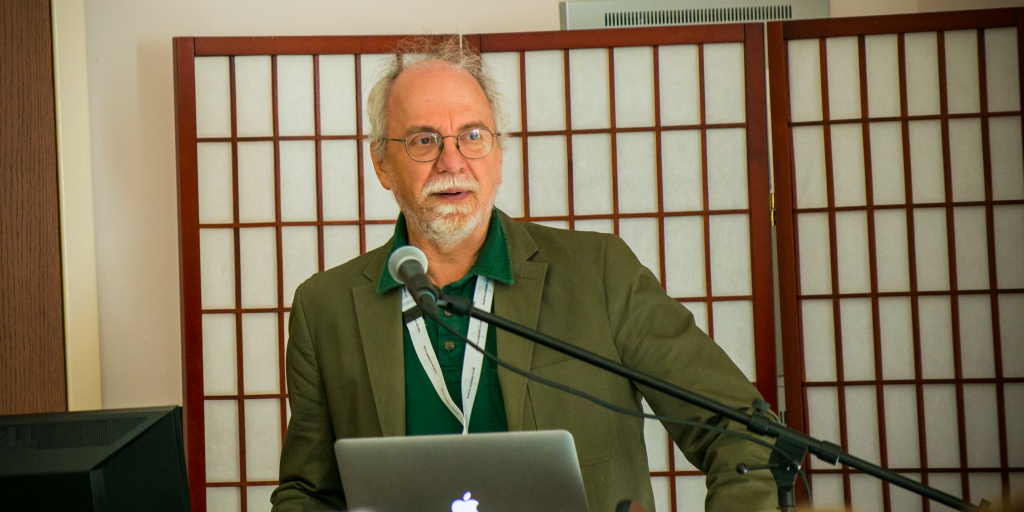
    <div class="html-content"><div><img width="1024" height="512" src="https://www.csee.umbc.edu/wp-content/uploads/2020/12/Tim_Brennan-1024x512.png" alt="" style="max-width: 100%; height: auto;"><em>Tim Brennan speaks at a research forum on campus. Photo by Marlayna Demond ’11 for UMBC.</em><hr><h3><strong>The UMBC Center for Cybersecurity (UCYBR) Presents</strong></h3><hr><h1><strong>“Economics of Law”</strong> –<br><strong> Insights into Cybersecurity Policy</strong><br></h1><h2><strong>Dr. Tim Brennan<br>Professor Emeritus, UMBC</strong></h2><h3><br><strong>Tuesday 8 December 2020 from 12-1 pm</strong></h3><h4><strong><a href="https://umbc.webex.com/umbc/j.php?MTID=m5cd8c627716efe8c1836abae054ccbc8" rel="nofollow external" class="bo">Webex</a>, Meeting #: 120 246 4425</strong></h4><hr><p>Cybersecurity raises questions about who owns data and how best to discourage security breaches.  This talk will offer some unexpected and perhaps controversial perspectives from economics on relevant questions, including: Who presumptively should own data?  What is the purpose of liability law?  Should those who violate data security always be liable, or only if they fail to take appropriate measures to prevent leaks?  Could “the market” solve the problem, e.g., by people choosing where to shop on the basis of data security?  Would regulation be a better means than liability to promote cybersecurity?  Don’t expect answers to these questions; my hope is to stimulate and hopefully inform the discussion.  If time allows, I’ll review some major actions by the Federal Trade Commission, who is the lead national agency policing privacy-related conduct. </p><hr><p><a href="https://cybersecurity.umbc.edu/tim-brennan/" rel="nofollow external" class="bo">Dr. Tim Brennan</a> is professor emeritus of public policy and economics at UMBC, retiring in July 2020 after thirty years on the UMBC faculty.  He has also been FCC Chief Economist, held the T.D. MacDonald Chair in the Canadian government’s Competition Bureau, and served on the staff of the White House Council of Economic Advisers.  Before UMBC, he was an associate professor of telecommunications and public policy at George Washington University and a staff economist at the US Department of Justice Antitrust Division.  He has over 130 articles and book chapters and books on competition policy, economic regulation, telecommunications and energy policy, intellectual property, and economic methods.  His MA in math and Ph..D. in economics are from the University of Wisconsin.</p></div>
    <p>The post <a href="https://www.csee.umbc.edu/2020/12/talk-tim-brennan-on-economics-of-law-insights-into-cybersecurity-policy-12pm-tue-12-8/" rel="nofollow external" class="bo">talk: Tim Brennan on “Economics of Law” – Insights into Cybersecurity Policy, 12pm Tue 12/8</a> appeared first on <a href="https://www.csee.umbc.edu" rel="nofollow external" class="bo">Department of Computer Science and Electrical Engineering</a>.</p></div>
]]>
</Body>
<Summary>Tim Brennan speaks at a research forum on campus. Photo by Marlayna Demond ’11 for UMBC.  The UMBC Center for Cybersecurity (UCYBR) Presents   “Economics of Law” –  Insights into Cybersecurity...</Summary>
<Website>https://www.csee.umbc.edu/2020/12/talk-tim-brennan-on-economics-of-law-insights-into-cybersecurity-policy-12pm-tue-12-8/</Website>
<TrackingUrl>https://my3.my.umbc.edu/api/v0/pixel/news/97804/guest@my.umbc.edu/f16e95cb721f8e442df97ecf5539dd2a/api/pixel</TrackingUrl>
<Tag>cybersecurity</Tag>
<Tag>events</Tag>
<Tag>news</Tag>
<Tag>talks</Tag>
<Group token="csee">Computer Science and Electrical Engineering</Group>
<GroupUrl>https://my3.my.umbc.edu/groups/csee</GroupUrl>
<AvatarUrl>https://assets3-my.umbc.edu/system/shared/avatars/groups/000/000/099/d117dca133c64bf78a4b7696dd007189/xsmall.png?1314043393</AvatarUrl>
<AvatarUrl size="original">https://assets1-my.umbc.edu/system/shared/avatars/groups/000/000/099/d117dca133c64bf78a4b7696dd007189/original.png?1314043393</AvatarUrl>
<AvatarUrl size="xxlarge">https://assets1-my.umbc.edu/system/shared/avatars/groups/000/000/099/d117dca133c64bf78a4b7696dd007189/xxlarge.png?1314043393</AvatarUrl>
<AvatarUrl size="xlarge">https://assets4-my.umbc.edu/system/shared/avatars/groups/000/000/099/d117dca133c64bf78a4b7696dd007189/xlarge.png?1314043393</AvatarUrl>
<AvatarUrl size="large">https://assets3-my.umbc.edu/system/shared/avatars/groups/000/000/099/d117dca133c64bf78a4b7696dd007189/large.png?1314043393</AvatarUrl>
<AvatarUrl size="medium">https://assets1-my.umbc.edu/system/shared/avatars/groups/000/000/099/d117dca133c64bf78a4b7696dd007189/medium.png?1314043393</AvatarUrl>
<AvatarUrl size="small">https://assets2-my.umbc.edu/system/shared/avatars/groups/000/000/099/d117dca133c64bf78a4b7696dd007189/small.png?1314043393</AvatarUrl>
<AvatarUrl size="xsmall">https://assets3-my.umbc.edu/system/shared/avatars/groups/000/000/099/d117dca133c64bf78a4b7696dd007189/xsmall.png?1314043393</AvatarUrl>
<AvatarUrl size="xxsmall">https://assets3-my.umbc.edu/system/shared/avatars/groups/000/000/099/d117dca133c64bf78a4b7696dd007189/xxsmall.png?1314043393</AvatarUrl>
<Sponsor>Computer Science and Electrical Engineering</Sponsor>
<PawCount>2</PawCount>
<CommentCount>0</CommentCount>
<CommentsAllowed>false</CommentsAllowed>
<PostedAt>Wed, 02 Dec 2020 10:21:32 -0500</PostedAt>
</NewsItem>

<NewsItem contentIssues="true" id="97621" important="false" status="posted" url="https://my3.my.umbc.edu/groups/ieee/posts/97621">
<Title>talk: Medical Informatics &#8211; Promise and Barriers Towards Precise Medicine, 10am ET Mon 11/23, Webex</Title>
<Body>
<![CDATA[
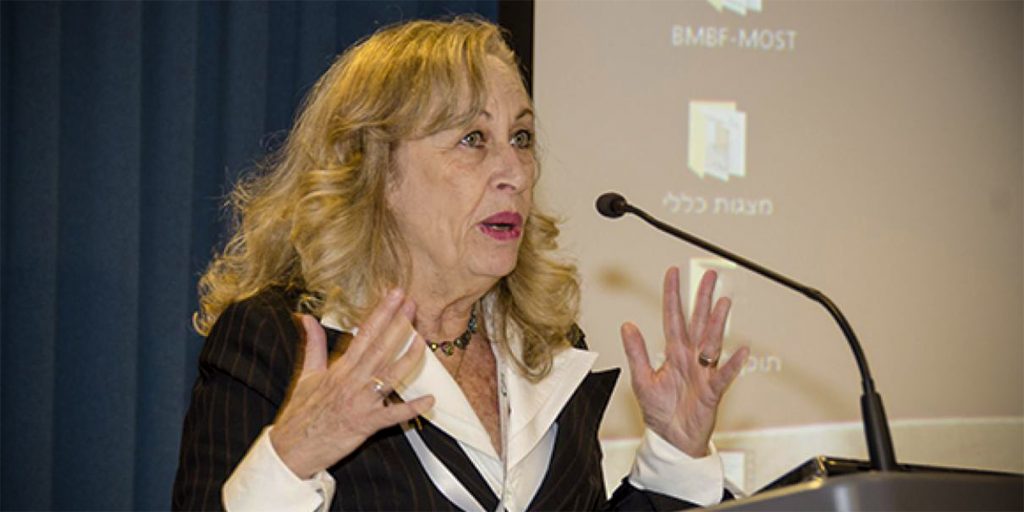
    <div class="html-content"><div><img width="1024" height="512" src="https://www.csee.umbc.edu/wp-content/uploads/2020/11/mmk-copy-1024x512.jpg" alt="" style="max-width: 100%; height: auto;">Dr. Mira Marcus-Kalish of Tel Aviv University<hr><h3><strong><a href="https://www.google.com/url?q=https://carta.umbc.edu/&amp;sa=D&amp;source=calendar&amp;usd=2&amp;usg=AOvVaw2UHPqHKLiMU2EUTKer5FJ2" rel="nofollow external" class="bo">CARTA</a> Distinguished Lecture Series</strong></h3><h2><strong>Medical Informatics – Promise and Barriers Towards Precise Medicine</strong></h2><hr><h2><strong>Dr. Mira Marcus-Kalish<br>Director, International Research Affairs</strong><br><strong>Tel Aviv University</strong></h2><hr><h3><strong>10:00 am-12:00 pm ET, Monday, 23 Nov</strong>.<strong> 2020</strong></h3><h3><a href="https://umbc.webex.com/umbc/j.php?MTID=m60d819326080a572527fa0bc4c47b2d8" rel="nofollow external" class="bo"><strong>Online via Webex</strong></a></h3><hr><p>The challenging time facing the pandemic forced us to relate to the human being’s broadband picture and his surrounding as one functioning system across countries and continents. The need is to relate both to the Micro (including in-body, physical, and mental conditions) and the Macro (such as environmental, cultural, and economic factors) providing a comprehensive understanding of the human body functioning in the surrounding, towards a precise, personalized “disease signature,” definition, especially these days. A systematic literature review on the “disease signature” term revealed no clear definition. In many articles, the “disease signature” phrase appears as a single biomarker (often genetic), mainly related to neurology or oncology. (Stemmer, A. at All, 2019. Journal of Molecular Neuroscience, 67(4)). The major goal is the unity of nature, science, and technology, from the nanoscale towards converging knowledge and tools, at a confluence of disciplines, as was envisioned by the NSF in 2001 (NBIC) and further at the joint EU-US WTEC effort “Converging of Knowledge, Technology, Society,” Roco et al., Springer 2013.</p><p>The COVID-19 global health emergency increased the need for early precise diagnosis and treatment while facing major physical and mental threat and stress, such as Post Traumatic Stress Disorder (PTSD). These understandings reemphasized the need to join all forces, converge, verify and embed all knowledge, expertise, and new advanced technologies in the various disciplines. Furthermore, it enforced to verify the data originated by various sources while bridging all cultural, conceptual, curation and technology barriers, preserving privacy and ethics regulations and ensuring reliable advanced analysis tools. All of the above provide profound insight into the human body and brain functioning in the surrounding and reliable “Disease Signature,” followed by suitable therapeutic treatment.</p><p>The question to be asked: Are we able to collect Big enough data, distributed and representative enough, while bridging all barriers and accurate analysis tools to ensure reliable, replicable, reproducible outcome towards precise, personalized medicine? The <a href="https://www.humanbrainproject.eu/en/medicine/medical-informatics-platform/" rel="nofollow external" class="bo">Brain Medical Informatics Platform</a> (MIP), developed by the <a href="https://www.humanbrainproject.eu/en/" rel="nofollow external" class="bo">EU Human Brain Flagship Project</a>, as part of the <a href="https://ebrains.eu/" rel="nofollow external" class="bo">EBRAINS</a> platform, is a key feasibility study along these lines. It involves broad clinical data collections from 30 hospitals, converging knowledge and data, embedding new technologies for data privacy, preservation, and curation, as well as sophisticated analysis tools. The MIP and EBRAINS framework goal is to identify “BRAIN Disease Signatures” towards reliable medical treatment. A 3C (Categorize, Classify, Cluster) Methodology, developed in our lab, is one of the tools available on the MIP. It incorporates expert medical knowledge and experience into the analysis process of disease manifestation and potential biomarkers towards reliable insights. The 3C approach was applied to the ADNI (Alzheimer’s disease Neuro Imaging) cohort, discovering association with new subtypes, which were later verified using the Rome Gemelli hospital labs clinical data. Other case studies were Parkinson’s Disease, genetic and biomarker research: (Tal Kozlovski, et al., 2019, Frontiers in Neurology, Movement Disorders), as well as PTSD research (Ben-Zion et al., 2020, Translational Psychiatry), both in collaboration with the Tel Aviv Medical Center. The COVID-19 global health emergency increased the need for early precise diagnosis and treatment while facing major physical and mental threat and stress, such as Post Traumatic Stress Disorder (PTSD). These understandings reemphasized the need to join all forces, converge, verify and embed all knowledge, expertise, and new advanced technologies in the various disciplines. Furthermore, it enforced to verify the data originated by various sources while bridging all cultural, conceptual, curation and technology barriers, preserving privacy and ethics regulations and ensuring reliable advanced analysis tools. All of the above to provide profound insight into the human body and brain functioning in the surrounding as well as reliable “Disease Signature”, followed by suitable therapeutic treatment.</p><p>Providing “Healthy Aging” to the elderly is a perfect example conceiving all, these days, as the elderly became one of the vulnerable groups at risk. The loneliness and isolation forced by the current pandemic results in severe conditions, including stress disorders and PTSD. Thus, an International “Healthy Aging” initiative was established at TAU, promoting broad interdisciplinary research, combining knowledge and data analysis as well as advanced technologies, from most areas of science: including economics, art, social sciences, mental and physical health, lifestyle, engineering, etc. All that to ensure the best fitted reliable treatment and a balanced quality of life to the elderly in general, and in these days, in particular.</p><hr><p><a href="https://dsri-summit.tau.ac.il/Mira-Marcus-Kalish" rel="nofollow external" class="bo">Dr. Mira Marcus-Kalish</a> is the Director of International Research Collaborations at Tel Aviv University. Her main areas of research are mathematical modeling, converging technologies, and data mining. Dr. Kalish holds a Ph.D. in Operations Research from the Technion, Israel Institute of Technology, where she developed one of the first computerized systems for electrocardiogram (ECG) diagnosis. Her postdoctoral training was at Harvard University, the MBCRR (Molecular Biology Computer Research and Resource) laboratory, and at the Dana Farber Cancer Institute. She was awarded her B.Sc. in Statistics and Biology from the Hebrew University of Jerusalem</p></div>
    <p>The post <a href="https://www.csee.umbc.edu/2020/11/talk-medical-informatics-promise-and-barriers-towards-precise-medicine-10am-et-mon-11-23/" rel="nofollow external" class="bo">talk: Medical Informatics – Promise and Barriers Towards Precise Medicine, 10am ET Mon 11/23, Webex</a> appeared first on <a href="https://www.csee.umbc.edu" rel="nofollow external" class="bo">Department of Computer Science and Electrical Engineering</a>.</p></div>
]]>
</Body>
<Summary>Dr. Mira Marcus-Kalish of Tel Aviv University  CARTA Distinguished Lecture Series  Medical Informatics – Promise and Barriers Towards Precise Medicine   Dr. Mira Marcus-Kalish Director,...</Summary>
<Website>https://www.csee.umbc.edu/2020/11/talk-medical-informatics-promise-and-barriers-towards-precise-medicine-10am-et-mon-11-23/</Website>
<TrackingUrl>https://my3.my.umbc.edu/api/v0/pixel/news/97621/guest@my.umbc.edu/d856df90b50111ecb5b7886a3a147837/api/pixel</TrackingUrl>
<Tag>ai</Tag>
<Tag>computer-engineering</Tag>
<Tag>csee</Tag>
<Tag>data-science</Tag>
<Tag>ebrains</Tag>
<Tag>electrical-engineering</Tag>
<Tag>healthcare</Tag>
<Tag>news</Tag>
<Tag>talks</Tag>
<Group token="csee">Computer Science and Electrical Engineering</Group>
<GroupUrl>https://my3.my.umbc.edu/groups/csee</GroupUrl>
<AvatarUrl>https://assets3-my.umbc.edu/system/shared/avatars/groups/000/000/099/d117dca133c64bf78a4b7696dd007189/xsmall.png?1314043393</AvatarUrl>
<AvatarUrl size="original">https://assets1-my.umbc.edu/system/shared/avatars/groups/000/000/099/d117dca133c64bf78a4b7696dd007189/original.png?1314043393</AvatarUrl>
<AvatarUrl size="xxlarge">https://assets1-my.umbc.edu/system/shared/avatars/groups/000/000/099/d117dca133c64bf78a4b7696dd007189/xxlarge.png?1314043393</AvatarUrl>
<AvatarUrl size="xlarge">https://assets4-my.umbc.edu/system/shared/avatars/groups/000/000/099/d117dca133c64bf78a4b7696dd007189/xlarge.png?1314043393</AvatarUrl>
<AvatarUrl size="large">https://assets3-my.umbc.edu/system/shared/avatars/groups/000/000/099/d117dca133c64bf78a4b7696dd007189/large.png?1314043393</AvatarUrl>
<AvatarUrl size="medium">https://assets1-my.umbc.edu/system/shared/avatars/groups/000/000/099/d117dca133c64bf78a4b7696dd007189/medium.png?1314043393</AvatarUrl>
<AvatarUrl size="small">https://assets2-my.umbc.edu/system/shared/avatars/groups/000/000/099/d117dca133c64bf78a4b7696dd007189/small.png?1314043393</AvatarUrl>
<AvatarUrl size="xsmall">https://assets3-my.umbc.edu/system/shared/avatars/groups/000/000/099/d117dca133c64bf78a4b7696dd007189/xsmall.png?1314043393</AvatarUrl>
<AvatarUrl size="xxsmall">https://assets3-my.umbc.edu/system/shared/avatars/groups/000/000/099/d117dca133c64bf78a4b7696dd007189/xxsmall.png?1314043393</AvatarUrl>
<Sponsor>Computer Science and Electrical Engineering</Sponsor>
<PawCount>1</PawCount>
<CommentCount>0</CommentCount>
<CommentsAllowed>false</CommentsAllowed>
<PostedAt>Sat, 21 Nov 2020 17:15:21 -0500</PostedAt>
</NewsItem>

</News>