Robots and COVID-19; An Interview with Balaji Viswanathan, CEO of Invento Robotics
May 6, 2020, Interview by Cheryl Dunigan
Balaji Viswanathan started his career at Microsoft, and moved from there to develop startups in such diverse areas as robotics, education and finance. He has embraced the true calling of an entrepreneur, using long term goals to develop companies that actively seek to make a global impact. This is exemplified by his Bengaluru-based company, Invento Robotics, which is currently using its humanoid robots to provide a myriad of services, from taking temperatures to collecting patient information to bringing medications and food to patients in isolation wards, in an effort to fight COVID-19.
For the UMBC community, perhaps the most interesting fact about Mr. Viswanathan is that he is an alumnus of UMBC, graduating with an MS in Computer Science in 2007.
How did UMBC prepare you for your career as an entrepreneur?
I learned robotics and AI at UMBC with Professors Finin, Oates, DesJardins and Peng. I took masters level courses in the topic (AI, Artifical Neural Networks and Robotics) published a workshop paper on Swarm robotics 15 years ago that we are now implementing in the field.
A lot of ideas talked about at the Ebiquity lab by Finin, Joshi et. al. were years later implemented in the industry, only under different names. UMBC’s work was quite ahead of its time.
Please talk a bit about any faculty or staff that had a positive impact on your experience as a student at UMBC.
I was a TA for 2 years at UMBC. This gave me exposure to a variety of faculty and their teaching methods. I liked the laid back approach of Yun Peng, the very energetic approach of Tim Oates and the to-the-point approach of Marie desJardins.
What’s one piece of career advice you would give to current UMBC engineering, biotech and/or IT students?
What Universities think of now, industries will plan 10 years from now. Don’t forget to dream and don’t be guided by what industries want now. You have to pull the industry rather than allow industry’s mediocrity to pull you.
What was your biggest takeaway from your time at Microsoft?
I have never encountered as many smart people as I did at Microsoft. And despite that, the company was struggling at that time. My biggest takeaway was it takes far beyond just having talent to succeed in business. I saw so many great ideas — like App Store, multi touch interfaces get buried only to be used later by Apple and other companies.
You are the most followed writer on Quora, a question-and-answer website. Of the thousands of questions you have answered, which one sticks in your mind the most?
My favourite one that I have also pinned is recounting my experience of meeting my childhood idol — the famed scientist Dr. Abdul Kalam, who was President of India at the time.
On Quora, you discussed how aspiring entrepreneurs can convert crises into opportunities. Can you discuss the role a widespread problem or crisis played in the development of your startups?
We were building healthcare related tech for over 3 years, but until COVID hit there was no demand for them. Thus, we put it in cold storage. However, when COVID hit China we thought it was time to pull those ideas from cold storage and revive the company with it. We were heavily dependent on events & hospitality industry and our customers came to a grounding halt. We had to execute a fast pivot.
You have developed many robots to help in the fight against COVID-19. Mitra provides patient screening, and Astra is remote-controlled and can disinfect a standard-sized room in 15 minutes using UV rays. What is the timeline for bringing these kinds of robots to the commercial market?
The Mitra is already commercial in the market and getting deployed in hospitals across India. The Astra is going through testing and certification and should be commercial by end of May. The RoboDoc — our dream product — might take about 6 months to be commercial.
In addition to being used for patient screening at hospitals, the temperature sensor attachment that your team has developed has enormous distribution possibilities (in airports, sporting facilities, etc…). Which functions of your robots, either current or in production, do you think will potentially have the greatest impact on public health in the future?
The ability to have Level 2 autonomy with 80% of the time the robot moving around in predictable, low risk environments and using the help strategically in 20% of the risky situations is the core of what we build at Invento. These could be used in a range of situations including disinfection, surveillance patrol, takeout from restaurant etc. While people always think of robot or human, this approach puts a robot+human like you in front of your PC.
Are you interested in using your robots in biosafety level 4 research facilities for vaccine development?
We don’t yet have the capability.
In a former interview you stated, “As an entrepreneur in the mid-20s, we are more prone to the “shiny object syndrome” where a lot of different things look attractive. Age and wisdom bring more focus and stability.”Has the COVID-19 crisis caused you to rethink the long term direction of Invento Robotics or any of your other ventures?
One thing I have learned is that most people including investors cannot predict the future of technology. Almost every futuristic prediction has been wrong in its entry time or their impact. That means we have to stick to our vision for the long term ignoring the noise. At the same time we have to look for sudden route changes along the way.
I will give this example. Imagine you are driving to the Niagara Falls. Along the way, you should not change your destination, but can take small detours and re-plan the route based on traffic conditions and accidents.
You have said that some of your robots will become affordable for the average consumer in 5 or so years. What do you see-2030 looking like in terms of the roles of robots in everyday life?
In 2030, I see robots as common as computers and smartphones now. You might have a dozen of them in your home doing everything from clean, engaging children, taking care of the elderly, and cooking.
The post Robots and COVID-19; An Interview with Balaji Viswanathan, CEO of Invento Robotics appeared first on Department of Computer Science and Electrical Engineering.
]]>
May 6, 2020, Interview by Cheryl Dunigan Balaji Viswanathan started his career at Microsoft, and moved from there to develop startups in such diverse areas as robotics, education and finance. He...
https://www.csee.umbc.edu/2020/05/robots-and-covid-19-an-interview-with-balaji-viswanathan-ceo-of-invento-robotics/
https://my3.my.umbc.edu/api/v0/pixel/news/93280/guest@my.umbc.edu/cf0e16b2515f4cbf49415698c756e6c3/api/pixel
news
Computer Science and Electrical Engineering
https://my3.my.umbc.edu/groups/csee
https://assets3-my.umbc.edu/system/shared/avatars/groups/000/000/099/d117dca133c64bf78a4b7696dd007189/xsmall.png?1314043393
https://assets1-my.umbc.edu/system/shared/avatars/groups/000/000/099/d117dca133c64bf78a4b7696dd007189/original.png?1314043393
https://assets1-my.umbc.edu/system/shared/avatars/groups/000/000/099/d117dca133c64bf78a4b7696dd007189/xxlarge.png?1314043393
https://assets4-my.umbc.edu/system/shared/avatars/groups/000/000/099/d117dca133c64bf78a4b7696dd007189/xlarge.png?1314043393
https://assets3-my.umbc.edu/system/shared/avatars/groups/000/000/099/d117dca133c64bf78a4b7696dd007189/large.png?1314043393
https://assets1-my.umbc.edu/system/shared/avatars/groups/000/000/099/d117dca133c64bf78a4b7696dd007189/medium.png?1314043393
https://assets2-my.umbc.edu/system/shared/avatars/groups/000/000/099/d117dca133c64bf78a4b7696dd007189/small.png?1314043393
https://assets3-my.umbc.edu/system/shared/avatars/groups/000/000/099/d117dca133c64bf78a4b7696dd007189/xsmall.png?1314043393
https://assets3-my.umbc.edu/system/shared/avatars/groups/000/000/099/d117dca133c64bf78a4b7696dd007189/xxsmall.png?1314043393
Computer Science and Electrical Engineering
0
0
false
Tue, 19 May 2020 19:38:30 -0400
Tue, 19 May 2020 19:38:30 -0400
UMBC’s Naghmeh Karimi receives NSF CAREER Award to develop long-lasting security for cryptographic chips
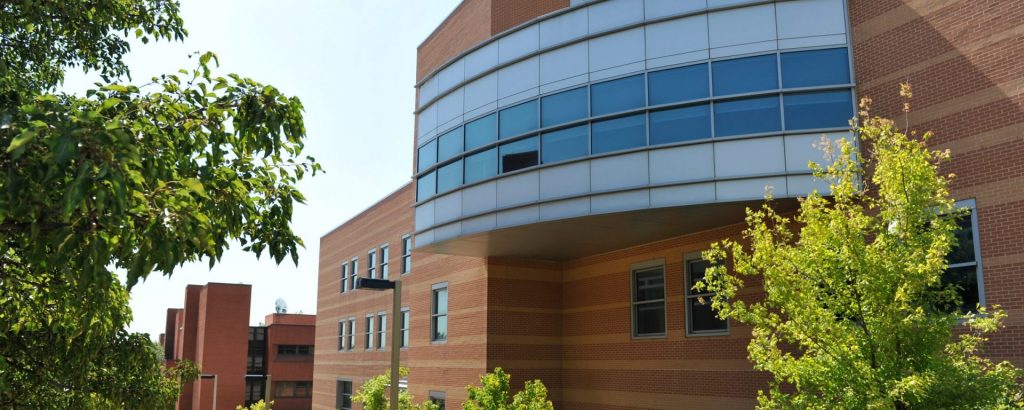
Naghmeh Karimi receives NSF CAREER award to develop long-lasting security for cryptographic chips
Naghmeh Karimi is the most recent UMBC faculty member to receive a prestigious CAREER Award from the National Science Foundation (NSF). The grant, totaling approximately $500,000 over five years, will support her work to investigate how device-aging related risks compromise the security of cryptographic devices.
Karimi explains that cryptographic chips offer continued advances in authenticating messages and devices as well as preserving the integrity and confidentiality of sensitive information. They do so by implementing cryptographic algorithms in hardware. These chips combine the benefits of cryptographic applications with the speed and power advantage of hardware implementations.
Despite their significant benefits, cryptographic chips can be compromised by adversaries who have gained physical access to the chips. Current protections against such attacks do not consider the aging of devices, which can shift device parameters over time.
Addressing security vulnerabilities
Aging makes cryptographic chips operate slower and, ultimately, results in their malfunction, says Karimi. She explains that the typical lifetime of integrated circuits is 7 to 8 years. As the devices age, their performance decreases. Karimi is exploring the specific security vulnerabilities of aged devices and how they can be protected.
“We want to preserve the security of devices over their lifetime,” Karimi says.
Karimi and her research team will study whether the success of the side-channel analysis and fault-injection attacks increase in older devices. Karimi will create and test several countermeasures to protect devices against such attacks.
Connecting students with opportunities in tech security
The CAREER Award funding will support several UMBC undergraduate and graduate student researchers working with Karimi to develop long-lasting security solutions for hardware platforms.
At the same time, Karimi will also develop and launch a new course in UMBC’s computer science and electrical engineering department on cryptography, hardware security, and testing. She will also work with the UMBC Cyber Scholars Program to connect students with internship opportunities focused on hardware security, to give them additional hands-on experience in the field.
“The success of this project will enable us to develop long-lasting security for trusted hardware platforms,” Karimi says. “This will result in aging-resistant security solutions that benefit society through devices that remain secure over their lifetime.”
Adapted from a UMBC News article by Megan Hanks. Banner image: UMBC’s ITE building. Photo by Marlayna Demond ’11 for UMBC.
The post UMBC’s Naghmeh Karimi receives NSF CAREER Award to develop long-lasting security for cryptographic chips appeared first on Department of Computer Science and Electrical Engineering.
]]>
Naghmeh Karimi receives NSF CAREER award to develop long-lasting security for cryptographic chips Naghmeh Karimi is the most recent UMBC faculty member to receive a prestigious CAREER...
https://www.csee.umbc.edu/2020/05/umbcs-naghmeh-karimi-receives-nsf-career-award-to-develop-long-lasting-security-for-cryptographic-chips/
https://my3.my.umbc.edu/api/v0/pixel/news/93178/guest@my.umbc.edu/308559486087ca2f3d3e5c3eee6a687f/api/pixel
computer-engineering
cybersecurity
faculty-and-staff
news
research-awards
Computer Science and Electrical Engineering
https://my3.my.umbc.edu/groups/csee
https://assets3-my.umbc.edu/system/shared/avatars/groups/000/000/099/d117dca133c64bf78a4b7696dd007189/xsmall.png?1314043393
https://assets1-my.umbc.edu/system/shared/avatars/groups/000/000/099/d117dca133c64bf78a4b7696dd007189/original.png?1314043393
https://assets1-my.umbc.edu/system/shared/avatars/groups/000/000/099/d117dca133c64bf78a4b7696dd007189/xxlarge.png?1314043393
https://assets4-my.umbc.edu/system/shared/avatars/groups/000/000/099/d117dca133c64bf78a4b7696dd007189/xlarge.png?1314043393
https://assets3-my.umbc.edu/system/shared/avatars/groups/000/000/099/d117dca133c64bf78a4b7696dd007189/large.png?1314043393
https://assets1-my.umbc.edu/system/shared/avatars/groups/000/000/099/d117dca133c64bf78a4b7696dd007189/medium.png?1314043393
https://assets2-my.umbc.edu/system/shared/avatars/groups/000/000/099/d117dca133c64bf78a4b7696dd007189/small.png?1314043393
https://assets3-my.umbc.edu/system/shared/avatars/groups/000/000/099/d117dca133c64bf78a4b7696dd007189/xsmall.png?1314043393
https://assets3-my.umbc.edu/system/shared/avatars/groups/000/000/099/d117dca133c64bf78a4b7696dd007189/xxsmall.png?1314043393
Computer Science and Electrical Engineering
0
0
false
Fri, 15 May 2020 15:53:54 -0400
Fri, 15 May 2020 15:53:54 -0400
UMBC researchers develop better techniques to render characters with realistic skin
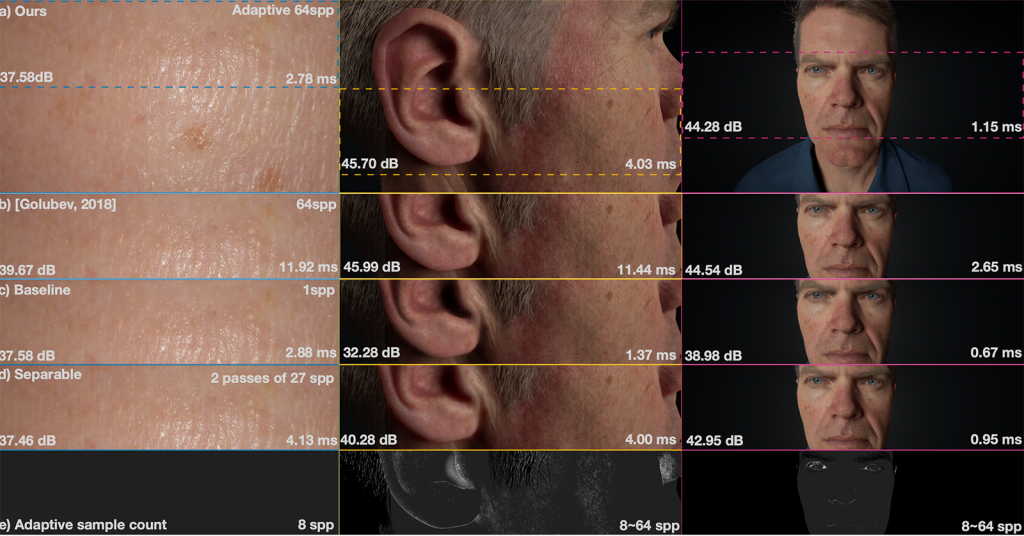 Subsurface rendering comparison from close to far at 1920×1080 on NVIDIA Quadro P4000 (implemented in UE4)
UMBC researchers develop better techniques to
render video game characters with realistic skin
Researchers at the University of Maryland, Baltimore County (UMBC) have developed a new solution to render an essential detail in many video games: human skin. The research is published in the Proceedings of the Association for Computing Machinery on Computer Graphics and Interactive Techniques [1]. Marc Olano, associate professor of computer science and electrical engineering at UMBC, led this research alongside Tiantian Xie, Ph.D. ’22, computer science. Xie, under the guidance of Olano, has worked with researchers Brian Karis and Krzysztof Narkowicz at the gaming company Epic Games, developing a keen understanding of gamers’ user experience, including the precise level of realism and detail that players are looking for in human characters.
Game developers seek to create visuals that are as realistic as possible without stepping into the “uncanny valley.” This term describes when the graphics in a game attempt to portray a human as closely as possible, and gets close to mimicking real life, but not quite close enough, in a way users find disturbing. This creates an unpleasant feeling in users that might distract from their enjoyment of the game.
In many games, human skin is rendered in such a way that it looks like a plastic object. This plastic look can occur because animators aren’t accounting for subsurface scattering – a key element of how light interacts with a textured 3D surface. Subsurface scattering is animators’ main priority when it comes to transforming skin from looking like plastic to looking truly real.
Olano’s method builds upon research developed by large gaming companies to create realistic depictions of human skin that will also load quickly within a gaming interface. “Our method adds an ability to adaptively estimate how many samples you actually need to get the look that you want without having to do a lot of additional computation to get a smooth image,” explains Olano.
The method minimizes the amount of computation needed to create photo-realistic images. Previous techniques were either not realistic enough, or ran too slowly for use in games, negatively affecting the gaming experience. The new method is based on techniques developed for offline film production rendering. Xie, the first author of the paper, states, “Offline rendering techniques are not suitable for real-time rendering because adding the technique itself in real-time introduces a large overhead. Our technique eliminates this overhead.”
Olano and his team created an algorithm to determine the pixels that would need to be rendered differently than the others due to light gradient change. Their sampling method uses temporal variance to lower the overall number of changes within each frame while still maintaining a realistic depiction of subsurface scattering. Since fewer changes are needed per frame, the method creates an efficient way of rendering realistic skin within the capabilities of today’s computing power.
The algorithm used by Olano’s team is built upon a foundation of research that is known and accessible to game developers. This offers a promising path for the gaming industry to pursue realism while maintaining an awareness of the computational ability of an average gaming system. Developers may be able to begin using this technique soon to create more realistic human figures in games, growing the gaming market even more.
[1] Tiantian Xie, Marc Olano, Brian Karis, and Krzysztof Narkowicz. 2020. Real-time subsurface scattering with single pass variance-guided adaptive importance sampling. Proc. ACM Comput. Graph. Interact. Tech. 3, 1, Article 3 (Apr 2020), 21 pages. DOI:https://doi.org/10.1145/3384536
Adapted from a press release written by Morgan Zepp that appeared in EurikAlert.
The post UMBC researchers develop better techniques to render characters with realistic skin appeared first on Department of Computer Science and Electrical Engineering.
]]>
Subsurface rendering comparison from close to far at 1920×1080 on NVIDIA Quadro P4000 (implemented in UE4) UMBC researchers develop better techniques to render video game characters with...
https://www.csee.umbc.edu/2020/05/umbc-researchers-develop-better-techniques-to-render-characters-with-realistic-skin/
https://my3.my.umbc.edu/api/v0/pixel/news/93150/guest@my.umbc.edu/4b020d566e688f8cd991af3f7028f30d/api/pixel
computer-science
game-track
news
research
uncategorized
Computer Science and Electrical Engineering
https://my3.my.umbc.edu/groups/csee
https://assets3-my.umbc.edu/system/shared/avatars/groups/000/000/099/d117dca133c64bf78a4b7696dd007189/xsmall.png?1314043393
https://assets1-my.umbc.edu/system/shared/avatars/groups/000/000/099/d117dca133c64bf78a4b7696dd007189/original.png?1314043393
https://assets1-my.umbc.edu/system/shared/avatars/groups/000/000/099/d117dca133c64bf78a4b7696dd007189/xxlarge.png?1314043393
https://assets4-my.umbc.edu/system/shared/avatars/groups/000/000/099/d117dca133c64bf78a4b7696dd007189/xlarge.png?1314043393
https://assets3-my.umbc.edu/system/shared/avatars/groups/000/000/099/d117dca133c64bf78a4b7696dd007189/large.png?1314043393
https://assets1-my.umbc.edu/system/shared/avatars/groups/000/000/099/d117dca133c64bf78a4b7696dd007189/medium.png?1314043393
https://assets2-my.umbc.edu/system/shared/avatars/groups/000/000/099/d117dca133c64bf78a4b7696dd007189/small.png?1314043393
https://assets3-my.umbc.edu/system/shared/avatars/groups/000/000/099/d117dca133c64bf78a4b7696dd007189/xsmall.png?1314043393
https://assets3-my.umbc.edu/system/shared/avatars/groups/000/000/099/d117dca133c64bf78a4b7696dd007189/xxsmall.png?1314043393
Computer Science and Electrical Engineering
0
0
false
Wed, 13 May 2020 16:56:05 -0400
Wed, 13 May 2020 16:56:05 -0400
CyberCorps SFS Spring Meeting at UMBC
 The Scholarship for Service (SFS) Program is designed to recruit and train the next generation of cybersecurity professionals to meet the needs of Federal, State, local, and tribal government.
CyberCorps SFS Spring Meeting at UMBC
10:00am-2:00pm Friday, 22 May 2020
Open to the public
via: https://umbc.webex.com/meet/sherman
UMBC’s Spring CyberCorps Scholarship for Service meeting will take place from 10 am to 2 pm on Friday, 22 May 2020. It will feature a discussion with Dr. Dan Guernsey (NSA) on Ghidra, Software Reverse Engineering, and Cybersecurity Careers at NSA, presentations by SFS students, and a hands-on Capture the Flag exercise.
10:00-10:30 Student presentations
Scholarship for Service (SFS) students from UMBC, Montgomery College (MC), and Prince George’s Community College (PGCC) will present their results solving IT security problems for their universities, county governments, and local companies. This activity is part of a pioneering program centered at UMBC to extend SFS scholarships to community college students. In January 2020, all SFS scholars at UMBC, PGCC, and MC worked collaboratively to analyze the security of a custom shadow-IT software application to query research grant information
10:30-11:30 Discussion with Dr. Dan Guernsey (NSA)
Learn about Ghidra, software reverse engineering, and cybersecurity careers at NSA. Ghidra is a software reverse engineering framework developed by NSA’s Research Directorate for NSA’s cybersecurity mission. It helps analyze malicious code and malware like viruses, and can give cybersecurity professionals a better understanding of potential vulnerabilities in their networks and systems (GitHub).
11:30-12:30 Lunch and discussion among attendees
12:30-2:00 Hands-on cyber defense exercise
Sharpen your cybersecurity skills by participating in a hands-on Capture the Flag exercise developed by the UMBC Cyber Dawgs and Cyrus Bonyadi, an SFS scholar and a member of the Cyber Dawgs, whose cyberdefense team won first place at the Mid-Atlantic Collegiate Cyber Defense Competition (MACCDC) in April 2020 and is competing in the National Collegiate Cyber Defense Competition (NCCDC).
Participants and organizers
Dr. Dan Guernsey earned the Ph.D in Computer Science from the University of Tulsa. Since 2011, he worked at the Department of Defense as a Computer Scientist and Architectures Researcher. During his studies at Tulsa, Dr. Guernsey contracted with the DoD Office of the Inspector General, the U.S. Secret Service, and local law firms. He performed reverse engineering and authored software analysis tools for product evaluation and digital forensics. His work helped solve criminal cases and helped resolve civil disputes involving software copyrights. Dr. Guernsey is an Adjunct Instructor at UMBC in the graduate Cybersecurity Program.
Host Alan T. Sherman (*protected email*) is a professor of computer science and Director of the UMBC Center for Information Security and Assurance, which center is responsible for UMBC’s designation as a National Center of Academic Excellence in Cyber Defense Education and Cyber Defense Research.
Richard Forno is a senior lecturer, Director of the UMBC Graduate Cybersecurity Program, and Assistant Director of the UMBC Center for Cybersecurity.
Casey W. O’Brien is Executive Director and Principal Investigator of the National CyberWatch Center, Prince George’s Community College.
Joe Roundy is the Cybersecurity Program Manager at Montgomery College, Germantown.
Support for this event is provided in part by the National Science Foundation under SFS grant DGE-1753681 and by the Department of Defense under CySP grant H98230-19-1-0308.
The post CyberCorps SFS Spring Meeting at UMBC appeared first on Department of Computer Science and Electrical Engineering.
]]>
The Scholarship for Service (SFS) Program is designed to recruit and train the next generation of cybersecurity professionals to meet the needs of Federal, State, local, and tribal government....
https://www.csee.umbc.edu/2020/05/cybercorps-sfs-spring-meeting-at-umbc/
https://my3.my.umbc.edu/api/v0/pixel/news/93017/guest@my.umbc.edu/cd0f42cf1f9e7c905c45fe4d35c44235/api/pixel
cybersecurity
news
students
Computer Science and Electrical Engineering
https://my3.my.umbc.edu/groups/csee
https://assets3-my.umbc.edu/system/shared/avatars/groups/000/000/099/d117dca133c64bf78a4b7696dd007189/xsmall.png?1314043393
https://assets1-my.umbc.edu/system/shared/avatars/groups/000/000/099/d117dca133c64bf78a4b7696dd007189/original.png?1314043393
https://assets1-my.umbc.edu/system/shared/avatars/groups/000/000/099/d117dca133c64bf78a4b7696dd007189/xxlarge.png?1314043393
https://assets4-my.umbc.edu/system/shared/avatars/groups/000/000/099/d117dca133c64bf78a4b7696dd007189/xlarge.png?1314043393
https://assets3-my.umbc.edu/system/shared/avatars/groups/000/000/099/d117dca133c64bf78a4b7696dd007189/large.png?1314043393
https://assets1-my.umbc.edu/system/shared/avatars/groups/000/000/099/d117dca133c64bf78a4b7696dd007189/medium.png?1314043393
https://assets2-my.umbc.edu/system/shared/avatars/groups/000/000/099/d117dca133c64bf78a4b7696dd007189/small.png?1314043393
https://assets3-my.umbc.edu/system/shared/avatars/groups/000/000/099/d117dca133c64bf78a4b7696dd007189/xsmall.png?1314043393
https://assets3-my.umbc.edu/system/shared/avatars/groups/000/000/099/d117dca133c64bf78a4b7696dd007189/xxsmall.png?1314043393
Computer Science and Electrical Engineering
2
0
false
Sat, 09 May 2020 14:52:08 -0400
Sat, 09 May 2020 14:52:08 -0400
talk: Identifying and Addressing Concerning Behavior in the Digital Age, 12-1 Fri 5/8

The UMBC Cyber Defense Lab presents
Identifying and Addressing Concerning
Behavior in the Digital Age
Jason W. Wells
Graduate Student, Cybersecurity MPS
University of Maryland, Baltimore County
12:00–1pm Friday, 8 May 2020, webex
The United States Secret Service (USSS) is widely known as the premier law enforcement agency that is charged with protecting some of the most important political figures in the world. Some of these protectees include the President of the United States, the Vice-President, the First Family and Second Family, and Heads of State visiting the United States, to name a few. A major part of the protective mission of the USSS is focused around “protective intelligence,” where agents are trained to identify concerning and threatening behavioral indicators in others, and then to address those issues in a proactive and positive manner and ensure that the community is safe from harm. This proactive methodology has been researched and applied for decades and has a very high rate of success. Now, other law enforcement agencies throughout the country have started to apply this training to their agents and officers. Can these methodologies be used and/or modified to recognize threats in cyberspace as well?
Jason Wells is a former special agent with the United States Secret Service, where he served for nine years from 2005 – 2014. During that time, Mr. Wells was extensively trained in identifying and addressing threat-related and concerning behavioral indicators, and how to address those behaviors in a positive and proactive manner. In 2016, Mr. Wells published his first book Our Path to Safety: A U.S. Secret Service Agent’s Guide to Creating Safe Communities (ISBN-13: 978-0-9982488-0-6) on how the community can identify these behavioral conditions in the same way that federal law enforcement does every day. Mr. Wells earned his undergraduate degree from the Virginia Military Institute and his first graduate degree from Henley-Putnam University in Strategic Security and Protection Management in 2014. Additionally, Mr. Wells has published 11 editorial articles in print media on improving safety and security methodologies in schools and businesses. Currently, he is an SFS scholarship graduate student at UMBC with plans to complete his degree in spring 2020. He and his wife, Blythe, have two children and have lived in Baltimore County since 2008.
Host: Alan T. Sherman, *protected email* Support for this event was provided in part by the National Science Foundation under SFS grant DGE-1753681. The UMBC Cyber Defense Lab meets biweekly Fridays. All meetings are open to the public. Upcoming CDL Meetings: May 22, Spring SFS Meeting at UMBC, 9:30am-2pm, via WebEx.
The post talk: Identifying and Addressing Concerning Behavior in the Digital Age, 12-1 Fri 5/8 appeared first on Department of Computer Science and Electrical Engineering.
]]>
The UMBC Cyber Defense Lab presents Identifying and Addressing Concerning Behavior in the Digital Age Jason W. Wells Graduate Student, Cybersecurity MPS University of Maryland, Baltimore...
https://www.csee.umbc.edu/2020/05/talk-identifying-and-addressing-concerning-behavior-in-the-digital-age-12-1-fri-5-8/
https://my3.my.umbc.edu/api/v0/pixel/news/92798/guest@my.umbc.edu/cc5d472e66a5e7bc29c1305281e0c0b3/api/pixel
cybersecurity
events
news
talks
uncategorized
Computer Science and Electrical Engineering
https://my3.my.umbc.edu/groups/csee
https://assets3-my.umbc.edu/system/shared/avatars/groups/000/000/099/d117dca133c64bf78a4b7696dd007189/xsmall.png?1314043393
https://assets1-my.umbc.edu/system/shared/avatars/groups/000/000/099/d117dca133c64bf78a4b7696dd007189/original.png?1314043393
https://assets1-my.umbc.edu/system/shared/avatars/groups/000/000/099/d117dca133c64bf78a4b7696dd007189/xxlarge.png?1314043393
https://assets4-my.umbc.edu/system/shared/avatars/groups/000/000/099/d117dca133c64bf78a4b7696dd007189/xlarge.png?1314043393
https://assets3-my.umbc.edu/system/shared/avatars/groups/000/000/099/d117dca133c64bf78a4b7696dd007189/large.png?1314043393
https://assets1-my.umbc.edu/system/shared/avatars/groups/000/000/099/d117dca133c64bf78a4b7696dd007189/medium.png?1314043393
https://assets2-my.umbc.edu/system/shared/avatars/groups/000/000/099/d117dca133c64bf78a4b7696dd007189/small.png?1314043393
https://assets3-my.umbc.edu/system/shared/avatars/groups/000/000/099/d117dca133c64bf78a4b7696dd007189/xsmall.png?1314043393
https://assets3-my.umbc.edu/system/shared/avatars/groups/000/000/099/d117dca133c64bf78a4b7696dd007189/xxsmall.png?1314043393
Computer Science and Electrical Engineering
1
0
false
Sun, 03 May 2020 20:41:58 -0400
Sun, 03 May 2020 20:41:58 -0400
talk: Cybersecurity during COVID-19 and other emergencies, 12-1 Tue May 5

The UMBC Center for Cybersecurity (UCYBR) Presents
Cybersecurity during COVID-19 and other emergencies
Dr. Richard Forno
Senior Lecturer, Computer Science & Electrical Engineering
Director, UMBC Graduate Cybersecurity Program & Assistant Director, UMBC Center for Cybersecurity
12–1 pm Tuesday, 5 May 2020
online via webex
‘Cyber’ touches many, if not all, parts of society and organizations. However, even in 2020, cybersecurity often still is seen as exclusively a function of IT and not a function of enterprise mission assurance or operational resiliency. Accordingly, operational performance can be compromised by a failure to consider, if not embrace, cybersecurity principles and concerns during crisis planning – which can significantly impede effective crisis response and incident management during actual events and make a bad situation even worse. This talk will discuss the role of cybersecurity and cybersecurity thinking within crisis management and incident handling, with a particular emphasis on maintaining operational resiliency and mission assurance during the ongoing COVID-19 pandemic.
Dr. Richard Forno is a Senior Lecturer in the UMBC Department of Computer Science and Electrical Engineering, where he directs the UMBC Graduate Cybersecurity Program and serves as the Assistant Director of UMBC’s Center for Cybersecurity. Prior to joining UMBC in 2010, his twenty-year career in operational cybersecurity spanned the government, military, and private sector, including helping build a formal cybersecurity program for the US House of Representatives, serving as the first Chief Security Officer for Network Solutions (then, the global center of the internet DNS system), consulting to Fortune 100 companies, and more. From 2005-12 he was a Visiting Scientist at the Software Engineering Institute at Carnegie Mellon University, where he taught courses on incident handling for the CERT Coordination Center (CERT/CC).
The post talk: Cybersecurity during COVID-19 and other emergencies, 12-1 Tue May 5 appeared first on Department of Computer Science and Electrical Engineering.
]]>
The UMBC Center for Cybersecurity (UCYBR) Presents Cybersecurity during COVID-19 and other emergencies Dr. Richard Forno Senior Lecturer, Computer Science & Electrical Engineering Director,...
https://www.csee.umbc.edu/2020/04/talk-cybersecurity-during-covid-19-and-other-emergencies/
https://my3.my.umbc.edu/api/v0/pixel/news/92643/guest@my.umbc.edu/bae575774634c33a407cc8f9e5c65792/api/pixel
cybersecurity
news
talks
Computer Science and Electrical Engineering
https://my3.my.umbc.edu/groups/csee
https://assets3-my.umbc.edu/system/shared/avatars/groups/000/000/099/d117dca133c64bf78a4b7696dd007189/xsmall.png?1314043393
https://assets1-my.umbc.edu/system/shared/avatars/groups/000/000/099/d117dca133c64bf78a4b7696dd007189/original.png?1314043393
https://assets1-my.umbc.edu/system/shared/avatars/groups/000/000/099/d117dca133c64bf78a4b7696dd007189/xxlarge.png?1314043393
https://assets4-my.umbc.edu/system/shared/avatars/groups/000/000/099/d117dca133c64bf78a4b7696dd007189/xlarge.png?1314043393
https://assets3-my.umbc.edu/system/shared/avatars/groups/000/000/099/d117dca133c64bf78a4b7696dd007189/large.png?1314043393
https://assets1-my.umbc.edu/system/shared/avatars/groups/000/000/099/d117dca133c64bf78a4b7696dd007189/medium.png?1314043393
https://assets2-my.umbc.edu/system/shared/avatars/groups/000/000/099/d117dca133c64bf78a4b7696dd007189/small.png?1314043393
https://assets3-my.umbc.edu/system/shared/avatars/groups/000/000/099/d117dca133c64bf78a4b7696dd007189/xsmall.png?1314043393
https://assets3-my.umbc.edu/system/shared/avatars/groups/000/000/099/d117dca133c64bf78a4b7696dd007189/xxsmall.png?1314043393
Computer Science and Electrical Engineering
1
0
false
Mon, 27 Apr 2020 18:13:32 -0400
Mon, 27 Apr 2020 18:13:32 -0400
UMBC Cyber Dawgs rank #1 among university teams at annual Capture the Flag event

UMBC Cyber Dawgs #1 among university
teams at annual Capture the Flag event
The UMBC Cyber Dawgs ranked #1 among university teams in a challenging cybersecurity competition hosted virtually by the University of Maryland, College Park on April 18.
The Capture the Flag event was designed to test teams’ abilities to solve a variety of realistic cybersecurity problems. UMBC went head to head with more than 300 teams from both colleges and industry, placing third overall and #1 among the universities.
Charles Nicholas, professor of computer science and electrical engineering and a Cyber Dawgs faculty advisor, says that the team’s win shows how well-prepared UMBC students are for careers in cybersecurity, and how committed they are to excelling in intercollegiate competition. “It speaks volumes about our students, their enthusiasm, and their character,” he says.
Reflecting on the Cyber Dawgs’ #3 overall finish, Nicholas shares, “The teams that beat us are made up of experienced cyber professionals, who do this sort of work for a living.” To end the competition as the leading university team and trailing just two professional teams was quite a feat, he notes, saying, “Our faculty and our university are very proud of these students.”
The Cyber Dawgs recently won the Mid-Atlantic Collegiate Cyber Defense Competition. They are preparing for the National Collegiate Cyber Defense Competition, which will be held virtually in May.
Adapted from a UMBC News article written by Megan Hanks. Banner image: A person typing on a computer. Photo by Marlayna Demond ’11 for UMBC.
The post UMBC Cyber Dawgs rank #1 among university teams at annual Capture the Flag event appeared first on Department of Computer Science and Electrical Engineering.
]]>
UMBC Cyber Dawgs #1 among university teams at annual Capture the Flag event The UMBC Cyber Dawgs ranked #1 among university teams in a challenging cybersecurity competition hosted...
https://www.csee.umbc.edu/2020/04/umbc-cyber-dawgs-rank-1-among-university-teams-at-annual-capture-the-flag-event/
https://my3.my.umbc.edu/api/v0/pixel/news/92574/guest@my.umbc.edu/50b309bacf774322396c901724da7f0e/api/pixel
cybersecurity
events
news
students
Computer Science and Electrical Engineering
https://my3.my.umbc.edu/groups/csee
https://assets3-my.umbc.edu/system/shared/avatars/groups/000/000/099/d117dca133c64bf78a4b7696dd007189/xsmall.png?1314043393
https://assets1-my.umbc.edu/system/shared/avatars/groups/000/000/099/d117dca133c64bf78a4b7696dd007189/original.png?1314043393
https://assets1-my.umbc.edu/system/shared/avatars/groups/000/000/099/d117dca133c64bf78a4b7696dd007189/xxlarge.png?1314043393
https://assets4-my.umbc.edu/system/shared/avatars/groups/000/000/099/d117dca133c64bf78a4b7696dd007189/xlarge.png?1314043393
https://assets3-my.umbc.edu/system/shared/avatars/groups/000/000/099/d117dca133c64bf78a4b7696dd007189/large.png?1314043393
https://assets1-my.umbc.edu/system/shared/avatars/groups/000/000/099/d117dca133c64bf78a4b7696dd007189/medium.png?1314043393
https://assets2-my.umbc.edu/system/shared/avatars/groups/000/000/099/d117dca133c64bf78a4b7696dd007189/small.png?1314043393
https://assets3-my.umbc.edu/system/shared/avatars/groups/000/000/099/d117dca133c64bf78a4b7696dd007189/xsmall.png?1314043393
https://assets3-my.umbc.edu/system/shared/avatars/groups/000/000/099/d117dca133c64bf78a4b7696dd007189/xxsmall.png?1314043393
Computer Science and Electrical Engineering
1
0
false
Fri, 24 Apr 2020 16:00:35 -0400
Fri, 24 Apr 2020 16:00:35 -0400
Executive Board Elections
Join the IEEE Executive Board and gain invaluable experience
The IEEE Executive Board will be hosting elections from today,
April 15th through April 30th. Being on the E-Board provides a fantastic
opportunity to build leadership skills like team management and public
speaking, and also gives you the chance to build relationships with
professors, faculty, and local industry. You get as much out of our
Student Branch as you put in, and joining the E-Board is a guaranteed
way to get the best experience! For a detailed look into the open
positions and their responsibilities/requirements, please see the
attached document.
We will be accepting
applications from today until April 21st at midnight. Voting will take
place from April 22nd to the 29th. If you are interested in applying for
a position, please fill out the form below.
]]>
The IEEE Executive Board will be hosting elections from today, April 15th through April 30th. Being on the E-Board provides a fantastic opportunity to build leadership skills like team...
https://www.umbc.edu/ieee/
Document
https://assets4-my.umbc.edu/system/shared/attachments/f69118c8f0dfd990fc6754be4f6cf539/69f12575/news/000/092/223/6d17745ad39541ad3f760e9c9b20058b/Election Guidelines 2020(1).pdf?1586976091
https://my3.my.umbc.edu/api/v0/pixel/news/92223/guest@my.umbc.edu/1c16462c33bef6bfda735799e9ff8de8/api/pixel
e-board
elections
ieee
Institute of Electrical and Electronics Engineers
https://my3.my.umbc.edu/groups/ieee
https://assets1-my.umbc.edu/system/shared/avatars/groups/000/000/614/4aa4ea2242e37a3ccc67f8516fb21ecd/xsmall.png?1383089956
https://assets3-my.umbc.edu/system/shared/avatars/groups/000/000/614/4aa4ea2242e37a3ccc67f8516fb21ecd/original.jpeg?1383089956
https://assets2-my.umbc.edu/system/shared/avatars/groups/000/000/614/4aa4ea2242e37a3ccc67f8516fb21ecd/xxlarge.png?1383089956
https://assets1-my.umbc.edu/system/shared/avatars/groups/000/000/614/4aa4ea2242e37a3ccc67f8516fb21ecd/xlarge.png?1383089956
https://assets3-my.umbc.edu/system/shared/avatars/groups/000/000/614/4aa4ea2242e37a3ccc67f8516fb21ecd/large.png?1383089956
https://assets1-my.umbc.edu/system/shared/avatars/groups/000/000/614/4aa4ea2242e37a3ccc67f8516fb21ecd/medium.png?1383089956
https://assets4-my.umbc.edu/system/shared/avatars/groups/000/000/614/4aa4ea2242e37a3ccc67f8516fb21ecd/small.png?1383089956
https://assets1-my.umbc.edu/system/shared/avatars/groups/000/000/614/4aa4ea2242e37a3ccc67f8516fb21ecd/xsmall.png?1383089956
https://assets1-my.umbc.edu/system/shared/avatars/groups/000/000/614/4aa4ea2242e37a3ccc67f8516fb21ecd/xxsmall.png?1383089956
Institute of Electrical and Electronics Engineers
0
0
false
Wed, 15 Apr 2020 14:43:04 -0400
UMBC 16th Digital Entertainment Conference, 11-5 Sat. 4/18 online
UMBC’s 16th Digital Entertainment Conference, online 11-5 Sat. 4/18
16th UMBC Digital Entertainment Conference
11:00am-5:00pm, Saturday, April 18, 2020
The Digital Entertainment Conference (DEC) is an annual event run by the students of the UMBC Game Developer’s Club that brings professional game developers from the area to UMBC to talk about their experience in the game industry. DEC’20 will be held online 11-5 on Saturday, April 18 on the UMBC Game Developers Club YouTube Channel. Attend online to see and interact with professions from the local game industry.
This year’s speakers include four professionals from Zenimax, a video game publisher headquartered in Maryland: Bobby Foster (Figure Artist), Eric Bakutis (Content Designer), Ryan Griffin (Artist), and Katie Hirsch (Programmer).
DEC’20 is free to attend and open to UMBC students, high school students, UMBC alumni and anyone interested in game development. It is sponsored by the UMBC Game Developers club and funded by the COEIT Dean’s Office’s Collaborative Student Funding Program.
The post UMBC 16th Digital Entertainment Conference, 11-5 Sat. 4/18 online appeared first on Department of Computer Science and Electrical Engineering.
]]>
UMBC’s 16th Digital Entertainment Conference, online 11-5 Sat. 4/18 16th UMBC Digital Entertainment Conference 11:00am-5:00pm, Saturday, April 18, 2020 Online on...
https://www.csee.umbc.edu/2020/04/umbc-16th-digital-entertainment-conference-11-5-sat-4-18-online/
https://my3.my.umbc.edu/api/v0/pixel/news/92121/guest@my.umbc.edu/2938de4644d32e56e248e1c2293c2a95/api/pixel
events
game-track
news
students
Computer Science and Electrical Engineering
https://my3.my.umbc.edu/groups/csee
https://assets3-my.umbc.edu/system/shared/avatars/groups/000/000/099/d117dca133c64bf78a4b7696dd007189/xsmall.png?1314043393
https://assets1-my.umbc.edu/system/shared/avatars/groups/000/000/099/d117dca133c64bf78a4b7696dd007189/original.png?1314043393
https://assets1-my.umbc.edu/system/shared/avatars/groups/000/000/099/d117dca133c64bf78a4b7696dd007189/xxlarge.png?1314043393
https://assets4-my.umbc.edu/system/shared/avatars/groups/000/000/099/d117dca133c64bf78a4b7696dd007189/xlarge.png?1314043393
https://assets3-my.umbc.edu/system/shared/avatars/groups/000/000/099/d117dca133c64bf78a4b7696dd007189/large.png?1314043393
https://assets1-my.umbc.edu/system/shared/avatars/groups/000/000/099/d117dca133c64bf78a4b7696dd007189/medium.png?1314043393
https://assets2-my.umbc.edu/system/shared/avatars/groups/000/000/099/d117dca133c64bf78a4b7696dd007189/small.png?1314043393
https://assets3-my.umbc.edu/system/shared/avatars/groups/000/000/099/d117dca133c64bf78a4b7696dd007189/xsmall.png?1314043393
https://assets3-my.umbc.edu/system/shared/avatars/groups/000/000/099/d117dca133c64bf78a4b7696dd007189/xxsmall.png?1314043393
Computer Science and Electrical Engineering
1
0
false
Mon, 13 Apr 2020 11:35:57 -0400
Mon, 13 Apr 2020 11:35:57 -0400
UMBC Cyber Dawgs win Mid-Atlantic Collegiate Cyber Defense Competition

UMBC Cyber Dawgs win Mid-Atlantic Collegiate Cyber Defense Competition
Last weekend, the UMBC Cyber Dawgs took first place in the Mid-Atlantic Collegiate Cyber Defense Competition (MACCDC), which was held virtually. UMBC’s team was one of eight that participated in the competition, fighting to protect their networks efficiently and effectively from simulated cyber threats and attacks. The team topped Penn State; the University of Maryland, College Park; and University of Virginia, which won the national championship for the past two years.
UMBC’s Cyber Dawgs will move on to compete in the National Collegiate Cyber Defense Competition (NCCDC). Due to COVID-19, the competition will be held remotely this year.
How does the competition work?
These regional and national competitions attract leading collegiate cybersecurity teams from across the nation. They put teams in situations that mimic scenarios they might encounter working to secure and protect online systems for government agencies and companies. Throughout each challenge, teammates work together to protect their systems from hackers and cyber attacks. At the same time, they keep their networks accessible to the users relying on them.
Meet the team
The MACCDC was about 14 hours long, and was held over two days. During the competition, the teams were not permitted to interact with their coaches Charles Nicholas, professor of computer science and electrical engineering (CSEE), and Rick Forno, senior lecturer in CSEE.
The winning UMBC team included Anna Staats ‘20, computer science; RJ Joyce ‘18, M.S. ‘20, computer science; Cyrus Bonyadi, Ph.D. ‘23, computer science; Drew Barrett ‘20, computer science; Seamus Burke ‘20, computer science; Henry Budris ‘22, computer science; Chris Skane ‘21, computer science; and Nikola Bura ‘21, computer science.
“We are so proud of our team, and their ability to work together as a team under such extraordinary conditions,” says Nicholas.
This is the third time in six years that the Cyber Dawgs have won the MACCDC. The UMBC team won the national championship in 2017.
Adapted from a UMBC News article by Megan Hanks. Banner image: Student using a computer. Photo by Marlayna Demond ’11 for UMBC.
The post UMBC Cyber Dawgs win Mid-Atlantic Collegiate Cyber Defense Competition appeared first on Department of Computer Science and Electrical Engineering.
]]>
UMBC Cyber Dawgs win Mid-Atlantic Collegiate Cyber Defense Competition Last weekend, the UMBC Cyber Dawgs took first place in the Mid-Atlantic Collegiate Cyber Defense...
https://www.csee.umbc.edu/2020/04/umbc-cyber-dawgs-win-mid-atlantic-collegiate-cyber-defense-competition/
https://my3.my.umbc.edu/api/v0/pixel/news/92107/guest@my.umbc.edu/df15d43791f2474e79aa3f85b3c5e87e/api/pixel
cybersecurity
events
news
students
Computer Science and Electrical Engineering
https://my3.my.umbc.edu/groups/csee
https://assets3-my.umbc.edu/system/shared/avatars/groups/000/000/099/d117dca133c64bf78a4b7696dd007189/xsmall.png?1314043393
https://assets1-my.umbc.edu/system/shared/avatars/groups/000/000/099/d117dca133c64bf78a4b7696dd007189/original.png?1314043393
https://assets1-my.umbc.edu/system/shared/avatars/groups/000/000/099/d117dca133c64bf78a4b7696dd007189/xxlarge.png?1314043393
https://assets4-my.umbc.edu/system/shared/avatars/groups/000/000/099/d117dca133c64bf78a4b7696dd007189/xlarge.png?1314043393
https://assets3-my.umbc.edu/system/shared/avatars/groups/000/000/099/d117dca133c64bf78a4b7696dd007189/large.png?1314043393
https://assets1-my.umbc.edu/system/shared/avatars/groups/000/000/099/d117dca133c64bf78a4b7696dd007189/medium.png?1314043393
https://assets2-my.umbc.edu/system/shared/avatars/groups/000/000/099/d117dca133c64bf78a4b7696dd007189/small.png?1314043393
https://assets3-my.umbc.edu/system/shared/avatars/groups/000/000/099/d117dca133c64bf78a4b7696dd007189/xsmall.png?1314043393
https://assets3-my.umbc.edu/system/shared/avatars/groups/000/000/099/d117dca133c64bf78a4b7696dd007189/xxsmall.png?1314043393
Computer Science and Electrical Engineering
3
0
false
Sun, 12 Apr 2020 16:33:39 -0400