Computer Vision for Autonomous Underwater Vehicles
Computer Vision for Autonomous Underwater Vehicles
Dr. David Chapman, Oceaneering International
11:00-12:00 Monday March 12, 2018, ITE 325, UMBC
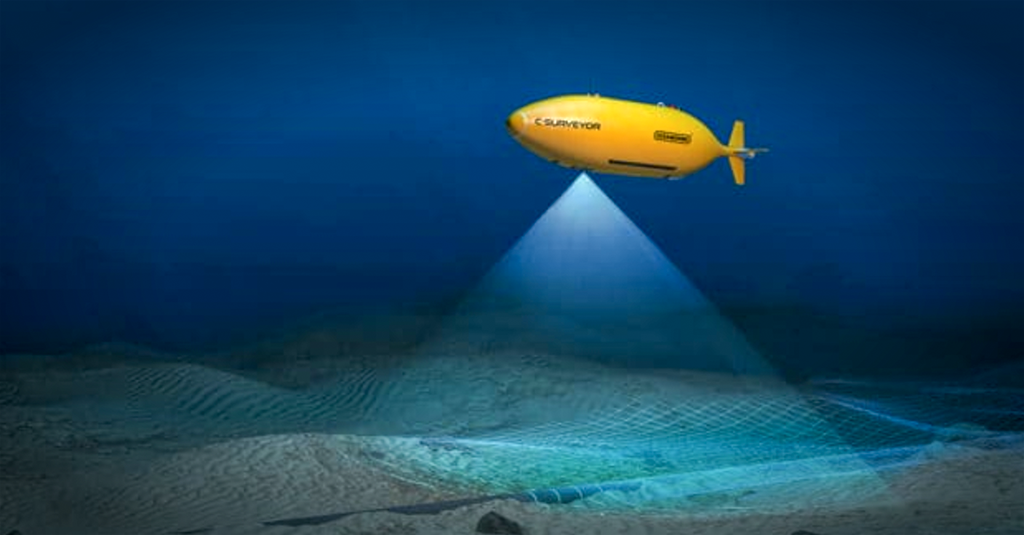
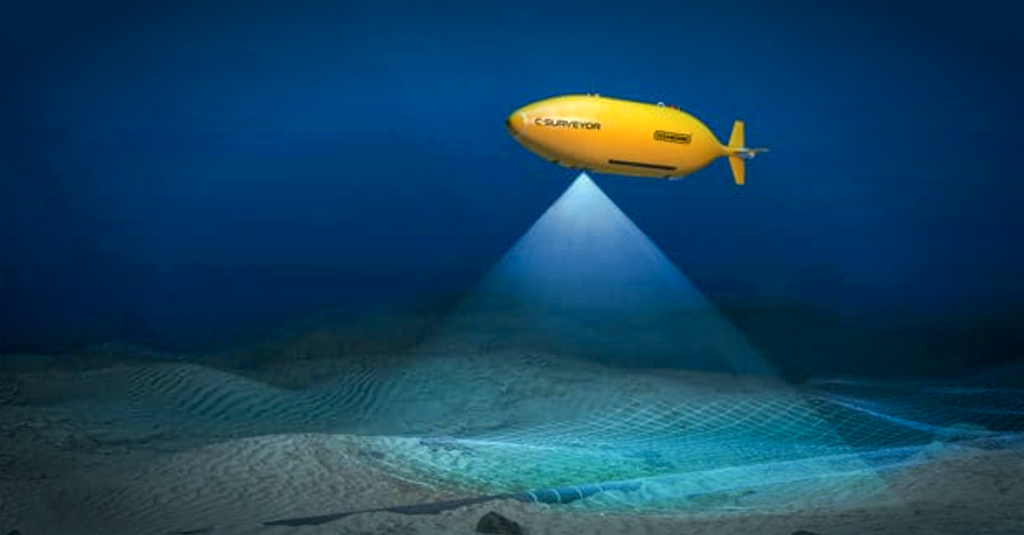
Autonomous Underwater Vehicles (AUVs) are unmanned and unteathered submarine vehicles with a variety of applications from bathymetry survey to naval warfare. Attenuation and scattering of light and electromagnetic radiation through water severely restricts wireless communications as well as distorts and attenuates camera imagery. Bandwidth limitations prevent AUVs from being remotely piloted, thus full autonomy is required for operation. Computer vision extends the ability for AUVs to perform advanced behaviors, but must address the unique challenges of underwater photography, underwater lidar, and multibeam sonar sensors. We will discuss recent research and development efforts related to computer vision of AUVs as their applications, including oilfield pipeline survey and inspection, obstacle avoidance and autonomous docking. We will also briefly discuss efforts toward amphibious vehicles, AGVs for factory automation, as well as ongoing research in acoustic signal processing.
Dr. David Chapman is a Senior Software Engineer with Oceaneering International inc., which is the largest producer of subsea Remotely Operated Vehicles (ROVs) and largest operator of Autonomous Underwater Vehicles (AUVs). Dr. Chapman completed his Ph.D. from University of Maryland Baltimore County (UMBC) in 2012 studying remote sensing, image processing, and parallel computing. He also completed a post doctoral fellowship at Columbia University’s Lamont Doherty Earth Observatory studying data analytics for El Nino prediction. At Oceaneering, Dr. Chapman has been a key contributor to computer vision algorithms research for new product development including the Pipeline Inspection AUV (PI-AUV), winner of Oceaneering’s 2017 innovative product award. He is also a contributor to both the proposal and development efforts of a vision-based AUV auto-docking system. Dr. Chapman has studied and applied a variety of computer vision algorithms including the fast Radon transform, wavelet-based feature classification, numerical optimization, and neural networks in order to extend the capabilities of AUVs and related autonomous vehicles.
The post 🗣️talk: Computer Vision for Autonomous Underwater Vehicles, 11am Mon 3/12 appeared first on Department of Computer Science and Electrical Engineering.
]]>
Computer Vision for Autonomous Underwater Vehicles Dr. David Chapman, Oceaneering International 11:00-12:00 Monday March 12, 2018, ITE 325, UMBC Autonomous Underwater Vehicles (AUVs) are...
https://www.csee.umbc.edu/2018/03/talk-computer-vision-autonomous-underwater-vehicles-umbc-auvs-ai/
https://my3.my.umbc.edu/api/v0/pixel/news/74694/guest@my.umbc.edu/78b32bb87db92ae0b83dcd303cb60932/api/pixel
ai
alumni
computer-engineering
computer-science
news
talks
Computer Science and Electrical Engineering
https://my3.my.umbc.edu/groups/csee
https://assets3-my.umbc.edu/system/shared/avatars/groups/000/000/099/d117dca133c64bf78a4b7696dd007189/xsmall.png?1314043393
https://assets1-my.umbc.edu/system/shared/avatars/groups/000/000/099/d117dca133c64bf78a4b7696dd007189/original.png?1314043393
https://assets1-my.umbc.edu/system/shared/avatars/groups/000/000/099/d117dca133c64bf78a4b7696dd007189/xxlarge.png?1314043393
https://assets4-my.umbc.edu/system/shared/avatars/groups/000/000/099/d117dca133c64bf78a4b7696dd007189/xlarge.png?1314043393
https://assets3-my.umbc.edu/system/shared/avatars/groups/000/000/099/d117dca133c64bf78a4b7696dd007189/large.png?1314043393
https://assets1-my.umbc.edu/system/shared/avatars/groups/000/000/099/d117dca133c64bf78a4b7696dd007189/medium.png?1314043393
https://assets2-my.umbc.edu/system/shared/avatars/groups/000/000/099/d117dca133c64bf78a4b7696dd007189/small.png?1314043393
https://assets3-my.umbc.edu/system/shared/avatars/groups/000/000/099/d117dca133c64bf78a4b7696dd007189/xsmall.png?1314043393
https://assets3-my.umbc.edu/system/shared/avatars/groups/000/000/099/d117dca133c64bf78a4b7696dd007189/xxsmall.png?1314043393
Computer Science and Electrical Engineering
2
0
true
Sat, 10 Mar 2018 10:52:15 -0500
Sat, 10 Mar 2018 10:52:15 -0500
talk: Creating Educational Cybersecurity Assessment Tools, 12pm Fri 3/9

The UMBC Cyber Defense Lab presents
Creating Educational Cybersecurity Assessment Tools
Alan T. Sherman
Department of Computer Science and Electrical Engineering
University of Maryland, Baltimore County
12:00–1:00pm Friday, March 9, 2018, ITE 229, UMBC
The Cybersecurity Assessment Tools (CATS) Project provides rigorous evidence-based instruments for assessing and evaluating educational practices. The first CAT will be a Cybersecurity Concept Inventory (CCI) that measures how well students understand basic concepts in cybersecurity (especially adversarial thinking) after a first course in the field. The second CAT will be a Cybersecurity Curriculum Assessment (CCA) that measures how well students understand core concepts after completing a full cybersecurity curriculum. These tools can help identify pedagogies and content that are effective in teaching cybersecurity.
In fall 2014, we carried out a Delphi process that identified core concepts of cybersecurity. In spring 2016, we interviewed twenty-six students to uncover their understandings and misconceptions about these concepts. In fall 2016, we generated our first assessment tool—-a draft CCI, comprising approximately thirty multiple-choice questions. Each question targets a concept; incorrect answers are based on observed misconceptions from the interviews. In fall 2017, we began drafting CCA questions. This year we are validating the draft CCI using cognitive interviews, expert reviews, and psychometric testing. In this talk, I highlight our progress to date in developing the CCI and CCA. Audience members will be given an opportunity to answer sample questions.
Presently there is no rigorous, research-based method for measuring the quality of cybersecurity instruction. Validated assessment tools are needed so that cybersecurity educators have trusted methods for discerning whether efforts to improve student preparation are successful.
Joint work with Linda Oliva, David DeLatte, Enis Golaszewski, Geet Parekh, Konstantinos Patsourakos, Dhananjay Phatak, Travis Scheponik (UMBC); Geoffrey Herman, Dong San Choi, Julia Thompson (University of Illinois at Urbana-Champaign)
Alan T. Sherman is a professor of computer science at UMBC in the CSEE Department and Director of UMBC’s Center for Information Security and Assurance. His main research interest is high-integrity voting systems. He has carried out research in election systems, algorithm design, cryptanalysis, theoretical foundations for cryptography, applications of cryptography, and cybersecurity education. Dr. Sherman is also an editor for Cryptologia and a private consultant performing security analyses. Sherman earned the PhD degree in computer science at MIT in 1987 studying under Ronald L. Rivest. www.csee.umbc.edu/~sherman
Support for this research was provided in part by the National Security Agency under grants H98230-15-1-0294 and H98230-15-1-0273 and by the National Science Foundation under SFS grant 1241576.
The post talk: Creating Educational Cybersecurity Assessment Tools, 12pm Fri 3/9 appeared first on Department of Computer Science and Electrical Engineering.
]]>
The UMBC Cyber Defense Lab presents Creating Educational Cybersecurity Assessment Tools Alan T. Sherman Department of Computer Science and Electrical Engineering University of Maryland,...
https://www.csee.umbc.edu/2018/03/talk-umbc-creating-educational-cybersecurity-assessment-tools/
https://my3.my.umbc.edu/api/v0/pixel/news/74656/guest@my.umbc.edu/6098c281a4837dacd10152488e21282d/api/pixel
cybersecurity
news
talks
Computer Science and Electrical Engineering
https://my3.my.umbc.edu/groups/csee
https://assets3-my.umbc.edu/system/shared/avatars/groups/000/000/099/d117dca133c64bf78a4b7696dd007189/xsmall.png?1314043393
https://assets1-my.umbc.edu/system/shared/avatars/groups/000/000/099/d117dca133c64bf78a4b7696dd007189/original.png?1314043393
https://assets1-my.umbc.edu/system/shared/avatars/groups/000/000/099/d117dca133c64bf78a4b7696dd007189/xxlarge.png?1314043393
https://assets4-my.umbc.edu/system/shared/avatars/groups/000/000/099/d117dca133c64bf78a4b7696dd007189/xlarge.png?1314043393
https://assets3-my.umbc.edu/system/shared/avatars/groups/000/000/099/d117dca133c64bf78a4b7696dd007189/large.png?1314043393
https://assets1-my.umbc.edu/system/shared/avatars/groups/000/000/099/d117dca133c64bf78a4b7696dd007189/medium.png?1314043393
https://assets2-my.umbc.edu/system/shared/avatars/groups/000/000/099/d117dca133c64bf78a4b7696dd007189/small.png?1314043393
https://assets3-my.umbc.edu/system/shared/avatars/groups/000/000/099/d117dca133c64bf78a4b7696dd007189/xsmall.png?1314043393
https://assets3-my.umbc.edu/system/shared/avatars/groups/000/000/099/d117dca133c64bf78a4b7696dd007189/xxsmall.png?1314043393
Computer Science and Electrical Engineering
1
0
true
Fri, 09 Mar 2018 07:30:42 -0500
talk: desJardins on Planning and Learning in Complex Stochastic Domains, 1pm fri 3/8

Planning and Learning in Complex Stochastic Domains: AMDPs, Option Discovery, Learning Transfer, Language Learning, and More
Dr. Marie desJardins, University of Maryland, Baltimore County
1-2pm Friday, March 9th, 2018, ITE 456, UMBC
Robots acting in human-scale environments must plan under uncertainty in large state–action spaces and face constantly changing reward functions as requirements and goals change. We introduce a new hierarchical planning framework called Abstract Markov Decision Processes (AMDPs) that can plan in a fraction of the time needed for complex decision making in ordinary MDPs. AMDPs provide abstract states, actions, and transition dynamics in multiple layers above a base-level “flat” MDP. AMDPs decompose problems into a series of subtasks with both local reward and local transition functions used to create policies for subtasks. The resulting hierarchical planning method is independently optimal at each level of abstraction, and is recursively optimal when the local reward and transition functions are correct.
I will present empirical results in several domains showing significantly improved planning speed, while maintaining solution quality. I will also discuss related work within the same project on automated option discovery, abstraction construction, language learning, and initial steps towards automated methods for learning AMDPs from base MDPs, from teacher demonstrations, and from direct observations in the domain.
This work is collaborative research with Dr. Michael Littman and Dr. Stefanie Tellex of Brown University. Dr. James MacGlashan of SIFT and Dr. Smaranda Muresan of Columbia University collaborated on earlier stages of the project. The following UMBC students have also contributed to the project: Khalil Anderson, Tadewos Bellete, Michael Bishoff, Rose Carignan, Nick Haltemeyer, Nathaniel Lam, Matthew Landen, Keith McNamara, Stephanie Milani, Shane Parr (UMass), Shawn Squire, Tenji Tembo, Nicholay Topin, Puja Trivedi, and John Winder.
Dr. Marie desJardins is a Professor of Computer Science and the Associate Dean for Academic Affairs in the College of Engineering and Information Technology at the University of Maryland, Baltimore County. Prior to joining the faculty at UMBC in 2001, she was a Senior Computer Scientist in the AI Center at SRI International. Her research is in artificial intelligence, focusing on the areas of machine learning, multi-agent systems, planning, interactive AI techniques, information management, reasoning with uncertainty, and decision theory. She is active in the computer science education community, founded the Maryland Center for Computing Education, and leads the CS Matters in Maryland project to develop curriculum and train high school teachers to teach AP CS Principles.
Dr. desJardins has published over 125 scientific papers in journals, conferences, and workshops. She will be the IJCAI-20 Conference Chair, and has been an Associate Editor of the Journal of Artificial Intelligence Research and the Journal of Autonomous Agents and Multi-Agent Systems, a member of the editorial board of AI Magazine, and Program Co-chair for AAAI-13. She has previously served as AAAI Liaison to the Board of Directors of the Computing Research Association, Vice-Chair of ACM’s SIGART, and AAAI Councillor. She is a AAAI Fellow, an ACM Distinguished Member, a Member-at-Large for Section T (Information, Computing, and Communication) of the American Association for the Advancement of Science, the 2014-17 UMBC Presidential Teaching Professor, a member and former chair of UMBC’s Honors College Advisory Board, former chair of UMBC’s Faculty Affairs Committee, and a member of the advisory board of UMBC’s Center for Women in Technology.
The post talk: desJardins on Planning and Learning in Complex Stochastic Domains, 1pm fri 3/8 appeared first on Department of Computer Science and Electrical Engineering.
]]>
UMBC ACM Student Chapter Planning and Learning in Complex Stochastic Domains: AMDPs, Option Discovery, Learning Transfer, Language Learning, and More Dr. Marie desJardins, University of...
https://www.csee.umbc.edu/2018/03/talk-desjardins-planning-learning-complex-stochastic-domains-amdp-option-discovery-learning-transfer-language-learning-umbc/
https://my3.my.umbc.edu/api/v0/pixel/news/74622/guest@my.umbc.edu/1bfe31916d1caa27a16e7ad620b4f7ee/api/pixel
ai
computer-science
events
faculty-and-staff
news
research
talks
Computer Science and Electrical Engineering
https://my3.my.umbc.edu/groups/csee
https://assets3-my.umbc.edu/system/shared/avatars/groups/000/000/099/d117dca133c64bf78a4b7696dd007189/xsmall.png?1314043393
https://assets1-my.umbc.edu/system/shared/avatars/groups/000/000/099/d117dca133c64bf78a4b7696dd007189/original.png?1314043393
https://assets1-my.umbc.edu/system/shared/avatars/groups/000/000/099/d117dca133c64bf78a4b7696dd007189/xxlarge.png?1314043393
https://assets4-my.umbc.edu/system/shared/avatars/groups/000/000/099/d117dca133c64bf78a4b7696dd007189/xlarge.png?1314043393
https://assets3-my.umbc.edu/system/shared/avatars/groups/000/000/099/d117dca133c64bf78a4b7696dd007189/large.png?1314043393
https://assets1-my.umbc.edu/system/shared/avatars/groups/000/000/099/d117dca133c64bf78a4b7696dd007189/medium.png?1314043393
https://assets2-my.umbc.edu/system/shared/avatars/groups/000/000/099/d117dca133c64bf78a4b7696dd007189/small.png?1314043393
https://assets3-my.umbc.edu/system/shared/avatars/groups/000/000/099/d117dca133c64bf78a4b7696dd007189/xsmall.png?1314043393
https://assets3-my.umbc.edu/system/shared/avatars/groups/000/000/099/d117dca133c64bf78a4b7696dd007189/xxsmall.png?1314043393
Computer Science and Electrical Engineering
3
0
true
Thu, 08 Mar 2018 09:25:12 -0500
Prof. Marie desJardins, new AAAI fellow, advocates for CS education in K–12 schools
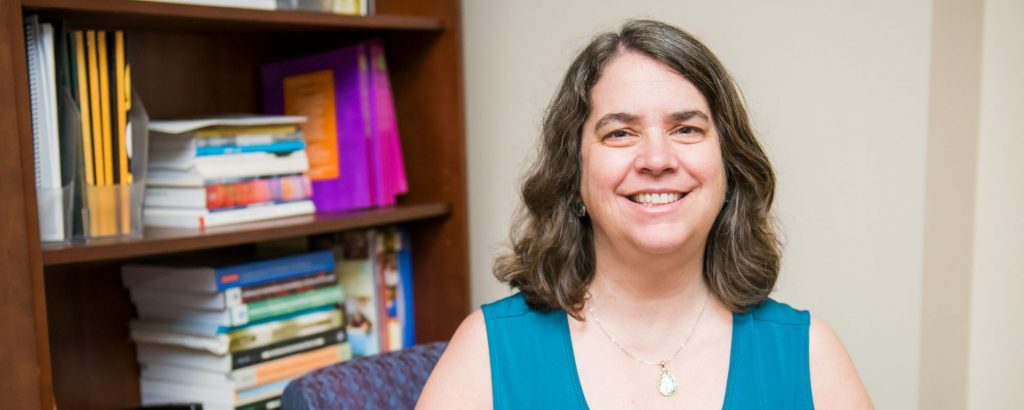
Prof. Marie desJardins, new AAAI fellow, advocates for CS education in K–12 schools
Marie desJardins, associate dean of the College of Engineering and Information Technology and professor of computer science, recently wrote a piece for The Baltimore Sun about the importance of computer science education in K–12 schools. She is a leader in the artificial intelligence field and has been nationally recognized for her commitment to mentoring, work increasing diversity in computing, and success expanding computer science education in K–12 schools.
In the op-ed, desJardins writes about why it is important to expose K–12 students to computer science, for both their benefit (in terms of expanded career options) and the benefit of fields that rely on STEM talent. “The need for computer science and computational thinking skills is becoming pervasive not just in the world of software engineers, but in fields as varied as science, design, marketing, and public policy,” she writes.
desJardins describes in the Sun her work with “CS Matters in Maryland,” an initiative that seeks to ensure all students across the state have access to computer science education as part of their regular curriculum. “Our ‘CS Matters in Maryland’ project has trained high school teachers in all of the state’s school systems, emphasizing equity and inclusion for all student demographics and all school systems,” she says.
While this particular project focuses on the state of Maryland, desJardins has been honored across the U.S. for her work in the field. In the past month alone, she has received the Distinguished Alumni Award in Computer Science from UC Berkeley, her alma mater and was formally recognized as a fellow of the Association for the Advancement of Artificial Intelligence.
“I was absolutely overwhelmed when I learned that I had been named one of UC Berkeley’s two Outstanding Alumni in Computer Science for 2018, joining a group of computer scientists for which I have immense respect and admiration,” desJardins said. “It is hard to put into words how much it meant to me to have received this award in the same week that I was inducted as a Fellow of the Association for the Advancement of Artificial Intelligence, a recognition that only a handful of AI scientists receive each year. It is especially meaningful to me that the citations on both awards refer equally to my research and to my mentoring, teaching, and diversity efforts.”
A recent interview with Iridescent brings together desJardin’s research on “intelligent learning” — how robots can learn to solve complicated tasks in complex settings — with her work with students from diverse backgrounds, across all majors. In describing UMBC’s Grand Challenge Scholars Program, she highlights how technology matters, but can’t stand alone — how combining the perspectives of people from all backgrounds and all fields is essential to solving the world’s problems.
“Getting these students together from really different perspectives and having them talk about some of these hard problems is initially really exciting and also very hard,” she explains. “Then, it gets easier. The initial barrier is often just one of language and perspective.”
desJardins continues to work to bridge those divides through her teaching, advocacy, and research, and is now recognized by both Forbes and TechRepublic as a top artificial intelligence expert to follow online.
Read the entire piece in The Baltimore Sun, “All Kids Should Have a Computer Science Education.“
Adapted from an article in UMBC News by Megan Hanks.
The post Prof. Marie desJardins, new AAAI fellow, advocates for CS education in K–12 schools appeared first on Department of Computer Science and Electrical Engineering.
]]>
Prof. Marie desJardins, new AAAI fellow, advocates for CS education in K–12 schools Marie desJardins, associate dean of the College of Engineering and Information Technology and professor of...
https://www.csee.umbc.edu/2018/03/prof-marie-desjardins-new-aaai-fellow-advocates-for-cs-computer-science-education-in-k-12-schools/
https://my3.my.umbc.edu/api/v0/pixel/news/74440/guest@my.umbc.edu/8e0a880790a3cd1f30c588dcc6b35712/api/pixel
ai
computer-science
education
faculty-and-staff
news
Computer Science and Electrical Engineering
https://my3.my.umbc.edu/groups/csee
https://assets3-my.umbc.edu/system/shared/avatars/groups/000/000/099/d117dca133c64bf78a4b7696dd007189/xsmall.png?1314043393
https://assets1-my.umbc.edu/system/shared/avatars/groups/000/000/099/d117dca133c64bf78a4b7696dd007189/original.png?1314043393
https://assets1-my.umbc.edu/system/shared/avatars/groups/000/000/099/d117dca133c64bf78a4b7696dd007189/xxlarge.png?1314043393
https://assets4-my.umbc.edu/system/shared/avatars/groups/000/000/099/d117dca133c64bf78a4b7696dd007189/xlarge.png?1314043393
https://assets3-my.umbc.edu/system/shared/avatars/groups/000/000/099/d117dca133c64bf78a4b7696dd007189/large.png?1314043393
https://assets1-my.umbc.edu/system/shared/avatars/groups/000/000/099/d117dca133c64bf78a4b7696dd007189/medium.png?1314043393
https://assets2-my.umbc.edu/system/shared/avatars/groups/000/000/099/d117dca133c64bf78a4b7696dd007189/small.png?1314043393
https://assets3-my.umbc.edu/system/shared/avatars/groups/000/000/099/d117dca133c64bf78a4b7696dd007189/xsmall.png?1314043393
https://assets3-my.umbc.edu/system/shared/avatars/groups/000/000/099/d117dca133c64bf78a4b7696dd007189/xxsmall.png?1314043393
Computer Science and Electrical Engineering
4
1
true
Thu, 01 Mar 2018 16:04:33 -0500
UMBC Giving Day #BlackandGoldRush, February 28

On UMBC Giving Day, alumni, students, faculty, staff, and friends will join the #BlackandGoldRush by giving to their favorite UMBC causes, and by inspiring others to give. Throughout this marathon day of giving, participants will have chances to help unlock giving challenges to drive additional support for areas they want to help.
Your gift will have an even bigger impact than usual thanks to some generous alumni, parents, and employees who stepped up to give special challenge gifts for the day. You can designate your gift to support UMBC’s Computer Science and Electrical Engineering department at https://gritstarter.umbc.edu/p/umbc-csee/ or go to the giving day site (after the stroke of Midnight on February 28th) and explore other projects to support.
Spread the word by using #BlackandGoldRush.
The post UMBC Giving Day #BlackandGoldRush, February 28 appeared first on Department of Computer Science and Electrical Engineering.
]]>
On UMBC Giving Day, alumni, students, faculty, staff, and friends will join the #BlackandGoldRush by giving to their favorite UMBC causes, and by inspiring others to give. Throughout this marathon...
https://www.csee.umbc.edu/2018/02/umbc-giving-day-blackandgoldrush-february-28/
https://my3.my.umbc.edu/api/v0/pixel/news/74359/guest@my.umbc.edu/87186d0481a26c598a4b7a130fa82485/api/pixel
alumni
csee
events
news
Computer Science and Electrical Engineering
https://my3.my.umbc.edu/groups/csee
https://assets3-my.umbc.edu/system/shared/avatars/groups/000/000/099/d117dca133c64bf78a4b7696dd007189/xsmall.png?1314043393
https://assets1-my.umbc.edu/system/shared/avatars/groups/000/000/099/d117dca133c64bf78a4b7696dd007189/original.png?1314043393
https://assets1-my.umbc.edu/system/shared/avatars/groups/000/000/099/d117dca133c64bf78a4b7696dd007189/xxlarge.png?1314043393
https://assets4-my.umbc.edu/system/shared/avatars/groups/000/000/099/d117dca133c64bf78a4b7696dd007189/xlarge.png?1314043393
https://assets3-my.umbc.edu/system/shared/avatars/groups/000/000/099/d117dca133c64bf78a4b7696dd007189/large.png?1314043393
https://assets1-my.umbc.edu/system/shared/avatars/groups/000/000/099/d117dca133c64bf78a4b7696dd007189/medium.png?1314043393
https://assets2-my.umbc.edu/system/shared/avatars/groups/000/000/099/d117dca133c64bf78a4b7696dd007189/small.png?1314043393
https://assets3-my.umbc.edu/system/shared/avatars/groups/000/000/099/d117dca133c64bf78a4b7696dd007189/xsmall.png?1314043393
https://assets3-my.umbc.edu/system/shared/avatars/groups/000/000/099/d117dca133c64bf78a4b7696dd007189/xxsmall.png?1314043393
Computer Science and Electrical Engineering
3
0
true
Tue, 27 Feb 2018 23:03:06 -0500
Tue, 20 Feb 2018 23:03:06 -0500
CyberInnovation Briefing: Global Impact, Promise & Perils of Blockchain

UMBC Professors Haibin Zhang (Computer Science and Electrical Engineering) and Karuna Joshi (Information Systems) will be panelists for an event focused on the impact, promise and perils of blockchain technologies at the bwtech@UMBC Research & Technology Park. The event will take place from 8:15 to 11:15am on Tuesday, March 20 2018 at and will include breakfast and time for networking. They will be joined on the panel by Marcus Edwards, from Northrop Grumman’s Cyber & Intelligence Mission Solutions, Steve Cook of Verizon Enterprise Solutions and moderator Razvan Miutescu of Whiteford, Taylor & Preston, LLP. For more information and tickets are available on eventbrite.
8:15 – 11:15 Tuesday, March 20, 2018
bwtech@UMBC Research & Technology Park
5520 Research Park Drive, Baltimore, MD 21228
Cryptocurrency market capitalizations have soared over the past year and new innovative blockchain applications are continuing to emerge seemingly by the day. However, the average end-user is left to singularly make sense of a vast and global marketplace that is rapidly converging the core tenets of economics and technology development. The future prospects of traditional business and financial models is uncertain as blockchain technology leaves key decision makers in an untenable position to either adopt and adapt or simply be left behind. Industry and academic experts in the field will discuss the pros and cons and opportunities and challenges of this disruptive technology movement.
The post CyberInnovation Briefing: Global Impact, Promise & Perils of Blockchain appeared first on Department of Computer Science and Electrical Engineering.
]]>
UMBC Professors Haibin Zhang (Computer Science and Electrical Engineering) and Karuna Joshi (Information Systems) will be panelists for an event focused on the impact, promise and perils of...
https://www.csee.umbc.edu/2018/02/cyberinnovation-briefing-global-impact-promise-perils-of-blockchain-umbc/
https://my3.my.umbc.edu/api/v0/pixel/news/74277/guest@my.umbc.edu/de7e3ff35d1d36394892c9bc6fbe38bf/api/pixel
cybersecurity
data-science
events
news
Computer Science and Electrical Engineering
https://my3.my.umbc.edu/groups/csee
https://assets3-my.umbc.edu/system/shared/avatars/groups/000/000/099/d117dca133c64bf78a4b7696dd007189/xsmall.png?1314043393
https://assets1-my.umbc.edu/system/shared/avatars/groups/000/000/099/d117dca133c64bf78a4b7696dd007189/original.png?1314043393
https://assets1-my.umbc.edu/system/shared/avatars/groups/000/000/099/d117dca133c64bf78a4b7696dd007189/xxlarge.png?1314043393
https://assets4-my.umbc.edu/system/shared/avatars/groups/000/000/099/d117dca133c64bf78a4b7696dd007189/xlarge.png?1314043393
https://assets3-my.umbc.edu/system/shared/avatars/groups/000/000/099/d117dca133c64bf78a4b7696dd007189/large.png?1314043393
https://assets1-my.umbc.edu/system/shared/avatars/groups/000/000/099/d117dca133c64bf78a4b7696dd007189/medium.png?1314043393
https://assets2-my.umbc.edu/system/shared/avatars/groups/000/000/099/d117dca133c64bf78a4b7696dd007189/small.png?1314043393
https://assets3-my.umbc.edu/system/shared/avatars/groups/000/000/099/d117dca133c64bf78a4b7696dd007189/xsmall.png?1314043393
https://assets3-my.umbc.edu/system/shared/avatars/groups/000/000/099/d117dca133c64bf78a4b7696dd007189/xxsmall.png?1314043393
Computer Science and Electrical Engineering
3
0
true
Sun, 25 Feb 2018 12:07:46 -0500
Sun, 25 Feb 2018 12:07:46 -0500
talk: Circuit Complexity of One-Way Boolean Functions, 12pm Fri 2/23, ITE229

The UMBC Cyber Defense Lab presents
Experimentally Measuring the Circuit Complexity
of One-Way Boolean Functions
Brian Weber, CSEE, UMBC
12:00–1:00pm, Friday, 23 February 2018, ITE 229
I present preliminary results from an exhaustive search for one-way functions in certain classes of small Boolean functions. One-way functions are functions that are easy to compute but hard to invert. They are vital for cryptography, yet no one has proven their existence for arbitrary input sizes. For any bounded circuit model of computation, it is possible to search exhaustively over all possible Boolean functions of restricted size and thereby determine for the searched class the maximum disparity between the complexity of any function and its inverse. Throughout, we assume a circuit model in which each gate has fan-in 2 and fan-out 1.
In his 1985 dissertation at MIT, Steven Boyack carried out the first such search. For any positive integers n and M, let Fn,M denote the set of Boolean functions with n inputs and Moutputs. Using circuit size as the complexity measure, Boyack searched the space of every combinatorial function in F3,3 by searching each of 52 equivalency classes of functions in this space. He found that every function class in this space has an identically sized inverse. He was able to prove that functions do exist with more complex inverses outside the space he searched, but not by more than a constant factor.
In spring 2017, using circuit depth as the complexity measure, I searched all injective functions up to F8,8 whose coordinate functions are in F2,1. A coordinate function in this context refers to the function that computes an individual output bit. In addition, I searched up to F4,4 allowing coordinate functions in F3,1. In the space I searched, the most one-way function has fixed depth of 1, and an inverse depth exactly equal to the input size of the function. That is, for each 2 < n < 9, the hardest inverse in the space I searched has a depth of n, where n is the number of input bits. In addition, a search space allowing a larger fan-in for the coordinate functions did not yield functions less invertible than were found in the original search space.
Brian Weber is a senior BS/MS computer engineering student and SFS scholar at UMBC. He hopes to extend the work presented here into his Master’s thesis next year. Email: *protected email*
Host: Alan T. Sherman, *protected email*Support for this research was provided in part by the National Science Foundation under SFS grant 1241576.
The UMBC Cyber Defense Lab meets biweekly Fridays. All meetings are open to the public.
The post talk: Circuit Complexity of One-Way Boolean Functions, 12pm Fri 2/23, ITE229 appeared first on Department of Computer Science and Electrical Engineering.
]]>
The UMBC Cyber Defense Lab presents Experimentally Measuring the Circuit Complexity of One-Way Boolean Functions Brian Weber, CSEE, UMBC 12:00–1:00pm, Friday, 23 February 2018, ITE 229 I...
https://www.csee.umbc.edu/2018/02/umbc-talk-experimentally-measuring-circuit-complexity-one-way-boolean-functions/
https://my3.my.umbc.edu/api/v0/pixel/news/74245/guest@my.umbc.edu/108e901e411dc15802f41618321e65bd/api/pixel
computer-science
cybersecurity
news
sfs
talks
Computer Science and Electrical Engineering
https://my3.my.umbc.edu/groups/csee
https://assets3-my.umbc.edu/system/shared/avatars/groups/000/000/099/d117dca133c64bf78a4b7696dd007189/xsmall.png?1314043393
https://assets1-my.umbc.edu/system/shared/avatars/groups/000/000/099/d117dca133c64bf78a4b7696dd007189/original.png?1314043393
https://assets1-my.umbc.edu/system/shared/avatars/groups/000/000/099/d117dca133c64bf78a4b7696dd007189/xxlarge.png?1314043393
https://assets4-my.umbc.edu/system/shared/avatars/groups/000/000/099/d117dca133c64bf78a4b7696dd007189/xlarge.png?1314043393
https://assets3-my.umbc.edu/system/shared/avatars/groups/000/000/099/d117dca133c64bf78a4b7696dd007189/large.png?1314043393
https://assets1-my.umbc.edu/system/shared/avatars/groups/000/000/099/d117dca133c64bf78a4b7696dd007189/medium.png?1314043393
https://assets2-my.umbc.edu/system/shared/avatars/groups/000/000/099/d117dca133c64bf78a4b7696dd007189/small.png?1314043393
https://assets3-my.umbc.edu/system/shared/avatars/groups/000/000/099/d117dca133c64bf78a4b7696dd007189/xsmall.png?1314043393
https://assets3-my.umbc.edu/system/shared/avatars/groups/000/000/099/d117dca133c64bf78a4b7696dd007189/xxsmall.png?1314043393
Computer Science and Electrical Engineering
2
0
true
Thu, 22 Feb 2018 22:28:33 -0500
talk: Semi-supervised Learning for Visual Recognition, 1pm Fri 2/23, ITE325, UMBC
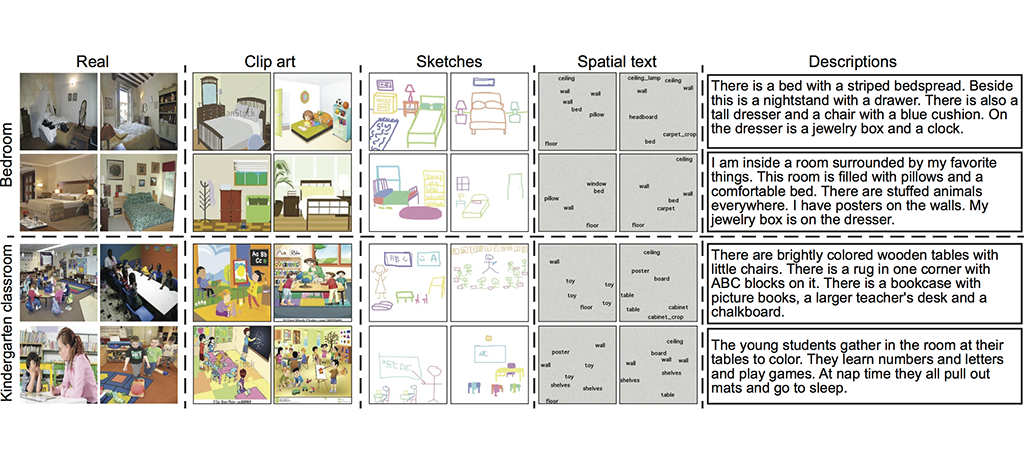
ACM Faculty Talk Series
Semi-supervised Learning for Visual Recognition
Dr. Hamed Pirsiavash, Assistant Professor, CSEE
1:00-2:00pm Friday, February 23, 2018, ITE 325, UMBC
We are interested in learning representations (features) that are discriminative for semantic image understanding tasks such as object classification, detection, and segmentation in images. A common approach to obtain such features is to use supervised learning. However, this requires manual annotation of images, which is costly, time-consuming, and prone to errors. In contrast, unsupervised or self-supervised feature learning methods exploiting unlabeled data can be much more scalable and flexible. I will present some of our efforts in this direction.
Hamed Pirsiavash is an assistant professor at the University of Maryland, Baltimore County (UMBC). Prior to joining UMBC in 2015 he was a postdoctoral research associate at MIT and he obtained his PhD at the University of California Irvine. He does research in the intersection of computer vision and machine learning.
This talk is sponsored by the UMBC Student Chapter of the ACM. Contact *protected email* with any questions regarding this event.
The post talk: Semi-supervised Learning for Visual Recognition, 1pm Fri 2/23, ITE325, UMBC appeared first on Department of Computer Science and Electrical Engineering.
]]>
ACM Faculty Talk Series Semi-supervised Learning for Visual Recognition Dr. Hamed Pirsiavash, Assistant Professor, CSEE 1:00-2:00pm Friday, February 23, 2018, ITE 325, UMBC We are...
https://www.csee.umbc.edu/2018/02/umbc-semi-supervised-learning-visual-recognition-hamed-pirsiavash/
https://my3.my.umbc.edu/api/v0/pixel/news/74167/guest@my.umbc.edu/01223797f860b195756aa7d0f5949e60/api/pixel
ai
computer-science
data-science
events
faculty-and-staff
machine-learning
news
research
talks
Computer Science and Electrical Engineering
https://my3.my.umbc.edu/groups/csee
https://assets3-my.umbc.edu/system/shared/avatars/groups/000/000/099/d117dca133c64bf78a4b7696dd007189/xsmall.png?1314043393
https://assets1-my.umbc.edu/system/shared/avatars/groups/000/000/099/d117dca133c64bf78a4b7696dd007189/original.png?1314043393
https://assets1-my.umbc.edu/system/shared/avatars/groups/000/000/099/d117dca133c64bf78a4b7696dd007189/xxlarge.png?1314043393
https://assets4-my.umbc.edu/system/shared/avatars/groups/000/000/099/d117dca133c64bf78a4b7696dd007189/xlarge.png?1314043393
https://assets3-my.umbc.edu/system/shared/avatars/groups/000/000/099/d117dca133c64bf78a4b7696dd007189/large.png?1314043393
https://assets1-my.umbc.edu/system/shared/avatars/groups/000/000/099/d117dca133c64bf78a4b7696dd007189/medium.png?1314043393
https://assets2-my.umbc.edu/system/shared/avatars/groups/000/000/099/d117dca133c64bf78a4b7696dd007189/small.png?1314043393
https://assets3-my.umbc.edu/system/shared/avatars/groups/000/000/099/d117dca133c64bf78a4b7696dd007189/xsmall.png?1314043393
https://assets3-my.umbc.edu/system/shared/avatars/groups/000/000/099/d117dca133c64bf78a4b7696dd007189/xxsmall.png?1314043393
Computer Science and Electrical Engineering
3
0
true
Wed, 21 Feb 2018 12:44:09 -0500
ACM Faculty Talk Series
Semi-supervised Learning for Visual Recognition
ACM Faculty Talk Series - 2
Semi-supervised Learning for Visual Recognition
Dr. Hamed Pirsiavash, Assistant Professor, CSEE
1 pm - 2 pm Friday, February 23, 2018, ITE 325, UMBC
We are interested in learning representations (features) that are discriminative for semantic image understanding tasks such as object classification, detection, and segmentation in images. A common approach to obtain such features is to use supervised learning. However, this requires manual annotation of images, which is costly, time-consuming, and prone to errors. In contrast, unsupervised or self-supervised feature learning methods exploiting unlabeled data can be much more scalable and flexible. I will present some of our efforts in this direction.
Regards,
ACM Committee
]]>
ACM Faculty Talk Series - 2 Semi-supervised Learning for Visual Recognition Dr. Hamed Pirsiavash, Assistant Professor, CSEE 1 pm - 2 pm Friday, February 23, 2018, ITE 325, UMBC ...
https://my3.my.umbc.edu/api/v0/pixel/news/74162/guest@my.umbc.edu/cb07946f65edec38d6cd1706adf41c69/api/pixel
Computer Science and Electrical Engineering
https://my3.my.umbc.edu/groups/csee
https://assets3-my.umbc.edu/system/shared/avatars/groups/000/000/099/d117dca133c64bf78a4b7696dd007189/xsmall.png?1314043393
https://assets1-my.umbc.edu/system/shared/avatars/groups/000/000/099/d117dca133c64bf78a4b7696dd007189/original.png?1314043393
https://assets1-my.umbc.edu/system/shared/avatars/groups/000/000/099/d117dca133c64bf78a4b7696dd007189/xxlarge.png?1314043393
https://assets4-my.umbc.edu/system/shared/avatars/groups/000/000/099/d117dca133c64bf78a4b7696dd007189/xlarge.png?1314043393
https://assets3-my.umbc.edu/system/shared/avatars/groups/000/000/099/d117dca133c64bf78a4b7696dd007189/large.png?1314043393
https://assets1-my.umbc.edu/system/shared/avatars/groups/000/000/099/d117dca133c64bf78a4b7696dd007189/medium.png?1314043393
https://assets2-my.umbc.edu/system/shared/avatars/groups/000/000/099/d117dca133c64bf78a4b7696dd007189/small.png?1314043393
https://assets3-my.umbc.edu/system/shared/avatars/groups/000/000/099/d117dca133c64bf78a4b7696dd007189/xsmall.png?1314043393
https://assets3-my.umbc.edu/system/shared/avatars/groups/000/000/099/d117dca133c64bf78a4b7696dd007189/xxsmall.png?1314043393
Computer Science and Electrical Engineering
1
0
true
Wed, 21 Feb 2018 11:44:36 -0500
Join the UMBC Creative Coders program and teach kids how to code
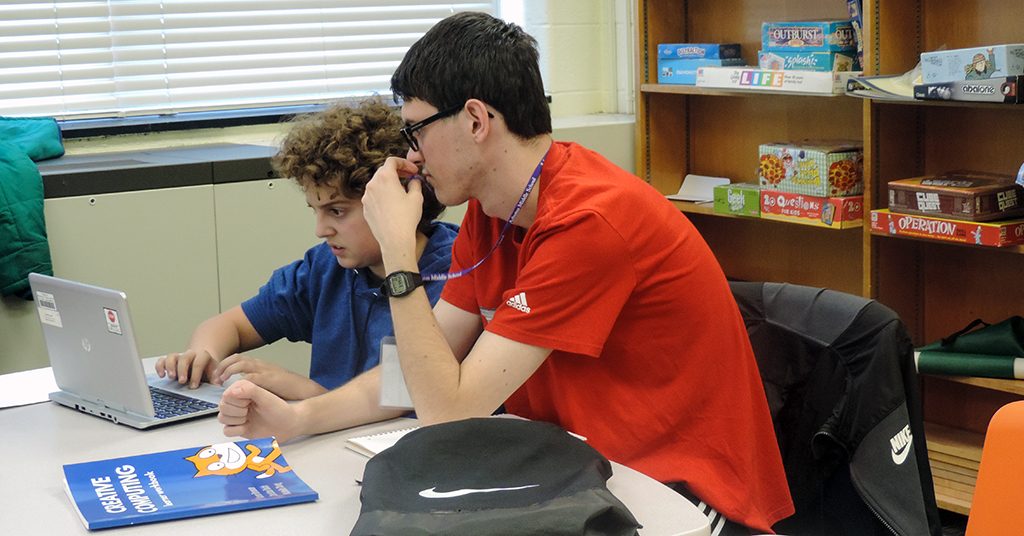
Join the UMBC Creative Coders program and teach kids how to code
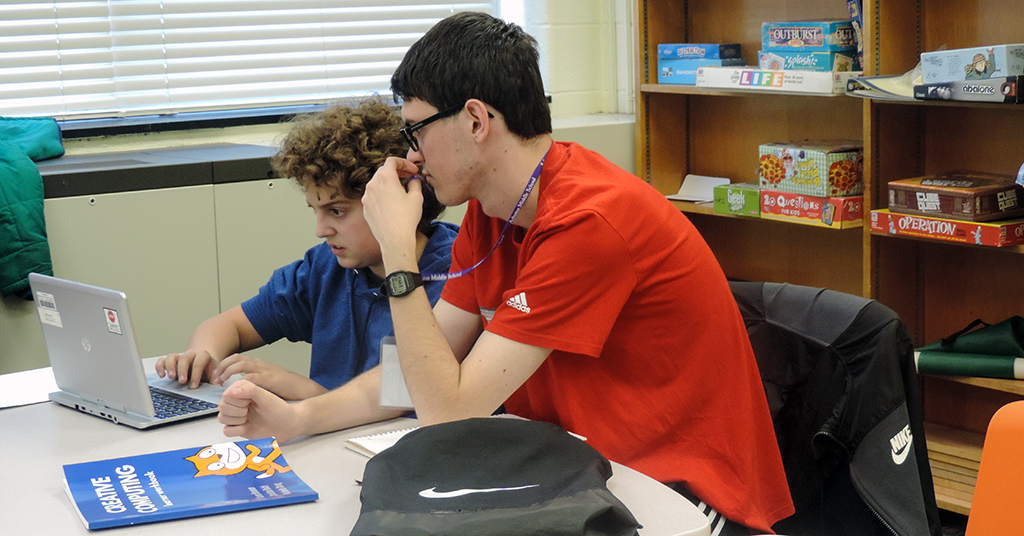
The Creative Coders program connects middle school students from Arbutus Middle School with computing students at UMBC. Volunteers will work one-on-one with young students to teach them the fundamentals of computer science through game design.
Volunteers may also get this service put on their transcript through PRAC096 or HONR 390 for students in the Honors College. The creative coders group meets from 2:15-4:00 every Tuesday and Thursday.
If you are interested in participating, contact Max Poole at *protected email*
The post Join the UMBC Creative Coders program and teach kids how to code appeared first on Department of Computer Science and Electrical Engineering.
]]>
Join the UMBC Creative Coders program and teach kids how to code The Creative Coders program connects middle school students from Arbutus Middle School with computing students at UMBC....
https://www.csee.umbc.edu/2018/02/join-umbc-creative-coders-program-teach-kids-code/
https://my3.my.umbc.edu/api/v0/pixel/news/74048/guest@my.umbc.edu/0b8aba35226909cafcf943880241e0d0/api/pixel
computer-engineering
computer-science
education
news
Computer Science and Electrical Engineering
https://my3.my.umbc.edu/groups/csee
https://assets3-my.umbc.edu/system/shared/avatars/groups/000/000/099/d117dca133c64bf78a4b7696dd007189/xsmall.png?1314043393
https://assets1-my.umbc.edu/system/shared/avatars/groups/000/000/099/d117dca133c64bf78a4b7696dd007189/original.png?1314043393
https://assets1-my.umbc.edu/system/shared/avatars/groups/000/000/099/d117dca133c64bf78a4b7696dd007189/xxlarge.png?1314043393
https://assets4-my.umbc.edu/system/shared/avatars/groups/000/000/099/d117dca133c64bf78a4b7696dd007189/xlarge.png?1314043393
https://assets3-my.umbc.edu/system/shared/avatars/groups/000/000/099/d117dca133c64bf78a4b7696dd007189/large.png?1314043393
https://assets1-my.umbc.edu/system/shared/avatars/groups/000/000/099/d117dca133c64bf78a4b7696dd007189/medium.png?1314043393
https://assets2-my.umbc.edu/system/shared/avatars/groups/000/000/099/d117dca133c64bf78a4b7696dd007189/small.png?1314043393
https://assets3-my.umbc.edu/system/shared/avatars/groups/000/000/099/d117dca133c64bf78a4b7696dd007189/xsmall.png?1314043393
https://assets3-my.umbc.edu/system/shared/avatars/groups/000/000/099/d117dca133c64bf78a4b7696dd007189/xxsmall.png?1314043393
Computer Science and Electrical Engineering
4
0
true
Fri, 16 Feb 2018 21:41:48 -0500