MS Defense: Blind source separation for detection of abandoned objects

ENEE MS Thesis Defense
Blind source separation for detection of abandoned objects:
Exploiting different types of diversity
Suchita Bhinge
2:30pm Friday, 13 November 2015, ITE 325B
Due to the increase in security concerns, automated detection of abandoned objects has become an important application in video surveillance. Because of its increasing importance, a number of techniques have been proposed recently to automatically detect abandoned objects. The general procedure implemented for detection of abandoned objects includes background subtraction or foreground object extraction followed by post-processing steps in order to classify the foreground object as an abandoned or non-abandoned object. However, these techniques make use of a number of user-defined parameters such as track time, co-ordinates of the object/owner, the vicinity of the object, and properties of the object such as its shape, color, among others.
In this thesis, we present a new technique based on blind source separation (BSS) for detection of abandoned objects that does not keep track of the extracted objects or owners and does not require a dual background scheme for stationary object extraction. Order selection is an important step for our implementation of blind source separation based scheme since this step captures the signals with high energy and disregards signals that are not relevant to the detection of abandoned objects. In this thesis, we show that the performance of ICA improves when an algorithm that assumes a flexible source distribution along with multiple types of diversity, such as higher-order statistics and sample dependence is used for the estimation of the source components. ICA, however, can only model one dataset at a time, thus limiting its usage to monochrome frames. In order to address this issue, we also present another implementation of blind source separation called independent vector analysis (IVA), a recent extension of ICA to multiple data that takes the dependence across multiple datasets into account while retaining the model of independent components within each dataset. We show that the proposed blind source separation techniques performs successfully in complicated scenarios such as crowd, occlusion, and illumination changes.
Committee: Drs. Tulay Adali (chair), Joel Morris and Mohamed Younis
]]>
ENEE MS Thesis Defense Blind source separation for detection of abandoned objects: Exploiting different types of diversity Suchita Bhinge 2:30pm Friday, 13 November 2015, ITE 325B Due to...
http://www.csee.umbc.edu/2015/11/ms-defense-blind-source-separation-for-detection-of-abandoned-objects/
https://my3.my.umbc.edu/api/v0/pixel/news/55897/guest@my.umbc.edu/d415fe47c70219747013e3dfdc6e2986/api/pixel
defense
electrical-engineering
graduate
news
research
students
talks
Computer Science and Electrical Engineering
https://my3.my.umbc.edu/groups/csee
https://assets3-my.umbc.edu/system/shared/avatars/groups/000/000/099/d117dca133c64bf78a4b7696dd007189/xsmall.png?1314043393
https://assets1-my.umbc.edu/system/shared/avatars/groups/000/000/099/d117dca133c64bf78a4b7696dd007189/original.png?1314043393
https://assets1-my.umbc.edu/system/shared/avatars/groups/000/000/099/d117dca133c64bf78a4b7696dd007189/xxlarge.png?1314043393
https://assets4-my.umbc.edu/system/shared/avatars/groups/000/000/099/d117dca133c64bf78a4b7696dd007189/xlarge.png?1314043393
https://assets3-my.umbc.edu/system/shared/avatars/groups/000/000/099/d117dca133c64bf78a4b7696dd007189/large.png?1314043393
https://assets1-my.umbc.edu/system/shared/avatars/groups/000/000/099/d117dca133c64bf78a4b7696dd007189/medium.png?1314043393
https://assets2-my.umbc.edu/system/shared/avatars/groups/000/000/099/d117dca133c64bf78a4b7696dd007189/small.png?1314043393
https://assets3-my.umbc.edu/system/shared/avatars/groups/000/000/099/d117dca133c64bf78a4b7696dd007189/xsmall.png?1314043393
https://assets3-my.umbc.edu/system/shared/avatars/groups/000/000/099/d117dca133c64bf78a4b7696dd007189/xxsmall.png?1314043393
Computer Science and Electrical Engineering
0
0
true
Thu, 12 Nov 2015 22:45:05 -0500
Thu, 12 Nov 2015 22:45:05 -0500
Free workshop on using the Arduino microcontroller, Sat. 11/14 and 11/21
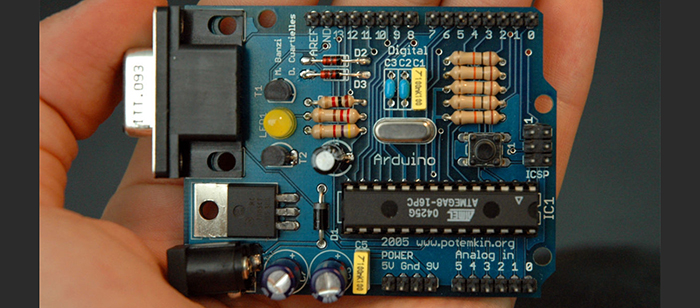
The UMBC IEEE Branch will hold an Arduino workshop on Saturday November 14th and next Saturday November 21st from 2:00-6:00pm in SHER 003 (Lecture Hall 4). It’s a great opportunity for people to learn about microcontrollers and circuit basics and how to use Arduino for building cyber-physical systems for home automation, robotics, games and more.
The Arduino microcontroller is a great device for anyone who wants to learn more about technology. It is used in a variety of fields in research and academia and may even help you get an internship. Our instructors have used the Arduino for researching self-replicating robots and remote-controlled helicopters, hacking into a vehicle’s control system, and using radars to detect human activity in a room. Some of the hackathon projects by our IEEE members include developing a drink mixer that wirelessly connects with a Tesla Model S and a full-body haptic feedback suit for the Oculus Rift. The Arduino is a wonderful tool and is fairly easy to use. Everyone should learn how to use it!
UMBC’s Institute of Electrical and Electronics Engineers is hosting two Level 1 workshops this semester. They are hosted this Saturday (Nov. 14th) and next Saturday (Nov. 21st). The workshop will be SHER 003 (Lecture Hall 4) from 2pm to 6pm. Please register online to sign up for either workshop. Contact Sekar Kulandaivel (Sorry, you need javascript to view this email address. ) if you have any questions.
The workshop is open to all majors (minimum coding experience recommended). You only need to bring your laptop and charger and download and install the Arduino IDE. We hope to see many of you this weekend! You REALLY don’t want to miss out on this opportunity.
]]>
The UMBC IEEE Branch will hold an Arduino workshop on Saturday November 14th and next Saturday November 21st from 2:00-6:00pm in SHER 003 (Lecture Hall 4). It’s a great opportunity for people to...
http://www.csee.umbc.edu/2015/11/free-workshop-on-using-the-arduino-microcontroller-sat-1114-and-1121/
https://my3.my.umbc.edu/api/v0/pixel/news/55886/guest@my.umbc.edu/8065a369b2b5c0ea22cb0aa36b23c1df/api/pixel
computer-engineering
computer-science
electrical-engineering
events
graduate
news
robotics
students
undergraduate
Computer Science and Electrical Engineering
https://my3.my.umbc.edu/groups/csee
https://assets3-my.umbc.edu/system/shared/avatars/groups/000/000/099/d117dca133c64bf78a4b7696dd007189/xsmall.png?1314043393
https://assets1-my.umbc.edu/system/shared/avatars/groups/000/000/099/d117dca133c64bf78a4b7696dd007189/original.png?1314043393
https://assets1-my.umbc.edu/system/shared/avatars/groups/000/000/099/d117dca133c64bf78a4b7696dd007189/xxlarge.png?1314043393
https://assets4-my.umbc.edu/system/shared/avatars/groups/000/000/099/d117dca133c64bf78a4b7696dd007189/xlarge.png?1314043393
https://assets3-my.umbc.edu/system/shared/avatars/groups/000/000/099/d117dca133c64bf78a4b7696dd007189/large.png?1314043393
https://assets1-my.umbc.edu/system/shared/avatars/groups/000/000/099/d117dca133c64bf78a4b7696dd007189/medium.png?1314043393
https://assets2-my.umbc.edu/system/shared/avatars/groups/000/000/099/d117dca133c64bf78a4b7696dd007189/small.png?1314043393
https://assets3-my.umbc.edu/system/shared/avatars/groups/000/000/099/d117dca133c64bf78a4b7696dd007189/xsmall.png?1314043393
https://assets3-my.umbc.edu/system/shared/avatars/groups/000/000/099/d117dca133c64bf78a4b7696dd007189/xxsmall.png?1314043393
Computer Science and Electrical Engineering
1
0
true
Thu, 12 Nov 2015 17:06:24 -0500
Thu, 12 Nov 2015 17:06:24 -0500
talk: Thad Starner, Extension of Self: Present & Future of Wearable Computing, Noon 11/16

Information Systems Department Distinguished Speaker
An Extension of Self: The Present
and Future of Wearable Computing
Professor Thad Starner
School of Interactive Computing
Georgia Institute of Technology
Noon Monday, 16 November 2015, ITE 459, UMBC
Google Glass captured the world’s imagination, perhaps more than any other head-up display. Yet, why would people want a wearable computer in their everyday lives? For over 20 years, Professor Thad Starner and his teams of researchers have been creating living laboratories to discover the most compelling reasons to integrate humans and computers. They have created “wearables” that augment human memory and the senses, focus attention, and assist communication. Is it possible that computers and wearable devices will transform humans for the better, enhancing key abilities and leaving more time and space for deeper connections? In this talk, Starner will discuss why wearables, more than any class of computing to date, have the potential to extend us beyond ourselves.
Thad Starner is a wearable computing pioneer; he has been wearing a head-up display based computer as part of his daily life since 1993 – perhaps the longest such experience known. Starner is a Professor in the School of Interactive Computing at the Georgia Institute of Technology and a Technical Lead on Google’s Glass. In 1990 he coined the term “augmented reality” to describe the types of interfaces he envisioned at the time. He is a founder of the annual ACM/IEEE International Symposium on Wearable Computers, now in its 19th year, and has produced over 450 papers and presentations on his work.
Starner is an inventor on over 80 United States patents awarded or in process. In addition to Google Glass, he has worked on a wireless glove that teaches the wearer to play piano melodies without active attention; a game for deaf children that helps them acquire language skills using sign language recognition; wearable computers that enable two-way communication experiments with wild dolphins; and wearable computers for working dogs to better communicate with their handlers.
]]>
Information Systems Department Distinguished Speaker An Extension of Self: The Present and Future of Wearable Computing Professor Thad Starner School of Interactive Computing Georgia...
http://www.csee.umbc.edu/2015/11/talk-thad-starner-extension-of-self-present-future-of-wearable-computing-noon-1116/
https://my3.my.umbc.edu/api/v0/pixel/news/55858/guest@my.umbc.edu/9580be37cf67b4aae8b4de2027a46871/api/pixel
news
talks
Computer Science and Electrical Engineering
https://my3.my.umbc.edu/groups/csee
https://assets3-my.umbc.edu/system/shared/avatars/groups/000/000/099/d117dca133c64bf78a4b7696dd007189/xsmall.png?1314043393
https://assets1-my.umbc.edu/system/shared/avatars/groups/000/000/099/d117dca133c64bf78a4b7696dd007189/original.png?1314043393
https://assets1-my.umbc.edu/system/shared/avatars/groups/000/000/099/d117dca133c64bf78a4b7696dd007189/xxlarge.png?1314043393
https://assets4-my.umbc.edu/system/shared/avatars/groups/000/000/099/d117dca133c64bf78a4b7696dd007189/xlarge.png?1314043393
https://assets3-my.umbc.edu/system/shared/avatars/groups/000/000/099/d117dca133c64bf78a4b7696dd007189/large.png?1314043393
https://assets1-my.umbc.edu/system/shared/avatars/groups/000/000/099/d117dca133c64bf78a4b7696dd007189/medium.png?1314043393
https://assets2-my.umbc.edu/system/shared/avatars/groups/000/000/099/d117dca133c64bf78a4b7696dd007189/small.png?1314043393
https://assets3-my.umbc.edu/system/shared/avatars/groups/000/000/099/d117dca133c64bf78a4b7696dd007189/xsmall.png?1314043393
https://assets3-my.umbc.edu/system/shared/avatars/groups/000/000/099/d117dca133c64bf78a4b7696dd007189/xxsmall.png?1314043393
Computer Science and Electrical Engineering
1
0
true
Wed, 11 Nov 2015 20:24:43 -0500
Wed, 11 Nov 2015 20:24:43 -0500
PhD defense: Connectivity Restoration in Damaged Wireless Sensor Networks
PhD Dissertation Defense
Distributed Protocols for Connectivity Restoration
in Damaged Wireless Sensor Networks
Yatish Joshi
9:30 Monday, 23 November 2015, ITE 325b
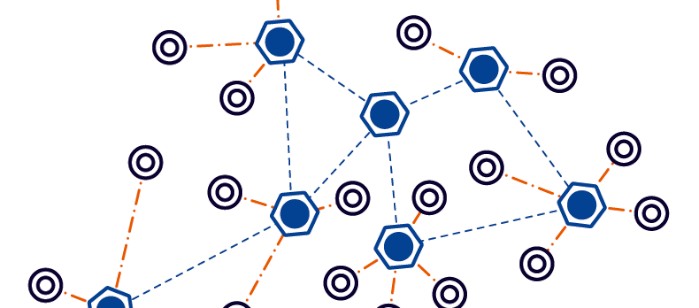
Decreasing costs and increasing functionality of hardware devices have made Wireless Sensor Networks (WSNs) attractive for applications that serve in inhospitable environments like battlefields, planetary exploration or environmental monitoring. WSNs employed in these environments are expected to work autonomously and extend network lifespan for as long as possible while carrying out their designated tasks. The harsh environment exposes individual nodes to a high risk of failure and their failure can partition the network into disjoint segments. Therefore, a network must be able to self-heal and restore lost connectivity using available resources. The ad-hoc nature of deployment, harsh operating environment means that proactive strategies based on redundancy cannot be applied as the scope of the damage could be so large that redundant nodes could be lost as well. The lack of external resources like satellite coverage preclude the application of centralized recovery approaches since they require the entire network state to be available for recovery. Hence distributed approaches that employ reactive strategies are the most viable solutions for these networks.
In this dissertation, we tackle the problem of distributed connectivity restoration in a WSN that has been partitioned into multiple disjoint segments due to multi-node failures. We consider multiple variants of the problem based on the available resources, and present a set of novel recovery schemes that suit the capabilities and requirements of the WSN being repaired. The correctness and time-complexity of all proposed approaches are analyzed and their performance is validated through extensive experiments.
Committee: Drs. Mohamed Younis (Chair), Charles Nicholas, Chintan Patel, Kemal Akkaya (FIU), Waleed Youssef (IBM)
]]>
PhD Dissertation Defense Distributed Protocols for Connectivity Restoration in Damaged Wireless Sensor Networks Yatish Joshi 9:30 Monday, 23 November 2015, ITE 325b Decreasing costs and...
http://www.csee.umbc.edu/2015/11/19864/
https://my3.my.umbc.edu/api/v0/pixel/news/55791/guest@my.umbc.edu/866c4effdd50b1e627340b03e13cee46/api/pixel
computer-engineering
computer-science
defense
graduate
news
research
talks
Computer Science and Electrical Engineering
https://my3.my.umbc.edu/groups/csee
https://assets3-my.umbc.edu/system/shared/avatars/groups/000/000/099/d117dca133c64bf78a4b7696dd007189/xsmall.png?1314043393
https://assets1-my.umbc.edu/system/shared/avatars/groups/000/000/099/d117dca133c64bf78a4b7696dd007189/original.png?1314043393
https://assets1-my.umbc.edu/system/shared/avatars/groups/000/000/099/d117dca133c64bf78a4b7696dd007189/xxlarge.png?1314043393
https://assets4-my.umbc.edu/system/shared/avatars/groups/000/000/099/d117dca133c64bf78a4b7696dd007189/xlarge.png?1314043393
https://assets3-my.umbc.edu/system/shared/avatars/groups/000/000/099/d117dca133c64bf78a4b7696dd007189/large.png?1314043393
https://assets1-my.umbc.edu/system/shared/avatars/groups/000/000/099/d117dca133c64bf78a4b7696dd007189/medium.png?1314043393
https://assets2-my.umbc.edu/system/shared/avatars/groups/000/000/099/d117dca133c64bf78a4b7696dd007189/small.png?1314043393
https://assets3-my.umbc.edu/system/shared/avatars/groups/000/000/099/d117dca133c64bf78a4b7696dd007189/xsmall.png?1314043393
https://assets3-my.umbc.edu/system/shared/avatars/groups/000/000/099/d117dca133c64bf78a4b7696dd007189/xxsmall.png?1314043393
Computer Science and Electrical Engineering
2
0
true
Mon, 09 Nov 2015 22:25:24 -0500
Professor Gymama Slaughter to speak at 2016 TEDxBaltimore
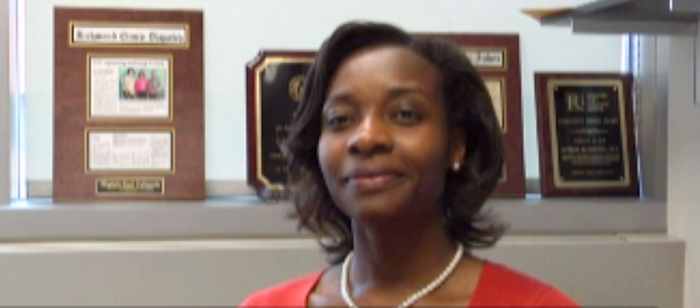
CSEE Professor Gymama Slaughter will talk about her research on Human Powered Biosensors as part at the 2016 TEDxBaltimore conference in January. The one-day conference will be held at Morgan State University on January 14, 2016 with the theme OUTLIERS: ideas that challenge traditional thinking. She will join about 15 other speakers each sharing an “idea worth spreading” with the expected 1,500 attendees.
Dr. Slaughter’s research focuses on the application of sensor-processor integration, bioelectronics design and theory, optimization methods for physical circuit design, biologically inspired computing (neural networks), and sensor interfacing and wireless networking and communications. You can find out more about the work that she and her students are doing by visiting her Biolectronics Laboratory website.
]]>
CSEE Professor Gymama Slaughter will talk about her research on Human Powered Biosensors as part at the 2016 TEDxBaltimore conference in January. The one-day conference will be held at Morgan...
http://www.csee.umbc.edu/2015/11/professor-gymama-slaughter-to-speak-at-2016-tedxbaltimore/
https://my3.my.umbc.edu/api/v0/pixel/news/55790/guest@my.umbc.edu/f734ed2ec75c7b1fbb5b10c5eafb0079/api/pixel
computer-engineering
electrical-engineering
events
faculty-and-staff
news
research
talks
Computer Science and Electrical Engineering
https://my3.my.umbc.edu/groups/csee
https://assets3-my.umbc.edu/system/shared/avatars/groups/000/000/099/d117dca133c64bf78a4b7696dd007189/xsmall.png?1314043393
https://assets1-my.umbc.edu/system/shared/avatars/groups/000/000/099/d117dca133c64bf78a4b7696dd007189/original.png?1314043393
https://assets1-my.umbc.edu/system/shared/avatars/groups/000/000/099/d117dca133c64bf78a4b7696dd007189/xxlarge.png?1314043393
https://assets4-my.umbc.edu/system/shared/avatars/groups/000/000/099/d117dca133c64bf78a4b7696dd007189/xlarge.png?1314043393
https://assets3-my.umbc.edu/system/shared/avatars/groups/000/000/099/d117dca133c64bf78a4b7696dd007189/large.png?1314043393
https://assets1-my.umbc.edu/system/shared/avatars/groups/000/000/099/d117dca133c64bf78a4b7696dd007189/medium.png?1314043393
https://assets2-my.umbc.edu/system/shared/avatars/groups/000/000/099/d117dca133c64bf78a4b7696dd007189/small.png?1314043393
https://assets3-my.umbc.edu/system/shared/avatars/groups/000/000/099/d117dca133c64bf78a4b7696dd007189/xsmall.png?1314043393
https://assets3-my.umbc.edu/system/shared/avatars/groups/000/000/099/d117dca133c64bf78a4b7696dd007189/xxsmall.png?1314043393
Computer Science and Electrical Engineering
0
0
true
Mon, 09 Nov 2015 21:57:26 -0500
Mon, 09 Nov 2015 21:57:26 -0500
Free Professional ISSA Membership--Limited Time Sign up ASAP
Join a Global Community of IT Professionals
Hey Everyone,
The International ISSA is offering a chance to students to join the ISSA Community for free. UMBC-ISSA and 1 other club have been chosen to be the test group.
The hope is students will join for free, love the community, experience the benefits and choose later to join the Professional ISSA after they graduate.
Here are some reasons to join:
- Professional Development - Career Opportunities &
Growth
- Mentorship-- Virtual & face to face
- Education and Training
- Earn CPE credits , Free webinars, Seminars
- Pre-Professional Virtual Meetups
- Development Workshops
- Leadership --Join or Create Committees, Lead projects/events,
etc.
- Build professional relationships--Networking
- Special offers & discounts:
- Black Hat, DEF CON , IT Career Symposium, SANS Cyber
Talent Fair
- Access thousands of local and national Retail
discounts—Oil changes, AMC theaters , Target, Sprint, T-Mobile, Dell,
Toshiba & more
- Always be a part of a community --ISSA is global, we
are on 6 Continents!
- Direct job postings
- Free food and Monthly chapter meetings
- Special Interest groups-Policy, Women in Security, Health, etc.
- Keep up on developments in information
security/risk/privacy
We need as much participation as possible to show that
students are interested in Joining. There are No requirements & No obligations other than being a student and being interested in IT/Cyber!
Signing up:
- It should take 10 minutes or less, Point and click!
- For membership type Choose: Freemium Student (Test Grp: Baltimore Co & Spring)
- For chapters Please select : USA: MD Baltimore
You will be asked to attach a copy of your current schedule.
This can be a word doc with your schedule or a screen shot, It does not have to
be official.
Please paw this post if you are going to sign up or are interested
in signing up.
]]>
Hey Everyone, The International ISSA is offering a chance to students to join the ISSA Community for free. UMBC-ISSA and 1 other club have been chosen to be the test group. The hope...
https://www.issa.org/general/register_member_type.asp?
https://my3.my.umbc.edu/api/v0/pixel/news/55655/guest@my.umbc.edu/26e460b4d494c225fa7fc2c2ef04e877/api/pixel
Information Systems Security Association, UMBC Chapter
https://my3.my.umbc.edu/groups/issa
https://assets4-my.umbc.edu/system/shared/avatars/groups/000/000/514/0bdfb1231eca53e69ca24c2de2eb6912/xsmall.png?1772925484
https://assets4-my.umbc.edu/system/shared/avatars/groups/000/000/514/0bdfb1231eca53e69ca24c2de2eb6912/original.jpg?1772925484
https://assets3-my.umbc.edu/system/shared/avatars/groups/000/000/514/0bdfb1231eca53e69ca24c2de2eb6912/xxlarge.png?1772925484
https://assets3-my.umbc.edu/system/shared/avatars/groups/000/000/514/0bdfb1231eca53e69ca24c2de2eb6912/xlarge.png?1772925484
https://assets4-my.umbc.edu/system/shared/avatars/groups/000/000/514/0bdfb1231eca53e69ca24c2de2eb6912/large.png?1772925484
https://assets2-my.umbc.edu/system/shared/avatars/groups/000/000/514/0bdfb1231eca53e69ca24c2de2eb6912/medium.png?1772925484
https://assets1-my.umbc.edu/system/shared/avatars/groups/000/000/514/0bdfb1231eca53e69ca24c2de2eb6912/small.png?1772925484
https://assets4-my.umbc.edu/system/shared/avatars/groups/000/000/514/0bdfb1231eca53e69ca24c2de2eb6912/xsmall.png?1772925484
https://assets4-my.umbc.edu/system/shared/avatars/groups/000/000/514/0bdfb1231eca53e69ca24c2de2eb6912/xxsmall.png?1772925484
Information Systems Security Association, UMBC Chapter
https://assets3-my.umbc.edu/system/shared/thumbnails/news/000/055/655/b11d5d8f18d1298d694929dcbfea8bde/xxlarge.jpg?1446748365
https://assets3-my.umbc.edu/system/shared/thumbnails/news/000/055/655/b11d5d8f18d1298d694929dcbfea8bde/xlarge.jpg?1446748365
https://assets4-my.umbc.edu/system/shared/thumbnails/news/000/055/655/b11d5d8f18d1298d694929dcbfea8bde/large.jpg?1446748365
https://assets4-my.umbc.edu/system/shared/thumbnails/news/000/055/655/b11d5d8f18d1298d694929dcbfea8bde/medium.jpg?1446748365
https://assets2-my.umbc.edu/system/shared/thumbnails/news/000/055/655/b11d5d8f18d1298d694929dcbfea8bde/small.jpg?1446748365
https://assets3-my.umbc.edu/system/shared/thumbnails/news/000/055/655/b11d5d8f18d1298d694929dcbfea8bde/xsmall.jpg?1446748365
https://assets3-my.umbc.edu/system/shared/thumbnails/news/000/055/655/b11d5d8f18d1298d694929dcbfea8bde/xxsmall.jpg?1446748365
13
0
true
Thu, 05 Nov 2015 13:37:59 -0500
Fri, 06 Nov 2015 16:07:04 -0500
FBI Internships - Time Sensitive! Must Apply before 11/24
Hiring for the 2016 Honors and Cyber Internship programs
The 2016 FBI Internship application window is OPEN and closes November 24, 2015
The
FBI has opened the call for applications for the 2016 Honors and Cyber
Internship programs and launched a new application process. All intern
candidates must go to www.fbijobs.gov, register and complete a profile, and then select their profile to be added to the Intern Talent Network by November 24, 2015.
After
selecting the Intern Talent Network, intern candidates must attach
their résumés and answer suitability questions. Candidates are strongly
encouraged to review the instructions for navigating the Intern Talent
Network (attached) before beginning the process. Only those candidates
in the network by November 24 will be considered for the 2016 program.
All
educational backgrounds will be considered for the internships. To
qualify for the Honors or Cyber Internship Programs, candidates must:
- Be a second-semester freshmen or above; candidates cannot have graduated before June 13, 2016;
- Be available 40 hours per week from June 13, 2016 to August 19, 2016 (10 weeks); and
- Have a minimum cumulative 3.0 GPA. (*if you do not meet this requirement but speak more than one language or think you would be a great candidate anyway, Give it a try! )
If
you know a promising young adult who is interested in exploring an FBI
career via this internship program, please direct them to complete their
profile on fbijobs.gov and add it to the Intern Talent Network by November 24, 2015.
FYI the FBI has a few position up in UMBCworks and are hosting Interviews and recruiting events the week of 11/16
]]>
The 2016 FBI Internship application window is OPEN and closes November 24, 2015 The FBI has opened the call for applications for the 2016 Honors and Cyber Internship programs and launched a...
http://fbijobs.gov/
Flyer
https://assets1-my.umbc.edu/system/shared/attachments/111198be27957b2e6c0d7159369d4770/69f6995d/news/000/055/642/b47122497e685d3a5ebbc85f018d1936/TA_Job_Aid_Intern_Talent_Network.pdf?1446740548
https://my3.my.umbc.edu/api/v0/pixel/news/55642/guest@my.umbc.edu/9f940d0a0aa2f141927b4d88e9dcac9d/api/pixel
Information Systems Security Association, UMBC Chapter
https://my3.my.umbc.edu/groups/issa
https://assets4-my.umbc.edu/system/shared/avatars/groups/000/000/514/0bdfb1231eca53e69ca24c2de2eb6912/xsmall.png?1772925484
https://assets4-my.umbc.edu/system/shared/avatars/groups/000/000/514/0bdfb1231eca53e69ca24c2de2eb6912/original.jpg?1772925484
https://assets3-my.umbc.edu/system/shared/avatars/groups/000/000/514/0bdfb1231eca53e69ca24c2de2eb6912/xxlarge.png?1772925484
https://assets3-my.umbc.edu/system/shared/avatars/groups/000/000/514/0bdfb1231eca53e69ca24c2de2eb6912/xlarge.png?1772925484
https://assets4-my.umbc.edu/system/shared/avatars/groups/000/000/514/0bdfb1231eca53e69ca24c2de2eb6912/large.png?1772925484
https://assets2-my.umbc.edu/system/shared/avatars/groups/000/000/514/0bdfb1231eca53e69ca24c2de2eb6912/medium.png?1772925484
https://assets1-my.umbc.edu/system/shared/avatars/groups/000/000/514/0bdfb1231eca53e69ca24c2de2eb6912/small.png?1772925484
https://assets4-my.umbc.edu/system/shared/avatars/groups/000/000/514/0bdfb1231eca53e69ca24c2de2eb6912/xsmall.png?1772925484
https://assets4-my.umbc.edu/system/shared/avatars/groups/000/000/514/0bdfb1231eca53e69ca24c2de2eb6912/xxsmall.png?1772925484
Information Systems Security Association, UMBC Chapter
https://assets2-my.umbc.edu/system/shared/thumbnails/news/000/055/642/bee5ca2551bf346f067a3ac16057bc40/xxlarge.jpg?1446740225
https://assets4-my.umbc.edu/system/shared/thumbnails/news/000/055/642/bee5ca2551bf346f067a3ac16057bc40/xlarge.jpg?1446740225
https://assets3-my.umbc.edu/system/shared/thumbnails/news/000/055/642/bee5ca2551bf346f067a3ac16057bc40/large.jpg?1446740225
https://assets1-my.umbc.edu/system/shared/thumbnails/news/000/055/642/bee5ca2551bf346f067a3ac16057bc40/medium.jpg?1446740225
https://assets2-my.umbc.edu/system/shared/thumbnails/news/000/055/642/bee5ca2551bf346f067a3ac16057bc40/small.jpg?1446740225
https://assets3-my.umbc.edu/system/shared/thumbnails/news/000/055/642/bee5ca2551bf346f067a3ac16057bc40/xsmall.jpg?1446740225
https://assets2-my.umbc.edu/system/shared/thumbnails/news/000/055/642/bee5ca2551bf346f067a3ac16057bc40/xxsmall.jpg?1446740225
1
0
true
Thu, 05 Nov 2015 11:22:28 -0500
Thu, 05 Nov 2015 11:33:01 -0500
talk: John Kloetzli, DirectX 11 Software Tessellation, 11/13
The UMBC CSEE Seminar Series Presents
DirectX 11 Software Tessellation
John Kloetzli, Firaxis Games
12noon-1pm, Friday, November 13, 2015 ITE 102
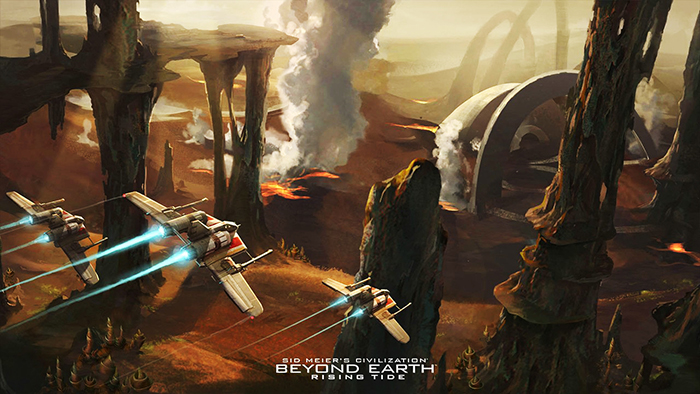
Graphics Processing Units (GPUs) have become increasingly important in general purpose high performance computing, both because of the enormous computing power of these highly parallel processors as well as the evolution of general purpose software APIs that provide a domain-independent software environment. Graphics applications are also being redesigned to take advantage of this general GPU access, both for design of new algorithms as well as optimization and specialization of existing ones. This talk will explore how having access to the general purpose compute API in DirectX 11 allows us to design a tessellation algorithm for a specific use case that has superior performance and quality to the fixed-function tessellation hardware.
John Kloetzli is a graphics programmer at Firaxis Games. He is an alumnus of UMBC, having received a BS in 2006 majoring in Computer Science with a minor in both Mathematics and Philosophy, and a MS in Computer Science in 2008. He has worked at Firaxis since 2006 and is part of the team that produces the popular Civilization game series.
Hosts: Professors Fow-Sen Choa (Sorry, you need javascript to view this email address. ) and Alan T. Sherman (Sorry, you need javascript to view this email address. )
]]>
The UMBC CSEE Seminar Series Presents DirectX 11 Software Tessellation John Kloetzli, Firaxis Games 12noon-1pm, Friday, November 13, 2015 ITE 102 Graphics Processing Units (GPUs) have...
http://www.csee.umbc.edu/2015/11/talk-john-kloetzli-directx-11-software-tessellation-umbc/
https://my3.my.umbc.edu/api/v0/pixel/news/55613/guest@my.umbc.edu/d9b71baf7dc17632d0c817480e677046/api/pixel
computer-science
game-track
news
talks
Computer Science and Electrical Engineering
https://my3.my.umbc.edu/groups/csee
https://assets3-my.umbc.edu/system/shared/avatars/groups/000/000/099/d117dca133c64bf78a4b7696dd007189/xsmall.png?1314043393
https://assets1-my.umbc.edu/system/shared/avatars/groups/000/000/099/d117dca133c64bf78a4b7696dd007189/original.png?1314043393
https://assets1-my.umbc.edu/system/shared/avatars/groups/000/000/099/d117dca133c64bf78a4b7696dd007189/xxlarge.png?1314043393
https://assets4-my.umbc.edu/system/shared/avatars/groups/000/000/099/d117dca133c64bf78a4b7696dd007189/xlarge.png?1314043393
https://assets3-my.umbc.edu/system/shared/avatars/groups/000/000/099/d117dca133c64bf78a4b7696dd007189/large.png?1314043393
https://assets1-my.umbc.edu/system/shared/avatars/groups/000/000/099/d117dca133c64bf78a4b7696dd007189/medium.png?1314043393
https://assets2-my.umbc.edu/system/shared/avatars/groups/000/000/099/d117dca133c64bf78a4b7696dd007189/small.png?1314043393
https://assets3-my.umbc.edu/system/shared/avatars/groups/000/000/099/d117dca133c64bf78a4b7696dd007189/xsmall.png?1314043393
https://assets3-my.umbc.edu/system/shared/avatars/groups/000/000/099/d117dca133c64bf78a4b7696dd007189/xxsmall.png?1314043393
Computer Science and Electrical Engineering
0
0
true
Wed, 04 Nov 2015 08:46:49 -0500
Wed, 04 Nov 2015 08:46:49 -0500
talk: Banerjee, Wearable Sensors for Individuals with Mobility Impairments
The UMBC CSEE Seminar Series Presents
Wearable Sensors for Individuals
with Mobility Impairments
Nilanjan Banerjee
Associate Professor, CSEE Dept., UMBC
1-2pm Friday, 6 November 2015, ITE 325
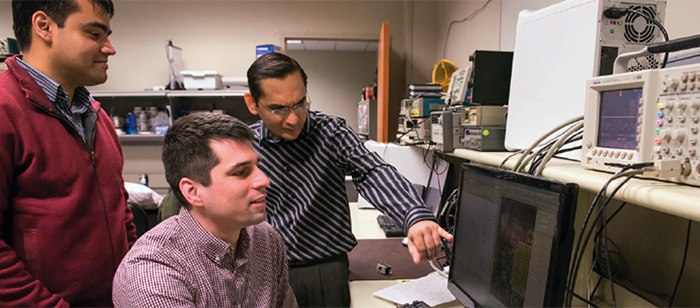
More than 500,000 individuals in the US are hospitalized every year due to spinal cord injuries. The severity of the injury dictates the degree of mobility that an individual has. All mobility impaired individuals rely on assistive devices to perform their daily life activities. Present assistive devices, however, are cumbersome, expensive, and limited. To this end, in this talk I will present two minimally intrusive systems — InviZ and Tongue-n-Cheek that can be used for environmental control in individuals with limited mobility. InviZ is based on textile capacitive sensors built into clothing and is used for gesture recognition; Tongue-n-Cheek is a micro-radar based system for tongue gesture recognition. This is joint work with Ryan Robucci and Chintan Patel and students in the ECLIPSE cluster at UMBC (eclipse.umbc.edu)
Nilanjan Banerjee is an associate professor in the CSEE Dept. at UMBC. He is a 2011 NSF Career Awardee and received a Microsoft Research Software Engineering Innovations Award. His research interests are in embedded systems, mobile systems, and sensor design.
Hosts: Professors Fow-Sen Choa (Sorry, you need javascript to view this email address. ) and Alan T. Sherman (Sorry, you need javascript to view this email address. )
]]>
The UMBC CSEE Seminar Series Presents Wearable Sensors for Individuals with Mobility Impairments Nilanjan Banerjee Associate Professor, CSEE Dept., UMBC 1-2pm Friday, 6 November 2015, ITE...
http://www.csee.umbc.edu/2015/11/talk-banerjee-wearable-sensors-for-individuals-with-mobility-impairments/
https://my3.my.umbc.edu/api/v0/pixel/news/55591/guest@my.umbc.edu/a86f99e8a64eb072a784ab28088fb4a8/api/pixel
computer-engineering
computer-science
news
talks
Computer Science and Electrical Engineering
https://my3.my.umbc.edu/groups/csee
https://assets3-my.umbc.edu/system/shared/avatars/groups/000/000/099/d117dca133c64bf78a4b7696dd007189/xsmall.png?1314043393
https://assets1-my.umbc.edu/system/shared/avatars/groups/000/000/099/d117dca133c64bf78a4b7696dd007189/original.png?1314043393
https://assets1-my.umbc.edu/system/shared/avatars/groups/000/000/099/d117dca133c64bf78a4b7696dd007189/xxlarge.png?1314043393
https://assets4-my.umbc.edu/system/shared/avatars/groups/000/000/099/d117dca133c64bf78a4b7696dd007189/xlarge.png?1314043393
https://assets3-my.umbc.edu/system/shared/avatars/groups/000/000/099/d117dca133c64bf78a4b7696dd007189/large.png?1314043393
https://assets1-my.umbc.edu/system/shared/avatars/groups/000/000/099/d117dca133c64bf78a4b7696dd007189/medium.png?1314043393
https://assets2-my.umbc.edu/system/shared/avatars/groups/000/000/099/d117dca133c64bf78a4b7696dd007189/small.png?1314043393
https://assets3-my.umbc.edu/system/shared/avatars/groups/000/000/099/d117dca133c64bf78a4b7696dd007189/xsmall.png?1314043393
https://assets3-my.umbc.edu/system/shared/avatars/groups/000/000/099/d117dca133c64bf78a4b7696dd007189/xxsmall.png?1314043393
Computer Science and Electrical Engineering
1
0
true
Tue, 03 Nov 2015 12:56:09 -0500
Tue, 03 Nov 2015 12:56:09 -0500
NSA Day of Cyber Experience
 At CyberMaryland 2015, UMBC was recognized as one of the inaugural university partners of the new “NSA Day of Cyber” experience being released this month by local firm LifeJourney.
According to LifeJourney,
“The NSA Day of Cyber is designed to raise the “national IQ” for STEM and CyberScience education paths. NSA is sponsoring the program to introduce and inspire the more than 40 million students in schools and colleges to pursue STEM careers to build the skills that will open up their future and connect them to this in-demand digital workforce.
The NSA Day of Cyber is a web-based, self-paced, interactive experience that enables students to test drive their future in Cybersecurity by experiencing a day in the life of six NSA cybersecurity leaders. This online experience is free to students, teachers, schools and organizations in the United States.”
UMBC President Freeman Hrabowski offered the morning’s keynote about Maryland’s prominent and successful role in educating the well-rounded cyber workforce. Following a brief promotional video, the official unveiling of the NSA Day of Cyber included remarks by Rob Joyce, Chief of Tailored Access Operations, NSA; Rodney Peterson, Director of NICE, NIST; Dr. Mark R. Nelson, Executive Director, Computer Science Teacher Association, and Dr. Nicholas Eugene, Director of STEM Programs, Coppin State University. An additional announcement event will take place on November 4 at the National Initiative for Cybersecurity Education (NICE) conference in San Diego.
Once the site launches in November, the NSA Day of Cyber experience will be promoted to Career Services and various UMBC academic programs/student groups with an interest in cybersecurity. A recent CSEE Ph.D. alumnus is a featured ‘mentor’ for one of the six experiences presented in the NSA Day of Cyber, too!
For more information on the NSA Day of Cyber, contact Dr. Rick Forno or register at LifeJourney’s NSA Day of Cyber site.
 ]]>
At CyberMaryland 2015, UMBC was recognized as one of the inaugural university partners of the new “NSA Day of Cyber” experience being released this month by local firm LifeJourney. According to...
http://www.csee.umbc.edu/2015/11/nsa-day-of-cyber-experience/
https://my3.my.umbc.edu/api/v0/pixel/news/55588/guest@my.umbc.edu/413a798bb3b30310a01889ce203b94b3/api/pixel
computer-science
csee
cybersecurity
news
Computer Science and Electrical Engineering
https://my3.my.umbc.edu/groups/csee
https://assets3-my.umbc.edu/system/shared/avatars/groups/000/000/099/d117dca133c64bf78a4b7696dd007189/xsmall.png?1314043393
https://assets1-my.umbc.edu/system/shared/avatars/groups/000/000/099/d117dca133c64bf78a4b7696dd007189/original.png?1314043393
https://assets1-my.umbc.edu/system/shared/avatars/groups/000/000/099/d117dca133c64bf78a4b7696dd007189/xxlarge.png?1314043393
https://assets4-my.umbc.edu/system/shared/avatars/groups/000/000/099/d117dca133c64bf78a4b7696dd007189/xlarge.png?1314043393
https://assets3-my.umbc.edu/system/shared/avatars/groups/000/000/099/d117dca133c64bf78a4b7696dd007189/large.png?1314043393
https://assets1-my.umbc.edu/system/shared/avatars/groups/000/000/099/d117dca133c64bf78a4b7696dd007189/medium.png?1314043393
https://assets2-my.umbc.edu/system/shared/avatars/groups/000/000/099/d117dca133c64bf78a4b7696dd007189/small.png?1314043393
https://assets3-my.umbc.edu/system/shared/avatars/groups/000/000/099/d117dca133c64bf78a4b7696dd007189/xsmall.png?1314043393
https://assets3-my.umbc.edu/system/shared/avatars/groups/000/000/099/d117dca133c64bf78a4b7696dd007189/xxsmall.png?1314043393
Computer Science and Electrical Engineering
0
0
true
Tue, 03 Nov 2015 11:30:01 -0500
]]>
At CyberMaryland 2015, UMBC was recognized as one of the inaugural university partners of the new “NSA Day of Cyber” experience being released this month by local firm LifeJourney. According to...
http://www.csee.umbc.edu/2015/11/nsa-day-of-cyber-experience/
https://my3.my.umbc.edu/api/v0/pixel/news/55588/guest@my.umbc.edu/413a798bb3b30310a01889ce203b94b3/api/pixel
computer-science
csee
cybersecurity
news
Computer Science and Electrical Engineering
https://my3.my.umbc.edu/groups/csee
https://assets3-my.umbc.edu/system/shared/avatars/groups/000/000/099/d117dca133c64bf78a4b7696dd007189/xsmall.png?1314043393
https://assets1-my.umbc.edu/system/shared/avatars/groups/000/000/099/d117dca133c64bf78a4b7696dd007189/original.png?1314043393
https://assets1-my.umbc.edu/system/shared/avatars/groups/000/000/099/d117dca133c64bf78a4b7696dd007189/xxlarge.png?1314043393
https://assets4-my.umbc.edu/system/shared/avatars/groups/000/000/099/d117dca133c64bf78a4b7696dd007189/xlarge.png?1314043393
https://assets3-my.umbc.edu/system/shared/avatars/groups/000/000/099/d117dca133c64bf78a4b7696dd007189/large.png?1314043393
https://assets1-my.umbc.edu/system/shared/avatars/groups/000/000/099/d117dca133c64bf78a4b7696dd007189/medium.png?1314043393
https://assets2-my.umbc.edu/system/shared/avatars/groups/000/000/099/d117dca133c64bf78a4b7696dd007189/small.png?1314043393
https://assets3-my.umbc.edu/system/shared/avatars/groups/000/000/099/d117dca133c64bf78a4b7696dd007189/xsmall.png?1314043393
https://assets3-my.umbc.edu/system/shared/avatars/groups/000/000/099/d117dca133c64bf78a4b7696dd007189/xxsmall.png?1314043393
Computer Science and Electrical Engineering
0
0
true
Tue, 03 Nov 2015 11:30:01 -0500