<?xml version="1.0"?>
<News hasArchived="false" page="2" pageCount="9" pageSize="10" timestamp="Sun, 06 Sep 2026 19:40:41 -0400" url="https://my3.my.umbc.edu/groups/marinebiotechnology/posts.xml?mode=pawpularity&amp;page=2">
<NewsItem contentIssues="true" id="126638" important="false" status="posted" url="https://my3.my.umbc.edu/groups/marinebiotechnology/posts/126638">
<Title>Congratulations Dr. Mingli Zhao!</Title>
<Tagline>Defended Thesis June 21, 2022</Tagline>
<Body>
<![CDATA[
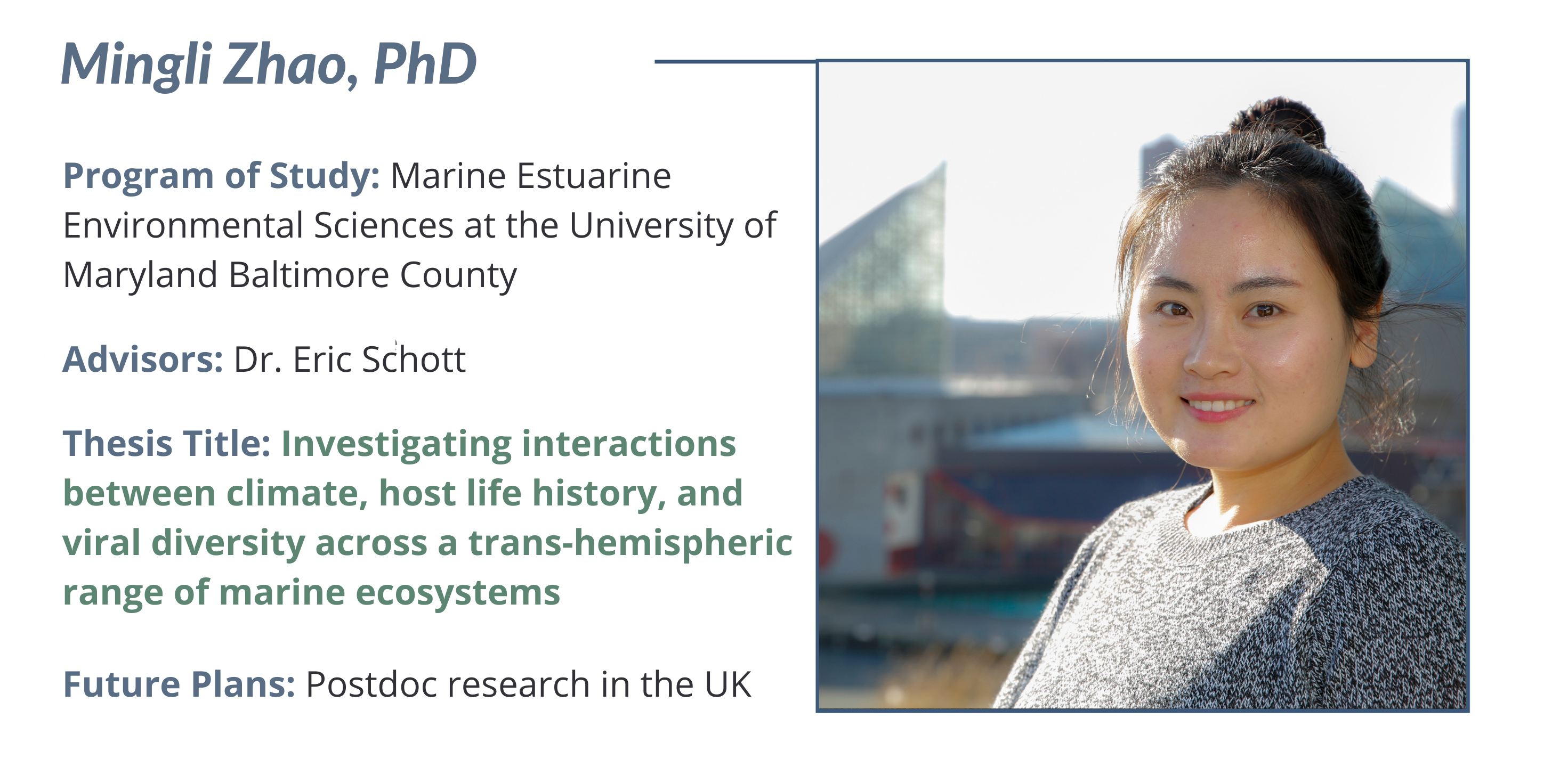
    <div class="html-content"><img src="https://imet.usmd.edu/sites/default/files/image-with-caption/graduate_template_2_0.png" style="max-width: 100%; height: auto;"></div>
]]>
</Body>
<Summary></Summary>
<TrackingUrl>https://my3.my.umbc.edu/api/v0/pixel/news/126638/guest@my.umbc.edu/859a03fd30e1aacf95517772ab8b2b74/api/pixel</TrackingUrl>
<Group token="marinebiotechnology">Marine Biotechnology</Group>
<GroupUrl>https://my3.my.umbc.edu/groups/marinebiotechnology</GroupUrl>
<AvatarUrl>https://assets4-my.umbc.edu/system/shared/avatars/groups/000/000/761/ea407c6c8898c300a60b1f84d8f15d80/xsmall.png?1596561611</AvatarUrl>
<AvatarUrl size="original">https://assets3-my.umbc.edu/system/shared/avatars/groups/000/000/761/ea407c6c8898c300a60b1f84d8f15d80/original.jpg?1596561611</AvatarUrl>
<AvatarUrl size="xxlarge">https://assets1-my.umbc.edu/system/shared/avatars/groups/000/000/761/ea407c6c8898c300a60b1f84d8f15d80/xxlarge.png?1596561611</AvatarUrl>
<AvatarUrl size="xlarge">https://assets4-my.umbc.edu/system/shared/avatars/groups/000/000/761/ea407c6c8898c300a60b1f84d8f15d80/xlarge.png?1596561611</AvatarUrl>
<AvatarUrl size="large">https://assets1-my.umbc.edu/system/shared/avatars/groups/000/000/761/ea407c6c8898c300a60b1f84d8f15d80/large.png?1596561611</AvatarUrl>
<AvatarUrl size="medium">https://assets4-my.umbc.edu/system/shared/avatars/groups/000/000/761/ea407c6c8898c300a60b1f84d8f15d80/medium.png?1596561611</AvatarUrl>
<AvatarUrl size="small">https://assets2-my.umbc.edu/system/shared/avatars/groups/000/000/761/ea407c6c8898c300a60b1f84d8f15d80/small.png?1596561611</AvatarUrl>
<AvatarUrl size="xsmall">https://assets4-my.umbc.edu/system/shared/avatars/groups/000/000/761/ea407c6c8898c300a60b1f84d8f15d80/xsmall.png?1596561611</AvatarUrl>
<AvatarUrl size="xxsmall">https://assets3-my.umbc.edu/system/shared/avatars/groups/000/000/761/ea407c6c8898c300a60b1f84d8f15d80/xxsmall.png?1596561611</AvatarUrl>
<Sponsor>Marine Biotechnology</Sponsor>
<PawCount>0</PawCount>
<CommentCount>0</CommentCount>
<CommentsAllowed>true</CommentsAllowed>
<PostedAt>Mon, 01 Aug 2022 15:08:59 -0400</PostedAt>
<EditAt>Mon, 01 Aug 2022 15:10:18 -0400</EditAt>
</NewsItem>

<NewsItem contentIssues="true" id="125790" important="false" status="posted" url="https://my3.my.umbc.edu/groups/marinebiotechnology/posts/125790">
<Title>Sakura Tanaka Wins The Prize</Title>
<Tagline>1st Place Winner of ISFE Contest</Tagline>
<Body>
<![CDATA[
    <div class="html-content">
    <div>
    <div>Sakura Tanaka is one of the winners in the recent on-line contest organized by the International Society for Fish Endocrinology. Congratulations to Sakura on this recognition from an international society! Sakura’s prize is free registration at the forthcoming 9th ISFE conference to be held in Faro, Portugal during September. This conference is held jointly between the ISFE and the European Society for Comparative Endocrinology.</div>
    <div><br></div>
    <div>You can view the announcement of this award at <a href="https://www.isfendo.com/2022/06/04/the-results-of-the-online-contest-have-arrived/" rel="nofollow external" class="bo">https://www.isfendo.com/2022/06/04/the-results-of-the-online-contest-have-arrived/</a>
    </div>
    <div><br></div>
    </div>
    <div><img src="https://imet.usmd.edu/sites/default/files/styles/bio_image/public/bio-image/sakura%20tanaka.jpg?itok=b-O_CU0u" style="max-width: 100%; height: auto;"></div>
    </div>
]]>
</Body>
<Summary>Sakura Tanaka is one of the winners in the recent on-line contest organized by the International Society for Fish Endocrinology. Congratulations to Sakura on this recognition from an international...</Summary>
<TrackingUrl>https://my3.my.umbc.edu/api/v0/pixel/news/125790/guest@my.umbc.edu/a320815b969aa71c1136630fdc8e5b1b/api/pixel</TrackingUrl>
<Group token="marinebiotechnology">Marine Biotechnology</Group>
<GroupUrl>https://my3.my.umbc.edu/groups/marinebiotechnology</GroupUrl>
<AvatarUrl>https://assets4-my.umbc.edu/system/shared/avatars/groups/000/000/761/ea407c6c8898c300a60b1f84d8f15d80/xsmall.png?1596561611</AvatarUrl>
<AvatarUrl size="original">https://assets3-my.umbc.edu/system/shared/avatars/groups/000/000/761/ea407c6c8898c300a60b1f84d8f15d80/original.jpg?1596561611</AvatarUrl>
<AvatarUrl size="xxlarge">https://assets1-my.umbc.edu/system/shared/avatars/groups/000/000/761/ea407c6c8898c300a60b1f84d8f15d80/xxlarge.png?1596561611</AvatarUrl>
<AvatarUrl size="xlarge">https://assets4-my.umbc.edu/system/shared/avatars/groups/000/000/761/ea407c6c8898c300a60b1f84d8f15d80/xlarge.png?1596561611</AvatarUrl>
<AvatarUrl size="large">https://assets1-my.umbc.edu/system/shared/avatars/groups/000/000/761/ea407c6c8898c300a60b1f84d8f15d80/large.png?1596561611</AvatarUrl>
<AvatarUrl size="medium">https://assets4-my.umbc.edu/system/shared/avatars/groups/000/000/761/ea407c6c8898c300a60b1f84d8f15d80/medium.png?1596561611</AvatarUrl>
<AvatarUrl size="small">https://assets2-my.umbc.edu/system/shared/avatars/groups/000/000/761/ea407c6c8898c300a60b1f84d8f15d80/small.png?1596561611</AvatarUrl>
<AvatarUrl size="xsmall">https://assets4-my.umbc.edu/system/shared/avatars/groups/000/000/761/ea407c6c8898c300a60b1f84d8f15d80/xsmall.png?1596561611</AvatarUrl>
<AvatarUrl size="xxsmall">https://assets3-my.umbc.edu/system/shared/avatars/groups/000/000/761/ea407c6c8898c300a60b1f84d8f15d80/xxsmall.png?1596561611</AvatarUrl>
<Sponsor>Marine Biotechnology</Sponsor>
<PawCount>0</PawCount>
<CommentCount>0</CommentCount>
<CommentsAllowed>true</CommentsAllowed>
<PostedAt>Tue, 07 Jun 2022 11:07:48 -0400</PostedAt>
</NewsItem>

<NewsItem contentIssues="true" id="119344" important="false" status="posted" url="https://my3.my.umbc.edu/groups/marinebiotechnology/posts/119344">
<Title>USDA Visits IMET</Title>
<Body>
<![CDATA[
    <div class="html-content">
    <div><div><div>
    <div><div><div>
    <p>The afternoon of April 28, IMET hosted Dr. Shefali Mehta, USDA's Deputy Under Secretary for Research, Education and Economics, and Dr. Caird Rexroad, USDA-ARS National Program Leader for Aquaculture. Dr. Mehta was amazed by our Aquaculture Research Center and very excited about our work.</p>
    <div><div><div>
    <p>The U.S. Department of Agriculture (USDA) has awarded $10 million to the University of Maryland, Baltimore County (UMBC) to carry out a set of projects to solve specific aquaculture challenges.</p>
    <p>Professor Yonathan Zohar, chair of Marine Biotechnology, UMBC, at IMET, leads the Sustainable Aquaculture Systems Supporting Atlantic Salmon (SAS<span>2</span>) that will address a range of challenges still hindering the success of emerging aquaculture platforms. SAS<span>2</span> project includes many academic and federal research institutes, as well as nine industry partners from across the U.S., Iceland, and Norway. Two-thirds of SAS<span>2</span> will be dedicated to research, with the remaining third split evenly between education/workforce development, and extension/community engagement. </p>
    </div></div></div>
    <div><div><div><a href="https://salmononland.org/" rel="nofollow external" class="bo">Learn more about SAS2</a></div></div></div>
    <p><img src="https://imet.usmd.edu/sites/default/files/home-page/usda_visit_2.jpeg" style="max-width: 100%; height: auto;"></p>
    <p><br></p>
    </div></div></div>
    <div></div>
    <p><br></p>
    <p><br></p>
    </div></div></div>
    <div></div>
    </div>
]]>
</Body>
<Summary>The afternoon of April 28, IMET hosted Dr. Shefali Mehta, USDA's Deputy Under Secretary for Research, Education and Economics, and Dr. Caird Rexroad, USDA-ARS National Program Leader for...</Summary>
<TrackingUrl>https://my3.my.umbc.edu/api/v0/pixel/news/119344/guest@my.umbc.edu/a49187b97430171f7406fb4f64d5112f/api/pixel</TrackingUrl>
<Group token="marinebiotechnology">Marine Biotechnology</Group>
<GroupUrl>https://my3.my.umbc.edu/groups/marinebiotechnology</GroupUrl>
<AvatarUrl>https://assets4-my.umbc.edu/system/shared/avatars/groups/000/000/761/ea407c6c8898c300a60b1f84d8f15d80/xsmall.png?1596561611</AvatarUrl>
<AvatarUrl size="original">https://assets3-my.umbc.edu/system/shared/avatars/groups/000/000/761/ea407c6c8898c300a60b1f84d8f15d80/original.jpg?1596561611</AvatarUrl>
<AvatarUrl size="xxlarge">https://assets1-my.umbc.edu/system/shared/avatars/groups/000/000/761/ea407c6c8898c300a60b1f84d8f15d80/xxlarge.png?1596561611</AvatarUrl>
<AvatarUrl size="xlarge">https://assets4-my.umbc.edu/system/shared/avatars/groups/000/000/761/ea407c6c8898c300a60b1f84d8f15d80/xlarge.png?1596561611</AvatarUrl>
<AvatarUrl size="large">https://assets1-my.umbc.edu/system/shared/avatars/groups/000/000/761/ea407c6c8898c300a60b1f84d8f15d80/large.png?1596561611</AvatarUrl>
<AvatarUrl size="medium">https://assets4-my.umbc.edu/system/shared/avatars/groups/000/000/761/ea407c6c8898c300a60b1f84d8f15d80/medium.png?1596561611</AvatarUrl>
<AvatarUrl size="small">https://assets2-my.umbc.edu/system/shared/avatars/groups/000/000/761/ea407c6c8898c300a60b1f84d8f15d80/small.png?1596561611</AvatarUrl>
<AvatarUrl size="xsmall">https://assets4-my.umbc.edu/system/shared/avatars/groups/000/000/761/ea407c6c8898c300a60b1f84d8f15d80/xsmall.png?1596561611</AvatarUrl>
<AvatarUrl size="xxsmall">https://assets3-my.umbc.edu/system/shared/avatars/groups/000/000/761/ea407c6c8898c300a60b1f84d8f15d80/xxsmall.png?1596561611</AvatarUrl>
<Sponsor>Marine Biotechnology</Sponsor>
<PawCount>0</PawCount>
<CommentCount>0</CommentCount>
<CommentsAllowed>true</CommentsAllowed>
<PostedAt>Tue, 10 May 2022 15:12:15 -0400</PostedAt>
<EditAt>Tue, 10 May 2022 15:13:03 -0400</EditAt>
</NewsItem>

<NewsItem contentIssues="false" id="118413" important="false" status="posted" url="https://my3.my.umbc.edu/groups/marinebiotechnology/posts/118413">
<Title>UMBC faculty and staff award recipients</Title>
<Body>
<![CDATA[
    <div class="html-content">
    <div><h1><span>UMBC faculty and staff award recipients place community at the core of their success</span></h1></div>
    <p>At UMBC’s 2022 Presidential Faculty and Staff Awards (PFASA), <strong>Tamra Mendelson</strong>, professor of biological sciences and recipient of the 2022 – 2025 Presidential Teaching Professor Award, said she loves “getting to the core of a concept” in her research and teaching. In her large introductory biology courses, which Mendelson has been teaching with humor, creativity, and enthusiasm since her arrival on campus in 2006, the concept might be an idea like natural selection. But as awardee after awardee addressed the audience, both in person and online, it became clear that all shared the same “core concept” of UMBC: community.</p>
    <p>“Teaching and research make me want to come to work every day, but it’s the community here, and Dr. Hrabowski in particular, who’ve made me want to come to UMBC every day,” Mendelson said.</p>
    <p><strong>Yonathan Zohar</strong>, professor and chair of marine biotechnology and the 2022 – 2025 Presidential Research Professor, added, “This recognition is not about me, it’s about us,” adapting the opening quote from President Hrabowski’s book, <em>The Empowered University. </em>Zohar’s work, nurtured diligently over more than three decades, has in the last few years brought in more than $10 million dollars of research funding, earned international awards, and is poised to reimagine the seafood industry as we know it.</p>
    <p>And yet, Zohar says, “None of my research accomplishments would have been possible without the ‘about us’ spirit at UMBC—the spirit that together we can make everything and anything happen.”</p>
    <div>
    <a href="https://news.umbc.edu/wp-content/uploads/2022/04/PFSA-22-7559_sm-scaled-e1649368122556.jpg" rel="nofollow external" class="bo"><img src="https://news.umbc.edu/wp-content/uploads/2022/04/PFSA-22-7559_sm-683x1024.jpg" alt="Bill LaCourse and Yonathan Zohar shake hands on stage" width="469" height="703" style="max-width: 100%; height: auto;"></a>Yonathan Zohar, right, accepts his award from <strong>Bill LaCourse</strong>, dean of the College of Natural and Mathematical Sciences.</div>
    <h4><strong>Supporting each other</strong></h4>
    <p><strong>Helena Dahlen</strong>, executive administrative assistant in the Division of Information Technology and the 2022 – 2023 Presidential Distinguished Staff Award for Non-exempt Staff recipient, recalled becoming an active member of the community when she started at UMBC in 2015. She joined book clubs, participated in wellness events, attended lectures, and more.</p>
    <p>“It felt like I had moved into a small community,” she says. “Almost like a village, surrounded by brilliant people of all ages.” The supportive environment has allowed Dahlen to do her best work at UMBC and to give back. She generously contributes her energy to programs like Retriever Essentials and the Maryland Charity Campaign, and she serves as president of the Non-exempt Staff Senate.</p>
    <p>Finally, <strong>Michael Pound</strong>, director of environmental safety and health and the 2022 – 2023 Presidential Distinguished Staff Award recipient, got to the heart of the matter. Recalling the challenges of managing the university’s response to the pandemic with a team of dedicated colleagues, he says, “I just couldn’t be prouder to work with these great folks.”</p>
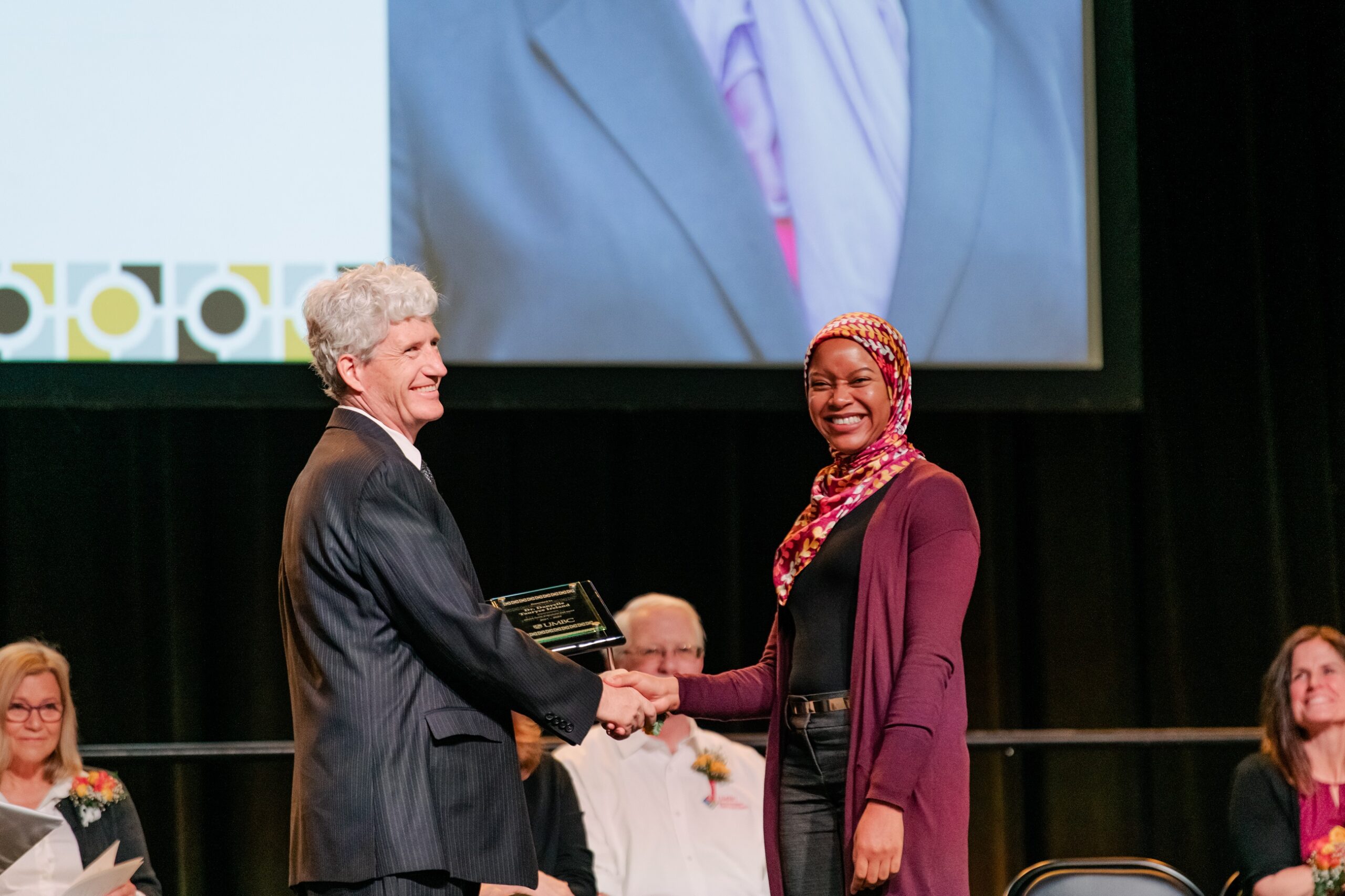
    <a href="https://news.umbc.edu/wp-content/uploads/2022/04/PFSA-22-7654_sm-scaled.jpg" rel="nofollow external" class="bo"><img width="1024" height="683" src="https://news.umbc.edu/wp-content/uploads/2022/04/PFSA-22-7654_sm-1024x683.jpg" alt="Marc Olano and Danyelle Ireland shaking hands on stage, both smiling" style="max-width: 100%; height: auto;"></a>Danyelle Ireland, right, accepts her award from <strong>Marc Olano</strong>, associate dean of academic programs and learning in the College of Engineering and IT.<h4><strong>Beyond imagination</strong></h4>
    <p>The UMBC community, all of the awardees emphasized, has grown through years of thoughtful care and collaboration. It’s taken decades to cultivate the UMBC ethos of community support and shared leadership.</p>
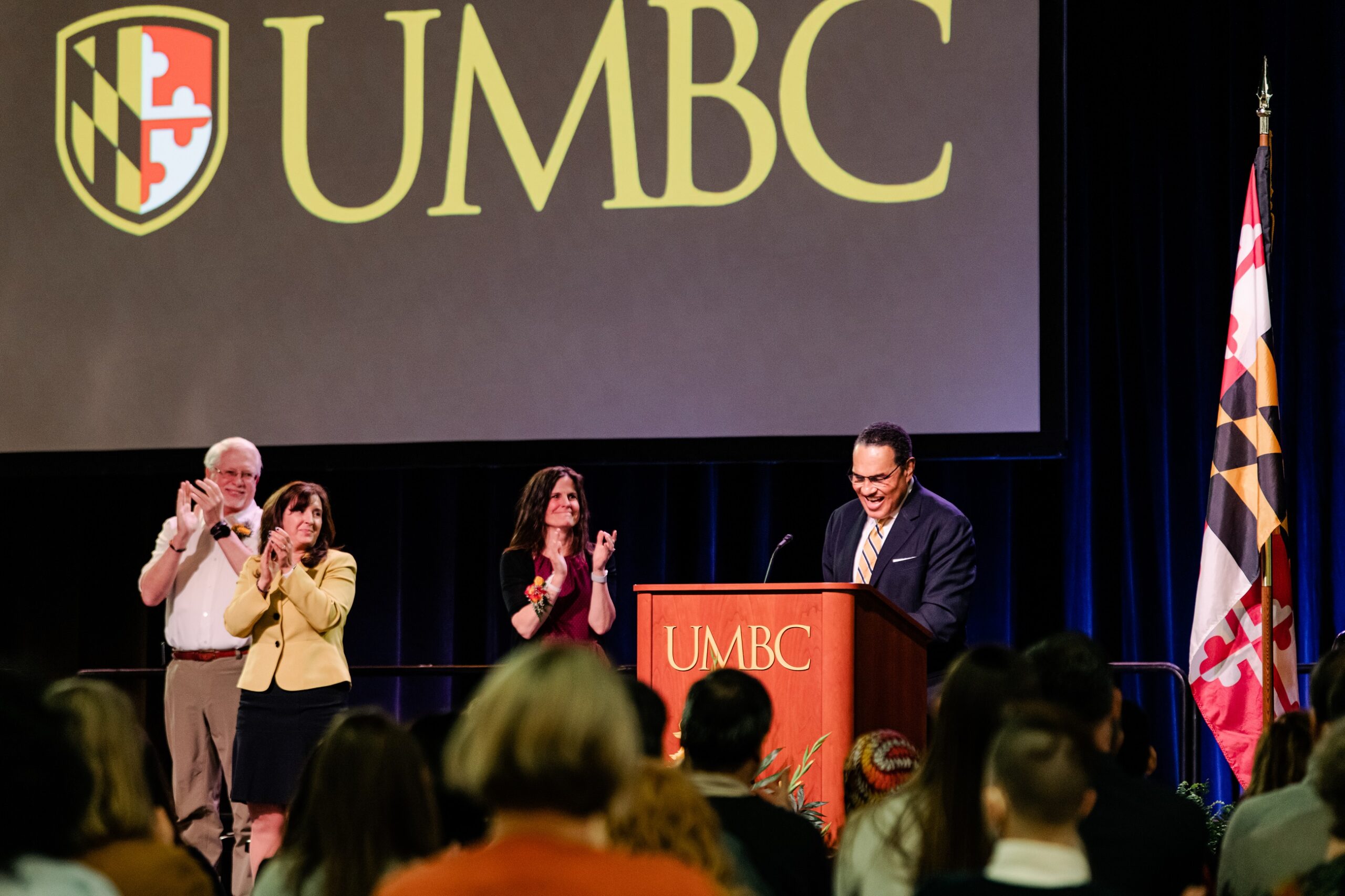
    <p>“It’s hard to express how far we’ve come,” reflected President Hrabowski, as he offered remarks at his final PFASA as UMBC president. “Growing up, I could never have imagined the concept of UMBC—people from all over the world coming to study, to seek the truth, to get to know people different from themselves.” </p>
    <p>UMBC’s newest awardees highlighted how that vision has become a reality, and Pres. Hrabowski honored all that they have contributed. “Leadership isn’t about one person at the top; it’s about what we all do,” Hrabowski said. “When we say we care about UMBC, what we’re saying is we care about each other.”</p>
    <a href="https://news.umbc.edu/wp-content/uploads/2022/04/PFSA-22-7713_sm-scaled.jpg" rel="nofollow external" class="bo"><img width="1024" height="683" src="https://news.umbc.edu/wp-content/uploads/2022/04/PFSA-22-7713_sm-1024x683.jpg" alt="President Hrabowski at a lectern, people on stage and in the audience applauding" style="max-width: 100%; height: auto;"></a>The audience applauds President Hrabowski as he makes remarks at his final Presidential Faculty and Staff Awards.<h4><strong>Honoring excellence</strong></h4>
    <p>UMBC’s other named awards honor members of the UMBC community who embody the university’s ethos, such as <strong>Diane Lee</strong>, retired vice provost and dean of undergraduate education; <strong>Marilyn E. Demorest</strong>, professor emerita of psychology and former vice provost for faculty affairs; and <strong>Teresa Lupinek</strong>, the late former executive administrative assistant to the president. This year’s recipients include:</p>
    <p><strong>Mark Berczynski</strong>, M.S. ’17, lecturer, engineering and computing education program<br><em>Diane M. Lee Teaching Award</em></p>
    <p><strong>Danyelle Tauryce Ireland</strong>, associate director, Center for Women in Technology<br><em>Jakubik Family Endowment Staff Award</em></p>
    <p><strong>Nichole Zang Do</strong>, M.A. ’15, program management specialist, biological sciences<br><em>Karen L. Wensch Endowment Award for Outstanding Non-exempt Staff</em></p>
    <p><strong>C. Jill Randles</strong>, assistant vice provost and assistant dean, Academic Engagement and Transition Programs<br><em>Teresa Lupinek Endowment Award</em></p>
    <p><strong>Tamara Bhalla</strong>, associate professor, American studies<br><em>Marilyn E. Demorest Award for Faculty Advancement</em></p>
    <p><strong>Margaret Holland</strong>, associate professor, geography and environmental systems<br><em>Marilyn E. Demorest Award for Faculty Advancement</em></p>
    <p><strong>Narsingh B. Singh</strong>, research professor, chemistry and biochemistry, and affiliate faculty, computer science and electrical engineering<br><em>UMBC Research Faculty Excellence Award</em></p>
    <a href="https://news.umbc.edu/wp-content/uploads/2022/04/PFSA-22-7687_sm-scaled.jpg" rel="nofollow external" class="bo"><img width="1024" height="683" src="https://news.umbc.edu/wp-content/uploads/2022/04/PFSA-22-7687_sm-1024x683.jpg" alt="Kimberly Moffitt and Margaret Holland on stage, both holding Holland's award" style="max-width: 100%; height: auto;"></a>Margaret Holland, right, accepts her award from <strong>Kimberly Moffitt</strong>, dean of the College of Arts, Humanities, and Social Sciences.<h4><strong>USM Board of Regents awardees</strong></h4>
    <p>This year, UMBC also had <a href="https://www.usmd.edu/newsroom/news/2232" rel="nofollow external" class="bo">two University System of Maryland (USM) Board of Regents Award recipients</a>. These awards represent the highest honor bestowed on faculty and staff across the USM by the Board of Regents. Awardees are selected by the Council of University System Staff and approved by the Board. The awards recognize faculty and staff for excellence in teaching; research, scholarship, and creative activity; public service; mentoring; or innovation. </p>
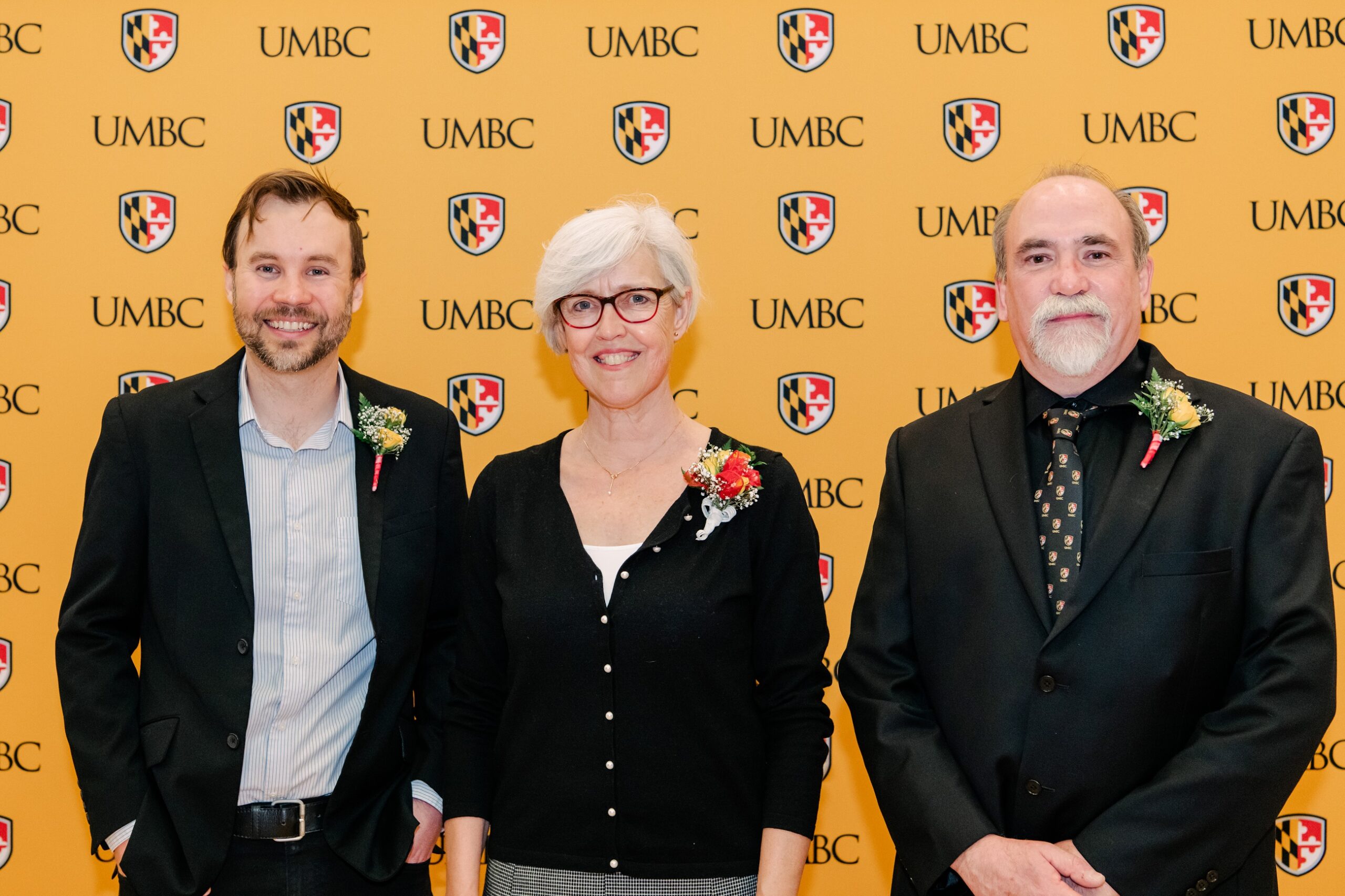
    <p>UMBC has received an outsize share of these awards over the years, demonstrating the strength of our faculty and staff across all areas of achievement. This year, <strong>Marjoleine Kars</strong>, professor of history, received the 2022 USM Board of Regents Award for Excellence in Scholarship. Her latest book, <em>Blood on the River: A Chronicle of Mutiny and Freedom on the Wild Coast</em>, <a href="https://news.umbc.edu/umbcs-marjoleine-kars-receives-the-cundill-history-prize-and-frederick-douglass-book-prize-for-blood-on-the-river/" rel="nofollow external" class="bo">has received widespread acclaim</a> for its discussion of a nearly successful rebellion of enslaved African and Indigenous people in the Dutch colony of Berbice in the 1860s. <em> </em> </p>
    <p><strong>Lee Blaney</strong>, associate professor of chemical, biochemical, and environmental engineering, received the 2022 USM Board of Regents Award for Excellence in Teaching. Blaney has <a href="https://news.umbc.edu/american-chemical-society-honors-umbcs-lee-blaney-for-commitment-to-mentoring-student-researchers/" rel="nofollow external" class="bo">received awards previously</a> for exceptional mentoring and for engaging his students in high-impact research. His laboratory focuses on contaminants of emerging concern, such as compounds found in pharmaceuticals and personal care products, in waterways such as Chesapeake Bay.</p>
    <a href="https://news.umbc.edu/wp-content/uploads/2022/04/PFSA-22-7302_sm-scaled.jpg" rel="nofollow external" class="bo"><img width="1024" height="683" src="https://news.umbc.edu/wp-content/uploads/2022/04/PFSA-22-7302_sm-1024x683.jpg" alt="Lee Blaney, Marjoleine Kars, and Victor Fulda in front of a gold UMBC backdrop" style="max-width: 100%; height: auto;"></a>From left to right: Lee Blaney, Marjoleine Kars, and Victor Fulda.<h4><strong>Celebrating together</strong></h4>
    <p>This year’s ceremony was the first in-person PFASA event since 2019. With that in mind, the ceremony also honored awardees from <a href="https://facultystaffawards.umbc.edu/home/2020-2023-presidential-teaching-professor/" rel="nofollow external" class="bo">2020</a> and <a href="https://facultystaffawards.umbc.edu/home/2021-2024-presidential-teaching-professor/" rel="nofollow external" class="bo">2021</a>.</p>
    <p><strong>Victor Fulda</strong>, engineering technician, chemical, biochemical, and environmental engineering<br><em>2021 University System of Maryland Board of Regents Award for Exceptional Contribution to the Institution or Unit to which the Person Belongs</em></p>
    <p><strong>Jamie Gurganus </strong>‘04, M.S. ‘11, Ph.D. ‘20; faculty, mechanical engineering; associate director, engineering education initiatives; and director, Center for the Integration of Research, Teaching, and Learning<br><em>2020 – 2021 Diane M. Lee Teaching Award</em></p>
    <p><strong>Jonathan Zwi</strong>, instructor and affiliate artist, music<br><em>2020 – 2021 Diane M. Lee Teaching Award</em></p>
    <p><em>Header image: Recipients of awards who accepted them in person at this year’s PFASA. From left to right: Marjoleine Kars, Michael Pound, Jamie Gurganus, Maggie Holland, Nichole Zang Do, Jill Randles, Danyelle Ireland, Tamra Mendelson, Yonathan Zohar, Helena Dahlen, Freeman Hrabowski, Tamara Bhalla, Victor Fulda, Jonanthan Zwi, Narsingh Singh, Lee Blaney, Philip Rous.</em></p>
    <p><em>All photos by Marlayna Demond ’11 for UMBC.</em></p>
    <div><div>
    <a href="https://news.umbc.edu/#facebook" title="Facebook" rel="nofollow external" class="bo"><span></span><span>Facebook</span></a><a href="https://news.umbc.edu/#twitter" title="Twitter" rel="nofollow external" class="bo"><span></span><span>Twitter</span></a><a href="https://news.umbc.edu/#linkedin" title="LinkedIn" rel="nofollow external" class="bo"><span></span><span>LinkedIn</span></a><a href="https://www.addtoany.com/share#url=https%3A%2F%2Fnews.umbc.edu%2Fumbc-faculty-and-staff-award-recipients-place-community-at-the-core-of-their-success%2F&amp;title=UMBC%20faculty%20and%20staff%20award%20recipients%20place%20community%20at%20the%20core%20of%20their%20success" rel="nofollow external" class="bo"><span></span></a>
    </div></div>
    <a href="https://www.addtoany.com/share#url=https%3A%2F%2Fnews.umbc.edu%2Fumbc-faculty-and-staff-award-recipients-place-community-at-the-core-of-their-success%2F&amp;title=UMBC%20faculty%20and%20staff%20award%20recipients%20place%20community%20at%20the%20core%20of%20their%20success" rel="nofollow external" class="bo"><span>Share</span></a>
    </div>
]]>
</Body>
<Summary>UMBC faculty and staff award recipients place community at the core of their success   At UMBC’s 2022 Presidential Faculty and Staff Awards (PFASA), Tamra Mendelson, professor of biological...</Summary>
<TrackingUrl>https://my3.my.umbc.edu/api/v0/pixel/news/118413/guest@my.umbc.edu/79cc95a5600b3ddf2559709a2ee50d37/api/pixel</TrackingUrl>
<Group token="marinebiotechnology">Marine Biotechnology</Group>
<GroupUrl>https://my3.my.umbc.edu/groups/marinebiotechnology</GroupUrl>
<AvatarUrl>https://assets4-my.umbc.edu/system/shared/avatars/groups/000/000/761/ea407c6c8898c300a60b1f84d8f15d80/xsmall.png?1596561611</AvatarUrl>
<AvatarUrl size="original">https://assets3-my.umbc.edu/system/shared/avatars/groups/000/000/761/ea407c6c8898c300a60b1f84d8f15d80/original.jpg?1596561611</AvatarUrl>
<AvatarUrl size="xxlarge">https://assets1-my.umbc.edu/system/shared/avatars/groups/000/000/761/ea407c6c8898c300a60b1f84d8f15d80/xxlarge.png?1596561611</AvatarUrl>
<AvatarUrl size="xlarge">https://assets4-my.umbc.edu/system/shared/avatars/groups/000/000/761/ea407c6c8898c300a60b1f84d8f15d80/xlarge.png?1596561611</AvatarUrl>
<AvatarUrl size="large">https://assets1-my.umbc.edu/system/shared/avatars/groups/000/000/761/ea407c6c8898c300a60b1f84d8f15d80/large.png?1596561611</AvatarUrl>
<AvatarUrl size="medium">https://assets4-my.umbc.edu/system/shared/avatars/groups/000/000/761/ea407c6c8898c300a60b1f84d8f15d80/medium.png?1596561611</AvatarUrl>
<AvatarUrl size="small">https://assets2-my.umbc.edu/system/shared/avatars/groups/000/000/761/ea407c6c8898c300a60b1f84d8f15d80/small.png?1596561611</AvatarUrl>
<AvatarUrl size="xsmall">https://assets4-my.umbc.edu/system/shared/avatars/groups/000/000/761/ea407c6c8898c300a60b1f84d8f15d80/xsmall.png?1596561611</AvatarUrl>
<AvatarUrl size="xxsmall">https://assets3-my.umbc.edu/system/shared/avatars/groups/000/000/761/ea407c6c8898c300a60b1f84d8f15d80/xxsmall.png?1596561611</AvatarUrl>
<Sponsor>Marine Biotechnology</Sponsor>
<PawCount>1</PawCount>
<CommentCount>0</CommentCount>
<CommentsAllowed>true</CommentsAllowed>
<PostedAt>Tue, 12 Apr 2022 09:18:41 -0400</PostedAt>
</NewsItem>

<NewsItem contentIssues="true" id="115638" important="false" status="posted" url="https://my3.my.umbc.edu/groups/marinebiotechnology/posts/115638">
<Title>UMBC and Israeli Ministry of Agriculture</Title>
<Tagline>Establish Aquaculture Research Partnership</Tagline>
<Body>
<![CDATA[
    <div class="html-content">
    <p><img src="https://i2.wp.com/news.umbc.edu/wp-content/uploads/2021/12/093-UMBC-IMET-Israel-MOU21-0154_small.jpg?resize=1920%2C768&amp;ssl=1" style="max-width: 100%; height: auto;"></p>
    <p>UMBC will grow its aquaculture collaboration with Israeli colleagues thanks to a new statement of intent signed last week at the Institute of Marine and Environmental Technology (IMET), a collaborative research facility in Baltimore’s Inner Harbor that supports faculty affiliated with UMBC; University of Maryland, Baltimore; and University of Maryland Center for Environmental Science. The new agreement builds on decades of collaboration between Israeli researchers<strong> </strong>and <strong>Yonathan Zohar</strong>, professor and chair of marine biotechnology at UMBC. It will enable them to grow their ongoing efforts to improve and expand the aquaculture industry around the world.</p>
    <p>Coming together to sign the document were Oded Forer, Israeli Minister of Agriculture and Rural Development; Russell Hill, executive director of IMET; and <strong>Karl V. Steiner</strong>, UMBC’s vice president for research. The minister visited IMET on December 1 with a delegation from the agriculture ministry. Leaders from the United States Department of Agriculture (USDA) Animal Production and Protection program also attended the signing event, which was followed by a tour of the Aquaculture Research Center at IMET. </p>
    <p>The partnership will center on addressing challenges to the industry that, once overcome, will make aquaculture more efficient and sustainable, and expand it to more seafood species. Developing zero-waste systems, improving fish health and performance in captivity, and scaling up land-based aquaculture systems are all among the partners’ priorities.</p>
    <p>“This is a very important day for IMET and aquaculture,” Hill said at the event. “There is an urgent need to promote agriculture in a sustainable way in the U.S., and we hope to contribute as much as possible to that effort.”</p>
    <a href="https://i2.wp.com/news.umbc.edu/wp-content/uploads/2021/12/033-UMBC-IMET-Israel-MOU21-9886_small.jpg?ssl=1" rel="nofollow external" class="bo"><img width="720" height="480" src="https://i2.wp.com/news.umbc.edu/wp-content/uploads/2021/12/033-UMBC-IMET-Israel-MOU21-9886_small.jpg?resize=720%2C480&amp;ssl=1" alt="five people at a boardroom table, two shaking hands before signing documents before them." style="max-width: 100%; height: auto;"></a>Representatives from IMET, UMBC, and the Israeli Ministry of Agriculture and Rural Development signed a statement of intent to increase collaboration on aquaculture. From left to right: Russell Hill, Yonathan Zohar, Oded Forer, Karl Steiner (front), and Yakov Poleg (rear). Photo by Marlayna Demond ’11 for UMBC.<h4><strong><br></strong></h4>
    <h4><strong>Focused on the future</strong></h4>
    <p>Zohar<strong> </strong>has been working in the aquaculture space for over 35 years and is an international leader in aquaculture research. In fact, in November 2020, the Binational Agricultural Research Development Fund (BARD), a partnership program between the U.S. and Israel,<a href="https://news.umbc.edu/bard-fund-honors-umbcs-yonathan-zohar-for-aquaculture-research-with-12b-global-economic-impact/" rel="nofollow external" class="bo"> honored him for the economic impact</a> of his research.</p>
    <p>In addition to the BARD recognition, Zohar has received several other awards and accolades in recent months. He was awarded a<a href="https://news.umbc.edu/umbcs-yonathan-zohar-to-lead-10-million-partnership-to-scale-land-based-salmon-aquaculture/" rel="nofollow external" class="bo"> $10 million grant from the USDA</a> to lead a consortium of aquaculture researchers. He also led the creation of a<a href="https://news.umbc.edu/groundbreaking-fish-research-led-by-umbcs-yonathan-zohar-draws-aquaculture-giant-aquacon-to-maryland-for-nearly-1-billion-project/" rel="nofollow external" class="bo"> partnership with Aquacon</a>, a Norwegian company investing $1 billion in aquaculture in the U.S., including a large land-based facility on Maryland’s Eastern Shore. And Zohar’s startup, Silfra Biosystems, LLC, founded in partnership with UMBC microbiologist <strong>Kevin Sowers</strong>, was recognized as<a href="https://www.tedcomd.com/news-events/press-releases/2020/tedco-portfolio-companies-make-maryland-future-20-list" rel="nofollow external" class="bo"> a “Maryland Future 20” company for 2021</a>.</p>
    <p>Zohar continues to forge full speed ahead in his work to increase food production in a sustainable way for the increasing human population. “The world’s population is growing by 200,000 each day, placing an increasing demand on our food supply,” Zohar says. “Aquaculture is the fastest growing sector in all of agriculture, and now produces more fish than traditional fishing. Still, we must double production by 2030 to meet the growing demand for sustainable protein sources.”</p>
    <p>The land-based systems Zohar pioneered and continues to champion will be a big part of the solution, he believes, especially for salmon. “Atlantic salmon’s U.S. future is land-based,” Zohar says.</p>
    <a href="https://i1.wp.com/news.umbc.edu/wp-content/uploads/2021/12/089-UMBC-IMET-Israel-MOU21-0138_small.jpg?ssl=1" rel="nofollow external" class="bo"><img width="720" height="480" src="https://i1.wp.com/news.umbc.edu/wp-content/uploads/2021/12/089-UMBC-IMET-Israel-MOU21-0138_small.jpg?resize=720%2C480&amp;ssl=1" alt="six people gathered around a large indoor tank full of large fish." style="max-width: 100%; height: auto;"></a>Yonathan Zohar shows the Israeli delegation one of the fish tanks at the Aquaculture Research Center. Photo by Marlayna Demond ’11 for UMBC.<h4><strong><br></strong></h4>
    <h4><strong>Public research, public good</strong></h4>
    <p>University System of Maryland (USM) Chancellor Jay Perman called the environmental research being conducted at IMET one of the “crown jewels” of the system, in remarks during the signing event. “I can’t think of anything in higher ed that’s more current than the environment,” Perman said. </p>
    <p>Israeli institutions bring their own strengths to this field. For example, they’ve worked to develop agricultural systems that can succeed in drought conditions, which are common in Israel. In particular, the National Center for Mariculture (food production from the sea) in Eliat, Israel is a world leader.</p>
    <p>“Bringing together the complementary expertise of UMBC, IMET, and Israeli institutions is exactly the kind of collaboration that is needed to produce innovations that advance aquaculture and the broader mariculture field,” Steiner says, and the public impact this work will have is directly in line with UMBC’s values.</p>
    <p>“As a public research university, our motto is ‘public research for public good,’” Steiner continues. “I can think of no better way to embody this motto than by focusing on one of the most pressing questions of our time—how do we ensure that we can feed the world within rapidly changing ecosystems? We are absolutely delighted that this new agreement will allow us to further strengthen the impact of our faculty’s important work.”</p>
    <a href="https://i1.wp.com/news.umbc.edu/wp-content/uploads/2021/12/050-UMBC-IMET-Israel-MOU21-9955_small.jpg?ssl=1" rel="nofollow external" class="bo"><img width="720" height="480" src="https://i1.wp.com/news.umbc.edu/wp-content/uploads/2021/12/050-UMBC-IMET-Israel-MOU21-9955_small.jpg?resize=720%2C480&amp;ssl=1" alt="five people in business attire in an industrial-looking basement, one speaking " style="max-width: 100%; height: auto;"></a>Yonathan Zohar (center) talks about operations at the Aquaculture Research Center with a delegation from Israel, including the Minister of Agriculture and Rural Development, Oded Forer (far right). Photo by Marlayna Demond ’11 for UMBC.<p><em>Header image: Yonathan Zohar (left) explains operations of the Aquaculture Research Center to Israeli officials Yakov Poleg, Senior Deputy Director General of the Foreign Trade and International Cooperation; Yoram Kapulnik, Executive Director of BARD; and Oded Forer, Minister of Agriculture and Rural Development, during the delegation’s visit. Photo by Marlayna Demond ’11 for UMBC.</em></p>
    <div><div>
    <a href="https://news.umbc.edu/#facebook" title="Facebook" rel="nofollow external" class="bo"><span></span><span>Facebook</span></a><a href="https://news.umbc.edu/#twitter" title="Twitter" rel="nofollow external" class="bo"><span></span><span>Twitter</span></a><a href="https://news.umbc.edu/#linkedin" title="LinkedIn" rel="nofollow external" class="bo"><span></span><span>LinkedIn</span></a><a href="https://www.addtoany.com/share#url=https%3A%2F%2Fnews.umbc.edu%2Fumbc-and-israeli-ministry-of-agriculture-establish-aquaculture-research-partnership%2F&amp;title=UMBC%20and%20Israeli%20Ministry%20of%20Agriculture%20establish%20aquaculture%20research%20partnership" rel="nofollow external" class="bo"><span></span></a>
    </div></div>
    <a href="https://www.addtoany.com/share#url=https%3A%2F%2Fnews.umbc.edu%2Fumbc-and-israeli-ministry-of-agriculture-establish-aquaculture-research-partnership%2F&amp;title=UMBC%20and%20Israeli%20Ministry%20of%20Agriculture%20establish%20aquaculture%20research%20partnership" rel="nofollow external" class="bo"><span>Share</span></a>
    </div>
]]>
</Body>
<Summary>UMBC will grow its aquaculture collaboration with Israeli colleagues thanks to a new statement of intent signed last week at the Institute of Marine and Environmental Technology (IMET), a...</Summary>
<TrackingUrl>https://my3.my.umbc.edu/api/v0/pixel/news/115638/guest@my.umbc.edu/d75227119dcbf6e7799de1697fa9b8b5/api/pixel</TrackingUrl>
<Group token="marinebiotechnology">Marine Biotechnology</Group>
<GroupUrl>https://my3.my.umbc.edu/groups/marinebiotechnology</GroupUrl>
<AvatarUrl>https://assets4-my.umbc.edu/system/shared/avatars/groups/000/000/761/ea407c6c8898c300a60b1f84d8f15d80/xsmall.png?1596561611</AvatarUrl>
<AvatarUrl size="original">https://assets3-my.umbc.edu/system/shared/avatars/groups/000/000/761/ea407c6c8898c300a60b1f84d8f15d80/original.jpg?1596561611</AvatarUrl>
<AvatarUrl size="xxlarge">https://assets1-my.umbc.edu/system/shared/avatars/groups/000/000/761/ea407c6c8898c300a60b1f84d8f15d80/xxlarge.png?1596561611</AvatarUrl>
<AvatarUrl size="xlarge">https://assets4-my.umbc.edu/system/shared/avatars/groups/000/000/761/ea407c6c8898c300a60b1f84d8f15d80/xlarge.png?1596561611</AvatarUrl>
<AvatarUrl size="large">https://assets1-my.umbc.edu/system/shared/avatars/groups/000/000/761/ea407c6c8898c300a60b1f84d8f15d80/large.png?1596561611</AvatarUrl>
<AvatarUrl size="medium">https://assets4-my.umbc.edu/system/shared/avatars/groups/000/000/761/ea407c6c8898c300a60b1f84d8f15d80/medium.png?1596561611</AvatarUrl>
<AvatarUrl size="small">https://assets2-my.umbc.edu/system/shared/avatars/groups/000/000/761/ea407c6c8898c300a60b1f84d8f15d80/small.png?1596561611</AvatarUrl>
<AvatarUrl size="xsmall">https://assets4-my.umbc.edu/system/shared/avatars/groups/000/000/761/ea407c6c8898c300a60b1f84d8f15d80/xsmall.png?1596561611</AvatarUrl>
<AvatarUrl size="xxsmall">https://assets3-my.umbc.edu/system/shared/avatars/groups/000/000/761/ea407c6c8898c300a60b1f84d8f15d80/xxsmall.png?1596561611</AvatarUrl>
<Sponsor>Marine Biotechnology</Sponsor>
<PawCount>0</PawCount>
<CommentCount>0</CommentCount>
<CommentsAllowed>true</CommentsAllowed>
<PostedAt>Fri, 10 Dec 2021 11:19:20 -0500</PostedAt>
<EditAt>Fri, 10 Dec 2021 11:20:05 -0500</EditAt>
</NewsItem>

<NewsItem contentIssues="true" id="113151" important="false" status="posted" url="https://my3.my.umbc.edu/groups/marinebiotechnology/posts/113151">
<Title>Yonathan Zohar to lead $10 million partnership</Title>
<Tagline>Scaling land-based salmon aquaculture</Tagline>
<Body>
<![CDATA[
    <div class="html-content">
    <p><span><a href="https://news.umbc.edu/category/science-technology/" rel="nofollow external" class="bo">SCIENCE &amp; TECHNOLOGY</a></span><span><a href="https://news.umbc.edu/umbcs-yonathan-zohar-to-lead-10-million-partnership-to-scale-land-based-salmon-aquaculture/" rel="nofollow external" class="bo">OCTOBER 7, 2021</a></span><span><span><a href="https://news.umbc.edu/author/sarahhansen/" rel="nofollow external" class="bo">SARAH HANSEN</a></span></span><span><a href="https://news.umbc.edu/tag/cnms/" rel="nofollow external" class="bo">CNMS</a>, <a href="https://news.umbc.edu/tag/majoraward/" rel="nofollow external" class="bo">MAJORAWARD</a>, <a href="https://news.umbc.edu/tag/marinebiotech/" rel="nofollow external" class="bo">MARINEBIOTECH</a>, <a href="https://news.umbc.edu/tag/research/" rel="nofollow external" class="bo">RESEARCH</a></span></p>
    <p>The U.S. Department of Agriculture (USDA) has awarded $10 million, the maximum allowable amount, to a set of projects, led by UMBC’s Yonathan Zohar, targeted to solve specific aquaculture challenges.</p>
    <p>For decades, Zohar, professor and chair of marine biotechnology, has made steady progress toward making large-scale, sustainable land-based aquaculture—raising fish on land—a reality. Sustainable Aquaculture Systems Supporting Atlantic Salmon, known as SAS<span>2</span>, will address a range of remaining hurdles hindering the success of these emerging aquaculture platforms. SAS<span>2</span> includes several academic and federal research institutions and nine industry partners from across the U.S., plus partners in Iceland and Norway. </p>
    <p>“The mission is to enable an innovative, effective, and sustainable U.S. Atlantic salmon production platform that will transform the U.S. food and aquaculture systems and secure and increase high-quality and affordable seafood production for the world,” says Zohar, director of the Aquaculture Research Center at the Institute of Marine and Environmental Technology (IMET) on Baltimore’s Inner Harbor.</p>
    <p>Land-based aquaculture systems are self-contained, avoiding the risks of environmental pollution or farmed fish escaping and interbreeding with wild stocks. They can be built anywhere, reducing the carbon footprint and cost of transporting fish. The water composition (salt and other minerals) can be optimized for different species, based on their natural habitat. Controlled light and temperature cycles ensure optimal year-round fish performance and production and entrain spawners to breed at different times of year, resulting in fish coming to market size year-round. </p>
    <p>As demand for seafood continues to rise, innovative systems like this pave the way for producing a much greater quantity of seafood in a more sustainable way.</p>
    <div>
    <a href="https://i0.wp.com/news.umbc.edu/wp-content/uploads/2021/10/Yoni-4321-scaled.jpg?ssl=1" rel="nofollow external" class="bo"><img src="https://i0.wp.com/news.umbc.edu/wp-content/uploads/2021/10/Yoni-4321.jpg?resize=720%2C480&amp;ssl=1" alt="" width="540" height="360" style="max-width: 100%; height: auto;"></a>Yonathan Zohar observes a tank at the Aquaculture Research Center, located at the Institute of Marine and Environmental Technology.</div>
    <h4>Filling the knowledge gaps</h4>
    <p>SAS<span>2</span> builds on another Zohar-led project, the Recirculating Aquaculture Salmon Network, or RAS-N. “RAS-N has been developing a prioritized list of the challenges we need to address and where we should invest resources. It asks: What are the gaps in knowledge? What are the main hurdles in technology, biology, and engineering?” Zohar explains. “And now, with SAS<span>2</span>, we’re taking that information and implementing it.”</p>
    <p>Two-thirds of the project funding is dedicated to research. The remaining third is split evenly between education/workforce development and extension/community engagement. Professionals from all of these areas are co-directors on the grant.</p>
    <p>SAS<span>2</span> includes 17 objectives, each addressing a particular remaining challenge to the large-scale implementation of land-based salmon aquaculture. For example, one priority is developing a domestic brood stock, so aquaculture facilities in the U.S. aren’t solely dependent on importing salmon eggs from Europe. Another objective is biologically treating the tons of solid waste (fish poop) the facilities produce and converting it to fuel-grade biogas. Others focus on developing environmentally responsible feeds and ensuring optimal fish quality. </p>
    <div>
    <a href="https://i2.wp.com/news.umbc.edu/wp-content/uploads/2016/06/IMET_tuna-2088-1.jpg?ssl=1" rel="nofollow external" class="bo"><img width="720" height="480" src="https://i2.wp.com/news.umbc.edu/wp-content/uploads/2016/06/IMET_tuna-2088-1.jpg?resize=720%2C480&amp;ssl=1" alt="Two people kneeling next to fish tanks" style="max-width: 100%; height: auto;"></a>Yonathan Zohar (l) and Jorge Gomezjurado (r) at IMET’s Aquaculture Research Center.</div>
    <h4><strong>From research to workforce</strong></h4>
    <p>Also, Zohar says, “Workforce development is a huge bottleneck, because with these facilities popping up like mushrooms, there aren’t enough skilled workers available with the right kind of training.” These huge facilities rely on skilled technicians that can think creatively to troubleshoot problems on the spot. Aquaculture industry leaders, such as George Nardi, vice president for aquaculture services at Innovasea, are partners on the grant to assist with this and other parts of the work.</p>
    <p>“I was impressed with the breadth of the workforce development in this proposal—everywhere from high school to university,” Nardi said at a kickoff meeting for SAS<span>2</span>. “My experience tells me that in aquaculture we need a great variety of skillsets to succeed,” he added. “And this project, with the enormous amount of talent surrounding it, is going to help the industry move forward.”</p>
    <h4><strong>Extending the impact</strong></h4>
    <p>In addition to UMBC, the other primary academic partner is the University of Maine, whose Aquaculture Research Institute is a leader in aquaculture on the East Coast.</p>
    <p>“The Aquaculture Research Institute (ARI) at UMaine is excited to continue working with UMBC and implementing the lessons learned from the RAS-N network,” says Debbie Bouchard, director of the ARI. “Working with other institutions on the grant, we are focusing on integrated workforce development pathways that incorporate not only industry priorities and results from the research objectives, but also diversity and inclusion values that are important to advancing a sustainable RAS industry and rural development.”</p>
    <div><div><div class="embed-container"><iframe src="https://www.youtube.com/embed/YKvuyw-MNTE?start=48&amp;feature=oembed" frameborder="0" webkitallowfullscreen="webkitAllowFullScreen" mozallowfullscreen="mozallowfullscreen" allowfullscreen="allowFullScreen">[Video]</iframe></div></div></div>
    <p>The team’s collaborative and transdisciplinary approach to the project will create opportunities to transform the industry by addressing key bottlenecks that thus far have created challenges in scaling up land-based aquaculture. Both RAS-N and SAS<span>2</span> “have always been stakeholder-driven,” Zohar says. “We are not in the ivory tower of academia telling businesses ‘you should do this and that.’ Instead, it’s us asking the industry, ‘What do you need to ensure success?’.”</p>
    <p>Extension is an important part of the project, too. As aquaculture facilities can take up a significant physical footprint, “One of our objectives is community engagement, being totally transparent and keeping a dialogue going.” That is happening already as AquaCon, another industry partner on the grant, works with Zohar and other colleagues to implement salmon aquaculture facilities on Maryland’s Eastern Shore.</p>
    <h4><strong>Poised to succeed</strong></h4>
    <div>
    <a href="https://i1.wp.com/news.umbc.edu/wp-content/uploads/2021/10/DSC0100-1-scaled.jpg?ssl=1" rel="nofollow external" class="bo"><img width="681" height="1024" src="https://i2.wp.com/news.umbc.edu/wp-content/uploads/2021/10/DSC0100-1.jpg?resize=681%2C1024&amp;ssl=1" alt="" style="max-width: 100%; height: auto;"></a>Fish in a tank at IMET’s Aquaculture Research Center in Baltimore.</div>
    <p>The new $10 million grant is part of a National Institute of Food and Agriculture (NIFA) program, which includes everything from corn to beef. The fact that an aquaculture project was selected and awarded the maximum amount indicates the priority the federal government has placed on innovative, sustainable food production strategies for the future.</p>
    <p>“The goals are for it to be transformative, to be collaborative, to be synergistic, and to cross boundaries,” Zohar says. “The USDA program is called sustainable agriculture <em>systems, </em>so it takes a systems approach and goes from basic science to the translational.”</p>
    <p>“It’s an exciting time for aquaculture in Maine and the nation,” Bouchard says. “I’m looking forward to seeing all the great things that are going to come out of this over the next five years.”</p>
    <p><em>Banner image: The Institute of Marine and Environmental Technology in Baltimore. All photos by Marlayna Demond ’11 for UMBC.</em></p>
    </div>
]]>
</Body>
<Summary>SCIENCE &amp; TECHNOLOGYOCTOBER 7, 2021SARAH HANSENCNMS, MAJORAWARD, MARINEBIOTECH, RESEARCH  The U.S. Department of Agriculture (USDA) has awarded $10 million, the maximum allowable amount, to a...</Summary>
<TrackingUrl>https://my3.my.umbc.edu/api/v0/pixel/news/113151/guest@my.umbc.edu/30720024894be6dcda47e7e4ece69dc4/api/pixel</TrackingUrl>
<Group token="marinebiotechnology">Marine Biotechnology</Group>
<GroupUrl>https://my3.my.umbc.edu/groups/marinebiotechnology</GroupUrl>
<AvatarUrl>https://assets4-my.umbc.edu/system/shared/avatars/groups/000/000/761/ea407c6c8898c300a60b1f84d8f15d80/xsmall.png?1596561611</AvatarUrl>
<AvatarUrl size="original">https://assets3-my.umbc.edu/system/shared/avatars/groups/000/000/761/ea407c6c8898c300a60b1f84d8f15d80/original.jpg?1596561611</AvatarUrl>
<AvatarUrl size="xxlarge">https://assets1-my.umbc.edu/system/shared/avatars/groups/000/000/761/ea407c6c8898c300a60b1f84d8f15d80/xxlarge.png?1596561611</AvatarUrl>
<AvatarUrl size="xlarge">https://assets4-my.umbc.edu/system/shared/avatars/groups/000/000/761/ea407c6c8898c300a60b1f84d8f15d80/xlarge.png?1596561611</AvatarUrl>
<AvatarUrl size="large">https://assets1-my.umbc.edu/system/shared/avatars/groups/000/000/761/ea407c6c8898c300a60b1f84d8f15d80/large.png?1596561611</AvatarUrl>
<AvatarUrl size="medium">https://assets4-my.umbc.edu/system/shared/avatars/groups/000/000/761/ea407c6c8898c300a60b1f84d8f15d80/medium.png?1596561611</AvatarUrl>
<AvatarUrl size="small">https://assets2-my.umbc.edu/system/shared/avatars/groups/000/000/761/ea407c6c8898c300a60b1f84d8f15d80/small.png?1596561611</AvatarUrl>
<AvatarUrl size="xsmall">https://assets4-my.umbc.edu/system/shared/avatars/groups/000/000/761/ea407c6c8898c300a60b1f84d8f15d80/xsmall.png?1596561611</AvatarUrl>
<AvatarUrl size="xxsmall">https://assets3-my.umbc.edu/system/shared/avatars/groups/000/000/761/ea407c6c8898c300a60b1f84d8f15d80/xxsmall.png?1596561611</AvatarUrl>
<Sponsor>Marine Biotechnology</Sponsor>
<PawCount>0</PawCount>
<CommentCount>0</CommentCount>
<CommentsAllowed>true</CommentsAllowed>
<PostedAt>Mon, 11 Oct 2021 15:04:57 -0400</PostedAt>
</NewsItem>

<NewsItem contentIssues="false" id="111759" important="false" status="posted" url="https://my3.my.umbc.edu/groups/marinebiotechnology/posts/111759">
<Title>Tori Agnew: Could oysters help seagrass fight disease?</Title>
<Body>
<![CDATA[
    <div class="html-content">
    <div><div>Aug 10, 2021</div></div>
    <div><div><div><div><div>
    <div><div>
    <div><div><div><div><div><div><img src="https://imet.usmd.edu/sites/default/files/styles/paragraph_with_media__large/public/paragraph-media/0620192021a.jpg?itok=vWXd0pWE" alt="seagrass in the lab" width="960" height="1707" style="max-width: 100%; height: auto;"></div></div></div></div></div></div>
    <div><div><div>
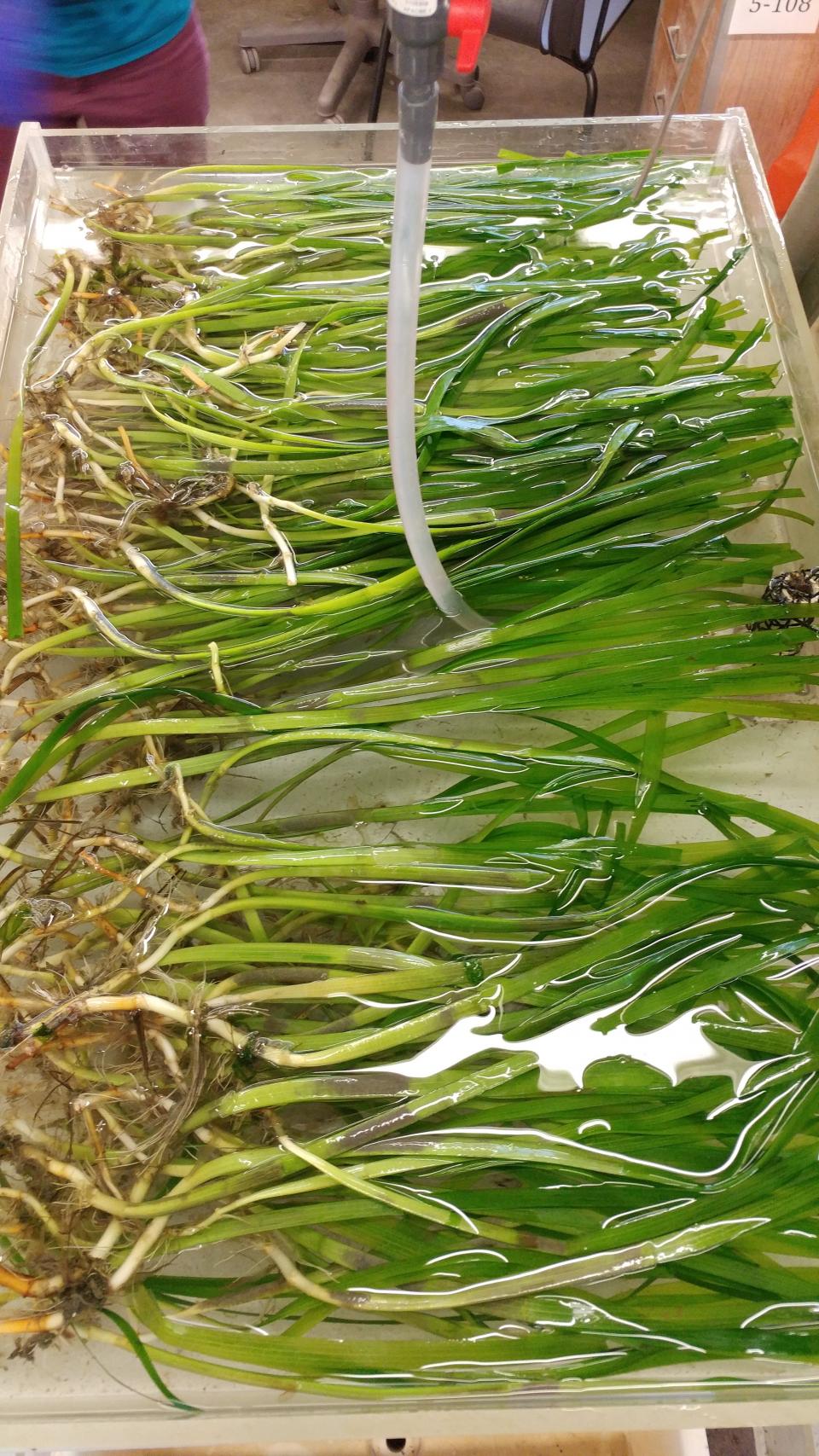
    <p>In the 1930s, more than 90% of the seagrasses on the North Atlantic coast died from wasting disease. The culprit was <em>Labyrinthula zosterae</em>, a slime mold protist that researchers often call simply “Laby.” While we haven’t seen a die-off event of that scale since, Laby is still considered a threat and causes seagrass mortality every year. Tori Agnew, a PhD student at IMET, is researching ways to reduce its impact on seagrasses and help oyster farmers (and consumers) in the process. Tori began her studies in the lab of Dr. Colleen Burge, who recently began working for <a href="https://imet.usmd.edu/news/dr-colleen-burge-joins-california-fish-and-wildlife" rel="nofollow external" class="bo">California Fish and Wildlife,</a> and has recently transitioned to working with Dr. Harold Schreier.</p>
    <p>To understand Tori’s project, it is helpful to know a few things about seagrasses and oysters. Seagrasses are very important to estuaries, including the Chesapeake Bay, where IMET is located, and to the San Juan Islands in the Pacific Northwest where she conducted fieldwork. Seagrasses protect shorelines by stabilizing sediment, improve water quality by trapping fine particles, and provide habitat for small creatures. They also sequester carbon and buffer pH, helping to mitigate the effects of climate change and ocean acidification. To protect this valuable natural resource, states have created protections, including preventing oyster farming in seagrass beds – though Tori’s research questions whether that is the most beneficial policy.</p>
    </div></div></div>
    <div><div></div></div>
    <div><div></div></div>
    </div></div>
    <div><div>
    <div><div><div><div><div><div><img src="https://imet.usmd.edu/sites/default/files/styles/paragraph_with_media__large/public/paragraph-media/0603191927.jpg?itok=swVrFqFa" alt="oysters in a lab" width="960" height="540" style="max-width: 100%; height: auto;"></div></div></div></div></div></div>
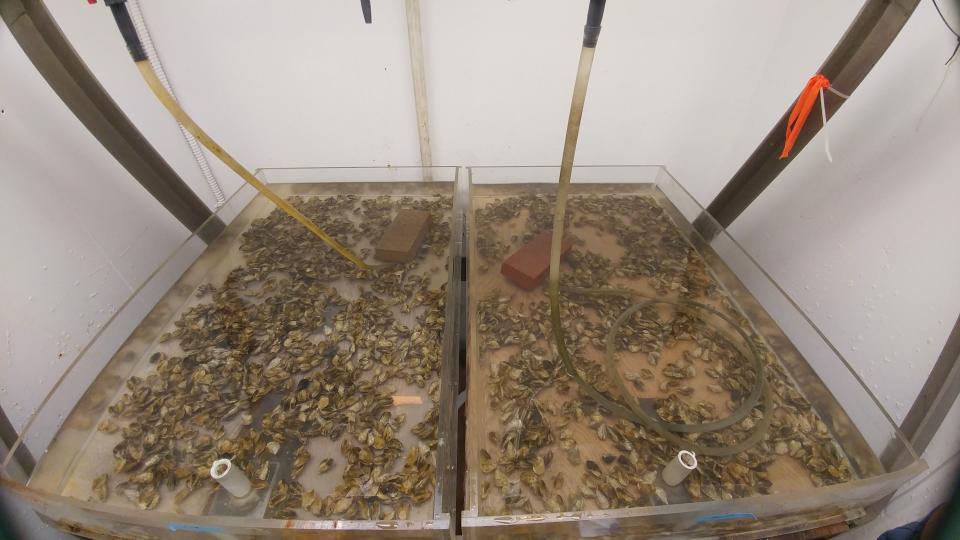
    <div><div><div><p>Oysters are another valuable natural resource in estuaries. As filter feeders, they can trap nutrients and sediments, cleaning and clarifying the water. With clearer water, seagrasses are able to photosynthesize and grow more effectively. Many scientists work on understanding various aspects of the interactions between seagrasses and oysters. Tori specifically focuses on the potential for oysters to filter out <em>Labyrinthula zosterae</em> and thus protect seagrasses from experiencing a die-off event like that seen in the 1930s.</p></div></div></div>
    </div></div>
    <div><div>
    <div><div><div><div><div><div><img src="https://imet.usmd.edu/sites/default/files/styles/paragraph_with_media__large/public/teaser-image/0617191154f.jpg?itok=Z12sTN0V" alt="Tori and a labmate hold a bucket in a mud flat" width="960" height="540" style="max-width: 100%; height: auto;"></div></div></div></div></div></div>
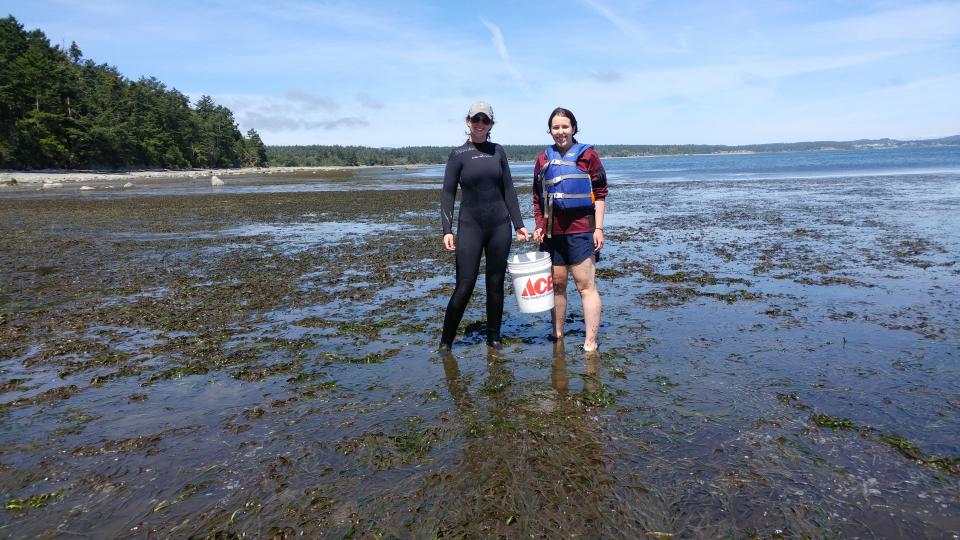
    <div><div><div><p>Tori has broad career interests and is looking forward to exploring different options in science research and environmental policy after earning her PhD. This project has prepared her well for both, as she has conducted a rigorous research project with significant policy implications; if it can be proved that oyster aquaculture protects seagrass from disease, then that may open doors for co-management of the species. She has been given a window into the challenges and complexities of coastal management and is curious about working in that field.</p></div></div></div>
    <div><div><div><img src="https://imet.usmd.edu/sites/default/files/styles/paragraph_with_media__large/public/paragraph-media/dsc_0100.jpg?itok=-BhgBZ9Z" alt="Tori presenting at a conference" width="960" height="638" style="max-width: 100%; height: auto;"></div></div></div>
    </div></div>
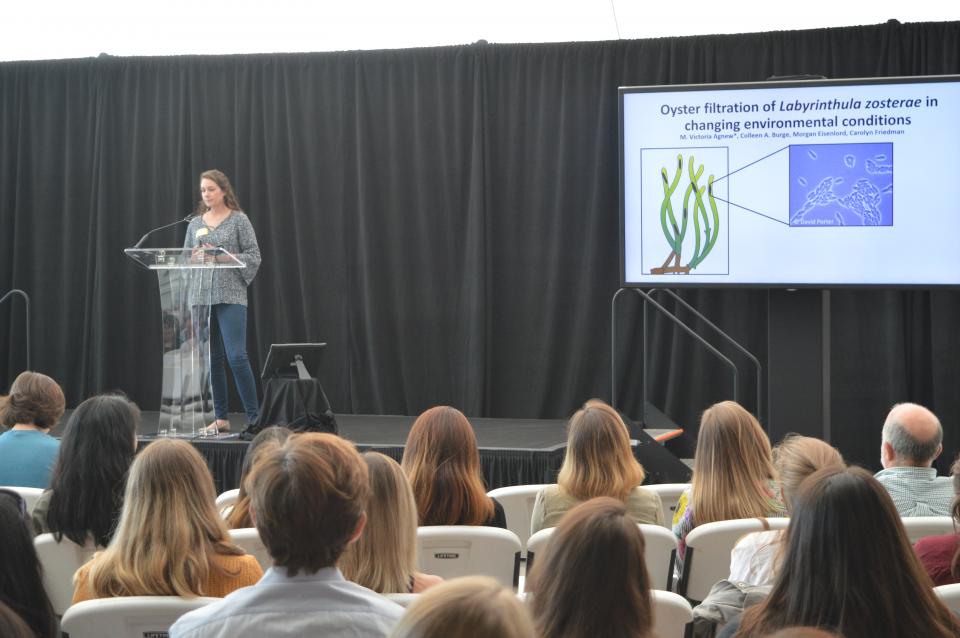
    <div><div><div><div><div><p>A strong sense of curiosity is what led Tori to IMET and this project in the first place. Growing up in upstate New York, she initially wanted to become an aquatic veterinarian, though she can’t say exactly why. “I didn’t grow up on the coast, so I don’t really have beach stories that inspired me to become a marine biologist. I think it was really just something that I didn’t know a lot about and so I wanted to learn more.” That led to a degree in marine biology and after working in a research lab and completing an undergraduate thesis on diseases in bivalves, she wanted to keep learning. She has followed her curiosity and will keep doing so as she makes plans for the future.</p></div></div></div></div></div>
    <div><div><div><div><div><div><img src="https://imet.usmd.edu/sites/default/files/image-with-caption/img_0740.jpg" alt="Tori with her labmates and Dr. Colleen Burge" width="4032" height="3024" style="max-width: 100%; height: auto;"></div></div></div></div></div></div>
    </div></div></div></div></div>
    </div>
]]>
</Body>
<Summary>Aug 10, 2021                         In the 1930s, more than 90% of the seagrasses on the North Atlantic coast died from wasting disease. The culprit was Labyrinthula zosterae, a slime mold...</Summary>
<TrackingUrl>https://my3.my.umbc.edu/api/v0/pixel/news/111759/guest@my.umbc.edu/7c591b5fc63a94f03f074d433c39845f/api/pixel</TrackingUrl>
<Group token="marinebiotechnology">Marine Biotechnology</Group>
<GroupUrl>https://my3.my.umbc.edu/groups/marinebiotechnology</GroupUrl>
<AvatarUrl>https://assets4-my.umbc.edu/system/shared/avatars/groups/000/000/761/ea407c6c8898c300a60b1f84d8f15d80/xsmall.png?1596561611</AvatarUrl>
<AvatarUrl size="original">https://assets3-my.umbc.edu/system/shared/avatars/groups/000/000/761/ea407c6c8898c300a60b1f84d8f15d80/original.jpg?1596561611</AvatarUrl>
<AvatarUrl size="xxlarge">https://assets1-my.umbc.edu/system/shared/avatars/groups/000/000/761/ea407c6c8898c300a60b1f84d8f15d80/xxlarge.png?1596561611</AvatarUrl>
<AvatarUrl size="xlarge">https://assets4-my.umbc.edu/system/shared/avatars/groups/000/000/761/ea407c6c8898c300a60b1f84d8f15d80/xlarge.png?1596561611</AvatarUrl>
<AvatarUrl size="large">https://assets1-my.umbc.edu/system/shared/avatars/groups/000/000/761/ea407c6c8898c300a60b1f84d8f15d80/large.png?1596561611</AvatarUrl>
<AvatarUrl size="medium">https://assets4-my.umbc.edu/system/shared/avatars/groups/000/000/761/ea407c6c8898c300a60b1f84d8f15d80/medium.png?1596561611</AvatarUrl>
<AvatarUrl size="small">https://assets2-my.umbc.edu/system/shared/avatars/groups/000/000/761/ea407c6c8898c300a60b1f84d8f15d80/small.png?1596561611</AvatarUrl>
<AvatarUrl size="xsmall">https://assets4-my.umbc.edu/system/shared/avatars/groups/000/000/761/ea407c6c8898c300a60b1f84d8f15d80/xsmall.png?1596561611</AvatarUrl>
<AvatarUrl size="xxsmall">https://assets3-my.umbc.edu/system/shared/avatars/groups/000/000/761/ea407c6c8898c300a60b1f84d8f15d80/xxsmall.png?1596561611</AvatarUrl>
<Sponsor>Marine Biotechnology</Sponsor>
<PawCount>0</PawCount>
<CommentCount>0</CommentCount>
<CommentsAllowed>true</CommentsAllowed>
<PostedAt>Tue, 24 Aug 2021 16:37:09 -0400</PostedAt>
</NewsItem>

<NewsItem contentIssues="true" id="102366" important="false" status="posted" url="https://my3.my.umbc.edu/groups/marinebiotechnology/posts/102366">
<Title>Dr. Yonathan Zohar on RAS Talk Podcast</Title>
<Body>
<![CDATA[
    <div class="html-content">
    <div><div>Jun 24, 2021</div></div>
    <div><div><div><div><div><div><div><div><div><div>
    <p>RAS Talk is a podcast from <a href="https://www.rastechmagazine.com/" rel="nofollow external" class="bo">RASTech Magazine</a> covering Recirculating Aquaculture System techology and advances. In June, they spoke with <a href="https://imet.usmd.edu/directory/yonathan-zohar" rel="nofollow external" class="bo">Dr. Yonathan Zohar</a> about his work advancing this field with the <a href="http://ras-n.org/" rel="nofollow external" class="bo">Recirculating Aquaculture Salmon Network (RAS-N)</a>. </p>
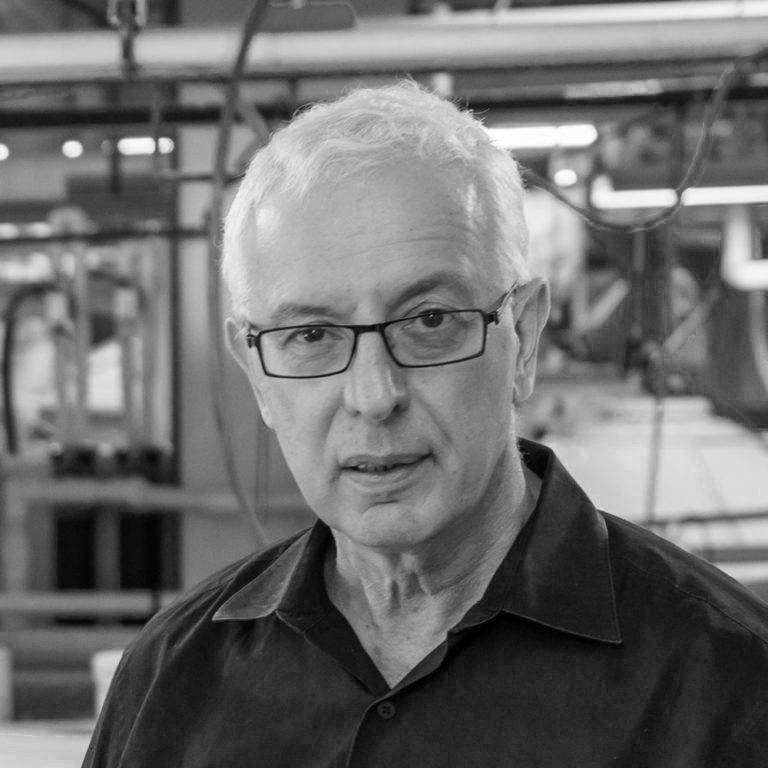
    <p><img src="https://www.rastechmagazine.com/wp-content/uploads/2021/06/Yoni-Zohar_BW-Headshot.jpg" style="max-width: 100%; height: auto;"></p>
    <p>Listen in!</p>
    <p><span><a href="https://www.rastechmagazine.com/ras-talk-exploring-technology-development-with-professor-yonathan-zohar/">https://www.rastechmagazine.com/ras-talk-exploring-technology-development-with-professor-yonathan-zohar/</a></span><span> </span></p>
    </div></div></div></div></div></div></div></div></div></div>
    </div>
]]>
</Body>
<Summary>Jun 24, 2021             RAS Talk is a podcast from RASTech Magazine covering Recirculating Aquaculture System techology and advances. In June, they spoke with Dr. Yonathan Zohar about his work...</Summary>
<AttachmentKind>Audio</AttachmentKind>
<AttachmentUrl>#</AttachmentUrl>
<Attachments>
<Attachment kind="Audio" url="https://my3.my.umbc.edu/groups/marinebiotechnology/posts/102366/attachments/39973"></Attachment>
</Attachments>
<TrackingUrl>https://my3.my.umbc.edu/api/v0/pixel/news/102366/guest@my.umbc.edu/bbd60fa539c3556af8c56f64987d2b3f/api/pixel</TrackingUrl>
<Group token="marinebiotechnology">Marine Biotechnology</Group>
<GroupUrl>https://my3.my.umbc.edu/groups/marinebiotechnology</GroupUrl>
<AvatarUrl>https://assets4-my.umbc.edu/system/shared/avatars/groups/000/000/761/ea407c6c8898c300a60b1f84d8f15d80/xsmall.png?1596561611</AvatarUrl>
<AvatarUrl size="original">https://assets3-my.umbc.edu/system/shared/avatars/groups/000/000/761/ea407c6c8898c300a60b1f84d8f15d80/original.jpg?1596561611</AvatarUrl>
<AvatarUrl size="xxlarge">https://assets1-my.umbc.edu/system/shared/avatars/groups/000/000/761/ea407c6c8898c300a60b1f84d8f15d80/xxlarge.png?1596561611</AvatarUrl>
<AvatarUrl size="xlarge">https://assets4-my.umbc.edu/system/shared/avatars/groups/000/000/761/ea407c6c8898c300a60b1f84d8f15d80/xlarge.png?1596561611</AvatarUrl>
<AvatarUrl size="large">https://assets1-my.umbc.edu/system/shared/avatars/groups/000/000/761/ea407c6c8898c300a60b1f84d8f15d80/large.png?1596561611</AvatarUrl>
<AvatarUrl size="medium">https://assets4-my.umbc.edu/system/shared/avatars/groups/000/000/761/ea407c6c8898c300a60b1f84d8f15d80/medium.png?1596561611</AvatarUrl>
<AvatarUrl size="small">https://assets2-my.umbc.edu/system/shared/avatars/groups/000/000/761/ea407c6c8898c300a60b1f84d8f15d80/small.png?1596561611</AvatarUrl>
<AvatarUrl size="xsmall">https://assets4-my.umbc.edu/system/shared/avatars/groups/000/000/761/ea407c6c8898c300a60b1f84d8f15d80/xsmall.png?1596561611</AvatarUrl>
<AvatarUrl size="xxsmall">https://assets3-my.umbc.edu/system/shared/avatars/groups/000/000/761/ea407c6c8898c300a60b1f84d8f15d80/xxsmall.png?1596561611</AvatarUrl>
<Sponsor>Marine Biotechnology</Sponsor>
<PawCount>0</PawCount>
<CommentCount>0</CommentCount>
<CommentsAllowed>true</CommentsAllowed>
<PostedAt>Tue, 29 Jun 2021 15:56:37 -0400</PostedAt>
<EditAt>Tue, 29 Jun 2021 15:58:58 -0400</EditAt>
</NewsItem>

<NewsItem contentIssues="false" id="102363" important="false" status="posted" url="https://my3.my.umbc.edu/groups/marinebiotechnology/posts/102363">
<Title>Dr. Colleen Burge joins California Fish and Wildlife</Title>
<Body>
<![CDATA[
    <div class="html-content">
    <div><div>Jun 29, 2021</div></div>
    <div><div><div><div><div>
    <div><div><div><div><div>
    <div>
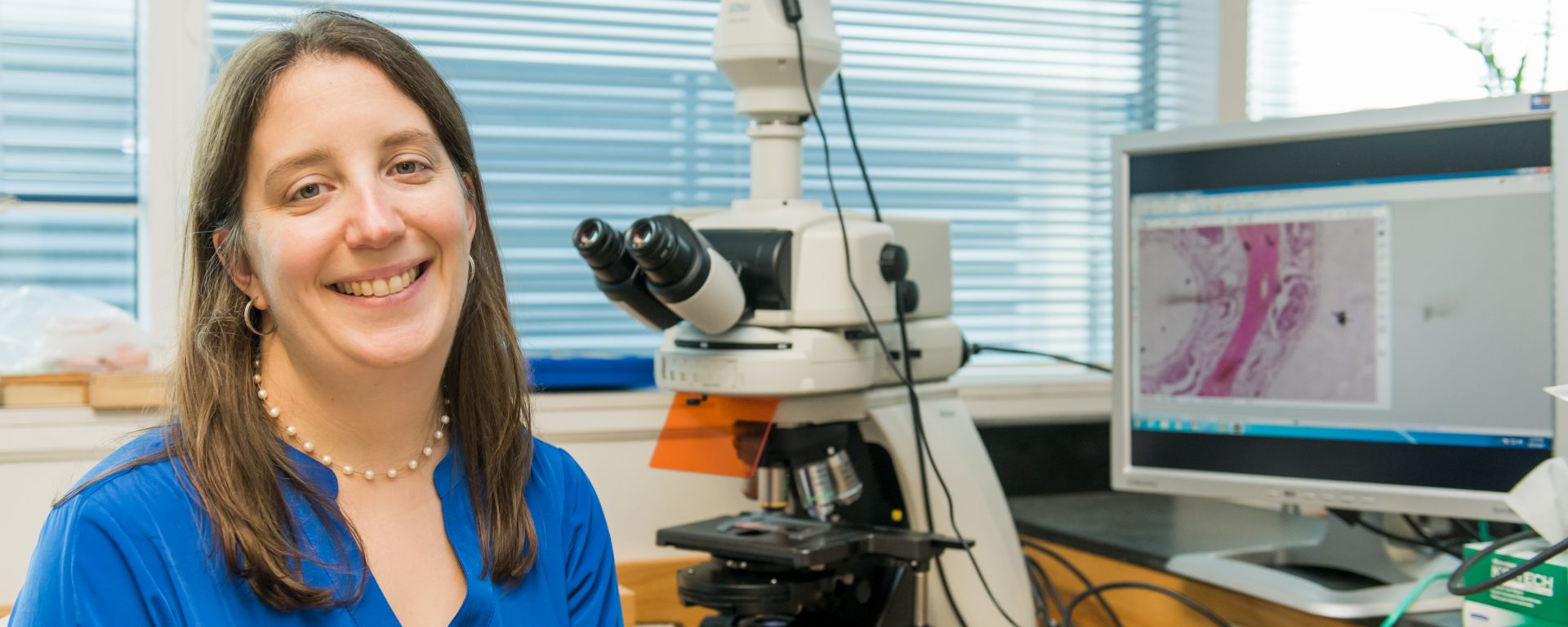
    <span><strong><img src="https://imet.usmd.edu/sites/default/files/teaser-image/Colleen-Burge-5925-e1548172943841-1920x768.jpg" width="1920" height="768" alt="Colleen Burge featured in her lab" style="max-width: 100%; height: auto;"></strong></span><span><strong><br></strong></span>
    </div>
    <div><span>For the past seven years, UMBC/UMB-IMET Assistant Professor Colleen Burge and her students have been studying the interactions between marine pathogens, hosts, and the environment. The Burge Lab has made significant strides in understanding diseases in oysters, eelgrass, and corals. Their findings will help protect marine species from disease. Now, Colleen will bring her expertise to the California Department of Fish and Wildlife as a Research Supervisor running the Shellfish Health Lab and the Fisheries Genetics Lab. In this role, she will continue shellfish pathology research while playing a new role in environmental management and policy.</span></div>
    <div><span><strong> </strong></span></div>
    <div>
    <span>Throughout her time at IMET, Colleen has been a dedicated researcher, educator, and mentor. She and her lab studied the virus OsHV-1, which causes oyster mortalities and poses a threat to oyster aquaculture and ecosystems. In lab and field studies, they have characterized how OsHV-1 spreads and </span><a href="https://doi.org/10.1016/j.jip.2021.107636" rel="nofollow external" class="bo">described a new variant of the virus</a><span>. </span><a href="https://www.sciencedirect.com/science/article/abs/pii/S0048969720332721?via%3Dihub" rel="nofollow external" class="bo">A recent paper</a><span>, on which her student Tori Agnew was a co-author, described how different US oyster species and stocks reacted to variants of OsHV-1. This information is particularly helpful for developing best practices in oyster aquaculture and breeding virus-resistant oysters. To expand the reach of this paper and engage a non-scientific audience, the team produced a video abstract, which you can view below:</span>
    </div>
    </div></div></div></div></div>
    <div><div><div><div><div>
    <p> </p>
    <div><div class="embed-container"><iframe src="https://www.youtube.com/embed/5D1n6AzKY_I" frameborder="0" webkitallowfullscreen="webkitAllowFullScreen" mozallowfullscreen="mozallowfullscreen" allowfullscreen="allowFullScreen">[Video]</iframe></div></div>
    <p> </p>
    </div></div></div></div></div>
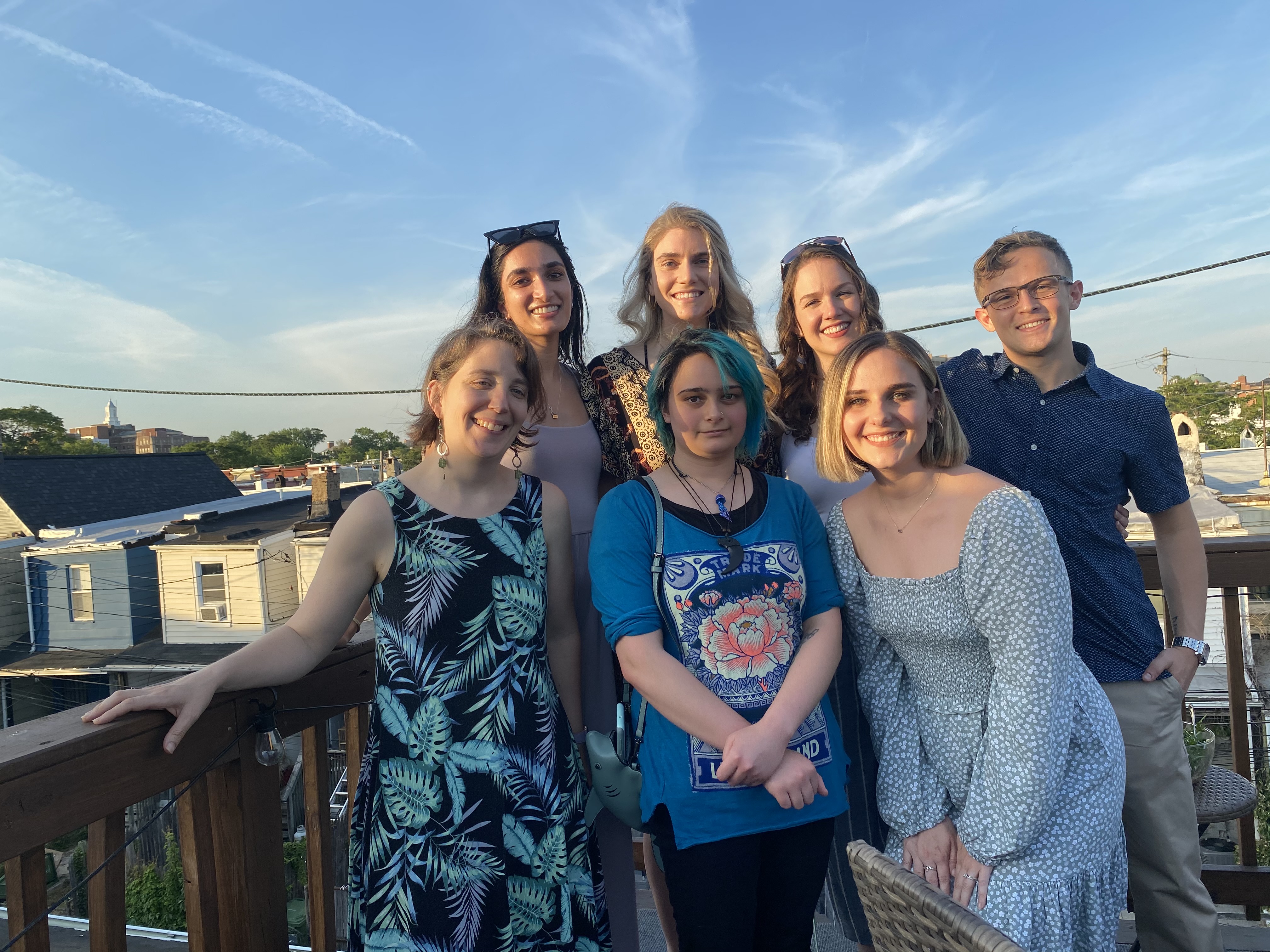
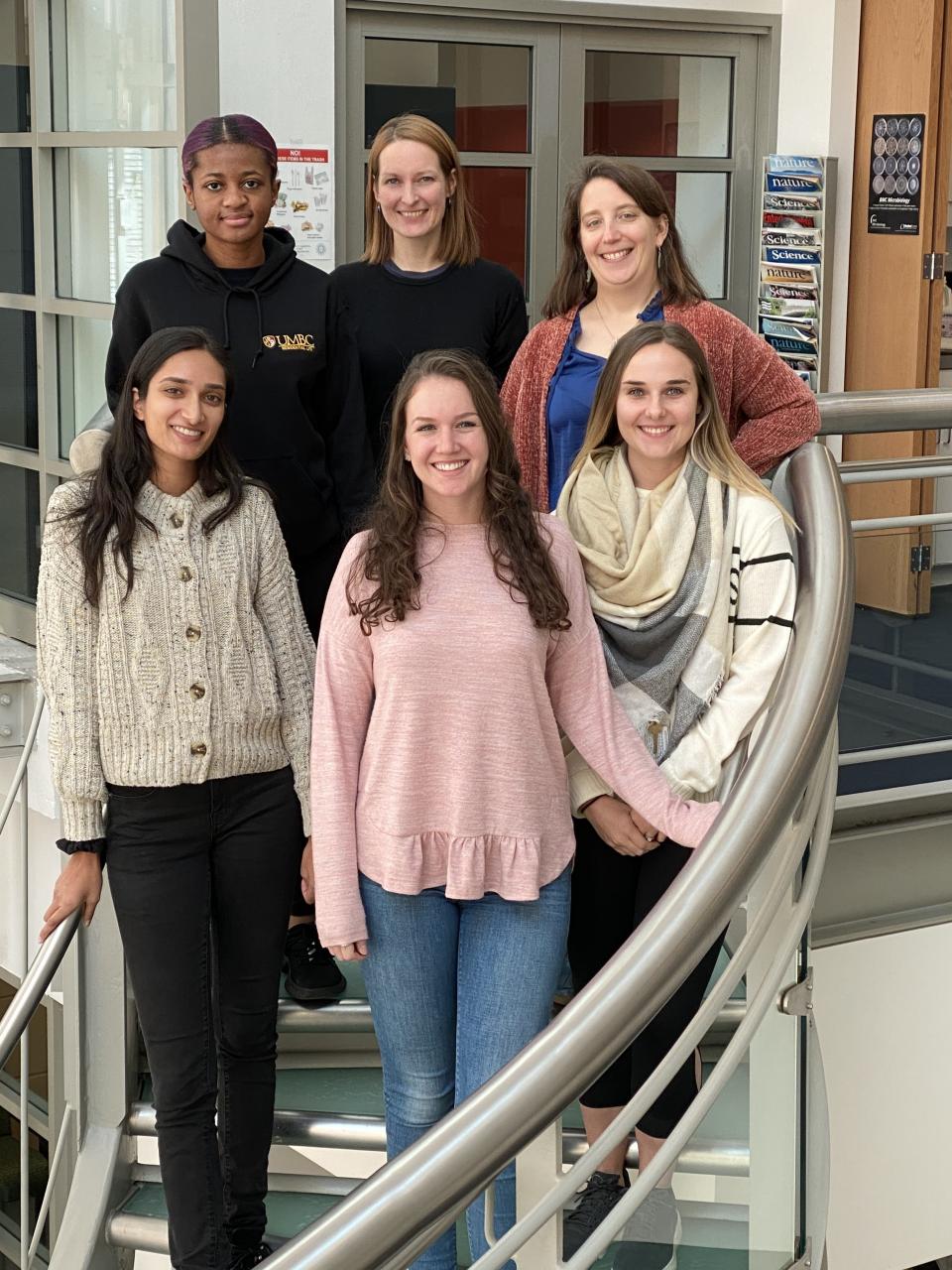
    <div><div><div><div><div><p>While Colleen is proud of her contributions to oyster disease research, she said, “My number one accomplishment has been mentoring the four students that I’ve been fortunate enough to work with. They’re all really fantastic students who work very hard and are wonderful members of the community.” Tori Agnew, Mariah Kachmar, Chelsea Bergman, and Mingli Zhao (co-mentored with Eric Schott) will all continue research on marine disease ecology, aided by the mentorship they have received from Colleen.</p></div></div></div></div></div>
    <div><div>
    <div><div><div><div><div><div><img src="https://imet.usmd.edu/sites/default/files/styles/paragraph_with_media__large/public/paragraph-media/Burge%20Lab.jpeg?itok=NwlWDXtx" width="960" height="1280" alt="Colleen Burge with five members of her lab" style="max-width: 100%; height: auto;"></div></div></div></div></div></div>
    <div><div><div>
    <p>In addition to advising her graduate students, Colleen has contributed to the education of undergraduates and the public. She was instrumental in developing a marine biology track for students at UMBC. She designed curriculum and co-taught a course with Dr. Sook Chung called Marine and Environmental Biotechnology, which combines UMBC undergrads with graduate students in the Marine-Environmental-Estuarine Science program. “Nearly all of the students have told me how much they liked the course,” Colleen said, “and I think it’s because they get a different perspective than they normally do as undergrads. They get to hear from experts and design their own research projects.” She has enjoyed sharing her scientific knowledge with these students as well as with interns in her lab and the public at the annual IMET Open House.</p>
    <p>Dr. Colleen Burge will leave a lasting legacy at IMET. She will remain engaged as a scientific collaborator and student committee member even as she moves across the country. At the California Department of Fish and Wildlife, she will continue apply many of the skills she has strengthened while at IMET - contributing to shellfish health through research, advising young scientists, and making valuable contributions to the wider community.</p>
    </div></div></div>
    </div></div>
    <div><div><div>
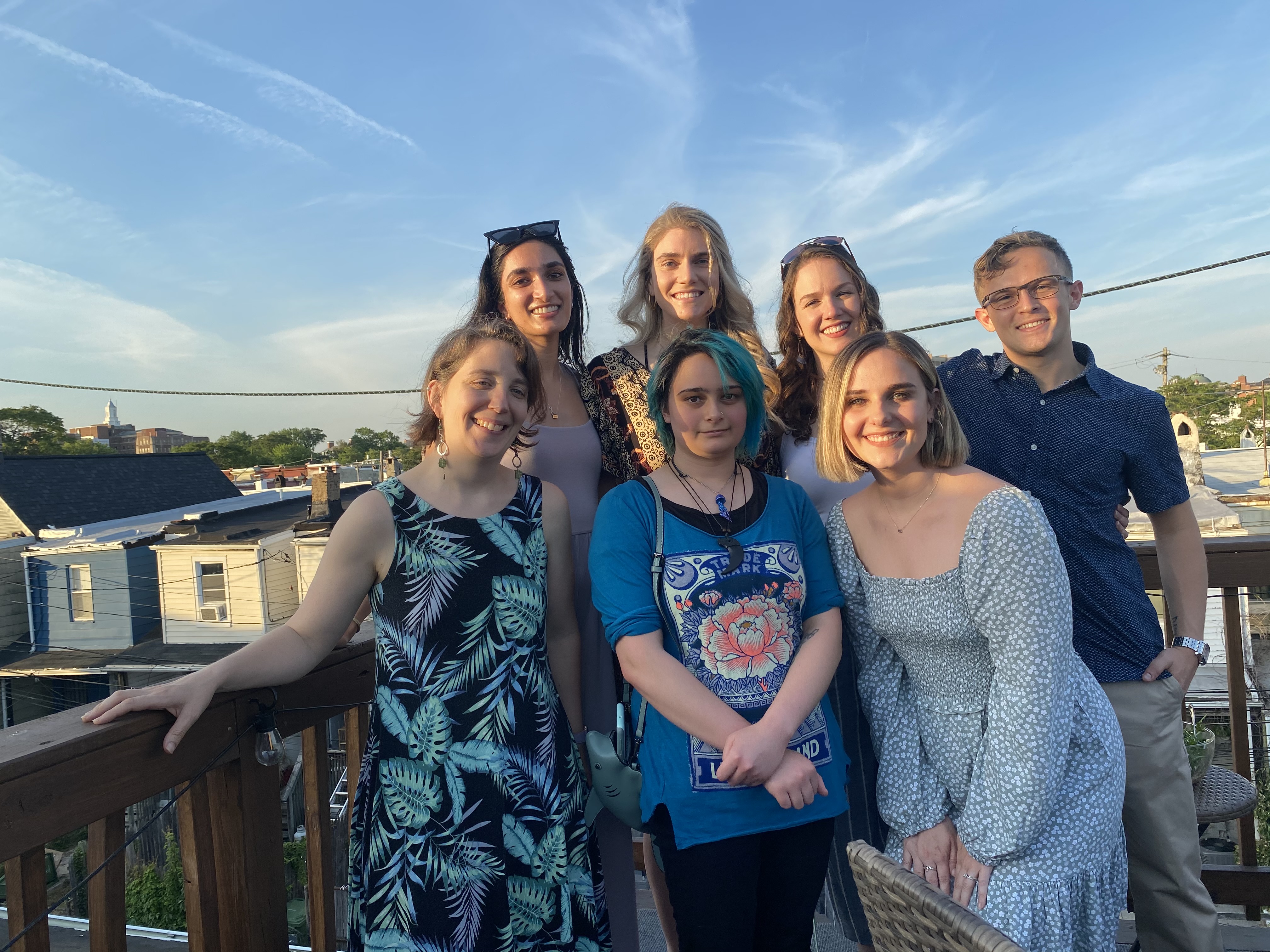
    <div><div><div><img src="https://imet.usmd.edu/sites/default/files/image-with-caption/IMG_0740.jpg" width="4032" height="3024" alt="Colleen Burge with six members of her lab on a rooftop" style="max-width: 100%; height: auto;"></div></div></div>
    <div><div></div></div>
    </div></div></div>
    </div></div></div></div></div>
    </div>
]]>
</Body>
<Summary>Jun 29, 2021                For the past seven years, UMBC/UMB-IMET Assistant Professor Colleen Burge and her students have been studying the interactions between marine pathogens, hosts, and the...</Summary>
<TrackingUrl>https://my3.my.umbc.edu/api/v0/pixel/news/102363/guest@my.umbc.edu/ae2c0487527b51d1f012ba41a788d791/api/pixel</TrackingUrl>
<Group token="marinebiotechnology">Marine Biotechnology</Group>
<GroupUrl>https://my3.my.umbc.edu/groups/marinebiotechnology</GroupUrl>
<AvatarUrl>https://assets4-my.umbc.edu/system/shared/avatars/groups/000/000/761/ea407c6c8898c300a60b1f84d8f15d80/xsmall.png?1596561611</AvatarUrl>
<AvatarUrl size="original">https://assets3-my.umbc.edu/system/shared/avatars/groups/000/000/761/ea407c6c8898c300a60b1f84d8f15d80/original.jpg?1596561611</AvatarUrl>
<AvatarUrl size="xxlarge">https://assets1-my.umbc.edu/system/shared/avatars/groups/000/000/761/ea407c6c8898c300a60b1f84d8f15d80/xxlarge.png?1596561611</AvatarUrl>
<AvatarUrl size="xlarge">https://assets4-my.umbc.edu/system/shared/avatars/groups/000/000/761/ea407c6c8898c300a60b1f84d8f15d80/xlarge.png?1596561611</AvatarUrl>
<AvatarUrl size="large">https://assets1-my.umbc.edu/system/shared/avatars/groups/000/000/761/ea407c6c8898c300a60b1f84d8f15d80/large.png?1596561611</AvatarUrl>
<AvatarUrl size="medium">https://assets4-my.umbc.edu/system/shared/avatars/groups/000/000/761/ea407c6c8898c300a60b1f84d8f15d80/medium.png?1596561611</AvatarUrl>
<AvatarUrl size="small">https://assets2-my.umbc.edu/system/shared/avatars/groups/000/000/761/ea407c6c8898c300a60b1f84d8f15d80/small.png?1596561611</AvatarUrl>
<AvatarUrl size="xsmall">https://assets4-my.umbc.edu/system/shared/avatars/groups/000/000/761/ea407c6c8898c300a60b1f84d8f15d80/xsmall.png?1596561611</AvatarUrl>
<AvatarUrl size="xxsmall">https://assets3-my.umbc.edu/system/shared/avatars/groups/000/000/761/ea407c6c8898c300a60b1f84d8f15d80/xxsmall.png?1596561611</AvatarUrl>
<Sponsor>Marine Biotechnology</Sponsor>
<PawCount>0</PawCount>
<CommentCount>0</CommentCount>
<CommentsAllowed>true</CommentsAllowed>
<PostedAt>Tue, 29 Jun 2021 15:21:30 -0400</PostedAt>
<EditAt>Tue, 29 Jun 2021 15:43:02 -0400</EditAt>
</NewsItem>

<NewsItem contentIssues="false" id="100460" important="false" status="posted" url="https://my3.my.umbc.edu/groups/marinebiotechnology/posts/100460">
<Title>Optimizing the cleanup of Contaminated Sites</Title>
<Tagline>With a New Grant</Tagline>
<Body>
<![CDATA[
    <div class="html-content">
    <div><div>
    <h1>Optimizing the cleanup of contaminated sites with a new grant</h1>
    <h1>Mar 24, 2021</h1>
    </div></div>
    <div><div><div><div><div>
    <div><div><div><div><div><div><div><div>
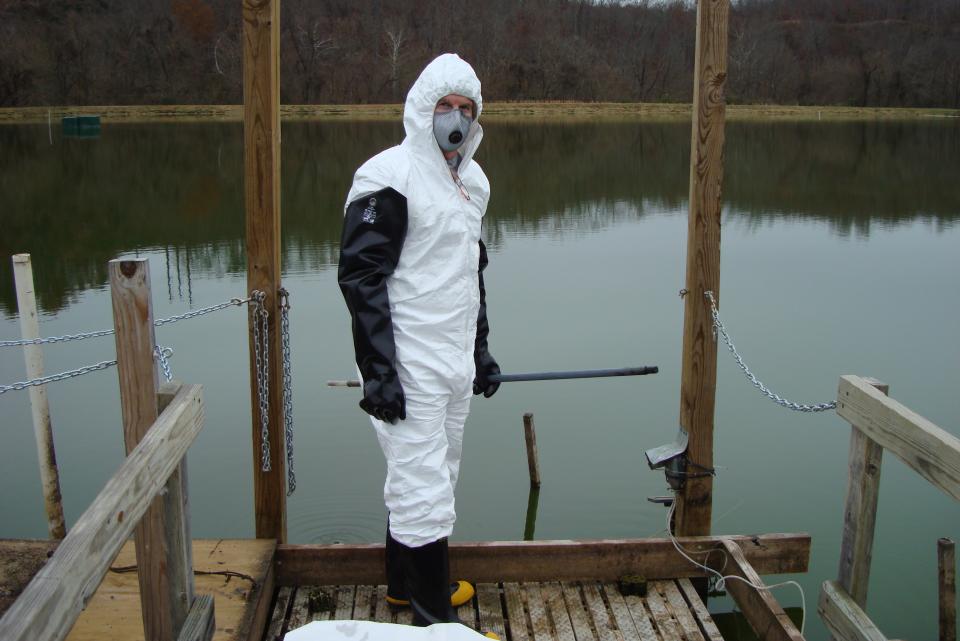
    <img src="https://imet.usmd.edu/sites/default/files/styles/paragraph_with_media__large/public/teaser-image/SowersDSC05260.JPG?itok=fmFFTS80" width="960" height="641" alt="Kevin Sowers wearing PPE in front of water at a contaminated site" style="max-width: 100%; height: auto;">Dr. Kevin Sowers (UMBC-IMET) and Dr. Upal Ghosh (UMBC) have already developed a technology that can remove harmful compounds from waterways and sediments. A recent grant from the National Institute of Environmental Health Sciences (NIEHS) will help them improve that technology and expand their impact.</div></div></div></div></div></div></div></div>
    <div><div><div><div><div><div><div>
    <div>
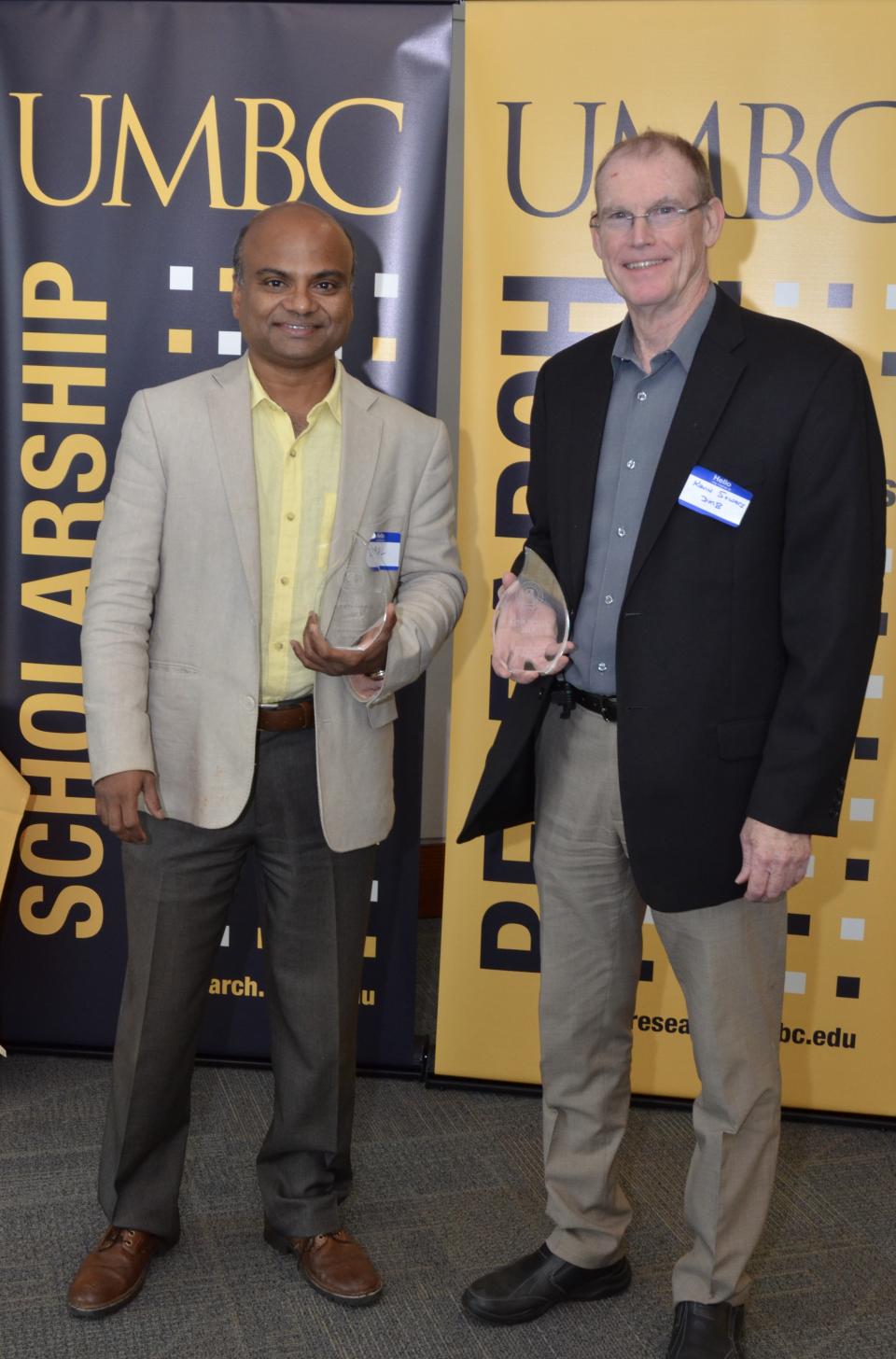
    <img src="https://imet.usmd.edu/sites/default/files/styles/paragraph_with_media__large/public/paragraph-media/2019.10.02_ENTREPRENEURS-OF-THE-YEAR_KVS_2796.jpg?itok=vKXrOOF8" width="960" height="1456" alt="Kevin Sowers and Upal Ghosh holding trophies in front of a black and gold UMBC poster" style="max-width: 100%; height: auto;">Using a group of specially selected microbes and activated carbon, the team has proven that they can remove polychlorinated biphenyls (PCBs) from sediments through a process called bioremediation. PCBs were banned in 1979 due to their toxicity, yet they remain in sediments and can enter the food chain, threatening both ecological and human health. Sowers and Ghosh founded the venture <a href="https://www.rembac.com/" rel="nofollow external" class="bo">RemBac Environmental</a> to apply their research to restoring contaminated sites and were named UMBC's Entrepreneurs of the Year in 2019 for this work.</div>
    <div><br></div>
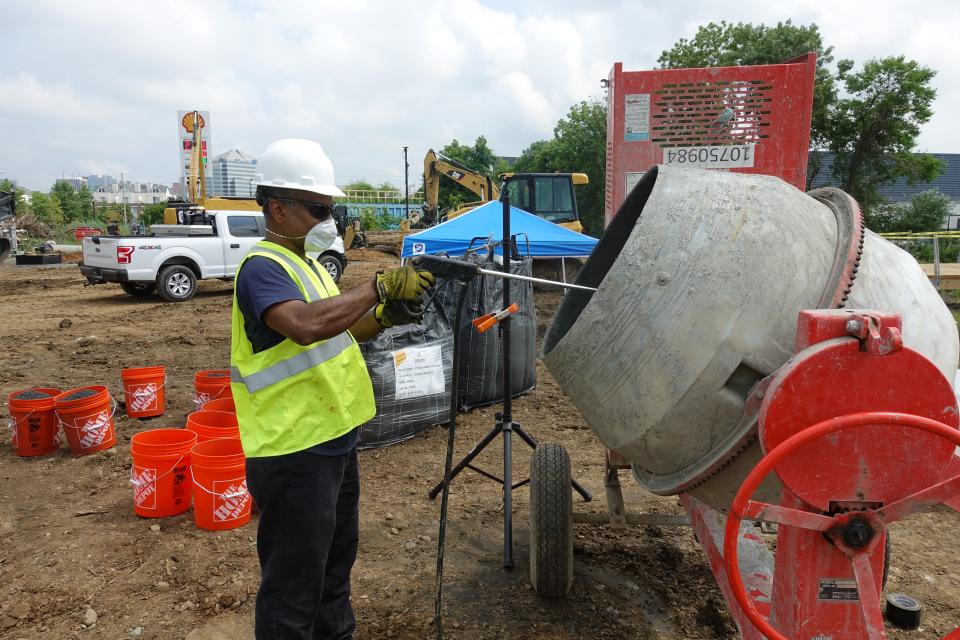
    <div>To evaluate the effectiveness of different materials, Sowers and Ghosh will conduct trial studies of graphite and activated carbon from bituminous coal and coconut shells. Ghosh brings a deep knowledge of materials science that will aid in this evaluation. Sowers brings decades of research on microbes that degrade chlorinated compounds.</div>
    <div><br></div>
    <div>With funding from NIEHS, Sowers and Ghosh will continue to improve their technology by answering questions like, “Are there materials that would be more effective for bioremediation? Would different materials be best for certain pollutants or areas?”</div>
    <div><br></div>
    <div><img src="https://imet.usmd.edu/sites/default/files/styles/paragraph_with_media__large/public/paragraph-media/DSC01838.JPG?itok=W0BZvT-b" width="960" height="640" alt="two images from field test sites: scientists in PPE add to water as part of the bioremediation process" style="max-width: 100%; height: auto;"></div>
    </div></div></div></div></div></div></div>
    <div><div><div><div><div>
    <p>To expand the applications of this lab work, an ecological modeler joined the team. Dr. Amar Wadhawan, Senior Environmental Engineer with Arcadis, will create models to integrate an improved understanding of materials for bioremediation with information about specific site conditions. This will help scientists and environmental engineers create targeted solutions for project sites.</p>
    <p>The overall impact of this new grant will be to improve our fundamental understanding of the interactions of microbes and different surfaces and improve the process for cleaning up sediment and groundwater. Sowers said, "This project will enable development of a platform that combines tailored materials with microbial activity to optimize bioremediation of PCBs in different environments." With improved technology and modeling, remediation of Superfund sites and other contaminated areas will be easier and more effective, helping to create a healthier planet. </p>
    <p><span><a href="https://youtu.be/qEebYsiUlQM?list=PLfBpioLUD1PgfPKk6M0cFS7Ojg4IrEXoQ">https://youtu.be/qEebYsiUlQM?list=PLfBpioLUD1PgfPKk6M0cFS7Ojg4IrEXoQ</a></span></p>
    </div></div></div></div></div>
    </div></div></div></div></div>
    </div>
]]>
</Body>
<Summary>Optimizing the cleanup of contaminated sites with a new grant  Mar 24, 2021                Dr. Kevin Sowers (UMBC-IMET) and Dr. Upal Ghosh (UMBC) have already developed a technology that can...</Summary>
<TrackingUrl>https://my3.my.umbc.edu/api/v0/pixel/news/100460/guest@my.umbc.edu/e95bc3dbe4300d68ae6a8f8d95cac0d0/api/pixel</TrackingUrl>
<Group token="marinebiotechnology">Marine Biotechnology</Group>
<GroupUrl>https://my3.my.umbc.edu/groups/marinebiotechnology</GroupUrl>
<AvatarUrl>https://assets4-my.umbc.edu/system/shared/avatars/groups/000/000/761/ea407c6c8898c300a60b1f84d8f15d80/xsmall.png?1596561611</AvatarUrl>
<AvatarUrl size="original">https://assets3-my.umbc.edu/system/shared/avatars/groups/000/000/761/ea407c6c8898c300a60b1f84d8f15d80/original.jpg?1596561611</AvatarUrl>
<AvatarUrl size="xxlarge">https://assets1-my.umbc.edu/system/shared/avatars/groups/000/000/761/ea407c6c8898c300a60b1f84d8f15d80/xxlarge.png?1596561611</AvatarUrl>
<AvatarUrl size="xlarge">https://assets4-my.umbc.edu/system/shared/avatars/groups/000/000/761/ea407c6c8898c300a60b1f84d8f15d80/xlarge.png?1596561611</AvatarUrl>
<AvatarUrl size="large">https://assets1-my.umbc.edu/system/shared/avatars/groups/000/000/761/ea407c6c8898c300a60b1f84d8f15d80/large.png?1596561611</AvatarUrl>
<AvatarUrl size="medium">https://assets4-my.umbc.edu/system/shared/avatars/groups/000/000/761/ea407c6c8898c300a60b1f84d8f15d80/medium.png?1596561611</AvatarUrl>
<AvatarUrl size="small">https://assets2-my.umbc.edu/system/shared/avatars/groups/000/000/761/ea407c6c8898c300a60b1f84d8f15d80/small.png?1596561611</AvatarUrl>
<AvatarUrl size="xsmall">https://assets4-my.umbc.edu/system/shared/avatars/groups/000/000/761/ea407c6c8898c300a60b1f84d8f15d80/xsmall.png?1596561611</AvatarUrl>
<AvatarUrl size="xxsmall">https://assets3-my.umbc.edu/system/shared/avatars/groups/000/000/761/ea407c6c8898c300a60b1f84d8f15d80/xxsmall.png?1596561611</AvatarUrl>
<Sponsor>Marine Biotechnology</Sponsor>
<PawCount>0</PawCount>
<CommentCount>0</CommentCount>
<CommentsAllowed>true</CommentsAllowed>
<PostedAt>Thu, 01 Apr 2021 09:43:39 -0400</PostedAt>
<EditAt>Thu, 01 Apr 2021 09:52:33 -0400</EditAt>
</NewsItem>

</News>