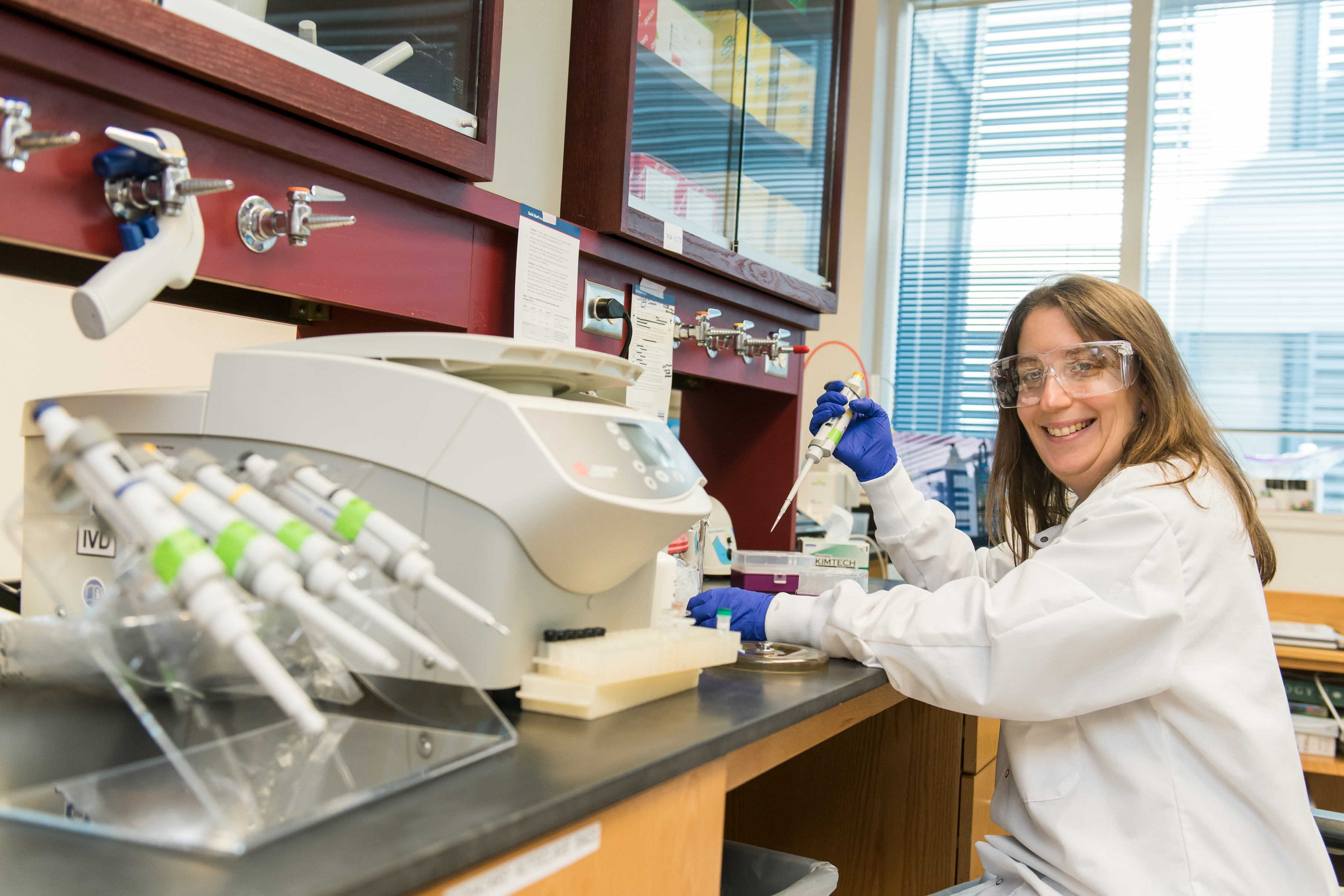
<?xml version="1.0"?>
<News hasArchived="false" page="4" pageCount="9" pageSize="10" timestamp="Sun, 06 Sep 2026 18:34:46 -0400" url="https://my3.my.umbc.edu/groups/marinebiotechnology/posts.xml?mode=pawpularity&amp;page=4">
<NewsItem contentIssues="false" id="87179" important="false" status="posted" url="https://my3.my.umbc.edu/groups/marinebiotechnology/posts/87179">
<Title>IMET-DMB Student Life</Title>
<Body>
<![CDATA[
    <div class="html-content">
    <div><div>
    <h1><strong>DMB's Graduate Students Attended the 12th Annual International Marine Biotechnology Conference and the Asia Pacific Marine Biotechnology Conference</strong></h1>
    <h1>9 September - 13 September</h1>
    <h1>Shizuoka, Japan</h1>
    <h1><strong><a href="http://marinebiotechnology.jp/2019mbc/" rel="nofollow external" class="bo">See more information</a></strong></h1>
    <blockquote><em>We advance marine science and technology through outreach, restoration, and research.</em></blockquote>
    </div></div>
    <div>
    <div><div></div></div>
    <div><div><div><p>Our vision for the 21st century is that marine biotechnology will apply advanced knowledge and tools from marine sciences, engineering, molecular biology and information technology to the understanding of marine habitats and organisms representative of the total diversity of marine systems, in order to obtain scientific information on marine life processes and ecosystems, from the whole organisms to the molecular and genetic levels, that can be turned into new products and approaches for the benefit of a wide range of industries, marine macro- and microbiota and the sustainable wise use and management of the world’s oceans.</p></div></div></div>
    <div><div></div></div>
    </div>
    <div></div>
    <div><div><div><div><div><div><a href="http://theimba.org/what-we-do" rel="nofollow external" class="bo"></a></div></div></div></div></div></div>
    </div>
]]>
</Body>
<Summary>DMB's Graduate Students Attended the 12th Annual International Marine Biotechnology Conference and the Asia Pacific Marine Biotechnology Conference  9 September - 13 September  Shizuoka, Japan...</Summary>
<AttachmentKind>Photo</AttachmentKind>
<AttachmentUrl>https://assets1-my.umbc.edu/system/shared/attachments/fa128e94fe2476e3c01e3740009b3691/6a9dea86/news/000/087/179/c7b203a94cd31b341f845d6903b80e62/Mingli picture.jpg?1569872152</AttachmentUrl>
<Attachments>
<Attachment kind="Photo" url="https://my3.my.umbc.edu/groups/marinebiotechnology/posts/87179/attachments/33090"></Attachment>
<Attachment kind="Photo" url="https://my3.my.umbc.edu/groups/marinebiotechnology/posts/87179/attachments/33091"></Attachment>
<Attachment kind="Photo" url="https://my3.my.umbc.edu/groups/marinebiotechnology/posts/87179/attachments/33092"></Attachment>
<Attachment kind="Photo" url="https://my3.my.umbc.edu/groups/marinebiotechnology/posts/87179/attachments/33093"></Attachment>
<Attachment kind="Photo" url="https://my3.my.umbc.edu/groups/marinebiotechnology/posts/87179/attachments/33094"></Attachment>
</Attachments>
<TrackingUrl>https://my3.my.umbc.edu/api/v0/pixel/news/87179/guest@my.umbc.edu/444c505af5db82fc1807e763106e52fe/api/pixel</TrackingUrl>
<Group token="marinebiotechnology">Marine Biotechnology</Group>
<GroupUrl>https://my3.my.umbc.edu/groups/marinebiotechnology</GroupUrl>
<AvatarUrl>https://assets4-my.umbc.edu/system/shared/avatars/groups/000/000/761/ea407c6c8898c300a60b1f84d8f15d80/xsmall.png?1596561611</AvatarUrl>
<AvatarUrl size="original">https://assets3-my.umbc.edu/system/shared/avatars/groups/000/000/761/ea407c6c8898c300a60b1f84d8f15d80/original.jpg?1596561611</AvatarUrl>
<AvatarUrl size="xxlarge">https://assets1-my.umbc.edu/system/shared/avatars/groups/000/000/761/ea407c6c8898c300a60b1f84d8f15d80/xxlarge.png?1596561611</AvatarUrl>
<AvatarUrl size="xlarge">https://assets4-my.umbc.edu/system/shared/avatars/groups/000/000/761/ea407c6c8898c300a60b1f84d8f15d80/xlarge.png?1596561611</AvatarUrl>
<AvatarUrl size="large">https://assets1-my.umbc.edu/system/shared/avatars/groups/000/000/761/ea407c6c8898c300a60b1f84d8f15d80/large.png?1596561611</AvatarUrl>
<AvatarUrl size="medium">https://assets4-my.umbc.edu/system/shared/avatars/groups/000/000/761/ea407c6c8898c300a60b1f84d8f15d80/medium.png?1596561611</AvatarUrl>
<AvatarUrl size="small">https://assets2-my.umbc.edu/system/shared/avatars/groups/000/000/761/ea407c6c8898c300a60b1f84d8f15d80/small.png?1596561611</AvatarUrl>
<AvatarUrl size="xsmall">https://assets4-my.umbc.edu/system/shared/avatars/groups/000/000/761/ea407c6c8898c300a60b1f84d8f15d80/xsmall.png?1596561611</AvatarUrl>
<AvatarUrl size="xxsmall">https://assets3-my.umbc.edu/system/shared/avatars/groups/000/000/761/ea407c6c8898c300a60b1f84d8f15d80/xxsmall.png?1596561611</AvatarUrl>
<Sponsor>Marine Biotechnology</Sponsor>
<PawCount>0</PawCount>
<CommentCount>0</CommentCount>
<CommentsAllowed>true</CommentsAllowed>
<PostedAt>Mon, 30 Sep 2019 15:43:55 -0400</PostedAt>
<EditAt>Tue, 15 Oct 2019 12:35:38 -0400</EditAt>
</NewsItem>

<NewsItem contentIssues="true" id="86881" important="false" status="posted" url="https://my3.my.umbc.edu/groups/marinebiotechnology/posts/86881">
<Title>NOAA Sea Grant Award</Title>
<Body>
<![CDATA[
    <div class="html-content"> <h1>New US salmon RAS network gets $1.2m headstart from NOAA Sea Grant</h1> <div>
    <div>
    <span>By <span><a title="Posts by Jason Huffman" href="https://www.undercurrentnews.com/author/jason_huffman/" rel="nofollow external" class="bo">Jason Huffman</a></span></span>
    <span>
    Sep. 19, 2019   16:37 BST </span>
    </div>
    <div>
    <a title="Yonathon Zohar, chair of the University of Maryland Baltimore Campus Department of Marine Biotechnology. Photograph by Marlayna Demond/UMBC.
    " href="https://files.undercurrentnews.com/wp-content/uploads/2019/09/Zohar.jpg" rel="nofollow external" class="bo"><img width="687" height="390" alt="" src="https://css.undercurrentnews.com/wp-content/uploads/2019/09/Zohar-687x390.jpg" style="max-width: 100%; height: auto;"></a><div>
    Yonathon Zohar, chair of the University of Maryland Baltimore Campus Department of Marine Biotechnology. Photograph by Marlayna Demond/UMBC</div>
    </div>
    <div><ul><li>
    <span>An effort organized by three US university Sea Grant programs with an interest in building an Atlantic salmon recirculating aquaculture system (RAS) consortium has received a matching contribution of $1.2 million from the National Oceanic and Atmospheric Administration (NOAA), </span><em>Undercurrent News</em><span> has learned.</span>
    </li></ul></div>
    <div>
    <p>The National Coordinated Recirculating Aquaculture System Network (NCRN) intends to use the funds to help identify the fledgling industry's biggest bottlenecks, prioritize research needs and hold meetings, Yonathon Zohar, the chair of the University of Maryland Baltimore Campus Department of Marine Biotechnology, a 40-year aquaculture professional and the grant’s lead principal investigator, told <em>Undercurrent </em>in a recent interview.</p>
    <p>Sea Grant programs at the University of Maine and the University of Wisconsin are the others involved in organizing the effort.</p>
    <p>In particular, NCRN – which launched on Sept. 1, the date that it first received money from NOAA -- hopes to improve RAS-related workforce development, addressing a common complaint among land-based salmon companies. Zohar’s university also intends to hire an extension agent to help manage the program, while staying on top of RAS salmon-related research.</p>
    <p>A NCRN website will be developed and a white paper could come as soon as September 2020, identifying technological and biological gaps to success, barriers to efficiencies, and research and development priorities, Zohar said.</p>
    <p>Later, at the end of the project, the plan is to “deliver a consensus road map/strategic plan and demonstration projects that will help policymakers, federal agencies and industry identify and responsibly allocate resources to promote an economically feasible and environmentally sustainable land-based US Atlantic salmon industry”, he said.</p>
    <p>NCRN will include representatives from as many as 25 different companies and organizations.</p>
    <p>In addition to American Salmon, a company planning to build a RAS salmon facility in rural Cordova, Maryland, as featured recently by <em>Undercurrent</em>, the new group will include representatives from: Whole Oceans, in Bucksport, Maine; Superior Fresh, in Hixton, Maine; Riverence, in Rochester, Washington; and Kennebec River Biosciences, in Richmond, Maine.</p>
    <div>
    <img width="300" height="153" alt="" src="https://css.undercurrentnews.com/wp-content/uploads/2019/09/SuperiorFreshsign-300x153.jpg" style="max-width: 100%; height: auto;"><p>A sign marks the entrance to Superior Fresh's salmon RAS facility in Hixton, Wisconsin. Image from company website.</p>
    </div>
    <p>Nordic Aquafarms, in Belfast, Maine, and Atlantic Sapphire, in Homestead, Florida, have provided strong letters of support, Zohar said.</p>
    <p>The group, which contributed its own $1.2m to the effort, will also include several representatives from the University of Maryland Center for Environmental Science, Morgan State University, the US Department of Agriculture’s Cold Water Marine Aquaculture Center, and the Conservation Fund’s Freshwater Institute.</p>
    <h3>More than $1 billion invested in salmon RAS in US</h3>
    <p>Today the salmon RAS industry in North America is a tiny blip on top of the larger international salmon aquaculture industry, producing only about 5,000 metric tons  of fish per year, sources estimate, but there is more than $1 billion invested in salmon RAS in the US, so the industry is about to get much larger, Zohar said.</p>
    <p>“It’s a boom. It’s a surge. This is why we think this grant is so timely,” he said. “It’s important to make sure this surging industry is going to be a success.”</p>
    <p>NRCN’s research could be “critical in terms of promoting industry development in the United States”, agreed Nordic Aquafarms president Erik Heim about the project in a statement shared by the University of Maryland.</p>
    <p>“It’s still a very young industry here. There’s a tremendous development potential as we see it. There’s a learning curve in the industry. This kind of research can disseminate knowledge and lower the entry barriers for new players as well as help established players grow.”</p>
    <div>
    <img width="300" height="163" alt="" src="https://css.undercurrentnews.com/wp-content/uploads/2019/08/AtlanticSapphiretwitter-300x163.jpg" style="max-width: 100%; height: auto;"><p>Inside Atlantic Sapphire's new RAS facility, in Homestead, Florida.</p>
    </div>
    <p>The funding mechanism for NRCN is an old and established resource for the seafood industry, dating back to the passage of the National Sea Grant College and Program Act, signed by president Lyndon Johnson in late 1966. Similar to the US’ much older Land Grant program, it relies on the work of 33 universities across the US, including eight in states that border the Great Lakes and one in the US territory of Guam, as reported earlier by <em><a href="https://www.undercurrentnews.com/2018/02/26/defenders-of-us-sea-grant-optimistic-congress-will-reject-trump-cuts/" rel="nofollow external" class="bo">Undercurrent.</a></em></p>
    <p>Its funds have been used on everything from combating invasive ocean species off the coast of Alaska to teaching Gulf of Mexico shrimp fishermen how to use turtle excluder devices. As much as $72m in federal funds were made available in fiscal 2019.</p>
    <p>NCRN is a match with the current administration’s goal to grow aquaculture in the US as part of its plane to reduce the US’ dependence on imported seafood and decreasing the country’s reliance on wild-harvested fish.</p>
    <p>Contact the author jason.huffman@undercurrentnews.com</p>
    </div>
    </div>
    </div>
]]>
</Body>
<Summary>New US salmon RAS network gets $1.2m headstart from NOAA Sea Grant     By Jason Huffman  Sep. 19, 2019   16:37 BST      Yonathon Zohar, chair of the University of Maryland Baltimore Campus...</Summary>
<TrackingUrl>https://my3.my.umbc.edu/api/v0/pixel/news/86881/guest@my.umbc.edu/b05b7da111f34c5f1ccb374e761b3042/api/pixel</TrackingUrl>
<Group token="marinebiotechnology">Marine Biotechnology</Group>
<GroupUrl>https://my3.my.umbc.edu/groups/marinebiotechnology</GroupUrl>
<AvatarUrl>https://assets4-my.umbc.edu/system/shared/avatars/groups/000/000/761/ea407c6c8898c300a60b1f84d8f15d80/xsmall.png?1596561611</AvatarUrl>
<AvatarUrl size="original">https://assets3-my.umbc.edu/system/shared/avatars/groups/000/000/761/ea407c6c8898c300a60b1f84d8f15d80/original.jpg?1596561611</AvatarUrl>
<AvatarUrl size="xxlarge">https://assets1-my.umbc.edu/system/shared/avatars/groups/000/000/761/ea407c6c8898c300a60b1f84d8f15d80/xxlarge.png?1596561611</AvatarUrl>
<AvatarUrl size="xlarge">https://assets4-my.umbc.edu/system/shared/avatars/groups/000/000/761/ea407c6c8898c300a60b1f84d8f15d80/xlarge.png?1596561611</AvatarUrl>
<AvatarUrl size="large">https://assets1-my.umbc.edu/system/shared/avatars/groups/000/000/761/ea407c6c8898c300a60b1f84d8f15d80/large.png?1596561611</AvatarUrl>
<AvatarUrl size="medium">https://assets4-my.umbc.edu/system/shared/avatars/groups/000/000/761/ea407c6c8898c300a60b1f84d8f15d80/medium.png?1596561611</AvatarUrl>
<AvatarUrl size="small">https://assets2-my.umbc.edu/system/shared/avatars/groups/000/000/761/ea407c6c8898c300a60b1f84d8f15d80/small.png?1596561611</AvatarUrl>
<AvatarUrl size="xsmall">https://assets4-my.umbc.edu/system/shared/avatars/groups/000/000/761/ea407c6c8898c300a60b1f84d8f15d80/xsmall.png?1596561611</AvatarUrl>
<AvatarUrl size="xxsmall">https://assets3-my.umbc.edu/system/shared/avatars/groups/000/000/761/ea407c6c8898c300a60b1f84d8f15d80/xxsmall.png?1596561611</AvatarUrl>
<Sponsor>Marine Biotechnology</Sponsor>
<PawCount>0</PawCount>
<CommentCount>0</CommentCount>
<CommentsAllowed>true</CommentsAllowed>
<PostedAt>Fri, 20 Sep 2019 13:28:58 -0400</PostedAt>
<EditAt>Fri, 20 Sep 2019 13:31:52 -0400</EditAt>
</NewsItem>

<NewsItem contentIssues="false" id="86867" important="false" status="posted" url="https://my3.my.umbc.edu/groups/marinebiotechnology/posts/86867">
<Title>Maryland Sea Grant, UMBC Awarded $1.2 Million</Title>
<Tagline>National Aquaculture Grant</Tagline>
<Body>
<![CDATA[
    <div class="html-content"><div><div><div><div>
    <div>September 19, 2019</div>
    <div><img width="180" height="180" alt="Atlantic Salmon in and Aquaculture Tank. Photo: Emma Wiermaa, Aquaculture Outreach Specialist, University of Wisconsin-Stevens Point Northern Aquaculutre Demonstration Facility" src="https://www.mdsg.umd.edu/sites/default/files/styles/180x180/public/news/image/ATS%20Fingerlings%202.jpg?itok=GUcxedle" style="max-width: 100%; height: auto;"></div>
    <div><div><div>
    <p>​COLLEGE PARK and BALTIMORE, Md. (Sept. 19, 2019) – Maryland Sea Grant and University of Maryland, Baltimore County, are lead partners in a multi-state consortium to receive a $1.2 million grant to study how to optimally grow Atlantic salmon (<em>Salmo salar)</em> in land-based aquaculture systems.</p>
    <p>The competitive grant comes from the National Sea Grant Office, part of the National Oceanic and Atmospheric Administration. It is part of a major agency effort to increase domestic aquaculture production and reduce the trade deficit associated with salmon imports. According to the agency, about 90 percent of all seafood consumed in the United States is imported. Only about half of that comes from aquaculture, which puts pressure on wild stocks. Those imports add to a growing seafood trade deficit, already at $16 billion in 2017.</p>
    <p>The funding will establish a coordinated network of recirculating aquaculture systems raising Atlantic salmon in land-based systems that re-use the water to grow fish. That effort allows for fish production in more affordable areas closer to population centers, which will lower the cost of production as well as the carbon footprint for transport. These systems recycle water and treat the waste with beneficial microbes, increasing sustainability.</p>
    <p>Americans consume 500,000 tons of Atlantic salmon annually, 95 percent of which is imported, and valued at $3.4 billion, according to Yonathan Zohar, the chair of the UMBC Department of Marine Biotechnology and the grant’s lead principal investigator. Zohar, based at Baltimore’s Institute of Marine and Environmental Technology, oversees one of the nation’s most sophisticated aquaculture research operations. The new grant, he said, “offers an opportunity for domestic production of Atlantic salmon to replace all of these imports. The only way to really scale that up is with land-based systems that are environmentally sustainable. This allows us to identify the bottlenecks, address the issues and develop a strategic plan to make sure this emerging Atlantic salmon aquaculture industry can be successful.”</p>
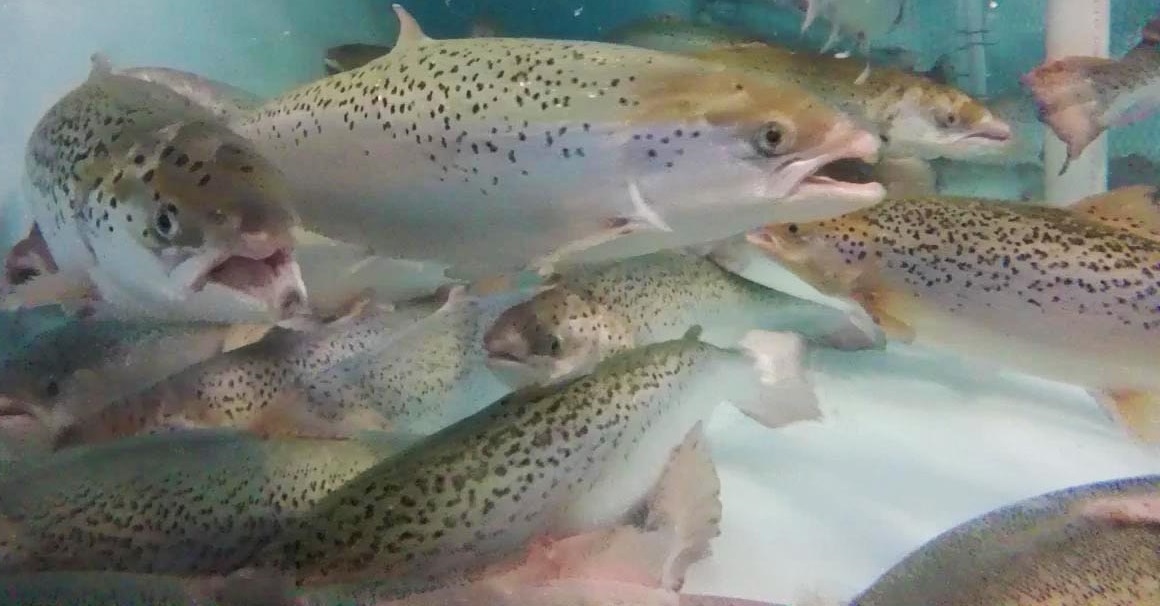
    <p><img alt="Atlantic Salmon" src="https://www.mdsg.umd.edu/sites/default/files/images/Go%20Pro%20Atlantics4.jpg" style="max-width: 100%; height: auto;"><em>Atlantic salmon swim in a recirculating aquaculture system at UWSP NADF<br>

    Photo credit: Emma Wiermaa, University of Wisconsin-Stevens Point Northern Aquaculture Demonstration Facility</em></p>
    <p>Maryland Sea Grant Director Fredrika Moser said she saw tremendous value in a multi-disciplinary approach to growing domestic aquaculture through this grant. “Sea Grant is excited to work with our partners in research and industry to develop a roadmap that will help policymakers and federal agencies promote an economically feasible and environmentally sustainable land-based domestic aquaculture industry,” she said.</p>
    <p>This effort to build these systems’ capacity and research their economic feasibility includes Sea Grant partners in Maine and Wisconsin as well as the University of Maryland Center for Environmental Science, University of Maryland Extension, Morgan State University, the USDA National Cold Water Marine Aquaculture Center, the University of Wisconsin-Stevens Point Northern Aquaculture Demonstration Facility, and the Conservation Fund’s Freshwater Institute in West Virginia. Industry partners and collaborators include Superior Fresh in Wisconsin, Whole Oceans, LLC and Nordic Aquafarms in Maine, and American Salmon in Maryland, among others.</p>
    <p>“This research is critical in terms of promoting industry development in the United States. It’s still a very young industry here. There’s a tremendous development potential as we see it,” said Nordic Aquafarms president Erik Heim. “There’s a learning curve in this industry. This kind of research can disseminate knowledge and lower the entry barriers for new players as well as help established players grow.”</p>
    <p>Whole Oceans’ Jennifer Fortier added: “We want to develop training programs that can help us recruit local workers and retrain skilled laborers from other industries. We look forward to collaborating with the other top-notch partners and learning from each other as we work to expand this industry.”</p>
    <p>Wisconsin and Maine Sea Grant directors echoed the excitement for the project.  “We’re excited to partner with Maryland and Wisconsin Sea Grant and experts in the technology to gather as much science-based information about these systems as they develop and evolve,” said Maine Sea Grant director Gayle Zydlewski.</p>
    <p>Added Wisconsin Sea Grant Director James Hurley: “The sustainable production of Atlantic salmon in the heart of America’s Dairyland has been successful thanks to Superior Fresh. This new research will further a healthy source of protein to wider markets.”</p>
    </div></div></div>
    </div></div></div></div></div>
]]>
</Body>
<Summary>September 19, 2019       ​COLLEGE PARK and BALTIMORE, Md. (Sept. 19, 2019) – Maryland Sea Grant and University of Maryland, Baltimore County, are lead partners in a multi-state consortium to...</Summary>
<TrackingUrl>https://my3.my.umbc.edu/api/v0/pixel/news/86867/guest@my.umbc.edu/60203e77eff6772873747ea03babb8cb/api/pixel</TrackingUrl>
<Group token="marinebiotechnology">Marine Biotechnology</Group>
<GroupUrl>https://my3.my.umbc.edu/groups/marinebiotechnology</GroupUrl>
<AvatarUrl>https://assets4-my.umbc.edu/system/shared/avatars/groups/000/000/761/ea407c6c8898c300a60b1f84d8f15d80/xsmall.png?1596561611</AvatarUrl>
<AvatarUrl size="original">https://assets3-my.umbc.edu/system/shared/avatars/groups/000/000/761/ea407c6c8898c300a60b1f84d8f15d80/original.jpg?1596561611</AvatarUrl>
<AvatarUrl size="xxlarge">https://assets1-my.umbc.edu/system/shared/avatars/groups/000/000/761/ea407c6c8898c300a60b1f84d8f15d80/xxlarge.png?1596561611</AvatarUrl>
<AvatarUrl size="xlarge">https://assets4-my.umbc.edu/system/shared/avatars/groups/000/000/761/ea407c6c8898c300a60b1f84d8f15d80/xlarge.png?1596561611</AvatarUrl>
<AvatarUrl size="large">https://assets1-my.umbc.edu/system/shared/avatars/groups/000/000/761/ea407c6c8898c300a60b1f84d8f15d80/large.png?1596561611</AvatarUrl>
<AvatarUrl size="medium">https://assets4-my.umbc.edu/system/shared/avatars/groups/000/000/761/ea407c6c8898c300a60b1f84d8f15d80/medium.png?1596561611</AvatarUrl>
<AvatarUrl size="small">https://assets2-my.umbc.edu/system/shared/avatars/groups/000/000/761/ea407c6c8898c300a60b1f84d8f15d80/small.png?1596561611</AvatarUrl>
<AvatarUrl size="xsmall">https://assets4-my.umbc.edu/system/shared/avatars/groups/000/000/761/ea407c6c8898c300a60b1f84d8f15d80/xsmall.png?1596561611</AvatarUrl>
<AvatarUrl size="xxsmall">https://assets3-my.umbc.edu/system/shared/avatars/groups/000/000/761/ea407c6c8898c300a60b1f84d8f15d80/xxsmall.png?1596561611</AvatarUrl>
<Sponsor>Marine Biotechnology</Sponsor>
<PawCount>0</PawCount>
<CommentCount>0</CommentCount>
<CommentsAllowed>true</CommentsAllowed>
<PostedAt>Fri, 20 Sep 2019 10:00:51 -0400</PostedAt>
<EditAt>Fri, 20 Sep 2019 10:09:41 -0400</EditAt>
</NewsItem>

<NewsItem contentIssues="false" id="86303" important="false" status="posted" url="https://my3.my.umbc.edu/groups/marinebiotechnology/posts/86303">
<Title>Avoiding Empty Oceans:Sustainable Aquaculture and the Future</Title>
<Tagline>Feeding the World</Tagline>
<Body>
<![CDATA[
    <div class="html-content">
    <div><div><div><span>October 01, 2019 <span><span>at 5:30pm</span> to <span>at 7:00pm</span></span></span></div></div></div>
    <div>
    <div>Speaker: </div>
    <div><div><a href="https://imet.usmd.edu/directory/yonathan-zohar" rel="nofollow external" class="bo">Yonathan Zohar</a></div></div>
    </div>
    <div><div><div>
    <p><em>This is a free event. Please join us at 5:30pm for a light reception and 6:00pm for the lecture. </em></p>
    <p>Avoiding Empty Oceans: Sustainable Aquaculture and the Future of Feeding the World</p>
    <p>Public Lecture with UMBC-IMET Professor Dr. Yonathan Zohar</p>
    <p>With 200,000 people added to our planet every day and an ever-growing increase in people’s appetite for seafood, we are very rapidly depleting our oceans and the Chesapeake Bay. Responding to this challenge, aquaculture has become the fastest growing agricultural industry in the U.S. and the world. However, it often employs practices that result in adverse environmental consequences. This lecture will describe a new generation of aquaculture technologies developed by IMET scientists to efficiently and sustainably produce quality seafood while reducing our dependence on wild fishery stocks.</p>
    <p><a href="https://www.eventbrite.com/e/avoiding-empty-oceans-sustainable-aquaculture-and-the-future-of-feeding-the-world-tickets-70783985807" rel="nofollow external" class="bo">https://www.eventbrite.com/e/avoiding-empty-oceans-sustainable-aquaculture-and-the-future-of-feeding-the-world-tickets-70783985807</a></p>
    </div></div></div>
    </div>
]]>
</Body>
<Summary>October 01, 2019 at 5:30pm to at 7:00pm     Speaker:    Yonathan Zohar       This is a free event. Please join us at 5:30pm for a light reception and 6:00pm for the lecture.   Avoiding Empty...</Summary>
<TrackingUrl>https://my3.my.umbc.edu/api/v0/pixel/news/86303/guest@my.umbc.edu/69d59f8a26ad1123d2687e42e7b415fc/api/pixel</TrackingUrl>
<Group token="marinebiotechnology">Marine Biotechnology</Group>
<GroupUrl>https://my3.my.umbc.edu/groups/marinebiotechnology</GroupUrl>
<AvatarUrl>https://assets4-my.umbc.edu/system/shared/avatars/groups/000/000/761/ea407c6c8898c300a60b1f84d8f15d80/xsmall.png?1596561611</AvatarUrl>
<AvatarUrl size="original">https://assets3-my.umbc.edu/system/shared/avatars/groups/000/000/761/ea407c6c8898c300a60b1f84d8f15d80/original.jpg?1596561611</AvatarUrl>
<AvatarUrl size="xxlarge">https://assets1-my.umbc.edu/system/shared/avatars/groups/000/000/761/ea407c6c8898c300a60b1f84d8f15d80/xxlarge.png?1596561611</AvatarUrl>
<AvatarUrl size="xlarge">https://assets4-my.umbc.edu/system/shared/avatars/groups/000/000/761/ea407c6c8898c300a60b1f84d8f15d80/xlarge.png?1596561611</AvatarUrl>
<AvatarUrl size="large">https://assets1-my.umbc.edu/system/shared/avatars/groups/000/000/761/ea407c6c8898c300a60b1f84d8f15d80/large.png?1596561611</AvatarUrl>
<AvatarUrl size="medium">https://assets4-my.umbc.edu/system/shared/avatars/groups/000/000/761/ea407c6c8898c300a60b1f84d8f15d80/medium.png?1596561611</AvatarUrl>
<AvatarUrl size="small">https://assets2-my.umbc.edu/system/shared/avatars/groups/000/000/761/ea407c6c8898c300a60b1f84d8f15d80/small.png?1596561611</AvatarUrl>
<AvatarUrl size="xsmall">https://assets4-my.umbc.edu/system/shared/avatars/groups/000/000/761/ea407c6c8898c300a60b1f84d8f15d80/xsmall.png?1596561611</AvatarUrl>
<AvatarUrl size="xxsmall">https://assets3-my.umbc.edu/system/shared/avatars/groups/000/000/761/ea407c6c8898c300a60b1f84d8f15d80/xxsmall.png?1596561611</AvatarUrl>
<Sponsor>Marine Biotechnology</Sponsor>
<PawCount>0</PawCount>
<CommentCount>0</CommentCount>
<CommentsAllowed>true</CommentsAllowed>
<PostedAt>Tue, 03 Sep 2019 13:13:11 -0400</PostedAt>
<EditAt>Tue, 03 Sep 2019 13:14:41 -0400</EditAt>
</NewsItem>

<NewsItem contentIssues="true" id="86161" important="false" status="posted" url="https://my3.my.umbc.edu/groups/marinebiotechnology/posts/86161">
<Title>FISH: Feeding Individuals to Support Health</Title>
<Body>
<![CDATA[
    <div class="html-content">
    <div>
    <div><div><h1>FISH: Feeding Individuals to Support Health</h1></div></div>
    <div><div><div><div>
    <div><div><div>
    <div><div><div>
    <table border="0"><tbody><tr>
    <td><a href="https://imet.usmd.edu/FISH#Overview" rel="nofollow external" class="bo"><img alt="" src="https://imet.usmd.edu/sites/default/files/styles/featured_image/public/Artboard%209.png?itok=EK6AxeVl" style="max-width: 100%; height: auto;"></a></td>
    <td><a href="https://imet.usmd.edu/FISH#Partners" rel="nofollow external" class="bo"><img alt="" src="https://imet.usmd.edu/sites/default/files/styles/featured_image/public/Artboard%2011.png?itok=WLNEkFJ3" style="max-width: 100%; height: auto;"></a></td>
    <td><a href="https://imet.usmd.edu/FISHupdates#Updates" rel="nofollow external" class="bo"><img alt="" src="https://imet.usmd.edu/sites/default/files/styles/featured_image/public/Artboard%2013.png?itok=4f2wf6hQ" style="max-width: 100%; height: auto;"></a></td>
    <td><a href="https://imet.usmd.edu/FISHupdates#Press" rel="nofollow external" class="bo"><img alt="" src="https://imet.usmd.edu/sites/default/files/styles/featured_image/public/Artboard%2012.png?itok=FnHxWY4a" style="max-width: 100%; height: auto;"></a></td>
    </tr></tbody></table>
    <p><strong>Baltimore Organizations Form Unique Partnership to Create the FISH (Feeding Individuals to Support Health) Project</strong></p>
    <p>Scientists from the University of Maryland Center for Environmental Science (UMCES) and the University of Maryland, Baltimore County (UMBC) are conducting aquaculture research at the Institute of Marine and Environmental Technology (IMET) to develop the next generation of environmentally sustainable methods for farming marine fish of commercial importance.</p>
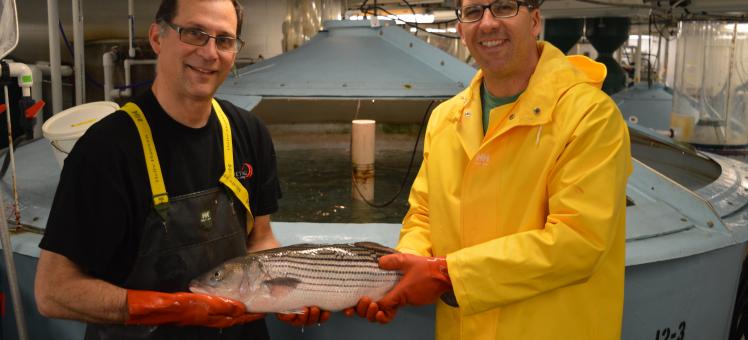
    <p>In a unique collaboration between IMET, United Way of Central Maryland, McCormick, and JJ McDonnell, the FISH Project was developed to positively impact the health of the central Maryland community. The project aims to provide residents living in underserved communities with access to healthy and nutritious meal options, like fresh-cooked fish.</p>
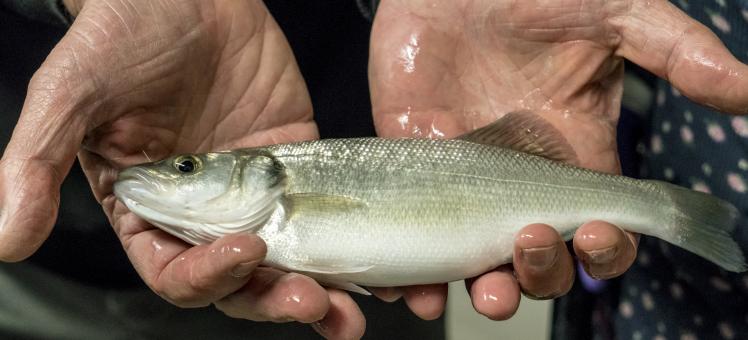
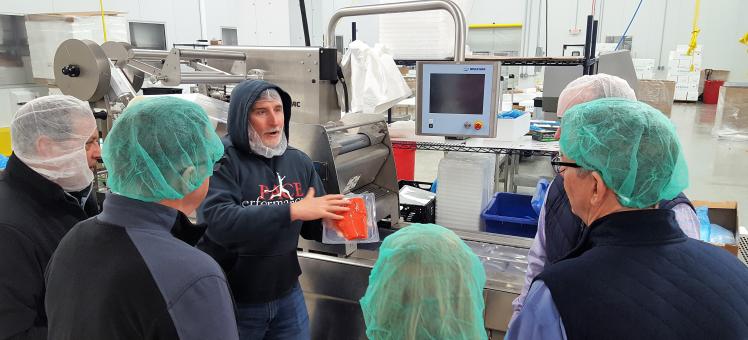
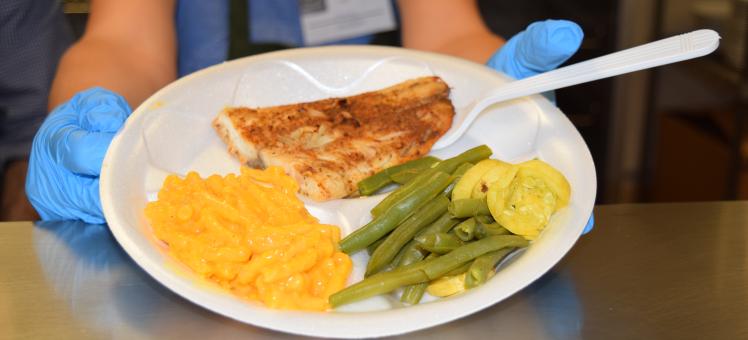
    <p>The initial harvest of fish is a Mediterranean bronzini, which has been grown in pristine saltwater in the IMET Aquaculture Research Center. As part of its commitment to supporting sustainable seafood sourcing, the local seafood distributor JJ McDonnell, will process and deliver the fish to local meal programs as well as to the Maryland Food Bank. The goal is to not only deliver high-quality, locally produced fish to improve people’s health, but also to educate families and individuals on how to prepare fish using low cost, healthy, flavorful ingredients.</p>
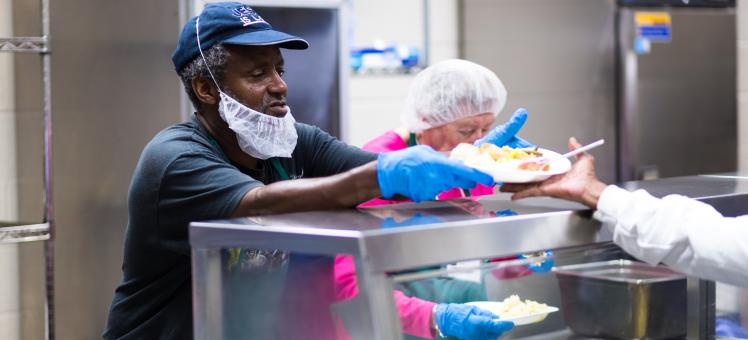
    <p>The FISH Project was officially launched at the Franciscan Center on June 25, where patrons were served a healthy bronzini lunch.</p>
    <p><a href="https://imet.usmd.edu/sites/default/files/Fish%20Project%20FAQ.pdf" rel="nofollow external" class="bo">Find out more by reading our FAQs</a></p>
    <p> </p>
    </div></div></div>
    <div><div></div></div>
    </div></div></div>
    <div>
    <div><div>
    <div><div><div><img src="https://imet.usmd.edu/sites/default/files/image-with-caption/UW%20Flow%20Chart%204_UW%20Flow%20Chart.png" width="4268" height="10139" style="max-width: 100%; height: auto;"></div></div></div>
    <div><div></div></div>
    </div></div>
    <div><hr></div>
    </div>
    <div><div><div>
    <div><div><div><h1>FISH Partners</h1></div></div></div>
    <div><div></div></div>
    </div></div></div>
    <div><div><div>
    <div><div><div><div><img src="https://imet.usmd.edu/sites/default/files/styles/featured_image/public/featured-card/Seabass_200%20g_on%20hands%20%281%29.jpg?itok=hk3QQof0" width="748" height="340" style="max-width: 100%; height: auto;"></div></div></div></div>
    <div><div>
    <h2>McCormick</h2>
    <div><div><div>McCormick works to improve the health and well-being of all people; build vibrant communities where we live, work and source; and make a positive impact on the planet.</div></div></div>
    <div><div><div><a href="http://www.mccormickcorporation.com/" rel="nofollow external" class="bo">Learn More</a></div></div></div>
    <div><div></div></div>
    </div></div>
    </div></div></div>
    <div><div><div>
    <div><div><div><div><img src="https://imet.usmd.edu/sites/default/files/styles/featured_image/public/featured-card/Handing%20off%20seabass.JPG?itok=a6cfUK21" width="748" height="340" style="max-width: 100%; height: auto;"></div></div></div></div>
    <div><div>
    <h2>United Way</h2>
    <div><div><div>United Way of Central Maryland's mission is to unite and engage our communities to improve people's lives.</div></div></div>
    <div><div><div><a href="http://www.uwcm.org/main/" rel="nofollow external" class="bo">Learn More</a></div></div></div>
    <div><div></div></div>
    </div></div>
    </div></div></div>
    <div><div><div>
    <div><div><div><div><img src="https://imet.usmd.edu/sites/default/files/styles/featured_image/public/featured-card/DSC_0001.jpg?itok=yFeDig40" width="748" height="340" style="max-width: 100%; height: auto;"></div></div></div></div>
    <div><div>
    <h2>Institute of Marine and Environmental Technology (IMET)</h2>
    <div><div><div>The scientists at IMET conduct marine and environmental research and thereby create technologies designed to foster the protection and restoration of coastal marine systems and their watersheds, sustainable use of their resources and improvement of human health. IMET is a joint University System of Maryland research institute capitalizing on the strengths of the University of Maryland Center for Environmental Science, the University of Maryland, Baltimore County and the University of Maryland, Baltimore.</div></div></div>
    <div><div><div><a href="http://imet.usmd.edu/" rel="nofollow external" class="bo">Learn More</a></div></div></div>
    <div><div></div></div>
    </div></div>
    </div></div></div>
    <div><div><div>
    <div><div><div><div><img src="https://imet.usmd.edu/sites/default/files/styles/featured_image/public/featured-card/JJ%201.jpg?itok=9_u5OnMR" width="748" height="340" style="max-width: 100%; height: auto;"></div></div></div></div>
    <div><div>
    <h2>JJ McDonnell</h2>
    <div><div><div>At J.J. McDonnell we recognize the increasingly important subject of sustainability in our industry. We are committed to working with our vendors to collect key information about all of our seafood products. We assess that information against environmental indicators with the help of our partners. We find a great sense of joy in supporting our local community and resources. We try to help every time we can and truly believe that as a business in this fine state, we must give back and support those around us.</div></div></div>
    <div><div><div><a href="http://www.jjmcdonnell.com/" rel="nofollow external" class="bo">Learn More</a></div></div></div>
    <div><div></div></div>
    </div></div>
    </div></div></div>
    <div><div><div>
    <div><div><div><div><img src="https://imet.usmd.edu/sites/default/files/styles/featured_image/public/featured-card/Volunteer%20Serving%20Lunch2_0.jpg?itok=PhmHx9Ok" width="748" height="340" style="max-width: 100%; height: auto;"></div></div></div></div>
    <div><div>
    <h2>Franciscan Center of Baltimore</h2>
    <div><div><div>The mission of the Franciscan Center is to provide emergency assistance and supportive outreach to persons who are economically disadvantaged in an effort to assist them in realizing their self-worth and dignity as people of God.</div></div></div>
    <div><div><div><a href="http://www.fcbmore.org/" rel="nofollow external" class="bo">Learn More</a></div></div></div>
    <div><div></div></div>
    </div></div>
    </div></div></div>
    <div><div><div><div><div><div><div><img src="https://imet.usmd.edu/sites/default/files/styles/featured_image/public/featured-card/Beautiful%20Plate_First%20Meal%20Served%20with%20IMET%20Fish%21.JPG?itok=7I7iuM_J" width="748" height="340" style="max-width: 100%; height: auto;"></div></div></div></div></div></div></div>
    </div></div></div></div>
    </div>
    <div><br></div>
    <div><br></div>
    <div><br></div>
    <div><br></div>
    <div><br></div>
    <a href="https://imet.usmd.edu/FISH" rel="nofollow external" class="bo">https://imet.usmd.edu/FISH</a>
    </div>
]]>
</Body>
<Summary>FISH: Feeding Individuals to Support Health              Baltimore Organizations Form Unique Partnership to Create the FISH (Feeding Individuals to Support Health) Project  Scientists from the...</Summary>
<TrackingUrl>https://my3.my.umbc.edu/api/v0/pixel/news/86161/guest@my.umbc.edu/0056dec75c05dd9cac04a6cb3f03b6d8/api/pixel</TrackingUrl>
<Group token="marinebiotechnology">Marine Biotechnology</Group>
<GroupUrl>https://my3.my.umbc.edu/groups/marinebiotechnology</GroupUrl>
<AvatarUrl>https://assets4-my.umbc.edu/system/shared/avatars/groups/000/000/761/ea407c6c8898c300a60b1f84d8f15d80/xsmall.png?1596561611</AvatarUrl>
<AvatarUrl size="original">https://assets3-my.umbc.edu/system/shared/avatars/groups/000/000/761/ea407c6c8898c300a60b1f84d8f15d80/original.jpg?1596561611</AvatarUrl>
<AvatarUrl size="xxlarge">https://assets1-my.umbc.edu/system/shared/avatars/groups/000/000/761/ea407c6c8898c300a60b1f84d8f15d80/xxlarge.png?1596561611</AvatarUrl>
<AvatarUrl size="xlarge">https://assets4-my.umbc.edu/system/shared/avatars/groups/000/000/761/ea407c6c8898c300a60b1f84d8f15d80/xlarge.png?1596561611</AvatarUrl>
<AvatarUrl size="large">https://assets1-my.umbc.edu/system/shared/avatars/groups/000/000/761/ea407c6c8898c300a60b1f84d8f15d80/large.png?1596561611</AvatarUrl>
<AvatarUrl size="medium">https://assets4-my.umbc.edu/system/shared/avatars/groups/000/000/761/ea407c6c8898c300a60b1f84d8f15d80/medium.png?1596561611</AvatarUrl>
<AvatarUrl size="small">https://assets2-my.umbc.edu/system/shared/avatars/groups/000/000/761/ea407c6c8898c300a60b1f84d8f15d80/small.png?1596561611</AvatarUrl>
<AvatarUrl size="xsmall">https://assets4-my.umbc.edu/system/shared/avatars/groups/000/000/761/ea407c6c8898c300a60b1f84d8f15d80/xsmall.png?1596561611</AvatarUrl>
<AvatarUrl size="xxsmall">https://assets3-my.umbc.edu/system/shared/avatars/groups/000/000/761/ea407c6c8898c300a60b1f84d8f15d80/xxsmall.png?1596561611</AvatarUrl>
<Sponsor>Marine Biotechnology</Sponsor>
<PawCount>1</PawCount>
<CommentCount>0</CommentCount>
<CommentsAllowed>true</CommentsAllowed>
<PostedAt>Wed, 28 Aug 2019 09:56:10 -0400</PostedAt>
<EditAt>Tue, 03 Sep 2019 13:08:59 -0400</EditAt>
</NewsItem>

<NewsItem contentIssues="false" id="85837" important="false" status="posted" url="https://my3.my.umbc.edu/groups/marinebiotechnology/posts/85837">
<Title>New Dr. Yonathan Zohar discusses the future of food with PBS</Title>
<Body>
<![CDATA[
    <div class="html-content">
    <div>
    <div>
    <h1>Dr. Yonathan Zohar discusses the future of food with PBS            </h1>
              </div>
                          </div>
    <div>
                      <div>
                Aug 12, 2019          </div>
                  </div>
    <div>
            <div>
              
    <div>
      
    <div>
        <div>
              <div>  <div>
        <div>
          <div>
        <div>
              <div>
    <div><div class="embed-container"><iframe src="https://www.youtube.com/embed/bco7rPyKwec" frameborder="0" webkitallowfullscreen="webkitAllowFullScreen" mozallowfullscreen="mozallowfullscreen" allowfullscreen="allowFullScreen">[Video]</iframe></div></div>
    </div>
          </div>
    </div>
    
    <div>
        <div>
              
          </div>
    </div>
        </div>
      </div>
    
    </div>
              <div>  <div>
        <div>
          <div>
        <div>
              <div><p>Dr. Yonathan Zohar speaks with PBS News Hour for their series on the future of food. As fish consumption rises, aquaculture has become increasingly important. Genetic engineering of sterile fish may be an effective way to increase the availability of healthy fish protein without negatively impacting the environment and natural fish populations. </p></div>
    </div>
    </div>
    </div>
    </div>
    </div>
    </div>
    </div>
    </div>
    </div>
    </div>
    </div>
]]>
</Body>
<Summary>Dr. Yonathan Zohar discusses the future of food with PBS                                                                                   Aug 12, 2019...</Summary>
<TrackingUrl>https://my3.my.umbc.edu/api/v0/pixel/news/85837/guest@my.umbc.edu/a742b7fdee7aede28a53dfa55fbc580c/api/pixel</TrackingUrl>
<Group token="marinebiotechnology">Marine Biotechnology</Group>
<GroupUrl>https://my3.my.umbc.edu/groups/marinebiotechnology</GroupUrl>
<AvatarUrl>https://assets4-my.umbc.edu/system/shared/avatars/groups/000/000/761/ea407c6c8898c300a60b1f84d8f15d80/xsmall.png?1596561611</AvatarUrl>
<AvatarUrl size="original">https://assets3-my.umbc.edu/system/shared/avatars/groups/000/000/761/ea407c6c8898c300a60b1f84d8f15d80/original.jpg?1596561611</AvatarUrl>
<AvatarUrl size="xxlarge">https://assets1-my.umbc.edu/system/shared/avatars/groups/000/000/761/ea407c6c8898c300a60b1f84d8f15d80/xxlarge.png?1596561611</AvatarUrl>
<AvatarUrl size="xlarge">https://assets4-my.umbc.edu/system/shared/avatars/groups/000/000/761/ea407c6c8898c300a60b1f84d8f15d80/xlarge.png?1596561611</AvatarUrl>
<AvatarUrl size="large">https://assets1-my.umbc.edu/system/shared/avatars/groups/000/000/761/ea407c6c8898c300a60b1f84d8f15d80/large.png?1596561611</AvatarUrl>
<AvatarUrl size="medium">https://assets4-my.umbc.edu/system/shared/avatars/groups/000/000/761/ea407c6c8898c300a60b1f84d8f15d80/medium.png?1596561611</AvatarUrl>
<AvatarUrl size="small">https://assets2-my.umbc.edu/system/shared/avatars/groups/000/000/761/ea407c6c8898c300a60b1f84d8f15d80/small.png?1596561611</AvatarUrl>
<AvatarUrl size="xsmall">https://assets4-my.umbc.edu/system/shared/avatars/groups/000/000/761/ea407c6c8898c300a60b1f84d8f15d80/xsmall.png?1596561611</AvatarUrl>
<AvatarUrl size="xxsmall">https://assets3-my.umbc.edu/system/shared/avatars/groups/000/000/761/ea407c6c8898c300a60b1f84d8f15d80/xxsmall.png?1596561611</AvatarUrl>
<Sponsor>Marine Biotechnology</Sponsor>
<PawCount>0</PawCount>
<CommentCount>0</CommentCount>
<CommentsAllowed>true</CommentsAllowed>
<PostedAt>Mon, 12 Aug 2019 14:05:04 -0400</PostedAt>
</NewsItem>

<NewsItem contentIssues="false" id="85468" important="false" status="posted" url="https://my3.my.umbc.edu/groups/marinebiotechnology/posts/85468">
<Title>Collaboration yields a new technique to remove PCBs</Title>
<Body>
<![CDATA[
    <div class="html-content">
    <div><span>Apr 11, 2019</span></div>
    <div><span><br></span></div>
    <div>
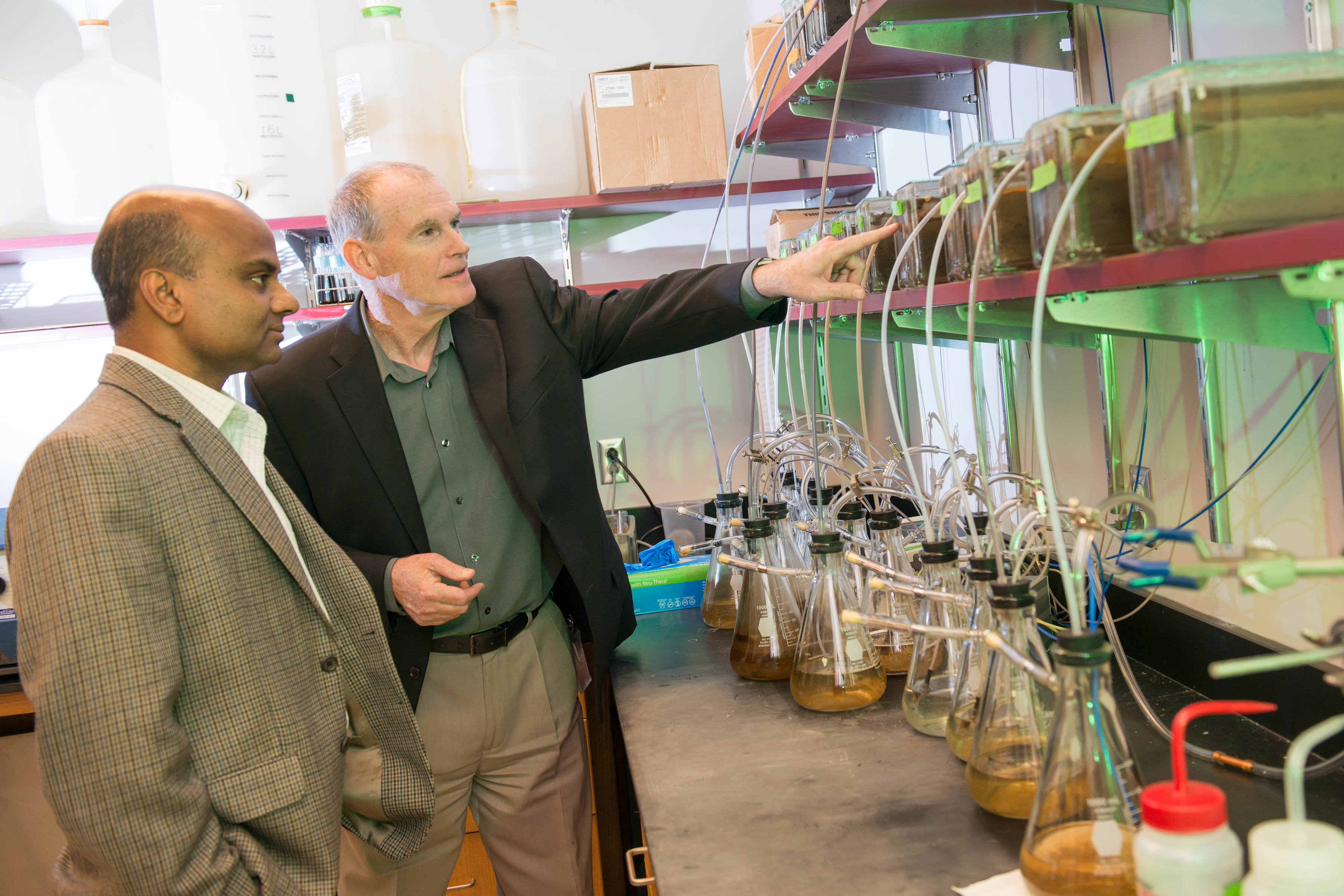
    <p>UMBC profiles a collaboration between UMBC-IMET faculty Dr. Kevin Sowers and UMBC faculty Dr. Upal Ghosh. By working together, this team has created a new technique to remove legacy PCBs in the environment. </p>
    <p><a href="https://news.umbc.edu/umbc-researchers-invent-creative-approach-to-remove-dangerous-pollutant-from-waterways/" rel="nofollow external" class="bo">Read the full article here.</a> </p>
    </div>
    <div><br></div>
    <img src="https://imet.usmd.edu/sites/default/files/image-with-caption/Kevin_Upal-2096-1.jpg" alt="Kevin Sowers and Upal Ghosh in the lab" style="max-width: 100%; height: auto;">
    </div>
]]>
</Body>
<Summary>Apr 11, 2019      UMBC profiles a collaboration between UMBC-IMET faculty Dr. Kevin Sowers and UMBC faculty Dr. Upal Ghosh. By working together, this team has created a new technique to remove...</Summary>
<TrackingUrl>https://my3.my.umbc.edu/api/v0/pixel/news/85468/guest@my.umbc.edu/86ac51a0f8b375c086d3b70704d51837/api/pixel</TrackingUrl>
<Group token="marinebiotechnology">Marine Biotechnology</Group>
<GroupUrl>https://my3.my.umbc.edu/groups/marinebiotechnology</GroupUrl>
<AvatarUrl>https://assets4-my.umbc.edu/system/shared/avatars/groups/000/000/761/ea407c6c8898c300a60b1f84d8f15d80/xsmall.png?1596561611</AvatarUrl>
<AvatarUrl size="original">https://assets3-my.umbc.edu/system/shared/avatars/groups/000/000/761/ea407c6c8898c300a60b1f84d8f15d80/original.jpg?1596561611</AvatarUrl>
<AvatarUrl size="xxlarge">https://assets1-my.umbc.edu/system/shared/avatars/groups/000/000/761/ea407c6c8898c300a60b1f84d8f15d80/xxlarge.png?1596561611</AvatarUrl>
<AvatarUrl size="xlarge">https://assets4-my.umbc.edu/system/shared/avatars/groups/000/000/761/ea407c6c8898c300a60b1f84d8f15d80/xlarge.png?1596561611</AvatarUrl>
<AvatarUrl size="large">https://assets1-my.umbc.edu/system/shared/avatars/groups/000/000/761/ea407c6c8898c300a60b1f84d8f15d80/large.png?1596561611</AvatarUrl>
<AvatarUrl size="medium">https://assets4-my.umbc.edu/system/shared/avatars/groups/000/000/761/ea407c6c8898c300a60b1f84d8f15d80/medium.png?1596561611</AvatarUrl>
<AvatarUrl size="small">https://assets2-my.umbc.edu/system/shared/avatars/groups/000/000/761/ea407c6c8898c300a60b1f84d8f15d80/small.png?1596561611</AvatarUrl>
<AvatarUrl size="xsmall">https://assets4-my.umbc.edu/system/shared/avatars/groups/000/000/761/ea407c6c8898c300a60b1f84d8f15d80/xsmall.png?1596561611</AvatarUrl>
<AvatarUrl size="xxsmall">https://assets3-my.umbc.edu/system/shared/avatars/groups/000/000/761/ea407c6c8898c300a60b1f84d8f15d80/xxsmall.png?1596561611</AvatarUrl>
<Sponsor>Marine Biotechnology</Sponsor>
<PawCount>0</PawCount>
<CommentCount>0</CommentCount>
<CommentsAllowed>true</CommentsAllowed>
<PostedAt>Thu, 18 Jul 2019 17:30:50 -0400</PostedAt>
</NewsItem>

<NewsItem contentIssues="false" id="85159" important="false" status="posted" url="https://my3.my.umbc.edu/groups/marinebiotechnology/posts/85159">
<Title>IMET Open House covered in local news</Title>
<Body>
<![CDATA[
    <div class="html-content">
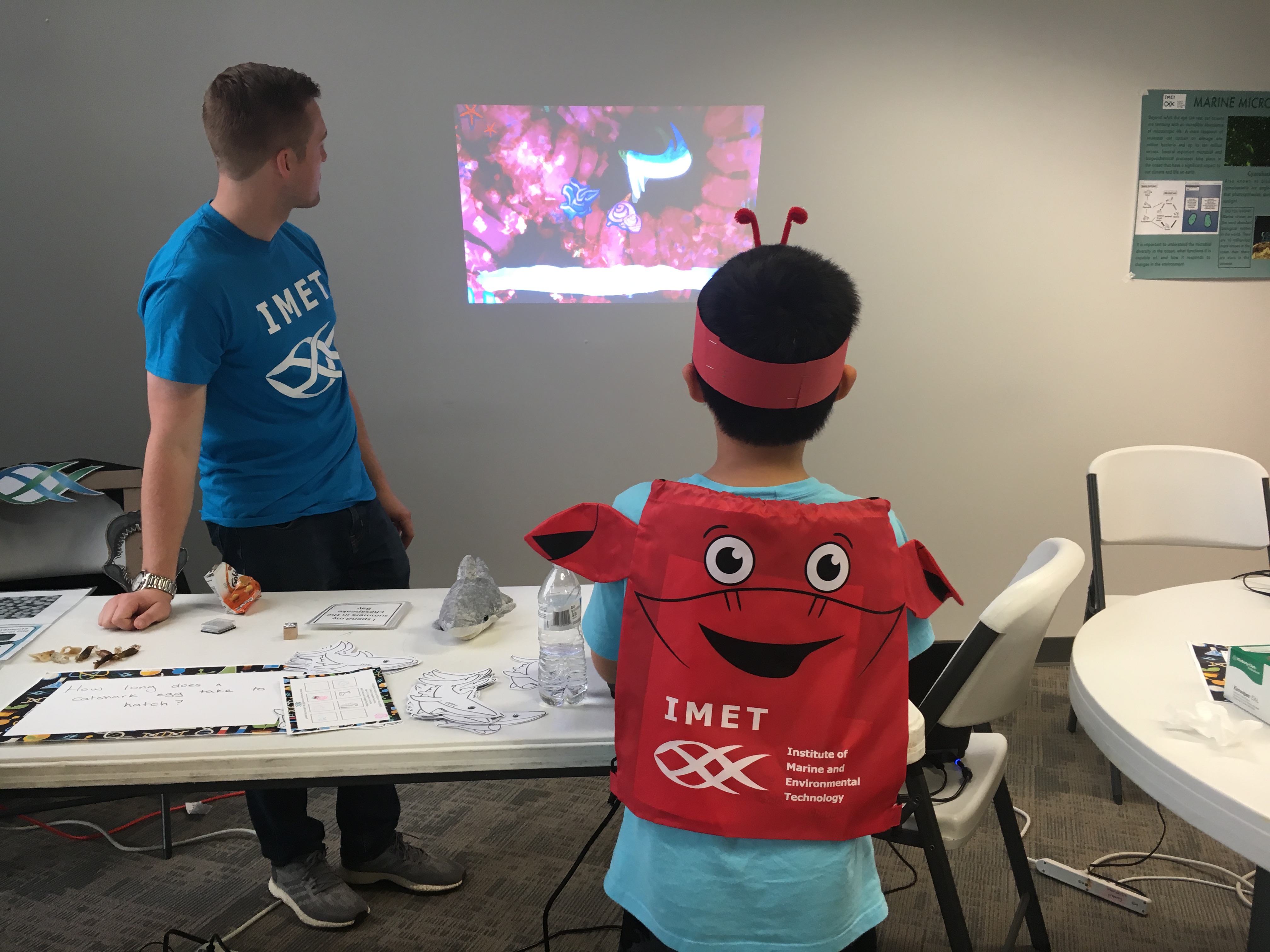
    <img src="https://imet.usmd.edu/sites/default/files/image-with-caption/IMG_3430.JPG" alt="child wearing a crab headband playing a video game" style="max-width: 100%; height: auto;"><div><br></div>
    <div>
    <p>IMET's third annual Open House was held on May 4, 2019 and was a great success! We had more than 550 attendees, who participated in science-based activities led by our faculty, students, and staff. Visitors had the chance to climb aboard the <em>Rachel Carson</em>, a research vessel used by the University of Maryland Center for Environmental Science, and see dinoflagellates, tiny marine organisms, glow in the dark. Kids looked under the microscope for a closer view of life in the Baltimore Harbor and saw a variety of fish, from rockfish to sharks, growing in our Aquaculture Research Center. We hope to see you next year, on May 2, 2020!</p>
    <hr>
    <p>IMET's Open House was covered in several local news outlets. Check it all out here:</p>
    <ul>
    <li>
    <a href="https://retriever.umbc.edu/2019/05/institute-of-marine-and-environmental-technology-open-house-exposes-public-to-science/#" rel="nofollow external" class="bo">Institute of Marine and Environmental Technology open house exposes public to science</a> in UMBC's The Retriever</li>
    <li>
    <a href="https://www.wypr.org/post/investigating-underwater-life-imet" rel="nofollow external" class="bo">Investigating Underwater Life at IMET</a> on WYPR, Baltimore's NPR station</li>
    <li>
    <a href="https://baltimore.cbslocal.com/2019/05/01/institute-of-marine-and-environmental-technology-open-house/" rel="nofollow external" class="bo">Scientific Tours, Hands-On Activities Scheduled For Public At Institute Of Marine And Environmental Technology Open House</a> on WJZ, CBS Baltimore</li>
    <li>
    <a href="https://technical.ly/baltimore/2019/05/02/see-science-research-happening-inside-inner-harbors-imet-institute-marine-environmental-technology/" rel="nofollow external" class="bo">Here’s a chance to see the marine science research happening inside Inner Harbor’s IMET</a> on Technical.ly, Baltimore</li>
    <li>
    <a href="https://www.chesapeakebaymagazine.com/baybulletin/2018/4/25/inner-harbor-marine-science-institute-to-hold-open-house" rel="nofollow external" class="bo">What's IMET? Find Out During Its May Open House</a> in the Chesapeake Bay Magazine</li>
    </ul>
    </div>
    </div>
]]>
</Body>
<Summary>IMET's third annual Open House was held on May 4, 2019 and was a great success! We had more than 550 attendees, who participated in science-based activities led by our faculty, students, and...</Summary>
<TrackingUrl>https://my3.my.umbc.edu/api/v0/pixel/news/85159/guest@my.umbc.edu/e8600b042b123e19e8080f446ca5f217/api/pixel</TrackingUrl>
<Group token="marinebiotechnology">Marine Biotechnology</Group>
<GroupUrl>https://my3.my.umbc.edu/groups/marinebiotechnology</GroupUrl>
<AvatarUrl>https://assets4-my.umbc.edu/system/shared/avatars/groups/000/000/761/ea407c6c8898c300a60b1f84d8f15d80/xsmall.png?1596561611</AvatarUrl>
<AvatarUrl size="original">https://assets3-my.umbc.edu/system/shared/avatars/groups/000/000/761/ea407c6c8898c300a60b1f84d8f15d80/original.jpg?1596561611</AvatarUrl>
<AvatarUrl size="xxlarge">https://assets1-my.umbc.edu/system/shared/avatars/groups/000/000/761/ea407c6c8898c300a60b1f84d8f15d80/xxlarge.png?1596561611</AvatarUrl>
<AvatarUrl size="xlarge">https://assets4-my.umbc.edu/system/shared/avatars/groups/000/000/761/ea407c6c8898c300a60b1f84d8f15d80/xlarge.png?1596561611</AvatarUrl>
<AvatarUrl size="large">https://assets1-my.umbc.edu/system/shared/avatars/groups/000/000/761/ea407c6c8898c300a60b1f84d8f15d80/large.png?1596561611</AvatarUrl>
<AvatarUrl size="medium">https://assets4-my.umbc.edu/system/shared/avatars/groups/000/000/761/ea407c6c8898c300a60b1f84d8f15d80/medium.png?1596561611</AvatarUrl>
<AvatarUrl size="small">https://assets2-my.umbc.edu/system/shared/avatars/groups/000/000/761/ea407c6c8898c300a60b1f84d8f15d80/small.png?1596561611</AvatarUrl>
<AvatarUrl size="xsmall">https://assets4-my.umbc.edu/system/shared/avatars/groups/000/000/761/ea407c6c8898c300a60b1f84d8f15d80/xsmall.png?1596561611</AvatarUrl>
<AvatarUrl size="xxsmall">https://assets3-my.umbc.edu/system/shared/avatars/groups/000/000/761/ea407c6c8898c300a60b1f84d8f15d80/xxsmall.png?1596561611</AvatarUrl>
<Sponsor>Marine Biotechnology</Sponsor>
<PawCount>0</PawCount>
<CommentCount>0</CommentCount>
<CommentsAllowed>true</CommentsAllowed>
<PostedAt>Thu, 27 Jun 2019 13:24:17 -0400</PostedAt>
</NewsItem>

<NewsItem contentIssues="true" id="81789" important="false" status="posted" url="https://my3.my.umbc.edu/groups/marinebiotechnology/posts/81789">
<Title>UMBC Scientists Tackle Hurdles in the Aquaculture Industry</Title>
<Body>
<![CDATA[
    <div class="html-content"> <a href="https://news.umbc.edu/umbc-scientists-tackle-persistent-hurdles-in-the-aquaculture-industry-with-new-noaa-grant/" rel="nofollow external" class="bo"><img width="720" height="426" src="https://news.umbc.edu/wp-content/uploads/2019/01/Salmon-egg-incubators-1-720x426.jpg" alt="" style="max-width: 100%; height: auto;"></a><h1><a href="https://news.umbc.edu/umbc-scientists-tackle-persistent-hurdles-in-the-aquaculture-industry-with-new-noaa-grant/" rel="nofollow external" class="bo">UMBC scientists tackle persistent hurdles in the aquaculture industry with new NOAA grant</a></h1>
    <div><span><a href="https://news.umbc.edu/category/science-technology/" rel="nofollow external" class="bo">SCIENCE &amp; TECHNOLOGY</a><br><a href="https://news.umbc.edu/umbc-scientists-tackle-persistent-hurdles-in-the-aquaculture-industry-with-new-noaa-grant/" rel="nofollow external" class="bo">JANUARY 31, 2019</a><br><a href="https://news.umbc.edu/author/sarahhansen/" rel="nofollow external" class="bo">SARAH HANSEN</a><br>#<a href="https://news.umbc.edu/tag/cnms/" rel="nofollow external" class="bo">CNMS</a>, #<a href="https://news.umbc.edu/tag/marinebiotech/" rel="nofollow external" class="bo">MARINEBIOTECH</a>, #<a href="https://news.umbc.edu/tag/research/" rel="nofollow external" class="bo">RESEARCH</a></span></div>
    <div><span><br></span></div>
    <div>
    <span>As consumer demand for fish continues to grow worldwide, scientists are working to address some of aquaculture’s most persistent challenges. “There are a few bottlenecks and hurdles that the industry needs to address,” says </span><strong>Yonathan Zohar</strong><span>, professor and chair of marine biotechnology at UMBC. He and</span><span> </span><strong>Ten-Tsao Wong</strong><span>, assistant professor of marine biotechnology, are working to address two of those hurdles: fish escaping from net pens and dying of disease.</span>
    </div> <div>
    <p>Wong and Zohar recently received $670,000 of a $740,000, three-year grant from the National Oceanic and Atmospheric Administration to support their research. The remaining $70,000 will support the Maryland Sea Grant’s outreach and education efforts related to improving aquaculture.</p>
    <p><strong>Identifying the hurdles</strong></p>
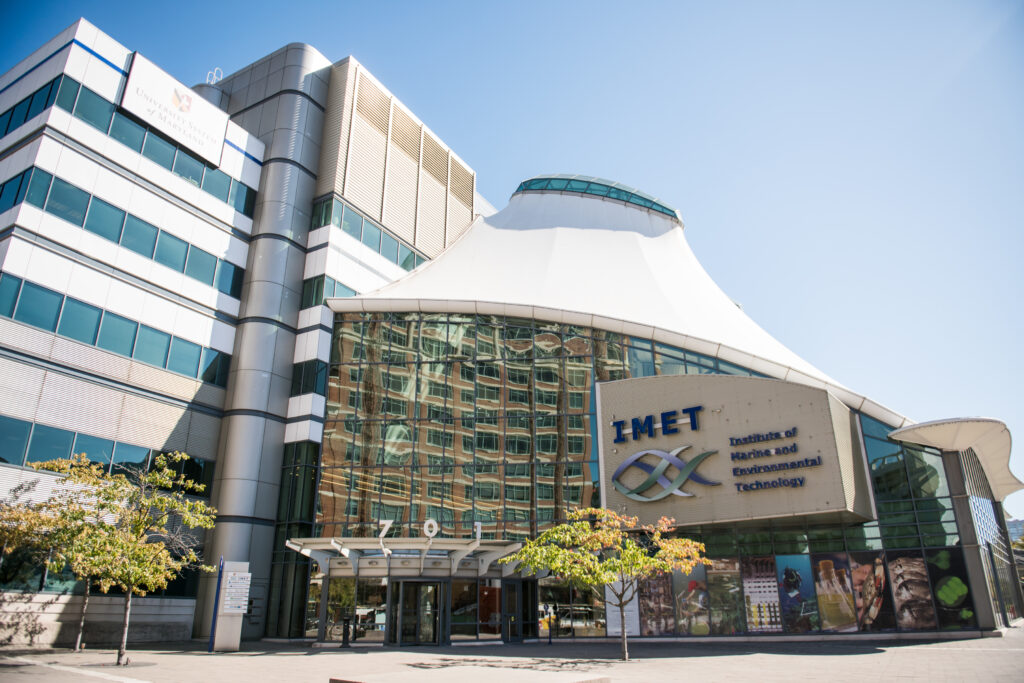
    <p>UMBC faculty at the Institute of Marine and Environmental Technology, a multi-institution facility on Baltimore’s Inner Harbor, are perhaps best known for their <a href="https://news.umbc.edu/the-economist-features-umbcs-revolutionary-land-based-aquaculture/" rel="nofollow external" class="bo">groundbreaking work raising marine fish on land</a>. Their current NOAA-supported research has a different focus—tackling challenges in offshore aquaculture, where fish are grown in net pens in the open ocean.</p>
    <p>Farmed fish are bred for traits that benefit farmers and consumers, so they end up having a different and much less diverse genetic makeup than their wild cousins. If farmed fish escape from the pens and mate with wild fish, “It changes the gene pool and the nature of the wild stocks,” Zohar explains, “and it can lead to the displacement or disappearance of the wild stocks.”</p>
    <img src="https://news.umbc.edu/wp-content/uploads/2019/01/IMET-5955-1024x683.jpg" alt="" width="720" height="480" style="max-width: 100%; height: auto;">The Institute of Marine and Environmental Technology. Photo by Marlayna Demond ’11 for UMBC.<p>In addition, some of the most popular commercial fish, such as salmon, reach reproductive maturity before they reach market size. Once reproductively mature, a fish’s growth rate slows because some of its energy is diverted toward developing reproductive organs, and therefore away from growing muscle. On top of that, reproductively mature fish tend to produce lower-quality meat, making them less valuable on the market. They also have weakened immune systems, so they’re more susceptible to disease. This is a major issue when fish are raised at high-density in pens exposed to potential pathogens in the ocean.</p>
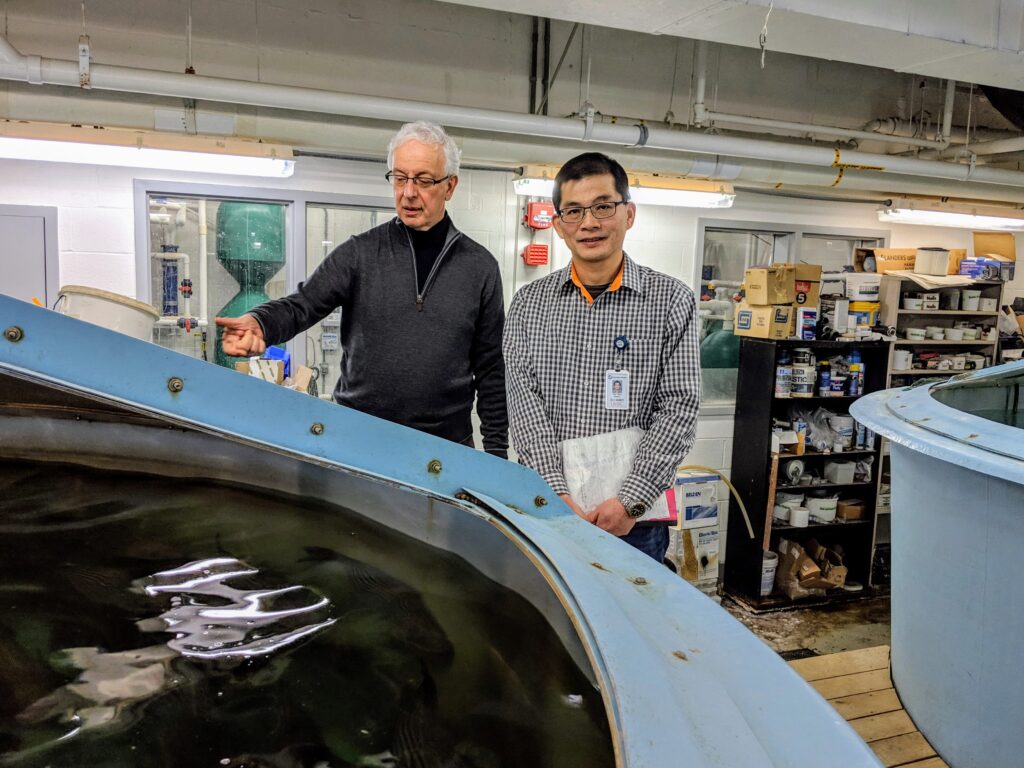
    <p>In response to these problems, Wong and Zohar have invented a technique to grow  fish that cannot reproduce. This would solve the escape problem, because if sterile fish escape a net pen, they won’t be able to mate with wild fish, so they can’t alter the wild population’s gene pool. And sterile fish address the reduced performance of reproductively mature fish, too, because without their energy going toward developing reproductive organs, they don’t suffer from a slower growth rate, muscle deterioration and disease the way fertile fish do.</p>
    <p><strong>Solutions, a step at a time</strong></p>
    <p>Some methods do currently exist to produce sterile fish, but they aren’t very practical for the rapidly expanding aquaculture industry. For example, scientists can produce triploid fish—fish with three, instead of two, copies of every chromosome. These fish only grow well in absolutely perfect conditions. Also, modifying the number of fish chromosomes may present regulatory hurdles and can repel potential consumers.</p>
    <p>“Everybody has been looking for another way to develop reproductively sterile fish,” Zohar says.</p>
    <p>Rather than altering a fish’s genetic code, Wong and Zohar created a new method that prevents a fish embryo from producing a particular protein necessary to develop reproductive organs. The process temporarily silences the gene that codes for this protein, called <em>deadend, </em>during a critical one-to-two week window of development. The gene’s sequence remains unaltered, however, so the fish isn’t a GMO.</p>
    <img src="https://news.umbc.edu/wp-content/uploads/2019/01/With-Fish-2-1024x768.jpg" alt="" width="720" height="540" style="max-width: 100%; height: auto;">Wong (right) and Zohar observe rockfish in a tank at the Aquaculture Research Center at IMET. Photo by Gary Jones.<p>Previously, this new method was found to be effective, but required every fish to be injected individually with the silencing compound. “If you consider the industrial scale, injection is way too much work to do,” Wong says. With this in mind, Wong and Zohar set off to improve their approach.</p>
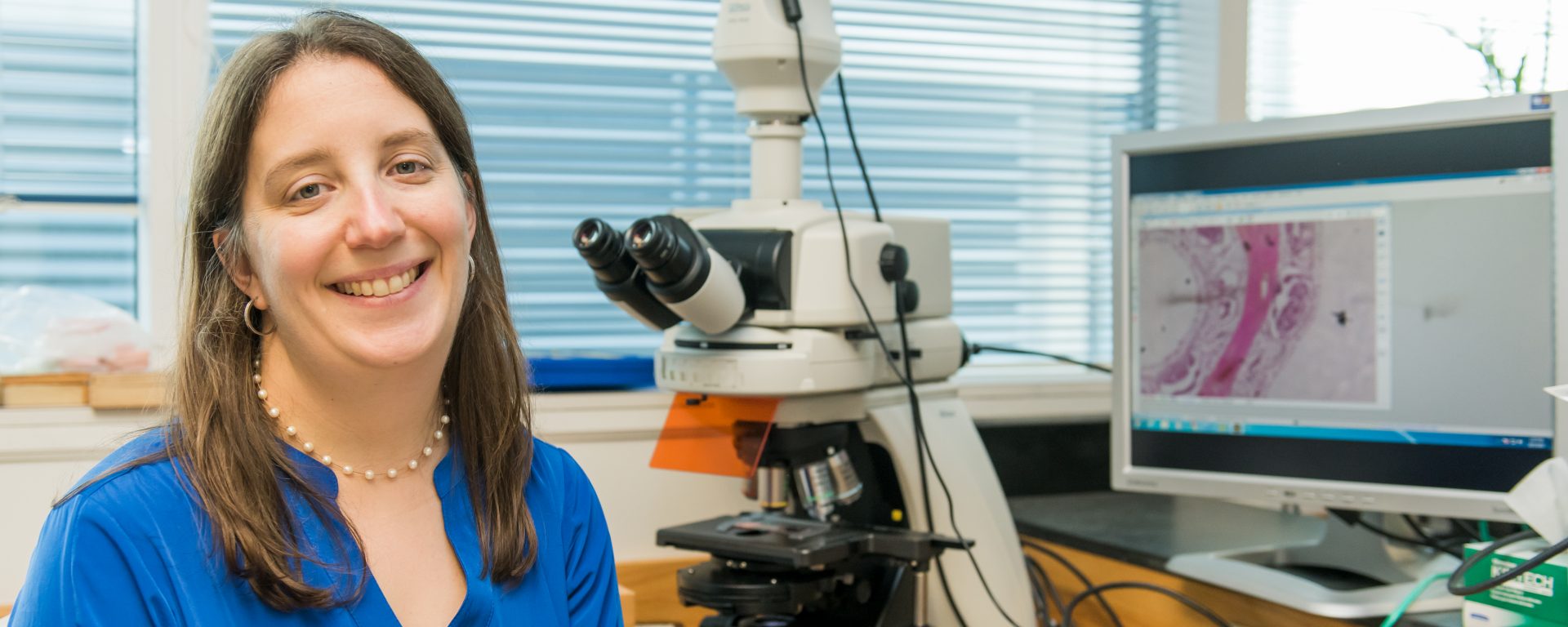
    <p><strong>The future of aquaculture</strong></p>
    <p>In Wong and Zohar’s new method, fish embryos are bathed in a solution containing the silencing compound at the critical time during development. They have found the solution to be much faster, cheaper, and simpler than the injection method. Because the solution is applied well before producers place fish in net pens, it also doesn’t risk exposing wild populations to the silencing compound.</p>
    <p>Previous testing showed that the technique works in zebrafish, a small freshwater fish commonly used in research. Now it has also been implemented in the commercially important Atlantic salmon and rainbow trout. The main goal of the current work is to optimize the process. In previous experiments, 84 percent of rainbow trout that received the treatment grew up to be sterile. Wong and Zohar would like to see that number climb.</p>
    <p>They are also partnering with the USDA to conduct a performance study of sterile fish, testing whether or not they grow faster than fertile ones. “It will help us to prove the case that these fish are going to be more cost-effective,” Wong explains.</p>
    <p>“We have done so much already,” Wong says, “and in three years’ time, we hope it’s going to be an optimized commercial protocol.” That would be a win for the aquaculture industry, oceans, and fish consumers worldwide.</p>
    <p><em>Image: Ten-Tsao Wong (left) and Yonathan Zohar at the Aquaculture Research Center. Trays for incubating salmon eggs are on the left. Photo by Gary Jones.</em></p>
    </div>
    </div>
]]>
</Body>
<Summary>UMBC scientists tackle persistent hurdles in the aquaculture industry with new NOAA grant  SCIENCE &amp; TECHNOLOGY JANUARY 31, 2019 SARAH HANSEN #CNMS, #MARINEBIOTECH, #RESEARCH     As consumer...</Summary>
<TrackingUrl>https://my3.my.umbc.edu/api/v0/pixel/news/81789/guest@my.umbc.edu/a2c18a9ca9d085e69bd76fbb1f24ba04/api/pixel</TrackingUrl>
<Group token="marinebiotechnology">Marine Biotechnology</Group>
<GroupUrl>https://my3.my.umbc.edu/groups/marinebiotechnology</GroupUrl>
<AvatarUrl>https://assets4-my.umbc.edu/system/shared/avatars/groups/000/000/761/ea407c6c8898c300a60b1f84d8f15d80/xsmall.png?1596561611</AvatarUrl>
<AvatarUrl size="original">https://assets3-my.umbc.edu/system/shared/avatars/groups/000/000/761/ea407c6c8898c300a60b1f84d8f15d80/original.jpg?1596561611</AvatarUrl>
<AvatarUrl size="xxlarge">https://assets1-my.umbc.edu/system/shared/avatars/groups/000/000/761/ea407c6c8898c300a60b1f84d8f15d80/xxlarge.png?1596561611</AvatarUrl>
<AvatarUrl size="xlarge">https://assets4-my.umbc.edu/system/shared/avatars/groups/000/000/761/ea407c6c8898c300a60b1f84d8f15d80/xlarge.png?1596561611</AvatarUrl>
<AvatarUrl size="large">https://assets1-my.umbc.edu/system/shared/avatars/groups/000/000/761/ea407c6c8898c300a60b1f84d8f15d80/large.png?1596561611</AvatarUrl>
<AvatarUrl size="medium">https://assets4-my.umbc.edu/system/shared/avatars/groups/000/000/761/ea407c6c8898c300a60b1f84d8f15d80/medium.png?1596561611</AvatarUrl>
<AvatarUrl size="small">https://assets2-my.umbc.edu/system/shared/avatars/groups/000/000/761/ea407c6c8898c300a60b1f84d8f15d80/small.png?1596561611</AvatarUrl>
<AvatarUrl size="xsmall">https://assets4-my.umbc.edu/system/shared/avatars/groups/000/000/761/ea407c6c8898c300a60b1f84d8f15d80/xsmall.png?1596561611</AvatarUrl>
<AvatarUrl size="xxsmall">https://assets3-my.umbc.edu/system/shared/avatars/groups/000/000/761/ea407c6c8898c300a60b1f84d8f15d80/xxsmall.png?1596561611</AvatarUrl>
<Sponsor>Marine Biotechnology</Sponsor>
<PawCount>0</PawCount>
<CommentCount>0</CommentCount>
<CommentsAllowed>true</CommentsAllowed>
<PostedAt>Fri, 01 Feb 2019 11:13:28 -0500</PostedAt>
<EditAt>Fri, 01 Feb 2019 11:18:33 -0500</EditAt>
</NewsItem>

<NewsItem contentIssues="true" id="81601" important="false" status="posted" url="https://my3.my.umbc.edu/groups/marinebiotechnology/posts/81601">
<Title>Colleen Burge Research on Oyster Aquaculture</Title>
<Body>
<![CDATA[
    <div class="html-content">
    <div>
    <div><span><div><div><h1>Burge paper on managing disease in oyster aquaculture</h1></div></div>
    <div><div>Jan 24, 2019</div></div></span></div>
    <div><span><img src="https://imet.usmd.edu/sites/default/files/image-with-caption/Colleen-Burge-5925-e1548172943841-1920x768.jpg" alt="Colleen Burge pictured in her lab" style="max-width: 100%; height: auto;"></span></div>
    <div>
    <span>The potential spread of disease from farmed oysters to wild oysters is a frequent concern for oyster producers and consumers alike. Contrary to common perceptions, <a href="https://www.int-res.com/abstracts/aei/v10/p557-567/" rel="nofollow external" class="bo">new UMBC research in </a></span><a href="https://www.int-res.com/abstracts/aei/v10/p557-567/" rel="nofollow external" class="bo"><em>Aquaculture Environment Interactions</em></a><span>has found that properly managed oyster aquaculture operations can actually help limit the spread of disease among wild oysters.</span>
    </div>
    </div>
    <p><span>“This is another line of evidence saying that oyster aquaculture can be a good thing,” says </span><strong>Colleen Burge</strong><span>, assistant professor of marine biotechnology at UMBC, and a co-author on the study.</span></p>
    <p><span>“The established way of thinking is that disease spreads from aquaculture, but in fact aquaculture may limit disease in nearby wild populations,” adds Tal Ben-Horin, a postdoctoral fellow at the University of Rhode Island and the lead author on the study.</span></p>
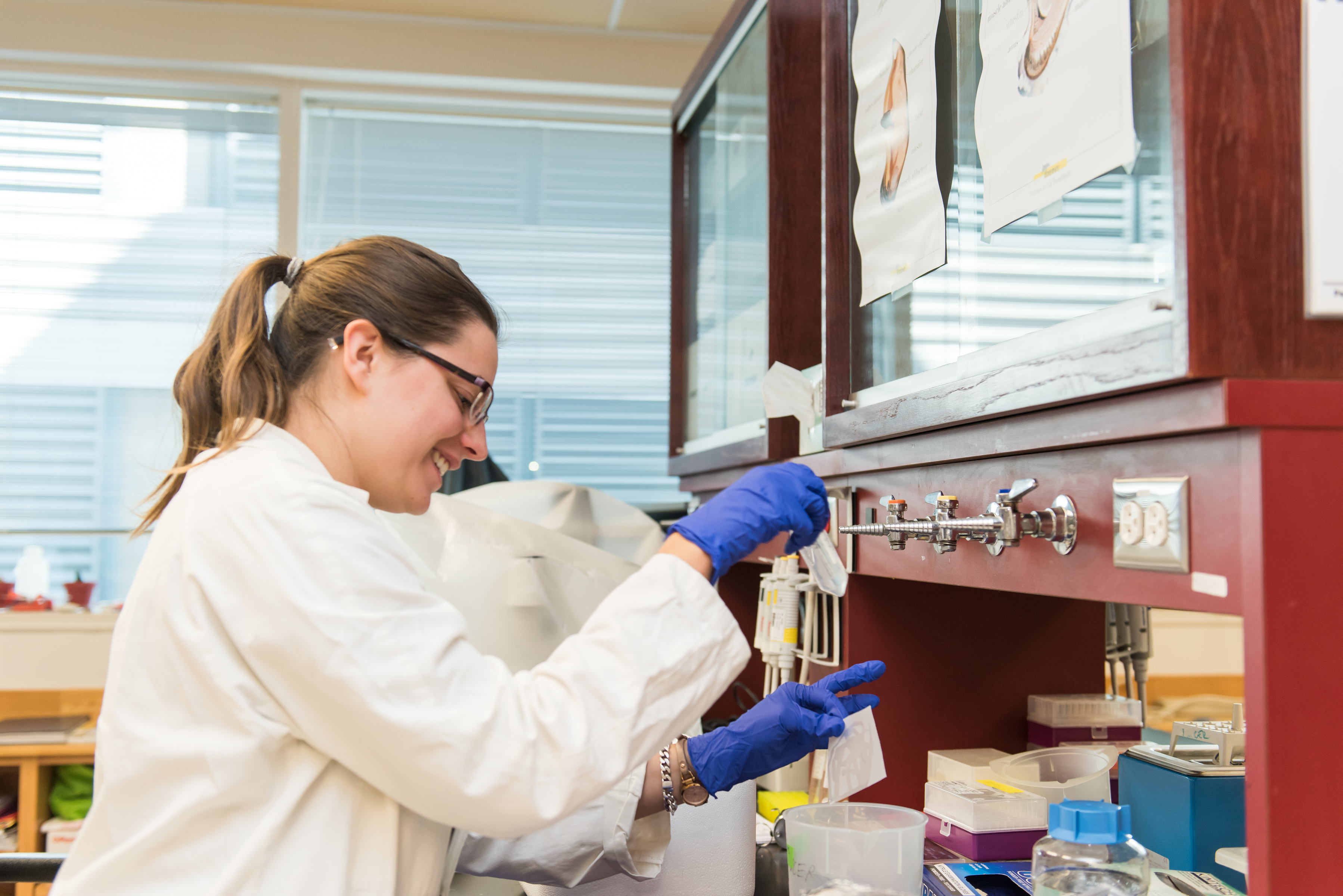
    <a href="https://news.umbc.edu/wp-content/uploads/2019/01/Colleen-Burge-5862.jpg" rel="nofollow external" class="bo"><img src="https://news.umbc.edu/wp-content/uploads/2019/01/Colleen-Burge-5862-1024x683.jpg" alt="" width="572" height="381" style="max-width: 100%; height: auto;"></a>Ph.D. student Sandy Picot works in Colleen Burge’s lab.<p><strong>Creative conversations</strong></p>
    <p><span>At a workshop funded by the NSF as part of the Ecology of Infectious Marine Disease Research Coordination Network, Burge co-led a session on disease transmission among sea creatures. Prior to the workshop, Ben-Horin began working on mathematical models to examine the interactions between farmed oysters, wild oysters, and the common oyster disease Dermo.</span></p>
    <p><span>Once at the workshop, Ben-Horin, Burge, and others further explored how best to refine Ben-Horin’s models. “It was exciting to be in the room, talking to experts, bouncing around ideas about different biological systems,” Burge says.</span></p>
    <p><span>One of the results of the NSF-sponsored workshop was the new paper. Burge and colleagues from Rutgers University, the U.S. Department of Agriculture, and the Virginia Institute of Marine Science contributed their expertise regarding oyster biology and the ecology of the oysters’ environment, and Ben-Horin used that input to inform the model.</span></p>
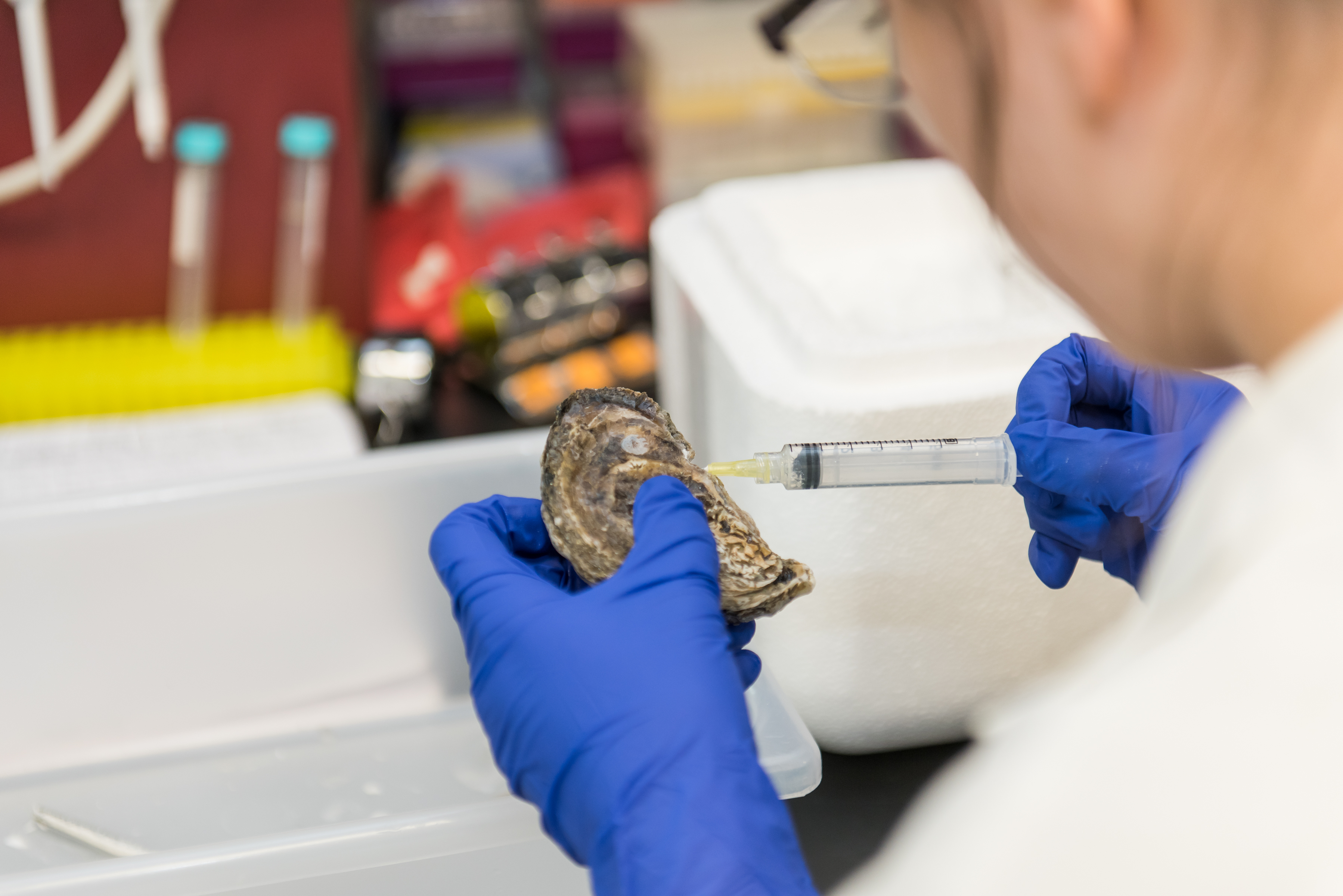
    <a href="https://news.umbc.edu/wp-content/uploads/2019/01/Colleen-Burge-5903.jpg" rel="nofollow external" class="bo"><img src="https://news.umbc.edu/wp-content/uploads/2019/01/Colleen-Burge-5903-1024x683.jpg" alt="" width="587" height="391" style="max-width: 100%; height: auto;"></a>An Eastern oyster undergoes testing in Colleen Burge’s lab.<p><strong>Oyster aquaculture boom a boon?</strong></p>
    <p><span>According to Burge, disease is a major factor in limiting wild oyster populations. Dermo, one of the most prevalent oyster diseases, is caused by a single-celled parasite that occurs naturally in the environment and proliferates in the tissue of host oysters. When infected oysters die, their decaying tissue spreads the parasite to other oysters. But it takes two to three years for the parasite to kill the oysters, and as long as the oysters are harvested before that time, the the spread of the parasite (which is harmless to humans) is limited.</span></p>
    <p><span>This new research suggests that it’s time to “start thinking about oyster aquaculture as being a sink for disease, rather than a source,” says Burge. She adds that the study “furthers the idea that you can plant a large number of oysters in aquaculture, and it won’t (from a Dermo disease perspective) negatively affect the wild oysters if you harvest them early enough.”</span></p>
    <p><span>That’s important, because “oyster aquaculture is growing in Maryland right now,” Burge says. In addition, conservation groups are using oyster reef restoration as a tool to improve the Chesapeake Bay’s water quality and ecosystem health overall.</span></p>
    <p><span>“This paper suggests this growing aquaculture industry could actually support restoration efforts and also the wild fisheries,” Burge says. That is, as long as aquaculturists employ proper management techniques. Oyster farms that grow their product on the bottom surface of the Chesapeake Bay or other bodies of water are unlikely to recover all of their oysters, increasing rather than reducing the spread of the disease, explains Ben-Horin. Growing the oysters in cages or bags above the bottom solves that problem.</span></p>
    <a href="https://news.umbc.edu/wp-content/uploads/2019/01/Colleen-Burge-5891.jpg" rel="nofollow external" class="bo"><img src="https://news.umbc.edu/wp-content/uploads/2019/01/Colleen-Burge-5891-1024x683.jpg" alt="" width="629" height="419" style="max-width: 100%; height: auto;"></a>Colleen Burge at work in her laboratory.<p><strong>It’s all connected</strong></p>
    <p><span>Beyond this new study, Burge’s research more broadly explores how oysters and other bivalves work as some of nature’s most efficient water filters. She examines how they filter out pathogens that affect a range of species. In addition to supporting the current work led by Ben-Horin, she recently received funding to investigate how oysters filter out an eelgrass pathogen from water.</span></p>
    <p><span>Eelgrass populations have been on the rise in the Bay in recent years, which is a good sign for overall Bay health. “Eelgrass is a foundational species and can provide structure for lots of different animals to live in, including fish, scallops, and other invertebrates,” Burge says. In addition, it’s been shown to moderate the water’s acidity in its immediate vicinity, possibly counteracting the negative effects of ocean acidification.</span></p>
    <p><span>Eelgrass might even affect oysters and their diseases. “Sometimes ecosystem-level effects are overlooked, but,” Ben-Horin says regarding the new research, “in this case they’re front and center.” He reflects, “Everything that happens in the water is connected.”</span></p>
    <p><em>All photos by Marlayna Demond ’11 for UMBC.</em></p>
    <div><div>
    <a href="https://news.umbc.edu/#facebook" title="Facebook" rel="nofollow external" class="bo"><span></span><span>Facebook</span></a><a href="https://news.umbc.edu/#twitter" title="Twitter" rel="nofollow external" class="bo"><span></span><span>Twitter</span></a><a href="https://news.umbc.edu/#linkedin" title="LinkedIn" rel="nofollow external" class="bo"><span></span><span>LinkedIn</span></a><a href="https://www.addtoany.com/share#url=https%3A%2F%2Fnews.umbc.edu%2Fumbcs-colleen-burge-helps-show-oyster-aquaculture-can-limit-disease-in-wild-oysters%2F&amp;title=UMBC%E2%80%99s%20Colleen%20Burge%20helps%20show%20oyster%20aquaculture%20can%20limit%20disease%20in%20wild%20oysters" rel="nofollow external" class="bo"><span></span><span>Share</span></a>
    </div></div>
    </div>
]]>
</Body>
<Summary>Burge paper on managing disease in oyster aquaculture     Jan 24, 2019      The potential spread of disease from farmed oysters to wild oysters is a frequent concern for oyster producers and...</Summary>
<TrackingUrl>https://my3.my.umbc.edu/api/v0/pixel/news/81601/guest@my.umbc.edu/01756abe6a05ad3dba8a65f3bbff6a4e/api/pixel</TrackingUrl>
<Group token="marinebiotechnology">Marine Biotechnology</Group>
<GroupUrl>https://my3.my.umbc.edu/groups/marinebiotechnology</GroupUrl>
<AvatarUrl>https://assets4-my.umbc.edu/system/shared/avatars/groups/000/000/761/ea407c6c8898c300a60b1f84d8f15d80/xsmall.png?1596561611</AvatarUrl>
<AvatarUrl size="original">https://assets3-my.umbc.edu/system/shared/avatars/groups/000/000/761/ea407c6c8898c300a60b1f84d8f15d80/original.jpg?1596561611</AvatarUrl>
<AvatarUrl size="xxlarge">https://assets1-my.umbc.edu/system/shared/avatars/groups/000/000/761/ea407c6c8898c300a60b1f84d8f15d80/xxlarge.png?1596561611</AvatarUrl>
<AvatarUrl size="xlarge">https://assets4-my.umbc.edu/system/shared/avatars/groups/000/000/761/ea407c6c8898c300a60b1f84d8f15d80/xlarge.png?1596561611</AvatarUrl>
<AvatarUrl size="large">https://assets1-my.umbc.edu/system/shared/avatars/groups/000/000/761/ea407c6c8898c300a60b1f84d8f15d80/large.png?1596561611</AvatarUrl>
<AvatarUrl size="medium">https://assets4-my.umbc.edu/system/shared/avatars/groups/000/000/761/ea407c6c8898c300a60b1f84d8f15d80/medium.png?1596561611</AvatarUrl>
<AvatarUrl size="small">https://assets2-my.umbc.edu/system/shared/avatars/groups/000/000/761/ea407c6c8898c300a60b1f84d8f15d80/small.png?1596561611</AvatarUrl>
<AvatarUrl size="xsmall">https://assets4-my.umbc.edu/system/shared/avatars/groups/000/000/761/ea407c6c8898c300a60b1f84d8f15d80/xsmall.png?1596561611</AvatarUrl>
<AvatarUrl size="xxsmall">https://assets3-my.umbc.edu/system/shared/avatars/groups/000/000/761/ea407c6c8898c300a60b1f84d8f15d80/xxsmall.png?1596561611</AvatarUrl>
<Sponsor>Marine Biotechnology</Sponsor>
<PawCount>0</PawCount>
<CommentCount>0</CommentCount>
<CommentsAllowed>true</CommentsAllowed>
<PostedAt>Thu, 24 Jan 2019 10:32:54 -0500</PostedAt>
<EditAt>Thu, 18 Jul 2019 17:35:29 -0400</EditAt>
</NewsItem>

</News>