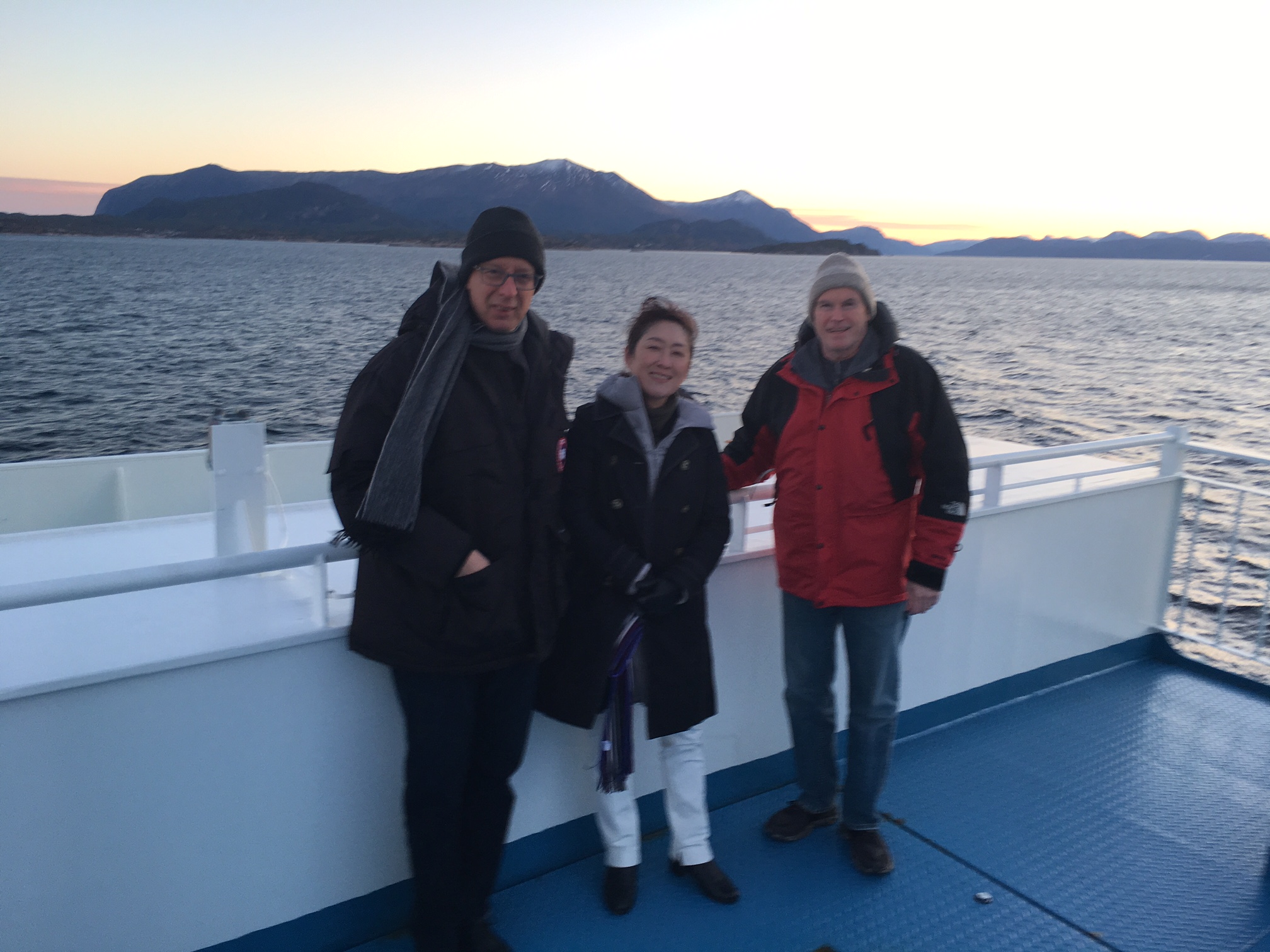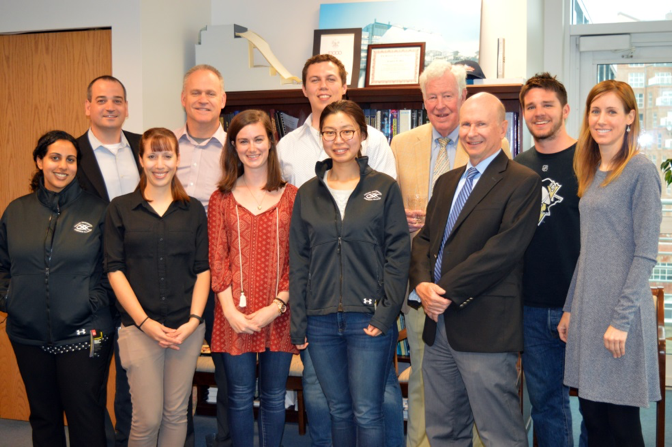
<?xml version="1.0"?>
<News hasArchived="false" page="6" pageCount="9" pageSize="10" timestamp="Sun, 06 Sep 2026 16:10:56 -0400" url="https://my3.my.umbc.edu/groups/marinebiotechnology/posts.xml?mode=pawpularity&amp;page=6">
<NewsItem contentIssues="true" id="69786" important="false" status="posted" url="https://my3.my.umbc.edu/groups/marinebiotechnology/posts/69786">
<Title>IMET&#8217;s ARC Readies Sea Bass fry for Connecticut Aquaculture</Title>
<Body>
<![CDATA[
    <div class="html-content">
    <img src="http://imet.usmd.edu/sites/default/files/image-with-caption/sea%20bass%20group%201.jpg" style="max-width: 100%; height: auto;"><div><br></div>
    <div><div>
        <div>
              <div>
    <p>Baltimore, MD (August 15, 2017)</p>
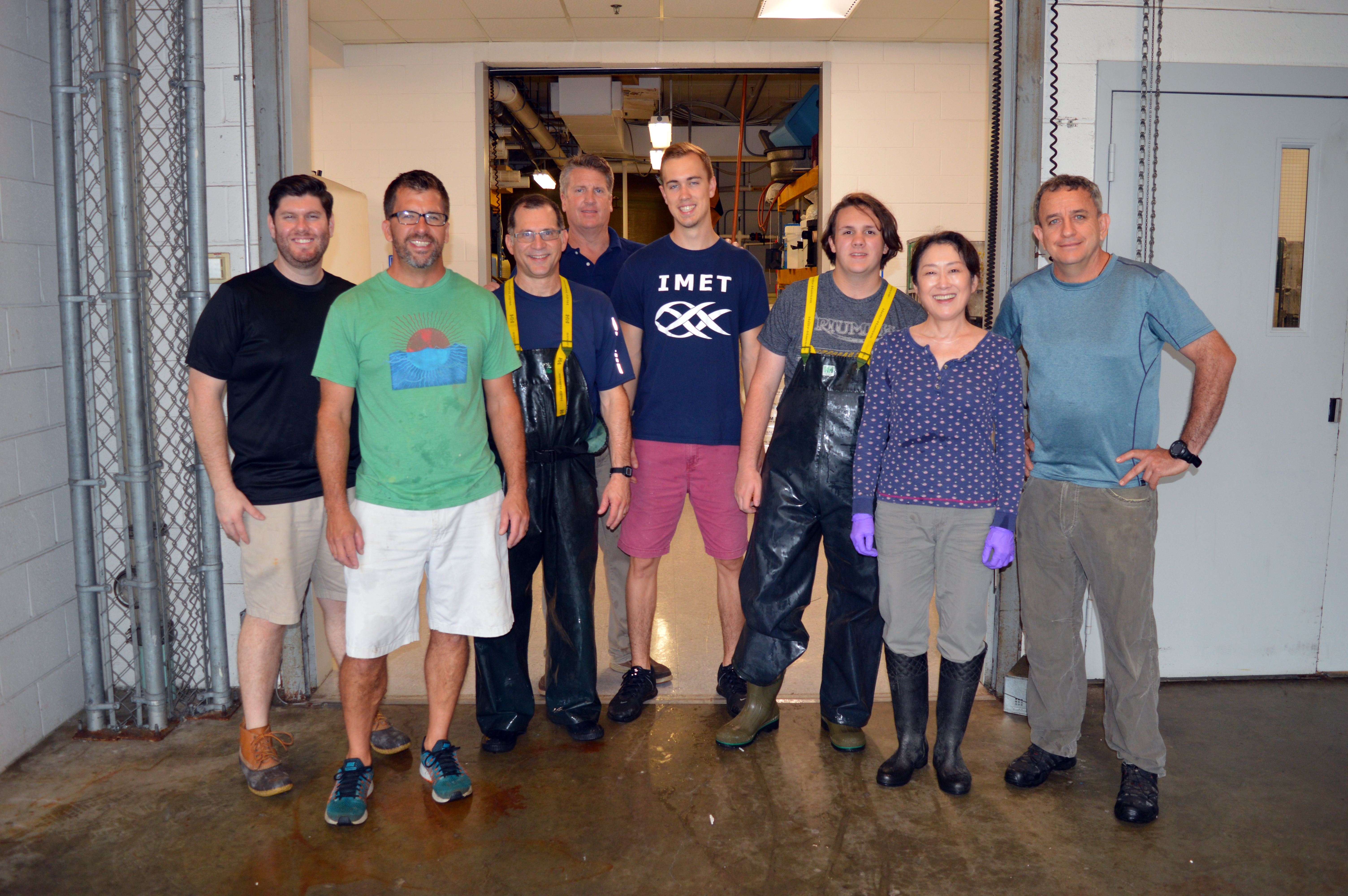
    <p>Working in assembly line fashion, a team from the Institute of Marine
     and Environmental Technology (IMET) prepared about 15,000 European sea 
    bass juveniles for a move north.</p>
    <p>Great American Aquaculture (GAA), a Waterbury, Connecticut-based 
    company, purchased the fish that IMET produced as part of an in-house 
    breeding program, said Keiko Saito, a research assistant professor for 
    IMET-UMBC who helped prepare the transfer.</p>
    <p>Inside IMET is an 1,800-square-meter environmentally responsible 
    marine facility called Aquaculture Research Center, or ARC for short. 
    Led by Yonathan Zohar, this facility houses multiple tanks specifically 
    designed to maintain broodstock and conduct research with fish of 
    various species and sizes.</p>
    <p>“Currently, we are the only aquaculture operation in North America to
     maintain actively spawning European seabass and to produce eggs and 
    juveniles on demand,” Zohar said.</p>
    <p>Pedersen called Great American Aquaculture’s work with IMET “a 
    synergistic two-way street.” The collaboration with IMET will allow the 
    company to begin growing seabass before its facility was ready to accept
     fingerlings, which is a more developed stage for the fish.</p>
    <p>“This has a substantial economic benefit for us by shortening the 
    amount of time required to fund our operations before we begin to 
    generate revenues,” Pedersen said. “Dr. Zohar and his team comprise the 
    world’s foremost authority on reproduction and the early life cycle of 
    seabass. Having access to his experience with this species has been 
    helpful across the board.”</p>
    <p><img alt="" src="http://live-um-imet.pantheonsite.io/sites/default/files/sea%20bass%20upclose.jpg" style="max-width: 100%; height: auto;">European
     seabass was the first marine species other than salmonid species—a 
    family of fishes that includes salmon and trout—to be commercially 
    cultured in Europe, Saito said. It is considered a high-value commercial
     fish in American seafood markets and a key species for aquaculture in 
    the Mediterranean.</p>
    <p>While the fish is in demand in American markets, it is a non-native 
    species, forcing companies like Great American Aquaculture to import it 
    from European producers, Saito said.</p>
    <p>“Recent development of fish farming using land-based, recirculating 
    (closed) systems that offer superior biosecurity and full containment 
    have opened the door for a unique and promising niche in the industry 
    for farming of high value, non-native species,” she said.</p>
    <p>Pedersen said shipping the fish from the Mediterranean region is 
    expensive for the company and stressful for the fish. It takes about 30 
    hours from packaging at the hatchery to arrival at his Connecticut 
    facility, he said. It took him about seven hours to drive from IMET’s 
    loading dock.</p>
    <p>The stress from that shipment can result in weeks of lost growth as the fish are slow to recover enough to feed.</p>
    <p>“The shipment of fish we obtained from IMET were head and shoulders 
    above the quality of fingerlings we have purchased from Mediterranean 
    hatcheries. The transport went extremely smoothly and the fish have 
    already started to feed – less than 24 hours after introduction into our
     system,” Pedersen said.</p>
    <p>Part of what makes ARC unique is its recirculating operation with 
    large-scale mechanical and biological filtration and life support 
    systems that enable safe and efficient re-use of tank water.</p>
    <p><img alt="" src="http://live-um-imet.pantheonsite.io/sites/default/files/sea%20bass%20fish%20drop%203.jpg" style="max-width: 100%; height: auto;">Zohar
     said being able to fully control the environmental conditions, such as 
    water temperature and salinity, expands ARC’s capabilities. Researchers 
    there can study and develop hatchery and other technologies for a wide 
    range of commercially important farmed species, such as salmon, trout, 
    striped bass, European seabass, Mediterranean seabream, bluefin tuna, 
    sablefish as well as blue crab and oysters.</p>
    <p>ARC’s recirculating, artificial seawater is continuously treated with
     ozone, which maintains a disease-free environment. It’s those smaller 
    details that make a big difference for companies like Pedersen’s.</p>
    <p>Fish from the large commercial hatcheries abroad are not subject to 
    the same high standards of aquaculture practiced in the United States 
    and IMET, in particular, he said.</p>
    <p>“In certain cases, fingerlings from abroad may arrive in the US with 
    pathogen contamination and disease that may need to be treated,” 
    Pedersen said. “We have a robust quarantine system in place at GAA to 
    mitigate this risk, but the risk of diseased fish can never be 
    completely eliminated.”</p>
    </div>
          </div>
    </div></div>
    </div>
]]>
</Body>
<Summary>Baltimore, MD (August 15, 2017)   Working in assembly line fashion, a team from the Institute of Marine  and Environmental Technology (IMET) prepared about 15,000 European sea  bass juveniles for...</Summary>
<Website>http://imet.usmd.edu/news/imet%E2%80%99s-arc-readies-sea-bass-fry-connecticut-aquaculture-company</Website>
<TrackingUrl>https://my3.my.umbc.edu/api/v0/pixel/news/69786/guest@my.umbc.edu/85c09dd3d5c66820fabb50c3f767ccd2/api/pixel</TrackingUrl>
<Group token="marinebiotechnology">Marine Biotechnology</Group>
<GroupUrl>https://my3.my.umbc.edu/groups/marinebiotechnology</GroupUrl>
<AvatarUrl>https://assets4-my.umbc.edu/system/shared/avatars/groups/000/000/761/ea407c6c8898c300a60b1f84d8f15d80/xsmall.png?1596561611</AvatarUrl>
<AvatarUrl size="original">https://assets3-my.umbc.edu/system/shared/avatars/groups/000/000/761/ea407c6c8898c300a60b1f84d8f15d80/original.jpg?1596561611</AvatarUrl>
<AvatarUrl size="xxlarge">https://assets1-my.umbc.edu/system/shared/avatars/groups/000/000/761/ea407c6c8898c300a60b1f84d8f15d80/xxlarge.png?1596561611</AvatarUrl>
<AvatarUrl size="xlarge">https://assets4-my.umbc.edu/system/shared/avatars/groups/000/000/761/ea407c6c8898c300a60b1f84d8f15d80/xlarge.png?1596561611</AvatarUrl>
<AvatarUrl size="large">https://assets1-my.umbc.edu/system/shared/avatars/groups/000/000/761/ea407c6c8898c300a60b1f84d8f15d80/large.png?1596561611</AvatarUrl>
<AvatarUrl size="medium">https://assets4-my.umbc.edu/system/shared/avatars/groups/000/000/761/ea407c6c8898c300a60b1f84d8f15d80/medium.png?1596561611</AvatarUrl>
<AvatarUrl size="small">https://assets2-my.umbc.edu/system/shared/avatars/groups/000/000/761/ea407c6c8898c300a60b1f84d8f15d80/small.png?1596561611</AvatarUrl>
<AvatarUrl size="xsmall">https://assets4-my.umbc.edu/system/shared/avatars/groups/000/000/761/ea407c6c8898c300a60b1f84d8f15d80/xsmall.png?1596561611</AvatarUrl>
<AvatarUrl size="xxsmall">https://assets3-my.umbc.edu/system/shared/avatars/groups/000/000/761/ea407c6c8898c300a60b1f84d8f15d80/xxsmall.png?1596561611</AvatarUrl>
<Sponsor>Marine Biotechnology</Sponsor>
<PawCount>0</PawCount>
<CommentCount>0</CommentCount>
<CommentsAllowed>true</CommentsAllowed>
<PostedAt>Wed, 30 Aug 2017 17:04:52 -0400</PostedAt>
<EditAt>Wed, 30 Aug 2017 17:10:10 -0400</EditAt>
</NewsItem>

<NewsItem contentIssues="false" id="69770" important="false" status="posted" url="https://my3.my.umbc.edu/groups/marinebiotechnology/posts/69770">
<Title>US Researchers Ramp-up Bluefin Research</Title>
<Body>
<![CDATA[
    <div class="html-content">
    <img src="http://hatcheryinternational.com/downloads/950/download/Tuna%20Tanks%202.JPG?cb=6428c45cb8176c8f0c793975e44d3a39&amp;w=640" alt="Tuna Tanks 2.JPG" style="max-width: 100%; height: auto;"><div>
    <div>
    <h1><br></h1>
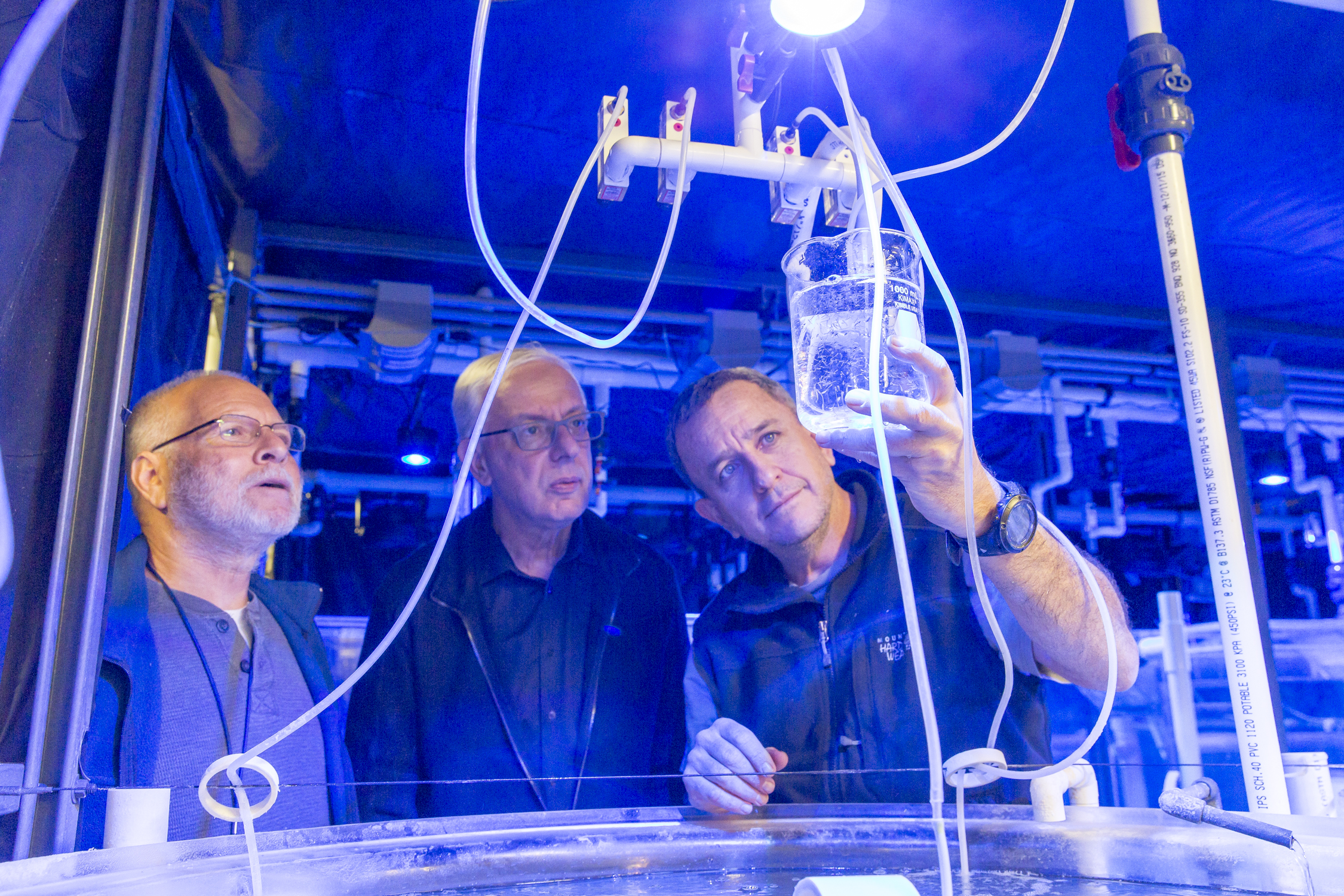
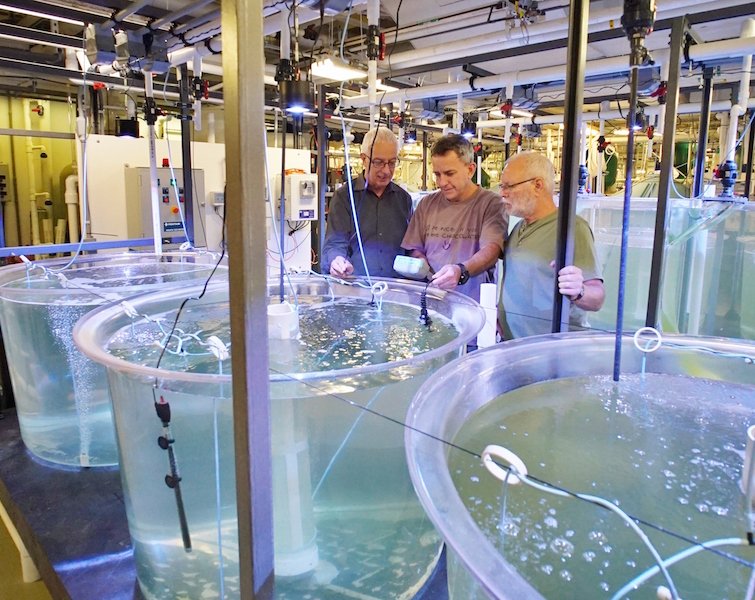
    <div><span>Dr. Yonathan Zohar, with aquaculture biologists, Jorge Gomezjurado and Odi Zmora, next to the tuna larval rearing tanks</span></div>
    </div>
    <div>
    <p>by <a href="http://hatcheryinternational.com/topics/erich-luening/" rel="nofollow external" class="bo">Erich Luening</a></p>
    <p>May 30, 2017</p>
    <p>There’s a lot of research going into rearing bluefin tuna in European countries along the Mediterranean coast, and in Australia and Japan but now researchers in the U.S. state of Maryland are cranking up investigation into this highly valued species.</p>
    <p>         Located on Baltimore’s inner harbor on the Chesapeake Bay the University of Maryland Baltimore County's Aquaculture Research Center (ARC) has been studying the bluefin tuna (BFT) life-cycle from egg, larvae and fingerling stage for a number of years while also researching similar life stages of European sea bream and sea bass.</p>
    <p>         Professor Yonathan Zohar is chair of the Department of Marine Biotechnology and head of the team at the marine recirculation aquaculture facility: "ARC is a totally contained, fully recirculating, bio-secure marine aquaculture operation. It is fully computer-controlled to allow a wide range of environmental conditions - salinity: 0-to-full seawater, temperature:12-28 degrees C and photoperiod control over individual tanks with simulating sunrise and sunset," conditions, he explained.</p>
    <p><strong>Generic facility</strong></p>
    <p>         Under Zohar's design, the facility is also very simple in its approach to rearing marine fish and shellfish in a recirculating system.</p>
    <p>         "It is a generic facility that can accommodate any fish/shellfish species, tailoring the conditions to allow optimal performance," he says. "We start with city water, run it through activated carbon filters and then make our artificial seawater fully simulating the composition of the marine environment."</p>
    <p>         The facility uses unique nitrification and denitrification biofilters to treat the dissolved waste and it also biologically converts the organic/solid waste/sludge to fuel grade methane (natural gas).</p>
    <p>         "Therefore, while biologically removing our waste, we generate bio-energy to offset some of the energy costs of the operation," said Zohar. "ARC’s main objectives are to enable our scientists to carry out their aquaculture R&amp;D program on their species of interest in optimal conditions as well as study in a prototype of a fully contained, zero discharge marine aquaculture operation."</p>
    <p><strong>Applied research</strong></p>
    <p>          Research programs at ARC cover a broad range of topics, including broodstock management and year-round spawning, larval rearing and hatchery technology, food chain and live feeds, reproduction (spawning induction as well as reproductive sterility), growth, environmentally responsible feeds, pathobiology and understanding and overcoming disease.</p>
    <p>         There's also a major focus on developing and optimizing environmentally sustainable and economically feasible, bio-secure marine recirculating systems for both hatchery and grow-out production.</p>
    <p>         "We work with commercially important finfish such as gilthead sea bream, European sea bass, striped bass, bluefin tuna, Atlantic salmon, rainbow trout, cobia, amberjack and tilapia as well as with blue crab and oysters," Zohar explained. "We run several industry-funded projects to address major challenges in the aquaculture industry, such as closing life cycles of new species, year-round spawning, larval rearing, producing reproductively sterile fish, and improving land-based mariculture."</p>
    <p><br></p>
    </div>
    </div>
    <div><div>
    <h1><br></h1>
    <div><br></div>
    </div></div>
    </div>
]]>
</Body>
<Summary>Dr. Yonathan Zohar, with aquaculture biologists, Jorge Gomezjurado and Odi Zmora, next to the tuna larval rearing tanks    by Erich Luening  May 30, 2017  There’s a lot of research going into...</Summary>
<TrackingUrl>https://my3.my.umbc.edu/api/v0/pixel/news/69770/guest@my.umbc.edu/d14889e164be87413324f03cd3622460/api/pixel</TrackingUrl>
<Group token="marinebiotechnology">Marine Biotechnology</Group>
<GroupUrl>https://my3.my.umbc.edu/groups/marinebiotechnology</GroupUrl>
<AvatarUrl>https://assets4-my.umbc.edu/system/shared/avatars/groups/000/000/761/ea407c6c8898c300a60b1f84d8f15d80/xsmall.png?1596561611</AvatarUrl>
<AvatarUrl size="original">https://assets3-my.umbc.edu/system/shared/avatars/groups/000/000/761/ea407c6c8898c300a60b1f84d8f15d80/original.jpg?1596561611</AvatarUrl>
<AvatarUrl size="xxlarge">https://assets1-my.umbc.edu/system/shared/avatars/groups/000/000/761/ea407c6c8898c300a60b1f84d8f15d80/xxlarge.png?1596561611</AvatarUrl>
<AvatarUrl size="xlarge">https://assets4-my.umbc.edu/system/shared/avatars/groups/000/000/761/ea407c6c8898c300a60b1f84d8f15d80/xlarge.png?1596561611</AvatarUrl>
<AvatarUrl size="large">https://assets1-my.umbc.edu/system/shared/avatars/groups/000/000/761/ea407c6c8898c300a60b1f84d8f15d80/large.png?1596561611</AvatarUrl>
<AvatarUrl size="medium">https://assets4-my.umbc.edu/system/shared/avatars/groups/000/000/761/ea407c6c8898c300a60b1f84d8f15d80/medium.png?1596561611</AvatarUrl>
<AvatarUrl size="small">https://assets2-my.umbc.edu/system/shared/avatars/groups/000/000/761/ea407c6c8898c300a60b1f84d8f15d80/small.png?1596561611</AvatarUrl>
<AvatarUrl size="xsmall">https://assets4-my.umbc.edu/system/shared/avatars/groups/000/000/761/ea407c6c8898c300a60b1f84d8f15d80/xsmall.png?1596561611</AvatarUrl>
<AvatarUrl size="xxsmall">https://assets3-my.umbc.edu/system/shared/avatars/groups/000/000/761/ea407c6c8898c300a60b1f84d8f15d80/xxsmall.png?1596561611</AvatarUrl>
<Sponsor>Marine Biotechnology</Sponsor>
<PawCount>0</PawCount>
<CommentCount>0</CommentCount>
<CommentsAllowed>true</CommentsAllowed>
<PostedAt>Wed, 30 Aug 2017 14:12:00 -0400</PostedAt>
<EditAt>Wed, 30 Aug 2017 17:10:38 -0400</EditAt>
</NewsItem>

<NewsItem contentIssues="true" id="69765" important="false" status="posted" url="https://my3.my.umbc.edu/groups/marinebiotechnology/posts/69765">
<Title>New Fish Sterilization Method Ready for Trials</Title>
<Tagline>A new technology that sterilizes farmed salmon</Tagline>
<Body>
<![CDATA[
    <div class="html-content">
    <img src="http://www.fishfarmingexpert.com/wp-content/uploads/2017/08/laks_crop-750x275.jpg" style="max-width: 100%; height: auto;"><div><br></div>
    <div>
    <h1>New fish Sterilization method ready for trials</h1>
    <div>A new technology that sterilizes farmed salmon by temporarily switching off a gene at early-life stage is ready for large-scale trials.</div>
    <div>Author: <a href="mailto:" title="" rel="nofollow external" class="bo"> Linn Therese Skår Hosteland</a>
    </div>
    <div>
    <p>“We envisage that the technology we work with will be able to become a form of treatment for all fish transferred to sea in the future, said Mariann Dønnum, chief executive of Oslo-based ACD Pharma.</p>
    <p>Dønnum told kyst.no that in ACD Pharma has been working on the development of the technology for more than five years.</p>
    <div>
    <img src="http://www.fishfarmingexpert.com/wp-content/uploads/2017/08/MD_small.jpg" alt="" width="166" height="200" style="max-width: 100%; height: auto;"><p>Mariann Dønnum from ACD Pharma says their technology can work on all species of farmed fish. Photo: ACD Pharma.</p>
    </div>
    <p>“We have conducted numerous small-scale tank experiments where a number of parameters such as dose response have been evaluated. Based on the documentation that ACD Pharma together with partners in Baltimore have gathered, we hope to start clinical field trials, to look at the growth / feed conversion rate / fish welfare and more, during the year.”</p>
    <p><span><span>Drug approval</span></span></p>
    <p>These trials must be conducted to gather enough evidence for authorities to provide a drug approval.</p>
    <p><em>Is this technology being used on fish that are being farmed today?</em></p>
    <p>“No. The company is working on the development of a totally new concept for the production of sterile Atlantic salmon for an environmentally conscious Norwegian aquaculture industry. Our goal is to develop a method to produce sterile fish that only involves minimal intervention, and which only affects the development of reproductive organs. This avoids gender maturation with the problems it causes for both sexually mature fish and the rest of the cage.”</p>
    <p>ACD Pharma has collaborated with Dr Ten-Tsao Wong and Professor Yonathan Zohar at the University of Maryland Baltimore County (UMBC) to develop a “silencing” technology for bath treatment of eggs for the production of sterile fish.</p>
    <p><span><span>Fish develops normally</span></span></p>
    <p>“The strategy is to use a compound that, for a short period of time very early in the development, blocks a gene necessary to develop genital cells. Once the fish has developed and the link that blocks the genetic cell development gene is broken down, the gene is again functional for the fish.”</p>
    <p>Dønnum says that in the short-term experiments in both zebrafish and salmon have shown that if you block this gene gametes are prevented from finding their way to the genitals / gonads.</p>
    <p>“The fish develops quite normally and has normal genitals, but it has also no germ cells and therefore cannot reproduce. The consequence is that a fish is sterile without other physiological processes being affected,” she explains.</p>
    <p>She states that the method does not involves making changes in the DNA of salmon, which would otherwise be regarded as genetic modification (GMO).</p>
    <p><span><span>Easily integrated</span></span></p>
    <p>“We have a strategy where we only specifically “turn off” the gene for a short period of time, very early in the salmon development. This means that the treatment can be done as early as the unfertilised egg. This is the first time a non-GMO silencing technology, which can be easily integrated into the production process of eyed eggs, has shown good results,” she says.</p>
    <p>She says that maturation in farmed fish is a global problem.</p>
    <p>“Both in Tasmania, Chile and the east and west coasts of North America the proportion of sexually mature salmon in the latter part of the production cycle is generally greater than in Norway. This may be due to a combination of inferior breeding stock and less use of light.</p>
    <p>“The need for sterile fish is thus as great in other salmon producing countries as in Norway. The method is not limited to salmon, either. The technology could be adapted to other farmed species both nationally and internationally. These are markets we want to enter when the technology is established on salmon.”</p>
    <p><em>How far would you say you have come in relation to the commercialisation of the product / technology?</em></p>
    <p>“We are working on getting large-scale field trials started, and obtaining the documentation required by the authorities. We see for ourselves that the technology we are working on could be a form of treatment for all fish that is put into the sea in the future, desired by both authorities, environmental organisations and not least the breeders themselves. We consider the potential for this form of treatment is significant.”</p>
    <p><span><span>Industry’s reputation</span></span></p>
    <p>Dønnum says an introduction and use of sterile fish in aquaculture, is the wish of both the industry itself, river owners, central government and various environmental organisations.</p>
    <p>“For the aquaculture industry, the work of this method to prevent gender maturation will be important for the industry’s reputation,” she says.</p>
    <p>She notes that several methods of sterilisation have been tested, including trials of triploid fish, which have an extra set of chromosomes.</p>
    <p>“Until now, unfortunately, none of these methods have shown satisfactory results either in terms of animal welfare or performance characteristics, despite many years of active research.”</p>
    <p>The technology will also help to increase the quality of the fish.</p>
    <p>“Norwegian salmon farming is still experiencing a very costly downgrading of approximately 4.3 per cent due to maturation. This despite the fact that late maturation has been one of the most expressed breeding objectives for many years. For egg producers sterile fish be a welcome opportunity to protect their distinctive roe bloodlines.”</p>
    </div>
    <div><p>Published: 07/08/2017 at 10:37 am</p></div>
    </div>
    </div>
]]>
</Body>
<Summary>New fish Sterilization method ready for trials  A new technology that sterilizes farmed salmon by temporarily switching off a gene at early-life stage is ready for large-scale trials....</Summary>
<Website>http://www.fishfarmingexpert.com/news/new-fish-sterilisation-method-ready-for-trials/</Website>
<TrackingUrl>https://my3.my.umbc.edu/api/v0/pixel/news/69765/guest@my.umbc.edu/8f6654a323a9220431090f2378703aa1/api/pixel</TrackingUrl>
<Group token="marinebiotechnology">Marine Biotechnology</Group>
<GroupUrl>https://my3.my.umbc.edu/groups/marinebiotechnology</GroupUrl>
<AvatarUrl>https://assets4-my.umbc.edu/system/shared/avatars/groups/000/000/761/ea407c6c8898c300a60b1f84d8f15d80/xsmall.png?1596561611</AvatarUrl>
<AvatarUrl size="original">https://assets3-my.umbc.edu/system/shared/avatars/groups/000/000/761/ea407c6c8898c300a60b1f84d8f15d80/original.jpg?1596561611</AvatarUrl>
<AvatarUrl size="xxlarge">https://assets1-my.umbc.edu/system/shared/avatars/groups/000/000/761/ea407c6c8898c300a60b1f84d8f15d80/xxlarge.png?1596561611</AvatarUrl>
<AvatarUrl size="xlarge">https://assets4-my.umbc.edu/system/shared/avatars/groups/000/000/761/ea407c6c8898c300a60b1f84d8f15d80/xlarge.png?1596561611</AvatarUrl>
<AvatarUrl size="large">https://assets1-my.umbc.edu/system/shared/avatars/groups/000/000/761/ea407c6c8898c300a60b1f84d8f15d80/large.png?1596561611</AvatarUrl>
<AvatarUrl size="medium">https://assets4-my.umbc.edu/system/shared/avatars/groups/000/000/761/ea407c6c8898c300a60b1f84d8f15d80/medium.png?1596561611</AvatarUrl>
<AvatarUrl size="small">https://assets2-my.umbc.edu/system/shared/avatars/groups/000/000/761/ea407c6c8898c300a60b1f84d8f15d80/small.png?1596561611</AvatarUrl>
<AvatarUrl size="xsmall">https://assets4-my.umbc.edu/system/shared/avatars/groups/000/000/761/ea407c6c8898c300a60b1f84d8f15d80/xsmall.png?1596561611</AvatarUrl>
<AvatarUrl size="xxsmall">https://assets3-my.umbc.edu/system/shared/avatars/groups/000/000/761/ea407c6c8898c300a60b1f84d8f15d80/xxsmall.png?1596561611</AvatarUrl>
<Sponsor>Marine Biotechnology</Sponsor>
<PawCount>0</PawCount>
<CommentCount>0</CommentCount>
<CommentsAllowed>true</CommentsAllowed>
<PostedAt>Wed, 30 Aug 2017 13:42:43 -0400</PostedAt>
<EditAt>Wed, 30 Aug 2017 13:46:03 -0400</EditAt>
</NewsItem>

<NewsItem contentIssues="true" id="69577" important="false" status="posted" url="https://my3.my.umbc.edu/groups/marinebiotechnology/posts/69577">
<Title>Groundbreaking BluefinTuna Research at IMET</Title>
<Body>
<![CDATA[
    <div class="html-content">
    <div><img src="http://imet.usmd.edu/sites/default/files/image-with-caption/Nem_170323_142542-2.jpg" style="max-width: 100%; height: auto;"></div>
    <div><br></div>
    <div>
    <p>A team of IMET-UMBC researchers has made history by successfully raising Atlantic bluefin tuna from eggs to juvenile stage in a recirculating, land-based mariculture system for the first time in North America. Scientists at the Institute of Marine and Environmental Technology (IMET) overcame significant challenges in creating the successful, sustainable aquaculture system — roadblocks that had previously frustrated researchers for years.</p>
    <p>A sharp increase in demand for bluefin tuna in the sushi industry has intensified fishing of the species, fueling seven-figure prices for individual fish and depleting populations. In 2015, the World Wildlife Fund’s Living Blue Planet Report identified Atlantic bluefin tuna as a species that is experiencing one of the steepest declines.</p>
    <p>Current bluefin tuna farming depends on capturing and fattening wild fish for Japanese and broader global markets, but declining supplies and growing demand have created a strong interest in developing better aquaculture techniques.</p>
    <p>“We must stop overfishing this major icon of the oceans. Our research aims at closing the life cycle of this fish, so juveniles can be produced in captivity to enable alternative, environmentally-responsible practices to satisfy the growing global appetite for bluefin tuna through aquaculture,” said <a href="http://live-um-imet.pantheonsite.io/directory/yonathan-zohar" rel="nofollow external" class="bo"><strong>Yonathan Zohar</strong></a>, professor and chair of marine biotechnology.</p>
    <p>Zohar explained that findings from the most recent research are a first step toward developing environmentally-sustainable commercial aquaculture of this tuna species in the U.S. To raise environmentally sustainable Atlantic bluefin tuna through aquaculture, the full life cycle of the fish needs to be completed in captivity.</p>
    <p>To acquire the larvae to begin the current cycle of research, the UMBC team partnered with a Croatian company that holds bluefin tuna in floating netpens in the Adriatic Sea. The fish, weighing 540-550 lbs. each, were injected with hormone-based, controlled-release implants, developed by Zohar, which triggered massive spawning during July-August 2015. The fertilized eggs were collected and shipped to IMET’s Aquaculture Research Center, where they arrived about 40 hours later as freshly hatched larvae and were placed in tanks equipped with recirculating water systems.</p>
    <p>“It took an incredible amount of coordination between the university and our external partners across the Atlantic ocean, as well as internal coordination among the hatchery team members at IMET, to achieve this level of culture success,” said <a href="http://live-um-imet.pantheonsite.io/directory/john-stubblefield" rel="nofollow external" class="bo"><strong>John Stubblefield</strong></a>, faculty research assistant.</p>
    <p>The researchers tested various combinations of food, dietary supplements, and environmental factors to determine what was most effective in supporting the tuna’s healthy growth. Identifying that ideal balance of microalgae, lab-grown zooplanktonic feeds, larvae of other marine fish, plus vitamins, omega-3 oils, and probiotics enabled the team to grow tuna to 4-5 inches long at age 60-70 days, officially reaching juvenile status. The tuna were raised in simulated oceanic conditions, with careful regulated temperature, salinity, light intensity, and hydraulic currents, Zohar explained.</p>
    <p>“We work day and night, 24/7. We grow the food for the larvae, which consists of planktonic organisms. We constantly observe, check, tweak and calibrate the culture parameters,” said <a href="http://live-um-imet.pantheonsite.io/directory/jorge-gomezjurado" rel="nofollow external" class="bo"><strong>Jorge Gomezjuardo</strong></a>, faculty research assistant. “The larvae and juveniles are so vulnerable. We are always busy, but we know that we are working to help a threatened species that is in need of help.”</p>
    <p>The researchers began facing additional challenges once the tuna grew to between 3 and 5 inches in length because the tanks in the Aquaculture Research Center at IMET were not large enough for the fast-moving tuna to continue to thrive. Once they reach this size, the fish must be transferred to much larger tanks or sea-based floating netpens to survive. The scientists are now exploring solutions to this current challenge.</p>
    <p>“It took many years before hatcheries could mass-produce other marine fish that are now common in aquaculture. I believe tuna production will follow this same pattern, but we learned so much from these prior experiences with other species that it will hopefully be a shorter, smoother learning curve this time,” said <a href="http://live-um-imet.pantheonsite.io/directory/oded-zmora" rel="nofollow external" class="bo"><strong>Odi Zmora</strong></a>, research supervisor.</p>
    <p>“IMET’s unique trans-Atlantic collaboration led to great progress in reliably inducing spawning of the giant bluefin tuna in captivity and producing beautiful baby tuna in our tanks,” explained Zohar. “We are hopeful that our future research over the next couple of years will pave the way for tuna aquaculture in the U.S. and globally.”</p>
    </div>
    </div>
]]>
</Body>
<Summary>A team of IMET-UMBC researchers has made history by successfully raising Atlantic bluefin tuna from eggs to juvenile stage in a recirculating, land-based mariculture system for the first time in...</Summary>
<Website>http://imet.usmd.edu/project/groundbreaking-bluefin-tuna-research-imet</Website>
<TrackingUrl>https://my3.my.umbc.edu/api/v0/pixel/news/69577/guest@my.umbc.edu/25b063ad870d87b3777603fdfd4706ee/api/pixel</TrackingUrl>
<Group token="marinebiotechnology">Marine Biotechnology</Group>
<GroupUrl>https://my3.my.umbc.edu/groups/marinebiotechnology</GroupUrl>
<AvatarUrl>https://assets4-my.umbc.edu/system/shared/avatars/groups/000/000/761/ea407c6c8898c300a60b1f84d8f15d80/xsmall.png?1596561611</AvatarUrl>
<AvatarUrl size="original">https://assets3-my.umbc.edu/system/shared/avatars/groups/000/000/761/ea407c6c8898c300a60b1f84d8f15d80/original.jpg?1596561611</AvatarUrl>
<AvatarUrl size="xxlarge">https://assets1-my.umbc.edu/system/shared/avatars/groups/000/000/761/ea407c6c8898c300a60b1f84d8f15d80/xxlarge.png?1596561611</AvatarUrl>
<AvatarUrl size="xlarge">https://assets4-my.umbc.edu/system/shared/avatars/groups/000/000/761/ea407c6c8898c300a60b1f84d8f15d80/xlarge.png?1596561611</AvatarUrl>
<AvatarUrl size="large">https://assets1-my.umbc.edu/system/shared/avatars/groups/000/000/761/ea407c6c8898c300a60b1f84d8f15d80/large.png?1596561611</AvatarUrl>
<AvatarUrl size="medium">https://assets4-my.umbc.edu/system/shared/avatars/groups/000/000/761/ea407c6c8898c300a60b1f84d8f15d80/medium.png?1596561611</AvatarUrl>
<AvatarUrl size="small">https://assets2-my.umbc.edu/system/shared/avatars/groups/000/000/761/ea407c6c8898c300a60b1f84d8f15d80/small.png?1596561611</AvatarUrl>
<AvatarUrl size="xsmall">https://assets4-my.umbc.edu/system/shared/avatars/groups/000/000/761/ea407c6c8898c300a60b1f84d8f15d80/xsmall.png?1596561611</AvatarUrl>
<AvatarUrl size="xxsmall">https://assets3-my.umbc.edu/system/shared/avatars/groups/000/000/761/ea407c6c8898c300a60b1f84d8f15d80/xxsmall.png?1596561611</AvatarUrl>
<Sponsor>Marine Biotechnology</Sponsor>
<PawCount>0</PawCount>
<CommentCount>0</CommentCount>
<CommentsAllowed>true</CommentsAllowed>
<PostedAt>Mon, 21 Aug 2017 21:59:36 -0400</PostedAt>
<EditAt>Mon, 21 Aug 2017 22:00:37 -0400</EditAt>
</NewsItem>

<NewsItem contentIssues="true" id="69104" important="false" status="posted" url="https://my3.my.umbc.edu/groups/marinebiotechnology/posts/69104">
<Title>Ratcliffe Environmental Entrepreneur Fellowship REEF Program</Title>
<Body>
<![CDATA[
    <div class="html-content">
    <h3>Ratcliffe Environmental Entrepreneur Fellowship (REEF) Program at IMET</h3>
    <div><div>
    <p><img src="http://www.umbc.edu/blogs/imet/REEFstory.png" height="270px" style="max-width: 100%; height: auto;"></p>
    <p>Ryan Powell had an inkling early on that he could start his own business.</p>
    <p>As a graduate student at the University of Maryland Center for Environmental Science, he developed technology for harvesting algae, an achievement that not only resolved a long-standing problem in making algal biofuels, but also gave him the foundation for his future company.</p>
    <p>“What I didn’t want to happen was to develop this technology, publish a paper, and then just hope somebody would pick it up and do something useful with it,” Powell said. “I really wanted to see this technology do good in the world.”</p>
    <p>There was just one problem: Turning his scientific success story into full-fledge business wasn’t part of his graduate school training.</p>
    <p>Powell was able to find all the tools he needed in 2014 when he participated in the Ratcliffe Environmental Entrepreneurs Fellowship (REEF) program at UMCES’ Institute of Marine and Environmental Technology (IMET).</p>
    <p>With the lessons he learned from REEF, he built the business he runs today, Manta Biofuel. The Baltimore-based company grows and harvests algae to produce a renewable and carbon neutral crude oil that could be used in jets, trucks, and cars.</p>
    <p>Every year, IMET hosts the REEF program to teach a select group of students how to think about science with a business perspective. Over the course of a year, participating graduate students will create and develop a business model based on scientific research.</p>
    <p>They aren’t required to start a company like Powell did, said Nick Hammond, assistant director and associate vice president for economic development and REEF program instructor. That isn’t the point. The goal is for the students to gain skills beyond what they might get in a lab, such as financial planning and simplifying their science to explain its impact to potential investors.</p>
    <p>“One in 10 graduate students today will find themselves on the tenure track, which means they’re not trained for anything else,” Hammond said. “They need to understand how to communicate their research outside the academic environment. This just enables their career no matter what direction it may go.”</p>
    <p><strong>The basics of business</strong></p>
    <p>Eight students participated in the REEF program for the 2016-17 year. The students met monthly to hone their idea with guidance from Hammond and mentors, such as chief executive officers and local entrepreneurs, who offer real-life experience.</p>
    <p>Miranda Marvel, a University of Maryland, Baltimore County (UMBC) graduate student, said she was pleased to find the program wasn’t strictly lectures.</p>
    <p>“It was more of an interactive, discussion-based experience, which I think helped me learn more about how to develop a product and start a business than lectures would,” she said.</p>
    <p>Lessons were catered to the individual, too, Marvel said.</p>
    <p>“Each business topic we discussed was discussed in terms of each person’s individual product idea so that the lessons were personalized and able to be put into a real-world context,” she said. “Even someone like myself, who has no previous background in business or economics, could understand the concepts and apply each lesson to our own project ideas.”</p>
    <p>The students are taught to consider every avenue from intellectual property and regulatory issues, to marketing and manufacturing, to determine as early as possible if an idea is commercially viable, financially feasible, and meaningful to society, Hammond said.</p>
    <p>“The idea is to kill ideas fast so you don’t spend a lot of time and resources on an idea that wouldn’t have worked,” he said. “Why research this if it’s never going to have a meaningful result in society? Basic research is fine, but you have to think about these concepts as you decide which questions to ask and pursue in the lab.”</p>
    <p>At the end of the program, the students pitch their business plan to a panel of local investors who serve as judges that can offer the students praise and advice. The top three pitches win a non-monetary prize.</p>
    <p>Mary Larkin, who initially found the idea of starting a business daunting, won Best Pitch this year.</p>
    <p>Larkin is an UMCES graduate student who studies under her adviser, Al Place, at IMET. She uses zebrafish as a model species to research diet and inflammation and ways to mitigate inflammation.</p>
    <p>For REEF, she imagined a business around the horseshoe crab. She proposed using the facilities at IMET to aquaculture horseshoe crabs because their commercially valuable blood helps test the safety of several biomedical products, including vaccines. She named her business Blue Blood.</p>
    <p>This was Larkin’s second year in the program, which allowed her to build on the skills she had learned previously, but she said she still found new lessons to learn.</p>
    <p>“One of the most challenging aspects of the program is learning to speak boldly about ourselves, our research, and our business proposals. Many of us are the quiet, introverted, science types,” she said.</p>
    <p>That’s the exact type of character that stands to gain the most from REEF, she added. “It is unlike anything else a typical graduate student will experience, and much different from a job interview,” Larkin said. “You have to be confident and succinct. We are taught that the first 30 seconds of the pitch is critical. You need to attempt to establish a personal connection to the investor panel and even evoke a little bit of emotion, if possible, to garner their interest and attention.”</p>
    <p><strong>Teaching universal skills</strong></p>
    <p>Echoing Hammond, Larkin said it’s important for graduate students to be aware of and prepared for alternative career choices.</p>
    <p>“Whether one is managing a university laboratory, working for a company, or launching a business, the concepts taught in REEF are all applicable,” she said. “For those who will remain on an academic track, they will likely pause and consider the patentability of research discoveries before going public with their findings.”</p>
    <p>Marvel agreed.</p>
    <p>“I didn’t want to limit myself to learning about one field, such as basic science, but get experience in a number of different career opportunities so that I can make a more informed decision about what path I want to take once I graduate,” she said.</p>
    <p>Marvel shared second-best pitch with Ryan McDonald, another UMBC student at IMET. Marvel’s proposed business, called AquaGro, would develop a line of fast-growing salmon, genetically selected to exhibit enhanced feeding, food conversion rates, and growth.</p>
    <p>“Because of the quick growth of the salmon, they will reach market size faster and reduce costly food, equipment, and electricity expenses for salmon farmers,” she said. “My aim is to increase the amount of locally sourced farmed salmon available to consumers, because salmon is the second most imported seafood to the United States, and constitutes a huge expense that can be saved by raising more local salmon.”</p>
    <p>The product mirrored her research as a graduate student under Yonathan Zohar at UMBC. Marvel uses reverse genetics to determine the functions of genes that code for neuropeptides—which are proteins found in the brain and are conserved from fish to humans.</p>
    <p>McDonald, a UMBC graduate student who works under Hal Schreier at IMET, planned a business that combined two of his passions—science and art.</p>
    <p>He developed scientific kits and school curriculum through the REEF program. One of his products is a bacterial painting kit.</p>
    <p>“For this product, I will take advantage of the natural diversity of pigmented bacteria and metabolites they produce to generate a ‘living pallet’ of colors they can create and draw with,” said McDonald, an environmental microbiologist familiar with cultivating and isolating bacteria.</p>
    <p>“I think through the integration of art and science we can make science more engaging,” he continued. “It has been shown that scientific engagement at a young age is critical for facilitating and maintain interest and literacy later in life.”</p>
    <p><strong>Growing the program</strong></p>
    <p>The REEF program started in 2014 with a three-year $600,000 grant from the Radcliffe Foundation. The grant was renewed through 2020.</p>
    <p>The program pools graduate students from UMCES; UMBC; and University of Maryland, Baltimore, but has been restricted to only those based at IMET.</p>
    <p>Hammond plans to expand REEF to include students based at UMCES’ other laboratories, which include Appalachian Laboratory in Frostburg, Chesapeake Biological Laboratory in Solomons, and Horn Point Laboratory in Cambridge, starting this fall.</p>
    <p>Hammond said students who go through the program can apply for a stipend and if they get it, they are encouraged to return a second year to help the first-year students. Accepting a stipend also requires the student undertake an externship.</p>
    <p>Hammond helps them imagine their future and then connect them with an institution that would advance their career, whether that’s a small engineering firm or the National Aquarium, where Larkin is completing hers.</p>
    <p>“This is another way to help diversify their skillsets and make them well-rounded individuals,” Hammond said.</p>
    </div></div>
    </div>
]]>
</Body>
<Summary>Ratcliffe Environmental Entrepreneur Fellowship (REEF) Program at IMET      Ryan Powell had an inkling early on that he could start his own business.  As a graduate student at the University of...</Summary>
<TrackingUrl>https://my3.my.umbc.edu/api/v0/pixel/news/69104/guest@my.umbc.edu/88dfb710dd813681b3126a23f898d62c/api/pixel</TrackingUrl>
<Group token="marinebiotechnology">Marine Biotechnology</Group>
<GroupUrl>https://my3.my.umbc.edu/groups/marinebiotechnology</GroupUrl>
<AvatarUrl>https://assets4-my.umbc.edu/system/shared/avatars/groups/000/000/761/ea407c6c8898c300a60b1f84d8f15d80/xsmall.png?1596561611</AvatarUrl>
<AvatarUrl size="original">https://assets3-my.umbc.edu/system/shared/avatars/groups/000/000/761/ea407c6c8898c300a60b1f84d8f15d80/original.jpg?1596561611</AvatarUrl>
<AvatarUrl size="xxlarge">https://assets1-my.umbc.edu/system/shared/avatars/groups/000/000/761/ea407c6c8898c300a60b1f84d8f15d80/xxlarge.png?1596561611</AvatarUrl>
<AvatarUrl size="xlarge">https://assets4-my.umbc.edu/system/shared/avatars/groups/000/000/761/ea407c6c8898c300a60b1f84d8f15d80/xlarge.png?1596561611</AvatarUrl>
<AvatarUrl size="large">https://assets1-my.umbc.edu/system/shared/avatars/groups/000/000/761/ea407c6c8898c300a60b1f84d8f15d80/large.png?1596561611</AvatarUrl>
<AvatarUrl size="medium">https://assets4-my.umbc.edu/system/shared/avatars/groups/000/000/761/ea407c6c8898c300a60b1f84d8f15d80/medium.png?1596561611</AvatarUrl>
<AvatarUrl size="small">https://assets2-my.umbc.edu/system/shared/avatars/groups/000/000/761/ea407c6c8898c300a60b1f84d8f15d80/small.png?1596561611</AvatarUrl>
<AvatarUrl size="xsmall">https://assets4-my.umbc.edu/system/shared/avatars/groups/000/000/761/ea407c6c8898c300a60b1f84d8f15d80/xsmall.png?1596561611</AvatarUrl>
<AvatarUrl size="xxsmall">https://assets3-my.umbc.edu/system/shared/avatars/groups/000/000/761/ea407c6c8898c300a60b1f84d8f15d80/xxsmall.png?1596561611</AvatarUrl>
<Sponsor>Marine Biotechnology</Sponsor>
<PawCount>1</PawCount>
<CommentCount>0</CommentCount>
<CommentsAllowed>true</CommentsAllowed>
<PostedAt>Mon, 24 Jul 2017 11:48:28 -0400</PostedAt>
</NewsItem>

<NewsItem contentIssues="true" id="67759" important="false" status="posted" url="https://my3.my.umbc.edu/groups/marinebiotechnology/posts/67759">
<Title>Third Annual UMBC-UMB Partnership Symposium</Title>
<Tagline>Reveals Impact of Collaborative Research</Tagline>
<Body>
<![CDATA[
    <div class="html-content">
    <img src="http://news.umbc.edu/wp-content/uploads/2017/05/UMBC-UMB-Symposium17-04-4404-720x426.jpg" style="max-width: 100%; height: auto;"><div><br></div>
    <div>
    <p>Researchers and campus leaders from UMBC and the University of Maryland, Baltimore (UMB) convened at bwtech@UMBC South on April 12 to celebrate ongoing research partnerships and announce a new round of Research and Innovation Seed Grants. The awards provide one or two years of funding for interdisciplinary projects with collaborators from both institutions, and are available to faculty in every college at UMBC and every school at UMB.</p>
    <p>UMB President Jay Perman, who is also a physician, thanked the researchers for tackling challenging issues that transcend the boundaries between fields. “Your collaborative work empowers people like me to help improve the human condition,” he shared. “You need to know that your work is critically important.”</p>
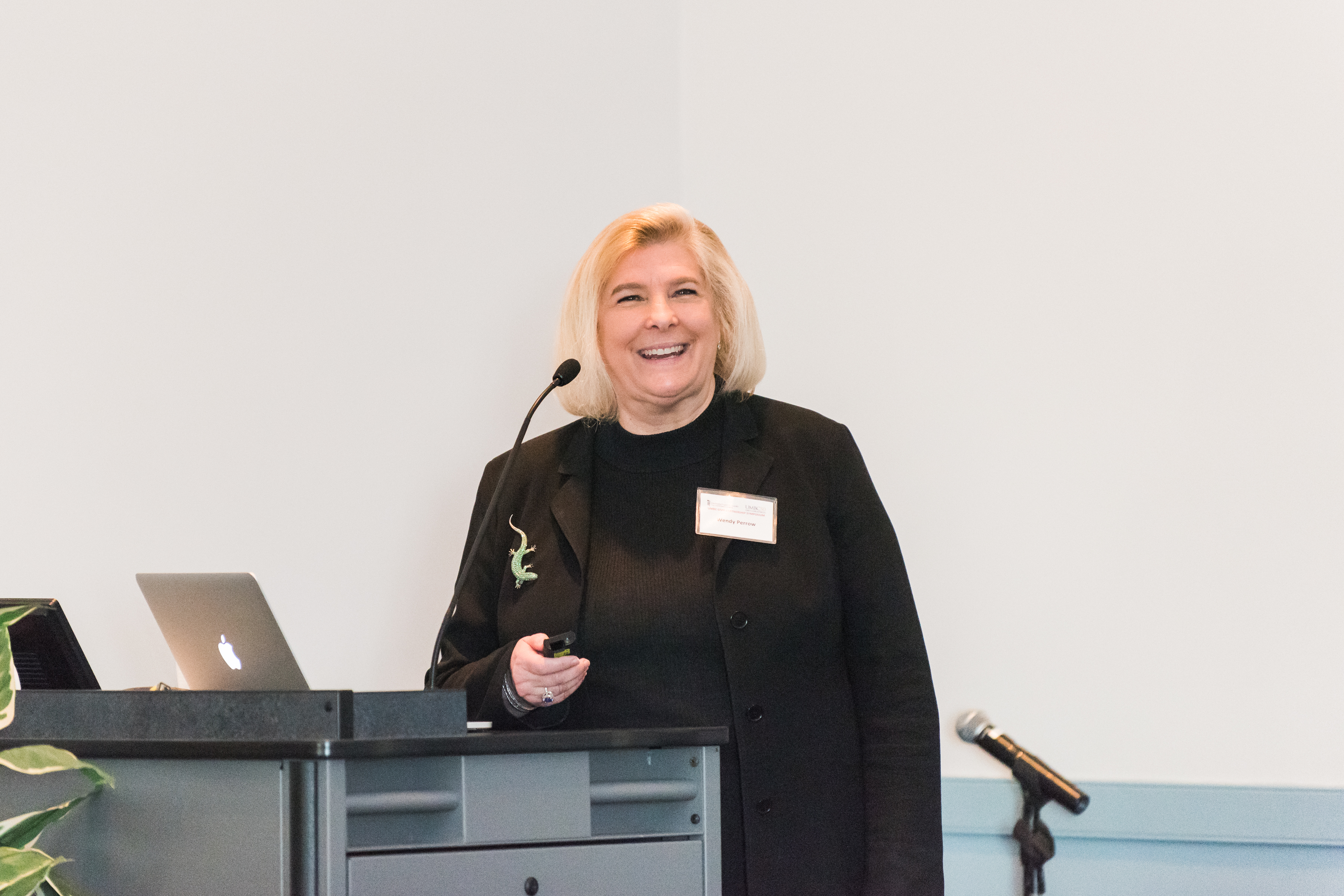
    <p>Wendy Perrow, CEO of AsclepiX Therapeutics, also emphasized the connection between research and clinical work in her keynote address. She encouraged attendees to “bring your technology to the market to help patients,” while acknowledging the many challenges along the way. Perrow’s wealth of experience includes launching a now-mainstream high-blood pressure drug and the first-ever chicken pox vaccine. Most recently, she played a key role in a breakthrough celiac disease drug entering stage three clinical trials.</p>
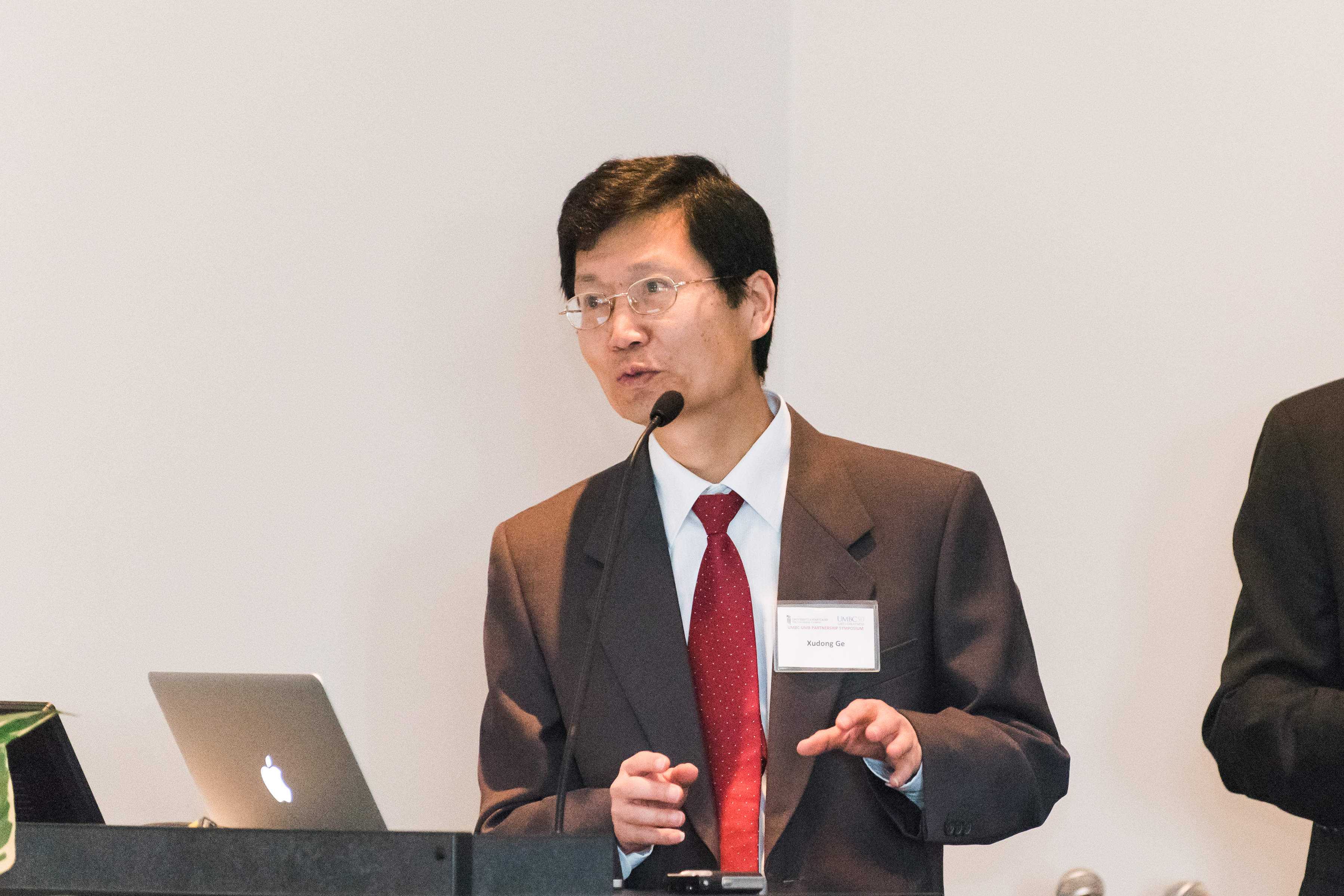
    <p>Following Perrow, five teams who received funding last year presented updates on their progress. <strong>Xudong Ge</strong>, assistant director of the UMBC Center for Advanced Sensor Technology, and Richard Pierson, professor of surgery at UMB, presented the improvements they’ve made to a non-invasive respiration sensor for adults, children, and even babies. The device would be a boon for intensive care units. Its accuracy parallels that of traditional methods, without the potential to cause burns, a pitfall of current respiration monitoring technologies.</p>
    <a href="http://news.umbc.edu/wp-content/uploads/2017/05/UMBC-UMB-Symposium17-04-4324.jpg" rel="nofollow external" class="bo"><img src="http://news.umbc.edu/wp-content/uploads/2017/05/UMBC-UMB-Symposium17-04-4324-1024x683.jpg" alt="" width="720" height="480" style="max-width: 100%; height: auto;"></a>Xudong Ge, assistant director of UMBC’s CAST, explains his work on a non-invasive respiration sensor.<p><strong>Tonya Santos</strong>, Ph.D. student in <strong>Chris Geddes</strong>’ lab at UMBC, shared the development of a rapid, low-cost test for cholera. The lab is applying the same technology to tests for sexually-transmitted infections. “The goal is to get this to rural Africa and rural Haiti,” shared UMB collaborator Colin Stine, professor of epidemiology and public health. Geddes, professor of chemistry, added that while he and Stine have known each other for 15 years, it is “because of this grant [that] we’ve actually been able to work together.”</p>
    <p><strong>Elsa Garcin</strong>, UMBC associate professor of chemistry and biochemistry, presented her work with Patrick Wintrode, UMB associate professor of pharmaceutical sciences. Their research seeks to better understand how a molecule naturally found in cells, called GAPDH, is able to either activate or shut down another molecule known to contribute to autoimmune conditions and cancer. Eventually, that knowledge could be used to harness GAPDH to treat those conditions.</p>
    <p><strong>Soobum Lee</strong>, UMBC assistant professor of mechanical engineering, and Mary Melo, UMB clinical assistant professor of dentistry, explained how they intend to use the movement of people’s own jaws to provide the energy for deep brain stimulation, a proven treatment for some neurodegenerative diseases. The proposed new method would avoid the need for repeated surgeries to replace the battery.</p>
    <p><strong>Christine Mair</strong>, UMBC assistant professor of sociology, and Amanda Lehning, UMB assistant professor of social work, examine the relationship between neighborhood environments and cardiovascular health in Baltimore City to identify social determinants of health inequality such as violent crime and low social cohesion.</p>
    <a href="http://news.umbc.edu/wp-content/uploads/2017/05/UMBC-UMB-Symposium17-04-4260.jpg" rel="nofollow external" class="bo"><img src="http://news.umbc.edu/wp-content/uploads/2017/05/UMBC-UMB-Symposium17-04-4260-1024x683.jpg" alt="" width="720" height="480" style="max-width: 100%; height: auto;"></a>Keynote speaker Wendy Perrow discusses her successful career.<p><strong>Don Engel</strong>, UMBC assistant vice president for research, and Terry Rogers, assistant dean of research affairs at the UMB School of Medicine, announced this year’s cohort of awardees. “We’re delighted to see this program reaching across many areas of both universities,” shared Engel. The new projects include research on oyster herpes, opioid addiction, and non-invasive neonatal glucose monitoring.</p>
    <p>Closing the program, UMBC President <strong>Freeman Hrabowski</strong> reiterated the value and strength of the UMBC-UMB relationship. The $1.5 million invested so far in UMBC-UMB partnership grants has led to $15 million of external grant funding, a return on investment that indicates the effectiveness of the program. In a challenging federal funding climate, it is more important than ever to creatively collaborate to demonstrate the importance of scientific research and generate new funding sources, Hrabowski explained.</p>
    <p>“We want to be strong in our commitment to investing in and supporting” collaborative work, said Hrabowski, of uniting inquisitive minds across the institutions. “Our very future, not just in Maryland, not just in America, but of humankind, in large part depends on [this] kind of work.”</p>
    <p><em>Banner image: 2017 UMBC-UMB Partnership Grant recipients with the university presidents. From left to right: Jay Perman, President of <span>UMB; </span>Rose Viscardi, <span>UMB</span> School of Medicine; Leah Tolosa, UMBC Center for Advanced Sensor Technologies; Shaya Fadia, <span>UMB</span> School of Pharmacy; Michael Abrams, UMBC Hilltop Institute; Colleen Burge, UMBC Department of Marine Biotechnology; Matthew Frieman, <span>UMB</span> School of Medicine; Freeman Hrabowski, President of UMBC. All photos by Marlayna Demond ’11 for UMBC.<br></em></p>
    <div><div>
    <a href="http://news.umbc.edu/#facebook" title="Facebook" rel="nofollow external" class="bo"><span></span><span>Facebook</span></a><a href="http://news.umbc.edu/#twitter" title="Twitter" rel="nofollow external" class="bo"><span></span><span>Twitter</span></a><a href="http://news.umbc.edu/#google_plus" title="Google+" rel="nofollow external" class="bo"><span></span><span>Google+</span></a><a href="https://www.addtoany.com/share#url=http%3A%2F%2Fnews.umbc.edu%2Fthird-annual-umbc-umb-partnership-symposium-reveals-impact-of-collaborative-research%2F&amp;title=Third%20annual%20UMBC-UMB%20Partnership%20Symposium%20reveals%20impact%20of%20collaborative%20research" rel="nofollow external" class="bo"><span></span><span>Share</span></a>
    </div></div>
    </div>
    </div>
]]>
</Body>
<Summary>Researchers and campus leaders from UMBC and the University of Maryland, Baltimore (UMB) convened at bwtech@UMBC South on April 12 to celebrate ongoing research partnerships and announce a new...</Summary>
<TrackingUrl>https://my3.my.umbc.edu/api/v0/pixel/news/67759/guest@my.umbc.edu/812562bec1ca5451c44c21d18742cc28/api/pixel</TrackingUrl>
<Group token="marinebiotechnology">Marine Biotechnology</Group>
<GroupUrl>https://my3.my.umbc.edu/groups/marinebiotechnology</GroupUrl>
<AvatarUrl>https://assets4-my.umbc.edu/system/shared/avatars/groups/000/000/761/ea407c6c8898c300a60b1f84d8f15d80/xsmall.png?1596561611</AvatarUrl>
<AvatarUrl size="original">https://assets3-my.umbc.edu/system/shared/avatars/groups/000/000/761/ea407c6c8898c300a60b1f84d8f15d80/original.jpg?1596561611</AvatarUrl>
<AvatarUrl size="xxlarge">https://assets1-my.umbc.edu/system/shared/avatars/groups/000/000/761/ea407c6c8898c300a60b1f84d8f15d80/xxlarge.png?1596561611</AvatarUrl>
<AvatarUrl size="xlarge">https://assets4-my.umbc.edu/system/shared/avatars/groups/000/000/761/ea407c6c8898c300a60b1f84d8f15d80/xlarge.png?1596561611</AvatarUrl>
<AvatarUrl size="large">https://assets1-my.umbc.edu/system/shared/avatars/groups/000/000/761/ea407c6c8898c300a60b1f84d8f15d80/large.png?1596561611</AvatarUrl>
<AvatarUrl size="medium">https://assets4-my.umbc.edu/system/shared/avatars/groups/000/000/761/ea407c6c8898c300a60b1f84d8f15d80/medium.png?1596561611</AvatarUrl>
<AvatarUrl size="small">https://assets2-my.umbc.edu/system/shared/avatars/groups/000/000/761/ea407c6c8898c300a60b1f84d8f15d80/small.png?1596561611</AvatarUrl>
<AvatarUrl size="xsmall">https://assets4-my.umbc.edu/system/shared/avatars/groups/000/000/761/ea407c6c8898c300a60b1f84d8f15d80/xsmall.png?1596561611</AvatarUrl>
<AvatarUrl size="xxsmall">https://assets3-my.umbc.edu/system/shared/avatars/groups/000/000/761/ea407c6c8898c300a60b1f84d8f15d80/xxsmall.png?1596561611</AvatarUrl>
<Sponsor>Marine Biotechnology</Sponsor>
<PawCount>0</PawCount>
<CommentCount>0</CommentCount>
<CommentsAllowed>true</CommentsAllowed>
<PostedAt>Tue, 02 May 2017 10:22:17 -0400</PostedAt>
</NewsItem>

<NewsItem contentIssues="false" id="67711" important="false" status="posted" url="https://my3.my.umbc.edu/groups/marinebiotechnology/posts/67711">
<Title>IMET's Annual Open House</Title>
<Body>
<![CDATA[
    <div class="html-content">
    <h3>Institute of Marine and Environmental Technology <br>
    </h3>
    <h3>Annual Open House <br>Saturday, May 6 <br>100-4:00PM <br>701 E. Pratt Street<br>Baltimore, MD 21202</h3>
    </div>
]]>
</Body>
<Summary>Institute of Marine and Environmental Technology    Annual Open House  Saturday, May 6  100-4:00PM  701 E. Pratt Street Baltimore, MD 21202</Summary>
<AttachmentKind>Flyer</AttachmentKind>
<AttachmentUrl>https://assets2-my.umbc.edu/system/shared/attachments/c0b62e46407a8ba43a007d47ae713731/6a9dc8d0/news/000/067/711/82b9fe6d15e5952e1f5e597833d5fd95/IMET Open House Flyer Final.pdf?1493653624</AttachmentUrl>
<Attachments>
<Attachment kind="Flyer" url="https://my3.my.umbc.edu/groups/marinebiotechnology/posts/67711/attachments/24021"></Attachment>
</Attachments>
<TrackingUrl>https://my3.my.umbc.edu/api/v0/pixel/news/67711/guest@my.umbc.edu/b80e47fb97c6a0c10a3510b3d266ece0/api/pixel</TrackingUrl>
<Group token="marinebiotechnology">Marine Biotechnology</Group>
<GroupUrl>https://my3.my.umbc.edu/groups/marinebiotechnology</GroupUrl>
<AvatarUrl>https://assets4-my.umbc.edu/system/shared/avatars/groups/000/000/761/ea407c6c8898c300a60b1f84d8f15d80/xsmall.png?1596561611</AvatarUrl>
<AvatarUrl size="original">https://assets3-my.umbc.edu/system/shared/avatars/groups/000/000/761/ea407c6c8898c300a60b1f84d8f15d80/original.jpg?1596561611</AvatarUrl>
<AvatarUrl size="xxlarge">https://assets1-my.umbc.edu/system/shared/avatars/groups/000/000/761/ea407c6c8898c300a60b1f84d8f15d80/xxlarge.png?1596561611</AvatarUrl>
<AvatarUrl size="xlarge">https://assets4-my.umbc.edu/system/shared/avatars/groups/000/000/761/ea407c6c8898c300a60b1f84d8f15d80/xlarge.png?1596561611</AvatarUrl>
<AvatarUrl size="large">https://assets1-my.umbc.edu/system/shared/avatars/groups/000/000/761/ea407c6c8898c300a60b1f84d8f15d80/large.png?1596561611</AvatarUrl>
<AvatarUrl size="medium">https://assets4-my.umbc.edu/system/shared/avatars/groups/000/000/761/ea407c6c8898c300a60b1f84d8f15d80/medium.png?1596561611</AvatarUrl>
<AvatarUrl size="small">https://assets2-my.umbc.edu/system/shared/avatars/groups/000/000/761/ea407c6c8898c300a60b1f84d8f15d80/small.png?1596561611</AvatarUrl>
<AvatarUrl size="xsmall">https://assets4-my.umbc.edu/system/shared/avatars/groups/000/000/761/ea407c6c8898c300a60b1f84d8f15d80/xsmall.png?1596561611</AvatarUrl>
<AvatarUrl size="xxsmall">https://assets3-my.umbc.edu/system/shared/avatars/groups/000/000/761/ea407c6c8898c300a60b1f84d8f15d80/xxsmall.png?1596561611</AvatarUrl>
<Sponsor>Marine Biotechnology</Sponsor>
<PawCount>0</PawCount>
<CommentCount>0</CommentCount>
<CommentsAllowed>true</CommentsAllowed>
<PostedAt>Mon, 01 May 2017 11:47:07 -0400</PostedAt>
<EditAt>Wed, 20 Nov 2024 14:18:36 -0500</EditAt>
</NewsItem>

<NewsItem contentIssues="false" id="67065" important="false" status="posted" url="https://my3.my.umbc.edu/groups/marinebiotechnology/posts/67065">
<Title>Mildred Homa Receives Recognition at Awards Ceremony</Title>
<Tagline>UMBC 2017 Presidential Faculty and Staff Awards Ceremony</Tagline>
<Body>
<![CDATA[
    <div class="html-content">
    <p><img src="http://news.umbc.edu/wp-content/uploads/2017/04/PFASA-groups-ceremony17-0903-e1491507040453-1920x768.jpg" alt="2017 UMBC Presidential Faculty and Staff Award recipients" style="max-width: 100%; height: auto;"></p>
    <p>Hundreds gathered to celebrate colleagues’ achievements and dedication to the Retriever community at the <a href="http://facultystaffawards.umbc.edu/" rel="nofollow external" class="bo">UMBC Presidential Faculty and Staff Awards Ceremony</a>, held on April 5. The annual ceremony honors faculty and staff for their contributions to advancing the mission of UMBC and the state of Maryland, and for their commitments to teaching, learning, and excellence in research, scholarship and creative achievement.</p>
    <p>The ceremony includes several prominent awards granted by UMBC as well as by the University System of Maryland (USM), including awards added in recent years specifically to recognize faculty and staff who demonstrate a strong commitment to student academic success, faculty career advancement, and problem-solving.</p>
    <p>This year’s awardees include:</p>
    <p><em>Presidential Teaching Faculty Award</em><br><strong>Marc Zupan</strong>, associate professor of mechanical engineering</p>
    <p><em>Presidential Research Faculty Award</em><br><strong>Sarah Shin</strong>, professor of education and special assistant to the provost for academic initiatives</p>
    <p><em>Presidential Distinguished Professional Staff Award</em><br><strong>Wendy Martin</strong>, director of the Office of Technology Development</p>
    <p><em>Presidential Distinguished Non-Exempt Staff Award</em><br><strong>Ali Shahegh</strong>, accounting associate in Residential Life</p>
    <p><em>USM Board of Regents’ Faculty Awards</em><br><strong>Kathie Seley-Radtke</strong>, professor of chemistry and biochemistry<br><strong>Donald Snyder</strong>, senior lecturer of media and communication studies</p>
    <p><em>USM Board of Regents’ Staff Awards</em><br><strong>Denise Atkinson</strong>, executive administrative assistant in The Graduate School<br><strong>Paul Dillon</strong>, deputy chief of police<br><strong>Mildred Homa</strong>, research administrator for marine biotechnology and IMET</p>
    <p><em>Jakubik Family Endowment Award</em><br><strong>Janet McGlynn</strong>, director emerita of communication and outreach, Office of Undergraduate Education</p>
    <p><em>Karen L. Wensch Endowment Award for Outstanding Non-Exempt Staff</em><br><strong>Abigail Granger, </strong>program management specialist, media and communication studies</p>
    <p><em>Marilyn E. Demorest Award for Faculty Advancement</em><br></p>
    <strong>J. Kevin Eckert</strong><span>, professor and chair of sociology, anthropology, and health administration and policy</span><div><br></div>
    <div><br></div>
    </div>
]]>
</Body>
<Summary>Hundreds gathered to celebrate colleagues’ achievements and dedication to the Retriever community at the UMBC Presidential Faculty and Staff Awards Ceremony, held on April 5. The annual...</Summary>
<TrackingUrl>https://my3.my.umbc.edu/api/v0/pixel/news/67065/guest@my.umbc.edu/8f27380cebe6646bfbcdb06fa7f49ca6/api/pixel</TrackingUrl>
<Group token="marinebiotechnology">Marine Biotechnology</Group>
<GroupUrl>https://my3.my.umbc.edu/groups/marinebiotechnology</GroupUrl>
<AvatarUrl>https://assets4-my.umbc.edu/system/shared/avatars/groups/000/000/761/ea407c6c8898c300a60b1f84d8f15d80/xsmall.png?1596561611</AvatarUrl>
<AvatarUrl size="original">https://assets3-my.umbc.edu/system/shared/avatars/groups/000/000/761/ea407c6c8898c300a60b1f84d8f15d80/original.jpg?1596561611</AvatarUrl>
<AvatarUrl size="xxlarge">https://assets1-my.umbc.edu/system/shared/avatars/groups/000/000/761/ea407c6c8898c300a60b1f84d8f15d80/xxlarge.png?1596561611</AvatarUrl>
<AvatarUrl size="xlarge">https://assets4-my.umbc.edu/system/shared/avatars/groups/000/000/761/ea407c6c8898c300a60b1f84d8f15d80/xlarge.png?1596561611</AvatarUrl>
<AvatarUrl size="large">https://assets1-my.umbc.edu/system/shared/avatars/groups/000/000/761/ea407c6c8898c300a60b1f84d8f15d80/large.png?1596561611</AvatarUrl>
<AvatarUrl size="medium">https://assets4-my.umbc.edu/system/shared/avatars/groups/000/000/761/ea407c6c8898c300a60b1f84d8f15d80/medium.png?1596561611</AvatarUrl>
<AvatarUrl size="small">https://assets2-my.umbc.edu/system/shared/avatars/groups/000/000/761/ea407c6c8898c300a60b1f84d8f15d80/small.png?1596561611</AvatarUrl>
<AvatarUrl size="xsmall">https://assets4-my.umbc.edu/system/shared/avatars/groups/000/000/761/ea407c6c8898c300a60b1f84d8f15d80/xsmall.png?1596561611</AvatarUrl>
<AvatarUrl size="xxsmall">https://assets3-my.umbc.edu/system/shared/avatars/groups/000/000/761/ea407c6c8898c300a60b1f84d8f15d80/xxsmall.png?1596561611</AvatarUrl>
<Sponsor>Marine Biotechnology</Sponsor>
<PawCount>0</PawCount>
<CommentCount>0</CommentCount>
<CommentsAllowed>true</CommentsAllowed>
<PostedAt>Fri, 07 Apr 2017 13:11:09 -0400</PostedAt>
<EditAt>Fri, 07 Apr 2017 13:14:49 -0400</EditAt>
</NewsItem>

<NewsItem contentIssues="true" id="65566" important="false" status="posted" url="https://my3.my.umbc.edu/groups/marinebiotechnology/posts/65566">
<Title>Greetings from Sm&#248;la Island in Norway</Title>
<Body>
<![CDATA[
    <div class="html-content">
    <span>DMB/IMET scientists are helping salmon
    aquaculture in Norway become more enviro</span><span>nmentally responsible. </span><div><br></div>
    <div><img src="http://www.umbc.edu/blogs/imet/umbc_in_norway.jpg" style="max-width: 100%; height: auto;"></div>
    </div>
]]>
</Body>
<Summary>DMB/IMET scientists are helping salmon
aquaculture in Norway become more environmentally responsible. </Summary>
<AttachmentKind>Photo</AttachmentKind>
<AttachmentUrl>https://assets3-my.umbc.edu/system/shared/attachments/dc2d31e01623f551c7d3d472c5467e77/6a9dc8d0/news/000/065/566/f45fa6602838b826f62e4e8552bda5c0/image1.JPG?1486585067</AttachmentUrl>
<Attachments>
<Attachment kind="Photo" url="https://my3.my.umbc.edu/groups/marinebiotechnology/posts/65566/attachments/23005"></Attachment>
</Attachments>
<TrackingUrl>https://my3.my.umbc.edu/api/v0/pixel/news/65566/guest@my.umbc.edu/b5938ca133bba65d136d96978653e181/api/pixel</TrackingUrl>
<Group token="marinebiotechnology">Marine Biotechnology</Group>
<GroupUrl>https://my3.my.umbc.edu/groups/marinebiotechnology</GroupUrl>
<AvatarUrl>https://assets4-my.umbc.edu/system/shared/avatars/groups/000/000/761/ea407c6c8898c300a60b1f84d8f15d80/xsmall.png?1596561611</AvatarUrl>
<AvatarUrl size="original">https://assets3-my.umbc.edu/system/shared/avatars/groups/000/000/761/ea407c6c8898c300a60b1f84d8f15d80/original.jpg?1596561611</AvatarUrl>
<AvatarUrl size="xxlarge">https://assets1-my.umbc.edu/system/shared/avatars/groups/000/000/761/ea407c6c8898c300a60b1f84d8f15d80/xxlarge.png?1596561611</AvatarUrl>
<AvatarUrl size="xlarge">https://assets4-my.umbc.edu/system/shared/avatars/groups/000/000/761/ea407c6c8898c300a60b1f84d8f15d80/xlarge.png?1596561611</AvatarUrl>
<AvatarUrl size="large">https://assets1-my.umbc.edu/system/shared/avatars/groups/000/000/761/ea407c6c8898c300a60b1f84d8f15d80/large.png?1596561611</AvatarUrl>
<AvatarUrl size="medium">https://assets4-my.umbc.edu/system/shared/avatars/groups/000/000/761/ea407c6c8898c300a60b1f84d8f15d80/medium.png?1596561611</AvatarUrl>
<AvatarUrl size="small">https://assets2-my.umbc.edu/system/shared/avatars/groups/000/000/761/ea407c6c8898c300a60b1f84d8f15d80/small.png?1596561611</AvatarUrl>
<AvatarUrl size="xsmall">https://assets4-my.umbc.edu/system/shared/avatars/groups/000/000/761/ea407c6c8898c300a60b1f84d8f15d80/xsmall.png?1596561611</AvatarUrl>
<AvatarUrl size="xxsmall">https://assets3-my.umbc.edu/system/shared/avatars/groups/000/000/761/ea407c6c8898c300a60b1f84d8f15d80/xxsmall.png?1596561611</AvatarUrl>
<Sponsor>Marine Biotechnology</Sponsor>
<PawCount>0</PawCount>
<CommentCount>0</CommentCount>
<CommentsAllowed>true</CommentsAllowed>
<PostedAt>Wed, 08 Feb 2017 11:59:57 -0500</PostedAt>
<EditAt>Fri, 07 Apr 2017 13:08:02 -0400</EditAt>
</NewsItem>

<NewsItem contentIssues="false" id="63770" important="false" status="posted" url="https://my3.my.umbc.edu/groups/marinebiotechnology/posts/63770">
<Title>Colleen Burge Plenary Speaker at UMBC&#8217;s</Title>
<Tagline>Life Sciences Research Symposium</Tagline>
<Body>
<![CDATA[
    <div class="html-content">
    <img src="http://news.umbc.edu/wp-content/uploads/2016/11/URS-ballroom_rev-e1478626528150-1920x768.jpg" alt="URS ballroom_rev" style="max-width: 100%; height: auto;"><div><br></div>
    <div>
    <p>UMBC’s 19th <a href="http://cnmssymposium.umbc.edu/" rel="nofollow external" class="bo">Undergraduate Research Symposium in Chemical and Biological Sciences</a> on October 22, 2016, drew a record number of talented young researchers from across the mid-Atlantic. Of the 647 attendees, 331 were student presenters, including students from UMBC’s own <a href="http://stembuild.umbc.edu/" rel="nofollow external" class="bo">STEM BUILD</a> initiative.</p>
    <p>In an introductory address to the students, President <strong>Freeman Hrabowski</strong> emphasized the importance of asking good questions, rather than always having the right answers. He encouraged the scholars, some of whom travelled hundreds of miles for the event, to have confidence in their ability to achieve great things as scientists, saying, “You have most of the answers you need inside of yourself for what it takes to be successful.”</p>
    <p>Two large poster sessions in the University Center Ballroom anchored the day-long event, spotlighting 274 student posters on research topics from cricket behavior to breast cancer to biodegradable polymers. Judging the posters were 74 faculty who selected award recipients in biochemical and molecular biology, biological sciences, and chemical sciences.</p>
    <p>Workshops and a plenary speaker provided additional opportunities for attendees to expand their horizons.</p>
    <p><strong>Susan Hindle</strong>, assistant director of internships and employment in UMBC’s Career Center, led a “Master the Art of Making Connections” workshop. “Academic achievements alone are not enough to be successful in today’s workplace,” she shared. Hindle discussed how to make a good first impression and be an active listener, and she taught attendees the elements of a strong “30-second commercial” about their experience, interests, and goals. She also gave tips for networking at an event like a research conference.</p>
    <a href="http://news.umbc.edu/wp-content/uploads/2016/11/URS-Thomas.jpg" rel="nofollow external" class="bo"><img src="http://news.umbc.edu/wp-content/uploads/2016/11/URS-Thomas-1024x655.jpg" alt="URS Thomas" width="720" height="461" style="max-width: 100%; height: auto;"></a>Jim Thomas, philosophy lecturer at UMBC, discusses science ethics with students during a workshop.<p><strong>Jim Thomas</strong>, UMBC philosophy lecturer, offered “A Very, Very Short Introduction to Ethics for Scientists.” The workshop encouraged students to examine why they make the ethical decisions they do. “Even if a person disagrees with you, reasons can be understood, maybe even changed or amended, and that creates better understanding, and so a better community, all around,” said Thomas.</p>
    <p>Plenary speaker<strong> Colleen Burge</strong>, assistant professor of marine biotechnology at UMBC, used her talk to offer advice for student researchers in the audience, through the lens of her own work on host-pathogen interactions in marine environments.</p>
    <p>Burge discussed her research on oysters, eel grass, and the diseases that affect them as critical both ecologically and economically. She described eel grass as “a foundational species in the ocean,” and explained that sea grasses serve as “ecosystem engineers,” creating habitat for a wide range of species while also providing a food source. A particularly devastating oyster virus she studies “directly impacts the bottom line for farms.”</p>
    <p>Burge said students at the symposium “are already winning” when it comes to preparing for research careers, by getting experience early. She encouraged them to follow their passions, but not narrow their focus too soon. “Your career can change as it goes. Be flexible,” she says. “Find that thing that you like and that can move forward with you through your career.”</p>
    <p>Preparing for the symposium required a great deal of hard work for each student, but “the value of talking to people about your research and receiving input on things you might have overlooked is priceless,” shared <strong>Fatma Abker</strong> ’19, chemical engineering. “From Dr. Hrabowski’s invigorating welcoming speech, to the buzz of the ballroom with presenters and judges and spectators, to the plenary talk—it was all worth it.”</p>
    <p><em>Banner image: The University Center Ballroom during the Undergraduate Research Symposium. Photos by Mohammed Arafat ’20, biological sciences.</em></p>
    </div>
    </div>
]]>
</Body>
<Summary>UMBC’s 19th Undergraduate Research Symposium in Chemical and Biological Sciences on October 22, 2016, drew a record number of talented young researchers from across the mid-Atlantic. Of the 647...</Summary>
<Website>http://news.umbc.edu/life-sciences-research-symposium-attracts-a-record-number-of-students-from-across-the-mid-atlantic/</Website>
<TrackingUrl>https://my3.my.umbc.edu/api/v0/pixel/news/63770/guest@my.umbc.edu/21889eac6fb359f111cb34d956c61126/api/pixel</TrackingUrl>
<Group token="marinebiotechnology">Marine Biotechnology</Group>
<GroupUrl>https://my3.my.umbc.edu/groups/marinebiotechnology</GroupUrl>
<AvatarUrl>https://assets4-my.umbc.edu/system/shared/avatars/groups/000/000/761/ea407c6c8898c300a60b1f84d8f15d80/xsmall.png?1596561611</AvatarUrl>
<AvatarUrl size="original">https://assets3-my.umbc.edu/system/shared/avatars/groups/000/000/761/ea407c6c8898c300a60b1f84d8f15d80/original.jpg?1596561611</AvatarUrl>
<AvatarUrl size="xxlarge">https://assets1-my.umbc.edu/system/shared/avatars/groups/000/000/761/ea407c6c8898c300a60b1f84d8f15d80/xxlarge.png?1596561611</AvatarUrl>
<AvatarUrl size="xlarge">https://assets4-my.umbc.edu/system/shared/avatars/groups/000/000/761/ea407c6c8898c300a60b1f84d8f15d80/xlarge.png?1596561611</AvatarUrl>
<AvatarUrl size="large">https://assets1-my.umbc.edu/system/shared/avatars/groups/000/000/761/ea407c6c8898c300a60b1f84d8f15d80/large.png?1596561611</AvatarUrl>
<AvatarUrl size="medium">https://assets4-my.umbc.edu/system/shared/avatars/groups/000/000/761/ea407c6c8898c300a60b1f84d8f15d80/medium.png?1596561611</AvatarUrl>
<AvatarUrl size="small">https://assets2-my.umbc.edu/system/shared/avatars/groups/000/000/761/ea407c6c8898c300a60b1f84d8f15d80/small.png?1596561611</AvatarUrl>
<AvatarUrl size="xsmall">https://assets4-my.umbc.edu/system/shared/avatars/groups/000/000/761/ea407c6c8898c300a60b1f84d8f15d80/xsmall.png?1596561611</AvatarUrl>
<AvatarUrl size="xxsmall">https://assets3-my.umbc.edu/system/shared/avatars/groups/000/000/761/ea407c6c8898c300a60b1f84d8f15d80/xxsmall.png?1596561611</AvatarUrl>
<Sponsor>Marine Biotechnology</Sponsor>
<PawCount>0</PawCount>
<CommentCount>0</CommentCount>
<CommentsAllowed>true</CommentsAllowed>
<PostedAt>Tue, 08 Nov 2016 20:07:02 -0500</PostedAt>
<EditAt>Tue, 08 Nov 2016 20:11:00 -0500</EditAt>
</NewsItem>

</News>