<?xml version="1.0"?>
<News hasArchived="false" page="7" pageCount="9" pageSize="10" timestamp="Sun, 06 Sep 2026 17:45:25 -0400" url="https://my3.my.umbc.edu/groups/marinebiotechnology/posts.xml?mode=pawpularity&amp;page=7">
<NewsItem contentIssues="true" id="62800" important="false" status="posted" url="https://my3.my.umbc.edu/groups/marinebiotechnology/posts/62800">
<Title>Congratulations to Dr. Olivia Spicer</Title>
<Body>
<![CDATA[
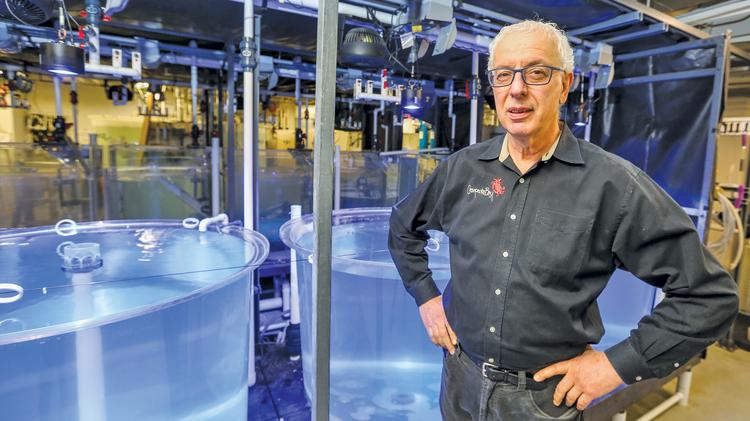
    <div class="html-content">On Friday, September 9th Olivia Smith Spicer defended her thesis entitled, "Molecular Mechanisms Involved in Lpxrfa and Gnrh3 Regulation of the Brain-Pituitary-Gonand Axis of the Zebrafish (Danio rerio)" and passed with flying colors. Congratulations Dr. Spicer!<div><br></div>
    <div>
    <div><img src="https://my3.my.umbc.edu/system/shared/attachments/news/000/062/800/7d3c93b7a874ca3a2fd63f325225b26b/Dr.%20Olivia%20Spicer.jpg" style="max-width: 100%; height: auto;"></div>
    <div><br></div>
    <div><br></div>
    <div><br></div>
    <div> </div>
    </div>
    </div>
]]>
</Body>
<Summary>On Friday, September 9th Olivia Smith Spicer defended her thesis entitled, "Molecular Mechanisms Involved in Lpxrfa and Gnrh3 Regulation of the Brain-Pituitary-Gonand Axis of the Zebrafish (Danio...</Summary>
<AttachmentKind>Photo</AttachmentKind>
<AttachmentUrl>https://assets3-my.umbc.edu/system/shared/attachments/916283056efee7b589ce9cf3636a1c1b/6a9ddef5/news/000/062/800/7d3c93b7a874ca3a2fd63f325225b26b/Dr. Olivia Spicer.jpg?1475514349</AttachmentUrl>
<Attachments>
<Attachment kind="Photo" url="https://my3.my.umbc.edu/groups/marinebiotechnology/posts/62800/attachments/21811"></Attachment>
</Attachments>
<TrackingUrl>https://my3.my.umbc.edu/api/v0/pixel/news/62800/guest@my.umbc.edu/dd62f7088b5730b37b4f05dc4badea40/api/pixel</TrackingUrl>
<Group token="marinebiotechnology">Marine Biotechnology</Group>
<GroupUrl>https://my3.my.umbc.edu/groups/marinebiotechnology</GroupUrl>
<AvatarUrl>https://assets4-my.umbc.edu/system/shared/avatars/groups/000/000/761/ea407c6c8898c300a60b1f84d8f15d80/xsmall.png?1596561611</AvatarUrl>
<AvatarUrl size="original">https://assets3-my.umbc.edu/system/shared/avatars/groups/000/000/761/ea407c6c8898c300a60b1f84d8f15d80/original.jpg?1596561611</AvatarUrl>
<AvatarUrl size="xxlarge">https://assets1-my.umbc.edu/system/shared/avatars/groups/000/000/761/ea407c6c8898c300a60b1f84d8f15d80/xxlarge.png?1596561611</AvatarUrl>
<AvatarUrl size="xlarge">https://assets4-my.umbc.edu/system/shared/avatars/groups/000/000/761/ea407c6c8898c300a60b1f84d8f15d80/xlarge.png?1596561611</AvatarUrl>
<AvatarUrl size="large">https://assets1-my.umbc.edu/system/shared/avatars/groups/000/000/761/ea407c6c8898c300a60b1f84d8f15d80/large.png?1596561611</AvatarUrl>
<AvatarUrl size="medium">https://assets4-my.umbc.edu/system/shared/avatars/groups/000/000/761/ea407c6c8898c300a60b1f84d8f15d80/medium.png?1596561611</AvatarUrl>
<AvatarUrl size="small">https://assets2-my.umbc.edu/system/shared/avatars/groups/000/000/761/ea407c6c8898c300a60b1f84d8f15d80/small.png?1596561611</AvatarUrl>
<AvatarUrl size="xsmall">https://assets4-my.umbc.edu/system/shared/avatars/groups/000/000/761/ea407c6c8898c300a60b1f84d8f15d80/xsmall.png?1596561611</AvatarUrl>
<AvatarUrl size="xxsmall">https://assets3-my.umbc.edu/system/shared/avatars/groups/000/000/761/ea407c6c8898c300a60b1f84d8f15d80/xxsmall.png?1596561611</AvatarUrl>
<Sponsor>Marine Biotechnology</Sponsor>
<PawCount>0</PawCount>
<CommentCount>0</CommentCount>
<CommentsAllowed>true</CommentsAllowed>
<PostedAt>Mon, 03 Oct 2016 13:06:32 -0400</PostedAt>
<EditAt>Mon, 03 Oct 2016 13:07:42 -0400</EditAt>
</NewsItem>

<NewsItem contentIssues="false" id="62606" important="false" status="posted" url="https://my3.my.umbc.edu/groups/marinebiotechnology/posts/62606">
<Title>UMBC scientist launches company to commercialize new oral</Title>
<Tagline>Vaccine to save fish industry millions</Tagline>
<Body>
<![CDATA[
    <div class="html-content"> 
    					<div>
    				<img src="http://news.umbc.edu/wp-content/uploads/2016/08/VakSeacrop.jpg" alt="VakSeacrop" height="510" width="1158" style="max-width: 100%; height: auto;">			</div>
    									
    							
    					<h1>UMBC scientist launches company to commercialize new oral vaccine to save fish industry millions</h1>		 
    	 
    
    	<div>
    		<p>Every year, millions of fish raised in aquaculture die of nervous 
    necrosis virus (NNV). “The disease affects the brain, and the fish lose 
    their vision and balance,” says <strong>Vikram Vakharia</strong>, 
    professor of marine biotechnology at UMBC. As a result of damage to the 
    nervous system, “the fish just swim in circles,” Vakharia says. His lab 
    is housed at the <a href="http://www.umbc.edu/imet/" rel="nofollow external" class="bo">Institute of Marine and Environmental Technology</a> (IMET) on Baltimore’s Inner Harbor.</p>
    <p>In 2013, the <a href="http://tedco.md/program/the-maryland-innovation-initiative-mii/" rel="nofollow external" class="bo">Maryland Innovation Initiative (MII)</a>
     funded Vakharia to develop a vaccine that protects fish from NNV. He 
    successfully developed an effective vaccine, but it had to be injected 
    into each fish individually—a labor-intensive and costly process. Then <a href="http://www.biohealthinnovation.org/" rel="nofollow external" class="bo">BioHealth Innovation</a>,
     a public-private economic development partnership in Maryland, 
    approached Vakharia to develop a market study and business plan. BHI 
    found that farms would prefer an oral vaccine, because it’s much easier 
    to deliver a vaccine via food pellets. That’s what Vakharia tackled 
    next.</p>
    <p>He succeeded in the lab, and, along with BioHealth Innovation, formed a company called <a href="http://www.vaksea.com/" rel="nofollow external" class="bo">VakSea</a>,
     Inc. to convert the lab success into a commercial product. Recently, 
    VakSea licensed the technology from UMBC and will collaborate with <a href="http://www.allotropictech.com/" rel="nofollow external" class="bo">Allotropic Tech, Inc.</a> a <a href="http://www.bwtechumbc.com/" rel="nofollow external" class="bo">bwtech@UMBC</a>
     company that will produce the vaccine product. It will be mixed with 
    food pellets in large quantities for an upcoming clinical trial as part 
    of an MII phase III grant. This moves Vakharia one giant leap forward in
     tackling a major obstacle facing the $70 billion farmed-fish industry.</p>
    <p>“It will be novel to deliver the vaccine orally. A lot of people will
     be interested,” says Vakharia. NNV is particularly prevalent in East 
    Asia and countries that border the Mediterranean Sea such as Greece, 
    Italy, and Turkey.</p>
    <p>Vakharia is continuing to work on new ways to increase the vaccine’s efficacy, and VakSea submitted a <a href="https://sbir.nih.gov/" rel="nofollow external" class="bo">Small Business Innovation Research</a> (SBIR) grant to the National Science Foundation that would support that work.</p>
    <p>Even with this major advance to combat NNV on the horizon, there are 
    plenty of other diseases that wreak havoc on fish populations globally. 
    “If this works,” Vakharia says, “it opens the door to use this technique
     with other pathogens.”</p>
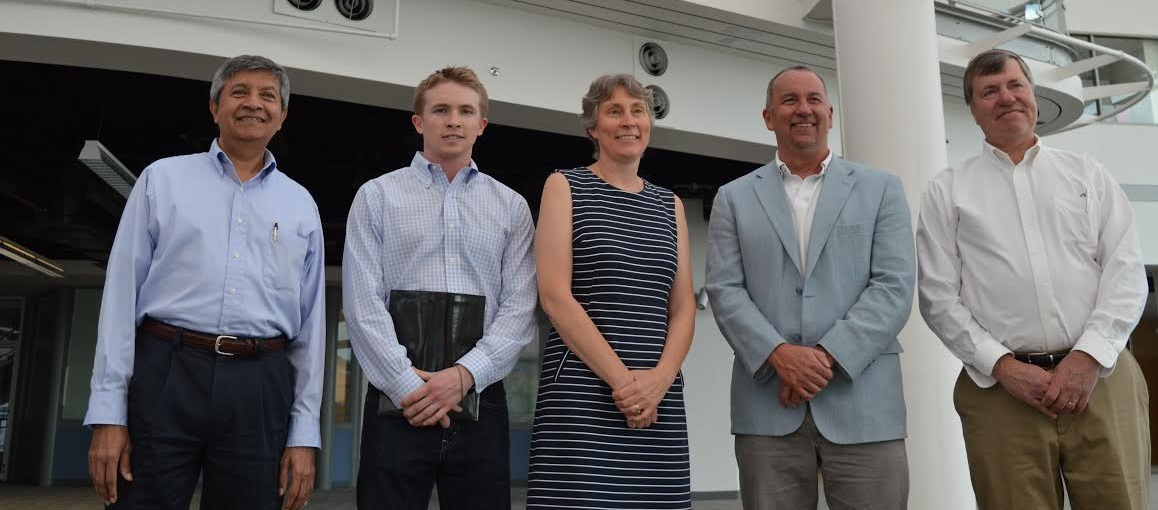
    <p><em>Image: At the VakSea license signing. From left to right: Vikram 
    Vakharia (UMBC), Kurt Herzog (BHI), Wendy Martin (UMBC), Ken Malone 
    (BHI), Bob Balcerzak (Allotropic). Photo by Nick Hammond (IMET).</em></p>
    </div>
    </div>
]]>
</Body>
<Summary>UMBC scientist launches company to commercialize new oral vaccine to save fish industry millions               Every year, millions of fish raised in aquaculture die of nervous  necrosis virus...</Summary>
<TrackingUrl>https://my3.my.umbc.edu/api/v0/pixel/news/62606/guest@my.umbc.edu/04b00b8b661dfc5987e2f18717a9a129/api/pixel</TrackingUrl>
<Group token="marinebiotechnology">Marine Biotechnology</Group>
<GroupUrl>https://my3.my.umbc.edu/groups/marinebiotechnology</GroupUrl>
<AvatarUrl>https://assets4-my.umbc.edu/system/shared/avatars/groups/000/000/761/ea407c6c8898c300a60b1f84d8f15d80/xsmall.png?1596561611</AvatarUrl>
<AvatarUrl size="original">https://assets3-my.umbc.edu/system/shared/avatars/groups/000/000/761/ea407c6c8898c300a60b1f84d8f15d80/original.jpg?1596561611</AvatarUrl>
<AvatarUrl size="xxlarge">https://assets1-my.umbc.edu/system/shared/avatars/groups/000/000/761/ea407c6c8898c300a60b1f84d8f15d80/xxlarge.png?1596561611</AvatarUrl>
<AvatarUrl size="xlarge">https://assets4-my.umbc.edu/system/shared/avatars/groups/000/000/761/ea407c6c8898c300a60b1f84d8f15d80/xlarge.png?1596561611</AvatarUrl>
<AvatarUrl size="large">https://assets1-my.umbc.edu/system/shared/avatars/groups/000/000/761/ea407c6c8898c300a60b1f84d8f15d80/large.png?1596561611</AvatarUrl>
<AvatarUrl size="medium">https://assets4-my.umbc.edu/system/shared/avatars/groups/000/000/761/ea407c6c8898c300a60b1f84d8f15d80/medium.png?1596561611</AvatarUrl>
<AvatarUrl size="small">https://assets2-my.umbc.edu/system/shared/avatars/groups/000/000/761/ea407c6c8898c300a60b1f84d8f15d80/small.png?1596561611</AvatarUrl>
<AvatarUrl size="xsmall">https://assets4-my.umbc.edu/system/shared/avatars/groups/000/000/761/ea407c6c8898c300a60b1f84d8f15d80/xsmall.png?1596561611</AvatarUrl>
<AvatarUrl size="xxsmall">https://assets3-my.umbc.edu/system/shared/avatars/groups/000/000/761/ea407c6c8898c300a60b1f84d8f15d80/xxsmall.png?1596561611</AvatarUrl>
<Sponsor>Marine Biotechnology</Sponsor>
<PawCount>0</PawCount>
<CommentCount>0</CommentCount>
<CommentsAllowed>true</CommentsAllowed>
<PostedAt>Mon, 26 Sep 2016 14:54:49 -0400</PostedAt>
<EditAt>Mon, 26 Sep 2016 14:55:18 -0400</EditAt>
</NewsItem>

<NewsItem contentIssues="true" id="62308" important="false" status="posted" url="https://my3.my.umbc.edu/groups/marinebiotechnology/posts/62308">
<Title>Mildred Homa Receives Board of Regents' Staff Award</Title>
<Body>
<![CDATA[
    <div class="html-content">
    <p><img src="https://my3.my.umbc.edu/system/shared/attachments/news/000/062/308/5bc33927ca8779dcd219b9dfaa1195a5/IMG_8353.JPG" style="max-width: 100%; height: auto;"></p>
    <p><span>On Friday, September 9, 2016,
    Towson University hosted a special breakfast ceremony for the USM Board of
    Regents Staff Awards. Mildred Homa, Researcher Administrator for the Department
    of Marine Biotechnology (UMBC), was among the recipients to receive the
    2015-2016 USM Board of Regents Staff Award in the category of Effectiveness and
    Efficiency. </span></p>
    <p><span>This award is the highest honor bestowed by the USM Board of
    Regents to recognize exemplary staff members. </span></p>
    <p><span>Congratulations to Mildred!</span><span> </span></p>
    <p></p>
    </div>
]]>
</Body>
<Summary>On Friday, September 9, 2016, Towson University hosted a special breakfast ceremony for the USM Board of Regents Staff Awards. Mildred Homa, Researcher Administrator for the Department of Marine...</Summary>
<AttachmentKind>Photo</AttachmentKind>
<AttachmentUrl>https://assets1-my.umbc.edu/system/shared/attachments/2f762db4c56adadb31d2dbac2638784e/6a9ddef5/news/000/062/308/5bc33927ca8779dcd219b9dfaa1195a5/IMG_8353.JPG?1474044094</AttachmentUrl>
<Attachments>
<Attachment kind="Photo" url="https://my3.my.umbc.edu/groups/marinebiotechnology/posts/62308/attachments/21574"></Attachment>
</Attachments>
<TrackingUrl>https://my3.my.umbc.edu/api/v0/pixel/news/62308/guest@my.umbc.edu/d6b32ddb0e729bd58cad1eee52ef64d4/api/pixel</TrackingUrl>
<Group token="marinebiotechnology">Marine Biotechnology</Group>
<GroupUrl>https://my3.my.umbc.edu/groups/marinebiotechnology</GroupUrl>
<AvatarUrl>https://assets4-my.umbc.edu/system/shared/avatars/groups/000/000/761/ea407c6c8898c300a60b1f84d8f15d80/xsmall.png?1596561611</AvatarUrl>
<AvatarUrl size="original">https://assets3-my.umbc.edu/system/shared/avatars/groups/000/000/761/ea407c6c8898c300a60b1f84d8f15d80/original.jpg?1596561611</AvatarUrl>
<AvatarUrl size="xxlarge">https://assets1-my.umbc.edu/system/shared/avatars/groups/000/000/761/ea407c6c8898c300a60b1f84d8f15d80/xxlarge.png?1596561611</AvatarUrl>
<AvatarUrl size="xlarge">https://assets4-my.umbc.edu/system/shared/avatars/groups/000/000/761/ea407c6c8898c300a60b1f84d8f15d80/xlarge.png?1596561611</AvatarUrl>
<AvatarUrl size="large">https://assets1-my.umbc.edu/system/shared/avatars/groups/000/000/761/ea407c6c8898c300a60b1f84d8f15d80/large.png?1596561611</AvatarUrl>
<AvatarUrl size="medium">https://assets4-my.umbc.edu/system/shared/avatars/groups/000/000/761/ea407c6c8898c300a60b1f84d8f15d80/medium.png?1596561611</AvatarUrl>
<AvatarUrl size="small">https://assets2-my.umbc.edu/system/shared/avatars/groups/000/000/761/ea407c6c8898c300a60b1f84d8f15d80/small.png?1596561611</AvatarUrl>
<AvatarUrl size="xsmall">https://assets4-my.umbc.edu/system/shared/avatars/groups/000/000/761/ea407c6c8898c300a60b1f84d8f15d80/xsmall.png?1596561611</AvatarUrl>
<AvatarUrl size="xxsmall">https://assets3-my.umbc.edu/system/shared/avatars/groups/000/000/761/ea407c6c8898c300a60b1f84d8f15d80/xxsmall.png?1596561611</AvatarUrl>
<Sponsor>Marine Biotechnology</Sponsor>
<PawCount>0</PawCount>
<CommentCount>0</CommentCount>
<CommentsAllowed>true</CommentsAllowed>
<PostedAt>Fri, 16 Sep 2016 12:43:07 -0400</PostedAt>
</NewsItem>

<NewsItem contentIssues="false" id="61026" important="false" status="posted" url="https://my3.my.umbc.edu/groups/marinebiotechnology/posts/61026">
<Title>UMBC Ph.D. student makes surprise discovery</Title>
<Body>
<![CDATA[
    <div class="html-content"> <div>
    <div><h1></h1></div>
    <img width="1920" height="768" src="http://news.umbc.edu/wp-content/uploads/2016/05/Olivia-Spicer-1346-1920x768.jpg" alt="Olivia-Spicer-1346" style="max-width: 100%; height: auto;">
    </div> <div> <div><div><h1>UMBC Ph.D. student makes surprise discovery of natural back-up system in fish reproduction</h1></div></div> <div><div> <div>
    <p>What happens when a scientist gets a research result that flies in the face of their expectations? More research leading to new, compelling discoveries.</p>
    <p>Yonathan Zohar’s lab at the <a href="http://www.umbc.edu/imet/" rel="nofollow external" class="bo">Institute of Marine and Environmental Technology</a> has been studying a particular reproductive hormone, gnrh3, in zebrafish for years. “We’ve constantly shown how important gnrh3 is for reproduction in fish,” says <a href="http://news.umbc.edu/olivia-spicer-follows-passion-for-biotechnology-to-continue-groundbreaking-hormone-research/" rel="nofollow external" class="bo">Olivia Spicer</a>, a researcher in the lab who is completing her Ph.D. in marine, estuarine, and environmental sciences. Spicer was caught off-guard when, in her latest research, zebrafish without a speck of gnrh3 seemed to reproduce normally.</p>
    <p>Spicer used a molecular technique known as TALENs to produce mutations specifically in the gnrh3 gene of her fish. “This is the first time gnrh3 has been mutated on purpose,” she says. The mutation rendered the gnrh3 protein non-functional.</p>
    <p>Then Spicer bred the mutant fish together and painstakingly screened their offspring for individuals with two copies of the broken gene. These fish would be guaranteed to pass the broken gene on to the next generation, creating a steady supply of gnrh3-free fish, or gnrh3 “knockouts.”</p>
    <p>When Spicer bred the completely gnrh3-free fish together, she was expecting interesting results, but, “Everything was normal. My heart sank a little,” she says. After all, this ran counter to previous research, where destroying cells that produce the hormone and reducing the amount of the hormone effectively hindered reproduction.</p>
    <p>Spicer turned to the scientific literature for clues to explain what happened. As it turns out, “More studies are emerging where people are knocking out genes and expecting some big, flashy result and finding that everything is normal,” Spicer says.</p>
    <p>So what’s going on?</p>
    <p>Spicer suggests another gene might be compensating for the loss of gnrh3 by taking on the role it usually plays. Redundancy is common in biology. Particularly for a process as important as reproduction, it makes sense that “the animal will have a backup system,” says Spicer. The result suggests that the way genes and proteins function together in the brain is “not as cut and dried as we thought,” she says. “It’s more like a web of things interacting.”</p>
    <p>The finding is especially exciting, because “this is the first time that a vertebrate species has been shown to possess biological redundancies to ensure reproduction happens, even in the absence of the key hormonal regulator,” says Zohar. “The fish find a way to produce the next generation.”</p>
    <p>Curiously, mice and humans don’t have the same ability to compensate for loss of gnrh3. “Zebrafish seem to be far more flexible in their ability to compensate for the loss of important genes,” Spicer says. Also, the fish are only able to compensate for broken genes that function early in the reproductive hormone cascade. Knocking out genes farther downstream or knocking out gnrh3 after early development still results in reproductive changes. Learning why fish are more malleable than humans could inform our understanding of human brain development.</p>
    <p>The next steps will be identifying the compensating gene and homing in on the time window and conditions when compensation occurs. For Spicer, who will defend her Ph.D. thesis in December, the search is on.</p>
    <p><em>Citation for Spicer’s paper:</em><br>Spicer O., Wong T., Zmora N. &amp; Zohar Y. (2016). Targeted Mutagenesis of the Hypophysiotropic Gnrh3 in Zebrafish (<em>Danio rerio</em>) Reveals No Effects on Reproductive Performance. <em>PLOS One,</em><a href="http://journals.plos.org/plosone/article?id=10.1371/journal.pone.0158141">http://journals.plos.org/plosone/article?id=10.1371/journal.pone.0158141</a></p>
    <div><div>
    <a href="http://news.umbc.edu/#facebook" title="Facebook" rel="nofollow external" class="bo"><span>Facebook</span></a><a href="http://news.umbc.edu/#twitter" title="Twitter" rel="nofollow external" class="bo"><span>Twitter</span></a><a href="http://news.umbc.edu/#google_plus" title="Google+" rel="nofollow external" class="bo"><span>Google+</span></a><a href="https://www.addtoany.com/share#url=http%3A%2F%2Fnews.umbc.edu%2Fumbc-ph-d-student-makes-surprise-discovery-of-natural-back-up-system-in-fish-reproduction%2F&amp;title=UMBC%20Ph.D.%20student%20makes%20surprise%20discovery%20of%20natural%20back-up%20system%20in%20fish%20reproduction&amp;description=" rel="nofollow external" class="bo"><span>Share</span></a>
    </div></div>
    </div> </div></div>
    </div>
    </div>
]]>
</Body>
<Summary>UMBC Ph.D. student makes surprise discovery of natural back-up system in fish reproduction         What happens when a scientist gets a research result that flies in the face of their...</Summary>
<TrackingUrl>https://my3.my.umbc.edu/api/v0/pixel/news/61026/guest@my.umbc.edu/bf345022fa03e14989c3d693960ff8c3/api/pixel</TrackingUrl>
<Group token="marinebiotechnology">Marine Biotechnology</Group>
<GroupUrl>https://my3.my.umbc.edu/groups/marinebiotechnology</GroupUrl>
<AvatarUrl>https://assets4-my.umbc.edu/system/shared/avatars/groups/000/000/761/ea407c6c8898c300a60b1f84d8f15d80/xsmall.png?1596561611</AvatarUrl>
<AvatarUrl size="original">https://assets3-my.umbc.edu/system/shared/avatars/groups/000/000/761/ea407c6c8898c300a60b1f84d8f15d80/original.jpg?1596561611</AvatarUrl>
<AvatarUrl size="xxlarge">https://assets1-my.umbc.edu/system/shared/avatars/groups/000/000/761/ea407c6c8898c300a60b1f84d8f15d80/xxlarge.png?1596561611</AvatarUrl>
<AvatarUrl size="xlarge">https://assets4-my.umbc.edu/system/shared/avatars/groups/000/000/761/ea407c6c8898c300a60b1f84d8f15d80/xlarge.png?1596561611</AvatarUrl>
<AvatarUrl size="large">https://assets1-my.umbc.edu/system/shared/avatars/groups/000/000/761/ea407c6c8898c300a60b1f84d8f15d80/large.png?1596561611</AvatarUrl>
<AvatarUrl size="medium">https://assets4-my.umbc.edu/system/shared/avatars/groups/000/000/761/ea407c6c8898c300a60b1f84d8f15d80/medium.png?1596561611</AvatarUrl>
<AvatarUrl size="small">https://assets2-my.umbc.edu/system/shared/avatars/groups/000/000/761/ea407c6c8898c300a60b1f84d8f15d80/small.png?1596561611</AvatarUrl>
<AvatarUrl size="xsmall">https://assets4-my.umbc.edu/system/shared/avatars/groups/000/000/761/ea407c6c8898c300a60b1f84d8f15d80/xsmall.png?1596561611</AvatarUrl>
<AvatarUrl size="xxsmall">https://assets3-my.umbc.edu/system/shared/avatars/groups/000/000/761/ea407c6c8898c300a60b1f84d8f15d80/xxsmall.png?1596561611</AvatarUrl>
<Sponsor>Marine Biotechnology</Sponsor>
<PawCount>0</PawCount>
<CommentCount>0</CommentCount>
<CommentsAllowed>true</CommentsAllowed>
<PostedAt>Fri, 15 Jul 2016 15:45:19 -0400</PostedAt>
</NewsItem>

<NewsItem contentIssues="false" id="60736" important="false" status="posted" url="https://my3.my.umbc.edu/groups/marinebiotechnology/posts/60736">
<Title>UMBC Administrator Announced to Receive USM/BOR Staff Award</Title>
<Body>
<![CDATA[
    <div class="html-content">
    <p><img src="http://marinebiotechnology.umbc.edu/files/2014/04/homa.jpg" alt="homa" style="max-width: 100%; height: auto;"></p>
    <p>Adelphi, MD (June 21, 2016)</p>
    <p>Mildred Homa, IMET’s UMBC Administrator, is the recipient of a 2016 University System of Maryland Board of Regents’ Staff Award for Effectiveness and Efficiency.</p>
    <p>Each year, one exempt employee and one non-exempt employee are honored in each of the following categories: Service to their Institution, Service to Students, Public Service, and Effectiveness and Efficiency. This award is the highest honor bestowed by the Board of Regents to recognize exemplary staff achievement.</p>
    <p>Mildred will be recognized at a special breakfast ceremony prior to the start of the next board meeting scheduled for Friday, September 9, 2016 at Towson University.</p>
    <p>IMET could not be more proud of Mildred’s incredible achievement.</p>
    <p><br></p>
    <p><br></p>
    </div>
]]>
</Body>
<Summary>Adelphi, MD (June 21, 2016)  Mildred Homa, IMET’s UMBC Administrator, is the recipient of a 2016 University System of Maryland Board of Regents’ Staff Award for Effectiveness and Efficiency.  Each...</Summary>
<AttachmentKind>Document</AttachmentKind>
<AttachmentUrl>https://assets4-my.umbc.edu/system/shared/attachments/10d57eaace3f82f2eaf2958c78025311/6a9ddef5/news/000/060/736/e102943424a748e28068406f64765596/Homa - Effectiveness  Efficiency.pdf?1466618180</AttachmentUrl>
<Attachments>
<Attachment kind="Document" url="https://my3.my.umbc.edu/groups/marinebiotechnology/posts/60736/attachments/20896"></Attachment>
</Attachments>
<TrackingUrl>https://my3.my.umbc.edu/api/v0/pixel/news/60736/guest@my.umbc.edu/10ef1b91e52cf26b58b15f912f7e7566/api/pixel</TrackingUrl>
<Group token="marinebiotechnology">Marine Biotechnology</Group>
<GroupUrl>https://my3.my.umbc.edu/groups/marinebiotechnology</GroupUrl>
<AvatarUrl>https://assets4-my.umbc.edu/system/shared/avatars/groups/000/000/761/ea407c6c8898c300a60b1f84d8f15d80/xsmall.png?1596561611</AvatarUrl>
<AvatarUrl size="original">https://assets3-my.umbc.edu/system/shared/avatars/groups/000/000/761/ea407c6c8898c300a60b1f84d8f15d80/original.jpg?1596561611</AvatarUrl>
<AvatarUrl size="xxlarge">https://assets1-my.umbc.edu/system/shared/avatars/groups/000/000/761/ea407c6c8898c300a60b1f84d8f15d80/xxlarge.png?1596561611</AvatarUrl>
<AvatarUrl size="xlarge">https://assets4-my.umbc.edu/system/shared/avatars/groups/000/000/761/ea407c6c8898c300a60b1f84d8f15d80/xlarge.png?1596561611</AvatarUrl>
<AvatarUrl size="large">https://assets1-my.umbc.edu/system/shared/avatars/groups/000/000/761/ea407c6c8898c300a60b1f84d8f15d80/large.png?1596561611</AvatarUrl>
<AvatarUrl size="medium">https://assets4-my.umbc.edu/system/shared/avatars/groups/000/000/761/ea407c6c8898c300a60b1f84d8f15d80/medium.png?1596561611</AvatarUrl>
<AvatarUrl size="small">https://assets2-my.umbc.edu/system/shared/avatars/groups/000/000/761/ea407c6c8898c300a60b1f84d8f15d80/small.png?1596561611</AvatarUrl>
<AvatarUrl size="xsmall">https://assets4-my.umbc.edu/system/shared/avatars/groups/000/000/761/ea407c6c8898c300a60b1f84d8f15d80/xsmall.png?1596561611</AvatarUrl>
<AvatarUrl size="xxsmall">https://assets3-my.umbc.edu/system/shared/avatars/groups/000/000/761/ea407c6c8898c300a60b1f84d8f15d80/xxsmall.png?1596561611</AvatarUrl>
<Sponsor>Marine Biotechnology</Sponsor>
<PawCount>0</PawCount>
<CommentCount>0</CommentCount>
<CommentsAllowed>true</CommentsAllowed>
<PostedAt>Wed, 22 Jun 2016 13:51:59 -0400</PostedAt>
<EditAt>Mon, 19 Sep 2016 11:05:01 -0400</EditAt>
</NewsItem>

<NewsItem contentIssues="false" id="60652" important="false" status="posted" url="https://my3.my.umbc.edu/groups/marinebiotechnology/posts/60652">
<Title>Yoni Zohar explains how his lab became the first to farm</Title>
<Tagline>bluefin tuna in land-based aquaculture</Tagline>
<Body>
<![CDATA[
    <div class="html-content"> <div><img width="1920" height="768" src="http://news.umbc.edu/wp-content/uploads/2016/02/Tuna-1920x768.jpg" alt="Bluefin Tuna" style="max-width: 100%; height: auto;"></div>
    <h1>Yoni Zohar explains how his lab became the first to farm bluefin tuna in land-based aquaculture</h1> <div>
    <p><span>UMBC’s </span><strong>Yonathan Zohar</strong><span>, professor and chair of marine biotechnology, offers a glimpse into his groundbreaking work farming bluefin tuna in land-based aquaculture through a new, in-depth interview with the </span><a href="http://www.bizjournals.com/baltimore/print-edition/2016/02/19/how-i-became-the-first-to-farm-bluefin-tuna.html" rel="nofollow external" class="bo"><em>Baltimore Business Journal</em></a><span>.</span></p>
    <p><span>Zohar and his team of researchers, including </span><strong>John Stubblefield</strong><span>, faculty research assistant, </span><strong>Jorge Gomezjuardo</strong><span>, faculty research assistant, and </span><strong>Odi Zmora</strong><span>, research supervisor, </span><span>start with bluefin tuna eggs from halfway around the globe and carefully grow them to larvae to adult stage at the </span><a href="http://www.umces.edu/imet" rel="nofollow external" class="bo">Institute of Marine and Environmental Technology</a><span> (IMET) in Baltimore. Their goal is to develop a sustainable way to farm the tuna in closed aquaculture systems, cultivating a healthy food source while also protecting wild bluefin tuna populations, which are rapidly decreasing.</span></p>
    <p><span>“Tuna is a fish that has been largely and strongly overfished in the marine environment,” Zohar explains.</span></p>
    <p><span>Zohar and his team </span><a href="http://news.umbc.edu/umbc-researchers-raise-atlantic-bluefin-tuna-on-land-for-first-time-in-north-america/" rel="nofollow external" class="bo">successfully brought bluefin tuna to the juvenile stage</a><span> in 2015, reaching an important new milestone in land-based aquaculture. “The bottleneck was always the first 25 to 30 days, and this year we were able to open that bottleneck,” he says. “We had bluefin juveniles that were about 60 to 70 days of age.”  </span></p>
    <p><span>Previously, the team’s work was focused on “developing technologies to induce commercially important marine fish to spawn in captivity.” The researchers were able to determine one hormone in the brain that jumpstarts the tuna’s reproductive processes.</span></p>
    <p><span>Zohar notes that one of the keys to successfully raising tuna to the juvenile stage is developing a feeding protocol. “They had to be fed a diet that would mimic what they eat in the wild, which we don’t know exactly, and because tuna grow so fast they had to be fed with different types of live organisms at very high densities,” he explains.  </span></p>
    <p><span>Looking ahead, Zohar wants to raise the tuna in larger tanks or ocean-based floating nets, and aims to grow the tuna to weigh approximately 50 pounds. Although this is much smaller than bluefin tuna that live in the wild and weigh around 500 pounds, it would represent a remarkable step forward in tuna aquaculture. </span></p>
    <p><em>Image: Bluefin tuna. Photo by Marlayna Demond ’11 for UMBC. </em></p>
    <div><div>
    <a href="http://news.umbc.edu/#facebook" title="Facebook" rel="nofollow external" class="bo"><span>Facebook</span></a><a href="http://news.umbc.edu/#twitter" title="Twitter" rel="nofollow external" class="bo"><span>Twitter</span></a><a href="http://news.umbc.edu/#google_plus" title="Google+" rel="nofollow external" class="bo"><span>Google+</span></a><a href="https://www.addtoany.com/share#url=http%3A%2F%2Fnews.umbc.edu%2Fyoni-zohar-explains-how-his-lab-became-the-first-to-farm-bluefin-tuna-in-land-based-aquaculture%2F&amp;title=Yoni%20Zohar%20explains%20how%20his%20lab%20became%20the%20first%20to%20farm%20bluefin%20tuna%20in%20land-based%20aquaculture&amp;description=" rel="nofollow external" class="bo"><span>Share</span></a>
    </div></div>
    <div>
    <h3><span>Related Stories</span></h3>
    <div>
    <p><span><a href="http://news.umbc.edu/umbc-researchers-raise-atlantic-bluefin-tuna-on-land-for-first-time-in-north-america/" title="UMBC researchers raise Atlantic bluefin tuna on land for first time in North America
    
    A team of UMBC researchers has made history by successfully raising Atlantic bluefin tuna from eggs to juvenile stage in a recirculating, land-based mariculture system for the first time in North America. Scientists at the Institute of Marine and Environmental Technology (IMET) overcame significant challenges in creating the successful, sustainable…" rel="nofollow external" class="bo">UMBC researchers raise Atlantic bluefin tuna on land for first time in North America</a></span><span>NOVEMBER 20, 2015</span></p>
    <p><span><a href="http://news.umbc.edu/the-economist-features-umbcs-revolutionary-land-based-aquaculture/" title="The Economist features UMBC’s revolutionary land-based aquaculture
    
    Fresh fish would &quot;become accessible to millions of landlubbers who must now have their fish shipped in from afar, deep-frozen,” writes Geoff Carr, of Yoni Zohar's revolutionary fish farming technology. “The upshot is a closed system that can be set up anywhere, generates no pollution and can be kept disease-free.&quot;" rel="nofollow external" class="bo">The Economist features UMBC’s revolutionary land-based aquaculture</a></span><span>JUNE 13, 2016</span></p>
    <p><span><a href="http://news.umbc.edu/umbc-scientist-receives-maryland-innovation-grant-from-tedco-to-advance-the-development-of-a-vaccine-to-combat-a-deadly-fish-virus/" title="UMBC scientist receives Maryland Innovation grant from TEDCO to advance the development of a vaccine to combat a deadly fish virus
    
    Professor Vikram Vakharia, Professor of Marine Biotechnology at the Institute of Marine and Environmental Technology (IMET) in Baltimore, received a $100,000 grant from the Maryland Innovation Initiative (MII). Vakhria will use the funds to develop a vaccine against viral infections in fish populations. Such viruses can be devastating to fish…" rel="nofollow external" class="bo">UMBC scientist receives Maryland Innovation grant from TEDCO to advance the development of a vaccine to combat a deadly fish virus</a></span><span>MAY 28, 2014</span></p>
    </div>
    </div>
    </div>
    </div>
]]>
</Body>
<Summary>Yoni Zohar explains how his lab became the first to farm bluefin tuna in land-based aquaculture    UMBC’s Yonathan Zohar, professor and chair of marine biotechnology, offers a glimpse into his...</Summary>
<TrackingUrl>https://my3.my.umbc.edu/api/v0/pixel/news/60652/guest@my.umbc.edu/7462bbf12ed1094986313ddd4b0ff607/api/pixel</TrackingUrl>
<Group token="marinebiotechnology">Marine Biotechnology</Group>
<GroupUrl>https://my3.my.umbc.edu/groups/marinebiotechnology</GroupUrl>
<AvatarUrl>https://assets4-my.umbc.edu/system/shared/avatars/groups/000/000/761/ea407c6c8898c300a60b1f84d8f15d80/xsmall.png?1596561611</AvatarUrl>
<AvatarUrl size="original">https://assets3-my.umbc.edu/system/shared/avatars/groups/000/000/761/ea407c6c8898c300a60b1f84d8f15d80/original.jpg?1596561611</AvatarUrl>
<AvatarUrl size="xxlarge">https://assets1-my.umbc.edu/system/shared/avatars/groups/000/000/761/ea407c6c8898c300a60b1f84d8f15d80/xxlarge.png?1596561611</AvatarUrl>
<AvatarUrl size="xlarge">https://assets4-my.umbc.edu/system/shared/avatars/groups/000/000/761/ea407c6c8898c300a60b1f84d8f15d80/xlarge.png?1596561611</AvatarUrl>
<AvatarUrl size="large">https://assets1-my.umbc.edu/system/shared/avatars/groups/000/000/761/ea407c6c8898c300a60b1f84d8f15d80/large.png?1596561611</AvatarUrl>
<AvatarUrl size="medium">https://assets4-my.umbc.edu/system/shared/avatars/groups/000/000/761/ea407c6c8898c300a60b1f84d8f15d80/medium.png?1596561611</AvatarUrl>
<AvatarUrl size="small">https://assets2-my.umbc.edu/system/shared/avatars/groups/000/000/761/ea407c6c8898c300a60b1f84d8f15d80/small.png?1596561611</AvatarUrl>
<AvatarUrl size="xsmall">https://assets4-my.umbc.edu/system/shared/avatars/groups/000/000/761/ea407c6c8898c300a60b1f84d8f15d80/xsmall.png?1596561611</AvatarUrl>
<AvatarUrl size="xxsmall">https://assets3-my.umbc.edu/system/shared/avatars/groups/000/000/761/ea407c6c8898c300a60b1f84d8f15d80/xxsmall.png?1596561611</AvatarUrl>
<Sponsor>Marine Biotechnology</Sponsor>
<PawCount>0</PawCount>
<CommentCount>0</CommentCount>
<CommentsAllowed>true</CommentsAllowed>
<PostedAt>Wed, 15 Jun 2016 10:30:40 -0400</PostedAt>
<EditAt>Thu, 16 Jun 2016 18:49:50 -0400</EditAt>
</NewsItem>

<NewsItem contentIssues="false" id="60614" important="false" status="posted" url="https://my3.my.umbc.edu/groups/marinebiotechnology/posts/60614">
<Title>The Economist Features UMBC's Revolutionary land-based aqua</Title>
<Tagline>Aquaculture</Tagline>
<Body>
<![CDATA[
    <div class="html-content"> <div> <div>
    <div><h1></h1></div> <div><ul><li><a href="http://news.umbc.edu/category/science-technology/" rel="nofollow external" class="bo">Science &amp; Technology</a></li></ul></div> </div> <div> <div><img width="1920" height="768" src="http://news.umbc.edu/wp-content/uploads/2016/06/Yoni-4337-e1465847956162-1920x768.jpg" alt="Yoni-4337" style="max-width: 100%; height: auto;"></div>
    <div><div><h1>The Economist features UMBC’s revolutionary land-based aquaculture</h1></div></div> <div><div> <div>
    <p>UMBC Professor <strong>Yonathan Zohar</strong>, chair of marine biotechnology, is featured in a new issue of <em>The Economist</em> focused on the future or agricultural technologies. Zohar’s research seeks to revolutionize the fish farming industry, removing many of the pitfalls of conventional methods and increasing environmental sustainability.</p>
    <p>Zohar’s marine aquaculture system is land-based and completely self-contained, and it could dramatically change how millions of people access fish as a local food source.</p>
    <p>“Fresh fish…would…become accessible to millions of landlubbers who must now have their fish shipped in from afar, deep-frozen,” writes Geoff Carr. “Old world species like sea bream and sea bass…could be delivered fresh to the table anywhere” without the threats of nonnative species escaping into local waters or wild fish being exposed to pathogens found in open water.</p>
    <p>Localized systems reduce transportation costs and energy usage, and Zohar’s system includes several core features to maximize sustainability. The system puts bacteria to work to convert waste from the growing fish into either reusable or harmless compounds. Two sets of bacteria work in tandem to convert ammonia excreted by fish into inert nitrogen gas. A third set converts solid waste into methane that is put back to use powering the aquaculture operation.</p>
    <p>“The upshot is a closed system that can be set up anywhere, generates no pollution and can be kept disease-free,” writes Carr.</p>
    <a href="http://news.umbc.edu/wp-content/uploads/2016/06/IMET_tuna-2088-1.jpg" rel="nofollow external" class="bo"><img src="http://news.umbc.edu/wp-content/uploads/2016/06/IMET_tuna-2088-1-1024x683.jpg" alt="IMET_tuna-2088 (1)" width="720" height="480" style="max-width: 100%; height: auto;"></a>Yoni Zohar (l) and Jorge Gomezjurado (r) watching bluefin tuna larvae at IMET aquaculture research facility.<p>Zohar has learned the hard way that it is difficult to grow in captivity some species that consumers most value, like bluefin tuna, yellowtail, and other marine fish. The system he and his colleagues have built at the Institute of Marine and Environmental Technology (IMET) enables fish to thrive, particularly in the early stages of life, by carefully mimicking factors like temperature, salinity, and oxygen conditions found in the species’ natural habitats. However, the optimal conditions initiating reproduction and nurturing juvenile fish to adulthood have proven more challenging to replicate.</p>
    <p>“[Zohar] has spent decades studying the hormone system that triggers spawning and can now stimulate it on demand,” writes Carr. He has also carefully researched the needs of freshly-hatched larvae, and he is now focused on developing methods to effectively and reliably raise Bluefin tuna into adulthood.</p>
    <p>Baltimore area restaurants have already enjoyed IMET’s locally grown fish, and Zohar is currently preparing for his system to undergo commercial-scale trials. “If he succeeds,” Carr writes, “…sushi lovers around the world will be forever in his debt.”</p>
    <p>Read the full story in <em><a href="http://www.economist.com/technology-quarterly/2016-06-09/factory-fresh" rel="nofollow external" class="bo">The Economist</a></em>.</p>
    <p><em>Photos by Marlayna Demond ’11.</em></p>
    <div><div>
    <a href="http://news.umbc.edu/#facebook" title="Facebook" rel="nofollow external" class="bo"><span>Facebook</span></a><a href="http://news.umbc.edu/#twitter" title="Twitter" rel="nofollow external" class="bo"><span>Twitter</span></a><a href="http://news.umbc.edu/#google_plus" title="Google+" rel="nofollow external" class="bo"><span>Google+</span></a><a href="https://www.addtoany.com/share#url=http%3A%2F%2Fnews.umbc.edu%2Fthe-economist-features-umbcs-revolutionary-land-based-aquaculture%2F&amp;title=The%20Economist%20features%20UMBC%E2%80%99s%20revolutionary%20land-based%20aquaculture&amp;description=" rel="nofollow external" class="bo"><span>Share</span></a>
    </div></div>
    <div>
    <h3><span>Related Stories</span></h3>
    <div>
    <p><span><a href="http://news.umbc.edu/umbc-researchers-raise-atlantic-bluefin-tuna-on-land-for-first-time-in-north-america/" title="UMBC researchers raise Atlantic bluefin tuna on land for first time in North America
    
    A team of UMBC researchers has made history by successfully raising Atlantic bluefin tuna from eggs to juvenile stage in a recirculating, land-based mariculture system for the first time in North America. Scientists at the Institute of Marine and Environmental Technology (IMET) overcame significant challenges in creating the successful, sustainable…" rel="nofollow external" class="bo">UMBC researchers raise Atlantic bluefin tuna on land for first time in North America</a></span><span>NOVEMBER 20, 2015</span></p>
    <p><span><a href="http://news.umbc.edu/umbc-scientist-receives-maryland-innovation-grant-from-tedco-to-advance-the-development-of-a-vaccine-to-combat-a-deadly-fish-virus/" title="UMBC scientist receives Maryland Innovation grant from TEDCO to advance the development of a vaccine to combat a deadly fish virus
    
    Professor Vikram Vakharia, Professor of Marine Biotechnology at the Institute of Marine and Environmental Technology (IMET) in Baltimore, received a $100,000 grant from the Maryland Innovation Initiative (MII). Vakhria will use the funds to develop a vaccine against viral infections in fish populations. Such viruses can be devastating to fish…" rel="nofollow external" class="bo">UMBC scientist receives Maryland Innovation grant from TEDCO to advance the development of a vaccine to combat a deadly fish virus</a></span><span>MAY 28, 2014</span></p>
    <p><span><a href="http://news.umbc.edu/yoni-zohar-explains-how-his-lab-became-the-first-to-farm-bluefin-tuna-in-land-based-aquaculture/" title="Yoni Zohar explains how his lab became the first to farm bluefin tuna in land-based aquaculture
    
    In an interview with the Baltimore Business Journal, Yoni Zohar talks about how his work can help protect the bluefin tuna populations which are quickly decreasing. One day, he hopes to grow the tuna to weigh about 50 pounds." rel="nofollow external" class="bo">Yoni Zohar explains how his lab became the first to farm bluefin tuna in land-based aquaculture</a></span><span>FEBRUARY 22, 2016</span></p>
    </div>
    </div>
    </div> </div></div>
    </div>
    </div> </div>
]]>
</Body>
<Summary>Science &amp; Technology             The Economist features UMBC’s revolutionary land-based aquaculture         UMBC Professor Yonathan Zohar, chair of marine biotechnology, is featured in a new...</Summary>
<Website>http://marinebiotechnology.umbc.edu/</Website>
<TrackingUrl>https://my3.my.umbc.edu/api/v0/pixel/news/60614/guest@my.umbc.edu/dfe02a6cd56ef2b4e73a1e4428cee692/api/pixel</TrackingUrl>
<Tag>http-bit-ly-1u9ghtn</Tag>
<Group token="marinebiotechnology">Marine Biotechnology</Group>
<GroupUrl>https://my3.my.umbc.edu/groups/marinebiotechnology</GroupUrl>
<AvatarUrl>https://assets4-my.umbc.edu/system/shared/avatars/groups/000/000/761/ea407c6c8898c300a60b1f84d8f15d80/xsmall.png?1596561611</AvatarUrl>
<AvatarUrl size="original">https://assets3-my.umbc.edu/system/shared/avatars/groups/000/000/761/ea407c6c8898c300a60b1f84d8f15d80/original.jpg?1596561611</AvatarUrl>
<AvatarUrl size="xxlarge">https://assets1-my.umbc.edu/system/shared/avatars/groups/000/000/761/ea407c6c8898c300a60b1f84d8f15d80/xxlarge.png?1596561611</AvatarUrl>
<AvatarUrl size="xlarge">https://assets4-my.umbc.edu/system/shared/avatars/groups/000/000/761/ea407c6c8898c300a60b1f84d8f15d80/xlarge.png?1596561611</AvatarUrl>
<AvatarUrl size="large">https://assets1-my.umbc.edu/system/shared/avatars/groups/000/000/761/ea407c6c8898c300a60b1f84d8f15d80/large.png?1596561611</AvatarUrl>
<AvatarUrl size="medium">https://assets4-my.umbc.edu/system/shared/avatars/groups/000/000/761/ea407c6c8898c300a60b1f84d8f15d80/medium.png?1596561611</AvatarUrl>
<AvatarUrl size="small">https://assets2-my.umbc.edu/system/shared/avatars/groups/000/000/761/ea407c6c8898c300a60b1f84d8f15d80/small.png?1596561611</AvatarUrl>
<AvatarUrl size="xsmall">https://assets4-my.umbc.edu/system/shared/avatars/groups/000/000/761/ea407c6c8898c300a60b1f84d8f15d80/xsmall.png?1596561611</AvatarUrl>
<AvatarUrl size="xxsmall">https://assets3-my.umbc.edu/system/shared/avatars/groups/000/000/761/ea407c6c8898c300a60b1f84d8f15d80/xxsmall.png?1596561611</AvatarUrl>
<Sponsor>Marine Biotechnology</Sponsor>
<PawCount>0</PawCount>
<CommentCount>0</CommentCount>
<CommentsAllowed>true</CommentsAllowed>
<PostedAt>Mon, 13 Jun 2016 14:39:37 -0400</PostedAt>
<EditAt>Tue, 12 Jul 2016 11:02:31 -0400</EditAt>
</NewsItem>

<NewsItem contentIssues="true" id="58336" important="false" status="posted" url="https://my3.my.umbc.edu/groups/marinebiotechnology/posts/58336">
<Title>Philosophical Transactions of the Royal Society B</Title>
<Tagline>Biological Sciences</Tagline>
<Body>
<![CDATA[
    <div class="html-content">
    <div><div><div>
      <div>
        <div>
      <div>
                    
        <div>
           <div><a href="http://rstb.royalsocietypublishing.org/" title="" rel="nofollow external" class="bo"><img src="http://d1vn86fw4xmcz1.cloudfront.net/sites/all/themes/shared/jcore_rs/images/logos/royptb.png" alt="" style="max-width: 100%; height: auto;"></a></div> </div>
    </div>
    </div>
    </div>
    </div></div></div>
    <div><div>
      <div>
        <div>
      <div>
                    
        <div>
          <div>
      <div>
        <div><div>


      <div>
        <div><br></div>
    <div></div>
    </div>
    </div></div>
    </div>
    </div>
    </div>
    </div>
    </div>
    </div>
    </div></div> <div>
    <div>
    <div>
    <div>
    <div>
    <div>
    <div>
    <div>
    <div>
    <div>
    <div>
    
      </div>
    
      
      </div>
    <div>


      <div>
        <h3>
    	<strong><a href="http://rstb.royalsocietypublishing.org/search" rel="nofollow external" class="bo">Advanced</a></strong>
    </h3>
      </div>
    
      
      </div>
    </div>
      </div>
    </div>
        </div>
      </div>
    </div>  </div>
    </div>  </div>


      <div>
        <div>
      <div>
            <div>
      <div>
                    
        <div>
           <ul>
    <li><a href="http://rstb.royalsocietypublishing.org/" rel="nofollow external" class="bo">Home</a></li>
    <li><a href="http://rstb.royalsocietypublishing.org/content/current" rel="nofollow external" class="bo">Content</a></li>
    <li><a href="http://rstb.royalsocietypublishing.org/content/authors" rel="nofollow external" class="bo">Information for</a></li>
    <li><a href="http://rstb.royalsocietypublishing.org/content/about-us" title="" rel="nofollow external" class="bo">About us</a></li>
    <li><a href="http://rstb.royalsocietypublishing.org/user" title="" rel="nofollow external" class="bo">Sign up</a></li>
    <li><a href="http://rstb.royalsocietypublishing.org/content/submit-proposal" rel="nofollow external" class="bo">Propose an issue</a></li>
    </ul> 
        </div>
      </div>
    </div>  </div>
    </div>
      </div>


      <div>    
            
        <div>
      <div>
        
                            <div>
      <div>
                    
        <div>
          <div>
    	  <div>
    		
    		<div>
    			<div>
    			  <div>
    <div>


      <div>
        
        
        <a href="http://rstb.royalsocietypublishing.org/content/371/1689/20150207#" rel="nofollow external" class="bo"><img alt="" src="http://crossmark.crossref.org/images/crossmark_button.png" style="max-width: 100%; height: auto;"></a>
        
        
        </div>
    
      
      </div>
    <div>


      <div>
        <div>
    <div>


          <div><span></span></div>
      
          <h1>Complementary approaches to diagnosing marine diseases: a union of the modern and the classic</h1>  
        	<div><span><span><span>Colleen A.</span> <span>Burge</span></span>, <span><span>Carolyn S.</span> <span>Friedman</span></span>, <span><span>Rodman</span> <span>Getchell</span></span>, <span><span>Marcia</span> <span>House</span></span>, <span><span>Kevin D.</span> <span>Lafferty</span></span>, <span><span>Laura D.</span> <span>Mydlarz</span></span>, <span><span>Katherine C.</span> <span>Prager</span></span>, <span><span>Kathryn P.</span> <span>Sutherland</span></span>, <span><span>Tristan</span> <span>Renault</span></span>, <span><span>Ikunari</span> <span>Kiryu</span></span>, <span><span>Rebecca</span> <span>Vega-Thurber</span></span></span></div>
      
        	<div>
    <span>Published 15 February 2016</span>.<span><span>DOI:</span> 10.1098/rstb.2015.0207 </span>
    </div>


    </div>
    </div>  </div>
    
      
      </div>
    </div>
    			</div>
    		</div>
    	
    	</div> 	
    	  
      <div>
    		
    		<div>
    			<div>
    			  <div>
    <div>


      <div>
        <div><ul>
    <li><a href="http://rstb.royalsocietypublishing.org/content/371/1689/20150207" rel="nofollow external" class="bo">Article</a></li>
    <li><a href="http://rstb.royalsocietypublishing.org/content/371/1689/20150207.figures-only" rel="nofollow external" class="bo">Figures &amp; Data</a></li>
    <li><a href="http://rstb.royalsocietypublishing.org/content/371/1689/20150207.article-info" rel="nofollow external" class="bo">Info &amp; Metrics</a></li>
    <li><a href="http://rstb.royalsocietypublishing.org/content/371/1689/20150207.e-letters" rel="nofollow external" class="bo">eLetters</a></li>
    <li><a href="http://rstb.royalsocietypublishing.org/content/371/1689/20150207.full.pdf" rel="nofollow external" class="bo"> PDF</a></li>
    </ul></div>  </div>
    
      
      </div>
    <div>


      <div>
        <div><div>
    <div>
      <div>
        <div>
    <div>


      <div>
        <div>
    <div><div>
    <div>
    <h2>Abstract</h2>
    <p>Linking
     marine epizootics to a specific aetiology is notoriously difficult. 
    Recent diagnostic successes show that marine disease diagnosis requires 
    both modern, cutting-edge technology (e.g. metagenomics, quantitative 
    real-time PCR) and more classic methods (e.g. transect surveys, 
    histopathology and cell culture). Here, we discuss how this combination 
    of traditional and modern approaches is necessary for rapid and accurate
     identification of marine diseases, and emphasize how sole reliance on 
    any one technology or technique may lead disease investigations astray. 
    We present diagnostic approaches at different scales, from the macro 
    (environment, community, population and organismal scales) to the micro 
    (tissue, organ, cell and genomic scales). We use disease case studies 
    from a broad range of taxa to illustrate diagnostic successes from 
    combining traditional and modern diagnostic methods. Finally, we 
    recognize the need for increased capacity of centralized databases, 
    networks, data repositories and contingency plans for diagnosis and 
    management of marine disease.</p>
    </div>
    <div>
    <h2>1. Introduction</h2>
    <p>Marine diseases may have important ecological, economic, conservation and human health impacts [<a href="http://rstb.royalsocietypublishing.org/content/371/1689/20150207#ref-1" rel="nofollow external" class="bo">1</a>–<a href="http://rstb.royalsocietypublishing.org/content/371/1689/20150207#ref-4" rel="nofollow external" class="bo">4</a>]. An increase in the reported frequency and severity of marine diseases [<a href="http://rstb.royalsocietypublishing.org/content/371/1689/20150207#ref-5" rel="nofollow external" class="bo">5</a>,<a href="http://rstb.royalsocietypublishing.org/content/371/1689/20150207#ref-6" rel="nofollow external" class="bo">6</a>]
     demands that complementary tools and approaches be used for rapid and 
    effective diagnosis. Such tools are also critical to establish the 
    essential baseline data (box 1) necessary for comparative investigations
     of marine epizootics [<a href="http://rstb.royalsocietypublishing.org/content/371/1689/20150207#ref-6" rel="nofollow external" class="bo">6</a>,<a href="http://rstb.royalsocietypublishing.org/content/371/1689/20150207#ref-16" rel="nofollow external" class="bo">16</a>,<a href="http://rstb.royalsocietypublishing.org/content/371/1689/20150207#ref-17" rel="nofollow external" class="bo">17</a>].
     Technologic approaches have recently advanced by leaps and bounds, 
    providing exciting new diagnostic tools such as high-throughput 
    sequencing, -omics (e.g. genomics, proteomics and metabolomics), optics,
     analytical chemistry and molecular biology. However, to fully 
    understand the disease process and to place it within an ecological 
    context, results from these novel methods must be interpreted alongside 
    data collected by more classic or traditional means such as gross 
    observation of lesions, transect surveys, microscopic observation of 
    cellular changes, disease transmission assays in experimental 
    conditions, histopathology and microbiology [<a href="http://rstb.royalsocietypublishing.org/content/371/1689/20150207#ref-18" rel="nofollow external" class="bo">18</a>,<a href="http://rstb.royalsocietypublishing.org/content/371/1689/20150207#ref-19" rel="nofollow external" class="bo">19</a>].
     An effective approach for disease diagnosis and identification also 
    requires examination of the problem at multiple levels of biological 
    complexity (<a href="http://rstb.royalsocietypublishing.org/content/371/1689/20150207#F2" rel="nofollow external" class="bo">figure 2</a>),
     starting with an environmental assessment and continuing to the genome 
    level. In an effort to improve research and mitigate future disease 
    events, we outline a series of approaches to effectively and 
    comprehensively evaluate marine epizootics, and provide case studies to 
    emphasize the utility and context of different approaches.</p>
    <div>
    <h3>(a) Past and current marine disease diagnoses: lessons from mass mortalities of echinoderms</h3>
    <p>In January 1983, a mass die-off of the Caribbean sea urchin (<em>Diadema antillarum</em>) started in Panama and swept through the Caribbean, causing 85–100% mortality in local populations [<a href="http://rstb.royalsocietypublishing.org/content/371/1689/20150207#ref-20" rel="nofollow external" class="bo">20</a>–<a href="http://rstb.royalsocietypublishing.org/content/371/1689/20150207#ref-22" rel="nofollow external" class="bo">22</a>]. This massive decline contributed to a phase shift from corals to macroalgae-dominated reefs [<a href="http://rstb.royalsocietypublishing.org/content/371/1689/20150207#ref-22" rel="nofollow external" class="bo">22</a>–<a href="http://rstb.royalsocietypublishing.org/content/371/1689/20150207#ref-24" rel="nofollow external" class="bo">24</a>]
     and, until recently, this epizootic was unparalleled in the immediate 
    and cascading destruction it caused to a marine ecosystem. Even now, 30 
    years later, <em>D. antillarum</em> populations and the reefs that depend on them have yet to recover [<a href="http://rstb.royalsocietypublishing.org/content/371/1689/20150207#ref-25" rel="nofollow external" class="bo">25</a>,<a href="http://rstb.royalsocietypublishing.org/content/371/1689/20150207#ref-26" rel="nofollow external" class="bo">26</a>],
     and Caribbean coral reef ecosystems are in continuous decline due to 
    synergisms with stressors including overfishing, hurricanes, declines in
     water quality, thermal stress and disease [<a href="http://rstb.royalsocietypublishing.org/content/371/1689/20150207#ref-3" rel="nofollow external" class="bo">3</a>,<a href="http://rstb.royalsocietypublishing.org/content/371/1689/20150207#ref-5" rel="nofollow external" class="bo">5</a>].</p>
    <p>Published records of the <em>D. antillarum</em>
     mass mortality included photographs and descriptions of gross lesions, 
    and some local environmental data, host behavioural changes and host 
    population densities [<a href="http://rstb.royalsocietypublishing.org/content/371/1689/20150207#ref-21" rel="nofollow external" class="bo">21</a>,<a href="http://rstb.royalsocietypublishing.org/content/371/1689/20150207#ref-27" rel="nofollow external" class="bo">27</a>,<a href="http://rstb.royalsocietypublishing.org/content/371/1689/20150207#ref-28" rel="nofollow external" class="bo">28</a>].
     The disease was not correlated with temperature or salinity, and other 
    urchin species stayed healthy, suggesting a host-specific pathogen or 
    condition as the culprit [<a href="http://rstb.royalsocietypublishing.org/content/371/1689/20150207#ref-20" rel="nofollow external" class="bo">20</a>]. The rapid spread also suggested a water-borne agent [<a href="http://rstb.royalsocietypublishing.org/content/371/1689/20150207#ref-28" rel="nofollow external" class="bo">28</a>],
     with a possible source in ballast waters transported from the Pacific 
    Ocean to the Caribbean Sea by ships traversing the Panama Canal [<a href="http://rstb.royalsocietypublishing.org/content/371/1689/20150207#ref-20" rel="nofollow external" class="bo">20</a>].
     Because the scientific community failed to diagnose the disease at the 
    time and did not properly preserve samples for later analysis, the 
    pathogen and environmental circumstances that transformed Caribbean 
    coral reef communities were never determined.</p>
    <p>Three decades after the <em>Diadema</em>
     die-off, a massive marine disease event occurred in the northeast 
    Pacific ocean and now rocky intertidal populations along the west coast 
    of the USA are at the precipice of a transformation similar to that 
    observed in the Caribbean coral reefs. Beginning in June 2013, a disease
     known as ‘sea star wasting disease’ (SSWD) caused mass mortality in 20 
    sea star species [<a href="http://rstb.royalsocietypublishing.org/content/371/1689/20150207#ref-29" rel="nofollow external" class="bo">29</a>]. The number of host species affected, geographical range, time scale and associated death is unprecedented [<a href="http://rstb.royalsocietypublishing.org/content/371/1689/20150207#ref-30" rel="nofollow external" class="bo">30</a>–<a href="http://rstb.royalsocietypublishing.org/content/371/1689/20150207#ref-32" rel="nofollow external" class="bo">32</a>]. Cascading large-scale ecological impacts may occur as a consequence of this event. For example, the loss of ochre (<em>Pisaster ochraceus</em>) and sunflower (<em>Pycnopodia helianthoides</em>) sea stars could lead to massive shifts in the intertidal and subtidal communities [<a href="http://rstb.royalsocietypublishing.org/content/371/1689/20150207#ref-24" rel="nofollow external" class="bo">24</a>,<a href="http://rstb.royalsocietypublishing.org/content/371/1689/20150207#ref-33" rel="nofollow external" class="bo">33</a>].</p>
    <p>In
     contrast to the Caribbean urchin die-off, the response to the SSWD 
    event was rapid and coordinated. Supported by emergency funding, 
    scientists identified a potential causative agent and its ecological 
    context using classic (gross examination, microbiology, histopathology 
    and transmission electron microscopy (TEM)) and modern (high-throughput 
    sequencing metagenomics and quantitative real-time polymerase chain 
    reaction (qPCR)) diagnostic techniques, coupled with transmission 
    experiments to identify a virus associated with SSWD [<a href="http://rstb.royalsocietypublishing.org/content/371/1689/20150207#ref-29" rel="nofollow external" class="bo">29</a>].
     Also, citizen scientists used social media to document baseline 
    conditions and disease spread (C. M. Miner 2015, personal communication 
    (to C.A.B.)). The SSWD event exemplifies how scientists can proactively 
    evaluate an ongoing disease event, at multiple scales of biological 
    complexity, using a union of modern and classic methods.</p>
    </div>
    </div>
    <div>
    <h2>2. Systems-based and iterative approach to disease diagnosis</h2>
    <div>
    <h3>(a) Environment</h3>
    <p>Changing environmental factors can have major effects on disease [<a href="http://rstb.royalsocietypublishing.org/content/371/1689/20150207#ref-3" rel="nofollow external" class="bo">3</a>].
     This is especially true for the marine environment in which host health
     is intimately tied to the quality and characteristics of their aquatic 
    habitat. Shifts in water temperature or salinity can lead to thermal or 
    osmotic stress; low dissolved oxygen can lead to catastrophic die-offs 
    or chronic poor health [<a href="http://rstb.royalsocietypublishing.org/content/371/1689/20150207#ref-34" rel="nofollow external" class="bo">34</a>,<a href="http://rstb.royalsocietypublishing.org/content/371/1689/20150207#ref-35" rel="nofollow external" class="bo">35</a>]; and pollutants can affect immune-competency [<a href="http://rstb.royalsocietypublishing.org/content/371/1689/20150207#ref-36" rel="nofollow external" class="bo">36</a>,<a href="http://rstb.royalsocietypublishing.org/content/371/1689/20150207#ref-37" rel="nofollow external" class="bo">37</a>].
     For these reasons, environmental parameters such as habitat type, 
    temperature, salinity, dissolved oxygen, pH, substrate and depth might 
    indicate anomalies associated with disease, or allow investigators to 
    rule out alternative hypotheses (<a href="http://rstb.royalsocietypublishing.org/content/371/1689/20150207#boxed-text-2" rel="nofollow external" class="bo">box 2</a>). For example, marine mammal strandings can be caused by storm events, harmful algae blooms (e.g. <em>Pseudo-nitzschia</em> spp (<a href="http://rstb.royalsocietypublishing.org/content/371/1689/20150207#boxed-text-3" rel="nofollow external" class="bo">box 3</a>)),
     oil spills, boat strikes, or fishing bycatch or discards. Such 
    covariates, if recorded, can give insight into the cause of death, 
    injury or disease. Furthermore, human activities might affect disease 
    risk, and metadata can acknowledge these correlations by, for example, 
    determining if the collection location is affected by fishing, industry,
     sewage (<a href="http://rstb.royalsocietypublishing.org/content/371/1689/20150207#boxed-text-4" rel="nofollow external" class="bo">box 4</a>)
     or agriculture. If environmental physical or chemical variables cannot 
    be measured during an outbreak, at minimum an accurate date and location
     reference will facilitate downstream analysis of concurrent long-term, 
    broad-scale datasets from nearby monitoring programmes that include 
    variables such as salinity, temperature and aerial imagery, or even data
     on species densities and community composition.</p>
    <div>
    <span>Box 1.</span> <h3>Surveillance is necessary for detection: the case of VHSV in the Pacific Northwest.</h3>
    <p>In 1988, two Washington fish hatcheries were surprised to find their returning Chinook salmon <em>Oncorhynchus tshawytscha</em> and Coho salmon <em>O. kisutch</em> tested positive for viral haemorrhagic septicaemia virus (VHSV; <a href="http://rstb.royalsocietypublishing.org/content/371/1689/20150207#F1" rel="nofollow external" class="bo">figure 1</a>),
     a disease previously known only from freshwater. The industry destroyed
     3.8 million salmon eggs in an attempt to contain the virus [<a href="http://rstb.royalsocietypublishing.org/content/371/1689/20150207#ref-7" rel="nofollow external" class="bo">7</a>,<a href="http://rstb.royalsocietypublishing.org/content/371/1689/20150207#ref-8" rel="nofollow external" class="bo">8</a>]. Subsequent testing of marine species such as Pacific cod <em>Gadus macrocephalus</em> and Pacific herring <em>Clupea pallasii</em> demonstrated their infection with VHSV in wild populations [<a href="http://rstb.royalsocietypublishing.org/content/371/1689/20150207#ref-9" rel="nofollow external" class="bo">9</a>–<a href="http://rstb.royalsocietypublishing.org/content/371/1689/20150207#ref-11" rel="nofollow external" class="bo">11</a>].
     Molecular tools led to a better understanding of the differences among 
    different VHSV strains, including virulence and host susceptibilities. 
    The combined tools of the epidemiologist and the molecular virologist 
    have clarified transmission dynamics of this pathogen and its 
    rhabdovirus cousins, infectious haematopoietic necrosis virus and spring
     viraemia of carp virus [<a href="http://rstb.royalsocietypublishing.org/content/371/1689/20150207#ref-12" rel="nofollow external" class="bo">12</a>–<a href="http://rstb.royalsocietypublishing.org/content/371/1689/20150207#ref-14" rel="nofollow external" class="bo">14</a>].
     Risk-based surveillance has controlled disease in aquaculture settings,
     resulting in the elimination of VHSV from Denmark's rainbow trout <em>O. mykiss</em> farms [<a href="http://rstb.royalsocietypublishing.org/content/371/1689/20150207#ref-15" rel="nofollow external" class="bo">15</a>].
    </p>
    <div>
    <div>
    <div><div><a href="http://d1vn86fw4xmcz1.cloudfront.net/content/royptb/371/1689/20150207/F1.large.jpg?width=800&amp;height=600&amp;carousel=1" title="Internal lesions of VHSV-infected Oncorhynchus mykiss. Diffuse, multifocal haemorrhaging of liver, testes, intestine, swim bladder, skeletal muscle and perivisceral adipose tissue visible. Inset: Transmission electron micrograph of rhabdovirus. (Photo by Aquatic Animal Health Program, Cornell University.)" rel="nofollow external" class="bo"><img alt="Figure 1." src="http://d1vn86fw4xmcz1.cloudfront.net/content/royptb/371/1689/20150207/F1.medium.gif" style="max-width: 100%; height: auto;"></a></div></div>
    <ul>
    <li><a href="http://d1vn86fw4xmcz1.cloudfront.net/content/royptb/371/1689/20150207/F1.large.jpg?download=true" title="Download Figure 1." rel="nofollow external" class="bo">Download figure</a></li>
    <li><a href="http://d1vn86fw4xmcz1.cloudfront.net/content/royptb/371/1689/20150207/F1.large.jpg" rel="nofollow external" class="bo">Open in new tab</a></li>
    <li><a href="http://rstb.royalsocietypublishing.org/highwire/powerpoint/33146" rel="nofollow external" class="bo">Download powerpoint</a></li>
    </ul>
    </div>
    <div>
    <span>Figure 1.</span> <p>Internal lesions of VHSV-infected <em>Oncorhynchus mykiss</em>.
     Diffuse, multifocal haemorrhaging of liver, testes, intestine, swim 
    bladder, skeletal muscle and perivisceral adipose tissue visible. Inset:
     Transmission electron micrograph of rhabdovirus. (Photo by Aquatic 
    Animal Health Program, Cornell University.)</p>
    </div>
    </div>
    </div>
    <div>
    <span>Box 2.</span> <h3>Understanding the epidemiology and pathogenesis of withering syndrome caused by ‘<em>Candidatus</em> Xenohaliotis californiensis’: a symphony of modern and classic.</h3>
    <p>The
     disease withering syndrome (WS) results from a complex relationship 
    among its abalone hosts, the bacterial pathogen (a rickettsia-like 
    organism ‘<em>Candidatus</em> Xenohaliotis californiensis’ (WS-RLO, [<a href="http://rstb.royalsocietypublishing.org/content/371/1689/20150207#ref-38" rel="nofollow external" class="bo">38</a>]), and the environment (temperature anomalies) [<a href="http://rstb.royalsocietypublishing.org/content/371/1689/20150207#ref-39" rel="nofollow external" class="bo">39</a>–<a href="http://rstb.royalsocietypublishing.org/content/371/1689/20150207#ref-43" rel="nofollow external" class="bo">43</a>]. A recently discovered bacteriophage hyperparasite further complicates the disease dynamics in this system [<a href="http://rstb.royalsocietypublishing.org/content/371/1689/20150207#ref-44" rel="nofollow external" class="bo">44</a>]. Although first observed 30 years ago in one abalone species, the black abalone (<em>Haliotis cracherodii</em>) [<a href="http://rstb.royalsocietypublishing.org/content/371/1689/20150207#ref-42" rel="nofollow external" class="bo">42</a>,<a href="http://rstb.royalsocietypublishing.org/content/371/1689/20150207#ref-45" rel="nofollow external" class="bo">45</a>],
     the aetiology of WS was not accurately identified until 2000, 15 years 
    after its discovery. Initial losses of abalone were attributed to 
    starvation and high temperature during an El Niño event in 1983 [<a href="http://rstb.royalsocietypublishing.org/content/371/1689/20150207#ref-42" rel="nofollow external" class="bo">42</a>], but disease spread over time suggested an infectious disease [<a href="http://rstb.royalsocietypublishing.org/content/371/1689/20150207#ref-46" rel="nofollow external" class="bo">46</a>]. Subsequently, a previously unknown renal coccidian parasite was suspected [<a href="http://rstb.royalsocietypublishing.org/content/371/1689/20150207#ref-47" rel="nofollow external" class="bo">47</a>] as the aetiology of WS but was later shown to be non-pathogenic for adult abalone [<a href="http://rstb.royalsocietypublishing.org/content/371/1689/20150207#ref-48" rel="nofollow external" class="bo">48</a>].
     Several factors led researchers down the wrong road in diagnosing this 
    disease: (i) available diagnostic tools were limited to light and 
    electron microscopy and field observations; (ii) background information 
    on abalone health was lacking; (iii) understanding of abalone physiology
     and biology was rudimentary; and (iv) the physiology of WS pathogen 
    (uncultivable, long incubation period, thermal range and wide host 
    infectivity but varying host pathogenicity) was not known.</p>
    <p>Only
     when a suite of classic methods including field observations, histology
     and transmission studies (with and without antibiotics) were used in 
    combination was it determined that WS in susceptible host species is 
    caused by the RLO at high seawater temperatures [<a href="http://rstb.royalsocietypublishing.org/content/371/1689/20150207#ref-40" rel="nofollow external" class="bo">40</a>,<a href="http://rstb.royalsocietypublishing.org/content/371/1689/20150207#ref-42" rel="nofollow external" class="bo">42</a>,<a href="http://rstb.royalsocietypublishing.org/content/371/1689/20150207#ref-43" rel="nofollow external" class="bo">43</a>,<a href="http://rstb.royalsocietypublishing.org/content/371/1689/20150207#ref-49" rel="nofollow external" class="bo">49</a>]. However, taxonomic placement of the WS-RLO required sequencing of the 16S gene [<a href="http://rstb.royalsocietypublishing.org/content/371/1689/20150207#ref-38" rel="nofollow external" class="bo">38</a>,<a href="http://rstb.royalsocietypublishing.org/content/371/1689/20150207#ref-50" rel="nofollow external" class="bo">50</a>]. Sequencing paved the way for development of PCR [<a href="http://rstb.royalsocietypublishing.org/content/371/1689/20150207#ref-51" rel="nofollow external" class="bo">51</a>], ISH [<a href="http://rstb.royalsocietypublishing.org/content/371/1689/20150207#ref-50" rel="nofollow external" class="bo">50</a>] and qPCR [<a href="http://rstb.royalsocietypublishing.org/content/371/1689/20150207#ref-52" rel="nofollow external" class="bo">52</a>]
     methods to help better understand field dynamics. These modern methods 
    have allowed us to better understand the transmission and field dynamics
     of WS [<a href="http://rstb.royalsocietypublishing.org/content/371/1689/20150207#ref-41" rel="nofollow external" class="bo">41</a>,<a href="http://rstb.royalsocietypublishing.org/content/371/1689/20150207#ref-53" rel="nofollow external" class="bo">53</a>–<a href="http://rstb.royalsocietypublishing.org/content/371/1689/20150207#ref-55" rel="nofollow external" class="bo">55</a>].</p>
    <p>Identification
     of the WS-RLO phage was prompted by microscopic observations of what 
    appeared to be a novel RLO based on its size, shape and staining 
    characteristics. However, PCR and ISH suggested that the newly observed 
    RLO was the WS-RLO. Electron microscopy was needed to discover that the 
    WS-RLO was infected by a phage [<a href="http://rstb.royalsocietypublishing.org/content/371/1689/20150207#ref-38" rel="nofollow external" class="bo">38</a>] (<a href="http://rstb.royalsocietypublishing.org/content/371/1689/20150207#F3" rel="nofollow external" class="bo">figure 3</a>).
     These observations highlight the danger in using nucleic acid-based 
    tests alone and the need for classical, visual methods in diagnosis. 
    Recently, shotgun metagenomics were used on phage-infected samples, to 
    identify the presence of a phage and to characterize its genome (S. 
    Langevin and C. S. Friedman 2015, unpublished data).</p>
    </div>
    <div>
    <span>Box 3.</span> <h3>A non-infectious disease example: identifying domoic acid toxicosis in California sea lions.</h3>
    <p>Multidisciplinary collaboration and integration of data from several sources (<a href="http://rstb.royalsocietypublishing.org/content/371/1689/20150207#F2" rel="nofollow external" class="bo">figure 2</a>) were necessary to first identify acute DA toxicosis in stranded California sea lions (CSL: <em>Zalophus californianus</em>) [<a href="http://rstb.royalsocietypublishing.org/content/371/1689/20150207#ref-56" rel="nofollow external" class="bo">56</a>,<a href="http://rstb.royalsocietypublishing.org/content/371/1689/20150207#ref-57" rel="nofollow external" class="bo">57</a>] (<a href="http://rstb.royalsocietypublishing.org/content/371/1689/20150207#F4" rel="nofollow external" class="bo">figure 4</a>).
     In spring 1998, a cluster of CSLs stranding along the central 
    California coast were experiencing seizures but were in good body 
    condition [<a href="http://rstb.royalsocietypublishing.org/content/371/1689/20150207#ref-56" rel="nofollow external" class="bo">56</a>,<a href="http://rstb.royalsocietypublishing.org/content/371/1689/20150207#ref-57" rel="nofollow external" class="bo">57</a>].
     Comprehensive diagnostics on these animals, including serology, 
    culture, histopathology with special stains and PCR, revealed no 
    infectious or traumatic aetiology [<a href="http://rstb.royalsocietypublishing.org/content/371/1689/20150207#ref-57" rel="nofollow external" class="bo">57</a>].
     However, histopathology did reveal brain lesions similar to those seen 
    in rodents and primates experimentally exposed to DA, a potent 
    neurotoxin [<a href="http://rstb.royalsocietypublishing.org/content/371/1689/20150207#ref-58" rel="nofollow external" class="bo">58</a>].
     Analytic procedures (liquid chromatography mass spectrometry/mass 
    spectrometry (LC-MS/MS), high performance liquid 
    chromatography-ultraviolet and microplate receptor binding) identified 
    DA in serum, urine and/or faeces of some CSL, as well as in plankton and
     a primary CSL prey item, collected from the same time and region as the
     strandings. Also coincident with the strandings was a bloom of <em>Pseudo-nitzschia australis</em>, a DA producing diatom, detected using <em>Pseudo-nitzschia</em> species-specific DNA probes. <em>Pseudo-nitzschia australis</em> frustules were detected via scanning electron microscopy in DA-positive faeces from stranded CSLs, and in prey viscera [<a href="http://rstb.royalsocietypublishing.org/content/371/1689/20150207#ref-58" rel="nofollow external" class="bo">58</a>,<a href="http://rstb.royalsocietypublishing.org/content/371/1689/20150207#ref-59" rel="nofollow external" class="bo">59</a>].
     Although DA was not detected in all CSLs with neurologic disease, based
     on the evidence presented above, collected through multidisciplinary 
    efforts and using both modern and classic methods, the cluster of CSL 
    stranding with neurologic disease was attributed to acute DA toxicosis [<a href="http://rstb.royalsocietypublishing.org/content/371/1689/20150207#ref-57" rel="nofollow external" class="bo">57</a>].
     While identification of DA in consumed food or in body fluids provides a
     definitive diagnosis for acute DA toxicosis, rapid clearance of DA [<a href="http://rstb.royalsocietypublishing.org/content/371/1689/20150207#ref-60" rel="nofollow external" class="bo">60</a>] and rapid gastrointestinal transit of digesta in CSL [<a href="http://rstb.royalsocietypublishing.org/content/371/1689/20150207#ref-61" rel="nofollow external" class="bo">61</a>]
     often preclude this. Therefore, technological developments since 1998 
    have focused on improving diagnosis and have resulted in modern 
    approaches such as matrix-assisted laser desorption ionization-time of 
    flight (MALDI-TOF) peptide profiling and neural networks to detect cases
     of acute DA toxicosis [<a href="http://rstb.royalsocietypublishing.org/content/371/1689/20150207#ref-62" rel="nofollow external" class="bo">62</a>].
     Improvements of more classic approaches include the development of a 
    solid-phase extraction LC-MS/MS method allowing for DA determination at 
    previously undetectable trace levels in seawater and marine mammal 
    samples [<a href="http://rstb.royalsocietypublishing.org/content/371/1689/20150207#ref-63" rel="nofollow external" class="bo">63</a>], thus increasing diagnostic sensitivity.
    
    
    </p>
    <div>
    <div>
    <div><div><a href="http://d1vn86fw4xmcz1.cloudfront.net/content/royptb/371/1689/20150207/F2.large.jpg?width=800&amp;height=600&amp;carousel=1" title="Disease diagnosis concentric ring. The many layers of disease diagnoses include the environment, population/community, organism, cell and gene. Photos by Morgan Eisenlord (environment), Drew Harvell (population/community), and Gary Cherr/Nature McGinn (cell/tissue)." rel="nofollow external" class="bo"><img alt="Figure 2." src="http://d1vn86fw4xmcz1.cloudfront.net/content/royptb/371/1689/20150207/F2.medium.gif" style="max-width: 100%; height: auto;"></a></div></div>
    <ul>
    <li><a href="http://d1vn86fw4xmcz1.cloudfront.net/content/royptb/371/1689/20150207/F2.large.jpg?download=true" title="Download Figure 2." rel="nofollow external" class="bo">Download figure</a></li>
    <li><a href="http://d1vn86fw4xmcz1.cloudfront.net/content/royptb/371/1689/20150207/F2.large.jpg" rel="nofollow external" class="bo">Open in new tab</a></li>
    <li><a href="http://rstb.royalsocietypublishing.org/highwire/powerpoint/33155" rel="nofollow external" class="bo">Download powerpoint</a></li>
    </ul>
    </div>
    <div>
    <span>Figure 2.</span> <p>Disease
     diagnosis concentric ring. The many layers of disease diagnoses include
     the environment, population/community, organism, cell and gene. Photos 
    by Morgan Eisenlord (environment), Drew Harvell (population/community), 
    and Gary Cherr/Nature McGinn (cell/tissue).</p>
    </div>
    </div>
    <div>
    <div>
    <div><div><a href="http://d1vn86fw4xmcz1.cloudfront.net/content/royptb/371/1689/20150207/F3.large.jpg?width=800&amp;height=600&amp;carousel=1" title="Withered black abalone, Haliotis cracherodii (photo by David Armstrong); and the WS-disease causing RLO (insets: light (a) and transmission (c) micrographs) and the phage microparasite of the RLO (insets: light (b) and transmission (d) micrographs). (Photos by Carolyn Friedman.)" rel="nofollow external" class="bo"><img alt="Figure 3." src="http://d1vn86fw4xmcz1.cloudfront.net/content/royptb/371/1689/20150207/F3.medium.gif" style="max-width: 100%; height: auto;"></a></div></div>
    <ul>
    <li><a href="http://d1vn86fw4xmcz1.cloudfront.net/content/royptb/371/1689/20150207/F3.large.jpg?download=true" title="Download Figure 3." rel="nofollow external" class="bo">Download figure</a></li>
    <li><a href="http://d1vn86fw4xmcz1.cloudfront.net/content/royptb/371/1689/20150207/F3.large.jpg" rel="nofollow external" class="bo">Open in new tab</a></li>
    <li><a href="http://rstb.royalsocietypublishing.org/highwire/powerpoint/33147" rel="nofollow external" class="bo">Download powerpoint</a></li>
    </ul>
    </div>
    <div>
    <span>Figure 3.</span> <p>Withered black abalone, <em>Haliotis cracherodii</em> (photo by David Armstrong); and the WS-disease causing RLO (insets: light (<em>a</em>) and transmission (<em>c</em>) micrographs) and the phage microparasite of the RLO (insets: light (<em>b</em>) and transmission (<em>d</em>) micrographs). (Photos by Carolyn Friedman.)</p>
    </div>
    </div>
    <div>
    <div>
    <div><div><a href="http://d1vn86fw4xmcz1.cloudfront.net/content/royptb/371/1689/20150207/F4.large.jpg?width=800&amp;height=600&amp;carousel=1" title="California sea lion (Zalophus californianus), and the DA producing diatom, Pseudo- nitzschia australis. (Photo by Jan Rines, University of Rhode Island.)" rel="nofollow external" class="bo"><img alt="Figure 4." src="http://d1vn86fw4xmcz1.cloudfront.net/content/royptb/371/1689/20150207/F4.medium.gif" style="max-width: 100%; height: auto;"></a></div></div>
    <ul>
    <li><a href="http://d1vn86fw4xmcz1.cloudfront.net/content/royptb/371/1689/20150207/F4.large.jpg?download=true" title="Download Figure 4." rel="nofollow external" class="bo">Download figure</a></li>
    <li><a href="http://d1vn86fw4xmcz1.cloudfront.net/content/royptb/371/1689/20150207/F4.large.jpg" rel="nofollow external" class="bo">Open in new tab</a></li>
    <li><a href="http://rstb.royalsocietypublishing.org/highwire/powerpoint/33178" rel="nofollow external" class="bo">Download powerpoint</a></li>
    </ul>
    </div>
    <div>
    <span>Figure 4.</span> <p>California sea lion (<em>Zalophus californianus</em>), and the DA producing diatom, <em>Pseudo- nitzschia australis</em>. (Photo by Jan Rines, University of Rhode Island.)</p>
    </div>
    </div>
    <p>More recently, a syndrome characterized by epilepsy and caused by chronic DA toxicity [<a href="http://rstb.royalsocietypublishing.org/content/371/1689/20150207#ref-64" rel="nofollow external" class="bo">64</a>,<a href="http://rstb.royalsocietypublishing.org/content/371/1689/20150207#ref-65" rel="nofollow external" class="bo">65</a>]
     has been described and named DA epileptic disease. CSLs affected by 
    chronic DA differ in presentation from those with acute toxicosis as 
    they have intermittent seizures, are asymptomatic between seizures, 
    exhibit unusual behaviours and strand individually (versus in clusters 
    as with acute DA cases). Diagnostics reveal no traumatic or infectious 
    aetiology [<a href="http://rstb.royalsocietypublishing.org/content/371/1689/20150207#ref-64" rel="nofollow external" class="bo">64</a>,<a href="http://rstb.royalsocietypublishing.org/content/371/1689/20150207#ref-65" rel="nofollow external" class="bo">65</a>],
     but do reveal characteristic lesions in the brain using MRI of live 
    animals or histopathology of dead animals (revealing hippocampal 
    atrophy). These chronic DA cases have raised questions about what other 
    effects chronic DA exposure might have and how these might affect CSL 
    health on both individual and population scales [<a href="http://rstb.royalsocietypublishing.org/content/371/1689/20150207#ref-64" rel="nofollow external" class="bo">64</a>,<a href="http://rstb.royalsocietypublishing.org/content/371/1689/20150207#ref-65" rel="nofollow external" class="bo">65</a>].
     Identifying chronically affected animals can be difficult (MRI is 
    expensive and brain histopathology is only possible on those already 
    dead); therefore, current efforts focus on developing more sensitive, 
    cost-effective, non-invasive diagnostic methods. Examples using more 
    modern diagnostic techniques include an enzyme linked immunosorbent 
    assay (ELISA) to detect a DA-specific antibody in chronically exposed 
    CSLs [<a href="http://rstb.royalsocietypublishing.org/content/371/1689/20150207#ref-59" rel="nofollow external" class="bo">59</a>] and proteomic analysis of CSL plasma to detect chronic DA toxicosis [<a href="http://rstb.royalsocietypublishing.org/content/371/1689/20150207#ref-66" rel="nofollow external" class="bo">66</a>].</p>
    </div>
    </div>
    <div>
    <h3>(b) Community and population</h3>
    <p>The
     resident community of organisms can act as potential hosts or vectors 
    and may affect disease outbreaks and/or provide a mechanism of 
    transmission to a particular host or vector. Identifying disease 
    spillover from an alternative host might help explain precipitous 
    declines in a focal host [<a href="http://rstb.royalsocietypublishing.org/content/371/1689/20150207#ref-67" rel="nofollow external" class="bo">67</a>].
     Non-native species can amplify an endemic pathogen, increasing 
    transmission to the native host or introduce exotic pathogens [<a href="http://rstb.royalsocietypublishing.org/content/371/1689/20150207#ref-68" rel="nofollow external" class="bo">68</a>].
     Furthermore, observations of the entire community could help determine 
    why a disease has emerged at a particular place and time. For example, 
    identification of <em>Pseudo-nitzschia</em> spp. frustules and domoic 
    acid (DA) in sea lion prey were necessary for initially identifying 
    acute DA toxicity in California sea lions (<a href="http://rstb.royalsocietypublishing.org/content/371/1689/20150207#boxed-text-3" rel="nofollow external" class="bo">box 3</a>).
     A more subtle example is the link between predator and prey species, 
    where a loss of a key predator leads to increases in host density of the
     prey species followed by a density-dependent disease outbreak [<a href="http://rstb.royalsocietypublishing.org/content/371/1689/20150207#ref-69" rel="nofollow external" class="bo">69</a>].</p>
    <p>Disease
     transmission can be sensitive to host population density and 
    demography. Dense host populations often result in more host–host 
    contact, which can facilitate disease spread. Hence information on host 
    density might help explain why some populations seem to experience 
    disease more than others. As an example, bacterial epizootics in sea 
    urchins are more likely at sites with many sea urchins [<a href="http://rstb.royalsocietypublishing.org/content/371/1689/20150207#ref-69" rel="nofollow external" class="bo">69</a>].
     Population connectivity and demography can be important for disease 
    spread and host recovery. Information about population connectivity can 
    assist in indicating the likelihood of disease spillover to susceptible 
    populations and how long it will take decimated populations to recover 
    after an epizootic. Populations may vary in susceptibility to a pathogen
     or disease due to local adaptation and or environmental conditions; 
    genetic and population connectivity data for a given species are often 
    lacking or limited (e.g. [<a href="http://rstb.royalsocietypublishing.org/content/371/1689/20150207#ref-39" rel="nofollow external" class="bo">39</a>,<a href="http://rstb.royalsocietypublishing.org/content/371/1689/20150207#ref-70" rel="nofollow external" class="bo">70</a>–<a href="http://rstb.royalsocietypublishing.org/content/371/1689/20150207#ref-72" rel="nofollow external" class="bo">72</a>]).
     Population-level data are also essential for proper management of 
    disease-affected individuals or when restoring depleted species within 
    and outside disease zones [<a href="http://rstb.royalsocietypublishing.org/content/371/1689/20150207#ref-73" rel="nofollow external" class="bo">73</a>].</p>
    </div>
    <div>
    <h3>(c) Organism</h3>
    <p>The
     first indication of an epizootic is often through observation of 
    abnormalities on the organismal level. Abnormal behaviour or physical 
    appearance might be noted via direct observation, and gross pathology 
    noted during necropsy. Notable examples include seizure activity in 
    California sea lions [<a href="http://rstb.royalsocietypublishing.org/content/371/1689/20150207#ref-56" rel="nofollow external" class="bo">56</a>,<a href="http://rstb.royalsocietypublishing.org/content/371/1689/20150207#ref-73" rel="nofollow external" class="bo">73</a>] (<a href="http://rstb.royalsocietypublishing.org/content/371/1689/20150207#boxed-text-3" rel="nofollow external" class="bo">box 3</a>), spinning behaviour in menhaden [<a href="http://rstb.royalsocietypublishing.org/content/371/1689/20150207#ref-74" rel="nofollow external" class="bo">74</a>] or white spots on the carapace of penaeid shrimp [<a href="http://rstb.royalsocietypublishing.org/content/371/1689/20150207#ref-75" rel="nofollow external" class="bo">75</a>].
     Such observations will guide sample collection for micro-scale analyses
     including clinical pathology, toxicology, microscopy, genomics and 
    microbiology. One step in exploring causality is showing that a proposed
     disease-causing agent is present in diseased animals but absent in 
    healthy tissues and animals. Hence macro- and micro-scale data should be
     collected from both affected and apparently unaffected tissues, animals
     and locations. The collection of such data also helps in tracking the 
    spread of the disease within hosts and among locations. Data associated 
    with the collected samples should include metadata such as body size, 
    sex and other phenotypic attributes. Advancements in digital technology 
    and real-time communication provide field biologists and citizen 
    scientists a means to contact experts for guidance in sample and data 
    collection, and also provide a means of accurately ‘describing’ disease 
    signs through photography, even when the collectors lack the precise 
    descriptive terminology of experts [<a href="http://rstb.royalsocietypublishing.org/content/371/1689/20150207#ref-76" rel="nofollow external" class="bo">76</a>,<a href="http://rstb.royalsocietypublishing.org/content/371/1689/20150207#ref-77" rel="nofollow external" class="bo">77</a>].
     Modern digital tools also create a ‘digital paper trail’ that 
    contributes to the necessary aetiological history during a diagnostic 
    investigation. The SSWD epizootic is an example of how disease spread 
    can be documented using every-day modern technology. As sick sea star 
    images became available online, it became easy for citizen scientists to
     correctly identify and systematically record observations of the event 
    in real time.</p>
    </div>
    <div>
    <h3>(d) Tissues and cells</h3>
    <p>Visual
     signs may indicate a specific disease, but not all diseases show clear 
    pathognomonic signs such as lesions, behaviours or tissue discoloration,
     and further diagnostics are necessary for a definitive diagnosis. Light
     microscopy of samples such as fixed and stained tissues, tissue 
    scrapings, tissues squashes or circulating cells may show cellular-level
     damage or infection and has been the gold standard for disease 
    diagnosis (and sometimes, the only diagnostic tool) for many decades [<a href="http://rstb.royalsocietypublishing.org/content/371/1689/20150207#ref-78" rel="nofollow external" class="bo">78</a>,<a href="http://rstb.royalsocietypublishing.org/content/371/1689/20150207#ref-79" rel="nofollow external" class="bo">79</a>].
     It remains an essential tool. Light microscopy may also discern 
    parasite identity in conjunction with differential staining used to 
    elucidate subcellular components linked to a specific taxon. Although 
    viral morphology cannot be observed using light microscopy, microscopic 
    observations of cellular changes may suggest a specific aetiology such 
    as a specific viral infection [<a href="http://rstb.royalsocietypublishing.org/content/371/1689/20150207#ref-80" rel="nofollow external" class="bo">80</a>,<a href="http://rstb.royalsocietypublishing.org/content/371/1689/20150207#ref-81" rel="nofollow external" class="bo">81</a>] or suggest viral type [<a href="http://rstb.royalsocietypublishing.org/content/371/1689/20150207#ref-75" rel="nofollow external" class="bo">75</a>].
     Pathogen presence can then be confirmed using additional special stains
     or molecular methods (described below) and morphology can be confirmed 
    using electron microscopy [<a href="http://rstb.royalsocietypublishing.org/content/371/1689/20150207#ref-82" rel="nofollow external" class="bo">82</a>].
     Just as for macro-scale observations, micro-scale observations benefit 
    from comparison with normal healthy tissue. Therefore, sampling tissues 
    in addition to the lesion is critical because the aetiologic agent can 
    be at the lesion margin or in the surrounding healthy tissue, not in its
     necrotic or visually damaged centre. For example, bacterial lesions, 
    such as those caused by <em>Aeromonas salmonicida</em> infection of fish
     skin, are rapidly invaded by opportunists making culture of the primary
     pathogen difficult unless early lesions or the leading edge of a lesion
     are cultured [<a href="http://rstb.royalsocietypublishing.org/content/371/1689/20150207#ref-83" rel="nofollow external" class="bo">83</a>].
     In some instances, samples from sessile invertebrates can be obtained 
    for some diseases without removing the animal itself. For example, 
    pathogens that cause diseases of corals have been isolated from coral 
    surface mucus layers (SMLs) collected <em>in situ</em> using sterile syringes [<a href="http://rstb.royalsocietypublishing.org/content/371/1689/20150207#ref-84" rel="nofollow external" class="bo">84</a>–<a href="http://rstb.royalsocietypublishing.org/content/371/1689/20150207#ref-86" rel="nofollow external" class="bo">86</a>] (<a href="http://rstb.royalsocietypublishing.org/content/371/1689/20150207#boxed-text-4" rel="nofollow external" class="bo">box 4</a>), while other diseases have required extraction of tissue from collected coral fragments [<a href="http://rstb.royalsocietypublishing.org/content/371/1689/20150207#ref-98" rel="nofollow external" class="bo">98</a>,<a href="http://rstb.royalsocietypublishing.org/content/371/1689/20150207#ref-99" rel="nofollow external" class="bo">99</a>].</p>
    <p>With
     advancements in molecular methods, the gold standard of disease 
    diagnostics is changing. Modern approaches often now pair histology with
     an antigen-based or nucleic acid assay to confirm pathogen 
    identification [<a href="http://rstb.royalsocietypublishing.org/content/371/1689/20150207#ref-79" rel="nofollow external" class="bo">79</a>]. By linking histological techniques with more modern methods such as immunohistochemistry [<a href="http://rstb.royalsocietypublishing.org/content/371/1689/20150207#ref-100" rel="nofollow external" class="bo">100</a>] or <em>in situ</em> hybridization (ISH), one can confirm the identity and abundance of a pathogen [<a href="http://rstb.royalsocietypublishing.org/content/371/1689/20150207#ref-50" rel="nofollow external" class="bo">50</a>,<a href="http://rstb.royalsocietypublishing.org/content/371/1689/20150207#ref-101" rel="nofollow external" class="bo">101</a>].
     This is especially important for parasites that cannot be visualized by
     light microscopy using standard tissue stains (e.g. viruses) or do not 
    have distinctive, confirmatory features (e.g. most bacteria and many 
    protists). For example, some protists, such as haplosporidia, have 
    plasmodial stages that lack defining characteristics. Until the 
    development of ISH assays for these pathogens, co-infection of two 
    haplosporidians, <em>Haplosporidium nelsoni</em> and <em>H. costale</em>, were not known to be common and oyster (<em>Crassostrea virginica</em>) disease outbreaks may have been incorrectly diagnosed [<a href="http://rstb.royalsocietypublishing.org/content/371/1689/20150207#ref-102" rel="nofollow external" class="bo">102</a>].
     Another exciting advancement is laser capture micro-dissection 
    developed to capture specific pieces of tissue from histology sections 
    from which DNA or RNA can be extracted for polymerase chain reaction 
    (PCR) [<a href="http://rstb.royalsocietypublishing.org/content/371/1689/20150207#ref-53" rel="nofollow external" class="bo">53</a>,<a href="http://rstb.royalsocietypublishing.org/content/371/1689/20150207#ref-103" rel="nofollow external" class="bo">103</a>]
     or high-throughput sequencing. This advance truly represents the 
    successful pairing of classic techniques with modern technological 
    advances in robotics and computing.</p>
    <p>Classic methods are 
    still used to isolate a pure culture of a putative pathogen. Culture 
    takes advantage of the organism's ability to grow on or metabolize 
    specific substrates and allows for observation of different life-history
     stages (e.g. growing cysts and spores) and examination of morphology, 
    taxonomy and physiology of the pathogen. The ability to culture an 
    organism is a prerequisite for efforts to fulfil Koch's (or for viruses,
     River's) postulates to confirm that the isolated pathogen is the 
    causative agent of the disease in controlled experiments [<a href="http://rstb.royalsocietypublishing.org/content/371/1689/20150207#ref-104" rel="nofollow external" class="bo">104</a>,<a href="http://rstb.royalsocietypublishing.org/content/371/1689/20150207#ref-105" rel="nofollow external" class="bo">105</a>].
     However, a lack of suitable marine invertebrate cell lines to isolate 
    and propagate viruses, plus the inability to culture obligate 
    intracellular bacteria, and other obligate intracellular parasites, can 
    hinder diagnosis [<a href="http://rstb.royalsocietypublishing.org/content/371/1689/20150207#ref-106" rel="nofollow external" class="bo">106</a>,<a href="http://rstb.royalsocietypublishing.org/content/371/1689/20150207#ref-107" rel="nofollow external" class="bo">107</a>].
     For non-culturable microorganisms, filtration is a useful method to 
    separate microorganisms based on their size. Recently, filtration has 
    been used to separate viruses from larger microbes (bacteria, fungal or 
    protists) for use in challenge studies and led to the identification of a
     viral aetiology for SSWD [<a href="http://rstb.royalsocietypublishing.org/content/371/1689/20150207#ref-29" rel="nofollow external" class="bo">29</a>] and the molluscan (or ‘ostreid’) herpesvirus OsHV-1 [<a href="http://rstb.royalsocietypublishing.org/content/371/1689/20150207#ref-82" rel="nofollow external" class="bo">82</a>,<a href="http://rstb.royalsocietypublishing.org/content/371/1689/20150207#ref-108" rel="nofollow external" class="bo">108</a>,<a href="http://rstb.royalsocietypublishing.org/content/371/1689/20150207#ref-109" rel="nofollow external" class="bo">109</a>].
     However, filtration or culture needs to be paired with complementary 
    techniques to confirm pathogen identity and disease causation. For 
    example, Burge <em>et al</em>. [<a href="http://rstb.royalsocietypublishing.org/content/371/1689/20150207#ref-82" rel="nofollow external" class="bo">82</a>]
     paired modern-specific qPCR and reverse transcriptase (RT) qPCR with 
    classic electron microscopy to confirm OsHV-1 aetiology in the Pacific 
    oyster in California.</p>
    </div>
    <div>
    <h3>(e) Gene</h3>
    <div>
    <h4>(i) Use of marker genes for pathogen identification and surveillance</h4>
    <p>When
     it is not possible to fulfil Koch's postulates, gene-sequence 
    technology can be used to help identify pathogens associated with 
    disease, and or assist in building a body of cumulative evidence 
    suggesting a particular aetiology [<a href="http://rstb.royalsocietypublishing.org/content/371/1689/20150207#ref-110" rel="nofollow external" class="bo">110</a>,<a href="http://rstb.royalsocietypublishing.org/content/371/1689/20150207#ref-111" rel="nofollow external" class="bo">111</a>]. Modern diagnostic laboratories use gene- and genome-based methods for pathogen identification and surveillance [<a href="http://rstb.royalsocietypublishing.org/content/371/1689/20150207#ref-112" rel="nofollow external" class="bo">112</a>,<a href="http://rstb.royalsocietypublishing.org/content/371/1689/20150207#ref-113" rel="nofollow external" class="bo">113</a>].
     These methods involve sequence analysis and discovery (i.e. 
    sequence-dependent; e.g. 16S clone or amplicon analysis or metagenomics)
     or detection and or quantification of a target sequence 
    (sequence-independent; e.g. ISH and quantitative PCR) or of a broad 
    suite of sequences (e.g. microarrays). Despite the nuanced differences 
    among these methods, all target one or more known pathogen genes for 
    analysis. Most sequence-independent methods target a single pathogen to 
    detect its presence or absence (e.g. PCR and microarrays) [<a href="http://rstb.royalsocietypublishing.org/content/371/1689/20150207#ref-113" rel="nofollow external" class="bo">113</a>,<a href="http://rstb.royalsocietypublishing.org/content/371/1689/20150207#ref-114" rel="nofollow external" class="bo">114</a>].
     Others use highly sensitive, DNA-based quantification (copy number) of a
     target gene or genes (i.e. qPCR) or RNA-based gene expression (RT qPCR)
     [<a href="http://rstb.royalsocietypublishing.org/content/371/1689/20150207#ref-82" rel="nofollow external" class="bo">82</a>].
     Although the term ‘sequence-independent’ implies that no DNA sequencing
     is conducted during these techniques, these methods do require <em>a priori</em>
     knowledge of genome sequence homologies. For example, fluorescent ISH 
    (FISH) and qPCR methods that target complementary gene sequences for 
    quantitative fluorescent labelling each require that researchers know 
    the sequence of the gene they target in order to develop an appropriate 
    probe/primer set.</p>
    </div>
    <div>
    <h4>(ii) High-throughput sequencing approaches for novel pathogen discovery</h4>
    <p>Recent
     technological advances in sequence-dependent methods have significantly
     increased the efficiency and rate of pathogen detection, while 
    substantially reducing the cost. Since the mid-2000s approximately a 
    dozen new high-throughput sequencing (HTS) platforms (e.g. Illumina, 
    PacBio, Ion Torrent) have become available and may provide more 
    efficient ways of finding new potential pathogens. Disease outbreak 
    investigations can employ one or both of the two standard 
    sequencing-dependent approaches that use HTS, namely metagenomics and 
    amplicon sequence analysis. Metagenomics approaches use HTS and 
    bioinformatics analysis to evaluate microbial community composition and 
    function to look for associations between specific organisms and 
    disease. For example, Ng <em>et al</em>. [<a href="http://rstb.royalsocietypublishing.org/content/371/1689/20150207#ref-115" rel="nofollow external" class="bo">115</a>] described an unknown anellovirus responsible for the death of captive California sea lions. Similarly, Hewson <em>et al</em>. [<a href="http://rstb.royalsocietypublishing.org/content/371/1689/20150207#ref-29" rel="nofollow external" class="bo">29</a>]
     successfully used shotgun viral metagenomics to develop the qPCR 
    primer/probe combination used to identify a potential causative agent in
     the recent SSWD event. Due to their power, metagenomic techniques 
    generate millions of sequences, presenting computational challenges [<a href="http://rstb.royalsocietypublishing.org/content/371/1689/20150207#ref-112" rel="nofollow external" class="bo">112</a>].
     Moreover, because metagenomic analyses depend on sequence databases, 
    new pathogens might not be identifiable by basic metagenomic annotation 
    platforms [<a href="http://rstb.royalsocietypublishing.org/content/371/1689/20150207#ref-112" rel="nofollow external" class="bo">112</a>]
     and may require more advanced methods (e.g. kmer analysis and 
    self-forming map analyses). Amplicon analysis, or the highly 
    parallelized study of variations in a single marker gene, is a tool 
    distinct from metagenomics that can detect novel pathogens. Whereas 
    metagenomics looks at random genomic sequence from a community, amplicon
     analysis uses PCR to amplify a target gene that is experimentally 
    linked to a known ‘tag’ sequence for sample identification. A single 
    marker gene is amplified among target organisms such as the 16S rRNA 
    gene in bacteria and archaea, the 18S and ITS for eukaryotic genes, and 
    viral capsid DNA and RNA polymerases [<a href="http://rstb.royalsocietypublishing.org/content/371/1689/20150207#ref-113" rel="nofollow external" class="bo">113</a>].
     Both metagenomics and amplicon sequencing allow detection of 
    potentially novel pathogens, and can be helpful in identification of 
    pathogens more rapidly during an outbreak situation.</p>
    </div>
    </div>
    </div>
    <div>
    <h2>3. Merging the classic and the modern to effectively study disease in the marine environment</h2>
    <p>To
     effectively study disease in the marine environment requires 
    integration of multiple data-streams, including results from both 
    classic and modern techniques. The case studies (<a href="http://rstb.royalsocietypublishing.org/content/371/1689/20150207#boxed-text-1" rel="nofollow external" class="bo">boxes 1</a>–<a href="http://rstb.royalsocietypublishing.org/content/371/1689/20150207#boxed-text-5" rel="nofollow external" class="bo">5</a>)
     included here illustrate the necessity of a union of modern and classic
     techniques. We have discussed multiple diagnostic methods in earlier 
    sections. Some tools are for pathogen discovery, such as the amplicon or
     metagenomics diagnostics, and must be paired with appropriate classic 
    approaches to confirm diagnosis. Following pathogen discovery, 
    diagnostic assays can be designed to detect specific pathogens, but 
    proper validation is needed before broad use [<a href="http://rstb.royalsocietypublishing.org/content/371/1689/20150207#ref-79" rel="nofollow external" class="bo">79</a>], and uncoupling of classic methods from the modern can lead to issues in disease diagnosis (<a href="http://rstb.royalsocietypublishing.org/content/371/1689/20150207#boxed-text-5" rel="nofollow external" class="bo">box 5</a>).
     Validation should include: analytical sensitivity (limit of detection) 
    and specificity (ability to measure the target and not others in a 
    sample), diagnostic sensitivity (rate of false negative detection) and 
    specificity (rate of false positive detection), reproducibility, and 
    repeatability [<a href="http://rstb.royalsocietypublishing.org/content/371/1689/20150207#ref-79" rel="nofollow external" class="bo">79</a>].
     As part of assay validation, a gold standard, often light or electron 
    microscopy, is necessary (for calculation of diagnostic sensitivity and 
    specificity). We acknowledge the difficulty in assay validation, and 
    paired approaches for disease diagnoses is a prudent approach.</p>
    <div>
    <span>Box 4.</span> <h3>Insights into changing disease dynamics from long-term ecological monitoring: the case of white pox disease in elkhorn coral.</h3>
    <p>In October 1996, a citizen scientist observed novel disease signs on elkhorn coral, <em>Acropora palmata</em>, at a reef near Key West, FL, USA (<a href="http://rstb.royalsocietypublishing.org/content/371/1689/20150207#F5" rel="nofollow external" class="bo">figure 5</a>).
     The citizen contacted coral reef scientists who initiated an 
    investigation of the outbreak by photographing affected colonies, 
    describing gross signs and collecting tissue samples [<a href="http://rstb.royalsocietypublishing.org/content/371/1689/20150207#ref-87" rel="nofollow external" class="bo">87</a>].
     Photographic monitoring of the affected reef and other reefs in the 
    Florida Keys continued and aetiology investigations were initiated. SMLs
     were collected from lesions and apparently healthy tissue on affected 
    host corals and from apparently healthy host corals at locations 
    throughout the Caribbean including the Florida Keys, Bahamas and Mexico.
     Culturing followed by modern redox chemistry biochemical 
    characterization (Biolog analyses) identified four bacteria species 
    associated with lesions and not with apparently healthy tissue. These 
    suspect pathogens were used in challenge experiments with the host coral
     to satisfy Koch's postulates. These classic techniques identified the 
    bacterium, <em>Serratia marcescens</em>, as a pathogen responsible for white pox disease (WPX) signs [<a href="http://rstb.royalsocietypublishing.org/content/371/1689/20150207#ref-86" rel="nofollow external" class="bo">86</a>]. Thus, when this bacterium is confirmed from <em>A. palmata</em> exhibiting WPX, the disease is specifically diagnosed as acroporid serratiosis [<a href="http://rstb.royalsocietypublishing.org/content/371/1689/20150207#ref-86" rel="nofollow external" class="bo">86</a>].
     Source tracking investigations, combining classic culture and modern 
    molecular techniques, identified human wastewater as a source of <em>S. marcescens</em> [<a href="http://rstb.royalsocietypublishing.org/content/371/1689/20150207#ref-88" rel="nofollow external" class="bo">88</a>,<a href="http://rstb.royalsocietypublishing.org/content/371/1689/20150207#ref-89" rel="nofollow external" class="bo">89</a>]
     contributing to initiation of upgrades (in-ground-waste to central 
    sewer systems with at least secondary treatment) in sewage treatment 
    Florida Key-wide, with a completion date in late 2015 [<a href="http://rstb.royalsocietypublishing.org/content/371/1689/20150207#ref-90" rel="nofollow external" class="bo">90</a>]. qPCR has since been developed to more rapidly detect the <em>S. marcescens</em> pathogen from SMLs of affected hosts [<a href="http://rstb.royalsocietypublishing.org/content/371/1689/20150207#ref-91" rel="nofollow external" class="bo">91</a>,<a href="http://rstb.royalsocietypublishing.org/content/371/1689/20150207#ref-92" rel="nofollow external" class="bo">92</a>].
    </p>
    <div>
    <div>
    <div><div><a href="http://d1vn86fw4xmcz1.cloudfront.net/content/royptb/371/1689/20150207/F5.large.jpg?width=800&amp;height=600&amp;carousel=1" title="Caribbean elkhorn coral, Acropora palmata, colony affected with white pox disease. White pox signs are characterized by circular, oblong or pyriform lesions of tissue loss that are located randomly and coral colony wide and are multifocal to coalescing in distribution (Photo by James W. Porter). The bacterium Serratia marcescens (SEM inset) is a pathogen that causes white pox signs. Pathogen identification from white pox lesions diagnoses acroporid serratiosis. (Photo by Shawn Polson.)" rel="nofollow external" class="bo"><img alt="Figure 5." src="http://d1vn86fw4xmcz1.cloudfront.net/content/royptb/371/1689/20150207/F5.medium.gif" style="max-width: 100%; height: auto;"></a></div></div>
    <ul>
    <li><a href="http://d1vn86fw4xmcz1.cloudfront.net/content/royptb/371/1689/20150207/F5.large.jpg?download=true" title="Download Figure 5." rel="nofollow external" class="bo">Download figure</a></li>
    <li><a href="http://d1vn86fw4xmcz1.cloudfront.net/content/royptb/371/1689/20150207/F5.large.jpg" rel="nofollow external" class="bo">Open in new tab</a></li>
    <li><a href="http://rstb.royalsocietypublishing.org/highwire/powerpoint/33171" rel="nofollow external" class="bo">Download powerpoint</a></li>
    </ul>
    </div>
    <div>
    <span>Figure 5.</span> <p>Caribbean elkhorn coral, <em>Acropora palmata</em>,
     colony affected with white pox disease. White pox signs are 
    characterized by circular, oblong or pyriform lesions of tissue loss 
    that are located randomly and coral colony wide and are multifocal to 
    coalescing in distribution (Photo by James W. Porter). The bacterium <em>Serratia marcescens</em>
     (SEM inset) is a pathogen that causes white pox signs. Pathogen 
    identification from white pox lesions diagnoses acroporid serratiosis. 
    (Photo by Shawn Polson.)</p>
    </div>
    </div>
    <p>Today WPX is common throughout the Caribbean [<a href="http://rstb.royalsocietypublishing.org/content/371/1689/20150207#ref-93" rel="nofollow external" class="bo">93</a>–<a href="http://rstb.royalsocietypublishing.org/content/371/1689/20150207#ref-95" rel="nofollow external" class="bo">95</a>]. Affected <em>A. palmata</em> populations are monitored extensively, and, when checked, <em>S. marcescens</em> is found (diagnosing acroporid serratiosis) in some, but not all disease cases [<a href="http://rstb.royalsocietypublishing.org/content/371/1689/20150207#ref-86" rel="nofollow external" class="bo">86</a>,<a href="http://rstb.royalsocietypublishing.org/content/371/1689/20150207#ref-88" rel="nofollow external" class="bo">88</a>,<a href="http://rstb.royalsocietypublishing.org/content/371/1689/20150207#ref-92" rel="nofollow external" class="bo">92</a>,<a href="http://rstb.royalsocietypublishing.org/content/371/1689/20150207#ref-93" rel="nofollow external" class="bo">93</a>,<a href="http://rstb.royalsocietypublishing.org/content/371/1689/20150207#ref-96" rel="nofollow external" class="bo">96</a>]. These findings suggest an additional, unknown WPX agent and classify acroporid serratiosis as one form of WPX [<a href="http://rstb.royalsocietypublishing.org/content/371/1689/20150207#ref-97" rel="nofollow external" class="bo">97</a>]. Long-term <em>A. palmata</em>
     monitoring in the Florida Keys shows a shift from high whole coral 
    colony death in the mid-to-late 1990s and early 2000s to low whole coral
     colony death since the mid-2000s suggesting decreased pathogen 
    virulence, altered aetiology or increased host resistance [<a href="http://rstb.royalsocietypublishing.org/content/371/1689/20150207#ref-97" rel="nofollow external" class="bo">97</a>].</p>
    <p>This
     case study illustrates how multi-decadal ecological monitoring can give
     insights into changing disease dynamics. Investigations of WPX now 
    combine classic and modern approaches to assess spatial and temporal 
    variation in individual host corals and candidate pathogens (e.g. 
    histopathology, SML whole microbial community, genomics) and to assess 
    how water quality and temperature affect disease.</p>
    </div>
    <div>
    <span>Box 5.</span> <h3>Molecular
     tools are most powerful when combined with traditional tools, the case 
    of infectious salmon anaemia virus in the Pacific Northwest.</h3>
    <p>Infectious
     salmon anaemia virus (ISAV) is the cause of a deadly disease of 
    Atlantic salmon; it has caused a considerable impact on marine 
    aquaculture productions in Norway, Chile, and on the East, but not the 
    West, coasts of the USA and Canada [<a href="http://rstb.royalsocietypublishing.org/content/371/1689/20150207#ref-79" rel="nofollow external" class="bo">79</a>].
     One of the challenges in managing this pathogen lies in the difficulty 
    in propagating the virus using cell lines, which is the traditional 
    method for fish virus detection [<a href="http://rstb.royalsocietypublishing.org/content/371/1689/20150207#ref-79" rel="nofollow external" class="bo">79</a>,<a href="http://rstb.royalsocietypublishing.org/content/371/1689/20150207#ref-116" rel="nofollow external" class="bo">116</a>]. Some of the low virulence strains of the virus have been resistant to cell culture [<a href="http://rstb.royalsocietypublishing.org/content/371/1689/20150207#ref-117" rel="nofollow external" class="bo">117</a>]. Molecular methods have been developed and are an integral part of ISAV detection and management [<a href="http://rstb.royalsocietypublishing.org/content/371/1689/20150207#ref-78" rel="nofollow external" class="bo">78</a>,<a href="http://rstb.royalsocietypublishing.org/content/371/1689/20150207#ref-79" rel="nofollow external" class="bo">79</a>], although confirmation of ISAV requires a rigorous combination of cell culture, histology, PCR and sequencing.</p>
    <p>In
     2011, there was an uncoupling of the traditional methods from the 
    modern during an investigation for the presence of ISAV on the west 
    coast of Canada. Genetic material suggestive of ISAV was reported in 
    free-ranging sockeye salmon using only RT qPCR [<a href="http://rstb.royalsocietypublishing.org/content/371/1689/20150207#ref-117" rel="nofollow external" class="bo">117</a>].
     Though these results were not confirmed by other methods, the concerns 
    these initial findings raised led to the initiation of an extensive 
    follow-up study employing cell culture, PCR and sequencing. No evidence 
    of disease or virus was detected in seven species of salmonids in the 
    Pacific Northwest from Oregon to Alaska [<a href="http://rstb.royalsocietypublishing.org/content/371/1689/20150207#ref-117" rel="nofollow external" class="bo">117</a>].
     These results confirm decades of routine monitoring using traditional 
    methods in the Pacific Northwest. This case study is an example of how 
    the use of modern, cutting-edge technologies can be key in pathogen 
    investigations, but that the most effective and efficient approach does 
    not disregard traditional methods, but instead integrates all of the 
    tools that are available.</p>
    </div>
    <div>
    <h3>(a) Final thoughts</h3>
    <p>We
     have reviewed classic and modern approaches for diagnosing marine 
    diseases. For those interested in more details, our electronic 
    supplementary material contains key references (books, websites, 
    how-to-guides) on data and samples to collect, storage and preservation 
    methods, and diagnostic tests. Outbreak response will further improve as
     new diagnostic tools are refined and taught. The development of 
    centralized databases, reporting networks and data repositories for 
    marine disease observations will allow a more rapid and comprehensive 
    response. In addition, simple real-time diagnostic tools for farmers, 
    fishers or citizen scientists, such as the Shrimple [<a href="http://rstb.royalsocietypublishing.org/content/371/1689/20150207#ref-118" rel="nofollow external" class="bo">118</a>]
     or other future technological advances, will make marine diagnostics 
    commonplace. However, we hope that our various examples have shown that,
     although advanced technologies have greatly improved our ability to 
    rapidly and accurate identify the aetiologic agents of disease and 
    epizootics in the marine environment, these tools are only useful when 
    combined with data from more classic approaches. In addition, national 
    contingency plans for diagnosis and management of both current and 
    unexpected diseases are necessary [<a href="http://rstb.royalsocietypublishing.org/content/371/1689/20150207#ref-112" rel="nofollow external" class="bo">112</a>,<a href="http://rstb.royalsocietypublishing.org/content/371/1689/20150207#ref-119" rel="nofollow external" class="bo">119</a>].
     Finally to understand the importance of disease in the marine 
    ecosystem, we need long-term, baseline data with which to compare 
    findings during a disease investigation.</p>
    </div>
    </div>
    <div>
    <h2>Authors' contributions</h2>
    <p>All
     authors contributed to writing and revising the article. C.A.B., 
    C.S.F., R.G., M.H., K.D.L., L.D.M., K.C.P., K.P.S. and R.V.T. were 
    responsible for the concept and design of the article.</p>
    </div>
    <div>
    <h2>Competing interests</h2>
    <p>We have no competing interests.</p>
    </div>
    <div>
    <h2>Funding</h2>
    <p>This work was conducted as part of the Ecology of Infectious Marine Disease Research Coordination Network (EIMD-RCN) (<a href="http://www.eeb.cornell.edu/ecologymarinedisease/Home/Home.html" rel="nofollow external" class="bo">http://www.eeb.cornell.edu/ecologymarinedisease/Home/Home.html</a>)
     funded by National Science Foundation (NSF) Ecology and Evolution of 
    Infectious Diseases grant OCE-1215977. K.P.S. acknowledges funding 
    provided by NSF-NIH Ecology of Infectious Disease program grant 
    EF1015032. K.C.P. was supported by the NSF (OCE-1335657). NSF grant IOS 
    no. 1017458 to L.D.M. C.A.B. and C.S.F. acknowledge support from 
    California Sea Grant (NA10OAR4170060).</p>
    </div>
    <div>
    <h2>Acknowledgements</h2>
    <p>The
     authors acknowledge helpful discussions with other members of the 
    EIMD-RCN. Additionally, N. Rivlin provided technical assistance and C. 
    Closek, R. Carnegie and C. Marino editorial comments. We also thank the 
    anonymous reviewers who provided helpful comments.</p>
    </div>
    <div>
    <h2>Footnotes</h2>
    <ul><li><p>One contribution of 14 to a theme issue ‘<a href="http://rstb.royalsocietypublishing.org/content/371/1689.toc" rel="nofollow external" class="bo">Marine disease</a>’.</p></li></ul>
    </div>
    <ul><li>
    <span>Accepted </span>December 21, 2015.</li></ul>
    <ul><li>© 2016 The Author(s)</li></ul>
    <div>
    <a href="http://royalsocietypublishing.org/licence">http://royalsocietypublishing.org/licence</a><p>Published by the Royal Society. All rights reserved.</p>
    </div>
    <div>
    <h2>References</h2>
    <ol>
    <li>
    <a href="http://rstb.royalsocietypublishing.org/content/371/1689/20150207#xref-ref-1-1" title="View reference 1 in text" rel="nofollow external" class="bo">↵</a><div><div>
    <ol>
    <li>
    <span><span>Sweet</span>  <span>MJ</span></span>, </li>
    <li><span><span>Bateman</span>  <span>KS</span></span></li>
    </ol>
    <cite>. <span>2015</span> <span>Diseases in marine invertebrates associated with mariculture and commercial fisheries</span>. <abbr>J. Sea Res.</abbr> <span>104</span>, <span>16</span>–<span>32</span>. (<a href="http://dx.doi.org/10.1016/j.seares.2015.06.016" rel="nofollow external" class="bo">doi:10.1016/j.seares.2015.06.016</a>)</cite>
    </div></div>
    </li>
    <li><div>
    <div>
    <ol>
    <li>
    <span><span>Lafferty</span>  <span>KD</span></span>, </li>
    <li>
    <span><span>Harvell</span>  <span>CD</span></span>, </li>
    <li>
    <span><span>Conrad</span>  <span>JM</span></span>, </li>
    <li>
    <span><span>Friedman</span>  <span>CS</span></span>, </li>
    <li>
    <span><span>Kent</span>  <span>ML</span></span>, </li>
    <li>
    <span><span>Kuris</span>  <span>AM</span></span>, </li>
    <li>
    <span><span>Powell</span>  <span>EN</span></span>, </li>
    <li>
    <span><span>Rondeau</span>  <span>D</span></span>, </li>
    <li><span><span>Saksida</span>  <span>SM</span></span></li>
    </ol>
    <cite>. <span>2015</span> <span>Infectious diseases affect marine fisheries and aquaculture economics</span>. <abbr>Annu. Rev. Mar. Sci.</abbr> <span>7</span>, <span>471</span>–<span>496</span>. (<a href="http://dx.doi.org/10.1146/annurev-marine-010814-015646" rel="nofollow external" class="bo">doi:10.1146/annurev-marine-010814-015646</a>)</cite>
    </div>
    <div><a href="http://rstb.royalsocietypublishing.org/lookup/external-ref?access_num=10.1146/annurev-marine-010814-015646&amp;link_type=DOI" rel="nofollow external" class="bo">CrossRef</a></div>
    </div></li>
    <li>
    <a href="http://rstb.royalsocietypublishing.org/content/371/1689/20150207#xref-ref-3-1" title="View reference 3 in text" rel="nofollow external" class="bo">↵</a><div>
    <div>
    <ol><li>
    <span><span>Burge</span>  <span>CA</span></span> <span>et al.</span>
    </li></ol>
    <cite> <span>2014</span> <span>Climate change influences on marine infectious diseases: implications for management and society</span>. <abbr>Annu. Rev. Mar. Sci</abbr>. <span>6</span>, <span>249</span>–<span>277</span>. (<a href="http://dx.doi.org/10.1146/annurev-marine-010213-135029" rel="nofollow external" class="bo">doi:10.1146/annurev-marine-010213-135029</a>)</cite>
    </div>
    <div>
    <a href="http://rstb.royalsocietypublishing.org/lookup/external-ref?access_num=10.1146/annurev-marine-010213-135029&amp;link_type=DOI" rel="nofollow external" class="bo">CrossRef</a><a href="http://rstb.royalsocietypublishing.org/lookup/external-ref?access_num=000329657800012&amp;link_type=ISI" rel="nofollow external" class="bo">Web of Science</a>
    </div>
    </div>
    </li>
    <li>
    <a href="http://rstb.royalsocietypublishing.org/content/371/1689/20150207#xref-ref-4-1" title="View reference 4 in text" rel="nofollow external" class="bo">↵</a><div><div>
    <ol>
    <li>
    <span><span>Kim</span>  <span>K</span></span>, </li>
    <li>
    <span><span>Dobson</span>  <span>AP</span></span>, </li>
    <li>
    <span><span>Gulland</span>  <span>FMD</span></span>, </li>
    <li><span><span>Harvell</span>  <span>CD</span></span></li>
    </ol>
    <cite>. <span>2005</span> <span>Diseases and the conservation of marine biodiversity</span>. In <span>Marine conservation biology: the science of maintaining the sea's biodiversity</span> (eds <span> <span>EA</span> <span>Norse</span></span>, <span> <span>LB</span> <span>Chowder</span></span>), pp. <span>149</span>–<span>166</span>. <span>Washington, DC</span>: <span>Island Press</span>.</cite>
    </div></div>
    </li>
    <li>
    <a href="http://rstb.royalsocietypublishing.org/content/371/1689/20150207#xref-ref-5-1" title="View reference 5 in text" rel="nofollow external" class="bo">↵</a><div>
    <div>
    <ol><li>
    <span><span>Harvell</span>  <span>CD</span></span> <span>et al.</span>
    </li></ol>
    <cite> <span>1999</span> <span>Emerging marine diseases–climate links and anthropogenic factors</span>. <abbr>Science</abbr> <span>285</span>, <span>1505</span>–<span>1510</span>. (<a href="http://dx.doi.org/10.1126/Science.285.5433.1505" rel="nofollow external" class="bo">doi:10.1126/Science.285.5433.1505</a>)</cite>
    </div>
    <div><a href="http://rstb.royalsocietypublishing.org/lookup/ijlink?linkType=ABST&amp;journalCode=sci&amp;resid=285/5433/1505&amp;atom=%2Froyptb%2F371%2F1689%2F20150207.atom" rel="nofollow external" class="bo"><span>Abstract</span><span>/</span><span><span>FREE </span>Full Text</span></a></div>
    </div>
    </li>
    <li>
    <a href="http://rstb.royalsocietypublishing.org/content/371/1689/20150207#xref-ref-6-1" title="View reference 6 in text" rel="nofollow external" class="bo">↵</a><div>
    <div>
    <ol>
    <li>
    <span><span>Ward</span>  <span>JR</span></span>, </li>
    <li><span><span>Lafferty</span>  <span>KD</span></span></li>
    </ol>
    <cite>. <span>2004</span> <span>The elusive baseline of marine disease: are diseases in ocean ecosystems increasing?</span> <abbr>PLoS Biol.</abbr> <span>2</span>, <span>542</span>–<span>547</span>. (<a href="http://dx.doi.org/10.1371/journal.pbio.0020120" rel="nofollow external" class="bo">doi:10.1371/journal.pbio.0020120</a>)</cite>
    </div>
    <div><a href="http://rstb.royalsocietypublishing.org/lookup/external-ref?access_num=000221194700021&amp;link_type=ISI" rel="nofollow external" class="bo">Web of Science</a></div>
    </div>
    </li>
    <li>
    <a href="http://rstb.royalsocietypublishing.org/content/371/1689/20150207#xref-ref-7-1" title="View reference 7 in text" rel="nofollow external" class="bo">↵</a><div><div>
    <ol>
    <li>
    <span><span>Brunson</span>  <span>R</span></span>, </li>
    <li>
    <span><span>True</span>  <span>J</span></span>, </li>
    <li><span><span>Yancey</span>  <span>J</span></span></li>
    </ol>
    <cite>. <span>1989</span> <span>VHS virus isolated at Makah National Fish Hatchery</span>. In <abbr>Fish Health Sect. Am. Fish. Soc. Newsletter</abbr> <span>17</span>, pp. <span>3</span>–<span>4</span>.</cite>
    </div></div>
    </li>
    <li>
    <a href="http://rstb.royalsocietypublishing.org/content/371/1689/20150207#xref-ref-8-1" title="View reference 8 in text" rel="nofollow external" class="bo">↵</a><div><div>
    <ol><li><span><span>Hopper</span>  <span>K</span></span></li></ol>
    <cite>. <span>1989</span> <span>The isolation of VHSV from Chinook salmon at Glenwood Springs, Orcas Islands, Washington</span>. <abbr>Fish Health Sect. Am. Fish. Soc. Newsletter</abbr> <span>17</span>, <span>1</span>–<span>2</span>.</cite>
    </div></div>
    </li>
    <li>
    <a href="http://rstb.royalsocietypublishing.org/content/371/1689/20150207#xref-ref-9-1" title="View reference 9 in text" rel="nofollow external" class="bo">↵</a><div><div>
    <ol>
    <li>
    <span><span>Meyers</span>  <span>T</span></span>, </li>
    <li>
    <span><span>Sullivan</span>  <span>J</span></span>, </li>
    <li>
    <span><span>Emmenegger</span>  <span>E</span></span>, </li>
    <li>
    <span><span>Follett</span>  <span>J</span></span>, </li>
    <li>
    <span><span>Short</span>  <span>S</span></span>, </li>
    <li>
    <span><span>Batts</span>  <span>W</span></span>, </li>
    <li><span><span>Winton</span>  <span>J</span></span></li>
    </ol>
    <cite>. <span>1991</span> <span>Isolation of viral hemorrhagic septicemia virus from Pacific cod <em>Gadus macrocephalus</em> in Prince William Sound, Alaska. In <em>Proc. 2nd Int. Symp. on Viruses of Lower Vert, 29–31 July 1991</em>, <em>Corvallis, OR, USA</em>, pp. 83–91. Oregon State University</span>.</cite>
    </div></div>
    </li>
    <li><div><div>
    <ol>
    <li>
    <span><span>Meyers</span>  <span>TR</span></span>, </li>
    <li>
    <span><span>Short</span>  <span>S</span></span>, </li>
    <li>
    <span><span>Lipson</span>  <span>K</span></span>, </li>
    <li>
    <span><span>Batts</span>  <span>WN</span></span>, </li>
    <li>
    <span><span>Winton</span>  <span>JR</span></span>, </li>
    <li>
    <span><span>Wilcock</span>  <span>J</span></span>, </li>
    <li><span><span>Brown</span>  <span>E</span></span></li>
    </ol>
    <cite>. <span>1994</span> <span>Association of viral hemorrhagic septicemia virus with epizootic hemorrhages of the skin in Pacific Herring <em>Clupea harengus pallasi</em> from Prince William Sound and Kodiak Island, Alaska, USA</span>. <abbr>Dis. Aqu. Organ.</abbr> <span>19</span>, <span>27</span>–<span>37</span>. (<a href="http://dx.doi.org/10.3354/dao019027" rel="nofollow external" class="bo">doi:10.3354/dao019027</a>)</cite>
    </div></div></li>
    <li>
    <a href="http://rstb.royalsocietypublishing.org/content/371/1689/20150207#xref-ref-11-1" title="View reference 11 in text" rel="nofollow external" class="bo">↵</a><div><div>
    <ol>
    <li>
    <span><span>Meyers</span>  <span>TR</span></span>, </li>
    <li>
    <span><span>Sullivan</span>  <span>J</span></span>, </li>
    <li>
    <span><span>Emmenegger</span>  <span>E</span></span>, </li>
    <li>
    <span><span>Follett</span>  <span>J</span></span>, </li>
    <li>
    <span><span>Short</span>  <span>S</span></span>, </li>
    <li>
    <span><span>Batts</span>  <span>WN</span></span>, </li>
    <li><span><span>Winton</span>  <span>JR</span></span></li>
    </ol>
    <cite>. <span>1992</span> <span>Identification of viral hemorrhagic septicemia virus isolated from Pacific Cod <em>Gadus macrocephalus</em> in Prince-William-Sound, Alaska, USA</span>. <abbr>Dis. Aqu. Organ.</abbr> <span>12</span>, <span>167</span>–<span>175</span>. (<a href="http://dx.doi.org/10.3354/dao012167" rel="nofollow external" class="bo">doi:10.3354/dao012167</a>)</cite>
    </div></div>
    </li>
    <li>
    <a href="http://rstb.royalsocietypublishing.org/content/371/1689/20150207#xref-ref-12-1" title="View reference 12 in text" rel="nofollow external" class="bo">↵</a><div>
    <div>
    <ol><li>
    <span><span>Emmenegger</span>  <span>EJ</span></span> <span>et al.</span>
    </li></ol>
    <cite> <span>2011</span> <span>Development
     of an aquatic pathogen database (AquaPathogen X) and its utilization in
     tracking emerging fish virus pathogens in North America</span>. <abbr>J. Fish Dis.</abbr> <span>34</span>, <span>579</span>–<span>587</span>. (<a href="http://dx.doi.org/10.1111/j.1365-2761.2011.01270.x" rel="nofollow external" class="bo">doi:10.1111/j.1365-2761.2011.01270.x</a>)</cite>
    </div>
    <div><a href="http://rstb.royalsocietypublishing.org/lookup/external-ref?access_num=21762169&amp;link_type=MED&amp;atom=%2Froyptb%2F371%2F1689%2F20150207.atom" rel="nofollow external" class="bo">Medline</a></div>
    </div>
    </li>
    <li><div><div>
    <ol>
    <li>
    <span><span>Hershberger</span>  <span>P</span></span>, </li>
    <li>
    <span><span>Gregg</span>  <span>J</span></span>, </li>
    <li>
    <span><span>Grady</span>  <span>C</span></span>, </li>
    <li>
    <span><span>Collins</span>  <span>R</span></span>, </li>
    <li><span><span>Winton</span>  <span>J</span></span></li>
    </ol>
    <cite>. <span>2010</span> <span>Kinetics of viral shedding provide insights into the epidemiology of viral hemorrhagic septicemia in Pacific herring</span>. <abbr>Mar. Ecol. Prog. Ser.</abbr> <span>400</span>, <span>187</span>–<span>193</span>. (<a href="http://dx.doi.org/10.3354/meps08420" rel="nofollow external" class="bo">doi:10.3354/meps08420</a>)</cite>
    </div></div></li>
    <li>
    <a href="http://rstb.royalsocietypublishing.org/content/371/1689/20150207#xref-ref-14-1" title="View reference 14 in text" rel="nofollow external" class="bo">↵</a><div>
    <div>
    <ol>
    <li>
    <span><span>Padhi</span>  <span>A</span></span>, </li>
    <li><span><span>Verghese</span>  <span>B</span></span></li>
    </ol>
    <cite>. <span>2012</span> <span>Molecular
     evolutionary and epidemiological dynamics of a highly pathogenic fish 
    rhabdovirus, the spring viremia of carp virus (SVCV)</span>. <abbr>Vet. Microbiol.</abbr> <span>156</span>, <span>54</span>–<span>63</span>. (<a href="http://dx.doi.org/10.1016/j.vetmic.2011.10.005" rel="nofollow external" class="bo">doi:10.1016/j.vetmic.2011.10.005</a>)</cite>
    </div>
    <div>
    <a href="http://rstb.royalsocietypublishing.org/lookup/external-ref?access_num=10.1016/j.vetmic.2011.10.005&amp;link_type=DOI" rel="nofollow external" class="bo">CrossRef</a><a href="http://rstb.royalsocietypublishing.org/lookup/external-ref?access_num=22033044&amp;link_type=MED&amp;atom=%2Froyptb%2F371%2F1689%2F20150207.atom" rel="nofollow external" class="bo">Medline</a>
    </div>
    </div>
    </li>
    <li>
    <a href="http://rstb.royalsocietypublishing.org/content/371/1689/20150207#xref-ref-15-1" title="View reference 15 in text" rel="nofollow external" class="bo">↵</a><div>
    <div>
    <ol>
    <li>
    <span><span>Bang Jensen</span>  <span>B</span></span>, </li>
    <li>
    <span><span>Ersboll</span>  <span>AK</span></span>, </li>
    <li>
    <span><span>Korsholm</span>  <span>H</span></span>, </li>
    <li>
    <span><span>Skall</span>  <span>HF</span></span>, </li>
    <li><span><span>Olesen</span>  <span>NJ</span></span></li>
    </ol>
    <cite>. <span>2014</span> <span>Spatio-temporal risk factors for viral haemorrhagic septicaemia (VHS) in Danish aquaculture</span>. <abbr>Dis. Aquat. Organ</abbr> <span>109</span>, <span>87</span>–<span>97</span>. (<a href="http://dx.doi.org/10.3354/dao02706" rel="nofollow external" class="bo">doi:10.3354/dao02706</a>)</cite>
    </div>
    <div><a href="http://rstb.royalsocietypublishing.org/lookup/external-ref?access_num=24991736&amp;link_type=MED&amp;atom=%2Froyptb%2F371%2F1689%2F20150207.atom" rel="nofollow external" class="bo">Medline</a></div>
    </div>
    </li>
    <li>
    <a href="http://rstb.royalsocietypublishing.org/content/371/1689/20150207#xref-ref-16-1" title="View reference 16 in text" rel="nofollow external" class="bo">↵</a><div>
    <div>
    <ol>
    <li>
    <span><span>Lafferty</span>  <span>KD</span></span>, </li>
    <li>
    <span><span>Porter</span>  <span>JW</span></span>, </li>
    <li><span><span>Ford</span>  <span>SE</span></span></li>
    </ol>
    <cite>. <span>2004</span> <span>Are diseases increasing in the ocean?</span> <abbr>Annu. Rev. Ecol. Evol. Syst.</abbr> <span>35</span>, <span>31</span>–<span>54</span>. (<a href="http://dx.doi.org/10.1146/Annurev.Ecolsys.35.021103.105704" rel="nofollow external" class="bo">doi:10.1146/Annurev.Ecolsys.35.021103.105704</a>)</cite>
    </div>
    <div><a href="http://rstb.royalsocietypublishing.org/lookup/external-ref?access_num=10.1146/annurev.ecolsys.35.021103.105704&amp;link_type=DOI" rel="nofollow external" class="bo">CrossRef</a></div>
    </div>
    </li>
    <li>
    <a href="http://rstb.royalsocietypublishing.org/content/371/1689/20150207#xref-ref-17-1" title="View reference 17 in text" rel="nofollow external" class="bo">↵</a><div>
    <div>
    <ol><li>
    <span><span>Shilova</span>  <span>IN</span></span> <span>et al.</span>
    </li></ol>
    <cite> <span>2014</span> <span>A microarray for assessing transcription from pelagic marine microbial taxa</span>. <abbr>ISME J.</abbr> <span>8</span>, <span>1476</span>–<span>1491</span>. (<a href="http://dx.doi.org/10.1038/ismej.2014.1" rel="nofollow external" class="bo">doi:10.1038/ismej.2014.1</a>)</cite>
    </div>
    <div>
    <a href="http://rstb.royalsocietypublishing.org/lookup/external-ref?access_num=10.1038/ismej.2014.1&amp;link_type=DOI" rel="nofollow external" class="bo">CrossRef</a><a href="http://rstb.royalsocietypublishing.org/lookup/external-ref?access_num=24477198&amp;link_type=MED&amp;atom=%2Froyptb%2F371%2F1689%2F20150207.atom" rel="nofollow external" class="bo">Medline</a>
    </div>
    </div>
    </li>
    <li>
    <a href="http://rstb.royalsocietypublishing.org/content/371/1689/20150207#xref-ref-18-1" title="View reference 18 in text" rel="nofollow external" class="bo">↵</a><div>
    <div>
    <ol>
    <li>
    <span><span>Work</span>  <span>T</span></span>, </li>
    <li><span><span>Meteyer</span>  <span>C</span></span></li>
    </ol>
    <cite>. <span>2014</span> <span>To understand coral disease, look at coral cells</span>. <abbr>EcoHealth</abbr> <span>11</span>, <span>610</span>–<span>618</span>. (<a href="http://dx.doi.org/10.1007/s10393-014-0931-1" rel="nofollow external" class="bo">doi:10.1007/s10393-014-0931-1</a>)</cite>
    </div>
    <div>
    <a href="http://rstb.royalsocietypublishing.org/lookup/external-ref?access_num=10.1007/s10393-014-0931-1&amp;link_type=DOI" rel="nofollow external" class="bo">CrossRef</a><a href="http://rstb.royalsocietypublishing.org/lookup/external-ref?access_num=24723160&amp;link_type=MED&amp;atom=%2Froyptb%2F371%2F1689%2F20150207.atom" rel="nofollow external" class="bo">Medline</a>
    </div>
    </div>
    </li>
    <li>
    <a href="http://rstb.royalsocietypublishing.org/content/371/1689/20150207#xref-ref-19-1" title="View reference 19 in text" rel="nofollow external" class="bo">↵</a><div>
    <div>
    <ol>
    <li>
    <span><span>Gulland</span>  <span>FM</span></span>, </li>
    <li><span><span>Hall</span>  <span>AJ</span></span></li>
    </ol>
    <cite>. <span>2007</span> <span>Is marine mammal health deteriorating? Trends in the global reporting of marine mammal disease</span>. <abbr>EcoHealth</abbr> <span>4</span>, <span>135</span>–<span>150</span>. (<a href="http://dx.doi.org/10.1007/s10393-007-0097-1" rel="nofollow external" class="bo">doi:10.1007/s10393-007-0097-1</a>)</cite>
    </div>
    <div>
    <a href="http://rstb.royalsocietypublishing.org/lookup/external-ref?access_num=10.1007/s10393-007-0097-1&amp;link_type=DOI" rel="nofollow external" class="bo">CrossRef</a><a href="http://rstb.royalsocietypublishing.org/lookup/external-ref?access_num=000248231900005&amp;link_type=ISI" rel="nofollow external" class="bo">Web of Science</a>
    </div>
    </div>
    </li>
    <li>
    <a href="http://rstb.royalsocietypublishing.org/content/371/1689/20150207#xref-ref-20-1" title="View reference 20 in text" rel="nofollow external" class="bo">↵</a><div>
    <div>
    <ol>
    <li>
    <span><span>Lessios</span>  <span>HA</span></span>, </li>
    <li>
    <span><span>Cubit</span>  <span>JD</span></span>, </li>
    <li>
    <span><span>Robertson</span>  <span>DR</span></span>, </li>
    <li>
    <span><span>Shulman</span>  <span>MJ</span></span>, </li>
    <li>
    <span><span>Parker</span>  <span>MR</span></span>, </li>
    <li>
    <span><span>Garrity</span>  <span>SD</span></span>, </li>
    <li><span><span>Levings</span>  <span>SC</span></span></li>
    </ol>
    <cite>. <span>1984</span> <span>Mass mortality of <em>Diadema antillarum</em> on the Caribbean coast of Panama</span>. <abbr>Coral Reefs</abbr> <span>3</span>, <span>173</span>–<span>182</span>. (<a href="http://dx.doi.org/10.1007/BF00288252" rel="nofollow external" class="bo">doi:10.1007/BF00288252</a>)</cite>
    </div>
    <div>
    <a href="http://rstb.royalsocietypublishing.org/lookup/external-ref?access_num=10.1007/BF00288252&amp;link_type=DOI" rel="nofollow external" class="bo">CrossRef</a><a href="http://rstb.royalsocietypublishing.org/lookup/external-ref?access_num=A1984AAP2200001&amp;link_type=ISI" rel="nofollow external" class="bo">Web of Science</a>
    </div>
    </div>
    </li>
    <li>
    <a href="http://rstb.royalsocietypublishing.org/content/371/1689/20150207#xref-ref-21-1" title="View reference 21 in text" rel="nofollow external" class="bo">↵</a><div>
    <div>
    <ol><li><span><span>Lessios</span>  <span>HA</span></span></li></ol>
    <cite>. <span>1988</span> <span>Mass mortality of <em>Diadema antillarum</em> in the Caribbean; what have we learned</span>? <abbr>Annu. Rev. Ecol. Syst.</abbr> <span>19</span>, <span>371</span>–<span>393</span>. (<a href="http://dx.doi.org/10.1146/Annurev.Es.19.110188.002103" rel="nofollow external" class="bo">doi:10.1146/Annurev.Es.19.110188.002103</a>)</cite>
    </div>
    <div><a href="http://rstb.royalsocietypublishing.org/lookup/external-ref?access_num=A1988R137700015&amp;link_type=ISI" rel="nofollow external" class="bo">Web of Science</a></div>
    </div>
    </li>
    <li>
    <a href="http://rstb.royalsocietypublishing.org/content/371/1689/20150207#xref-ref-22-1" title="View reference 22 in text" rel="nofollow external" class="bo">↵</a><div>
    <div>
    <ol><li><span><span>Carpenter</span>  <span>RC</span></span></li></ol>
    <cite>. <span>1988</span> <span>Mass mortality of a Caribbean sea-urchin; immediate effects on community metabolism and other herbivores</span>. <abbr>Proc. Natl Acad. Sci. USA</abbr> <span>85</span>, <span>511</span>–<span>514</span>. (<a href="http://dx.doi.org/10.1073/pnas.85.2.511" rel="nofollow external" class="bo">doi:10.1073/pnas.85.2.511</a>)</cite>
    </div>
    <div><a href="http://rstb.royalsocietypublishing.org/lookup/ijlink?linkType=ABST&amp;journalCode=pnas&amp;resid=85/2/511&amp;atom=%2Froyptb%2F371%2F1689%2F20150207.atom" rel="nofollow external" class="bo"><span>Abstract</span><span>/</span><span><span>FREE </span>Full Text</span></a></div>
    </div>
    </li>
    <li><div>
    <div>
    <ol><li><span><span>Paine</span>  <span>RT</span></span></li></ol>
    <cite>. <span>1995</span> <span>A conversation on refining the concept of keystone species</span>. <abbr>Conserv. Biol.</abbr> <span>9</span>, <span>962</span>–<span>964</span>. (<a href="http://dx.doi.org/10.1046/j.1523-1739.1995.09040962.x" rel="nofollow external" class="bo">doi:10.1046/j.1523-1739.1995.09040962.x</a>)</cite>
    </div>
    <div><a href="http://rstb.royalsocietypublishing.org/lookup/external-ref?access_num=10.1046/j.1523-1739.1995.09040962.x&amp;link_type=DOI" rel="nofollow external" class="bo">CrossRef</a></div>
    </div></li>
    <li>
    <a href="http://rstb.royalsocietypublishing.org/content/371/1689/20150207#xref-ref-24-1" title="View reference 24 in text" rel="nofollow external" class="bo">↵</a><div>
    <div>
    <ol><li><span><span>Paine</span>  <span>RT</span></span></li></ol>
    <cite>. <span>1966</span> <span>Food web complexity and species diversity</span>. <abbr>Am. Nat.</abbr> <span>100</span>, <span>65</span>–<span>75</span>. (<a href="http://dx.doi.org/10.1086/282400" rel="nofollow external" class="bo">doi:10.1086/282400</a>)</cite>
    </div>
    <div>
    <a href="http://rstb.royalsocietypublishing.org/lookup/external-ref?access_num=10.1086/282400&amp;link_type=DOI" rel="nofollow external" class="bo">CrossRef</a><a href="http://rstb.royalsocietypublishing.org/lookup/external-ref?access_num=A19667337600005&amp;link_type=ISI" rel="nofollow external" class="bo">Web of Science</a>
    </div>
    </div>
    </li>
    <li>
    <a href="http://rstb.royalsocietypublishing.org/content/371/1689/20150207#xref-ref-25-1" title="View reference 25 in text" rel="nofollow external" class="bo">↵</a><div>
    <div>
    <ol><li><span><span>Lessios</span>  <span>HA</span></span></li></ol>
    <cite>. <span>2005</span> <span><em>Diadema antillarum</em> populations in Panama twenty years following mass mortality</span>. <abbr>Coral Reefs</abbr> <span>24</span>, <span>125</span>–<span>127</span>. (<a href="http://dx.doi.org/10.1007/s00338-004-0443-5" rel="nofollow external" class="bo">doi:10.1007/s00338-004-0443-5</a>)</cite>
    </div>
    <div>
    <a href="http://rstb.royalsocietypublishing.org/lookup/external-ref?access_num=10.1007/s00338-004-0443-5&amp;link_type=DOI" rel="nofollow external" class="bo">CrossRef</a><a href="http://rstb.royalsocietypublishing.org/lookup/external-ref?access_num=000227742400022&amp;link_type=ISI" rel="nofollow external" class="bo">Web of Science</a>
    </div>
    </div>
    </li>
    <li>
    <a href="http://rstb.royalsocietypublishing.org/content/371/1689/20150207#xref-ref-26-1" title="View reference 26 in text" rel="nofollow external" class="bo">↵</a><div>
    <div>
    <ol>
    <li>
    <span><span>Levitan</span>  <span>DR</span></span>, </li>
    <li>
    <span><span>Edmunds</span>  <span>PJ</span></span>, </li>
    <li><span><span>Levitan</span>  <span>KE</span></span></li>
    </ol>
    <cite>. <span>2014</span> <span>What makes a species common? No evidence of density-dependent recruitment or mortality of the sea urchin <em>Diadema antillarum</em> after the 1983–1984 mass mortality</span>. <abbr>Oecologia</abbr> <span>175</span>, <span>117</span>–<span>128</span>. (<a href="http://dx.doi.org/10.1007/s00442-013-2871-9" rel="nofollow external" class="bo">doi:10.1007/s00442-013-2871-9</a>)</cite>
    </div>
    <div><a href="http://rstb.royalsocietypublishing.org/lookup/external-ref?access_num=24408128&amp;link_type=MED&amp;atom=%2Froyptb%2F371%2F1689%2F20150207.atom" rel="nofollow external" class="bo">Medline</a></div>
    </div>
    </li>
    <li>
    <a href="http://rstb.royalsocietypublishing.org/content/371/1689/20150207#xref-ref-27-1" title="View reference 27 in text" rel="nofollow external" class="bo">↵</a><div><div>
    <ol><li><span><span>Lessios</span>  <span>HA</span></span></li></ol>
    <cite>. <span>1988</span> <span>Population-dynamics of <em>Diadema antillarum</em> (Echinodermata, Echinoidea) following mass mortality in Panama</span>. <abbr>Mar. Biol.</abbr> <span>99</span>, <span>515</span>–<span>526</span>. (<a href="http://dx.doi.org/10.1007/Bf00392559" rel="nofollow external" class="bo">doi:10.1007/Bf00392559</a>)</cite>
    </div></div>
    </li>
    <li>
    <a href="http://rstb.royalsocietypublishing.org/content/371/1689/20150207#xref-ref-28-1" title="View reference 28 in text" rel="nofollow external" class="bo">↵</a><div>
    <div>
    <ol>
    <li>
    <span><span>Lessios</span>  <span>HA</span></span>, </li>
    <li>
    <span><span>Robertson</span>  <span>DR</span></span>, </li>
    <li><span><span>Cubit</span>  <span>JD</span></span></li>
    </ol>
    <cite>. <span>1984</span> <span>Spread of <em>Diadema</em> mass mortality through the Caribbean</span>. <abbr>Science</abbr> <span>226</span>, <span>335</span>–<span>337</span>. (<a href="http://dx.doi.org/10.1126/science.226.4672.335" rel="nofollow external" class="bo">doi:10.1126/science.226.4672.335</a>)</cite>
    </div>
    <div><a href="http://rstb.royalsocietypublishing.org/lookup/ijlink?linkType=ABST&amp;journalCode=sci&amp;resid=226/4672/335&amp;atom=%2Froyptb%2F371%2F1689%2F20150207.atom" rel="nofollow external" class="bo"><span>Abstract</span><span>/</span><span><span>FREE </span>Full Text</span></a></div>
    </div>
    </li>
    <li>
    <a href="http://rstb.royalsocietypublishing.org/content/371/1689/20150207#xref-ref-29-1" title="View reference 29 in text" rel="nofollow external" class="bo">↵</a><div>
    <div>
    <ol><li>
    <span><span>Hewson</span>  <span>I</span></span> <span>et al.</span>
    </li></ol>
    <cite> <span>2014</span> <span>Densovirus associated with sea-star wasting disease and mass mortality</span>. <abbr>Proc. Natl Acad. Sci. USA</abbr> <span>111</span>, <span>17 278</span>–<span>17 283</span>. (<a href="http://dx.doi.org/10.1073/pnas.1416625111" rel="nofollow external" class="bo">doi:10.1073/pnas.1416625111</a>)</cite>
    </div>
    <div><a href="http://rstb.royalsocietypublishing.org/lookup/ijlink?linkType=ABST&amp;journalCode=pnas&amp;resid=111/48/17278&amp;atom=%2Froyptb%2F371%2F1689%2F20150207.atom" rel="nofollow external" class="bo"><span>Abstract</span><span>/</span><span><span>FREE </span>Full Text</span></a></div>
    </div>
    </li>
    <li>
    <a href="http://rstb.royalsocietypublishing.org/content/371/1689/20150207#xref-ref-30-1" title="View reference 30 in text" rel="nofollow external" class="bo">↵</a><div>
    <div>
    <ol>
    <li>
    <span><span>Dungan</span>  <span>ML</span></span>, </li>
    <li>
    <span><span>Miller</span>  <span>TE</span></span>, </li>
    <li><span><span>Thomson</span>  <span>DA</span></span></li>
    </ol>
    <cite>. <span>1982</span> <span>Catastrophic decline of a top carnivore in the Gulf of California rocky intertidal zone</span>. <abbr>Science</abbr> <span>216</span>, <span>989</span>–<span>991</span>. (<a href="http://dx.doi.org/10.1126/science.216.4549.989" rel="nofollow external" class="bo">doi:10.1126/science.216.4549.989</a>)</cite>
    </div>
    <div><a href="http://rstb.royalsocietypublishing.org/lookup/ijlink?linkType=ABST&amp;journalCode=sci&amp;resid=216/4549/989&amp;atom=%2Froyptb%2F371%2F1689%2F20150207.atom" rel="nofollow external" class="bo"><span>Abstract</span><span>/</span><span><span>FREE </span>Full Text</span></a></div>
    </div>
    </li>
    <li><div><div>
    <ol>
    <li>
    <span><span>Eckert</span>  <span>G</span></span>, </li>
    <li>
    <span><span>Engle</span>  <span>JM</span></span>, </li>
    <li><span><span>Kushner</span>  <span>D</span></span></li>
    </ol>
    <cite>. <span>1999</span> <span>Sea star disease and population declines at the Channel Islands. In <em>Proc. of the Fifth California Islands Symp.</em>, pp. 390–393. Washington, DC: Minerals Management Service</span>.</cite>
    </div></div></li>
    <li>
    <a href="http://rstb.royalsocietypublishing.org/content/371/1689/20150207#xref-ref-32-1" title="View reference 32 in text" rel="nofollow external" class="bo">↵</a><div>
    <div>
    <ol>
    <li>
    <span><span>Bates</span>  <span>AE</span></span>, </li>
    <li>
    <span><span>Hilton</span>  <span>BJ</span></span>, </li>
    <li><span><span>Harley</span>  <span>CD</span></span></li>
    </ol>
    <cite>. <span>2009</span> <span>Effects of temperature, season and locality on wasting disease in the keystone predatory sea star <em>Pisaster ochraceus</em></span>. <abbr>Dis. Aquat. Org.</abbr> <span>86</span>, <span>245</span>–<span>251</span>. (<a href="http://dx.doi.org/10.3354/dao02125" rel="nofollow external" class="bo">doi:10.3354/dao02125</a>)</cite>
    </div>
    <div>
    <a href="http://rstb.royalsocietypublishing.org/lookup/external-ref?access_num=10.3354/dao02125&amp;link_type=DOI" rel="nofollow external" class="bo">CrossRef</a><a href="http://rstb.royalsocietypublishing.org/lookup/external-ref?access_num=20066959&amp;link_type=MED&amp;atom=%2Froyptb%2F371%2F1689%2F20150207.atom" rel="nofollow external" class="bo">Medline</a>
    </div>
    </div>
    </li>
    <li>
    <a href="http://rstb.royalsocietypublishing.org/content/371/1689/20150207#xref-ref-33-1" title="View reference 33 in text" rel="nofollow external" class="bo">↵</a><div><div>
    <ol>
    <li>
    <span><span>Blanchette</span>  <span>CA</span></span>, </li>
    <li>
    <span><span>Richards</span>  <span>DV</span></span>, </li>
    <li>
    <span><span>Engle</span>  <span>JM</span></span>, </li>
    <li>
    <span><span>Broitman</span>  <span>BR</span></span>, </li>
    <li><span><span>Gaines</span>  <span>SD</span></span></li>
    </ol>
    <cite>. <span>2005</span> <span>Regime shifts, community change and population booms of keystone predators at the Channel Islands. In <em>Proc. of the Sixth California Islands Symp.</em>
     (eds DK Garcelon, CA Schwemm), pp. 435–442. National Park Service 
    Technical Publication CHIS-05-01. Arcata, CA: Institute for Wildlife 
    Studies</span>.</cite>
    </div></div>
    </li>
    <li>
    <a href="http://rstb.royalsocietypublishing.org/content/371/1689/20150207#xref-ref-34-1" title="View reference 34 in text" rel="nofollow external" class="bo">↵</a><div>
    <div>
    <ol>
    <li>
    <span><span>Taylor</span>  <span>JC</span></span>, </li>
    <li><span><span>Miller</span>  <span>JM</span></span></li>
    </ol>
    <cite>. <span>2001</span> <span>Physiological performance of juvenile southern flounder, <em>Paralichthys lethostigma</em> (Jordan and Gilbert, 1884), in chronic and episodic hypoxia</span>. <abbr>J. Exp. Mar. Biol. Ecol.</abbr> <span>258</span>, <span>195</span>–<span>214</span>. (<a href="http://dx.doi.org/10.1016/S0022-0981%2801%2900215-5" rel="nofollow external" class="bo">doi:10.1016/S0022-0981(01)00215-5</a>)</cite>
    </div>
    <div>
    <a href="http://rstb.royalsocietypublishing.org/lookup/external-ref?access_num=10.1016/S0022-0981%2801%2900215-5&amp;link_type=DOI" rel="nofollow external" class="bo">CrossRef</a><a href="http://rstb.royalsocietypublishing.org/lookup/external-ref?access_num=11278010&amp;link_type=MED&amp;atom=%2Froyptb%2F371%2F1689%2F20150207.atom" rel="nofollow external" class="bo">Medline</a>
    </div>
    </div>
    </li>
    <li>
    <a href="http://rstb.royalsocietypublishing.org/content/371/1689/20150207#xref-ref-35-1" title="View reference 35 in text" rel="nofollow external" class="bo">↵</a><div><div>
    <ol>
    <li>
    <span><span>Thronson</span>  <span>A</span></span>, </li>
    <li><span><span>Quigg</span>  <span>A</span></span></li>
    </ol>
    <cite>. <span>2008</span> <span>Fifty-five years of fish kills in coastal Texas</span>. <abbr>Est. Coasts</abbr> <span>31</span>, <span>802</span>–<span>813</span>. (<a href="http://dx.doi.org/10.1007/s12237-008-9056-5" rel="nofollow external" class="bo">doi:10.1007/s12237-008-9056-5</a>)</cite>
    </div></div>
    </li>
    <li>
    <a href="http://rstb.royalsocietypublishing.org/content/371/1689/20150207#xref-ref-36-1" title="View reference 36 in text" rel="nofollow external" class="bo">↵</a><div>
    <div>
    <ol>
    <li>
    <span><span>Moreau</span>  <span>P</span></span>, </li>
    <li>
    <span><span>Faury</span>  <span>N</span></span>, </li>
    <li>
    <span><span>Burgeot</span>  <span>T</span></span>, </li>
    <li><span><span>Renault</span>  <span>T</span></span></li>
    </ol>
    <cite>. <span>2015</span> <span>Pesticides and ostreid herpesvirus 1 infection in the Pacific oyster, <em>Crassostrea gigas</em></span>. <abbr>PLoS ONE</abbr> <span>10</span>, <span>e0130628</span>. (<a href="http://dx.doi.org/10.1371/journal.pone.0130628" rel="nofollow external" class="bo">doi:10.1371/journal.pone.0130628</a>)</cite>
    </div>
    <div><a href="http://rstb.royalsocietypublishing.org/lookup/external-ref?access_num=26107171&amp;link_type=MED&amp;atom=%2Froyptb%2F371%2F1689%2F20150207.atom" rel="nofollow external" class="bo">Medline</a></div>
    </div>
    </li>
    <li>
    <a href="http://rstb.royalsocietypublishing.org/content/371/1689/20150207#xref-ref-37-1" title="View reference 37 in text" rel="nofollow external" class="bo">↵</a><div>
    <div>
    <ol><li><span><span>Renault</span>  <span>T</span></span></li></ol>
    <cite>. <span>2015</span> <span>Immunotoxicological effects of environmental contaminants on marine bivalves</span>. <abbr>Fish Shellfish Immunol.</abbr> <span>46</span>, <span>88</span>–<span>93</span>. (<a href="http://dx.doi.org/10.1016/j.fsi.2015.04.011" rel="nofollow external" class="bo">doi:10.1016/j.fsi.2015.04.011</a>)</cite>
    </div>
    <div>
    <a href="http://rstb.royalsocietypublishing.org/lookup/external-ref?access_num=10.1016/j.fsi.2015.04.011&amp;link_type=DOI" rel="nofollow external" class="bo">CrossRef</a><a href="http://rstb.royalsocietypublishing.org/lookup/external-ref?access_num=25907642&amp;link_type=MED&amp;atom=%2Froyptb%2F371%2F1689%2F20150207.atom" rel="nofollow external" class="bo">Medline</a>
    </div>
    </div>
    </li>
    <li>
    <a href="http://rstb.royalsocietypublishing.org/content/371/1689/20150207#xref-ref-38-1" title="View reference 38 in text" rel="nofollow external" class="bo">↵</a><div><div>
    <ol>
    <li>
    <span><span>Friedman</span>  <span>CS</span></span>, </li>
    <li>
    <span><span>Andree</span>  <span>KB</span></span>, </li>
    <li>
    <span><span>Beauchamp</span>  <span>KA</span></span>, </li>
    <li>
    <span><span>Moore</span>  <span>JD</span></span>, </li>
    <li>
    <span><span>Robbins</span>  <span>TT</span></span>, </li>
    <li>
    <span><span>Shields</span>  <span>JD</span></span>, </li>
    <li><span><span>Hedrick</span>  <span>RP</span></span></li>
    </ol>
    <cite>. <span>2000</span> <span><em>'Candidatus Xenohaliotis californiensis</em>’, a newly described pathogen of abalone, <em>Haliotis</em> spp., along the west coast of North America</span>. <abbr>Int. J. Syst. Evol. Microb.</abbr> <span>50</span>, <span>847</span>–<span>855</span>. (<a href="http://dx.doi.org/10.1099/00207713-50-2-847" rel="nofollow external" class="bo">doi:10.1099/00207713-50-2-847</a>)</cite>
    </div></div>
    </li>
    <li>
    <a href="http://rstb.royalsocietypublishing.org/content/371/1689/20150207#xref-ref-39-1" title="View reference 39 in text" rel="nofollow external" class="bo">↵</a><div><div>
    <ol>
    <li>
    <span><span>Miner</span>  <span>CM</span></span>, </li>
    <li>
    <span><span>Altstatt</span>  <span>JM</span></span>, </li>
    <li>
    <span><span>Raimondi</span>  <span>PT</span></span>, </li>
    <li><span><span>Minchinton</span>  <span>TE</span></span></li>
    </ol>
    <cite>. <span>2006</span> <span>Recruitment failure and shifts in community structure following mass mortality limit recovery prospects of black abalone</span>. <abbr>Mar. Ecol. Prog. Ser.</abbr> <span>327</span>, <span>107</span>–<span>177</span>. (<a href="http://dx.doi.org/10.3354/meps327107" rel="nofollow external" class="bo">doi:10.3354/meps327107</a>)</cite>
    </div></div>
    </li>
    <li>
    <a href="http://rstb.royalsocietypublishing.org/content/371/1689/20150207#xref-ref-40-1" title="View reference 40 in text" rel="nofollow external" class="bo">↵</a><div>
    <div>
    <ol>
    <li>
    <span><span>Moore</span>  <span>JD</span></span>, </li>
    <li>
    <span><span>Robbins</span>  <span>TT</span></span>, </li>
    <li><span><span>Friedman</span>  <span>CS</span></span></li>
    </ol>
    <cite>. <span>2000</span> <span>Withering syndrome in farmed red abalone <em>Haliotis rufescens</em>: thermal induction and association with a gastrointestinal Rickettsiales-like prokaryote</span>. <abbr>J. Aquat. Anim. Health</abbr> <span>12</span>, <span>26</span>–<span>34</span>. (<a href="http://dx.doi.org/10.1577/1548-8667%282000%29012%3C0026:Wsifra%3E2.0.Co;2" rel="nofollow external" class="bo">doi:10.1577/1548-8667(2000)012&lt;0026:Wsifra&gt;2.0.Co;2</a>)</cite>
    </div>
    <div>
    <a href="http://rstb.royalsocietypublishing.org/lookup/external-ref?access_num=10.1577/1548-8667%282000%29012&amp;lt;0026:WSIFRA&amp;gt;2.0.CO;2&amp;link_type=DOI" rel="nofollow external" class="bo">CrossRef</a><a href="http://rstb.royalsocietypublishing.org/lookup/external-ref?access_num=000086271700004&amp;link_type=ISI" rel="nofollow external" class="bo">Web of Science</a>
    </div>
    </div>
    </li>
    <li>
    <a href="http://rstb.royalsocietypublishing.org/content/371/1689/20150207#xref-ref-41-1" title="View reference 41 in text" rel="nofollow external" class="bo">↵</a><div>
    <div>
    <ol>
    <li>
    <span><span>Friedman</span>  <span>CS</span></span>, </li>
    <li>
    <span><span>Wight</span>  <span>N</span></span>, </li>
    <li>
    <span><span>Crosson</span>  <span>LM</span></span>, </li>
    <li>
    <span><span>VanBlaricom</span>  <span>GR</span></span>, </li>
    <li><span><span>Lafferty</span>  <span>KD</span></span></li>
    </ol>
    <cite>. <span>2014</span> <span>Reduced disease in black abalone following mass mortality: phage therapy and natural selection</span>. <abbr>Front. Microbiol</abbr>. <span>5</span>, <span>10</span>. (<a href="http://dx.doi.org/10.3389/fmicb.2014.00078" rel="nofollow external" class="bo">doi:10.3389/fmicb.2014.00078</a>)</cite>
    </div>
    <div><a href="http://rstb.royalsocietypublishing.org/lookup/external-ref?access_num=24523718&amp;link_type=MED&amp;atom=%2Froyptb%2F371%2F1689%2F20150207.atom" rel="nofollow external" class="bo">Medline</a></div>
    </div>
    </li>
    <li>
    <a href="http://rstb.royalsocietypublishing.org/content/371/1689/20150207#xref-ref-42-1" title="View reference 42 in text" rel="nofollow external" class="bo">↵</a><div><div>
    <ol><li><span><span>Tissot</span>  <span>BN</span></span></li></ol>
    <cite>. <span>1988</span> <span>Mass mortality of black abalone in Southern-California</span>. <abbr>Am. Zool.</abbr> <span>28</span>, <span>A69</span>.</cite>
    </div></div>
    </li>
    <li>
    <a href="http://rstb.royalsocietypublishing.org/content/371/1689/20150207#xref-ref-43-1" title="View reference 43 in text" rel="nofollow external" class="bo">↵</a><div><div>
    <ol>
    <li>
    <span><span>Friedman</span>  <span>CS</span></span>, </li>
    <li>
    <span><span>Biggs</span>  <span>W</span></span>, </li>
    <li>
    <span><span>Shields</span>  <span>JD</span></span>, </li>
    <li><span><span>Hedrick</span>  <span>RP</span></span></li>
    </ol>
    <cite>. <span>2002</span> <span>Transmission of withering syndrome in black abalone, <em>Haliotis cracherodii</em> leach</span>. <abbr>J. Shellfish Res.</abbr> <span>21</span>, <span>817</span>–<span>824</span>.</cite>
    </div></div>
    </li>
    <li>
    <a href="http://rstb.royalsocietypublishing.org/content/371/1689/20150207#xref-ref-44-1" title="View reference 44 in text" rel="nofollow external" class="bo">↵</a><div>
    <div>
    <ol>
    <li>
    <span><span>Friedman</span>  <span>CS</span></span>, </li>
    <li><span><span>Crosson</span>  <span>LM</span></span></li>
    </ol>
    <cite>. <span>2012</span> <span>Putative phage hyperparasite in the rickettsial pathogen of abalone, ‘<em>Candidatus Xenohaliotis californiensis</em>’</span>. <abbr>Microb. Ecol.</abbr> <span>64</span>, <span>1064</span>–<span>1072</span>. (<a href="http://dx.doi.org/10.1007/s00248-012-0080-4" rel="nofollow external" class="bo">doi:10.1007/s00248-012-0080-4</a>).</cite>
    </div>
    <div><a href="http://rstb.royalsocietypublishing.org/lookup/external-ref?access_num=22729142&amp;link_type=MED&amp;atom=%2Froyptb%2F371%2F1689%2F20150207.atom" rel="nofollow external" class="bo">Medline</a></div>
    </div>
    </li>
    <li>
    <a href="http://rstb.royalsocietypublishing.org/content/371/1689/20150207#xref-ref-45-1" title="View reference 45 in text" rel="nofollow external" class="bo">↵</a><div><div>
    <ol>
    <li>
    <span><span>Haaker</span>  <span>P</span></span>, </li>
    <li>
    <span><span>Parker</span>  <span>D</span></span>, </li>
    <li>
    <span><span>Togstad</span>  <span>H</span></span>, </li>
    <li>
    <span><span>Richards</span>  <span>D</span></span>, </li>
    <li>
    <span><span>Davis</span>  <span>G</span></span>, </li>
    <li>
    <span><span>Friedman</span>  <span>C</span></span>. 1992</li>
    </ol>
    <cite> <span>Mass mortality and withering syndrome in black abalone, <em>Haliotis cracherodii</em> in California. In <em>Abalone of the world: biology, fisheries and culture. Proc. of the First Int. Symp. on abalone</em> (eds SA Shepherd, MJ Tegner, S AGuzman del Proo), pp. 214–224. Cambridge, UK: University Press</span>.</cite>
    </div></div>
    </li>
    <li>
    <a href="http://rstb.royalsocietypublishing.org/content/371/1689/20150207#xref-ref-46-1" title="View reference 46 in text" rel="nofollow external" class="bo">↵</a><div>
    <div>
    <ol>
    <li>
    <span><span>Lafferty</span>  <span>KD</span></span>, </li>
    <li><span><span>Kuris</span>  <span>AM</span></span></li>
    </ol>
    <cite>. <span>1993</span> <span>Mass mortality of the abalone <em>Haliotis cracherodii</em> on the Channel Islands: tests of epidemiological hypotheses</span>. <abbr>Mar. Ecol. Progress Ser.</abbr> <span>96</span>, <span>239</span>–<span>248</span>. (<a href="http://dx.doi.org/10.3354/meps096239" rel="nofollow external" class="bo">doi:10.3354/meps096239</a>)</cite>
    </div>
    <div>
    <a href="http://rstb.royalsocietypublishing.org/lookup/external-ref?access_num=10.3354/meps096239&amp;link_type=DOI" rel="nofollow external" class="bo">CrossRef</a><a href="http://rstb.royalsocietypublishing.org/lookup/external-ref?access_num=A1993LM41800004&amp;link_type=ISI" rel="nofollow external" class="bo">Web of Science</a>
    </div>
    </div>
    </li>
    <li>
    <a href="http://rstb.royalsocietypublishing.org/content/371/1689/20150207#xref-ref-47-1" title="View reference 47 in text" rel="nofollow external" class="bo">↵</a><div><div>
    <ol>
    <li>
    <span><span>Friedman</span>  <span>CS</span></span>, </li>
    <li>
    <span><span>Roberts</span>  <span>W</span></span>, </li>
    <li>
    <span><span>Kismohandaka</span>  <span>G</span></span>, </li>
    <li><span><span>Hedrick</span>  <span>RP</span></span></li>
    </ol>
    <cite>. <span>1993</span> <span>Transmissibility of a coccidian parasite of abalone, <em>Haliotis</em> spp</span>. <abbr>J. Shellfish Res.</abbr> <span>12</span>, <span>201</span>–<span>205</span>.</cite>
    </div></div>
    </li>
    <li>
    <a href="http://rstb.royalsocietypublishing.org/content/371/1689/20150207#xref-ref-48-1" title="View reference 48 in text" rel="nofollow external" class="bo">↵</a><div>
    <div>
    <ol>
    <li>
    <span><span>Friedman</span>  <span>CS</span></span>, </li>
    <li>
    <span><span>Gardner</span>  <span>GR</span></span>, </li>
    <li>
    <span><span>Hedrick</span>  <span>RP</span></span>, </li>
    <li>
    <span><span>Stephenson</span>  <span>M</span></span>, </li>
    <li>
    <span><span>Cawthorn</span>  <span>RJ</span></span>, </li>
    <li><span><span>Upton</span>  <span>SJ</span></span></li>
    </ol>
    <cite>. <span>1995</span> <span><em>Pseudoklossia haliotis</em> sp.n. (Apicomplexa) from the kidney of California abalone, <em>Haliotis</em> spp (Mollusca)</span>. <abbr>J. Invert. Pathol.</abbr> <span>66</span>, <span>33</span>–<span>38</span>. (<a href="http://dx.doi.org/10.1006/jipa.1995.1057" rel="nofollow external" class="bo">doi:10.1006/jipa.1995.1057</a>)</cite>
    </div>
    <div>
    <a href="http://rstb.royalsocietypublishing.org/lookup/external-ref?access_num=10.1006/jipa.1995.1057&amp;link_type=DOI" rel="nofollow external" class="bo">CrossRef</a><a href="http://rstb.royalsocietypublishing.org/lookup/external-ref?access_num=A1995RP68200006&amp;link_type=ISI" rel="nofollow external" class="bo">Web of Science</a>
    </div>
    </div>
    </li>
    <li>
    <a href="http://rstb.royalsocietypublishing.org/content/371/1689/20150207#xref-ref-49-1" title="View reference 49 in text" rel="nofollow external" class="bo">↵</a><div><div>
    <ol>
    <li>
    <span><span>Friedman</span>  <span>CS</span></span>, </li>
    <li>
    <span><span>Scott</span>  <span>BB</span></span>, </li>
    <li>
    <span><span>Strenge</span>  <span>RE</span></span>, </li>
    <li>
    <span><span>Vadopalas</span>  <span>B</span></span>, </li>
    <li><span><span>Mccormick</span>  <span>TB</span></span></li>
    </ol>
    <cite>. <span>2007</span> <span>Oxytetracycline as a tool to manage and prevent losses of the endangered white abalone, <em>Haliotis sorenseni</em>, caused by withering syndrome</span>. <abbr>J. Shellfish Res.</abbr> <span>26</span>, <span>877</span>–<span>885</span>. (<a href="http://dx.doi.org/10.2983/0730-8000%282007%2926%5B877:Oaattm%5D2.0.Co;2" rel="nofollow external" class="bo">doi:10.2983/0730-8000(2007)26[877:Oaattm]2.0.Co;2</a>)</cite>
    </div></div>
    </li>
    <li>
    <a href="http://rstb.royalsocietypublishing.org/content/371/1689/20150207#xref-ref-50-1" title="View reference 50 in text" rel="nofollow external" class="bo">↵</a><div>
    <div>
    <ol>
    <li>
    <span><span>Antonio</span>  <span>DB</span></span>, </li>
    <li>
    <span><span>Andree</span>  <span>KB</span></span>, </li>
    <li>
    <span><span>Moore</span>  <span>JD</span></span>, </li>
    <li>
    <span><span>Friedman</span>  <span>CS</span></span>, </li>
    <li><span><span>Hedrick</span>  <span>RP</span></span></li>
    </ol>
    <cite>. <span>2000</span> <span>Detection of Rickettsiales-like prokaryotes by <em>in situ</em> hybridization in black abalone, <em>Haliotis cracherodii</em>, with withering syndrome</span>. <abbr>J. Invert. Pathol.</abbr> <span>75</span>, <span>180</span>–<span>182</span>. (<a href="http://dx.doi.org/10.1006/jipa.1999.4906" rel="nofollow external" class="bo">doi:10.1006/jipa.1999.4906</a>)</cite>
    </div>
    <div>
    <a href="http://rstb.royalsocietypublishing.org/lookup/external-ref?access_num=10.1006/jipa.1999.4906&amp;link_type=DOI" rel="nofollow external" class="bo">CrossRef</a><a href="http://rstb.royalsocietypublishing.org/lookup/external-ref?access_num=10772333&amp;link_type=MED&amp;atom=%2Froyptb%2F371%2F1689%2F20150207.atom" rel="nofollow external" class="bo">Medline</a>
    </div>
    </div>
    </li>
    <li>
    <a href="http://rstb.royalsocietypublishing.org/content/371/1689/20150207#xref-ref-51-1" title="View reference 51 in text" rel="nofollow external" class="bo">↵</a><div><div>
    <ol>
    <li>
    <span><span>Andree</span>  <span>KB</span></span>, </li>
    <li>
    <span><span>Friedman</span>  <span>CS</span></span>, </li>
    <li>
    <span><span>Moore</span>  <span>JD</span></span>, </li>
    <li><span><span>Hedrick</span>  <span>RP</span></span></li>
    </ol>
    <cite>. <span>2000</span> <span>A
     polymerase chain reaction assay for the detection of genomic DNA of a 
    Rickettsiales-like prokaryote associated with withering syndrome in 
    California abalone</span>. <abbr>J. Shellfish Res.</abbr> <span>19</span>, <span>213</span>–<span>218</span>.</cite>
    </div></div>
    </li>
    <li>
    <a href="http://rstb.royalsocietypublishing.org/content/371/1689/20150207#xref-ref-52-1" title="View reference 52 in text" rel="nofollow external" class="bo">↵</a><div>
    <div>
    <ol>
    <li>
    <span><span>Friedman</span>  <span>CS</span></span>, </li>
    <li>
    <span><span>Wight</span>  <span>N</span></span>, </li>
    <li>
    <span><span>Crosson</span>  <span>LM</span></span>, </li>
    <li>
    <span><span>White</span>  <span>SJ</span></span>, </li>
    <li><span><span>Strenge</span>  <span>RM</span></span></li>
    </ol>
    <cite>. <span>2014</span> <span>Validation of a quantitative PCR assay for detection and quantification of '<em>Candidatus Xenohaliotis californiensis</em>’</span>. <abbr>Dis. Aquat. Organ.</abbr> <span>108</span>, <span>251</span>–<span>259</span>. (<a href="http://dx.doi.org/10.3354/dao02720" rel="nofollow external" class="bo">doi:10.3354/dao02720</a>)</cite>
    </div>
    <div><a href="http://rstb.royalsocietypublishing.org/lookup/external-ref?access_num=24695238&amp;link_type=MED&amp;atom=%2Froyptb%2F371%2F1689%2F20150207.atom" rel="nofollow external" class="bo">Medline</a></div>
    </div>
    </li>
    <li>
    <a href="http://rstb.royalsocietypublishing.org/content/371/1689/20150207#xref-ref-53-1" title="View reference 53 in text" rel="nofollow external" class="bo">↵</a><div>
    <div>
    <ol>
    <li>
    <span><span>Crosson</span>  <span>LM</span></span>, </li>
    <li>
    <span><span>Wight</span>  <span>N</span></span>, </li>
    <li>
    <span><span>VanBlaricom</span>  <span>GR</span></span>, </li>
    <li>
    <span><span>Kiryu</span>  <span>I</span></span>, </li>
    <li>
    <span><span>Moore</span>  <span>JD</span></span>, </li>
    <li><span><span>Friedman</span>  <span>CS</span></span></li>
    </ol>
    <cite>. <span>2014</span> <span>Abalone withering syndrome: distribution, impacts, current diagnostic methods and new findings</span>. <abbr>Dis. Aquat. Organ.</abbr> <span>108</span>, <span>261</span>–<span>270</span>. (<a href="http://dx.doi.org/10.3354/dao02713" rel="nofollow external" class="bo">doi:10.3354/dao02713</a>)</cite>
    </div>
    <div>
    <a href="http://rstb.royalsocietypublishing.org/lookup/external-ref?access_num=10.3354/dao02713&amp;link_type=DOI" rel="nofollow external" class="bo">CrossRef</a><a href="http://rstb.royalsocietypublishing.org/lookup/external-ref?access_num=24695239&amp;link_type=MED&amp;atom=%2Froyptb%2F371%2F1689%2F20150207.atom" rel="nofollow external" class="bo">Medline</a>
    </div>
    </div>
    </li>
    <li><div>
    <div>
    <ol>
    <li>
    <span><span>Ben-Horin</span>  <span>T</span></span>, </li>
    <li>
    <span><span>Lenihan</span>  <span>HS</span></span>, </li>
    <li><span><span>Lafferty</span>  <span>KD</span></span></li>
    </ol>
    <cite>. <span>2013</span> <span>Variable intertidal temperature explains why disease endangers black abalone</span>. <abbr>Ecology</abbr> <span>94</span>, <span>106</span>–<span>168</span>. (<a href="http://dx.doi.org/10.1890/11-2257.1" rel="nofollow external" class="bo">doi:10.1890/11-2257.1</a>)</cite>
    </div>
    <div><a href="http://rstb.royalsocietypublishing.org/lookup/external-ref?access_num=23600245&amp;link_type=MED&amp;atom=%2Froyptb%2F371%2F1689%2F20150207.atom" rel="nofollow external" class="bo">Medline</a></div>
    </div></li>
    <li>
    <a href="http://rstb.royalsocietypublishing.org/content/371/1689/20150207#xref-ref-55-1" title="View reference 55 in text" rel="nofollow external" class="bo">↵</a><div>
    <div>
    <ol>
    <li>
    <span><span>Lafferty</span>  <span>KD</span></span>, </li>
    <li><span><span>Ben-Horin</span>  <span>T</span></span></li>
    </ol>
    <cite>. <span>2013</span> <span>Abalone farm discharges the withering syndrome pathogen into the wild</span>. <abbr>Front. Microbiol.</abbr> <span>4</span>, <span>373</span>. (<a href="http://dx.doi.org/10.3389/fmicb.2013.00373" rel="nofollow external" class="bo">doi:10.3389/fmicb.2013.00373</a>)</cite>
    </div>
    <div><a href="http://rstb.royalsocietypublishing.org/lookup/external-ref?access_num=24367359&amp;link_type=MED&amp;atom=%2Froyptb%2F371%2F1689%2F20150207.atom" rel="nofollow external" class="bo">Medline</a></div>
    </div>
    </li>
    <li>
    <a href="http://rstb.royalsocietypublishing.org/content/371/1689/20150207#xref-ref-56-1" title="View reference 56 in text" rel="nofollow external" class="bo">↵</a><div>
    <div>
    <ol>
    <li>
    <span><span>Gulland</span>  <span>FMD</span></span>, </li>
    <li>
    <span><span>Haulena</span>  <span>M</span></span>, </li>
    <li>
    <span><span>Fauquier</span>  <span>D</span></span>, </li>
    <li>
    <span><span>Langlois</span>  <span>G</span></span>, </li>
    <li>
    <span><span>Lander</span>  <span>ME</span></span>, </li>
    <li>
    <span><span>Zabka</span>  <span>T</span></span>, </li>
    <li><span><span>Duerr</span>  <span>R</span></span></li>
    </ol>
    <cite>. <span>2002</span> <span>Domoic acid toxicity in Californian sea lions (<em>Zalophus californianus</em>): clinical signs, treatment and survival</span>. <abbr>Vet. Rec.</abbr> <span>150</span>, <span>475</span>–<span>480</span>. (<a href="http://dx.doi.org/10.1136/vr.150.15.475" rel="nofollow external" class="bo">doi:10.1136/vr.150.15.475</a>)</cite>
    </div>
    <div><a href="http://rstb.royalsocietypublishing.org/lookup/ijlink?linkType=ABST&amp;journalCode=vetrec&amp;resid=150/15/475&amp;atom=%2Froyptb%2F371%2F1689%2F20150207.atom" rel="nofollow external" class="bo"><span>Abstract</span><span>/</span><span><span>FREE </span>Full Text</span></a></div>
    </div>
    </li>
    <li>
    <a href="http://rstb.royalsocietypublishing.org/content/371/1689/20150207#xref-ref-57-1" title="View reference 57 in text" rel="nofollow external" class="bo">↵</a><div><div>
    <ol><li><span><span>Gulland</span>  <span>F</span></span></li></ol>
    <cite>. <span>2000</span> <span>Domoic acid toxicity in California sea lions (<em>Zalophus californianus</em>) stranded along the central California coast, May–October 1998. In <em>Report to the National Marine Fisheries Service Working Group on Unusual Marine Mammal Mortality Events</em>. NOAA Technical Memorandum NMFS-OPR-17. US Department of Commerce</span>.</cite>
    </div></div>
    </li>
    <li>
    <a href="http://rstb.royalsocietypublishing.org/content/371/1689/20150207#xref-ref-58-1" title="View reference 58 in text" rel="nofollow external" class="bo">↵</a><div>
    <div>
    <ol><li>
    <span><span>Scholin</span>  <span>CA</span></span> <span>et al.</span>
    </li></ol>
    <cite> <span>2000</span> <span>Mortality of sea lions along the central California coast linked to a toxic diatom bloom</span>. <abbr>Nature</abbr> <span>403</span>, <span>80</span>–<span>84</span>. (<a href="http://dx.doi.org/10.1038/47481" rel="nofollow external" class="bo">doi:10.1038/47481</a>)</cite>
    </div>
    <div>
    <a href="http://rstb.royalsocietypublishing.org/lookup/external-ref?access_num=10.1038/47481&amp;link_type=DOI" rel="nofollow external" class="bo">CrossRef</a><a href="http://rstb.royalsocietypublishing.org/lookup/external-ref?access_num=10638756&amp;link_type=MED&amp;atom=%2Froyptb%2F371%2F1689%2F20150207.atom" rel="nofollow external" class="bo">Medline</a><a href="http://rstb.royalsocietypublishing.org/lookup/external-ref?access_num=000084687400046&amp;link_type=ISI" rel="nofollow external" class="bo">Web of Science</a>
    </div>
    </div>
    </li>
    <li>
    <a href="http://rstb.royalsocietypublishing.org/content/371/1689/20150207#xref-ref-59-1" title="View reference 59 in text" rel="nofollow external" class="bo">↵</a><div>
    <div>
    <ol><li>
    <span><span>Lefebvre</span>  <span>KA</span></span> <span>et al.</span>
    </li></ol>
    <cite> <span>1999</span> <span>Detection of domoic acid in northern anchovies and California sea lions associated with an unusual mortality event</span>. <abbr>Nat. Toxins</abbr> <span>7</span>, <span>85</span>–<span>92</span>. (<a href="http://dx.doi.org/10.1002/%28sici%291522-7189%28199905/06%297:3%3C85::aid-nt39%3E3.0.co;2-q" rel="nofollow external" class="bo">doi:10.1002/(sici)1522-7189(199905/06)7:3&lt;85::aid-nt39&gt;3.0.co;2-q</a>)</cite>
    </div>
    <div>
    <a href="http://rstb.royalsocietypublishing.org/lookup/external-ref?access_num=10.1002/%28SICI%291522-7189%28199905/06%297:3%3C85::AID-NT39%3E3.0.CO;2-Q&amp;link_type=DOI" rel="nofollow external" class="bo">CrossRef</a><a href="http://rstb.royalsocietypublishing.org/lookup/external-ref?access_num=10647509&amp;link_type=MED&amp;atom=%2Froyptb%2F371%2F1689%2F20150207.atom" rel="nofollow external" class="bo">Medline</a><a href="http://rstb.royalsocietypublishing.org/lookup/external-ref?access_num=000084495600001&amp;link_type=ISI" rel="nofollow external" class="bo">Web of Science</a>
    </div>
    </div>
    </li>
    <li>
    <a href="http://rstb.royalsocietypublishing.org/content/371/1689/20150207#xref-ref-60-1" title="View reference 60 in text" rel="nofollow external" class="bo">↵</a><div>
    <div>
    <ol>
    <li>
    <span><span>Truelove</span>  <span>J</span></span>, </li>
    <li><span><span>Iverson</span>  <span>F</span></span></li>
    </ol>
    <cite>. <span>1994</span> <span>Serum domoic acid clearance and clinical observations in the cynomolgus monkey and Sprague-Dawley bat following single iv-dose</span>. <abbr>Bull. Environ. Contam. Toxicol</abbr>. <span>52</span>, <span>479</span>–<span>486</span>. (<a href="http://dx.doi.org/10.1007/BF00194132" rel="nofollow external" class="bo">doi:10.1007/BF00194132</a>)</cite>
    </div>
    <div>
    <a href="http://rstb.royalsocietypublishing.org/lookup/external-ref?access_num=8167439&amp;link_type=MED&amp;atom=%2Froyptb%2F371%2F1689%2F20150207.atom" rel="nofollow external" class="bo">Medline</a><a href="http://rstb.royalsocietypublishing.org/lookup/external-ref?access_num=A1994MW33000001&amp;link_type=ISI" rel="nofollow external" class="bo">Web of Science</a>
    </div>
    </div>
    </li>
    <li>
    <a href="http://rstb.royalsocietypublishing.org/content/371/1689/20150207#xref-ref-61-1" title="View reference 61 in text" rel="nofollow external" class="bo">↵</a><div><div>
    <ol><li><span><span>Helm</span>  <span>RC</span></span></li></ol>
    <cite>. <span>1994</span> <span>Rate of digestion in 3 species of pinnipeds</span>. <abbr>Can. J. Zool.</abbr> <span>62</span>, <span>1751</span>–<span>1756</span>. (<a href="http://dx.doi.org/10.1139/z84-258" rel="nofollow external" class="bo">doi:10.1139/z84-258</a>)</cite>
    </div></div>
    </li>
    <li>
    <a href="http://rstb.royalsocietypublishing.org/content/371/1689/20150207#xref-ref-62-1" title="View reference 62 in text" rel="nofollow external" class="bo">↵</a><div>
    <div>
    <ol>
    <li>
    <span><span>Neely</span>  <span>BA</span></span>, </li>
    <li>
    <span><span>Soper</span>  <span>JL</span></span>, </li>
    <li>
    <span><span>Greig</span>  <span>DJ</span></span>, </li>
    <li>
    <span><span>Carlin</span>  <span>KP</span></span>, </li>
    <li>
    <span><span>Favre</span>  <span>EG</span></span>, </li>
    <li>
    <span><span>Gulland</span>  <span>FMD</span></span>, </li>
    <li>
    <span><span>Almeida</span>  <span>JS</span></span>, </li>
    <li><span><span>Janech</span>  <span>MG</span></span></li>
    </ol>
    <cite>. <span>2012</span> <span>Serum profiling by MALDI-TOF mass spectrometry as a diagnostic tool for domoic acid toxicosis in California sea lions</span>. <abbr>Proteome Sci</abbr>. <span>10</span>, <span>12</span>. (<a href="http://dx.doi.org/10.1186/1477-5956-10-18" rel="nofollow external" class="bo">doi:10.1186/1477-5956-10-18</a>)</cite>
    </div>
    <div>
    <a href="http://rstb.royalsocietypublishing.org/lookup/external-ref?access_num=10.1186/1477-5956-10-12&amp;link_type=DOI" rel="nofollow external" class="bo">CrossRef</a><a href="http://rstb.royalsocietypublishing.org/lookup/external-ref?access_num=22364187&amp;link_type=MED&amp;atom=%2Froyptb%2F371%2F1689%2F20150207.atom" rel="nofollow external" class="bo">Medline</a>
    </div>
    </div>
    </li>
    <li>
    <a href="http://rstb.royalsocietypublishing.org/content/371/1689/20150207#xref-ref-63-1" title="View reference 63 in text" rel="nofollow external" class="bo">↵</a><div>
    <div>
    <ol>
    <li>
    <span><span>Wang</span>  <span>ZH</span></span>, </li>
    <li>
    <span><span>Maucher-Fuquay</span>  <span>J</span></span>, </li>
    <li>
    <span><span>Fire</span>  <span>SE</span></span>, </li>
    <li>
    <span><span>Mikulski</span>  <span>CM</span></span>, </li>
    <li>
    <span><span>Haynes</span>  <span>B</span></span>, </li>
    <li>
    <span><span>Doucette</span>  <span>GJ</span></span>, </li>
    <li><span><span>Ramsdell</span>  <span>JS</span></span></li>
    </ol>
    <cite>. <span>2012</span> <span>Optimization
     of solid-phase extraction and liquid chromatography-tandem mass 
    spectrometry for the determination of domoic acid in seawater, 
    phytoplankton, and mammalian fluids and tissues</span>. <abbr>Anal. Chim. Acta</abbr> <span>715</span>, <span>71</span>–<span>79</span>. (<a href="http://dx.doi.org/10.1016/j.aca.2011.12.013" rel="nofollow external" class="bo">doi:10.1016/j.aca.2011.12.013</a>)</cite>
    </div>
    <div><a href="http://rstb.royalsocietypublishing.org/lookup/external-ref?access_num=22244169&amp;link_type=MED&amp;atom=%2Froyptb%2F371%2F1689%2F20150207.atom" rel="nofollow external" class="bo">Medline</a></div>
    </div>
    </li>
    <li>
    <a href="http://rstb.royalsocietypublishing.org/content/371/1689/20150207#xref-ref-64-1" title="View reference 64 in text" rel="nofollow external" class="bo">↵</a><div>
    <div>
    <ol><li>
    <span><span>Goldstein</span>  <span>T</span></span> <span>et al.</span>
    </li></ol>
    <cite> <span>2008</span> <span>Novel symptomatology and changing epidemiology of domoic acid toxicosis in California sea lions (<em>Zalophus californianus</em>): an increasing risk to marine mammal health</span>. <abbr>Proc. R. Soc. B</abbr> <span>275</span>, <span>267</span>–<span>276</span>. (<a href="http://dx.doi.org/10.1098/rspb.2007.1221" rel="nofollow external" class="bo">doi:10.1098/rspb.2007.1221</a>)</cite>
    </div>
    <div><a href="http://rstb.royalsocietypublishing.org/lookup/ijlink?linkType=ABST&amp;journalCode=royprsb&amp;resid=275/1632/267&amp;atom=%2Froyptb%2F371%2F1689%2F20150207.atom" rel="nofollow external" class="bo"><span>Abstract</span><span>/</span><span><span>FREE </span>Full Text</span></a></div>
    </div>
    </li>
    <li>
    <a href="http://rstb.royalsocietypublishing.org/content/371/1689/20150207#xref-ref-65-1" title="View reference 65 in text" rel="nofollow external" class="bo">↵</a><div>
    <div>
    <ol>
    <li>
    <span><span>Ramsdell</span>  <span>JS</span></span>, </li>
    <li><span><span>Gulland</span>  <span>FM</span></span></li>
    </ol>
    <cite>. <span>2014</span> <span>Domoic acid epileptic disease</span>. <abbr>Mar. Drugs</abbr> <span>12</span>, <span>1185</span>–<span>1207</span>. (<a href="http://dx.doi.org/10.3390/md12031185" rel="nofollow external" class="bo">doi:10.3390/md12031185</a>)</cite>
    </div>
    <div><a href="http://rstb.royalsocietypublishing.org/lookup/external-ref?access_num=24663110&amp;link_type=MED&amp;atom=%2Froyptb%2F371%2F1689%2F20150207.atom" rel="nofollow external" class="bo">Medline</a></div>
    </div>
    </li>
    <li>
    <a href="http://rstb.royalsocietypublishing.org/content/371/1689/20150207#xref-ref-66-1" title="View reference 66 in text" rel="nofollow external" class="bo">↵</a><div><div>
    <ol>
    <li>
    <span><span>Neely</span>  <span>BA</span></span>, </li>
    <li>
    <span><span>Ferrante</span>  <span>JA</span></span>, </li>
    <li>
    <span><span>Chaves</span>  <span>JM</span></span>, </li>
    <li>
    <span><span>Soper</span>  <span>JL</span></span>, </li>
    <li>
    <span><span>Almeida</span>  <span>JS</span></span>, </li>
    <li>
    <span><span>Arthur</span>  <span>JM</span></span>, </li>
    <li>
    <span><span>Gulland</span>  <span>FMD</span></span>, </li>
    <li><span><span>Janech</span>  <span>MG</span></span></li>
    </ol>
    <cite>. <span>2015</span> <span>Proteomic analysis of plasma from California sea lions (<em>Zalophus californianus</em>) reveals apolipoprotein E as a candidate biomarker of chronic domoic acid toxicosis</span>. <abbr>PLoS ONE</abbr> <span>10</span>, <span>18</span>. (<a href="http://dx.doi.org/10.1371/journal.pone.0123295" rel="nofollow external" class="bo">doi:10.1371/journal.pone.0123295</a>)</cite>
    </div></div>
    </li>
    <li>
    <a href="http://rstb.royalsocietypublishing.org/content/371/1689/20150207#xref-ref-67-1" title="View reference 67 in text" rel="nofollow external" class="bo">↵</a><div>
    <div>
    <ol><li><span><span>McCallum</span>  <span>H</span></span></li></ol>
    <cite>. <span>2012</span> <span>Disease and the dynamics of extinction</span>. <abbr>Phil. Trans. R. Soc. B</abbr> <span>367</span>, <span>2828</span>–<span>2839</span>. (<a href="http://dx.doi.org/10.1098/rstb.2012.0224" rel="nofollow external" class="bo">doi:10.1098/rstb.2012.0224</a>)</cite>
    </div>
    <div><a href="http://rstb.royalsocietypublishing.org/lookup/ijlink?linkType=ABST&amp;journalCode=royptb&amp;resid=367/1604/2828&amp;atom=%2Froyptb%2F371%2F1689%2F20150207.atom" rel="nofollow external" class="bo"><span>Abstract</span><span>/</span><span><span>FREE </span>Full Text</span></a></div>
    </div>
    </li>
    <li>
    <a href="http://rstb.royalsocietypublishing.org/content/371/1689/20150207#xref-ref-68-1" title="View reference 68 in text" rel="nofollow external" class="bo">↵</a><div><div>
    <ol>
    <li>
    <span><span>Torchin</span>  <span>ME</span></span>, </li>
    <li>
    <span><span>Lafferty</span>  <span>KD</span></span>, </li>
    <li><span><span>Kuris</span>  <span>AM</span></span></li>
    </ol>
    <cite>. <span>2002</span> <span>Parasites and marine invasions. <em>Parasitology</em> <strong>124</strong>, S137–S151</span>. (<a href="http://dx.doi.org/10.1017/S0031182002001506" rel="nofollow external" class="bo">doi:10.1017/S0031182002001506</a>)</cite>
    </div></div>
    </li>
    <li>
    <a href="http://rstb.royalsocietypublishing.org/content/371/1689/20150207#xref-ref-69-1" title="View reference 69 in text" rel="nofollow external" class="bo">↵</a><div>
    <div>
    <ol><li><span><span>Lafferty</span>  <span>KD</span></span></li></ol>
    <cite>. <span>2004</span> <span>Fishing for lobsters indirectly increases epidemics in sea urchins</span>. <abbr>Ecol. Appl.</abbr> <span>14</span>, <span>1566</span>–<span>1573</span>. (<a href="http://dx.doi.org/10.1890/03-5088" rel="nofollow external" class="bo">doi:10.1890/03-5088</a>)</cite>
    </div>
    <div><a href="http://rstb.royalsocietypublishing.org/lookup/external-ref?access_num=10.1890/03-5088&amp;link_type=DOI" rel="nofollow external" class="bo">CrossRef</a></div>
    </div>
    </li>
    <li>
    <a href="http://rstb.royalsocietypublishing.org/content/371/1689/20150207#xref-ref-70-1" title="View reference 70 in text" rel="nofollow external" class="bo">↵</a><div>
    <div>
    <ol>
    <li>
    <span><span>Chambers</span>  <span>MD</span></span>, </li>
    <li>
    <span><span>VanBlaricom</span>  <span>GR</span></span>, </li>
    <li>
    <span><span>Hauser</span>  <span>L</span></span>, </li>
    <li>
    <span><span>Utter</span>  <span>F</span></span>, </li>
    <li><span><span>Friedman</span>  <span>CS</span></span></li>
    </ol>
    <cite>. <span>2006</span> <span>Genetic structure of black abalone (<em>Haliotis cracherodii</em>)
     populations in the California islands and central California coast: 
    impacts of larval dispersal and decimation from withering syndrome</span>. <abbr>J. Exp. Mar. Biol. Ecol.</abbr> <span>331</span>, <span>173</span>–<span>185</span>. (<a href="http://dx.doi.org/10.1016/j.jembe.2005.10.016" rel="nofollow external" class="bo">doi:10.1016/j.jembe.2005.10.016</a>)</cite>
    </div>
    <div>
    <a href="http://rstb.royalsocietypublishing.org/lookup/external-ref?access_num=10.1016/j.jembe.2005.10.016&amp;link_type=DOI" rel="nofollow external" class="bo">CrossRef</a><a href="http://rstb.royalsocietypublishing.org/lookup/external-ref?access_num=000236978700005&amp;link_type=ISI" rel="nofollow external" class="bo">Web of Science</a>
    </div>
    </div>
    </li>
    <li><div>
    <div>
    <ol>
    <li>
    <span><span>Hamm</span>  <span>DE</span></span>, </li>
    <li><span><span>Burton</span>  <span>RS</span></span></li>
    </ol>
    <cite>. <span>2000</span> <span>Population genetics of black abalone, <em>Haliotis cracherodii</em>, along the central California coast</span>. <abbr>J. Exp. Mar. Biol. Ecol.</abbr> <span>254</span>, <span>235</span>–<span>247</span>. (<a href="http://dx.doi.org/10.1016/s0022-0981%2800%2900283-5" rel="nofollow external" class="bo">doi:10.1016/s0022-0981(00)00283-5</a>)</cite>
    </div>
    <div>
    <a href="http://rstb.royalsocietypublishing.org/lookup/external-ref?access_num=10.1016/S0022-0981%2800%2900283-5&amp;link_type=DOI" rel="nofollow external" class="bo">CrossRef</a><a href="http://rstb.royalsocietypublishing.org/lookup/external-ref?access_num=11077063&amp;link_type=MED&amp;atom=%2Froyptb%2F371%2F1689%2F20150207.atom" rel="nofollow external" class="bo">Medline</a><a href="http://rstb.royalsocietypublishing.org/lookup/external-ref?access_num=000165549200007&amp;link_type=ISI" rel="nofollow external" class="bo">Web of Science</a>
    </div>
    </div></li>
    <li>
    <a href="http://rstb.royalsocietypublishing.org/content/371/1689/20150207#xref-ref-72-1" title="View reference 72 in text" rel="nofollow external" class="bo">↵</a><div><div>
    <ol>
    <li>
    <span><span>Chambers</span>  <span>MD</span></span>, </li>
    <li>
    <span><span>VanBlaricom</span>  <span>G</span></span>, </li>
    <li>
    <span><span>Friedman</span>  <span>CS</span></span>, </li>
    <li>
    <span><span>Hurn</span>  <span>H</span></span>, </li>
    <li>
    <span><span>Garcelon</span>  <span>D</span></span>, </li>
    <li><span><span>Schwemm</span>  <span>C</span></span></li>
    </ol>
    <cite>. <span>2005</span> <span>Drift card simulation of larval dispersal from San Nicolas Island, CA, during black abalone spawning season. In <em>Proc. of the Sixth California Islands Symp.</em> (eds DK Garcelon, CA Schwemm), pp. 421–434, Technical Publication CHIS-05-01. Arcata, CA: Institute for Wildlife Studies.</span></cite>
    </div></div>
    </li>
    <li>
    <a href="http://rstb.royalsocietypublishing.org/content/371/1689/20150207#xref-ref-73-1" title="View reference 73 in text" rel="nofollow external" class="bo">↵</a><div><div>
    <ol>
    <li>
    <span><span>Subasinghe</span>  <span>RP</span></span>, </li>
    <li>
    <span><span>McGladdery</span>  <span>SE</span></span>, </li>
    <li><span><span>Hill</span>  <span>BJ</span></span></li>
    </ol>
    <cite>. <span>2004</span> <span>Surveillance and zoning for aquatic animal diseases</span>. <span>FAO Fisheries Technical Paper 451. Rome, Italy</span>: <span>FAO</span>.</cite>
    </div></div>
    </li>
    <li>
    <a href="http://rstb.royalsocietypublishing.org/content/371/1689/20150207#xref-ref-74-1" title="View reference 74 in text" rel="nofollow external" class="bo">↵</a><div>
    <div>
    <ol>
    <li>
    <span><span>Stephens</span>  <span>EB</span></span>, </li>
    <li>
    <span><span>Newman</span>  <span>MW</span></span>, </li>
    <li>
    <span><span>Zachary</span>  <span>AL</span></span>, </li>
    <li><span><span>Hetrick</span>  <span>FM</span></span></li>
    </ol>
    <cite>. <span>1980</span> <span>A viral aetiology for the annual spring epidemics of Atlantic menhaden <em>Brevoortia tyrannus</em> (Latrobe) in Chesapeake Bay</span>. <abbr>J. Fish Dis.</abbr> <span>3</span>, <span>387</span>–<span>398</span>. (<a href="http://dx.doi.org/10.1111/j.1365-2761.1980.tb00423.x" rel="nofollow external" class="bo">doi:10.1111/j.1365-2761.1980.tb00423.x</a>)</cite>
    </div>
    <div>
    <a href="http://rstb.royalsocietypublishing.org/lookup/external-ref?access_num=10.1111/j.1365-2761.1980.tb00423.x&amp;link_type=DOI" rel="nofollow external" class="bo">CrossRef</a><a href="http://rstb.royalsocietypublishing.org/lookup/external-ref?access_num=A1980KH32400003&amp;link_type=ISI" rel="nofollow external" class="bo">Web of Science</a>
    </div>
    </div>
    </li>
    <li>
    <a href="http://rstb.royalsocietypublishing.org/content/371/1689/20150207#xref-ref-75-1" title="View reference 75 in text" rel="nofollow external" class="bo">↵</a><div>
    <div>
    <ol>
    <li>
    <span><span>Lightner</span>  <span>DV</span></span>, </li>
    <li><span><span>Redman</span>  <span>RM</span></span></li>
    </ol>
    <cite>. <span>1998</span> <span>Shrimp diseases and current diagnostic methods</span>. <abbr>Aquaculture</abbr> <span>164</span>, <span>201</span>–<span>220</span>. <a href="http://dx.doi.org/10.1016/S0044-8486%2898%2900187-2" rel="nofollow external" class="bo">(doi:10.1016/S0044-8486(98)00187-2</a>)</cite>
    </div>
    <div><a href="http://rstb.royalsocietypublishing.org/lookup/external-ref?access_num=10.1016/S0044-8486%2898%2900187-2&amp;link_type=DOI" rel="nofollow external" class="bo">CrossRef</a></div>
    </div>
    </li>
    <li>
    <a href="http://rstb.royalsocietypublishing.org/content/371/1689/20150207#xref-ref-76-1" title="View reference 76 in text" rel="nofollow external" class="bo">↵</a><div><div>
    <ol>
    <li>
    <span><span>Work</span>  <span>TM</span></span>, </li>
    <li><span><span>Aeby</span>  <span>GS</span></span></li>
    </ol>
    <cite>. <span>2006</span> <span>Systematically describing gross lesions in corals</span>. <abbr>Dis. Aqu. Organ.</abbr> <span>70</span>, <span>155</span>–<span>160</span>. (<a href="http://dx.doi.org/10.3354/Dao070155" rel="nofollow external" class="bo">doi:10.3354/Dao070155</a>)</cite>
    </div></div>
    </li>
    <li>
    <a href="http://rstb.royalsocietypublishing.org/content/371/1689/20150207#xref-ref-77-1" title="View reference 77 in text" rel="nofollow external" class="bo">↵</a><div>
    <div>
    <ol>
    <li>
    <span><span>Munson</span>  <span>L</span></span>, </li>
    <li>
    <span><span>Craig</span>  <span>LE</span></span>, </li>
    <li>
    <span><span>Miller</span>  <span>MA</span></span>, </li>
    <li>
    <span><span>Kock</span>  <span>ND</span></span>, </li>
    <li>
    <span><span>Simpson</span>  <span>RM</span></span>, </li>
    <li>
    <span><span>Wellman</span>  <span>ML</span></span>, </li>
    <li>
    <span><span>Sharkey</span>  <span>LC</span></span>, </li>
    <li>
    <span><span>Birkebak</span>  <span>TA</span></span>, </li>
    <li><span><span>Trainin</span>  <span>ACVP</span></span></li>
    </ol>
    <cite>. <span>2010</span> <span>Elements of good training in anatomic pathology</span>. <abbr>Vet. Pathol.</abbr> <span>47</span>, <span>995</span>–<span>1002</span>. (<a href="http://dx.doi.org/10.1177/0300985810377725" rel="nofollow external" class="bo">doi:10.1177/0300985810377725</a>)</cite>
    </div>
    <div><a href="http://rstb.royalsocietypublishing.org/lookup/ijlink?linkType=FULL&amp;journalCode=spvet&amp;resid=47/5/995&amp;atom=%2Froyptb%2F371%2F1689%2F20150207.atom" rel="nofollow external" class="bo"><span>FREE </span>Full Text</a></div>
    </div>
    </li>
    <li>
    <a href="http://rstb.royalsocietypublishing.org/content/371/1689/20150207#xref-ref-78-1" title="View reference 78 in text" rel="nofollow external" class="bo">↵</a><div><div>
    <ol><li><span><span>Luna</span>  <span>LG</span></span></li></ol>
    <cite>. <span>1968</span> <abbr>Manual of histologic staining methods of the Armed Forces Institute of Pathology</abbr>. <span>New York, NY</span>: <span>Blakiston Division, McGraw-Hill.</span></cite>
    </div></div>
    </li>
    <li>
    <a href="http://rstb.royalsocietypublishing.org/content/371/1689/20150207#xref-ref-79-1" title="View reference 79 in text" rel="nofollow external" class="bo">↵</a><div><div><cite><span>World Organisation for Animal Health</span>. <span>2015</span> <span><em>Manual of diagnostic tests for aquatic animals 2015</em>. Paris, France: Office International des Epizooties</span>.</cite></div></div>
    </li>
    <li>
    <a href="http://rstb.royalsocietypublishing.org/content/371/1689/20150207#xref-ref-80-1" title="View reference 80 in text" rel="nofollow external" class="bo">↵</a><div>
    <div>
    <ol>
    <li>
    <span><span>Burge</span>  <span>CA</span></span>, </li>
    <li>
    <span><span>Griffin</span>  <span>FJ</span></span>, </li>
    <li><span><span>Friedman</span>  <span>CS</span></span></li>
    </ol>
    <cite>. <span>2006</span> <span>Mortality and herpesvirus infections of the Pacific oyster <em>Crassostrea gigas</em> in Tomales Bay, California, USA</span>. <abbr>Dis. Aquat. Organ.</abbr> <span>72</span>, <span>31</span>–<span>43</span>. (<a href="http://dx.doi.org/10.3354/dao072031" rel="nofollow external" class="bo">doi:10.3354/dao072031</a>)</cite>
    </div>
    <div><a href="http://rstb.royalsocietypublishing.org/lookup/external-ref?access_num=17067071&amp;link_type=MED&amp;atom=%2Froyptb%2F371%2F1689%2F20150207.atom" rel="nofollow external" class="bo">Medline</a></div>
    </div>
    </li>
    <li>
    <a href="http://rstb.royalsocietypublishing.org/content/371/1689/20150207#xref-ref-81-1" title="View reference 81 in text" rel="nofollow external" class="bo">↵</a><div>
    <div>
    <ol><li>
    <span><span>Burge</span>  <span>CA</span></span> <span>et al.</span>
    </li></ol>
    <cite> <span>2007</span> <span>Summer seed mortality of the Pacific oyster, <em>Crassostrea gigas</em>
     Thunberg grown in Tomales Bay, California, USA: the influence of oyster
     stock, planting time, pathogens, and environmental stressors</span>. <abbr>J. Shellfish Res.</abbr> <span>26</span>, <span>163</span>–<span>172</span>. (<a href="http://dx.doi.org/10.2983/0730-8000%282007%2926%5B163:SSMOTP%5D2.0.CO;2" rel="nofollow external" class="bo">doi:10.2983/0730-8000(2007)26[163:SSMOTP]2.0.CO;2</a>)</cite>
    </div>
    <div><a href="http://rstb.royalsocietypublishing.org/lookup/external-ref?access_num=10.2983/0730-8000%282007%2926%5B163:SSMOTP%5D2.0.CO;2&amp;link_type=DOI" rel="nofollow external" class="bo">CrossRef</a></div>
    </div>
    </li>
    <li>
    <a href="http://rstb.royalsocietypublishing.org/content/371/1689/20150207#xref-ref-82-1" title="View reference 82 in text" rel="nofollow external" class="bo">↵</a><div>
    <div>
    <ol>
    <li>
    <span><span>Burge</span>  <span>CA</span></span>, </li>
    <li><span><span>Friedman</span>  <span>CS</span></span></li>
    </ol>
    <cite>. <span>2012</span> <span>Quantifying ostreid herpesvirus (OsHV-1) genome copies and expression during transmission</span>. <abbr>Microb. Ecol.</abbr> <span>63</span>, <span>596</span>–<span>604</span>. (<a href="http://dx.doi.org/10.1007/s00248-011-9937-1" rel="nofollow external" class="bo">doi:10.1007/s00248-011-9937-1</a>)</cite>
    </div>
    <div>
    <a href="http://rstb.royalsocietypublishing.org/lookup/external-ref?access_num=10.1007/s00248-011-9937-1&amp;link_type=DOI" rel="nofollow external" class="bo">CrossRef</a><a href="http://rstb.royalsocietypublishing.org/lookup/external-ref?access_num=21935610&amp;link_type=MED&amp;atom=%2Froyptb%2F371%2F1689%2F20150207.atom" rel="nofollow external" class="bo">Medline</a><a href="http://rstb.royalsocietypublishing.org/lookup/external-ref?access_num=000304015200012&amp;link_type=ISI" rel="nofollow external" class="bo">Web of Science</a>
    </div>
    </div>
    </li>
    <li>
    <a href="http://rstb.royalsocietypublishing.org/content/371/1689/20150207#xref-ref-83-1" title="View reference 83 in text" rel="nofollow external" class="bo">↵</a><div><div>
    <ol><li><span><span>Noga</span>  <span>EJ</span></span></li></ol>
    <cite>. <span>2011</span> <span>Fish disease: diagnosis and treatment</span>. <span>New York, NY</span>: <span>John Wiley &amp; Sons</span>.</cite>
    </div></div>
    </li>
    <li>
    <a href="http://rstb.royalsocietypublishing.org/content/371/1689/20150207#xref-ref-84-1" title="View reference 84 in text" rel="nofollow external" class="bo">↵</a><div>
    <div>
    <ol>
    <li>
    <span><span>Kushmaro</span>  <span>A</span></span>, </li>
    <li>
    <span><span>Rosenberg</span>  <span>E</span></span>, </li>
    <li>
    <span><span>Fine</span>  <span>M</span></span>, </li>
    <li><span><span>Loya</span>  <span>Y</span></span></li>
    </ol>
    <cite>. <span>1997</span> <span>Bleaching of the coral <em>Oculina patagonica</em> by <em>Vibrio</em> AK-1</span>. <abbr>Mar. Ecol. Prog. Ser.</abbr> <span>147</span>, <span>159</span>–<span>165</span>. (<a href="http://dx.doi.org/10.3354/meps147159" rel="nofollow external" class="bo">doi:10.3354/meps147159</a>)</cite>
    </div>
    <div>
    <a href="http://rstb.royalsocietypublishing.org/lookup/external-ref?access_num=10.3354/meps147159&amp;link_type=DOI" rel="nofollow external" class="bo">CrossRef</a><a href="http://rstb.royalsocietypublishing.org/lookup/external-ref?access_num=A1997WP96900015&amp;link_type=ISI" rel="nofollow external" class="bo">Web of Science</a>
    </div>
    </div>
    </li>
    <li><div><div>
    <ol>
    <li>
    <span><span>Richardson</span>  <span>LL</span></span>, </li>
    <li>
    <span><span>Goldberg</span>  <span>WM</span></span>, </li>
    <li>
    <span><span>Carlton</span>  <span>RG</span></span>, </li>
    <li><span><span>Halas</span>  <span>JC</span></span></li>
    </ol>
    <cite>. <span>1998</span> <span>Coral disease outbreak in the Florida Keys: plague type II</span>. <abbr>Revista De Biol. Trop.</abbr> <span>46</span>, <span>187</span>–<span>198</span>.</cite>
    </div></div></li>
    <li>
    <a href="http://rstb.royalsocietypublishing.org/content/371/1689/20150207#xref-ref-86-1" title="View reference 86 in text" rel="nofollow external" class="bo">↵</a><div>
    <div>
    <ol>
    <li>
    <span><span>Patterson</span>  <span>KL</span></span>, </li>
    <li>
    <span><span>Porter</span>  <span>JW</span></span>, </li>
    <li>
    <span><span>Ritchie</span>  <span>KE</span></span>, </li>
    <li>
    <span><span>Polson</span>  <span>SW</span></span>, </li>
    <li>
    <span><span>Mueller</span>  <span>E</span></span>, </li>
    <li>
    <span><span>Peters</span>  <span>EC</span></span>, </li>
    <li>
    <span><span>Santavy</span>  <span>DL</span></span>, </li>
    <li><span><span>Smiths</span>  <span>GW</span></span></li>
    </ol>
    <cite>. <span>2002</span> <span>The etiology of white pox, a lethal disease of the Caribbean elkhorn coral, <em>Acropora palmata</em></span>. <abbr>Proc. Natl Acad. Sci. USA</abbr> <span>99</span>, <span>8725</span>–<span>8730</span>. (<a href="http://dx.doi.org/10.1073/pnas.092260099" rel="nofollow external" class="bo">doi:10.1073/pnas.092260099</a>)</cite>
    </div>
    <div><a href="http://rstb.royalsocietypublishing.org/lookup/ijlink?linkType=ABST&amp;journalCode=pnas&amp;resid=99/13/8725&amp;atom=%2Froyptb%2F371%2F1689%2F20150207.atom" rel="nofollow external" class="bo"><span>Abstract</span><span>/</span><span><span>FREE </span>Full Text</span></a></div>
    </div>
    </li>
    <li>
    <a href="http://rstb.royalsocietypublishing.org/content/371/1689/20150207#xref-ref-87-1" title="View reference 87 in text" rel="nofollow external" class="bo">↵</a><div>
    <div>
    <ol><li><span><span>Holden</span>  <span>C</span></span></li></ol>
    <cite>. <span>1996</span> <span>Coral disease hotspot in the Florida Keys</span>. <abbr>Science</abbr> <span>274</span>, <span>2017</span>. (<a href="http://dx.doi.org/10.1126/science.274.5295.2017a" rel="nofollow external" class="bo">doi:10.1126/science.274.5295.2017a</a>)</cite>
    </div>
    <div><a href="http://rstb.royalsocietypublishing.org/lookup/ijlink?linkType=FULL&amp;journalCode=sci&amp;resid=274/5295/2017&amp;atom=%2Froyptb%2F371%2F1689%2F20150207.atom" rel="nofollow external" class="bo"><span>FREE </span>Full Text</a></div>
    </div>
    </li>
    <li>
    <a href="http://rstb.royalsocietypublishing.org/content/371/1689/20150207#xref-ref-88-1" title="View reference 88 in text" rel="nofollow external" class="bo">↵</a><div>
    <div>
    <ol>
    <li>
    <span><span>Sutherland</span>  <span>KP</span></span>, </li>
    <li>
    <span><span>Porter</span>  <span>JW</span></span>, </li>
    <li>
    <span><span>Turner</span>  <span>JW</span></span>, </li>
    <li>
    <span><span>Thomas</span>  <span>BJ</span></span>, </li>
    <li>
    <span><span>Looney</span>  <span>EE</span></span>, </li>
    <li>
    <span><span>Luna</span>  <span>TP</span></span>, </li>
    <li>
    <span><span>Meyers</span>  <span>MK</span></span>, </li>
    <li>
    <span><span>Futch</span>  <span>JC</span></span>, </li>
    <li><span><span>Lipp</span>  <span>EK</span></span></li>
    </ol>
    <cite>. <span>2010</span> <span>Human sewage identified as likely source of white pox disease of the threatened Caribbean elkhorn coral, <em>Acropora palmata</em></span>. <abbr>Environ. Microbiol.</abbr> <span>12</span>, <span>1122</span>–<span>1131</span>. (<a href="http://dx.doi.org/10.1111/j.1462-2920.2010.02152.x" rel="nofollow external" class="bo">doi:10.1111/j.1462-2920.2010.02152.x</a>)</cite>
    </div>
    <div>
    <a href="http://rstb.royalsocietypublishing.org/lookup/external-ref?access_num=10.1111/j.1462-2920.2010.02152.x&amp;link_type=DOI" rel="nofollow external" class="bo">CrossRef</a><a href="http://rstb.royalsocietypublishing.org/lookup/external-ref?access_num=20132278&amp;link_type=MED&amp;atom=%2Froyptb%2F371%2F1689%2F20150207.atom" rel="nofollow external" class="bo">Medline</a><a href="http://rstb.royalsocietypublishing.org/lookup/external-ref?access_num=000277000300002&amp;link_type=ISI" rel="nofollow external" class="bo">Web of Science</a>
    </div>
    </div>
    </li>
    <li>
    <a href="http://rstb.royalsocietypublishing.org/content/371/1689/20150207#xref-ref-89-1" title="View reference 89 in text" rel="nofollow external" class="bo">↵</a><div><div>
    <ol>
    <li>
    <span><span>Sutherland</span>  <span>KP</span></span>, </li>
    <li>
    <span><span>Shaban</span>  <span>S</span></span>, </li>
    <li>
    <span><span>Joyner</span>  <span>JL</span></span>, </li>
    <li>
    <span><span>Porter</span>  <span>JW</span></span>, </li>
    <li><span><span>Lipp</span>  <span>EK</span></span></li>
    </ol>
    <cite>. <span>2011</span> <span>Human pathogen shown to cause disease in the threatened Elkhorn coral <em>Acropora palmata</em></span>. <abbr>PLoS ONE</abbr> <span>6</span>, e23468. (<a href="http://dx.doi.org/10.1371/journal.pone.0023468" rel="nofollow external" class="bo">doi:10.1371/journal.pone.0023468</a>)</cite>
    </div></div>
    </li>
    <li>
    <a href="http://rstb.royalsocietypublishing.org/content/371/1689/20150207#xref-ref-90-1" title="View reference 90 in text" rel="nofollow external" class="bo">↵</a><div><div><cite><span>USEPA</span> <span>2013</span> <span>Florida
     Keys National Marine Sanctuary Water Quality Protection Program: Report
     to Congress. Atlanta, GA: United States Environmental Protection 
    Agency, Region 4 Office</span>.</cite></div></div>
    </li>
    <li>
    <a href="http://rstb.royalsocietypublishing.org/content/371/1689/20150207#xref-ref-91-1" title="View reference 91 in text" rel="nofollow external" class="bo">↵</a><div>
    <div>
    <ol>
    <li>
    <span><span>Joyner</span>  <span>J</span></span>, </li>
    <li>
    <span><span>Wanless</span>  <span>D</span></span>, </li>
    <li>
    <span><span>Sinigalliano</span>  <span>CD</span></span>, </li>
    <li><span><span>Lipp</span>  <span>EK</span></span></li>
    </ol>
    <cite>. <span>2014</span> <span>Use of quantitative real-time PCR for direct detection of <em>Serratia marcescens</em> in marine and other aquatic environments</span>. <abbr>Appl. Environ. Microbiol.</abbr> <span>80</span>, <span>1679</span>–<span>1683</span>. (<a href="http://dx.doi.org/10.1128/AEM.02755-13" rel="nofollow external" class="bo">doi:10.1128/AEM.02755-13</a>)</cite>
    </div>
    <div><a href="http://rstb.royalsocietypublishing.org/lookup/ijlink?linkType=ABST&amp;journalCode=aem&amp;resid=80/5/1679&amp;atom=%2Froyptb%2F371%2F1689%2F20150207.atom" rel="nofollow external" class="bo"><span>Abstract</span><span>/</span><span><span>FREE </span>Full Text</span></a></div>
    </div>
    </li>
    <li>
    <a href="http://rstb.royalsocietypublishing.org/content/371/1689/20150207#xref-ref-92-1" title="View reference 92 in text" rel="nofollow external" class="bo">↵</a><div>
    <div>
    <ol>
    <li>
    <span><span>Joyner</span>  <span>JL</span></span>, </li>
    <li>
    <span><span>Sutherland</span>  <span>KP</span></span>, </li>
    <li>
    <span><span>Kemp</span>  <span>DW</span></span>, </li>
    <li>
    <span><span>Berry</span>  <span>B</span></span>, </li>
    <li>
    <span><span>Griffin</span>  <span>A</span></span>, </li>
    <li>
    <span><span>Porter</span>  <span>JW</span></span>, </li>
    <li>
    <span><span>Amador</span>  <span>MH</span></span>, </li>
    <li>
    <span><span>Noren</span>  <span>HK</span></span>, </li>
    <li><span><span>Lipp</span>  <span>EK</span></span></li>
    </ol>
    <cite>. <span>2015</span> <span>Systematic analysis of white pox disease in <em>Acropora palmata</em> of the Florida Keys and role of <em>Serratia marcescens</em></span>. <abbr>Appl. Environ. Microbiol.</abbr> <span>81</span>, <span>4451</span>–<span>4457</span>. (<a href="http://dx.doi.org/10.1128/AEM.00116-15" rel="nofollow external" class="bo">doi:10.1128/AEM.00116-15</a>)</cite>
    </div>
    <div><a href="http://rstb.royalsocietypublishing.org/lookup/ijlink?linkType=ABST&amp;journalCode=aem&amp;resid=81/13/4451&amp;atom=%2Froyptb%2F371%2F1689%2F20150207.atom" rel="nofollow external" class="bo"><span>Abstract</span><span>/</span><span><span>FREE </span>Full Text</span></a></div>
    </div>
    </li>
    <li>
    <a href="http://rstb.royalsocietypublishing.org/content/371/1689/20150207#xref-ref-93-1" title="View reference 93 in text" rel="nofollow external" class="bo">↵</a><div>
    <div>
    <ol>
    <li>
    <span><span>Rodríguez-Martínez</span>  <span>RE</span></span>, </li>
    <li>
    <span><span>Banaszak</span>  <span>AT</span></span>, </li>
    <li>
    <span><span>McField</span>  <span>MD</span></span>, </li>
    <li>
    <span><span>Beltrán-Torres</span>  <span>AU</span></span>, </li>
    <li><span><span>Álvarez-Filip</span>  <span>L</span></span></li>
    </ol>
    <cite>. <span>2014</span> <span>Assessment of <em>Acropora palmata</em> in the mesoamerican reef system</span>. <abbr>PLoS ONE</abbr> <span>9</span>, <span>e96140</span>. (<a href="http://dx.doi.org/10.1371/journal.pone.0096140" rel="nofollow external" class="bo">doi:10.1371/journal.pone.0096140</a>)</cite>
    </div>
    <div>
    <a href="http://rstb.royalsocietypublishing.org/lookup/external-ref?access_num=10.1371/journal.pone.0096140&amp;link_type=DOI" rel="nofollow external" class="bo">CrossRef</a><a href="http://rstb.royalsocietypublishing.org/lookup/external-ref?access_num=24763319&amp;link_type=MED&amp;atom=%2Froyptb%2F371%2F1689%2F20150207.atom" rel="nofollow external" class="bo">Medline</a>
    </div>
    </div>
    </li>
    <li><div>
    <div>
    <ol>
    <li>
    <span><span>Rogers</span>  <span>CS</span></span>, </li>
    <li><span><span>Muller</span>  <span>EM</span></span></li>
    </ol>
    <cite>. <span>2012</span> <span>Bleaching, disease and recovery in the threatened scleractinian coral <em>Acropora palmata</em> in St. John, US Virgin Islands: 2003–2010</span>. <abbr>Coral Reefs</abbr> <span>31</span>, <span>807</span>–<span>819</span>. (<a href="http://dx.doi.org/10.1007/s00338-012-0898-8" rel="nofollow external" class="bo">doi:10.1007/s00338-012-0898-8</a>)</cite>
    </div>
    <div>
    <a href="http://rstb.royalsocietypublishing.org/lookup/external-ref?access_num=10.1007/s00338-012-0898-8&amp;link_type=DOI" rel="nofollow external" class="bo">CrossRef</a><a href="http://rstb.royalsocietypublishing.org/lookup/external-ref?access_num=000307287400022&amp;link_type=ISI" rel="nofollow external" class="bo">Web of Science</a>
    </div>
    </div></li>
    <li>
    <a href="http://rstb.royalsocietypublishing.org/content/371/1689/20150207#xref-ref-95-1" title="View reference 95 in text" rel="nofollow external" class="bo">↵</a><div>
    <div>
    <ol>
    <li>
    <span><span>Williams</span>  <span>DE</span></span>, </li>
    <li><span><span>Miller</span>  <span>MW</span></span></li>
    </ol>
    <cite>. <span>2012</span> <span>Attributing mortality among drivers of population decline in <em>Acropora palmata</em> in the Florida Keys (USA)</span>. <abbr>Coral Reefs</abbr> <span>31</span>, <span>369</span>–<span>382</span>. (<a href="http://dx.doi.org/10.1007/s00338-011-0847-y" rel="nofollow external" class="bo">doi:10.1007/s00338-011-0847-y</a>)</cite>
    </div>
    <div>
    <a href="http://rstb.royalsocietypublishing.org/lookup/external-ref?access_num=10.1007/s00338-011-0847-y&amp;link_type=DOI" rel="nofollow external" class="bo">CrossRef</a><a href="http://rstb.royalsocietypublishing.org/lookup/external-ref?access_num=000303450100007&amp;link_type=ISI" rel="nofollow external" class="bo">Web of Science</a>
    </div>
    </div>
    </li>
    <li>
    <a href="http://rstb.royalsocietypublishing.org/content/371/1689/20150207#xref-ref-96-1" title="View reference 96 in text" rel="nofollow external" class="bo">↵</a><div>
    <div>
    <ol>
    <li>
    <span><span>Lesser</span>  <span>MP</span></span>, </li>
    <li><span><span>Jarett</span>  <span>JK</span></span></li>
    </ol>
    <cite>. <span>2014</span> <span>Culture-dependent and culture-independent analyses reveal no prokaryotic community shifts or recovery of <em>Serratia marcescens</em> in <em>Acropora palmata</em> with white pox disease</span>. <abbr>Fems Microbiol. Ecol.</abbr> <span>88</span>, <span>457</span>–<span>467</span>. (<a href="http://dx.doi.org/10.1111/1574-6941.12311" rel="nofollow external" class="bo">doi:10.1111/1574-6941.12311</a>)</cite>
    </div>
    <div><a href="http://rstb.royalsocietypublishing.org/lookup/ijlink?linkType=ABST&amp;journalCode=femsec&amp;resid=88/3/457&amp;atom=%2Froyptb%2F371%2F1689%2F20150207.atom" rel="nofollow external" class="bo"><span>Abstract</span><span>/</span><span><span>FREE </span>Full Text</span></a></div>
    </div>
    </li>
    <li>
    <a href="http://rstb.royalsocietypublishing.org/content/371/1689/20150207#xref-ref-97-1" title="View reference 97 in text" rel="nofollow external" class="bo">↵</a><div>
    <div>
    <ol>
    <li>
    <span><span>Sutherland</span>  <span>KP</span></span>, </li>
    <li>
    <span><span>Berry</span>  <span>B</span></span>, </li>
    <li>
    <span><span>Park</span>  <span>A</span></span>, </li>
    <li>
    <span><span>Kemp</span>  <span>DW</span></span>, </li>
    <li>
    <span><span>Kemp</span>  <span>KM</span></span>, </li>
    <li>
    <span><span>Lipp</span>  <span>EK</span></span>, </li>
    <li><span><span>Porter</span>  <span>JW</span></span></li>
    </ol>
    <cite>. <span>2016</span> <span>Shifting white pox aetiologies affecting <em>Acropora palmata</em> in the Florida Keys, 1994–2014.</span> <abbr>Phil. Trans. R. Soc. B</abbr> <span>371</span>, <span>20150205</span>. (<a href="http://dx.doi.org/10.1098/rstb.2015.0205" rel="nofollow external" class="bo">doi:10.1098/rstb.2015.0205</a>)</cite>
    </div>
    <div><a href="http://rstb.royalsocietypublishing.org/lookup/ijlink?linkType=ABST&amp;journalCode=royptb&amp;resid=371/1689/20150205&amp;atom=%2Froyptb%2F371%2F1689%2F20150207.atom" rel="nofollow external" class="bo"><span>Abstract</span><span>/</span><span><span>FREE </span>Full Text</span></a></div>
    </div>
    </li>
    <li>
    <a href="http://rstb.royalsocietypublishing.org/content/371/1689/20150207#xref-ref-98-1" title="View reference 98 in text" rel="nofollow external" class="bo">↵</a><div>
    <div>
    <ol>
    <li>
    <span><span>Ben-Haim</span>  <span>Y</span></span>, </li>
    <li><span><span>Rosenberg</span>  <span>E</span></span></li>
    </ol>
    <cite>. <span>2002</span> <span>A novel <em>Vibrio</em> sp pathogen of the coral <em>Pocillopora damicornis</em></span>. <abbr>Mar. Biol.</abbr> <span>141</span>, <span>47</span>–<span>55</span>. (<a href="http://dx.doi.org/10.1007/s00227-002-0797-6" rel="nofollow external" class="bo">doi:10.1007/s00227-002-0797-6</a>)</cite>
    </div>
    <div>
    <a href="http://rstb.royalsocietypublishing.org/lookup/external-ref?access_num=10.1007/s00227-002-0797-6&amp;link_type=DOI" rel="nofollow external" class="bo">CrossRef</a><a href="http://rstb.royalsocietypublishing.org/lookup/external-ref?access_num=000177239300006&amp;link_type=ISI" rel="nofollow external" class="bo">Web of Science</a>
    </div>
    </div>
    </li>
    <li>
    <a href="http://rstb.royalsocietypublishing.org/content/371/1689/20150207#xref-ref-99-1" title="View reference 99 in text" rel="nofollow external" class="bo">↵</a><div><div>
    <ol>
    <li>
    <span><span>Ushijima</span>  <span>B</span></span>, </li>
    <li>
    <span><span>Videau</span>  <span>P</span></span>, </li>
    <li>
    <span><span>Aeby</span>  <span>GS</span></span>, </li>
    <li><span><span>Callahan</span>  <span>SM</span></span></li>
    </ol>
    <cite>. <span>2013</span> <span>Draft genome sequence of <em>Vibrio coralliilyticus</em> strain OCN008, Isolated from Kane'ohe Bay, Hawai'i</span>. <abbr>Genome Announc.</abbr> <span>1</span>, e00786-13. (<a href="http://dx.doi.org/10.1128/genomeA.00786-13" rel="nofollow external" class="bo">doi:10.1128/genomeA.00786-13</a>)</cite>
    </div></div>
    </li>
    <li>
    <a href="http://rstb.royalsocietypublishing.org/content/371/1689/20150207#xref-ref-100-1" title="View reference 100 in text" rel="nofollow external" class="bo">↵</a><div>
    <div>
    <ol>
    <li>
    <span><span>Ramos-Vara</span>  <span>JA</span></span>, </li>
    <li><span><span>Miller</span>  <span>MA</span></span></li>
    </ol>
    <cite>. <span>2014</span> <span>When
     tissue antigens and antibodies get along: revisiting the technical 
    aspects of immunohistochemistry: the red, brown, and blue technique</span>. <abbr>Vet. Pathol.</abbr> <span>51</span>, <span>42</span>–<span>87</span>. (<a href="http://dx.doi.org/10.1177/0300985813505879" rel="nofollow external" class="bo">doi:10.1177/0300985813505879</a>)</cite>
    </div>
    <div><a href="http://rstb.royalsocietypublishing.org/lookup/ijlink?linkType=ABST&amp;journalCode=spvet&amp;resid=51/1/42&amp;atom=%2Froyptb%2F371%2F1689%2F20150207.atom" rel="nofollow external" class="bo"><span>Abstract</span><span>/</span><span><span>FREE </span>Full Text</span></a></div>
    </div>
    </li>
    <li>
    <a href="http://rstb.royalsocietypublishing.org/content/371/1689/20150207#xref-ref-101-1" title="View reference 101 in text" rel="nofollow external" class="bo">↵</a><div>
    <div>
    <ol>
    <li>
    <span><span>Carnegie</span>  <span>RB</span></span>, </li>
    <li>
    <span><span>Barber</span>  <span>BJ</span></span>, </li>
    <li><span><span>Distel</span>  <span>DL</span></span></li>
    </ol>
    <cite>. <span>2003</span> <span>Detection of the oyster parasite <em>Bonamia ostreae</em> by fluorescent <em>in situ</em> hybridization</span>. <abbr>Dis. Aquat. Organ.</abbr> <span>55</span>, <span>247</span>–<span>252</span>. (<a href="http://dx.doi.org/10.3354/dao055247" rel="nofollow external" class="bo">doi:10.3354/dao055247</a>)</cite>
    </div>
    <div><a href="http://rstb.royalsocietypublishing.org/lookup/external-ref?access_num=13677511&amp;link_type=MED&amp;atom=%2Froyptb%2F371%2F1689%2F20150207.atom" rel="nofollow external" class="bo">Medline</a></div>
    </div>
    </li>
    <li>
    <a href="http://rstb.royalsocietypublishing.org/content/371/1689/20150207#xref-ref-102-1" title="View reference 102 in text" rel="nofollow external" class="bo">↵</a><div><div>
    <ol>
    <li>
    <span><span>Stokes</span>  <span>NA</span></span>, </li>
    <li><span><span>Burreson</span>  <span>EM</span></span></li>
    </ol>
    <cite>. <span>2001</span> <span>Differential diagnosis of mixed <em>Haplosporidium costale</em> and <em>Haplosporidium nelsoni</em> infections in the eastern oyster, <em>Crassostrea virginica</em>, using DNA probes</span>. <abbr>J. Shellfish Res.</abbr> <span>20</span>, <span>207</span>–<span>213</span>.</cite>
    </div></div>
    </li>
    <li>
    <a href="http://rstb.royalsocietypublishing.org/content/371/1689/20150207#xref-ref-103-1" title="View reference 103 in text" rel="nofollow external" class="bo">↵</a><div>
    <div>
    <ol>
    <li>
    <span><span>Small</span>  <span>H</span></span>, </li>
    <li>
    <span><span>Sturve</span>  <span>J</span></span>, </li>
    <li>
    <span><span>Bignell</span>  <span>J</span></span>, </li>
    <li>
    <span><span>Longshaw</span>  <span>M</span></span>, </li>
    <li>
    <span><span>Lyons</span>  <span>B</span></span>, </li>
    <li>
    <span><span>Hicks</span>  <span>R</span></span>, </li>
    <li>
    <span><span>Feist</span>  <span>S</span></span>, </li>
    <li><span><span>Stentiford</span>  <span>G</span></span></li>
    </ol>
    <cite>. <span>2008</span> <span>Laser-assisted microdissection: a new tool for aquatic molecular parasitology</span>. <abbr>Dis. Aquat. Organ.</abbr> <span>82</span>, <span>151</span>. (<a href="http://dx.doi.org/10.3354/dao01983" rel="nofollow external" class="bo">doi:10.3354/dao01983</a>)</cite>
    </div>
    <div><a href="http://rstb.royalsocietypublishing.org/lookup/external-ref?access_num=19149378&amp;link_type=MED&amp;atom=%2Froyptb%2F371%2F1689%2F20150207.atom" rel="nofollow external" class="bo">Medline</a></div>
    </div>
    </li>
    <li>
    <a href="http://rstb.royalsocietypublishing.org/content/371/1689/20150207#xref-ref-104-1" title="View reference 104 in text" rel="nofollow external" class="bo">↵</a><div><div>
    <ol><li><span><span>Koch</span>  <span>R</span></span></li></ol>
    <cite>. <span>1893</span> <span>Ueber
     den augenblicklichen Stand der bakteriologischen Choleradiagnose [About
     the instantaneous state of the bacteriological diagnosis of cholera]</span>. <abbr>Zeitschrift für Hygiene und Infektionskrankheiten</abbr> <span>14</span>, <span>31</span>–<span>38</span>. (<a href="http://dx.doi.org/10.1007/BF02284324" rel="nofollow external" class="bo">doi:10.1007/BF02284324</a>)</cite>
    </div></div>
    </li>
    <li>
    <a href="http://rstb.royalsocietypublishing.org/content/371/1689/20150207#xref-ref-105-1" title="View reference 105 in text" rel="nofollow external" class="bo">↵</a><div>
    <div>
    <ol><li><span><span>Rivers</span>  <span>TM</span></span></li></ol>
    <cite>. <span>1937</span> <span>Viruses and Koch's postulates</span>. <abbr>J. Bacteriol.</abbr> <span>33</span>, <span>1</span>–<span>12</span>.</cite>
    </div>
    <div><a href="http://rstb.royalsocietypublishing.org/lookup/ijlink?linkType=PDF&amp;journalCode=jb&amp;resid=33/1/1&amp;atom=%2Froyptb%2F371%2F1689%2F20150207.atom" rel="nofollow external" class="bo"><span>FREE </span>Full Text</a></div>
    </div>
    </li>
    <li>
    <a href="http://rstb.royalsocietypublishing.org/content/371/1689/20150207#xref-ref-106-1" title="View reference 106 in text" rel="nofollow external" class="bo">↵</a><div>
    <div>
    <ol><li><span><span>Rinkevich</span>  <span>B</span></span></li></ol>
    <cite>. <span>2005</span> <span>Marine invertebrate cell cultures: new millennium trends</span>. <abbr>Mar. Biotechnol.</abbr> <span>7</span>, <span>429</span>–<span>439</span>. (<a href="http://dx.doi.org/10.1007/s10126-004-0108-y" rel="nofollow external" class="bo">doi:10.1007/s10126-004-0108-y</a>)</cite>
    </div>
    <div>
    <a href="http://rstb.royalsocietypublishing.org/lookup/external-ref?access_num=10.1007/s10126-004-0108-y&amp;link_type=DOI" rel="nofollow external" class="bo">CrossRef</a><a href="http://rstb.royalsocietypublishing.org/lookup/external-ref?access_num=16132466&amp;link_type=MED&amp;atom=%2Froyptb%2F371%2F1689%2F20150207.atom" rel="nofollow external" class="bo">Medline</a>
    </div>
    </div>
    </li>
    <li>
    <a href="http://rstb.royalsocietypublishing.org/content/371/1689/20150207#xref-ref-107-1" title="View reference 107 in text" rel="nofollow external" class="bo">↵</a><div>
    <div>
    <ol><li><span><span>Rinkevich</span>  <span>B</span></span></li></ol>
    <cite>. <span>2011</span> <span>Cell cultures from marine invertebrates: new insights for capturing endless stemness</span>. <abbr>Mar. Biotechnol.</abbr> <span>13</span>, <span>345</span>–<span>354</span>. (<a href="http://dx.doi.org/10.1007/s10126-010-9354-3" rel="nofollow external" class="bo">doi:10.1007/s10126-010-9354-3</a>)</cite>
    </div>
    <div>
    <a href="http://rstb.royalsocietypublishing.org/lookup/external-ref?access_num=10.1007/s10126-010-9354-3&amp;link_type=DOI" rel="nofollow external" class="bo">CrossRef</a><a href="http://rstb.royalsocietypublishing.org/lookup/external-ref?access_num=21213116&amp;link_type=MED&amp;atom=%2Froyptb%2F371%2F1689%2F20150207.atom" rel="nofollow external" class="bo">Medline</a>
    </div>
    </div>
    </li>
    <li>
    <a href="http://rstb.royalsocietypublishing.org/content/371/1689/20150207#xref-ref-108-1" title="View reference 108 in text" rel="nofollow external" class="bo">↵</a><div>
    <div>
    <ol>
    <li>
    <span><span>Arzul</span>  <span>I</span></span>, </li>
    <li>
    <span><span>Renault</span>  <span>T</span></span>, </li>
    <li><span><span>Lipart</span>  <span>C</span></span></li>
    </ol>
    <cite>. <span>2001</span> <span>Experimental herpes-like viral infections in marine bivalves: demonstration of interspecies transmission</span>. <abbr>Dis. Aquat. Organ.</abbr> <span>46</span>, <span>1</span>–<span>6</span>. (<a href="http://dx.doi.org/10.3354/dao046001" rel="nofollow external" class="bo">doi:10.3354/dao046001</a>)</cite>
    </div>
    <div><a href="http://rstb.royalsocietypublishing.org/lookup/external-ref?access_num=11592697&amp;link_type=MED&amp;atom=%2Froyptb%2F371%2F1689%2F20150207.atom" rel="nofollow external" class="bo">Medline</a></div>
    </div>
    </li>
    <li>
    <a href="http://rstb.royalsocietypublishing.org/content/371/1689/20150207#xref-ref-109-1" title="View reference 109 in text" rel="nofollow external" class="bo">↵</a><div>
    <div>
    <ol>
    <li>
    <span><span>Schikorski</span>  <span>D</span></span>, </li>
    <li>
    <span><span>Renault</span>  <span>T</span></span>, </li>
    <li>
    <span><span>Saulnier</span>  <span>D</span></span>, </li>
    <li>
    <span><span>Faury</span>  <span>N</span></span>, </li>
    <li>
    <span><span>Moreau</span>  <span>P</span></span>, </li>
    <li><span><span>Pepin</span>  <span>JF</span></span></li>
    </ol>
    <cite>. <span>2011</span> <span>Experimental infection of Pacific oyster <em>Crassostrea gigas</em> spat by ostreid herpesvirus 1: demonstration of oyster spat susceptibility</span>. <abbr>Vet. Res.</abbr> <span>42</span>, <span>27</span>. (<a href="http://dx.doi.org/10.1186/1297-9716-42-27" rel="nofollow external" class="bo">doi:10.1186/1297-9716-42-27</a>)</cite>
    </div>
    <div>
    <a href="http://rstb.royalsocietypublishing.org/lookup/external-ref?access_num=10.1186/1297-9716-42-27&amp;link_type=DOI" rel="nofollow external" class="bo">CrossRef</a><a href="http://rstb.royalsocietypublishing.org/lookup/external-ref?access_num=21314910&amp;link_type=MED&amp;atom=%2Froyptb%2F371%2F1689%2F20150207.atom" rel="nofollow external" class="bo">Medline</a>
    </div>
    </div>
    </li>
    <li>
    <a href="http://rstb.royalsocietypublishing.org/content/371/1689/20150207#xref-ref-110-1" title="View reference 110 in text" rel="nofollow external" class="bo">↵</a><div>
    <div>
    <ol>
    <li>
    <span><span>Fredricks</span>  <span>DN</span></span>, </li>
    <li><span><span>Relman</span>  <span>DA</span></span></li>
    </ol>
    <cite>. <span>1996</span> <span>Sequence-based identification of microbial pathogens: a reconsideration of Koch's postulates</span>. <abbr>Clin. Microbiol. Rev.</abbr> <span>9</span>, <span>18</span>–<span>33</span>.</cite>
    </div>
    <div><a href="http://rstb.royalsocietypublishing.org/lookup/ijlink?linkType=ABST&amp;journalCode=cmr&amp;resid=9/1/18&amp;atom=%2Froyptb%2F371%2F1689%2F20150207.atom" rel="nofollow external" class="bo"><span>Abstract</span><span>/</span><span><span>FREE </span>Full Text</span></a></div>
    </div>
    </li>
    <li>
    <a href="http://rstb.royalsocietypublishing.org/content/371/1689/20150207#xref-ref-111-1" title="View reference 111 in text" rel="nofollow external" class="bo">↵</a><div>
    <div>
    <ol><li><span><span>Lipkin</span>  <span>WI</span></span></li></ol>
    <cite>. <span>2010</span> <span>Microbe hunting</span>. <abbr>Microbiol. Mol. Biol. R</abbr> <span>74</span>, <span>363</span>–<span>377</span>. (<a href="http://dx.doi.org/10.1128/Mmbr.00007-10" rel="nofollow external" class="bo">doi:10.1128/Mmbr.00007-10</a>)</cite>
    </div>
    <div><a href="http://rstb.royalsocietypublishing.org/lookup/ijlink?linkType=ABST&amp;journalCode=mmbr&amp;resid=74/3/363&amp;atom=%2Froyptb%2F371%2F1689%2F20150207.atom" rel="nofollow external" class="bo"><span>Abstract</span><span>/</span><span><span>FREE </span>Full Text</span></a></div>
    </div>
    </li>
    <li>
    <a href="http://rstb.royalsocietypublishing.org/content/371/1689/20150207#xref-ref-112-1" title="View reference 112 in text" rel="nofollow external" class="bo">↵</a><div><div><cite><span>World Organization for Animal Health</span>. <span>2015</span> <span>Biotechnology in the diagnosis of infectious diseases. In <em>Manual of diagnostic tests for aquatic animals</em> <em>2015</em>. See <a href="http://www.oie.int/fileadmin/Home/eng/Health_standards/tahm/GUIDE_3.2_BIOTECH_DIAG_INF_DIS.pdf" rel="nofollow external" class="bo">http://www.oie.int/fileadmin/Home/eng/Health_standards/tahm/GUIDE_3.2_BIOTECH_DIAG_INF_DIS.pdf</a></span>.</cite></div></div>
    </li>
    <li>
    <a href="http://rstb.royalsocietypublishing.org/content/371/1689/20150207#xref-ref-113-1" title="View reference 113 in text" rel="nofollow external" class="bo">↵</a><div>
    <div>
    <ol>
    <li>
    <span><span>Bass</span>  <span>D</span></span>, </li>
    <li>
    <span><span>Stentiford</span>  <span>GD</span></span>, </li>
    <li>
    <span><span>Littlewood</span>  <span>DT</span></span>, </li>
    <li><span><span>Hartikainen</span>  <span>H</span></span></li>
    </ol>
    <cite>. <span>2015</span> <span>Diverse applications of environmental DNA methods in parasitology</span>. <abbr>Trends Parasitol.</abbr> <span>31</span>, <span>499</span>–<span>513</span>. (<a href="http://dx.doi.org/10.1016/j.pt.2015.06.013" rel="nofollow external" class="bo">doi:10.1016/j.pt.2015.06.013</a>)</cite>
    </div>
    <div><a href="http://rstb.royalsocietypublishing.org/lookup/external-ref?access_num=26433253&amp;link_type=MED&amp;atom=%2Froyptb%2F371%2F1689%2F20150207.atom" rel="nofollow external" class="bo">Medline</a></div>
    </div>
    </li>
    <li>
    <a href="http://rstb.royalsocietypublishing.org/content/371/1689/20150207#xref-ref-114-1" title="View reference 114 in text" rel="nofollow external" class="bo">↵</a><div>
    <div>
    <ol>
    <li>
    <span><span>Small</span>  <span>HJ</span></span>, </li>
    <li>
    <span><span>Williams</span>  <span>TD</span></span>, </li>
    <li>
    <span><span>Sturve</span>  <span>J</span></span>, </li>
    <li>
    <span><span>Chipman</span>  <span>JK</span></span>, </li>
    <li>
    <span><span>Southam</span>  <span>AD</span></span>, </li>
    <li>
    <span><span>Bean</span>  <span>TP</span></span>, </li>
    <li>
    <span><span>Lyons</span>  <span>BP</span></span>, </li>
    <li><span><span>Stentiford</span>  <span>GD</span></span></li>
    </ol>
    <cite>. <span>2010</span> <span>Gene expression analyses of hepatocellular adenoma and hepatocellular carcinoma from the marine flatfish <em>Limanda limanda</em></span>. <abbr>Dis. Aquat. Organ.</abbr> <span>88</span>, <span>127</span>. (<a href="http://dx.doi.org/10.3354/dao02148" rel="nofollow external" class="bo">doi:10.3354/dao02148</a>)</cite>
    </div>
    <div><a href="http://rstb.royalsocietypublishing.org/lookup/external-ref?access_num=20225674&amp;link_type=MED&amp;atom=%2Froyptb%2F371%2F1689%2F20150207.atom" rel="nofollow external" class="bo">Medline</a></div>
    </div>
    </li>
    <li>
    <a href="http://rstb.royalsocietypublishing.org/content/371/1689/20150207#xref-ref-115-1" title="View reference 115 in text" rel="nofollow external" class="bo">↵</a><div>
    <div>
    <ol>
    <li>
    <span><span>Ng</span>  <span>TFF</span></span>, </li>
    <li>
    <span><span>Suedmeyer</span>  <span>WK</span></span>, </li>
    <li>
    <span><span>Wheeler</span>  <span>E</span></span>, </li>
    <li>
    <span><span>Gulland</span>  <span>F</span></span>, </li>
    <li><span><span>Breitbart</span>  <span>M</span></span></li>
    </ol>
    <cite>. <span>2009</span> <span>Novel anellovirus discovered from a mortality event of captive California sea lions</span>. <abbr>J. Gen. Virol.</abbr> <span>90</span>, <span>1256</span>–<span>1261</span>. (<a href="http://dx.doi.org/10.1099/vir.0.008987-0" rel="nofollow external" class="bo">doi:10.1099/vir.0.008987-0</a>)</cite>
    </div>
    <div>
    <a href="http://rstb.royalsocietypublishing.org/lookup/external-ref?access_num=10.1099/vir.0.008987-0&amp;link_type=DOI" rel="nofollow external" class="bo">CrossRef</a><a href="http://rstb.royalsocietypublishing.org/lookup/external-ref?access_num=19264590&amp;link_type=MED&amp;atom=%2Froyptb%2F371%2F1689%2F20150207.atom" rel="nofollow external" class="bo">Medline</a>
    </div>
    </div>
    </li>
    <li>
    <a href="http://rstb.royalsocietypublishing.org/content/371/1689/20150207#xref-ref-116-1" title="View reference 116 in text" rel="nofollow external" class="bo">↵</a><div><div><cite><span>American Fisheries Society</span>. <span>2012</span> <span>Suggested procedures for the detection and identification of certain finfish and shellfish pathogens</span>. <span>Bethesda, MD</span>: <span>American Fisheries Society</span>.</cite></div></div>
    </li>
    <li>
    <a href="http://rstb.royalsocietypublishing.org/content/371/1689/20150207#xref-ref-117-1" title="View reference 117 in text" rel="nofollow external" class="bo">↵</a><div><div>
    <ol><li>
    <span><span>Amos</span>  <span>KH</span></span> <span>et al.</span>
    </li></ol>
    <cite> <span>2014</span> <span>U.S. response to a report of infectious salmon anemia virus in western North America</span>. <abbr>Fisheries</abbr> <span>39</span>, <span>501</span>–<span>506</span>. (<a href="http://dx.doi.org/10.1080/03632415.2014.967348" rel="nofollow external" class="bo">doi:10.1080/03632415.2014.967348</a>)</cite>
    </div></div>
    </li>
    <li>
    <a href="http://rstb.royalsocietypublishing.org/content/371/1689/20150207#xref-ref-118-1" title="View reference 118 in text" rel="nofollow external" class="bo">↵</a><div><div>
    <ol>
    <li>
    <span><span>Powell</span>  <span>JWB</span></span>, </li>
    <li>
    <span><span>Burge</span>  <span>EJ</span></span>, </li>
    <li>
    <span><span>Browdy</span>  <span>CL</span></span>, </li>
    <li><span><span>Shepard</span>  <span>EF</span></span></li>
    </ol>
    <cite>. <span>2006</span> <span>Efficiency
     and sensitivity determination of Shrimple®, an immunochromatographic 
    assay for white spot syndrome virus (WSSV), using quantitative real-time
     PCR</span>. <abbr>Aquaculture</abbr> <span>257</span>, <span>167</span>–<span>172</span>. (<a href="http://dx.doi.org/10.1016/j.aquaculture.2006.03.010" rel="nofollow external" class="bo">doi:10.1016/j.aquaculture.2006.03.010</a>)</cite>
    </div></div>
    </li>
    <li>
    <a href="http://rstb.royalsocietypublishing.org/content/371/1689/20150207#xref-ref-119-1" title="View reference 119 in text" rel="nofollow external" class="bo">↵</a><div>
    <div>
    <ol><li>
    <span><span>Groner</span>  <span>ML</span></span> <span>et al.</span>
    </li></ol>
    <cite> <span>2016</span> <span>Managing marine disease emergencies in an era of rapid change</span>. <abbr>Phil. Trans. R. Soc. B</abbr> <span>371</span>, <span>20150364</span>. (<a href="http://dx.doi.org/10.1098/rstb.2015.0364" rel="nofollow external" class="bo">doi:10.1098/rstb.2015.0364</a>)</cite>
    </div>
    <div><a href="http://rstb.royalsocietypublishing.org/lookup/ijlink?linkType=ABST&amp;journalCode=royptb&amp;resid=371/1689/20150364&amp;atom=%2Froyptb%2F371%2F1689%2F20150207.atom" rel="nofollow external" class="bo"><span>Abstract</span><span>/</span><span><span>FREE </span>Full Text</span></a></div>
    </div>
    </li>
    </ol>
    </div>
    </div></div>
    <a href="http://rstb.royalsocietypublishing.org/content/371/1689/20150207.abstract" rel="nofollow external" class="bo">View Abstract</a>
    </div>  </div>
    
      
      </div>
    </div>
      </div>
    </div>
    </div></div>  </div>
    
      
      </div>
    <div>


      <div>
        <div>
    <span><a href="http://rstb.royalsocietypublishing.org/content/371/1689/20150215" title="Managing marine mollusc diseases in the context of regional and international commerce: policy issues and emerging concerns" rel="nofollow external" class="bo"> <span>Previous</span></a></span><span><a href="http://rstb.royalsocietypublishing.org/content/371/1689/20150209" title="Vibrio bacteria in raw oysters: managing risks to human health" rel="nofollow external" class="bo"><span>Next</span> </a></span>
    </div>  </div>
    
      
      </div>
    <div>


      <div>
        <a href="http://rstb.royalsocietypublishing.org/content/371/1689/20150207#page" rel="nofollow external" class="bo"> Back to top</a>  </div>
    
      
      </div>
    </div>
    			</div>
    		</div>
    		
    		<div>
    			<div>
    			  <div>
    <div>


      <div>
        <div>
    <span><a href="http://rstb.royalsocietypublishing.org/content/371/1689/20150215" title="Managing marine mollusc diseases in the context of regional and international commerce: policy issues and emerging concerns" rel="nofollow external" class="bo"> <span>Previous</span></a></span><span><a href="http://rstb.royalsocietypublishing.org/content/371/1689/20150209" title="Vibrio bacteria in raw oysters: managing risks to human health" rel="nofollow external" class="bo"><span>Next</span> </a></span>
    </div>  </div>
    
      
      </div>
    <div>


      <div>
        <div>
    	  <div>
    		
    		<div>
    			<div>
    			  <div>
    <div>


      <div>
        <p>March 2016<br>Volume: 371 Issue: 1689</p>
      </div>
    
      
      </div>
    </div>
    			</div>
    		</div>
    	
    	</div> 	
    	  
      <div>
    		<div>
              <div>
                <div>
    <div>


      <div>
        <div><div><a href="http://rstb.royalsocietypublishing.org/content/371/1689" rel="nofollow external" class="bo"><img src="http://d1vn86fw4xmcz1.cloudfront.net/sites/default/files/styles/medium/public/highwire/royptb/371/1689.cover-source.jpg?itok=tSwyzG_x" alt="Philosophical Transactions of the Royal Society B: Biological Sciences: 371 (1689)" style="max-width: 100%; height: auto;"></a></div></div>  </div>
    
      
      </div>
    <div>


      <div>
        <ul><li><a href="http://rstb.royalsocietypublishing.org/content/371/1689.toc" title="Table of Contents" rel="nofollow external" class="bo">Table of Contents </a></li></ul>  </div>
    
      
      </div>
    </div>
              </div>
            </div>
            
            <div>
              <div>
                <div>
    <div>


      <div>
        <div><a href="http://rstb.royalsocietypublishing.org/content/371/1689" rel="nofollow external" class="bo">Theme issue ‘Marine disease’ compiled and edited by Kevin D. Lafferty and Eileen E. Hofmann</a></div>  </div>
    
      
      </div>
    </div>
              </div>
            </div>
    	</div> 	
    	
    		<div>
    		
    		<div>
    			<div>
    			  <div><div>


      <div>
        <div>
      Search for this keyword 
     
    </div>
    <div></div>
    </div>
    </div></div>
    </div>
    </div>
    </div>
    </div>
    </div>
    </div>
    </div>
    </div>
    </div>
    </div>
    </div>
    </div>
    </div>
    </div>
    </div>
    </div>
    </div>  <div>
    <div>
    <div>
    <div>
    <div>
    <div>
    <div>
    <div>
    <div>
    <div>
    <div>
    <div>
    <div>
    <div>
    <div>
    <div>
    <div>
    <div>
    <div>
    <div>
    
      </div>
    
      
      </div>
    </div>
    			</div>
    		</div>
    	
    	</div> 	
    	</div>
    
      </div>
    
      
      </div>
    <div>
      
            <h2>Keywords</h2>
        
      
      <div>
        <div><div>
    <div><a href="http://rstb.royalsocietypublishing.org/keyword/marine-disease" rel="nofollow external" class="bo">marine disease</a></div>
    <div><a href="http://rstb.royalsocietypublishing.org/keyword/aetiology" rel="nofollow external" class="bo">aetiology</a></div>
    <div><a href="http://rstb.royalsocietypublishing.org/keyword/diagnostics" rel="nofollow external" class="bo">diagnostics</a></div>
    <div><a href="http://rstb.royalsocietypublishing.org/keyword/marine-epizootics" rel="nofollow external" class="bo">marine epizootics</a></div>
    </div></div>  </div>
    
      
      </div>
    <div>


      <div>
        <div>
    	  
      <div>
    		<div>
              <div>
                <div>
    <div>


      <div>
        <a href="http://rstb.royalsocietypublishing.org/" rel="nofollow external" class="bo"> <span>Share</span></a>  </div>
    
      
      </div>
    
    <div>


      <div>
        <div><div><a href="http://rstb.royalsocietypublishing.org/" title="" rel="nofollow external" class="bo"> Email</a></div></div>  </div>
    
      
      </div>
    <div>


      <div>
        <a href="http://rstb.royalsocietypublishing.org/content/371/1689/20150207.full-text.pdf" rel="nofollow external" class="bo"> <span>Print</span></a>  </div>
    
      
      </div>
    <div>


      <div>
        <div><div><a href="http://rstb.royalsocietypublishing.org/" title="" rel="nofollow external" class="bo"> <span>Manage alerts</span></a></div></div>  </div>
    
      
      </div>
    </div>
              </div>
            </div>
            
            <div>
              <div>
                <div>
    <div>


      <div>
        <div><div><a href="http://rstb.royalsocietypublishing.org/highwire/citation/33122/download" title="Citation tools" rel="nofollow external" class="bo"> <span>Citation tools</span></a></div></div>  </div>
    
      
      </div>
    <div>


      <div>
        <a href="http://rstb.royalsocietypublishing.org/content/371/1689/20150207.full-text.pdf" rel="nofollow external" class="bo"> <span>Download</span></a>  </div>
    
      
      </div>
    <div>


      <div>
        <div>
      <div>
        <div>
    <div>


      <div>
        <a href="https://s100.copyright.com/AppDispatchServlet?publisherName=theroysoc&amp;publication=1471-2970&amp;title=Complementary%20approaches%20to%20diagnosing%20marine%20diseases%3A%20a%20union%20of%20the%20modern%20and%20the%20classic&amp;publicationDate=2016-03-05&amp;author=Colleen%20A.%20Burge%2CCarolyn%20S.%20Friedman%2CRodman%20Getchell%2CMarcia%20House%2CKevin%20D.%20Lafferty%2CLaura%20D.%20Mydlarz%2CKatherine%20C.%20Prager%2CKathryn%20P.%20Sutherland%2CTristan%20Renault%2CIkunari%20Kiryu%2CRebecca%20Vega-Thurber&amp;contentID=royptb%3B371/1689/20150207&amp;volumeNum=371&amp;issueNum=1689&amp;startPage=&amp;endPage=&amp;numPages=1&amp;copyright=&amp;orderBeanReset=true" rel="nofollow external" class="bo"> <span>Request Permissions</span></a>  </div>
    
      
      </div>
    </div>
      </div>
    </div>
      </div>
    
      
      </div>
    <div>


      <div>
        <div>
      
          
      <div>
        <p><a href="http://rstb.royalsocietypublishing.org/article-reuse" rel="nofollow external" class="bo">Article reuse</a></p>  </div>
    
    </div>
      </div>
    
      
      </div>
    </div>
              </div>
            </div>
    	</div> 	
    	
    	</div>
    
      </div>
    
      
      </div>
    <div>


      <div>
        <div><div><ul>
    <li>
    <a href="http://rstb.royalsocietypublishing.org/content/371/1689/20150207" rel="nofollow external" class="bo">Article</a><div><ul>
    <li><a href="http://rstb.royalsocietypublishing.org/content/371/1689/20150207#abstract-1" rel="nofollow external" class="bo">Abstract</a></li>
    <li><a href="http://rstb.royalsocietypublishing.org/content/371/1689/20150207#sec-1" rel="nofollow external" class="bo">1. Introduction</a></li>
    <li><a href="http://rstb.royalsocietypublishing.org/content/371/1689/20150207#sec-3" rel="nofollow external" class="bo">2. Systems-based and iterative approach to disease diagnosis</a></li>
    <li><a href="http://rstb.royalsocietypublishing.org/content/371/1689/20150207#sec-11" rel="nofollow external" class="bo">3. Merging the classic and the modern to effectively study disease in the marine environment</a></li>
    <li><a href="http://rstb.royalsocietypublishing.org/content/371/1689/20150207#sec-13" rel="nofollow external" class="bo">Authors' contributions</a></li>
    <li><a href="http://rstb.royalsocietypublishing.org/content/371/1689/20150207#sec-14" rel="nofollow external" class="bo">Competing interests</a></li>
    <li><a href="http://rstb.royalsocietypublishing.org/content/371/1689/20150207#sec-15" rel="nofollow external" class="bo">Funding</a></li>
    <li><a href="http://rstb.royalsocietypublishing.org/content/371/1689/20150207#ack-1" rel="nofollow external" class="bo">Acknowledgements</a></li>
    <li><a href="http://rstb.royalsocietypublishing.org/content/371/1689/20150207#fn-group-1" rel="nofollow external" class="bo">Footnotes</a></li>
    <li><a href="http://rstb.royalsocietypublishing.org/content/371/1689/20150207#ref-list-1" rel="nofollow external" class="bo">References</a></li>
    </ul></div>
    </li>
    <li><a href="http://rstb.royalsocietypublishing.org/content/371/1689/20150207.figures-only" rel="nofollow external" class="bo">Figures &amp; Data</a></li>
    <li><a href="http://rstb.royalsocietypublishing.org/content/371/1689/20150207.article-info" rel="nofollow external" class="bo">Info &amp; Metrics</a></li>
    <li><a href="http://rstb.royalsocietypublishing.org/content/371/1689/20150207.e-letters" rel="nofollow external" class="bo">eLetters</a></li>
    <li><a href="http://rstb.royalsocietypublishing.org/content/371/1689/20150207.full.pdf" rel="nofollow external" class="bo"> PDF</a></li>
    </ul></div></div>  </div>
    
      
      </div>
    <div>
      
            <h2>See related subject areas:</h2>
        
      
      <div>
        <div><div><ul>
    <li><span><a href="http://rstb.royalsocietypublishing.org/collection/cellular-biology" rel="nofollow external" class="bo">cellular biology
    </a></span></li>
    <li><span><a href="http://rstb.royalsocietypublishing.org/collection/ecology" rel="nofollow external" class="bo">ecology
    </a></span></li>
    <li><span><a href="http://rstb.royalsocietypublishing.org/collection/environmental-science" rel="nofollow external" class="bo">environmental science
    </a></span></li>
    <li><span><a href="http://rstb.royalsocietypublishing.org/collection/health-and-disease-and-epidemiology" rel="nofollow external" class="bo">health and disease and epidemiology
    </a></span></li>
    <li><span><a href="http://rstb.royalsocietypublishing.org/collection/microbiology" rel="nofollow external" class="bo">microbiology
    </a></span></li>
    <li><span><a href="http://rstb.royalsocietypublishing.org/collection/molecular-biology" rel="nofollow external" class="bo">molecular biology
    </a></span></li>
    </ul></div></div>  </div>
    
      
      </div>
    <div>


      <div>
        <div>
      <div>
        <div><div>
    <h3> Related articles</h3>
    <div>
    <div><ul><li><div>No related articles found</div></li></ul></div>
    <div><div><ul>
    <li><a href="http://rstb.royalsocietypublishing.org/lookup/external-ref?access_num=royptb%3B371/1689/20150207&amp;link_type=SCOPUS_CITING&amp;external_url=http%3A//www.scopus.com/scopus/inward/citedby.url%3FpartnerID%3Dc9DrA512%26rel%3DR6.0.0%26eid%3D2-s2.0-84958064215%26md5%3D7cca5df8c3db89908e1e27bfc48438d2" rel="nofollow external" class="bo">Scopus</a></li>
    <li><a href="http://rstb.royalsocietypublishing.org/lookup/external-ref?link_type=MED_NBRS&amp;access_num=26880839" rel="nofollow external" class="bo">PubMed</a></li>
    <li><a href="http://rstb.royalsocietypublishing.org/lookup/google-scholar?link_type=googlescholar&amp;gs_type=related&amp;author%5B0%5D=Colleen%2BA.%2BBurge&amp;author%5B1%5D=Carolyn%2BS.%2BFriedman&amp;author%5B2%5D=Rodman%2BGetchell&amp;author%5B3%5D=Marcia%2BHouse&amp;author%5B4%5D=Kevin%2BD.%2BLafferty&amp;author%5B5%5D=Laura%2BD.%2BMydlarz&amp;author%5B6%5D=Katherine%2BC.%2BPrager&amp;author%5B7%5D=Kathryn%2BP.%2BSutherland&amp;author%5B8%5D=Tristan%2BRenault&amp;author%5B9%5D=Ikunari%2BKiryu&amp;author%5B10%5D=Rebecca%2BVega-Thurber&amp;title=Complementary%2Bapproaches%2Bto%2Bdiagnosing%2Bmarine%2Bdiseases%3A%2Ba%2Bunion%2Bof%2Bthe%2Bmodern%2Band%2Bthe%2Bclassic&amp;publication_year=2016&amp;path=content/371/1689/20150207" rel="nofollow external" class="bo">Google Scholar</a></li>
    </ul></div></div>
    </div>
    <h3> Cited by</h3>
    </div></div>
      </div>
    </div>
      </div>
    
      
      </div>
    <div>


      <div>
        <div>
      
          
      <div>
        <p><strong>Celebrating 350 years of <em>Philosophical Transactions</em></strong></p>
    <p><a href="http://rstb.royalsocietypublishing.org/content/celebrating-350-years-philosophical-transactions-life-sciences-papers" rel="nofollow external" class="bo">Anniversary issue with free commentaries, archive material, videos and blogs.</a></p>
      </div>
    
    </div>
      </div>
    
      
      </div>
    </div>
    			</div>
    		</div>
    	
    	</div> 	
    	
    	</div>
    
        </div>
      </div>
    </div>      </div>
    </div>  </div>


      <div>
        <div>
      <div>
         
      <div>
                  
                
        <div>
           <ul>
    <li>
    <a href="http://rstb.royalsocietypublishing.org/" title="" rel="nofollow external" class="bo">PHILOSOPHICAL TRANSACTIONS B</a> <ul>
    <li><a href="http://rstb.royalsocietypublishing.org/about" title="" rel="nofollow external" class="bo">About this journal</a></li>
    <li><a href="http://rstb.royalsocietypublishing.org/contact" rel="nofollow external" class="bo">Contact information</a></li>
    <li><a href="http://rstb.royalsocietypublishing.org/content/purchasing-information" title="" rel="nofollow external" class="bo">Purchasing information</a></li>
    <li><a href="http://rstb.royalsocietypublishing.org/content/submit-proposal" title="" rel="nofollow external" class="bo">Propose an issue</a></li>
    <li><a href="http://royalsocietypublishing.org/institutional-membership" rel="nofollow external" class="bo">Open access membership</a></li>
    <li><a href="http://royalsocietypublishing.org/library-recommendation-form" rel="nofollow external" class="bo">Recommend to your library</a></li>
    <li><a href="http://rstb.royalsocietypublishing.org/content/faqs" title="" rel="nofollow external" class="bo">FAQ</a></li>
    <li><a href="http://royalsocietypublishing.org/help" rel="nofollow external" class="bo">Help</a></li>
    </ul> </li>
    </ul>     </div>
      </div>
       </div>
    </div>
    <div>
      <div>
         
      <div>
                  
                
        <div>
           <ul>
    <li>
    <a href="https://royalsociety.org/journals" title="" rel="nofollow external" class="bo">ROYAL SOCIETY PUBLISHING</a> <ul>
    <li><a href="https://royalsociety.org/journals" title="" rel="nofollow external" class="bo">Our journals</a></li>
    <li><a href="https://royalsociety.org/journals/authors/open-access/" title="" rel="nofollow external" class="bo">Open access</a></li>
    <li><a href="https://royalsociety.org/journals/ethics-policies/" title="" rel="nofollow external" class="bo">Publishing policies</a></li>
    <li><a href="https://www.google.com/calendar/embed?src=j443du6r7bdmgpnfnlqn777kio@group.calendar.google.com&amp;ctz=Europe/London" title="" rel="nofollow external" class="bo">Conferences</a></li>
    <li><a href="https://www.youtube.com/playlist?list=PLg7f-TkW11iXf5-rjAKy9mkEQ2w0kdWki" title="" rel="nofollow external" class="bo">Podcasts</a></li>
    <li><a href="https://royalsociety.org/search/#?contenttype=Journal%20News&amp;sort=date" title="" rel="nofollow external" class="bo">News</a></li>
    <li><a href="https://blogs.royalsociety.org/publishing" title="" rel="nofollow external" class="bo">Blog</a></li>
    <li><a href="https://royalsociety.org/journals/librarians/manage-account/" title="" rel="nofollow external" class="bo">Manage your account</a></li>
    <li><a href="https://royalsociety.org/about-us/terms-conditions-policies/publishing-terms-conditions/" title="" rel="nofollow external" class="bo">Terms &amp; conditions</a></li>
    <li><a href="https://royalsociety.org/about-us/terms-conditions-policies/cookies/" title="" rel="nofollow external" class="bo">Cookies</a></li>
    </ul> </li>
    </ul>     </div>
      </div>
       </div>
    </div>
    <div>
      <div>
         
      <div>
                  
                
        <div>
           <ul>
    <li>
    <a href="https://royalsociety.org/" rel="nofollow external" class="bo">THE ROYAL SOCIETY</a> <ul>
    <li><a href="https://royalsociety.org/about-us" rel="nofollow external" class="bo">About us</a></li>
    <li><a href="https://royalsociety.org/about-us/contact-us/" title="" rel="nofollow external" class="bo">Contact us</a></li>
    <li><a href="https://royalsociety.org/fellows/" title="" rel="nofollow external" class="bo">Fellows</a></li>
    <li><a href="https://royalsociety.org/events" rel="nofollow external" class="bo">Events</a></li>
    <li><a href="https://royalsociety.org/grants-schemes-awards/" title="" rel="nofollow external" class="bo">Grants, schemes &amp; awards</a></li>
    <li><a href="https://royalsociety.org/topics-policy/" title="" rel="nofollow external" class="bo">Topics &amp; policy</a></li>
    <li><a href="https://royalsociety.org/collections/" title="" rel="nofollow external" class="bo">Collections</a></li>
    <li><a href="https://royalsociety.org/venue-hire" rel="nofollow external" class="bo">Venue hire</a></li>
    </ul> </li>
    </ul>     </div>
      </div>
       </div>
    </div>
    </div> </div>
]]>
</Body>
<Summary>Advanced                                                                                                               Home   Content   Information for   About us   Sign up   Propose an issue...</Summary>
<TrackingUrl>https://my3.my.umbc.edu/api/v0/pixel/news/58336/guest@my.umbc.edu/d4e6e186d4ad358950da1f3571540722/api/pixel</TrackingUrl>
<Group token="marinebiotechnology">Marine Biotechnology</Group>
<GroupUrl>https://my3.my.umbc.edu/groups/marinebiotechnology</GroupUrl>
<AvatarUrl>https://assets4-my.umbc.edu/system/shared/avatars/groups/000/000/761/ea407c6c8898c300a60b1f84d8f15d80/xsmall.png?1596561611</AvatarUrl>
<AvatarUrl size="original">https://assets3-my.umbc.edu/system/shared/avatars/groups/000/000/761/ea407c6c8898c300a60b1f84d8f15d80/original.jpg?1596561611</AvatarUrl>
<AvatarUrl size="xxlarge">https://assets1-my.umbc.edu/system/shared/avatars/groups/000/000/761/ea407c6c8898c300a60b1f84d8f15d80/xxlarge.png?1596561611</AvatarUrl>
<AvatarUrl size="xlarge">https://assets4-my.umbc.edu/system/shared/avatars/groups/000/000/761/ea407c6c8898c300a60b1f84d8f15d80/xlarge.png?1596561611</AvatarUrl>
<AvatarUrl size="large">https://assets1-my.umbc.edu/system/shared/avatars/groups/000/000/761/ea407c6c8898c300a60b1f84d8f15d80/large.png?1596561611</AvatarUrl>
<AvatarUrl size="medium">https://assets4-my.umbc.edu/system/shared/avatars/groups/000/000/761/ea407c6c8898c300a60b1f84d8f15d80/medium.png?1596561611</AvatarUrl>
<AvatarUrl size="small">https://assets2-my.umbc.edu/system/shared/avatars/groups/000/000/761/ea407c6c8898c300a60b1f84d8f15d80/small.png?1596561611</AvatarUrl>
<AvatarUrl size="xsmall">https://assets4-my.umbc.edu/system/shared/avatars/groups/000/000/761/ea407c6c8898c300a60b1f84d8f15d80/xsmall.png?1596561611</AvatarUrl>
<AvatarUrl size="xxsmall">https://assets3-my.umbc.edu/system/shared/avatars/groups/000/000/761/ea407c6c8898c300a60b1f84d8f15d80/xxsmall.png?1596561611</AvatarUrl>
<Sponsor>Marine Biotechnology</Sponsor>
<PawCount>0</PawCount>
<CommentCount>0</CommentCount>
<CommentsAllowed>true</CommentsAllowed>
<PostedAt>Thu, 03 Mar 2016 14:42:52 -0500</PostedAt>
</NewsItem>

<NewsItem contentIssues="true" id="58334" important="false" status="posted" url="https://my3.my.umbc.edu/groups/marinebiotechnology/posts/58334">
<Title>WAS Aquaculture 2016</Title>
<Body>
<![CDATA[
    <div class="html-content">
    <h3>IMET attends WAS Aquaculture 2016</h3>
    <div><div>
    <p><img alt="" src="http://www.umbc.edu/blogs/imet/was_2016_02262016" width="300" height="200" style="max-width: 100%; height: auto;"> <br>Las Vegas, NV (February 26, 2016)</p>
    <p>Several members of IMET, including faculty, staff, and students, attended the World Aquaculture Society’s Aquaculture 2016 conference in Las Vegas, NV this past week. IMET and <a href="http://imet.umces.edu/harborlaunch/" rel="nofollow external" class="bo">Harbor Launch</a> (the new startup incubator located at IMET) were joint sponsors of the event, and exhibited throughout the conference.</p>
    <p>Overall, there were 7 talks given by people from IMET. Dr. Yonathan Zohar also chaired a day-long session on Genetic Engineering in Aquaculture.</p>
    <p>For more information on Aquaculture 2016, please visit their website <a href="https://www.was.org/meetings/Default.aspx?code=AQ2016" rel="nofollow external" class="bo">here</a>.</p>
    </div></div>
    </div>
]]>
</Body>
<Summary>IMET attends WAS Aquaculture 2016      Las Vegas, NV (February 26, 2016)  Several members of IMET, including faculty, staff, and students, attended the World Aquaculture Society’s Aquaculture 2016...</Summary>
<TrackingUrl>https://my3.my.umbc.edu/api/v0/pixel/news/58334/guest@my.umbc.edu/1f3b35d141e5269205e23df203a437dd/api/pixel</TrackingUrl>
<Group token="marinebiotechnology">Marine Biotechnology</Group>
<GroupUrl>https://my3.my.umbc.edu/groups/marinebiotechnology</GroupUrl>
<AvatarUrl>https://assets4-my.umbc.edu/system/shared/avatars/groups/000/000/761/ea407c6c8898c300a60b1f84d8f15d80/xsmall.png?1596561611</AvatarUrl>
<AvatarUrl size="original">https://assets3-my.umbc.edu/system/shared/avatars/groups/000/000/761/ea407c6c8898c300a60b1f84d8f15d80/original.jpg?1596561611</AvatarUrl>
<AvatarUrl size="xxlarge">https://assets1-my.umbc.edu/system/shared/avatars/groups/000/000/761/ea407c6c8898c300a60b1f84d8f15d80/xxlarge.png?1596561611</AvatarUrl>
<AvatarUrl size="xlarge">https://assets4-my.umbc.edu/system/shared/avatars/groups/000/000/761/ea407c6c8898c300a60b1f84d8f15d80/xlarge.png?1596561611</AvatarUrl>
<AvatarUrl size="large">https://assets1-my.umbc.edu/system/shared/avatars/groups/000/000/761/ea407c6c8898c300a60b1f84d8f15d80/large.png?1596561611</AvatarUrl>
<AvatarUrl size="medium">https://assets4-my.umbc.edu/system/shared/avatars/groups/000/000/761/ea407c6c8898c300a60b1f84d8f15d80/medium.png?1596561611</AvatarUrl>
<AvatarUrl size="small">https://assets2-my.umbc.edu/system/shared/avatars/groups/000/000/761/ea407c6c8898c300a60b1f84d8f15d80/small.png?1596561611</AvatarUrl>
<AvatarUrl size="xsmall">https://assets4-my.umbc.edu/system/shared/avatars/groups/000/000/761/ea407c6c8898c300a60b1f84d8f15d80/xsmall.png?1596561611</AvatarUrl>
<AvatarUrl size="xxsmall">https://assets3-my.umbc.edu/system/shared/avatars/groups/000/000/761/ea407c6c8898c300a60b1f84d8f15d80/xxsmall.png?1596561611</AvatarUrl>
<Sponsor>Marine Biotechnology</Sponsor>
<PawCount>0</PawCount>
<CommentCount>0</CommentCount>
<CommentsAllowed>true</CommentsAllowed>
<PostedAt>Thu, 03 Mar 2016 14:06:37 -0500</PostedAt>
</NewsItem>

<NewsItem contentIssues="false" id="57979" important="false" status="posted" url="https://my3.my.umbc.edu/groups/marinebiotechnology/posts/57979">
<Title>Progress on Blue Fin Tuna Aquaculture</Title>
<Body>
<![CDATA[
    <div class="html-content">
    <div>
    <div><em><div>From the Baltimore Business Journal:</div>
    <div>
    <a href="http://www.bizjournals.com/baltimore/print-edition/2016/02/19/how-i-became-the-first-to-farm-bluefin-tuna.html">http://www.bizjournals.com/baltimore/print-edition/2016/02/19/how-i-became-the-first-to-farm-bluefin-tuna.html</a> </div></em></div>
    <div><span><em><br></em></span></div>
    <div><span><em>At the Institute of Marine and Environmental Technology, Yonothan Zohar and a tea of researchers are involved in a bold experiment. Their mission: Invent bluefin tuna farming.</em></span></div>
    <div><span><em><br></em></span></div>
    <div><span><em>The bluefin tuna is an impressive beast, capable of swimming entire oceans, growing upwards of 600 pounds, and living up to 40 years.  </em></span></div>
    <div><span><em><br></em></span></div>
    <div><span><em>But the bluefin, prized by chefs and savored by sushi lovers, has been dramatically over-fished during the last half-century and is "in danger of being depleted from the ocean," said Zohar, who is also chairman of the Department of Marine Biotechnology at the University of Maryland, Baltimore County.</em></span></div>
    <div><span><em><br></em></span></div>
    <div><span><em>At the IMET, Zohar's team is working on raising bluefin tuna in captivity. Using bluefin tuna eggs they receive from Kali Tuna, a Croatian company, Zohar's team at the IMET is working on raising bluefin tuna from their earliest stages as an egg.</em></span></div>
    <div><span><br></span></div>
    <div><img src="http://media.bizj.us/view/img/8616342/bbj-yonathanzohar-tunatanks-newman-p1-cc*750xx3374-1895-0-12.jpg" alt="Yonathan Zohar, the chairman of the Department of Marine Biotechnology at the University of Maryland, Baltimore County, and his team are the first people ever to grow bluefin tuna in captivity." style="max-width: 100%; height: auto;"></div>
    <div><span><br></span></div>
    <h6>
    <span>Katlin Newman - Y</span><span>onathan Zohar, the chairman of the Department of Marine Biotechnology at the University of Maryland, Baltimore County, and his team are the first people ever to grow bluefin tuna in capativity.</span>
    </h6>
    <div><br></div>
    <div><span><em>Their goal: Grow tuna, from the larvae to adult stage. It’s a method of</em></span></div>
    </div>
    <div>
    <div><em>aquaculture that, if successful, would simultaneously satiate the world’s hunger <span>and protect the rapidly diminishing wild supply of the mighty bluefin.</span></em></div>
    <div><br></div>
    <div>
    <strong>What does it mean to “farm” bluefin tuna? </strong>We’re trying to develop technologies <span>to enable the production of high-value marine fish through aquaculture. The </span><span>idea is to make marine aquaculture a sustainable industry to reduce our </span><span>dependence on wild stocks. Tuna is our holy grail. Tuna is a fish that has been </span><span>largely and strongly overfished in the marine environment. It’s what motivated </span><span>many of us around the world to start developing aquaculture technologies to be </span><span>able to raise bluefin tuna in captivity. You have to get the fish to spawn and to </span><span>start producing juveniles. The first hurdle was to get bluefin tuna to spawn in </span><span>captivity.</span>
    </div>
    <div><span><br></span></div>
    <div>
    <strong>So Kali Tuna in Croatia keeps the IMET’s breeding stock of bluefin tuna — the <span>big, 500-pound fish — in floating net pens. The males and females are right </span><span>next to each other. So why do you say it’s a hurdle to get bluefin tuna to spawn </span></strong><span><strong>in captivity? </strong>Because commercially important fin fish do not reproduce when </span><span>they are being held in captivity. For years I worked on developing technologies </span><span>to induce commercially important marine fish to spawn in captivity. We located </span><span>it to one hormone in the brain that jumpstarts their reproductive process. So for </span><span>our colleagues in Croatia, we produced for them implants they mount on the </span><span>arrowheads of spear guns, and they use divers to shoot into the bluefin tuna </span><span>biodegradable, hormonal implants. These induced fish successfully spawn </span><span>millions and millions of eggs, usually a few hours before sunrise. They collect </span><span>the eggs, clean them, and ship them to Baltimore. We receive them, and this is </span><span>when we start the race toward growing them into juveniles.</span>
    </div>
    <div><span><br></span></div>
    <div>
    <strong>A National Public Radio report from 2014 noted that your team had been able </strong><strong>to raise bluefin tuna in captivity up to about 30 days old. Any progress on </strong><strong>keeping them alive longer?</strong><span> The bottleneck was always the first 25 to 30 days, </span><span>and this year we were able to open that bottleneck. We had bluefin juveniles </span><span>that were about 60 to 70 days of age. Between four and six inches in length are </span><span>our largest fish.</span>
    </div>
    <div><span><br></span></div>
    <div>
    <strong>How do you get bluefin tuna in captivity to grow up to 60 days? </strong>The main work <span>is to be able to develop a feeding protocol. Tuna larvae, once they hatch from </span><span>eggs, are different from any other fish species because tuna is a fish that grows </span><span>so fast. They had to be fed a diet that would mimic what they eat in the wild, </span><span>which we don’t know exactly, and because tuna grow so fast they had to be fed </span><span>with different types of live organisms at very high densities. And every few days </span><span>you have to change the prey you offer them. And tuna, unlike any other fish, </span><span>needs to be fed with the larvae of other marine fish species, which complicates </span><span>it a lot. But this is what will drive them into 25 to 30 days of survival. At that </span><span>point you start to wean them off live diets. Then you start to feed them on an </span><span>artificial, powdered feed formulation</span><span>.</span>
    </div>
    <div><span><br></span></div>
    <div>
    <strong>What might a larger, future farming operation look like? </strong>The vision is to</div>
    <div>somehow partner with industry, and to move the fish to much larger tanks or</div>
    <div>floating net pens in the ocean. If we want to grow the juveniles in tanks, the</div>
    <div>tanks would probably be about 36 feet in diameter and maybe 12 feet deep. And <span>I don’t think necessarily we have to grow bluefin tuna for consumption for the </span><span>market to 400 or 500 pounds. We can grow them to 50 pounds.</span>
    </div>
    </div>
    <div><br></div>
    <div><br></div>
    <br>
    </div>
]]>
</Body>
<Summary>From the Baltimore Business Journal:  http://www.bizjournals.com/baltimore/print-edition/2016/02/19/how-i-became-the-first-to-farm-bluefin-tuna.html       At the Institute of Marine and...</Summary>
<Website>http://www.bizjournals.com/baltimore/print-edition/2016/02/19/how-i-became-the-first-to-farm-bluefin-tuna.html</Website>
<TrackingUrl>https://my3.my.umbc.edu/api/v0/pixel/news/57979/guest@my.umbc.edu/4b6cdd6eb450b60c0c5d7b5376976eb1/api/pixel</TrackingUrl>
<Group token="marinebiotechnology">Marine Biotechnology</Group>
<GroupUrl>https://my3.my.umbc.edu/groups/marinebiotechnology</GroupUrl>
<AvatarUrl>https://assets4-my.umbc.edu/system/shared/avatars/groups/000/000/761/ea407c6c8898c300a60b1f84d8f15d80/xsmall.png?1596561611</AvatarUrl>
<AvatarUrl size="original">https://assets3-my.umbc.edu/system/shared/avatars/groups/000/000/761/ea407c6c8898c300a60b1f84d8f15d80/original.jpg?1596561611</AvatarUrl>
<AvatarUrl size="xxlarge">https://assets1-my.umbc.edu/system/shared/avatars/groups/000/000/761/ea407c6c8898c300a60b1f84d8f15d80/xxlarge.png?1596561611</AvatarUrl>
<AvatarUrl size="xlarge">https://assets4-my.umbc.edu/system/shared/avatars/groups/000/000/761/ea407c6c8898c300a60b1f84d8f15d80/xlarge.png?1596561611</AvatarUrl>
<AvatarUrl size="large">https://assets1-my.umbc.edu/system/shared/avatars/groups/000/000/761/ea407c6c8898c300a60b1f84d8f15d80/large.png?1596561611</AvatarUrl>
<AvatarUrl size="medium">https://assets4-my.umbc.edu/system/shared/avatars/groups/000/000/761/ea407c6c8898c300a60b1f84d8f15d80/medium.png?1596561611</AvatarUrl>
<AvatarUrl size="small">https://assets2-my.umbc.edu/system/shared/avatars/groups/000/000/761/ea407c6c8898c300a60b1f84d8f15d80/small.png?1596561611</AvatarUrl>
<AvatarUrl size="xsmall">https://assets4-my.umbc.edu/system/shared/avatars/groups/000/000/761/ea407c6c8898c300a60b1f84d8f15d80/xsmall.png?1596561611</AvatarUrl>
<AvatarUrl size="xxsmall">https://assets3-my.umbc.edu/system/shared/avatars/groups/000/000/761/ea407c6c8898c300a60b1f84d8f15d80/xxsmall.png?1596561611</AvatarUrl>
<Sponsor>Marine Biotechnology</Sponsor>
<PawCount>0</PawCount>
<CommentCount>0</CommentCount>
<CommentsAllowed>true</CommentsAllowed>
<PostedAt>Fri, 19 Feb 2016 15:02:41 -0500</PostedAt>
<EditAt>Mon, 22 Feb 2016 21:29:40 -0500</EditAt>
</NewsItem>

</News>