<?xml version="1.0"?>
<News hasArchived="false" page="9" pageCount="9" pageSize="10" timestamp="Sun, 06 Sep 2026 16:10:55 -0400" url="https://my3.my.umbc.edu/groups/marinebiotechnology/posts.xml?mode=pawpularity&amp;page=9">
<NewsItem contentIssues="true" id="47999" important="false" status="posted" url="https://my3.my.umbc.edu/groups/marinebiotechnology/posts/47999">
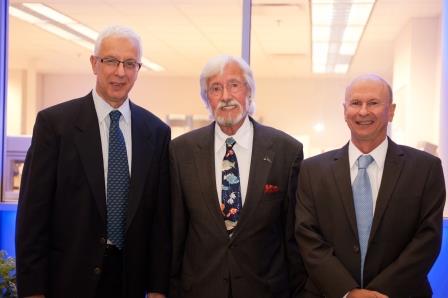
<Title>Dr. Vikram Vikharia honored by Nat'l Univ. of San Marcos</Title>
<Body>
<![CDATA[
    <div class="html-content">
    <h3><img src="https://my3.my.umbc.edu/system/shared/attachments/news/000/047/999/9b71706cb7d7b32ad744c88113c7e83a/300x200-VakhariaHonoraryDegree.jpg" style="max-width: 100%; height: auto;"></h3>
    <p>LIMA, PERU (October 21, 2014)</p>
    <p>Vikram Vakharia, professor of molecular biology and virology in the Department of Marine Biotechnology, University of Maryland Baltimore County, Institute of Marine &amp; Environmental Technology is the recipient of a honorary degree from the National University of San Marcos for his pioneering contributions in the development of novel reverse genetic systems and recombinant vaccines for infectious bursal disease virus causing Gumboro disease in chickens, infectious pancreatic necrosis virus causing pancreatic necrosis disease in salmonids, and fish rhanbdoviruses causing hematopoietic necrosis and viral hemorrhagic septicemia in many fish species.</p>
    <p>The National University of San Marcos is a public university in Lima, Peru. It was chartered in 1551 by a Royal Decree signed by Charles V of Spain as the Royal and Pontifical University of the City of the Kings of Lima, which makes it the oldest officially established university in the Americas, and as such, one of the oldest universities in the world. Professor Vakharia’s honor was part of the University’s 463rd anniversary celebration.</p>
    <p><a href="https://www.youtube.com/watch?v=GWas-qCVu2s" rel="nofollow external" class="bo">Click here to see a video of the ceremony.</a></p>
    <p>For more information click here: <a href="http://www.umbc.edu/blogs/imet/news/">http://www.umbc.edu/blogs/imet/news/</a></p>
    </div>
]]>
</Body>
<Summary>LIMA, PERU (October 21, 2014)  Vikram Vakharia, professor of molecular biology and virology in the Department of Marine Biotechnology, University of Maryland Baltimore County, Institute of Marine...</Summary>
<Website>http://marinebiotechnology.umbc.edu/</Website>
<AttachmentKind>Photo</AttachmentKind>
<AttachmentUrl>https://assets4-my.umbc.edu/system/shared/attachments/54eeaff85859465350e104ed6613f01a/6a9dc8d0/news/000/047/999/9b71706cb7d7b32ad744c88113c7e83a/300x200-VakhariaHonoraryDegree.jpg?1415816434</AttachmentUrl>
<Attachments>
<Attachment kind="Photo" url="https://my3.my.umbc.edu/groups/marinebiotechnology/posts/47999/attachments/15055"></Attachment>
</Attachments>
<TrackingUrl>https://my3.my.umbc.edu/api/v0/pixel/news/47999/guest@my.umbc.edu/df66e09d4fec632e732c4597562dfdc4/api/pixel</TrackingUrl>
<Group token="marinebiotechnology">Marine Biotechnology</Group>
<GroupUrl>https://my3.my.umbc.edu/groups/marinebiotechnology</GroupUrl>
<AvatarUrl>https://assets4-my.umbc.edu/system/shared/avatars/groups/000/000/761/ea407c6c8898c300a60b1f84d8f15d80/xsmall.png?1596561611</AvatarUrl>
<AvatarUrl size="original">https://assets3-my.umbc.edu/system/shared/avatars/groups/000/000/761/ea407c6c8898c300a60b1f84d8f15d80/original.jpg?1596561611</AvatarUrl>
<AvatarUrl size="xxlarge">https://assets1-my.umbc.edu/system/shared/avatars/groups/000/000/761/ea407c6c8898c300a60b1f84d8f15d80/xxlarge.png?1596561611</AvatarUrl>
<AvatarUrl size="xlarge">https://assets4-my.umbc.edu/system/shared/avatars/groups/000/000/761/ea407c6c8898c300a60b1f84d8f15d80/xlarge.png?1596561611</AvatarUrl>
<AvatarUrl size="large">https://assets1-my.umbc.edu/system/shared/avatars/groups/000/000/761/ea407c6c8898c300a60b1f84d8f15d80/large.png?1596561611</AvatarUrl>
<AvatarUrl size="medium">https://assets4-my.umbc.edu/system/shared/avatars/groups/000/000/761/ea407c6c8898c300a60b1f84d8f15d80/medium.png?1596561611</AvatarUrl>
<AvatarUrl size="small">https://assets2-my.umbc.edu/system/shared/avatars/groups/000/000/761/ea407c6c8898c300a60b1f84d8f15d80/small.png?1596561611</AvatarUrl>
<AvatarUrl size="xsmall">https://assets4-my.umbc.edu/system/shared/avatars/groups/000/000/761/ea407c6c8898c300a60b1f84d8f15d80/xsmall.png?1596561611</AvatarUrl>
<AvatarUrl size="xxsmall">https://assets3-my.umbc.edu/system/shared/avatars/groups/000/000/761/ea407c6c8898c300a60b1f84d8f15d80/xxsmall.png?1596561611</AvatarUrl>
<Sponsor>Marine Biotechnology</Sponsor>
<PawCount>0</PawCount>
<CommentCount>0</CommentCount>
<CommentsAllowed>true</CommentsAllowed>
<PostedAt>Tue, 11 Nov 2014 16:51:46 -0500</PostedAt>
<EditAt>Wed, 12 Nov 2014 13:25:33 -0500</EditAt>
</NewsItem>

<NewsItem contentIssues="false" id="45694" important="false" status="posted" url="https://my3.my.umbc.edu/groups/marinebiotechnology/posts/45694">
<Title>Yonathan Zohar in the Sun Newspaper</Title>
<Body>
<![CDATA[
    <div class="html-content">
    <h5>Farming the 'king of the ocean'<br>Scientists raising Atlantic bluefin tuna in tanks at Columbus Center</h5>
    <div>
    <span>The Institute of Marine and Environmental Technology (IMET) is trying to find ways to save bluefin tuna. (Kim Hairston and Matt Bylis/Baltimore Sun Video)</span><span><br><br></span><span>By Timothy B. Wheeler, The Baltimore Sun</span>
    </div>
    <div>
    <span><div><p><span>6:58 p.m. EDT</span><span>, </span><span>August 5, 2014</span></p></div></span><div>
    <p>The dark specks swirling around in big water-filled tanks at the Columbus Center hardly look like fish, much less the kings of the ocean.</p>
    <p>But from these tiny beginnings, a team of Maryland scientists hopes to unlock the secrets of "farming" Atlantic bluefin tuna, one of the most prized fish on the planet — and one of the most threatened.</p>
    <p>"For me, it's the Holy Grail," said Yonathan Zohar, a professor of marine biotechnology with the University of Maryland, Baltimore County and head of the aquaculture research center at the Institute for Marine and Environmental Technology at the Inner Harbor.</p>
    <div>
    <div><ul>
    <li>Related</li>
    <li>
    <a href="http://www.baltimoresun.com/features/green/blog/bal-baltimore-lab-looks-to-save-bluefin-tuna-20140730,0,6281859.embeddedvideo" rel="nofollow external" class="bo"><img src="http://www.trbimg.com/img-53d9583c/turbine/bal-baltimore-lab-looks-to-save-bluefin-tuna-20140730/187/187x105" alt="Baltimore lab looks to save bluefin tuna [Video]" width="187" height="105" style="max-width: 100%; height: auto;"></a><a href="http://www.baltimoresun.com/features/green/blog/bal-baltimore-lab-looks-to-save-bluefin-tuna-20140730,0,6281859.embeddedvideo" rel="nofollow external" class="bo"><span>VIDEO: </span>Baltimore lab looks to save bluefin tuna</a>
    </li>
    <li>
    <a href="http://www.baltimoresun.com/features/green/blog/bal-md-tuna-farming-pg,0,6779390.photogallery" rel="nofollow external" class="bo"><img src="http://www.trbimg.com/img-53d827cc/turbine/bal-md-tuna-farming-pg/187/187x105" alt="Attempting to farm tuna [Pictures]" width="187" height="105" style="max-width: 100%; height: auto;"></a><a href="http://www.baltimoresun.com/features/green/blog/bal-md-tuna-farming-pg,0,6779390.photogallery" rel="nofollow external" class="bo">Attempting to farm tuna [Pictures]</a>
    </li>
    <li>
    <a href="http://www.baltimoresun.com/features/green/blog/bs-md-shipping-captains-plead-guilt-20140801,0,756468.story" rel="nofollow external" class="bo"><img src="http://www.trbimg.com/img-53dc1ae4/turbine/bs-md-shipping-captains-plead-guilt-20140801/187/187x105" alt="Two watermen plead guilty in striped bass poaching case" width="187" height="105" style="max-width: 100%; height: auto;"></a><a href="http://www.baltimoresun.com/features/green/blog/bs-md-shipping-captains-plead-guilt-20140801,0,756468.story" rel="nofollow external" class="bo">Two watermen plead guilty in striped bass poaching case</a>
    </li>
    </ul></div>
    <div></div>
    </div>
    <p>He and his colleagues have been trying this summer to nurture newly hatched bluefin tuna from microscopic, translucent larvae to fingerlings recognizable as miniature fish.</p>
    <p>It is perhaps the most ambitious effort yet for Zohar, who raised everything from blue crabs and striped bass to amberjack, cobia, sea bream and salmon in large tanks on the ground floor of the Columbus Center. As he and his team struggle to raise the bluefin tuna larvae, he hopes this summer's labors might one day help replenish the wild stocks of an iconic fish.</p>
    <p>The Atlantic bluefin tuna is the largest of all the tuna, growing to nearly 10 feet and up to 1,600 pounds over a life span of up to 30 years. The tuna range from the North Atlantic to the Mediterranean Sea, sprinting through the water at 45 mph or more as they chase down and devour fish, crabs, octopus, jellyfish and other marine creatures.</p>
    <p>Perhaps because of their size and place at the top of the marine food chain, bluefin tuna have been much sought-after, especially as sushi. A single 489-pound Pacific bluefin garnered $1.76 million in an auction in Japan last year. Such finny bounty has attracted outsized fishing pressure.</p>
    <p>Bluefin are truly "superfish," said Dave Bard, spokesman for the Pew Environment Group, "but they're no match for indiscriminate fishing gear intended primarily for yellowfin tuna and swordfish. Their population has declined by nearly two-thirds from its 1970 level, he said.</p>
    <p>The National Oceanic and Atmospheric Administration counts Atlantic bluefin tuna among its "species of concern," not quite endangered but in need of protection. U.S. and international authorities have adopted fishing restrictions, but some question how effective they are at halting the decline, much less rebuilding the population.</p>
    <p>With the commercial catch limited, efforts have been launched in Japan, Australia and Europe to produce bluefin tuna in captivity. Young fish have been successfully reared in pens, but the challenge now is to "close the life cycle," as Zohar puts it, and raise them from eggs to fingerlings.</p>
    <p>Little is known about how to do that, however. So the Columbus Center team is tending its clear plastic fish tanks round-the-clock, trying to find the right mix of food and water conditions to get their charges to develop into fingerlings. Mortality has been high, but the survivors of eggs spawned last month are growing rapidly.</p>
    <p>Zohar's team is getting fertilized bluefin eggs from a tuna "ranch" on the Croatian coast of the Adriatic Sea. Tuna rounded up from the wild are fattened for market at the ranch there run by Kali Tuna before they are sold, primarily to Japan. But the company agreed a couple of years ago to keep two large pens of bluefin tuna to breed and supply Zohar's aquaculture project.</p>
    <p>The pens are kept under close watch, and as soon as eggs appear on the water, they are skimmed out and rushed to Baltimore, Zohar said. It's a 36-hour odyssey, starting with a boat ride to the Croatian mainland, where they're loaded onto a plane in Zagreb, the capital. The eggs then hopscotch across Europe by air before flying over the Atlantic to New York.</p>
    <p>There, Zohar has a driver waiting to pick up the shipment as soon as it clears customs and rush it to the Columbus Center. It's a race to get the eggs into Zohar's tanks because if they hatch en route, they're lost. More than one shipment has fallen victim to missed connections and other problems.</p>
    <p>After poor reproduction last year limited his research, Zohar said, he's gotten more eggs this summer, but not as many as he had hoped.</p>
    <p>"So far, so good," he said. "Every day is a victory. ... The bottleneck is the first two months. If we get past that, we'll open a bottle of Champagne."</p>
    <p>The budget for the project has been around $450,000, which Zohar calls "very modest for such a global and a complex project." Unable to get federal funding, he has pulled together support from a foundation and from private companies, including BP.</p>
    <p>Zohar said he hopes the project will eventually ease the pressure on wild stocks, producing marketable 30- or 40-pound fish in large recirculating tanks. Ideally, he'd like to see hatcheries developed that could help restock the oceans with bluefin.</p>
    <p>But conservationists have mixed feelings about fish farming, especially when it involves big oceangoing fish such as bluefin tuna.</p>
    <p>"We are generally concerned about the propagation of top-order carnivores as a means to meet seafood demands‎ when it will cause a burden on wild fish either fed whole or incorporated into feed," said Aaron McNevin, aquaculture director at the World Wildlife Fund.</p>
    </div>
    </div>
    <div><p>Copyright © 2014, <a href="http://www.baltimoresun.com/" rel="nofollow external" class="bo">The Baltimore Sun</a></p></div>
    <p><span><br><br>Read more: <a href="http://www.baltimoresun.com/features/green/blog/bs-md-tuna-farming-20140805,0,348437.story#ixzz39cfaEScv" rel="nofollow external" class="bo">http://www.baltimoresun.com/features/green/blog/bs-md-tuna-farming-20140805,0,348437.story#ixzz39cfaEScv</a></span></p>
    </div>
]]>
</Body>
<Summary>Farming the 'king of the ocean' Scientists raising Atlantic bluefin tuna in tanks at Columbus Center  The Institute of Marine and Environmental Technology (IMET) is trying to find ways to save...</Summary>
<TrackingUrl>https://my3.my.umbc.edu/api/v0/pixel/news/45694/guest@my.umbc.edu/1d1d138a379944517f1494a35c5fc19e/api/pixel</TrackingUrl>
<Group token="marinebiotechnology">Marine Biotechnology</Group>
<GroupUrl>https://my3.my.umbc.edu/groups/marinebiotechnology</GroupUrl>
<AvatarUrl>https://assets4-my.umbc.edu/system/shared/avatars/groups/000/000/761/ea407c6c8898c300a60b1f84d8f15d80/xsmall.png?1596561611</AvatarUrl>
<AvatarUrl size="original">https://assets3-my.umbc.edu/system/shared/avatars/groups/000/000/761/ea407c6c8898c300a60b1f84d8f15d80/original.jpg?1596561611</AvatarUrl>
<AvatarUrl size="xxlarge">https://assets1-my.umbc.edu/system/shared/avatars/groups/000/000/761/ea407c6c8898c300a60b1f84d8f15d80/xxlarge.png?1596561611</AvatarUrl>
<AvatarUrl size="xlarge">https://assets4-my.umbc.edu/system/shared/avatars/groups/000/000/761/ea407c6c8898c300a60b1f84d8f15d80/xlarge.png?1596561611</AvatarUrl>
<AvatarUrl size="large">https://assets1-my.umbc.edu/system/shared/avatars/groups/000/000/761/ea407c6c8898c300a60b1f84d8f15d80/large.png?1596561611</AvatarUrl>
<AvatarUrl size="medium">https://assets4-my.umbc.edu/system/shared/avatars/groups/000/000/761/ea407c6c8898c300a60b1f84d8f15d80/medium.png?1596561611</AvatarUrl>
<AvatarUrl size="small">https://assets2-my.umbc.edu/system/shared/avatars/groups/000/000/761/ea407c6c8898c300a60b1f84d8f15d80/small.png?1596561611</AvatarUrl>
<AvatarUrl size="xsmall">https://assets4-my.umbc.edu/system/shared/avatars/groups/000/000/761/ea407c6c8898c300a60b1f84d8f15d80/xsmall.png?1596561611</AvatarUrl>
<AvatarUrl size="xxsmall">https://assets3-my.umbc.edu/system/shared/avatars/groups/000/000/761/ea407c6c8898c300a60b1f84d8f15d80/xxsmall.png?1596561611</AvatarUrl>
<Sponsor>Marine Biotechnology</Sponsor>
<PawCount>0</PawCount>
<CommentCount>0</CommentCount>
<CommentsAllowed>true</CommentsAllowed>
<PostedAt>Wed, 06 Aug 2014 10:34:19 -0400</PostedAt>
<EditAt>Wed, 06 Aug 2014 10:52:16 -0400</EditAt>
</NewsItem>

<NewsItem contentIssues="true" id="45643" important="false" status="posted" url="https://my3.my.umbc.edu/groups/marinebiotechnology/posts/45643">
<Title>Yonathan Zohar on NPR Morning Edition</Title>
<Tagline>Farming the Bluefin Tuna</Tagline>
<Body>
<![CDATA[
    <div class="html-content">
    <div>
    <p>"For me, it's the Holy Grail," said Yonathan Zohar, a professor of marine biotechnology with the University of Maryland, Baltimore County and head of the aquaculture research center at the Institute for Marine and Environmental Technology (IMET) at the Inner Harbor. He is referring to unlocking the secrets of "farming" the Atlantic bluefin tuna, one of the most prized and threatened fish in the world. Dr. Zohar and his colleagues have been working tirelessly this summer to nurture newly hatched bluefin tuna larvae (microscopic in size) into juvenile fish.</p>
    <p>Dr. Zohar and his team have been getting their fertilized bluefin tuna eggs from a "ranch" on the Adriatic Sea in Croatia. Once farmed, these eggs take a 36-hour, 5000+ mile journey to the IMET facility in Baltimore, MD. During this harrowing journey, time is of the essence. If any of the eggs begin to hatch en route, they're lost. Due to the fragile nature of the bluefin tuna eggs and larvae, the first two months are considered the bottleneck period, where attrition levels are high. Once past that point, the fish are much stronger and more stable.</p>
    <p>Unable to generate federal funding for the project, Dr. Zohar's team have been able to get support from a foundation, and from several private companies, including BP. The budget for the project is just $450,000, with Dr. Zohar calls "very modest for such a global and a complex project."</p>
    <p>The Atlantic bluefin tuna is the largest of all tuna, and can grow to nearly 10 feet and up to 1,600 pounds during its lifetime. It has been listed as a "species of concern" by the <br>National Oceanic and Atmospheric Administration (NOAA), due in large part to over-fishing. Its numbers have declined by nearly two-thirds from their 1970 level.</p>
    <p>Dr. Zohar believes that this project can eventually help ease the pressure on wild stocks of bluefin tuna. He imagines seeing mainland hatcheries developed with large recirculating tanks capable of housing 30-40 pound fish, both for the purpose of restocking the ocean and marketing as food.</p>
    </div>
    <div>
    <span>Read about IMET's bluefin tuna project </span><a href="http://www.npr.org/blogs/thesalt/2014/07/30/336339179/farming-the-bluefin-tuna-tiger-of-the-ocean-is-not-without-a-price" rel="nofollow external" class="bo">on NPR here</a>
    </div>
    <div><br></div>
    <span><em>NPR Morning Edition   |  July 30, 2014</em></span>
    </div>
]]>
</Body>
<Summary>"For me, it's the Holy Grail," said Yonathan Zohar, a professor of marine biotechnology with the University of Maryland, Baltimore County and head of the aquaculture research center at the...</Summary>
<Website>http://marinebiotechnology.umbc.edu/news/?id=45479</Website>
<AttachmentKind>Audio</AttachmentKind>
<AttachmentUrl>https://assets3-my.umbc.edu/system/shared/attachments/f2edc3c123d5b57b670554ad5fc1bbca/6a9dc8d0/news/000/045/643/5c0c3007f1af27e1191082e12a27b0b8/20140730_me_farming_the_bluefin_tuna_tiger_of_the_ocean_is_not_without_a_price (1).mp3?1406904406</AttachmentUrl>
<Attachments>
<Attachment kind="Audio" url="https://my3.my.umbc.edu/groups/marinebiotechnology/posts/45643/attachments/13879"></Attachment>
</Attachments>
<TrackingUrl>https://my3.my.umbc.edu/api/v0/pixel/news/45643/guest@my.umbc.edu/a2728a45fababeb50be1c98e2bb84707/api/pixel</TrackingUrl>
<Group token="marinebiotechnology">Marine Biotechnology</Group>
<GroupUrl>https://my3.my.umbc.edu/groups/marinebiotechnology</GroupUrl>
<AvatarUrl>https://assets4-my.umbc.edu/system/shared/avatars/groups/000/000/761/ea407c6c8898c300a60b1f84d8f15d80/xsmall.png?1596561611</AvatarUrl>
<AvatarUrl size="original">https://assets3-my.umbc.edu/system/shared/avatars/groups/000/000/761/ea407c6c8898c300a60b1f84d8f15d80/original.jpg?1596561611</AvatarUrl>
<AvatarUrl size="xxlarge">https://assets1-my.umbc.edu/system/shared/avatars/groups/000/000/761/ea407c6c8898c300a60b1f84d8f15d80/xxlarge.png?1596561611</AvatarUrl>
<AvatarUrl size="xlarge">https://assets4-my.umbc.edu/system/shared/avatars/groups/000/000/761/ea407c6c8898c300a60b1f84d8f15d80/xlarge.png?1596561611</AvatarUrl>
<AvatarUrl size="large">https://assets1-my.umbc.edu/system/shared/avatars/groups/000/000/761/ea407c6c8898c300a60b1f84d8f15d80/large.png?1596561611</AvatarUrl>
<AvatarUrl size="medium">https://assets4-my.umbc.edu/system/shared/avatars/groups/000/000/761/ea407c6c8898c300a60b1f84d8f15d80/medium.png?1596561611</AvatarUrl>
<AvatarUrl size="small">https://assets2-my.umbc.edu/system/shared/avatars/groups/000/000/761/ea407c6c8898c300a60b1f84d8f15d80/small.png?1596561611</AvatarUrl>
<AvatarUrl size="xsmall">https://assets4-my.umbc.edu/system/shared/avatars/groups/000/000/761/ea407c6c8898c300a60b1f84d8f15d80/xsmall.png?1596561611</AvatarUrl>
<AvatarUrl size="xxsmall">https://assets3-my.umbc.edu/system/shared/avatars/groups/000/000/761/ea407c6c8898c300a60b1f84d8f15d80/xxsmall.png?1596561611</AvatarUrl>
<Sponsor>Marine Biotechnology</Sponsor>
<ThumbnailUrl size="xxlarge">https://assets4-my.umbc.edu/system/shared/thumbnails/news/000/045/643/9375fea0a120ddcc052f02b81cde38fe/xxlarge.jpg?1406903862</ThumbnailUrl>
<ThumbnailUrl size="xlarge">https://assets3-my.umbc.edu/system/shared/thumbnails/news/000/045/643/9375fea0a120ddcc052f02b81cde38fe/xlarge.jpg?1406903862</ThumbnailUrl>
<ThumbnailUrl size="large">https://assets1-my.umbc.edu/system/shared/thumbnails/news/000/045/643/9375fea0a120ddcc052f02b81cde38fe/large.jpg?1406903862</ThumbnailUrl>
<ThumbnailUrl size="medium">https://assets3-my.umbc.edu/system/shared/thumbnails/news/000/045/643/9375fea0a120ddcc052f02b81cde38fe/medium.jpg?1406903862</ThumbnailUrl>
<ThumbnailUrl size="small">https://assets2-my.umbc.edu/system/shared/thumbnails/news/000/045/643/9375fea0a120ddcc052f02b81cde38fe/small.jpg?1406903862</ThumbnailUrl>
<ThumbnailUrl size="xsmall">https://assets3-my.umbc.edu/system/shared/thumbnails/news/000/045/643/9375fea0a120ddcc052f02b81cde38fe/xsmall.jpg?1406903862</ThumbnailUrl>
<ThumbnailUrl size="xxsmall">https://assets2-my.umbc.edu/system/shared/thumbnails/news/000/045/643/9375fea0a120ddcc052f02b81cde38fe/xxsmall.jpg?1406903862</ThumbnailUrl>
<PawCount>0</PawCount>
<CommentCount>0</CommentCount>
<CommentsAllowed>true</CommentsAllowed>
<PostedAt>Fri, 01 Aug 2014 10:49:08 -0400</PostedAt>
<EditAt>Wed, 06 Aug 2014 15:24:34 -0400</EditAt>
</NewsItem>

<NewsItem contentIssues="false" id="45479" important="false" status="posted" url="https://my3.my.umbc.edu/groups/marinebiotechnology/posts/45479">
<Title>News Archives</Title>
<Body>
<![CDATA[
    <div class="html-content">
    <h3>ARC Mentioned on NPR</h3>
    <div><div>
    <p>The Future Of Clean, Green Fish Farming Could Be Indoor Factories<br><span><span>by</span></span> Dan Charles<br>April 07, 2014 5:45 PM ET</p>
    <p>Why hasn't fish farming taken off in the U.S.?</p>
    <p>It's certainly not for lack of demand for the fish. Slowly but surely, seafood that's grown in aquaculture is taking over the seafood section <span><span>at</span></span> your supermarket, and the vast majority is imported.</p>
    <p>The shrimp and <span><span>tilapia</span></span> typically come from warm-water ponds in southeast Asia and Latin America. Farmed salmon come from big net pens in the coastal waters of Norway or Chile<span><span>.</span></span><a href="http://www.npr.org/blogs/thesalt/2014/04/07/298333029/the-future-of-clean-green-fish-farming-could-be-indoor-factories" rel="nofollow external" class="bo">Read More...</a></p>
    <h3>Prof. Zohar's Summer Program in Israel</h3>
    <div><div>
    <p>Israel is home to three of the world’s most diverse marine systems – the Mediterranean, Red and Dead Seas. Although found in rare and remarkable proximity, each is distinguished by unique oceanography, biology, flora and fauna, making Israel a particularly extraordinary destination for students of marine and environmental sciences.</p>
    <p>This summer, from June 22 to July 6, Yonathan Zohar, chair of UMBC’s Department of Marine Biotechnology, will lead students on an intensive study of the three Israeli seas at the Ruppin Academic Center, in Netanya, Israel, on the Mediterranean coast.</p>
    </div></div>
    <h6><a href="http://umbc.edu/window/mrd_program_14.html" rel="nofollow external" class="bo">Read more.</a></h6>
    <p>                                                             <span>Posted by Teressa <span><span>Freemanl</span></span> on July 22, 2014</span></p>
    <h3>UMBC scientist receives major grant from Gudelsky Family Foundation to advance sustainable aquaculture research</h3>
    <p></p>
    <div><div>
    <p>For the third consecutive year, The Homer and Martha Gudelsky Family Foundation has made a generous philanthropic gift to support the sustainable aquaculture work of marine biologist Yonathan “Yoni” Zohar at the Institute of Marine and Environmental Technology (IMET) in Baltimore’s Inner Harbor. This year’s grant of $600,000 is the foundation’s largest gift to Professor Zohar, and brings the foundation’s total support of his pioneering research to nearly $1 million.</p>
    <p><a href="http://www.umbc.edu/blogs/umbcnews/2014/03/umbc_scientist_receives_major.html" rel="nofollow external" class="bo">Read more.</a></p>
    </div></div>
    <h3>Photos from Jean-Michel Cousteau's Great Ocean Adventure</h3>
    <div><br></div>
    <div><img src="http://www.umbc.edu/blogs/imet/Cousteau-4322.jpg" alt="Cousteau-4322.jpg" style="max-width: 100%; height: auto;"></div>
    <p><span>     </span></p>
    <h3>Jean-Michel Cousteau's Great Ocean Adventure</h3>
    <div><br></div>
    <div>Click here for video footage:  </div>
    <div>
    <div><div>
    <p>WJZ: Famed 'Ocean Guy' Jean-Michel Cousteau Backs Baltimore Fish Farm <br></p>
    <div>
    <div></div>
    <div></div>
    </div>
    <br><a href="http://baltimore.cbslocal.com/2013/10/09/famed-ocean-guy-jean-michel-cousteau-backs-baltimore-fish-farm/" rel="nofollow external" class="bo">WJZ's story</a><div></div>
    </div></div>
    <p><span>Posted by Teressa Freeman on October 11, 2013 12:10 PM </span><span>|</span> <a href="http://www.umbc.edu/blogs/imet/2013/10/jeanmichel_cousteaus_great_oce.html" rel="nofollow external" class="bo">Permalink</a></p>
    </div>
    <div><br></div>
    <div><br></div>
    <div><br></div>
    <div>
    <h3>Dr. Zohar on Midday with Dan Rodricks</h3>
    <div><div>
    <p>Dan Rodricks discusses Maryland Fish Farming on his September 17, 2013 broadcast. <br><a href="http://programs.wypr.org/podcast/maryland-fish-farming-tuesday-sept-17-1-2-pm" rel="nofollow external" class="bo">Listen online.</a></p>
    <p><br></p>
    <h3>Dr. Zohar on the Marc Steiner Show</h3>
    <div><div>
    <p>On 30th July 2013, The Marc Steiner Show featured an interview with Dr. Yonathan Zohar <span><span>regarding</span></span> ARC at IMET. <a href="http://www.steinershow.org/podcasts/sustainable-farming/sound-bites-warehouse-raised-fish-mcdonalds-fast-food-workers-farmer-profile-charles-wright/" rel="nofollow external" class="bo">Listen online here.</a></p>
    <p><br></p>
    <div>
    <h3>City Paper Highlights ARC at IMET</h3>
    <div><div>
    <p><strong>The Economy of Scales</strong><br>A Baltimore lab aims to take the science of growing clean, healthy <span><span>salt-water</span></span> fish to the global marketplace</p>
    <p>Article by: Van Smith<br>Photos by: Christopher Myers<br>Published July 24, 2013</p>
    <p><img alt="image_005.jpg" src="http://www.umbc.edu/blogs/imet/ARC_Fish/image_005.jpg" width="335" height="224" style="max-width: 100%; height: auto;"><br></p>
    <p>The wood-grilled whole <span><span>dorado</span></span>, at $34, is the highest-priced <span><span>dish</span></span> on the current menu at Pazo, the casually elegant restaurant in Fells Point in Baltimore. Executive chef Mario Cano Catalan gushes about the restaurant’s specimens of the high-value Mediterranean fish, whose market name is gilthead sea bream, a sparkling silver species with a band of yellowish gleam at its head.</p>
    <p>The ones Catalan prepares <span><span>weigh</span></span> a pound or a little over, he says, and after scaling and gutting them, he seasons them with crushed oregano and sea salt.</p>
    <p>“They are cooked slowly,” Catalan explains, “at a medium temperature of about 400 degrees, and the juicy, moist meat gets a nice smoky flavor from cooking with its own juice inside, and the skin gets super-crispy, which is excellent.</p>
    <p><img alt="image_004.jpg" src="http://www.umbc.edu/blogs/imet/image_004.jpg" width="335" height="224" style="max-width: 100%; height: auto;"></p>
    <p><span>The customers enjoy it very well.”</span></p>
    <p>But here’s the catch: Pazo’s sea bream are not caught, nor are they from the Mediterranean. They come from a scientific laboratory in the basement of the Columbus Center downtown.</p>
    <p>...</p>
    <p><a href="http://www.umbc.edu/imet/News%20Permalinks/The%20Economy%20of%20Scales%20-%20News%20and%20Features%20-%20Baltimore%20City%20Paper.htm" rel="nofollow external" class="bo">Here is a link to the full article.</a></p>
    <p><br></p>
    <h3>Homer and Martha Gudelsky Family Foundation Give $250,000 to Support Dr. Zohar’s Sustainable Aquaculture Research</h3>
    <div><div>
    <p><img alt="zohar_sm.jpg" src="http://www.umbc.edu/blogs/imet/zohar_sm.jpg" width="259" height="200" style="max-width: 100%; height: auto;"><br></p>
    <p>The Homer and Martha Gudelsky Family Foundation has made a generous gift of $250,000 to support Dr. Yoni Zohar’s sustainable aquaculture research programs at the Institute of Marine and Environmental Technology and UMBC's Department of Marine Biotechnology. This gift will support and enhance the important environmentally sustainable marine aquaculture studies done by Yoni Zohar and his research team. Dr. Zohar’s cutting-edge research contributes to closing the life cycle and developing efficient hatchery technologies for <span><span>commercially</span></span> and ecologically important marine fish and developing new generations of healthy seafood production methods to feed the growing world population, while protecting our marine and coastal environments. The gift also supports Dr. Zohar’s programs to build sustainable and healthy fisheries in the Chesapeake Bay.</p>
    </div></div>
    <div><br></div>
    </div></div>
    </div>
    <div>
    <h3>New IMET Assistant Professor Appointed - Dr. <span><span>Yantao</span></span> Li</h3>
    <div><div>
    <p>It is with great enthusiasm that Dr. Russell Hill announces that Dr. <span><span>Yantao</span></span> Li will be joining the IMET faculty as an Assistant Professor. Dr. Li's appointment comes after a seven month search process that included a large field of highly qualified candidates.</p>
    <p>Dr. Li received his B.S. <span><span>in</span></span> Plant Biology from Nanjing University (China) in 2002 and his Ph.D. <span><span>in</span></span> Microbial Biotechnology in 2006 from the University of Hong Kong (in conjunction with work done at Arizona State University from 2004 to 2006).</p>
    <p>Prior to his appointment with IMET, Dr. Li was an Assistant Research Professor in the Department of Applied Sciences and Mathematics at Arizona State University.</p>
    <p>Dr. Li will begin work at IMET in September.</p>
    <p><br></p>
    <h3>An Article in "What's Up?" Magazine Highlights IMET and ARC</h3>
    <div><div>
    <p>A recent article published in "What's Up?" magazine highlights the Institute of Marine and Environmental Technology. The article includes interviews with Dr. Russell Hill (Interim Director of IMET) and Dr. Yonathan Zohar (Director of ARC).</p>
    <p>Please read the article, found here: <a href="http://v3.whatsupmag.com/community/item/2857-key_masters_scientific_breakthroughs#.UAcTnESs6aY" rel="nofollow external" class="bo">http://v3.whatsupmag.com/community/item/2857-key_masters_scientific_breakthroughs#.UAcTnESs6aY</a></p>
    </div></div>
    </div></div>
    </div>
    </div></div>
    </div></div>
    </div>
    <div><br></div>
    </div></div>
    </div>
]]>
</Body>
<Summary>ARC Mentioned on NPR    The Future Of Clean, Green Fish Farming Could Be Indoor Factories by Dan Charles April 07, 2014 5:45 PM ET  Why hasn't fish farming taken off in the U.S.?  It's certainly...</Summary>
<Website>http://marinebiotechnology.umbc.edu/</Website>
<TrackingUrl>https://my3.my.umbc.edu/api/v0/pixel/news/45479/guest@my.umbc.edu/ca5720e8641cef6bff78e1cb038b5fc2/api/pixel</TrackingUrl>
<Group token="marinebiotechnology">Marine Biotechnology</Group>
<GroupUrl>https://my3.my.umbc.edu/groups/marinebiotechnology</GroupUrl>
<AvatarUrl>https://assets4-my.umbc.edu/system/shared/avatars/groups/000/000/761/ea407c6c8898c300a60b1f84d8f15d80/xsmall.png?1596561611</AvatarUrl>
<AvatarUrl size="original">https://assets3-my.umbc.edu/system/shared/avatars/groups/000/000/761/ea407c6c8898c300a60b1f84d8f15d80/original.jpg?1596561611</AvatarUrl>
<AvatarUrl size="xxlarge">https://assets1-my.umbc.edu/system/shared/avatars/groups/000/000/761/ea407c6c8898c300a60b1f84d8f15d80/xxlarge.png?1596561611</AvatarUrl>
<AvatarUrl size="xlarge">https://assets4-my.umbc.edu/system/shared/avatars/groups/000/000/761/ea407c6c8898c300a60b1f84d8f15d80/xlarge.png?1596561611</AvatarUrl>
<AvatarUrl size="large">https://assets1-my.umbc.edu/system/shared/avatars/groups/000/000/761/ea407c6c8898c300a60b1f84d8f15d80/large.png?1596561611</AvatarUrl>
<AvatarUrl size="medium">https://assets4-my.umbc.edu/system/shared/avatars/groups/000/000/761/ea407c6c8898c300a60b1f84d8f15d80/medium.png?1596561611</AvatarUrl>
<AvatarUrl size="small">https://assets2-my.umbc.edu/system/shared/avatars/groups/000/000/761/ea407c6c8898c300a60b1f84d8f15d80/small.png?1596561611</AvatarUrl>
<AvatarUrl size="xsmall">https://assets4-my.umbc.edu/system/shared/avatars/groups/000/000/761/ea407c6c8898c300a60b1f84d8f15d80/xsmall.png?1596561611</AvatarUrl>
<AvatarUrl size="xxsmall">https://assets3-my.umbc.edu/system/shared/avatars/groups/000/000/761/ea407c6c8898c300a60b1f84d8f15d80/xxsmall.png?1596561611</AvatarUrl>
<Sponsor>Marine Biotechnology</Sponsor>
<PawCount>0</PawCount>
<CommentCount>0</CommentCount>
<CommentsAllowed>true</CommentsAllowed>
<PostedAt>Tue, 22 Jul 2014 22:01:34 -0400</PostedAt>
<EditAt>Tue, 14 Oct 2014 12:36:51 -0400</EditAt>
</NewsItem>

</News>