<?xml version="1.0"?>
<News hasArchived="false" page="36" pageCount="40" pageSize="10" timestamp="Wed, 02 Sep 2026 15:42:59 -0400" url="https://my3.my.umbc.edu/groups/umbc-ai/posts.xml?mode=activity&amp;page=36">
<NewsItem contentIssues="true" id="140264" important="false" status="posted" url="https://my3.my.umbc.edu/groups/umbc-ai/posts/140264">
<Title>Talk: Tensor Decomposition for Cybersecurity, 12-1pm ET 3/29</Title>
<Tagline>Extracting hidden patterns from cybersecurity datasets</Tagline>
<Body>
<![CDATA[
    <div class="html-content">
    <div>
    <div>The UMBC Cyber Defense Lab presents</div>
    <div><br></div>
    <h4><strong>Tensor Decomposition Methods for Cybersecurity</strong></h4>
    <div><br></div>
    <h5>
    <strong>Maksim E. Eren<br></strong><strong>Los Alamos National Laboratory</strong>
    </h5>
    <h5>
    <br><strong>12–1pm ET, Friday, March 29, 2024, via <a href="https://umbc.webex.com/meet/sherman" rel="nofollow external" class="bo">WebEx</a></strong>
    </h5>
    <div><br></div>
    <div>Tensor decomposition is a powerful unsupervised machine learning method used to extract hidden patterns from large datasets. This presentation aims to illuminate the extensive applications and capabilities of tensors within the realm of cybersecurity. We offer a comprehensive overview by encapsulating a diverse array of capabilities, showcasing the cutting-edge employment of tensors in the detection of network and power grid anomalies, identification of SPAM e-mails, mitigation of credit card fraud, and detection of malware. Additionally, we delve into the utility of tensors for classifying malware families, pinpointing novel forms of malware, analyzing user behavior, and utilizing tensors for data privacy through federated learning techniques.</div>
    <div><br></div>
    <div>
    <a href="https://www.maksimeren.com/" rel="nofollow external" class="bo"><strong>Maksim E. Eren</strong></a> is an early career scientist in A-4, Los Alamos National Laboratory (LANL) Advance Research in Cyber Systems division. He graduated Summa Cum Laude with a Computer Science Bachelor’s at University of Maryland Baltimore County (UMBC) in 2020 and Master’s in 2022. He is currently pursuing his Ph.D. in the <a href="https://umbc-dream-lab.github.io/" rel="nofollow external" class="bo"><strong>UMBC DREAM Lab</strong></a>, and he is a Scholarship for Service CyberCorps alumnus. His interdisciplinary research interests lie at the intersection of machine learning and cybersecurity, with a concentration in tensor decomposition. His tensor decomposition-based research projects include large-scale malware detection and characterization, cyber anomaly detection, data privacy, text mining, knowledge graphs, and high-performance computing. Maksim has developed and published state-of-the-art solutions in anomaly detection and malware characterization. He has also worked on various other machine learning research projects such as detecting malicious hidden code, adversarial analysis of malware classifiers, and federated learning. At LANL, Maksim was a member of the 2021 R&amp;D 100 winning project <a href="https://tensors.lanl.gov/" rel="nofollow external" class="bo"><strong>SmartTensors</strong></a>, where he has released a fast tensor decomposition and anomaly detection software, contributed to the design and development of various other tensor decomposition libraries, and developed state-of-the-art text mining tools. Maksim is currently the lead for the <a href="https://cyberfire.energy.gov/school/2024/research/#t=Overview&amp;p=Anomaly+Detection" rel="nofollow external" class="bo"><strong>Cyber Science Research Program</strong></a> (CSRP), a cybersecurity research internship at LANL.</div>
    <div> </div>
    <div>Support for this event was provided in part by the National Science Foundation under SFS grant DGE-1753681.</div>
    <div><br></div>
    <div><br></div>
    <div> </div>
    <div><br></div>
    <div> </div>
    <div><br></div>
    </div>
    <div><br></div>
    <div> </div>
    <div><br></div>
    <div> </div>
    <div><br></div>
    </div>
]]>
</Body>
<Summary>The UMBC Cyber Defense Lab presents     Tensor Decomposition Methods for Cybersecurity     Maksim E. Eren Los Alamos National Laboratory   12–1pm ET, Friday, March 29, 2024, via WebEx     Tensor...</Summary>
<Website>https://ai.umbc.edu/</Website>
<TrackingUrl>https://my3.my.umbc.edu/api/v0/pixel/news/140264/guest@my.umbc.edu/3de18d1b1156b5984b0bb32b31b41544/api/pixel</TrackingUrl>
<Tag>ai</Tag>
<Tag>cybersecurity</Tag>
<Tag>machine-learning</Tag>
<Tag>tensor-decomposition</Tag>
<Group token="umbc-ai">UMBC AI</Group>
<GroupUrl>https://my3.my.umbc.edu/groups/umbc-ai</GroupUrl>
<AvatarUrl>https://assets4-my.umbc.edu/system/shared/avatars/groups/000/002/081/cfb27ebe008c2636486089a759ea5c36/xsmall.png?1691095779</AvatarUrl>
<AvatarUrl size="original">https://assets2-my.umbc.edu/system/shared/avatars/groups/000/002/081/cfb27ebe008c2636486089a759ea5c36/original.png?1691095779</AvatarUrl>
<AvatarUrl size="xxlarge">https://assets1-my.umbc.edu/system/shared/avatars/groups/000/002/081/cfb27ebe008c2636486089a759ea5c36/xxlarge.png?1691095779</AvatarUrl>
<AvatarUrl size="xlarge">https://assets1-my.umbc.edu/system/shared/avatars/groups/000/002/081/cfb27ebe008c2636486089a759ea5c36/xlarge.png?1691095779</AvatarUrl>
<AvatarUrl size="large">https://assets1-my.umbc.edu/system/shared/avatars/groups/000/002/081/cfb27ebe008c2636486089a759ea5c36/large.png?1691095779</AvatarUrl>
<AvatarUrl size="medium">https://assets3-my.umbc.edu/system/shared/avatars/groups/000/002/081/cfb27ebe008c2636486089a759ea5c36/medium.png?1691095779</AvatarUrl>
<AvatarUrl size="small">https://assets3-my.umbc.edu/system/shared/avatars/groups/000/002/081/cfb27ebe008c2636486089a759ea5c36/small.png?1691095779</AvatarUrl>
<AvatarUrl size="xsmall">https://assets4-my.umbc.edu/system/shared/avatars/groups/000/002/081/cfb27ebe008c2636486089a759ea5c36/xsmall.png?1691095779</AvatarUrl>
<AvatarUrl size="xxsmall">https://assets1-my.umbc.edu/system/shared/avatars/groups/000/002/081/cfb27ebe008c2636486089a759ea5c36/xxsmall.png?1691095779</AvatarUrl>
<Sponsor>UMBC AI Center</Sponsor>
<ThumbnailUrl size="xxlarge">https://assets3-my.umbc.edu/system/shared/thumbnails/news/000/140/264/e44b6263328ff2868fdaa07d047fda22/xxlarge.jpg?1711567271</ThumbnailUrl>
<ThumbnailUrl size="xlarge">https://assets4-my.umbc.edu/system/shared/thumbnails/news/000/140/264/e44b6263328ff2868fdaa07d047fda22/xlarge.jpg?1711567271</ThumbnailUrl>
<ThumbnailUrl size="large">https://assets3-my.umbc.edu/system/shared/thumbnails/news/000/140/264/e44b6263328ff2868fdaa07d047fda22/large.jpg?1711567271</ThumbnailUrl>
<ThumbnailUrl size="medium">https://assets4-my.umbc.edu/system/shared/thumbnails/news/000/140/264/e44b6263328ff2868fdaa07d047fda22/medium.jpg?1711567271</ThumbnailUrl>
<ThumbnailUrl size="small">https://assets4-my.umbc.edu/system/shared/thumbnails/news/000/140/264/e44b6263328ff2868fdaa07d047fda22/small.jpg?1711567271</ThumbnailUrl>
<ThumbnailUrl size="xsmall">https://assets1-my.umbc.edu/system/shared/thumbnails/news/000/140/264/e44b6263328ff2868fdaa07d047fda22/xsmall.jpg?1711567271</ThumbnailUrl>
<ThumbnailUrl size="xxsmall">https://assets2-my.umbc.edu/system/shared/thumbnails/news/000/140/264/e44b6263328ff2868fdaa07d047fda22/xxsmall.jpg?1711567271</ThumbnailUrl>
<PawCount>0</PawCount>
<CommentCount>0</CommentCount>
<CommentsAllowed>true</CommentsAllowed>
<PostedAt>Wed, 27 Mar 2024 15:27:05 -0400</PostedAt>
</NewsItem>

<NewsItem contentIssues="false" id="140226" important="false" status="posted" url="https://my3.my.umbc.edu/groups/umbc-ai/posts/140226">
<Title>AI Lunchbox: generative AI and writing code, 12-1pm ET 3/28</Title>
<Tagline>How new AI systems can help software engineers &amp; programmers</Tagline>
<Body>
<![CDATA[
    <div class="html-content">
    <div>The UMBC Training Centers <a href="https://c4a.ai/" rel="nofollow external" class="bo"><strong>Center for Applied AI</strong></a> LunchBox Series will hold a online session 12-1 pm ET on Thursday, March 28 on using generative AI systems and writing software code. <a href="https://www.linkedin.com/in/liam-echlin-36a2ab4/" rel="nofollow external" class="bo"><strong>Liam Echlin</strong></a> will demonstrate some of the top coding AI tools and offer tips on how to leverage them for speed and accuracy when writing code.</div>
    <div><br></div>
    <div><span><span>New generative AI systems can enhance software design and programming by breaking down approaches and automating code and comment generation, significantly reducing development time and effort. They can also provide recommendations for code optimization and bug fixes, improving code quality and performance. These systems can also help in learning new programming languages or frameworks by giving examples and assisting with syntax and best practices.</span></span></div>
    <div><br></div>
    <div>Register for this free session in the AI Lunchbox series <strong><a href="https://info.umbctraining.com/e3t/Ctc/LT+113/c3xy404/VVtNl62tLR-JN1w_d3_dx9zZVXkGBG5c7k6yMcSJQW3qgyTW5BW0B06lZ3kyN7_Pys6W_VhqW5vTcCf3dH4BvW2Y-QQt3BSLkSN2z2Z4wLvtvSW8K6n6T8VQykkW6M0yrz9kNqYpW92xjq87Q1BspW2X5lvW6_2TBKW6nQRJk8_hDRXW38-1DL1n7np6W67nsF86Dj4Y_W4PwwFR5Gw2SzW9lDqLk5HVskdW5VJM309d2DP0W2Y4tZ35mJgn7W18mB276pfY74W7dK23C2_xDRXMqSF4xdrvYJdkjYCM04" rel="nofollow external" class="bo">here</a> </strong>and get a link to the Zoom session.</div>
    <div><div><br></div></div>
    </div>
]]>
</Body>
<Summary>The UMBC Training Centers Center for Applied AI LunchBox Series will hold a online session 12-1 pm ET on Thursday, March 28 on using generative AI systems and writing software code. Liam...</Summary>
<Website>https://c4a.ai/?utm_campaign=AI&amp;utm_medium=email&amp;_hsmi=299951184&amp;utm_content=299951184&amp;utm_source=hs_email#lb06</Website>
<TrackingUrl>https://my3.my.umbc.edu/api/v0/pixel/news/140226/guest@my.umbc.edu/d60882006eea312cecd7ab9051d938b8/api/pixel</TrackingUrl>
<Tag>ai</Tag>
<Tag>chatbot</Tag>
<Tag>code</Tag>
<Tag>programming</Tag>
<Tag>software</Tag>
<Group token="umbc-ai">UMBC AI</Group>
<GroupUrl>https://my3.my.umbc.edu/groups/umbc-ai</GroupUrl>
<AvatarUrl>https://assets4-my.umbc.edu/system/shared/avatars/groups/000/002/081/cfb27ebe008c2636486089a759ea5c36/xsmall.png?1691095779</AvatarUrl>
<AvatarUrl size="original">https://assets2-my.umbc.edu/system/shared/avatars/groups/000/002/081/cfb27ebe008c2636486089a759ea5c36/original.png?1691095779</AvatarUrl>
<AvatarUrl size="xxlarge">https://assets1-my.umbc.edu/system/shared/avatars/groups/000/002/081/cfb27ebe008c2636486089a759ea5c36/xxlarge.png?1691095779</AvatarUrl>
<AvatarUrl size="xlarge">https://assets1-my.umbc.edu/system/shared/avatars/groups/000/002/081/cfb27ebe008c2636486089a759ea5c36/xlarge.png?1691095779</AvatarUrl>
<AvatarUrl size="large">https://assets1-my.umbc.edu/system/shared/avatars/groups/000/002/081/cfb27ebe008c2636486089a759ea5c36/large.png?1691095779</AvatarUrl>
<AvatarUrl size="medium">https://assets3-my.umbc.edu/system/shared/avatars/groups/000/002/081/cfb27ebe008c2636486089a759ea5c36/medium.png?1691095779</AvatarUrl>
<AvatarUrl size="small">https://assets3-my.umbc.edu/system/shared/avatars/groups/000/002/081/cfb27ebe008c2636486089a759ea5c36/small.png?1691095779</AvatarUrl>
<AvatarUrl size="xsmall">https://assets4-my.umbc.edu/system/shared/avatars/groups/000/002/081/cfb27ebe008c2636486089a759ea5c36/xsmall.png?1691095779</AvatarUrl>
<AvatarUrl size="xxsmall">https://assets1-my.umbc.edu/system/shared/avatars/groups/000/002/081/cfb27ebe008c2636486089a759ea5c36/xxsmall.png?1691095779</AvatarUrl>
<Sponsor>UMBC AI Center</Sponsor>
<PawCount>0</PawCount>
<CommentCount>0</CommentCount>
<CommentsAllowed>true</CommentsAllowed>
<PostedAt>Wed, 27 Mar 2024 09:27:27 -0400</PostedAt>
</NewsItem>

<NewsItem contentIssues="false" id="140160" important="false" status="posted" url="https://my3.my.umbc.edu/groups/umbc-ai/posts/140160">
<Title>Professors Mallinson &amp; Janeja on detecting audio deep fakes</Title>
<Tagline>Their approach combines people, linguistics, and technology</Tagline>
<Body>
<![CDATA[
    <div class="html-content">
    <div><br></div>
    <div><span><span>UMBC professors <a href="https://llc.umbc.edu/dr-christine-mallinson/" rel="nofollow external" class="bo">Christine Mallinson</a> and <a href="https://userpages.umbc.edu/~vjaneja/" rel="nofollow external" class="bo">Vandana Janeja</a> have a new article on the <strong>Maryland Matters</strong> site for news about Maryland government and politics on </span><a href="https://www.marylandmatters.org/2024/03/25/commentary-bringing-people-and-technology-together-to-combat-the-threat-of-deepfakes/" rel="nofollow external" class="bo"><span>Bringing people and technology together to combat the threat of deep fakes</span></a>. <span>They briefly describe how they are working with a team of students to develop better ways to detect <a href="https://en.wikipedia.org/wiki/Audio_deepfake" rel="nofollow external" class="bo">audio deep fakes </a>with the support of an NSF grant.  </span></span></div>
    <div><span><span><br></span></span></div>
    <div><span>Audio deep fakes involves using AI algorithms to generate or manipulate audio recordings so that they sound like a specific person speaking or singing, typically without their consent. It poses a serious problem because it can be used to create convincing fake content for fraud, misinformation, or harassment, undermining trust in communications and media.</span></div>
    <div><span><span><br></span></span></div>
    <div><span><span>Their </span><a href="https://mdata.umbc.edu/deep-fake-detection/" rel="nofollow external" class="bo"><span>approach</span></a><span> to detecting these deep fakes takes into account human behavioral perspectives by encouraging collaborative research across sociolinguistics, human-centered analytics, and data science. </span></span></div>
    <div><br></div>
    </div>
]]>
</Body>
<Summary>UMBC professors Christine Mallinson and Vandana Janeja have a new article on the Maryland Matters site for news about Maryland government and politics on Bringing people and technology together to...</Summary>
<Website>https://umbc.edu/stories/can-you-catch-a-deepfake/</Website>
<TrackingUrl>https://my3.my.umbc.edu/api/v0/pixel/news/140160/guest@my.umbc.edu/06aef9d6d91e5a76f741a59b4524bb74/api/pixel</TrackingUrl>
<Tag>ai</Tag>
<Tag>audio-deepfakes</Tag>
<Tag>cybersecurity</Tag>
<Tag>linguistics</Tag>
<Group token="umbc-ai">UMBC AI</Group>
<GroupUrl>https://my3.my.umbc.edu/groups/umbc-ai</GroupUrl>
<AvatarUrl>https://assets4-my.umbc.edu/system/shared/avatars/groups/000/002/081/cfb27ebe008c2636486089a759ea5c36/xsmall.png?1691095779</AvatarUrl>
<AvatarUrl size="original">https://assets2-my.umbc.edu/system/shared/avatars/groups/000/002/081/cfb27ebe008c2636486089a759ea5c36/original.png?1691095779</AvatarUrl>
<AvatarUrl size="xxlarge">https://assets1-my.umbc.edu/system/shared/avatars/groups/000/002/081/cfb27ebe008c2636486089a759ea5c36/xxlarge.png?1691095779</AvatarUrl>
<AvatarUrl size="xlarge">https://assets1-my.umbc.edu/system/shared/avatars/groups/000/002/081/cfb27ebe008c2636486089a759ea5c36/xlarge.png?1691095779</AvatarUrl>
<AvatarUrl size="large">https://assets1-my.umbc.edu/system/shared/avatars/groups/000/002/081/cfb27ebe008c2636486089a759ea5c36/large.png?1691095779</AvatarUrl>
<AvatarUrl size="medium">https://assets3-my.umbc.edu/system/shared/avatars/groups/000/002/081/cfb27ebe008c2636486089a759ea5c36/medium.png?1691095779</AvatarUrl>
<AvatarUrl size="small">https://assets3-my.umbc.edu/system/shared/avatars/groups/000/002/081/cfb27ebe008c2636486089a759ea5c36/small.png?1691095779</AvatarUrl>
<AvatarUrl size="xsmall">https://assets4-my.umbc.edu/system/shared/avatars/groups/000/002/081/cfb27ebe008c2636486089a759ea5c36/xsmall.png?1691095779</AvatarUrl>
<AvatarUrl size="xxsmall">https://assets1-my.umbc.edu/system/shared/avatars/groups/000/002/081/cfb27ebe008c2636486089a759ea5c36/xxsmall.png?1691095779</AvatarUrl>
<Sponsor>UMBC AI</Sponsor>
<PawCount>1</PawCount>
<CommentCount>0</CommentCount>
<CommentsAllowed>true</CommentsAllowed>
<PostedAt>Mon, 25 Mar 2024 22:15:32 -0400</PostedAt>
</NewsItem>

<NewsItem contentIssues="false" id="140158" important="false" status="posted" url="https://my3.my.umbc.edu/groups/umbc-ai/posts/140158">
<Title>PhD defense: Khondoker Murad Hossain, 3-5pm ET 3/26</Title>
<Tagline>Trojan (Backdoor) Attack Detection in Deep Neural Networks</Tagline>
<Body>
<![CDATA[
    <div class="html-content">
    <div>Khondoker Murad Hossain will defend his Ph.D. dissertation on Tuesday, March 26, 2024 from 3:00-5:00pm ET <a href="https://meet.google.com/rbj-mnbv-cfs" rel="nofollow external" class="bo"><strong>online</strong></a>.</div>
    <div><br></div>
    <div><strong>Trojan (Backdoor) Attack Detection in Deep Neural Networks </strong></div>
    <div><strong><br></strong></div>
    <div><strong>Khondoker Murad Hossain</strong></div>
    <div><strong>University of Maryland, Baltimore County</strong></div>
    <div><br></div>
    <div>Deep Neural Networks (DNNs) are increasingly being used in critical applications, which heightens the concern over their vulnerability to trojan attacks. As these networks become more widespread, malicious actors gain greater incentives and opportunities to implant trojans that can alter the behavior of trained models.  In this dissertation, we will discuss four distinct pipelines that have been developed for trojan detection across various scenarios.</div>
    <div><br></div>
    <div>First, we have developed two distinct pipelines using tensor decomposition algorithms IVA, MCCA, and PARAFAC2 for trojan (backdoor) detection in DNNs, focusing respectively on DNN activations and DNN weights. The first pipeline employs these tensor decomposition techniques to analyze the structure of activations from a few sample inputs, providing a versatile solution that can evaluate multiple models concurrently, accommodate a broad spectrum of network architectures, operate independently of trigger characteristics, and deliver exceptional computational efficiency. This method has been shown to surpass existing trojan detection algorithms in accuracy and efficiency, validated through rigorous testing on challenging datasets from the TrojAI competition, MNIST digits, and CIFAR-10 datasets. The second pipeline, innovatively applying the same tensor decomposition techniques, extracts features directly from the DNN model weights without necessitating training data. This approach is uniquely suited for both image classification and object detection models, marking a departure from traditional methods reliant on training data and preprocessing. By utilizing the frozen weights of DNNs for feature extraction, this method significantly enhances the accuracy and efficiency of detecting compromised models across both image classification and object detection datasets.</div>
    <div><br></div>
    <div>Second, we introduce a novel backdoor attack detection pipeline, detecting attacked models using graph convolutional networks (DeBUGCN). To the best of our knowledge, ours is the first use of GCNs for trojan detection. We use the static weights of a DNN's final fully connected (FC) layer in our pipeline where the FC layer and its weights are converted to graphs. The GCN is then used as a binary classifier yielding a trojan or clean determination for the CNN. To demonstrate the efficacy of our pipeline, we train hundreds of clean and trojaned CNN models on the MNIST handwritten digits dataset, and show the detection results using DeBUGCN.  Moreover, our pipeline is implemented on the TrojAI dataset with various CNN architectures showing the robustness and model-agnostic behavior of DeBUGCN. Furthermore, DeBUGCN exhibits comparable accuracy with lesser computation time when we compare our results with state-of-the-art trojan detection algorithms, thus ensuring safe and robust DNN models</div>
    <div><br></div>
    <div>Finally, we unveil a pioneering framework designed for the detection of trojans in individual neural network models, marking an unprecedented advancement in the field of AI security. This significant advancement addresses the challenge of detecting trojans in scenarios where we have access to only one model, sidestepping the traditional dependency on multiple models or large amounts of training data. Our unique detection framework represents an innovative first in the field, utilizing a two-step student-teacher knowledge distillation strategy. This approach effectively identifies and detects trojan behaviors by implementing a straightforward outlier detection method at the final stage. The effectiveness of this method has been extensively validated across a variety of contexts and challenges, including tests on major datasets such as MNIST, CIFAR-10, and CIFAR-100 with different triggers, and on real-world models like ResNet-32 and ResNet-50 sourced from Hugging Face. These comprehensive evaluations have confirmed the method's robustness, adaptability, and reliability in accurately detecting trojans under a wide range of conditions.</div>
    <div><br></div>
    <div>
    <strong>Committee:</strong> Drs. Tim Oates (Chair), Anupam Joshi, Seung Jun Kim, James Foulds, and Naresh Sundaram Iyer</div>
    </div>
]]>
</Body>
<Summary>Khondoker Murad Hossain will defend his Ph.D. dissertation on Tuesday, March 26, 2024 from 3:00-5:00pm ET online.     Trojan (Backdoor) Attack Detection in Deep Neural Networks      Khondoker...</Summary>
<TrackingUrl>https://my3.my.umbc.edu/api/v0/pixel/news/140158/guest@my.umbc.edu/87cf34e73040fb8fd630498f78173ebc/api/pixel</TrackingUrl>
<Tag>ai</Tag>
<Tag>deep-neural-network</Tag>
<Tag>defense</Tag>
<Tag>dissertation</Tag>
<Tag>phd</Tag>
<Group token="umbc-ai">UMBC AI</Group>
<GroupUrl>https://my3.my.umbc.edu/groups/umbc-ai</GroupUrl>
<AvatarUrl>https://assets4-my.umbc.edu/system/shared/avatars/groups/000/002/081/cfb27ebe008c2636486089a759ea5c36/xsmall.png?1691095779</AvatarUrl>
<AvatarUrl size="original">https://assets2-my.umbc.edu/system/shared/avatars/groups/000/002/081/cfb27ebe008c2636486089a759ea5c36/original.png?1691095779</AvatarUrl>
<AvatarUrl size="xxlarge">https://assets1-my.umbc.edu/system/shared/avatars/groups/000/002/081/cfb27ebe008c2636486089a759ea5c36/xxlarge.png?1691095779</AvatarUrl>
<AvatarUrl size="xlarge">https://assets1-my.umbc.edu/system/shared/avatars/groups/000/002/081/cfb27ebe008c2636486089a759ea5c36/xlarge.png?1691095779</AvatarUrl>
<AvatarUrl size="large">https://assets1-my.umbc.edu/system/shared/avatars/groups/000/002/081/cfb27ebe008c2636486089a759ea5c36/large.png?1691095779</AvatarUrl>
<AvatarUrl size="medium">https://assets3-my.umbc.edu/system/shared/avatars/groups/000/002/081/cfb27ebe008c2636486089a759ea5c36/medium.png?1691095779</AvatarUrl>
<AvatarUrl size="small">https://assets3-my.umbc.edu/system/shared/avatars/groups/000/002/081/cfb27ebe008c2636486089a759ea5c36/small.png?1691095779</AvatarUrl>
<AvatarUrl size="xsmall">https://assets4-my.umbc.edu/system/shared/avatars/groups/000/002/081/cfb27ebe008c2636486089a759ea5c36/xsmall.png?1691095779</AvatarUrl>
<AvatarUrl size="xxsmall">https://assets1-my.umbc.edu/system/shared/avatars/groups/000/002/081/cfb27ebe008c2636486089a759ea5c36/xxsmall.png?1691095779</AvatarUrl>
<Sponsor>UMBC AI</Sponsor>
<PawCount>0</PawCount>
<CommentCount>0</CommentCount>
<CommentsAllowed>true</CommentsAllowed>
<PostedAt>Mon, 25 Mar 2024 18:29:23 -0400</PostedAt>
<EditAt>Mon, 25 Mar 2024 18:30:02 -0400</EditAt>
</NewsItem>

<NewsItem contentIssues="true" id="140103" important="false" status="posted" url="https://my3.my.umbc.edu/groups/umbc-ai/posts/140103">
<Title>CSEE faculty Gaur and Raff organize 2024 KDD KIL workshop</Title>
<Tagline>Part of the ACM Conf. on Knowledge Discovery and Data Mining</Tagline>
<Body>
<![CDATA[
    <div class="html-content">
    <div><img src="https://ai.umbc.edu/wp-content/uploads/sites/734/2024/03/KDD24-banner-scaled-1.jpg" style="max-width: 100%; height: auto;"></div>
    <div><br></div>CSEE assistant professor <a href="https://manasgaur.github.io/" rel="nofollow external" class="bo"><strong>Manas Gaur</strong></a> and CSEE adjunct professor <a href="https://www.edwardraff.com/" rel="nofollow external" class="bo"><strong>Ed Raff</strong></a> are two of the organizers of the Fourth Workshop on Knowledge-Infused Learning, which will be held in conjunction with the ACM <a href="https://kdd2024.kdd.org" rel="nofollow external" class="bo"><strong>KDD Conference on Knowledge Discovery and Data Mining</strong></a> in Barcelona in August 2024.<div><br></div>
    <div>
    <a href="https://ieeexplore.ieee.org/document/9841416" rel="nofollow external" class="bo"><strong>Knowledge-infused learning </strong></a>(KIL) is a class of AI techniques that enhance machine learning models by integrating structured external knowledge, such as facts, rules, and relationships from various sources. The method aims to improve a model's ability to understand complex concepts, generalize from limited data, and provide interpretable decisions. By combining the pattern recognition capabilities of traditional data-driven models and <strong><a href="https://en.wikipedia.org/wiki/Large_language_model" rel="nofollow external" class="bo">large language models</a></strong> (LLMs) with the reasoning power of knowledge-based systems, KiL seeks to create more robust, capable, and understandable AI systems, with applications including natural language processing, robotics, and healthcare applications.<br><div><br></div>
    <div>The theme of of the 2024 KIL workshop is on developing and using metrics, methods, and datasets for consistent, reliable, explainable and safe LLMs.</div>
    <div><br></div>
    <div>Professor Gaur was also an organizer of the three previous KIL workshops, held at KDD in <a href="https://aiisc.ai/kiml2023" rel="nofollow external" class="bo">2023</a>, the knowledge Graph conference in 2<a href="https://aiisc.ai/KiL2021/i" rel="nofollow external" class="bo">021,</a> and at KDD <a href="https://aiisc.ai/KiML2020/" rel="nofollow external" class="bo">2020</a>.</div>
    </div>
    </div>
]]>
</Body>
<Summary>CSEE assistant professor Manas Gaur and CSEE adjunct professor Ed Raff are two of the organizers of the Fourth Workshop on Knowledge-Infused Learning, which will be held in conjunction with the...</Summary>
<Website>https://kdd2024.kdd.org/</Website>
<TrackingUrl>https://my3.my.umbc.edu/api/v0/pixel/news/140103/guest@my.umbc.edu/1636acf651e0aa61a9aa0a8ef2cb4300/api/pixel</TrackingUrl>
<Tag>ai</Tag>
<Tag>conference</Tag>
<Tag>kil</Tag>
<Tag>knowledge</Tag>
<Tag>knowledge-infused-learning</Tag>
<Tag>llm</Tag>
<Tag>workshop</Tag>
<Group token="umbc-ai">UMBC AI</Group>
<GroupUrl>https://my3.my.umbc.edu/groups/umbc-ai</GroupUrl>
<AvatarUrl>https://assets4-my.umbc.edu/system/shared/avatars/groups/000/002/081/cfb27ebe008c2636486089a759ea5c36/xsmall.png?1691095779</AvatarUrl>
<AvatarUrl size="original">https://assets2-my.umbc.edu/system/shared/avatars/groups/000/002/081/cfb27ebe008c2636486089a759ea5c36/original.png?1691095779</AvatarUrl>
<AvatarUrl size="xxlarge">https://assets1-my.umbc.edu/system/shared/avatars/groups/000/002/081/cfb27ebe008c2636486089a759ea5c36/xxlarge.png?1691095779</AvatarUrl>
<AvatarUrl size="xlarge">https://assets1-my.umbc.edu/system/shared/avatars/groups/000/002/081/cfb27ebe008c2636486089a759ea5c36/xlarge.png?1691095779</AvatarUrl>
<AvatarUrl size="large">https://assets1-my.umbc.edu/system/shared/avatars/groups/000/002/081/cfb27ebe008c2636486089a759ea5c36/large.png?1691095779</AvatarUrl>
<AvatarUrl size="medium">https://assets3-my.umbc.edu/system/shared/avatars/groups/000/002/081/cfb27ebe008c2636486089a759ea5c36/medium.png?1691095779</AvatarUrl>
<AvatarUrl size="small">https://assets3-my.umbc.edu/system/shared/avatars/groups/000/002/081/cfb27ebe008c2636486089a759ea5c36/small.png?1691095779</AvatarUrl>
<AvatarUrl size="xsmall">https://assets4-my.umbc.edu/system/shared/avatars/groups/000/002/081/cfb27ebe008c2636486089a759ea5c36/xsmall.png?1691095779</AvatarUrl>
<AvatarUrl size="xxsmall">https://assets1-my.umbc.edu/system/shared/avatars/groups/000/002/081/cfb27ebe008c2636486089a759ea5c36/xxsmall.png?1691095779</AvatarUrl>
<Sponsor>UMBC AI</Sponsor>
<PawCount>0</PawCount>
<CommentCount>0</CommentCount>
<CommentsAllowed>true</CommentsAllowed>
<PostedAt>Sun, 24 Mar 2024 18:30:06 -0400</PostedAt>
</NewsItem>

<NewsItem contentIssues="true" id="140098" important="false" status="posted" url="https://my3.my.umbc.edu/groups/umbc-ai/posts/140098">
<Title>UMBC CARDS advancing robot communication and cooperation</Title>
<Tagline>When two robots are better than one</Tagline>
<Body>
<![CDATA[
    <div class="html-content">
    <div>
    <span>The UMBC <strong><a href="https://cards.umbc.edu/" rel="nofollow external" class="bo">Center for Real-time Distributed Sensing and Autonomy</a></strong> (<strong>CARDS</strong>) has been working to develop robotic devices that can interact with their environment and each other to plan and accomplish joint goals. The research is supported by the </span><a href="https://artiamas.umd.edu/" rel="nofollow external" class="bo"><span><strong>ArtIAMAS</strong></span></a><span> project, a cooperative agreement between of the </span><a href="https://arl.devcom.army.mil/" rel="nofollow external" class="bo"><span><strong>Army Research Laboratory</strong></span></a><span>, the University of Maryland College Park, and UMBC.</span>
    </div>
    <div><span><br></span></div>
    <div><span><p><span>This video shows a demonstration developed by Information Systems graduate student </span><a href="https://www.linkedin.com/in/pranahith-babu-yarra-230861168/." rel="nofollow external" class="bo"><span><strong>Pranahith Babu Yarra</strong></span></a> of <span>two of the group's mobile </span><a href="https://cards.umbc.edu/research/inventory/" rel="nofollow external" class="bo"><span><strong>spot robots</strong></span></a> cooperating on a common task. <span>One robot detects a possible human presence inside the bunker and communicates this to a second robot, which joins the first one to help analyze the situation. The robots communicate with each other and servers </span><span>to share data and coordinate their joint activities </span><span>using the open-source </span><a href="https://en.wikipedia.org/wiki/Robot_Operating_System" rel="nofollow external" class="bo"><span><strong>Robot Operating System</strong></span></a><span> and </span><a href="https://en.wikipedia.org/wiki/Apache_Kafka" rel="nofollow external" class="bo"><span><strong>Apache Kafka</strong></span></a><span> data communication software.</span></p>
    <p><span><br></span></p>
    <div>
    <div class="embed-container"><iframe src="https://www.youtube.com/embed/e-5PlsvWZns?si=on-OBfitbwsVM1bD" frameborder="0" webkitallowfullscreen="webkitAllowFullScreen" mozallowfullscreen="mozallowfullscreen" allowfullscreen="allowFullScreen">[Video]</iframe></div>
    </div>
    <div>Watch the video on <a href="https://www.youtube.com/watch?v=e-5PlsvWZns" rel="nofollow external" class="bo"><strong>YouTube</strong></a>.</div></span></div>
    </div>
]]>
</Body>
<Summary>The UMBC Center for Real-time Distributed Sensing and Autonomy (CARDS) has been working to develop robotic devices that can interact with their environment and each other to plan and accomplish...</Summary>
<Website>https://cards.umbc.edu/</Website>
<TrackingUrl>https://my3.my.umbc.edu/api/v0/pixel/news/140098/guest@my.umbc.edu/1635fef18f65d759eac03baf80bc6e34/api/pixel</TrackingUrl>
<Tag>ai</Tag>
<Tag>robot</Tag>
<Tag>robotics</Tag>
<Group token="umbc-ai">UMBC AI</Group>
<GroupUrl>https://my3.my.umbc.edu/groups/umbc-ai</GroupUrl>
<AvatarUrl>https://assets4-my.umbc.edu/system/shared/avatars/groups/000/002/081/cfb27ebe008c2636486089a759ea5c36/xsmall.png?1691095779</AvatarUrl>
<AvatarUrl size="original">https://assets2-my.umbc.edu/system/shared/avatars/groups/000/002/081/cfb27ebe008c2636486089a759ea5c36/original.png?1691095779</AvatarUrl>
<AvatarUrl size="xxlarge">https://assets1-my.umbc.edu/system/shared/avatars/groups/000/002/081/cfb27ebe008c2636486089a759ea5c36/xxlarge.png?1691095779</AvatarUrl>
<AvatarUrl size="xlarge">https://assets1-my.umbc.edu/system/shared/avatars/groups/000/002/081/cfb27ebe008c2636486089a759ea5c36/xlarge.png?1691095779</AvatarUrl>
<AvatarUrl size="large">https://assets1-my.umbc.edu/system/shared/avatars/groups/000/002/081/cfb27ebe008c2636486089a759ea5c36/large.png?1691095779</AvatarUrl>
<AvatarUrl size="medium">https://assets3-my.umbc.edu/system/shared/avatars/groups/000/002/081/cfb27ebe008c2636486089a759ea5c36/medium.png?1691095779</AvatarUrl>
<AvatarUrl size="small">https://assets3-my.umbc.edu/system/shared/avatars/groups/000/002/081/cfb27ebe008c2636486089a759ea5c36/small.png?1691095779</AvatarUrl>
<AvatarUrl size="xsmall">https://assets4-my.umbc.edu/system/shared/avatars/groups/000/002/081/cfb27ebe008c2636486089a759ea5c36/xsmall.png?1691095779</AvatarUrl>
<AvatarUrl size="xxsmall">https://assets1-my.umbc.edu/system/shared/avatars/groups/000/002/081/cfb27ebe008c2636486089a759ea5c36/xxsmall.png?1691095779</AvatarUrl>
<Sponsor>UMBC AI</Sponsor>
<ThumbnailUrl size="xxlarge">https://assets4-my.umbc.edu/system/shared/thumbnails/news/000/140/098/8cc8b94dcce38313c17d8e3a9ccbf7b1/xxlarge.jpg?1711232601</ThumbnailUrl>
<ThumbnailUrl size="xlarge">https://assets4-my.umbc.edu/system/shared/thumbnails/news/000/140/098/8cc8b94dcce38313c17d8e3a9ccbf7b1/xlarge.jpg?1711232601</ThumbnailUrl>
<ThumbnailUrl size="large">https://assets2-my.umbc.edu/system/shared/thumbnails/news/000/140/098/8cc8b94dcce38313c17d8e3a9ccbf7b1/large.jpg?1711232601</ThumbnailUrl>
<ThumbnailUrl size="medium">https://assets1-my.umbc.edu/system/shared/thumbnails/news/000/140/098/8cc8b94dcce38313c17d8e3a9ccbf7b1/medium.jpg?1711232601</ThumbnailUrl>
<ThumbnailUrl size="small">https://assets2-my.umbc.edu/system/shared/thumbnails/news/000/140/098/8cc8b94dcce38313c17d8e3a9ccbf7b1/small.jpg?1711232601</ThumbnailUrl>
<ThumbnailUrl size="xsmall">https://assets4-my.umbc.edu/system/shared/thumbnails/news/000/140/098/8cc8b94dcce38313c17d8e3a9ccbf7b1/xsmall.jpg?1711232601</ThumbnailUrl>
<ThumbnailUrl size="xxsmall">https://assets3-my.umbc.edu/system/shared/thumbnails/news/000/140/098/8cc8b94dcce38313c17d8e3a9ccbf7b1/xxsmall.jpg?1711232601</ThumbnailUrl>
<PawCount>0</PawCount>
<CommentCount>0</CommentCount>
<CommentsAllowed>true</CommentsAllowed>
<PostedAt>Sat, 23 Mar 2024 18:25:41 -0400</PostedAt>
<EditAt>Sat, 23 Mar 2024 21:37:51 -0400</EditAt>
</NewsItem>

<NewsItem contentIssues="true" id="140055" important="false" status="posted" url="https://my3.my.umbc.edu/groups/umbc-ai/posts/140055">
<Title>AI Lunchbox Series: Google Gemini Advanced topics, 12pm 3/21</Title>
<Tagline>Highlighted Features and Integration with Google Apps</Tagline>
<Body>
<![CDATA[
    <div class="html-content">
    <div>The UMBC Training Centers <a href="https://c4a.ai/" rel="nofollow external" class="bo"><strong>Center for Applied AI</strong></a> LunchBox Series will hold a session 12-12:30 pm ET on March 21, 2024 on the newest Google <a href="https://en.wikipedia.org/wiki/Gemini_(chatbot)" rel="nofollow external" class="bo"><strong>Gemini</strong></a> AI systems.</div>
    <div><br></div>
    <div>Introducing Google's latest LLM and Chatbot, <a href="https://blog.google/products/gemini/bard-gemini-advanced-app/" rel="nofollow external" class="bo"><strong>Gemini Advanced</strong></a>: During a productive 30-minute lunch break, you will experience the power of Google's cutting-edge AI.</div>
    <div><br></div>
    <div>Discover enhanced text generation, image understanding, and seamless integration with Google Apps, including Maps, Gmail, and Drive.</div>
    <div><br></div>
    <div>Speaker: <a href="https://www.linkedin.com/in/liam-echlin-36a2ab4/" rel="nofollow external" class="bo"><strong>Liam Echlin</strong></a> </div>
    <div><br></div>
    <div>Register <strong><a href="https://c4a.ai/#lb05" rel="nofollow external" class="bo">here</a></strong> and get a link to the free online session</div>
    <div><br></div>
    </div>
]]>
</Body>
<Summary>The UMBC Training Centers Center for Applied AI LunchBox Series will hold a session 12-12:30 pm ET on March 21, 2024 on the newest Google Gemini AI systems.     Introducing Google's latest LLM and...</Summary>
<Website>https://c4a.ai/#lb05</Website>
<TrackingUrl>https://my3.my.umbc.edu/api/v0/pixel/news/140055/guest@my.umbc.edu/69fc8db5513a92df189e359f44ba094f/api/pixel</TrackingUrl>
<Tag>ai</Tag>
<Tag>gemini</Tag>
<Tag>google</Tag>
<Tag>llm</Tag>
<Group token="umbc-ai">UMBC AI</Group>
<GroupUrl>https://my3.my.umbc.edu/groups/umbc-ai</GroupUrl>
<AvatarUrl>https://assets4-my.umbc.edu/system/shared/avatars/groups/000/002/081/cfb27ebe008c2636486089a759ea5c36/xsmall.png?1691095779</AvatarUrl>
<AvatarUrl size="original">https://assets2-my.umbc.edu/system/shared/avatars/groups/000/002/081/cfb27ebe008c2636486089a759ea5c36/original.png?1691095779</AvatarUrl>
<AvatarUrl size="xxlarge">https://assets1-my.umbc.edu/system/shared/avatars/groups/000/002/081/cfb27ebe008c2636486089a759ea5c36/xxlarge.png?1691095779</AvatarUrl>
<AvatarUrl size="xlarge">https://assets1-my.umbc.edu/system/shared/avatars/groups/000/002/081/cfb27ebe008c2636486089a759ea5c36/xlarge.png?1691095779</AvatarUrl>
<AvatarUrl size="large">https://assets1-my.umbc.edu/system/shared/avatars/groups/000/002/081/cfb27ebe008c2636486089a759ea5c36/large.png?1691095779</AvatarUrl>
<AvatarUrl size="medium">https://assets3-my.umbc.edu/system/shared/avatars/groups/000/002/081/cfb27ebe008c2636486089a759ea5c36/medium.png?1691095779</AvatarUrl>
<AvatarUrl size="small">https://assets3-my.umbc.edu/system/shared/avatars/groups/000/002/081/cfb27ebe008c2636486089a759ea5c36/small.png?1691095779</AvatarUrl>
<AvatarUrl size="xsmall">https://assets4-my.umbc.edu/system/shared/avatars/groups/000/002/081/cfb27ebe008c2636486089a759ea5c36/xsmall.png?1691095779</AvatarUrl>
<AvatarUrl size="xxsmall">https://assets1-my.umbc.edu/system/shared/avatars/groups/000/002/081/cfb27ebe008c2636486089a759ea5c36/xxsmall.png?1691095779</AvatarUrl>
<Sponsor>UMBC AI</Sponsor>
<ThumbnailUrl size="xxlarge">https://assets2-my.umbc.edu/system/shared/thumbnails/news/000/140/055/c5e4bc5f6a9a7188f4806603b26e8234/xxlarge.jpg?1710950314</ThumbnailUrl>
<ThumbnailUrl size="xlarge">https://assets4-my.umbc.edu/system/shared/thumbnails/news/000/140/055/c5e4bc5f6a9a7188f4806603b26e8234/xlarge.jpg?1710950314</ThumbnailUrl>
<ThumbnailUrl size="large">https://assets2-my.umbc.edu/system/shared/thumbnails/news/000/140/055/c5e4bc5f6a9a7188f4806603b26e8234/large.jpg?1710950314</ThumbnailUrl>
<ThumbnailUrl size="medium">https://assets1-my.umbc.edu/system/shared/thumbnails/news/000/140/055/c5e4bc5f6a9a7188f4806603b26e8234/medium.jpg?1710950314</ThumbnailUrl>
<ThumbnailUrl size="small">https://assets3-my.umbc.edu/system/shared/thumbnails/news/000/140/055/c5e4bc5f6a9a7188f4806603b26e8234/small.jpg?1710950314</ThumbnailUrl>
<ThumbnailUrl size="xsmall">https://assets4-my.umbc.edu/system/shared/thumbnails/news/000/140/055/c5e4bc5f6a9a7188f4806603b26e8234/xsmall.jpg?1710950314</ThumbnailUrl>
<ThumbnailUrl size="xxsmall">https://assets1-my.umbc.edu/system/shared/thumbnails/news/000/140/055/c5e4bc5f6a9a7188f4806603b26e8234/xxsmall.jpg?1710950314</ThumbnailUrl>
<PawCount>0</PawCount>
<CommentCount>0</CommentCount>
<CommentsAllowed>true</CommentsAllowed>
<PostedAt>Wed, 20 Mar 2024 12:20:56 -0400</PostedAt>
</NewsItem>

<NewsItem contentIssues="true" id="140050" important="false" status="posted" url="https://my3.my.umbc.edu/groups/umbc-ai/posts/140050">
<Title>Prof. Vinjamuri receives NSF IUCRC Phase II award</Title>
<Tagline>Supports UMBC's partnership in the BRAIN Center</Tagline>
<Body>
<![CDATA[
    <div class="html-content">
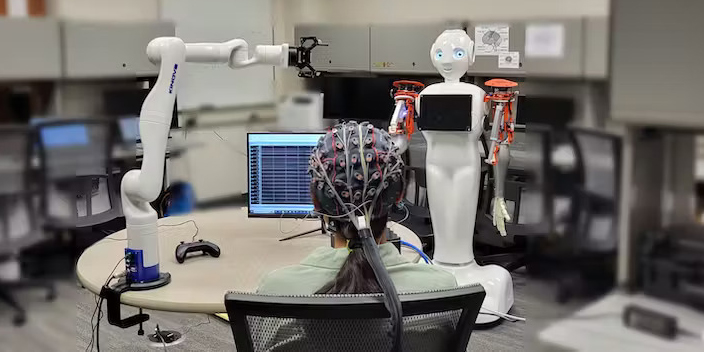
    <img src="https://ai.umbc.edu/wp-content/uploads/sites/734/2023/07/Conversation-Vinjamuri-lab.jpg" style="max-width: 100%; height: auto;"><div><br></div>
    <div>
    <div>UMBC CSEE Professor <strong><a href="https://www.csee.umbc.edu/ramana-vinjamuri/" rel="nofollow external" class="bo">Ramana Vinjamuri</a></strong> received a new <a href="https://www.nsf.gov/awardsearch/showAward?AWD_ID=2333292" rel="nofollow external" class="bo"><strong>NSF IUCRC Phase II award</strong></a> to support participation as a partner in <a href="null" rel="nofollow external" class="bo"><strong>BRAIN</strong></a>, the Building Reliable Advances and Innovations in Neurotechnologies Industry-University Cooperative Research Center.</div>
    <div><br></div>
    <div>BRAIN's overall goal is to develop and validate new technologies that address the needs of physically and neurologically impaired individuals and those of the growing aging population. </div>
    <div><br></div>
    <div>Research in <a href="https://vinjamurilab.cs.umbc.edu/" rel="nofollow external" class="bo"><strong>Dr. Vinjamuri's lab</strong></a> complements existing strengths in other BRAIN sites and expands research into new areas, including artificial intelligence, neural imaging and stimulation, cyber-human systems, human-centered computing, neural signal processing, and virtual/augmented/mixed reality.</div>
    </div>
    <div><br></div>
    <div>NSF funds Industry–University Cooperative Research Centers like BRAIN to conduct joint research with innovative industry partners.</div>
    </div>
]]>
</Body>
<Summary>UMBC CSEE Professor Ramana Vinjamuri received a new NSF IUCRC Phase II award to support participation as a partner in BRAIN, the Building Reliable Advances and Innovations in Neurotechnologies...</Summary>
<Website>https://vinjamurilab.cs.umbc.edu/</Website>
<TrackingUrl>https://my3.my.umbc.edu/api/v0/pixel/news/140050/guest@my.umbc.edu/12792b9f96fd279a10afbe133dad17ed/api/pixel</TrackingUrl>
<Tag>award</Tag>
<Tag>brain</Tag>
<Tag>iucrc</Tag>
<Tag>nsf</Tag>
<Tag>vinjamuri</Tag>
<Group token="umbc-ai">UMBC AI</Group>
<GroupUrl>https://my3.my.umbc.edu/groups/umbc-ai</GroupUrl>
<AvatarUrl>https://assets4-my.umbc.edu/system/shared/avatars/groups/000/002/081/cfb27ebe008c2636486089a759ea5c36/xsmall.png?1691095779</AvatarUrl>
<AvatarUrl size="original">https://assets2-my.umbc.edu/system/shared/avatars/groups/000/002/081/cfb27ebe008c2636486089a759ea5c36/original.png?1691095779</AvatarUrl>
<AvatarUrl size="xxlarge">https://assets1-my.umbc.edu/system/shared/avatars/groups/000/002/081/cfb27ebe008c2636486089a759ea5c36/xxlarge.png?1691095779</AvatarUrl>
<AvatarUrl size="xlarge">https://assets1-my.umbc.edu/system/shared/avatars/groups/000/002/081/cfb27ebe008c2636486089a759ea5c36/xlarge.png?1691095779</AvatarUrl>
<AvatarUrl size="large">https://assets1-my.umbc.edu/system/shared/avatars/groups/000/002/081/cfb27ebe008c2636486089a759ea5c36/large.png?1691095779</AvatarUrl>
<AvatarUrl size="medium">https://assets3-my.umbc.edu/system/shared/avatars/groups/000/002/081/cfb27ebe008c2636486089a759ea5c36/medium.png?1691095779</AvatarUrl>
<AvatarUrl size="small">https://assets3-my.umbc.edu/system/shared/avatars/groups/000/002/081/cfb27ebe008c2636486089a759ea5c36/small.png?1691095779</AvatarUrl>
<AvatarUrl size="xsmall">https://assets4-my.umbc.edu/system/shared/avatars/groups/000/002/081/cfb27ebe008c2636486089a759ea5c36/xsmall.png?1691095779</AvatarUrl>
<AvatarUrl size="xxsmall">https://assets1-my.umbc.edu/system/shared/avatars/groups/000/002/081/cfb27ebe008c2636486089a759ea5c36/xxsmall.png?1691095779</AvatarUrl>
<Sponsor>UMBC AI</Sponsor>
<PawCount>2</PawCount>
<CommentCount>1</CommentCount>
<CommentsAllowed>true</CommentsAllowed>
<PostedAt>Tue, 19 Mar 2024 13:28:48 -0400</PostedAt>
<EditAt>Mon, 25 Mar 2024 08:59:30 -0400</EditAt>
</NewsItem>

<NewsItem contentIssues="true" id="140037" important="false" status="posted" url="https://my3.my.umbc.edu/groups/umbc-ai/posts/140037">
<Title>AI Technical Meetup &amp; Networking, 5-7pm Thur. April 11</Title>
<Tagline>Network with professionals &amp; learn more about new AI tools</Tagline>
<Body>
<![CDATA[
    <div class="html-content">
    <div>The <strong><a href="https://c4a.ai/" rel="nofollow external" class="bo">UMBC Center for Applied AI</a></strong> will hold a <a href="https://www.meetup.com/center-for-applied-ai-c4a-meetup-group/events/299676146/" rel="nofollow external" class="bo"><strong>technical meetup</strong></a> 5-7 pm ET on Thursday, April 11, 2024 at the UMBC Training Centers facility in Columbia. It will delve into the world of <strong>AI tools</strong> provide valuable insights and networking opportunities.</div>
    <div><strong><br></strong></div>
    <div>
    <strong>Networking Session:</strong> Kick off the evening by mingling with fellow AI enthusiasts, industry experts, and like-minded professionals. Share experiences, exchange ideas, and make meaningful connections over drinks and snacks.</div>
    <div><br></div>
    <div>
    <strong>Speaker Presentations:</strong> Patty Delafuente and Douglas Lueben will take the stage to share their experiences with the AI technology currently shaping the industry.</div>
    <div><div><ul>
    <li>
    <strong><a href="https://www.linkedin.com/in/pattydelafuente/" rel="nofollow external" class="bo">Patty Delafuente</a></strong> is an experienced NVIDIA Data Scientist and AI Enthusiast. Her mission is to leverage NVIDIA solutions to help their Public Sector customers with the important work they do. In her free time, she is pursuing her PhD in Computer Science at UMBC with a research focus on NLP and AI.</li>
    <li>
    <strong><a href="https://www.linkedin.com/in/douglas-lueben-60386b16b/" rel="nofollow external" class="bo">Douglas Lueben</a></strong> is a UMBC alumnus and Software Developer with eight years of personal and professional programming experience. He has a strong background in helping others both as a leader and as a teacher. He's looking to make an impact on the field of Computer Science, and help others do the same.</li>
    </ul></div></div>
    <div>
    <strong>Q&amp;A Session: </strong>There will be time to chat with the presenters after their presentations. Get answers to your burning questions, uncover best practices, and gain deeper insights into the tools and techniques discussed.</div>
    <div><br></div>
    <div>Register <strong><a href="https://www.meetup.com/center-for-applied-ai-c4a-meetup-group/events/299676146/" rel="nofollow external" class="bo">here</a>.</strong>
    </div>
    </div>
]]>
</Body>
<Summary>The UMBC Center for Applied AI will hold a technical meetup 5-7 pm ET on Thursday, April 11, 2024 at the UMBC Training Centers facility in Columbia. It will delve into the world of AI tools...</Summary>
<Website>https://www.meetup.com/center-for-applied-ai-c4a-meetup-group/events/299676146/</Website>
<TrackingUrl>https://my3.my.umbc.edu/api/v0/pixel/news/140037/guest@my.umbc.edu/dc15097b75235e0386cb3a781b8abe26/api/pixel</TrackingUrl>
<Tag>ai</Tag>
<Tag>meetup</Tag>
<Tag>networking</Tag>
<Group token="umbc-ai">UMBC AI</Group>
<GroupUrl>https://my3.my.umbc.edu/groups/umbc-ai</GroupUrl>
<AvatarUrl>https://assets4-my.umbc.edu/system/shared/avatars/groups/000/002/081/cfb27ebe008c2636486089a759ea5c36/xsmall.png?1691095779</AvatarUrl>
<AvatarUrl size="original">https://assets2-my.umbc.edu/system/shared/avatars/groups/000/002/081/cfb27ebe008c2636486089a759ea5c36/original.png?1691095779</AvatarUrl>
<AvatarUrl size="xxlarge">https://assets1-my.umbc.edu/system/shared/avatars/groups/000/002/081/cfb27ebe008c2636486089a759ea5c36/xxlarge.png?1691095779</AvatarUrl>
<AvatarUrl size="xlarge">https://assets1-my.umbc.edu/system/shared/avatars/groups/000/002/081/cfb27ebe008c2636486089a759ea5c36/xlarge.png?1691095779</AvatarUrl>
<AvatarUrl size="large">https://assets1-my.umbc.edu/system/shared/avatars/groups/000/002/081/cfb27ebe008c2636486089a759ea5c36/large.png?1691095779</AvatarUrl>
<AvatarUrl size="medium">https://assets3-my.umbc.edu/system/shared/avatars/groups/000/002/081/cfb27ebe008c2636486089a759ea5c36/medium.png?1691095779</AvatarUrl>
<AvatarUrl size="small">https://assets3-my.umbc.edu/system/shared/avatars/groups/000/002/081/cfb27ebe008c2636486089a759ea5c36/small.png?1691095779</AvatarUrl>
<AvatarUrl size="xsmall">https://assets4-my.umbc.edu/system/shared/avatars/groups/000/002/081/cfb27ebe008c2636486089a759ea5c36/xsmall.png?1691095779</AvatarUrl>
<AvatarUrl size="xxsmall">https://assets1-my.umbc.edu/system/shared/avatars/groups/000/002/081/cfb27ebe008c2636486089a759ea5c36/xxsmall.png?1691095779</AvatarUrl>
<Sponsor>UMBC AI</Sponsor>
<ThumbnailUrl size="xxlarge">https://assets1-my.umbc.edu/system/shared/thumbnails/news/000/140/037/0103f08b74140f5cced570a65cfa6093/xxlarge.jpg?1710776124</ThumbnailUrl>
<ThumbnailUrl size="xlarge">https://assets4-my.umbc.edu/system/shared/thumbnails/news/000/140/037/0103f08b74140f5cced570a65cfa6093/xlarge.jpg?1710776124</ThumbnailUrl>
<ThumbnailUrl size="large">https://assets1-my.umbc.edu/system/shared/thumbnails/news/000/140/037/0103f08b74140f5cced570a65cfa6093/large.jpg?1710776124</ThumbnailUrl>
<ThumbnailUrl size="medium">https://assets1-my.umbc.edu/system/shared/thumbnails/news/000/140/037/0103f08b74140f5cced570a65cfa6093/medium.jpg?1710776124</ThumbnailUrl>
<ThumbnailUrl size="small">https://assets4-my.umbc.edu/system/shared/thumbnails/news/000/140/037/0103f08b74140f5cced570a65cfa6093/small.jpg?1710776124</ThumbnailUrl>
<ThumbnailUrl size="xsmall">https://assets4-my.umbc.edu/system/shared/thumbnails/news/000/140/037/0103f08b74140f5cced570a65cfa6093/xsmall.jpg?1710776124</ThumbnailUrl>
<ThumbnailUrl size="xxsmall">https://assets3-my.umbc.edu/system/shared/thumbnails/news/000/140/037/0103f08b74140f5cced570a65cfa6093/xxsmall.jpg?1710776124</ThumbnailUrl>
<PawCount>0</PawCount>
<CommentCount>0</CommentCount>
<CommentsAllowed>true</CommentsAllowed>
<PostedAt>Mon, 18 Mar 2024 11:39:22 -0400</PostedAt>
<EditAt>Mon, 18 Mar 2024 13:48:17 -0400</EditAt>
</NewsItem>

<NewsItem contentIssues="true" id="140009" important="false" status="posted" url="https://my3.my.umbc.edu/groups/umbc-ai/posts/140009">
<Title>Prof. Janeja receives Regents Award for Research Excellence</Title>
<Tagline>Research on AI, data science, cybersecurity, and climate</Tagline>
<Body>
<![CDATA[
    <div class="html-content">
    <div><br></div>
    <div>
    <div>UMBC's <a href="https://userpages.umbc.edu/~vjaneja/" rel="nofollow external" class="bo"><strong>Vandana Janeja</strong></a> in the Information Systems Department was selected as a recipient of the <strong>2024 University System of Maryland Regents Faculty Award for Excellence in Scholarship or Research</strong>, the highest honor that the Board of Regents bestows to recognize exemplary faculty achievement.</div>
    <div><br></div>
    <div>Dr. Janeja is a world-renowned expert in <strong>data science</strong> and <strong>artificial intelligence</strong>. As a multidisciplinary researcher, her research spans data science, information technology, geoscience, linguistics, and education. After serving as the department chair of Information Systems from 2019 to 2023, Dr. Janeja is currently leading the College of Engineering and Information Technology as the Associate Dean for Research and Faculty Development. </div>
    <div><br></div>
    <div>In the last three years, Dr. Janeja was exceptionally productive with one scholarly book on data analytics for cybersecurity, many research articles in prestigious refereed journals, and more than 16.5 million research funding from NSF. Her extramurally funded research projects address a wide range of national priorities such as data science education, research capacity building for earth and environmental sciences, and climate change. She uses novel data and AI-driven methods to advance research and education in these areas. </div>
    <div><br></div>
    <div>Dr. Janeja’s research is incredibly impactful through her multidisciplinary collaboration. One exemplary project is the NSF <strong><a href="https://iharp.umbc.edu/" rel="nofollow external" class="bo">HDR Institute for Harnessing the data and model revolution in the polar regions</a> </strong>(iHARP), which is funded by one of the most prestigious NSF awards. As the director of iHARP, Dr. Janeja leads a team of more than 80 faculty, scientists, postdoctoral researchers, and students from nine institutions, industry, and government agencies to address the most pressing challenges in the Polar region. What sets Dr. Jeneja apart from her peers is her ability to bridge information technology and social sciences to make big societal impacts. In NSF-funded deepfake discernment project, Dr. Jeneja collaborates with linguists to advance the detection of <strong><a href="https://www.nsf.gov/awardsearch/showAward?AWD_ID=2210011" rel="nofollow external" class="bo">audio deepfakes</a></strong>. Her work exemplifies the need to address the issues of ethics and responsibility in data science and AI. It will greatly improve the effectiveness of deepfake discernment to enhance cybersecurity, prevent financial fraud, and inform legal practice.</div>
    </div>
    </div>
]]>
</Body>
<Summary>UMBC's Vandana Janeja in the Information Systems Department was selected as a recipient of the 2024 University System of Maryland Regents Faculty Award for Excellence in Scholarship or Research,...</Summary>
<Website>https://my3.my.umbc.edu/groups/facultyaffairs/posts/139960</Website>
<TrackingUrl>https://my3.my.umbc.edu/api/v0/pixel/news/140009/guest@my.umbc.edu/fdce784c7ed88917c3bc620db9417d6f/api/pixel</TrackingUrl>
<Group token="umbc-ai">UMBC AI</Group>
<GroupUrl>https://my3.my.umbc.edu/groups/umbc-ai</GroupUrl>
<AvatarUrl>https://assets4-my.umbc.edu/system/shared/avatars/groups/000/002/081/cfb27ebe008c2636486089a759ea5c36/xsmall.png?1691095779</AvatarUrl>
<AvatarUrl size="original">https://assets2-my.umbc.edu/system/shared/avatars/groups/000/002/081/cfb27ebe008c2636486089a759ea5c36/original.png?1691095779</AvatarUrl>
<AvatarUrl size="xxlarge">https://assets1-my.umbc.edu/system/shared/avatars/groups/000/002/081/cfb27ebe008c2636486089a759ea5c36/xxlarge.png?1691095779</AvatarUrl>
<AvatarUrl size="xlarge">https://assets1-my.umbc.edu/system/shared/avatars/groups/000/002/081/cfb27ebe008c2636486089a759ea5c36/xlarge.png?1691095779</AvatarUrl>
<AvatarUrl size="large">https://assets1-my.umbc.edu/system/shared/avatars/groups/000/002/081/cfb27ebe008c2636486089a759ea5c36/large.png?1691095779</AvatarUrl>
<AvatarUrl size="medium">https://assets3-my.umbc.edu/system/shared/avatars/groups/000/002/081/cfb27ebe008c2636486089a759ea5c36/medium.png?1691095779</AvatarUrl>
<AvatarUrl size="small">https://assets3-my.umbc.edu/system/shared/avatars/groups/000/002/081/cfb27ebe008c2636486089a759ea5c36/small.png?1691095779</AvatarUrl>
<AvatarUrl size="xsmall">https://assets4-my.umbc.edu/system/shared/avatars/groups/000/002/081/cfb27ebe008c2636486089a759ea5c36/xsmall.png?1691095779</AvatarUrl>
<AvatarUrl size="xxsmall">https://assets1-my.umbc.edu/system/shared/avatars/groups/000/002/081/cfb27ebe008c2636486089a759ea5c36/xxsmall.png?1691095779</AvatarUrl>
<Sponsor>UMBC AI</Sponsor>
<ThumbnailUrl size="xxlarge">https://assets3-my.umbc.edu/system/shared/thumbnails/news/000/140/009/1406e7afb3eb1f83b4bd4e310cee7fc6/xxlarge.jpg?1710532555</ThumbnailUrl>
<ThumbnailUrl size="xlarge">https://assets2-my.umbc.edu/system/shared/thumbnails/news/000/140/009/1406e7afb3eb1f83b4bd4e310cee7fc6/xlarge.jpg?1710532555</ThumbnailUrl>
<ThumbnailUrl size="large">https://assets3-my.umbc.edu/system/shared/thumbnails/news/000/140/009/1406e7afb3eb1f83b4bd4e310cee7fc6/large.jpg?1710532555</ThumbnailUrl>
<ThumbnailUrl size="medium">https://assets4-my.umbc.edu/system/shared/thumbnails/news/000/140/009/1406e7afb3eb1f83b4bd4e310cee7fc6/medium.jpg?1710532555</ThumbnailUrl>
<ThumbnailUrl size="small">https://assets3-my.umbc.edu/system/shared/thumbnails/news/000/140/009/1406e7afb3eb1f83b4bd4e310cee7fc6/small.jpg?1710532555</ThumbnailUrl>
<ThumbnailUrl size="xsmall">https://assets3-my.umbc.edu/system/shared/thumbnails/news/000/140/009/1406e7afb3eb1f83b4bd4e310cee7fc6/xsmall.jpg?1710532555</ThumbnailUrl>
<ThumbnailUrl size="xxsmall">https://assets2-my.umbc.edu/system/shared/thumbnails/news/000/140/009/1406e7afb3eb1f83b4bd4e310cee7fc6/xxsmall.jpg?1710532555</ThumbnailUrl>
<PawCount>0</PawCount>
<CommentCount>0</CommentCount>
<CommentsAllowed>true</CommentsAllowed>
<PostedAt>Fri, 15 Mar 2024 16:01:02 -0400</PostedAt>
</NewsItem>

</News>