Renaissance woman: Khadijah Ali-Coleman ’95 lends her varied voice to the Maryland humanities

Early mentorship at UMBC, layered with her continued education and formative life experiences, has shaped Ali-Coleman’s voice and purpose. From her transformative years at UMBC—where she wrangled her array of interests into a self-designed major—to her current varied roles, Ali-Coleman’s commitment to the arts, education, and advocacy is clear. Her most recent project was launching the nonprofit Black Writers for Peace and Social Justice, which emerged from her experiences and inspirations gathered from a recent trip to Cuba.
Ali-Coleman’s entrepreneurial spirit is evident in her earlier work as well. In 2008, she founded an arts organization called Liberated Muse, driven by a passion for artistic expression and community engagement rather than immediate financial gain. Her leadership roles in various nonprofits provided her with the skills to formalize her initiatives with integrity and a systems mindset, she says. Collaborations with fellow UMBC alum Maceo Thomas ’93, biochemistry and molecular biology, arose from her desire to create spaces for artistic expression.
 Ali-Coleman stops the smell the roses (and a few other flowers). Photo courtesy of Ali-Coleman.
As the second poet laureate of Prince George’s County, Maryland, Khadijah Z. Ali-Coleman embodies the role’s commitment to both the arts and community. She describes the work as an ambassador for literature and writing, creating courses and spaces for writers to share their voices. “What I’ve found the greatest joy in,” says Ali-Coleman ’95, interdisciplinary studies , “is partnering with local libraries and schools to share the different literary eras that have impacted our world.” Through this position, she has launched a symposium series, focusing on the Black Arts Movement, with plans for an exploration of the Harlem Renaissance in 2025.
Listening to her mother’s voice
Ali-Coleman’s path to UMBC was heavily influenced by her mother, who encouraged her to stay local, despite initially being set on applying to schools across the country. However, during a family tour of UMBC, she felt an unexpected connection. It was, as she describes it, “love at first sight,” enamored by the warmth of the campus community and the support from then admissions counselor Yvette Mozie-Ross ’88.
Now the vice provost for enrollment management and planning, Mozie-Ross was present when Ali-Coleman won the UMBC 2024 Outstanding Alumni Award. “It’s great to see that the same passion and compassion for the genuine well-being of others that ignited and drove Khadijah as a student leader has not waned a bit,” says Mozie-Ross. “Her work in our communities continues to reflect her deep sense of humanity. We (UMBC) couldn’t be more proud of her.”
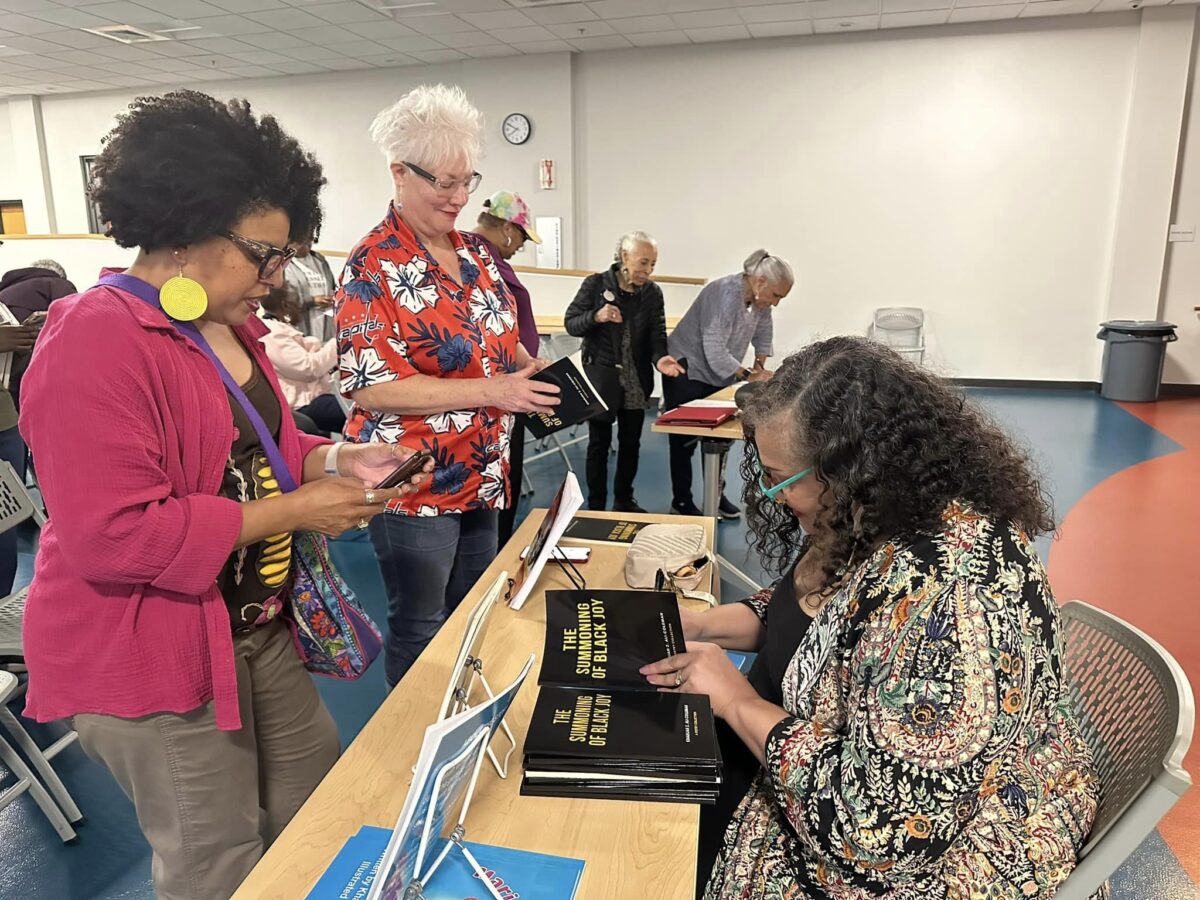 Ali-Coleman signs a copy of her poetry book The Summoning of Black Joy. Photo courtesy of Ali-Coleman.
Once at UMBC, Ali-Coleman faced the challenge of narrowing down her diverse academic interests—ranging from social work and mass media to African American history and English. She quickly realized that a traditional major wouldn’t fit her needs, and after reading the entire course catalog, she discovered the interdisciplinary studies (INDS) program, which allowed her to create a personalized curriculum. This flexibility enabled her to weave courses from African American studies, American studies, and English into a unique educational path that laid the groundwork for her future in communications and education.
Key figures at UMBC also played a significant role in shaping her journey. One of her favorite classes was Acklyn Lynch’s course on the Black Experience, where Ali-Coleman formed a lasting friendship with William Honablew ’95. This course not only stimulated intellectual discussions but also fostered ongoing connections among both students and Lynch long after graduation. Another influential mentor was Jamie Washington, who taught Ali-Coleman during her time as a student peer advisor. Washington’s ability to facilitate difficult conversations around racial tolerance during pivotal moments—such as the Rodney King trial verdict—left a lasting impression on Ali-Coleman. She often finds herself wishing she could emulate his approach as a facilitator and teacher. “Jamie Washington is by far the most impacting role model and person that I think of,” she says.
Making herself at home
Ali-Coleman draws on her inspiring mentors in her own classrooms as an associate professor of English at Coppin State University. “Baltimore is really my second home,” she shares, which started with her time at UMBC, followed by earning her master’s from Towson University, and her doctorate from Morgan State University. As someone familiar with area institutions, Ali-Coleman calls UMBC a “gem.” Aside from having high academic standards, she said it was also ahead of its time.
“Many aspects we now take for granted—like diversity, equity, and inclusion—were already being prioritized at UMBC,” says Ali-Coleman. “The university created a culture around inclusion, which was evident during my time as both an employee and a student.” As a member of the second cohort of UMBC McNair Scholars, Ali-Coleman experienced firsthand UMBC’s commitment to supporting underrepresented students in pursuing doctoral degrees. “I realized how ahead of the curve UMBC was,” said Ali-Coleman. “It didn’t sacrifice academics or cultural experiences. I don’t think people fully appreciate that.”
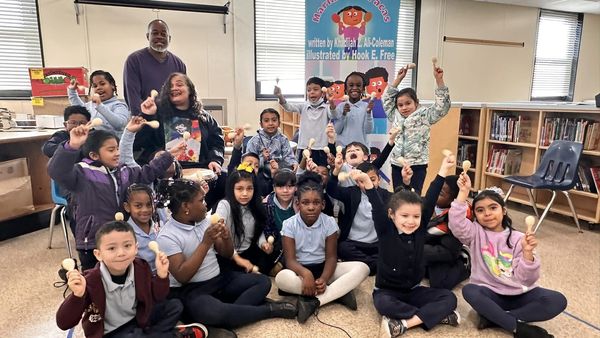 Ali-Coleman gathers with students at Chillum Elementary. Photo courtesy of Ali-Coleman.
Ali-Coleman, who was named an Outstanding Alumni at the 2024 Alumni Awards, says that her career trajectory reflects her experiences at UMBC, where she honed skills that would later serve her in various opportunities. After defending her dissertation on African American homeschool students who were dual enrolled just days before the onset of the COVID-19 pandemic, she recognized an urgent need for support among families navigating homeschooling for the first time. This led her to found Black Family Homeschool Educators and Scholars in 2020, an organization created to assist parents struggling with the transition to remote learning.
As she continues to navigate her role as poet laureate, professor, and nonprofit leader, her story showcases how pivotal moments, resilience, and a little bit of serendipity have shaped her path. “UMBC was one of the best experiences I’ve ever had, and it has been incredibly impactful,” Ali-Coleman reflects. “I’ve drawn from my time there in countless ways in all different areas of my life.”
]]>
Early mentorship at UMBC, layered with her continued education and formative life experiences, has shaped Ali-Coleman’s voice and purpose. From her transformative years at UMBC—where she wrangled...
https://umbc.edu/stories/khadijah-ali-coleman-lends-voice-to-humanities/
https://my3.my.umbc.edu/api/v0/pixel/news/145943/guest@my.umbc.edu/43d3827fa73be53f4ebb9c6f7fc98965/api/pixel
alumni
alumni-awards
alumni-profile
american-studies
english
fall-2024
inds
magazine
story
UMBC News & Magazine
https://my3.my.umbc.edu/groups/umbc-news-magazine
https://assets1-my.umbc.edu/system/shared/avatars/groups/000/001/943/24435aa6207c452e7bc15cc74b42c7bb/xsmall.png?1748556657
https://assets1-my.umbc.edu/system/shared/avatars/groups/000/001/943/24435aa6207c452e7bc15cc74b42c7bb/original.png?1748556657
https://assets2-my.umbc.edu/system/shared/avatars/groups/000/001/943/24435aa6207c452e7bc15cc74b42c7bb/xxlarge.png?1748556657
https://assets2-my.umbc.edu/system/shared/avatars/groups/000/001/943/24435aa6207c452e7bc15cc74b42c7bb/xlarge.png?1748556657
https://assets3-my.umbc.edu/system/shared/avatars/groups/000/001/943/24435aa6207c452e7bc15cc74b42c7bb/large.png?1748556657
https://assets1-my.umbc.edu/system/shared/avatars/groups/000/001/943/24435aa6207c452e7bc15cc74b42c7bb/medium.png?1748556657
https://assets2-my.umbc.edu/system/shared/avatars/groups/000/001/943/24435aa6207c452e7bc15cc74b42c7bb/small.png?1748556657
https://assets1-my.umbc.edu/system/shared/avatars/groups/000/001/943/24435aa6207c452e7bc15cc74b42c7bb/xsmall.png?1748556657
https://assets2-my.umbc.edu/system/shared/avatars/groups/000/001/943/24435aa6207c452e7bc15cc74b42c7bb/xxsmall.png?1748556657
UMBC News & Magazine
1
0
false
Wed, 27 Nov 2024 09:53:23 -0500
Wed, 27 Nov 2024 09:53:23 -0500
Meet a Retriever—James Atsaides ‘71, psychology, Founding Four member and planned giving donor
Meet James Atsaides ‘71, psychology. Jim is a Founding Four member, a management psychologist, a former Alumni Association Board of Directors president, a former adjunct faculty member, and a planned giver to the university. In 2023, Jim established the Dr. James P. Atsaides Endowment through his life insurance policy. But, most importantly of all, Jim met his wife Ardell Terry through his philanthropic work with the university. Recently, Jim took some time to reflect on his UMBC story. Take it away, Jim!
Q: What is your WHY? What brought you to UMBC?
A: I graduated from Loyola High School in 1967, and it was already a “done deal” that I would attend the University of Maryland, College Park. My brother, Sam Atsaides, was already there, which made things easier for my parents. So off I went.
Sam was a year ahead of me, and for his first year, he lived on campus. When I went there, the plan was for us to get an apartment with a few other roommates—cheaper than living on campus. When school started, Sam helped me figure out how to enroll in classes and what classes to take. I decided to become a psychology major.
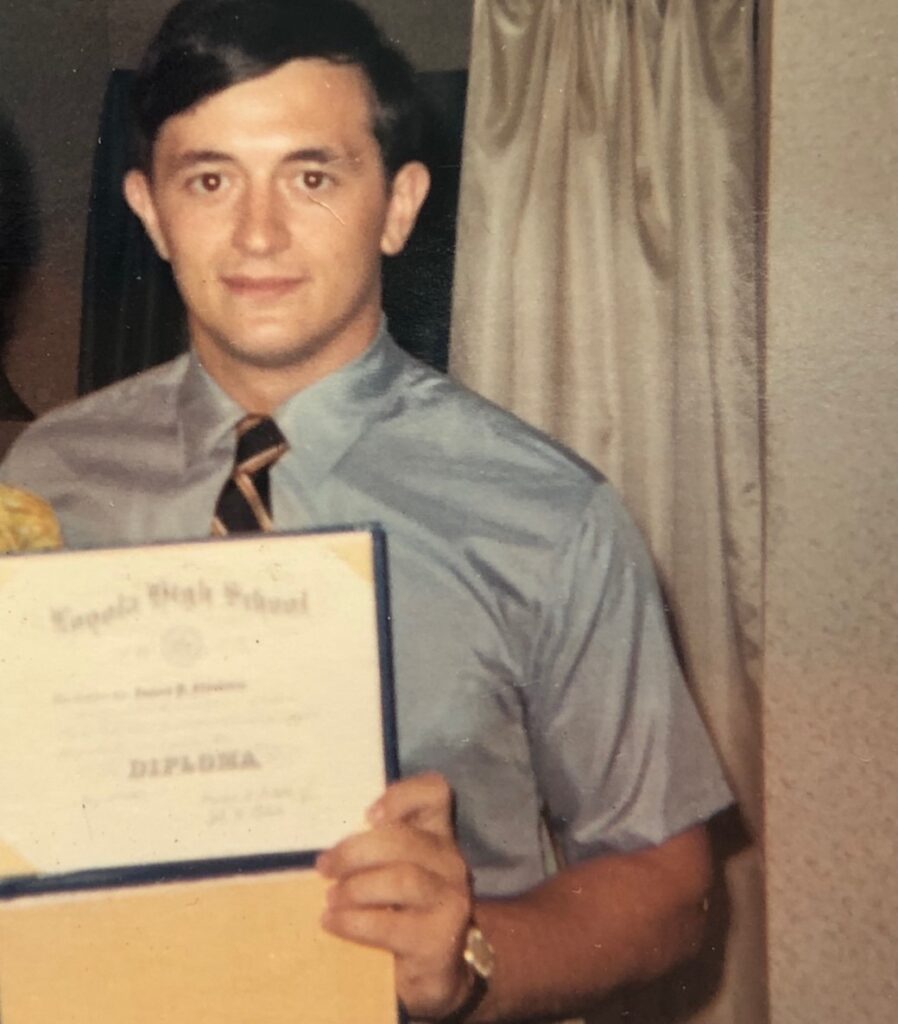 James Atsaides in 1967 holding his diploma from Loyola High School.
College Park was huge. I got lost right away. I wasn’t in high school anymore. It was also a rude awakening to how big the classes were. I was used to having 20 students in a class, but now there were 100 – 300 students in the freshmen classes. It took me weeks to get used to the size of the classes and how impersonal the school was.
Quickly, I realized that I was struggling. Sam was not a model student and always wanted to “wing it.” I couldn’t do that. Also, classes were hard, and I was also finding it difficult to make friends.
Year two at College Park was not much better—the same apartment, the same roommates, and an added twist. It was 1968 and the Vietnam War was getting a lot of attention. Students were staging “sit-ins,” and there were protest banners all over campus. I remember walking around campus wondering, “What am I doing here?” Adding to the chaos, Rev. Dr. Martin Luther King, Jr. was killed in 1968, leading to further unrest in the Washington, D.C., area.
After my second year of college, I decided I needed a change—a bold move. I decided to drop out of school. I mentioned to my parents that I needed some time off, and they understood what I was feeling. After a few jobs, I came back to my parents’ home in Catonsville and helped them at the family restaurant, Kibby’s. That’s where I first heard people talking about the new college just down the street, the University of Maryland, Baltimore County. So, I decided to check it out.
I drove to UMBC and walked around. It had only been built within the last few years and there were only a few buildings. But I liked it. Even though there was lots of dirt and mud all around, it felt just right—I felt safe. It was a small campus, unlike College Park. The students were walking with smiles on their faces, and I felt like I could relate to them. I talked it over with my parents, and the next semester I enrolled at UMBC.
Q: Tell us about what you loved most about your academic program. Was there anyone in the community who helped support you?
A: I decided to remain a psychology major and was impressed with all the courses that I could take at UMBC. I was like a kid in a candy store, just happy taking classes that were meaningful to me. The professors were also more approachable, and I started making friends. UMBC felt like home.
One friend in particular, Stan Sack, was a tremendous help. He was a fellow psychology major and had been at UMBC from the beginning. We studied together and talked about classes and professors, and he helped guide me throughout my time at UMBC. Stan helped make my time at UMBC a happy experience. As a result, my grades improved. I felt excited and energized with what I was doing.
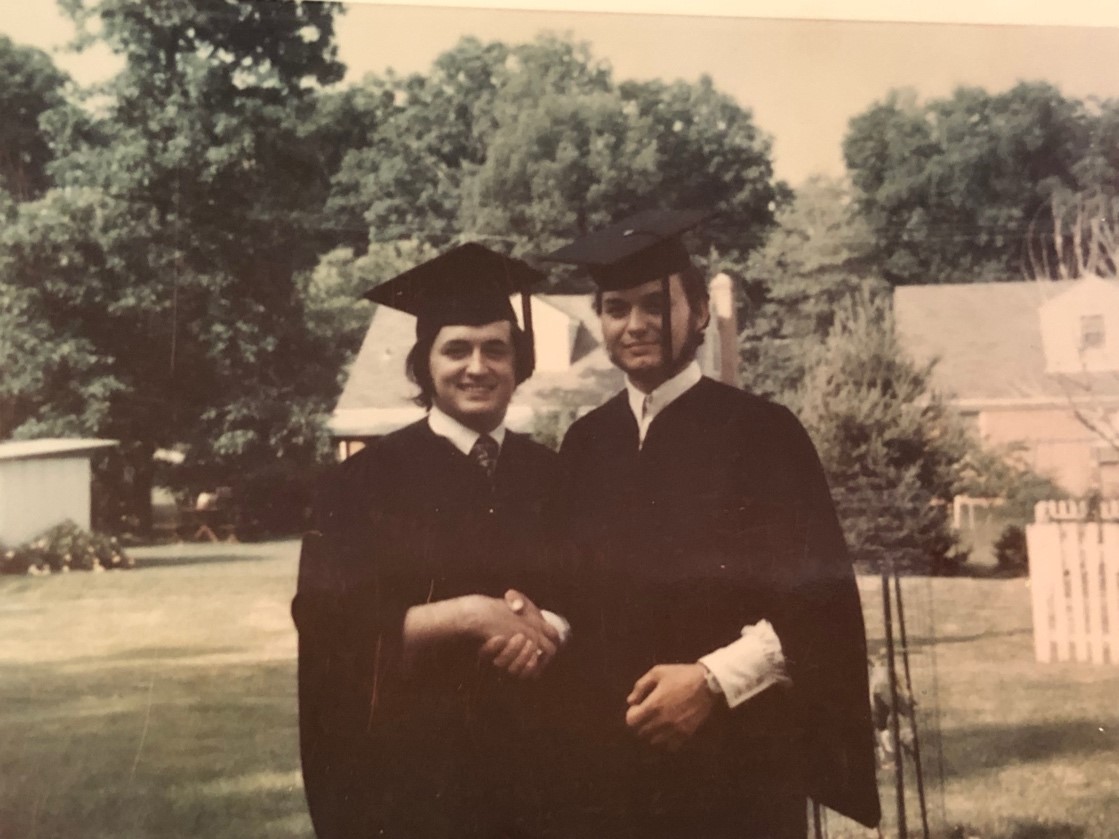 James Atsaides and his older brother Sam in their graduation regalia in 1971.
The classes I was taking also offered lots of different experiences. During an archeology class, we took a trip to the Walters Art Museum. As part of a project in a sociology class, I got to interview a local brewery manager and learn how his business impacted the community. This was a particularly meaningful experience because I always enjoyed business. I think it gave me the drive to focus on industrial psychology years later. I also did an internship at Spring Grove State Hospital, which was very meaningful in a different way as it made me realize that I did not want to become a clinical psychologist!
Q: What’s the one thing you’d want someone to know about the support you find here?
A: My time at UMBC went very quickly, but UMBC was my “savior” in a lot of ways. UMBC and the supportive community gave me the positive university experience I always wanted. UMBC also gave me direction and helped me figure out what I wanted to do with my life. I look back on my time as a UMBC student very fondly. However, it would not be my last go-around with the university.
My time at UMBC made me realize that I enjoyed learning. So I just kept going to school. I completed a master’s program at Springfield College and a Ph.D. program at the University of Kansas.
Q: Can you tell us about your career in psychology?
A: My career took me from Kansas to Oregon to work with an international firm of management psychologists. In the early 1980s, my parents and family decided to build a hotel resort on the Greek island of Rhodes where my mom had a large parcel of land. For this to materialize, however, I had to leave my career and come back to Baltimore to take over Kibby’s, the family restaurant. So in 1983, my family loaded the Hertz rental truck and settled back in Catonsville with two very young girls.
As a management psychologist, I took my own advice and hired a very good general manager to run the restaurant. This allowed me to start my professional practice in Baltimore in 1985. During this time, I met a fellow psychologist who became a very close and dear friend, John Martello. John was in a senior position at UMBC. We hit it off very well, and we spent much time talking about the work we were both doing, as well as our experiences at UMBC. John was instrumental in introducing me to the senior staff at UMBC. He introduced me to not only the head of the psychology department but also to the president of the university, Michael Hooker.
I enjoyed getting back on campus. The campus had grown so much and was still growing!
I am grateful for my time at UMBC and have appreciated the many life-long opportunities it has given me as an individual and as a professional.
James Atsaides ‘71, psychology
Management Psychologist & Business Consultant
Q: What drives you to support this community?
A: In the late 1980s, President Hooker contacted me and asked me to join the UMBC Alumni Association Board of Directors. I happily accepted.
During this time, UMBC was promoting an insurance program that alumni could establish that would create an endowment for UMBC. President Hooker and Nell Savopoulous, director of development at UMBC, asked if I would participate. I felt such a close connection to UMBC, that I said “yes.” This was my alma mater after all. Now, I just had to figure out what and who my endowment would benefit.
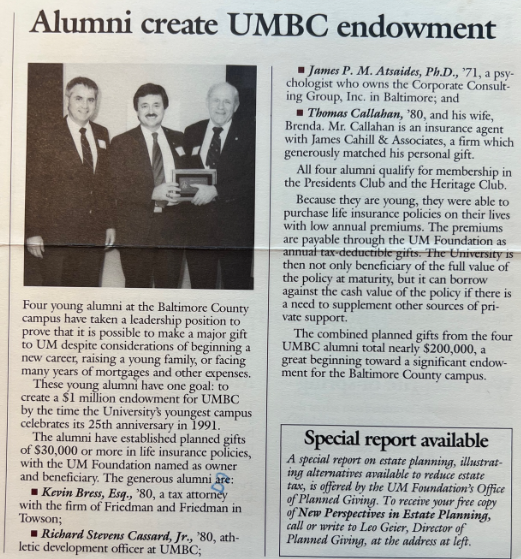 Newspaper clipping from The Retriever Weekly announcing the establishment of several endowments, including the Dr. James P. Atsaides Endowment.
As an industrial psychologist, I’m required to attend regular educational programs for continuous education (CE) credits. Students also regularly attend these conferences to make connections and gain exposure to the industry. However, these conferences are not cheap. My grandson, Dustin, for example, was graduating from Ithaca College and was honored with a request to present his senior research at a conference in Phoenix, Arizona. He was delighted with the opportunity but had to figure out how to cover airfare, lodging, and other expenses not included in his conference registration. Dustin quickly learned that there were no grants or scholarships available from the school to help him. So, he had to ask his parents and grandparents for money.
As my wife and I thought about Dustin’s situation, we both said, “Wouldn’t it be a good thing to have students apply for grants for this type of situation?” As we discussed this, we realized that we could focus the Dr. James P. Atsaides Endowment to help graduate students in need of funding to attend conferences.
I am grateful for my time at UMBC and have appreciated the many life-long opportunities it has given me as an individual and as a professional. Creating an endowment for students has been a wonderful way for me to say “Thank You” to the university and to help future students. And I am excited to share that we will award our first scholarship this academic year!
“Dr. Atsaides’ generosity to give back to both UMBC in general and our I/O Psychology program, in particular, is a testament to his professional values and his commitment to his alma mater,” says Dr. Elliot Lasson, professor of the practice and Director of UMBC’s I/O Psychology graduate program. “We look forward to using his gift to support our graduate students for years to come.”
Q. What has been your most meaningful connection at UMBC?
A: Through my work with the university, I was fortunate to meet Ardell Terry, campaign manager for UMBC. She was a positive addition to the fundraising group. Ardell and I married, and we have been together now for over 20 years. I thank UMBC for the opportunity to meet her as well.
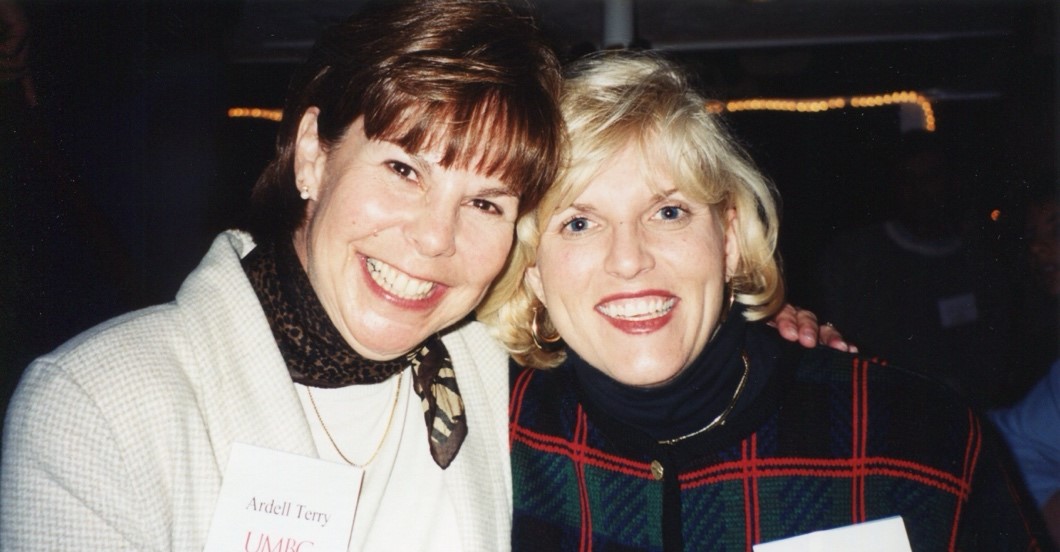 Ardell Terry, campaign manager for UMBC, and Kim Robinson, director of major gifts at UMBC.
Q: How have you stayed connected with UMBC?
A: In 1990, I was asked to teach an upper-level class in organizational psychology and joined the UMBC community in a new capacity—adjunct professor. I greatly enjoyed teaching the class and did so for nine years.
Along with my time on the UMBC Alumni Board, President Hooker asked me to represent the university as a member of the University System of Maryland Chancellor’s Advisory Council. This was truly an honor for me to represent my alma mater and be part of this historic transition to a state-wide education system.
In 1992, I was asked to be part of the selection committee for the next president of UMBC. As many of you probably know, this is the historic search that elevated Freeman A. Hrabowski, III, to the role of president, which he held until he retired in 2022.
In 1995, I was asked to take the position of president of the UMBC Alumni Board. This was a tremendous honor for me and allowed me to work closely with the administration. In my role as board president, I had the opportunity to be on stage while my younger cousin graduated from UMBC, which was really special.
UMBC continues to be close to my heart. It has been a large part of my life, and I am sure it will continue to be. I am honored to give back to the university in any way I can.
* * * * *
UMBC’s greatest strength is its people. When people meet Retrievers and hear about the passion they bring, the relationships they create, the ways they support each other, and the commitment they have to inclusive excellence, they truly get a sense of our community. That’s what “Meet a Retriever” is all about.
Learn more about how UMBC can help you achieve your goals.
]]>
Meet James Atsaides ‘71, psychology. Jim is a Founding Four member, a management psychologist, a former Alumni Association Board of Directors president, a former adjunct faculty member, and a...
https://umbc.edu/stories/meet-james-atsaides-psychology/
https://my3.my.umbc.edu/api/v0/pixel/news/145920/guest@my.umbc.edu/aa6ed5fa3e6fca5625c97b8bf119a57d/api/pixel
alumni
endowments
impact
magazine
meet-a-retriever
psychology
story
UMBC News & Magazine
https://my3.my.umbc.edu/groups/umbc-news-magazine
https://assets1-my.umbc.edu/system/shared/avatars/groups/000/001/943/24435aa6207c452e7bc15cc74b42c7bb/xsmall.png?1748556657
https://assets1-my.umbc.edu/system/shared/avatars/groups/000/001/943/24435aa6207c452e7bc15cc74b42c7bb/original.png?1748556657
https://assets2-my.umbc.edu/system/shared/avatars/groups/000/001/943/24435aa6207c452e7bc15cc74b42c7bb/xxlarge.png?1748556657
https://assets2-my.umbc.edu/system/shared/avatars/groups/000/001/943/24435aa6207c452e7bc15cc74b42c7bb/xlarge.png?1748556657
https://assets3-my.umbc.edu/system/shared/avatars/groups/000/001/943/24435aa6207c452e7bc15cc74b42c7bb/large.png?1748556657
https://assets1-my.umbc.edu/system/shared/avatars/groups/000/001/943/24435aa6207c452e7bc15cc74b42c7bb/medium.png?1748556657
https://assets2-my.umbc.edu/system/shared/avatars/groups/000/001/943/24435aa6207c452e7bc15cc74b42c7bb/small.png?1748556657
https://assets1-my.umbc.edu/system/shared/avatars/groups/000/001/943/24435aa6207c452e7bc15cc74b42c7bb/xsmall.png?1748556657
https://assets2-my.umbc.edu/system/shared/avatars/groups/000/001/943/24435aa6207c452e7bc15cc74b42c7bb/xxsmall.png?1748556657
UMBC News & Magazine
1
0
false
Tue, 26 Nov 2024 10:24:07 -0500
Tue, 26 Nov 2024 10:24:07 -0500
Yonathan Zohar honored for lifetime of contributions to fish endocrinology research and advances in aquaculture

Yonathan Zohar, professor of marine biotechnology, has received the Lifetime Achievement Award from the International Society for Fish Endocrinology. Zohar’s work at the Institute of Marine and Environmental Technology in Baltimore’s Inner Harbor has produced fundamental discoveries in fish reproductive biology and applied the findings to the aquaculture industry, resulting in major advances. In 2020, the Binational Agricultural Research Development (BARD) Fund, a partnership program between the U.S. and Israel, also recognized Zohar for the outsize economic impact of his research.
In addition to Zohar’s core work in fish reproductive physiology, he has led a decades-long effort to develop land-based aquaculture methods that could bring fresh seafood to inland areas of the United States. Land-based fish production operations avoid pitfalls of open-water aquaculture such as disease, polluted water, and escapes. Land-based aquaculture could also limit the need for long-distance seafood transportation.
Maryland Farm and Harvest on Maryland Public Television (MPT) recently featured Zohar and his colleagues’ work. The aquaculture industry is the world’s fastest growing sector of agriculture, Zohar told MPT. American demand for seafood is rising, and currently, most of it is imported. With a $10 million grant from the USDA, Zohar has been working with team of scientists and government and industry stakeholders from the U.S. and abroad to help move land-based aquaculture toward commercial viability.
“We here at IMET, at the Aquaculture Research Center [ARC], are trying to address all these challenges, bottlenecks, hurdles to this industry so it can become economically feasible as well as—obviously as much as possible—environmentally responsible,” Zohar told MPT.
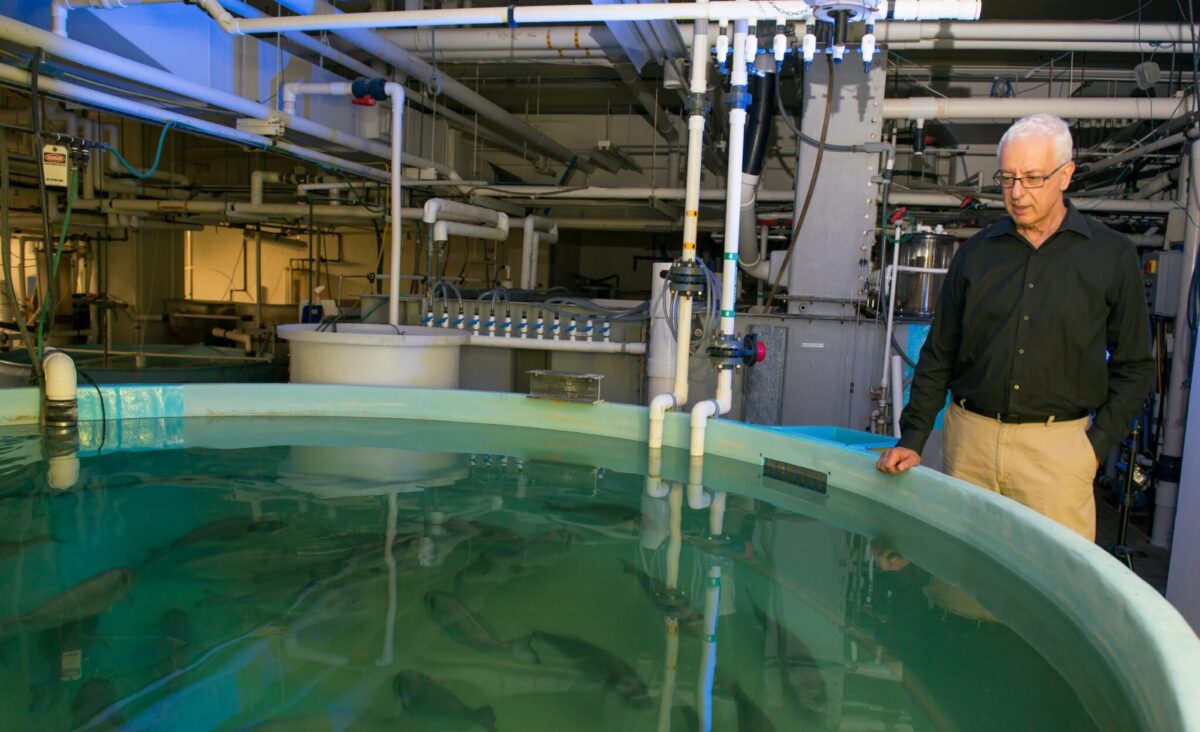 Yonathan Zohar stands next to a tank full of fish in the Aquaculture Research Center. (Marlayna Demond ’11/UMBC)
Addressing aquaculture’s hurdles
One of those hurdles is figuring out how to bring salmon to market size year round. Typically, salmon only reproduce once per year, Zohar explained. “We are using environmental manipulation to phase shift—to change the time of the spawning of the fish—so the farmer can get good quality eggs all year round,” he said. The team at the ARC has had success spawning salmon six months after their typical spawning time, Zohar told MPT, as a tray of red-orange salmon eggs spawned at IMET showed on the screen. And “if you can do it six months, you can do it four months, three months, all year round,” he said.
Another challenge to land-based systems is the accumulation of sludge—otherwise known as fish poop—in the tanks. Kevin Sowers, professor of marine biotechnology and a microbiology expert, explained that as the water in the fish tanks passes through a filter to be reused, bacterial colonies living on the surface of what look like pieces of wheel-shaped pasta break down the sludge. One of the products is methane gas.
“The goal here is to get rid of that waste, reduce it, and turn it into a product that can be used,” Sowers said. “And the product we produce, the biogas, will actually help power about 10 percent of the energy costs here in the facility.”
Still swimming along
All of these advances represent years or decades of effort by Zohar, Sowers, and additional colleagues to first understand the fundamentals of fish biology and reproduction, and then to find ways of tweaking it that serve the aquaculture industry and address the rising consumer demand for fish.
Zohar may have been doing this for a while, but with the industry on what feels like the cusp of a breakthrough, his continued enthusiasm for his work was obvious on Maryland Farm and Harvest.
“For someone who has been working on aquaculture for over 40 years, well, I have a lot of energy still to make sure that we make this happen,” Zohar told MPT—“that we stop overfishing our oceans and we satisfy the increasing demand of seafood in the United States and in the world.”
]]>
Yonathan Zohar, professor of marine biotechnology, has received the Lifetime Achievement Award from the International Society for Fish Endocrinology. Zohar’s work at the Institute of Marine and...
https://umbc.edu/stories/zohar-lifetime-achievement-aquaculture/
https://my3.my.umbc.edu/api/v0/pixel/news/145907/guest@my.umbc.edu/d0a06ae5010b6b1b2a53149708cde7ba/api/pixel
cnms
marinebiotech
news
research
science-and-tech
story
UMBC News & Magazine
https://my3.my.umbc.edu/groups/umbc-news-magazine
https://assets1-my.umbc.edu/system/shared/avatars/groups/000/001/943/24435aa6207c452e7bc15cc74b42c7bb/xsmall.png?1748556657
https://assets1-my.umbc.edu/system/shared/avatars/groups/000/001/943/24435aa6207c452e7bc15cc74b42c7bb/original.png?1748556657
https://assets2-my.umbc.edu/system/shared/avatars/groups/000/001/943/24435aa6207c452e7bc15cc74b42c7bb/xxlarge.png?1748556657
https://assets2-my.umbc.edu/system/shared/avatars/groups/000/001/943/24435aa6207c452e7bc15cc74b42c7bb/xlarge.png?1748556657
https://assets3-my.umbc.edu/system/shared/avatars/groups/000/001/943/24435aa6207c452e7bc15cc74b42c7bb/large.png?1748556657
https://assets1-my.umbc.edu/system/shared/avatars/groups/000/001/943/24435aa6207c452e7bc15cc74b42c7bb/medium.png?1748556657
https://assets2-my.umbc.edu/system/shared/avatars/groups/000/001/943/24435aa6207c452e7bc15cc74b42c7bb/small.png?1748556657
https://assets1-my.umbc.edu/system/shared/avatars/groups/000/001/943/24435aa6207c452e7bc15cc74b42c7bb/xsmall.png?1748556657
https://assets2-my.umbc.edu/system/shared/avatars/groups/000/001/943/24435aa6207c452e7bc15cc74b42c7bb/xxsmall.png?1748556657
UMBC News & Magazine
0
0
false
Mon, 25 Nov 2024 16:35:06 -0500
Mon, 25 Nov 2024 16:35:06 -0500
When public service gets personal

When Patricia Mengue Bindjeme, a junior majoring in mechanical engineering, went to classes, her professors would sometimes point out how engineers’ decisions can have life-or-death consequences. But the message really hit home this past summer when Mengue Bindjeme interned at the Maryland Transit Administration (MTA), working on the Baltimore Red Line Project, a recently revived transportation project to create faster and more convenient links between the eastern and western parts of the city.
“I saw people talking about the journeys they had to make coming from West Baltimore to work at someplace like Johns Hopkins,” she says. “That’s a lot of travel.” Mengue Bindjeme realized how engineers working to ensure the safety, availability, and reliability of transportation could make huge differences to people’s everyday lives. “Having another person’s life in my hands is nerve-racking,” she says. “But the change I can make for someone else is really beautiful and impactful.”
Real tasks and real things
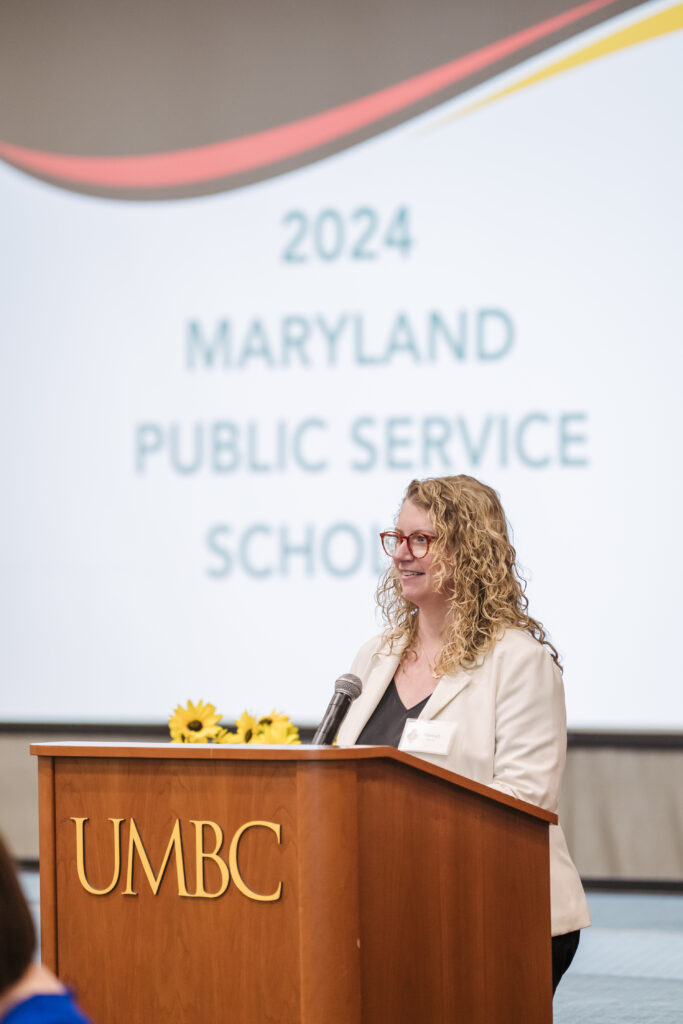 Hannah Schmitz addresses the audience at the opening gathering for the Maryland Public Service Scholars. (Marlayna Demond ’11/UMBC)
Mengue Bindjeme secured her internship at MTA through the Maryland Public Service Scholars (MPSS) program, a 12-week summer fellowship program funded by the state of Maryland and administered by the Shriver Center at UMBC. The goal of the program is to provide students across Maryland the opportunity to develop as future leaders in the state’s public and social sectors.
Mengue Bindjeme was one of five UMBC students who completed the program this past summer. The others were Tasnim Rushdan, a senior global studies major; Aziza Mattaka, a junior global studies major; Dionne Cole, a senior biology and social work major; and Samantha Fu, a junior psychology and public policy major.
The students wrapped up the fellowship with real-world experience on their résumés. “From day one, I was having real tasks and learning real things,” says Rushdan, who worked as an international affairs fellow at the Maryland Office of the Secretary of State. The international division of the office was small—with just two full-time employees—so as an intern Rushdan was immediately involved in important work such as reviewing agreements, organizing meetings, and writing memos for Maryland Secretary of State Susan C. Lee and Governor Wes Moore.
Rushdan helped organize the Pan African City Exposition to facilitate discussions with international delegates around ideas for improving economic development and making housing affordable. She also met with embassy officials, business leaders, and students from around the world.
Mattaka worked in the Governor’s Office of Crime Prevention and Policy, working with victims of crime on their compensation claims. “Sometimes when I’d call people, they would go into their stories,” she says. “It really put into perspective my privilege, but it was also rewarding to be in a place to assist.”
Pursuing the same mission
The students faced challenges throughout their fellowships, from the sometimes heavy nature of the work, to the pressures to balance their schedules, produce deliverables, and present in front of the leaders of Maryland government.
They found support from program staff, the mentors they were matched with in their workplaces, and from each other. Each Friday, all the program participants met together and attended workshops to talk through their experiences and learn new skills for success.
“We realized that, even though we come from diverse backgrounds, we were there for the same mission. We’re facing many of the same challenges, and we’re all in it together,” Rushdan says.
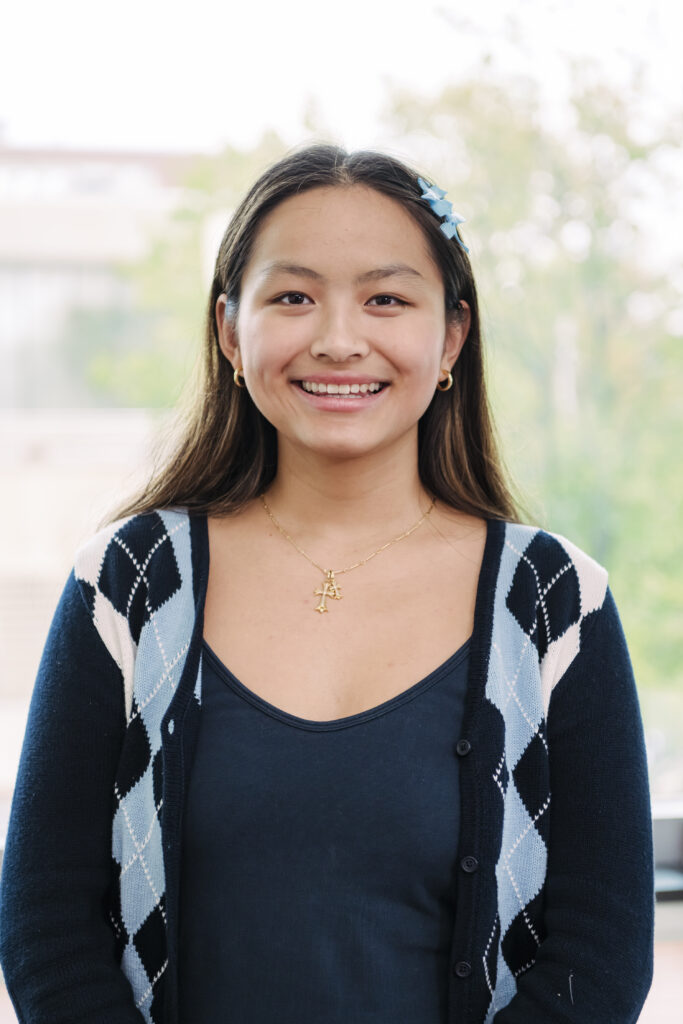
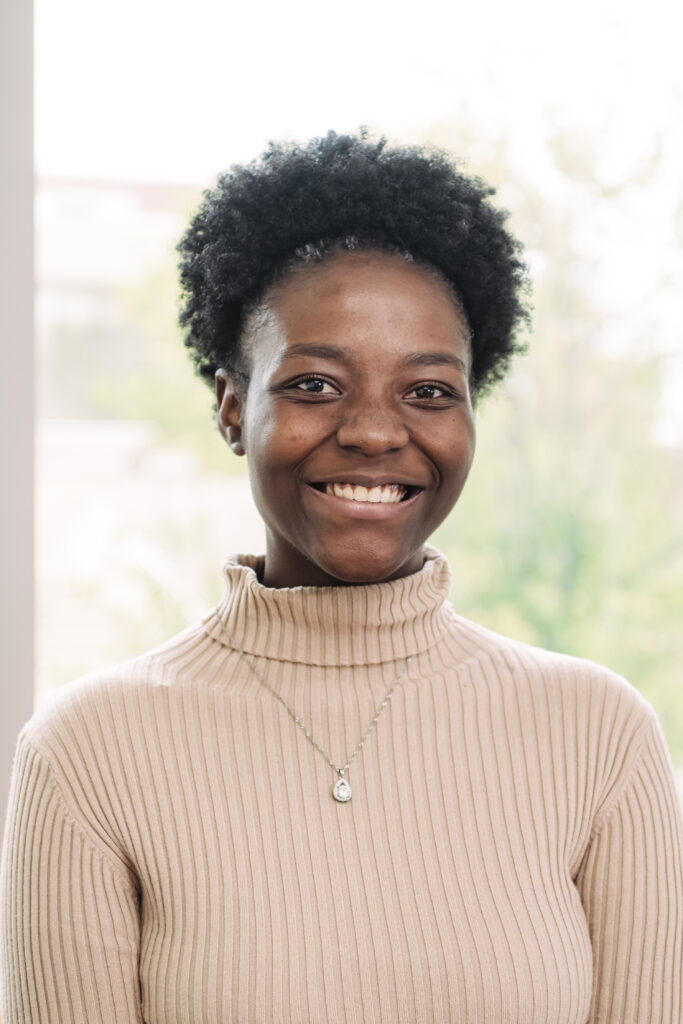
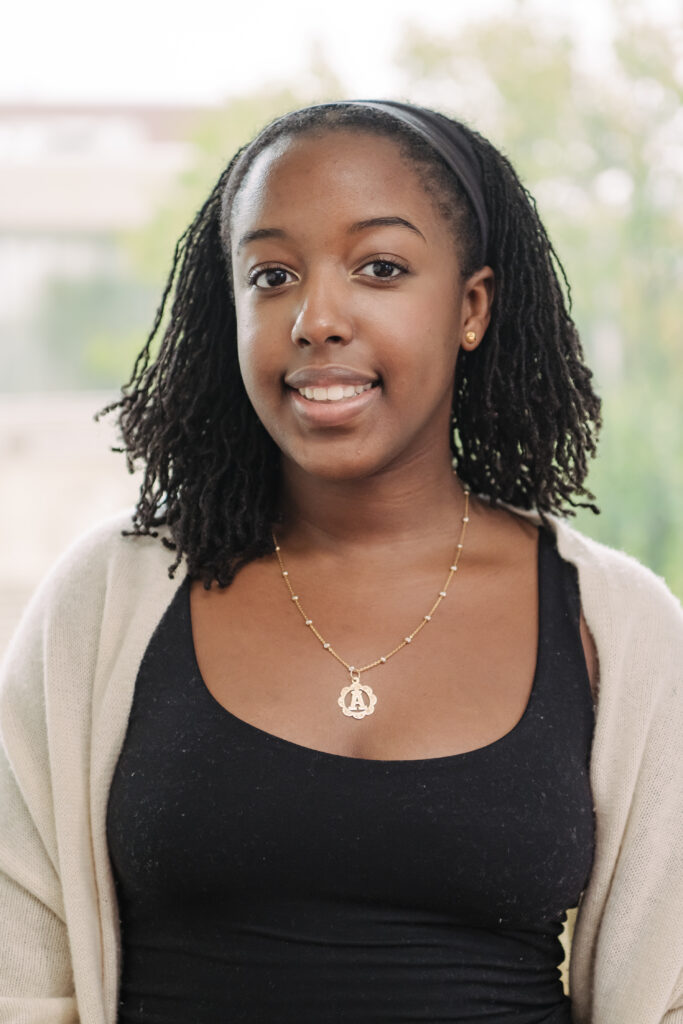
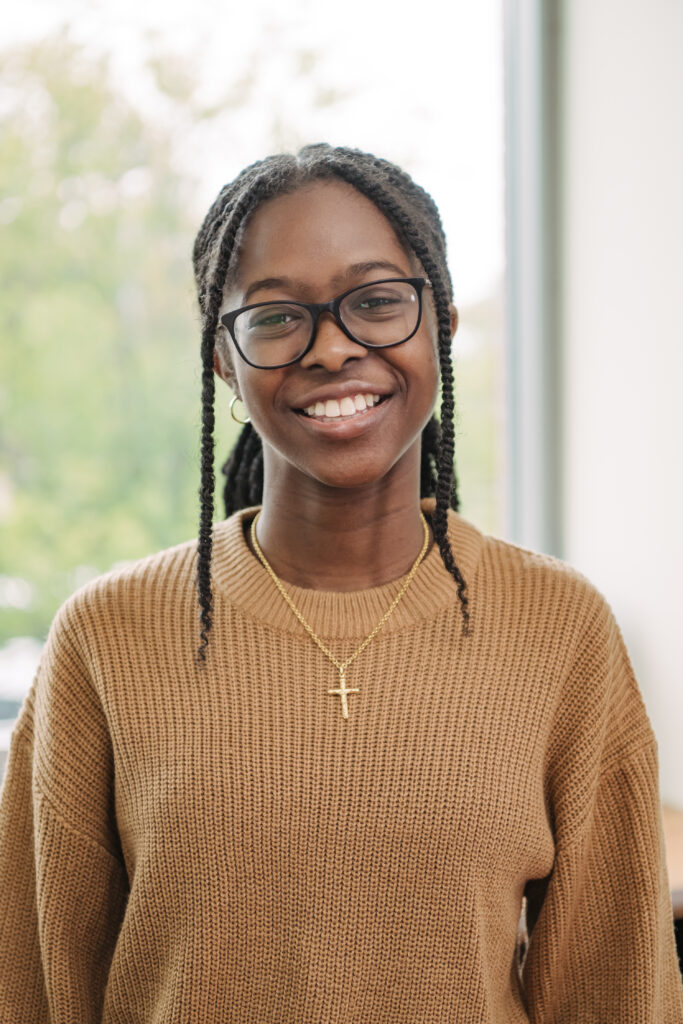
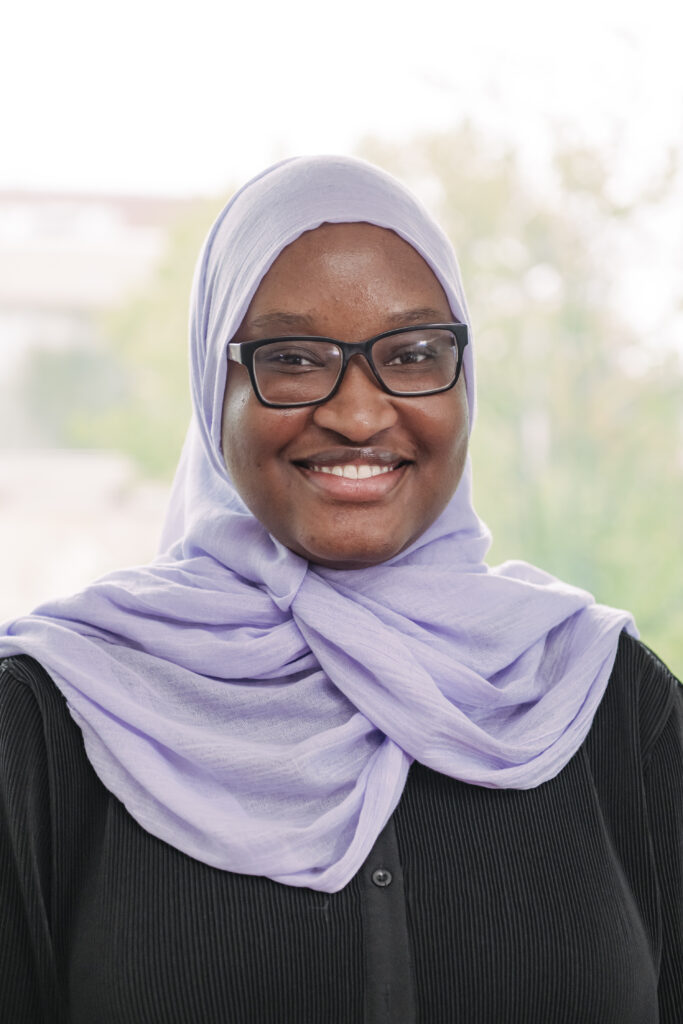
Clockwise from top left: Samantha Fu, Patricia Mengue Bindjeme, Aziza Mattaka, Dionne Cole, and Tasnim Rushdan.
“I made lifelong friends who are supporting me, and really wanting me to succeed,” says Fu, who worked at LET’S GO Boys and Girls, a nonprofit organization dedicated to fostering economic success in underserved communities through STEM education and workforce development.
Throughout the summer, the MPSS scholars pushed themselves out of their comfort zones and discovered how much they had to contribute.
“Before the program, I was afraid of public speaking,” says Fu. “By the end of the program, I was able to confidently present a grant proposal in front of a panel of nonprofit leaders. My group and I even won the grant proposal competition.”
Confident and capable
Cole, who worked at the Maryland Department of Health drafting policy recommendations for behavioral health care access for prison populations and others in the criminal justice system, says she feels much more confident after the summer. “Fear paralyzes us. But it’s like, no, we’re actually capable. You just have to look through the fear and realize, ‘Oh, snap, I could actually do this.’”
The group also ended the summer more confident of their commitment to public service.
“The public service sector truly is limitless and it affords any individual the opportunity to make a difference in their own way,” Cole says.
“Public service calls everyone,” Mattaka adds. “We are a collective, and society works better if we have people willing to develop the skills of leadership and empathy to do these jobs. Those are the skills we cultivated a lot this summer.”
]]>
When Patricia Mengue Bindjeme, a junior majoring in mechanical engineering, went to classes, her professors would sometimes point out how engineers’ decisions can have life-or-death consequences....
https://umbc.edu/stories/maryland-public-service-scholars-impact/
https://my3.my.umbc.edu/api/v0/pixel/news/145904/guest@my.umbc.edu/a98c8dba0cc948f3b35d5e265fbf12fb/api/pixel
cahss
cnms
coeit
fall-2024
impact
magazine
mpss
shriver-center
story
UMBC News & Magazine
https://my3.my.umbc.edu/groups/umbc-news-magazine
https://assets1-my.umbc.edu/system/shared/avatars/groups/000/001/943/24435aa6207c452e7bc15cc74b42c7bb/xsmall.png?1748556657
https://assets1-my.umbc.edu/system/shared/avatars/groups/000/001/943/24435aa6207c452e7bc15cc74b42c7bb/original.png?1748556657
https://assets2-my.umbc.edu/system/shared/avatars/groups/000/001/943/24435aa6207c452e7bc15cc74b42c7bb/xxlarge.png?1748556657
https://assets2-my.umbc.edu/system/shared/avatars/groups/000/001/943/24435aa6207c452e7bc15cc74b42c7bb/xlarge.png?1748556657
https://assets3-my.umbc.edu/system/shared/avatars/groups/000/001/943/24435aa6207c452e7bc15cc74b42c7bb/large.png?1748556657
https://assets1-my.umbc.edu/system/shared/avatars/groups/000/001/943/24435aa6207c452e7bc15cc74b42c7bb/medium.png?1748556657
https://assets2-my.umbc.edu/system/shared/avatars/groups/000/001/943/24435aa6207c452e7bc15cc74b42c7bb/small.png?1748556657
https://assets1-my.umbc.edu/system/shared/avatars/groups/000/001/943/24435aa6207c452e7bc15cc74b42c7bb/xsmall.png?1748556657
https://assets2-my.umbc.edu/system/shared/avatars/groups/000/001/943/24435aa6207c452e7bc15cc74b42c7bb/xxsmall.png?1748556657
UMBC News & Magazine
3
0
false
Mon, 25 Nov 2024 14:42:08 -0500
Mon, 25 Nov 2024 14:42:08 -0500
Mechanical engineering professor Weidong Zhu honored for pioneering work analyzing sound and vibration
The elevator in the Shanghai Tower in China can reach speeds of more than 45 miles per hour, whisking passengers up more than 100 floors in under a minute. For elevators this fast and tall, understanding—and ultimately controlling—the vibrations in the cables is key to keeping the ride smooth. It’s a problem that mechanical engineering professor Weidong Zhu has studied, and his analysis of high-speed elevators is just one of the ways his research touches everyday life. His work analyzing sound and vibration also has applications to improving wind turbines, automotive timing belts, and more.
The American Society of Mechanical Engineers recently honored Zhu’s pioneering body of research by selecting him to deliver the Rayleigh Lecture at the society’s annual meeting this November. The lecture is named after British scientist Lord Rayleigh, who, in addition to correctly explaining why the sky is blue and discovering the noble gas argon, wrote a groundbreaking book on the theory of sound.
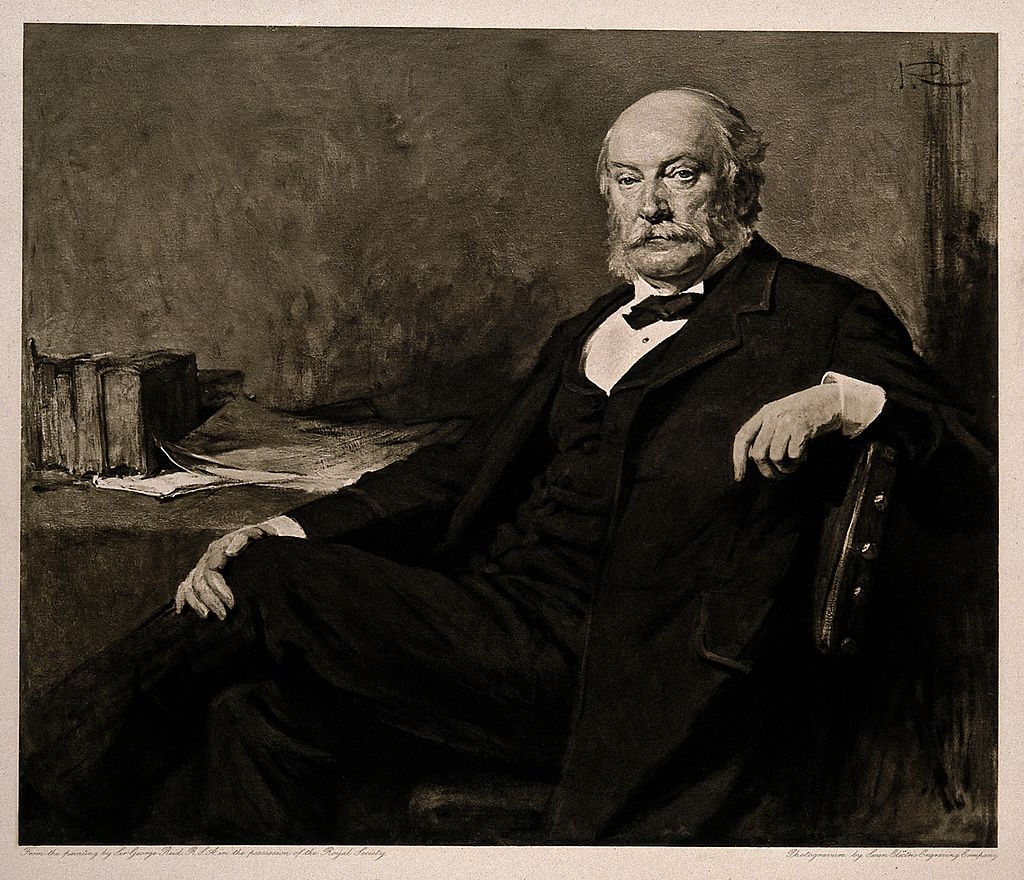 Photogravure of scientist John William Strutt, otherwise known as Lord Rayleigh. (Image credit: Wellcome Library, London, CC BY 4.0)
In his lecture delivered Nov. 20, Zhu presented new methodologies he has developed for analyzing difficult noise and vibration problems. “I’m very honored to give the Rayleigh Lecture,” says Zhu. “It’s a lifetime achievement award and one of the highest recognitions for people doing research in this area.”
Zhu’s impactful research has also been recognized with the 2020 University System of Maryland Board of Regents’ Faculty Award for Excellence in Scholarship, Research, or Creative Activity.
]]>
The elevator in the Shanghai Tower in China can reach speeds of more than 45 miles per hour, whisking passengers up more than 100 floors in under a minute. For elevators this fast and tall,...
https://umbc.edu/quick-posts/mechanical-engineering-professor-weidong-zhu-honored-for-pioneering-work-analyzing-sound-and-vibration/
https://my3.my.umbc.edu/api/v0/pixel/news/145853/guest@my.umbc.edu/d5c534390967aea9595f7019b32af078/api/pixel
coeit
meche
news
quick-post
research
science-and-tech
UMBC News & Magazine
https://my3.my.umbc.edu/groups/umbc-news-magazine
https://assets1-my.umbc.edu/system/shared/avatars/groups/000/001/943/24435aa6207c452e7bc15cc74b42c7bb/xsmall.png?1748556657
https://assets1-my.umbc.edu/system/shared/avatars/groups/000/001/943/24435aa6207c452e7bc15cc74b42c7bb/original.png?1748556657
https://assets2-my.umbc.edu/system/shared/avatars/groups/000/001/943/24435aa6207c452e7bc15cc74b42c7bb/xxlarge.png?1748556657
https://assets2-my.umbc.edu/system/shared/avatars/groups/000/001/943/24435aa6207c452e7bc15cc74b42c7bb/xlarge.png?1748556657
https://assets3-my.umbc.edu/system/shared/avatars/groups/000/001/943/24435aa6207c452e7bc15cc74b42c7bb/large.png?1748556657
https://assets1-my.umbc.edu/system/shared/avatars/groups/000/001/943/24435aa6207c452e7bc15cc74b42c7bb/medium.png?1748556657
https://assets2-my.umbc.edu/system/shared/avatars/groups/000/001/943/24435aa6207c452e7bc15cc74b42c7bb/small.png?1748556657
https://assets1-my.umbc.edu/system/shared/avatars/groups/000/001/943/24435aa6207c452e7bc15cc74b42c7bb/xsmall.png?1748556657
https://assets2-my.umbc.edu/system/shared/avatars/groups/000/001/943/24435aa6207c452e7bc15cc74b42c7bb/xxsmall.png?1748556657
UMBC News & Magazine
0
0
false
Fri, 22 Nov 2024 14:40:08 -0500
Fri, 22 Nov 2024 14:40:08 -0500
‘Snow better’ way to enjoy the rest of fall at UMBC
It’s tempting to think that with Thanksgiving almost here the fall semester is over, but campus still has some events to keep you warm and cozy throughout the rest of the year. As you work on your final projects, we’ve lined up the perfect list of comforting activities to keep your mind relaxed!
Fuel your studies
You may be full of knowledge but we know you still have room for a snack! Come by The Commons Mainstreet at noon on Wednesday, December 4, to check out the Student Events Board (seb)’s boba bar! Connect with some friends over treats before you dive back into your books.
Fold your worries away
The Initiatives for Identity, Inclusion, and Belonging (i3b) have been hosting hands-on origami workshops, and you can catch the last session of the semester.
Take a break from the semester’s stresses to create some snowflakes or any seasonal design. Origami Art Night is a peaceful space for you to relax, focus, and leave with a sense of accomplishment (and maybe a few paper masterpieces!) Stop by the Center for Well-Being, room 122, from 4 to 6 p.m. on December 4.

Monologues and moments
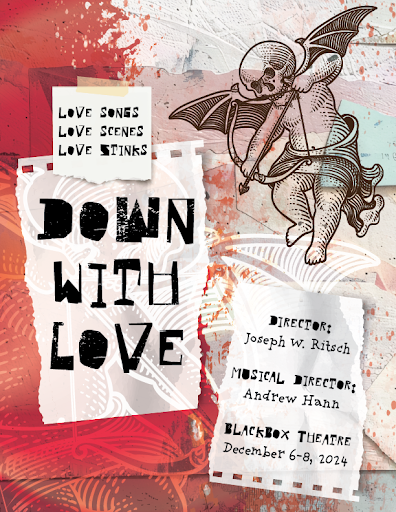
A chance to experience the complexities of love and heartbreak? You don’t wanna miss this! Step into the Black Box Theatre for an evening of raw talent and emotion. The UMBC Theatre Department is presenting Down With Love: An Actor Showcase, directed by Joseph W. Ritsch. To witness powerful monologues and heartfelt scenes, grab your tickets now for December 6-8 (make sure to find the two free performances for students)!
Distract yourself with dance
 Photo by Kiirstn Pagan ’11/UMBC
It’s a shame you can’t dance your troubles away, but you can watch others use their talents! Come and see the amazing work of students as they showcase their skills and talents! Prepare to be wowed by these delightful dancers on December 7 in the Proscenium Theater located in the Performing Arts and Humanities Building.
All aboard the holiday express
The magic of the wintertime is now just a bus ride away! Join (seb) on December 8 for a trip to Baltimore’s Inner Harbor Christmas Village. From 12 to 7 p.m., enjoy live festive music and browse handcrafted gifts with the waterfront as your backdrop. Bundle up, bring some spending money, and get ready to be immersed into the holiday season.
It’s the most wonderful time of the year!
The winter semester may be ending soon but the fun doesn’t stop. Enjoy free hot chocolate, snacks, crafts, and create memories frozen in time. Join (seb) on the North Lawn of The Commons for a Winter Wonderland on December 10. Bundle up and bring your friends!
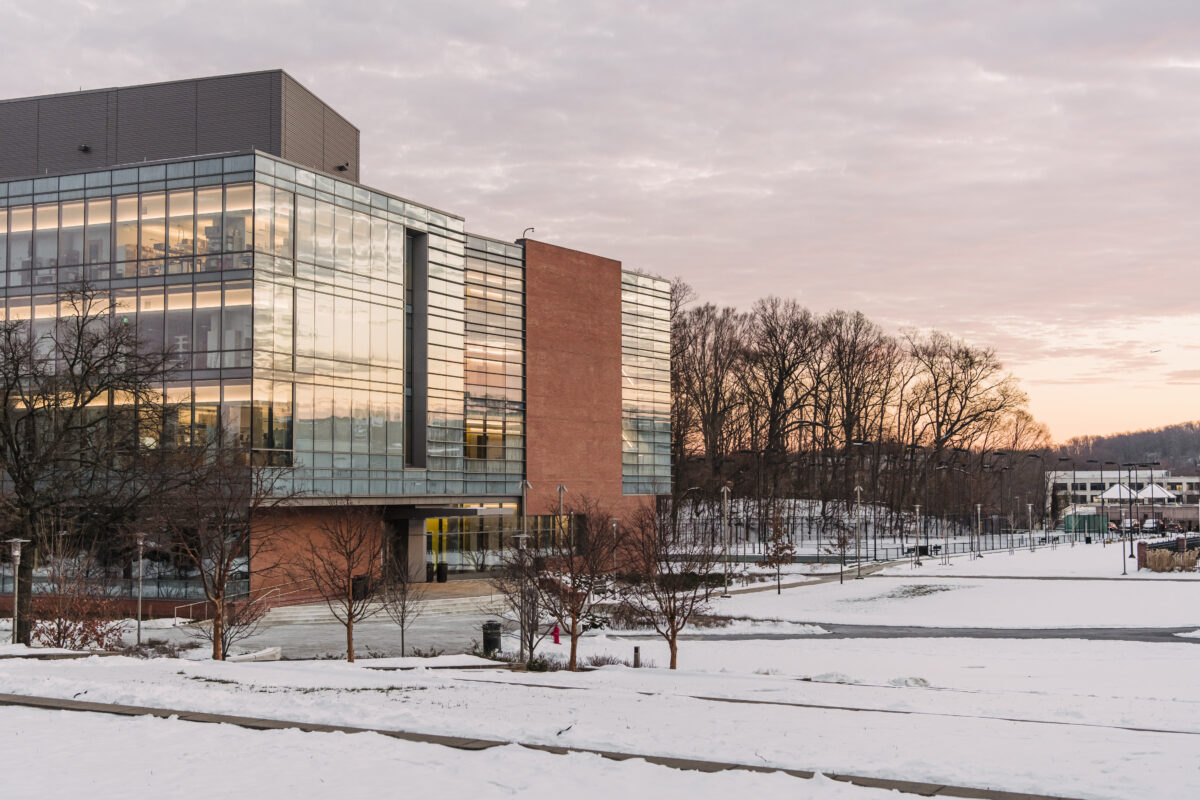
There’s snow place like UMBC to enjoy the rest of the semester! Whether you’re crafting in Commons or adventuring into Baltimore, these events will make this chilly season feel a little warmer.
By Mashaal Awan ’25 and JJ Gee ’25, UCM interns
]]>
It’s tempting to think that with Thanksgiving almost here the fall semester is over, but campus still has some events to keep you warm and cozy throughout the rest of the year. As you work on your...
https://umbc.edu/stories/6-cozy-ways-to-wrap-up-the-fall-semester-at-umbc/
https://my3.my.umbc.edu/api/v0/pixel/news/145838/guest@my.umbc.edu/86f3ea7053670e39f8ebeb08cfaa65f6/api/pixel
campus-life
magazine
seb
story
winter
UMBC News & Magazine
https://my3.my.umbc.edu/groups/umbc-news-magazine
https://assets1-my.umbc.edu/system/shared/avatars/groups/000/001/943/24435aa6207c452e7bc15cc74b42c7bb/xsmall.png?1748556657
https://assets1-my.umbc.edu/system/shared/avatars/groups/000/001/943/24435aa6207c452e7bc15cc74b42c7bb/original.png?1748556657
https://assets2-my.umbc.edu/system/shared/avatars/groups/000/001/943/24435aa6207c452e7bc15cc74b42c7bb/xxlarge.png?1748556657
https://assets2-my.umbc.edu/system/shared/avatars/groups/000/001/943/24435aa6207c452e7bc15cc74b42c7bb/xlarge.png?1748556657
https://assets3-my.umbc.edu/system/shared/avatars/groups/000/001/943/24435aa6207c452e7bc15cc74b42c7bb/large.png?1748556657
https://assets1-my.umbc.edu/system/shared/avatars/groups/000/001/943/24435aa6207c452e7bc15cc74b42c7bb/medium.png?1748556657
https://assets2-my.umbc.edu/system/shared/avatars/groups/000/001/943/24435aa6207c452e7bc15cc74b42c7bb/small.png?1748556657
https://assets1-my.umbc.edu/system/shared/avatars/groups/000/001/943/24435aa6207c452e7bc15cc74b42c7bb/xsmall.png?1748556657
https://assets2-my.umbc.edu/system/shared/avatars/groups/000/001/943/24435aa6207c452e7bc15cc74b42c7bb/xxsmall.png?1748556657
UMBC News & Magazine
0
0
false
Fri, 22 Nov 2024 11:23:36 -0500
Fri, 22 Nov 2024 11:23:36 -0500
The dance floor beckons—after 4 decades away, a dance major returns to her degree

In the fall of 1977, Jimmy Carter was president. NASA launched the Voyager I fly-by mission past Jupiter and Saturn. “The Mary Tyler Moore” show earned an Emmy for outstanding comedy, and the Atari 2600 gaming system went on the market. The Emotions’ “The Best of My Love” hit number one on the pop charts.
It was also the year Baltimore native Teresa Kearney entered UMBC as a dance major. But her route to a dance degree has been circuitous. She anticipates graduating in 2025.
From the classroom to the dance floor
At Walbrook High School in West Baltimore, Kearney danced under the direction of Beverly Marshall Johnson, who she still keeps in touch with today. As a young dancer, she performed regularly on TV channel 45’s “Soul City” (later renamed “Moonman Connection”)—a teen-dance show akin to the beloved “Soul Train” and “American Bandstand.” Kearney was accepted to UMBC with scholarships but, after two years, she heeded the call of Hollywood and decided to take a chance on professional dance opportunities on the West Coast.
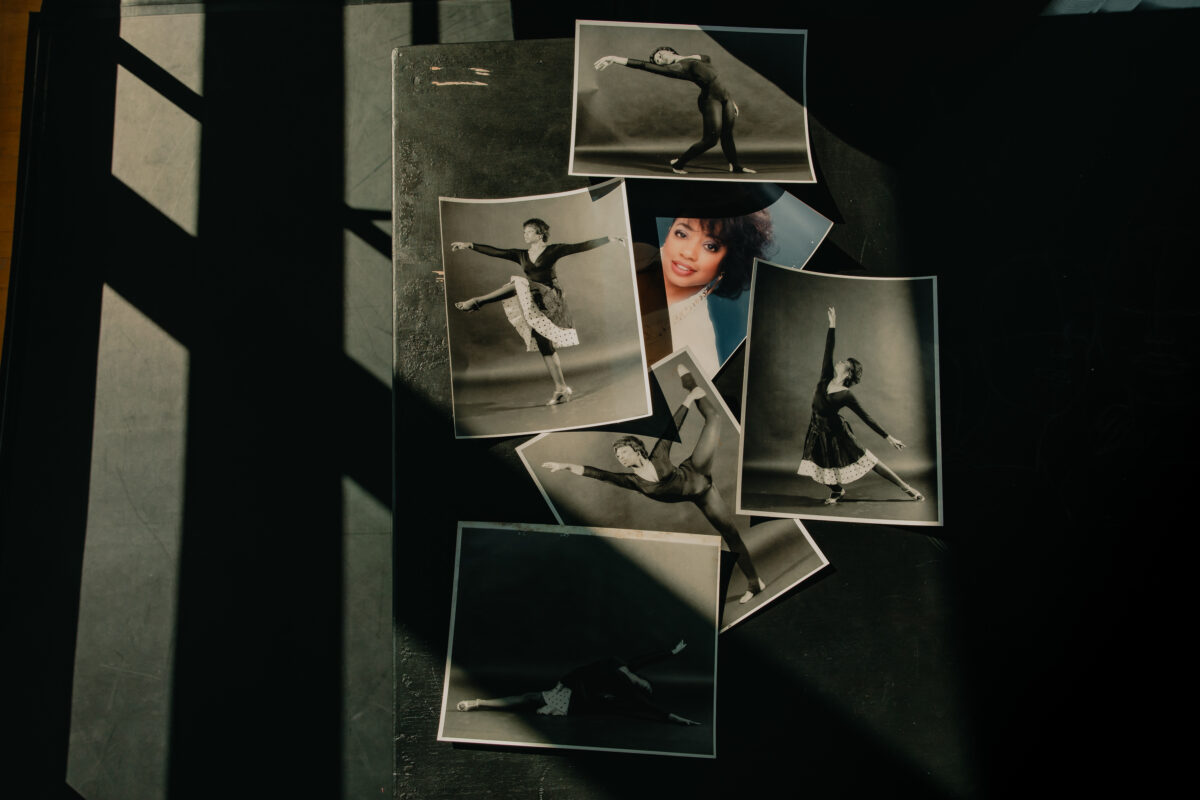 Teresa Kearney’s early days of dance.
By 1979, Kearney and her dance partner were regulars on the competitive social dance circuit. “We were getting really popular, my dance partner and I,” she says. “We got a chance to go to Hollywood and be on ‘Dance Fever’ and compete from state to state, city to city. We made our living in dance for a long time.”
Kearney held onto the goal of a UMBC degree for decades as life intervened. In between, she took on acting roles, was an instructor for LaBlast Fitness under Louis van Amstel of “Dancing with the Stars,” graduated from the Broadcasting Institute of Maryland for air talent for radio and TV, including an FCC license, sold insurance and real estate, and helped put her nephew through medical school, to name a few of her jobs and activities. “Then my mother, Lillie Kearney, passed away three years ago. She was also a dancer, and I thought this is the time for me to go back to college,” she says. “It was on my bucket list.”
Keeping the standard
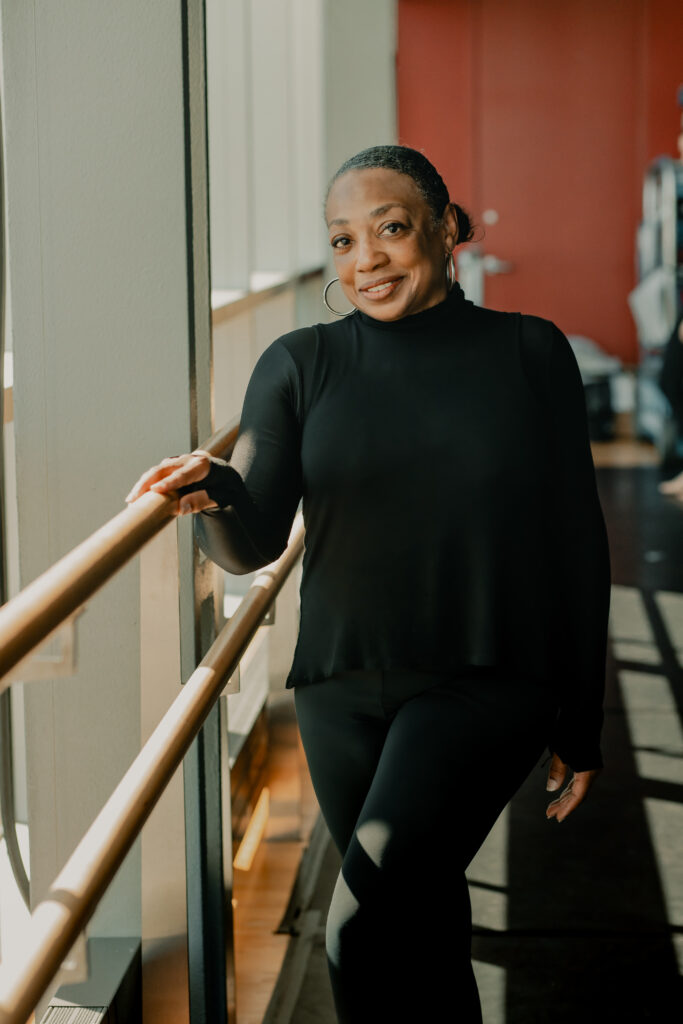
As a long-time professional dancer—who never actually retired—Kearney continues to challenge herself by learning new techniques and styles. And she’s worked hard to re-train her body after decades dancing in heels on Latin and social dance circuits. “I’m still learning,” she says. “There’s a contemporary African dance class required now for all dance majors. For a two-and-a-half-hour class, it’s very energetic. And even though I’m 65, we all have challenges in that class,” she notes of her younger classmates.
Ballet instructor Alison Crosby could see Kearney was working hard, and says, “Teresa made it easy for me to keep the standard of the course, because she asked for no changes, asked for nothing to be different.” Plus, by showing up on time, preparing her body with gentle stretches to warm up her muscles and feet, and finding her place at the barre, Kearney modeled the appropriate dancer’s discipline that is expected in professional classes and rehearsals.
“Her experience in dance is wide and professional,” Crosby adds, “and she modeled the discipline and respect for coming to ballet class.” As an instructor, Crosby noticed how easily Kearney connected with her much younger classmates. “Teresa was involved with even the first-years. They all saw Teresa with great respect.”
In fact, Kearney shares that her classmates in the dance program often seek her out for advice or just a listening ear. She’s noticed that these students face far more self-doubt and pressures than she did when she was a student in the 1970s.
 Kearney, back, center, practices with her classmates in the Dance Cube.
“Last semester, I was talking with a group of students,” Kearney recalls. “We were overwhelmed with classes and how hard it is. I said, ‘Wait a minute. We’re here getting a degree….We’re here to learn even when it’s hard.’”
“Once in a while,” Crosby says, “I’ll ask a student to show something as a positive model for the rest of the class. I asked Teresa…she just was dancing and using her eyes and her head so beautifully—everything she’d learned through her dance life. It’s still in her—that artistry through all the years and her different careers—her artistry has just stayed with her.”
By Lisa Traiger
]]>
In the fall of 1977, Jimmy Carter was president. NASA launched the Voyager I fly-by mission past Jupiter and Saturn. “The Mary Tyler Moore” show earned an Emmy for outstanding comedy, and the...
https://umbc.edu/stories/teresa-kearney-dance-journey-adult-learner/
https://my3.my.umbc.edu/api/v0/pixel/news/145839/guest@my.umbc.edu/714d646804c74808d06dd5426568c895/api/pixel
at-play
cahss
campus-life
dance
fall-2024
magazine
performing-arts
story
UMBC News & Magazine
https://my3.my.umbc.edu/groups/umbc-news-magazine
https://assets1-my.umbc.edu/system/shared/avatars/groups/000/001/943/24435aa6207c452e7bc15cc74b42c7bb/xsmall.png?1748556657
https://assets1-my.umbc.edu/system/shared/avatars/groups/000/001/943/24435aa6207c452e7bc15cc74b42c7bb/original.png?1748556657
https://assets2-my.umbc.edu/system/shared/avatars/groups/000/001/943/24435aa6207c452e7bc15cc74b42c7bb/xxlarge.png?1748556657
https://assets2-my.umbc.edu/system/shared/avatars/groups/000/001/943/24435aa6207c452e7bc15cc74b42c7bb/xlarge.png?1748556657
https://assets3-my.umbc.edu/system/shared/avatars/groups/000/001/943/24435aa6207c452e7bc15cc74b42c7bb/large.png?1748556657
https://assets1-my.umbc.edu/system/shared/avatars/groups/000/001/943/24435aa6207c452e7bc15cc74b42c7bb/medium.png?1748556657
https://assets2-my.umbc.edu/system/shared/avatars/groups/000/001/943/24435aa6207c452e7bc15cc74b42c7bb/small.png?1748556657
https://assets1-my.umbc.edu/system/shared/avatars/groups/000/001/943/24435aa6207c452e7bc15cc74b42c7bb/xsmall.png?1748556657
https://assets2-my.umbc.edu/system/shared/avatars/groups/000/001/943/24435aa6207c452e7bc15cc74b42c7bb/xxsmall.png?1748556657
UMBC News & Magazine
0
0
false
Fri, 22 Nov 2024 11:07:27 -0500
Biologist Tom Cronin co-authors ‘Color in Nature,’ a beautiful and accessible tour of color’s role in our world

Color in Nature, co-authored byThomas W. Cronin, professor of biological sciences, covers the world of color from the first principles of physics to the use of color in art and design. An even mix of text and beautiful images, Color in Nature (Princeton University Press, November 2024)is written in an accessible style for any reader who harbors curiosity about color in our world, without sacrificing technical accuracy.
“The book is a comprehensive look at the roles of color in the biology of plants and animals, but also its role in human society and art,” Cronin says. The authors consider the roles of color in mating, hunting, fighting, deceiving, and hiding, and call upon disciplines such as physics, genetics, chemistry, physiology, and psychology. The book’s images support concepts in the text, but they “are also intended to be beautiful and to show off the diversity of colors and patterns in the natural world,” Cronin says.
Cronin contributed to the new book alongside six other authors from England, New Zealand, and the U.S. Contributors include experts in evolution, optical sciences, neuroscience, marine science, and the creative use of color.
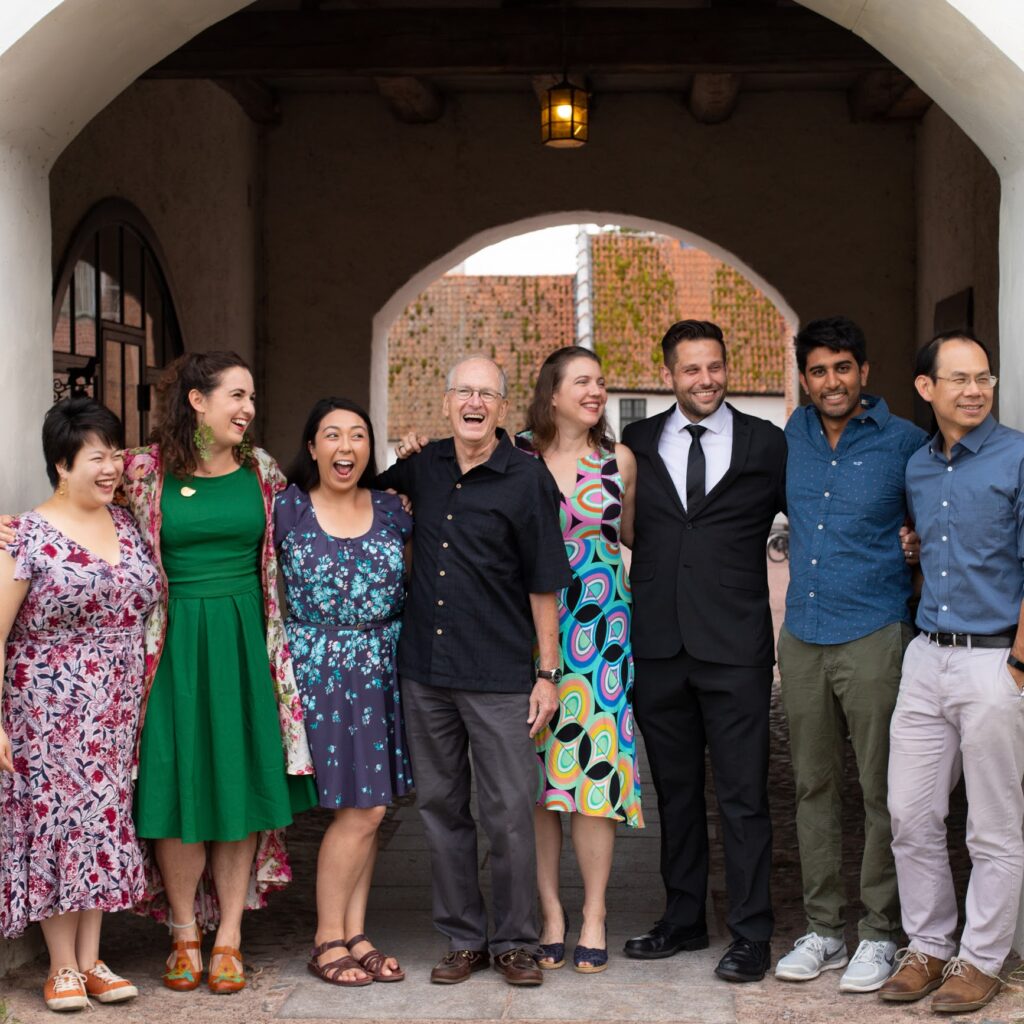 Tom Cronin, fourth from left, with current and former members of his research group at the International Conference on Invertebrate Vision in 2019. (Courtesy of Cronin)
Cronin’s four-decade career at UMBC has been primarily spent studying the unique visual system of mantis shrimp—unusual, wildly colored crustaceans with astoundingly capable eyes and a nasty punch. Cronin’s research group has also studied the chromatophores—light-sensing and color-changing cells—on the skin of cephalopods like squid, octopuses and cuttlefish.
According to the The Wall Street Journal, “Color in Nature provides an accessible scientific entrée into the colors of our world, with bold, glossy images and detailed diagrams.”
David Gascoigne, an expert birder and nature blogger at Travels with Birds, found Color in Nature to be “an eminently fascinating book covering an eminently fascinating topic which has relevance to every aspect of life on Earth. I will be referring to it often, and I will cherish its wisdom. I suspect you will, too.”
]]>
Color in Nature, co-authored byThomas W. Cronin, professor of biological sciences, covers the world of color from the first principles of physics to the use of color in art and design. An even mix...
https://umbc.edu/quick-posts/color-in-nature-book/
https://my3.my.umbc.edu/api/v0/pixel/news/145822/guest@my.umbc.edu/1164661ebd3c8811a6cb777f95489dff/api/pixel
biology
cnms
news
quick-post
science-and-tech
UMBC News & Magazine
https://my3.my.umbc.edu/groups/umbc-news-magazine
https://assets1-my.umbc.edu/system/shared/avatars/groups/000/001/943/24435aa6207c452e7bc15cc74b42c7bb/xsmall.png?1748556657
https://assets1-my.umbc.edu/system/shared/avatars/groups/000/001/943/24435aa6207c452e7bc15cc74b42c7bb/original.png?1748556657
https://assets2-my.umbc.edu/system/shared/avatars/groups/000/001/943/24435aa6207c452e7bc15cc74b42c7bb/xxlarge.png?1748556657
https://assets2-my.umbc.edu/system/shared/avatars/groups/000/001/943/24435aa6207c452e7bc15cc74b42c7bb/xlarge.png?1748556657
https://assets3-my.umbc.edu/system/shared/avatars/groups/000/001/943/24435aa6207c452e7bc15cc74b42c7bb/large.png?1748556657
https://assets1-my.umbc.edu/system/shared/avatars/groups/000/001/943/24435aa6207c452e7bc15cc74b42c7bb/medium.png?1748556657
https://assets2-my.umbc.edu/system/shared/avatars/groups/000/001/943/24435aa6207c452e7bc15cc74b42c7bb/small.png?1748556657
https://assets1-my.umbc.edu/system/shared/avatars/groups/000/001/943/24435aa6207c452e7bc15cc74b42c7bb/xsmall.png?1748556657
https://assets2-my.umbc.edu/system/shared/avatars/groups/000/001/943/24435aa6207c452e7bc15cc74b42c7bb/xxsmall.png?1748556657
UMBC News & Magazine
1
0
false
Thu, 21 Nov 2024 15:05:53 -0500
Thu, 21 Nov 2024 15:05:53 -0500
Tasneem Khambaty mentors a new generation of doctoral students on novel research for the prevention of type 2 diabetes
On the fourth floor of UMBC’s math/psychology building, Tasneem Khambaty, associate professor of clinical psychology and behavioral medicine, meets with doctoral students Ashley Splain and Sumaiya DeLane to plan the day’s work at the Cognition, Affect, and Cardiometabolic HEalth (CACHE) lab. The task at hand is analyzing novel data collected by continuous glucose monitoring (CGM) systems. Every detail matters. Splain and DeLane are study coordinators for one of the first research studies to use CGM technology to investigate the precise associations between low and high glucose levels, cognitive function, and key Alzheimer’s disease biomarkers in middle-age and older adults at risk for type 2 diabetes.
Now in their sixth and fifth years of the clinical psychology and behavioral medicine doctoral program, Splain and DeLane came to UMBC with years of clinical experience working with older adults. As future clinical psychologists, they were looking for a doctoral program that offered strong mentorship enabling them to build their scientific research skills and obtain hands-on experience in a variety of settings to enrich their clinical practice. The CACHE lab allowed all those things to come together. “I was looking for someone who recognized I had a unique set of experiences and skills to bring and was willing to take a chance and be open to teaching me a lot of these basics,” says Splain. “That was something I appreciated about Dr. Khambaty. She recognized what I could bring to the lab.”
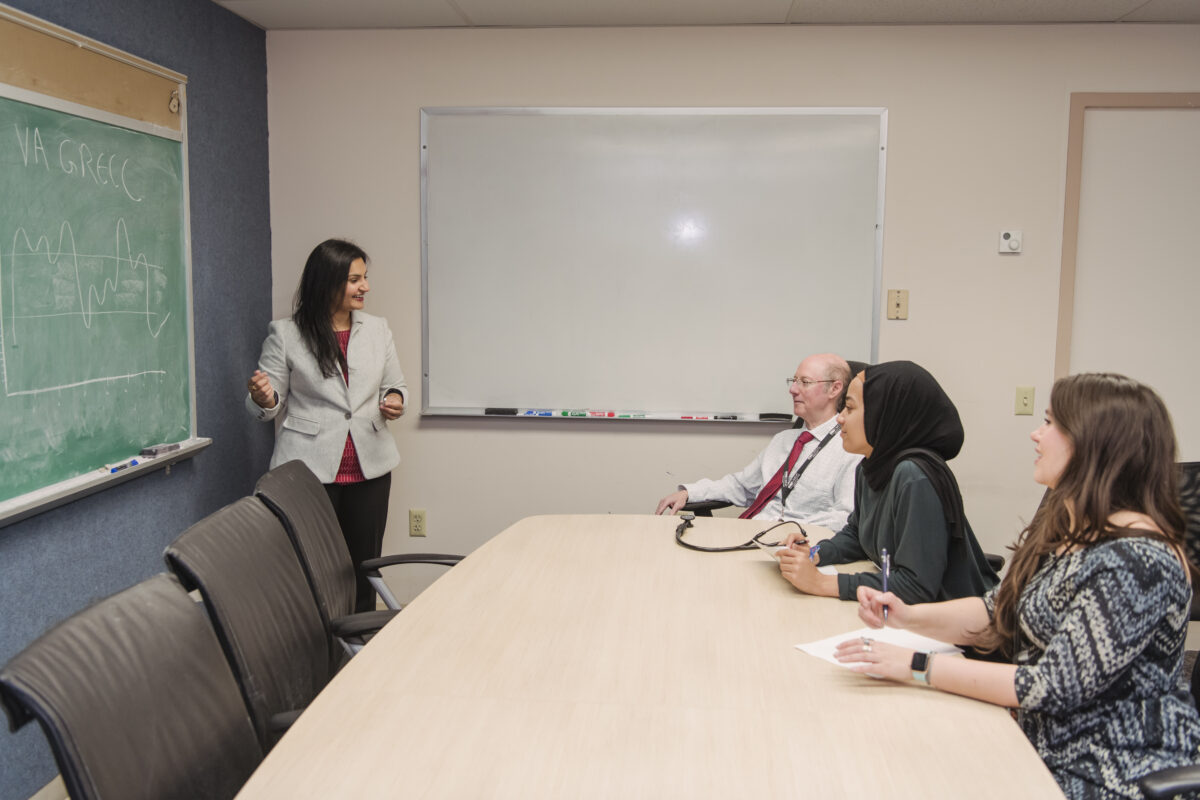 (l-r): Khambaty, Les Katzel, Sumaiya DeLane, and Ashley Splain. (Marlayna Demond ’11/UMBC)
Khambaty, the principal investigator in the CGM study funded by a National Institute of Aging grant, researches the psychosocial and neurocognitive factors that influence the diabetes process across the lifespan of middle-aged and older adults. “This research introduces a cost-effective, user-friendly CGM technology as a novel, sensitive, digital biomarker for the early detection of cognitive dysfunction and stratification of Alzheimer’s disease risk, ultimately, helping older adults preserve cognitive function into later life,” says Khambaty.
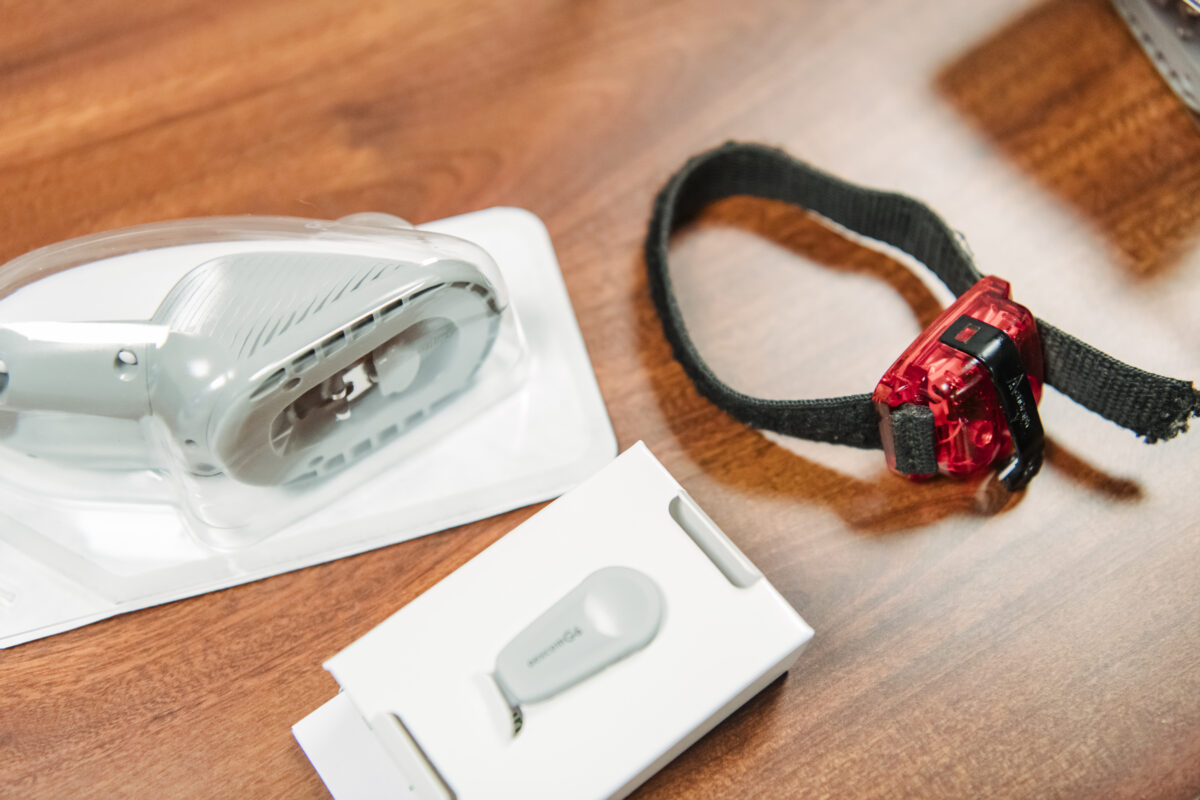 Dexcom glucose monitoring system. (Marlayna Demond ’11/UMBC)
Preventing type 2 diabetes
People with Type 1 diabetes cannot produce insulin at all. Type 2 diabetes happens when the body cannot utilize insulin efficiently, and this is the most prevalent type of diabetes, notes Khambaty. “It is linked to cognitive dysfunction in episodic memory and executive functions, and an increased risk for Alzheimer’s disease. “Type 2 diabetes is curable,” she says. “If we focus on prevention, we won’t need a cure.”
A barrier to prevention is reliable, diagnostic, digital CGM tools for the early detection of cognitive dysfunction and Alzheimer’s disease for people at risk of type 2 diabetes. CGM, which gives a precise assessment of fluctuating blood sugar levels, has historically been limited to people who already have diabetes. “Further research is needed to determine the role of glucose fluctuations in the prediabetic stage,” says Khambaty. This requires collaborators.
Splain and DeLane have been involved in the study from the start, gaining valuable experience alongside an interdisciplinary team of experts in behavioral medicine, endocrinology, geriatrics, and neuropsychology. This includes UMBC’s Shari Waldstein, a professor of psychology who focuses on cardiovascular behavioral medicine and medical neuropsychology, and various physicians and nurses, including Les Katzel a physician of geriatric medicine at the University of Maryland Claude D. Pepper Older Americans Independence Center (UM-OAIC) and the Geriatric Research Education and Clinical Center (GRECC) within the Baltimore Veterans Affairs Medical Center (VAMC).
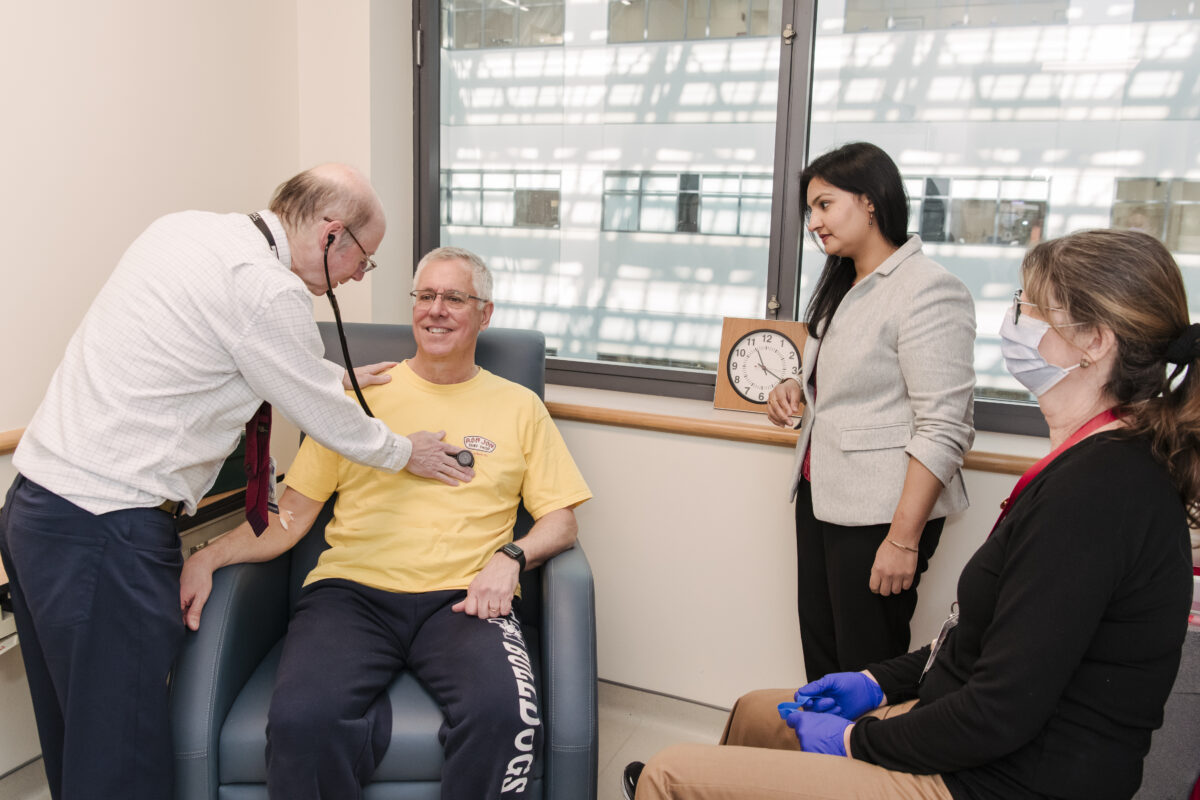 (l-r): The research team models patient care for the students at the GRECC. (Marlayna Demond ’11/UMBC)
A key benefit of being part of an interdisciplinary team is gaining firsthand experience with the infrastructure and technology essential for this level of research. UM-OAIC and the Baltimore VAMC GRECC provide the infrastructure for the research—human subjects oversight, the study’s safety monitoring, study location, nursing support, blood management, and sample storage. The technology partner, Dexcom, develops, manufactures, produces, and distributes CGM systems for diabetes management. Doctoral students witness in real-time the relationships necessary for driving innovation in this field.
Doctoral research with a global impact
Before participants visit the study nurse at the Baltimore VAMC GRECC to have the Dexcom monitor inserted, they first meet with Splain and DeLane. The pair oversees the entire process, from initial contact to final payment for participation. This includes confirming eligibility, liaising with the nurse practitioners who conduct a physical exam and blood draw, explaining how to use the Dexcom glucose monitoring device and actigraphy band, and conducting neurocognitive assessments to evaluate the participants’ learning, memory, and attention.
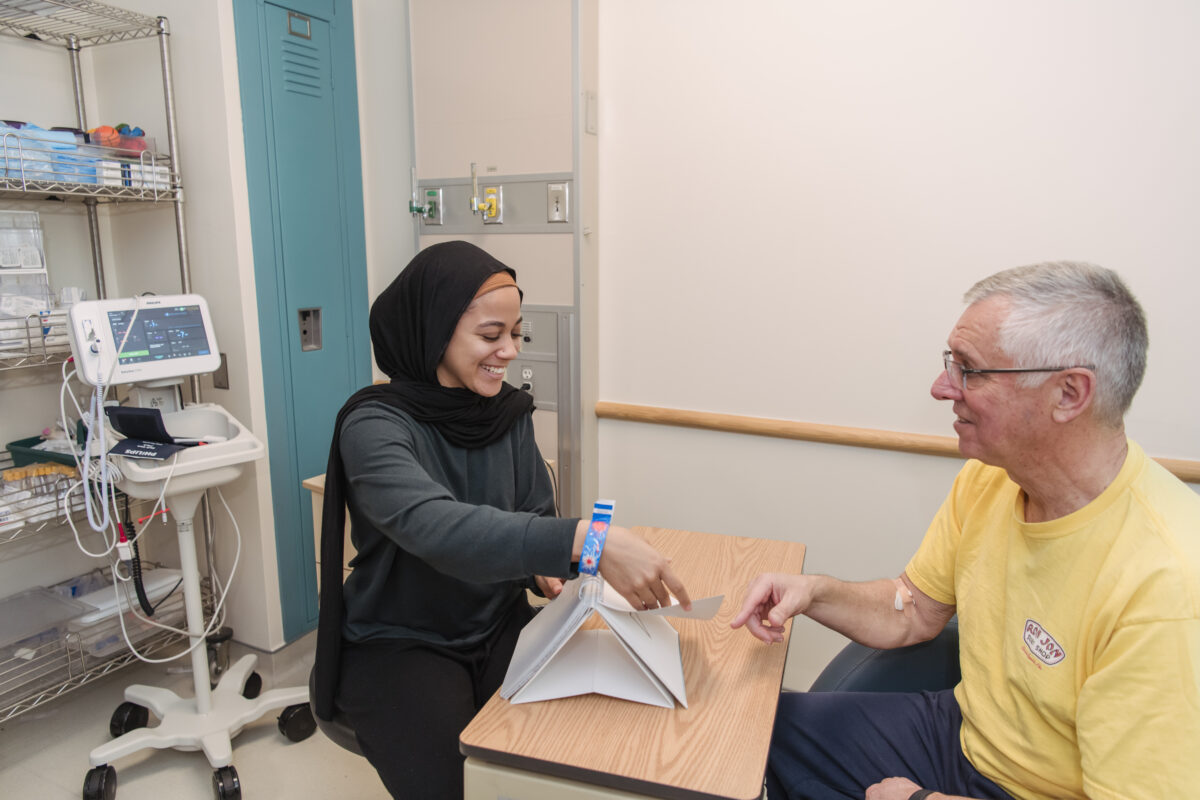
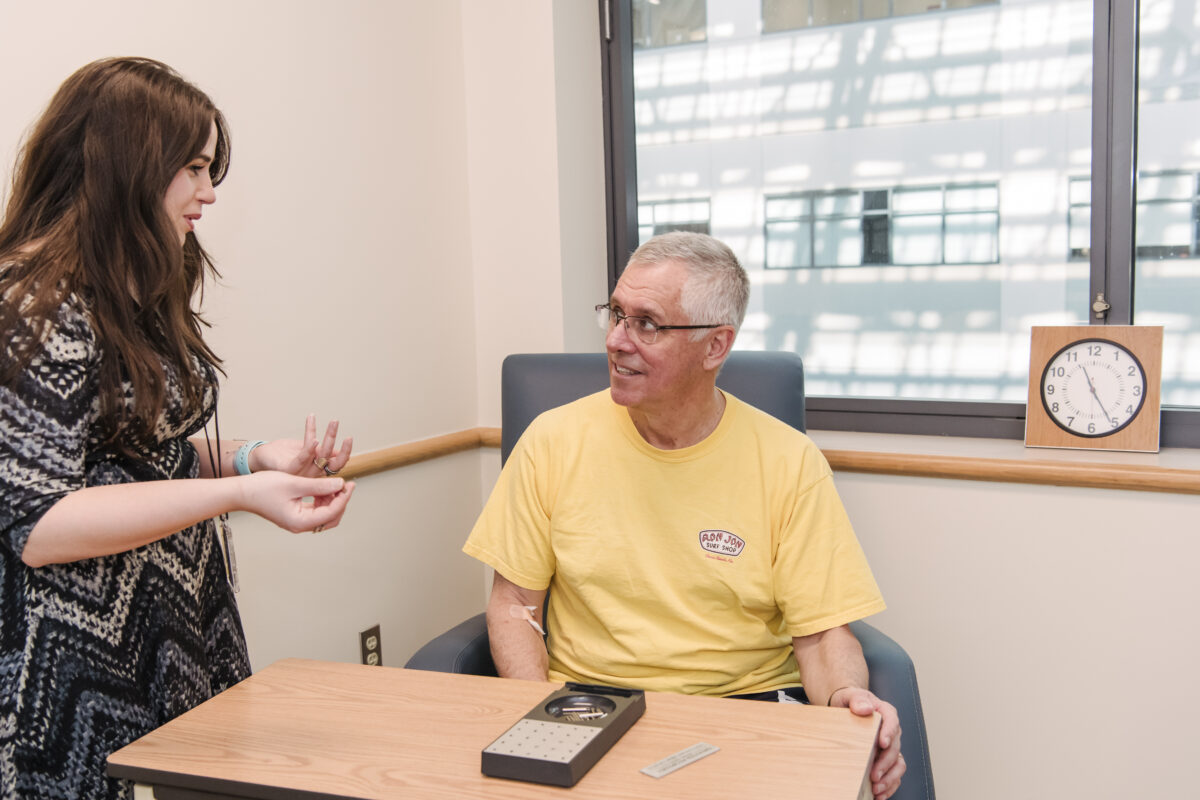 (l-r): DeLane and Splain practice administering cognitive assessments. (Marlayna Demond ’11/UMBC)
“A lot of our participants have been interested in the study because they have a family history of diabetes and have seen how devastating it can be if left untreated,” says Splain. Her interests in the intersection of cardiometabolic diseases—such as diabetes, heart disease, and hypertension—and the impact of psychological factors like depression and anxiety on their development made her an excellent fit for Khambaty’s lab. “Because of that history, they are willing to give their time so that we can advance how we treat this debilitating condition,” Splain continues.
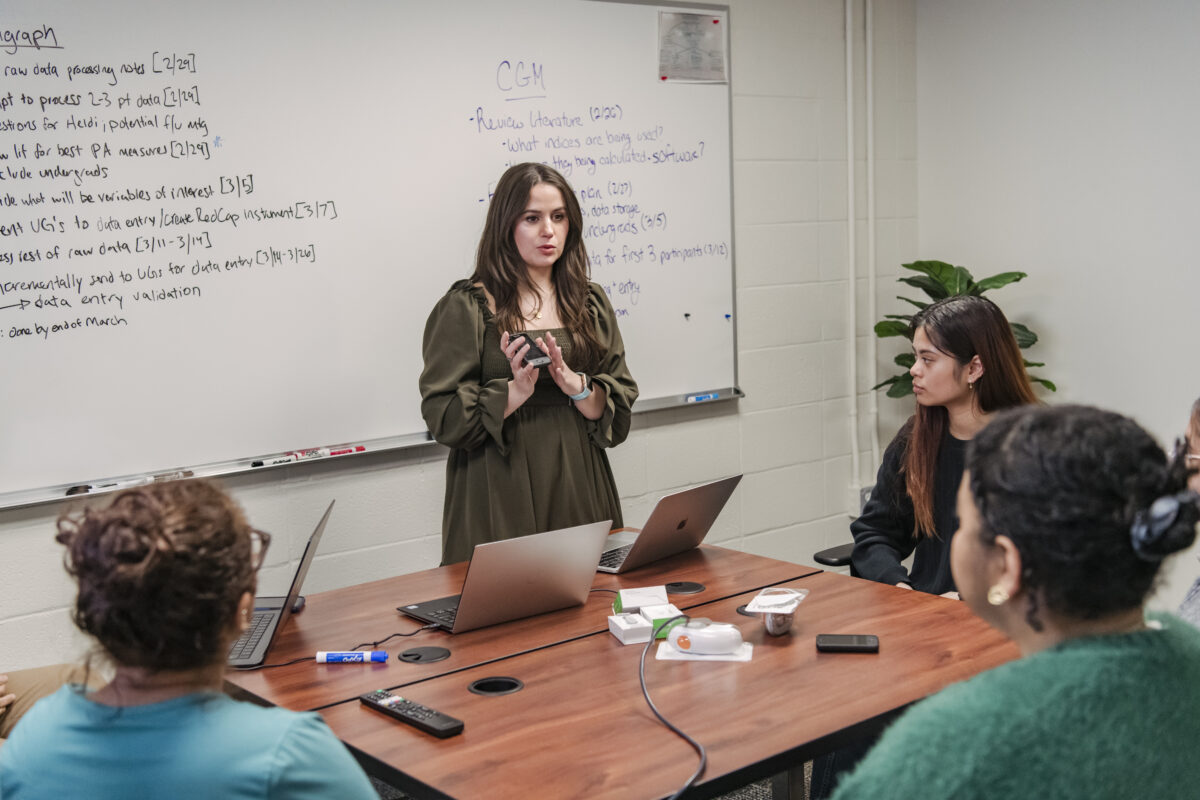 Splain explains how the monitor gathers information for undergraduate psychology students. (Marlayna Demond ’11/UMBC)
Eight days later, when the monitor is removed, the study coordinators conduct a final review with participants asking about their social networks, mood, and symptoms of depression as well as their sleep and physical activity levels. Meanwhile, back at the UMBC lab, Khambaty, Splain, and DeLane lead undergraduate students in entering, processing, and analyzing the data. The doctoral students dive deeply into the data sets and participant feedback and plan the next phase of their research.
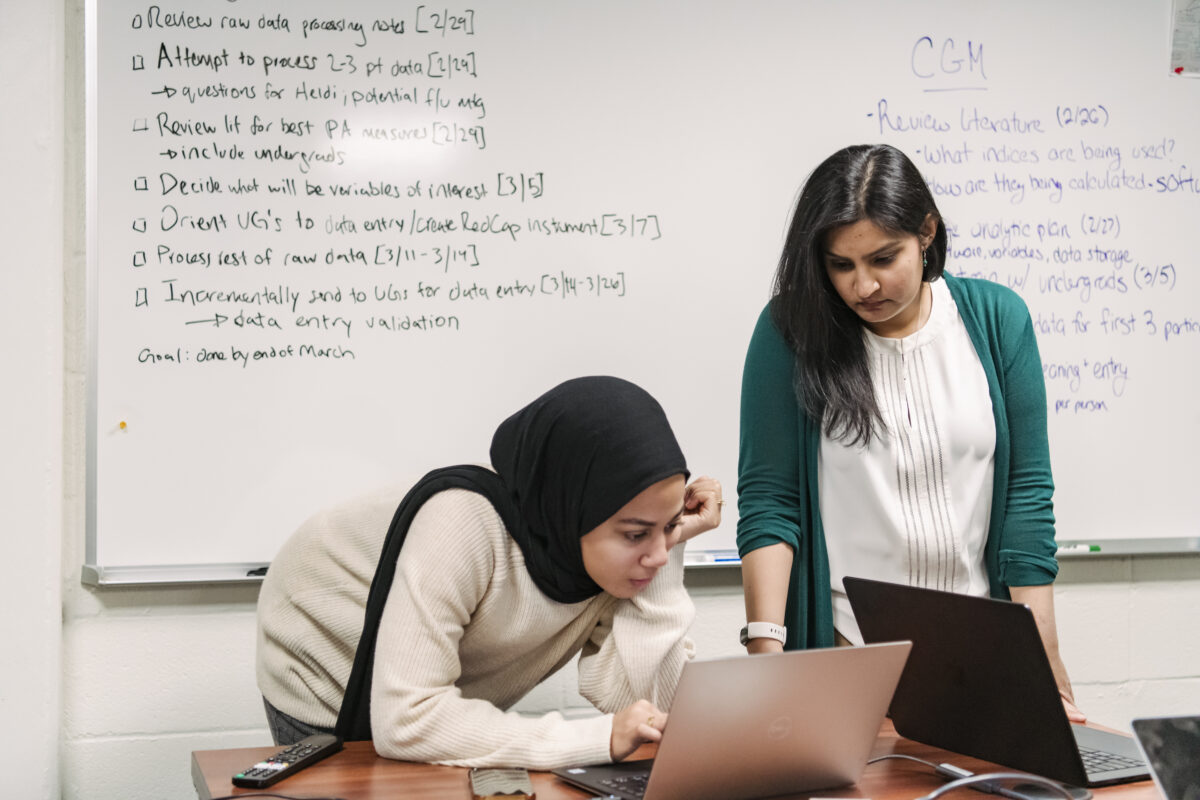 DeLane and Khambaty review the latest CGM data. (Marlayna Demond ’11/UMBC)
“Clinic psychology programs require a lot of mental shifting because we’re doing not only research but we’re also doing the clinical piece,” says Splain. “Connecting with participants, hearing their stories, and knowing that our research can hopefully move the field forward keeps us going.”
Welcoming more student researchers
Khambaty is determined to inspire more students in this field. Currently, there are six undergraduates and three graduate students in the lab. Khambaty also shares her research with undergraduate students in her upper-level seminar, Health Promotion and Disease Prevention. “Students are excited to learn about how multidisciplinary perspectives from medicine, public health, epidemiology, and psychology are needed to understand the challenges and opportunities for chronic disease prevention in the U.S.,” says Khambaty.
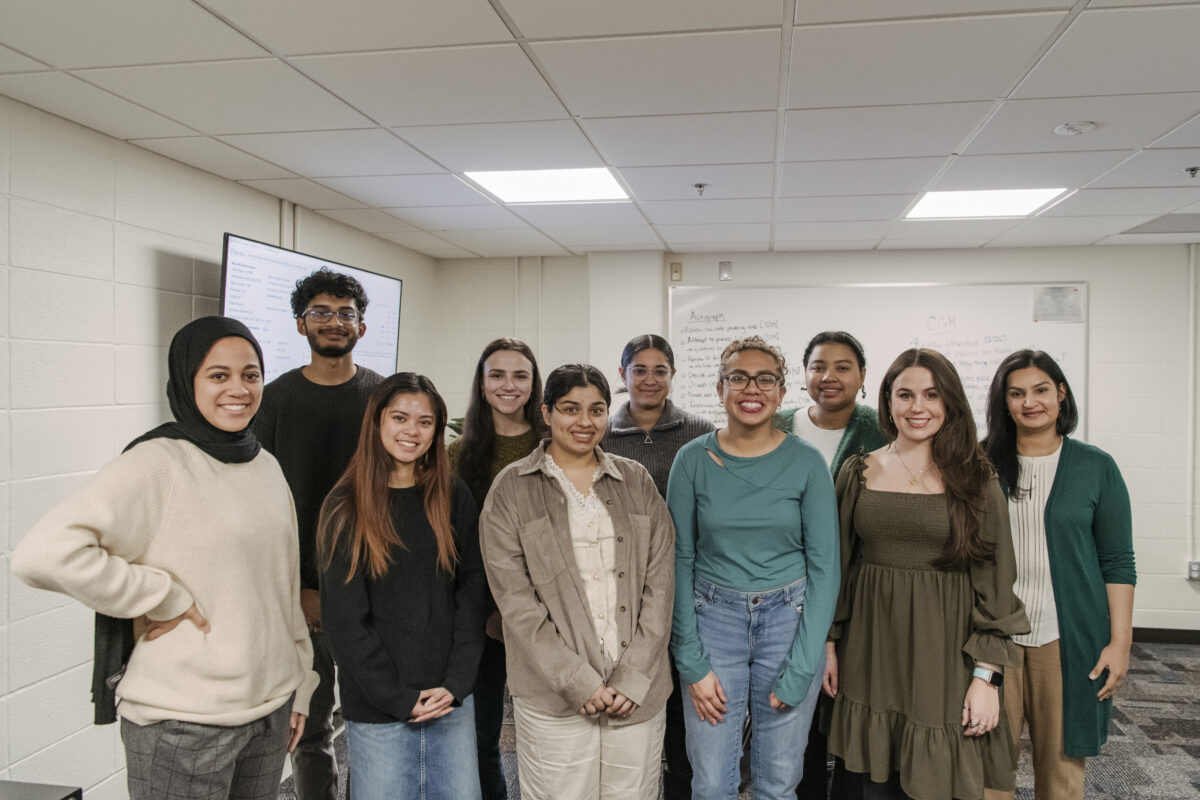 The CACHE Lab graduate and undergraduate team. (Marlayna Demond ’11/UMBC)
Now working on her dissertation, DeLane reflects on the impact of the research she’s contributed to. The study is in its second year of funding.“I find it very exciting. I’ve been amazed at how when participants first join our study, they begin to connect the dots between their blood sugar levels and their brain health later in life. It empowers them with a sense of ‘I can do something. I can take control,’” she says. Currently, her research focuses on how psychophysiological factors, such as heart rate variability, can enhance our understanding of the link between anxiety symptoms and glucose regulation, particularly in relation to social support and resilience. Over the next year, she plans to apply for internships in pediatric neuropsychology where she can further investigate how early life experiences interact with these factors to shape cognitive health in children.
The World Health Organization reports that there is a globally agreed target to halt the rise in diabetes and obesity by 2025. Its latest reports show that about 422 million people worldwide have diabetes, the majority living in low-middle-income countries, and 1.5 million deaths are directly attributed to diabetes each year. “The fact that we are looking at people with prediabetes rather than a confirmed diagnosis empowers people to make small changes in their lifestyle,” says DeLane. “To be able to share that, and from existing research I’m familiar with, to give them a little bit of advice, it makes me feel like I’m making a bit of a difference.”
Learn more about UMBC’s psychology programs, including the behavioral medicine track.
Register for PSYC 475 – Health Promotion and Disease Prevention.
]]>
On the fourth floor of UMBC’s math/psychology building, Tasneem Khambaty, associate professor of clinical psychology and behavioral medicine, meets with doctoral students Ashley Splain and Sumaiya...
https://umbc.edu/stories/tasneem-khambaty-mentors-doctoral-students-on-the-prevention-of-type-2-diabetes/
https://my3.my.umbc.edu/api/v0/pixel/news/145775/guest@my.umbc.edu/1773bb4ff360fbb72f4ac3f4df9dbc36/api/pixel
cahss
cahss-research
news
psychology
research
science-and-tech
story
UMBC News & Magazine
https://my3.my.umbc.edu/groups/umbc-news-magazine
https://assets1-my.umbc.edu/system/shared/avatars/groups/000/001/943/24435aa6207c452e7bc15cc74b42c7bb/xsmall.png?1748556657
https://assets1-my.umbc.edu/system/shared/avatars/groups/000/001/943/24435aa6207c452e7bc15cc74b42c7bb/original.png?1748556657
https://assets2-my.umbc.edu/system/shared/avatars/groups/000/001/943/24435aa6207c452e7bc15cc74b42c7bb/xxlarge.png?1748556657
https://assets2-my.umbc.edu/system/shared/avatars/groups/000/001/943/24435aa6207c452e7bc15cc74b42c7bb/xlarge.png?1748556657
https://assets3-my.umbc.edu/system/shared/avatars/groups/000/001/943/24435aa6207c452e7bc15cc74b42c7bb/large.png?1748556657
https://assets1-my.umbc.edu/system/shared/avatars/groups/000/001/943/24435aa6207c452e7bc15cc74b42c7bb/medium.png?1748556657
https://assets2-my.umbc.edu/system/shared/avatars/groups/000/001/943/24435aa6207c452e7bc15cc74b42c7bb/small.png?1748556657
https://assets1-my.umbc.edu/system/shared/avatars/groups/000/001/943/24435aa6207c452e7bc15cc74b42c7bb/xsmall.png?1748556657
https://assets2-my.umbc.edu/system/shared/avatars/groups/000/001/943/24435aa6207c452e7bc15cc74b42c7bb/xxsmall.png?1748556657
UMBC News & Magazine
0
0
false
Wed, 20 Nov 2024 12:08:44 -0500
Wed, 20 Nov 2024 12:08:44 -0500
Meet a Retriever—Matthew Levy ’00, M.S. ’08, emergency response professional

Meet Matthew J. Levy ’00, M.S. ’08, emergency and disaster health services (EDHS), who has dedicated his career to Maryland communities. His expertise, as a physician of emergency medicine and former paramedic, has made him indispensable in the most challenging national, state, and local emergencies. Matthew was part of an emergency response team that spent 10 days in New York City, assisting in the relief efforts following 9/11. In 2015, he received the Silver Medal of Valor from Howard County Fire and Rescue Services for his role as the second tactical medic to arrive on the scene at the Columbia Mall shooting in January 2014 then transitioned to being the on-scene medical director. In 2017, he was named Emergency Medical Services Physician of the Year by the Maryland Chapter of the American College of Emergency Physicians. Take it away, Matt!
Q: Briefly introduce yourself. What’s one essential thing you’d want another Retriever to know about you?
A: I began my studies at UMBC in 1996, enrolling in the Emergency and Disaster Health Services (EDHS) program. I earned my bachelor’s degree in 2000 and my master’s in 2008 while finishing my residency training as an emergency physician at Johns Hopkins University School of Medicine. I now serve as EDHS’s medical director for the paramedic program, the very department that helped me become the clinician and leader I am today. I am also an associate professor in the Department of Emergency Medicine at Johns Hopkins University School of Medicine.
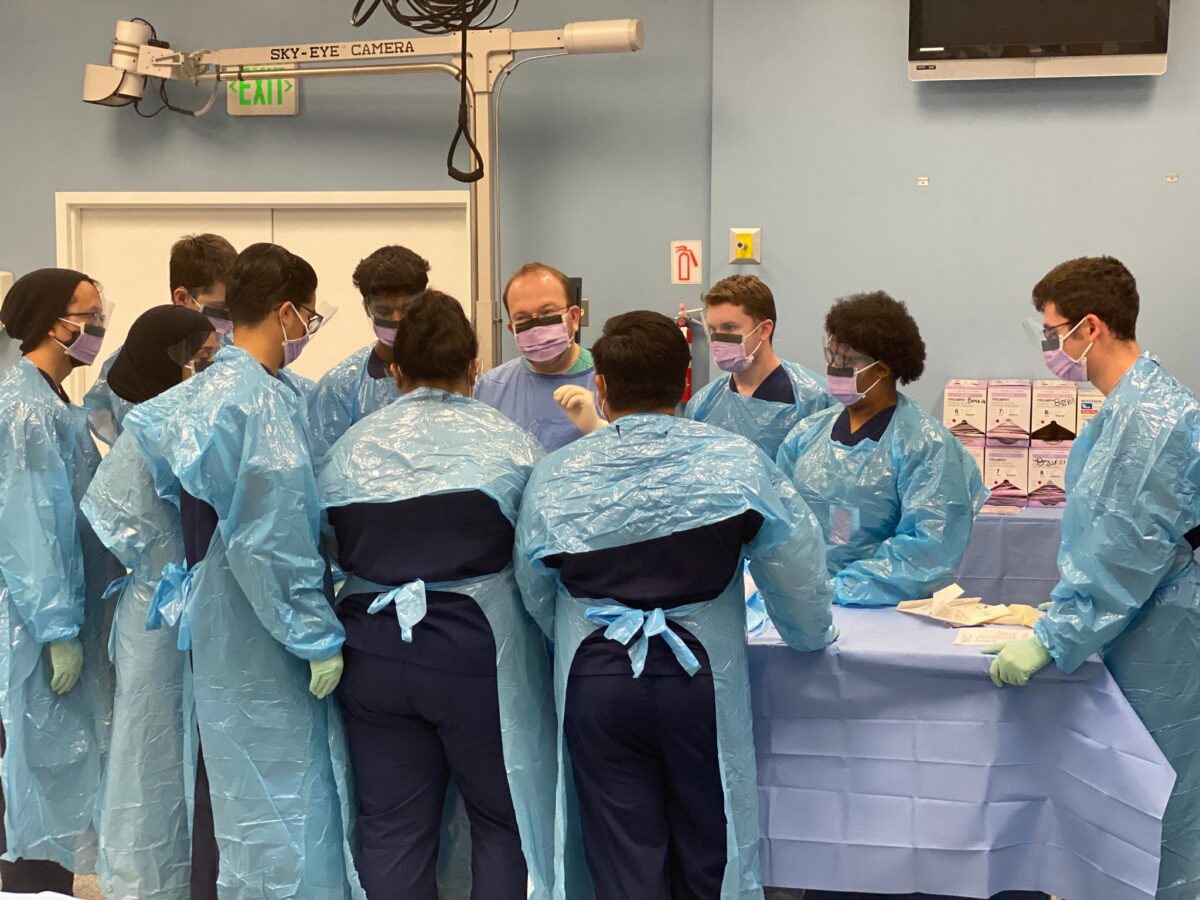 Matthew J. Levy, center, in the lab with students. (Image courtesy of Levy)
Q: What are some of the ways you have brought leading-edge practices to Howard County?
A: In 2016, I was part of the team that launched one of the nation’s first county-wide Stop the Bleed programs in Howard County. This is a national initiative designed to foster resilience and improve patient outcomes by empowering everyday people to recognize and treat life-threatening hemorrhages, which are the leading cause of preventable death in trauma patients. In 2023, I led the implementation of the Whole Blood Program in Howard County, which improves outcomes for critically ill and injured patients suffering from shock by implementing Maryland’s first ground-based EMS blood transfusion program. This program brings life-saving whole blood to the scene of the most critical patients to help give them precious time to get to the hospital for further stabilization.
Q: Tell us about someone in the community who has inspired or supported you, and how they did it.
A: I feel incredibly fortunate to have met so many people at UMBC who have shaped my life and career—from faculty and friends to colleagues and coworkers, specifically, I’d say Dwight Polk, Bill Hathaway, Dr. Rick Bissell, Dr. Jeff Mitchell, Dr. Bruce Walz (all from EDHS), and Dr. Joel Liebman (chemistry). However, the most impactful person has been Dr. J. Lee Jenkins, my wife, whom I met while we were both EDHS undergraduates. We dated through medical school and were married when I was in residency. She is also a physician and a faculty member in the Department of Emergency Medicine at Johns Hopkins University School of Medicine.
I genuinely love taking care of people and helping them. Whether that’s one-on-one as their doctor (or previously as their paramedic) or now as someone responsible for entire EMS systems, the path I’ve chosen…has allowed me to…improve outcomes from emergency medical situations.
Matthew J. Levy ’00, M.S. ’08
EDHS
Q: What is the one thing you’d want a potential student to know about the support you can find at UMBC?
A: At UMBC, we take pride in striving for excellence in everything we do. Being part of the UMBC community means contributing to something greater than oneself. Through leadership, service, teaching, and research, UMBC is making a positive impact on the world. My UMBC education provided an exceptionally strong basis in the sciences, combined with amazing training in leadership, project management, research, and teaching skills. All of these have helped me to achieve success in my career.
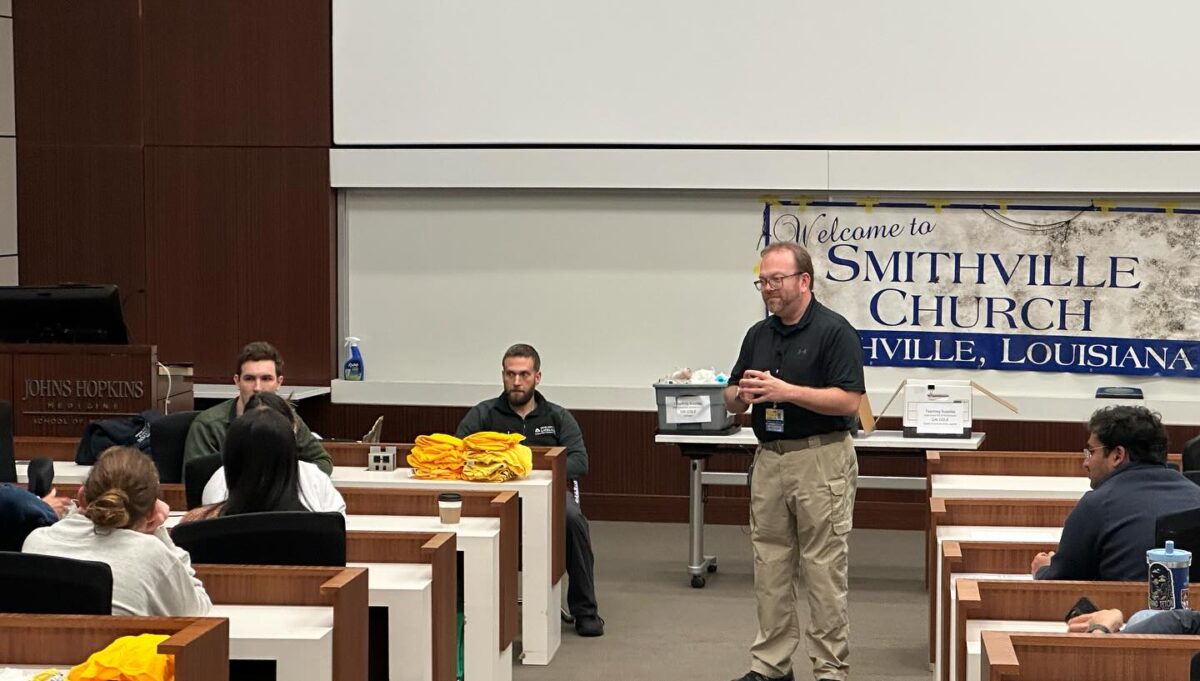 Levy teaching an EMS class. (Image courtesy of Levy)
Q: Tell us about what you love about your academic program.
A: That’s easy… it’s the people of the EDHS department. This department is one of UMBC’s best-kept secrets. It has produced EMS leaders, clinicians, educators, scientists, and practitioners who have played a pivotal role in pioneering, innovating, and redefining the delivery of prehospital care both locally and nationally.
Q: Why did you choose emergency medicine as a career path? What do you enjoy most about it that has kept you working in this field?
A: This passion has led me to many opportunities. In addition to my work at UMBC and Johns Hopkins, I am also the medical director of Howard County Fire and Rescue, the regional medical director for the Maryland Institute for Emergency Medical Services Systems, the tactical physician with the Maryland State Police and Howard County Police, and the founding commander of the Maryland-1 Disaster Medical Assistance Team.
 2015 Howard County Medal of Valor recipients. (l-r): John Butler, former fire chief for Howard County, Will Huber, lieutenant at Howard County Government, Levy, and Lonnie Robbins, former chief administrative officer at Howard County Government. (Image by Maryland Institute for Emergency Medical Services Systems)
Q: What advice do you wish you had received as an undergraduate EDHS student, particularly given the rapid changes in healthcare over the past few years?
A: Healthcare isn’t an easy path, but it’s one of the most noble professions and promises a rewarding career. However the journey will be long, so always believe in yourself, and always be your biggest fan and supporter. Surround yourself with the people you aspire to be like and always strive to improve yourself. This is your life to live so be sure to take the time to enjoy the journey along the way. But, don’t enjoy it too much…hard work does pay off! You’ll look back one day, maybe, 10,15, or 20 years or more later, and realize how far you’ve come.
* * * * *
UMBC’s greatest strength is its people. When people meet Retrievers and hear about the passion they bring, the relationships they create, the ways they support each other, and the commitment they have to inclusive excellence, they truly get a sense of our community. That’s what “Meet a Retriever” is all about.
Learn more about how UMBC can help you achieve your goals.
]]>
Meet Matthew J. Levy ’00, M.S. ’08, emergency and disaster health services (EDHS), who has dedicated his career to Maryland communities. His expertise, as a physician of emergency medicine and...
https://umbc.edu/stories/matthew-j-levy-umbc-edhs-outstanding-alum/
https://my3.my.umbc.edu/api/v0/pixel/news/145810/guest@my.umbc.edu/614b684326065eb62af62ef2911659ca/api/pixel
cahss
edhs
impact
magazine
meet-a-retriever
story
UMBC News & Magazine
https://my3.my.umbc.edu/groups/umbc-news-magazine
https://assets1-my.umbc.edu/system/shared/avatars/groups/000/001/943/24435aa6207c452e7bc15cc74b42c7bb/xsmall.png?1748556657
https://assets1-my.umbc.edu/system/shared/avatars/groups/000/001/943/24435aa6207c452e7bc15cc74b42c7bb/original.png?1748556657
https://assets2-my.umbc.edu/system/shared/avatars/groups/000/001/943/24435aa6207c452e7bc15cc74b42c7bb/xxlarge.png?1748556657
https://assets2-my.umbc.edu/system/shared/avatars/groups/000/001/943/24435aa6207c452e7bc15cc74b42c7bb/xlarge.png?1748556657
https://assets3-my.umbc.edu/system/shared/avatars/groups/000/001/943/24435aa6207c452e7bc15cc74b42c7bb/large.png?1748556657
https://assets1-my.umbc.edu/system/shared/avatars/groups/000/001/943/24435aa6207c452e7bc15cc74b42c7bb/medium.png?1748556657
https://assets2-my.umbc.edu/system/shared/avatars/groups/000/001/943/24435aa6207c452e7bc15cc74b42c7bb/small.png?1748556657
https://assets1-my.umbc.edu/system/shared/avatars/groups/000/001/943/24435aa6207c452e7bc15cc74b42c7bb/xsmall.png?1748556657
https://assets2-my.umbc.edu/system/shared/avatars/groups/000/001/943/24435aa6207c452e7bc15cc74b42c7bb/xxsmall.png?1748556657
UMBC News & Magazine
0
0
false
Tue, 19 Nov 2024 11:16:04 -0500