Dean Moffitt interviewed about media and Black hair and body politics

Kimberly R. Moffitt, dean of UMBC’s College of Arts, Humanities, and Social Sciences, speaks about the inspiration for and journey of her career in an interview with mastersincommunications.com, which offers research-based data on graduate programs in media and communication studies nationwide along with insights from leaders in the field.
Moffitt shares that one of the key inspirations for her work in media and communication studies is her children. Her research and discourse on colorism, her Black hair syllabus website, and her criticism of Disney’s programming have come from observing how her children and other children of color are perceived and talked about in media. She also analyzes the major challenges with feminism and her identity as a womanist.
“I do not consider myself a feminist. I do embrace and consider myself a womanist, as Audre Lorde discusses it, however. I believe in seeing the uplift of African Americans in this nation,” says Moffitt. “I think it takes all of us to make that happen, and I am not really interested in privileging or prioritizing my own existence as a Black woman over that of a Black man.”
Leadership and communication
The scholarship that fueled Moffitt’s career paved a path to leadership as a dean during a worldwide pandemic and global calls for social justice. Moffitt credits her skills and knowledge of media and communication in helping her navigate these challenges, with grace and patience.
“The beauty of being in a discipline like communication is that we have space to engage a set of theoretical frameworks and concepts that other disciplines cannot,” says Moffitt. “Some of that is because we are a much younger discipline than most, but it is also because we are dealing with a number of contemporary issues that allow us to speak back to society about things as they are currently going on.”
Learn more about Dean Moffitt’s additional work with the Mellon Foundation-funded Global Asias Initiative.
]]>
Kimberly R. Moffitt, dean of UMBC’s College of Arts, Humanities, and Social Sciences, speaks about the inspiration for and journey of her career in an interview with mastersincommunications.com,...
https://umbc.edu/quick-posts/dean-moffitt-interviewed-about-media-black-hair/
https://my3.my.umbc.edu/api/v0/pixel/news/139731/guest@my.umbc.edu/ef4e2008edbaf146bf9d53e11e245eb3/api/pixel
cahss
cahss-research
mcs
news
policy-and-society
quick-post
research
UMBC News & Magazine
https://my3.my.umbc.edu/groups/umbc-news-magazine
https://assets1-my.umbc.edu/system/shared/avatars/groups/000/001/943/24435aa6207c452e7bc15cc74b42c7bb/xsmall.png?1748556657
https://assets1-my.umbc.edu/system/shared/avatars/groups/000/001/943/24435aa6207c452e7bc15cc74b42c7bb/original.png?1748556657
https://assets2-my.umbc.edu/system/shared/avatars/groups/000/001/943/24435aa6207c452e7bc15cc74b42c7bb/xxlarge.png?1748556657
https://assets2-my.umbc.edu/system/shared/avatars/groups/000/001/943/24435aa6207c452e7bc15cc74b42c7bb/xlarge.png?1748556657
https://assets3-my.umbc.edu/system/shared/avatars/groups/000/001/943/24435aa6207c452e7bc15cc74b42c7bb/large.png?1748556657
https://assets1-my.umbc.edu/system/shared/avatars/groups/000/001/943/24435aa6207c452e7bc15cc74b42c7bb/medium.png?1748556657
https://assets2-my.umbc.edu/system/shared/avatars/groups/000/001/943/24435aa6207c452e7bc15cc74b42c7bb/small.png?1748556657
https://assets1-my.umbc.edu/system/shared/avatars/groups/000/001/943/24435aa6207c452e7bc15cc74b42c7bb/xsmall.png?1748556657
https://assets2-my.umbc.edu/system/shared/avatars/groups/000/001/943/24435aa6207c452e7bc15cc74b42c7bb/xxsmall.png?1748556657
UMBC News & Magazine
0
0
false
Thu, 07 Mar 2024 12:44:38 -0500
Thu, 07 Mar 2024 12:44:38 -0500
The Anthropocene is not an epoch − but the age of humans is most definitely underway

Written by Erle C. Ellis, professor of geography and environmental systems, UMBC.
When people talk about the “Anthropocene,” they typically picture the vast impact human societies are having on the planet, from rapid declines in biodiversity to increases in Earth’s temperature by burning fossil fuels.
Such massive planetary changes did not begin all at once at any single place or time.
That’s why it was controversial when, after over a decade of study and debate, an international committee of scientists – the Anthropocene Working Group – proposed to mark the Anthropocene as an epoch in the geologic time scale starting precisely in 1952. The marker was radioactive fallout from hydrogen bomb tests.
On March 4, 2024, the commission responsible for recognizing time units within our most recent period of geologic time – the Subcommission on Quarternary Stratigraphy – rejected that proposal, with 12 of 18 members voting no. These are the scientists most expert at reconstructing Earth’s history from the evidence in rocks. They determined that adding an Anthropocene Epoch – and terminating the Holocene Epoch – was not supported by the standards used to define epochs.
To be clear, this vote has no bearing on the overwhelming evidence that human societies are indeed transforming this planet.
As an ecologist who studies global change, I served on the Anthropocene Working Group from its start in 2009 until 2023. I resigned because I was convinced that this proposal defined the Anthropocene so narrowly that it would damage broader scientific and public understanding.
By tying the start of the human age to such a recent and devastating event – nuclear fallout – this proposal risked sowing confusion about the deep history of how humans are transforming the Earth, from climate change and biodiversity losses to pollution by plastics and tropical deforestation.
The original idea of the Anthropocene
In the years since the term Anthropocene was coined by Nobel Prize-winning atmospheric chemist Paul Crutzen in 2000, it has increasingly defined our times as an age of human-caused planetary transformation, from climate change to biodiversity loss, plastic pollution, megafires and much more.
Crutzen originally proposed that the Anthropocene began in the latter part of the 18th century, as a product of the Industrial age. He also noted that setting a more precise start date would be “arbitrary.”
According to geologists, we humans have been living in the Holocene Epoch for about 11,700 years, since the end of the last ice age.
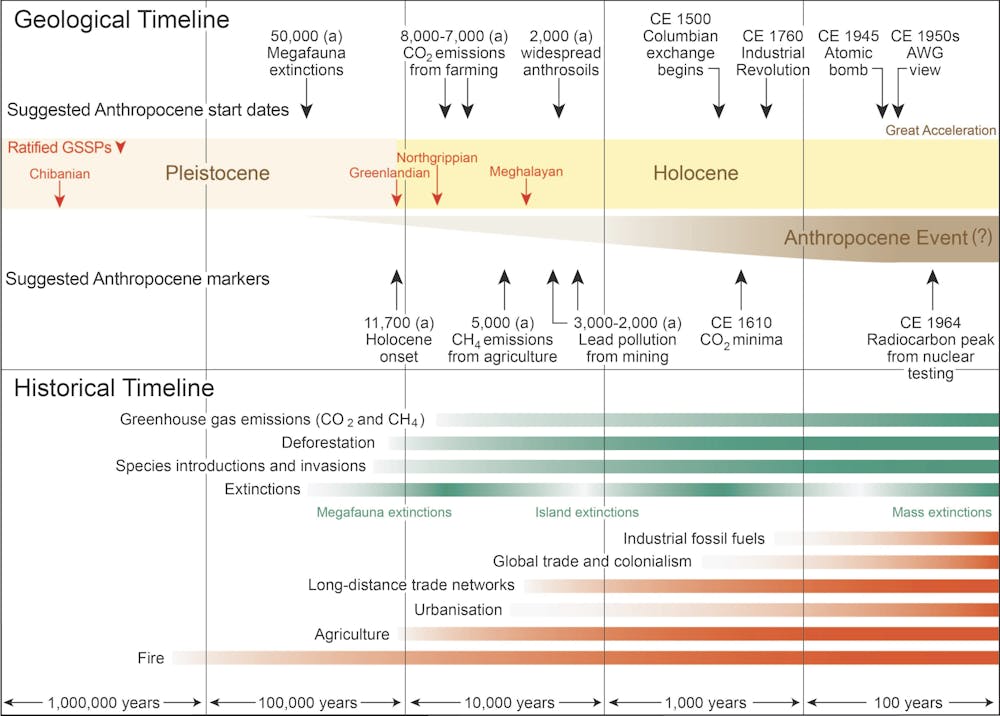
Human societies began influencing Earth’s biodiversity and climate through agriculture thousands of years ago. These changes began to accelerate about five centuries ago with the colonial collision of the old and new worlds. And, as Crutzen noted, Earth’s climate really began to change with the increasing use of fossil fuels in the Industrial Revolution that began in the late 1700s.
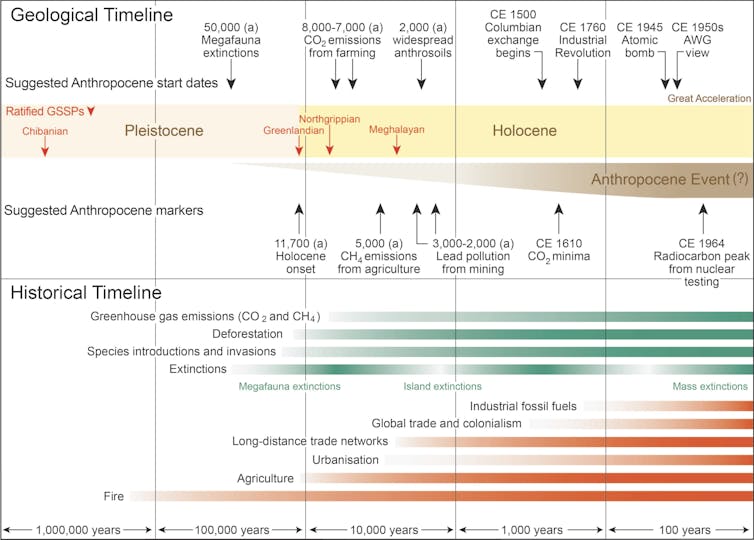 A chart reflecting timing of the ‘Anthropocene Event’ shows how various human activities have affected the planet over millennia in the recent geologic time scale. Click the image to enlarge. Philip Gibbard, et al., 2022
The Anthropocene as an epoch
The rationale for proposing to define an Anthropocene Epoch starting around 1950 came from overwhelming evidence that many of the most consequential changes of the human age shifted upward dramatically about that time in a so-called “Great Acceleration” identified by climate scientist Will Steffen and others.
Radioisotopes like plutonium from hydrogen bomb tests conducted around this time left clear traces in soils, sediments, trees, corals and other potential geological records across the planet. The plutonium peak in the sediments of Crawford Lake in Ontario, Canada – chosen as the “golden spike” for determining the start of the Anthropocene Epoch – is well marked in the lake bed’s exceptionally clear sediment record.
The Anthropocene Epoch is dead; long live the Anthropocene
So why was the Anthropocene Epoch rejected? And what happens now?
The proposal to add an Anthropocene Epoch to the geological time scale was rejected for a variety of reasons, none of them related to the fact that human societies are changing this planet. In fact, the opposite is true.
If there is one main reason why geologists rejected this proposal, it is because its recent date and shallow depth are too narrow to encompass the deeper evidence of human-caused planetary change. As geologist Bill Ruddiman and others wrote in Science Magazine in 2015, “Does it really make sense to define the start of a human-dominated era millennia after most forests in arable regions had been cut for agriculture?”
Discussions of an Anthropocene Epoch aren’t over yet. But it is very unlikely that there will be an official Anthropocene Epoch declaration anytime soon.
The lack of a formal definition of an Anthropocene Epoch will not be a problem for science.
A scientific definition of the Anthropocene is already widely available in the form of the Anthropocene Event, which basically defines Anthropocene in simple geological terms as “a complex, transformative, and ongoing event analogous to the Great Oxidation Event and others in the geological record.”
So, despite the “no” vote on the Anthropocene Epoch, the Anthropocene will continue to be as useful as it has been for more than 20 years in stimulating discussions and research into the nature of human transformation of this planet.
This article was updated to clarify that a new attempt at an official Anthropocene Epoch declaration is unlikely soon. It is republished from The Conversation under a Creative Commons license. Read the original article and see more than 250 UMBC articles available in The Conversation.
]]>
Written by Erle C. Ellis, professor of geography and environmental systems, UMBC. When people talk about the “Anthropocene,” they typically picture the vast impact human societies are having...
https://umbc.edu/stories/the-anthropocene-is-not-an-epoch/
https://my3.my.umbc.edu/api/v0/pixel/news/139723/guest@my.umbc.edu/2bafdabced6f84d4927c0eb681cac767/api/pixel
cahss
cahss-research
discovery
ges
magazine
research
story
the-conversation
UMBC News & Magazine
https://my3.my.umbc.edu/groups/umbc-news-magazine
https://assets1-my.umbc.edu/system/shared/avatars/groups/000/001/943/24435aa6207c452e7bc15cc74b42c7bb/xsmall.png?1748556657
https://assets1-my.umbc.edu/system/shared/avatars/groups/000/001/943/24435aa6207c452e7bc15cc74b42c7bb/original.png?1748556657
https://assets2-my.umbc.edu/system/shared/avatars/groups/000/001/943/24435aa6207c452e7bc15cc74b42c7bb/xxlarge.png?1748556657
https://assets2-my.umbc.edu/system/shared/avatars/groups/000/001/943/24435aa6207c452e7bc15cc74b42c7bb/xlarge.png?1748556657
https://assets3-my.umbc.edu/system/shared/avatars/groups/000/001/943/24435aa6207c452e7bc15cc74b42c7bb/large.png?1748556657
https://assets1-my.umbc.edu/system/shared/avatars/groups/000/001/943/24435aa6207c452e7bc15cc74b42c7bb/medium.png?1748556657
https://assets2-my.umbc.edu/system/shared/avatars/groups/000/001/943/24435aa6207c452e7bc15cc74b42c7bb/small.png?1748556657
https://assets1-my.umbc.edu/system/shared/avatars/groups/000/001/943/24435aa6207c452e7bc15cc74b42c7bb/xsmall.png?1748556657
https://assets2-my.umbc.edu/system/shared/avatars/groups/000/001/943/24435aa6207c452e7bc15cc74b42c7bb/xxsmall.png?1748556657
UMBC News & Magazine
0
0
false
Thu, 07 Mar 2024 11:41:05 -0500
Meet a Retriever—Lisa Nissley ’01, Alumni Association Nominating Committee Chair

Meet Lisa Nissley ‘01, political science. Lisa is a legislative liaison at the Department of General Services, as well as the chair of the mominating committee on the UMBC Alumni Association Board of Directors. In her spare time, you can find her at the ice rink (her two children are involved in figure skating and ice hockey), the pool (swim team), or the lacrosse field. Lisa also enjoys reading, cooking (when it’s not required), walking, and being creative. Take it away, Lisa!
Q: What’s the one thing you’d want someone who hasn’t joined the UMBC community to know about the support you find here?
A: It truly is a community, and that is a feeling that stays with you. I have worked in the political world of campaigns and government relations and always seem to connect with UMBC grads, some I knew and others who were there before or after me. Also, the community is diverse, so there is always someone to connect with and learn from.
Q: Where did you find support when you were here?
A. When I came to UMBC, I was eager to find community and feel like I belonged and I wanted to build my career. The interesting thing is how those two goals aligned. I joined student organizations, interned in Annapolis, and made friends in class. Some of those very people have been in my corner ever since.
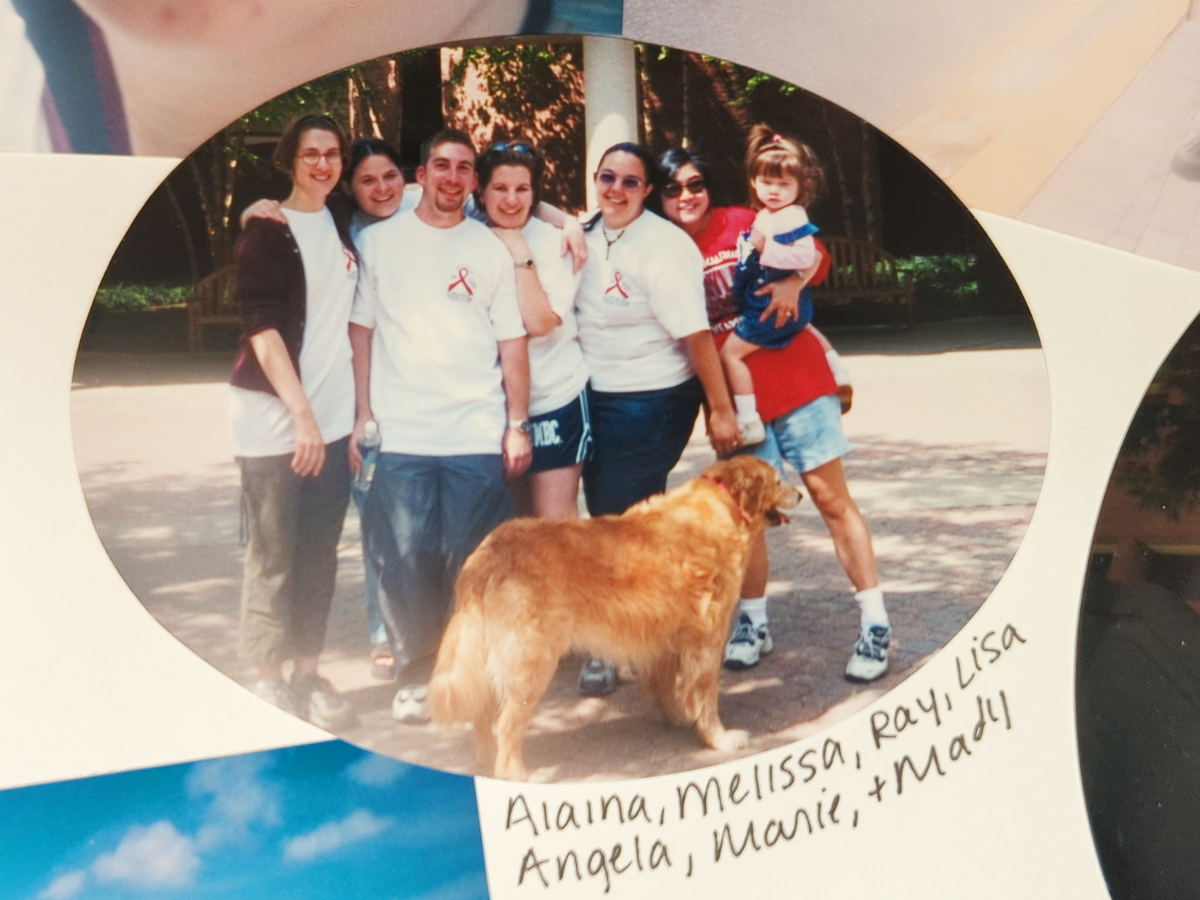 In front of the University Center with friends from Peer Health and ANGELS, a student group that raised awareness of HIV/AIDS during a 5k fundraiser. (Photo courtesy of Nissley)
Q: Who is someone in the community who has inspired you or supported you?
A: Dr. Tom Schaller—I always enjoyed his classes and he was involved in the political world, so I would see him out in the world doing what he talked about in class. He assigned long research papers we worked on throughout the semester, and what seemed daunting at first turned out to be very interesting. I was lucky to assist in his research. We have stayed in touch over the years and he has shared advice and guidance throughout my career.
I love finding UMBC alumni just about everywhere I go.
Q: Tell us more about your journey from UMBC to your current role.
A: I actually transferred to UMBC and didn’t expect to stay, but I loved it! I eventually graduated in 2001 with a political science degree. Over the years since graduating, I have been a state employee working in the legislative branch and various state agencies doing policy and government relations. Recently, I started at the Department of General Services in the legislative office. I am enjoying being back in Annapolis full-time and being part of the legislative process.
Q: How have you given back?
A. I serve on the UMBC Alumni Association Board of Directors (AABOD) as chair of the nominating committee. I really enjoy giving back to the UMBC community in this way. We work to have a diverse board that represents the alumni community, and I’m always impressed by the exciting things our alumni are doing out in the world. I also give annually to the Alumni Endowed Scholarship Fund. Through the Alumni Endowed Scholarship, the AABOD strives to make a difference in the lives of deserving students, to help them achieve their dream of receiving a university degree and joining the alumni community.

About the Alumni Association Board of Directors
UMBC’s Alumni Association is a non dues-paying organization and is led by a volunteerBoard of Directors—volunteer graduates, like Lisa, who support advancing the mission and vision of the association and, by extension, UMBC, through their visibility as alumni leaders and active participants in the ongoing work of the board and its committees.
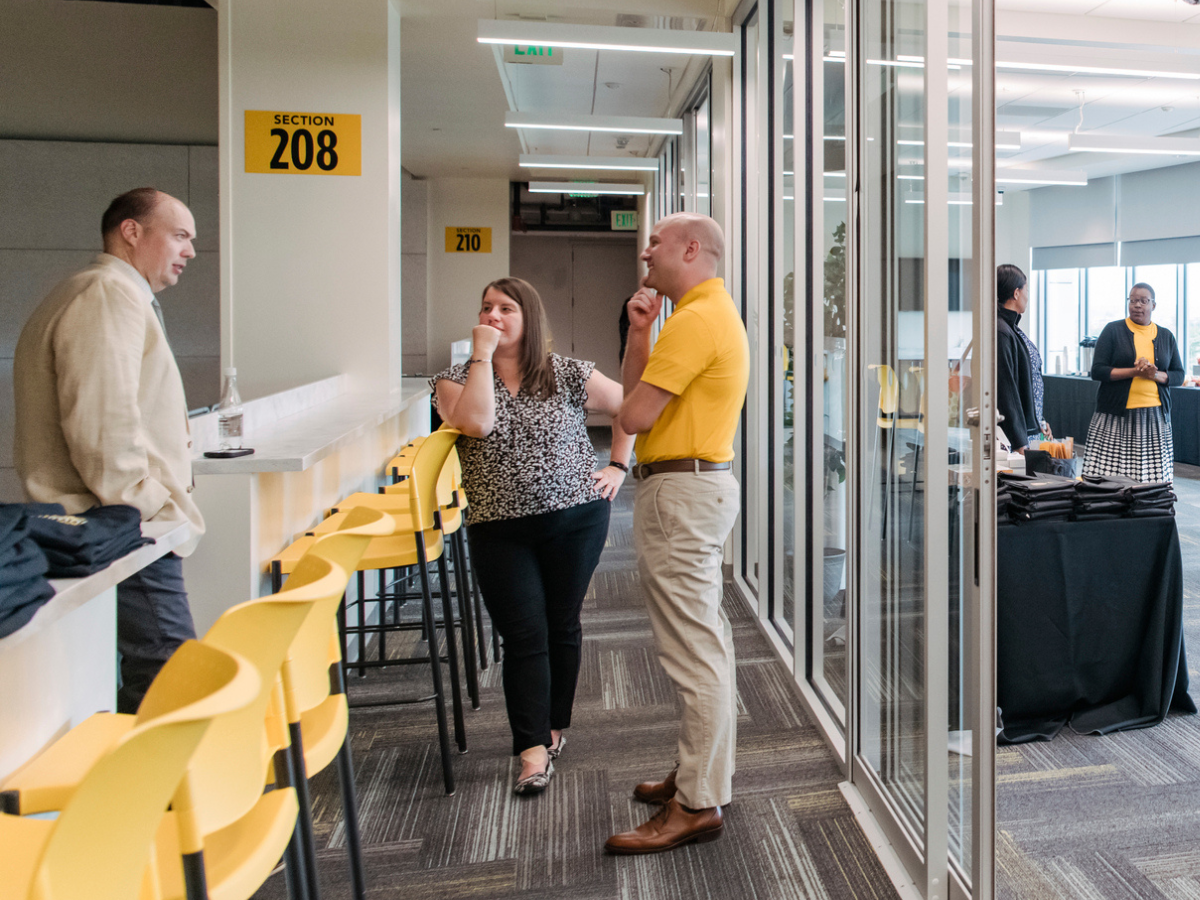 Lisa and Brian Frazee ’11, M.P.P. ’12, Alumni Association president, before a meeting of the Alumni Association Board of Directors.
* * * * *
UMBC’s greatest strength is its people. When people meet Retrievers and hear about the passion they bring, the relationships they create, the ways they support each other, and the commitment they have to inclusive excellence, they truly get a sense of our community. That’s what “Meet a Retriever” is all about.
Learn more about how UMBC can help you achieve your goals.
]]>
Meet Lisa Nissley ‘01, political science. Lisa is a legislative liaison at the Department of General Services, as well as the chair of the mominating committee on the UMBC Alumni Association Board...
https://umbc.edu/stories/meet-a-retriever-lisa-nissley-alumni-association/
https://my3.my.umbc.edu/api/v0/pixel/news/140196/guest@my.umbc.edu/1620a83bea5d3c2d24d836b2e34f8f92/api/pixel
alumni
alumni-association
alumni-endowed-scholarship
impact
magazine
meet-a-retriever
story
UMBC News & Magazine
https://my3.my.umbc.edu/groups/umbc-news-magazine
https://assets1-my.umbc.edu/system/shared/avatars/groups/000/001/943/24435aa6207c452e7bc15cc74b42c7bb/xsmall.png?1748556657
https://assets1-my.umbc.edu/system/shared/avatars/groups/000/001/943/24435aa6207c452e7bc15cc74b42c7bb/original.png?1748556657
https://assets2-my.umbc.edu/system/shared/avatars/groups/000/001/943/24435aa6207c452e7bc15cc74b42c7bb/xxlarge.png?1748556657
https://assets2-my.umbc.edu/system/shared/avatars/groups/000/001/943/24435aa6207c452e7bc15cc74b42c7bb/xlarge.png?1748556657
https://assets3-my.umbc.edu/system/shared/avatars/groups/000/001/943/24435aa6207c452e7bc15cc74b42c7bb/large.png?1748556657
https://assets1-my.umbc.edu/system/shared/avatars/groups/000/001/943/24435aa6207c452e7bc15cc74b42c7bb/medium.png?1748556657
https://assets2-my.umbc.edu/system/shared/avatars/groups/000/001/943/24435aa6207c452e7bc15cc74b42c7bb/small.png?1748556657
https://assets1-my.umbc.edu/system/shared/avatars/groups/000/001/943/24435aa6207c452e7bc15cc74b42c7bb/xsmall.png?1748556657
https://assets2-my.umbc.edu/system/shared/avatars/groups/000/001/943/24435aa6207c452e7bc15cc74b42c7bb/xxsmall.png?1748556657
UMBC News & Magazine
1
0
false
Thu, 07 Mar 2024 10:48:34 -0500
William Gao, mentee of UMBC statistician Yi Huang, named finalist in Regeneron Talent Search

William Gao, a senior at Centennial High School in Howard County, Maryland, has been selected as one of 40 finalists in the 2024 Regeneron Science Talent Search. Yi Huang, associate professor of mathematics and statistics, has served as his research mentor for the past three years.
The Regeneron competition is one of the oldest and most prestigious youth science competitions in the country, and past finalists now include 13 Nobel Prize winners and 22 MacArthur Fellows. Judges select finalists whose projects demonstrate scientific rigor and who they believe have the potential to become world-changing scientific leaders. The 2024 finalists were selected from among nearly 2,000 entrants nationwide, and each received $25,000 to be used for their education.
Gao and Huang’s research led to the development of a mobile diagnostic system to identify cancerous regions in tumor samples, which they hope will eventually benefit patients in remote areas. The system applies modern data science technology, including artificial intelligence, to a prominent healthcare challenge. The findings were published in Cancer Informatics.
“I am beyond humbled and grateful to be a finalist in Regeneron’s Science Talent Search this year. I have always loved all things science and technology, and I have felt enormously lucky to grow as a young researcher under the guidance of Dr. Yi Huang,” Gao shares. “In the future, I plan to pursue a career that bridges my interests in technological innovation, research, and policy. Wherever I land, I hope to emulate Dr. Huang’s passion as a mentor and pay it forward.”
The finalists will participate in a week-long competition in March in Washington, D.C., where they will compete for more than $1.8 million in awards. The comprehensive judging process will not only test the students’ knowledge of their own projects, but also the depth of their understanding across multiple scientific disciplines.
“Serving the community and helping talented minds from various backgrounds get a boost from research early on has always been a core part of my career in education,” Huang says. “Since the start of his research journey in 2020, William has not only shown an impressive intellectual curiosity and resilience, and maturity in dealing with research challenges, but has also demonstrated exceptional initiative and independence. What sets William apart is his ability to bridge technological innovation with real-world problem solving, always considering the ethical and humanistic implications and the broad social impact of his research in the healthcare system.”
]]>
William Gao, a senior at Centennial High School in Howard County, Maryland, has been selected as one of 40 finalists in the 2024 Regeneron Science Talent Search. Yi Huang, associate professor of...
https://umbc.edu/quick-posts/umbc-mentee-regeneron-talent-search-finalist/
https://my3.my.umbc.edu/api/v0/pixel/news/139631/guest@my.umbc.edu/24957d8d366e2d62b8532590389d21d2/api/pixel
cnms
mathstat
news
quick-post
science-and-tech
UMBC News & Magazine
https://my3.my.umbc.edu/groups/umbc-news-magazine
https://assets1-my.umbc.edu/system/shared/avatars/groups/000/001/943/24435aa6207c452e7bc15cc74b42c7bb/xsmall.png?1748556657
https://assets1-my.umbc.edu/system/shared/avatars/groups/000/001/943/24435aa6207c452e7bc15cc74b42c7bb/original.png?1748556657
https://assets2-my.umbc.edu/system/shared/avatars/groups/000/001/943/24435aa6207c452e7bc15cc74b42c7bb/xxlarge.png?1748556657
https://assets2-my.umbc.edu/system/shared/avatars/groups/000/001/943/24435aa6207c452e7bc15cc74b42c7bb/xlarge.png?1748556657
https://assets3-my.umbc.edu/system/shared/avatars/groups/000/001/943/24435aa6207c452e7bc15cc74b42c7bb/large.png?1748556657
https://assets1-my.umbc.edu/system/shared/avatars/groups/000/001/943/24435aa6207c452e7bc15cc74b42c7bb/medium.png?1748556657
https://assets2-my.umbc.edu/system/shared/avatars/groups/000/001/943/24435aa6207c452e7bc15cc74b42c7bb/small.png?1748556657
https://assets1-my.umbc.edu/system/shared/avatars/groups/000/001/943/24435aa6207c452e7bc15cc74b42c7bb/xsmall.png?1748556657
https://assets2-my.umbc.edu/system/shared/avatars/groups/000/001/943/24435aa6207c452e7bc15cc74b42c7bb/xxsmall.png?1748556657
UMBC News & Magazine
3
0
false
Tue, 05 Mar 2024 14:06:32 -0500
Tue, 05 Mar 2024 14:06:32 -0500
7 ways to spring into the arts at UMBC
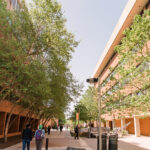
As flowers start popping up on campus and we get some warmer (if rainy) days, it’s the perfect time to go out and catch some of the arts events happening at UMBC. Whether you need a break from studying, work, or are just looking for some fun, you can be sure to find many entertaining and thought provoking arts and culture events happening on campus!
1. Enjoy an Artful Conversation All About Dance
No dance skills are required to enjoy an evening all about dance with Artful Conversations: An Evening with Misty Copeland. On the night of March 6, from 6 to 7:30 p.m., Misty Copeland, the first African American female principal dancer with the American Ballet Theatre, and a New York Times best selling author, will be discussing topics all about dance and her historical performances. The night will begin with dance works performed by UMBC students and faculty. Later, in conversation with College of Art, Humanities, and Social Sciences Dean Kimberly Moffitt, Copeland will talk about her ground-breaking career.
In case the event is sold out or if you just want to watch on a later date, a livestream and recording will be available via the UMBC Youtube Channel. (Photo by Drew Gurian/MasterClass)


2. Bask in the Glow at a Poetry Reading
If you’re unable to make the Misty Copeland event, the English Department’s spring reading series event on March 6 features Taylor Johnson, poet laureate of Takoma Park, Maryland. Johnson is the author of Inheritance, and winner of the 2021 Norma Farber First Book Award from the Poetry Society of America. Inheritance was influenced by living in Washington, D.C., and it explores the complexities of language. The event, which includes a reading, Q&A, and book signing, is free, and runs from 4 to 5 p.m. in the Albin O. Kuhn Library. (Photo by Sean D. Henry-Smith)
3. Listen to an Enchanting Evening of Music from the Baltimore Symphony Orchestra
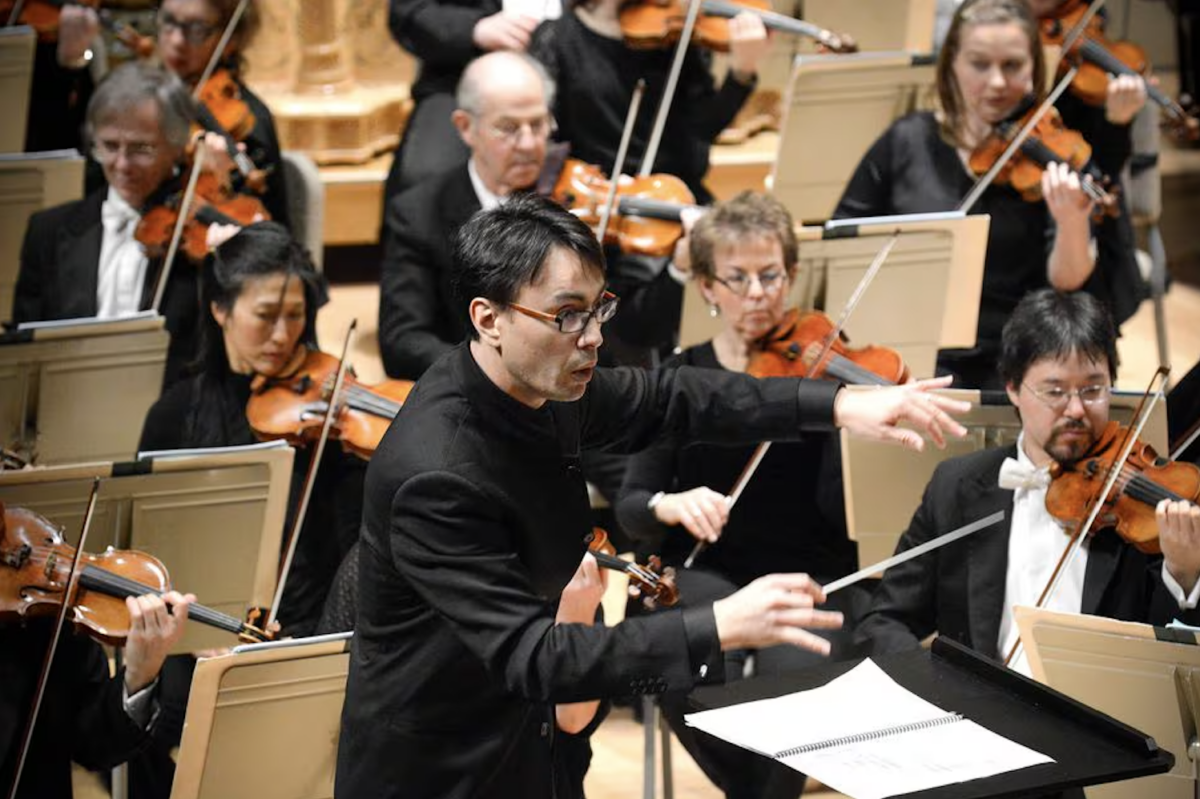
On March 8, the Baltimore Symphony Orchestra will perform at UMBC. The ensemble will be led by conductor Ken-David Masur. The program includes Tchaikovsky’s Fourth Symphony, Toshio Hosokawa’s Meditation to the victims of Tsunami 3.11, and the orchestra will be joined by cellist, Zlatomir Fung, for a performance of Camille Saint-Saëns’s Cello Concerto. The performance is being held at the Linehan Concert Hall from 8 to 10 p.m., and tickets are only $5 for students. (Ken-David Masur conducting. Photo taken by Stu Rosner.)
4. Join WMBC for its Entertaining Spring Music Festival
WMBC Radio, UMBC’s independent, student-run radio station, will be hosting their second annual music festival on March 29 in the UC Ballroom, from 6 to 11 p.m. The festival will be featuring some student artists, bands, and other creatives! The bill includes Fly by The Seat, Regan Lewis, Eat the Cake, and more. Don’t forget to check out the art vendors who will be there as well!
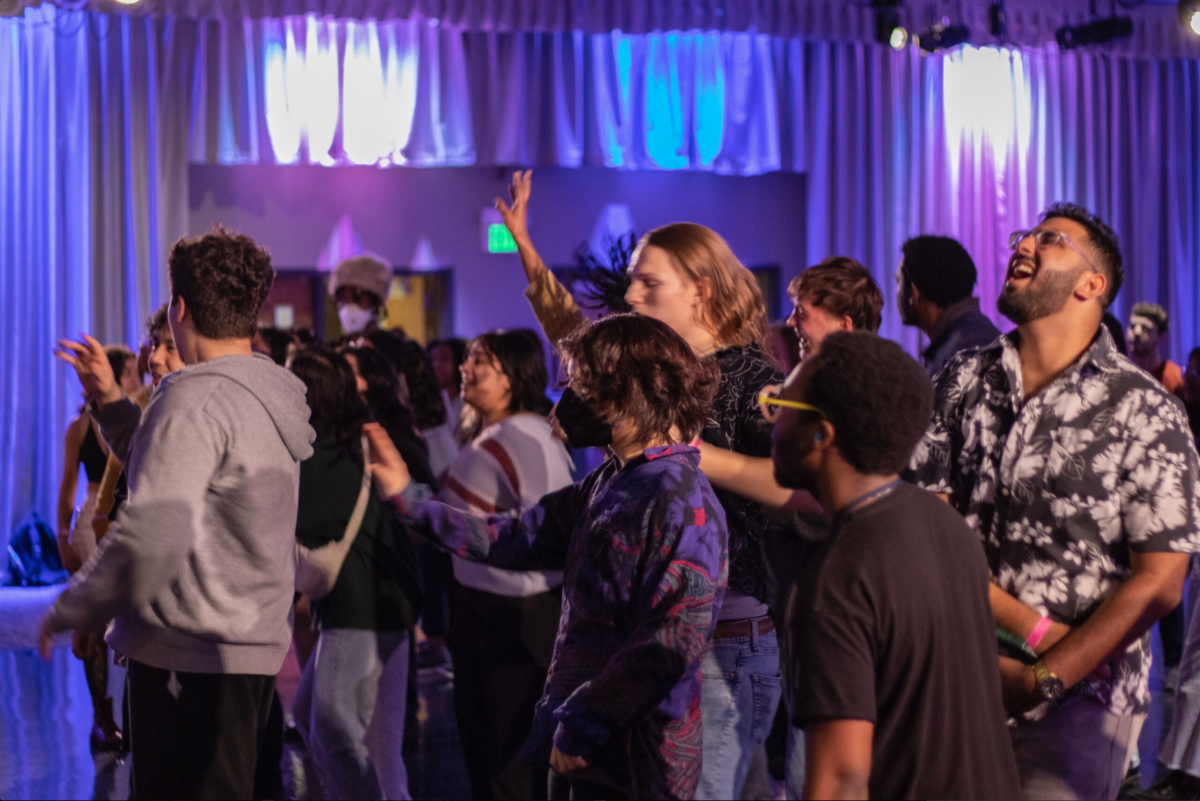 Students enjoying live music at WMBC’s Lonely Heart’s Club Music Festival on February 9, 2023. Event photos by Emily Bryant, Maya Classon, and Mason Doan.
5. Chuckle with Dog Collar at “Saturday Bite Live”
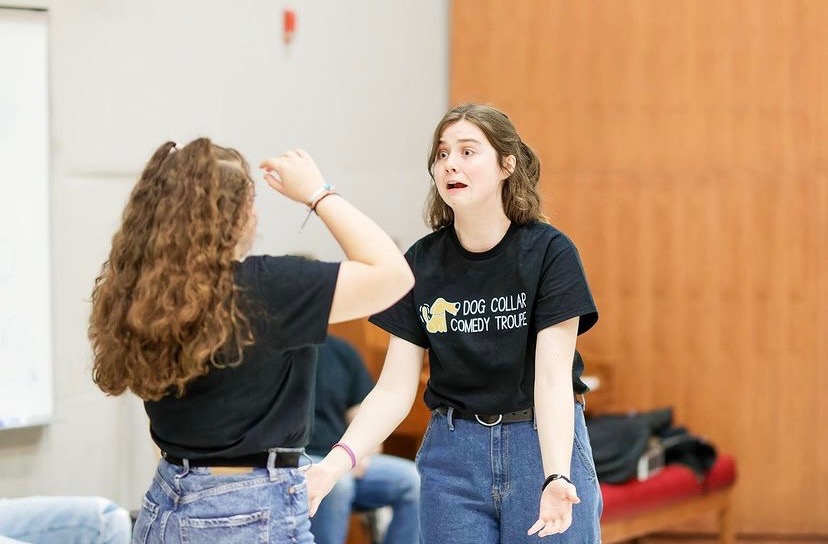
Either before or after WMBC’s music festival, stop by Saturday Bite Live, a free improv show put on by UMBC’s comedy troupe, Dog Collar. Contrary to its name, the show will be on a Friday, March 29, and will take place in the ITE building in room 104. Doors open at 7:30, and the show begins at 8 p.m. Come out and support these students while having a laugh! (Members of the Dog Collar troupe performing at the UMBC Gritty Kitties charity show. Photo by Anthony Rivera.)
6. Check out Plays for Our Planet
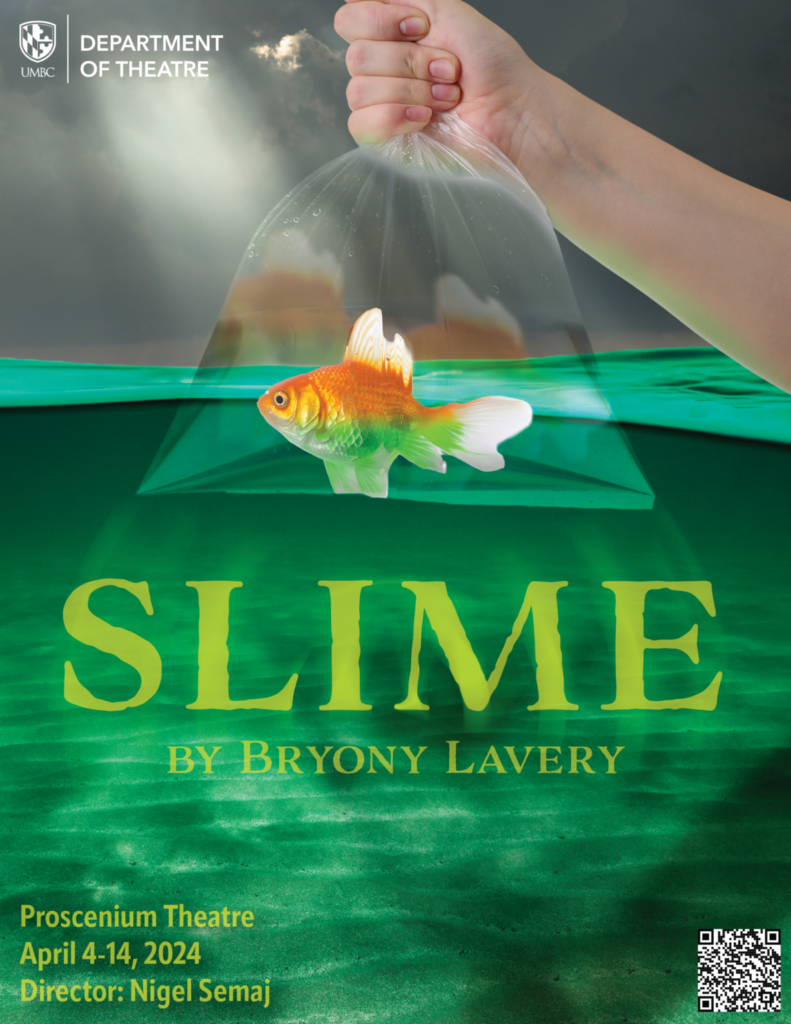
Get an early start on Earth Day this year at one of the UMBC Department of Theatre’s multiple plays centered around the theme of climate science and activism. The play Slime, by Bryony Lavery, directed by Nigel Semaj, will run from April 4 to the 14 in the Performing Arts and Humanities Building’s Proscenium Theatre. Slime is a dystopian comedy about seven grad students who are translators of different animal species, who must work to save all life on earth from a toxic slime. On April 14, there will be a free matinee for UMBC students and post-show actor talk-back.
For more theatre events, you can check out the entire production season here!
The eerie and alluring photographs of Anastasia Samoylova’s FloodZone, depict the painstaking reality of what it’s like to live in the southern U.S. at a time when the climate crisis has greatly affected the environment. The exhibition was first featured at the George Eastman Museum in 2022, and has been on display in a few other locations throughout the U.S. as well as internationally, but the alligators and flamingos and other coastal life forms have now arrived at UMBC for a limited time. The exhibition will be on display at the AOK Library Gallery until May 29.
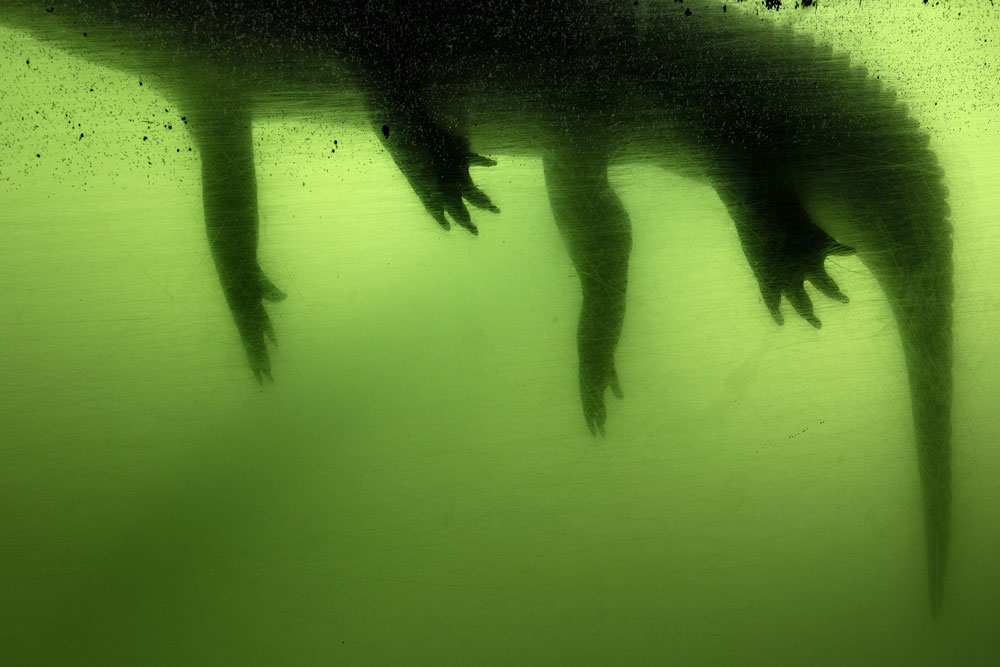 Image: Anastasia Samoylova, Gator, 2017. From FloodZone. Photo mural, printed by UMBC © Anastasia Samoylova
On Monday, April 22, in the Library Gallery, the artist will participate in an Earth Day panel on Climate Change, Science Communication, and the Arts. How do climate scientists share their research and data with the wider public in a way that non-specialists can understand? How might art contribute to this urgent work? Samoylova will discuss her photography while in conversation with scientists and media historians specializing in science communication.
]]>
As flowers start popping up on campus and we get some warmer (if rainy) days, it’s the perfect time to go out and catch some of the arts events happening at UMBC. Whether you need a break from...
https://umbc.edu/stories/spring-into-the-arts-at-umbc-spring-2024-events/
https://my3.my.umbc.edu/api/v0/pixel/news/139611/guest@my.umbc.edu/589299d1a6cbc63bdbfbe3aeeb5ff25d/api/pixel
albin-o-kuhn-library-gallery
arts
cahss
campus-life
dance
english
humanities
magazine
music
proscenium-theatre
story
theatre-department
visualarts
wmbc
UMBC News & Magazine
https://my3.my.umbc.edu/groups/umbc-news-magazine
https://assets1-my.umbc.edu/system/shared/avatars/groups/000/001/943/24435aa6207c452e7bc15cc74b42c7bb/xsmall.png?1748556657
https://assets1-my.umbc.edu/system/shared/avatars/groups/000/001/943/24435aa6207c452e7bc15cc74b42c7bb/original.png?1748556657
https://assets2-my.umbc.edu/system/shared/avatars/groups/000/001/943/24435aa6207c452e7bc15cc74b42c7bb/xxlarge.png?1748556657
https://assets2-my.umbc.edu/system/shared/avatars/groups/000/001/943/24435aa6207c452e7bc15cc74b42c7bb/xlarge.png?1748556657
https://assets3-my.umbc.edu/system/shared/avatars/groups/000/001/943/24435aa6207c452e7bc15cc74b42c7bb/large.png?1748556657
https://assets1-my.umbc.edu/system/shared/avatars/groups/000/001/943/24435aa6207c452e7bc15cc74b42c7bb/medium.png?1748556657
https://assets2-my.umbc.edu/system/shared/avatars/groups/000/001/943/24435aa6207c452e7bc15cc74b42c7bb/small.png?1748556657
https://assets1-my.umbc.edu/system/shared/avatars/groups/000/001/943/24435aa6207c452e7bc15cc74b42c7bb/xsmall.png?1748556657
https://assets2-my.umbc.edu/system/shared/avatars/groups/000/001/943/24435aa6207c452e7bc15cc74b42c7bb/xxsmall.png?1748556657
UMBC News & Magazine
0
0
false
Tue, 05 Mar 2024 11:59:34 -0500
Tue, 05 Mar 2024 11:59:34 -0500
UMBC fusion researchers get TV spotlight at world’s largest physics meeting

The American Physical Society, an influential professional society founded in 1899 to “advance and diffuse the knowledge of physics,” is highlighting the fusion research of UMBC’s Carlos Romero-Talamás at its largest annual meeting, held March 3 – 8 in Minneapolis this year. A short film showcasing Romero-Talamás and colleagues’ work on a relatively simple and cheap approach to fusion power will be broadcast on APS TV, a channel that plays on screens around the meeting venue, in selected local hotels on dedicated TV channels, on the virtual meeting platform, and on YouTube.
Fusion, which is the reaction that powers stars, releases enormous amounts of energy when light atomic nuclei combine to form heavier ones. Initiating, sustaining, and controlling the process in a way that allows humans to generate clean, safe, and near limitless commercial power has long been a goal in the physics community and beyond. The film, created by the international film and broadcasting company WebsEdge, brings viewers into the lab where Romero-Talamás, alongside colleagues and students from UMBC and the University of Maryland, College Park, are questing to bring this celestial energy down to Earth.
Romero-Talamás’s group is exploring a promising alternative to traditional fusion power approaches, using equipment that is smaller, cheaper, and more simple to operate. The group’s current experiments are going well, and they are working to attract public and private investment to build a next-generation machine that could be fitted to produce more power than it takes to run, a key milestone on the road to commercial fusion power.
“The APS March Meeting is an opportunity to connect and promote our research with the largest physics audience in the world,” Romero-Talamás says. The video aligns with the lab’s work to raise their visibility and attract additional students and researchers interested in fusion energy. “At the levels of effort that we will require for the next step in our quest for fusion energy, we will need to grow quickly,” Romero-Talamás says.
Learn more about fusion research at UMBC in this interview with Carlos Romero-Talamás and in his GRIT-X talk.
]]>
The American Physical Society, an influential professional society founded in 1899 to “advance and diffuse the knowledge of physics,” is highlighting the fusion research of UMBC’s Carlos...
https://umbc.edu/quick-posts/umbc-fusion-researchers-get-tv-spotlight/
https://my3.my.umbc.edu/api/v0/pixel/news/139564/guest@my.umbc.edu/eeb44aebe827185b1714115fc68766d5/api/pixel
coeit
meche
news
quick-post
quick-posts
research
science-and-tech
UMBC News & Magazine
https://my3.my.umbc.edu/groups/umbc-news-magazine
https://assets1-my.umbc.edu/system/shared/avatars/groups/000/001/943/24435aa6207c452e7bc15cc74b42c7bb/xsmall.png?1748556657
https://assets1-my.umbc.edu/system/shared/avatars/groups/000/001/943/24435aa6207c452e7bc15cc74b42c7bb/original.png?1748556657
https://assets2-my.umbc.edu/system/shared/avatars/groups/000/001/943/24435aa6207c452e7bc15cc74b42c7bb/xxlarge.png?1748556657
https://assets2-my.umbc.edu/system/shared/avatars/groups/000/001/943/24435aa6207c452e7bc15cc74b42c7bb/xlarge.png?1748556657
https://assets3-my.umbc.edu/system/shared/avatars/groups/000/001/943/24435aa6207c452e7bc15cc74b42c7bb/large.png?1748556657
https://assets1-my.umbc.edu/system/shared/avatars/groups/000/001/943/24435aa6207c452e7bc15cc74b42c7bb/medium.png?1748556657
https://assets2-my.umbc.edu/system/shared/avatars/groups/000/001/943/24435aa6207c452e7bc15cc74b42c7bb/small.png?1748556657
https://assets1-my.umbc.edu/system/shared/avatars/groups/000/001/943/24435aa6207c452e7bc15cc74b42c7bb/xsmall.png?1748556657
https://assets2-my.umbc.edu/system/shared/avatars/groups/000/001/943/24435aa6207c452e7bc15cc74b42c7bb/xxsmall.png?1748556657
UMBC News & Magazine
2
0
false
Mon, 04 Mar 2024 15:48:49 -0500
Meet a Retriever—Nathan Wooddell ’23, graduate student specializing in Russian and cybersecurity

Meet Nathan Wooddell ’23, computer science. Nathan is a member of UMBC’s CyberCorps: Scholarship for Service cohort, and is getting his master’s in cybersecurity as a graduate researcher at the National Nuclear Security Agency. Nathan attributes much of his success to the connections he’s made with the staff and faculty at UMBC who have helped him to discover his true passions. During his time as an undergraduate at UMBC, Nathan also completed a Russian language certificate, and has found a way to combine his interests of both cybersecurity and the Russian language in the professional world. Take it away, Nathan.
Q: What’s one thing you’d want someone to know about the support you find at UMBC?
A: In many classes, casual visits to professors during office hours, polite interactions during class, and expressing interest in the subject matter can go a long way. Such interactions help with all aspects of student life. Too many students fail to take proper advantage of the fantastic support that the university faculty can offer. The best way to do this in my experience is simply to speak with your professors after class or outside of class.
Such interactions help with all aspects of student life. The faculty can offer support in the form of academic resources, scholarship recommendations, professional guidance, and even letters of recommendation for work or graduate programs.
Q: Tell us about someone in the community who has inspired you or supported you, and how they did it.
A: I want to give special thanks to Russian instructor Vira Zhdanovych. Since I first transferred to UMBC, I have taken Russian language courses with Professor Zhdanovych. It was through her guidance that I got my first research experience when she advised me on my 2022 Undergraduate Research and Creative Achievement Day presentation Analyzing the Russian Federation’s Impact on Global Cyber Security. This was also the first time that I was able to merge my interest in cybersecurity and Russian language.
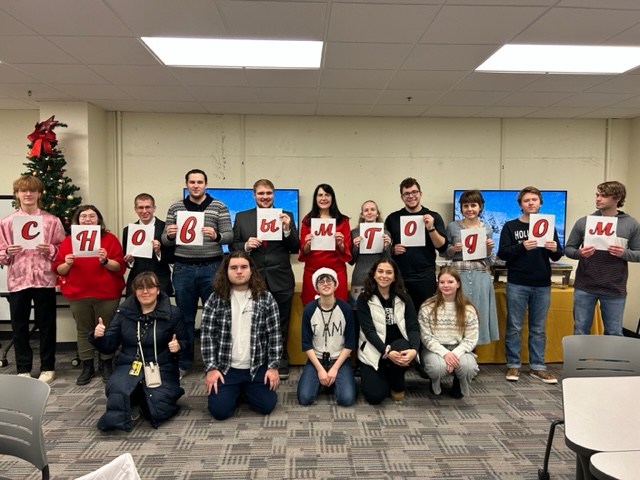 At the MLLI winter and New Year celebration, hosted by the Russian Area in December 2023, Zhdanovych stands in the center holding an “M” and Wooddell is to her right holding the Russian letter “ы.” The full sign reads “Happy New Year!” (Photo courtesy of Zhdanovych)
I have worked extensively with Professor Zhdanovych to study and research the impact of the Russian-speaking world on the cybersecurity and intelligence communities—I owe so much of my professional and academic success to her.
Q: Tell us what you love about your academic program or an organization you’re involved in.
A: I am a participant and former officer in UMBC’s Russian Club. The meetings of this club are especially good for learning about contemporary Russian culture, as well as the geopolitical history, which still shapes the diplomacy of the Russo-American relationship.
“Had I known then what I know now about the university’s programs, rigor, faculty, and opportunities, UMBC would have been a shoo-in. Ultimately, I am so grateful that I applied to, and attended UMBC.”
Nathan Wooddell ’23, current master’s student
Q: What is your WHY? What brought you to UMBC?
A:I came to UMBC in my sophomore year as a transfer student. Admittedly when I was accepted I toyed around with the idea of going to a variety of different schools, but eventually decided on UMBC for the price, and the relative vicinity to my home in northern Maryland.
Had I known then what I know now about the university’s programs, rigor, faculty, and opportunities, UMBC would have been a shoo-in. Ultimately, I am so grateful that I applied to, and attended UMBC.
Q: Tell us about the people who are helping you grow at UMBC, and why their HOW made such a difference to you.
A: In addition to Professor Zhdanovych’s support with my Russian language and research, Professor RJ Joyce in computer science encouraged me to become invested in cybersecurity. It’s because of him that I’ve become involved in many of the clubs and organizations I am currently enrolled in. Such interest in security was able to earn me recipient status in UMBC’s Scholarship for Service cohort.
Q: What clubs, teams, or organizations are you a part of? What do you love about them?
A: First and foremost, I am a member of UMBC’s National Science Foundation-fundedCyberCorps: Scholarship of Service (SFS). This program has allowed me to pursue my interest in security outside of the traditional academic venues. Thanks to SFS, I was able to attend and present at DEFCON 31 in Las Vegas, one of the largest cybersecurity conventions in the world [Photo: Wooddell, left, at DEFCON 31 with a fellow student].
I am also a member of the UMBC Cyberdawgs. I never miss an opportunity to compete in the annual competitions they hold on campus. Beyond this, I attend the bi-weekly Cyber Defense Lab meetings, which allow me to keep up to date with all sorts of security research projects being conducted on campus.
Q: Are you a student leader? Tell us about it!
A: Through SFS, related organizations, and clubs on campus, I have been lucky enough to meet and work with some of the most amazing and intelligent people I have ever met. From these associated labs, clubs, and programs I have met and been influenced by more people than I could ever hope to list here.

I am incredibly honored to have been able to lead these organizations, as they have provided me with opportunities to give back to my university and community.
* * * * *
UMBC’s greatest strength is its people. When people meet Retrievers and hear about the passion they bring, the relationships they create, the ways they support each other, and the commitment they have to inclusive excellence, they truly get a sense of our community. That’s what “Meet a Retriever” is all about.
Learn more about how UMBC can help you achieve your goals.
]]>
Meet Nathan Wooddell ’23, computer science. Nathan is a member of UMBC’s CyberCorps: Scholarship for Service cohort, and is getting his master’s in cybersecurity as a graduate researcher at the...
https://umbc.edu/stories/meet-a-retriever-wooddell-russian-cybersecurity/
https://my3.my.umbc.edu/api/v0/pixel/news/139627/guest@my.umbc.edu/2095dac00bc9311ee2df369ee54e38f3/api/pixel
alumni
coeit
compsci
cybersecurity
impact
magazine
meet-a-retriever
mll
perspectives
russian
story
UMBC News & Magazine
https://my3.my.umbc.edu/groups/umbc-news-magazine
https://assets1-my.umbc.edu/system/shared/avatars/groups/000/001/943/24435aa6207c452e7bc15cc74b42c7bb/xsmall.png?1748556657
https://assets1-my.umbc.edu/system/shared/avatars/groups/000/001/943/24435aa6207c452e7bc15cc74b42c7bb/original.png?1748556657
https://assets2-my.umbc.edu/system/shared/avatars/groups/000/001/943/24435aa6207c452e7bc15cc74b42c7bb/xxlarge.png?1748556657
https://assets2-my.umbc.edu/system/shared/avatars/groups/000/001/943/24435aa6207c452e7bc15cc74b42c7bb/xlarge.png?1748556657
https://assets3-my.umbc.edu/system/shared/avatars/groups/000/001/943/24435aa6207c452e7bc15cc74b42c7bb/large.png?1748556657
https://assets1-my.umbc.edu/system/shared/avatars/groups/000/001/943/24435aa6207c452e7bc15cc74b42c7bb/medium.png?1748556657
https://assets2-my.umbc.edu/system/shared/avatars/groups/000/001/943/24435aa6207c452e7bc15cc74b42c7bb/small.png?1748556657
https://assets1-my.umbc.edu/system/shared/avatars/groups/000/001/943/24435aa6207c452e7bc15cc74b42c7bb/xsmall.png?1748556657
https://assets2-my.umbc.edu/system/shared/avatars/groups/000/001/943/24435aa6207c452e7bc15cc74b42c7bb/xxsmall.png?1748556657
UMBC News & Magazine
3
0
false
Wed, 28 Feb 2024 13:31:03 -0500
National Institutes of Environmental Health Sciences highlight Professor Upal Ghosh’s work cleaning contaminated waterways
The positive environmental and health impacts of work led by Upal Ghosh, professor of chemical, biochemical, and environmental engineering at UMBC, was recently highlighted by the National Institutes of Environmental Health Sciences (NIEHS). The agency showcased a low-cost technology that Ghosh and his colleagues developed to clean waterways contaminated with polychlorinated biphenyls (PCBs), a group of likely carcinogenic chemicals that were used in insulation, coolants, and electrical equipment for decades before being banned in the U.S. in 1979.
The chemicals are stable and persist in the environment, often accumulating in fish that live in contaminated waterways and posing a risk to humans who consume those fish. NIEHS funded Ghosh’s research into using activated carbon pellets to bind the chemicals in place at the bottom of the waterways. This prevents the PCBs from circulating through the aquatic food chain. In projects carried out in contaminated lakes, rivers, and harbors in Delaware, Maryland, and elsewhere, Ghosh’s team demonstrated that the technique could significantly reduce the concentration of PCBs in the water and in aquatic lifeforms. Importantly, the technique is also significantly cheaper than standard clean-up approaches, such as dredging and disposing of contaminated sediment.
In related work performed with Kevin Sowers, from the Institute of Marine and Environmental Technology, Ghosh’s team also developed a way to combine the activated carbon with microbes that break down PCBs, reducing their toxicity.
With NIEHS support, Ghosh has co-founded two companies—Sediment Solutions and RemBac—to commercialize the technology and deploy it at full-scale to clean up contaminated sites across the country, such as at Mirror Lake in Delaware.
“The technology brings together innovations in material science and biology,” says Ghosh. It’s an honor, he says, that the NIEHS, the leading agency in the country that funds research on public health and the environment, recognized “the real impact our research is having on improving public health.”
]]>
The positive environmental and health impacts of work led by Upal Ghosh, professor of chemical, biochemical, and environmental engineering at UMBC, was recently highlighted by the National...
https://umbc.edu/quick-posts/niehs-highlights-upal-ghoshs-work-cleaning-contaminated-waterways/
https://my3.my.umbc.edu/api/v0/pixel/news/139274/guest@my.umbc.edu/cd3baad4df895ca15888f8fccb6f77c3/api/pixel
cbee
cnms
coeit
imet
news
quick-post
quick-posts
research
science-and-tech
UMBC News & Magazine
https://my3.my.umbc.edu/groups/umbc-news-magazine
https://assets1-my.umbc.edu/system/shared/avatars/groups/000/001/943/24435aa6207c452e7bc15cc74b42c7bb/xsmall.png?1748556657
https://assets1-my.umbc.edu/system/shared/avatars/groups/000/001/943/24435aa6207c452e7bc15cc74b42c7bb/original.png?1748556657
https://assets2-my.umbc.edu/system/shared/avatars/groups/000/001/943/24435aa6207c452e7bc15cc74b42c7bb/xxlarge.png?1748556657
https://assets2-my.umbc.edu/system/shared/avatars/groups/000/001/943/24435aa6207c452e7bc15cc74b42c7bb/xlarge.png?1748556657
https://assets3-my.umbc.edu/system/shared/avatars/groups/000/001/943/24435aa6207c452e7bc15cc74b42c7bb/large.png?1748556657
https://assets1-my.umbc.edu/system/shared/avatars/groups/000/001/943/24435aa6207c452e7bc15cc74b42c7bb/medium.png?1748556657
https://assets2-my.umbc.edu/system/shared/avatars/groups/000/001/943/24435aa6207c452e7bc15cc74b42c7bb/small.png?1748556657
https://assets1-my.umbc.edu/system/shared/avatars/groups/000/001/943/24435aa6207c452e7bc15cc74b42c7bb/xsmall.png?1748556657
https://assets2-my.umbc.edu/system/shared/avatars/groups/000/001/943/24435aa6207c452e7bc15cc74b42c7bb/xxsmall.png?1748556657
UMBC News & Magazine
1
0
false
Fri, 23 Feb 2024 15:53:29 -0500
UMBC-led Aquaculture Research Center donates thousands of pounds of seafood to local food pantries

The Aquaculture Research Center (ARC) at the Institute of Marine and Environmental Technology (IMET), led by Yonathan Zohar, professor of marine biotechnology, has been focused for years on advancing sustainable methods of growing fish on land to meet the growing global demand for seafood. In addition to helping develop new, environmentally responsible ways of producing nutritious food for the long term, the ARC is helping to meet immediate needs in the local community.
Today, the center donated 1,200 pounds of Atlantic salmon to DC Central Kitchen, a food pantry in Southwest Washington, D.C., after donating 1,400 pounds in November 2023. ProFish, located in Washington, DC, processed the salmon for the donations.
The ARC’s seafood donation program launched in 2017, when the Feeding Individuals to Support Health (FISH) initiative was formed in partnership with several local businesses and non-profit organizations. The first major donation distributed thousands of pounds of European sea bass (also known as bronzino) grown in the ARC’s marine tanks to communities in need in the Baltimore area.
“The U.S. is the largest importer of seafood in the world. Currently the oceans are overfished, and IMET is working on innovative aquaculture platforms that will reduce U.S. and global dependence on wild fisheries stocks,” Zohar says. “Through these donations, we can also provide a small level of societal benefit right away and close to home.”
Learn more about groundbreaking work at the Aquaculture Research Center here.
]]>
The Aquaculture Research Center (ARC) at the Institute of Marine and Environmental Technology (IMET), led by Yonathan Zohar, professor of marine biotechnology, has been focused for years on...
https://umbc.edu/quick-posts/arc-donates-seafood-to-food-pantries/
https://my3.my.umbc.edu/api/v0/pixel/news/139223/guest@my.umbc.edu/d13abf131268680fb743db1c7b7503b3/api/pixel
cnms
community
marinebiotech
news
quick-post
science-and-tech
UMBC News & Magazine
https://my3.my.umbc.edu/groups/umbc-news-magazine
https://assets1-my.umbc.edu/system/shared/avatars/groups/000/001/943/24435aa6207c452e7bc15cc74b42c7bb/xsmall.png?1748556657
https://assets1-my.umbc.edu/system/shared/avatars/groups/000/001/943/24435aa6207c452e7bc15cc74b42c7bb/original.png?1748556657
https://assets2-my.umbc.edu/system/shared/avatars/groups/000/001/943/24435aa6207c452e7bc15cc74b42c7bb/xxlarge.png?1748556657
https://assets2-my.umbc.edu/system/shared/avatars/groups/000/001/943/24435aa6207c452e7bc15cc74b42c7bb/xlarge.png?1748556657
https://assets3-my.umbc.edu/system/shared/avatars/groups/000/001/943/24435aa6207c452e7bc15cc74b42c7bb/large.png?1748556657
https://assets1-my.umbc.edu/system/shared/avatars/groups/000/001/943/24435aa6207c452e7bc15cc74b42c7bb/medium.png?1748556657
https://assets2-my.umbc.edu/system/shared/avatars/groups/000/001/943/24435aa6207c452e7bc15cc74b42c7bb/small.png?1748556657
https://assets1-my.umbc.edu/system/shared/avatars/groups/000/001/943/24435aa6207c452e7bc15cc74b42c7bb/xsmall.png?1748556657
https://assets2-my.umbc.edu/system/shared/avatars/groups/000/001/943/24435aa6207c452e7bc15cc74b42c7bb/xxsmall.png?1748556657
UMBC News & Magazine
3
0
false
Thu, 22 Feb 2024 14:51:10 -0500
Turkey will stop sending imams to German mosques – here’s why this matters

Written by Brian Van Wyck, assistant professor of history, UMBC
For decades, the Turkish government has sent imams to work in mosques across Germany. But the German Ministry of the Interior recently announced that it had reached an agreement with the Turkish government to put an end to the practice.
These imams, approximately 1,000 at present, are Turkish civil servants. Imams are sent to Germany on four- to six-year rotations, based on a long-standing agreement between the two governments. They work with Germany’s more than 2.8 million residents with Turkish citizenship or heritage.
The practice had come under intense criticism in Germany in recent years. German politicians have accused Turkish imams of spying on their flocks or abusing their positions to promote support for Turkey’s ruling Justice and Development Party.
The German government described plans to replace “imported imams” with imams trained in Germany as an “important milestone for integration.” On the other hand, some observers have questioned whether it will change anything for Germany’s 5 million Muslims.
As part of my ongoing research into the history of migration between Turkey and Germany, I have investigated the origins of this exchange and the goals both governments pursued by bringing Turkish imams to Germany.
Efforts by both states to intervene in the religious lives of Muslims by selecting which imams can preach in German mosques have a long history – although such efforts might not always achieve the goals of governments.
The ‘strategy’ of sending imams
A 1961 agreement led to Turkish “guest workers” being sent to Germany to meet the labor demands of its booming postwar economy. Many recruited workers and their families chose to settle permanently in Germany. By 1974, a year after labor recruitment ended, at least 1 million Turkish citizens were residing in Germany.
It was only in the 1980s that the Turkish government began sending cohorts of imams abroad, after it had become evident that a large Turkish population was in Germany to stay.
This step was motivated by several goals. One was to use state imams to create an alternative to Islamic groups active in Germany who opposed the secular Turkish state. Another was to use imams to foster continued ties to Turkey among the Turkish diaspora in Germany, encouraging them to continue to invest in Turkey.
In the 1980s, conservative governments made increasing use of Islam to encourage national unity in Turkey by, for example, mandating religious education in schools and revising curricula to emphasize Turkey’s Islamic heritage. Sending imams abroad was an example of this strategy being exported to Turkey’s overseas diaspora.
Only Turkish imams for Germany
 The Sehitlik Mosque in the Berlin district of Neukoelln. Kaveh Rostamkhani/AFP via Getty Images
In the early 1980s, German authorities, like their Turkish counterparts, had become concerned about Islamic institutions in the country. Historian Alexander Konrad has demonstrated that unsubstantiated reports about corporal punishment and political extremism in courses devoted to learning the Quran achieved wide currency in Germany in the 1970s.
When German diplomats and Turkish officials began to discuss their shared concerns in meetings in Ankara in 1980, they quickly found common ground. As diplomatic cables in the archives of the German Federal Foreign Office reporting on these discussions reveal, Turkish and German officials agreed that having the right imams in German mosques would solve the social and political problems they believed were caused by extremist imams. And they believed that imams employed by the Turkish state were guaranteed to be well-trained and moderate.
Accordingly, as I learned from directives preserved in the State Archive of North Rhine-Westphalia, German policymakers had begun by 1982 to issue entry visas directly to the Turkish government to distribute to those imams it selected to serve in Germany. Already by the end of the 1980s, more than 500 Turkish state imams were active in Germany.
At the same time, entry visas for all other imams were more tightly controlled. This meant that imams from Turkey or anywhere else in the world who wanted to work in Germany but were not employed by the Turkish government faced new hurdles. I learned from legal judgments in the German Federal Archives that some imams who were already working in Germany were forced to leave the country as a result of the new policy.
Limits to the influence of Turkish state imams on German mosques
Both governments assumed that Turkish state imams would be able to reshape German mosques, eliminate perceived extremism and ensure secular Islamic practice in Germany. However, this agreement did not achieve the results the Turkish or German government desired.
There were a few reasons for this. For one, imams often arrived with limited knowledge of German and Germany. Because of that, they relied on members of the local Turkish community, as the sociologist Rauf Ceylan has argued.
Contrary to what German and Turkish officials might have assumed, these imams could not simply assume control over the often long-established mosques to which they were assigned. And that meant that whatever control the Turkish government exercised over German mosques through them was partial and depended on local buy-in.
Furthermore, not all mosques in Germany received Turkish state imams. Turkish-origin migrants and their descendants created Islamic institutions and organized religious life for themselves for decades without Turkish state intervention. Those institutions did not disappear when competition in the form of Turkish state imams arrived. Both now and then, many Muslims with Turkish roots choose to attend mosques with Turkish state imams, but many do not.
Imams trained in Germany?
Over the course of the more than 40 years in which Turkish state imams have been sent to Germany, the German and Turkish governments invested their work with high expectations. And now, as the end of these imam exchanges comes into sight, German officials continue to assume that changing who preaches in mosques will dramatically alter religious life for German Muslims.
In the coming years, imams trained in academies in Germany will replace more and more Turkish state imams as they end their rotations in Germany and return home. According to this plan, the eventual result will be that only domestically trained, German-speaking imams will work in German mosques at some point in the near future. German officials described the new model as “an important milestone for the integration and participation of Muslim communities in Germany.”
Ultimately, as history demonstrates, it is German Muslims themselves, and not the imams who lead them in prayer, who will determine if this is the case.
This article is republished from The Conversation under a Creative Commons license. Read the original article and see more than 250 UMBC articles available in The Conversation.
]]>
Written by Brian Van Wyck, assistant professor of history, UMBC For decades, the Turkish government has sent imams to work in mosques across Germany. But the German Ministry of the Interior...
https://umbc.edu/stories/turkey-will-stop-sending-imams-to-german-mosques/
https://my3.my.umbc.edu/api/v0/pixel/news/139135/guest@my.umbc.edu/1cbe204e474690d78faa340ea5d559ce/api/pixel
cahss
cahss-research
discovery
history
magazine
research
story
the-conversation
UMBC News & Magazine
https://my3.my.umbc.edu/groups/umbc-news-magazine
https://assets1-my.umbc.edu/system/shared/avatars/groups/000/001/943/24435aa6207c452e7bc15cc74b42c7bb/xsmall.png?1748556657
https://assets1-my.umbc.edu/system/shared/avatars/groups/000/001/943/24435aa6207c452e7bc15cc74b42c7bb/original.png?1748556657
https://assets2-my.umbc.edu/system/shared/avatars/groups/000/001/943/24435aa6207c452e7bc15cc74b42c7bb/xxlarge.png?1748556657
https://assets2-my.umbc.edu/system/shared/avatars/groups/000/001/943/24435aa6207c452e7bc15cc74b42c7bb/xlarge.png?1748556657
https://assets3-my.umbc.edu/system/shared/avatars/groups/000/001/943/24435aa6207c452e7bc15cc74b42c7bb/large.png?1748556657
https://assets1-my.umbc.edu/system/shared/avatars/groups/000/001/943/24435aa6207c452e7bc15cc74b42c7bb/medium.png?1748556657
https://assets2-my.umbc.edu/system/shared/avatars/groups/000/001/943/24435aa6207c452e7bc15cc74b42c7bb/small.png?1748556657
https://assets1-my.umbc.edu/system/shared/avatars/groups/000/001/943/24435aa6207c452e7bc15cc74b42c7bb/xsmall.png?1748556657
https://assets2-my.umbc.edu/system/shared/avatars/groups/000/001/943/24435aa6207c452e7bc15cc74b42c7bb/xxsmall.png?1748556657
UMBC News & Magazine
0
0
false
Tue, 20 Feb 2024 13:07:14 -0500