Black lives matter. You matter. Endlessly and always.
The images and text below were originally shared on the Women’s Center social media pages. We’re re-sharing here to amplify the message and hold ourselves accountable to doing the work of our mission to advance gender equity and prioritize critical social justice and anti-racism.
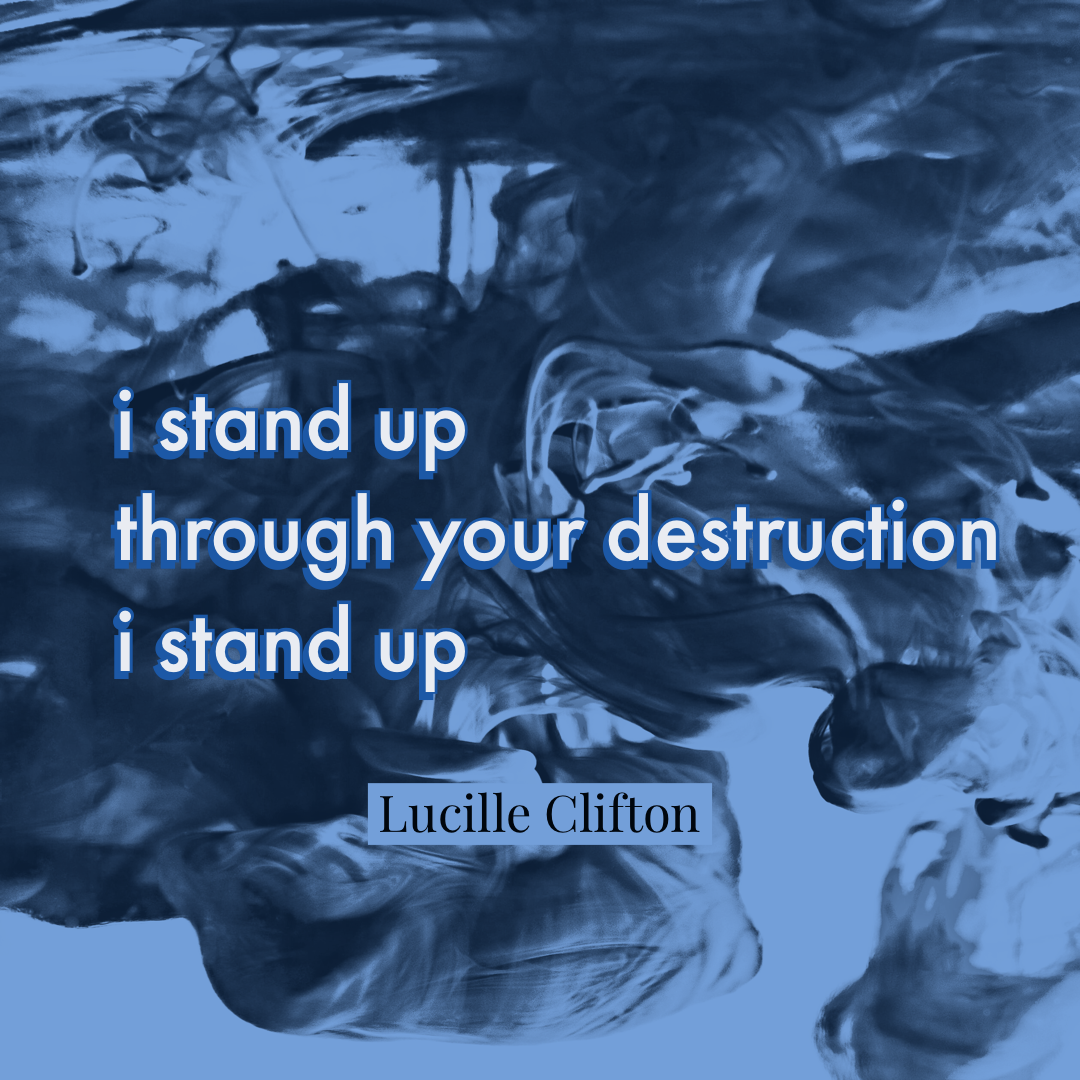
There are few things that offer peace in this time, so we turn to the words of other truth-tellers and light-bringers like poet and writer, Lucille Clifton. Her words continue to resonate through our society.
To our Black community: we lock arms in solidarity with you and we hold space for the many ways grief speaks through us. As allies and helpers and friends and family, we hope to continue defending your voices, uplifting them, and offering only belief, hope, and love.
Black lives matter. You matter. Endlessly and always.

To white and non-Black people of color: we bear witness to the visceral tangibility of white supremacy and systemic violence. It has always been here. It runs through everything—and the stark truths of oppression are made clear today. We will not turn away. We must turn towards the radical truth of our privileges and our complicity and our responsibility.
There is work yet to be done and we commit, as ever, to being in it with you.
#BLM #BlackLivesMatter #UMBCTogether

The Women’s Center is working to introduce care and healing spaces to our community and will be working with campus partners to provide additional space for healing and learning. Please follow our myUMBC page for details as they develop.
Throughout distance learning and the campus closure, the Women’s Center staff are still working remotely and are available for individualized support. If you or someone you know is seeking support to process this critical and traumatic moment in our personal and collective present, please email womenscenter@umbc.edu to set up a virtual meeting or phone call.
Images designed by Women’s Center Assistant Director, Amelia Meman.
]]>
The images and text below were originally shared on the Women’s Center social media pages. We’re re-sharing here to amplify the message and hold ourselves accountable to doing the work of our...
https://womenscenteratumbc.wordpress.com/2020/06/01/black-lives-matter-you-matter-endlessly-and-always/
https://my3.my.umbc.edu/api/v0/pixel/news/93519/guest@my.umbc.edu/16863a5d65ea20cd892c6886ab26fc90/api/pixel
black-lives-matter
blacklivesmatter
critical-social-justice
intersectionality
issues
race
social-justice
updates
Women's, Gender, & Equity Center
https://my3.my.umbc.edu/groups/womenscenter
https://assets2-my.umbc.edu/system/shared/avatars/groups/000/000/125/78272a4842689b30dbf74672182b78f8/xsmall.png?1750974263
https://assets1-my.umbc.edu/system/shared/avatars/groups/000/000/125/78272a4842689b30dbf74672182b78f8/original.png?1750974263
https://assets1-my.umbc.edu/system/shared/avatars/groups/000/000/125/78272a4842689b30dbf74672182b78f8/xxlarge.png?1750974263
https://assets1-my.umbc.edu/system/shared/avatars/groups/000/000/125/78272a4842689b30dbf74672182b78f8/xlarge.png?1750974263
https://assets1-my.umbc.edu/system/shared/avatars/groups/000/000/125/78272a4842689b30dbf74672182b78f8/large.png?1750974263
https://assets2-my.umbc.edu/system/shared/avatars/groups/000/000/125/78272a4842689b30dbf74672182b78f8/medium.png?1750974263
https://assets1-my.umbc.edu/system/shared/avatars/groups/000/000/125/78272a4842689b30dbf74672182b78f8/small.png?1750974263
https://assets2-my.umbc.edu/system/shared/avatars/groups/000/000/125/78272a4842689b30dbf74672182b78f8/xsmall.png?1750974263
https://assets3-my.umbc.edu/system/shared/avatars/groups/000/000/125/78272a4842689b30dbf74672182b78f8/xxsmall.png?1750974263
Women's Center
https://assets4-my.umbc.edu/system/shared/thumbnails/news/000/093/519/580ac0ba6b4286b3622c37f6c49e4884/xxlarge.jpg?1591033309
https://assets4-my.umbc.edu/system/shared/thumbnails/news/000/093/519/580ac0ba6b4286b3622c37f6c49e4884/xlarge.jpg?1591033309
https://assets1-my.umbc.edu/system/shared/thumbnails/news/000/093/519/580ac0ba6b4286b3622c37f6c49e4884/large.jpg?1591033309
https://assets1-my.umbc.edu/system/shared/thumbnails/news/000/093/519/580ac0ba6b4286b3622c37f6c49e4884/medium.jpg?1591033309
https://assets2-my.umbc.edu/system/shared/thumbnails/news/000/093/519/580ac0ba6b4286b3622c37f6c49e4884/small.jpg?1591033309
https://assets1-my.umbc.edu/system/shared/thumbnails/news/000/093/519/580ac0ba6b4286b3622c37f6c49e4884/xsmall.jpg?1591033309
https://assets1-my.umbc.edu/system/shared/thumbnails/news/000/093/519/580ac0ba6b4286b3622c37f6c49e4884/xxsmall.jpg?1591033309
41
0
false
Mon, 01 Jun 2020 12:45:18 -0400
Mon, 01 Jun 2020 12:45:18 -0400
Intro to Hoodoo
Nandi is a Junior English Major and a student staff member in the Women’s Center.
Content Note: This blog is written from an African-American woman’s experience and somewhat limited knowledge of the subject.
Hoodoo is an African American folk magic tradition that is based in West African religious beliefs and practices. Much of the history of the practice has been documented through oral histories transcribed by Black historians.
Zora Neale Hurston’s article, “Hoodoo in America” (1931) recounted what she learned on a months long anthropological journey in New Orleans, which was one of the first of its kind. To stay in contact with the deities, traditions, and Africanisms that the slave trade and colonialism worked hard to systematically erase, slaves from West Africa merged a great deal of their traditions and mixed them in with the Christianity taught to them by their captors.
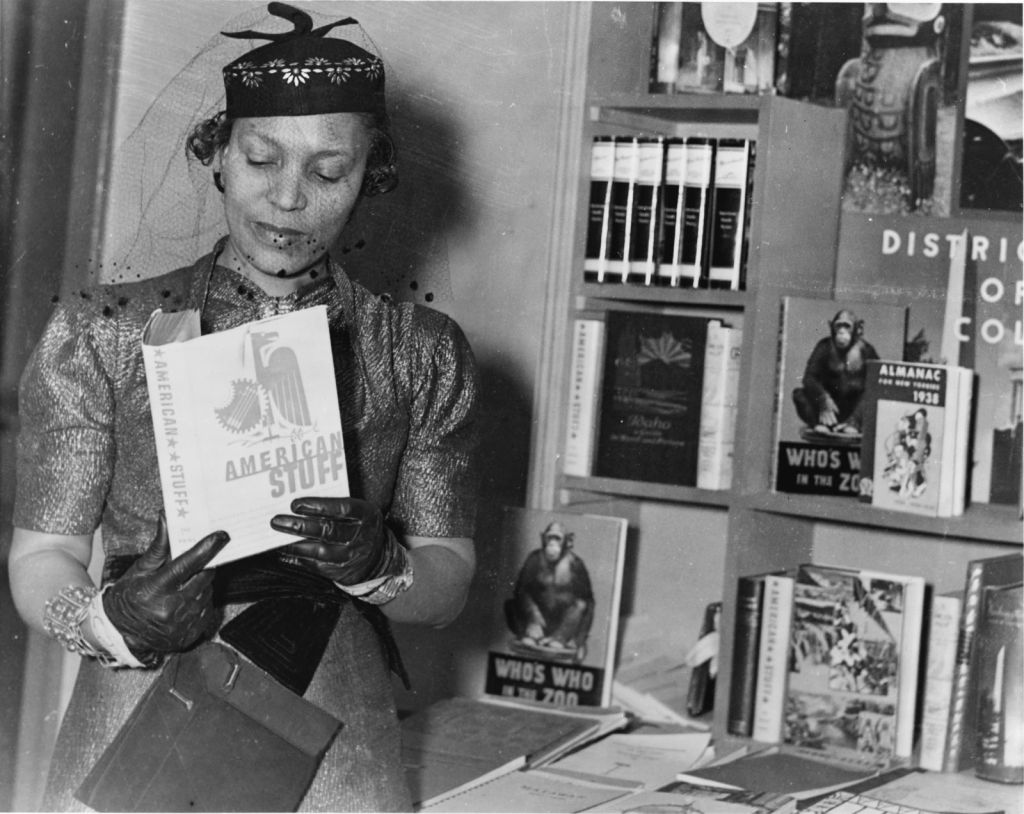 Zora Neale Hurston
Practitioners are called Hoodoos, spells are called roots (pronounced ruht), and the strength of the root is in the mojo of the hoodoo. Those who were born directly into the craft, like the famed Marie Laveau of New Orleans, are known to have the strongest mojo. Mojo, or interchangeably, juju, runs through families like a particular nose shape might. Those African-American communities that are more isolated, like the Gullah/Geechee people of South Carolina, are better able to pass on mojo and conjure traditions.
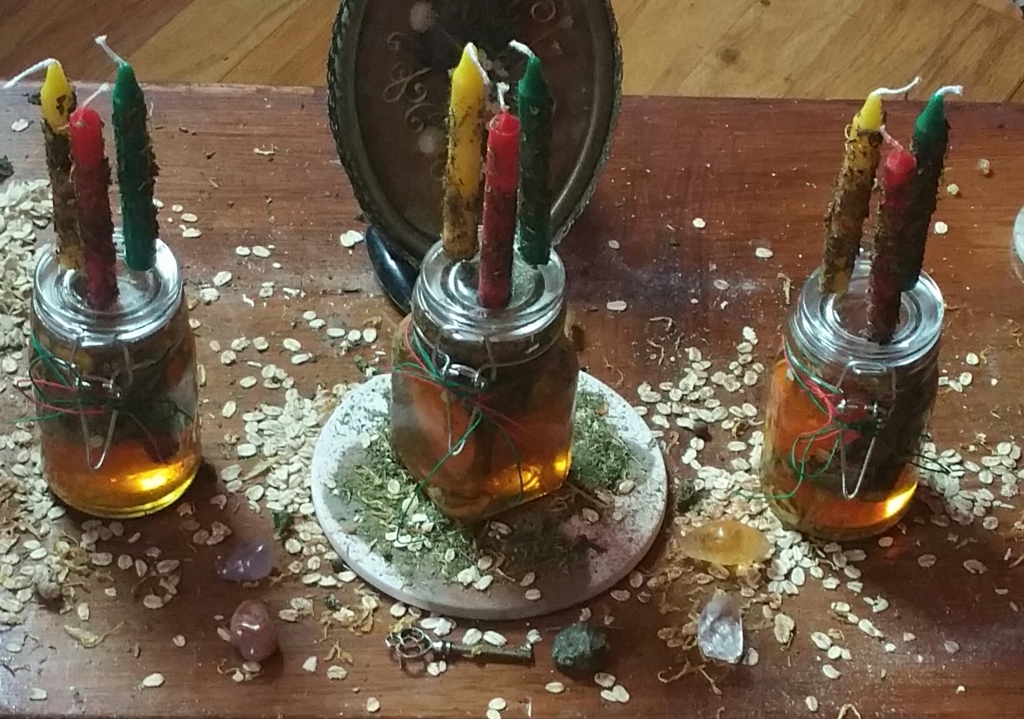 Hoodoo Spell Jars
In our community, intergenerational wealth is hard to come by, so the practices that get passed down through time act as a different sort of currency to support us through life. Knowledge of, and connections to, ancestors and folkloric spirits form a safety net of divinity that stretches everywhere that Black heads lay down to rest. The guardians and preservers of this wealth are mostly women, of course. Hoodoo and mojo aren’t restricted by gender in any way, but across cultures women are diligent stewards that pass down traditions as part of their assigned roles as caretakers.
The designation of “witchcraft” and the social, legal troubles that go along with practicing religions outside of Christianity (and really just the Christianity du jour) have consistently plagued non-men due to the compounding nature of Eurocentric prejudices. In short, we are seen as evil and scapegoated anyway, so to focus on us in this particular form of deviance is just the path of least resistance. But this is part burden, part responsibility, part honor because being the keepers of the keys to rituals that can harm, heal, protect, and cleanse is a more powerful position to hold than colonizing forces could ever fathom.
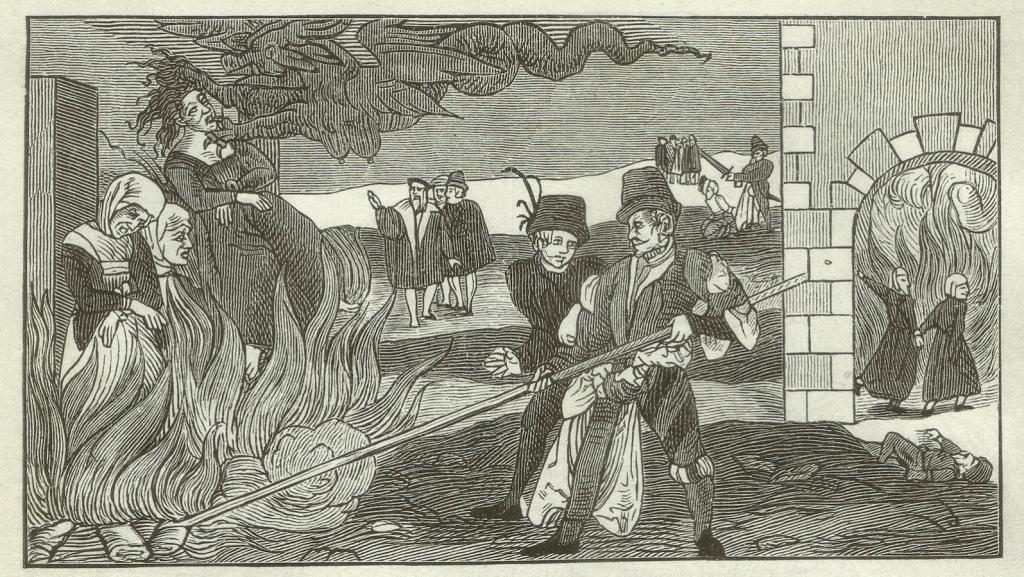 Witch-burning in the county Reinstein (Regenstein, Saxony-Anhalt, Germany) in 1555. Woodcut engraving after an original of a leaflet in the Collections of the Germanisches Nationalmusem in Nuremberg, published in 1881.
I decided to get into Hoodoo because of the mystic, spiritual motifs that have been ever-present in my family life. My mother and my aunties spitting on brooms, throwing salt over shoulders, never placing bags on the floor, and having premonition dreams seeped into my brain to make me want to go back to the source. The superstitions, belief in luck and omens, that I used to take for granted are everyday expressions of culture and our connections to a divine presence.
I decided on Hoodoo because my family is from the Carolinas, by way of slavery, and that’s where it was developed. The religion was created by and for displaced Africans and their descendents in the Americas. To practice Hoodoo without having any such connection is extremely inadvisable (play with slave spirits if you want to, but you probably won’t like the results
]]>
Nandi is a Junior English Major and a student staff member in the Women’s Center. Content Note: This blog is written from an African-American woman’s experience and somewhat limited knowledge...
https://womenscenteratumbc.wordpress.com/2020/04/23/intro-to-hoodoo/
https://my3.my.umbc.edu/api/v0/pixel/news/92522/guest@my.umbc.edu/21e356e5c37f08765861b57347577df2/api/pixel
african-american
bipoc-voices
black-history
black-voices
black-women
folk-magic
hoodoo
intersectionality
spirituality
tradition
witch
witchcraft
zora-neale-hurston
Women's, Gender, & Equity Center
https://my3.my.umbc.edu/groups/womenscenter
https://assets2-my.umbc.edu/system/shared/avatars/groups/000/000/125/78272a4842689b30dbf74672182b78f8/xsmall.png?1750974263
https://assets1-my.umbc.edu/system/shared/avatars/groups/000/000/125/78272a4842689b30dbf74672182b78f8/original.png?1750974263
https://assets1-my.umbc.edu/system/shared/avatars/groups/000/000/125/78272a4842689b30dbf74672182b78f8/xxlarge.png?1750974263
https://assets1-my.umbc.edu/system/shared/avatars/groups/000/000/125/78272a4842689b30dbf74672182b78f8/xlarge.png?1750974263
https://assets1-my.umbc.edu/system/shared/avatars/groups/000/000/125/78272a4842689b30dbf74672182b78f8/large.png?1750974263
https://assets2-my.umbc.edu/system/shared/avatars/groups/000/000/125/78272a4842689b30dbf74672182b78f8/medium.png?1750974263
https://assets1-my.umbc.edu/system/shared/avatars/groups/000/000/125/78272a4842689b30dbf74672182b78f8/small.png?1750974263
https://assets2-my.umbc.edu/system/shared/avatars/groups/000/000/125/78272a4842689b30dbf74672182b78f8/xsmall.png?1750974263
https://assets3-my.umbc.edu/system/shared/avatars/groups/000/000/125/78272a4842689b30dbf74672182b78f8/xxsmall.png?1750974263
Women's Center
9
0
false
Thu, 23 Apr 2020 11:28:47 -0400
Thu, 23 Apr 2020 11:28:47 -0400
Mutual Aid: One for All and All for One

Nandi is a student staff member in the Women’s Center and a Junior English major.
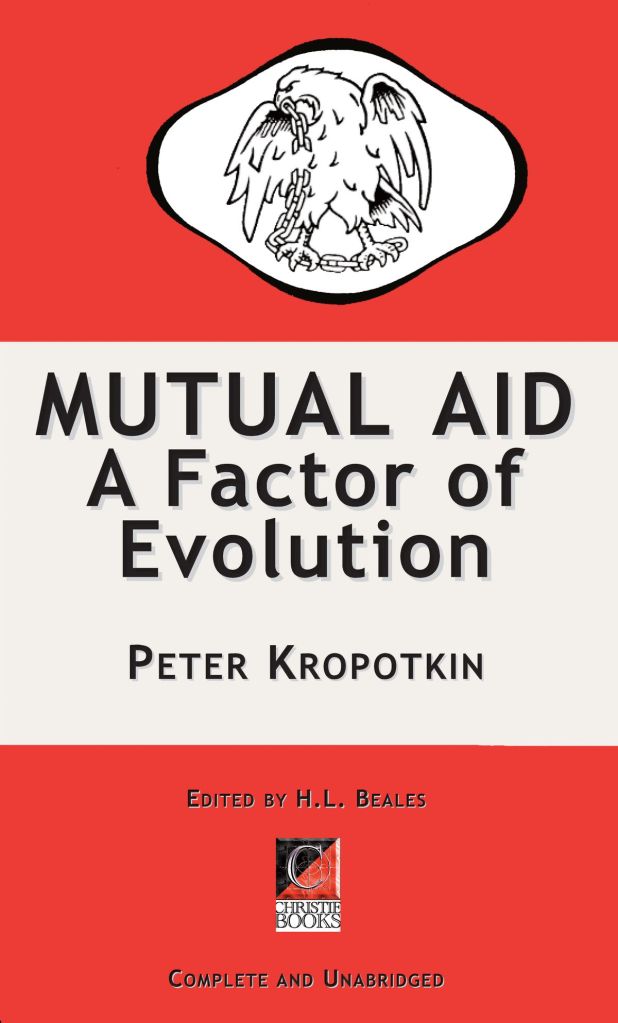
Mutual aid, as a concept, is based in anarchism and the work of Petr Kropotkin. His work, “Mutual Aid: A Factor of Evolution”, is a foundational text for anarchists and other communist movements. But really, you don’t have to be an anarchist or a communist, or know anything about these ideologies to practice mutual aid because it’s an extremely simple concept.
Basically, the theory supposes that people (and other creatures) are FAR more inclined to taking care of each other than they are to individualism, no matter how much our capitalist ruling class argues to the contrary. The Seattle-based collective Big Door Brigade defines the practical application of mutual aid as “when people get together to meet each other’s basic survival needs with a shared understanding that the systems we live under are not going to meet our needs and we can do it together RIGHT NOW!” They also make the point that it is a separate and distinct practice from charity and charitable organizations.
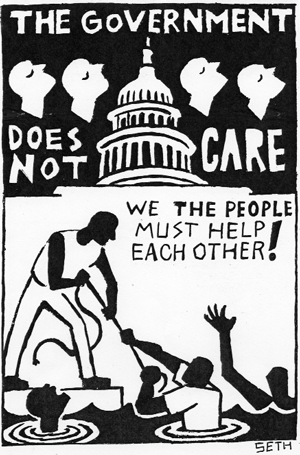
Image by Seth Tobocman
Historically, mutual aid looks a lot of different ways. The Free African Society in 1787 was an organization meant to provide aid amongst free Black people. In the 20th century, there were Italian-American organizations called Societa di Mutuo Soccorso and Mexican-American societies called Sociedad Mutualistas. Larger worker movements and labor unions are also a part of this tradition as they necessitate collaboration and care work as a means to stay afloat while struggling for rights. Labor organizing in the US is at its lowest point in decades, but that doesn’t mean that we still can’t connect to our communities right now in the present to help everyone survive.
In feminist movements, mutual aid is a thread that runs throughout as an ongoing necessity among those who are oppressed under patriarchy. It’s not hard to see why; power-based violence, hiring discrimination, and wage gaps all team up to make people of oppressed genders dependent on one another rather than the institutions that their oppressors control.
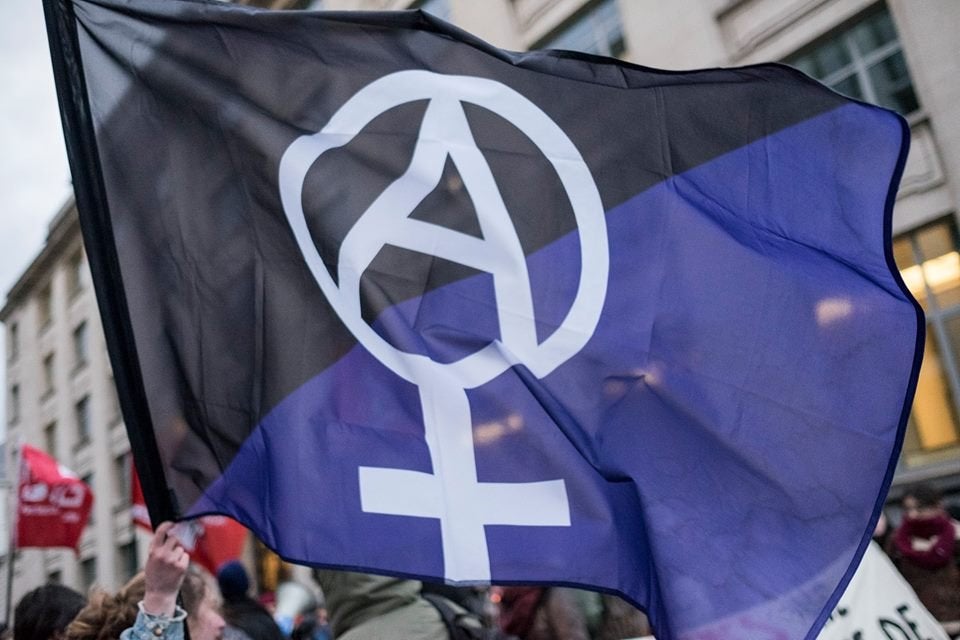
Anarchist Feminist flag
The Association for Women’s Rights in Development has mutual aid as a key piece of their “Solidarity Economy”, an economy in which people’s relationship to goods and services is more sustainable and cooperative. To go along with that, anarchist feminism interprets the labeling of actions like sharing, compassion, and sensitivity as “feminine” to mean that these are direct challenges to the “masculine” hierarchy.
Maybe you’ve seen mutual aid mentioned on social media in the past few weeks, or maybe you haven’t. Right now, due to COVID-19, we’re all in a position to rely on one another for safety and survival. We usually think of networking as a means to further ourselves towards our own goals and ambitions. Now is a time to network with the people in our neighborhoods and communities for our common good. Practicing mutual aid doesn’t mean that everyone has to gather and social distancing has to go out the window because those are important things to do for our communities as well.
If in reaching out you find a need that you can fill, then do so! If someone in your network has access to resources that you can’t find, then make your own needs known! As capable and resourceful as we are, self-reliance is not the order of the day. Lean into your human inclinations towards care and comradeship to make it through.
Hundreds of mutual aid groups have popped up all over the country in the past month to address the dire straits we now find ourselves in, with most of them being led by the organizers who dedicate their lives to this work every day.
To find one near you, you can go to the interactive map on mutualaidhub.org, or this list posted on the Its Going Down digital community center. Its Going Down also has organizing guides and resources so that you don’t have to go into this unlearned. I’ve put in for the Baltimore Maroon Movement! Who in YOUR community needs your help?
]]>
Nandi is a student staff member in the Women’s Center and a Junior English major. Mutual aid, as a concept, is based in anarchism and the work of Petr Kropotkin. His work, “Mutual...
https://womenscenteratumbc.wordpress.com/2020/04/01/mutual-aid-one-for-all-and-all-for-one/
https://my3.my.umbc.edu/api/v0/pixel/news/91741/guest@my.umbc.edu/3e80bc5d5f9bee686255016d8bc9e3ac/api/pixel
activism
anarchism
community-care
community-organizing
covid-19
critical-social-justice
feminism
intersectionality
issues
mutual-aid
pandemic
politics
uncategorized
Women's, Gender, & Equity Center
https://my3.my.umbc.edu/groups/womenscenter
https://assets2-my.umbc.edu/system/shared/avatars/groups/000/000/125/78272a4842689b30dbf74672182b78f8/xsmall.png?1750974263
https://assets1-my.umbc.edu/system/shared/avatars/groups/000/000/125/78272a4842689b30dbf74672182b78f8/original.png?1750974263
https://assets1-my.umbc.edu/system/shared/avatars/groups/000/000/125/78272a4842689b30dbf74672182b78f8/xxlarge.png?1750974263
https://assets1-my.umbc.edu/system/shared/avatars/groups/000/000/125/78272a4842689b30dbf74672182b78f8/xlarge.png?1750974263
https://assets1-my.umbc.edu/system/shared/avatars/groups/000/000/125/78272a4842689b30dbf74672182b78f8/large.png?1750974263
https://assets2-my.umbc.edu/system/shared/avatars/groups/000/000/125/78272a4842689b30dbf74672182b78f8/medium.png?1750974263
https://assets1-my.umbc.edu/system/shared/avatars/groups/000/000/125/78272a4842689b30dbf74672182b78f8/small.png?1750974263
https://assets2-my.umbc.edu/system/shared/avatars/groups/000/000/125/78272a4842689b30dbf74672182b78f8/xsmall.png?1750974263
https://assets3-my.umbc.edu/system/shared/avatars/groups/000/000/125/78272a4842689b30dbf74672182b78f8/xxsmall.png?1750974263
Women's Center
4
0
false
Wed, 01 Apr 2020 08:30:04 -0400
Trans Women in Women’s Spaces: A Reflection on the Transition of Privilege and Belonging
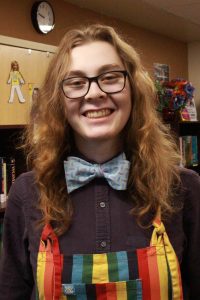 Autumn is a junior Meyerhoff Scholar (M29), pursuing a BS in Chemistry and a BA in Gender, Women and Sexuality Studies dual degree, and currently a student intern at the Women’s Center.
Content Note: The content of this blog may be triggering. Topics addressed by this blog include transphobia, menstruation, pregnancy, dysphoria, and gender-confirmation surgery.
When I first received an offer to intern at the Women’s Center, I was very excited. Throughout my years at UMBC, the Women’s Center quickly became my home away from home and was a place to feel safe, included, and accepted. I participated in as many events as possible and volunteered whenever I had the time. I even had the privilege of being able to facilitate Spectrum meetings for a semester before formally joining the staff. By working in the Women’s Center, I thought I would be able to help create an even better space for the people I shared the space with and new community members alike.
However, even while writing this blog post, I experience imposter syndrome. Imposter syndrome is “the idea that you’ve only succeeded due to luck, and not because of your talent or qualifications—was first identified in 1978 by psychologists Pauline Rose Clance and Suzanne Imes.” I think that the sheer complexity of how this imposter syndrome is taking effect for me (and people like me with a pretty fraught, tenuous and ever-changing relationship with womanhood) is demonstrated in the carefulness of the words that I am using in this blog. This is a really multifaceted issue that deals with dysphoria, internalized transphobia, the differences of experiences between marginalized identities and intersectionality.
Vaginas!?
When I was born, the doctor looked at my genitals and proclaimed to the world and the government that “It’s a boy.” For those who know me, it is somewhat obvious that this label did not stick for the “normal” amount of time (read: the entire lifespan). If you’ve not caught on yet, I’m very much not a boy anymore and I identify as a nonbinary trans woman (I know its a bit of an oxymoron; gender is FUNKY).
I experience marginalization and oppression, but I also have privilege in this identity. I struggle with the privilege I have by being a trans feminine person that was able to come out early on in my life and that I was able to start my medical transition when I still was in high school.
Even so, working in the Women’s Center at UMBC as a nonbinary, transgender woman is peculiar. Because of my experiences with transness and my body, I am not the best equipped to assist with issues that students may come to the Women’s Center to address. For example, I don’t have a vagina (YET!), and I didn’t grow up with one, therefore I don’t have the first-hand knowledge that comes with menstruating, pregnancy, or growing up as an AFAB person in a heterosexist and misogynistic society.
This has made interactions with some community members weird when they ask for help with things I don’t have experience with. I’m deathly afraid of giving the wrong advice or having an interaction that makes someone uncomfortable. If a community member comes into the Center and asks about internal condoms or pregnancy tests (while I’m not uneducated on the subjects) I cannot give as good of an answer as someone with experience. Even when I am pointing out the tampons and pads that the Women’s Center offers to the community for free, I deal with that fear and alienation.
As a transfeminine person, I am acutely aware of how “womanhood,” as the greater society knows it, is defined in bioessentialist definitions. When doing the work that involves vaginas and helping people with vaginas, I am always reminded of the “essential” difference of my body and that I am not fully “them.”
I am wondering how much this anxiety stems from internalized transphobia that I have surrounding transgender women, including myself, not really being “full” women or that I don’t truly belong in a women’s space. Throughout my life, the topic of periods, reproduction and menstrual products have always been a sticking point for me and my experience: a constant trigger for my dysphoria. It’s a common trigger for a lot of trans women, not just because of the consistent TERF bioessentialist dog whistles, but because we as trans women lack the thing that is worshiped as a pillar of western societal femininity: the ability to reproduce. Of course, I want to acknowledge that this is a completely bogus measure of femininity because the ability to reproduce is completely disconnected to femininity. Femininity and reproduction are two distinct aspects of humanity that are conflated in a way that serves to not only enforce exclusion but to oppress those who do not fit the societal standards. To some extent, I believe that I’m invading a space that I really do not have the right to inhabit.
Privileged Transitions
In terms of my transition, I am exceptionally privileged. I was born to an accepting family who supported me when I came out after my freshman (literally “man”) year of high school. Me coming out to them was a bit of an accident even, but it went well. I was able to access hormones soon after and I just scheduled bottom surgery for after I graduate from UMBC. I’m white and I pass as a cis woman reasonably well, and I have the resources to access my endocrinologist regularly and I am able to afford my medical treatment. I also have the privilege of growing up as someone who was assigned male at birth in a society that greatly values maleness, especially in science and in leadership. Because of my socialization, I am allowed a higher level of confidence and ownership in science and leadership than someone who was reared as a woman in the same fields.
All of these compounding areas of privilege greatly influence how I can exist in a space, and how much space I take up, especially at a women’s center. As someone who was reared as a male in our society, it sometimes feels really weird to go to events that specifically cater to women.
I also see my own experience paralleled in a previous Women’s Center staff member Daniel, as they had to grapple with the realities of being a trans man when working in the Women’s Center. In their blog post about male privilege, Daniel discusses how they strive to be cognizant of the space they take up within the Women’s Center because Dan’s privilege is not as cut and dry as one might see between a cis man and a cis woman. Their blog posts detailed how they saw themselves within the Women’s Center as a “white, medically transitioning, ‘passing’ man,” and how that influenced Dan’s participation. Even though they have the privileges afforded to white men, because of their transness, Daniel is precariously perched on the Glass Elevator and experiences marginalization at the hands of a heterocissexist society. Although the experiences of all trans people are not the same, I can deeply relate to Dan’s experiences as a student staff member at the Women’s Center.
Privilege aside, there is a level of marginalization that I experience in entering and being a part of the Women’s Center. Cis women come into this space and feel entitled to it. Me? I do… and I also pause. I enter the space tentatively because my sense of belonging is not always assured.
Existing Within the Bounds of My Triggers
Throughout my transition, my dysphoria, anxiety, and depression has been pretty intensely triggered by the topics of menstruation, reproduction, and topics around cis-women bodies.
I was really, really worried about this when I started at the Women’s Center because I imagined that it would be very hard for me to remove myself from potentially triggering situations when I’m working (such as a community member needing assistance with something). I still really struggle with this even as I am halfway through my internship. However, I’ve been a lot less triggered by these situations than I thought I would initially.
I am not one to look a gift horse in the mouth, but I feel like this ease comes in part from the ability to put boundaries between my own sense of self and my sense of representing the Women’s Center. Regardless of what this means about my self-esteem and coping, boundaries allow me to exist and operate in this work.
Ultimately, I think that it is okay and normal to be uncomfortable in some spaces. This discomfort is good. The oppressive nature of the gender binary and the heterocissexist society is diametrically opposed to the reality that trans people live so discomfort is inevitable. But when dealing with big, overarching systems of power that influence our lives, sometimes identifying that there even is a problem is the first step of trying to challenge the norms. In other words, without identifying the problem, it is impossible to generate a solution. It may seem like the big, overall problem is the Gender Binary , but I think there is a smaller, more pervasive issue when thinking and talking about how transgender people fit within the model of a women’s center.
I think that the problem isn’t that transgender people do not fit into the current framework of mainstream feminism. The real problem is with those who either knowingly or unknowingly perpetuate systems of oppression (read: most everyone), and don’t use their power or privilege toward the radical but simple process of affirming transgender identities. In spaces like the Women’s Center, trans people should not only feel welcome but also a sense of home and belonging–and it’s cis people’s prerogative to either build those bridges with intentionality and care or continue a system that oppresses everyone: the master’s tools will never dismantle the master’s house.

My transness is an integral part of my identity, and I’m exceptionally proud of it. However, I know that my belonging in the Women’s Center is not just tied to my identity as a nonbinary trans woman. In the Women’s Center, I am surrounded by people who support and care for me and it is in that where the promise of real and actionable liberatory justice resides.
]]>
Autumn is a junior Meyerhoff Scholar (M29), pursuing a BS in Chemistry and a BA in Gender, Women and Sexuality Studies dual degree, and currently a student intern at the Women’s Center....
https://womenscenteratumbc.wordpress.com/2020/03/26/trans-women-in-womens-spaces-a-reflection-on-the-transition-of-privilege-and-belonging/
https://my3.my.umbc.edu/api/v0/pixel/news/91597/guest@my.umbc.edu/c670b8879bdb85d6b2e4e3e4e18c52f6/api/pixel
audre-lorde
bioessentialism
cisgender
diversity
feminism
intersectionality
lgbtq
staff
trans
trans-women
transgender
transition
uncategorized
womanhood
Women's, Gender, & Equity Center
https://my3.my.umbc.edu/groups/womenscenter
https://assets2-my.umbc.edu/system/shared/avatars/groups/000/000/125/78272a4842689b30dbf74672182b78f8/xsmall.png?1750974263
https://assets1-my.umbc.edu/system/shared/avatars/groups/000/000/125/78272a4842689b30dbf74672182b78f8/original.png?1750974263
https://assets1-my.umbc.edu/system/shared/avatars/groups/000/000/125/78272a4842689b30dbf74672182b78f8/xxlarge.png?1750974263
https://assets1-my.umbc.edu/system/shared/avatars/groups/000/000/125/78272a4842689b30dbf74672182b78f8/xlarge.png?1750974263
https://assets1-my.umbc.edu/system/shared/avatars/groups/000/000/125/78272a4842689b30dbf74672182b78f8/large.png?1750974263
https://assets2-my.umbc.edu/system/shared/avatars/groups/000/000/125/78272a4842689b30dbf74672182b78f8/medium.png?1750974263
https://assets1-my.umbc.edu/system/shared/avatars/groups/000/000/125/78272a4842689b30dbf74672182b78f8/small.png?1750974263
https://assets2-my.umbc.edu/system/shared/avatars/groups/000/000/125/78272a4842689b30dbf74672182b78f8/xsmall.png?1750974263
https://assets3-my.umbc.edu/system/shared/avatars/groups/000/000/125/78272a4842689b30dbf74672182b78f8/xxsmall.png?1750974263
Women's Center
9
0
false
Thu, 26 Mar 2020 11:16:31 -0400
Thu, 26 Mar 2020 11:16:31 -0400
Do Better: From A Non-Disabled Person’s Perspective
My hopes are that the following is both a call out and a call in.

I am a non-disabled, white, college-educated, young adult and I’ve had a difficult time vouching for myself in many environments such as in the classroom, workforce, and even day to day moments in life. I am among a majority privileged group who are more readily given a platform from others within the privileged and majority group. As a social work major, I have been taught to use my power to amplify the voices of marginalized people. Today, I want to use this platform to talk about accessibility.
What is a “disability?”
According to the Americans with Disabilities (ADA), a disability is defined as, “A physical or mental impairment that substantially limits one or more of the major life activities.” However, a truly accurate definition of a disability is difficult to produce. There are many variations of what type of disability, or disabilities, a person may experience such as:
- Visual disabilities
- Auditory disabilities
- Cognitive disabilities
- Neurological disabilities
- Physical disabilities
- Speech disabilities
- Sensory disabilities
- Psychological disabilities
There are as many differences between the experiences of each person with a disability as the differences between people who are non-disabled. Every person is different and it’s important to be as inclusive as possible to these differences.
What is the ADA?
The Americans with Disabilities Act (ADA) is a federal civil rights law that was passed by Congress in 1990. Its goal is to provide protections for people with disabilities against discriminatory behavior. It is divided into 5 Titles: I. Employment, II. State and Local Government, III. Public Accommodations, IV. Telecommunications, and V. Miscellaneous Provisions. Each of these titles attempts to ensure that people with disabilities are provided the same opportunities and rights as everyone else. There have been amendments to the ADA to clarify the definition of a disability. Even so, the revisions made over the past 30 years have not been expansive enough to fully include all those who experience a disability.
Though the ADA exists and applies to all entities in the US, many environments believe they do not need to comply with ADA requirements. Some people believe that folks who report ADA violations are purely looking to gain money from a lawsuit. Others believe that it’s too expensive to create accommodations for their facilities. There are many other reasons for this, but ultimately each one is ableist.
For example, rideshare companies such as Uber and Lyft have been known to deny people with disabilities service. This mistreatment of people with disabilities is harmful to say the least.
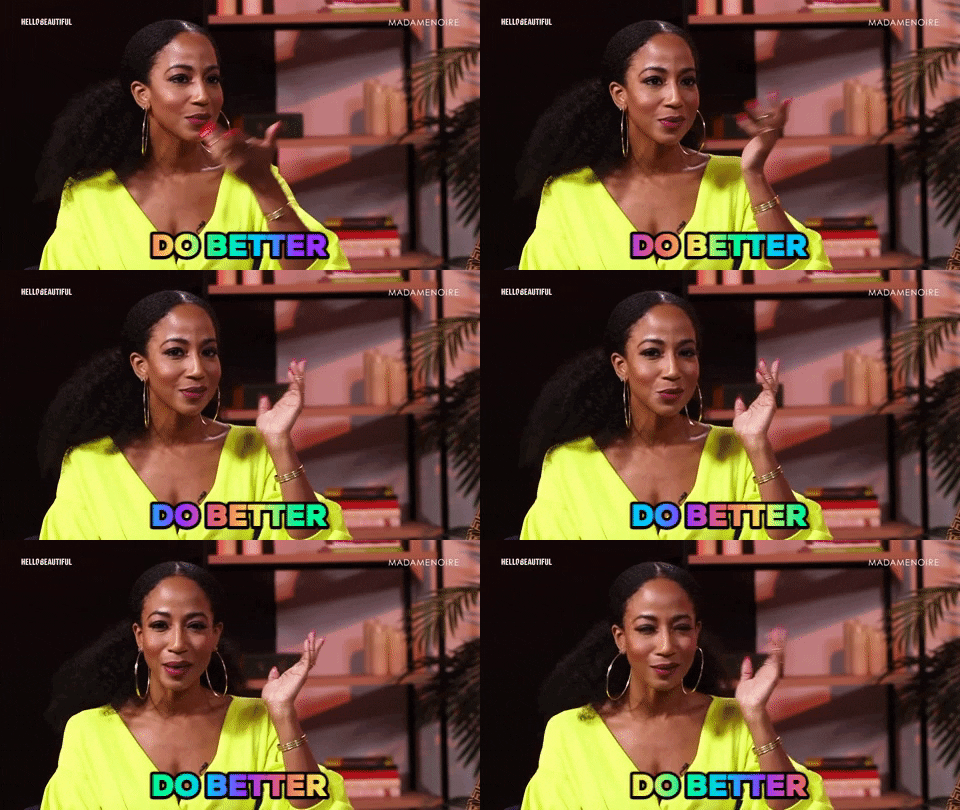
What is “ableism?”
The Merriam-Webster definition of ableism is “discrimination or prejudice against individuals with disabilities.” However, ableism is more complex than this. Think of it this way:
“Structural ableism assumes that there is an ideal body and mind that is better than all others, and ableists build a world in which this ideal can thrive and others cannot.” –Hanna Thomas & Anna Hirsch
Ableism is a mindset. Non-disabled people have set a norm that there is a right and wrong way to be as a person. The language we use to discuss people with disabilities is often harmful and has been created without folks with disabilities in mind.
Some people are intentional about their ableist actions whereas others do so while unaware. Beyond individual actions, though, are the systemic inequities that do harm at structural levels and trickle down to individuals.
To undo these harmful patterns, it is imperative to be aware and intentional when talking about people with disabilities. Not all people with disabilities have a visible disability nor are they required to disclose their disability status with anyone. In fact, almost 20% of the U.S. population reported having a disability in the 2010 census.
It is imperative for folks to shift their perspective when thinking of giving accommodations to people who are different than them. Rather than viewing differences as a challenge, know that every person has value and should be treated as such.
How is the ADA enforced?
Through lawsuits and settlements. This means that many establishments can get away with not being ADA compliant until someone reports them. Once an individual reports an establishment for an ADA violation, they are first interviewed to determine if the discrimination is evident before any action is taken. Only those who have thorough proof are considered when attempting to get justice.
Additionally, the ADA requirements are not widely taught in architecture school. This furthers the creation of spaces that are not ADA compliant.
There are gaps in our legal and education systems. People with marginalized identities are often left behind. Statistically, there is a high rate of intimate partner violence and sexual violence among people with disabilities. Our services must be welcoming and inclusive to vulnerable communities.
What does all of this mean?
When in a position of power, it’s essential to keep all of this in mind. Advocates must acknowledge the aspects of their identities that are privileged and learn how to properly understand folks who are different from them. You can follow the ADA requirements and still be exclusive. If you are a professional, you hold a position of power and it should be in your best interest to hold an inclusive and accommodating space for all potential patients, clients, students, or whoever you work with.
“A completely accessible group does not exist. The important thing is that groups keep learning and keep thinking about how people might be excluded.” -Liz Kessler
Listen to people with disabilities and be sure that they are a part of the conversation. It’s better to ask someone what they may need from you than for you to make assumptions or ignore them. Your actions do have consequences and the people you work with deserve the most accommodating and inclusive version of yourself.
Resources
If you are considering filing a complaint the following are some resources:
Maryland State Level Complaint Process
Federal Level Complaint Process
Someone’s First-hand Experience Filing
Advice When Filing
To learn more information as a non-disabled person:
Do These 39 Simple Things to Make Your Student Life Opportunities More Accessible
Increasing Neurodiversity in Disability and Social Justice Advocacy Groups
Create an Inclusive Movement
Microsoft Accessible Events Guide
Accessible Syllabus Guide
UMBC Specific Information:
Connect with Student Disability Services
____________________________________________________
Note: This is from an non-disabled person’s perspective. Please reach out to the Women’s Center email with any recommendations or requests for revisions at womenscenter@umbc.edu.
____________________________________________________
]]>
My hopes are that the following is both a call out and a call in. I am a non-disabled, white, college-educated, young adult and I’ve had a difficult time vouching for myself in many...
https://womenscenteratumbc.wordpress.com/2020/02/20/do-better-from-a-non-disabled-persons-perspective/
https://my3.my.umbc.edu/api/v0/pixel/news/90632/guest@my.umbc.edu/132ed5cf5f50d38aa534fd74aaa682a7/api/pixel
ableism
accessibility
ada
disability
intersectionality
issues
justice
uncategorized
Women's, Gender, & Equity Center
https://my3.my.umbc.edu/groups/womenscenter
https://assets2-my.umbc.edu/system/shared/avatars/groups/000/000/125/78272a4842689b30dbf74672182b78f8/xsmall.png?1750974263
https://assets1-my.umbc.edu/system/shared/avatars/groups/000/000/125/78272a4842689b30dbf74672182b78f8/original.png?1750974263
https://assets1-my.umbc.edu/system/shared/avatars/groups/000/000/125/78272a4842689b30dbf74672182b78f8/xxlarge.png?1750974263
https://assets1-my.umbc.edu/system/shared/avatars/groups/000/000/125/78272a4842689b30dbf74672182b78f8/xlarge.png?1750974263
https://assets1-my.umbc.edu/system/shared/avatars/groups/000/000/125/78272a4842689b30dbf74672182b78f8/large.png?1750974263
https://assets2-my.umbc.edu/system/shared/avatars/groups/000/000/125/78272a4842689b30dbf74672182b78f8/medium.png?1750974263
https://assets1-my.umbc.edu/system/shared/avatars/groups/000/000/125/78272a4842689b30dbf74672182b78f8/small.png?1750974263
https://assets2-my.umbc.edu/system/shared/avatars/groups/000/000/125/78272a4842689b30dbf74672182b78f8/xsmall.png?1750974263
https://assets3-my.umbc.edu/system/shared/avatars/groups/000/000/125/78272a4842689b30dbf74672182b78f8/xxsmall.png?1750974263
Women's Center
15
0
false
Thu, 20 Feb 2020 15:00:24 -0500
Thu, 20 Feb 2020 15:00:24 -0500
Survivorship Looks Different in the Asian American Community
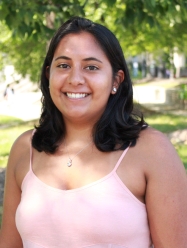
Samiksha Manjani is a Student Staff member at UMBC’s Women’s Center. She is a Political Science and Sociology double-major and is currently a co-facilitator of the Women’s Center’s discussion group, Women of Color Coalition.
As a survivor of sexual violence, I have found myself re-traumatized by the recent events that have happened at UMBC. In the aftermath, I struggled to focus in my classes and could barely complete my work. Despite this, I somehow managed to get by with everyday going by in a blur. I went through the motions day-in and day-out. I was slowly sinking back into depression.
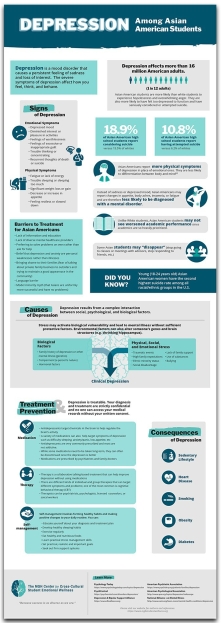
One of the most common emotional and psychological responses to sexual violence is depression (RAINN). Depression is a mood disorder which occurs when feelings of sadness and hopelessness persist for long periods of time and interrupt regular thought patterns. It affects a person’s behavior and can disrupt their relationships. Just like many other survivors, I also struggle with depression.
During this difficult time, I was shocked that no one in my life had asked me how I was doing. None of my friends had asked me how I was handling the news, despite knowing that I’m a survivor and that I also struggle with depression. They knew about the lawsuit against UMBC too. In fact, they knew so much about it that they talked to me about their opinions on the matter. Yet, they never asked me how I was processing the news or if I was doing okay.
At first, I thought, “wow, I have really shitty friends in my life.” But I realized that this was a drastic conclusion to make considering my friends were normally compassionate. Instead, I tried to put myself in their shoes. Why would my normally compassionate friends be so inconsiderate? Had my external behavior reflected my internal suffering?
I realized that, from an outsider’s perspective, I seemed completely okay because I went to my classes and work as usual. My behavior, communication, and demeanor had basically stayed the same so nothing seemed amiss. However, this was completely contrary to how I felt internally. Inside, I felt awful. Every step I took was harder, every assignment I completed took longer, and every smile was faker. I was falling apart on the inside, yet no one around me could see it.
At first, I thought that this was just how I expressed trauma. But after some reflection, I realized that I knew so many other Asian women dealing with depression that were also still high-functioning. I was not the only person who exhibited depressive symptomology this way, and more importantly, it had seemed that this was especially common for other Asians.
My assumption was not wrong. The National Alliance on Mental Illness (2011) found that Asian-American teenage girls have the highest rate of depression compared to any other racial, ethnic or gender group. Furthermore, the suicide rates for 15-24 year old Asian American females are 30% higher than the rates for white females of the same age (Mental Health America). Yeung and Kam (2006) found that none of the Asian patients in their study considered depressed mood as their main problem. However, more than 90% of them indicated having a depressed mood when asked to rate their symptoms on a depression rating scale.
Despite these alarming statistics, 51% of Asian Americans have at least a Bachelor’s Degree, compared to 29% of all Americans (Mental Health America). Furthermore, 21% of Asians, ages 25 or older, have attained an advanced degree (e.g., Master’s, Ph.D., M.D. or J.D.), which is significantly higher than the national average of 12% (Baum and Steele, 2017; United States Census Bureau, 2016). Lastly, the median annual household income of Asian American households is $73,060, compared to $53,600 among all U.S. households (Pew Research Center, 2017). It is important to note, however, that there is variation in educational attainment and median annual income among the different ethnic groups which makeup “Asian Americans.”
These findings made me wonder, why do Asian women express depressive symptomology so differently than other ethnic groups?
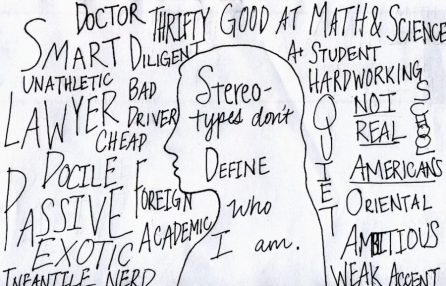
One reason could be because of the immense pressure Asians deal with to live up to the model minority stereotype. The model minority stereotype characterizes Asians by hard work, laudable family values, economic self-sufficiency, non-contentious politics, academic achievement, and entrepreneurial success (Kang, 2010). There is a lot of American cultural pressure on Asians to fit into this “intelligent and self-reliant” stereotype. Such a stereotype has dire consequences; for-example, Asian students are pressured to rise to an academic bar that keeps rising. The mental health cost of reaching an unrealistic standard is demonstrated by the statistics mentioned above.
This pressure is worsened by the fact that many Asian immigrants experience downward economic mobility upon arrival to the U.S. Most Asian immigrants are highly educated and held middle-class status in their country of origin (Lopez, Bialik, & Radford, 2018). Because of this downward shift in class status, Asian immigrants have to work their way up from the bottom of the social and economic ladder in the U.S. This is a very daunting task given that many Asian immigrants not only have to support themselves and their families in the U.S., but also relatives back home (United Nations, 2017). This leads to an immense pressure to climb up the socioeconomic ladder and become financially stable.
Both the pressure of the model minority stereotype and pressure to support family members removes any possibility for Asians Americans to display characteristic forms of depression without severe consequences. There are high costs for Asian American immigrants if they do not complete their education, capitalize on job opportunities, and/or perform at their jobs. If they do not perform, they are risking not only their survival, but the survival of relatives back home. This does not mean that people who display traditional depressive symptomatology are somehow less “able” or “motivated” if they can’t complete these tasks. It is simply that the pressure to economically succeed robs Asian Americans the ability to address mental health concerns.
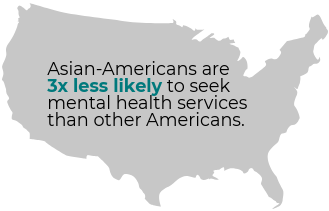
Another reason could be the large stigma within the Asian community surrounding mental health illnesses and treatment. Asian Americans are 3x less likely to seek mental health services than White Americans (Nishi). Furthermore, it is taboo within the Asian community to speak about having mental health illnesses (Chu & Sue, 2011). One large reason this stigma exists is because of the concept of familial shame within Asian communities.
There is immense pressure in the Asian community to preserve the family’s reputation and status at all costs. This is reflected in popular terms used within various Asian cultures which represent the process of shame or losing face: “Haji” among Japanese, “Hiya” among Filipinos, “Mianzi” among Chinese,”Chaemyun” among Koreans, and “Sharam” among Indians (Sue, 1994). If an Asian person has a mental health illness, it could be interpreted by the community as a result of their family’s failure to raise the person correctly. Therefore, Asian Americans are unlikely to acknowledge and seek mental health treatment in fear of “bringing shame” to their families.
I think in a lot of ways all of these factors have influenced the way that I have processed the trauma of my assault and the resulting depression. Like many other Asian American women, I don’t outwardly exhibit depression through conventional symptoms. However, this doesn’t mean that I experience depression less severely than other people. On the contrary, I struggle with depression so much sometimes that it’s hard to even do basic tasks (even if I end up somehow getting it done). Because of the fact that depression is one of the most common psycho-emotional responses to sexual violence and also that the Asian community presents unique depressive symptomology, it is logical to conclude that survivorship is likely to look different in the Asian community.
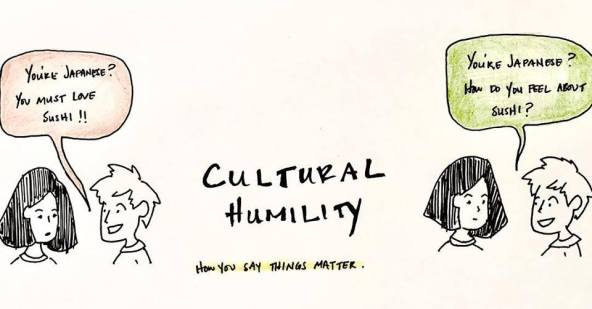
Therefore, it is extremely important for friends, family members, and mental health professionals to recognize that survivorship manifests differently in various ethnic communities. As such, the type of support given must be individualized to meet the needs of survivors of different backgrounds. To best support survivors, the people within the survivor’s inner circle should adopt a lens of cultural humility.
The Women’s Center uses this lens of cultural humility to best support survivors of different backgrounds. Cultural humility is a humble and respectful attitude towards individuals of other cultures that pushes one to challenge their own cultural biases. This departs from “cultural competency” in that it recognizes that a person cannot possibly know everything about other cultures. Instead, people should approach learning about other cultures as a lifelong goal and process.
I truly believe that if my friends had adopted a lens of cultural humility, they would have easily picked up on my struggles. If they had understood more about Asian culture and what it means to be an Asian immigrant, they probably would have been able to recognize my signals of distress. This is especially important for mental health professionals; they would be able to pick up more details from their clients if they held the mindset that “there’s always more to learn.” Using this lens, we can better support the survivors in our lives.


**Please note that not every Asian person experiences depression this way. The goal of this blog is to highlight a common phenomenon in the Asian community. If an Asian person does not process depression or trauma this way, it is not a reflection of their Asianness, intelligence, reliability, or any other characteristics.**
]]>
Samiksha Manjani is a Student Staff member at UMBC’s Women’s Center. She is a Political Science and Sociology double-major and is currently a co-facilitator of the Women’s Center’s discussion...
https://womenscenteratumbc.wordpress.com/2018/11/01/survivorship-looks-different-in-the-asian-american-community/
https://my3.my.umbc.edu/api/v0/pixel/news/79994/guest@my.umbc.edu/b53bf155d57e80a616f76ea79a14fa72/api/pixel
asianamerican
feminism
healing
intersectionality
issues
mental-health
sexual-violence
support-survivors
uncategorized
Women's, Gender, & Equity Center
https://my3.my.umbc.edu/groups/womenscenter
https://assets2-my.umbc.edu/system/shared/avatars/groups/000/000/125/78272a4842689b30dbf74672182b78f8/xsmall.png?1750974263
https://assets1-my.umbc.edu/system/shared/avatars/groups/000/000/125/78272a4842689b30dbf74672182b78f8/original.png?1750974263
https://assets1-my.umbc.edu/system/shared/avatars/groups/000/000/125/78272a4842689b30dbf74672182b78f8/xxlarge.png?1750974263
https://assets1-my.umbc.edu/system/shared/avatars/groups/000/000/125/78272a4842689b30dbf74672182b78f8/xlarge.png?1750974263
https://assets1-my.umbc.edu/system/shared/avatars/groups/000/000/125/78272a4842689b30dbf74672182b78f8/large.png?1750974263
https://assets2-my.umbc.edu/system/shared/avatars/groups/000/000/125/78272a4842689b30dbf74672182b78f8/medium.png?1750974263
https://assets1-my.umbc.edu/system/shared/avatars/groups/000/000/125/78272a4842689b30dbf74672182b78f8/small.png?1750974263
https://assets2-my.umbc.edu/system/shared/avatars/groups/000/000/125/78272a4842689b30dbf74672182b78f8/xsmall.png?1750974263
https://assets3-my.umbc.edu/system/shared/avatars/groups/000/000/125/78272a4842689b30dbf74672182b78f8/xxsmall.png?1750974263
Women's Center
13
0
false
Thu, 01 Nov 2018 13:25:10 -0400
Bodily boundaries or how the world told me I hated affection
 A blog written by student staff member Sydney about her journey with understanding bodily boundaries, consent, and the perpetuation of rape culture in society. Including tips about consent in daily life and resources to stay informed and about how to talk to kids and other adults about the issue.
If you would have asked me a month ago how I felt about touch and affection, I would have told you I straight up hate it. For years I’ve thought I was someone who just doesn’t want to be touched at all (I’m talking cuddling, PDA, hugging family…let alone kissing family, sitting a bit too close to someone, or OMG SHARING BEDS)… and in some ways this is still true. For example I will never want to be cuddled while I sleep. This is ME time, don’t touch me!
BUT after some self-reflection and some therapy, I’m realizing that the issue is not that I don’t like to be touched or that I’m never okay with physical affection. It’s that I like certain forms of physical affection and I don’t have a problem telling other people what I want.
Unfortunately, other people find my self-awareness and assertiveness weird or wrong. Our society socializes women to think that we SHOULD want to be touched and that men should WANT to touch us (I’m using heteronormative terms here for a few reasons. 1. Because that’s the message I received growing up, and because society still looks at heterosexual couples as the norm, I think a lot of times this is the message many of us get and 2. Because I’m interested in the gendered understanding of this phenomena and how it creates tensions within consent discourse). If we deviate from that norm we feel like something is wrong. For example, here are some responses I’ve gotten when explaining not wanting to be touched to people: “but he’s your boyfriend” , “you’re such a dude”, “you’re cold/ cold- hearted”… the list goes on.
I’m okay with not liking certain forms of touch or affection; however other people have constantly been confused by it which led to me internalizing some of it subconsciously. People either seem to not understand my bodily boundaries, let along respect them, or think I’m weird for having any in the first place. Why is this an issue? Because it teaches us that knowing our boundaries and desires is abnormal and it ultimately reinforces rape culture. Yep, I went there.
NOT LIKING TOUCH AT CERTAIN TIMES, IN CERTAIN WAYS, OR BY CERTAIN PEOPLE DOES NOT MAKE ME COLD HEARTED, IF ANYTHING IT MEANS I AM IN TOUCH WITH MY BODY AND KNOW WHAT I LIKE AND DO NOT LIKE WHICH IS SOMETHING WE SHOULD BE TEACHING EVERYONE, FROM THE BEGINNING.
This blog came about from a mixture of therapy where I’m learning to be emotionally vulnerable (that’s a whole different blog…more like a book, though) as well as a trip to New Orleans where I had reached my limit in terms of explaining myself. While discussing the fact that I “don’t like to be touched,” someone I was with asked me:
“What happened to you as a child?”
Here’s the short answer to that: Nothing.
Now here’s the long response.
-
- Don’t ask people this, especially people you may not know well because guess what… ? It’s NONE OF YOUR BUSINESS.
- This insinuates that something sexually traumatic (or at the very least physically traumatic) had to happen to me as a child, which is not only completely ignorant in the terms of this conversation but also could be retraumatizing for someone who has experienced sexual or physical harm.
- YOU DON’T NEED A REASON TO PLACE BOUNDARIES ON YOUR BODY.
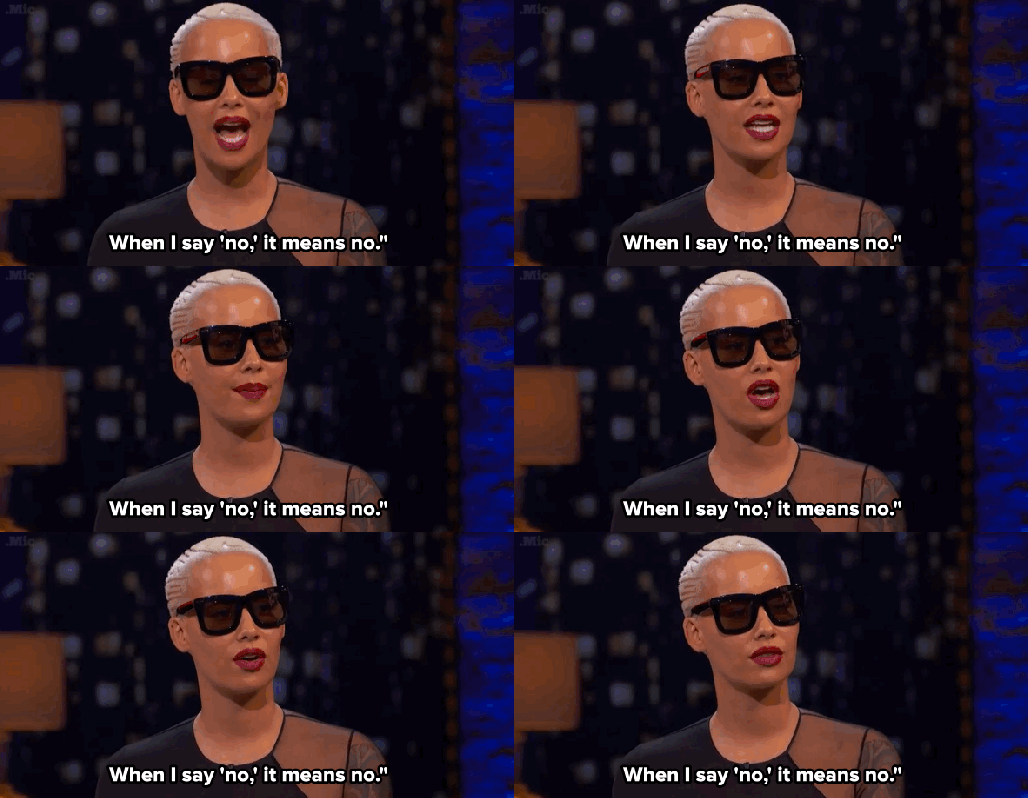
This belief that someone has had to go through something traumatic in order for them to place limits on their own body and know what they like and do not like is downright harmful. It seeps into how we raise our children, how we parent our teenagers, and how we perpetuate rape culture in our lives. It is the reason why people struggle with saying or accepting “no”. No before sex, no during sex, and no in terms of things that aren’t related to sex. It is also why some people don’t understand that the lack of a no IS NOT A YES.
I mean look at the images and messages we give to kids and adults about sex and consent. We acknowledge that “no seems to mean yes” in Disney’s Hercules ( a children’s cartoon) we then reinforce this by “playfully” saying no but really meaning yes in Pitch Perfect, a movie targeted at young women and then music touches on this “I know what you really want” (go away “Blurred Lines”) narrative all the time. The Notebook, a “love story for the ages” has the man threatening to jump from a Ferris wheel if the girl doesn’t agree to a date. And then we reach adulthood, alcohol companies market to people by hinting at roofies and being so drunk you “won’t say no”. But yet we expect people to navigate this media and know what is right and what is wrong? How?
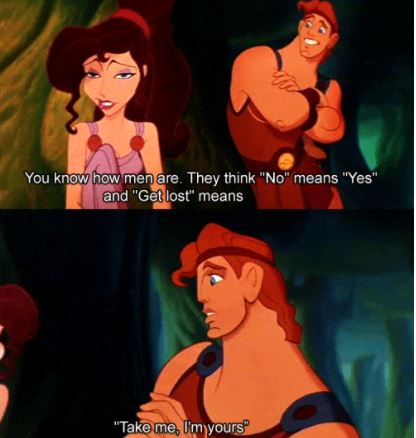




In order for bodily boundaries and autonomy to be realized by all people we need to consciously and actively teach consent. Consent in sex education, consent in relationships (all of them), and consent for children. In order for adults to look at people taking a stand over their body, wants, and needs, we need to teach our children that they can say no to touch at any time from any one and that they can tell us when they feel uncomfortable (I’m talking kisses, hugs, sitting on laps, and, yes, even high fives). We need to teach adults that this is okay and that affection or gratitude can be shown in other ways, and that that is normal. We need to teach children what age appropriate consensual touching looks like, yes this means SEX ED.
So what are some ways we can incorporate consent into our daily lives, parenting, and relationships? Aside from the things above about teaching consent early, here are a few tips that are helpful for me when I’m feeling frustrated…
-
Ask people before you hug someone. This may seem simple or silly but some people do not like to hug and THAT’S OKAY. Asking allows them to say no to a situation that may make them uncomfortable. They may want a high five instead. Personally, some days I want to hug and other days I don’t, especially with people I may not know very well. You can also ask for touches when you need them as well, but people still reserve the right to say no.
-
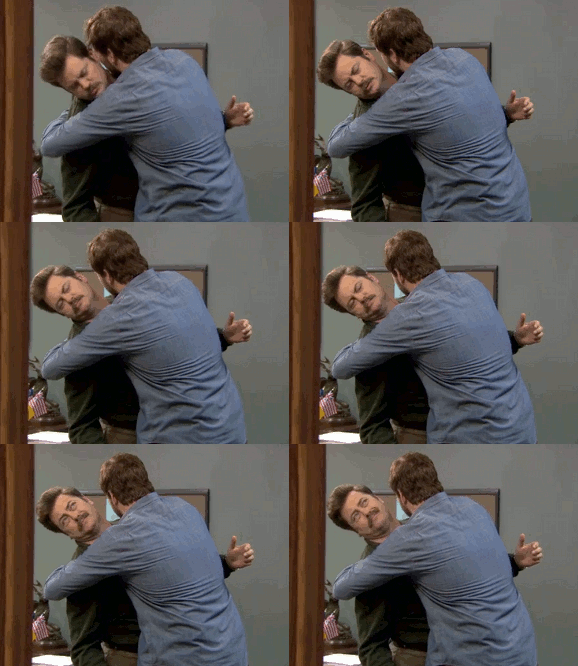
Shoutout to Reese for having this exact respectful conversation the other day. She listened, questioned, and then accepted what I had to say. And even though she may be an affectionate person, she always asks others “would you like a hug or high five” when saying hello and goodbye. sometimes people respond with neither, or how about a fist bump, and they go from there. Phrases like Would you like a hug? Is it okay to hug you? Are important and may start off awkward but get easy when we practice them regularly.
-
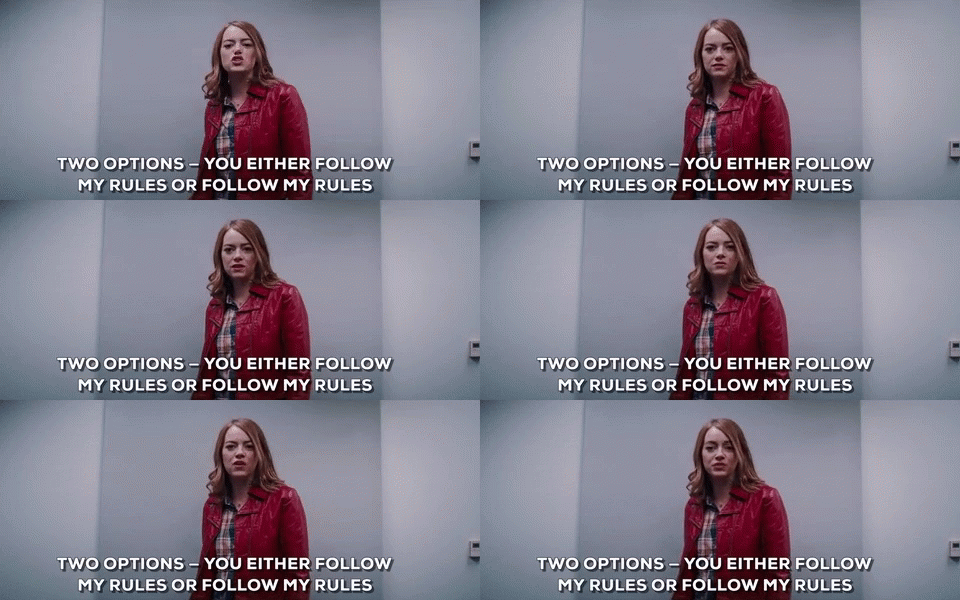
Don’t be afraid to express your boundaries. I’m very open about my limits from the get go, no matter the situation. When sharing a hotel room bed (with a romantic partner, friend, classmate, etc.) for the first time, I make sure to tell them I’m not a cuddler, I explain that I may not always want to be touched to people, I explain that I don’t like to be “smothered”. I also continuously reinforce these boundaries.
- Example: Someone touches me when I don’t want to be? I say: “Please stop that” They don’t stop? “I’m being serious I don’t like that” Still touching? “If you touch me again I will kick you…. Guess what comes next. If I’m touched again, you got it, I kick em.
→ I realize this doesn’t work for everyone or in every situation but if you have healthy relationships and friendships I would hope you’d be able to discuss your boundaries and have them respected.
-
Remember that consent is not just about sex, it’s not even just about affection. This is a super complex issue and there are a lot of people that we steal bodily autonomy from regularly based on their varying identities. Think about when someone touches a Black woman’s hair (don’t do that. Just don’t, even if you ask) and how that invades her right to her body and her space. Consent also isn’t always about touching, think here about Trans individuals who are constantly asked if they “got the surgery” (also don’t do this). It’s none of your business, it’s personal, it’s intimate, and a person’s gender identity/expression does not give you the green light to ask such a question.
These conversations aren’t easy because society doesn’t give us space to discuss bodies and sex, but they’re necessary and important. They may be awkward and people may not understand but that’s why we need to start teaching children at younger ages, so that there may come a time when we don’t have to continuously have these talks as adults.
Feeling overwhelmed? Confused? Or just want some more information? Check down below for a list of resources regarding consent at all ages, sexual education, and rape culture/toxic masculinity and the effect it has on both women and men
Resources:
-
Children
-
I Said No! was written by a boy named Zack and his mother to help him cope with a real-life experience and includes discussion on how to deal with bribes and threats.
-
My Body Belongs to Me, is about a child who gets touched inappropriately, so prepare to have a thoughtful conversation after reading together.
-
No Means No! stars an empowered young girl and includes a “Note to the Reader” and “Discussion Questions” to aid crucial dialogue.
-
Teens and Up
-
The Hunting Ground is a companion book to the documentary of the same name that delves into the rape culture prevalent on college campuses.
- Sexual assault survivors from every kind of college and university and multiple backgrounds share their stories in We Believe You, which Elizabeth Gilbert called “one of the most important books of the year.”
-
Asking for It by Kate Harding explores the idea that our culture supports rapists more effectively than it supports victims.
- Michael J. Domitrz takes a friendly, collaborative approach to the topic of express consent in Can I Kiss You?
- Yes Means Yes! Visions of Female Sexual Power and A World Without Rape
-
On Teaching Consent: Ask. Listen. Respect. In the classroom. By Age, How to instill boundaries, Physical and Emotional Boundaries
-
On What Consent Means: here, here, and here
-
Sex Ed Resources: Sex Ed Rescue (Includes puberty, consent, sex, and ebooks), Lesson Plans and Legislation, For Parents, Planned Parenthood, Ability Based Sex Ed
-
On Fighting Rape Culture: What rape culture is, Steps to take, What rape culture sounds like
-
Other
- The yes no maybe so checklist is AMAZING. It goes over all different forms of touch and asks you to rate them on if you like it, don’t like it, or could maybe be into it. You can even rank things as hard or soft limits and discuss how they may vary depending on the situation.
-
The Hunting Ground: Documentary on Netflix. This exposé tackles the disturbing epidemic of sexual assault on college campuses and school officials’ efforts to cover up the crimes.
-
The Mask You Live In Documentary on Netflix. The Mask You Live In follows boys and young men as they struggle to stay true to themselves while negotiating America’s narrow definition of masculinity. Pressured by the media, their peer group, and even the adults in their lives, our protagonists confront messages encouraging them to disconnect from their emotions, devalue authentic friendships, objectify and degrade women, and resolve conflicts through violence.
- The Women’s Center’s Supporting Survivors of Sexual Violence Workshop (Check MyUMBC for events next semester)
]]>
A blog written by student staff member Sydney about her journey with understanding bodily boundaries, consent, and the perpetuation of rape culture in society. Including tips about consent in...
https://womenscenteratumbc.wordpress.com/2018/04/26/bodily-boundaries-or-how-the-world-told-me-i-hated-affection/
https://my3.my.umbc.edu/api/v0/pixel/news/76090/guest@my.umbc.edu/b212b4729c9ea51f89bbc263352c6fb8/api/pixel
conse
feminism
history
intersectionality
issues
opinion
parenting
pop-culture
sex-ed
sexual-assault
uncategorized
violence
women
Women's, Gender, & Equity Center
https://my3.my.umbc.edu/groups/womenscenter
https://assets2-my.umbc.edu/system/shared/avatars/groups/000/000/125/78272a4842689b30dbf74672182b78f8/xsmall.png?1750974263
https://assets1-my.umbc.edu/system/shared/avatars/groups/000/000/125/78272a4842689b30dbf74672182b78f8/original.png?1750974263
https://assets1-my.umbc.edu/system/shared/avatars/groups/000/000/125/78272a4842689b30dbf74672182b78f8/xxlarge.png?1750974263
https://assets1-my.umbc.edu/system/shared/avatars/groups/000/000/125/78272a4842689b30dbf74672182b78f8/xlarge.png?1750974263
https://assets1-my.umbc.edu/system/shared/avatars/groups/000/000/125/78272a4842689b30dbf74672182b78f8/large.png?1750974263
https://assets2-my.umbc.edu/system/shared/avatars/groups/000/000/125/78272a4842689b30dbf74672182b78f8/medium.png?1750974263
https://assets1-my.umbc.edu/system/shared/avatars/groups/000/000/125/78272a4842689b30dbf74672182b78f8/small.png?1750974263
https://assets2-my.umbc.edu/system/shared/avatars/groups/000/000/125/78272a4842689b30dbf74672182b78f8/xsmall.png?1750974263
https://assets3-my.umbc.edu/system/shared/avatars/groups/000/000/125/78272a4842689b30dbf74672182b78f8/xxsmall.png?1750974263
Women's Center
39
0
false
Thu, 26 Apr 2018 13:32:04 -0400
What You Need to Know About The Monument Quilt
This post was originally created by Sydney Phillips last fall for Critical Social Justice: Rise and was posted to the Critical Social Justice blog. The Monument Quilt display was sadly rained out for CSJ, but we’re excited to host it this April for Sexual Assault Awareness Month. We’re sharing the old post with some additional details for this Tuesday’s display.
We’ll see on Tuesday, April 17th from 12-6pm on Erickson Lawn!
+++++++++++++++++++
Last year, Critical Social Justice: Home was dedicated to recognizing UMBC as a home to many different people and communities. We celebrated UMBC as a home for learning, activism, and social change, as well as worked to invest ourselves in creating meaningful change here on campus. We then took our new in sights and knowledge with us to our other homes.
This year’s theme of RISE explores opportunities for building individual and collective resistance and resilience. Events throughout the week will challenge us to think about how we can do better, do more, and persist in doing it. How do we rise to meet the challenges of this particular cultural moment to work toward a vision of inclusive excellence—whether it’s in the classroom, online, or in our communities?

The Monument Quilt is a crowd-sourced collection of stories from survivors of rape and abuse. The quilt is based in Baltimore but travels around the United States for displays at colleges and other events. The project will eventually conclude with a quilt display on the National Mall in Washington, D.C. spelling out “Not Alone.”

Image from The Monument Quilt.
Each individual square is made of red fabric with hand-written testimonials created by survivors and allies. The goal of the quilt and the sharing of these stories is to create a public space for healing for survivors and to work towards changing how communities respond to rape.

Image from The Monument Quilt.
The Monument Quilt addresses rape as a social justice issue that affects everyone and views activism as a way of healing from trauma. This project is creating a new culture where survivors are publicly supported, rather than shamed. It also deconstructs the narrow, mainstream narrative of sexual assault by letting survivors tell their own stories.
The Monument Quilt takes an intersectional lens to the issue of sexual violence and focuses on specific communities who are affected by sexual violence, including but not limited to women and people of color, LGBTQIA+ individuals, and men. In an effort to represent the community with the highest rate of sexual violence in the U.S., The Monument Quilt has partnered with many Indigenous people and tribal communities. According to the a 2015 study by the National Institute of Justice, 4 in 5 American Indian and Alaskan Native women have experienced violence in their lifetime. Native women are significantly more likely to experience violence by a non-Native partner. Of those that have experienced violence, 66.5% of women were concerned for their safety.
In 2015, The Monument Quilt joined other activists to demand justice for a 13-year-old Choctaw boy who was sexually assaulted multiple times by his supervisor, Dale Townsend, at the Dollar General where the two worked. The boy’s parents brought a suit against Dollar General in Tribal Court, and the retailer argued that because the store was not within the jurisdiction of the tribe the retailer could not be legally sued by the tribe. Dollar General v. Mississippi Band of Choctaw Indians became a much larger issue because it was not only about ensuring justice for a survivor, but about proving equitable legal power for Native American communities. This case eventually made its way to the Supreme Court where a tie allowed a lower court’s opinion in favor of the Choctaw tribe to stand.
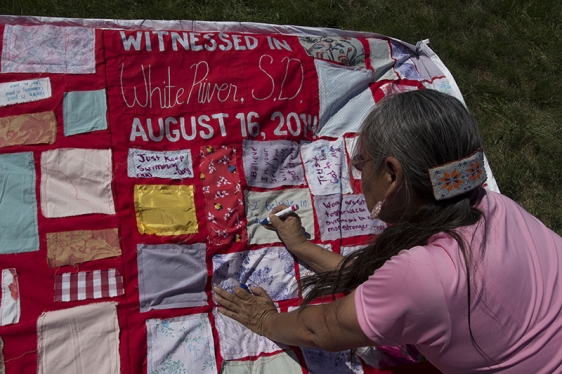
Image from The Monument Quilt.
You can earn more about The Monument Quilt and their activist efforts through the display and workshop on Tuesday, April 17th on Erickson Lawn from 12-6pm. The Women’s Center will be hosting a quilt making workshop from 5-6:30pm in the Women’s Center. Survivors and secondary survivors are invited to attend this workshop to make a quilt square that will be contributed to the Monument Quilt.
Additionally, we are excited that Tuesday’s event will include photography from Maite H. Mateo. Based in New York, Mateo documented the portraits of Latina survivors in Queens, New York who made quilt squares to be added the the Monument Quilt display. Mateo’s photography serves as visual representation that immigrant women often suffer higher rates of battering than U.S. citizens because they may come from cultures that accept domestic violence or because they have less access to legal and social services than U.S. citizens.
Further reading below:
]]>
This post was originally created by Sydney Phillips last fall for Critical Social Justice: Rise and was posted to the Critical Social Justice blog. The Monument Quilt display was sadly rained out...
https://womenscenteratumbc.wordpress.com/2018/04/13/what-you-need-to-know-about-the-monument-quilt/
https://my3.my.umbc.edu/api/v0/pixel/news/75680/guest@my.umbc.edu/11bf39cde2d0fc042b9785886dc0e551/api/pixel
activism
art
critical-social-justice
events
feminism
feminist-activism
intersectionality
issues
sexual-abuse
sexual-assault
sexual-assault-awareness-month
sexual-harassment
sexual-violence
Women's, Gender, & Equity Center
https://my3.my.umbc.edu/groups/womenscenter
https://assets2-my.umbc.edu/system/shared/avatars/groups/000/000/125/78272a4842689b30dbf74672182b78f8/xsmall.png?1750974263
https://assets1-my.umbc.edu/system/shared/avatars/groups/000/000/125/78272a4842689b30dbf74672182b78f8/original.png?1750974263
https://assets1-my.umbc.edu/system/shared/avatars/groups/000/000/125/78272a4842689b30dbf74672182b78f8/xxlarge.png?1750974263
https://assets1-my.umbc.edu/system/shared/avatars/groups/000/000/125/78272a4842689b30dbf74672182b78f8/xlarge.png?1750974263
https://assets1-my.umbc.edu/system/shared/avatars/groups/000/000/125/78272a4842689b30dbf74672182b78f8/large.png?1750974263
https://assets2-my.umbc.edu/system/shared/avatars/groups/000/000/125/78272a4842689b30dbf74672182b78f8/medium.png?1750974263
https://assets1-my.umbc.edu/system/shared/avatars/groups/000/000/125/78272a4842689b30dbf74672182b78f8/small.png?1750974263
https://assets2-my.umbc.edu/system/shared/avatars/groups/000/000/125/78272a4842689b30dbf74672182b78f8/xsmall.png?1750974263
https://assets3-my.umbc.edu/system/shared/avatars/groups/000/000/125/78272a4842689b30dbf74672182b78f8/xxsmall.png?1750974263
Women's Center
11
0
false
Fri, 13 Apr 2018 14:21:46 -0400
Feminist Friendships
 Program coordinator Amelia Meman reminisces about her feminist friendships and analyzes how these relationships foster empowerment and powerful networks.
This Women’s History Month, the Women’s Center was inspired by feminism’s legacy of collective action. While feminism is very much based in the personal and individual, it is also a movement built through the camaraderie, collective consciousness, compassion, and connections between people. That’s why, this March, the Women’s Center is celebrating feminist friendships. That’s also why I’m writing this blog post.
Every time I come to think about this theme, I feel all warm and fuzzy inside, because I immediately think of the bonds I made at UMBC that have continued on. More on this later, but I’ll tell you this much: nothing brings you together, like the hot crucible of simultaneous existential crises via The Patriarchy. Our angst-ridden mental toil aside, describing a friendship as “feminist” might feel weird to some people, but I wonder what it means to those it resonates with.

For me, it’s not about the friends who encourage me to burn my bra and always validate my decision to not shave–although they also do that. It’s also the friends who affirm me and remind me that I am a person with power who deserves good things in the world. My feminist friends go to rallies with me and talk Butler with me, but they also are the first to watch Neighbors 2 and they’re the best at recommending sci-fi and fantasy novels.
The personal is political… and the political is personal
I think that all of my relationships are political. This is probably by virtue of being a feminist and a philosophical thinker, but it’s also because my friends are my political allies. We are constantly thinking about the political power that comes with being women, being queer (AF), being trauma survivors, being white and/or people of color, being (dis)abled, etc. and being radically together. We’re friends who empower each other to live when so many other things in this world act to kill us. We’re constantly navigating privilege and oppression, and we get a lot of things wrong. We teach other, call each other in. We are committed to the process of constantly learning how to be better humans to one another and all of the people we interact with.
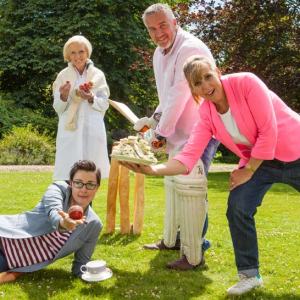
Does anything scream friendship more than this group shot of the Great British Baking Show judges?
So when I say that the personal is political, I mean that things we like to keep in private (i.e. whether or not we’re having sex, what kind of sex we’re having, birth control, abortions, survivor status, etc.) are personal experiences that are also–with feminism–political. Rather than continue to make the prudish world of vanilla, purely procreative sex comfortable, feminists talk reproductive justice, use the words “vagina,” “penis,” “vulva,” “anus,” etc. Those things that people would rather sweep under the rug? We dig those out and we burn the rug.
Just so, the political is personal. This, for me, is feminist friendship. My unity and belonging with other feminists is tied, not just to our affinity for one another as funny weirdos, but also to our political mindset. As we dance, we move toward liberation. As we laugh, we banish the silence pressed into us as women and femmes. As we eat together, we feed each other the love and power we deserve.
The political is personal, because my liberation is tied to theirs, and we both know that as we watch the latest season of The Great British Baking Show.
Shine theory
So as we move throughout Women’s History Month and think about all of our herstorical sheroes who give us life (often literally), think about those friends that are around you who make you shine brighter. Whether that’s your mom, your professor, Oprah, think about the women who inspire you.
Take a breath, and think about your best memory with that person. How did you become friends? What do you all do best together? How do you feel when you’re around each other?
Seriously take like 15 seconds to meditate on that.
Alright, now you can come back to me.
Didn’t that make you feel shiny?

In the Women’s Center, we like to talk about shine theory. Jess is the one who introduced me to this concept a while ago (see her awesome UMBC Women Who Rock series), but basically, shine theory is a lens through which we can think about friendship. Ann Friedman and Aminatou Sow (of Call Your Girlfriend) coined the term “shine theory” in an article on powerful women as best friends. Friedman wrote: “when you meet a woman who is intimidatingly witty, stylish, beautiful, and professionally accomplished, befriend her. Surrounding yourself with the best people doesn’t make you look worse by comparison. It makes you better.”
Friedman and Sow add that in its simplest form, shine theory is this: “I don’t shine, if you don’t shine.”
Feminist friends, to me, push you and support you so that you can shine as bright, if not brighter, than them and we all get a little better for it.
GWST-ers 4 Life
I would be remiss to not note that the thing that brought some of my best, most steady feminist friends together was our journey through the UMBC Gender and Women’s Studies Department. We were knit together through a shared affinity for feminist politics, and I know I was able to find myself through them. Not because they showed me a self I wanted to be, but because they allowed me to actually BE the person I always wanted to be.
It wasn’t all hearts and rainbows and radical self-care quotes from Audre Lorde. It was a lot of shit. We went through heartbreak together, we grieved together, we powered through classes like beleaguered Weather-people in a hurricane. In queer theory, we read Michel Foucault’s interview, “Friendship as a Way of Life,” in which he lays out this idea of queer community:
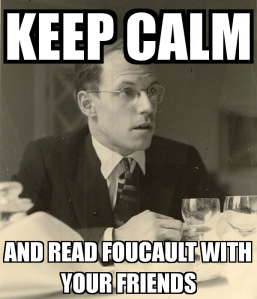 The notion of mode of life seems important to me. Will it require the introduction of a diversification different from the ones due to social class, differences in profession and culture, a diversification that would also be a form of relationship and would be a “way of life”? A way of life can be shared among individuals of different age, status, and social activity. It can yield intense relations not resembling those that are institutionalized. It seems to me that way of life can yield a culture and an ethics. To be “gay,” I think, is not to identify with the psychological traits and the bisible masks of the homosexual but to try to define and develop a way of life. (p. 137-138)
Being “gay” or “queer” or, in our case, “feminists,” is not about defining who we are, but about creating a way of life that suits our needs and that is, potentially, radical. When the institution is so often your oppressor, molding new culture and ethics through friendship becomes a way of also creating new futures and pathways that the institution did not initially have open to you. For example, I don’t know where my self-confidence would be without my therapist and the power of my friends, but I know that the impacts of sexism, racism, ableism, etc. were limiting my self-confidence, and when I learned about myself as someone who was strong and capable of loosing that sort of weight, I was able to achieve more and better. I have a job, I’m pursuing my (very high) educational goals, I’m publishing this blogpost; this is all enabled through this alternative way of life that teaches me that I have power, I am power, and that my friends and I disrupt oppression.
Feminist friendship, shine theory, all that glorious glowing goodness that brought us together–it created power.
So the next time you think about your friends, your shiny people, your feminist sheroes, think about the power you all cultivate and bring forth by being your badass selves together. Think about how that power can grow with you and the friendships you share. Think about what your perfect world would look like for you and your feminist friends–and then make it.
More resources, if you’re interested:
Michel Foucault, “Friendship as a Way of Life”
Dan Willey, “Gay Hair”
Gaby Dunn, “It’s A War Out There: How Queer Female Friendships Can Save Us All”
Cori Wong, “Feminist Friendship” TEDxCSU
Make feminist friends and build up your network at our Women’s History Month celebration on March 28th from 6 pm to 8 pm in the Skylight Room! RSVP via myUMBC!

]]>
Program coordinator Amelia Meman reminisces about her feminist friendships and analyzes how these relationships foster empowerment and powerful networks. This Women’s History Month, the Women’s...
https://womenscenteratumbc.wordpress.com/2018/03/14/feminist-friendships/
https://my3.my.umbc.edu/api/v0/pixel/news/74810/guest@my.umbc.edu/df59624b3313b7c5c1b81f77a6a22744/api/pixel
feminism
feminist
feminist-friends
feminist-friendship
intersectionality
queer-friendships
umbc
uncategorized
womens-history-month
womens-march-on-washington
Women's, Gender, & Equity Center
https://my3.my.umbc.edu/groups/womenscenter
https://assets2-my.umbc.edu/system/shared/avatars/groups/000/000/125/78272a4842689b30dbf74672182b78f8/xsmall.png?1750974263
https://assets1-my.umbc.edu/system/shared/avatars/groups/000/000/125/78272a4842689b30dbf74672182b78f8/original.png?1750974263
https://assets1-my.umbc.edu/system/shared/avatars/groups/000/000/125/78272a4842689b30dbf74672182b78f8/xxlarge.png?1750974263
https://assets1-my.umbc.edu/system/shared/avatars/groups/000/000/125/78272a4842689b30dbf74672182b78f8/xlarge.png?1750974263
https://assets1-my.umbc.edu/system/shared/avatars/groups/000/000/125/78272a4842689b30dbf74672182b78f8/large.png?1750974263
https://assets2-my.umbc.edu/system/shared/avatars/groups/000/000/125/78272a4842689b30dbf74672182b78f8/medium.png?1750974263
https://assets1-my.umbc.edu/system/shared/avatars/groups/000/000/125/78272a4842689b30dbf74672182b78f8/small.png?1750974263
https://assets2-my.umbc.edu/system/shared/avatars/groups/000/000/125/78272a4842689b30dbf74672182b78f8/xsmall.png?1750974263
https://assets3-my.umbc.edu/system/shared/avatars/groups/000/000/125/78272a4842689b30dbf74672182b78f8/xxsmall.png?1750974263
Women's Center
16
0
false
Wed, 14 Mar 2018 09:03:35 -0400
Wed, 14 Mar 2018 09:03:35 -0400
Women $POWR in the Crypto World!
 Staff member, Missy Smith, takes a deeper look into cryptocurrency trend.
Every winter break or summer season, I choose something to study and dive into when I’m in between “stuff” with a little more time to grow a hobby or a part of my dream. Last summer, I scratched my creative butch itch and learned how to do some woodworking. I sanded and polyurethaned a bench in my driveway in the hot summer sun. The result is pretty awesome! Here is an after and before pic.
Someone asked me what I learned in the process. I made a list.
- Sanding by hand is tedious, but I got to know the wood better by taking my time and using patience with each stroke, resting when necessary, and being more perceptive of changes when I come back to approach the canvas.
- No shortcuts. I cannot rush the work. When I rushed or tried to take shortcuts, the end result was blegh.
- There are not a lot of women hanging out at Home Depot and sometimes I had to figure things out on my own or wait for a long time before anyone would help me.
- I met a lot of cool folks in the woodworking and refurbishing community!
This past Winter break, I decided to dive into creative work and finish some lingering music projects from 2017. After reading headlines about something called Bitcoin and pondering my own investments, I accidentally stumbled into cryptocurrency. Like Home Depot, when I started researching, I didn’t see a ton of women (or African Americans) talking about it. I did some digging. To no surprise, I quickly learned that there are not a lot of queer folks, women, or women of color in the crypto universe, just like STEM, corporate America, and higher education. But I know we exist. I see us all the time, and I am one of the few in these spaces sometimes. Being an outlier is not new to me, so I was curious about crypto. If the boys can do it, why can’t I? Why can’t we?
What is it? A Blockgeeks Inc. guide explains it well. “If you take away all the noise around cryptocurrencies and reduce it to a simple definition, you find it to be just limited entries in a database no one can change without fulfilling specific conditions.” Even more simple, your bank has a ledger that accounts for transactions, but in the crypto world a network of your peers owns the ledger. Everything is tracked, there are not mistakes (so far. And yes, I know things get hacked. Banks get robbed too!). If you are still confused, here is an image that links to a deeper dive.

Why am I so interested in cryptocurrency? I think that for the first time in a long while (however long that is), there is something that is leveling the playing field for folks who might not have a chance to get ahead. Millenials know that should save money and invest in their retirement. Some folks are fortunate to be able to do it, and others may not be so fortunate. For me, I am in the weird generation before Millennials, and I have a unique outlook on tech, financial security, and I’m DIY enough to want to make my own way. Beyond investing, there are some great companies doing innovative work and reimagining the ways we send, spend, and receive money.
I found some Facebook and Reddit groups for my identities as a woman and as a black person investing in crypto. There are minority professors and business leaders working as admin, holding FB live chats to talk about new coins and market strategies, all while growing the network of folks who are looking for a different way to make and spend money, digitally. I even learned about an LGBT cryptocurrency that wants to showcase the buying power of small(er) and mighty communities!
Working at the Women’s Center has exposed me to global issues that impact women, and after studying eco feminism for one of our events last semester, I was excited to hear about sustainable currency initiatives. There are a lot of women and minorities working in the crypto space, leading companies that are offering innovative solutions to 20th century problems, thinking forward and manifesting a better future. I learned about Power Ledger ($POWR), an Australian company that wants to recreate buying and selling of energy using blockchain technology. Their CEO, Dr Jemma Green is taking her team from Down Under to work in North America, earning headlines as “the woman powering the energy industry on the blockchain” from her peers!

Lympo ($LYM), a new coin that may change the healthcare industry, is led by CEO Ada Jonuse. Her company is changing the way the internet uses healthcare, data, and fitness apps and incentivizing wellness. There are even some companies that are making it easier to send money to family members in other countries. They do it faster and cheaper than traditional currencies. Women are also creating their own powerhouses networking groups to support each other and teach the world about crypto. So after all my digging over break, what did I learn? For starters, I am not a financial advisor. But also . . .
- Coming back from break is hard, but I get to know myself by studying the pieces of my bigger dream. I’m in school to make my dream concrete, so I continue to dive into work that I love. By thinking of the future, I am able to find joy vs stress in the work.
- There is no quick way to make money. I cannot rush the calendar year. When I rush, I stress and become obsessive. Be careful with your spending. Learn about investing and how to use the different exchanges!
- There are not a lot of women working in the crypto space. I had to search for us, and I know we are knowledgeable about making money in the crypto world. We make our own networking groups to empower each other #girlsclub
- I learned about a ton of cool people (people that look and live like me) making big headlines and leading 21st century companies, global entities, that will change the world.
Many mornings, I wake up and find headlines about women in crypto. We are leading and contributing and the world is taking notice. Crypto will not last as another boy’s club, not if we can change the narrative. If you want some more reading, here are a bunch of recent articles, mostly about women and crypto, that have made my morning coffee more enjoyable! Have fun!
]]>
Staff member, Missy Smith, takes a deeper look into cryptocurrency trend. Every winter break or summer season, I choose something to study and dive into when I’m in between “stuff” with a little...
https://womenscenteratumbc.wordpress.com/2018/03/06/women-powr-in-the-crypto-world/
https://my3.my.umbc.edu/api/v0/pixel/news/74544/guest@my.umbc.edu/6ef5e0248c4c204a8b1a43c0fe9ecc6e/api/pixel
bitcoin
crypto
cryptocurrency
current-events
eco-feminism
feminism
good-reads
intersectionality
lym
pop-culture
powr
uncategorized
women-in-stem
Women's, Gender, & Equity Center
https://my3.my.umbc.edu/groups/womenscenter
https://assets2-my.umbc.edu/system/shared/avatars/groups/000/000/125/78272a4842689b30dbf74672182b78f8/xsmall.png?1750974263
https://assets1-my.umbc.edu/system/shared/avatars/groups/000/000/125/78272a4842689b30dbf74672182b78f8/original.png?1750974263
https://assets1-my.umbc.edu/system/shared/avatars/groups/000/000/125/78272a4842689b30dbf74672182b78f8/xxlarge.png?1750974263
https://assets1-my.umbc.edu/system/shared/avatars/groups/000/000/125/78272a4842689b30dbf74672182b78f8/xlarge.png?1750974263
https://assets1-my.umbc.edu/system/shared/avatars/groups/000/000/125/78272a4842689b30dbf74672182b78f8/large.png?1750974263
https://assets2-my.umbc.edu/system/shared/avatars/groups/000/000/125/78272a4842689b30dbf74672182b78f8/medium.png?1750974263
https://assets1-my.umbc.edu/system/shared/avatars/groups/000/000/125/78272a4842689b30dbf74672182b78f8/small.png?1750974263
https://assets2-my.umbc.edu/system/shared/avatars/groups/000/000/125/78272a4842689b30dbf74672182b78f8/xsmall.png?1750974263
https://assets3-my.umbc.edu/system/shared/avatars/groups/000/000/125/78272a4842689b30dbf74672182b78f8/xxsmall.png?1750974263
Women's Center
13
0
false
Tue, 06 Mar 2018 09:00:49 -0500
Tue, 06 Mar 2018 09:00:49 -0500