Educating yourself and being yourself: the dangers of cultural appropriation by Harini, a student intern.
I was the only brown kid at my school until ninth grade. Growing up in a town I once described as “never realized the Union won the Civil War,” it was no surprise that all my friends were white. I was careful to conceal any aspects of me that did not mirror their own personalities, effectively whitewashing myself. I laughed along with their mockery of desi culture, its gaudy outfits and pungent foods, all the while ignoring the guilt and defiance that part of me felt at hearing my own culture ripped apart by people who had none of their own.
Once I reached high school and began making friends with people from similar backgrounds to me, I realized the error in my ways and embraced my heritage with a group of people who respected and shared my culture. I packed the foods I liked to school, and posted pictures of me, donned in traditional clothes, to social media for the world to see.
Around that time, American culture began to shift. Suddenly, the ingredients in our foods that were once considered ugly and smelly were now labelled “superfoods,” and they were all the rage. Our jewelry was considered the epitome of fashion, despite being practically taboo not too long ago. This led me to the question: why is something considered acceptable only after Western cultures adopt it? People have been wearing naths and eating turmeric for centuries, so why was it suddenly considered a trend? Moreover, why was it a trend to begin with, when the sole reason the elements of our culture exist with a meaning and value that was being completely disregarded by Western culture?
Actress Sonam Kapoor wears a nath on the red carpet.
I grew angry each time I would see someone that once made fun of desi culture wearing bindis for Instagram. This was a piece of Hindu culture that was symbolic, and it was being reduced to a costume. For these people, this was an expression of appreciation, because apparently there was no better compliment to a culture than the validation of a westernized person. There was no consideration that disregarding the meaning behind these things (whether they are intended for brides, as a mark of celebration, etc.) was offensive.
However, white people are not the only ones guilty of doing this. Non-desi people of color often see their non-whiteness as a free pass to appropriating cultures outside their own. Desis are guilty of appropriating other cultures as well, so no ethnic group is entirely free of this offense. The entertainment industry is the worst offender, with a history of using blackface to depict villains and demons unscrupulously.
Of course, appreciation of a culture is acceptable. For example, eating ethnic food, consuming media, and learning a new language are all forms of appreciation that are inoffensive.
When a person uses an element of a culture they do not belong to as a costume while ignoring the ethnic, national, or religious significance of said element, they are appropriating a culture. Appropriation is not just about material items. It can take different forms, like stealing opportunities that should belong to people of an ethnic group or religion. This is seen too often in Hollywood, with white actors playing roles that represent people of color, with (see Matt Damon playing a Chinese general in The Great Wall). White actors find themselves under fire for accepting roles depicting Asian characters that are heroic and central to the story, while actual Asian actors are too often offered minor roles that exist for comedic effect or to create a backdrop for the important white characters. The way in which the West regards Eastern culture is dubbed “Orientalism,” a concept that has come to possess a negative connotation only because it reflects said perception.
Furthermore, brown actors are used interchangeably, regardless of their ethnicity. A recent example of this is the casting for the live-action Aladdin movie, in which Naomi Scott, a biracial actress of Indian descent, is playing Jasmine, the princess of the fictional Agrabah, which is canonically located in the Middle East. So, why are brown people seen as transposable? Why is our culture regarded as easy?
Bridging the gap between Western ideals and pride in one’s heritage is in the hands of brown peoples’ white peers and the media. Looking back on my journey as a brown girl growing up in small-town Pennsylvania, I can see my growth from someone who tried too hard to imitate her white friends, to someone who is unashamed of who she is. Much of that personal development came from being receptive and open to criticism. Often, people don’t realize their actions are offensive because of how common appropriation is. Ignorance is a slippery slope, so being informed is vital, as is holding others accountable for their actions. Learning the difference between appreciation and appropriation is the first step to respecting all cultures and regarding them as equal.
Below are some articles about recent instances of brown culture appropriation and orientalism:
]]>
Educating yourself and being yourself: the dangers of cultural appropriation by Harini, a student intern. I was the only brown kid at my school until ninth grade. Growing up in a town I...https://womenscenteratumbc.wordpress.com/2018/03/02/stop-wearing-my-clothes/https://my3.my.umbc.edu/api/v0/pixel/news/74469/guest@my.umbc.edu/955a301c0bb8b5bee0662b0e55346ae0/api/pixelfeminismintersectionalityissuesuncategorizedWomen's, Gender, & Equity Centerhttps://my3.my.umbc.edu/groups/womenscenterhttps://assets2-my.umbc.edu/system/shared/avatars/groups/000/000/125/78272a4842689b30dbf74672182b78f8/xsmall.png?1750974263https://assets1-my.umbc.edu/system/shared/avatars/groups/000/000/125/78272a4842689b30dbf74672182b78f8/original.png?1750974263https://assets1-my.umbc.edu/system/shared/avatars/groups/000/000/125/78272a4842689b30dbf74672182b78f8/xxlarge.png?1750974263https://assets1-my.umbc.edu/system/shared/avatars/groups/000/000/125/78272a4842689b30dbf74672182b78f8/xlarge.png?1750974263https://assets1-my.umbc.edu/system/shared/avatars/groups/000/000/125/78272a4842689b30dbf74672182b78f8/large.png?1750974263https://assets2-my.umbc.edu/system/shared/avatars/groups/000/000/125/78272a4842689b30dbf74672182b78f8/medium.png?1750974263https://assets1-my.umbc.edu/system/shared/avatars/groups/000/000/125/78272a4842689b30dbf74672182b78f8/small.png?1750974263https://assets2-my.umbc.edu/system/shared/avatars/groups/000/000/125/78272a4842689b30dbf74672182b78f8/xsmall.png?1750974263https://assets3-my.umbc.edu/system/shared/avatars/groups/000/000/125/78272a4842689b30dbf74672182b78f8/xxsmall.png?1750974263Women's Center750falseFri, 02 Mar 2018 15:39:40 -0500Fri, 02 Mar 2018 15:39:40 -0500Music, Movies, and #MeToo
A critical look at the #MeToo movement and its limitations by student staff member, Sydney.
Trigger Warning: This blog deals with Harvey Weinstein, Dr. Luke, and sexual violence/harassment; please practice self-care.
Harvey Weinstein. He’s a huge name in Hollywood but up until a few months ago, myself, and many others did not know who he was or what he did. Today though, he has become a household name… and not for good reasons. It’s been hard NOT to hear about the allegations coming to light about the producer but if you are not familiar with the specific details of Harvey Weinstein’s case I suggest you check them out.
Long, and I mean decades-long, story short, Harvey Weinstein is a Hollywood predator whose committed countless acts of sexual violence and harassment which are now being brought to light by HUNDREDS of actresses. As a woman and one that works closely with sexual violence and survivors, I could talk about Harvey for days, weeks even. I could discuss the coverup, the male “allies”, the tone deaf reactions, but others have been doing this since it all came to light and so I’ll leave that to them.
What I did want to touch on was the huge difference I’ve been seeing between Hollywood’s reaction to the “Harvey Weinstein Scandal” and how the music industry handled Kesha’s lawsuit with Dr. Luke.
I don’t watch awards shows, but I do keep up with the live social media blogging and aftermath, so post-Golden Globes, when I felt empowered by the blackout and Oprah’s rousing speech, I was excited to see what was going to happen at the Grammys.
If you watched the Grammys or saw any of the coverage after the fact, you probably heard about Kesha’s performance. Kesha took the stage with other women to sing a heartbreaking rendition of her song “Praying”. I thought this might be an empowering moment of a survivor standing strong, but watching Kesha’s voice crack left me feeling sad and lost.
Throughout the performance, I was wondering why I felt this way and then I realized: Kesha was blacklisted from the music industry for her accusations against Dr. Luke, she didn’t make music or attend shows during or after her case, and she definitely wasn’t believed.
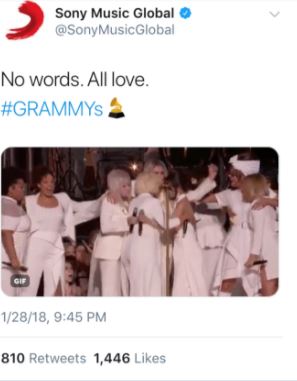
There was no #MeToo movement around Kesha (although there was a #freekesha movement spearheaded by her fans) and even at the Grammys this year, there was no planned Blackout nor was Kesha even acknowledged or awarded for her efforts. Not only was the awards show itself lacking sensitivity, Sony–the company that Dr. Luke worked under and who refused to let Kesha out of her contract or acknowledge the abuse–tweeted their “support” (the tweet was later deleted due to backlash).
Kesha isn’t the first woman, actress, or musician to not be believed, and her experiences point to why Harvey Weinstein (and so many others) went unchecked for so many years. BUT in a day where #MeToo and #TimesUp are taking over Hollywood, social media, and beyond, I can’t help but ask why has no one apologized to Kesha? Dr. Luke still has a career even after attacking Kesha, her mother, and even Lady Gaga. Her fans have been there for her since the court case gained traction, but the music industry was not and they still are only interested in using her for their gain (see Praying performance above).
Kesha wasn’t believed because she is a woman.She also wasn’t believed because she made fun party pop music that was often about drinking and sex, and she was never afraid to discuss her sexuality outside of her music, as well. Kesha was not one of the pure, mega-stars that are accusing Harvey Weinstein, and her public character led people to doubt her.
Just like the doubt, Kesha faced due to her open sexuality and carefree attitude, not all women are facing belief in the light of their accusations of Harvey Weinstein. While sexuality played a role for Kesha, race is definitely playing a role for many others.
Weinstein has remained silent about the accusations he faces–except for a few cases and there’s one thing all of these women have in common- they’re all women of color. When Mexican-American actress Salma Hayek spoke out, Weinstein lashed out in response. He took credit for Salma gaining her role in Frida (despite her role as a producer of the film), noted that he had had a close relationship with her boyfriend at the time, and that the events Hayek spoke of were remembered differently by others. Similarly, when Lupita Nyong’o wrote about her experience with Weinstein in the New York Times discussing how he had made advances on her and threatened her career, he spoke out again. Weinstein again stated that he had a “different recollection of events.”
By addressing only the accusations from women of color, Weinstein attempts to negate their experiences (by publicly gaslighting them) and perpetuates the belief that they cannot be assaulted because of their race. This also relates back to the “perfect victim” (i.e. one who is a pure, white, superstar). Perfect victims like Gwyneth Paltrow, Ashley Judd, Jennifer Lawrence, and Uma Thurman lead to people actually caring about an issue like MeToo or TimesUp. Anyone who is not pure, not white, or not a big enough star, is just not believable or important enough.
Sexual assault and harassment are feminist issues, they are also sexual and racial issues. If we do not acknowledge how intersectionality plays a part in who is and isn’t believed, then we are discounting the many stories of sexual violence and abuse–and we’re also not getting any better as a society. When we find reasons to not believe and support survivors, more people stay silent, more people are blacklisted for speaking out, more people lose court cases, more people feel ashamed, and more and more people feel alone.
You are not alone. We See You. We Believe You. You Matter.
]]>
A critical look at the #MeToo movement and its limitations by student staff member, Sydney. Trigger Warning: This blog deals with Harvey Weinstein, Dr. Luke, and sexual violence/harassment;...https://womenscenteratumbc.wordpress.com/2018/02/19/music-movies-and-metoo/https://my3.my.umbc.edu/api/v0/pixel/news/74072/guest@my.umbc.edu/383da9a3c13f93d3d6c1cf376278aafb/api/pixelartcritical-social-justicecurrent-eventsentertainmentfeminismintersectionalityissuesmetoomusicopinionpoliticspop-culturetelevisiontimesupuncategorizedviolencewomenWomen's, Gender, & Equity Centerhttps://my3.my.umbc.edu/groups/womenscenterhttps://assets2-my.umbc.edu/system/shared/avatars/groups/000/000/125/78272a4842689b30dbf74672182b78f8/xsmall.png?1750974263https://assets1-my.umbc.edu/system/shared/avatars/groups/000/000/125/78272a4842689b30dbf74672182b78f8/original.png?1750974263https://assets1-my.umbc.edu/system/shared/avatars/groups/000/000/125/78272a4842689b30dbf74672182b78f8/xxlarge.png?1750974263https://assets1-my.umbc.edu/system/shared/avatars/groups/000/000/125/78272a4842689b30dbf74672182b78f8/xlarge.png?1750974263https://assets1-my.umbc.edu/system/shared/avatars/groups/000/000/125/78272a4842689b30dbf74672182b78f8/large.png?1750974263https://assets2-my.umbc.edu/system/shared/avatars/groups/000/000/125/78272a4842689b30dbf74672182b78f8/medium.png?1750974263https://assets1-my.umbc.edu/system/shared/avatars/groups/000/000/125/78272a4842689b30dbf74672182b78f8/small.png?1750974263https://assets2-my.umbc.edu/system/shared/avatars/groups/000/000/125/78272a4842689b30dbf74672182b78f8/xsmall.png?1750974263https://assets3-my.umbc.edu/system/shared/avatars/groups/000/000/125/78272a4842689b30dbf74672182b78f8/xxsmall.png?1750974263Women's Center150falseMon, 19 Feb 2018 08:39:23 -0500What are Pop Culture Pop Ups?! The Golden Globes: Black Out and Oprah
A blog post written by student staff member, Sydney.
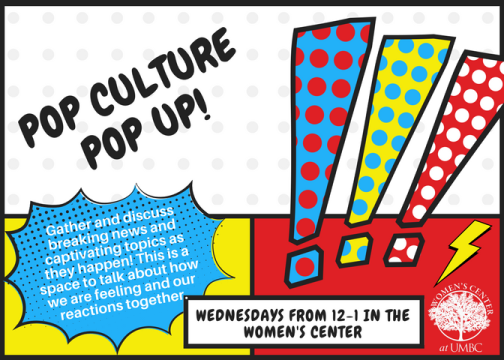
It’s official! The Women’s Center has a new ongoing event starting this spring semester. What is it you ask?
Pop Culture Pop Ups!
You’re probably wondering, “What the heck is a Pop Culture Pop Up?” Well, that’s what I’m here to explain.
If you frequent the Women’s Center you know that it is often a space for spontaneous discussion with others regarding shared interests (about life, events, and school to include the awesome, the good, the bad, and the frustrating – and more!). The energy and critical dialogue that comes from these conversations are what make the Women’s Center the Women’s Center and we wanted to nourish more of these moments by carving out time for more intentional dialogue surrounding both fun and serious topics that come up in our daily lives. Hence, the pop up of these Pop Culture Pop Ups.
We envision these pop ups will create a space for anyone who is on campus and wants to discuss an event, movement, hashtag (and more!) that has gotten huge attention or gone viral to come to the Women’s Center and have a brave space to discuss their feelings, reactions, and ideas linked to the topic. Of course, we’ll make sure to talk about how these pop culture moments intersect with gender and women’s issues, feminism, and social justice. Yet, unlike many of the other events that we hold in the Women’s Center, there won’t be a planned agenda, prepared questions, or a panel of experts and practitioners to guide the conversation.
Essentially, our plan is to take the conversations we notice people are often having on social media and make them into IRL conversations! We may do a bit of background research or read an article that shows up on our Facebook, but this is really a space for raw, immediate reactions to what it happening in a fun and thoughtful way with other people on want to engage in a conversation around the same topic. That’s why our Pop Ups won’t come with a “save the date.” While they will be held on Wednesdays at free hour, they will be spur of the moment decisions (get it, Pop Ups?) in reaction to an event. This means we we could decide to have one the Sunday before or Tuesday night so check our social media for updates!
Some of you may still be confused about what it is we’d talk about or what is considered pop culture, and the ambiguity is kind of the beauty of it (it can really be anything), but it may help to have an example.
A Pop Up we would have loved to have, but unfortunately weren’t able to because of winter break was all things Golden Globes. From the second I heard about #TimesUp and the #whywewearblack Black Out/ Protest, I was hooked and invested. This is something I wanted to discuss and dissect with others. Who was involved in the decision? Did everyone wear black? What is the point? These would all be questions that would definitely come up in a Pop Up.
Hollywood showed up in black this year at the Golden Globes. Photo Credits: Getty/WireImage
If you watched the show, or saw any of the coverage after the fact, you’d know that almost everyone did indeed wear black, but you also would have seen the backlash about why this form of protest just wasn’t good enough. Wearing black isn’t that hard-especially for men, said some while others said that a better idea would be to protest the event all together. Not only did the dress-code come under fire, but so did the men (and some women) who showed up wearing black and the Times Up pin. What about the actors and actresses that are wearing black but work with Woody Allen or other stars that are being held accountable? What does wearing black do when you’re still silent about sexual violence and believing survivors in your daily life as well as career? I know these questions flew around my head and basically everyone’s on the internet. I wish we could have had a Pop-Up to really reflect on how we were feeling post black-out. I still don’t know how I feel about the whole thing. I love the men and women who came out to support, I love that a lot of them made donations and brought activists as their dates, and I love that we’re finally TALKING ABOUT IT…. but I also ask, is it enough? This is why Pop Ups are important. They’ll come together fast, bring us together about current issues, and let us digest these potentially confusing emotions and reactions.
BUT WAIT THERE’S MORE!
While the Blackout is something that could take up a whole Pop Up on its own there was another highlight of the night that we would have LOVED to talk about. You guessed it folks — OPRAH!
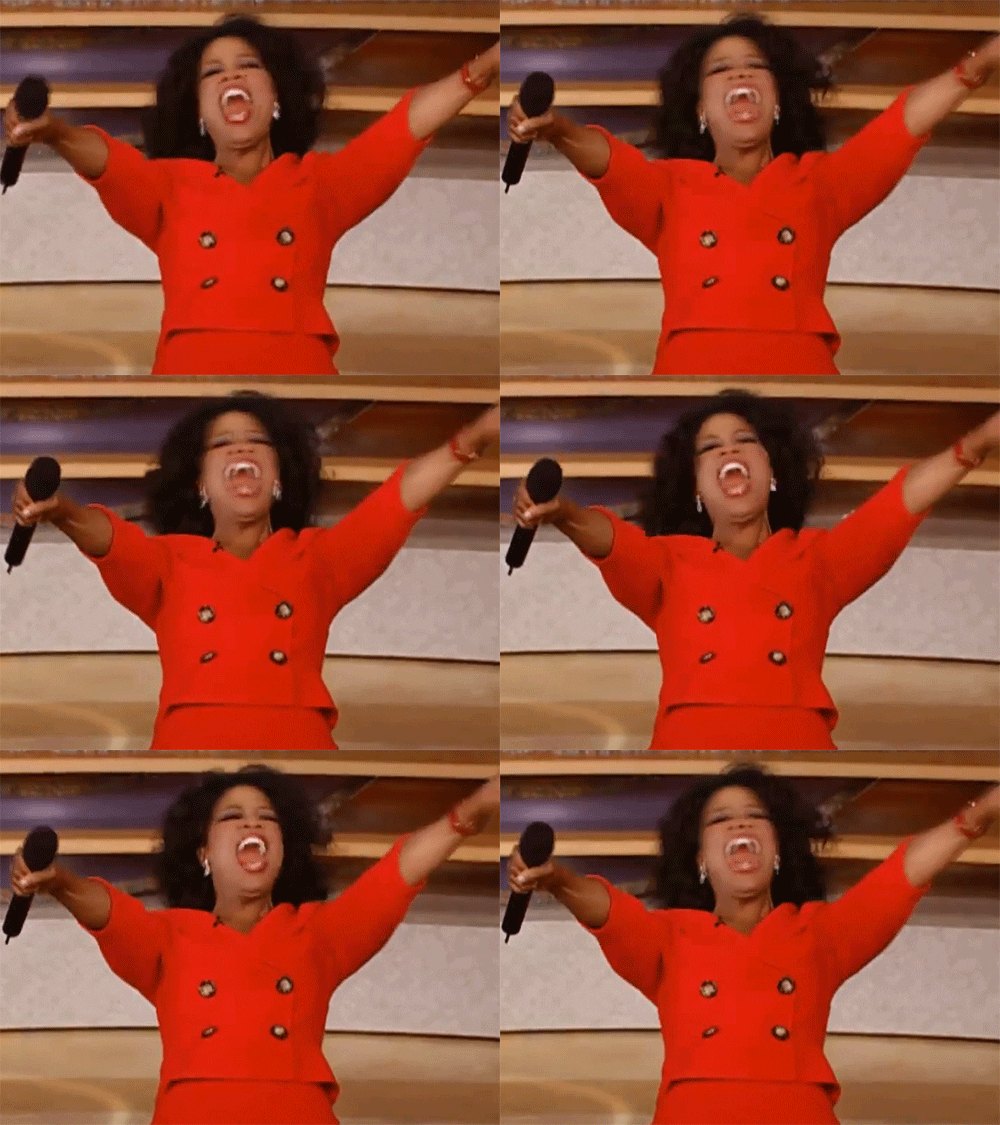
Me listening to Oprah’s speech!
Oprah Winfrey accepted the Cecil B. DeMille Award for lifetime achievement (the first Black woman to do so) and delivered a speech that BROUGHT THE HOUSE DOWN. She discussed growing up and representation in the media, people who took a chance on her and how that led to success in her career, her value of the press and the pursuit of the truth, the sexual violence in the entertainment industry and beyond, and the women who are speaking up.
It was moving, brought tears to my eyes, had me fist-pumping, and cheering her on (I encourage you to watch it here). I wish I would have had the chance to see how others felt in person rather than on Facebook and tumblr, especially with so many mixed feelings surrounding the activism at the Golden Globes. Not only could we have discussed this epic speech, but we could also unpack the public’s call for a presidential run and what that really means. Should Oprah run? Some say HELL YEAH, others think she’s just another billionaire and we should support other Black women who are already in politics, while others are saying no more to celebrity presidents. There’s a lot more to unpack here in terms of politics, who we support, and how the institution (both Hollywood and politics) may be changing.
Discussions about how we feel in the present as well as how we move forward in the future about this moments in time are important to have and that’s why the Women’s Center will be bringing you these Pop Culture Pop Up moments.
To stay informed about when Pop-Ups will happen make sure to follow us on myUMBC,Facebook and Twitter. Also follow us on Snapchat (@womencenterumbc) where we will be posting more about daily happenings in the Women’s Center.
If there’s something that comes up over the next semester you want to talk about, be sure to let the Women’s Center staff know (you can also use the hashtag #WCPopUp). It just may become the next Pop Culture Pop-Up!
]]>
A blog post written by student staff member, Sydney. It’s official! The Women’s Center has a new ongoing event starting this spring semester. What is it you ask? Pop Culture Pop Ups!...https://womenscenteratumbc.wordpress.com/2018/01/22/what-are-pop-culture-pop-ups-the-golden-globes-black-out-and-oprah/https://my3.my.umbc.edu/api/v0/pixel/news/73310/guest@my.umbc.edu/981b90f67623c2e3749f3db7b7d4d275/api/pixelartblack-outcommunitycurrent-eventsentertainmentenvironmenteventsfeminismgolden-globeshistoryintersectionalityissuesmetoomusicopinionoprahpoliticspop-cultureprogramssocial-justicetelevisiontimes-upupdatesviolencewomenWomen's, Gender, & Equity Centerhttps://my3.my.umbc.edu/groups/womenscenterhttps://assets2-my.umbc.edu/system/shared/avatars/groups/000/000/125/78272a4842689b30dbf74672182b78f8/xsmall.png?1750974263https://assets1-my.umbc.edu/system/shared/avatars/groups/000/000/125/78272a4842689b30dbf74672182b78f8/original.png?1750974263https://assets1-my.umbc.edu/system/shared/avatars/groups/000/000/125/78272a4842689b30dbf74672182b78f8/xxlarge.png?1750974263https://assets1-my.umbc.edu/system/shared/avatars/groups/000/000/125/78272a4842689b30dbf74672182b78f8/xlarge.png?1750974263https://assets1-my.umbc.edu/system/shared/avatars/groups/000/000/125/78272a4842689b30dbf74672182b78f8/large.png?1750974263https://assets2-my.umbc.edu/system/shared/avatars/groups/000/000/125/78272a4842689b30dbf74672182b78f8/medium.png?1750974263https://assets1-my.umbc.edu/system/shared/avatars/groups/000/000/125/78272a4842689b30dbf74672182b78f8/small.png?1750974263https://assets2-my.umbc.edu/system/shared/avatars/groups/000/000/125/78272a4842689b30dbf74672182b78f8/xsmall.png?1750974263https://assets3-my.umbc.edu/system/shared/avatars/groups/000/000/125/78272a4842689b30dbf74672182b78f8/xxsmall.png?1750974263Women's Center90falseMon, 22 Jan 2018 13:42:43 -0500Fatness. Fitness. Feminism.
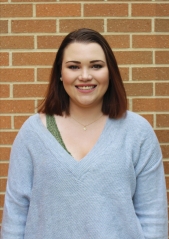
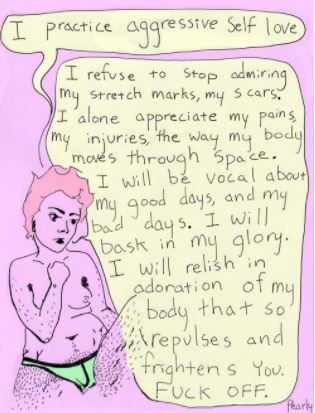
A reflection by student staff member, Sydney, about her experiences with body image, working out, and how these things connect with her feminism and self love.
Trigger Warning: This blog deals with body image, body dysmorphia, and unhealthy eating practices. Please use self-care.
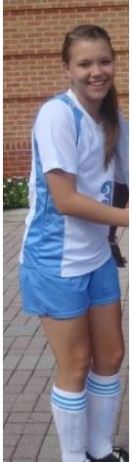
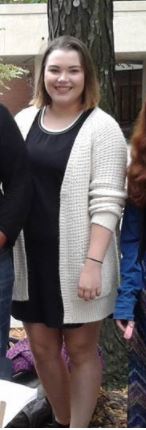
We live in a day where thick (curvy, slim-thick) is in but what this really means is women with thick thighs/large butts/ big boobs and a TINY waist. One thing thick still doesn’t seem to mean is fat. The media, men, and other women are still always critical of unwanted fat/cellulite/stretch marks and ways to get rid of them… especially in a time where “Fitspo” has become popular. Let me start off by saying I’m a feminist who believes in radical self love… I’m also a feminist who has a love-hate relationship with working out. I grew up being a year round competitive athlete, basketball, cross country, track, soccer (you name it!), so any time outside of school was spent in gyms or outside practicing skills. I never thought about my body much as an athlete- let me rephrase that… I never thought about the good my body was doing when I was an athlete. I knew I was strong but I thought it was because I was large. “I’m bigger than my friends therefore I have to be stronger than my friends”. Was I actually bigger than my friends though? The photos say no. It never occurred to me that my perception of my body was completely warped. I saw myself as overweight, much bigger than my friends, and was constantly aware of what I was wearing and how people perceived me. And as a young girl who was in Catholic School (Catholic guilt is the real deal), didn’t know much about feminism , and had a mother with body image issues, I was stuck in the perfect storm. My body was always at the front of my mind. I binge ate, starved at some points (why did I throw away so many lunches when I LOVE food?), and was just overall unaware of how toxic my mentality was.
When I graduated high school, I stopped playing sports and focused on school. I turned to feminism and activism to help me understand myself and the world, and I still worked out pretty regularly… I also gained 40 pounds. But guess what else happened? I learned to love my body. Now don’t get me wrong, I still look at my stretchmarks or fat rolls and sometimes feel like a “lazy loser” but I also know that my body does amazing things just to keep me alive, that I am strong, and that all bodies are good bodies. Here’s an important disclaimer though- I’m overweight, my doctors bring it up, my friends notice it, my parents comment on it, and guys tend to tell me “I love bigger women” but overall I’m still seen as “normal” by society. I can still find clothes in most stores, my fat is distributed pretty equally over my body, and I can still move throughout space with ease. I realize that due to this I experience both thin privilege and fat shame at different times. I have come to understand that my experience is a privilege because I CAN find a break from the constant judging in certain spaces.
Like I said, I still like to workout. I like the discipline of it that I learned through sports, and I think I always will. There are major benefits to working out. I like to go into the gym and lift weights or kickbox or do something that makes my muscles scream afterwards. For me, this is a form of radical self love, but it isn’t for everyone, and moreso this love can turn to hate really easily. I workout to feel strong, not skinny, but those two are easy to conflate and I often find myself walking the fine line, and falling on the toxic side if I’m not careful. What is supposed to be about strength and love can turn into weight and fat in the blink of an eye, and it is a constant game of checks and balances (going to the gym…but not twice a day… appreciating my body…but not weighing myself) to make sure I don’t go there. So just as much as I workout to get in a good mental space, I also often have to stop working out to remain in that good space. Even when doing this, I constantly struggle with the guilt over not working out or the guilt of working out for the wrong reasons. Let me just say this- deciding to love your body does not mean your body issues disappear.
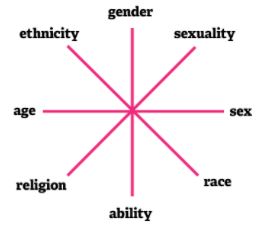
I found Bikram Yoga to be a very healthy way to workout and feel strong- I was feeling confident and in touch with my body while not worrying about weight. The problem- Bikram Yoga as well as fitness classes are EXPENSIVE (I’m talking over $100 a month here), which leads me to my next point. Fitness is a feminist issue AND an intersectional one. Some women don’t want to workout to feel self love. Some do and can’t afford it, and some aren’t represented in the fitness world at all. Sidenote, if you hate running, don’t do it! Hate the gym? Don’t go! What works for some and what some see as self love isn’t for all and it would be pretty antifeminist to try and insist it does.
We know poor women are more likely to be overweight and that curvy figures are more accepted by women of color, but what does this mean for women who want to workout or engage in health related activities but don’t have the funds or don’t see themselves represented? If you search “fit woman” on the internet what do you get? White women. White women with muscles. White women with no body fat. Now that, in itself, is an issue, but add in that these women are all able bodied (Inspiration Porn is real too yall, don’t even get me started), they are feminine, and they have all the trendy gear and equipment they need.
Let’s be real here, I haven’t worked out in months. I’m a grad student taking a full course load and working two jobs- when that’s done, I just want to go to bed. I still miss it… specifically lifting… but right now self care means something different. I also still feel guilty about it- especially when my clothes don’t fit or I’m “feeling fat”, but I’ve also been better about putting things in perspective and keeping a healthy mindset. I don’t have all the answers here. Fitness and feminism is a hard issue and not everyone has a healthy relationship with working out, (like I said, sometimes I don’t either) but I needed a space to discuss the fact that this is a conflicting issue with me, that I struggle, and that I’m trying my best. I think other women could use this space as well. So here’s to figuring it out together,
“All bodies are good bodies. You do not need to lose weight to have a good body. All bodies are real bodies. You are perfect at whatever size you like best. I preach this loud and proud to my friends, to my niece, to my mother, to my girlfriend. Honestly, I truly believe it. I also believe in giving a big middle finger to society’s standards of beauty, and I think it’s completely true that anyone can be healthy at whatever size they are.” – Sarah Hansen
Note: I purposefully left my weight out of this blog. I went back and forth on this decision but ultimately decided it would not do any good or help my point by just adding numbers in.
]]>
A reflection by student staff member, Sydney, about her experiences with body image, working out, and how these things connect with her feminism and self love. Trigger Warning: This blog deals...https://womenscenteratumbc.wordpress.com/2017/11/21/fattness-fitness-feminism/https://my3.my.umbc.edu/api/v0/pixel/news/72231/guest@my.umbc.edu/5c178eb5605ffdd27eeb0707937c78b2/api/pixelbody-imagefatnessfeminismfitnessintersectionalityissuesuncategorizedweightwomenworking-outWomen's, Gender, & Equity Centerhttps://my3.my.umbc.edu/groups/womenscenterhttps://assets2-my.umbc.edu/system/shared/avatars/groups/000/000/125/78272a4842689b30dbf74672182b78f8/xsmall.png?1750974263https://assets1-my.umbc.edu/system/shared/avatars/groups/000/000/125/78272a4842689b30dbf74672182b78f8/original.png?1750974263https://assets1-my.umbc.edu/system/shared/avatars/groups/000/000/125/78272a4842689b30dbf74672182b78f8/xxlarge.png?1750974263https://assets1-my.umbc.edu/system/shared/avatars/groups/000/000/125/78272a4842689b30dbf74672182b78f8/xlarge.png?1750974263https://assets1-my.umbc.edu/system/shared/avatars/groups/000/000/125/78272a4842689b30dbf74672182b78f8/large.png?1750974263https://assets2-my.umbc.edu/system/shared/avatars/groups/000/000/125/78272a4842689b30dbf74672182b78f8/medium.png?1750974263https://assets1-my.umbc.edu/system/shared/avatars/groups/000/000/125/78272a4842689b30dbf74672182b78f8/small.png?1750974263https://assets2-my.umbc.edu/system/shared/avatars/groups/000/000/125/78272a4842689b30dbf74672182b78f8/xsmall.png?1750974263https://assets3-my.umbc.edu/system/shared/avatars/groups/000/000/125/78272a4842689b30dbf74672182b78f8/xxsmall.png?1750974263Women's Center200falseTue, 21 Nov 2017 09:00:27 -0500Tue, 21 Nov 2017 09:00:27 -0500Critical Social Justice: Rise Events
Join Amelia Meman, project coordinator for the Women’s Center, and Dr. Julie Murphy, senior lecturer of UMBC’s Psychology Department, as they facilitate a dialogue on activism, resistance, and resilience. With the hopes of learning from one another’s experiences, we plan to explore this year’s theme of “rise” and to collaborate to create a plan for continued engagement in critical social justice.
Stop by Academic Row to chalk your answer to the question, “What do you rise for?” You can also chat with some of our staff and volunteers to learn more about Critical Social Justice, this year’s theme, and more of the week’s events!
Lecture Title: “Native Appropriations, Indigenous Social Media, and Responding to Racism”
6pm in UC Ballroom, doors open at 5:30pm, a meet-and-greet reception will follow the keynote
This event is free and open to the public. If you have questions or need accommodations, please contact the Women’s Center at womenscenter@umbc.edu.
Our Critical Social Justice 2017 Keynote Lecturer is Native scholar and activist Dr. Adrienne Keene (Cherokee Nation), who writes about cultural appropriation and stereotypes of Native peoples in pop culture on her blog Native Appropriations.Keene examines the way Indigenous peoples are using new media to challenge racism, present authentic counter-narratives, and create innovative spaces for art and activism.
This panel discussion explores the roles of faculty and staff in the current political atmosphere and pedagogical approaches to social justice. Consisting of UMBC faculty and staff, this panel is for university employees who wish to learn more about navigating politics and social justice in classroom and campus alike.
Panelists include:
Jodi Kelber-Kaye (Honors College, Assistant Director), moderator
Lee Blaney (Chemical, Biochemical and Environmental Engineering, Associate Professor)
Keisha Allen (Education, former Post-Doc Diversity Fellow)
Rehana Shafi (Sherman Scholars, Director)
Jason Loviglio (Media and Communication Studies, Associate Professor and Chair)
Rising in Times of International Tragedies: The Impact of Oppressive Symbols
6pm – 7:30pm, Skylight
Join the Mosaic Center in this featured panel and facilitated discussion centering European, Jewish and African American voices discussing their shared, intersectional perspectives connected to historically oppressive symbols. We will discuss how we can come together to stand against intolerable acts of hate in our country.
Panelists include:
Dr. Marina Adler (Sociology, Anthropology, and Health Administration and Policy, Professor)
Corinne Janet (Student Life, Coordinator for Leadership)
Romy Huebler (Student Life, Coordinator for Student Organizations and Involvement)
Dr. Jana Rehak (Anthropology, Instructor)
Dr. Kimberly Moffitt (American Studies, Associate Professor)
Rabbi Jeremy Fierstein (UMBC Hillel, Executive Director)
“The Monument Quilt is a crowd-sourced collection of thousands of stories from survivors of rape and abuse. By stitching our stories together, we are creating and demanding public space to heal. The Monument Quilt is a platform to not only tell our stories, but work together to forever change how Americans respond to rape. We are creating a new culture where survivors are publicly supported, rather than publicly shamed.” – FORCE
Join us on Erickson Field to take a look and explore the Monument Quilt, and the thousands of stories that are woven into it. In the afternoon, be sure to join The Monument Quilt in a quilt square making workshop in the library. You will be able to take some time to reflect and craft your own quilt square that will be incorporated into the overall project.
Throughout history, people have been rising in Baltimore. From labor activists in the railroad industry or food service to the soldiers of the Civil War. Dr. Kate will take us down Pratt Street in the heart of Baltimore for a tour of our city’s sites of activism.
Special thanks to our Critical Social Justice co-sponsors: Student Life’s Mosaic Center, Residential Life, College of Arts, Humanities, and Social Sciences, Honors College, Off-Campus Student Services, Counseling Center, University Health Services Health Promotions, Human Relations/Title IX Office, LGBTQ Faculty and Staff Association, Relationship Violence Awareness and Prevention (RVAP), The Social Work Program, Student Disability Services, Department of Psychology, Women Involved in Learning and Leadership, Sociology, Anthropology, and Health Administration and Policy (SAHAP), Department of American Studies, Department of Media and Communication Studies, Department of Modern Languages, Linguistics & Intercultural Communication, Race & Inclusion Scholars
]]>
Take a look at all of the events lined up for Critical Social Justice: Rise. We are also constantly adding events from partners, so stay tuned for more updates to this page as they come! Click...https://critsocjustice.wordpress.com/2017/09/06/critical-social-justice-rise-events/https://my3.my.umbc.edu/api/v0/pixel/news/71025/guest@my.umbc.edu/f5de01c25094f739704c863e02b72ad0/api/pixeladrienne-keenebrave-spacescollege-activismcritical-social-justicecsj-eventcsj-risecsj2017csjrisefeminismintersectionalitynative-appropriationsrisesocial-justicestudent-affairsumbcuniversitywomens-centerWomen's, Gender, & Equity Centerhttps://my3.my.umbc.edu/groups/womenscenterhttps://assets2-my.umbc.edu/system/shared/avatars/groups/000/000/125/78272a4842689b30dbf74672182b78f8/xsmall.png?1750974263https://assets1-my.umbc.edu/system/shared/avatars/groups/000/000/125/78272a4842689b30dbf74672182b78f8/original.png?1750974263https://assets1-my.umbc.edu/system/shared/avatars/groups/000/000/125/78272a4842689b30dbf74672182b78f8/xxlarge.png?1750974263https://assets1-my.umbc.edu/system/shared/avatars/groups/000/000/125/78272a4842689b30dbf74672182b78f8/xlarge.png?1750974263https://assets1-my.umbc.edu/system/shared/avatars/groups/000/000/125/78272a4842689b30dbf74672182b78f8/large.png?1750974263https://assets2-my.umbc.edu/system/shared/avatars/groups/000/000/125/78272a4842689b30dbf74672182b78f8/medium.png?1750974263https://assets1-my.umbc.edu/system/shared/avatars/groups/000/000/125/78272a4842689b30dbf74672182b78f8/small.png?1750974263https://assets2-my.umbc.edu/system/shared/avatars/groups/000/000/125/78272a4842689b30dbf74672182b78f8/xsmall.png?1750974263https://assets3-my.umbc.edu/system/shared/avatars/groups/000/000/125/78272a4842689b30dbf74672182b78f8/xxsmall.png?1750974263Women's Center00falseWed, 06 Sep 2017 08:23:33 -0400Wed, 06 Sep 2017 08:23:33 -0400Making Space for Faith in Feminism
A reflection by Michael Jalloh-Jamboria, Women’s Center student staff member
Saturday, February 12th was the 59th Grammy awards show. The show featured many musical performances and winners, most notably,Beyoncé. At the time of her performance, not only was she pregnant, but she delivered a kickass performance, defied gravity, all the while channeling some major West African, Latin American, and Christian spiritual imagery during her performance.
In both Santeria and West African spirituality, the Goddess Oshun is the goddess of sweet waters–the embodiment of love, fertility, and sensuality. Her love and guidance were instrumental to the creation of the world, so much so that other Orisha (gods and goddesses) were unable to complete their work on earth without Oshun. After Beyonce’s amazing performance, Twitter was going wild with the comparisons between Beyoncé and the goddess Oshun.
Beyoncé’s performance, her golden outfit, the fact that she was very pregnant, and the influx of Twitter comparisons reminded me of an earlier blog post I had written about my journey of religion and its intersections with my identities. Growing up, my parents loved to tell me stories of the Orisha, or gods and goddesses, and how they created the earth. While I was raised Muslim, my parents never separated our West African spirituality from our Muslim religion. Beyoncé’s performance got me thinking about how different my religion is from my spirituality. While it can be a strange balance, both my religion and my spirituality are important aspects of my identity. But I realized, within the social spaces I occupy, I don’t really talk about those parts of my identity. From there, I began to think about whether or not religion has a place in feminism.
I’ve felt like I can’t talk about my religion and spirituality in feminist and social justice oriented spaces. I’ve been talked over and shut down when I’ve decided to share the ways in which my beliefs have helped me in my expansion of feminist knowledge and activism.
Believe me, I get it. The patriarchy is everywhere! It would be naive to think that religion is exempt from the influences of male supremacy and systematic oppression. But it is important to remember that religious feminists aren’t free from that oppression. We don’t get a pass because we follow that particular faith. None of us can ignore the ways that the perpetuation of sexist interpretations affect us in religious spaces.
Religious feminists have had to grapple with our religion and our identity as feminists. We are cognizant of when and how to speak out against oppression. We work within a system of naysayers and oppressors just to get access to some of the resources that others have. There is still so much work to be done, and the treatment of religious feminists as other hurts everyone, regardless of their religion.
Coalition building between religious and non-religious folks is important. At a time where religious freedom is being targeted, it’s important to make sure that intolerance is not being perpetuated anywhere, but especially within feminist and social justice oriented spaces.
It’s strange to think that religion could shape some of my feminist beliefs. But actually, as I reflect on some of the basic pillars of Islam, there are parallels with how I engage in activist spaces and feminism. For me, simple everyday good deeds turned into wanting to do good for others, especially those less privileged then me. My activism is driven by the thought that putting good energy into the world will be returned. My feminism is filled with love for people, their identities, their lives and their needs, similar to the way that my faith has taught me to love my neighbor and fellow human beings!
During this time of chaos and violence, I’ve also been interested in the crucial ways religion and spirituality helps us heal. After the presidential election, many of us took some time to care for ourselves. For some of us, healing was eating, being angry, planning for the difficult times to come, or crying. While for others, healing included asking our elders how we should proceed, bowing our heads to ask for guidance, lighting a candle or two (or 50), or crying (there was a lot of crying.) No matter how we did it, we all needed to heal and digest the situation before we could get back to our kickass activism. Also, some of us are still healing, and that’s totally valid! Recognizing that our communities needed (or still need) some down time is important as we try to create space for those of different faiths. Similarly, feminists that assume that their religious counterparts are dismissive of social justice issues within their own faith is hard work but it can be done.
While some of us use the power of Beyoncé’s music to heal and process, it’s important to make space for those of us who heal, learn and pray in different ways. As our understanding of feminism and social justice expands, we must continue to incorporate intersectionality into the way we engage with each other.
]]>
A reflection by Michael Jalloh-Jamboria, Women’s Center student staff member Saturday, February 12th was the 59th Grammy awards show. The show featured many musical performances and winners,...https://womenscenteratumbc.wordpress.com/2017/03/06/making-space-for-faith-in-feminism/https://my3.my.umbc.edu/api/v0/pixel/news/66230/guest@my.umbc.edu/dc1a494d180d1a2bacb310aaf55bc0e9/api/pixelbeyonceblack-womencoalitioncommunitycurrent-eventsfeminismintersectionalityislamoshunpop-culturereligionsocial-justicespiritualityuncategorizedWomen's, Gender, & Equity Centerhttps://my3.my.umbc.edu/groups/womenscenterhttps://assets2-my.umbc.edu/system/shared/avatars/groups/000/000/125/78272a4842689b30dbf74672182b78f8/xsmall.png?1750974263https://assets1-my.umbc.edu/system/shared/avatars/groups/000/000/125/78272a4842689b30dbf74672182b78f8/original.png?1750974263https://assets1-my.umbc.edu/system/shared/avatars/groups/000/000/125/78272a4842689b30dbf74672182b78f8/xxlarge.png?1750974263https://assets1-my.umbc.edu/system/shared/avatars/groups/000/000/125/78272a4842689b30dbf74672182b78f8/xlarge.png?1750974263https://assets1-my.umbc.edu/system/shared/avatars/groups/000/000/125/78272a4842689b30dbf74672182b78f8/large.png?1750974263https://assets2-my.umbc.edu/system/shared/avatars/groups/000/000/125/78272a4842689b30dbf74672182b78f8/medium.png?1750974263https://assets1-my.umbc.edu/system/shared/avatars/groups/000/000/125/78272a4842689b30dbf74672182b78f8/small.png?1750974263https://assets2-my.umbc.edu/system/shared/avatars/groups/000/000/125/78272a4842689b30dbf74672182b78f8/xsmall.png?1750974263https://assets3-my.umbc.edu/system/shared/avatars/groups/000/000/125/78272a4842689b30dbf74672182b78f8/xxsmall.png?1750974263Women's Center180falseMon, 06 Mar 2017 12:00:39 -0500Mon, 06 Mar 2017 12:00:39 -0500Self-Care for Thanksgiving
A blog written by Women’s Center student staff member Ciera Earl
November. It has been a month of triumph for some, but a great loss for most of us. While this month is coming to an end and the holiday season is beginning, it’s important to know how to handle the obstacles that may come with going home or visiting families during this time of year.
I know for myself, being around family is very difficult. Whether it’s from the constant questions about the future, my love life, or whatever “phase” I’m in this time – my anxiety goes through the roof. I’m sure many can relate.
But that actually bothers me. It’s unfortunate that in some way, shape, or form this is relatable for so many people.
Be that as it may, it’s important that while passing the gravy and dodging topics that you come first. Having a self-care plan can be a way to prepare for the challenges that come with the holiday season and families.
Here are a few tips on how to survive the holidays with family:
(Image: Shutterstock)
Set Boundaries. Remember, you have a choice.
Sometimes it can feel like an obligation to join in on the festivities – honestly I feel obligated to do everything – but it’s important to understand that you do not have to commit yourself to being apart of these events. If you choose to visit family, set clear boundaries. For instance, having safe space to stay can be a way to create comfort and safety for yourself. This way if you feel uncomfortable or need a break you have a separate space to go.
Be aware of your anxiety. Notice when your tension levels are rising, and let yourself feel them. Feelings in and of themselves aren’t necessarily harmful – the actions resulting from those feelings are the real kicker, and quite often those actions happen because feelings are so bottled up that the pressure forces an explosion. Often, simply noticing and naming the anxiety can calm it.
When you notice tensions levels rising give yourself an out. If you have to spend an extended amount of time with family, work some down time into the schedule. Removing yourself from the situation can be vital.
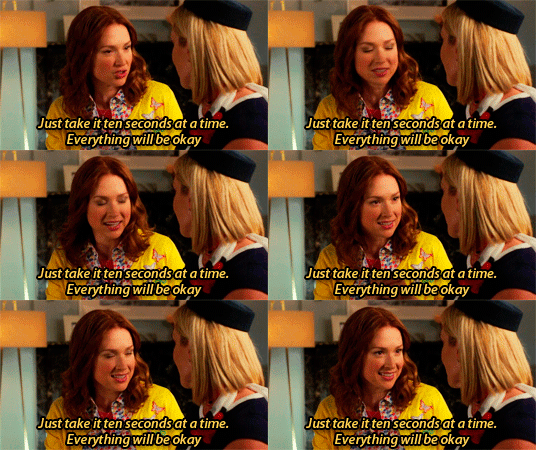
Remember, this is temporary.
The Unbreakable Kimmy Schmidt
This maybe the hardest of them all. Most of us can survive anything for a small period of time. However, if a situation arises that you feel you may not be able to handle, by all means, remove yourself!
Take care of yourself.You know what you need to do to be healthy. Give yourself permission to be human.
While these tips are not all the ways to respond and react to you family, it’s a good place to start. Here are some more resources on how to respond and handle family during this time, particularly for those in the LGBTQ community:
It’s in times like these that I live by these wise words:
“You is kind, you is smart, you is important.” – Aibileen Clark
]]>
A blog written by Women’s Center student staff member Ciera Earl November. It has been a month of triumph for some, but a great loss for most of us. While this month is coming to an end and...https://womenscenteratumbc.wordpress.com/2016/11/21/self-care-for-thanksgiving/https://my3.my.umbc.edu/api/v0/pixel/news/64072/guest@my.umbc.edu/89ba71cd6e60f211952b9218aa6c5474/api/pixelfamilyfeminismholidaysintersectionalityissuesself-carethanksgivingWomen's, Gender, & Equity Centerhttps://my3.my.umbc.edu/groups/womenscenterhttps://assets2-my.umbc.edu/system/shared/avatars/groups/000/000/125/78272a4842689b30dbf74672182b78f8/xsmall.png?1750974263https://assets1-my.umbc.edu/system/shared/avatars/groups/000/000/125/78272a4842689b30dbf74672182b78f8/original.png?1750974263https://assets1-my.umbc.edu/system/shared/avatars/groups/000/000/125/78272a4842689b30dbf74672182b78f8/xxlarge.png?1750974263https://assets1-my.umbc.edu/system/shared/avatars/groups/000/000/125/78272a4842689b30dbf74672182b78f8/xlarge.png?1750974263https://assets1-my.umbc.edu/system/shared/avatars/groups/000/000/125/78272a4842689b30dbf74672182b78f8/large.png?1750974263https://assets2-my.umbc.edu/system/shared/avatars/groups/000/000/125/78272a4842689b30dbf74672182b78f8/medium.png?1750974263https://assets1-my.umbc.edu/system/shared/avatars/groups/000/000/125/78272a4842689b30dbf74672182b78f8/small.png?1750974263https://assets2-my.umbc.edu/system/shared/avatars/groups/000/000/125/78272a4842689b30dbf74672182b78f8/xsmall.png?1750974263https://assets3-my.umbc.edu/system/shared/avatars/groups/000/000/125/78272a4842689b30dbf74672182b78f8/xxsmall.png?1750974263Women's Center130falseMon, 21 Nov 2016 12:46:37 -0500Mon, 21 Nov 2016 12:46:37 -0500Am I Sex Positive?
A blog reflection by Women’s Center student staff member Shira Devorah
So I really love to talk about sex. It’s probably my favorite topic ever. I used to work for peer health education and with the sexual health committee at UHS here on campus. I’m considering becoming a therapist focusing on sex and relationships within the LGBTQ community.
I’ve always considered myself to be sex positive. But now I’m worried that identifying as such can be problematic.
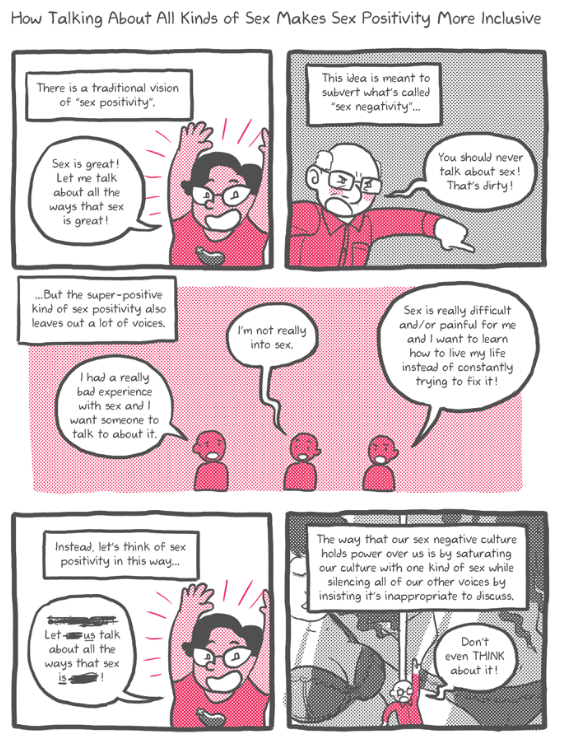
Sex positivity, in a really bare-bones sense, is a movement that unpacks our taboo notions of sexuality and embraces and promotes human sexuality and personal exploration. There is a huge emphasis on safer sex and informed consent, encouraging respect for people’s personal preferences and boundaries.
I’m definitely here for all of this.
But what are the limitations of this movement?
At surface level, sex positivity is a really cool thing. I feel confident discussing birth control options and my needs with friends and partners. Sex positivity has really allowed me to open myself up as a person and not deny my interest and care about this subject. The fact that this movement exists means that I can one day work in a field devoted to improving sex lives for LGBTQ people.
But sometimes I wonder if I really want to call myself sex positive anymore. Is being sex positive actually accessible to other people?
Although in theory sex positivity creates space for all people to explore their sexuality, in reality these conversations are not always accessible for everyone. There are many reasons sex positivity isn’t everyone’s cup of tea, even though it may be mine.
It’s difficult for women to be open about sexuality without some sort of pushback, and it can be especially challenging for women of color.
There are a lot of negative stereotypes surrounding women who choose to reclaim their own sexuality through sex positivity. First off, women who identify as sex positive often get sex shamed for their openness discussing these taboo topics. People tend to make a lot of assumptions about women who are open with their sexuality – that we’re ‘slutty’, interested in casual sex, unfeminine, or the object of male desire. These looming misconceptions may turn women off to the idea of being sex positive.
Although I may encounter some of these problematic assumptions, because I’m a white woman(ish) I’m not ever racially stereotyped based on my openness with sexual topics, which can be a reality for many people of color.
Many women of color are fetishized based on their race, and so they may feel more conflicted about associating with this term. For example, black women are often stereotyped as hypersexual, while Asian women are stereotyped as submissive sex objects. Since women of color are often already sexualized in troubling ways, sex positivity might make women of color feel more ostracized. Franchesca Ramsey has a really great video on sexual and dating racism you should check out here.
Some activists, like Feminista Jones, a Black feminist sex positive blogger, have helped counteract this narrative within sex positive circles. Jones has written about subverting the idea that Black women are hypersexual. In her piece “From Slavery to Sexual Freedom,” Jones discusses embracing Black female sexuality is an act of defiance against the fetishization of women of color. This is one example of how sex positivity can be reclaimed as an intersectional term – but this still doesn’t solve the systemic issue of racial sexualization.
On a different note, I’m also mindful about potentially alienating asexual people and survivors of sexual violence. Sure, I absolutely love being an open book when it comes to sex and sexuality. This means that I talk a lot about sexuality in a variety of different ways; I feel comfortable discussing the educational aspects of sexuality, like teaching people about consent or how to use contraceptives.
Still, I sometimes find myself discussing less ‘academic’ aspects of human sexuality. I am comfortable with pretty personal conversations, but a lot of people may not be. Some people may even be triggered by these conversations.
Of course, there is a vast difference between discussing safe sex and talking explicitly about sex with friends. Still, the line between informative sexual discussions and casual and potentially invasive discussions may be difficult to draw – especially if you’re like me and never stop the conversation. For close friends, I have a better understanding of what their boundaries are, and know what is and is not appropriate to say. These kinds of discussions are very different than those concerning contraception, which can be appropriate based on who is having this conversation, which spaces they are taking place in. In spaces that are more public, it is possible that people may overhear and be triggered by my discussions. Sometimes conversations that aren’t sexually explicit may still be troubling to some individuals. I need to stay tuned to the needs of all people who may be present.
I don’t know everyone’s stories, and it’s not my business to know their trauma or identity. It is, however, my business to be courteous and kind – and my loud, boisterous chats about contraception might not be as enjoyable to someone else as it is to me.
So how can I problematize sex positivity while continuing to associate with the movement?
I think I need to re-define what sex positivity is to me. It is all that I have grown accustomed to, but so much more. My kind of sex positivity is an inclusive one, accessible to all bodies. My sex positivity is open and honest, but should not be loud nor in-your-face. My sex positivity reclaims sexuality, but understands how sexuality can be misused and feed into rape culture and patriarchy. Most importantly, my sex positivity is my own, and I do not have have to expect other people to see things the way that I do. It does not make them any less of a feminist to feel uncomfortable with sex positivity, it just makes their lens different.
I would really love to reconcile with the term “sex positive” while being mindful that this identifier is not always accessible, realistic, or even as positive as the title claims.
I must be critical of the limitations of being sex positive. I want to expand my awareness for who is included and who gets left out of this narrative. My sex positivity needs to include all bodies, all genders, and all sexualities. In order to reconcile with my own sex positivity, I must remember that it is not the one right way to be a feminist.
]]>
A blog reflection by Women’s Center student staff member Shira Devorah So I really love to talk about sex. It’s probably my favorite topic ever. I used to work for peer health education and...https://womenscenteratumbc.wordpress.com/2016/11/14/am-i-sex-positive/https://my3.my.umbc.edu/api/v0/pixel/news/63945/guest@my.umbc.edu/f3d75998960f58dc27fdbef33b19aa1b/api/pixelfeminismintersectionalityissuessex-positivityWomen's, Gender, & Equity Centerhttps://my3.my.umbc.edu/groups/womenscenterhttps://assets2-my.umbc.edu/system/shared/avatars/groups/000/000/125/78272a4842689b30dbf74672182b78f8/xsmall.png?1750974263https://assets1-my.umbc.edu/system/shared/avatars/groups/000/000/125/78272a4842689b30dbf74672182b78f8/original.png?1750974263https://assets1-my.umbc.edu/system/shared/avatars/groups/000/000/125/78272a4842689b30dbf74672182b78f8/xxlarge.png?1750974263https://assets1-my.umbc.edu/system/shared/avatars/groups/000/000/125/78272a4842689b30dbf74672182b78f8/xlarge.png?1750974263https://assets1-my.umbc.edu/system/shared/avatars/groups/000/000/125/78272a4842689b30dbf74672182b78f8/large.png?1750974263https://assets2-my.umbc.edu/system/shared/avatars/groups/000/000/125/78272a4842689b30dbf74672182b78f8/medium.png?1750974263https://assets1-my.umbc.edu/system/shared/avatars/groups/000/000/125/78272a4842689b30dbf74672182b78f8/small.png?1750974263https://assets2-my.umbc.edu/system/shared/avatars/groups/000/000/125/78272a4842689b30dbf74672182b78f8/xsmall.png?1750974263https://assets3-my.umbc.edu/system/shared/avatars/groups/000/000/125/78272a4842689b30dbf74672182b78f8/xxsmall.png?1750974263Women's Center120falseMon, 14 Nov 2016 17:51:30 -0500Mon, 14 Nov 2016 17:51:30 -0500Why do Disability Issues Matter?
Women’s Center intern Prachi Kochar discusses the importance of disability in relation to many important issues that are going on today, such as police brutality and the 2016 presidential election. Rather than have disability be an afterthought, it should be brought to the forefront of our discussions about social justice issues.
In conversations about social activism and social change, we must remember who is not being talked about. Who is being left out of these conversations and why? In particular, I have noticed a significant amount of ignorance about issues related to people with disabilities throughout my college experience, and relating to several different issues, ranging from accessibility at UMBC to the rights (and respect) of people with disabilities in 2016’s presidential race to how people with disabilities, especially those who are people of color — and especially Black people — are treated by police. People with disabilities are also often left out of conversations about social justice. Think about the last time you heard about a protest, discussion about a social justice issue, or rally. Was there any mention of wheelchair accessible-seating or sign language interpreters? This is particularly striking because 19% of the U.S. population, or 56.7 million people, have some kind of disability.
The word “disabled” and its meanings are often not critically considered, but it is important to remember that just like other identities, such as gender, race, and class, it is socially constructed. This perspective of disability emphasizes that it is society that disables people by rendering some services and institutions inaccessible to people as well as stigmatizing those who are considered to have disabilities. For example, deafness is not considered a disability by the Deaf community because within the Deaf community, there are no barriers to communication — everyone is able to use sign language and communicate clearly. It is also important to recognize that all people with disabilities cannot be lumped together. Even people who seem to have the same “type” of disability may have different needs. This is why it is especially important to listen to diverse groups of people with disabilities and center their voices and experiences, rather than non-disabled people.
Even though I am deaf, as someone who does not have any mobility issues, I initially did not realize how inaccessible UMBC’s campus is to people with mobility issues, especially wheelchair users. For example, getting to the Performing Arts and Humanities Building only seems like a minor annoyance to me, one that just requires giving myself an extra five minutes to walk up all those stairs. However, for someone in a wheelchair, chronic pain, or with crutches, it is necessary to navigate a labyrinth of ramps, building entrances, and elevators to make it to class. Furthermore, most classroom doors, and even some building entrances, do not have buttons that allow them to open automatically, meaning that they must be pushed or pulled to allow access. The same is also true for many bathroom entrances, even bathrooms that have wheelchair accessible stalls. In this way, UMBC creates more barriers for people with mobility issues. Accessibility issues at UMBC do not exist in a vacuum; they reflect how people with disabilities are viewed and treated in American society, intersecting with other dimensions of identity, such as gender, race, and class.
Police brutality against people with disabilities, especially those who are people of color, is an issue rarely spoken about, but it is a very major one. As found in a report that analyzed incidents of police brutality between 2013-2015, up to half of people killed by the police have a disability. Police officers are typically the first respondents to mental health crisis 911 calls, but they are often not trained to deal with various mental health issues as well as physical, emotional, and intellectual disabilities. Furthermore, racism and anti-blackness as well as biases against people with disabilities – where they are perceived as “dangerous” and “non-compliant” greatly contribute to police brutality.
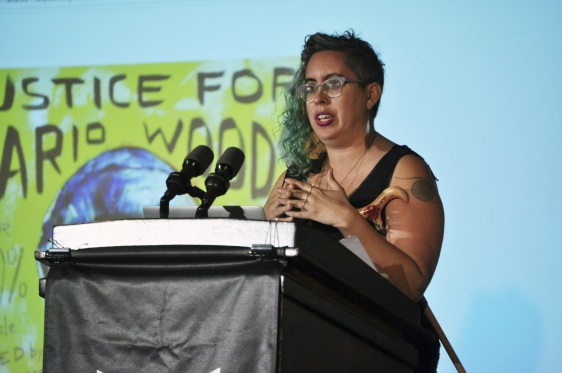
Our Critical Social Justice keynote speaker Leah Lakshmi Piepzna-Samarsinha spoke about issues related to disability justice. You can watch the video of her lecture here! (photo credit: Mike Mower)
Another major area in which disability issues are rarely discussed (except when something particularly shocking or offensive has been said) is the 2016 U.S. Presidential Elections. Yes, I can already hear your groans, but we need to talk about how people with disabilities could potentially be affected by this election, especially because many people with disabilities are women, LGBTQ+, or people of color who already face discrimination on those fronts. You’ve probably heard about Donald Trump’s mocking of a disabled reporter and him calling Marlee Matlin an ableist slur, but very little media attention has been given to the actual policy positions of both Trump and Clinton with regard to disability issues. However, these policies can actually be life or death for some people with disabilities.
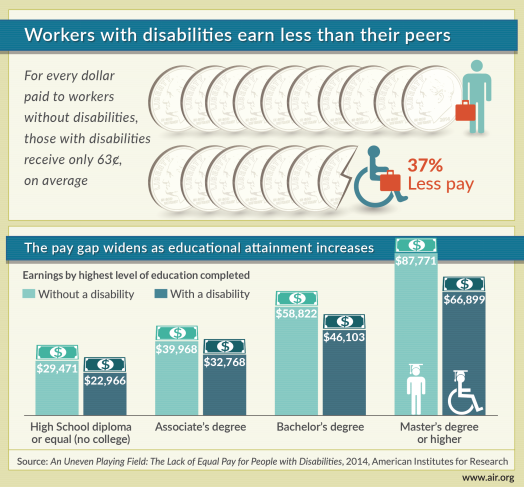
A major issue affecting people with disabilities is employment and salary equity. (credit: AIR.org)
Donald Trump has said little about people with disabilities with regard to official policy positions. Although he has praised himself for making the buildings on his properties accessible to people with disabilities (building wheelchair ramps, for example), this is mandated under the Americans with Disabilities Act. Multiple cases have also come up in which lawsuits were filed because his properties did not comply with ADA guidelines.
Hillary Clinton has been much more vocal on the topic of disability rights, using the failings of Donald Trump to emphasize how she will support people with disabilities. However, while Clinton is miles ahead of Trump on disability issues, that does not mean she is perfect. Her campaign has been criticized for portraying disability rights from the perspective of those without disabilities, rather than amplifying the voices of people with disabilities. Furthermore, despite her stated support of people with disabilities and the Americans with Disabilities Act, Clinton has not given much information on exactly how she will support people with disabilities and what specific issues she will address, creating doubt as to how effective she will be on disability-related policies. While it is important to recognize that Clinton is much better than Trump, it is also important to be critical of her policies and ask for better.
The Democratic Party has also shown their support of disability rights, by focusing on disability issues at the Democratic National Convention and having multiple speakers with disabilities as well as accommodations for all. Even though we have a long way to go with increasing accessibility for people with disability as well as awareness of the issues that people with disabilities face, it is possible for us, both people with disabilities and people without disabilities, to begin making a positive difference and to support disability justice. One of the major ways that we can do that is voting — so make sure you go out and vote if you are able to do so! Together, we can make a positive change and advocate for disability justice.
]]>
Women’s Center intern Prachi Kochar discusses the importance of disability in relation to many important issues that are going on today, such as police brutality and the 2016 presidential...https://womenscenteratumbc.wordpress.com/2016/11/08/why-do-disability-issues-matter/https://my3.my.umbc.edu/api/v0/pixel/news/63768/guest@my.umbc.edu/4ae0b6af1014a0600f9fcfa2e28ab9c2/api/pixeldisabilityintersectionalityissuespoliticssocial-justiceWomen's, Gender, & Equity Centerhttps://my3.my.umbc.edu/groups/womenscenterhttps://assets2-my.umbc.edu/system/shared/avatars/groups/000/000/125/78272a4842689b30dbf74672182b78f8/xsmall.png?1750974263https://assets1-my.umbc.edu/system/shared/avatars/groups/000/000/125/78272a4842689b30dbf74672182b78f8/original.png?1750974263https://assets1-my.umbc.edu/system/shared/avatars/groups/000/000/125/78272a4842689b30dbf74672182b78f8/xxlarge.png?1750974263https://assets1-my.umbc.edu/system/shared/avatars/groups/000/000/125/78272a4842689b30dbf74672182b78f8/xlarge.png?1750974263https://assets1-my.umbc.edu/system/shared/avatars/groups/000/000/125/78272a4842689b30dbf74672182b78f8/large.png?1750974263https://assets2-my.umbc.edu/system/shared/avatars/groups/000/000/125/78272a4842689b30dbf74672182b78f8/medium.png?1750974263https://assets1-my.umbc.edu/system/shared/avatars/groups/000/000/125/78272a4842689b30dbf74672182b78f8/small.png?1750974263https://assets2-my.umbc.edu/system/shared/avatars/groups/000/000/125/78272a4842689b30dbf74672182b78f8/xsmall.png?1750974263https://assets3-my.umbc.edu/system/shared/avatars/groups/000/000/125/78272a4842689b30dbf74672182b78f8/xxsmall.png?1750974263Women's Center140falseTue, 08 Nov 2016 17:00:48 -0500Tue, 08 Nov 2016 17:00:48 -0500Queer (De)Coded, a Roundtable Roundup
The Women’s Center’s Roundtable series is underway! On October 20th, we hosted the second of our three-part roundtable “Our Bodies, Ourselves” series. Queer (De)Coded focused on women and queer coding, deconstructing how women and femme individuals utilize and present their bodies in order to appear more or less queer. Queer coding is when individuals hint with their bodies and mannerisms their identity without explicitly stating their sexuality or gender identity.
For this discussion, we invited staff member Elle Trusz, UMBC alum Juliette Seymour, and community member Melissa Smith to begin the roundtable dialogue with their own thoughts and perspectives related to queer coding. Elle opened up the conversation, discussing what it is like to be in relationships that are read as straight but are actually queer. She explained that walking down the street with her “husbutch”- or female spouse- could sometimes be seen by others as a straight couple based upon how both individuals present themselves.
Juliette also had interesting input into what it is like being a queer person who appears straight and cisgendered within their own life. Juliette discussed how their appearance sometimes made it more possible to be in spaces that may or may not be LGBTQIA+ friendly, yet it also felt like taking a step back into the closet. Melissa brought up the different ways her queer embodiment shows up in her workplace and the critical ways she is being present in all of her identities in order to make more space for others like her.
After initial remarks, the discussion turned to what “queer” looks like, who can present as queer, and the intersections that can emerge when facing different personal identities. The discussion of what it looks like to be queer and privileged identities was brought to the table. Elle discussed her privilege as she recounted instances where her queer identity was more protected based upon her whiteness. Melissa discussed her own identity as a black queer person and how the layers of both these identities can be challenging in our heteronormative, white-centric world. The UMBC Outlist became a part of our discussion and the ways in which this list can also send messages of acceptable or not-acceptable queer presentation on campus and in professional settings in general.
A large portion of the conversation turned to religion and queerness. Melissa spoke very candidly about her own conflicts within religion, and the conversation opened up for the audience. Many people shared their own experiences with religion and their individual queer identities.
Overall, the dialogue we shared with each other as a learning community was deep (and only scratching the surface at the same time) and meaningful and can’t be entirely captured in such a short summary. Thanks to our panel members and participants for making Queer (De)Coded a success and creating a conversation around the many ways we embody queer identities within our daily lives.
Don’t Forget, our last roundtable of the semester,Fatness in Focus, will take place on November 30th, at 4pm in The Women’s Center!
Couldn’t make it to this roundtable? No worries! Here are some resources that further delve into the topic of queer coding and embodied queerness.
]]>
The Women’s Center’s Roundtable series is underway! On October 20th, we hosted the second of our three-part roundtable “Our Bodies, Ourselves” series. Queer (De)Coded focused on women and queer...https://womenscenteratumbc.wordpress.com/2016/10/25/queer-decoded-a-roundtable-roundup/https://my3.my.umbc.edu/api/v0/pixel/news/63494/guest@my.umbc.edu/11d17419b7f207f26f0448447d6b63e0/api/pixelintersectionalityissueslgbtqiaqueer-codingroundtable-roundupWomen's, Gender, & Equity Centerhttps://my3.my.umbc.edu/groups/womenscenterhttps://assets2-my.umbc.edu/system/shared/avatars/groups/000/000/125/78272a4842689b30dbf74672182b78f8/xsmall.png?1750974263https://assets1-my.umbc.edu/system/shared/avatars/groups/000/000/125/78272a4842689b30dbf74672182b78f8/original.png?1750974263https://assets1-my.umbc.edu/system/shared/avatars/groups/000/000/125/78272a4842689b30dbf74672182b78f8/xxlarge.png?1750974263https://assets1-my.umbc.edu/system/shared/avatars/groups/000/000/125/78272a4842689b30dbf74672182b78f8/xlarge.png?1750974263https://assets1-my.umbc.edu/system/shared/avatars/groups/000/000/125/78272a4842689b30dbf74672182b78f8/large.png?1750974263https://assets2-my.umbc.edu/system/shared/avatars/groups/000/000/125/78272a4842689b30dbf74672182b78f8/medium.png?1750974263https://assets1-my.umbc.edu/system/shared/avatars/groups/000/000/125/78272a4842689b30dbf74672182b78f8/small.png?1750974263https://assets2-my.umbc.edu/system/shared/avatars/groups/000/000/125/78272a4842689b30dbf74672182b78f8/xsmall.png?1750974263https://assets3-my.umbc.edu/system/shared/avatars/groups/000/000/125/78272a4842689b30dbf74672182b78f8/xxsmall.png?1750974263Women's Center60falseTue, 25 Oct 2016 09:00:55 -0400Tue, 25 Oct 2016 09:00:55 -0400
 Educating yourself and being yourself: the dangers of cultural appropriation by Harini, a student intern.






 A reflection by student staff member, Sydney, about her experiences with body image, working out, and how these things connect with her feminism and self love.

 When I graduated high school, I stopped playing sports and focused on school. I turned to feminism and activism to help me understand myself and the world, and I still worked out pretty regularly… I also gained 40 pounds. But guess what else happened? I learned to love my body. Now don’t get me wrong, I still look at my stretchmarks or fat rolls and sometimes feel like a “lazy loser” but I also know that my body does amazing things just to keep me alive, that I am strong, and that all bodies are good bodies. Here’s an important disclaimer though- I’m overweight, my doctors bring it up, my friends notice it, my parents comment on it, and guys tend to tell me “I love bigger women” but overall I’m still seen as “normal” by society. I can still find clothes in most stores, my fat is distributed pretty equally over my body, and I can still move throughout space with ease. I realize that due to this I experience both thin privilege and fat shame at different times. I have come to understand that my experience is a privilege because I CAN find a break from the constant judging in certain spaces.
 I found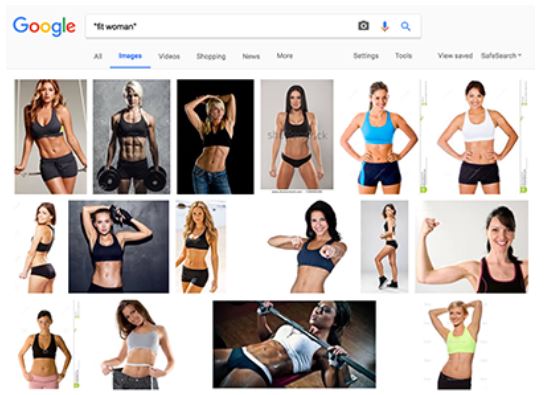

 A reflection by Michael Jalloh-Jamboria, Women’s Center student staff member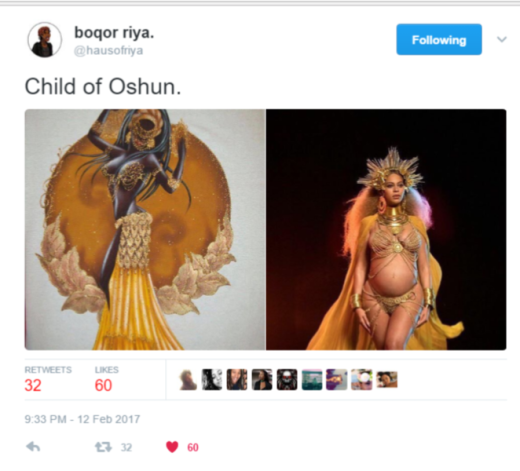
 A blog written by Women’s Center student staff member Ciera Earl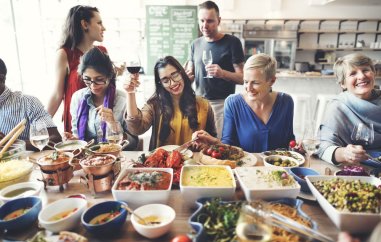
 A blog reflection by Women’s Center student staff member Shira Devorah
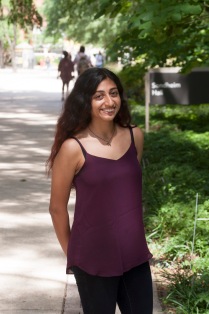 Women’s Center intern Prachi Kochar discusses the importance of disability in relation to many important issues that are going on today, such as police brutality and the 2016 presidential election. Rather than have disability be an afterthought, it should be brought to the forefront of our discussions about social justice issues.