<?xml version="1.0"?>
<News hasArchived="true" page="10159" pageCount="10777" pageSize="10" timestamp="Sat, 29 Aug 2026 21:27:25 -0400" url="https://my3.my.umbc.edu/posts.xml?mode=activity&amp;page=10159&amp;range=2">
<NewsItem contentIssues="false" id="7702" important="false" status="posted" url="https://my3.my.umbc.edu/posts/7702">
<Title>PKPEtaPhi: We are having a great summer! Make sure to...</Title>
<Body>
<![CDATA[
    <div class="html-content">Full Title: PKPEtaPhi: We are having a great summer! Make sure to tell all of your friends to follow me to stay up to date on all things UMBC Pi Kapp!PKPEtaPhi: We are having a great summer! Make sure to tell all of your friends to follow me to stay up to date on all things UMBC Pi Kapp!</div>
]]>
</Body>
<Summary>Full Title: PKPEtaPhi: We are having a great summer! Make sure to tell all of your friends to follow me to stay up to date on all things UMBC Pi Kapp!PKPEtaPhi: We are having a great summer! Make...</Summary>
<Website>http://twitter.com/PKPEtaPhi/statuses/95717369950904320</Website>
<TrackingUrl>https://my3.my.umbc.edu/api/v0/pixel/news/7702/guest@my.umbc.edu/e4dcf299486e8e949a23799862376637/api/pixel</TrackingUrl>
<Group token="retired-48">Pi Kappa Phi</Group>
<GroupUrl>https://my3.my.umbc.edu/groups/retired-48</GroupUrl>
<AvatarUrl>https://assets2-my.umbc.edu/system/shared/avatars/groups/000/000/048/8a09b9e6a6b138365de11987319c4aab/xsmall.png?1502987649</AvatarUrl>
<AvatarUrl size="original">https://assets4-my.umbc.edu/system/shared/avatars/groups/000/000/048/8a09b9e6a6b138365de11987319c4aab/original.JPG?1502987649</AvatarUrl>
<AvatarUrl size="xxlarge">https://assets4-my.umbc.edu/system/shared/avatars/groups/000/000/048/8a09b9e6a6b138365de11987319c4aab/xxlarge.png?1502987649</AvatarUrl>
<AvatarUrl size="xlarge">https://assets3-my.umbc.edu/system/shared/avatars/groups/000/000/048/8a09b9e6a6b138365de11987319c4aab/xlarge.png?1502987649</AvatarUrl>
<AvatarUrl size="large">https://assets3-my.umbc.edu/system/shared/avatars/groups/000/000/048/8a09b9e6a6b138365de11987319c4aab/large.png?1502987649</AvatarUrl>
<AvatarUrl size="medium">https://assets1-my.umbc.edu/system/shared/avatars/groups/000/000/048/8a09b9e6a6b138365de11987319c4aab/medium.png?1502987649</AvatarUrl>
<AvatarUrl size="small">https://assets3-my.umbc.edu/system/shared/avatars/groups/000/000/048/8a09b9e6a6b138365de11987319c4aab/small.png?1502987649</AvatarUrl>
<AvatarUrl size="xsmall">https://assets2-my.umbc.edu/system/shared/avatars/groups/000/000/048/8a09b9e6a6b138365de11987319c4aab/xsmall.png?1502987649</AvatarUrl>
<AvatarUrl size="xxsmall">https://assets2-my.umbc.edu/system/shared/avatars/groups/000/000/048/8a09b9e6a6b138365de11987319c4aab/xxsmall.png?1502987649</AvatarUrl>
<Sponsor>Pi Kappa Phi</Sponsor>
<PawCount>13</PawCount>
<CommentCount>0</CommentCount>
<CommentsAllowed>false</CommentsAllowed>
<PostedAt>Tue, 26 Jul 2011 00:49:34 -0400</PostedAt>
</NewsItem>

<NewsItem contentIssues="false" id="7701" important="false" status="posted" url="https://my3.my.umbc.edu/posts/7701">
<Title>STOP! Cheating is bad!</Title>
<Body>
<![CDATA[
    <div class="html-content">
    <div>
    <img src="http://www.usdemocrazy.net/wp-content/uploads/2011/07/cheating-on-test-raw-multimedia.jpg" alt="Thanks to Fairness Matters!" width="453" height="339" style="max-width: 100%; height: auto;"><p>Thanks to Frank Cammuso at Fairness Matters!</p>
    </div>
    <p>Most of us who have taken standardized tests are familiar with <span>“The Rules”</span>:</p>
    <ol>
    <li><strong><span>Eyes on your own paper </span></strong></li>
    <li><span>Don’t read once you’ve finished</span></li>
    <li><strong><span>Sit quietly</span></strong></li>
    <li>Don’t answer questions after time has expired</li>
    <li>Don’t go forward, and certainly don’t go back</li>
    <li>The teacher <strong>will not</strong> answer your questions, so don’t even ask</li>
    </ol>
    <p>We’re expected to act with academic integrity.</p>
    <p>But what happens when it’s not the students who are cheating but the school itself?</p>
    <p>How many schools are really inflating their test scores? Why would they do that?</p>
    <p>In this article by Bill Turque of the Washington Post, he discusses the <a href="http://www.washingtonpost.com/local/education/questions-about-cheating-could-hinder-efforts-to-improve-schools/2011/07/19/gIQA5tAbYI_story.html" rel="nofollow external" class="bo">implications of schools cheating on their standardized tests</a> on the quality of education in the future. Check it out! What you learn may surprise you.</p>
    </div>
]]>
</Body>
<Summary>Thanks to Frank Cammuso at Fairness Matters!    Most of us who have taken standardized tests are familiar with “The Rules”:     Eyes on your own paper    Don’t read once you’ve finished   Sit...</Summary>
<Website>http://www.usdemocrazy.net/2011/07/26/stop-cheating-is-bad/</Website>
<TrackingUrl>https://my3.my.umbc.edu/api/v0/pixel/news/7701/guest@my.umbc.edu/0a1dc97b3d3e3fffd215606e9b0b1c4b/api/pixel</TrackingUrl>
<Tag>academic-integrity</Tag>
<Tag>democracy</Tag>
<Tag>education</Tag>
<Tag>irc</Tag>
<Tag>news</Tag>
<Tag>politics</Tag>
<Tag>standardized-testing</Tag>
<Tag>umbc</Tag>
<Tag>usdemocrazy</Tag>
<Group token="retired-12">USDemocrazy</Group>
<GroupUrl>https://my3.my.umbc.edu/groups/retired-12</GroupUrl>
<AvatarUrl>https://assets1-my.umbc.edu/system/shared/avatars/groups/000/000/012/f0935e4cd5920aa6c7c996a5ee53a70f/xsmall.png?1279120129</AvatarUrl>
<AvatarUrl size="original">https://assets4-my.umbc.edu/system/shared/avatars/groups/000/000/012/f0935e4cd5920aa6c7c996a5ee53a70f/original.jpg?1279120129</AvatarUrl>
<AvatarUrl size="xxlarge">https://assets3-my.umbc.edu/system/shared/avatars/groups/000/000/012/f0935e4cd5920aa6c7c996a5ee53a70f/xxlarge.png?1279120129</AvatarUrl>
<AvatarUrl size="xlarge">https://assets4-my.umbc.edu/system/shared/avatars/groups/000/000/012/f0935e4cd5920aa6c7c996a5ee53a70f/xlarge.png?1279120129</AvatarUrl>
<AvatarUrl size="large">https://assets4-my.umbc.edu/system/shared/avatars/groups/000/000/012/f0935e4cd5920aa6c7c996a5ee53a70f/large.png?1279120129</AvatarUrl>
<AvatarUrl size="medium">https://assets1-my.umbc.edu/system/shared/avatars/groups/000/000/012/f0935e4cd5920aa6c7c996a5ee53a70f/medium.png?1279120129</AvatarUrl>
<AvatarUrl size="small">https://assets2-my.umbc.edu/system/shared/avatars/groups/000/000/012/f0935e4cd5920aa6c7c996a5ee53a70f/small.png?1279120129</AvatarUrl>
<AvatarUrl size="xsmall">https://assets1-my.umbc.edu/system/shared/avatars/groups/000/000/012/f0935e4cd5920aa6c7c996a5ee53a70f/xsmall.png?1279120129</AvatarUrl>
<AvatarUrl size="xxsmall">https://assets1-my.umbc.edu/system/shared/avatars/groups/000/000/012/f0935e4cd5920aa6c7c996a5ee53a70f/xxsmall.png?1279120129</AvatarUrl>
<Sponsor>USDemocrazy</Sponsor>
<PawCount>20</PawCount>
<CommentCount>3</CommentCount>
<CommentsAllowed>true</CommentsAllowed>
<PostedAt>Tue, 26 Jul 2011 00:33:16 -0400</PostedAt>
</NewsItem>

<NewsItem contentIssues="false" id="7703" important="false" status="posted" url="https://my3.my.umbc.edu/posts/7703">
<Title>Day 2: Felicitas - &#8220;Calm courage and confidence&#8230;&#8221;</Title>
<Body>
<![CDATA[
    <div class="html-content">
    <p><strong>Felicitas</strong></p>
    <p>“Felicitas had feared that she might not be allowed to suffer with the rest because pregnant women were not sent into the arena. However, she gave birth in the prison to a daughter whom one of their fellow Christians at once adopted. Pudens, their jailer, was by this time a convert, and did all he could for them. The day before the games they were given the usual last meal, which was called “the free banquet.” The martyrs strove to make it an &lt;Agape&gt; or Love Feast, and to those who crowded around them they spoke of the judgments of God and of their own joy in their sufferings. Such calm courage and confidence astonished the pagans and brought about many conversions.”</p>
    <p>Reflection: Felicitas was pregnant, and was in jail for living out her calling.  But her fear was not about her death, nor was it about her unborn child.  What concerned her the most was that she was not going be allowed to suffer for the Lord with the rest of her colleagues, because she was pregnant.  However, when she gave birth she was allowed to join them in their suffering. In fact, even though Felicitas and her companions were imprisoned, they were overflowing with so much joy and love for the Lord that many around them were converted.  It was their faith in the Lord that allowed them to have such calm courage and confidence that brought salvation to others.</p>
    <p>Response:  Let’s pray that we will be more concerned about God’s kingdom than the things in our own lives.  May God use us to bring salvation to those around us.</p>
    <p>Source: <em>Saints Perpetua, Felicitas, and Companions — Martyrs — 203</em><span><br>
    </span></p>
    </div>
]]>
</Body>
<Summary>Felicitas   “Felicitas had feared that she might not be allowed to suffer with the rest because pregnant women were not sent into the arena. However, she gave birth in the prison to a daughter...</Summary>
<Website>http://www.agape-churches.org/missioncontrol/?p=1637</Website>
<TrackingUrl>https://my3.my.umbc.edu/api/v0/pixel/news/7703/guest@my.umbc.edu/913c9f0cb318f36a90e98c2ec679c1ad/api/pixel</TrackingUrl>
<Tag>called</Tag>
<Tag>calling-competence-and-confidence</Tag>
<Group token="agapeumbc">Agape Campus Christian Fellowship</Group>
<GroupUrl>https://my3.my.umbc.edu/groups/agapeumbc</GroupUrl>
<AvatarUrl>https://assets1-my.umbc.edu/system/shared/avatars/groups/000/000/223/3fb22546e0a13fb8b5d7345218eef2a5/xsmall.png?1755319577</AvatarUrl>
<AvatarUrl size="original">https://assets1-my.umbc.edu/system/shared/avatars/groups/000/000/223/3fb22546e0a13fb8b5d7345218eef2a5/original.png?1755319577</AvatarUrl>
<AvatarUrl size="xxlarge">https://assets4-my.umbc.edu/system/shared/avatars/groups/000/000/223/3fb22546e0a13fb8b5d7345218eef2a5/xxlarge.png?1755319577</AvatarUrl>
<AvatarUrl size="xlarge">https://assets1-my.umbc.edu/system/shared/avatars/groups/000/000/223/3fb22546e0a13fb8b5d7345218eef2a5/xlarge.png?1755319577</AvatarUrl>
<AvatarUrl size="large">https://assets2-my.umbc.edu/system/shared/avatars/groups/000/000/223/3fb22546e0a13fb8b5d7345218eef2a5/large.png?1755319577</AvatarUrl>
<AvatarUrl size="medium">https://assets2-my.umbc.edu/system/shared/avatars/groups/000/000/223/3fb22546e0a13fb8b5d7345218eef2a5/medium.png?1755319577</AvatarUrl>
<AvatarUrl size="small">https://assets4-my.umbc.edu/system/shared/avatars/groups/000/000/223/3fb22546e0a13fb8b5d7345218eef2a5/small.png?1755319577</AvatarUrl>
<AvatarUrl size="xsmall">https://assets1-my.umbc.edu/system/shared/avatars/groups/000/000/223/3fb22546e0a13fb8b5d7345218eef2a5/xsmall.png?1755319577</AvatarUrl>
<AvatarUrl size="xxsmall">https://assets1-my.umbc.edu/system/shared/avatars/groups/000/000/223/3fb22546e0a13fb8b5d7345218eef2a5/xxsmall.png?1755319577</AvatarUrl>
<Sponsor>Agape Campus Christian Fellowship</Sponsor>
<PawCount>0</PawCount>
<CommentCount>0</CommentCount>
<CommentsAllowed>false</CommentsAllowed>
<PostedAt>Tue, 26 Jul 2011 00:05:08 -0400</PostedAt>
</NewsItem>

<NewsItem contentIssues="false" id="7696" important="false" status="posted" url="https://my3.my.umbc.edu/posts/7696">
<Title>Bible News Episode 2</Title>
<Tagline>News for the UMBC Community from a Biblical Perspective</Tagline>
<Body>
<![CDATA[
    <div class="html-content">
    <div><br></div>
    <div><div>
    <div><br></div>
    <a href="http://undhimmi.com/2011/07/24/muslims-complain-of-being-initially-blamed-for-norway-atrocities/" rel="nofollow external" class="bo">Islamists Waste No Time Capitalizing on Norway Tragedy</a><div>Al-Qaeda followers on Islamic internet sites used the event as an opportunity to threaten to <a href="http://www.jihadwatch.org/2011/07/islamic-internet-forums-cheer-norway-murders.html" rel="nofollow external" class="bo">murder</a> more people unless the Christian West (which, true or not, is exactly how the Islamic world sees us. The "West" is synonymous with Christianity in their minds) pulls troops out of the Middle East. But don't expect them to restrain themselves. People will be killed regardless of the alleged reasons for it. <a href="http://www.ynetnews.com/articles/0,7340,L-4099461,00.html" rel="nofollow external" class="bo">Other Islamists</a> claimed that a conspiracy by Israel, the CIA, or Syria was behind the attack, as an alleged apparent attempt to make muslims look bad.</div>
    <div><br></div>
    <div><br></div>
    <a href="http://www.bbc.co.uk/news/world-europe-14135523" rel="nofollow external" class="bo">Atheist Parodist Allowed to Mock Religion in Driver's License Photo</a><div>An Austrian man successfully managed to wear "religious headgear" in his DL photo. The headgear is a pasta-strainer, and is intended to mock organized religion. Pastafarianism is a mock religion invented by atheists in an attempt to show how ludicrous they apparently think 'religion' is. </div>
    <div>Note: a spokesperson said that the headgear was not approved 'for religious reasons,' but that it didn't violate the requirement that the entire face must be visible for the photograph.</div>
    <div>The 'Church of the Flying Spaghetti Monster' was invented and founded as a result of an imaginative, albeit invalid, analogy given in the <em>Kitzmiller v. Dover</em>trial by one of the witnesses for the pro-evolutionism side.</div>
    <div><br></div>
    <div><br></div>
    <a href="http://www.sciencenews.org/view/generic/id/332192/title/DNA_hints_at_polar_bears%E2%80%99_Irish_ancestry" rel="nofollow external" class="bo">Polar Bears Can Trace Their Genealogy to an Irish Ancestor</a><div>Studies of maternal mitochondrial DNA show that all Polar Bears alive today contain genetic material from a female Brown Bear from, presumably, Ireland. Polar Bears are known to have produced viable hybrids with Brown Bears both in captivity and in the wild. The study did not use the whole mitochondrial genome, but fragments. The study confirms genetically what has been known for some time--that Polar Bears are Brown Bears, and that they all descend from the same original kind. They likely arose from simple shuffling of alleles, and didn't need long stretches of time to speciate.</div>
    <div><br></div>
    <div>
    <br><a href="http://www.answersingenesis.org/articles/2011/07/25/reaching-out-in-arabic" rel="nofollow external" class="bo">Answers in Genesis Makes a Dent in the Middle East with Creation Science Materials</a>
    </div>
    <div>Motivated Egyptian Christians have translated large parts of the Answers in Genesis website (<a href="http://my.umbc.edu/news/www.answersingenesis.org" rel="nofollow external" class="bo">www.answersingenesis.org</a>) into Arabic, which has made Biblical Creation information and materials available to 221 million Arabic-speaking people around the world. Dr. Terry Mortenson also recently held the very first Biblical Creation seminar in Cairo, Egypt. AiG also recently translated their materials into a major language in Pakistan, making the knowledge of God's Creation available to 80 million more people in their native language. </div>
    <div><br></div>
    <div><br></div>
    <a href="http://www.icr.org/article/6237/" rel="nofollow external" class="bo">Peer Review Fails to Correct Confirmation Bias</a><div>A recent study of organic soft tissue in dinosaur fossils determines that collagen protein in T.rex and Hadrosaur fossils were original to the animal and not contaminants. That's <em>good science</em>. The authors also made it clear that organic materials absolutely cannot persist for more than one million years without completely decaying. However, they then concluded that because they believe that dinosaurs died out 65 million years ago, that means that these compounds must therefore be 65 million years+ old. That's not <em>bad science</em>. That's just not science, <em>period</em>.</div>
    <div><br></div>
    <div><br></div>
    <a href="http://www.icr.org/article/6242/" rel="nofollow external" class="bo">Opals Don't Need Billions of Years to Form</a><div>Australian researchers demonstrate that all that is needed to produce opals are the right conditions--not long spans of time. The study discovered a connection between bacterial microbes and opals, and "inferred the opal's growth rate using the known growth rate of the microbes." The study found that opals can grow within a span of weeks to months.</div>
    <div><br></div>
    <div><br></div>
    <a href="http://www.icr.org/article/6218/" rel="nofollow external" class="bo">Miss USA Contestants Give Answers to Questions About Evolutionism</a><p>QUOTE: "Pageant organizers asked the contestants, "Should evolution be taught in schools?" Of the 51 woman [sic], 24 answered "yes," two said "no," 24 said both evolution and creation or "all perspectives" should be taught, and one chose not to answer." /QUOTE.<br>The one chosen to be Miss USA was one who said she 'believes in evolution,' which is an interesting statement, since it implicitly acknowledges the truth--that "support for evolution is a belief system."<br><br>"Better a poor and wise youth than an old foolish king who will be admonished no more." ~ Ecclesiastes 4:13</p>
    <div><br></div>
    </div></div>
    </div>
]]>
</Body>
<Summary>Islamists Waste No Time Capitalizing on Norway Tragedy Al-Qaeda followers on Islamic internet sites used the event as an opportunity to threaten to murder more people unless the Christian West...</Summary>
<TrackingUrl>https://my3.my.umbc.edu/api/v0/pixel/news/7696/guest@my.umbc.edu/f69f2b354617a62b45aee5f993c7bdb1/api/pixel</TrackingUrl>
<Tag>arts-culture-and-entertainment</Tag>
<Tag>diversity</Tag>
<Tag>knowledge</Tag>
<Tag>logic</Tag>
<Tag>myumbc</Tag>
<Tag>wisdom</Tag>
<Group token="archive">myUMBC Archive</Group>
<GroupUrl>https://my3.my.umbc.edu/groups/archive</GroupUrl>
<AvatarUrl>https://assets1-my.umbc.edu/system/shared/avatars/groups/000/001/074/4adef779a21771e0a5619a2157c8c22a/xsmall.png?1434668612</AvatarUrl>
<AvatarUrl size="original">https://assets2-my.umbc.edu/system/shared/avatars/groups/000/001/074/4adef779a21771e0a5619a2157c8c22a/original.png?1434668612</AvatarUrl>
<AvatarUrl size="xxlarge">https://assets2-my.umbc.edu/system/shared/avatars/groups/000/001/074/4adef779a21771e0a5619a2157c8c22a/xxlarge.png?1434668612</AvatarUrl>
<AvatarUrl size="xlarge">https://assets4-my.umbc.edu/system/shared/avatars/groups/000/001/074/4adef779a21771e0a5619a2157c8c22a/xlarge.png?1434668612</AvatarUrl>
<AvatarUrl size="large">https://assets1-my.umbc.edu/system/shared/avatars/groups/000/001/074/4adef779a21771e0a5619a2157c8c22a/large.png?1434668612</AvatarUrl>
<AvatarUrl size="medium">https://assets2-my.umbc.edu/system/shared/avatars/groups/000/001/074/4adef779a21771e0a5619a2157c8c22a/medium.png?1434668612</AvatarUrl>
<AvatarUrl size="small">https://assets4-my.umbc.edu/system/shared/avatars/groups/000/001/074/4adef779a21771e0a5619a2157c8c22a/small.png?1434668612</AvatarUrl>
<AvatarUrl size="xsmall">https://assets1-my.umbc.edu/system/shared/avatars/groups/000/001/074/4adef779a21771e0a5619a2157c8c22a/xsmall.png?1434668612</AvatarUrl>
<AvatarUrl size="xxsmall">https://assets3-my.umbc.edu/system/shared/avatars/groups/000/001/074/4adef779a21771e0a5619a2157c8c22a/xxsmall.png?1434668612</AvatarUrl>
<Sponsor>Erik Walker</Sponsor>
<PawCount>9</PawCount>
<CommentCount>56</CommentCount>
<CommentsAllowed>false</CommentsAllowed>
<PostedAt>Mon, 25 Jul 2011 14:02:31 -0400</PostedAt>
<EditAt>Fri, 29 Jul 2011 13:12:32 -0400</EditAt>
</NewsItem>

<NewsItem contentIssues="false" id="46493" important="false" status="posted" url="https://my3.my.umbc.edu/posts/46493">
<Title>New Study by UMBC-led Research Team Details Glacier Ice Loss Following Ice Shelf Collapse</Title>
<Body>
<![CDATA[
    <div class="html-content">
    <p>Anthony Lane<br>
    University of Maryland, Baltimore County (UMBC)<br>
    410-455-5793<br>
    <a href="mailto:alane@umbc.edu" rel="nofollow external" class="bo">alane@umbc.edu</a></p>
    
    <p>Patrick Lynch		<br>
    NASA Goddard Space Flight Center, Greenbelt, Md. <br>
    757-897-2047<br>
    <a href="mailto:patrick.lynch@nasa.gov" rel="nofollow external" class="bo">patrick.lynch@nasa.gov</a><br>
     <br>
    Katherine Leitzell<br>
    National Snow and Ice Data Center, Boulder, Colo.<br>
    University of Colorado<br>
    303-492-1497 <br>
    l<a href="http://eitzell@nsidc.org" rel="nofollow external" class="bo">eitzell@nsidc.org</a></p>
    
    <p>GREENBELT, Md. -- An international team of researchers has combined data from multiple sources to provide the clearest account yet of how much glacial ice surges into the sea following the collapse of Antarctic ice shelves.</p>
    
    <p>The work by researchers at the <strong>University of Maryland, Baltimore County (UMBC)</strong>, the <strong>Laboratoire d'Etudes en Géophysique et Océanographie Spatiales</strong>, <strong>Centre National de la Recherche Scientifique</strong> at the U<strong>niversity of Toulouse</strong>, France, and the <strong>University of Colorado's National Snow and Ice Data Center</strong>, Boulder, Colo. details recent ice losses while promising to sharpen future predictions of further ice loss and sea level rise likely to result from ongoing changes along the Antarctic Peninsula.</p>
    
    <p>"Not only do you get an initial loss of glacial ice when adjacent ice shelves collapse, but you get continued ice losses for many years — even decades — to come," says <strong>Christopher Shuman</strong>, a researcher at <strong>UMBC's Joint Center for Earth Systems Technology (JCET)</strong> at the <strong>NASA Goddard Space Flight Center</strong>, Greenbelt, Md. "This further demonstrates how important ice shelves are to Antarctic glaciers." </p>
    
    <p>Shuman is lead author of the <a href="http://www.igsoc.org/journal/current/204/j10J164.pdf" rel="nofollow external" class="bo">study</a> “2001–2009 elevation and mass losses in the Larsen A and B embayments, Antarctic Peninsula“ published online today in the Journal of Glaciology.</p>
    
    <p>An ice shelf is a thick floating tongue of ice, fed by a tributary glacier, extending into the sea off a land mass. Previous research showed that the recent collapse of several ice shelves in Antarctica led to acceleration of the glaciers that feed into them. Combining satellite data from NASA and the French space agency <strong>CNES</strong>, along with measurements collected during aircraft missions similar to ongoing NASA IceBridge flights, Shuman, <strong>Etienne Berthier</strong> of the University of Toulouse and <strong>Ted Scambos</strong> of the University of Colorado produced detailed ice loss maps from 2001 to 2009 for the main tributary glaciers of the Larsen A and B ice shelves, which collapsed in 1995 and 2002, respectively.<br>
     <br>
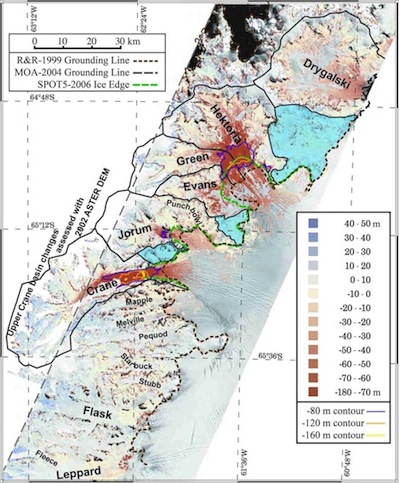
    "The approach we took drew on the strengths of each data source to produce the most complete picture yet of how these glaciers are changing," Berthier said, noting that the study relied on easy access to remote sensing information provided by NASA and CNES. The team used data from NASA sources including the MODerate Imaging Spectroradiometer (MODIS) instruments and the Ice, Cloud and land Elevation Satellite (ICESat).</p>
    
    <p>The analysis reveals rapid elevation decreases of more than 500 feet for some glaciers, and it puts the total ice loss from 2001 to 2006 squarely between the widely varying and less certain estimates produced using an approach that relies on assumptions about a glacier's mass budget. </p>
    
    <p>The authors’ analysis shows ice loss in the study area of at least 11.2 gigatons per year from 2001 to 2006. Their ongoing work shows ice loss from 2006 to 2010 was almost as large, averaging 10.2 gigatons per year. </p>
    
    <p>“This study shows where the tracking of sea level rise is heading in terms of the level of detail possible and the instrumentation that can be brought to bear,” Scambos said. “We’re showing that glacier changes can start fast, with a single climate or ocean ‘bang’, but they have a long persistence.” </p>
    
    <p>An <a href="http://svs.gsfc.nasa.gov/vis/a000000/a003800/a003803/index.html" rel="nofollow external" class="bo">animation</a> showing ice edge changes for the Larsen B ice shelf and its adjacent tributary glaciers is available online, along with a larger version of the <a href="http://etienne.berthier.free.fr/images/ElevationChange_2001to2006_LarsenB.jpg" rel="nofollow external" class="bo">map</a> below showing elevation changes of tributary glaciers.</p>
    
    <p>A companion paper — “The triggering of sub glacial lake drainage during rapid glacier drawdown: Crane Glacier, Antarctic Peninsula” — by the same three authors, led by Scambos, is also available online in the <a href="http://www.igsoc.org/" rel="nofollow external" class="bo">Annals of Glaciology</a> in the issue “Earth's Disappearing Ice: Drivers, Responses and Impacts.” </p>
    
    <p><img alt="ElevationChange_2001to2006_LarsenB.jpg" src="http://www.umbc.edu/blogs/umbcnews/ElevationChange_2001to2006_LarsenB.jpg" width="400" height="483" style="max-width: 100%; height: auto;"></p>
    </div>
]]>
</Body>
<Summary>Anthony Lane  University of Maryland, Baltimore County (UMBC)  410-455-5793  alane@umbc.edu    Patrick Lynch    NASA Goddard Space Flight Center, Greenbelt, Md.   757-897-2047...</Summary>
<Website>http://www.umbc.edu/research/blog/2011/07/new_study_by_umbcled_research.html</Website>
<TrackingUrl>https://my3.my.umbc.edu/api/v0/pixel/news/46493/guest@my.umbc.edu/586107689dfdee1917383beacf57b9b0/api/pixel</TrackingUrl>
<Tag>ovpr-news-2011</Tag>
<Group token="research">Archived RCA News</Group>
<GroupUrl>https://my3.my.umbc.edu/groups/research</GroupUrl>
<AvatarUrl>https://assets4-my.umbc.edu/system/shared/avatars/groups/000/000/794/4bca2aa331eb7e472d63d97e0798b600/xsmall.png?1743706368</AvatarUrl>
<AvatarUrl size="original">https://assets2-my.umbc.edu/system/shared/avatars/groups/000/000/794/4bca2aa331eb7e472d63d97e0798b600/original.jpg?1743706368</AvatarUrl>
<AvatarUrl size="xxlarge">https://assets3-my.umbc.edu/system/shared/avatars/groups/000/000/794/4bca2aa331eb7e472d63d97e0798b600/xxlarge.png?1743706368</AvatarUrl>
<AvatarUrl size="xlarge">https://assets4-my.umbc.edu/system/shared/avatars/groups/000/000/794/4bca2aa331eb7e472d63d97e0798b600/xlarge.png?1743706368</AvatarUrl>
<AvatarUrl size="large">https://assets2-my.umbc.edu/system/shared/avatars/groups/000/000/794/4bca2aa331eb7e472d63d97e0798b600/large.png?1743706368</AvatarUrl>
<AvatarUrl size="medium">https://assets4-my.umbc.edu/system/shared/avatars/groups/000/000/794/4bca2aa331eb7e472d63d97e0798b600/medium.png?1743706368</AvatarUrl>
<AvatarUrl size="small">https://assets4-my.umbc.edu/system/shared/avatars/groups/000/000/794/4bca2aa331eb7e472d63d97e0798b600/small.png?1743706368</AvatarUrl>
<AvatarUrl size="xsmall">https://assets4-my.umbc.edu/system/shared/avatars/groups/000/000/794/4bca2aa331eb7e472d63d97e0798b600/xsmall.png?1743706368</AvatarUrl>
<AvatarUrl size="xxsmall">https://assets3-my.umbc.edu/system/shared/avatars/groups/000/000/794/4bca2aa331eb7e472d63d97e0798b600/xxsmall.png?1743706368</AvatarUrl>
<Sponsor>Office of the Vice President for Research</Sponsor>
<PawCount>0</PawCount>
<CommentCount>0</CommentCount>
<CommentsAllowed>false</CommentsAllowed>
<PostedAt>Mon, 25 Jul 2011 12:00:00 -0400</PostedAt>
</NewsItem>

<NewsItem contentIssues="true" id="7680" important="false" status="posted" url="https://my3.my.umbc.edu/posts/7680">
<Title>MS defense: Fast Fullchip Transient Response...</Title>
<Body>
<![CDATA[
    <div class="html-content">Full Title: MS defense: Fast Fullchip Transient Response Estimation Technique<p><img alt="" height="307" src="http://www.cs.umbc.edu/wp-content/uploads/2011/07/chip-1.jpg" width="700" style="max-width: 100%; height: auto;"></p>
    <p><span>MS thesis defense</span></p>
    <p><strong><span>A Fast Fullchip Transient Response Estimation Technique</span></strong></p>
    <p><span>Sushmita K. Rao</span></p>
    <p><span>11:00am Monday, 25 July 2011, ITE 346</span></p>
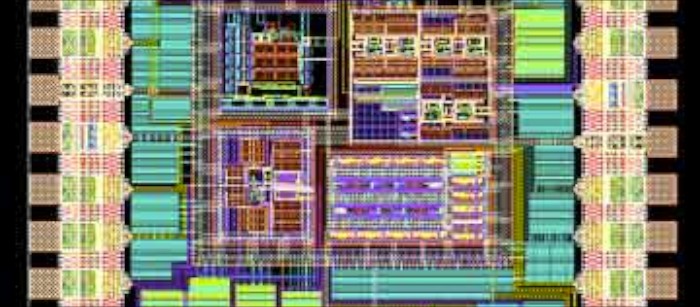
    <p>Circuit Simulation has long been a dependable technique for design engineers for functional testing before a circuit is taken to silicon. But as we move into very deep sub-micron technologies, chips are becoming more complex and denser. The dense power grid adds to long simulation run time rendering fullchip simulations difficult and computationally expensive for larger designs. Some large designs may not be simulatable owing to system requirements. Even fast simulators like Cadence UltraSim fail to provide SPICE level accuracy. Dynamic solutions provide greater accuracy than statistical techniques but long simulation run time becomes the biggest tradeoff. Accurate measurement of dynamic currents is required for applications like power estimation, supply noise predictions and in verifying the power grid designs and testing. The research reported in this thesis is focussed on providing a current based method to estimate a fullchip's transient response without carrying out a fullchip simulation. Instead, a part of the chip is simulated and the power port currents thus measured are used to estimate the fullchip currents using the principle of superposition. This technique eliminates fullchip simulations that are complex and time consuming but the accuracy is maintained as the fullchip estimation is carried out on simulated data. A simple scaling method is also proposed to compensate for resistive variations in the test circuits. Experimental results reported demonstrate the effectiveness of the method.</p>
    <p>Committee members:</p>
    <ul>
    <li>Dr. Chintan Patel (Chair)</li>
    <li>Dr. Ryan Robucci</li>
    <li>Dr. Tinoosh Mohsenin</li>
    </ul>
    </div>
]]>
</Body>
<Summary>Full Title: MS defense: Fast Fullchip Transient Response Estimation Technique    MS thesis defense   A Fast Fullchip Transient Response Estimation Technique   Sushmita K. Rao   11:00am Monday, 25...</Summary>
<Website>http://www.cs.umbc.edu/2011/07/ms-defense-fast-fullchip-transient-response-estimation-technique/</Website>
<TrackingUrl>https://my3.my.umbc.edu/api/v0/pixel/news/7680/guest@my.umbc.edu/ec70da2cf677206876c32bc9ce232f8c/api/pixel</TrackingUrl>
<Tag>computer-engineering</Tag>
<Tag>graduate</Tag>
<Tag>news</Tag>
<Tag>research</Tag>
<Group token="csee">Computer Science and Electrical Engineering</Group>
<GroupUrl>https://my3.my.umbc.edu/groups/csee</GroupUrl>
<AvatarUrl>https://assets3-my.umbc.edu/system/shared/avatars/groups/000/000/099/d117dca133c64bf78a4b7696dd007189/xsmall.png?1314043393</AvatarUrl>
<AvatarUrl size="original">https://assets1-my.umbc.edu/system/shared/avatars/groups/000/000/099/d117dca133c64bf78a4b7696dd007189/original.png?1314043393</AvatarUrl>
<AvatarUrl size="xxlarge">https://assets1-my.umbc.edu/system/shared/avatars/groups/000/000/099/d117dca133c64bf78a4b7696dd007189/xxlarge.png?1314043393</AvatarUrl>
<AvatarUrl size="xlarge">https://assets4-my.umbc.edu/system/shared/avatars/groups/000/000/099/d117dca133c64bf78a4b7696dd007189/xlarge.png?1314043393</AvatarUrl>
<AvatarUrl size="large">https://assets3-my.umbc.edu/system/shared/avatars/groups/000/000/099/d117dca133c64bf78a4b7696dd007189/large.png?1314043393</AvatarUrl>
<AvatarUrl size="medium">https://assets1-my.umbc.edu/system/shared/avatars/groups/000/000/099/d117dca133c64bf78a4b7696dd007189/medium.png?1314043393</AvatarUrl>
<AvatarUrl size="small">https://assets2-my.umbc.edu/system/shared/avatars/groups/000/000/099/d117dca133c64bf78a4b7696dd007189/small.png?1314043393</AvatarUrl>
<AvatarUrl size="xsmall">https://assets3-my.umbc.edu/system/shared/avatars/groups/000/000/099/d117dca133c64bf78a4b7696dd007189/xsmall.png?1314043393</AvatarUrl>
<AvatarUrl size="xxsmall">https://assets3-my.umbc.edu/system/shared/avatars/groups/000/000/099/d117dca133c64bf78a4b7696dd007189/xxsmall.png?1314043393</AvatarUrl>
<Sponsor>Computer Science and Electrical Engineering</Sponsor>
<PawCount>6</PawCount>
<CommentCount>0</CommentCount>
<CommentsAllowed>false</CommentsAllowed>
<PostedAt>Mon, 25 Jul 2011 10:20:20 -0400</PostedAt>
</NewsItem>

<NewsItem contentIssues="false" id="7679" important="false" status="posted" url="https://my3.my.umbc.edu/posts/7679">
<Title>New Study by UMBC-led Research Team Details Glacier...</Title>
<Body>
<![CDATA[
    <div class="html-content">Full Title: New Study by UMBC-led Research Team Details Glacier Ice Loss Following Ice Shelf CollapseAnthony Lane
    University of Maryland, Baltimore County (UMBC)
    410-455-5793
    <a href="mailto:alane@umbc.edu" rel="nofollow external" class="bo">alane@umbc.edu</a>
    
    Patrick Lynch		
    NASA Goddard Space Flight Center, Greenbelt, Md. 
    757-897-2047
    <a href="mailto:patrick.lynch@nasa.gov" rel="nofollow external" class="bo">patrick.lynch@nasa.gov</a>
     
    Katherine Leitzell
    National Snow and Ice Data Center, Boulder, Colo.
    University of Colorado
    303-492-1497 
    l<a href="http://eitzell@nsidc.org" rel="nofollow external" class="bo">eitzell@nsidc.org</a>
    
    GREENBELT, Md. -- An international team of researchers has combined data from multiple sources to provide the clearest account yet of how much glacial ice surges into the sea following the collapse of Antarctic ice shelves.
    
    The work by researchers at the <strong>University of Maryland, Baltimore County (UMBC)</strong>, the <strong>Laboratoire d'Etudes en Géophysique et Océanographie Spatiales</strong>, <strong>Centre National de la Recherche Scientifique</strong> at the U<strong>niversity of Toulouse</strong>, France, and the <strong>University of Colorado's National Snow and Ice Data Center</strong>, Boulder, Colo. details recent ice losses while promising to sharpen future predictions of further ice loss and sea level rise likely to result from ongoing changes along the Antarctic Peninsula.
    
    "Not only do you get an initial loss of glacial ice when adjacent ice shelves collapse, but you get continued ice losses for many years — even decades — to come," says <strong>Christopher Shuman</strong>, a researcher at <strong>UMBC's Joint Center for Earth Systems Technology (JCET)</strong> at the <strong>NASA Goddard Space Flight Center</strong>, Greenbelt, Md. "This further demonstrates how important ice shelves are to Antarctic glaciers." 
    
    Shuman is lead author of the <a href="http://www.igsoc.org/journal/current/204/j10J164.pdf" rel="nofollow external" class="bo">study</a> “2001–2009 elevation and mass losses in the Larsen A and B embayments, Antarctic Peninsula“ published online today in the Journal of Glaciology.
    
    An ice shelf is a thick floating tongue of ice, fed by a tributary glacier, extending into the sea off a land mass. Previous research showed that the recent collapse of several ice shelves in Antarctica led to acceleration of the glaciers that feed into them. Combining satellite data from NASA and the French space agency <strong>CNES</strong>, along with measurements collected during aircraft missions similar to ongoing NASA IceBridge flights, Shuman, <strong>Etienne Berthier</strong> of the University of Toulouse and <strong>Ted Scambos</strong> of the University of Colorado produced detailed ice loss maps from 2001 to 2009 for the main tributary glaciers of the Larsen A and B ice shelves, which collapsed in 1995 and 2002, respectively.
     
    "The approach we took drew on the strengths of each data source to produce the most complete picture yet of how these glaciers are changing," Berthier said, noting that the study relied on easy access to remote sensing information provided by NASA and CNES. The team used data from NASA sources including the MODerate Imaging Spectroradiometer (MODIS) instruments and the Ice, Cloud and land Elevation Satellite (ICESat).
    
    The analysis reveals rapid elevation decreases of more than 500 feet for some glaciers, and it puts the total ice loss from 2001 to 2006 squarely between the widely varying and less certain estimates produced using an approach that relies on assumptions about a glacier's mass budget. 
    
    The authors’ analysis shows ice loss in the study area of at least 11.2 gigatons per year from 2001 to 2006. Their ongoing work shows ice loss from 2006 to 2010 was almost as large, averaging 10.2 gigatons per year. 
    
    “This study shows where the tracking of sea level rise is heading in terms of the level of detail possible and the instrumentation that can be brought to bear,” Scambos said. “We’re showing that glacier changes can start fast, with a single climate or ocean ‘bang’, but they have a long persistence.” 
    
    An <a href="http://svs.gsfc.nasa.gov/vis/a000000/a003800/a003803/index.html" rel="nofollow external" class="bo">animation</a> showing ice edge changes for the Larsen B ice shelf and its adjacent tributary glaciers is available online, along with a larger version of the <a href="http://etienne.berthier.free.fr/images/ElevationChange_2001to2006_LarsenB.jpg" rel="nofollow external" class="bo">map</a> below showing elevation changes of tributary glaciers.
    
    A companion paper — “The triggering of sub glacial lake drainage during rapid glacier drawdown: Crane Glacier, Antarctic Peninsula” — by the same three authors, led by Scambos, is also available online in the <a href="http://www.igsoc.org/" rel="nofollow external" class="bo">Annals of Glaciology</a> in the issue “Earth's Disappearing Ice: Drivers, Responses and Impacts.” 
    
    <img alt="ElevationChange_2001to2006_LarsenB.jpg" src="http://www.umbc.edu/blogs/umbcnews/ElevationChange_2001to2006_LarsenB.jpg" width="400" height="483" style="max-width: 100%; height: auto;">
    </div>
]]>
</Body>
<Summary>Full Title: New Study by UMBC-led Research Team Details Glacier Ice Loss Following Ice Shelf CollapseAnthony Lane University of Maryland, Baltimore County (UMBC) 410-455-5793 alane@umbc.edu...</Summary>
<Website>http://www.umbc.edu/blogs/umbcnews/2011/07/new_study_by_umbcled_research.html</Website>
<TrackingUrl>https://my3.my.umbc.edu/api/v0/pixel/news/7679/guest@my.umbc.edu/331b6e7474975c47071940b2c89099d6/api/pixel</TrackingUrl>
<Group token="retired-30">UMBC News</Group>
<GroupUrl>https://my3.my.umbc.edu/groups/retired-30</GroupUrl>
<AvatarUrl>https://assets1-my.umbc.edu/images/avatars/group/10/xsmall.png?1787842820</AvatarUrl>
<AvatarUrl size="original">https://assets2-my.umbc.edu/images/avatars/group/10/original.png?1787842820</AvatarUrl>
<AvatarUrl size="xxlarge">https://assets1-my.umbc.edu/images/avatars/group/10/xxlarge.png?1787842820</AvatarUrl>
<AvatarUrl size="xlarge">https://assets3-my.umbc.edu/images/avatars/group/10/xlarge.png?1787842820</AvatarUrl>
<AvatarUrl size="large">https://assets1-my.umbc.edu/images/avatars/group/10/large.png?1787842820</AvatarUrl>
<AvatarUrl size="medium">https://assets2-my.umbc.edu/images/avatars/group/10/medium.png?1787842820</AvatarUrl>
<AvatarUrl size="small">https://assets1-my.umbc.edu/images/avatars/group/10/small.png?1787842820</AvatarUrl>
<AvatarUrl size="xsmall">https://assets1-my.umbc.edu/images/avatars/group/10/xsmall.png?1787842820</AvatarUrl>
<AvatarUrl size="xxsmall">https://assets4-my.umbc.edu/images/avatars/group/10/xxsmall.png?1787842820</AvatarUrl>
<Sponsor>UMBC News</Sponsor>
<PawCount>5</PawCount>
<CommentCount>0</CommentCount>
<CommentsAllowed>false</CommentsAllowed>
<PostedAt>Mon, 25 Jul 2011 10:15:52 -0400</PostedAt>
<EditAt>Mon, 25 Jul 2011 10:15:52 -0400</EditAt>
</NewsItem>

<NewsItem contentIssues="true" id="7671" important="false" status="posted" url="https://my3.my.umbc.edu/posts/7671">
<Title>Researcher of the Week: Dalton Hughes</Title>
<Tagline>Undergraduate researchers explore their interests!</Tagline>
<Body>
<![CDATA[
    <div class="html-content">
    <strong>How did you find a mentor and decide on a project? How did you know this was the project you wanted to do?</strong><br>Around the time I was entering UMBC as a freshman, I was deeply interested in the field of regenerative medicine. I came across Dr. Leach’s research on the Chemical Engineering Department website and immediately started reading publications and reviews. I found every single research topic interesting and after meeting with Dr. Leach, we found the perfect project.<br><br><strong>What academic background did you have before you started on this research?</strong><br>My experience in several summer research internships as well as knowledge from my science courses definitely helped in understanding my research project.<br><br><strong>What has been the hardest part about your research? </strong><br>As with all research experiences, it is easy to get caught up in all the experiments and freak out when you hit a roadblock. However, this is easily managed by taking two seconds to realize that everyone goes through some sort of frustration in research.<br><br><strong>What is your advice to other students about getting involved in research?</strong><br>Research is exciting. No matter what your interests or major may be, there is always a question that needs an answer. If a student has the opportunity to conduct research, they should give it a shot.<br><br><strong>What are your career goals?</strong><br>I plan to pursue a PhD in biomedical engineering and conduct research in either an industrial or academic setting.<br><br>Neurons grow and develop in the three-dimensional (3D) environment of the developing embryo. Previous work from our group has demonstrated that culturing embryonic neurons in 3D matrices allows the cells to respond in a way that more closely resembles natural development than traditional 2D culture. Cells interact with their extracellular matrix and sense the dimensionality of their surroundings via integrin receptors on the cell surface that bind to matrix molecules, initiate intracellular signaling cascades and affect changes in cell shape and function. My work focuses on elucidating the signaling events that regulate these changes in cell response. We hypothesize that 3D environments impose changes in matrix-ligand organization and alter neuronal behavior by modulating β1-integrin cytoskeleton signaling. To test this hypothesis we culture PC12 cells, a neuronal cell model, on 2D and within 3D collagen substrates and probe the signaling response by inhibiting several key signaling molecules involved in regulating neuron morphology: β1-integrin, Focal Adhesion Kinase (FAK), and an activated form of FAK that is phosphorylated at tyrosine 397. Immunocytochemistry techniques and fluorescent microscopy will be used to analyze the effect of inhibiting these signalingN molecules on neuronal behavior. The results of this experiment will identify the key signaling mechanisms in 3D neuronal culture and provide a biological basis for testing new biomaterial-based therapeutics.</div>
]]>
</Body>
<Summary>How did you find a mentor and decide on a project? How did you know this was the project you wanted to do? Around the time I was entering UMBC as a freshman, I was deeply interested in the field...</Summary>
<Website>http://www.umbc.edu/undergrad_ed/research/ResearcherProfiles/daltonHughesProfile.htm</Website>
<TrackingUrl>https://my3.my.umbc.edu/api/v0/pixel/news/7671/guest@my.umbc.edu/479a7f767b125d3152e1cb54fecc0421/api/pixel</TrackingUrl>
<Group token="undergradresearch">Undergraduate Research</Group>
<GroupUrl>https://my3.my.umbc.edu/groups/undergradresearch</GroupUrl>
<AvatarUrl>https://assets2-my.umbc.edu/system/shared/avatars/groups/000/000/006/875606ced2b629148af4caa1a4e8dd3c/xsmall.png?1600355057</AvatarUrl>
<AvatarUrl size="original">https://assets3-my.umbc.edu/system/shared/avatars/groups/000/000/006/875606ced2b629148af4caa1a4e8dd3c/original.jpg?1600355057</AvatarUrl>
<AvatarUrl size="xxlarge">https://assets4-my.umbc.edu/system/shared/avatars/groups/000/000/006/875606ced2b629148af4caa1a4e8dd3c/xxlarge.png?1600355057</AvatarUrl>
<AvatarUrl size="xlarge">https://assets1-my.umbc.edu/system/shared/avatars/groups/000/000/006/875606ced2b629148af4caa1a4e8dd3c/xlarge.png?1600355057</AvatarUrl>
<AvatarUrl size="large">https://assets2-my.umbc.edu/system/shared/avatars/groups/000/000/006/875606ced2b629148af4caa1a4e8dd3c/large.png?1600355057</AvatarUrl>
<AvatarUrl size="medium">https://assets2-my.umbc.edu/system/shared/avatars/groups/000/000/006/875606ced2b629148af4caa1a4e8dd3c/medium.png?1600355057</AvatarUrl>
<AvatarUrl size="small">https://assets4-my.umbc.edu/system/shared/avatars/groups/000/000/006/875606ced2b629148af4caa1a4e8dd3c/small.png?1600355057</AvatarUrl>
<AvatarUrl size="xsmall">https://assets2-my.umbc.edu/system/shared/avatars/groups/000/000/006/875606ced2b629148af4caa1a4e8dd3c/xsmall.png?1600355057</AvatarUrl>
<AvatarUrl size="xxsmall">https://assets4-my.umbc.edu/system/shared/avatars/groups/000/000/006/875606ced2b629148af4caa1a4e8dd3c/xxsmall.png?1600355057</AvatarUrl>
<Sponsor>Undergraduate Research</Sponsor>
<ThumbnailUrl size="xxlarge">https://assets4-my.umbc.edu/system/shared/thumbnails/news/000/007/671/02d35f682ff59f1acc13065dec46fe25/xxlarge.jpg?1311602526</ThumbnailUrl>
<ThumbnailUrl size="xlarge">https://assets3-my.umbc.edu/system/shared/thumbnails/news/000/007/671/02d35f682ff59f1acc13065dec46fe25/xlarge.jpg?1311602526</ThumbnailUrl>
<ThumbnailUrl size="large">https://assets3-my.umbc.edu/system/shared/thumbnails/news/000/007/671/02d35f682ff59f1acc13065dec46fe25/large.jpg?1311602526</ThumbnailUrl>
<ThumbnailUrl size="medium">https://assets1-my.umbc.edu/system/shared/thumbnails/news/000/007/671/02d35f682ff59f1acc13065dec46fe25/medium.jpg?1311602526</ThumbnailUrl>
<ThumbnailUrl size="small">https://assets2-my.umbc.edu/system/shared/thumbnails/news/000/007/671/02d35f682ff59f1acc13065dec46fe25/small.jpg?1311602526</ThumbnailUrl>
<ThumbnailUrl size="xsmall">https://assets3-my.umbc.edu/system/shared/thumbnails/news/000/007/671/02d35f682ff59f1acc13065dec46fe25/xsmall.jpg?1311602526</ThumbnailUrl>
<ThumbnailUrl size="xxsmall">https://assets1-my.umbc.edu/system/shared/thumbnails/news/000/007/671/02d35f682ff59f1acc13065dec46fe25/xxsmall.jpg?1311602526</ThumbnailUrl>
<PawCount>32</PawCount>
<CommentCount>6</CommentCount>
<CommentsAllowed>true</CommentsAllowed>
<PostedAt>Mon, 25 Jul 2011 10:04:24 -0400</PostedAt>
<EditAt>Mon, 01 Aug 2011 14:39:27 -0400</EditAt>
</NewsItem>

<NewsItem contentIssues="true" id="7676" important="false" status="posted" url="https://my3.my.umbc.edu/posts/7676">
<Title>Faculty Research Profile: Dr. Penny Rheingans</Title>
<Body>
<![CDATA[
    <div class="html-content">
    <p><strong><a href="http://www.cs.umbc.edu/wp-content/uploads/2011/07/P1000363.jpg" rel="nofollow external" class="bo"><img alt="" src="http://www.cs.umbc.edu/wp-content/uploads/2011/07/P1000363-300x225.jpg" style="max-width: 100%; height: auto;"></a></strong></p>
    <p><span><a href="http://www.cs.umbc.edu/~rheingan/" rel="nofollow external" class="bo">Dr. Penny Rheingans</a>, professor of computer science and electrical engineering, co-directs UMBC's <a href="http://www.cs.umbc.edu/csee/research/gavl/index.php" rel="nofollow external" class="bo">VAnGOGH lab</a>, where she uses her knowledge in data visualization to solve problems in a variety of application areas. </span><span>“I think it’s a really cool area because it allows me to synthesize things from a number of areas,” says Rheingans of the field, which allows her to combine techniques from computer graphics, art and illustration, and knowledge of human perceptual and cognitive systems.</span></p>
    <p><span>To read more about Dr. Rheingans' research pursuits, see her full <a href="http://www.cs.umbc.edu/dr-penny-rheingans/" rel="nofollow external" class="bo">research profile</a><a href="http://www.cs.umbc.edu/research/research-profiles/dr-penny-rheingans/" rel="nofollow external" class="bo">. </a></span></p>
    </div>
]]>
</Body>
<Summary>Dr. Penny Rheingans, professor of computer science and electrical engineering, co-directs UMBC's VAnGOGH lab, where she uses her knowledge in data visualization to solve problems in a variety of...</Summary>
<Website>http://www.cs.umbc.edu/2011/07/faculty-research-profile-dr-penny-rheingans/</Website>
<TrackingUrl>https://my3.my.umbc.edu/api/v0/pixel/news/7676/guest@my.umbc.edu/a762a6792259208f8cf8495c29f85e12/api/pixel</TrackingUrl>
<Tag>news</Tag>
<Tag>other</Tag>
<Group token="csee">Computer Science and Electrical Engineering</Group>
<GroupUrl>https://my3.my.umbc.edu/groups/csee</GroupUrl>
<AvatarUrl>https://assets3-my.umbc.edu/system/shared/avatars/groups/000/000/099/d117dca133c64bf78a4b7696dd007189/xsmall.png?1314043393</AvatarUrl>
<AvatarUrl size="original">https://assets1-my.umbc.edu/system/shared/avatars/groups/000/000/099/d117dca133c64bf78a4b7696dd007189/original.png?1314043393</AvatarUrl>
<AvatarUrl size="xxlarge">https://assets1-my.umbc.edu/system/shared/avatars/groups/000/000/099/d117dca133c64bf78a4b7696dd007189/xxlarge.png?1314043393</AvatarUrl>
<AvatarUrl size="xlarge">https://assets4-my.umbc.edu/system/shared/avatars/groups/000/000/099/d117dca133c64bf78a4b7696dd007189/xlarge.png?1314043393</AvatarUrl>
<AvatarUrl size="large">https://assets3-my.umbc.edu/system/shared/avatars/groups/000/000/099/d117dca133c64bf78a4b7696dd007189/large.png?1314043393</AvatarUrl>
<AvatarUrl size="medium">https://assets1-my.umbc.edu/system/shared/avatars/groups/000/000/099/d117dca133c64bf78a4b7696dd007189/medium.png?1314043393</AvatarUrl>
<AvatarUrl size="small">https://assets2-my.umbc.edu/system/shared/avatars/groups/000/000/099/d117dca133c64bf78a4b7696dd007189/small.png?1314043393</AvatarUrl>
<AvatarUrl size="xsmall">https://assets3-my.umbc.edu/system/shared/avatars/groups/000/000/099/d117dca133c64bf78a4b7696dd007189/xsmall.png?1314043393</AvatarUrl>
<AvatarUrl size="xxsmall">https://assets3-my.umbc.edu/system/shared/avatars/groups/000/000/099/d117dca133c64bf78a4b7696dd007189/xxsmall.png?1314043393</AvatarUrl>
<Sponsor>Computer Science and Electrical Engineering</Sponsor>
<PawCount>16</PawCount>
<CommentCount>0</CommentCount>
<CommentsAllowed>false</CommentsAllowed>
<PostedAt>Mon, 25 Jul 2011 09:24:14 -0400</PostedAt>
<EditAt>Mon, 25 Jul 2011 09:24:14 -0400</EditAt>
</NewsItem>

<NewsItem contentIssues="true" id="7677" important="false" status="posted" url="https://my3.my.umbc.edu/posts/7677">
<Title>Faculty Research Profile: Dr. Tinoosh Mohsenin</Title>
<Body>
<![CDATA[
    <div class="html-content">
    <p><a href="http://www.cs.umbc.edu/wp-content/uploads/2011/07/Tinoosh-edit.jpg" rel="nofollow external" class="bo"><img alt="" src="http://www.cs.umbc.edu/wp-content/uploads/2011/07/Tinoosh-edit-300x250.jpg" style="max-width: 100%; height: auto;"></a><a href="http://www.cs.umbc.edu/wp-content/uploads/2011/07/P1000345.jpg" rel="nofollow external" class="bo"><span> </span></a></p>
    <p><span><a href="http://www.cs.umbc.edu/~tinoosh/" rel="nofollow external" class="bo">Dr. Tinoosh Mohsenin</a>, professor of computer science and electrical engeineering, runs UMBC's <a href="http://eehpc.csee.umbc.edu/index.html" rel="nofollow external" class="bo">Engergy Efficient High Performance Computing Lab</a>, where she works to develop highly accurate, low-power communications and healthcare devices. Currently, Dr. Mohsenin is pursuing three distinct projects in conjunction with her lab that fall within the realm of digital signal processing (DSP) and VLSI implementation: 1) many-core architectures for DSP and secured trusted platforms, 2) low-power processors for portable healthcare devices, and 3)efficient error correction techniques for communication devices. </span></p>
    <p><span>To read more about Dr. Mohsenin's research pursuits, see her full <a href="http://www.cs.umbc.edu/dr-tinoosh-mohsenin/" rel="nofollow external" class="bo">research profile</a><a href="http://www.cs.umbc.edu/research/research-profiles/dr-tinoosh-mohsenin/" rel="nofollow external" class="bo">. </a></span></p>
    </div>
]]>
</Body>
<Summary>    Dr. Tinoosh Mohsenin, professor of computer science and electrical engeineering, runs UMBC's Engergy Efficient High Performance Computing Lab, where she works to develop highly accurate,...</Summary>
<Website>http://www.cs.umbc.edu/2011/07/faculty-research-profile-dr-tinoosh-mohsenin/</Website>
<TrackingUrl>https://my3.my.umbc.edu/api/v0/pixel/news/7677/guest@my.umbc.edu/1461c073e5e48c6f9198b8e80887208f/api/pixel</TrackingUrl>
<Tag>news</Tag>
<Tag>other</Tag>
<Group token="csee">Computer Science and Electrical Engineering</Group>
<GroupUrl>https://my3.my.umbc.edu/groups/csee</GroupUrl>
<AvatarUrl>https://assets3-my.umbc.edu/system/shared/avatars/groups/000/000/099/d117dca133c64bf78a4b7696dd007189/xsmall.png?1314043393</AvatarUrl>
<AvatarUrl size="original">https://assets1-my.umbc.edu/system/shared/avatars/groups/000/000/099/d117dca133c64bf78a4b7696dd007189/original.png?1314043393</AvatarUrl>
<AvatarUrl size="xxlarge">https://assets1-my.umbc.edu/system/shared/avatars/groups/000/000/099/d117dca133c64bf78a4b7696dd007189/xxlarge.png?1314043393</AvatarUrl>
<AvatarUrl size="xlarge">https://assets4-my.umbc.edu/system/shared/avatars/groups/000/000/099/d117dca133c64bf78a4b7696dd007189/xlarge.png?1314043393</AvatarUrl>
<AvatarUrl size="large">https://assets3-my.umbc.edu/system/shared/avatars/groups/000/000/099/d117dca133c64bf78a4b7696dd007189/large.png?1314043393</AvatarUrl>
<AvatarUrl size="medium">https://assets1-my.umbc.edu/system/shared/avatars/groups/000/000/099/d117dca133c64bf78a4b7696dd007189/medium.png?1314043393</AvatarUrl>
<AvatarUrl size="small">https://assets2-my.umbc.edu/system/shared/avatars/groups/000/000/099/d117dca133c64bf78a4b7696dd007189/small.png?1314043393</AvatarUrl>
<AvatarUrl size="xsmall">https://assets3-my.umbc.edu/system/shared/avatars/groups/000/000/099/d117dca133c64bf78a4b7696dd007189/xsmall.png?1314043393</AvatarUrl>
<AvatarUrl size="xxsmall">https://assets3-my.umbc.edu/system/shared/avatars/groups/000/000/099/d117dca133c64bf78a4b7696dd007189/xxsmall.png?1314043393</AvatarUrl>
<Sponsor>Computer Science and Electrical Engineering</Sponsor>
<PawCount>5</PawCount>
<CommentCount>0</CommentCount>
<CommentsAllowed>false</CommentsAllowed>
<PostedAt>Mon, 25 Jul 2011 09:23:21 -0400</PostedAt>
<EditAt>Mon, 25 Jul 2011 09:23:21 -0400</EditAt>
</NewsItem>

</News>