Northrop Grumman Mock Interviews
Wed, 10/20/2010
11:00am - 12:00pm
Commons 331
RSVP via UMBCworks, under the "Events" tab.
http://www.careers.umbc.edu/news_events/calendar/reader.php?row=38&file=calendar
]]>
Wed, 10/20/2010
11:00am - 12:00pm
Commons 331
RSVP via UMBCworks, under the "Events" tab.
http://www.careers.umbc.edu/news_events/calendar/reader.php?row=38&file=calendar
http://www.umbc.edu/blogs/careers/2010/09/northrop_grumman_mock_intervie_1.html
https://my3.my.umbc.edu/api/v0/pixel/news/2722/guest@my.umbc.edu/9d7b0ce7071cb8853e165f3848fab1ac/api/pixel
workshops
Career Center
https://my3.my.umbc.edu/groups/careers
https://assets2-my.umbc.edu/system/shared/avatars/groups/000/000/018/729f2c7eeeab66f50f4ab3677539a585/xsmall.png?1411655278
https://assets4-my.umbc.edu/system/shared/avatars/groups/000/000/018/729f2c7eeeab66f50f4ab3677539a585/original.jpg?1411655278
https://assets2-my.umbc.edu/system/shared/avatars/groups/000/000/018/729f2c7eeeab66f50f4ab3677539a585/xxlarge.png?1411655278
https://assets1-my.umbc.edu/system/shared/avatars/groups/000/000/018/729f2c7eeeab66f50f4ab3677539a585/xlarge.png?1411655278
https://assets2-my.umbc.edu/system/shared/avatars/groups/000/000/018/729f2c7eeeab66f50f4ab3677539a585/large.png?1411655278
https://assets3-my.umbc.edu/system/shared/avatars/groups/000/000/018/729f2c7eeeab66f50f4ab3677539a585/medium.png?1411655278
https://assets3-my.umbc.edu/system/shared/avatars/groups/000/000/018/729f2c7eeeab66f50f4ab3677539a585/small.png?1411655278
https://assets2-my.umbc.edu/system/shared/avatars/groups/000/000/018/729f2c7eeeab66f50f4ab3677539a585/xsmall.png?1411655278
https://assets2-my.umbc.edu/system/shared/avatars/groups/000/000/018/729f2c7eeeab66f50f4ab3677539a585/xxsmall.png?1411655278
Career Services Center
0
0
true
Wed, 22 Sep 2010 10:00:00 -0400
Lecture by Visual Artist Lynn Cazabon: Discard
Contact: Thomas Moore
Director of Arts & Culture
410-455-3370
tmoore@umbc.edu
 On Wednesday, October 6th at 12 pm in the Library Gallery, Lynn Cazabon, associate professor of Visual Arts at UMBC, will present her series of photographs, Discard, an ongoing body of work consisting of several discrete series of images featuring movie films discarded by public institutions (libraries, schools, archives). Harking back to the 19th century practice of postmortem photography, each print serves as a memento mori to the recently obsolete medium of film. In its totality, Discard is a shadow archive, reflecting that which has been omitted from institutional archives. More generally, the series reflects on the ongoing cycle of obsolescence, wherein technologies replace one another at ever increasing speed. With each iteration of this cycle, a particular way of seeing/knowing the world is lost.
Admission is free. This event is presented as part of UMBC Archives Month. Public information: UMBC Arts & Culture Calendar.
On Wednesday, October 6th at 12 pm in the Library Gallery, Lynn Cazabon, associate professor of Visual Arts at UMBC, will present her series of photographs, Discard, an ongoing body of work consisting of several discrete series of images featuring movie films discarded by public institutions (libraries, schools, archives). Harking back to the 19th century practice of postmortem photography, each print serves as a memento mori to the recently obsolete medium of film. In its totality, Discard is a shadow archive, reflecting that which has been omitted from institutional archives. More generally, the series reflects on the ongoing cycle of obsolescence, wherein technologies replace one another at ever increasing speed. With each iteration of this cycle, a particular way of seeing/knowing the world is lost.
Admission is free. This event is presented as part of UMBC Archives Month. Public information: UMBC Arts & Culture Calendar.
]]>
Contact: Thomas Moore Director of Arts & Culture 410-455-3370 tmoore@umbc.edu On Wednesday, October 6th at 12 pm in the Library Gallery, Lynn Cazabon, associate professor of Visual Arts...
http://www.umbc.edu/blogs/umbcnews/2010/09/lecture_by_visual_artist_lynn.html
https://my3.my.umbc.edu/api/v0/pixel/news/2661/guest@my.umbc.edu/af06666cacd10e7f0e24e4f0fa9fc486/api/pixel
UMBC News
https://my3.my.umbc.edu/groups/retired-30
https://assets2-my.umbc.edu/images/avatars/group/10/xsmall.png?1787677490
https://assets3-my.umbc.edu/images/avatars/group/10/original.png?1787677490
https://assets2-my.umbc.edu/images/avatars/group/10/xxlarge.png?1787677490
https://assets2-my.umbc.edu/images/avatars/group/10/xlarge.png?1787677490
https://assets1-my.umbc.edu/images/avatars/group/10/large.png?1787677490
https://assets2-my.umbc.edu/images/avatars/group/10/medium.png?1787677490
https://assets3-my.umbc.edu/images/avatars/group/10/small.png?1787677490
https://assets2-my.umbc.edu/images/avatars/group/10/xsmall.png?1787677490
https://assets1-my.umbc.edu/images/avatars/group/10/xxsmall.png?1787677490
UMBC News
2
0
false
Wed, 22 Sep 2010 09:18:12 -0400
UMBC Partners with the High Zero Festival to Present...
Full Title: UMBC Partners with the High Zero Festival to Present Hans KochContact: Thomas Moore
Director of Arts & Culture
410-455-3370
tmoore@umbc.edu
 In collaboration with High Zero Festival, UMBC presents a workshop by bass clarinetist Hans Koch on Friday, September 24th at 1 pm in Fine Arts Building Studio 508. Koch quit his career as a recognized classical clarinetist to become one of the most innovative improvising reed players in Europe. He has worked with Cecil Taylor, Fred Frith and other noted artists since the eighties. As a composer he has shaped the sound of Koch-Schütz-Studer ensemble and has written for radio plays and film. Since the nineties he has worked with electronics as an extension of saxes and clarinets, as well as with sampling/sequencing/laptop techniques. As a reed player he is always working to define his own vocabulary and sound, making him a unique voice on the stage.
Admission is free.
In collaboration with High Zero Festival, UMBC presents a workshop by bass clarinetist Hans Koch on Friday, September 24th at 1 pm in Fine Arts Building Studio 508. Koch quit his career as a recognized classical clarinetist to become one of the most innovative improvising reed players in Europe. He has worked with Cecil Taylor, Fred Frith and other noted artists since the eighties. As a composer he has shaped the sound of Koch-Schütz-Studer ensemble and has written for radio plays and film. Since the nineties he has worked with electronics as an extension of saxes and clarinets, as well as with sampling/sequencing/laptop techniques. As a reed player he is always working to define his own vocabulary and sound, making him a unique voice on the stage.
Admission is free.
]]>
Full Title: UMBC Partners with the High Zero Festival to Present Hans Koch Contact: Thomas Moore Director of Arts & Culture 410-455-3370 tmoore@umbc.edu In collaboration with High Zero...
http://www.umbc.edu/blogs/umbcnews/2010/09/umbc_partners_with_the_high_ze.html
https://my3.my.umbc.edu/api/v0/pixel/news/2662/guest@my.umbc.edu/ab1a6d3c338b9d4e0fb74657a3cf4662/api/pixel
UMBC News
https://my3.my.umbc.edu/groups/retired-30
https://assets2-my.umbc.edu/images/avatars/group/10/xsmall.png?1787677490
https://assets3-my.umbc.edu/images/avatars/group/10/original.png?1787677490
https://assets2-my.umbc.edu/images/avatars/group/10/xxlarge.png?1787677490
https://assets2-my.umbc.edu/images/avatars/group/10/xlarge.png?1787677490
https://assets1-my.umbc.edu/images/avatars/group/10/large.png?1787677490
https://assets2-my.umbc.edu/images/avatars/group/10/medium.png?1787677490
https://assets3-my.umbc.edu/images/avatars/group/10/small.png?1787677490
https://assets2-my.umbc.edu/images/avatars/group/10/xsmall.png?1787677490
https://assets1-my.umbc.edu/images/avatars/group/10/xxsmall.png?1787677490
UMBC News
2
0
false
Wed, 22 Sep 2010 09:10:03 -0400
Wed, 22 Sep 2010 09:10:03 -0400
Abby Gordon Named Assistant Women's Basketball Coach at UMBC
BALTIMORE�UMBC head women's basketball coach Phil Stern today announced that Abby Gordon has joined the Retriever staff as an assistant coach.
]]>
BALTIMORE�UMBC head women's basketball coach Phil Stern today announced that Abby Gordon has joined the Retriever staff as an assistant coach.
http://www.umbcretrievers.com/release.asp?RELEASE_ID=5680
https://my3.my.umbc.edu/api/v0/pixel/news/2666/guest@my.umbc.edu/042a762c52f10d739b32ffd9f7b0bdef/api/pixel
UMBC Athletics
https://my3.my.umbc.edu/groups/athletics
https://assets2-my.umbc.edu/system/shared/avatars/groups/000/000/009/69595c9b99f609d75fbb8232d9bd73d3/xsmall.png?1709304849
https://assets4-my.umbc.edu/system/shared/avatars/groups/000/000/009/69595c9b99f609d75fbb8232d9bd73d3/original.jpg?1709304849
https://assets3-my.umbc.edu/system/shared/avatars/groups/000/000/009/69595c9b99f609d75fbb8232d9bd73d3/xxlarge.png?1709304849
https://assets3-my.umbc.edu/system/shared/avatars/groups/000/000/009/69595c9b99f609d75fbb8232d9bd73d3/xlarge.png?1709304849
https://assets4-my.umbc.edu/system/shared/avatars/groups/000/000/009/69595c9b99f609d75fbb8232d9bd73d3/large.png?1709304849
https://assets4-my.umbc.edu/system/shared/avatars/groups/000/000/009/69595c9b99f609d75fbb8232d9bd73d3/medium.png?1709304849
https://assets1-my.umbc.edu/system/shared/avatars/groups/000/000/009/69595c9b99f609d75fbb8232d9bd73d3/small.png?1709304849
https://assets2-my.umbc.edu/system/shared/avatars/groups/000/000/009/69595c9b99f609d75fbb8232d9bd73d3/xsmall.png?1709304849
https://assets3-my.umbc.edu/system/shared/avatars/groups/000/000/009/69595c9b99f609d75fbb8232d9bd73d3/xxsmall.png?1709304849
UMBC Athletics
0
0
true
Wed, 22 Sep 2010 01:00:00 -0400
Men's Soccer Match at Loyola Cancelled Due to...
Full Title: Men's Soccer Match at Loyola Cancelled Due to Inclement Weather, LightningBaltimore�The men's soccer match between UMBC and Loyola (Md.) was cancelled this evening due to persistent lightning around the Ridley Athletic Complex.
]]>
Full Title: Men's Soccer Match at Loyola Cancelled Due to Inclement Weather, LightningBaltimore�The men's soccer match between UMBC and Loyola (Md.) was cancelled this evening due to persistent...
http://www.umbcretrievers.com/release.asp?RELEASE_ID=5682
https://my3.my.umbc.edu/api/v0/pixel/news/2672/guest@my.umbc.edu/c2adb48da4f47e61c6ee9764da081255/api/pixel
UMBC Athletics
https://my3.my.umbc.edu/groups/athletics
https://assets2-my.umbc.edu/system/shared/avatars/groups/000/000/009/69595c9b99f609d75fbb8232d9bd73d3/xsmall.png?1709304849
https://assets4-my.umbc.edu/system/shared/avatars/groups/000/000/009/69595c9b99f609d75fbb8232d9bd73d3/original.jpg?1709304849
https://assets3-my.umbc.edu/system/shared/avatars/groups/000/000/009/69595c9b99f609d75fbb8232d9bd73d3/xxlarge.png?1709304849
https://assets3-my.umbc.edu/system/shared/avatars/groups/000/000/009/69595c9b99f609d75fbb8232d9bd73d3/xlarge.png?1709304849
https://assets4-my.umbc.edu/system/shared/avatars/groups/000/000/009/69595c9b99f609d75fbb8232d9bd73d3/large.png?1709304849
https://assets4-my.umbc.edu/system/shared/avatars/groups/000/000/009/69595c9b99f609d75fbb8232d9bd73d3/medium.png?1709304849
https://assets1-my.umbc.edu/system/shared/avatars/groups/000/000/009/69595c9b99f609d75fbb8232d9bd73d3/small.png?1709304849
https://assets2-my.umbc.edu/system/shared/avatars/groups/000/000/009/69595c9b99f609d75fbb8232d9bd73d3/xsmall.png?1709304849
https://assets3-my.umbc.edu/system/shared/avatars/groups/000/000/009/69595c9b99f609d75fbb8232d9bd73d3/xxsmall.png?1709304849
UMBC Athletics
0
0
true
Wed, 22 Sep 2010 01:00:00 -0400
Women's Soccer Drops 2-1 Overtime Heartbreaker to Loyola
BALTIMORE�Loyola forward Nichole Schiro scored twice, including the game-winner 1:47 into overtime, to lift the host Greyhounds (3-5-2) to a 2-1 victory over the UMBC women's soccer team (1-7-1) Wednesday evening at the Ridley Athletic Complex.
]]>
BALTIMORE�Loyola forward Nichole Schiro scored twice, including the game-winner 1:47 into overtime, to lift the host Greyhounds (3-5-2) to a 2-1 victory over the UMBC women's soccer team (1-7-1)...
http://www.umbcretrievers.com/release.asp?RELEASE_ID=5681
https://my3.my.umbc.edu/api/v0/pixel/news/2671/guest@my.umbc.edu/6f238a8c11f04967e106a08b43ceef8e/api/pixel
UMBC Athletics
https://my3.my.umbc.edu/groups/athletics
https://assets2-my.umbc.edu/system/shared/avatars/groups/000/000/009/69595c9b99f609d75fbb8232d9bd73d3/xsmall.png?1709304849
https://assets4-my.umbc.edu/system/shared/avatars/groups/000/000/009/69595c9b99f609d75fbb8232d9bd73d3/original.jpg?1709304849
https://assets3-my.umbc.edu/system/shared/avatars/groups/000/000/009/69595c9b99f609d75fbb8232d9bd73d3/xxlarge.png?1709304849
https://assets3-my.umbc.edu/system/shared/avatars/groups/000/000/009/69595c9b99f609d75fbb8232d9bd73d3/xlarge.png?1709304849
https://assets4-my.umbc.edu/system/shared/avatars/groups/000/000/009/69595c9b99f609d75fbb8232d9bd73d3/large.png?1709304849
https://assets4-my.umbc.edu/system/shared/avatars/groups/000/000/009/69595c9b99f609d75fbb8232d9bd73d3/medium.png?1709304849
https://assets1-my.umbc.edu/system/shared/avatars/groups/000/000/009/69595c9b99f609d75fbb8232d9bd73d3/small.png?1709304849
https://assets2-my.umbc.edu/system/shared/avatars/groups/000/000/009/69595c9b99f609d75fbb8232d9bd73d3/xsmall.png?1709304849
https://assets3-my.umbc.edu/system/shared/avatars/groups/000/000/009/69595c9b99f609d75fbb8232d9bd73d3/xxsmall.png?1709304849
UMBC Athletics
0
0
true
Wed, 22 Sep 2010 01:00:00 -0400
How to be a Pottery Detective
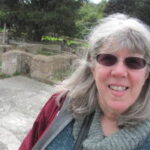
With Esther Read, Field Archaeologist
 So you’re digging a garden in your backyard, and all of a sudden the point of your trowel hits something hard. You poke around a little more, brush the soil away – probably just a rock, right? But on further inspection, the “thing” you have discovered is rather glossy, with faint drawings and a whiff of history about it. When you wash it off in the sink… Voila! You have a ceramics mystery in your hands.
Since Antiques Road Show only comes around town once in a blue moon, you might be scratching your head about what to do next: keep it, or toss it? Thankfully, Esther Read, a field archeologist and lecturer in UMBC’s department of Ancient Studies, is here to help.
— Jenny O’Grady
Step 1:
Look for decorative clues
“If you found something on the ground, the first thing you would do is look at it for its decoration,” says Read, who – with the help of UMBC students and volunteers – is in the process of cleaning, identifying and cataloguing more than 4,000 artifacts found in the backyard of an historic Fells Point home.
The first step is taking a close look at decoration and shape. Then take a closer look; was the piece painted with a brush, or does it seem like one of many copies? Feel the ceramic with your hands; was the clay molded smooth by a machine or more roughly by an artisan’s hands? Shape can also help you understand what kind of vessel the piece once was. Each detail is a key to solving your mystery.
“The decoration is going to give you a clue to what kind of ceramic it is,” says Read.
Step 2:
Use your clues to figure out historical context
Decorative style reveals much about the time period in which the piece was created. For instance, a dish with images of giraffes painted in a certain shade of purple might indicate a piece was manufactured between 1760 and 1780 – a time when images from “exotic” lands were all the rage.
“We know what kinds of designs were done during certain periods from old catalogues, from antiques magazines and articles,” says Read. Every bit of the design comes into play – from subject matter to painting style. A pastoral scene might have been manufactured during the time when Jane Austen first became popular. The use of stippling – or sharp dotting with a paintbrush – indicates another time entirely.
Step 3:
Location, location, location
One of the biggest challenges in archaeology is combining this collection of physical clues with information about where you found the object, and the context of the time period – ie., sociological, economic, or political trends. All of these things in combination are necessary to assemble a full picture of the artifact’s life as an object. That’s why Read hastens to add one very important rule for anyone interested in reassembling the puzzle: never move the artifact away from its original location.
“An artifact has a context…its place in time and space, and its association with other artifacts,” Read says. Without that context, she continues, you might miss the point of an object entirely.
“A lot of the training in doing this is not just learning the dishes, but learning past manners and how people used the material culture of the past,” adds Read. “You need to know all of these things to paint a really good picture.”
Step 4:
Check in with the experts
Read has spent more than 25 years learning everything she can about artifacts of the Mid-Atlantic region. So, admittedly, she has a brain full of details that help her identify objects much faster than the average Joe. But, she said, there are plenty of resources out there for budding archaeologists.
“It’s accumulated knowledge, it’s shared knowledge, and it’s knowing what the printed resources are and where to find them,” she says. (See “Now What?” for some of her suggestions .)
If you want to truly solve your pottery mystery, you might also contact someone like Read at a nearby university, or visit your local historical society. People there are often more than happy to talk shop, Read said.
“I get a lot of calls that start out, ‘I’ve got a rock, can you help me?’” Read says. After some clue-gathering, however, these seemingly insignificant discoveries in the backyard often lead us to better understand our nation’s history.
“We can never go back to the past,” she says, “so we have to reconstruct it from what we find.”
Now What?
Interested in learning more about archaeology? Check out these resources:
1. A Guide to the Artifacts of Colonial America by Ivor Noël Hume – With more than 100 photographs and illustrations, this book is considered the most accurate reference guide for artifacts of this time period.
2. UMBC Ancient Studies Website – The department website at www.umbc.edu/ancs includes information on upcoming travel/study opportunities and department news, as well as a list of online databases and other resources covering everything from the Bronze Age to medieval studies to nautical archaeology.
3. Local and National Societies – Visit the Archeological Society of Maryland at www.marylandarcheology.org or the nation’s oldest such society, the Archaeological Institute of America, online at www.archaeological.org, for dig news, resources and opportunities for networking.
[youtube http://www.youtube.com/watch?v=DSllKsQAtz8]
]]>
With Esther Read, Field Archaeologist So you’re digging a garden in your backyard, and all of a sudden the point of your trowel hits something hard. You poke around a little more, brush the soil...
https://umbc.edu/stories/how-to-be-a-pottery-detective/
https://my3.my.umbc.edu/api/v0/pixel/news/124809/guest@my.umbc.edu/d71bafcda6cd148e726d6cecba1f9683/api/pixel
fall-2010
professorsnottomiss
stories
UMBC News & Magazine
https://my3.my.umbc.edu/groups/umbc-news-magazine
https://assets1-my.umbc.edu/system/shared/avatars/groups/000/001/943/24435aa6207c452e7bc15cc74b42c7bb/xsmall.png?1748556657
https://assets1-my.umbc.edu/system/shared/avatars/groups/000/001/943/24435aa6207c452e7bc15cc74b42c7bb/original.png?1748556657
https://assets2-my.umbc.edu/system/shared/avatars/groups/000/001/943/24435aa6207c452e7bc15cc74b42c7bb/xxlarge.png?1748556657
https://assets2-my.umbc.edu/system/shared/avatars/groups/000/001/943/24435aa6207c452e7bc15cc74b42c7bb/xlarge.png?1748556657
https://assets3-my.umbc.edu/system/shared/avatars/groups/000/001/943/24435aa6207c452e7bc15cc74b42c7bb/large.png?1748556657
https://assets1-my.umbc.edu/system/shared/avatars/groups/000/001/943/24435aa6207c452e7bc15cc74b42c7bb/medium.png?1748556657
https://assets2-my.umbc.edu/system/shared/avatars/groups/000/001/943/24435aa6207c452e7bc15cc74b42c7bb/small.png?1748556657
https://assets1-my.umbc.edu/system/shared/avatars/groups/000/001/943/24435aa6207c452e7bc15cc74b42c7bb/xsmall.png?1748556657
https://assets2-my.umbc.edu/system/shared/avatars/groups/000/001/943/24435aa6207c452e7bc15cc74b42c7bb/xxsmall.png?1748556657
UMBC News & Magazine
0
0
false
Tue, 21 Sep 2010 20:22:42 -0400
Discovery – Fall 2010
PLAYING WITH TYRE
As the lights dim to signal the commencement of the UMBC Theatre Department’s production of William Shakespeare’s Pericles, Prince of Tyre, the audience doesn’t quite know what to expect. The makeshift theater set up in the university’s Imaging Research Center (IRC) already defies expectations: A table for a stage. Actors dressed in all black.
At last, one of the actors picks up a toy man and gives it the deep booming voice of King Antiochus. A version of one of Shakespeare’s more difficult plays – blending technology and stagecraft – takes off.
The creative minds in UMBC’s theatre department never shy away from innovation, so when department chair Alan Kreizenbeck made a mental connection between the leaps of imagination in Pericles and his own observations of his two children at play, he decided to explore the possibility of staging a production of the play using Playmobil figures and other toys. The resulting production – which obtained some of its funding from a Kauffman Innovation Grant – grew into an interdisciplinary collaboration that spanned two semesters and three departments.
“When Alan first suggested it, I thought he was kidding,” said Michele Osherow, a professor of English and a resident dramaturg at the Folger Shakespeare Theatre.
As a prelude to the actual production, Osherow’s dramaturgy class created study and production notes for the creative team, actors and audience. “This is not an easy Shakespeare play,” she explains.
In part, the textual difficulties of Pericles arise from questions of corruption (the play only exists in quarto form, and it was not included in the first collection of Shakespeare’s plays) and disputed authorship (many scholars believe the text was co-written by George Wilkins, a minor Elizabethan author and tavern keeper involved in frequent scuffles with the law).
One goal shared by Osherow and her students was to help audiences shake their fear of such uncertainties in language and textual history. They dug deep into Pericles to uncover the fun in the text. That effort extended into the spring, when the actors cast in the production began to learn how to channel their talents through toys that they manipulated atop a table. Under the direction of the technical director of the Imaging Research Center, Eric Smallwood ’03 and ’10 M.F.A, imaging and digital arts, students in that program created dozens of images that corresponded with the play’s scenes.
The production that emerged married technology and performing arts in innovative ways. As the students played on stage, a camera was trained on the playing space, and this footage was imposed on one of the backgrounds and then projected onto the screen behind the actors. The result was a show that held three focal points for the audience: actors, toys and the images on the screen.
The performance itself reflected the sense of play and collaboration that everyone involved brought to the project. A Shakespeare action figure was used as the play’s narrator. When Pericles fed the hungry citizens of Tarsus with food from his ship, a student poured corn flakes onto the playing area.
“Imagination doesn’t stop just because we outgrow the toys,” said Kreizenbeck.
— Chelsea Haddaway
CREEDS AND CRISES
It’s not often that a historian gives a lecture in a series named in his honor, but that’s precisely what emeritus professor of history Robert K. Webb will do at 4 p.m. on October 27 at the Albin O. Kuhn Library.
The Robert K. Webb lecture is an annual event established by the History Department to honor Webb, a former UMBC professor who is also one of the preeminent historians of Great Britain’s religious and social movements. His talk is titled “The Very Long Eighteenth Century: An Experiment in the History of Religion?”
Reminiscing recently about his career as a historian, Webb recalls that he never had any intention of becoming a scholar whose work focused on religion.
“I sort of backed into working on the history of religion,” Webb says. “I saw myself as a social historian. I did my early work on literacy.”
Webb’s first book, The British Working Class Reader: 1790-1848; Literacy and Social Tension (1955), was part of a wave of research into that era. Webb and other scholars excavated the roots of the empowerment of the working class that fueled the social revolutions which convulsed Britain in the late 17th and 18th centuries.
“And then I became interested in middle-class radicals. I suppose that’s autobiographical to some extent,” Webb chuckles.
Webb first tackled the roots of the tumultuous career of political theorist Harriet Martineau in the Unitarian religion (leading to a 1960 book, Harriet Martineau: A Victorian Radical) and then widened his focus to religion’s importance as an animating force in British and European politics and history. In panoramic works on the era – including Modern England (1968) and Modern Europe (1972), co-written with his eminent colleague and friend Peter Gay – Webb reshaped our notions of how faith led to works of revolution and repression.
Webb says that his lecture will use “the Long 18th Century” – a term coined by University of Kansas professor Jonathan Charles Douglas Clark to describe the unity of religion and politics in Britain from 1660 to 1840 – as the springboard for an even more expansive investigation.
“My talk is about the relationship between religion and science,” Webb says, “or to put it better, religion and reason. I’m taking [Clarke’s] idea and making it into a very long 18th century – from the 1640s to the 1880s. It’s a period in which there was a real symbiosis between religion and science, which only gradually mutated into hostility.”
Renaissance philosopher Francis Bacon (who died in 1626) had argued that religion and philosophy (or science) should be separated, but Webb says that the 1640s marked a long period in which many thinkers abandoned that notion and embraced a belief “that science supports religion, and religion supports science.”
It was only near the end of the 19th century, Webb argues, that there was an explicit return to the notion that Bacon set out. “In the 1880s, it all finally changes,” he says, “and very quickly. And after that, science and religion are at real loggerheads. I can show you this in denomination after denomination.”
— Richard Byrne ’86
LAB LEADER
Ralph Semmel ’92, Ph.D., computer science, is the new director of the renowned Johns Hopkins University Applied Physics Lab (APL). He replaced Richard Roca on July 1 to become the eighth director of APL in the laboratory’s 68-year history.
Located in Laurel, Md., APL has close to 5,000 employees conducting and supporting research related to national defense and security. Semmel has worked at the lab for the past 23 years.
Semmel is a graduate of the U.S. Military Academy at West Point, and he completed master’s degrees at Hopkins and the University of Southern California before pursuing his doctorate at UMBC.
— Richard Byrne ’86
SPLITTING SECONDS
In Anthony M. Johnson’s world, the blink of the eye is an eon.
Indeed, the pulses of light used by Johnson – a professor of physics and of computer science and electrical engineering – in his research are so quick that scientists had to invent new words to describe their elapsed time: picoseconds (a trillionth), femtoseconds (a quadrillionth), and attoseconds (a quintillionth) of a second.
Nature really moves that fast. The initial movement in the seemingly simple act of seeing, for instance, has been measured by lasers and occurs in about 300 femtoseconds – as a photon arrives and triggers a cascade of biochemical events leading to vision.
Johnson is the director of UMBC’s Center for Advanced Studies in Photonics Research (CASPR), and deputy director of the NSF Engineering Research Center, Mid-Infrared Technologies for Health and the Environment (MIRTHE), a collaboration of six research universities including UMBC based at Princeton.
One of Johnson’s main tools is a titanium-doped sapphire laser which emits pulses measured in femtoseconds. His labs consist of large tables on which it appears people have dumped hundreds of mirrors and lenses randomly. In fact, every mirror and lens is in a precise position facing a precise direction to intercept a precise beam of light from a laser.
Johnson’s research is deeply imbedded in the principles of optics and quantum mechanics. Because electronic instruments are too slow, he uses light to measure light. He splits beams of photons, the basic constituent of light, into two streams in a crystal. One stream is altered slightly to add just enough distance to hold its arrival to a determined amount. (Einstein’s Special Theory of Relativity says light always travels at one speed and extending the length of the trip is the only way to delay its arrival).
Another crystal generates a “harmonic” (a doubled frequency) of the merged light nearly instantaneously, which he can measure.
“It has helped us understand how many things work,” he says. “The devices and optical techniques we use uncover the processes in physics and chemistry.”
To make faster microprocessors and integrated circuits, scientists have to understand what happens in the semiconductors, events happening in picoseconds or shorter.
“The only way to measure these ultrafast events is with short pulses of light,” he says. Johnson’s research may even lead to faster Internet connections as more information is crammed down through fiber optic cables.
A native of Brooklyn, NY, Johnson graduated magna cum laude from the Polytechnic Institute of New York. He conducted his thesis research at the Bell Labs in New Jersey and earned a Ph.D. in physics from the City College of New York. He went on to work at Bell Labs for 14 years, and then reentered university life as chair of the physics department at the New Jersey Institute of Technology for eight years.
Johnson was recruited by UMBC to become the director of CASPR in 2003. His work with MIRTHE centers on improving medical devices to detect minute quantities of chemicals that may adversely affect health and wellness. He is one of a small number of African-American physicists and is a fellow of the National Society of Black Physicists and other professional societies.
— Joel N. Shurkin
LATTES AND LETTERS
When Starbucks solicits the thoughts of its millions of customers on comment cards, they likely weren’t counting on someone like Christine Ferrera ’10, M.F.A. imaging and digital arts.
Musing over one of the ubiquitous cards a few years ago, Ferrera recalls asking herself: “What would I naturally say to a friend?” Then Ferrera began writing. And didn’t stop.
Five years later, Ferrera has penned nearly 2,000 letters to Starbucks – one for every day of every year. And she continues to write them today. They range in tone from fun and quirky to highly sensitive. In one, she asks the company, “Has anyone ever fallen in love at Starbucks?” In another, she discusses her pride in buying a new couch. In many letters, Ferrera writes about the daily struggles of being an artist.
Ferrera started the lopsided correspondence when she lived in Richmond, taking classes at Virginia Commonwealth University. She enrolled in an endurance art class which required students to undertake a one-year project. The class was asked to do something out of their element, and since Ferrera was a painter, she chose writing.
“The only loose rule I had was that this wasn’t going to be some kind of political statement,” she says. “After the year was over, I just started doing it out of habit.”
Within a month, Ferrera received generic replies from Starbucks. Some even enclosed coupons. After six responses, Starbucks stopped writing back. But Ferrera kept writing. Occasionally, she would hear from the company – usually when she asked a question related to the coffee business. (For instance, Starbucks replied that people had fallen in love at the coffee shop.) In the main, however, the replies were curt.
After two years of writing, Ferrera moved to Korea. She didn’t hear from Starbucks that year, assuming they had lost her address. But when she returned to the United States, a surprise was waiting for her: a personal letter from a customer service representative at Starbucks.
“The letter was so direct, so confrontational,” she said. “But it was nice and obvious that she had something to say to me. She had been reading my letters for years and had been touched by them.”
Ferrera appreciated the reply, but she also felt something was lost. “The project served as a diary for me, and it was almost like no one was reading,” she says. “This letter assured me that someone had been reading, that my words were out there.”
Although Ferrara hopes she will be known for works other than her coffee correspondence, she observes that “Starbucks – and other corporations – are part of our every day landscape. Artists need to react to the times in which they live.” she said. “There may be some kind of shift eventually, and maybe I’ll know when to stop writing the letters. But for now, it is part of my routine, and I’ll keep doing it until there’s a reason to stop.”
— B. Rose Huber
* * * * * Comments? Write a Letter to the Editor
]]>
PLAYING WITH TYRE As the lights dim to signal the commencement of the UMBC Theatre Department’s production of William Shakespeare’s Pericles, Prince of Tyre, the audience doesn’t quite know what...
https://umbc.edu/stories/discovery-fall-2010/
https://my3.my.umbc.edu/api/v0/pixel/news/124810/guest@my.umbc.edu/7704744e62542010eb3cfd6a3c9c8c83/api/pixel
fall-2010
stories
UMBC News & Magazine
https://my3.my.umbc.edu/groups/umbc-news-magazine
https://assets1-my.umbc.edu/system/shared/avatars/groups/000/001/943/24435aa6207c452e7bc15cc74b42c7bb/xsmall.png?1748556657
https://assets1-my.umbc.edu/system/shared/avatars/groups/000/001/943/24435aa6207c452e7bc15cc74b42c7bb/original.png?1748556657
https://assets2-my.umbc.edu/system/shared/avatars/groups/000/001/943/24435aa6207c452e7bc15cc74b42c7bb/xxlarge.png?1748556657
https://assets2-my.umbc.edu/system/shared/avatars/groups/000/001/943/24435aa6207c452e7bc15cc74b42c7bb/xlarge.png?1748556657
https://assets3-my.umbc.edu/system/shared/avatars/groups/000/001/943/24435aa6207c452e7bc15cc74b42c7bb/large.png?1748556657
https://assets1-my.umbc.edu/system/shared/avatars/groups/000/001/943/24435aa6207c452e7bc15cc74b42c7bb/medium.png?1748556657
https://assets2-my.umbc.edu/system/shared/avatars/groups/000/001/943/24435aa6207c452e7bc15cc74b42c7bb/small.png?1748556657
https://assets1-my.umbc.edu/system/shared/avatars/groups/000/001/943/24435aa6207c452e7bc15cc74b42c7bb/xsmall.png?1748556657
https://assets2-my.umbc.edu/system/shared/avatars/groups/000/001/943/24435aa6207c452e7bc15cc74b42c7bb/xxsmall.png?1748556657
UMBC News & Magazine
0
0
false
Tue, 21 Sep 2010 20:19:18 -0400
At Play – Fall 2010
MAKING THE GRADE
Points on the scoreboard aren’t the only ones that UMBC’s women’s basketball team is scoring. Team members are also racking up the grade points.
The team was recognized by the Women’s Basketball Coaches Association (WBCA) for posting the third-highest grade-point average in the country among NCAA Division I teams.
Only Utah Valley (3.630) and South Dakota State (3.622) earned higher GPAs than UMBC’s women’s hoops team (3.578) in Division I. And the Retrievers ranked 13th in the country among schools from all divisions. The high marks were also the best-ever ranking for an America East conference school.
“It’s a testament to how hard our kids work,” said UMBC coach Phil Stern. “The players that we recruit understand what it takes to succeed at an honors university.” Team members have consistently posted GPAs of 3.0 or higher through Stern’s eight years as coach.
Jessica Hammond, assistant athletic director for academic services for student-athletes, said UMBC coaches work diligently to recruit athletes who can succeed academically. She points to UMBC’s overall graduation rate of 86 percent among athletes last year. Fourteen UMBC student-athletes graduated with honors, including two who earned summa cum laude degrees.
Forward Meghan Colabella ’10, history, for instance, graduated in only three years this past spring (magna cum laude) and will start graduate school as she plays in her final year of eligibility with UMBC.
“Academics is number one and basketball is number two,” says Stern, “and fortunately we have kids that understand that right away.”
— Jeff Seidel ’85
CYCLING FOR A CAUSE
Road trip. Those two words together conjure up thoughts of freedom, wide open space, and self discovery.
This summer, three UMBC alumni and one rising junior at the university put their own spin on this classic journey of fun and self-discovery as they cycled across the country to raise money for Active:Water – a charity dedicated to bringing clean water to communities around the globe.
The trip’s itinerary unfurled from San Francisco, CA, to Baltimore, MD. The crew of three cyclists – Mike German ’09, Mike Pacella ’10, and Jesse Crow ’12 – and one support car driver, Shelly Kessler ’10 – is connected by their relationship with UMBC and their strong belief in the importance of helping others.
“Living on the East Coast, we take water for granted,” says German. “Clean water access is not a commodity, but a human right.”
The four participants hope to raise $8,000 for Active:Water, and they’re well on their way to that goal thanks to family, friends, and people they’ve met along the way.
The kindness hasn’t only come in the form of donations. From home-cooked meals in Utah to peach cobbler and fireworks in Texas, almost everyone they’ve encountered has helped out.
“Everyone has something to offer others,” German observes. “It might not be much money, but it might be a nice piece of advice, a kind word, a glass of water, or a sandwich.”
Kessler adds that while the trip runs cross-country, the goals that she has set for herself are ones that will last more than a summer. “This is not just about a trip,” she says. “It’s about deciding to live a life of service.”
— Meredith Purvis
RETRIEVER (BLOG) BELIEVER
Curtis Tarver ’03, psychology and music, has made music for UMBC as a former member of the “Down and Dirty Dawgs” pep band. And he keeps up with his alma mater and other matters musical and sporting via his blog: “80 Minutes of Regulation.”
A native of Wilmington, DE, Tarver banged the drums for UMBC’s pep band for four years. These days, he works as an associate director of student programs at the University of North Carolina at Greensboro, but part of his heart will always remain in Catonsville.
“I talk the most about the things that mean the most to me, and the things I follow most closely,” Tarver said. “Since I love UMBC and follow their programs, I tend to talk about them quite a bit.”
Tarver updates the blog once or twice a week. In the late spring, he posted an entry about his bout of sad nostalgia over the new look of UMBC’s athletics logo.
“I will not obsess over UMBC’s new logo,” Tarver wrote four times, tongue firmly in cheek. He also added a picture of the old logo, wishing it “Farewell and Godspeed, old friend.”
Tarver says that one of his post-graduation highlights was a chance to cheer on his alma mater in person when the Retrievers met Georgetown University in Raleigh, NC, in the 2008 NCAA men’s basketball tournament. He also made a trip to Chapel Hill to catch UMBC’s lacrosse team play the University of North Carolina in a 2009 NCAA tournament game.
“UMBC is where I met my wife, and, obviously, where I started my college career. It means the world to me,” Tarver says.
— Jeff Seidel ’85
Visit the blog.
WORLD TITLE TEAMMATES
Brendan Mundorf ’06, sociology, and Drew Westervelt ’09, economics, have taken on – and conquered – the lacrosse world with a friendship that began at UMBC.
Both Mundorf and Westervelt were members of the United States team that won the 2010 World Lacrosse Championships in England in late July. Mundorf scored 17 goals in the six-game tournament and made the All-World team. Westervelt tallied 12 goals.
The national teammates have also played lacrosse together for seven seasons now: three years at UMBC and four more with the Denver Outlaws in Major League Lacrosse. “It was an honor to be selected to that team,” Mundorf said. “Having Drew there makes it even more special. We’ve gone down the same road together.”
Mundorf played at UMBC from 2003 to 2006 and finished as the school’s sixth all-time leading scorer with 195 points. Westervelt finished his UMBC career – which ran from 2004 through 2007 – with 206 points, making him the university’s third all-time scorer.
“It just seems like we keep meeting up,” Westervelt says with a laugh. “I’m just happy that I got to experience this with him. It’s always fun playing with him.”
UMBC lacrosse coach Don Zimmerman points to the duo’s success as further proof of the university’s burgeoning lacrosse reputation. The Johns Hopkins University had three players on America’s championship team. Like UMBC, Princeton, Syracuse, College Park and 2010 national champion Duke all placed two members on the winning team.
“It just shows that UMBC is a top-notch lacrosse school,” Mundorf said. “The opportunity is there through UMBC.”
— Jeff Seidel ’85
Photo by Bryce Vickmark
* * * * * Comments? Write a Letter to the Editor
]]>
MAKING THE GRADE Points on the scoreboard aren’t the only ones that UMBC’s women’s basketball team is scoring. Team members are also racking up the grade points. The team was recognized by the...
https://umbc.edu/stories/at-play-fall-2010/
https://my3.my.umbc.edu/api/v0/pixel/news/124811/guest@my.umbc.edu/4b0adf9ccf93c9fcc39cf4604bb8f450/api/pixel
fall-2010
stories
UMBC News & Magazine
https://my3.my.umbc.edu/groups/umbc-news-magazine
https://assets1-my.umbc.edu/system/shared/avatars/groups/000/001/943/24435aa6207c452e7bc15cc74b42c7bb/xsmall.png?1748556657
https://assets1-my.umbc.edu/system/shared/avatars/groups/000/001/943/24435aa6207c452e7bc15cc74b42c7bb/original.png?1748556657
https://assets2-my.umbc.edu/system/shared/avatars/groups/000/001/943/24435aa6207c452e7bc15cc74b42c7bb/xxlarge.png?1748556657
https://assets2-my.umbc.edu/system/shared/avatars/groups/000/001/943/24435aa6207c452e7bc15cc74b42c7bb/xlarge.png?1748556657
https://assets3-my.umbc.edu/system/shared/avatars/groups/000/001/943/24435aa6207c452e7bc15cc74b42c7bb/large.png?1748556657
https://assets1-my.umbc.edu/system/shared/avatars/groups/000/001/943/24435aa6207c452e7bc15cc74b42c7bb/medium.png?1748556657
https://assets2-my.umbc.edu/system/shared/avatars/groups/000/001/943/24435aa6207c452e7bc15cc74b42c7bb/small.png?1748556657
https://assets1-my.umbc.edu/system/shared/avatars/groups/000/001/943/24435aa6207c452e7bc15cc74b42c7bb/xsmall.png?1748556657
https://assets2-my.umbc.edu/system/shared/avatars/groups/000/001/943/24435aa6207c452e7bc15cc74b42c7bb/xxsmall.png?1748556657
UMBC News & Magazine
0
0
false
Tue, 21 Sep 2010 20:16:02 -0400
An Elemental Education

Spend a semester inside UMBC’s pioneering Chemistry Discovery Center and you’ll find that its successes are rooted in teamwork – and two hours a week without Twitter and Twinkies.
By Ann Griswold
Photos Chris Hartlove
Think Chemistry 101 is hard? A few years ago, Bill LaCourse, chair of UMBC’s chemistry department, devised a way to simultaneously make it seem harder.
He called his invention the “Chemistry Discovery Center.” Students call it “the isolation tank” or “boot camp.”
LaCourse’s brainstorm is housed in a brightly-lit room on the second floor University Center – just a horseshoe toss from the chemistry department’s offices. For two hours every week, the students who enter it abandon all hope of food and drink, texting and web-surfing, Twitter and Facebook.
Their full attention is on chemistry – and in particular – thinking and talking about chemistry. “The idea is to get them in there to share their collective thoughts,” says LaCourse. “Give them roles to perform, take away their pads and pencils and make them talk.”
Complaints about the rules and rationale abound. The center is a waste of time, some students say. Others argue that they could solve the assigned problems in 45 minutes if left to their own devices.
LaCourse deflects the gripes with two words: “It works.” And he has the numbers to prove it.
In its five years of operation, the Chemistry Discovery Center has helped slash the failure rate for Chemistry 101 by half. But it has done more. Grades among students at all levels are up, even after the department raised the grading standards. (See page 21.) And the number of UMBC undergraduates who choose chemistry as their major has also dramatically increased.
In the spring 2010 semester, I followed one group of students through the Chemistry Discovery Center experience. My question was simple: How does a weekly plunge into a world without social media and snacking create better – and more – chemistry students?
February 3, 2010
The campus is still buried in snow when students trudge into the center, wearing heavy coats and scarves. It’s their first day, and most of them look as if they’d rather be outside sledding.
Diana Hamilton, a lecturer in the Chemistry Department, explains how the center works to the 72 students in attendance. Teams are created from four students. Each team member is assigned a role, which shifts every few weeks. A “blogger” types the group’s answers on a keyboard. (These responses are conveyed to a computer used by Hamilton.) A “scribe” jots the team’s calculations on a whiteboard. A “researcher” uses a calculator to manage the math.
The final team member is a “manager” who keeps the group focused and enforces the Chemistry Discovery Center’s rules. (Breaking them costs the team valuable points.) “Managers aren’t typing or drawing,” Hamilton says, “but your brains should be actively involved…. If we come by, you should be able to give us a quick rundown on what the team is doing.”
The first task? A set of chemistry problems based on an hour-long lecture students attended earlier that morning.
The members of Team Nitrogen are already struggling with their new roles. Most of the answers are provided by Brennen Cheung, a chemical engineering major who acts as the manager. Kuntal Patel, a pajama pant-clad psychology major who ambled into the center late, yawns, tilts back in his chair and stares into midair.
“You have to write that on the board,” Cheung says to Patel, who looks up. “Question three,” Cheung repeats.
“You have to write the answer on the board.” Patel swivels his chair and leans over to grab the dry-erase marker. “No,” Cheung says. “Take out the ‘S’ and put an ‘R.’”
Hamilton circulates among the students, stopping here and there to read the answers scribbled on each group’s whiteboard. At one point, she freezes the students’ monitors and calls for attention. “A lot of you seem to be having trouble with question three,” she says. Hamilton explains the problem and drops a few hints to steer the teams back on track.
By the end of the first session, the groups have picked up the momentum of solving problems as teams. But many are hesitant to admit the session was anything but tedious.
Jennifer Fedorowski, a third-year graduate student and teaching assistant, says it takes a few weeks before students realize that the benefits reaped from the Discovery Center depend largely on the energy they put into it. “The students on their first day need to be pushed,” she says. “In the second or third week, we hardly ever have any issues.”
March 3, 2010
It’s a wet morning a few days before the first exam, and the students wear anxious looks. Seven of them dropped the class after the first week, and several more wonder if they should follow suit.
“Just for this time, we’re going to look at some of the stuff you need to know on Friday,” Hamilton announces. The review session takes the form of a game: questions pop up on each team’s monitor and the students scramble for answers.
Team Nitrogen’s table remains empty until 10 minutes after the hour, when Kuntal Patel ambles through the door. “I think our other dudes dropped,” he says, falling into a chair at an empty table. Hamilton steers him into a seat at Team Gold’s table, where he take on the blogger’s role.
It’s a good match. Patel is already engaged by the time the next question pops up: “Your biodiesel car gets 48 miles per gallon. Biodiesel’s energy density is 127,000 Btu per gallon. If 1 Btu = 1055 Joules, how many kilojoules would be produced by travelling 250 miles?”
“You gotta do the…” Patel begins, before his teammates finish reading the question.
“…dimensional analysis,” finishes Michael Criswell, a returning student with a bachelor’s degree in theatre arts who is here to brush up on chemistry for his MCATs.
“I knew it started with a ‘d’,” Patel says, searching for the calculator. “Do 48 times 120,000 times 655 times 250 times 10 to the minus three.”
The teams grapple with the review questions. It’s a messy process. Sometimes a blogger abandons the calculator and grabs a dry-erase pen. Hamilton watches to see if the teams adhere to the rules. At one point, she stands behind Criswell and peers over his shoulder at the group’s answers.
“It’s terribly frightening to have you here,” Criswell says. “It’s like Darth Vader in the academy for the storm troopers.”
“I’m sorry I make you feel that way,” Hamilton laughs. She points out an error in their calculations before moving on to the next table.
If the center’s goal is to get students to puzzle through chemistry together, however, it’s working as intended today.
Hamilton offers to stay afterwards, but everyone seems eager to leave when the session is over. Outside in the courtyard, the students seem confident about the upcoming exam.
“Discovery Center is the reason I’m going to pass chemistry,” Criswell says. “They actually hold your hand and walk you through it. It’s ingenious, actually.”
Necessity and Invention
The Chemistry Discovery Center’s founder says that it was an invention born out of necessity.
Only a few years ago, LaCourse recalls, introductory chemistry at UMBC was in a downward spiral. Fewer and fewer students attended classes. Exam scores had plummeted. Student discontent became so loud that even the university’s administration took note. Something had to change, and fast.
UMBC’s academic leadership had already made student retention and success a university-wide priority. And the Chemistry Discovery Center was one key part of the strategy to improve the university’s success.
LaCourse took his cue for creating the center from the Massachusetts Institute of Technology and a host of smaller colleges that were attempting to revolutionize science education by using an approach called “constructivism” – encouraging students to learn by doing and share their knowledge with each other.
Other schools experimenting with this approach were moving slowly, with pilot programs and small groups of students. But the challenges facing UMBC compelled LaCourse to move faster.
“We were failing and we didn’t want to subject anyone to a placebo,” says LaCourse. “Our GPA average was going down; you had to keep lowering the cutoffs to get the same percentage of people passing. So we just went out and tried it.”
So LaCourse and his colleagues dismantled and rebuilt UMBC’s introductory chemistry program. Gone were antiquated discussion rooms and laboratory benches. They also ditched a method of instruction that saw students muddle through problem sets on their own and bring them back to large discussions groups where a teaching assistant simply announced the answers.
“You’d have 90 kids in a discussion group,” LaCourse recalls. “The alpha people in there were getting the answers they wanted, but students who were a bit shy or overburdened with other things were left behind.”
The lectures have remained, but a room with tables and intensive small-group interaction (without the distractions of snacking and social media websites) replaced the discussions. LaCourse and his colleagues sought to level the playing field and engage even the most introverted students.
The center also works because it helps students overcome barriers that prevent them from grasping the concepts of what LaCourse calls an ‘invisible’ science. “The [periodic] table is full of atoms; you’ve got millions of them in your hand. You can’t see them,” he says. “If you’re studying chimpanzees, you can see their behavior. But how do you see the behavior of a molecule? That’s the trouble.”
In the Chemistry Discovery Center, he says, the problem sets often ask students to contemplate more tangible concepts like how the molecules swirling in their morning coffee react with air to give the drink its bitter taste.
“At some point, you make the connection,” LaCourse says. “The things you see around you now become explainable.”
April 7, 2010
White cherry blossoms adorn the branches of a tree outside the Chemistry Discovery Center’s windows. The theme of today’s problem set is food. “If you can cook, you can do chemistry,” says Hamilton. “And if you can do chemistry, you can cook.”
Patel is a bit lost. He’s been shunted to a less-enthusiastic group, and he spends some of his time exploring the limits of the group’s computer. Despite the risk of losing points, Patel pokes around to see how computer applications are actually off limits. Annoyed that the team’s researcher is not using the calculator on the table, Patel opens the calculator application in the computer’s Accessories folder, only to elicit an error message: “UTILITY BLOCKED.”
“Aww, bastard!” he mutters. “Someone type in 144 divided by 8.” No one picks up the calculator. No one stands at the whiteboard. Patel’s teammates also won’t discuss the answers out loud, so he does a lot of thinking and typing. His frustration is palpable.
“The atmosphere definitely feels like a high school environment where you’re heavily monitored to stay on task,” Patel says, bemoaning the strictness of the rules.
“Stand up, stand up,” Hamilton says, striding briskly past the team’s table and snapping her fingers at the member who has been designated as the scribe. “If you need to, go splash water on your face. Wake up.”
It’s times like these – when hunger, fatigue and restlessness set in before the session is even halfway over – that the urges to ignore chemistry and doodle on a notepad are most compelling. Which is precisely why laptops, iPods and cell phones are prohibited. Distractions dissipate the energy, particularly in groups where the energy level is already lacking.
“Edutainment – that’s not what we’re going for,” says LaCourse.
Over at the next table, Criswell is part of an animated and jovial Team Mercury. He punches numbers into the calculator as the team’s blogger, Ed Kim, types the group’s answers on the keyboard. Freshman Dena Lehmann jots down calculations on the whiteboard enthusiastically.
“We are destroying this,” says Criswell, pleased with his current teammates and thankful that – at least for now – he’s not stuck in a group where no one speaks.
“So much of it depends on the synergy,” Criswell says later, empathizing with Patel’s plight. “I was in a couple of groups where they were just like toast. There was nothing exciting about them. The best group I had was my first group because there was a large spectrum of personalities. There would be an obnoxious person, and a super nerd that wanted to get 100 percent on the test and was really anxious about the material, and someone who knew it well and was just really relaxed about it, and that was Kuntal [Patel].”
Hamilton says that she is not surprised by the contrast. In groups where everyone works well together, the session moves quickly and everyone has fun. But that’s not always the case.
“With so many students, I’ve seen it all,” Hamilton says. “Some students, you can tell they’d rather work alone. They’re either too competitive or not comfortable in social situations. But some just seem to be natural tutors, whatever role they play. And other people, you can see they’re smart; they can do chemistry and they understand. Kuntal seems like that. No matter what the context, other students can get along with him.”
May 12, 2010
It’s the last session of the semester. Attendance is uncharacteristically low, with many students cramming for finals in other courses. “Hopefully we’ll have some more people coming in shortly,” Hamilton says. “Otherwise we’ll have to shuffle people around to fill the tables.”
The session starts off with a quick game to review the material. Patel, who is a scribe for Team Noble Gases, madly writes the complete electron configuration of lead on the whiteboard, hoping to be the first to arrive at the answer: 1s22s22p63s23p64s23d104p65s24d105p66s25d106p67s24f4…
“How far am I?” he asks.
“Almost done,” says the manager, a sophomore named Andrea Mancilla.
“I’m going to need the whole board for this,” Patel sighs. “What’s the next question?”
“What is the complete electron configuration of the cation that formed the solid lead iodide?” Mancilla reads.
“Agh! Now I have to do iodide?” Patel asks. “Are you serious?”
But before he can start, Hamilton freezes the monitors and congratulates Team Cadmium for arriving at the right answer.
“They got it,” Mancilla says, shaking her head.
Patel’s disappointment is short-lived: Noble Gases win the next round. In retrospect, he says his experience with the Discovery Center wasn’t all bad. The real-world examples it offered and the teamwork approach helped him nail down important concepts.
“It’s not about getting it in your head, it’s about getting it back out,” Patel says. “You’re not going to understand something until you actually apply it or at least recite it.”
So what happens to the UMBC chemistry students who survive the rigors of the center – and the gnawing absence of websites, texting and snacks? In most cases, they thrive. More than 80 percent of the students I followed earned a grade of ‘C’ or better. And true to the statistics, some of the students did decide to become chemistry majors. Among them, Patel, who earned a high B in the course.
Still, he laughs when asked if the Chemistry Discovery Center influenced his decision to double-major in chemistry and psychology. “Oh no, absolutely not,” he says. “I’ll put it this way. At the end of the day, it’s a two-hour session and no one really wants to do it. People I’ve talked to pretty much unanimously say it’s torture. But whether you want to do it or not, it’s a mandatory component of Chem 101, so I just did the best I could with what they gave me.”
Patel may deny that the Discovery Center influenced his decision to become a chemistry major, but LaCourse says the historical data suggests otherwise. The chemistry department has seen a steady and dramatic increase in majors since the Discovery Center began.
In the end, what does this love-hate relationship with the Chemistry Discovery Center mean? For Patel, it represents hope for a future career in neuroscience. For the chemistry department, it means higher scores and more chemistry alumni. And for society at large, it helps build a stronger, more disciplined and collaborative workforce.
“I don’t think all of the students who take the course will be chemists,” LaCourse says, “But they will all be more productive citizens in the end.”
]]>
Spend a semester inside UMBC’s pioneering Chemistry Discovery Center and you’ll find that its successes are rooted in teamwork – and two hours a week without Twitter and Twinkies. By Ann...
https://umbc.edu/stories/an-elemental-education/
https://my3.my.umbc.edu/api/v0/pixel/news/124812/guest@my.umbc.edu/9dd5ddeadb3bf7172ba27ac1918f5695/api/pixel
chemistry
discovery
fall-2010
UMBC News & Magazine
https://my3.my.umbc.edu/groups/umbc-news-magazine
https://assets1-my.umbc.edu/system/shared/avatars/groups/000/001/943/24435aa6207c452e7bc15cc74b42c7bb/xsmall.png?1748556657
https://assets1-my.umbc.edu/system/shared/avatars/groups/000/001/943/24435aa6207c452e7bc15cc74b42c7bb/original.png?1748556657
https://assets2-my.umbc.edu/system/shared/avatars/groups/000/001/943/24435aa6207c452e7bc15cc74b42c7bb/xxlarge.png?1748556657
https://assets2-my.umbc.edu/system/shared/avatars/groups/000/001/943/24435aa6207c452e7bc15cc74b42c7bb/xlarge.png?1748556657
https://assets3-my.umbc.edu/system/shared/avatars/groups/000/001/943/24435aa6207c452e7bc15cc74b42c7bb/large.png?1748556657
https://assets1-my.umbc.edu/system/shared/avatars/groups/000/001/943/24435aa6207c452e7bc15cc74b42c7bb/medium.png?1748556657
https://assets2-my.umbc.edu/system/shared/avatars/groups/000/001/943/24435aa6207c452e7bc15cc74b42c7bb/small.png?1748556657
https://assets1-my.umbc.edu/system/shared/avatars/groups/000/001/943/24435aa6207c452e7bc15cc74b42c7bb/xsmall.png?1748556657
https://assets2-my.umbc.edu/system/shared/avatars/groups/000/001/943/24435aa6207c452e7bc15cc74b42c7bb/xxsmall.png?1748556657
UMBC News & Magazine
0
0
false
Tue, 21 Sep 2010 20:10:03 -0400