<?xml version="1.0"?>
<News hasArchived="true" page="1315" pageCount="10777" pageSize="10" timestamp="Mon, 31 Aug 2026 00:33:43 -0400" url="https://my3.my.umbc.edu/posts.xml?mode=activity&amp;page=1315">
<NewsItem contentIssues="false" id="142558" important="false" status="posted" url="https://my3.my.umbc.edu/posts/142558">
<Title>Summer 2024 Humanities Grant and Fellowship Opportunities</Title>
<Body>
<![CDATA[
    <div class="html-content">
    <span>A list of current external grant and fellowship opportunities for faculty in the humanities is available through the Dresher Center for the Humanities here: </span><a href="https://mailchi.mp/umbc/summer-2024-grants-fellowships-announcement" rel="nofollow external" class="bo">https://mailchi.mp/umbc/summer-2024-grants-fellowships-announcement</a><div>
    <br><span>Faculty should contact </span><a href="mailto:rbruba1@umbc.edu" rel="nofollow external" class="bo">Rachel Brubaker</a><span>, Associate Director, CARAT, for proposal and routing assistance and consult with their chair before beginning any funding application.</span>
    </div>
    </div>
]]>
</Body>
<Summary>A list of current external grant and fellowship opportunities for faculty in the humanities is available through the Dresher Center for the Humanities...</Summary>
<Website>https://carat.umbc.edu/</Website>
<AttachmentKind>Document</AttachmentKind>
<AttachmentUrl>https://assets3-my.umbc.edu/system/shared/attachments/62511619a069ec04d143848ae61ef996/6a950427/news/000/142/558/8a2e1f3e5b3dc11ef455af6a71dcc05a/Summer 2024 Humanities Grants &amp; Fellowships Announcement.pdf?1719349120</AttachmentUrl>
<Attachments>
<Attachment kind="Document" url="https://my3.my.umbc.edu/posts/142558/attachments/52487"></Attachment>
</Attachments>
<TrackingUrl>https://my3.my.umbc.edu/api/v0/pixel/news/142558/guest@my.umbc.edu/d46aca17e3129b8317587c65dabe4589/api/pixel</TrackingUrl>
<Group token="carat">CARAT</Group>
<GroupUrl>https://my3.my.umbc.edu/groups/carat</GroupUrl>
<AvatarUrl>https://assets2-my.umbc.edu/system/shared/avatars/groups/000/002/099/c09bc11056bf74a2700935d4f0512c80/xsmall.png?1759339550</AvatarUrl>
<AvatarUrl size="original">https://assets3-my.umbc.edu/system/shared/avatars/groups/000/002/099/c09bc11056bf74a2700935d4f0512c80/original.png?1759339550</AvatarUrl>
<AvatarUrl size="xxlarge">https://assets1-my.umbc.edu/system/shared/avatars/groups/000/002/099/c09bc11056bf74a2700935d4f0512c80/xxlarge.png?1759339550</AvatarUrl>
<AvatarUrl size="xlarge">https://assets2-my.umbc.edu/system/shared/avatars/groups/000/002/099/c09bc11056bf74a2700935d4f0512c80/xlarge.png?1759339550</AvatarUrl>
<AvatarUrl size="large">https://assets3-my.umbc.edu/system/shared/avatars/groups/000/002/099/c09bc11056bf74a2700935d4f0512c80/large.png?1759339550</AvatarUrl>
<AvatarUrl size="medium">https://assets1-my.umbc.edu/system/shared/avatars/groups/000/002/099/c09bc11056bf74a2700935d4f0512c80/medium.png?1759339550</AvatarUrl>
<AvatarUrl size="small">https://assets3-my.umbc.edu/system/shared/avatars/groups/000/002/099/c09bc11056bf74a2700935d4f0512c80/small.png?1759339550</AvatarUrl>
<AvatarUrl size="xsmall">https://assets2-my.umbc.edu/system/shared/avatars/groups/000/002/099/c09bc11056bf74a2700935d4f0512c80/xsmall.png?1759339550</AvatarUrl>
<AvatarUrl size="xxsmall">https://assets2-my.umbc.edu/system/shared/avatars/groups/000/002/099/c09bc11056bf74a2700935d4f0512c80/xxsmall.png?1759339550</AvatarUrl>
<Sponsor>Creative Achievement and Research Administration Team(CARAT)</Sponsor>
<PawCount>0</PawCount>
<CommentCount>0</CommentCount>
<CommentsAllowed>true</CommentsAllowed>
<PostedAt>Tue, 25 Jun 2024 17:06:25 -0400</PostedAt>
</NewsItem>

<NewsItem contentIssues="true" id="142554" important="false" status="posted" url="https://my3.my.umbc.edu/posts/142554">
<Title>NCCS User Spotlight features Nikki Prive' &amp; her use of NCCS</Title>
<Body>
<![CDATA[
    <div class="html-content">The NASA Center for Climate Simulation (<a href="https://www.nccs.nasa.gov/" rel="nofollow external" class="bo">NCCS</a>) recently released a User Spotlight on <a href="https://gestar2.umbc.edu/directory/researchers-l-q/#Prive" rel="nofollow external" class="bo">Nikki Prive'</a> (610.1/MSU): <a href="https://www.nccs.nasa.gov/news-events/nccs-highlights/Nikki-Prive" rel="nofollow external" class="bo">"Evaluating Proposed Next-Generation</a><div>
    <a href="https://www.nccs.nasa.gov/news-events/nccs-highlights/Nikki-Prive" rel="nofollow external" class="bo">Satellite Instruments: Nikki Prive'."</a> </div>
    <div><br></div>
    <div>The feature discusses her education and career path as well as her research role at the GMAO (Global Modeling Assimilation Office) at NASA Goddard. Her work on Observing System Simulation Experiments (OSSEs) "relies on NCCS high-performance computing." Learn more about Dr. Prive's comparisons of OSSEs and her research with the MBARS mission, as well as her thoughts on promoting STEM to younger students. </div>
    </div>
]]>
</Body>
<Summary>The NASA Center for Climate Simulation (NCCS) recently released a User Spotlight on Nikki Prive' (610.1/MSU): "Evaluating Proposed Next-Generation Satellite Instruments: Nikki Prive'."      The...</Summary>
<TrackingUrl>https://my3.my.umbc.edu/api/v0/pixel/news/142554/guest@my.umbc.edu/029e54f24f179a9d47155e00e4b7e6a9/api/pixel</TrackingUrl>
<Tag>gestar2</Tag>
<Group token="gestar2">Goddard Earth Sciences Technology and Research II</Group>
<GroupUrl>https://my3.my.umbc.edu/groups/gestar2</GroupUrl>
<AvatarUrl>https://assets3-my.umbc.edu/system/shared/avatars/groups/000/001/988/1dcee2628d726541e45f1ba8c31afe98/xsmall.png?1645477833</AvatarUrl>
<AvatarUrl size="original">https://assets1-my.umbc.edu/system/shared/avatars/groups/000/001/988/1dcee2628d726541e45f1ba8c31afe98/original.png?1645477833</AvatarUrl>
<AvatarUrl size="xxlarge">https://assets1-my.umbc.edu/system/shared/avatars/groups/000/001/988/1dcee2628d726541e45f1ba8c31afe98/xxlarge.png?1645477833</AvatarUrl>
<AvatarUrl size="xlarge">https://assets4-my.umbc.edu/system/shared/avatars/groups/000/001/988/1dcee2628d726541e45f1ba8c31afe98/xlarge.png?1645477833</AvatarUrl>
<AvatarUrl size="large">https://assets2-my.umbc.edu/system/shared/avatars/groups/000/001/988/1dcee2628d726541e45f1ba8c31afe98/large.png?1645477833</AvatarUrl>
<AvatarUrl size="medium">https://assets4-my.umbc.edu/system/shared/avatars/groups/000/001/988/1dcee2628d726541e45f1ba8c31afe98/medium.png?1645477833</AvatarUrl>
<AvatarUrl size="small">https://assets1-my.umbc.edu/system/shared/avatars/groups/000/001/988/1dcee2628d726541e45f1ba8c31afe98/small.png?1645477833</AvatarUrl>
<AvatarUrl size="xsmall">https://assets3-my.umbc.edu/system/shared/avatars/groups/000/001/988/1dcee2628d726541e45f1ba8c31afe98/xsmall.png?1645477833</AvatarUrl>
<AvatarUrl size="xxsmall">https://assets3-my.umbc.edu/system/shared/avatars/groups/000/001/988/1dcee2628d726541e45f1ba8c31afe98/xxsmall.png?1645477833</AvatarUrl>
<Sponsor>Goddard Earth Sciences Technology and Research II</Sponsor>
<ThumbnailUrl size="xxlarge">https://assets2-my.umbc.edu/system/shared/thumbnails/news/000/142/554/284762cc4668764740455e433b07f058/xxlarge.jpg?1719346007</ThumbnailUrl>
<ThumbnailUrl size="xlarge">https://assets3-my.umbc.edu/system/shared/thumbnails/news/000/142/554/284762cc4668764740455e433b07f058/xlarge.jpg?1719346007</ThumbnailUrl>
<ThumbnailUrl size="large">https://assets1-my.umbc.edu/system/shared/thumbnails/news/000/142/554/284762cc4668764740455e433b07f058/large.jpg?1719346007</ThumbnailUrl>
<ThumbnailUrl size="medium">https://assets3-my.umbc.edu/system/shared/thumbnails/news/000/142/554/284762cc4668764740455e433b07f058/medium.jpg?1719346007</ThumbnailUrl>
<ThumbnailUrl size="small">https://assets1-my.umbc.edu/system/shared/thumbnails/news/000/142/554/284762cc4668764740455e433b07f058/small.jpg?1719346007</ThumbnailUrl>
<ThumbnailUrl size="xsmall">https://assets3-my.umbc.edu/system/shared/thumbnails/news/000/142/554/284762cc4668764740455e433b07f058/xsmall.jpg?1719346007</ThumbnailUrl>
<ThumbnailUrl size="xxsmall">https://assets4-my.umbc.edu/system/shared/thumbnails/news/000/142/554/284762cc4668764740455e433b07f058/xxsmall.jpg?1719346007</ThumbnailUrl>
<PawCount>0</PawCount>
<CommentCount>0</CommentCount>
<CommentsAllowed>false</CommentsAllowed>
<PostedAt>Tue, 25 Jun 2024 16:10:24 -0400</PostedAt>
</NewsItem>

<NewsItem contentIssues="false" id="142556" important="false" status="posted" url="https://my3.my.umbc.edu/posts/142556">
<Title>Partnership with biotech giant Genentech benefits UMBC graduate students</Title>
<Body>
<![CDATA[
    <div class="html-content">
    <img width="150" height="150" src="https://umbc.edu/wp-content/uploads/2024/06/Green_Lab_52a0078-150x150.jpg" alt="scientist in tie-dye lab coat working at a lab bench" style="max-width: 100%; height: auto;">
    <p>UMBC doctoral students are reaping the benefits of an innovative partnership between UMBC and biotech leader <a href="https://www.gene.com/" rel="nofollow external" class="bo">Genentech</a>. In year three of a five-year program, sixstudents have received financial support and started conducting research with the company through Genentech Fellowships. In addition, many more students have benefited from regular contact with Genentech senior scientists through their on-campus lecture series. </p>


    <p>By supplying training opportunities in industry before graduation—the kind of preparation that has not always been supplied in traditional life science programs—the relationship between UMBC and Genentech is opening doors to a wider range of careers for graduate students in the life sciences. </p>


    <h4>Hands-on training at Genentech</h4>


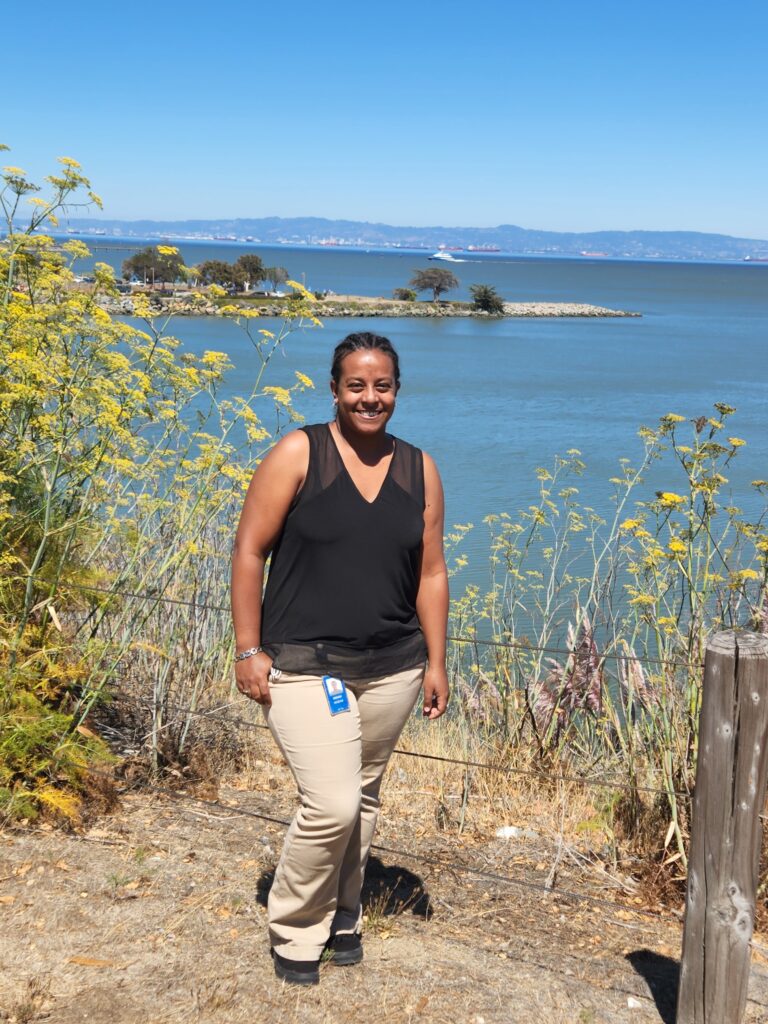
    <img width="768" height="1024" src="https://umbc.edu/wp-content/uploads/2024/06/20220824_141756-768x1024.jpg" alt="woman stands on sandy ground with a few grasses and blue-green water body in the background, located on the Genentech campus" style="max-width: 100%; height: auto;">Maki Negesse on the Genentech campus in South San Francisco, California. (Photo courtesy of Negesse)


    <p>Each year during the five-year agreement, Genentech fully funds two life science Ph.D. candidates in the <a href="https://grise.umbc.edu/" rel="nofollow external" class="bo">Meyerhoff Graduate Fellows Program</a> who are progressing well through their doctoral work and have expressed interest in pursuing a career in industry. Selected students continue their thesis work with their Ph.D. advisors during the academic year; then they spend the summer as research interns at Genentech headquarters in South San Francisco, California.  <strong>Alecia Dent</strong> ’12, biochemistry and molecular biology, who earned a Ph.D. at University of Maryland, Baltimore as a Meyerhoff Graduate Fellow and today works at Genentech, has generously helped the fellows acclimate to life on the West Coast by offering lodging at her home.</p>


    <p>The internship at Genentech “was a great opportunity to grow my network and get hands-on training in a different area of expertise, and a great way to gain some industry experience,” shares <strong>Maki Negesse</strong>, a biological sciences Ph.D. candidate in <a href="https://greenlab.umbc.edu/" rel="nofollow external" class="bo"><strong>Erin Green</strong></a>’s research group at UMBC. </p>


    <p>When fellows return to UMBC, they present their research and experience at Genentech to all of the current Meyerhoff Graduate Fellows—a group that includes more than 100 UMBC and University of Maryland, Baltimore graduate students. In addition, Genentech scientists give multiple seminars at both campuses each year. </p>


    <p>“My experience at Genentech has strengthened my desire to pursue a career in biotech companies,” Negesse adds. “I highly recommend that students pursue at least one internship during graduate school.”</p>


    <h4>Proactive steps for success</h4>


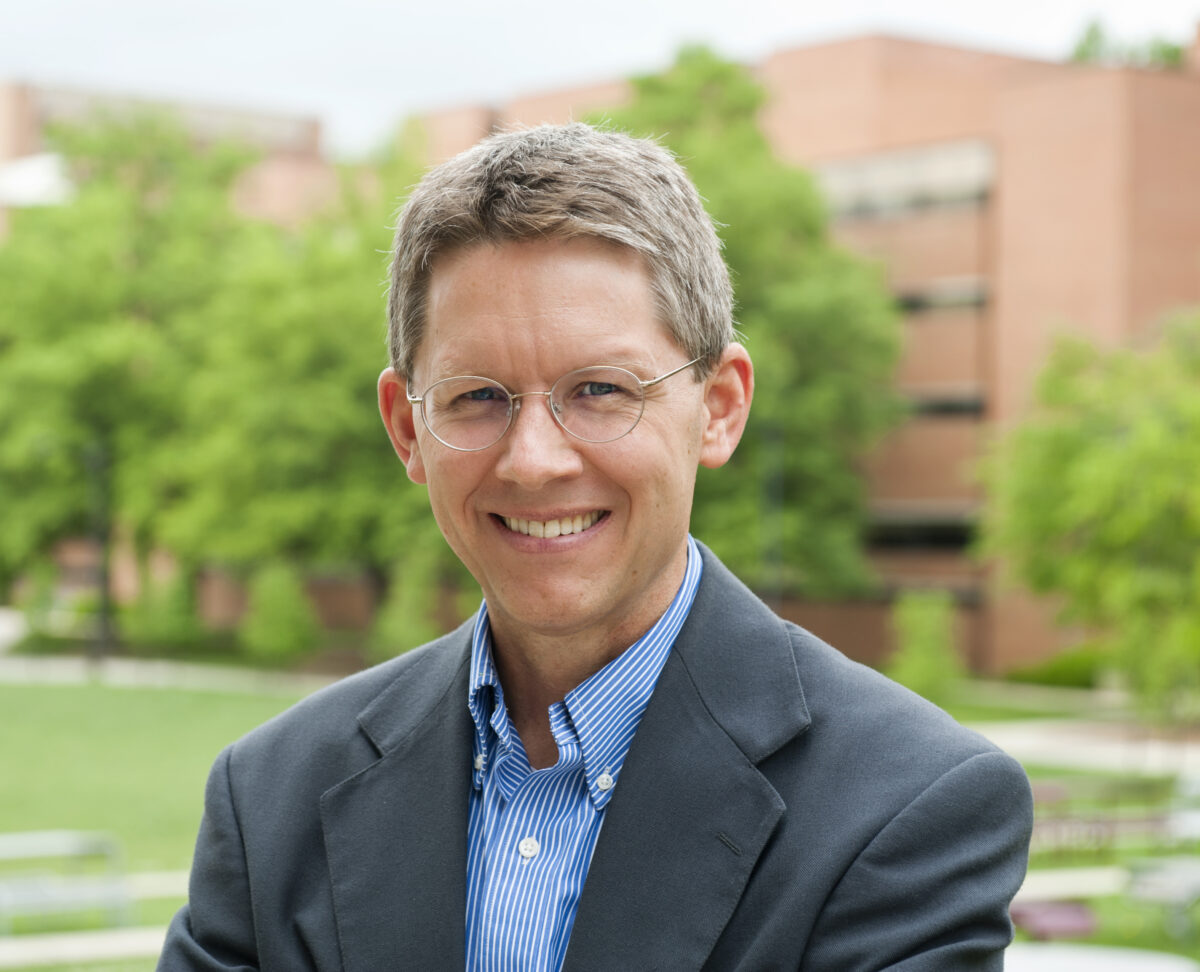
    <img width="1200" height="972" src="https://umbc.edu/wp-content/uploads/2024/06/summers-headshot-crop-1200x972.jpg" alt="portrait of man standing outdoors in front of green grass, green trees, and red brick building" style="max-width: 100%; height: auto;">Michael Summers played a key role in the development of the Meyerhoff Graduate Fellows Program. (Photo by Marlayna Demond ’11/UMBC)


    <p>The partnership signals that UMBC is proactively taking steps to ensure its graduate training programs set students up for success in various high-demand roles. Genentech, too, is <a href="https://umbc.edu/stories/when-we-work-together/#bridgebuildingalumni" rel="nofollow external" class="bo">committed to supporting</a> the next generation of highly qualified biotech workers.    </p>


    <p>“Graduate programs in the life sciences are historically geared toward preparing Ph.D. students for academic careers. This partnership fills a gap in graduate education by providing on-site training at a world-class company for students who are interested in careers in the biotechnology industry,” shares <strong>Michael Summers</strong>, Distinguished University Professor of Chemistry and Biochemistry and co-director of the Meyerhoff Graduate Fellows Program. “It also provides opportunities to diversify the scientific workforce at Genentech, providing a win-win for the company and our students.”</p>
    </div>
]]>
</Body>
<Summary>UMBC doctoral students are reaping the benefits of an innovative partnership between UMBC and biotech leader Genentech. In year three of a five-year program, sixstudents have received financial...</Summary>
<Website>https://umbc.edu/stories/grad-students-benefit-from-genentech-partnership/</Website>
<TrackingUrl>https://my3.my.umbc.edu/api/v0/pixel/news/142556/guest@my.umbc.edu/17afe8eefc376b2e89cc8917ae160145/api/pixel</TrackingUrl>
<Tag>cnms</Tag>
<Tag>gradresearch</Tag>
<Tag>graduate-school</Tag>
<Tag>meyerhoff-scholars</Tag>
<Tag>news</Tag>
<Tag>rca-1</Tag>
<Tag>research</Tag>
<Tag>science-and-tech</Tag>
<Tag>story</Tag>
<Group token="umbc-news-magazine">UMBC News &amp;amp; Magazine</Group>
<GroupUrl>https://my3.my.umbc.edu/groups/umbc-news-magazine</GroupUrl>
<AvatarUrl>https://assets1-my.umbc.edu/system/shared/avatars/groups/000/001/943/24435aa6207c452e7bc15cc74b42c7bb/xsmall.png?1748556657</AvatarUrl>
<AvatarUrl size="original">https://assets1-my.umbc.edu/system/shared/avatars/groups/000/001/943/24435aa6207c452e7bc15cc74b42c7bb/original.png?1748556657</AvatarUrl>
<AvatarUrl size="xxlarge">https://assets2-my.umbc.edu/system/shared/avatars/groups/000/001/943/24435aa6207c452e7bc15cc74b42c7bb/xxlarge.png?1748556657</AvatarUrl>
<AvatarUrl size="xlarge">https://assets2-my.umbc.edu/system/shared/avatars/groups/000/001/943/24435aa6207c452e7bc15cc74b42c7bb/xlarge.png?1748556657</AvatarUrl>
<AvatarUrl size="large">https://assets3-my.umbc.edu/system/shared/avatars/groups/000/001/943/24435aa6207c452e7bc15cc74b42c7bb/large.png?1748556657</AvatarUrl>
<AvatarUrl size="medium">https://assets1-my.umbc.edu/system/shared/avatars/groups/000/001/943/24435aa6207c452e7bc15cc74b42c7bb/medium.png?1748556657</AvatarUrl>
<AvatarUrl size="small">https://assets2-my.umbc.edu/system/shared/avatars/groups/000/001/943/24435aa6207c452e7bc15cc74b42c7bb/small.png?1748556657</AvatarUrl>
<AvatarUrl size="xsmall">https://assets1-my.umbc.edu/system/shared/avatars/groups/000/001/943/24435aa6207c452e7bc15cc74b42c7bb/xsmall.png?1748556657</AvatarUrl>
<AvatarUrl size="xxsmall">https://assets2-my.umbc.edu/system/shared/avatars/groups/000/001/943/24435aa6207c452e7bc15cc74b42c7bb/xxsmall.png?1748556657</AvatarUrl>
<Sponsor>UMBC News &amp; Magazine</Sponsor>
<PawCount>1</PawCount>
<CommentCount>0</CommentCount>
<CommentsAllowed>false</CommentsAllowed>
<PostedAt>Tue, 25 Jun 2024 15:46:44 -0400</PostedAt>
<EditAt>Tue, 25 Jun 2024 15:46:44 -0400</EditAt>
</NewsItem>

<NewsItem contentIssues="false" id="142553" important="false" status="posted" url="https://my3.my.umbc.edu/posts/142553">
<Title>JHU seeks Arts Initiative Administrator</Title>
<Body>
<![CDATA[
    <div class="html-content"><p>Johns Hopkins University is seeking an Arts Initiative Administrator who will play a critical role in supporting the newly formed Taskforce on the Arts at Johns Hopkins University. This taskforce aims to develop a university-wide strategic vision for the arts, elevating the visibility of the arts as a core strength and essential component of our global institution.</p></div>
]]>
</Body>
<Summary>Johns Hopkins University is seeking an Arts Initiative Administrator who will play a critical role in supporting the newly formed Taskforce on the Arts at Johns Hopkins University. This taskforce...</Summary>
<Website>https://www.baltimoreculture.org/programs/jobsplus/36003</Website>
<TrackingUrl>https://my3.my.umbc.edu/api/v0/pixel/news/142553/guest@my.umbc.edu/c34ee384730c663d51993b988a880c99/api/pixel</TrackingUrl>
<Tag>administration</Tag>
<Tag>alliance</Tag>
<Tag>arts</Tag>
<Tag>baltimore</Tag>
<Tag>cultural</Tag>
<Tag>culture</Tag>
<Tag>greater</Tag>
<Tag>jobs</Tag>
<Tag>museum</Tag>
<Tag>nonprofit</Tag>
<Tag>opportunities</Tag>
<Tag>organizations</Tag>
<Tag>positions</Tag>
<Tag>studies</Tag>
<Group token="museumpractice">Museum Practice</Group>
<GroupUrl>https://my3.my.umbc.edu/groups/museumpractice</GroupUrl>
<AvatarUrl>https://assets2-my.umbc.edu/system/shared/avatars/groups/000/000/780/ec390e445f99f5d8c57a847f02552fbc/xsmall.png?1384380461</AvatarUrl>
<AvatarUrl size="original">https://assets3-my.umbc.edu/system/shared/avatars/groups/000/000/780/ec390e445f99f5d8c57a847f02552fbc/original.png?1384380461</AvatarUrl>
<AvatarUrl size="xxlarge">https://assets1-my.umbc.edu/system/shared/avatars/groups/000/000/780/ec390e445f99f5d8c57a847f02552fbc/xxlarge.png?1384380461</AvatarUrl>
<AvatarUrl size="xlarge">https://assets4-my.umbc.edu/system/shared/avatars/groups/000/000/780/ec390e445f99f5d8c57a847f02552fbc/xlarge.png?1384380461</AvatarUrl>
<AvatarUrl size="large">https://assets2-my.umbc.edu/system/shared/avatars/groups/000/000/780/ec390e445f99f5d8c57a847f02552fbc/large.png?1384380461</AvatarUrl>
<AvatarUrl size="medium">https://assets3-my.umbc.edu/system/shared/avatars/groups/000/000/780/ec390e445f99f5d8c57a847f02552fbc/medium.png?1384380461</AvatarUrl>
<AvatarUrl size="small">https://assets2-my.umbc.edu/system/shared/avatars/groups/000/000/780/ec390e445f99f5d8c57a847f02552fbc/small.png?1384380461</AvatarUrl>
<AvatarUrl size="xsmall">https://assets2-my.umbc.edu/system/shared/avatars/groups/000/000/780/ec390e445f99f5d8c57a847f02552fbc/xsmall.png?1384380461</AvatarUrl>
<AvatarUrl size="xxsmall">https://assets1-my.umbc.edu/system/shared/avatars/groups/000/000/780/ec390e445f99f5d8c57a847f02552fbc/xxsmall.png?1384380461</AvatarUrl>
<Sponsor>Museum Practice</Sponsor>
<PawCount>0</PawCount>
<CommentCount>0</CommentCount>
<CommentsAllowed>true</CommentsAllowed>
<PostedAt>Tue, 25 Jun 2024 14:43:01 -0400</PostedAt>
</NewsItem>

<NewsItem contentIssues="false" id="142552" important="false" status="posted" url="https://my3.my.umbc.edu/posts/142552">
<Title>International Rescue Committee</Title>
<Tagline>Fall internships, applications are open</Tagline>
<Body>
<![CDATA[
    <div class="html-content">The International Rescue Committee (IRC) has <a href="https://careers.rescue.org/us/en/search-results?keywords=intern&amp;p=ChIJt4P01q4DyIkRWOcjQqiWSAQ&amp;location=Baltimore,%20MD,%20USA" rel="nofollow external" class="bo">opened the applications</a> for their fall internships in Baltimore. Visit the website to apply, applications are due by July 28. Public Health majors have had very good experiences interning with IRC!</div>
]]>
</Body>
<Summary>The International Rescue Committee (IRC) has opened the applications for their fall internships in Baltimore. Visit the website to apply, applications are due by July 28. Public Health majors have...</Summary>
<Website>https://careers.rescue.org/us/en/search-results?keywords=intern&amp;p=ChIJt4P01q4DyIkRWOcjQqiWSAQ&amp;location=Baltimore,%20MD,%20USA</Website>
<TrackingUrl>https://my3.my.umbc.edu/api/v0/pixel/news/142552/guest@my.umbc.edu/c27fd1b3ae12d0468c340d125fad9ce8/api/pixel</TrackingUrl>
<Group token="publichealth">Public Health Majors  and Minors</Group>
<GroupUrl>https://my3.my.umbc.edu/groups/publichealth</GroupUrl>
<AvatarUrl>https://assets4-my.umbc.edu/system/shared/avatars/groups/000/001/279/d3f93ce1ca1b6b4136abee05ace0fd94/xsmall.png?1631569666</AvatarUrl>
<AvatarUrl size="original">https://assets4-my.umbc.edu/system/shared/avatars/groups/000/001/279/d3f93ce1ca1b6b4136abee05ace0fd94/original.png?1631569666</AvatarUrl>
<AvatarUrl size="xxlarge">https://assets3-my.umbc.edu/system/shared/avatars/groups/000/001/279/d3f93ce1ca1b6b4136abee05ace0fd94/xxlarge.png?1631569666</AvatarUrl>
<AvatarUrl size="xlarge">https://assets4-my.umbc.edu/system/shared/avatars/groups/000/001/279/d3f93ce1ca1b6b4136abee05ace0fd94/xlarge.png?1631569666</AvatarUrl>
<AvatarUrl size="large">https://assets2-my.umbc.edu/system/shared/avatars/groups/000/001/279/d3f93ce1ca1b6b4136abee05ace0fd94/large.png?1631569666</AvatarUrl>
<AvatarUrl size="medium">https://assets1-my.umbc.edu/system/shared/avatars/groups/000/001/279/d3f93ce1ca1b6b4136abee05ace0fd94/medium.png?1631569666</AvatarUrl>
<AvatarUrl size="small">https://assets3-my.umbc.edu/system/shared/avatars/groups/000/001/279/d3f93ce1ca1b6b4136abee05ace0fd94/small.png?1631569666</AvatarUrl>
<AvatarUrl size="xsmall">https://assets4-my.umbc.edu/system/shared/avatars/groups/000/001/279/d3f93ce1ca1b6b4136abee05ace0fd94/xsmall.png?1631569666</AvatarUrl>
<AvatarUrl size="xxsmall">https://assets2-my.umbc.edu/system/shared/avatars/groups/000/001/279/d3f93ce1ca1b6b4136abee05ace0fd94/xxsmall.png?1631569666</AvatarUrl>
<Sponsor>Public Health Majors  and Minors</Sponsor>
<PawCount>0</PawCount>
<CommentCount>0</CommentCount>
<CommentsAllowed>true</CommentsAllowed>
<PostedAt>Tue, 25 Jun 2024 14:30:48 -0400</PostedAt>
<EditAt>Tue, 25 Jun 2024 14:31:17 -0400</EditAt>
</NewsItem>

<NewsItem contentIssues="true" id="142551" important="false" status="posted" url="https://my3.my.umbc.edu/posts/142551">
<Title>Dr. Blaney&#8217;s interview with LCGC magazine.</Title>
<Body>
<![CDATA[
    <div class="html-content">
    <p>The article link is available here: <a href="https://www.chromatographyonline.com/view/inside-the-laboratory-the-blaney-laboratory-at-the-university-of-maryland-baltimore-county" rel="nofollow external" class="bo">Inside the Laboratory: The Blaney Laboratory at the University of Maryland Baltimore County (chromatographyonline.com)</a></p>
    <p>"Inside the Laboratory" is a series in collaboration with LCGC and Spectroscopy, highlighting the pioneering work of analytical scientists worldwide. In this edition, we delve into the groundbreaking research of <strong>Dr. Lee Blaney</strong> from the University of Maryland, Baltimore County (UMBC). Dr. Blaney, a Professor and Associate Director of Sustainability Engineering, leads his team in developing advanced methods using liquid chromatography (LC) techniques to analyze contaminants of emerging concern (CECs) in environmental samples.</p>
    <p>Environmental analysis is a field where chromatography plays an integral role. Detecting, identifying, and quantifying per- and polyfluoroalkyl substances (PFAS) and contaminants of emerging concern (CECs) are currently hot topics in environmental analysis, mostly because it affects both the environment and natural resources humans regularly use. Chromatographic techniques like liquid chromatography coupled to tandem mass spectrometry (LC–MS/MS) offer unparalleled sensitivity and specificity in separating and identifying PFAS within complex matrices, such as water, soil, and biological samples. Through chromatographic separation, PFAS are eluted based on their unique physicochemical properties, allowing accurate and precise quantification by downstream detectors. This analytical approach not only aids in assessing environmental contamination, but also contributes significantly to understanding the exposure pathways and potential health risks associated with PFAS.</p>
    <p>Dr. Lee Blaney is a Professor and Associate Director of Sustainability Engineering at the University of Maryland Baltimore County. He received his BS and MS in Environmental Engineering at Lehigh University before completing his PhD in Civil Engineering at the University of Texas at Austin. His laboratory is primarily focused on studying CECs, including developing advanced analytical methods that can better improve detection and quantification of CECs in the environment, as well as developing new treatment technologies for diverse contaminants in water and wastewater.</p>
    <p><em><img src="https://cdn.sanity.io/images/0vv8moc6/chroma/16e3fe42267c5515cd0de0289f5180bccef016c8-5272x3948.jpg?fit=crop&amp;auto=format" alt="" width="800" height="500" style="max-width: 100%; height: auto;"></em></p>
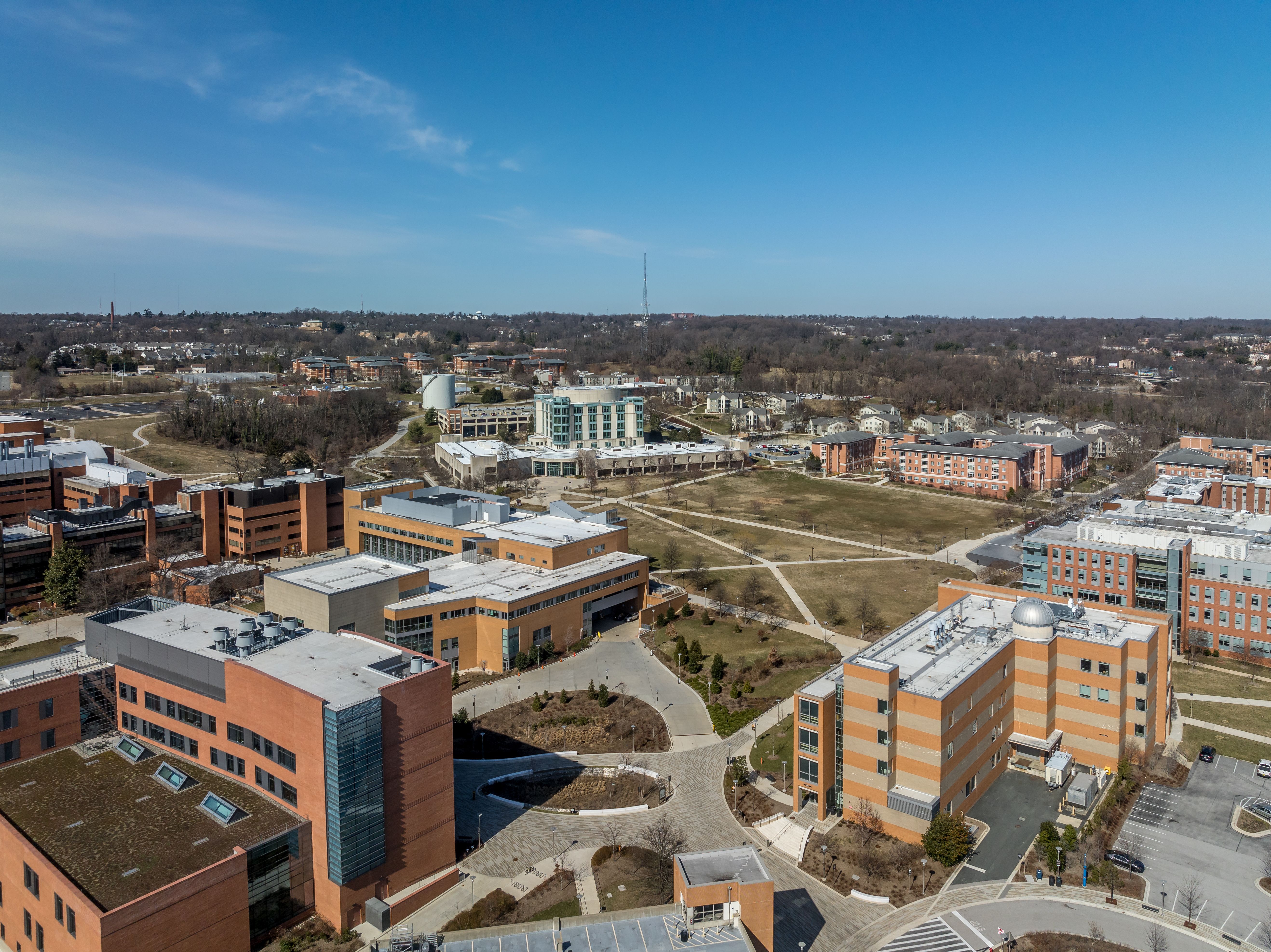
    <p><em>Aerial view of University of Maryland Baltimore County UMBC Catonsville | Image Credit: © vitanovski - stock.adobe.com</em></p>
    <p>Recently, <em>LCGC International </em>spoke to Dr. Blaney about his laboratory’s work with PFAS and CEC analysis, as well as the current research projects they are working on.</p>
    <p><em><img src="https://www.chromatographyonline.com/_next/image?url=https%3A%2F%2Fcdn.sanity.io%2Fimages%2F0vv8moc6%2Fchroma%2F2d2747c5f072480e5715d3504a30e5d21c5d2171-3300x4945.jpg%3Ffit%3Dcrop%26auto%3Dformat&amp;w=3840&amp;q=75" alt="" width="600" height="983" style="max-width: 100%; height: auto;"></em></p>
    <p><em>Dr. Lee Blaney of the University of Maryland, Baltimore County | Photo Credit: © Lee Blaney</em></p>
    <p><strong>Can you tell me about the research that your laboratory group is working on currently?</strong></p>
    <p>Most of our research involves contaminants of emerging concern (CECs), such as pharmaceuticals, hormones, and personal care products. These are chemicals that we use every day to improve our quality of life, but we don’t really think about them as “pollution." Nevertheless, every chemical that we use ultimately makes its way into the aquatic environment, where it can have unintended consequences. When we take an antibiotic to fight an infection, some fraction of the antibiotic gets excreted into our toilets without undergoing any chemical changes. Wastewater treatment plants were not designed to remove pharmaceuticals, causing antibiotics to be discharged into the environment, where they can accelerate the development and spread of antimicrobial resistance. Similar concerns abound for other CECs. For this reason, our group focuses on developing (i) new analytical methods to measure CECs in the aquatic environment and (ii) new treatment technologies to ensure CEC removal from both drinking water and wastewater.</p>
    <p><em><img src="https://www.chromatographyonline.com/_next/image?url=https%3A%2F%2Fcdn.sanity.io%2Fimages%2F0vv8moc6%2Fchroma%2F79a0be8f248988ecdcd3493f945b1be287925f08-3596x2400.jpg%3Ffit%3Dcrop%26auto%3Dformat&amp;w=3840&amp;q=75" alt="" width="857" height="572" style="max-width: 100%; height: auto;"></em></p>
    <p><em>Blaney (left) with undergraduate researcher Ouriel Ndalamba (center) and PhD candidate Jahir Antonio Batista-Andrade (right) discuss an LC-MS/MS method for CEC measurement in Baltimore streams. Photo Credit: © Lee Blaney</em></p>
    <p><strong>In the research that you and your group does, what particular analytical techniques do you normally use?</strong></p>
    <p>Our laboratory primarily employs liquid chromatography (LC) coupled to ultraviolet (UV), fluorescence (FL), and triple quadrupole tandem mass spectrometry (MS/MS) detectors. Some CECs have strong absorbance and/or fluorescence properties that allow us to measure their concentrations using high performance liquid chromatography (HPLC) with UV or FL detection in relatively clean samples, such as those produced during laboratory experiments. However, real environmental samples contain dozens of CECs at concentrations of 1–1000 ng/L (that is, 1–1000 parts per trillion). Real samples also contain much higher concentrations of natural organic matter and background ions. With appropriate pretreatment via solid-phase extraction, we can not only concentrate the analytes, but also remove some of the interfering substances. Nevertheless, the large number of CECs in real samples mandates the use of LC–MS/MS, which can concurrently measure analytes with similar retention times. During LC–MS/MS analysis, we have several analytical criteria that ensure highly selective and sensitive measurement of each CEC. In particular, we need to match the LC retention time of our chemical standards for each CEC, produce the same MS-1 ion during electrospray ionization, and generate the same MS-2 ions for analyte quantitation and confirmation by the triple quadrupole MS/MS detector. The fast scan times of the MS/MS detector allow us to measure dozens of CECs in the same method. These aspects make LC–MS/MS the go-to technology for environmental analytical chemists and engineers studying CECs.</p>
    <p><em><img src="https://www.chromatographyonline.com/_next/image?url=https%3A%2F%2Fcdn.sanity.io%2Fimages%2F0vv8moc6%2Fchroma%2F244626ddc6c89186cafa45e3b3c63b15aa6edd18-3596x2397.jpg%3Ffit%3Dcrop%26auto%3Dformat&amp;w=3840&amp;q=75" alt="" width="800" height="533" style="max-width: 100%; height: auto;"></em></p>
    <p><em>Blaney (second from left) with undergraduate researchers Bridget Anger (left) and Lauren Harris (right) and PhD candidate Mamatha Hopanna (second from right) discuss photochemical treatment of antibiotics in water. Photo Credit: © Lee Blaney</em></p>
    <p><strong>What’s the difference between CECs and PFAS?</strong></p>
    <p>Contaminants of emerging concern is an umbrella term for all contaminants that have been identified as having potentially harmful effects on the environment or humans. The “emerging” concern means that we do not yet fully understand the toxicity of these chemicals in the environment or people. Per- and polyfluoroalkyl substances (PFAS) are a class of almost 15,000 fluorinated chemicals used in fire-fighting foams, nonstick cookware, fast food wrappers, and many other industrial and consumer products. Even though there are many PFAS, you can consider them to be a subcategory of CECs. Due to the chemical and thermal stability of the carbon-fluorine bonds in PFAS, these chemicals do not readily degrade during wastewater treatment or in the environment. In the last few years, we have learned about a number of harmful outcomes of PFAS in humans. As a result, new drinking water regulations were recently approved for six PFAS in drinking water. In a sense, some PFAS have therefore transcended the concept of “contaminants of emerging concern” and have just become “regulated contaminants." The new regulations for PFAS will also spur the growth and development of analytical contract labs to meet the demand for regular analysis of PFAS in drinking water across the country.</p>
    <p><strong>Going back to LC–MS methodologies, are there any limitations of using that technique right now that are kind of preventing you and your group from figuring some things out in your research or?</strong></p>
    <p>The biggest limitation is the large number of CECs. Right now, we are only measuring a small fraction of the specialty chemicals employed in everyday life. For example, our lab has developed methods for dozens of antibiotics, but each of those compounds undergo chemical transformations in natural and engineered systems. These reactions produce several unknown transformation products that may still retain antimicrobial properties. Without chemical standards, it is difficult to employ targeted LC–MS/MS methods to measure these transformation products. As another example, the latest EPA method measures 40 PFAS, which accounts for less than 1% of the estimated 15,000 PFAS. If we extrapolate this issue across the full suite of CECs, the number of individual chemicals becomes staggering. For this reason, we have prioritized certain chemicals that represent the most concern, but new approaches will be needed in the future to best safeguard environmental and public health.</p>
    <p><em><img src="https://www.chromatographyonline.com/_next/image?url=https%3A%2F%2Fcdn.sanity.io%2Fimages%2F0vv8moc6%2Fchroma%2F6a23017591a2e3fa2b61e48ab51946aa94ba39f7-3596x2397.jpg%3Ffit%3Dcrop%26auto%3Dformat&amp;w=3840&amp;q=75" alt="" width="800" height="533" style="max-width: 100%; height: auto;"></em></p>
    <p><em>Blaney (right) with undergraduate researchers Fabian Amurrio (left) and Lauren Harris (second from right) and PhD candidate Utsav Shashvatt (second from left) discuss ion chromatography results related to a project focused on nutrient recovery from waste streams. | Photo Credit: © Lee Blaney</em></p>
    <p><strong>With all the advancements that are going on in with the techniques and the technologies, how does you and your group stay on top of all the developments going on in this space?</strong></p>
    <p>We regularly go to conferences and meetings focused on the latest developments in CEC analysis. Several of our current projects are funded by the Strategic Environmental Research and Development Program (SERDP), which holds regular meetings for PFAS-related research. These conferences and meetings are great opportunities to share our work, receive feedback, learn about the work of other groups, and share notes to advance knowledge in the environmental analytical chemistry and environmental engineering fields. In addition, I serve as an executive editor at the <em>Journal of Hazardous Materials</em>. While it is a demanding job to keep up with all the manuscripts submitted by authors, this role also gives me a chance to read the latest work from around the world to learn about the latest updates and findings.</p>
    <p><strong>Are there any upcoming research projects on your end that you’re excited about?</strong></p>
    <p>Our best available technologies for PFAS treatment work well for long-chain PFAS, such as perfluorooctanoic acid (PFOA) and perfluorooctane sulfonic acid (PFOS), which contain eight carbon atoms in their chemical structures. Short- and ultrashort-chain PFAS, which contain less than eight carbons, pose challenges to conventional treatment technologies. Many of these compounds are also not included in current analytical methods. Our new SERDP project will focus on developing novel hybrid anion-exchange resins to remove these challenging contaminants from water. We’re excited about our materials and the promising preliminary data, and we’ll look forward to sharing our findings with the environmental community to continue to address the challenges associated with PFAS treatment and remediation.</p>
    <p><em>This interview has been edited for clarity.</em></p>
    <h2><strong>About the Interviewee</strong></h2>
    <p> <img src="https://www.chromatographyonline.com/_next/image?url=https%3A%2F%2Fcdn.sanity.io%2Fimages%2F0vv8moc6%2Fchroma%2F2d2747c5f072480e5715d3504a30e5d21c5d2171-3300x4945.jpg%3Ffit%3Dcrop%26auto%3Dformat&amp;w=3840&amp;q=75" alt="" width="600" height="899" style="max-width: 100%; height: auto;"></p>
    <p><em>Lee Blaney, PhD, is a Professor and Associate Director of Sustainability Engineering at the University of Maryland Baltimore County.</em></p>
    </div>
]]>
</Body>
<Summary>The article link is available here: Inside the Laboratory: The Blaney Laboratory at the University of Maryland Baltimore County (chromatographyonline.com)   "Inside the Laboratory" is a series in...</Summary>
<TrackingUrl>https://my3.my.umbc.edu/api/v0/pixel/news/142551/guest@my.umbc.edu/0764332abe72ebbfcf624befb64b81ad/api/pixel</TrackingUrl>
<Tag>blaney</Tag>
<Tag>lab</Tag>
<Tag>research</Tag>
<Tag>spring-2024</Tag>
<Group token="cbee">Chemical, Biochemical and Environmental Engineering</Group>
<GroupUrl>https://my3.my.umbc.edu/groups/cbee</GroupUrl>
<AvatarUrl>https://assets4-my.umbc.edu/system/shared/avatars/groups/000/000/771/b5e579e81b2e3624611890fa3ca2716a/xsmall.png?1746794587</AvatarUrl>
<AvatarUrl size="original">https://assets2-my.umbc.edu/system/shared/avatars/groups/000/000/771/b5e579e81b2e3624611890fa3ca2716a/original.png?1746794587</AvatarUrl>
<AvatarUrl size="xxlarge">https://assets1-my.umbc.edu/system/shared/avatars/groups/000/000/771/b5e579e81b2e3624611890fa3ca2716a/xxlarge.png?1746794587</AvatarUrl>
<AvatarUrl size="xlarge">https://assets2-my.umbc.edu/system/shared/avatars/groups/000/000/771/b5e579e81b2e3624611890fa3ca2716a/xlarge.png?1746794587</AvatarUrl>
<AvatarUrl size="large">https://assets2-my.umbc.edu/system/shared/avatars/groups/000/000/771/b5e579e81b2e3624611890fa3ca2716a/large.png?1746794587</AvatarUrl>
<AvatarUrl size="medium">https://assets4-my.umbc.edu/system/shared/avatars/groups/000/000/771/b5e579e81b2e3624611890fa3ca2716a/medium.png?1746794587</AvatarUrl>
<AvatarUrl size="small">https://assets1-my.umbc.edu/system/shared/avatars/groups/000/000/771/b5e579e81b2e3624611890fa3ca2716a/small.png?1746794587</AvatarUrl>
<AvatarUrl size="xsmall">https://assets4-my.umbc.edu/system/shared/avatars/groups/000/000/771/b5e579e81b2e3624611890fa3ca2716a/xsmall.png?1746794587</AvatarUrl>
<AvatarUrl size="xxsmall">https://assets1-my.umbc.edu/system/shared/avatars/groups/000/000/771/b5e579e81b2e3624611890fa3ca2716a/xxsmall.png?1746794587</AvatarUrl>
<Sponsor>Chemical, Biochemical and Environmental Engineering</Sponsor>
<ThumbnailUrl size="xxlarge">https://assets2-my.umbc.edu/system/shared/thumbnails/news/000/142/551/013fe9a1aa45d5462e015bd03d9ac4ae/xxlarge.jpg?1719339836</ThumbnailUrl>
<ThumbnailUrl size="xlarge">https://assets1-my.umbc.edu/system/shared/thumbnails/news/000/142/551/013fe9a1aa45d5462e015bd03d9ac4ae/xlarge.jpg?1719339836</ThumbnailUrl>
<ThumbnailUrl size="large">https://assets3-my.umbc.edu/system/shared/thumbnails/news/000/142/551/013fe9a1aa45d5462e015bd03d9ac4ae/large.jpg?1719339836</ThumbnailUrl>
<ThumbnailUrl size="medium">https://assets1-my.umbc.edu/system/shared/thumbnails/news/000/142/551/013fe9a1aa45d5462e015bd03d9ac4ae/medium.jpg?1719339836</ThumbnailUrl>
<ThumbnailUrl size="small">https://assets2-my.umbc.edu/system/shared/thumbnails/news/000/142/551/013fe9a1aa45d5462e015bd03d9ac4ae/small.jpg?1719339836</ThumbnailUrl>
<ThumbnailUrl size="xsmall">https://assets2-my.umbc.edu/system/shared/thumbnails/news/000/142/551/013fe9a1aa45d5462e015bd03d9ac4ae/xsmall.jpg?1719339836</ThumbnailUrl>
<ThumbnailUrl size="xxsmall">https://assets1-my.umbc.edu/system/shared/thumbnails/news/000/142/551/013fe9a1aa45d5462e015bd03d9ac4ae/xxsmall.jpg?1719339836</ThumbnailUrl>
<PawCount>3</PawCount>
<CommentCount>0</CommentCount>
<CommentsAllowed>true</CommentsAllowed>
<PostedAt>Tue, 25 Jun 2024 14:25:54 -0400</PostedAt>
<EditAt>Thu, 27 Jun 2024 13:42:38 -0400</EditAt>
</NewsItem>

<NewsItem contentIssues="false" id="142549" important="true" status="posted" url="https://my3.my.umbc.edu/posts/142549">
<Title>Reminder: The Law Days of Summer- Howard County</Title>
<Tagline>There is still time to register for these free events!</Tagline>
<Body>
<![CDATA[
    <div class="html-content">
    <div><strong>Interested in the law and related legal professions?</strong></div>
    <div><br></div>
    <div><strong>This summer, you can watch court cases, and meet and learn from judges, lawyers, and other court partners at the Circuit Court for Howard County.</strong></div>
    <div><br></div>
    <div>
    <div>The Law Days of Summer will be held at the Circuit Court for Howard County, 9250 Judicial Way, Ellicott City, 21043 on the following dates:</div>
    <div><br></div>
    <div>
    <div><strong>You may attend any or all of the events below:</strong></div>
    <div><strong><br></strong></div>
    <div><ul>
    <li><strong>June 26, 2024</strong></li>
    <li><strong>July 9, 2024</strong></li>
    <li><strong>July 24, 2024</strong></li>
    <li><strong>August 6, 2024</strong></li>
    </ul></div>
    </div>
    <div><strong><br></strong></div>
    <div><strong>The schedule for each event will be:</strong></div>
    <div><br></div>
    <div><ul>
    <li><strong>8:15 – 8:30 – Arrival</strong></li>
    <li><strong>8:45 -10:30 – Court Observation</strong></li>
    <li><strong>10:30 – Speaker Panel 1</strong></li>
    <li><strong>11:30 – Lunch</strong></li>
    <li><strong>12:00 – 1:30 – Speaker Panel 2</strong></li>
    </ul></div>
    <div><br></div>
    <div>Proudly hosted by:</div>
    <div>The Circuit Court for Howard County, Howard County Bar Association, Howard County Women's Bar Association, Waring Mitchell Law Society, Office of the Public Defender, Office of the State’s Attorney and Office of Human Rights &amp; Equity</div>
    </div>
    <div><br></div>
    <div><strong>Register <a href="https://docs.google.com/forms/d/e/1FAIpQLSdKKRT26fJ6Xc__Zih1sdUDkDb5lZ4XAdCkI-b0JesyeeKQrA/viewform" rel="nofollow external" class="bo">here</a>!</strong></div>
    <div><br></div>
    </div>
]]>
</Body>
<Summary>Interested in the law and related legal professions?     This summer, you can watch court cases, and meet and learn from judges, lawyers, and other court partners at the Circuit Court for Howard...</Summary>
<Website>https://docs.google.com/forms/d/e/1FAIpQLSdKKRT26fJ6Xc__Zih1sdUDkDb5lZ4XAdCkI-b0JesyeeKQrA/viewform</Website>
<TrackingUrl>https://my3.my.umbc.edu/api/v0/pixel/news/142549/guest@my.umbc.edu/07495bf151546fce7f6db975e5d234a3/api/pixel</TrackingUrl>
<Group token="prelawadvising">Pre-Law Advising </Group>
<GroupUrl>https://my3.my.umbc.edu/groups/prelawadvising</GroupUrl>
<AvatarUrl>https://assets1-my.umbc.edu/system/shared/avatars/groups/000/002/015/12041675483f3390dbf6dcab7542729b/xsmall.png?1661452013</AvatarUrl>
<AvatarUrl size="original">https://assets4-my.umbc.edu/system/shared/avatars/groups/000/002/015/12041675483f3390dbf6dcab7542729b/original.png?1661452013</AvatarUrl>
<AvatarUrl size="xxlarge">https://assets3-my.umbc.edu/system/shared/avatars/groups/000/002/015/12041675483f3390dbf6dcab7542729b/xxlarge.png?1661452013</AvatarUrl>
<AvatarUrl size="xlarge">https://assets1-my.umbc.edu/system/shared/avatars/groups/000/002/015/12041675483f3390dbf6dcab7542729b/xlarge.png?1661452013</AvatarUrl>
<AvatarUrl size="large">https://assets2-my.umbc.edu/system/shared/avatars/groups/000/002/015/12041675483f3390dbf6dcab7542729b/large.png?1661452013</AvatarUrl>
<AvatarUrl size="medium">https://assets4-my.umbc.edu/system/shared/avatars/groups/000/002/015/12041675483f3390dbf6dcab7542729b/medium.png?1661452013</AvatarUrl>
<AvatarUrl size="small">https://assets2-my.umbc.edu/system/shared/avatars/groups/000/002/015/12041675483f3390dbf6dcab7542729b/small.png?1661452013</AvatarUrl>
<AvatarUrl size="xsmall">https://assets1-my.umbc.edu/system/shared/avatars/groups/000/002/015/12041675483f3390dbf6dcab7542729b/xsmall.png?1661452013</AvatarUrl>
<AvatarUrl size="xxsmall">https://assets2-my.umbc.edu/system/shared/avatars/groups/000/002/015/12041675483f3390dbf6dcab7542729b/xxsmall.png?1661452013</AvatarUrl>
<Sponsor>Pre-Law Advising</Sponsor>
<PawCount>1</PawCount>
<CommentCount>0</CommentCount>
<CommentsAllowed>true</CommentsAllowed>
<PostedAt>Tue, 25 Jun 2024 11:11:24 -0400</PostedAt>
<EditAt>Thu, 25 Jul 2024 11:58:18 -0400</EditAt>
</NewsItem>

<NewsItem contentIssues="true" id="142548" important="false" status="posted" url="https://my3.my.umbc.edu/posts/142548">
<Title>New Publication by CBEE Faculty</Title>
<Tagline>ATOMS lab with Dr. Tyler Josephson</Tagline>
<Body>
<![CDATA[
    <div class="html-content">
    <p><strong>Dr. Tyler R Josephson</strong>, Assistant Professor, Chemical, Biochemical, and Environmental Engineering department at the University of Maryland, Baltimore County, along with UMBC student and alumni, <strong>Charles Fox, Neil D Tran, F Nikki Nacion, and Samiha Sharlin</strong>, have a new publication in <em>Machine Learning: Science and Technology</em> titled "Incorporating background knowledge in symbolic regression using a computer algebra system."</p>
    <p>The article is available here:<br><a href="https://iopscience.iop.org/article/10.1088/2632-2153/ad4a1e/meta" rel="nofollow external" class="bo">Incorporating background knowledge in symbolic regression using a computer algebra system - IOPscience</a></p>
    <p>DOI 10.1088/2632-2153/ad4a1e</p>
    <p><strong>Abstract:</strong></p>
    <p>Symbolic regression (SR) can generate interpretable, concise expressions that fit a given dataset, allowing for more human understanding of the structure than black-box approaches. The addition of background knowledge (in the form of symbolic mathematical constraints) allows for the generation of expressions that are meaningful with respect to theory while also being consistent with data. We specifically examine the addition of constraints to traditional genetic algorithm (GA) based SR (PySR) as well as a Markov-chain Monte Carlo (MCMC) based Bayesian SR architecture (Bayesian Machine Scientist), and apply these to rediscovering adsorption equations from experimental, historical datasets. We find that, while hard constraints prevent GA and MCMC SR from searching, soft constraints can lead to improved performance both in terms of search effectiveness and model meaningfulness, with computational costs increasing by about an order of magnitude. If the constraints do not correlate well with the dataset or expected models, they can hinder the search of expressions. We find incorporating these constraints in Bayesian SR (as the Bayesian prior) is better than by modifying the fitness function in the GA.</p>
    </div>
]]>
</Body>
<Summary>Dr. Tyler R Josephson, Assistant Professor, Chemical, Biochemical, and Environmental Engineering department at the University of Maryland, Baltimore County, along with UMBC student and alumni,...</Summary>
<TrackingUrl>https://my3.my.umbc.edu/api/v0/pixel/news/142548/guest@my.umbc.edu/eea75f122d055ffcc373f822592f2a5d/api/pixel</TrackingUrl>
<Tag>faculty</Tag>
<Tag>josephson</Tag>
<Tag>research</Tag>
<Tag>spring-2024</Tag>
<Group token="cbee">Chemical, Biochemical and Environmental Engineering</Group>
<GroupUrl>https://my3.my.umbc.edu/groups/cbee</GroupUrl>
<AvatarUrl>https://assets4-my.umbc.edu/system/shared/avatars/groups/000/000/771/b5e579e81b2e3624611890fa3ca2716a/xsmall.png?1746794587</AvatarUrl>
<AvatarUrl size="original">https://assets2-my.umbc.edu/system/shared/avatars/groups/000/000/771/b5e579e81b2e3624611890fa3ca2716a/original.png?1746794587</AvatarUrl>
<AvatarUrl size="xxlarge">https://assets1-my.umbc.edu/system/shared/avatars/groups/000/000/771/b5e579e81b2e3624611890fa3ca2716a/xxlarge.png?1746794587</AvatarUrl>
<AvatarUrl size="xlarge">https://assets2-my.umbc.edu/system/shared/avatars/groups/000/000/771/b5e579e81b2e3624611890fa3ca2716a/xlarge.png?1746794587</AvatarUrl>
<AvatarUrl size="large">https://assets2-my.umbc.edu/system/shared/avatars/groups/000/000/771/b5e579e81b2e3624611890fa3ca2716a/large.png?1746794587</AvatarUrl>
<AvatarUrl size="medium">https://assets4-my.umbc.edu/system/shared/avatars/groups/000/000/771/b5e579e81b2e3624611890fa3ca2716a/medium.png?1746794587</AvatarUrl>
<AvatarUrl size="small">https://assets1-my.umbc.edu/system/shared/avatars/groups/000/000/771/b5e579e81b2e3624611890fa3ca2716a/small.png?1746794587</AvatarUrl>
<AvatarUrl size="xsmall">https://assets4-my.umbc.edu/system/shared/avatars/groups/000/000/771/b5e579e81b2e3624611890fa3ca2716a/xsmall.png?1746794587</AvatarUrl>
<AvatarUrl size="xxsmall">https://assets1-my.umbc.edu/system/shared/avatars/groups/000/000/771/b5e579e81b2e3624611890fa3ca2716a/xxsmall.png?1746794587</AvatarUrl>
<Sponsor>Chemical, Biochemical and Environmental Engineering</Sponsor>
<ThumbnailUrl size="xxlarge">https://assets4-my.umbc.edu/system/shared/thumbnails/news/000/142/548/d0524fd7b6e224cd6d2010ec323034df/xxlarge.jpg?1719324186</ThumbnailUrl>
<ThumbnailUrl size="xlarge">https://assets1-my.umbc.edu/system/shared/thumbnails/news/000/142/548/d0524fd7b6e224cd6d2010ec323034df/xlarge.jpg?1719324186</ThumbnailUrl>
<ThumbnailUrl size="large">https://assets2-my.umbc.edu/system/shared/thumbnails/news/000/142/548/d0524fd7b6e224cd6d2010ec323034df/large.jpg?1719324186</ThumbnailUrl>
<ThumbnailUrl size="medium">https://assets2-my.umbc.edu/system/shared/thumbnails/news/000/142/548/d0524fd7b6e224cd6d2010ec323034df/medium.jpg?1719324186</ThumbnailUrl>
<ThumbnailUrl size="small">https://assets2-my.umbc.edu/system/shared/thumbnails/news/000/142/548/d0524fd7b6e224cd6d2010ec323034df/small.jpg?1719324186</ThumbnailUrl>
<ThumbnailUrl size="xsmall">https://assets4-my.umbc.edu/system/shared/thumbnails/news/000/142/548/d0524fd7b6e224cd6d2010ec323034df/xsmall.jpg?1719324186</ThumbnailUrl>
<ThumbnailUrl size="xxsmall">https://assets1-my.umbc.edu/system/shared/thumbnails/news/000/142/548/d0524fd7b6e224cd6d2010ec323034df/xxsmall.jpg?1719324186</ThumbnailUrl>
<PawCount>0</PawCount>
<CommentCount>0</CommentCount>
<CommentsAllowed>true</CommentsAllowed>
<PostedAt>Tue, 25 Jun 2024 10:03:30 -0400</PostedAt>
<EditAt>Thu, 27 Jun 2024 13:42:05 -0400</EditAt>
</NewsItem>

<NewsItem contentIssues="true" id="142546" important="false" status="posted" url="https://my3.my.umbc.edu/posts/142546">
<Title>New Publication by CBEE Faculty</Title>
<Tagline>AMEE lab with Dr. &#214;zg&#252;r &#199;apraz</Tagline>
<Body>
<![CDATA[
    <div class="html-content">
    <p><strong>Dr. Ömer Özgür Çapraz</strong>, Associate Professor, Chemical, Biochemical, and Environmental Engineering department at the University of Maryland, Baltimore County, published a groundbreaking study in <em>Electrochimica Acta</em> titled "<strong>Probing interfacial stress on Au cathode in DMSO electrolyte during electrochemical polarization in aprotic Li-O</strong><strong>2</strong><strong> batteries</strong>" with collaborators from Oklahoma State University, Bar-Ilan University, National Renewable Energy Laboratory, The Hebrew University of Jerusalem.</p>
    <p><br>The full article is available from ScienceDirect at <a href="https://doi.org/10.1016/j.electacta.2024.144522" rel="nofollow external" class="bo">https://doi.org/10.1016/j.electacta.2024.144522</a></p>
    <p><br></p>
    <p><strong>Abstract:</strong></p>
    <p>The practical performance of Li-O2 batteries suffers from interfacial instabilities associated with the reaction intermediates. These instabilities on the cathode-electrolyte interface dictate the direction of the oxygen evolution and reduction reactions (OER/ORR) in Li-O2 batteries. Despite intensive research on chemical instabilities in the reaction intermediates, there is limited work on understanding the importance of stress on the interfacial dynamics. To address this gap, in-situ curvature measurements were conducted to probe interfacial stress generation during electrochemical polarization on Au cathode in DMSO electrolytes. Charge accumulation induces tensile stress, whereas compressive stress generation is associated with the adsorbate-induced stress and mismatch strain between reaction intermediates and the Au surface. Abrupt stress relaxation on the onset of discharge presents evidence for a contribution of electrostriction stress. Adsorption of redox mediator nitrate ions induces compressive stress before ORR. Unique findings demonstrate the impact of interfacial stress on the OER/ORR in Li-O2 batteries.</p>
    </div>
]]>
</Body>
<Summary>Dr. Ömer Özgür Çapraz, Associate Professor, Chemical, Biochemical, and Environmental Engineering department at the University of Maryland, Baltimore County, published a groundbreaking study in...</Summary>
<TrackingUrl>https://my3.my.umbc.edu/api/v0/pixel/news/142546/guest@my.umbc.edu/9b6fd043ae17ccad31505a71e8a7ec8e/api/pixel</TrackingUrl>
<Tag>capraz</Tag>
<Tag>faculty</Tag>
<Tag>research</Tag>
<Tag>spring-2024</Tag>
<Group token="cbee">Chemical, Biochemical and Environmental Engineering</Group>
<GroupUrl>https://my3.my.umbc.edu/groups/cbee</GroupUrl>
<AvatarUrl>https://assets4-my.umbc.edu/system/shared/avatars/groups/000/000/771/b5e579e81b2e3624611890fa3ca2716a/xsmall.png?1746794587</AvatarUrl>
<AvatarUrl size="original">https://assets2-my.umbc.edu/system/shared/avatars/groups/000/000/771/b5e579e81b2e3624611890fa3ca2716a/original.png?1746794587</AvatarUrl>
<AvatarUrl size="xxlarge">https://assets1-my.umbc.edu/system/shared/avatars/groups/000/000/771/b5e579e81b2e3624611890fa3ca2716a/xxlarge.png?1746794587</AvatarUrl>
<AvatarUrl size="xlarge">https://assets2-my.umbc.edu/system/shared/avatars/groups/000/000/771/b5e579e81b2e3624611890fa3ca2716a/xlarge.png?1746794587</AvatarUrl>
<AvatarUrl size="large">https://assets2-my.umbc.edu/system/shared/avatars/groups/000/000/771/b5e579e81b2e3624611890fa3ca2716a/large.png?1746794587</AvatarUrl>
<AvatarUrl size="medium">https://assets4-my.umbc.edu/system/shared/avatars/groups/000/000/771/b5e579e81b2e3624611890fa3ca2716a/medium.png?1746794587</AvatarUrl>
<AvatarUrl size="small">https://assets1-my.umbc.edu/system/shared/avatars/groups/000/000/771/b5e579e81b2e3624611890fa3ca2716a/small.png?1746794587</AvatarUrl>
<AvatarUrl size="xsmall">https://assets4-my.umbc.edu/system/shared/avatars/groups/000/000/771/b5e579e81b2e3624611890fa3ca2716a/xsmall.png?1746794587</AvatarUrl>
<AvatarUrl size="xxsmall">https://assets1-my.umbc.edu/system/shared/avatars/groups/000/000/771/b5e579e81b2e3624611890fa3ca2716a/xxsmall.png?1746794587</AvatarUrl>
<Sponsor>Chemical, Biochemical and Environmental Engineering</Sponsor>
<ThumbnailUrl size="xxlarge">https://assets3-my.umbc.edu/system/shared/thumbnails/news/000/142/546/b5d2a33fa932e43dba10eb5114e00ed7/xxlarge.jpg?1719323477</ThumbnailUrl>
<ThumbnailUrl size="xlarge">https://assets4-my.umbc.edu/system/shared/thumbnails/news/000/142/546/b5d2a33fa932e43dba10eb5114e00ed7/xlarge.jpg?1719323477</ThumbnailUrl>
<ThumbnailUrl size="large">https://assets3-my.umbc.edu/system/shared/thumbnails/news/000/142/546/b5d2a33fa932e43dba10eb5114e00ed7/large.jpg?1719323477</ThumbnailUrl>
<ThumbnailUrl size="medium">https://assets4-my.umbc.edu/system/shared/thumbnails/news/000/142/546/b5d2a33fa932e43dba10eb5114e00ed7/medium.jpg?1719323477</ThumbnailUrl>
<ThumbnailUrl size="small">https://assets4-my.umbc.edu/system/shared/thumbnails/news/000/142/546/b5d2a33fa932e43dba10eb5114e00ed7/small.jpg?1719323477</ThumbnailUrl>
<ThumbnailUrl size="xsmall">https://assets4-my.umbc.edu/system/shared/thumbnails/news/000/142/546/b5d2a33fa932e43dba10eb5114e00ed7/xsmall.jpg?1719323477</ThumbnailUrl>
<ThumbnailUrl size="xxsmall">https://assets4-my.umbc.edu/system/shared/thumbnails/news/000/142/546/b5d2a33fa932e43dba10eb5114e00ed7/xxsmall.jpg?1719323477</ThumbnailUrl>
<PawCount>0</PawCount>
<CommentCount>0</CommentCount>
<CommentsAllowed>true</CommentsAllowed>
<PostedAt>Tue, 25 Jun 2024 09:57:18 -0400</PostedAt>
<EditAt>Thu, 27 Jun 2024 13:41:42 -0400</EditAt>
</NewsItem>

<NewsItem contentIssues="false" id="142543" important="false" status="posted" url="https://my3.my.umbc.edu/posts/142543">
<Title>Summer Horizons with Graduate School</Title>
<Body>
<![CDATA[
    <div class="html-content">
    <p>UMBC Undergrads: Launch Your Grad School Journey</p>
    <p>Discover Your Future at Summer Horizons</p>
    <p>Date: Friday, June 28
    Time: 9am - 1pm
    Location: Performing Arts and Humanities Building</p>
    <p>Unlock the secrets of grad school success:</p>
    <ul>
    <li>Insider tips on the application process</li>
    <li>Networking with top faculty &amp; current students</li>
    <li>Exclusive funding insights</li>
    <li>Real talk from UMBC grad alumni</li>
    </ul>
    <p>Why UMBC?</p>
    <ul>
    <li>Prestigious R1 research institution</li>
    <li>95% post-grad success rate</li>
    <li>Vibrant, diverse community (58% international students)</li>
    <li>$144 million research portfolio</li>
    </ul>
    <p>Featured Programs:</p>
    <ul>
    <li>G-RISE</li>
    <li>GEM Fellows</li>
    <li>AGEP PROMISE Academy</li>
    </ul>
    <p>Your Schedule:</p>
    <ul>
    <li>Welcome &amp; Why UMBC?</li>
    <li>Application Process Decoded</li>
    <li>Student &amp; Alumni Panel</li>
    <li>Networking Opportunities</li>
    <li>Funding Your Graduate Education</li>
    </ul>
    <p>Perks: Free continental breakfast, boxed lunch &amp; invaluable connections!</p>
    <p>Take advantage of this chance to shape your future. Seats are limited!</p>
    <p>Reserve Your Free Spot Now!</p>
    <p>#UMBCGradSchool #SummerHorizons #STEMEducation</p>
    </div>
]]>
</Body>
<Summary>UMBC Undergrads: Launch Your Grad School Journey   Discover Your Future at Summer Horizons   Date: Friday, June 28 Time: 9am - 1pm Location: Performing Arts and Humanities Building   Unlock the...</Summary>
<Website>https://gspd.umbc.edu/summer-horizons/</Website>
<TrackingUrl>https://my3.my.umbc.edu/api/v0/pixel/news/142543/guest@my.umbc.edu/b38eec27e044077bea5776c785e3d2c9/api/pixel</TrackingUrl>
<Group token="ocss">Commuter Connections </Group>
<GroupUrl>https://my3.my.umbc.edu/groups/ocss</GroupUrl>
<AvatarUrl>https://assets4-my.umbc.edu/system/shared/avatars/groups/000/000/369/e9220286d22558b24422af119b418d0c/xsmall.png?1770828767</AvatarUrl>
<AvatarUrl size="original">https://assets2-my.umbc.edu/system/shared/avatars/groups/000/000/369/e9220286d22558b24422af119b418d0c/original.png?1770828767</AvatarUrl>
<AvatarUrl size="xxlarge">https://assets3-my.umbc.edu/system/shared/avatars/groups/000/000/369/e9220286d22558b24422af119b418d0c/xxlarge.png?1770828767</AvatarUrl>
<AvatarUrl size="xlarge">https://assets4-my.umbc.edu/system/shared/avatars/groups/000/000/369/e9220286d22558b24422af119b418d0c/xlarge.png?1770828767</AvatarUrl>
<AvatarUrl size="large">https://assets1-my.umbc.edu/system/shared/avatars/groups/000/000/369/e9220286d22558b24422af119b418d0c/large.png?1770828767</AvatarUrl>
<AvatarUrl size="medium">https://assets1-my.umbc.edu/system/shared/avatars/groups/000/000/369/e9220286d22558b24422af119b418d0c/medium.png?1770828767</AvatarUrl>
<AvatarUrl size="small">https://assets3-my.umbc.edu/system/shared/avatars/groups/000/000/369/e9220286d22558b24422af119b418d0c/small.png?1770828767</AvatarUrl>
<AvatarUrl size="xsmall">https://assets4-my.umbc.edu/system/shared/avatars/groups/000/000/369/e9220286d22558b24422af119b418d0c/xsmall.png?1770828767</AvatarUrl>
<AvatarUrl size="xxsmall">https://assets4-my.umbc.edu/system/shared/avatars/groups/000/000/369/e9220286d22558b24422af119b418d0c/xxsmall.png?1770828767</AvatarUrl>
<Sponsor>Off-Campus Student Services</Sponsor>
<PawCount>1</PawCount>
<CommentCount>0</CommentCount>
<CommentsAllowed>true</CommentsAllowed>
<PostedAt>Mon, 24 Jun 2024 15:36:24 -0400</PostedAt>
<EditAt>Mon, 24 Jun 2024 15:38:32 -0400</EditAt>
</NewsItem>

</News>