Public Health Discourse Happy Hour
Let's get together for community and collaboration
Hi everyone,
It's been a while since the Public Health Faculty Discourse Group got together. We tried last semester, but couldn't find a good time that fit folks' schedules. Let's try again. Here's the link to share your availability. available.
https://www.when2meet.com/?22360576-ZS7qS If a happy hour doesn't work, please email me with alternative ideas. We could meet over lunch in the Skylight Lounge or another venue on campus. I'm hoping we can have informal conversation about what we are working on as a way of fostering community and collaborations. I'd also like to discuss whether this faculty working group would like to participate in National Public Health Week which is April 1-9, 2024. We have already started planning programing for that week.
Diwali, also known as "The Festival of Lights", a celebration that lasts for 5 days beginning on November 12, 2023 symbolizes the victory of light over darkness, knowledge over ignorance, and good over evil with family gatherings, traditional foods, colorful lights, and fireworks. With the use of “diyas” (lamps), households are all decorated in this celebration. Diwali is both a religious and cultural celebration.
Diwali is primarily celebrated by those of Hindu, Sikh, and Jain faiths, along with some Buddhists, while also is a large cultural celebration by people throughout the world. Along with the light of diyas, fireworks are set off on the night of Diwali as a representation to ward off evil spirits. Family is another large aspect of Diwali with the gathering of loved ones while eating sweets and other foods.
The 5 Days of Diwali:
1. Dhanteras
2. Naraka Chaturdashi or Choti Diwali
3. Lakshmi Puja
4. Goverdhan Puja, Balipratipada, or Annakut
5. Bhai Dooj, Bhai Tika, or Bhai Bij
Traditions of Diwali can be found here.
All from i3b are wishing that Diwali brings warmth and peace.
Have a joyful Diwali!
]]>
Diwali, also known as "The Festival of Lights", a celebration that lasts for 5 days beginning on November 12, 2023 symbolizes the victory of light over darkness, knowledge over ignorance, and good...
https://my3.my.umbc.edu/api/v0/pixel/news/137029/guest@my.umbc.edu/63ac3182450c51e3bafc6881d94edc78/api/pixel
The Mosaic: Center for Cultural Diversity
https://my3.my.umbc.edu/groups/themosaic
https://assets3-my.umbc.edu/system/shared/avatars/groups/000/000/079/8da8369525d899e6fa49decd5a80b73f/xsmall.png?1755890395
https://assets2-my.umbc.edu/system/shared/avatars/groups/000/000/079/8da8369525d899e6fa49decd5a80b73f/original.png?1755890395
https://assets3-my.umbc.edu/system/shared/avatars/groups/000/000/079/8da8369525d899e6fa49decd5a80b73f/xxlarge.png?1755890395
https://assets2-my.umbc.edu/system/shared/avatars/groups/000/000/079/8da8369525d899e6fa49decd5a80b73f/xlarge.png?1755890395
https://assets3-my.umbc.edu/system/shared/avatars/groups/000/000/079/8da8369525d899e6fa49decd5a80b73f/large.png?1755890395
https://assets4-my.umbc.edu/system/shared/avatars/groups/000/000/079/8da8369525d899e6fa49decd5a80b73f/medium.png?1755890395
https://assets1-my.umbc.edu/system/shared/avatars/groups/000/000/079/8da8369525d899e6fa49decd5a80b73f/small.png?1755890395
https://assets3-my.umbc.edu/system/shared/avatars/groups/000/000/079/8da8369525d899e6fa49decd5a80b73f/xsmall.png?1755890395
https://assets1-my.umbc.edu/system/shared/avatars/groups/000/000/079/8da8369525d899e6fa49decd5a80b73f/xxsmall.png?1755890395
The Mosaic: Center for Cultural Diversity (i3b)
https://assets3-my.umbc.edu/system/shared/thumbnails/news/000/137/029/e06394c1356ef910c5061ca51aaabd57/xxlarge.jpg?1699897490
https://assets3-my.umbc.edu/system/shared/thumbnails/news/000/137/029/e06394c1356ef910c5061ca51aaabd57/xlarge.jpg?1699897490
https://assets2-my.umbc.edu/system/shared/thumbnails/news/000/137/029/e06394c1356ef910c5061ca51aaabd57/large.jpg?1699897490
https://assets3-my.umbc.edu/system/shared/thumbnails/news/000/137/029/e06394c1356ef910c5061ca51aaabd57/medium.jpg?1699897490
https://assets4-my.umbc.edu/system/shared/thumbnails/news/000/137/029/e06394c1356ef910c5061ca51aaabd57/small.jpg?1699897490
https://assets2-my.umbc.edu/system/shared/thumbnails/news/000/137/029/e06394c1356ef910c5061ca51aaabd57/xsmall.jpg?1699897490
https://assets4-my.umbc.edu/system/shared/thumbnails/news/000/137/029/e06394c1356ef910c5061ca51aaabd57/xxsmall.jpg?1699897490
7
0
true
Mon, 13 Nov 2023 12:53:12 -0500
GESTAR II researchers publish as lead and co-authors
During the past month, several GESTAR II researchers have led and/or co-authored publications in various scientific journals. Select citations are listed below.
Prive, N. C. (610.1/MSU),
E. L. McGrath-Spangler (610.1/MSU), D. Carvalho,
B. M. Karpowicz (610.1/UMBC), and I. Moradi (2023), Robustness of observing system simulation experiments, Tellus A, 75(1), 309-333,
https://doi.org/10.16993/tellusa.3254.
Xu, K.,
Y. Zhou (613/UMBC), M. Sun, S. Kato, and Y. Hu (2023), Observed Cloud Type-Sorted Cloud Property and Radiative Flux Changes With the Degree of Convective Aggregation From CERES Data, J. Geophys. Res. - Atmospheres, 128 (19),
https://doi.org/10.1029/2023JD039152.
]]>
During the past month, several GESTAR II researchers have led and/or co-authored publications in various scientific journals. Select citations are listed below. Emberson, R. A. (617/UMBC)...
https://my3.my.umbc.edu/api/v0/pixel/news/137023/guest@my.umbc.edu/81763c3fc0e896d0f2450a21c4705c19/api/pixel
gestar2
Goddard Earth Sciences Technology and Research II
https://my3.my.umbc.edu/groups/gestar2
https://assets3-my.umbc.edu/system/shared/avatars/groups/000/001/988/1dcee2628d726541e45f1ba8c31afe98/xsmall.png?1645477833
https://assets1-my.umbc.edu/system/shared/avatars/groups/000/001/988/1dcee2628d726541e45f1ba8c31afe98/original.png?1645477833
https://assets1-my.umbc.edu/system/shared/avatars/groups/000/001/988/1dcee2628d726541e45f1ba8c31afe98/xxlarge.png?1645477833
https://assets4-my.umbc.edu/system/shared/avatars/groups/000/001/988/1dcee2628d726541e45f1ba8c31afe98/xlarge.png?1645477833
https://assets2-my.umbc.edu/system/shared/avatars/groups/000/001/988/1dcee2628d726541e45f1ba8c31afe98/large.png?1645477833
https://assets4-my.umbc.edu/system/shared/avatars/groups/000/001/988/1dcee2628d726541e45f1ba8c31afe98/medium.png?1645477833
https://assets1-my.umbc.edu/system/shared/avatars/groups/000/001/988/1dcee2628d726541e45f1ba8c31afe98/small.png?1645477833
https://assets3-my.umbc.edu/system/shared/avatars/groups/000/001/988/1dcee2628d726541e45f1ba8c31afe98/xsmall.png?1645477833
https://assets3-my.umbc.edu/system/shared/avatars/groups/000/001/988/1dcee2628d726541e45f1ba8c31afe98/xxsmall.png?1645477833
Goddard Earth Sciences Technology and Research II
https://assets3-my.umbc.edu/system/shared/thumbnails/news/000/137/023/d91ffabb8b01ca9aef50b485432563dc/xxlarge.jpg?1699897309
https://assets4-my.umbc.edu/system/shared/thumbnails/news/000/137/023/d91ffabb8b01ca9aef50b485432563dc/xlarge.jpg?1699897309
https://assets3-my.umbc.edu/system/shared/thumbnails/news/000/137/023/d91ffabb8b01ca9aef50b485432563dc/large.jpg?1699897309
https://assets4-my.umbc.edu/system/shared/thumbnails/news/000/137/023/d91ffabb8b01ca9aef50b485432563dc/medium.jpg?1699897309
https://assets3-my.umbc.edu/system/shared/thumbnails/news/000/137/023/d91ffabb8b01ca9aef50b485432563dc/small.jpg?1699897309
https://assets2-my.umbc.edu/system/shared/thumbnails/news/000/137/023/d91ffabb8b01ca9aef50b485432563dc/xsmall.jpg?1699897309
https://assets3-my.umbc.edu/system/shared/thumbnails/news/000/137/023/d91ffabb8b01ca9aef50b485432563dc/xxsmall.jpg?1699897309
0
0
false
Mon, 13 Nov 2023 12:45:51 -0500
Mon, 13 Nov 2023 13:01:21 -0500
Chesapeake Arts Center seeks a Guest Services Assistant
POSITION DESCRIPTION:
The Guest Services Assistant is the first point of contact for Chesapeake Arts Center (CAC) via phone or in person in the evening. As the ‘face’ of our organization, the successful candidate will be presentable and friendly, with outstanding customer service skills, showing a high attention to detail and follow through, initiative, and problem solving abilities.
ESSENTIAL FUNCTIONS:
]]>
POSITION DESCRIPTION: The Guest Services Assistant is the first point of contact for Chesapeake Arts Center (CAC) via phone or in person in the evening. As the ‘face’ of our organization, the...
https://www.baltimoreculture.org/programs/jobsplus/34489
https://my3.my.umbc.edu/api/v0/pixel/news/137031/guest@my.umbc.edu/ea1964de615f321f63ee4c78bae34397/api/pixel
alliance
arts
baltimore
cultural
culture
greater
jobs
museum
nonprofit
opportunities
organizations
part-time
positions
studies
Museum Practice
https://my3.my.umbc.edu/groups/museumpractice
https://assets2-my.umbc.edu/system/shared/avatars/groups/000/000/780/ec390e445f99f5d8c57a847f02552fbc/xsmall.png?1384380461
https://assets3-my.umbc.edu/system/shared/avatars/groups/000/000/780/ec390e445f99f5d8c57a847f02552fbc/original.png?1384380461
https://assets1-my.umbc.edu/system/shared/avatars/groups/000/000/780/ec390e445f99f5d8c57a847f02552fbc/xxlarge.png?1384380461
https://assets4-my.umbc.edu/system/shared/avatars/groups/000/000/780/ec390e445f99f5d8c57a847f02552fbc/xlarge.png?1384380461
https://assets2-my.umbc.edu/system/shared/avatars/groups/000/000/780/ec390e445f99f5d8c57a847f02552fbc/large.png?1384380461
https://assets3-my.umbc.edu/system/shared/avatars/groups/000/000/780/ec390e445f99f5d8c57a847f02552fbc/medium.png?1384380461
https://assets2-my.umbc.edu/system/shared/avatars/groups/000/000/780/ec390e445f99f5d8c57a847f02552fbc/small.png?1384380461
https://assets2-my.umbc.edu/system/shared/avatars/groups/000/000/780/ec390e445f99f5d8c57a847f02552fbc/xsmall.png?1384380461
https://assets1-my.umbc.edu/system/shared/avatars/groups/000/000/780/ec390e445f99f5d8c57a847f02552fbc/xxsmall.png?1384380461
Museum Practice
0
0
true
Mon, 13 Nov 2023 12:37:05 -0500
Mon, 13 Nov 2023 12:37:05 -0500
New Post2023 IS Student Research Outreach
2023 IS Student Research Outreach
ITE 459, 11:30-1 PM, Tuesday, November 28th, 2023
Students and faculty at the Department of Information Systems (IS)
conduct exciting and frontier research in many areas. This event
provides a platform to explain how to conduct research and
highlight research opportunities to our own students. The event
mainly targets undergraduates at the IS department.
Undergraduates at other departments and graduate students who
want to start research with IS faculty are also welcome to attend.
Lunch will be provided in the end.
Goals of the event
● Engage with students who have little research experiences
● Explain what research is about
● Highlight research opportunities at IS department, UMBC and beyond
● Connect students with our faculty to discuss possible research opportunities
● Encourage students to conduct research and submit their work to yearly IS Student
Research Symposium (around April)
Meeting format: The event will be in person. We also provide a Webex
link for those who can only attend virtually.
Attendee Registration Form: Please fill out the form (before 11/21 if
possible) for food accommodation and future communications
Professor and IS Liaison for Research Innovation
Tentative Agenda
● 11:30-11:35 Leadership welcome message
● 11:35-11:55 Why and how to do (interdisciplinary) research by Dr. Ian Stockwell
● 11:55-12:15 Undergraduate research experiment sharing
● 12:15-12:35 Undergraduate research opportunities at IS, UMBC & beyond (University
Undergraduate Research, Data Science Scholars, CWIT, NSF REU, and Individual
Faculty)
● 12:35-1:00 Lunch and discussion
What is considered as research work? Novelty or innovation is the core of research work.
Novelty/innovation can be shown in many aspects such as a new approach for an existing
Department of Information Systems // informationsystems.umbc.edu/home/research
2023 IS Student Research Outreach
problem, a novel application of an existing technique to a new domain, and new findings from
your research. Research done by IS faculty and students can be found at
How can I find research opportunities? You are very welcome to contact faculty in our
department on research opportunities in their groups, including undergraduate research
opportunities. University level undergraduate research opportunities can be found at
Department of
]]>
2023 IS Student Research Outreach ITE 459, 11:30-1 PM, Tuesday, November 28th, 2023 Students and faculty at the Department of Information Systems (IS) conduct exciting and frontier research in...
Document
https://assets4-my.umbc.edu/system/shared/attachments/cb1a1906923511c0413d565b9889374e/6aef1d04/news/000/137/025/1ca626c2c91dad03c61ca216b535145b/IS Student Research Outreach 2023 (Public Version).pdf?1699896377
https://my3.my.umbc.edu/api/v0/pixel/news/137025/guest@my.umbc.edu/b9402abfa03571c423956fb234fae062/api/pixel
Information Systems Council of Majors
https://my3.my.umbc.edu/groups/retired-182
https://assets4-my.umbc.edu/system/shared/avatars/groups/000/000/182/fef6255b484a1dc0dac35fd87bb905ae/xsmall.png?1538002028
https://assets2-my.umbc.edu/system/shared/avatars/groups/000/000/182/fef6255b484a1dc0dac35fd87bb905ae/original.png?1538002028
https://assets3-my.umbc.edu/system/shared/avatars/groups/000/000/182/fef6255b484a1dc0dac35fd87bb905ae/xxlarge.png?1538002028
https://assets2-my.umbc.edu/system/shared/avatars/groups/000/000/182/fef6255b484a1dc0dac35fd87bb905ae/xlarge.png?1538002028
https://assets3-my.umbc.edu/system/shared/avatars/groups/000/000/182/fef6255b484a1dc0dac35fd87bb905ae/large.png?1538002028
https://assets3-my.umbc.edu/system/shared/avatars/groups/000/000/182/fef6255b484a1dc0dac35fd87bb905ae/medium.png?1538002028
https://assets4-my.umbc.edu/system/shared/avatars/groups/000/000/182/fef6255b484a1dc0dac35fd87bb905ae/small.png?1538002028
https://assets4-my.umbc.edu/system/shared/avatars/groups/000/000/182/fef6255b484a1dc0dac35fd87bb905ae/xsmall.png?1538002028
https://assets1-my.umbc.edu/system/shared/avatars/groups/000/000/182/fef6255b484a1dc0dac35fd87bb905ae/xxsmall.png?1538002028
Information Systems Council of Majors
0
0
true
Mon, 13 Nov 2023 12:26:27 -0500
Is time travel even possible? An astrophysicist explains the science behind the science fiction
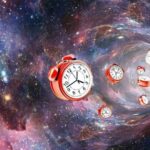

Written by Adi Foord, assistant professor of physics, UMBC
Curious Kids is a series for children of all ages. If you have a question you’d like an expert to answer, send it to CuriousKidsUS@theconversation.com.
Will it ever be possible for time travel to occur? – Alana C., age 12, Queens, New York
Have you ever dreamed of traveling through time, like characters do in science fiction movies? For centuries, the concept of time travel has captivated people’s imaginations. Time travel is the concept of moving between different points in time, just like you move between different places. In movies, you might have seen characters using special machines, magical devices or even hopping into a futuristic car to travel backward or forward in time.
But is this just a fun idea for movies, or could it really happen?
The question of whether time is reversible remains one of the biggest unresolved questions in science. If the universe follows the laws of thermodynamics, it may not be possible. The second law of thermodynamics states that things in the universe can either remain the same or become more disordered over time.
It’s a bit like saying you can’t unscramble eggs once they’ve been cooked. According to this law, the universe can never go back exactly to how it was before. Time can only go forward, like a one-way street.
Time is relative
However, physicist Albert Einstein’s theory of special relativity suggests that time passes at different rates for different people. Someone speeding along on a spaceship moving close to the speed of light – 671 million miles per hour! – will experience time slower than a person on Earth.
People have yet to build spaceships that can move at speeds anywhere near as fast as light, but astronauts who visit the International Space Station orbit around the Earth at speeds close to 17,500 mph. Astronaut Scott Kelly has spent 520 days at the International Space Station, and as a result has aged a little more slowly than his twin brother – and fellow astronaut – Mark Kelly. Scott used to be 6 minutes younger than his twin brother. Now, because Scott was traveling so much faster than Mark and for so many days, he is 6 minutes and 5 milliseconds younger.
Time isn’t the same everywhere.
Some scientists are exploring other ideas that could theoretically allow time travel. One concept involves wormholes, or hypothetical tunnels in space that could create shortcuts for journeys across the universe. If someone could build a wormhole and then figure out a way to move one end at close to the speed of light – like the hypothetical spaceship mentioned above – the moving end would age more slowly than the stationary end. Someone who entered the moving end and exited the wormhole through the stationary end would come out in their past.
However, wormholes remain theoretical: Scientists have yet to spot one. It also looks like it would be incredibly challenging to send humans through a wormhole space tunnel.
Paradoxes and failed dinner parties
There are also paradoxes associated with time travel. The famous “grandfather paradox” is a hypothetical problem that could arise if someone traveled back in time and accidentally prevented their grandparents from meeting. This would create a paradox where you were never born, which raises the question: How could you have traveled back in time in the first place? It’s a mind-boggling puzzle that adds to the mystery of time travel.
Famously, physicist Stephen Hawking tested the possibility of time travel by throwing a dinner party where invitations noting the date, time and coordinates were not sent out until after it had happened. His hope was that his invitation would be read by someone living in the future, who had capabilities to travel back in time. But no one showed up.
As he pointed out: “The best evidence we have that time travel is not possible, and never will be, is that we have not been invaded by hordes of tourists from the future.”
Telescopes are time machines
Interestingly, astrophysicists armed with powerful telescopes possess a unique form of time travel. As they peer into the vast expanse of the cosmos, they gaze into the past universe. Light from all galaxies and stars takes time to travel, and these beams of light carry information from the distant past. When astrophysicists observe a star or a galaxy through a telescope, they are not seeing it as it is in the present, but as it existed when the light began its journey to Earth millions to billions of years ago. https://www.youtube.com/embed/QeRtcJi3V38?wmode=transparent&start=0 Telescopes are a kind of time machine – they let you peer into the past.
NASA’s newest space telescope, the James Webb Space Telescope, is peering at galaxies that were formed at the very beginning of the Big Bang, about 13.7 billion years ago.
While we aren’t likely to have time machines like the ones in movies anytime soon, scientists are actively researching and exploring new ideas. But for now, we’ll have to enjoy the idea of time travel in our favorite books, movies and dreams.
This article is republished from The Conversation under a Creative Commons license. Read the original article and see more than 250 UMBC articles available in The Conversation.
]]>
Written by Adi Foord, assistant professor of physics, UMBC Curious Kids is a series for children of all ages. If you have a question you’d like an expert to answer, send it to...
https://umbc.edu/stories/science-behind-potential-for-time-travel/
https://my3.my.umbc.edu/api/v0/pixel/news/137027/guest@my.umbc.edu/1eecb70bc4d7c05aabbe161ef0946b87/api/pixel
cnms
discovery
magazine
physics
the-conversation
UMBC News & Magazine
https://my3.my.umbc.edu/groups/umbc-news-magazine
https://assets1-my.umbc.edu/system/shared/avatars/groups/000/001/943/24435aa6207c452e7bc15cc74b42c7bb/xsmall.png?1748556657
https://assets1-my.umbc.edu/system/shared/avatars/groups/000/001/943/24435aa6207c452e7bc15cc74b42c7bb/original.png?1748556657
https://assets2-my.umbc.edu/system/shared/avatars/groups/000/001/943/24435aa6207c452e7bc15cc74b42c7bb/xxlarge.png?1748556657
https://assets2-my.umbc.edu/system/shared/avatars/groups/000/001/943/24435aa6207c452e7bc15cc74b42c7bb/xlarge.png?1748556657
https://assets3-my.umbc.edu/system/shared/avatars/groups/000/001/943/24435aa6207c452e7bc15cc74b42c7bb/large.png?1748556657
https://assets1-my.umbc.edu/system/shared/avatars/groups/000/001/943/24435aa6207c452e7bc15cc74b42c7bb/medium.png?1748556657
https://assets2-my.umbc.edu/system/shared/avatars/groups/000/001/943/24435aa6207c452e7bc15cc74b42c7bb/small.png?1748556657
https://assets1-my.umbc.edu/system/shared/avatars/groups/000/001/943/24435aa6207c452e7bc15cc74b42c7bb/xsmall.png?1748556657
https://assets2-my.umbc.edu/system/shared/avatars/groups/000/001/943/24435aa6207c452e7bc15cc74b42c7bb/xxsmall.png?1748556657
UMBC News & Magazine
0
0
false
Mon, 13 Nov 2023 12:22:12 -0500
Is time travel even possible? An astrophysicist explains the science behind the science fiction
Written by Adi Foord, assistant professor of physics, UMBC
Curious Kids is a series for children of all ages. If you have a question you’d like an expert to answer, send it to CuriousKidsUS@theconversation.com.
Will it ever be possible for time travel to occur? – Alana C., age 12, Queens, New York
Have you ever dreamed of traveling through time, like characters do in science fiction movies? For centuries, the concept of time travel has captivated people’s imaginations. Time travel is the concept of moving between different points in time, just like you move between different places. In movies, you might have seen characters using special machines, magical devices or even hopping into a futuristic car to travel backward or forward in time.
But is this just a fun idea for movies, or could it really happen?
The question of whether time is reversible remains one of the biggest unresolved questions in science. If the universe follows the laws of thermodynamics, it may not be possible. The second law of thermodynamics states that things in the universe can either remain the same or become more disordered over time.
It’s a bit like saying you can’t unscramble eggs once they’ve been cooked. According to this law, the universe can never go back exactly to how it was before. Time can only go forward, like a one-way street.
Time is relative
However, physicist Albert Einstein’s theory of special relativity suggests that time passes at different rates for different people. Someone speeding along on a spaceship moving close to the speed of light – 671 million miles per hour! – will experience time slower than a person on Earth.
People have yet to build spaceships that can move at speeds anywhere near as fast as light, but astronauts who visit the International Space Station orbit around the Earth at speeds close to 17,500 mph. Astronaut Scott Kelly has spent 520 days at the International Space Station, and as a result has aged a little more slowly than his twin brother – and fellow astronaut – Mark Kelly. Scott used to be 6 minutes younger than his twin brother. Now, because Scott was traveling so much faster than Mark and for so many days, he is 6 minutes and 5 milliseconds younger.
Time isn’t the same everywhere.
Some scientists are exploring other ideas that could theoretically allow time travel. One concept involves wormholes, or hypothetical tunnels in space that could create shortcuts for journeys across the universe. If someone could build a wormhole and then figure out a way to move one end at close to the speed of light – like the hypothetical spaceship mentioned above – the moving end would age more slowly than the stationary end. Someone who entered the moving end and exited the wormhole through the stationary end would come out in their past.
However, wormholes remain theoretical: Scientists have yet to spot one. It also looks like it would be incredibly challenging to send humans through a wormhole space tunnel.
Paradoxes and failed dinner parties
There are also paradoxes associated with time travel. The famous “grandfather paradox” is a hypothetical problem that could arise if someone traveled back in time and accidentally prevented their grandparents from meeting. This would create a paradox where you were never born, which raises the question: How could you have traveled back in time in the first place? It’s a mind-boggling puzzle that adds to the mystery of time travel.
Famously, physicist Stephen Hawking tested the possibility of time travel by throwing a dinner party where invitations noting the date, time and coordinates were not sent out until after it had happened. His hope was that his invitation would be read by someone living in the future, who had capabilities to travel back in time. But no one showed up.
As he pointed out: “The best evidence we have that time travel is not possible, and never will be, is that we have not been invaded by hordes of tourists from the future.”
Telescopes are time machines
Interestingly, astrophysicists armed with powerful telescopes possess a unique form of time travel. As they peer into the vast expanse of the cosmos, they gaze into the past universe. Light from all galaxies and stars takes time to travel, and these beams of light carry information from the distant past. When astrophysicists observe a star or a galaxy through a telescope, they are not seeing it as it is in the present, but as it existed when the light began its journey to Earth millions to billions of years ago. https://www.youtube.com/embed/QeRtcJi3V38?wmode=transparent&start=0 Telescopes are a kind of time machine – they let you peer into the past.
NASA’s newest space telescope, the James Webb Space Telescope, is peering at galaxies that were formed at the very beginning of the Big Bang, about 13.7 billion years ago.
While we aren’t likely to have time machines like the ones in movies anytime soon, scientists are actively researching and exploring new ideas. But for now, we’ll have to enjoy the idea of time travel in our favorite books, movies and dreams.
This article is republished from The Conversation under a Creative Commons license. Read the original article and see more than 250 UMBC articles available in The Conversation.
]]>
Written by Adi Foord, assistant professor of physics, UMBC Curious Kids is a series for children of all ages. If you have a question you’d like an expert to answer, send it to...
https://umbc.edu/stories/science-behind-potential-for-time-travel/
https://my3.my.umbc.edu/api/v0/pixel/news/137203/guest@my.umbc.edu/8245fef6649ad39ba3bbdae8e6514fe2/api/pixel
cnms
discovery
magazine
physics
the-conversation
UMBC News
https://my3.my.umbc.edu/groups/umbc-news
https://assets2-my.umbc.edu/system/shared/avatars/groups/000/001/944/2c79aeea85b1abb37f8cf9fbcdc382b0/xsmall.png?1632921809
https://assets4-my.umbc.edu/system/shared/avatars/groups/000/001/944/2c79aeea85b1abb37f8cf9fbcdc382b0/original.png?1632921809
https://assets4-my.umbc.edu/system/shared/avatars/groups/000/001/944/2c79aeea85b1abb37f8cf9fbcdc382b0/xxlarge.png?1632921809
https://assets1-my.umbc.edu/system/shared/avatars/groups/000/001/944/2c79aeea85b1abb37f8cf9fbcdc382b0/xlarge.png?1632921809
https://assets1-my.umbc.edu/system/shared/avatars/groups/000/001/944/2c79aeea85b1abb37f8cf9fbcdc382b0/large.png?1632921809
https://assets1-my.umbc.edu/system/shared/avatars/groups/000/001/944/2c79aeea85b1abb37f8cf9fbcdc382b0/medium.png?1632921809
https://assets4-my.umbc.edu/system/shared/avatars/groups/000/001/944/2c79aeea85b1abb37f8cf9fbcdc382b0/small.png?1632921809
https://assets2-my.umbc.edu/system/shared/avatars/groups/000/001/944/2c79aeea85b1abb37f8cf9fbcdc382b0/xsmall.png?1632921809
https://assets4-my.umbc.edu/system/shared/avatars/groups/000/001/944/2c79aeea85b1abb37f8cf9fbcdc382b0/xxsmall.png?1632921809
UMBC News
0
0
false
Mon, 13 Nov 2023 12:22:12 -0500
Is time travel even possible? An astrophysicist explains the science behind the science fiction
Written by Adi Foord, assistant professor of physics, UMBC
Curious Kids is a series for children of all ages. If you have a question you’d like an expert to answer, send it to CuriousKidsUS@theconversation.com.
Will it ever be possible for time travel to occur? – Alana C., age 12, Queens, New York
Have you ever dreamed of traveling through time, like characters do in science fiction movies? For centuries, the concept of time travel has captivated people’s imaginations. Time travel is the concept of moving between different points in time, just like you move between different places. In movies, you might have seen characters using special machines, magical devices or even hopping into a futuristic car to travel backward or forward in time.
But is this just a fun idea for movies, or could it really happen?
The question of whether time is reversible remains one of the biggest unresolved questions in science. If the universe follows the laws of thermodynamics, it may not be possible. The second law of thermodynamics states that things in the universe can either remain the same or become more disordered over time.
It’s a bit like saying you can’t unscramble eggs once they’ve been cooked. According to this law, the universe can never go back exactly to how it was before. Time can only go forward, like a one-way street.
Time is relative
However, physicist Albert Einstein’s theory of special relativity suggests that time passes at different rates for different people. Someone speeding along on a spaceship moving close to the speed of light – 671 million miles per hour! – will experience time slower than a person on Earth.
People have yet to build spaceships that can move at speeds anywhere near as fast as light, but astronauts who visit the International Space Station orbit around the Earth at speeds close to 17,500 mph. Astronaut Scott Kelly has spent 520 days at the International Space Station, and as a result has aged a little more slowly than his twin brother – and fellow astronaut – Mark Kelly. Scott used to be 6 minutes younger than his twin brother. Now, because Scott was traveling so much faster than Mark and for so many days, he is 6 minutes and 5 milliseconds younger.
Time isn’t the same everywhere.
Some scientists are exploring other ideas that could theoretically allow time travel. One concept involves wormholes, or hypothetical tunnels in space that could create shortcuts for journeys across the universe. If someone could build a wormhole and then figure out a way to move one end at close to the speed of light – like the hypothetical spaceship mentioned above – the moving end would age more slowly than the stationary end. Someone who entered the moving end and exited the wormhole through the stationary end would come out in their past.
However, wormholes remain theoretical: Scientists have yet to spot one. It also looks like it would be incredibly challenging to send humans through a wormhole space tunnel.
Paradoxes and failed dinner parties
There are also paradoxes associated with time travel. The famous “grandfather paradox” is a hypothetical problem that could arise if someone traveled back in time and accidentally prevented their grandparents from meeting. This would create a paradox where you were never born, which raises the question: How could you have traveled back in time in the first place? It’s a mind-boggling puzzle that adds to the mystery of time travel.
Famously, physicist Stephen Hawking tested the possibility of time travel by throwing a dinner party where invitations noting the date, time and coordinates were not sent out until after it had happened. His hope was that his invitation would be read by someone living in the future, who had capabilities to travel back in time. But no one showed up.
As he pointed out: “The best evidence we have that time travel is not possible, and never will be, is that we have not been invaded by hordes of tourists from the future.”
Telescopes are time machines
Interestingly, astrophysicists armed with powerful telescopes possess a unique form of time travel. As they peer into the vast expanse of the cosmos, they gaze into the past universe. Light from all galaxies and stars takes time to travel, and these beams of light carry information from the distant past. When astrophysicists observe a star or a galaxy through a telescope, they are not seeing it as it is in the present, but as it existed when the light began its journey to Earth millions to billions of years ago. https://www.youtube.com/embed/QeRtcJi3V38?wmode=transparent&start=0 Telescopes are a kind of time machine – they let you peer into the past.
NASA’s newest space telescope, the James Webb Space Telescope, is peering at galaxies that were formed at the very beginning of the Big Bang, about 13.7 billion years ago.
While we aren’t likely to have time machines like the ones in movies anytime soon, scientists are actively researching and exploring new ideas. But for now, we’ll have to enjoy the idea of time travel in our favorite books, movies and dreams.
This article is republished from The Conversation under a Creative Commons license. Read the original article and see more than 250 UMBC articles available in The Conversation.
]]>
Written by Adi Foord, assistant professor of physics, UMBC Curious Kids is a series for children of all ages. If you have a question you’d like an expert to answer, send it to...
https://umbc.edu/stories/science-behind-potential-for-time-travel/
https://my3.my.umbc.edu/api/v0/pixel/news/137215/guest@my.umbc.edu/e5b03a0dcf36a7b8f411d7476312db6c/api/pixel
cnms
discovery
magazine
physics
the-conversation
UMBC Magazine
https://my3.my.umbc.edu/groups/retired-1945
https://assets2-my.umbc.edu/images/avatars/group/8/xsmall.png?1793799644
https://assets4-my.umbc.edu/images/avatars/group/8/original.png?1793799644
https://assets3-my.umbc.edu/images/avatars/group/8/xxlarge.png?1793799644
https://assets4-my.umbc.edu/images/avatars/group/8/xlarge.png?1793799644
https://assets1-my.umbc.edu/images/avatars/group/8/large.png?1793799644
https://assets2-my.umbc.edu/images/avatars/group/8/medium.png?1793799644
https://assets1-my.umbc.edu/images/avatars/group/8/small.png?1793799644
https://assets2-my.umbc.edu/images/avatars/group/8/xsmall.png?1793799644
https://assets4-my.umbc.edu/images/avatars/group/8/xxsmall.png?1793799644
UMBC Magazine
0
0
false
Mon, 13 Nov 2023 12:22:12 -0500
Chesapeake Arts Center seeks an Administrative Coordinator
POSITION DESCRIPTION:
The Administrative Desk Coordinator is the first point of contact for Chesapeake Arts Center (CAC) via phone or in person. As the ‘face’ of our organization, the successful candidate will be presentable and friendly, with outstanding customer service skills, showing a high attention to detail and follow through, initiative, and problem solving abilities.
ESSENTIAL FUNCTIONS:
]]>
POSITION DESCRIPTION: The Administrative Desk Coordinator is the first point of contact for Chesapeake Arts Center (CAC) via phone or in person. As the ‘face’ of our organization, the successful...
https://www.baltimoreculture.org/programs/jobsplus/34488
https://my3.my.umbc.edu/api/v0/pixel/news/137026/guest@my.umbc.edu/3d1187c938b406044b5d6d39e23e0429/api/pixel
alliance
arts
baltimore
cultural
culture
greater
jobs
museum
nonprofit
opportunities
organizations
part-time
positions
studies
Museum Practice
https://my3.my.umbc.edu/groups/museumpractice
https://assets2-my.umbc.edu/system/shared/avatars/groups/000/000/780/ec390e445f99f5d8c57a847f02552fbc/xsmall.png?1384380461
https://assets3-my.umbc.edu/system/shared/avatars/groups/000/000/780/ec390e445f99f5d8c57a847f02552fbc/original.png?1384380461
https://assets1-my.umbc.edu/system/shared/avatars/groups/000/000/780/ec390e445f99f5d8c57a847f02552fbc/xxlarge.png?1384380461
https://assets4-my.umbc.edu/system/shared/avatars/groups/000/000/780/ec390e445f99f5d8c57a847f02552fbc/xlarge.png?1384380461
https://assets2-my.umbc.edu/system/shared/avatars/groups/000/000/780/ec390e445f99f5d8c57a847f02552fbc/large.png?1384380461
https://assets3-my.umbc.edu/system/shared/avatars/groups/000/000/780/ec390e445f99f5d8c57a847f02552fbc/medium.png?1384380461
https://assets2-my.umbc.edu/system/shared/avatars/groups/000/000/780/ec390e445f99f5d8c57a847f02552fbc/small.png?1384380461
https://assets2-my.umbc.edu/system/shared/avatars/groups/000/000/780/ec390e445f99f5d8c57a847f02552fbc/xsmall.png?1384380461
https://assets1-my.umbc.edu/system/shared/avatars/groups/000/000/780/ec390e445f99f5d8c57a847f02552fbc/xxsmall.png?1384380461
Museum Practice
0
0
true
Mon, 13 Nov 2023 12:20:11 -0500
Mon, 13 Nov 2023 12:20:11 -0500
Paraprofessional Application LIVE!
Residential Life is HIRING for 2024-2025 academic year.
Apply to be a Maintenance Assistant, Desk Manager or Resident Assistant. Positions are for undergraduate students only. **
Application closes January 16th.
APPLICATION:
**our hourly positions will open in March 2024 which are available to graduate students**
]]>
Residential Life is HIRING for 2024-2025 academic year. Apply to be a Maintenance Assistant, Desk Manager or Resident Assistant. Positions are for undergraduate students only. **...
https://my3.my.umbc.edu/api/v0/pixel/news/137021/guest@my.umbc.edu/255c5cf87c0490bb4b06111c535929da/api/pixel
Residential Life
https://my3.my.umbc.edu/groups/reslife
https://assets2-my.umbc.edu/system/shared/avatars/groups/000/000/033/f8f656b73252c75518351df0289a43cc/xsmall.png?1426710501
https://assets1-my.umbc.edu/system/shared/avatars/groups/000/000/033/f8f656b73252c75518351df0289a43cc/original.PNG?1426710501
https://assets3-my.umbc.edu/system/shared/avatars/groups/000/000/033/f8f656b73252c75518351df0289a43cc/xxlarge.png?1426710501
https://assets1-my.umbc.edu/system/shared/avatars/groups/000/000/033/f8f656b73252c75518351df0289a43cc/xlarge.png?1426710501
https://assets2-my.umbc.edu/system/shared/avatars/groups/000/000/033/f8f656b73252c75518351df0289a43cc/large.png?1426710501
https://assets2-my.umbc.edu/system/shared/avatars/groups/000/000/033/f8f656b73252c75518351df0289a43cc/medium.png?1426710501
https://assets3-my.umbc.edu/system/shared/avatars/groups/000/000/033/f8f656b73252c75518351df0289a43cc/small.png?1426710501
https://assets2-my.umbc.edu/system/shared/avatars/groups/000/000/033/f8f656b73252c75518351df0289a43cc/xsmall.png?1426710501
https://assets2-my.umbc.edu/system/shared/avatars/groups/000/000/033/f8f656b73252c75518351df0289a43cc/xxsmall.png?1426710501
Residential Life
https://assets3-my.umbc.edu/system/shared/thumbnails/news/000/137/021/a293a3a937e5e0b027d6b29e89961460/xxlarge.jpg?1699892048
https://assets4-my.umbc.edu/system/shared/thumbnails/news/000/137/021/a293a3a937e5e0b027d6b29e89961460/xlarge.jpg?1699892048
https://assets3-my.umbc.edu/system/shared/thumbnails/news/000/137/021/a293a3a937e5e0b027d6b29e89961460/large.jpg?1699892048
https://assets2-my.umbc.edu/system/shared/thumbnails/news/000/137/021/a293a3a937e5e0b027d6b29e89961460/medium.jpg?1699892048
https://assets2-my.umbc.edu/system/shared/thumbnails/news/000/137/021/a293a3a937e5e0b027d6b29e89961460/small.jpg?1699892048
https://assets1-my.umbc.edu/system/shared/thumbnails/news/000/137/021/a293a3a937e5e0b027d6b29e89961460/xsmall.jpg?1699892048
https://assets2-my.umbc.edu/system/shared/thumbnails/news/000/137/021/a293a3a937e5e0b027d6b29e89961460/xxsmall.jpg?1699892048
0
0
true
Mon, 13 Nov 2023 11:16:47 -0500
Mon, 13 Nov 2023 11:31:13 -0500