CNMS Summer Book Club Challenge!
Stay academically fit this summer and enter to win!
Come join CNMS Advising with a SUMMER BOOK CLUB CHALLENGE! It’s essential that you keep up your reading skills this summer because before you know it – you will be thrown right back into your textbooks and other reading-heavy assignments. Don’t let the summer deteriorate your hard-earned skills!
So what does this mean? Read ANYTHING but do it regularly! It’s like you are exercising your reading muscles and keeping them toned for the fall! Even 20-30 minutes of reading a day for at least 4-5 days of the week will help. Fiction, non-fiction, magazines, graphic novels, journals, you name it – we want to know about it!
CNMS Advising will be offering a fiction, non-fiction, and staff pick every month – all with themes directly related to your interests, majors, and careers. We will also host a virtual book club every month in order to discuss our picks and find out more about yours! This is also a great way to meet your peers!
Follow us on Instagram (@cnmsadvising) for regular updates and use the #CNMSSummerReads2023 to enter our summer giveaway. All tags will be considered for an end of summer raffle. Show us what you are reading, where you are reading, favorite quotes, and how you are staying academically fit for the fall!
We are also growing a Goodreads page which already has a ton of great books to get you started and possibly even get some insight into your field. Follow us HERE and send us book recommendations!
To kick things off – our JUNE PICKS!
FICTION: “Cutting For Stone” by Abraham Verghese.
NONFICTION: “The Immortal Life of Henrietta Lacks” by Rebecca Skloot
STAFF PICK: “Being Wrong: Adventures in the Margin of Error” by Kathryn Schultz. This pick is brought to you by Emma Barnaby – your CNMS Student Success Coach – enjoy!
We will go more in depth with each of these picks every week so stay tuned!
Our first virtual book club will take place on June 27th from 3-4PM. See you there!
#cnmsadvising #umbc #Retrievers #RetrieverNation #academicsuccess #umbcacademicsuccess #blackandgold #umbclife #umbcsuccess #CNMSSummerReads2023
]]>
Come join CNMS Advising with a SUMMER BOOK CLUB CHALLENGE! It’s essential that you keep up your reading skills this summer because before you know it – you will be thrown right back into your...
https://cnmsadvising.umbc.edu/summer-book-club/
https://my3.my.umbc.edu/api/v0/pixel/news/133934/guest@my.umbc.edu/9b4075ce1c5a057e7d508324d678a805/api/pixel
College of Natural and Mathematical Sciences Advising
https://my3.my.umbc.edu/groups/cnmsadvising
https://assets4-my.umbc.edu/system/shared/avatars/groups/000/000/475/61f5727176d8301926b7c19064396eb6/xsmall.png?1654873031
https://assets1-my.umbc.edu/system/shared/avatars/groups/000/000/475/61f5727176d8301926b7c19064396eb6/original.png?1654873031
https://assets4-my.umbc.edu/system/shared/avatars/groups/000/000/475/61f5727176d8301926b7c19064396eb6/xxlarge.png?1654873031
https://assets1-my.umbc.edu/system/shared/avatars/groups/000/000/475/61f5727176d8301926b7c19064396eb6/xlarge.png?1654873031
https://assets3-my.umbc.edu/system/shared/avatars/groups/000/000/475/61f5727176d8301926b7c19064396eb6/large.png?1654873031
https://assets3-my.umbc.edu/system/shared/avatars/groups/000/000/475/61f5727176d8301926b7c19064396eb6/medium.png?1654873031
https://assets3-my.umbc.edu/system/shared/avatars/groups/000/000/475/61f5727176d8301926b7c19064396eb6/small.png?1654873031
https://assets4-my.umbc.edu/system/shared/avatars/groups/000/000/475/61f5727176d8301926b7c19064396eb6/xsmall.png?1654873031
https://assets2-my.umbc.edu/system/shared/avatars/groups/000/000/475/61f5727176d8301926b7c19064396eb6/xxsmall.png?1654873031
College of Natural and Mathematical Sciences Advising
https://assets3-my.umbc.edu/system/shared/thumbnails/news/000/133/934/c47c2a5c760665f553a2417359ca52cc/xxlarge.jpg?1686259975
https://assets2-my.umbc.edu/system/shared/thumbnails/news/000/133/934/c47c2a5c760665f553a2417359ca52cc/xlarge.jpg?1686259975
https://assets1-my.umbc.edu/system/shared/thumbnails/news/000/133/934/c47c2a5c760665f553a2417359ca52cc/large.jpg?1686259975
https://assets2-my.umbc.edu/system/shared/thumbnails/news/000/133/934/c47c2a5c760665f553a2417359ca52cc/medium.jpg?1686259975
https://assets2-my.umbc.edu/system/shared/thumbnails/news/000/133/934/c47c2a5c760665f553a2417359ca52cc/small.jpg?1686259975
https://assets1-my.umbc.edu/system/shared/thumbnails/news/000/133/934/c47c2a5c760665f553a2417359ca52cc/xsmall.jpg?1686259975
https://assets3-my.umbc.edu/system/shared/thumbnails/news/000/133/934/c47c2a5c760665f553a2417359ca52cc/xxsmall.jpg?1686259975
4
0
true
Thu, 08 Jun 2023 18:04:15 -0400
Thu, 08 Jun 2023 19:33:04 -0400
Building AI We Can Trust
The AI apocalypse is coming. Or it isn’t. Depending on what you read, you might get confused.
One thing is certain: Humans are fired up about smart machines. Much of the attention has focused on ChatGPT, an “artificial intelligence language model designed to generate human-like responses to natural language prompts” (in its own words).
ChatGPT gets coy if you ask whether its existence should be cause for human concern. “It’s important to recognize that I am a tool and not inherently good or bad. It’s how people choose to use me that can have positive or negative consequences,” it says.
Many researchers, however, are not so noncommittal. They see inherent flaws in the machine learning technology that forms the foundation of tools such as ChatGPT, and they would like to make it better.
While ChatGPT advises that “it’s always a good idea to double-check any important information I provide,” some UMBC researchers are working to build better safeguards into the AI systems themselves—AI the public can trust.
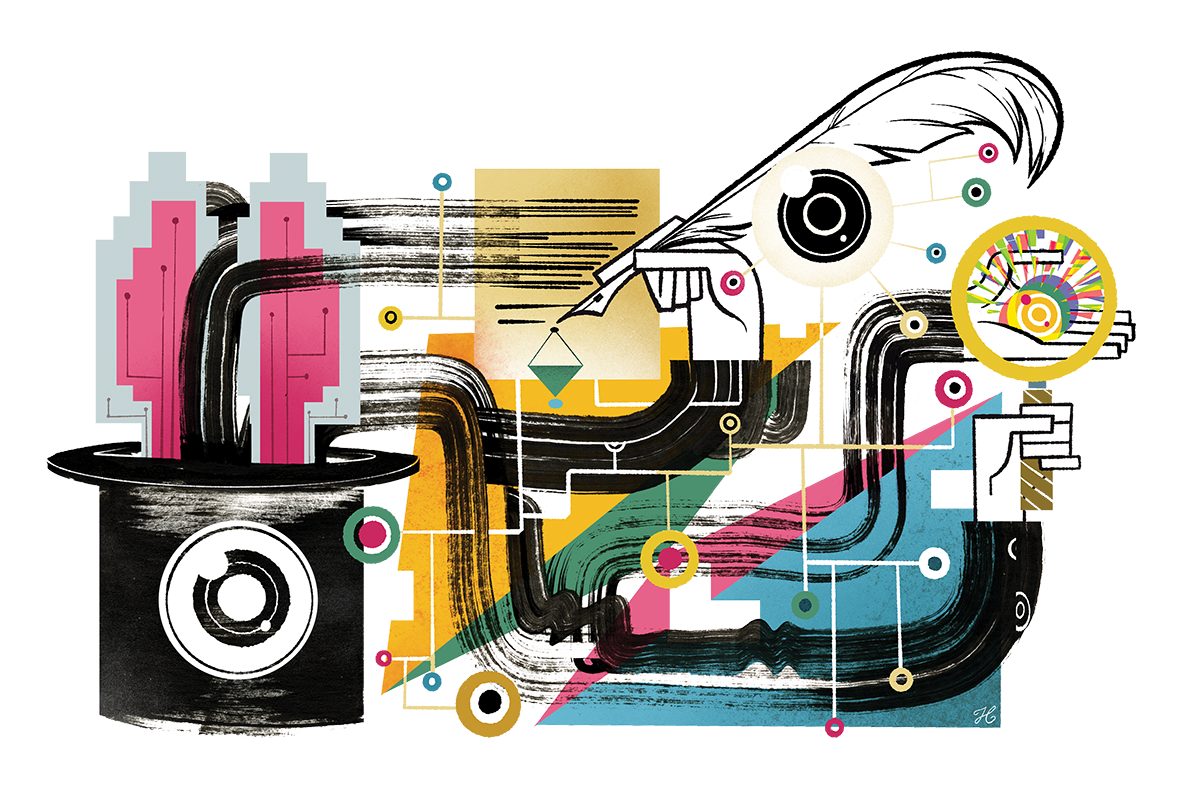
On March 22 of this year, a group including prominent artificial intelligence researchers and tech entrepreneurs released an open letter calling for a six-month pause on the training of powerful AI systems.
“AI systems with human-competitive intelligence can pose profound risks to society and humanity,” the letter argued. “Powerful AI systems should be developed only once we are confident that their effects will be positive and their risks will be manageable.”
The letter signers, including two UMBC faculty, expressed alarm at an AI arms race unleashed with the November 2022 public debut of ChatGPT, a celebrity chatbot that answers almost any question or prompt with humanlike ease. In a mere two months, the bot attracted 100 million users, and big tech companies began sprinting to deploy similar technology in their products.
Yet a general unease is accompanying this latest rush for AI gold.
ChatGPT can dazzle users with its eloquent prose (and poetry!), but it sometimes delivers complete falsehoods. People fret that such technology will eliminate jobs and empower scammers and dictators. And beneath it all, many researchers worry that we do not fully understand—nor can we reliably control—how creations such as ChatGPT work.
“At the core of many powerful AI systems today are what are called ‘blackbox’ models,” says Manas Gaur, an assistant professor in the Department of Computer Science and Electrical Engineering (CSEE) at UMBC. The models percolate data through layers of calculations so dense and complex that researchers struggle to track what’s happening inside. The models may excel at certain tasks—like writing sentences in ChatGPT’s case—but they cannot explain why they make the decisions they do. Sometimes they do perplexing, and erratic, things.
“Some people see ChatGPT and similar technology as a progressive tool while others fear it is dangerous,” says Nancy Tyagi, a master’s student in computer science at UMBC who is also working as a researcher in Gaur’s lab. “In my opinion, such tools are inherently risky and need further analysis. If these models are to be used in sensitive areas such as mental health or defense systems, then more work is required to make them safe, controllable, and trustworthy.”
Tyagi is working on a project to build an AI mental health assistant capable of initiating safe and appropriate conversations based on clinical guidelines in mental health. Her project is one of many that Gaur and other AI researchers at UMBC are launching with the aim of ensuring AI tools are accurate, transparent, and safe.
To better understand these researchers’ quest for trustworthy AI, it helps to take a step back and consider how the latest AI trend fits into the big picture.

A Brief History of
Thinking Machines
When the field of artificial intelligence launched in the 1950s, computers were feeble compared to the muscular monsters that power systems such as ChatGPT today. Yet researchers were intrigued by the possibility of teaching them to think like humans. What followed was a roller coaster of booms and busts.
“The history of AI has been marked by periods of hype, followed by some level of disillusionment,” says Tim Finin, CSEE professor and a researcher at UMBC who has been studying AI problems for more than 50 years.
Driving the ups and downs were three interrelated factors: the power (and limits) of the hardware that formed computers’ brains, the data available to train those brains, and the “thinking strategies” AI researchers devised.
In the beginning, researchers taught machines to play games, learn language, and solve mathematical puzzles using a variety of “thinking” approaches. Yet the field hit a wall in the 1970s: Computers couldn’t store enough information or process it fast enough to tackle real-world problems. This was the first “AI winter,” when funding dried up and the topic faded from public view.
The birth of the microprocessor at the end of the decade revitalized AI research. Riding the shoots of this new life, a certain approach to machine thinking rose to prominence—that of the expert system. These AI programs were based on pre-programmed knowledge and logic meant to mirror the reasoning of human experts. Perhaps the most famous expert system was IBM’s Deep Blue, which beat the Russian chess champion Garry Kasparov in a chess match in 1997.
Expert systems could shine when solving narrowly defined problems (such as winning a game of chess), but they were brittle, says Finin. The systems struggled to adapt to fuzzy and fluid real-world situations, and it was cumbersome to program all the rules that an expert might use to evaluate a problem.
As the limits of expert systems became clear in the 1990s, AI felt the chill of a second winter.
It was another advance in computing hardware that thawed the field again after the turn of the 21st century. The graphic processing units developed to enhance video games supercharged computers’ speed and power at low cost. This, coupled with a flood of free data from the internet, propelled a new type of AI to the forefront: machine learning.
With loads of computing power and heaps of examples to learn from, researchers found surprising success getting computers to teach themselves how to think. The computers start with a question, perform some calculations, and guess the answer. They then compare it to the actual answer. If they are wrong, (which they usually are at first), they fiddle with the calculations and try again. After running billions of calculations, such systems can become quite proficient at tasks such as identifying images of cats and predicting the next word in a sentence.
THE SEASONS OF AI
The growth of the modern field of AI has been marked by a series of rapid spurts, followed by more dormant periods. People often liken these ups and downs to the seasons. During AI summers, public attention shines hot on the field. Yet the bountiful fruit of the season has often grown from seeds of ideas planted during quiet AI winters.
Summer 1: Expert systems
AI programs based on knowledge and logic flourished in the 1980s. Examples include systems that can identify unknown chemicals, diagnose diseases, and play chess. The systems are safe and explainable, but fail to adapt to fluid and complex situations.
Summer 2: Machine learning
Starting in the early 2010s, the potent combination of supercharged computing and heaps of free internet data powered AI’s second summer: the golden era of machine learning—an era that we are arguably still in.
AI systems started to recognize images, transcribe and translate language, and create text and art almost like humans do. These systems have surprised even their own creators with their range of abilities, but they are hard to understand, reason with, and control.
Into the future: Hybrid AI
It’s not yet clear when or if the second AI summer will turn to fall. But researchers are already planting the seeds for future advances. Combining the fruits of past summers, researchers hope to make future AI systems that are adaptable and safe, self-taught and able to explain their decisions.
FUN FACT:
UMBC’s first Ph.D. graduate in computer science, Sanjeev Bhushan Ahuja, earned his degree when expert systems dominated AI. His dissertation, published in 1985 and titled “An Artificial Intelligence Environment for the Analysis and Classification of Errors in Discrete Sequential Processes,” advances techniques popular during this time.
This approach to machine learning is called a neural network, so named because it was originally inspired by the way neurons in the brain work. Neural networks lie at the heart of most famous AI applications today, including image classification tools, voice recognition, and text and image generators.

The power (and limits) of
machine learning
When many of the new machine learning systems debuted, their powers seemed almost miraculous. But soon enough, drawbacks emerged. The machines require enormous data sets (and enormous amounts of energy) to learn. They will adopt biases from their training data and sometimes from their interactions with humans. A chatbot named Tay was quickly scuppered after its 2016 release, when users pushed it into spewing racist and sexist ideas.
Machine learning systems can also fail spectacularly in individual instances (even if they get answers correct most of the time). For example, a driver was killed in 2016 when the autopilot in a Tesla car failed to recognize the side of a white trailer truck against a bright sky.
The blackbox nature of state-of-the-art machine learning means the systems are unable to explain or justify their conclusions, giving users—and even their own creators—little insight into their thinking. For the most part, the systems struggle to build consistent worldviews or reason logically.
The weaknesses of learning models also leave them susceptible to malicious manipulation. Adversaries might “poison” the data used to train the models or exploit the model’s opaqueness to hide an attack.
“It is time we fall back from trusting these models,” says Gaur, whose personal push to make AI systems more explainable, robust, and safe is part of a growing international movement.
Another UMBC researcher joining the push is Houbing Song, a professor in the Department of Information Systems at UMBC. Song says that transportation, defense, medicine, and the law are some areas where explainable and safe AI systems are needed the most.
As researchers tackle the challenge of making current AI systems better, they are often returning to ideas from an earlier era of AI.

Hybrid systems to merge logic and learning
If the AI systems of the 1980s married the AI systems of the 2010s, their baby might be the type of system Gaur, Song, and others are working to develop.
These systems look to deliver the learning capabilities of neural networks alongside the safeguards of knowledge and rule-based systems.
In the field of mental health, Gaur points out that current chatbot systems are not well suited to answering patients’ questions since they can give unsafe or off-the-wall responses.
“Guaranteeing these systems’ safety calls for more than just improving their overall performance” he says. “We must also make sure the systems are prevented from giving risky answers.”
Working with Karen Chen, an assistant professor from the Department of Information Systems, Gaur has written a paper highlighting the properties that AI-powered virtual mental health assistants should exhibit to be considered safe and effective.
Creating “AI Scientists” at UMBC
New scientific discoveries often lay the groundwork for significant advances in human well being. Think of medical treatments that spring from a better understanding of the human body or labor-saving devices we fashion using our knowledge of material properties.
Tyler Josephson, an assistant professor in the Department of Chemical, Biochemical, and Environmental Engineering, hopes to turbocharge science’s discovery engine, with a little help from AI.
Josephson has started a new project to translate chemical theories into a machine-readable mathematical language. Once the computers have access to the foundations of science, Josephson believes they could be tasked with logically manipulating that information to reveal new discoveries.
You might wonder if Josephson has any worries about creating his own AI-powered replacement. But he doesn’t think AI scientists will displace the human kind.
“I think scientists have so many different problems to solve. And if we solve them faster with AI, they just open up brand new questions for us to go after next,” Josephson said in an interview about his work with the Canadian radio program Quirks & Quarks.
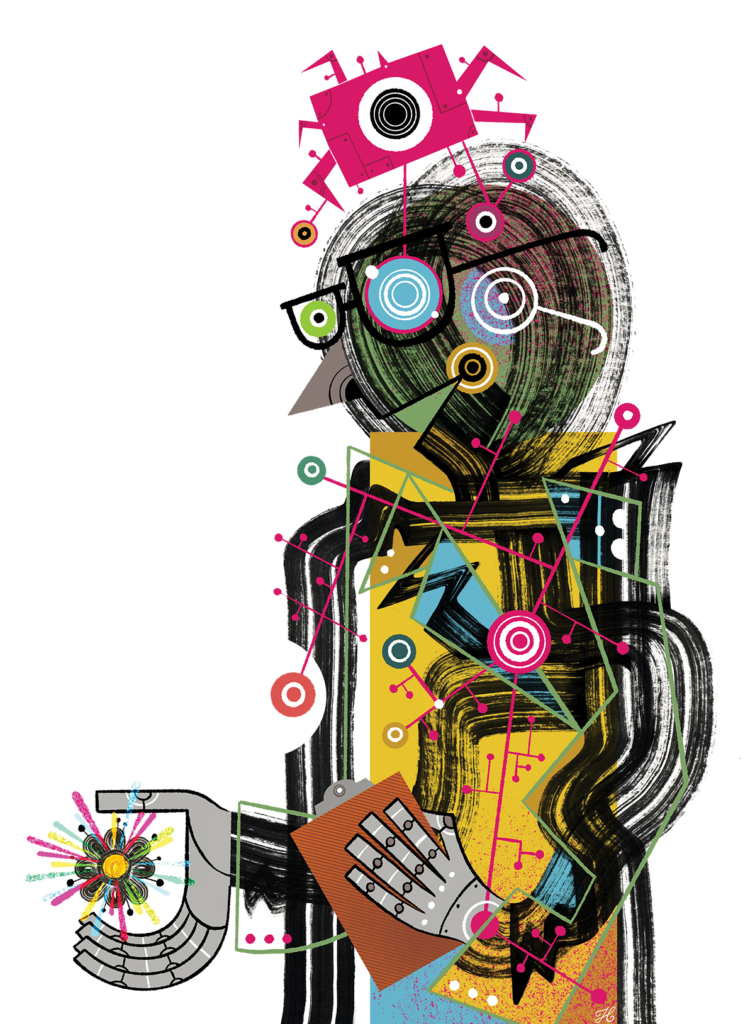
Together with his students, he is also working to create such systems. Using an approach called knowledge-infused learning, the researchers are looking to anchor their AI systems in clinically approved guidelines. They are also pushing their systems to reveal their thinking so that the approaches can be checked by mental health experts. Sometimes the results reveal that even when a system arrives at a correct conclusion, the information it used to reach that conclusion may be irrelevant to a human doctor’s thinking.
Song has also been coaxing AI learning models to open up. In a recent paper, he and his co-authors developed a tool to identify attacks on an image-recognition program by figuring out which parts of its neural network are most susceptible to manipulation.
In the fall of 2023, he will be teaching a new graduate-level course on a broad category of hybrid AI called neurosymbolic AI. UMBC will be only the second university in the world to offer such a course, he says.
Song arrived at UMBC in January on the heels of winning major honors for his research in computing and engineering and is looking forward to turning more of his attention to this emerging frontier in AI research. He says he eventually hopes to build a world-class AI research institute at his new academic home, focused on delivering learning machines that can be confidently used when safety is a top priority.
“I recognize the need for trustworthy AI,” Song says. “I believe that this field of research is where I can make unique contributions and take on responsibilities for my professional communities and my home institution.”

Technology to benefit society
The initial goal of AI, as defined by a group of researchers credited with launching the field at a 1956 workshop, was to “make machines use language, form abstractions and concepts, solve [the] kinds of problems now reserved for humans, and improve themselves.” But if the aim is human-like thinking, it naturally raises the question: How do humans think?
In a bestselling book titled “Thinking, Fast and Slow,” world-renowned psychologist Daniel Kahneman posits that humans have two thinking systems: a fast one and a slow one. The fast one is the thinking that comes to mind almost without effort, and we use this thinking most of the time. Yet it is prone to errors. The deliberative slow thinking system catches mistakes and enables breakthroughs in understanding.
Finin compares machine learning models to the fast-thinking system while knowledge and logic-based systems are more like the slow-thinking system. To make today’s faddish, fast-thinking models more competent, researchers such as Gaur, Song, and their students are extending them with slow-thinking capabilities.
We may still be decades away from AI systems approaching the full range of human intelligence. There are many ethical questions to grapple with before we reach a Hollywood-esque future of self-flying cars and android coworkers. Yet the decades of AI research up to this point have already transformed the world. AI concepts underpin the ways we search the web, shop online, and otherwise interact with the digital world.
AI has enormous potential to improve human lives, but we must proceed wisely. UMBC researchers are at the frontiers of AI research, pushing the limits of knowledge and theory, and striving to make the technology better for the benefit of society.
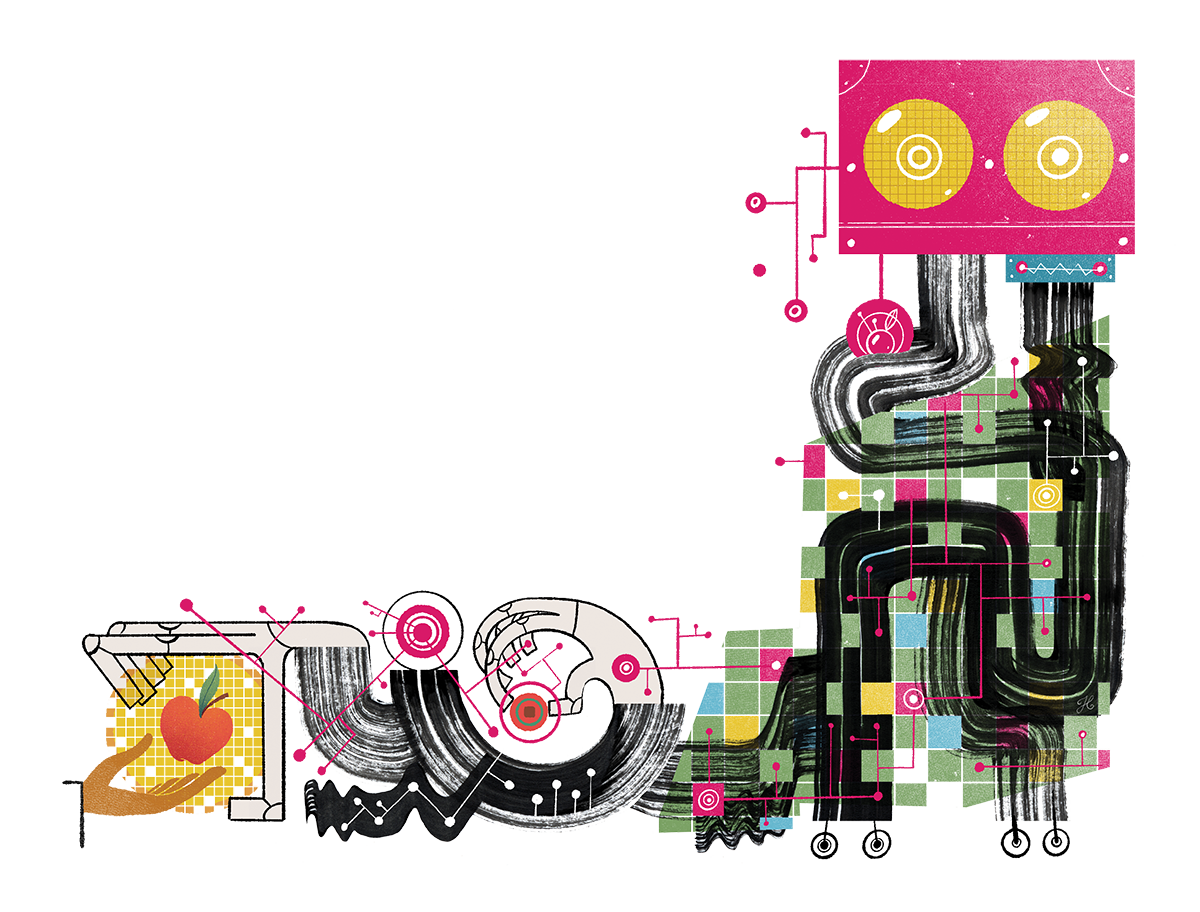
Training Your Robot Assistants
If you hope the AI revolution will bestow humanity with machine “Jeeves” capable of meeting your every need, Cynthia Matuszek has some bad news. “I’m always being asked: ‘When will we have robot butlers?’ I have to say—not any time soon,” says Matuszek, an associate professor in the Department of Computer Science and Electrical Engineering.
Matuszek researches how to build robots that understand human commands in complex and chaotic natural environments. She has successfully trained a robot hand that can respond to written prompts such as “Grab the apple.” She is also exploring how to teach robots to understand spoken language and to learn new concepts, such as how to dice a vegetable, if a human shows them how.
Part of what motivates Matuszek’s work is the huge unmet demand for caregivers to assist people as they age. Robots might fill the gap. Matuszek says we likely won’t have “Jack of all trades” helpers, but robots could specialize in certain tasks, such as preparing food or folding laundry.
Another part of what motivates Matuszek is the thrill of being the first person to discover how to do something new. “It’s really just so much fun,” she says.
Petya Campbell (618/UMBC),
Robert Emberson (617/UMBC),
Manisha Ganeshan (613/MSU), and
Stephen Guimond (612/UMBC) were recognized for their contributions to this year's
Satellite Needs Working Group (SNWG)-22 survey. Final reports have been submitted to respective agencies as well as the Office of Management and Budget (
OMB), the U.S. Group on Earth Observations (
USGEO), and the SNWG. This year, the team included 101 individuals from NASA, NOAA, and USGS as well as 17
IMPACT specialists. Click
here to learn more about the SNWG, its survey, and the role that it plays within NASA and other federal agencies.
]]>
Petya Campbell (618/UMBC), Robert Emberson (617/UMBC), Manisha Ganeshan (613/MSU), and Stephen Guimond (612/UMBC) were recognized for their contributions to this year's Satellite Needs Working...
https://my3.my.umbc.edu/api/v0/pixel/news/133932/guest@my.umbc.edu/0ca4fdd188079102485c5249395c2d87/api/pixel
gestar2
Goddard Earth Sciences Technology and Research II
https://my3.my.umbc.edu/groups/gestar2
https://assets3-my.umbc.edu/system/shared/avatars/groups/000/001/988/1dcee2628d726541e45f1ba8c31afe98/xsmall.png?1645477833
https://assets1-my.umbc.edu/system/shared/avatars/groups/000/001/988/1dcee2628d726541e45f1ba8c31afe98/original.png?1645477833
https://assets1-my.umbc.edu/system/shared/avatars/groups/000/001/988/1dcee2628d726541e45f1ba8c31afe98/xxlarge.png?1645477833
https://assets4-my.umbc.edu/system/shared/avatars/groups/000/001/988/1dcee2628d726541e45f1ba8c31afe98/xlarge.png?1645477833
https://assets2-my.umbc.edu/system/shared/avatars/groups/000/001/988/1dcee2628d726541e45f1ba8c31afe98/large.png?1645477833
https://assets4-my.umbc.edu/system/shared/avatars/groups/000/001/988/1dcee2628d726541e45f1ba8c31afe98/medium.png?1645477833
https://assets1-my.umbc.edu/system/shared/avatars/groups/000/001/988/1dcee2628d726541e45f1ba8c31afe98/small.png?1645477833
https://assets3-my.umbc.edu/system/shared/avatars/groups/000/001/988/1dcee2628d726541e45f1ba8c31afe98/xsmall.png?1645477833
https://assets3-my.umbc.edu/system/shared/avatars/groups/000/001/988/1dcee2628d726541e45f1ba8c31afe98/xxsmall.png?1645477833
Goddard Earth Sciences Technology and Research II
https://assets4-my.umbc.edu/system/shared/thumbnails/news/000/133/932/87ed2956e624698d4b6abfc53c423f65/xxlarge.jpg?1686252325
https://assets1-my.umbc.edu/system/shared/thumbnails/news/000/133/932/87ed2956e624698d4b6abfc53c423f65/xlarge.jpg?1686252325
https://assets3-my.umbc.edu/system/shared/thumbnails/news/000/133/932/87ed2956e624698d4b6abfc53c423f65/large.jpg?1686252325
https://assets1-my.umbc.edu/system/shared/thumbnails/news/000/133/932/87ed2956e624698d4b6abfc53c423f65/medium.jpg?1686252325
https://assets4-my.umbc.edu/system/shared/thumbnails/news/000/133/932/87ed2956e624698d4b6abfc53c423f65/small.jpg?1686252325
https://assets3-my.umbc.edu/system/shared/thumbnails/news/000/133/932/87ed2956e624698d4b6abfc53c423f65/xsmall.jpg?1686252325
https://assets1-my.umbc.edu/system/shared/thumbnails/news/000/133/932/87ed2956e624698d4b6abfc53c423f65/xxsmall.jpg?1686252325
1
0
false
Thu, 08 Jun 2023 15:27:14 -0400
Student Wage Guidelines (Per HR)
Effective July 1, 2023
Effective July 1, 2023, the minimum wage for hourly employees at UMBC will increase to $15.00. As
a result the standard hourly pay range for undergraduate student
workers will be $15.00 to $24.00. Graduate student workers (not with the
tile of Graduate Assistant) may be paid up to $28.00. Any request to
hire students on a one-time pay or flat pay appointment must have
HR-approved justification attached, and outline that the flat pay meets
the established minimum wage guidelines.
Departments
have the discretion, consistent with the duties of the position, to
compensate a student worker above the minimum. Notwithstanding that
discretion, graduate student workers performing duties similar to those
of a Graduate Assistant (GA) must be compensate at an hourly wage
similar in amount to that of the GA. Departments can request an opinion
from the Associate Dean of the Graduate School as to whether graduate
student worker duties are consistent with those of a GA. Current
information on assistant rates may be obtained here.
Requests
for appointments above the maximum for undergraduate or graduate level
students must be pre-approved by the HR Department and accompanied by
the appropriate justification (brief description of higher level complex
tasks).
Read the full guidelines here.
We celebrate with you! You matter! UMBC Resources include:
]]>
June marks National LGBTQ+ Pride Month and offers the nation the opportunity to reflect on the incredible contributions of the LGBTQ+ community. Our nation is at its best when it welcomes,...
https://oei.umbc.edu/lgbtq-resources/
https://my3.my.umbc.edu/api/v0/pixel/news/133930/guest@my.umbc.edu/5571ef0632ae7feb938227ebbf9108e3/api/pixel
accessibility
asexual
bisexual
disability
diversity
diversityandinclusion
fluid
gay
gender
lesbian
pride
queer
spectrum
transtransgender
Formerly known as Student Disability Services
https://my3.my.umbc.edu/groups/sss
https://assets2-my.umbc.edu/system/shared/avatars/groups/000/000/045/7bd1d4fb54807870659b6b4042c75b76/xsmall.png?1544104103
https://assets3-my.umbc.edu/system/shared/avatars/groups/000/000/045/7bd1d4fb54807870659b6b4042c75b76/original.jpg?1544104103
https://assets2-my.umbc.edu/system/shared/avatars/groups/000/000/045/7bd1d4fb54807870659b6b4042c75b76/xxlarge.png?1544104103
https://assets4-my.umbc.edu/system/shared/avatars/groups/000/000/045/7bd1d4fb54807870659b6b4042c75b76/xlarge.png?1544104103
https://assets3-my.umbc.edu/system/shared/avatars/groups/000/000/045/7bd1d4fb54807870659b6b4042c75b76/large.png?1544104103
https://assets3-my.umbc.edu/system/shared/avatars/groups/000/000/045/7bd1d4fb54807870659b6b4042c75b76/medium.png?1544104103
https://assets3-my.umbc.edu/system/shared/avatars/groups/000/000/045/7bd1d4fb54807870659b6b4042c75b76/small.png?1544104103
https://assets2-my.umbc.edu/system/shared/avatars/groups/000/000/045/7bd1d4fb54807870659b6b4042c75b76/xsmall.png?1544104103
https://assets3-my.umbc.edu/system/shared/avatars/groups/000/000/045/7bd1d4fb54807870659b6b4042c75b76/xxsmall.png?1544104103
Office of Student Disability Services
4
0
true
Thu, 08 Jun 2023 14:42:32 -0400
Information Regarding Air Quality
Guidance and Resources
As you are likely aware, smoke from wildfires in eastern
Canada is continuing to spread and causing poor air quality across much of the
eastern U.S., including on UMBC's campus and in surrounding areas.
Extended exposure to such poor air quality can be unhealthy for everyone and
more problematic for those with breathing difficulties. For these reasons we
advise minimizing or canceling outdoor activities. Supervisors should consider
allowing staff to work remotely if breathing difficulties are a concern.
UMBC's Environmental Safety and Health as well as Facilities staff are
monitoring conditions within buildings on campus, as well as reducing the
amount of outside air that is being brought into our facilities.
You can learn more and see current air quality conditions on UMBC's Office of
Sustainability website.
Vice President for Administration and Finance Kathy L. Dettloff
Sr. Associate Vice President for Administrative Services Lenn Caron, P.E.
]]>
As you are likely aware, smoke from wildfires in eastern Canada is continuing to spread and causing poor air quality across much of the eastern U.S., including on UMBC's campus and in surrounding...
https://my3.my.umbc.edu/api/v0/pixel/news/133928/guest@my.umbc.edu/38b141d0f4b9cdd180549f8e878f2006/api/pixel
UMBC Community News
https://my3.my.umbc.edu/groups/retired-1090
https://assets3-my.umbc.edu/system/shared/avatars/groups/000/001/090/56c39666a7bf2e5028d5419fc903e52d/xsmall.png?1593096708
https://assets1-my.umbc.edu/system/shared/avatars/groups/000/001/090/56c39666a7bf2e5028d5419fc903e52d/original.png?1593096708
https://assets4-my.umbc.edu/system/shared/avatars/groups/000/001/090/56c39666a7bf2e5028d5419fc903e52d/xxlarge.png?1593096708
https://assets3-my.umbc.edu/system/shared/avatars/groups/000/001/090/56c39666a7bf2e5028d5419fc903e52d/xlarge.png?1593096708
https://assets1-my.umbc.edu/system/shared/avatars/groups/000/001/090/56c39666a7bf2e5028d5419fc903e52d/large.png?1593096708
https://assets1-my.umbc.edu/system/shared/avatars/groups/000/001/090/56c39666a7bf2e5028d5419fc903e52d/medium.png?1593096708
https://assets3-my.umbc.edu/system/shared/avatars/groups/000/001/090/56c39666a7bf2e5028d5419fc903e52d/small.png?1593096708
https://assets3-my.umbc.edu/system/shared/avatars/groups/000/001/090/56c39666a7bf2e5028d5419fc903e52d/xsmall.png?1593096708
https://assets3-my.umbc.edu/system/shared/avatars/groups/000/001/090/56c39666a7bf2e5028d5419fc903e52d/xxsmall.png?1593096708
UMBC Community News
0
0
false
Thu, 08 Jun 2023 14:36:12 -0400
Information Regarding Air Quality
Guidance and Resources
As you are likely aware, smoke from wildfires in eastern
Canada is continuing to spread and causing poor air quality across much of the
eastern U.S., including on UMBC's campus and in surrounding areas.
Extended exposure to such poor air quality can be unhealthy for everyone and
more problematic for those with breathing difficulties. For these reasons we
advise minimizing or canceling outdoor activities. Supervisors should consider
allowing staff to work remotely if breathing difficulties are a concern.
UMBC's Environmental Safety and Health as well as Facilities staff are
monitoring conditions within buildings on campus, as well as reducing the
amount of outside air that is being brought into our facilities.
You can learn more and see current air quality conditions on UMBC's Office of
Sustainability website.
Vice President for Administration and Finance Kathy L. Dettloff
Sr. Associate Vice President for Administrative Services Lenn Caron, P.E.
]]>
As you are likely aware, smoke from wildfires in eastern Canada is continuing to spread and causing poor air quality across much of the eastern U.S., including on UMBC's campus and in surrounding...
https://my3.my.umbc.edu/api/v0/pixel/news/133929/guest@my.umbc.edu/b8d892212c61a644b134840f483e6e35/api/pixel
UMBC Student Communications
https://my3.my.umbc.edu/groups/student-announcements
https://assets3-my.umbc.edu/system/shared/avatars/groups/000/001/091/802210c1dfb4628bc26ad06d56b3de40/xsmall.png?1593095483
https://assets1-my.umbc.edu/system/shared/avatars/groups/000/001/091/802210c1dfb4628bc26ad06d56b3de40/original.png?1593095483
https://assets4-my.umbc.edu/system/shared/avatars/groups/000/001/091/802210c1dfb4628bc26ad06d56b3de40/xxlarge.png?1593095483
https://assets4-my.umbc.edu/system/shared/avatars/groups/000/001/091/802210c1dfb4628bc26ad06d56b3de40/xlarge.png?1593095483
https://assets4-my.umbc.edu/system/shared/avatars/groups/000/001/091/802210c1dfb4628bc26ad06d56b3de40/large.png?1593095483
https://assets4-my.umbc.edu/system/shared/avatars/groups/000/001/091/802210c1dfb4628bc26ad06d56b3de40/medium.png?1593095483
https://assets2-my.umbc.edu/system/shared/avatars/groups/000/001/091/802210c1dfb4628bc26ad06d56b3de40/small.png?1593095483
https://assets3-my.umbc.edu/system/shared/avatars/groups/000/001/091/802210c1dfb4628bc26ad06d56b3de40/xsmall.png?1593095483
https://assets1-my.umbc.edu/system/shared/avatars/groups/000/001/091/802210c1dfb4628bc26ad06d56b3de40/xxsmall.png?1593095483
UMBC Student Communications
2
0
false
Thu, 08 Jun 2023 14:35:02 -0400
Walkway & Service Route Impacts – Chemistry & Biology
June 5th, 2023 to August 18th, 2023
UMBC Facilities
Management is currently in the process of replacing the roof at the Biology
building. This work will impact the pedestrian route at the academic walkway,
between Chemistry and Biology. The
impacts will occur between June 5th, 2023 and August 18, 2023.
Accessible routes through the area will be maintained for the duration of the
work. An accessible path through the Biology building will be available weekdays 7 AM - 11 PM. Adjacent building entrances will remain open and deliveries can continue
without modifications. Signage will be posted to guide the campus community
around the area. Please see attached graphic which illustrates the changes.
The walkway will be open for emergency vehicles as needed.
Work to restore the walkway will be completed upon completion
of the construction work.
Accessibility is part of the design process, and we work in partnership with Accessibility and Disability Services which supports faculty, staff, students and visitors with disabilities. If you have a concern about accessibility or want to inquire about a disability-based accommodation, please do so through their website.
Thank you for your patience as we work to maintain and enhance the UMBC campus.
For more
updates on summer construction, please follow Facilities Management on
myUMBC.
Facilities Management
]]>
UMBC Facilities Management is currently in the process of replacing the roof at the Biology building. This work will impact the pedestrian route at the academic walkway, between Chemistry and...
https://fm.umbc.edu/
Image
https://assets3-my.umbc.edu/system/shared/attachments/7d8ed814d3440c9996a60a0ca722d33c/6af299b8/news/000/133/923/299c2682d4485edb0512fd6e285433d4/Chem-Bio-Closure.jpg?1686247677
https://my3.my.umbc.edu/api/v0/pixel/news/133923/guest@my.umbc.edu/e709eaa10dec16dd7f1f506ca7f3044f/api/pixel
Facilities Management
https://my3.my.umbc.edu/groups/fm
https://assets1-my.umbc.edu/images/avatars/group/3/xsmall.png?1793799445
https://assets2-my.umbc.edu/images/avatars/group/3/original.png?1793799445
https://assets1-my.umbc.edu/images/avatars/group/3/xxlarge.png?1793799445
https://assets2-my.umbc.edu/images/avatars/group/3/xlarge.png?1793799445
https://assets3-my.umbc.edu/images/avatars/group/3/large.png?1793799445
https://assets4-my.umbc.edu/images/avatars/group/3/medium.png?1793799445
https://assets3-my.umbc.edu/images/avatars/group/3/small.png?1793799445
https://assets1-my.umbc.edu/images/avatars/group/3/xsmall.png?1793799445
https://assets3-my.umbc.edu/images/avatars/group/3/xxsmall.png?1793799445
Facilities Management
https://assets3-my.umbc.edu/system/shared/thumbnails/news/000/133/923/992e166ac6db09b44301a3e86e08a654/xxlarge.jpg?1686247651
https://assets3-my.umbc.edu/system/shared/thumbnails/news/000/133/923/992e166ac6db09b44301a3e86e08a654/xlarge.jpg?1686247651
https://assets3-my.umbc.edu/system/shared/thumbnails/news/000/133/923/992e166ac6db09b44301a3e86e08a654/large.jpg?1686247651
https://assets1-my.umbc.edu/system/shared/thumbnails/news/000/133/923/992e166ac6db09b44301a3e86e08a654/medium.jpg?1686247651
https://assets2-my.umbc.edu/system/shared/thumbnails/news/000/133/923/992e166ac6db09b44301a3e86e08a654/small.jpg?1686247651
https://assets1-my.umbc.edu/system/shared/thumbnails/news/000/133/923/992e166ac6db09b44301a3e86e08a654/xsmall.jpg?1686247651
https://assets3-my.umbc.edu/system/shared/thumbnails/news/000/133/923/992e166ac6db09b44301a3e86e08a654/xxsmall.jpg?1686247651
1
0
true
Thu, 08 Jun 2023 14:25:09 -0400
New Campus Electrical Feeder Installation
May 24, 2023 - December 2023
A new electrical feeder, which will improve reliability for the campus, is currently being installed by Baltimore Gas and Electric. The new feeder line, from the Pumphrey substation, will enter the campus from the east along Poplar Avenue. The new feeder line will carry 34KV to replace one of the two lines fed from the Frederick Road substation to the west. The work includes installation of twelve manholes, two concrete encased bends, two six-inch conduits for electric power, and one two-inch conduit for telecom lines through the process of directional boring. Directional boring will significantly decrease the impact to campus during the feeder installation.
The work began on May 24, 2023 along Shelbourne Road and will continue on-campus through December, 2023. The work most impactful to campus operations will be completed before the fall 2023 semester. Please see graphic for detailed schedule information.
Accessibility is part of the design process, and we work in partnership with Accessibility and Disability Services which supports faculty, staff, students and visitors with disabilities. If you have a concern about accessibility or want to inquire about a disability-based accommodation, please do so through their website.
Thank you for your patience as we work to maintain and enhance the UMBC campus.
]]>
A new electrical feeder, which will improve reliability for the campus, is currently being installed by Baltimore Gas and Electric. The new feeder line, from the Pumphrey substation, will enter...
https://fm.umbc.edu/new-campus-electrical-feeder/
Image
https://assets3-my.umbc.edu/system/shared/attachments/43f2c617d3842f79b4e47b889fa04e22/6af299b8/news/000/133/927/50c12e59c780c2552f9d67bcd7bb2541/Feeder-Plan-w-Dates.jpg?1686246779
https://my3.my.umbc.edu/api/v0/pixel/news/133927/guest@my.umbc.edu/097aff81fdf881dd5b3b2b257235b717/api/pixel
Facilities Management
https://my3.my.umbc.edu/groups/fm
https://assets1-my.umbc.edu/images/avatars/group/3/xsmall.png?1793799445
https://assets2-my.umbc.edu/images/avatars/group/3/original.png?1793799445
https://assets1-my.umbc.edu/images/avatars/group/3/xxlarge.png?1793799445
https://assets2-my.umbc.edu/images/avatars/group/3/xlarge.png?1793799445
https://assets3-my.umbc.edu/images/avatars/group/3/large.png?1793799445
https://assets4-my.umbc.edu/images/avatars/group/3/medium.png?1793799445
https://assets3-my.umbc.edu/images/avatars/group/3/small.png?1793799445
https://assets1-my.umbc.edu/images/avatars/group/3/xsmall.png?1793799445
https://assets3-my.umbc.edu/images/avatars/group/3/xxsmall.png?1793799445
Facilities Management
https://assets4-my.umbc.edu/system/shared/thumbnails/news/000/133/927/b2657d35585bf33d8828bf61b06ff7c9/xxlarge.jpg?1686246753
https://assets3-my.umbc.edu/system/shared/thumbnails/news/000/133/927/b2657d35585bf33d8828bf61b06ff7c9/xlarge.jpg?1686246753
https://assets3-my.umbc.edu/system/shared/thumbnails/news/000/133/927/b2657d35585bf33d8828bf61b06ff7c9/large.jpg?1686246753
https://assets1-my.umbc.edu/system/shared/thumbnails/news/000/133/927/b2657d35585bf33d8828bf61b06ff7c9/medium.jpg?1686246753
https://assets1-my.umbc.edu/system/shared/thumbnails/news/000/133/927/b2657d35585bf33d8828bf61b06ff7c9/small.jpg?1686246753
https://assets2-my.umbc.edu/system/shared/thumbnails/news/000/133/927/b2657d35585bf33d8828bf61b06ff7c9/xsmall.jpg?1686246753
https://assets1-my.umbc.edu/system/shared/thumbnails/news/000/133/927/b2657d35585bf33d8828bf61b06ff7c9/xxsmall.jpg?1686246753
4
0
true
Thu, 08 Jun 2023 14:19:19 -0400
Looking For Room
open to share with other students
Hello all,
I am an international student and will be moving in for Fall 2023 semester. I am in search of accommodation close to campus. Anyone with information on accommodation can contact me via
mgharte1@umbc.edu . Thank you.