<?xml version="1.0"?>
<News hasArchived="true" page="7528" pageCount="10837" pageSize="10" timestamp="Thu, 24 Sep 2026 02:15:33 -0400" url="https://my3.my.umbc.edu/posts.xml?mode=activity&amp;page=7528&amp;range=30">
<NewsItem contentIssues="true" id="122493" important="false" status="posted" url="https://my3.my.umbc.edu/posts/122493">
<Title>Discovery &#8211; Summer 2014</Title>
<Body>
<![CDATA[
    <div class="html-content">
    <img width="150" height="150" src="https://umbc.edu/wp-content/uploads/2014/07/s14-discovery-storm-1-150x150.jpg" alt="" style="max-width: 100%; height: auto;"><h3>CALM IN A STORM</h3>
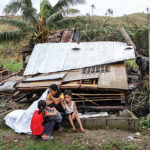
    <p>It was the middle of the night in November 2013, just after Typhoon Haiyan struck, when <strong>Sako Narita ’04</strong>,<strong> interdisciplinary studies (international emergency health services)</strong>, received an urgent phone call from Japan with a request: a disaster response team organized by Humanitarian Medical Assistance (HuMA) to help provide aid to the Philippines needed her expertise.</p>
    <p>The call did not come as a surprise to Narita, who is currently a master’s student in UMBC’s emergency health services (EHS) department. She had prior experience providing disaster response for the 2011 earthquake and tsunami in her native Japan and a previous typhoon in the Philippines in 2012.</p>
    <p>Narita spent ten days in the Philippines after Haiyan struck. She provided needs assessment, assisted patients, negotiated with local and international health and government organizations, set up mobile medical clinics, and did whatever she could to ensure typhoon victims received necessary care.</p>
    <p>“Believe it or not, the people were more positive than we expected,” says Narita. “Sometimes people were already moving on – they started a new life and started building new houses. But deep inside, they still are struggling.”</p>
    <p>One key part of Narita’s job was negotiation – a skill she has developed both in field experience and as part of her UMBC education.</p>
    <p>The on-the-ground situation during Narita’s first mission in the Philippines in 2012 required her to negotiate with local officials to gain access to the disaster site for HuMA. During her more recent trip, she brokered a partnership with an Israeli disaster response team.</p>
    <p>The international reputation of UMBC’s EHS department as a leader in the field helped attract Narita – a student from Japan who was interested in studying the intersection between medicine and emergency health services.</p>
    <p>“All of my knowledge about disaster response I got at UMBC,” Narita observes.</p>
    <p>“What makes our program different from every other program is that our focus is on that area of overlap between public health and emergency management,” explains <strong>Rick Bissell</strong>, a professor of emergency health services and the director of the EHS graduate program.</p>
    <p>UMBC’s graduate program offers advanced training in emergency clinical response, management and public health that prepares students like Narita to meet disaster-related emergency health needs (as well as less urgent needs) in both domestic and international situations.</p>
    <p>“We educate the whole person,” says <strong>Bruce Walz</strong>, a professor of emergency health services and the chair of the department. “What we’ve heard back from employers is that our students know how to think. They’re not just doing a protocol. They know why they’re doing that protocol, they know why they’re giving that drug and they can make those decisions in the field.”</p>
    <p>This priority on educating students as “whole people” is evident in the work of EHS alumni and students like Narita, who is also a national registered paramedic and Maryland emergency medical technician-paramedic. The level of dedication and quality of work for which the program’s graduates are known makes them much sought after in the aftermath of disasters such as Haiyan.</p>
    <p>“HuMA could contact me again,” Narita says, “and I hope they do.”</p>
    <p><em>— Max Cole</em></p>
    <h3>PLANTING A SEED</h3>
    <p><img src="/wp-content/uploads/2014/07/s14-discovery-seedgrant.jpg" alt="s14-DISCOVERY-seedgrant" width="470" height="277" style="max-width: 100%; height: auto;"></p>
    <p>Faculty members at Maryland universities conduct a wide array of cutting-edge research – from providing relief for victims of spinal cord injury to developing new targeted methods to deliver drugs through nanotechnology.</p>
    <p>More and more of that vital work is being done in collaborations between faculty at UMBC and the University of Maryland, Baltimore (UMB).</p>
    <p>The latest expansion of this research partnership is the UMBC-UMB Research and Innovation Partnership Seed Grant Program that pairs primary investigators from each university to work together as a team. Successful partners are offered research funding of up to $75,000 over twelve months to pursue their collaboration.</p>
    <p>The program’s first grant recipients were announced at a ceremony and poster session held at UMBC in February, where UMB Chief Academic and Research Officer and Senior Vice President <strong>Bruce Jarrell</strong> observed that the program represents a deepening relationship that already includes cooperation on a joint graduate school and the Institute of Marine Environmental Technology (IMET).</p>
    <p>“These collaborations already exist,” Jarrell observed. “And we’re proud to have UMBC as a partner.”</p>
    <p>UMBC <strong>President Freeman A. Hrabowski, III</strong>, was enthusiastic about the projects selected, which include investigations that may influence the course of research into cancer, strokes and muscle degeneration.</p>
    <p>“The [program] is a means by which both universities can better discover each other’s strengths and needs to see how we can better collaborate,” said Hrabowski.</p>
    <p>UMB President <strong>Jay Perman</strong> said increased partnership between the two universities is a key element of his vision: “The partnerships that UMBC and UMB have enjoyed for years are real, longstanding collaborations, and have been extremely successful, if not widely known.”</p>
    <p><strong>William E. Kirwan</strong>, Chancellor of the University System of Maryland, also praised the program for its “focus on cutting-edge science and health concerns” and its emphasis on interdisciplinary teamwork.</p>
    <p>The first five teams are:</p>
    <p>• <strong>Kathleen Hoffman</strong>, professor of mathematics (UMBC), and <strong>Asaf Keller</strong>, professor of anatomy and neurobiology (UMB), are exploring the chronic pain of patients with spinal cord injury and how computational modeling may help analyze the neurobiological changes in the central nervous system.</p>
    <p>• <strong>Martin Schneider</strong>, professor of biochemistry and molecular biology (UMB), and <strong>Bradford E. Peercy</strong>, assistant professor of mathematics (UMBC) are combining forces to analyze a transcription factor (Foxo1) in skeletal muscle that activates genes in a pathway that leads to the breakdown of muscle protein.</p>
    <p>• <strong>Charles Bieberich</strong>, professor of biological sciences (UMBC), and <strong>Paul Shapiro</strong>, associate professor of pharmaceutical sciences (UMB) are working on a more targeted use of a promising cancer treatment called “kinase inhibition.”</p>
    <p>• <strong>Marie-Christine Daniel</strong>, associate professor of chemistry and biochemistry (UMBC), and <strong>Peter Swaan</strong>, professor of pharmaceutical sciences (UMB) are exploring how nanotechnology might improve the delivery of drugs.</p>
    <p>• <strong>Tulay Adali</strong>, professor of computer science and electrical engineering (UMBC) and <strong>Kelly Westlake</strong>, assistant professor of physical therapy and rehabilitation science (UMB) are exploring how using a powerful computational tool (independent vector analysis) can better help the recovery of stroke victims.</p>
    <p><em>— Richard Byrne ’86</em></p>
    <h3>BURGEONING BIOINFORMATICS</h3>
    <p><img src="/wp-content/uploads/2014/07/s14-discovery-genome.jpg" alt="s14-DISCOVERY-genome" width="470" height="340" style="max-width: 100%; height: auto;"></p>
    <p>There are no test tubes, petri dishes or microscopes in <strong>Ivan Erill’s</strong> research lab. No chemical cabinets or safety goggles. Indeed, the room in the Biological Sciences Building where the assistant professor of biological sciences works is what scientists call a “dry lab” – a bunch of desks, computers and swivel chairs.</p>
    <p>Erill is a computational biologist. He describes the field as “a hybrid between computer science and biology.” Bioinformatics, the sister field to computational biology, was founded by Margaret Dayhoff in the 1960s. At that time, sequencing a single gene or protein could earn you a Ph.D. But these days, “next generation” sequencing machines can output more than a billion DNA bases per day.</p>
    <p>The DNA molecules in all living things are made up of only four building blocks called “nitrogenous bases” – nicknamed A, T, C, and G. They bond to form pairs: A always bonds with T, C always bonds with G. The sequence of the bases ultimately determines an organism’s traits.</p>
    <p>Biologists often rely on models for their work, and computational biologists use large sets of sequence data to design models of biological systems. But all models include assumptions that don’t perfectly represent biological reality.</p>
    <p>“Every model is wrong,” says Erill. After comparing the results of a model to experimental data, scientists “refine the model as a way to get a better approximation and confirm theories about how biology works.”</p>
    <p>Working in this field requires an eclectic skill set. “In order to create the models you need a technical background,” explains Erill. “[But] you also need enough knowledge of the biology to understand what you are trying to model, why, and the nuances in the biological process.”</p>
    <p>UMBC is one of the few universities that offers an undergraduate major in bioinformatics. Some of these students work in Erill’s lab, but most of his graduate students have undergraduate degrees in mathematics or computer science.</p>
    <p>These researchers are working on exciting projects, including how the three-dimensional shape of DNA affects where proteins can bind to it. These proteins, known as transcription factors (TFs), help determine which other proteins are produced in a cell. <strong>Patrick O’Neill</strong>, a graduate student in Erill’s lab, said that these proteins are so fundamental that “whatever you’re studying, soon enough you’re going to bump into a transcription factor.”</p>
    <p>Another project looks at the “metagenome.” It’s a concept that explores how DNA sequences in the same environment (like a cow’s gut), can regulate each other even if they are from different species (e.g. the cow and a bacterium). “Very simple systems, with simple parts, can collectively have very complex behavior,” observes O’Neill.</p>
    <p>So what’s next for computational biology? You’ve probably heard of the genome, but probably not the “interactome.” Erill describes it as the set of all interactions between molecules in a cell. Computational biologists create 3-D images that represent all these interactions, which Erill describes as “hairy balls.”</p>
    <p>When the field began, scientists were looking at isolated systems. But now they’re zooming out. Erill says that the amount of information “balloons super rapidly and becomes one of these hairy balls, and then the problem becomes how do you turn that into useful knowledge for our brains? How does that inform biology? That’s where the big challenge lies.”</p>
    <p><em>— Sarah L. Hansen</em></p>
    <p><em>Image credit: Andrew Garrow</em><br>
    <em> Human interactome – round1 – Cytoscape</em></p>
    <h3>CREATE &amp; COLLABORATE</h3>
    <p><img src="/wp-content/uploads/2014/07/s14-discovery-circa1.jpg" alt="s14-DISCOVERY-circa" width="470" height="646" style="max-width: 100%; height: auto;"></p>
    <p>On a large screen in the Dresher Center for the Humanities, there is a diptych. At the top is the home of Jimmy and Debbie Drake, the last such structure standing in their southeast Baltimore neighborhood; below it is a collection of items left behind post-demolition. The room goes silent as students, staff and faculty lean forward in their chairs to ponder a baby shoe, an AARP membership card, the worn image of a child. But, the quiet doesn’t last long.</p>
    <p>Behind the projector, <strong>Stephen Bradley</strong>, an associate professor of visual arts, and<strong> Nicole King</strong>, an assistant professor of American Studies, engage the audience in a discussion of their research, a digital mapping and storytelling effort surrounding the history of Baybrook – an industrial neighborhood in Baltimore.</p>
    <p>This sort of interdisciplinary research is de rigueur at UMBC, but the venue for the gathering where Bradley and King presented their collaboration – a new “Catalyst” series of informal lunchtime discussions – is relatively new.</p>
    <p>It springs from a campus vision that created UMBC’s year-old Center for Innovation, Research, and Creativity in the Arts, or CIRCA – the latest initiative in a concerted push by UMBC to inspire and promote inquiry and experimentation in and across the arts.</p>
    <p>“In a very practical way, UMBC has made a commitment to the visual and performing arts to make it visible, and for the research to come into the light and be supported,” says <strong>Tim Nohe</strong>, a professor of visual arts, and director of the center.</p>
    <p>Besides the Catalyst series, which focuses on making interdisciplinary arts research accessible to the UMBC community, CIRCA also provides multiple levels of support to faculty for their research. Young academics can find assistance in learning how to seed a project – from scouring for research dollars to finding a research partner in another discipline. CIRCA also awards small grants for research, with the potential for more in the future, Nohe says.</p>
    <p>Nohe credits John Jeffries, dean emeritus of the College of Arts, Humanities and Social Sciences, and others with making CIRCA a reality. He adds that CIRCA also serves as another off-campus extension of the UMBC arts community in the Baltimore art scene and beyond.</p>
    <p>“It’s important to remind them there are other players” in Baltimore, Nohe says.</p>
    <p>As UMBC’s footprint in the arts (and research into the arts) grows, Nohe hopes CIRCA grows along with it. That means more thoughtful discussions among community members, and more opportunities to share ideas in a way that spurs new research not only among artists, but collaborators across campus. There will be chances overall for CIRCA to make an impact on the arts at UMBC.</p>
    <p>“The level of work is incredibly high here, and it’s incredibly creative,” says Nohe. “And it’s CIRCA’s job to shine that light.”</p>
    <p><em>— Jenny O’ Grady</em></p>
    <p><em>Image credit: “Lost Fairfield,” 2010, by Stephen Bradley</em></p>
    </div>
]]>
</Body>
<Summary>CALM IN A STORM   It was the middle of the night in November 2013, just after Typhoon Haiyan struck, when Sako Narita ’04, interdisciplinary studies (international emergency health services),...</Summary>
<Website>https://umbc.edu/stories/discovery-summer-2014/</Website>
<TrackingUrl>https://my3.my.umbc.edu/api/v0/pixel/news/122493/guest@my.umbc.edu/321a9e879b0636fd5d531fdb6e0a9896/api/pixel</TrackingUrl>
<Tag>discovery</Tag>
<Tag>summer-2014</Tag>
<Group token="umbc-news-magazine">UMBC News &amp;amp; Magazine</Group>
<GroupUrl>https://my3.my.umbc.edu/groups/umbc-news-magazine</GroupUrl>
<AvatarUrl>https://assets1-my.umbc.edu/system/shared/avatars/groups/000/001/943/24435aa6207c452e7bc15cc74b42c7bb/xsmall.png?1748556657</AvatarUrl>
<AvatarUrl size="original">https://assets1-my.umbc.edu/system/shared/avatars/groups/000/001/943/24435aa6207c452e7bc15cc74b42c7bb/original.png?1748556657</AvatarUrl>
<AvatarUrl size="xxlarge">https://assets2-my.umbc.edu/system/shared/avatars/groups/000/001/943/24435aa6207c452e7bc15cc74b42c7bb/xxlarge.png?1748556657</AvatarUrl>
<AvatarUrl size="xlarge">https://assets2-my.umbc.edu/system/shared/avatars/groups/000/001/943/24435aa6207c452e7bc15cc74b42c7bb/xlarge.png?1748556657</AvatarUrl>
<AvatarUrl size="large">https://assets3-my.umbc.edu/system/shared/avatars/groups/000/001/943/24435aa6207c452e7bc15cc74b42c7bb/large.png?1748556657</AvatarUrl>
<AvatarUrl size="medium">https://assets1-my.umbc.edu/system/shared/avatars/groups/000/001/943/24435aa6207c452e7bc15cc74b42c7bb/medium.png?1748556657</AvatarUrl>
<AvatarUrl size="small">https://assets2-my.umbc.edu/system/shared/avatars/groups/000/001/943/24435aa6207c452e7bc15cc74b42c7bb/small.png?1748556657</AvatarUrl>
<AvatarUrl size="xsmall">https://assets1-my.umbc.edu/system/shared/avatars/groups/000/001/943/24435aa6207c452e7bc15cc74b42c7bb/xsmall.png?1748556657</AvatarUrl>
<AvatarUrl size="xxsmall">https://assets2-my.umbc.edu/system/shared/avatars/groups/000/001/943/24435aa6207c452e7bc15cc74b42c7bb/xxsmall.png?1748556657</AvatarUrl>
<Sponsor>UMBC News &amp; Magazine</Sponsor>
<PawCount>0</PawCount>
<CommentCount>0</CommentCount>
<CommentsAllowed>false</CommentsAllowed>
<PostedAt>Wed, 02 Jul 2014 20:17:19 -0400</PostedAt>
</NewsItem>

<NewsItem contentIssues="true" id="122494" important="false" status="posted" url="https://my3.my.umbc.edu/posts/122494">
<Title>Back Story &#8211; Summer 2014</Title>
<Body>
<![CDATA[
    <div class="html-content">
    <img width="150" height="150" src="https://umbc.edu/wp-content/uploads/2014/07/s14-bs-backstory-6587-150x150.jpg" alt="" style="max-width: 100%; height: auto;"><p>Several recent tragedies, including the January 2014 shooting at The Mall in Columbia in Howard County, have been linked to mental illness. <strong>Jason Schiffman</strong>, an associate professor of psychology, is director of a clinical high-risk program at the new Maryland Center for Excellence on Early Intervention for Serious Mental Illness, and talked recently about common misconceptions about psychosis and mental illness. What can be done to help those affected to lead better lives?</p>
    <p><strong><em>UMBC Magazine: What is psychosis, actually?</em></strong></p>
    <p><strong>Schiffman:</strong> Psychosis is an illness that is characterized by a few hallmark symptoms. Probably the most notable two symptoms are hallucinations and delusions. Hallucinations are perceptions in the absence of sensation. The most common hallucination is hearing voices, but they can come in any modality. Delusions are defined as thoughts or ideas that are held onto tenaciously despite evidence to the contrary. Sometimes these can take the form of thoughts such as “I’m not sure, but I think that person is out to get me and there might be some reason for me to be on the lookout,” or even more extreme thoughts that “there are space creatures who have infiltrated my dental work and are transmitting information through my teeth.” Negative symptoms are also part of psychosis. These include things like not experiencing joy or emotion or even not being able to express emotions in a way that’s reflective of what a person is feeling on the inside.</p>
    <p><strong><em>What are common misconceptions associated with psychosis?</em></strong></p>
    <p>The most global misconception is that people with psychosis are completely different from people who don’t have it. That’s simply not true. We all have far more in common than we have differences. What’s in the media now, which tends to be perpetuated by a lot of media coverage, is that psychosis is strongly related to violence. Although there might be a subtle link with some psychosis and some types of psychotic symptoms and violence, in general that link is far less strong than the media would have most folks believe. The vast majority of people who have psychosis aren’t violent, and in fact are more likely to be victims of violence than perpetrators.</p>
    <p><strong><em>How can we break down stigmas that might prevent people from getting the care they need?</em></strong></p>
    <p>There is a lot of stigma against people with psychosis, and that stigma has bad implications. When we are able to better educate folks that people with psychosis tend not to be violent and are far more similar than different to others, then we can work on breaking down these misconceptions in society. Once we do that, we reduce public stigma and internalized stigma – the public stigma that a person with psychosis takes on as their own. They become ashamed, embarrassed or afraid to acknowledge some of their needs and struggles to the outside world for fear of retribution, embarrassment or violence against them. What we know is that if folks get help early and are engaged in treatment, their life course ends up taking a turn for the better more times than not.</p>
    <p><strong><em>To what extent is early intervention and treatment of psychosis a family and community issue?</em></strong></p>
    <p>Clearly this illness and many others don’t just impact the individual. We know through a lot of research that there’s a tremendous burden shared by family members who are caring for someone who has psychosis. It could be general stress and struggles added to a person’s life by navigating the mental health care system and getting the right help and care for family members. It could be stigma and it could be increased risk for their own mental health challenges, which might lead to increased rates of depressive symptoms and symptoms of anxiety. I think there are things that all of us can do to help foster a more open and inclusive society where we are more sensitive to the variety of different challenges people may have. That will in turn allow folks with psychosis to be more willing and able to reach out for the kind of help that is most useful for them.</p>
    <p><em>— Max Cole</em></p>
    </div>
]]>
</Body>
<Summary>Several recent tragedies, including the January 2014 shooting at The Mall in Columbia in Howard County, have been linked to mental illness. Jason Schiffman, an associate professor of psychology,...</Summary>
<Website>https://umbc.edu/stories/back-story-summer-2014/</Website>
<TrackingUrl>https://my3.my.umbc.edu/api/v0/pixel/news/122494/guest@my.umbc.edu/d78574d648c1a61daf9190a5c1f0b0bd/api/pixel</TrackingUrl>
<Tag>discovery</Tag>
<Tag>summer-2014</Tag>
<Group token="umbc-news-magazine">UMBC News &amp;amp; Magazine</Group>
<GroupUrl>https://my3.my.umbc.edu/groups/umbc-news-magazine</GroupUrl>
<AvatarUrl>https://assets1-my.umbc.edu/system/shared/avatars/groups/000/001/943/24435aa6207c452e7bc15cc74b42c7bb/xsmall.png?1748556657</AvatarUrl>
<AvatarUrl size="original">https://assets1-my.umbc.edu/system/shared/avatars/groups/000/001/943/24435aa6207c452e7bc15cc74b42c7bb/original.png?1748556657</AvatarUrl>
<AvatarUrl size="xxlarge">https://assets2-my.umbc.edu/system/shared/avatars/groups/000/001/943/24435aa6207c452e7bc15cc74b42c7bb/xxlarge.png?1748556657</AvatarUrl>
<AvatarUrl size="xlarge">https://assets2-my.umbc.edu/system/shared/avatars/groups/000/001/943/24435aa6207c452e7bc15cc74b42c7bb/xlarge.png?1748556657</AvatarUrl>
<AvatarUrl size="large">https://assets3-my.umbc.edu/system/shared/avatars/groups/000/001/943/24435aa6207c452e7bc15cc74b42c7bb/large.png?1748556657</AvatarUrl>
<AvatarUrl size="medium">https://assets1-my.umbc.edu/system/shared/avatars/groups/000/001/943/24435aa6207c452e7bc15cc74b42c7bb/medium.png?1748556657</AvatarUrl>
<AvatarUrl size="small">https://assets2-my.umbc.edu/system/shared/avatars/groups/000/001/943/24435aa6207c452e7bc15cc74b42c7bb/small.png?1748556657</AvatarUrl>
<AvatarUrl size="xsmall">https://assets1-my.umbc.edu/system/shared/avatars/groups/000/001/943/24435aa6207c452e7bc15cc74b42c7bb/xsmall.png?1748556657</AvatarUrl>
<AvatarUrl size="xxsmall">https://assets2-my.umbc.edu/system/shared/avatars/groups/000/001/943/24435aa6207c452e7bc15cc74b42c7bb/xxsmall.png?1748556657</AvatarUrl>
<Sponsor>UMBC News &amp; Magazine</Sponsor>
<PawCount>0</PawCount>
<CommentCount>0</CommentCount>
<CommentsAllowed>false</CommentsAllowed>
<PostedAt>Wed, 02 Jul 2014 20:15:50 -0400</PostedAt>
</NewsItem>

<NewsItem contentIssues="true" id="122495" important="false" status="posted" url="https://my3.my.umbc.edu/posts/122495">
<Title>At Play &#8211; Summer 2014</Title>
<Body>
<![CDATA[
    <div class="html-content">
    <img width="150" height="150" src="https://umbc.edu/wp-content/uploads/2014/08/s14-atplay-kaeifly-150x150.jpg" alt="" style="max-width: 100%; height: auto;"><h3>ESTONIAN EXCELLENCE</h3>
    <p>There isn’t an NCAA in Estonia. No college recruiters or flashy promoters. So back in 2011, rising UMBC senior <strong>Lauri Kaei</strong> had to get onto the radar of UMBC men’s and women’s swimming and diving coach <strong>Chad Cradock ’97, psychology</strong>, the old fashioned way: grit, determination, and some timely word of mouth from other Estonians – including <strong>Herol Marjak ’13, history</strong>, and <strong>Johan Rohtla ’14, biochemistry</strong> – who have swum competitively at UMBC.</p>
    <p>Flash forward three years. Kaei is one of the top performers on UMBC’s successful swimming and diving teams, chalking up individual achievements and helping the university’s 200- and 400-yard medley relay teams finish at the top of the America East Conference.</p>
    <p>And like many UMBC student-athletes, Kaei has been just as successful in the classroom, double majoring in political science and philosophy with minors in international affairs and legal policy.</p>
    <p>UMBC was a very different experience from higher education in Estonia. “It seemed really big!” Kaei observes. “Universities back home are just buildings that are spread out around the city, but there’s no actual campus.”</p>
    <p>Kaei hopes to attend law school in the United States after graduation and plans to enjoy his last year of competitive swimming for UMBC.</p>
    <p>Cradock observes that “it has been great to watch [Kaei] grow as a person. He’s someone that supports his teammates, cares a lot for the sport, and is invested in the betterment of himself. I know when he gets into the real world, whatever he does, he’s going to be extremely successful.”</p>
    <p><em>— Katharine Scrivener</em></p>
    <h3>LEGO LEGEND</h3>
    <p><img src="/wp-content/uploads/2014/07/s14-atplay-lego.jpg" alt="s14-ATPLAY-lego" width="235" height="103" style="max-width: 100%; height: auto;"></p>
    <p>For children, a tub of Legos isn’t just a collection of brightly colored building blocks. It’s a means of self-expression and a tool for learning.</p>
    <p>But while many of us drift away from Legos, <strong>Jason Burik ’00, psychology</strong>, hasn’t stopped exploring their potential.</p>
    <p>Burik’s parents and grandparents gave him Lego sets as a child, and his ambitions grew with each set. In seventh grade, he built a scale model of his parents’ house using the blueprints. And by the time he was at UMBC and the Baltimore Ravens were building a new stadium, Burik made a model of that as well.</p>
    <p>“I still remember my roommates laughing when I told them I was going to build a Lego stadium on our apartment kitchen table,” he recalls.</p>
    <p>Burik sent a photo of that stadium model to the Pittsburgh Pirates, who were in the process of building PNC Park. The photo landed him the first of many commissions. To date, Burik has constructed more than 100 Lego projects for clients around the world – including Yankee Stadium, Stanford University, and the U.S. Capitol. Among his favorites? A model of The Commons at UMBC.</p>
    <p>His love for both education and Legos is contagious. When he’s not building with colorful blocks, Burik works as assistant to the superintendent in the Montour School District, west of Pittsburgh. Burik has managed to combine his passion for teaching and Lego modeling as well, conducting Lego building camps for children who may someday go on to build great things of their own.</p>
    <p><em>— Meredith Purvis</em></p>
    <h3>PRIDE PROVEN</h3>
    <p><img src="/wp-content/uploads/2014/07/s14-atplay-retriever-a.jpg?w=300" alt="s14-ATPLAY-retriever-A" width="300" height="151" style="max-width: 100%; height: auto;"></p>
    <p><img src="/wp-content/uploads/2014/07/s14-atplay-retriever-b.jpg?w=300" alt="s14-ATPLAY-retriever-B" width="300" height="151" style="max-width: 100%; height: auto;"></p>
    <p><img src="/wp-content/uploads/2014/07/s14-atplay-retriever-c.jpg?w=300" alt="s14-ATPLAY-retriever-C" width="300" height="151" style="max-width: 100%; height: auto;"></p>
    <p>UMBC’s Prove It! Campaign has added greatly to the quality of campus life during its six years of existence, including the creation of a green space outside the Fine Arts Building and a system for tracking campus shuttle buses via GPS technology.</p>
    <p>Last year’s winners have finally made their mark at UMBC – three new and vibrantly decorated Chesapeake Bay Retriever statues placed in prominent areas around campus.</p>
    <p>The Retriever Project was the brainchild of UMBC students: <strong>Kelsey Krach’ 14</strong>,<strong> cultural anthropology and Spanish</strong>, <strong>Travis Bell ’14</strong>, <strong>psychology and political science</strong>, and <strong>Cami Sotela ’13</strong>, <strong>psychology</strong>.</p>
    <p>With funding provided by UMBC’s Student Government Association, Prove It! gives undergraduates with a vision for ways to improve the campus a chance to compete to have their plan realized. Winners of the competition can receive up to $10,000 to implement a winning plan and cash prizes of up to $2,000.</p>
    <p>The idea for the Retriever Project was based on a number of colorful “animals on parade” public art projects around the world – most notably two large projects in nearby Washington, D.C., which featured pandas and then donkeys and elephants.</p>
    <p>Krach, Bell, and Sotela spent more than two years planning their Retriever Project entry. The first three statues were placed in front of the Albin O. Kuhn Library, The Commons, and the Performing Arts and Humanities Building. Each statue is painted to reflect a core UMBC value: diversity, academic and social exploration and the breadth and depth of UMBC’s academic program.</p>
    <p><em>— Jessie Orsburn ’14</em></p>
    <p><em>Learn more at <a href="umbcretrieverproject.blogspot.com" rel="nofollow external" class="bo">umbcretrieverproject.blogspot.com</a>.</em></p>
    <h3>FABULOUS FROSH</h3>
    <p><img src="/wp-content/uploads/2014/07/s14-atplay-rookieoftheyear.jpg" alt="s14-ATPLAY-rookieoftheyear" width="235" height="260" style="max-width: 100%; height: auto;"></p>
    <p>In 2008, the UMBC men’s basketball team finally made the leap to the biggest event in college hoops: the NCAA Championship.</p>
    <p>Retriever Nation has renewed hope of a return to the Big Dance thanks to rising sophomore <strong>Rodney Elliott</strong>, who was named as the America East Conference Men’s Rookie of the Year for the 2013-14 season. Elliott was also named to the conference’s Third Team – the only freshman to earn a spot amongst the conference’s elite players.</p>
    <p>Elliott is the first UMBC’s men’s basketball player to earn Rookie-of-the-Year honors. The 6’0” point guard – the son of former College Park standout Rodney Elliott, Sr. – became UMBC’s second NCAA Division I player to record 400 points (451), 100 rebounds (118) and 100 assists (108) in a season. Elliott’s 451 points scored is the most by a freshman in UMBC’s 27 years of NCAA Division I competition.</p>
    <p>Elliott was also selected as the America East Fans’ Choice Player of the Year.</p>
    <p>“I am really honored to receive this award. It’s a humbling experience,” Elliott said. “I want to thank my family, my parents and my coaching staff – who knows where I would be without their support.”</p>
    <p>Fellow rising sophomores <strong>Will Darley</strong>, <strong>David Kadiri</strong> and <strong>Charles Taylor, Jr.</strong>, all played substantial minutes in 2013-14 and will form the nucleus of a men’s team with terrific potential.</p>
    <p>“Rodney was thrust into a major role as a first-year college player and did a tremendous job,” said head coach <strong>Aki Thomas</strong>. “He has definitely served as a catalyst in the maturation process of our program.”</p>
    <p><em>— Steve Levy ’85</em></p>
    </div>
]]>
</Body>
<Summary>ESTONIAN EXCELLENCE   There isn’t an NCAA in Estonia. No college recruiters or flashy promoters. So back in 2011, rising UMBC senior Lauri Kaei had to get onto the radar of UMBC men’s and women’s...</Summary>
<Website>https://umbc.edu/stories/at-play-summer-2014/</Website>
<TrackingUrl>https://my3.my.umbc.edu/api/v0/pixel/news/122495/guest@my.umbc.edu/8a22525e2f63cd27597f633b46091f09/api/pixel</TrackingUrl>
<Tag>campus-life</Tag>
<Tag>summer-2014</Tag>
<Group token="umbc-news-magazine">UMBC News &amp;amp; Magazine</Group>
<GroupUrl>https://my3.my.umbc.edu/groups/umbc-news-magazine</GroupUrl>
<AvatarUrl>https://assets1-my.umbc.edu/system/shared/avatars/groups/000/001/943/24435aa6207c452e7bc15cc74b42c7bb/xsmall.png?1748556657</AvatarUrl>
<AvatarUrl size="original">https://assets1-my.umbc.edu/system/shared/avatars/groups/000/001/943/24435aa6207c452e7bc15cc74b42c7bb/original.png?1748556657</AvatarUrl>
<AvatarUrl size="xxlarge">https://assets2-my.umbc.edu/system/shared/avatars/groups/000/001/943/24435aa6207c452e7bc15cc74b42c7bb/xxlarge.png?1748556657</AvatarUrl>
<AvatarUrl size="xlarge">https://assets2-my.umbc.edu/system/shared/avatars/groups/000/001/943/24435aa6207c452e7bc15cc74b42c7bb/xlarge.png?1748556657</AvatarUrl>
<AvatarUrl size="large">https://assets3-my.umbc.edu/system/shared/avatars/groups/000/001/943/24435aa6207c452e7bc15cc74b42c7bb/large.png?1748556657</AvatarUrl>
<AvatarUrl size="medium">https://assets1-my.umbc.edu/system/shared/avatars/groups/000/001/943/24435aa6207c452e7bc15cc74b42c7bb/medium.png?1748556657</AvatarUrl>
<AvatarUrl size="small">https://assets2-my.umbc.edu/system/shared/avatars/groups/000/001/943/24435aa6207c452e7bc15cc74b42c7bb/small.png?1748556657</AvatarUrl>
<AvatarUrl size="xsmall">https://assets1-my.umbc.edu/system/shared/avatars/groups/000/001/943/24435aa6207c452e7bc15cc74b42c7bb/xsmall.png?1748556657</AvatarUrl>
<AvatarUrl size="xxsmall">https://assets2-my.umbc.edu/system/shared/avatars/groups/000/001/943/24435aa6207c452e7bc15cc74b42c7bb/xxsmall.png?1748556657</AvatarUrl>
<Sponsor>UMBC News &amp; Magazine</Sponsor>
<PawCount>0</PawCount>
<CommentCount>0</CommentCount>
<CommentsAllowed>false</CommentsAllowed>
<PostedAt>Wed, 02 Jul 2014 20:14:23 -0400</PostedAt>
</NewsItem>

<NewsItem contentIssues="false" id="122496" important="false" status="posted" url="https://my3.my.umbc.edu/posts/122496">
<Title>Robert Deluty, Graduate School, Publishes His 45th Book</Title>
<Body>
<![CDATA[
    <div class="html-content">
    <p>Robert Deluty, associate dean of the graduate school, has published a new volume of poetry, “Gifts in Disguise.” In his review, Joseph DeVitis writes: “Robert Deluty’s poems give us quick, yet profound, glimpses into the old adage that ‘things aren’t usually what they seem.’ He incorporates and transcends that theme because he wants us to look at<br>
    things as if they could be otherwise. Deluty urges us to become wider awake, to feel and reflect upon everyday experiences so that we might repair the damages in our lives. He is a remarkably hopeful poet who pulls us up when we stumble–and then claps his hands for us to dance.”</p>
    <p>“Gifts in Disguise,” as well as all of Dr. Deluty’s other books, may be purchased at the UMBC Bookstore.</p>
    </div>
]]>
</Body>
<Summary>Robert Deluty, associate dean of the graduate school, has published a new volume of poetry, “Gifts in Disguise.” In his review, Joseph DeVitis writes: “Robert Deluty’s poems give us quick, yet...</Summary>
<Website>https://umbc.edu/stories/robert-deluty-graduate-school-publishes-his-45th-book/</Website>
<TrackingUrl>https://my3.my.umbc.edu/api/v0/pixel/news/122496/guest@my.umbc.edu/146bac7b3754779043eca5a2514ecbbe/api/pixel</TrackingUrl>
<Tag>arts-and-culture</Tag>
<Tag>graduateschool</Tag>
<Group token="umbc-news-magazine">UMBC News &amp;amp; Magazine</Group>
<GroupUrl>https://my3.my.umbc.edu/groups/umbc-news-magazine</GroupUrl>
<AvatarUrl>https://assets1-my.umbc.edu/system/shared/avatars/groups/000/001/943/24435aa6207c452e7bc15cc74b42c7bb/xsmall.png?1748556657</AvatarUrl>
<AvatarUrl size="original">https://assets1-my.umbc.edu/system/shared/avatars/groups/000/001/943/24435aa6207c452e7bc15cc74b42c7bb/original.png?1748556657</AvatarUrl>
<AvatarUrl size="xxlarge">https://assets2-my.umbc.edu/system/shared/avatars/groups/000/001/943/24435aa6207c452e7bc15cc74b42c7bb/xxlarge.png?1748556657</AvatarUrl>
<AvatarUrl size="xlarge">https://assets2-my.umbc.edu/system/shared/avatars/groups/000/001/943/24435aa6207c452e7bc15cc74b42c7bb/xlarge.png?1748556657</AvatarUrl>
<AvatarUrl size="large">https://assets3-my.umbc.edu/system/shared/avatars/groups/000/001/943/24435aa6207c452e7bc15cc74b42c7bb/large.png?1748556657</AvatarUrl>
<AvatarUrl size="medium">https://assets1-my.umbc.edu/system/shared/avatars/groups/000/001/943/24435aa6207c452e7bc15cc74b42c7bb/medium.png?1748556657</AvatarUrl>
<AvatarUrl size="small">https://assets2-my.umbc.edu/system/shared/avatars/groups/000/001/943/24435aa6207c452e7bc15cc74b42c7bb/small.png?1748556657</AvatarUrl>
<AvatarUrl size="xsmall">https://assets1-my.umbc.edu/system/shared/avatars/groups/000/001/943/24435aa6207c452e7bc15cc74b42c7bb/xsmall.png?1748556657</AvatarUrl>
<AvatarUrl size="xxsmall">https://assets2-my.umbc.edu/system/shared/avatars/groups/000/001/943/24435aa6207c452e7bc15cc74b42c7bb/xxsmall.png?1748556657</AvatarUrl>
<Sponsor>UMBC News &amp; Magazine</Sponsor>
<PawCount>0</PawCount>
<CommentCount>0</CommentCount>
<CommentsAllowed>false</CommentsAllowed>
<PostedAt>Wed, 02 Jul 2014 19:55:01 -0400</PostedAt>
</NewsItem>

<NewsItem contentIssues="false" id="106767" important="false" status="posted" url="https://my3.my.umbc.edu/posts/106767">
<Title>To You &#8211; Summer 2014</Title>
<Body>
<![CDATA[
    <div class="html-content">A public research university such as UMBC has to be many things at once – and touch as many lives …</div>
]]>
</Body>
<Summary>A public research university such as UMBC has to be many things at once – and touch as many lives …</Summary>
<Website>https://magazine.umbc.edu/to-you-summer-2014/</Website>
<TrackingUrl>https://my3.my.umbc.edu/api/v0/pixel/news/106767/guest@my.umbc.edu/9350c86e50037d5557bec54344aa7757/api/pixel</TrackingUrl>
<Tag>perspectives</Tag>
<Tag>summer-2014</Tag>
<Group token="retired-1945">UMBC Magazine</Group>
<GroupUrl>https://my3.my.umbc.edu/groups/retired-1945</GroupUrl>
<AvatarUrl>https://assets2-my.umbc.edu/images/avatars/group/8/xsmall.png?1790091899</AvatarUrl>
<AvatarUrl size="original">https://assets4-my.umbc.edu/images/avatars/group/8/original.png?1790091899</AvatarUrl>
<AvatarUrl size="xxlarge">https://assets1-my.umbc.edu/images/avatars/group/8/xxlarge.png?1790091899</AvatarUrl>
<AvatarUrl size="xlarge">https://assets4-my.umbc.edu/images/avatars/group/8/xlarge.png?1790091899</AvatarUrl>
<AvatarUrl size="large">https://assets4-my.umbc.edu/images/avatars/group/8/large.png?1790091899</AvatarUrl>
<AvatarUrl size="medium">https://assets2-my.umbc.edu/images/avatars/group/8/medium.png?1790091899</AvatarUrl>
<AvatarUrl size="small">https://assets3-my.umbc.edu/images/avatars/group/8/small.png?1790091899</AvatarUrl>
<AvatarUrl size="xsmall">https://assets2-my.umbc.edu/images/avatars/group/8/xsmall.png?1790091899</AvatarUrl>
<AvatarUrl size="xxsmall">https://assets4-my.umbc.edu/images/avatars/group/8/xxsmall.png?1790091899</AvatarUrl>
<Sponsor>UMBC Magazine</Sponsor>
<PawCount>0</PawCount>
<CommentCount>0</CommentCount>
<CommentsAllowed>false</CommentsAllowed>
<PostedAt>Wed, 02 Jul 2014 16:35:32 -0400</PostedAt>
</NewsItem>

<NewsItem contentIssues="false" id="106768" important="false" status="posted" url="https://my3.my.umbc.edu/posts/106768">
<Title>The News &#8211; Summer 2014</Title>
<Body>
<![CDATA[
    <div class="html-content">A GRAND ENTRANCE The UMBC community – as well as visitors to campus – will have to pardon some dust …</div>
]]>
</Body>
<Summary>A GRAND ENTRANCE The UMBC community – as well as visitors to campus – will have to pardon some dust …</Summary>
<Website>https://magazine.umbc.edu/the-news-summer-2014/</Website>
<TrackingUrl>https://my3.my.umbc.edu/api/v0/pixel/news/106768/guest@my.umbc.edu/f926c7991445b0c1bc985f95403185ae/api/pixel</TrackingUrl>
<Tag>campus-life</Tag>
<Tag>summer-2014</Tag>
<Group token="retired-1945">UMBC Magazine</Group>
<GroupUrl>https://my3.my.umbc.edu/groups/retired-1945</GroupUrl>
<AvatarUrl>https://assets2-my.umbc.edu/images/avatars/group/8/xsmall.png?1790091899</AvatarUrl>
<AvatarUrl size="original">https://assets4-my.umbc.edu/images/avatars/group/8/original.png?1790091899</AvatarUrl>
<AvatarUrl size="xxlarge">https://assets1-my.umbc.edu/images/avatars/group/8/xxlarge.png?1790091899</AvatarUrl>
<AvatarUrl size="xlarge">https://assets4-my.umbc.edu/images/avatars/group/8/xlarge.png?1790091899</AvatarUrl>
<AvatarUrl size="large">https://assets4-my.umbc.edu/images/avatars/group/8/large.png?1790091899</AvatarUrl>
<AvatarUrl size="medium">https://assets2-my.umbc.edu/images/avatars/group/8/medium.png?1790091899</AvatarUrl>
<AvatarUrl size="small">https://assets3-my.umbc.edu/images/avatars/group/8/small.png?1790091899</AvatarUrl>
<AvatarUrl size="xsmall">https://assets2-my.umbc.edu/images/avatars/group/8/xsmall.png?1790091899</AvatarUrl>
<AvatarUrl size="xxsmall">https://assets4-my.umbc.edu/images/avatars/group/8/xxsmall.png?1790091899</AvatarUrl>
<Sponsor>UMBC Magazine</Sponsor>
<PawCount>0</PawCount>
<CommentCount>0</CommentCount>
<CommentsAllowed>false</CommentsAllowed>
<PostedAt>Wed, 02 Jul 2014 16:34:13 -0400</PostedAt>
</NewsItem>

<NewsItem contentIssues="false" id="106769" important="false" status="posted" url="https://my3.my.umbc.edu/posts/106769">
<Title>Life on the Edge (With a Safety Net)</Title>
<Body>
<![CDATA[
    <div class="html-content">Mary Volkman ’92, English, is a Baltimore native who writes fiction under the pen name “Margo Christie.” Her first novel, …</div>
]]>
</Body>
<Summary>Mary Volkman ’92, English, is a Baltimore native who writes fiction under the pen name “Margo Christie.” Her first novel, …</Summary>
<Website>https://magazine.umbc.edu/life-on-the-edge-with-a-safety-net-2/</Website>
<TrackingUrl>https://my3.my.umbc.edu/api/v0/pixel/news/106769/guest@my.umbc.edu/c74867ac44f57dcfcefbe830c46eec99/api/pixel</TrackingUrl>
<Tag>perspectives</Tag>
<Tag>spring-2014</Tag>
<Group token="retired-1945">UMBC Magazine</Group>
<GroupUrl>https://my3.my.umbc.edu/groups/retired-1945</GroupUrl>
<AvatarUrl>https://assets2-my.umbc.edu/images/avatars/group/8/xsmall.png?1790091899</AvatarUrl>
<AvatarUrl size="original">https://assets4-my.umbc.edu/images/avatars/group/8/original.png?1790091899</AvatarUrl>
<AvatarUrl size="xxlarge">https://assets1-my.umbc.edu/images/avatars/group/8/xxlarge.png?1790091899</AvatarUrl>
<AvatarUrl size="xlarge">https://assets4-my.umbc.edu/images/avatars/group/8/xlarge.png?1790091899</AvatarUrl>
<AvatarUrl size="large">https://assets4-my.umbc.edu/images/avatars/group/8/large.png?1790091899</AvatarUrl>
<AvatarUrl size="medium">https://assets2-my.umbc.edu/images/avatars/group/8/medium.png?1790091899</AvatarUrl>
<AvatarUrl size="small">https://assets3-my.umbc.edu/images/avatars/group/8/small.png?1790091899</AvatarUrl>
<AvatarUrl size="xsmall">https://assets2-my.umbc.edu/images/avatars/group/8/xsmall.png?1790091899</AvatarUrl>
<AvatarUrl size="xxsmall">https://assets4-my.umbc.edu/images/avatars/group/8/xxsmall.png?1790091899</AvatarUrl>
<Sponsor>UMBC Magazine</Sponsor>
<PawCount>0</PawCount>
<CommentCount>0</CommentCount>
<CommentsAllowed>false</CommentsAllowed>
<PostedAt>Wed, 02 Jul 2014 16:27:07 -0400</PostedAt>
</NewsItem>

<NewsItem contentIssues="false" id="106770" important="false" status="posted" url="https://my3.my.umbc.edu/posts/106770">
<Title>How To &#8211; Summer 2014</Title>
<Body>
<![CDATA[
    <div class="html-content">KEEP THE PERFECT BEAT With Steven McAlpine, assistant director of interdisciplinary studies and percussionist with Straight Up Tribal Back in …</div>
]]>
</Body>
<Summary>KEEP THE PERFECT BEAT With Steven McAlpine, assistant director of interdisciplinary studies and percussionist with Straight Up Tribal Back in …</Summary>
<Website>https://magazine.umbc.edu/how-to-summer-2014/</Website>
<TrackingUrl>https://my3.my.umbc.edu/api/v0/pixel/news/106770/guest@my.umbc.edu/06ce43b544e8d43d54c9b693ccc47059/api/pixel</TrackingUrl>
<Tag>perspectives</Tag>
<Tag>summer-2014</Tag>
<Group token="retired-1945">UMBC Magazine</Group>
<GroupUrl>https://my3.my.umbc.edu/groups/retired-1945</GroupUrl>
<AvatarUrl>https://assets2-my.umbc.edu/images/avatars/group/8/xsmall.png?1790091899</AvatarUrl>
<AvatarUrl size="original">https://assets4-my.umbc.edu/images/avatars/group/8/original.png?1790091899</AvatarUrl>
<AvatarUrl size="xxlarge">https://assets1-my.umbc.edu/images/avatars/group/8/xxlarge.png?1790091899</AvatarUrl>
<AvatarUrl size="xlarge">https://assets4-my.umbc.edu/images/avatars/group/8/xlarge.png?1790091899</AvatarUrl>
<AvatarUrl size="large">https://assets4-my.umbc.edu/images/avatars/group/8/large.png?1790091899</AvatarUrl>
<AvatarUrl size="medium">https://assets2-my.umbc.edu/images/avatars/group/8/medium.png?1790091899</AvatarUrl>
<AvatarUrl size="small">https://assets3-my.umbc.edu/images/avatars/group/8/small.png?1790091899</AvatarUrl>
<AvatarUrl size="xsmall">https://assets2-my.umbc.edu/images/avatars/group/8/xsmall.png?1790091899</AvatarUrl>
<AvatarUrl size="xxsmall">https://assets4-my.umbc.edu/images/avatars/group/8/xxsmall.png?1790091899</AvatarUrl>
<Sponsor>UMBC Magazine</Sponsor>
<PawCount>0</PawCount>
<CommentCount>0</CommentCount>
<CommentsAllowed>false</CommentsAllowed>
<PostedAt>Wed, 02 Jul 2014 16:24:50 -0400</PostedAt>
</NewsItem>

<NewsItem contentIssues="false" id="106771" important="false" status="posted" url="https://my3.my.umbc.edu/posts/106771">
<Title>Discovery &#8211; Summer 2014</Title>
<Body>
<![CDATA[
    <div class="html-content">CALM IN A STORM It was the middle of the night in November 2013, just after Typhoon Haiyan struck, when …</div>
]]>
</Body>
<Summary>CALM IN A STORM It was the middle of the night in November 2013, just after Typhoon Haiyan struck, when …</Summary>
<Website>https://magazine.umbc.edu/discovery-summer-2014/</Website>
<TrackingUrl>https://my3.my.umbc.edu/api/v0/pixel/news/106771/guest@my.umbc.edu/fbeb5f7c9c6e0f840da9b9077653e064/api/pixel</TrackingUrl>
<Tag>discovery</Tag>
<Tag>summer-2014</Tag>
<Group token="retired-1945">UMBC Magazine</Group>
<GroupUrl>https://my3.my.umbc.edu/groups/retired-1945</GroupUrl>
<AvatarUrl>https://assets2-my.umbc.edu/images/avatars/group/8/xsmall.png?1790091899</AvatarUrl>
<AvatarUrl size="original">https://assets4-my.umbc.edu/images/avatars/group/8/original.png?1790091899</AvatarUrl>
<AvatarUrl size="xxlarge">https://assets1-my.umbc.edu/images/avatars/group/8/xxlarge.png?1790091899</AvatarUrl>
<AvatarUrl size="xlarge">https://assets4-my.umbc.edu/images/avatars/group/8/xlarge.png?1790091899</AvatarUrl>
<AvatarUrl size="large">https://assets4-my.umbc.edu/images/avatars/group/8/large.png?1790091899</AvatarUrl>
<AvatarUrl size="medium">https://assets2-my.umbc.edu/images/avatars/group/8/medium.png?1790091899</AvatarUrl>
<AvatarUrl size="small">https://assets3-my.umbc.edu/images/avatars/group/8/small.png?1790091899</AvatarUrl>
<AvatarUrl size="xsmall">https://assets2-my.umbc.edu/images/avatars/group/8/xsmall.png?1790091899</AvatarUrl>
<AvatarUrl size="xxsmall">https://assets4-my.umbc.edu/images/avatars/group/8/xxsmall.png?1790091899</AvatarUrl>
<Sponsor>UMBC Magazine</Sponsor>
<PawCount>0</PawCount>
<CommentCount>0</CommentCount>
<CommentsAllowed>false</CommentsAllowed>
<PostedAt>Wed, 02 Jul 2014 16:17:19 -0400</PostedAt>
</NewsItem>

<NewsItem contentIssues="false" id="106772" important="false" status="posted" url="https://my3.my.umbc.edu/posts/106772">
<Title>Back Story &#8211; Summer 2014</Title>
<Body>
<![CDATA[
    <div class="html-content">Several recent tragedies, including the January 2014 shooting at The Mall in Columbia in Howard County, have been linked to …</div>
]]>
</Body>
<Summary>Several recent tragedies, including the January 2014 shooting at The Mall in Columbia in Howard County, have been linked to …</Summary>
<Website>https://magazine.umbc.edu/back-story-summer-2014/</Website>
<TrackingUrl>https://my3.my.umbc.edu/api/v0/pixel/news/106772/guest@my.umbc.edu/eafd38455002fb61eb2221f2f70cf06f/api/pixel</TrackingUrl>
<Tag>discovery</Tag>
<Tag>summer-2014</Tag>
<Group token="retired-1945">UMBC Magazine</Group>
<GroupUrl>https://my3.my.umbc.edu/groups/retired-1945</GroupUrl>
<AvatarUrl>https://assets2-my.umbc.edu/images/avatars/group/8/xsmall.png?1790091899</AvatarUrl>
<AvatarUrl size="original">https://assets4-my.umbc.edu/images/avatars/group/8/original.png?1790091899</AvatarUrl>
<AvatarUrl size="xxlarge">https://assets1-my.umbc.edu/images/avatars/group/8/xxlarge.png?1790091899</AvatarUrl>
<AvatarUrl size="xlarge">https://assets4-my.umbc.edu/images/avatars/group/8/xlarge.png?1790091899</AvatarUrl>
<AvatarUrl size="large">https://assets4-my.umbc.edu/images/avatars/group/8/large.png?1790091899</AvatarUrl>
<AvatarUrl size="medium">https://assets2-my.umbc.edu/images/avatars/group/8/medium.png?1790091899</AvatarUrl>
<AvatarUrl size="small">https://assets3-my.umbc.edu/images/avatars/group/8/small.png?1790091899</AvatarUrl>
<AvatarUrl size="xsmall">https://assets2-my.umbc.edu/images/avatars/group/8/xsmall.png?1790091899</AvatarUrl>
<AvatarUrl size="xxsmall">https://assets4-my.umbc.edu/images/avatars/group/8/xxsmall.png?1790091899</AvatarUrl>
<Sponsor>UMBC Magazine</Sponsor>
<PawCount>0</PawCount>
<CommentCount>0</CommentCount>
<CommentsAllowed>false</CommentsAllowed>
<PostedAt>Wed, 02 Jul 2014 16:15:50 -0400</PostedAt>
</NewsItem>

</News>