<?xml version="1.0"?>
<News hasArchived="true" page="7636" pageCount="10793" pageSize="10" timestamp="Fri, 04 Sep 2026 20:20:35 -0400" url="https://my3.my.umbc.edu/posts.xml?mode=activity&amp;page=7636&amp;range=2">
<NewsItem contentIssues="false" id="43388" important="false" status="posted" url="https://my3.my.umbc.edu/posts/43388">
<Title>3D Print Mold Used to Make Microchamber for Cancer Research</Title>
<Body>
<![CDATA[
    <div class="html-content">
    <p>A recent project for <a href="http://www.mskcc.org" rel="nofollow external" class="bo">Sloan Kettering Institute</a> included a 3D printed mold fabricated by <a href="http://www.potomac-laser.com" rel="nofollow external" class="bo">Potomac Photonics</a>. The new method for microfabrication of this integral part eased a bottle neck in the research process. <br></p>
    	<br>
    <p>The 3D molds are used for poly(dimethylsiloxane) (PDMS) 
    microfabrication. In the past, development of these microfabricated 
    devices, which are used for biology and biomedical applications, has 
    been a bottleneck because it required expensive equipment and long 
    process cycles, according to Maxime Deforet, the Program Director at 
    Sloan Kettering Institute. <span>In contrast, acrylic 3D printing allows rapid prototyping of microfluidic assay.</span></p>
    <p>
    	This project was partly funded by Potomac Photonics Educational 
    Manufacturing Initiative which is a program, focused on creating robust 
    partnerships with universities and research institutes in order to 
    develop new products and manufacturing technologies. <br></p>
    	<br>
    	For over 30 years, Potomac Photonics has been a leader in 
    microfabrication and small hole drilling.Potomac's contract services 
    span prototyping to production, helping clients develop miniature 
    products and bring them to market.  - See more at: 
    <a href="http://www.novuslight.com/3d-printed-mold-used-to-make-pdms-microchamber-for-cancer-research_N2443.html#sthash.UrVelziw.dpuf">http://www.novuslight.com/3d-printed-mold-used-to-make-pdms-microchamber-for-cancer-research_N2443.html#sthash.UrVelziw.dpuf</a>
    </div>
]]>
</Body>
<Summary>A recent project for Sloan Kettering Institute included a 3D printed mold fabricated by Potomac Photonics. The new method for microfabrication of this integral part eased a bottle neck in the...</Summary>
<Website>http://www.novuslight.com/3d-printed-mold-used-to-make-pdms-microchamber-for-cancer-research_N2443.html</Website>
<TrackingUrl>https://my3.my.umbc.edu/api/v0/pixel/news/43388/guest@my.umbc.edu/511f6b348b2fca5f616ed8dd21f7685f/api/pixel</TrackingUrl>
<Group token="bwtech">bwtech@UMBC Research and Technology Park</Group>
<GroupUrl>https://my3.my.umbc.edu/groups/bwtech</GroupUrl>
<AvatarUrl>https://assets1-my.umbc.edu/system/shared/avatars/groups/000/000/410/afff9420ec03574fa84c6bb85b54a3e3/xsmall.png?1760034935</AvatarUrl>
<AvatarUrl size="original">https://assets2-my.umbc.edu/system/shared/avatars/groups/000/000/410/afff9420ec03574fa84c6bb85b54a3e3/original.png?1760034935</AvatarUrl>
<AvatarUrl size="xxlarge">https://assets4-my.umbc.edu/system/shared/avatars/groups/000/000/410/afff9420ec03574fa84c6bb85b54a3e3/xxlarge.png?1760034935</AvatarUrl>
<AvatarUrl size="xlarge">https://assets3-my.umbc.edu/system/shared/avatars/groups/000/000/410/afff9420ec03574fa84c6bb85b54a3e3/xlarge.png?1760034935</AvatarUrl>
<AvatarUrl size="large">https://assets4-my.umbc.edu/system/shared/avatars/groups/000/000/410/afff9420ec03574fa84c6bb85b54a3e3/large.png?1760034935</AvatarUrl>
<AvatarUrl size="medium">https://assets1-my.umbc.edu/system/shared/avatars/groups/000/000/410/afff9420ec03574fa84c6bb85b54a3e3/medium.png?1760034935</AvatarUrl>
<AvatarUrl size="small">https://assets4-my.umbc.edu/system/shared/avatars/groups/000/000/410/afff9420ec03574fa84c6bb85b54a3e3/small.png?1760034935</AvatarUrl>
<AvatarUrl size="xsmall">https://assets1-my.umbc.edu/system/shared/avatars/groups/000/000/410/afff9420ec03574fa84c6bb85b54a3e3/xsmall.png?1760034935</AvatarUrl>
<AvatarUrl size="xxsmall">https://assets3-my.umbc.edu/system/shared/avatars/groups/000/000/410/afff9420ec03574fa84c6bb85b54a3e3/xxsmall.png?1760034935</AvatarUrl>
<Sponsor>bwtech@UMBC</Sponsor>
<PawCount>0</PawCount>
<CommentCount>0</CommentCount>
<CommentsAllowed>true</CommentsAllowed>
<PostedAt>Wed, 09 Apr 2014 09:59:58 -0400</PostedAt>
<EditAt>Wed, 09 Apr 2014 10:00:33 -0400</EditAt>
</NewsItem>

<NewsItem contentIssues="false" id="43387" important="false" status="posted" url="https://my3.my.umbc.edu/posts/43387">
<Title>Appistry Releases Comm. Version of Broad Institute's GATK3</Title>
<Body>
<![CDATA[
    <div class="html-content">Appistry, Inc., a leading provider of high-performance computing and 
          analytics solutions for next-generation medicine, today released the 
          latest commercial version of the Broad Institute's Genome Analysis 
          Toolkit (GATK). GATK 3 provides new functionality and best practices to 
          tackle modern challenges in next-generation sequencing (NGS) data 
          analysis.
    
        <p>
          “The Broad Institute has described GATK 3 as a shift in the way they 
          approach problems in NGS data analysis, as well as a shift in the scope 
          of problems the toolkit can tackle,” said Trevor Heritage, vice 
          president of corporate development and strategy at Appistry. For 
          instance, a collection of enhancements to the GATK speeds the analysis 
          of the large sample sets typically associated with observational 
          clinical studies (cohorts). This is accomplished through two main 
          updates:
        </p>
        <ul><li>
            An optimized algorithm achieved through a collaboration between the <a href="http://cts.businesswire.com/ct/CT?id=smartlink&amp;url=http%3A%2F%2Fwww.broadinstitute.org%2F&amp;esheet=50837120&amp;newsitemid=20140403005302&amp;lan=en-US&amp;anchor=Broad+Institute&amp;index=2&amp;md5=48a2b1162e7913f0af7f439d8c2e2a44" rel="nofollow external" class="bo">Broad 
            Institute</a> and <a href="http://cts.businesswire.com/ct/CT?id=smartlink&amp;url=http%3A%2F%2Fnewsroom.intel.com%2Fcommunity%2Fintel_newsroom%2Fblog%2F2014%2F03%2F26%2Fintel-and-broad-institute-dramatically-improve-speed-of-analytics-for-genome-analysis-toolkit%3Futm_source%3Dfeedburner%26utm_medium%3Dfeed%26utm_campaign%3DFeed%253A%2BIntelNewsroom%2B%28Intel%2BNewsroom%29&amp;esheet=50837120&amp;newsitemid=20140403005302&amp;lan=en-US&amp;anchor=Intel&amp;index=3&amp;md5=10f9fbd557e35513784223e7bad24597" rel="nofollow external" class="bo">Intel</a>. 
            The Broad says the optimization will enable scientists to conduct 
            variant discovery three to five times faster than with prior versions 
            of the GATK and to analyze a whole genome in one day rather than three.
          </li></ul>
        <ul><li>
            A new pipeline that better supports large, multi-sample analysis. 
            Rather than re-calling data for all samples in a study when new 
            samples are added, scientists can now analyze the new samples as they 
            are sequenced and combine these results with the stored results from 
            the rest of the cohort.
          </li></ul>
        <p>
          Additionally, the GATK for the first time includes best-practice 
          recommendations for calling variants from RNA sequencing, which has 
          emerged as a critical source of information on cellular function and 
          activity. The initial best practices focus on data processing and 
          variant calling steps; recommendations for other key analysis steps will 
          be introduced in future releases.
        </p>
    <br><span>Read more at <a href="http://www.broadwayworld.com/bwwgeeks/article/Appistry-Releases-Commercial-Version-of-Broad-Institutes-GATK-3-20140403#Ii83rZScvv9whF3o.99" rel="nofollow external" class="bo">http://www.broadwayworld.com/bwwgeeks/article/Appistry-Releases-Commercial-Version-of-Broad-Institutes-GATK-3-20140403#Ii83rZScvv9whF3o.99</a></span>
    </div>
]]>
</Body>
<Summary>Appistry, Inc., a leading provider of high-performance computing and        analytics solutions for next-generation medicine, today released the        latest commercial version of the Broad...</Summary>
<Website>http://www.broadwayworld.com/bwwgeeks/article/Appistry-Releases-Commercial-Version-of-Broad-Institutes-GATK-3-20140403#.U0VQR1feRSB</Website>
<TrackingUrl>https://my3.my.umbc.edu/api/v0/pixel/news/43387/guest@my.umbc.edu/6a01886048107235744ffe323dff6789/api/pixel</TrackingUrl>
<Group token="bwtech">bwtech@UMBC Research and Technology Park</Group>
<GroupUrl>https://my3.my.umbc.edu/groups/bwtech</GroupUrl>
<AvatarUrl>https://assets1-my.umbc.edu/system/shared/avatars/groups/000/000/410/afff9420ec03574fa84c6bb85b54a3e3/xsmall.png?1760034935</AvatarUrl>
<AvatarUrl size="original">https://assets2-my.umbc.edu/system/shared/avatars/groups/000/000/410/afff9420ec03574fa84c6bb85b54a3e3/original.png?1760034935</AvatarUrl>
<AvatarUrl size="xxlarge">https://assets4-my.umbc.edu/system/shared/avatars/groups/000/000/410/afff9420ec03574fa84c6bb85b54a3e3/xxlarge.png?1760034935</AvatarUrl>
<AvatarUrl size="xlarge">https://assets3-my.umbc.edu/system/shared/avatars/groups/000/000/410/afff9420ec03574fa84c6bb85b54a3e3/xlarge.png?1760034935</AvatarUrl>
<AvatarUrl size="large">https://assets4-my.umbc.edu/system/shared/avatars/groups/000/000/410/afff9420ec03574fa84c6bb85b54a3e3/large.png?1760034935</AvatarUrl>
<AvatarUrl size="medium">https://assets1-my.umbc.edu/system/shared/avatars/groups/000/000/410/afff9420ec03574fa84c6bb85b54a3e3/medium.png?1760034935</AvatarUrl>
<AvatarUrl size="small">https://assets4-my.umbc.edu/system/shared/avatars/groups/000/000/410/afff9420ec03574fa84c6bb85b54a3e3/small.png?1760034935</AvatarUrl>
<AvatarUrl size="xsmall">https://assets1-my.umbc.edu/system/shared/avatars/groups/000/000/410/afff9420ec03574fa84c6bb85b54a3e3/xsmall.png?1760034935</AvatarUrl>
<AvatarUrl size="xxsmall">https://assets3-my.umbc.edu/system/shared/avatars/groups/000/000/410/afff9420ec03574fa84c6bb85b54a3e3/xxsmall.png?1760034935</AvatarUrl>
<Sponsor>bwtech@UMBC</Sponsor>
<PawCount>0</PawCount>
<CommentCount>0</CommentCount>
<CommentsAllowed>false</CommentsAllowed>
<PostedAt>Wed, 09 Apr 2014 09:54:08 -0400</PostedAt>
<EditAt>Wed, 09 Apr 2014 09:54:52 -0400</EditAt>
</NewsItem>

<NewsItem contentIssues="true" id="43396" important="false" status="posted" url="https://my3.my.umbc.edu/posts/43396">
<Title>DealBook: Question-and-Answer Site Quora Raises $80 Million</Title>
<Body>
<![CDATA[
    <div class="html-content">Quora, a site that specializes in posting questions and answers from users, has raised $80 million from Tiger Global Management and four existing Quora investors.<br><br><br><a href="http://da.feedsportal.com/r/194479934385/u/0/f/640387/c/34625/s/392b572c/sc/21/rc/1/rc.htm" rel="nofollow external" class="bo"><img src="http://da.feedsportal.com/r/194479934385/u/0/f/640387/c/34625/s/392b572c/sc/21/rc/1/rc.img" style="max-width: 100%; height: auto;"></a><br><a href="http://da.feedsportal.com/r/194479934385/u/0/f/640387/c/34625/s/392b572c/sc/21/rc/2/rc.htm" rel="nofollow external" class="bo"><img src="http://da.feedsportal.com/r/194479934385/u/0/f/640387/c/34625/s/392b572c/sc/21/rc/2/rc.img" style="max-width: 100%; height: auto;"></a><br><a href="http://da.feedsportal.com/r/194479934385/u/0/f/640387/c/34625/s/392b572c/sc/21/rc/3/rc.htm" rel="nofollow external" class="bo"><img src="http://da.feedsportal.com/r/194479934385/u/0/f/640387/c/34625/s/392b572c/sc/21/rc/3/rc.img" style="max-width: 100%; height: auto;"></a><br><br><a href="http://da.feedsportal.com/r/194479934385/u/0/f/640387/c/34625/s/392b572c/sc/21/a2.htm" rel="nofollow external" class="bo"><img src="http://da.feedsportal.com/r/194479934385/u/0/f/640387/c/34625/s/392b572c/sc/21/a2.img" style="max-width: 100%; height: auto;"></a>
    </div>
]]>
</Body>
<Summary>Quora, a site that specializes in posting questions and answers from users, has raised $80 million from Tiger Global Management and four existing Quora investors.</Summary>
<Website>http://rss.nytimes.com/c/34625/f/640387/s/392b572c/sc/21/l/0Ldealbook0Bnytimes0N0C20A140C0A40C0A90Cquestion0Eand0Eanswer0Esite0Equora0Eraises0E80A0Emillion0C0Dpartner0Frss0Gemc0Frss/story01.htm</Website>
<TrackingUrl>https://my3.my.umbc.edu/api/v0/pixel/news/43396/guest@my.umbc.edu/49c196e8336e3024a433b16b25ba978a/api/pixel</TrackingUrl>
<Tag>investment-banking</Tag>
<Tag>new</Tag>
<Tag>quora-com</Tag>
<Tag>technology</Tag>
<Tag>tiger-global-management-llc</Tag>
<Tag>top-headline-2</Tag>
<Tag>venture-capital</Tag>
<Tag>york</Tag>
<Group token="retired-583">Web Developer - Build Group</Group>
<GroupUrl>https://my3.my.umbc.edu/groups/retired-583</GroupUrl>
<AvatarUrl>https://assets3-my.umbc.edu/system/shared/avatars/groups/000/000/583/fc60f5d7abc2e080599bb6dc465db54d/xsmall.png?1363101197</AvatarUrl>
<AvatarUrl size="original">https://assets4-my.umbc.edu/system/shared/avatars/groups/000/000/583/fc60f5d7abc2e080599bb6dc465db54d/original.jpg?1363101197</AvatarUrl>
<AvatarUrl size="xxlarge">https://assets4-my.umbc.edu/system/shared/avatars/groups/000/000/583/fc60f5d7abc2e080599bb6dc465db54d/xxlarge.png?1363101197</AvatarUrl>
<AvatarUrl size="xlarge">https://assets4-my.umbc.edu/system/shared/avatars/groups/000/000/583/fc60f5d7abc2e080599bb6dc465db54d/xlarge.png?1363101197</AvatarUrl>
<AvatarUrl size="large">https://assets3-my.umbc.edu/system/shared/avatars/groups/000/000/583/fc60f5d7abc2e080599bb6dc465db54d/large.png?1363101197</AvatarUrl>
<AvatarUrl size="medium">https://assets3-my.umbc.edu/system/shared/avatars/groups/000/000/583/fc60f5d7abc2e080599bb6dc465db54d/medium.png?1363101197</AvatarUrl>
<AvatarUrl size="small">https://assets4-my.umbc.edu/system/shared/avatars/groups/000/000/583/fc60f5d7abc2e080599bb6dc465db54d/small.png?1363101197</AvatarUrl>
<AvatarUrl size="xsmall">https://assets3-my.umbc.edu/system/shared/avatars/groups/000/000/583/fc60f5d7abc2e080599bb6dc465db54d/xsmall.png?1363101197</AvatarUrl>
<AvatarUrl size="xxsmall">https://assets4-my.umbc.edu/system/shared/avatars/groups/000/000/583/fc60f5d7abc2e080599bb6dc465db54d/xxsmall.png?1363101197</AvatarUrl>
<Sponsor>Web Developer - Build Group</Sponsor>
<PawCount>0</PawCount>
<CommentCount>0</CommentCount>
<CommentsAllowed>true</CommentsAllowed>
<PostedAt>Wed, 09 Apr 2014 09:49:59 -0400</PostedAt>
<EditAt>Wed, 09 Apr 2014 13:10:33 -0400</EditAt>
</NewsItem>

<NewsItem contentIssues="true" id="43385" important="false" status="posted" url="https://my3.my.umbc.edu/posts/43385">
<Title>For Designers, a Little Inspiration Goes a Long Way</Title>
<Body>
<![CDATA[
    <div class="html-content">
    <p>(Photo by <a href="https://www.flickr.com/photos/double-m2/4683826540" rel="nofollow external" class="bo">Brockhaus and Efron Encyclopedic Dictionary</a> and Mary Margret / Flickr)</p>
    <p>Sometimes, it’s the little things that power a web designer to produce a remarkable project.</p>
    <p>For Dan Mall, all it took was a little inspiration.</p>
    <p>For other designers, a unique project stems from creative freedom, or even a great typeface. But, while their methods differ, these designers are unified by a desire to create original and interesting projects, often done through firms they have started themselves.</p>
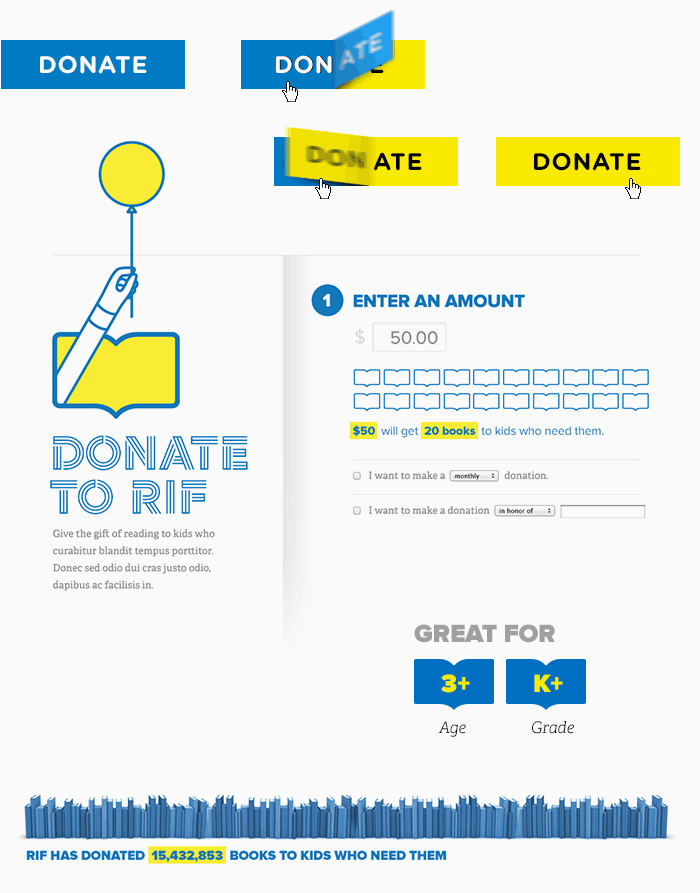
    <p>One of Mall’s most interesting projects took place about two years ago with a nonprofit, <a href="http://www.rif.org/" rel="nofollow external" class="bo">Reading is Fundamental</a>. When Mall walked into his meeting with the Washington, D.C.-based nonprofit, he had a pretty good feeling the project had the potential to become one of a kind.</p>
    <p><strong>Free trial on Treehouse:</strong> Do you want to improve your mobile and desktop design skills? <a href="https://teamtreehouse.com/subscribe/plans?cid=2062&amp;utm_source=story-23262-designers-inspiration-goes-long-way&amp;trial=yes" rel="nofollow external" class="bo">Click here to try a free 14-day trial on Treehouse</a>.</p>
    <p>Mall, a design director who started SuperFriendly, a company that matches designers’ expertise with the right projects, had no idea his first meeting with Reading is Fundamental, which ensures all kids have access to books, would set him on a new path in his design process.</p>
    <p>The motivational meeting did just that.</p>
    <p>That meeting two years ago kicked off with a hug from the nonprofit’s vice president of marketing and communications. The Reading is Fundamental group was fun, creative and open to the suggestions made by Mall and his team — which left him feeling invigorated and innovative.</p>
    <p>His team left that day with one mission in mind: to design a great website for Reading is Fundamental, which gave Mall some great feedback to kick-start the project.</p>
    <p>“They were using all of these great explanatory words, like ‘electric,’ ‘heart’ and ‘bubbles’,” Mall says. “So, the next day I opened Photoshop and did something I’ve never done before.”</p>
    <h2>Energizing Meeting Leads to New Design Approach</h2>
    <p>Mall began putting all of his different ideas for the new website into one Photoshop collage, which he now calls an “element collage” and uses on all of his projects. He found the element collage helped gather detailed feedback from the Reading is Fundamental team. This empowered Mall and his team to present a site beyond what the nonprofit imagined.</p>
    <div>
    <a href="http://blog.teamtreehouse.com/wp-content/uploads/2014/04/Klahn-2.png" rel="nofollow external" class="bo"><img alt="A portion of Mall's &quot;element collage&quot; for the nonprofit Reading is Fundamental project. (Image courtesy of Dan Mall.)" src="http://blog.teamtreehouse.com/wp-content/uploads/2014/04/Klahn-2-235x300.png" width="235" height="300" style="max-width: 100%; height: auto;"></a><p>A portion of Mall’s “element collage” for the Reading is Fundamental project. Click to see a larger size. (Image courtesy of Dan Mall)</p>
    </div>
    <p>Mall’s element collage is an abstract way to document design ideas, which he describes as an assembly of pieces that don’t have a specific logic or order, but help capture all of his thoughts on a project as he gets them. A collage also provides as much visual imagery as possible from the get-go, serving as a point of reference during conversations between Mall and clients.</p>
    <p>“Creating element collages started with the Reading is Fundamental project,” Mall says. “Now I use it on every project I get.”</p>
    <p>And, sometimes it’s the people Mall collaborates with who make a project unique. About a year ago, Mall worked on a project for a large technology company, collaborating with Jamie Kosoy, the founder of Arbitrary, a digital agency.</p>
    <p>For that project, Kosoy created about 30 prototypes, each designed to solve one specific problem. The project’s goal was to have the browser appear as if it were tilted in 3D space. Mall sketched the idea, and Kosoy began to create prototypes to address problems designing the site.</p>
    <p>“Each prototype would ask one question: Can I do this part with a div? Can I make the design rotate? What if I add a little texture here?” Mall says. “[Kosoy] was solving really small problems — each took an hour or two. But, when we started to put it all together, he had already solved what the client wanted through his prototypes.”</p>
    <p>Unique is exactly what most clients seek. According to <a href="http://www.marketingcharts.com/wp/interactive/marketers-identify-the-channels-for-which-dynamic-personalization-is-most-important-35211/attachment/neolanedma-importance-dynamic-personalized-content-by-channel-july2013/" rel="nofollow external" class="bo">marketing company Neolane</a>, 69 percent of North American marketers say dynamic, personalized content is important for their website; only 5 percent saying it’s of low importance.</p>
    <h2>Unique Projects Mean Getting Creative — and Learning New Skills</h2>
    <p>For designer Brian Casel, noteworthy projects happen when designers create it from the ground up. And a project that forces him to rely on all of the skills he’s built up over his years as a designer has a serious potential to succeed.</p>
    <p>“When I’m doing a project for myself rather than clients, I get to ask the question: ‘What can I dream up next?’” Casel says.</p>
    <p>For Casel, unique means challenging, and it pushes him to use every skill he’s honed as a designer — and some he hadn’t yet discovered.</p>
    <p>“With these types of projects, I’m able to use all of the skills I’ve built up over the years to create products that I have full control over,” Casel says.</p>
    <div>
    <a href="http://blog.teamtreehouse.com/wp-content/uploads/2014/04/Klahn-4.png" rel="nofollow external" class="bo"><img alt="A screenshot of Brian Casel's Restaurant Engine site. (Image courtesy of Brian Casel)" src="http://blog.teamtreehouse.com/wp-content/uploads/2014/04/Klahn-4-300x199.png" width="300" height="199" style="max-width: 100%; height: auto;"></a><p>A screenshot of Casel’s Restaurant Engine site. Click for a larger size. (Image courtesy of Brian Casel)</p>
    </div>
    <p>The first was Restaurant Engine, a startup Casel created that builds websites for restaurants. Restaurant Engine is SaaS-based and built entirely on WordPress — unique for the fact that there aren’t many sites like that around, he says.</p>
    <p>Strange as it may seem, Casel says the real challenge behind his project didn’t have anything to do with design.</p>
    <p>“I had to learn a lot about marketing and sales,” Casel says. “When you own projects, writing copy becomes part of that transition.”</p>
    <div>
    <a href="http://blog.teamtreehouse.com/wp-content/uploads/2014/04/Klahn-3.png" rel="nofollow external" class="bo"><img alt="A screenshot of Casel's &quot;Design for Conversions&quot; landing page. (Image courtesy of Brian Casel.)" src="http://blog.teamtreehouse.com/wp-content/uploads/2014/04/Klahn-3-300x201.png" width="300" height="201" style="max-width: 100%; height: auto;"></a><p>A screenshot of Casel’s “Design for Conversions” landing page. Click for a larger size. (Image courtesy of Brian Casel)</p>
    </div>
    <p>Another Casel original involved his book, “Design for Conversions,” another series of firsts for him. Aside from writing his own book, he designed and formatted an eBook and created the landing page. It took calling upon all of his design skills, as well as newly learned ones such as copywriting.</p>
    <p>His advice for designers hoping to create a project that moves away from a mainstream template? It’s simple — start small.</p>
    <p>“Try small things, make a bunch of mistakes, learn from them, and then apply those to your next project,” he says.</p>
    <p>In some cases, all a designer needs to concoct a new project is a great typeface. Put a new type or two in front of Brian Hoff, founder and creative director of Brian Hoff Design Inc., and his creative juices will start flowing.</p>
    <p>“Different types of [leading] and styles wave into inspiration for me,” Hoff says. “Colors and styles — that paves the way nicely and gets me excited.”</p>
    <p>One of Hoff’s standout projects was a design he created for AAA, which targeted roadside awareness. The unique part for Hoff was the opportunity to work with another design team and collaborate on the project.</p>
    <div>
    <a href="http://blog.teamtreehouse.com/wp-content/uploads/2014/04/Klahn-1.png" rel="nofollow external" class="bo"><img alt="A snapshot of the AAA project worked on by Brian Hoff. (Image courtesy of Brian Hoff.)" src="http://blog.teamtreehouse.com/wp-content/uploads/2014/04/Klahn-1.png" width="1000" height="445" style="max-width: 100%; height: auto;"></a><p>A snapshot of the AAA project worked on by Hoff. (Image courtesy of Brian Hoff)</p>
    </div>
    <p>Another project, which hasn’t yet launched, forced Hoff to focus on redesign strategies. His goal? Taking what was already there and simplifying it, without losing the website’s fundamentals.</p>
    <p>Unique projects have a tendency to push a designer. But that’s the part Hoff loves.</p>
    <p>“I really enjoy the beginning of a project,” he says. “It’s scary and liberating at the same time, and I actually like that. That first draft you send to a client — that’s nerve-racking. But, it also gives you the chance to bring something new to the table.”</p>
    <p>The post <a href="http://blog.teamtreehouse.com/designers-inspiration" rel="nofollow external" class="bo">For Designers, a Little Inspiration Goes a Long Way</a> appeared first on <a href="http://blog.teamtreehouse.com" rel="nofollow external" class="bo">Treehouse Blog</a>.</p>
    </div>
]]>
</Body>
<Summary>(Photo by Brockhaus and Efron Encyclopedic Dictionary and Mary Margret / Flickr)   Sometimes, it’s the little things that power a web designer to produce a remarkable project.   For Dan Mall, all...</Summary>
<Website>http://feedproxy.google.com/~r/teamtreehouse/~3/vBxnI_H0O8M/designers-inspiration</Website>
<TrackingUrl>https://my3.my.umbc.edu/api/v0/pixel/news/43385/guest@my.umbc.edu/46552c5e617e32162fe838392585f4b1/api/pixel</TrackingUrl>
<Tag>android</Tag>
<Tag>business</Tag>
<Tag>css</Tag>
<Tag>design</Tag>
<Tag>development</Tag>
<Tag>html</Tag>
<Tag>ios</Tag>
<Tag>javascript</Tag>
<Tag>make-a-website</Tag>
<Tag>responsive</Tag>
<Tag>web</Tag>
<Tag>web-industry</Tag>
<Group token="retired-583">Web Developer - Build Group</Group>
<GroupUrl>https://my3.my.umbc.edu/groups/retired-583</GroupUrl>
<AvatarUrl>https://assets3-my.umbc.edu/system/shared/avatars/groups/000/000/583/fc60f5d7abc2e080599bb6dc465db54d/xsmall.png?1363101197</AvatarUrl>
<AvatarUrl size="original">https://assets4-my.umbc.edu/system/shared/avatars/groups/000/000/583/fc60f5d7abc2e080599bb6dc465db54d/original.jpg?1363101197</AvatarUrl>
<AvatarUrl size="xxlarge">https://assets4-my.umbc.edu/system/shared/avatars/groups/000/000/583/fc60f5d7abc2e080599bb6dc465db54d/xxlarge.png?1363101197</AvatarUrl>
<AvatarUrl size="xlarge">https://assets4-my.umbc.edu/system/shared/avatars/groups/000/000/583/fc60f5d7abc2e080599bb6dc465db54d/xlarge.png?1363101197</AvatarUrl>
<AvatarUrl size="large">https://assets3-my.umbc.edu/system/shared/avatars/groups/000/000/583/fc60f5d7abc2e080599bb6dc465db54d/large.png?1363101197</AvatarUrl>
<AvatarUrl size="medium">https://assets3-my.umbc.edu/system/shared/avatars/groups/000/000/583/fc60f5d7abc2e080599bb6dc465db54d/medium.png?1363101197</AvatarUrl>
<AvatarUrl size="small">https://assets4-my.umbc.edu/system/shared/avatars/groups/000/000/583/fc60f5d7abc2e080599bb6dc465db54d/small.png?1363101197</AvatarUrl>
<AvatarUrl size="xsmall">https://assets3-my.umbc.edu/system/shared/avatars/groups/000/000/583/fc60f5d7abc2e080599bb6dc465db54d/xsmall.png?1363101197</AvatarUrl>
<AvatarUrl size="xxsmall">https://assets4-my.umbc.edu/system/shared/avatars/groups/000/000/583/fc60f5d7abc2e080599bb6dc465db54d/xxsmall.png?1363101197</AvatarUrl>
<Sponsor>Web Developer - Build Group</Sponsor>
<PawCount>0</PawCount>
<CommentCount>0</CommentCount>
<CommentsAllowed>true</CommentsAllowed>
<PostedAt>Wed, 09 Apr 2014 09:45:25 -0400</PostedAt>
<EditAt>Wed, 09 Apr 2014 09:45:25 -0400</EditAt>
</NewsItem>

<NewsItem contentIssues="true" id="43384" important="false" status="posted" url="https://my3.my.umbc.edu/posts/43384">
<Title>Researcher of the Week: Cheli Arussy</Title>
<Tagline>Undergraduate researchers explore their interests!</Tagline>
<Body>
<![CDATA[
    <div class="html-content">
    <p>Meet Cheli. She is a Chemical Engineering major and her research explores the microscopic world of Filamentous fungi. She hopes to hypothesize that hyphal branching is, in part, regulated by autophagy; a cellular-level recycling process that occurs in a wide range of species from fungi to humans.</p>
    <p><strong>How did you find your mentor for year research project?</strong><br>During my first semester at UMBC I received an email from my ENES 101 instructor saying that Dr. Marten was looking for new undergraduate researchers. I sent him my resume and high school transcript (I did not yet have a UMBC transcript), and I was accepted a couple weeks later, and have been there ever since. <br><br><strong>How much time do you put into it?</strong><br>I generally put in 12-15 hours a week for research but it varies depending on the experiment I am conducting.<br><br><strong>How did you hear about the <a href="http://www.umbc.edu/undergrad_ed/research/URA/" rel="nofollow external" class="bo">Undergraduate Research Award (URA)</a> program?</strong><br>My predecessor in the lab was a URA scholar, so my research mentor suggested I should apply as well. <br><br><strong>Was the application difficult to do?</strong><br>The application was straightforward. I would say that the most difficult part was making sure it did not exceed the page limit.<br><br><strong>How much did your mentor help you with the application?</strong><br>My mentor was the last person to review my application before it was submitted. <br><br><strong>What has been the hardest part about your research?</strong> <br>The hardest part about my research has been trying to understand unexpected results. Often, in research, you can reach a road block and the difficult part is trying to figure out if this is the result of human error, an error in theory, or an error in the hypothesis.<br><br><strong>What was the most unexpected thing?</strong><br>Although I was told communication is a key component of research, I was surprised at how much time I spend using this skill. The importance of spending time to communicate results has become increasingly clear, whether it is explaining individual experiments in lab notebooks and weekly reports or developing larger-scale presentations for team members or conferences.<br><br><strong>How does your research relate to your work in other classes?</strong><br>As a chemical engineering major, I have to take classes in a wide variety of fields, and the work inside the lab has really helped me understand the importance of interdisciplinary studies. Genetics, Cell Biology, Statistics and Organic chemistry are all directly related to my field of research, and help me to fully understand the theory behind my research. On the other hand, the work I have done in the lab has given me skills in experimental design (a crucial component of ENCH 225) that I would not have had otherwise.<br><br><strong>What is your advice to other students about getting involved in research?</strong> <br>Find your personal motivation to do research and talk to people who are currently involved in your field of interest. Once you have done that, make sure you can find the time in your schedule. This is often the most difficult thing to do, but with the right motivation, it is usually possible. Find research that gets you excited and apply to work in that laboratory. It is always possible to find time to devote to doing something you love. <br><br></p>
    <p>Read more about her research here.</p>
    </div>
]]>
</Body>
<Summary>Meet Cheli. She is a Chemical Engineering major and her research explores the microscopic world of Filamentous fungi. She hopes to hypothesize that hyphal branching is, in part, regulated by...</Summary>
<Website>http://www.umbc.edu/undergrad_ed/research/ResearcherProfiles/arussyCheli.htm</Website>
<TrackingUrl>https://my3.my.umbc.edu/api/v0/pixel/news/43384/guest@my.umbc.edu/5958f8adda3fd65e3ad5a1ae5fe254ad/api/pixel</TrackingUrl>
<Group token="undergradresearch">Undergraduate Research</Group>
<GroupUrl>https://my3.my.umbc.edu/groups/undergradresearch</GroupUrl>
<AvatarUrl>https://assets2-my.umbc.edu/system/shared/avatars/groups/000/000/006/875606ced2b629148af4caa1a4e8dd3c/xsmall.png?1600355057</AvatarUrl>
<AvatarUrl size="original">https://assets3-my.umbc.edu/system/shared/avatars/groups/000/000/006/875606ced2b629148af4caa1a4e8dd3c/original.jpg?1600355057</AvatarUrl>
<AvatarUrl size="xxlarge">https://assets4-my.umbc.edu/system/shared/avatars/groups/000/000/006/875606ced2b629148af4caa1a4e8dd3c/xxlarge.png?1600355057</AvatarUrl>
<AvatarUrl size="xlarge">https://assets1-my.umbc.edu/system/shared/avatars/groups/000/000/006/875606ced2b629148af4caa1a4e8dd3c/xlarge.png?1600355057</AvatarUrl>
<AvatarUrl size="large">https://assets2-my.umbc.edu/system/shared/avatars/groups/000/000/006/875606ced2b629148af4caa1a4e8dd3c/large.png?1600355057</AvatarUrl>
<AvatarUrl size="medium">https://assets2-my.umbc.edu/system/shared/avatars/groups/000/000/006/875606ced2b629148af4caa1a4e8dd3c/medium.png?1600355057</AvatarUrl>
<AvatarUrl size="small">https://assets4-my.umbc.edu/system/shared/avatars/groups/000/000/006/875606ced2b629148af4caa1a4e8dd3c/small.png?1600355057</AvatarUrl>
<AvatarUrl size="xsmall">https://assets2-my.umbc.edu/system/shared/avatars/groups/000/000/006/875606ced2b629148af4caa1a4e8dd3c/xsmall.png?1600355057</AvatarUrl>
<AvatarUrl size="xxsmall">https://assets4-my.umbc.edu/system/shared/avatars/groups/000/000/006/875606ced2b629148af4caa1a4e8dd3c/xxsmall.png?1600355057</AvatarUrl>
<Sponsor>Undergraduate Research</Sponsor>
<ThumbnailUrl size="xxlarge">https://assets2-my.umbc.edu/system/shared/thumbnails/news/000/043/384/828feeb4c80ad1bcb65b2002b6ea581b/xxlarge.jpg?1397050343</ThumbnailUrl>
<ThumbnailUrl size="xlarge">https://assets3-my.umbc.edu/system/shared/thumbnails/news/000/043/384/828feeb4c80ad1bcb65b2002b6ea581b/xlarge.jpg?1397050343</ThumbnailUrl>
<ThumbnailUrl size="large">https://assets4-my.umbc.edu/system/shared/thumbnails/news/000/043/384/828feeb4c80ad1bcb65b2002b6ea581b/large.jpg?1397050343</ThumbnailUrl>
<ThumbnailUrl size="medium">https://assets1-my.umbc.edu/system/shared/thumbnails/news/000/043/384/828feeb4c80ad1bcb65b2002b6ea581b/medium.jpg?1397050343</ThumbnailUrl>
<ThumbnailUrl size="small">https://assets3-my.umbc.edu/system/shared/thumbnails/news/000/043/384/828feeb4c80ad1bcb65b2002b6ea581b/small.jpg?1397050343</ThumbnailUrl>
<ThumbnailUrl size="xsmall">https://assets3-my.umbc.edu/system/shared/thumbnails/news/000/043/384/828feeb4c80ad1bcb65b2002b6ea581b/xsmall.jpg?1397050343</ThumbnailUrl>
<ThumbnailUrl size="xxsmall">https://assets3-my.umbc.edu/system/shared/thumbnails/news/000/043/384/828feeb4c80ad1bcb65b2002b6ea581b/xxsmall.jpg?1397050343</ThumbnailUrl>
<PawCount>25</PawCount>
<CommentCount>5</CommentCount>
<CommentsAllowed>true</CommentsAllowed>
<PostedAt>Wed, 09 Apr 2014 09:35:56 -0400</PostedAt>
</NewsItem>

<NewsItem contentIssues="true" id="43383" important="false" status="posted" url="https://my3.my.umbc.edu/posts/43383">
<Title>Bits Blog: Readers Respond: How Should Apple Spend Its Billions?</Title>
<Body>
<![CDATA[
    <div class="html-content">Among the suggestions for what Apple should do with the $159 billion in cash it has on hand were building a television, paying more taxes and even curing cancer.<br><br><br><a href="http://da.feedsportal.com/r/194479920049/u/0/f/640387/c/34625/s/392a84c1/sc/5/rc/1/rc.htm" rel="nofollow external" class="bo"><img src="http://da.feedsportal.com/r/194479920049/u/0/f/640387/c/34625/s/392a84c1/sc/5/rc/1/rc.img" style="max-width: 100%; height: auto;"></a><br><a href="http://da.feedsportal.com/r/194479920049/u/0/f/640387/c/34625/s/392a84c1/sc/5/rc/2/rc.htm" rel="nofollow external" class="bo"><img src="http://da.feedsportal.com/r/194479920049/u/0/f/640387/c/34625/s/392a84c1/sc/5/rc/2/rc.img" style="max-width: 100%; height: auto;"></a><br><a href="http://da.feedsportal.com/r/194479920049/u/0/f/640387/c/34625/s/392a84c1/sc/5/rc/3/rc.htm" rel="nofollow external" class="bo"><img src="http://da.feedsportal.com/r/194479920049/u/0/f/640387/c/34625/s/392a84c1/sc/5/rc/3/rc.img" style="max-width: 100%; height: auto;"></a><br><br><a href="http://da.feedsportal.com/r/194479920049/u/0/f/640387/c/34625/s/392a84c1/sc/5/a2.htm" rel="nofollow external" class="bo"><img src="http://da.feedsportal.com/r/194479920049/u/0/f/640387/c/34625/s/392a84c1/sc/5/a2.img" style="max-width: 100%; height: auto;"></a>
    </div>
]]>
</Body>
<Summary>Among the suggestions for what Apple should do with the $159 billion in cash it has on hand were building a television, paying more taxes and even curing cancer.</Summary>
<Website>http://rss.nytimes.com/c/34625/f/640387/s/392a84c1/sc/5/l/0Lbits0Bblogs0Bnytimes0N0C20A140C0A40C0A90Creaders0Erespond0Ewhere0Eshould0Eapple0Espend0Eits0Ebillions0C0Dpartner0Frss0Gemc0Frss/story01.htm</Website>
<TrackingUrl>https://my3.my.umbc.edu/api/v0/pixel/news/43383/guest@my.umbc.edu/b4ba8232affc908d7e8701cf2c6bbfeb/api/pixel</TrackingUrl>
<Tag>apple-inc</Tag>
<Tag>apple-inc-aapl-nasdaq</Tag>
<Tag>corporate-taxes</Tag>
<Tag>mergers-acquisitions-and-divestitures</Tag>
<Tag>new</Tag>
<Tag>technology</Tag>
<Tag>york</Tag>
<Group token="retired-583">Web Developer - Build Group</Group>
<GroupUrl>https://my3.my.umbc.edu/groups/retired-583</GroupUrl>
<AvatarUrl>https://assets3-my.umbc.edu/system/shared/avatars/groups/000/000/583/fc60f5d7abc2e080599bb6dc465db54d/xsmall.png?1363101197</AvatarUrl>
<AvatarUrl size="original">https://assets4-my.umbc.edu/system/shared/avatars/groups/000/000/583/fc60f5d7abc2e080599bb6dc465db54d/original.jpg?1363101197</AvatarUrl>
<AvatarUrl size="xxlarge">https://assets4-my.umbc.edu/system/shared/avatars/groups/000/000/583/fc60f5d7abc2e080599bb6dc465db54d/xxlarge.png?1363101197</AvatarUrl>
<AvatarUrl size="xlarge">https://assets4-my.umbc.edu/system/shared/avatars/groups/000/000/583/fc60f5d7abc2e080599bb6dc465db54d/xlarge.png?1363101197</AvatarUrl>
<AvatarUrl size="large">https://assets3-my.umbc.edu/system/shared/avatars/groups/000/000/583/fc60f5d7abc2e080599bb6dc465db54d/large.png?1363101197</AvatarUrl>
<AvatarUrl size="medium">https://assets3-my.umbc.edu/system/shared/avatars/groups/000/000/583/fc60f5d7abc2e080599bb6dc465db54d/medium.png?1363101197</AvatarUrl>
<AvatarUrl size="small">https://assets4-my.umbc.edu/system/shared/avatars/groups/000/000/583/fc60f5d7abc2e080599bb6dc465db54d/small.png?1363101197</AvatarUrl>
<AvatarUrl size="xsmall">https://assets3-my.umbc.edu/system/shared/avatars/groups/000/000/583/fc60f5d7abc2e080599bb6dc465db54d/xsmall.png?1363101197</AvatarUrl>
<AvatarUrl size="xxsmall">https://assets4-my.umbc.edu/system/shared/avatars/groups/000/000/583/fc60f5d7abc2e080599bb6dc465db54d/xxsmall.png?1363101197</AvatarUrl>
<Sponsor>Web Developer - Build Group</Sponsor>
<PawCount>0</PawCount>
<CommentCount>0</CommentCount>
<CommentsAllowed>true</CommentsAllowed>
<PostedAt>Wed, 09 Apr 2014 09:00:47 -0400</PostedAt>
</NewsItem>

<NewsItem contentIssues="false" id="43382" important="false" status="posted" url="https://my3.my.umbc.edu/posts/43382">
<Title>Award Nominations Now Being Accepted for GSA Award Banquet</Title>
<Tagline>Deadline to Submit Nominations is Sunday (4/20/14)</Tagline>
<Body>
<![CDATA[
    <div class="html-content"><div>
    <div>
    <p><span>GSA is now accepting nominations for the 9th Annual Graduate Student 
    Association Awards Banquet where we celebrate our year as well as those 
    who positively impact the graduate student community!</span></p>
    <p>Nominations Begin Today and Nomination Forms are Due no later than:<strong>Sunday, April 20th, 2014, 11:55 pm.</strong></p>
    <p><strong>The Nomination Form can be found, <a href="http://gsa.umbc.edu/about-gsa/gsa-awards/" rel="nofollow external" class="bo">HERE.</a></strong></p>
    <p><strong><a href="http://gsa.umbc.edu/about-gsa/gsa-awards/" rel="nofollow external" class="bo"><br></a></strong></p>
    <p><span>Please take time to nominate individuals for the following Awards:</span></p>
    <p><u><span><strong>The Donald Creighton Outstanding Faculty Award</strong></span></u></p>
    <p><span>The Graduate
     Student Association honors on an annual basis an outstanding 
    advisor, mentor, or professor who strives, during their time at UMBC, to
     aid graduate students in their academic and professional pursuits</span></p>
    <p><u><span><strong>The Jessica Soto-Perez Award</strong></span></u></p>
    <p><em>A UMBC Graduate Recognition Award dedicated to the spirit of Jessica Soto-Perez</em></p>
    <p><span>The Graduate
     Student Association honors on an annual basis an outstanding 
    graduate student who strives, during their time at UMBC, to aid graduate
     students in their academic and professional pursuits.<span><br></span></span></p>
    <p><u><span><strong>Outstanding GSA Senator Award</strong></span></u></p>
    <p><span>The Graduate
     Student Association honors an outstanding graduate senator who strives,
     during their time at UMBC, to aid graduate students in their 
    academic and professional pursuits.</span></p>
    <p><u><span><strong>Outstanding UMBC Staff Award</strong></span></u></p>
    <p><span>The Graduate
     Student Association honors a UMBC staff member who strives, 
    during their time at UMBC, to aid graduate students in their academic 
    and professional pursuits.</span></p>
    <p><u><span><strong>Outstanding GSO Award</strong></span></u></p>
    <p><span>The Graduate
     Student Association honors a GSA Graduate Student Organization that 
    to honor a graduate student organization that strives to aid graduate 
    students in a social and/or academic setting.</span></p>
    <p><span><br></span></p>
    <p><span>Please Contact GSA at <a href="mailto:gsa@umbc.edu" rel="nofollow external" class="bo">gsa@umbc.edu</a> with any additional questions, comments, or concerns.</span></p>
    </div>
    </div></div>
]]>
</Body>
<Summary>GSA is now accepting nominations for the 9th Annual Graduate Student  Association Awards Banquet where we celebrate our year as well as those  who positively impact the graduate student community!...</Summary>
<TrackingUrl>https://my3.my.umbc.edu/api/v0/pixel/news/43382/guest@my.umbc.edu/bc1dd346ed97d4c31dc7d2f3b1228215/api/pixel</TrackingUrl>
<Group token="llc">Language, Literacy and Culture Doctoral Program</Group>
<GroupUrl>https://my3.my.umbc.edu/groups/llc</GroupUrl>
<AvatarUrl>https://assets4-my.umbc.edu/system/shared/avatars/groups/000/000/537/e594b22cf15b445f7476775aa508e9c3/xsmall.png?1375383725</AvatarUrl>
<AvatarUrl size="original">https://assets4-my.umbc.edu/system/shared/avatars/groups/000/000/537/e594b22cf15b445f7476775aa508e9c3/original.jpg?1375383725</AvatarUrl>
<AvatarUrl size="xxlarge">https://assets3-my.umbc.edu/system/shared/avatars/groups/000/000/537/e594b22cf15b445f7476775aa508e9c3/xxlarge.png?1375383725</AvatarUrl>
<AvatarUrl size="xlarge">https://assets1-my.umbc.edu/system/shared/avatars/groups/000/000/537/e594b22cf15b445f7476775aa508e9c3/xlarge.png?1375383725</AvatarUrl>
<AvatarUrl size="large">https://assets4-my.umbc.edu/system/shared/avatars/groups/000/000/537/e594b22cf15b445f7476775aa508e9c3/large.png?1375383725</AvatarUrl>
<AvatarUrl size="medium">https://assets1-my.umbc.edu/system/shared/avatars/groups/000/000/537/e594b22cf15b445f7476775aa508e9c3/medium.png?1375383725</AvatarUrl>
<AvatarUrl size="small">https://assets1-my.umbc.edu/system/shared/avatars/groups/000/000/537/e594b22cf15b445f7476775aa508e9c3/small.png?1375383725</AvatarUrl>
<AvatarUrl size="xsmall">https://assets4-my.umbc.edu/system/shared/avatars/groups/000/000/537/e594b22cf15b445f7476775aa508e9c3/xsmall.png?1375383725</AvatarUrl>
<AvatarUrl size="xxsmall">https://assets2-my.umbc.edu/system/shared/avatars/groups/000/000/537/e594b22cf15b445f7476775aa508e9c3/xxsmall.png?1375383725</AvatarUrl>
<Sponsor>Language, Literacy and Culture Doctoral Program</Sponsor>
<PawCount>0</PawCount>
<CommentCount>0</CommentCount>
<CommentsAllowed>true</CommentsAllowed>
<PostedAt>Wed, 09 Apr 2014 08:20:32 -0400</PostedAt>
</NewsItem>

<NewsItem contentIssues="false" id="43380" important="false" status="posted" url="https://my3.my.umbc.edu/posts/43380">
<Title>PAGE call for Fellows</Title>
<Tagline>Imagining America</Tagline>
<Body>
<![CDATA[
    <div class="html-content">
    <strong>PAGE is accepting applications for 2014-2015 Fellows!</strong><br>PAGE (Publicly Active Graduate Education) is Imagining America's network for publicly engaged graduate students in humanities, arts, and design. PAGE enhances the theoretical and practical tools for public engagement, fosters a national, interdisciplinary community of peers and veteran scholars, and creates opportunities for collaborative knowledge production. The PAGE consortium, made up of alumni and allies of the program, promotes opportunities for mentorship and peer support from IA's network.<br><br>Imagining America (IA) invites graduate students with a demonstrated interest in public scholarship and/or artistic practice to apply for a 2014-2015 PAGE Fellowship. Awardees receive $500 to attend a half-day Fellows Summit on October 8th and the 2014 Imagining America national conference, October 9th-11th in Atlanta, Georgia.<br><br>Fellows also commit to participating in a yearlong working group to promote collaborative art-making, teaching, writing, and research projects. PAGE alumni and Fellows will work together to organize monthly conference calls around themes and questions relevant to the needs of publicly engaged graduate students. In doing so, PAGE looks to foster a cohort of Fellows interested in pursuing collective and innovative scholarly practices. Fellows are asked to be active participants in the Imagining America network through posting on the IA blog, presenting at regional meetings or campus workshops, or other related professional convenings. Additionally, each Fellow will be tasked with co-facilitating a webinar or workshop during the 2014-2015 academic year. Past examples include: book group discussions, virtual dinner parties, guest lectures, skill-building demonstrations, and music performances.<br><br>Graduate students from IA member campuses at all stages of their MA/MFA/PhD programs may apply to be PAGE Fellows. <br> <br><strong>The submission deadline is May 16th.</strong><br><br>For more information and to apply,<a href="http://imaginingamerica.org/consortium/student-networks/page/call-for-applications-to-the-2014-2015-imagining-america-page-summit-and-working-group/" rel="nofollow external" class="bo"> click here.</a><br><br><br>
    </div>
]]>
</Body>
<Summary>PAGE is accepting applications for 2014-2015 Fellows! PAGE (Publicly Active Graduate Education) is Imagining America's network for publicly engaged graduate students in humanities, arts, and...</Summary>
<TrackingUrl>https://my3.my.umbc.edu/api/v0/pixel/news/43380/guest@my.umbc.edu/49ef815363b32e11b6470b99a84197b2/api/pixel</TrackingUrl>
<Group token="llc">Language, Literacy and Culture Doctoral Program</Group>
<GroupUrl>https://my3.my.umbc.edu/groups/llc</GroupUrl>
<AvatarUrl>https://assets4-my.umbc.edu/system/shared/avatars/groups/000/000/537/e594b22cf15b445f7476775aa508e9c3/xsmall.png?1375383725</AvatarUrl>
<AvatarUrl size="original">https://assets4-my.umbc.edu/system/shared/avatars/groups/000/000/537/e594b22cf15b445f7476775aa508e9c3/original.jpg?1375383725</AvatarUrl>
<AvatarUrl size="xxlarge">https://assets3-my.umbc.edu/system/shared/avatars/groups/000/000/537/e594b22cf15b445f7476775aa508e9c3/xxlarge.png?1375383725</AvatarUrl>
<AvatarUrl size="xlarge">https://assets1-my.umbc.edu/system/shared/avatars/groups/000/000/537/e594b22cf15b445f7476775aa508e9c3/xlarge.png?1375383725</AvatarUrl>
<AvatarUrl size="large">https://assets4-my.umbc.edu/system/shared/avatars/groups/000/000/537/e594b22cf15b445f7476775aa508e9c3/large.png?1375383725</AvatarUrl>
<AvatarUrl size="medium">https://assets1-my.umbc.edu/system/shared/avatars/groups/000/000/537/e594b22cf15b445f7476775aa508e9c3/medium.png?1375383725</AvatarUrl>
<AvatarUrl size="small">https://assets1-my.umbc.edu/system/shared/avatars/groups/000/000/537/e594b22cf15b445f7476775aa508e9c3/small.png?1375383725</AvatarUrl>
<AvatarUrl size="xsmall">https://assets4-my.umbc.edu/system/shared/avatars/groups/000/000/537/e594b22cf15b445f7476775aa508e9c3/xsmall.png?1375383725</AvatarUrl>
<AvatarUrl size="xxsmall">https://assets2-my.umbc.edu/system/shared/avatars/groups/000/000/537/e594b22cf15b445f7476775aa508e9c3/xxsmall.png?1375383725</AvatarUrl>
<Sponsor>Language, Literacy and Culture Doctoral Program</Sponsor>
<PawCount>0</PawCount>
<CommentCount>0</CommentCount>
<CommentsAllowed>true</CommentsAllowed>
<PostedAt>Wed, 09 Apr 2014 08:08:44 -0400</PostedAt>
</NewsItem>

<NewsItem contentIssues="true" id="43381" important="false" status="posted" url="https://my3.my.umbc.edu/posts/43381">
<Title>Bits Blog: Heartbleed Flaw Emphasizes the Need to Change Passwords &#8212; in a Bit</Title>
<Body>
<![CDATA[
    <div class="html-content">Immediately changing passwords after a security breach could feed a new password into a website that has not fixed the flaw, a security consultant said.<br><br><br><a href="http://da.feedsportal.com/r/194479907760/u/0/f/640387/c/34625/s/392999fe/sc/15/rc/1/rc.htm" rel="nofollow external" class="bo"><img src="http://da.feedsportal.com/r/194479907760/u/0/f/640387/c/34625/s/392999fe/sc/15/rc/1/rc.img" style="max-width: 100%; height: auto;"></a><br><a href="http://da.feedsportal.com/r/194479907760/u/0/f/640387/c/34625/s/392999fe/sc/15/rc/2/rc.htm" rel="nofollow external" class="bo"><img src="http://da.feedsportal.com/r/194479907760/u/0/f/640387/c/34625/s/392999fe/sc/15/rc/2/rc.img" style="max-width: 100%; height: auto;"></a><br><a href="http://da.feedsportal.com/r/194479907760/u/0/f/640387/c/34625/s/392999fe/sc/15/rc/3/rc.htm" rel="nofollow external" class="bo"><img src="http://da.feedsportal.com/r/194479907760/u/0/f/640387/c/34625/s/392999fe/sc/15/rc/3/rc.img" style="max-width: 100%; height: auto;"></a><br><br><a href="http://da.feedsportal.com/r/194479907760/u/0/f/640387/c/34625/s/392999fe/sc/15/a2.htm" rel="nofollow external" class="bo"><img src="http://da.feedsportal.com/r/194479907760/u/0/f/640387/c/34625/s/392999fe/sc/15/a2.img" style="max-width: 100%; height: auto;"></a>
    </div>
]]>
</Body>
<Summary>Immediately changing passwords after a security breach could feed a new password into a website that has not fixed the flaw, a security consultant said.</Summary>
<Website>http://rss.nytimes.com/c/34625/f/640387/s/392999fe/sc/15/l/0Lbits0Bblogs0Bnytimes0N0C20A140C0A40C0A80Csecurity0Eflaw0Eemphasizes0Ethe0Eneed0Eto0Echange0Epasswords0C0Dpartner0Frss0Gemc0Frss/story01.htm</Website>
<TrackingUrl>https://my3.my.umbc.edu/api/v0/pixel/news/43381/guest@my.umbc.edu/e03b1601a3fc39f281bea7ed5c474a27/api/pixel</TrackingUrl>
<Tag>computer-security</Tag>
<Tag>computers-and-the-internet</Tag>
<Tag>cyberattacks-and-hackers</Tag>
<Tag>new</Tag>
<Tag>security</Tag>
<Tag>technology</Tag>
<Tag>york</Tag>
<Group token="retired-583">Web Developer - Build Group</Group>
<GroupUrl>https://my3.my.umbc.edu/groups/retired-583</GroupUrl>
<AvatarUrl>https://assets3-my.umbc.edu/system/shared/avatars/groups/000/000/583/fc60f5d7abc2e080599bb6dc465db54d/xsmall.png?1363101197</AvatarUrl>
<AvatarUrl size="original">https://assets4-my.umbc.edu/system/shared/avatars/groups/000/000/583/fc60f5d7abc2e080599bb6dc465db54d/original.jpg?1363101197</AvatarUrl>
<AvatarUrl size="xxlarge">https://assets4-my.umbc.edu/system/shared/avatars/groups/000/000/583/fc60f5d7abc2e080599bb6dc465db54d/xxlarge.png?1363101197</AvatarUrl>
<AvatarUrl size="xlarge">https://assets4-my.umbc.edu/system/shared/avatars/groups/000/000/583/fc60f5d7abc2e080599bb6dc465db54d/xlarge.png?1363101197</AvatarUrl>
<AvatarUrl size="large">https://assets3-my.umbc.edu/system/shared/avatars/groups/000/000/583/fc60f5d7abc2e080599bb6dc465db54d/large.png?1363101197</AvatarUrl>
<AvatarUrl size="medium">https://assets3-my.umbc.edu/system/shared/avatars/groups/000/000/583/fc60f5d7abc2e080599bb6dc465db54d/medium.png?1363101197</AvatarUrl>
<AvatarUrl size="small">https://assets4-my.umbc.edu/system/shared/avatars/groups/000/000/583/fc60f5d7abc2e080599bb6dc465db54d/small.png?1363101197</AvatarUrl>
<AvatarUrl size="xsmall">https://assets3-my.umbc.edu/system/shared/avatars/groups/000/000/583/fc60f5d7abc2e080599bb6dc465db54d/xsmall.png?1363101197</AvatarUrl>
<AvatarUrl size="xxsmall">https://assets4-my.umbc.edu/system/shared/avatars/groups/000/000/583/fc60f5d7abc2e080599bb6dc465db54d/xxsmall.png?1363101197</AvatarUrl>
<Sponsor>Web Developer - Build Group</Sponsor>
<PawCount>0</PawCount>
<CommentCount>0</CommentCount>
<CommentsAllowed>true</CommentsAllowed>
<PostedAt>Wed, 09 Apr 2014 07:45:56 -0400</PostedAt>
<EditAt>Wed, 09 Apr 2014 15:41:50 -0400</EditAt>
</NewsItem>

<NewsItem contentIssues="true" id="43379" important="false" status="posted" url="https://my3.my.umbc.edu/posts/43379">
<Title>Building The Web App For Unicef&#8217;s Tap Campaign: A Case Study</Title>
<Body>
<![CDATA[
    <div class="html-content">
    <table width="650">
    <tbody>
    <tr>
    <td>
    <div>
    <img src="http://statisches.auslieferung.commindo-media-ressourcen.de/advertisement.gif" alt="" style="max-width: 100%; height: auto;"><br><a href="http://auslieferung.commindo-media-ressourcen.de/random.php?mode=target&amp;collection=smashing-rss&amp;position=1" rel="nofollow external" class="bo"><img src="http://auslieferung.commindo-media-ressourcen.de/random.php?mode=image&amp;collection=smashing-rss&amp;position=1" alt="" style="max-width: 100%; height: auto;"></a> <a href="http://auslieferung.commindo-media-ressourcen.de/random.php?mode=target&amp;collection=smashing-rss&amp;position=2" rel="nofollow external" class="bo"><img src="http://auslieferung.commindo-media-ressourcen.de/random.php?mode=image&amp;collection=smashing-rss&amp;position=2" alt="" style="max-width: 100%; height: auto;"></a> <a href="http://auslieferung.commindo-media-ressourcen.de/random.php?mode=target&amp;collection=smashing-rss&amp;position=3" rel="nofollow external" class="bo"><img src="http://auslieferung.commindo-media-ressourcen.de/random.php?mode=image&amp;collection=smashing-rss&amp;position=3" alt="" style="max-width: 100%; height: auto;"></a>
    </div>
    </td>
    </tr>
    </tbody>
    </table>
    <p>Since a smartphone landed in almost everyone’s pocket, developers have been faced with the question of whether to go with a mobile website or a native app.</p>
    <p>Native applications offer the smoothest and most feature-rich user experience in almost every case. They have direct access to the GPU, making layer compositions and pixel movements buttery-smooth. They provide native UI frameworks that end users are familiar with, and they take care of the low-level aspects of UI development that developers don’t have time to deal with.</p>
    <p>When eschewing an app in favor of a mobile website, developers often sacrifice user experience, deep native integration and a complex UI in favor of SEO and accessibility. But now that JavaScript rendering engines are improving immensely and GPU-accelerated canvas and CSS animations are becoming widely supported, we can start to consider mobile websites a primary use case.</p>
    <p>Unicef’s latest campaign, Tap, presented us with <strong>the challenge of combining the accessibility of a mobile website with the native capabilities</strong>, UI and overall experience that someone would expect of a native app. Our friends at <a href="http://droga5.com" rel="nofollow external" class="bo">Droga5</a> came to <a href="http://www.modernassemb.ly" rel="nofollow external" class="bo">us</a> with a brief to create a mobile experience that tracks how long a user avoids using their phone.</p>
    <p><img src="http://media.smashingmagazine.com/wp-content/uploads/2014/04/00-intro-tab-water.jpg" alt="Unicef's 2014 Tap campaign" width="500" height="392" style="max-width: 100%; height: auto;"><br><em><a href="http://tap.unicefusa.org/" rel="nofollow external" class="bo">Unicef’s 2014 Tap campaign</a> presented the challenge of combining the accessibility of a mobile website with the smooth user experience of a native app.</em></p>
    <p>For every 10 minutes that a user gives up their phone, a sponsor would donate a day’s worth of water to children in the developing world. While the user patiently waits, they are presented with real-time and location-based statistics of other users who are sacrificing their precious phone time.</p>
    <p>We’ll discuss a few of the biggest challenges here: detecting user activity, achieving performant animations, and building an API integrated with Google Analytics.</p>
    <h3>Detecting User Activity</h3>
    <p>Detecting user activity through a mobile browser was an interesting challenge and involved a lot of research, testing and normalization across all types of phones. The slightest differences and inaccuracies between phones became suddenly apparent. To explain the process, we’ll break it down into three categories: user movement, user exiting, and device-sleep prevention.</p>
    <h4>User Movement</h4>
    <p>One core piece of functionality is detecting any movement by the user. Fortunately, most mobile browsers today have access to the built-in gyroscope and accelerometer via JavaScript’s <code>DeviceOrientation</code> event. The unfortunate exception is devices running Android 2.3 (Gingerbread), which at the time of writing has roughly a <a href="http://developer.android.com/about/dashboards/index.html" rel="nofollow external" class="bo">20% market share</a>. In the end, the project was not worth abandoning due to one version of Android, so we pushed on. This decision proved to be even better than we thought because most devices that run version 2.3 are old, which means less memory, a slower CPU and aging hardware.</p>
    <p><strong>To detect movement, we first have to detect an “idle” position</strong>. We instruct the user to set their phone down, while we check the readings on the x and y axis. We start a timer with a <code>setInterval</code>, and if that position’s values remain within a 6° range for a few seconds, then we save those values as the device’s idle position. (If the user moves, then we restart the timer again until the phone does not move for a few seconds.) From there, we listen for the <code>DeviceOrientation</code> event and compare the new position’s values to the idle values. If there is a difference, then we fire off a custom <code>user_move</code> event.</p>
    <p>The concept was simple to implement, but we found that most devices fluctuate by a couple of degrees when lying still. The sensitivity to movement is quite high, so we first had to determine a <strong>threshold</strong> above which we could be confident that the user has intentionally moved their device. After some trial and error, we decided on a 12° range of difference (+ and -) from the idle position, on both the x and y axis. If any movement occurs outside of that range, we assume it to be deliberate. Thus, users can bump their phone slightly with no consequence.</p>
    <pre><code>&#x000A;    this.devOrientHandlerProxy = $.proxy(this.devOrientHandler, this);&#x000A;    window.addEventListener('deviceorientation', this.devOrientHandlerProxy, false);&#x000A;    &#x000A;    MovementDetector.prototype.devOrientHandler = function(event) {&#x000A;       var curr_x = Math.floor(event.beta);&#x000A;       var curr_y = Math.floor(event.gamma);&#x000A;       var curr_z = Math.floor(event.alpha);&#x000A;    &#x000A;       var didMove = this.calcMovement(curr_x, curr_y, curr_z, this.movement_threshold);&#x000A;    &#x000A;       if(didMove) {&#x000A;          this.announceMovement();&#x000A;       }&#x000A;    }&#x000A;    &#x000A;    MovementDetector.prototype.calcMovement = function(new_x, new_y, new_z, threshold) {&#x000A;       var x_diff = Math.abs(this.x_idle_pos - new_x);&#x000A;       var y_diff = Math.abs(this.y_idle_pos - new_y);&#x000A;       var z_diff = Math.abs(this.z_idle_pos - new_z);&#x000A;       z_diff = z_diff &gt; 180 ? 360 - z_diff : z_diff;&#x000A;    &#x000A;       return x_diff &gt; threshold || y_diff &gt; threshold || z_diff &gt; threshold;&#x000A;    }&#x000A;    </code></pre>
    <p>As you can see in the first four lines of the <code>calcMovement</code> method, we are obtaining the difference between the idle position and the new position. Because the difference in values could be negative, we make sure to get the absolute value (<code>Math.abs(val)</code>). You’ll notice that the <code>z_diff</code> formula is a bit different. Because the value for <code>z_diff</code> is between 0 and 359, we have to take the absolute difference and then check to see whether the difference is above 130; if so, then we need to subtract that difference from 360.</p>
    <p>This gives us the shortest distance between the two points. For example, if the device moves from 359 to 10, then the shortest distance would be 11. Finally, we check to see whether any of those three values (<code>x_diff</code>, <code>y_diff</code>, or <code>z_diff</code>) are greater than the threshold; if so, then we announce a <code>user_move</code> event.</p>
    <p><a href="http://media.smashingmagazine.com/wp-content/uploads/2014/04/01-device_motion.jpg" rel="nofollow external" class="bo"><img src="http://media.smashingmagazine.com/wp-content/uploads/2014/04/01-device_motion_500.jpg" alt="Movement detection on iOS and Android" width="500" height="285" style="max-width: 100%; height: auto;"></a><br>
    <em>Movement detection on iOS and Android (Samsung Galaxy S3 and HTC One). (<a href="http://media.smashingmagazine.com/wp-content/uploads/2014/04/01-device_motion.jpg" rel="nofollow external" class="bo">View large version</a>)</em></p>
    <p>We had to test extensively across both Android and iOS devices. iOS was straightforward, whereas we found subtle differences between Android versions and manufacturers, especially with the stock browser. Certain devices would jump dramatically between values on the z-axis. Thus, we decided not to consider any movement on the z-axis in our detection — meaning that users could slide a phone laterally on a tabletop with no consequence.</p>
    <h4>User Exiting</h4>
    <p>Another action that we wanted to detect was the user exiting the browser, to signal their intention to end the experience. We had <strong>to listen for a couple of events via the PageHide and PageVisibility API</strong>. (PageHide or PageVisibility is available in Android only in later versions — in the stock browser in version 4.3+, and in Chrome 4+. iOS 6 has PageHide, and iOS 7 has PageVisibility.)</p>
    <p>We knew we couldn’t detect across the board, but we felt that implementing it for browsers that support it would be worthwhile. The following matrix shows which mobile browsers support PageHide and PageVisibility:</p>
    <table>
    <tbody>
    <tr>
    <td><strong>Devices</strong></td>
    <td><strong>PageHide event</strong></td>
    <td><strong>PageVisibility API</strong></td>
    </tr>
    <tr>
    <td>iOS 6.0 Safari</td>
    <td>✔</td>
    <td>✖</td>
    </tr>
    <tr>
    <td>iOS 7.0 Safari</td>
    <td>✔</td>
    <td>✔</td>
    </tr>
    <tr>
    <td>iOS 6.0 Chrome</td>
    <td>✖</td>
    <td>✖</td>
    </tr>
    <tr>
    <td>iOS 7.0 Chrome</td>
    <td>✖</td>
    <td>✔</td>
    </tr>
    <tr>


    </tr>
    <tr>
    <td>Android 2.3 — 4.2 stock browser</td>
    <td>✖</td>
    <td>✖</td>
    </tr>
    <tr>
    <td>Android 4.3 stock browser</td>
    <td>✔</td>
    <td>✖</td>
    </tr>
    <tr>
    <td>Android 4.4 stock browser</td>
    <td>✔</td>
    <td>✔</td>
    </tr>
    <tr>
    <td>Android 4.0+ Chrome</td>
    <td>✔</td>
    <td>✔</td>
    </tr>
    </tbody>
    </table>
    <h4>Sleep Prevention</h4>
    <p>Keeping the device awake was the final core piece of functionality that we needed to detect user activity. This was crucial because the idea of the campaign is for users to stay away for as long as they possibly can. By default, all phones enter sleep mode after a few minutes. Some phones can be manually set to never sleep, or the user could keep it plugged in, but we could not rely on either of those options.</p>
    <p>We had to think of interesting workarounds. iOS and Android had to be treated differently.</p>
    <p>For iOS 6 devices, <strong>we make use of HTML5 audio</strong> and load a silent MP3 file asynchronously that loops endlessly during game play. We simply added the <code>loop</code> attribute, set to true, to our <code>&lt;source&gt;</code> element. For Android devices, we piggyback on what we do for iOS 6. However, Android’s display turns off after a few minutes even when an audio file is playing. Fortunately, unlike iOS, Android allows for inline video.</p>
    <p>So, we run the same <code>createMedia</code> loop method shown above, but this time loading a 10-minute silent video with the <code>&lt;video&gt;</code> element, placed outside of the viewport. We found that the <code>loop</code> attribute doesn’t always work with inline video across Android devices, so we use HTML5’s media <code>ended</code> event instead. By looping a hidden video, we are able to keep Android devices from going to sleep.</p>
    <p>Here is some sample code:</p>
    <pre><code>&#x000A;    //for iOS 6&#x000A;    var media_type = 'audio';&#x000A;    var media_file = 'silence.mp3';&#x000A;    &#x000A;    //for Android&#x000A;    var media_type = 'video';&#x000A;    var media_file = 'silence.mp4';&#x000A;    &#x000A;    ExampleClass.prototype.createMediaLoop = function(media_type, media_file) {&#x000A;       this.mediaEl = document.createElement(media_type);&#x000A;       this.mediaEl.className = 'mediaLoop';&#x000A;       this.mediaEl.setAttribute('preload', 'auto');&#x000A;    &#x000A;       var mediaSource = document.createElement('source');&#x000A;       mediaSource.src = media_file;&#x000A;    &#x000A;       switch(media_type) {&#x000A;          case 'audio':&#x000A;          //create an audio element in iOS 6&#x000A;          //and play a silent MP3 file&#x000A;          this.mediaEl.loop = true;&#x000A;          mediaSource.setAttribute('type', 'audio/mpeg');&#x000A;          break;&#x000A;          case 'video':&#x000A;          //create a video element for Android devices&#x000A;          //and play a silent video file&#x000A;          mediaSource.setAttribute('type', 'video/mp4');&#x000A;          var _self = this;&#x000A;    &#x000A;          this.mediaEl.addEventListener('ended', function() {&#x000A;              _self.mediaEl.currentTime = 0;&#x000A;              _self.mediaEl.play();&#x000A;          }, false);&#x000A;          break;&#x000A;       }&#x000A;    &#x000A;       this.mediaEl.appendChild(mediaSource);&#x000A;       document.body.appendChild(this.mediaEl);&#x000A;       this.mediaEl.volume = 0;&#x000A;       this.start();&#x000A;    }   &#x000A;    </code></pre>
    <p>iOS 7 is much easier. Thanks to a UI update in the browser, the address bar always remains on screen, unlike in iOS 6. So, we call an update to the browser’s URL, running the method every 20 seconds, thus preventing sleep mode.</p>
    <pre><code>&#x000A;    setInterval(function(){&#x000A;       window.location.href = 'tap.unicefusa.org';&#x000A;       setTimeout(function(){&#x000A;          window.stop();&#x000A;       },0);&#x000A;    }, 2e4);&#x000A;    </code></pre>
    <p>We cannot use this method for iOS 6 because the user would notice the address bar slide into the view and then slide back out.</p>
    <h3>Animations</h3>
    <p>Animations are important in reinforcing the theme of water and making the experience fun. Whether we were creating a water-ripple effect, bubbles or waves, we isolated each animation and programmed different approaches to achieve the best result. Knowing that we had to do this for a slew of browsers by various manufacturers, we took the following into consideration:</p>
    <ul>
    <li>
    <strong>Performance</strong><br>
    Do frames get dropped when testing against supported devices? How does GPU rendering compare to CPU rendering?</li>
    <li>
    <strong>Value added</strong><br>
    How much does the animation really add to the experience? Could we conceivably drop it?</li>
    <li>
    <strong>Loading size</strong><br>
    How much does the animation add to the website’s overall load? Does it require a library?</li>
    <li>
    <strong>Compatibility with iOS 6+ and Android 4+</strong><br>
    Does it require complex fallbacks?</li>
    </ul>
    <h4>Bubbles</h4>
    <p>Let’s first look at bubbles, which animate from bottom to top. The design called for floating bubbles, whose size, focus and opacity would provide a sense of depth within the environment. We decided to test a few approaches, but these are the main two we were curious about:</p>
    <ul>
    <li>Animating DOM elements using hardware-accelerated CSS 3-D transforms (<code>transform: translate3d(x, y, z)</code>);</li>
    <li>Rendering all circles on a 2-D canvas element.</li>
    </ul>
    <p><strong>Note</strong>: Animating via the top/left properties is not an option due to the lack of subpixel rendering and the long time to paint each frame. <a href="http://www.paulirish.com/2012/why-moving-elements-with-translate-is-better-than-posabs-topleft" rel="nofollow external" class="bo">Paul Irish has written</a> more about this.</p>
    <p><a href="http://dev.modernassemb.ly/smashingmagazine/bubblescanvas/" rel="nofollow external" class="bo"><img src="http://media.smashingmagazine.com/wp-content/uploads/2014/04/03-bubbles_500.jpg" alt="We tested several approaches to find the best method of animating bubbles." width="500" height="347" style="max-width: 100%; height: auto;"></a><br>
    <em>We tested several approaches to find the best method to animate the bubbles. (<a href="http://dev.modernassemb.ly/smashingmagazine/bubblescanvas/" rel="nofollow external" class="bo">View demo</a>)</em></p>
    <p>We pulled off the canvas method by creating two transparent canvases: one on top of the content and one below. We create our bubbles as <strong>objects with randomized properties in memory</strong> (diameter, speed, opacity, etc.). At each frame, we clear the canvas via <code>context.clearRect(0, 0, width, height);</code>, and then draw each bubble to the screen. To create a floating, bubble-like movement, we need to change each bubble’s x and y values in each frame. For the y-axis, we subtract a constant value in each frame: <code>b.y = b.y - b.speed;</code>.</p>
    <p>In this case, we determine a unique speed for each bubble using <code>(Math.random() / 2) + 0.1)</code>. For the x-axis, we need a smooth repetitive oscillation, which we can achieve by taking the sine value of its frame count: <code>b.x = b.startX + Math.sin(count / b.amplitude) * 50;</code>. You can view the <a href="https://gist.github.com/nick-jonas/9815565" rel="nofollow external" class="bo">extracted code</a> and the <a href="http://dev.modernassemb.ly/smashingmagazine/bubblescanvas" rel="nofollow external" class="bo">demo</a>.</p>
    <p>The DOM-based implementation using CSS 3-D transforms follows a very similar method. The only big differences are that we dynamically create and insert DIV elements at the beginning and, using Modernizr, apply vendor-prefixed <code>translate3d(x, y, z)</code> properties on each animation frame. You can view the <a href="https://gist.github.com/nick-jonas/9796291" rel="nofollow external" class="bo">extracted code</a> and the <a href="http://dev.modernassemb.ly/smashingmagazine/bubblesdom" rel="nofollow external" class="bo">demo</a>.</p>
    <p>To optimize performance, we considered a canvas implementation because GPU acceleration has been enabled for the browsers we support (iOS 5 with its Nitro JavaScript, and Chrome for Android 4+); however, we noticed severe issues with aliasing and the frame rate on Android devices.</p>
    <p><a href="http://media.smashingmagazine.com/wp-content/uploads/2014/04/05-timelineprofiles.jpg" rel="nofollow external" class="bo"><img src="http://media.smashingmagazine.com/wp-content/uploads/2014/04/05-timelineprofiles_500.jpg" alt="Timeline profiles using the canvas element and CSS 3-D transforms" width="500" height="305" style="max-width: 100%; height: auto;"></a><br>
    <em>Timeline profiles using the canvas element and CSS 3-D transforms (<a href="http://media.smashingmagazine.com/wp-content/uploads/2014/04/05-timelineprofiles.jpg" rel="nofollow external" class="bo">View large version</a>)</em></p>
    <p>We also did some performance profiling in Chrome’s emulation mode on the desktop (<a href="https://developers.google.com/chrome-developer-tools/docs/remote-debugging" rel="nofollow external" class="bo">better methods</a> exist for doing more granular remote testing on a mobile device). The difference in results between the two was still interesting: A GPU-accelerated 2-D canvas showed better performance than GPU-accelerated CSS transforms, especially with a higher number of DOM elements, due to the rendering time for each one and the recalculation of styles.</p>
    <p><a href="http://media.smashingmagazine.com/wp-content/uploads/2014/04/04-androidcompare.jpg" rel="nofollow external" class="bo"><img src="http://media.smashingmagazine.com/wp-content/uploads/2014/04/04-androidcompare_500.jpg" alt="We used CSS 3-D transforms to animate the bubbles." width="500" height="417" style="max-width: 100%; height: auto;"></a><br>
    <em>After carefully considering several techniques, we went with CSS 3-D transforms to animate the bubbles. (<a href="http://media.smashingmagazine.com/wp-content/uploads/2014/04/04-androidcompare.jpg" rel="nofollow external" class="bo">View large version</a>)</em></p>
    <p><strong>In the end, we used CSS 3-D transforms</strong>. We only need to animate 16 bubbles at a time, and the CPU and GPU on supported devices collectively seem to handle the overhead just fine. The performance and anti-aliasing issues with canvas rendering on old Android devices were the determining factors. At the time of writing and in this particular case, canvas wasn’t an option for us, but browser vendors certainly are not ignoring it, and the latest rendering engines of mobile browsers have seen massive improvements.</p>
    <h4>Waves</h4>
    <p>We use wave animations throughout both the mobile and desktop experience — specifically, as a design detail to reinforce the water theme and as a transition to wash away old content and bring in new content. As with the bubbles, we explored using both canvas and CSS-based animations. And likewise, CSS animations were the way to go. A wave PNG costs us only 7 KB, and we get much better performance from mobile browsers across the board.</p>
    <p><a href="http://dev.modernassemb.ly/smashingmagazine/wavecanvas" rel="nofollow external" class="bo"><img src="http://media.smashingmagazine.com/wp-content/uploads/2014/04/06-waves.jpg" alt="As with bubbles, we explored both canvas and CSS-based animations." width="500" height="391" style="max-width: 100%; height: auto;"></a><br>
    <em>As with bubbles, we explored using both canvas and CSS-based animations. (<a href="http://dev.modernassemb.ly/smashingmagazine/wavecanvas" rel="nofollow external" class="bo">View demo</a>)</em></p>
    <p>Our <a href="http://dev.modernassemb.ly/smashingmagazine/waveimage" rel="nofollow external" class="bo">isolated demo</a> of the desktop implementation (which is similar to mobile) is really quite simple. Each wave is a background image set with <code>background-repeat:repeat-x</code> and a looping keyframe animation that moves left with linear easing. We make the speed of the waves in front slightly faster and the waves in the back slower to simulate depth. You can <a href="https://gist.github.com/nick-jonas/9820642" rel="nofollow external" class="bo">view the code</a>, which uses Sass and Compass.</p>
    <p>We also tried a very different vanilla JavaScript approach by creating a wave oscillation. We used a wave oscillator algorithm created by Ken Fyrstenberg Nilsen, adjusting it to suit our needs. You can <a href="http://dev.modernassemb.ly/smashingmagazine/wavecanvas" rel="nofollow external" class="bo">view this demo</a>, too.</p>
    <p><img src="http://media.smashingmagazine.com/wp-content/uploads/2014/04/06-oscillation.jpg" alt="We abandoned the oscillation effect because of poor performance on old Android devices." width="500" height="380" style="max-width: 100%; height: auto;"><br>
    <em>We abandoned the oscillation effect because of poor performance on old Android devices.</em></p>
    <p>The effect turned out to be really nice and organic, but the performance was lacking on old Android devices, so we abandoned the approach altogether.</p>
    <h3>API</h3>
    <p>During gameplay, we wanted to provide some insightful facts and location-based statistics, as well as encourage users to keep playing. We used several APIs, combining them with scores from our database.</p>
    <p>The back end is run off of the Laravel PHP framework and a few APIs. For location-based statistics, we could have asked the user for their location via HTML5 geolocation, but we wanted <strong>a more seamless experience and didn’t want to interrupt the user</strong> with a confirmation dialog box. We don’t need a precise location, so we opted for MaxMind’s <a href="http://www.maxmind.com/en/web_services" rel="nofollow external" class="bo">GeoIP2</a> service. This service gives us enough data to get the user’s rough location, which we can combine with other services and data.</p>
    <p>We also want people to know that they are a part of a bigger community, so we wanted to provide statistics based on website analytics. The obvious choice was to use Google Analytics’ new API, as well as its newer Real Time Reporting API.</p>
    <p>Because we have access to different kinds of data, we are able to display facts that are relevant to the user. For example, a user in the US would get a statistic on how their state compares to other states in the country, according to Google Analytics. By using Google’s Real Time Reporting API, we see how many active users are on the website, and we display that to the user, illustrating other people’s participation. In our PHP code, we use <a href="https://github.com/thujohn/analytics-l4" rel="nofollow external" class="bo">Google Analytics for Laravel 4</a> which works great and handles a lot of code, making it much easier to get data back from Google Analytics’ API.</p>
    <pre><code>&#x000A;    $ga_realtime_metric = 'ga:activeVisitors';&#x000A;    $ga_service = Analytics::getService();&#x000A;    $optParams = array('dimensions' =&gt; $this-&gt;ga_dimensions, 'sort' =&gt; '-'. $this-&gt;ga_realtime_metric);&#x000A;    &#x000A;    $results = $ga_service-&gt;data_realtime-&gt;get([google profile id], $ga_realtime_metric, $optParams);   &#x000A;    </code></pre>
    <p>We also use GeoIP2’s service to record people’s times, to display the score of a particular city or state.</p>
    <p>To prepare for spikes in traffic, to stay within each API’s rate limit (Google Analytics’ limit is 50,000 requests per project per day) and to optimize speed, we cache some data at 10-minute intervals. We cache certain other data, such as GeoIP2’s, even longer (every five days) because it doesn’t change that often.</p>
    <p>Due to the ever-growing number of scores, the queries to retrieve certain statistics would take longer than is acceptable for each user. So, we set up a couple of CRON jobs to set these queries to run every 10 minutes, caching the updated statistics on the server.</p>
    <p>When a user hits the website, an AJAX call to the server asks for the cached data, which is returned to the browser in a big JSON response. This increases loading times considerably and keeps us within the rate limit for each API that we use.</p>
    <h3>Conclusion</h3>
    <p>As mobile browsers continue to improve, offering new features and enhancing performance, new opportunities like this will arise. It’s always important to question whether you should build a native app or a Web app, and keep in mind the pros and cons of each, especially because the differences in their capabilities are narrowing rapidly.</p>
    <p>Developing our Tap app for the Web not only was more affordable (with two Web developers working on a single code base, as opposed to a developer for each platform), but made it more accessible and easily shareable. We’ll never know, but <strong>we’re confident that we would not have reached 3.7 million website visits in the first month had we gone the native route.</strong> About 18% of those visits came from Safari in-app browsers — meaning that people had clicked on a link in their Facebook or Twitter feed and were taken directly into the experience. A native app would have seriously hampered that ability to share the experience or message quickly.</p>
    <p>We hope this article has been helpful in illustrating both the thought process of Web versus native and the technical hurdles involved in building Tap. The project was really fun and challenging, it was for a good cause, and it introduced a unique mechanism for donating, one that we hope to see propagate and manifested in new and creative ways.</p>
    <h3>Further Ressources</h3>
    <ul>
    <li>“<a href="http://www.html5rocks.com/en/tutorials/device/orientation/" rel="nofollow external" class="bo">This End Up</a>,” Peter LePage<br>
    A great article about <code>DeviceMotion</code> and <code>DeviceOrientation</code> events</li>
    <li>“<a href="https://developer.mozilla.org/en-US/docs/Web/Guide/User_experience/Using_the_Page_Visibility_API" rel="nofollow external" class="bo">Using the Page Visibility API</a>,” Mozilla Developer Network</li>
    <li>
    <a href="https://developers.google.com/analytics/devguides/reporting/" rel="nofollow external" class="bo">Reporting Developer Guides</a>,” Google Developers<br>
    More information about Google Analytics’ APIs</li>
    <li>“<a href="https://developers.google.com/analytics/devguides/reporting/realtime/v3/devguide#quota" rel="nofollow external" class="bo">Quote Management</a>,” from “Real Time Reporting API: Developer Guide,” Google Developers</li>
    <li>“<a href="http://www.paulirish.com/2012/why-moving-elements-with-translate-is-better-than-posabs-topleft/" rel="nofollow external" class="bo">Why Moving Elements With Translate() Is Better Than Pos:abs Top/left</a>”, Paul Irish</li>
    </ul>
    <p><em>(al, il, ml)</em></p>
    <hr>
    <p><small>© Nick Jonas und Francis Villanueva for <a href="http://www.smashingmagazine.com" rel="nofollow external" class="bo">Smashing Magazine</a>, 2014.</small></p>
    </div>
]]>
</Body>
<Summary>        Since a smartphone landed in almost everyone’s pocket, developers have been faced with the question of whether to go with a mobile website or a native app.   Native applications offer the...</Summary>
<Website>http://www.smashingmagazine.com/2014/04/09/building-the-web-app-for-unicefs-tap-campaign-a-case-study/</Website>
<TrackingUrl>https://my3.my.umbc.edu/api/v0/pixel/news/43379/guest@my.umbc.edu/1a95e621ab481058927e2871b3770fd0/api/pixel</TrackingUrl>
<Tag>apps</Tag>
<Tag>case-studies</Tag>
<Tag>css</Tag>
<Tag>design</Tag>
<Tag>development</Tag>
<Tag>html</Tag>
<Tag>ios</Tag>
<Tag>javascript</Tag>
<Tag>mobile</Tag>
<Tag>mysql</Tag>
<Tag>php</Tag>
<Tag>responsive-design</Tag>
<Tag>sql</Tag>
<Tag>strategy</Tag>
<Tag>techniques</Tag>
<Tag>web</Tag>
<Group token="retired-583">Web Developer - Build Group</Group>
<GroupUrl>https://my3.my.umbc.edu/groups/retired-583</GroupUrl>
<AvatarUrl>https://assets3-my.umbc.edu/system/shared/avatars/groups/000/000/583/fc60f5d7abc2e080599bb6dc465db54d/xsmall.png?1363101197</AvatarUrl>
<AvatarUrl size="original">https://assets4-my.umbc.edu/system/shared/avatars/groups/000/000/583/fc60f5d7abc2e080599bb6dc465db54d/original.jpg?1363101197</AvatarUrl>
<AvatarUrl size="xxlarge">https://assets4-my.umbc.edu/system/shared/avatars/groups/000/000/583/fc60f5d7abc2e080599bb6dc465db54d/xxlarge.png?1363101197</AvatarUrl>
<AvatarUrl size="xlarge">https://assets4-my.umbc.edu/system/shared/avatars/groups/000/000/583/fc60f5d7abc2e080599bb6dc465db54d/xlarge.png?1363101197</AvatarUrl>
<AvatarUrl size="large">https://assets3-my.umbc.edu/system/shared/avatars/groups/000/000/583/fc60f5d7abc2e080599bb6dc465db54d/large.png?1363101197</AvatarUrl>
<AvatarUrl size="medium">https://assets3-my.umbc.edu/system/shared/avatars/groups/000/000/583/fc60f5d7abc2e080599bb6dc465db54d/medium.png?1363101197</AvatarUrl>
<AvatarUrl size="small">https://assets4-my.umbc.edu/system/shared/avatars/groups/000/000/583/fc60f5d7abc2e080599bb6dc465db54d/small.png?1363101197</AvatarUrl>
<AvatarUrl size="xsmall">https://assets3-my.umbc.edu/system/shared/avatars/groups/000/000/583/fc60f5d7abc2e080599bb6dc465db54d/xsmall.png?1363101197</AvatarUrl>
<AvatarUrl size="xxsmall">https://assets4-my.umbc.edu/system/shared/avatars/groups/000/000/583/fc60f5d7abc2e080599bb6dc465db54d/xxsmall.png?1363101197</AvatarUrl>
<Sponsor>Web Developer - Build Group</Sponsor>
<PawCount>0</PawCount>
<CommentCount>0</CommentCount>
<CommentsAllowed>true</CommentsAllowed>
<PostedAt>Wed, 09 Apr 2014 06:12:09 -0400</PostedAt>
</NewsItem>

</News>