Finding a Green Future


UMBC is making big steps toward making the university’s campus more sustainable. But as a state research university that’s growing every year, the faculty of UMBC and researchers affiliated with the university are also investigating how to make our cities and our planet greener. They are creating new products that will cut down on pollution and waste. And they are creating works of art that help us feel more tangibly the effects of climate change.
One of the most important centers for such research on campus is UMBC’s Center for Urban Environmental Research and Education (CUERE). The projects pursued at CUERE include research on public health, energy management, ecological sociology, meteorology, and soil study. The center also is host to the Baltimore Ecosystem Study, a project funded by the National Science Foundation (NSF) as part of the foundation’s Long Term Ecological Research Program.
Stuart S. Schwartz, a senior researcher at CUERE, has worked on multiple fronts to address the problem of storm runoff (which is one of the main conduits of pollution to the Cheaspeake Bay) – including spearheading use of “pervious concrete” which allows water to infiltrate the surface instead of running off. The concrete has been used on UMBC’s campus, and the center has successfully prodded other state agencies in Maryland to give it a try – including Park-n-Ride lots for the Maryland Transit Administration and State Highway Administration and a pervious concrete lot for the Maryland Science Center.
Another prominent UMBC researcher who’s tackled climate issues is Ray Hoff, a recently-retired professor of physics and senior science advisor to the Joint Center for Earth Systems Technology (JCET). In collaboration with Jill Engel-Cox, ’04, Ph.D., marine estuarine environmental science, Hoff created the “Smog Blog” – a website that merges real-time satellite imagery and air quality data with analysis of air pollution across the United States for people interested in air quality. The “Smog Blog” has logged more than 50 million hits during its first eight years.
In the following pages, we’d like to introduce you to other UMBC faculty who are pursuing research or creative projects – some of them in unusual places – that give us deeper insight into the causes (and possible solutions) of our climate crisis.
– Richard Byrne’ 86 and Joel N. Shurkin
]]>
UMBC is making big steps toward making the university’s campus more sustainable. But as a state research university that’s growing every year, the faculty of UMBC and researchers affiliated with...
https://umbc.edu/stories/finding-a-green-future-2/
https://my3.my.umbc.edu/api/v0/pixel/news/123071/guest@my.umbc.edu/f017e76448f7c04cdea7d99045dc6a82/api/pixel
discovery
fall-2013
green-issue
UMBC News & Magazine
https://my3.my.umbc.edu/groups/umbc-news-magazine
https://assets1-my.umbc.edu/system/shared/avatars/groups/000/001/943/24435aa6207c452e7bc15cc74b42c7bb/xsmall.png?1748556657
https://assets1-my.umbc.edu/system/shared/avatars/groups/000/001/943/24435aa6207c452e7bc15cc74b42c7bb/original.png?1748556657
https://assets2-my.umbc.edu/system/shared/avatars/groups/000/001/943/24435aa6207c452e7bc15cc74b42c7bb/xxlarge.png?1748556657
https://assets2-my.umbc.edu/system/shared/avatars/groups/000/001/943/24435aa6207c452e7bc15cc74b42c7bb/xlarge.png?1748556657
https://assets3-my.umbc.edu/system/shared/avatars/groups/000/001/943/24435aa6207c452e7bc15cc74b42c7bb/large.png?1748556657
https://assets1-my.umbc.edu/system/shared/avatars/groups/000/001/943/24435aa6207c452e7bc15cc74b42c7bb/medium.png?1748556657
https://assets2-my.umbc.edu/system/shared/avatars/groups/000/001/943/24435aa6207c452e7bc15cc74b42c7bb/small.png?1748556657
https://assets1-my.umbc.edu/system/shared/avatars/groups/000/001/943/24435aa6207c452e7bc15cc74b42c7bb/xsmall.png?1748556657
https://assets2-my.umbc.edu/system/shared/avatars/groups/000/001/943/24435aa6207c452e7bc15cc74b42c7bb/xxsmall.png?1748556657
UMBC News & Magazine
0
0
false
Thu, 26 Sep 2013 19:15:03 -0400
Green Future: Earth Tones

On a heavy studio table in UMBC’s Fine Arts building, artist Lisa Moren spreads out a sheet of beautiful marbleized paper, all fine waves and feathering.
But the delicate patterns and the classical images they evoke belie the artist’s main ingredient: pigments derived from oils she collected from the 2010 British Petroleum spill in Louisiana’s Bastian Bay.
“This type of marbleizing is traditionally known from Venetian books, the Renaissance books, and for all those beautiful colors. And mine are very monochromatic and brown,” laughed Moren, whose recent work revolves around the ever-evolving nature of nature, as it relates to sites and their communities.
“All my artwork is brown!”
Moren has spent her career teaching, creating and curating around aspects of technology and the sublime. In recent years, however, as her interest in community interactions and the environment has intensified, her work has taken on the sometimes-murky brownish tones of that research.
This particular itch began in an unlikely place: her kids’ school. Volunteering on the Baltimore Montessori School’s greening committee, Moren unexpectedly found herself thinking anew about ecological relationships as simple – yet vital – as bees and fruit trees. Later, when the opportunity to contribute a water-themed project to Baltimore’s Transmodern Festival presented itself, she followed the impulse straight into Maryland’s waterways.
“I said to myself, almost as an aside, maybe I could make watercolor out of the water,” said Moren, “and so I sort of came up with this laborious way of making watercolor pigments from the water.” She collected samples from the Jones and Gwynn falls, as well as the Chesapeake Bay, boiled them down into pigments, and at the festival, she invited passersby to help stir a Crock Pot full of the tarry substance, which she also used to create a community-driven watercolor postcard project.
Moren used some of the same collected pigments to concoct a greenish-gray “Chesapeake Bay Water Lipstick,” which was displayed (along with her marbleized Gulf papers) last spring in Hydroflow, an exhibit at Goucher College, along with fellow UMBC professors Calla Thompson and Eric Dyer.
“Nobody would want to wear this lipstick,” she joked.
As she explored the Bay’s depths artistically, however, the BP oil spill drew Moren’s attention away from Baltimore. It wasn’t long before she had chartered a small fishing boat and enlisted the help of a friendly Captain Patrick to collect globs of fuel in small bottles from the spoiled waters of Bastian Bay. From those pigments, she produced more than 70 marbleized papers and postcards, each evoking patterns of oils on water.
Most recently, Moren’s research has taken her to south Australia, to ochre-rippled hills once tread by the Dieri tribe, which was wiped out by colonialists during the gold rush of the 1860s. Fascinated by the Dieri’s early economic system driven by the “red gold” they mined from the mountains, Moren based her own “Currentse” project on the very same pigments. Working with residents of the historic town of Bendigo, they printed a sort of faux currency that not only ties each piece of paper to the exact GPS location of its pigment’s origin, but tracks online the fluctuations of the very land’s value over time.
With the care of a researcher, Moren brings to her art a detailed context that allows viewers to better understand the community’s relationship to the environment. And with that same understanding, she follows a strict code of artistic conduct – one of which the Earth would certainly approve.
“It’s very important to me that it’s all natural,” Moren says. “It’s made from nature, or I derived it from what is considered nature…and that whole idea of nature is evolving.”
– Jenny O’Grady
]]>
On a heavy studio table in UMBC’s Fine Arts building, artist Lisa Moren spreads out a sheet of beautiful marbleized paper, all fine waves and feathering. But the delicate patterns and the...
https://umbc.edu/stories/green-future-earth-tones/
https://my3.my.umbc.edu/api/v0/pixel/news/123072/guest@my.umbc.edu/3ee5dd25b0f999d7f9cdca4f6df550cd/api/pixel
discovery
fall-2013
green-issue
UMBC News & Magazine
https://my3.my.umbc.edu/groups/umbc-news-magazine
https://assets1-my.umbc.edu/system/shared/avatars/groups/000/001/943/24435aa6207c452e7bc15cc74b42c7bb/xsmall.png?1748556657
https://assets1-my.umbc.edu/system/shared/avatars/groups/000/001/943/24435aa6207c452e7bc15cc74b42c7bb/original.png?1748556657
https://assets2-my.umbc.edu/system/shared/avatars/groups/000/001/943/24435aa6207c452e7bc15cc74b42c7bb/xxlarge.png?1748556657
https://assets2-my.umbc.edu/system/shared/avatars/groups/000/001/943/24435aa6207c452e7bc15cc74b42c7bb/xlarge.png?1748556657
https://assets3-my.umbc.edu/system/shared/avatars/groups/000/001/943/24435aa6207c452e7bc15cc74b42c7bb/large.png?1748556657
https://assets1-my.umbc.edu/system/shared/avatars/groups/000/001/943/24435aa6207c452e7bc15cc74b42c7bb/medium.png?1748556657
https://assets2-my.umbc.edu/system/shared/avatars/groups/000/001/943/24435aa6207c452e7bc15cc74b42c7bb/small.png?1748556657
https://assets1-my.umbc.edu/system/shared/avatars/groups/000/001/943/24435aa6207c452e7bc15cc74b42c7bb/xsmall.png?1748556657
https://assets2-my.umbc.edu/system/shared/avatars/groups/000/001/943/24435aa6207c452e7bc15cc74b42c7bb/xxsmall.png?1748556657
UMBC News & Magazine
0
0
false
Thu, 26 Sep 2013 19:13:45 -0400
Green Future: Beyond Definition

What is sustainability? The concept is becoming so ubiquitous that it can be hard to pin down, especially as it relates to our everyday lives.
But Eric Zeemering, an assistant professor of public policy at UMBC, sees opportunity in the ambiguity.
Using an approach called Q-methodology (a social science research tool designed to study people’s viewpoints), Zeemering has been knocking on doors across Baltimore, asking planners, builders, environmental advocates and community leaders to describe the least and most important things that Baltimore could do to become a more sustainable city.
Zeemering’s earlier research on urban sustainability in the San Francisco Bay Area asked similar questions and got divergent answers. Architecture and planning professionals, he found, often focus on an innovative vision, such as developing new sustainable housing around transit corridors. Others who work on the issue examine how to harness neighborhoods’ existing strengths to create “vibrant,” “resilient” and “socially responsible” communities.
Regardless of their view, Zeemering believes that sustainability advocates must eschew limited definitions and work instead to integrate social, environmental and economic factors in complex ways.
“I think the biggest misconception about sustainability is that it requires people to improve environmental quality and pursue environmental initiatives at the cost of all else… [But] we’re not just called on to think about one particular type of problem within our communities,” says Zeemering. “Sustainability really asks us to think about how complex systems interact. How does the environment interact with the ability of the city to be economically prosperous and socially prosperous?”
When we think about improving water quality in the Chesapeake Bay or Inner Harbor, for example, we might simultaneously think about plant and animal life, recreation, community health and property values. By combining Q-methodology with social network analysis, elite interviews and analysis of public documents, Zeemering teases apart how a broad range urban policymakers and leaders actually address the economic, environmental and social health of their communities in relation to the concept of sustainability.
Mutual understanding is key. “Sometimes,” Zeemering suggests, “words get in our way of cooperating and working together.” But a single definition of sustainability, he continues, might not be workable. “I’m not sure we could ever, in a room, come up with [that definition],” says Zeemering.
Instead, Zeemering believes people should reflect on what a sustainable future means to them personally and what actions they want to take in their own lives to work toward that future.
“In order for sustainability to be a useful idea for individuals,” Zeemering says, “people need to make sustainability work for themselves.”
One person might stop using disposable water bottles but keep their SUV, while another might bike to work but buy bottled water at the corner store. But when people (and organizations) recognize that they have similar goals regardless of different approaches to those goals, Zeemering argues, they can begin to develop productive partnerships.
In December, Zeemering will publish the results of his current research as Collaborative Strategies for Sustainable Cities: Economy, Environment and Community in Baltimore (Routledge).He hopes his book will suggest new partnerships and paths forward in sustainability for government, businesses and nonprofits in Baltimore. He also hopes it will help residents identify where sustainability fits within their own lives, as individuals and as members of Baltimore communities.
—Dinah Winnick
]]>
What is sustainability? The concept is becoming so ubiquitous that it can be hard to pin down, especially as it relates to our everyday lives. But Eric Zeemering, an assistant professor of...
https://umbc.edu/stories/green-future-beyond-definition/
https://my3.my.umbc.edu/api/v0/pixel/news/123073/guest@my.umbc.edu/630cf9960cf863a390324bf0b0542e63/api/pixel
discovery
fall-2013
green-issue
UMBC News & Magazine
https://my3.my.umbc.edu/groups/umbc-news-magazine
https://assets1-my.umbc.edu/system/shared/avatars/groups/000/001/943/24435aa6207c452e7bc15cc74b42c7bb/xsmall.png?1748556657
https://assets1-my.umbc.edu/system/shared/avatars/groups/000/001/943/24435aa6207c452e7bc15cc74b42c7bb/original.png?1748556657
https://assets2-my.umbc.edu/system/shared/avatars/groups/000/001/943/24435aa6207c452e7bc15cc74b42c7bb/xxlarge.png?1748556657
https://assets2-my.umbc.edu/system/shared/avatars/groups/000/001/943/24435aa6207c452e7bc15cc74b42c7bb/xlarge.png?1748556657
https://assets3-my.umbc.edu/system/shared/avatars/groups/000/001/943/24435aa6207c452e7bc15cc74b42c7bb/large.png?1748556657
https://assets1-my.umbc.edu/system/shared/avatars/groups/000/001/943/24435aa6207c452e7bc15cc74b42c7bb/medium.png?1748556657
https://assets2-my.umbc.edu/system/shared/avatars/groups/000/001/943/24435aa6207c452e7bc15cc74b42c7bb/small.png?1748556657
https://assets1-my.umbc.edu/system/shared/avatars/groups/000/001/943/24435aa6207c452e7bc15cc74b42c7bb/xsmall.png?1748556657
https://assets2-my.umbc.edu/system/shared/avatars/groups/000/001/943/24435aa6207c452e7bc15cc74b42c7bb/xxsmall.png?1748556657
UMBC News & Magazine
0
0
false
Thu, 26 Sep 2013 19:12:18 -0400
Gathering Threads – Amy Segreti ‘05, English

Shortly after graduating from UMBC, Amy Segreti ’05, English, packed up her belongings and her journalistic ambitions and started driving west. San Francisco was her destination, but she got sidelined by an auto accident in Colorado. By the time she had recovered from her minor injuries, the aspiring writer had fallen in love with life in the highest state.
“I feel like I came alive in Colorado,” Segreti says – and particularly in the free-spirited, diverse and progressive culture of Boulder, where she eventually settled. But after five years undertaking a variety of writing and editing work (as well as becoming a semi-professional salsa dancer), Segreti says that part of her still felt unfulfilled.
“I realized I would never find a job that nourished all these parts of myself, especially writing, which is my total soul passion,” she says.
So Segreti decided to create her own job by founding Twine – a quarterly publication exploring the intersection of play and purpose (www.twinemagazine.com). “Each issue addresses three things: pleasure, or connecting with self, nature, and the spiritual, “she says. “There’s the palate – not just food and wine but also sustainable agriculture – and place, both home and travel.”
Launching a magazine these days is not for the faint of heart, and Segreti credits her experience at The Weekly Retriever for confidence and skills it took to create Twine. She started as a staff writer in her freshman year, writing some of her stories while working the front desk at Chesapeake Hall. Eventually she worked her way up to managing editor.
“Working at the Retriever was where I found my zone,” she says. “The understanding that I could really submerge myself in the process of gathering information and talking to people, and synthesize all those threads into a coherent whole.”
Twine is dedicated to the notion of wholeness, and intertwining the seemingly disparate threads of life into one’s own unique and passionate purpose. Amy found many like-minded souls – writers, artists and designers – around Boulder who wanted to contribute. “This is such a great community of people just wanting to create,” she says.
Segreti economized at the outset by working out of coffee shops rather than renting office space. She also taught herself to sell ads. “I was thrilled when I finally started to break even on production costs,” Amy recalls, “But I also really wanted to pay my writers.”
As much as she loves print journalism, Segreti realized that producing Twine on paper was actually counterproductive to its mission. “I want to inspire people to intertwine play and purpose, but I wasn’t doing this for myself,” she says. So after a year of producing Twine as a print publication, Segreti recently repositioned it as an online-only entity.
The most recent edition was released as a PDF, but Segreti intends to present future issues via the magazine’s website to generate more page views and advertising revenue. “While I’m sad to go out of print, there have also been some unanticipated benefits,” she says. “Now we have subscribers all over the world: Brazil, Honolulu, San Francisco, New York.” She’s also created a personal site to complement Twine called Live All of You (liveallofyou.com).
Segreti observes that while she graduated at a time when journalism was in upheaval, its new frontiers offer plenty of opportunity to explore. “What I hope others can take from my experience is how important it is to follow your passion when it comes to the work you choose,” she says. “Even if the field you’re interested in is changing almost every day.”
– Michelle Gienow
]]>
Shortly after graduating from UMBC, Amy Segreti ’05, English, packed up her belongings and her journalistic ambitions and started driving west. San Francisco was her destination, but she got...
https://umbc.edu/stories/gathering-threads-amy-segreti-05-english/
https://my3.my.umbc.edu/api/v0/pixel/news/123074/guest@my.umbc.edu/035e46a13273228032119ac9bb586b11/api/pixel
alumni
fall-2013
UMBC News & Magazine
https://my3.my.umbc.edu/groups/umbc-news-magazine
https://assets1-my.umbc.edu/system/shared/avatars/groups/000/001/943/24435aa6207c452e7bc15cc74b42c7bb/xsmall.png?1748556657
https://assets1-my.umbc.edu/system/shared/avatars/groups/000/001/943/24435aa6207c452e7bc15cc74b42c7bb/original.png?1748556657
https://assets2-my.umbc.edu/system/shared/avatars/groups/000/001/943/24435aa6207c452e7bc15cc74b42c7bb/xxlarge.png?1748556657
https://assets2-my.umbc.edu/system/shared/avatars/groups/000/001/943/24435aa6207c452e7bc15cc74b42c7bb/xlarge.png?1748556657
https://assets3-my.umbc.edu/system/shared/avatars/groups/000/001/943/24435aa6207c452e7bc15cc74b42c7bb/large.png?1748556657
https://assets1-my.umbc.edu/system/shared/avatars/groups/000/001/943/24435aa6207c452e7bc15cc74b42c7bb/medium.png?1748556657
https://assets2-my.umbc.edu/system/shared/avatars/groups/000/001/943/24435aa6207c452e7bc15cc74b42c7bb/small.png?1748556657
https://assets1-my.umbc.edu/system/shared/avatars/groups/000/001/943/24435aa6207c452e7bc15cc74b42c7bb/xsmall.png?1748556657
https://assets2-my.umbc.edu/system/shared/avatars/groups/000/001/943/24435aa6207c452e7bc15cc74b42c7bb/xxsmall.png?1748556657
UMBC News & Magazine
0
0
false
Thu, 26 Sep 2013 19:10:49 -0400
Discovery – Fall 2013

STAYING POWER
On May 17, 1968, the eyes of the nation turned to an unassuming two-story building on Frederick Road in Catonsville.
The building was the local Knights of Columbus Hall, and during the Vietnam War, its second floor housed Selective Service Local Board No. 33. On that sunny spring day, nine Roman Catholic anti-war activists, including priests Philip and Daniel Berrigan, broke into the draft board, took records outside, and burned them with homemade napalm. The Catonsville Nine, as they would become known, then held hands, prayed, and waited to be arrested.
Hit & Stay, a new documentary co-produced and co-written by Joe Tropea, ’06, history and ’08 M.A., historical studies, opens with local television footage taken of the protest – and recounts just how the Catonsville Nine formed in the aftermath of an earlier anti-war protest at Baltimore’s Customs House involving Philip Berrigan (also known as the “Baltimore Four” action). Yet Hit & Staydoes more than simply recount the Catonsville protest, showing how the raid on the draft board was the beginning of a nationwide movement to destroy Selective Service records.
Taking a class on the Vietnam War as an undergraduate at UMBC opened Tropea’s eyes to the antiwar movement that existed right around the corner from campus. Even then, Tropea recalls thinking: “This would make a cool documentary; this topic is so interesting and complex.”
A paper on the Catonsville Nine that Tropea wrote for that class was eventually published in the Baltimore City Paper. (He also wrote his master’s thesis at UMBC on the subject.) Tropea discovered that the Baltimore and Catonsville actions were a jumping off point for a broader nonviolent anti-war movement that used direct action and arrests to spread their message in courtrooms and in the media.
“There was way more story than I ever could have imagined,” says Tropea. “People who weren’t ready to participate [in the Catonsville Nine] saw the impact that Catonsville had, and were soon ready to do their own action. And then I realized that there were 40 or 50 actions connected to this particular group.” The protests spread across the country to cities including New York, Milwaukee and Camden.
Tropea also started filming his interviews with former protesters, rather than just recording them. The film also features reflections on the actions by leading progressive thinkers, including Amy Goodman, Bill Ayers, and Noam Chomsky.
Eventually, Tropea and Skizz Cyzyk, (who was co-producer, co-writer, editor and director of photography for the film), had compiled historical video footage, photographs, and even some reenactments for Hit & Stay – a 98-minute documentary now being screened at film festivals across the country.
Tropea works as a digital projects coordinator at the Maryland Historical Society, and he is already investigating topics for his next project. “I’d possibly like to do a short documentary next,” he says, acknowledging that Hit & Stay took considerable time to complete. Among the topics he’s examining are the nation’s prison system and the changing perception of drugs in the United States.
“I’m waiting to fall in love with the next idea,” he says.
– Kristina Gaddy ’09
POWERED UP

UMBC’s Center for Women in Technology (CWIT) has become one of the university’s signature tech programs. But it started back in 1990 with a humanities professor and her new email account.
Joan Korenman, a professor emerita of English who was director of UMBC’s women’s studies program at the time, was bowled over by the immediacy of the new technology and open to its possibilities. “It seemed to me that [email] would be a great women’s studies tool,” she recalls.
Yet as Korenman dove into the wired world, she observed that societal gender gaps were being replicated – and deepened – in the burgeoning landscape of technology. “Even as late as 1995, I remember a survey that said only 5 percent of Internet users were women,” she notes.
Korenman worried the positive changes for women that she had seen in her lifetime might be wiped out if women weren’t actively involved in the field. So she founded CWIT to “focus on women as users and developers of information technology.”
Twenty-three years later, Penny Rheingans, a professor of computer science and electrical engineering at UMBC, serves as the program’s director. She observes that the program remains dedicated to “increasing the representation of women among those who create technology.”
The CWIT Scholars program is at the heart of the center’s activities. The 44 undergraduates in engineering or technology selected for the program are surrounded by a community of peers and receive mentoring from faculty, fellow students, and industry professionals. These scholars also have the opportunity to live together on campus in the CWIT Living Learning Community in Erickson Hall.
Former CWIT Scholar Dana Douglas ’07, information systems management, and ’10, M.S., information systems, found a job performing research and usability studies in interface design for UserWorks, a company located in Silver Spring. “The constant support of the staff [at CWIT], as well as my fellow scholars,” she says, “really gave me the confidence to realize that I could [work in information systems] – and that even if I struggled, that was okay.”
CWIT’s combination of academic rigor and community has led to some remarkable student outcomes. The program has a 90 percent six-year graduation rate, compared to a 50 to 60 percent rate for non-CWIT scholars.
Indeed, the center’s successes have been apparent to federal research agencies and private industry, both of which have provided funding to expand the center’s work in engineering greater diversity in the tech sector.
The National Science Foundation is supporting the Transfer Scholars in Information Technology and Engineering (T-SITE) with a grant for 12 transfer students to find the same community. And the Northrop Grumman Foundation has provided funding to create a Cyber Scholars program for nine students with a particular focus on cybersecurity.
Rheingans says that the new programs “serve the core mission of increasing the gender diversity of technology fields, but also highlight different paths into the field – either through community college or through discovery while at UMBC. Both programs also bring additional complementary aspects of diversity, such as the increased economic diversity that UMBC receives from transfer students.”
– Nicole Ruediger
BETWEEN TWO WORLDS

Kathleen Hoffman, a professor of mathematics and statistics at UMBC, works in math biology, but she often felt that her biology colleagues didn’t really understand what she was doing.
“The work I did was very foundational in mathematics and it didn’t really help them design an experiment or impact their way of thinking,” Hoffman says. So after she got tenure, Hoffman did something most mathematicians wouldn’t think of doing: she took a sabbatical, got funding from the National Science Foundation and joined a biology lab.
“I called it an immersion program,” says Hoffman, “because what I wanted to do was like learning a new language, where you just go to the country and live there, and that’s what I did.”
Hoffman had done her homework. She knew she wanted to work with Avis Cohen, a professor of biology at the University of Maryland, College Park who researches lampreys – a kind of a jawless fish that sucks the blood out of other fish – and how they swim. Scientists study lamprey locomotion because these fish possess neurons similar to those that power human locomotion, but thousands and thousands of orders of magnitude fewer in number – and thus much easier to study.
Joining Cohen’s lab brought about a fundamental change in Hoffman’s research, introducing her to an interdisciplinary group of mathematicians, biologists, and engineers all working on lampreys. “We had the best meetings,” says Hoffman, “because we were such an interdisciplinary group and it was predominantly women, which is very unusual in mathematics.”
Hoffman’s task was to mathematically model neurons. “The model pushes you in the right direction experimentally,” she explains. In developing the equations for the model, however, Hoffman had to grapple with lamprey biology.
“You don’t know what you’re trying to model if you don’t understand the biology,” she says. “But I wouldn’t say I sit down and understand the biology and then start writing math. It’s a process. I understand a little bit of the biology, and then I do a little bit of the math, and then I go back.”
One colleague says that Hoffman’s work modeling work is critical for the biologists and other researchers on the team to understand locomotion and design their experiments. “The problem of locomotion is difficult to understand without mathematics,” says Tim Kiemel, a research assistant professor in the department kinesiology at the University of Maryland, College Park.
Hoffman eventually needs the power of computing to actually “do” the modeling. But before she dives into programming, she starts out using a pencil and paper to define the problem and pose the right questions.
“Sometimes you just have to sit there and stare at it,” Hoffman says. “Sometimes you have to do a lot of calculation, or sometimes you just have to let it stew.”
– Nicole Ruediger
Lamprey Photo: Tony Grover, Northwest Power and Conservation Council
STREAM CONSCIOUSNESS

In 1991, after his first year in graduate school, Jason Loviglio spent a summer working in a Minneapolis warehouse where his supervisor preferred to set the radio dial to Rush Limbaugh.
Loviglio – a professor of American studies and chair of UMBC’s media and communication studies department – didn’t care for the right-wing talk titan’s politics, but he couldn’t help but admire Limbaugh’s command of the format.
“I was impressed with how well he used popular culture, particularly rock music, as part of the entire delivery system of his politics,” Loviglio says. “So I became very interested in what happened to popular radio.”
Loviglio’s early research focused on 19th Century Transcendentalists, but he shifted focus after his arrival at UMBC in 1999 and coedited one of the first collections of academic writing on radio studies: 2001’s The Radio Reader (Routledge). Since that book was published, the discipline has expanded to keep pace with the transformation of radio itself – think of podcasts, algorithm-based audio streams like Pandora and Spotify, or NPR’s aggressive multimedia efforts.
Those profound changes in the medium prompted a follow-up collection, this year’s Radio’s New Wave: Global Sound in the Digital Era (Routledge) – in which Loviglio and Michele Hilmes (a professor of media dn cultural studies at the University of Wisconsin, Madison, who coedited both books) cover the diverse ways radio is experienced around the world and online.
What took so long for radio to get respect in academia? The medium is older than television and roughly the same age as motion pictures. More than 90 percent of Americans own a radio, and online, satellite, and podcast listening is on the rise. Yet in the cultural studies community, radio has usually been dwarfed by other media.
“The end of the 20th century was the end of the regime of the visual,” Loviglio says. “And a great deal of the intellectual interest was in various kinds of performance of identity and sexuality and race and class, and some of the most important works written about those things really took the visual as the starting point.”
Online access has made the radio experience global. “When I go to Germany, people want to talk about Ira Glass,” Loviglio says. Digitization also has helped disseminate archival broadcasts more widely. (Pieces in Radio’s New Wave make use of such archives in Australia, France, and the Caribbean.)
Hilmes recalls having to mail blank audiocassettes across the country in the 90s to access copies of old programs, and says such ease of access to research material is redefining radio studies. “To me, radio is not narrowly that thing we think of when we tune into a radio station in our car, broadcast on the airwaves,” says Hilmes. “I’d like to see radio, as a term, encompass all these new forms.”
Though Loviglio serves as an advisor to UMBC’s digital-only radio station, WMBC, he hasn’t yet taught an entire course on the medium. Even so, he’s helped students understand radio’s power by assigning them to interview an older relative about their memories of radio for the university media literacy course.
“[The students] are very good at finding connections between the media we take for granted and some really important themes in everyday life, and the relationships between people and historical changes,” he says. “Whenever I’ve taught it, it’s one of the most rewarding things that I do.”
– Mark Athitakis
]]>
STAYING POWER On May 17, 1968, the eyes of the nation turned to an unassuming two-story building on Frederick Road in Catonsville. The building was the local Knights of Columbus Hall, and...
https://umbc.edu/stories/discovery-fall-2013/
https://my3.my.umbc.edu/api/v0/pixel/news/123075/guest@my.umbc.edu/bf5d0f5f1e57187027048b2d5e8b3a33/api/pixel
fall-2013
perspectives
UMBC News & Magazine
https://my3.my.umbc.edu/groups/umbc-news-magazine
https://assets1-my.umbc.edu/system/shared/avatars/groups/000/001/943/24435aa6207c452e7bc15cc74b42c7bb/xsmall.png?1748556657
https://assets1-my.umbc.edu/system/shared/avatars/groups/000/001/943/24435aa6207c452e7bc15cc74b42c7bb/original.png?1748556657
https://assets2-my.umbc.edu/system/shared/avatars/groups/000/001/943/24435aa6207c452e7bc15cc74b42c7bb/xxlarge.png?1748556657
https://assets2-my.umbc.edu/system/shared/avatars/groups/000/001/943/24435aa6207c452e7bc15cc74b42c7bb/xlarge.png?1748556657
https://assets3-my.umbc.edu/system/shared/avatars/groups/000/001/943/24435aa6207c452e7bc15cc74b42c7bb/large.png?1748556657
https://assets1-my.umbc.edu/system/shared/avatars/groups/000/001/943/24435aa6207c452e7bc15cc74b42c7bb/medium.png?1748556657
https://assets2-my.umbc.edu/system/shared/avatars/groups/000/001/943/24435aa6207c452e7bc15cc74b42c7bb/small.png?1748556657
https://assets1-my.umbc.edu/system/shared/avatars/groups/000/001/943/24435aa6207c452e7bc15cc74b42c7bb/xsmall.png?1748556657
https://assets2-my.umbc.edu/system/shared/avatars/groups/000/001/943/24435aa6207c452e7bc15cc74b42c7bb/xxsmall.png?1748556657
UMBC News & Magazine
0
0
false
Thu, 26 Sep 2013 19:09:03 -0400
Back Story – Fall 2013
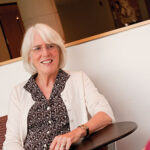

One of the challenges in creating a greener planet earth is to carefully consider what policy initiatives will most effective for achieving sustainability goals. Virginia McConnell, a professor of economics and co-chair of UMBC’s Climate Change Task Force, is an expert on assessing the effects of policies to improve the environment. She talked with UMBC Magazine about her research on fuel regulations for motor vehicles — and the unintended consequences that often arise from well-intentioned initiatives.
UMBC Magazine: CAFE is an acronym that one often hears when we talk about fuel economy. What is it?
McConnell: CAFE stands for Corporate Average Fuel Economy standards – the federal regulations requiring automakers to achieve a target level of fuel economy measured in miles per gallon. Each manufacturer must meet a standard that is a sales-weighted average across its whole product line. There are separate standards for cars and for light-duty trucks.
CAFE standards were first passed by Congress in the late 1970s – the goals was to reduce oil use, and to promote energy security and energy conservation. These fuel economy standards were initially under the jurisdiction of the National Highway Transportation Safety Administration (NHTSA), which is part of the U.S. Department of Transportation.
Initially the CAFE standards were 19 miles per gallon for cars but rose quickly to about 27 mpg in 1984 and remained at that level for many years. The standards were always lower for trucks, and did not rise as quickly in the early years. They have been at about 20 mpg for trucks since 1986. Most manufacturers have been able to meet the standards over the years, though they are allowed to pay a penalty if they cannot comply. Many European manufacturers do not comply, and pay the fines instead. But most domestic and Asian manufacturers have been able to comply in the past. But, it is going to get a lot more difficult in the future as the new and much tighter standards kick in.
There is a general sense that some good things have come out of the CAFE standards in the past. The standards have helped to spur technology improvements that have not only allowed for reduced fuel consumption, but also reduced tailpipe pollutants such as nitrogen oxides and hydrocarbons that contribute to smog and ozone levels at the same time.
UMBC Magazine: But there were some unintended consequences to CAFE, right? One big unintended consequence was a boost in popularity for sports utility vehicles (SUV) that had a lower miles per gallon standard.
McConnell: Yes, that was certainly the case. Because the standards were lower for trucks, and also because there was a market for large vehicles in the U.S., we saw the advent of the mini-van and the SUV. And, the station wagon, which was subject to the stricter car CAFE standards, virtually disappeared.
Gasoline prices have also played a role in influencing drivers’ decisions over car sizes and fuel economy. In the late 1970s, oil prices rose dramatically because of the oil embargo and other conditions in the world market. But in the early 80s, oil prices came down and continued to decline in real terms for many years. And, lower prices increased the appeal of bigger cars with higher performance. So there was a dramatic shift in the automobile market toward light trucks and away from cars. Light trucks made up 53% of new vehicle sales by 2004, but they had been only 25% of that market in the mid 1980s.
UMBC Magazine: And under CAFE standards, SUVs counted as trucks?
McConnell: Right. And trucks have much lower fuel economy standards to meet. So, with the big shift to trucks (vans and SUVs) we just discussed, you won’t have nearly the reduction in fuel use that people expected from the CAFE standards. Estimates are that the regulations through the early years did reduce oil use overall, but those effects were mitigated by this shift toward larger vehicles. This was an unintended effect of CAFE design – the dual car – truck standards.
Another unintended effect of CAFE standards is that they lower the cost of driving. The higher the fuel economy of the car you drive, the lower your cost of driving each mile. If it is less costly to drive, people will tend to drive more. This is referred to as “the rebound effect” – the policy reduces the cost per mile of driving, and as a result there will be more total miles driven. Like the shift to larger cars, this rebound effect also tends to offset the effectiveness of the CAFE standards. Fuel use will not be reduced as much as it first appears if people are driving more.
One final point is that if the goal is to reduce fuel use, then a policy that directly targets fuel use will be the most effective. CAFE standards target the type of new vehicles people can buy. But a policy like a gasoline tax that targets fuel use has the capacity to affect not only the type of car people buy but the number of miles that drive (it makes driving more expensive, not less) and even where they might want to live (closer to work). Gasoline taxes have been proposed as a either an alternative to CAFE standards or as a complementary policy, but as you know, they have proved to be very politically unpopular. CAFE standards in contrast, even with the unintended consequences described above, have had a fairly high level of public acceptance.
UMBC Magazine: Despite the criticism of CAFE standards, Congress decided to use them again a few years ago. What are these new CAFÉ standards trying to accomplish? They’re trying to double the miles per gallon, the fuel efficiency element of it, by 2025, but they’ve also added a new element to it – regulating greenhouse gases.
McConnell: I think the political context for [using CAFE standards again] is interesting and changing a little bit now on the energy security side.
One major factor motivating the legislative effort to double CAFE standards for vehicle fuel economy several years ago was concern over energy security. This remains an issue for the U.S. and for other oil consuming countries around the world, but for the U.S. recent developments in techniques for extracting domestic oil and natural gas have increased domestic sources have reduced the urgency of this market. There is even the possibility of the Unites States being a net exporter of oil as opposed to importing over half of what we consume. Oil prices will still be determined in the global market, and disruptions in other parts of the world still result in price fluctuations, but the U.S. will be somewhat more insulated from such changes.
I think that the bigger motivation now for the new stricter CAFE standards is for the reduction in greenhouse gases. In this new round of regulations, the Environmental Protection Agency (EPA) and NHTSA both have jurisdiction, and they have harmonized the rules to reduce both greenhouses gases and gasoline use. The greenhouse gas piece of the regulations came about because of a Supreme Court ruling which allows the EPA to regulate greenhouse gases as a pollutant affecting public health. So, an important part of the way that EPA is trying to reduce greenhouse gas emissions is through the new CAFE standards.
It is a huge new effort for vehicle fuel use, the first major change in the CAFE rules since the late 1970s.
UMBC Magazine: Part of your own analysis of this new push is that the new CAFE standards may not be sturdy enough to accomplish both tasks.
McConnell: An alternative policy would be to address the problem directly – to tax carbon emissions. The higher price of products with higher carbon emissions would give people the incentive to change their behavior to reduce carbon emissions in a variety of ways – in transportation and electricity sources and others. But again, politically, a tax on carbon has been difficult. The new CAFE standards appear to be a way around the politics, at least in the transportation sector.
Also, the costs of the CAFE standards approach are not as clear to the public as a carbon tax, and that may also be why it is more politically acceptable. For example, you don’t really see how much more you will pay for a car in 2017 than you would have paid in the absence of the regulations. You will pay more, but the amount is hidden in the cost of the car.
Another argument in favor of CAFE standards is that there may be what is called an “energy efficiency gap.” This is something that we see across the board with all energy-saving devices or products – from investing in solar heating to buying an energy-efficient refrigerator to buying a more fuel-efficient car. You spend more money up front to buy these more efficient appliances or vehicles or whatever, and then you get energy cost savings over time. By the way, the higher the price of gasoline, the more those fuel savings will be over time.
So, what do we expect people to do? The economically rational thing to do would be to think about the payoff over time in terms of the energy savings and ask: “Am I getting more over time compared to what I have to pay up front?” Then we would expect people to make that investment if the payoff is greater than what they have to pay up front.
UMBC Magazine: Putting solar panels on your roof debate has a big upfront cost, but then your electric bill plummets.
McConnell: Yes, and how much in savings do you need to get in that electricity bill before it makes sense to put in the solar, and over how long a period of time? There is some evidence that is difficult for people to make these choices in a consistent and economic way. What appears to be true is that people have very short-time horizons for these energy savings – if the upfront costs of a more energy efficient product are not paid back very quickly, a potential buyer is not interested.
Automakers claim that they use a three-year rule. They assume the increased cost of a more fuel efficient vehicle must pay back in terms of saved gasoline costs over three years. This is myopic behavior – people tend to hold onto new cars for much longer than that – about an average of 6 years.
If people do undervalue fuel savings over time, then they will tend to underinvest in fuel saving devices or vehicles. This is one of the major arguments about why CAFE standards may be the best policy approach to promoting more fuel-efficient vehicles – CAFE will require people to make those investments even if they wouldn’t do it on their own.
But there are several problems with that approach. One is that it may be difficult to force people to do what they don’t want to do. The car companies must sell vehicles to meet the standards, but if they can’t do that at current vehicle sizes and types, they may shift to trying to sell larger vehicles with lower standards as they did several decades ago. This offsets some of the emissions reductions expected from the CAFE standards.
Another argument on the other side of the myopia argument is that people are more rational than we think when they buy a vehicle. When they purchase a more fuel-efficient vehicle they are giving up something else that they could have gotten – more torque or acceleration for instance. We saw this throughout the late 80s and in the 90s, really. There were huge improvements in performance even as fuel economy standards stayed constant. The technology that was being developed during that time was being put toward performance and not toward fuel economy. Presumably, that wasn’t because of any regulations. That was because of what people wanted.
If people are being rational, and they are weighing off all the characteristics including fuel economy when they purchase a vehicle, then pricing policies such as a gasoline tax, or carbon tax will tend to work quite well. Higher prices of fuel will induce people to value fuel economy more in the marketplace. We have seen that recently as generally higher gasoline prices have meant that more people are more interested in the fuel economy of the vehicles they are buying.
UMBC Magazine: Where do electric vehicles fit in?
McConnell: We’re subsidizing electric vehicles pretty heavily. For a full all-electric vehicle, you would get a $7,500 subsidy from the federal government as a credit on your taxes. This is more of a subsidy for higher income people – in the extreme case where someone did not owe any income taxes, there would be no subsidy.
UMBC Magazine: How much do electric vehicles cost?
McConnell: There are only a few all-electric cars, and the prices vary a lot. The Tesla sells for $70,000 to $100,000. And, at the other end of the spectrum, the Nissan LEAF costs about $28,000. When you subtract the subsidy, you’re down to $20,000 or lower for the LEAF. And there are state subsidies for these vehicles, too.
But one of the problems with CAFE rules – which are binding on manufacturers – is that the automakers will design cars to try to meet these standards. And if you sell more electric cars, and those cars get better fuel economy under the standards, the automakers are going to be able sell more other vehicles that have lower fuel economy and balance that off. No matter how many electric vehicles a manufacturer sells, they are still going to just meet the average CAFE standards. So, it’s not really changing the greenhouse gas or the energy use of the fleets as a whole.
UMBC Magazine: Electric cars count as zero emissions under the new regulations, right?
McConnell: Yes. Under CAFE, they count as zero. In fact, under some circumstances, the automakers can count them double in their fleet. So if you sell one electric vehicle, you can count it as two for emissions purposes. That’s built into the 2017 and later CAFE standards. The argument is that there will be early adopters, but what is really needed is much larger numbers of electric vehicles being sold. How do you begin to convert a large share of the fleet to electrics? There is one argument that there are important spillover effects from the early adopters. Both manufacturers and consumers will learn from early adopters; interest in electrics will increase, and costs will come down. So, you need to provide incentives for them to allow this happen. The problem is that there is no guarantee that these spillovers are large, and that costs of for batteries and vehicles will come down over time to be comparable to current gasoline vehicles.
Another reason the emissions effects for electric vehicles are counted as zero is that eventually the hope is that emissions from power plants that generate electricity will be from renewable sources and it will be close to zero. But are these emissions currently zero? The answer is “no.” Electricity production can create significant emissions, depending on how it is generated. But if the electricity used to power electric vehicles is generated from coal as it is in many parts of the country today, then that will have a high greenhouse gas emission, in some place resulting in GHG emissions that are almost as high as those from a conventional car. The big growth in electricity production is now from natural gas. There is controversy about methane leaks from natural gas extraction for electricity production, but overall it looks like the emissions from electricity from gas for electric vehicles may be about half of those from conventional vehicles.
UMBC Magazine: So the emissions reductions from electric cars can vary a lot?
McConnell: Yes. And, I think the message here is that if you want to shift to any kind of alternative vehicle, you’ve got to think about the vehicle and the fuel to consider the effect on the environment. That’s the bottom line. Just as we have gasoline-powered vehicles – we also now have all-electric vehicles (and hybrid electric), and we can’t ignore the fact of where and how the electricity to power them is generated. There are various types of alternative fuel vehicles being suggested for the future in addition to electric plug-in vehicles (for example, fuel cells powered by hydrogen, diesel powered by biodiesel), but again, it’s the vehicle and the fuel together that matter for the effect on greenhouse gases and future climate impacts. And policies toward both the vehicle and the fuel will be critical if we are to be serious about the goal of reducing greenhouse gas emissions.
]]>
One of the challenges in creating a greener planet earth is to carefully consider what policy initiatives will most effective for achieving sustainability goals. Virginia McConnell, a professor of...
https://umbc.edu/stories/back-story-fall-2013/
https://my3.my.umbc.edu/api/v0/pixel/news/123076/guest@my.umbc.edu/b43cfb742e1500ffbc4b4e27e9438f58/api/pixel
fall-2013
perspectives
UMBC News & Magazine
https://my3.my.umbc.edu/groups/umbc-news-magazine
https://assets1-my.umbc.edu/system/shared/avatars/groups/000/001/943/24435aa6207c452e7bc15cc74b42c7bb/xsmall.png?1748556657
https://assets1-my.umbc.edu/system/shared/avatars/groups/000/001/943/24435aa6207c452e7bc15cc74b42c7bb/original.png?1748556657
https://assets2-my.umbc.edu/system/shared/avatars/groups/000/001/943/24435aa6207c452e7bc15cc74b42c7bb/xxlarge.png?1748556657
https://assets2-my.umbc.edu/system/shared/avatars/groups/000/001/943/24435aa6207c452e7bc15cc74b42c7bb/xlarge.png?1748556657
https://assets3-my.umbc.edu/system/shared/avatars/groups/000/001/943/24435aa6207c452e7bc15cc74b42c7bb/large.png?1748556657
https://assets1-my.umbc.edu/system/shared/avatars/groups/000/001/943/24435aa6207c452e7bc15cc74b42c7bb/medium.png?1748556657
https://assets2-my.umbc.edu/system/shared/avatars/groups/000/001/943/24435aa6207c452e7bc15cc74b42c7bb/small.png?1748556657
https://assets1-my.umbc.edu/system/shared/avatars/groups/000/001/943/24435aa6207c452e7bc15cc74b42c7bb/xsmall.png?1748556657
https://assets2-my.umbc.edu/system/shared/avatars/groups/000/001/943/24435aa6207c452e7bc15cc74b42c7bb/xxsmall.png?1748556657
UMBC News & Magazine
0
0
false
Thu, 26 Sep 2013 19:08:01 -0400
At Play – Fall 2013
LEAD DAWG
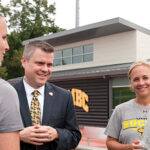
UMBC Athletics has a new head Retriever. Tim Hall was named director of athletics, physical education and recreation and arrived at the university in early July. He comes to UMBC from the University of Missouri-Kansas City (UMKC), where he was director of athletics for six years.
Hall cites “UMBC’s commitment to the comprehensive student-athlete experience” as one of the reasons that he wanted to become a Retriever.
“UMBC is an institution that sees academic success and athletics success as not mutually exclusive,” he says.
Under Hall’s tenure, UMKC experienced plenty of success, which propelled the school to a place in the prestigious Western Athletic Conference (WAC) starting on July 1. UMKC also notched conference championships in men’s soccer, men’s golf, men’s tennis and softball during his time at the university. Before taking the position at UMKC, Hall was associate athletic director for development at Kent State University.
Leadership in larger circles of college athletics has also been part of Hall’s career in college athletics. He is serving a three-year term on the National Association of Collegiate Directors of Athletics’ Division I-AAA Executive Committee and he also serves on the NCAA volleyball rules committee, as well as the NCAA committee on women’s athletics.
Hall was chosen by a search committee chaired by UMBC’s vice president of information technology Jack Suess ’85, mathematics, and ’95, M.S., operations analysis. His appointment builds on substantial momentum in the university’s athletics program, which has won championships in seven different sports over 10 seasons in the America East Conference. He succeeds Charles Brown, who retired June 30, completing a 24-year tenure that has elevated both the Retrievers’ athletic and academic performance.
– Richard Byrne ’86
ROBOTS RULE

UMBC has a reputation as a place where it’s cool to be smart. And one alumnus has gone out and confirmed it on national television.
Back in July, Corey Fleischer ’05, and ’08, M.S., mechanical engineering won a season-long engineering-based reality show on the Discovery Channel called Big Brain Theory on a final episode that featured a cameo from Apollo 11 astronaut Buzz Aldrin and the destruction of a 34-foot bridge.
“The most exciting outcome is having my kids think their dad is ‘the next great American innovator’ – as I was labeled on the show,” says Fleischer, who is a father of two and a senior mechanical engineer at Lockheed Martin.
Fleischer won $50,000 and a one-year contract to work with WET Design, which specializes in creating innovative water-based environments. Working in teams over an eight-week competition, ten brainy contestants faced design and execution challenges to see whose ideas would rise to the top.
“I was just hoping not to be the first person eliminated,” he says. “Then once I got out there and saw the people I was working with and the magnitude of the challenges I relaxed, and knew regardless of the outcome I was going to have a blast. Winning the competition was just a bonus!”
Fleischer’s favorite moment was leading a team that designed a robot to compete in a foot race, throw a javelin and perform a long jump.
“I was very proud of what we created,” he says. “After our robot jumped 16 feet, we had cameramen, producers, technical advisers and all sorts of people high-fiving us and yelling ‘good job.’ ”
– Jenny O’Grady
ON POINT
 Former Retrievers basketball standout Michelle Kurowski’ 11, psychology made two trips as a child to Poland – the country in which her parents were born. But her latest trip to Europe was a hoop dream come true.
Kurowski spent much of the past year as the only American player for Eveil Garnachois Basket Vendee – a team in France’s National Feminine 2 league. She was contacted by her agent in October, 2012 and told that the French team needed a player.
“I had about 48 hours to pack,” she recalls.
A shooting guard in college, Kurowski was forced to play point guard for much of the season. Though she arrived after the season had started, she and her teammates climbed from the lower rungs of the league standings all the way to the championship finals. Along the way, Kurowski averaged close to 20 points per game.
The team provided Kurowski with an apartment in the town of Garnache, which is located on the west coast of France. “It was a small town and there was a lot of farming,” she says. “I was interested to see the way people live. It is totally different there, from eating to everyday life…. It is slower paced there.”
Kurowski is weighing her options about a possible return. She also compiled a 4.0 grade-point average in her first semester of graduate school at UMBC and is eager to continue her studies in early childhood education.
The season in France did create some great memories. “It was a great experience,” Kurowski says. “The opportunity was there and I decided I would take it.”
– David Driver
CROWNING ACHIEVEMENTS
 Pageant competition isn’t all pomp and primping. Just ask two UMBC students who have had recent success in these demanding contests.
Samantha Hawkins ’14, anthropology and interdisciplinary studies, has only competed for a year and a half, but she’s already a veteran of eight pageants. Hawkins was recently named first runner up in the Miss Maryland America competition, and she will soon head to Illinois to compete against other national first runner ups for the National Sweetheart title.
“Looking back at when I first started college, I hadn’t really thought about my values or who I wanted to be,” says Hawkins, who has honed her piano skills and found a passion for community service in the process of competing. She also says she’s developed public speaking skills that are useful outside of the pageant circuit .
“I interviewed for my dream internship and I wasn’t nervous at all,” she says. “Once you get through a Miss Maryland panel, you can handle any job interview.”
Hawkins hopes the follow in the steps of Kasey Staniszewski ’14, media and communications studies, who was named Miss Maryland USA in November 2012 and recently won her way into the top 15 at the annual Miss USA competition in June.
It wasn’t Staniszewski’s first big win. She was named Miss Maryland Teen USA in 2009 and placed as third runner up at the Miss Teen USA national pageant that same year. Staniszewski is also an ambassador for Beyond Beauty for Girls – a program founded by her sister Lindsay Staniszewski dedicated to building confidence in young women.
– Chelsea Haddaway
]]>
LEAD DAWG UMBC Athletics has a new head Retriever. Tim Hall was named director of athletics, physical education and recreation and arrived at the university in early July. He comes to UMBC from...
https://umbc.edu/stories/at-play-fall-2013/
https://my3.my.umbc.edu/api/v0/pixel/news/123077/guest@my.umbc.edu/1086043c647ae6dbe9ff76e666937036/api/pixel
campus-life
fall-2013
UMBC News & Magazine
https://my3.my.umbc.edu/groups/umbc-news-magazine
https://assets1-my.umbc.edu/system/shared/avatars/groups/000/001/943/24435aa6207c452e7bc15cc74b42c7bb/xsmall.png?1748556657
https://assets1-my.umbc.edu/system/shared/avatars/groups/000/001/943/24435aa6207c452e7bc15cc74b42c7bb/original.png?1748556657
https://assets2-my.umbc.edu/system/shared/avatars/groups/000/001/943/24435aa6207c452e7bc15cc74b42c7bb/xxlarge.png?1748556657
https://assets2-my.umbc.edu/system/shared/avatars/groups/000/001/943/24435aa6207c452e7bc15cc74b42c7bb/xlarge.png?1748556657
https://assets3-my.umbc.edu/system/shared/avatars/groups/000/001/943/24435aa6207c452e7bc15cc74b42c7bb/large.png?1748556657
https://assets1-my.umbc.edu/system/shared/avatars/groups/000/001/943/24435aa6207c452e7bc15cc74b42c7bb/medium.png?1748556657
https://assets2-my.umbc.edu/system/shared/avatars/groups/000/001/943/24435aa6207c452e7bc15cc74b42c7bb/small.png?1748556657
https://assets1-my.umbc.edu/system/shared/avatars/groups/000/001/943/24435aa6207c452e7bc15cc74b42c7bb/xsmall.png?1748556657
https://assets2-my.umbc.edu/system/shared/avatars/groups/000/001/943/24435aa6207c452e7bc15cc74b42c7bb/xxsmall.png?1748556657
UMBC News & Magazine
0
0
false
Thu, 26 Sep 2013 19:05:52 -0400
Paper-Killer Evernote Sees a Future in Post-its
Evernote is working with companies it initially sought to supplant to make everything more memorable.
Evernote, which makes popular note-taking software that allows you to create and synchronize digital notes across gadgets, unveiled a decidedly retro image of its future at its annual conference Thursday in San Francisco: Post-it notes.
]]>
Evernote is working with companies it initially sought to supplant to make everything more memorable. Evernote, which makes popular note-taking software that allows you to create and synchronize...
http://www.technologyreview.com/view/519701/paper-killer-evernote-sees-a-future-in-post-its/
https://my3.my.umbc.edu/api/v0/pixel/news/36251/guest@my.umbc.edu/38ac668087066a87bc3229422629a93d/api/pixel
development
internet
mit
technology
web
Web Developer - Build Group
https://my3.my.umbc.edu/groups/retired-583
https://assets3-my.umbc.edu/system/shared/avatars/groups/000/000/583/fc60f5d7abc2e080599bb6dc465db54d/xsmall.png?1363101197
https://assets4-my.umbc.edu/system/shared/avatars/groups/000/000/583/fc60f5d7abc2e080599bb6dc465db54d/original.jpg?1363101197
https://assets4-my.umbc.edu/system/shared/avatars/groups/000/000/583/fc60f5d7abc2e080599bb6dc465db54d/xxlarge.png?1363101197
https://assets4-my.umbc.edu/system/shared/avatars/groups/000/000/583/fc60f5d7abc2e080599bb6dc465db54d/xlarge.png?1363101197
https://assets3-my.umbc.edu/system/shared/avatars/groups/000/000/583/fc60f5d7abc2e080599bb6dc465db54d/large.png?1363101197
https://assets3-my.umbc.edu/system/shared/avatars/groups/000/000/583/fc60f5d7abc2e080599bb6dc465db54d/medium.png?1363101197
https://assets4-my.umbc.edu/system/shared/avatars/groups/000/000/583/fc60f5d7abc2e080599bb6dc465db54d/small.png?1363101197
https://assets3-my.umbc.edu/system/shared/avatars/groups/000/000/583/fc60f5d7abc2e080599bb6dc465db54d/xsmall.png?1363101197
https://assets4-my.umbc.edu/system/shared/avatars/groups/000/000/583/fc60f5d7abc2e080599bb6dc465db54d/xxsmall.png?1363101197
Web Developer - Build Group
0
0
true
Thu, 26 Sep 2013 18:50:00 -0400
Thu, 26 Sep 2013 18:50:00 -0400
Bits Blog: Google Alters Search to Handle More Complex Queries
Google made one of the biggest ever changes to its search engine, as part of a shift away from matching keywords on Web pages to understanding the meaning of search queries.


 ]]>
Google made one of the biggest ever changes to its search engine, as part of a shift away from matching keywords on Web pages to understanding the meaning of search queries.
http://bits.blogs.nytimes.com/2013/09/26/google-changes-search-to-handle-more-complex-queries/?partner=rss&emc=rss
https://my3.my.umbc.edu/api/v0/pixel/news/36248/guest@my.umbc.edu/a4645bb08e7fcf30140d0c45c9cd9cbb/api/pixel
computers-and-the-internet
google-inc
google-inc-goog-nasdaq
internet
mobile
new
search-engines
technology
york
Web Developer - Build Group
https://my3.my.umbc.edu/groups/retired-583
https://assets3-my.umbc.edu/system/shared/avatars/groups/000/000/583/fc60f5d7abc2e080599bb6dc465db54d/xsmall.png?1363101197
https://assets4-my.umbc.edu/system/shared/avatars/groups/000/000/583/fc60f5d7abc2e080599bb6dc465db54d/original.jpg?1363101197
https://assets4-my.umbc.edu/system/shared/avatars/groups/000/000/583/fc60f5d7abc2e080599bb6dc465db54d/xxlarge.png?1363101197
https://assets4-my.umbc.edu/system/shared/avatars/groups/000/000/583/fc60f5d7abc2e080599bb6dc465db54d/xlarge.png?1363101197
https://assets3-my.umbc.edu/system/shared/avatars/groups/000/000/583/fc60f5d7abc2e080599bb6dc465db54d/large.png?1363101197
https://assets3-my.umbc.edu/system/shared/avatars/groups/000/000/583/fc60f5d7abc2e080599bb6dc465db54d/medium.png?1363101197
https://assets4-my.umbc.edu/system/shared/avatars/groups/000/000/583/fc60f5d7abc2e080599bb6dc465db54d/small.png?1363101197
https://assets3-my.umbc.edu/system/shared/avatars/groups/000/000/583/fc60f5d7abc2e080599bb6dc465db54d/xsmall.png?1363101197
https://assets4-my.umbc.edu/system/shared/avatars/groups/000/000/583/fc60f5d7abc2e080599bb6dc465db54d/xxsmall.png?1363101197
Web Developer - Build Group
0
0
true
Thu, 26 Sep 2013 17:58:13 -0400
Sun, 29 Sep 2013 11:40:51 -0400
Broadband Access Surges Worldwide, but Growth is Uneven
]]>
Google made one of the biggest ever changes to its search engine, as part of a shift away from matching keywords on Web pages to understanding the meaning of search queries.
http://bits.blogs.nytimes.com/2013/09/26/google-changes-search-to-handle-more-complex-queries/?partner=rss&emc=rss
https://my3.my.umbc.edu/api/v0/pixel/news/36248/guest@my.umbc.edu/a4645bb08e7fcf30140d0c45c9cd9cbb/api/pixel
computers-and-the-internet
google-inc
google-inc-goog-nasdaq
internet
mobile
new
search-engines
technology
york
Web Developer - Build Group
https://my3.my.umbc.edu/groups/retired-583
https://assets3-my.umbc.edu/system/shared/avatars/groups/000/000/583/fc60f5d7abc2e080599bb6dc465db54d/xsmall.png?1363101197
https://assets4-my.umbc.edu/system/shared/avatars/groups/000/000/583/fc60f5d7abc2e080599bb6dc465db54d/original.jpg?1363101197
https://assets4-my.umbc.edu/system/shared/avatars/groups/000/000/583/fc60f5d7abc2e080599bb6dc465db54d/xxlarge.png?1363101197
https://assets4-my.umbc.edu/system/shared/avatars/groups/000/000/583/fc60f5d7abc2e080599bb6dc465db54d/xlarge.png?1363101197
https://assets3-my.umbc.edu/system/shared/avatars/groups/000/000/583/fc60f5d7abc2e080599bb6dc465db54d/large.png?1363101197
https://assets3-my.umbc.edu/system/shared/avatars/groups/000/000/583/fc60f5d7abc2e080599bb6dc465db54d/medium.png?1363101197
https://assets4-my.umbc.edu/system/shared/avatars/groups/000/000/583/fc60f5d7abc2e080599bb6dc465db54d/small.png?1363101197
https://assets3-my.umbc.edu/system/shared/avatars/groups/000/000/583/fc60f5d7abc2e080599bb6dc465db54d/xsmall.png?1363101197
https://assets4-my.umbc.edu/system/shared/avatars/groups/000/000/583/fc60f5d7abc2e080599bb6dc465db54d/xxsmall.png?1363101197
Web Developer - Build Group
0
0
true
Thu, 26 Sep 2013 17:58:13 -0400
Sun, 29 Sep 2013 11:40:51 -0400
Broadband Access Surges Worldwide, but Growth is Uneven
A new United Nations report predicts the number of mobile subscriptions will exceed the global population next year.
A new United Nations report makes clear that broadband access is surging around the world. By the end of 2013, there will be 2.1 billion mobile broadband connections, or almost three times the number of fixed-line ones, it predicts. Some countries are already completely saturated: Japan and Singapore each had more subscriptions than people, reflecting ownership of multiple devices. Others are lagging: China had 17 mobile broadband subscriptions per 100 residents last year.
]]>
A new United Nations report predicts the number of mobile subscriptions will exceed the global population next year. A new United Nations report makes clear that broadband access is surging...
http://www.technologyreview.com/view/519696/broadband-access-surges-worldwide-but-growth-is-uneven/
https://my3.my.umbc.edu/api/v0/pixel/news/36246/guest@my.umbc.edu/53d3cdd9d5fb4c813f721e0c462c8a84/api/pixel
development
internet
mit
technology
web
Web Developer - Build Group
https://my3.my.umbc.edu/groups/retired-583
https://assets3-my.umbc.edu/system/shared/avatars/groups/000/000/583/fc60f5d7abc2e080599bb6dc465db54d/xsmall.png?1363101197
https://assets4-my.umbc.edu/system/shared/avatars/groups/000/000/583/fc60f5d7abc2e080599bb6dc465db54d/original.jpg?1363101197
https://assets4-my.umbc.edu/system/shared/avatars/groups/000/000/583/fc60f5d7abc2e080599bb6dc465db54d/xxlarge.png?1363101197
https://assets4-my.umbc.edu/system/shared/avatars/groups/000/000/583/fc60f5d7abc2e080599bb6dc465db54d/xlarge.png?1363101197
https://assets3-my.umbc.edu/system/shared/avatars/groups/000/000/583/fc60f5d7abc2e080599bb6dc465db54d/large.png?1363101197
https://assets3-my.umbc.edu/system/shared/avatars/groups/000/000/583/fc60f5d7abc2e080599bb6dc465db54d/medium.png?1363101197
https://assets4-my.umbc.edu/system/shared/avatars/groups/000/000/583/fc60f5d7abc2e080599bb6dc465db54d/small.png?1363101197
https://assets3-my.umbc.edu/system/shared/avatars/groups/000/000/583/fc60f5d7abc2e080599bb6dc465db54d/xsmall.png?1363101197
https://assets4-my.umbc.edu/system/shared/avatars/groups/000/000/583/fc60f5d7abc2e080599bb6dc465db54d/xxsmall.png?1363101197
Web Developer - Build Group
0
0
true
Thu, 26 Sep 2013 17:43:54 -0400
Thu, 26 Sep 2013 17:43:54 -0400


